EP2202661A1 - Apparatus and method for protecting asset in computer system - Google Patents
Apparatus and method for protecting asset in computer system Download PDFInfo
- Publication number
- EP2202661A1 EP2202661A1 EP09180202A EP09180202A EP2202661A1 EP 2202661 A1 EP2202661 A1 EP 2202661A1 EP 09180202 A EP09180202 A EP 09180202A EP 09180202 A EP09180202 A EP 09180202A EP 2202661 A1 EP2202661 A1 EP 2202661A1
- Authority
- EP
- European Patent Office
- Prior art keywords
- computer system
- state
- information
- quarantine
- station
- Prior art date
- Legal status (The legal status is an assumption and is not a legal conclusion. Google has not performed a legal analysis and makes no representation as to the accuracy of the status listed.)
- Granted
Links
Images

Classifications
-
- G—PHYSICS
- G06—COMPUTING OR CALCULATING; COUNTING
- G06F—ELECTRIC DIGITAL DATA PROCESSING
- G06F21/00—Security arrangements for protecting computers, components thereof, programs or data against unauthorised activity
- G06F21/50—Monitoring users, programs or devices to maintain the integrity of platforms, e.g. of processors, firmware or operating systems
- G06F21/55—Detecting local intrusion or implementing counter-measures
- G06F21/56—Computer malware detection or handling, e.g. anti-virus arrangements
- G06F21/568—Computer malware detection or handling, e.g. anti-virus arrangements eliminating virus, restoring damaged files
-
- G—PHYSICS
- G06—COMPUTING OR CALCULATING; COUNTING
- G06F—ELECTRIC DIGITAL DATA PROCESSING
- G06F21/00—Security arrangements for protecting computers, components thereof, programs or data against unauthorised activity
-
- G—PHYSICS
- G06—COMPUTING OR CALCULATING; COUNTING
- G06F—ELECTRIC DIGITAL DATA PROCESSING
- G06F11/00—Error detection; Error correction; Monitoring
-
- G—PHYSICS
- G06—COMPUTING OR CALCULATING; COUNTING
- G06F—ELECTRIC DIGITAL DATA PROCESSING
- G06F21/00—Security arrangements for protecting computers, components thereof, programs or data against unauthorised activity
- G06F21/50—Monitoring users, programs or devices to maintain the integrity of platforms, e.g. of processors, firmware or operating systems
- G06F21/57—Certifying or maintaining trusted computer platforms, e.g. secure boots or power-downs, version controls, system software checks, secure updates or assessing vulnerabilities
Definitions
- the present invention relates to an apparatus and method for preventing hacking to prevent important information from being leaked due to external attacks such as viruses, hacking, and the like in a computer system. More particularly, the present invention relates to an apparatus and method for preventing hacking by extending a secure quarantine station inside a computer system using an external or internal quarantine station with verified stability in the computer system.
- the present invention is directed to an apparatus and method for preventing hacking that are capable of securely protecting important information from attacks such as virus and hacking.
- the present invention is also directed to an apparatus and method for preventing hacking that are capable of protecting important information by producing a secure quarantine area inside a processor using an external or internal secure quarantine station.
- One aspect of the present invention provides an apparatus for preventing hacking in a computer system having a processor, the apparatus including: a quarantine station with guaranteed safety; and a quarantine-station extension unit for implementing a state in which attacks are impossible in the processor using the quarantine station.
- the quarantine-station extension unit includes: a state change unit for changing a state of at least one of a memory, a register, and a port in the computer system; a state calculation unit for calculating information on the changed state of the computer system; a security-threat-element elimination unit for eliminating security threat elements from the computer system; a communication unit for transmitting the state information calculated by the state calculation unit to the quarantine station, and receiving control information for controlling the computer system based on the state information, from the quarantine station; and a security execution unit for receiving security information from the quarantine station to execute sensitive codes when the computer system is faultless, wherein the state information and the control information are repeatedly transmitted and received until the computer system is faultless.
- Another aspect of the present invention provides a method for preventing hacking in a computer system, the method including: changing a state of at least one of a memory, a register, and a port in the computer system; calculating information on the changed state of the computer system; eliminating security threat elements from the computer system; transmitting, by the computer system, the state information to a quarantine station with guaranteed safety at any point in time; transmitting, by the quarantine station, control information calculated based on the state information to the computer system; and transmitting, by the quarantine station, security information required for executing sensitive codes to the computer system when the computer system is faultless, wherein the state information and the control information are repeatedly transmitted and received until the computer system is faultless.
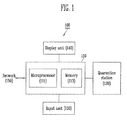
- FIG. 1 illustrates a computer system 100 to which a quarantine station is connected according to an exemplary embodiment of the present invention
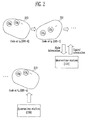
- FIG. 2 illustrates an operation mechanism of quarantine-station extension codes according to an exemplary embodiment of the present invention
- FIG. 3 illustrates an example in which quarantine-station extension codes according to an exemplary embodiment of present invention operate.
- the present invention proposes an apparatus and method for preventing hacking that forms a secure quarantine station to block attacks and prevent important information from being leaked by any means.
- the present invention implements a state in which attacks can be essentially blocked by deriving a temporally and spatially separated area in a processor from a secure quarantine station.
- temporal separation implies that execution of quarantine-station extension code, which will be described later, is not interrupted
- spatial separation implies that integrity of the quarantine-station extension code is maintained between beginning and end of the execution.
- the quarantine station has been guaranteed safety, and may be safety-verified code in a smart card, a peripheral component interconnect (PCI) card, or an internal memory.
- PCI peripheral component interconnect
- FIG. 1 illustrates a computer system 100 to which a quarantine station is connected according to an exemplary embodiment of the present invention.
- the computer system 100 includes a host 110 for performing a process according to a schedule of an operating system (OS), and a quarantine station 120 with pre-guaranteed safety.
- the host 110 transmits state information calculated at a predetermined point in time, and then the quarantine station 120 generates control information based on the state information and transmits the control information to the host 110.
- OS operating system
- the quarantine station 120 generates control information based on the state information and transmits the control information to the host 110.
- the quarantine station 120 transmits security information to the host 110 so that sensitive processing is performed in a temporal and spatial quarantine station in a microprocessor 111.
- quarantine station 120 is shown external to the host 110, it may be included in the host 110.
- the host 110 includes the microprocessor 111 for performing a process executed according to a schedule of the operating system, and a memory 113 in which the executed program is stored.
- the quarantine station 120 generates the control information based on the state information received from the host 110, and transmits control information required to prepare a secure quarantine station in the microprocessor 111, to the host 110, and after iterating such a procedure sufficiently transmits security information to the host.
- the security information may be a password for a program, a decryption key for program execution, a specific algorithm, etc.
- An input unit 130 may include a keyboard, a mouse, or the like.
- a display unit 140 displays operation of the host, such as a monitor.
- quarantine-station extension code is used to prepare a secure area in the computer system 100 from the secure quarantine station 120.
- the quarantine-station extension codes include state change code snippets, state calculation code snippets, security acquisition code snippets, communication code snippets with a verified quarantine station, and security objective code snippets.
- the state change code snippet changes codes, and an arbitrarily selected portion in a memory and a register, and a port of the system.
- the state change code snippet may change some codes in the memory 113 to change an instruction executed by the microprocessor 111.
- the state calculation code snippet calculates a state value of the portion arbitrarily selected in the quarantine-station extension codes and the memory, registers and ports which are sensitive to security.
- the state value may be a checksum, hash, or medium access control (MAC) value which guarantee the integrity of wanted system state.
- MAC medium access control
- this state value is referred to as state information.
- the security acquisition code snippet securely sets registers of the processor and changes hardware registers. Also, the security acquisition code snippet changes and adds content of the memory, ports acting as a threat element, and executes codes for enhancing security to eliminate possible threat of attacks.
- the communication code snippet is in communication with the reliable quarantine station 120 internal or external to the system, and transmits a current code state value, i.e., state information or receives values influencing operation of the quarantine-station extension code from the quarantine station 120.
- a current code state value i.e., state information or receives values influencing operation of the quarantine-station extension code from the quarantine station 120.
- the values influencing operation of the quarantine-station extension codes are referred to as control information.
- the security objective code snippet are codes to be executed in the resultant quarantine station, and perform desired operation using received important information after confirming non-attack by the quarantine station.
- the important information is necessary for normal code execution, such as codes itself or key information.
- the important information is referred to as security information.
- the quarantine-station extension codes are used to prepare an area without attacks in the microprocessor 111.
- blocks 210, 211, and 213 denote the quarantine-station extension codes CS0, CS1,..., which are stored in the memory 113.
- the quarantine-station extension codes CS0, CS1,... are initialized.
- the quarantine-station extension codes CS0, CS1,... may include state change code snippets, state calculation code snippets, security acquisition code snippets, communication code snippets with the quarantine station, and security objective code snippets.
- the quarantine-station extension codes(CS0, CS1,...) are executed and quarantine-station extension codes' region are changed over time.
- the state change code snippet When executed, it operates to change an instruction executed by the microprocessor 111 so that new code snippets are created or some previous code snippets changed or deleted. Accordingly, the quarantine-station extension codes' region are changed while being executed.
- the state calculation code snippets calculate state information of sensitive region in a current state, in which the state information may be one of several state values, such as checksum, hash, MAC, integrity check function value and the like.
- Sensitive parts can include memory for quarantine station extension part, debug registers and interrupt related registers.
- the security acquisition code snippet gets system control to block attacks and performs operation such as interrupt halt.
- the quarantine-station extension code communicates with the quarantine station 120 with guaranteed safety. That is, when the communication code snippet is executed, state information of all or some of current codes, registers and ports is transmitted to the quarantine station 120.
- the quarantine station 120 transmits control information calculated based on the state information, to the quarantine-station extension code.
- the control information is a value influencing the operation of the quarantine-station extension code, and may include various information, such as a branch point of the quarantine-station extension codes, some codes or a transmission point in time of the state information.
- the quarantine station 120 then checks if the state information is correct and received at proper timing.
- the quarantine station 120 determines that the microprocessor 111 is faultless and transmits security information to the quarantine-station extension codes so that security-required process begins.
- the security information enables the security codes to be normally executed, and may include important information, such as a decryption key for the security objective code, an algorithm of a specific program, or a password.
- a temporal and spatially faultless state is formed inside the host using the secure quarantine station in order to block attacks and then important information is received, thereby preventing leakage of the important information.
- FIG. 3 illustrates an example in which the quarantine-station extension codes according to an exemplary embodiment of the present invention operate.
- step 301 variables are initialized in step 301.
- step 303 the state change code snippet creates a new random branch code snippet and run to the next snippet.
- step 305 state calculation code snippet, when executed, updates accumulatively updated hash values with a hash value derived in a current state of all the codes.
- step 307 communication code snippet passes the resultant hash value to the quarantine station 120 and receive the some control information.
- step 309 random branch code snippet branches to a point selected based on the control information from the quarantine station and the accumulated hash value.
- the quarantine-station extension codes naturally get the system control (e.g., to halt interruption) while performing this process, and eliminates possible security threat elements (e.g., inactivates a debugger register).
- the quarantine-station extension codes receive important information necessary for security objective code snippet from the quarantine station 120 and executes the security objective code snippet.
- the security objective code snippet achieves a security objective by executing a security-required algorithm or getting key input from a user and protecting a user password through hashing of an input value.
- the security objective code snippet removes sensitive information that may remain in the memory or the register and passes the control to the OS in step 315.
- the attacker must enable important information to be output from the quarantine station in order to attack the security objective code.
- the simplest example of the security information as the important information may be a decryption key for the security objective code.
- the attacker must cause the quarantine station to believe that there is no intrusion into the system and normal execution is maintained. Accordingly, a hash value must be always maintained normally. Simultaneously, the attacker must continue to intervene in execution of codes for eliminating security threat elements. This is because normal execution of these codes obstructs the attack of the attacker.
- security-threat-element elimination codes may be codes for preoccupying a system occupation right.
- the occupation right is preoccupied (it is assumed that an interrupt or interrupt point seting-related register is set to a secure state)
- the attacker cannot attack.
- such intervention causes a change of the quarantine-station extension codes or the state of the system, leading to a changed state value to be delivered to the quarantine station, which makes resignation of normal important information transmission.
- the attacker must continue to intervene during the execution of the quarantine-station extension codes in order to block a change of the hash value due to the intervention.
- the attacker compensates for the influence of its intervention and causes the state calculation code snippets to output a state value prior to the intervention.
- the process of compensating for the influence of attacker's intervention yields additional cost (time) and the quarantine station 120 recognizes such cost and gives up providing important information.
- the quarantine station 120 may transmit a value that may influence the state change of the quarantine-station extension code or security-related elements (break point-related register, interrupt related register, memory, port, and the like) in the system, to the quarantine-station extension codes at any time.
- This process causes static analysis performed by the attacker prior to the execution of the quarantine-station extension codes and attacks through the static analysis to be difficult.
- the present invention may be applied, for example, to keyboard hacking protection.
- the present invention may also be applied to a system management mode or a multi-processor structure (e.g., a hyper threading or multi-core system) to allow for securer execution of the security objective codes.
- the method for protect asset in the computer according to the present invention may be effectively applied to a processor that supports a system management mode or switching to other OS. And this method can be used to secure boot mechanisms.
- the present invention can protect secret information and essentially protect assets such as algorithms or contents from malicious code. Specifically, the present invention can be applied to numerous applications, including implementation of a keyboard hacking protection scheme.
- a temporally and spatially faultless state is formed inside a computer using a secure quarantine station in order to block attacks and then important information is received, thereby preventing leakage of the important information.
- assets such as algorithms or contents, as well as secret information, can be essentially protected from malicious code.
Landscapes
- Engineering & Computer Science (AREA)
- Theoretical Computer Science (AREA)
- Computer Security & Cryptography (AREA)
- General Engineering & Computer Science (AREA)
- Computer Hardware Design (AREA)
- Software Systems (AREA)
- General Physics & Mathematics (AREA)
- Physics & Mathematics (AREA)
- Health & Medical Sciences (AREA)
- Virology (AREA)
- General Health & Medical Sciences (AREA)
- Quality & Reliability (AREA)
- Storage Device Security (AREA)
- Data Exchanges In Wide-Area Networks (AREA)
- Computer And Data Communications (AREA)
Abstract
Description
- This application claims priority to and the benefit of Korean Patent Application No.
10-2008-0132401, filed December 22, 2008 - The present invention relates to an apparatus and method for preventing hacking to prevent important information from being leaked due to external attacks such as viruses, hacking, and the like in a computer system. More particularly, the present invention relates to an apparatus and method for preventing hacking by extending a secure quarantine station inside a computer system using an external or internal quarantine station with verified stability in the computer system.
- Proliferation of computers and the Internet have increased viruses, worms and other malicious codes that destroy data and programs in the computers, and copies of commercially available programs. With the advent of Internet banking, financial mishaps due to hacking are also on the rise. Also, copyright infringements such as illegally copying and executing contents of cellular phones or game machines are becoming more frequent.
- Accordingly, schemes for preventing copying and hacking of software due to external attacks have been developed.
- Obfuscation, code encryption, lexical conversion, and the like have been proposed as conventional schemes for preventing copying and hacking of software.
- The schemes make it difficult to hack software and important information by converting codes having a simple pattern created by a compiler into codes that are complex or difficult to use with conventional analysis tools.
- However, such hacking protection schemes do not provide perfect hacking protection. This is because all important information must be essentially handled by a host. Specifically, all processes need a central processing unit (CPU). Accordingly, when a hacking program gets an occupation right of the CPU, the core information is highly likely to be leaked.
- Accordingly, there is a need for a scheme capable of essentially preventing hacking due to fundamental architecture of computer device.
- The present invention is directed to an apparatus and method for preventing hacking that are capable of securely protecting important information from attacks such as virus and hacking.
- The present invention is also directed to an apparatus and method for preventing hacking that are capable of protecting important information by producing a secure quarantine area inside a processor using an external or internal secure quarantine station.
- One aspect of the present invention provides an apparatus for preventing hacking in a computer system having a processor, the apparatus including: a quarantine station with guaranteed safety; and a quarantine-station extension unit for implementing a state in which attacks are impossible in the processor using the quarantine station.
- The quarantine-station extension unit includes: a state change unit for changing a state of at least one of a memory, a register, and a port in the computer system; a state calculation unit for calculating information on the changed state of the computer system; a security-threat-element elimination unit for eliminating security threat elements from the computer system; a communication unit for transmitting the state information calculated by the state calculation unit to the quarantine station, and receiving control information for controlling the computer system based on the state information, from the quarantine station; and a security execution unit for receiving security information from the quarantine station to execute sensitive codes when the computer system is faultless, wherein the state information and the control information are repeatedly transmitted and received until the computer system is faultless.
- Another aspect of the present invention provides a method for preventing hacking in a computer system, the method including: changing a state of at least one of a memory, a register, and a port in the computer system; calculating information on the changed state of the computer system; eliminating security threat elements from the computer system; transmitting, by the computer system, the state information to a quarantine station with guaranteed safety at any point in time; transmitting, by the quarantine station, control information calculated based on the state information to the computer system; and transmitting, by the quarantine station, security information required for executing sensitive codes to the computer system when the computer system is faultless, wherein the state information and the control information are repeatedly transmitted and received until the computer system is faultless.
- The above and other features and advantages of the present invention will become more apparent to those of ordinary skill in the art by describing in detail preferred embodiments thereof with reference to the attached drawings in which:
-
FIG. 1 illustrates acomputer system 100 to which a quarantine station is connected according to an exemplary embodiment of the present invention; -
FIG. 2 illustrates an operation mechanism of quarantine-station extension codes according to an exemplary embodiment of the present invention; and -
FIG. 3 illustrates an example in which quarantine-station extension codes according to an exemplary embodiment of present invention operate. - Hereinafter, exemplary embodiments of the present invention will be described in detail. However, the present invention is not limited to the embodiments disclosed below, but can be implemented in various forms. Therefore, the following embodiments are described in order for this disclosure to be complete and enabling to those of ordinary skill in the art.
- The present invention proposes an apparatus and method for preventing hacking that forms a secure quarantine station to block attacks and prevent important information from being leaked by any means.
- First, a system to which the present invention is applied will be described to assist in understanding the present invention. Then, the apparatus and method for preventing hacking according to the present invention will be described.
- The present invention implements a state in which attacks can be essentially blocked by deriving a temporally and spatially separated area in a processor from a secure quarantine station. In the present invention, temporal separation implies that execution of quarantine-station extension code, which will be described later, is not interrupted, and spatial separation implies that integrity of the quarantine-station extension code is maintained between beginning and end of the execution. Also, the quarantine station has been guaranteed safety, and may be safety-verified code in a smart card, a peripheral component interconnect (PCI) card, or an internal memory.
-
FIG. 1 illustrates acomputer system 100 to which a quarantine station is connected according to an exemplary embodiment of the present invention. - Referring to
FIG. 1 , thecomputer system 100 includes ahost 110 for performing a process according to a schedule of an operating system (OS), and aquarantine station 120 with pre-guaranteed safety. Here, thehost 110 transmits state information calculated at a predetermined point in time, and then thequarantine station 120 generates control information based on the state information and transmits the control information to thehost 110. - This operation is repeatedly performed. When it is determined that there is no influence of malicious code, the
quarantine station 120 transmits security information to thehost 110 so that sensitive processing is performed in a temporal and spatial quarantine station in amicroprocessor 111. - Although the
quarantine station 120 is shown external to thehost 110, it may be included in thehost 110. - The
host 110 includes themicroprocessor 111 for performing a process executed according to a schedule of the operating system, and amemory 113 in which the executed program is stored. Thequarantine station 120 generates the control information based on the state information received from thehost 110, and transmits control information required to prepare a secure quarantine station in themicroprocessor 111, to thehost 110, and after iterating such a procedure sufficiently transmits security information to the host. Here, the security information may be a password for a program, a decryption key for program execution, a specific algorithm, etc. - An
input unit 130 may include a keyboard, a mouse, or the like. - A
display unit 140 displays operation of the host, such as a monitor. - In the present invention, quarantine-station extension code is used to prepare a secure area in the
computer system 100 from thesecure quarantine station 120. - The quarantine-station extension codes include state change code snippets, state calculation code snippets, security acquisition code snippets, communication code snippets with a verified quarantine station, and security objective code snippets.
- The state change code snippet changes codes, and an arbitrarily selected portion in a memory and a register, and a port of the system. For example, the state change code snippet may change some codes in the
memory 113 to change an instruction executed by themicroprocessor 111. - The state calculation code snippet calculates a state value of the portion arbitrarily selected in the quarantine-station extension codes and the memory, registers and ports which are sensitive to security. The state value may be a checksum, hash, or medium access control (MAC) value which guarantee the integrity of wanted system state. In the present invention, this state value is referred to as state information.
- The security acquisition code snippet securely sets registers of the processor and changes hardware registers. Also, the security acquisition code snippet changes and adds content of the memory, ports acting as a threat element, and executes codes for enhancing security to eliminate possible threat of attacks.
- The communication code snippet is in communication with the
reliable quarantine station 120 internal or external to the system, and transmits a current code state value, i.e., state information or receives values influencing operation of the quarantine-station extension code from thequarantine station 120. In the present invention, the values influencing operation of the quarantine-station extension codes are referred to as control information. - The security objective code snippet are codes to be executed in the resultant quarantine station, and perform desired operation using received important information after confirming non-attack by the quarantine station. The important information is necessary for normal code execution, such as codes itself or key information. In the present invention, the important information is referred to as security information.
- That is, in the present invention, the quarantine-station extension codes are used to prepare an area without attacks in the
microprocessor 111. -
FIG. 2 illustrates operation of the quarantine-station extension codes according to an exemplary embodiment of the present invention, in which the quarantine-station extension code snippets CS0, CS1,... are executed and changed from an initial point in time, i.e., t=0 (220-0) to a point in time when the quarantine station is prepared in themicroprocessor 111, i.e., t=n (220-n). Here, blocks 210, 211, and 213 denote the quarantine-station extension codes CS0, CS1,..., which are stored in thememory 113. - Referring to
FIG. 2 , when t=0 (220-0), the quarantine-station extension codes CS0, CS1,... are initialized. Here, the quarantine-station extension codes CS0, CS1,... may include state change code snippets, state calculation code snippets, security acquisition code snippets, communication code snippets with the quarantine station, and security objective code snippets. - The quarantine-station extension codes(CS0, CS1,...) are executed and quarantine-station extension codes' region are changed over time. When the state change code snippet is executed, it operates to change an instruction executed by the
microprocessor 111 so that new code snippets are created or some previous code snippets changed or deleted. Accordingly, the quarantine-station extension codes' region are changed while being executed. - The state calculation code snippets calculate state information of sensitive region in a current state, in which the state information may be one of several state values, such as checksum, hash, MAC, integrity check function value and the like. Sensitive parts can include memory for quarantine station extension part, debug registers and interrupt related registers.
- The security acquisition code snippet gets system control to block attacks and performs operation such as interrupt halt.
- When the communication code snippet is executed at a predetermined point in time while such code snippets are being executed, the quarantine-station extension code communicates with the
quarantine station 120 with guaranteed safety. That is, when the communication code snippet is executed, state information of all or some of current codes, registers and ports is transmitted to thequarantine station 120. The state information may be randomly transmitted at a predetermined point in time ranging from t=0 (220-0) to t=n (220-n). - When it is determined that the received state information is normal and in time, the
quarantine station 120 transmits control information calculated based on the state information, to the quarantine-station extension code. The control information is a value influencing the operation of the quarantine-station extension code, and may include various information, such as a branch point of the quarantine-station extension codes, some codes or a transmission point in time of the state information. - The
quarantine station 120 then checks if the state information is correct and received at proper timing. - When t reaches n (220-n) in this repetitive process and then it is determined that the received state information is correct and in time, the
quarantine station 120 determines that themicroprocessor 111 is faultless and transmits security information to the quarantine-station extension codes so that security-required process begins. The security information enables the security codes to be normally executed, and may include important information, such as a decryption key for the security objective code, an algorithm of a specific program, or a password. - As described above, a temporal and spatially faultless state is formed inside the host using the secure quarantine station in order to block attacks and then important information is received, thereby preventing leakage of the important information.
-
FIG. 3 illustrates an example in which the quarantine-station extension codes according to an exemplary embodiment of the present invention operate. - Referring to
FIG. 3 , variables are initialized instep 301. Instep 303, the state change code snippet creates a new random branch code snippet and run to the next snippet. Instep 305, state calculation code snippet, when executed, updates accumulatively updated hash values with a hash value derived in a current state of all the codes. Instep 307, communication code snippet passes the resultant hash value to thequarantine station 120 and receive the some control information. Instep 309, random branch code snippet branches to a point selected based on the control information from the quarantine station and the accumulated hash value. - The quarantine-station extension codes naturally get the system control (e.g., to halt interruption) while performing this process, and eliminates possible security threat elements (e.g., inactivates a debugger register). Finally, in step 313, the quarantine-station extension codes receive important information necessary for security objective code snippet from the
quarantine station 120 and executes the security objective code snippet. The security objective code snippet achieves a security objective by executing a security-required algorithm or getting key input from a user and protecting a user password through hashing of an input value. - When the security objective is achieved and the execution is completed, the security objective code snippet removes sensitive information that may remain in the memory or the register and passes the control to the OS in step 315.
- The attacker must enable important information to be output from the quarantine station in order to attack the security objective code. The simplest example of the security information as the important information may be a decryption key for the security objective code. The attacker must cause the quarantine station to believe that there is no intrusion into the system and normal execution is maintained. Accordingly, a hash value must be always maintained normally. Simultaneously, the attacker must continue to intervene in execution of codes for eliminating security threat elements. This is because normal execution of these codes obstructs the attack of the attacker.
- One example of the security-threat-element elimination codes may be codes for preoccupying a system occupation right. When the occupation right is preoccupied (it is assumed that an interrupt or interrupt point seting-related register is set to a secure state), the attacker cannot attack. However, such intervention causes a change of the quarantine-station extension codes or the state of the system, leading to a changed state value to be delivered to the quarantine station, which makes resignation of normal important information transmission. The attacker must continue to intervene during the execution of the quarantine-station extension codes in order to block a change of the hash value due to the intervention.
- As such, the attacker compensates for the influence of its intervention and causes the state calculation code snippets to output a state value prior to the intervention. The process of compensating for the influence of attacker's intervention yields additional cost (time) and the
quarantine station 120 recognizes such cost and gives up providing important information. - In the entire process, the
quarantine station 120 may transmit a value that may influence the state change of the quarantine-station extension code or security-related elements (break point-related register, interrupt related register, memory, port, and the like) in the system, to the quarantine-station extension codes at any time. This process causes static analysis performed by the attacker prior to the execution of the quarantine-station extension codes and attacks through the static analysis to be difficult. - The present invention may be applied, for example, to keyboard hacking protection. The present invention may also be applied to a system management mode or a multi-processor structure (e.g., a hyper threading or multi-core system) to allow for securer execution of the security objective codes.
- The method for protect asset in the computer according to the present invention may be effectively applied to a processor that supports a system management mode or switching to other OS. And this method can be used to secure boot mechanisms.
- The present invention can protect secret information and essentially protect assets such as algorithms or contents from malicious code. Specifically, the present invention can be applied to numerous applications, including implementation of a keyboard hacking protection scheme.
- As described above, according to the present invention, a temporally and spatially faultless state is formed inside a computer using a secure quarantine station in order to block attacks and then important information is received, thereby preventing leakage of the important information. Thus, assets such as algorithms or contents, as well as secret information, can be essentially protected from malicious code.
- While the invention has been shown and described with reference to certain exemplary embodiments thereof, it will be understood by those skilled in the art that various changes in form and details may be made therein without departing from the spirit and scope of the invention as defined by the appended claims.
Claims (9)
- An apparatus for preventing hacking in a computer system having a processor, the apparatus comprising:a quarantine station with guaranteed safety; anda quarantine-station extension unit for implementing a state in which attacks are impossible in the processor using the quarantine station.
- The apparatus of claim 1, wherein the quarantine-station extension unit comprises:a state change unit for changing a state of at least one of a memory, a register, and a port in the computer system;a state calculation unit for calculating information on the changed state of the computer system;a security-threat-element elimination unit for eliminating security threat elements from the computer system;a communication unit for transmitting the state information calculated by the state calculation unit to the quarantine station, or receiving control information for controlling the computer system based on the state information, from the quarantine station; anda security execution unit for receiving security information from the quarantine station to execute a specific program when the computer system is faultless,wherein the state information and the control information are transmitted or received until the computer system is faultless repeatedly.
- The apparatus of claim 2, wherein the state calculation unit calculates the state information using integrity check function value.
- The apparatus of claim 2 or 3, wherein the control information is a value for changing the at least one of the memory, the register, and the port in the computer system.
- The apparatus of one of claims 1 to 4, wherein the security information comprises at least one key information for executing contents or the program.
- A method for preventing hacking in a computer system, the method comprising:changing a state of at least one of a memory, a register, and a port in the computer system;calculating information on the changed state of the computer system;eliminating security threat elements from the computer system;transmitting, by the computer system, the state information to a quarantine station with guaranteed safety at any point in time;transmitting, by the quarantine station, control information calculated based on the state information to the computer system; andtransmitting, by the quarantine station, security information required for executing a specific program to the computer system when the computer system is faultless,wherein the state information and the control information are transmitted or received until the computer system is faultless repeatedly.
- The method of claim 6, wherein the state information comprises integrity check function value.
- The method of claim 6 or 7, wherein the control information is a value for changing the at least one of the memory, the register, and the port in the computer system.
- The method of claim 6, 7 or 8, wherein the security information comprises at least one key information for executing contents or the program.
Applications Claiming Priority (1)
| Application Number | Priority Date | Filing Date | Title |
|---|---|---|---|
| KR1020080132401A KR101197182B1 (en) | 2008-12-23 | 2008-12-23 | Method and apparatus for protecting a hacking in computer system |
Publications (2)
| Publication Number | Publication Date |
|---|---|
| EP2202661A1 true EP2202661A1 (en) | 2010-06-30 |
| EP2202661B1 EP2202661B1 (en) | 2018-10-03 |
Family
ID=41843013
Family Applications (1)
| Application Number | Title | Priority Date | Filing Date |
|---|---|---|---|
| EP09180202.5A Active EP2202661B1 (en) | 2008-12-23 | 2009-12-21 | Apparatus and method for protecting asset in computer system |
Country Status (4)
| Country | Link |
|---|---|
| US (1) | US8555387B2 (en) |
| EP (1) | EP2202661B1 (en) |
| JP (1) | JP4969639B2 (en) |
| KR (1) | KR101197182B1 (en) |
Families Citing this family (1)
| Publication number | Priority date | Publication date | Assignee | Title |
|---|---|---|---|---|
| US10075470B2 (en) * | 2013-04-19 | 2018-09-11 | Nicira, Inc. | Framework for coordination between endpoint security and network security services |
Citations (7)
| Publication number | Priority date | Publication date | Assignee | Title |
|---|---|---|---|---|
| EP0514815A2 (en) * | 1991-05-24 | 1992-11-25 | Brm Technologies Ltd. | Method for recovery of a computer program infected by a virus |
| WO1997029425A2 (en) * | 1996-02-09 | 1997-08-14 | Symantec Corporation | Emulation repair system |
| US6026502A (en) * | 1997-01-27 | 2000-02-15 | Wakayama; Hironori | Method and mechanism for preventing from invading of computer virus and/or hacker |
| WO2000048063A1 (en) * | 1999-02-15 | 2000-08-17 | Hewlett-Packard Company | Trusted computing platform |
| EP1076279A1 (en) * | 1999-08-13 | 2001-02-14 | Hewlett-Packard Company | Computer platforms and their methods of operation |
| US20030196091A1 (en) * | 2000-08-28 | 2003-10-16 | Contentguard Holdings, Inc. | Method and apparatus for validating security components through a request for content |
| US20050091488A1 (en) * | 2003-10-23 | 2005-04-28 | Microsoft Corporation | Protected media path and refusal response enabler |
Family Cites Families (6)
| Publication number | Priority date | Publication date | Assignee | Title |
|---|---|---|---|---|
| US7694121B2 (en) | 2004-06-30 | 2010-04-06 | Microsoft Corporation | System and method for protected operating system boot using state validation |
| JP2006040196A (en) | 2004-07-30 | 2006-02-09 | Hitachi Information & Control Systems Inc | Software monitoring system and monitoring method |
| US7571460B2 (en) * | 2004-08-06 | 2009-08-04 | Time Warner Cable, Inc. | System and method for affecting the behavior of a network device in a cable network |
| KR100571695B1 (en) | 2005-11-04 | 2006-04-18 | (주)아이넷캅 | How to prevent hacking of keyboard, mouse and video |
| KR100819942B1 (en) * | 2006-04-17 | 2008-04-10 | 주식회사 에어큐브 | Quarantine and Policy-based Access Control Method for Wired and Wireless Networks |
| JP4950195B2 (en) | 2006-07-03 | 2012-06-13 | パナソニック株式会社 | Proof device, verification device, verification system, computer program, and integrated circuit |
-
2008
- 2008-12-23 KR KR1020080132401A patent/KR101197182B1/en active Active
-
2009
- 2009-12-21 EP EP09180202.5A patent/EP2202661B1/en active Active
- 2009-12-21 US US12/643,077 patent/US8555387B2/en active Active
- 2009-12-22 JP JP2009290487A patent/JP4969639B2/en active Active
Patent Citations (7)
| Publication number | Priority date | Publication date | Assignee | Title |
|---|---|---|---|---|
| EP0514815A2 (en) * | 1991-05-24 | 1992-11-25 | Brm Technologies Ltd. | Method for recovery of a computer program infected by a virus |
| WO1997029425A2 (en) * | 1996-02-09 | 1997-08-14 | Symantec Corporation | Emulation repair system |
| US6026502A (en) * | 1997-01-27 | 2000-02-15 | Wakayama; Hironori | Method and mechanism for preventing from invading of computer virus and/or hacker |
| WO2000048063A1 (en) * | 1999-02-15 | 2000-08-17 | Hewlett-Packard Company | Trusted computing platform |
| EP1076279A1 (en) * | 1999-08-13 | 2001-02-14 | Hewlett-Packard Company | Computer platforms and their methods of operation |
| US20030196091A1 (en) * | 2000-08-28 | 2003-10-16 | Contentguard Holdings, Inc. | Method and apparatus for validating security components through a request for content |
| US20050091488A1 (en) * | 2003-10-23 | 2005-04-28 | Microsoft Corporation | Protected media path and refusal response enabler |
Also Published As
| Publication number | Publication date |
|---|---|
| KR101197182B1 (en) | 2012-11-02 |
| JP2010152898A (en) | 2010-07-08 |
| US20100162397A1 (en) | 2010-06-24 |
| KR20100073673A (en) | 2010-07-01 |
| US8555387B2 (en) | 2013-10-08 |
| EP2202661B1 (en) | 2018-10-03 |
| JP4969639B2 (en) | 2012-07-04 |
Similar Documents
| Publication | Publication Date | Title |
|---|---|---|
| EP2262259A1 (en) | Method for monitoring execution of data processing program instructions in a security module | |
| US10503931B2 (en) | Method and apparatus for dynamic executable verification | |
| JP4451884B2 (en) | Computer security device, computer security method, and recording medium | |
| RU2541196C2 (en) | Method of providing software integrity | |
| US20050198645A1 (en) | Run-time call stack verification | |
| US20120216242A1 (en) | Systems and Methods for Enhanced Security in Wireless Communication | |
| EP3270318B1 (en) | Dynamic security module terminal device and method for operating same | |
| US20110271350A1 (en) | method for protecting software | |
| US20090328003A1 (en) | Systems And Methods For Regulating Execution Of Computer Software | |
| US9256731B2 (en) | System, information processing apparatus, secure module, and verification method | |
| US20160055331A1 (en) | Detecting exploits against software applications | |
| KR20110034612A (en) | Data processing system and method | |
| JP7024792B2 (en) | Program verification system, method and program | |
| US7779269B2 (en) | Technique for preventing illegal invocation of software programs | |
| JP5575950B2 (en) | Wireless terminal device and system protection method | |
| WO2022176164A1 (en) | Program processing device, program processing method, and program | |
| Falcarin et al. | Exploiting code mobility for dynamic binary obfuscation | |
| US10521613B1 (en) | Adaptive standalone secure software | |
| KR100998214B1 (en) | Keyboard security device and method for preventing sniffing | |
| US8555387B2 (en) | Apparatus and method for protecting asset in computer system | |
| US9507955B2 (en) | System and method for executing code securely in general purpose computer | |
| JP2008257715A (en) | Wireless terminal device and system protection method | |
| Zheng et al. | TZ-KPM: Kernel protection mechanism on embedded devices on hardware-assisted isolated environment | |
| US10552602B2 (en) | System and method for protecting a device against attacks on processing flow using a code pointer complement | |
| KR100557340B1 (en) | Computer Security Device and Security Method Using Security Input Device Driver |
Legal Events
| Date | Code | Title | Description |
|---|---|---|---|
| PUAI | Public reference made under article 153(3) epc to a published international application that has entered the european phase |
Free format text: ORIGINAL CODE: 0009012 |
|
| AK | Designated contracting states |
Kind code of ref document: A1 Designated state(s): AT BE BG CH CY CZ DE DK EE ES FI FR GB GR HR HU IE IS IT LI LT LU LV MC MK MT NL NO PL PT RO SE SI SK SM TR |
|
| AX | Request for extension of the european patent |
Extension state: AL BA RS |
|
| 17P | Request for examination filed |
Effective date: 20101230 |
|
| 17Q | First examination report despatched |
Effective date: 20110125 |
|
| REG | Reference to a national code |
Ref country code: DE Ref legal event code: R079 Ref document number: 602009054836 Country of ref document: DE Free format text: PREVIOUS MAIN CLASS: G06F0021000000 Ipc: G06F0021560000 |
|
| GRAP | Despatch of communication of intention to grant a patent |
Free format text: ORIGINAL CODE: EPIDOSNIGR1 |
|
| RIC1 | Information provided on ipc code assigned before grant |
Ipc: G06F 21/57 20130101ALI20180518BHEP Ipc: G06F 21/56 20130101AFI20180518BHEP |
|
| INTG | Intention to grant announced |
Effective date: 20180613 |
|
| GRAS | Grant fee paid |
Free format text: ORIGINAL CODE: EPIDOSNIGR3 |
|
| GRAA | (expected) grant |
Free format text: ORIGINAL CODE: 0009210 |
|
| AK | Designated contracting states |
Kind code of ref document: B1 Designated state(s): AT BE BG CH CY CZ DE DK EE ES FI FR GB GR HR HU IE IS IT LI LT LU LV MC MK MT NL NO PL PT RO SE SI SK SM TR |
|
| REG | Reference to a national code |
Ref country code: GB Ref legal event code: FG4D |
|
| REG | Reference to a national code |
Ref country code: CH Ref legal event code: EP Ref country code: AT Ref legal event code: REF Ref document number: 1049395 Country of ref document: AT Kind code of ref document: T Effective date: 20181015 |
|
| REG | Reference to a national code |
Ref country code: IE Ref legal event code: FG4D Ref country code: DE Ref legal event code: R096 Ref document number: 602009054836 Country of ref document: DE |
|
| REG | Reference to a national code |
Ref country code: NL Ref legal event code: MP Effective date: 20181003 |
|
| REG | Reference to a national code |
Ref country code: LT Ref legal event code: MG4D |
|
| REG | Reference to a national code |
Ref country code: AT Ref legal event code: MK05 Ref document number: 1049395 Country of ref document: AT Kind code of ref document: T Effective date: 20181003 |
|
| PG25 | Lapsed in a contracting state [announced via postgrant information from national office to epo] |
Ref country code: NL Free format text: LAPSE BECAUSE OF FAILURE TO SUBMIT A TRANSLATION OF THE DESCRIPTION OR TO PAY THE FEE WITHIN THE PRESCRIBED TIME-LIMIT Effective date: 20181003 |
|
| PG25 | Lapsed in a contracting state [announced via postgrant information from national office to epo] |
Ref country code: ES Free format text: LAPSE BECAUSE OF FAILURE TO SUBMIT A TRANSLATION OF THE DESCRIPTION OR TO PAY THE FEE WITHIN THE PRESCRIBED TIME-LIMIT Effective date: 20181003 Ref country code: AT Free format text: LAPSE BECAUSE OF FAILURE TO SUBMIT A TRANSLATION OF THE DESCRIPTION OR TO PAY THE FEE WITHIN THE PRESCRIBED TIME-LIMIT Effective date: 20181003 Ref country code: CZ Free format text: LAPSE BECAUSE OF FAILURE TO SUBMIT A TRANSLATION OF THE DESCRIPTION OR TO PAY THE FEE WITHIN THE PRESCRIBED TIME-LIMIT Effective date: 20181003 Ref country code: LT Free format text: LAPSE BECAUSE OF FAILURE TO SUBMIT A TRANSLATION OF THE DESCRIPTION OR TO PAY THE FEE WITHIN THE PRESCRIBED TIME-LIMIT Effective date: 20181003 Ref country code: NO Free format text: LAPSE BECAUSE OF FAILURE TO SUBMIT A TRANSLATION OF THE DESCRIPTION OR TO PAY THE FEE WITHIN THE PRESCRIBED TIME-LIMIT Effective date: 20190103 Ref country code: IS Free format text: LAPSE BECAUSE OF FAILURE TO SUBMIT A TRANSLATION OF THE DESCRIPTION OR TO PAY THE FEE WITHIN THE PRESCRIBED TIME-LIMIT Effective date: 20190203 Ref country code: FI Free format text: LAPSE BECAUSE OF FAILURE TO SUBMIT A TRANSLATION OF THE DESCRIPTION OR TO PAY THE FEE WITHIN THE PRESCRIBED TIME-LIMIT Effective date: 20181003 Ref country code: PL Free format text: LAPSE BECAUSE OF FAILURE TO SUBMIT A TRANSLATION OF THE DESCRIPTION OR TO PAY THE FEE WITHIN THE PRESCRIBED TIME-LIMIT Effective date: 20181003 Ref country code: BG Free format text: LAPSE BECAUSE OF FAILURE TO SUBMIT A TRANSLATION OF THE DESCRIPTION OR TO PAY THE FEE WITHIN THE PRESCRIBED TIME-LIMIT Effective date: 20190103 Ref country code: HR Free format text: LAPSE BECAUSE OF FAILURE TO SUBMIT A TRANSLATION OF THE DESCRIPTION OR TO PAY THE FEE WITHIN THE PRESCRIBED TIME-LIMIT Effective date: 20181003 Ref country code: LV Free format text: LAPSE BECAUSE OF FAILURE TO SUBMIT A TRANSLATION OF THE DESCRIPTION OR TO PAY THE FEE WITHIN THE PRESCRIBED TIME-LIMIT Effective date: 20181003 |
|
| PG25 | Lapsed in a contracting state [announced via postgrant information from national office to epo] |
Ref country code: SE Free format text: LAPSE BECAUSE OF FAILURE TO SUBMIT A TRANSLATION OF THE DESCRIPTION OR TO PAY THE FEE WITHIN THE PRESCRIBED TIME-LIMIT Effective date: 20181003 Ref country code: GR Free format text: LAPSE BECAUSE OF FAILURE TO SUBMIT A TRANSLATION OF THE DESCRIPTION OR TO PAY THE FEE WITHIN THE PRESCRIBED TIME-LIMIT Effective date: 20190104 Ref country code: PT Free format text: LAPSE BECAUSE OF FAILURE TO SUBMIT A TRANSLATION OF THE DESCRIPTION OR TO PAY THE FEE WITHIN THE PRESCRIBED TIME-LIMIT Effective date: 20190203 |
|
| REG | Reference to a national code |
Ref country code: DE Ref legal event code: R097 Ref document number: 602009054836 Country of ref document: DE |
|
| PG25 | Lapsed in a contracting state [announced via postgrant information from national office to epo] |
Ref country code: DK Free format text: LAPSE BECAUSE OF FAILURE TO SUBMIT A TRANSLATION OF THE DESCRIPTION OR TO PAY THE FEE WITHIN THE PRESCRIBED TIME-LIMIT Effective date: 20181003 Ref country code: IT Free format text: LAPSE BECAUSE OF FAILURE TO SUBMIT A TRANSLATION OF THE DESCRIPTION OR TO PAY THE FEE WITHIN THE PRESCRIBED TIME-LIMIT Effective date: 20181003 |
|
| REG | Reference to a national code |
Ref country code: CH Ref legal event code: PL |
|
| PLBE | No opposition filed within time limit |
Free format text: ORIGINAL CODE: 0009261 |
|
| STAA | Information on the status of an ep patent application or granted ep patent |
Free format text: STATUS: NO OPPOSITION FILED WITHIN TIME LIMIT |
|
| PG25 | Lapsed in a contracting state [announced via postgrant information from national office to epo] |
Ref country code: SK Free format text: LAPSE BECAUSE OF FAILURE TO SUBMIT A TRANSLATION OF THE DESCRIPTION OR TO PAY THE FEE WITHIN THE PRESCRIBED TIME-LIMIT Effective date: 20181003 Ref country code: SM Free format text: LAPSE BECAUSE OF FAILURE TO SUBMIT A TRANSLATION OF THE DESCRIPTION OR TO PAY THE FEE WITHIN THE PRESCRIBED TIME-LIMIT Effective date: 20181003 Ref country code: EE Free format text: LAPSE BECAUSE OF FAILURE TO SUBMIT A TRANSLATION OF THE DESCRIPTION OR TO PAY THE FEE WITHIN THE PRESCRIBED TIME-LIMIT Effective date: 20181003 Ref country code: RO Free format text: LAPSE BECAUSE OF FAILURE TO SUBMIT A TRANSLATION OF THE DESCRIPTION OR TO PAY THE FEE WITHIN THE PRESCRIBED TIME-LIMIT Effective date: 20181003 Ref country code: MC Free format text: LAPSE BECAUSE OF FAILURE TO SUBMIT A TRANSLATION OF THE DESCRIPTION OR TO PAY THE FEE WITHIN THE PRESCRIBED TIME-LIMIT Effective date: 20181003 Ref country code: LU Free format text: LAPSE BECAUSE OF NON-PAYMENT OF DUE FEES Effective date: 20181221 |
|
| 26N | No opposition filed |
Effective date: 20190704 |
|
| REG | Reference to a national code |
Ref country code: IE Ref legal event code: MM4A |
|
| GBPC | Gb: european patent ceased through non-payment of renewal fee |
Effective date: 20190103 |
|
| REG | Reference to a national code |
Ref country code: BE Ref legal event code: MM Effective date: 20181231 |
|
| PG25 | Lapsed in a contracting state [announced via postgrant information from national office to epo] |
Ref country code: FR Free format text: LAPSE BECAUSE OF NON-PAYMENT OF DUE FEES Effective date: 20181231 Ref country code: SI Free format text: LAPSE BECAUSE OF FAILURE TO SUBMIT A TRANSLATION OF THE DESCRIPTION OR TO PAY THE FEE WITHIN THE PRESCRIBED TIME-LIMIT Effective date: 20181003 Ref country code: IE Free format text: LAPSE BECAUSE OF NON-PAYMENT OF DUE FEES Effective date: 20181221 |
|
| PG25 | Lapsed in a contracting state [announced via postgrant information from national office to epo] |
Ref country code: BE Free format text: LAPSE BECAUSE OF NON-PAYMENT OF DUE FEES Effective date: 20181231 |
|
| PG25 | Lapsed in a contracting state [announced via postgrant information from national office to epo] |
Ref country code: GB Free format text: LAPSE BECAUSE OF NON-PAYMENT OF DUE FEES Effective date: 20190103 Ref country code: LI Free format text: LAPSE BECAUSE OF NON-PAYMENT OF DUE FEES Effective date: 20181231 Ref country code: CH Free format text: LAPSE BECAUSE OF NON-PAYMENT OF DUE FEES Effective date: 20181231 |
|
| PG25 | Lapsed in a contracting state [announced via postgrant information from national office to epo] |
Ref country code: MT Free format text: LAPSE BECAUSE OF NON-PAYMENT OF DUE FEES Effective date: 20181221 |
|
| PG25 | Lapsed in a contracting state [announced via postgrant information from national office to epo] |
Ref country code: TR Free format text: LAPSE BECAUSE OF FAILURE TO SUBMIT A TRANSLATION OF THE DESCRIPTION OR TO PAY THE FEE WITHIN THE PRESCRIBED TIME-LIMIT Effective date: 20181003 |
|
| PG25 | Lapsed in a contracting state [announced via postgrant information from national office to epo] |
Ref country code: MK Free format text: LAPSE BECAUSE OF NON-PAYMENT OF DUE FEES Effective date: 20181003 Ref country code: CY Free format text: LAPSE BECAUSE OF FAILURE TO SUBMIT A TRANSLATION OF THE DESCRIPTION OR TO PAY THE FEE WITHIN THE PRESCRIBED TIME-LIMIT Effective date: 20181003 Ref country code: HU Free format text: LAPSE BECAUSE OF FAILURE TO SUBMIT A TRANSLATION OF THE DESCRIPTION OR TO PAY THE FEE WITHIN THE PRESCRIBED TIME-LIMIT; INVALID AB INITIO Effective date: 20091221 |
|
| PGFP | Annual fee paid to national office [announced via postgrant information from national office to epo] |
Ref country code: DE Payment date: 20250922 Year of fee payment: 17 |