EP2202317A1 - Process for the preparation of optically active chiral amines - Google Patents
Process for the preparation of optically active chiral amines Download PDFInfo
- Publication number
- EP2202317A1 EP2202317A1 EP10002779A EP10002779A EP2202317A1 EP 2202317 A1 EP2202317 A1 EP 2202317A1 EP 10002779 A EP10002779 A EP 10002779A EP 10002779 A EP10002779 A EP 10002779A EP 2202317 A1 EP2202317 A1 EP 2202317A1
- Authority
- EP
- European Patent Office
- Prior art keywords
- reaction
- process according
- pdc
- transaminase
- optically active
- Prior art date
- Legal status (The legal status is an assumption and is not a legal conclusion. Google has not performed a legal analysis and makes no representation as to the accuracy of the status listed.)
- Granted
Links
- 238000000034 method Methods 0.000 title claims description 49
- 230000008569 process Effects 0.000 title claims description 39
- 150000001412 amines Chemical class 0.000 title claims description 36
- 238000002360 preparation method Methods 0.000 title claims description 13
- 238000006243 chemical reaction Methods 0.000 claims description 144
- 108010011939 Pyruvate Decarboxylase Proteins 0.000 claims description 75
- IKHGUXGNUITLKF-UHFFFAOYSA-N Acetaldehyde Chemical compound CC=O IKHGUXGNUITLKF-UHFFFAOYSA-N 0.000 claims description 64
- 125000002924 primary amino group Chemical group [H]N([H])* 0.000 claims description 56
- 102000003929 Transaminases Human genes 0.000 claims description 51
- 108090000340 Transaminases Proteins 0.000 claims description 51
- IJGRMHOSHXDMSA-UHFFFAOYSA-N Atomic nitrogen Chemical compound N#N IJGRMHOSHXDMSA-UHFFFAOYSA-N 0.000 claims description 38
- QNAYBMKLOCPYGJ-REOHCLBHSA-N L-alanine Chemical compound C[C@H](N)C(O)=O QNAYBMKLOCPYGJ-REOHCLBHSA-N 0.000 claims description 36
- 235000004279 alanine Nutrition 0.000 claims description 29
- LCTONWCANYUPML-UHFFFAOYSA-M Pyruvate Chemical compound CC(=O)C([O-])=O LCTONWCANYUPML-UHFFFAOYSA-M 0.000 claims description 25
- 150000002576 ketones Chemical class 0.000 claims description 21
- 239000011541 reaction mixture Substances 0.000 claims description 21
- 102000007698 Alcohol dehydrogenase Human genes 0.000 claims description 19
- 108010021809 Alcohol dehydrogenase Proteins 0.000 claims description 19
- 102000004190 Enzymes Human genes 0.000 claims description 19
- 108090000790 Enzymes Proteins 0.000 claims description 19
- 229910052757 nitrogen Inorganic materials 0.000 claims description 18
- 241000607291 Vibrio fluvialis Species 0.000 claims description 12
- 102000003855 L-lactate dehydrogenase Human genes 0.000 claims description 11
- 108700023483 L-lactate dehydrogenases Proteins 0.000 claims description 11
- 230000009471 action Effects 0.000 claims description 10
- 239000006227 byproduct Substances 0.000 claims description 10
- 150000003839 salts Chemical class 0.000 claims description 9
- 239000000126 substance Substances 0.000 claims description 8
- 125000003295 alanine group Chemical group N[C@@H](C)C(=O)* 0.000 claims description 7
- NGXSWUFDCSEIOO-UHFFFAOYSA-N pyrrolidin-3-amine Chemical compound NC1CCNC1 NGXSWUFDCSEIOO-UHFFFAOYSA-N 0.000 claims description 7
- 241001453369 Achromobacter denitrificans Species 0.000 claims description 5
- DHMQDGOQFOQNFH-UHFFFAOYSA-N Glycine Chemical compound NCC(O)=O DHMQDGOQFOQNFH-UHFFFAOYSA-N 0.000 claims description 4
- UCMIRNVEIXFBKS-UHFFFAOYSA-N beta-alanine Chemical compound NCCC(O)=O UCMIRNVEIXFBKS-UHFFFAOYSA-N 0.000 claims description 4
- QGKLPGKXAVVPOJ-UHFFFAOYSA-N pyrrolidin-3-one Chemical compound O=C1CCNC1 QGKLPGKXAVVPOJ-UHFFFAOYSA-N 0.000 claims description 4
- 230000035484 reaction time Effects 0.000 claims description 4
- RQEUFEKYXDPUSK-UHFFFAOYSA-N 1-phenylethylamine Chemical compound CC(N)C1=CC=CC=C1 RQEUFEKYXDPUSK-UHFFFAOYSA-N 0.000 claims description 3
- OQEBBZSWEGYTPG-UHFFFAOYSA-N 3-aminobutanoic acid Chemical compound CC(N)CC(O)=O OQEBBZSWEGYTPG-UHFFFAOYSA-N 0.000 claims description 3
- VEXZGXHMUGYJMC-UHFFFAOYSA-M Chloride anion Chemical compound [Cl-] VEXZGXHMUGYJMC-UHFFFAOYSA-M 0.000 claims description 3
- WHUUTDBJXJRKMK-VKHMYHEASA-N L-glutamic acid Chemical compound OC(=O)[C@@H](N)CCC(O)=O WHUUTDBJXJRKMK-VKHMYHEASA-N 0.000 claims description 3
- COLNVLDHVKWLRT-QMMMGPOBSA-N L-phenylalanine Chemical compound OC(=O)[C@@H](N)CC1=CC=CC=C1 COLNVLDHVKWLRT-QMMMGPOBSA-N 0.000 claims description 3
- 235000001014 amino acid Nutrition 0.000 claims description 3
- 150000001413 amino acids Chemical class 0.000 claims description 3
- 229930195712 glutamate Natural products 0.000 claims description 3
- COLNVLDHVKWLRT-UHFFFAOYSA-N phenylalanine Natural products OC(=O)C(N)CC1=CC=CC=C1 COLNVLDHVKWLRT-UHFFFAOYSA-N 0.000 claims description 3
- BHRZNVHARXXAHW-UHFFFAOYSA-N sec-butylamine Chemical compound CCC(C)N BHRZNVHARXXAHW-UHFFFAOYSA-N 0.000 claims description 3
- 241000193388 Bacillus thuringiensis Species 0.000 claims description 2
- 108090000489 Carboxy-Lyases Proteins 0.000 claims description 2
- 101710088194 Dehydrogenase Proteins 0.000 claims description 2
- 241000588747 Klebsiella pneumoniae Species 0.000 claims description 2
- 229940097012 bacillus thuringiensis Drugs 0.000 claims description 2
- 229940000635 beta-alanine Drugs 0.000 claims description 2
- 229940065734 gamma-aminobutyrate Drugs 0.000 claims description 2
- BTCSSZJGUNDROE-UHFFFAOYSA-N gamma-aminobutyric acid Chemical compound NCCCC(O)=O BTCSSZJGUNDROE-UHFFFAOYSA-N 0.000 claims description 2
- JJWLVOIRVHMVIS-UHFFFAOYSA-N isopropylamine Chemical compound CC(C)N JJWLVOIRVHMVIS-UHFFFAOYSA-N 0.000 claims description 2
- 108010000700 Acetolactate synthase Proteins 0.000 claims 1
- 102000003960 Ligases Human genes 0.000 claims 1
- 108090000364 Ligases Proteins 0.000 claims 1
- 238000003786 synthesis reaction Methods 0.000 abstract description 9
- 230000015572 biosynthetic process Effects 0.000 abstract description 8
- 238000004519 manufacturing process Methods 0.000 abstract description 4
- 239000013067 intermediate product Substances 0.000 abstract 1
- 239000000825 pharmaceutical preparation Substances 0.000 abstract 1
- 229940127557 pharmaceutical product Drugs 0.000 abstract 1
- 150000003335 secondary amines Chemical class 0.000 abstract 1
- 229960003767 alanine Drugs 0.000 description 34
- 229940076788 pyruvate Drugs 0.000 description 24
- NGVDGCNFYWLIFO-UHFFFAOYSA-N pyridoxal 5'-phosphate Chemical compound CC1=NC=C(COP(O)(O)=O)C(C=O)=C1O NGVDGCNFYWLIFO-UHFFFAOYSA-N 0.000 description 22
- 235000007682 pyridoxal 5'-phosphate Nutrition 0.000 description 20
- 239000011589 pyridoxal 5'-phosphate Substances 0.000 description 20
- 239000000370 acceptor Substances 0.000 description 19
- 239000000047 product Substances 0.000 description 19
- LFQSCWFLJHTTHZ-UHFFFAOYSA-N Ethanol Chemical compound CCO LFQSCWFLJHTTHZ-UHFFFAOYSA-N 0.000 description 18
- 238000011914 asymmetric synthesis Methods 0.000 description 18
- 230000000694 effects Effects 0.000 description 16
- 239000000758 substrate Substances 0.000 description 13
- KWOLFJPFCHCOCG-UHFFFAOYSA-N Acetophenone Chemical compound CC(=O)C1=CC=CC=C1 KWOLFJPFCHCOCG-UHFFFAOYSA-N 0.000 description 12
- QNAYBMKLOCPYGJ-UHFFFAOYSA-N Alanine Chemical compound CC([NH3+])C([O-])=O QNAYBMKLOCPYGJ-UHFFFAOYSA-N 0.000 description 12
- 241000588902 Zymomonas mobilis Species 0.000 description 11
- TWRXJAOTZQYOKJ-UHFFFAOYSA-L Magnesium chloride Chemical compound [Mg+2].[Cl-].[Cl-] TWRXJAOTZQYOKJ-UHFFFAOYSA-L 0.000 description 10
- 239000002518 antifoaming agent Substances 0.000 description 10
- QNAYBMKLOCPYGJ-UWTATZPHSA-N L-Alanine Natural products C[C@@H](N)C(O)=O QNAYBMKLOCPYGJ-UWTATZPHSA-N 0.000 description 8
- 229930027945 nicotinamide-adenine dinucleotide Natural products 0.000 description 8
- BOPGDPNILDQYTO-NNYOXOHSSA-N nicotinamide-adenine dinucleotide Chemical compound C1=CCC(C(=O)N)=CN1[C@H]1[C@H](O)[C@H](O)[C@@H](COP(O)(=O)OP(O)(=O)OC[C@@H]2[C@H]([C@@H](O)[C@@H](O2)N2C3=NC=NC(N)=C3N=C2)O)O1 BOPGDPNILDQYTO-NNYOXOHSSA-N 0.000 description 8
- 230000003287 optical effect Effects 0.000 description 8
- 241000588724 Escherichia coli Species 0.000 description 7
- 125000003277 amino group Chemical group 0.000 description 7
- 235000008170 thiamine pyrophosphate Nutrition 0.000 description 7
- 239000011678 thiamine pyrophosphate Substances 0.000 description 7
- -1 bicyclic amines Chemical class 0.000 description 6
- 239000000872 buffer Substances 0.000 description 6
- 230000009467 reduction Effects 0.000 description 6
- AYEKOFBPNLCAJY-UHFFFAOYSA-O thiamine pyrophosphate Chemical compound CC1=C(CCOP(O)(=O)OP(O)(O)=O)SC=[N+]1CC1=CN=C(C)N=C1N AYEKOFBPNLCAJY-UHFFFAOYSA-O 0.000 description 6
- HOKIDJSKDBPKTQ-UHFFFAOYSA-N 3-(acetyloxymethyl)-7-[(5-amino-5-carboxypentanoyl)amino]-8-oxo-5-thia-1-azabicyclo[4.2.0]oct-2-ene-2-carboxylic acid Chemical compound S1CC(COC(=O)C)=C(C(O)=O)N2C(=O)C(NC(=O)CCCC(N)C(O)=O)C12 HOKIDJSKDBPKTQ-UHFFFAOYSA-N 0.000 description 5
- WEGYGNROSJDEIW-UHFFFAOYSA-N 3-Acetylpyridine Chemical compound CC(=O)C1=CC=CN=C1 WEGYGNROSJDEIW-UHFFFAOYSA-N 0.000 description 5
- 241001464780 Zymobacter palmae Species 0.000 description 5
- 238000005251 capillar electrophoresis Methods 0.000 description 5
- 230000002255 enzymatic effect Effects 0.000 description 5
- 229910001629 magnesium chloride Inorganic materials 0.000 description 5
- 239000012064 sodium phosphate buffer Substances 0.000 description 5
- LCTONWCANYUPML-UHFFFAOYSA-N Pyruvic acid Chemical compound CC(=O)C(O)=O LCTONWCANYUPML-UHFFFAOYSA-N 0.000 description 4
- 240000004808 Saccharomyces cerevisiae Species 0.000 description 4
- 235000014680 Saccharomyces cerevisiae Nutrition 0.000 description 4
- 238000010521 absorption reaction Methods 0.000 description 4
- 150000004982 aromatic amines Chemical class 0.000 description 4
- 239000012141 concentrate Substances 0.000 description 4
- BTNMPGBKDVTSJY-UHFFFAOYSA-N keto-phenylpyruvic acid Chemical group OC(=O)C(=O)CC1=CC=CC=C1 BTNMPGBKDVTSJY-UHFFFAOYSA-N 0.000 description 4
- 244000005700 microbiome Species 0.000 description 4
- 239000000376 reactant Substances 0.000 description 4
- CSCPPACGZOOCGX-UHFFFAOYSA-N Acetone Chemical compound CC(C)=O CSCPPACGZOOCGX-UHFFFAOYSA-N 0.000 description 3
- HEMHJVSKTPXQMS-UHFFFAOYSA-M Sodium hydroxide Chemical compound [OH-].[Na+] HEMHJVSKTPXQMS-UHFFFAOYSA-M 0.000 description 3
- 230000008901 benefit Effects 0.000 description 3
- 150000001875 compounds Chemical class 0.000 description 3
- 125000004122 cyclic group Chemical group 0.000 description 3
- 230000001419 dependent effect Effects 0.000 description 3
- HHIOOBJZIASBFF-UHFFFAOYSA-N ethyl 3-aminobutanoate Chemical compound CCOC(=O)CC(C)N HHIOOBJZIASBFF-UHFFFAOYSA-N 0.000 description 3
- 238000004817 gas chromatography Methods 0.000 description 3
- 229930195733 hydrocarbon Natural products 0.000 description 3
- STSLIPZQSYMYNW-UHFFFAOYSA-N methyl 3-aminopentanoate Chemical compound CCC(N)CC(=O)OC STSLIPZQSYMYNW-UHFFFAOYSA-N 0.000 description 3
- 125000002950 monocyclic group Chemical group 0.000 description 3
- 239000012429 reaction media Substances 0.000 description 3
- 238000005891 transamination reaction Methods 0.000 description 3
- ZWEHNKRNPOVVGH-UHFFFAOYSA-N 2-Butanone Chemical compound CCC(C)=O ZWEHNKRNPOVVGH-UHFFFAOYSA-N 0.000 description 2
- 239000001903 2-oxo-3-phenylpropanoic acid Substances 0.000 description 2
- KPGXRSRHYNQIFN-UHFFFAOYSA-N 2-oxoglutaric acid Chemical compound OC(=O)CCC(=O)C(O)=O KPGXRSRHYNQIFN-UHFFFAOYSA-N 0.000 description 2
- HBAQYPYDRFILMT-UHFFFAOYSA-N 8-[3-(1-cyclopropylpyrazol-4-yl)-1H-pyrazolo[4,3-d]pyrimidin-5-yl]-3-methyl-3,8-diazabicyclo[3.2.1]octan-2-one Chemical class C1(CC1)N1N=CC(=C1)C1=NNC2=C1N=C(N=C2)N1C2C(N(CC1CC2)C)=O HBAQYPYDRFILMT-UHFFFAOYSA-N 0.000 description 2
- PEDCQBHIVMGVHV-UHFFFAOYSA-N Glycerine Chemical compound OCC(O)CO PEDCQBHIVMGVHV-UHFFFAOYSA-N 0.000 description 2
- WTDRDQBEARUVNC-LURJTMIESA-N L-DOPA Chemical compound OC(=O)[C@@H](N)CC1=CC=C(O)C(O)=C1 WTDRDQBEARUVNC-LURJTMIESA-N 0.000 description 2
- WDJHALXBUFZDSR-UHFFFAOYSA-N acetoacetic acid Chemical compound CC(=O)CC(O)=O WDJHALXBUFZDSR-UHFFFAOYSA-N 0.000 description 2
- 125000000217 alkyl group Chemical group 0.000 description 2
- DEDGUGJNLNLJSR-UHFFFAOYSA-N alpha-hydroxycinnamic acid Natural products OC(=O)C(O)=CC1=CC=CC=C1 DEDGUGJNLNLJSR-UHFFFAOYSA-N 0.000 description 2
- 229940024606 amino acid Drugs 0.000 description 2
- 238000003556 assay Methods 0.000 description 2
- 230000002210 biocatalytic effect Effects 0.000 description 2
- 230000007423 decrease Effects 0.000 description 2
- XYIBRDXRRQCHLP-UHFFFAOYSA-N ethyl acetoacetate Chemical compound CCOC(=O)CC(C)=O XYIBRDXRRQCHLP-UHFFFAOYSA-N 0.000 description 2
- 238000002474 experimental method Methods 0.000 description 2
- 239000012847 fine chemical Substances 0.000 description 2
- 239000006260 foam Substances 0.000 description 2
- HHLFWLYXYJOTON-UHFFFAOYSA-N glyoxylic acid Chemical compound OC(=O)C=O HHLFWLYXYJOTON-UHFFFAOYSA-N 0.000 description 2
- 238000011534 incubation Methods 0.000 description 2
- 230000005764 inhibitory process Effects 0.000 description 2
- 239000000543 intermediate Substances 0.000 description 2
- 238000005259 measurement Methods 0.000 description 2
- XJMIXEAZMCTAGH-UHFFFAOYSA-N methyl 3-oxopentanoate Chemical compound CCC(=O)CC(=O)OC XJMIXEAZMCTAGH-UHFFFAOYSA-N 0.000 description 2
- 239000008363 phosphate buffer Substances 0.000 description 2
- 239000002243 precursor Substances 0.000 description 2
- 229940107700 pyruvic acid Drugs 0.000 description 2
- 239000001488 sodium phosphate Substances 0.000 description 2
- 229910000162 sodium phosphate Inorganic materials 0.000 description 2
- RYFMWSXOAZQYPI-UHFFFAOYSA-K trisodium phosphate Chemical compound [Na+].[Na+].[Na+].[O-]P([O-])([O-])=O RYFMWSXOAZQYPI-UHFFFAOYSA-K 0.000 description 2
- XLYOFNOQVPJJNP-UHFFFAOYSA-N water Substances O XLYOFNOQVPJJNP-UHFFFAOYSA-N 0.000 description 2
- JRZGPXSSNPTNMA-UHFFFAOYSA-N 1,2,3,4-tetrahydronaphthalen-1-amine Chemical compound C1=CC=C2C(N)CCCC2=C1 JRZGPXSSNPTNMA-UHFFFAOYSA-N 0.000 description 1
- NXMXETCTWNXSFG-UHFFFAOYSA-N 1-methoxypropan-2-amine Chemical compound COCC(C)N NXMXETCTWNXSFG-UHFFFAOYSA-N 0.000 description 1
- CUZLJOLBIRPEFB-UHFFFAOYSA-N 1-methoxypropan-2-one Chemical compound COCC(C)=O CUZLJOLBIRPEFB-UHFFFAOYSA-N 0.000 description 1
- WTLNOANVTIKPEE-UHFFFAOYSA-N 2-acetyloxypropanoic acid Chemical compound OC(=O)C(C)OC(C)=O WTLNOANVTIKPEE-UHFFFAOYSA-N 0.000 description 1
- ASNHGEVAWNWCRQ-UHFFFAOYSA-N 4-(hydroxymethyl)oxolane-2,3,4-triol Chemical compound OCC1(O)COC(O)C1O ASNHGEVAWNWCRQ-UHFFFAOYSA-N 0.000 description 1
- FVWVJTJAALVOQO-UHFFFAOYSA-N 5-pyridin-3-ylpentan-2-amine Chemical compound CC(N)CCCC1=CC=CN=C1 FVWVJTJAALVOQO-UHFFFAOYSA-N 0.000 description 1
- 102000004092 Amidohydrolases Human genes 0.000 description 1
- 108090000531 Amidohydrolases Proteins 0.000 description 1
- 241000233788 Arecaceae Species 0.000 description 1
- 241000894006 Bacteria Species 0.000 description 1
- 102000004031 Carboxy-Lyases Human genes 0.000 description 1
- ZGUNAGUHMKGQNY-SSDOTTSWSA-N D-alpha-phenylglycine Chemical compound OC(=O)[C@H](N)C1=CC=CC=C1 ZGUNAGUHMKGQNY-SSDOTTSWSA-N 0.000 description 1
- 241000196324 Embryophyta Species 0.000 description 1
- 241000282412 Homo Species 0.000 description 1
- 102000004157 Hydrolases Human genes 0.000 description 1
- 108090000604 Hydrolases Proteins 0.000 description 1
- JVTAAEKCZFNVCJ-REOHCLBHSA-N L-lactic acid Chemical compound C[C@H](O)C(O)=O JVTAAEKCZFNVCJ-REOHCLBHSA-N 0.000 description 1
- 239000004367 Lipase Substances 0.000 description 1
- 102000004882 Lipase Human genes 0.000 description 1
- 108090001060 Lipase Proteins 0.000 description 1
- 241001465754 Metazoa Species 0.000 description 1
- 229910014130 Na—P Inorganic materials 0.000 description 1
- 108091028043 Nucleic acid sequence Proteins 0.000 description 1
- 102000035195 Peptidases Human genes 0.000 description 1
- 108091005804 Peptidases Proteins 0.000 description 1
- 239000004365 Protease Substances 0.000 description 1
- 241000235070 Saccharomyces Species 0.000 description 1
- 241000607598 Vibrio Species 0.000 description 1
- 241000700605 Viruses Species 0.000 description 1
- IKHGUXGNUITLKF-XPULMUKRSA-N acetaldehyde Chemical compound [14CH]([14CH3])=O IKHGUXGNUITLKF-XPULMUKRSA-N 0.000 description 1
- 239000013543 active substance Substances 0.000 description 1
- 239000003905 agrochemical Substances 0.000 description 1
- 150000001370 alpha-amino acid derivatives Chemical class 0.000 description 1
- 235000008206 alpha-amino acids Nutrition 0.000 description 1
- CJCSPKMFHVPWAR-JTQLQIEISA-N alpha-methyl-L-dopa Chemical compound OC(=O)[C@](N)(C)CC1=CC=C(O)C(O)=C1 CJCSPKMFHVPWAR-JTQLQIEISA-N 0.000 description 1
- 239000012736 aqueous medium Substances 0.000 description 1
- 125000003710 aryl alkyl group Chemical group 0.000 description 1
- 125000002619 bicyclic group Chemical group 0.000 description 1
- 150000001735 carboxylic acids Chemical class 0.000 description 1
- 238000006555 catalytic reaction Methods 0.000 description 1
- 239000003153 chemical reaction reagent Substances 0.000 description 1
- 238000003776 cleavage reaction Methods 0.000 description 1
- 238000002425 crystallisation Methods 0.000 description 1
- 230000003247 decreasing effect Effects 0.000 description 1
- 238000001704 evaporation Methods 0.000 description 1
- 230000008020 evaporation Effects 0.000 description 1
- 230000001747 exhibiting effect Effects 0.000 description 1
- 238000000605 extraction Methods 0.000 description 1
- 230000002349 favourable effect Effects 0.000 description 1
- 238000005187 foaming Methods 0.000 description 1
- IAJOBQBIJHVGMQ-BYPYZUCNSA-M glufosinate-P zwitterion(1-) Chemical compound CP([O-])(=O)CC[C@H](N)C(O)=O IAJOBQBIJHVGMQ-BYPYZUCNSA-M 0.000 description 1
- 235000011187 glycerol Nutrition 0.000 description 1
- 229940116871 l-lactate Drugs 0.000 description 1
- 235000019421 lipase Nutrition 0.000 description 1
- 230000004060 metabolic process Effects 0.000 description 1
- JNHZPXFARRJZQR-UHFFFAOYSA-N n-ethylpyridin-3-amine Chemical compound CCNC1=CC=CN=C1 JNHZPXFARRJZQR-UHFFFAOYSA-N 0.000 description 1
- 150000007523 nucleic acids Chemical group 0.000 description 1
- 125000004043 oxo group Chemical group O=* 0.000 description 1
- 230000001766 physiological effect Effects 0.000 description 1
- PEUGKEHLRUVPAN-UHFFFAOYSA-N piperidin-3-amine Chemical compound NC1CCCNC1 PEUGKEHLRUVPAN-UHFFFAOYSA-N 0.000 description 1
- USISRUCGEISZIB-UHFFFAOYSA-N piperidin-3-one Chemical compound O=C1CCCNC1 USISRUCGEISZIB-UHFFFAOYSA-N 0.000 description 1
- 235000018102 proteins Nutrition 0.000 description 1
- 102000004169 proteins and genes Human genes 0.000 description 1
- 108090000623 proteins and genes Proteins 0.000 description 1
- 229960001327 pyridoxal phosphate Drugs 0.000 description 1
- 150000003235 pyrrolidines Chemical class 0.000 description 1
- 150000004040 pyrrolidinones Chemical class 0.000 description 1
- 238000011002 quantification Methods 0.000 description 1
- 238000004064 recycling Methods 0.000 description 1
- 230000007017 scission Effects 0.000 description 1
- 229920005573 silicon-containing polymer Polymers 0.000 description 1
- AKQXKEBCONUWCL-UHFFFAOYSA-N tert-butyl 3-aminopiperidine-1-carboxylate Chemical compound CC(C)(C)OC(=O)N1CCCC(N)C1 AKQXKEBCONUWCL-UHFFFAOYSA-N 0.000 description 1
- YXVCLPJQTZXJLH-UHFFFAOYSA-N thiamine(1+) diphosphate chloride Chemical compound [Cl-].CC1=C(CCOP(O)(=O)OP(O)(O)=O)SC=[N+]1CC1=CN=C(C)N=C1N YXVCLPJQTZXJLH-UHFFFAOYSA-N 0.000 description 1
- 238000012546 transfer Methods 0.000 description 1
Images





Classifications
-
- C—CHEMISTRY; METALLURGY
- C12—BIOCHEMISTRY; BEER; SPIRITS; WINE; VINEGAR; MICROBIOLOGY; ENZYMOLOGY; MUTATION OR GENETIC ENGINEERING
- C12P—FERMENTATION OR ENZYME-USING PROCESSES TO SYNTHESISE A DESIRED CHEMICAL COMPOUND OR COMPOSITION OR TO SEPARATE OPTICAL ISOMERS FROM A RACEMIC MIXTURE
- C12P13/00—Preparation of nitrogen-containing organic compounds
-
- C—CHEMISTRY; METALLURGY
- C12—BIOCHEMISTRY; BEER; SPIRITS; WINE; VINEGAR; MICROBIOLOGY; ENZYMOLOGY; MUTATION OR GENETIC ENGINEERING
- C12P—FERMENTATION OR ENZYME-USING PROCESSES TO SYNTHESISE A DESIRED CHEMICAL COMPOUND OR COMPOSITION OR TO SEPARATE OPTICAL ISOMERS FROM A RACEMIC MIXTURE
- C12P17/00—Preparation of heterocyclic carbon compounds with only O, N, S, Se or Te as ring hetero atoms
- C12P17/10—Nitrogen as only ring hetero atom
-
- C—CHEMISTRY; METALLURGY
- C12—BIOCHEMISTRY; BEER; SPIRITS; WINE; VINEGAR; MICROBIOLOGY; ENZYMOLOGY; MUTATION OR GENETIC ENGINEERING
- C12N—MICROORGANISMS OR ENZYMES; COMPOSITIONS THEREOF; PROPAGATING, PRESERVING, OR MAINTAINING MICROORGANISMS; MUTATION OR GENETIC ENGINEERING; CULTURE MEDIA
- C12N9/00—Enzymes; Proenzymes; Compositions thereof; Processes for preparing, activating, inhibiting, separating or purifying enzymes
- C12N9/10—Transferases (2.)
- C12N9/1096—Transferases (2.) transferring nitrogenous groups (2.6)
-
- C—CHEMISTRY; METALLURGY
- C12—BIOCHEMISTRY; BEER; SPIRITS; WINE; VINEGAR; MICROBIOLOGY; ENZYMOLOGY; MUTATION OR GENETIC ENGINEERING
- C12P—FERMENTATION OR ENZYME-USING PROCESSES TO SYNTHESISE A DESIRED CHEMICAL COMPOUND OR COMPOSITION OR TO SEPARATE OPTICAL ISOMERS FROM A RACEMIC MIXTURE
- C12P13/00—Preparation of nitrogen-containing organic compounds
- C12P13/001—Amines; Imines
-
- C—CHEMISTRY; METALLURGY
- C12—BIOCHEMISTRY; BEER; SPIRITS; WINE; VINEGAR; MICROBIOLOGY; ENZYMOLOGY; MUTATION OR GENETIC ENGINEERING
- C12P—FERMENTATION OR ENZYME-USING PROCESSES TO SYNTHESISE A DESIRED CHEMICAL COMPOUND OR COMPOSITION OR TO SEPARATE OPTICAL ISOMERS FROM A RACEMIC MIXTURE
- C12P13/00—Preparation of nitrogen-containing organic compounds
- C12P13/02—Amides, e.g. chloramphenicol or polyamides; Imides or polyimides; Urethanes, i.e. compounds comprising N-C=O structural element or polyurethanes
-
- C—CHEMISTRY; METALLURGY
- C12—BIOCHEMISTRY; BEER; SPIRITS; WINE; VINEGAR; MICROBIOLOGY; ENZYMOLOGY; MUTATION OR GENETIC ENGINEERING
- C12P—FERMENTATION OR ENZYME-USING PROCESSES TO SYNTHESISE A DESIRED CHEMICAL COMPOUND OR COMPOSITION OR TO SEPARATE OPTICAL ISOMERS FROM A RACEMIC MIXTURE
- C12P13/00—Preparation of nitrogen-containing organic compounds
- C12P13/04—Alpha- or beta- amino acids
-
- C—CHEMISTRY; METALLURGY
- C12—BIOCHEMISTRY; BEER; SPIRITS; WINE; VINEGAR; MICROBIOLOGY; ENZYMOLOGY; MUTATION OR GENETIC ENGINEERING
- C12P—FERMENTATION OR ENZYME-USING PROCESSES TO SYNTHESISE A DESIRED CHEMICAL COMPOUND OR COMPOSITION OR TO SEPARATE OPTICAL ISOMERS FROM A RACEMIC MIXTURE
- C12P13/00—Preparation of nitrogen-containing organic compounds
- C12P13/04—Alpha- or beta- amino acids
- C12P13/06—Alanine; Leucine; Isoleucine; Serine; Homoserine
-
- C—CHEMISTRY; METALLURGY
- C12—BIOCHEMISTRY; BEER; SPIRITS; WINE; VINEGAR; MICROBIOLOGY; ENZYMOLOGY; MUTATION OR GENETIC ENGINEERING
- C12P—FERMENTATION OR ENZYME-USING PROCESSES TO SYNTHESISE A DESIRED CHEMICAL COMPOUND OR COMPOSITION OR TO SEPARATE OPTICAL ISOMERS FROM A RACEMIC MIXTURE
- C12P13/00—Preparation of nitrogen-containing organic compounds
- C12P13/04—Alpha- or beta- amino acids
- C12P13/22—Tryptophan; Tyrosine; Phenylalanine; 3,4-Dihydroxyphenylalanine
-
- C—CHEMISTRY; METALLURGY
- C12—BIOCHEMISTRY; BEER; SPIRITS; WINE; VINEGAR; MICROBIOLOGY; ENZYMOLOGY; MUTATION OR GENETIC ENGINEERING
- C12Y—ENZYMES
- C12Y206/00—Transferases transferring nitrogenous groups (2.6)
- C12Y206/01—Transaminases (2.6.1)
- C12Y206/01018—Beta-alanine-pyruvate transaminase (2.6.1.18)
Definitions
- the present invention relates to a process for the preparation of optically active chiral amines.
- Chiral amines play an important role in the pharmaceutical, agrochemical and chemical industry. They are frequently used as intermediates or synthons for the preparation of various physiologically, for instance pharmaceutically active substances, such as cephalosporine or pyrrolidine derivatives. In a great number of the various applications of chiral amines, only one particular optically active form, either the (R) or the (S) enantiomer has the desired physiological activity. Thus, there is a clear need to provide processes for the preparation of chiral amines in an optically active form.
- the present invention solves the technical problem underlying the present invention by the provision of a process for the preparation of an optically active chiral amine comprising a) providing an amino acceptor and an amino donor, b) reacting the amino acceptor and the amino donor with a transaminase, in particular (R)- or (S)-selective transaminase and c) obtaining the desired optically active chiral amine and an ⁇ -ketone by-product.
- the optically active chiral amine obtained in step c) is isolated and purified from the reaction mixture obtained in step c).
- the present invention provides a process for the asymmetric synthesis of chiral amines by using at least one transaminase for the transamination of an amino group from an amino donor to an amino acceptor, thereby forming the desired product.
- an optically active chiral amine of the desired optical configuration i.e. either the (R) or (S) enantiomer, is obtained.
- a (S)-selective-transaminase for the asymmetric synthesis generates the desired (S) enantiomer of the chiral amine while using in another embodiment of the present invention an (R)-selective-transaminase generates the desired (R)-enantiomer.
- the reaction results in a ketone by-product, in particular an ⁇ -ketone by-product, from the used amino donor and possibly non-converted amino acceptor and amino donor.
- a transaminase is a pyridoxalphosphate-dependent enzyme catalysing the transfer of amino groups.
- Transaminases are classified in E.C. 2.6.1.X.
- the transaminase is a (R)- or (S)-selective transaminase, particularly is in a preferred embodiment an ⁇ -transaminase.
- a ⁇ -transaminase is an enzyme preferably with the classification code E.C.2.6.1.18. These amino transaminases are characterised in that they mainly use amines as substrates. These enzymes are further characterised by exhibiting an equilibrium constant of ⁇ -transaminase catalysed reactions which is greater than 1.
- ⁇ - transaminases which may be used according to the present invention are described for instance in Iwasaki et al., Biotechnol. Lett. (2003) 25, 1843-1846 , Shin et al., Biotechnol. Bioeng.
- the transaminase in particular the ⁇ -transaminase used in the present process is a transaminase, in particular an ⁇ -transaminase obtained from Vibrio fluvialis, in particular from strain JS17.
- the transaminase is from Alcaligenes denitrificans, in particular from strain Y2k-2.
- the transaminase is from Klebsiella pneumoniae, in particular from strain YS2F.
- the transaminase is from Bacillus thuringiensis, in particular from strain JS64.
- transaminase in particular ⁇ -transaminase
- an extract of an organism such as a microorganism or a cell, containing a transaminase, in particular an ⁇ -transaminase, or a living or dead cell or microorganism itself comprising a transaminase, in particular an ⁇ -transaminase.
- a microorganism or cell or extract or transaminase enzyme may be used in immobilised or non-immobilised form.
- the transaminase in particular the ⁇ -transaminase, may also be a recombinantly produced naturally occurring or genetically modified transaminase, in particular an ⁇ -transaminase, which is coded partially or completely by a nucleic acid sequence or a derivative thereof contained in one of the above-identified organisms or being equivalent thereto.
- optically active chiral amine relates to the same subject-matter as the term enantiomerically active chiral amine. These terms in particular refer to a preparation which is essentially free, in an even more preferred embodiment free of the undesired enantiomer. Accordingly, an optically active chiral amine essentially comprises an excess of one enantiomer or even consists of only one enantiomer.
- an optically active chiral amine has an optical purity of at least 70%, in particular more than 90% and at best >99%.
- the amino acceptor is converted to the desired chiral amine in a conversion of at least 40, 50, 60, 70, 80, 90, 95, in particular 100%.
- concentrations for analysing the optical purity and the conversion can be determined for instance using gaschromatography (GC) or photo- or fluorimetric methods.
- an amino acceptor is a molecule capable of accepting an amino group transferred from an amino donor by a transaminase, in particular an ⁇ -transaminase.
- the amino acceptor contains a ketone functionality.
- the amino acceptor is selected from the group consisting of phenylpyruvic acid, a salt thereof, pyruvic acid, a salt thereof, acetophenone, 2-ketoglutarate, 3-oxobutyrate, 2-butanone, 3-oxopyrrolidine (3-OP), 3-pyridylmethylketone (3-PMK), 3-oxobutyric acid ethyl ester (3-OBEE), 3-oxopentanoic acid methyl ester (3-OPME), N-1-boc-3-oxopiperidinone, N-1-boc-3-oxopyrrolidine (B3OP), 3-oxo-piperidine, alkyl-3-oxo-butonoates, methoxyacetone and 1-oxotetralone.
- amino acceptor is B30P.
- an amino donor is a molecule capable of providing an amino group to an amino acceptor using a transaminase, in particular an ⁇ -transaminase.
- the amino donor is an amine or amino acid.
- the amino donor is selected from the group consisting of ⁇ -alanine, alanine, in particular D,L-alanine, L-alanine or D-alanine, ⁇ -methylbenzylamine ( ⁇ -MBA), glutamate, phenylalanine, glycin, 3-aminobutyrate, isopropylamine, 2-aminobutane, ⁇ -aminobutyrate and a salt, for instance a chloride, of any one thereof.
- the obtained ketone product may be phenylpyruvic acid, a salt thereof, pyruvic acid, a salt thereof, glyoxylic acid, a salt thereof, acetophenone, 2-ketoglutarate, acetone, 3-oxobutyrate, 2-butanone, 3-oxopyrrolidine (3-OP), 3-pyridylmethylketone (3-PMK), 3-oxobutyric acid ethyl ester (3-OBEE), 3-oxopentanoic acid methyl ester (3-OPME), N-1-boc-3-oxopiperidinone and N-1-boc-3-oxopyrrolidine (B3OP) or a salt, for instance a chloride, of any one thereof.
- amino donor is alanine, in particular L-alanine.
- the present invention relates to a process for the preparation of an optically active chiral amine which is selected from the group of amines having an optically active amino group, in particular amines with alkylgroups, branched alkylgroups or arylalkylgroups.
- these amines in particular mono- or bicyclic amines, are in particular amines of 5 to 6-membered cyclic or S-, O-, or N-substituted heterocyclic hydrocarbons or aromatic amines, in particular alkyl- or alkoxy-substituted aromatic amines.
- the obtained chiral amines are selected from the group consisting of phenylalanine, alanine, 3-aminopiperidine, alkyl-3-amino-butanoates, 3-aminopyrrolidine (3-AP), 3-pyridyl-1-ethylamine (3-PEA), N-1-boc-3-aminopyrrolidine (B3AP), 3-aminobutyric acid ethyl ester (3-ABEE), 3-aminopentanoic acid methyl ester (3-APME), ⁇ -methylbenzylamine ( ⁇ -MBA), 1-aminotetraline, ⁇ -methyl-4-(3-pyridyl)-butanamine, glutamate, ⁇ -aminobutyrate, sec-butylamine, methoxyisopropylamine, derivatives of 3-aminopyrrolidine, 1-N-Boc-3-aminopiperidin, cephalosporine and derivatives of cephalosporine.
- 3-AP 3-aminopyrrol
- the present invention therefore foresees reacting 3OP with an (S)- or (R)-selective transaminase and an amino donor to obtain optically active (S) or (R)-3AP.
- the present invention foresees reacting 3-PMK with an (R)- or (S)-selective transaminase and an amino donor to obtain optically active (R) or (S) 3-PEA.
- the invention foresees reacting 3-OBEE with an (R)- or (S)-selective transaminase and an amino donor to obtain optically active (R) or (S) 3-ABEE.
- the invention foresees reacting 3-OPME with an (R)- or (S)-selective transaminase and an amino donor to obtain optically active (R) or (S) 3-APME.
- the invention foresees reacting B3OP with an (R)- or (S)-selective transaminase and an amino donor, in particular alanine, to obtain optically active (R) or (S) B3AP.
- the invention relates to a reaction between B3OP and an amino donor, in particular alanine, in the presence of a transaminase to obtain optically active B3AP and pyruvate, wherein the reaction is carried out at a pH from 5.0 to 9.5, preferably 6.0 to 7.0, in particular 6.0 to 6.9, for a time from 30 to 70 minutes, in particular 40 to 65 minutes, in particular 50 to 60 minutes.
- transaminase is an (R)-selective transaminase. In a further preferred embodiment said transaminase is an (S)-selective transaminase.
- said reaction of B3OP with the amino donor, in particular alanine is carried out in the presence of at least one pyruvate decarboxylase (PDC).
- said reaction of B3OP with the amino donor, in particular alanine, in the presence of at least one pyruvate decarboxylase is carried out while simultaneously introducing gaseous nitrogen in the reaction mixture for the removal of the acetaldehyde obtained from the formed pyruvate by the action of the PDC.
- reaction of B30P with the amino donor, in particular alanine, in the presence of at least one pyruvate decarboxylase is carried out in the presence of at least one alcohol dehydrogenase (ADH) for the removal of the acetaldehyde obtained from the formed pyruvate by the action of the PDC.
- ADH alcohol dehydrogenase
- said reaction of B30P with the amino donor, in particular alanine, in the presence of at least one pyruvate decarboxylase is carried out while simultaneously introducing gaseous nitrogen into the reaction mixture, wherein at least one alcohol dehydrogenase is present in the reaction medium to remove the acetaldehyde obtained from the formed pyruvate by the action of the PDC.
- the invention foresees reacting acetophenone with an (R) or (S)-selective transaminase and an amino donor to obtain optically active (R) or (S) ⁇ -MBA.
- the present invention foresees reacting as an amino acceptor, in particular mono- or bicyclic, oxogroup-containing 5 to 6 membered cyclic or S-, O-, or N-substituted heterocyclic hydrocarbons or aromatics, in particular alkyl- or alkoxy-substituted aromatics with an amino donor and an (R) or (S)-selective transaminase to obtain optically active amines, in particular mono- or bicyclic amines, in particular amines of 5 to 6 membered cyclic or S-, O-, or N-substituted heterocyclic hydrocarbons or aromatic amines, in particular alkyl- or alkoxy-substituted aromatic amines, in particular in (S) or (R) form.
- an amino acceptor in particular mono- or bicyclic, oxogroup-containing 5 to 6 membered cyclic or S-, O-, or N-substituted heterocyclic hydrocarbon
- the amino acceptor and the amino donor are reacted with the transaminase in aqueous medium, for example physiological buffer.
- the transamination reaction is carried out at a pH in the range from 5.0 to 9.5 or 5.0 to 9.0, in particular from 7 to 8,5.
- the invention foresees in a particularly preferred embodiment to react the amino acceptor and the amino donor at a pH-value from 6.0 to 7.0, preferably from 6.0 to 6.9.
- the reaction is carried out in a temperature range from 10 to 65°C, preferably 20 to 50°C, in particular 18 to 25°C, preferably room temperature or 34°C to 39°C, in particular 37°C.
- the amino acceptor and the amino donor are provided in a molar ratio from 1:50 to 1:200, in particular from 1:50 to 1:100, in particular 1:100, in particular from 1:1 to 1:5, in particular from 1:1 to 1:2.
- the enzymatic activity may be from 1 to 20.000 ⁇ mol/min.
- reaction is carried out for a reaction time of 30 to 70, preferably 40 to 65, in particular 50 to 60 minutes.
- the present invention relates to a process for the preparation of an optically active chiral amine according to the above, that means according to which in a first process step a) an amino acceptor and an amino donor are provided, in a second process step b) the amino acceptor and the amino donor are reacted with at least one ⁇ -transaminase, in a third process step c) an optically pure chiral amine and an ⁇ -ketone by-product are obtained, and wherein in a further process step d) the ketone by-product, in particular the ⁇ -ketone by-product, obtained in step c) is removed from the obtained reaction mixture, in particular removed by reaction with an enzyme, that means by enzymatic cleavage, in particular using an enzyme selected from the group consisting of a decarboxylase, a synthase or a dehydrogenase.
- the ketone product, in particular pyruvate, obtained in step c) is removed by reaction with a pyruvate decarboxylase (PDC), for instance from Saccharomyces cerevisiae, Zymomonas mobilis or Zymobacter palmae, thereby preferably producing acetaldehyde and CO 2 .
- PDC pyruvate decarboxylase
- the invention relates to a process, wherein the ketone product obtained, in particular pyruvate, is removed by action of a PDC and wherein the acetaldehyde formed thereby is removed for instance by a chemical, enzymatic or physical treatment.
- the invention relates to a process, wherein the ketone product obtained, in particular pyruvate, is removed by action of a PDC and wherein the acetaldehyde formed thereby is removed for instance by feeding gaseous nitrogen into the reaction mixture, preferably by feeding said gaseous nitrogen continuously into the reaction mixture, to remove the acetaldehyde from the reaction mixture.
- the invention relates to a process, wherein the ketone product obtained, in particular pyruvate, is removed by action of a PDC and wherein the acetaldehyde formed thereby is removed by reacting the acetaldehyde with at least one alcohol dehydroxygenase (ADH) to remove the acetaldehyde from the reaction mixture and convert it to ethanol.
- ADH alcohol dehydroxygenase
- the invention relates to a process, wherein the ketone product obtained, in particular pyruvate, is removed by action of a PDC and wherein the acetaldehyde formed thereby is removed by applying a reduced pressure to the reaction mixture.
- the invention relates to a process, wherein the ketone product obtained, in particular pyruvate, is removed by action of a PDC and wherein the acetaldehyde formed thereby is removed by chemical reactions.
- the invention relates to a process, wherein the ketone product obtained, in particular pyruvate, is removed by action of a PDC and wherein the acetaldehyde formed thereby is removed by feeding gaseous nitrogen into the reaction mixture, preferably by feeding said gaseous nitrogen continuously into the reaction mixture, and wherein additionally the acetaldehyde is reacted with at least one alcohol dehydroxygenase (ADH) to remove the acetaldehyde from the reaction mixture and convert it to ethanol.
- ADH alcohol dehydroxygenase
- the ketone product, in particular pyruvate, obtained in step c) is removed by reaction with a lactate dehydrogenase (LDH), for instance from Escherichia coli, thereby preferably producing L-lactate.
- LDH lactate dehydrogenase
- the ketone product, in particular pyruvate, obtained in step c) is removed by reaction with an acetolactase synthase, thereby preferably producing acetolactate.
- the ketone product, in particular pyruvate, obtained in step c) is continuously removed from the reaction mixture.
- the present invention also relates to processes for the preparation of physiologically active compounds or their precursors and/or intermediates in the production thereof, in particular selected from the group of 3-aminopyrrolidine derivatives, cephalosporine, derivatives of cephalosporine, heterocyclic boronic acids, L-dihydroxyphenylalanine (L-Dopa), ⁇ -methyldopa, D-phenylglycine, ⁇ -hydroxyphenylglycine, phosphinothricine, pyrimido derivatives and pyrrolidone derivatives, wherein any one of the above identified processes of the present invention is employed.
- a physiologically active compound is a compound which is physiologically active either in plants, animals, humans, yeasts or microorganisms, such as protozoa, bacteria or viruses, i.e. interacts with the metabolism of the organism.
- B3OP as amino acceptor was used in a concentration of 5 mM (7,5 ⁇ mol).
- concentration of the used amino donor L-alanine was 5 mM.
- the reagents and reaction conditions used are evident from table 1 below.
- the buffer used was 50 mM sodium phosphate, pH 7.
- TA7 designates the ⁇ -transaminase from Vibrio fluvialis (Jülich Fine Chemicals, Germany).
- TA8 designates the w transaminase from Alcaligenes denitrificans (Jülich Fine Chemicals, Germany).
- lactate dehydrogenase an extract of Escherichia coli was used.
- NADH was added to a final concentration of 10 mM.
- the concentration of pyruvate decarboxylase was varied. 1,5 units (20 ⁇ l) and 15 units (200 ⁇ l) of the pyruvate decarboxylase of Saccharomyces cerevisiae (PDC1) were used.
- the figure shows the thin layer chromatogram of reactions carried out according to table 1.
- A designates the ⁇ -transaminase from Alcaligenis denitrificans while “V” the w-transaminase from Vibrio fluvialis.
- K designates run 1 using TA7 or TA8 alone (run 1).
- PDC1 designates the run with Saccharomyses cerevisiae pyruvate decarboxylase (run 3), LDH the run with lactate dehydrogenase from Es cherichia coli (run 6) and PDC2 the run with Zymomonas mobilis pyruvate decarboxylase (after 24 and 72 hrs) (run 4 and 5).
- Example 2 pH-dependency of ⁇ -transaminase activity in the conversion reaction of (S)- ⁇ MBA to acetophenone
- the synthesis was carried out in a quarz cuvette using 50 ⁇ l 100 mM pyruvate, 4 units/ml of ⁇ -TA Vibrio fluvialis (in the following also Vfl) (12 ⁇ l) and 388 ⁇ l of sodium phosphate buffer, 50 mM with pH-variations from pH 6.0 to pH 7.4 in 0,2 steps.
- the reaction was started with 50 ⁇ l 100 mM (S)- ⁇ MBA as amino donor and the increase in absorption was measured at 250 to 260 nm. The increase in absorption is due to the acetophenone formed.
- the other substrates only insignificantly contribute to the absorption so that the velocity of the reaction can be determined by measuring the absorption of acetophenone.
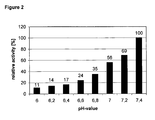
- the value reached at pH 7.4 was set as 100% and the relative activity for the other pH-values was calculated as is evident from figure 2.
- Figure 2 shows the relative activity of V. fluvialis ⁇ -TA in dependence from the given pH-value.
- FIG. 2 shows that at lower pH-values such as 6.0, 6.2 or 6.4 there is still considerable activity present, for instance 11% at pH 6.0.
- this result demonstrates that even at a low pH, it is possible to obtain a significant transaminase activity, allowing to react the substrates at a lower pH, which in turn allows to increase the conversion by using a PDC, which is sensitive to higher pH-values.
- Run 1 used the PDC of Zymomonas mobilis (wild-type cell extract)
- run 2 used the Zymobacter palmae (recombinant in E . coli)
- run 3 was a control without PDC, employing only the transaminase.
- the activities of both of the PDC's have been determined at pH 6 with an alcohol dehydrogenase assay and the same quantity of activity of the PDC's was used in the runs identified above.
- Table 3 gives the volumes of the used substance in ⁇ l. Each reaction run was carried out three times at pH-values 6.0, 6.4 and 7.0. The pH-value was adjusted by the buffer of the B3OP substrate solution. The activity of the PDC was about 2.5 units/ml at pH 7. The substrate and enzyme concentrations are also evident from table 3 below. After 10 minutes, 30 minutes, 60 minutes and 120 minutes a sample of 100 ⁇ l was taken and the reaction stopped by the addition of 100 ⁇ l 1 M NaOH. The quantification of the B3AP-concentration was done using CE (capillary electrophoresis).
- Table 4 below shows the conversion at different pH-values for the different PDC's. It is evident that the use of the PDC increases the conversion. It is also evident that the PDC from Z. palmae ( Zpa ) causes a somewhat higher conversion than the PDC from Z. mobilis (Zmo). It is also evident that at lower pH-values, such as 6.0 or 6.4, a remarkable conversion increase in the runs employing PDC's is to be observed, which is not to be seen in the PDC-free control. In all reaction runs it could be observed that after 120 minutes the conversion decreased.
- Example 4 Stability of B3AP in the presence of various reactants of an asymmetric synthesis reaction
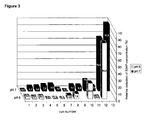
- the example was carried out at a pH of 6 and 7 (sodium phosphate buffer). Directly after reacting the substances being a first sample To was taken, and another sample, T 1 , after 3 hrs. After the extraction the amine concentration was determined with an internal standard ( ⁇ MBA) by CE. From the difference of the concentrations obtained, the %-decrease of the B3AP concentration was calculated (see figure 3 ).
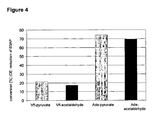
- B3AP was reacted with 2 mM pyruvate or 2 mM acetaldehyd (36 ⁇ l Alcaligenes denitrificans (Ade) or 6 ⁇ l Vibrio fluvialis (Vfl)- transaminase per 0,5 ⁇ l reaction volume, corresponding to 2 units/ ⁇ l transaminase was reacted for 30 minutes).
- Figure 4 shows the results. Accordingly, B3AP was converted to B3OP by both enzymes, both with pyruvate and acetaldehyde, without any significant differences.
- Example 6 Asymmetric synthesis of B3AP under reduced pressure at pH 6
- the reduced pressure was applied using a rotary evaporator (150 mBar).
- the measurement was done using CE.
- Figure 5 shows the conversion of B30P to B3AP over the time for various pressures. It is evident that the conversion is almost independent from the pressure applied.
- the conversion at a pressure of 150 mbar is, with regard to the maximal conversion reached, similar to the conversion at a pressure of 1000 mbar.
- Example 8 Influence of enzyme and co-substrate concentrations on the conversion of B3OP to B3AP
- reaction conditions are given in example 6, except that a pH of 7 was used and except if otherwise stated.
- Zymobacter palmae TA was used.
- Example 9 Influence of the alanine concentration on the asymmetric synthesis of B3AP
- Figure 8 shows the conversion of the asymmetric B3AP-synthesis at increased alanine concentrations.
- Figure 8 clearly shows that the conversion can reach 60 to 70%. It is evident that increasing the alanine concentration from 25 to 110 mM has a significant effect on the conversion from B3OP to B3AP and that a further increase up to 500 mM only slightly influences the conversion. The influence of PDC on the conversion decreases with increasing alanine concentration.
- Reaction conditions 1 ml final volume, 37 ⁇ l Vfl -transaminase, 5 mM B3OP, phosphate buffer pH 7.0.
- the L-alanine concentration was 110 mM.
- the measurements were taken by CE and ⁇ -MBA was used as internal standard.
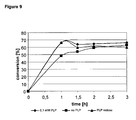
- Figure 9 shows the conversion over the time. There appears to be no significant influence on the maximal conversion due to the PLP addition in run b) compared to run a). The reaction without PLP appears to be slower, although it reached the same conversion as the other reactions. The addition of PLP in run b) causes a slightly greater reduction in the amine concentration as compared to the control run.
- Example 11 Asymmetric synthesis of B3AP with removal of acetaldehyde by the addition of nitrogen
- reaction solution contained a significant amount of protein, there was a strong tendency to the formation of foam.
- an antifoam A concentrate (Sigma, silicone-polymer) was added to the reaction run. The concentrate suppressed the foam generation to a large extent but could not inhibit it completely.
- antifoam concentrate inhibits the enzymes, a control run without the addition of nitrogen was supplemented with antifoam A.
- Figure 10 shows the calculated relative B3AP conversions.
- the control with antifoam A (N 2 -control: Vfl -TA, Zpa-PDC, antifoam, no nitrogen N 2 ) without nitrogen addition corresponds exactly to the reaction run without antifoam A ( Vfl -TA, ZpaPDC).
- the enzymes are not influenced by the addition of the antifoam concentrate.
- the run (run N 2 : Vfl -TA, Zpa-PDC, antifoam, N 2 ) treated with nitrogen showed an increased conversion after 60, 90 and 180 minutes.
- Example 12 Asymmetric B3AP synthesis under various conditions
- Figure 10 shows the conversion of B30P to B3AP for the above-identified reaction runs combining the Vfl -transaminase with each PDC.
- the run designated N2 is the run containing Vfl- transaminase and Zpa-PDC treated with nitrogen and antifoam A.
- the N2 control is a sample containing Vfl -transaminase, Zpa-PDC and antifoam A without nitrogen treatment. It is evident that there is a significant increase in conversion from the N2 control to the N2-sample due to the presence of nitrogen, which has been fed into the reaction solution. Thus, feeding nitrogen in gaseous form into the reaction medium significantly increases the conversion from B3OP to B3AP.
- Example 13 Asymmetric synthesis of B3AP in the presence of alcohol dehydrogenase (ADH)
- ADH can be used to convert the acetaldehyde to ethanol.
- the ADH used was the ADH from Saccharomyces cerevisae with an activity between 50 and 100 units/ml.
- the PDC-activity was 32 units/ml.
Landscapes
- Chemical & Material Sciences (AREA)
- Organic Chemistry (AREA)
- Life Sciences & Earth Sciences (AREA)
- Engineering & Computer Science (AREA)
- Zoology (AREA)
- Wood Science & Technology (AREA)
- Health & Medical Sciences (AREA)
- Genetics & Genomics (AREA)
- Bioinformatics & Cheminformatics (AREA)
- General Health & Medical Sciences (AREA)
- Biochemistry (AREA)
- General Engineering & Computer Science (AREA)
- Microbiology (AREA)
- Biotechnology (AREA)
- Chemical Kinetics & Catalysis (AREA)
- General Chemical & Material Sciences (AREA)
- Biomedical Technology (AREA)
- Medicinal Chemistry (AREA)
- Molecular Biology (AREA)
- Proteomics, Peptides & Aminoacids (AREA)
- Preparation Of Compounds By Using Micro-Organisms (AREA)
- Organic Low-Molecular-Weight Compounds And Preparation Thereof (AREA)
- Enzymes And Modification Thereof (AREA)
Abstract
Description
- The present invention relates to a process for the preparation of optically active chiral amines.
- Chiral amines play an important role in the pharmaceutical, agrochemical and chemical industry. They are frequently used as intermediates or synthons for the preparation of various physiologically, for instance pharmaceutically active substances, such as cephalosporine or pyrrolidine derivatives. In a great number of the various applications of chiral amines, only one particular optically active form, either the (R) or the (S) enantiomer has the desired physiological activity. Thus, there is a clear need to provide processes for the preparation of chiral amines in an optically active form.
- These needs are partially met by preparing chiral amines by crystallisation of diastereomeric salts through adding of chiral carboxylic acids (Breuer et al., Angewandte Chemie (2004) 116, 806-843). Other chemical methods use enantioselective synthesis by reducing pro-chiral precursors with C=N-double bonds.
- Furthermore, it is known to stereoselectively cleave racemates using various enzymes, such as proteases, amidases or lipases (Bornscheuer and Kazlauskas, Hydrolases in Organic Synthesis (2005), Wiley-VCH Weinheim). It is also known that specific transaminases, namely α-transaminases including α-amino acid aminotransferases, are suitable for the preparation of optically pure amino acids (Bartsch et al., Appl. Environm. Microbiol. (1996) 62, 3794-3799, Cho et al., Biotechnol. Bioeng. (2003) 83, 226-234,
JP 011 53084 A2 1998 JP 633 04986 A2 1988 EP 0 248 357 A2 - However, these prior art processes suffer from various disadvantages. Although the enzymatic processes usually employ in contrast to the classical methods favourable mild conditions and achieve a reasonable stereoselectivity, they regularly use enzymes, whose substrate specificity, enantioselectivity and/or conversion rates are not sufficiently high for industrially applicable processes. Furthermore, one of the most prominent drawbacks of using transaminases for the preparation of optically active amines is represented by the frequently observed substrate and product inhibition phenomena. It is therefore one of the objects of the present invention to provide an improved process for preparing optically active chiral amines, in particular a process with an improved substrate specificity, an improved enantioselectivity and in particular enabling a conversion of the educts of up to 100%.
- The present invention solves the technical problem underlying the present invention by the provision of a process for the preparation of an optically active chiral amine comprising a) providing an amino acceptor and an amino donor, b) reacting the amino acceptor and the amino donor with a transaminase, in particular (R)- or (S)-selective transaminase and c) obtaining the desired optically active chiral amine and an α-ketone by-product. According to a preferred embodiment of the present invention, in a subsequent further optional process step, the optically active chiral amine obtained in step c) is isolated and purified from the reaction mixture obtained in step c).
- The reaction of the present invention follows in principle the following scheme:

- Thus, the present invention provides a process for the asymmetric synthesis of chiral amines by using at least one transaminase for the transamination of an amino group from an amino donor to an amino acceptor, thereby forming the desired product. Depending on the enantiopreference of the specific transaminase used, an optically active chiral amine of the desired optical configuration, i.e. either the (R) or (S) enantiomer, is obtained. Thus, using in one embodiment of the present invention a (S)-selective-transaminase for the asymmetric synthesis generates the desired (S) enantiomer of the chiral amine while using in another embodiment of the present invention an (R)-selective-transaminase generates the desired (R)-enantiomer. In addition to the desired optically active amine, the reaction results in a ketone by-product, in particular an α-ketone by-product, from the used amino donor and possibly non-converted amino acceptor and amino donor.
- In the context of the present invention, a transaminase is a pyridoxalphosphate-dependent enzyme catalysing the transfer of amino groups. Transaminases are classified in E.C. 2.6.1.X. In a particularly preferred embodiment of the present invention, the transaminase is a (R)- or (S)-selective transaminase, particularly is in a preferred embodiment an ω-transaminase.
- In the context of the present invention a ω-transaminase is an enzyme preferably with the classification code E.C.2.6.1.18. These amino transaminases are characterised in that they mainly use amines as substrates. These enzymes are further characterised by exhibiting an equilibrium constant of ω-transaminase catalysed reactions which is greater than 1. ω- transaminases which may be used according to the present invention are described for instance in Iwasaki et al., Biotechnol. Lett. (2003) 25, 1843-1846, Shin et al., Biotechnol. Bioeng. (1997) 55, 348-358, Shin and Kim, Book of Abstracts, 217th ACS National Meeting, Anaheim, Calif., March 21-25, (1999) 180, Shin and Kim, Biosc. Biotechnol. Biochem. (2001) 65, 1782-1788 and Shin and Kim, Biotechnol. Bioeng. (1998) 60, 534-540.
- Thus, in a preferred embodiment of the present invention, the transaminase, in particular the ω-transaminase used in the present process is a transaminase, in particular an ω-transaminase obtained from Vibrio fluvialis, in particular from strain JS17. In a further preferred embodiment, the transaminase is from Alcaligenes denitrificans, in particular from strain Y2k-2. In a further preferred embodiment the transaminase is from Klebsiella pneumoniae, in particular from strain YS2F. In a further preferred embodiment the transaminase is from Bacillus thuringiensis, in particular from strain JS64. For the strain designations see Shin and Kim, 1998, above. Of course the present invention also understands under the term transaminase, in particular ω-transaminase, an extract of an organism, such as a microorganism or a cell, containing a transaminase, in particular an ω-transaminase, or a living or dead cell or microorganism itself comprising a transaminase, in particular an ω-transaminase. Such a microorganism or cell or extract or transaminase enzyme may be used in immobilised or non-immobilised form. The transaminase, in particular the ω-transaminase, may also be a recombinantly produced naturally occurring or genetically modified transaminase, in particular an ω-transaminase, which is coded partially or completely by a nucleic acid sequence or a derivative thereof contained in one of the above-identified organisms or being equivalent thereto.
- In the context of the present invention the term optically active chiral amine relates to the same subject-matter as the term enantiomerically active chiral amine. These terms in particular refer to a preparation which is essentially free, in an even more preferred embodiment free of the undesired enantiomer. Accordingly, an optically active chiral amine essentially comprises an excess of one enantiomer or even consists of only one enantiomer.
- In particular, in the context of the present invention, an optically active chiral amine has an optical purity of at least 70%, in particular more than 90% and at best >99%.
- In the present invention the optical purity is given in % excess of one enantiomer over the other enantiomer. Thus, the optical purity in % is the quotient of the difference between the (R) and the (S) enantiomer concentrations and the sum of the concentrations of both enantiomers (optical purity of A in % = ([A]-[B]): ([A]+[B]) x 100, wherein A and B represent the concentrations of the (R) and (S) enantiomers or vice versa).
- In the present invention it is preferred that the amino acceptor is converted to the desired chiral amine in a conversion of at least 40, 50, 60, 70, 80, 90, 95, in particular 100%. The concentrations for analysing the optical purity and the conversion can be determined for instance using gaschromatography (GC) or photo- or fluorimetric methods.
- In the context of the present invention an amino acceptor is a molecule capable of accepting an amino group transferred from an amino donor by a transaminase, in particular an ω-transaminase. In a particularly preferred embodiment of the present invention the amino acceptor contains a ketone functionality. In a particularly preferred embodiment of the present invention the amino acceptor is selected from the group consisting of phenylpyruvic acid, a salt thereof, pyruvic acid, a salt thereof, acetophenone, 2-ketoglutarate, 3-oxobutyrate, 2-butanone, 3-oxopyrrolidine (3-OP), 3-pyridylmethylketone (3-PMK), 3-oxobutyric acid ethyl ester (3-OBEE), 3-oxopentanoic acid methyl ester (3-OPME), N-1-boc-3-oxopiperidinone, N-1-boc-3-oxopyrrolidine (B3OP), 3-oxo-piperidine, alkyl-3-oxo-butonoates, methoxyacetone and 1-oxotetralone.
- In a particularly preferred embodiment the amino acceptor is B30P.
- In the context of the present invention an amino donor is a molecule capable of providing an amino group to an amino acceptor using a transaminase, in particular an ω-transaminase. In a particular preferred embodiment the amino donor is an amine or amino acid.
- In a particularly preferred embodiment the amino donor is selected from the group consisting of β-alanine, alanine, in particular D,L-alanine, L-alanine or D-alanine, α-methylbenzylamine (α-MBA), glutamate, phenylalanine, glycin, 3-aminobutyrate, isopropylamine, 2-aminobutane, γ-aminobutyrate and a salt, for instance a chloride, of any one thereof. In a particularly preferred embodiment the obtained ketone product may be phenylpyruvic acid, a salt thereof, pyruvic acid, a salt thereof, glyoxylic acid, a salt thereof, acetophenone, 2-ketoglutarate, acetone, 3-oxobutyrate, 2-butanone, 3-oxopyrrolidine (3-OP), 3-pyridylmethylketone (3-PMK), 3-oxobutyric acid ethyl ester (3-OBEE), 3-oxopentanoic acid methyl ester (3-OPME), N-1-boc-3-oxopiperidinone and N-1-boc-3-oxopyrrolidine (B3OP) or a salt, for instance a chloride, of any one thereof.
- In a particularly preferred embodiment the amino donor is alanine, in particular L-alanine.
- In a further preferred embodiment the present invention relates to a process for the preparation of an optically active chiral amine which is selected from the group of amines having an optically active amino group, in particular amines with alkylgroups, branched alkylgroups or arylalkylgroups. In particular, these amines, in particular mono- or bicyclic amines, are in particular amines of 5 to 6-membered cyclic or S-, O-, or N-substituted heterocyclic hydrocarbons or aromatic amines, in particular alkyl- or alkoxy-substituted aromatic amines. In a preferred embodiment, the obtained chiral amines are selected from the group consisting of phenylalanine, alanine, 3-aminopiperidine, alkyl-3-amino-butanoates, 3-aminopyrrolidine (3-AP), 3-pyridyl-1-ethylamine (3-PEA), N-1-boc-3-aminopyrrolidine (B3AP), 3-aminobutyric acid ethyl ester (3-ABEE), 3-aminopentanoic acid methyl ester (3-APME), α-methylbenzylamine (α-MBA), 1-aminotetraline, α-methyl-4-(3-pyridyl)-butanamine, glutamate, β-aminobutyrate, sec-butylamine, methoxyisopropylamine, derivatives of 3-aminopyrrolidine, 1-N-Boc-3-aminopiperidin, cephalosporine and derivatives of cephalosporine.
- In a particularly preferred embodiment the present invention therefore foresees reacting 3OP with an (S)- or (R)-selective transaminase and an amino donor to obtain optically active (S) or (R)-3AP.
- In a further preferred embodiment, the present invention foresees reacting 3-PMK with an (R)- or (S)-selective transaminase and an amino donor to obtain optically active (R) or (S) 3-PEA.
- In a further preferred embodiment of the present invention, the invention foresees reacting 3-OBEE with an (R)- or (S)-selective transaminase and an amino donor to obtain optically active (R) or (S) 3-ABEE.
- In a further preferred embodiment the invention foresees reacting 3-OPME with an (R)- or (S)-selective transaminase and an amino donor to obtain optically active (R) or (S) 3-APME.
- In a further preferred embodiment the invention foresees reacting B3OP with an (R)- or (S)-selective transaminase and an amino donor, in particular alanine, to obtain optically active (R) or (S) B3AP.
- In a particularly preferred embodiment the invention relates to a reaction between B3OP and an amino donor, in particular alanine, in the presence of a transaminase to obtain optically active B3AP and pyruvate, wherein the reaction is carried out at a pH from 5.0 to 9.5, preferably 6.0 to 7.0, in particular 6.0 to 6.9, for a time from 30 to 70 minutes, in particular 40 to 65 minutes, in particular 50 to 60 minutes.
- In a particularly preferred embodiment said transaminase is an (R)-selective transaminase. In a further preferred embodiment said transaminase is an (S)-selective transaminase.
- In a preferred embodiment, said reaction of B3OP with the amino donor, in particular alanine, is carried out in the presence of at least one pyruvate decarboxylase (PDC). In a further preferred embodiment said reaction of B3OP with the amino donor, in particular alanine, in the presence of at least one pyruvate decarboxylase, is carried out while simultaneously introducing gaseous nitrogen in the reaction mixture for the removal of the acetaldehyde obtained from the formed pyruvate by the action of the PDC.
- In a further preferred embodiment said reaction of B30P with the amino donor, in particular alanine, in the presence of at least one pyruvate decarboxylase is carried out in the presence of at least one alcohol dehydrogenase (ADH) for the removal of the acetaldehyde obtained from the formed pyruvate by the action of the PDC.
- In a further preferred embodiment said reaction of B30P with the amino donor, in particular alanine, in the presence of at least one pyruvate decarboxylase is carried out while simultaneously introducing gaseous nitrogen into the reaction mixture, wherein at least one alcohol dehydrogenase is present in the reaction medium to remove the acetaldehyde obtained from the formed pyruvate by the action of the PDC.
- In a further preferred embodiment of the present invention the invention foresees reacting acetophenone with an (R) or (S)-selective transaminase and an amino donor to obtain optically active (R) or (S) α-MBA.
- In a further preferred embodiment the present invention foresees reacting as an amino acceptor, in particular mono- or bicyclic, oxogroup-containing 5 to 6 membered cyclic or S-, O-, or N-substituted heterocyclic hydrocarbons or aromatics, in particular alkyl- or alkoxy-substituted aromatics with an amino donor and an (R) or (S)-selective transaminase to obtain optically active amines, in particular mono- or bicyclic amines, in particular amines of 5 to 6 membered cyclic or S-, O-, or N-substituted heterocyclic hydrocarbons or aromatic amines, in particular alkyl- or alkoxy-substituted aromatic amines, in particular in (S) or (R) form.
- In a particularly preferred embodiment of the present invention, the amino acceptor and the amino donor are reacted with the transaminase in aqueous medium, for example physiological buffer. In a particularly preferred embodiment the transamination reaction is carried out at a pH in the range from 5.0 to 9.5 or 5.0 to 9.0, in particular from 7 to 8,5. The invention foresees in a particularly preferred embodiment to react the amino acceptor and the amino donor at a pH-value from 6.0 to 7.0, preferably from 6.0 to 6.9.
- In a particular preferred embodiment, the reaction is carried out in a temperature range from 10 to 65°C, preferably 20 to 50°C, in particular 18 to 25°C, preferably room temperature or 34°C to 39°C, in particular 37°C. In a further preferred embodiment of the present invention the amino acceptor and the amino donor are provided in a molar ratio from 1:50 to 1:200, in particular from 1:50 to 1:100, in particular 1:100, in particular from 1:1 to 1:5, in particular from 1:1 to 1:2. In a preferred embodiment of the present invention the enzymatic activity may be from 1 to 20.000 µmol/min.
- In a further preferred embodiment the reaction is carried out for a reaction time of 30 to 70, preferably 40 to 65, in particular 50 to 60 minutes.
- In a particularly preferred embodiment, the present invention relates to a process for the preparation of an optically active chiral amine according to the above, that means according to which in a first process step a) an amino acceptor and an amino donor are provided, in a second process step b) the amino acceptor and the amino donor are reacted with at least one ω-transaminase, in a third process step c) an optically pure chiral amine and an α-ketone by-product are obtained, and wherein in a further process step d) the ketone by-product, in particular the α-ketone by-product, obtained in step c) is removed from the obtained reaction mixture, in particular removed by reaction with an enzyme, that means by enzymatic cleavage, in particular using an enzyme selected from the group consisting of a decarboxylase, a synthase or a dehydrogenase.
- In a particularly preferred embodiment, the ketone product, in particular pyruvate, obtained in step c) is removed by reaction with a pyruvate decarboxylase (PDC), for instance from Saccharomyces cerevisiae, Zymomonas mobilis or Zymobacter palmae, thereby preferably producing acetaldehyde and CO2.
- In a further preferred embodiment the invention relates to a process, wherein the ketone product obtained, in particular pyruvate, is removed by action of a PDC and wherein the acetaldehyde formed thereby is removed for instance by a chemical, enzymatic or physical treatment.
- In a further preferred embodiment the invention relates to a process, wherein the ketone product obtained, in particular pyruvate, is removed by action of a PDC and wherein the acetaldehyde formed thereby is removed for instance by feeding gaseous nitrogen into the reaction mixture, preferably by feeding said gaseous nitrogen continuously into the reaction mixture, to remove the acetaldehyde from the reaction mixture.
- In a further preferred embodiment the invention relates to a process, wherein the ketone product obtained, in particular pyruvate, is removed by action of a PDC and wherein the acetaldehyde formed thereby is removed by reacting the acetaldehyde with at least one alcohol dehydroxygenase (ADH) to remove the acetaldehyde from the reaction mixture and convert it to ethanol.
- In a further preferred embodiment the invention relates to a process, wherein the ketone product obtained, in particular pyruvate, is removed by action of a PDC and wherein the acetaldehyde formed thereby is removed by applying a reduced pressure to the reaction mixture.
- In a further preferred embodiment the invention relates to a process, wherein the ketone product obtained, in particular pyruvate, is removed by action of a PDC and wherein the acetaldehyde formed thereby is removed by chemical reactions.
- In a further preferred embodiment the invention relates to a process, wherein the ketone product obtained, in particular pyruvate, is removed by action of a PDC and wherein the acetaldehyde formed thereby is removed by feeding gaseous nitrogen into the reaction mixture, preferably by feeding said gaseous nitrogen continuously into the reaction mixture, and wherein additionally the acetaldehyde is reacted with at least one alcohol dehydroxygenase (ADH) to remove the acetaldehyde from the reaction mixture and convert it to ethanol.
- In a further preferred embodiment, the ketone product, in particular pyruvate, obtained in step c) is removed by reaction with a lactate dehydrogenase (LDH), for instance from Escherichia coli, thereby preferably producing L-lactate.
- In a further preferred embodiment the ketone product, in particular pyruvate, obtained in step c) is removed by reaction with an acetolactase synthase, thereby preferably producing acetolactate.
- In a further preferred embodiment of the present invention the ketone product, in particular pyruvate, obtained in step c) is continuously removed from the reaction mixture.
- These particularly preferred embodiments provide the advantage of obtaining a particularly high conversion rate, since the ketone product as by-product of the present process is removed from the equilibrium reaction. The reaction is forced in direction of the products, thereby providing with a high stereoselectivity a very high conversion into the desired products.
- The present invention also relates to processes for the preparation of physiologically active compounds or their precursors and/or intermediates in the production thereof, in particular selected from the group of 3-aminopyrrolidine derivatives, cephalosporine, derivatives of cephalosporine, heterocyclic boronic acids, L-dihydroxyphenylalanine (L-Dopa), α-methyldopa, D-phenylglycine, β-hydroxyphenylglycine, phosphinothricine, pyrimido derivatives and pyrrolidone derivatives, wherein any one of the above identified processes of the present invention is employed. In the context of the present invention, a physiologically active compound is a compound which is physiologically active either in plants, animals, humans, yeasts or microorganisms, such as protozoa, bacteria or viruses, i.e. interacts with the metabolism of the organism.
- Further preferred embodiments of the present invention are the subject matter of subclaims.
- The present invention is illustrated in more detail in the following examples and the accompanying figures.
- The accompanying figures illustrate the present invention.
-
Figure 1 shows a thin layer chromatogramm. -
Figure 2 shows the relative activity of V. fluvialis ω-TA in dependence from the pH-value. -
Figure 3 shows the relative reduction of the B3AP concentration for incubations with various substances. -
Figure 4 shows the relative reduction of the B3AP conversion in the presence of pyruvate and acetaldehyde. -
Figure 5 shows the conversion of B3OP to B3AP over the time for various pressures. -
Figure 6 shows the relative conversion of B3OP to B3AP in the presence of various PDC's. -
Figure 7 shows the effect of an increased alanine concentration and an increased PDC-concentration on asymmetric B3AP synthesis. -
Figure 8 shows the conversion of B3OP to B3AP at increased alanine concentrations. -
Figure 9 shows the relative PLP-dependent conversion of B3OP to B3AP. -
Figure 10 shows the relative conversion of B3OP to B3AP dependent upon N2-presence. -
Figure 11 shows the relative conversion of B3OP to B3AP in the presence of an ADH. - The asymmetric synthesis of B3AP was carried out in 1,5 ml reaction tubes. B3OP as amino acceptor was used in a concentration of 5 mM (7,5 µmol). The concentration of the used amino donor L-alanine was 5 mM. The reagents and reaction conditions used are evident from table 1 below.
Table 1: Reaction conditions for the asymmetric (S)-B3AP synthesis using (S)-w transaminase for transaminating the amino group from alanine to B3OP 1 2 3 4 5 6 B30P, 20 mM [µl] 375 375 375 375 375 375 D,L-Ala, 100 mM [µl] 150 26 mg D,L- Ala 150 150 150 150 TA7 / TA8 [µl] 18 111 18 111 111 18 111 18 111 18 111 LDH [µl] - - - - - 500 µl + 60 µl 250 mM NADHPDC1 [µl] - - 200 (15U) - - - PDC2 [µl] - - - 34 (20U) 34 (20U) - Buffer [µl] 957 864 1218 1125 664 923 830 923 830 397 304 - The buffer used was 50 mM sodium phosphate,
pH 7. TA7 designates the ω-transaminase from Vibrio fluvialis (Jülich Fine Chemicals, Germany). TA8 designates the w transaminase from Alcaligenes denitrificans (Jülich Fine Chemicals, Germany). As lactate dehydrogenase an extract of Escherichia coli was used. In addition, NADH was added to a final concentration of 10 mM. The concentration of pyruvate decarboxylase was varied. 1,5 units (20 µl) and 15 units (200 µl) of the pyruvate decarboxylase of Saccharomyces cerevisiae (PDC1) were used. 2 units (3,4 µl) and 20 units (34 µl) of the pyruvate decarboxylase of Zymomonas mobilis (PDC2) were used.Table 2: Conversion and optical purity obtained using TA8 for the asymmetric synthesis of B3AP. The calculations were based on GC-analysis (+/- 5%) Run Enzyme Conversion [%] % ees [%] (S)- enantiomer 1 TA7 or TA8 alone 1,3 99,4 2 Excess of Alanine (50-fold) 10,1 99,6 3 PDC Saccharomyces cerevisiae 4,6 99,5 4 PDC Zymomonas mobilis 34,0 99,6 5 PDC Zymomonas mobilis (72 hrs) 73,0 99,4 6 LDH Escherichia coli 66,5 99,9 - Referring now to table 2, above, it is evident that in each of the six runs using the ω-transaminase TA8, a very high degree of optical purity for the obtained (S)-B3AP could be achieved. It was also observed that independently from using either TA7 or TA8 the degree of conversion was only moderate, if the equilibrium of the reaction was not influenced (run 1). Using alanine in a 10-50-fold excess only slightly improved the conversion. In runs 3, 4, 5 and 6 the ketone product of the reaction, that means pyruvate, was, during the transamination reaction, removed from the equilibrium reaction. The use of TA8 together with lactate dehydrogenase from E. coli (run 6) led to an extremely improved degree of conversion while maintaining and even improving the enantioselectivity. Essentially the same holds valid for the enantioselectivity provided by the pyruvate decarboxylase from Zymomonas mobilis (runs 3 to 5). PDC1, however, only slightly increased the conversion, PDC2 moderately increased the conversion rate (run 4) if reacted for 24 hrs while in a 72 hr reaction (run 5) the conversion was drastically improved. All the reactions took place for 24 hrs except for
run 5, which took place for 72 hrs. - The figure shows the thin layer chromatogram of reactions carried out according to table 1. "A" designates the ω-transaminase from Alcaligenis denitrificans while "V" the w-transaminase from Vibrio fluvialis. "K" designates run 1 using TA7 or TA8 alone (run 1). PDC1 designates the run with Saccharomyses cerevisiae pyruvate decarboxylase (run 3), LDH the run with lactate dehydrogenase from Escherichia coli (run 6) and PDC2 the run with Zymomonas mobilis pyruvate decarboxylase (after 24 and 72 hrs) (
run 4 and 5). Thus, the results clearly show that the production of (S)-B3AP from the pro-chiral ketone B30P could be carried out with a very high enantioselectivity. Using the ω-transaminases as the sole enzymes in the preparation process, however, leads to a moderate conversion. This moderate conversion rate could be greatly improved by removing pyruvate from the equilibrium, in particular using lactate dehydrogenase or pyruvate decarboxylase. Using pyruvate decarboxylase has inter alia the advantage that no co-factor recycling (NADH) was necessary. It further advantageously provides the enzymatic removal of pyruvate with PDC and thereby provides the additional advantage of removing or avoiding product inhibition (product ketone) and pulling the reaction equilibrium to the right achieving higher conversion (ideal case 100%). - The synthesis was carried out in a quarz cuvette using 50
µl 100 mM pyruvate, 4 units/ml of ω-TA Vibrio fluvialis (in the following also Vfl) (12 µl) and 388 µl of sodium phosphate buffer, 50 mM with pH-variations from pH 6.0 to pH 7.4 in 0,2 steps. The reaction was started with 50µl 100 mM (S)-αMBA as amino donor and the increase in absorption was measured at 250 to 260 nm. The increase in absorption is due to the acetophenone formed. The other substrates only insignificantly contribute to the absorption so that the velocity of the reaction can be determined by measuring the absorption of acetophenone. The value reached at pH 7.4 was set as 100% and the relative activity for the other pH-values was calculated as is evident fromfigure 2. Figure 2 shows the relative activity of V. fluvialis ω-TA in dependence from the given pH-value. -
Figure 2 shows that at lower pH-values such as 6.0, 6.2 or 6.4 there is still considerable activity present, forinstance 11% at pH 6.0. Thus, this result demonstrates that even at a low pH, it is possible to obtain a significant transaminase activity, allowing to react the substrates at a lower pH, which in turn allows to increase the conversion by using a PDC, which is sensitive to higher pH-values. - In this example, the asymmetric synthesis of B3AP from alanine and B3OP is shown in the presence and absence of a pyruvate decarboxylase (PDC).
- For each pH-value 6.0, 6.4 and 7.0 three runs of experiments were conducted.
Run 1 used the PDC of Zymomonas mobilis (wild-type cell extract),run 2 used the Zymobacter palmae (recombinant in E. coli) andrun 3 was a control without PDC, employing only the transaminase. To obtain comparable results, the activities of both of the PDC's have been determined atpH 6 with an alcohol dehydrogenase assay and the same quantity of activity of the PDC's was used in the runs identified above. - Table 3 gives the volumes of the used substance in µl. Each reaction run was carried out three times at pH-values 6.0, 6.4 and 7.0. The pH-value was adjusted by the buffer of the B3OP substrate solution. The activity of the PDC was about 2.5 units/ml at
pH 7. The substrate and enzyme concentrations are also evident from table 3 below. After 10 minutes, 30 minutes, 60 minutes and 120 minutes a sample of 100 µl was taken and the reaction stopped by the addition of 100 µl 1 M NaOH. The quantification of the B3AP-concentration was done using CE (capillary electrophoresis).Table 3 Run 1Run 2Run 310 mM B3OP in 100 mM buffer of corresponding pH- value 500 500 500 400 mM D,L- alanine 25 25 25 PDC Z. mobilis 290 - - PDC Zb. palmae - 18,32 - V. fluvialis ω-TA at pH 21,4 21,4 21,4 V. fluvialis ω-TA at pH 72,3 72,3 72,3 V. fluvialis ω-TA at pH 110 110 110 4 mM TPP 25 25 25 4 mM PLP 25 25 25 40 mM MgCl 225 25 25 Water ad 1000 µl - Table 4 below shows the conversion at different pH-values for the different PDC's. It is evident that the use of the PDC increases the conversion. It is also evident that the PDC from Z. palmae (Zpa) causes a somewhat higher conversion than the PDC from Z. mobilis (Zmo). It is also evident that at lower pH-values, such as 6.0 or 6.4, a remarkable conversion increase in the runs employing PDC's is to be observed, which is not to be seen in the PDC-free control. In all reaction runs it could be observed that after 120 minutes the conversion decreased.
Table 4 Conversion Run 1 (Zmo) Run 2 (Zpa) Run 3 (control) Time (min) pH 6pH pH 7pH 6pH pH 7pH 6pH pH 710 7,5 5,5 2,4 12,1 9,8 4,9 2,5 2,4 2,0 30 11,4 14,2 9,6 16,0 17,8 15,2 5,1 4,8 4,6 60 8,3 n.d. 12,4 11,0 n.d. 16,3 7,0 n.d. n.d. n.d.= not determined - To show the stability of B3AP in the presence of various reactants incubations of 1 mM B3AP were conducted in a reaction tube for 3hrs in the presence of various substances as listed in table 5 below.
- The example was carried out at a pH of 6 and 7 (sodium phosphate buffer). Directly after reacting the substances being a first sample To was taken, and another sample, T1, after 3 hrs. After the extraction the amine concentration was determined with an internal standard (αMBA) by CE. From the difference of the concentrations obtained, the %-decrease of the B3AP concentration was calculated (see
figure 3 ).Table 5 1 mM B3AP and: Run Reactants 1 50 mM Na-P- buffer 2 5 mM B30P 3 10 mM D,L- alanin 4 cofactors (0,1 mM PLP, TPP, 5 mM Mg) 5 cofactors + B30P + alanine 6 145 µl Z.mobilis cell extract (50 % glycerine) 7 10 µl E.coli cell extract (Zpa PDC recombinant) 8 55 µl / 11µl Vfl-TA (pH6/7) 9 50 µl Ade- TA 10 Vfl-TA+B3OP+ cofactors 11 1 mM acetaldehyde 12 Vfl-TA + acetaldehyde 13 Ade-TA + acetaldehyde - From
figure 3 it is evident that the different reactants do not significantly affect the B3AP-concentration (runs 1 to 9). Reaction runs 11 to 13 show the influence of acetaldehyde. Fromrun 11 it is evident that in the absence of a transaminase there is no reduction in the B3AP concentration, while in the presence of a transaminase and acetaldehyde a strong reduction in B3AP-concentration can be observed. Acetaldehyde functions in the transaminase reaction as an amino acceptor, such as pyruvate, and obviously leads to a reduction in B3AP concentration. - In this example the transaminase activity of V. fluvialis and A. denitrificans ω-TA for the substrates B3AP and pyruvate and for B3AP and acetaldehyde is shown.
- 2 mM B3AP was reacted with 2 mM pyruvate or 2 mM acetaldehyd (36 µl Alcaligenes denitrificans (Ade) or 6 µl Vibrio fluvialis (Vfl)-transaminase per 0,5 µl reaction volume, corresponding to 2 units/µl transaminase was reacted for 30 minutes).
Figure 4 shows the results. Accordingly, B3AP was converted to B3OP by both enzymes, both with pyruvate and acetaldehyde, without any significant differences. - In this example, a reduced pressure was applied to the reaction mixture for an asymmetric synthesis reaction to form B3AP. As a control, the same reaction was carried out under normal pressure and without PDC.
-
- Final volume: 1,5 ml
- 50 mM sodium phosphate buffer,
pH 6 - 300 µl Vibrio fluvialis-transaminase
- 60 µl Zpa-PDC (corresponds to 8 units/ml at pH 7)
- 5 mM B3OP
- 10 mM D,L-alanine
- 0,1 mM TPP, PLP
- 5 mM MgCl2
- The reduced pressure was applied using a rotary evaporator (150 mBar). The measurement was done using CE.
-
Figure 5 shows the conversion of B30P to B3AP over the time for various pressures. It is evident that the conversion is almost independent from the pressure applied. The conversion at a pressure of 150 mbar is, with regard to the maximal conversion reached, similar to the conversion at a pressure of 1000 mbar. - In this example, three different pyruvate decarboxylases were used for the asymmetric synthesis of B3AP. The reaction conditions correspond to those of example 6, except that a pH of 7 was used. PDC's from Z. mobilis, Z. palmae and a PDC from Biocatalytics (catalogue no. PDC-101) were used. The activities of the PDC's in the ADH-assay were identical (1,6 units/ml).
-
Figure 6 shows that all three PDC's essentially result in comparable conversions. - In this example the influence of the concentration of PDC on the conversion of B30P to B3AP using alanine as amino donor is shown. Furthermore, the influence of the alanine concentration on the conversion of B3OP to B3AP is shown.
- The reaction conditions are given in example 6, except that a pH of 7 was used and except if otherwise stated. Zymobacter palmae TA was used.
- As is evident from
figure 7 , in a reaction without PDC a 5-fold increase of the alanine concentration from 5 mM to 25 mM results in a duplication of the conversion (12% in contrast to 5.3% conversion after 2 hrs). In the presence of PDC, the conversion increases at a 5-fold alanine excess to the duplicate (30% in contrast to 17% after 90 minutes). In case the amount of PDC is increased at the usual alanine concentration from 1,6 units/ml to 50 units/ml, the conversion is also increased, however, only by a factor < 2 (29% in contrast to 17% after 40 minutes). - In a further run of experiments, the influence of a combined alanine excess and a PDC excess was shown, both at a pH of 6 and 7. The reaction is faster at a pH of 6, whereas after reaching a conversion of 49%, the B3AP concentration also decreases faster. At a pH of 7 the conversion increased up to 56%.
- In four reactions, alanine concentrations of 5 mM, 25 mM, 110 mM, 300 mM and 500 mM were used. For each run, one control without PDC and one reaction with PDC was carried out. The pH-value was adjusted to pH 7.0. Samples were taken every half hour for a reaction time of 3 hours. The reaction times for the conversions given in
figure 8 were for 5mM 40 minutes, for 25mM 60 minutes and for 110 to 500mM 90 minutes. -
Figure 8 shows the conversion of the asymmetric B3AP-synthesis at increased alanine concentrations. -
Figure 8 clearly shows that the conversion can reach 60 to 70%. It is evident that increasing the alanine concentration from 25 to 110 mM has a significant effect on the conversion from B3OP to B3AP and that a further increase up to 500 mM only slightly influences the conversion. The influence of PDC on the conversion decreases with increasing alanine concentration. - From the data of the control reaction, the equilibrium constant of the B3AP synthesis was calculated as follows:
- [B3AP] = [Pyr]
- [B3OP] = c 0,B3OP - [B3AP] and
- [Ala] = c 0,Ala - [B3AP]
- Thus, using the measured B3AP concentration, the equilibrium constant was calculated as:

Table 6 c0, [Ala] [B3AP] K · 10-3 5 5 3,2 25 12 3,1 110 24 3,5 300 35 3,2 500 40 2,8 Mean of K: 3,1 - Table 6 shows the calculated values. Thus the equilibrium constant for the reaction with B3AP is 3,1 x 10⁻³. Thus, the substrate B3OP is a suitable substrate for the asymmetric synthesis in contrast to other ketones.
- In this example, the influence of PLP (pyridoxal-5'-phosphate) on the conversion of B3OP to B3AP is shown. The following three reaction runs have been examined.
- a)
Run 1 using 0,1 mM PLP without addition of further PLP. - b) In
run 2 PLP was added during the reaction as soon as the yellow colour, which is due to the presence of PLP in the reaction medium, has faded. For this purpose, 1 to 2 µl of a saturated PLP solution is added, thereby regaining a strong yellow colour. The influence on the amine concentration through this slight increase in volume is considered to be below 1% and can therefore be neglected. - c) No PLP present and no PLP added.
- Reaction conditions: 1 ml final volume, 37 µl Vfl-transaminase, 5 mM B3OP, phosphate buffer pH 7.0. The L-alanine concentration was 110 mM. The measurements were taken by CE and α-MBA was used as internal standard.
-
Figure 9 shows the conversion over the time. There appears to be no significant influence on the maximal conversion due to the PLP addition in run b) compared to run a). The reaction without PLP appears to be slower, although it reached the same conversion as the other reactions. The addition of PLP in run b) causes a slightly greater reduction in the amine concentration as compared to the control run. - The following example details one way to improve the conversion of the asymmetric synthesis of B3AP by the removal of acetaldehyde.
- Substrates:
- 5 mM B3OP
- 500 mM L-alanine
- 32 U/ml Zpa-PDC
- 37 µl/ml Vfl-transaminase
- Sodium
phosphate buffer pH - 0,1 mM PLP and TPP (thiamine diphosphate)
- 5 mM MgCl2
- Since the reaction solution contained a significant amount of protein, there was a strong tendency to the formation of foam. To suppress said foaming, 0,6 µl of an antifoam A concentrate (Sigma, silicone-polymer) was added to the reaction run. The concentrate suppressed the foam generation to a large extent but could not inhibit it completely. To exclude that said antifoam concentrate inhibits the enzymes, a control run without the addition of nitrogen was supplemented with antifoam A.
- Since the addition of dry nitrogen led to an evaporation of water from the reaction solution, the nitrogen was wetted.
-
Figure 10 shows the calculated relative B3AP conversions. The control with antifoam A (N2-control: Vfl-TA, Zpa-PDC, antifoam, no nitrogen N2) without nitrogen addition corresponds exactly to the reaction run without antifoam A (Vfl-TA, ZpaPDC). Thus, the enzymes are not influenced by the addition of the antifoam concentrate. The run (run N2: Vfl-TA, Zpa-PDC, antifoam, N2) treated with nitrogen showed an increased conversion after 60, 90 and 180 minutes. - Reaction conditions:
- Final volume: 1 ml
- 37 µl Vfl-transaminase
- 32 units/ml Zpa-PDC or Biocatalytics PDC or 3,2 units/ml Zmo PDC
- 5 mM B30P
- 500 mM L-alanine
-
Cofactors -
pH 7, sodium phosphate -
Figure 10 shows the conversion of B30P to B3AP for the above-identified reaction runs combining the Vfl-transaminase with each PDC. - In
figure 10 the run designated N2 is the run containing Vfl-transaminase and Zpa-PDC treated with nitrogen and antifoam A. The N2 control is a sample containing Vfl-transaminase, Zpa-PDC and antifoam A without nitrogen treatment. It is evident that there is a significant increase in conversion from the N2 control to the N2-sample due to the presence of nitrogen, which has been fed into the reaction solution. Thus, feeding nitrogen in gaseous form into the reaction medium significantly increases the conversion from B3OP to B3AP. - To remove the acetaldehyde produced by the PDC reaction from the reaction mixture, ADH can be used to convert the acetaldehyde to ethanol.
- Reaction conditions:
- 110 mM L-alanine
- 5 mM B30P
- 37 µl/ml Vfl-transaminase
- 32 units/ml Zpa PDC
- 0,1 mM PLP and TPP
- 5 mM MgCl2
- Sodium phosphate buffer,
pH 7 - The following reaction runs are shown:
- Reaction run 1: reaction with PDC and transaminase
- Reaction run 2: reaction with PDC and transaminase with 5 mM ethanol (final concentration) and NADH-addition
- Reaction run 3: reaction with PDC, ADH and NADH
- The ADH used was the ADH from Saccharomyces cerevisae with an activity between 50 and 100 units/ml. The PDC-activity was 32 units/ml.
- At the beginning of the reaction absolute ethanol has been added to
reaction run 2 in a final concentration of 5 mM. At the beginning of thereaction 5 µmol NADH were added to the reaction runs 2 and 3 corresponding to a final concentration of 5 mM NADH. After 10 minutes each, a further addition of 2,4 µmol NADH (4 µl of a 0,6 M NADH-solution in 50 mM phosphate buffer,pH 8,5) was added. The NADH solution was stored in ice and prepared immediately before use. - The results are given in
figure 11 and table 5. The effect of the ADH is clearly evident. The conversion increases up to approximately 90%.Control run 2 without ADH and 5 mM ethanol only slightly deviates fromcontrol run 1. Thus, the addition of ADH greatly increases the conversion in the asymmetric synthesis of B3AP from B30P.
Claims (16)
- A process for the preparation of an optically active chiral 3-aminopyrrolidine (3-AP) or an optically active chiral N-1-boc-3-aminopyrrolidine (B3-AP) comprising:a) providing 3-oxopyrrolidine (3-OP) or N-1-boc-3-oxopyrrolidine (B3OP) as amino acceptor and an amino donor,b) reacting the amino acceptor and the amino donor with a (R)- or (S)-selective transaminase andc) obtaining the desired optically active chiral 3-AP or the optically active chiral B3AP and an alpha-ketone by-product.
- The process according to claim 1, wherein the amino donor is selected from the group consisting of amines or amino acids, in particular from β-alanine, alanine, α-methylbenzylamine (α-MBA), glutamate, phenylalanine and γ-aminobutyrate, glycin, 3-aminobutyrate, isopropylamine, 2-aminobutane or a salt, for instance a chloride, of any one thereof.
- The process according to any one of the preceding claims, wherein the ω-transaminase is from Vibrio fluvialis, Alcaligenes denitrificans, Klebsiella pneumoniae or Bacillus thuringiensis.
- The process according to any one of the preceding claims, wherein the ketone by-product obtained in step c) is pyruvate.
- The process according to any one of the preceding claims, wherein the ketone by-product obtained in step c) is in a further process step d) removed from the reaction mixture by reaction with at least one enzyme, preferably a decarboxylase, a synthetase or a dehydrogenase.
- The process according to claim 5, wherein the enzyme is a pyruvate decarboxylase (PDC).
- The process according to claim 5, wherein the enzyme is a lactate dehydrogenase (LDH) or an acetolactate synthase.
- The process according to claim 6, wherein the acetaldehyde formed by the action of the PDC is removed.
- The process according to claim 8, where the acetaldehyde is removed by reaction with at least one enzyme, preferably wherein the enzyme is an alcohol dehydrogenase.
- The process according to claim 8, wherein the acetaldehyde is removed by feeding gaseous nitrogen into the reaction mixture or by applying a reduced pressure to the reaction mixture or by chemical methods.
- The process according to any one of the preceding claims, wherein the optically active chiral amine obtained in step c) or d) is removed from the reaction mixture obtained in step c) or d).
- The process according to any one of the preceding claims, wherein the process is carried out in a reaction mixture having a pH from 5.0 to 9.5, preferably 6,0 to 7,0, preferably 6.0 to 6.9.
- The process according to any one of the preceding claims, wherein the process is carried out for a reaction time of 40 to 70 minutes.
- The process according to any one of the preceding claims, wherein the amino donor is alanine.
- The process according to any one of the preceding claims 6 or 14, wherein the acetaldehyde formed by the reaction of the PDC is removed by feeding gaseous nitrogen (N2) into the reaction mixture.
- The process according to any one of the preceding claims 6 or 14, wherein the reaction is carried out in the presence of at least one pyruvate decarboxylase and at least one alcohol dehydrogenase or wherein the reaction is carried out in the presence of at least one pyruvate decarboxylase, at least one alcohol dehydrogenase and additionally in the presence of gaseous nitrogen (N2).
Priority Applications (1)
| Application Number | Priority Date | Filing Date | Title |
|---|---|---|---|
| EP10002779.6A EP2202317B1 (en) | 2006-02-13 | 2007-02-13 | Process for the preparation of optically active chiral aminopyrrolidines (3-ap, b3-ap) |
Applications Claiming Priority (3)
| Application Number | Priority Date | Filing Date | Title |
|---|---|---|---|
| EP06002859A EP1818411A1 (en) | 2006-02-13 | 2006-02-13 | Process for the preparation of optically active chiral amines |
| EP07711521A EP1987152B1 (en) | 2006-02-13 | 2007-02-13 | Process for the preparation of optically active chiral amines |
| EP10002779.6A EP2202317B1 (en) | 2006-02-13 | 2007-02-13 | Process for the preparation of optically active chiral aminopyrrolidines (3-ap, b3-ap) |
Related Parent Applications (2)
| Application Number | Title | Priority Date | Filing Date |
|---|---|---|---|
| EP07711521A Division EP1987152B1 (en) | 2006-02-13 | 2007-02-13 | Process for the preparation of optically active chiral amines |
| EP07711521.0 Division | 2007-02-13 |
Publications (2)
| Publication Number | Publication Date |
|---|---|
| EP2202317A1 true EP2202317A1 (en) | 2010-06-30 |
| EP2202317B1 EP2202317B1 (en) | 2017-03-01 |
Family
ID=36686005
Family Applications (4)
| Application Number | Title | Priority Date | Filing Date |
|---|---|---|---|
| EP06002859A Withdrawn EP1818411A1 (en) | 2006-02-13 | 2006-02-13 | Process for the preparation of optically active chiral amines |
| EP10002779.6A Not-in-force EP2202317B1 (en) | 2006-02-13 | 2007-02-13 | Process for the preparation of optically active chiral aminopyrrolidines (3-ap, b3-ap) |
| EP07711521A Not-in-force EP1987152B1 (en) | 2006-02-13 | 2007-02-13 | Process for the preparation of optically active chiral amines |
| EP10002780.4A Active EP2202318B1 (en) | 2006-02-13 | 2007-02-13 | Process for the preparation of an optically active chiral amine |
Family Applications Before (1)
| Application Number | Title | Priority Date | Filing Date |
|---|---|---|---|
| EP06002859A Withdrawn EP1818411A1 (en) | 2006-02-13 | 2006-02-13 | Process for the preparation of optically active chiral amines |
Family Applications After (2)
| Application Number | Title | Priority Date | Filing Date |
|---|---|---|---|
| EP07711521A Not-in-force EP1987152B1 (en) | 2006-02-13 | 2007-02-13 | Process for the preparation of optically active chiral amines |
| EP10002780.4A Active EP2202318B1 (en) | 2006-02-13 | 2007-02-13 | Process for the preparation of an optically active chiral amine |
Country Status (17)
| Country | Link |
|---|---|
| US (2) | US9074228B2 (en) |
| EP (4) | EP1818411A1 (en) |
| JP (2) | JP5430945B2 (en) |
| KR (1) | KR101294499B1 (en) |
| CN (1) | CN101384723B (en) |
| AT (1) | ATE469233T1 (en) |
| AU (1) | AU2007214717B2 (en) |
| BR (1) | BRPI0707454A2 (en) |
| CA (1) | CA2637821A1 (en) |
| DE (1) | DE602007006765D1 (en) |
| DK (1) | DK1987152T3 (en) |
| EA (1) | EA017070B1 (en) |
| ES (3) | ES2345734T3 (en) |
| IL (3) | IL192637A (en) |
| MX (1) | MX2008010416A (en) |
| PT (1) | PT1987152E (en) |
| WO (1) | WO2007093372A1 (en) |
Families Citing this family (36)
| Publication number | Priority date | Publication date | Assignee | Title |
|---|---|---|---|---|
| EP1818411A1 (en) * | 2006-02-13 | 2007-08-15 | Lonza AG | Process for the preparation of optically active chiral amines |
| US8168412B2 (en) | 2006-05-29 | 2012-05-01 | Kaneka Corporation | Method for producing optically-active amine compound, recombinant vector, and transformant containing the vector |
| TWI433674B (en) | 2006-12-28 | 2014-04-11 | Infinity Discovery Inc | Cyclopamine analogs |
| DE102007042600A1 (en) | 2007-09-07 | 2009-03-12 | Evonik Degussa Gmbh | Process for the preparation of enantiomerically enriched amines |
| DE102007060705A1 (en) * | 2007-12-17 | 2009-06-18 | Evonik Degussa Gmbh | ω-aminocarboxylic acids or their lactams, producing, recombinant cells |
| WO2009086451A1 (en) | 2007-12-27 | 2009-07-09 | Infinity Pharmaceuticals, Inc. | Methods for stereoselective reduction |
| HUE036104T2 (en) | 2009-01-08 | 2018-06-28 | Codexis Inc | Transaminase polypeptides |
| JP5707344B2 (en) | 2009-02-26 | 2015-04-30 | コデクシス, インコーポレイテッド | Transaminase biocatalyst |
| CN102421748B (en) | 2009-03-23 | 2014-10-08 | 阿米洛吉斯有限公司 | Method for obtaining optically pure amino acids |
| CN102597226B (en) | 2009-06-22 | 2015-08-19 | 科德克希思公司 | Transamination reaction |
| CA2769795C (en) * | 2009-08-05 | 2020-01-07 | Infinity Pharmaceuticals, Inc. | Enzymatic transamination of cyclopamine analogs |
| EP2862938A3 (en) | 2009-09-02 | 2015-07-15 | Lonza AG | A process for the identification and preparation of a (R)-specific omega-transaminase |
| DK2582799T3 (en) | 2010-06-17 | 2018-02-12 | Codexis Inc | BIOCATALATORS AND PROCEDURES FOR THE SYNTHESIS OF (S) -3- (1-AMINOETHYL) -PHENOL |
| US8932836B2 (en) | 2010-08-16 | 2015-01-13 | Codexis, Inc. | Biocatalysts and methods for the synthesis of (1R,2R)-2-(3,4-dimethoxyphenethoxy)cyclohexanamine |
| US9376447B2 (en) | 2010-09-14 | 2016-06-28 | Infinity Pharmaceuticals, Inc. | Transfer hydrogenation of cyclopamine analogs |
| CN103534350B (en) | 2010-09-28 | 2016-03-09 | 株式会社钟化 | Aminotransferases exhibiting high activity against glutamic acid, genes encoding the enzymes, and their utilization methods |
| CN103534353B (en) | 2011-03-11 | 2016-08-17 | 株式会社钟化 | Modification type aminopherase, its gene and utilize their manufacture method of optical activity amino-compound |
| KR101479718B1 (en) * | 2012-07-06 | 2015-01-08 | 연세대학교 산학협력단 | Method for production enantiopure amino acids using ω-transaminase with cosubstrate recycling |
| WO2014060571A1 (en) * | 2012-10-18 | 2014-04-24 | Sandoz Ag | A process for preparing indoline derivatives |
| US9777301B2 (en) | 2012-12-13 | 2017-10-03 | Industry-Academic Cooperation Foundation, Yonsei University | Method for producing optically active amine compounds by deracemization |
| KR101493311B1 (en) * | 2012-12-13 | 2015-02-16 | 연세대학교 산학협력단 | Preparation method of optically active amines and homoalanine |
| KR101479717B1 (en) * | 2013-02-27 | 2015-01-08 | 연세대학교 산학협력단 | One-pot production method of Enantiopure alkylamine and arylalkylamine of opposite chirality catalyzed by transaminase |
| WO2015078267A1 (en) * | 2013-11-26 | 2015-06-04 | 凯莱英医药集团(天津)股份有限公司 | Transaminase and use thereof |
| CN103865964A (en) * | 2014-03-14 | 2014-06-18 | 上海朴颐化学科技有限公司 | Method for synthesizing (R)-3-amino-piperidine by adopting transaminase method |
| BR112017026103B1 (en) | 2015-06-04 | 2023-10-03 | Sol-Gel Technologies Ltd | TOPICAL COMPOSITIONS WITH HEDGEHOG INHIBITOR COMPOUND, TOPICAL DELIVERY SYSTEM AND THEIR USES |
| CN105112468B (en) * | 2015-10-14 | 2019-01-08 | 厦门大学 | A kind of method of multienzyme couple system preparation Chiral Amine |
| CN105200089B (en) * | 2015-10-15 | 2018-09-11 | 江苏暨明医药科技有限公司 | (S) -1- tertbutyloxycarbonyls -3- hydroxy piperidines preparation method and its device |
| MA43711A (en) | 2016-03-02 | 2018-11-28 | Agrimetis Llc | L-GLUFOSINATE PRODUCTION PROCESSES |
| CN111349667B (en) * | 2016-11-01 | 2022-05-06 | 凯莱英医药集团(天津)股份有限公司 | A kind of preparation method of chiral amino heterocyclic compound and derivative thereof |
| WO2018207888A1 (en) * | 2017-05-10 | 2018-11-15 | 株式会社カネカ | Production method for ramelteon |
| CN107805648B (en) * | 2017-10-10 | 2020-09-11 | 凯莱英生命科学技术(天津)有限公司 | Method for preparing amine compound with multiple chiral centers |
| US12559777B2 (en) | 2018-09-05 | 2026-02-24 | Basf Se | Methods for improving yields of L-glufosinate |
| CN109370998B (en) * | 2018-11-30 | 2020-08-04 | 江南大学 | Omega-transaminase mutant I215F with improved catalytic efficiency |
| CN110724675B (en) * | 2019-10-31 | 2021-02-02 | 宁波酶赛生物工程有限公司 | Transaminase catalyst and method for synthesizing (R) -1-tert-butoxycarbonyl-3-aminopiperidine by enzyme method |
| CN112626142B (en) * | 2020-12-17 | 2022-10-18 | 永农生物科学有限公司 | Method for preparing L-glufosinate-ammonium by biological multi-enzyme coupling method |
| CN114657164B (en) * | 2020-12-17 | 2024-04-09 | 永农生物科学有限公司 | (S)-transaminase and its application |
Citations (3)
| Publication number | Priority date | Publication date | Assignee | Title |
|---|---|---|---|---|
| EP0248357A2 (en) | 1986-06-04 | 1987-12-09 | Hoechst Aktiengesellschaft | Process for the preparation of L-phosphinothricine by transamination |
| JPS63304986A (en) | 1987-06-04 | 1988-12-13 | Daicel Chem Ind Ltd | Plasmid |
| JPH01153084A (en) | 1987-12-10 | 1989-06-15 | Tanabe Seiyaku Co Ltd | Novel microorganism and production of l-amino acid using said microorganism |
Family Cites Families (17)
| Publication number | Priority date | Publication date | Assignee | Title |
|---|---|---|---|---|
| DE3482982D1 (en) | 1983-09-01 | 1990-09-20 | Genetics Inst | PRODUCTION OF L-AMINO ACIDS BY TRANSAMINATION. |
| US5424202A (en) | 1988-08-31 | 1995-06-13 | The University Of Florida | Ethanol production by recombinant hosts |
| US4950606A (en) * | 1989-06-22 | 1990-08-21 | Celgene Corporation | Enantiomeric enrichment and stereoselective synthesis of chiral amines |
| US5300437A (en) * | 1989-06-22 | 1994-04-05 | Celgene Corporation | Enantiomeric enrichment and stereoselective synthesis of chiral amines |
| US6197558B1 (en) | 1997-05-19 | 2001-03-06 | Nsc Technologies | Transaminase biotransformation process |
| IL125658A0 (en) | 1997-08-18 | 1999-04-11 | Hoffmann La Roche | Ccr-3 receptor antagonists |
| ATE295424T1 (en) * | 1998-03-11 | 2005-05-15 | Celgro | IMPROVEMENT OF ENZYMATIC SYNTHESIS OF CHIRAL AMINES |
| DE19919848A1 (en) * | 1999-04-30 | 2000-11-02 | Aventis Cropscience Gmbh | Process for the preparation of L-phosphinothricin by enzymatic transamination with aspartate |
| BR0114477A (en) * | 2000-10-06 | 2004-01-13 | Elsworth Biotech Ltd | Ethanol production |
| US6576794B2 (en) * | 2000-12-28 | 2003-06-10 | Kao Corporation | Process for production of ether amine |
| TWI377253B (en) | 2001-04-16 | 2012-11-21 | Martek Biosciences Corp | Product and process for transformation of thraustochytriales microorganisms |
| CA2483843A1 (en) | 2002-04-29 | 2003-11-13 | Merck & Co. Inc. | Tetrahydropyranyl cyclopentyl tetrahydroisoquinoline modulators of chemokine receptor activity |
| ATE338747T1 (en) * | 2002-08-01 | 2006-09-15 | Basilea Pharmaceutica Ag | METHOD FOR PRODUCING AMINOPYRROLIDINE DERIVATIVES |
| US7247458B2 (en) | 2004-04-27 | 2007-07-24 | Archer-Daniels-Midland Company | Enzymatic decarboxylation of 2-keto-L-gulonic acid to produce xylose |
| EP1889907B1 (en) * | 2005-05-23 | 2009-09-02 | Kaneka Corporation | Novel amino group transferase, gene encoding the same and method of using the same |
| EP1818411A1 (en) * | 2006-02-13 | 2007-08-15 | Lonza AG | Process for the preparation of optically active chiral amines |
| EP1897956A1 (en) * | 2006-09-06 | 2008-03-12 | Lonza AG | Process for preparation of optically active amines by optical resolution of racemic amines employing a bacterial omega-transaminase |
-
2006
- 2006-02-13 EP EP06002859A patent/EP1818411A1/en not_active Withdrawn
-
2007
- 2007-02-13 EP EP10002779.6A patent/EP2202317B1/en not_active Not-in-force
- 2007-02-13 CA CA002637821A patent/CA2637821A1/en not_active Abandoned
- 2007-02-13 PT PT07711521T patent/PT1987152E/en unknown
- 2007-02-13 JP JP2008554659A patent/JP5430945B2/en not_active Expired - Fee Related
- 2007-02-13 EP EP07711521A patent/EP1987152B1/en not_active Not-in-force
- 2007-02-13 KR KR1020087019720A patent/KR101294499B1/en not_active Expired - Fee Related
- 2007-02-13 DK DK07711521.0T patent/DK1987152T3/en active
- 2007-02-13 EA EA200870262A patent/EA017070B1/en not_active IP Right Cessation
- 2007-02-13 AT AT07711521T patent/ATE469233T1/en not_active IP Right Cessation
- 2007-02-13 AU AU2007214717A patent/AU2007214717B2/en not_active Ceased
- 2007-02-13 CN CN2007800052396A patent/CN101384723B/en not_active Expired - Fee Related
- 2007-02-13 EP EP10002780.4A patent/EP2202318B1/en active Active
- 2007-02-13 ES ES07711521T patent/ES2345734T3/en active Active
- 2007-02-13 US US12/223,730 patent/US9074228B2/en not_active Expired - Fee Related
- 2007-02-13 MX MX2008010416A patent/MX2008010416A/en active IP Right Grant
- 2007-02-13 DE DE602007006765T patent/DE602007006765D1/en active Active
- 2007-02-13 BR BRPI0707454-9A patent/BRPI0707454A2/en not_active IP Right Cessation
- 2007-02-13 WO PCT/EP2007/001222 patent/WO2007093372A1/en not_active Ceased
- 2007-02-13 ES ES10002779.6T patent/ES2626645T3/en active Active
- 2007-02-13 ES ES10002780T patent/ES2767898T3/en active Active
-
2008
- 2008-07-06 IL IL192637A patent/IL192637A/en not_active IP Right Cessation
-
2012
- 2012-04-15 IL IL219164A patent/IL219164A0/en unknown
- 2012-04-15 IL IL219163A patent/IL219163A0/en unknown
-
2013
- 2013-05-08 JP JP2013098609A patent/JP2013188217A/en active Pending
-
2015
- 2015-06-16 US US14/740,646 patent/US9551018B2/en not_active Expired - Fee Related
Patent Citations (3)
| Publication number | Priority date | Publication date | Assignee | Title |
|---|---|---|---|---|
| EP0248357A2 (en) | 1986-06-04 | 1987-12-09 | Hoechst Aktiengesellschaft | Process for the preparation of L-phosphinothricine by transamination |
| JPS63304986A (en) | 1987-06-04 | 1988-12-13 | Daicel Chem Ind Ltd | Plasmid |
| JPH01153084A (en) | 1987-12-10 | 1989-06-15 | Tanabe Seiyaku Co Ltd | Novel microorganism and production of l-amino acid using said microorganism |
Non-Patent Citations (17)
| Title |
|---|
| BARTSCH ET AL., APPL. ENVIRONM. MICROBIOL., vol. 62, 1996, pages 3794 - 3799 |
| BORN- SCHEUER; KAZLAUSKAS: "Hydrolases in Organic Synthesis", 2005, WILEY-VCH |
| BREUER ET AL., ANGEWANDTE CHEMIE, vol. 116, 2004, pages 806 - 843 |
| CHO ET AL., BIOTECHNOL. BIOENG., vol. 83, 2003, pages 226 - 234 |
| HWANG ET AL: "High-throughput screening method for the identification of active and enantioselective omega-transaminases", ENZYME AND MICROBIAL TECHNOLOGY, vol. 34, 2004, pages 429 - 436, XP002392214 * |
| IDING ET AL: "Chemo-enzymatic preparation of chiral 3-aminopyrrolidine derivatives", TETRAHEDRON, vol. 60, 2004, pages 647 - 653, XP004482878 * |
| IWA- SAKI ET AL., BIOTECHNOL. LETT., vol. 25, 2003, pages 1843 - 1846 |
| IWASAKI ET AL: "Microbial synthesis of (R)- and (S)-3,4-dimethoxyamphetamines through stereoselective transamination", BIOTECHNOLOGY LETTERS, vol. 25, 2003, pages 1843 - 1846, XP002392925 * |
| JEAN ET AL: "A convenient route to 1-benzyl 3-aminopyrrolidine and 3-aminopiperidine", TETRAHEDRON LETTERS, vol. 42, 2001, pages 5645 - 5649, XP004295831 * |
| SHIN ET AL., BIOTECHNOL. BIOENG., vol. 55, 1997, pages 348 - 358 |
| SHIN ET AL: "Asymmetric synthesis of chiral amines with omega-transaminase", BIOTECHNOLOGY AND BIOENGINERING, vol. 65, 1999, pages 206 - 211, XP002142728 * |
| SHIN; KIM, BIOSC. BIOTECHNOL. BIOCHEM., vol. 65, 2001, pages 1782 - 1788 |
| SHIN; KIM, BIOTECHNOL. BIOENG., vol. 60, 1998, pages 534 - 540 |
| SHIN; KIM, BOOK OF ABSTRACTS, 21IH ACS NATIONAL MEETING, pages 180 |
| YUN ET AL: "Omega-amino acid:pyruvate transaminase from Alcaligenes denitrificans Y2k-2: a new catalyst for kinetic resolution of beta-amino acids and amines", APPLIED AND ENVIRONMENTAL MICROBIOLOGY, vol. 70, 2004, pages 2529 - 2534, XP009029815 * |
| YUN ET AL: "Use of enrichment culture for directed evolution of the vibrio fluvialis JS17 omega-transaminase, which is resistant to product inhibition by aliphatic ketones", APPLIED AND ENVIRONMENTAL MICROBIOLOGY, vol. 71, 2005, pages 4220 - 4224, XP002430234 * |
| ZIEHR ET AL., BIOTECHNOL. BIOENG., vol. 29, 1987, pages 482 - 487 |
Also Published As
Similar Documents
| Publication | Publication Date | Title |
|---|---|---|
| EP2202317B1 (en) | Process for the preparation of optically active chiral aminopyrrolidines (3-ap, b3-ap) | |
| JP5102297B2 (en) | Process for the preparation of optically active N-protected 3-aminopyrrolidine or optically active N-protected 3-aminopiperidine and the corresponding ketone by optical resolution of a racemic amine mixture using bacterial omega aminotransferase | |
| US20100323409A1 (en) | Process for producing (2s,3r,4s)-4-hydroxy-l-isoleucine | |
| US9777301B2 (en) | Method for producing optically active amine compounds by deracemization | |
| WO1999032638A1 (en) | Process for producing dihydroxyacetone 3-phosphate | |
| JPH02124087A (en) | Cultivation of pseudomonas bacterium |
Legal Events
| Date | Code | Title | Description |
|---|---|---|---|
| PUAI | Public reference made under article 153(3) epc to a published international application that has entered the european phase |
Free format text: ORIGINAL CODE: 0009012 |
|
| AC | Divisional application: reference to earlier application |
Ref document number: 1987152 Country of ref document: EP Kind code of ref document: P |
|
| AK | Designated contracting states |
Kind code of ref document: A1 Designated state(s): AT BE BG CH CY CZ DE DK EE ES FI FR GB GR HU IE IS IT LI LT LU LV MC NL PL PT RO SE SI SK TR |
|
| AX | Request for extension of the european patent |
Extension state: AL BA HR MK RS |
|
| RIN1 | Information on inventor provided before grant (corrected) |
Inventor name: ROBINS, KARENS Inventor name: HOEHNE, MATTHIAS Inventor name: BORNSCHEUER, UWE |
|
| RIN1 | Information on inventor provided before grant (corrected) |
Inventor name: BORNSCHEUER, UWE Inventor name: HOEHNE, MATTHIAS Inventor name: ROBINS, KARENS |
|
| 17P | Request for examination filed |
Effective date: 20101230 |
|
| 17Q | First examination report despatched |
Effective date: 20160510 |
|
| REG | Reference to a national code |
Ref country code: DE Ref legal event code: R079 Ref document number: 602007050022 Country of ref document: DE Free format text: PREVIOUS MAIN CLASS: C12P0013000000 Ipc: C12P0013020000 |
|
| GRAP | Despatch of communication of intention to grant a patent |
Free format text: ORIGINAL CODE: EPIDOSNIGR1 |
|
| RIC1 | Information provided on ipc code assigned before grant |
Ipc: C12P 13/22 20060101ALI20160907BHEP Ipc: C12P 13/06 20060101ALI20160907BHEP Ipc: C12P 13/02 20060101AFI20160907BHEP Ipc: C12P 17/10 20060101ALI20160907BHEP |
|
| INTG | Intention to grant announced |
Effective date: 20160922 |
|
| RIN1 | Information on inventor provided before grant (corrected) |
Inventor name: ROBINS, KAREN Inventor name: BORNSCHEUER, UWE Inventor name: HOEHNE, MATTHIAS |
|
| GRAS | Grant fee paid |
Free format text: ORIGINAL CODE: EPIDOSNIGR3 |
|
| GRAA | (expected) grant |
Free format text: ORIGINAL CODE: 0009210 |
|
| AC | Divisional application: reference to earlier application |
Ref document number: 1987152 Country of ref document: EP Kind code of ref document: P |
|
| AK | Designated contracting states |
Kind code of ref document: B1 Designated state(s): AT BE BG CH CY CZ DE DK EE ES FI FR GB GR HU IE IS IT LI LT LU LV MC NL PL PT RO SE SI SK TR |
|
| REG | Reference to a national code |
Ref country code: GB Ref legal event code: FG4D |
|
| REG | Reference to a national code |
Ref country code: CH Ref legal event code: EP Ref country code: AT Ref legal event code: REF Ref document number: 871404 Country of ref document: AT Kind code of ref document: T Effective date: 20170315 |
|
| REG | Reference to a national code |
Ref country code: IE Ref legal event code: FG4D |
|
| REG | Reference to a national code |
Ref country code: DE Ref legal event code: R096 Ref document number: 602007050022 Country of ref document: DE |
|
| REG | Reference to a national code |
Ref country code: NL Ref legal event code: FP |
|
| REG | Reference to a national code |
Ref country code: LT Ref legal event code: MG4D |
|
| REG | Reference to a national code |
Ref country code: AT Ref legal event code: MK05 Ref document number: 871404 Country of ref document: AT Kind code of ref document: T Effective date: 20170301 |
|
| REG | Reference to a national code |
Ref country code: ES Ref legal event code: FG2A Ref document number: 2626645 Country of ref document: ES Kind code of ref document: T3 Effective date: 20170725 |
|
| PG25 | Lapsed in a contracting state [announced via postgrant information from national office to epo] |
Ref country code: GR Free format text: LAPSE BECAUSE OF FAILURE TO SUBMIT A TRANSLATION OF THE DESCRIPTION OR TO PAY THE FEE WITHIN THE PRESCRIBED TIME-LIMIT Effective date: 20170602 Ref country code: FI Free format text: LAPSE BECAUSE OF FAILURE TO SUBMIT A TRANSLATION OF THE DESCRIPTION OR TO PAY THE FEE WITHIN THE PRESCRIBED TIME-LIMIT Effective date: 20170301 Ref country code: LT Free format text: LAPSE BECAUSE OF FAILURE TO SUBMIT A TRANSLATION OF THE DESCRIPTION OR TO PAY THE FEE WITHIN THE PRESCRIBED TIME-LIMIT Effective date: 20170301 |
|
| PG25 | Lapsed in a contracting state [announced via postgrant information from national office to epo] |
Ref country code: LV Free format text: LAPSE BECAUSE OF FAILURE TO SUBMIT A TRANSLATION OF THE DESCRIPTION OR TO PAY THE FEE WITHIN THE PRESCRIBED TIME-LIMIT Effective date: 20170301 Ref country code: AT Free format text: LAPSE BECAUSE OF FAILURE TO SUBMIT A TRANSLATION OF THE DESCRIPTION OR TO PAY THE FEE WITHIN THE PRESCRIBED TIME-LIMIT Effective date: 20170301 Ref country code: SE Free format text: LAPSE BECAUSE OF FAILURE TO SUBMIT A TRANSLATION OF THE DESCRIPTION OR TO PAY THE FEE WITHIN THE PRESCRIBED TIME-LIMIT Effective date: 20170301 Ref country code: BG Free format text: LAPSE BECAUSE OF FAILURE TO SUBMIT A TRANSLATION OF THE DESCRIPTION OR TO PAY THE FEE WITHIN THE PRESCRIBED TIME-LIMIT Effective date: 20170601 |
|
| PG25 | Lapsed in a contracting state [announced via postgrant information from national office to epo] |
Ref country code: EE Free format text: LAPSE BECAUSE OF FAILURE TO SUBMIT A TRANSLATION OF THE DESCRIPTION OR TO PAY THE FEE WITHIN THE PRESCRIBED TIME-LIMIT Effective date: 20170301 Ref country code: SK Free format text: LAPSE BECAUSE OF FAILURE TO SUBMIT A TRANSLATION OF THE DESCRIPTION OR TO PAY THE FEE WITHIN THE PRESCRIBED TIME-LIMIT Effective date: 20170301 Ref country code: RO Free format text: LAPSE BECAUSE OF FAILURE TO SUBMIT A TRANSLATION OF THE DESCRIPTION OR TO PAY THE FEE WITHIN THE PRESCRIBED TIME-LIMIT Effective date: 20170301 Ref country code: CZ Free format text: LAPSE BECAUSE OF FAILURE TO SUBMIT A TRANSLATION OF THE DESCRIPTION OR TO PAY THE FEE WITHIN THE PRESCRIBED TIME-LIMIT Effective date: 20170301 |
|
| PG25 | Lapsed in a contracting state [announced via postgrant information from national office to epo] |
Ref country code: PT Free format text: LAPSE BECAUSE OF FAILURE TO SUBMIT A TRANSLATION OF THE DESCRIPTION OR TO PAY THE FEE WITHIN THE PRESCRIBED TIME-LIMIT Effective date: 20170703 Ref country code: PL Free format text: LAPSE BECAUSE OF FAILURE TO SUBMIT A TRANSLATION OF THE DESCRIPTION OR TO PAY THE FEE WITHIN THE PRESCRIBED TIME-LIMIT Effective date: 20170301 Ref country code: IS Free format text: LAPSE BECAUSE OF FAILURE TO SUBMIT A TRANSLATION OF THE DESCRIPTION OR TO PAY THE FEE WITHIN THE PRESCRIBED TIME-LIMIT Effective date: 20170701 |
|
| REG | Reference to a national code |
Ref country code: DE Ref legal event code: R097 Ref document number: 602007050022 Country of ref document: DE |
|
| REG | Reference to a national code |
Ref country code: FR Ref legal event code: PLFP Year of fee payment: 12 |
|
| PLBE | No opposition filed within time limit |
Free format text: ORIGINAL CODE: 0009261 |
|
| STAA | Information on the status of an ep patent application or granted ep patent |
Free format text: STATUS: NO OPPOSITION FILED WITHIN TIME LIMIT |
|
| PG25 | Lapsed in a contracting state [announced via postgrant information from national office to epo] |
Ref country code: DK Free format text: LAPSE BECAUSE OF FAILURE TO SUBMIT A TRANSLATION OF THE DESCRIPTION OR TO PAY THE FEE WITHIN THE PRESCRIBED TIME-LIMIT Effective date: 20170301 |
|
| 26N | No opposition filed |
Effective date: 20171204 |
|
| PG25 | Lapsed in a contracting state [announced via postgrant information from national office to epo] |
Ref country code: SI Free format text: LAPSE BECAUSE OF FAILURE TO SUBMIT A TRANSLATION OF THE DESCRIPTION OR TO PAY THE FEE WITHIN THE PRESCRIBED TIME-LIMIT Effective date: 20170301 Ref country code: IT Free format text: LAPSE BECAUSE OF FAILURE TO SUBMIT A TRANSLATION OF THE DESCRIPTION OR TO PAY THE FEE WITHIN THE PRESCRIBED TIME-LIMIT Effective date: 20170301 |
|
| PG25 | Lapsed in a contracting state [announced via postgrant information from national office to epo] |
Ref country code: MC Free format text: LAPSE BECAUSE OF FAILURE TO SUBMIT A TRANSLATION OF THE DESCRIPTION OR TO PAY THE FEE WITHIN THE PRESCRIBED TIME-LIMIT Effective date: 20170301 |
|
| REG | Reference to a national code |
Ref country code: IE Ref legal event code: MM4A |
|
| REG | Reference to a national code |
Ref country code: BE Ref legal event code: MM Effective date: 20180228 |
|
| PG25 | Lapsed in a contracting state [announced via postgrant information from national office to epo] |
Ref country code: LU Free format text: LAPSE BECAUSE OF NON-PAYMENT OF DUE FEES Effective date: 20180213 |
|
| PG25 | Lapsed in a contracting state [announced via postgrant information from national office to epo] |
Ref country code: IE Free format text: LAPSE BECAUSE OF NON-PAYMENT OF DUE FEES Effective date: 20180213 |
|
| PG25 | Lapsed in a contracting state [announced via postgrant information from national office to epo] |
Ref country code: BE Free format text: LAPSE BECAUSE OF NON-PAYMENT OF DUE FEES Effective date: 20180228 |
|
| PG25 | Lapsed in a contracting state [announced via postgrant information from national office to epo] |
Ref country code: TR Free format text: LAPSE BECAUSE OF FAILURE TO SUBMIT A TRANSLATION OF THE DESCRIPTION OR TO PAY THE FEE WITHIN THE PRESCRIBED TIME-LIMIT Effective date: 20170301 |
|
| PGFP | Annual fee paid to national office [announced via postgrant information from national office to epo] |
Ref country code: GB Payment date: 20200130 Year of fee payment: 14 Ref country code: NL Payment date: 20200130 Year of fee payment: 14 Ref country code: DE Payment date: 20200130 Year of fee payment: 14 |
|
| PG25 | Lapsed in a contracting state [announced via postgrant information from national office to epo] |
Ref country code: HU Free format text: LAPSE BECAUSE OF FAILURE TO SUBMIT A TRANSLATION OF THE DESCRIPTION OR TO PAY THE FEE WITHIN THE PRESCRIBED TIME-LIMIT; INVALID AB INITIO Effective date: 20070213 |
|
| PGFP | Annual fee paid to national office [announced via postgrant information from national office to epo] |
Ref country code: CH Payment date: 20200131 Year of fee payment: 14 |
|
| PG25 | Lapsed in a contracting state [announced via postgrant information from national office to epo] |
Ref country code: CY Free format text: LAPSE BECAUSE OF FAILURE TO SUBMIT A TRANSLATION OF THE DESCRIPTION OR TO PAY THE FEE WITHIN THE PRESCRIBED TIME-LIMIT Effective date: 20170301 |
|
| PGFP | Annual fee paid to national office [announced via postgrant information from national office to epo] |
Ref country code: FR Payment date: 20200131 Year of fee payment: 14 |
|
| PGFP | Annual fee paid to national office [announced via postgrant information from national office to epo] |
Ref country code: ES Payment date: 20200331 Year of fee payment: 14 |
|
| REG | Reference to a national code |
Ref country code: DE Ref legal event code: R119 Ref document number: 602007050022 Country of ref document: DE |
|
| GBPC | Gb: european patent ceased through non-payment of renewal fee |
Effective date: 20210213 |
|
| PG25 | Lapsed in a contracting state [announced via postgrant information from national office to epo] |
Ref country code: LI Free format text: LAPSE BECAUSE OF NON-PAYMENT OF DUE FEES Effective date: 20210228 Ref country code: CH Free format text: LAPSE BECAUSE OF NON-PAYMENT OF DUE FEES Effective date: 20210228 |
|
| REG | Reference to a national code |
Ref country code: NL Ref legal event code: MM Effective date: 20210301 |
|
| PG25 | Lapsed in a contracting state [announced via postgrant information from national office to epo] |
Ref country code: NL Free format text: LAPSE BECAUSE OF NON-PAYMENT OF DUE FEES Effective date: 20210301 |
|
| PG25 | Lapsed in a contracting state [announced via postgrant information from national office to epo] |
Ref country code: GB Free format text: LAPSE BECAUSE OF NON-PAYMENT OF DUE FEES Effective date: 20210213 Ref country code: FR Free format text: LAPSE BECAUSE OF NON-PAYMENT OF DUE FEES Effective date: 20210228 Ref country code: DE Free format text: LAPSE BECAUSE OF NON-PAYMENT OF DUE FEES Effective date: 20210901 |
|
| REG | Reference to a national code |
Ref country code: ES Ref legal event code: FD2A Effective date: 20220510 |
|
| PG25 | Lapsed in a contracting state [announced via postgrant information from national office to epo] |
Ref country code: ES Free format text: LAPSE BECAUSE OF NON-PAYMENT OF DUE FEES Effective date: 20210214 |