EP2200981B1 - Novel carbamoylglycine derivatives - Google Patents
Novel carbamoylglycine derivatives Download PDFInfo
- Publication number
- EP2200981B1 EP2200981B1 EP08840109A EP08840109A EP2200981B1 EP 2200981 B1 EP2200981 B1 EP 2200981B1 EP 08840109 A EP08840109 A EP 08840109A EP 08840109 A EP08840109 A EP 08840109A EP 2200981 B1 EP2200981 B1 EP 2200981B1
- Authority
- EP
- European Patent Office
- Prior art keywords
- compound
- general formula
- preparation
- acid
- derivatives
- Prior art date
- Legal status (The legal status is an assumption and is not a legal conclusion. Google has not performed a legal analysis and makes no representation as to the accuracy of the status listed.)
- Not-in-force
Links
- 0 *C(C(O)=O)NC(N)=O Chemical compound *C(C(O)=O)NC(N)=O 0.000 description 4
- AMNVEFVSTOVUPU-GDVGLLTNSA-N N[C@@H](CC(CCC1)C1=O)C(O)=O Chemical compound N[C@@H](CC(CCC1)C1=O)C(O)=O AMNVEFVSTOVUPU-GDVGLLTNSA-N 0.000 description 1
Classifications
-
- C—CHEMISTRY; METALLURGY
- C07—ORGANIC CHEMISTRY
- C07D—HETEROCYCLIC COMPOUNDS
- C07D209/00—Heterocyclic compounds containing five-membered rings, condensed with other rings, with one nitrogen atom as the only ring hetero atom
- C07D209/02—Heterocyclic compounds containing five-membered rings, condensed with other rings, with one nitrogen atom as the only ring hetero atom condensed with one carbocyclic ring
- C07D209/52—Heterocyclic compounds containing five-membered rings, condensed with other rings, with one nitrogen atom as the only ring hetero atom condensed with one carbocyclic ring condensed with a ring other than six-membered
-
- C—CHEMISTRY; METALLURGY
- C07—ORGANIC CHEMISTRY
- C07C—ACYCLIC OR CARBOCYCLIC COMPOUNDS
- C07C275/00—Derivatives of urea, i.e. compounds containing any of the groups, the nitrogen atoms not being part of nitro or nitroso groups
- C07C275/04—Derivatives of urea, i.e. compounds containing any of the groups, the nitrogen atoms not being part of nitro or nitroso groups having nitrogen atoms of urea groups bound to acyclic carbon atoms
- C07C275/18—Derivatives of urea, i.e. compounds containing any of the groups, the nitrogen atoms not being part of nitro or nitroso groups having nitrogen atoms of urea groups bound to acyclic carbon atoms of a saturated carbon skeleton containing rings
Definitions
- the present invention relates to carbamoylglycine derivatives, a process for the preparation of carbamoylglycine derivatives and the use of carbamoylglycine derivatives in the preparation of enantiomerically enriched ⁇ -amino acids.
- Carbamoylglycine derivatives of the general formula [1] are versatile building blocks in many synthetic approaches towards a wide variety of medicines and some have therapeutic properties themselves.
- carbamoylglycine derivatives are useful in enzyme mediated synthesis of enantiomerically pure ⁇ -amino acids.
- Ogawa et al. disclose the stereospecific hydrolysis of several carbamoyl-substituted amino acids by an N -carbamoyl-D-amino acid amidohydrolase from Comamonas sp. E222c.
- carbamoylglycine derivatives [1] wherein R is methyl substituted with a cyclic alkanone moiety form a class of compounds that has not been described. Nevertheless, this class of compounds would be a suitable candidate for the enzyme mediated synthesis of enantiomerically pure ⁇ -amino acids as outlined above as the resulting ⁇ -amino acids can be used as building blocks for several active pharmaceutical ingredients.
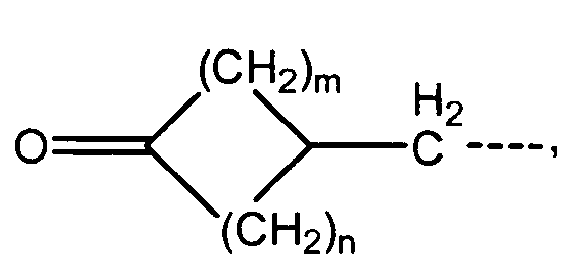
- a new class of carbamoylglycine derivatives is provided, namely compounds of the general formula [1] wherein R is m and n are 0, 1, 2, 3 or 4 and m + n ⁇ 1 1 or a salt thereof.
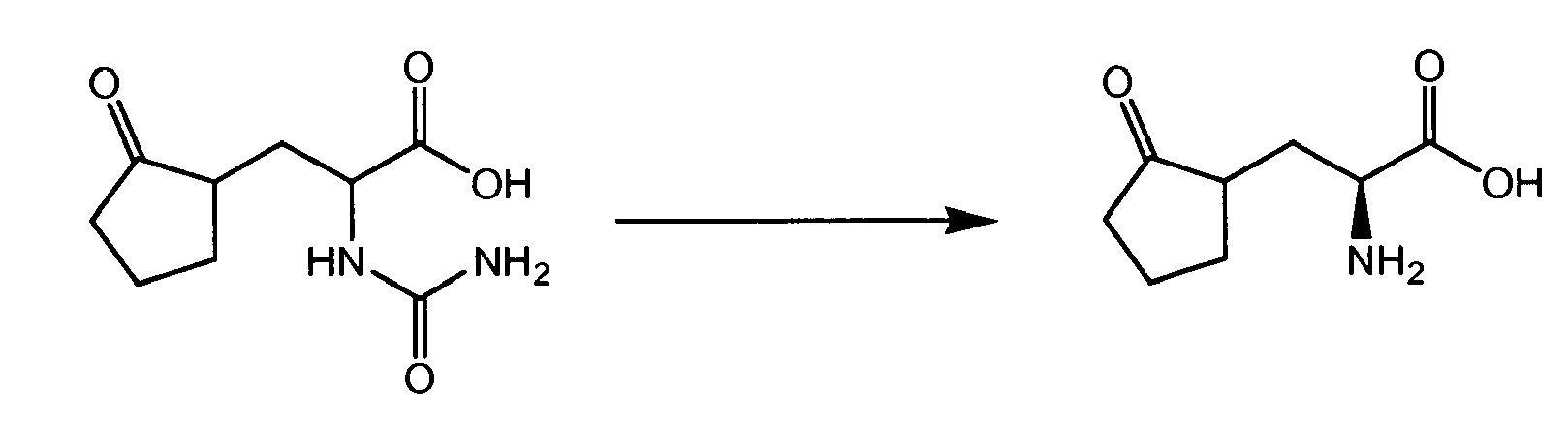
- the compound of the present invention is compound [1] wherein R is defined as above and m is 3 and n is 0 (3-(2-oxocyclopentyl)-2-ureidopropanoic acid) which can serve as an intermediate for the synthesis of the angiotensin-converting enzyme (ACE) inhibitor ramipril.
- ACE angiotensin-converting enzyme
- WO 2006/100168 the preparation of 2-azabicyclo[3.3.0]octane-3-carboxylic acid derivatives is realized using carbamates rather than the carbamoylglycine derivatives of the present invention.
- the compound of the present invention is compound [1] wherein R is defined as above and m is 4 and n is 0 (3-(2-oxocyclohexyl)-2-ureidopropanoic acid) which can serve as an intermediate for the synthesis of the ACE inhibitor perindopril.
- a suitable amino acid such as cysteine or serine is converted according to methods known to the skilled person in an ester of general formula [2] or a salt thereof wherein R 1 is -CH 2 OH or -CH 2 SH.
- R 2 is chosen from the list consisting of -CH 3 , -CH 2 X, -CHX 2 , -CX 3 , -C 6 H 6 , -C 6 H 5 X, -C 6 H 4 X 2 , -SiY'Y"Y"', lower alkyl and aryl, wherein X represents Br, CH 3 , C 2 H 5 , NO 2 , Cl, F or I and Y', Y" and Y"' independently represent lower alkyl or aryl.
- R 2 is -CH 3 or -CH 2 CH 3 or -CH 2 CH 2 CH 3 .
- R 2 groups are those known to the skilled person for protection of amino acids such as allyl, benzyl, tert -butyl, tert -butyldimethylsilyl, p -methoxybenzyl, methoxyethoxymethyl, p -nitrobenzyl, pentafluorophenyl, trimethylsilyl and derivatives thereof.
- R 1 is -CH 2 OR 11 or -CH 2 SR 11 wherein R 11 is chosen from the list consisting of -CH 3 , -CH 2 X, -CHX 2 , -CX 3 , -C 6 H 6 , -C 6 H 5 X, -C 6 H 4 X 2 , tert -butyl, lower alkyl and aryl, wherein X represents Br, CH 3 , C 2 H 5 , NO 2 , Cl, F or I.
- the compound of formula [2] is converted according to methods known to the skilled person into the compound of general formula [3] wherein R 2 has the meaning as defined in the first embodiment of the second aspect of the invention.
- R 1 can be the same as defined above, however advantageously R 1 is -CH 2 X with X being a leaving group and preferably halogen, more preferably Br or Cl.
- R 3 is chosen from the list consisting of -CH 3 , -CH 2 X, -CHX 2 , -CX 3 , -C 6 H 6 , -C 6 H 5 X, -C 6 H 4 X 2 , -SiY'Y"Y"', lower alkyl and aryl, wherein X represents Br, CH 3 , C 2 H 5 , NO 2 , Cl, F or I and Y', Y" and Y''' independently represent lower alkyl or aryl.
- R 3 is -CH 3 or -CH 2 CH 3 or -CH 2 CH 2 CH 3 .
- Preparation of said compounds [3] can be carried out by reacting compounds of general formula [2] with a halogenating agent followed by reaction with acylating agent.
- Suitable examples of halogenating agents are thionyl bromide and thionyl chloride; suitable examples of acylating agents are acetyl- and propionyl chloride.
- the halogenation and acylation steps can be carried out as two separate steps with or without purification of the intermediate or both steps can be combined into a one step procedure.
- the compound of general formula [3] is converted into the compound of general formula [4] wherein R is m and n are 0, 1, 2, 3 or 4 and m + n ⁇ 1 and
- R 2 and R 3 have the meaning as defined above.
- R 1 in compound [3] is -CH 2 X with X being Br, Cl, OH or SH, more preferably Br or Cl, and said compound [3] is then reacted with a cycloalkanone enamine, preferably in the presence of a base.
- cycloalkanone enamines are, for example, 1-morpholino-1-cyclohexene, 1-morpholino-1-cyclopentene, 1-piperidine-1-cyclohexene, 1-piperidine-1-cyclopentene, 1-pyrrolidino-1-cyclohexene, 1-pyrrolidino-1-cyclopentene and similarly activated cyclopentenes and cyclohexenes.
- Suitable bases are N , N -diethylmethylamine, N , N -diisopropylethylamine, 4-dimethylamino pyridine, N , N -dimethylethylamine, N -methylmorpholine, imidazole, lutidine (such as 3,5-lutidine), N -methylpiperidine, morpholine, pyridine, N , N , N ', N '-tetramethylethylenediamine, triethylamine and trimethylamine, preferably N , N -dimethylethylamine and triethylamine.
- Suitable solvents are inert solvents such as alkylnitriles, esters, ethers, (halogenated) hydrocarbons and the like.
- Preferred solvents are acetonitrile, tetrahydrofuran, toluene and solvents that are also used in the first and second embodiments.
- Preferred temperatures are from -20 to 60°C, more preferably from 0 to 40°C, most preferably from 10 to 30°C.
- the compound of general formula [4] is converted into the compound of general formula [1] by hydrolysis of the ester and amide functionalities followed by reaction with a cyanate.
- Hydrolysis is preferably carried out using a reagent suitable for the removal of said specific R 2 group.
- R 2 is alkyl
- hydrolysis can be carried out using acid in the presence of at least one equivalent of water, for instance hydrochloric acid or sulfuric acid.
- Hydrolysis of the amide functionality is preferably carried out using the same medium as for hydrolysis of the ester functionality although alternative methods known to the skilled person are also within the scope of the present invention. Hydrolysis of the amide function also should preferably be carried out in the presence of at least one equivalent of water.
- the reaction mixture is neutralized by the addition of base, such as for instance lithium hydroxide, potassium hydroxide or sodium hydroxide, prior to reaction with the cyanate.
- base such as for instance lithium hydroxide, potassium hydroxide or sodium hydroxide
- Preferred cyanates are potassium and sodium cyanate.
- the method as described in the fourth embodiment is further expanded by bioconversion of said compound of general formula [1] to give a compound of general formula [5] wherein p has the value 0, 1, 2, 3, 4, 5 or 6, which has the S-configuration at the nitrogen-substituted carbon atom, preferably with an ee-value >95%, more preferably >98%, most preferably >99.5%.
- the preferred values of p are 1 and 2 as products [5] having these values can serve as optically pure intermediates for the ACE inhibitors ramipril and perindopril, respectively.
- said bioconversion is carried out by the action of the enzyme carbamoylase.
- This enzyme may be used in vitro or in vivo.
- the carbamoylase is part of a system of more enzymes, for instance a hydantoinase, a carbamoylase and hydantoin racemase.
- the method as described in the fifth embodiment is further expanded by subjecting said compound of formula [5] to hydrogenation to give a compound of general formula [6] wherein p has the value as described above, which predominantly has the S , S , S -configuration, preferably >85%, more preferably >90%, most preferably >95%.
- hydrogenation is carried out in the presence of a suitable metal-based heterogeneous catalyst or homogeneous catalyst.
- Metal-based heterogeneous catalysts can be, for instance, Pd on carbon or Pt on carbon.
- Metal-based homogeneous catalysts can be based on, for instance, Ru, Rh, Ir, and the like, with or without ligand.
- Hydrogenation can be carried out in a polar solvent such as water, methanol, ethanol, acetic acid or mixtures thereof, under a pressure of hydrogen gas between 1 and 10 bar, preferably 3 to 6 bar, at a temperature between 0 and 60°C, preferably between 10 and 30°C.
- hydrogenation of said compound of formula [5] is carried out by choosing conditions, as the skilled person is capable of doing, by which the predominant product is an isomer of the compound of formula [6] .
- a most preferred example in this latter respect is the compound of formula [6] with p is 2 and which predominantly has the 2S,3R,7S-configuration, i.e. wherein the bridge in the bicyclic system has the trans orientation ((2 S ,3a R ,7a S )-octahydro-1 H -indole-2-carboxylic acid).
- the method as described in the sixth embodiment is further expanded by reacting said compound of general formula [6] with a carboxylic acid or with an activated carboxylic acid, preferably with an "activated" form of a compound of general formula [7] or with a compound of general formula [8] wherein R 4 is alkyl or aryl, preferably -CH 3 or phenyl, to give a compound of formula [9] wherein p has the value as described above.
- p has the value 1 and R 4 is phenyl (ramipril) or p has the value 2 and R 4 is -CH 3 (perindopril).
- R 4 is phenyl and the overall configuration of compound [9] is 2 S ,3 R ,7 S (trandolapril).
- the carboxylic acid group of compound [6] is protected prior to reaction with compound [7] or its activated form or [8] with the objective to circumvent unwanted side-reactions.
- the person skilled in the art is aware of the various protecting groups suitable for this purpose. Particularly suitable is protection of compound [6] as a benzyl ester or as a substituted benzyl ester.
- the resulting carboxylic acid protected derivative of compound [9] can be deprotected to furnish compound [9] using standard techniques.
- the protecting group is a benzyl ester or as a substituted benzyl ester, deprotection can for instance be carried out using hydrogenation.
- the compounds of the first aspect of the invention are used in the preparation of a medicament.
- 3-(2-oxocyclopentyl)-2-ureidopropanoic acid is used in the preparation of ramipril and 3-(2-oxocyclohexyl)-2-ureidopropanoic acid is used in the preparation of perindopril.
- Said uses can be accomplished through the method and intermediate products of the second aspect of the invention.
- Methyl 2-acetamido-3-(2-oxocyclopentyl)propanoate (52.0 g, 229 mmol, prepared as described in US 5,061,722 ) was dissolved in 120 mL 6N HCl aq. (720 mmol) and heated at 90-95°C for 4 h. The resulting reaction mixture was cooled in an ice-bath and neutralized to pH 7.0 with 86 mL 10N NaOH aq. (860 mmol), maintaining the temperature at 15-25°C. Then, potassium cyanate (22.6 g, 278 mmol) was added and the mixture was heated to 60°C. After 3 h, the solution was cooled to 50°C.
- Decolorizing carbon (3.0 g, Norit SX) was added, stirred for 0.5 h and the carbon was filtered off under suction.
- the remaining solution (pH 8.9) was cooled in an ice-bath and acidified with 6N HCl aq., maintaining the temperature below 10°C.
- pH 4.5 the solution was seeded with 0.1 g product.
- pH 1.8 the slurry was stirred for 0.5 h and then the product was collected on a filter under suction.
- the cake was washed with MTBE (2 x 50 mL) and dried under vacuum. Weight 35.8 g, 73% yield.
- acetyl chloride (15.1 mL, 16.7 g, 213 mmol) was added via an addition funnel during a period of 2 h while the temperature reached 80°C and the reaction was further stirred at that temperature for 30 min. The reaction was allowed to cool to 5°C while a precipitate formed. The precipitate was collected on a fritted funnel under suction and washed with petroleum benzene (3 x 25 mL). The cake was dried under vacuum overnight to a final weight of 9.19 g. The mother liquor was seeded with some crystals of the cake and further diluted with petroleum benzene (25 mL) and stirred overnight at 20°C.
- 3-(2-oxocyclopentyl)-2-ureidopropanoic acid was prepared as described above in Example 1, in a similar yield, however with propyl 2-acetamido-3-(2-oxocyclopentyl) propanoate instead of methyl 2-acetamido-3-(2-oxocyclopentyl)propanoate as starting material.
- Single clones from the transformation were used to inoculate 5 mL of 2xTY media (10 g/l yeast extract, 16 g/l tryptone, 5 g/l NaCl) supplemented with 0.05 g/l kanamycine and 1 mM MnCl 2 or CoCl 2 , respectively.
- 2xTY media (10 g/l yeast extract, 16 g/l tryptone, 5 g/l NaCl
- the culture was incubated at 28°C and 150 rpm for 24 h and then used for inoculation of 100 mL 2xTY media supplemented with 0.05 g/l kanamycine and 1 mM MnCl 2 or CoCl 2 , respectively.
- the cultures were again incubated for 24-28 h under conditions previously mentioned and subsequently harvested by centrifugation (20 min, 5000 rpm, 4°C).
- the cell pellet was resuspended in 5 mL Tris-HCl (100 mM, pH 7), centrifuged again (20 min, 5000 rpm, 4°C) and the cells were frozen at -20°C.
- 3-(2-oxocyclopentyl)-2-ureidopropanoic acid (10.0 g, 46.7 mmol) was suspended in water (80 mL) and the pH was adjusted to 8.0 with 10.8 N NaOH aq. Then, MnCl 2 solution (5 mL, 100 mmol/L) was added and the solution was flushed with N 2 for 15 min. Then 40 g of wet cell slurry obtained according to 'Expression of Hyu genes in Escherichia coli RV308' (see above) was added. The reaction was stirred at 38°C for 16 h, after which time TLC indicated complete conversion to product. During this period, the pH was kept constant at 8.0 by addition of 5N H 3 PO 4 aq.
- the reaction mixture was then centrifuged (12.000 rpm) and the clear liquid was separated from the remaining cell mass.
- the pH of the liquid was adjusted to ca. 1.0 with 37% HCl aq., which caused proteins to precipitate.
- This mixture was centrifuged for a second time (12.000 rpm) and the clear solution was collected.
- charcoal treatment 0.5 g active carbon
- microfiltration 0.45 ⁇
- the solution was loaded on an ion-exchange resin (Amberlyst 15, 80 mL/144 meq.). Elution was initially done with water to neutral pH to remove impurities. Then, the amino acid was eluted with 2N NH 3 aq. and water to neutral pH. These aqueous fractions were combined, the pH was brought to ca.
- Methyl 2-acetamido-3-(2-oxocyclohexyl)propanoate (15.0 g, 62.2 mmol, prepared as described in EP 84164 ) was dissolved in 30 mL 6N HCl aq. (180 mmol) and heated at 90-95°C for 4 h. The resulting reaction mixture was cooled in an ice-bath and neutralized to pH 7.0 with 23 mL 10N NaOH aq. (230 mmol), maintaining the temperature at 15-25°C. Then, potassium cyanate (4.8 g, 69 mmol) was added and the mixture was heated to 60°C. After 3 h, the solution was cooled to 50°C.
- Decolorizing carbon (1.0 g, Norit SX) was added, stirred for 0.5 h and the carbon was filtered off under suction. The remaining solution (pH 8.9) was cooled in an ice-bath and acidified with 6N HCl aq., maintaining the temperature below 10°C. At pH 4.5, the solution was seeded with 0.1 g product. At pH 1.8, the slurry was stirred for 0.5 h and then the product was collected on a filter under suction. The off-white crystals were dried under vacuum. Weight 4.20 g, approximately 30% yield.
- N-[( S )-1-(ethoxycarbonyl)-3-phenyl-propyl]-L-alanylchloride HCl was synthesized from N-[( S )-1-(ethoxycarbonyl)-3-phenyl-propyl]-L-alanine and PCl 5 in CH 2 Cl 2 at 0 ⁇ 3°C and precipitated by slow addition of cyclohexane as outlined in US 2006/0079698 . Filitration was carried out under an atmosphere of nitrogen.
- Example 7 The toluenesulfonate salt prepared in Example 7 (6.00 g, 14.4 mmol) was suspended in CH 2 Cl 2 (60 mL) and triethylamine (1.46 g, 14.4 mmol) was added at 0°C. The slurry was stirred for 30 min and then imidazole (2.94 g, 43.1 mmol) was added in small portions, followed by N-[( S )-1-(ethoxycarbonyl)-3-phenyl-propyl]-L-alanylchloride HCl prepared in Example 8 (5.28 g ,15.8 mmol).
- the reaction mixture was stirred for 2 h at 0°C and then allowed to warm to 20°C within 30 min and stirred at that temperature for 2 h.
- Water (60 mL) was then added and after vigorous mixing of the phases, the organic layer was separated and the aqueous layer was extracted once more with CH 2 Cl 2 (60 mL).
- the combined organic layers were washed with aqueous saturated NaHCO 3 (60 mL), treated with charcoal (1 g) and dried over anhydrous Na 2 SO 4 (5 g). After filtration of the salt and evaporation of the solvent in vacuo at 40°C, the product was obtained as a yellowish oil.
Landscapes
- Chemical & Material Sciences (AREA)
- Organic Chemistry (AREA)
- Organic Low-Molecular-Weight Compounds And Preparation Thereof (AREA)
- Medicines That Contain Protein Lipid Enzymes And Other Medicines (AREA)
- Peptides Or Proteins (AREA)
Abstract
Description
- The present invention relates to carbamoylglycine derivatives, a process for the preparation of carbamoylglycine derivatives and the use of carbamoylglycine derivatives in the preparation of enantiomerically enriched α-amino acids.
- Carbamoylglycine derivatives of the general formula [1] are versatile building blocks in many synthetic approaches towards a wide variety of medicines and some have therapeutic properties themselves. An example of the latter is carglumic acid (N-(aminocarbonyl)-L-glutamic acid; [1], R=-CH2CH2CO2H), used for the treatment of hyperammonaemia in patients with N-acetylglutamate synthase deficiency.

- A particularly attractive application of carbamoylglycine derivatives is the use in enzyme mediated synthesis of enantiomerically pure α-amino acids. For instance, Ogawa et al. (Eur. J. Biochem. 212, 685-691 (1993)) disclose the stereospecific hydrolysis of several carbamoyl-substituted amino acids by an N-carbamoyl-D-amino acid amidohydrolase from Comamonas sp. E222c.
- Unfortunately, not all carbamoylglycine derivatives are equally well accessible, whereas many of those would be highly desirable as chemical building blocks. For instance, carbamoylglycine derivatives [1] wherein R is methyl substituted with a cyclic alkanone moiety, form a class of compounds that has not been described. Nevertheless, this class of compounds would be a suitable candidate for the enzyme mediated synthesis of enantiomerically pure α-amino acids as outlined above as the resulting α-amino acids can be used as building blocks for several active pharmaceutical ingredients.
- Hence, there is a need for the carbamoylglycine derivatives as described above, methods for their preparation and use of these carbamoylglycine derivatives in the synthesis of active pharmaceutical ingredients.
- In the first aspect of the present invention, a new class of carbamoylglycine derivatives is provided, namely compounds of the general formula [1]


- In a preferred embodiment, the compound of the present invention is compound [1] wherein R is defined as above and m is 3 and n is 0 (3-(2-oxocyclopentyl)-2-ureidopropanoic acid) which can serve as an intermediate for the synthesis of the angiotensin-converting enzyme (ACE) inhibitor ramipril. In
WO 2006/100168 the preparation of 2-azabicyclo[3.3.0]octane-3-carboxylic acid derivatives is realized using carbamates rather than the carbamoylglycine derivatives of the present invention. - In another preferred embodiment, the compound of the present invention is compound [1] wherein R is defined as above and m is 4 and n is 0 (3-(2-oxocyclohexyl)-2-ureidopropanoic acid) which can serve as an intermediate for the synthesis of the ACE inhibitor perindopril.
- In the second aspect of the present invention, a method for the preparation of the compounds of the first aspect is provided. It has been found that the carbamoylglycine derivatives of the present invention can be successfully prepared starting from easily accessible compounds such as amino acids.
- In a first embodiment a suitable amino acid such as cysteine or serine is converted according to methods known to the skilled person in an ester of general formula [2] or a salt thereof

- In a second embodiment, the compound of formula [2] is converted according to methods known to the skilled person into the compound of general formula [3]

- In a third embodiment the compound of general formula [3] is converted into the compound of general formula [4]


- R2 and R3 have the meaning as defined above. Preferably R1 in compound [3] is -CH2X with X being Br, Cl, OH or SH, more preferably Br or Cl, and said compound [3] is then reacted with a cycloalkanone enamine, preferably in the presence of a base. Suitably cycloalkanone enamines are, for example, 1-morpholino-1-cyclohexene, 1-morpholino-1-cyclopentene, 1-piperidine-1-cyclohexene, 1-piperidine-1-cyclopentene, 1-pyrrolidino-1-cyclohexene, 1-pyrrolidino-1-cyclopentene and similarly activated cyclopentenes and cyclohexenes. Suitable bases are N,N-diethylmethylamine, N,N-diisopropylethylamine, 4-dimethylamino pyridine, N,N-dimethylethylamine, N-methylmorpholine, imidazole, lutidine (such as 3,5-lutidine), N-methylpiperidine, morpholine, pyridine, N,N,N',N'-tetramethylethylenediamine, triethylamine and trimethylamine, preferably N,N-dimethylethylamine and triethylamine. Suitable solvents are inert solvents such as alkylnitriles, esters, ethers, (halogenated) hydrocarbons and the like. Preferred solvents are acetonitrile, tetrahydrofuran, toluene and solvents that are also used in the first and second embodiments. Preferred temperatures are from -20 to 60°C, more preferably from 0 to 40°C, most preferably from 10 to 30°C.
- In a fourth embodiment, the compound of general formula [4] is converted into the compound of general formula [1] by hydrolysis of the ester and amide functionalities followed by reaction with a cyanate. Hydrolysis is preferably carried out using a reagent suitable for the removal of said specific R2 group. For instance, when R2 is alkyl, hydrolysis can be carried out using acid in the presence of at least one equivalent of water, for instance hydrochloric acid or sulfuric acid. Hydrolysis of the amide functionality is preferably carried out using the same medium as for hydrolysis of the ester functionality although alternative methods known to the skilled person are also within the scope of the present invention. Hydrolysis of the amide function also should preferably be carried out in the presence of at least one equivalent of water. Preferably, the reaction mixture is neutralized by the addition of base, such as for instance lithium hydroxide, potassium hydroxide or sodium hydroxide, prior to reaction with the cyanate. Preferred cyanates are potassium and sodium cyanate. The hydrolysis steps to hydrolyze the R2 and R3 groups can be carried out as two separate steps, with or without purification of the intermediate or both steps can be combined into a one-step procedure after adjustment of the pH.
- In a fifth embodiment, the method as described in the fourth embodiment is further expanded by bioconversion of said compound of general formula [1] to give a compound of general formula [5]

- Preferably, said bioconversion is carried out by the action of the enzyme carbamoylase. This enzyme may be used in vitro or in vivo. Alternatively, the carbamoylase is part of a system of more enzymes, for instance a hydantoinase, a carbamoylase and hydantoin racemase.
- In a sixth embodiment, the method as described in the fifth embodiment is further expanded by subjecting said compound of formula [5] to hydrogenation to give a compound of general formula [6]

- In a seventh embodiment, the method as described in the sixth embodiment is further expanded by reacting said compound of general formula [6] with a carboxylic acid or with an activated carboxylic acid, preferably with an "activated" form of a compound of general formula [7] or with a compound of general formula [8]


- In the third aspect of the present invention, the compounds of the first aspect of the invention are used in the preparation of a medicament. Preferably, 3-(2-oxocyclopentyl)-2-ureidopropanoic acid is used in the preparation of ramipril and 3-(2-oxocyclohexyl)-2-ureidopropanoic acid is used in the preparation of perindopril. Said uses can be accomplished through the method and intermediate products of the second aspect of the invention.
-

- Methyl 2-acetamido-3-(2-oxocyclopentyl)propanoate (52.0 g, 229 mmol, prepared as described in
US 5,061,722 ) was dissolved in 120 mL 6N HCl aq. (720 mmol) and heated at 90-95°C for 4 h. The resulting reaction mixture was cooled in an ice-bath and neutralized to pH 7.0 with 86 mL 10N NaOH aq. (860 mmol), maintaining the temperature at 15-25°C. Then, potassium cyanate (22.6 g, 278 mmol) was added and the mixture was heated to 60°C. After 3 h, the solution was cooled to 50°C. Decolorizing carbon (3.0 g, Norit SX) was added, stirred for 0.5 h and the carbon was filtered off under suction. The remaining solution (pH 8.9) was cooled in an ice-bath and acidified with 6N HCl aq., maintaining the temperature below 10°C. At pH 4.5, the solution was seeded with 0.1 g product. At pH 1.8, the slurry was stirred for 0.5 h and then the product was collected on a filter under suction. The cake was washed with MTBE (2 x 50 mL) and dried under vacuum. Weight 35.8 g, 73% yield. 1H NMR: (DMSO-d6, 300 MHz): δ 12.57 (br s, 1H), 6.22 (dd, 1H), 5.60 (br s, 2H), 4.23-4.04 (m, 1H), 2.27-1.40 (m, 9H). -

- (S)-Propyl 2-amino-3-hydroxypropanoate HCl salt (18.2 g, 99.1 mmol) was suspended in toluene (96 mL) and then thionyl chloride (8.20 mL, 13.3 g, 112 mmol) was added via an addition funnel during 15 min. The homogeneous reaction was stirred at 20°C for 2 h. Then, the temperature was raised to 60°C during 45 min and the reaction was maintained at that temperature for 45 min. Then, acetyl chloride (15.1 mL, 16.7 g, 213 mmol) was added via an addition funnel during a period of 2 h while the temperature reached 80°C and the reaction was further stirred at that temperature for 30 min. The reaction was allowed to cool to 5°C while a precipitate formed. The precipitate was collected on a fritted funnel under suction and washed with petroleum benzene (3 x 25 mL). The cake was dried under vacuum overnight to a final weight of 9.19 g. The mother liquor was seeded with some crystals of the cake and further diluted with petroleum benzene (25 mL) and stirred overnight at 20°C. The ensuing suspension was cooled to 5°C and the product was collected on a fritted funnel under suction and washed with petroleum benzene (3 x 25 mL). The cake was dried under vacuum overnight to a final weight of 6.48 g. Combined weight (two cakes) 15.7 g, approx. 76% yield. 1H NMR: (CDCl3, 300 MHz): δ 6.40 (br s, 1H), 4.99 (dt, 1H), 4.27-4.11 (m, 2H), 3.95 (dq, 2H), 2.09 (s, 3H), 1.77-1.65 (m, 2H), 0.97 (t, 3H).
- (R)-propyl 2-acetamido-3-chloropropanoate (2.50 g, 12.0 mmol) was dissolved in acetonitrile (25 mL) and 1-pyrrolidino-1-cyclopentene (2.27 mL, 2.14 g, 15.6 mmol) was added. While the reaction was kept at 20°C, dimethylethylamine (1.70 mL, 1.14 g, 15.6 mmol) was added via an addition funnel during 10 min. The homogeneous reaction was stirred at 20°C for 21 h. Then, water (0.50 mL) was added and the reaction was further stirred for 2.5 h. The solvents were removed in vacuo at 50°C and the residual oil was purified by silica gel flash chromatography using an EtOAc:petroleum benzene gradient. The product is a yellowish oil. Weight 2.67 g, approx. 87% yield (two diastereomers). 1H NMR: (CDCl3, 300 MHz): δ 6.62 (br d, 0.5H), 6.38 (br d, 0.5H), 4.61-4.49 (m, 1H), 4.05-4.00 (m, 2H), 2.38-1.92 (m, 8H), 1.80-1.47 (m, 6H), 0.90-0.84 (m, 3H).
- 3-(2-oxocyclopentyl)-2-ureidopropanoic acid was prepared as described above in Example 1, in a similar yield, however with propyl 2-acetamido-3-(2-oxocyclopentyl) propanoate instead of methyl 2-acetamido-3-(2-oxocyclopentyl)propanoate as starting material.
-
-
- Thaw Escherichia coli RV308 aliquots (200 µl, super competent) on ice
- Add 15 µl LR reaction mix (see above)
- Incubate 30 minutes on ice
- Heat shock 1 minute 42°C
- Cool cells 2 minutes on ice
- Add 1 mL LB medium (5 g/l NaCl, 5 g/l yeast extract, 10 g/l tryptone)
- Incubate 1 h at 37°C
- Plate on LB agar plates supplemented with kanamycine (5 g/l NaCl, 5 g/l yeast extract, 10 g/l tryptone, 15 g/l agar, 50 mg/l kanamycine)
- Incubate 24 h at 28°C
- Isolate single colonies
- Single clones from the transformation (see above) were used to inoculate 5 mL of 2xTY media (10 g/l yeast extract, 16 g/l tryptone, 5 g/l NaCl) supplemented with 0.05 g/l kanamycine and 1 mM MnCl2 or CoCl2, respectively. The culture was incubated at 28°C and 150 rpm for 24 h and then used for inoculation of 100 mL 2xTY media supplemented with 0.05 g/l kanamycine and 1 mM MnCl2 or CoCl2, respectively. The cultures were again incubated for 24-28 h under conditions previously mentioned and subsequently harvested by centrifugation (20 min, 5000 rpm, 4°C). The cell pellet was resuspended in 5 mL Tris-HCl (100 mM, pH 7), centrifuged again (20 min, 5000 rpm, 4°C) and the cells were frozen at -20°C.
- 3-(2-oxocyclopentyl)-2-ureidopropanoic acid (10.0 g, 46.7 mmol) was suspended in water (80 mL) and the pH was adjusted to 8.0 with 10.8 N NaOH aq. Then, MnCl2 solution (5 mL, 100 mmol/L) was added and the solution was flushed with N2 for 15 min. Then 40 g of wet cell slurry obtained according to 'Expression of Hyu genes in Escherichia coli RV308' (see above) was added. The reaction was stirred at 38°C for 16 h, after which time TLC indicated complete conversion to product. During this period, the pH was kept constant at 8.0 by addition of 5N H3PO4 aq. The reaction mixture was then centrifuged (12.000 rpm) and the clear liquid was separated from the remaining cell mass. The pH of the liquid was adjusted to ca. 1.0 with 37% HCl aq., which caused proteins to precipitate. This mixture was centrifuged for a second time (12.000 rpm) and the clear solution was collected. After charcoal treatment (0.5 g active carbon) and microfiltration (0.45 µ), the solution was loaded on an ion-exchange resin (Amberlyst 15, 80 mL/144 meq.). Elution was initially done with water to neutral pH to remove impurities. Then, the amino acid was eluted with 2N NH3 aq. and water to neutral pH. These aqueous fractions were combined, the pH was brought to ca. 7 with 37% HCl aq. and water was removed in vacuo at 50°C, affording a light brown solid. The product amino acid has the S configuration at C2 with >99% ee (the other chiral center C4 is scrambled).
-

- Methyl 2-acetamido-3-(2-oxocyclohexyl)propanoate (15.0 g, 62.2 mmol, prepared as described in
EP 84164 -

- The bioconversion as described in Example 3 was repeated, however using 3-(2-oxocyclohexyl)-2-ureidopropanoic acid instead of 3-(2-oxocyclopentyl)-2-ureidopropanoic acid as starting material.
- (S)-2-amino-3-(2-oxocyclopentyl)propanoic acid as obtained in Example 3 (130 mg, 0.76 mmol) was dissolved in water (2 mL) and the pH was adjusted to 9 with 25% aqueous NH3 solution. Then, 10% Pd/C (5 mg) was added and hydrogenation was performed under 5 bar of hydrogen gas for 16 h. At the end of the reaction, the catalyst was filtered off on a pad of celite under suction and the product (2S,3aS,6aS)-octahydrocyclopenta[b]pyrrole-2-carboxylic acid was isolated after evaporation of the water layer in vacuo at 80°C. Weight 118 mg. 100% yield. Diastereomeric excess >95% (determined by chiral HPLC). 1H NMR: (DMSO-d6, 300 MHz): δ 10.54 (br s, 1H), 8.71 (br s, 1H), 4.22 (dd, 1H), 3.98 (t, 1H), 2.86-2.76 (m, 1H), 2.49-2.42 (m, 1H), 2.00-1.96 (m, 1H), 1.80-1.40 (m, 6H).
- In a round-bottom flask equipped with a Dean-Stark trap, (2S,3aS,6aS)-octahydrocyclopenta[b]pyrrole-2-carboxylic acid obtained in Example 6 (5.00 g, 32.2 mmol) was suspended in toluene (100 mL) and p-toluenesulphonic acid monohydrate (6.60 g, 34.7 mmol) and benzyl alcohol (15.0 mL, 15.6 g, 144 mmol) were added and the mixture was brought to reflux. The reaction was refluxed for 8 h and then allowed to cool to room temperature. A colorless solid precipitated. Most of the solvent was then removed in vacuo at 65°C. To the residual thick suspension, ethyl ether (200 mL) was added and the solid was collected on a filter (porosity #3) under suction and was further washed with ethyl ether (4 x 50 mL). The colorless product was allowed to air-dry. Weight 12.1 g, 90% yield.
- N-[(S)-1-(ethoxycarbonyl)-3-phenyl-propyl]-L-alanylchloride HCl was synthesized from N-[(S)-1-(ethoxycarbonyl)-3-phenyl-propyl]-L-alanine and PCl5 in CH2Cl2 at 0±3°C and precipitated by slow addition of cyclohexane as outlined in
US 2006/0079698 . Filitration was carried out under an atmosphere of nitrogen. - The toluenesulfonate salt prepared in Example 7 (6.00 g, 14.4 mmol) was suspended in CH2Cl2 (60 mL) and triethylamine (1.46 g, 14.4 mmol) was added at 0°C. The slurry was stirred for 30 min and then imidazole (2.94 g, 43.1 mmol) was added in small portions, followed by N-[(S)-1-(ethoxycarbonyl)-3-phenyl-propyl]-L-alanylchloride HCl prepared in Example 8 (5.28 g ,15.8 mmol). The reaction mixture was stirred for 2 h at 0°C and then allowed to warm to 20°C within 30 min and stirred at that temperature for 2 h. Water (60 mL) was then added and after vigorous mixing of the phases, the organic layer was separated and the aqueous layer was extracted once more with CH2Cl2 (60 mL). The combined organic layers were washed with aqueous saturated NaHCO3 (60 mL), treated with charcoal (1 g) and dried over anhydrous Na2SO4 (5 g). After filtration of the salt and evaporation of the solvent in vacuo at 40°C, the product was obtained as a yellowish oil. This oil was redissolved in methanol (90 mL) and 5% Pd/C (0.50 g) was added and hydrogenation was performed under 2 bar of hydrogen pressure. After approx. 4 h, consumption of hydrogen ceased and the catalyst was filtered off on a pad of celite. Additional methanol was used to wash the celite (20 mL). The organic layer was removed in vacuo at 50°C. The residue was recrystallized from ethyl ether (100 mL) at 0°C. The product ramipril ([9], p = 1, R4 = phenyl) is a colorless solid. Weight 4.56 g, 70% yield.
Claims (10)
- A compound of formula [1]


- Compound according to claim 1 that is 3-(2-oxocyclopentyl)-2-ureidopropanoic acid or 3-(2-oxocyclohexyl)-2-ureidopropanoic acid or a salt thereof.
- Method for the preparation of the compounds of anyone of claims 1 to 2 comprising treatment of a compound of formula [4] with an acid followed by a cyanate,

- Method according to claim 3 wherein said cyanate is potassium cyanate or sodium cyanate or a mixture thereof.
- Method according to any one of claims 3 to 4 further comprising contacting said compound of claim 1 wherein m is 3 or 4 and n is 0 with a carbamoylase to give a compound of the general formula [5]

- Method according to claim 5 wherein said compound of claim 1 is also contacted with a racemase and a hydantoinase.
- Method according to anyone of claims 5 to 6 further comprising subjecting said compound of general formula [5] to hydrogenation to give a compound of the general formula [6]

- Method according to claim 7 further comprising contacting said compound of general formula [6] with a compound of general formula [7] or a compound of general formula [8]


- Method according to claim 8 wherein R4 is -CH3 and p has the value 2 or wherein R4 is phenyl and p has the value 1.
- Use of 3-(2-oxocyclopentyl)-2-ureidopropanoic acid in the preparation of ramipril or of 3-(2-oxocyclohexyl)-2-ureidopropanoic acid in the preparation of perindopril or trandolapril.
Priority Applications (1)
| Application Number | Priority Date | Filing Date | Title |
|---|---|---|---|
| EP08840109A EP2200981B1 (en) | 2007-10-17 | 2008-10-02 | Novel carbamoylglycine derivatives |
Applications Claiming Priority (3)
| Application Number | Priority Date | Filing Date | Title |
|---|---|---|---|
| EP07118693 | 2007-10-17 | ||
| EP08840109A EP2200981B1 (en) | 2007-10-17 | 2008-10-02 | Novel carbamoylglycine derivatives |
| PCT/EP2008/063201 WO2009050041A1 (en) | 2007-10-17 | 2008-10-02 | Novel carbamoylglycine derivatives |
Publications (2)
| Publication Number | Publication Date |
|---|---|
| EP2200981A1 EP2200981A1 (en) | 2010-06-30 |
| EP2200981B1 true EP2200981B1 (en) | 2011-12-07 |
Family
ID=39166785
Family Applications (1)
| Application Number | Title | Priority Date | Filing Date |
|---|---|---|---|
| EP08840109A Not-in-force EP2200981B1 (en) | 2007-10-17 | 2008-10-02 | Novel carbamoylglycine derivatives |
Country Status (6)
| Country | Link |
|---|---|
| US (1) | US8105807B2 (en) |
| EP (1) | EP2200981B1 (en) |
| CN (1) | CN101827814B (en) |
| AT (1) | ATE536342T1 (en) |
| SI (1) | SI2200981T1 (en) |
| WO (1) | WO2009050041A1 (en) |
Families Citing this family (4)
| Publication number | Priority date | Publication date | Assignee | Title |
|---|---|---|---|---|
| WO2011121616A2 (en) * | 2010-03-31 | 2011-10-06 | Promethean Power Systems | Rapid cooling system for cooling liquids |
| CN102093467B (en) * | 2010-11-02 | 2013-12-11 | 中国科学院亚热带农业生态研究所 | Dipeptide iron chelate for feed additives and preparation method thereof |
| EP2598479B1 (en) * | 2010-11-11 | 2015-04-01 | Aarti Healthcare Limited | A method for preparing ramipril |
| CN105056246A (en) * | 2015-08-18 | 2015-11-18 | 武汉武药科技有限公司 | Carglumic acid solid composition and preparation method thereof |
Family Cites Families (5)
| Publication number | Priority date | Publication date | Assignee | Title |
|---|---|---|---|---|
| PL93877B1 (en) | 1974-01-02 | 1977-06-30 | ||
| DE60301774T2 (en) | 2003-02-28 | 2006-07-20 | Les Laboratoires Servier | Process for the synthesis of (2S, 3aS, 7aS) -1 - ((S) -alanyl) -octahydro-1H-indole-2-carboxylic acid derivatives and use in the synthesis of perindopril |
| AU2003290401A1 (en) * | 2003-11-24 | 2005-06-08 | Potluri Ramesh Babu | A process for industrially viable preparation of (s,s,s) phenylmethyl-2-azabicyclo-(3.3.0)-octane-3-carboxylate tosylate |
| EP1692106A1 (en) * | 2003-11-24 | 2006-08-23 | Potluri Ramesh Babu | A novel synthesis of 2-azabicyclic-3-carboxylic acids, useful as important drug intermediates |
| DE102005012771A1 (en) * | 2005-03-19 | 2006-09-21 | Degussa Ag | Process for the preparation of 2-azabicyclo (3.3.0) octane-3-carboxylic acid derivatives |
-
2008
- 2008-10-02 AT AT08840109T patent/ATE536342T1/en active
- 2008-10-02 WO PCT/EP2008/063201 patent/WO2009050041A1/en not_active Ceased
- 2008-10-02 US US12/738,736 patent/US8105807B2/en not_active Expired - Fee Related
- 2008-10-02 SI SI200830541T patent/SI2200981T1/en unknown
- 2008-10-02 EP EP08840109A patent/EP2200981B1/en not_active Not-in-force
- 2008-10-02 CN CN2008801122140A patent/CN101827814B/en not_active Expired - Fee Related
Also Published As
| Publication number | Publication date |
|---|---|
| WO2009050041A1 (en) | 2009-04-23 |
| CN101827814A (en) | 2010-09-08 |
| US20100221796A1 (en) | 2010-09-02 |
| US8105807B2 (en) | 2012-01-31 |
| EP2200981A1 (en) | 2010-06-30 |
| ATE536342T1 (en) | 2011-12-15 |
| CN101827814B (en) | 2012-11-28 |
| SI2200981T1 (en) | 2012-03-30 |
| HK1147751A1 (en) | 2011-08-19 |
Similar Documents
| Publication | Publication Date | Title |
|---|---|---|
| US8420683B2 (en) | 5 substituted hydantoins | |
| US7279595B2 (en) | Process for the preparation of high purity perindopril | |
| EP0565396A1 (en) | 1-(2-arylsulfonylamino)-1-oxoethyl)-piperidine derivatives, their preparation and use in therapy | |
| JPH06312977A (en) | Diastereoisomer salt of bicyclic imino alpha- carboxylic acid ester | |
| US8105807B2 (en) | Carbamoylglycine derivatives | |
| CA2237382A1 (en) | Substituted 6- and 7-amino-tetrahydroisoquinolinecarboxylic acids | |
| AU2003206055A1 (en) | Process for the preparation of high purity perindopril and intermediates useful in the synthesis | |
| WO2009098251A1 (en) | NOVEL CYCLOALKANONE β-SUBSTITUTED ALANINE DERIVATIVES | |
| EP1420028A2 (en) | Method for synthesis of perindopril and its pharmaceutically acceptable salts | |
| EP1371659B1 (en) | Method for synthesis of perindopril and its pharmaceutically acceptable salts [2003/26] | |
| US8263784B2 (en) | Method for the synthesis of a ramipril intermediate | |
| EP0614986A1 (en) | Enzymatic racemate cleavage of 2-pipéridine alkylcarboxylates and their use as synthesis intermediates | |
| EP1380590A1 (en) | Method for synthesis of perindopril and its pharmaceutically acceptable salts | |
| WO2004078708A2 (en) | Novel method for synthesising derivatives of (2s, 3as, 7as)-1-[(s)-alanyl]-octahydro,-ih-indole-2-carboxylic acid and the use thereof for perindopril synthesis | |
| EP1367063B1 (en) | Method for synthesis of perindopril and its pharmaceutically acceptable salts | |
| HK1147751B (en) | Carbamoylglycine derivatives | |
| EP1400531B1 (en) | Process for the synthesis of N-((S)-1-(ethoxycarbonyl)butyl)-(S)-alanine and use in the synthesis of perindopril | |
| HK1141029B (en) | Novel 5-substituted hydantoins | |
| US20100286404A1 (en) | pharmaceutical intermediates in the synthesis of ace-inhibitors and the use thereof | |
| WO2005012328A2 (en) | Novel method for the synthesis of perindopril and the pharmaceutically acceptable salts thereof |
Legal Events
| Date | Code | Title | Description |
|---|---|---|---|
| PUAI | Public reference made under article 153(3) epc to a published international application that has entered the european phase |
Free format text: ORIGINAL CODE: 0009012 |
|
| 17P | Request for examination filed |
Effective date: 20100331 |
|
| AK | Designated contracting states |
Kind code of ref document: A1 Designated state(s): AT BE BG CH CY CZ DE DK EE ES FI FR GB GR HR HU IE IS IT LI LT LU LV MC MT NL NO PL PT RO SE SI SK TR |
|
| AX | Request for extension of the european patent |
Extension state: AL BA MK RS |
|
| 17Q | First examination report despatched |
Effective date: 20101026 |
|
| DAX | Request for extension of the european patent (deleted) | ||
| GRAP | Despatch of communication of intention to grant a patent |
Free format text: ORIGINAL CODE: EPIDOSNIGR1 |
|
| GRAS | Grant fee paid |
Free format text: ORIGINAL CODE: EPIDOSNIGR3 |
|
| GRAA | (expected) grant |
Free format text: ORIGINAL CODE: 0009210 |
|
| AK | Designated contracting states |
Kind code of ref document: B1 Designated state(s): AT BE BG CH CY CZ DE DK EE ES FI FR GB GR HR HU IE IS IT LI LT LU LV MC MT NL NO PL PT RO SE SI SK TR |
|
| REG | Reference to a national code |
Ref country code: GB Ref legal event code: FG4D |
|
| REG | Reference to a national code |
Ref country code: CH Ref legal event code: EP |
|
| REG | Reference to a national code |
Ref country code: IE Ref legal event code: FG4D |
|
| RAP2 | Party data changed (patent owner data changed or rights of a patent transferred) |
Owner name: DSM SINOCHEM PHARMACEUTICALS NETHERLANDS B.V. |
|
| REG | Reference to a national code |
Ref country code: NL Ref legal event code: T3 |
|
| REG | Reference to a national code |
Ref country code: DE Ref legal event code: R096 Ref document number: 602008011868 Country of ref document: DE Effective date: 20120315 |
|
| REG | Reference to a national code |
Ref country code: NL Ref legal event code: SD Effective date: 20120403 |
|
| PG25 | Lapsed in a contracting state [announced via postgrant information from national office to epo] |
Ref country code: NO Free format text: LAPSE BECAUSE OF FAILURE TO SUBMIT A TRANSLATION OF THE DESCRIPTION OR TO PAY THE FEE WITHIN THE PRESCRIBED TIME-LIMIT Effective date: 20120307 Ref country code: LT Free format text: LAPSE BECAUSE OF FAILURE TO SUBMIT A TRANSLATION OF THE DESCRIPTION OR TO PAY THE FEE WITHIN THE PRESCRIBED TIME-LIMIT Effective date: 20111207 |
|
| LTIE | Lt: invalidation of european patent or patent extension |
Effective date: 20111207 |
|
| PG25 | Lapsed in a contracting state [announced via postgrant information from national office to epo] |
Ref country code: GR Free format text: LAPSE BECAUSE OF FAILURE TO SUBMIT A TRANSLATION OF THE DESCRIPTION OR TO PAY THE FEE WITHIN THE PRESCRIBED TIME-LIMIT Effective date: 20120308 Ref country code: SE Free format text: LAPSE BECAUSE OF FAILURE TO SUBMIT A TRANSLATION OF THE DESCRIPTION OR TO PAY THE FEE WITHIN THE PRESCRIBED TIME-LIMIT Effective date: 20111207 Ref country code: LV Free format text: LAPSE BECAUSE OF FAILURE TO SUBMIT A TRANSLATION OF THE DESCRIPTION OR TO PAY THE FEE WITHIN THE PRESCRIBED TIME-LIMIT Effective date: 20111207 Ref country code: HR Free format text: LAPSE BECAUSE OF FAILURE TO SUBMIT A TRANSLATION OF THE DESCRIPTION OR TO PAY THE FEE WITHIN THE PRESCRIBED TIME-LIMIT Effective date: 20111207 |
|
| PG25 | Lapsed in a contracting state [announced via postgrant information from national office to epo] |
Ref country code: BE Free format text: LAPSE BECAUSE OF FAILURE TO SUBMIT A TRANSLATION OF THE DESCRIPTION OR TO PAY THE FEE WITHIN THE PRESCRIBED TIME-LIMIT Effective date: 20111207 Ref country code: CY Free format text: LAPSE BECAUSE OF FAILURE TO SUBMIT A TRANSLATION OF THE DESCRIPTION OR TO PAY THE FEE WITHIN THE PRESCRIBED TIME-LIMIT Effective date: 20111207 |
|
| PG25 | Lapsed in a contracting state [announced via postgrant information from national office to epo] |
Ref country code: IS Free format text: LAPSE BECAUSE OF FAILURE TO SUBMIT A TRANSLATION OF THE DESCRIPTION OR TO PAY THE FEE WITHIN THE PRESCRIBED TIME-LIMIT Effective date: 20120407 Ref country code: CZ Free format text: LAPSE BECAUSE OF FAILURE TO SUBMIT A TRANSLATION OF THE DESCRIPTION OR TO PAY THE FEE WITHIN THE PRESCRIBED TIME-LIMIT Effective date: 20111207 Ref country code: SK Free format text: LAPSE BECAUSE OF FAILURE TO SUBMIT A TRANSLATION OF THE DESCRIPTION OR TO PAY THE FEE WITHIN THE PRESCRIBED TIME-LIMIT Effective date: 20111207 Ref country code: BG Free format text: LAPSE BECAUSE OF FAILURE TO SUBMIT A TRANSLATION OF THE DESCRIPTION OR TO PAY THE FEE WITHIN THE PRESCRIBED TIME-LIMIT Effective date: 20120307 Ref country code: EE Free format text: LAPSE BECAUSE OF FAILURE TO SUBMIT A TRANSLATION OF THE DESCRIPTION OR TO PAY THE FEE WITHIN THE PRESCRIBED TIME-LIMIT Effective date: 20111207 |
|
| PG25 | Lapsed in a contracting state [announced via postgrant information from national office to epo] |
Ref country code: PL Free format text: LAPSE BECAUSE OF FAILURE TO SUBMIT A TRANSLATION OF THE DESCRIPTION OR TO PAY THE FEE WITHIN THE PRESCRIBED TIME-LIMIT Effective date: 20111207 Ref country code: RO Free format text: LAPSE BECAUSE OF FAILURE TO SUBMIT A TRANSLATION OF THE DESCRIPTION OR TO PAY THE FEE WITHIN THE PRESCRIBED TIME-LIMIT Effective date: 20111207 Ref country code: PT Free format text: LAPSE BECAUSE OF FAILURE TO SUBMIT A TRANSLATION OF THE DESCRIPTION OR TO PAY THE FEE WITHIN THE PRESCRIBED TIME-LIMIT Effective date: 20120409 |
|
| REG | Reference to a national code |
Ref country code: GB Ref legal event code: 732E Free format text: REGISTERED BETWEEN 20120809 AND 20120815 |
|
| REG | Reference to a national code |
Ref country code: AT Ref legal event code: MK05 Ref document number: 536342 Country of ref document: AT Kind code of ref document: T Effective date: 20111207 |
|
| REG | Reference to a national code |
Ref country code: DE Ref legal event code: R082 Ref document number: 602008011868 Country of ref document: DE Effective date: 20120822 Ref country code: DE Ref legal event code: R081 Ref document number: 602008011868 Country of ref document: DE Owner name: DSM SINOCHEM PHARMACEUTICALS NETHERLANDS B.V., NL Free format text: FORMER OWNER: DSM IP ASSETS B.V., HEERLEN, NL Effective date: 20120731 |
|
| REG | Reference to a national code |
Ref country code: HU Ref legal event code: AG4A Ref document number: E013934 Country of ref document: HU |
|
| PLBE | No opposition filed within time limit |
Free format text: ORIGINAL CODE: 0009261 |
|
| STAA | Information on the status of an ep patent application or granted ep patent |
Free format text: STATUS: NO OPPOSITION FILED WITHIN TIME LIMIT |
|
| PG25 | Lapsed in a contracting state [announced via postgrant information from national office to epo] |
Ref country code: DK Free format text: LAPSE BECAUSE OF FAILURE TO SUBMIT A TRANSLATION OF THE DESCRIPTION OR TO PAY THE FEE WITHIN THE PRESCRIBED TIME-LIMIT Effective date: 20111207 |
|
| 26N | No opposition filed |
Effective date: 20120910 |
|
| PG25 | Lapsed in a contracting state [announced via postgrant information from national office to epo] |
Ref country code: IT Free format text: LAPSE BECAUSE OF FAILURE TO SUBMIT A TRANSLATION OF THE DESCRIPTION OR TO PAY THE FEE WITHIN THE PRESCRIBED TIME-LIMIT Effective date: 20111207 |
|
| REG | Reference to a national code |
Ref country code: DE Ref legal event code: R097 Ref document number: 602008011868 Country of ref document: DE Effective date: 20120910 |
|
| PG25 | Lapsed in a contracting state [announced via postgrant information from national office to epo] |
Ref country code: AT Free format text: LAPSE BECAUSE OF FAILURE TO SUBMIT A TRANSLATION OF THE DESCRIPTION OR TO PAY THE FEE WITHIN THE PRESCRIBED TIME-LIMIT Effective date: 20111207 |
|
| PG25 | Lapsed in a contracting state [announced via postgrant information from national office to epo] |
Ref country code: ES Free format text: LAPSE BECAUSE OF FAILURE TO SUBMIT A TRANSLATION OF THE DESCRIPTION OR TO PAY THE FEE WITHIN THE PRESCRIBED TIME-LIMIT Effective date: 20120318 |
|
| PG25 | Lapsed in a contracting state [announced via postgrant information from national office to epo] |
Ref country code: MC Free format text: LAPSE BECAUSE OF NON-PAYMENT OF DUE FEES Effective date: 20121031 |
|
| REG | Reference to a national code |
Ref country code: CH Ref legal event code: PL |
|
| PG25 | Lapsed in a contracting state [announced via postgrant information from national office to epo] |
Ref country code: FI Free format text: LAPSE BECAUSE OF FAILURE TO SUBMIT A TRANSLATION OF THE DESCRIPTION OR TO PAY THE FEE WITHIN THE PRESCRIBED TIME-LIMIT Effective date: 20111207 |
|
| REG | Reference to a national code |
Ref country code: IE Ref legal event code: MM4A |
|
| PG25 | Lapsed in a contracting state [announced via postgrant information from national office to epo] |
Ref country code: IE Free format text: LAPSE BECAUSE OF NON-PAYMENT OF DUE FEES Effective date: 20121002 Ref country code: LI Free format text: LAPSE BECAUSE OF NON-PAYMENT OF DUE FEES Effective date: 20121031 Ref country code: CH Free format text: LAPSE BECAUSE OF NON-PAYMENT OF DUE FEES Effective date: 20121031 |
|
| PG25 | Lapsed in a contracting state [announced via postgrant information from national office to epo] |
Ref country code: MT Free format text: LAPSE BECAUSE OF FAILURE TO SUBMIT A TRANSLATION OF THE DESCRIPTION OR TO PAY THE FEE WITHIN THE PRESCRIBED TIME-LIMIT Effective date: 20111207 |
|
| PGFP | Annual fee paid to national office [announced via postgrant information from national office to epo] |
Ref country code: GB Payment date: 20131002 Year of fee payment: 6 Ref country code: DE Payment date: 20130925 Year of fee payment: 6 Ref country code: FR Payment date: 20131009 Year of fee payment: 6 |
|
| PGFP | Annual fee paid to national office [announced via postgrant information from national office to epo] |
Ref country code: SI Payment date: 20130916 Year of fee payment: 6 Ref country code: NL Payment date: 20131010 Year of fee payment: 6 Ref country code: HU Payment date: 20130913 Year of fee payment: 6 |
|
| PG25 | Lapsed in a contracting state [announced via postgrant information from national office to epo] |
Ref country code: TR Free format text: LAPSE BECAUSE OF FAILURE TO SUBMIT A TRANSLATION OF THE DESCRIPTION OR TO PAY THE FEE WITHIN THE PRESCRIBED TIME-LIMIT Effective date: 20111207 |
|
| PG25 | Lapsed in a contracting state [announced via postgrant information from national office to epo] |
Ref country code: LU Free format text: LAPSE BECAUSE OF NON-PAYMENT OF DUE FEES Effective date: 20121002 |
|
| REG | Reference to a national code |
Ref country code: DE Ref legal event code: R119 Ref document number: 602008011868 Country of ref document: DE |
|
| REG | Reference to a national code |
Ref country code: NL Ref legal event code: V1 Effective date: 20150501 |
|
| GBPC | Gb: european patent ceased through non-payment of renewal fee |
Effective date: 20141002 |
|
| PG25 | Lapsed in a contracting state [announced via postgrant information from national office to epo] |
Ref country code: SI Free format text: LAPSE BECAUSE OF NON-PAYMENT OF DUE FEES Effective date: 20141003 Ref country code: DE Free format text: LAPSE BECAUSE OF NON-PAYMENT OF DUE FEES Effective date: 20150501 Ref country code: GB Free format text: LAPSE BECAUSE OF NON-PAYMENT OF DUE FEES Effective date: 20141002 |
|
| REG | Reference to a national code |
Ref country code: FR Ref legal event code: ST Effective date: 20150630 Ref country code: SI Ref legal event code: KO00 Effective date: 20150610 |
|
| PG25 | Lapsed in a contracting state [announced via postgrant information from national office to epo] |
Ref country code: NL Free format text: LAPSE BECAUSE OF NON-PAYMENT OF DUE FEES Effective date: 20150501 Ref country code: FR Free format text: LAPSE BECAUSE OF NON-PAYMENT OF DUE FEES Effective date: 20141031 Ref country code: HU Free format text: LAPSE BECAUSE OF NON-PAYMENT OF DUE FEES Effective date: 20141003 |