EP2200173A1 - Torque management method for hybrid electric motor - Google Patents
Torque management method for hybrid electric motor Download PDFInfo
- Publication number
- EP2200173A1 EP2200173A1 EP08837147A EP08837147A EP2200173A1 EP 2200173 A1 EP2200173 A1 EP 2200173A1 EP 08837147 A EP08837147 A EP 08837147A EP 08837147 A EP08837147 A EP 08837147A EP 2200173 A1 EP2200173 A1 EP 2200173A1
- Authority
- EP
- European Patent Office
- Prior art keywords
- torque
- motor
- electricity generating
- limit
- request
- Prior art date
- Legal status (The legal status is an assumption and is not a legal conclusion. Google has not performed a legal analysis and makes no representation as to the accuracy of the status listed.)
- Withdrawn
Links
Images




Classifications
-
- B—PERFORMING OPERATIONS; TRANSPORTING
- B60—VEHICLES IN GENERAL
- B60W—CONJOINT CONTROL OF VEHICLE SUB-UNITS OF DIFFERENT TYPE OR DIFFERENT FUNCTION; CONTROL SYSTEMS SPECIALLY ADAPTED FOR HYBRID VEHICLES; ROAD VEHICLE DRIVE CONTROL SYSTEMS FOR PURPOSES NOT RELATED TO THE CONTROL OF A PARTICULAR SUB-UNIT
- B60W10/00—Conjoint control of vehicle sub-units of different type or different function
- B60W10/04—Conjoint control of vehicle sub-units of different type or different function including control of propulsion units
- B60W10/08—Conjoint control of vehicle sub-units of different type or different function including control of propulsion units including control of electric propulsion units, e.g. motors or generators
-
- B—PERFORMING OPERATIONS; TRANSPORTING
- B60—VEHICLES IN GENERAL
- B60K—ARRANGEMENT OR MOUNTING OF PROPULSION UNITS OR OF TRANSMISSIONS IN VEHICLES; ARRANGEMENT OR MOUNTING OF PLURAL DIVERSE PRIME-MOVERS IN VEHICLES; AUXILIARY DRIVES FOR VEHICLES; INSTRUMENTATION OR DASHBOARDS FOR VEHICLES; ARRANGEMENTS IN CONNECTION WITH COOLING, AIR INTAKE, GAS EXHAUST OR FUEL SUPPLY OF PROPULSION UNITS IN VEHICLES
- B60K6/00—Arrangement or mounting of plural diverse prime-movers for mutual or common propulsion, e.g. hybrid propulsion systems comprising electric motors and internal combustion engines
- B60K6/20—Arrangement or mounting of plural diverse prime-movers for mutual or common propulsion, e.g. hybrid propulsion systems comprising electric motors and internal combustion engines the prime-movers consisting of electric motors and internal combustion engines, e.g. HEVs
- B60K6/42—Arrangement or mounting of plural diverse prime-movers for mutual or common propulsion, e.g. hybrid propulsion systems comprising electric motors and internal combustion engines the prime-movers consisting of electric motors and internal combustion engines, e.g. HEVs characterised by the architecture of the hybrid electric vehicle
- B60K6/48—Parallel type
- B60K6/485—Motor-assist type
-
- B—PERFORMING OPERATIONS; TRANSPORTING
- B60—VEHICLES IN GENERAL
- B60L—PROPULSION OF ELECTRICALLY-PROPELLED VEHICLES; SUPPLYING ELECTRIC POWER FOR AUXILIARY EQUIPMENT OF ELECTRICALLY-PROPELLED VEHICLES; ELECTRODYNAMIC BRAKE SYSTEMS FOR VEHICLES IN GENERAL; MAGNETIC SUSPENSION OR LEVITATION FOR VEHICLES; MONITORING OPERATING VARIABLES OF ELECTRICALLY-PROPELLED VEHICLES; ELECTRIC SAFETY DEVICES FOR ELECTRICALLY-PROPELLED VEHICLES
- B60L15/00—Methods, circuits, or devices for controlling the traction-motor speed of electrically-propelled vehicles
- B60L15/20—Methods, circuits, or devices for controlling the traction-motor speed of electrically-propelled vehicles for control of the vehicle or its driving motor to achieve a desired performance, e.g. speed, torque, programmed variation of speed
-
- B—PERFORMING OPERATIONS; TRANSPORTING
- B60—VEHICLES IN GENERAL
- B60L—PROPULSION OF ELECTRICALLY-PROPELLED VEHICLES; SUPPLYING ELECTRIC POWER FOR AUXILIARY EQUIPMENT OF ELECTRICALLY-PROPELLED VEHICLES; ELECTRODYNAMIC BRAKE SYSTEMS FOR VEHICLES IN GENERAL; MAGNETIC SUSPENSION OR LEVITATION FOR VEHICLES; MONITORING OPERATING VARIABLES OF ELECTRICALLY-PROPELLED VEHICLES; ELECTRIC SAFETY DEVICES FOR ELECTRICALLY-PROPELLED VEHICLES
- B60L58/00—Methods or circuit arrangements for monitoring or controlling batteries or fuel cells, specially adapted for electric vehicles
- B60L58/10—Methods or circuit arrangements for monitoring or controlling batteries or fuel cells, specially adapted for electric vehicles for monitoring or controlling batteries
-
- B—PERFORMING OPERATIONS; TRANSPORTING
- B60—VEHICLES IN GENERAL
- B60L—PROPULSION OF ELECTRICALLY-PROPELLED VEHICLES; SUPPLYING ELECTRIC POWER FOR AUXILIARY EQUIPMENT OF ELECTRICALLY-PROPELLED VEHICLES; ELECTRODYNAMIC BRAKE SYSTEMS FOR VEHICLES IN GENERAL; MAGNETIC SUSPENSION OR LEVITATION FOR VEHICLES; MONITORING OPERATING VARIABLES OF ELECTRICALLY-PROPELLED VEHICLES; ELECTRIC SAFETY DEVICES FOR ELECTRICALLY-PROPELLED VEHICLES
- B60L58/00—Methods or circuit arrangements for monitoring or controlling batteries or fuel cells, specially adapted for electric vehicles
- B60L58/10—Methods or circuit arrangements for monitoring or controlling batteries or fuel cells, specially adapted for electric vehicles for monitoring or controlling batteries
- B60L58/24—Methods or circuit arrangements for monitoring or controlling batteries or fuel cells, specially adapted for electric vehicles for monitoring or controlling batteries for controlling the temperature of batteries
-
- B—PERFORMING OPERATIONS; TRANSPORTING
- B60—VEHICLES IN GENERAL
- B60W—CONJOINT CONTROL OF VEHICLE SUB-UNITS OF DIFFERENT TYPE OR DIFFERENT FUNCTION; CONTROL SYSTEMS SPECIALLY ADAPTED FOR HYBRID VEHICLES; ROAD VEHICLE DRIVE CONTROL SYSTEMS FOR PURPOSES NOT RELATED TO THE CONTROL OF A PARTICULAR SUB-UNIT
- B60W10/00—Conjoint control of vehicle sub-units of different type or different function
- B60W10/04—Conjoint control of vehicle sub-units of different type or different function including control of propulsion units
- B60W10/06—Conjoint control of vehicle sub-units of different type or different function including control of propulsion units including control of combustion engines
-
- B—PERFORMING OPERATIONS; TRANSPORTING
- B60—VEHICLES IN GENERAL
- B60W—CONJOINT CONTROL OF VEHICLE SUB-UNITS OF DIFFERENT TYPE OR DIFFERENT FUNCTION; CONTROL SYSTEMS SPECIALLY ADAPTED FOR HYBRID VEHICLES; ROAD VEHICLE DRIVE CONTROL SYSTEMS FOR PURPOSES NOT RELATED TO THE CONTROL OF A PARTICULAR SUB-UNIT
- B60W20/00—Control systems specially adapted for hybrid vehicles
-
- B—PERFORMING OPERATIONS; TRANSPORTING
- B60—VEHICLES IN GENERAL
- B60L—PROPULSION OF ELECTRICALLY-PROPELLED VEHICLES; SUPPLYING ELECTRIC POWER FOR AUXILIARY EQUIPMENT OF ELECTRICALLY-PROPELLED VEHICLES; ELECTRODYNAMIC BRAKE SYSTEMS FOR VEHICLES IN GENERAL; MAGNETIC SUSPENSION OR LEVITATION FOR VEHICLES; MONITORING OPERATING VARIABLES OF ELECTRICALLY-PROPELLED VEHICLES; ELECTRIC SAFETY DEVICES FOR ELECTRICALLY-PROPELLED VEHICLES
- B60L2240/00—Control parameters of input or output; Target parameters
- B60L2240/40—Drive Train control parameters
- B60L2240/42—Drive Train control parameters related to electric machines
- B60L2240/423—Torque
-
- B—PERFORMING OPERATIONS; TRANSPORTING
- B60—VEHICLES IN GENERAL
- B60L—PROPULSION OF ELECTRICALLY-PROPELLED VEHICLES; SUPPLYING ELECTRIC POWER FOR AUXILIARY EQUIPMENT OF ELECTRICALLY-PROPELLED VEHICLES; ELECTRODYNAMIC BRAKE SYSTEMS FOR VEHICLES IN GENERAL; MAGNETIC SUSPENSION OR LEVITATION FOR VEHICLES; MONITORING OPERATING VARIABLES OF ELECTRICALLY-PROPELLED VEHICLES; ELECTRIC SAFETY DEVICES FOR ELECTRICALLY-PROPELLED VEHICLES
- B60L2260/00—Operating Modes
- B60L2260/10—Temporary overload
- B60L2260/16—Temporary overload of electrical drive trains
- B60L2260/167—Temporary overload of electrical drive trains of motors or generators
-
- B—PERFORMING OPERATIONS; TRANSPORTING
- B60—VEHICLES IN GENERAL
- B60W—CONJOINT CONTROL OF VEHICLE SUB-UNITS OF DIFFERENT TYPE OR DIFFERENT FUNCTION; CONTROL SYSTEMS SPECIALLY ADAPTED FOR HYBRID VEHICLES; ROAD VEHICLE DRIVE CONTROL SYSTEMS FOR PURPOSES NOT RELATED TO THE CONTROL OF A PARTICULAR SUB-UNIT
- B60W50/00—Details of control systems for road vehicle drive control not related to the control of a particular sub-unit, e.g. process diagnostic or vehicle driver interfaces
- B60W2050/0001—Details of the control system
- B60W2050/0002—Automatic control, details of type of controller or control system architecture
- B60W2050/0004—In digital systems, e.g. discrete-time systems involving sampling
- B60W2050/0006—Digital architecture hierarchy
-
- B—PERFORMING OPERATIONS; TRANSPORTING
- B60—VEHICLES IN GENERAL
- B60W—CONJOINT CONTROL OF VEHICLE SUB-UNITS OF DIFFERENT TYPE OR DIFFERENT FUNCTION; CONTROL SYSTEMS SPECIALLY ADAPTED FOR HYBRID VEHICLES; ROAD VEHICLE DRIVE CONTROL SYSTEMS FOR PURPOSES NOT RELATED TO THE CONTROL OF A PARTICULAR SUB-UNIT
- B60W50/00—Details of control systems for road vehicle drive control not related to the control of a particular sub-unit, e.g. process diagnostic or vehicle driver interfaces
- B60W2050/0062—Adapting control system settings
- B60W2050/0075—Automatic parameter input, automatic initialising or calibrating means
- B60W2050/009—Priority selection
- B60W2050/0091—Priority selection of control inputs
-
- B—PERFORMING OPERATIONS; TRANSPORTING
- B60—VEHICLES IN GENERAL
- B60W—CONJOINT CONTROL OF VEHICLE SUB-UNITS OF DIFFERENT TYPE OR DIFFERENT FUNCTION; CONTROL SYSTEMS SPECIALLY ADAPTED FOR HYBRID VEHICLES; ROAD VEHICLE DRIVE CONTROL SYSTEMS FOR PURPOSES NOT RELATED TO THE CONTROL OF A PARTICULAR SUB-UNIT
- B60W2510/00—Input parameters relating to a particular sub-units
- B60W2510/24—Energy storage means
- B60W2510/242—Energy storage means for electrical energy
- B60W2510/244—Charge state
-
- B—PERFORMING OPERATIONS; TRANSPORTING
- B60—VEHICLES IN GENERAL
- B60W—CONJOINT CONTROL OF VEHICLE SUB-UNITS OF DIFFERENT TYPE OR DIFFERENT FUNCTION; CONTROL SYSTEMS SPECIALLY ADAPTED FOR HYBRID VEHICLES; ROAD VEHICLE DRIVE CONTROL SYSTEMS FOR PURPOSES NOT RELATED TO THE CONTROL OF A PARTICULAR SUB-UNIT
- B60W2510/00—Input parameters relating to a particular sub-units
- B60W2510/24—Energy storage means
- B60W2510/242—Energy storage means for electrical energy
- B60W2510/246—Temperature
-
- B—PERFORMING OPERATIONS; TRANSPORTING
- B60—VEHICLES IN GENERAL
- B60W—CONJOINT CONTROL OF VEHICLE SUB-UNITS OF DIFFERENT TYPE OR DIFFERENT FUNCTION; CONTROL SYSTEMS SPECIALLY ADAPTED FOR HYBRID VEHICLES; ROAD VEHICLE DRIVE CONTROL SYSTEMS FOR PURPOSES NOT RELATED TO THE CONTROL OF A PARTICULAR SUB-UNIT
- B60W2710/00—Output or target parameters relating to a particular sub-units
- B60W2710/06—Combustion engines, Gas turbines
- B60W2710/0666—Engine torque
-
- B—PERFORMING OPERATIONS; TRANSPORTING
- B60—VEHICLES IN GENERAL
- B60W—CONJOINT CONTROL OF VEHICLE SUB-UNITS OF DIFFERENT TYPE OR DIFFERENT FUNCTION; CONTROL SYSTEMS SPECIALLY ADAPTED FOR HYBRID VEHICLES; ROAD VEHICLE DRIVE CONTROL SYSTEMS FOR PURPOSES NOT RELATED TO THE CONTROL OF A PARTICULAR SUB-UNIT
- B60W2710/00—Output or target parameters relating to a particular sub-units
- B60W2710/08—Electric propulsion units
- B60W2710/083—Torque
-
- Y—GENERAL TAGGING OF NEW TECHNOLOGICAL DEVELOPMENTS; GENERAL TAGGING OF CROSS-SECTIONAL TECHNOLOGIES SPANNING OVER SEVERAL SECTIONS OF THE IPC; TECHNICAL SUBJECTS COVERED BY FORMER USPC CROSS-REFERENCE ART COLLECTIONS [XRACs] AND DIGESTS
- Y02—TECHNOLOGIES OR APPLICATIONS FOR MITIGATION OR ADAPTATION AGAINST CLIMATE CHANGE
- Y02T—CLIMATE CHANGE MITIGATION TECHNOLOGIES RELATED TO TRANSPORTATION
- Y02T10/00—Road transport of goods or passengers
- Y02T10/60—Other road transportation technologies with climate change mitigation effect
- Y02T10/62—Hybrid vehicles
-
- Y—GENERAL TAGGING OF NEW TECHNOLOGICAL DEVELOPMENTS; GENERAL TAGGING OF CROSS-SECTIONAL TECHNOLOGIES SPANNING OVER SEVERAL SECTIONS OF THE IPC; TECHNICAL SUBJECTS COVERED BY FORMER USPC CROSS-REFERENCE ART COLLECTIONS [XRACs] AND DIGESTS
- Y02—TECHNOLOGIES OR APPLICATIONS FOR MITIGATION OR ADAPTATION AGAINST CLIMATE CHANGE
- Y02T—CLIMATE CHANGE MITIGATION TECHNOLOGIES RELATED TO TRANSPORTATION
- Y02T10/00—Road transport of goods or passengers
- Y02T10/60—Other road transportation technologies with climate change mitigation effect
- Y02T10/64—Electric machine technologies in electromobility
-
- Y—GENERAL TAGGING OF NEW TECHNOLOGICAL DEVELOPMENTS; GENERAL TAGGING OF CROSS-SECTIONAL TECHNOLOGIES SPANNING OVER SEVERAL SECTIONS OF THE IPC; TECHNICAL SUBJECTS COVERED BY FORMER USPC CROSS-REFERENCE ART COLLECTIONS [XRACs] AND DIGESTS
- Y02—TECHNOLOGIES OR APPLICATIONS FOR MITIGATION OR ADAPTATION AGAINST CLIMATE CHANGE
- Y02T—CLIMATE CHANGE MITIGATION TECHNOLOGIES RELATED TO TRANSPORTATION
- Y02T10/00—Road transport of goods or passengers
- Y02T10/60—Other road transportation technologies with climate change mitigation effect
- Y02T10/70—Energy storage systems for electromobility, e.g. batteries
-
- Y—GENERAL TAGGING OF NEW TECHNOLOGICAL DEVELOPMENTS; GENERAL TAGGING OF CROSS-SECTIONAL TECHNOLOGIES SPANNING OVER SEVERAL SECTIONS OF THE IPC; TECHNICAL SUBJECTS COVERED BY FORMER USPC CROSS-REFERENCE ART COLLECTIONS [XRACs] AND DIGESTS
- Y02—TECHNOLOGIES OR APPLICATIONS FOR MITIGATION OR ADAPTATION AGAINST CLIMATE CHANGE
- Y02T—CLIMATE CHANGE MITIGATION TECHNOLOGIES RELATED TO TRANSPORTATION
- Y02T10/00—Road transport of goods or passengers
- Y02T10/60—Other road transportation technologies with climate change mitigation effect
- Y02T10/72—Electric energy management in electromobility
Definitions
- the present invention relates to the field of hybrid vehicle control, and in particular, to a motor torque management method for hybrid vehicles.
- Hybrid vehicles have the advantages of both internal-combustion engine vehicles and pure electric vehicles, such as low gasoline consumption, less emissions and long mileage, and therefore would be a feasible solution to energy crisis and environmental pollution.
- Parallel hybrid vehicles have two power sources, an engine and a motor.
- a Hybrid Control Unit determines a working mode based on a current operation state of the vehicle, and sends a power request and a mode request to the engine and the motor, respectively.
- Control units of the engine and the motor control respective power sources according to an instruction of the HCU, to meet requirements of the whole vehicle.
- the HCU limits the torque request according to the status of the motor, battery and engine. If more than two of the torque requests above are present, the HCU is to arbitrate the torque requests, then send a torque request to the motor. Therefore, how to limit the torque requests and whether torque arbitration mechanism is suitable will affect performance of the hybrid vehicle.
- the present invention proposes a priority based motor torque management method, especially suitable for coaxial parallel moderate hybrid vehicles, thereby realizing the management of a plurality of torque request sources.
- the invention includes: electric mode torque synthesis and limitation, electricity generating mode torque synthesis and limitation, torque arbitration management, etc.
- An electric mode torque request is a toque request for the motor to work in an electric mode, and in the present invention, this type of torque requests include auxiliary driving torque requests and battery warming-up torque (Bw_MotTq) requests.
- Auxiliary driving torque requests include driving torque requests aiming for fulfilling vehicle power performance (Mp) and driving torque requests aiming for improving vehicle efficiency (Me). Both the battery warming-up torque request and the driving torque request aiming for efficiency are to improve vehicle efficiency, and therefore the larger one of these two is selected to be an efficiency electric torque request (Me_Merge).
- the HCU limits the electric toque requests within a proper range according to conditions such as peak torque allowed by the motor and maximum allowed torque in continuous operation, thereby getting an efficiency electric torque limit (Me_Limit) and a performance electric torque limit (Mp_Limit).
- An electricity generating mode torque request is a torque request for the motor to work in an electricity generating mode, and in this invention, this type of torque requests include electricity generating requests in the event that the State of Charge (SOC) of the battery is low, regenerative braking torque requests (Regen), battery warming-up torque requests (Bw_GenTq) and engine warming-up torque requests (Ew_GenTq).
- SOC State of Charge
- Regen regenerative braking torque requests
- Bw_GenTq battery warming-up torque requests
- Ew_GenTq engine warming-up torque requests
- the engine may have to provide all or part of the electricity generating torque, therefore the smallest one of Gen, Bw_GenTq and Ew_GenTq is selected to be a synthesized electricity generating torque Gen_Syn.
- the motor When the torque requests above are present, the motor have to work in an electricity generating state, and the requested torque has a negative value.
- the HCU limits the electricity generating torque according to the minimum continuous torque allowed by the motor, thereby getting a regenerative braking toque limit (Regen_Limit) and an electricity generating torque limit (Gen_Limit).
- Torque arbitration management when a plurality of torque requests are present, the HCU arbitrates according to priorities of the torque requests, and makes a torque having the highest priority a current torque request. Torques in the order of their priorities from highest to lowest are: Mp_Limit, Regen_Limit, Gen_Limit and Me_Limit. As can be seen from the priorities, auxiliary driving aiming for fulfilling vehicle power performance has the highest priority, the regenerative braking torque request is lower, then goes the electricity generating torque request, and finally auxiliary driving aiming for efficiency.
- the HCU determines according to the priorities above, responds to the torque request with the highest priority, and then sends a torque request to the engine and motor control modules, respectively.
- Figure 1 is a mechanical connection diagram of the invention
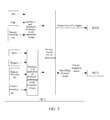
- FIG. 2 is a structural diagram of the control principle of the invention
- Figure 3A is a flow chart A for electric mode torque synthesis and limitation
- Figure 3B is a flow chart B for electric mode torque synthesis and limitation
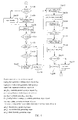
- Figure 4 is a flow chart for electricity generating mode torque synthesis and limitation.
- Figure 5 is a flow chart for torque arbitration.
- the hybrid vehicle is a uniaxial parallel hybrid vehicle, an engine 1 and a motor 2 are coaxially arranged, and the motor 2 is an ISG (Integrated Starter Generator) motor with integrated electricity generating and electric functions.
- the power system of the hybrid vehicle uses three control units: a Hybrid Control Unit (HCU) 3, an Engine Management System (EMS) 4 and a Motor Control Unit (MCU) 5.
- the three control units are responsible for controlling the vehicle, the engine and the motor, respectively.
- the ISG may work in a torque mode, a speed mode and a zero torque mode.
- the torque mode is a working mode aiming for fulfilling torque requests of the HCU.
- the motor when the motor works in the torque mode, the motor has the functions of: auxiliary driving (Mp, Me), electricity generating (Gen) and regenerative braking (Regen).
- FIG. 2 illustrates a structural diagram of torque management performed by the HCU according to the invention. The implementation method is described below.
- the HCU determines torque requests of the system based on e.g. a vehicle state, or a driver requirement, and identifies the torque requests as electric mode torque requests and electricity generating mode torque requests, then synthesizes and limits the requested torques, so as to make sure that each of the torque requests is within a proper range, next, arbitrates the torques based on set priorities, and sends a torque request with the highest priority to the motor control module after smoothing, thereby obtaining the required torque.
- Electric mode torque requests are toque requests for the motor to work in an electric mode, and in the present invention, this type of torque requests include auxiliary driving torque requests and battery warming-up torque (Bw_MotTq) requests.
- Auxiliary driving torque requests include driving torque requests aiming for fulfilling vehicle power performance (Mp) and driving torque requests aiming for improving vehicle efficiency (Me). Both the battery warming-up torque request and the driving torque request aiming for efficiency are to improve vehicle efficiency, and therefore the larger one of these two is selected to be an efficiency electric torque request (Me_Merge).
- the HCU limits the electric toque requests within a proper range according to conditions such as peak torque allowed by the motor and maximum allowed torque in continuous operation, thereby getting an efficiency electric torque limit (Me_Limit) and a performance electric torque limit (Mp_Limit).
- Step 1 to step 4 illustrate the synthesis processes for Me and Bw_MotTq torques. If there is an Me request or the battery needs to be warmed up, the efficiency electric torque flag (me_flag) is set to be 1, and the larger one of the two torques is selected to be a synthesized efficiency electric torque me_merge.
- Step 5 - step 7 illustrate the process for determining whether there is an Mp request affecting synthesized torques mp_syn and me_syn.
- Step 8 - step 16 illustrate the process for limiting mp_syn and obtaining a performance torque limit mp_limit.
- the limitation process is described below.
- step 12 determine whether an initial value of the performance toque limit mp_init_limit is smaller than the maximum continuous torque (cont_max) that the motor can provide currently (S10); and if it is not smaller than the maximum continuous torque of the motor, go to step 12.
- step 12 determine whether mp_syn is smaller than the peak toque of the motor (peak_torque); and if so, set mp_limit to be mp_init_limit (step 15); if not, i.e., mp_syn is larger than the maximum torque that the motor can provide, then set the requested torque to be the peak torque of the motor (step 16).
- step 10 further determine whether mp_syn is larger than the maximum continuous torque of the motor (step 11); and if it is not larger than the maximum continuous torque of the motor, set mp_limit to be mp_syn (step 14); and if it is larger than the maximum continuous torque of the motor, limit mp_Iimit to be the maximum continuous torque of the motor (step 13).
- the synthesized performance electric torque is limited within the range between the continuous torque and the peak torque of the motor.
- Step 16 and step 17 illustrates the processes for limiting the torque Me, by which the requested value of Me is limited between a set minimum value and the maximum continuous operating torque of the motor.
- Electricity generating mode torque requests are torque requests for the motor to work in an electricity generating mode, and in this invention, this type of torque requests include electricity generating requests in the event that the State of Charge (SOC) of the battery is low, regenerative braking torque requests (Regen), battery warming-up torque requests (Bw_GenTq) and engine warming-up torque requests (Ew_GenTq).
- SOC State of Charge
- Regen regenerative braking torque requests
- Bw_GenTq battery warming-up torque requests
- Ew_GenTq engine warming-up torque requests
- the engine may have to provide all or part of the electricity generating torque, therefore the smallest one of Gen, Bw_GenTq and Ew_GenTq is selected to be a synthesized electricity generating torque Gen_Syn.
- the motor When the torque requests above are present, the motor have to work in an electricity generating state, and the requested torque has a negative value.
- the HCU limits the electricity generating torque according to the minimum continuous torque allowed by the motor, thereby getting a regenerative braking toque limit (Regen_Limit) and an electricity generating torque limit (Gen_Limit).
- Step 18 - step 21 illustrate the processing of a regenerative braking torque, and when there is a regenerative braking torque request, a corresponding flag (regen_flag) is set to be 1 (true), and the requested braking torque can not be smaller than the minimum continuous operating torque of the motor (step 21).
- Step 22 - step 35 illustrates the processing of the electricity generating torque.
- the process is described below.
- step 26 When one of the conditions for battery warming-up electricity generating requests, engine warming-up requests and battery charging requests is met, set the synthesized electricity generating request flag to be 1 (step 26), and select the smallest one the three toques to be the electricity generating torque request (step 27).
- step 29 shows that the electricity generating torque can not be smaller than the minimum continuous operating torque of the motor.
- an acceptable electricity generating torque for the engine is obtained by looking up a rotation speed table of the current motor.
- Step 31 shows that the electricity generating torque can not exceed the acceptable range for the engine under the current rotation speed.
- the electricity generating request is that, the torque that the engine has to provide equals the total electricity generating requested torque minus the torque that regenerative brake provides.
- Step 33 - step 35 show that if the electricity generating requested torque is larger than a set minimum value (note that electricity generating torques have a negative value), the electricity generating torque is set to be zero.
- the HCU arbitrates according to priorities of the torque requests, and makes a torque with the highest priority a current torque request. Torques in the order of their priorities from highest to lowest are: Mp_Limit, Regen_Limit, Gen_Limit and Me_Limit. As can be seen from the priorities, auxiliary driving aiming for fulfilling vehicle power performance has the highest priority, the regenerative braking torque request is lower, then goes the electricity generating torque request, and finally auxiliary driving aiming for efficiency.
- the HCU determines according to the priorities above, responds to the torque request with the highest priority, and then sends a torque request to the engine and motor control modules, respectively.
- Figure 5 illustrates the arbitration process of the torques after synthesis and limitation.
- the torque request after torque arbitration and smoothing is sent to the ISG in the end, to fulfill torque requirements of the HCU, and thereby realizing various torque working modes of the hybrid vehicle in the invention.
Landscapes
- Engineering & Computer Science (AREA)
- Transportation (AREA)
- Mechanical Engineering (AREA)
- Chemical & Material Sciences (AREA)
- Combustion & Propulsion (AREA)
- Power Engineering (AREA)
- Life Sciences & Earth Sciences (AREA)
- Sustainable Development (AREA)
- Sustainable Energy (AREA)
- Automation & Control Theory (AREA)
- Electric Propulsion And Braking For Vehicles (AREA)
Abstract
Description
- This application claims the benefit of Chinese Patent Application No.
200710164139.x - The present invention relates to the field of hybrid vehicle control, and in particular, to a motor torque management method for hybrid vehicles.
- Energy crisis and environmental pollution have become great bottlenecks to global economy development. Energy-saving and environment friendly vehicles provide a good way to release energy pressure and reduce environmental pollution. Hybrid vehicles have the advantages of both internal-combustion engine vehicles and pure electric vehicles, such as low gasoline consumption, less emissions and long mileage, and therefore would be a feasible solution to energy crisis and environmental pollution.
- Parallel hybrid vehicles have two power sources, an engine and a motor. A Hybrid Control Unit (HCU) determines a working mode based on a current operation state of the vehicle, and sends a power request and a mode request to the engine and the motor, respectively. Control units of the engine and the motor control respective power sources according to an instruction of the HCU, to meet requirements of the whole vehicle.
- When the hybrid vehicle sends a torque request for auxiliary driving, electricity generating or regenerative braking, the HCU limits the torque request according to the status of the motor, battery and engine. If more than two of the torque requests above are present, the HCU is to arbitrate the torque requests, then send a torque request to the motor. Therefore, how to limit the torque requests and whether torque arbitration mechanism is suitable will affect performance of the hybrid vehicle.
- The present invention proposes a priority based motor torque management method, especially suitable for coaxial parallel moderate hybrid vehicles, thereby realizing the management of a plurality of torque request sources.
- The invention includes: electric mode torque synthesis and limitation, electricity generating mode torque synthesis and limitation, torque arbitration management, etc.
- 1. An electric mode torque request is a toque request for the motor to work in an electric mode, and in the present invention, this type of torque requests include auxiliary driving torque requests and battery warming-up torque (Bw_MotTq) requests. Auxiliary driving torque requests include driving torque requests aiming for fulfilling vehicle power performance (Mp) and driving torque requests aiming for improving vehicle efficiency (Me). Both the battery warming-up torque request and the driving torque request aiming for efficiency are to improve vehicle efficiency, and therefore the larger one of these two is selected to be an efficiency electric torque request (Me_Merge).
- If one or more of the torque requests above are present, in order to prevent the motor from being damaged by a requested torque that is too large or too small, the HCU limits the electric toque requests within a proper range according to conditions such as peak torque allowed by the motor and maximum allowed torque in continuous operation, thereby getting an efficiency electric torque limit (Me_Limit) and a performance electric torque limit (Mp_Limit).
- 2. An electricity generating mode torque request is a torque request for the motor to work in an electricity generating mode, and in this invention, this type of torque requests include electricity generating requests in the event that the State of Charge (SOC) of the battery is low, regenerative braking torque requests (Regen), battery warming-up torque requests (Bw_GenTq) and engine warming-up torque requests (Ew_GenTq).
- When the battery or the engine needs to be warmed up, or the battery requires charging, the engine may have to provide all or part of the electricity generating torque, therefore the smallest one of Gen, Bw_GenTq and Ew_GenTq is selected to be a synthesized electricity generating torque Gen_Syn.
- When the torque requests above are present, the motor have to work in an electricity generating state, and the requested torque has a negative value. In order to limit the motor electricity generating torque in a proper range, the HCU limits the electricity generating torque according to the minimum continuous torque allowed by the motor, thereby getting a regenerative braking toque limit (Regen_Limit) and an electricity generating torque limit (Gen_Limit).
- 3. Torque arbitration management: when a plurality of torque requests are present, the HCU arbitrates according to priorities of the torque requests, and makes a torque having the highest priority a current torque request. Torques in the order of their priorities from highest to lowest are: Mp_Limit, Regen_Limit, Gen_Limit and Me_Limit. As can be seen from the priorities, auxiliary driving aiming for fulfilling vehicle power performance has the highest priority, the regenerative braking torque request is lower, then goes the electricity generating torque request, and finally auxiliary driving aiming for efficiency.
- If a plurality of torque request sources are present, the HCU determines according to the priorities above, responds to the torque request with the highest priority, and then sends a torque request to the engine and motor control modules, respectively.
-
Figure 1 is a mechanical connection diagram of the invention; -
Figure 2 is a structural diagram of the control principle of the invention; -
Figure 3A is a flow chart A for electric mode torque synthesis and limitation; -
Figure 3B is a flow chart B for electric mode torque synthesis and limitation; -
Figure 4 is a flow chart for electricity generating mode torque synthesis and limitation; and -
Figure 5 is a flow chart for torque arbitration. - As shown in
Figure 1 , the hybrid vehicle is a uniaxial parallel hybrid vehicle, anengine 1 and amotor 2 are coaxially arranged, and themotor 2 is an ISG (Integrated Starter Generator) motor with integrated electricity generating and electric functions. The power system of the hybrid vehicle uses three control units: a Hybrid Control Unit (HCU) 3, an Engine Management System (EMS) 4 and a Motor Control Unit (MCU) 5. The three control units are responsible for controlling the vehicle, the engine and the motor, respectively. - The ISG may work in a torque mode, a speed mode and a zero torque mode. The torque mode is a working mode aiming for fulfilling torque requests of the HCU. In the invention, when the motor works in the torque mode, the motor has the functions of: auxiliary driving (Mp, Me), electricity generating (Gen) and regenerative braking (Regen).
-
Figure 2 illustrates a structural diagram of torque management performed by the HCU according to the invention. The implementation method is described below. The HCU determines torque requests of the system based on e.g. a vehicle state, or a driver requirement, and identifies the torque requests as electric mode torque requests and electricity generating mode torque requests, then synthesizes and limits the requested torques, so as to make sure that each of the torque requests is within a proper range, next, arbitrates the torques based on set priorities, and sends a torque request with the highest priority to the motor control module after smoothing, thereby obtaining the required torque. - 1. Electric mode torque synthesis and limitation
- Electric mode torque requests are toque requests for the motor to work in an electric mode, and in the present invention, this type of torque requests include auxiliary driving torque requests and battery warming-up torque (Bw_MotTq) requests. Auxiliary driving torque requests include driving torque requests aiming for fulfilling vehicle power performance (Mp) and driving torque requests aiming for improving vehicle efficiency (Me). Both the battery warming-up torque request and the driving torque request aiming for efficiency are to improve vehicle efficiency, and therefore the larger one of these two is selected to be an efficiency electric torque request (Me_Merge).
- If one or more of the torque requests above are present, in order to prevent the motor from being damaged by a requested torque that is too large or too small, the HCU limits the electric toque requests within a proper range according to conditions such as peak torque allowed by the motor and maximum allowed torque in continuous operation, thereby getting an efficiency electric torque limit (Me_Limit) and a performance electric torque limit (Mp_Limit).
- The torque synthesis and limitation process in the electric mode is shown in
Figures 3A and3B .Step 1 tostep 4 illustrate the synthesis processes for Me and Bw_MotTq torques. If there is an Me request or the battery needs to be warmed up, the efficiency electric torque flag (me_flag) is set to be 1, and the larger one of the two torques is selected to be a synthesized efficiency electric torque me_merge. Step 5 -step 7 illustrate the process for determining whether there is an Mp request affecting synthesized torques mp_syn and me_syn. Step 8 - step 16 illustrate the process for limiting mp_syn and obtaining a performance torque limit mp_limit. The limitation process is described below. First, determine whether an initial value of the performance toque limit mp_init_limit is smaller than the maximum continuous torque (cont_max) that the motor can provide currently (S10); and if it is not smaller than the maximum continuous torque of the motor, go to step 12. In step 12, determine whether mp_syn is smaller than the peak toque of the motor (peak_torque); and if so, set mp_limit to be mp_init_limit (step 15); if not, i.e., mp_syn is larger than the maximum torque that the motor can provide, then set the requested torque to be the peak torque of the motor (step 16). If it is true in step 10, further determine whether mp_syn is larger than the maximum continuous torque of the motor (step 11); and if it is not larger than the maximum continuous torque of the motor, set mp_limit to be mp_syn (step 14); and if it is larger than the maximum continuous torque of the motor, limit mp_Iimit to be the maximum continuous torque of the motor (step 13). By the process above, the synthesized performance electric torque is limited within the range between the continuous torque and the peak torque of the motor. - Step 16 and
step 17 illustrates the processes for limiting the torque Me, by which the requested value of Me is limited between a set minimum value and the maximum continuous operating torque of the motor. - 2. Electricity generating mode torque synthesis and limitation
- Electricity generating mode torque requests are torque requests for the motor to work in an electricity generating mode, and in this invention, this type of torque requests include electricity generating requests in the event that the State of Charge (SOC) of the battery is low, regenerative braking torque requests (Regen), battery warming-up torque requests (Bw_GenTq) and engine warming-up torque requests (Ew_GenTq).
- When the battery or the engine needs to be warmed up, or the battery requires charging, the engine may have to provide all or part of the electricity generating torque, therefore the smallest one of Gen, Bw_GenTq and Ew_GenTq is selected to be a synthesized electricity generating torque Gen_Syn.
- When the torque requests above are present, the motor have to work in an electricity generating state, and the requested torque has a negative value. In order to limit the motor electricity generating torque in a proper range, the HCU limits the electricity generating torque according to the minimum continuous torque allowed by the motor, thereby getting a regenerative braking toque limit (Regen_Limit) and an electricity generating torque limit (Gen_Limit).
-
Figure 4 shows the torque synthesis and limitation process in the electricity generating mode. Step 18 - step 21 illustrate the processing of a regenerative braking torque, and when there is a regenerative braking torque request, a corresponding flag (regen_flag) is set to be 1 (true), and the requested braking torque can not be smaller than the minimum continuous operating torque of the motor (step 21). - Step 22 - step 35 illustrates the processing of the electricity generating torque. The process is described below. When one of the conditions for battery warming-up electricity generating requests, engine warming-up requests and battery charging requests is met, set the synthesized electricity generating request flag to be 1 (step 26), and select the smallest one the three toques to be the electricity generating torque request (step 27).
Step 29 shows that the electricity generating torque can not be smaller than the minimum continuous operating torque of the motor. Instep 30, an acceptable electricity generating torque for the engine is obtained by looking up a rotation speed table of the current motor.Step 31 shows that the electricity generating torque can not exceed the acceptable range for the engine under the current rotation speed. The electricity generating request is that, the torque that the engine has to provide equals the total electricity generating requested torque minus the torque that regenerative brake provides. Step 33 - step 35 show that if the electricity generating requested torque is larger than a set minimum value (note that electricity generating torques have a negative value), the electricity generating torque is set to be zero. - 3. Torque arbitration management
- When a plurality of torque requests are present, the HCU arbitrates according to priorities of the torque requests, and makes a torque with the highest priority a current torque request. Torques in the order of their priorities from highest to lowest are: Mp_Limit, Regen_Limit, Gen_Limit and Me_Limit. As can be seen from the priorities, auxiliary driving aiming for fulfilling vehicle power performance has the highest priority, the regenerative braking torque request is lower, then goes the electricity generating torque request, and finally auxiliary driving aiming for efficiency.
- If a plurality of torque request sources are present, the HCU determines according to the priorities above, responds to the torque request with the highest priority, and then sends a torque request to the engine and motor control modules, respectively.
-
Figure 5 illustrates the arbitration process of the torques after synthesis and limitation. First, determine the request Mp having the highest priority; and if Mp_flag is 1 (true), set the torque request value of the motor (ISG_reqTqSyn) to be mp_limit (step 41); if there is no Mp request, determine whether there is a regenerative braking torque request (regen_flag), and if there is and the requested torque is smaller than the electricity generating requested torque, set the torque request sent to the motor to be regen_limit (step 42); if there is no regenerative braking torque request, determine whether there is a electricity generating request (gen_flag), and if so, set ISG_reqTqSyn to be gen_limit (step 43); if there is no electricity generating torque request, determine whether there is an Me request, and if so, set ISG_reqTqSyn to be me_limit (step 44); if there is no Me request, set ISG_reqTqSyn to be zero. After the torque request to be sent to the ISG is calculated, smoothing of the torque is performed (S45). - The torque request after torque arbitration and smoothing is sent to the ISG in the end, to fulfill torque requirements of the HCU, and thereby realizing various torque working modes of the hybrid vehicle in the invention.
Claims (10)
- A motor torque management method, comprising:determining, by a Hybrid Control Unit, HCU, torque requests of a system according to a vehicle state and a driver requirement;performing synthesis and limitation on requested torques so that each of the torque requests is within a proper range;arbitrating the torques according to set priorities; andsending a torque request having the highest priority to a motor control module after smoothing of the torque request, so as to obtain a required torque.
- The motor torque management method according to claim 1, wherein:the torque requests comprise an electric mode torque request and an electricity generating mode torque request; and the management method comprises: electric mode torque synthesis and limitation, electricity generating mode torque synthesis and limitation, and torque arbitration management.
- The motor torque management method according to claim 2, wherein:the electric mode torque request comprises an auxiliary driving torque request and a battery warming-up torque request, and the auxiliary driving torque request comprises a performance electric torque request aiming for fulfilling vehicle power performance and an efficiency electric torque request aiming for improving vehicle efficiency; the electric mode torque synthesis and limitation comprise synthesis and limitation of a performance electric torque, by which a performance electric torque limit is obtained, and comprise synthesis limitation of an efficiency electric torque, by which an efficiency electric torque limit is obtained.
- The motor torque management method according to claim 3, wherein, the synthesis and limitation of the performance electric torque comprise:determining whether an initial value of the performance electric torque limit is smaller than a maximum continuous torque that the motor can provide, andif the initial value of the performance electric torque limit is smaller than the maximum continuous torque of the motor, further determining whether a synthesized performance electric torque is smaller than the maximum continuous torque of the motor, and
if the synthesized performance electric torque is smaller than the maximum continuous torque of the motor, setting the performance electric torque limit to be the synthesized performance electric torque; and
if the synthesized performance electric torque is not smaller than the maximum continuous torque of the motor, limiting the synthesized performance electric torque to be the maximum continuous torque of the motor; andif the initial value of the performance electric torque limit is not smaller than the maximum continuous torque of the motor, determining whether the synthesized performance electric torque is smaller than a peak torque of the motor, and
if the synthesized performance electric torque is smaller than a peak torque of the motor, setting a final value of the performance electric torque limit to be the initial value of the performance electric torque limit; and
if the synthesized performance electric torque is not smaller than the peak torque of the motor, setting a requested torque to be the peak torque of the motor. - The motor torque management method according to claim 3, wherein, synthesis and limitation of the efficiency electric torque comprise:selecting the smaller one of a synthesized efficiency electric torque and a minimum continuous value of the motor to be an initial value of the efficiency electric torque limit; andselecting the larger one of the synthesized efficiency electric torque and a set minimum torque of the motor to be the efficiency electric torque limit.
- The motor torque management method according to claim 2, wherein: the electricity generating mode torque request comprises an electricity generating request in the event of low State of Charge, SOC, of a battery, a regenerative braking torque request, a battery warming-up torque request and an engine warming-up torque request;
when the torque requests above are present, the HCU limits an electricity generating torque according to a minimum continuous torque allowed by the motor, and obtains a regenerative braking torque limit and an electricity generating torque limit. - The motor torque management method according to claim 6, wherein: the electricity generating mode torque synthesis and limitation comprise two parts, and the first part comprises: obtaining the regenerative braking torque limit by limiting the regenerative braking torque to be above the minimum continuous torque of the motor; and the second part comprises:selecting the smallest one of engine warming-up, battery warming-up and battery charging torques to be a synthesized electricity generating torque,obtaining a first electricity generating torque by limiting the synthesized electricity generating torque to be above the minimum continuous torque of the motor;obtaining a second electricity generating torque by limiting a difference between the first electricity generating torque value and the regenerative braking torque limit within an acceptable maximum electricity generating torque for the engine;obtaining a third electricity generating torque by summing the second electricity generating torque value and the regenerative braking torque limit,limiting the third electricity generating torque to be above a minimum torque; andtaking the third electricity generating torque as the electricity generating torque limit.
- The motor torque management method according to any one of claims 2-7, wherein:the torque arbitration management comprises: when a plurality of torque requests are present at the same time, arbitrating by the HCU according to priorities of the torque requests, and selecting a torque having the highest priority to be a current torque request.
- The motor torque management method according to claim 8, wherein: the torques in the order of their priorities from highest to lowest are: performance electric torque limit, regenerative braking torque limit, electricity generating torque limit, and efficiency electric torque limit.
- The motor torque management method according to any one of claims 1-9, wherein the management method is adapted for a coaxial parallel moderate hybrid vehicle.
Applications Claiming Priority (2)
| Application Number | Priority Date | Filing Date | Title |
|---|---|---|---|
| CNB200710164139XA CN100521501C (en) | 2007-09-30 | 2007-09-30 | Torsion management method of mixed power electric motor |
| PCT/CN2008/072572 WO2009046673A1 (en) | 2007-09-30 | 2008-09-27 | Torque management method for hybrid electric motor |
Publications (2)
| Publication Number | Publication Date |
|---|---|
| EP2200173A1 true EP2200173A1 (en) | 2010-06-23 |
| EP2200173A4 EP2200173A4 (en) | 2011-07-27 |
Family
ID=39423122
Family Applications (1)
| Application Number | Title | Priority Date | Filing Date |
|---|---|---|---|
| EP08837147A Withdrawn EP2200173A4 (en) | 2007-09-30 | 2008-09-27 | Torque management method for hybrid electric motor |
Country Status (4)
| Country | Link |
|---|---|
| US (1) | US8515606B2 (en) |
| EP (1) | EP2200173A4 (en) |
| CN (1) | CN100521501C (en) |
| WO (1) | WO2009046673A1 (en) |
Cited By (2)
| Publication number | Priority date | Publication date | Assignee | Title |
|---|---|---|---|---|
| CN112356821A (en) * | 2020-10-14 | 2021-02-12 | 长城汽车股份有限公司 | Vehicle torque maximum limit value calculation method and device, electronic equipment and storage medium |
| GB2629824A (en) * | 2023-05-11 | 2024-11-13 | Jaguar Land Rover Ltd | Controlling a hybrid powertrain system of a vehicle |
Families Citing this family (26)
| Publication number | Priority date | Publication date | Assignee | Title |
|---|---|---|---|---|
| CN100521501C (en) * | 2007-09-30 | 2009-07-29 | 奇瑞汽车股份有限公司 | Torsion management method of mixed power electric motor |
| CN101259845A (en) * | 2007-12-05 | 2008-09-10 | 奇瑞汽车股份有限公司 | Mixed power motor torsional moment smoothness processing controlling system |
| CN101695912B (en) * | 2009-10-26 | 2012-09-12 | 纽贝耳汽车(杭州)有限公司 | Entire electric car control method |
| US8550054B2 (en) * | 2009-12-08 | 2013-10-08 | GM Global Technology Operations LLC | Linear tranformation engine torque control systems and methods for increasing torque requests |
| US8577579B2 (en) * | 2010-02-01 | 2013-11-05 | Bendix Commercial Vehicle Systems Llc | Engine control request from adaptive control with braking controller |
| CN101823444B (en) * | 2010-05-06 | 2012-06-27 | 奇瑞汽车股份有限公司 | Method for controlling starting torque of electric vehicle |
| US8907774B2 (en) | 2011-03-01 | 2014-12-09 | Bendix Commercial Vehicle Systems Llc | System and method for monitoring tire condition |
| KR101284293B1 (en) * | 2011-05-24 | 2013-07-08 | 기아자동차주식회사 | Method and system for controlling torque of motor drive vehicle |
| US8798835B2 (en) * | 2012-06-05 | 2014-08-05 | GM Global Technology Operations LLC | Hybrid diesel-electric powertrain smoke limit avoidance |
| CN103625306A (en) * | 2012-08-20 | 2014-03-12 | 北汽福田汽车股份有限公司 | Torque monitoring system of electric vehicle |
| US20130211638A1 (en) * | 2012-08-31 | 2013-08-15 | Mr. Sergei makaveev | Method of regulation of tarque in hybrid transmission |
| KR20140079156A (en) * | 2012-12-18 | 2014-06-26 | 현대자동차주식회사 | Method and system for determining torque of motor of hybrid electric vehicle |
| KR102116701B1 (en) | 2013-03-15 | 2020-06-01 | 알리손 트랜스미션, 인크. | Service disconnect interlock system and method for hybrid vehicles |
| CN105142963B (en) | 2013-03-15 | 2018-02-06 | 艾里逊变速箱公司 | System and method for balancing state of charge of energy storage modules in a hybrid vehicle |
| CN104653317B (en) * | 2014-12-04 | 2017-05-17 | 中国航空工业集团公司第六三一研究所 | Torque control method based on arbitration voting |
| CN106314194B (en) * | 2015-06-26 | 2018-05-18 | 上海汽车集团股份有限公司 | Power system of electric automobile output torque control method and device |
| CN107139916B (en) * | 2017-05-17 | 2019-09-24 | 中国第一汽车股份有限公司 | Operator torque demands' analytic method for hybrid vehicle |
| JP7003673B2 (en) * | 2018-01-15 | 2022-01-20 | トヨタ自動車株式会社 | automobile |
| EP3833588B1 (en) * | 2018-12-06 | 2024-08-21 | Cummins, Inc. | Powertrain controls for an electric motor and an automated manual transmission |
| CN114123924A (en) * | 2020-08-28 | 2022-03-01 | 苏州艾利特机器人有限公司 | Control system for torque safety |
| CN112298157B (en) * | 2020-10-30 | 2022-02-22 | 一汽解放汽车有限公司 | Control method, device, equipment and storage medium |
| CN115556591B (en) * | 2021-04-27 | 2025-03-11 | 武汉客车制造股份有限公司 | Pure electric bus motor torque smoothing control method and system |
| CN113716054B (en) * | 2021-09-14 | 2023-06-27 | 上海峰飞航空科技有限公司 | Control method of power system and control method of unmanned aerial vehicle |
| CN114393998B (en) * | 2022-01-25 | 2024-01-26 | 三一汽车起重机械有限公司 | Motor torque control method, motor torque controller, motor torque control system and working machine |
| CN115981202B (en) * | 2022-12-20 | 2025-10-03 | 中国重汽集团济南动力有限公司 | Arbitration method, controller and medium for TSC1 request |
| CN118790223B (en) * | 2024-09-12 | 2024-12-17 | 潍柴动力股份有限公司 | Regeneration control method and device for hybrid vehicle, vehicle and medium |
Family Cites Families (20)
| Publication number | Priority date | Publication date | Assignee | Title |
|---|---|---|---|---|
| DE19617548B4 (en) * | 1996-05-02 | 2008-06-12 | Adam Opel Ag | Electric motor driven motor vehicle |
| DE19840819C1 (en) * | 1998-09-07 | 2000-08-03 | Isad Electronic Sys Gmbh & Co | Starter system for an internal combustion engine and method for starting an internal combustion engine |
| US6321143B1 (en) * | 2000-06-26 | 2001-11-20 | Ford Motor Company | Control system and method for a hybrid electric vehicle |
| JP3807232B2 (en) * | 2001-02-02 | 2006-08-09 | 日産自動車株式会社 | Hybrid vehicle control system |
| CN100411279C (en) * | 2002-07-22 | 2008-08-13 | 日本精工株式会社 | 3-phase permanent magnet motor |
| JP3676336B2 (en) | 2002-10-02 | 2005-07-27 | 本田技研工業株式会社 | Output control device for hybrid vehicle |
| DE10349445A1 (en) * | 2002-10-26 | 2004-05-13 | Luk Lamellen Und Kupplungsbau Beteiligungs Kg | Operating motor vehicle involves controlling drive train with computing or control unit by carrying out measure(s) depending on defined operating state(s) and/or electronic signal in automated manner |
| US7021410B2 (en) | 2002-11-27 | 2006-04-04 | Eaton Corporation | Method and system for determining the torque required to launch a vehicle having a hybrid drive-train |
| US7076356B2 (en) | 2004-02-14 | 2006-07-11 | General Motors Corporation | Optimal selection of input torque with stability of power flow for a hybrid electric vehicle |
| KR100904258B1 (en) * | 2004-07-12 | 2009-06-25 | 도요타 지도샤(주) | Power Output Apparatus, Vehicle Equipped with Power Output Apparatus, and Control Method of Power Output Apparatus |
| JP4055758B2 (en) * | 2004-09-01 | 2008-03-05 | トヨタ自動車株式会社 | Automobile and control method thereof |
| DE102004056187B4 (en) * | 2004-11-20 | 2016-02-04 | Bayerische Motoren Werke Aktiengesellschaft | Device for controlling and / or regulating an electrical machine of a motor vehicle |
| DE102004062012A1 (en) | 2004-12-23 | 2006-07-20 | Robert Bosch Gmbh | Method for operating a hybrid vehicle |
| CN1311999C (en) | 2005-01-31 | 2007-04-25 | 上海汽车工业(集团)总公司汽车工程研究院 | Parallel connection mixed power driving system and its driving method |
| CN1897449A (en) | 2005-07-15 | 2007-01-17 | 中国第一汽车集团公司 | Motor torsional-moment outputting management with SOC variation for mixed-dynamical vehicle |
| JP4348557B2 (en) | 2006-02-22 | 2009-10-21 | 三菱ふそうトラック・バス株式会社 | Control device for hybrid electric vehicle |
| CN100521501C (en) | 2007-09-30 | 2009-07-29 | 奇瑞汽车股份有限公司 | Torsion management method of mixed power electric motor |
| US8335623B2 (en) * | 2007-10-25 | 2012-12-18 | GM Global Technology Operations LLC | Method and apparatus for remediation of and recovery from a clutch slip event in a hybrid powertrain system |
| US8731751B2 (en) * | 2008-02-07 | 2014-05-20 | GM Global Technology Operations LLC | Method and system for controlling a hybrid vehicle |
| US8157035B2 (en) * | 2008-08-15 | 2012-04-17 | GM Global Technology Operations LLC | Hybrid vehicle auto start systems and methods |
-
2007
- 2007-09-30 CN CNB200710164139XA patent/CN100521501C/en active Active
-
2008
- 2008-09-27 WO PCT/CN2008/072572 patent/WO2009046673A1/en not_active Ceased
- 2008-09-27 EP EP08837147A patent/EP2200173A4/en not_active Withdrawn
- 2008-09-27 US US12/680,778 patent/US8515606B2/en active Active
Cited By (4)
| Publication number | Priority date | Publication date | Assignee | Title |
|---|---|---|---|---|
| CN112356821A (en) * | 2020-10-14 | 2021-02-12 | 长城汽车股份有限公司 | Vehicle torque maximum limit value calculation method and device, electronic equipment and storage medium |
| CN112356821B (en) * | 2020-10-14 | 2022-07-22 | 长城汽车股份有限公司 | Vehicle torque maximum limit value calculation method and device, electronic equipment and storage medium |
| GB2629824A (en) * | 2023-05-11 | 2024-11-13 | Jaguar Land Rover Ltd | Controlling a hybrid powertrain system of a vehicle |
| WO2024231508A1 (en) * | 2023-05-11 | 2024-11-14 | Jaguar Land Rover Limited | Controlling a hybrid powertrain system of a vehicle |
Also Published As
| Publication number | Publication date |
|---|---|
| US8515606B2 (en) | 2013-08-20 |
| CN101174806A (en) | 2008-05-07 |
| CN100521501C (en) | 2009-07-29 |
| EP2200173A4 (en) | 2011-07-27 |
| WO2009046673A1 (en) | 2009-04-16 |
| US20100286855A1 (en) | 2010-11-11 |
Similar Documents
| Publication | Publication Date | Title |
|---|---|---|
| US8515606B2 (en) | Torque management method for hybrid electric motor | |
| CN103832287B (en) | Method and system for controlling hybrid electric vehicle charging and discharging | |
| CN102658817B (en) | Control method for realizing purely-electric function of hybrid vehicle | |
| WO2009074091A1 (en) | A motor torque smoothing treatment method for hybrid power and a hybrid power system | |
| CN102774374B (en) | Torque monitoring system for hybrid electric vehicle | |
| EP2983954B1 (en) | Hybrid vehicle and control method therefor | |
| CN105292100B (en) | Device and method for controlling the engine clutch of hybrid-power electric vehicle | |
| JP2009143524A (en) | Method for determining optimum operating point by SOC of hybrid vehicle | |
| US20140222266A1 (en) | Integrated electronic power control unit of environmentally-friendly vehicle | |
| CN100491154C (en) | Method for controlling output power of vehicular fuel cell system | |
| JP5598555B2 (en) | Vehicle and vehicle control method | |
| CN105667498A (en) | Allocating method and device for electricity generating power of hybrid electric vehicle in series connection mode | |
| CN1807144A (en) | Fuel cell car energy control method based on CAN bus network communication | |
| CN115743082A (en) | Torque distribution method, device, equipment and medium | |
| CN106427527A (en) | Tractor extended range control method, control device and hydraulic power system thereof | |
| WO2023284662A1 (en) | Hybrid vehicle battery energy control method and apparatus | |
| CN117261625A (en) | Extended-range hybrid vehicle battery charging method and device and extended-range hybrid vehicle | |
| JP5304953B1 (en) | Control device, control system | |
| CN108661838A (en) | The starting method of hybrid vehicle and its engine, device, equipment | |
| CN210554231U (en) | Cluster type generator set control system | |
| CN212604467U (en) | Commercial vehicle weak mixing system | |
| CN205498654U (en) | Distributing type energy feed system based on many followers | |
| CN100999189B (en) | Motor control device for mixed power | |
| CN220947586U (en) | Energy recovery device for new energy vehicles | |
| Chen | The development of hybrid electric vehicle control strategy based on GT-SUITE and Simulink |
Legal Events
| Date | Code | Title | Description |
|---|---|---|---|
| PUAI | Public reference made under article 153(3) epc to a published international application that has entered the european phase |
Free format text: ORIGINAL CODE: 0009012 |
|
| 17P | Request for examination filed |
Effective date: 20100416 |
|
| AK | Designated contracting states |
Kind code of ref document: A1 Designated state(s): AT BE BG CH CY CZ DE DK EE ES FI FR GB GR HR HU IE IS IT LI LT LU LV MC MT NL NO PL PT RO SE SI SK TR |
|
| AX | Request for extension of the european patent |
Extension state: AL BA MK RS |
|
| DAX | Request for extension of the european patent (deleted) | ||
| REG | Reference to a national code |
Ref country code: DE Ref legal event code: R079 Free format text: PREVIOUS MAIN CLASS: H02P0007000000 Ipc: B60W0020000000 |
|
| A4 | Supplementary search report drawn up and despatched |
Effective date: 20110629 |
|
| RIC1 | Information provided on ipc code assigned before grant |
Ipc: B60W 20/00 20060101AFI20110622BHEP Ipc: B60L 15/20 20060101ALI20110622BHEP Ipc: B60W 10/06 20060101ALN20110622BHEP Ipc: B60K 6/485 20071001ALI20110622BHEP Ipc: B60W 10/08 20060101ALN20110622BHEP |
|
| 17Q | First examination report despatched |
Effective date: 20150929 |
|
| STAA | Information on the status of an ep patent application or granted ep patent |
Free format text: STATUS: EXAMINATION IS IN PROGRESS |
|
| STAA | Information on the status of an ep patent application or granted ep patent |
Free format text: STATUS: THE APPLICATION IS DEEMED TO BE WITHDRAWN |
|
| 18D | Application deemed to be withdrawn |
Effective date: 20170401 |