EP2200148A2 - Power supply system and electronic instrument - Google Patents
Power supply system and electronic instrument Download PDFInfo
- Publication number
- EP2200148A2 EP2200148A2 EP20090179439 EP09179439A EP2200148A2 EP 2200148 A2 EP2200148 A2 EP 2200148A2 EP 20090179439 EP20090179439 EP 20090179439 EP 09179439 A EP09179439 A EP 09179439A EP 2200148 A2 EP2200148 A2 EP 2200148A2
- Authority
- EP
- European Patent Office
- Prior art keywords
- power supply
- voltage
- loads
- capacitance capacitor
- load
- Prior art date
- Legal status (The legal status is an assumption and is not a legal conclusion. Google has not performed a legal analysis and makes no representation as to the accuracy of the status listed.)
- Granted
Links
Images



Classifications
-
- H—ELECTRICITY
- H02—GENERATION; CONVERSION OR DISTRIBUTION OF ELECTRIC POWER
- H02J—ELECTRIC POWER NETWORKS; CIRCUIT ARRANGEMENTS OR SYSTEMS FOR SUPPLYING OR DISTRIBUTING ELECTRIC POWER; SYSTEMS FOR STORING ELECTRIC ENERGY
- H02J1/00—Circuit arrangements for DC mains or DC distribution networks
- H02J1/10—Parallel operation of DC sources
- H02J1/102—Parallel operation of DC sources being switching converters
-
- H—ELECTRICITY
- H02—GENERATION; CONVERSION OR DISTRIBUTION OF ELECTRIC POWER
- H02J—ELECTRIC POWER NETWORKS; CIRCUIT ARRANGEMENTS OR SYSTEMS FOR SUPPLYING OR DISTRIBUTING ELECTRIC POWER; SYSTEMS FOR STORING ELECTRIC ENERGY
- H02J7/00—Circuit arrangements for charging or discharging batteries or for supplying loads from batteries
- H02J7/34—Parallel operation in networks using both storage and other DC sources, e.g. providing buffering
- H02J7/345—Parallel operation in networks using both storage and other DC sources, e.g. providing buffering using capacitors as storage or buffering devices
-
- H—ELECTRICITY
- H02—GENERATION; CONVERSION OR DISTRIBUTION OF ELECTRIC POWER
- H02J—ELECTRIC POWER NETWORKS; CIRCUIT ARRANGEMENTS OR SYSTEMS FOR SUPPLYING OR DISTRIBUTING ELECTRIC POWER; SYSTEMS FOR STORING ELECTRIC ENERGY
- H02J2207/00—Details of circuit arrangements for charging or discharging batteries or supplying loads from batteries
- H02J2207/20—Charging or discharging characterised by the power electronics converter
Definitions
- the invention relates to power supply systems and electronic instruments. More particularly, the invention relates to a power supply system for supplying power to plural loads and an electronic instrument including the power supply system.
- the capacitor with the capacitance as large as the order of several hundred millifarads (mF), which is necessary for the power assists tends to have the size as large as 18 mm ⁇ 15 mm even after seeking the smallest at present, it is difficult to achieve the miniaturization of an instrument as a whole, while mounting such capacitor onto each of the power supply units of plural components included in the instrument.
- an electric power supply unit capable of providing power assists for a plurality of loads from a battery by sharing one single large-capacitance capacitor, and electronic instruments including the power supply system.
- a power supply system including a first plurality of power supply units configured to supply working voltages from a battery to a second plurality of loads, a large-capacitance capacitor configured to charge electric charges from the battery, a third plurality of switching means for connecting the large-capacitance capacitor to the second plurality of loads selectively, and control means for switching the third plurality of switching means corresponding to at least one load presently in use among the second plurality of loads.
- the power supply system further includes voltage monitoring means for monitoring the voltage of the large-capacitance capacitor, and discharge means, in the case where the output voltage of the large-capacitance capacitor monitored by the voltage monitoring means is found higher than an operating voltage of the second load when the capacitor is switched from a first load to a second load, for discharging charges stored in the capacitor according to the control by the control means so that the voltage of the capacitor decreases to the operating voltage.
- An electronic instrument including the second plurality of loads configured to be supplied with power from the battery, the first plurality of power supply units configured to supply working voltages from the battery to the second plurality of loads, the large-capacitance capacitor configured to charge electric charges from the battery, the third plurality of switching means for connecting the large-capacitance capacitor to the second plurality of loads selectively, and control means for switching the third plurality of switching means corresponding to at least one load presently in use among the second plurality of loads.
- the present invention by alleviating the burden on the battery and electric power system, longer operating life of the battery can be realized.
- one single large-capacitance capacitor is shared by the plurality of loads, the size of the power supply system as well as electronic instrument can be miniaturized.
- FIG. 1 is a schematic block diagram generally illustrating the configuration of a power supply system, which is configured to supply electric powers to a plurality of loads (#1 to #M) 31 to 33, according to an embodiment of the invention.
- the power supply system is provided including a first plurality of power supply units (#1 to #N) 11 to 14, a voltage monitoring unit 17, a second plurality of switches (SW #1 to SW #M) 21 to 23 as switching means, a large-capacitance capacitor 24, and a discharge unit 25.
- the voltage monitoring unit 17, the plural switches (SW #1 to SW #M) 21 to 23 as switching means, the large-capacitance capacitor 24, and the discharge unit 25 altogether serves as an auxiliary power supply for the power supply system.
- plural power supply units, 11 to 13 are configured to generate the voltages for driving a third plurality of loads (#1 to #M) 31 to 33 and subsequently apply to the respective loads.
- the power supply unit 14 serves as the unit for supplying the power to a control unit 15 and to the voltage monitoring unit 17. Namely, the control unit 15 and voltage monitoring unit 17 are configured to have the power supplied from the power source system to which neither the switches 21 to 23 nor the large-capacitance capacitor 24 is connected.
- the example of the battery 16 includes rechargeable batteries such as lithium ion (Li-ion) battery, Li polymer battery, nickel hydrogen (NiH) battery and so forth.
- rechargeable batteries such as lithium ion (Li-ion) battery, Li polymer battery, nickel hydrogen (NiH) battery and so forth.
- Li-ion lithium ion
- Li polymer battery Li polymer battery
- NiH nickel hydrogen
- the kind of the battery may not be specifically limited to these examples.
- the power supply units 11 to 14 may include a direct connection line for directly outputting the battery voltage, a DC/DC convertor of either step-up or step-down type, an LDO regulator, a charge pump circuit, a connection in series of the DC/DC convertor and the regulator, and so forth.
- LDO mentioned above is the abbreviation for low dropout, and the LDO regulator is a series regulator (or linear voltage regulator) for stabilizing DC input voltage and outputting subsequently.
- the plural power supply units, 11 to 13 are not necessarily limited to those having specific configurations, but any type of power sources capable of supplying source power to the load may be adapted.
- the loads 31 to 33 each include a device and IC, which may operate in a burst manner of either periodic or aperiodic, in that the maximum instantaneous current at the time of the burst operation is comparatively large and as much as 1000 mA or more, for example. It may be noted that these devices are brought to an off-state while not operating, with no or almost none of power consumption is involved. In addition, the devices may further include those with normally either medium or low power consumption. Although it is assumed that the working voltage differs for respective loads, some of them may coincide with each other in working voltage.
- these plural loads are configured not to operate simultaneously and that, at least in the case where two or more loads are in operation, the load except one of them is operated in the mode capable of being driven within the current supply capacity of the power supply unit for supplying the power to those loads (with no current supply from the large-capacitance capacitor).
- the driving current of approximately 2 A is necessary for outputting the maximum output 33 dBm for Global System for Mobile Communications (GSM)
- the current of approximately 800 mA is sufficient for the reduced output of 27 dBm.
- the large-capacitance capacitor 24 includes those capable of storing massive amounts of electric charges such as an electric double layer capacitor, a lithium ion capacitor, a ceramic capacitor, and so forth.
- the capacitance of 1 mF or more is suitably used for the large-capacitance capacitor 24, for example.
- the voltage monitoring unit 17 serves as a means for monitoring the voltage of the large-capacitance capacitor 24, and is configured to inform monitoring results to the control unit 15.
- the switches 21 to 23 each serve as switching means for selectively connecting the voltage of the large-capacitance capacitor 24 to the loads 31 to 33, and are subjected individually to the on-off control by the control unit 15.
- MEMS device, semiconductor switch, and so forth may be used as the switches 21 to 23
- p-MOSFET is suitably utilized, for example.
- MOSFET on-resistance of 0.2 ohm or less and the maximum current of 2 A or more are preferred.
- the discharge unit 25 serves as a means for discharging the charges stored in the large-capacitance capacitor 24 to the ground, and is subjected to on-off control by the control unit 15.
- the discharge unit 25 serves to discharge electric charges of the large-capacitance capacitor 24 so that the voltage of the capacitor decreases to the operating voltage.
- the control unit 15 is provided including CPU, a memory, and so forth, to serve as the unit for controlling electronic instrument to which electric power is supplied by the power supply units.
- the control unit 15 is configured to control the switches, 21 to 23, for connecting the large-capacitance capacitor to respective loads according to the application of the electric instrument, and to control the electric discharge unit 25 in response to the output of the voltage monitoring unit 17.
- the large-capacitance capacitor 24 By connecting the large-capacitance capacitor 24 to the load presently driven after appropriately turning the switches, 21 to 23, according to the current consumption and operating conditions of the loads to be possibly driven, the current assist capability is provided, by utilizing one single large-capacitance capacitor 24, to the electric power system which drives plural loads.
- the voltage of 3.3 V is applied to large-capacitance capacitor. If this is further connected as it is to the power supply unit B, the adverse current flow to the side of the power supply unit and so forth may occur, thereby possibly causing a system malfunction. In this case, therefore, the electric charges of the capacitor are discharged through the discharge unit 25 to the voltage as low as 2.8 V, and the connection to the power supply unit B is established subsequently. This voltage drop down to 2.8 V is monitored by the voltage monitoring unit 17 and informed to the control unit 15 instantaneously.
- step S11 a factor related to the switching connection has emerged with the large-capacitance capacitor 24 (step S11).
- the loads to be driven herein exemplified is the case where the drive of the load A tentatively stops, while the drive of the load B starts.
- the load A is brought to a stop (off) (step S12).
- the load may alternatively be brought to either an idling state or low power mode (LowPowerMode).
- LowPowerMode it is necessary for the current consumption to be equal to at most the maximum current of the power supply unit.
- the selection among the modes is appropriately carried out depending on the application as the load, thereby each leading to different operation.
- the load such as a camera flash
- the current consumption can be suppressed as in the off-state when a camera unit is not operating.
- the load is a power amplifier (PA) and used in the transmission with the low or intermediate power, this load is suitably allowed to maintain the connection.
- PA power amplifier
- the switch corresponding to the load A out of the switches 21 to 23 (now called as switch A) is turned off from on, and the large-capacitance capacitor 24 is disconnected from the power supply unit (S13).
- the power supply unit A is assumed at present in either stop (off), idling state (idling), or hold as is (hold) (S14).
- the operation of the power supply unit A differs depending of the mode of the load A. For example, if the load is turned off, "off/idling" may preferably be selected for suppressing the current consumption; while “hold” is appropriate, if the load continues to be on.
- the output of the power supply unit B is set to a target voltage (S15).
- the target voltage differs depending specifically on which power supply unit.
- the target voltage corresponding to respective power supply units can be verified by referring to a look-up table 30 shown in FIG. 3 , for example, which has been prepared in advance.
- the look-up table 30 may be stored in a memory included in the control unit 15, for example.
- the voltage monitoring unit 17 is configured to monitor the output voltage of the large-capacitance capacitor 24 as compared with the target voltage (S16). If the output voltage of the large-capacitance capacitor is higher than the target voltage (No at step S16), the control unit 15 instructs in the meantime, in response to the output of the voltage monitoring unit 17, to turn the discharge unit 25 on (S17) and to discharge electric charges stored in the large-capacitance capacitor 24. When the output voltage of the large-capacitance capacitor has decreased to the target voltage (Yes at step S16), the control unit 15 instructs to turn the discharge unit 25 off in response to the change of the output of the voltage monitoring unit 17, thereby bringing the discharge to a stop (S18). If the output voltage of the large-capacitance capacitor is equal to the target voltage or lower, the discharge unit 25 remains in the off state.
- the power supply unit B is turned on (S19). This makes the electric power supply is now ready to the load B from the large-capacitance capacitor 24, which has reached the target voltage. Subsequently, both the power supply unit B and the switch corresponding to the load B (now called as switch B) are turned on (S20). As a result, the power supply becomes feasible from the large-capacitance capacitor 24 to the load B.
- the control unit 15 instructs to turn the load B on (S22).
- FIG. 4 is a schematic block diagram illustrating a more specific configuration according to another embodiment of the invention.
- This drawing has been prepared corresponding to the configuration of electronic instrument such as a mobile-phone terminal. Since this configuration is similar to that of FIG. 1 , the elements and units similar to those included in FIG. 1 are shown herein with identical numerical representations and the repeated description thereof is omitted.
- a wireless communication unit 52 including a power amplifier (PA) 46, as a first load; and a camera unit 51 including a flash LED 43, as a second load.
- PA power amplifier
- the wireless communication unit 52 includes a power amplifier 46 and a bypass capacitor 45.
- the camera unit 51 includes a flash LED 43 for performing a flash firing as a flash means, and a LED switch 44 for properly driving the flash LED 43 according to flash control signals.
- the flash control signals are outputted by the control unit 15, for example.
- the LED switch 44 can be formed generally with MEMS, a semiconductor switch, and so forth, an N-type MOSFET is preferably suitable and the maximum current of at least 3.0 A is necessary for driving the element.
- the large-capacitance capacitor 24 is selectively connected to either the flash LED 43 of the camera unit 51 or the power amplifier 46 by switching over the switches 21 and 22.
- SW #1 is turned on and SW #2 is off.
- the power of the PA 46 is supplied directly from the battery 16, it is not necessary to limit the power to medium/low power during the use of the camera unit 51.
- the battery 16 a Li polymer ion battery, Li polymer battery, and so forth may be used with the output voltage ranging from 3.6 to 4.2 V.
- For carrying out communication using the wireless communication unit 52 by turning SW #1 off and SW #2 on, it is possible to suppress the load of the battery 16 and to seek an extended life of the battery 16.
- the capacitor Since the capacitor is intrinsically suffered from self-discharge, when none of the loads operates and especially the camera is either not in use or in a waiting status, it is also possible to suppress the discharge by turning off both SW #1 and SW #2 (and all other switches as well). In addition, in the case where even one of loads is operating, the switches corresponding to all other loads are brought to off.
- a DC/DC convertor 41 is included as the power supply unit. Since a large current can be supplied from the capacitor to the flash LED 43 when using the large-capacitance capacitor 24, the current capacity of the DC/DC converter 41 is determined by the interval of flash firing. For example, for the operation of LED firing of 3.0 A, 30 msec, and the minimum firing interval of 1 sec, a current output of at least 100 mA becomes necessary for the DC/DC converter 41.
- a charge pump circuit may alternatively be used for the DC/DC converter 41.
- the PA 46 is for use in GSM/ EGPRS (enhanced General Packet Radio Service) and its maximum current flow may reach 3 A.
- GSM/ EGPRS enhanced General Packet Radio Service
- the capacity of the large-capacitance capacitor 24 in the configuration of FIG. 4 is determined by firing operations, the capacitance of 300 mF or more is necessary for firing at 3.0 A and 30 msec.
- FIG. 5 there is shown another specific configuration according to another embodiment of the invention.
- the elements and units similar to those included in FIGS. 1 and 4 are shown herein with identical numerical representations and the repeated description thereof is omitted.
- the point of the present modification to the configuration of FIG. 4 is that the power is supplied to PA 46 by way of DC/DC converter 42.
- an up/down type DC/DC converter is suitably used with its maximum current ranging from 1 to 1.5 A.
- the operation becomes feasible even at lower voltages with this configuration, and the operating time can be extended when Li ion battery or Li polymer battery is used.
- the battery voltage of 3.6 V has been taken so far as final voltage, it has become feasible to use even at the voltages down to 3.0 V or less. This is equivalent to the extension of 10% or more of operating time.
- the wireless communication unit 52 is configured either to permit the communication limited within medium/low power or to disconnect the communication. It is possible to supply the current necessary for the maximum output of the PA 46 during the communication by turning SW #1 off and SW #2 on.
- the capacitor is intrinsically suffered from the self-discharge, when the camera is either not in use or in a waiting status or when the current can be suitably supplied only from the DC/DC converter 42, it is also possible to suppress the discharge by turning off both SW #1 and SW #2.
- FIG. 6 there is shown another specific example of circuit configuration of FIG. 1 with the emphasis on the internal structure of the switch 21.
- the elements and units similar to those included in FIG. 1 are shown herein with identical numerical representations and the repeated description thereof is omitted.
- the internal structure of switches, 22 and 23, is the same as that of the switch 21.
- the switch 21 is formed, including diodes 60 to 63, a buffer circuit 64, and a transistor (p-type MOSFET) 65. Control signals for the gate terminal of the p-type MOSFET 65 are inputted from the control part 15 through a buffer circuit 64.
- the anodes thereof are respectively connected to the output terminal of the power supply units (#1 to #N) 11 to 14, and the cathodes thereof are connected in common to the power supply input terminal of the buffer circuit 64.
- the buffer circuit 64 functions as a voltage conversion means.
- the buffer circuit 64 operates to output the voltage of approximately the same level as the highest voltage received by the power supply input terminal, to the output terminal of the buffer circuit 64.
- the diodes 60 to 63 it is preferred for the diodes 60 to 63 to be Schottky diodes having low on-voltages, n-type FET transistors short-circuited between the gate and drain, and so forth.
- the reasons for achieving this capability are as follows.
- the high-level voltage of the gate voltage VG is necessary to be comparable to the higher between the source and drain voltages, Vs and Vd. The off-state may not be maintained otherwise.
- the gate voltage VG is determined to be fixed to the output voltage of the control unit 15 when applied directly from the control unit 15.
- the voltage Vd is determined by the output voltage of each of the power supply units.
- the driving voltage of the buffer circuit 64 is configured to be supplied from power supply units #1 to #N through diodes 60 to 63.
- the highest voltage among the power supply units #1 to #N is inputted as V ctr2 to the p-type MOSFET, and the off-state of the switch is stabilized.
- any malfunction caused by an unintended power supply such as, for example, from the power supply unit #1 to the load #2 can be prevented.
- another unintended power supply through the buffer circuit 64 can be prevented by supplying the voltage driving the buffer circuit 64 through the diodes.
- FIG. 7 illustrates a circuit configuration of the buffer circuit 64.
- This configuration is formed, including a first CMOS circuit having n-type MOSFET 71 and p-type MOSFET 72 connected with each other in series, and a second CMOS circuit having n-type MOSFET 73 and p-type MOSFET 74 similarly connected with each other in series, in which the first and second CMOS circuits are further disposed in parallel between the power source terminal and the ground.
- Input signals are applied in common to the gate terminals of the first CMOS circuit, and the drain terminals of the first CMOS circuit are applied in common to the gate terminals of the second CMOS circuit.
- the drain terminals of the second CMOS circuit turn to be the common output terminal.
- this buffer circuit 64 when an incoming signal is at low level, an output signal is also at low level. Moreover, when an incoming signal is at high level, an output signal is at high level. Incidentally, the high level changes with the power supply voltage applied to the buffer circuit 64.
- FIG. 8 shows an example of the modification to the configuration of FIG. 6 .
- the elements and units similar to those included in FIGS. 1 and 6 are shown herein with identical numerical representations and the repeated description thereof is omitted.
- the aforementioned configuration of FIG. 6 is useful when which power supply unit is not identified in advance to supply the highest voltage among the power supply units #1 to #N.
- the present configuration is useful in the case where which power supply unit is specifically identified in advance to supply the highest voltage among the power supply units and where this power supply unit stably supplies the power irrespective of the state of the switches. Namely, by supplying the driving voltage of the buffer circuit 64 connected to the input of each switch from the power supply unit supplying the highest voltage, stable switching operations can be achieved with the circuit configuration simpler than that of FIG.
- FIG. 8 illustrates the configuration in which the specific power supply unit is the power supply unit #1.
- the output voltage of this specific power supply unit is supplied to the power supply terminal of all the switches 21 to 23. Therefore, the diodes 60 to 63 included in each switch of FIG. 6 become unnecessary in the structure of FIG. 8 .
Landscapes
- Engineering & Computer Science (AREA)
- Power Engineering (AREA)
- Charge And Discharge Circuits For Batteries Or The Like (AREA)
- Direct Current Feeding And Distribution (AREA)
- Stand-By Power Supply Arrangements (AREA)
Abstract
Description
- The invention relates to power supply systems and electronic instruments. More particularly, the invention relates to a power supply system for supplying power to plural loads and an electronic instrument including the power supply system.
- In order to extend the operating time of batteries and to reduce the size and weight of mobile communication terminals operational in the system such as the time division multiple access (TDMA), time division duplication (TDD), and so forth, there has been proposed the technology of reducing the burden on the battery and resulting in longer battery life by supplying power from an electric double-layer capacitor to a power amplifier (see, Japanese Unexamined Patent Application Publication No.
2004-297753 - In addition, in the case where power is supplied to a camera flash from an electric double-layer capacitor, there has been proposed the technology of suppressing the peak current of the battery to a predetermined value or less (see, PCT Japanese Translation Patent Publication No.
2008-529177 - As described above in the related art, it is effective to provide power assists for a device (load) or application, which uses either pulse currents or large currents having a constant frequency, in view of the reduction of battery load and concomitant high efficiency.
- However, since the capacitor with the capacitance as large as the order of several hundred millifarads (mF), which is necessary for the power assists, tends to have the size as large as 18 mm × 15 mm even after seeking the smallest at present, it is difficult to achieve the miniaturization of an instrument as a whole, while mounting such capacitor onto each of the power supply units of plural components included in the instrument.
- In view of background mentioned above, there are devised according to an embodiment of the present invention, an electric power supply unit capable of providing power assists for a plurality of loads from a battery by sharing one single large-capacitance capacitor, and electronic instruments including the power supply system.
- A power supply system according to an embodiment of the invention is provided, including a first plurality of power supply units configured to supply working voltages from a battery to a second plurality of loads, a large-capacitance capacitor configured to charge electric charges from the battery, a third plurality of switching means for connecting the large-capacitance capacitor to the second plurality of loads selectively, and control means for switching the third plurality of switching means corresponding to at least one load presently in use among the second plurality of loads.
- With this configuration, even in electric instruments including plural loads each using relatively large maximum instantaneous currents, the burden on the battery and electric power system can be reduced by connecting the large-capacitance capacitor selectively to the load presently driven by way of a plurality of switch means.
- In addition, it is preferred that the power supply system further includes voltage monitoring means for monitoring the voltage of the large-capacitance capacitor, and discharge means, in the case where the output voltage of the large-capacitance capacitor monitored by the voltage monitoring means is found higher than an operating voltage of the second load when the capacitor is switched from a first load to a second load, for discharging charges stored in the capacitor according to the control by the control means so that the voltage of the capacitor decreases to the operating voltage.
- An electronic instrument according to an embodiment of the invention is provided, including the second plurality of loads configured to be supplied with power from the battery, the first plurality of power supply units configured to supply working voltages from the battery to the second plurality of loads, the large-capacitance capacitor configured to charge electric charges from the battery, the third plurality of switching means for connecting the large-capacitance capacitor to the second plurality of loads selectively, and control means for switching the third plurality of switching means corresponding to at least one load presently in use among the second plurality of loads.
- According to an embodiment of the present invention, by alleviating the burden on the battery and electric power system, longer operating life of the battery can be realized. In addition, since one single large-capacitance capacitor is shared by the plurality of loads, the size of the power supply system as well as electronic instrument can be miniaturized.
-
-
FIG. 1 is a schematic block diagram generally illustrating the configuration of a power supply system for supplying electric powers to a plurality of loads (#1 to #M) according to an embodiment of the invention; -
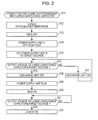
FIG. 2 is a flowchart illustrating the concrete operation with the power supply system ofFIG. 1 ; -
FIG. 3 is a chart illustrating the formation of a look-up table utilized for the operation ofFIG. 2 ; -
FIG. 4 is a schematic block diagram illustrating a more specific configuration according to another embodiment of the invention; -
FIG. 5 is a schematic block diagram illustrating another specific configuration according to still another embodiment of the invention; -
FIG. 6 is a schematic block diagram illustrating another specific example of the circuit ofFIG. 1 with the emphasis on its internal structure (theswitch 21 in particular); -
FIG. 7 is a circuit diagram illustrating the circuit configuration of thebuffer circuit 64 included inFIG. 6 ; and -
FIG. 8 shows an example of the modification to the configuration ofFIG. 6 . - Referring now to the drawings, preferable embodiments of the present invention will be detailed hereinbelow.
-
FIG. 1 is a schematic block diagram generally illustrating the configuration of a power supply system, which is configured to supply electric powers to a plurality of loads (#1 to #M) 31 to 33, according to an embodiment of the invention. - The power supply system is provided including a first plurality of power supply units (#1 to #N) 11 to 14, a
voltage monitoring unit 17, a second plurality of switches (SW # 1 to SW #M) 21 to 23 as switching means, a large-capacitance capacitor 24, and adischarge unit 25. Among these units and elements, thevoltage monitoring unit 17, the plural switches (SW # 1 to SW #M) 21 to 23 as switching means, the large-capacitance capacitor 24, and thedischarge unit 25 altogether serves as an auxiliary power supply for the power supply system. - On receiving an output voltage supplied by a
battery 16, plural power supply units, 11 to 13, are configured to generate the voltages for driving a third plurality of loads (#1 to #M) 31 to 33 and subsequently apply to the respective loads. Thepower supply unit 14 serves as the unit for supplying the power to acontrol unit 15 and to thevoltage monitoring unit 17. Namely, thecontrol unit 15 andvoltage monitoring unit 17 are configured to have the power supplied from the power source system to which neither theswitches 21 to 23 nor the large-capacitance capacitor 24 is connected. - The example of the
battery 16 includes rechargeable batteries such as lithium ion (Li-ion) battery, Li polymer battery, nickel hydrogen (NiH) battery and so forth. However, the kind of the battery may not be specifically limited to these examples. - The
power supply units 11 to 14 may include a direct connection line for directly outputting the battery voltage, a DC/DC convertor of either step-up or step-down type, an LDO regulator, a charge pump circuit, a connection in series of the DC/DC convertor and the regulator, and so forth. The term LDO mentioned above is the abbreviation for low dropout, and the LDO regulator is a series regulator (or linear voltage regulator) for stabilizing DC input voltage and outputting subsequently. - The plural power supply units, 11 to 13, are not necessarily limited to those having specific configurations, but any type of power sources capable of supplying source power to the load may be adapted.
- The
loads 31 to 33 each include a device and IC, which may operate in a burst manner of either periodic or aperiodic, in that the maximum instantaneous current at the time of the burst operation is comparatively large and as much as 1000 mA or more, for example. It may be noted that these devices are brought to an off-state while not operating, with no or almost none of power consumption is involved. In addition, the devices may further include those with normally either medium or low power consumption. Although it is assumed that the working voltage differs for respective loads, some of them may coincide with each other in working voltage. In addition, it is preferred that these plural loads are configured not to operate simultaneously and that, at least in the case where two or more loads are in operation, the load except one of them is operated in the mode capable of being driven within the current supply capacity of the power supply unit for supplying the power to those loads (with no current supply from the large-capacitance capacitor). For example, in the case of power amplifiers as the load, although the driving current of approximately 2 A is necessary for outputting themaximum output 33 dBm for Global System for Mobile Communications (GSM), the current of approximately 800 mA is sufficient for the reduced output of 27 dBm. - The large-
capacitance capacitor 24 includes those capable of storing massive amounts of electric charges such as an electric double layer capacitor, a lithium ion capacitor, a ceramic capacitor, and so forth. The capacitance of 1 mF or more is suitably used for the large-capacitance capacitor 24, for example. - The
voltage monitoring unit 17 serves as a means for monitoring the voltage of the large-capacitance capacitor 24, and is configured to inform monitoring results to thecontrol unit 15. - The
switches 21 to 23 each serve as switching means for selectively connecting the voltage of the large-capacitance capacitor 24 to theloads 31 to 33, and are subjected individually to the on-off control by thecontrol unit 15. To be more specific, although MEMS device, semiconductor switch, and so forth may be used as theswitches 21 to 23, p-MOSFET is suitably utilized, for example. For the MOSFET, on-resistance of 0.2 ohm or less and the maximum current of 2 A or more are preferred. - The
discharge unit 25 serves as a means for discharging the charges stored in the large-capacitance capacitor 24 to the ground, and is subjected to on-off control by thecontrol unit 15. When the large-capacitance capacitor 24 is switched from a first load to a second load, according to control by thecontrol unit 15, with the output voltage of the large-capacitance capacitor 24 being higher than the operating voltage of the second load, thedischarge unit 25 serves to discharge electric charges of the large-capacitance capacitor 24 so that the voltage of the capacitor decreases to the operating voltage. - The
control unit 15 is provided including CPU, a memory, and so forth, to serve as the unit for controlling electronic instrument to which electric power is supplied by the power supply units. Thecontrol unit 15 is configured to control the switches, 21 to 23, for connecting the large-capacitance capacitor to respective loads according to the application of the electric instrument, and to control theelectric discharge unit 25 in response to the output of thevoltage monitoring unit 17. By connecting the large-capacitance capacitor 24 to the load presently driven after appropriately turning the switches, 21 to 23, according to the current consumption and operating conditions of the loads to be possibly driven, the current assist capability is provided, by utilizing one single large-capacitance capacitor 24, to the electric power system which drives plural loads. - Incidentally, in case of switching over from the power supply unit A (3.3 V) to the power supply unit B (2.8 V), the voltage of 3.3 V is applied to large-capacitance capacitor. If this is further connected as it is to the power supply unit B, the adverse current flow to the side of the power supply unit and so forth may occur, thereby possibly causing a system malfunction. In this case, therefore, the electric charges of the capacitor are discharged through the
discharge unit 25 to the voltage as low as 2.8 V, and the connection to the power supply unit B is established subsequently. This voltage drop down to 2.8 V is monitored by thevoltage monitoring unit 17 and informed to thecontrol unit 15 instantaneously. - The specific operation with the abovementioned system configuration will be explained hereinbelow with reference to the flowchart of
FIG. 2 . The operation illustrates the exemplary process carried out by thecontrol unit 15. - In the electronic instrument including the power supply system shown in
FIG. 1 , there assumed at this moment is that a factor related to the switching connection has emerged with the large-capacitance capacitor 24 (step S11). As the loads to be driven, herein exemplified is the case where the drive of the load A tentatively stops, while the drive of the load B starts. - First, the load A is brought to a stop (off) (step S12). Instead of the stop, the load may alternatively be brought to either an idling state or low power mode (LowPowerMode). In the case of low power mode, it is necessary for the current consumption to be equal to at most the maximum current of the power supply unit. The selection among the modes is appropriately carried out depending on the application as the load, thereby each leading to different operation. For example, in the case of the load such as a camera flash, the current consumption can be suppressed as in the off-state when a camera unit is not operating. However, in the case where the load is a power amplifier (PA) and used in the transmission with the low or intermediate power, this load is suitably allowed to maintain the connection. Then, the switch corresponding to the load A out of the
switches 21 to 23 (now called as switch A) is turned off from on, and the large-capacitance capacitor 24 is disconnected from the power supply unit (S13). The power supply unit A is assumed at present in either stop (off), idling state (idling), or hold as is (hold) (S14). The operation of the power supply unit A differs depending of the mode of the load A. For example, if the load is turned off, "off/idling" may preferably be selected for suppressing the current consumption; while "hold" is appropriate, if the load continues to be on. - Subsequently, the output of the power supply unit B is set to a target voltage (S15). The target voltage differs depending specifically on which power supply unit. The target voltage corresponding to respective power supply units can be verified by referring to a look-up table 30 shown in
FIG. 3 , for example, which has been prepared in advance. The look-up table 30 may be stored in a memory included in thecontrol unit 15, for example. - The
voltage monitoring unit 17 is configured to monitor the output voltage of the large-capacitance capacitor 24 as compared with the target voltage (S16). If the output voltage of the large-capacitance capacitor is higher than the target voltage (No at step S16), thecontrol unit 15 instructs in the meantime, in response to the output of thevoltage monitoring unit 17, to turn thedischarge unit 25 on (S17) and to discharge electric charges stored in the large-capacitance capacitor 24. When the output voltage of the large-capacitance capacitor has decreased to the target voltage (Yes at step S16), thecontrol unit 15 instructs to turn thedischarge unit 25 off in response to the change of the output of thevoltage monitoring unit 17, thereby bringing the discharge to a stop (S18). If the output voltage of the large-capacitance capacitor is equal to the target voltage or lower, thedischarge unit 25 remains in the off state. - After turning the
discharge unit 25 off, the power supply unit B is turned on (S19). This makes the electric power supply is now ready to the load B from the large-capacitance capacitor 24, which has reached the target voltage. Subsequently, both the power supply unit B and the switch corresponding to the load B (now called as switch B) are turned on (S20). As a result, the power supply becomes feasible from the large-capacitance capacitor 24 to the load B. - Thereafter, when the output voltage of the large-
capacitance capacitor 24 is confirmed by thevoltage monitoring unit 17 to have reached the target voltage through the charging to the large-capacitance capacitor 24 (Yes at step 21), thecontrol unit 15 instructs to turn the load B on (S22). - In the next place,
FIG. 4 is a schematic block diagram illustrating a more specific configuration according to another embodiment of the invention. This drawing has been prepared corresponding to the configuration of electronic instrument such as a mobile-phone terminal. Since this configuration is similar to that ofFIG. 1 , the elements and units similar to those included inFIG. 1 are shown herein with identical numerical representations and the repeated description thereof is omitted. - In this configuration, there provided are a
wireless communication unit 52 including a power amplifier (PA) 46, as a first load; and acamera unit 51 including aflash LED 43, as a second load. - The
wireless communication unit 52 includes apower amplifier 46 and abypass capacitor 45. Thecamera unit 51 includes aflash LED 43 for performing a flash firing as a flash means, and aLED switch 44 for properly driving theflash LED 43 according to flash control signals. The flash control signals are outputted by thecontrol unit 15, for example. Although theLED switch 44 can be formed generally with MEMS, a semiconductor switch, and so forth, an N-type MOSFET is preferably suitable and the maximum current of at least 3.0 A is necessary for driving the element. - In the example of
FIG. 4 , the large-capacitance capacitor 24 is selectively connected to either theflash LED 43 of thecamera unit 51 or thepower amplifier 46 by switching over theswitches camera unit 51,SW # 1 is turned on andSW # 2 is off. In this configuration, the power of thePA 46 is supplied directly from thebattery 16, it is not necessary to limit the power to medium/low power during the use of thecamera unit 51. As thebattery 16, a Li polymer ion battery, Li polymer battery, and so forth may be used with the output voltage ranging from 3.6 to 4.2 V. For carrying out communication using thewireless communication unit 52, by turningSW # 1 off andSW # 2 on, it is possible to suppress the load of thebattery 16 and to seek an extended life of thebattery 16. - Since the capacitor is intrinsically suffered from self-discharge, when none of the loads operates and especially the camera is either not in use or in a waiting status, it is also possible to suppress the discharge by turning off both
SW # 1 and SW #2 (and all other switches as well). In addition, in the case where even one of loads is operating, the switches corresponding to all other loads are brought to off. - In addition, in the example of
FIG. 4 , a DC/DC convertor 41 is included as the power supply unit. Since a large current can be supplied from the capacitor to theflash LED 43 when using the large-capacitance capacitor 24, the current capacity of the DC/DC converter 41 is determined by the interval of flash firing. For example, for the operation of LED firing of 3.0 A, 30 msec, and the minimum firing interval of 1 sec, a current output of at least 100 mA becomes necessary for the DC/DC converter 41. A charge pump circuit may alternatively be used for the DC/DC converter 41. - The voltage V dcdc (output voltage of the DC/DC converter) for charging the large-
capacitance capacitor 24 is determined after considering the voltage drop by parasitic resistance at the time of firing. This voltage is obtained with the current I LED flowing into theflash LED 43 during the firing, internal resistance R esr of the large-capacitance capacitor, on-resistance Ron 1 of theswitch SW # 1, on-resistance Ron 2 of theLED switch 44, and firing voltage V LED of theflash LED 43, by the following equation,
- The
PA 46 is for use in GSM/ EGPRS (enhanced General Packet Radio Service) and its maximum current flow may reach 3 A. - The capacity of the large-
capacitance capacitor 24 in the configuration ofFIG. 4 is determined by firing operations, the capacitance of 300 mF or more is necessary for firing at 3.0 A and 30 msec. - Referring to
FIG. 5 , there is shown another specific configuration according to another embodiment of the invention. The elements and units similar to those included inFIGS. 1 and4 are shown herein with identical numerical representations and the repeated description thereof is omitted. The point of the present modification to the configuration ofFIG. 4 is that the power is supplied toPA 46 by way of DC/DC converter 42. In this case, from constraints of size, cost, and efficiency, an up/down type DC/DC converter is suitably used with its maximum current ranging from 1 to 1.5 A. The operation becomes feasible even at lower voltages with this configuration, and the operating time can be extended when Li ion battery or Li polymer battery is used. In addition, it is also becomes possible to use batteries with lower output voltages, this results in the increase in selection flexibility of the batteries. Although the battery voltage of 3.6 V has been taken so far as final voltage, it has become feasible to use even at the voltages down to 3.0 V or less. This is equivalent to the extension of 10% or more of operating time. - When a user operates the
camera unit 51,SW # 1 is turned on andSW # 2 is turned off. Since the current more than the maximum current (1.5 A) of DC/DC converter 42 is not supplied toPA 46 at this time, thewireless communication unit 52 is configured either to permit the communication limited within medium/low power or to disconnect the communication. It is possible to supply the current necessary for the maximum output of thePA 46 during the communication by turningSW # 1 off andSW # 2 on. - In addition, since the capacitor is intrinsically suffered from the self-discharge, when the camera is either not in use or in a waiting status or when the current can be suitably supplied only from the DC/
DC converter 42, it is also possible to suppress the discharge by turning off bothSW # 1 andSW # 2. - Referring to
FIG. 6 , there is shown another specific example of circuit configuration ofFIG. 1 with the emphasis on the internal structure of theswitch 21. The elements and units similar to those included inFIG. 1 are shown herein with identical numerical representations and the repeated description thereof is omitted. The internal structure of switches, 22 and 23, is the same as that of theswitch 21. Theswitch 21 is formed, including diodes 60 to 63, abuffer circuit 64, and a transistor (p-type MOSFET) 65. Control signals for the gate terminal of the p-type MOSFET 65 are inputted from thecontrol part 15 through abuffer circuit 64. Regarding the diodes 60 to 63, the anodes thereof are respectively connected to the output terminal of the power supply units (#1 to #N) 11 to 14, and the cathodes thereof are connected in common to the power supply input terminal of thebuffer circuit 64. Thebuffer circuit 64 functions as a voltage conversion means. In this example, thebuffer circuit 64 operates to output the voltage of approximately the same level as the highest voltage received by the power supply input terminal, to the output terminal of thebuffer circuit 64. In addition, in order to suppress the voltage drop by the diode, it is preferred for the diodes 60 to 63 to be Schottky diodes having low on-voltages, n-type FET transistors short-circuited between the gate and drain, and so forth. - In the
buffer circuit 64 with this configuration, its input voltage V ctr1 is converted to the highest voltage V ctr2 among the outputs of the powersupply units # 1 to #N. This voltage V ctr2 is inputted as the high-level voltage for driving the p-type MOSFET 65. To be more specific, the voltage conversion is carried out by thebuffer circuit 64 from V ctr1 of high level (VH)/ low level (VL) = 1.8V/ 0V to V ctr2 of VH/ VL = 5.5 V/ 0V, for example. - The reasons for achieving this capability are as follows. As the operation of the p-
type MOSFET 65, when a high-level voltage is applied to the gate, it is turned off. In order to carry out this operation, the high-level voltage of the gate voltage VG is necessary to be comparable to the higher between the source and drain voltages, Vs and Vd. The off-state may not be maintained otherwise. In contrast to the voltage Vs determined by charging voltage of the large-capacitance capacitor 24, the gate voltage VG is determined to be fixed to the output voltage of thecontrol unit 15 when applied directly from thecontrol unit 15. In addition, the voltage Vd is determined by the output voltage of each of the power supply units. Therefore, in order to fulfill the conditions presently concerned, the driving voltage of thebuffer circuit 64 is configured to be supplied from powersupply units # 1 to #N through diodes 60 to 63. With this configuration, the highest voltage among the powersupply units # 1 to #N is inputted as V ctr2 to the p-type MOSFET, and the off-state of the switch is stabilized. As a result, any malfunction caused by an unintended power supply such as, for example, from the powersupply unit # 1 to theload # 2 can be prevented. In addition, another unintended power supply through thebuffer circuit 64 can be prevented by supplying the voltage driving thebuffer circuit 64 through the diodes. -
FIG. 7 illustrates a circuit configuration of thebuffer circuit 64. This configuration is formed, including a first CMOS circuit having n-type MOSFET 71 and p-type MOSFET 72 connected with each other in series, and a second CMOS circuit having n-type MOSFET 73 and p-type MOSFET 74 similarly connected with each other in series, in which the first and second CMOS circuits are further disposed in parallel between the power source terminal and the ground. Input signals are applied in common to the gate terminals of the first CMOS circuit, and the drain terminals of the first CMOS circuit are applied in common to the gate terminals of the second CMOS circuit. In addition, the drain terminals of the second CMOS circuit turn to be the common output terminal. With thisbuffer circuit 64, when an incoming signal is at low level, an output signal is also at low level. Moreover, when an incoming signal is at high level, an output signal is at high level. Incidentally, the high level changes with the power supply voltage applied to thebuffer circuit 64. -
FIG. 8 shows an example of the modification to the configuration ofFIG. 6 . The elements and units similar to those included inFIGS. 1 and6 are shown herein with identical numerical representations and the repeated description thereof is omitted. The aforementioned configuration ofFIG. 6 is useful when which power supply unit is not identified in advance to supply the highest voltage among the powersupply units # 1 to #N. On the other hand, the present configuration is useful in the case where which power supply unit is specifically identified in advance to supply the highest voltage among the power supply units and where this power supply unit stably supplies the power irrespective of the state of the switches. Namely, by supplying the driving voltage of thebuffer circuit 64 connected to the input of each switch from the power supply unit supplying the highest voltage, stable switching operations can be achieved with the circuit configuration simpler than that ofFIG. 6 . The example ofFIG. 8 illustrates the configuration in which the specific power supply unit is the powersupply unit # 1. The output voltage of this specific power supply unit is supplied to the power supply terminal of all theswitches 21 to 23. Therefore, the diodes 60 to 63 included in each switch ofFIG. 6 become unnecessary in the structure ofFIG. 8 . - While the present invention has been described hereinabove with reference to the preferred embodiments and specific examples, numerous modifications and alteration of the examples are feasible besides those examples mentioned earlier. For example, although the mobile-phone terminal was referred to as the example, this invention is also applicable to arbitrary electric devices which drive plural loads with the battery.
- The present application contains subject matter related to that disclosed in Japanese Priority Patent Applications
JP 2008-320794 2009-070314 - It should be understood by those skilled in the art that various modifications, combinations, sub-combinations and alterations may occur depending on design requirements and other factors insofar as they are within the scope of the appended claims or the equivalents thereof.
Claims (14)
- A power supply system, comprising:a first plurality of power supply units configured to supply working voltages from a battery to a second plurality of loads;a large-capacitance capacitor configured to charge electric charges from the battery;a third plurality of switching means for connecting the large-capacitance capacitor to the second plurality of loads selectively; andcontrol means for switching the third plurality of switching means corresponding to at least one load presently in use among the second plurality of loads.
- The power supply system according to claim 1, further comprising:voltage monitoring means for monitoring a voltage of the large-capacitance capacitor; anddischarge means, in a case where an output voltage of the large-capacitance capacitor monitored by the voltage monitoring means is found higher than an operating voltage of the second load when the large-capacitance capacitor is switched from a first load to a second load, for discharging charges stored in the large-capacitance capacitor according to a control by the control means so that a voltage of the large-capacitance capacitor decreases to the operating voltage.
- The power supply system according to claim 1 or 2, wherein
at least one of the second plurality of loads is one necessitating anyone of pulse currents and large currents having a constant frequency. - The power supply system according to any of claims 1 to 3, wherein
the first plurality of power supply units include anyone of a direct connection line, a DC/DC convertor, an LDO regulator, and a charge pump circuit. - The power supply system according to any of claims 1 to 4, wherein
the large-capacitance capacitor includes anyone of an electric double layer capacitor, a lithium ion capacitor, and a ceramic capacitor. - The power supply system according to any of claims 1 to 5, wherein
each of the third plurality of switching means includes an FET configured to connect the first plurality of power supply units selectively with the large-capacitance capacitor, and a voltage conversion means for converting a control voltage from the control means to an output voltage corresponding to a highest voltage among outputs of the first plurality of power supply units, so that an output of the voltage conversion means is subsequently applied to the FET as a control signal. - The power supply system according to claim 6, wherein
each of the third plurality of switching means includes a buffer circuit as the voltage conversion means and the first plurality of diodes, so that anodes of the diodes are respectively connected to output terminals of the first plurality of power supply units, and that cathodes of the diodes are connected in common to a power supply input terminal of the buffer circuit. - The power supply system according to claim 6, wherein
each of the third plurality of switching means includes a buffer circuit as the voltage conversion means so that an output voltage from a power supply unit is connected in common to a power supply input terminal of the buffer circuit, the power supply unit being specifically identified in advance to supply a highest voltage among the first plurality of power supply units. - The power supply system according to any of claims 1 to 8, wherein
all the third plurality of switching means are turned off when none of the second plurality of loads operates. - An electronic instrument, comprising:a power supply system according to any of claims 1 to 5 and a second plurality of loads configured to be supplied with power from a battery.
- The electronic instrument according to claim 10, wherein
the electronic instrument is a mobile-phone terminal including a wireless communication unit and a camera unit, and the first load is a power amplifier included in the wireless communication unit and the second load is a flash generation means. - The electronic instrument according to claim 10, wherein
all the third plurality of switching means are turned off when none of the second plurality of loads operates. - A power supply system, comprising:a first plurality of power supply units configured to supply working voltages from a battery to a second plurality of loads;a large-capacitance capacitor configured to charge electric charges from the battery;a third plurality of switching mechanisms configured to connect the large-capacitance capacitor to the second plurality of loads selectively; anda control mechanism configured to switch the third plurality of switching mechanisms corresponding to at least one load in use presently among the second plurality of loads.
- An electronic instrument, comprising:a second plurality of loads configured to be supplied with power from a battery;a first plurality of power supply units configured to supply working voltages from a battery to the second plurality of loads;a large-capacitance capacitor configured to charge electric charges from the battery;a third plurality of switching mechanisms configured to connect the large-capacitance capacitor to the second plurality of loads selectively; anda control mechanism configured to switch the third plurality of switching mechanisms corresponding to at least one load presently in use among the second plurality of loads.
Applications Claiming Priority (2)
| Application Number | Priority Date | Filing Date | Title |
|---|---|---|---|
| JP2008320794 | 2008-12-17 | ||
| JP2009070314A JP5406574B2 (en) | 2008-12-17 | 2009-03-23 | Power supply device and electronic device |
Publications (3)
| Publication Number | Publication Date |
|---|---|
| EP2200148A2 true EP2200148A2 (en) | 2010-06-23 |
| EP2200148A3 EP2200148A3 (en) | 2013-07-31 |
| EP2200148B1 EP2200148B1 (en) | 2015-07-01 |
Family
ID=41786268
Family Applications (1)
| Application Number | Title | Priority Date | Filing Date |
|---|---|---|---|
| EP09179439.6A Not-in-force EP2200148B1 (en) | 2008-12-17 | 2009-12-16 | Power supply system and electronic instrument |
Country Status (4)
| Country | Link |
|---|---|
| US (1) | US8319375B2 (en) |
| EP (1) | EP2200148B1 (en) |
| JP (1) | JP5406574B2 (en) |
| CN (1) | CN101752900B (en) |
Cited By (1)
| Publication number | Priority date | Publication date | Assignee | Title |
|---|---|---|---|---|
| WO2014018792A1 (en) * | 2012-07-25 | 2014-01-30 | Qualcomm Incorporated | Energy source sharing |
Families Citing this family (26)
| Publication number | Priority date | Publication date | Assignee | Title |
|---|---|---|---|---|
| US9203265B2 (en) * | 2010-09-21 | 2015-12-01 | Intel Corporation | Power supply |
| CN102468650B (en) | 2010-11-18 | 2015-07-08 | 英业达股份有限公司 | Multiple power supply unit |
| TWI492471B (en) * | 2010-12-20 | 2015-07-11 | 英業達股份有限公司 | Multiple power supply device |
| JPWO2012086825A1 (en) * | 2010-12-21 | 2014-06-05 | 日本電気株式会社 | Charging apparatus and charging method |
| CN102255395B (en) * | 2011-06-27 | 2014-11-05 | 华为终端有限公司 | Electronic equipment and method for supplying power to at least two different loads by single power supply |
| US9276428B2 (en) * | 2011-07-06 | 2016-03-01 | Htc Corporation | System power integrated circuit and architecture, management circuit, power supply arrangement, and portable apparatus |
| US9231409B2 (en) * | 2012-01-24 | 2016-01-05 | Texas Instruments Incorporated | Sourcing and securing dual supply rails of tamper protected battery backed domain |
| US20130200815A1 (en) * | 2012-02-06 | 2013-08-08 | David Schie | Energy storage means for last gasp / impedance limited applications |
| GB2499653B (en) * | 2012-02-24 | 2014-01-29 | Toshiba Res Europ Ltd | Multilevel power supply |
| JP6421407B2 (en) | 2013-08-30 | 2018-11-14 | カシオ計算機株式会社 | Driving device, light emitting device, projection device, and control method |
| JP6261304B2 (en) * | 2013-11-29 | 2018-01-17 | キヤノン株式会社 | Discharge device and information processing device |
| CN104718739B (en) * | 2013-12-31 | 2018-09-07 | 华为终端有限公司 | Method, device and system for adjusting carrying voltage on telephone set |
| JP6468758B2 (en) * | 2014-08-27 | 2019-02-13 | ルネサスエレクトロニクス株式会社 | Semiconductor device |
| US9690349B2 (en) * | 2015-07-30 | 2017-06-27 | Dell Products L.P. | Systems and methods for enhancing system hold up time using reverse charging of power supply unit |
| CN105599620B (en) * | 2015-11-25 | 2018-01-02 | 上海展枭新能源科技有限公司 | A kind of automobile starting supply unit and its startup control method based on lithium-ion capacitor |
| CN107591879A (en) * | 2016-07-08 | 2018-01-16 | 抚顺凯特利机电化工有限公司 | A kind of electrical system fast switching system |
| CN108569142B (en) * | 2017-03-10 | 2022-04-15 | 法拉第未来公司 | System and method for integrating redundant bus architecture into power system |
| WO2018232183A1 (en) * | 2017-06-14 | 2018-12-20 | Hadal, Inc. | Systems and methods for reducing parasitic power losses by an energy source |
| JP6731960B2 (en) * | 2018-02-08 | 2020-07-29 | 矢崎総業株式会社 | Power transmission system |
| US10637402B2 (en) * | 2018-04-17 | 2020-04-28 | Aura Semicoductor Pvt. Ltd | Charge pump for scaling the highest of multiple voltages when at least one of the multiple voltages varies |
| EP3573322A1 (en) * | 2018-05-22 | 2019-11-27 | Ams Sensors Asia Pte. Ltd. | Driving and controlling circuit, camera module and mobile device |
| CN114825489A (en) * | 2021-01-18 | 2022-07-29 | 苏州能讯高能半导体有限公司 | Mobile device power supply, mobile device and mobile device power supply method |
| US12041342B2 (en) * | 2021-09-27 | 2024-07-16 | Canon Kabushiki Kaisha | Image capture apparatus and control method |
| CN113985996B (en) * | 2021-11-11 | 2023-08-29 | 群联电子股份有限公司 | Switched power supply module and memory storage device |
| JP2024022343A (en) | 2022-08-05 | 2024-02-16 | キヤノン株式会社 | Imaging device, control method, and program |
| US12381471B2 (en) * | 2022-10-06 | 2025-08-05 | Murata Manufacturing Co., Ltd. | Systems, methods, apparatuses, and integrated circuits for power conversion with improved regulator control |
Citations (3)
| Publication number | Priority date | Publication date | Assignee | Title |
|---|---|---|---|---|
| JP2004297753A (en) | 2003-02-07 | 2004-10-21 | Nec Tokin Corp | Power circuit and communication device provided with same |
| JP2008529177A (en) | 2005-02-02 | 2008-07-31 | キャップ−エックス・エックス・リミテッド | Power supply |
| US20080224537A1 (en) | 2004-02-16 | 2008-09-18 | Catem Develec Gmbh | Motor Vehicle Supply System Featuring Battery-Independent Buffering of the Generator Current |
Family Cites Families (24)
| Publication number | Priority date | Publication date | Assignee | Title |
|---|---|---|---|---|
| US5932992A (en) * | 1996-02-16 | 1999-08-03 | The Pilot Ink Co., Ltd. | Method for energizing energization-operated toy element and energization-operated toy |
| DE19733447A1 (en) * | 1997-08-02 | 1999-02-04 | Eaton Controls Gmbh | Arrangement for the exclusive switching on of electrical consumers |
| US6188274B1 (en) * | 1999-06-04 | 2001-02-13 | Sharp Laboratories Of America, Inc. | Bootstrap capacitor power supply for low voltage mobile communications power amplifier |
| JP3679681B2 (en) | 2000-04-05 | 2005-08-03 | ペンタックス株式会社 | Power supply device and electric double layer capacitor charging method |
| JP4576022B2 (en) * | 2000-05-16 | 2010-11-04 | オリンパス株式会社 | Power circuit |
| JP3526028B2 (en) * | 2000-10-18 | 2004-05-10 | Necトーキン株式会社 | Power supply circuit, power supply circuit control method, and electronic device using this power supply circuit |
| JP3768813B2 (en) * | 2000-12-21 | 2006-04-19 | 株式会社日立製作所 | Parallel power supply system and electronic device |
| US6445162B1 (en) * | 2001-02-06 | 2002-09-03 | Quallion Llc | Detecting a remaining battery capacity and a battery remaining capacity circuit |
| EP1276308A3 (en) * | 2001-07-12 | 2005-05-04 | Kabushiki Kaisha Toshiba | Mobile communication terminal comprising camera |
| US6737762B2 (en) * | 2001-10-26 | 2004-05-18 | Onan Corporation | Generator with DC boost for uninterruptible power supply system or for enhanced load pickup |
| JP2003250228A (en) * | 2002-02-21 | 2003-09-05 | Nec Tokin Corp | Power circuit and control method therefor |
| US7193390B2 (en) * | 2002-05-17 | 2007-03-20 | Sony Corporation | Apparatus for connecting secondary battery cells in series and method for controlling secondary battery cells connected in series |
| US6774602B2 (en) * | 2002-06-14 | 2004-08-10 | Delphi Technologies, Inc. | Apparatus and method for providing temporary power |
| JP2004153919A (en) * | 2002-10-30 | 2004-05-27 | Shizuki Electric Co Inc | Power supply |
| JP4485366B2 (en) * | 2002-12-05 | 2010-06-23 | エヌエックスピー ビー ヴィ | Multi-output DC-DC converter |
| JP4400336B2 (en) * | 2003-08-27 | 2010-01-20 | 株式会社デンソー | Electronic control unit |
| JP2005137054A (en) * | 2003-10-28 | 2005-05-26 | Nec Tokin Corp | Power source circuit |
| US7615965B2 (en) * | 2004-05-14 | 2009-11-10 | O2Micro International Limited | Power management system |
| US7081741B2 (en) * | 2004-06-15 | 2006-07-25 | Matsushita Electric Industrial Co., Ltd. | Multi-output power supply and electronic device using them |
| US7274112B2 (en) * | 2004-08-31 | 2007-09-25 | American Power Conversion Corporation | Method and apparatus for providing uninterruptible power |
| TWI246099B (en) * | 2004-12-07 | 2005-12-21 | Luxon Energy Devices Corp | Power supply apparatus and power supply method |
| US20060192433A1 (en) * | 2005-02-28 | 2006-08-31 | Fuglevand William A | Uninterruptible power supply and method for supplying uninterruptible power to a load |
| US7528502B2 (en) * | 2005-10-31 | 2009-05-05 | Ryuji Maeda | System and method for efficient power utilization and extension of battery life |
| US7498694B2 (en) * | 2006-04-12 | 2009-03-03 | 02Micro International Ltd. | Power management system with multiple power sources |
-
2009
- 2009-03-23 JP JP2009070314A patent/JP5406574B2/en not_active Expired - Fee Related
- 2009-12-01 US US12/628,417 patent/US8319375B2/en not_active Expired - Fee Related
- 2009-12-16 EP EP09179439.6A patent/EP2200148B1/en not_active Not-in-force
- 2009-12-17 CN CN2009102537918A patent/CN101752900B/en not_active Expired - Fee Related
Patent Citations (3)
| Publication number | Priority date | Publication date | Assignee | Title |
|---|---|---|---|---|
| JP2004297753A (en) | 2003-02-07 | 2004-10-21 | Nec Tokin Corp | Power circuit and communication device provided with same |
| US20080224537A1 (en) | 2004-02-16 | 2008-09-18 | Catem Develec Gmbh | Motor Vehicle Supply System Featuring Battery-Independent Buffering of the Generator Current |
| JP2008529177A (en) | 2005-02-02 | 2008-07-31 | キャップ−エックス・エックス・リミテッド | Power supply |
Cited By (2)
| Publication number | Priority date | Publication date | Assignee | Title |
|---|---|---|---|---|
| WO2014018792A1 (en) * | 2012-07-25 | 2014-01-30 | Qualcomm Incorporated | Energy source sharing |
| US8896374B2 (en) | 2012-07-25 | 2014-11-25 | Qualcomm Incorporated | Energy source sharing |
Also Published As
| Publication number | Publication date |
|---|---|
| US20100148580A1 (en) | 2010-06-17 |
| JP2010166797A (en) | 2010-07-29 |
| EP2200148B1 (en) | 2015-07-01 |
| CN101752900A (en) | 2010-06-23 |
| CN101752900B (en) | 2013-07-24 |
| US8319375B2 (en) | 2012-11-27 |
| JP5406574B2 (en) | 2014-02-05 |
| EP2200148A3 (en) | 2013-07-31 |
Similar Documents
| Publication | Publication Date | Title |
|---|---|---|
| EP2200148B1 (en) | Power supply system and electronic instrument | |
| US8406824B2 (en) | Wireless communication apparatus and power-supply apparatus | |
| US8358032B2 (en) | Electric power supply system | |
| US6798086B2 (en) | Electronic apparatus having dual-mode load circuit | |
| US8981749B2 (en) | Power converter system for mobile devices | |
| EP1528654A1 (en) | Circuit for battery/capacitor power source | |
| US20100164294A1 (en) | Power source switching apparatus and method thereof | |
| US11025081B2 (en) | Wireless power system | |
| KR100907372B1 (en) | Electronic equipment | |
| EP2582004B1 (en) | Power converter system for mobile devices | |
| JPH10215564A (en) | Charge pump type DC-DC converter | |
| EP4498569A1 (en) | Backup power supply | |
| US20250088024A1 (en) | Charging systems including a multi-function dc-to-dc converter, and associated methods | |
| JP2006271086A (en) | Charger | |
| JP2009153282A (en) | Backup power supply and control method thereof | |
| US9473255B2 (en) | Wireless communication device | |
| CN120528082A (en) | Voltage transmission circuit, chip, electronic device and voltage transmission method | |
| JP2002354690A (en) | Battery power unit | |
| JP2007014064A (en) | Electronic apparatus |
Legal Events
| Date | Code | Title | Description |
|---|---|---|---|
| PUAI | Public reference made under article 153(3) epc to a published international application that has entered the european phase |
Free format text: ORIGINAL CODE: 0009012 |
|
| 17P | Request for examination filed |
Effective date: 20091216 |
|
| AK | Designated contracting states |
Kind code of ref document: A2 Designated state(s): AT BE BG CH CY CZ DE DK EE ES FI FR GB GR HR HU IE IS IT LI LT LU LV MC MK MT NL NO PL PT RO SE SI SK SM TR |
|
| AX | Request for extension of the european patent |
Extension state: AL BA RS |
|
| RAP1 | Party data changed (applicant data changed or rights of an application transferred) |
Owner name: SONY MOBILE COMMUNICATIONS JAPAN, INC. |
|
| REG | Reference to a national code |
Ref country code: DE Ref legal event code: R079 Ref document number: 602009031922 Country of ref document: DE Free format text: PREVIOUS MAIN CLASS: H02J0007000000 Ipc: H02J0007340000 |
|
| PUAL | Search report despatched |
Free format text: ORIGINAL CODE: 0009013 |
|
| AK | Designated contracting states |
Kind code of ref document: A3 Designated state(s): AT BE BG CH CY CZ DE DK EE ES FI FR GB GR HR HU IE IS IT LI LT LU LV MC MK MT NL NO PL PT RO SE SI SK SM TR |
|
| AX | Request for extension of the european patent |
Extension state: AL BA RS |
|
| RIC1 | Information provided on ipc code assigned before grant |
Ipc: H02J 7/00 20060101ALI20130624BHEP Ipc: H02J 1/10 20060101ALI20130624BHEP Ipc: H02J 7/34 20060101AFI20130624BHEP |
|
| 17Q | First examination report despatched |
Effective date: 20130710 |
|
| GRAP | Despatch of communication of intention to grant a patent |
Free format text: ORIGINAL CODE: EPIDOSNIGR1 |
|
| INTG | Intention to grant announced |
Effective date: 20150123 |
|
| GRAS | Grant fee paid |
Free format text: ORIGINAL CODE: EPIDOSNIGR3 |
|
| GRAA | (expected) grant |
Free format text: ORIGINAL CODE: 0009210 |
|
| AK | Designated contracting states |
Kind code of ref document: B1 Designated state(s): AT BE BG CH CY CZ DE DK EE ES FI FR GB GR HR HU IE IS IT LI LT LU LV MC MK MT NL NO PL PT RO SE SI SK SM TR |
|
| REG | Reference to a national code |
Ref country code: GB Ref legal event code: FG4D |
|
| REG | Reference to a national code |
Ref country code: AT Ref legal event code: REF Ref document number: 734470 Country of ref document: AT Kind code of ref document: T Effective date: 20150715 Ref country code: CH Ref legal event code: EP |
|
| REG | Reference to a national code |
Ref country code: IE Ref legal event code: FG4D |
|
| REG | Reference to a national code |
Ref country code: DE Ref legal event code: R096 Ref document number: 602009031922 Country of ref document: DE |
|
| REG | Reference to a national code |
Ref country code: AT Ref legal event code: MK05 Ref document number: 734470 Country of ref document: AT Kind code of ref document: T Effective date: 20150701 |
|
| REG | Reference to a national code |
Ref country code: NL Ref legal event code: MP Effective date: 20150701 |
|
| REG | Reference to a national code |
Ref country code: LT Ref legal event code: MG4D |
|
| PG25 | Lapsed in a contracting state [announced via postgrant information from national office to epo] |
Ref country code: LT Free format text: LAPSE BECAUSE OF FAILURE TO SUBMIT A TRANSLATION OF THE DESCRIPTION OR TO PAY THE FEE WITHIN THE PRESCRIBED TIME-LIMIT Effective date: 20150701 Ref country code: FI Free format text: LAPSE BECAUSE OF FAILURE TO SUBMIT A TRANSLATION OF THE DESCRIPTION OR TO PAY THE FEE WITHIN THE PRESCRIBED TIME-LIMIT Effective date: 20150701 Ref country code: LV Free format text: LAPSE BECAUSE OF FAILURE TO SUBMIT A TRANSLATION OF THE DESCRIPTION OR TO PAY THE FEE WITHIN THE PRESCRIBED TIME-LIMIT Effective date: 20150701 Ref country code: GR Free format text: LAPSE BECAUSE OF FAILURE TO SUBMIT A TRANSLATION OF THE DESCRIPTION OR TO PAY THE FEE WITHIN THE PRESCRIBED TIME-LIMIT Effective date: 20151002 Ref country code: NO Free format text: LAPSE BECAUSE OF FAILURE TO SUBMIT A TRANSLATION OF THE DESCRIPTION OR TO PAY THE FEE WITHIN THE PRESCRIBED TIME-LIMIT Effective date: 20151001 |
|
| PG25 | Lapsed in a contracting state [announced via postgrant information from national office to epo] |
Ref country code: AT Free format text: LAPSE BECAUSE OF FAILURE TO SUBMIT A TRANSLATION OF THE DESCRIPTION OR TO PAY THE FEE WITHIN THE PRESCRIBED TIME-LIMIT Effective date: 20150701 Ref country code: ES Free format text: LAPSE BECAUSE OF FAILURE TO SUBMIT A TRANSLATION OF THE DESCRIPTION OR TO PAY THE FEE WITHIN THE PRESCRIBED TIME-LIMIT Effective date: 20150701 Ref country code: HR Free format text: LAPSE BECAUSE OF FAILURE TO SUBMIT A TRANSLATION OF THE DESCRIPTION OR TO PAY THE FEE WITHIN THE PRESCRIBED TIME-LIMIT Effective date: 20150701 Ref country code: IS Free format text: LAPSE BECAUSE OF FAILURE TO SUBMIT A TRANSLATION OF THE DESCRIPTION OR TO PAY THE FEE WITHIN THE PRESCRIBED TIME-LIMIT Effective date: 20151101 Ref country code: PL Free format text: LAPSE BECAUSE OF FAILURE TO SUBMIT A TRANSLATION OF THE DESCRIPTION OR TO PAY THE FEE WITHIN THE PRESCRIBED TIME-LIMIT Effective date: 20150701 Ref country code: PT Free format text: LAPSE BECAUSE OF FAILURE TO SUBMIT A TRANSLATION OF THE DESCRIPTION OR TO PAY THE FEE WITHIN THE PRESCRIBED TIME-LIMIT Effective date: 20151102 Ref country code: SE Free format text: LAPSE BECAUSE OF FAILURE TO SUBMIT A TRANSLATION OF THE DESCRIPTION OR TO PAY THE FEE WITHIN THE PRESCRIBED TIME-LIMIT Effective date: 20150701 |
|
| REG | Reference to a national code |
Ref country code: DE Ref legal event code: R097 Ref document number: 602009031922 Country of ref document: DE |
|
| PG25 | Lapsed in a contracting state [announced via postgrant information from national office to epo] |
Ref country code: SK Free format text: LAPSE BECAUSE OF FAILURE TO SUBMIT A TRANSLATION OF THE DESCRIPTION OR TO PAY THE FEE WITHIN THE PRESCRIBED TIME-LIMIT Effective date: 20150701 Ref country code: EE Free format text: LAPSE BECAUSE OF FAILURE TO SUBMIT A TRANSLATION OF THE DESCRIPTION OR TO PAY THE FEE WITHIN THE PRESCRIBED TIME-LIMIT Effective date: 20150701 Ref country code: DK Free format text: LAPSE BECAUSE OF FAILURE TO SUBMIT A TRANSLATION OF THE DESCRIPTION OR TO PAY THE FEE WITHIN THE PRESCRIBED TIME-LIMIT Effective date: 20150701 Ref country code: IT Free format text: LAPSE BECAUSE OF FAILURE TO SUBMIT A TRANSLATION OF THE DESCRIPTION OR TO PAY THE FEE WITHIN THE PRESCRIBED TIME-LIMIT Effective date: 20150701 Ref country code: CZ Free format text: LAPSE BECAUSE OF FAILURE TO SUBMIT A TRANSLATION OF THE DESCRIPTION OR TO PAY THE FEE WITHIN THE PRESCRIBED TIME-LIMIT Effective date: 20150701 |
|
| PLBE | No opposition filed within time limit |
Free format text: ORIGINAL CODE: 0009261 |
|
| STAA | Information on the status of an ep patent application or granted ep patent |
Free format text: STATUS: NO OPPOSITION FILED WITHIN TIME LIMIT |
|
| PG25 | Lapsed in a contracting state [announced via postgrant information from national office to epo] |
Ref country code: BE Free format text: LAPSE BECAUSE OF NON-PAYMENT OF DUE FEES Effective date: 20151231 Ref country code: RO Free format text: LAPSE BECAUSE OF FAILURE TO SUBMIT A TRANSLATION OF THE DESCRIPTION OR TO PAY THE FEE WITHIN THE PRESCRIBED TIME-LIMIT Effective date: 20150701 |
|
| 26N | No opposition filed |
Effective date: 20160404 |
|
| REG | Reference to a national code |
Ref country code: DE Ref legal event code: R119 Ref document number: 602009031922 Country of ref document: DE |
|
| PG25 | Lapsed in a contracting state [announced via postgrant information from national office to epo] |
Ref country code: MC Free format text: LAPSE BECAUSE OF FAILURE TO SUBMIT A TRANSLATION OF THE DESCRIPTION OR TO PAY THE FEE WITHIN THE PRESCRIBED TIME-LIMIT Effective date: 20150701 Ref country code: LU Free format text: LAPSE BECAUSE OF FAILURE TO SUBMIT A TRANSLATION OF THE DESCRIPTION OR TO PAY THE FEE WITHIN THE PRESCRIBED TIME-LIMIT Effective date: 20151216 |
|
| REG | Reference to a national code |
Ref country code: CH Ref legal event code: PL |
|
| GBPC | Gb: european patent ceased through non-payment of renewal fee |
Effective date: 20151216 |
|
| PG25 | Lapsed in a contracting state [announced via postgrant information from national office to epo] |
Ref country code: SI Free format text: LAPSE BECAUSE OF FAILURE TO SUBMIT A TRANSLATION OF THE DESCRIPTION OR TO PAY THE FEE WITHIN THE PRESCRIBED TIME-LIMIT Effective date: 20150701 |
|
| REG | Reference to a national code |
Ref country code: IE Ref legal event code: MM4A |
|
| REG | Reference to a national code |
Ref country code: FR Ref legal event code: ST Effective date: 20160831 |
|
| PG25 | Lapsed in a contracting state [announced via postgrant information from national office to epo] |
Ref country code: IE Free format text: LAPSE BECAUSE OF NON-PAYMENT OF DUE FEES Effective date: 20151216 Ref country code: DE Free format text: LAPSE BECAUSE OF NON-PAYMENT OF DUE FEES Effective date: 20160701 Ref country code: GB Free format text: LAPSE BECAUSE OF NON-PAYMENT OF DUE FEES Effective date: 20151216 Ref country code: CH Free format text: LAPSE BECAUSE OF NON-PAYMENT OF DUE FEES Effective date: 20151231 Ref country code: LI Free format text: LAPSE BECAUSE OF NON-PAYMENT OF DUE FEES Effective date: 20151231 |
|
| PG25 | Lapsed in a contracting state [announced via postgrant information from national office to epo] |
Ref country code: FR Free format text: LAPSE BECAUSE OF NON-PAYMENT OF DUE FEES Effective date: 20151231 |
|
| PG25 | Lapsed in a contracting state [announced via postgrant information from national office to epo] |
Ref country code: BE Free format text: LAPSE BECAUSE OF FAILURE TO SUBMIT A TRANSLATION OF THE DESCRIPTION OR TO PAY THE FEE WITHIN THE PRESCRIBED TIME-LIMIT Effective date: 20150701 |
|
| PG25 | Lapsed in a contracting state [announced via postgrant information from national office to epo] |
Ref country code: BG Free format text: LAPSE BECAUSE OF FAILURE TO SUBMIT A TRANSLATION OF THE DESCRIPTION OR TO PAY THE FEE WITHIN THE PRESCRIBED TIME-LIMIT Effective date: 20150701 Ref country code: HU Free format text: LAPSE BECAUSE OF FAILURE TO SUBMIT A TRANSLATION OF THE DESCRIPTION OR TO PAY THE FEE WITHIN THE PRESCRIBED TIME-LIMIT; INVALID AB INITIO Effective date: 20091216 Ref country code: SM Free format text: LAPSE BECAUSE OF FAILURE TO SUBMIT A TRANSLATION OF THE DESCRIPTION OR TO PAY THE FEE WITHIN THE PRESCRIBED TIME-LIMIT Effective date: 20150701 |
|
| PG25 | Lapsed in a contracting state [announced via postgrant information from national office to epo] |
Ref country code: NL Free format text: LAPSE BECAUSE OF FAILURE TO SUBMIT A TRANSLATION OF THE DESCRIPTION OR TO PAY THE FEE WITHIN THE PRESCRIBED TIME-LIMIT Effective date: 20150701 Ref country code: CY Free format text: LAPSE BECAUSE OF FAILURE TO SUBMIT A TRANSLATION OF THE DESCRIPTION OR TO PAY THE FEE WITHIN THE PRESCRIBED TIME-LIMIT Effective date: 20150701 |
|
| PG25 | Lapsed in a contracting state [announced via postgrant information from national office to epo] |
Ref country code: MT Free format text: LAPSE BECAUSE OF FAILURE TO SUBMIT A TRANSLATION OF THE DESCRIPTION OR TO PAY THE FEE WITHIN THE PRESCRIBED TIME-LIMIT Effective date: 20150701 Ref country code: TR Free format text: LAPSE BECAUSE OF FAILURE TO SUBMIT A TRANSLATION OF THE DESCRIPTION OR TO PAY THE FEE WITHIN THE PRESCRIBED TIME-LIMIT Effective date: 20150701 |
|
| PG25 | Lapsed in a contracting state [announced via postgrant information from national office to epo] |
Ref country code: MK Free format text: LAPSE BECAUSE OF FAILURE TO SUBMIT A TRANSLATION OF THE DESCRIPTION OR TO PAY THE FEE WITHIN THE PRESCRIBED TIME-LIMIT Effective date: 20150701 |