EP2199933A1 - UI-driven binding of extension fields to business objects - Google Patents
UI-driven binding of extension fields to business objects Download PDFInfo
- Publication number
- EP2199933A1 EP2199933A1 EP09011280A EP09011280A EP2199933A1 EP 2199933 A1 EP2199933 A1 EP 2199933A1 EP 09011280 A EP09011280 A EP 09011280A EP 09011280 A EP09011280 A EP 09011280A EP 2199933 A1 EP2199933 A1 EP 2199933A1
- Authority
- EP
- European Patent Office
- Prior art keywords
- reference field
- user interface
- business object
- field
- extension
- Prior art date
- Legal status (The legal status is an assumption and is not a legal conclusion. Google has not performed a legal analysis and makes no representation as to the accuracy of the status listed.)
- Ceased
Links
Images





Classifications
-
- G—PHYSICS
- G06—COMPUTING OR CALCULATING; COUNTING
- G06Q—INFORMATION AND COMMUNICATION TECHNOLOGY [ICT] SPECIALLY ADAPTED FOR ADMINISTRATIVE, COMMERCIAL, FINANCIAL, MANAGERIAL OR SUPERVISORY PURPOSES; SYSTEMS OR METHODS SPECIALLY ADAPTED FOR ADMINISTRATIVE, COMMERCIAL, FINANCIAL, MANAGERIAL OR SUPERVISORY PURPOSES, NOT OTHERWISE PROVIDED FOR
- G06Q10/00—Administration; Management
-
- G—PHYSICS
- G06—COMPUTING OR CALCULATING; COUNTING
- G06F—ELECTRIC DIGITAL DATA PROCESSING
- G06F16/00—Information retrieval; Database structures therefor; File system structures therefor
- G06F16/20—Information retrieval; Database structures therefor; File system structures therefor of structured data, e.g. relational data
- G06F16/22—Indexing; Data structures therefor; Storage structures
Definitions
- Some embodiments relate to business objects supported by a business process platform. More specifically, some embodiments relate to the creation of extension fields for business objects within a business process platform.
- a business object is a software model representing real-world items used during the transaction of business.
- a business object may represent a business document such as a sales order, a purchase order, or an invoice.
- a business object may also master data objects such as a product, a business partner, or a piece of equipment. Particular ones of such master data objects (e.g., SalesOrder SO435539, ACME corporation) are represented by instances of their representing business object, or business object instances.
- a business object may specify business logic and/or data having any suitable structure.
- the structure of a business object may be determined based on the requirements of a business scenario in which the business object is to be deployed.
- a business solution for a particular business scenario may include many business objects, where the structure of each business object has been determined based on the requirements of the particular business scenario.
- a customer deploying a business solution may desire changes to the business objects included in the business solution. For example, a customer may require a field (e.g., "SeriaINumber") which does not exist within the "Product" business object of a business solution.
- a customer may require a different additional field in the "Product" business object and/or in another business object of the same business solution.
- These additional fields must be properly bound to their related business object in order to provide consistent input and display of the fields in several user interfaces, input and display of the fields in forms, usage and display of the fields in reports, searching of documents using these fields, and persistent (i.e., database) storage of the fields.
- extension field must be bound to a business object so that the extension field can be retrieved in the same semantic and relationship, for example on different user interfaces. This binding must also include binding of a context and other properties of the extension field to the business object.
- An improved system may utilize a familiar end-user environment and may derive the binding of the extension fields to business objects as well as the context and properties of the extension fields. Such a system may also or alternatively avoid exposing complexities of the business object (i.e., the business object model) to the user.
- FIG. 1 is a block diagram of system 100 according to some embodiments.
- System 100 includes business process platform 110 and user interface 120.
- business process platform 110 may provide services to user interface 120 according to some embodiments.
- Business process platform 110 may comprise an SAP application platform based on SAP Netweaver®, but is not limited thereto.
- FIG. 1 represents a logical architecture for describing processes according to some embodiments, and actual implementations may include more or different components arranged in other manners.
- Business process platform 110 may provide services based on business objects as described above.
- Metadata 112 may include information defining the structure and attributes of these business objects, such as business object 114.
- business object 114 is a model, or class.
- Business object 114 includes extension field 1141 which may be added thereto according to some embodiments.
- An operator may manipulate user interface 120 to interact with Ul service layer 130 according to some embodiments. Such interactions may include requesting business object views, modifying business object data, and defining business object views.
- User interface 120 may be displayed by any suitable device.
- the device may include any necessary software to support a proprietary interface (e.g., a proprietary client application) or execution engine (e.g., a Web browser).
- a device to display the user interfaces is capable of communication (including sporadic communication - e.g., mobile devices) with business process platform 110.
- Ul service layer 130 communicates with business process platform 110 to provide views requested by user interface 120 and to otherwise perform requested functions.
- Ul service layer 130 may use metadata 112 to access and manipulate data of business object instances stored in data store 140. These instances may comprise instances of business object 114.
- Ul service layer 130 may communicate with an extension framework of business process platform 110 (e.g., via an Application Programming Interface) to facilitate one or more processes described herein.
- the extension framework may provide creation of a business object extension field according to some embodiments.
- any other service consumer may use the services and extension fields of platform 110.
- the services and extension fields could be also useful for A2X services or Analytics.
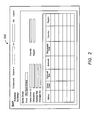
- FIG. 2 illustrates user interface 200 according to some embodiments. More specifically, FIG. 2 reflects an on-demand Web-based solution in which user interface 200 is displayed by a Web browser.
- User interface 200 is associated with a SalesOrder business object and served by Ul service layer 130.
- a user may manipulate the displayed fields to display data of different SalesOrder object instances stored in data store 140.
- the data may be requested from business process platform 110 by Ul service layer 130.
- Embodiments may be used in conjunction with any user interface associated with any one or more business objects.
- a user may desire to add a field to the SalesOrder business object.
- a field may be added via user interface 200.
- the user is already familiar with user interface 200 as being associated with the SalesOrder business object.
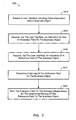
- FIG. 3 is a flow diagram of process 300 to add an extension field to a business object according to some embodiments.
- UI service layer 130 executes process 300 according to some embodiments.
- An example of FIG. 3 will be described with respect to system 100 and user interface 200, but embodiments are not limited thereto.
- a user interface is presented at S310.
- the user interface includes fields associated with a business object.
- user interface 200 associated with a SalesOrder business object may be presented at S310.
- a user operates a standard or proprietary software application to request user interface 120 from Ul service layer 130.
- Ul service layer 130 presents user interface 120 to the application, which in turn presents the user interface to a user.
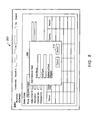
- FIG. 4 illustrates user interface 200 and context menu 400.
- Context menu 400 is presented in response to "right-clicking" on the Region field of user interface 200.
- Context menu 400 provides several options, one of which is "Add Extension Field”. Selection of the "Add Extension Field” option results in reception of the instruction at S320.
- the system automatically determines and proposes an extension field by evaluating the existing fields displayed on the screen.
- An indication of a reference field of the business object is received via the user interface at S330.
- the reference field may be used to determine the relationship (e.g., including mapping information) of the added extension field to a node or attribute of the business object.
- dialog 500 of FIG. 5 may be presented to a user upon selection of the "Add Extension Field” option at S320.
- Dialog 500 includes input fields for a name of the extension field to be added, a type (e.g., string, currency, date, etc.), and a reference field.
- the user has input "Subregion” as the extension field name and "string” as the extension field type.
- the Reference Field input field is pre-populated with "Region” because the Region field was right-clicked at S320.
- the Reference Field input field may initially be blank or populated with a name of a different default field.
- the reference field need not be displayed in user interface 400. Such a situation may occur in a case that the extension field was proposed by the system.
- FIG. 6 is a simplified diagram of a Sales Order business object according to some embodiments.
- FIG. 6 illustrates the binding of the Region reference field to the SalesOrder business object. More specifically, the Region reference field is bound to the Address node under the Party node of the SalesOrder business object. The Country field is also shown bound to the Address node.
- the extension field is bound to the business object at S350 based on the determined binding of the reference field to the business object.
- the Subregion extension field is bound to the Geography node at S350 as illustrated in FIG. 7 . This binding may be reflected in metadata 112.
- Field 1141 of business object 114 represents the Subregion extension field in some embodiments.
- the extension field may be global (i.e., associated with all users) or specific to any subset(s) of users.
- metadata 112 may indicate that extension field 1141 is specific to a particular company, to a subset of users of a particular company, to a particular vendor, etc.
- Further attributes (e.g., context and properties) of the extension field may also be derived from the reference field.
- the properties of the extension field are identical to the properties of the reference field.
- the properties of the reference field may be derived based on the properties of one or more other fields selected from user interface 200.
- Type-related properties were mentioned above.
- Other properties include, but are not limited to, default values, "read-only”, “invisible”, and “mandatory”. Any property may be dependent on field values (e.g., "mandatory only in U.S.”).
- Embodiments may allow a user to specify a context of an added extension field.
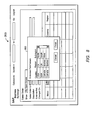
- FIG. 8 illustrates dialog 800 to specify a context as well as value lists for extension field to be added. Dialog 800 may be presented after selection of Next button 510 of dialog 500.
- the Country and Region columns of dialog 800 may be determined by UI service layer 130 based on the indicated reference field (i.e. Region), or may be dragged by a user to dialog 800 from user interface 200. These columns may be pre-populated using instance data of data store 140. A user may provide values of the Subregion extension field which correspond to each pair of Country/Region values. UI service layer 130 may maintain the list of associated values. These values may be used during validation of data input to the field or to provide value help during such data input.
- FIG. 9 illustrates user interface 900 according to some embodiments.
- User interface 900 is associated with the SalesOrder business object and includes the Subregion extension field added as described above.
- the added Subregion field may be used as a reference field (and/or context field) for another extension field.
- Each system and device described herein may be implemented by any number of devices in communication via any number of other public and/or private networks. Two or more of devices of may be located remote from one another and may communicate with one another via any known manner of network(s) and/or a dedicated connection. Moreover, each device may comprise any number of hardware and/or software elements suitable to provide the functions described herein as well as any other functions. Other topologies may be used in conjunction with other embodiments.
- All systems and processes discussed herein may be embodied in program code stored on one or more computer-readable media.
- Such media may include, for example, a floppy disk, a CD-ROM, a DVD-ROM, a ZipTM disk, magnetic tape, and solid state RAM or ROM memories. Embodiments are therefore not limited to any specific combination of hardware and software.
Landscapes
- Engineering & Computer Science (AREA)
- Theoretical Computer Science (AREA)
- Business, Economics & Management (AREA)
- General Physics & Mathematics (AREA)
- Physics & Mathematics (AREA)
- Human Resources & Organizations (AREA)
- Marketing (AREA)
- Data Mining & Analysis (AREA)
- Software Systems (AREA)
- Economics (AREA)
- Entrepreneurship & Innovation (AREA)
- Databases & Information Systems (AREA)
- General Engineering & Computer Science (AREA)
- Operations Research (AREA)
- Quality & Reliability (AREA)
- Strategic Management (AREA)
- Tourism & Hospitality (AREA)
- General Business, Economics & Management (AREA)
- User Interface Of Digital Computer (AREA)
Abstract
Description
- Some embodiments relate to business objects supported by a business process platform. More specifically, some embodiments relate to the creation of extension fields for business objects within a business process platform.
- A business object is a software model representing real-world items used during the transaction of business. For example, a business object may represent a business document such as a sales order, a purchase order, or an invoice. A business object may also master data objects such as a product, a business partner, or a piece of equipment. Particular ones of such master data objects (e.g., SalesOrder SO435539, ACME corporation) are represented by instances of their representing business object, or business object instances.
- A business object may specify business logic and/or data having any suitable structure. The structure of a business object may be determined based on the requirements of a business scenario in which the business object is to be deployed. A business solution for a particular business scenario may include many business objects, where the structure of each business object has been determined based on the requirements of the particular business scenario.
- A customer deploying a business solution may desire changes to the business objects included in the business solution. For example, a customer may require a field (e.g., "SeriaINumber") which does not exist within the "Product" business object of a business solution. In addition, another customer may require a different additional field in the "Product" business object and/or in another business object of the same business solution. These additional fields must be properly bound to their related business object in order to provide consistent input and display of the fields in several user interfaces, input and display of the fields in forms, usage and display of the fields in reports, searching of documents using these fields, and persistent (i.e., database) storage of the fields.
- Conventional techniques for adding a field to an existing business object include APPEND mechanisms which change the definition of the business object at the data dictionary level. This technique requires advanced technical skill and presents other drawbacks as well. For example, an entire database system must be recompiled to effect such a changed definition, and the change occurs globally with respect to all instantiations of the business object within the system. Moreover, the change may require reprogramming of application clients which interact with the changed business object.
- Some systems allow a user to add an extension field onto an existing user interface. The extension field must be bound to a business object so that the extension field can be retrieved in the same semantic and relationship, for example on different user interfaces. This binding must also include binding of a context and other properties of the extension field to the business object.
- These systems attempt to facilitate the binding by exposing the business object model to the user interface layer. However, the user is typically unfamiliar with the rather abstract and complex model of a business object. Also, it is difficult for the user to understand the binding of the existing user interface fields of the existing user interface to the underlying business object.
- Improved systems for adding extension fields to business objects are desired. An improved system may utilize a familiar end-user environment and may derive the binding of the extension fields to business objects as well as the context and properties of the extension fields. Such a system may also or alternatively avoid exposing complexities of the business object (i.e., the business object model) to the user.
-
-
FIG. 1 is a block diagram of a system according to some embodiments. -
FIG. 2 is a view of a user interface according to some embodiments. -
FIG. 3 is a flow diagram of a process according to some embodiments. -
FIG. 4 is a view of a user interface according to some embodiments. -
FIG. 5 is a view of a user interface according to some embodiments. -
FIG. 6 is a simplified diagram of a business object according to some embodiments. -
FIG. 7 is a simplified diagram of a business object according to some embodiments. -
FIG. 8 is a view of a user interface according to some embodiments. -
FIG. 9 is a view of a user interface according to some embodiments. -
FIG. 1 is a block diagram ofsystem 100 according to some embodiments.System 100 includesbusiness process platform 110 anduser interface 120. Generally,business process platform 110 may provide services touser interface 120 according to some embodiments.Business process platform 110 may comprise an SAP application platform based on SAP Netweaver®, but is not limited thereto. In this regard,FIG. 1 represents a logical architecture for describing processes according to some embodiments, and actual implementations may include more or different components arranged in other manners. -
Business process platform 110 may provide services based on business objects as described above.Metadata 112 may include information defining the structure and attributes of these business objects, such asbusiness object 114. In this regard,business object 114 is a model, or class.Business object 114 includesextension field 1141 which may be added thereto according to some embodiments. - An operator may manipulate
user interface 120 to interact withUl service layer 130 according to some embodiments. Such interactions may include requesting business object views, modifying business object data, and defining business object views.User interface 120 may be displayed by any suitable device. For example, the device may include any necessary software to support a proprietary interface (e.g., a proprietary client application) or execution engine (e.g., a Web browser). A device to display the user interfaces is capable of communication (including sporadic communication - e.g., mobile devices) withbusiness process platform 110. -
Ul service layer 130 communicates withbusiness process platform 110 to provide views requested byuser interface 120 and to otherwise perform requested functions. For example,Ul service layer 130 may usemetadata 112 to access and manipulate data of business object instances stored indata store 140. These instances may comprise instances ofbusiness object 114. -
Ul service layer 130 may communicate with an extension framework of business process platform 110 (e.g., via an Application Programming Interface) to facilitate one or more processes described herein. Generally, the extension framework may provide creation of a business object extension field according to some embodiments. - In some embodiments, any other service consumer may use the services and extension fields of
platform 110. For example, the services and extension fields could be also useful for A2X services or Analytics. -
FIG. 2 illustratesuser interface 200 according to some embodiments. More specifically,FIG. 2 reflects an on-demand Web-based solution in whichuser interface 200 is displayed by a Web browser. -
User interface 200 is associated with a SalesOrder business object and served byUl service layer 130. A user may manipulate the displayed fields to display data of different SalesOrder object instances stored indata store 140. The data may be requested frombusiness process platform 110 by Ulservice layer 130. Embodiments may be used in conjunction with any user interface associated with any one or more business objects. - A user may desire to add a field to the SalesOrder business object. According to some embodiments, such a field may be added via
user interface 200. Advantageously, the user is already familiar withuser interface 200 as being associated with the SalesOrder business object. -
FIG. 3 is a flow diagram ofprocess 300 to add an extension field to a business object according to some embodiments.UI service layer 130 executesprocess 300 according to some embodiments. An example ofFIG. 3 will be described with respect tosystem 100 anduser interface 200, but embodiments are not limited thereto. - Initially, a user interface is presented at S310. The user interface includes fields associated with a business object. For example,
user interface 200 associated with a SalesOrder business object may be presented at S310. According to some embodiments, a user operates a standard or proprietary software application to requestuser interface 120 fromUl service layer 130.Ul service layer 130 presentsuser interface 120 to the application, which in turn presents the user interface to a user. - Next, at S320, an instruction to add an extension field to the business object is received via the user interface.
FIG. 4 illustratesuser interface 200 andcontext menu 400.Context menu 400 is presented in response to "right-clicking" on the Region field ofuser interface 200.Context menu 400 provides several options, one of which is "Add Extension Field". Selection of the "Add Extension Field" option results in reception of the instruction at S320. In some embodiments of S320, the system automatically determines and proposes an extension field by evaluating the existing fields displayed on the screen. - An indication of a reference field of the business object is received via the user interface at S330. The reference field may be used to determine the relationship (e.g., including mapping information) of the added extension field to a node or attribute of the business object.
- Continuing with the present example,
dialog 500 ofFIG. 5 may be presented to a user upon selection of the "Add Extension Field" option at S320.Dialog 500 includes input fields for a name of the extension field to be added, a type (e.g., string, currency, date, etc.), and a reference field. The user has input "Subregion" as the extension field name and "string" as the extension field type. According to the example, the Reference Field input field is pre-populated with "Region" because the Region field was right-clicked at S320. The Reference Field input field may initially be blank or populated with a name of a different default field. The reference field need not be displayed inuser interface 400. Such a situation may occur in a case that the extension field was proposed by the system. - An indication of the reference field may be received at S330 after user selection of
Next button 510. A binding of the reference field to the business object is determined at S340.FIG. 6 is a simplified diagram of a Sales Order business object according to some embodiments.FIG. 6 illustrates the binding of the Region reference field to the SalesOrder business object. More specifically, the Region reference field is bound to the Address node under the Party node of the SalesOrder business object. The Country field is also shown bound to the Address node. - The extension field is bound to the business object at S350 based on the determined binding of the reference field to the business object. According to the present example, the Subregion extension field is bound to the Geography node at S350 as illustrated in
FIG. 7 . This binding may be reflected inmetadata 112.Field 1141 ofbusiness object 114 represents the Subregion extension field in some embodiments. The extension field may be global (i.e., associated with all users) or specific to any subset(s) of users. For example,metadata 112 may indicate thatextension field 1141 is specific to a particular company, to a subset of users of a particular company, to a particular vendor, etc. - Further attributes (e.g., context and properties) of the extension field may also be derived from the reference field. In some embodiments, the properties of the extension field are identical to the properties of the reference field. Alternatively, the properties of the reference field may be derived based on the properties of one or more other fields selected from
user interface 200. Type-related properties were mentioned above. Other properties include, but are not limited to, default values, "read-only", "invisible", and "mandatory". Any property may be dependent on field values (e.g., "mandatory only in U.S."). - Embodiments may allow a user to specify a context of an added extension field.
FIG. 8 illustratesdialog 800 to specify a context as well as value lists for extension field to be added.Dialog 800 may be presented after selection ofNext button 510 ofdialog 500. - The Country and Region columns of
dialog 800 may be determined byUI service layer 130 based on the indicated reference field (i.e. Region), or may be dragged by a user todialog 800 fromuser interface 200. These columns may be pre-populated using instance data ofdata store 140. A user may provide values of the Subregion extension field which correspond to each pair of Country/Region values.UI service layer 130 may maintain the list of associated values. These values may be used during validation of data input to the field or to provide value help during such data input. -
FIG. 9 illustratesuser interface 900 according to some embodiments.User interface 900 is associated with the SalesOrder business object and includes the Subregion extension field added as described above. In some embodiments, the added Subregion field may be used as a reference field (and/or context field) for another extension field. - Each system and device described herein may be implemented by any number of devices in communication via any number of other public and/or private networks. Two or more of devices of may be located remote from one another and may communicate with one another via any known manner of network(s) and/or a dedicated connection. Moreover, each device may comprise any number of hardware and/or software elements suitable to provide the functions described herein as well as any other functions. Other topologies may be used in conjunction with other embodiments.
- All systems and processes discussed herein may be embodied in program code stored on one or more computer-readable media. Such media may include, for example, a floppy disk, a CD-ROM, a DVD-ROM, a Zip™ disk, magnetic tape, and solid state RAM or ROM memories. Embodiments are therefore not limited to any specific combination of hardware and software.
- The embodiments described herein are solely for the purpose of illustration. Those in the art will recognize other embodiments may be practiced with modifications and alterations limited only by the claims.
Claims (15)
- A method comprising:presenting a user interface including fields associated with a business object;receiving, via the user interface, an instruction to add an extension field to the business object;receiving, via the user interface, an indication of a reference field of the business object;determining a binding of the reference field to the business object; andbinding the extension field to the business object based on the determined binding of the reference field to the business object.
- A method according to Claim 1, further comprising:determining a plurality of properties of the reference field; anddefining a plurality of properties of the extension field based on the plurality of properties of the reference field;and/ordetermining a context of the reference field; anddefining a context of the extension field based on the context of the reference field.
- A method according to Claim 1 or 2, further comprising:receiving, via the user interface, an indication of a second reference field of the business object;determining a plurality of properties of the second reference field; anddefining a plurality of properties of the extension field based on the plurality of properties of the second reference field.
- A method according to any one of the preceding Claims, further comprising:receiving, via the user interface, a plurality of values of the extension field,wherein each of the plurality of values is associated with a value of the reference field.
- A method according to any one of the preceding Claims, further comprising:receiving, via the user interface, an indication of a second reference field of the business object; anddefining a context of the extension field based on the reference field and the second reference field; and/orreceiving, via the user interface, a plurality of values of the extension field,wherein each of the plurality of values is associated with a pair of values comprising a value of the reference field and a value of the second reference field.
- A computer program product comprising a computer-readable medium having stored thereon program code, the program code executable by a computer to:present a user interface including fields associated with a business object;receive, via the user interface, an instruction to add an extension field to the business object;receive, via the user interface, an indication of a reference field of the business object;determine a binding of the reference field to the business object; andbind the extension field to the business object based on the determined binding of the reference field to the business object.
- A computer program product according to Claim 6, the program code further executable by a computer to:determine a plurality of properties of the reference field; anddefine a plurality of properties of the extension field based on the plurality of properties of the reference field;and/ordetermine a context of the reference field; anddefine a context of the extension field based on the context of the reference field.
- A computer program product according to Claim 6 or 7, the program code further executable by a computer to:receive, via the user interface, an indication of a second reference field of the business object;determine a plurality of properties of the second reference field; anddefine a plurality of properties of the extension field based on the plurality of properties of the second reference field.
- A computer program product according to any one of Claims 6 to 8, the program code further executable by a computer to:receive, via the user interface, a plurality of values of the extension field,wherein each of the plurality of values is associated with a value of the reference field.
- A computer program product according to any one of Claims 6 to 9, the program code further executable by a computer to:receive, via the user interface, an indication of a second reference field of the business object; anddefine a context of the extension field based on the reference field and the second reference field;and/orreceive, via the user interface, a plurality of values of the extension field,wherein each of the plurality of values is associated with a pair of values comprising a value of the reference field and a value of the second reference field.
- A system comprising:a business process platform to store a business object; anda user interface layer to:present a user interface including fields associated with a business object;receive, via the user interface, an instruction to add an extension field to the business object; andreceive, via the user interface, an indication of a reference field of the business object;determine a binding of the reference field to the business object stored in the business process platform; andissue an instruction to the business process platform to bind the extension field to the business object based on the determined binding of the reference field to the business object.
- A system according to Claim 11, the user interface layer further to:determine a plurality of properties of the reference field; andissue an instruction to the business process platform to define a plurality of properties of the extension field based on the plurality of properties of the reference field;and/ordetermine a context of the reference field; andissue an instruction to the business process platform to define a context of the extension field based on the context of the reference field.
- A system according to Claim 11 or 12, the user interface layer further to:receive, via the user interface, an indication of a second reference field of the business object;determine a plurality of properties of the second reference field; andissue an instruction to the business process platform to define a plurality of properties of the extension field based on the plurality of properties of the second reference field.
- A system according to any one of Claims 11 to 13, the user interface layer further to:receive, via the user interface, a plurality of values of the extension field,wherein each of the plurality of values is associated with a value of the reference field.
- A system according to any one of Claims 11 to 14, the user interface layer further to:receive, via the user interface, an indication of a second reference field of the business object; andissue an instruction to the business process platform to define a context of the extension field based on the reference field and the second reference field;and/orreceive, via the user interface, a plurality of values of the extension field,wherein each of the plurality of values is associated with a pair of values comprising a value of the reference field and a value of the second reference field.
Applications Claiming Priority (1)
| Application Number | Priority Date | Filing Date | Title |
|---|---|---|---|
| US12/339,328 US20100162147A1 (en) | 2008-12-19 | 2008-12-19 | Ui-driven binding of extension fields to business objects |
Publications (1)
| Publication Number | Publication Date |
|---|---|
| EP2199933A1 true EP2199933A1 (en) | 2010-06-23 |
Family
ID=41114872
Family Applications (1)
| Application Number | Title | Priority Date | Filing Date |
|---|---|---|---|
| EP09011280A Ceased EP2199933A1 (en) | 2008-12-19 | 2009-09-02 | UI-driven binding of extension fields to business objects |
Country Status (2)
| Country | Link |
|---|---|
| US (1) | US20100162147A1 (en) |
| EP (1) | EP2199933A1 (en) |
Families Citing this family (17)
| Publication number | Priority date | Publication date | Assignee | Title |
|---|---|---|---|---|
| US8356056B2 (en) * | 2008-08-26 | 2013-01-15 | Sap Ag | Functional extensions for business objects |
| US8788625B2 (en) * | 2008-12-11 | 2014-07-22 | Sap Ag | Displaying application content in synchronously opened window |
| US8819075B2 (en) | 2010-07-26 | 2014-08-26 | Sap Ag | Facilitation of extension field usage based on reference field usage |
| US9063958B2 (en) | 2010-07-29 | 2015-06-23 | Sap Se | Advance enhancement of secondary persistency for extension field search |
| US20120166928A1 (en) * | 2010-12-23 | 2012-06-28 | Sap Ag | Field extensibility in service interfaces and forms message types |
| US9378468B2 (en) * | 2010-12-27 | 2016-06-28 | Sap Se | Generic boxed components for multi-client systems |
| US8732668B2 (en) * | 2011-10-28 | 2014-05-20 | Sap Ag | System and method of error handling in a platform as a service environment |
| US8893031B2 (en) * | 2011-12-16 | 2014-11-18 | Sap Se | Virtual business object node associations |
| US20140013338A1 (en) * | 2012-07-05 | 2014-01-09 | Sap Ag | Extensions to business to business messages for external communication |
| US20140089225A1 (en) * | 2012-09-27 | 2014-03-27 | Sap Ag | Extendible Process Directory Model |
| US9524239B2 (en) | 2013-01-14 | 2016-12-20 | Sap Se | Self service propagation of custom extension fields into web services |
| US9258668B2 (en) * | 2013-07-31 | 2016-02-09 | Sap Se | Mobile application framework extensibiilty |
| US9661056B2 (en) | 2014-04-15 | 2017-05-23 | Sap Se | Modification free extension of web based applications |
| US11416485B2 (en) | 2019-03-28 | 2022-08-16 | Sap Se | Dynamic query expressions |
| US11360977B2 (en) | 2019-04-01 | 2022-06-14 | Sap Se | Selectively allowing query optimization in query processing |
| US11354332B2 (en) | 2020-05-20 | 2022-06-07 | Sap Se | Enabling data access by external cloud-based analytics system |
| US11683385B2 (en) * | 2021-08-03 | 2023-06-20 | Fidelity Information Services. LLC | Smart forms for automated configuration of solutions |
Citations (1)
| Publication number | Priority date | Publication date | Assignee | Title |
|---|---|---|---|---|
| EP1494131A1 (en) * | 2003-06-30 | 2005-01-05 | Sap Ag | Method and system for displaying configurable text fields in web based business applications |
Family Cites Families (30)
| Publication number | Priority date | Publication date | Assignee | Title |
|---|---|---|---|---|
| US6182060B1 (en) * | 1997-04-15 | 2001-01-30 | Robert Hedgcock | Method and apparatus for storing, retrieving, and processing multi-dimensional customer-oriented data sets |
| US6128617A (en) * | 1997-11-24 | 2000-10-03 | Lowry Software, Incorporated | Data display software with actions and links integrated with information |
| US5918232A (en) * | 1997-11-26 | 1999-06-29 | Whitelight Systems, Inc. | Multidimensional domain modeling method and system |
| US6408292B1 (en) * | 1999-08-04 | 2002-06-18 | Hyperroll, Israel, Ltd. | Method of and system for managing multi-dimensional databases using modular-arithmetic based address data mapping processes on integer-encoded business dimensions |
| US7222130B1 (en) * | 2000-04-03 | 2007-05-22 | Business Objects, S.A. | Report then query capability for a multidimensional database model |
| WO2002059793A2 (en) * | 2000-10-31 | 2002-08-01 | Michael Philip Kaufman | System and method for generating automatic user interface for arbitrarily complex or large databases |
| US20050183002A1 (en) * | 2002-03-04 | 2005-08-18 | Frederic Chapus | Data and metadata linking form mechanism and method |
| US7546226B1 (en) * | 2003-03-12 | 2009-06-09 | Microsoft Corporation | Architecture for automating analytical view of business applications |
| US8630986B2 (en) * | 2003-07-22 | 2014-01-14 | Sap Ag | Extending the functionality of enterprise services |
| US20050172261A1 (en) * | 2004-01-30 | 2005-08-04 | Yuknewicz Paul J. | Architecture for creating a user interface using a data schema |
| US20050229186A1 (en) * | 2004-03-15 | 2005-10-13 | Canyonbridge, Inc. | Method and apparatus for dynamic runtime object aggregation |
| US8478616B2 (en) * | 2004-10-29 | 2013-07-02 | FrontRange Solutions USA Inc. | Business application development and execution environment |
| US20060206507A1 (en) * | 2005-02-16 | 2006-09-14 | Dahbour Ziyad M | Hierarchal data management |
| US8145653B2 (en) * | 2005-04-08 | 2012-03-27 | International Business Machines Corporation | Using schemas to generate application specific business objects for use in an integration broker |
| US20060294141A1 (en) * | 2005-06-28 | 2006-12-28 | International Business Machines Corporation | Smart business object proxy |
| US9026512B2 (en) * | 2005-08-18 | 2015-05-05 | Emc Corporation | Data object search and retrieval |
| US7743363B2 (en) * | 2005-10-13 | 2010-06-22 | Microsoft Corporation | Extensible meta-data |
| US7720803B2 (en) * | 2006-03-28 | 2010-05-18 | Sap Ag | Mapping of a transactional data model to a reporting data model |
| US7730412B2 (en) * | 2006-06-30 | 2010-06-01 | Sap Ag | System and method for model-based user interface using transformation nodes |
| US8595245B2 (en) * | 2006-07-26 | 2013-11-26 | Xerox Corporation | Reference resolution for text enrichment and normalization in mining mixed data |
| US8051092B2 (en) * | 2006-11-06 | 2011-11-01 | Sap Ag | Finalize sequencing for objects |
| US7996850B2 (en) * | 2006-12-28 | 2011-08-09 | Sap Ag | Dynamic business object properties for SOA architectures |
| US8069184B2 (en) * | 2006-12-29 | 2011-11-29 | Sap Ag | Systems and methods to implement extensibility of tenant content in a provider-tenant environment |
| US9213950B2 (en) * | 2007-02-09 | 2015-12-15 | Anthony Keith Randell | Method and system for managing a plurality of processes or tasks |
| US7752207B2 (en) * | 2007-05-01 | 2010-07-06 | Oracle International Corporation | Crawlable applications |
| US9224179B2 (en) * | 2007-05-14 | 2015-12-29 | The University Of Utah Research Foundation | Method and system for report generation including extensible data |
| US20090281853A1 (en) * | 2008-05-08 | 2009-11-12 | Pramata Corporation | Legal Instrument Management Platform |
| US8819075B2 (en) * | 2010-07-26 | 2014-08-26 | Sap Ag | Facilitation of extension field usage based on reference field usage |
| US8719224B2 (en) * | 2010-07-30 | 2014-05-06 | Sap Ag | Common modeling of data access and provisioning for search, query, reporting and/or analytics |
| US8886646B2 (en) * | 2010-12-30 | 2014-11-11 | Sap Se | Field extensibility for analytical reports |
-
2008
- 2008-12-19 US US12/339,328 patent/US20100162147A1/en not_active Abandoned
-
2009
- 2009-09-02 EP EP09011280A patent/EP2199933A1/en not_active Ceased
Patent Citations (1)
| Publication number | Priority date | Publication date | Assignee | Title |
|---|---|---|---|---|
| EP1494131A1 (en) * | 2003-06-30 | 2005-01-05 | Sap Ag | Method and system for displaying configurable text fields in web based business applications |
Non-Patent Citations (1)
| Title |
|---|
| YODER J W ET AL: "Architecture and design of Adaptive Object-Models", 1 December 2001, ACM SIGPLAN NOTICES, ACM, ASSOCIATION FOR COMPUTING MACHINERY, NEW YORK, NY, US, PAGE(S) 50 - 60, XP002249967 * |
Also Published As
| Publication number | Publication date |
|---|---|
| US20100162147A1 (en) | 2010-06-24 |
Similar Documents
| Publication | Publication Date | Title |
|---|---|---|
| US20100162147A1 (en) | Ui-driven binding of extension fields to business objects | |
| US8108433B2 (en) | Dynamic extension fields for business objects | |
| US11233708B1 (en) | System, apparatus and method for deploying infrastructure to the cloud | |
| US10872029B1 (en) | System, apparatus and method for deploying infrastructure to the cloud | |
| US8108434B2 (en) | Dynamic node extensions and extension fields for business objects | |
| US12045585B2 (en) | No-coding machine learning pipeline | |
| US8250169B2 (en) | Business context data companion tool | |
| US8356056B2 (en) | Functional extensions for business objects | |
| US8819075B2 (en) | Facilitation of extension field usage based on reference field usage | |
| US8127237B2 (en) | Active business client | |
| US10990370B1 (en) | System, apparatus and method for deploying infrastructure to the cloud | |
| US20110209042A1 (en) | Information Technology Standard Inventory Utility | |
| US9183561B2 (en) | Automatic generation of trend charts | |
| US7814428B2 (en) | Visualizing navigable object hierarchy | |
| US9384198B2 (en) | Agency management system and content management system integration | |
| US20160092499A1 (en) | Object mapping using intrinsic persistence metadata and pattern-based rules for mapping transformation | |
| US8892585B2 (en) | Metadata driven flexible user interface for business applications | |
| US20130152038A1 (en) | Project management workflows | |
| US20190236822A1 (en) | System and method for graphically displaying recommended mappings in an integration cloud service design time | |
| CN105612495A (en) | Automatically resolving conflicts after installation of selected updates in computer system | |
| US20160274885A1 (en) | Controlling deployment of an industry-specific solution package | |
| US20170352073A1 (en) | Platform configuration tool | |
| US8886646B2 (en) | Field extensibility for analytical reports | |
| US20160274906A1 (en) | Generating a deployable industry-specific solution package | |
| US10387444B2 (en) | Tools for auto-visualizations of data |
Legal Events
| Date | Code | Title | Description |
|---|---|---|---|
| PUAI | Public reference made under article 153(3) epc to a published international application that has entered the european phase |
Free format text: ORIGINAL CODE: 0009012 |
|
| AK | Designated contracting states |
Kind code of ref document: A1 Designated state(s): AT BE BG CH CY CZ DE DK EE ES FI FR GB GR HR HU IE IS IT LI LT LU LV MC MK MT NL NO PL PT RO SE SI SK SM TR |
|
| AX | Request for extension of the european patent |
Extension state: AL BA RS |
|
| 17P | Request for examination filed |
Effective date: 20101223 |
|
| 17Q | First examination report despatched |
Effective date: 20110114 |
|
| RAP1 | Party data changed (applicant data changed or rights of an application transferred) |
Owner name: SAP SE |
|
| 17Q | First examination report despatched |
Effective date: 20150108 |
|
| STAA | Information on the status of an ep patent application or granted ep patent |
Free format text: STATUS: THE APPLICATION HAS BEEN REFUSED |
|
| 18R | Application refused |
Effective date: 20180427 |