EP2196928A1 - Method and system for configuring a monitoring device - Google Patents
Method and system for configuring a monitoring device Download PDFInfo
- Publication number
- EP2196928A1 EP2196928A1 EP09177289A EP09177289A EP2196928A1 EP 2196928 A1 EP2196928 A1 EP 2196928A1 EP 09177289 A EP09177289 A EP 09177289A EP 09177289 A EP09177289 A EP 09177289A EP 2196928 A1 EP2196928 A1 EP 2196928A1
- Authority
- EP
- European Patent Office
- Prior art keywords
- patient monitoring
- monitoring devices
- configuration
- configuration apparatus
- configuration data
- Prior art date
- Legal status (The legal status is an assumption and is not a legal conclusion. Google has not performed a legal analysis and makes no representation as to the accuracy of the status listed.)
- Withdrawn
Links
Images

Classifications
-
- A—HUMAN NECESSITIES
- A61—MEDICAL OR VETERINARY SCIENCE; HYGIENE
- A61B—DIAGNOSIS; SURGERY; IDENTIFICATION
- A61B5/00—Measuring for diagnostic purposes; Identification of persons
- A61B5/0002—Remote monitoring of patients using telemetry, e.g. transmission of vital signals via a communication network
- A61B5/0004—Remote monitoring of patients using telemetry, e.g. transmission of vital signals via a communication network characterised by the type of physiological signal transmitted
- A61B5/0006—ECG or EEG signals
-
- A—HUMAN NECESSITIES
- A61—MEDICAL OR VETERINARY SCIENCE; HYGIENE
- A61B—DIAGNOSIS; SURGERY; IDENTIFICATION
- A61B5/00—Measuring for diagnostic purposes; Identification of persons
- A61B5/24—Detecting, measuring or recording bioelectric or biomagnetic signals of the body or parts thereof
- A61B5/316—Modalities, i.e. specific diagnostic methods
- A61B5/318—Heart-related electrical modalities, e.g. electrocardiography [ECG]
-
- G—PHYSICS
- G16—INFORMATION AND COMMUNICATION TECHNOLOGY [ICT] SPECIALLY ADAPTED FOR SPECIFIC APPLICATION FIELDS
- G16H—HEALTHCARE INFORMATICS, i.e. INFORMATION AND COMMUNICATION TECHNOLOGY [ICT] SPECIALLY ADAPTED FOR THE HANDLING OR PROCESSING OF MEDICAL OR HEALTHCARE DATA
- G16H10/00—ICT specially adapted for the handling or processing of patient-related medical or healthcare data
- G16H10/20—ICT specially adapted for the handling or processing of patient-related medical or healthcare data for electronic clinical trials or questionnaires
-
- G—PHYSICS
- G16—INFORMATION AND COMMUNICATION TECHNOLOGY [ICT] SPECIALLY ADAPTED FOR SPECIFIC APPLICATION FIELDS
- G16H—HEALTHCARE INFORMATICS, i.e. INFORMATION AND COMMUNICATION TECHNOLOGY [ICT] SPECIALLY ADAPTED FOR THE HANDLING OR PROCESSING OF MEDICAL OR HEALTHCARE DATA
- G16H40/00—ICT specially adapted for the management or administration of healthcare resources or facilities; ICT specially adapted for the management or operation of medical equipment or devices
- G16H40/60—ICT specially adapted for the management or administration of healthcare resources or facilities; ICT specially adapted for the management or operation of medical equipment or devices for the operation of medical equipment or devices
- G16H40/67—ICT specially adapted for the management or administration of healthcare resources or facilities; ICT specially adapted for the management or operation of medical equipment or devices for the operation of medical equipment or devices for remote operation
-
- A—HUMAN NECESSITIES
- A61—MEDICAL OR VETERINARY SCIENCE; HYGIENE
- A61B—DIAGNOSIS; SURGERY; IDENTIFICATION
- A61B2560/00—Constructional details of operational features of apparatus; Accessories for medical measuring apparatus
- A61B2560/02—Operational features
- A61B2560/0266—Operational features for monitoring or limiting apparatus function
- A61B2560/0271—Operational features for monitoring or limiting apparatus function using a remote monitoring unit
Definitions
- the subject matter disclosed herein relates to a method and system for configuring a monitoring device that is adapted for use in a clinical study.
- One method for assessing the safety of a new medication involves the performance of a clinical study.
- Patient monitoring devices are commonly implemented during the course of the clinical study to help evaluate the new medication.
- an electrocardiograph device may be implemented to monitor the patients to whom the new medication has been administered, and to thereby help evaluate the safety of the new medication.
- Patient monitoring may, for example, comprise the acquisition of multiple diagnostic readings over time (e.g., acquiring a 10S resting ECG once a month over three years as is typically done in late phase trials); or to the acquisition of monitoring data during a single diagnostic reading (e.g., continuously recording 48 hrs of ECG data as is typically done in phase I trials).
- a method inputting configuration data into a configuration apparatus, providing a plurality of patient monitoring devices adapted for use in a clinical study, and connecting each of the plurality of patient monitoring devices to the configuration apparatus.
- the method also includes automatically transmitting the configuration data from the configuration apparatus to each of the plurality of patient monitoring devices such that each of the plurality of patient monitoring devices is generally identically configured in a manner that minimizes labor requirements.
- a method inputting configuration data into a configuration apparatus, assembling a patient monitoring device at a manufacturing facility, packaging the patient monitoring device in a packaging material, and connecting the configuration apparatus to the patient monitoring device while the patient monitoring device remains disposed in the packaging material.
- the method also includes wirelessly transmitting the configuration data from the configuration apparatus to the patient monitoring device while the patient monitoring device remains disposed in the packaging material, and implementing the patient monitoring device to facilitate the performance of a clinical study.
- a system in another embodiment, includes a configuration apparatus adapted to receive and retain configuration data, and a plurality of patient monitoring devices that are each independently connectable to the configuration apparatus.
- the plurality of patient monitoring devices are adapted to facilitate the performance of a clinical study.
- the configuration apparatus is adapted to selectively transmit the configuration data to each of the plurality of patient monitoring devices such that each of the plurality of patient monitoring devices is generally identically configured in a manner that minimizes labor requirements.
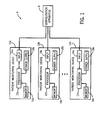
- FIGURE 1 is a schematic representation of a system for configuring monitoring devices in accordance with an embodiment
- FIGURE 2 is a flow chart illustrating a method for implementing the system of Figure 1 to configure monitoring devices in a clinical study in accordance with an embodiment
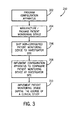
- FIGURE 3 is a flow chart illustrating a method for implementing the system of Figure 1 to configure monitoring devices in a clinical study in accordance with another embodiment.
- a system 6 adapted to facilitate the performance of a clinical study is schematically depicted in accordance with an embodiment.
- the term clinical study refers to any research conducted to assess the safety of a medication, device or procedure.
- the system 6 includes a configuration apparatus 8 that is connectable to each of a plurality of patient monitoring devices 10a-10n.
- the configuration apparatus 8 is adapted to at least partially automate the process of configuring the patient monitoring devices 10a-10n.
- the configuration apparatus 8 comprises a programmable computer configured to store and selectively transmit configuration data.
- configuration data should be defined to include any data specifying the manner in which the patient monitoring devices 10a-10n are configured and may include, for example, subject identifiers, security modes, filter settings, etc.
- the patient monitoring devices 10a-10n should be generally identically configured in order to maintain uniformity in the clinical study and to thereby improve the accuracy of the clinical study assessment. Implementing the configuration apparatus 8 to configure each of the patient monitoring devices 10a-10n reduces the manual labor requirements, reduces the likelihood of human error, and improves configuration uniformity.
- the patient monitoring devices 10a-10n are adapted for use during the clinical study to provide feedback regarding the safety of a medication, device or procedure.
- the patient monitoring devices 10a-10n may comprise electrocardiograph devices, however other patient monitoring devices may be envisioned.
- the patient monitoring device 10a will now be described in detail with the understanding that the other patient monitoring devices 10b-10n are structurally and functionally similar.
- the patient monitoring device 10a includes a processor 12a, an input device 14a, a memory device 16a, and a power supply 18a.
- the processor 12a is operatively connected to each of the input device 14a, the memory device 16a, and the power supply 18a.
- the input device 14a is adapted to transfer data to the processor 12a.
- the memory device 16a is adapted to transfer data to and/or receive data from the processor 12a.
- the power supply 18a is adapted to power the processor 12a.
- the input device 14a may be implemented to transmit configuration data from the configuration apparatus 8 to the processor 12a as the patient monitoring device 10a is being set up for the clinical study.
- the input device 14a comprises a radio frequency identification (RFID) reader or transponder adapted to work in combination with a complementary device disposed in the configuration apparatus 8.
- the input device 14a comprises an Internet connectivity device adapted to work in combination with a similar device disposed in the configuration apparatus 8.
- RFID radio frequency identification
- the memory device 16a may be implemented to record configuration data, and to thereafter selectively transmit the recorded configuration data to the processor 12a.
- the power supply 18a may be implemented to power the processor 12a. According to one embodiment, the power supply 18a comprises a battery system. According to another embodiment, the power supply 18a comprises a solar power system.
- the method 100 comprises steps 102-112.
- the method 100 will hereinafter be described as it applies to the patient monitoring device 10a, however it should be appreciated that the method 100 is also intended for use with the remaining patient monitoring devices 10b-10n.
- the configuration apparatus 8 is programmed with the configuration data specifying the manner in which each of the patient monitoring devices 10a-10n are to be configured. This step is generally performed by manually inputting the configuration data into the configuration apparatus 8, however it need only be performed one time. In contrast, conventional systems require the manual configuration of each patient monitoring device individually thereby increasing labor requirements and the potential for error.
- the patient monitoring device 10a is manufactured and packaged at a manufacturing facility. According to one embodiment, at step 104 the patient monitoring device 10a is packaged in a manner adapted to allow it to be powered-up and configured without removing the patient monitoring device 10a from the packaging.
- step 106 the patient monitoring device 10a is powered-up.
- step 106 is automatically performed in response to a signal from the configuration apparatus 8.
- step 106 requires the manual connection of a battery or solar panel.
- the configuration apparatus 8 is implemented to configure the patient monitoring device 10a.
- This step is preferably automatically performed at the manufacturing facility by transmitting the configuration data from the configuration apparatus 8 to the input 14a of the patient monitoring device 10a.
- the term automatic refers to a process having one or more automated steps that may be performed without manual intervention.
- the patient monitoring device 10a is configured by wirelessly transmitting the configuration data such as with radio frequency identification (RFID), Bluetooth, or Wi-Fi wireless technology.
- RFID radio frequency identification
- the patient monitoring device 10a is configured by transmitting the configuration data via a cable that is manually plugged into the input 14a.
- the configuration apparatus 8 includes an RFID transponder and the input 14a comprises an RFID reader.
- Step 108 may be performed by bringing the patient monitoring device 10a, which may be disposed within packaging material, into close proximity with the configuration apparatus 8.
- the RFID reader of input 14a will receive a signal from the RFID transponder. This signal may automatically and wirelessly transmit the configuration data from the configuration apparatus 8 to the patient monitoring device 10a.
- the configuration data can be stored on the memory 16a such that the patient monitoring device 10a is fully configured in accordance with the requirements of the clinical study.
- the patient monitoring device 10a which has been pre-configured in the manner described hereinabove, is shipped from the manufacturing facility to the investigator site.
- the investigator site refers to the site at which the patient monitoring device 10a will be implemented during the course of the clinical study. As the patient monitoring device 10a is pre-configured, it may be operated without any additionally programming immediately upon arrival at the investigator site.
- the patient monitoring device 10a is implemented during the course of a clinical study. According to one embodiment, the patient monitoring device 10a is implemented to monitor clinical study patients and to thereby provide feedback as to the safety of a medication, device or procedure.
- the method 200 comprises steps 202-210.
- the method 200 will hereinafter be described as it applies to the patient monitoring device 10a, however it should be appreciated that the method 200 is also intended for use with the remaining patient monitoring devices 10b-10n.
- the configuration apparatus 8 is programmed with all the configuration data specifying the manner in which each of the patient monitoring devices 10a-10n are to be configured. This step is generally performed by manually inputting the configuration data into the configuration apparatus 8, however it need only be performed one time. In contrast, conventional systems require the manual configuration of each patient monitoring device individually thereby increasing labor requirements and the potential for error.
- the patient monitoring device 10a is manufactured and packaged at a manufacturing facility.
- the non-configured patient monitoring device 10a is shipped from the manufacturing facility to the investigator site.
- the configuration apparatus 8 is implemented to configure the patient monitoring device 10a upon arrival at the investigator site. This step is preferably performed by transmitting the configuration data from the remotely located configuration apparatus 8 to the input 14a of the patient monitoring device 10a. According to one embodiment, the patient monitoring device 10a is configured by wirelessly transmitting the configuration data via an Internet connection.
- the patient monitoring device 10a is implemented during the course of a clinical study. According to one embodiment, the patient monitoring device 10a is implemented to monitor clinical study patients and to thereby provide feedback as to the safety of a medication, device or procedure.
Landscapes
- Health & Medical Sciences (AREA)
- Engineering & Computer Science (AREA)
- Life Sciences & Earth Sciences (AREA)
- Biomedical Technology (AREA)
- Public Health (AREA)
- General Health & Medical Sciences (AREA)
- Medical Informatics (AREA)
- Molecular Biology (AREA)
- Epidemiology (AREA)
- Pathology (AREA)
- Biophysics (AREA)
- Surgery (AREA)
- Animal Behavior & Ethology (AREA)
- Physics & Mathematics (AREA)
- Heart & Thoracic Surgery (AREA)
- Veterinary Medicine (AREA)
- Primary Health Care (AREA)
- Cardiology (AREA)
- General Business, Economics & Management (AREA)
- Business, Economics & Management (AREA)
- Physiology (AREA)
- Computer Networks & Wireless Communication (AREA)
- Measuring And Recording Apparatus For Diagnosis (AREA)
Abstract
A system (6) for configuring monitoring devices (10a-10n) in a clinical study is disclosed herein. The system (6) includes a configuration apparatus (8) adapted to receive and retain configuration data, and a plurality of patient monitoring devices (l0a-10n) that are each independently connectable to the configuration apparatus (8). The patient monitoring devices (10a-10n) are adapted to facilitate the performance of a clinical study. The configuration apparatus (8) is adapted to selectively transmit the configuration data to each of the patient monitoring devices (10a-10n) so that each of the patient monitoring devices (10a-10n) is generally identically configured in a manner that minimizes labor requirements.
Description
- The subject matter disclosed herein relates to a method and system for configuring a monitoring device that is adapted for use in a clinical study.
- One method for assessing the safety of a new medication involves the performance of a clinical study. Patient monitoring devices are commonly implemented during the course of the clinical study to help evaluate the new medication. As an example, an electrocardiograph device may be implemented to monitor the patients to whom the new medication has been administered, and to thereby help evaluate the safety of the new medication. Patient monitoring may, for example, comprise the acquisition of multiple diagnostic readings over time (e.g., acquiring a 10S resting ECG once a month over three years as is typically done in late phase trials); or to the acquisition of monitoring data during a single diagnostic reading (e.g., continuously recording 48 hrs of ECG data as is typically done in phase I trials).
- Large-scale clinical studies may implement one or more patient monitoring devices at each of several hundred different evaluation sites located all over the world. It has generally been necessary to manually configure each of the monitoring devices. It is typically the case that the configuration requirements are common to each of the patient monitoring devices in order to maintain uniformity and provide more accurate clinical study results.
- One problem is that it is labor intensive to manually configure each patient monitoring device to be implemented in the clinical study. Another problem is that the process of manually configuring and programming the patient monitoring devices is subject to human error.
- The above-mentioned shortcomings, disadvantages and problems are addressed herein which will be understood by reading and understanding the following specification.
- In an embodiment, a method includes inputting configuration data into a configuration apparatus, providing a plurality of patient monitoring devices adapted for use in a clinical study, and connecting each of the plurality of patient monitoring devices to the configuration apparatus. The method also includes automatically transmitting the configuration data from the configuration apparatus to each of the plurality of patient monitoring devices such that each of the plurality of patient monitoring devices is generally identically configured in a manner that minimizes labor requirements.
- In another embodiment, a method includes inputting configuration data into a configuration apparatus, assembling a patient monitoring device at a manufacturing facility, packaging the patient monitoring device in a packaging material, and connecting the configuration apparatus to the patient monitoring device while the patient monitoring device remains disposed in the packaging material. The method also includes wirelessly transmitting the configuration data from the configuration apparatus to the patient monitoring device while the patient monitoring device remains disposed in the packaging material, and implementing the patient monitoring device to facilitate the performance of a clinical study.
- In another embodiment, a system includes a configuration apparatus adapted to receive and retain configuration data, and a plurality of patient monitoring devices that are each independently connectable to the configuration apparatus. The plurality of patient monitoring devices are adapted to facilitate the performance of a clinical study. The configuration apparatus is adapted to selectively transmit the configuration data to each of the plurality of patient monitoring devices such that each of the plurality of patient monitoring devices is generally identically configured in a manner that minimizes labor requirements.
- Various other features, objects, and advantages of the invention will be made apparent to those skilled in the art from the accompanying drawings and detailed description thereof.
-
FIGURE 1 is a schematic representation of a system for configuring monitoring devices in accordance with an embodiment; -
FIGURE 2 is a flow chart illustrating a method for implementing the system ofFigure 1 to configure monitoring devices in a clinical study in accordance with an embodiment; and -
FIGURE 3 is a flow chart illustrating a method for implementing the system ofFigure 1 to configure monitoring devices in a clinical study in accordance with another embodiment. - In the following detailed description, reference is made to the accompanying drawings that form a part hereof, and in which is shown by way of illustration specific embodiments that may be practiced. These embodiments are described in sufficient detail to enable those skilled in the art to practice the embodiments, and it is to be understood that other embodiments may be utilized and that logical, mechanical, electrical and other changes may be made without departing from the scope of the embodiments. The following detailed description is, therefore, not to be taken as limiting the scope of the invention.
- Referring to
Figure 1 , asystem 6 adapted to facilitate the performance of a clinical study is schematically depicted in accordance with an embodiment. For purposes of this disclosure, the term clinical study refers to any research conducted to assess the safety of a medication, device or procedure. Thesystem 6 includes aconfiguration apparatus 8 that is connectable to each of a plurality ofpatient monitoring devices 10a-10n. - The
configuration apparatus 8 is adapted to at least partially automate the process of configuring thepatient monitoring devices 10a-10n. According to one embodiment, theconfiguration apparatus 8 comprises a programmable computer configured to store and selectively transmit configuration data. For purposes of this disclosure, the term configuration data should be defined to include any data specifying the manner in which thepatient monitoring devices 10a-10n are configured and may include, for example, subject identifiers, security modes, filter settings, etc. Thepatient monitoring devices 10a-10n should be generally identically configured in order to maintain uniformity in the clinical study and to thereby improve the accuracy of the clinical study assessment. Implementing theconfiguration apparatus 8 to configure each of thepatient monitoring devices 10a-10n reduces the manual labor requirements, reduces the likelihood of human error, and improves configuration uniformity. - The
patient monitoring devices 10a-10n are adapted for use during the clinical study to provide feedback regarding the safety of a medication, device or procedure. According to one embodiment, thepatient monitoring devices 10a-10n may comprise electrocardiograph devices, however other patient monitoring devices may be envisioned. Thepatient monitoring device 10a will now be described in detail with the understanding that the otherpatient monitoring devices 10b-10n are structurally and functionally similar. Thepatient monitoring device 10a includes aprocessor 12a, aninput device 14a, amemory device 16a, and apower supply 18a. Theprocessor 12a is operatively connected to each of theinput device 14a, thememory device 16a, and thepower supply 18a. Theinput device 14a is adapted to transfer data to theprocessor 12a. Thememory device 16a is adapted to transfer data to and/or receive data from theprocessor 12a. Thepower supply 18a is adapted to power theprocessor 12a. - The
input device 14a may be implemented to transmit configuration data from theconfiguration apparatus 8 to theprocessor 12a as thepatient monitoring device 10a is being set up for the clinical study. According to one embodiment, theinput device 14a comprises a radio frequency identification (RFID) reader or transponder adapted to work in combination with a complementary device disposed in theconfiguration apparatus 8. According to another embodiment, theinput device 14a comprises an Internet connectivity device adapted to work in combination with a similar device disposed in theconfiguration apparatus 8. - The
memory device 16a may be implemented to record configuration data, and to thereafter selectively transmit the recorded configuration data to theprocessor 12a. Thepower supply 18a may be implemented to power theprocessor 12a. According to one embodiment, thepower supply 18a comprises a battery system. According to another embodiment, thepower supply 18a comprises a solar power system. - Having described the
system 6 in detail, amethod 100 for implementing thesystem 6 to facilitate the performance of a clinical study will now be described with reference toFigures 1 and2 . As shown, themethod 100 comprises steps 102-112. Themethod 100 will hereinafter be described as it applies to thepatient monitoring device 10a, however it should be appreciated that themethod 100 is also intended for use with the remainingpatient monitoring devices 10b-10n. - At
step 102, theconfiguration apparatus 8 is programmed with the configuration data specifying the manner in which each of thepatient monitoring devices 10a-10n are to be configured. This step is generally performed by manually inputting the configuration data into theconfiguration apparatus 8, however it need only be performed one time. In contrast, conventional systems require the manual configuration of each patient monitoring device individually thereby increasing labor requirements and the potential for error. - At
step 104, thepatient monitoring device 10a is manufactured and packaged at a manufacturing facility. According to one embodiment, atstep 104 thepatient monitoring device 10a is packaged in a manner adapted to allow it to be powered-up and configured without removing thepatient monitoring device 10a from the packaging. - At
step 106, thepatient monitoring device 10a is powered-up. According to one embodiment,step 106 is automatically performed in response to a signal from theconfiguration apparatus 8. According to another embodiment,step 106 requires the manual connection of a battery or solar panel. - At
step 108, theconfiguration apparatus 8 is implemented to configure thepatient monitoring device 10a. This step is preferably automatically performed at the manufacturing facility by transmitting the configuration data from theconfiguration apparatus 8 to theinput 14a of thepatient monitoring device 10a. For purposes of this disclosure, the term automatic refers to a process having one or more automated steps that may be performed without manual intervention. According to one embodiment, thepatient monitoring device 10a is configured by wirelessly transmitting the configuration data such as with radio frequency identification (RFID), Bluetooth, or Wi-Fi wireless technology. According to another embodiment, thepatient monitoring device 10a is configured by transmitting the configuration data via a cable that is manually plugged into theinput 14a. - A specific, non-limiting example of a manner in which step 108 may be performed will now be provided. For purposes of this example, the
configuration apparatus 8 includes an RFID transponder and theinput 14a comprises an RFID reader. Step 108 may be performed by bringing thepatient monitoring device 10a, which may be disposed within packaging material, into close proximity with theconfiguration apparatus 8. When thepatient monitoring device 10a is in sufficiently close proximity, the RFID reader ofinput 14a will receive a signal from the RFID transponder. This signal may automatically and wirelessly transmit the configuration data from theconfiguration apparatus 8 to thepatient monitoring device 10a. Once transmitted in the manner described, the configuration data can be stored on thememory 16a such that thepatient monitoring device 10a is fully configured in accordance with the requirements of the clinical study. - At
step 110, thepatient monitoring device 10a, which has been pre-configured in the manner described hereinabove, is shipped from the manufacturing facility to the investigator site. For purposes of this disclosure, the investigator site refers to the site at which thepatient monitoring device 10a will be implemented during the course of the clinical study. As thepatient monitoring device 10a is pre-configured, it may be operated without any additionally programming immediately upon arrival at the investigator site. - At
step 112, thepatient monitoring device 10a is implemented during the course of a clinical study. According to one embodiment, thepatient monitoring device 10a is implemented to monitor clinical study patients and to thereby provide feedback as to the safety of a medication, device or procedure. - Referring now to
Figures 1 and3 , amethod 200 for implementing thesystem 6 to facilitate the performance of a clinical study will now be described in detail. As shown, themethod 200 comprises steps 202-210. Themethod 200 will hereinafter be described as it applies to thepatient monitoring device 10a, however it should be appreciated that themethod 200 is also intended for use with the remainingpatient monitoring devices 10b-10n. - At
step 202, theconfiguration apparatus 8 is programmed with all the configuration data specifying the manner in which each of thepatient monitoring devices 10a-10n are to be configured. This step is generally performed by manually inputting the configuration data into theconfiguration apparatus 8, however it need only be performed one time. In contrast, conventional systems require the manual configuration of each patient monitoring device individually thereby increasing labor requirements and the potential for error. - At
step 204, thepatient monitoring device 10a is manufactured and packaged at a manufacturing facility. Atstep 206, the non-configuredpatient monitoring device 10a is shipped from the manufacturing facility to the investigator site. - At
step 208, theconfiguration apparatus 8 is implemented to configure thepatient monitoring device 10a upon arrival at the investigator site. This step is preferably performed by transmitting the configuration data from the remotely locatedconfiguration apparatus 8 to theinput 14a of thepatient monitoring device 10a. According to one embodiment, thepatient monitoring device 10a is configured by wirelessly transmitting the configuration data via an Internet connection. - At
step 210, thepatient monitoring device 10a is implemented during the course of a clinical study. According to one embodiment, thepatient monitoring device 10a is implemented to monitor clinical study patients and to thereby provide feedback as to the safety of a medication, device or procedure. - This written description uses examples to disclose the invention, including the best mode, and also to enable any person skilled in the art to practice the invention, including making and using any devices or systems and performing any incorporated methods. The patentable scope of the invention is defined by the claims, and may include other examples that occur to those skilled in the art. Such other examples are intended to be within the scope of the claims if they have structural elements that do not differ from the literal language of the claims, or if they include equivalent structural elements with insubstantial differences from the literal language of the claims.
Aspects of the present invention are defined in the following numbered clauses: - 1. A method comprising:
- inputting configuration data into a configuration apparatus;
- providing a plurality of patient monitoring devices adapted for use in a clinical study;
- connecting each of the plurality of patient monitoring devices to the configuration apparatus; and
- automatically transmitting the configuration data from the configuration apparatus to each of the plurality of patient monitoring devices such that each of the plurality of patient monitoring devices is generally identically configured in a manner that minimizes labor requirements.
- 2. The method of clause 1, wherein said inputting configuration data into a configuration apparatus comprises manually inputting configuration data into a computer.
- 3. The method of clause 1, wherein said connecting each of a plurality of patient monitoring devices to the configuration apparatus comprises wirelessly connecting each of the plurality of patient monitoring devices to the configuration apparatus.
- 4. The method of clause 3, wherein said wirelessly connecting each of the plurality of patient monitoring devices to the configuration apparatus comprises implementing an internet connectivity device to wirelessly connect each of the plurality of patient monitoring devices to the configuration apparatus.
- 5. The method of clause 3, wherein said wirelessly connecting each of the plurality of patient monitoring devices to the configuration apparatus comprises implementing a radio frequency identification device to wirelessly connect each of the plurality of patient monitoring devices to the configuration apparatus.
- 6. The method of clause 5, wherein said automatically transmitting the configuration data comprises individually bringing each of said plurality of patient monitoring devices into close proximity with said configuration apparatus such that said radio frequency identification device can be implemented to transmit the configuration data.
- 7. The method of clause 1, further comprising shipping the plurality of patient monitoring devices to an investigator site before said connecting each of the plurality of patient monitoring devices to the configuration apparatus.
- 8. The method of clause 1, further comprising shipping the plurality of patient monitoring devices to an investigator site after said automatically transmitting the configuration data such that the plurality of patient monitoring devices are pre-configured upon arrival at the investigator site.
- 9. The method of clause 1, further comprising implementing the plurality of patient monitoring devices to facilitate the performance of a clinical study after said automatically transmitting the configuration data.
- 10. A method comprising:
- inputting configuration data into a configuration apparatus;
- assembling a patient monitoring device at a manufacturing facility, said patient monitoring device being adapted for use in a clinical study;
- packaging the patient monitoring device in a packaging material;
- connecting the configuration apparatus to the patient monitoring device while the patient monitoring device remains disposed in the packaging material;
- wirelessly transmitting the configuration data from the configuration apparatus to the patient monitoring device while the patient monitoring device remains disposed in the packaging material; and
- implementing the patient monitoring device to facilitate the performance of a clinical study.
- 11. The method of clause 10, wherein said inputting configuration data into a configuration apparatus comprises manually inputting configuration data into a computer.
- 12. The method of clause 10, wherein said connecting the configuration apparatus to the patient monitoring device comprises connecting the configuration apparatus to the patient monitoring device at the manufacturing facility.
- 13. The method of clause 10, wherein said connecting the configuration apparatus to the patient monitoring device comprises remotely connecting the configuration apparatus to the patient monitoring device via an internet connection after the patient monitoring device reaches an investigator site.
- 14. A system comprising:
- a configuration apparatus adapted to receive and retain configuration data;
- and
- a plurality of patient monitoring devices that are each independently connectable to the configuration apparatus, said plurality of patient monitoring devices being adapted to facilitate the performance of a clinical study;
- 15. The system of clause 14, wherein the plurality of patient monitoring devices each comprise a radio frequency identification device.
- 16. The system of clause 14, wherein the plurality of patient monitoring devices each comprise an internet connectivity device.
Claims (10)
- A system (6) comprising:a configuration apparatus (8) adapted to receive and retain configuration data; anda plurality of patient monitoring devices (10a-10n) that are each independently connectable to the configuration apparatus (8), said plurality of patient monitoring devices (10a-10n) being adapted to facilitate the performance of a clinical study;wherein the configuration apparatus (8) is adapted to selectively transmit the configuration data to each of the plurality of patient monitoring devices (10a-10n) such that each of the plurality of patient monitoring devices (10a-10n) is generally identically configured in a manner that minimizes labor requirements.
- The system (6) of claim 1, wherein the configuration apparatus (8) comprises a programmable computer.
- The system (6) of claim 1 or claim 2, wherein the plurality of patient monitoring devices (10a-10n) comprise electrocardiograph devices.
- The system (6) of any one of the preceding claims, wherein the plurality of patient monitoring devices (10a-10n) each include an input (14a-14n) comprising a radio frequency identification device.
- The system (6) of any one of the preceding claims, wherein the plurality of patient monitoring devices (10a-10n) each include an input (14a-14n) comprising an Internet connectivity device.
- The system (6) of any one of the preceding claims, wherein the plurality of patient monitoring devices (10a-10n) each comprise a memory (16a-16n) adapted to retain the configuration data from the configuration apparatus (8).
- The system (6) of any one of the preceding claims, wherein the plurality of patient monitoring devices (10a-10n) each comprise a power supply (18a-18n) configured to automatically provide power in response to a signal from the configuration apparatus (8).
- The system (6) of any one of the preceding claims, wherein the configuration apparatus (8) is configured to wirelessly transmit the configuration data to each of the plurality of patient monitoring devices (10a-10n).
- The system (6) of any one of the preceding claims, wherein the configuration apparatus (8) is configured to automatically transmit the configuration data to each of the plurality of patient monitoring devices (10a-10n).
- A method comprising:inputting configuration data into a configuration apparatus;providing a plurality of patient monitoring devices adapted for use in a clinical study;connecting each of the plurality of patient monitoring devices to the configuration apparatus; andautomatically transmitting the configuration data from the configuration apparatus to each of the plurality of patient monitoring devices such that each of the plurality of patient monitoring devices is generally identically configured in a manner that minimizes labor requirements.
Applications Claiming Priority (1)
| Application Number | Priority Date | Filing Date | Title |
|---|---|---|---|
| US12/331,626 US20100145159A1 (en) | 2008-12-10 | 2008-12-10 | Method and system for configuring a monitoring device |
Publications (1)
| Publication Number | Publication Date |
|---|---|
| EP2196928A1 true EP2196928A1 (en) | 2010-06-16 |
Family
ID=41821595
Family Applications (1)
| Application Number | Title | Priority Date | Filing Date |
|---|---|---|---|
| EP09177289A Withdrawn EP2196928A1 (en) | 2008-12-10 | 2009-11-27 | Method and system for configuring a monitoring device |
Country Status (2)
| Country | Link |
|---|---|
| US (1) | US20100145159A1 (en) |
| EP (1) | EP2196928A1 (en) |
Cited By (1)
| Publication number | Priority date | Publication date | Assignee | Title |
|---|---|---|---|---|
| CN102973258A (en) * | 2012-11-12 | 2013-03-20 | 深圳市理邦精密仪器股份有限公司 | Parameter configuration method and system of fetal monitor |
Families Citing this family (3)
| Publication number | Priority date | Publication date | Assignee | Title |
|---|---|---|---|---|
| WO2010135513A1 (en) * | 2009-05-20 | 2010-11-25 | Sensis Corporation | Corpsman/medic medical assistant system and method |
| CN103932698B (en) * | 2014-04-25 | 2016-03-23 | 深圳市理邦精密仪器股份有限公司 | The method and system that a kind of electrocardiograph setting option configures automatically |
| CN106941521A (en) * | 2017-03-10 | 2017-07-11 | 武汉东信同邦信息技术有限公司 | A kind of method configured using bluetooth to hardware device |
Citations (6)
| Publication number | Priority date | Publication date | Assignee | Title |
|---|---|---|---|---|
| WO2001070101A2 (en) * | 2000-03-23 | 2001-09-27 | Shl Telemedicine International Ltd. | Portable ecg signaling device |
| WO2001093756A2 (en) * | 2000-06-09 | 2001-12-13 | Nexan Limited | Portable remote patient telemonitoring system using a memory card or smart card |
| WO2005062231A2 (en) * | 2003-12-19 | 2005-07-07 | Philips Intellectual Property & Standards Gmbh | Medical device which can be operated with various operating settings, in particular patient monitor |
| US20070109116A1 (en) * | 2005-11-14 | 2007-05-17 | Jeremy Burr | Wireless power source and/or communication for bioarrays |
| GB2438589A (en) * | 2006-06-01 | 2007-12-05 | Bio Medical Res Ltd | Garment with integrated electrodes and data storage for parameters related to measurement or stimulation of the wearers body |
| US20080046038A1 (en) * | 2006-06-26 | 2008-02-21 | Hill Gerard J | Local communications network for distributed sensing and therapy in biomedical applications |
Family Cites Families (6)
| Publication number | Priority date | Publication date | Assignee | Title |
|---|---|---|---|---|
| WO2001028416A1 (en) * | 1999-09-24 | 2001-04-26 | Healthetech, Inc. | Physiological monitor and associated computation, display and communication unit |
| US8065180B2 (en) * | 2001-04-02 | 2011-11-22 | invivodata®, Inc. | System for clinical trial subject compliance |
| WO2004084720A2 (en) * | 2003-03-21 | 2004-10-07 | Welch Allyn, Inc. | Personal status physiologic monitor system and architecture and related monitoring methods |
| US7594889B2 (en) * | 2005-03-31 | 2009-09-29 | Medtronic, Inc. | Integrated data collection and analysis for clinical study |
| US20070038472A1 (en) * | 2005-08-09 | 2007-02-15 | Clinical Supplies Management, Inc. | Systems and methods for managing clinical trials |
| US20090313045A1 (en) * | 2008-06-11 | 2009-12-17 | Boyce Mark D | System and Method for Medical Research and Clinical Trial |
-
2008
- 2008-12-10 US US12/331,626 patent/US20100145159A1/en not_active Abandoned
-
2009
- 2009-11-27 EP EP09177289A patent/EP2196928A1/en not_active Withdrawn
Patent Citations (6)
| Publication number | Priority date | Publication date | Assignee | Title |
|---|---|---|---|---|
| WO2001070101A2 (en) * | 2000-03-23 | 2001-09-27 | Shl Telemedicine International Ltd. | Portable ecg signaling device |
| WO2001093756A2 (en) * | 2000-06-09 | 2001-12-13 | Nexan Limited | Portable remote patient telemonitoring system using a memory card or smart card |
| WO2005062231A2 (en) * | 2003-12-19 | 2005-07-07 | Philips Intellectual Property & Standards Gmbh | Medical device which can be operated with various operating settings, in particular patient monitor |
| US20070109116A1 (en) * | 2005-11-14 | 2007-05-17 | Jeremy Burr | Wireless power source and/or communication for bioarrays |
| GB2438589A (en) * | 2006-06-01 | 2007-12-05 | Bio Medical Res Ltd | Garment with integrated electrodes and data storage for parameters related to measurement or stimulation of the wearers body |
| US20080046038A1 (en) * | 2006-06-26 | 2008-02-21 | Hill Gerard J | Local communications network for distributed sensing and therapy in biomedical applications |
Cited By (2)
| Publication number | Priority date | Publication date | Assignee | Title |
|---|---|---|---|---|
| CN102973258A (en) * | 2012-11-12 | 2013-03-20 | 深圳市理邦精密仪器股份有限公司 | Parameter configuration method and system of fetal monitor |
| CN102973258B (en) * | 2012-11-12 | 2015-05-06 | 深圳市理邦精密仪器股份有限公司 | Parameter configuration method and system of fetal monitor |
Also Published As
| Publication number | Publication date |
|---|---|
| US20100145159A1 (en) | 2010-06-10 |
Similar Documents
| Publication | Publication Date | Title |
|---|---|---|
| JP5661563B2 (en) | Medical telemeter system and medical telemeter | |
| US20200273553A1 (en) | Management of implantable cardiac device interrogation data and reports | |
| EP2196928A1 (en) | Method and system for configuring a monitoring device | |
| WO2013176988A1 (en) | Medical device information portal | |
| WO2010016025A1 (en) | Universal body sensor network | |
| EP3141207A1 (en) | Device and method for simultaneously identifying a plurality of surgical instruments | |
| JP2015508204A (en) | Method for tracking physiological samples or pharmaceutical samples | |
| WO2010027952A2 (en) | System and method for the interrogation of implantable medical devices | |
| WO2003006107B1 (en) | Custom manufactoring of implantable medical devices | |
| DE19544294C2 (en) | Medication monitoring system and method for operating such | |
| US10482998B2 (en) | Cell processing techniques | |
| US20120158428A1 (en) | Dynamic patient data monitoring system and method | |
| EP1788503A2 (en) | Device and method for transmitting data from mobile medical devices | |
| CN108573487B (en) | Method for finding anomalies in medical image data and medical imaging device | |
| EP3873372B1 (en) | Holding apparatus and product monitoring system | |
| WO2014064565A1 (en) | Portable medical device for assistance to heart patients and method for processing and transmitting data through said device | |
| CN102099080B (en) | For gathering the system and method for patient event information | |
| JP6302954B2 (en) | Management system and management method | |
| CN103126674A (en) | Method for safeguarding implanted medical devices in a diagnostic device emitting electromagnetic radiation | |
| CN106970599A (en) | Automobile assembling production line and production method | |
| JP2019154568A (en) | Surgical instrument managing system and surgical instrument manufacturing facility | |
| CN113130064A (en) | Data acquisition method and device | |
| JP2019111010A5 (en) | Pulse oximeter, monitoring system and biological information measuring device | |
| EP4142639A1 (en) | Holding device for a sterile product, sterile product, and method for monitoring a sterile product cycle | |
| CN114694826A (en) | Pre-hospital defibrillator, transfer monitor, pre-hospital first-aid data transfer method and system |
Legal Events
| Date | Code | Title | Description |
|---|---|---|---|
| PUAI | Public reference made under article 153(3) epc to a published international application that has entered the european phase |
Free format text: ORIGINAL CODE: 0009012 |
|
| AK | Designated contracting states |
Kind code of ref document: A1 Designated state(s): AT BE BG CH CY CZ DE DK EE ES FI FR GB GR HR HU IE IS IT LI LT LU LV MC MK MT NL NO PL PT RO SE SI SK SM TR |
|
| 17P | Request for examination filed |
Effective date: 20101216 |
|
| 17Q | First examination report despatched |
Effective date: 20110117 |
|
| STAA | Information on the status of an ep patent application or granted ep patent |
Free format text: STATUS: THE APPLICATION IS DEEMED TO BE WITHDRAWN |
|
| 18D | Application deemed to be withdrawn |
Effective date: 20110528 |