EP2196546A1 - Methods for predicting the response of multiple sclerosis patients to interferon therapy and diagnosing multiple sclerosis - Google Patents
Methods for predicting the response of multiple sclerosis patients to interferon therapy and diagnosing multiple sclerosis Download PDFInfo
- Publication number
- EP2196546A1 EP2196546A1 EP10003543A EP10003543A EP2196546A1 EP 2196546 A1 EP2196546 A1 EP 2196546A1 EP 10003543 A EP10003543 A EP 10003543A EP 10003543 A EP10003543 A EP 10003543A EP 2196546 A1 EP2196546 A1 EP 2196546A1
- Authority
- EP
- European Patent Office
- Prior art keywords
- nucleic acid
- mgc20255
- acid sequence
- axl
- ifn
- Prior art date
- Legal status (The legal status is an assumption and is not a legal conclusion. Google has not performed a legal analysis and makes no representation as to the accuracy of the status listed.)
- Granted
Links
Images


Classifications
-
- C—CHEMISTRY; METALLURGY
- C12—BIOCHEMISTRY; BEER; SPIRITS; WINE; VINEGAR; MICROBIOLOGY; ENZYMOLOGY; MUTATION OR GENETIC ENGINEERING
- C12Q—MEASURING OR TESTING PROCESSES INVOLVING ENZYMES, NUCLEIC ACIDS OR MICROORGANISMS; COMPOSITIONS OR TEST PAPERS THEREFOR; PROCESSES OF PREPARING SUCH COMPOSITIONS; CONDITION-RESPONSIVE CONTROL IN MICROBIOLOGICAL OR ENZYMOLOGICAL PROCESSES
- C12Q1/00—Measuring or testing processes involving enzymes, nucleic acids or microorganisms; Compositions therefor; Processes of preparing such compositions
- C12Q1/68—Measuring or testing processes involving enzymes, nucleic acids or microorganisms; Compositions therefor; Processes of preparing such compositions involving nucleic acids
- C12Q1/6876—Nucleic acid products used in the analysis of nucleic acids, e.g. primers or probes
- C12Q1/6883—Nucleic acid products used in the analysis of nucleic acids, e.g. primers or probes for diseases caused by alterations of genetic material
-
- C—CHEMISTRY; METALLURGY
- C12—BIOCHEMISTRY; BEER; SPIRITS; WINE; VINEGAR; MICROBIOLOGY; ENZYMOLOGY; MUTATION OR GENETIC ENGINEERING
- C12Q—MEASURING OR TESTING PROCESSES INVOLVING ENZYMES, NUCLEIC ACIDS OR MICROORGANISMS; COMPOSITIONS OR TEST PAPERS THEREFOR; PROCESSES OF PREPARING SUCH COMPOSITIONS; CONDITION-RESPONSIVE CONTROL IN MICROBIOLOGICAL OR ENZYMOLOGICAL PROCESSES
- C12Q2600/00—Oligonucleotides characterized by their use
- C12Q2600/106—Pharmacogenomics, i.e. genetic variability in individual responses to drugs and drug metabolism
-
- C—CHEMISTRY; METALLURGY
- C12—BIOCHEMISTRY; BEER; SPIRITS; WINE; VINEGAR; MICROBIOLOGY; ENZYMOLOGY; MUTATION OR GENETIC ENGINEERING
- C12Q—MEASURING OR TESTING PROCESSES INVOLVING ENZYMES, NUCLEIC ACIDS OR MICROORGANISMS; COMPOSITIONS OR TEST PAPERS THEREFOR; PROCESSES OF PREPARING SUCH COMPOSITIONS; CONDITION-RESPONSIVE CONTROL IN MICROBIOLOGICAL OR ENZYMOLOGICAL PROCESSES
- C12Q2600/00—Oligonucleotides characterized by their use
- C12Q2600/156—Polymorphic or mutational markers
-
- C—CHEMISTRY; METALLURGY
- C12—BIOCHEMISTRY; BEER; SPIRITS; WINE; VINEGAR; MICROBIOLOGY; ENZYMOLOGY; MUTATION OR GENETIC ENGINEERING
- C12Q—MEASURING OR TESTING PROCESSES INVOLVING ENZYMES, NUCLEIC ACIDS OR MICROORGANISMS; COMPOSITIONS OR TEST PAPERS THEREFOR; PROCESSES OF PREPARING SUCH COMPOSITIONS; CONDITION-RESPONSIVE CONTROL IN MICROBIOLOGICAL OR ENZYMOLOGICAL PROCESSES
- C12Q2600/00—Oligonucleotides characterized by their use
- C12Q2600/16—Primer sets for multiplex assays
-
- C—CHEMISTRY; METALLURGY
- C12—BIOCHEMISTRY; BEER; SPIRITS; WINE; VINEGAR; MICROBIOLOGY; ENZYMOLOGY; MUTATION OR GENETIC ENGINEERING
- C12Q—MEASURING OR TESTING PROCESSES INVOLVING ENZYMES, NUCLEIC ACIDS OR MICROORGANISMS; COMPOSITIONS OR TEST PAPERS THEREFOR; PROCESSES OF PREPARING SUCH COMPOSITIONS; CONDITION-RESPONSIVE CONTROL IN MICROBIOLOGICAL OR ENZYMOLOGICAL PROCESSES
- C12Q2600/00—Oligonucleotides characterized by their use
- C12Q2600/172—Haplotypes
Definitions
- the present invention provides a method of diagnosing a predisposition of a multiple sclerosis (MS) patient for responsiveness to a treatment of MS by administration of interferon- ⁇ (IFN- ⁇ ) and/or interferon- ⁇ (IFN- ⁇ ) and means to perform the method. Furthermore, the invention provides a method of diagnosing' a predisposition of a patient for developing multiple sclerosis (MS) and corresponding means.
- MS multiple sclerosis
- MS Multiple sclerosis
- demyelination a chronic inflammatory disease of the central nervous system involving the destruction of myelin on neuronal axons (i.e. demyelination) which leads to the formation of multifocal plaques.
- MS can be divided into two categories: relapsing-remitting, and chronic-progressive.
- Chronic-progressive MS is further subdivided into primary-progressive, secondary-progressive, and progressive-relapsing.
- MS Multiple sclerosis
- MS has been considered an autoimmune disorder consisting of auto-reactive T cells and autoantibodies that drive an inflammatory process, leading to macrophage recruitment, and subsequent destruction of myelin/oligodendrocytes and axons.
- MS cases The majority of MS cases is sporadic. However, about 15 % of the MS patients have an affected relative with the highest risk of recurrence being observed in siblings ( Ebers et al. (1986) N Engl J Med 315: 1638-1642 ). In a large population-based study, it was found that almost 20 % of the index cases had an affected relative, again with the highest risk in siblings ( Sadovnick et al. (1988) Am J Med Genet 29: 533-541 ). The case for heritability is supported also by studies in twins in whom one of each pair is known to have MS. Ebers et al.
- type I interferons such as interferon-beta (IFN- ⁇ ), which includes interferon-betal a (IFN- ⁇ a), or interferon beta1b (IFN- ⁇ 1b), and interferon-alpha (IFN- ⁇ );
- glatiramer acetate Several clinical trials have evaluated the various therapeutic options, for example, interferon- ⁇ , glatiramer acetate, immunoglobulins and mitoxantrone for patients suffering from different clinical subtypes of MS such as relapsing-remitting, primary or secondary-chronic progressive disease.
- EDSS Expanded Disability Status Scale
- non-responder and responder phenotypes to IFN- ⁇ were assessed by longitudinal gadolinium-enhanced MRI scans and clinical disease activity was shown to differ in their ex vivo gene expression profile ( Sturzebecher et al. (2003) Brain 126: 1419-1429 ).
- the clinical subtypes do not correlate with the histopathologically defined subtypes, which indicates that different immunopathological mechanisms operate within the clinically defined subtypes ( Lucchinetti et al. (2000) Ann Neurol 47: 707-717 ).
- brain biopsy can help to determine the response of a MS patient to therapy ( Keegan et al. (2005) Lancet 366: 579-82 ), it is an invasive method that is not ethically justified in MS patients with typical clinical and radiological findings. An identification of genotypes that respond to a given therapy without major side effects would enable an individualized therapy with therapeutic drugs.
- IFNAR1 interferon receptor 1 gene
- IFNAR2 interferon receptor 2 gene
- Other potential gene candidates for MS suceptibility include the PRKCA, PTPRC, NOS2a, Ncf1, LAG3 and CD24 genes ( Barton et al., (2004) Brain 127:1717-1722 ; Barcellos et al.
- TGFB1 has also been proposed as a potential susceptibility gene for MS ( Green et al (2001) J Neuroimmunol 116:116-124 ).
- polymorphisms in TGFB1 do not contribute in a major way to susceptibility to MS ( He et al. (1998) J Neuroimmunol 86:13-19 ; McDonnell et al.
- WO05/054810 discloses methods for predicting the likelihood that an individual will develop MS and the rate of MS progression by testing for polymorphisms in CD24.
- WO03/014319 relates to a collection of polymorphic sites in genes known or suspected to have a role in MS.
- EP 1 114 998 relates to methods for determining the success rate of treatment of MS by determining the amount of at least one of the cytokines from the group consisting of IL-18, IL-12p40, IFN- ⁇ , IL-4, IL-10, TGF- ⁇ , IL-12R ⁇ 1, IL-12R ⁇ 2 and/or IL-12p35.
- MHC major histocompatibility complex
- the technical problem underlying the present invention was to provide means and methods for a physician for the verification of a diagnosis of multiple sclerosis (MS) of an individual patient and for a prediction of the likelihood of a responsiveness of an individual MS-patient to a treatment with interferon- ⁇ (IFN- ⁇ ) and/or interferon- ⁇ (IFN- ⁇ ).
- MS multiple sclerosis
- IFN- ⁇ interferon- ⁇
- IFN- ⁇ interferon- ⁇
- IFN- ⁇ interferon- ⁇
- IFN- ⁇ interferon- ⁇
- the present invention relates in a first embodiment to a method of diagnosing a predisposition of a multiple sclerosis (MS) patient for responsiveness to a treatment of MS by administration of interferon- ⁇ (IFN- ⁇ ) and/or interferon- ⁇ (IFN- ⁇ ) comprising determining in a sample from the patient the presence of at least one nucleic acid sequence motive selected from the group consisting of: (a) a nucleic acid sequence motive in the 5'UTR region of the gene encoding HNRPUL1 selected from the nucleic acid sequence motives of Table A: Table A Gene start position relative to SEQ ID NO: 1 nucleic acid sequence motive HNRPUL1 69912 TT HNRPUL1 74951 TT (b) a nucleic acid sequence motive in the intergenic region located between the genes encoding AXL, HNRPUL1, MGC20255, TGFB1 or MGC4093 selected from the nucleic acid sequence motives of Table B: Table B Intergenic region between genes start
- Interferon- ⁇ IFN- ⁇
- IFN- ⁇ Interferon- ⁇
- IFN- ⁇ interferon- ⁇
- CD118 CD118
- nucleic acid sequence motive defines a part of a polynucleotide having a characteristic sequence of nucleotides.
- polynucleotide defines a nucleic acid molecule consisting of more than 30 nucleotides.
- the group of molecules subsumed under polynucleotides also comprises complete genes.
- vectors such as cloning and expression vectors.
- oligonucleotides describes in the context of the invention nucleic acid molecules consisting of at least ten and up to 30 nucleotides.
- Nucleic acid molecules include DNA, such as cDNA or genomic DNA, RNA (e.g. mRNA), also in synthetic or semisynthetic form, further synthetic or semisynthetic derivatives of DNA or RNA (e.g. PNA or phosphorothioates) and mixed polymers, both sense and antisense strands. They may contain additional non-natural or derivatized nucleotide bases, as will be readily appreciated by those skilled in the art. Synthetic or semisynthetic derivatives of DNA or RNA are, of course, not comprised in a sample derived from a patient, but may be used as detective means in the method of the invention.
- a peptide nucleic acid is a polyamide type of DNA analog and the monomeric units for the derivatives of adenine, guanine, thymine and cytosine are available commercially (Perceptive Biosystems). Certain components of DNA, such as phosphorus, phosphorus oxides, or deoxyribose derivatives, are not present in PNAs. As disclosed by Nielsen et al., Science 254:1497 (1991 ); and Egholm et al., Nature 365:666 (1993 ), PNAs bind specifically and tightly to complementary DNA strands and are not degraded by nucleases. In fact, PNA binds more strongly to DNA than DNA itself does.
- PNA/DNA duplexes bind under a wider range of stringency conditions than DNA/DNA duplexes, making it easier to perform multiplex hybridization. Smaller probes can be used than with DNA due to the strong binding.
- T.sub.m melting point
- vs. 4°-16° C melting point
- the absence of charge groups in PNA means that hybridization can be done at low ionic strengths and reduce possible interference by salt during the analysis.
- (poly)peptide as used herein describes a group of molecules which comprises the group of peptides, consisting of up to 30 amino acids, as well as the group of polypeptides, consisting of more than 30 amino acids.
- the group of polypeptides comprises "proteins” as long as the proteins consist of a single polypeptide.
- (poly)peptide” describes fragments of proteins.
- (Poly)peptides may further form dimers, trimers and higher oligomers, i.e. consisting of more than one (poly)peptide molecule.
- (Poly)peptide molecules forming such dimers, trimers etc. may be identical or non-identical.
- polypeptide and protein also refer to naturally modified polypeptides/proteins wherein the modification is effected e.g. by glycosylation, acetylation, phosphorylation and the like. Such modifications are well known in the art.
- position used in accordance with the present invention means the position of either a nucleotide within a nucleic acid sequence depicted herein or the position of an amino acid within an amino acid sequence depicted herein.
- the start position for a sequence motive in a given nucleic acid sequence identifies the position at which a sequence motive starts.
- the nucleotide following the start position in a nucleic acid sequence is the nucleotide at the 3' position of the starting nucleotide.
- the motives are in a 5' ⁇ 3' orientation in the genomic strand which corresponds in the sequence of exon regions of a gene with the sequence of the mRNA which is translated (+strand).
- the genomic strand which is complementary thereto is the - strand.
- Nucleotide sequence motives defined as being complementary to the nucleotide sequence motives in the +strand are at the position which is complementary to the referred relative position in the +strand depicted in SEQ ID NO: 1.
- start position relative to SEQ ID NO 1 defines the position at which the "nuclei acid sequence motive" starts relative to SEQ ID NO: 1. More specifically, the term defines the situation that the specified nucleic acid sequence motive replaces nucleotides in SEQ ID NO: 1, starting with the position in SEQ ID NO: 1 indicated in the table.
- nucleic acid sequence motive (representing a SNP) replaces the nucleotides in the wild-type allele, starting with the position indicated in the respective table.
- This nucleic acid sequence motive is associated with a specific phenotype such as the inferior response to a treatment of MS with a type I IFN.
- the presence of at least one of the referred nucleic acid sequence motives at the indicated positions instead of nucleotides present in the wild-type sequence of SEQ ID NO:1 is indicative of the respective phenotype.
- the presence of at least one (one or more) of the referred sequence motives in a sample from a patient is indicative for an inferior response of the patient to a treatment of MS with a type I IFN.
- a patient which comprises at least one allele for a motive associated with an inferior response in the +strand, respectively the complementary motive in the -strand shows an inferior response to a treatment of MS with a type I IFN.
- a positive response of a patient to a treatment of MS with a type I IFN is clinically characterized by a stable course during therapy for at least 2 years. This means no relapse or a reduction of relapse rate ⁇ 2/3 compared to the relapse rate before interferon therapy and no progression in MS associated symptoms, i.e. deterioration in EDSS ⁇ 1 point during the 2 years of therapy.
- the term "inferior response of the patient to a treatment of MS with IFN- ⁇ and/or IFN- ⁇ " describes a response of a patient to such treatment, which is significantly reduced compared to the one of a patient with a positive response to a treatment of MS with a type I IFN. Accordingly, the lack of a response to such treatment is comprised by the definition of an inferior response.
- the gene encoding the growth factor TGF- ⁇ has been proposed as a potential susceptibility gene for MS (Green et al. (2001) loc cit.).
- a connection between the individual sequence of the gene in a sample isolated from an MS-patient and the potential success of a treatment of MS comprising the administration of a type I IFN was never described or suggested.
- the nucleic acid sequence and the amino acid sequence of the human TGFB1 gene are disclosed in SEQ ID NOs: 2 and 3.
- the nucleic acid sequence of the complete TGFB1 gene corresponds to the sequence from position 137537 to position 160703 in SEQ ID NO: 1.
- TGFB1 Further human nucleic acids for TGFB1 are disclosed in Genbank Accession numbers NM_000660, AY871240, AY871239, AY871245, AY871244, AY871243, AY871242, AY871241, AY871238, AY871237, AY871236, AY871235, AY871234, AY871233, AY871232, BC000125, BC022242, BC001180, AY330202, AY330201, AH013154.
- the MGC20255 gene is located on chromosome 19q13.2 and was first identified during the generation of more than 15,000 full-length human and mouse cDNA sequence ( Strausberg et al. (2002) Proc Natl Acad Sci USA 99:16899-16903 ), and in the characterization of 21,243 full-length human cDNAs ( Ota et al. (2004) Nat Genet 36:40-45 ).
- the nucleic acid sequence and the amino acid sequence of the human MGC20255 are disclosed in SEQ ID NOs: 4 and 5.
- the nucleic acid sequence of the complete MGC20255 gene corresponds to the sequence from position 116980 to position 131674 in SEQ ID NO: 1.
- Further human nucleic acids for MGC20255 are disclosed in Genbank Accession numbers DQ052389, NM_052848, BC011577, NT_011109, and BC019597.
- HNRPUL1 (also known has heterogeneous nuclear ribonucleoprotein U-like 1, E1B-AP5) is a nuclear RNA-binding protein of the hnRNP family. HNRPUL1 was first identified as an interacting partner of the adenovirus type 5 early 1B 55-kDa protein ( Gabler et al. (1998) J Virol 72:7960-7971 ) and has also been found to interact with p53, BRD7, and HRMT1L1 ( Barral et al. (2005) FEBS Letters 579:2752-2758 ; Kzhyshkowska et al. (2003) Biochem. J. 371:385-393 ; Kzhyshkowska et al.
- HNRPUL1 can bind to mRNA, and has been shown to be involved in the transport and processing of RNA, and is involved in transcriptional regulation.
- CYP2S1 is a dioxin-inducible member of the cytochrome P450 superfamily ( Rylander et al (2001) Biochem Bioph Res Co 281:529-535 ).
- the nucleic acid sequence and the amino acid sequence of the human CYP2S1 are disclosed in SEQ ID NOs: 8 and 9.
- the nucleic acid sequence of the complete CYP2S1 gene corresponds to the sequence from position 1 to position 14330 in SEQ ID NO: 1.
- Human nucleic acids for CYP2S1 are also disclosed in Genbank Accession numbers NM_030622, DQ052387, BC033691, DR004638, NT_086903, NT_011109, and in WO04/091150 .
- CYP2S1 has been shown to be involved in the metabolism of some aromatic hydrocarbons as well as retinoic acid, suggesting a role in biotransformation of both exogenous and endogenous compounds. Moreover, CYP2S1 has been suggested to play a functional role in the metabolism of topical drugs and in mediating the response to photochemotherapy in psoriasis ( Smith et al (2003) Lancet. 361:1336-1343 ). mRNA in situ hybridization analysis has shown that CYP2S1 is highly expressed in epithelial cell types, especially in the epithelia frequently exposed to xenobiotics.
- CYP2S1 is highly expressed in the epithelial cells throughout the gastrointestinal tract. Strong epithelial expression is also observed in uterine cervix, urinary bladder, and skin. In many exocrine glands (e.g., adrenal gland and pancreas), secretory epithelial cells showed moderate to strong expression levels. In the liver, CYP2S1 expression was low ( Saarikoski et al. (2005) J Histochem Cytochem 53:549-556 ). Genetic polymorphisms in CYP2S1 have been described in a Finnish Caucasian population ( Saarikoski et al (2004) Mut Res 554:267-277 ).
- AXL (also called UFO, ARK, and Tyro7) is a receptor tyrosine kinase which was first identified as a transforming gene in human leukemias ( O'Bryan et al. (1991) Mol Cell Biol 11:5016-5031 ; Janssen et al. (1991) Oncogene 6:2113-2120 ).
- the nucleic acid sequence and the amino acid sequence of the human AXL are disclosed in SEQ ID NOs: 10 and 11.
- the nucleic acid sequence of the complete AXL gene corresponds to the sequence from position 25709 to position 68557 in SEQ ID NO: 1.
- AXL Human nucleic acids for AXL are further disclosed in Genbank Accession numbers NM_001699, NM_021913, NT_086903, NT_011109, and BC032229.
- the structure of the AXL extracellular domain makes it unique among receptor tyrosine kinases in that there is a juxtaposition of two immunoglobulin-like repeats and two fibronectin type III repeats ( O'Bryan et al. (1991) Mol Cell Biol 11:5016-5031 ). This pattern of structural elements is reminiscent of many cell adhesion molecules, and has been implicated in cell-cell interactions.
- the natural ligand of AXL is Gas6 ( Stitt et al.
- AXL has been proposed to be a novel regulator of vascular cell function ( Melaragno et al. (1999) Trends Cardiovasc Med. 9:250-253 ), may be involved in the progression of kidney diseases ( Yanagita (2004) Clin Exp Nephrol 8:304-309 ) and may control cell growth ( Crosier and Crosier (1997) Pathology 29:131-135 ).
- interferon- ⁇ interferon- ⁇
- IFN- ⁇ interferon- ⁇
- IFN- ⁇ interferon- ⁇
- the treatment of patients which are identified 1 or 2 years after the start of a therapy with a type I IFN as an inferior responder may result in side effects of the treatment such as a flu like syndrome (fever, headache, myalgia), injection site reactions (inflammation, necrosis), anaemia, leukopenia, lymphocytopenia, neutropenia, thrombocytopenia, elevation of liver enzymes, hepatitis, nausea, diarrhoea, exanthema, thyroiditis, depression, anaphylaxis, alopecia, or seizures. Accordingly, the prediction of the potential success of such therapy is of benefit for patients identified as responder type, as well as for patients identified as non- or inferior responder type.
- SNPs single nucleotide polymorphisms in the identified nucleic acid sequence motives of a gene selected from MGC20255, HNRPUL1, CYP2S1, AXL, and TGFB1 are predictive of an inferior response of an MS patient to a treatment with IFN- ⁇ and/or IFN- ⁇ .
- the present invention is based on the finding that presence of specific nucleic acid sequence motives in the recited genes are linked to an inferior responsiveness of an individual MS-patient to a therapy comprising the administration of interferon- ⁇ (IFN- ⁇ ) and/or interferon- ⁇ (IFN- ⁇ ).
- IFN- ⁇ interferon- ⁇
- IFN- ⁇ interferon- ⁇
- IFN- ⁇ interferon- ⁇
- the first type of SNPs which contribute to a motive indicative for an inferior responder type are SNPs in the 5'UTR of the genes identified in item (a). Examples of such SNPs resulting in an inferior nucleic acid sequence motive are described herein above in table A.
- Table A2 the nucleic acid sequence motive found in the sample of a patient which shows an inferior response to a treatment of MS with a type I IFN is compared vis-a-vis the motive of the responder type. This type of SNPs can only be detected at the nucleic acid level.
- a second type of SNPs in sequence motives which may contribute to a motive indicative for an inferior responder type are SNPs in exons of the genes identified herein, which lead to amino acid substitutions in the corresponding amino acid sequence. Such SNPs resulting in an inferior nucleic acid sequence motive can be detected at the nucleic acid level as well as on protein level.
- a third type of SNPs in sequence motives which may contribute to a motive indicative for an inferior responder type are SNPs in exons which do not lead to amino acid substitutions in the corresponding amino acid sequence. Such SNPs resulting in an inferior nucleic acid sequence motive can be detected only at the nucleic acid level.
- a forth type of SNPs in sequence motives which contribute to a motive indicative for an inferior responder type are SNPs in the intergenic region of the genes identified in item (b).
- the intergenic region is the nucleic acid sequence located between two adjacent genes. Examples of such SNPs resulting in an inferior nucleic acid sequence motive are described herein above in table B.
- Table B2 the nucleic acid sequence motive found in the sample of a patient which shows an inferior response to a treatment of MS with a type I IFN is compared vis-à-vis the motive of the responder type. This type of SNPs can only be detected at the nucleic acid level.
- a fifth type of SNPs in sequence motives which contribute to a motive indicative for the prediction of an inferior responder type are SNPs in the intron sequence of the genes identified in item (c). Examples of such SNPs resulting in an inferior nucleic acid sequence motive are described herein above in table C. In the following table C2 the nucleic acid sequence motive found in the sample of a patient which shows an inferior response to a treatment of MS with a type I IFN is compared vis-à-vis the motive of the responder type. This type of SNPs can only be detected at the nucleic acid level.
- a last type of SNPs in sequence motives contributing to a motive indicative for an inferior responder type are SNPs in the 3'UTR region of the genes identified in item (d). Examples of such SNPs resulting in an inferior nucleic acid sequence motive are described herein above in table D. In the following table D2 the nucleic acid sequence motive found in the sample of a patient which shows an inferior response to a treatment of MS with a type I IFN is compared vis-à-vis the motive of the responder type. This type of SNPs can only be detected at the nucleic acid level.
- the SNPs which contribute to the sequence motives which are indicative of a specific phenotype can be located in different regions of a gene. It is known that polymorphisms in promoter and enhancer regions can affect gene function by modulating transcription, particularly if they are situated at recognition sites for DNA binding proteins ( Fishman et al., J. Clin. Invest. 102 (1998), 1369-1376 ).
- the term "polymorphism" which is used in the present invention means single nucleotide substitution, nucleotide insertion and nucleotide deletion which in the case of insertion and deletion includes insertion or deletion of one or more nucleotides at a position of a gene and corresponding alterations in expressed proteins.
- Polymorphisms in the 5' untranslated region (5'UTR) of genes can affect the efficiency with which proteins are translated.
- a representative example of this is in the c-myc gene where a C-G SNP that creates an internal ribosome entry site is associated with increased efficiency of c-myc translation and myeloma ( Chappell et al., Oncogene 19 (2000), 4437-4440 ).
- Polymorphisms in the 3'UTR can affect gene function by altering the secondary structure of RNA and efficiency of translation or by affecting motifs in the RNA that bind proteins which regulate RNA degradation.
- Polymorphisms within introns can affect gene function by affecting RNA splicing resulting in aberrant polypeptides.
- intronic polymorphisms can affect gene function when they affect regulatory motifs within introns. Examples are the Sp1 binding site polymorphism within intron 1 of the COLlA1 gene ( Mann et al., J. Clin. Invest 107 (2001), 899-907 ) and a repeat polymorphisms within the IL-1Ra gene ( Keen et al., Bone 23 (1998), 367-371 ). Further examples between intronic SNPs and gene function are described in Caceres and Kornblihtt, Trends Genet. 4 (2002), 186-93 .
- the presence of the at least one nucleic acid sequence motive is determined by assays based on physical separation of nucleic acid molecules, ligase chain reaction assay, cleavage and digestion assay, sequencing assay, nucleic acid amplification assay, hybridization assay or assays based on protein detection.
- Examples for assays based on physical separation of nucleic acid molecules include without limitation MALDI-TOF, denaturating gradient gel electrophoresis and other such methods known in the art, see for example Petersen et al., Hum. Mutat. 20 (2002) 253-259 ; Hsia et al., Theor. Appl. Genet. 111 (2005) 218-225 ; Tost and Gut, Clin. Biochem. 35 (2005) 335-350 ; Palais et al., Anal. Biochem. 346 (2005) 167-175 .
- cleavage and digestion assays include without limitation restriction digestion assays such as restriction fragments length polymorphism assays (RFLP assays), RNase protection assays, assays based on chemical cleavage methods and enzyme mismatch cleavage assays, see e.g. Youil et al., Proc. Natl. Acad. Sci. U.S.A. 92 (1995) 87-91 ; Todd et al., J. Oral Maxil. Surg. 59 (2001) 660-667 ; Amar et al., J. Clin. Microbiol. 40 (2002) 446-452 .
- restriction digestion assays such as restriction fragments length polymorphism assays (RFLP assays), RNase protection assays, assays based on chemical cleavage methods and enzyme mismatch cleavage assays, see e.g. Youil et al., Proc. Natl. Acad. Sci. U.S.A.
- nucleic acid amplification assays examples include without limitation PCR, (including nested PCR, RT-PCR, PCR extension assays, Nucleic Acid Sequence Base Amplification (NASBA), single-strand confirmation polymorphism (SSCP) PCR), amplification refractory mutation systems (ARMSTM) and amplification refractory mutation system linear extension (ALEXTM) assays. Details of such methods can be found in art, see, for example, Newton et al., Nucleic Acids Res.
- PCR including nested PCR, RT-PCR, PCR extension assays, Nucleic Acid Sequence Base Amplification (NASBA), single-strand confirmation polymorphism (SSCP) PCR), amplification refractory mutation systems (ARMSTM) and amplification refractory mutation system linear extension (ALEXTM) assays. Details of such methods can be found in art, see, for example, Newton et al., Nucleic Acids Res.
- sequencing assays comprise without limitation approaches of sequence analysis by direct sequencing, fluorescent SSCP in an automated DNA sequencer and Pyrosequencing. These procedures are common in the art, see e.g. Adams et al. (Ed.), "Automated DNA Sequencing and Analysis", Academic Press, 1994 ; Alphey, “DNA Sequencing: From Experimental Methods to Bioinformatics", Springer Verlag Publishing, 1997 ; Ramon et al., J.' Transl. Med. 1 (2003) 9 ; Meng et al., J. Clin. Endocrinol. Metab. 90 (2005) 3419-3422 .
- hybridization assays comprise without limitation Northern and Southern blot assays, heteroduplex analysis, detection of mutations by sequence specific oligonucleotide hybridization, allele-specific oligonucleotide hybridization on DNA chips, assays based on the Illumina's ® technology, assays based on the BeadArray ® technology, see, for example, Barnes et al., Nucleic Acids Res. 33 (2005) 5914-5923 ; Fan et al., Biotechniques 39 (2005) 583-588 ; Shen et al., Mutat. Res.-Fund. Mol. M. 573 (2005) 70-82 ; Steemers and Gunderson, Pharmacogenomics, 6 (2005) 777-782 .
- Examples for assays based on protein detection include without limitation method steps such as ion exchange chromatography, gel filtration chromatography, affinity chromatography, high pressure liquid chromatography (HPLC), reversed phase HPLC, disc gel electrophoresis, Western blot analysis, immunoprecipitation, see, for example, Soejima and Koda, Transfusion 45 (2005) 1934-1939 ; Yeh et al., Anesth. Analg. 101 (2005) 1401-1406 ; Chou et al., Am. J. Clin. Pathol.. 124 (2005) 330-338 .
- the nucleic acid amplification assay is a PCR performed by the use of one or more nucleic acid molecules as primers comprising a sequence as depicted in SEQ ID NOs: 12 to 91.
- the nucleic acid amplification assay is a PCR extension assay performed by the use of one or more nucleic acid molecules as primers comprising a sequence as depicted in SEQ ID NOs: 92 to 131.
- the hybridization assay is performed by the use of one or more nucleic acid molecules as probes comprising a sequence as depicted in SEQ ID NOs: 132 to 211.
- hybridizes/hybridizing refers to a pairing of a polynucleotide to a (partially) complementary strand of this polynucleotide which thereby form a hybrid.
- Said complementary strand polynucleotides are, e.g. parts of polynucleotides (such as oligonucleotides) comprising at least 10, preferably at least 15 such as at least 25 consecutive nucleotides thereof. More preferably, these polynucleotides comprise at least 30, at least 35, at least 100, even more preferably at least 200, and most preferably at least 500 nucleotides in length.
- Said complementary polynucleotides may be useful as probes in Northern or Southern blot analysis of RNA or DNA preparations, respectively. It is well known in the art how to perform hybridization experiments with nucleic acid molecules.
- hybridization assay is effected under stringent conditions.
- “Stringent hybridization conditions” refers to conditions which comprise, e.g. an overnight incubation at 65°C in 4x SSC (600 mM NaCl, 60 mM sodium citrate) followed by washing at 65°C in 0.1x SSC for one hour.
- hybridization conditions can comprise: an overnight incubation at 42°C in a solution comprising 50% formamide, 5x SSC (750 mM NaCl, 75 mM sodium citrate), 50 mM sodium phosphate (pH 7.6), 5x Denhardt's solution, 10% dextran sulfate, and 20 ⁇ g/ml denatured, sheared salmon sperm DNA, followed by washing the filters in 0.1 x SSC at about 65°C.
- Said conditions for hybridization are also known by a person skilled in the art as “highly stringent conditions for hybridization”. Also contemplated are nucleic acid molecules that hybridize to the polynucleotides of the invention at lower stringency hybridization conditions ("low stringency conditions for hybridization"). Changes in the stringency of hybridization and signal detection are primarily accomplished through the manipulation of formamide concentration (lower percentages of formamide result in lowered stringency), salt conditions, or temperature.
- washes performed following stringent hybridization can be done at higher salt concentrations (e.g. 5X SSC).
- blocking reagents include Denhardt's reagent, BLOTTO, heparin, denatured salmon sperm DNA, and commercially available proprietary formulations.
- the inclusion of specific blocking reagents may require modification of the hybridization conditions described above, due to problems with compatibility. Such modifications can generally be effected by the skilled person without further ado.
- a hybridization complex may be formed in solution (e.g., Cot or Rot analysis) or between one nucleic acid sequence present in solution and another nucleic acid sequence immobilized on a solid support (e.g., membranes, filters, chips, pins or glass slides to which, e.g., cells have been fixed).
- a solid support e.g., membranes, filters, chips, pins or glass slides to which, e.g., cells have been fixed.
- the hybridization assay is performed by the use of one or more nucleic acid molecules which are synthetic or semisynthetic nucleic acid molecules such as PNA.
- the invention provides a solid support comprising one or more of the nucleic acid molecules as depicted in SEQ ID NOs: 12 to 211 or the complementary strand thereof.
- a solid support according to the invention provides a surface for the attachment of the one or more of the nucleic acid molecules.
- Said surface according to the invention may be any surface.
- the surface may be a coating applied to the support or carrier, or the surface of the support or carrier itself may be used.
- Support or carrier materials commonly used in the art and comprising, for example, glass, plastic, gold and silicon are envisaged for the purpose of the present invention.
- Coatings according to the invention, if present, include poly-L-lysine- and amino-silane-coatings as well as epoxy- and aldehyde-activated surfaces.
- said solid support is a DNA chip.
- Methods for the production of DNA chips as well as the use of DNA chip technology are well known in the art and described e.g. in Kohara et al. (2002) Nucleic Acids Res. 30 (16) e87 ; Flavell et al. (2003) Nucleic Acids Res. 31 (19): e115 ; Gunderson et al. (2005) Nature Genetics 37:549-554 .
- the invention provides a diagnostic composition or kit for diagnosing a predisposition of a patient for a responsiveness to a treatment of MS by administration of IFN- ⁇ and/or IFN- ⁇ comprising one or more of the above described nucleic acid molecules as depicted in SEQ ID NOs: 12 to 211 or the complementary strand thereof or the solid support according to the invention.
- the diagnostic composition or kit may comprise appropriate packaging and instructions for the use in the method of the invention.
- Said composition or kit may further comprise appropriate buffer(s), and enzymes such as reverse transcriptase, thermostable polymerases etc.
- the invention also provides a method of diagnosing a predisposition of a patient for developing multiple sclerosis (MS) comprising determining in a sample from the patient the presence of at least one nucleic acid sequence motive selected from the group consisting of: (a) a nucleic acid sequence motive in the intergenic region located between the genes encoding MGC20255 and TGFB1 selected from the nucleic acid sequence motive of Table E: Table E Intergenic region between genes start position relative to SEQ ID NO 1 nucleic acid sequence motive MGC20255 + TGFB1 132083 CC (b) a nucleic acid sequence motive in the intron sequence of a gene encoding MGC20255 or HNRPUL1 selected from the nucleic acid sequence motives of Table F: Table F Gene start position relative to SEQ ID NO 1 nucleic acid sequence motive HNRPUL1 109136.
- sequence motive associated with MS describes sequence motives, the presence of at least one of these in a sample from an individual subject (patient) is indicative for MS. Accordingly, the identification of the presence of at least one of these sequence motives indicates that the patient suffers from MS or will develop MS.
- wt sequence motive defines the sequence motives which are found in individuals which do not suffer from MS or will not develop MS.
- MS is a disease which starts in about 80 to 90 % of the patients with a clinically isolated syndrome which proceeds to a relapsing-remitting course. Accordingly, generally MS is diagnosed after associating the isolated syndrome with MS. It has been surprisingly found that nucleotide polymorphisms in a haplotype block comprising the genes encoding MGC2055 and HNRPUL1 are susceptible genes for MS. By use of the method of the invention it becomes possible to detect a predisposition of a patient for the development of MS prior to the first clinical indications for the disease. Several clinical studies have shown that an early diagnosis of MS permits the beginning of pre-emptive therapy which reduces the risk and slows disease progression ( Trapp et al.
- the first type of SNPs which may contribute to a sequence motive associated with MS are SNPs in exons of the genes identified herein, which lead to amino acid substitutions in the corresponding amino acid sequence. Such SNPs can be detected at the nucleic acid level as well as on protein level.
- a second type of SNPs which may contribute to a sequence motive associated with MS are SNPs in exons of the genes identified herein, which do not lead to amino acid substitutions in the corresponding amino acid sequence. Such SNPs can be only detected at the nucleic acid level.
- a third type of SNPs which may contribute to a sequence motive associated with MS are SNPs in the 5'UTR region of the genes identified herein. This type of SNPs can only be detected at the nucleic acid level.
- a forth type of SNPs contributing to a sequence motive associated with MS are SNPs in the intergenic region of the genes identified in item (a) of the alternative embodiment. Examples of such SNPs are described herein above in table E.
- table E2 the nucleic acid sequence associated with MS is compared vis-à-vis with the wt sequence motive found in individuals without a predisposition for MS. This type of SNPs can only be detected at the nucleic acid level.
- a fifth type of SNPs contributing to a sequence motive associated with MS are SNPs in the intron sequence of the genes identified in item (b) of the alternative embodiment. Examples of such SNPs are described herein above in table F.
- the nucleic acid sequence associated with MS is compared vis-à-vis with the wt sequence motive found in individuals without a predisposition for MS. This type of SNPs can only be detected at the nucleic acid level.
- a last type of SNPs contributing to a sequence motive associated with MS are SNPs in the 3'UTR region of the genes identified in item (c) of the alternative embodiment. Examples of such SNPs are described herein above in table G.
- the nucleic acid sequence associated with MS is compared vis-à-vis with the wt sequence motive found in individuals without a predisposition for MS. This type of SNPs can only be detected at the nucleic acid level.
- the presence of the at least one nucleic acid sequence motive is determined by assays based on physical separation of nucleic acid molecules, ligase chain reaction assay, cleavage and digestion assay, sequencing assay, nucleic acid amplification assay, hybridization assay or assays based on protein detection. Corresponding methods have been described herein above.
- the nucleic acid amplification assay is a PCR performed by the use of one or more nucleic acid molecules as primers comprising a sequence as depicted in SEQ ID NOs: 50 to 53, 58 to 61, 64 to 65 and 68 to 83.
- the nucleic acid amplification assay is a PCR extension assay performed by the use of one or more nucleic acid molecules as primers comprising a sequence as depicted in SEQ ID NOs: 111 to 112, 115 to 116, 118, 120 to 127.
- the hybridization assay is performed by the use of one or more nucleic acid molecules as probes comprising a sequence as depicted in SEQ ID NOs: 170 to 173, 178 to 181, 184 to 185, 188 to 203. It is preferred for the method of the invention that the hybridization assay is performed by the use of one or more nucleic acid molecules which are synthetic or semisynthetic nucleic acid molecules such as PNA.
- the invention also provides a solid support comprising one or more of the nucleic acid molecules as depicted in SEQ ID NOs: 50 to 53, 58 to 61, 64 to 65 and 68 to 83, SEQ ID NOs: 111 to 112, 115 to 116, 118, 120 to 127 SEQ ID NOs: 170 to 173, 178 to 181, 184 to 185, 188 to 203 or the complementary strand thereof.
- said solid support is a DNA chip.
- the invention provides a diagnostic composition for diagnosing a predisposition of a patient for MS comprising one or more of the nucleic acid molecules as depicted in SEQ ID NOs: 50 to 53, 58 to 61, 64 to 65 and 68 to 83, SEQ ID NOs: 111 to 112, 115 to 116, 118, 120 to 127 or SEQ ID NOs: 170 to 173, 178 to 181, 184 to 185, 188 to 203or the complementary strand thereof or the solid support comprising one or more of the recited nucleic acid molecules.
- Polymorphisms in the TGFB1, MGC20255, HNRPUL1, CYP2S1, and/or AXL genes can be used to predict response to interferon treatment
- MS 105 patients diagnosed with MS were selected according to their response to interferon treatment. 53 patients responded to interferon therapy while 52 patients did not respond to interferon treatment. All patient were 18 years and older and MS was diagnosed according to criterias disclosed by Poser ( Poser, et al. (1983) Ann.Neurol. 13: 227-231 ) or McDonalds ( McDonald et al. (2001) Ann.Neurol. 50: 121-127 ). All individuals showed no severe internal or psychiatric disease, which can interfere with the course of MS, and received no additional immunomodulatory or immunosuppressive therapy with the exception of corticosteroids.
- EDTA blood was collected after informed consent. The study was approved by the local ethic committee of all participating centers. DNA was extracted using the Puregene Kit (Gentra, Minneapolis, USA) with little modifications. Amount of DNA was quantified by UV-absorption and using the picogreen method. Quality of the DNA was assessed by PCR and determination of the melting point in selected samples.
- SNPs were selected from the public SNP database dbSNP (http://www.ncbi.nlm.nih.gov:80/).
- the SNP search tool at _http://ihg.gsf.de/ihg/snps.html_ was used to download SNP sequences from public databases. Prior to genotyping, the relevant regions were amplified by PCR. Primers used for PCR amplification are depicted in table 2, see herein below. These primers are also depicted in SEQ ID NOs: 12 to 91.
- Genotyping was performed on a MALDI-TOF mass-spectrometer (MassArray ® system) employing the Spectrodesigner software (Sequenom TM , CA) for primer selection and multiplexing and the homogeneous mass-extension (hMe) process for producing primer extension products.
- Primers used in the primer extension assays are depicted in table 3, see herein below. These primers are also depicted in SEQ ID NOs: 92 to 131.
- Genotyping was also performed by genomewide single nucleotide polymorphism (SNP) genotyping using the Infiniumll assay with the product "Sentrix Bead Chip Array HumanHap300 Genotyping Beach Chip 317k” (Illumina Inc., San Diego, USA) according to the manufacturer's protocols. Starting material was 750 ng native human genomic DNA per chip. Genotype calling was done by cluster analysis of measured fluorescence intensities, using the BeadStudio Software Ver. 2.3.43 (Illumina Inc.)."
- P-values are given as their negative decadic logarithm.
- a -log10 p-value equal or above 1.30103 correspond to a p-value equal or below 0.05. Consequently, a - log10 p-value equal or above 1.30103 is considered significant.
- assessment of the three haplotype blocks comprise at least one polymorphism selected from the group of rs338600, rs338584, rs4802112, rs4803448, rs4803449, rs4802113, rs2304234, rs2304232, rs1946612, rs3760660, rs2304230, rs8103839, rs3745295, rs8105901, rs12327659, rs3752705, rs2053086, rs11879562, rs7248164, rs11881953, rs7245398, rs1865053, rs8109627, rs8109167, rs1865052, rs1865051, rs16958994, rs16958996, rs16958999, rs3826714, rs7257310, rs2241720, rs2241719, r
- MGC20255 and HNRPUL1 are susceptibility genes for MS
- MS 245 patients diagnosed with MS and 486 control individuals were enrolled in a study to identify susceptibility genes in MS. The age of individuals were 18 years and older. MS was diagnosed according to criterias disclosed by Poser ( Poser, et al. (1983) Ann.Neurol. 13: 227-231 ) or McDonalds ( McDonald et al. (2001) Ann.Neurol. 50: 121-127 ). All individuals showed no severe internal or psychiatric disease, which can interfere with the course of MS.
- EDTA blood was collected after informed consent. The study was approved by the local ethic committee of all participating centers. DNA was extracted using the Puregene Kit (Gentra, Minneapolis, USA) with little modifications. Amount of DNA was quantified by UV-absorption and using the picogreen method. Quality of the DNA was assessed by PCR and determination of the melting point in selected samples.
- SNPs were selected from the public SNP database dbSNP (http://www.ncbi.nlm.nih.gov:80/).
- Genotyping was performed on a MALDI-TOF mass-spectrometer (MassArray® system) employing the Spectrodesigner software (Sequenom ⁇ TM, CA) for primer selection and multiplexing and the homogeneous mass-extension (hMe) process for producing primer extension products.
- Table 3 shows the primers used for the primer extension assays. These primers are also depicted in SEQ ID NOs: 92 to 131.
- P-values are given as their negative decadic logarithm.
- a -log10 p-value equal or above 1.30103 correspond to a p-value equal or below 0.05. Consequently, a - log10 p-value equal or above 1.30103 is considered significant.
- the SNPs rs11881953, rs7245398, rs8109167, rs1865052, rs16958994, rs16958999, rs3826714, rs7257310, rs2241720, rs2241719, rs2241718, rs6957, and rs11880564 showed association with MS.
- assessment of the haplotype block comprises at least one polymorphism selected from the group of rs11881953, rs7245398, rs8109167, rs1865052, rs16958994, rs16958999, rs3826714, rs7257310, rs2241720, rs2241719, rs2241718, rs6957, or rs11880564 can be used to diagnose and determine an individuals susceptibility to develop MS.
Landscapes
- Chemical & Material Sciences (AREA)
- Life Sciences & Earth Sciences (AREA)
- Health & Medical Sciences (AREA)
- Proteomics, Peptides & Aminoacids (AREA)
- Organic Chemistry (AREA)
- Genetics & Genomics (AREA)
- Zoology (AREA)
- Analytical Chemistry (AREA)
- Wood Science & Technology (AREA)
- Engineering & Computer Science (AREA)
- Microbiology (AREA)
- Biochemistry (AREA)
- Biotechnology (AREA)
- Molecular Biology (AREA)
- Biophysics (AREA)
- Physics & Mathematics (AREA)
- Pathology (AREA)
- Immunology (AREA)
- Bioinformatics & Cheminformatics (AREA)
- General Engineering & Computer Science (AREA)
- General Health & Medical Sciences (AREA)
- Measuring Or Testing Involving Enzymes Or Micro-Organisms (AREA)
- Medicines That Contain Protein Lipid Enzymes And Other Medicines (AREA)
- Investigating Or Analysing Biological Materials (AREA)
- Peptides Or Proteins (AREA)
- Other Investigation Or Analysis Of Materials By Electrical Means (AREA)
Abstract
Description
- The present invention provides a method of diagnosing a predisposition of a multiple sclerosis (MS) patient for responsiveness to a treatment of MS by administration of interferon-α (IFN-α) and/or interferon-β (IFN-β) and means to perform the method. Furthermore, the invention provides a method of diagnosing' a predisposition of a patient for developing multiple sclerosis (MS) and corresponding means.
- A variety of documents is cited throughout this specification. The disclosure content of said documents including manufacturer's manuals is herewith incorporated by reference in its entirety.
- Multiple sclerosis (MS) is a chronic inflammatory disease of the central nervous system involving the destruction of myelin on neuronal axons (i.e. demyelination) which leads to the formation of multifocal plaques. MS can be divided into two categories: relapsing-remitting, and chronic-progressive. Chronic-progressive MS is further subdivided into primary-progressive, secondary-progressive, and progressive-relapsing.
- Multiple sclerosis (MS) is the most common chronic inflammatory disease of the central nervous system in young adults. Over 1 million individuals worldwide are afflicted with MS. It's prevalence is estimated at 60 - 100 / 100.000 in the northern United States and northern Europe (see Kesselring Ed. "Epidemiologie." 3 ed. Psychiatrie, Neurologie, Klinische Psychologie. Stuttgart: Kohlhammer, 70-76, 1997). Although the mortality due to MS is low, neurological sequelae often occur early in life and prohibit private and professional development. Symptoms of MS include optic neuritis, fatigue, poor coordination, spasticity, dizziness, tremors, speech difficulties, swallowing difficulties, pain, and emotional mood swings.
- In about 80 to 90 % of patients, the disease starts with a clinically isolated syndrome which proceeds to a relapsing-remitting course. After several years there is an increasing tendency for the patient to enter a phase of slow, steady or fluctuating deterioration of neurologic function, which is then called a secondary progressive course. Only 10 - 15 % of patients demonstrate a primary progressive deterioration without any relapses just from the beginning.
- The pathological hallmark of MS is the demyelinated plaque with relative axonal sparing and glial scar formation (Prineas "The Neuropathology of Multiple Sclerosis." Ed. J. C. Koetsier. Amsterdam: Elsevier Science Publishers, 213-257, 1985; Lassmann (1998) Mult Scler 4: 93-98). MS has been considered an autoimmune disorder consisting of auto-reactive T cells and autoantibodies that drive an inflammatory process, leading to macrophage recruitment, and subsequent destruction of myelin/oligodendrocytes and axons. Recent detailed studies on large collections of MS lesions, however, have indicated that structural features of the plaques are extremely variable and the events involved in the immunopathogenesis of MS may be more complicated (Lucchinetti et al. (2000) Ann Neurol 47:707-717; Lassmann et al. (2001) Trends Mol Med 7: 115-121). A structural analysis of oligodendrocyte pathology demonstrated two principal patterns of oligodendrocyte pathology in MS lesions with oligodendrocyte survival or progenitor recruitment in the first and extensive destruction of myelinating cells in the second pattern. In addition quite diverse patterns of myelin destruction were observed and grouped into four subtypes: (1) Macrophage-mediated demyelination; (2) Antibody-mediated demyelination; (3) distal oligodendrogliopathy and apoptosis; and (4) primary oligodendroglia degeneration (Lassmann et al. (2001) Trends Mol Med 7: 115-121). The finding of such heterogeneity is also supported by experimental data in animal models of MS.
- The majority of MS cases is sporadic. However, about 15 % of the MS patients have an affected relative with the highest risk of recurrence being observed in siblings (Ebers et al. (1986) N Engl J Med 315: 1638-1642). In a large population-based study, it was found that almost 20 % of the index cases had an affected relative, again with the highest risk in siblings (Sadovnick et al. (1988) Am J Med Genet 29: 533-541). The case for heritability is supported also by studies in twins in whom one of each pair is known to have MS. Ebers et al. verified the diagnosis in 7 of 27 pairs of monozygotic twins (26 %) and in only one of 43 pairs of dizygotic twins (2.3 %). In two clinically normal monozygotic twins, lesions were detected by MRI, bringing the concordance rate to 33 % (Ebers et al. (1986) N Engl J Med 315: 1638-1642). The concordance rate in dizygotic pairs is similar to that in nontwin siblings. Within families with more than one affected member, no consistent genetic pattern has emerged. Studies dealing with the epidemiology and genetics of MS indicate multifactorial origin with environmental and genetic factors affecting disease susceptibility. (Sadovnick et al. (1988) Am J Med Genet 29: 533-541). Several genome screens have verified the association with HLA-DR2 and identified a number of markers with increased sharing in MS families with somewhat discouraging results (Dyment et al. (2001) Neurogenetics. 3: 145-151; Sawcer et al. (2002) Brain 125: 1337-1347). This finding is not surprising with respect to the described heterogeneity of the disease. However, a study, which correlates genetic markers with responders versus non-responders to a given therapy has not been done so far.
- There are presently three major categories of therapies for the treatment of MS: (1) type I interferons (type I IFN) such as interferon-beta (IFN-β), which includes interferon-betal a (IFN-βa), or interferon beta1b (IFN-β1b), and interferon-alpha (IFN-α); (2) glatiramer acetate; and (3) mitoxantrone. Several clinical trials have evaluated the various therapeutic options, for example, interferon-β, glatiramer acetate, immunoglobulins and mitoxantrone for patients suffering from different clinical subtypes of MS such as relapsing-remitting, primary or secondary-chronic progressive disease. Randomized, placebo-controlled, double-blind clinical trials with different preparations of IFN-β1a (Avonex®, Rebif®) and IFN-β1b (Betaferon®) were completed between 1993 and 1998 and resulted in the approval of these drugs for relapsing-remitting MS (RRMS). These studies found that IFN-β reduced relapse rates by approximately 30 % and inhibited new magnetic resonance imaging (MRI) lesions by approximately 70 % (Rudick et al. (2004) Ann Neurol 56: 548-55). Similar results were also obtained with IFN-α (Durelli et al. (1995) Mult Scler 1 Suppl 1:S32-S37; Myhr et al. (1999) Neurology 52:1049-1056). Despite of extensive research, the exact mechanism of IFN-β and IFN-α in treatment of MS remains unclear. Several hypotheses have been proposed which are based on the suppression of lymphocyte proliferation, suppression of antigen presentation, suppression of migration of proinflammatory cells across the blood brain barrier, or a cytokine shift from TH1 to TH2 (Hartung et al. (2004) J Neurol 251: v12-v29).
- It is widely assumed that individual patients differ in their therapeutic response to interferon treatment. Patients who continue to experience disease activity during therapy are termed non-responders, suboptimal responders, or breakthrough patients. The Expanded Disability Status Scale (EDSS) scale is often used as measurement of clinical deterioration (Kurtzke (1983) Neurology 33:1444-1452). Criteria, however, vary among the different studies and lack validation. Response has been defined as having a lower relapse rate during IFN-β treatment compared with 1 to 2 years before therapy. A study of 262 patients from the European Database for Multiple Sclerosis found that 33 % of individuals were non-responders while the remaining individuals were classified as responders (Waubant et al. (2003) Neurology 61: 184-189). Another study found that half of the patients treated with IFN-β demonstrates no benefit based on the EDSS as a measure of deterioration during treatment (Rio et al. (2002) Ann Neurol 52: 400-406). A recent study found that new MRI lesion activity during IFN-β1a treatment correlated with poor response to IFN-β1a (Rudick et al. (2004) Ann Neurol 56: 548-555). Some smaller studies correlated the response to treatment with IFN-β to biological markers such as reduced IFN-γ production (Petereit et al. (2002) Mult Scler 8: 492-494), decreased mitogen driven T cell proliferation (Killestein et al. (2002) J Neuroimmunol 133: 217-224), or the early and sustained induction of the tumour necrosis factor-related apoptosis-inducing ligand (TRAIL) (Wandinger et al. (2003) Lancet 361: 2036-2043). In a set of 70 selected genes, nine sets of gene triplets were identified which predicted response to therapy in 52 patients with 86 % accuracy (Baranzini et al. (2005) PLoS Biol 3: 166-176). Using microarray technology, non-responder and responder phenotypes to IFN-β were assessed by longitudinal gadolinium-enhanced MRI scans and clinical disease activity was shown to differ in their ex vivo gene expression profile (Sturzebecher et al. (2003) Brain 126: 1419-1429).
- However, there presently exist no reliable methods to predict the response of an individual patient to the chosen therapy prior to treatment. An observation period of 1 to 2 years during therapy is necessary to classify the individual patient as responder or non-responder by means of relapse rate and measurement of clinical deterioration.
Furthermore IFN-β therapy is associated with a number of adverse reactions, including flu-like symptoms, transient laboratory abnormalities, increased spasticity and injection site reactions. Therefore, there is an unmet need in the field of MS for methods and kits for assessing and predicting the response to therapy. - At present, the clinical subtypes do not correlate with the histopathologically defined subtypes, which indicates that different immunopathological mechanisms operate within the clinically defined subtypes (Lucchinetti et al. (2000) Ann Neurol 47: 707-717). Although brain biopsy can help to determine the response of a MS patient to therapy (Keegan et al. (2005) Lancet 366: 579-82), it is an invasive method that is not ethically justified in MS patients with typical clinical and radiological findings. An identification of genotypes that respond to a given therapy without major side effects would enable an individualized therapy with therapeutic drugs.
- Finally, a more efficient, individualized immunomodulatory therapy will not only be a major breakthrough for the large number of MS patients, but also lead to a dramatic cost reduction in the health system by decreasing hospitalization time and disease related disability.
- A long list of potential susceptibility gene candidates have been associated with MS. For example, polymorphisms in the
interferon receptor 1 gene (IFNAR1) and interferon receptor 2 gene (IFNAR2) have been shown to confer susceptibility to MS, but not to predict response to IFN-β treatment (Leyva et al. (2005) J Neuroimmunol 163:165-171). Other potential gene candidates for MS suceptibility include the PRKCA, PTPRC, NOS2a, Ncf1, LAG3 and CD24 genes (Barton et al., (2004) Brain 127:1717-1722; Barcellos et al. (2004) Ann Neurol 55:793-800; Vyshkina et al (2004) Mult Scler 10:614-617; Hultqvist et al. (2004) Proc Natl Acad Sci USA 101:12646-12651;WO05/054810 WO03/031655 WO05/054810 WO03/014319 EP 1 114 998 - Presently, the major histocompatibility complex (MHC) on the chromosome 6p region is the only confirmed susceptibility locus for MS (Ibrahim and Gold (2005) Curr Opin Neurol 18:231-235). However, no effect between HLA-DR2 polymorphisms of the MHC and the age of onset was observed. In addition, no differences between HLA-DR2 polymorphisms and the course of initial clinical symptoms or the distribution of responders and non-responders to an IFN type I therapy was observed (Villoslada et al. (2002) J Neuroimmunol 130:194-201).
- Thus, the technical problem underlying the present invention was to provide means and methods for a physician for the verification of a diagnosis of multiple sclerosis (MS) of an individual patient and for a prediction of the likelihood of a responsiveness of an individual MS-patient to a treatment with interferon-α (IFN-α) and/or interferon-β (IFN-β).
- The solution to this technical problem is achieved by the embodiments characterized in the claims.
- Accordingly, the present invention relates in a first embodiment to a method of diagnosing a predisposition of a multiple sclerosis (MS) patient for responsiveness to a treatment of MS by administration of interferon-α (IFN-α) and/or interferon-β (IFN-β) comprising determining in a sample from the patient the presence of at least one nucleic acid sequence motive selected from the group consisting of:
(a) a nucleic acid sequence motive in the 5'UTR region of the gene encoding HNRPUL1 selected from the nucleic acid sequence motives of Table A:Table A Gene start position relative to SEQ ID NO: 1 nucleic acid sequence motive HNRPUL1 69912 TT HNRPUL1 74951 TT Table B Intergenic region between genes start position relative to SEQ ID nucleic acid sequence motive AXL + HNRPUL1 68874 AA HNRPUL1 + MGC20255 115299 TT MGC20255 + TGFB1 132083 CC MGC20255 + TGFB1 132394 GG TGFB1 + MGC4093 161183 GG Table C Gene start position relative to SEQ ID NO 1 nucleic acid sequence sequence motive CYP2S1 1230 TC or CC CYP2S1 13000 CC or GG AXL 35377 CC or CG AXL 35447 CT or TT AXL 35553 CC or CT AXL 41782 CT or TT AXL 49640 CT or TT AXL 63412 GG HNRPUL1 82380 CC HNRPUL1 86169 TT HNRPUL1 92979 TT HNRPUL1 97359 TT HNRPUL1 98998 AA HNRPUL1 100362 TT HNRPUL1 105863 GG HNRPUL1 108567 CC HNRPUL1 109136 GG HNRPUL1 111531 AA MGC20255 123873 TT MGC20255 124054 GG MGC20255 125354 GG MGC20255 125772 TT MGC20255 125868 TT MGC20255 126025 CC MGC20255 126073 AA MGC20255 126663 AA MGC20255 128007 CC TGFB1 144348 TT TGFB1 148747 GG Table D Gene start position relative to SEQ ID NO 1nucleic acid sequence sequence motive MGC20255 130196 GG MGC20255 130468 AA MGC20255 130493 GG MGC20255 131493 TT
(e) a nucleic acid sequence motive which is complementary to a nucleotide sequence motive as defined in any one of (a) to (d);
wherein the presence of one or more of the above nucleic acid sequence motives is indicative for an inferior response of the patient to a treatment of MS with IFN-α and/or IFN-β. - Interferon-α (IFN-α) and interferon-β (IFN-β) are well known type I interferons. The cytokines bind to a receptor designated as IFN-α/β receptor or CD118.
- The term "nucleic acid sequence motive" defines a part of a polynucleotide having a characteristic sequence of nucleotides. In accordance with the present invention the term "polynucleotide" defines a nucleic acid molecule consisting of more than 30 nucleotides. The group of molecules subsumed under polynucleotides also comprises complete genes. Also included by said definition are vectors such as cloning and expression vectors. The term "oligonucleotides" describes in the context of the invention nucleic acid molecules consisting of at least ten and up to 30 nucleotides.
- Nucleic acid molecules (comprising polynucleotides and oligonucleotides), in accordance with the present invention, include DNA, such as cDNA or genomic DNA, RNA (e.g. mRNA), also in synthetic or semisynthetic form, further synthetic or semisynthetic derivatives of DNA or RNA (e.g. PNA or phosphorothioates) and mixed polymers, both sense and antisense strands. They may contain additional non-natural or derivatized nucleotide bases, as will be readily appreciated by those skilled in the art. Synthetic or semisynthetic derivatives of DNA or RNA are, of course, not comprised in a sample derived from a patient, but may be used as detective means in the method of the invention.
- For the purposes of the present invention, a peptide nucleic acid (PNA) is a polyamide type of DNA analog and the monomeric units for the derivatives of adenine, guanine, thymine and cytosine are available commercially (Perceptive Biosystems). Certain components of DNA, such as phosphorus, phosphorus oxides, or deoxyribose derivatives, are not present in PNAs. As disclosed by Nielsen et al., Science 254:1497 (1991); and Egholm et al., Nature 365:666 (1993), PNAs bind specifically and tightly to complementary DNA strands and are not degraded by nucleases. In fact, PNA binds more strongly to DNA than DNA itself does. This is probably because there is no electrostatic repulsion between the two strands, and also the polyamide backbone is more flexible. Because of this, PNA/DNA duplexes bind under a wider range of stringency conditions than DNA/DNA duplexes, making it easier to perform multiplex hybridization. Smaller probes can be used than with DNA due to the strong binding. In addition, it is more likely that single base mismatches can be determined with PNA/DNA hybridization because a single mismatch in a PNA/DNA 15-mer lowers the melting point (T.sub.m) by 8°-20° C, vs. 4°-16° C for the DNA/DNA 15-mer duplex. Also, the absence of charge groups in PNA means that hybridization can be done at low ionic strengths and reduce possible interference by salt during the analysis.
- The term "(poly)peptide" as used herein describes a group of molecules which comprises the group of peptides, consisting of up to 30 amino acids, as well as the group of polypeptides, consisting of more than 30 amino acids. In accordance with the invention, the group of polypeptides comprises "proteins" as long as the proteins consist of a single polypeptide. Also in line with the definition the term "(poly)peptide" describes fragments of proteins. (Poly)peptides may further form dimers, trimers and higher oligomers, i.e. consisting of more than one (poly)peptide molecule. (Poly)peptide molecules forming such dimers, trimers etc. may be identical or non-identical. The corresponding higher order structures are, consequently, termed homo-or heterodimers, homo- or heterotrimers etc. Homo- or heterodimers etc. also fall under the definition of the term "protein". The terms "polypeptide" and "protein" also refer to naturally modified polypeptides/proteins wherein the modification is effected e.g. by glycosylation, acetylation, phosphorylation and the like. Such modifications are well known in the art.
- The term "position" used in accordance with the present invention means the position of either a nucleotide within a nucleic acid sequence depicted herein or the position of an amino acid within an amino acid sequence depicted herein. The start position for a sequence motive in a given nucleic acid sequence identifies the position at which a sequence motive starts. The nucleotide following the start position in a nucleic acid sequence is the nucleotide at the 3' position of the starting nucleotide. Thus, the motives are in a 5' → 3' orientation in the genomic strand which corresponds in the sequence of exon regions of a gene with the sequence of the mRNA which is translated (+strand). The genomic strand which is complementary thereto is the - strand. Nucleotide sequence motives defined as being complementary to the nucleotide sequence motives in the +strand are at the position which is complementary to the referred relative position in the +strand depicted in SEQ ID NO: 1. The term "start position relative to
SEQ ID NO 1" defines the position at which the "nuclei acid sequence motive" starts relative to SEQ ID NO: 1. More specifically, the term defines the situation that the specified nucleic acid sequence motive replaces nucleotides in SEQ ID NO: 1, starting with the position in SEQ ID NO: 1 indicated in the table. In other terms, whereas the sequence of SEQ ID NO: 1 stands for the wild-type allele (at least for the positions of interest indicated in the tables), the nucleic acid sequence motive (representing a SNP) replaces the nucleotides in the wild-type allele, starting with the position indicated in the respective table. This nucleic acid sequence motive is associated with a specific phenotype such as the inferior response to a treatment of MS with a type I IFN. The presence of at least one of the referred nucleic acid sequence motives at the indicated positions instead of nucleotides present in the wild-type sequence of SEQ ID NO:1 is indicative of the respective phenotype. - According to the invention the presence of at least one (one or more) of the referred sequence motives in a sample from a patient is indicative for an inferior response of the patient to a treatment of MS with a type I IFN. Accordingly, a patient which comprises at least one allele for a motive associated with an inferior response in the +strand, respectively the complementary motive in the -strand, shows an inferior response to a treatment of MS with a type I IFN.
- A positive response of a patient to a treatment of MS with a type I IFN is clinically characterized by a stable course during therapy for at least 2 years. This means no relapse or a reduction of relapse rate ≥ 2/3 compared to the relapse rate before interferon therapy and no progression in MS associated symptoms, i.e. deterioration in EDSS < 1 point during the 2 years of therapy.
- The term "inferior response of the patient to a treatment of MS with IFN-α and/or IFN-β" describes a response of a patient to such treatment, which is significantly reduced compared to the one of a patient with a positive response to a treatment of MS with a type I IFN. Accordingly, the lack of a response to such treatment is comprised by the definition of an inferior response.
- As described herein above, the gene encoding the growth factor TGF-β has been proposed as a potential susceptibility gene for MS (Green et al. (2001) loc cit.). However, a connection between the individual sequence of the gene in a sample isolated from an MS-patient and the potential success of a treatment of MS comprising the administration of a type I IFN was never described or suggested. The nucleic acid sequence and the amino acid sequence of the human TGFB1 gene are disclosed in SEQ ID NOs: 2 and 3. The nucleic acid sequence of the complete TGFB1 gene corresponds to the sequence from position 137537 to position 160703 in SEQ ID NO: 1. Further human nucleic acids for TGFB1 are disclosed in Genbank Accession numbers NM_000660, AY871240, AY871239, AY871245, AY871244, AY871243, AY871242, AY871241, AY871238, AY871237, AY871236, AY871235, AY871234, AY871233, AY871232, BC000125, BC022242, BC001180, AY330202, AY330201, AH013154.
- The MGC20255 gene is located on chromosome 19q13.2 and was first identified during the generation of more than 15,000 full-length human and mouse cDNA sequence (Strausberg et al. (2002) Proc Natl Acad Sci USA 99:16899-16903), and in the characterization of 21,243 full-length human cDNAs (Ota et al. (2004) Nat Genet 36:40-45). The nucleic acid sequence and the amino acid sequence of the human MGC20255 are disclosed in SEQ ID NOs: 4 and 5. The nucleic acid sequence of the complete MGC20255 gene corresponds to the sequence from position 116980 to position 131674 in SEQ ID NO: 1. Further human nucleic acids for MGC20255 are disclosed in Genbank Accession numbers DQ052389, NM_052848, BC011577, NT_011109, and BC019597.
- HNRPUL1 (also known has heterogeneous nuclear ribonucleoprotein U-like 1, E1B-AP5) is a nuclear RNA-binding protein of the hnRNP family. HNRPUL1 was first identified as an interacting partner of the adenovirus type 5 early 1B 55-kDa protein (Gabler et al. (1998) J Virol 72:7960-7971) and has also been found to interact with p53, BRD7, and HRMT1L1 (Barral et al. (2005) FEBS Letters 579:2752-2758; Kzhyshkowska et al. (2003) Biochem. J. 371:385-393; Kzhyshkowska et al. (2001) Biochem. J. 358:305-314). The nucleic acid sequence and the amino acid sequence of the human HNRPUL1 are disclosed in SEQ ID NOs: 6 and 7. The nucleic acid sequence of the complete HNRPUL1 gene corresponds to the sequence from position 69310 to position 114485 in SEQ ID NO: 1. Further human nucleic acids for HNRPUL1 are disclosed in Genbank Accession numbers NM_007040, NM_144734, NM_144733, NM_144732, DR005039, DN999074, DN997940, DN993239, BC002564, BC027713, NT_086903, NT_011109; BC004242, BC009988, and BC014232. HNRPUL1 can bind to mRNA, and has been shown to be involved in the transport and processing of RNA, and is involved in transcriptional regulation.
- CYP2S1 is a dioxin-inducible member of the cytochrome P450 superfamily (Rylander et al (2001) Biochem Bioph Res Co 281:529-535). The nucleic acid sequence and the amino acid sequence of the human CYP2S1 are disclosed in SEQ ID NOs: 8 and 9.
The nucleic acid sequence of the complete CYP2S1 gene corresponds to the sequence fromposition 1 to position 14330 in SEQ ID NO: 1. Human nucleic acids for CYP2S1 are also disclosed in Genbank Accession numbers NM_030622, DQ052387, BC033691, DR004638, NT_086903, NT_011109, and inWO04/091150 - AXL (also called UFO, ARK, and Tyro7) is a receptor tyrosine kinase which was first identified as a transforming gene in human leukemias (O'Bryan et al. (1991) Mol Cell Biol 11:5016-5031; Janssen et al. (1991) Oncogene 6:2113-2120). The nucleic acid sequence and the amino acid sequence of the human AXL are disclosed in SEQ ID NOs: 10 and 11. The nucleic acid sequence of the complete AXL gene corresponds to the sequence from position 25709 to position 68557 in SEQ ID NO: 1. Human nucleic acids for AXL are further disclosed in Genbank Accession numbers NM_001699, NM_021913, NT_086903, NT_011109, and BC032229. The structure of the AXL extracellular domain makes it unique among receptor tyrosine kinases in that there is a juxtaposition of two immunoglobulin-like repeats and two fibronectin type III repeats (O'Bryan et al. (1991) Mol Cell Biol 11:5016-5031). This pattern of structural elements is reminiscent of many cell adhesion molecules, and has been implicated in cell-cell interactions. The natural ligand of AXL is Gas6 (Stitt et al. (1995) Cell 80:661-670; Vamum et al. (1995) Nature 373:623-626). AXL has been proposed to be a novel regulator of vascular cell function (Melaragno et al. (1999) Trends Cardiovasc Med. 9:250-253), may be involved in the progression of kidney diseases (Yanagita (2004) Clin Exp Nephrol 8:304-309) and may control cell growth (Crosier and Crosier (1997) Pathology 29:131-135).
- As described herein above, it has been observed in the state of the art that the therapeutic response of an individual MS-patient to a therapy comprising the administration of interferon-α (IFN-α) and/or interferon-β (IFN-β) differs. The verified identification of a patient as a responder, i.e. a patient which shows a positive anamnesis on such therapy, requires according to the state of the art an observation period of at least one or two years. The treatment of patients which are identified 1 or 2 years after the start of a therapy with a type I IFN as an inferior responder (including no-responder) may result in side effects of the treatment such as a flu like syndrome (fever, headache, myalgia), injection site reactions (inflammation, necrosis), anaemia, leukopenia, lymphocytopenia, neutropenia, thrombocytopenia, elevation of liver enzymes, hepatitis, nausea, diarrhoea, exanthema, thyroiditis, depression, anaphylaxis, alopecia, or seizures. Accordingly, the prediction of the potential success of such therapy is of benefit for patients identified as responder type, as well as for patients identified as non- or inferior responder type.
- It has been surprisingly found that single nucleotide polymorphisms (SNPs) in the identified nucleic acid sequence motives of a gene selected from MGC20255, HNRPUL1, CYP2S1, AXL, and TGFB1 are predictive of an inferior response of an MS patient to a treatment with IFN-α and/or IFN-β.
- Accordingly, the present invention is based on the finding that presence of specific nucleic acid sequence motives in the recited genes are linked to an inferior responsiveness of an individual MS-patient to a therapy comprising the administration of interferon-α (IFN-α) and/or interferon-β (IFN-β).
- The first type of SNPs (herein encompassed in the recited sequence motives) which contribute to a motive indicative for an inferior responder type are SNPs in the 5'UTR of the genes identified in item (a). Examples of such SNPs resulting in an inferior nucleic acid sequence motive are described herein above in table A. In the following table A2 the nucleic acid sequence motive found in the sample of a patient which shows an inferior response to a treatment of MS with a type I IFN is compared vis-a-vis the motive of the responder type. This type of SNPs can only be detected at the nucleic acid level.
Table A2 Gene start position relative to SEQ ID NO 1inferior response sequence motive responder sequence motive HNRPUL1 69912 TT AA or AT HNRPUL1 74951 TT CC or CT - A second type of SNPs in sequence motives which may contribute to a motive indicative for an inferior responder type are SNPs in exons of the genes identified herein, which lead to amino acid substitutions in the corresponding amino acid sequence. Such SNPs resulting in an inferior nucleic acid sequence motive can be detected at the nucleic acid level as well as on protein level.
A third type of SNPs in sequence motives which may contribute to a motive indicative for an inferior responder type are SNPs in exons which do not lead to amino acid substitutions in the corresponding amino acid sequence. Such SNPs resulting in an inferior nucleic acid sequence motive can be detected only at the nucleic acid level.
A forth type of SNPs in sequence motives which contribute to a motive indicative for an inferior responder type are SNPs in the intergenic region of the genes identified in item (b). The intergenic region is the nucleic acid sequence located between two adjacent genes. Examples of such SNPs resulting in an inferior nucleic acid sequence motive are described herein above in table B. In the following table B2 the nucleic acid sequence motive found in the sample of a patient which shows an inferior response to a treatment of MS with a type I IFN is compared vis-à-vis the motive of the responder type. This type of SNPs can only be detected at the nucleic acid level.Table B2 Intergenic region between genes start position relative to SEQ ID NO 1inferior response sequence motive responder sequence motive AXL + HNRPUL1 68874 AA GG HNRPUL1 + MGC20255 115299 TT CCor CT MGC20255 + TGFB1 MGC20255+ TGFB1 132083 132394 CC GG AA or AC AA or AG TGFB1+ MGC4093 161183 GG AA or AG - A fifth type of SNPs in sequence motives which contribute to a motive indicative for the prediction of an inferior responder type are SNPs in the intron sequence of the genes identified in item (c). Examples of such SNPs resulting in an inferior nucleic acid sequence motive are described herein above in table C. In the following table C2 the nucleic acid sequence motive found in the sample of a patient which shows an inferior response to a treatment of MS with a type I IFN is compared vis-à-vis the motive of the responder type. This type of SNPs can only be detected at the nucleic acid level.
Table C2 Gene start position relative to SEQ ID NO 1inferior response sequence motive responder sequence motive CYP2S1 1230 TC or CC TT CYP2S1 13000 CC or GG CG AXL 35377 CC or CG GG AXL 35447 CT or TT CC AXL 35553 CC or CT TT AXL 41782 CT or TT CC AXL 49640 CT or TT CC AXL 63412 GG GA or AA HNRPUL1 82380 CC GG or CG HNRPUL1 86169 TT GG or GT HNRPUL1 92979 TT AA or AT HNRPUL1 97359 TT CC or CT HNRPUL1 98998 AA GG or GA HNRPUL1 100362 TT CC or CT HNRPUL1 105863 GG CC or CG HNRPUL1 108567 CC TT or TC HNRPUL1 109136 GG AA or AG HNRPUL1 111531 AA GG or GA MGC20255 123873 TT CC or CT MGC20255 124054 GG TT or TG MGC20255 125354 GG AA or AG MGC20255 125772 TT CC or CT MGC20255 125868 TT CC or CT MGC20255 126025 CC TT or TC MGC20255 126073 AA GG or GA MGC20255 126663 AA GG or GA MGC20255 128007 CC TT or TC TGFB1 144348 TT CC or CT TGFB1 148747 GG GA - A last type of SNPs in sequence motives contributing to a motive indicative for an inferior responder type are SNPs in the 3'UTR region of the genes identified in item (d). Examples of such SNPs resulting in an inferior nucleic acid sequence motive are described herein above in table D. In the following table D2 the nucleic acid sequence motive found in the sample of a patient which shows an inferior response to a treatment of MS with a type I IFN is compared vis-à-vis the motive of the responder type. This type of SNPs can only be detected at the nucleic acid level.
Table D2 Gene start position relative to SEQ ID NO 1inferior response sequence motive responder sequence motive MGC20255 130196 GG CC or CG MGC20255 130468 AA TT or TA MGC20255 130493 GG AA or AG MGC20255 131493 TT CC or CT - In line with the above, the SNPs which contribute to the sequence motives which are indicative of a specific phenotype can be located in different regions of a gene. It is known that polymorphisms in promoter and enhancer regions can affect gene function by modulating transcription, particularly if they are situated at recognition sites for DNA binding proteins (Fishman et al., J. Clin. Invest. 102 (1998), 1369-1376). The term "polymorphism" which is used in the present invention means single nucleotide substitution, nucleotide insertion and nucleotide deletion which in the case of insertion and deletion includes insertion or deletion of one or more nucleotides at a position of a gene and corresponding alterations in expressed proteins. Polymorphisms in the 5' untranslated region (5'UTR) of genes can affect the efficiency with which proteins are translated. A representative example of this is in the c-myc gene where a C-G SNP that creates an internal ribosome entry site is associated with increased efficiency of c-myc translation and myeloma (Chappell et al., Oncogene 19 (2000), 4437-4440). Polymorphisms in the 3'UTR can affect gene function by altering the secondary structure of RNA and efficiency of translation or by affecting motifs in the RNA that bind proteins which regulate RNA degradation. Polymorphisms within introns can affect gene function by affecting RNA splicing resulting in aberrant polypeptides. Another way in which intronic polymorphisms can affect gene function is when they affect regulatory motifs within introns. Examples are the Sp1 binding site polymorphism within
intron 1 of the COLlA1 gene (Mann et al., J. Clin. Invest 107 (2001), 899-907) and a repeat polymorphisms within the IL-1Ra gene (Keen et al., Bone 23 (1998), 367-371). Further examples between intronic SNPs and gene function are described in Caceres and Kornblihtt, Trends Genet. 4 (2002), 186-93. - It is preferred for the method of the invention that the presence of the at least one nucleic acid sequence motive is determined by assays based on physical separation of nucleic acid molecules, ligase chain reaction assay, cleavage and digestion assay, sequencing assay, nucleic acid amplification assay, hybridization assay or assays based on protein detection.
- Examples for assays based on physical separation of nucleic acid molecules include without limitation MALDI-TOF, denaturating gradient gel electrophoresis and other such methods known in the art, see for example Petersen et al., Hum. Mutat. 20 (2002) 253-259; Hsia et al., Theor. Appl. Genet. 111 (2005) 218-225; Tost and Gut, Clin. Biochem. 35 (2005) 335-350; Palais et al., Anal. Biochem. 346 (2005) 167-175.
- Examples for cleavage and digestion assays include without limitation restriction digestion assays such as restriction fragments length polymorphism assays (RFLP assays), RNase protection assays, assays based on chemical cleavage methods and enzyme mismatch cleavage assays, see e.g. Youil et al., Proc. Natl. Acad. Sci. U.S.A. 92 (1995) 87-91; Todd et al., J. Oral Maxil. Surg. 59 (2001) 660-667; Amar et al., J. Clin. Microbiol. 40 (2002) 446-452.
- Examples for nucleic acid amplification assays and means to perform such include without limitation PCR, (including nested PCR, RT-PCR, PCR extension assays, Nucleic Acid Sequence Base Amplification (NASBA), single-strand confirmation polymorphism (SSCP) PCR), amplification refractory mutation systems (ARMSTM) and amplification refractory mutation system linear extension (ALEXTM) assays. Details of such methods can be found in art, see, for example, Newton et al., Nucleic Acids Res. 17 (1989) 2503-2516; Agrawal (Ed.), "Protocols for Oligonucleotides and Analogs: Synthesis and Properties (Methods in Molecular Biology, 20)", Humana Press, 1993; Haque et al., Diagn. Mol. Pathol. 7 (1998) 248-252; Innis et al. (Ed.), "PCR Applications: Protocols for Functional Genomics", Academic Press, 1999; Chen and Janes (Ed.), "PCR Cloning Protocols: From Molecular Cloning to Genetic", 2nd edition, Humana Press, 2002; Pissardet al., Clin. Chem. 48 (2002) 769-772; Steemers et al., Nature Meth. 3 (2006) 31-33; Kakavas et al., J. Clin. Lab. Anal. 20 (2006) 1-7.
- Examples for sequencing assays comprise without limitation approaches of sequence analysis by direct sequencing, fluorescent SSCP in an automated DNA sequencer and Pyrosequencing. These procedures are common in the art, see e.g. Adams et al. (Ed.), "Automated DNA Sequencing and Analysis", Academic Press, 1994; Alphey, "DNA Sequencing: From Experimental Methods to Bioinformatics", Springer Verlag Publishing, 1997; Ramon et al., J.' Transl. Med. 1 (2003) 9; Meng et al., J. Clin. Endocrinol. Metab. 90 (2005) 3419-3422.
- Examples for hybridization assays comprise without limitation Northern and Southern blot assays, heteroduplex analysis, detection of mutations by sequence specific oligonucleotide hybridization, allele-specific oligonucleotide hybridization on DNA chips, assays based on the Illumina's® technology, assays based on the BeadArray® technology, see, for example, Barnes et al., Nucleic Acids Res. 33 (2005) 5914-5923; Fan et al., Biotechniques 39 (2005) 583-588; Shen et al., Mutat. Res.-Fund. Mol. M. 573 (2005) 70-82; Steemers and Gunderson, Pharmacogenomics, 6 (2005) 777-782.
- Examples for assays based on protein detection include without limitation method steps such as ion exchange chromatography, gel filtration chromatography, affinity chromatography, high pressure liquid chromatography (HPLC), reversed phase HPLC, disc gel electrophoresis, Western blot analysis, immunoprecipitation, see, for example, Soejima and Koda, Transfusion 45 (2005) 1934-1939; Yeh et al., Anesth. Analg. 101 (2005) 1401-1406; Chou et al., Am. J. Clin. Pathol.. 124 (2005) 330-338.
- The above described assays are known in the art, e.g. from standard text books such as Sambrook, Russell "Molecular Cloning, A Laboratory Manual", Cold Spring Harbor Laboratory, N.Y. (2001); Ausubel, "Current Protocols in Molecular. Biology", Green Publishing Associates and Wiley Interscience, N.Y. (1989); Higgins and Hames (Eds.) "Nucleic acid hybridization, a practical approach" IRL Press Oxford, Washington DC, (1985); Nollau et al, Clin. Chem. 43 (1997), 1114-1128; Burczak and Mardis (Ed.), "Polymorphism Detection & Analysis Techniques", Eaton Pub Co, 2000; Cotton et al. (Ed.), "Mutation Detection: A Practical Approach", lrl Press, 1998; Taylor (Ed.), "Laboratory Methods for the Detection of Mutations and Polymorphisms in DNA", CRC Press, 1997; Taylor and Day (Ed.) "Guide to Mutation Detection", Wiley, 2005. The use of some of the recited assays is described in the appended examples.
- In a preferred embodiment of the method of diagnosing a predisposition of a multiple sclerosis (MS) patient for a responsiveness to a treatment of MS by administration of interferon-α (IFN-α) and/or interferon-β (IFN-β) of the invention, the nucleic acid amplification assay is a PCR performed by the use of one or more nucleic acid molecules as primers comprising a sequence as depicted in SEQ ID NOs: 12 to 91. In an alternatively preferred embodiment of this method the nucleic acid amplification assay is a PCR extension assay performed by the use of one or more nucleic acid molecules as primers comprising a sequence as depicted in SEQ ID NOs: 92 to 131.
- It is also preferred for the method of diagnosing a predisposition of a multiple sclerosis (MS) patient for a responsiveness to a treatment of MS by administration of interferon-α (IFN-α) and/or interferon-β (IFN-β) of the invention that the hybridization assay is performed by the use of one or more nucleic acid molecules as probes comprising a sequence as depicted in SEQ ID NOs: 132 to 211.
The term "hybridizes/hybridizing" as used herein refers to a pairing of a polynucleotide to a (partially) complementary strand of this polynucleotide which thereby form a hybrid. Said complementary strand polynucleotides are, e.g. parts of polynucleotides (such as oligonucleotides) comprising at least 10, preferably at least 15 such as at least 25 consecutive nucleotides thereof. More preferably, these polynucleotides comprise at least 30, at least 35, at least 100, even more preferably at least 200, and most preferably at least 500 nucleotides in length. Said complementary polynucleotides may be useful as probes in Northern or Southern blot analysis of RNA or DNA preparations, respectively.
It is well known in the art how to perform hybridization experiments with nucleic acid molecules. Correspondingly, the person skilled in the art knows what hybridization conditions s/he has to use to allow for a successful hybridization in accordance with item (e), above. The establishment of suitable hybridization conditions is referred to in standard text books such as Sambrook, Russell (2001), loc cit.; Ausubel (1989), loc cit.; or Higgins and Hames (1985), loc cit. In one preferred embodiment, the hybridization assay is effected under stringent conditions. - "Stringent hybridization conditions" refers to conditions which comprise, e.g. an overnight incubation at 65°C in 4x SSC (600 mM NaCl, 60 mM sodium citrate) followed by washing at 65°C in 0.1x SSC for one hour. Alternatively, hybridization conditions can comprise: an overnight incubation at 42°C in a solution comprising 50% formamide, 5x SSC (750 mM NaCl, 75 mM sodium citrate), 50 mM sodium phosphate (pH 7.6), 5x Denhardt's solution, 10% dextran sulfate, and 20 µg/ml denatured, sheared salmon sperm DNA, followed by washing the filters in 0.1 x SSC at about 65°C. Said conditions for hybridization are also known by a person skilled in the art as "highly stringent conditions for hybridization". Also contemplated are nucleic acid molecules that hybridize to the polynucleotides of the invention at lower stringency hybridization conditions ("low stringency conditions for hybridization"). Changes in the stringency of hybridization and signal detection are primarily accomplished through the manipulation of formamide concentration (lower percentages of formamide result in lowered stringency), salt conditions, or temperature. For example, lower stringency conditions include an overnight incubation at 50°C in 4x SSC or an overnight incubation at 37°C in a solution comprising 6X SSPE (20X SSPE = 3M NaCl; 0.2M NaH2PO4; 0.02M EDTA, pH 7.4), 0.5% SDS, 30% formamide, 100 µg/ml salmon sperm blocking DNA; followed by washes at 50°C with 1X SSPE, 0.1% SDS. In addition, to achieve an even lower stringency, washes performed following stringent hybridization can be done at higher salt concentrations (e.g. 5X SSC). It is of note that variations in the above conditions may be accomplished through the inclusion and/or substitution of alternate blocking reagents used to suppress background in hybridization experiments. Typical blocking reagents include Denhardt's reagent, BLOTTO, heparin, denatured salmon sperm DNA, and commercially available proprietary formulations. The inclusion of specific blocking reagents may require modification of the hybridization conditions described above, due to problems with compatibility. Such modifications can generally be effected by the skilled person without further ado. A hybridization complex may be formed in solution (e.g., Cot or Rot analysis) or between one nucleic acid sequence present in solution and another nucleic acid sequence immobilized on a solid support (e.g., membranes, filters, chips, pins or glass slides to which, e.g., cells have been fixed).
- It is preferred for the method of the invention that the hybridization assay is performed by the use of one or more nucleic acid molecules which are synthetic or semisynthetic nucleic acid molecules such as PNA.
- In an alternative embodiment the invention provides a solid support comprising one or more of the nucleic acid molecules as depicted in SEQ ID NOs: 12 to 211 or the complementary strand thereof.
- A solid support according to the invention provides a surface for the attachment of the one or more of the nucleic acid molecules. Said surface according to the invention may be any surface. The surface may be a coating applied to the support or carrier, or the surface of the support or carrier itself may be used. Support or carrier materials commonly used in the art and comprising, for example, glass, plastic, gold and silicon are envisaged for the purpose of the present invention. Coatings according to the invention, if present, include poly-L-lysine- and amino-silane-coatings as well as epoxy- and aldehyde-activated surfaces.
- In a preferred embodiment said solid support is a DNA chip. Methods for the production of DNA chips as well as the use of DNA chip technology are well known in the art and described e.g. in Kohara et al. (2002) Nucleic Acids Res. 30 (16) e87; Flavell et al. (2003) Nucleic Acids Res. 31 (19): e115; Gunderson et al. (2005) Nature Genetics 37:549-554.
- Furthermore, the invention provides a diagnostic composition or kit for diagnosing a predisposition of a patient for a responsiveness to a treatment of MS by administration of IFN-α and/or IFN-β comprising one or more of the above described nucleic acid molecules as depicted in SEQ ID NOs: 12 to 211 or the complementary strand thereof or the solid support according to the invention. The diagnostic composition or kitmay comprise appropriate packaging and instructions for the use in the method of the invention. Said composition or kit may further comprise appropriate buffer(s), and enzymes such as reverse transcriptase, thermostable polymerases etc.
- In an alternative embodiment the invention also provides a method of diagnosing a predisposition of a patient for developing multiple sclerosis (MS) comprising determining in a sample from the patient the presence of at least one nucleic acid sequence motive selected from the group consisting of:
(a) a nucleic acid sequence motive in the intergenic region located between the genes encoding MGC20255 and TGFB1 selected from the nucleic acid sequence motive of Table E:Table E Intergenic region between genes start position relative to SEQ ID NO 1nucleic acid sequence motive MGC20255 + TGFB1 132083 CC Table F Gene start position relative to SEQ ID NO 1nucleic acid sequence motive HNRPUL1 109136. AA and AG HNRPUL1 111531 AG and GG MGC20255 124054 GT and TT MGC20255 125354 GA and AA MGC20255 125868 TC and CC MGC20255 126073 AG and GG MGC20255 126663 AG and GG MGC20255 128007 CT and TT Table G Gene start position relative to SEQ ID NO 1nucleic acid sequence motive MGC20255 130196 GC and CC MGC20255 130468 AT and TT MGC20255 130493 GA and AA MGC20255 131493 TC and CC - The term "sequence motive associated with MS" describes sequence motives, the presence of at least one of these in a sample from an individual subject (patient) is indicative for MS. Accordingly, the identification of the presence of at least one of these sequence motives indicates that the patient suffers from MS or will develop MS. In contrast, the term "wt sequence motive" defines the sequence motives which are found in individuals which do not suffer from MS or will not develop MS.
- The meaning of further recited terms has been described herein above in the context of the method of diagnosing a predisposition of a multiple sclerosis (MS) patient for a responsiveness to a treatment of MS by administration of interferon-α (IFN-α) and/or interferon-β (IFN-β).
- As described herein above, MS is a disease which starts in about 80 to 90 % of the patients with a clinically isolated syndrome which proceeds to a relapsing-remitting course. Accordingly, generally MS is diagnosed after associating the isolated syndrome with MS. It has been surprisingly found that nucleotide polymorphisms in a haplotype block comprising the genes encoding MGC2055 and HNRPUL1 are susceptible genes for MS. By use of the method of the invention it becomes possible to detect a predisposition of a patient for the development of MS prior to the first clinical indications for the disease. Several clinical studies have shown that an early diagnosis of MS permits the beginning of pre-emptive therapy which reduces the risk and slows disease progression (Trapp et al. (1999) Curr. Opin. Neurol. 12: 295-302; Johnson et al. (2000) Multiple Sclerosis 6: 255-266; Jacobs et al. (2000) New Engl. J. Med. 343: 898-904; Comi et al. (2001) The Lancet 357: 1576-1582).
- The first type of SNPs which may contribute to a sequence motive associated with MS are SNPs in exons of the genes identified herein, which lead to amino acid substitutions in the corresponding amino acid sequence. Such SNPs can be detected at the nucleic acid level as well as on protein level.
- A second type of SNPs which may contribute to a sequence motive associated with MS are SNPs in exons of the genes identified herein, which do not lead to amino acid substitutions in the corresponding amino acid sequence. Such SNPs can be only detected at the nucleic acid level.
- A third type of SNPs which may contribute to a sequence motive associated with MS are SNPs in the 5'UTR region of the genes identified herein. This type of SNPs can only be detected at the nucleic acid level.
- A forth type of SNPs contributing to a sequence motive associated with MS are SNPs in the intergenic region of the genes identified in item (a) of the alternative embodiment. Examples of such SNPs are described herein above in table E. In the following table E2 the nucleic acid sequence associated with MS is compared vis-à-vis with the wt sequence motive found in individuals without a predisposition for MS. This type of SNPs can only be detected at the nucleic acid level.
Table E2 Intergenic region between genes start position relative to SEQ ID NO 1sequence motive associated with MS wt sequence motive MGC20255 + TGFB1 132083 CC CA and AA - A fifth type of SNPs contributing to a sequence motive associated with MS are SNPs in the intron sequence of the genes identified in item (b) of the alternative embodiment. Examples of such SNPs are described herein above in table F. In the following table F2 the nucleic acid sequence associated with MS is compared vis-à-vis with the wt sequence motive found in individuals without a predisposition for MS. This type of SNPs can only be detected at the nucleic acid level.
Table F2 Gene start position relative to SEQ ID NO 1sequence motive associated with MS wt sequence motive HNRPUL1 109136 AA and AG GG HNRPUL1 111531 AG and GG AA MGC20255 124054 GT and TT GG MGC20255 125354 GA and AA GG MGC20255 125868 TC and CC TT MGC20255 126073 AG and GG AA MGC20255 126663 AG and GG AA MGC20255 128007 CT and TT CC - A last type of SNPs contributing to a sequence motive associated with MS are SNPs in the 3'UTR region of the genes identified in item (c) of the alternative embodiment. Examples of such SNPs are described herein above in table G. In the following table G2 the nucleic acid sequence associated with MS is compared vis-à-vis with the wt sequence motive found in individuals without a predisposition for MS. This type of SNPs can only be detected at the nucleic acid level.
Table G2 Gene start position relative to SEQ ID NO 1sequence motive associated with MS wt sequence motive MGC20255 130196 GC and CC GG MGC20255 130468 AT and TT AA MGC20255 130493 GA and AA GG MGC20255 131493 TC and CC TT - It is preferred for the method of diagnosing a predisposition of a patient for developing MS, that the presence of the at least one nucleic acid sequence motive is determined by assays based on physical separation of nucleic acid molecules, ligase chain reaction assay, cleavage and digestion assay, sequencing assay, nucleic acid amplification assay, hybridization assay or assays based on protein detection. Corresponding methods have been described herein above.
- It is further preferred for the method of diagnosing a predisposition of a patient for developing MS, that the nucleic acid amplification assay is a PCR performed by the use of one or more nucleic acid molecules as primers comprising a sequence as depicted in SEQ ID NOs: 50 to 53, 58 to 61, 64 to 65 and 68 to 83. Alternatively it is preferred for this method, that the nucleic acid amplification assay is a PCR extension assay performed by the use of one or more nucleic acid molecules as primers comprising a sequence as depicted in SEQ ID NOs: 111 to 112, 115 to 116, 118, 120 to 127.
- Moreover, it is preferred for the method of diagnosing a predisposition of a patient for developing MS, that the hybridization assay is performed by the use of one or more nucleic acid molecules as probes comprising a sequence as depicted in SEQ ID NOs: 170 to 173, 178 to 181, 184 to 185, 188 to 203. It is preferred for the method of the invention that the hybridization assay is performed by the use of one or more nucleic acid molecules which are synthetic or semisynthetic nucleic acid molecules such as PNA.
- The invention also provides a solid support comprising one or more of the nucleic acid molecules as depicted in SEQ ID NOs: 50 to 53, 58 to 61, 64 to 65 and 68 to 83, SEQ ID NOs: 111 to 112, 115 to 116, 118, 120 to 127 SEQ ID NOs: 170 to 173, 178 to 181, 184 to 185, 188 to 203 or the complementary strand thereof. In a preferred embodiment said solid support is a DNA chip.
- Finally, the invention provides a diagnostic composition for diagnosing a predisposition of a patient for MS comprising one or more of the nucleic acid molecules as depicted in SEQ ID NOs: 50 to 53, 58 to 61, 64 to 65 and 68 to 83, SEQ ID NOs: 111 to 112, 115 to 116, 118, 120 to 127 or SEQ ID NOs: 170 to 173, 178 to 181, 184 to 185, 188 to 203or the complementary strand thereof or the solid support comprising one or more of the recited nucleic acid molecules.
- The figures show:
-
Figure 1 :
Pairwise LD in control group in the explored region. On the upper left diagonal are the r2 measures and in the lower right diagonal D' measures are presented. -
Figure 2 :
Association of the rs11881953, rs7245398 polymorphisms in the HNRPUL1 locus and the rs8109167, rs1865052 polymorphisms in the MGC20255 locus with increased susceptibility to MS. Each graphic depicts the proportion of genotypes in individuals with MS compared to control individuals without MS. -
Figure 3 :
Association of the rs16958994, rs16958999, rs3826714, and rs7257310 polymorphisms in the MGC20255 locus with increased susceptibility to MS. Each graphic depicts the proportion of genotypes in individuals with MS compared to control individuals without MS. -
Figure 4 :
Association of the rs2241720, rs2241719, rs2241718, and rs6957 polymorphisms in the MGC20255 locus with increased susceptibility to MS. Each graphic depicts the proportion of genotypes in individuals with MS compared to control individuals without MS. -
Figure 5 :
Association of the rs11880564 polymorphism in the MGC20255 locus with increased susceptibility to MS. The graphic depicts the proportion of genotypes in individuals with MS compared to control individuals without MS. -
Figure 6 :
Association of the rs338600, rs338584 polymorphisms in the CYP2S1 locus and the rs4803448, rs4802113 polymorphisms in the AXL locus with improved response to interferon treatment in MS individuals. Each graphic depicts the proportion of genotypes in inferior interferon response and improved interferon response groups respectively. -
Figure 7 :
Association of the rs2304234 polymorphism in the AXL locus and the rs3760660, rs2304230, rs8103839 polymorphisms in the HNRPUL1 locus with improved response to interferon treatment in MS individuals. Each graphic depicts the proportion of genotypes in inferior interferon response and improved interferon response groups respectively. -
Figure 8 :
Association of the rs3745295, rs8105901, rs12327659, and rs3752705 polymorphisms in the HNRPUL1 locus with improved response to interferon treatment in MS individuals. Each graphic depicts the proportion of genotypes in inferior interferon response and improved interferon response groups respectively. -
Figure 9 :
Association of the rs2053086, rs11879562, rs7248164, and rs11881953 polymorphisms in the HNRPUL1 locus with improved response to interferon treatment in MS individuals. Each graphic depicts the proportion of genotypes in inferior interferon response and improved interferon response groups respectively. -
Figure 10 :
Association of the rs7245398, rs1865053 polymorphisms in the HNRPUL1 locus and the rs8109167 polymorphism in the MGC20255 locus with improved response to interferon treatment in MS individuals. Each graphic depicts the proportion of genotypes in inferior interferon response and improved interferon response groups respectively. -
Figure 11 :
Association of the rs1865052, rs1865051, rs16958994, and rs16958996 polymorphisms in the MGC20255 locus with improved response to interferon treatment in MS individuals. Each graphic depicts the proportion of genotypes in inferior interferon response and improved interferon response groups respectively. -
Figure 12 :
Association of the rs16958999, rs3826714, rs7257310, and rs2241720 polymorphisms in the MGC20255 locus with improved response to interferon treatment in MS individuals. Each graphic depicts the proportion of genotypes in inferior interferon response and improved interferon response groups respectively. -
Figure 13 :
Association of the rs2241719, rs2241718, rs6957, and rs11880564 polymorphisms in the MGC20255 locus with improved response to interferon treatment in MS individuals. Each graphic depicts the proportion of genotypes in inferior interferon response and improved interferon response groups respectively. -
Figure 14 :
Association of the rs12985162 polymorphism in the MGC20255 locus and the rs11466345, rs1800472, and rs1800469 polymorphisms in the TGFB1 locus with improved response to interferon treatment in MS individuals. Each graphic depicts the proportion of genotypes in inferior interferon response and improved interferon response groups respectively. - The invention will now be described by reference to the following examples which are merely illustrative and are not to be construed as a limitation of scope of the present invention.
- 105 patients diagnosed with MS were selected according to their response to interferon treatment. 53 patients responded to interferon therapy while 52 patients did not respond to interferon treatment. All patient were 18 years and older and MS was diagnosed according to criterias disclosed by Poser (Poser, et al. (1983) Ann.Neurol. 13: 227-231) or McDonalds (McDonald et al. (2001) Ann.Neurol. 50: 121-127). All individuals showed no severe internal or psychiatric disease, which can interfere with the course of MS, and received no additional immunomodulatory or immunosuppressive therapy with the exception of corticosteroids.
- Patients who responded to interferon treatment were clinically stable during therapy for at least 2 years, suffered from no relapse or had a reduction of relapse rate ≥ 2/3 compared to the relapse rate before interferon therapy, and had no progression in MS associated symptoms (deterioration in EDSS < 1 during the two years of therapy).
- Patients who did not respond to interferon treatment were clinically unstable during therapy during a period of 9 months or longer, no reduction of relapse rate with at least one relapse occurring after 6 months of therapy, and a progression of MS associated symptoms (deterioration in EDSS ≥ 1 point within one year, such deterioration not related to side effects of therapy).
- EDTA blood was collected after informed consent. The study was approved by the local ethic committee of all participating centers. DNA was extracted using the Puregene Kit (Gentra, Minneapolis, USA) with little modifications. Amount of DNA was quantified by UV-absorption and using the picogreen method. Quality of the DNA was assessed by PCR and determination of the melting point in selected samples.
- SNPs were selected from the public SNP database dbSNP (http://www.ncbi.nlm.nih.gov:80/). The SNP search tool at _http://ihg.gsf.de/ihg/snps.html_ was used to download SNP sequences from public databases. Prior to genotyping, the relevant regions were amplified by PCR. Primers used for PCR amplification are depicted in table 2, see herein below. These primers are also depicted in SEQ ID NOs: 12 to 91.
- Genotyping was performed on a MALDI-TOF mass-spectrometer (MassArray® system) employing the Spectrodesigner software (Sequenom™, CA) for primer selection and multiplexing and the homogeneous mass-extension (hMe) process for producing primer extension products. Primers used in the primer extension assays are depicted in table 3, see herein below. These primers are also depicted in SEQ ID NOs: 92 to 131.
- Genotyping was also performed by genomewide single nucleotide polymorphism (SNP) genotyping using the Infiniumll assay with the product "Sentrix Bead Chip Array HumanHap300 Genotyping Beach Chip 317k" (Illumina Inc., San Diego, USA) according to the manufacturer's protocols. Starting material was 750 ng native human genomic DNA per chip. Genotype calling was done by cluster analysis of measured fluorescence intensities, using the BeadStudio Software Ver. 2.3.43 (Illumina Inc.)."
- All analyses for binary outcomes were performed using logistic regression correcting for the effects of age and sex using both R and SPSS (version 11), as well as by exact contingency table analyses using both R and SPSS. Quantitative variables were analyzed using regression analysis. Linkage disequilibrium was calculated using the "Haploview" software and visualised using "GOLD".
- Results are illustrated in table 1. Positions on chromosome 19 are according to Genbank Accession number NT_011109.15.
Table 1 Polymorphism gene Position on Chr. 19 -log10 (p-value) maf rs338600 CYP2S1 46392183 1,487 0,270 rs338593 CYP2S1 46396144 0,447 0,477 rs338585 CYP2S1 46403655 0,873 0,421 rs338584 CYP2S1 46403953 1,854 0,235 rs168109 CYP2S1 46408111 0,151 0,495 rs2271546 AXL 46419037 0,656 0,125 rs4802112 AXL 46426330 2,000 0,282 rs4803448 AXL 46426400 2,292 0,459 rs4803449 AXL 46426506 2,523 0,331 rs4802113 AXL 46432735 3,073 0,449 rs2304234 AXL 46440593 1,955 0,412 rs2304232 AXL 46454365 2,301 0,140 rs1946612 AXL 46459827 1,824 0,238 rs3760660 HNRPUL1 46460865 2,959 0,148 rs2304230 HNRPUL1 46465904 2,103 0,155 rs8103839 HNRPUL1 46473333 1,969 0,153 rs3745295 HNRPUL1 46477122 1,605 0,156 rs8105901 HNRPUL1 46483932 2,287 0,154 rs12327659 HNRPUL1 46488312 1,940 0,155 rs3752705 HNRPUL1 46489951 1,839 0,156 rs2053086 HNRPUL1 46491315 2,063 0,154 rs11879562 HNRPUL1 46496816 2,134 0,156 rs7248164 HNRPUL1 46499540 2,103 0,156 rs11881953 HNRPUL1 46500089 2,362 0,163 rs7245398 HNRPUL1 46502484 2,246 0,174 rs15052 HNRPUL1 46505215 0,933 0,150 rs1865053 HNRPUL1 46506252 2,242 0,190 rs8109627 MGC20255 46514826 1,585 0,238 rs8109167 MGC20255 46515007 1,882 0,173 rs1865052 MGC20255 46516307 1,882 0,174 rs1865051 MGC20255 46516725 2,056 0,175 rs16958994 MGC20255 46516821 1,882 0,174 rs16958996 MGC20255 46516978 1, 610 0,173 rs16958999 MGC20255 46517026 2,152 0,196 rs3826714 MGC20255 46517616 2,105 0,174 rs7257310 MGC20255 46518960 2,273 0,175 rs2241720 MGC20255 46521149 2,576 0,171 rs2241719 MGC20255 46521421 2,576 0,172 rs2241718 MGC20255 46521446 2,140 0,173 rs16959007 MGC20255 46521976 0,513 0,002 rs11668308 MGC20255 46522276 NA 0,003 rs6957 MGC20255 46522446 2,019 0,174 rs11880564 MGC20255 46523036 2,576 0,172 rs12985162 MGC20255 46523347 2,140 0,170 rs10426316 MGC20255 46523489 0,658 0,001 rs8179181 TGFB11 46530046 1,144 0,249 rs11466345 TGFB1 46535301 2,248 0,093 rs1800472 TGFB1 46539700 1,776 0,032 rs2241715 TGFB1 46548726 0,790 0,323 rs12462166 TGFB1 46549244 1,265 0,327 rs1B00469 TGFB1 46552136 1,463 0,324 rs1800468 MGC4093 46552427 0,649 0,075 rs11668109 MGC4093 46555617 0,825 0,318 rs1982072 MGC4093 46556349 0,825 0,317 rs2241714 MGC4093 46561232 1,186 0,324 rs2241713 MGC4093 46561308 0,413 0,389 rs2241712 MGC4093 46561596 1,117 0,321 rs9797885 MGC4093 46564841 0,823 0,449 rs8106934 MGC4093 46567159 0,739 0,061 rs1046909 MGC4093 46574552 0,103 0,332 - P-values are given as their negative decadic logarithm. Thus, a -log10 p-value equal or above 1.30103 correspond to a p-value equal or below 0.05. Consequently, a - log10 p-value equal or above 1.30103 is considered significant.
- The SNPs rs338600, rs338584, rs4802112, rs4803448, rs4803449, rs4802113, rs2304234, rs2304232, rs1946612, rs3760660, rs2304230, rs8103839, rs3745295, rs8105901, rs12327659, rs3752705, rs2053086, rs11879562, rs7248164, rs11881953, rs7245398, rs1865053, rs8109627, rs8109167, rs1865052, rs1865051, rs16958994, rs16958996, rs16958999, rs3826714, rs7257310, rs2241720, rs2241719, rs2241718, rs6957, rs11880564, rs12985162, rs11466345, rs1800472, and rs1800469 showed association with response and non-response to interferon therapy.
- The association between response and non-response to interferon therapy for each allele of rs338600, rs338584, rs4803448, rs4802113, rs2304234, rs3760660, rs2304230, rs8103839, rs3745295, rs8105901, rs12327659, rs3752705, rs2053086, rs11879562, rs7248164, rs11881953, rs7245398, rs1865053, rs8109167, rs1865052, rs1865051, rs16958994, rs16958996, rs16958999, rs3826714, rs7257310, rs2241720, rs2241719, rs2241718, rs6957, rs11880564, rs12985162, rs11466345, rs1800472, and rs1800469 is further illustrated in
figures 6 to 14 . - Thus, assessment of the three haplotype blocks comprise at least one polymorphism selected from the group of rs338600, rs338584, rs4802112, rs4803448, rs4803449, rs4802113, rs2304234, rs2304232, rs1946612, rs3760660, rs2304230, rs8103839, rs3745295, rs8105901, rs12327659, rs3752705, rs2053086, rs11879562, rs7248164, rs11881953, rs7245398, rs1865053, rs8109627, rs8109167, rs1865052, rs1865051, rs16958994, rs16958996, rs16958999, rs3826714, rs7257310, rs2241720, rs2241719, rs2241718, rs6957, rs11880564, rs12985162, rs11466345, rs1800472, or rs1800469 can be used to predict and determine response to interferon therapy in MS patients.
- 245 patients diagnosed with MS and 486 control individuals were enrolled in a study to identify susceptibility genes in MS. The age of individuals were 18 years and older. MS was diagnosed according to criterias disclosed by Poser (Poser, et al. (1983) Ann.Neurol. 13: 227-231) or McDonalds (McDonald et al. (2001) Ann.Neurol. 50: 121-127). All individuals showed no severe internal or psychiatric disease, which can interfere with the course of MS.
- EDTA blood was collected after informed consent. The study was approved by the local ethic committee of all participating centers. DNA was extracted using the Puregene Kit (Gentra, Minneapolis, USA) with little modifications. Amount of DNA was quantified by UV-absorption and using the picogreen method. Quality of the DNA was assessed by PCR and determination of the melting point in selected samples.
- SNPs were selected from the public SNP database dbSNP (http://www.ncbi.nlm.nih.gov:80/). The SNP search tool at _http://ihg.gsf.derhglsnps.html_ was used to download SNP sequences from public databases. Prior to genotyping, the relevant regions were amplified by PCR. Table 2 shows the PCR primers used. These primers are also depicted in SEQ ID NOs: 12 to 91.
Table 2 SNP_ID forward primer reverse primer rs338600 ACGTTGGATGGCTATTTCTGCTGGGATGGG ACGTTGGATGTCCAAGGTGTCTCCATCATG rs338593 ACGTTGGATGTGTCCATCCATCTTTCCCTG ACGTTGGATGTGTGATGGAGCCAGGCAGAG rs338585 ACGTTGGATGACTATAAACCCCTTCCCACC ACGTTGGATGTTGTGAACTAGTGTCCCTGG rs338584 ACGTTGGATGTTCTGCACCCTGGGCTTACT ACGTTGGATGGCTGAGTCAGTATTCCTCAC rs4802112 ACACCAACACCACCACGTTAGG 
rs168109 ACGTTGGATGGAAAGATGAGATTGGAATCAG ACGTTGGATGCTTATCAATTTATTAAGGCT rs2271546 ACGTTGGATGTATGTTGGGCTGGAGGGTGA ACGTTGGATGATTCCTGACTTCCCACAACC rs4803448 ACGTTGGATGCCCTATGGAATTACACATGC ACGTTGGATGTGAGTGAGTGAAATTGTGT rs4803449 GACACAGCAGGGGACGAA 
rs4802113 ACGTTGGATGCCACTCTGAGTGTGCCATTC ACGTTGGATGTGGCAACAAGTGTCAAGCTC rs2304234 ACGTTGGATGATCACCCCTTTGGGTCCCAG ACGTTGGATGAGGTTCCTTCACTATCAGGG rs2304232 GGATTTCAGATGTGCACCAACACACCTGGC GTTCAAGCAATTCTCCTGCCTCAGTCTCCC rs1946612 GATGTGGCCCCATTCCCTGGCAATTCAGTT CGTGGGCGAGGGGCGGGGTGTCTGGACTG rs3760660 ACGTTGGATGAACTGGATGCGTCTGATCTG ACGTTGGATGGCCACACACTATCTCTACTC rs2304230 ACGTTGGATGACCACTCTTAGTTGAGCTCC ACGTTGGATGGCGGTTCATGAAGAACCCTG rs8103839 ACGTTGGATGTACACATCCCCACCAAAGAC ACGTTGGATGTTATCTGGTGGGATCCAAGG rs3745295 ACGTTGGATGCTGAGAGGACTATGGTCATG ACGTTGGATGGGACCCTCTCCTAAAAGATG rs8105901 ACGTTGGATGACACATAGGCTAGTGTCTAC ACGTTGGATGAACTCTCAGATCCCTATGAC rs12327659 ACGTTGGATGTACACAGTGAGCACACAAGG ACGTTGGATGCAGCCCCTTATTTCTAGCAC rs3752705 ACGTTGGATGCAGTTCCACGTCATTTCCAC ACGTTGGATGTCACATTTGACTCCCAGTGC rs2053086 ACGTTGGATGATAGGAACAGAGCTGCACAC ACGTTGGATGGGGCATTTAAGATGCATCTG rs11879562 ACGTTGGATGAAAGTTAAGTCCCCTCTCCC ACGTTGGATGTTCCTATGACCAGATGCCAC rs7248164 ACGTTGGATGAGGAAGGGACAAAGCAGAAG ACGTTGGATGACTCAGTTTGTCCTTCCCTG rs11881953 ACGTTGGATGCTCCTGAGTTCACCCAGTTC ACGTTGGATGATTAGCCAGGCATGGTGGTG rs7245398 ACGTTGGATGTTACAGGAGCCTGTGCATAC ACGTTGGATGCAGAGAGCTTCAATCCTGAG rs15052 ACGTTGGATGAAAGCTTTTGGGTCTGGCAC ACGTTGGATGGCTCCTTCCCTTCAGAACTT rs1865053 ACGTTGGATGTAGTCAGTTTCCCTCCCTTG ACGTTGGATGAATTCAGCCCCAATCTTCCC rs8109627 ACGTTGGATGGCCTACCAATCTGAAATGCC ACGTTGGATGCAGGGAAGAGAATGGGACAG rs8109167 ACGTTGGATGGACACAGAAGCCTTCTGAAC ACGTTGGATGTGTTGTGGTCACAAGGATGC rs1865052 ACGTTGGATGGGGTAAGATTGCTGGCAGGA ACGTTGGATGCAAAGAAACTGCTCGGACTC rs1865051 ACGTTGGATGTGTCAGCATGCAGGACAATG ACGTTGGATGAGACTAGGGCCCCACAAACA rs16958994 ACGTTGGATGAGCTCGTGTACAACTGTGTC ACGTTGGATGCACAGGACATGTGTGTGTAC rs16958996 ACGTTGGATGCATGCACACACATGCTTGGA ACGTTGGATGGGCACCTGAGTGTGTGTATG rs16958999 ACGTTGGATGCTGTGTGCGCAAGCACTCAT ACGTTGGATGATACACAGGAAGATAGAGGC rs3826714 ACGTTGGATGACAGTGACGAGGAAGGTGAG ACGTTGGATGATGAAGTGGAGACAGACAGG rs7257310 ACGTTGGATGTTGTGATTGCCCCTGCCGTG ACGTTGGATGCCAGATTCCATTCAAGAGCC rs2241720 ACGTTGGATGCTCTCAGCCTTTATCTCTGG ACGTTGGATGTATAGCAGCCAGGTTTGAGG rs2241719 ACGTTGGATGACAATTTTCCCTTCCTCCGC ACGTTGGATGTCAGGACCCATGATAACAGC rs2241718 ACGTTGGATGACAATTTTCCCTTCCTCCGC ACGTTGGATGCTCAGGACCCATGATAACAG rs16959007 ACGTTGGATGAGAACGAAAGCCTCTGCTAC ACGTTGGATGCCCACTTCACTAGTTCATGG rs11668308 ACGTTGGATGTGAGAAGGGTCAGATGGTAG ACGTTGGATGATGACCTGATCCTGTCTGTG rs6957 ACGTTGGATGAGCTAGACTCCAGGACCTTG ACGTTGGATGTACAGGCAGGTAAGAGACAG rs11880564 ACGTTGGATGGTGTCTCCTGTCCGTCCTG ACGTTGGATGTTGCTTTGGCAGGACGCATG rs12985162 ACGTTGGATGCCTTGTTTTTCCCATGCCTC ACGTTGGATGGAACAGAGATGGAGAATGGC rs10426316 ACGTTGGATGTCTCCTCACTTTGCCCTTTC ACGTTGGATGTGTGGGAGACAGAGGAGATG rs8179181 ACGTTGGATGAGTTCTTCTCCGTGGAGCTG ACGTTGGATGGGCATGTGGCTTCTATGGTG rs11466345 ACGTTGGATGACTCCTGACCTCAAGTGATC ACGTTGGATGAAAGTCCTAAGAGAGGCCAG rs1800472 ACGTTGGATGAGCAATAGTTGGTGTCCAGG ACGTTGGATGACCATTCATGGCATGAACCG rs2241715 ACGTTGGATGTTGGAGGGTGATGCAGAGAG ACGTTGGATGCTCCGACTATTTTCTCTCCC rs12462166 ACGTTGGATGACCAGACCTGCCCCGTCTC ACGTTGGATGCTTCCCTTTCCTTCCCATGC rs1800469 ACGTTGGATGAACAAGGTAGGAGAAGAGGG ACGTTGGATGTTCTTACAGGTGTCTGCCTC rs1800468 ACGTTGGATGATCACTGGGTGTCCGGGGT ACGTTGGATGTCCGCAACTTCGACCGCTAC rs11668109 ACGTTGGATGACAGGTCTTGGTGTTCCCAG ACGTTGGATGAGGTCTTCAAGGTGGGTATC rs1982072 ACGTTGGATGCATAGTGAGCACGGGATAAG ACGTTGGATGCCCCATCTTAATCCTTGGAC rs2241714 ACGTTGGATGGAGGCTACTTTCCGAGAAAC ACGTTGGATGTATTTTTCCCCTCCCAGGGC rs2241713 ACGTTGGATGAGTTTCCCCCCCGTCAAATG ACGTTGGATGATCACGTGCACCTCAGCCAT rs2241712 ACGTTGGATGTCGGACCTGAACTCATAACG ACGTTGGATGAGCGCAAAAGACCCGCCTTC rs9797885 ACGTTGGATGAGGAGCATCACTTGAACCTG ACGTTGGATGAGTAGAAGTCTGGCTCTGTC rs8106934 ACGTTGGATGTGGACTTCCTGCACTCAAGG ACGTTGGATGGGTTTTGCCATGTATGGCCG rs1046909 ACGTTGGATGGCTTCCTGAACCCTCGCAAT ACGTTGGATGTAGAGCAAAGCGCAAGGTCC - Genotyping was performed on a MALDI-TOF mass-spectrometer (MassArray® system) employing the Spectrodesigner software (Sequenom^TM, CA) for primer selection and multiplexing and the homogeneous mass-extension (hMe) process for producing primer extension products. Table 3 shows the primers used for the primer extension assays. These primers are also depicted in SEQ ID NOs: 92 to 131.
Table 3 SNP_ID extension primer rs338600 GGGCAGGTTCCTGGTAGAGGG rs338593 CTCTGGTTGGGTTCAGC rs338585 CCCTTCCCACCCCAGTC rs338584 CTTACTGTTGGCTCCTCCAC rs4802112 AAAAACAGTCAAGACACAAT rs168109 TTGCCACCTCCTAGCTG rs2271546 GGGTCAGAGGACATGTGG rs4803448 TGCCCAGGAATGCTCATAAGTACA rs4803449 AGACACAACCCCTGC rs4802113 GTGTGCCATTCCTCGGG rs2304234 CAGAGAGCTGGATCCAAGGC rs2304232 CAGCAAGAGCGATGTGGTAGGTGC rs1946612 GAGGACCTGGTCACAAATACA rs3760660 ACGCCTGTTTGTTTACG rs2304230 ACCTGCAGATGCCTTCTGGA rs8103839 GTTGACAATTTCTGAGGATACC rs3745295 AGGACTATGGTCATGAAACAACT rs8105901 GACATACCTAACTTTTCCTT rs12327659 GTGAGCTATCACTGCAA rs3752705 GGAATATGATTGCCAACTCT rs2053086 GCTGCACACACAAGGAC rs11879562 CTTCTTTGACTCCATTCCTAAAA rs7248164 AGAGTAAGATCAAAAAAGAAATCA rs11881953 TCTCCTGCCTCAGCCTCCC rs7245398 GGGCACTGGCTTTCCAAGAA As15052 AGAGGAGGCAGTGGGAG rs1865053 CCTTGTTTTTGTTGCCC rs8109627 CAATCTGAAATGCCACTTCT rs8109167 AGCCTTCTGAACAAGACACAC rs1865052 CAGTCACAGCCTATGGTGCT rs1865051 ATGCAGGACAATGCAGCAGA rs16958994 CCTGCCCATGGACGTGT rs16958996 ATACACAGGAAGATAGAGGC rs16958999 CATGCAGGCACCTGAGGTCA rs3826714 TGAGGGCCAGTAGCAGG rs7257310 AGCCATGGTCACCAGAGCCTC rs2241720 TCTGGGTTTTGATCCCC rs2241719 CTCCGCCTTCCTCTCCC rs2241718 TTACACTCCCCAAATGC rs16959007 TTCTGTCCTCTGTCAGGCCC rs11668308 GCGGGCCTAACAAGGGCTCC rs6957 AGGACCTTGGGGTCATA rs11880564 GCTCGCTGGCCTGGCCG rs12985162 CCCACCTTTTCCACTCC rs10426316 GCTGCTGTGTGTCTTGGCCC rs8179181 GCTGCAGGCAGGAGAGACGC rs11466345 AGTGCTGGGATTACGGG rs1800472 GGGCCCTCTCCAGCGGG rs2241715 CAGAGACGGAGACGAGGCAAC rs12462166 CTCCGCGAGCGATCCCCGCC r1800469 AGGGGGCAACAGGACACCTGA rs1800468 CGGGGTGTGGATGGTGGTGA rs11668109 CCCCTCCCCTCAGCCTGG rs1982072 ACGATTCTCACCCCATATTT rs2241714 TCCGAGAAACCGCTGGCCCC rs2241713 CCCCGTCAAATGGAGATAATACA rs2241712 GGGAAGCGGGGTGGCTG rs9797885 TTGCAGTGAGCCGAGATC rs8106934 GCACTCAAGGCATCCTC rs1046909 ACCCTCGCAATGACACT - All analyses for binary outcomes were performed using logistic regression correcting for the effects of age and sex using both R and SPSS (version 11), as well as by exact contingency table analyses using both R and SPSS. Quantitative variables were analyzed using regression analysis. Linkage disequilibrium (LD) was calculated using the "Haploview" software and visualised using "GOLD". LD structure of the explored region is shown on the
figure 1 . All SNPs (in accordance with a preferred embodiment of the invention) are distributed in three LD blocks when the block is defined as a region with D' between all SNPs equal to 1. The biggest block includes MGC20255, HNRPUL1 genes and part of AXL. this region was analysed (in accordance with a preferred embodiment of the invention) using r squared, several small blocks are present, so that the genes discussed above form three separate LD blocks. All associated with MS SNPs are in tightly LD (r squared between 0.93 and 1). However, the r squared measures between SNPs associated with response to interferon therapy are more variable. - Association results are illustrated in table 4. Positions on chromosome 19 are according to Genbank Accession number NT_011109.15.
Table 4 Polymorphism gene position on Chr. 19 -log10 (p-value) maf rs338600 CYP2S1 46392183 0,153 0,270 rs338593 CYP2S1 46396144 0,319 0,477 rs338585 CYP2S1 46403655 0,720 0,421 rs338584 CYP2S1 46403953 0,436 0,227 rs168109 CYP2S1 46408111 0,048 0,495 rs2271546 AXL 46419037 1,109 0,125 rs4803448 AXL 46426400 0,401 0,459 rs4802113 AXL 46432735 0,558 0,449 rs2304234 AXL 46440593 0,262 0,412 rs3760660 HNRPUL1 46460865 0,501 0,148 rs2304230 HNRPUL1 46465904 1,166 0,155 rs8103839 HNRPUL1 46473333 0,897 0,153 rs3745295 HNRPUL1 46477122 0,983 0,156 rs8105901 HNRPUL1 46483932 1,098 0,154 rs12327659 HNRPUL1 46488312 1,261 0,155 rs3752705 HNRPUL1 46489951 1,142 0,156 rs2053086 HNRPUL1 46491315 0,809 0,154 rs11879562 HNRPUL1 46496816 1,182 0,156 rs7248164 HNRPUL1 46499540 1,221 0,156 rs11881953 HNRPUL1 46500089 1,394 0,163 rs7245398 HNRPUL1 46502484 1,381 0,174 rs15052 HNRPUL1 46505215 0,007 0,150 rs1865053 HNRPUL1 46506252 1,194 0,190 rs8109627 MGC20255 46514826 0,930 0,264 ras8109167 MGC20255 46515007 1,448 0,173 rs1865052 MGC20255 46516307 1,488 0,174 rs1865051 MGC20255 46516725 1,296 0,175 rs16958994 MGC20255 46516821 1,480 0,174 rs16958996 MGC20255 46516978 1,050 0,173 rs16958999 MGC20255 46517026 1,591 0,196 rs3826714 MGC20255 46517616 1,686 0,174 rs7257310 MGC20255 46518960 1,640 0,175 rs2241720 MGC20255 46521149 1,584 0,171 rs2241719 MGC20255 46521421 1,727 0,172 rs2241718 MGC20255 46521446 1,498 0,173 rs16959007 MGC20255 46521976 0,003 0,002 rs11668308 MGC20255 46522276 0,396 0,003 rs6957 MGC20255 46522446 1,559 0,174 rs11880564 MGC20255 46523036 1,727 0,172 rs12985162 MGC20255 46523347 1,276 0,170 rs10426316 MGC20255 46523489 0,289 0,001 rs8179181 TGFB1 46530046 0,260 0,249 rs11466345 TGFB1 46535301 0,482 0,093 rs1800472 TGFB1 46539700 0,535 0,032 rs2241715 TGFB1 46548726 0,545 0,323 rs12462166 TGFB1 46549244 0,642 0,327 rs1800469 TGFB1 46552136 0,787 0,324 rs1800468 MGC4093 46552427 0,838 0,075 rs11668109 MGC4093 46555617 0,491 0,318 rs1982072 MGC4093 46556349 0,534 0,317 rs2241714 MGC4093 46561232 0,395 0,324 rs2241713 MGC4093 46561308 0,162 0,389 rs2241712 MGC4093 46561596 0,304 0,321 rs9797885 MGC4093 46564841 0,667 0,449 rs8106934 MGC4093 46567159 0,410 0,061 rs1046909 MGC4093 46574552 0,220 0,332 - P-values are given as their negative decadic logarithm. Thus, a -log10 p-value equal or above 1.30103 correspond to a p-value equal or below 0.05. Consequently, a - log10 p-value equal or above 1.30103 is considered significant.
- The SNPs rs11881953, rs7245398, rs8109167, rs1865052, rs16958994, rs16958999, rs3826714, rs7257310, rs2241720, rs2241719, rs2241718, rs6957, and rs11880564 showed association with MS.
- The association with MS for each allele of rs11881953, rs7245398, rs8109167, rs1865052, rs16958994, rs16958999, rs3826714, rs7257310, rs2241720, rs2241719, rs2241718, rs6957, and rs11880564 is further illustrated in
figures 2 to 5 . - Consequently, assessment of the haplotype block comprises at least one polymorphism selected from the group of rs11881953, rs7245398, rs8109167, rs1865052, rs16958994, rs16958999, rs3826714, rs7257310, rs2241720, rs2241719, rs2241718, rs6957, or rs11880564 can be used to diagnose and determine an individuals susceptibility to develop MS.


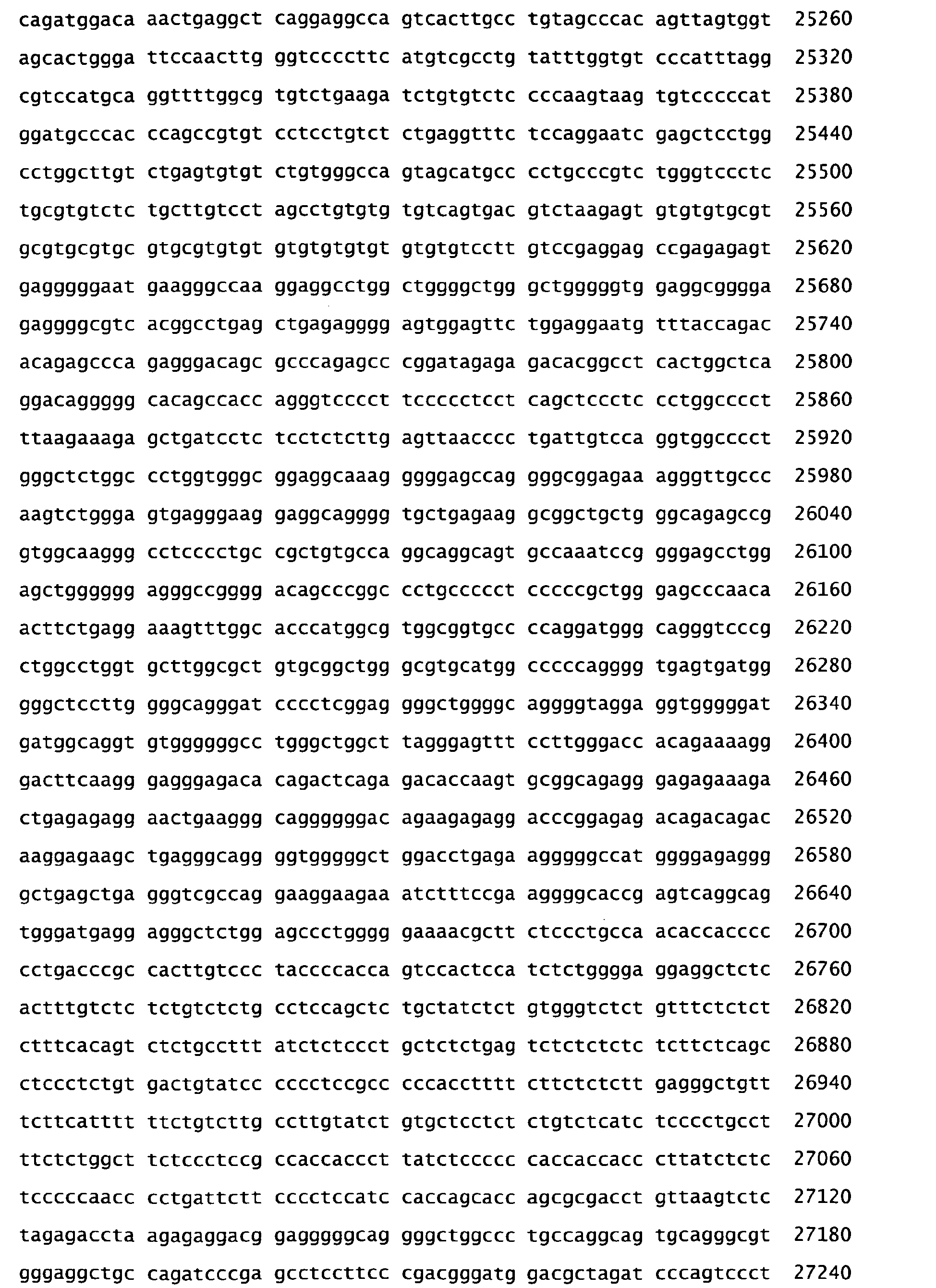


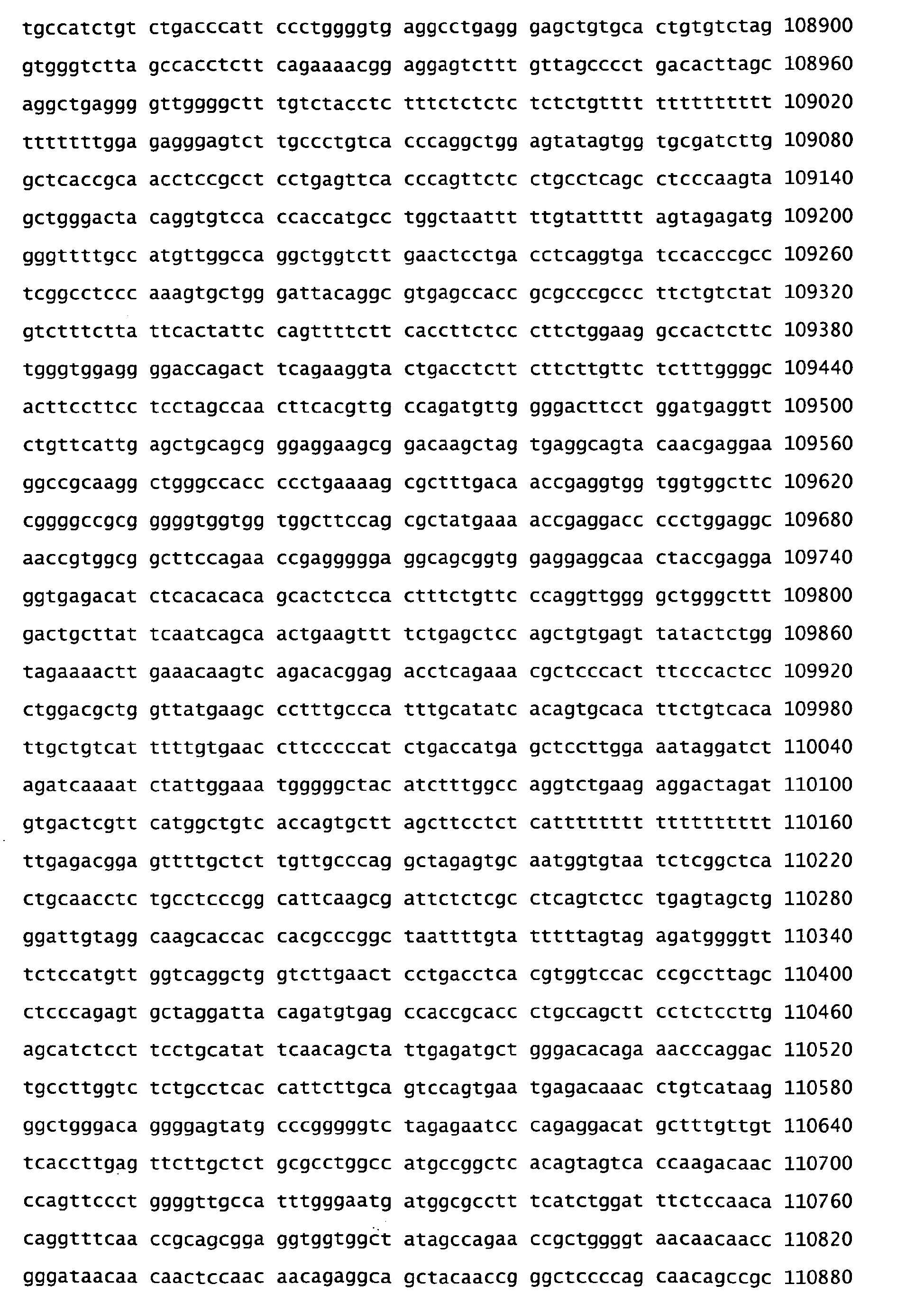


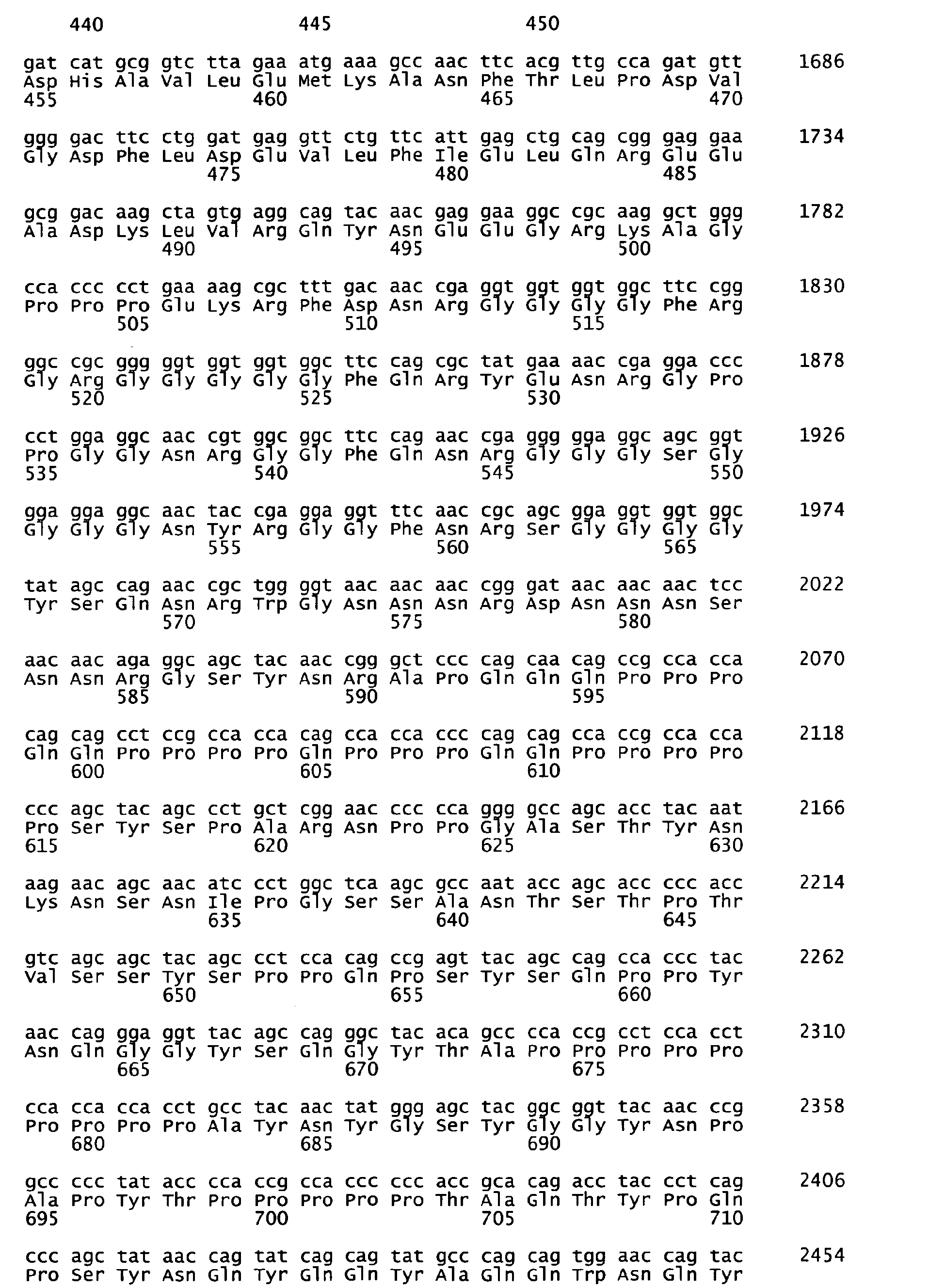


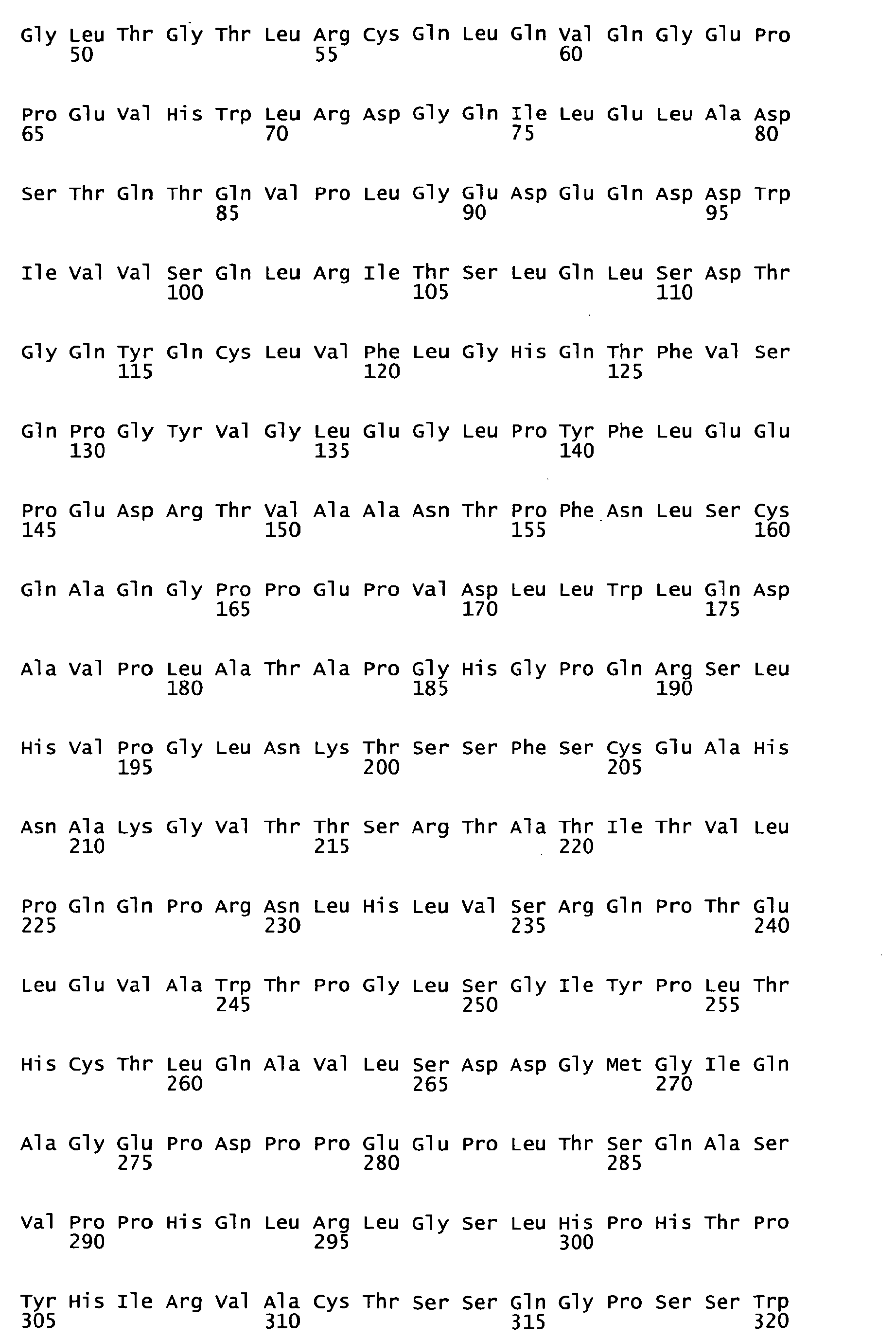


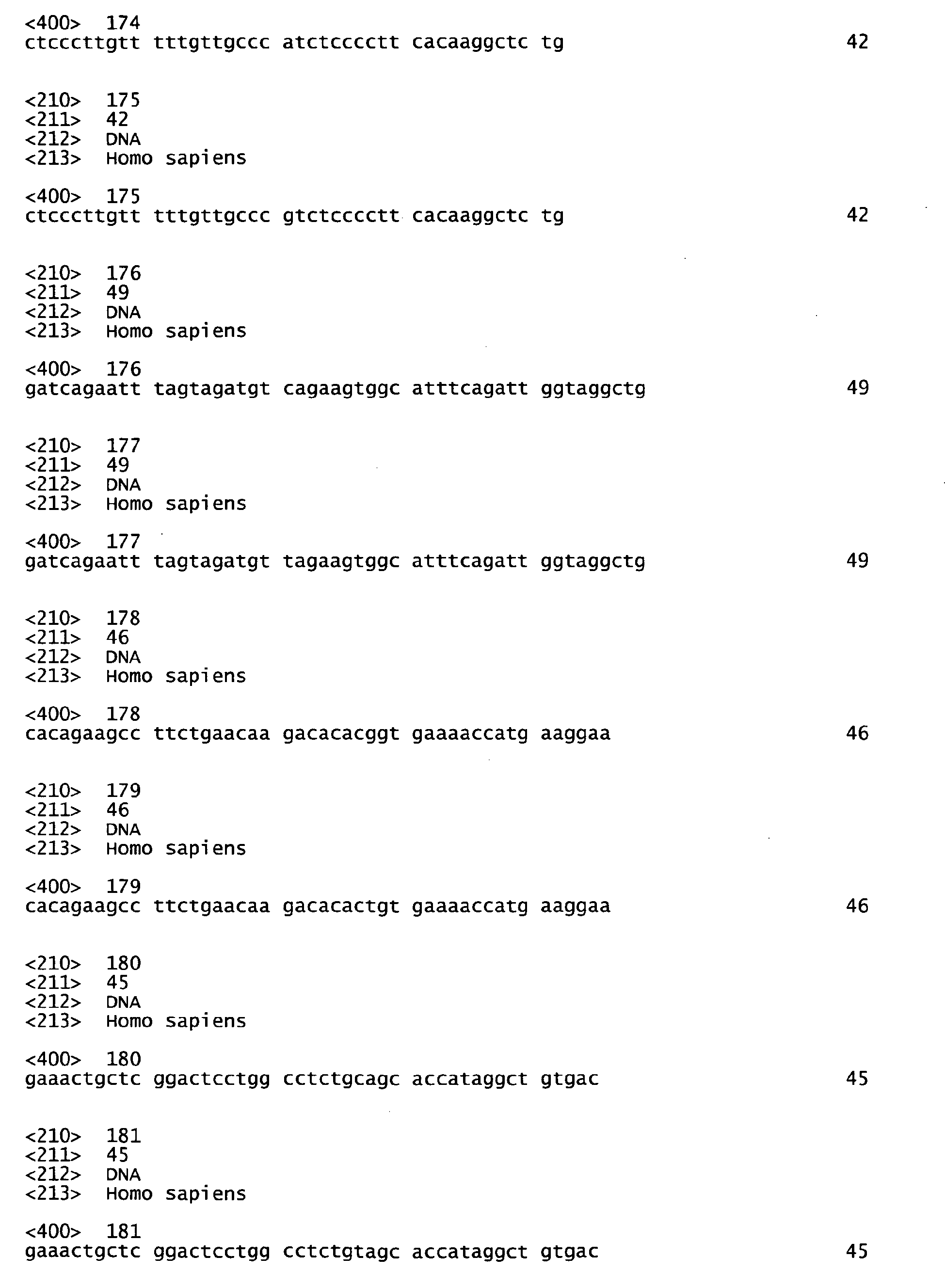


Claims (7)
- A method of diagnosing a predisposition of a multiple sclerosis (MS) patient for responsiveness to a treatment of MS by administration of interferon-α (IFN-α) and/or interferon-β (IFN-β) comprising determining in a sample from the patient the presence of at least one nucleic acid sequence motive selected from the group consisting of:(a) a nucleic acid sequence motive in the intergenic region located between the genes encoding AXL and HNRPUL1 selected from the nucleic acid motives of Table B:
Table B Intergenic region between genes start position relative to SEQ ID NO 1 nucleic acid sequence motive AXL + HNRPUL1 68874 AA (b) a nucleic acid sequence motive in the intron sequence of a gene encoding AXL selected from the nucleic acid motives of Table C:Table C andGene start position relative to SEQ ID NO 1 nucleic acid sequence motive AXL 35377 CC or CG AXL 35447 CT or TT AXL 35553 CC or CT AXL 41782 CT or TT AXL 49640 CT or TT AXL 63412 GG (c) a nucleic acid sequence motive which is complementary to a nucleotide sequence motive as defined in any one of (a) to (b);wherein the presence of one or more of the above nucleic acid sequence motives is indicative for an inferior response of the patient to a treatment of MS with administration of IFN-α and/or IFN-β. - The method according to claim 1, wherein the presence of the at least one nucleic acid sequence motive is determined by assays based on physical separation of nucleic acid molecules, ligase chain reaction assay, cleavage and digestion assay, sequencing assay, nucleic acid amplification assay, hybridization assay or assays based on protein detection.
- The method according to claim 2, wherein the nucleic acid amplification assay is a PCR performed by the use of one or more nucleic acid molecules as primers comprising a sequence as depicted in SEQ ID NOs: 16 to 29.
- The method according to claim 2 or 3, wherein the nucleic acid amplification assay is a PCR extension assay performed by the use of one or more nucleic acid molecules as primers comprising a sequence as depicted in SEQ ID NOs: 94 to 100.
- The method according to claim 2, wherein the hybridization assay is performed by the use of one or more nucleic acid molecules as probes comprising a sequence as depicted in SEQ ID NOs: 136 to 149.
- A solid support comprising one or more of the nucleic acid molecules described in claims 3 to 5 or the complementary strand thereof.
- A diagnostic composition for diagnosing a predisposition of a patient for a responsiveness to a treatment of MS by administration of IFN-α and/or IFN-β comprising one or more of the nucleic acid molecules described in claims 3 to 5 or the solid support according to claim 6.
Priority Applications (1)
| Application Number | Priority Date | Filing Date | Title |
|---|---|---|---|
| EP10003543A EP2196546B1 (en) | 2006-02-27 | 2007-02-27 | Methods for predicting the response of multiple sclerosis patients to interferon therapy and diagnosing multiple sclerosis |
Applications Claiming Priority (3)
| Application Number | Priority Date | Filing Date | Title |
|---|---|---|---|
| EP06003978A EP1826277A1 (en) | 2006-02-27 | 2006-02-27 | Methods for predicting the response of multiple sclerosis patients to interferon therapy and diagnosing multiple sclerosis |
| EP07711702A EP1991696B1 (en) | 2006-02-27 | 2007-02-27 | Methods for predicting the response of multiple sclerosis patients to interferon therapy and diagnosing multiple sclerosis |
| EP10003543A EP2196546B1 (en) | 2006-02-27 | 2007-02-27 | Methods for predicting the response of multiple sclerosis patients to interferon therapy and diagnosing multiple sclerosis |
Related Parent Applications (1)
| Application Number | Title | Priority Date | Filing Date |
|---|---|---|---|
| EP07711702.6 Division | 2007-02-27 |
Publications (2)
| Publication Number | Publication Date |
|---|---|
| EP2196546A1 true EP2196546A1 (en) | 2010-06-16 |
| EP2196546B1 EP2196546B1 (en) | 2013-02-27 |
Family
ID=36658688
Family Applications (4)
| Application Number | Title | Priority Date | Filing Date |
|---|---|---|---|
| EP06003978A Withdrawn EP1826277A1 (en) | 2006-02-27 | 2006-02-27 | Methods for predicting the response of multiple sclerosis patients to interferon therapy and diagnosing multiple sclerosis |
| EP10003543A Not-in-force EP2196546B1 (en) | 2006-02-27 | 2007-02-27 | Methods for predicting the response of multiple sclerosis patients to interferon therapy and diagnosing multiple sclerosis |
| EP07711702A Not-in-force EP1991696B1 (en) | 2006-02-27 | 2007-02-27 | Methods for predicting the response of multiple sclerosis patients to interferon therapy and diagnosing multiple sclerosis |
| EP10003542A Not-in-force EP2196545B1 (en) | 2006-02-27 | 2007-02-27 | Methods for predicting the response of multiple sclerosis patients to interferon therapy and diagnosing multiple sclerosis |
Family Applications Before (1)
| Application Number | Title | Priority Date | Filing Date |
|---|---|---|---|
| EP06003978A Withdrawn EP1826277A1 (en) | 2006-02-27 | 2006-02-27 | Methods for predicting the response of multiple sclerosis patients to interferon therapy and diagnosing multiple sclerosis |
Family Applications After (2)
| Application Number | Title | Priority Date | Filing Date |
|---|---|---|---|
| EP07711702A Not-in-force EP1991696B1 (en) | 2006-02-27 | 2007-02-27 | Methods for predicting the response of multiple sclerosis patients to interferon therapy and diagnosing multiple sclerosis |
| EP10003542A Not-in-force EP2196545B1 (en) | 2006-02-27 | 2007-02-27 | Methods for predicting the response of multiple sclerosis patients to interferon therapy and diagnosing multiple sclerosis |
Country Status (7)
| Country | Link |
|---|---|
| US (1) | US8071299B2 (en) |
| EP (4) | EP1826277A1 (en) |
| AT (2) | ATE466959T1 (en) |
| DE (1) | DE602007006284D1 (en) |
| DK (2) | DK1991696T3 (en) |
| SI (1) | SI2196545T1 (en) |
| WO (1) | WO2007096197A2 (en) |
Families Citing this family (5)
| Publication number | Priority date | Publication date | Assignee | Title |
|---|---|---|---|---|
| US20110008290A1 (en) * | 2007-11-09 | 2011-01-13 | David Brassat | Method for predicting the therapeutic responsiveness of patients to a medical treatment with an interferon |
| CA2724420A1 (en) * | 2008-07-24 | 2010-01-28 | Merck Serono S.A. | Use of genetic markers for identifying the response to interferon treatment in multiple sclerosis patients |
| WO2011117267A1 (en) * | 2010-03-24 | 2011-09-29 | Merck Serono Sa | Cladribine treatment of multiple sclerosis in patient groups defined by genotype |
| EP2380992A1 (en) * | 2010-04-21 | 2011-10-26 | Max-Planck-Gesellschaft zur Förderung der Wissenschaften e.V. | Methods for predicting an antibody response to interfer on therapy in multiple sclerosis patients |
| CN110494880A (en) * | 2017-01-27 | 2019-11-22 | 欧瑞3恩公司 | System and method for determining and presenting purchasing recommendations based on personal genetic profiles |
Citations (5)
| Publication number | Priority date | Publication date | Assignee | Title |
|---|---|---|---|---|
| EP1114998A2 (en) | 1999-10-28 | 2001-07-11 | Nederlandse Organisatie Voor Toegepast-Natuurwetenschappelijk Onderzoek Tno | Method for determining the success rate of treatment of multiple sclerosis |
| WO2003014319A2 (en) | 2001-08-07 | 2003-02-20 | Genaissance Pharmaceuticals, Inc. | Polymorphisms associated with multiple sclerosis |
| WO2003031655A1 (en) | 2001-10-12 | 2003-04-17 | Astrazeneca Ab | Method for diagnosis of multiple sclerosis by genetic analysis of the lag3 gene |
| WO2004091150A2 (en) | 2003-04-05 | 2004-10-21 | University Court Of The University Of Dundee | Cyp2s1 as target dor diagnosis and therapy of skin diseases |
| WO2005054810A2 (en) | 2003-11-26 | 2005-06-16 | The Ohio State University Research Foundation | Polymorphic cd24 genotypes that are predictive of multiple sclerosis risk and progression |
-
2006
- 2006-02-27 EP EP06003978A patent/EP1826277A1/en not_active Withdrawn
-
2007
- 2007-02-27 SI SI200730969T patent/SI2196545T1/en unknown
- 2007-02-27 DK DK07711702.6T patent/DK1991696T3/en active
- 2007-02-27 EP EP10003543A patent/EP2196546B1/en not_active Not-in-force
- 2007-02-27 AT AT07711702T patent/ATE466959T1/en not_active IP Right Cessation
- 2007-02-27 AT AT10003542T patent/ATE557102T1/en active
- 2007-02-27 EP EP07711702A patent/EP1991696B1/en not_active Not-in-force
- 2007-02-27 DK DK10003542.7T patent/DK2196545T3/en active
- 2007-02-27 EP EP10003542A patent/EP2196545B1/en not_active Not-in-force
- 2007-02-27 WO PCT/EP2007/001689 patent/WO2007096197A2/en not_active Ceased
- 2007-02-27 DE DE602007006284T patent/DE602007006284D1/en active Active
- 2007-02-27 US US12/280,665 patent/US8071299B2/en not_active Expired - Fee Related
Patent Citations (5)
| Publication number | Priority date | Publication date | Assignee | Title |
|---|---|---|---|---|
| EP1114998A2 (en) | 1999-10-28 | 2001-07-11 | Nederlandse Organisatie Voor Toegepast-Natuurwetenschappelijk Onderzoek Tno | Method for determining the success rate of treatment of multiple sclerosis |
| WO2003014319A2 (en) | 2001-08-07 | 2003-02-20 | Genaissance Pharmaceuticals, Inc. | Polymorphisms associated with multiple sclerosis |
| WO2003031655A1 (en) | 2001-10-12 | 2003-04-17 | Astrazeneca Ab | Method for diagnosis of multiple sclerosis by genetic analysis of the lag3 gene |
| WO2004091150A2 (en) | 2003-04-05 | 2004-10-21 | University Court Of The University Of Dundee | Cyp2s1 as target dor diagnosis and therapy of skin diseases |
| WO2005054810A2 (en) | 2003-11-26 | 2005-06-16 | The Ohio State University Research Foundation | Polymorphic cd24 genotypes that are predictive of multiple sclerosis risk and progression |
Non-Patent Citations (109)
| Title |
|---|
| "Automated DNA Sequencing and Analysis", 1994, ACADEMIC PRESS |
| "Guide to Mutation Detection", 2005, WILEY |
| "Laboratory Methods for the Detection of Mutations and Polymorphisms in DNA", 1997, CRC PRESS |
| "Methods in Molecular Biology", vol. 20, 1993, HUMANA PRESS, article "Protocols for Oligonucleotides and Analogs: Synthesis and Properties" |
| "Mutation Detection: A Practical Approach", 1998, 1R1 PRESS |
| "Nucleic acid hybridization, a practical approach", 1985, IRL PRESS OXFORD |
| "PCR Applications: Protocols for Functiona) Genomics", 1999, ACADEMIC PRESS |
| "PCR Cloning Protocols: From Molecular Cloning to Genetic", 2002, HUMANA PRESS |
| "Polymorphism Detection & Analysis Techniques", 2000, EATON PUB CO |
| ALPHEY: "DNA Sequencing: From Experimental Methods to Bioinformatics", 1997, SPRINGER VERLAG PUBLISHING |
| AMAR ET AL., J. CLIN. MICROBIOL., vol. 40, 2002, pages 446 - 452 |
| AUSUBEL: "Current Protocols in Molecular. Biology", 1989, GREEN PUBLISHING ASSOCIATES AND WILEY INTERSCIENCE |
| BAMES ET AL., NUCLEIC ACIDS RES., vol. 33, 2005, pages 5914 - 5923 |
| BARANZINI ET AL., PLOS BIOL, vol. 3, 2005, pages 166 - 176 |
| BARCELLOS ET AL., ANN NEUROL, vol. 55, 2004, pages 793 - 800 |
| BARRAL ET AL., FEBS LETTERS, vol. 579, 2005, pages 2752 - 2758 |
| BARTON ET AL., BRAIN, vol. 127, 2004, pages 1717 - 1722 |
| CACERES, KOMBLIHTT, TRENDS GENET, vol. 4, 2002, pages 186 - 93 |
| CHAPPELL ET AL., ONCOGENE, vol. 19, 2000, pages 4437 - 4440 |
| CHOU ET AL., AM. J. CLIN. PATHOL., vol. 124, 2005, pages 330 - 338 |
| COMI ET AL., THE LANCET, vol. 357, 2001, pages 1576 - 1582 |
| CROSIER; CROSIER, PATHOLOGY, vol. 29, 1997, pages 131 - 135 |
| DURELLI ET AL., MULT SCLER, vol. 1, no. 1, 1995, pages S32 - S37 |
| DYMENT ET AL., NEUROGENETICS, vol. 3, 2001, pages 145 - 151 |
| EBERS ET AL., N ENGL J MED, vol. 315, 1986, pages 1638 - 1642 |
| EGHOLM ET AL., NATURE, vol. 365, 1993, pages 666 |
| FAN ET AL., BIOTECHNIQUES, vol. 39, 2005, pages 583 - 588 |
| FISHMAN ET AL., J. CLIN. INVEST., vol. 102, 1998, pages 1369 - 1376 |
| FLAVELL ET AL., NUCLEIC ACIDS RES., vol. 31, no. 19, 2003, pages E115 |
| GABLER ET AL., J VIROL, vol. 72, 1998, pages 7960 - 7971 |
| GREEN ET AL., J NEUROIMMUNOL, vol. 116, 2001, pages 116 - 124 |
| GUNDERSON ET AL., NATURE GENETICS, vol. 37, 2005, pages 549 - 554 |
| HAQUE ET AL., DIAGN. MOL. PATHOL., vol. 7, 1998, pages 248 - 252 |
| HARTUNG ET AL., J NEUROL, vol. 251, 2004, pages V12 - V29 |
| HE ET AL., J NEUROIMMUNOL, vol. 86, 1998, pages 13 - 19 |
| HSIA ET AL., THEOR. APPL. GENET., vol. 111, 2005, pages 218 - 225 |
| HULTQVIST ET AL., PROC NATL ACAD SCI USA, vol. 101, 2004, pages 12646 - 12651 |
| IBRAHIM; GOLD, CURR OPIN NEUROL, vol. 18, 2005, pages 231 - 235 |
| JACOBS ET AL., NEW ENGL. J. MED., vol. 343, 2000, pages 898 - 904 |
| JANSSEN ET AL., ONCOGENE, vol. 6, 1991, pages 2113 - 2120 |
| JOHNSON ET AL., MULTIPLE SCLEROSIS, vol. 6, 2000, pages 255 - 266 |
| KAKAVAS ET AL., J. CLIN. LAB. ANAL., vol. 20, 2006, pages 1 - 7 |
| KEEGAN ET AL., LANCET, vol. 366, 2005, pages 579 - 82 |
| KEEN ET AL., BONE, vol. 23, 1998, pages 367 - 371 |
| KILLESTEIN ET AL., J NEUROIMMUNOL, vol. 133, 2002, pages 217 - 224 |
| KOHARA ET AL., NUCLEIC ACIDS RES., vol. 30, no. 16, 2002, pages E87 |
| KURTZKE, NEUROLOGY, vol. 33, 1983, pages 1444 - 1452 |
| KZHYSHKOWSKA ET AL., BIOCHEM. J., vol. 358, 2001, pages 305 - 314 |
| KZHYSHKOWSKA ET AL., BIOCHEM. J., vol. 371, 2003, pages 385 - 393 |
| LASSMANN ET AL., TRENDS MOL MED, vol. 7, 2001, pages 115 - 121 |
| LASSMANN, MULT SCLER, vol. 4, 1998, pages 93 - 98 |
| LEYVA ET AL., NEUROIMMUNOL, vol. 163, 2005, pages 165 - 171 |
| LEYVA LAURA ET AL: "IFNAR1 and IFNAR2 polymorphisms confer susceptibility to multiple sclerosis but not to interferon-beta treatment response.", JOURNAL OF NEUROIMMUNOLOGY. JUN 2005, vol. 163, no. 1-2, June 2005 (2005-06-01), pages 165 - 171, XP002391354, ISSN: 0165-5728 * |
| LUCCHINETTI ET AL., ANN NEUROL, vol. 47, 2000, pages 707 - 717 |
| MANN ET AL., J. CLIN. INVEST, vol. 107, 2001, pages 899 - 907 |
| MARTINEZ DONCEL ALFONSO ET AL: "Interleukin-10 polymorphisms in Spanish multiple sclerosis patients.", JOURNAL OF NEUROIMMUNOLOGY. OCT 2002, vol. 131, no. 1-2, October 2002 (2002-10-01), pages 168 - 172, XP002391352, ISSN: 0165-5728 * |
| MCDONALD ET AL., ANN.NEUROL., vol. 50, 2001, pages 121 - 127 |
| MCDONNELL ET AL., MULT SCLER, vol. 5, 1999, pages 105 - 109 |
| MELARAGNO ET AL., TRENDS CARDIOVASC MED., vol. 9, 1999, pages 250 - 253 |
| MENG ET AL., J. CLIN. ENDOCRINOL. METAB., vol. 90, 2005, pages 3419 - 3422 |
| MIHAILOVA SNEJINA ET AL: "Pro- and anti-inflammatory cytokine gene polymorphism profiles in Bulgarian multiple sclerosis patients", JOURNAL OF NEUROIMMUNOLOGY, vol. 168, no. 1-2, November 2005 (2005-11-01), pages 138 - 143, XP002391353, ISSN: 0165-5728 * |
| MYHR ET AL., NEUROLOGY, vol. 52, 1999, pages 1049 - 1056 |
| NEWTON ET AL., NUCLEIC ACIDS RES., vol. 17, 1989, pages 2503 - 2516 |
| NIELSEN ET AL., SCIENCE, vol. 254, 1991, pages 1497 |
| NOLLAU ET AL., CLIN. CHEM., vol. 43, 1997, pages 1114 - 1128 |
| O'BRYAN ET AL., MOL CELL BIOL, vol. 11, 1991, pages 5016 - 503 1 |
| O'BRYAN ET AL., MOL CELL BIOL, vol. 11, 1991, pages 5016 - 5031 |
| OTA ET AL., NAT GENET, vol. 36, 2004, pages 40 - 45 |
| PALAIS ET AL., ANAL. BIOCHEM., vol. 346, 2005, pages 167 - 175 |
| PETEREIT ET AL., MULT SCIER, vol. 8, 2002, pages 492 - 494 |
| PETERSEN ET AL., HUM. MUTAT., vol. 20, 2002, pages 253 - 259 |
| PISSARDET, CLIN. CHEM., vol. 48, 2002, pages 769 - 772 |
| POSER ET AL., ANN.NEUROL., vol. 13, 1983, pages 227 - 231 |
| PRINEAS: "The Neuropathology of Multiple Sclerosis", 1985, AMSTERDAM: ELSEVIER SCIENCE PUBLISHERS, pages: 213 - 257 |
| RAMON, J. TRANSL. MED., vol. 1, 2003, pages 9 |
| RIO ET AL., ANN NEUROL, vol. 52, 2002, pages 400 - 406 |
| RUDICK ET AL., ANN NEUROL, vol. 56, 2004, pages 548 - 55 |
| RUDICK ET AL., ANN NEUROL, vol. 56, 2004, pages 548 - 555 |
| RYLANDER ET AL., BIOCHEM BIOPH RES CO, vol. 281, 2001, pages 529 - 535 |
| SAARIKOSKI ET AL., J HISTOCHEM CYTOCHEM, vol. 53, 2005, pages 549 - 556 |
| SAARIKOSKI ET AL., MUT RES, vol. 554, 2004, pages 267 - 277 |
| SADOVNICK ET AL., AM J MED GENET, vol. 29, 1988, pages 533 - 541 |
| SAINAGHI PIER PAOLO ET AL: "Gas6 induces proliferation in prostate carcinoma cell lines expressing the Axl receptor", JOURNAL OF CELLULAR PHYSIOLOGY, vol. 204, no. 1, July 2005 (2005-07-01), pages 36 - 44, XP002579912, ISSN: 0021-9541 * |
| SAMBROOK; RUSSELL: "Molecular Cloning, A Laboratory Manual", 2001, COLD SPRING HARBOR LABORATORY |
| SAWCER ET AL., BRAIN, vol. 125, 2002, pages 1337 - 1347 |
| SHEN ET AL., MUTAT. RES.-FUND. MOL. M., vol. 573, 2005, pages 70 - 82 |
| SMITH ET AL., LANCET, vol. 361, 2003, pages 1336 - 1343 |
| SOEJIMA; KODA, TRANSFUSION, vol. 45, 2005, pages 1934 - 1939 |
| SRIRAM U ET AL: "Pharmacogenomic analysis of interferon receptor polymorphisms in multiple sclerosis.", GENES AND IMMUNITY MAR 2003, vol. 4, no. 2, March 2003 (2003-03-01), pages 147 - 152, XP002433992, ISSN: 1466-4879 * |
| STEEMERS ET AL., NATURE METH., vol. 3, 2006, pages 31 - 33 |
| STEEMERS; GUNDERSON, PHARMACOGENOMICS, vol. 6, 2005, pages 777 - 782 |
| STITT ET AL., CELL, vol. 80, 1995, pages 661 - 670 |
| STRAUSBERG ET AL., PROC NATL ACAD SCI USA, vol. 99, 2002, pages 16899 - 16903 |
| STURZEBECHER ET AL., BRAIN, vol. 126, 2003, pages 1419 - 1429 |
| SWANBERG MARIA ET AL: "MHC2TA is associated with differential MHC molecule expression and susceptibility to rheumatoid arthritis, multiple sclerosis and myocardial infarction.", NATURE GENETICS. MAY 2005, vol. 37, no. 5, May 2005 (2005-05-01), pages 486 - 494, XP002391355, ISSN: 1061-4036 * |
| TODD ET AL., J. ORAL MAXIL. SURG., vol. 59, 2001, pages 660 - 667 |
| TOST; GUT, CLIN. BIOCHEM., vol. 35, 2005, pages 335 - 350 |
| TRAPP ET AL., CURR. OPIN. NEUROL., vol. 12, 1999, pages 295 - 302 |
| VAMUM ET AL., NATURE, vol. 373, 1995, pages 623 - 626 |
| VILLOSLADA ET AL., J NEUROIMMUNOL, vol. 130, 2002, pages 194 - 201 |
| VYSHKINA ET AL., MULT SCLER, vol. 10, 2004, pages 614 - 617 |
| WANDINGER ET AL., LANCET, vol. 361, 2003, pages 2036 - 2043 |
| WAUBANT ET AL., NEUROLOGY, vol. 61, 2003, pages 184 - 189 |
| WEINSHENKER ET AL., J NEUROIMMUNOL, vol. 120, 2001, pages 138 - 145 |
| WERGELAND S ET AL: "IL-10 promoter haplotype influence on interferon treatment response in multiple sclerosis", EUROPEAN JOURNAL OF NEUROLOGY, vol. 12, no. 3, March 2005 (2005-03-01), pages 171 - 175, XP002391351, ISSN: 1351-5101 * |
| YANAGITA MOTOKO ET AL: "Gas6 regulates mesangial cell proliferation through axl in experimental glomerulonephritis", AMERICAN JOURNAL OF PATHOLOGY, vol. 158, no. 4, April 2001 (2001-04-01), pages 1423 - 1432, XP002579911, ISSN: 0002-9440 * |
| YANAGITA, CLIN EXP NEPHROL, vol. 8, 2004, pages 304 - 309 |
| YEH ET AL., ANESTH. ANALG., vol. 101, 2005, pages 1401 - 1406 |
| YOUIL ET AL., PROC. NATL. ACAD. SCI. U.S.A., vol. 92, 1995, pages 87 - 91 |
Also Published As
| Publication number | Publication date |
|---|---|
| WO2007096197A2 (en) | 2007-08-30 |
| EP2196546B1 (en) | 2013-02-27 |
| US8071299B2 (en) | 2011-12-06 |
| DK1991696T3 (en) | 2010-08-30 |
| EP1826277A1 (en) | 2007-08-29 |
| ATE557102T1 (en) | 2012-05-15 |
| EP1991696B1 (en) | 2010-05-05 |
| WO2007096197A3 (en) | 2007-10-18 |
| US20090186773A1 (en) | 2009-07-23 |
| SI2196545T1 (en) | 2012-09-28 |
| DK2196545T3 (en) | 2012-07-16 |
| DE602007006284D1 (en) | 2010-06-17 |
| EP2196545A1 (en) | 2010-06-16 |
| EP2196545B1 (en) | 2012-05-09 |
| ATE466959T1 (en) | 2010-05-15 |
| EP1991696A2 (en) | 2008-11-19 |
Similar Documents
| Publication | Publication Date | Title |
|---|---|---|
| US20200270692A1 (en) | Predicting age-related macular degeneration with single nucleotide polymorphisms within or near the genes for complement component c2, factor b, plekha1, htra1, prelp, or loc387715 | |
| EP1907569B1 (en) | Genetic variants in the tcf7l2 gene as diagnostic markers for risk of type 2 diabetes mellitus | |
| WO2013071119A2 (en) | Methods for treating, diagnosing and monitoring alzheimer's disease | |
| MX2011010101A (en) | Drug delivery device with an improved piston rod. | |
| WO2010048497A1 (en) | Genetic profile of the markers associated with alzheimer's disease | |
| US8071299B2 (en) | Methods for predicting the response of multiple sclerosis patients to interferon therapy and diagnosing multiple sclerosis | |
| EP2411533B1 (en) | Genetic severity markers in multiple sclerosis | |
| WO2011088237A1 (en) | Methods of using znf365 genetic variants to diagnose crohn's disease | |
| EP2195456B1 (en) | Use of polymorphisms in the tmem132d gene in the prediction and treatment of anxiety disorders | |
| KR102650359B1 (en) | SNP for drug hypersensitivity and diagnosis method using the same | |
| EP2207902A1 (en) | A method for predicting the therapeutic responsiveness of patients to a medical treatment with an interferon | |
| EP2380992A1 (en) | Methods for predicting an antibody response to interfer on therapy in multiple sclerosis patients | |
| US20080194419A1 (en) | Genetic Association of Polymorphisms in the Atf6-Alpha Gene with Insulin Resistance Phenotypes | |
| WO2009152406A1 (en) | Genetic profile of the markers associated with adhd | |
| JP2007530028A (en) | Human obesity susceptibility gene encoding peptide hormone and use thereof | |
| WO2005067603A2 (en) | Autism-associated polymorphisms and uses thereof | |
| JP2008502340A (en) | Human obesity susceptibility gene encoding taste receptor and use thereof |
Legal Events
| Date | Code | Title | Description |
|---|---|---|---|
| PUAI | Public reference made under article 153(3) epc to a published international application that has entered the european phase |
Free format text: ORIGINAL CODE: 0009012 |
|
| AC | Divisional application: reference to earlier application |
Ref document number: 1991696 Country of ref document: EP Kind code of ref document: P |
|
| AK | Designated contracting states |
Kind code of ref document: A1 Designated state(s): AT BE BG CH CY CZ DE DK EE ES FI FR GB GR HU IE IS IT LI LT LU LV MC NL PL PT RO SE SI SK TR |
|
| RIN1 | Information on inventor provided before grant (corrected) |
Inventor name: MUELLER-MYHSOK, BERTRAM Inventor name: HOLSBOER, FLORIAN Inventor name: SALYAKINA, DARIA Inventor name: LUCAE, SUSANNE Inventor name: UHR, MANFRED Inventor name: WEBER, FRANK |
|
| 17P | Request for examination filed |
Effective date: 20101209 |
|
| 17Q | First examination report despatched |
Effective date: 20120509 |
|
| GRAP | Despatch of communication of intention to grant a patent |
Free format text: ORIGINAL CODE: EPIDOSNIGR1 |
|
| GRAS | Grant fee paid |
Free format text: ORIGINAL CODE: EPIDOSNIGR3 |
|
| GRAA | (expected) grant |
Free format text: ORIGINAL CODE: 0009210 |
|
| AC | Divisional application: reference to earlier application |
Ref document number: 1991696 Country of ref document: EP Kind code of ref document: P |
|
| AK | Designated contracting states |
Kind code of ref document: B1 Designated state(s): AT BE BG CH CY CZ DE DK EE ES FI FR GB GR HU IE IS IT LI LT LU LV MC NL PL PT RO SE SI SK TR |
|
| REG | Reference to a national code |
Ref country code: GB Ref legal event code: FG4D |
|
| REG | Reference to a national code |
Ref country code: CH Ref legal event code: EP |
|
| REG | Reference to a national code |
Ref country code: AT Ref legal event code: REF Ref document number: 598585 Country of ref document: AT Kind code of ref document: T Effective date: 20130315 |
|
| REG | Reference to a national code |
Ref country code: IE Ref legal event code: FG4D |
|
| REG | Reference to a national code |
Ref country code: CH Ref legal event code: NV Representative=s name: VOSSIUS AND PARTNER, CH |
|
| PGFP | Annual fee paid to national office [announced via postgrant information from national office to epo] |
Ref country code: FR Payment date: 20130318 Year of fee payment: 7 Ref country code: DE Payment date: 20130328 Year of fee payment: 7 Ref country code: GB Payment date: 20130228 Year of fee payment: 7 Ref country code: CH Payment date: 20130228 Year of fee payment: 7 |
|
| REG | Reference to a national code |
Ref country code: DE Ref legal event code: R096 Ref document number: 602007028834 Country of ref document: DE Effective date: 20130502 |
|
| REG | Reference to a national code |
Ref country code: AT Ref legal event code: MK05 Ref document number: 598585 Country of ref document: AT Kind code of ref document: T Effective date: 20130227 |
|
| REG | Reference to a national code |
Ref country code: LT Ref legal event code: MG4D |
|
| PG25 | Lapsed in a contracting state [announced via postgrant information from national office to epo] |
Ref country code: SE Free format text: LAPSE BECAUSE OF FAILURE TO SUBMIT A TRANSLATION OF THE DESCRIPTION OR TO PAY THE FEE WITHIN THE PRESCRIBED TIME-LIMIT Effective date: 20130227 Ref country code: AT Free format text: LAPSE BECAUSE OF FAILURE TO SUBMIT A TRANSLATION OF THE DESCRIPTION OR TO PAY THE FEE WITHIN THE PRESCRIBED TIME-LIMIT Effective date: 20130227 Ref country code: ES Free format text: LAPSE BECAUSE OF FAILURE TO SUBMIT A TRANSLATION OF THE DESCRIPTION OR TO PAY THE FEE WITHIN THE PRESCRIBED TIME-LIMIT Effective date: 20130607 Ref country code: BG Free format text: LAPSE BECAUSE OF FAILURE TO SUBMIT A TRANSLATION OF THE DESCRIPTION OR TO PAY THE FEE WITHIN THE PRESCRIBED TIME-LIMIT Effective date: 20130527 Ref country code: LT Free format text: LAPSE BECAUSE OF FAILURE TO SUBMIT A TRANSLATION OF THE DESCRIPTION OR TO PAY THE FEE WITHIN THE PRESCRIBED TIME-LIMIT Effective date: 20130227 Ref country code: IS Free format text: LAPSE BECAUSE OF FAILURE TO SUBMIT A TRANSLATION OF THE DESCRIPTION OR TO PAY THE FEE WITHIN THE PRESCRIBED TIME-LIMIT Effective date: 20130627 |
|
| REG | Reference to a national code |
Ref country code: NL Ref legal event code: VDEP Effective date: 20130227 |
|
| PG25 | Lapsed in a contracting state [announced via postgrant information from national office to epo] |
Ref country code: LV Free format text: LAPSE BECAUSE OF FAILURE TO SUBMIT A TRANSLATION OF THE DESCRIPTION OR TO PAY THE FEE WITHIN THE PRESCRIBED TIME-LIMIT Effective date: 20130227 Ref country code: GR Free format text: LAPSE BECAUSE OF FAILURE TO SUBMIT A TRANSLATION OF THE DESCRIPTION OR TO PAY THE FEE WITHIN THE PRESCRIBED TIME-LIMIT Effective date: 20130528 Ref country code: SI Free format text: LAPSE BECAUSE OF FAILURE TO SUBMIT A TRANSLATION OF THE DESCRIPTION OR TO PAY THE FEE WITHIN THE PRESCRIBED TIME-LIMIT Effective date: 20130227 Ref country code: FI Free format text: LAPSE BECAUSE OF FAILURE TO SUBMIT A TRANSLATION OF THE DESCRIPTION OR TO PAY THE FEE WITHIN THE PRESCRIBED TIME-LIMIT Effective date: 20130227 Ref country code: BE Free format text: LAPSE BECAUSE OF FAILURE TO SUBMIT A TRANSLATION OF THE DESCRIPTION OR TO PAY THE FEE WITHIN THE PRESCRIBED TIME-LIMIT Effective date: 20130227 Ref country code: PL Free format text: LAPSE BECAUSE OF FAILURE TO SUBMIT A TRANSLATION OF THE DESCRIPTION OR TO PAY THE FEE WITHIN THE PRESCRIBED TIME-LIMIT Effective date: 20130227 Ref country code: PT Free format text: LAPSE BECAUSE OF FAILURE TO SUBMIT A TRANSLATION OF THE DESCRIPTION OR TO PAY THE FEE WITHIN THE PRESCRIBED TIME-LIMIT Effective date: 20130627 |
|
| PG25 | Lapsed in a contracting state [announced via postgrant information from national office to epo] |
Ref country code: MC Free format text: LAPSE BECAUSE OF NON-PAYMENT OF DUE FEES Effective date: 20130228 |
|
| PG25 | Lapsed in a contracting state [announced via postgrant information from national office to epo] |
Ref country code: SK Free format text: LAPSE BECAUSE OF FAILURE TO SUBMIT A TRANSLATION OF THE DESCRIPTION OR TO PAY THE FEE WITHIN THE PRESCRIBED TIME-LIMIT Effective date: 20130227 Ref country code: CZ Free format text: LAPSE BECAUSE OF FAILURE TO SUBMIT A TRANSLATION OF THE DESCRIPTION OR TO PAY THE FEE WITHIN THE PRESCRIBED TIME-LIMIT Effective date: 20130227 Ref country code: RO Free format text: LAPSE BECAUSE OF FAILURE TO SUBMIT A TRANSLATION OF THE DESCRIPTION OR TO PAY THE FEE WITHIN THE PRESCRIBED TIME-LIMIT Effective date: 20130227 Ref country code: NL Free format text: LAPSE BECAUSE OF FAILURE TO SUBMIT A TRANSLATION OF THE DESCRIPTION OR TO PAY THE FEE WITHIN THE PRESCRIBED TIME-LIMIT Effective date: 20130227 Ref country code: DK Free format text: LAPSE BECAUSE OF FAILURE TO SUBMIT A TRANSLATION OF THE DESCRIPTION OR TO PAY THE FEE WITHIN THE PRESCRIBED TIME-LIMIT Effective date: 20130227 Ref country code: EE Free format text: LAPSE BECAUSE OF FAILURE TO SUBMIT A TRANSLATION OF THE DESCRIPTION OR TO PAY THE FEE WITHIN THE PRESCRIBED TIME-LIMIT Effective date: 20130227 |
|
| PG25 | Lapsed in a contracting state [announced via postgrant information from national office to epo] |
Ref country code: CY Free format text: LAPSE BECAUSE OF FAILURE TO SUBMIT A TRANSLATION OF THE DESCRIPTION OR TO PAY THE FEE WITHIN THE PRESCRIBED TIME-LIMIT Effective date: 20130227 |
|
| REG | Reference to a national code |
Ref country code: IE Ref legal event code: MM4A |
|
| PG25 | Lapsed in a contracting state [announced via postgrant information from national office to epo] |
Ref country code: IT Free format text: LAPSE BECAUSE OF FAILURE TO SUBMIT A TRANSLATION OF THE DESCRIPTION OR TO PAY THE FEE WITHIN THE PRESCRIBED TIME-LIMIT Effective date: 20130227 |
|
| PLBE | No opposition filed within time limit |
Free format text: ORIGINAL CODE: 0009261 |
|
| STAA | Information on the status of an ep patent application or granted ep patent |
Free format text: STATUS: NO OPPOSITION FILED WITHIN TIME LIMIT |
|
| PG25 | Lapsed in a contracting state [announced via postgrant information from national office to epo] |
Ref country code: IE Free format text: LAPSE BECAUSE OF NON-PAYMENT OF DUE FEES Effective date: 20130227 |
|
| 26N | No opposition filed |
Effective date: 20131128 |
|
| REG | Reference to a national code |
Ref country code: DE Ref legal event code: R097 Ref document number: 602007028834 Country of ref document: DE Effective date: 20131128 |
|
| REG | Reference to a national code |
Ref country code: DE Ref legal event code: R119 Ref document number: 602007028834 Country of ref document: DE |
|
| REG | Reference to a national code |
Ref country code: CH Ref legal event code: PL |
|
| GBPC | Gb: european patent ceased through non-payment of renewal fee |
Effective date: 20140227 |
|
| PG25 | Lapsed in a contracting state [announced via postgrant information from national office to epo] |
Ref country code: LI Free format text: LAPSE BECAUSE OF NON-PAYMENT OF DUE FEES Effective date: 20140228 Ref country code: CH Free format text: LAPSE BECAUSE OF NON-PAYMENT OF DUE FEES Effective date: 20140228 |
|
| REG | Reference to a national code |
Ref country code: FR Ref legal event code: ST Effective date: 20141031 |
|
| REG | Reference to a national code |
Ref country code: DE Ref legal event code: R119 Ref document number: 602007028834 Country of ref document: DE Effective date: 20140902 |
|
| PG25 | Lapsed in a contracting state [announced via postgrant information from national office to epo] |
Ref country code: GB Free format text: LAPSE BECAUSE OF NON-PAYMENT OF DUE FEES Effective date: 20140227 Ref country code: FR Free format text: LAPSE BECAUSE OF NON-PAYMENT OF DUE FEES Effective date: 20140228 Ref country code: DE Free format text: LAPSE BECAUSE OF NON-PAYMENT OF DUE FEES Effective date: 20140902 |
|
| PG25 | Lapsed in a contracting state [announced via postgrant information from national office to epo] |
Ref country code: TR Free format text: LAPSE BECAUSE OF FAILURE TO SUBMIT A TRANSLATION OF THE DESCRIPTION OR TO PAY THE FEE WITHIN THE PRESCRIBED TIME-LIMIT Effective date: 20130227 |
|
| PG25 | Lapsed in a contracting state [announced via postgrant information from national office to epo] |
Ref country code: HU Free format text: LAPSE BECAUSE OF FAILURE TO SUBMIT A TRANSLATION OF THE DESCRIPTION OR TO PAY THE FEE WITHIN THE PRESCRIBED TIME-LIMIT; INVALID AB INITIO Effective date: 20070227 Ref country code: LU Free format text: LAPSE BECAUSE OF NON-PAYMENT OF DUE FEES Effective date: 20130227 |