EP2196114A1 - Domestic appliance - Google Patents
Domestic appliance Download PDFInfo
- Publication number
- EP2196114A1 EP2196114A1 EP07123247A EP07123247A EP2196114A1 EP 2196114 A1 EP2196114 A1 EP 2196114A1 EP 07123247 A EP07123247 A EP 07123247A EP 07123247 A EP07123247 A EP 07123247A EP 2196114 A1 EP2196114 A1 EP 2196114A1
- Authority
- EP
- European Patent Office
- Prior art keywords
- ejector spring
- lid
- domestic appliance
- filter
- shape memory
- Prior art date
- Legal status (The legal status is an assumption and is not a legal conclusion. Google has not performed a legal analysis and makes no representation as to the accuracy of the status listed.)
- Ceased
Links
- 239000012781 shape memory material Substances 0.000 claims abstract description 14
- 229910001285 shape-memory alloy Inorganic materials 0.000 claims description 19
- 230000009466 transformation Effects 0.000 claims description 15
- 229910001000 nickel titanium Inorganic materials 0.000 claims description 4
- 239000004033 plastic Substances 0.000 claims description 2
- 229920003023 plastic Polymers 0.000 claims description 2
- 229920000431 shape-memory polymer Polymers 0.000 claims description 2
- 238000001816 cooling Methods 0.000 abstract description 7
- 238000010438 heat treatment Methods 0.000 abstract description 3
- 230000003446 memory effect Effects 0.000 description 9
- 238000010276 construction Methods 0.000 description 5
- 229910000734 martensite Inorganic materials 0.000 description 5
- 235000013361 beverage Nutrition 0.000 description 3
- 230000003247 decreasing effect Effects 0.000 description 3
- -1 copper aluminum nickel Chemical compound 0.000 description 2
- 230000007797 corrosion Effects 0.000 description 2
- 238000005260 corrosion Methods 0.000 description 2
- 235000012171 hot beverage Nutrition 0.000 description 2
- 239000000463 material Substances 0.000 description 2
- XLYOFNOQVPJJNP-UHFFFAOYSA-N water Substances O XLYOFNOQVPJJNP-UHFFFAOYSA-N 0.000 description 2
- 229910000952 Be alloy Inorganic materials 0.000 description 1
- 229910000990 Ni alloy Inorganic materials 0.000 description 1
- 238000007792 addition Methods 0.000 description 1
- 229910045601 alloy Inorganic materials 0.000 description 1
- 239000000956 alloy Substances 0.000 description 1
- JRBRVDCKNXZZGH-UHFFFAOYSA-N alumane;copper Chemical compound [AlH3].[Cu] JRBRVDCKNXZZGH-UHFFFAOYSA-N 0.000 description 1
- 239000012530 fluid Substances 0.000 description 1
- 230000004048 modification Effects 0.000 description 1
- 238000012986 modification Methods 0.000 description 1
- 230000000630 rising effect Effects 0.000 description 1
Images


Classifications
-
- A—HUMAN NECESSITIES
- A47—FURNITURE; DOMESTIC ARTICLES OR APPLIANCES; COFFEE MILLS; SPICE MILLS; SUCTION CLEANERS IN GENERAL
- A47J—KITCHEN EQUIPMENT; COFFEE MILLS; SPICE MILLS; APPARATUS FOR MAKING BEVERAGES
- A47J31/00—Apparatus for making beverages
- A47J31/24—Coffee-making apparatus in which hot water is passed through the filter under pressure, i.e. in which the coffee grounds are extracted under pressure
- A47J31/34—Coffee-making apparatus in which hot water is passed through the filter under pressure, i.e. in which the coffee grounds are extracted under pressure with hot water under liquid pressure
- A47J31/36—Coffee-making apparatus in which hot water is passed through the filter under pressure, i.e. in which the coffee grounds are extracted under pressure with hot water under liquid pressure with mechanical pressure-producing means
- A47J31/3666—Coffee-making apparatus in which hot water is passed through the filter under pressure, i.e. in which the coffee grounds are extracted under pressure with hot water under liquid pressure with mechanical pressure-producing means whereby the loading of the brewing chamber with the brewing material is performed by the user
- A47J31/3676—Cartridges being employed
- A47J31/368—Permeable cartridges being employed
- A47J31/3685—Brewing heads therefor
Definitions
- the invention relates to the field of domestic appliances.
- a domestic appliance which comprises a lid and in which a medium can be heated.
- the domestic appliance is arranged to receive a filter underneath the lid.
- a domestic appliance is for example a cup-by-cup coffeemaker, which has a holder that is arranged to receive a filter, in this case a pad comprising a beverage material.
- the holder with the pad is present in the appliance, the pad is covered by the lid and heated water flows through the pad to create a hot beverage.
- a cooling down phase takes place in the appliance, and an under-pressure is generated by means of which the filter is pressed against the lid. This often causes the pad to stick on the lid which results in a more difficult removal of the pad which is less user-friendly.
- an ejector spring is used to remove the filter from the lid, but the ejector spring is generally too weak to effectively remove the filter from the lid.
- the invention achieves the aforementioned object by means of a domestic appliance with a lid and being arranged to receive a filter which can be placed underneath the lid and which can be removed from the lid by an ejector spring, whereas the ejector spring is fabricated of a shape memory material that provides a higher restoring force at higher temperatures and a lower restoring force at lower temperatures.
- the ejector spring is also heated up.
- the restoring force of the ejector spring is rising. Therefore the ejector spring is able to push the filter away from the lid. Consequently the filter cannot stick to the lid even when the temperature of the medium is cooling down. So removing the filter from the lid is no problem anymore. Since the restoring force of the ejector spring is decreasing when the temperature of the medium is cooling down the lid can be closed easily without problems.
- the shape memory material is a shape memory alloy.
- Shape memory alloys are showing a good corrosion resistance. This can be very important when the medium is a fluid.
- the shape memory alloy is a nickel titanium alloy. Also copper aluminum nickel alloys have proved of value. In addition copper aluminum beryllium alloys and copper zinc aluminum alloys can be used as alternatives.
- the shape memory material can also be a shape memory polymer.
- the transformation temperature at which the ejector spring is changing its shape can be in a range from 50°C up to 85°C. In practice very good results were reached with a transformation temperature in a range between 65°C and 75°C.
- the ejector spring can be a leaf spring with a buckling between its ends. This is a very simple and cheap solution.
- This spring construction is preferably made of a shape memory material with a one-way memory effect.
- the ejector spring is a leaf spring which has beneath the transformation temperature a flat shape and above the transformation temperature a curved shape.
- This spring construction can remove the filter very reliably from the lid at temperatures above the transformation temperature. At a temperature beneath the transformation temperature the lid can be closed easily because the leaf spring then has returned to its flat shape.
- This leaf spring can be realized in the best way with a shape memory material with a two-way memory effect.
- the ejector spring can have a V-shape.
- This spring construction is also a very simple one. Therefore it can be cheaply produced.
- This spring construction is also preferably made of a shape memory material with a one-way memory effect.
- the ejector spring can also be a spiral spring.
- the spiral spring can remove the filter from the lid reliably. When the temperature is decreased the spiral spring doesn't hamper the closing of the lid. Also in this embodiment the shape memory material has proved of value when it has a one-way memory effect.
- the ejector spring can be heated electrically. So it is independent of the temperature of the medium. This spring construction is preferred when the temperature of the medium will remain on a lower level. Even in this case the ejector spring can work in the desired manner.
- a plate can be fixed on the ejector spring, whereas the plate is located between the ejector spring and the filter.
- the plate can be fabricated of plastics.
- a preferred application of the inventive domestic appliance is the usage as a coffeemaker.
- Fig. 1 shows a domestic appliance 10 with a lid 11 that can be closed and opened.
- the appliance is a cup-by-cup coffeemaker, which has a holder that is arranged to receive a filter, in this case a pad comprising a beverage material (not shown in Figure).
- a filter in this case a pad comprising a beverage material (not shown in Figure).
- the holder with the pad is present in the appliance at 12, the pad is covered by the lid 11 and heated water flows through the pad to create a hot beverage.
- the pad can be pushed away from the lid 11 by an ejector spring 13.
- Figs. 2a, 2b and 2c show a lid 20 on which an ejector spring 21 is mounted.
- the ejector spring 21 is pushing away a filter 22 from the lid 20.
- the ejector spring 21 is fabricated of a shape memory material, which is in the shown case a shape memory alloy, for instance a nickel titanium alloy.
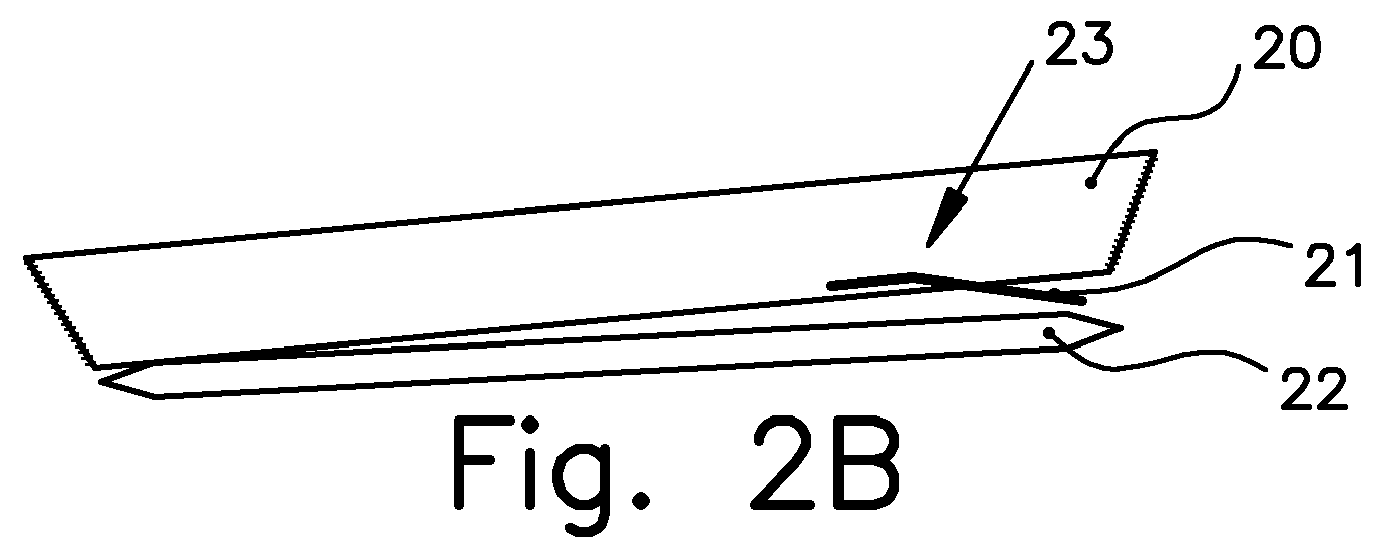
- the ejector spring 21 has between its ends a buckling 23.
- the lid 20 In the operating state of fig. 2a the lid 20 is opened and the ejector spring 21 is at least almost relaxed and has ambient temperature. Therefore the lattice of the nickel titanium alloy is in a martensitic state. In this operating state the ejector spring 21 holds the filter 22 apart from the lid 20. Consequently the filter 22 can be removed very easily by a user.
- Fig. 2b shows the operating state in which the lid 20 is closed.
- the ejector spring 21 has an ambient temperature. By closing the lid 20 the ejector spring 21 is compressed, whereas the lattice of the shape memory alloy is still within the martensitic state.
- the ejector spring 21 is made of a shape memory alloy with a one-way memory effect. Since in the martensitic state the shape memory alloy has only a lower restoring force the lid 20 can be closed very well without problems.
- the ejector spring 21 By heating up the medium within the domestic appliance above a transformation temperature the ejector spring 21 is also heated up. On the transformation temperature the lattice is transformed to an austenitic state (see fig. 2c ). In the austenitic state the ejector spring 21 returns to its original undeformed shape and generates a higher restoring force. Hence it can press the filter 22 away from the lid 20. Even when the medium within the domestic appliance is cooling down the decreasing restoring force of the ejector spring 21 is strong enough to hold the filter 22 apart from the lid 20. So the developing low-pressure of the cooling down period cannot press the filter 22 against the lid 20.
- Figs. 3a and 3b show a schematically illustrated lid 30, an ejector spring 31 and a plate 32.
- the ejector spring 31 is V-shaped and is located between the lid 30 and the plate 32.
- the ejector spring 31 is made of a shape memory alloy with a one-way memory effect.
- the plate 32 is avoiding damaging of a filter 33.
- Fig. 3 a shows the ejector spring 31 at ambient temperature on which the lattice of the shape memory alloy is in the martensitic state wherefore the restoring force of the ejector spring 31 is low.
- Fig. 3b shows the ejector spring 31 at a temperature above the transformation temperature wherefore the lattice of the shape memory alloy is in the austenitic state. Therefore the spring has returned to its original undeformed shape and the restoring force of the ejector spring 31 is high. Thus the ejector spring 31 is able to press the filter 33 away from the lid 30.
- Figs. 4a and 4b schematically show a lid 40, an ejector spring 41 and a plate 42.
- the ejector spring 41 is a spiral spring and is made of a shape memory alloy with a one-way memory effect.
- the plate 42 is also protecting a filter 43.
- Fig. 4a shows the ejector spring 41 at ambient temperature when the restoring force of the ejector spring 41 is low.
- the ejector spring 41 at a temperature above of the transformation temperature is shown in fig. 4b . As shown here the restoring force of the ejector spring 41 is high wherefore the ejector spring 41 is able to press the filter 43 away from the lid 40.
- Figs. 5a and 5b show a lid 50, an ejector spring 51 and a filter 52.
- the ejector spring 51 is made of a shape memory alloy with a two-way memory effect.
- the ejector spring 51 is shown at ambient temperature in fig. 5a .
- the ejector spring 51 has a flat shape and the shape memory alloy is in the martensitic state when the restoring force of the ejector spring 51 is low. Since the shape memory alloy has a two-way memory effect the ejector spring 51 is becoming flat during the cooling down period. Thus an external force is not necessary to make the ejector spring 51 flat.
- Fig. 5b shows the ejector spring 51 above the transformation temperature. On the transformation temperature it gets a curved shape.
- the shape memory alloy is in the austenitic state when the restoring force is high. Therefore the ejector spring 51 can press the filter 52 away from the lid 50.
- An electrically heated ejector spring 60 is shown in fig. 6 .
- the ejector spring 60 has two electrical connections 61 and 62.
- the ejector spring 60 is made of a shape memory alloy. Because it can be heated electrically it is independent of the temperature of the medium within the domestic appliance. The electrically heated ejector spring 60 is preferred when the temperature of the medium is always on a lower level. Therefore even in this case the properties of the shape memory alloy can be used.
Landscapes
- Engineering & Computer Science (AREA)
- Mechanical Engineering (AREA)
- Food Science & Technology (AREA)
- Cookers (AREA)
- Temperature-Responsive Valves (AREA)
Abstract
The invention relates to a domestic appliance with a lid (20). Underneath the lid (20) a filter (22) is arranged during operation, and in the domestic appliance a medium can be heated. After heating of the medium a cooling down phase takes place in the appliance, and an under-pressure is generated by means of which the filter is pressed against the lid. This causes the filter to stick to the lid, and renders it more difficult to remove the filter (22) from the lid (20). Due to the high restoring force of a shape memory material at high temperatures an ejector spring (21) made of the shape memory material is pressing the filter (22) away from the lid (20).

Description
- The invention relates to the field of domestic appliances.
- A domestic appliance is known which comprises a lid and in which a medium can be heated. The domestic appliance is arranged to receive a filter underneath the lid. Such a domestic appliance is for example a cup-by-cup coffeemaker, which has a holder that is arranged to receive a filter, in this case a pad comprising a beverage material. During operation the holder with the pad is present in the appliance, the pad is covered by the lid and heated water flows through the pad to create a hot beverage. After heating of the medium a cooling down phase takes place in the appliance, and an under-pressure is generated by means of which the filter is pressed against the lid. This often causes the pad to stick on the lid which results in a more difficult removal of the pad which is less user-friendly. In the state of the art an ejector spring is used to remove the filter from the lid, but the ejector spring is generally too weak to effectively remove the filter from the lid.
- It is an object of the invention to provide a domestic appliance in which the removal of the filter from the lid by the ejector spring is improved.
- The invention achieves the aforementioned object by means of a domestic appliance with a lid and being arranged to receive a filter which can be placed underneath the lid and which can be removed from the lid by an ejector spring, whereas the ejector spring is fabricated of a shape memory material that provides a higher restoring force at higher temperatures and a lower restoring force at lower temperatures. When the medium in the domestic appliance is heated the ejector spring is also heated up. Hence the restoring force of the ejector spring is rising. Therefore the ejector spring is able to push the filter away from the lid. Consequently the filter cannot stick to the lid even when the temperature of the medium is cooling down. So removing the filter from the lid is no problem anymore. Since the restoring force of the ejector spring is decreasing when the temperature of the medium is cooling down the lid can be closed easily without problems.
- In a preferred alternative the shape memory material is a shape memory alloy. Shape memory alloys are showing a good corrosion resistance. This can be very important when the medium is a fluid.
- Very good experiences concerning corrosion resistance are existing when the shape memory alloy is a nickel titanium alloy. Also copper aluminum nickel alloys have proved of value. In addition copper aluminum beryllium alloys and copper zinc aluminum alloys can be used as alternatives.
- The shape memory material can also be a shape memory polymer.
- Since the shape memory materials are used in the field of domestic appliances the transformation temperature at which the ejector spring is changing its shape can be in a range from 50°C up to 85°C. In practice very good results were reached with a transformation temperature in a range between 65°C and 75°C.
- The ejector spring can be a leaf spring with a buckling between its ends. This is a very simple and cheap solution. This spring construction is preferably made of a shape memory material with a one-way memory effect.
- In another preferred embodiment the ejector spring is a leaf spring which has beneath the transformation temperature a flat shape and above the transformation temperature a curved shape. This spring construction can remove the filter very reliably from the lid at temperatures above the transformation temperature. At a temperature beneath the transformation temperature the lid can be closed easily because the leaf spring then has returned to its flat shape. This leaf spring can be realized in the best way with a shape memory material with a two-way memory effect.
- The ejector spring can have a V-shape. This spring construction is also a very simple one. Therefore it can be cheaply produced. This spring construction is also preferably made of a shape memory material with a one-way memory effect.
- The ejector spring can also be a spiral spring. The spiral spring can remove the filter from the lid reliably. When the temperature is decreased the spiral spring doesn't hamper the closing of the lid. Also in this embodiment the shape memory material has proved of value when it has a one-way memory effect.
- The ejector spring can be heated electrically. So it is independent of the temperature of the medium. This spring construction is preferred when the temperature of the medium will remain on a lower level. Even in this case the ejector spring can work in the desired manner.
- To protect the filter against damaging a plate can be fixed on the ejector spring, whereas the plate is located between the ejector spring and the filter.
- To fabricate the plate cheaply in high numbers the plate can be fabricated of plastics.
- A preferred application of the inventive domestic appliance is the usage as a coffeemaker.
- For better understanding, the invention will be explained in more detail with reference to the following drawings.
In the drawings: -
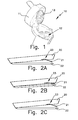
Fig. 1 shows a perspective view of a domestic appliance; -
Figs. 2a - c show a side view of a first embodiment of an ejector spring in different operating states; -
Figs. 3a, 3b show a side view of a second embodiment of the ejector spring in different operating states; -
Figs. 4a, 4b show a side view of the third embodiment of the ejector spring in different operating states; -
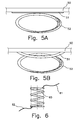
Figs. 5a, 5b show a side view of a fourth embodiment of the ejector spring in different operating states; -
Fig. 6 shows a side view of a fifth embodiment of the ejector spring. -
Fig. 1 shows adomestic appliance 10 with alid 11 that can be closed and opened. In this embodiment the appliance is a cup-by-cup coffeemaker, which has a holder that is arranged to receive a filter, in this case a pad comprising a beverage material (not shown in Figure). During operation the holder with the pad is present in the appliance at 12, the pad is covered by thelid 11 and heated water flows through the pad to create a hot beverage. After creation of the beverage, the pad can be pushed away from thelid 11 by anejector spring 13. -
Figs. 2a, 2b and 2c show alid 20 on which anejector spring 21 is mounted. Theejector spring 21 is pushing away afilter 22 from thelid 20. Theejector spring 21 is fabricated of a shape memory material, which is in the shown case a shape memory alloy, for instance a nickel titanium alloy. Theejector spring 21 has between its ends a buckling 23. - In the operating state of
fig. 2a thelid 20 is opened and theejector spring 21 is at least almost relaxed and has ambient temperature. Therefore the lattice of the nickel titanium alloy is in a martensitic state. In this operating state theejector spring 21 holds thefilter 22 apart from thelid 20. Consequently thefilter 22 can be removed very easily by a user. -
Fig. 2b shows the operating state in which thelid 20 is closed. Theejector spring 21 has an ambient temperature. By closing thelid 20 theejector spring 21 is compressed, whereas the lattice of the shape memory alloy is still within the martensitic state. Theejector spring 21 is made of a shape memory alloy with a one-way memory effect. Since in the martensitic state the shape memory alloy has only a lower restoring force thelid 20 can be closed very well without problems. - By heating up the medium within the domestic appliance above a transformation temperature the
ejector spring 21 is also heated up. On the transformation temperature the lattice is transformed to an austenitic state (seefig. 2c ). In the austenitic state theejector spring 21 returns to its original undeformed shape and generates a higher restoring force. Hence it can press thefilter 22 away from thelid 20. Even when the medium within the domestic appliance is cooling down the decreasing restoring force of theejector spring 21 is strong enough to hold thefilter 22 apart from thelid 20. So the developing low-pressure of the cooling down period cannot press thefilter 22 against thelid 20. -
Figs. 3a and 3b show a schematically illustratedlid 30, anejector spring 31 and aplate 32. Theejector spring 31 is V-shaped and is located between thelid 30 and theplate 32. Theejector spring 31 is made of a shape memory alloy with a one-way memory effect. Theplate 32 is avoiding damaging of afilter 33. -
Fig. 3 a shows theejector spring 31 at ambient temperature on which the lattice of the shape memory alloy is in the martensitic state wherefore the restoring force of theejector spring 31 is low. -
Fig. 3b shows theejector spring 31 at a temperature above the transformation temperature wherefore the lattice of the shape memory alloy is in the austenitic state. Therefore the spring has returned to its original undeformed shape and the restoring force of theejector spring 31 is high. Thus theejector spring 31 is able to press thefilter 33 away from thelid 30. -
Figs. 4a and 4b schematically show alid 40, anejector spring 41 and aplate 42. Theejector spring 41 is a spiral spring and is made of a shape memory alloy with a one-way memory effect. Theplate 42 is also protecting afilter 43. -
Fig. 4a shows theejector spring 41 at ambient temperature when the restoring force of theejector spring 41 is low. - The
ejector spring 41 at a temperature above of the transformation temperature is shown infig. 4b . As shown here the restoring force of theejector spring 41 is high wherefore theejector spring 41 is able to press thefilter 43 away from thelid 40. -
Figs. 5a and 5b show alid 50, anejector spring 51 and afilter 52. Theejector spring 51 is made of a shape memory alloy with a two-way memory effect. - The
ejector spring 51 is shown at ambient temperature infig. 5a . At ambient temperature theejector spring 51 has a flat shape and the shape memory alloy is in the martensitic state when the restoring force of theejector spring 51 is low. Since the shape memory alloy has a two-way memory effect theejector spring 51 is becoming flat during the cooling down period. Thus an external force is not necessary to make theejector spring 51 flat. -
Fig. 5b shows theejector spring 51 above the transformation temperature. On the transformation temperature it gets a curved shape. When theejector spring 51 has a curved shape the shape memory alloy is in the austenitic state when the restoring force is high. Therefore theejector spring 51 can press thefilter 52 away from thelid 50. - An electrically
heated ejector spring 60 is shown infig. 6 . Theejector spring 60 has twoelectrical connections ejector spring 60 is made of a shape memory alloy. Because it can be heated electrically it is independent of the temperature of the medium within the domestic appliance. The electricallyheated ejector spring 60 is preferred when the temperature of the medium is always on a lower level. Therefore even in this case the properties of the shape memory alloy can be used. - It is clear to the person skilled in the art that the scope of application of the present invention is not limited to the examples mentioned above, but rather a number of additions and modifications to the invention are possible without departing from the scope of application of the present invention as defined in the appended claims.
Claims (13)
- Domestic appliance (10) with a lid (11, 20, 30, 40, 50) and being arranged to receive a filter (22, 33, 43, 52) which can be placed underneath the lid (11, 20, 30, 40, 50) and
which can be removed from the lid (11, 20, 30, 40, 50) by an ejector spring (13, 21, 31, 41, 51, 60)
whereas the ejector spring (13, 21, 31, 41, 51, 60) is fabricated of a shape memory material that provides a higher restoring force at higher temperatures and a lower restoring force at lower temperatures. - Domestic appliance (10) as claimed in claim 1, characterized in that the shape memory material is a shape memory alloy.
- Domestic appliance (10) as claimed in claim 2, characterized in that the shape memory alloy is a nickel titanium alloy.
- Domestic appliance (10) as claimed in claim 1, characterized in that the shape memory material is a shape memory polymer.
- Domestic appliance (10) as claimed in one of the claims 1 to 4, characterized in that the transformation temperature is between 50°C and 85°C.
- Domestic appliance as claimed in one of the claims 1 to 5, characterized in that the ejector spring (21) is a leaf spring with a buckling (23) between its ends.
- Domestic appliance as claimed in one of the claims 1 to 5, characterized in that the ejector spring (51) is a leaf spring which has beneath the transformation temperature a flat shape and above the transformation temperature a curved shape.
- Domestic appliance as claimed in one of the claims 1 to 5, characterized in that the ejector spring (31) is V-shaped.
- Domestic appliance as claimed in one of the claims 1 to 5, characterized in that the ejector spring (41) is a spiral spring.
- Domestic appliance as claimed in one of the claims 1 to 9, characterized in that the ejector spring (60) can be heated electrically.
- Domestic appliance as claimed in one of the claims 1 to 10, characterized in that a plate (32, 42) is fixed on the ejector spring (31, 41), whereas the plate (32, 42) is located between the ejector spring (31, 41) and the filter (33, 43).
- Domestic appliance as claimed in claim 11, characterized in that the plate (32, 42) is fabricated of plastics.
- Domestic appliance (10) as claimed in one of the claims 1 to 12, characterized in that it is a coffeemaker.
Priority Applications (3)
| Application Number | Priority Date | Filing Date | Title |
|---|---|---|---|
| EP07123247A EP2196114A1 (en) | 2007-12-14 | 2007-12-14 | Domestic appliance |
| PCT/IB2008/055097 WO2009077909A1 (en) | 2007-12-14 | 2008-12-04 | Domestic appliance |
| DE200820016210 DE202008016210U1 (en) | 2007-12-14 | 2008-12-09 | household appliance |
Applications Claiming Priority (1)
| Application Number | Priority Date | Filing Date | Title |
|---|---|---|---|
| EP07123247A EP2196114A1 (en) | 2007-12-14 | 2007-12-14 | Domestic appliance |
Publications (1)
| Publication Number | Publication Date |
|---|---|
| EP2196114A1 true EP2196114A1 (en) | 2010-06-16 |
Family
ID=39433817
Family Applications (1)
| Application Number | Title | Priority Date | Filing Date |
|---|---|---|---|
| EP07123247A Ceased EP2196114A1 (en) | 2007-12-14 | 2007-12-14 | Domestic appliance |
Country Status (3)
| Country | Link |
|---|---|
| EP (1) | EP2196114A1 (en) |
| DE (1) | DE202008016210U1 (en) |
| WO (1) | WO2009077909A1 (en) |
Families Citing this family (3)
| Publication number | Priority date | Publication date | Assignee | Title |
|---|---|---|---|---|
| CN103269626A (en) * | 2010-06-01 | 2013-08-28 | 奥迪德·勒波 | a coffee machine |
| US20140090565A1 (en) * | 2012-10-02 | 2014-04-03 | Klub Manufacturing Corp. | Buffer Structure of Portafilter |
| AU2014204247A1 (en) * | 2013-01-01 | 2015-08-06 | Oded Loebl | Hot-water-actuated espresso machine |
Citations (2)
| Publication number | Priority date | Publication date | Assignee | Title |
|---|---|---|---|---|
| US4875408A (en) * | 1989-02-27 | 1989-10-24 | Mcgee Frank C | Beverage maker for use in automotive vehicles |
| NL1020735C1 (en) * | 2002-05-31 | 2002-07-15 | Antonius Klaassen | Device is for preparing extract with foam layer and is at least with container with inner space for extract, upright side wall and outflow aperture for emission of formed extract, water under pressure being fed to upper side of container |
-
2007
- 2007-12-14 EP EP07123247A patent/EP2196114A1/en not_active Ceased
-
2008
- 2008-12-04 WO PCT/IB2008/055097 patent/WO2009077909A1/en not_active Ceased
- 2008-12-09 DE DE200820016210 patent/DE202008016210U1/en not_active Expired - Lifetime
Patent Citations (2)
| Publication number | Priority date | Publication date | Assignee | Title |
|---|---|---|---|---|
| US4875408A (en) * | 1989-02-27 | 1989-10-24 | Mcgee Frank C | Beverage maker for use in automotive vehicles |
| NL1020735C1 (en) * | 2002-05-31 | 2002-07-15 | Antonius Klaassen | Device is for preparing extract with foam layer and is at least with container with inner space for extract, upright side wall and outflow aperture for emission of formed extract, water under pressure being fed to upper side of container |
Also Published As
| Publication number | Publication date |
|---|---|
| WO2009077909A1 (en) | 2009-06-25 |
| DE202008016210U1 (en) | 2009-03-26 |
Similar Documents
| Publication | Publication Date | Title |
|---|---|---|
| EP2196114A1 (en) | Domestic appliance | |
| EP2026359A1 (en) | Protective device | |
| WO2009051092A1 (en) | Socket for electric component | |
| CN208156059U (en) | A kind of ammeter of intelligent heat dissipation | |
| US20190350565A1 (en) | Female urine collection assembly | |
| ATE298218T1 (en) | DEVICE FOR PREPARING HOT BEVERAGES | |
| TWI637713B (en) | Rice cooker | |
| EP3685714A1 (en) | Coffee maker | |
| US9913650B2 (en) | Anchor for shape memory alloy wire and actuator | |
| CN108173095B (en) | A kind of production technology of rectangular electric connector | |
| CN104709638A (en) | Rubbish bin | |
| CN220750200U (en) | Pot ear and pot holder | |
| CN221950369U (en) | Stab-resistant unloading sharp tool box | |
| CN101502380B (en) | Electric pressure cooker lid with automatic lid closing function | |
| CN104916795A (en) | Gas stove and battery box thereof | |
| CN209062069U (en) | A kind of riveting mechanism of current over-load protector | |
| US20200190443A1 (en) | Soap Melting Assembly | |
| CN210727552U (en) | Cooking utensil's locking device and cooking utensil | |
| CN209422554U (en) | A kind of electrothermal perfume fumigator | |
| CN207566155U (en) | A kind of portable temperature control medical kit | |
| EP1998597A3 (en) | Heating device | |
| CN210643703U (en) | Intelligent water boiler with stepping type quantitative water outlet | |
| TW417126B (en) | Thermal switch assembly | |
| WO2024105503A1 (en) | Hair styling appliance and method for its operation | |
| CN214341842U (en) | Multifunctional pot with damping function |
Legal Events
| Date | Code | Title | Description |
|---|---|---|---|
| PUAI | Public reference made under article 153(3) epc to a published international application that has entered the european phase |
Free format text: ORIGINAL CODE: 0009012 |
|
| AK | Designated contracting states |
Kind code of ref document: A1 Designated state(s): AT BE BG CH CY CZ DE DK EE ES FI FR GB GR HU IE IS IT LI LT LU LV MC MT NL PL PT RO SE SI SK TR |
|
| AX | Request for extension of the european patent |
Extension state: AL BA HR MK RS |
|
| STAA | Information on the status of an ep patent application or granted ep patent |
Free format text: STATUS: THE APPLICATION HAS BEEN REFUSED |
|
| 18R | Application refused |
Effective date: 20100703 |