EP2195285B1 - Acetamide stereoisomer - Google Patents
Acetamide stereoisomer Download PDFInfo
- Publication number
- EP2195285B1 EP2195285B1 EP08829102.6A EP08829102A EP2195285B1 EP 2195285 B1 EP2195285 B1 EP 2195285B1 EP 08829102 A EP08829102 A EP 08829102A EP 2195285 B1 EP2195285 B1 EP 2195285B1
- Authority
- EP
- European Patent Office
- Prior art keywords
- compound
- pharmaceutical composition
- pharmaceutically acceptable
- protecting group
- general formula
- Prior art date
- Legal status (The legal status is an assumption and is not a legal conclusion. Google has not performed a legal analysis and makes no representation as to the accuracy of the status listed.)
- Not-in-force
Links
- 0 *c1c(*)cc([C@@](CBr)O)cc1 Chemical compound *c1c(*)cc([C@@](CBr)O)cc1 0.000 description 3
- NRUIKCFITCCGOF-UHFFFAOYSA-N CC(Cc(cc1)ccc1OC)NCC(c(cc1)cc(NC(C)=O)c1O)O Chemical compound CC(Cc(cc1)ccc1OC)NCC(c(cc1)cc(NC(C)=O)c1O)O NRUIKCFITCCGOF-UHFFFAOYSA-N 0.000 description 1
- HDEMYIZAQGINMJ-SNVBAGLBSA-N CC(Nc(cc([C@@H]1OC1)cc1)c1O)=O Chemical compound CC(Nc(cc([C@@H]1OC1)cc1)c1O)=O HDEMYIZAQGINMJ-SNVBAGLBSA-N 0.000 description 1
Images

Classifications
-
- C—CHEMISTRY; METALLURGY
- C07—ORGANIC CHEMISTRY
- C07C—ACYCLIC OR CARBOCYCLIC COMPOUNDS
- C07C233/00—Carboxylic acid amides
- C07C233/01—Carboxylic acid amides having carbon atoms of carboxamide groups bound to hydrogen atoms or to acyclic carbon atoms
- C07C233/34—Carboxylic acid amides having carbon atoms of carboxamide groups bound to hydrogen atoms or to acyclic carbon atoms having the nitrogen atom of at least one of the carboxamide groups bound to a carbon atom of a hydrocarbon radical substituted by amino groups
- C07C233/42—Carboxylic acid amides having carbon atoms of carboxamide groups bound to hydrogen atoms or to acyclic carbon atoms having the nitrogen atom of at least one of the carboxamide groups bound to a carbon atom of a hydrocarbon radical substituted by amino groups with the substituted hydrocarbon radical bound to the nitrogen atom of the carboxamide group by a carbon atom of a six-membered aromatic ring
- C07C233/43—Carboxylic acid amides having carbon atoms of carboxamide groups bound to hydrogen atoms or to acyclic carbon atoms having the nitrogen atom of at least one of the carboxamide groups bound to a carbon atom of a hydrocarbon radical substituted by amino groups with the substituted hydrocarbon radical bound to the nitrogen atom of the carboxamide group by a carbon atom of a six-membered aromatic ring having the carbon atom of the carboxamide group bound to a hydrogen atom or to a carbon atom of a saturated carbon skeleton
-
- A—HUMAN NECESSITIES
- A61—MEDICAL OR VETERINARY SCIENCE; HYGIENE
- A61K—PREPARATIONS FOR MEDICAL, DENTAL OR TOILETRY PURPOSES
- A61K31/00—Medicinal preparations containing organic active ingredients
- A61K31/16—Amides, e.g. hydroxamic acids
- A61K31/165—Amides, e.g. hydroxamic acids having aromatic rings, e.g. colchicine, atenolol, progabide
- A61K31/167—Amides, e.g. hydroxamic acids having aromatic rings, e.g. colchicine, atenolol, progabide having the nitrogen of a carboxamide group directly attached to the aromatic ring, e.g. lidocaine, paracetamol
-
- A—HUMAN NECESSITIES
- A61—MEDICAL OR VETERINARY SCIENCE; HYGIENE
- A61K—PREPARATIONS FOR MEDICAL, DENTAL OR TOILETRY PURPOSES
- A61K31/00—Medicinal preparations containing organic active ingredients
- A61K31/33—Heterocyclic compounds
- A61K31/395—Heterocyclic compounds having nitrogen as a ring hetero atom, e.g. guanethidine or rifamycins
- A61K31/40—Heterocyclic compounds having nitrogen as a ring hetero atom, e.g. guanethidine or rifamycins having five-membered rings with one nitrogen as the only ring hetero atom, e.g. sulpiride, succinimide, tolmetin, buflomedil
- A61K31/4015—Heterocyclic compounds having nitrogen as a ring hetero atom, e.g. guanethidine or rifamycins having five-membered rings with one nitrogen as the only ring hetero atom, e.g. sulpiride, succinimide, tolmetin, buflomedil having oxo groups directly attached to the heterocyclic ring, e.g. piracetam, ethosuximide
-
- A—HUMAN NECESSITIES
- A61—MEDICAL OR VETERINARY SCIENCE; HYGIENE
- A61K—PREPARATIONS FOR MEDICAL, DENTAL OR TOILETRY PURPOSES
- A61K45/00—Medicinal preparations containing active ingredients not provided for in groups A61K31/00 - A61K41/00
- A61K45/06—Mixtures of active ingredients without chemical characterisation, e.g. antiphlogistics and cardiaca
-
- A—HUMAN NECESSITIES
- A61—MEDICAL OR VETERINARY SCIENCE; HYGIENE
- A61K—PREPARATIONS FOR MEDICAL, DENTAL OR TOILETRY PURPOSES
- A61K9/00—Medicinal preparations characterised by special physical form
- A61K9/0012—Galenical forms characterised by the site of application
- A61K9/007—Pulmonary tract; Aromatherapy
- A61K9/0073—Sprays or powders for inhalation; Aerolised or nebulised preparations generated by other means than thermal energy
- A61K9/0075—Sprays or powders for inhalation; Aerolised or nebulised preparations generated by other means than thermal energy for inhalation via a dry powder inhaler [DPI], e.g. comprising micronized drug mixed with lactose carrier particles
-
- A—HUMAN NECESSITIES
- A61—MEDICAL OR VETERINARY SCIENCE; HYGIENE
- A61K—PREPARATIONS FOR MEDICAL, DENTAL OR TOILETRY PURPOSES
- A61K9/00—Medicinal preparations characterised by special physical form
- A61K9/0012—Galenical forms characterised by the site of application
- A61K9/007—Pulmonary tract; Aromatherapy
- A61K9/0073—Sprays or powders for inhalation; Aerolised or nebulised preparations generated by other means than thermal energy
- A61K9/008—Sprays or powders for inhalation; Aerolised or nebulised preparations generated by other means than thermal energy comprising drug dissolved or suspended in liquid propellant for inhalation via a pressurized metered dose inhaler [MDI]
-
- A—HUMAN NECESSITIES
- A61—MEDICAL OR VETERINARY SCIENCE; HYGIENE
- A61P—SPECIFIC THERAPEUTIC ACTIVITY OF CHEMICAL COMPOUNDS OR MEDICINAL PREPARATIONS
- A61P11/00—Drugs for disorders of the respiratory system
-
- A—HUMAN NECESSITIES
- A61—MEDICAL OR VETERINARY SCIENCE; HYGIENE
- A61P—SPECIFIC THERAPEUTIC ACTIVITY OF CHEMICAL COMPOUNDS OR MEDICINAL PREPARATIONS
- A61P11/00—Drugs for disorders of the respiratory system
- A61P11/08—Bronchodilators
-
- A—HUMAN NECESSITIES
- A61—MEDICAL OR VETERINARY SCIENCE; HYGIENE
- A61P—SPECIFIC THERAPEUTIC ACTIVITY OF CHEMICAL COMPOUNDS OR MEDICINAL PREPARATIONS
- A61P13/00—Drugs for disorders of the urinary system
-
- C—CHEMISTRY; METALLURGY
- C07—ORGANIC CHEMISTRY
- C07C—ACYCLIC OR CARBOCYCLIC COMPOUNDS
- C07C231/00—Preparation of carboxylic acid amides
- C07C231/16—Preparation of optical isomers
- C07C231/18—Preparation of optical isomers by stereospecific synthesis
-
- C—CHEMISTRY; METALLURGY
- C07—ORGANIC CHEMISTRY
- C07B—GENERAL METHODS OF ORGANIC CHEMISTRY; APPARATUS THEREFOR
- C07B2200/00—Indexing scheme relating to specific properties of organic compounds
- C07B2200/13—Crystalline forms, e.g. polymorphs
Definitions
- the present invention relates to a novel acetamide stereoisomer, to a process for preparing the acetamide stereoisomer, to a pharmaceutical composition comprising the acetamide stereoisomer and to the use of the acetamide stereoisomer in therapy, in particular in the treatment of bronchoconstriction associated with reversible obstructive airways diseases including but not limited to asthma, cystic fibrosis and chronic obstructive pulmonary disease, including chronic bronchitis and emphysema.
- reversible obstructive airways diseases including but not limited to asthma, cystic fibrosis and chronic obstructive pulmonary disease, including chronic bronchitis and emphysema.
- Patients suffering from bronchoconstriction associated with reversible obstructive airways diseases are generally treated using a bronchodilator, to relax the bronchial smooth muscle.
- Bronchodilators in use today generally fall into two classes, the ⁇ 2 -selective adrenoceptor agonists, such as albuterol (salbutamol), salmeterol and formoterol, and the muscarinic receptor antagonists, such as ipratropium and tiatropium.
- the ⁇ 2 -selective adrenoceptor agonists such as albuterol (salbutamol), salmeterol and formoterol
- muscarinic receptor antagonists such as ipratropium and tiatropium.
- ⁇ 2 -Selective adrenoceptor agonists may cause adverse effects, and these may in part be due to activation of the ⁇ 1 -adrenoceptor.
- the selectivity of an agonist for the ⁇ 2 -adrenoceptor receptor is therefore very important, because it limits the dose that can be given and so affects the magnitude of bronchodilations and the frequency of dosing.
- a long duration of action is important to patients, not only to minimize the time spent taking the drug, but also to avoid having to take the drug during inconvenient times, for example at work, school or during the night.
- Formoterol has a particular advantage that it also has a fast onset of action.
- formoterol is extremely potent, which makes it very difficult to formulate, especially for administration using a metered dose inhaler in a manner that results in uniform drug delivery via aerosol dose after dose (i.e., dose content uniformity).
- it is unstable in aqueous solution, which means that solutions for administration using a nebuliser have to be kept refrigerated for a majority of their post-manufacture shelf life.
- Formoterol is one of a group of ⁇ -aminomethylbenzyl alcohol derivatives for which patent applications were filed during the early nineteen seventies, for example DE2305092 (also published as GB1415256 ). Perhaps because of the difficulties associated with formulating the compound, it took a long time to be commercialized.
- the compound contains two chiral centers, and hence is capable of existing and being isolated in four stereoisomeric forms. The compound was firstly commercialized as a racemic mixture of the active (R,R)- and inactive (S,S)- isomers, in a dry powder formulation, then more recently as the active (R,R)-isomer in a nebuliser solution.
- JP 56115751 discloses the preparation of 3-acylamino-4-hydroxy- ⁇ -(aralkylaminomethyl)benzyl alcohols, which are said to be useful as bronchodilators.
- WO 98/21175 discloses methods for the preparing optically pure isomers of formoterol. In "New ⁇ -Adrenoreceptor Stimulants.
- the present invention provides a compound of formula (I) or a pharmaceutically acceptable salt thereof.
- the compound of formula (I) may also be referred to by the chemical name N-[2-hydroxy-5-[(1S)-1-hydroxy-2-[[(1R)-2-(4-hydroxyphenyl)-1-methylethyl]amino]ethyl]phenyl]acetamide.
- the isomer of formula (I) has been found to possess particularly advantageous properties. In particular, it possesses good, but not very high affinity for the ⁇ 2 -adrenoceptor, high selectivity for the ⁇ 2 - over the ⁇ 1 - adrenoceptor, a long duration of action and good stability in aqueous solution at ambient temperature.
- Figure 1 shows the effects of N-[2-hydroxy-5-[(1S)-1-hydroxy-2-[[(1R)-2-(4-hydroxyphenyl)-1-methylethyl]amino]ethyl]phenyl]acetamide on acetylcholine effects on airway resistance.
- the term "pharmaceutically acceptable salt” refers to a salt prepared from a pharmaceutically acceptable, relatively non-toxic acid, including inorganic acids and organic acids. Suitable acids include acetic, benzenesulfonic, benzoic, camphorsulfonic, carbonic, citric, dihydrogenphosphoric, ethenesulfonic, fumaric, galactunoric, gluconic, glucuronic, glutamic, hydrobromic, hydrochloric, hydriodic, isobutyric, isethionic, lactic, maleic, malic, malonic, mandelic, methanesulfonic, monohydrogencarbonic, monohydrogenphosphoric, monohydrogensulfuric, mucic, nitric, pamoic, pantothenic, phosphoric, phthalic, propionic, suberic, succinic, sulfuric, tartaric, toluenesulfonic, including p-toluenesulfonic m
- salts of other relatively non-toxic compounds that possess acidic character including amino acids, such as arginine and the like, and other compounds, such as aspirin, ibuprofen, saccharin, and the like.
- Acid addition salts can be obtained by contacting the neutral form of such compounds with a sufficient amount of the desired acid, either neat or in a suitable inert solvent. As solids, salts can exist in crystalline or amorphous modifications.
- the compounds of the present invention may also be prepared in deuterated form, i.e., in which one or more hydrogen atoms, for example on the acetyl group, are replaced with deuterium.
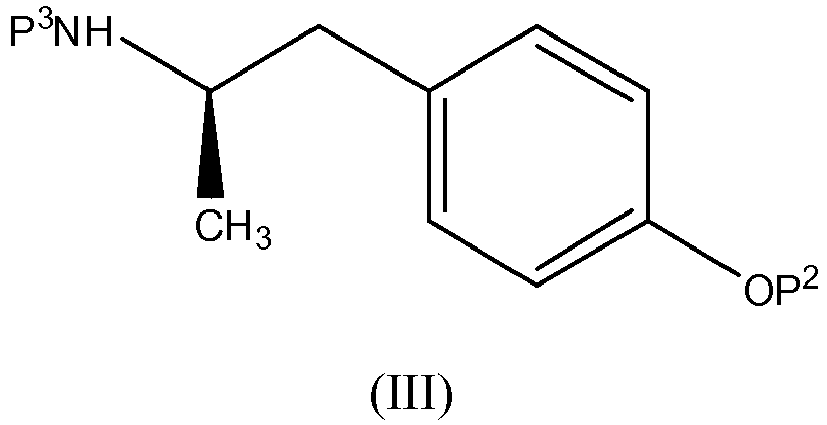
- the acetamide isomer and its pharmaceutically acceptable salts can be prepared by a process, which comprises reacting a compound of general formula (II) in which P 1 represents a hydrogen atom or a hydroxyl protecting group, with a compound of general formula (III) in which P 2 represents a hydrogen atom or a hydroxyl protecting group and P 3 represents a benzylic amine protecting group, to afford a compound of general formula (IV) or a salt thereof, followed by removing any protecting groups P 1 , P 2 and P 3 and, if desired, forming a pharmaceutically acceptable acid addition salt.
- a process which comprises reacting a compound of general formula (II) in which P 1 represents a hydrogen atom or a hydroxyl protecting group, with a compound of general formula (III) in which P 2 represents a hydrogen atom or a hydroxyl protecting group and P 3 represents a benzylic amine protecting group, to afford a compound of general formula (IV) or a salt thereof, followed by removing any protecting groups
- the protecting groups may be any suitable protecting group, for example as described in Green et al., "Protective Groups in Organic Chemistry," (Wiley, 2nd ed. 1991 ).
- hydroxyl protecting groups include aralkyl groups, such as benzyl, and trialkylsilyl groups, such as t-butyl-dimethylsilyl (TBDMS).
- a benzylic amine protecting group are benzyl groups optionally substituted on the benzene ring by one or more, for example 1, 2 or 3 optional substituents, for example selected from halo, (1-4C) alkyl and (1-4C)alkoxy; for example unsubstituted benzyl.
- reaction between the compounds of formula (II) and (III) is conveniently performed by melting the two compounds together, for example by heating in the range of from 110 to 130°C.
- Any protecting groups represented by P 1 , P 2 and P 3 may be removed using a conventional procedure.
- a benzyl group can be removed by catalytic hydrogenation in the presence of palladium on carbon, and a trialkylsilyl group by treatment with tetrabutylammonium fluoride.
- Compounds of formula (II) can be prepared by reacting a compound of formula (V) in which Z represents a leaving atom or group, such as a bromine atom, with a base, for example an alkali metal carbonate such as potassium carbonate.
- a base for example an alkali metal carbonate such as potassium carbonate.
- Compounds of formula (V) can be prepared by stereoselective reduction of a compound of formula (VI) using, for example, borane in the presence of a chiral auxiliary, such as (1S,2R)-1-amino-2-indanol, followed by reduction of the nitro group to an amino group and acetylation of the resultant amino group.
- a chiral auxiliary such as (1S,2R)-1-amino-2-indanol
- Compounds of general formula (III) can be prepared by reacting a compound of general formula (VII) with boron tribromide, to afford a compound of formula (VIII)
- the hydroxyl group may then be protected, for example by reaction with a trialkylsilyl halide, such as t-butyldimethylsilyl chloride.
- the present invention provides a pharmaceutical composition, which comprises a compound of formula (I) or a pharmaceutically acceptable salt thereof, as described herein, together with a pharmaceutically acceptable carrier.
- the pharmaceutical composition according to the invention may be adapted for administration to patients by any convenient route, such as by oral, mucosal (e.g. nasal, sublingual, vaginal, buccal or rectal), parenteral or transdermal administration. It may be in the form of, for example, a solution, suspension, powder, tablet, aerosol formulation, lozenge, suppository, emulsion, hard or soft gelatin capsule or syrup.
- the compound of formula (I) may be dissolved in the carrier, diluted by the carrier or supported by the carrier.
- the carrier may be a support for the compound of formula (I), such as a capsule, sachet, paper or other pharmaceutical container.
- the pharmaceutical composition is an aqueous solution adapted for administration using a nebuliser.
- the aqueous formulation may be isotonic and buffered at an optimal pH for stability.
- the aqueous formulation for nebulization could also be a suspension of nanoparticles or a micronized suspension of free base or an insoluble salt or a cyclodextrin adduct.
- the pharmaceutical composition is an aerosol formulation adapted for administration using a metered dose inhaler, the aerosol formulation comprising the acetamide isomer in crystalline form and a propellant or in solution with an appropriate propellant, combination of propellants or combination of propellant(s) and an acceptable co-solvent or other solubilizing agent.
- the propellant may be any suitable propellant used in aerosol formulations, for example, a hydrofluoroalkane (HFA), such as 1,1,1,2-tetrafluoroethane (HFA134) or 1,1,1,2,3,3,3-heptafluoropropane (HFA227) or a combination of propellants. HFA134 is preferred.
- the propellant may comprise at least 90% by weight of the aerosol formulation, which may also include, inter alia, inert gases to aide in aerosol formation.
- the aerosol formulation may further comprise a surfactant.
- the surfactant serves to stabilize and disperse the acetamide isomer in a suspension, and may also serve as a valve lubricant in the metered dose inhaler. It may be any suitable surfactant used in aerosol formulations. Examples of surfactants used in aerosol formulations are described in United States patent number 5,225,183 , which is hereby incorporated by reference.
- a preferred surfactant is oleic acid.
- the surfactant when present, may generally be present in an amount of from 1:100 to 1:10 surfactant: acetamide isomer, preferably about 1:20.
- the aerosol formulation may further comprise a co-solvent.
- a function of the co-solvent in the aerosol formulation is to facilitate dissolution of the surfactant, which may have poor solubility in the propellant.
- It may be any suitable carrier used in aerosol formulations.
- a co-solvent such as glycerol or ethanol may be used.
- a preferred co-solvent is ethanol, especially dehydrated ethanol.
- the content of ethanol may conveniently be up to 30% by weight of the aerosol formulation, such as from 2 to 6%.
- Metered dose inhalers typically comprise a canister containing an aerosol formulation, a metering valve, a valve stem and an actuator which accepts the valve stem.
- a patient depresses the canister into the actuator and inhales, causing a dose of the formulation to be administered and taken into the patient's lungs.
- the present invention provides a metered dose inhaler comprising a canister containing an aerosol formulation as described herein, a metering valve and an actuator.
- the interior surface of the canister is coated, for example with a protective polymer, or otherwise treated to minimize chemical or physical interaction between the formulation and the canister.
- the inhaler preferably has an aperture with a diameter in the range of from 0.2 to 0.60 mm.
- the pharmaceutical composition is in the form of a dry powder suitable for inhalation or insufflation.
- the composition may comprise acetamide isomer crystals alone (e.g. having a mass median aerodynamic diameter of from 1 to 10 microns, preferably from 2 to 7 microns), or acetamide isomer blended, co-precipitated, co-crystallized or spray dried together with a suitable pharmaceutically acceptable carrier or carriers.
- Suitable pharmaceutically acceptable carriers include, without limitation, solvates of one or more natural or synthetic carbohydrates, such as a monosaccharides, disaccharides, trisaccharides, oligosaccharides, polysaccharides, polyols, amino acids and proteins, and/or in the form of their pharmaceutically acceptable esters, acetals, or salts (where such derivatives exist).
- the carrier is preferably lactose, more preferably lactose monohydrate.
- the dry powder composition may be presented in unit dosage form in, for example, capsules or cartridges of e.g. gelatin, or blister packs from which the powder may be administered with the aid of an inhaler or insufflator.
- the dry powder composition may be presented in multi dose form metered with the aid of an inhaler or insufflator, or pre-metered into discrete doses within the device for serial administrations.
- dry powder formulations are administered using multidose dry powder inhalers.
- the present invention therefore also provides a multidose dry powder inhaler, comprising a dry powder reservoir containing a dry powder aerosol formulation of acetamide isomer as described hereinabove, and a metering chamber.
- the compound of formula (I) according to the present invention may be co-administered with one of more other active ingredients, for example selected from steroids, such as beclomethasone, triamcinolone, funisolide, mometasone, budesonide or fluticasone, muscarinic receptor antagonists, such as ipratropium, tiatropium, or glycopyrrolate.
- the pharmaceutical composition in accordance with the present invention may further comprise a steroid and/or a muscarinic receptor antagonist and/or a controller agent or bronchodilator with a novel mechanism.
- the pharmaceutical composition in accordance with the present invention may further comprise anti-inflammatory agents such as inhibitors of tumor necrosis factor alpha (TNF ⁇ ), dipeptidyl peptidase IV, and antibodies to pro-inflammatory interleukins such as IL4 and IL13.
- anti-inflammatory agents such as inhibitors of tumor necrosis factor alpha (TNF ⁇ ), dipeptidyl peptidase IV, and antibodies to pro-inflammatory interleukins such as IL4 and IL13.
- the pharmaceutical composition in accordance with the present invention may further comprise mucolytic agents such as cromoglycate, acetylcysteine, arginine, or 2-mercaptoethanesulphonate.
- mucolytic agents such as cromoglycate, acetylcysteine, arginine, or 2-mercaptoethanesulphonate.
- the present invention provides a compound of formula (I) or a pharmaceutically acceptable salt for use in the treatment of broncoconstrictive disease.
- the bronchoconstrictive disease may be, for example, chronic obstructive pulmonary disease (such as emphysema or bronchitis), cystic fibrosis, or asthma.
- chronic obstructive pulmonary disease such as emphysema or bronchitis
- cystic fibrosis or asthma.
- the patient may be a human or a non-human mammal, such as a dog, cat, horse, cow, sheep or pig.
- the patient is a human.
- a dose administered to a human may contain from 75 to 5,000 ⁇ g of the acetamide isomer (calculated as the free base).
- the dose may be administered, for example, once or twice per day.
- the present invention provides a compound of formula (I) or a pharmaceutically acceptable salt thereof, for use in therapy.
- the present invention provides the use of a compound of formula (I) or a pharmaceutically acceptable salt thereof in the manufacture of a medicament for the treatment of chronic obstructive pulmonary disease.
- the present invention provides a pharmaceutical composition
- a pharmaceutical composition comprising a compound of formula (I) or a pharmaceutically acceptable salt thereof and a pharmaceutically acceptable carrier for the treatment of chronic obstructive pulmonary disease, or for use as a bronchodilator.
- THF refers to tetrahydrofuran
- EtOAc refers to ethyl acetate
- Et 2 O refers to diethyl ether.
- reaction mixture was concentrated in vacuo to a residue, which was dissolved in toluene (100 mL) and washed in succession with 10% H 2 SO 4 (2 x 45 mL), H 2 O (2 x 45 mL) and sat. brine (1 x 40 mL).
- the organic layer was dried over MgSO 4 , clarified then concentrated in vacuo to a volume of ⁇ 40 mL.
- Heptane (45 mL) was slowly added to give a thick slurry. The solid was collected on a filter and washed with heptane (2 x 5 mL).
- step B A solution of the product in step B (10.0 g, 31.0 mmol) in pyridine (100 mL) was stirred at ambient temperature for 10 min. Acetic anhydride (3.16 g, 30.9 mmol) was added, and the reaction mixture was stirred at ambient temperature for 30 min then at 40°C for 4.5 h. The reaction mixture was cooled to ambient temperature then concentrated in vacuo to a residue. This material was partitioned between CH 2 Cl 2 (120 mL) and 10% aq HCl (50 mL). The aqueous layer was extracted with CH 2 Cl 2 (50 mL).
- step C A solution of the product in step C (2.5 g, 6.9 mmol) in MeOH (15 mL) and THF (15 mL) was treated with K 2 CO 3 (1.3 g, 9.4 mmol), and the resulting mixture was stirred at ambient temperature for 2.5 h. The mixture was concentrated in vacuo to a residue, which was partitioned between H 2 O (50 mL) and EtOAc (50 mL). The aqueous layer was extracted with EtOAc (50 mL).
- step H A mixture of the product of step H) (900 mg, 1.72 mmol), palladium on carbon (500 mg of 10 wt% Pd) and EtOH (45 mL) was shaken under H 2 (50 psi, 344.74 kpa) for 22 h. The mixture was clarified then concentrated in vacuo to an oily residue. The residue was co-evaporated with EtOAc (100 mL) and EtOAc/CH 2 Cl 2 (1:1, 100 mL) to give a white solid (536 mg). TLC (4:1 CH 2 Cl 2 /MeOH) of the solid showed some upper Rf impurities.
- the affinity of a test compound for adrenergic ⁇ 1 and ⁇ 2 receptors is investigated by evaluating the ability of the compound to displace specific binding of [ 125 I]-cyanopidolol or [ 3 H]-CGP-12177 at human recombinant ⁇ 1 and ⁇ 2 receptors, respectively (expressed in CHO cells).
- the IC 50 is defined as the concentration that inhibits 50% of specific binding of the radioligand.
- the K i is calculated from the IC 50 and the known K D of the radioligand (Cheng and Prusoff's equation).
- Example 1 the compound of Example 1 was found to afford a K i of >20 ⁇ M with only 30% inhibition of specific binding at a concentration of 20 ⁇ M for the ⁇ 1 receptor and 2.21 ⁇ M for the ⁇ 2 receptor.
- the ⁇ 1 / ⁇ 2 binding ratio was found to be >9.
- the intrinsic activity of a test compound is assessed by evaluating its ability to increase cAMP production from human recombinant ⁇ 2 receptors expressed in CHO cells. Data are expressed as % response relative to a procaterol-induced cAMP increase.
- the compound of Example 1 was found to have an intrinsic activity of 71%.
- arformoterol and (S,R)-formoterol were found to have intrinsic activities of 98% and 91% respectively.
- an EC 50 could not be determined for the compound of Example 1 for the ⁇ 1 functional assay as only a 32% increase in heart rate was seen at a concentration of 30 ⁇ M.
- the compound of Example 1 was found to have an EC 50 of 120 nM for the ⁇ 2 receptor.
- the ⁇ 1 / ⁇ 2 functional ratio was found to be >250.
- K i values were established using recombinant human transporters expressed in Rex16 cells ( ⁇ 1) or CHO cells ( ⁇ 2).
- the K i for arformoterol at ⁇ 2 was 3.76 nM.
- the ⁇ 1 functional activity EC 50 is the concentration that resulted in a 50% increase in atrial rate relative to 50 nM isoproterenol response in atria isolated from Dunkin Hartley Guinea pigs.
- the values in parentheses are the % increase in atrial rate at a concentration of 30 ⁇ M.
- ⁇ 1 antagonism at a 30 ⁇ M concentration.
- ⁇ 2 functional activity EC 50 is the concentration that resulted in a 50% relaxation of spontaneous tone relative to a response induced by 15 nM isoproterenol in trachea isolated from Dunkin Hartley Guinea pigs.
- the intrinsic activity describes the increase in cAMP relative to the procaterol response in CHO cells expressing the human ⁇ 2 adrenoceptor.
- ⁇ 1 ⁇ 1 adrenoceptors
- SERT 5-HT transporter
- NT not tested.
- compounds were evaluated for their ability to inhibit specific binding or activity (CYP450s) in a panel of 72 assays. The targets listed are only those where a >50% specific binding or activity was determined.
- Figure 1 shows the effects of N-[2-hydroxy-5-[(1S)-1-hydroxy-2-[[(1R)-2-(4-hydroxyphenyl)-1-methylethyl]amino]ethyl]phenyl]acetamide, compound of Formula I, on acetylcholine (Ach) induced effects on airway resistance.
- Figure 1 it can be seen that N-[2-hydroxy-5-[(1S)-1-hydroxy-2-[[(1R)-2-(4-hydroxyphenyl)-1-methylethyl]amino]ethyl]phenyl]acetamide is effective against bronchoconstriction.
Landscapes
- Health & Medical Sciences (AREA)
- Chemical & Material Sciences (AREA)
- Organic Chemistry (AREA)
- Animal Behavior & Ethology (AREA)
- Life Sciences & Earth Sciences (AREA)
- Pharmacology & Pharmacy (AREA)
- General Health & Medical Sciences (AREA)
- Public Health (AREA)
- Veterinary Medicine (AREA)
- Medicinal Chemistry (AREA)
- Epidemiology (AREA)
- Engineering & Computer Science (AREA)
- Bioinformatics & Cheminformatics (AREA)
- Pulmonology (AREA)
- General Chemical & Material Sciences (AREA)
- Nuclear Medicine, Radiotherapy & Molecular Imaging (AREA)
- Chemical Kinetics & Catalysis (AREA)
- Pain & Pain Management (AREA)
- Otolaryngology (AREA)
- Urology & Nephrology (AREA)
- Acyclic And Carbocyclic Compounds In Medicinal Compositions (AREA)
- Organic Low-Molecular-Weight Compounds And Preparation Thereof (AREA)
- Pharmaceuticals Containing Other Organic And Inorganic Compounds (AREA)
- Medicines That Contain Protein Lipid Enzymes And Other Medicines (AREA)
- Low-Molecular Organic Synthesis Reactions Using Catalysts (AREA)
Description
- The present invention relates to a novel acetamide stereoisomer, to a process for preparing the acetamide stereoisomer, to a pharmaceutical composition comprising the acetamide stereoisomer and to the use of the acetamide stereoisomer in therapy, in particular in the treatment of bronchoconstriction associated with reversible obstructive airways diseases including but not limited to asthma, cystic fibrosis and chronic obstructive pulmonary disease, including chronic bronchitis and emphysema.
- Patients suffering from bronchoconstriction associated with reversible obstructive airways diseases are generally treated using a bronchodilator, to relax the bronchial smooth muscle.
- Bronchodilators in use today generally fall into two classes, the β2-selective adrenoceptor agonists, such as albuterol (salbutamol), salmeterol and formoterol, and the muscarinic receptor antagonists, such as ipratropium and tiatropium.
- β2-Selective adrenoceptor agonists may cause adverse effects, and these may in part be due to activation of the β1-adrenoceptor. The selectivity of an agonist for the β2-adrenoceptor receptor is therefore very important, because it limits the dose that can be given and so affects the magnitude of bronchodilations and the frequency of dosing.
- A long duration of action is important to patients, not only to minimize the time spent taking the drug, but also to avoid having to take the drug during inconvenient times, for example at work, school or during the night. Some of the more recent β2-selective adrenoceptor agonists, in particular salmeterol and formoterol, have a long duration of action, typically about 12 hours. Formoterol has a particular advantage that it also has a fast onset of action. However, formoterol is extremely potent, which makes it very difficult to formulate, especially for administration using a metered dose inhaler in a manner that results in uniform drug delivery via aerosol dose after dose (i.e., dose content uniformity). Furthermore, it is unstable in aqueous solution, which means that solutions for administration using a nebuliser have to be kept refrigerated for a majority of their post-manufacture shelf life.
- Formoterol is one of a group of α-aminomethylbenzyl alcohol derivatives for which patent applications were filed during the early nineteen seventies, for example
DE2305092 (also published asGB1415256 US 6,303,145 (also published asWO 00/67741
DE 2305092 discloses the preparation of a number of α-aminomethylbenzyl alcohol derivatives useful as β-adrenergic stimulants, and suitable as bronchodilatory agents.
Disclosed is the synthesis of a racemic mixture of 3-acetylamino-4-hydroxy-α-[N-(1-methyl-2-p-hydroxyphenylethyl)aminomethyl]benzylalcohol. The activity of this mixture was not tested.
JP 56115751
WO 98/21175
In "New β-Adrenoreceptor Stimulants. Studies on 3-Acylamino-4-hydroxy-α-(N-substituted aminomethyl) benzyl Alcohols", K. Murase et al., Chem. Pharm. Bull., Vol. 25 (1977) No. 6 p 1368-1377, β-adrenergic stimulants, 3-acylamino-4-hydroxy-α-(N-substituted aminomethyl)-benzyl alcohols were prepared via 3-amino-4-benzyloxy-α-(N-substituted aminomethyl) benzyl alcohols.
Akapo et al (Journal of Pharmaceutical and Biomedical Analysis, 33, 5, 2003, 35-94) discloses a stability-indicating reversed-phase high performance liquid chromatographic method for the assay of formoterol fumarate. - Surprisingly, it has now been found that by replacing the methoxy group in (S,R)-formoterol with a hydroxy group, and the formyl hydrogen atom with a methyl group, an isomer having a particularly attractive combination of properties has been obtained.
- According to one aspect, therefore, the present invention provides a compound of formula (I)

- The compound of formula (I) may also be referred to by the chemical name N-[2-hydroxy-5-[(1S)-1-hydroxy-2-[[(1R)-2-(4-hydroxyphenyl)-1-methylethyl]amino]ethyl]phenyl]acetamide.
- The isomer of formula (I) has been found to possess particularly advantageous properties. In particular, it possesses good, but not very high affinity for the β2-adrenoceptor, high selectivity for the β2- over the β1- adrenoceptor, a long duration of action and good stability in aqueous solution at ambient temperature.
-
Figure 1 shows the effects of N-[2-hydroxy-5-[(1S)-1-hydroxy-2-[[(1R)-2-(4-hydroxyphenyl)-1-methylethyl]amino]ethyl]phenyl]acetamide on acetylcholine effects on airway resistance. - As used herein, the term "pharmaceutically acceptable salt" refers to a salt prepared from a pharmaceutically acceptable, relatively non-toxic acid, including inorganic acids and organic acids. Suitable acids include acetic, benzenesulfonic, benzoic, camphorsulfonic, carbonic, citric, dihydrogenphosphoric, ethenesulfonic, fumaric, galactunoric, gluconic, glucuronic, glutamic, hydrobromic, hydrochloric, hydriodic, isobutyric, isethionic, lactic, maleic, malic, malonic, mandelic, methanesulfonic, monohydrogencarbonic, monohydrogenphosphoric, monohydrogensulfuric, mucic, nitric, pamoic, pantothenic, phosphoric, phthalic, propionic, suberic, succinic, sulfuric, tartaric, toluenesulfonic, including p-toluenesulfonic m-toluenesulfonic and o-toluenesulfonic acids, and the like (see, e.g., Berge et al., J. Pharm. Sci., 66:1-19 (1977); Stahl and Wermuth, Handbook of Pharmaceutical Salts, Wiley VCH, (2002)). Also included are salts of other relatively non-toxic compounds that possess acidic character, including amino acids, such as arginine and the like, and other compounds, such as aspirin, ibuprofen, saccharin, and the like. Acid addition salts can be obtained by contacting the neutral form of such compounds with a sufficient amount of the desired acid, either neat or in a suitable inert solvent. As solids, salts can exist in crystalline or amorphous modifications.
- The compounds of the present invention may also be prepared in deuterated form, i.e., in which one or more hydrogen atoms, for example on the acetyl group, are replaced with deuterium.
- The acetamide isomer and its pharmaceutically acceptable salts can be prepared by a process, which comprises reacting a compound of general formula (II)
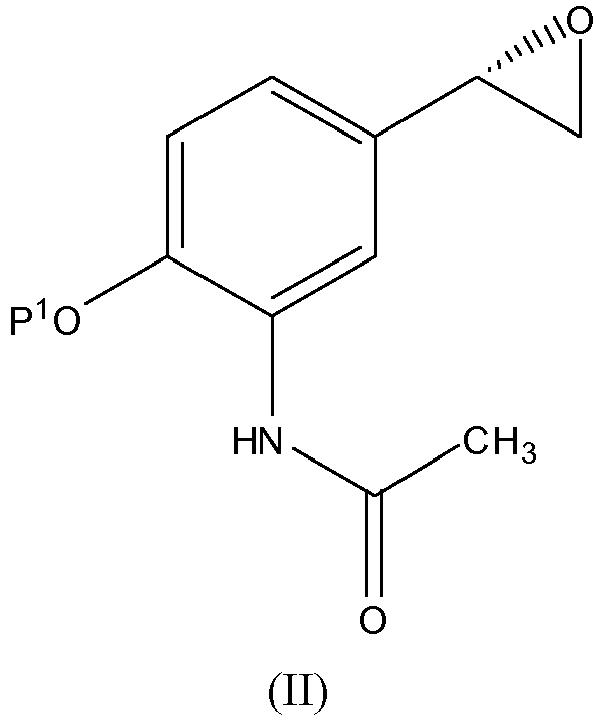


- The protecting groups may be any suitable protecting group, for example as described in Green et al., "Protective Groups in Organic Chemistry," (Wiley, 2nd ed. 1991). Examples of hydroxyl protecting groups include aralkyl groups, such as benzyl, and trialkylsilyl groups, such as t-butyl-dimethylsilyl (TBDMS). Examples of a benzylic amine protecting group are benzyl groups optionally substituted on the benzene ring by one or more, for example 1, 2 or 3 optional substituents, for example selected from halo, (1-4C) alkyl and (1-4C)alkoxy; for example unsubstituted benzyl.
- The reaction between the compounds of formula (II) and (III) is conveniently performed by melting the two compounds together, for example by heating in the range of from 110 to 130°C.
- Any protecting groups represented by P1, P2 and P3 may be removed using a conventional procedure. For example, a benzyl group can be removed by catalytic hydrogenation in the presence of palladium on carbon, and a trialkylsilyl group by treatment with tetrabutylammonium fluoride.
- Compounds of formula (II) can be prepared by reacting a compound of formula (V)

- Compounds of formula (V) can be prepared by stereoselective reduction of a compound of formula (VI)
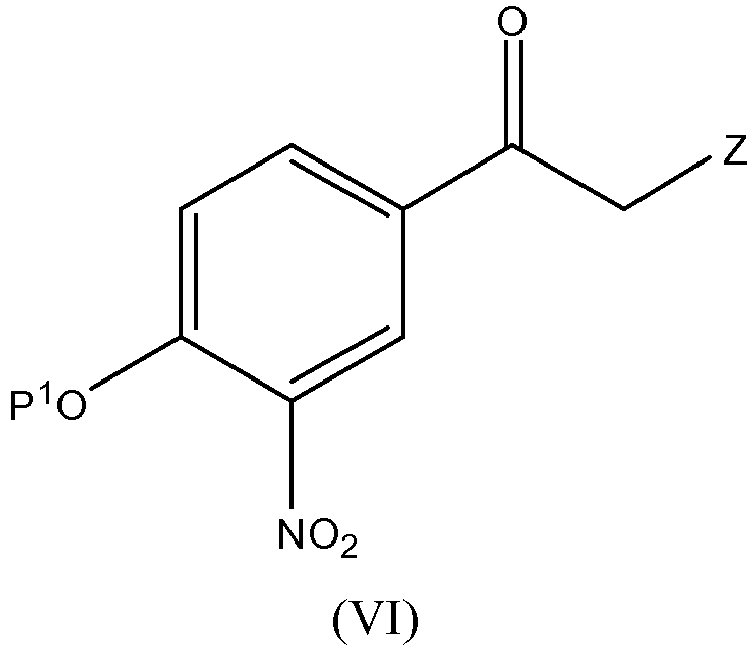
- Compounds of general formula (III) can be prepared by reacting a compound of general formula (VII)


- The intermediates of general formula (IV) are provided as a further aspect of the present invention.
- According to another aspect, therefore, the present invention provides a pharmaceutical composition, which comprises a compound of formula (I) or a pharmaceutically acceptable salt thereof, as described herein, together with a pharmaceutically acceptable carrier.
- The pharmaceutical composition according to the invention may be adapted for administration to patients by any convenient route, such as by oral, mucosal (e.g. nasal, sublingual, vaginal, buccal or rectal), parenteral or transdermal administration. It may be in the form of, for example, a solution, suspension, powder, tablet, aerosol formulation, lozenge, suppository, emulsion, hard or soft gelatin capsule or syrup. The compound of formula (I) may be dissolved in the carrier, diluted by the carrier or supported by the carrier. Thus the carrier may be a support for the compound of formula (I), such as a capsule, sachet, paper or other pharmaceutical container.
- In one embodiment, the pharmaceutical composition is an aqueous solution adapted for administration using a nebuliser. The aqueous formulation may be isotonic and buffered at an optimal pH for stability. The aqueous formulation for nebulization could also be a suspension of nanoparticles or a micronized suspension of free base or an insoluble salt or a cyclodextrin adduct.
- In another embodiment, the pharmaceutical composition is an aerosol formulation adapted for administration using a metered dose inhaler, the aerosol formulation comprising the acetamide isomer in crystalline form and a propellant or in solution with an appropriate propellant, combination of propellants or combination of propellant(s) and an acceptable co-solvent or other solubilizing agent.
- The propellant may be any suitable propellant used in aerosol formulations, for example, a hydrofluoroalkane (HFA), such as 1,1,1,2-tetrafluoroethane (HFA134) or 1,1,1,2,3,3,3-heptafluoropropane (HFA227) or a combination of propellants. HFA134 is preferred. The propellant may comprise at least 90% by weight of the aerosol formulation, which may also include, inter alia, inert gases to aide in aerosol formation.
- The aerosol formulation may further comprise a surfactant. The surfactant serves to stabilize and disperse the acetamide isomer in a suspension, and may also serve as a valve lubricant in the metered dose inhaler. It may be any suitable surfactant used in aerosol formulations. Examples of surfactants used in aerosol formulations are described in United States patent number
5,225,183 , which is hereby incorporated by reference. A preferred surfactant is oleic acid. The surfactant, when present, may generally be present in an amount of from 1:100 to 1:10 surfactant: acetamide isomer, preferably about 1:20. - The aerosol formulation may further comprise a co-solvent. A function of the co-solvent in the aerosol formulation is to facilitate dissolution of the surfactant, which may have poor solubility in the propellant. It may be any suitable carrier used in aerosol formulations. A co-solvent such as glycerol or ethanol may be used. A preferred co-solvent is ethanol, especially dehydrated ethanol. The content of ethanol may conveniently be up to 30% by weight of the aerosol formulation, such as from 2 to 6%.
- Metered dose inhalers typically comprise a canister containing an aerosol formulation, a metering valve, a valve stem and an actuator which accepts the valve stem. In use, a patient depresses the canister into the actuator and inhales, causing a dose of the formulation to be administered and taken into the patient's lungs.
- According to a further aspect, therefore, the present invention provides a metered dose inhaler comprising a canister containing an aerosol formulation as described herein, a metering valve and an actuator.
- Preferably the interior surface of the canister is coated, for example with a protective polymer, or otherwise treated to minimize chemical or physical interaction between the formulation and the canister. The inhaler preferably has an aperture with a diameter in the range of from 0.2 to 0.60 mm.
- In yet another embodiment, the pharmaceutical composition is in the form of a dry powder suitable for inhalation or insufflation. The composition may comprise acetamide isomer crystals alone (e.g. having a mass median aerodynamic diameter of from 1 to 10 microns, preferably from 2 to 7 microns), or acetamide isomer blended, co-precipitated, co-crystallized or spray dried together with a suitable pharmaceutically acceptable carrier or carriers. Suitable pharmaceutically acceptable carriers include, without limitation, solvates of one or more natural or synthetic carbohydrates, such as a monosaccharides, disaccharides, trisaccharides, oligosaccharides, polysaccharides, polyols, amino acids and proteins, and/or in the form of their pharmaceutically acceptable esters, acetals, or salts (where such derivatives exist). The carrier is preferably lactose, more preferably lactose monohydrate. The dry powder composition may be presented in unit dosage form in, for example, capsules or cartridges of e.g. gelatin, or blister packs from which the powder may be administered with the aid of an inhaler or insufflator. The dry powder composition may be presented in multi dose form metered with the aid of an inhaler or insufflator, or pre-metered into discrete doses within the device for serial administrations.
- Conveniently, dry powder formulations are administered using multidose dry powder inhalers.
- The present invention therefore also provides a multidose dry powder inhaler, comprising a dry powder reservoir containing a dry powder aerosol formulation of acetamide isomer as described hereinabove, and a metering chamber.
- The compound of formula (I) according to the present invention may be co-administered with one of more other active ingredients, for example selected from steroids, such as beclomethasone, triamcinolone, funisolide, mometasone, budesonide or fluticasone, muscarinic receptor antagonists, such as ipratropium, tiatropium, or glycopyrrolate. Accordingly, in one embodiment, the pharmaceutical composition in accordance with the present invention may further comprise a steroid and/or a muscarinic receptor antagonist and/or a controller agent or bronchodilator with a novel mechanism.
- In another embodiment, the pharmaceutical composition in accordance with the present invention may further comprise anti-inflammatory agents such as inhibitors of tumor necrosis factor alpha (TNFα), dipeptidyl peptidase IV, and antibodies to pro-inflammatory interleukins such as IL4 and IL13.
- In another embodiment, the pharmaceutical composition in accordance with the present invention may further comprise mucolytic agents such as cromoglycate, acetylcysteine, arginine, or 2-mercaptoethanesulphonate.
- According to another aspect, the present invention provides a compound of formula (I) or a pharmaceutically acceptable salt for use in the treatment of broncoconstrictive disease.
- The bronchoconstrictive disease may be, for example, chronic obstructive pulmonary disease (such as emphysema or bronchitis), cystic fibrosis, or asthma.
- The patient may be a human or a non-human mammal, such as a dog, cat, horse, cow, sheep or pig. Preferably, the patient is a human.
- The amount of compound administered will depend upon many factors, such as the species, weight and age of the patient, and the severity of the condition to be treated. For example, a dose administered to a human may contain from 75 to 5,000 µg of the acetamide isomer (calculated as the free base). The dose may be administered, for example, once or twice per day.
- According to another aspect, the present invention provides a compound of formula (I) or a pharmaceutically acceptable salt thereof, for use in therapy.
- According to yet another aspect, the present invention provides the use of a compound of formula (I) or a pharmaceutically acceptable salt thereof in the manufacture of a medicament for the treatment of chronic obstructive pulmonary disease.
- According to a still further aspect, the present invention provides a pharmaceutical composition comprising a compound of formula (I) or a pharmaceutically acceptable salt thereof and a pharmaceutically acceptable carrier for the treatment of chronic obstructive pulmonary disease, or for use as a bronchodilator.
- The following Examples illustrate the invention.
- THF refers to tetrahydrofuran, EtOAc refers to ethyl acetate and Et2O refers to diethyl ether.
-

- A cold (5°C) solution of (1S,2R)-1-amino-2-indanol (400 mg, 2.68 mmol) in THF (160 mL) was added dropwise to a cold (0°C) solution of borane-diethylaniline complex (7.0 g, 43 mmol) in THF (20 mL). After complete addition, the resulting solution was stirred at (0°C) for 30 min then 2-bromo-4'-benzyloxy-3'-nitroacetophenone (20.0 g, 57.1 mmol) was added in three portions over a 30 min period. The resulting solution was stirred at <5°C for 1 h, quenched by dropwise addition of acetone (17 mL) then allowed to warm to ambient temperature overnight. The reaction mixture was concentrated in vacuo to a residue, which was dissolved in toluene (100 mL) and washed in succession with 10% H2SO4 (2 x 45 mL), H2O (2 x 45 mL) and sat. brine (1 x 40 mL). The organic layer was dried over MgSO4, clarified then concentrated in vacuo to a volume of ∼40 mL. Heptane (45 mL) was slowly added to give a thick slurry. The solid was collected on a filter and washed with heptane (2 x 5 mL). This material was dissolved in warm toluene (∼50 mL), the solution was clarified then diluted with heptane (50 mL). The resulting mixture was stirred for 30 min, the solids were collected, washed with heptane (2 x 5 mL) then dried to constant weight in vacuo to give 18.9 g (94.0%) of the title compound.
-

- A solution of the product of step A) (18.7 g, 53.1 mmol) in toluene (40 mL) and THF (40 mL) was added to a Parr shaker bottle containing Pt2O (370 mg). This mixture was shaken under H2 (50 psi, 344.74 kpa) until the reaction was complete (18 h). The catalyst was removed by filtration, and the filtrate was concentrated to an oil. Column chromatography (1 kg silica gel packed in and eluted with CH2Cl2/MeOH, 19:1) gave 11.9 g (69.6%) of the title compound.
-

- A solution of the product in step B (10.0 g, 31.0 mmol) in pyridine (100 mL) was stirred at ambient temperature for 10 min. Acetic anhydride (3.16 g, 30.9 mmol) was added, and the reaction mixture was stirred at ambient temperature for 30 min then at 40°C for 4.5 h. The reaction mixture was cooled to ambient temperature then concentrated in vacuo to a residue. This material was partitioned between CH2Cl2 (120 mL) and 10% aq HCl (50 mL). The aqueous layer was extracted with CH2Cl2 (50 mL). The combined organic layers were washed in succession with H2O (1 x 100 mL) and brine (1 x 100 mL), dried over MgSO4, clarified then concentrated in vacuo to a thick slurry. After dilution with hexanes (60 mL), the solid was collected on a filter, washed with hexanes (2 x 20 mL) then dried to constant weight in vacuo to give 9.4 g (83%) of material as a white solid.
-

- A solution of the product in step C (2.5 g, 6.9 mmol) in MeOH (15 mL) and THF (15 mL) was treated with K2CO3 (1.3 g, 9.4 mmol), and the resulting mixture was stirred at ambient temperature for 2.5 h. The mixture was concentrated in vacuo to a residue, which was partitioned between H2O (50 mL) and EtOAc (50 mL). The aqueous layer was extracted with EtOAc (50 mL). The combined organic extracts were washed with H2O (50 mL treated with a pinch of K2CO3 to make it basic), dried over Na2SO4, clarified then concentrated in vacuo to a residue that was dried to constant weight in vacuo to give 1.84 g (94%). This material was used in the next reaction step without further purification.
-

- To a solution of [(1R)-N-Benzyl-2-(4-methoxyphenyl)-1-methylethyl]amine (5.30 g, 20.8 mmol) in CH2Cl2 (25 mL) was added a solution of BBr3 in CH2Cl2 (25.0 mL, 1.0M, 25.0 mmol) slowly over 0.5 h. After the addition, the mixture was stirred at ambient temperature for 22 h. Water (125 mL) was added, followed by the addition of 2.5M aq. NaOH (15 mL) to pH 6. The mixture was extracted with EtOAc (4 x 200 mL), and the organic layer was dried (Na2SO4) and concentrated. The residue (3.9 g) was triturated with CH2Cl2 (120 mL) and then concentrated to dryness to give the title compound (3.8 g, 76%).
-
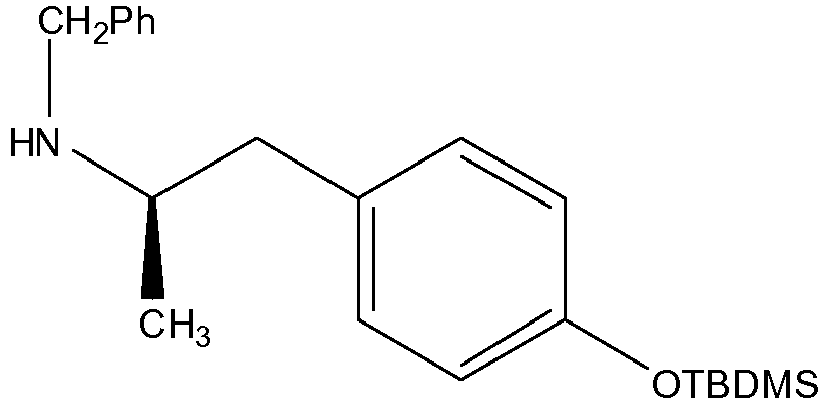
- A solution of the product of step E) (3.20 g, 13.3 mmol), tert-butyldimethylsilyl chloride (3.59 g, 23.8 mmol), and imidazole (2.86 g, 42.0 mmol) in DMF (30.0 mL) was stirred at ambient temperature for 18 h. The mixture was concentrated to dryness, and the residue was partitioned between EtOAc (200 mL) and sat. aq. NaHCO3 (200 mL). The aqueous layer was separated and again extracted with EtOAc (100 mL). The combined organic layer was washed with brine (100 mL), dried with Na2SO4, filtered and concentrated to give an oil. The oil was chromatographed on silica gel (100 g, eluted with 1:1 EtOAc:hexanes) to give the title compound (4.0 g, 85%) as a tan oil.
-

- A mixture of the products of Step D) (1.75 g, 6.18 mmol) and F) (2.20 g, 6.19 mmol) was heated slowly to 110°C to give a complete solution. The reaction solution was heated at 120°C for 20 h. TLC (EtOAc/hexanes, 1:1) showed an estimated 5% of starting material remaining. Heating was continued at 120°C for 5 h then the solution was cooled to ambient temperature and chromatographed over a column of silica gel (200 g) packed in and eluted with hexanes/EtOAc (2:1). Fractions containing purified material were combined, clarified then concentrated in vacuo to afford the title compound as a yellow oil, 3.4 g (86%).
-

- To a stirred solution of the product of Step G) (2.20 g, 3.44 mmol) in THF (22 mL) at 5-10°C, a solution of tetra-n-butylammonium fluoride in THF (1.0 M, 4.50 mL, 4.50 mmol) was added. The reaction mixture was stirred at ambient temperature for 1 h (Note 2), and TLC (1:1 EtOAc/hexanes) showed complete consumption of 8. The reaction mixture was diluted with EtOAc (300 mL) and washed with deionized H2O (4 x 200 mL), then dried (MgSO4), filtered, and concentrated to give crude 9 (2.3 g). The crude material was purified on a column of flash silica gel (82 g, 2.7 x 35 cm), packed in and eluted with 1:1 EtOAc/hexanes. Fractions containing the purified product were combined and concentrated to give a colorless, viscous oil. The oil was coevaporated with Et2O (3 x 25 mL) to give the title compound (919 mg, 51%) as a white solid.
-

- A mixture of the product of step H) (900 mg, 1.72 mmol), palladium on carbon (500 mg of 10 wt% Pd) and EtOH (45 mL) was shaken under H2 (50 psi, 344.74 kpa) for 22 h. The mixture was clarified then concentrated in vacuo to an oily residue. The residue was co-evaporated with EtOAc (100 mL) and EtOAc/CH2Cl2 (1:1, 100 mL) to give a white solid (536 mg). TLC (4:1 CH2Cl2/MeOH) of the solid showed some upper Rf impurities. The solid was dissolved in CH2Cl2 (20 mL)/MeOH (1 mL), then concentrated in the cold to ∼10 mL. Hexanes (∼20 mL) were added, and the mixture was again concentrated in the cold to give a suspension. A mixture of Et2O (5 mL), EtOAc (5 mL) and hexanes (5 mL) was added, and the mixture was concentrated to give a slurry. This slurry was diluted with hexanes (25 mL), and the suspension was stirred vigorously for 0.5 h at room temperature. The solid was collected and washed with hexanes (25 mL) to give the title compound (318 mg, 54%); m.p. 97-100°C, with previous softening (uncorrected). MS m/z:[M+H+] 345.1. 1H NMR spectrum consistent with the assigned structure.
- The affinity of a test compound for adrenergic β1 and β2 receptors is investigated by evaluating the ability of the compound to displace specific binding of [125I]-cyanopidolol or [3H]-CGP-12177 at human recombinant β1 and β2 receptors, respectively (expressed in CHO cells). The IC50 is defined as the concentration that inhibits 50% of specific binding of the radioligand. The Ki is calculated from the IC50 and the known KD of the radioligand (Cheng and Prusoff's equation).
- In this test, the compound of Example 1 was found to afford a Ki of >20 µM with only 30% inhibition of specific binding at a concentration of 20 µM for the β1 receptor and 2.21 µM for the β2 receptor. The β1/β2 binding ratio was found to be >9.
- By way of comparison, the values found for arformoterol and the (S,R) isomer of formoterol were 0.155 µM (β1), 0.004 µM (β2) and 41(β1/β2), and 2.50 µM (β1), 0.075 µM (β2) and 33(β1/β2), respectively.
- The intrinsic activity of a test compound is assessed by evaluating its ability to increase cAMP production from human recombinant β2 receptors expressed in CHO cells. Data are expressed as % response relative to a procaterol-induced cAMP increase.
- The compound of Example 1 was found to have an intrinsic activity of 71%.
- By way of comparison, arformoterol and (S,R)-formoterol were found to have intrinsic activities of 98% and 91% respectively.
- Functional agonism at adrenergic β1 receptors is demonstrated by a positive chronotropic effect in isolated right atria from Dunkin Hartley Guinea pigs. The concentration that gives 50% maximal effect is the EC50.
- Functional agonism at adrenergic β2 receptors is demonstrated by relaxation of the spontaneous tone of isolated trachea from Dunkin Hartley Guinea pigs. The concentration that gives 50% maximal effect is the EC50.
- In these tests, an EC50 could not be determined for the compound of Example 1 for the β1 functional assay as only a 32% increase in heart rate was seen at a concentration of 30 µM. However, the compound of Example 1 was found to have an EC50 of 120 nM for the β2 receptor. The β1/β2 functional ratio was found to be >250.
- By way of comparison, the values found for arformoterol were 3 nM (β1), 0.041 nM (β2) and 75.
- Solution Preparations: For each test compound, the following solutions are prepared.
- Solution A is prepared from ∼ 30 mg of the test compound in 150 mL of 0.005 M citrate buffer, pH 5.0 (∼ 0.2 mg/mL).
- Solution B is prepared as follows: approximately 30 mL aliquot of Solution A is transferred to a separated container and the pH of the solution is adjusted to pH 3.0 with 1 N HCl (∼ 0.2 mL).
- Solution C is prepared as follows: approximately 30 mL aliquot of Solution A is transferred to a separated container and the pH of the solution is adjusted to pH ∼8.0 with 1 N NaOH (∼0.2 mL).
- Note: Because the volume of 1 N HCl or 1 N NaOH used for adjusting pH was negligible, the concentration of test compound in Solutions A, B and C were the same.
-
- As soon as the above solutions were prepared, aliquots of each solution were transferred into 11 vials, of which 9 vials are stored at -20°C, and one each is stored at 30°C and 40°C, respectively.
- At each interval listed below, two vials are removed from -20°C storage, and stored at 30°C and 40°C, respectively.
- The corresponding weeks under the storage condition (30°C or 40°C) are shown in the table below.
- On Week 12, the last vial stored at -20°C is removed and warmed up to the room temperature, which is the
Day 0 Solution. - Sample Analysis: On Week 12, all solutions are assayed by an HPLC method using the
Day 0 Solution at pH 5 as a standard solution. The test compounds were assayed by HPLC with UV detection (refer to Table 1 for method conditions).Table 1 HPLC Method Conditions Parameter Method Detail Column Zorbax SB C8 150 x 4.6 mm Mobile Phase A 0.027M phosphate buffer (pH 3.2)/ACN, 95/5, v/v Mobile Phase B 0.027M phosphate buffer (pH 3.2)/ACN, 30/70, v/v Column Temp Ambient Sampler Temp 5°C Injection Volume 5 µL Flow Rate 1.0 mL/min Wavelength PDA 200-350 nm Run Time 55 min Time(min) %A %B Gradient Table 0 100 0 10 90 10 25 80 20 35 65 35 47 0 100 50 100 0 55 100 0 Table 2 Stability of Compound of Example 1 in Aqueous Solution (% of Initial Concentration (0.20113 mg/mL) in pH 5.0 Citrate Buffer) Condition pH 3.0 pH 5.0 ∼ pH 8 Time(wk) 30°C 40° C 30°C 40° C 30°C 40° C 0 99.46 99.46 100.25 100.25 100.38 100.38 1 100.03 99.89 101.22 102.00 99.64 97.44 2 99.84 100.11 101.07 102.73 99.60 93.75 4 101.41 99.54 112.52* 102.94 96.62 86.72 8 100.33 99.18 107.12 122.32* 26.79* 72.25 12 100.29 97.17 107.75 112.61* 89.93 61.36 * These results were out of trend, but the cause was unknown. The high results at pH 5 might be due to evaporation at elevated temperature during storage. - Conclusion: At pH 3 or 5, the compound of Example 1 was found to be very stable for at least 12 weeks when stored at 30°C.
Table 3 Compound Ki (µM) β1/β2 Binding Ratio Functional Activity EC50 (nM) β1/β2 Functional Ratio Intrinsic Activity cAMP (%) Results of Secondary Screen % Inhibition of activity or specific binding at 3 µM β1 β2 β1 β2 CYP2D6 α1A α1B α1D SERT A 12.7 5.13 2.5 (0) 2600 >12 53 64 85 59 75 59 Formula I >20 (30%) 2.21 >9 (32) 120 >250 71 <50 53 <50 <50 <50 B 18.7 6.66 2.8 (0) 2800 >11 52 58 78 <50 60 <50 Arformoterol 0.155 0.004 41 3 0.041 75 98 NT NT NT NT NT Levalbuterol 1.54 0.24 6.4 177 747 0.24 17 NT NT NT NT NT (S,R)-Formoterol 2.50 0.075 33 NT NT NT 91 NT NT NT NT NT -


- In Table 3, Ki values were established using recombinant human transporters expressed in Rex16 cells (β1) or CHO cells (β2). The Ki for arformoterol at β2 was 3.76 nM. For compounds where Ki values are not provided, the percentage inhibition of specific binding at the highest concentration evaluated is in parentheses. The β1 functional activity EC50 is the concentration that resulted in a 50% increase in atrial rate relative to 50 nM isoproterenol response in atria isolated from Dunkin Hartley Guinea pigs. The values in parentheses are the % increase in atrial rate at a concentration of 30 µM. Compound A (35%), and Compound B (31%) showed signs of β1 antagonism at a 30 µM concentration. β2 functional activity EC50 is the concentration that resulted in a 50% relaxation of spontaneous tone relative to a response induced by 15 nM isoproterenol in trachea isolated from Dunkin Hartley Guinea pigs. The intrinsic activity describes the increase in cAMP relative to the procaterol response in CHO cells expressing the human β2 adrenoceptor. In table 3, α1 = α1 adrenoceptors, SERT = 5-HT transporter, and NT = not tested. In the results of secondary screen, compounds were evaluated for their ability to inhibit specific binding or activity (CYP450s) in a panel of 72 assays. The targets listed are only those where a >50% specific binding or activity was determined.
-
Figure 1 shows the effects of N-[2-hydroxy-5-[(1S)-1-hydroxy-2-[[(1R)-2-(4-hydroxyphenyl)-1-methylethyl]amino]ethyl]phenyl]acetamide, compound of Formula I,
Figure 1 , it can be seen that N-[2-hydroxy-5-[(1S)-1-hydroxy-2-[[(1R)-2-(4-hydroxyphenyl)-1-methylethyl]amino]ethyl]phenyl]acetamide is effective against bronchoconstriction.
| Week of |
0 | 4 | 8 | 10 | 11 | 12 |
| Weeks Under Storage Condition (30°C or 40°C) | 12 | 8 | 4 | 2 | 1 | 0 |
Claims (17)
- A compound of formula (I)

- A process for the preparation of



- A compound of general formula (IV)

- A pharmaceutical composition, which comprises a compound as claimed in claim 1 and a pharmaceutically acceptable carrier.
- A pharmaceutical composition as claimed in claim 4, which further comprises a steroid.
- A pharmaceutical composition as claimed in claim 5, in which the steroid is beclomethasone, triamcinolone, flunisolide, mometasone, budesonide or fluticasone.
- A pharmaceutical composition as claimed in any one of claims 4 to 6, which further comprises a muscarinic receptor antagonist.
- A pharmaceutical composition as claimed in claim 7, in which the muscarinic receptor antagonist is ipratropium or tiotropium.
- A pharmaceutical composition as claimed in any one of claims 4 to 8 which further comprises an anticholinergic.
- A pharmaceutical composition as claimed in claim 9, in which the anticholinergic is glycopyrrolate.
- A pharmaceutical composition as claimed in any one of claims 4 to 10 which further comprises a mucolytic.
- A pharmaceutical composition as claimed in claim 11, in which the mucolytic is cromoglycate, acetylcysteine, arginine, or 2-mercaptoethanesulphonate.
- A pharmaceutical composition as claimed in any one of claims 4 to 12 which further comprises an anti-inflammatory agent.
- A pharmaceutical composition as claimed in claim 13, in which the anti-inflammatory agent is an inhibitor of tumor necrosis factor alpha (TNFα) or dipeptidyl peptidase IV, and/or antibodies to pro-inflammatory interleukins such as IL4 and IL13.
- The compound as claimed in claim 1 or a pharmaceutically acceptable salt thereof for use in therapy.
- The compound as claimed in claim 1 or a pharmaceutically acceptable salt thereof for use in the treatment of chronic obstructive pulmonary disease or bronchoconstriction associated with a reversible obstructive airways disease.
- Use of a compound as claimed in claim 1 or a pharmaceutically acceptable salt thereof for the manufacture of a medicament for the treatment of chronic obstructive pulmonary disease or bronchoconstriction associated with a reversible obstructive airways disease.
Applications Claiming Priority (2)
| Application Number | Priority Date | Filing Date | Title |
|---|---|---|---|
| US96643807P | 2007-08-28 | 2007-08-28 | |
| PCT/US2008/074653 WO2009032764A1 (en) | 2007-08-28 | 2008-08-28 | Acetamide stereoisomer |
Publications (2)
| Publication Number | Publication Date |
|---|---|
| EP2195285A1 EP2195285A1 (en) | 2010-06-16 |
| EP2195285B1 true EP2195285B1 (en) | 2018-08-01 |
Family
ID=40291128
Family Applications (1)
| Application Number | Title | Priority Date | Filing Date |
|---|---|---|---|
| EP08829102.6A Not-in-force EP2195285B1 (en) | 2007-08-28 | 2008-08-28 | Acetamide stereoisomer |
Country Status (12)
| Country | Link |
|---|---|
| US (4) | US8501994B2 (en) |
| EP (1) | EP2195285B1 (en) |
| JP (1) | JP5468543B2 (en) |
| KR (1) | KR101398775B1 (en) |
| AR (1) | AR072943A1 (en) |
| AU (1) | AU2008296458B2 (en) |
| CA (1) | CA2696943C (en) |
| ES (1) | ES2684125T3 (en) |
| MX (1) | MX2010001978A (en) |
| NZ (1) | NZ583462A (en) |
| TW (1) | TWI505826B (en) |
| WO (1) | WO2009032764A1 (en) |
Families Citing this family (6)
| Publication number | Priority date | Publication date | Assignee | Title |
|---|---|---|---|---|
| TW200510277A (en) * | 2003-05-27 | 2005-03-16 | Theravance Inc | Crystalline form of β2-adrenergic receptor agonist |
| US8501994B2 (en) * | 2007-08-28 | 2013-08-06 | Sunovion Pharmaceuticals Inc. | Acetamide stereoisomer |
| EP2578570A1 (en) | 2011-10-07 | 2013-04-10 | Almirall, S.A. | Novel process for preparing 5-(2-{[6-(2,2-difluoro-2-phenylethoxy)hexyl]amino}-1(r)-hydroxyethyl)-8-hydroxyquinolin-2(1h)-one via novel intermediates of synthesis. |
| EP2641900A1 (en) | 2012-03-20 | 2013-09-25 | Almirall, S.A. | Novel polymorphic Crystal forms of 5-(2-{[6-(2,2-difluoro-2-phenylethoxy) hexyl]amino}-1-(R)-hydroxyethyl)-8-hydroxyquinolin-2(1h)-one, heminapadisylate as agonist of the ß2 adrenergic receptor. |
| JP2022521600A (en) * | 2019-02-22 | 2022-04-11 | シラ セラピューティック インコーポレイティッド | Inhalable therapeutic agent |
| CN111944855B (en) * | 2020-09-03 | 2022-08-30 | 扬州中宝药业股份有限公司 | Method for synthesizing (R) -1- (4- (benzyloxy) -3-nitrophenyl) -2-bromoethanol |
Citations (1)
| Publication number | Priority date | Publication date | Assignee | Title |
|---|---|---|---|---|
| WO2000067741A2 (en) * | 1999-05-10 | 2000-11-16 | Sepracor Inc. | (s,r) formoterol methods and compositions |
Family Cites Families (13)
| Publication number | Priority date | Publication date | Assignee | Title |
|---|---|---|---|---|
| JPS4880523A (en) * | 1972-02-05 | 1973-10-29 | ||
| GB1415256A (en) | 1972-02-05 | 1975-11-26 | Yamanouchi Pharma Co Ltd | Alpha-aminomethylbenzyl alcohol derivatives |
| US3994974A (en) | 1972-02-05 | 1976-11-30 | Yamanouchi Pharmaceutical Co., Ltd. | α-Aminomethylbenzyl alcohol derivatives |
| DE2305092A1 (en) | 1972-02-05 | 1973-08-16 | Yamanouchi Pharma Co Ltd | Alpha-aminomethylbenzyl alcohol derivs. - prepd. by redn. of corresponding protected derivs. |
| JPS599542B2 (en) * | 1980-06-11 | 1984-03-03 | 山之内製薬株式会社 | Novel method for producing 3-acylamino-4-hydroxy-α-(aralkyl aminomethyl)benzyl alcohol |
| ES2005492A6 (en) | 1987-12-23 | 1989-03-01 | Lasa Lab | N-hydroxyphenyl formamide deriv. prepn. |
| ES2031407A6 (en) | 1988-10-05 | 1992-12-01 | Lasa Lab | Improvements made to the subject matter of principal patent no. 8703715 for: "Process for obtaining N-[2- hydroxy-5-[1-hydroxy-2-[[2-[4-methoxyphenyl]-1- methylethyl]amino]ethyl]phenyl] formamide". |
| ATE251608T1 (en) | 1996-01-10 | 2003-10-15 | Asahi Chemical Ind | NEW TRICYCLIC COMPOUNDS AND MEDICINAL COMPOSITIONS CONTAINING SAME |
| US6040344A (en) | 1996-11-11 | 2000-03-21 | Sepracor Inc. | Formoterol process |
| EP0938467B1 (en) * | 1996-11-11 | 2002-06-12 | Sepracor, Inc. | Process for the preparation of optically pure isomers of formoterol |
| US6472563B1 (en) | 2001-11-09 | 2002-10-29 | Sepracor Inc. | Formoterol tartrate process and polymorph |
| US7718822B2 (en) * | 2007-08-28 | 2010-05-18 | Sepracor Inc. | Carbamate Stereoisomer |
| US8501994B2 (en) * | 2007-08-28 | 2013-08-06 | Sunovion Pharmaceuticals Inc. | Acetamide stereoisomer |
-
2008
- 2008-08-22 US US12/196,520 patent/US8501994B2/en not_active Expired - Fee Related
- 2008-08-26 TW TW097132495A patent/TWI505826B/en not_active IP Right Cessation
- 2008-08-27 AR ARP080103726A patent/AR072943A1/en unknown
- 2008-08-28 AU AU2008296458A patent/AU2008296458B2/en not_active Ceased
- 2008-08-28 CA CA2696943A patent/CA2696943C/en active Active
- 2008-08-28 EP EP08829102.6A patent/EP2195285B1/en not_active Not-in-force
- 2008-08-28 KR KR1020107006647A patent/KR101398775B1/en not_active Expired - Fee Related
- 2008-08-28 NZ NZ583462A patent/NZ583462A/en not_active IP Right Cessation
- 2008-08-28 WO PCT/US2008/074653 patent/WO2009032764A1/en not_active Ceased
- 2008-08-28 ES ES08829102.6T patent/ES2684125T3/en active Active
- 2008-08-28 JP JP2010523136A patent/JP5468543B2/en not_active Expired - Fee Related
- 2008-08-28 MX MX2010001978A patent/MX2010001978A/en active IP Right Grant
-
2013
- 2013-07-03 US US13/934,996 patent/US8664441B2/en not_active Expired - Fee Related
-
2014
- 2014-01-17 US US14/157,793 patent/US9040588B2/en active Active
-
2015
- 2015-04-22 US US14/692,843 patent/US9499476B2/en not_active Expired - Fee Related
Patent Citations (1)
| Publication number | Priority date | Publication date | Assignee | Title |
|---|---|---|---|---|
| WO2000067741A2 (en) * | 1999-05-10 | 2000-11-16 | Sepracor Inc. | (s,r) formoterol methods and compositions |
Non-Patent Citations (1)
| Title |
|---|
| KYYOSHI MURASE ET AL: "New beta-Adrenoreceptor Stimulants. Studies on 3-Acylamino-4-hydroxy-alpha-(N-substituted aminomethyl)benzyl Alcohols", CHEM. PHARM. BULL, vol. 25, no. 6, 1977, pages 1368 - 1377, XP008089219 * |
Also Published As
| Publication number | Publication date |
|---|---|
| JP2010538010A (en) | 2010-12-09 |
| ES2684125T3 (en) | 2018-10-01 |
| US20090060922A1 (en) | 2009-03-05 |
| CA2696943C (en) | 2015-05-26 |
| US20130296607A1 (en) | 2013-11-07 |
| WO2009032764A1 (en) | 2009-03-12 |
| US9499476B2 (en) | 2016-11-22 |
| US20150225334A1 (en) | 2015-08-13 |
| TWI505826B (en) | 2015-11-01 |
| AR072943A1 (en) | 2010-10-06 |
| NZ583462A (en) | 2012-03-30 |
| MX2010001978A (en) | 2010-05-27 |
| EP2195285A1 (en) | 2010-06-16 |
| US9040588B2 (en) | 2015-05-26 |
| AU2008296458B2 (en) | 2014-01-16 |
| US8501994B2 (en) | 2013-08-06 |
| AU2008296458A1 (en) | 2009-03-12 |
| JP5468543B2 (en) | 2014-04-09 |
| CA2696943A1 (en) | 2009-03-12 |
| US8664441B2 (en) | 2014-03-04 |
| US20140135300A1 (en) | 2014-05-15 |
| KR101398775B1 (en) | 2014-05-27 |
| KR20100047333A (en) | 2010-05-07 |
| TW200913984A (en) | 2009-04-01 |
Similar Documents
| Publication | Publication Date | Title |
|---|---|---|
| US9499476B2 (en) | Acetamide stereoisomer | |
| EP1461306B1 (en) | Quaternary ammonium compounds and their use as antimuscarinic agents | |
| AU2004243304A1 (en) | Crystalline form of beta2 adrenergic receptor agonist | |
| EP3556435B1 (en) | Class of bifunctional compounds with quaternary ammonium salt structure | |
| US8173829B2 (en) | Carbamate stereoisomer |
Legal Events
| Date | Code | Title | Description |
|---|---|---|---|
| PUAI | Public reference made under article 153(3) epc to a published international application that has entered the european phase |
Free format text: ORIGINAL CODE: 0009012 |
|
| 17P | Request for examination filed |
Effective date: 20100317 |
|
| AK | Designated contracting states |
Kind code of ref document: A1 Designated state(s): AT BE BG CH CY CZ DE DK EE ES FI FR GB GR HR HU IE IS IT LI LT LU LV MC MT NL NO PL PT RO SE SI SK TR |
|
| AX | Request for extension of the european patent |
Extension state: AL BA MK RS |
|
| DAX | Request for extension of the european patent (deleted) | ||
| 17Q | First examination report despatched |
Effective date: 20120912 |
|
| RAP1 | Party data changed (applicant data changed or rights of an application transferred) |
Owner name: SUNOVION PHARMACEUTICALS INC. |
|
| GRAP | Despatch of communication of intention to grant a patent |
Free format text: ORIGINAL CODE: EPIDOSNIGR1 |
|
| INTG | Intention to grant announced |
Effective date: 20171204 |
|
| GRAS | Grant fee paid |
Free format text: ORIGINAL CODE: EPIDOSNIGR3 |
|
| GRAA | (expected) grant |
Free format text: ORIGINAL CODE: 0009210 |
|
| AK | Designated contracting states |
Kind code of ref document: B1 Designated state(s): AT BE BG CH CY CZ DE DK EE ES FI FR GB GR HR HU IE IS IT LI LT LU LV MC MT NL NO PL PT RO SE SI SK TR |
|
| REG | Reference to a national code |
Ref country code: GB Ref legal event code: FG4D |
|
| REG | Reference to a national code |
Ref country code: CH Ref legal event code: EP Ref country code: AT Ref legal event code: REF Ref document number: 1024115 Country of ref document: AT Kind code of ref document: T Effective date: 20180815 |
|
| REG | Reference to a national code |
Ref country code: IE Ref legal event code: FG4D |
|
| REG | Reference to a national code |
Ref country code: FR Ref legal event code: PLFP Year of fee payment: 11 |
|
| REG | Reference to a national code |
Ref country code: DE Ref legal event code: R096 Ref document number: 602008056274 Country of ref document: DE |
|
| REG | Reference to a national code |
Ref country code: ES Ref legal event code: FG2A Ref document number: 2684125 Country of ref document: ES Kind code of ref document: T3 Effective date: 20181001 |
|
| REG | Reference to a national code |
Ref country code: NL Ref legal event code: MP Effective date: 20180801 |
|
| REG | Reference to a national code |
Ref country code: LT Ref legal event code: MG4D |
|
| REG | Reference to a national code |
Ref country code: AT Ref legal event code: MK05 Ref document number: 1024115 Country of ref document: AT Kind code of ref document: T Effective date: 20180801 |
|
| PG25 | Lapsed in a contracting state [announced via postgrant information from national office to epo] |
Ref country code: BG Free format text: LAPSE BECAUSE OF FAILURE TO SUBMIT A TRANSLATION OF THE DESCRIPTION OR TO PAY THE FEE WITHIN THE PRESCRIBED TIME-LIMIT Effective date: 20181101 Ref country code: SE Free format text: LAPSE BECAUSE OF FAILURE TO SUBMIT A TRANSLATION OF THE DESCRIPTION OR TO PAY THE FEE WITHIN THE PRESCRIBED TIME-LIMIT Effective date: 20180801 Ref country code: NL Free format text: LAPSE BECAUSE OF FAILURE TO SUBMIT A TRANSLATION OF THE DESCRIPTION OR TO PAY THE FEE WITHIN THE PRESCRIBED TIME-LIMIT Effective date: 20180801 Ref country code: LT Free format text: LAPSE BECAUSE OF FAILURE TO SUBMIT A TRANSLATION OF THE DESCRIPTION OR TO PAY THE FEE WITHIN THE PRESCRIBED TIME-LIMIT Effective date: 20180801 Ref country code: PL Free format text: LAPSE BECAUSE OF FAILURE TO SUBMIT A TRANSLATION OF THE DESCRIPTION OR TO PAY THE FEE WITHIN THE PRESCRIBED TIME-LIMIT Effective date: 20180801 Ref country code: FI Free format text: LAPSE BECAUSE OF FAILURE TO SUBMIT A TRANSLATION OF THE DESCRIPTION OR TO PAY THE FEE WITHIN THE PRESCRIBED TIME-LIMIT Effective date: 20180801 Ref country code: AT Free format text: LAPSE BECAUSE OF FAILURE TO SUBMIT A TRANSLATION OF THE DESCRIPTION OR TO PAY THE FEE WITHIN THE PRESCRIBED TIME-LIMIT Effective date: 20180801 Ref country code: NO Free format text: LAPSE BECAUSE OF FAILURE TO SUBMIT A TRANSLATION OF THE DESCRIPTION OR TO PAY THE FEE WITHIN THE PRESCRIBED TIME-LIMIT Effective date: 20181101 Ref country code: GR Free format text: LAPSE BECAUSE OF FAILURE TO SUBMIT A TRANSLATION OF THE DESCRIPTION OR TO PAY THE FEE WITHIN THE PRESCRIBED TIME-LIMIT Effective date: 20181102 Ref country code: IS Free format text: LAPSE BECAUSE OF FAILURE TO SUBMIT A TRANSLATION OF THE DESCRIPTION OR TO PAY THE FEE WITHIN THE PRESCRIBED TIME-LIMIT Effective date: 20181201 |
|
| PG25 | Lapsed in a contracting state [announced via postgrant information from national office to epo] |
Ref country code: HR Free format text: LAPSE BECAUSE OF FAILURE TO SUBMIT A TRANSLATION OF THE DESCRIPTION OR TO PAY THE FEE WITHIN THE PRESCRIBED TIME-LIMIT Effective date: 20180801 Ref country code: LV Free format text: LAPSE BECAUSE OF FAILURE TO SUBMIT A TRANSLATION OF THE DESCRIPTION OR TO PAY THE FEE WITHIN THE PRESCRIBED TIME-LIMIT Effective date: 20180801 |
|
| REG | Reference to a national code |
Ref country code: CH Ref legal event code: PL |
|
| PG25 | Lapsed in a contracting state [announced via postgrant information from national office to epo] |
Ref country code: LI Free format text: LAPSE BECAUSE OF NON-PAYMENT OF DUE FEES Effective date: 20180831 Ref country code: CH Free format text: LAPSE BECAUSE OF NON-PAYMENT OF DUE FEES Effective date: 20180831 Ref country code: LU Free format text: LAPSE BECAUSE OF NON-PAYMENT OF DUE FEES Effective date: 20180828 Ref country code: EE Free format text: LAPSE BECAUSE OF FAILURE TO SUBMIT A TRANSLATION OF THE DESCRIPTION OR TO PAY THE FEE WITHIN THE PRESCRIBED TIME-LIMIT Effective date: 20180801 Ref country code: RO Free format text: LAPSE BECAUSE OF FAILURE TO SUBMIT A TRANSLATION OF THE DESCRIPTION OR TO PAY THE FEE WITHIN THE PRESCRIBED TIME-LIMIT Effective date: 20180801 Ref country code: CZ Free format text: LAPSE BECAUSE OF FAILURE TO SUBMIT A TRANSLATION OF THE DESCRIPTION OR TO PAY THE FEE WITHIN THE PRESCRIBED TIME-LIMIT Effective date: 20180801 Ref country code: MC Free format text: LAPSE BECAUSE OF FAILURE TO SUBMIT A TRANSLATION OF THE DESCRIPTION OR TO PAY THE FEE WITHIN THE PRESCRIBED TIME-LIMIT Effective date: 20180801 |
|
| REG | Reference to a national code |
Ref country code: DE Ref legal event code: R097 Ref document number: 602008056274 Country of ref document: DE |
|
| REG | Reference to a national code |
Ref country code: BE Ref legal event code: MM Effective date: 20180831 |
|
| PG25 | Lapsed in a contracting state [announced via postgrant information from national office to epo] |
Ref country code: SK Free format text: LAPSE BECAUSE OF FAILURE TO SUBMIT A TRANSLATION OF THE DESCRIPTION OR TO PAY THE FEE WITHIN THE PRESCRIBED TIME-LIMIT Effective date: 20180801 Ref country code: DK Free format text: LAPSE BECAUSE OF FAILURE TO SUBMIT A TRANSLATION OF THE DESCRIPTION OR TO PAY THE FEE WITHIN THE PRESCRIBED TIME-LIMIT Effective date: 20180801 |
|
| PLBE | No opposition filed within time limit |
Free format text: ORIGINAL CODE: 0009261 |
|
| STAA | Information on the status of an ep patent application or granted ep patent |
Free format text: STATUS: NO OPPOSITION FILED WITHIN TIME LIMIT |
|
| 26N | No opposition filed |
Effective date: 20190503 |
|
| PG25 | Lapsed in a contracting state [announced via postgrant information from national office to epo] |
Ref country code: BE Free format text: LAPSE BECAUSE OF NON-PAYMENT OF DUE FEES Effective date: 20180831 Ref country code: SI Free format text: LAPSE BECAUSE OF FAILURE TO SUBMIT A TRANSLATION OF THE DESCRIPTION OR TO PAY THE FEE WITHIN THE PRESCRIBED TIME-LIMIT Effective date: 20180801 |
|
| PG25 | Lapsed in a contracting state [announced via postgrant information from national office to epo] |
Ref country code: MT Free format text: LAPSE BECAUSE OF NON-PAYMENT OF DUE FEES Effective date: 20180828 |
|
| PG25 | Lapsed in a contracting state [announced via postgrant information from national office to epo] |
Ref country code: TR Free format text: LAPSE BECAUSE OF FAILURE TO SUBMIT A TRANSLATION OF THE DESCRIPTION OR TO PAY THE FEE WITHIN THE PRESCRIBED TIME-LIMIT Effective date: 20180801 |
|
| PG25 | Lapsed in a contracting state [announced via postgrant information from national office to epo] |
Ref country code: HU Free format text: LAPSE BECAUSE OF FAILURE TO SUBMIT A TRANSLATION OF THE DESCRIPTION OR TO PAY THE FEE WITHIN THE PRESCRIBED TIME-LIMIT; INVALID AB INITIO Effective date: 20080828 Ref country code: PT Free format text: LAPSE BECAUSE OF FAILURE TO SUBMIT A TRANSLATION OF THE DESCRIPTION OR TO PAY THE FEE WITHIN THE PRESCRIBED TIME-LIMIT Effective date: 20180801 |
|
| PG25 | Lapsed in a contracting state [announced via postgrant information from national office to epo] |
Ref country code: CY Free format text: LAPSE BECAUSE OF FAILURE TO SUBMIT A TRANSLATION OF THE DESCRIPTION OR TO PAY THE FEE WITHIN THE PRESCRIBED TIME-LIMIT Effective date: 20180801 Ref country code: IE Free format text: LAPSE BECAUSE OF NON-PAYMENT OF DUE FEES Effective date: 20180828 |
|
| PGFP | Annual fee paid to national office [announced via postgrant information from national office to epo] |
Ref country code: IT Payment date: 20220819 Year of fee payment: 15 Ref country code: GB Payment date: 20220829 Year of fee payment: 15 Ref country code: ES Payment date: 20220901 Year of fee payment: 15 Ref country code: DE Payment date: 20220829 Year of fee payment: 15 |
|
| PGFP | Annual fee paid to national office [announced via postgrant information from national office to epo] |
Ref country code: FR Payment date: 20220825 Year of fee payment: 15 |
|
| P01 | Opt-out of the competence of the unified patent court (upc) registered |
Effective date: 20230418 |
|
| P02 | Opt-out of the competence of the unified patent court (upc) changed |
Effective date: 20230425 |
|
| REG | Reference to a national code |
Ref country code: DE Ref legal event code: R119 Ref document number: 602008056274 Country of ref document: DE |
|
| GBPC | Gb: european patent ceased through non-payment of renewal fee |
Effective date: 20230828 |
|
| PG25 | Lapsed in a contracting state [announced via postgrant information from national office to epo] |
Ref country code: GB Free format text: LAPSE BECAUSE OF NON-PAYMENT OF DUE FEES Effective date: 20230828 |
|
| PG25 | Lapsed in a contracting state [announced via postgrant information from national office to epo] |
Ref country code: IT Free format text: LAPSE BECAUSE OF NON-PAYMENT OF DUE FEES Effective date: 20230828 Ref country code: GB Free format text: LAPSE BECAUSE OF NON-PAYMENT OF DUE FEES Effective date: 20230828 Ref country code: FR Free format text: LAPSE BECAUSE OF NON-PAYMENT OF DUE FEES Effective date: 20230831 Ref country code: DE Free format text: LAPSE BECAUSE OF NON-PAYMENT OF DUE FEES Effective date: 20240301 |
|
| REG | Reference to a national code |
Ref country code: ES Ref legal event code: FD2A Effective date: 20241002 |
|
| PG25 | Lapsed in a contracting state [announced via postgrant information from national office to epo] |
Ref country code: ES Free format text: LAPSE BECAUSE OF NON-PAYMENT OF DUE FEES Effective date: 20230829 |
|
| PG25 | Lapsed in a contracting state [announced via postgrant information from national office to epo] |
Ref country code: ES Free format text: LAPSE BECAUSE OF NON-PAYMENT OF DUE FEES Effective date: 20230829 |