EP2195007B1 - Use of sco-spondin peptides for inhibiting or preventing neuronal apoptosis mediated by cell death receptor ligands - Google Patents
Use of sco-spondin peptides for inhibiting or preventing neuronal apoptosis mediated by cell death receptor ligands Download PDFInfo
- Publication number
- EP2195007B1 EP2195007B1 EP08787439A EP08787439A EP2195007B1 EP 2195007 B1 EP2195007 B1 EP 2195007B1 EP 08787439 A EP08787439 A EP 08787439A EP 08787439 A EP08787439 A EP 08787439A EP 2195007 B1 EP2195007 B1 EP 2195007B1
- Authority
- EP
- European Patent Office
- Prior art keywords
- disease
- neuronal
- polypeptide
- apoptosis
- cells
- Prior art date
- Legal status (The legal status is an assumption and is not a legal conclusion. Google has not performed a legal analysis and makes no representation as to the accuracy of the status listed.)
- Not-in-force
Links
- 108090000765 processed proteins & peptides Proteins 0.000 title claims description 65
- 102000004196 processed proteins & peptides Human genes 0.000 title claims description 46
- 230000009223 neuronal apoptosis Effects 0.000 title claims description 30
- 108010049207 Death Domain Receptors Proteins 0.000 title claims description 18
- 102000009058 Death Domain Receptors Human genes 0.000 title claims description 18
- 230000030833 cell death Effects 0.000 title claims description 18
- 230000002401 inhibitory effect Effects 0.000 title claims description 16
- 239000003446 ligand Substances 0.000 title claims description 14
- 230000001404 mediated effect Effects 0.000 title claims description 12
- 229920001184 polypeptide Polymers 0.000 claims description 45
- 230000001537 neural effect Effects 0.000 claims description 35
- 208000037265 diseases, disorders, signs and symptoms Diseases 0.000 claims description 23
- 230000004770 neurodegeneration Effects 0.000 claims description 23
- 208000015122 neurodegenerative disease Diseases 0.000 claims description 22
- 238000000034 method Methods 0.000 claims description 21
- 208000014674 injury Diseases 0.000 claims description 20
- 201000010099 disease Diseases 0.000 claims description 18
- 230000008733 trauma Effects 0.000 claims description 18
- 201000006474 Brain Ischemia Diseases 0.000 claims description 16
- 206010008120 Cerebral ischaemia Diseases 0.000 claims description 16
- 206010008118 cerebral infarction Diseases 0.000 claims description 16
- 208000027866 inflammatory disease Diseases 0.000 claims description 16
- 230000003612 virological effect Effects 0.000 claims description 16
- 108020004707 nucleic acids Proteins 0.000 claims description 11
- 102000039446 nucleic acids Human genes 0.000 claims description 11
- 150000007523 nucleic acids Chemical class 0.000 claims description 11
- 206010002026 amyotrophic lateral sclerosis Diseases 0.000 claims description 10
- 208000002320 spinal muscular atrophy Diseases 0.000 claims description 8
- 208000024827 Alzheimer disease Diseases 0.000 claims description 7
- 208000018737 Parkinson disease Diseases 0.000 claims description 6
- 208000023105 Huntington disease Diseases 0.000 claims description 5
- 201000011452 Adrenoleukodystrophy Diseases 0.000 claims description 4
- 206010067889 Dementia with Lewy bodies Diseases 0.000 claims description 4
- 201000010374 Down Syndrome Diseases 0.000 claims description 4
- 201000011240 Frontotemporal dementia Diseases 0.000 claims description 4
- 208000009829 Lewy Body Disease Diseases 0.000 claims description 4
- 102000009030 Member 1 Subfamily D ATP Binding Cassette Transporter Human genes 0.000 claims description 4
- 108010049137 Member 1 Subfamily D ATP Binding Cassette Transporter Proteins 0.000 claims description 4
- 208000001089 Multiple system atrophy Diseases 0.000 claims description 4
- 208000024777 Prion disease Diseases 0.000 claims description 4
- 201000002212 progressive supranuclear palsy Diseases 0.000 claims description 4
- 102000015212 Fas Ligand Protein Human genes 0.000 claims description 2
- 108010039471 Fas Ligand Protein Proteins 0.000 claims description 2
- 210000004027 cell Anatomy 0.000 description 46
- 150000001413 amino acids Chemical group 0.000 description 27
- 239000000203 mixture Substances 0.000 description 21
- 101710097160 Tumor necrosis factor ligand superfamily member 10 Proteins 0.000 description 20
- 102100024598 Tumor necrosis factor ligand superfamily member 10 Human genes 0.000 description 20
- 102100031988 Tumor necrosis factor ligand superfamily member 6 Human genes 0.000 description 20
- 108050002568 Tumor necrosis factor ligand superfamily member 6 Proteins 0.000 description 20
- 229940024606 amino acid Drugs 0.000 description 20
- 235000001014 amino acid Nutrition 0.000 description 20
- FAPWRFPIFSIZLT-UHFFFAOYSA-M Sodium chloride Chemical compound [Na+].[Cl-] FAPWRFPIFSIZLT-UHFFFAOYSA-M 0.000 description 19
- 230000006907 apoptotic process Effects 0.000 description 18
- 239000000243 solution Substances 0.000 description 17
- UIIMBOGNXHQVGW-UHFFFAOYSA-M Sodium bicarbonate Chemical compound [Na+].OC([O-])=O UIIMBOGNXHQVGW-UHFFFAOYSA-M 0.000 description 12
- 230000001640 apoptogenic effect Effects 0.000 description 11
- 239000011780 sodium chloride Substances 0.000 description 11
- WCUXLLCKKVVCTQ-UHFFFAOYSA-M potassium chloride Inorganic materials [Cl-].[K+] WCUXLLCKKVVCTQ-UHFFFAOYSA-M 0.000 description 10
- 102000002938 Thrombospondin Human genes 0.000 description 8
- 108060008245 Thrombospondin Proteins 0.000 description 8
- 241000700605 Viruses Species 0.000 description 8
- 239000003814 drug Substances 0.000 description 8
- 239000001963 growth medium Substances 0.000 description 8
- 150000003839 salts Chemical class 0.000 description 8
- 239000013598 vector Substances 0.000 description 8
- 150000001875 compounds Chemical class 0.000 description 7
- PEDCQBHIVMGVHV-UHFFFAOYSA-N Glycerine Chemical compound OCC(O)CO PEDCQBHIVMGVHV-UHFFFAOYSA-N 0.000 description 6
- ROHFNLRQFUQHCH-YFKPBYRVSA-N L-leucine Chemical compound CC(C)C[C@H](N)C(O)=O ROHFNLRQFUQHCH-YFKPBYRVSA-N 0.000 description 6
- COLNVLDHVKWLRT-QMMMGPOBSA-N L-phenylalanine Chemical compound OC(=O)[C@@H](N)CC1=CC=CC=C1 COLNVLDHVKWLRT-QMMMGPOBSA-N 0.000 description 6
- KZSNJWFQEVHDMF-BYPYZUCNSA-N L-valine Chemical compound CC(C)[C@H](N)C(O)=O KZSNJWFQEVHDMF-BYPYZUCNSA-N 0.000 description 6
- DNIAPMSPPWPWGF-UHFFFAOYSA-N Propylene glycol Chemical compound CC(O)CO DNIAPMSPPWPWGF-UHFFFAOYSA-N 0.000 description 6
- 102100027296 SCO-spondin Human genes 0.000 description 6
- 108010010180 SCO-spondin Proteins 0.000 description 6
- 239000003242 anti bacterial agent Substances 0.000 description 6
- 238000009472 formulation Methods 0.000 description 6
- 230000000971 hippocampal effect Effects 0.000 description 6
- 235000017557 sodium bicarbonate Nutrition 0.000 description 6
- 229910000030 sodium bicarbonate Inorganic materials 0.000 description 6
- 238000011282 treatment Methods 0.000 description 6
- FWBHETKCLVMNFS-UHFFFAOYSA-N 4',6-Diamino-2-phenylindol Chemical compound C1=CC(C(=N)N)=CC=C1C1=CC2=CC=C(C(N)=N)C=C2N1 FWBHETKCLVMNFS-UHFFFAOYSA-N 0.000 description 5
- AYFVYJQAPQTCCC-GBXIJSLDSA-N L-threonine Chemical compound C[C@@H](O)[C@H](N)C(O)=O AYFVYJQAPQTCCC-GBXIJSLDSA-N 0.000 description 5
- OUYCCCASQSFEME-QMMMGPOBSA-N L-tyrosine Chemical compound OC(=O)[C@@H](N)CC1=CC=C(O)C=C1 OUYCCCASQSFEME-QMMMGPOBSA-N 0.000 description 5
- 239000004480 active ingredient Substances 0.000 description 5
- 229940088710 antibiotic agent Drugs 0.000 description 5
- 208000035475 disorder Diseases 0.000 description 5
- 239000006185 dispersion Substances 0.000 description 5
- 238000004519 manufacturing process Methods 0.000 description 5
- 239000002609 medium Substances 0.000 description 5
- 210000002569 neuron Anatomy 0.000 description 5
- 238000002360 preparation method Methods 0.000 description 5
- 239000001488 sodium phosphate Substances 0.000 description 5
- 108091003079 Bovine Serum Albumin Proteins 0.000 description 4
- LFQSCWFLJHTTHZ-UHFFFAOYSA-N Ethanol Chemical compound CCO LFQSCWFLJHTTHZ-UHFFFAOYSA-N 0.000 description 4
- WQZGKKKJIJFFOK-GASJEMHNSA-N Glucose Natural products OC[C@H]1OC(O)[C@H](O)[C@@H](O)[C@@H]1O WQZGKKKJIJFFOK-GASJEMHNSA-N 0.000 description 4
- 239000012981 Hank's balanced salt solution Substances 0.000 description 4
- CSNNHWWHGAXBCP-UHFFFAOYSA-L Magnesium sulfate Chemical compound [Mg+2].[O-][S+2]([O-])([O-])[O-] CSNNHWWHGAXBCP-UHFFFAOYSA-L 0.000 description 4
- WQZGKKKJIJFFOK-VFUOTHLCSA-N beta-D-glucose Chemical compound OC[C@H]1O[C@@H](O)[C@H](O)[C@@H](O)[C@@H]1O WQZGKKKJIJFFOK-VFUOTHLCSA-N 0.000 description 4
- 229940098773 bovine serum albumin Drugs 0.000 description 4
- VHJLVAABSRFDPM-QWWZWVQMSA-N dithiothreitol Chemical compound SC[C@@H](O)[C@H](O)CS VHJLVAABSRFDPM-QWWZWVQMSA-N 0.000 description 4
- OVBPIULPVIDEAO-LBPRGKRZSA-N folic acid Chemical compound C=1N=C2NC(N)=NC(=O)C2=NC=1CNC1=CC=C(C(=O)N[C@@H](CCC(O)=O)C(O)=O)C=C1 OVBPIULPVIDEAO-LBPRGKRZSA-N 0.000 description 4
- 239000011521 glass Substances 0.000 description 4
- XLYOFNOQVPJJNP-ZSJDYOACSA-N heavy water Substances [2H]O[2H] XLYOFNOQVPJJNP-ZSJDYOACSA-N 0.000 description 4
- 229960003136 leucine Drugs 0.000 description 4
- 229960005190 phenylalanine Drugs 0.000 description 4
- 239000013612 plasmid Substances 0.000 description 4
- 239000001103 potassium chloride Substances 0.000 description 4
- 239000000843 powder Substances 0.000 description 4
- DAEPDZWVDSPTHF-UHFFFAOYSA-M sodium pyruvate Chemical compound [Na+].CC(=O)C([O-])=O DAEPDZWVDSPTHF-UHFFFAOYSA-M 0.000 description 4
- 229960004295 valine Drugs 0.000 description 4
- 239000003981 vehicle Substances 0.000 description 4
- XLYOFNOQVPJJNP-UHFFFAOYSA-N water Substances O XLYOFNOQVPJJNP-UHFFFAOYSA-N 0.000 description 4
- QKNYBSVHEMOAJP-UHFFFAOYSA-N 2-amino-2-(hydroxymethyl)propane-1,3-diol;hydron;chloride Chemical compound Cl.OCC(N)(CO)CO QKNYBSVHEMOAJP-UHFFFAOYSA-N 0.000 description 3
- 102000008186 Collagen Human genes 0.000 description 3
- 108010035532 Collagen Proteins 0.000 description 3
- 108010055717 JNK Mitogen-Activated Protein Kinases Proteins 0.000 description 3
- ZDXPYRJPNDTMRX-VKHMYHEASA-N L-glutamine Chemical compound OC(=O)[C@@H](N)CCC(N)=O ZDXPYRJPNDTMRX-VKHMYHEASA-N 0.000 description 3
- AGPKZVBTJJNPAG-WHFBIAKZSA-N L-isoleucine Chemical compound CC[C@H](C)[C@H](N)C(O)=O AGPKZVBTJJNPAG-WHFBIAKZSA-N 0.000 description 3
- FFEARJCKVFRZRR-BYPYZUCNSA-N L-methionine Chemical compound CSCC[C@H](N)C(O)=O FFEARJCKVFRZRR-BYPYZUCNSA-N 0.000 description 3
- QIVBCDIJIAJPQS-VIFPVBQESA-N L-tryptophane Chemical compound C1=CC=C2C(C[C@H](N)C(O)=O)=CNC2=C1 QIVBCDIJIAJPQS-VIFPVBQESA-N 0.000 description 3
- 241000700159 Rattus Species 0.000 description 3
- 239000004473 Threonine Substances 0.000 description 3
- 108060008682 Tumor Necrosis Factor Proteins 0.000 description 3
- 102000000852 Tumor Necrosis Factor-alpha Human genes 0.000 description 3
- 239000002253 acid Substances 0.000 description 3
- 239000007864 aqueous solution Substances 0.000 description 3
- 230000037396 body weight Effects 0.000 description 3
- 210000004556 brain Anatomy 0.000 description 3
- 239000001110 calcium chloride Substances 0.000 description 3
- 229910001628 calcium chloride Inorganic materials 0.000 description 3
- 239000002775 capsule Substances 0.000 description 3
- 239000003795 chemical substances by application Substances 0.000 description 3
- 229920001436 collagen Polymers 0.000 description 3
- 230000003247 decreasing effect Effects 0.000 description 3
- 229940079593 drug Drugs 0.000 description 3
- 230000000694 effects Effects 0.000 description 3
- 238000011534 incubation Methods 0.000 description 3
- 239000004615 ingredient Substances 0.000 description 3
- 239000003112 inhibitor Substances 0.000 description 3
- 238000007918 intramuscular administration Methods 0.000 description 3
- 238000001990 intravenous administration Methods 0.000 description 3
- 208000028867 ischemia Diseases 0.000 description 3
- 229960000310 isoleucine Drugs 0.000 description 3
- 239000007788 liquid Substances 0.000 description 3
- 229960004452 methionine Drugs 0.000 description 3
- 244000005700 microbiome Species 0.000 description 3
- 201000006417 multiple sclerosis Diseases 0.000 description 3
- 239000008194 pharmaceutical composition Substances 0.000 description 3
- 235000011164 potassium chloride Nutrition 0.000 description 3
- 229910000162 sodium phosphate Inorganic materials 0.000 description 3
- 235000011008 sodium phosphates Nutrition 0.000 description 3
- 229960005322 streptomycin Drugs 0.000 description 3
- 238000007920 subcutaneous administration Methods 0.000 description 3
- 229960002898 threonine Drugs 0.000 description 3
- 210000001519 tissue Anatomy 0.000 description 3
- RYFMWSXOAZQYPI-UHFFFAOYSA-K trisodium phosphate Chemical compound [Na+].[Na+].[Na+].[O-]P([O-])([O-])=O RYFMWSXOAZQYPI-UHFFFAOYSA-K 0.000 description 3
- 229960004799 tryptophan Drugs 0.000 description 3
- 229960004441 tyrosine Drugs 0.000 description 3
- KWTQSFXGGICVPE-UHFFFAOYSA-N 2-amino-5-(diaminomethylideneamino)pentanoic acid;hydron;chloride Chemical compound Cl.OC(=O)C(N)CCCN=C(N)N KWTQSFXGGICVPE-UHFFFAOYSA-N 0.000 description 2
- 239000001763 2-hydroxyethyl(trimethyl)azanium Substances 0.000 description 2
- 239000004475 Arginine Substances 0.000 description 2
- OYPRJOBELJOOCE-UHFFFAOYSA-N Calcium Chemical compound [Ca] OYPRJOBELJOOCE-UHFFFAOYSA-N 0.000 description 2
- UXVMQQNJUSDDNG-UHFFFAOYSA-L Calcium chloride Chemical compound [Cl-].[Cl-].[Ca+2] UXVMQQNJUSDDNG-UHFFFAOYSA-L 0.000 description 2
- 235000019743 Choline chloride Nutrition 0.000 description 2
- AUNGANRZJHBGPY-UHFFFAOYSA-N D-Lyxoflavin Natural products OCC(O)C(O)C(O)CN1C=2C=C(C)C(C)=CC=2N=C2C1=NC(=O)NC2=O AUNGANRZJHBGPY-UHFFFAOYSA-N 0.000 description 2
- 102000003974 Fibroblast growth factor 2 Human genes 0.000 description 2
- 108090000379 Fibroblast growth factor 2 Proteins 0.000 description 2
- DHMQDGOQFOQNFH-UHFFFAOYSA-N Glycine Chemical compound NCC(O)=O DHMQDGOQFOQNFH-UHFFFAOYSA-N 0.000 description 2
- VEXZGXHMUGYJMC-UHFFFAOYSA-N Hydrochloric acid Chemical compound Cl VEXZGXHMUGYJMC-UHFFFAOYSA-N 0.000 description 2
- DGAQECJNVWCQMB-PUAWFVPOSA-M Ilexoside XXIX Chemical compound C[C@@H]1CC[C@@]2(CC[C@@]3(C(=CC[C@H]4[C@]3(CC[C@@H]5[C@@]4(CC[C@@H](C5(C)C)OS(=O)(=O)[O-])C)C)[C@@H]2[C@]1(C)O)C)C(=O)O[C@H]6[C@@H]([C@H]([C@@H]([C@H](O6)CO)O)O)O.[Na+] DGAQECJNVWCQMB-PUAWFVPOSA-M 0.000 description 2
- FFEARJCKVFRZRR-UHFFFAOYSA-N L-Methionine Natural products CSCCC(N)C(O)=O FFEARJCKVFRZRR-UHFFFAOYSA-N 0.000 description 2
- LEVWYRKDKASIDU-IMJSIDKUSA-N L-cystine Chemical compound [O-]C(=O)[C@@H]([NH3+])CSSC[C@H]([NH3+])C([O-])=O LEVWYRKDKASIDU-IMJSIDKUSA-N 0.000 description 2
- 235000019393 L-cystine Nutrition 0.000 description 2
- 239000004158 L-cystine Substances 0.000 description 2
- 229930182816 L-glutamine Natural products 0.000 description 2
- 229930182844 L-isoleucine Natural products 0.000 description 2
- 239000004395 L-leucine Substances 0.000 description 2
- 235000019454 L-leucine Nutrition 0.000 description 2
- BVHLGVCQOALMSV-JEDNCBNOSA-N L-lysine hydrochloride Chemical compound Cl.NCCCC[C@H](N)C(O)=O BVHLGVCQOALMSV-JEDNCBNOSA-N 0.000 description 2
- 229930195722 L-methionine Natural products 0.000 description 2
- ROHFNLRQFUQHCH-UHFFFAOYSA-N Leucine Natural products CC(C)CC(N)C(O)=O ROHFNLRQFUQHCH-UHFFFAOYSA-N 0.000 description 2
- 239000004472 Lysine Substances 0.000 description 2
- KDXKERNSBIXSRK-UHFFFAOYSA-N Lysine Natural products NCCCCC(N)C(O)=O KDXKERNSBIXSRK-UHFFFAOYSA-N 0.000 description 2
- TWRXJAOTZQYOKJ-UHFFFAOYSA-L Magnesium chloride Chemical compound [Mg+2].[Cl-].[Cl-] TWRXJAOTZQYOKJ-UHFFFAOYSA-L 0.000 description 2
- 229910017621 MgSO4-7H2O Inorganic materials 0.000 description 2
- OVBPIULPVIDEAO-UHFFFAOYSA-N N-Pteroyl-L-glutaminsaeure Natural products C=1N=C2NC(N)=NC(=O)C2=NC=1CNC1=CC=C(C(=O)NC(CCC(O)=O)C(O)=O)C=C1 OVBPIULPVIDEAO-UHFFFAOYSA-N 0.000 description 2
- DFPAKSUCGFBDDF-UHFFFAOYSA-N Nicotinamide Chemical compound NC(=O)C1=CC=CN=C1 DFPAKSUCGFBDDF-UHFFFAOYSA-N 0.000 description 2
- ISWSIDIOOBJBQZ-UHFFFAOYSA-N Phenol Chemical compound OC1=CC=CC=C1 ISWSIDIOOBJBQZ-UHFFFAOYSA-N 0.000 description 2
- BELBBZDIHDAJOR-UHFFFAOYSA-N Phenolsulfonephthalein Chemical compound C1=CC(O)=CC=C1C1(C=2C=CC(O)=CC=2)C2=CC=CC=C2S(=O)(=O)O1 BELBBZDIHDAJOR-UHFFFAOYSA-N 0.000 description 2
- ZLMJMSJWJFRBEC-UHFFFAOYSA-N Potassium Chemical compound [K] ZLMJMSJWJFRBEC-UHFFFAOYSA-N 0.000 description 2
- 102000007056 Recombinant Fusion Proteins Human genes 0.000 description 2
- 108010008281 Recombinant Fusion Proteins Proteins 0.000 description 2
- AUNGANRZJHBGPY-SCRDCRAPSA-N Riboflavin Chemical compound OC[C@@H](O)[C@@H](O)[C@@H](O)CN1C=2C=C(C)C(C)=CC=2N=C2C1=NC(=O)NC2=O AUNGANRZJHBGPY-SCRDCRAPSA-N 0.000 description 2
- FCASKLHVRFDIJB-UHFFFAOYSA-N Riboflavine Natural products Cc1cc2N=C3C(NC(=O)NC3=O)N(CC(O)C(O)C(O)CO)c2cc1C FCASKLHVRFDIJB-UHFFFAOYSA-N 0.000 description 2
- YASAKCUCGLMORW-UHFFFAOYSA-N Rosiglitazone Chemical compound C=1C=CC=NC=1N(C)CCOC(C=C1)=CC=C1CC1SC(=O)NC1=O YASAKCUCGLMORW-UHFFFAOYSA-N 0.000 description 2
- MTCFGRXMJLQNBG-UHFFFAOYSA-N Serine Natural products OCC(N)C(O)=O MTCFGRXMJLQNBG-UHFFFAOYSA-N 0.000 description 2
- KZSNJWFQEVHDMF-UHFFFAOYSA-N Valine Natural products CC(C)C(N)C(O)=O KZSNJWFQEVHDMF-UHFFFAOYSA-N 0.000 description 2
- 208000027418 Wounds and injury Diseases 0.000 description 2
- 238000010521 absorption reaction Methods 0.000 description 2
- 230000009471 action Effects 0.000 description 2
- ODKSFYDXXFIFQN-UHFFFAOYSA-N arginine Natural products OC(=O)C(N)CCCNC(N)=N ODKSFYDXXFIFQN-UHFFFAOYSA-N 0.000 description 2
- 229960003121 arginine Drugs 0.000 description 2
- 235000009697 arginine Nutrition 0.000 description 2
- 239000000872 buffer Substances 0.000 description 2
- FAPWYRCQGJNNSJ-UBKPKTQASA-L calcium D-pantothenic acid Chemical compound [Ca+2].OCC(C)(C)[C@@H](O)C(=O)NCCC([O-])=O.OCC(C)(C)[C@@H](O)C(=O)NCCC([O-])=O FAPWYRCQGJNNSJ-UBKPKTQASA-L 0.000 description 2
- 210000001175 cerebrospinal fluid Anatomy 0.000 description 2
- OSASVXMJTNOKOY-UHFFFAOYSA-N chlorobutanol Chemical compound CC(C)(O)C(Cl)(Cl)Cl OSASVXMJTNOKOY-UHFFFAOYSA-N 0.000 description 2
- SGMZJAMFUVOLNK-UHFFFAOYSA-M choline chloride Chemical compound [Cl-].C[N+](C)(C)CCO SGMZJAMFUVOLNK-UHFFFAOYSA-M 0.000 description 2
- 229960003178 choline chloride Drugs 0.000 description 2
- GVPFVAHMJGGAJG-UHFFFAOYSA-L cobalt dichloride Chemical compound [Cl-].[Cl-].[Co+2] GVPFVAHMJGGAJG-UHFFFAOYSA-L 0.000 description 2
- 229960003067 cystine Drugs 0.000 description 2
- 230000006378 damage Effects 0.000 description 2
- 230000007850 degeneration Effects 0.000 description 2
- BNIILDVGGAEEIG-UHFFFAOYSA-L disodium hydrogen phosphate Chemical compound [Na+].[Na+].OP([O-])([O-])=O BNIILDVGGAEEIG-UHFFFAOYSA-L 0.000 description 2
- 229910000397 disodium phosphate Inorganic materials 0.000 description 2
- 235000019800 disodium phosphate Nutrition 0.000 description 2
- 239000002612 dispersion medium Substances 0.000 description 2
- 238000002224 dissection Methods 0.000 description 2
- 239000006167 equilibration buffer Substances 0.000 description 2
- 239000012530 fluid Substances 0.000 description 2
- 229960000304 folic acid Drugs 0.000 description 2
- 235000019152 folic acid Nutrition 0.000 description 2
- 239000011724 folic acid Substances 0.000 description 2
- -1 for example Chemical class 0.000 description 2
- 239000012634 fragment Substances 0.000 description 2
- 238000013467 fragmentation Methods 0.000 description 2
- 238000006062 fragmentation reaction Methods 0.000 description 2
- 230000012010 growth Effects 0.000 description 2
- 210000001320 hippocampus Anatomy 0.000 description 2
- HNDVDQJCIGZPNO-UHFFFAOYSA-N histidine Natural products OC(=O)C(N)CC1=CN=CN1 HNDVDQJCIGZPNO-UHFFFAOYSA-N 0.000 description 2
- 238000007912 intraperitoneal administration Methods 0.000 description 2
- 229960003646 lysine Drugs 0.000 description 2
- 235000018977 lysine Nutrition 0.000 description 2
- 229910052943 magnesium sulfate Inorganic materials 0.000 description 2
- 235000019341 magnesium sulphate Nutrition 0.000 description 2
- 239000000463 material Substances 0.000 description 2
- 229960003966 nicotinamide Drugs 0.000 description 2
- 235000005152 nicotinamide Nutrition 0.000 description 2
- 239000011570 nicotinamide Substances 0.000 description 2
- 239000003921 oil Substances 0.000 description 2
- 235000019198 oils Nutrition 0.000 description 2
- 238000004806 packaging method and process Methods 0.000 description 2
- 238000007911 parenteral administration Methods 0.000 description 2
- 230000001575 pathological effect Effects 0.000 description 2
- 230000037361 pathway Effects 0.000 description 2
- 229960003531 phenolsulfonphthalein Drugs 0.000 description 2
- COLNVLDHVKWLRT-UHFFFAOYSA-N phenylalanine Natural products OC(=O)C(N)CC1=CC=CC=C1 COLNVLDHVKWLRT-UHFFFAOYSA-N 0.000 description 2
- 235000008729 phenylalanine Nutrition 0.000 description 2
- 229920001223 polyethylene glycol Polymers 0.000 description 2
- HJRIWDYVYNNCFY-UHFFFAOYSA-M potassium;dimethylarsinate Chemical compound [K+].C[As](C)([O-])=O HJRIWDYVYNNCFY-UHFFFAOYSA-M 0.000 description 2
- 239000000047 product Substances 0.000 description 2
- 230000001681 protective effect Effects 0.000 description 2
- 235000018102 proteins Nutrition 0.000 description 2
- 102000004169 proteins and genes Human genes 0.000 description 2
- 108090000623 proteins and genes Proteins 0.000 description 2
- FCHXJFJNDJXENQ-UHFFFAOYSA-N pyridoxal hydrochloride Chemical compound Cl.CC1=NC=C(CO)C(C=O)=C1O FCHXJFJNDJXENQ-UHFFFAOYSA-N 0.000 description 2
- RADKZDMFGJYCBB-UHFFFAOYSA-N pyridoxal hydrochloride Natural products CC1=NC=C(CO)C(C=O)=C1O RADKZDMFGJYCBB-UHFFFAOYSA-N 0.000 description 2
- 230000001105 regulatory effect Effects 0.000 description 2
- 230000010076 replication Effects 0.000 description 2
- 229960002477 riboflavin Drugs 0.000 description 2
- 235000019192 riboflavin Nutrition 0.000 description 2
- 239000002151 riboflavin Substances 0.000 description 2
- 229960001153 serine Drugs 0.000 description 2
- 235000004400 serine Nutrition 0.000 description 2
- 229940054269 sodium pyruvate Drugs 0.000 description 2
- 239000002904 solvent Substances 0.000 description 2
- 238000003860 storage Methods 0.000 description 2
- 239000004094 surface-active agent Substances 0.000 description 2
- 239000003826 tablet Substances 0.000 description 2
- DPJRMOMPQZCRJU-UHFFFAOYSA-M thiamine hydrochloride Chemical compound Cl.[Cl-].CC1=C(CCO)SC=[N+]1CC1=CN=C(C)N=C1N DPJRMOMPQZCRJU-UHFFFAOYSA-M 0.000 description 2
- 229960000344 thiamine hydrochloride Drugs 0.000 description 2
- 235000019190 thiamine hydrochloride Nutrition 0.000 description 2
- 239000011747 thiamine hydrochloride Substances 0.000 description 2
- GETQZCLCWQTVFV-UHFFFAOYSA-N trimethylamine Chemical compound CN(C)C GETQZCLCWQTVFV-UHFFFAOYSA-N 0.000 description 2
- LWIHDJKSTIGBAC-UHFFFAOYSA-K tripotassium phosphate Chemical compound [K+].[K+].[K+].[O-]P([O-])([O-])=O LWIHDJKSTIGBAC-UHFFFAOYSA-K 0.000 description 2
- 239000004474 valine Substances 0.000 description 2
- 210000004127 vitreous body Anatomy 0.000 description 2
- MTCFGRXMJLQNBG-REOHCLBHSA-N (2S)-2-Amino-3-hydroxypropansäure Chemical compound OC[C@H](N)C(O)=O MTCFGRXMJLQNBG-REOHCLBHSA-N 0.000 description 1
- MZOFCQQQCNRIBI-VMXHOPILSA-N (3s)-4-[[(2s)-1-[[(2s)-1-[[(1s)-1-carboxy-2-hydroxyethyl]amino]-4-methyl-1-oxopentan-2-yl]amino]-5-(diaminomethylideneamino)-1-oxopentan-2-yl]amino]-3-[[2-[[(2s)-2,6-diaminohexanoyl]amino]acetyl]amino]-4-oxobutanoic acid Chemical compound OC[C@@H](C(O)=O)NC(=O)[C@H](CC(C)C)NC(=O)[C@H](CCCN=C(N)N)NC(=O)[C@H](CC(O)=O)NC(=O)CNC(=O)[C@@H](N)CCCCN MZOFCQQQCNRIBI-VMXHOPILSA-N 0.000 description 1
- IIZPXYDJLKNOIY-JXPKJXOSSA-N 1-palmitoyl-2-arachidonoyl-sn-glycero-3-phosphocholine Chemical compound CCCCCCCCCCCCCCCC(=O)OC[C@H](COP([O-])(=O)OCC[N+](C)(C)C)OC(=O)CCC\C=C/C\C=C/C\C=C/C\C=C/CCCCC IIZPXYDJLKNOIY-JXPKJXOSSA-N 0.000 description 1
- 239000013607 AAV vector Substances 0.000 description 1
- QGZKDVFQNNGYKY-UHFFFAOYSA-O Ammonium Chemical compound [NH4+] QGZKDVFQNNGYKY-UHFFFAOYSA-O 0.000 description 1
- DCXYFEDJOCDNAF-UHFFFAOYSA-N Asparagine Natural products OC(=O)C(N)CC(N)=O DCXYFEDJOCDNAF-UHFFFAOYSA-N 0.000 description 1
- 241000894006 Bacteria Species 0.000 description 1
- 102000051485 Bcl-2 family Human genes 0.000 description 1
- 108700038897 Bcl-2 family Proteins 0.000 description 1
- 108090000397 Caspase 3 Proteins 0.000 description 1
- 102100029855 Caspase-3 Human genes 0.000 description 1
- 102100026550 Caspase-9 Human genes 0.000 description 1
- 108090000566 Caspase-9 Proteins 0.000 description 1
- 108091026890 Coding region Proteins 0.000 description 1
- 102000004127 Cytokines Human genes 0.000 description 1
- 108090000695 Cytokines Proteins 0.000 description 1
- 108020004414 DNA Proteins 0.000 description 1
- 108010008286 DNA nucleotidylexotransferase Proteins 0.000 description 1
- 102100029764 DNA-directed DNA/RNA polymerase mu Human genes 0.000 description 1
- 206010012289 Dementia Diseases 0.000 description 1
- KCXVZYZYPLLWCC-UHFFFAOYSA-N EDTA Chemical compound OC(=O)CN(CC(O)=O)CCN(CC(O)=O)CC(O)=O KCXVZYZYPLLWCC-UHFFFAOYSA-N 0.000 description 1
- 241000233866 Fungi Species 0.000 description 1
- 108010010803 Gelatin Proteins 0.000 description 1
- 108700039691 Genetic Promoter Regions Proteins 0.000 description 1
- WHUUTDBJXJRKMK-UHFFFAOYSA-N Glutamic acid Natural products OC(=O)C(N)CCC(O)=O WHUUTDBJXJRKMK-UHFFFAOYSA-N 0.000 description 1
- 239000004471 Glycine Substances 0.000 description 1
- 241000282414 Homo sapiens Species 0.000 description 1
- 101001050288 Homo sapiens Transcription factor Jun Proteins 0.000 description 1
- 241000713772 Human immunodeficiency virus 1 Species 0.000 description 1
- 229920002153 Hydroxypropyl cellulose Polymers 0.000 description 1
- 239000007836 KH2PO4 Substances 0.000 description 1
- QNAYBMKLOCPYGJ-REOHCLBHSA-N L-alanine Chemical compound C[C@H](N)C(O)=O QNAYBMKLOCPYGJ-REOHCLBHSA-N 0.000 description 1
- ODKSFYDXXFIFQN-BYPYZUCNSA-P L-argininium(2+) Chemical compound NC(=[NH2+])NCCC[C@H]([NH3+])C(O)=O ODKSFYDXXFIFQN-BYPYZUCNSA-P 0.000 description 1
- DCXYFEDJOCDNAF-REOHCLBHSA-N L-asparagine Chemical compound OC(=O)[C@@H](N)CC(N)=O DCXYFEDJOCDNAF-REOHCLBHSA-N 0.000 description 1
- CKLJMWTZIZZHCS-REOHCLBHSA-N L-aspartic acid Chemical compound OC(=O)[C@@H](N)CC(O)=O CKLJMWTZIZZHCS-REOHCLBHSA-N 0.000 description 1
- HNDVDQJCIGZPNO-YFKPBYRVSA-N L-histidine Chemical compound OC(=O)[C@@H](N)CC1=CN=CN1 HNDVDQJCIGZPNO-YFKPBYRVSA-N 0.000 description 1
- KDXKERNSBIXSRK-YFKPBYRVSA-N L-lysine Chemical compound NCCCC[C@H](N)C(O)=O KDXKERNSBIXSRK-YFKPBYRVSA-N 0.000 description 1
- 201000009906 Meningitis Diseases 0.000 description 1
- 241001465754 Metazoa Species 0.000 description 1
- 206010028851 Necrosis Diseases 0.000 description 1
- 108010025020 Nerve Growth Factor Proteins 0.000 description 1
- 208000012902 Nervous system disease Diseases 0.000 description 1
- 108091028043 Nucleic acid sequence Proteins 0.000 description 1
- 229930040373 Paraformaldehyde Natural products 0.000 description 1
- 235000019483 Peanut oil Nutrition 0.000 description 1
- 239000002202 Polyethylene glycol Substances 0.000 description 1
- ONIBWKKTOPOVIA-UHFFFAOYSA-N Proline Natural products OC(=O)C1CCCN1 ONIBWKKTOPOVIA-UHFFFAOYSA-N 0.000 description 1
- 108010090931 Proto-Oncogene Proteins c-bcl-2 Proteins 0.000 description 1
- 102000013535 Proto-Oncogene Proteins c-bcl-2 Human genes 0.000 description 1
- 108020004511 Recombinant DNA Proteins 0.000 description 1
- KEAYESYHFKHZAL-UHFFFAOYSA-N Sodium Chemical compound [Na] KEAYESYHFKHZAL-UHFFFAOYSA-N 0.000 description 1
- 102000002259 TNF-Related Apoptosis-Inducing Ligand Receptors Human genes 0.000 description 1
- 108010000449 TNF-Related Apoptosis-Inducing Ligand Receptors Proteins 0.000 description 1
- AYFVYJQAPQTCCC-UHFFFAOYSA-N Threonine Natural products CC(O)C(N)C(O)=O AYFVYJQAPQTCCC-UHFFFAOYSA-N 0.000 description 1
- 102100023132 Transcription factor Jun Human genes 0.000 description 1
- 208000030886 Traumatic Brain injury Diseases 0.000 description 1
- GLNADSQYFUSGOU-GPTZEZBUSA-J Trypan blue Chemical compound [Na+].[Na+].[Na+].[Na+].C1=C(S([O-])(=O)=O)C=C2C=C(S([O-])(=O)=O)C(/N=N/C3=CC=C(C=C3C)C=3C=C(C(=CC=3)\N=N\C=3C(=CC4=CC(=CC(N)=C4C=3O)S([O-])(=O)=O)S([O-])(=O)=O)C)=C(O)C2=C1N GLNADSQYFUSGOU-GPTZEZBUSA-J 0.000 description 1
- QIVBCDIJIAJPQS-UHFFFAOYSA-N Tryptophan Natural products C1=CC=C2C(CC(N)C(O)=O)=CNC2=C1 QIVBCDIJIAJPQS-UHFFFAOYSA-N 0.000 description 1
- 230000004913 activation Effects 0.000 description 1
- 230000001154 acute effect Effects 0.000 description 1
- 239000000443 aerosol Substances 0.000 description 1
- 230000032683 aging Effects 0.000 description 1
- 235000004279 alanine Nutrition 0.000 description 1
- 125000003277 amino group Chemical group 0.000 description 1
- 238000004458 analytical method Methods 0.000 description 1
- 210000002159 anterior chamber Anatomy 0.000 description 1
- 230000002424 anti-apoptotic effect Effects 0.000 description 1
- 230000000844 anti-bacterial effect Effects 0.000 description 1
- 239000003429 antifungal agent Substances 0.000 description 1
- 229940121375 antifungal agent Drugs 0.000 description 1
- 210000001742 aqueous humor Anatomy 0.000 description 1
- 239000012736 aqueous medium Substances 0.000 description 1
- 229960001230 asparagine Drugs 0.000 description 1
- 235000009582 asparagine Nutrition 0.000 description 1
- 235000003704 aspartic acid Nutrition 0.000 description 1
- 238000003556 assay Methods 0.000 description 1
- 210000003050 axon Anatomy 0.000 description 1
- 230000009286 beneficial effect Effects 0.000 description 1
- 230000008901 benefit Effects 0.000 description 1
- OQFSQFPPLPISGP-UHFFFAOYSA-N beta-carboxyaspartic acid Natural products OC(=O)C(N)C(C(O)=O)C(O)=O OQFSQFPPLPISGP-UHFFFAOYSA-N 0.000 description 1
- 230000003115 biocidal effect Effects 0.000 description 1
- 229920002988 biodegradable polymer Polymers 0.000 description 1
- 239000004621 biodegradable polymer Substances 0.000 description 1
- 239000011575 calcium Substances 0.000 description 1
- 229910052791 calcium Inorganic materials 0.000 description 1
- 244000309466 calf Species 0.000 description 1
- 125000003178 carboxy group Chemical group [H]OC(*)=O 0.000 description 1
- 230000006727 cell loss Effects 0.000 description 1
- 238000005119 centrifugation Methods 0.000 description 1
- 210000003710 cerebral cortex Anatomy 0.000 description 1
- 229960004926 chlorobutanol Drugs 0.000 description 1
- 230000001713 cholinergic effect Effects 0.000 description 1
- 210000003161 choroid Anatomy 0.000 description 1
- 230000001684 chronic effect Effects 0.000 description 1
- 210000004240 ciliary body Anatomy 0.000 description 1
- 230000001886 ciliary effect Effects 0.000 description 1
- 239000011248 coating agent Substances 0.000 description 1
- 238000000576 coating method Methods 0.000 description 1
- 210000004087 cornea Anatomy 0.000 description 1
- 230000002596 correlated effect Effects 0.000 description 1
- WZHCOOQXZCIUNC-UHFFFAOYSA-N cyclandelate Chemical compound C1C(C)(C)CC(C)CC1OC(=O)C(O)C1=CC=CC=C1 WZHCOOQXZCIUNC-UHFFFAOYSA-N 0.000 description 1
- 235000018417 cysteine Nutrition 0.000 description 1
- XUJNEKJLAYXESH-UHFFFAOYSA-N cysteine Natural products SCC(N)C(O)=O XUJNEKJLAYXESH-UHFFFAOYSA-N 0.000 description 1
- SUYVUBYJARFZHO-RRKCRQDMSA-N dATP Chemical compound C1=NC=2C(N)=NC=NC=2N1[C@H]1C[C@H](O)[C@@H](COP(O)(=O)OP(O)(=O)OP(O)(O)=O)O1 SUYVUBYJARFZHO-RRKCRQDMSA-N 0.000 description 1
- SUYVUBYJARFZHO-UHFFFAOYSA-N dATP Natural products C1=NC=2C(N)=NC=NC=2N1C1CC(O)C(COP(O)(=O)OP(O)(=O)OP(O)(O)=O)O1 SUYVUBYJARFZHO-UHFFFAOYSA-N 0.000 description 1
- 230000034994 death Effects 0.000 description 1
- 230000002950 deficient Effects 0.000 description 1
- 230000002638 denervation Effects 0.000 description 1
- 230000001419 dependent effect Effects 0.000 description 1
- 238000001514 detection method Methods 0.000 description 1
- 235000005911 diet Nutrition 0.000 description 1
- 230000037213 diet Effects 0.000 description 1
- UGMCXQCYOVCMTB-UHFFFAOYSA-K dihydroxy(stearato)aluminium Chemical compound CCCCCCCCCCCCCCCCCC(=O)O[Al](O)O UGMCXQCYOVCMTB-UHFFFAOYSA-K 0.000 description 1
- 239000003085 diluting agent Substances 0.000 description 1
- 238000010494 dissociation reaction Methods 0.000 description 1
- 230000005593 dissociations Effects 0.000 description 1
- 239000002552 dosage form Substances 0.000 description 1
- 238000004520 electroporation Methods 0.000 description 1
- 210000002308 embryonic cell Anatomy 0.000 description 1
- 210000002257 embryonic structure Anatomy 0.000 description 1
- 201000002491 encephalomyelitis Diseases 0.000 description 1
- 239000003623 enhancer Substances 0.000 description 1
- 230000002255 enzymatic effect Effects 0.000 description 1
- BEFDCLMNVWHSGT-UHFFFAOYSA-N ethenylcyclopentane Chemical compound C=CC1CCCC1 BEFDCLMNVWHSGT-UHFFFAOYSA-N 0.000 description 1
- 238000011156 evaluation Methods 0.000 description 1
- 230000029142 excretion Effects 0.000 description 1
- 230000001747 exhibiting effect Effects 0.000 description 1
- 238000002474 experimental method Methods 0.000 description 1
- 239000013604 expression vector Substances 0.000 description 1
- 230000006624 extrinsic pathway Effects 0.000 description 1
- 239000012458 free base Substances 0.000 description 1
- 238000004108 freeze drying Methods 0.000 description 1
- 239000000499 gel Substances 0.000 description 1
- 239000008273 gelatin Substances 0.000 description 1
- 229920000159 gelatin Polymers 0.000 description 1
- 235000019322 gelatine Nutrition 0.000 description 1
- 235000011852 gelatine desserts Nutrition 0.000 description 1
- 230000002068 genetic effect Effects 0.000 description 1
- 239000008103 glucose Substances 0.000 description 1
- 235000013922 glutamic acid Nutrition 0.000 description 1
- 239000004220 glutamic acid Substances 0.000 description 1
- ZDXPYRJPNDTMRX-UHFFFAOYSA-N glutamine Natural products OC(=O)C(N)CCC(N)=O ZDXPYRJPNDTMRX-UHFFFAOYSA-N 0.000 description 1
- 239000008187 granular material Substances 0.000 description 1
- 239000003102 growth factor Substances 0.000 description 1
- 230000036541 health Effects 0.000 description 1
- 238000010438 heat treatment Methods 0.000 description 1
- 235000011167 hydrochloric acid Nutrition 0.000 description 1
- 150000004679 hydroxides Chemical class 0.000 description 1
- 239000001863 hydroxypropyl cellulose Substances 0.000 description 1
- 235000010977 hydroxypropyl cellulose Nutrition 0.000 description 1
- 239000007943 implant Substances 0.000 description 1
- 238000001727 in vivo Methods 0.000 description 1
- 238000010348 incorporation Methods 0.000 description 1
- 230000001939 inductive effect Effects 0.000 description 1
- 208000015181 infectious disease Diseases 0.000 description 1
- 230000004054 inflammatory process Effects 0.000 description 1
- 238000001802 infusion Methods 0.000 description 1
- 239000007972 injectable composition Substances 0.000 description 1
- 150000007529 inorganic bases Chemical class 0.000 description 1
- 229960000367 inositol Drugs 0.000 description 1
- CDAISMWEOUEBRE-GPIVLXJGSA-N inositol Chemical compound O[C@H]1[C@H](O)[C@@H](O)[C@H](O)[C@H](O)[C@@H]1O CDAISMWEOUEBRE-GPIVLXJGSA-N 0.000 description 1
- 238000010255 intramuscular injection Methods 0.000 description 1
- 239000007927 intramuscular injection Substances 0.000 description 1
- 238000007913 intrathecal administration Methods 0.000 description 1
- 238000010253 intravenous injection Methods 0.000 description 1
- 210000000554 iris Anatomy 0.000 description 1
- AGPKZVBTJJNPAG-UHFFFAOYSA-N isoleucine Natural products CCC(C)C(N)C(O)=O AGPKZVBTJJNPAG-UHFFFAOYSA-N 0.000 description 1
- JJWLVOIRVHMVIS-UHFFFAOYSA-N isopropylamine Chemical compound CC(C)N JJWLVOIRVHMVIS-UHFFFAOYSA-N 0.000 description 1
- 239000007951 isotonicity adjuster Substances 0.000 description 1
- 238000002372 labelling Methods 0.000 description 1
- 239000000787 lecithin Substances 0.000 description 1
- 229940067606 lecithin Drugs 0.000 description 1
- 235000010445 lecithin Nutrition 0.000 description 1
- 150000002632 lipids Chemical class 0.000 description 1
- 239000002502 liposome Substances 0.000 description 1
- 229910001629 magnesium chloride Inorganic materials 0.000 description 1
- 238000012423 maintenance Methods 0.000 description 1
- 239000012528 membrane Substances 0.000 description 1
- 210000002418 meninge Anatomy 0.000 description 1
- 229930182817 methionine Natural products 0.000 description 1
- 150000007522 mineralic acids Chemical class 0.000 description 1
- 230000002438 mitochondrial effect Effects 0.000 description 1
- 229910000402 monopotassium phosphate Inorganic materials 0.000 description 1
- 235000019796 monopotassium phosphate Nutrition 0.000 description 1
- 229910000403 monosodium phosphate Inorganic materials 0.000 description 1
- 235000019799 monosodium phosphate Nutrition 0.000 description 1
- 239000012120 mounting media Substances 0.000 description 1
- 210000003205 muscle Anatomy 0.000 description 1
- 230000017074 necrotic cell death Effects 0.000 description 1
- 230000000324 neuroprotective effect Effects 0.000 description 1
- 230000007935 neutral effect Effects 0.000 description 1
- 239000002674 ointment Substances 0.000 description 1
- 238000001543 one-way ANOVA Methods 0.000 description 1
- 150000007524 organic acids Chemical class 0.000 description 1
- 235000005985 organic acids Nutrition 0.000 description 1
- 150000007530 organic bases Chemical class 0.000 description 1
- 230000003204 osmotic effect Effects 0.000 description 1
- 229920002866 paraformaldehyde Polymers 0.000 description 1
- 239000002245 particle Substances 0.000 description 1
- 239000000312 peanut oil Substances 0.000 description 1
- 239000008188 pellet Substances 0.000 description 1
- 238000010647 peptide synthesis reaction Methods 0.000 description 1
- 239000000546 pharmaceutical excipient Substances 0.000 description 1
- 229960003742 phenol Drugs 0.000 description 1
- 235000011007 phosphoric acid Nutrition 0.000 description 1
- 150000003016 phosphoric acids Chemical class 0.000 description 1
- 230000026731 phosphorylation Effects 0.000 description 1
- 238000006366 phosphorylation reaction Methods 0.000 description 1
- 239000002504 physiological saline solution Substances 0.000 description 1
- 229920005862 polyol Polymers 0.000 description 1
- 150000003077 polyols Chemical class 0.000 description 1
- 239000011591 potassium Substances 0.000 description 1
- 229910052700 potassium Inorganic materials 0.000 description 1
- GNSKLFRGEWLPPA-UHFFFAOYSA-M potassium dihydrogen phosphate Chemical compound [K+].OP(O)([O-])=O GNSKLFRGEWLPPA-UHFFFAOYSA-M 0.000 description 1
- 229910000160 potassium phosphate Inorganic materials 0.000 description 1
- 235000011009 potassium phosphates Nutrition 0.000 description 1
- 239000003755 preservative agent Substances 0.000 description 1
- 230000002335 preservative effect Effects 0.000 description 1
- 230000002265 prevention Effects 0.000 description 1
- MFDFERRIHVXMIY-UHFFFAOYSA-N procaine Chemical compound CCN(CC)CCOC(=O)C1=CC=C(N)C=C1 MFDFERRIHVXMIY-UHFFFAOYSA-N 0.000 description 1
- 229960004919 procaine Drugs 0.000 description 1
- 230000008569 process Effects 0.000 description 1
- 230000002035 prolonged effect Effects 0.000 description 1
- 230000000069 prophylactic effect Effects 0.000 description 1
- 238000011321 prophylaxis Methods 0.000 description 1
- 230000003362 replicative effect Effects 0.000 description 1
- 210000001525 retina Anatomy 0.000 description 1
- 230000001177 retroviral effect Effects 0.000 description 1
- 229960004586 rosiglitazone Drugs 0.000 description 1
- 210000003786 sclera Anatomy 0.000 description 1
- 239000008159 sesame oil Substances 0.000 description 1
- 235000011803 sesame oil Nutrition 0.000 description 1
- 230000019491 signal transduction Effects 0.000 description 1
- 239000011734 sodium Substances 0.000 description 1
- 229910052708 sodium Inorganic materials 0.000 description 1
- 239000007787 solid Substances 0.000 description 1
- 238000010532 solid phase synthesis reaction Methods 0.000 description 1
- 229940075582 sorbic acid Drugs 0.000 description 1
- 235000010199 sorbic acid Nutrition 0.000 description 1
- 239000004334 sorbic acid Substances 0.000 description 1
- 208000020431 spinal cord injury Diseases 0.000 description 1
- 238000010186 staining Methods 0.000 description 1
- 238000010561 standard procedure Methods 0.000 description 1
- 238000007619 statistical method Methods 0.000 description 1
- 230000001954 sterilising effect Effects 0.000 description 1
- 238000004659 sterilization and disinfection Methods 0.000 description 1
- 239000000126 substance Substances 0.000 description 1
- 235000000346 sugar Nutrition 0.000 description 1
- 150000008163 sugars Chemical class 0.000 description 1
- 239000006228 supernatant Substances 0.000 description 1
- 239000000725 suspension Substances 0.000 description 1
- 238000013268 sustained release Methods 0.000 description 1
- 239000012730 sustained-release form Substances 0.000 description 1
- 230000002889 sympathetic effect Effects 0.000 description 1
- 230000001225 therapeutic effect Effects 0.000 description 1
- RTKIYNMVFMVABJ-UHFFFAOYSA-L thimerosal Chemical compound [Na+].CC[Hg]SC1=CC=CC=C1C([O-])=O RTKIYNMVFMVABJ-UHFFFAOYSA-L 0.000 description 1
- 229940033663 thimerosal Drugs 0.000 description 1
- 230000000699 topical effect Effects 0.000 description 1
- 239000003053 toxin Substances 0.000 description 1
- 231100000765 toxin Toxicity 0.000 description 1
- 108700012359 toxins Proteins 0.000 description 1
- 238000013518 transcription Methods 0.000 description 1
- 230000035897 transcription Effects 0.000 description 1
- 238000003146 transient transfection Methods 0.000 description 1
- 230000009529 traumatic brain injury Effects 0.000 description 1
- 230000001960 triggered effect Effects 0.000 description 1
- GPRLSGONYQIRFK-MNYXATJNSA-N triton Chemical compound [3H+] GPRLSGONYQIRFK-MNYXATJNSA-N 0.000 description 1
- 208000006961 tropical spastic paraparesis Diseases 0.000 description 1
- OUYCCCASQSFEME-UHFFFAOYSA-N tyrosine Natural products OC(=O)C(N)CC1=CC=C(O)C=C1 OUYCCCASQSFEME-UHFFFAOYSA-N 0.000 description 1
- 241001529453 unidentified herpesvirus Species 0.000 description 1
- 238000001291 vacuum drying Methods 0.000 description 1
- 235000015112 vegetable and seed oil Nutrition 0.000 description 1
- 239000008158 vegetable oil Substances 0.000 description 1
- 235000013311 vegetables Nutrition 0.000 description 1
- 230000035899 viability Effects 0.000 description 1
- 239000013603 viral vector Substances 0.000 description 1
Images

Classifications
-
- A—HUMAN NECESSITIES
- A61—MEDICAL OR VETERINARY SCIENCE; HYGIENE
- A61K—PREPARATIONS FOR MEDICAL, DENTAL OR TOILETRY PURPOSES
- A61K38/00—Medicinal preparations containing peptides
- A61K38/16—Peptides having more than 20 amino acids; Gastrins; Somatostatins; Melanotropins; Derivatives thereof
- A61K38/17—Peptides having more than 20 amino acids; Gastrins; Somatostatins; Melanotropins; Derivatives thereof from animals; from humans
- A61K38/1703—Peptides having more than 20 amino acids; Gastrins; Somatostatins; Melanotropins; Derivatives thereof from animals; from humans from vertebrates
- A61K38/1709—Peptides having more than 20 amino acids; Gastrins; Somatostatins; Melanotropins; Derivatives thereof from animals; from humans from vertebrates from mammals
-
- A—HUMAN NECESSITIES
- A61—MEDICAL OR VETERINARY SCIENCE; HYGIENE
- A61K—PREPARATIONS FOR MEDICAL, DENTAL OR TOILETRY PURPOSES
- A61K38/00—Medicinal preparations containing peptides
- A61K38/04—Peptides having up to 20 amino acids in a fully defined sequence; Derivatives thereof
- A61K38/10—Peptides having 12 to 20 amino acids
-
- A—HUMAN NECESSITIES
- A61—MEDICAL OR VETERINARY SCIENCE; HYGIENE
- A61P—SPECIFIC THERAPEUTIC ACTIVITY OF CHEMICAL COMPOUNDS OR MEDICINAL PREPARATIONS
- A61P21/00—Drugs for disorders of the muscular or neuromuscular system
-
- A—HUMAN NECESSITIES
- A61—MEDICAL OR VETERINARY SCIENCE; HYGIENE
- A61P—SPECIFIC THERAPEUTIC ACTIVITY OF CHEMICAL COMPOUNDS OR MEDICINAL PREPARATIONS
- A61P25/00—Drugs for disorders of the nervous system
-
- A—HUMAN NECESSITIES
- A61—MEDICAL OR VETERINARY SCIENCE; HYGIENE
- A61P—SPECIFIC THERAPEUTIC ACTIVITY OF CHEMICAL COMPOUNDS OR MEDICINAL PREPARATIONS
- A61P25/00—Drugs for disorders of the nervous system
- A61P25/14—Drugs for disorders of the nervous system for treating abnormal movements, e.g. chorea, dyskinesia
- A61P25/16—Anti-Parkinson drugs
-
- A—HUMAN NECESSITIES
- A61—MEDICAL OR VETERINARY SCIENCE; HYGIENE
- A61P—SPECIFIC THERAPEUTIC ACTIVITY OF CHEMICAL COMPOUNDS OR MEDICINAL PREPARATIONS
- A61P25/00—Drugs for disorders of the nervous system
- A61P25/28—Drugs for disorders of the nervous system for treating neurodegenerative disorders of the central nervous system, e.g. nootropic agents, cognition enhancers, drugs for treating Alzheimer's disease or other forms of dementia
-
- A—HUMAN NECESSITIES
- A61—MEDICAL OR VETERINARY SCIENCE; HYGIENE
- A61P—SPECIFIC THERAPEUTIC ACTIVITY OF CHEMICAL COMPOUNDS OR MEDICINAL PREPARATIONS
- A61P29/00—Non-central analgesic, antipyretic or antiinflammatory agents, e.g. antirheumatic agents; Non-steroidal antiinflammatory drugs [NSAID]
-
- A—HUMAN NECESSITIES
- A61—MEDICAL OR VETERINARY SCIENCE; HYGIENE
- A61P—SPECIFIC THERAPEUTIC ACTIVITY OF CHEMICAL COMPOUNDS OR MEDICINAL PREPARATIONS
- A61P9/00—Drugs for disorders of the cardiovascular system
- A61P9/10—Drugs for disorders of the cardiovascular system for treating ischaemic or atherosclerotic diseases, e.g. antianginal drugs, coronary vasodilators, drugs for myocardial infarction, retinopathy, cerebrovascula insufficiency, renal arteriosclerosis
Definitions
- the invention relates to a polypeptide derived from the TSR (thrombospondin type 1 units) of SCO-Spondin for inhibiting or preventing the neuronal apoptosis mediated by the cell death receptor ligands, such as TRAIL or FasL. More particularly, the invention relates to said polypeptide for inhibiting or preventing the neuronal apoptosis associated with a disease selected from the group consisting of neurodegenerative disorders, cerebral ischemia, neuronal traumas, neuronal inflammatory diseases, and viral neurodegenerations.
- a disease selected from the group consisting of neurodegenerative disorders, cerebral ischemia, neuronal traumas, neuronal inflammatory diseases, and viral neurodegenerations.
- Selective neuronal cell loss by apoptosis is a common feature of chronic neurodegenerative diseases such as Alzheimer's disease, amyotrophic lateral sclerosis, Parkinson's disease and Huntington's disease (Honig L.S. et al., 2001). Although necrosis has been considered as the dominant type of cell death in acute or subacute pathologic conditions induced by ischemia, toxins, trauma and infection, growing evidence suggests that apoptosis contributes significantly to neuronal loss in these processes.
- Bcl-2 family members are also important in modulating neuronal apoptosis, c.g. phosphorylation of Bim by JNK potentiates Bax-dependent apoptosis. (See, e.g., Putcha et al. 2001).
- the apoptotic process can be triggered by either intrinsic or extrinsic signals (Cifone M.G.et al. 1995; Li H. et al. 1999.).
- the best example of the extrinsic pathway of apoptosis is the tumor necrosis factor (TNF) superfamily of cytokines such as TNF- ⁇ , Fas ligand (FasL) and TNF-related apoptosis inducing ligand (TRAIL).
- TNF tumor necrosis factor
- Fas ligand Fas ligand
- TRAIL TNF-related apoptosis inducing ligand
- FasL has been reported to be associated to a variety of neurologic disorders such as amyotrophic lateral sclerosis (Yi et al., 2000), Alzheimer disease (Su et al., 2003), and neuronal apoptosis following ischemia (Rosenbaum et al., 2000). Activation of death receptor signalling pathways was also detected during Parkinson disease (Hartmann et al., 2002).
- TRAIL receptors also expressed in neurons
- inflammatory processes such as multiple sclerosis (Aktas et al., 2005), experimental models of neurodegeneration (Cantarella et al., 2003; Murata et al., 2006), Alzheimer patients (Uberti et al., 2004) and ischemia (Martin-Villalba et al., 1999).
- polypeptides used herein been described in the international patent application WO99/03890 , as well as in Monnerie H. et al. (1998) and Meiniel et al. (2003).
- the polypeptides have been known up to now for their properties to increase neuritic growth (including the axons) in the cerebral cortex neurons in cases where cell degeneration has already occurred, such as in patients suffering from neurodegenerative disorders, neuronal injuries or traumas, etc...
- neuronal apoptosis such as in neurodegenerative disorders, cerebral ischemia, neuronal traumas, neuronal inflammatory diseases and viral neurodegenerations in populations at risk.
- Populations at risk include people which are susceptible to suffer from such disorders, such as for example healthy members of a family where Alzheimer's disease has already occurred or in areas where a virus inducing neurodegeneration could spread.
- a medicament able to inhibit the neuronal apoptosis and consequently to prevent such diseases.
- the present invention provides a solution to this need by demonstrating that the polypeptides described herein are able to act on neuronal apoptosis mediated by the cell death receptor ligands (e.g., TRAIL, FasL).
- the cell death receptor ligands e.g., TRAIL, FasL
- the present invention relates to a polypeptide comprising the sequence consisting of:
- the invention also relates to the polypeptide as above defined for use in a method for inhibiting or preventing the apoptosis resulting from a disease selected from the group consisting of neurodegenerative disorders, cerebral ischemia, neuronal traumas, neuronal inflammatory diseases, and viral neurodegenerations.
- the inventors have demonstrated that a peptide derived from the TSR (thrombospondin type I units) of the SCO-spondin inhibits the neuronal apoptosis mediated by the cell death receptor ligands (TRAIL, FasL).
- TSR thrombospondin type I units
- TRAIL cell death receptor ligands
- a first object of the present invention relates to a polypeptide comprising the sequence consisting of -W-S-G-W-S-S-C-S-R-S-C-G- (SEQ ID N°8), for use in a method for inhibiting or preventing the neuronal apoptosis mediated by at least one cell death receptor ligand selected from TRAIL and FasL.
- amino acid is understood to mean both the natural amino acids and the non-natural amino acids.
- Natural amino acid is understood to mean the amino acids in the L form which can be found in natural proteins, that is to say alanine (A), arginine (R), asparagine (N), aspartic acid (D), cysteine (C), glutamine (Q), glutamic acid (E), glycine (G), histidine (H), isoleucine (I), leucine (L), lysine (K), methionine (M), phenylalanine (F), proline (P), serine (S), threonine (T), tryptophan (W), tyrosine (Y) and valine (V).
- the present invention also relates to the non-natural amino acids, that is to say the preceding amino acids in their D form, as well as the homo forms of some amino acids such as arginine, lysine, phenylalanine and serine or the nor forms of leucine or valine.
- the cell death receptor ligand according to the present invention is FasL and/or TRAIL.
- the neuronal apoptosis is associated with a disease selected from the group consisting of neurodegenerative disorders, cerebral ischemia, neuronal traumas, neuronal inflammatory diseases, and viral neurodegenerations.
- neuronal apoptosis associated with a disease refers to the neuronal apoptosis which results from said disease.
- neurodegenerative disorders include but are not limited to amyotrophic lateral sclerosis (ALS), spinal muscular atrophy (SMA), Huntington's disease, Parkinson's disease, Alzheimer's disease, Diffuse Lewy Body disease, prion disease, progressive supranuclear palsy, multiple system atrophy, adrenoleukodystrophy, down syndrome and fronto-temporal dementia.
- ALS amyotrophic lateral sclerosis
- SMA spinal muscular atrophy
- Huntington's disease Huntington's disease
- Parkinson's disease Alzheimer's disease
- Diffuse Lewy Body disease prion disease
- progressive supranuclear palsy multiple system atrophy
- adrenoleukodystrophy down syndrome and fronto-temporal dementia.
- the cerebral ischemia may be focal or global.
- neuronal traumas include but are not limited to anterograde degeneration, traumatic brain injury, spinal cord injury, and cholinergic denervation.
- neuronal inflammatory diseases include but are not limited to multiple sclerosis (MS), encephalomyelitis, HTLV-associated myelopathy, and meningitis.
- viral neurodegenerations include but are not limited to HIV-1 associated dementia, and neurodegenerations associated with moloney cuterine leukemic virus, Boma disease virus, and Theiler's virus.
- polypeptide as defined above for preventing ageing.
- polypeptides as described herein are such that:
- Polypeptides of the invention may be produced by any technique known per se in the art, such as without limitation, any chemical, biological, genetic or enzymatic technique, either alone or in combination(s).
- polypeptides can be synthesized using well-known solid phase method, preferably using a commercially available peptide synthesis apparatus (such as that made by Applied Biosystems, Foster City, California) and following the manufacturer's instructions.
- polypeptides for use according to the invention can be synthesized by recombinant DNA techniques as is now well-known in the art.
- these fragments can be obtained as DNA expression products after incorporation of DNA sequences encoding a recombinant protein comprising the desired polypeptide into expression vectors and introduction of such vectors into suitable eukaryotic or prokaryotic hosts that will express the recombinant protein comprising the desired polypeptide, from which they can be later isolated using well-known techniques.
- Polypeptides for use according to the invention can be used in an isolated (e.g., purified) form or contained in a vector, such as a membrane or lipid vesicle (e.g. a liposome).
- a vector such as a membrane or lipid vesicle (e.g. a liposome).
- the neuronal apoptosis is associated with a disease selected from the group consisting of neurodegenerative disorders, cerebral ischemia, neuronal traumas, neuronal inflammatory diseases, and viral neurodegenerations.
- the invention also relates to a nucleic acid construct encoding the polypeptide of the invention comprising the sequence consisting of W-S-G-W-S-S-C-S-R-S-C-G-(SEQ ID N°8), for use in a method for inhibiting or preventing the neuronal apoptosis mediated by at least one cell death receptor ligand selected from FasL and/or TRAIL.
- the neuronal apoptosis is resulting from a disease selected from the group consisting of neurodegenerative disorders, cerebral ischemia, neuronal traumas, neuronal inflammatory diseases, and viral neurodegenerations.
- the neuronal apoptosis is associated with a disease selected from the group consisting of neurodegenerative disorders, cerebral ischemia, neuronal trauma, neuronal inflammatory diseases, and viral neurodegenerations.
- a further object of the present disclosure is the use of a vector comprising a nucleic acid construct encoding one of the polypeptides described above, for the manufacture of a medicament intended to inhibit or prevent the neuronal apoptosis associated with a disease selected from the group consisting of neurodegenerative disorders, cerebral ischemia, neuronal traumas, neuronal inflammatory diseases, and viral neurodegenerations.
- Such vectors/nucleic acid constructs may comprise regulatory elements, such as a promoter, enhancer, terminator and the like, to cause or direct expression of said polypeptide upon administration to a subject.
- the vectors may further comprise one or several origins of replication and/or selectable markers.
- the promoter region may be homologous or heterologous with respect to the coding sequence, and provide for ubiquitous, constitutive, regulated and/or tissue specific expression, in any appropriate host cell, including for in vivo use.
- plasmids include replicating plasmids comprising an origin of replication, or integrative plasmids, such as for instance pUC, pcDNA, pBR, and the like.
- viral vector include adenoviral, retroviral, herpesvirus and AAV vectors.
- recombinant viruses may be produced by techniques known in the art, such as by transfecting packaging cells or by transient transfection with helper plasmids or viruses.
- virus packaging cells include PA317 cells, PsiCRIP cells, GPenv+ cells, 293 cells, etc.
- An object of the invention is thus a polypeptide comprising the sequence consisting of -W-S-G-W-S-S-C-S-R-S-C-G- (SEQ ID N°8), for use in a method for preventing a disease selected from the group consisting of neurodegenerative disorders, cerebral ischemia, neuronal traumas, neuronal inflammatory diseases and viral neurodegenerations.
- said neurodegenerative disorders are selected from the group consisting of amyotrophic lateral sclerosis (ALS), spinal muscular atrophy (SMA), Huntington's disease, Parkinson's disease, Alzheimer's disease, Diffuse Lewy Body disease, prion disease, progressive supranuclear palsy, multiple system atrophy, adrenoleukodystrophy, down syndrome and fronto-temporal dementia.
- ALS amyotrophic lateral sclerosis
- SMA spinal muscular atrophy
- Huntington's disease Parkinson's disease
- Alzheimer's disease Diffuse Lewy Body disease
- prion disease progressive supranuclear palsy
- multiple system atrophy adrenoleukodystrophy
- down syndrome and fronto-temporal dementia
- the present disclosure also relates to a method for inhibiting or preventing neuronal apoptosis associated with a disease selected from the group consisting of neurodegenerative disorders, cerebral ischemia, neuronal traumas, neuronal inflammatory diseases, and viral neurodegenerations, comprising administering a subject in need thereof with a therapeutically effective amount of a polypeptide or a nucleic acid construct or vector of the invention.
- a “therapeutically effective amount” is meant a sufficient amount of said polypeptide or acid nucleic construct for inhibiting or preventing apoptosis at a reasonable benefit/risk ratio applicable to any medical treatment.
- the total daily usage of the compounds and compositions of the present invention will be decided by the attending physician within the scope of sound medical judgment.
- the specific therapeutically effective dose level for any particular subject will depend upon a variety of factors including the disorder being prevented and the severity of the disorder; activity of the specific compound employed; the specific composition employed, the age, body weight, general health, sex and diet of the subject; the time of administration, route of administration, and rate of excretion of the specific compound employed; the duration of the prophylactic treatment; drugs used in combination or coincidental with the specific polypeptide employed; and like factors well known in the medical arts.
- the daily dosage of the products may be varied over a wide range from 0.01 to 1,000 mg per adult per day.
- the compositions contain 0.01, 0.05, 0.1, 0.5, 1.0, 2.5, 5.0, 10.0, 15.0, 25.0, 50.0, 100, 250 and 500 mg of the active ingredient for the symptomatic adjustment of the dosage to the subject susceptible to suffer from the disorder.
- a medicament typically contains from about 0.01 mg to about 500 mg of the active ingredient, preferably from 1 mg to about 100 mg of the active ingredient.
- An effective amount of the drug is ordinarily supplied at a dosage level from 0.0002 mg/kg to about 20 mg/kg of body weight per day, especially from about 0.001 mg/kg to 7 mg/kg of body weight per day.
- polypeptide and nucleic acid construct for use according to the invention may be combined with pharmaceutically acceptable excipients, and optionally sustained-release matrices, such as biodegradable polymers, to form therapeutic compositions.
- the active principle in the pharmaceutical compositions for oral, sublingual, subcutaneous, intramuscular, intravenous, transdermal, local or rectal administration, can be administered in a unit administration form, as a mixture with conventional pharmaceutical supports, to animals and human beings.
- Suitable unit administration forms comprise oral-route forms such as tablets, gel capsules, powders, granules and oral suspensions or solutions, sublingual and buccal administration forms, aerosols, implants, subcutaneous, transdermal, topical, intraperitoneal, intramuscular, intravenous, subdermal, transdermal, intrathecal and intranasal administration forms and rectal administration forms.
- polypeptides and nucleic acid constructs of the invention are intrathecally administered.
- polypeptides and nucleic acid constructs for use according to the invention are delivered through a micro pump placed under the skin or directly in the brain.
- polypeptides and acid nucleic constructs of the invention are delivered to where they are useful in a high amount.
- the pharmaceutical compositions contain vehicles which are pharmaceutically acceptable for a formulation capable of being injected.
- vehicles which are pharmaceutically acceptable for a formulation capable of being injected.
- These may be in particular isotonic, sterile, saline solutions (monosodium or disodium phosphate, sodium, potassium, calcium or magnesium chloride and the like or mixtures of such salts), or dry, especially freeze-dried compositions which upon addition, depending on the case, of sterilized water or physiological saline, permit the constitution of injectable solutions.
- the pharmaceutical forms suitable for injectable use include sterile aqueous solutions or dispersions; formulations including sesame oil, peanut oil or aqueous propylene glycol; and sterile powders for the extemporaneous preparation of sterile injectable solutions or dispersions.
- the form must be sterile and must be fluid to the extent that easy syringability exists. It must be stable under the conditions of manufacture and storage and must be preserved against the contaminating action of microorganisms, such as bacteria and fungi.
- Solutions comprising compounds for use according to the invention as free base or pharmacologically acceptable salts can be prepared in water suitably mixed with a surfactant, such as hydroxypropylcellulose. Dispersions can also be prepared in glycerol, liquid polyethylene glycols, and mixtures thereof and in oils. Under ordinary conditions of storage and use, these preparations contain a preservative to prevent the growth of microorganisms.
- the inhibitor for use according to the invention can be formulated into a composition in a neutral or salt form.
- Pharmaceutically acceptable salts include the acid addition salts (formed with the free amino groups of the protein) and which are formed with inorganic acids such as, for example, hydrochloric or phosphoric acids, or such organic acids as acetic, oxalic, tartaric, mandelic, and the like. Salts formed with the free carboxyl groups can also be derived from inorganic bases such as, for example, sodium, potassium, ammonium, calcium, or ferric hydroxides, and such organic bases as isopropylamine, trimethylamine, histidine, procaine and the like.
- the carrier can also be a solvent or dispersion medium containing, for example, water, ethanol, polyol (for example, glycerol, propylene glycol, and liquid polyethylene glycol, and the like), suitable mixtures thereof, and vegetables oils.
- the proper fluidity can be maintained, for example, by the use of a coating, such as lecithin, by the maintenance of the required particle size in the case of dispersion and by the use of surfactants.
- the prevention of the action of microorganisms can be brought about by various antibacterial and antifungal agents, for example, parabens, chlorobutanol, phenol, sorbic acid, thimerosal, and the like.
- isotonic agents for example, sugars or sodium chloride.
- Prolonged absorption of the injectable compositions can be brought about by the use in the compositions of agents delaying absorption, for example, aluminium monostearate and gelatin.
- Sterile injectable solutions are prepared by incorporating the active polypeptides in the required amount in the appropriate solvent with various of the other ingredients enumerated above, as required, followed by filtered sterilization.
- dispersions are prepared by incorporating the various sterilized active ingredients into a sterile vehicle which contains the basic dispersion medium and the required other ingredients from those enumerated above.
- the preferred methods of preparation are vacuum-drying and freeze-drying techniques which yield a powder of the active ingredient plus any additional desired ingredient from a previously sterile-filtered solution thereof.
- solutions Upon formulation, solutions will be administered in a manner compatible with the dosage formulation and in such amount as is therapeutically effective.
- the formulations are easily administered in a variety of dosage forms, such as the type of injectable solutions described above, but drug release capsules and the like can also be employed.
- aqueous solutions For parenteral administration in an aqueous solution, for example, the solution should be suitably buffered if necessary and the liquid diluent first rendered isotonic with sufficient saline or glucose.
- aqueous solutions are especially suitable for intravenous, intramuscular, subcutaneous and intraperitoneal administration.
- sterile aqueous media which can be employed will be known to those of skill in the art in light of the present disclosure.
- one dosage could be dissolved in 1 ml of isotonic NaCl solution and either added to 1000 ml of hypodermoclysis fluid or injected at the proposed site of infusion. Some variation in dosage will necessarily occur depending on the condition of the subject susceptible to suffer from the disorder. The person responsible for administration will, in any event, determine the appropriate dose for the individual subject.
- parenteral administration such as intravenous or intramuscular injection
- other pharmaceutically acceptable forms include, e.g. tablets or other solids for oral administration; liposomal formulations; time release capsules; and any other form currently used.
- the compounds for use according to invention may be delivered in a pharmaceutically acceptable ophthalmic vehicle, such that the polypeptide can penetrate the corneal and internal regions of the eye, as for example the anterior chamber, posterior chamber, vitreous body, aqueous humor, vitreous humor, cornea, iris/ciliary, lens, choroid/retina and sclera.
- the pharmaceutically-acceptable ophthalmic vehicle may, for example, be an ointment, vegetable oil or an encapsulating material.
- inhibitors of the invention may be injected directly into the vitreous, aqueous humour, ciliary body tissue(s) or cells and/or extra-ocular muscles by electroporation means.
- the pharmaceutical composition may comprise synthetic cerebrospinal fluid.
- An example synthetic cerebrospinal fluid is commercially available from ALZET Osmotic Pumps (Cupertino, CA, USA).
- Inhibitors for use according to the invention may also be combined with other anti-apoptotic agents to enhance their effectiveness.
- agents may include Rosiglitazone (Jung TW. et al. 2007).
- FIGURES are a diagrammatic representation of FIGURES.
- Meninges were removed from the embryos brains and hippocampus was dissected in a sterile petri dish in HBSS plus antibiotic medium. After centrifugation cells were ressuspended in culture medium MEM with Earl Salts supplemented with B27, EGF, FGF-2 and antibiotics.
- the composition of the culture medium was the following :
- Hippocampus fragments were dissociated mechanically with 1 syringe 1 ml and 1 needle 25G and added with 1 my of culture medium then centrifuged at 1200 rpm for 10 min. The supernatant is then removed and the cell pellet is resupended in 1 mL of culture medium. Other mechanic dissociation was performed with a seringe 1 mL and a needle 25G. Cell count was determined with Malassez hemocytometer and viability of cells was evaluated by counting the cells which have not absorbed the Trypan blue. Then cells are seeded in 48-well plates, at 40 000 cells by well in 500 ⁇ L of culture medium, on culture dishes precovered with collagen.
- Preparation of precovered dishes with collagen After an incubation of 10 min in absolute ethanol, the glass dishes were sterilized by heating 2H at 120°C. Sterilized glass dishes (10 mm diameter) was put on culture well and covered with a 0.1 mg/mL collagen calf skin solution. After 1 hr incubation at 37°C, the excess of solution is removed and the plate is maintained one night under hood of culture in order to let dry the plates. Before use, the wells were washed twice with 200 ⁇ L sterile distillated water.
- Treatment of embryonic rat hippocampal cells After 5 days of culture, cells were cultured in medium without growth factors (MEM with Earl salts, B27 and antibiotics) with different conditions of treatment combinating TSR peptide (WSGWSSCSRSCG - SEQ ID N°8) (375 ⁇ g/mL), FasL (20 ng/mL) and TRAIL (80 ng/mL).
- MEM medium without growth factors
- B27 and antibiotics different conditions of treatment combinating TSR peptide
- FasL 20 ng/mL
- TRAIL 80 ng/mL
- Apoptosis detection in treated hippocampal cells in cultures After a 7-day of treatment, the culture medium was removed and cells were fixed in a 4 % paraformaldehyde PBS solution (pH 7.6) during 30 min at RT and washed thrice with PBS. Cells were permeabilized with 0.2% de Triton X100-PBS solution at 4°C, for 5 min, washed thrice with PBS and maintained in equilibration buffer (10 min, RT).
- the glass dishes containing cultures were incubated during 60 min at 37 °C with a drop of 25 ⁇ L of rTdT buffer following by incubation with 200 ⁇ L of SSC 2X/ well during 15 min at RT in the dark and three washes during 5 min with 200 ⁇ L of PBS.
- a counter-staining was performed with 4',6-Diamidino-2-phenylindole (DAPI), in order to determine in the same time the total cell number and to verify the number of apoptotic cells (with nuclear fragmentation) as a second evaluation.
- DAPI 4',6-Diamidino-2-phenylindole
- the glass dishes were mounted with Dako Fluorescent Mounting Medium (Dako), and stored at 4°C in the dark.
- Dako Dako Fluorescent Mounting Medium
- the results were photographed using a Leica microscope equipped with a digital camera coupled to a computer, at a rate of 4 photographs taken on each microscope slide. Each one of these photographs systematically contained I or several clusters of immature cells and was always carried out using the X10 objective.
- the total number of cells was evaluated by manual counting of the number of cells stained with DAPI.
- the number of apoptotic cells was determined by counting of the number of TUNEL-positive cells, and correlated with the counting of DAPI stained cells exhibiting the nuclear fragmentation of apoptotic cells.
- cultures consist in clusters of undifferentiated cells, regarded as “neurospheres” and also migrating cells ( Figure 1 )).
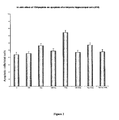
- the TSR peptide has no effect on the basal apoptosis ( Figure 2 ).
- the number of apoptotic cells is increased in the presence of FasL compared to control cultures ( Figure 2 ).
- FasL culture the number of apoptotic cells is decreased in the presence of TSR peptide, demonstrating a protective effect of TSR peptide against the apoptosis induced by FasL ( Figure 2 ).
- the number of apoptotic cells is more important than in the presence of FasL ( Figure 2 ).
- the number of apoptotic cells is decreased in the presence of TSR peptide to a level comparable to control cells.
- TSR peptide has a protective effect on the TRAIL induced apoptosis ( Figure 2 ).
- TSR peptide restores the basal level of apoptosis ( Figure 2 ).
- TSR peptide inhibits the apoptosis induced by the cell death receptors (Fas, TRAIL-R) when it was added in the culture medium of embryonic hippocampal cells.
Landscapes
- Health & Medical Sciences (AREA)
- Life Sciences & Earth Sciences (AREA)
- Engineering & Computer Science (AREA)
- Bioinformatics & Cheminformatics (AREA)
- Pharmacology & Pharmacy (AREA)
- Veterinary Medicine (AREA)
- Public Health (AREA)
- General Health & Medical Sciences (AREA)
- Animal Behavior & Ethology (AREA)
- Chemical & Material Sciences (AREA)
- Medicinal Chemistry (AREA)
- General Chemical & Material Sciences (AREA)
- Nuclear Medicine, Radiotherapy & Molecular Imaging (AREA)
- Chemical Kinetics & Catalysis (AREA)
- Organic Chemistry (AREA)
- Neurology (AREA)
- Biomedical Technology (AREA)
- Neurosurgery (AREA)
- Epidemiology (AREA)
- Proteomics, Peptides & Aminoacids (AREA)
- Immunology (AREA)
- Gastroenterology & Hepatology (AREA)
- Marine Sciences & Fisheries (AREA)
- Zoology (AREA)
- Urology & Nephrology (AREA)
- Hospice & Palliative Care (AREA)
- Psychiatry (AREA)
- Orthopedic Medicine & Surgery (AREA)
- Physical Education & Sports Medicine (AREA)
- Psychology (AREA)
- Rheumatology (AREA)
- Pain & Pain Management (AREA)
- Vascular Medicine (AREA)
- Cardiology (AREA)
- Heart & Thoracic Surgery (AREA)
- Medicines That Contain Protein Lipid Enzymes And Other Medicines (AREA)
Description
- The invention relates to a polypeptide derived from the TSR (thrombospondin type 1 units) of SCO-Spondin for inhibiting or preventing the neuronal apoptosis mediated by the cell death receptor ligands, such as TRAIL or FasL. More particularly, the invention relates to said polypeptide for inhibiting or preventing the neuronal apoptosis associated with a disease selected from the group consisting of neurodegenerative disorders, cerebral ischemia, neuronal traumas, neuronal inflammatory diseases, and viral neurodegenerations.
- Selective neuronal cell loss by apoptosis is a common feature of chronic neurodegenerative diseases such as Alzheimer's disease, amyotrophic lateral sclerosis, Parkinson's disease and Huntington's disease (Honig L.S. et al., 2001). Although necrosis has been considered as the dominant type of cell death in acute or subacute pathologic conditions induced by ischemia, toxins, trauma and infection, growing evidence suggests that apoptosis contributes significantly to neuronal loss in these processes.
- Whatever the underlying cause, all neuronal apoptotic events share common features and involve a prescribed set of factors that include c-Jun N-terminal kinase (JNK), which activates c-Jun and thereby increases transcription of various apoptotic factors. Additionally, the intrinsic mitochondrial death pathway involving Bax, Apaf-1, caspase 9, and caspase 3 has been shown to be critical for apoptosis in both developing and mature injured neurons. Bax, a bcl-2 family protein, is of particular importance in neuronal apoptosis. When overexpressed, Bax promotes cell death (Oltvai et al. 1993), and Bax deficient sympathetic neurons deprived of NGF do not undergo normal apoptosis (Deckwerth et al. 1996). Other Bcl-2 family members are also important in modulating neuronal apoptosis, c.g. phosphorylation of Bim by JNK potentiates Bax-dependent apoptosis. (See, e.g., Putcha et al. 2001).
- The apoptotic process can be triggered by either intrinsic or extrinsic signals (Cifone M.G.et al. 1995; Li H. et al. 1999.). The best example of the extrinsic pathway of apoptosis is the tumor necrosis factor (TNF) superfamily of cytokines such as TNF-α, Fas ligand (FasL) and TNF-related apoptosis inducing ligand (TRAIL). For example, FasL has been reported to be associated to a variety of neurologic disorders such as amyotrophic lateral sclerosis (Yi et al., 2000), Alzheimer disease (Su et al., 2003), and neuronal apoptosis following ischemia (Rosenbaum et al., 2000). Activation of death receptor signalling pathways was also detected during Parkinson disease (Hartmann et al., 2002). The function of other death receptors such as TRAIL receptors, also expressed in neurons, was detected during the neuronal degeneration occurring in several pathological conditions: inflammatory processes such as multiple sclerosis (Aktas et al., 2005), experimental models of neurodegeneration (Cantarella et al., 2003; Murata et al., 2006), Alzheimer patients (Uberti et al., 2004) and ischemia (Martin-Villalba et al., 1999).
- Therefore methods that inhibit or prevent neuronal apoptosis would be particularly beneficial to those susceptible to suffer from neuronal injury or neurodegenerative disease.
- The polypeptides used herein been described in the international patent application
WO99/03890 - However, no role has been suspected nor suggested for their ability to prevent neuronal apoptosis such as in neurodegenerative disorders, cerebral ischemia, neuronal traumas, neuronal inflammatory diseases and viral neurodegenerations in populations at risk. Populations at risk include people which are susceptible to suffer from such disorders, such as for example healthy members of a family where Alzheimer's disease has already occurred or in areas where a virus inducing neurodegeneration could spread. In such cases, there is a need for a medicament able to inhibit the neuronal apoptosis and consequently to prevent such diseases. The present invention provides a solution to this need by demonstrating that the polypeptides described herein are able to act on neuronal apoptosis mediated by the cell death receptor ligands (e.g., TRAIL, FasL).
- The present invention relates to a polypeptide comprising the sequence consisting of:
- -W-S-G-W-S-S-C-S-R-S-C-G- (SEQ ID N°8)
- The invention also relates to the polypeptide as above defined for use in a method for inhibiting or preventing the apoptosis resulting from a disease selected from the group consisting of neurodegenerative disorders, cerebral ischemia, neuronal traumas, neuronal inflammatory diseases, and viral neurodegenerations.
- The inventors have demonstrated that a peptide derived from the TSR (thrombospondin type I units) of the SCO-spondin inhibits the neuronal apoptosis mediated by the cell death receptor ligands (TRAIL, FasL...).
- Is described herein the use of a polypeptide comprising or consisting of the following sequence
- -W-S-A1-C-S-A2-C-G- (SEQ ID N°1)
- Is also described herein a polypeptide comprising or consisting of the following sequence
- -W-S-A1-C-S-A2-C-G- (SEQ ID N°1)
- A first object of the present invention relates to a polypeptide comprising the sequence consisting of -W-S-G-W-S-S-C-S-R-S-C-G- (SEQ ID N°8), for use in a method for inhibiting or preventing the neuronal apoptosis mediated by at least one cell death receptor ligand selected from TRAIL and FasL.
- It should be recalled that in the description as a whole, "amino acid" is understood to mean both the natural amino acids and the non-natural amino acids. "Natural amino acid" is understood to mean the amino acids in the L form which can be found in natural proteins, that is to say alanine (A), arginine (R), asparagine (N), aspartic acid (D), cysteine (C), glutamine (Q), glutamic acid (E), glycine (G), histidine (H), isoleucine (I), leucine (L), lysine (K), methionine (M), phenylalanine (F), proline (P), serine (S), threonine (T), tryptophan (W), tyrosine (Y) and valine (V). However, the present invention also relates to the non-natural amino acids, that is to say the preceding amino acids in their D form, as well as the homo forms of some amino acids such as arginine, lysine, phenylalanine and serine or the nor forms of leucine or valine.
- The cell death receptor ligand according to the present invention is FasL and/or TRAIL.
- Advantageously, the neuronal apoptosis is associated with a disease selected from the group consisting of neurodegenerative disorders, cerebral ischemia, neuronal traumas, neuronal inflammatory diseases, and viral neurodegenerations.
- The term "neuronal apoptosis associated with a disease" refers to the neuronal apoptosis which results from said disease.
- In a particular embodiment, neurodegenerative disorders include but are not limited to amyotrophic lateral sclerosis (ALS), spinal muscular atrophy (SMA), Huntington's disease, Parkinson's disease, Alzheimer's disease, Diffuse Lewy Body disease, prion disease, progressive supranuclear palsy, multiple system atrophy, adrenoleukodystrophy, down syndrome and fronto-temporal dementia.
- In another embodiment, the cerebral ischemia may be focal or global.
- In another embodiment, neuronal traumas include but are not limited to anterograde degeneration, traumatic brain injury, spinal cord injury, and cholinergic denervation.
- In another embodiment, neuronal inflammatory diseases include but are not limited to multiple sclerosis (MS), encephalomyelitis, HTLV-associated myelopathy, and meningitis.
- In another embodiment, viral neurodegenerations include but are not limited to HIV-1 associated dementia, and neurodegenerations associated with moloney meurine leukemic virus, Boma disease virus, and Theiler's virus.
- It is also described herein the polypeptide as defined above for preventing ageing.
- Examples of polypeptides as described herein are such that:
- A1 ofSEQ ID N°1 is P;
- A1 denotes the peptide consisting of the sequence X1-W-X2-X3 (SEQ IDN °5) wherein X1, X2, X3 are chosen, independently of each other, from the group consisting ofG, S and C;
- A1 denotes the peptide consisting of the sequence X1-W-S-X3 (SEQ ID N°6) and A2 is chosen from R-S, V-S and V-T;
- as well as polypeptides comprising or consisting of the sequence -W-S-X1-W-S-X2-C-S-A2-C-G- (SEQ ID N°7), -W-S-G-W-S-S-C-S-R-S-C-G- (SEQ ID N°8) (i.e. the polypeptide of the invention), -W-S-P-C-S-V-T-C-G- (SEQ ID N°2), -W-S-S-C-S-V-T-C-G- (SEQ ID N°3) or -W-S-Q-C-S-V-T-C-G- (SEQ ID N°4).
- Polypeptides of the invention may be produced by any technique known per se in the art, such as without limitation, any chemical, biological, genetic or enzymatic technique, either alone or in combination(s).
- Knowing the amino acid sequence of the desired sequence, one skilled in the art can readily produce said polypeptides, by standard techniques for production of polypeptides. For instance, they can be synthesized using well-known solid phase method, preferably using a commercially available peptide synthesis apparatus (such as that made by Applied Biosystems, Foster City, California) and following the manufacturer's instructions.
- Alternatively, the polypeptides for use according to the invention can be synthesized by recombinant DNA techniques as is now well-known in the art. For example, these fragments can be obtained as DNA expression products after incorporation of DNA sequences encoding a recombinant protein comprising the desired polypeptide into expression vectors and introduction of such vectors into suitable eukaryotic or prokaryotic hosts that will express the recombinant protein comprising the desired polypeptide, from which they can be later isolated using well-known techniques.
- Polypeptides for use according to the invention can be used in an isolated (e.g., purified) form or contained in a vector, such as a membrane or lipid vesicle (e.g. a liposome).
- Alternatively, it is herein described the use of a nucleic acid construct encoding a polypeptide as defined above for the manufacture of a medicament for inhibiting or preventing the neuronal apoptosis mediated by at least one cell death receptor ligand such as TRAIL and/or FasL. Advantageously, the neuronal apoptosis is associated with a disease selected from the group consisting of neurodegenerative disorders, cerebral ischemia, neuronal traumas, neuronal inflammatory diseases, and viral neurodegenerations.
The invention also relates to a nucleic acid construct encoding the polypeptide of the invention comprising the sequence consisting of W-S-G-W-S-S-C-S-R-S-C-G-(SEQ ID N°8), for use in a method for inhibiting or preventing the neuronal apoptosis mediated by at least one cell death receptor ligand selected from FasL and/or TRAIL. Advantageously, the neuronal apoptosis is resulting from a disease selected from the group consisting of neurodegenerative disorders, cerebral ischemia, neuronal traumas, neuronal inflammatory diseases, and viral neurodegenerations. - It is described herein a vector comprising the nucleic acid construct encoding anyone of the polypeptides described above for use in a method for inhibiting or preventing neuronal apoptosis induced by at least one cell death receptor ligand selected from FasL and TRAIL. Advantageously, the neuronal apoptosis is associated with a disease selected from the group consisting of neurodegenerative disorders, cerebral ischemia, neuronal trauma, neuronal inflammatory diseases, and viral neurodegenerations.
- A further object of the present disclosure is the use of a vector comprising a nucleic acid construct encoding one of the polypeptides described above, for the manufacture of a medicament intended to inhibit or prevent the neuronal apoptosis associated with a disease selected from the group consisting of neurodegenerative disorders, cerebral ischemia, neuronal traumas, neuronal inflammatory diseases, and viral neurodegenerations.
- Such vectors/nucleic acid constructs may comprise regulatory elements, such as a promoter, enhancer, terminator and the like, to cause or direct expression of said polypeptide upon administration to a subject. The vectors may further comprise one or several origins of replication and/or selectable markers. The promoter region may be homologous or heterologous with respect to the coding sequence, and provide for ubiquitous, constitutive, regulated and/or tissue specific expression, in any appropriate host cell, including for in vivo use.
- Examples of plasmids include replicating plasmids comprising an origin of replication, or integrative plasmids, such as for instance pUC, pcDNA, pBR, and the like. Examples of viral vector include adenoviral, retroviral, herpesvirus and AAV vectors. Such recombinant viruses may be produced by techniques known in the art, such as by transfecting packaging cells or by transient transfection with helper plasmids or viruses. Typical examples of virus packaging cells include PA317 cells, PsiCRIP cells, GPenv+ cells, 293 cells, etc. Detailed protocols for producing such replication-defective recombinant viruses may be found for instance in
WO95/14785 WO96/22378 US5,882,877 ,US6,013,516 ,US4,861,719 ,US5,278,056 andWO94/19478 - Is also described herein a polypeptide comprising or consisting of the following sequence
- -W-S-A1-C-S-A2-C-G- (SEQ ID N°1)
- An object of the invention is thus a polypeptide comprising the sequence consisting of -W-S-G-W-S-S-C-S-R-S-C-G- (SEQ ID N°8), for use in a method for preventing a disease selected from the group consisting of neurodegenerative disorders, cerebral ischemia, neuronal traumas, neuronal inflammatory diseases and viral neurodegenerations.
- Advantageously, said neurodegenerative disorders are selected from the group consisting of amyotrophic lateral sclerosis (ALS), spinal muscular atrophy (SMA), Huntington's disease, Parkinson's disease, Alzheimer's disease, Diffuse Lewy Body disease, prion disease, progressive supranuclear palsy, multiple system atrophy, adrenoleukodystrophy, down syndrome and fronto-temporal dementia.
- The present disclosure also relates to a method for inhibiting or preventing neuronal apoptosis associated with a disease selected from the group consisting of neurodegenerative disorders, cerebral ischemia, neuronal traumas, neuronal inflammatory diseases, and viral neurodegenerations, comprising administering a subject in need thereof with a therapeutically effective amount of a polypeptide or a nucleic acid construct or vector of the invention.
- Also described is a method for preventing a disease selected from the group consisting of neurodegenerative disorders, cerebral ischemia, neuronal traumas, neuronal inflammatory diseases, and viral neurodegenerations, comprising administering a subject in need thereof with a therapeutically effective amount of a polypeptide or a nucleic acid construct or vector of the invention.
- By a "therapeutically effective amount" is meant a sufficient amount of said polypeptide or acid nucleic construct for inhibiting or preventing apoptosis at a reasonable benefit/risk ratio applicable to any medical treatment.
- It will be understood that the total daily usage of the compounds and compositions of the present invention will be decided by the attending physician within the scope of sound medical judgment. The specific therapeutically effective dose level for any particular subject will depend upon a variety of factors including the disorder being prevented and the severity of the disorder; activity of the specific compound employed; the specific composition employed, the age, body weight, general health, sex and diet of the subject; the time of administration, route of administration, and rate of excretion of the specific compound employed; the duration of the prophylactic treatment; drugs used in combination or coincidental with the specific polypeptide employed; and like factors well known in the medical arts. For example, it is well within the skill of the art to start doses of the compound at levels lower than those required to achieve the desired prophylactic effect and to gradually increase the dosage until the desired effect is achieved. However, the daily dosage of the products may be varied over a wide range from 0.01 to 1,000 mg per adult per day. Preferably, the compositions contain 0.01, 0.05, 0.1, 0.5, 1.0, 2.5, 5.0, 10.0, 15.0, 25.0, 50.0, 100, 250 and 500 mg of the active ingredient for the symptomatic adjustment of the dosage to the subject susceptible to suffer from the disorder. A medicament typically contains from about 0.01 mg to about 500 mg of the active ingredient, preferably from 1 mg to about 100 mg of the active ingredient. An effective amount of the drug is ordinarily supplied at a dosage level from 0.0002 mg/kg to about 20 mg/kg of body weight per day, especially from about 0.001 mg/kg to 7 mg/kg of body weight per day.
- The polypeptide and nucleic acid construct for use according to the invention may be combined with pharmaceutically acceptable excipients, and optionally sustained-release matrices, such as biodegradable polymers, to form therapeutic compositions.
- In the pharmaceutical compositions for oral, sublingual, subcutaneous, intramuscular, intravenous, transdermal, local or rectal administration, the active principle, alone or in combination with another active principle, can be administered in a unit administration form, as a mixture with conventional pharmaceutical supports, to animals and human beings. Suitable unit administration forms comprise oral-route forms such as tablets, gel capsules, powders, granules and oral suspensions or solutions, sublingual and buccal administration forms, aerosols, implants, subcutaneous, transdermal, topical, intraperitoneal, intramuscular, intravenous, subdermal, transdermal, intrathecal and intranasal administration forms and rectal administration forms.
- In a particular embodiment, polypeptides and nucleic acid constructs of the invention are intrathecally administered.
- In another particular embodiment, polypeptides and nucleic acid constructs for use according to the invention are delivered through a micro pump placed under the skin or directly in the brain. In such embodiment, polypeptides and acid nucleic constructs of the invention are delivered to where they are useful in a high amount.
- Preferably, the pharmaceutical compositions contain vehicles which are pharmaceutically acceptable for a formulation capable of being injected. These may be in particular isotonic, sterile, saline solutions (monosodium or disodium phosphate, sodium, potassium, calcium or magnesium chloride and the like or mixtures of such salts), or dry, especially freeze-dried compositions which upon addition, depending on the case, of sterilized water or physiological saline, permit the constitution of injectable solutions.
- The pharmaceutical forms suitable for injectable use include sterile aqueous solutions or dispersions; formulations including sesame oil, peanut oil or aqueous propylene glycol; and sterile powders for the extemporaneous preparation of sterile injectable solutions or dispersions. In all cases, the form must be sterile and must be fluid to the extent that easy syringability exists. It must be stable under the conditions of manufacture and storage and must be preserved against the contaminating action of microorganisms, such as bacteria and fungi.
- Solutions comprising compounds for use according to the invention as free base or pharmacologically acceptable salts can be prepared in water suitably mixed with a surfactant, such as hydroxypropylcellulose. Dispersions can also be prepared in glycerol, liquid polyethylene glycols, and mixtures thereof and in oils. Under ordinary conditions of storage and use, these preparations contain a preservative to prevent the growth of microorganisms.
- The inhibitor for use according to the invention can be formulated into a composition in a neutral or salt form. Pharmaceutically acceptable salts include the acid addition salts (formed with the free amino groups of the protein) and which are formed with inorganic acids such as, for example, hydrochloric or phosphoric acids, or such organic acids as acetic, oxalic, tartaric, mandelic, and the like. Salts formed with the free carboxyl groups can also be derived from inorganic bases such as, for example, sodium, potassium, ammonium, calcium, or ferric hydroxides, and such organic bases as isopropylamine, trimethylamine, histidine, procaine and the like.
- The carrier can also be a solvent or dispersion medium containing, for example, water, ethanol, polyol (for example, glycerol, propylene glycol, and liquid polyethylene glycol, and the like), suitable mixtures thereof, and vegetables oils. The proper fluidity can be maintained, for example, by the use of a coating, such as lecithin, by the maintenance of the required particle size in the case of dispersion and by the use of surfactants. The prevention of the action of microorganisms can be brought about by various antibacterial and antifungal agents, for example, parabens, chlorobutanol, phenol, sorbic acid, thimerosal, and the like. In many cases, it will be preferable to include isotonic agents, for example, sugars or sodium chloride. Prolonged absorption of the injectable compositions can be brought about by the use in the compositions of agents delaying absorption, for example, aluminium monostearate and gelatin.
- Sterile injectable solutions are prepared by incorporating the active polypeptides in the required amount in the appropriate solvent with various of the other ingredients enumerated above, as required, followed by filtered sterilization. Generally, dispersions are prepared by incorporating the various sterilized active ingredients into a sterile vehicle which contains the basic dispersion medium and the required other ingredients from those enumerated above. In the case of sterile powders for the preparation of sterile injectable solutions, the preferred methods of preparation are vacuum-drying and freeze-drying techniques which yield a powder of the active ingredient plus any additional desired ingredient from a previously sterile-filtered solution thereof.
- Upon formulation, solutions will be administered in a manner compatible with the dosage formulation and in such amount as is therapeutically effective. The formulations are easily administered in a variety of dosage forms, such as the type of injectable solutions described above, but drug release capsules and the like can also be employed.
- For parenteral administration in an aqueous solution, for example, the solution should be suitably buffered if necessary and the liquid diluent first rendered isotonic with sufficient saline or glucose. These particular aqueous solutions are especially suitable for intravenous, intramuscular, subcutaneous and intraperitoneal administration. In this connection, sterile aqueous media which can be employed will be known to those of skill in the art in light of the present disclosure. For example, one dosage could be dissolved in 1 ml of isotonic NaCl solution and either added to 1000 ml of hypodermoclysis fluid or injected at the proposed site of infusion. Some variation in dosage will necessarily occur depending on the condition of the subject susceptible to suffer from the disorder. The person responsible for administration will, in any event, determine the appropriate dose for the individual subject.
- In addition to the compounds for use according to the invention formulated for parenteral administration, such as intravenous or intramuscular injection, other pharmaceutically acceptable forms include, e.g. tablets or other solids for oral administration; liposomal formulations; time release capsules; and any other form currently used.
- The compounds for use according to invention may be delivered in a pharmaceutically acceptable ophthalmic vehicle, such that the polypeptide can penetrate the corneal and internal regions of the eye, as for example the anterior chamber, posterior chamber, vitreous body, aqueous humor, vitreous humor, cornea, iris/ciliary, lens, choroid/retina and sclera. The pharmaceutically-acceptable ophthalmic vehicle may, for example, be an ointment, vegetable oil or an encapsulating material. Alternatively, inhibitors of the invention may be injected directly into the vitreous, aqueous humour, ciliary body tissue(s) or cells and/or extra-ocular muscles by electroporation means.
- The pharmaceutical composition may comprise synthetic cerebrospinal fluid. An example synthetic cerebrospinal fluid is commercially available from ALZET Osmotic Pumps (Cupertino, CA, USA).
- Inhibitors for use according to the invention may also be combined with other anti-apoptotic agents to enhance their effectiveness. Such agents may include Rosiglitazone (Jung TW. et al. 2007).
- The invention will be further illustrated in view of the following figures and examples.
-
-
Figure 1 : Photography of hippocampal embryonic cells at ED18 after 3 days in culture. Cultures consist in low differentiated cells organized in clusters (neurospheres, large arrow), and migrating cells leaving clusters and beginning to differentiate (fine arrow). -
Figure 2 : Histogramm representing the percentage of apoptotic cells outside the clusters compared with the total number of cells, data provided by only one experiment realized in triplicate. In each assay, apoptotic labelling with TUNEL method were counted on 4 photos aleatory on each slide, and having always at least I neurosphere. The cultures were treated (cases TSR, FasL, TSR+FasL, TRAIL, TSR+TRAIL, FasL+TRAIL and TSR+FasL+TRAIL) or not treated (control, c) during 7 days with a TSR peptide concentration of 375 µg/mL and/or 20 ng/mL of FasL and/or 80 ng/mL of TRAIL). - Cultures of hippocampal cells from foetal rats: Cells were obtained from E18 rat brains. Tissues were removed in dissection medium (Hank's Balanced Salt Solution, HBSS plus antibiotics). Composition of dissection medium HBSS plus antibiotics):
- potassium chloride (KCl): 400 mg/L
- potassium phosphate (KH2PO4): 60 mg/L
- sodium bicarbonate (NaHCO3): 350 mg/L
- sodium chloride (NaCl): 8000 mg/L
- sodium phosphate (Na2HPO4): 48 mg/L
- D-glucose: 1000 mg/L
- penicillin-streptomycin: 100 units/mL
- Meninges were removed from the embryos brains and hippocampus was dissected in a sterile petri dish in HBSS plus antibiotic medium. After centrifugation cells were ressuspended in culture medium MEM with Earl Salts supplemented with B27, EGF, FGF-2 and antibiotics. The composition of the culture medium was the following :
- L-arginine hydrochloride: 126 mg/mL
- L-cystine: 24 mg/L
- L-glutamine: 292 mg/L
- L-histidine-H2O Hydrochloride: 42 mg/L
- L-isoleucine: 52 mg/L
- L-leucine 52 mg/L
- L-lysine Hydrochloride: 73 mg/L
- L-methionine: 15 mg/L
- L-phenylalanine: 32 mg/L
- L-threonine: 48 mg/L
- L-tryptophane: 10 mg/L
- L-tyrosine: 36 mg/L
- L-valine: 46 mg/L
- choline Chloride: 1 mg/L
- D-calcium pantothenate: 1 mg/L
- folic acid: I mg/L
- I-inositol: 2 mg/L
- Niacinamide: 1 mg/L
- pyridoxal Hydrochloride: 1 mg/L
- Riboflavine: 0,1 mg/L
- thiamine Hydrochloride: 1 mg/L
- calcium chloride (CaCl2-2H2O): 264 mg/L
- magnesium sulfate (MgSO4-7H2O): 200 mg/L
- potassium chloride (KCl): 400 mg/L
- sodium bicarbonate (NaHCO3): 2200 mg/L
- sodium chloride (NaCl): 6800 mg/L
- sodium phosphate (NaH2PO4-2H2O): 158 mg/L
- D-glucose: 4500 mg/L
- phenol red: 10 mg/L
- Sodium pyruvate: 110,04 mg/L
- B27 medium (Invitrogen) 50X: 2% v/v
- EGF: 20 µg/L
- FGF-2: 20 µg/L
- Penicillin-streptomycin: 100 units/mL
- Hippocampus fragments were dissociated mechanically with 1 syringe 1 ml and 1 needle 25G and added with 1 my of culture medium then centrifuged at 1200 rpm for 10 min. The supernatant is then removed and the cell pellet is resupended in 1 mL of culture medium. Other mechanic dissociation was performed with a seringe 1 mL and a needle 25G. Cell count was determined with Malassez hemocytometer and viability of cells was evaluated by counting the cells which have not absorbed the Trypan blue. Then cells are seeded in 48-well plates, at 40 000 cells by well in 500 µL of culture medium, on culture dishes precovered with collagen.
- Preparation of precovered dishes with collagen: After an incubation of 10 min in absolute ethanol, the glass dishes were sterilized by heating 2H at 120°C. Sterilized glass dishes (10 mm diameter) was put on culture well and covered with a 0.1 mg/mL collagen calf skin solution. After 1 hr incubation at 37°C, the excess of solution is removed and the plate is maintained one night under hood of culture in order to let dry the plates. Before use, the wells were washed twice with 200 µL sterile distillated water.
- Treatment of embryonic rat hippocampal cells: After 5 days of culture, cells were cultured in medium without growth factors (MEM with Earl salts, B27 and antibiotics) with different conditions of treatment combinating TSR peptide (WSGWSSCSRSCG - SEQ ID N°8) (375 µg/mL), FasL (20 ng/mL) and TRAIL (80 ng/mL). The composition of culture medium MEM, Earl salts, B27 and antibiotics is the following:
- L-arginine Hydrochloride: 126 mg/mL
- L-cystine: 24 mg/L
- L-glutamine: 292 mg/L
- L-histidine-H2O Hydrochloride: 42 mg/L
- L-isoleucine: 52 mg/L
- L-leucine: 52 mg/L
- L-lysine Hydrochloride: 73 mg/L
- L-methionine: 15 mg/L
- L-phenylalanine: 32 mg/L
- L-threonine: 48 mg/L
- L-tryptophane: 10 mg/L
- L-tyrosine: 36 mg/L
- L-valine: 46 mg/L
- choline Chloride: 1 mg/L
- D-calcium Pantothenate: 1 mg/L
- folic acid: I mg/L
- 1-inositol: 2 mg/L
- Niacinamide: 1 mg/L
- pyridoxal hydrochloride: 1 mg/L
- Riboflavine: 0.1 mg/L
- thiamine hydrochloride: 1 mg/L
- calcium chloride (CaCl2-2H2O): 264 mg/L
- magnesium Sulfate (MgSO4-7H2O): 200 mg/L
- potassium Chloride (KCI): 400 mg/L
- sodium bicarbonate (NaHCO3): 2200 mg/L
- sodium chloride (NaCl): 6800 mg/L
- sodium phosphate (NaH2PO4-2H2O): 158 mg/L
- D-glucose: 4500 mg/L
- phenol red: 10 mg/L
- Sodium Pyruvate: 110.04 mg/L
- B27 (composition : Invitrogen) 50X : 2% v/v
- Penicillin-streptomycin: 100 units/mL
- Apoptosis detection in treated hippocampal cells in cultures: After a 7-day of treatment, the culture medium was removed and cells were fixed in a 4 % paraformaldehyde PBS solution (pH 7.6) during 30 min at RT and washed thrice with PBS. Cells were permeabilized with 0.2% de Triton X100-PBS solution at 4°C, for 5 min, washed thrice with PBS and maintained in equilibration buffer (10 min, RT).
-
- potassium Cacodylate (pH6.6 at 25°C): 200mM
- Tris-HCl (pH6.6 at 25°C) : 25 mM
- Dithiothreitol (DTT): 0.2 mM
- Bovine serum albumin (BSA): 0.25 mg/L
- cobalt chloride: 2.5 mM
-
- potassium cacodylate (pH6.6 at 25°C) : 176.47 mM
- Tris-HCl (pH6.6 at 25°C) : 22.06 mM
- Dithiothreitol (DTT) : 0.18 mM
- Bovine serum albumin (BSA) : 0.22 mg/L
- cobalt Chloride: 2.21 mM
- Fluorescein-12-dUTP : 4.9 µM
- dATP : 9.8 µM
- Tris-HCl (pH 7.6) : 0.98 mM
- EDTA : 98 µM
- Deoxynucleotidyl terminal transferase : 0.59 units/µL
- The glass dishes containing cultures were incubated during 60 min at 37 °C with a drop of 25 µL of rTdT buffer following by incubation with 200 µL of SSC 2X/ well during 15 min at RT in the dark and three washes during 5 min with 200µL of PBS.
- A counter-staining was performed with 4',6-Diamidino-2-phenylindole (DAPI), in order to determine in the same time the total cell number and to verify the number of apoptotic cells (with nuclear fragmentation) as a second evaluation. Cells were incubated during 5 min with 1 µg/mL of DAPI and washed thrice during 5 min with 200µL of PBS.
- The glass dishes were mounted with Dako Fluorescent Mounting Medium (Dako), and stored at 4°C in the dark.
- Analysis of the results: The results were photographed using a Leica microscope equipped with a digital camera coupled to a computer, at a rate of 4 photographs taken on each microscope slide. Each one of these photographs systematically contained I or several clusters of immature cells and was always carried out using the X10 objective. The total number of cells was evaluated by manual counting of the number of cells stained with DAPI. At the same time, the number of apoptotic cells was determined by counting of the number of TUNEL-positive cells, and correlated with the counting of DAPI stained cells exhibiting the nuclear fragmentation of apoptotic cells.
- Statistical analyses were carried out by Statview 6 and Systat 10 software. Apoptosis values were compared using one way ANOVA. Values corresponded to mean ± standard error mean (SEM).
- At 3 days, cultures consist in clusters of undifferentiated cells, regarded as "neurospheres" and also migrating cells (
Figure 1 )). - After treatment during 7 days, apoptosis in hippocampal cells was decreased by peptide TSR treatment induced by cell death receptor pathway, as shown in
Figure 1 . The neuroprotective effect was dominant when apoptosis was induced by TRAIL. - The TSR peptide has no effect on the basal apoptosis (
Figure 2 ). The number of apoptotic cells is increased in the presence of FasL compared to control cultures (Figure 2 ). Compared to FasL culture, the number of apoptotic cells is decreased in the presence of TSR peptide, demonstrating a protective effect of TSR peptide against the apoptosis induced by FasL (Figure 2 ). Furthermore, the number of apoptotic cells is more important than in the presence of FasL (Figure 2 ). Compared to TRAIL culture, the number of apoptotic cells is decreased in the presence of TSR peptide to a level comparable to control cells. TSR peptide has a protective effect on the TRAIL induced apoptosis (Figure 2 ). Finally, TSR peptide restores the basal level of apoptosis (Figure 2 ). - Our results show that the TSR peptide inhibits the apoptosis induced by the cell death receptors (Fas, TRAIL-R) when it was added in the culture medium of embryonic hippocampal cells.
-
- Aktas O, Smorodchenko A, Brocke S, Infante-Duarte C, Topphoff US, Vogt J, Prozorovski T, Meier S, Osmanova V, Pohl E, Bechmann I, Nitsch R, Zipp F. Neuronal damage in autoimmune neuroinflammation mediated by the death ligand TRAIL. Neuron. 2005 May 5;46(3):421-32.
- Cantarella G, Uberti D, Carsana T, Lombardo G, Bernardini R, Memo M. Neutralization of TRAIL death pathway protects human neuronal cell line from beta-amyloid toxicity. Cell Death Differ. 2003 Jan;10(1):134-41.
- Deckwerth TL, Elliott JL, Knudson CM, Johnson EM Jr, Snider WD, Korsmeyer SJ. BAX is required for neuronal death after trophic factor deprivation and during development. Neuron. 1996 Sep;17(3):401-11.
- Ethell DW, Buhler LA. Fas ligand-mediated apoptosis in degenerative disorders of the brain. J Clin Immunol. 2003 Nov;23(6):439-46. Review.
- Hartmann A, Mouatt-Prigent A, Faucheux BA, Agid Y, Hirsch EC. FADD: A link between TNF family receptors and caspases in Parkinson's disease. Neurology. 2002 Jan 22;58(2):308-10.
- Honig L.S. and R.N. Rosenberg, Apoptosis and neurologic disease. Am. J. Med. 108 (2000), pp. 317-330; L.J. Martin, Neuronal cell death in nervous system development, disease, and injury (Review) . Int. J. Mol. Med. 7 (2001), pp. 455-478.
- Jung TW, Lee JY, Shim WS, Kang ES, Kim SK, Ahn CW, Lee HC, Cha BS. Rosiglitazone protects human neuroblastoma SH-SY5Y cells against MPP+ induced cytotoxicity via inhibition of mitochondrial dysfunction and ROS production J. Neurol. Sci. 2007; 253:53-60.
- Li H. and J. Yuan, Deciphering the pathways of life and death. Curr. Opin. Cell Biol. 11 (1999), pp. 261-266.).
- Lovell MA, Geiger H, Van Zant GE, Lynn BC, Markesbery WR. Neurobiol Aging. 2006 Jul;27(7):909-17. Isolation of neural precursor cells from Alzheimer's disease and aged control postmortem brain.
- M.G. Cifone, P. Roncaioli, R. De Maria, G. Camarda, A. Santoni, G. Ruberti and R. Testi, Multiple pathways originate at the Fas/APO-1 (CD95) receptor: sequential involvement of phosphatidylcholine-specific phospholipase C and acidic sphingomyelinase in the propagation of the apoptotic signal. EMBO J. 14 (1995), pp. 5859-5868
- Martin-Villalba A, Herr I, Jeremias I, Hahne M, Brandt R, Vogel J, Schenkel J, Herdegen T, Debatin KM. CD95 ligand (Fas-L/APO-1L) and tumor necrosis factor-related apoptosis-inducing ligand mediate ischemia-induced apoptosis in neurons. J Neurosci. 1999 May 15;19(10):3809-17.
- Meiniel A, Meiniel R, Goncalves-Mendes N, Creveaux I, Didier R, Dastugue B. The thrombospondin type I repeat (TSR) and neuronal differentiation: roles of SCO-spondin oligopeptides on neuronal cell types and cell lines. Int Rev Cytol. 2003;230:1-39.
- Monnerie H, Dastugue B, Meiniel A. Effect of synthetic peptides derived from SCO-spondin conserved domains on chick cortical and spinal-cord neurons in cell cultures. Cell Tissue Research 1998 293, 407-418.
- Murata T, Tsuboi M, Hikita K, Kaneda N. Protective effects of neurotrophic factors on tumor necrosis factor-related apoptosis-inducing ligand (TRAIL)-mediated apoptosis of murine adrenal chromaffin cell line tsAM5D. J Biol Chem. 2006 Aug 11;281(32):22503-16.
- Oltvai ZN, Milliman CL, Korsmeyer SJ. Bcl-2 heterodimerizes in vivo with a conserved homolog, Bax, that accelerates programmed cell death. Cell. 1993 Aug 27;74(4):609-19.
- Putcha GV, Moulder KL, Golden JP, Bouillet P, Adams JA, Strasser A, Johnson EM. Induction of BIM, a proapoptotic BH3-only BCL-2 family member, is critical for neuronal apoptosis. Neuron. 2001 Mar;29(3):615-28.
- Rosenbaum DM, Gupta G, D'Amore J, Singh M, Weidenheim K, Zhang H, Kessler JA. Fas (CD95/APO-1) plays a role in the pathophysiology of focal cerebral ischemia. J Neurosci Res. 2000 Sep 15;61(6):686-92.
- Steindler DA, Pincus DW. Stem cells and neuropoiesis in the adult human brain. Lancet. 2002 Mar 23;359(9311):1047-54. Review.
- Tseng HC, Ruegg SJ, Maronski M, Messam CA, Grinspan JB, Dichter MA. Injuring neurons induces neuronal differentiation in a population of hippocampal precursor cells in culture. [Neurobiol Dis. 2006]
- Uberti D, Cantarella G, Facchetti F, Cafici A, Grasso G, Bernardini R, Memo M. TRAIL is expressed in the brain cells of Alzheimer's disease patients. Neuroreport. 2004 Mar 22;15(4):579-81.
- Yi FH, Lautrette C, Vermot-Desroches C, Bordessoule D, Couratier P, Wijdenes J, Preud'homme JL, Jauberteau MO. In vitro induction of neuronal apoptosis by anti-Fas antibody-containing sera from amyotrophic lateral sclerosis patients. J Neuroimmunol. 2000 Sep 22;109(2):211-20.
-
- <110> Institut National de la Santé et de la Recherche Médicale (INSERM)
MEINIEL, Annie
JAUBERTEAU, Marie-odile LALLOUE, Fabrice - <120> A polypeptide for inhibiting or preventing neuronal apoptosis mediated by the cell death receptor ligands
- <130> D25830
- <150>
EP07301323.7
<151> 2007-08-24 - <160> 8
- <170> PatentIn version 3.3
- <210> 1
<211> 8
<212> PRT
<213> Artificial sequence - <220>
<223> Peptide derived from the TSR (thrombospondin type 1 units) of sco-spondin - <220>
<221> MISC_FEATURE
<222> (3)..(3)
<223> Amino acid sequence comprising 1 to 5 amino acids - <220>
<221> MISC_FEATURE
<222> (6)..(6)
<223> Amino acid sequence comprising 1 to 5 amino acids - <400> 1

- <210> 2
<211> 9
<212> PRT
<213> Artificial sequence - <220>
<223> Peptide derived from the TSR (thrombospondin type 1 units) of SCO-spondin - <400> 2

- <210> 3
<211> 9
<212> PRT
<213> Artificial sequence - <220>
<223> Peptide derived from the TSR (thrombospondin type 1 units) of SCO-spondin - <400> 3

- <210> 4
<211> 9
<212> PRT
<213> Artificial sequence - <220>
<223> Peptide derived from the TSR (thrombospondin type 1 units) of SCO-spondin - <400> 4

- <210> 5
<211> 4
<212> PRT
<213> Artificial sequence - <220>
<223> sequence A1 - <220>
<221> MISC_FEATURE
<222> (1)..(1)
<223> Amino acid chosen from the group consisting of G, S and C - <220>
<221> MISC_FEATURE
<222> (3)..(4)
<223> Amino acid chosen from the group consisting of G, S and C - <400> 5

- <210> 6
<211> 4
<212> PRT
<213> Artificial sequence - <220>
<223> sequence A1 - <220>
<221> MISC_FEATURE
<222> (1)..(1)
<223> amino acid chosen from the group consisting of G, S and C - <220>
<221> MISC_FEATURE
<222> (4) .. (4)
<223> amino acid chosen from the group consisting of G, S and C - <400> 6

- <210> 7
<211> 11
<212> PRT
<213> Artificial sequence - <220>
<223> Peptide derived from the TSR (thrombospondin type 1 units) of SCO-spondin - <220>
<221> MISC_FEATURE
<222> (3)..(3)
<223> amino acid chosen from the group consisting of G, S and C - <220>
<221> MISC_FEATURE
<222> (6)..(6)
<223> amino acid chosen from the group consisting of G, S and C - <220>
<221> MISC_FEATURE
<222> (9)..(9)
<223> amino acid sequence comprising 1 to 5 amino acids - <400> 7

- <210> 8
<211> 12
<212> PRT
<213> Artificial sequence - <220>
<223> Peptide derived from the TSR (thrombospondin type 1 units) of sco-spondin - <400> 8

for the manufacture of a medicament for inhibiting or preventing the neuronal apoptosis mediated by at least one cell death receptor ligand.
for inhibiting or preventing the neuronal apoptosis mediated by at least one cell death receptor ligand.
Claims (6)
- A polypeptide comprising the sequence consisting of-W-S-G-W-S-S-C-S-R-S-C-G- (SEQ ID N°8),for use in a method for inhibiting or preventing the neuronal apoptosis mediated by at least one cell death receptor ligand selected from TRAIL and FasL.
- The polypeptide for use according to claim 1, wherein said neuronal apoptosis is resulting from a disease selected from the group consisting of neurodegenerative disorders, cerebral ischemia, neuronal traumas, neuronal inflammatory diseases and viral neurodegenerations.
- The polypeptide for use according to claim 2, wherein said neurodegenerative disorders are selected from the group consisting of amyotrophic lateral sclerosis (ALS), spinal muscular atrophy (SMA), Huntington's disease, Parkinson's disease, Alzheimer's disease, Diffuse Lewy Body disease, prion disease, progressive supranuclear palsy, multiple system atrophy, adrenoleukodystrophy, down syndrome and fronto-temporal dementia.
- A nucleic acid construct encoding a polypeptide as defined in any of claims 1 to 3 for use in a method for inhibiting or preventing the neuronal apoptosis resulting from a disease selected from the group consisting of neurodegenerative disorders, cerebral ischemia, neuronal traumas, neuronal inflammatory diseases, and viral neurodegenerations.
- A polypeptide comprising the sequence consisting of-W-S-G-W-S-S-C-S-R-S-C-G- (SEQ ID N°8),for use in a method for preventing a disease selected from the group consisting of neurodegenerative disorders, cerebral ischemia, neuronal traumas, neuronal inflammatory diseases and viral neurodegenerations.
- The polypeptide for use according to claim 5, wherein said neurodegenerative disorders are selected from the group consisting of amyotrophic lateral sclerosis (ALS), spinal muscular atrophy (SMA), Huntington's disease, Parkinson's disease, Alzheimer's disease, Diffuse Lewy Body disease, prion disease, progressive supranuclear palsy, multiple system atrophy, adrenoleukodystrophy, down syndrome and fronto-temporal dementia.
Priority Applications (1)
| Application Number | Priority Date | Filing Date | Title |
|---|---|---|---|
| EP08787439A EP2195007B1 (en) | 2007-08-24 | 2008-08-22 | Use of sco-spondin peptides for inhibiting or preventing neuronal apoptosis mediated by cell death receptor ligands |
Applications Claiming Priority (3)
| Application Number | Priority Date | Filing Date | Title |
|---|---|---|---|
| EP07301323A EP2027868A1 (en) | 2007-08-24 | 2007-08-24 | Use of SCO-Spondin peptides for inhibiting or preventing neuronal apoptosis mediated by cell death receptor ligands |
| PCT/EP2008/061044 WO2009027350A1 (en) | 2007-08-24 | 2008-08-22 | Use of sco-spondin peptides for inhibiting or preventing neuronal apoptosis mediated by cell death receptor ligands |
| EP08787439A EP2195007B1 (en) | 2007-08-24 | 2008-08-22 | Use of sco-spondin peptides for inhibiting or preventing neuronal apoptosis mediated by cell death receptor ligands |
Publications (2)
| Publication Number | Publication Date |
|---|---|
| EP2195007A1 EP2195007A1 (en) | 2010-06-16 |
| EP2195007B1 true EP2195007B1 (en) | 2012-10-24 |
Family
ID=39015894
Family Applications (2)
| Application Number | Title | Priority Date | Filing Date |
|---|---|---|---|
| EP07301323A Ceased EP2027868A1 (en) | 2007-08-24 | 2007-08-24 | Use of SCO-Spondin peptides for inhibiting or preventing neuronal apoptosis mediated by cell death receptor ligands |
| EP08787439A Not-in-force EP2195007B1 (en) | 2007-08-24 | 2008-08-22 | Use of sco-spondin peptides for inhibiting or preventing neuronal apoptosis mediated by cell death receptor ligands |
Family Applications Before (1)
| Application Number | Title | Priority Date | Filing Date |
|---|---|---|---|
| EP07301323A Ceased EP2027868A1 (en) | 2007-08-24 | 2007-08-24 | Use of SCO-Spondin peptides for inhibiting or preventing neuronal apoptosis mediated by cell death receptor ligands |
Country Status (4)
| Country | Link |
|---|---|
| US (2) | US20110178023A1 (en) |
| EP (2) | EP2027868A1 (en) |
| ES (1) | ES2397300T3 (en) |
| WO (1) | WO2009027350A1 (en) |
Families Citing this family (6)
| Publication number | Priority date | Publication date | Assignee | Title |
|---|---|---|---|---|
| FR3024364B1 (en) | 2014-07-31 | 2016-09-02 | Neuronax | PARTICULATE OLIGOPEPTIDES AS ANTI-ANGIOGENIC DRUGS |
| FR3041644B1 (en) | 2015-09-25 | 2018-01-05 | Neuronax | CYCLIC POLYPEPTIDES, PROCESS FOR OBTAINING THEM AND THEIR THERAPEUTIC APPLICATION |
| EP3330284A1 (en) * | 2016-12-05 | 2018-06-06 | Neuronax Sa | Use of peptide compounds for promoting survival, growth and cell differentiation |
| EP3360884A1 (en) | 2017-02-10 | 2018-08-15 | Neuronax | Improved process for the preparation of a dodecapeptide |
| IL293426A (en) * | 2019-12-05 | 2022-07-01 | Axoltis Pharma | Peptide compositions and methods for treating tauopathies |
| CN113642386B (en) * | 2021-07-02 | 2024-06-21 | 广州金域医学检验中心有限公司 | Method, device, equipment and medium for evaluating nasopharyngeal carcinoma treatment effect based on deep learning |
Family Cites Families (9)
| Publication number | Priority date | Publication date | Assignee | Title |
|---|---|---|---|---|
| US4861719A (en) | 1986-04-25 | 1989-08-29 | Fred Hutchinson Cancer Research Center | DNA constructs for retrovirus packaging cell lines |
| US5278056A (en) | 1988-02-05 | 1994-01-11 | The Trustees Of Columbia University In The City Of New York | Retroviral packaging cell lines and process of using same |
| US5200397A (en) * | 1990-02-22 | 1993-04-06 | W. R. Grace & Co.-Conn. | Use of peptide analogs of thrombospondin for the inhibition of angiogenic activity |
| US5670488A (en) | 1992-12-03 | 1997-09-23 | Genzyme Corporation | Adenovirus vector for gene therapy |
| DE69434860T2 (en) | 1993-02-22 | 2007-03-15 | The Rockefeller University | PREPARING HELPET-FREE RETROVIRUS HIGH TITANIUM THROUGH TRANSIENTER TRANSFECTION |
| FR2712812B1 (en) | 1993-11-23 | 1996-02-09 | Centre Nat Rech Scient | Composition for the production of therapeutic products in vivo. |
| IL116816A (en) | 1995-01-20 | 2003-05-29 | Rhone Poulenc Rorer Sa | Cell for the production of a defective recombinant adenovirus or an adeno-associated virus and the various uses thereof |
| US6013516A (en) | 1995-10-06 | 2000-01-11 | The Salk Institute For Biological Studies | Vector and method of use for nucleic acid delivery to non-dividing cells |
| FR2766190B1 (en) * | 1997-07-16 | 2001-11-02 | Univ Clermont Auvergne | NOVEL PEPTIDES AND POLYPEPTIDES USEFUL IN THE REGENERATION OF THE NERVOUS SYSTEM |
-
2007
- 2007-08-24 EP EP07301323A patent/EP2027868A1/en not_active Ceased
-
2008
- 2008-08-22 WO PCT/EP2008/061044 patent/WO2009027350A1/en not_active Ceased
- 2008-08-22 US US12/674,448 patent/US20110178023A1/en not_active Abandoned
- 2008-08-22 EP EP08787439A patent/EP2195007B1/en not_active Not-in-force
- 2008-08-22 ES ES08787439T patent/ES2397300T3/en active Active
-
2017
- 2017-03-08 US US15/452,898 patent/US20170246247A1/en not_active Abandoned
Also Published As
| Publication number | Publication date |
|---|---|
| US20110178023A1 (en) | 2011-07-21 |
| EP2027868A1 (en) | 2009-02-25 |
| EP2195007A1 (en) | 2010-06-16 |
| ES2397300T3 (en) | 2013-03-06 |
| WO2009027350A1 (en) | 2009-03-05 |
| US20170246247A1 (en) | 2017-08-31 |
Similar Documents
| Publication | Publication Date | Title |
|---|---|---|
| US20170246247A1 (en) | Use Of SCO-Spondin Peptides For Inhibiting Or Preventing Neuronal Apoptosis Mediated By Cell Death Receptor Ligands | |
| CA2754065C (en) | Methods of inhibiting photoreceptor apoptosis | |
| KR20190120197A (en) | Therapeutic and Neuroprotective Peptides | |
| CN107001419A (en) | Neurodegenerative disorders | |
| WO2016200906A1 (en) | Norrin regulation of cellular production of junction proteins and use to treat retinal vasculature edema | |
| AU2019219835A1 (en) | Treatment of autoimmune diseases | |
| US20190002517A1 (en) | Neuropeptide y-derived peptides | |
| NZ535275A (en) | Spheron components useful in determining compounds capable of treating symptoms of alzheimer's disease, and treatments and animal models produced therefrom | |
| KR101838788B1 (en) | Use of antisecretory factor (af) in glioblastoma treatment | |
| US12485158B2 (en) | Norrin induced expression of genes and use thereof to treat disease | |
| JP2007535483A (en) | Spheron component useful for determining compounds that can treat symptoms of Alzheimer's disease | |
| JPWO2017170924A1 (en) | Neuroprotective peptide | |
| US20220265659A1 (en) | Methods and compositions for treating pax6-deficiency related disease | |
| US20210000911A1 (en) | Compositions and methods for protecting epithelial and barrier integrity | |
| CN117062629A (en) | Methods for reducing degeneration of retinal ganglion cells | |
| Class et al. | Patent application title: NEUROPEPTIDE Y-DERIVED PEPTIDES Inventors: David Paul D. Woldbye (CopenhagenØ, DK) Casper Rene Gøtzsche (Copenhagen Ø, DK) Kristian Klemp (Charlottenlund, DK) Vladimir Berezin (Copenhagen N, DK) Vladimir Berezin (Copenhagen N, DK) Elisabeth Bock (Charlottenlund, DK) | |
| AU2019463840A1 (en) | Short synthetic peptide and their uses for treating retinal degenerative diseases and/or tissue injuries | |
| JPWO2017170926A1 (en) | Neuroprotective peptide | |
| WO2015168786A1 (en) | Method for decreasing retinal ganglion cells degeneration | |
| HK1170259B (en) | Methods of inhibiting photoreceptor apoptosis | |
| Kireev et al. | Effect of growth hormone and melatonin on the brain: from molecular mechanisms to structural changes |
Legal Events
| Date | Code | Title | Description |
|---|---|---|---|
| PUAI | Public reference made under article 153(3) epc to a published international application that has entered the european phase |
Free format text: ORIGINAL CODE: 0009012 |
|
| 17P | Request for examination filed |
Effective date: 20100322 |
|
| AK | Designated contracting states |
Kind code of ref document: A1 Designated state(s): AT BE BG CH CY CZ DE DK EE ES FI FR GB GR HR HU IE IS IT LI LT LU LV MC MT NL NO PL PT RO SE SI SK TR |
|
| AX | Request for extension of the european patent |
Extension state: AL BA MK RS |
|
| DAX | Request for extension of the european patent (deleted) | ||
| 17Q | First examination report despatched |
Effective date: 20110211 |
|
| GRAP | Despatch of communication of intention to grant a patent |
Free format text: ORIGINAL CODE: EPIDOSNIGR1 |
|
| GRAS | Grant fee paid |
Free format text: ORIGINAL CODE: EPIDOSNIGR3 |
|
| GRAA | (expected) grant |
Free format text: ORIGINAL CODE: 0009210 |
|
| AK | Designated contracting states |
Kind code of ref document: B1 Designated state(s): AT BE BG CH CY CZ DE DK EE ES FI FR GB GR HR HU IE IS IT LI LT LU LV MC MT NL NO PL PT RO SE SI SK TR |
|
| REG | Reference to a national code |
Ref country code: GB Ref legal event code: FG4D |
|
| REG | Reference to a national code |
Ref country code: CH Ref legal event code: EP |
|
| REG | Reference to a national code |
Ref country code: AT Ref legal event code: REF Ref document number: 580541 Country of ref document: AT Kind code of ref document: T Effective date: 20121115 |
|
| REG | Reference to a national code |
Ref country code: IE Ref legal event code: FG4D |
|
| REG | Reference to a national code |
Ref country code: DE Ref legal event code: R096 Ref document number: 602008019639 Country of ref document: DE Effective date: 20121227 |
|
| REG | Reference to a national code |
Ref country code: DE Ref legal event code: R082 Ref document number: 602008019639 Country of ref document: DE Representative=s name: KILIAN KILIAN & PARTNER, DE Ref country code: DE Ref legal event code: R082 Ref document number: 602008019639 Country of ref document: DE Representative=s name: KILIAN KILIAN & PARTNER MBB PATENTANWAELTE, DE |
|
| REG | Reference to a national code |
Ref country code: ES Ref legal event code: FG2A Ref document number: 2397300 Country of ref document: ES Kind code of ref document: T3 Effective date: 20130306 |
|
| REG | Reference to a national code |
Ref country code: AT Ref legal event code: MK05 Ref document number: 580541 Country of ref document: AT Kind code of ref document: T Effective date: 20121024 |
|
| REG | Reference to a national code |
Ref country code: NL Ref legal event code: VDEP Effective date: 20121024 |
|
| PG25 | Lapsed in a contracting state [announced via postgrant information from national office to epo] |
Ref country code: IS Free format text: LAPSE BECAUSE OF FAILURE TO SUBMIT A TRANSLATION OF THE DESCRIPTION OR TO PAY THE FEE WITHIN THE PRESCRIBED TIME-LIMIT Effective date: 20130224 Ref country code: SE Free format text: LAPSE BECAUSE OF FAILURE TO SUBMIT A TRANSLATION OF THE DESCRIPTION OR TO PAY THE FEE WITHIN THE PRESCRIBED TIME-LIMIT Effective date: 20121024 Ref country code: HR Free format text: LAPSE BECAUSE OF FAILURE TO SUBMIT A TRANSLATION OF THE DESCRIPTION OR TO PAY THE FEE WITHIN THE PRESCRIBED TIME-LIMIT Effective date: 20121024 Ref country code: NL Free format text: LAPSE BECAUSE OF FAILURE TO SUBMIT A TRANSLATION OF THE DESCRIPTION OR TO PAY THE FEE WITHIN THE PRESCRIBED TIME-LIMIT Effective date: 20121024 Ref country code: NO Free format text: LAPSE BECAUSE OF FAILURE TO SUBMIT A TRANSLATION OF THE DESCRIPTION OR TO PAY THE FEE WITHIN THE PRESCRIBED TIME-LIMIT Effective date: 20130124 Ref country code: FI Free format text: LAPSE BECAUSE OF FAILURE TO SUBMIT A TRANSLATION OF THE DESCRIPTION OR TO PAY THE FEE WITHIN THE PRESCRIBED TIME-LIMIT Effective date: 20121024 |
|
| PG25 | Lapsed in a contracting state [announced via postgrant information from national office to epo] |
Ref country code: GR Free format text: LAPSE BECAUSE OF FAILURE TO SUBMIT A TRANSLATION OF THE DESCRIPTION OR TO PAY THE FEE WITHIN THE PRESCRIBED TIME-LIMIT Effective date: 20130125 Ref country code: PT Free format text: LAPSE BECAUSE OF FAILURE TO SUBMIT A TRANSLATION OF THE DESCRIPTION OR TO PAY THE FEE WITHIN THE PRESCRIBED TIME-LIMIT Effective date: 20130225 Ref country code: SI Free format text: LAPSE BECAUSE OF FAILURE TO SUBMIT A TRANSLATION OF THE DESCRIPTION OR TO PAY THE FEE WITHIN THE PRESCRIBED TIME-LIMIT Effective date: 20121024 Ref country code: BE Free format text: LAPSE BECAUSE OF FAILURE TO SUBMIT A TRANSLATION OF THE DESCRIPTION OR TO PAY THE FEE WITHIN THE PRESCRIBED TIME-LIMIT Effective date: 20121024 Ref country code: PL Free format text: LAPSE BECAUSE OF FAILURE TO SUBMIT A TRANSLATION OF THE DESCRIPTION OR TO PAY THE FEE WITHIN THE PRESCRIBED TIME-LIMIT Effective date: 20121024 Ref country code: LV Free format text: LAPSE BECAUSE OF FAILURE TO SUBMIT A TRANSLATION OF THE DESCRIPTION OR TO PAY THE FEE WITHIN THE PRESCRIBED TIME-LIMIT Effective date: 20121024 |
|
| PG25 | Lapsed in a contracting state [announced via postgrant information from national office to epo] |
Ref country code: AT Free format text: LAPSE BECAUSE OF FAILURE TO SUBMIT A TRANSLATION OF THE DESCRIPTION OR TO PAY THE FEE WITHIN THE PRESCRIBED TIME-LIMIT Effective date: 20121024 |
|
| PG25 | Lapsed in a contracting state [announced via postgrant information from national office to epo] |
Ref country code: EE Free format text: LAPSE BECAUSE OF FAILURE TO SUBMIT A TRANSLATION OF THE DESCRIPTION OR TO PAY THE FEE WITHIN THE PRESCRIBED TIME-LIMIT Effective date: 20121024 Ref country code: SK Free format text: LAPSE BECAUSE OF FAILURE TO SUBMIT A TRANSLATION OF THE DESCRIPTION OR TO PAY THE FEE WITHIN THE PRESCRIBED TIME-LIMIT Effective date: 20121024 Ref country code: BG Free format text: LAPSE BECAUSE OF FAILURE TO SUBMIT A TRANSLATION OF THE DESCRIPTION OR TO PAY THE FEE WITHIN THE PRESCRIBED TIME-LIMIT Effective date: 20130124 Ref country code: DK Free format text: LAPSE BECAUSE OF FAILURE TO SUBMIT A TRANSLATION OF THE DESCRIPTION OR TO PAY THE FEE WITHIN THE PRESCRIBED TIME-LIMIT Effective date: 20121024 Ref country code: CZ Free format text: LAPSE BECAUSE OF FAILURE TO SUBMIT A TRANSLATION OF THE DESCRIPTION OR TO PAY THE FEE WITHIN THE PRESCRIBED TIME-LIMIT Effective date: 20121024 |
|
| PG25 | Lapsed in a contracting state [announced via postgrant information from national office to epo] |
Ref country code: RO Free format text: LAPSE BECAUSE OF FAILURE TO SUBMIT A TRANSLATION OF THE DESCRIPTION OR TO PAY THE FEE WITHIN THE PRESCRIBED TIME-LIMIT Effective date: 20121024 |
|
| PLBE | No opposition filed within time limit |
Free format text: ORIGINAL CODE: 0009261 |
|
| STAA | Information on the status of an ep patent application or granted ep patent |
Free format text: STATUS: NO OPPOSITION FILED WITHIN TIME LIMIT |
|
| 26N | No opposition filed |
Effective date: 20130725 |
|
| REG | Reference to a national code |
Ref country code: DE Ref legal event code: R097 Ref document number: 602008019639 Country of ref document: DE Effective date: 20130725 |
|
| PG25 | Lapsed in a contracting state [announced via postgrant information from national office to epo] |
Ref country code: CY Free format text: LAPSE BECAUSE OF FAILURE TO SUBMIT A TRANSLATION OF THE DESCRIPTION OR TO PAY THE FEE WITHIN THE PRESCRIBED TIME-LIMIT Effective date: 20121024 |
|
| REG | Reference to a national code |
Ref country code: CH Ref legal event code: PL |
|
| PG25 | Lapsed in a contracting state [announced via postgrant information from national office to epo] |
Ref country code: LI Free format text: LAPSE BECAUSE OF NON-PAYMENT OF DUE FEES Effective date: 20130831 Ref country code: MC Free format text: LAPSE BECAUSE OF FAILURE TO SUBMIT A TRANSLATION OF THE DESCRIPTION OR TO PAY THE FEE WITHIN THE PRESCRIBED TIME-LIMIT Effective date: 20121024 Ref country code: CH Free format text: LAPSE BECAUSE OF NON-PAYMENT OF DUE FEES Effective date: 20130831 |
|
| REG | Reference to a national code |
Ref country code: IE Ref legal event code: MM4A |
|
| PG25 | Lapsed in a contracting state [announced via postgrant information from national office to epo] |
Ref country code: IE Free format text: LAPSE BECAUSE OF NON-PAYMENT OF DUE FEES Effective date: 20130822 Ref country code: LT Free format text: LAPSE BECAUSE OF FAILURE TO SUBMIT A TRANSLATION OF THE DESCRIPTION OR TO PAY THE FEE WITHIN THE PRESCRIBED TIME-LIMIT Effective date: 20121024 |
|
| PG25 | Lapsed in a contracting state [announced via postgrant information from national office to epo] |
Ref country code: TR Free format text: LAPSE BECAUSE OF FAILURE TO SUBMIT A TRANSLATION OF THE DESCRIPTION OR TO PAY THE FEE WITHIN THE PRESCRIBED TIME-LIMIT Effective date: 20121024 Ref country code: MT Free format text: LAPSE BECAUSE OF FAILURE TO SUBMIT A TRANSLATION OF THE DESCRIPTION OR TO PAY THE FEE WITHIN THE PRESCRIBED TIME-LIMIT Effective date: 20121024 |
|
| PG25 | Lapsed in a contracting state [announced via postgrant information from national office to epo] |
Ref country code: HU Free format text: LAPSE BECAUSE OF FAILURE TO SUBMIT A TRANSLATION OF THE DESCRIPTION OR TO PAY THE FEE WITHIN THE PRESCRIBED TIME-LIMIT; INVALID AB INITIO Effective date: 20080822 Ref country code: LU Free format text: LAPSE BECAUSE OF NON-PAYMENT OF DUE FEES Effective date: 20130822 |
|
| REG | Reference to a national code |
Ref country code: FR Ref legal event code: PLFP Year of fee payment: 8 |
|
| REG | Reference to a national code |
Ref country code: FR Ref legal event code: PLFP Year of fee payment: 9 |
|
| REG | Reference to a national code |
Ref country code: FR Ref legal event code: PLFP Year of fee payment: 10 |
|
| REG | Reference to a national code |
Ref country code: FR Ref legal event code: PLFP Year of fee payment: 11 |
|
| PGFP | Annual fee paid to national office [announced via postgrant information from national office to epo] |
Ref country code: DE Payment date: 20190807 Year of fee payment: 12 Ref country code: FR Payment date: 20190722 Year of fee payment: 12 Ref country code: IT Payment date: 20190813 Year of fee payment: 12 Ref country code: ES Payment date: 20190917 Year of fee payment: 12 |
|
| PGFP | Annual fee paid to national office [announced via postgrant information from national office to epo] |
Ref country code: GB Payment date: 20190821 Year of fee payment: 12 |
|
| REG | Reference to a national code |
Ref country code: DE Ref legal event code: R119 Ref document number: 602008019639 Country of ref document: DE |
|
| GBPC | Gb: european patent ceased through non-payment of renewal fee |
Effective date: 20200822 |
|
| PG25 | Lapsed in a contracting state [announced via postgrant information from national office to epo] |
Ref country code: IT Free format text: LAPSE BECAUSE OF NON-PAYMENT OF DUE FEES Effective date: 20200822 Ref country code: FR Free format text: LAPSE BECAUSE OF NON-PAYMENT OF DUE FEES Effective date: 20200831 Ref country code: DE Free format text: LAPSE BECAUSE OF NON-PAYMENT OF DUE FEES Effective date: 20210302 |
|
| PG25 | Lapsed in a contracting state [announced via postgrant information from national office to epo] |
Ref country code: GB Free format text: LAPSE BECAUSE OF NON-PAYMENT OF DUE FEES Effective date: 20200822 |
|
| REG | Reference to a national code |
Ref country code: ES Ref legal event code: FD2A Effective date: 20220110 |
|
| PG25 | Lapsed in a contracting state [announced via postgrant information from national office to epo] |
Ref country code: ES Free format text: LAPSE BECAUSE OF NON-PAYMENT OF DUE FEES Effective date: 20200823 |