EP2193658B1 - Systems and methods for communications between client devices of a broadcast system - Google Patents
Systems and methods for communications between client devices of a broadcast system Download PDFInfo
- Publication number
- EP2193658B1 EP2193658B1 EP08833657.3A EP08833657A EP2193658B1 EP 2193658 B1 EP2193658 B1 EP 2193658B1 EP 08833657 A EP08833657 A EP 08833657A EP 2193658 B1 EP2193658 B1 EP 2193658B1
- Authority
- EP
- European Patent Office
- Prior art keywords
- client device
- communication
- program
- broadcast system
- client
- Prior art date
- Legal status (The legal status is an assumption and is not a legal conclusion. Google has not performed a legal analysis and makes no representation as to the accuracy of the status listed.)
- Active
Links
Images


Classifications
-
- H—ELECTRICITY
- H04—ELECTRIC COMMUNICATION TECHNIQUE
- H04N—PICTORIAL COMMUNICATION, e.g. TELEVISION
- H04N21/00—Selective content distribution, e.g. interactive television or video on demand [VOD]
- H04N21/40—Client devices specifically adapted for the reception of or interaction with content, e.g. set-top-box [STB]; Operations thereof
- H04N21/47—End-user applications
- H04N21/478—Supplemental services, e.g. displaying phone caller identification, shopping application
- H04N21/4788—Supplemental services, e.g. displaying phone caller identification, shopping application communicating with other users, e.g. chatting
-
- H—ELECTRICITY
- H04—ELECTRIC COMMUNICATION TECHNIQUE
- H04N—PICTORIAL COMMUNICATION, e.g. TELEVISION
- H04N21/00—Selective content distribution, e.g. interactive television or video on demand [VOD]
- H04N21/20—Servers specifically adapted for the distribution of content, e.g. VOD servers; Operations thereof
- H04N21/25—Management operations performed by the server for facilitating the content distribution or administrating data related to end-users or client devices, e.g. end-user or client device authentication, learning user preferences for recommending movies
- H04N21/254—Management at additional data server, e.g. shopping server, rights management server
-
- H—ELECTRICITY
- H04—ELECTRIC COMMUNICATION TECHNIQUE
- H04N—PICTORIAL COMMUNICATION, e.g. TELEVISION
- H04N21/00—Selective content distribution, e.g. interactive television or video on demand [VOD]
- H04N21/20—Servers specifically adapted for the distribution of content, e.g. VOD servers; Operations thereof
- H04N21/25—Management operations performed by the server for facilitating the content distribution or administrating data related to end-users or client devices, e.g. end-user or client device authentication, learning user preferences for recommending movies
- H04N21/254—Management at additional data server, e.g. shopping server, rights management server
- H04N21/2543—Billing, e.g. for subscription services
-
- H—ELECTRICITY
- H04—ELECTRIC COMMUNICATION TECHNIQUE
- H04N—PICTORIAL COMMUNICATION, e.g. TELEVISION
- H04N21/00—Selective content distribution, e.g. interactive television or video on demand [VOD]
- H04N21/20—Servers specifically adapted for the distribution of content, e.g. VOD servers; Operations thereof
- H04N21/25—Management operations performed by the server for facilitating the content distribution or administrating data related to end-users or client devices, e.g. end-user or client device authentication, learning user preferences for recommending movies
- H04N21/258—Client or end-user data management, e.g. managing client capabilities, user preferences or demographics, processing of multiple end-users preferences to derive collaborative data
- H04N21/25866—Management of end-user data
- H04N21/25891—Management of end-user data being end-user preferences
-
- H—ELECTRICITY
- H04—ELECTRIC COMMUNICATION TECHNIQUE
- H04N—PICTORIAL COMMUNICATION, e.g. TELEVISION
- H04N21/00—Selective content distribution, e.g. interactive television or video on demand [VOD]
- H04N21/20—Servers specifically adapted for the distribution of content, e.g. VOD servers; Operations thereof
- H04N21/25—Management operations performed by the server for facilitating the content distribution or administrating data related to end-users or client devices, e.g. end-user or client device authentication, learning user preferences for recommending movies
- H04N21/266—Channel or content management, e.g. generation and management of keys and entitlement messages in a conditional access system, merging a VOD unicast channel into a multicast channel
- H04N21/26606—Channel or content management, e.g. generation and management of keys and entitlement messages in a conditional access system, merging a VOD unicast channel into a multicast channel for generating or managing entitlement messages, e.g. Entitlement Control Message [ECM] or Entitlement Management Message [EMM]
-
- H—ELECTRICITY
- H04—ELECTRIC COMMUNICATION TECHNIQUE
- H04N—PICTORIAL COMMUNICATION, e.g. TELEVISION
- H04N21/00—Selective content distribution, e.g. interactive television or video on demand [VOD]
- H04N21/20—Servers specifically adapted for the distribution of content, e.g. VOD servers; Operations thereof
- H04N21/25—Management operations performed by the server for facilitating the content distribution or administrating data related to end-users or client devices, e.g. end-user or client device authentication, learning user preferences for recommending movies
- H04N21/266—Channel or content management, e.g. generation and management of keys and entitlement messages in a conditional access system, merging a VOD unicast channel into a multicast channel
- H04N21/2668—Creating a channel for a dedicated end-user group, e.g. insertion of targeted commercials based on end-user profiles
-
- H—ELECTRICITY
- H04—ELECTRIC COMMUNICATION TECHNIQUE
- H04N—PICTORIAL COMMUNICATION, e.g. TELEVISION
- H04N21/00—Selective content distribution, e.g. interactive television or video on demand [VOD]
- H04N21/20—Servers specifically adapted for the distribution of content, e.g. VOD servers; Operations thereof
- H04N21/27—Server based end-user applications
- H04N21/274—Storing end-user multimedia data in response to end-user request, e.g. network recorder
-
- H—ELECTRICITY
- H04—ELECTRIC COMMUNICATION TECHNIQUE
- H04N—PICTORIAL COMMUNICATION, e.g. TELEVISION
- H04N21/00—Selective content distribution, e.g. interactive television or video on demand [VOD]
- H04N21/20—Servers specifically adapted for the distribution of content, e.g. VOD servers; Operations thereof
- H04N21/27—Server based end-user applications
- H04N21/274—Storing end-user multimedia data in response to end-user request, e.g. network recorder
- H04N21/2747—Remote storage of video programmes received via the downstream path, e.g. from the server
-
- H—ELECTRICITY
- H04—ELECTRIC COMMUNICATION TECHNIQUE
- H04N—PICTORIAL COMMUNICATION, e.g. TELEVISION
- H04N21/00—Selective content distribution, e.g. interactive television or video on demand [VOD]
- H04N21/40—Client devices specifically adapted for the reception of or interaction with content, e.g. set-top-box [STB]; Operations thereof
- H04N21/41—Structure of client; Structure of client peripherals
- H04N21/4104—Peripherals receiving signals from specially adapted client devices
- H04N21/4135—Peripherals receiving signals from specially adapted client devices external recorder
-
- H—ELECTRICITY
- H04—ELECTRIC COMMUNICATION TECHNIQUE
- H04N—PICTORIAL COMMUNICATION, e.g. TELEVISION
- H04N21/00—Selective content distribution, e.g. interactive television or video on demand [VOD]
- H04N21/40—Client devices specifically adapted for the reception of or interaction with content, e.g. set-top-box [STB]; Operations thereof
- H04N21/41—Structure of client; Structure of client peripherals
- H04N21/414—Specialised client platforms, e.g. receiver in car or embedded in a mobile appliance
- H04N21/4147—PVR [Personal Video Recorder]
-
- H—ELECTRICITY
- H04—ELECTRIC COMMUNICATION TECHNIQUE
- H04N—PICTORIAL COMMUNICATION, e.g. TELEVISION
- H04N21/00—Selective content distribution, e.g. interactive television or video on demand [VOD]
- H04N21/40—Client devices specifically adapted for the reception of or interaction with content, e.g. set-top-box [STB]; Operations thereof
- H04N21/41—Structure of client; Structure of client peripherals
- H04N21/422—Input-only peripherals, i.e. input devices connected to specially adapted client devices, e.g. global positioning system [GPS]
- H04N21/4227—Providing Remote input by a user located remotely from the client device, e.g. at work
-
- H—ELECTRICITY
- H04—ELECTRIC COMMUNICATION TECHNIQUE
- H04N—PICTORIAL COMMUNICATION, e.g. TELEVISION
- H04N21/00—Selective content distribution, e.g. interactive television or video on demand [VOD]
- H04N21/40—Client devices specifically adapted for the reception of or interaction with content, e.g. set-top-box [STB]; Operations thereof
- H04N21/43—Processing of content or additional data, e.g. demultiplexing additional data from a digital video stream; Elementary client operations, e.g. monitoring of home network or synchronising decoder's clock; Client middleware
- H04N21/436—Interfacing a local distribution network, e.g. communicating with another STB or one or more peripheral devices inside the home
- H04N21/43615—Interfacing a Home Network, e.g. for connecting the client to a plurality of peripherals
-
- H—ELECTRICITY
- H04—ELECTRIC COMMUNICATION TECHNIQUE
- H04N—PICTORIAL COMMUNICATION, e.g. TELEVISION
- H04N21/00—Selective content distribution, e.g. interactive television or video on demand [VOD]
- H04N21/40—Client devices specifically adapted for the reception of or interaction with content, e.g. set-top-box [STB]; Operations thereof
- H04N21/45—Management operations performed by the client for facilitating the reception of or the interaction with the content or administrating data related to the end-user or to the client device itself, e.g. learning user preferences for recommending movies, resolving scheduling conflicts
- H04N21/458—Scheduling content for creating a personalised stream, e.g. by combining a locally stored advertisement with an incoming stream; Updating operations, e.g. for OS modules ; time-related management operations
-
- H—ELECTRICITY
- H04—ELECTRIC COMMUNICATION TECHNIQUE
- H04N—PICTORIAL COMMUNICATION, e.g. TELEVISION
- H04N21/00—Selective content distribution, e.g. interactive television or video on demand [VOD]
- H04N21/40—Client devices specifically adapted for the reception of or interaction with content, e.g. set-top-box [STB]; Operations thereof
- H04N21/45—Management operations performed by the client for facilitating the reception of or the interaction with the content or administrating data related to the end-user or to the client device itself, e.g. learning user preferences for recommending movies, resolving scheduling conflicts
- H04N21/466—Learning process for intelligent management, e.g. learning user preferences for recommending movies
- H04N21/4661—Deriving a combined profile for a plurality of end-users of the same client, e.g. for family members within a home
-
- H—ELECTRICITY
- H04—ELECTRIC COMMUNICATION TECHNIQUE
- H04N—PICTORIAL COMMUNICATION, e.g. TELEVISION
- H04N21/00—Selective content distribution, e.g. interactive television or video on demand [VOD]
- H04N21/40—Client devices specifically adapted for the reception of or interaction with content, e.g. set-top-box [STB]; Operations thereof
- H04N21/45—Management operations performed by the client for facilitating the reception of or the interaction with the content or administrating data related to the end-user or to the client device itself, e.g. learning user preferences for recommending movies, resolving scheduling conflicts
- H04N21/466—Learning process for intelligent management, e.g. learning user preferences for recommending movies
- H04N21/4668—Learning process for intelligent management, e.g. learning user preferences for recommending movies for recommending content, e.g. movies
-
- H—ELECTRICITY
- H04—ELECTRIC COMMUNICATION TECHNIQUE
- H04N—PICTORIAL COMMUNICATION, e.g. TELEVISION
- H04N21/00—Selective content distribution, e.g. interactive television or video on demand [VOD]
- H04N21/40—Client devices specifically adapted for the reception of or interaction with content, e.g. set-top-box [STB]; Operations thereof
- H04N21/47—End-user applications
- H04N21/472—End-user interface for requesting content, additional data or services; End-user interface for interacting with content, e.g. for content reservation or setting reminders, for requesting event notification, for manipulating displayed content
- H04N21/47214—End-user interface for requesting content, additional data or services; End-user interface for interacting with content, e.g. for content reservation or setting reminders, for requesting event notification, for manipulating displayed content for content reservation or setting reminders; for requesting event notification, e.g. of sport results or stock market
-
- H—ELECTRICITY
- H04—ELECTRIC COMMUNICATION TECHNIQUE
- H04N—PICTORIAL COMMUNICATION, e.g. TELEVISION
- H04N21/00—Selective content distribution, e.g. interactive television or video on demand [VOD]
- H04N21/40—Client devices specifically adapted for the reception of or interaction with content, e.g. set-top-box [STB]; Operations thereof
- H04N21/47—End-user applications
- H04N21/482—End-user interface for programme selection
- H04N21/4826—End-user interface for programme selection using recommendation lists, e.g. of programmes or channels sorted out according to their score
-
- H—ELECTRICITY
- H04—ELECTRIC COMMUNICATION TECHNIQUE
- H04N—PICTORIAL COMMUNICATION, e.g. TELEVISION
- H04N21/00—Selective content distribution, e.g. interactive television or video on demand [VOD]
- H04N21/40—Client devices specifically adapted for the reception of or interaction with content, e.g. set-top-box [STB]; Operations thereof
- H04N21/47—End-user applications
- H04N21/488—Data services, e.g. news ticker
- H04N21/4882—Data services, e.g. news ticker for displaying messages, e.g. warnings, reminders
-
- H—ELECTRICITY
- H04—ELECTRIC COMMUNICATION TECHNIQUE
- H04N—PICTORIAL COMMUNICATION, e.g. TELEVISION
- H04N21/00—Selective content distribution, e.g. interactive television or video on demand [VOD]
- H04N21/60—Network structure or processes for video distribution between server and client or between remote clients; Control signalling between clients, server and network components; Transmission of management data between server and client, e.g. sending from server to client commands for recording incoming content stream; Communication details between server and client
- H04N21/65—Transmission of management data between client and server
- H04N21/654—Transmission by server directed to the client
- H04N21/6543—Transmission by server directed to the client for forcing some client operations, e.g. recording
-
- H—ELECTRICITY
- H04—ELECTRIC COMMUNICATION TECHNIQUE
- H04N—PICTORIAL COMMUNICATION, e.g. TELEVISION
- H04N7/00—Television systems
- H04N7/16—Analogue secrecy systems; Analogue subscription systems
- H04N7/173—Analogue secrecy systems; Analogue subscription systems with two-way working, e.g. subscriber sending a programme selection signal
- H04N7/17309—Transmission or handling of upstream communications
- H04N7/17318—Direct or substantially direct transmission and handling of requests
Definitions
- the present invention relates to a system and method for communications between client devices of a broadcast system.
- the client devices are set top boxes (STB), satellite receivers, digital video recorders (DVR) or similar devices.
- STB set top boxes
- DVR digital video recorders
- a plurality of client devices are interconnected, for example, by defining communication protocols for communications between the client devices.
- Such approaches typically allow a subscriber of television services to interact with their client device remotely via a website that provides various functions to permit the subscriber to instruct their client device to perform certain activities, such as setting a timer to record a program or initiating recording based on an instruction scheduled through the website.
- such approaches aim to allow the subscriber to perform various functions remotely that are conventionally performed by the subscriber directly using the client device.
- Conventional client devices are configured to receive programs and program information from one or more sources, generally referred to as the service provider or broadcast service.
- the programs and the program information may be provided to the client device via one or more communication channels.
- the programs and the program information may be provided to the client device via a coaxial cable connected to an input of the client device.
- the programs and the program information may be provided to the client device via a satellite dish that is connected to an input of the client device via a coaxial cable.
- the program information may be provided to the client device via a telephone line connected to another input of the client device.
- the connection to the telephone line may also provide a communication channel for feedback to the service provider, for example, regarding programs viewed via the client device, and/or for allowing pay programs to be ordered or purchased using the client device.
- WO2007/097963 A2 is directed to providing a shared folder for sharing content or settings between client devices. Users can recommend programs to other users. Users can also be allowed to view the shared content of other users located remotely.
- WO-A-2007/078847 describes an interactive media guidance system which may use the information gathered regarding the programs and/or advertisements that have already been seen by a user, device or household to, for example, remove the programs or advertisements from future displays of recommendations, search results or listings of available programming.
- EP-A-1225763 describes a method for communicating between client devices of a television broadcast system, the method comprising initiating a communication from a first client device of a television broadcast system; transmitting the communication to a plurality of second client devices of the television broadcast system; and displaying the communication on display devices associated with the plurality of second client devices.
- the present invention provides a method according to claim 1.
- client device is intended to encompass a device that is configured to receive programs and program information from a broadcast source (e.g., satellite, cable, Internet, etc.) and to display the programs and the program information on a display device, such as a television or a monitor.
- a broadcast source e.g., satellite, cable, Internet, etc.
- client device is intended to encompass set top boxes, satellite receivers, digital video recorders, and the like.
- the client devices described herein may be considered to be embodied in software and/or hardware that facilitate the reception and display of programs and program information from a broadcast source.
- the embodiments shown in the Figures illustrate systems and methods that allow client devices of a broadcast system to communicate with each other.
- the illustrated systems and methods provide examples of how communication between a plurality of client devices of a broadcast system may be implemented.
- other implementations are possible and contemplated.
- reference herein to a communication from one client device to another client device, or from a first client device to a second client device may equally apply to a communication from one client device to a plurality of other client devices.
- Communications between client devices may be desirable for many reasons.
- a user of a client device may wish to communicate with a user of another client device regarding a program provided to the client devices by the broadcast source of the broadcast system.
- the users of the client devices may be, for example, subscribers of the broadcast system.
- the user of the client device may wish to communicate via the client devices as the communication relates to use of the client devices.
- the user of the client device may conveniently communicate using the client device while in the mode of operating the client device.
- the user of a first client device may be viewing a program schedule and wish to communicate something about a program listed on the schedule. Also, the user of the first client device may be viewing or have just finished viewing a program and wish to communicate something about that program.
- the first client device may provide a more convenient way of communicating to the user of a second client device than, for example, calling the user by telephone.
- the user of the second client device need not be available, for example, to answer the telephone or to retrieve a telephone message. Rather, the user of the second client device may receive or retrieve the communication when operating the second client device, thus being provided with the communication when the communication is particularly relevant and/or convenient to the user of the second client device.
- the communication from one client device to another client device of the broadcast system may be any desired communication from the user.
- the communication may comprise information, such as a recommendation, a suggestion, a comment or other message, and/or may comprise instructions for a client device to perform a function or operation.
- Various functions or operations that may be performed by the client device(s) in response to receiving a communication may include, but are not limited to, setting a timer to record a program, ordering or purchasing a program or service, cancelling an ordered/purchased program or service, setting or altering user preferences, controlling access to channels, etc.
- any function or operation that may be performed by a client device may be instructed by the communication.
- a communication from a first client device may be configured to set a timer to record a program on a second client device.
- the communication may require permission from the second client device to set the timer.
- the communication maybe in the form of a request for permission to set the timer.
- the user of the second client device may input a command to the second client device indicating whether or not he grants permission for the timer to be set. In other words, the user of the second client device may be allowed to accept or reject the communication.
- the user of the second client device may preset the second client device to provide permission for the first client device to set timers. For example, if the user of the second client device trusts the particular user or otherwise wishes the particular user to have access to set timers on the second client device, the second client device may be set to recognize the first client device as authorized to set timers.
- Such preset or authorization may be unconditional, but also may be conditional, for example, allowing the first client device to set a limited number of timers, to set timers to a limited selection of channels, to set timers based on an amount of storage space currently available for the recording on the second client device or based on a preset limit of storage space allotted to recordings of programs by timers set by the first client device.
- the function or operation that may be instructed by the communication may be any function or operation that may be performed by a client device.
- some embodiments may involve a communication that results in a similar or an identical behavior by the second client device as if the second client device had received the instruction(s) locally, for example, via a handheld remote control or a control panel of the second client device.
- a technician may use the first client device to troubleshoot and/or correct problems that the second client device may experience.
- some embodiments may involve a communication that results in a display by the second client device that is controlled in response to the communication from the first client device.
- the user of the second client device may assist the technician, as appropriate or desired.
- the communication from the first client device may provide the user of the second client device with a tutorial for a particular function or operation, such as setting a timer to record a program, setting a user preference, navigating menus, etc.
- Allowing a user of a first client device to perform a function or operation on a second client device may conveniently set up or operate the second client device.
- the first client device may be installed in the same or a different household than the second client device.
- the communication may allow the user to interact with the second client device via the first client device, and vice versa.
- the user need not interact with the first and second client devices separately, but may individually or collectively set up or operate both client devices from one location. This may be particularly convenient, for example, to allow the user to set different timers for the different client devices without having to go to the location of each client device.
- the first client device may be used to remotely set up or operate the second client device. This may be particularly convenient, for example, to allow the user to control the second client device without having to go to the other household.
- each client device may be set by a user to allow communications from other client devices or from a specified client device and/or to allow only certain types of communications from other client devices or from a specified client device. Additionally or alternatively, each client device may be set by a user to allow communications from other client devices or from a specified client device either conditionally or unconditionally.
- Communications between the client devices may be restricted and/or routed according to suitable communication protocols.
- the communication protocols may involve a user registering his client device for a particular service.
- the service may associate the particular client device with a "mailing list" or "group” of client devices also registered with the service.
- a communication may be identified or otherwise intended to be received by subscribers to the service, such that the particular client device and all other client devices registered with the service may receive the communication.
- a user may register a particular client device with a movie information service.
- the service may then provide communications that provide information, such as reviews, recommendations, release dates, etc., and/or that are configured to set timers to record movies scheduled to be broadcast by the broadcasts system.
- the user may subscribe or otherwise belong to a specified group or groups of client devices.
- Each group may be, for example, related to a specific interest, such as a particular program series, a particular program type, theme or genre, a particular actor, director or producer, a particular channel, etc.
- Each group may thus facilitate communications between users of client devices with common interests.
- each client device may be allowed to communicate with the client devices of other members of the group, for example, by having the client devices of members of the group set or otherwise configured to accept communications from the client devices of other members of the group.
- each client device may be configured to communicate with the client devices of the group members without having to specify each member's client device. It should be understood that any structure or hierarchy within the group may be established, as appropriate or desired. For example, selected members may be granted different permission(s) to communicate with the other members, for example, based on a type of communication to be provided.
- the communication protocols may involve searching a list of users of client devices.
- the search may be based on, for example, the user preferences and/or profiles set on the client devices.
- the user preferences of a client device may be set, for example, not to receive communications, to receive communications only of a certain type (e.g., information, function or operation, etc.), to receive communications only from a particular client device(s), and/or to require user interaction to accept all communications, communications of a certain type and/or communications from a particular client device(s).
- the user profile of a client device may set, for example, particular topics of communications that the client device is to receive to meet the user's interests.
- FIG. 1 is a simplified block diagram illustrating components of an example of a broadcast satellite television system that may be used to implement various features described herein.
- FIG. 1 generally illustrates a client device 100 as part of a satellite broadcast system.
- a broadcast service 170 provides programs and program information, via one or more satellites 160, to the client device 100.
- the client device 100 may include suitable circuitry, other hardware and/or software to receive a signal(s) from the satellite(s) 160, such as a satellite dish or antenna (not shown).
- the signal(s) from the satellite(s) 160 may carry multiple channels of programs, program information (such as electronic programming guide data), and/or other information, such as conditional access data.
- the signal(s) from the satellite(s) 160 received at the client device 100 may be processed such that the data and/or the channels may be viewed on a display device 150, such as a television set or monitor.
- the client device 100 may include a tuner unit 102, which may comprise a tuner, a demodulator, and any other device or circuitry for selecting channels and modifying the data format for processing and/or displaying on the display device 150.
- the client device 100 may also include a processor 104 for controlling various operations of the client device 100 and/or the other components thereof.
- the client device 100 may also include a storage device 110, which may have a program and/or associated data stored thereon, in addition or alternatively to such program and/or data rendered on the display device 150.
- a storage device 110 which may have a program and/or associated data stored thereon, in addition or alternatively to such program and/or data rendered on the display device 150.
- the storage device 110 may also be used to store program guide data 112.
- the program guide data 112 maybe included in the broadcast of the satellite(s) 160, but may also be received through another connection 106, for example, a dial-up connection through a network such as the public telephone network or the internet.
- the storage device 110 may also be used to store a user profile or user preferences, usually specific to the client device 100.
- Program guide data 112 typically includes information about the programs and channels being broadcast by the satellite 160, and may include, but is not limited to, program start times, program end times, program durations, program ratings, program reviews, program descriptions, program titles, program show dates, and the like.
- the program guide data 112 may also serve as a schedule for programs that will be broadcast in the future.
- FIG. 2 is a simplified block diagram illustrating an example of such a system 10 for providing communication between client devices of a broadcast system 20.
- the broadcast system 20 may generally include a broadcast service 200, such as a cable or satellite system, and a plurality of client devices 100 1 , 100 2 , ... 100 N that are configured to receive programs and program information from the broadcast service 200 and to provide data for display on a respective display device (not shown).
- Each of the client devices 100 1 , 100 2 , ... 100 N may also be interconnected via a network 300 that allows the client devices 100 1 , 100 2 , ... 100 N to communicate with one another.
- the network 300 may be any suitable network, either wired or wireless, such as the public telephone network or the internet, or any other network known or hereafter developed, that allows communication between the client devices 100 1 , 100 2 , ... 100 N .
- the client devices 100 1 , 100 2 , ... 100 N may each include a connection port or interface that links the client devices 100 1 , 100 2 , ... 100 N to the network 300.
- the system 10 may avoid any interference with normal broadcast operations of the broadcast system 20.
- a two-way satellite system may allow communications between the client devices 100 1 , 100 2 , ... 100 N as well.
- Such a two-way satellite system may either emulate an arbitrary "network" (e.g., DSL, etc.) for a "backchannel", or may provide specific capabilities that only enable device-to-device communication.
- Such a network may be entirely contained within (implemented by) on a home DBS distribution system (e.g., coaxial wiring), may employ an existing home network (e.g., powerline, Ethernet, wireless 802.11, etc.), may use telephony or cell phone systems, or may implement an arbitrary protocol over a different media (e.g., powerline point-to-point, wireless, etc.).
- a home DBS distribution system e.g., coaxial wiring
- an existing home network e.g., powerline, Ethernet, wireless 802.11, etc.
- may use telephony or cell phone systems or may implement an arbitrary protocol over a different media (e.g., powerline point-to-point, wireless, etc.).
- the primary network of the broadcast service may provide client device-to-client device communications directly to client devices.
- a second communication network (e.g., backchannel) may provide client device-to-client device communications.
- a first client device may use such a second communication network to transmit the communication to the broadcast service, and the broadcast service may transmit the communication to a second client device via its primary network or broadcast channel, for example, using an ID of the second client device.
- the first client device may use the second communication network to transmit the communication to the broadcast service, and the broadcast service may transmit the communication to the second client device via the second network.
- an existing "back-channel" of known client devices may be used.
- various communications such as those discussed above, between the client devices 100 1 , 100 2 , ... 100 N may be carried out using the illustrative system 10.
- Such communications may allow client devices 100 1 , 100 2 , ... 100 N to share any desired data or information, such as settings, streamed content, downloaded content files, user presence, user interaction, user intent, etc.
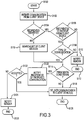
- FIG. 3 shows a flowchart illustrating a method for a communication from one client device to one or more other client devices of a broadcast system. It should be understood that various other methods and/or communication protocols may be implemented, as appropriate or desired, based on the desired communications between client devices. Thus, it should be understood that the details discussed above with respect to the communications contemplated between client devices are sufficient to be implemented in appropriate methods and/or communication protocols other than that illustrated in FIG. 3 .
- Operation may begin at S100, and continue to S102, where a communication may be initiated from a client device.
- operation may continue to S104, where a determination may be made as to whether a recipient for the communication is identified.
- the recipient(s) may be one or more other client devices, and may be identified in any suitable manner.
- client devices may be identified individually by a unique identifier or code.
- client devices may be identified collectively a members of a mailing list or group. Such groupings may be defined by the system, for example, for users of the client devices to join. However, this is not to exclude the possibility of user defined groups, including, but not limited to, personal mailing lists, such as contacts that may be stored locally on a client device.
- operation may continue to S106, where a determination may be made as to whether the intended recipient(s)is/are configured to receive communications from the client device.
- each client device may be configured or set to allow communications from particular client devices or groups of client devices. If the communication to the intended recipient(s) is allowed, operation may continue to S108, where a determination may be made as to whether the intended recipient(s)is/are configured to receive the particular type of communication, either generally or from the particular client device.
- the operations at S106 and S108 may be reordered, combined, or otherwise modified, as appropriate or desired, to evaluate whether a particular communication may be received by a client device.
- operation may optionally continue to S110, where the client device that initiated the communication may be notified that the communication was not delivered.
- the client device may be provided with additional information, such as the identity of the intended recipient(s) to which the communication was not delivered and/or the reason(s) for non-delivery. Operation may then end at S112.
- operation may continue to S116, where a search of a list of client devices may be made.
- the search may be directed to identifying client devices to which the communication may be of interest.
- the search may include a list of groups of client devices.
- the search may be based on user preferences and/or user profiles associated with the client devices. If no client devices are identified by the search, then, although not illustrated, operation may continue to notify the client device that initiated the communication and then end.
- search performed at S116 may include an evaluation or evaluations similar to that of S106 and/or S108.
- the operations of notification and ending may similarly result from S116.
- At least one client device is identified as a permitted recipient for the communication at S116, or if the communication is determined to be permitted (i.e., the intended recipient(s) is/are determined to be configured to receive the communication from the client device) at S106 and S108, then operation may continue to S114, where a determination may be made as to whether the permission for receiving the communication is conditional. If the permission is conditional, operation may continue to S120, where the intended recipient(s) may be notified of the communication. For example, each intended recipient (client device) may display a message to the user or otherwise provide an option to the user to accept or reject the proposed communication. Thus, the permission may be generally conditional and require user interaction for the communication to proceed.
- operation may continue to S122, where a determination may be made as to whether the proposed communication is accepted, for example, by a user input or by an automatic operation. If not accepted, then operation may optionally continue to S124, where the client device that initiated the communication may be notified that the communication was not accepted. Operation may then end at S126.
- operation may continue to S118, where the communication may be delivered to one or more of the intended client device(s). Once the communication is delivered, operation may end at S128.
- various forms of delivery may be implemented, such as an audible and/or visual notification on the display device of the client device receiving the communication, an overlay of the message on a current display of the display device, storage of the message at the client device for later retrieval by the user, etc.
- the nature of the delivery of the communication may be configured to suit the particular user of the client device, for example, via user preferences set for the client device.
Landscapes
- Engineering & Computer Science (AREA)
- Multimedia (AREA)
- Signal Processing (AREA)
- Databases & Information Systems (AREA)
- Human Computer Interaction (AREA)
- General Engineering & Computer Science (AREA)
- Business, Economics & Management (AREA)
- Finance (AREA)
- Strategic Management (AREA)
- Software Systems (AREA)
- Computer Graphics (AREA)
- Two-Way Televisions, Distribution Of Moving Picture Or The Like (AREA)
Description
- The present invention relates to a system and method for communications between client devices of a broadcast system.
- The client devices are set top boxes (STB), satellite receivers, digital video recorders (DVR) or similar devices. A plurality of client devices are interconnected, for example, by defining communication protocols for communications between the client devices.
- The proliferation of subscription television programming, the increasing number of available channels, and the corresponding increase in television programming have led to continued development of onscreen program directories and guides. This has also lead to continued development of other user interactive features, such as the ability to set timers to record programs, the ability to set user preferences, for example, for how information is displayed, and the ability to lock or otherwise control access to channels.
- Recent developments include the expansion of such features to include remote task scheduling via the Internet. Such approaches typically allow a subscriber of television services to interact with their client device remotely via a website that provides various functions to permit the subscriber to instruct their client device to perform certain activities, such as setting a timer to record a program or initiating recording based on an instruction scheduled through the website. In general, such approaches aim to allow the subscriber to perform various functions remotely that are conventionally performed by the subscriber directly using the client device.
- Conventional client devices are configured to receive programs and program information from one or more sources, generally referred to as the service provider or broadcast service. The programs and the program information may be provided to the client device via one or more communication channels. For example, in a cable broadcast system, the programs and the program information may be provided to the client device via a coaxial cable connected to an input of the client device. In a satellite broadcast system, the programs and the program information may be provided to the client device via a satellite dish that is connected to an input of the client device via a coaxial cable. Alternatively or additionally, the program information may be provided to the client device via a telephone line connected to another input of the client device. The connection to the telephone line may also provide a communication channel for feedback to the service provider, for example, regarding programs viewed via the client device, and/or for allowing pay programs to be ordered or purchased using the client device.
-
WO2007/097963 A2 is directed to providing a shared folder for sharing content or settings between client devices. Users can recommend programs to other users. Users can also be allowed to view the shared content of other users located remotely. -
WO-A-2007/078847 describes an interactive media guidance system which may use the information gathered regarding the programs and/or advertisements that have already been seen by a user, device or household to, for example, remove the programs or advertisements from future displays of recommendations, search results or listings of available programming. -
EP-A-1225763 describes a method for communicating between client devices of a television broadcast system, the method comprising initiating a communication from a first client device of a television broadcast system; transmitting the communication to a plurality of second client devices of the television broadcast system; and displaying the communication on display devices associated with the plurality of second client devices. - The present invention provides a method according to claim 1.
- According to a further aspect of the present invention there is provided a system for communications between client devices of a television broadcast system according to claim 6.
- Embodiments of the present invention will hereinafter be described, by way of example, with reference to the accompanying drawings, in which:
-
Figure 1 is a simplified block diagram illustrating an example of a broadcast satellite television system; -
Figure 2 is a simplified block diagram illustrating a system for providing communication between client devices of a broadcast system; and -
Figure 3 is a flowchart illustrating an example of operations associated with a communication protocol for a communication from one client device to one or more other client devices of a broadcast system. - As used herein, the term "client device" is intended to encompass a device that is configured to receive programs and program information from a broadcast source (e.g., satellite, cable, Internet, etc.) and to display the programs and the program information on a display device, such as a television or a monitor. Although not restricted to a particular implementation, the term "client device" is intended to encompass set top boxes, satellite receivers, digital video recorders, and the like. The client devices described herein may be considered to be embodied in software and/or hardware that facilitate the reception and display of programs and program information from a broadcast source.
- The embodiments shown in the Figures illustrate systems and methods that allow client devices of a broadcast system to communicate with each other. The illustrated systems and methods provide examples of how communication between a plurality of client devices of a broadcast system may be implemented. However, it should be understood that other implementations are possible and contemplated. Also, it should be understood that reference herein to a communication from one client device to another client device, or from a first client device to a second client device, may equally apply to a communication from one client device to a plurality of other client devices.
- Communications between client devices may be desirable for many reasons. For example, a user of a client device may wish to communicate with a user of another client device regarding a program provided to the client devices by the broadcast source of the broadcast system. The users of the client devices may be, for example, subscribers of the broadcast system. The user of the client device may wish to communicate via the client devices as the communication relates to use of the client devices. Thus, the user of the client device may conveniently communicate using the client device while in the mode of operating the client device.
- For example, the user of a first client device may be viewing a program schedule and wish to communicate something about a program listed on the schedule. Also, the user of the first client device may be viewing or have just finished viewing a program and wish to communicate something about that program. As the user of the first client device is currently using the first client device, the first client device may provide a more convenient way of communicating to the user of a second client device than, for example, calling the user by telephone. Further, by communicating via the client devices, the user of the second client device need not be available, for example, to answer the telephone or to retrieve a telephone message. Rather, the user of the second client device may receive or retrieve the communication when operating the second client device, thus being provided with the communication when the communication is particularly relevant and/or convenient to the user of the second client device.
- The communication from one client device to another client device of the broadcast system may be any desired communication from the user. In particular, it is contemplated that the communication may comprise information, such as a recommendation, a suggestion, a comment or other message, and/or may comprise instructions for a client device to perform a function or operation. Various functions or operations that may be performed by the client device(s) in response to receiving a communication may include, but are not limited to, setting a timer to record a program, ordering or purchasing a program or service, cancelling an ordered/purchased program or service, setting or altering user preferences, controlling access to channels, etc. In general, any function or operation that may be performed by a client device may be instructed by the communication.
- For example, a communication from a first client device may be configured to set a timer to record a program on a second client device. The communication may require permission from the second client device to set the timer. Thus, the communication maybe in the form of a request for permission to set the timer. The user of the second client device may input a command to the second client device indicating whether or not he grants permission for the timer to be set. In other words, the user of the second client device may be allowed to accept or reject the communication.
- Alternatively, the user of the second client device may preset the second client device to provide permission for the first client device to set timers. For example, if the user of the second client device trusts the particular user or otherwise wishes the particular user to have access to set timers on the second client device, the second client device may be set to recognize the first client device as authorized to set timers. Such preset or authorization may be unconditional, but also may be conditional, for example, allowing the first client device to set a limited number of timers, to set timers to a limited selection of channels, to set timers based on an amount of storage space currently available for the recording on the second client device or based on a preset limit of storage space allotted to recordings of programs by timers set by the first client device.
- As noted above, the function or operation that may be instructed by the communication may be any function or operation that may be performed by a client device. Thus, some embodiments may involve a communication that results in a similar or an identical behavior by the second client device as if the second client device had received the instruction(s) locally, for example, via a handheld remote control or a control panel of the second client device. As such, a technician may use the first client device to troubleshoot and/or correct problems that the second client device may experience. In particular, some embodiments may involve a communication that results in a display by the second client device that is controlled in response to the communication from the first client device. As such, the user of the second client device may assist the technician, as appropriate or desired. Also, the communication from the first client device may provide the user of the second client device with a tutorial for a particular function or operation, such as setting a timer to record a program, setting a user preference, navigating menus, etc.
- Allowing a user of a first client device to perform a function or operation on a second client device may conveniently set up or operate the second client device. For example, the first client device may be installed in the same or a different household than the second client device. When in the same household, the communication may allow the user to interact with the second client device via the first client device, and vice versa. Thus, the user need not interact with the first and second client devices separately, but may individually or collectively set up or operate both client devices from one location. This may be particularly convenient, for example, to allow the user to set different timers for the different client devices without having to go to the location of each client device. Similarly, when in different households, the first client device may be used to remotely set up or operate the second client device. This may be particularly convenient, for example, to allow the user to control the second client device without having to go to the other household.
- It should be understood that suitable communication protocols for communication between a plurality of client devices of a broadcast system are also contemplated. In general, the communication protocols may facilitate and/or regulate communications between the client devices. For example, each client device may be set by a user to allow communications from other client devices or from a specified client device and/or to allow only certain types of communications from other client devices or from a specified client device. Additionally or alternatively, each client device may be set by a user to allow communications from other client devices or from a specified client device either conditionally or unconditionally.
- Communications between the client devices may be restricted and/or routed according to suitable communication protocols. For example, the communication protocols may involve a user registering his client device for a particular service. The service may associate the particular client device with a "mailing list" or "group" of client devices also registered with the service. Thus, a communication may be identified or otherwise intended to be received by subscribers to the service, such that the particular client device and all other client devices registered with the service may receive the communication.
- As an example, a user may register a particular client device with a movie information service. The service may then provide communications that provide information, such as reviews, recommendations, release dates, etc., and/or that are configured to set timers to record movies scheduled to be broadcast by the broadcasts system.
- As another example, the user may subscribe or otherwise belong to a specified group or groups of client devices. Each group may be, for example, related to a specific interest, such as a particular program series, a particular program type, theme or genre, a particular actor, director or producer, a particular channel, etc. Each group may thus facilitate communications between users of client devices with common interests.
- As a member of a group, each client device may be allowed to communicate with the client devices of other members of the group, for example, by having the client devices of members of the group set or otherwise configured to accept communications from the client devices of other members of the group. Alternatively or additionally, each client device may be configured to communicate with the client devices of the group members without having to specify each member's client device. It should be understood that any structure or hierarchy within the group may be established, as appropriate or desired. For example, selected members may be granted different permission(s) to communicate with the other members, for example, based on a type of communication to be provided.
- With or without the use of groups including client devices, the communication protocols may involve searching a list of users of client devices. The search may be based on, for example, the user preferences and/or profiles set on the client devices. The user preferences of a client device may be set, for example, not to receive communications, to receive communications only of a certain type (e.g., information, function or operation, etc.), to receive communications only from a particular client device(s), and/or to require user interaction to accept all communications, communications of a certain type and/or communications from a particular client device(s). The user profile of a client device may set, for example, particular topics of communications that the client device is to receive to meet the user's interests.
- It should be understood that various implementations are possible. For example, satellite, cable, internet or other broadcasting technologies may be suitable. Thus, while the following description provides an example in the context of a satellite broadcast system, it should be understood that such description is not limiting.
- The block diagrams shown in
Figures 1 and2 and the flowchart shown inFigure 3 are for illustration only and are not intended to represent the only possible process flows and system configurations. In particular, it should be understood that operations may be added, omitted and reordered as may be suitable to a particular application. Also, individual components may be added, omitted, replaced and interrelated as may be suitable to a particular application. All details appurtenant to implementing the exemplary systems and methods that are well understood in the art are omitted for simplicity and clarity. -
FIG. 1 is a simplified block diagram illustrating components of an example of a broadcast satellite television system that may be used to implement various features described herein. In particular,FIG. 1 generally illustrates aclient device 100 as part of a satellite broadcast system. In this example, abroadcast service 170 provides programs and program information, via one ormore satellites 160, to theclient device 100. Theclient device 100 may include suitable circuitry, other hardware and/or software to receive a signal(s) from the satellite(s) 160, such as a satellite dish or antenna (not shown). - The signal(s) from the satellite(s) 160 may carry multiple channels of programs, program information (such as electronic programming guide data), and/or other information, such as conditional access data. The signal(s) from the satellite(s) 160 received at the
client device 100 may be processed such that the data and/or the channels may be viewed on adisplay device 150, such as a television set or monitor. - The
client device 100 may include atuner unit 102, which may comprise a tuner, a demodulator, and any other device or circuitry for selecting channels and modifying the data format for processing and/or displaying on thedisplay device 150. Theclient device 100 may also include aprocessor 104 for controlling various operations of theclient device 100 and/or the other components thereof. - The
client device 100 may also include astorage device 110, which may have a program and/or associated data stored thereon, in addition or alternatively to such program and/or data rendered on thedisplay device 150. - The
storage device 110 may also be used to storeprogram guide data 112. Theprogram guide data 112 maybe included in the broadcast of the satellite(s) 160, but may also be received through anotherconnection 106, for example, a dial-up connection through a network such as the public telephone network or the internet. Thestorage device 110 may also be used to store a user profile or user preferences, usually specific to theclient device 100. -
Program guide data 112 typically includes information about the programs and channels being broadcast by thesatellite 160, and may include, but is not limited to, program start times, program end times, program durations, program ratings, program reviews, program descriptions, program titles, program show dates, and the like. Theprogram guide data 112 may also serve as a schedule for programs that will be broadcast in the future. - Regardless of the particular implementation of the
client device 100 and/or the broadcasts system in general, a system for providing communication between client devices of a broadcast system is contemplated.FIG. 2 is a simplified block diagram illustrating an example of such asystem 10 for providing communication between client devices of abroadcast system 20. Thebroadcast system 20 may generally include abroadcast service 200, such as a cable or satellite system, and a plurality ofclient devices broadcast service 200 and to provide data for display on a respective display device (not shown). - Each of the
client devices network 300 that allows theclient devices network 300 may be any suitable network, either wired or wireless, such as the public telephone network or the internet, or any other network known or hereafter developed, that allows communication between theclient devices - For example, the
client devices client devices network 300. By providing a separate communication link via thenetwork 300, thesystem 10 may avoid any interference with normal broadcast operations of thebroadcast system 20. However, a two-way satellite system may allow communications between theclient devices - In general, four scenarios may be envisioned. The primary network of the broadcast service may provide client device-to-client device communications directly to client devices. A second communication network (e.g., backchannel) may provide client device-to-client device communications. A first client device may use such a second communication network to transmit the communication to the broadcast service, and the broadcast service may transmit the communication to a second client device via its primary network or broadcast channel, for example, using an ID of the second client device. The first client device may use the second communication network to transmit the communication to the broadcast service, and the broadcast service may transmit the communication to the second client device via the second network. In some embodiments, an existing "back-channel" of known client devices may be used.
- As should be understood from
FIG. 2 , various communications, such as those discussed above, between theclient devices illustrative system 10. Such communications may allowclient devices - As an example,
FIG. 3 shows a flowchart illustrating a method for a communication from one client device to one or more other client devices of a broadcast system. It should be understood that various other methods and/or communication protocols may be implemented, as appropriate or desired, based on the desired communications between client devices. Thus, it should be understood that the details discussed above with respect to the communications contemplated between client devices are sufficient to be implemented in appropriate methods and/or communication protocols other than that illustrated inFIG. 3 . - Operation may begin at S100, and continue to S102, where a communication may be initiated from a client device. Once the communication is initiated from the client device, operation may continue to S104, where a determination may be made as to whether a recipient for the communication is identified. The recipient(s) may be one or more other client devices, and may be identified in any suitable manner. For example, client devices may be identified individually by a unique identifier or code. Alternatively or additionally, client devices may be identified collectively a members of a mailing list or group. Such groupings may be defined by the system, for example, for users of the client devices to join. However, this is not to exclude the possibility of user defined groups, including, but not limited to, personal mailing lists, such as contacts that may be stored locally on a client device.
- If the intended recipient for the communication is identified, operation may continue to S106, where a determination may be made as to whether the intended recipient(s)is/are configured to receive communications from the client device. As discussed above, each client device may be configured or set to allow communications from particular client devices or groups of client devices. If the communication to the intended recipient(s) is allowed, operation may continue to S108, where a determination may be made as to whether the intended recipient(s)is/are configured to receive the particular type of communication, either generally or from the particular client device. As such, it should be understood that the operations at S106 and S108 may be reordered, combined, or otherwise modified, as appropriate or desired, to evaluate whether a particular communication may be received by a client device.
- If at S106 or at S108, the determination is that the communication may not be received by the intended recipient(s), then operation may optionally continue to S110, where the client device that initiated the communication may be notified that the communication was not delivered. Alternatively or additionally, the client device may be provided with additional information, such as the identity of the intended recipient(s) to which the communication was not delivered and/or the reason(s) for non-delivery. Operation may then end at S112.
- Returning to S104, if the intended recipient for the communication is not identified, operation may continue to S116, where a search of a list of client devices may be made. For example, as discussed above, the search may be directed to identifying client devices to which the communication may be of interest. In particular, the search may include a list of groups of client devices. As also discussed above, the search may be based on user preferences and/or user profiles associated with the client devices. If no client devices are identified by the search, then, although not illustrated, operation may continue to notify the client device that initiated the communication and then end.
- Also, although not illustrated, it should be understood that the search performed at S116 may include an evaluation or evaluations similar to that of S106 and/or S108. Thus, the operations of notification and ending may similarly result from S116.
- Assuming that at least one client device is identified as a permitted recipient for the communication at S116, or if the communication is determined to be permitted (i.e., the intended recipient(s) is/are determined to be configured to receive the communication from the client device) at S106 and S108, then operation may continue to S114, where a determination may be made as to whether the permission for receiving the communication is conditional. If the permission is conditional, operation may continue to S120, where the intended recipient(s) may be notified of the communication. For example, each intended recipient (client device) may display a message to the user or otherwise provide an option to the user to accept or reject the proposed communication. Thus, the permission may be generally conditional and require user interaction for the communication to proceed.
- It should be understood that specific conditions may be imposed on the intended communication for a given client device. Such other conditions are generally unlimited, and may be any useful criteria for determining whether a communication should be accepted or rejected. It should also be understood that specific conditions may also require user interaction for the communication to proceed, but may involve an automatic acceptance if the condition is satisfied. In such case, the operation at S120 may be omitted.
- Regardless of the need for user interaction, operation may continue to S122, where a determination may be made as to whether the proposed communication is accepted, for example, by a user input or by an automatic operation. If not accepted, then operation may optionally continue to S124, where the client device that initiated the communication may be notified that the communication was not accepted. Operation may then end at S126.
- If the permission is determined not to be conditional at
S 114, or if the condition is determined to be satisfied so that the communication is accepted at S122, then operation may continue to S118, where the communication may be delivered to one or more of the intended client device(s). Once the communication is delivered, operation may end at S128. - Although not illustrated, it should be understood that various forms of delivery may be implemented, such as an audible and/or visual notification on the display device of the client device receiving the communication, an overlay of the message on a current display of the display device, storage of the message at the client device for later retrieval by the user, etc. In particular, the nature of the delivery of the communication may be configured to suit the particular user of the client device, for example, via user preferences set for the client device.
- Further, although not shown for the sake of clarity and simplicity, it should be understood that other features described above may be incorporated in the method. Accordingly, the method shown in the flowchart of
FIG. 3 should be understood as being illustrative only and not limiting. - It will be appreciated that modifications may be made to the embodiments illustrated within the scope of the accompanying claims.
Claims (10)
- A method for communicating between client devices of a television broadcast system (10), the method comprising:initiating (S102) a communication from a first client device (100) configured to receive video signals from a television broadcast system;evaluating a user profile associated with a second client device (1001-100N) of the television broadcast system to determine if the second client device will accept the communication, wherein the user profile includes settings to accept or not accept each of:an informational communication from the first client device, wherein the informational communications, when received, are displayable on a display device (150) associated with the second client device, so as to provide a tutorial for setting a program recording timer; anda functional instruction from the first client device executable by the second client device to cause the second client device to record program content;determining, based on evaluating the user profile, that the second client device will accept the communication responsive to the evaluating;transmitting the communication to the second client device (1001-100N) of the television broadcast system responsive to the determining; andwherein the communication is configured to cause the second client device to take at least one of the following actions:displaying an informational communication on the display device (150); and,executing the functional instruction to cause the second client device to record program content.
- A method as claimed in Claim 1, wherein the communication comprises information such as a recommendation of a program.
- A method as claimed in Claim 2, further comprising responsive to the recommendation setting a timer to record the program on the second client device (1001-100N).
- A method as claimed in Claim 1, further comprising:executing an operation at the second client device (1001-100N) based on the communication;wherein executing the operation comprises ordering a program for viewing via the second client device.
- A method as claimed in Claim 1 or Claim 4, further comprising:executing an operation at the second client device based on the communication;wherein executing the operation comprises altering a user preference for the second client device; orcontrolling access to channels by the second client device.
- A system for communications between client devices of a television broadcast system (10), the system comprising:a first client device (100) of a television broadcast system configured to receive video signals from the television broadcast system and to initiate a communication via the television broadcast system;a second client device (1001-100N) of the television broadcast system configured to receive the communication;an evaluation and transmission system of the television broadcast system configured to:evaluate a user profile associated with a second client device (1001-100N) of the television broadcast system to determine if the second client device will accept the communication, wherein the user profile includes settings to accept or not accept each of:an informational communications from the first client device, wherein the informational communications, when received, are displayable on a display device (150) associated with the second client device, so as to provide a tutorial for setting a program recording timer; anda functional instructions from the first client device executable by the second client device to cause the second client device to record program content;determine, based on evaluating the user profile, that the second client device will accept the communication responsive to the evaluating; andtransmit the communication to the second client device (1001-100N) responsive to the determining;wherein, in response to receipt of the communication from the transmission system, the second client device is configured to take at least one of the following actions:display the informational communication on the associated display device; orexecute the functional instruction to cause the second client device to record program content.
- A system as claimed in Claim 6, wherein the communication comprises information such as a recommendation of a program.
- A system as claimed in Claim 7, wherein the second client device is arranged to set a timer to record the program responsive to the recommendation.
- A system as claimed in Claim 6, wherein the second client device is arranged to execute an operation based on the communication, execution of the operation comprising ordering a program for viewing via the second client device.
- A system as claimed in Claim 6 or Claim 9, wherein the second client device is arranged to execute an operation based on the communication, execution of the operation comprising altering a user preference for the second client device or controlling access to channels by the second client device.
Applications Claiming Priority (2)
| Application Number | Priority Date | Filing Date | Title |
|---|---|---|---|
| US97569407P | 2007-09-27 | 2007-09-27 | |
| PCT/US2008/077880 WO2009042879A1 (en) | 2007-09-27 | 2008-09-26 | Systems and methods for communications between client devices of a broadcast system |
Publications (3)
| Publication Number | Publication Date |
|---|---|
| EP2193658A1 EP2193658A1 (en) | 2010-06-09 |
| EP2193658A4 EP2193658A4 (en) | 2011-05-11 |
| EP2193658B1 true EP2193658B1 (en) | 2020-06-10 |
Family
ID=40509944
Family Applications (1)
| Application Number | Title | Priority Date | Filing Date |
|---|---|---|---|
| EP08833657.3A Active EP2193658B1 (en) | 2007-09-27 | 2008-09-26 | Systems and methods for communications between client devices of a broadcast system |
Country Status (3)
| Country | Link |
|---|---|
| US (3) | US9270945B2 (en) |
| EP (1) | EP2193658B1 (en) |
| WO (1) | WO2009042879A1 (en) |
Families Citing this family (9)
| Publication number | Priority date | Publication date | Assignee | Title |
|---|---|---|---|---|
| WO2009042879A1 (en) | 2007-09-27 | 2009-04-02 | Echostar Technologies L.L.C. | Systems and methods for communications between client devices of a broadcast system |
| US20090167839A1 (en) * | 2007-12-27 | 2009-07-02 | Desmond Ottmar | Methods and apparatus for providing communication between multiple television viewers |
| US8223185B2 (en) | 2008-03-12 | 2012-07-17 | Dish Network L.L.C. | Methods and apparatus for providing chat data and video content between multiple viewers |
| WO2011021886A2 (en) | 2009-08-21 | 2011-02-24 | Samsung Electronics Co., Ltd. | Device capable of notifying operation state change thereof through network and communication method of the device |
| CN102123320A (en) * | 2010-12-31 | 2011-07-13 | 广东九联科技股份有限公司 | Information sending and receiving method and system based on bidirectional digital television network |
| US20150012840A1 (en) * | 2013-07-02 | 2015-01-08 | International Business Machines Corporation | Identification and Sharing of Selections within Streaming Content |
| CN105933748A (en) * | 2016-06-29 | 2016-09-07 | 陈志强 | Implementation method and equipment for displaying barrages on live television program |
| US10911832B2 (en) * | 2016-07-25 | 2021-02-02 | Google Llc | Methods, systems, and media for facilitating interaction between viewers of a stream of content |
| CN114076600A (en) * | 2020-08-20 | 2022-02-22 | 极光飞行科学公司 | Navigation system and method of operation |
Citations (1)
| Publication number | Priority date | Publication date | Assignee | Title |
|---|---|---|---|---|
| WO2007097963A2 (en) * | 2006-02-17 | 2007-08-30 | Verizon Laboratories Inc. | Systems and methods for providing a shared folder via television |
Family Cites Families (52)
| Publication number | Priority date | Publication date | Assignee | Title |
|---|---|---|---|---|
| US5689641A (en) | 1993-10-01 | 1997-11-18 | Vicor, Inc. | Multimedia collaboration system arrangement for routing compressed AV signal through a participant site without decompressing the AV signal |
| US5892536A (en) | 1996-10-03 | 1999-04-06 | Personal Audio | Systems and methods for computer enhanced broadcast monitoring |
| US20030093790A1 (en) | 2000-03-28 | 2003-05-15 | Logan James D. | Audio and video program recording, editing and playback systems using metadata |
| JP3491665B2 (en) * | 1997-04-16 | 2004-01-26 | ソニー株式会社 | Remote control device and remote control method |
| US7103834B1 (en) * | 1997-06-25 | 2006-09-05 | Samsung Electronics Co., Ltd. | Method and apparatus for a home network auto-tree builder |
| US6081830A (en) | 1997-10-09 | 2000-06-27 | Gateway 2000, Inc. | Automatic linking to program-specific computer chat rooms |
| US6646673B2 (en) | 1997-12-05 | 2003-11-11 | Koninklijke Philips Electronics N.V. | Communication method and terminal |
| TW463503B (en) | 1998-08-26 | 2001-11-11 | United Video Properties Inc | Television chat system |
| US6392664B1 (en) | 1998-11-30 | 2002-05-21 | Webtv Networks, Inc. | Method and system for presenting television programming and interactive entertainment |
| US6256663B1 (en) | 1999-01-22 | 2001-07-03 | Greenfield Online, Inc. | System and method for conducting focus groups using remotely loaded participants over a computer network |
| US6976267B1 (en) * | 1999-04-09 | 2005-12-13 | Sony Corporation | Method and apparatus for controlling connections between devices |
| US8688797B2 (en) * | 1999-12-02 | 2014-04-01 | Western Digital Technologies, Inc. | Managed peer-to-peer applications, systems and methods for distributed data access and storage |
| US6519771B1 (en) | 1999-12-14 | 2003-02-11 | Steven Ericsson Zenith | System for interactive chat without a keyboard |
| US6754904B1 (en) | 1999-12-30 | 2004-06-22 | America Online, Inc. | Informing network users of television programming viewed by other network users |
| US7689510B2 (en) * | 2000-09-07 | 2010-03-30 | Sonic Solutions | Methods and system for use in network management of content |
| US6950503B2 (en) | 2000-12-22 | 2005-09-27 | Solomio Corporation | Method and system for facilitating mediated communication |
| JP4765182B2 (en) | 2001-01-19 | 2011-09-07 | ソニー株式会社 | Interactive television communication method and interactive television communication client device |
| US20050005308A1 (en) | 2002-01-29 | 2005-01-06 | Gotuit Video, Inc. | Methods and apparatus for recording and replaying sports broadcasts |
| US7313617B2 (en) * | 2001-09-28 | 2007-12-25 | Dale Malik | Methods and systems for a communications and information resource manager |
| US7792949B2 (en) * | 2001-12-28 | 2010-09-07 | Tandberg Telecom As | Method and system for video network discovery |
| US7174126B2 (en) | 2002-05-03 | 2007-02-06 | Time Warner Interactive Video Group Inc. | Technique for effectively accessing programming listing information in an entertainment delivery system |
| JP2004206463A (en) * | 2002-12-25 | 2004-07-22 | Sharp Corp | Remote maintenance system |
| US7661075B2 (en) * | 2003-05-21 | 2010-02-09 | Nokia Corporation | User interface display for set-top box device |
| KR100577360B1 (en) | 2003-09-09 | 2006-05-10 | 삼성전자주식회사 | Recommended Program Sharing Device and Method Using Digital Set Top Box |
| TWI227640B (en) * | 2003-11-17 | 2005-02-01 | Power Whale Information Ltd | Real-time communication device and method for people with the same TV program preference |
| US20060010392A1 (en) * | 2004-06-08 | 2006-01-12 | Noel Vicki E | Desktop sharing method and system |
| JP4533092B2 (en) * | 2003-12-11 | 2010-08-25 | キヤノン株式会社 | Television broadcast receiving apparatus and method for controlling television broadcast receiving apparatus |
| US7233773B2 (en) * | 2004-02-13 | 2007-06-19 | Broadcom Corporation | Configuring a MIMO communication |
| WO2005091626A1 (en) * | 2004-03-22 | 2005-09-29 | Jung-In Choi | System and method for providing personal broadcast recording channel service using extensible markup language (xml) |
| US20050246757A1 (en) | 2004-04-07 | 2005-11-03 | Sandeep Relan | Convergence of network file system for sharing multimedia content across several set-top-boxes |
| US8010458B2 (en) * | 2004-05-26 | 2011-08-30 | Facebook, Inc. | System and method for managing information flow between members of an online social network |
| US20060109854A1 (en) * | 2004-11-22 | 2006-05-25 | Cancel Ramon C | Systems and methods to share information between digital video recorders |
| US7818770B2 (en) | 2004-11-23 | 2010-10-19 | Palo Alto Research Center Incorporated | Methods, apparatus, and program products to support a shared viewing experience from remote locations |
| US20060179410A1 (en) * | 2005-02-07 | 2006-08-10 | Nokia Corporation | Terminal, method, server, and computer program product for switching buddy lists based on user profile |
| US20060248557A1 (en) * | 2005-04-01 | 2006-11-02 | Vulcan Inc. | Interface for controlling device groups |
| US8028325B2 (en) * | 2005-08-08 | 2011-09-27 | AOL, Inc. | Invocation of a third party's service |
| US20070050822A1 (en) * | 2005-08-31 | 2007-03-01 | Cable Television Laboratories, Inc. | Method and system of providing shared community experience |
| US20070107019A1 (en) * | 2005-11-07 | 2007-05-10 | Pasquale Romano | Methods and apparatuses for an integrated media device |
| CA2632468C (en) | 2005-12-29 | 2016-09-20 | United Video Properties Inc. | Systems and methods for managing content |
| US7917583B2 (en) * | 2006-02-17 | 2011-03-29 | Verizon Patent And Licensing Inc. | Television integrated chat and presence systems and methods |
| KR100692494B1 (en) | 2006-03-10 | 2007-03-12 | 주식회사 알티캐스트 | Channel Recommendation Data Transmission System and Channel Recommendation Method Using the Same |
| US20080300045A1 (en) * | 2007-05-31 | 2008-12-04 | Trey Ratcliff | Method and system for prize contests in a game |
| US8063929B2 (en) | 2007-05-31 | 2011-11-22 | Eastman Kodak Company | Managing scene transitions for video communication |
| US20090011743A1 (en) * | 2007-07-02 | 2009-01-08 | Yahoo! Inc. | Mobile trading cards |
| US20090031381A1 (en) * | 2007-07-24 | 2009-01-29 | Honeywell International, Inc. | Proxy video server for video surveillance |
| WO2009042879A1 (en) | 2007-09-27 | 2009-04-02 | Echostar Technologies L.L.C. | Systems and methods for communications between client devices of a broadcast system |
| US20090167839A1 (en) | 2007-12-27 | 2009-07-02 | Desmond Ottmar | Methods and apparatus for providing communication between multiple television viewers |
| US20090181702A1 (en) * | 2008-01-14 | 2009-07-16 | Microsoft Corporation | Multi-mode communication |
| US8233185B2 (en) | 2008-03-07 | 2012-07-31 | Xerox Corporation | Page parallel RIP and cache tuning in print/copy job environment utilizing page description languages |
| US8223185B2 (en) | 2008-03-12 | 2012-07-17 | Dish Network L.L.C. | Methods and apparatus for providing chat data and video content between multiple viewers |
| US8392943B2 (en) * | 2010-02-02 | 2013-03-05 | Cox Communications, Inc. | Communications between networked cable services system devices |
| KR101707023B1 (en) * | 2011-04-01 | 2017-02-16 | 삼성전자주식회사 | Method and apparatus for automatic sharing and change of tv channel in social networking service |
-
2008
- 2008-09-26 WO PCT/US2008/077880 patent/WO2009042879A1/en not_active Ceased
- 2008-09-26 EP EP08833657.3A patent/EP2193658B1/en active Active
- 2008-09-26 US US12/239,210 patent/US9270945B2/en active Active
-
2016
- 2016-01-06 US US14/989,665 patent/US9635427B2/en active Active
-
2017
- 2017-03-21 US US15/465,138 patent/US10123086B2/en active Active
Patent Citations (1)
| Publication number | Priority date | Publication date | Assignee | Title |
|---|---|---|---|---|
| WO2007097963A2 (en) * | 2006-02-17 | 2007-08-30 | Verizon Laboratories Inc. | Systems and methods for providing a shared folder via television |
Also Published As
| Publication number | Publication date |
|---|---|
| WO2009042879A1 (en) | 2009-04-02 |
| US20090089855A1 (en) | 2009-04-02 |
| US9270945B2 (en) | 2016-02-23 |
| EP2193658A1 (en) | 2010-06-09 |
| US20160119680A1 (en) | 2016-04-28 |
| EP2193658A4 (en) | 2011-05-11 |
| US9635427B2 (en) | 2017-04-25 |
| US10123086B2 (en) | 2018-11-06 |
| US20170353767A1 (en) | 2017-12-07 |
Similar Documents
| Publication | Publication Date | Title |
|---|---|---|
| US12120394B2 (en) | Maintaining a user profile based on dynamic data | |
| US10123086B2 (en) | Systems and methods for communications between client devices of a broadcast system | |
| JP6694537B2 (en) | Method and / or system for sharing media asset consumption activity via social networking | |
| US8856833B2 (en) | Maintaining a user profile based on dynamic data | |
| EP2064887B2 (en) | Management of profiles for interactive media guidance applications | |
| AU2008230088B2 (en) | User defined rules for assigning destinations of content | |
| EP2816809A2 (en) | Systems and methods for personalizing an interactive media guidance application | |
| US8756625B2 (en) | Systems and methods for determining subscription data |
Legal Events
| Date | Code | Title | Description |
|---|---|---|---|
| PUAI | Public reference made under article 153(3) epc to a published international application that has entered the european phase |
Free format text: ORIGINAL CODE: 0009012 |
|
| 17P | Request for examination filed |
Effective date: 20100325 |
|
| AK | Designated contracting states |
Kind code of ref document: A1 Designated state(s): AT BE BG CH CY CZ DE DK EE ES FI FR GB GR HR HU IE IS IT LI LT LU LV MC MT NL NO PL PT RO SE SI SK TR |
|
| AX | Request for extension of the european patent |
Extension state: AL BA MK RS |
|
| DAX | Request for extension of the european patent (deleted) | ||
| REG | Reference to a national code |
Ref country code: DE Ref legal event code: R079 Free format text: PREVIOUS MAIN CLASS: H04N0007173000 Ipc: H04N0021482000 |
|
| A4 | Supplementary search report drawn up and despatched |
Effective date: 20110408 |
|
| RIC1 | Information provided on ipc code assigned before grant |
Ipc: H04N 21/4788 20110101ALI20110404BHEP Ipc: H04N 21/482 20110101AFI20110404BHEP |
|
| 17Q | First examination report despatched |
Effective date: 20151202 |
|
| STAA | Information on the status of an ep patent application or granted ep patent |
Free format text: STATUS: EXAMINATION IS IN PROGRESS |
|
| RAP1 | Party data changed (applicant data changed or rights of an application transferred) |
Owner name: ST JOHN-LARKIN, DAVID CHRISTOPHER Owner name: DISH TECHNOLOGIES L.L.C. |
|
| GRAP | Despatch of communication of intention to grant a patent |
Free format text: ORIGINAL CODE: EPIDOSNIGR1 |
|
| STAA | Information on the status of an ep patent application or granted ep patent |
Free format text: STATUS: GRANT OF PATENT IS INTENDED |
|
| INTG | Intention to grant announced |
Effective date: 20191220 |
|
| GRAS | Grant fee paid |
Free format text: ORIGINAL CODE: EPIDOSNIGR3 |
|
| GRAA | (expected) grant |
Free format text: ORIGINAL CODE: 0009210 |
|
| STAA | Information on the status of an ep patent application or granted ep patent |
Free format text: STATUS: THE PATENT HAS BEEN GRANTED |
|
| RAP1 | Party data changed (applicant data changed or rights of an application transferred) |
Owner name: DISH TECHNOLOGIES L.L.C. |
|
| AK | Designated contracting states |
Kind code of ref document: B1 Designated state(s): AT BE BG CH CY CZ DE DK EE ES FI FR GB GR HR HU IE IS IT LI LT LU LV MC MT NL NO PL PT RO SE SI SK TR |
|
| REG | Reference to a national code |
Ref country code: GB Ref legal event code: FG4D |
|
| REG | Reference to a national code |
Ref country code: AT Ref legal event code: REF Ref document number: 1280113 Country of ref document: AT Kind code of ref document: T Effective date: 20200615 Ref country code: CH Ref legal event code: EP |
|
| REG | Reference to a national code |
Ref country code: DE Ref legal event code: R096 Ref document number: 602008062839 Country of ref document: DE |
|
| REG | Reference to a national code |
Ref country code: IE Ref legal event code: FG4D |
|
| REG | Reference to a national code |
Ref country code: LT Ref legal event code: MG4D |
|
| PG25 | Lapsed in a contracting state [announced via postgrant information from national office to epo] |
Ref country code: LT Free format text: LAPSE BECAUSE OF FAILURE TO SUBMIT A TRANSLATION OF THE DESCRIPTION OR TO PAY THE FEE WITHIN THE PRESCRIBED TIME-LIMIT Effective date: 20200610 Ref country code: FI Free format text: LAPSE BECAUSE OF FAILURE TO SUBMIT A TRANSLATION OF THE DESCRIPTION OR TO PAY THE FEE WITHIN THE PRESCRIBED TIME-LIMIT Effective date: 20200610 Ref country code: SE Free format text: LAPSE BECAUSE OF FAILURE TO SUBMIT A TRANSLATION OF THE DESCRIPTION OR TO PAY THE FEE WITHIN THE PRESCRIBED TIME-LIMIT Effective date: 20200610 Ref country code: NO Free format text: LAPSE BECAUSE OF FAILURE TO SUBMIT A TRANSLATION OF THE DESCRIPTION OR TO PAY THE FEE WITHIN THE PRESCRIBED TIME-LIMIT Effective date: 20200910 Ref country code: GR Free format text: LAPSE BECAUSE OF FAILURE TO SUBMIT A TRANSLATION OF THE DESCRIPTION OR TO PAY THE FEE WITHIN THE PRESCRIBED TIME-LIMIT Effective date: 20200911 |
|
| REG | Reference to a national code |
Ref country code: NL Ref legal event code: MP Effective date: 20200610 |
|
| PG25 | Lapsed in a contracting state [announced via postgrant information from national office to epo] |
Ref country code: BG Free format text: LAPSE BECAUSE OF FAILURE TO SUBMIT A TRANSLATION OF THE DESCRIPTION OR TO PAY THE FEE WITHIN THE PRESCRIBED TIME-LIMIT Effective date: 20200910 Ref country code: LV Free format text: LAPSE BECAUSE OF FAILURE TO SUBMIT A TRANSLATION OF THE DESCRIPTION OR TO PAY THE FEE WITHIN THE PRESCRIBED TIME-LIMIT Effective date: 20200610 Ref country code: HR Free format text: LAPSE BECAUSE OF FAILURE TO SUBMIT A TRANSLATION OF THE DESCRIPTION OR TO PAY THE FEE WITHIN THE PRESCRIBED TIME-LIMIT Effective date: 20200610 |
|
| REG | Reference to a national code |
Ref country code: AT Ref legal event code: MK05 Ref document number: 1280113 Country of ref document: AT Kind code of ref document: T Effective date: 20200610 |
|
| PG25 | Lapsed in a contracting state [announced via postgrant information from national office to epo] |
Ref country code: NL Free format text: LAPSE BECAUSE OF FAILURE TO SUBMIT A TRANSLATION OF THE DESCRIPTION OR TO PAY THE FEE WITHIN THE PRESCRIBED TIME-LIMIT Effective date: 20200610 |
|
| PG25 | Lapsed in a contracting state [announced via postgrant information from national office to epo] |
Ref country code: ES Free format text: LAPSE BECAUSE OF FAILURE TO SUBMIT A TRANSLATION OF THE DESCRIPTION OR TO PAY THE FEE WITHIN THE PRESCRIBED TIME-LIMIT Effective date: 20200610 Ref country code: RO Free format text: LAPSE BECAUSE OF FAILURE TO SUBMIT A TRANSLATION OF THE DESCRIPTION OR TO PAY THE FEE WITHIN THE PRESCRIBED TIME-LIMIT Effective date: 20200610 Ref country code: CZ Free format text: LAPSE BECAUSE OF FAILURE TO SUBMIT A TRANSLATION OF THE DESCRIPTION OR TO PAY THE FEE WITHIN THE PRESCRIBED TIME-LIMIT Effective date: 20200610 Ref country code: EE Free format text: LAPSE BECAUSE OF FAILURE TO SUBMIT A TRANSLATION OF THE DESCRIPTION OR TO PAY THE FEE WITHIN THE PRESCRIBED TIME-LIMIT Effective date: 20200610 Ref country code: IT Free format text: LAPSE BECAUSE OF FAILURE TO SUBMIT A TRANSLATION OF THE DESCRIPTION OR TO PAY THE FEE WITHIN THE PRESCRIBED TIME-LIMIT Effective date: 20200610 Ref country code: AT Free format text: LAPSE BECAUSE OF FAILURE TO SUBMIT A TRANSLATION OF THE DESCRIPTION OR TO PAY THE FEE WITHIN THE PRESCRIBED TIME-LIMIT Effective date: 20200610 Ref country code: PT Free format text: LAPSE BECAUSE OF FAILURE TO SUBMIT A TRANSLATION OF THE DESCRIPTION OR TO PAY THE FEE WITHIN THE PRESCRIBED TIME-LIMIT Effective date: 20201012 |
|
| PG25 | Lapsed in a contracting state [announced via postgrant information from national office to epo] |
Ref country code: IS Free format text: LAPSE BECAUSE OF FAILURE TO SUBMIT A TRANSLATION OF THE DESCRIPTION OR TO PAY THE FEE WITHIN THE PRESCRIBED TIME-LIMIT Effective date: 20201010 Ref country code: SK Free format text: LAPSE BECAUSE OF FAILURE TO SUBMIT A TRANSLATION OF THE DESCRIPTION OR TO PAY THE FEE WITHIN THE PRESCRIBED TIME-LIMIT Effective date: 20200610 |
|
| REG | Reference to a national code |
Ref country code: DE Ref legal event code: R097 Ref document number: 602008062839 Country of ref document: DE |
|
| PLBE | No opposition filed within time limit |
Free format text: ORIGINAL CODE: 0009261 |
|
| STAA | Information on the status of an ep patent application or granted ep patent |
Free format text: STATUS: NO OPPOSITION FILED WITHIN TIME LIMIT |
|
| PG25 | Lapsed in a contracting state [announced via postgrant information from national office to epo] |
Ref country code: DK Free format text: LAPSE BECAUSE OF FAILURE TO SUBMIT A TRANSLATION OF THE DESCRIPTION OR TO PAY THE FEE WITHIN THE PRESCRIBED TIME-LIMIT Effective date: 20200610 Ref country code: MC Free format text: LAPSE BECAUSE OF FAILURE TO SUBMIT A TRANSLATION OF THE DESCRIPTION OR TO PAY THE FEE WITHIN THE PRESCRIBED TIME-LIMIT Effective date: 20200610 |
|
| REG | Reference to a national code |
Ref country code: CH Ref legal event code: PL |
|
| 26N | No opposition filed |
Effective date: 20210311 |
|
| PG25 | Lapsed in a contracting state [announced via postgrant information from national office to epo] |
Ref country code: SI Free format text: LAPSE BECAUSE OF FAILURE TO SUBMIT A TRANSLATION OF THE DESCRIPTION OR TO PAY THE FEE WITHIN THE PRESCRIBED TIME-LIMIT Effective date: 20200610 |
|
| REG | Reference to a national code |
Ref country code: BE Ref legal event code: MM Effective date: 20200930 |
|
| PG25 | Lapsed in a contracting state [announced via postgrant information from national office to epo] |
Ref country code: LU Free format text: LAPSE BECAUSE OF NON-PAYMENT OF DUE FEES Effective date: 20200926 |
|
| PG25 | Lapsed in a contracting state [announced via postgrant information from national office to epo] |
Ref country code: BE Free format text: LAPSE BECAUSE OF NON-PAYMENT OF DUE FEES Effective date: 20200930 Ref country code: CH Free format text: LAPSE BECAUSE OF NON-PAYMENT OF DUE FEES Effective date: 20200930 Ref country code: LI Free format text: LAPSE BECAUSE OF NON-PAYMENT OF DUE FEES Effective date: 20200930 Ref country code: IE Free format text: LAPSE BECAUSE OF NON-PAYMENT OF DUE FEES Effective date: 20200926 |
|
| PG25 | Lapsed in a contracting state [announced via postgrant information from national office to epo] |
Ref country code: TR Free format text: LAPSE BECAUSE OF FAILURE TO SUBMIT A TRANSLATION OF THE DESCRIPTION OR TO PAY THE FEE WITHIN THE PRESCRIBED TIME-LIMIT Effective date: 20200610 Ref country code: MT Free format text: LAPSE BECAUSE OF FAILURE TO SUBMIT A TRANSLATION OF THE DESCRIPTION OR TO PAY THE FEE WITHIN THE PRESCRIBED TIME-LIMIT Effective date: 20200610 Ref country code: CY Free format text: LAPSE BECAUSE OF FAILURE TO SUBMIT A TRANSLATION OF THE DESCRIPTION OR TO PAY THE FEE WITHIN THE PRESCRIBED TIME-LIMIT Effective date: 20200610 |
|
| PG25 | Lapsed in a contracting state [announced via postgrant information from national office to epo] |
Ref country code: PL Free format text: LAPSE BECAUSE OF FAILURE TO SUBMIT A TRANSLATION OF THE DESCRIPTION OR TO PAY THE FEE WITHIN THE PRESCRIBED TIME-LIMIT Effective date: 20200610 |
|
| P01 | Opt-out of the competence of the unified patent court (upc) registered |
Effective date: 20230521 |
|
| PGFP | Annual fee paid to national office [announced via postgrant information from national office to epo] |
Ref country code: DE Payment date: 20250702 Year of fee payment: 18 |
|
| PGFP | Annual fee paid to national office [announced via postgrant information from national office to epo] |
Ref country code: GB Payment date: 20250703 Year of fee payment: 18 |
|
| PGFP | Annual fee paid to national office [announced via postgrant information from national office to epo] |
Ref country code: FR Payment date: 20250808 Year of fee payment: 18 |