EP2193200B1 - Nucleic acid codifying for a utrophin transcription specific regulating protein, protein codified thereby and uses thereof - Google Patents
Nucleic acid codifying for a utrophin transcription specific regulating protein, protein codified thereby and uses thereof Download PDFInfo
- Publication number
- EP2193200B1 EP2193200B1 EP08807901A EP08807901A EP2193200B1 EP 2193200 B1 EP2193200 B1 EP 2193200B1 EP 08807901 A EP08807901 A EP 08807901A EP 08807901 A EP08807901 A EP 08807901A EP 2193200 B1 EP2193200 B1 EP 2193200B1
- Authority
- EP
- European Patent Office
- Prior art keywords
- seq
- protein
- nucleic acid
- sequence
- utroup
- Prior art date
- Legal status (The legal status is an assumption and is not a legal conclusion. Google has not performed a legal analysis and makes no representation as to the accuracy of the status listed.)
- Not-in-force
Links
- 108090000623 proteins and genes Proteins 0.000 title claims abstract description 39
- 102000004169 proteins and genes Human genes 0.000 title claims abstract description 38
- 108010075653 Utrophin Proteins 0.000 title claims abstract description 32
- 108020004707 nucleic acids Proteins 0.000 title claims abstract description 15
- 102000039446 nucleic acids Human genes 0.000 title claims abstract description 15
- 150000007523 nucleic acids Chemical class 0.000 title claims abstract description 15
- 238000013518 transcription Methods 0.000 title claims abstract description 15
- 230000035897 transcription Effects 0.000 title claims abstract description 15
- 230000001105 regulatory effect Effects 0.000 title claims abstract description 9
- 102000011856 Utrophin Human genes 0.000 title description 15
- HCHKCACWOHOZIP-UHFFFAOYSA-N Zinc Chemical compound [Zn] HCHKCACWOHOZIP-UHFFFAOYSA-N 0.000 claims abstract description 19
- 239000011701 zinc Substances 0.000 claims abstract description 19
- 229910052725 zinc Inorganic materials 0.000 claims abstract description 19
- 230000027455 binding Effects 0.000 claims abstract description 13
- 239000002773 nucleotide Substances 0.000 claims abstract description 6
- 125000003729 nucleotide group Chemical group 0.000 claims abstract description 5
- 239000013604 expression vector Substances 0.000 claims description 6
- 230000007170 pathology Effects 0.000 claims description 4
- 230000003387 muscular Effects 0.000 claims description 3
- 201000006938 muscular dystrophy Diseases 0.000 claims description 3
- 239000003795 chemical substances by application Substances 0.000 claims description 2
- 238000001415 gene therapy Methods 0.000 claims description 2
- 239000013598 vector Substances 0.000 claims description 2
- 235000018102 proteins Nutrition 0.000 description 26
- 108020004414 DNA Proteins 0.000 description 20
- 108010069091 Dystrophin Proteins 0.000 description 7
- 210000004027 cell Anatomy 0.000 description 7
- 238000002474 experimental method Methods 0.000 description 7
- 102100024108 Dystrophin Human genes 0.000 description 6
- 230000014509 gene expression Effects 0.000 description 6
- 230000002103 transcriptional effect Effects 0.000 description 6
- 102000005720 Glutathione transferase Human genes 0.000 description 5
- 108010070675 Glutathione transferase Proteins 0.000 description 5
- 241001529936 Murinae Species 0.000 description 5
- 238000010276 construction Methods 0.000 description 5
- 238000010494 dissociation reaction Methods 0.000 description 5
- 230000005593 dissociations Effects 0.000 description 5
- 230000004568 DNA-binding Effects 0.000 description 4
- 102000001039 Dystrophin Human genes 0.000 description 4
- 108060001084 Luciferase Proteins 0.000 description 4
- 239000005089 Luciferase Substances 0.000 description 4
- 108091028043 Nucleic acid sequence Proteins 0.000 description 4
- 108700037209 Vp16-Jazz Proteins 0.000 description 4
- 230000001580 bacterial effect Effects 0.000 description 4
- 230000000694 effects Effects 0.000 description 4
- 241000701022 Cytomegalovirus Species 0.000 description 3
- 241000124008 Mammalia Species 0.000 description 3
- 230000004913 activation Effects 0.000 description 3
- 238000003556 assay Methods 0.000 description 3
- 102000002578 Dystrophin-Associated Proteins Human genes 0.000 description 2
- 108010093446 Dystrophin-Associated Proteins Proteins 0.000 description 2
- 208000009889 Herpes Simplex Diseases 0.000 description 2
- 108010077850 Nuclear Localization Signals Proteins 0.000 description 2
- 108700005078 Synthetic Genes Proteins 0.000 description 2
- 241000700605 Viruses Species 0.000 description 2
- 210000000349 chromosome Anatomy 0.000 description 2
- 239000000284 extract Substances 0.000 description 2
- RWSXRVCMGQZWBV-WDSKDSINSA-N glutathione Chemical compound OC(=O)[C@@H](N)CCC(=O)N[C@@H](CS)C(=O)NCC(O)=O RWSXRVCMGQZWBV-WDSKDSINSA-N 0.000 description 2
- 230000035772 mutation Effects 0.000 description 2
- 230000002018 overexpression Effects 0.000 description 2
- 230000008488 polyadenylation Effects 0.000 description 2
- 230000002285 radioactive effect Effects 0.000 description 2
- HRPVXLWXLXDGHG-UHFFFAOYSA-N Acrylamide Chemical compound NC(=O)C=C HRPVXLWXLXDGHG-UHFFFAOYSA-N 0.000 description 1
- 102000007469 Actins Human genes 0.000 description 1
- 108010085238 Actins Proteins 0.000 description 1
- 241000894006 Bacteria Species 0.000 description 1
- 108010077805 Bacterial Proteins Proteins 0.000 description 1
- 235000018958 Gardenia augusta Nutrition 0.000 description 1
- 108010024636 Glutathione Proteins 0.000 description 1
- 108010068250 Herpes Simplex Virus Protein Vmw65 Proteins 0.000 description 1
- 241000699670 Mus sp. Species 0.000 description 1
- 208000021642 Muscular disease Diseases 0.000 description 1
- 201000009623 Myopathy Diseases 0.000 description 1
- 108091034117 Oligonucleotide Proteins 0.000 description 1
- 108091005804 Peptidases Proteins 0.000 description 1
- 239000004365 Protease Substances 0.000 description 1
- 108700008625 Reporter Genes Proteins 0.000 description 1
- 102100037486 Reverse transcriptase/ribonuclease H Human genes 0.000 description 1
- 229920002684 Sepharose Polymers 0.000 description 1
- 101100289792 Squirrel monkey polyomavirus large T gene Proteins 0.000 description 1
- 108700019146 Transgenes Proteins 0.000 description 1
- 230000003213 activating effect Effects 0.000 description 1
- 235000001014 amino acid Nutrition 0.000 description 1
- 150000001413 amino acids Chemical class 0.000 description 1
- 238000013459 approach Methods 0.000 description 1
- 210000000170 cell membrane Anatomy 0.000 description 1
- 230000001413 cellular effect Effects 0.000 description 1
- 210000004292 cytoskeleton Anatomy 0.000 description 1
- 230000007547 defect Effects 0.000 description 1
- 238000012217 deletion Methods 0.000 description 1
- 230000037430 deletion Effects 0.000 description 1
- 108020001507 fusion proteins Proteins 0.000 description 1
- 102000037865 fusion proteins Human genes 0.000 description 1
- 229960003180 glutathione Drugs 0.000 description 1
- 238000011534 incubation Methods 0.000 description 1
- 231100000518 lethal Toxicity 0.000 description 1
- 230000001665 lethal effect Effects 0.000 description 1
- 239000000463 material Substances 0.000 description 1
- 239000011159 matrix material Substances 0.000 description 1
- 238000000034 method Methods 0.000 description 1
- 238000010172 mouse model Methods 0.000 description 1
- 210000003205 muscle Anatomy 0.000 description 1
- 210000000715 neuromuscular junction Anatomy 0.000 description 1
- 230000037361 pathway Effects 0.000 description 1
- 238000011458 pharmacological treatment Methods 0.000 description 1
- 238000012545 processing Methods 0.000 description 1
- 230000000750 progressive effect Effects 0.000 description 1
- 230000001737 promoting effect Effects 0.000 description 1
- 108020001580 protein domains Proteins 0.000 description 1
- 238000000746 purification Methods 0.000 description 1
- 239000011541 reaction mixture Substances 0.000 description 1
- 239000011347 resin Substances 0.000 description 1
- 229920005989 resin Polymers 0.000 description 1
- 210000000518 sarcolemma Anatomy 0.000 description 1
- 230000002194 synthesizing effect Effects 0.000 description 1
- 238000012360 testing method Methods 0.000 description 1
- 230000001225 therapeutic effect Effects 0.000 description 1
- 230000009261 transgenic effect Effects 0.000 description 1
- 238000003146 transient transfection Methods 0.000 description 1
- 238000011282 treatment Methods 0.000 description 1
- 230000003313 weakening effect Effects 0.000 description 1
- 238000001262 western blot Methods 0.000 description 1
- NWONKYPBYAMBJT-UHFFFAOYSA-L zinc sulfate Chemical compound [Zn+2].[O-]S([O-])(=O)=O NWONKYPBYAMBJT-UHFFFAOYSA-L 0.000 description 1
Images

Classifications
-
- C—CHEMISTRY; METALLURGY
- C07—ORGANIC CHEMISTRY
- C07K—PEPTIDES
- C07K14/00—Peptides having more than 20 amino acids; Gastrins; Somatostatins; Melanotropins; Derivatives thereof
- C07K14/435—Peptides having more than 20 amino acids; Gastrins; Somatostatins; Melanotropins; Derivatives thereof from animals; from humans
- C07K14/46—Peptides having more than 20 amino acids; Gastrins; Somatostatins; Melanotropins; Derivatives thereof from animals; from humans from vertebrates
- C07K14/47—Peptides having more than 20 amino acids; Gastrins; Somatostatins; Melanotropins; Derivatives thereof from animals; from humans from vertebrates from mammals
- C07K14/4701—Peptides having more than 20 amino acids; Gastrins; Somatostatins; Melanotropins; Derivatives thereof from animals; from humans from vertebrates from mammals not used
- C07K14/4707—Muscular dystrophy
-
- A—HUMAN NECESSITIES
- A61—MEDICAL OR VETERINARY SCIENCE; HYGIENE
- A61P—SPECIFIC THERAPEUTIC ACTIVITY OF CHEMICAL COMPOUNDS OR MEDICINAL PREPARATIONS
- A61P21/00—Drugs for disorders of the muscular or neuromuscular system
Definitions
- the present invention relates to a nucleic acid comprising a nucleotidic sequence codifying for a protein regulating the utrophin transcription, called "UtroUp".
- UtroUp is able to bind, with very high affinity and specificity, a DNA target sequence of 18-nucleotide-long existing both in the human and murine promoter of "utrophin" gene and to modulate the transcription thereof.
- DMD Duchenne
- BMD Becker
- the phenotype DMD is characterized by the complete absence of dystrophin, due to promoter defects or to mutations of nonsense type or deletions. DMD affects 1 out of 3500 borne males and it involves a progressive muscular weakening with lethal results.
- the phenotype BMD is less serious and more variable, as it is associated to a lowering of the expression levels of dystrophin mutated versions.
- the dystrophin gene extends for about 2.5 megabases of DNA, in the Xp21 locus, with a corresponding transcript of 14 kilobases (accession number BC127103) and a protein of 427 kilodalton (accession number AA127104) (Davies et al. 1983).
- an autosomal homologous of the dystrophin gene was described for the first time (Love et al., 1989).
- Such protein, at first defined DRP (dystrophin related protein), was subsequently called utrophin.
- the utrophin gene maps in chromosome 6q24, it has a transcript of 13 kilobases (accession number NM_007124) and a protein product of 400 kilodalton (accession number NP_009055).
- Utrophin and dystrophin have strong structural and functional homologies: both act like a connection bridge between the actin cytoskeleton, the cell membrane and, at last, the extracell matrix by means of the proteins collectively designated as DAPs (dystrophin associated proteins) (Matsumura et al. 1992). In adult muscle, utrophin is localized in the neuromuscular junction, whereas dystrophin is placed along the whole sarcolemma.
- mice murine model of DMD
- transgenic for the utrophin have demonstrated that an over-expression and relocalization of utrophin induces a clear improvement of the dystrophic phenotype (Tinsley et al 1996, Rafael et al 1998).
- the increase in the utrophin expression levels is then currently one of the most promising therapeutic approaches for the DMD (Miura and Jasmin 2006) treatment.
- various pharmacological treatments have been proposed (Khurana and Davies 2003, Bogdanovich et al. 2004, Voisin and La Porte 2004).
- the authors in order to obtain utrophin over-expression have designed different synthetic zinc-finger based transcriptional factors able to bind and activate the utrophin gene transcription (Corbi et al. 2000, Corbi et al. 2004, Onori et al. 2007, Mattei et al. 2007).
- the affinity and specificity of binding to DNA is one of the critical points in the construction of synthetic zinc fingers.
- a hypothetical transcriptional factor will recognize multiple DNA sequences with a different affinity level, by thus exerting an additional transcrictional regulation level.
- the capability of recognizing specifically a determined target sequence has been accurately selected during the evolution, so that each regulating protein acts in the suitable pathway.
- UtroUp a new domain binding to DNA on zing finger base, called “UtroUp”
- UtroUp has six zinc finger domains and it is able to bind, with very high affinity and specificity, a 18-nucleotide long target DNA sequence existing both in the human and murine promoter of the "utrophin" gene.
- the aim is to make available synthetic transcriptional factors having an action targeted at the exclusive utrophin over-regulation.
- the object of the present invention is a nucleic acid molecule comprising a nucleotide sequence codifying for a protein characterized in comprising six zinc finger domains and in upregulating the transcription of the utrophin gene by binding to a nucleotidic sequence comprised in a utrophin gene untranscribed regulatory sequence wherein the zinc finger domains are SEQ ID NO. 1, SEQ ID NO. 2, SEQ ID NO. 3, SEQ ID NO. 4, SEQ ID NO. 5 and SEQ ID NO. 6.
- the nucleic acid molecule of the invention codifies for a protein comprising the SEQ ID NO. 12.
- the nucleic acid molecule has essentially the SEQ ID NO. 11.
- nucleic acid molecule of the invention codifies for a protein having essentially the SEQ ID NO. 8 or SEQ ID NO. 10.
- the nucleic acid molecule has essentially the SEQ ID NO. 7 or SEQ ID NO. 9, respectively.
- the protein has essentially the SEQ ID NO. 12, SEQ ID NO. 8 or SEQ ID NO. 10.
- the protein as described above for medical use Preferably, for use as an anti-muscular pathology agent.
- the muscular pathology is the Duchenne (DMD) or the Becker (BMD) muscular dystrophy.
- zinc-finger based domain is defined as a synthetic aminoacidic domain able to bind specifically a DNA sequence inside the utrophin gene promoter.
- UtroUp comprises six zinc finger domains (Table 1) placed in tandem, and it has been generated with the aim of binding, with very high affinity and specificity, the 18-nucleotide-long DNA target sequence: 5'- GCT GCT GCG GGC TGG GAG- 3' (SEQ ID NO. 13), existing both in the human and murine promoter of the "utrophin" gene ( Figure 1A ).
- Table 1 Nucleotidic sequence of the UtroUp domains (SEQ ID NO. 11)
- UtroUp has been fused to different protein domains (GST, accession number AAB03573, VP16, accession number P04486) in order to be able to test its biochemical and functional properties.
- B-UtroUp expresses in bacterial systems ( Fig 1C ). It is a fusion protein with the bacterial protein glutathione S-transferase (GST) which allows the expression and purification thereof in quantity sufficient such that its DNA binding properties (specificity and affinity) can be assayed.
- GST glutathione S-transferase
- V-UtroUp has been constructed for the expression in mammal cells ( figure 1D ) and it has been implemented by synthesizing and assembling various portions described herebelow:
- the synthetic gene B-UtroUp (Table 2) has been cloned in the bacterial expression vector pGEX-4T1 (Pharmacia) in the carboxy-terminal position with respect to the bacterial glutathione S-transferase (GST) protein.
- the synthetic gene UtroUp fused to the domain of strong activation of the "Vp16" transcription originating from the virus herpes simplex has been cloned in the eucariotic expression vector pRK5 (Clonthec) under the control of the sequences regulating the cytomegalovirus (CMV).
- CMV cytomegalovirus
- B-UtroUp was expressed in the bacterial strain BL21 (strain of E.Coli without protease (Invitrogen) and purified with resin glutathione Sepharose 4B (Pharmacia).
- V-UtroUp transgene was controlled by using the monoclonal antibody anti myc 9E10 (Calbiochem) in experiments of Western Blot, performed with total and nuclear extracts deriving from HeLa cells transfected transiently. Assays of luciferase activity have been performed on cell extracts deriving from experiments of transient transfection in HeLa cells. The luciferase activity has been measured at the luminometer, model Berthold LB9506.
- the radioactive gel image was acquired with PhosphoImager (Molecular Dinamics) and the band intensity was measured at the different protein concentrations with the ImageQuant programme.
- the data were analyzed with the KaleidaGraph (Abelbeck Sofware) programme, by assuming as Kd value the protein concentration expressed in nM subtracted of 50% of the radioactive signal.
- B-UtroUp The capability of B-UtroUp to bind DNA has been evaluated by means of electrophoretic delay experiments (EMSA), which have allowed calculating the dissociation constant thereof (Kd) ( Figure 2A ).
- the dissociation constant of B-UtroUp results to be equal to 3,5 nM. This value shows an optimum level of affinity/specificity of B-UtroUp with respect to the DNA target thereof.
- the dissociation constant of B-UtroUp is comparable to the values obtained for other zinc finger natural proteins and it is significantly lower (more similar) than the Kds determined for other zinc finger synthetic proteins produced by the authors (Corbi et al. 2000, Corbi et al. 2004, Libri et al. 2004).
- UtroUp comprising six zinc finger domains (three thereof deriving from Vp16-Jazz (nucleotidic sequence of jazz: AJ243577, aminoacidic sequence of jazz: CAB52142, Corbi et al. 2000), shows an affinity of about ten times higher than Vp16-Jazz containing only zinc finger domains (patent application RM 2005 A 000493 of 30/03/ 2005 ) (Corbi et al. 2000).
- the affinity to DNA increases proportionally upon increasing the number of zinc finger domains and upon increasing the number of DNA/protein contacts (Beltran et al. 2006, Onori et al. 2007).
- V-UtroUp displays a high capability of activating the transcription.
Landscapes
- Health & Medical Sciences (AREA)
- Chemical & Material Sciences (AREA)
- Life Sciences & Earth Sciences (AREA)
- Organic Chemistry (AREA)
- Medicinal Chemistry (AREA)
- General Health & Medical Sciences (AREA)
- Biochemistry (AREA)
- Biophysics (AREA)
- Genetics & Genomics (AREA)
- Gastroenterology & Hepatology (AREA)
- Zoology (AREA)
- Molecular Biology (AREA)
- Toxicology (AREA)
- Proteomics, Peptides & Aminoacids (AREA)
- Chemical Kinetics & Catalysis (AREA)
- Neurology (AREA)
- Public Health (AREA)
- Veterinary Medicine (AREA)
- Pharmacology & Pharmacy (AREA)
- Nuclear Medicine, Radiotherapy & Molecular Imaging (AREA)
- General Chemical & Material Sciences (AREA)
- Physical Education & Sports Medicine (AREA)
- Orthopedic Medicine & Surgery (AREA)
- Animal Behavior & Ethology (AREA)
- Bioinformatics & Cheminformatics (AREA)
- Engineering & Computer Science (AREA)
- Peptides Or Proteins (AREA)
- Micro-Organisms Or Cultivation Processes Thereof (AREA)
- Preparation Of Compounds By Using Micro-Organisms (AREA)
- Air Bags (AREA)
- Medicines That Contain Protein Lipid Enzymes And Other Medicines (AREA)
Abstract
Description
- The present invention relates to a nucleic acid comprising a nucleotidic sequence codifying for a protein regulating the utrophin transcription, called "UtroUp". UtroUp is able to bind, with very high affinity and specificity, a DNA target sequence of 18-nucleotide-long existing both in the human and murine promoter of "utrophin" gene and to modulate the transcription thereof.
- Mutations in the dystrophin gene are responsible for myopathies linked to chromosome X, called Duchenne (DMD) and Becker (BMD) muscular dystrophies. The phenotype DMD is characterized by the complete absence of dystrophin, due to promoter defects or to mutations of nonsense type or deletions. DMD affects 1 out of 3500 borne males and it involves a progressive muscular weakening with lethal results. The phenotype BMD is less serious and more variable, as it is associated to a lowering of the expression levels of dystrophin mutated versions.
- The dystrophin gene extends for about 2.5 megabases of DNA, in the Xp21 locus, with a corresponding transcript of 14 kilobases (accession number BC127103) and a protein of 427 kilodalton (accession number AA127104) (Davies et al. 1983). In 1989, an autosomal homologous of the dystrophin gene was described for the first time (Love et al., 1989). Such protein, at first defined DRP (dystrophin related protein), was subsequently called utrophin. The utrophin gene maps in chromosome 6q24, it has a transcript of 13 kilobases (accession number NM_007124) and a protein product of 400 kilodalton (accession number NP_009055). Utrophin and dystrophin have strong structural and functional homologies: both act like a connection bridge between the actin cytoskeleton, the cell membrane and, at last, the extracell matrix by means of the proteins collectively designated as DAPs (dystrophin associated proteins) (Matsumura et al. 1992). In adult muscle, utrophin is localized in the neuromuscular junction, whereas dystrophin is placed along the whole sarcolemma. Studies on "mdx" mice (murine model of DMD), transgenic for the utrophin have demonstrated that an over-expression and relocalization of utrophin induces a clear improvement of the dystrophic phenotype (Tinsley et al 1996, Rafael et al 1998). The increase in the utrophin expression levels is then currently one of the most promising therapeutic approaches for the DMD (Miura and Jasmin 2006) treatment. To this purpose, various pharmacological treatments have been proposed (Khurana and Davies 2003, Bogdanovich et al. 2004, Voisin and La Porte 2004).
- The authors, in order to obtain utrophin over-expression have designed different synthetic zinc-finger based transcriptional factors able to bind and activate the utrophin gene transcription (Corbi et al. 2000, Corbi et al. 2004, Onori et al. 2007, Mattei et al. 2007). The affinity and specificity of binding to DNA is one of the critical points in the construction of synthetic zinc fingers. In a cellular context, a hypothetical transcriptional factor will recognize multiple DNA sequences with a different affinity level, by thus exerting an additional transcrictional regulation level. For natural transcriptional factors, the capability of recognizing specifically a determined target sequence has been accurately selected during the evolution, so that each regulating protein acts in the suitable pathway. Statistically, by assuming a stochastic distribution of the DNA bases, a 9-base long DNA sequence is present in the human genome (≅ 3.5 x 10⁹ bp) about 1.3 x 10⁴ times, a 12-base long sequence about 210 times, whereas a 16-base sequence is present one time only.
- In the present invention a new domain binding to DNA on zing finger base, called "UtroUp", has been synthesized and assayed. UtroUp has six zinc finger domains and it is able to bind, with very high affinity and specificity, a 18-nucleotide long target DNA sequence existing both in the human and murine promoter of the "utrophin" gene.
- The aim is to make available synthetic transcriptional factors having an action targeted at the exclusive utrophin over-regulation.
- Therefore the object of the present invention is a nucleic acid molecule comprising a nucleotide sequence codifying for a protein characterized in comprising six zinc finger domains and in upregulating the transcription of the utrophin gene by binding to a nucleotidic sequence comprised in a utrophin gene untranscribed regulatory sequence wherein the zinc finger domains are SEQ ID NO. 1, SEQ ID NO. 2, SEQ ID NO. 3, SEQ ID NO. 4, SEQ ID NO. 5 and SEQ ID NO. 6.
- Preferably, the nucleic acid molecule of the invention codifies for a protein comprising the SEQ ID NO. 12.
- Preferably, the nucleic acid molecule has essentially the SEQ ID NO. 11.
- Still preferably, the nucleic acid molecule of the invention codifies for a protein having essentially the SEQ ID NO. 8 or SEQ ID NO. 10.
- Preferably, the nucleic acid molecule has essentially the SEQ ID NO. 7 or SEQ ID NO. 9, respectively.
- It is a further object of the invention an expression vector comprising the nucleic acid molecule as described above.
- It is a further object of the invention a recombinant host cell comprising the vector of the invention.
- It is an object of the invention a protein characterized in comprising six zinc finger domains and in upregulating the transcription of the utrophin gene by binding to a nucleotidic sequence comprised in a utrophin gene untranscribed regulatory sequence wherein the zinc finger domains are SEQ ID NO. 1, SEQ ID NO. 2, SEQ ID NO. 3, SEQ ID NO. 4, SEQ ID NO. 5 and SEQ ID NO. 6 and wherein the nucleotidic sequence has essentially the sequence: GCT GCT GCG GGC TGG GAG (SEQ ID NO. 13).
- Preferably, the protein has essentially the SEQ ID NO. 12, SEQ ID NO. 8 or SEQ ID NO. 10.
- It is an object of the invention the protein as described above for medical use. Preferably, for use as an anti-muscular pathology agent.
- Preferably, the muscular pathology is the Duchenne (DMD) or the Becker (BMD) muscular dystrophy.
- It is a further object of the invention the expression vector as described above for use in gene therapy.
- In the present invention zinc-finger based domain is defined as a synthetic aminoacidic domain able to bind specifically a DNA sequence inside the utrophin gene promoter.
- The present invention will be now described by non-limiting examples thereof, with particular reference to the following figures:
-
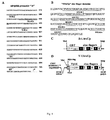
Figure 1: A) Nucleotidic sequence of the utrophin "A" murine promoter. The DNA target sequence of UtroUp is underlined and in bold. The bound sites of the main transcriptional factors are indicated. B) Aminoacidic sequence of the domain binding to UtroUp DNA. The sequences of the six zinc finger domains are enumerated and underlined (SEQ ID NO. 1, SEQ ID NO. 2, SEQ ID NO. 3, SEQ ID NO. 4, SEQ ID NO. 5 and SEQ ID NO. 6). C and D) Schemes of the synthetic B-UtroUp constructs for producing and purifying the protein in bacteria and V-UtroUp for assaying the transcriptional properties in mammal cells. -
Figure 2: A) Assay of electrophoretic mobility for determining the dissociation constant (Kd) of the B-UtroUp protein/ DNA target complex. The protein concentrations expressed in nanomoles from the first to the ninth lanes are: 1, 2, 4, 8, 12, 30, 60, 120, 0. B) Histogram related to the luciferase activity of the pXP constructs (containing a small portion of the utrophin promoter including the UtroUp bond site) and pGL2-Control. Both constructs have been cotransfected with UtroUp, containing only the DNA binding domain, or V-UtroUp containing the DNA binding domain fused to the activation domain of the Vp16 transcription. The results represent the average of four independent experiments performed three times and are reported with respect to the basal activity (thereto thevalue 1 has been given) respectively of the pXP and pGL2-Control constructs. - UtroUp comprises six zinc finger domains (Table 1) placed in tandem, and it has been generated with the aim of binding, with very high affinity and specificity, the 18-nucleotide-long DNA target sequence: 5'- GCT GCT GCG GGC TGG GAG- 3' (SEQ ID NO. 13), existing both in the human and murine promoter of the "utrophin" gene (
Figure 1A ).Table 1. Nucleotidic sequence of the UtroUp domains (SEQ ID NO. 11) 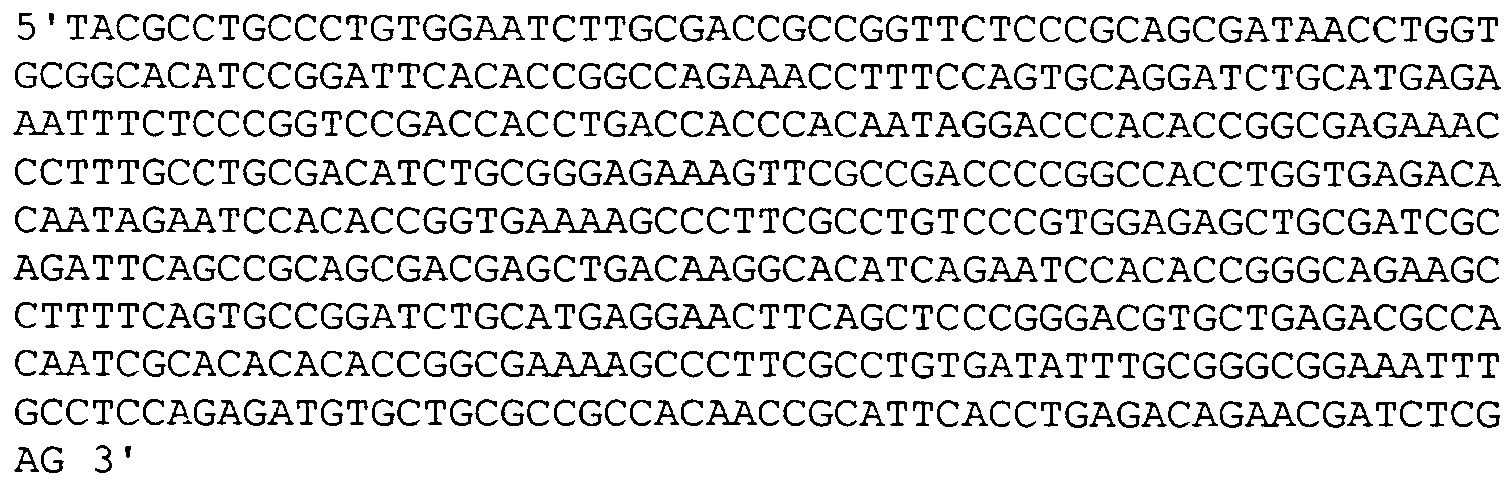
- Aminoacidic sequence of the UtroUp domains (SEQ ID NO. 12)

- UtroUp has been fused to different protein domains (GST, accession number AAB03573, VP16, accession number P04486) in order to be able to test its biochemical and functional properties.
- Two different basic constructs have been generated:
- B-UtroUp expresses in bacterial systems (
Fig 1C ). It is a fusion protein with the bacterial protein glutathione S-transferase (GST) which allows the expression and purification thereof in quantity sufficient such that its DNA binding properties (specificity and affinity) can be assayed.Table 2. Nucleotidic sequence of B-UtroUp (SEQ ID NO. 7) 
- V-UtroUp has been constructed for the expression in mammal cells (
figure 1D ) and it has been implemented by synthesizing and assembling various portions described herebelow: - a) The construct includes the region promoting the CMV cytomegalovirus gene (GenBank ADDGENE_VECDB_5506 4661, from nucleotide 15 to 591).
- b) The transcript V-UtroUp has been equipped with an intron coming from the precocious region of the SV40 virus (from the nucleotide 276 to 621 of the sequence AJ012749). The presence of this intron and the consequent processing thereof increases the stability of the transcript V-UtroUp.
- c) In the carboxy-terminal region the following signal has been added (deriving from the SV40 virus), SEQ ID NO. 14:
- 5'-AACTTGTTTATTGCAGCTTATPATGGTTACAAATAAAGCAATAGCATCACAAATTTCAC AAATAAAGCATTTTTTTCACTGCATTCTAGTTGTGGTTTGTCCAAACTCATCAATGTATCTTATCATGTCTGG AT -3'
- d) The protein region responsible for binding to DNA is of the zinc-finger type, it is completly synthetic and it comprises six zinc finger domains assembled in tandem and properly modified (
Figure 1B ) for recognizing the target sequence: 5'-GCT GCT GCG GGC TGG GAG-3'(SEQ ID NO. 13) present both in the human and murine promoter of the "utrophin" gene. - e) To the zinc-finger region was fused the strong transcription activation domain "Vp16" deriving from the virus herpes simplex (P04486).
In the amino-terminal portion of the V-UtroUp protein two domains have been further added: - f) A nuclear localization signal (NLS, MAPKKKRKV, SEQ ID NO. 15) originating from the Large T precocious protein of the SV40 virus.
- g) A sequence of 13 aminoacids (MEQKLISEEDLNE, SEQ ID NO. 16) specifically recognized by the monoclonal antibody 9E10 which allows detecting the protein presence.

- The synthetic gene B-UtroUp (Table 2) has been cloned in the bacterial expression vector pGEX-4T1 (Pharmacia) in the carboxy-terminal position with respect to the bacterial glutathione S-transferase (GST) protein.
- The synthetic gene UtroUp fused to the domain of strong activation of the "Vp16" transcription originating from the virus herpes simplex has been cloned in the eucariotic expression vector pRK5 (Clonthec) under the control of the sequences regulating the cytomegalovirus (CMV). The final construct apart from epitope myc (in five copies), has a nuclear localization signal, an intron and a polyadenylation signal, all elements deriving from the SV40virus (Table 4).
- B-UtroUp was expressed in the bacterial strain BL21 (strain of E.Coli without protease (Invitrogen) and purified with resin glutathione Sepharose 4B (Pharmacia).
- The expression of the V-UtroUp transgene was controlled by using the monoclonal antibody anti myc 9E10 (Calbiochem) in experiments of Western Blot, performed with total and nuclear extracts deriving from HeLa cells transfected transiently. Assays of luciferase activity have been performed on cell extracts deriving from experiments of transient transfection in HeLa cells. The luciferase activity has been measured at the luminometer, model Berthold LB9506.
- In order to measure the dissociation constant (Kd) of B-UtroUp for the DNA target thereof (GCT GCT GCG GGC TGG GAG, SEQ ID No. 13) experiments of electrophoretic delay (EMSA) were performed. In the EMSA assay increasing quantities of B-UtroUp (concentrations from 1 to 120 nM), were placed to incubate with a fixed quantity (10000 cpm equal to about 0.5 ng) of the labelled oligonucleotide (double strand) containing 1 copy of the DNA target. After incubation, the reaction mix was loaded onto an acrylamide gel under non-denaturing conditions. The radioactive gel image was acquired with PhosphoImager (Molecular Dinamics) and the band intensity was measured at the different protein concentrations with the ImageQuant programme. The data were analyzed with the KaleidaGraph (Abelbeck Sofware) programme, by assuming as Kd value the protein concentration expressed in nM subtracted of 50% of the radioactive signal.
- The authors have designed, synthesized and assayed the biochemical properties a new zinc-finger-based DNA binding domain called "UtroUp" (
Figure 1B ). - The capability of B-UtroUp to bind DNA has been evaluated by means of electrophoretic delay experiments (EMSA), which have allowed calculating the dissociation constant thereof (Kd) (
Figure 2A ). The dissociation constant of B-UtroUp results to be equal to 3,5 nM. This value shows an optimum level of affinity/specificity of B-UtroUp with respect to the DNA target thereof. The dissociation constant of B-UtroUp is comparable to the values obtained for other zinc finger natural proteins and it is significantly lower (more similar) than the Kds determined for other zinc finger synthetic proteins produced by the authors (Corbi et al. 2000, Corbi et al. 2004, Libri et al. 2004). - Electrophoretic delay experiments performed with other properly mutagenized 18-bp sequence, similar to the DNA target sequence of UtroUP, show a strong descrease/absence of binding by UtropUp, confirming the high specificity thereof for binding to the DNA target.
- It is important noting that UtroUp, comprising six zinc finger domains (three thereof deriving from Vp16-Jazz (nucleotidic sequence of Jazz: AJ243577, aminoacidic sequence of Jazz: CAB52142, Corbi et al. 2000), shows an affinity of about ten times higher than Vp16-Jazz containing only zinc finger domains (patent application
RM 2005 A 000493 of 30/09/ 2005 - The capability of the protein V-UtroUp (
Figure 1D ) to modulate the transcription of the luciferase reporter gene under the control of the utrophin promoter, which includes the DNA target sequence of UtroUp (pXP) was verified. - In the histogram shown in
figure 2B , V-UtroUp displays a high capability of activating the transcription. -
- Beltran A et al., 2006. ASSAY and Drug Dev Technol 4: 317-331
- Bogdanovich S et al., 2004. J Mol Med. 82(2):102-15
- Corbi N et al., 2000. Gene Ther 7:1076-83
- Corbi N et al., 2004. Biochem Cell Biol 82(4):428-36
- Davies KE et al., 1983. Nucleic Acids Res Apr 25;11(8):2303-12
- Khurana TS, Davies KE. 2003. Nat. Rev. Drug Discov. 2:379-90
- Libri V, et al., 2004. FEBS Lett. 560 (1-3): 75-80
- Love DR et al., 1989. Nature. May 4;339(6219):55-8
- Mattei E, et al., 2007. PLoS ONE 22;2(1):e774
- Matsumura K et al., 1992.
- Miura P, Jasmin BJ. 2006. Trends Mol Med. 3:122-9
- Onori A et al., 2007. Biochem Cell Biol, (3)358-365
- Rafael JA et al., 1998. Nat. Genet. 19:79-82
- Tinsley JM et al., 1996. Nature 384:349-53
- Voisin V, de la Porte S.2004. Therapeutic Int Rev Cytol.240:1-30
| Table 4. Nucleotidic sequence of V-UtroUp (SEQ ID NO. 9) |
 |
| Table 5. Aminoacidic sequence of V-UtroUp (SEQ ID NO. 10) |
 |
Claims (13)
- A nucleic acid molecule comprising a nucleotide sequence codifying for a protein characterized in comprising six zinc finger domains and in upregulating the transcription of the utrophin gene by binding to a nucleotidic sequence comprised in a utrophin gene untranscribed regulatory sequence wherein the zinc finger domains are SEQ ID NO. 1, SEQ ID NO. 2, SEQ ID NO. 3, SEQ ID NO. 4, SEQ ID NO. 5 and SEQ ID NO. 6.
- The nucleic acid molecule according to claim 1 codifying for a protein comprising the SEQ ID NO. 12.
- The nucleic acid molecule according to claim 2 having essentially the SEQ ID NO. 11.
- The nucleic acid molecule according to claim 2 codifying for a protein having essentially the SEQ ID NO. 8 or SEQ ID NO. 10.
- The nucleic acid molecule according to claim 4 having essentially the SEQ ID NO. 7 or SEQ ID NO. 9, respectively.
- An expression vector comprising the nucleic acid molecule according to anyone of the preceding claims.
- A recombinant host cell comprising the vector according to claim 6.
- A protein characterized in comprising six zinc finger domains and in upregulating the transcription of the utrophin gene by binding to a nucleotidic sequence comprised in a utrophin gene untranscribed regulatory sequence wherein the zinc finger domains are SEQ ID NO. 1, SEQ ID NO. 2, SEQ ID NO. 3, SEQ ID NO. 4, SEQ ID NO. 5 and SEQ ID NO. 6 and wherein the nucleotidic sequence has essentially the sequence: GCT GCT GCG GGC TGG GAG (SEQ ID NO. 13).
- The protein according to claim 8 having essentially the SEQ ID NO. 12, SEQ ID NO. 8 or SEQ ID NO. 10.
- The protein according to anyone of the claims 8 to 9 for medical use.
- The protein according to claim 10 for use as an anti-muscular pathology agent.
- The protein according to claim 11 wherein the muscular pathology is the Duchenne (DMD) or the Becker (BMD) muscular dystrophy.
- The expression vector according to claim 6 for use in gene therapy.
Applications Claiming Priority (2)
| Application Number | Priority Date | Filing Date | Title |
|---|---|---|---|
| IT000523A ITRM20070523A1 (en) | 2007-10-05 | 2007-10-05 | CODIFYING NUCLEIC ACID FOR A REGULATING PROTEIN SPECIFIC TO THE TRANSCRIPTION OF THE UROPHINE PROTEIN BY IT CODIFIED AND ITS APPLICATIONS |
| PCT/IB2008/054089 WO2009044383A1 (en) | 2007-10-05 | 2008-10-06 | Nucleic acid codifying for a utrophin transcription specific regulating protein, protein codified thereby and uses thereof |
Publications (2)
| Publication Number | Publication Date |
|---|---|
| EP2193200A1 EP2193200A1 (en) | 2010-06-09 |
| EP2193200B1 true EP2193200B1 (en) | 2011-10-26 |
Family
ID=40202864
Family Applications (1)
| Application Number | Title | Priority Date | Filing Date |
|---|---|---|---|
| EP08807901A Not-in-force EP2193200B1 (en) | 2007-10-05 | 2008-10-06 | Nucleic acid codifying for a utrophin transcription specific regulating protein, protein codified thereby and uses thereof |
Country Status (6)
| Country | Link |
|---|---|
| US (1) | US8304235B2 (en) |
| EP (1) | EP2193200B1 (en) |
| AT (1) | ATE530574T1 (en) |
| ES (1) | ES2360916T3 (en) |
| IT (1) | ITRM20070523A1 (en) |
| WO (1) | WO2009044383A1 (en) |
Families Citing this family (10)
| Publication number | Priority date | Publication date | Assignee | Title |
|---|---|---|---|---|
| US10837014B2 (en) | 2012-05-16 | 2020-11-17 | Translate Bio Ma, Inc. | Compositions and methods for modulating SMN gene family expression |
| KR20150030205A (en) | 2012-05-16 | 2015-03-19 | 라나 테라퓨틱스, 인크. | Compositions and methods for modulating smn gene family expression |
| AU2013262709A1 (en) | 2012-05-16 | 2015-01-22 | Rana Therapeutics, Inc. | Compositions and methods for modulating MECP2 expression |
| SG11201407486PA (en) * | 2012-05-16 | 2014-12-30 | Rana Therapeutics Inc | Compositions and methods for modulating utrn expression |
| ITTO20130669A1 (en) | 2013-08-05 | 2015-02-06 | Consiglio Nazionale Ricerche | ADENO-ASSOCIATED MOMCULAR-SPECIFIC VECTOR AND ITS EMPLOYMENT IN THE TREATMENT OF MUSCLE PATHOLOGIES |
| US10301367B2 (en) * | 2014-07-26 | 2019-05-28 | Consiglio Nazionale Delle Ricerche | Compositions and methods for treatment of muscular dystrophy |
| JP7401432B2 (en) | 2017-12-01 | 2023-12-19 | エンコーデッド セラピューティクス, インコーポレイテッド | engineered DNA binding protein |
| CA3119618A1 (en) | 2018-11-16 | 2020-05-22 | Astellas Pharma Inc. | Method for treating muscular dystrophy by targeting utrophin gene |
| WO2020243651A1 (en) | 2019-05-29 | 2020-12-03 | Encoded Therapeutics, Inc. | Compositions and methods for selective gene regulation |
| WO2021230385A1 (en) | 2020-05-15 | 2021-11-18 | Astellas Pharma Inc. | Method for treating muscular dystrophy by targeting utrophin gene |
Family Cites Families (1)
| Publication number | Priority date | Publication date | Assignee | Title |
|---|---|---|---|---|
| US6242568B1 (en) * | 1994-01-18 | 2001-06-05 | The Scripps Research Institute | Zinc finger protein derivatives and methods therefor |
-
2007
- 2007-10-05 IT IT000523A patent/ITRM20070523A1/en unknown
-
2008
- 2008-09-30 ES ES08804901T patent/ES2360916T3/en active Active
- 2008-10-06 US US12/680,681 patent/US8304235B2/en not_active Expired - Fee Related
- 2008-10-06 EP EP08807901A patent/EP2193200B1/en not_active Not-in-force
- 2008-10-06 AT AT08807901T patent/ATE530574T1/en not_active IP Right Cessation
- 2008-10-06 WO PCT/IB2008/054089 patent/WO2009044383A1/en not_active Ceased
Also Published As
| Publication number | Publication date |
|---|---|
| WO2009044383A1 (en) | 2009-04-09 |
| EP2193200A1 (en) | 2010-06-09 |
| ES2360916T3 (en) | 2011-06-10 |
| WO2009044383A8 (en) | 2009-10-01 |
| US20100216712A1 (en) | 2010-08-26 |
| ATE530574T1 (en) | 2011-11-15 |
| ITRM20070523A1 (en) | 2009-04-06 |
| US8304235B2 (en) | 2012-11-06 |
Similar Documents
| Publication | Publication Date | Title |
|---|---|---|
| US8304235B2 (en) | Nucleic acid codifying for a utrophin transcription specific regulating protein, protein codified thereby and uses thereof | |
| Freund et al. | Cone-rod dystrophy due to mutations in a novel photoreceptor-specific homeobox gene (CRX) essential for maintenance of the photoreceptor | |
| Yardley et al. | Mutations of VMD2 splicing regulators cause nanophthalmos and autosomal dominant vitreoretinochoroidopathy (ADVIRC) | |
| Kishida et al. | Cellular proteins that bind the von Hippel-Lindau disease gene product: mapping of binding domains and the effect of missense mutations | |
| Saadi et al. | Identification of a dominant negative homeodomain mutation in Rieger syndrome | |
| Fabbro et al. | Pax-8 protein levels regulate thyroglobulin gene expression | |
| Pang et al. | Genetic analysis of the LAMP-2 gene promoter in patients with sporadic Parkinson's disease | |
| Macina et al. | Genomic organization of the human PAX3 gene: DNA sequence analysis of the region disrupted in alveolar rhabdomyosarcoma | |
| Corneo et al. | Three-dimensional clustering of human RAG2 gene mutations in severe combined immune deficiency | |
| Wilson et al. | Up71 and up140, two novel transcripts of utrophin that are homologues of short forms of dystrophin | |
| Germain-Desprez et al. | The SMN genes are subject to transcriptional regulation during cellular differentiation | |
| Benfante et al. | Transcription factor PHOX2A regulates the human α3 nicotinic receptor subunit gene promoter | |
| WO2020210724A1 (en) | Htra1 modulation for treatment of amd | |
| Ceccarini et al. | A splice variant of Dp71 lacking the syntrophin binding site is expressed in early stages of human neural development | |
| Ishiguro et al. | Molecular properties of Zic4 and Zic5 proteins: functional diversity within Zic family | |
| Copland et al. | IGF-1 controls GLUT3 expression in muscle via the transcriptional factor Sp1 | |
| US5972609A (en) | Utrophin gene promotor | |
| AU783950B2 (en) | Utrophin gene promoter | |
| Ongwijitwat et al. | Functional analysis of the rat cytochrome c oxidase subunit 6A1 promoter in primary neurons | |
| US20030129686A1 (en) | Novel nucleic acid and polypeptide molecules | |
| Flink et al. | Organization of the gene encoding cellular nucleic acid-binding protein | |
| WO2020214990A1 (en) | Abca4 cell line and methods of use | |
| Guy et al. | Conserved amino acid sequences confer nuclear localization upon the Prophet of Pit-1 pituitary transcription factor protein | |
| Oliviero et al. | Molecular evidence of triplication in the haptoglobin Johnson variant gene | |
| WO2004042358A2 (en) | HUMAN TYPE II DIABETES GENE-SLIT-3 LOCATED ON CHROMOSOME 5q35 |
Legal Events
| Date | Code | Title | Description |
|---|---|---|---|
| PUAI | Public reference made under article 153(3) epc to a published international application that has entered the european phase |
Free format text: ORIGINAL CODE: 0009012 |
|
| 17P | Request for examination filed |
Effective date: 20100323 |
|
| AK | Designated contracting states |
Kind code of ref document: A1 Designated state(s): AT BE BG CH CY CZ DE DK EE ES FI FR GB GR HR HU IE IS IT LI LT LU LV MC MT NL NO PL PT RO SE SI SK TR |
|
| AX | Request for extension of the european patent |
Extension state: AL BA MK RS |
|
| 17Q | First examination report despatched |
Effective date: 20101202 |
|
| DAX | Request for extension of the european patent (deleted) | ||
| REG | Reference to a national code |
Ref country code: DE Ref legal event code: R079 Ref document number: 602008010936 Country of ref document: DE Free format text: PREVIOUS MAIN CLASS: C12N0015120000 Ipc: C07K0014470000 |
|
| REG | Reference to a national code |
Ref country code: DE Ref legal event code: R079 Ref document number: 602008010936 Country of ref document: DE Free format text: PREVIOUS MAIN CLASS: C12N0015120000 Ipc: C07K0014470000 |
|
| GRAP | Despatch of communication of intention to grant a patent |
Free format text: ORIGINAL CODE: EPIDOSNIGR1 |
|
| RIC1 | Information provided on ipc code assigned before grant |
Ipc: C07K 14/47 20060101AFI20110518BHEP Ipc: A61K 38/17 20060101ALI20110518BHEP Ipc: C12N 15/62 20060101ALI20110518BHEP Ipc: A61K 48/00 20060101ALI20110518BHEP |
|
| RIC1 | Information provided on ipc code assigned before grant |
Ipc: A61K 48/00 20060101ALI20110607BHEP Ipc: C07K 14/47 20060101AFI20110607BHEP Ipc: C12N 15/62 20060101ALI20110607BHEP Ipc: A61P 21/00 20060101ALI20110607BHEP Ipc: A61K 38/17 20060101ALI20110607BHEP |
|
| GRAS | Grant fee paid |
Free format text: ORIGINAL CODE: EPIDOSNIGR3 |
|
| GRAA | (expected) grant |
Free format text: ORIGINAL CODE: 0009210 |
|
| AK | Designated contracting states |
Kind code of ref document: B1 Designated state(s): AT BE BG CH CY CZ DE DK EE ES FI FR GB GR HR HU IE IS IT LI LT LU LV MC MT NL NO PL PT RO SE SI SK TR |
|
| REG | Reference to a national code |
Ref country code: GB Ref legal event code: FG4D |
|
| REG | Reference to a national code |
Ref country code: CH Ref legal event code: EP |
|
| REG | Reference to a national code |
Ref country code: IE Ref legal event code: FG4D |
|
| REG | Reference to a national code |
Ref country code: DE Ref legal event code: R096 Ref document number: 602008010936 Country of ref document: DE Effective date: 20111229 |
|
| REG | Reference to a national code |
Ref country code: NL Ref legal event code: VDEP Effective date: 20111026 |
|
| LTIE | Lt: invalidation of european patent or patent extension |
Effective date: 20111026 |
|
| REG | Reference to a national code |
Ref country code: AT Ref legal event code: MK05 Ref document number: 530574 Country of ref document: AT Kind code of ref document: T Effective date: 20111026 |
|
| PG25 | Lapsed in a contracting state [announced via postgrant information from national office to epo] |
Ref country code: LT Free format text: LAPSE BECAUSE OF FAILURE TO SUBMIT A TRANSLATION OF THE DESCRIPTION OR TO PAY THE FEE WITHIN THE PRESCRIBED TIME-LIMIT Effective date: 20111026 Ref country code: BE Free format text: LAPSE BECAUSE OF FAILURE TO SUBMIT A TRANSLATION OF THE DESCRIPTION OR TO PAY THE FEE WITHIN THE PRESCRIBED TIME-LIMIT Effective date: 20111026 Ref country code: IS Free format text: LAPSE BECAUSE OF FAILURE TO SUBMIT A TRANSLATION OF THE DESCRIPTION OR TO PAY THE FEE WITHIN THE PRESCRIBED TIME-LIMIT Effective date: 20120226 Ref country code: NO Free format text: LAPSE BECAUSE OF FAILURE TO SUBMIT A TRANSLATION OF THE DESCRIPTION OR TO PAY THE FEE WITHIN THE PRESCRIBED TIME-LIMIT Effective date: 20120126 |
|
| PG25 | Lapsed in a contracting state [announced via postgrant information from national office to epo] |
Ref country code: SI Free format text: LAPSE BECAUSE OF FAILURE TO SUBMIT A TRANSLATION OF THE DESCRIPTION OR TO PAY THE FEE WITHIN THE PRESCRIBED TIME-LIMIT Effective date: 20111026 Ref country code: SE Free format text: LAPSE BECAUSE OF FAILURE TO SUBMIT A TRANSLATION OF THE DESCRIPTION OR TO PAY THE FEE WITHIN THE PRESCRIBED TIME-LIMIT Effective date: 20111026 Ref country code: LV Free format text: LAPSE BECAUSE OF FAILURE TO SUBMIT A TRANSLATION OF THE DESCRIPTION OR TO PAY THE FEE WITHIN THE PRESCRIBED TIME-LIMIT Effective date: 20111026 Ref country code: GR Free format text: LAPSE BECAUSE OF FAILURE TO SUBMIT A TRANSLATION OF THE DESCRIPTION OR TO PAY THE FEE WITHIN THE PRESCRIBED TIME-LIMIT Effective date: 20120127 Ref country code: HR Free format text: LAPSE BECAUSE OF FAILURE TO SUBMIT A TRANSLATION OF THE DESCRIPTION OR TO PAY THE FEE WITHIN THE PRESCRIBED TIME-LIMIT Effective date: 20111026 Ref country code: PT Free format text: LAPSE BECAUSE OF FAILURE TO SUBMIT A TRANSLATION OF THE DESCRIPTION OR TO PAY THE FEE WITHIN THE PRESCRIBED TIME-LIMIT Effective date: 20120227 Ref country code: NL Free format text: LAPSE BECAUSE OF FAILURE TO SUBMIT A TRANSLATION OF THE DESCRIPTION OR TO PAY THE FEE WITHIN THE PRESCRIBED TIME-LIMIT Effective date: 20111026 Ref country code: PL Free format text: LAPSE BECAUSE OF FAILURE TO SUBMIT A TRANSLATION OF THE DESCRIPTION OR TO PAY THE FEE WITHIN THE PRESCRIBED TIME-LIMIT Effective date: 20111026 |
|
| PG25 | Lapsed in a contracting state [announced via postgrant information from national office to epo] |
Ref country code: CY Free format text: LAPSE BECAUSE OF FAILURE TO SUBMIT A TRANSLATION OF THE DESCRIPTION OR TO PAY THE FEE WITHIN THE PRESCRIBED TIME-LIMIT Effective date: 20111026 |
|
| PG25 | Lapsed in a contracting state [announced via postgrant information from national office to epo] |
Ref country code: EE Free format text: LAPSE BECAUSE OF FAILURE TO SUBMIT A TRANSLATION OF THE DESCRIPTION OR TO PAY THE FEE WITHIN THE PRESCRIBED TIME-LIMIT Effective date: 20111026 Ref country code: DK Free format text: LAPSE BECAUSE OF FAILURE TO SUBMIT A TRANSLATION OF THE DESCRIPTION OR TO PAY THE FEE WITHIN THE PRESCRIBED TIME-LIMIT Effective date: 20111026 Ref country code: CZ Free format text: LAPSE BECAUSE OF FAILURE TO SUBMIT A TRANSLATION OF THE DESCRIPTION OR TO PAY THE FEE WITHIN THE PRESCRIBED TIME-LIMIT Effective date: 20111026 Ref country code: BG Free format text: LAPSE BECAUSE OF FAILURE TO SUBMIT A TRANSLATION OF THE DESCRIPTION OR TO PAY THE FEE WITHIN THE PRESCRIBED TIME-LIMIT Effective date: 20120126 Ref country code: SK Free format text: LAPSE BECAUSE OF FAILURE TO SUBMIT A TRANSLATION OF THE DESCRIPTION OR TO PAY THE FEE WITHIN THE PRESCRIBED TIME-LIMIT Effective date: 20111026 |
|
| PG25 | Lapsed in a contracting state [announced via postgrant information from national office to epo] |
Ref country code: RO Free format text: LAPSE BECAUSE OF FAILURE TO SUBMIT A TRANSLATION OF THE DESCRIPTION OR TO PAY THE FEE WITHIN THE PRESCRIBED TIME-LIMIT Effective date: 20111026 |
|
| PLBE | No opposition filed within time limit |
Free format text: ORIGINAL CODE: 0009261 |
|
| STAA | Information on the status of an ep patent application or granted ep patent |
Free format text: STATUS: NO OPPOSITION FILED WITHIN TIME LIMIT |
|
| 26N | No opposition filed |
Effective date: 20120727 |
|
| REG | Reference to a national code |
Ref country code: DE Ref legal event code: R097 Ref document number: 602008010936 Country of ref document: DE Effective date: 20120727 |
|
| PG25 | Lapsed in a contracting state [announced via postgrant information from national office to epo] |
Ref country code: AT Free format text: LAPSE BECAUSE OF FAILURE TO SUBMIT A TRANSLATION OF THE DESCRIPTION OR TO PAY THE FEE WITHIN THE PRESCRIBED TIME-LIMIT Effective date: 20111026 |
|
| PG25 | Lapsed in a contracting state [announced via postgrant information from national office to epo] |
Ref country code: ES Free format text: LAPSE BECAUSE OF FAILURE TO SUBMIT A TRANSLATION OF THE DESCRIPTION OR TO PAY THE FEE WITHIN THE PRESCRIBED TIME-LIMIT Effective date: 20120206 |
|
| PG25 | Lapsed in a contracting state [announced via postgrant information from national office to epo] |
Ref country code: MC Free format text: LAPSE BECAUSE OF NON-PAYMENT OF DUE FEES Effective date: 20121031 |
|
| REG | Reference to a national code |
Ref country code: CH Ref legal event code: PL |
|
| PG25 | Lapsed in a contracting state [announced via postgrant information from national office to epo] |
Ref country code: FI Free format text: LAPSE BECAUSE OF FAILURE TO SUBMIT A TRANSLATION OF THE DESCRIPTION OR TO PAY THE FEE WITHIN THE PRESCRIBED TIME-LIMIT Effective date: 20111026 |
|
| REG | Reference to a national code |
Ref country code: IE Ref legal event code: MM4A |
|
| PG25 | Lapsed in a contracting state [announced via postgrant information from national office to epo] |
Ref country code: LI Free format text: LAPSE BECAUSE OF NON-PAYMENT OF DUE FEES Effective date: 20121031 Ref country code: CH Free format text: LAPSE BECAUSE OF NON-PAYMENT OF DUE FEES Effective date: 20121031 Ref country code: IE Free format text: LAPSE BECAUSE OF NON-PAYMENT OF DUE FEES Effective date: 20121006 |
|
| PG25 | Lapsed in a contracting state [announced via postgrant information from national office to epo] |
Ref country code: MT Free format text: LAPSE BECAUSE OF FAILURE TO SUBMIT A TRANSLATION OF THE DESCRIPTION OR TO PAY THE FEE WITHIN THE PRESCRIBED TIME-LIMIT Effective date: 20111026 |
|
| PG25 | Lapsed in a contracting state [announced via postgrant information from national office to epo] |
Ref country code: TR Free format text: LAPSE BECAUSE OF FAILURE TO SUBMIT A TRANSLATION OF THE DESCRIPTION OR TO PAY THE FEE WITHIN THE PRESCRIBED TIME-LIMIT Effective date: 20111026 |
|
| PG25 | Lapsed in a contracting state [announced via postgrant information from national office to epo] |
Ref country code: LU Free format text: LAPSE BECAUSE OF NON-PAYMENT OF DUE FEES Effective date: 20121006 |
|
| PG25 | Lapsed in a contracting state [announced via postgrant information from national office to epo] |
Ref country code: HU Free format text: LAPSE BECAUSE OF FAILURE TO SUBMIT A TRANSLATION OF THE DESCRIPTION OR TO PAY THE FEE WITHIN THE PRESCRIBED TIME-LIMIT Effective date: 20081006 |
|
| REG | Reference to a national code |
Ref country code: FR Ref legal event code: PLFP Year of fee payment: 8 |
|
| REG | Reference to a national code |
Ref country code: FR Ref legal event code: PLFP Year of fee payment: 9 |
|
| REG | Reference to a national code |
Ref country code: FR Ref legal event code: PLFP Year of fee payment: 10 |
|
| PGFP | Annual fee paid to national office [announced via postgrant information from national office to epo] |
Ref country code: FR Payment date: 20171024 Year of fee payment: 10 Ref country code: DE Payment date: 20171019 Year of fee payment: 10 |
|
| PGFP | Annual fee paid to national office [announced via postgrant information from national office to epo] |
Ref country code: IT Payment date: 20171025 Year of fee payment: 10 Ref country code: GB Payment date: 20171019 Year of fee payment: 10 |
|
| REG | Reference to a national code |
Ref country code: DE Ref legal event code: R119 Ref document number: 602008010936 Country of ref document: DE |
|
| GBPC | Gb: european patent ceased through non-payment of renewal fee |
Effective date: 20181006 |
|
| PG25 | Lapsed in a contracting state [announced via postgrant information from national office to epo] |
Ref country code: DE Free format text: LAPSE BECAUSE OF NON-PAYMENT OF DUE FEES Effective date: 20190501 |
|
| PG25 | Lapsed in a contracting state [announced via postgrant information from national office to epo] |
Ref country code: FR Free format text: LAPSE BECAUSE OF NON-PAYMENT OF DUE FEES Effective date: 20181031 |
|
| PG25 | Lapsed in a contracting state [announced via postgrant information from national office to epo] |
Ref country code: GB Free format text: LAPSE BECAUSE OF NON-PAYMENT OF DUE FEES Effective date: 20181006 Ref country code: IT Free format text: LAPSE BECAUSE OF NON-PAYMENT OF DUE FEES Effective date: 20181006 |