EP2192196A1 - Prediction of lipid-metabotype-related physiological susceptibilities - Google Patents
Prediction of lipid-metabotype-related physiological susceptibilities Download PDFInfo
- Publication number
- EP2192196A1 EP2192196A1 EP08020645A EP08020645A EP2192196A1 EP 2192196 A1 EP2192196 A1 EP 2192196A1 EP 08020645 A EP08020645 A EP 08020645A EP 08020645 A EP08020645 A EP 08020645A EP 2192196 A1 EP2192196 A1 EP 2192196A1
- Authority
- EP
- European Patent Office
- Prior art keywords
- represented
- glycerophospholipid
- cooh
- allele
- minor allele
- Prior art date
- Legal status (The legal status is an assumption and is not a legal conclusion. Google has not performed a legal analysis and makes no representation as to the accuracy of the status listed.)
- Ceased
Links
- 108700028369 Alleles Proteins 0.000 claims abstract description 150
- 206010071602 Genetic polymorphism Diseases 0.000 claims abstract description 94
- 238000000034 method Methods 0.000 claims abstract description 71
- IQFYYKKMVGJFEH-XLPZGREQSA-N Thymidine Chemical compound O=C1NC(=O)C(C)=CN1[C@@H]1O[C@H](CO)[C@@H](O)C1 IQFYYKKMVGJFEH-XLPZGREQSA-N 0.000 claims abstract description 54
- NYHBQMYGNKIUIF-UUOKFMHZSA-N Guanosine Chemical compound C1=NC=2C(=O)NC(N)=NC=2N1[C@@H]1O[C@H](CO)[C@@H](O)[C@H]1O NYHBQMYGNKIUIF-UUOKFMHZSA-N 0.000 claims abstract description 44
- DWRXFEITVBNRMK-UHFFFAOYSA-N Beta-D-1-Arabinofuranosylthymine Natural products O=C1NC(=O)C(C)=CN1C1C(O)C(O)C(CO)O1 DWRXFEITVBNRMK-UHFFFAOYSA-N 0.000 claims abstract description 27
- IQFYYKKMVGJFEH-UHFFFAOYSA-N beta-L-thymidine Natural products O=C1NC(=O)C(C)=CN1C1OC(CO)C(O)C1 IQFYYKKMVGJFEH-UHFFFAOYSA-N 0.000 claims abstract description 27
- 229940104230 thymidine Drugs 0.000 claims abstract description 27
- 102210006814 rs174548 Human genes 0.000 claims abstract description 25
- MIKUYHXYGGJMLM-GIMIYPNGSA-N Crotonoside Natural products C1=NC2=C(N)NC(=O)N=C2N1[C@H]1O[C@@H](CO)[C@H](O)[C@@H]1O MIKUYHXYGGJMLM-GIMIYPNGSA-N 0.000 claims abstract description 22
- NYHBQMYGNKIUIF-UHFFFAOYSA-N D-guanosine Natural products C1=2NC(N)=NC(=O)C=2N=CN1C1OC(CO)C(O)C1O NYHBQMYGNKIUIF-UHFFFAOYSA-N 0.000 claims abstract description 22
- 229940029575 guanosine Drugs 0.000 claims abstract description 22
- 230000037356 lipid metabolism Effects 0.000 claims abstract description 22
- OIRDTQYFTABQOQ-KQYNXXCUSA-N adenosine Chemical compound C1=NC=2C(N)=NC=NC=2N1[C@@H]1O[C@H](CO)[C@@H](O)[C@H]1O OIRDTQYFTABQOQ-KQYNXXCUSA-N 0.000 claims abstract description 21
- UHDGCWIWMRVCDJ-UHFFFAOYSA-N 1-beta-D-Xylofuranosyl-NH-Cytosine Natural products O=C1N=C(N)C=CN1C1C(O)C(O)C(CO)O1 UHDGCWIWMRVCDJ-UHFFFAOYSA-N 0.000 claims abstract description 20
- UHDGCWIWMRVCDJ-PSQAKQOGSA-N Cytidine Natural products O=C1N=C(N)C=CN1[C@@H]1[C@@H](O)[C@@H](O)[C@H](CO)O1 UHDGCWIWMRVCDJ-PSQAKQOGSA-N 0.000 claims abstract description 20
- UHDGCWIWMRVCDJ-ZAKLUEHWSA-N cytidine Chemical compound O=C1N=C(N)C=CN1[C@H]1[C@H](O)[C@@H](O)[C@H](CO)O1 UHDGCWIWMRVCDJ-ZAKLUEHWSA-N 0.000 claims abstract description 20
- 102210004139 rs2014355 Human genes 0.000 claims abstract description 18
- 102200147393 rs2286963 Human genes 0.000 claims abstract description 14
- 102210007890 rs9393903 Human genes 0.000 claims abstract description 14
- 230000004075 alteration Effects 0.000 claims abstract description 12
- 102210007887 rs272889 Human genes 0.000 claims abstract description 12
- 239000002126 C01EB10 - Adenosine Substances 0.000 claims abstract description 10
- 229960005305 adenosine Drugs 0.000 claims abstract description 10
- 239000000523 sample Substances 0.000 claims description 60
- 102100034542 Acyl-CoA (8-3)-desaturase Human genes 0.000 claims description 51
- HVYWMOMLDIMFJA-DPAQBDIFSA-N cholesterol Chemical compound C1C=C2C[C@@H](O)CC[C@]2(C)[C@@H]2[C@@H]1[C@@H]1CC[C@H]([C@H](C)CCCC(C)C)[C@@]1(C)CC2 HVYWMOMLDIMFJA-DPAQBDIFSA-N 0.000 claims description 46
- 208000037265 diseases, disorders, signs and symptoms Diseases 0.000 claims description 39
- 201000010099 disease Diseases 0.000 claims description 32
- 102100024639 Short-chain specific acyl-CoA dehydrogenase, mitochondrial Human genes 0.000 claims description 29
- 230000027455 binding Effects 0.000 claims description 29
- 238000006911 enzymatic reaction Methods 0.000 claims description 29
- 150000004665 fatty acids Chemical class 0.000 claims description 29
- 102000054765 polymorphisms of proteins Human genes 0.000 claims description 27
- 229940079593 drug Drugs 0.000 claims description 26
- 239000003814 drug Substances 0.000 claims description 26
- 241000932075 Priacanthus hamrur Species 0.000 claims description 23
- 238000009396 hybridization Methods 0.000 claims description 23
- 230000003247 decreasing effect Effects 0.000 claims description 22
- 235000014113 dietary fatty acids Nutrition 0.000 claims description 22
- 229930195729 fatty acid Natural products 0.000 claims description 22
- 239000000194 fatty acid Substances 0.000 claims description 22
- 239000000758 substrate Substances 0.000 claims description 18
- 239000002773 nucleotide Substances 0.000 claims description 16
- 125000003729 nucleotide group Chemical group 0.000 claims description 16
- 150000003626 triacylglycerols Chemical class 0.000 claims description 16
- 102100021644 Long-chain specific acyl-CoA dehydrogenase, mitochondrial Human genes 0.000 claims description 15
- 238000004458 analytical method Methods 0.000 claims description 15
- 208000001072 type 2 diabetes mellitus Diseases 0.000 claims description 15
- 208000011231 Crohn disease Diseases 0.000 claims description 13
- 101000823935 Homo sapiens Serine palmitoyltransferase 3 Proteins 0.000 claims description 13
- 102100022070 Serine palmitoyltransferase 3 Human genes 0.000 claims description 13
- 208000029078 coronary artery disease Diseases 0.000 claims description 13
- 230000037081 physical activity Effects 0.000 claims description 13
- 102100037579 D-3-phosphoglycerate dehydrogenase Human genes 0.000 claims description 12
- 230000002255 enzymatic effect Effects 0.000 claims description 12
- 235000016709 nutrition Nutrition 0.000 claims description 12
- 210000002966 serum Anatomy 0.000 claims description 11
- 238000003556 assay Methods 0.000 claims description 10
- 210000004369 blood Anatomy 0.000 claims description 10
- 239000008280 blood Substances 0.000 claims description 10
- 230000001105 regulatory effect Effects 0.000 claims description 10
- 239000007790 solid phase Substances 0.000 claims description 10
- 238000011282 treatment Methods 0.000 claims description 10
- 101000739890 Homo sapiens D-3-phosphoglycerate dehydrogenase Proteins 0.000 claims description 9
- 101000921368 Homo sapiens Elongation of very long chain fatty acids protein 2 Proteins 0.000 claims description 9
- 208000001145 Metabolic Syndrome Diseases 0.000 claims description 9
- 230000035764 nutrition Effects 0.000 claims description 9
- 101000799318 Homo sapiens Long-chain-fatty-acid-CoA ligase 1 Proteins 0.000 claims description 8
- 101000713272 Homo sapiens Solute carrier family 22 member 4 Proteins 0.000 claims description 8
- 102100033995 Long-chain-fatty-acid-CoA ligase 1 Human genes 0.000 claims description 8
- 102100036928 Solute carrier family 22 member 4 Human genes 0.000 claims description 8
- 201000000690 abdominal obesity-metabolic syndrome Diseases 0.000 claims description 8
- 235000005911 diet Nutrition 0.000 claims description 8
- 208000011580 syndromic disease Diseases 0.000 claims description 8
- 210000001519 tissue Anatomy 0.000 claims description 8
- 230000037213 diet Effects 0.000 claims description 7
- 230000036541 health Effects 0.000 claims description 7
- 208000013403 hyperactivity Diseases 0.000 claims description 7
- LRYZPFWEZHSTHD-HEFFAWAOSA-O 2-[[(e,2s,3r)-2-formamido-3-hydroxyoctadec-4-enoxy]-hydroxyphosphoryl]oxyethyl-trimethylazanium Chemical class CCCCCCCCCCCCC\C=C\[C@@H](O)[C@@H](NC=O)COP(O)(=O)OCC[N+](C)(C)C LRYZPFWEZHSTHD-HEFFAWAOSA-O 0.000 claims description 6
- 210000003754 fetus Anatomy 0.000 claims description 6
- 235000013376 functional food Nutrition 0.000 claims description 6
- 230000035945 sensitivity Effects 0.000 claims description 6
- 230000008901 benefit Effects 0.000 claims description 5
- 238000001514 detection method Methods 0.000 claims description 5
- 230000004043 responsiveness Effects 0.000 claims description 5
- 102000040811 transporter activity Human genes 0.000 claims description 5
- 108091092194 transporter activity Proteins 0.000 claims description 5
- 210000002700 urine Anatomy 0.000 claims description 5
- 238000001712 DNA sequencing Methods 0.000 claims description 4
- 210000002381 plasma Anatomy 0.000 claims description 4
- 210000003491 skin Anatomy 0.000 claims description 4
- 108091027305 Heteroduplex Proteins 0.000 claims description 3
- 210000000481 breast Anatomy 0.000 claims description 3
- 238000012217 deletion Methods 0.000 claims description 3
- 230000037430 deletion Effects 0.000 claims description 3
- 210000004209 hair Anatomy 0.000 claims description 3
- 210000003780 hair follicle Anatomy 0.000 claims description 3
- 238000003780 insertion Methods 0.000 claims description 3
- 230000037431 insertion Effects 0.000 claims description 3
- 210000004400 mucous membrane Anatomy 0.000 claims description 3
- 210000003097 mucus Anatomy 0.000 claims description 3
- 210000003296 saliva Anatomy 0.000 claims description 3
- 210000001215 vagina Anatomy 0.000 claims description 3
- 238000003776 cleavage reaction Methods 0.000 claims description 2
- 230000003297 denaturating effect Effects 0.000 claims description 2
- 238000001502 gel electrophoresis Methods 0.000 claims description 2
- 239000011544 gradient gel Substances 0.000 claims description 2
- 201000003068 rheumatic fever Diseases 0.000 claims description 2
- 230000007017 scission Effects 0.000 claims description 2
- 102100032052 Elongation of very long chain fatty acids protein 5 Human genes 0.000 claims 1
- 150000002327 glycerophospholipids Chemical class 0.000 description 226
- 239000002207 metabolite Substances 0.000 description 118
- GBNPCIWXLWZJGA-IGBSIYCFSA-N 1-O-octadecyl-2-arachidonoyl-sn-glycero-3-phosphocholine Chemical compound CCCCCCCCCCCCCCCCCCOC[C@H](COP([O-])(=O)OCC[N+](C)(C)C)OC(=O)CCC\C=C/C\C=C/C\C=C/C\C=C/CCCCC GBNPCIWXLWZJGA-IGBSIYCFSA-N 0.000 description 104
- 150000003408 sphingolipids Chemical class 0.000 description 104
- 230000002503 metabolic effect Effects 0.000 description 50
- 101710102367 Acyl-CoA (8-3)-desaturase Proteins 0.000 description 47
- 150000008104 phosphatidylethanolamines Chemical class 0.000 description 47
- 101710159293 Acyl-CoA desaturase 1 Proteins 0.000 description 45
- 108090000623 proteins and genes Proteins 0.000 description 45
- JZNWSCPGTDBMEW-UHFFFAOYSA-N Glycerophosphorylethanolamin Natural products NCCOP(O)(=O)OCC(O)CO JZNWSCPGTDBMEW-UHFFFAOYSA-N 0.000 description 44
- 230000002068 genetic effect Effects 0.000 description 43
- MEFKEPWMEQBLKI-AIRLBKTGSA-O S-adenosyl-L-methionine Chemical compound O[C@@H]1[C@H](O)[C@@H](C[S+](CC[C@H]([NH3+])C([O-])=O)C)O[C@H]1N1C2=NC=NC(N)=C2N=C1 MEFKEPWMEQBLKI-AIRLBKTGSA-O 0.000 description 38
- YZXBAPSDXZZRGB-DOFZRALJSA-N arachidonic acid Chemical compound CCCCC\C=C/C\C=C/C\C=C/C\C=C/CCCC(O)=O YZXBAPSDXZZRGB-DOFZRALJSA-N 0.000 description 36
- 102000004190 Enzymes Human genes 0.000 description 34
- 108090000790 Enzymes Proteins 0.000 description 34
- 102000039446 nucleic acids Human genes 0.000 description 31
- 108020004707 nucleic acids Proteins 0.000 description 31
- 150000007523 nucleic acids Chemical class 0.000 description 31
- 230000037361 pathway Effects 0.000 description 30
- 108020004414 DNA Proteins 0.000 description 29
- 239000000654 additive Substances 0.000 description 27
- 230000000996 additive effect Effects 0.000 description 27
- 230000000694 effects Effects 0.000 description 26
- 150000002632 lipids Chemical class 0.000 description 26
- 150000001413 amino acids Chemical group 0.000 description 25
- 102100024590 Medium-chain specific acyl-CoA dehydrogenase, mitochondrial Human genes 0.000 description 24
- 229940024606 amino acid Drugs 0.000 description 24
- 235000001014 amino acid Nutrition 0.000 description 24
- APVPOHHVBBYQAV-UHFFFAOYSA-N n-(4-aminophenyl)sulfonyloctadecanamide Chemical compound CCCCCCCCCCCCCCCCCC(=O)NS(=O)(=O)C1=CC=C(N)C=C1 APVPOHHVBBYQAV-UHFFFAOYSA-N 0.000 description 24
- 150000003905 phosphatidylinositols Chemical class 0.000 description 24
- 101710116878 Acyl-CoA dehydrogenase, short-chain specific Proteins 0.000 description 23
- 101710175903 Short-chain specific acyl-CoA dehydrogenase, mitochondrial Proteins 0.000 description 23
- 238000007254 oxidation reaction Methods 0.000 description 23
- 208000001392 short chain acyl-CoA dehydrogenase deficiency Diseases 0.000 description 23
- 101710192017 Medium-chain specific acyl-CoA dehydrogenase, mitochondrial Proteins 0.000 description 22
- 230000015572 biosynthetic process Effects 0.000 description 22
- OYHQOLUKZRVURQ-HZJYTTRNSA-N linoleic acid group Chemical group C(CCCCCCC\C=C/C\C=C/CCCCC)(=O)O OYHQOLUKZRVURQ-HZJYTTRNSA-N 0.000 description 22
- 208000005548 medium chain acyl-CoA dehydrogenase deficiency Diseases 0.000 description 21
- ZQPPMHVWECSIRJ-KTKRTIGZSA-N oleic acid Chemical compound CCCCCCCC\C=C/CCCCCCCC(O)=O ZQPPMHVWECSIRJ-KTKRTIGZSA-N 0.000 description 20
- 230000000875 corresponding effect Effects 0.000 description 19
- QIQXTHQIDYTFRH-UHFFFAOYSA-N octadecanoic acid Chemical compound CCCCCCCCCCCCCCCCCC(O)=O QIQXTHQIDYTFRH-UHFFFAOYSA-N 0.000 description 19
- 235000020777 polyunsaturated fatty acids Nutrition 0.000 description 19
- NOESYZHRGYRDHS-UHFFFAOYSA-N insulin Chemical compound N1C(=O)C(NC(=O)C(CCC(N)=O)NC(=O)C(CCC(O)=O)NC(=O)C(C(C)C)NC(=O)C(NC(=O)CN)C(C)CC)CSSCC(C(NC(CO)C(=O)NC(CC(C)C)C(=O)NC(CC=2C=CC(O)=CC=2)C(=O)NC(CCC(N)=O)C(=O)NC(CC(C)C)C(=O)NC(CCC(O)=O)C(=O)NC(CC(N)=O)C(=O)NC(CC=2C=CC(O)=CC=2)C(=O)NC(CSSCC(NC(=O)C(C(C)C)NC(=O)C(CC(C)C)NC(=O)C(CC=2C=CC(O)=CC=2)NC(=O)C(CC(C)C)NC(=O)C(C)NC(=O)C(CCC(O)=O)NC(=O)C(C(C)C)NC(=O)C(CC(C)C)NC(=O)C(CC=2NC=NC=2)NC(=O)C(CO)NC(=O)CNC2=O)C(=O)NCC(=O)NC(CCC(O)=O)C(=O)NC(CCCNC(N)=N)C(=O)NCC(=O)NC(CC=3C=CC=CC=3)C(=O)NC(CC=3C=CC=CC=3)C(=O)NC(CC=3C=CC(O)=CC=3)C(=O)NC(C(C)O)C(=O)N3C(CCC3)C(=O)NC(CCCCN)C(=O)NC(C)C(O)=O)C(=O)NC(CC(N)=O)C(O)=O)=O)NC(=O)C(C(C)CC)NC(=O)C(CO)NC(=O)C(C(C)O)NC(=O)C1CSSCC2NC(=O)C(CC(C)C)NC(=O)C(NC(=O)C(CCC(N)=O)NC(=O)C(CC(N)=O)NC(=O)C(NC(=O)C(N)CC=1C=CC=CC=1)C(C)C)CC1=CN=CN1 NOESYZHRGYRDHS-UHFFFAOYSA-N 0.000 description 18
- 239000000047 product Substances 0.000 description 18
- IPCSVZSSVZVIGE-UHFFFAOYSA-N hexadecanoic acid Chemical compound CCCCCCCCCCCCCCCC(O)=O IPCSVZSSVZVIGE-UHFFFAOYSA-N 0.000 description 17
- 108010010234 HDL Lipoproteins Proteins 0.000 description 16
- 102000015779 HDL Lipoproteins Human genes 0.000 description 16
- 238000006243 chemical reaction Methods 0.000 description 16
- 235000012000 cholesterol Nutrition 0.000 description 15
- 230000004060 metabolic process Effects 0.000 description 15
- 239000000203 mixture Substances 0.000 description 15
- WTJKGGKOPKCXLL-RRHRGVEJSA-N phosphatidylcholine Chemical compound CCCCCCCCCCCCCCCC(=O)OC[C@H](COP([O-])(=O)OCC[N+](C)(C)C)OC(=O)CCCCCCCC=CCCCCCCCC WTJKGGKOPKCXLL-RRHRGVEJSA-N 0.000 description 15
- 238000003786 synthesis reaction Methods 0.000 description 14
- 238000002705 metabolomic analysis Methods 0.000 description 13
- 230000001431 metabolomic effect Effects 0.000 description 13
- 235000018102 proteins Nutrition 0.000 description 13
- 102000004169 proteins and genes Human genes 0.000 description 13
- 208000024891 symptom Diseases 0.000 description 13
- 238000011144 upstream manufacturing Methods 0.000 description 13
- 150000004668 long chain fatty acids Chemical class 0.000 description 12
- MTCFGRXMJLQNBG-REOHCLBHSA-N (2S)-2-Amino-3-hydroxypropansäure Chemical compound OC[C@H](N)C(O)=O MTCFGRXMJLQNBG-REOHCLBHSA-N 0.000 description 11
- 101000941289 Homo sapiens Hepatic triacylglycerol lipase Proteins 0.000 description 11
- DTOSIQBPPRVQHS-PDBXOOCHSA-N alpha-linolenic acid Chemical compound CC\C=C/C\C=C/C\C=C/CCCCCCCC(O)=O DTOSIQBPPRVQHS-PDBXOOCHSA-N 0.000 description 11
- 238000013459 approach Methods 0.000 description 11
- 230000015556 catabolic process Effects 0.000 description 11
- 102100031415 Hepatic triacylglycerol lipase Human genes 0.000 description 10
- 101710149642 Long-chain specific acyl-CoA dehydrogenase, mitochondrial Proteins 0.000 description 10
- 108091028043 Nucleic acid sequence Proteins 0.000 description 10
- 108091093037 Peptide nucleic acid Proteins 0.000 description 10
- MTCFGRXMJLQNBG-UHFFFAOYSA-N Serine Natural products OCC(N)C(O)=O MTCFGRXMJLQNBG-UHFFFAOYSA-N 0.000 description 10
- 208000004687 long chain acyl-CoA dehydrogenase deficiency Diseases 0.000 description 10
- 150000003904 phospholipids Chemical class 0.000 description 10
- 101000619542 Homo sapiens E3 ubiquitin-protein ligase parkin Proteins 0.000 description 9
- 102000004877 Insulin Human genes 0.000 description 9
- 108090001061 Insulin Proteins 0.000 description 9
- 229940114079 arachidonic acid Drugs 0.000 description 9
- 235000021342 arachidonic acid Nutrition 0.000 description 9
- 230000000035 biogenic effect Effects 0.000 description 9
- 210000000349 chromosome Anatomy 0.000 description 9
- 230000004129 fatty acid metabolism Effects 0.000 description 9
- 238000003205 genotyping method Methods 0.000 description 9
- 230000013632 homeostatic process Effects 0.000 description 9
- 230000002218 hypoglycaemic effect Effects 0.000 description 9
- 229940125396 insulin Drugs 0.000 description 9
- 238000012360 testing method Methods 0.000 description 9
- 102100032050 Elongation of very long chain fatty acids protein 2 Human genes 0.000 description 8
- 208000013016 Hypoglycemia Diseases 0.000 description 8
- 102100038188 RNA binding protein fox-1 homolog 1 Human genes 0.000 description 8
- 101710199540 RNA binding protein fox-1 homolog 1 Proteins 0.000 description 8
- 150000001412 amines Chemical class 0.000 description 8
- 229940106189 ceramide Drugs 0.000 description 8
- 230000008859 change Effects 0.000 description 8
- OPTASPLRGRRNAP-UHFFFAOYSA-N cytosine Chemical compound NC=1C=CNC(=O)N=1 OPTASPLRGRRNAP-UHFFFAOYSA-N 0.000 description 8
- 238000006731 degradation reaction Methods 0.000 description 8
- 206010012601 diabetes mellitus Diseases 0.000 description 8
- 238000004519 manufacturing process Methods 0.000 description 8
- 210000004379 membrane Anatomy 0.000 description 8
- 239000012528 membrane Substances 0.000 description 8
- QQQQNYAHSSIZBU-HIQXTUQZSA-N 1-hexadecyl-2-[(4Z,7Z,10Z,13Z,16Z,19Z)-docosahexaenoyl]-sn-glycero-3-phosphocholine Chemical compound CCCCCCCCCCCCCCCCOC[C@H](COP([O-])(=O)OCC[N+](C)(C)C)OC(=O)CC\C=C/C\C=C/C\C=C/C\C=C/C\C=C/C\C=C/CC QQQQNYAHSSIZBU-HIQXTUQZSA-N 0.000 description 7
- IQACMFWAGALEAQ-WESJWMGVSA-N 1-hexadecyl-2-[(9Z,12Z)-octadecadienoyl]-sn-glycero-3-phosphocholine Chemical compound CCCCCCCCCCCCCCCCOC[C@H](COP([O-])(=O)OCC[N+](C)(C)C)OC(=O)CCCCCCC\C=C/C\C=C/CCCCC IQACMFWAGALEAQ-WESJWMGVSA-N 0.000 description 7
- 102100023003 Ankyrin repeat domain-containing protein 30A Human genes 0.000 description 7
- YDNKGFDKKRUKPY-JHOUSYSJSA-N C16 ceramide Natural products CCCCCCCCCCCCCCCC(=O)N[C@@H](CO)[C@H](O)C=CCCCCCCCCCCCCC YDNKGFDKKRUKPY-JHOUSYSJSA-N 0.000 description 7
- 238000000018 DNA microarray Methods 0.000 description 7
- 108010073542 Delta-5 Fatty Acid Desaturase Proteins 0.000 description 7
- 101150042207 FADS1 gene Proteins 0.000 description 7
- VJLLLMIZEJJZTE-VNQXHBPZSA-N HexCer(d18:1/16:0) Chemical compound CCCCCCCCCCCCCCCC(=O)N[C@H]([C@H](O)\C=C\CCCCCCCCCCCCC)COC1OC(CO)C(O)C(O)C1O VJLLLMIZEJJZTE-VNQXHBPZSA-N 0.000 description 7
- 101000757191 Homo sapiens Ankyrin repeat domain-containing protein 30A Proteins 0.000 description 7
- WHUUTDBJXJRKMK-VKHMYHEASA-N L-glutamic acid Chemical compound OC(=O)[C@@H](N)CCC(O)=O WHUUTDBJXJRKMK-VKHMYHEASA-N 0.000 description 7
- KDXKERNSBIXSRK-UHFFFAOYSA-N Lysine Natural products NCCCCC(N)C(O)=O KDXKERNSBIXSRK-UHFFFAOYSA-N 0.000 description 7
- CRJGESKKUOMBCT-VQTJNVASSA-N N-acetylsphinganine Chemical compound CCCCCCCCCCCCCCC[C@@H](O)[C@H](CO)NC(C)=O CRJGESKKUOMBCT-VQTJNVASSA-N 0.000 description 7
- ZVEQCJWYRWKARO-UHFFFAOYSA-N ceramide Natural products CCCCCCCCCCCCCCC(O)C(=O)NC(CO)C(O)C=CCCC=C(C)CCCCCCCCC ZVEQCJWYRWKARO-UHFFFAOYSA-N 0.000 description 7
- 230000002759 chromosomal effect Effects 0.000 description 7
- 238000011161 development Methods 0.000 description 7
- 230000018109 developmental process Effects 0.000 description 7
- 208000035475 disorder Diseases 0.000 description 7
- 235000003642 hunger Nutrition 0.000 description 7
- 238000011835 investigation Methods 0.000 description 7
- 235000020978 long-chain polyunsaturated fatty acids Nutrition 0.000 description 7
- 230000037353 metabolic pathway Effects 0.000 description 7
- 230000035772 mutation Effects 0.000 description 7
- VVGIYYKRAMHVLU-UHFFFAOYSA-N newbouldiamide Natural products CCCCCCCCCCCCCCCCCCCC(O)C(O)C(O)C(CO)NC(=O)CCCCCCCCCCCCCCCCC VVGIYYKRAMHVLU-UHFFFAOYSA-N 0.000 description 7
- 230000002829 reductive effect Effects 0.000 description 7
- 206010039073 rheumatoid arthritis Diseases 0.000 description 7
- QZAYGJVTTNCVMB-UHFFFAOYSA-N serotonin Chemical compound C1=C(O)C=C2C(CCN)=CNC2=C1 QZAYGJVTTNCVMB-UHFFFAOYSA-N 0.000 description 7
- 230000037351 starvation Effects 0.000 description 7
- 108010078791 Carrier Proteins Proteins 0.000 description 6
- 102100022207 E3 ubiquitin-protein ligase parkin Human genes 0.000 description 6
- ZHNUHDYFZUAESO-UHFFFAOYSA-N Formamide Chemical compound NC=O ZHNUHDYFZUAESO-UHFFFAOYSA-N 0.000 description 6
- WQZGKKKJIJFFOK-GASJEMHNSA-N Glucose Natural products OC[C@H]1OC(O)[C@H](O)[C@@H](O)[C@@H]1O WQZGKKKJIJFFOK-GASJEMHNSA-N 0.000 description 6
- DHMQDGOQFOQNFH-UHFFFAOYSA-N Glycine Chemical compound NCC(O)=O DHMQDGOQFOQNFH-UHFFFAOYSA-N 0.000 description 6
- 108010007622 LDL Lipoproteins Proteins 0.000 description 6
- 102000007330 LDL Lipoproteins Human genes 0.000 description 6
- 102100030264 Pleckstrin Human genes 0.000 description 6
- KZSNJWFQEVHDMF-UHFFFAOYSA-N Valine Natural products CC(C)C(N)C(O)=O KZSNJWFQEVHDMF-UHFFFAOYSA-N 0.000 description 6
- ZSLZBFCDCINBPY-ZSJPKINUSA-N acetyl-CoA Chemical compound O[C@@H]1[C@H](OP(O)(O)=O)[C@@H](COP(O)(=O)OP(O)(=O)OCC(C)(C)[C@@H](O)C(=O)NCCC(=O)NCCSC(=O)C)O[C@H]1N1C2=NC=NC(N)=C2N=C1 ZSLZBFCDCINBPY-ZSJPKINUSA-N 0.000 description 6
- 238000005516 engineering process Methods 0.000 description 6
- 239000012634 fragment Substances 0.000 description 6
- 230000006870 function Effects 0.000 description 6
- 210000001035 gastrointestinal tract Anatomy 0.000 description 6
- 239000008103 glucose Substances 0.000 description 6
- 239000000463 material Substances 0.000 description 6
- DDOVBCWVTOHGCU-QMXMISKISA-N n-[(e,2s,3r)-3-hydroxy-1-[(2r,3r,4s,5r,6r)-3,4,5-trihydroxy-6-(hydroxymethyl)oxan-2-yl]oxynonadec-4-en-2-yl]octadecanamide Chemical compound CCCCCCCCCCCCCCCCCC(=O)N[C@H]([C@H](O)\C=C\CCCCCCCCCCCCCC)CO[C@@H]1O[C@H](CO)[C@H](O)[C@H](O)[C@H]1O DDOVBCWVTOHGCU-QMXMISKISA-N 0.000 description 6
- 150000003907 phosphatidylinositol monophosphates Chemical class 0.000 description 6
- 108010026735 platelet protein P47 Proteins 0.000 description 6
- 150000003180 prostaglandins Chemical class 0.000 description 6
- 230000010076 replication Effects 0.000 description 6
- PORPENFLTBBHSG-MGBGTMOVSA-N 1,2-dihexadecanoyl-sn-glycerol-3-phosphate Chemical compound CCCCCCCCCCCCCCCC(=O)OC[C@H](COP(O)(O)=O)OC(=O)CCCCCCCCCCCCCCC PORPENFLTBBHSG-MGBGTMOVSA-N 0.000 description 5
- 208000014644 Brain disease Diseases 0.000 description 5
- 208000024172 Cardiovascular disease Diseases 0.000 description 5
- 206010010904 Convulsion Diseases 0.000 description 5
- 208000032274 Encephalopathy Diseases 0.000 description 5
- 206010024264 Lethargy Diseases 0.000 description 5
- 101150037263 PIP2 gene Proteins 0.000 description 5
- 101100262439 Saccharomyces cerevisiae (strain ATCC 204508 / S288c) UBA2 gene Proteins 0.000 description 5
- LEHOTFFKMJEONL-UHFFFAOYSA-N Uric Acid Chemical compound N1C(=O)NC(=O)C2=C1NC(=O)N2 LEHOTFFKMJEONL-UHFFFAOYSA-N 0.000 description 5
- TVWHNULVHGKJHS-UHFFFAOYSA-N Uric acid Natural products N1C(=O)NC(=O)C2NC(=O)NC21 TVWHNULVHGKJHS-UHFFFAOYSA-N 0.000 description 5
- 239000002253 acid Substances 0.000 description 5
- 230000008238 biochemical pathway Effects 0.000 description 5
- 230000007613 environmental effect Effects 0.000 description 5
- -1 fatty acyl-CoA esters Chemical class 0.000 description 5
- 102000054766 genetic haplotypes Human genes 0.000 description 5
- 150000002305 glucosylceramides Chemical class 0.000 description 5
- 230000004048 modification Effects 0.000 description 5
- 238000012986 modification Methods 0.000 description 5
- 230000002035 prolonged effect Effects 0.000 description 5
- 238000009790 rate-determining step (RDS) Methods 0.000 description 5
- 102210007728 rs4775041 Human genes 0.000 description 5
- 102210007724 rs9309413 Human genes 0.000 description 5
- 102210007725 rs992037 Human genes 0.000 description 5
- 102000023888 sequence-specific DNA binding proteins Human genes 0.000 description 5
- 108091008420 sequence-specific DNA binding proteins Proteins 0.000 description 5
- 238000007619 statistical method Methods 0.000 description 5
- 229940116269 uric acid Drugs 0.000 description 5
- PHIQHXFUZVPYII-ZCFIWIBFSA-N (R)-carnitine Chemical compound C[N+](C)(C)C[C@H](O)CC([O-])=O PHIQHXFUZVPYII-ZCFIWIBFSA-N 0.000 description 4
- 108091032973 (ribonucleotides)n+m Proteins 0.000 description 4
- 206010019233 Headaches Diseases 0.000 description 4
- 101000677545 Homo sapiens Long-chain specific acyl-CoA dehydrogenase, mitochondrial Proteins 0.000 description 4
- 101000760730 Homo sapiens Medium-chain specific acyl-CoA dehydrogenase, mitochondrial Proteins 0.000 description 4
- 101000760716 Homo sapiens Short-chain specific acyl-CoA dehydrogenase, mitochondrial Proteins 0.000 description 4
- 206010061218 Inflammation Diseases 0.000 description 4
- 206010022489 Insulin Resistance Diseases 0.000 description 4
- KZSNJWFQEVHDMF-BYPYZUCNSA-N L-valine Chemical compound CC(C)[C@H](N)C(O)=O KZSNJWFQEVHDMF-BYPYZUCNSA-N 0.000 description 4
- 238000008214 LDL Cholesterol Methods 0.000 description 4
- 239000004472 Lysine Substances 0.000 description 4
- FAPWRFPIFSIZLT-UHFFFAOYSA-M Sodium chloride Chemical compound [Na+].[Cl-] FAPWRFPIFSIZLT-UHFFFAOYSA-M 0.000 description 4
- 102100030700 Synaptic vesicle glycoprotein 2B Human genes 0.000 description 4
- 101710084139 Synaptic vesicle glycoprotein 2B Proteins 0.000 description 4
- ATBOMIWRCZXYSZ-XZBBILGWSA-N [1-[2,3-dihydroxypropoxy(hydroxy)phosphoryl]oxy-3-hexadecanoyloxypropan-2-yl] (9e,12e)-octadeca-9,12-dienoate Chemical compound CCCCCCCCCCCCCCCC(=O)OCC(COP(O)(=O)OCC(O)CO)OC(=O)CCCCCCC\C=C\C\C=C\CCCCC ATBOMIWRCZXYSZ-XZBBILGWSA-N 0.000 description 4
- 230000036626 alertness Effects 0.000 description 4
- MBMBGCFOFBJSGT-KUBAVDMBSA-N all-cis-docosa-4,7,10,13,16,19-hexaenoic acid Chemical compound CC\C=C/C\C=C/C\C=C/C\C=C/C\C=C/C\C=C/CCC(O)=O MBMBGCFOFBJSGT-KUBAVDMBSA-N 0.000 description 4
- AWUCVROLDVIAJX-UHFFFAOYSA-N alpha-glycerophosphate Natural products OCC(O)COP(O)(O)=O AWUCVROLDVIAJX-UHFFFAOYSA-N 0.000 description 4
- 230000003321 amplification Effects 0.000 description 4
- JDEPVTUUCBFJIW-YQVDHACTSA-N arachidonoyl-CoA Chemical compound O[C@@H]1[C@H](OP(O)(O)=O)[C@@H](COP(O)(=O)OP(O)(=O)OCC(C)(C)[C@@H](O)C(=O)NCCC(=O)NCCSC(=O)CCC\C=C/C\C=C/C\C=C/C\C=C/CCCCC)O[C@H]1N1C2=NC=NC(N)=C2N=C1 JDEPVTUUCBFJIW-YQVDHACTSA-N 0.000 description 4
- 229960004203 carnitine Drugs 0.000 description 4
- 210000004027 cell Anatomy 0.000 description 4
- 210000000170 cell membrane Anatomy 0.000 description 4
- 239000003153 chemical reaction reagent Substances 0.000 description 4
- 238000012937 correction Methods 0.000 description 4
- 229940104302 cytosine Drugs 0.000 description 4
- 238000007357 dehydrogenase reaction Methods 0.000 description 4
- 238000000132 electrospray ionisation Methods 0.000 description 4
- 230000007614 genetic variation Effects 0.000 description 4
- PEDCQBHIVMGVHV-UHFFFAOYSA-N glycerol group Chemical group OCC(O)CO PEDCQBHIVMGVHV-UHFFFAOYSA-N 0.000 description 4
- 231100000869 headache Toxicity 0.000 description 4
- 230000004054 inflammatory process Effects 0.000 description 4
- 230000003993 interaction Effects 0.000 description 4
- 238000003199 nucleic acid amplification method Methods 0.000 description 4
- 229940094443 oxytocics prostaglandins Drugs 0.000 description 4
- 150000008105 phosphatidylcholines Chemical class 0.000 description 4
- 238000011160 research Methods 0.000 description 4
- 230000004044 response Effects 0.000 description 4
- 102210007727 rs1148259 Human genes 0.000 description 4
- 150000003839 salts Chemical class 0.000 description 4
- 150000004666 short chain fatty acids Chemical class 0.000 description 4
- 230000019491 signal transduction Effects 0.000 description 4
- 241000894007 species Species 0.000 description 4
- 238000013517 stratification Methods 0.000 description 4
- 230000009885 systemic effect Effects 0.000 description 4
- 230000003867 tiredness Effects 0.000 description 4
- 208000016255 tiredness Diseases 0.000 description 4
- 239000004474 valine Substances 0.000 description 4
- TZCPCKNHXULUIY-RGULYWFUSA-N 1,2-distearoyl-sn-glycero-3-phosphoserine Chemical compound CCCCCCCCCCCCCCCCCC(=O)OC[C@H](COP(O)(=O)OC[C@H](N)C(O)=O)OC(=O)CCCCCCCCCCCCCCCCC TZCPCKNHXULUIY-RGULYWFUSA-N 0.000 description 3
- GLPAGCOJQYNMCC-NEEAVLKMSA-N 1-octadecanoyl-2-(4Z,7Z,10Z,13Z,16Z-docosapentaenoyl)-sn-glycero-3- phosphocholine Chemical compound CCCCCCCCCCCCCCCCCC(=O)OC[C@H](COP([O-])(=O)OCC[N+](C)(C)C)OC(=O)CC\C=C/C\C=C/C\C=C/C\C=C/C\C=C/CCCCC GLPAGCOJQYNMCC-NEEAVLKMSA-N 0.000 description 3
- 108020005345 3' Untranslated Regions Proteins 0.000 description 3
- 102000002735 Acyl-CoA Dehydrogenase Human genes 0.000 description 3
- 108010001058 Acyl-CoA Dehydrogenase Proteins 0.000 description 3
- 102100040202 Apolipoprotein B-100 Human genes 0.000 description 3
- 208000020925 Bipolar disease Diseases 0.000 description 3
- ZWZWYGMENQVNFU-UHFFFAOYSA-N Glycerophosphorylserin Natural products OC(=O)C(N)COP(O)(=O)OCC(O)CO ZWZWYGMENQVNFU-UHFFFAOYSA-N 0.000 description 3
- 206010020772 Hypertension Diseases 0.000 description 3
- ROHFNLRQFUQHCH-YFKPBYRVSA-N L-leucine Chemical compound CC(C)C[C@H](N)C(O)=O ROHFNLRQFUQHCH-YFKPBYRVSA-N 0.000 description 3
- COLNVLDHVKWLRT-QMMMGPOBSA-N L-phenylalanine Chemical compound OC(=O)[C@@H](N)CC1=CC=CC=C1 COLNVLDHVKWLRT-QMMMGPOBSA-N 0.000 description 3
- OUYCCCASQSFEME-QMMMGPOBSA-N L-tyrosine Chemical compound OC(=O)[C@@H](N)CC1=CC=C(O)C=C1 OUYCCCASQSFEME-QMMMGPOBSA-N 0.000 description 3
- ROHFNLRQFUQHCH-UHFFFAOYSA-N Leucine Natural products CC(C)CC(N)C(O)=O ROHFNLRQFUQHCH-UHFFFAOYSA-N 0.000 description 3
- 108091034117 Oligonucleotide Proteins 0.000 description 3
- 102000003728 Peroxisome Proliferator-Activated Receptors Human genes 0.000 description 3
- 108090000029 Peroxisome Proliferator-Activated Receptors Proteins 0.000 description 3
- 108010038555 Phosphoglycerate dehydrogenase Proteins 0.000 description 3
- AYFVYJQAPQTCCC-UHFFFAOYSA-N Threonine Natural products CC(O)C(N)C(O)=O AYFVYJQAPQTCCC-UHFFFAOYSA-N 0.000 description 3
- 239000004473 Threonine Substances 0.000 description 3
- YDGMGEXADBMOMJ-UHFFFAOYSA-N asymmetrical dimethylarginine Natural products CN(C)C(N)=NCCCC(N)C(O)=O YDGMGEXADBMOMJ-UHFFFAOYSA-N 0.000 description 3
- 230000033228 biological regulation Effects 0.000 description 3
- 230000000903 blocking effect Effects 0.000 description 3
- 210000001124 body fluid Anatomy 0.000 description 3
- 239000010839 body fluid Substances 0.000 description 3
- 238000012512 characterization method Methods 0.000 description 3
- 239000002299 complementary DNA Substances 0.000 description 3
- 230000007812 deficiency Effects 0.000 description 3
- 235000020669 docosahexaenoic acid Nutrition 0.000 description 3
- RTZKZFJDLAIYFH-UHFFFAOYSA-N ether Chemical group CCOCC RTZKZFJDLAIYFH-UHFFFAOYSA-N 0.000 description 3
- 230000006872 improvement Effects 0.000 description 3
- 238000005259 measurement Methods 0.000 description 3
- 150000004667 medium chain fatty acids Chemical class 0.000 description 3
- 238000010369 molecular cloning Methods 0.000 description 3
- 230000004879 molecular function Effects 0.000 description 3
- 235000020660 omega-3 fatty acid Nutrition 0.000 description 3
- 229940012843 omega-3 fatty acid Drugs 0.000 description 3
- 229940033080 omega-6 fatty acid Drugs 0.000 description 3
- 235000020665 omega-6 fatty acid Nutrition 0.000 description 3
- 229940067605 phosphatidylethanolamines Drugs 0.000 description 3
- 229920001184 polypeptide Polymers 0.000 description 3
- 108090000765 processed proteins & peptides Proteins 0.000 description 3
- 102000004196 processed proteins & peptides Human genes 0.000 description 3
- 208000020016 psychiatric disease Diseases 0.000 description 3
- 229940076279 serotonin Drugs 0.000 description 3
- UFTFJSFQGQCHQW-UHFFFAOYSA-N triformin Chemical compound O=COCC(OC=O)COC=O UFTFJSFQGQCHQW-UHFFFAOYSA-N 0.000 description 3
- 235000021122 unsaturated fatty acids Nutrition 0.000 description 3
- 150000004670 unsaturated fatty acids Chemical class 0.000 description 3
- MZDGVRYVGYDNAO-KETLZHFASA-N 1-[(9Z)-hexadecenyl]-2-[(9Z)-hexadecenoyl]-sn-glycero-3-phosphocholine Chemical compound CCCCCC\C=C/CCCCCCCCOC[C@H](COP([O-])(=O)OCC[N+](C)(C)C)OC(=O)CCCCCCC\C=C/CCCCCC MZDGVRYVGYDNAO-KETLZHFASA-N 0.000 description 2
- YHHSONZFOIEMCP-UHFFFAOYSA-N 2-(trimethylazaniumyl)ethyl hydrogen phosphate Chemical group C[N+](C)(C)CCOP(O)([O-])=O YHHSONZFOIEMCP-UHFFFAOYSA-N 0.000 description 2
- YPMOAQISONSSNL-UHFFFAOYSA-N 8-hydroxyoctyl 2-methylprop-2-enoate Chemical compound CC(=C)C(=O)OCCCCCCCCO YPMOAQISONSSNL-UHFFFAOYSA-N 0.000 description 2
- 208000004611 Abdominal Obesity Diseases 0.000 description 2
- 102100027211 Albumin Human genes 0.000 description 2
- 108010088751 Albumins Proteins 0.000 description 2
- 244000105975 Antidesma platyphyllum Species 0.000 description 2
- 201000001320 Atherosclerosis Diseases 0.000 description 2
- 241000972773 Aulopiformes Species 0.000 description 2
- 206010065941 Central obesity Diseases 0.000 description 2
- 208000006545 Chronic Obstructive Pulmonary Disease Diseases 0.000 description 2
- 108091026890 Coding region Proteins 0.000 description 2
- 108020004635 Complementary DNA Proteins 0.000 description 2
- 108700024394 Exon Proteins 0.000 description 2
- 102100034543 Fatty acid desaturase 3 Human genes 0.000 description 2
- 101710178017 Fatty acid desaturase 3 Proteins 0.000 description 2
- 102000014250 Fibroblast growth factor 12 Human genes 0.000 description 2
- 108050003239 Fibroblast growth factor 12 Proteins 0.000 description 2
- 208000002705 Glucose Intolerance Diseases 0.000 description 2
- 239000004471 Glycine Substances 0.000 description 2
- 108010023302 HDL Cholesterol Proteins 0.000 description 2
- 229940121710 HMGCoA reductase inhibitor Drugs 0.000 description 2
- 101000889953 Homo sapiens Apolipoprotein B-100 Proteins 0.000 description 2
- 206010020751 Hypersensitivity Diseases 0.000 description 2
- 102000008394 Immunoglobulin Fragments Human genes 0.000 description 2
- 108010021625 Immunoglobulin Fragments Proteins 0.000 description 2
- 206010056997 Impaired fasting glucose Diseases 0.000 description 2
- 108091092195 Intron Proteins 0.000 description 2
- 102100025468 Iodotyrosine deiodinase 1 Human genes 0.000 description 2
- CKLJMWTZIZZHCS-REOHCLBHSA-N L-aspartic acid Chemical compound OC(=O)[C@@H](N)CC(O)=O CKLJMWTZIZZHCS-REOHCLBHSA-N 0.000 description 2
- AGPKZVBTJJNPAG-WHFBIAKZSA-N L-isoleucine Chemical compound CC[C@H](C)[C@H](N)C(O)=O AGPKZVBTJJNPAG-WHFBIAKZSA-N 0.000 description 2
- FFEARJCKVFRZRR-BYPYZUCNSA-N L-methionine Chemical compound CSCC[C@H](N)C(O)=O FFEARJCKVFRZRR-BYPYZUCNSA-N 0.000 description 2
- 108700000232 Medium chain acyl CoA dehydrogenase deficiency Proteins 0.000 description 2
- YDGMGEXADBMOMJ-LURJTMIESA-N N(g)-dimethylarginine Chemical compound CN(C)C(\N)=N\CCC[C@H](N)C(O)=O YDGMGEXADBMOMJ-LURJTMIESA-N 0.000 description 2
- SQVRNKJHWKZAKO-PFQGKNLYSA-N N-acetyl-beta-neuraminic acid Chemical compound CC(=O)N[C@@H]1[C@@H](O)C[C@@](O)(C(O)=O)O[C@H]1[C@H](O)[C@H](O)CO SQVRNKJHWKZAKO-PFQGKNLYSA-N 0.000 description 2
- 238000000636 Northern blotting Methods 0.000 description 2
- 208000008589 Obesity Diseases 0.000 description 2
- CEZAZXUWDFPTTE-FHIJIHMSSA-N PC(O-22:2(13Z,16Z)/22:3(10Z,13Z,16Z)) Chemical compound CCCCC\C=C/C\C=C/CCCCCCCCCCCCOC[C@H](COP([O-])(=O)OCC[N+](C)(C)C)OC(=O)CCCCCCCC\C=C/C\C=C/C\C=C/CCCCC CEZAZXUWDFPTTE-FHIJIHMSSA-N 0.000 description 2
- 101150065603 PLEK gene Proteins 0.000 description 2
- 239000004952 Polyamide Substances 0.000 description 2
- 108700017825 Short chain Acyl CoA dehydrogenase deficiency Proteins 0.000 description 2
- 238000002105 Southern blotting Methods 0.000 description 2
- 206010067584 Type 1 diabetes mellitus Diseases 0.000 description 2
- 102000006275 Ubiquitin-Protein Ligases Human genes 0.000 description 2
- 108010083111 Ubiquitin-Protein Ligases Proteins 0.000 description 2
- 230000009471 action Effects 0.000 description 2
- 230000004913 activation Effects 0.000 description 2
- 125000002252 acyl group Chemical group 0.000 description 2
- 230000007815 allergy Effects 0.000 description 2
- 210000001367 artery Anatomy 0.000 description 2
- 238000012098 association analyses Methods 0.000 description 2
- 239000011324 bead Substances 0.000 description 2
- UCMIRNVEIXFBKS-UHFFFAOYSA-N beta-alanine Chemical compound NCCC(O)=O UCMIRNVEIXFBKS-UHFFFAOYSA-N 0.000 description 2
- 239000013060 biological fluid Substances 0.000 description 2
- 239000000090 biomarker Substances 0.000 description 2
- 238000010804 cDNA synthesis Methods 0.000 description 2
- 238000004422 calculation algorithm Methods 0.000 description 2
- 230000001413 cellular effect Effects 0.000 description 2
- 230000000295 complement effect Effects 0.000 description 2
- 238000012790 confirmation Methods 0.000 description 2
- 239000000470 constituent Substances 0.000 description 2
- DDRJAANPRJIHGJ-UHFFFAOYSA-N creatinine Chemical compound CN1CC(=O)NC1=N DDRJAANPRJIHGJ-UHFFFAOYSA-N 0.000 description 2
- 230000009260 cross reactivity Effects 0.000 description 2
- 230000007423 decrease Effects 0.000 description 2
- 230000006735 deficit Effects 0.000 description 2
- 230000030609 dephosphorylation Effects 0.000 description 2
- 238000006209 dephosphorylation reaction Methods 0.000 description 2
- 230000004069 differentiation Effects 0.000 description 2
- XEYBRNLFEZDVAW-ARSRFYASSA-N dinoprostone Chemical compound CCCCC[C@H](O)\C=C\[C@H]1[C@H](O)CC(=O)[C@@H]1C\C=C/CCCC(O)=O XEYBRNLFEZDVAW-ARSRFYASSA-N 0.000 description 2
- 229960002986 dinoprostone Drugs 0.000 description 2
- 238000009826 distribution Methods 0.000 description 2
- 229940090949 docosahexaenoic acid Drugs 0.000 description 2
- 238000003255 drug test Methods 0.000 description 2
- 150000002066 eicosanoids Chemical class 0.000 description 2
- 150000002148 esters Chemical group 0.000 description 2
- 238000002474 experimental method Methods 0.000 description 2
- 235000019197 fats Nutrition 0.000 description 2
- 230000004136 fatty acid synthesis Effects 0.000 description 2
- 208000018634 fetal akinesia deformation sequence Diseases 0.000 description 2
- 208000012165 fetal akinesia deformation sequence syndrome Diseases 0.000 description 2
- 238000001914 filtration Methods 0.000 description 2
- 238000002421 fluorescence-activated droplet sorting Methods 0.000 description 2
- 235000013305 food Nutrition 0.000 description 2
- 108091008053 gene clusters Proteins 0.000 description 2
- 102000054767 gene variant Human genes 0.000 description 2
- 229930195712 glutamate Natural products 0.000 description 2
- UYTPUPDQBNUYGX-UHFFFAOYSA-N guanine Chemical compound O=C1NC(N)=NC2=C1N=CN2 UYTPUPDQBNUYGX-UHFFFAOYSA-N 0.000 description 2
- 235000009424 haa Nutrition 0.000 description 2
- 235000020256 human milk Nutrition 0.000 description 2
- 210000004251 human milk Anatomy 0.000 description 2
- 210000004408 hybridoma Anatomy 0.000 description 2
- 239000002471 hydroxymethylglutaryl coenzyme A reductase inhibitor Substances 0.000 description 2
- 210000000987 immune system Anatomy 0.000 description 2
- 230000001771 impaired effect Effects 0.000 description 2
- 238000011534 incubation Methods 0.000 description 2
- 230000000290 insulinogenic effect Effects 0.000 description 2
- AGPKZVBTJJNPAG-UHFFFAOYSA-N isoleucine Natural products CCC(C)C(N)C(O)=O AGPKZVBTJJNPAG-UHFFFAOYSA-N 0.000 description 2
- 229960000310 isoleucine Drugs 0.000 description 2
- YGPSJZOEDVAXAB-UHFFFAOYSA-N kynurenine Chemical compound OC(=O)C(N)CC(=O)C1=CC=CC=C1N YGPSJZOEDVAXAB-UHFFFAOYSA-N 0.000 description 2
- 150000002617 leukotrienes Chemical class 0.000 description 2
- 230000000670 limiting effect Effects 0.000 description 2
- 238000012417 linear regression Methods 0.000 description 2
- 238000013507 mapping Methods 0.000 description 2
- 230000007246 mechanism Effects 0.000 description 2
- 238000006241 metabolic reaction Methods 0.000 description 2
- 229930182817 methionine Natural products 0.000 description 2
- 230000000813 microbial effect Effects 0.000 description 2
- 230000036651 mood Effects 0.000 description 2
- 210000004165 myocardium Anatomy 0.000 description 2
- 210000002569 neuron Anatomy 0.000 description 2
- 235000020824 obesity Nutrition 0.000 description 2
- 210000000056 organ Anatomy 0.000 description 2
- 201000008482 osteoarthritis Diseases 0.000 description 2
- 229910052760 oxygen Inorganic materials 0.000 description 2
- 239000001301 oxygen Substances 0.000 description 2
- 102000045222 parkin Human genes 0.000 description 2
- 239000002245 particle Substances 0.000 description 2
- 150000002972 pentoses Chemical class 0.000 description 2
- 230000009120 phenotypic response Effects 0.000 description 2
- COLNVLDHVKWLRT-UHFFFAOYSA-N phenylalanine Natural products OC(=O)C(N)CC1=CC=CC=C1 COLNVLDHVKWLRT-UHFFFAOYSA-N 0.000 description 2
- 150000003908 phosphatidylinositol bisphosphates Chemical class 0.000 description 2
- 229920002647 polyamide Polymers 0.000 description 2
- 239000002243 precursor Substances 0.000 description 2
- 201000009104 prediabetes syndrome Diseases 0.000 description 2
- XEYBRNLFEZDVAW-UHFFFAOYSA-N prostaglandin E2 Natural products CCCCCC(O)C=CC1C(O)CC(=O)C1CC=CCCCC(O)=O XEYBRNLFEZDVAW-UHFFFAOYSA-N 0.000 description 2
- KIDHWZJUCRJVML-UHFFFAOYSA-N putrescine Chemical compound NCCCCN KIDHWZJUCRJVML-UHFFFAOYSA-N 0.000 description 2
- 238000003908 quality control method Methods 0.000 description 2
- 230000009467 reduction Effects 0.000 description 2
- 235000019515 salmon Nutrition 0.000 description 2
- 238000005070 sampling Methods 0.000 description 2
- 238000012216 screening Methods 0.000 description 2
- 238000012163 sequencing technique Methods 0.000 description 2
- 150000003384 small molecules Chemical class 0.000 description 2
- AWUCVROLDVIAJX-GSVOUGTGSA-N sn-glycerol 3-phosphate Chemical compound OC[C@@H](O)COP(O)(O)=O AWUCVROLDVIAJX-GSVOUGTGSA-N 0.000 description 2
- 239000011780 sodium chloride Substances 0.000 description 2
- 239000001509 sodium citrate Substances 0.000 description 2
- NLJMYIDDQXHKNR-UHFFFAOYSA-K sodium citrate Chemical compound O.O.[Na+].[Na+].[Na+].[O-]C(=O)CC(O)(CC([O-])=O)C([O-])=O NLJMYIDDQXHKNR-UHFFFAOYSA-K 0.000 description 2
- 230000009870 specific binding Effects 0.000 description 2
- ATHGHQPFGPMSJY-UHFFFAOYSA-N spermidine Chemical compound NCCCCNCCCN ATHGHQPFGPMSJY-UHFFFAOYSA-N 0.000 description 2
- 230000004137 sphingolipid metabolism Effects 0.000 description 2
- 125000001424 substituent group Chemical group 0.000 description 2
- 238000004885 tandem mass spectrometry Methods 0.000 description 2
- RWQNBRDOKXIBIV-UHFFFAOYSA-N thymine Chemical compound CC1=CNC(=O)NC1=O RWQNBRDOKXIBIV-UHFFFAOYSA-N 0.000 description 2
- OUYCCCASQSFEME-UHFFFAOYSA-N tyrosine Natural products OC(=O)C(N)CC1=CC=C(O)C=C1 OUYCCCASQSFEME-UHFFFAOYSA-N 0.000 description 2
- 238000005406 washing Methods 0.000 description 2
- 239000013585 weight reducing agent Substances 0.000 description 2
- AXCLECQLCBWNLZ-KZZBVOOISA-N (2-{[(2r)-3-[(9z)-hexadec-9-en-1-yloxy]-2-[(9z,12z)-octadeca-9,12-dienoyloxy]propyl phosphonato]oxy}ethyl)trimethylazanium Chemical compound CCCCCC\C=C/CCCCCCCCOC[C@H](COP([O-])(=O)OCC[N+](C)(C)C)OC(=O)CCCCCCC\C=C/C\C=C/CCCCC AXCLECQLCBWNLZ-KZZBVOOISA-N 0.000 description 1
- DVSZKTAMJJTWFG-SKCDLICFSA-N (2e,4e,6e,8e,10e,12e)-docosa-2,4,6,8,10,12-hexaenoic acid Chemical compound CCCCCCCCC\C=C\C=C\C=C\C=C\C=C\C=C\C(O)=O DVSZKTAMJJTWFG-SKCDLICFSA-N 0.000 description 1
- RROQYZJPOZVQTM-BQBZGAKWSA-N (2s)-2-[[(2s)-2,5-diaminopentanoyl]amino]pentanedioic acid Chemical compound NCCC[C@H](N)C(=O)N[C@H](C(O)=O)CCC(O)=O RROQYZJPOZVQTM-BQBZGAKWSA-N 0.000 description 1
- NWGZOALPWZDXNG-LURJTMIESA-N (2s)-5-(diaminomethylideneamino)-2-(dimethylamino)pentanoic acid Chemical compound CN(C)[C@H](C(O)=O)CCCNC(N)=N NWGZOALPWZDXNG-LURJTMIESA-N 0.000 description 1
- XOMRRQXKHMYMOC-NRFANRHFSA-N (3s)-3-hexadecanoyloxy-4-(trimethylazaniumyl)butanoate Chemical compound CCCCCCCCCCCCCCCC(=O)O[C@@H](CC([O-])=O)C[N+](C)(C)C XOMRRQXKHMYMOC-NRFANRHFSA-N 0.000 description 1
- WRIDQFICGBMAFQ-UHFFFAOYSA-N (E)-8-Octadecenoic acid Natural products CCCCCCCCCC=CCCCCCCC(O)=O WRIDQFICGBMAFQ-UHFFFAOYSA-N 0.000 description 1
- IPOLTUVFXFHAHI-WHIOSMTNSA-N (R)-oleoylcarnitine Chemical compound CCCCCCCC\C=C/CCCCCCCC(=O)O[C@H](CC([O-])=O)C[N+](C)(C)C IPOLTUVFXFHAHI-WHIOSMTNSA-N 0.000 description 1
- PUMZXCBVHLCWQG-UHFFFAOYSA-N 1-(4-Hydroxyphenyl)-2-aminoethanol hydrochloride Chemical compound [Cl-].[NH3+]CC(O)C1=CC=C(O)C=C1 PUMZXCBVHLCWQG-UHFFFAOYSA-N 0.000 description 1
- RYCNUMLMNKHWPZ-SNVBAGLBSA-N 1-acetyl-sn-glycero-3-phosphocholine Chemical class CC(=O)OC[C@@H](O)COP([O-])(=O)OCC[N+](C)(C)C RYCNUMLMNKHWPZ-SNVBAGLBSA-N 0.000 description 1
- PXPSGTINXJQLBR-VQJSHJPSSA-N 1-hexadecyl-2-octadecanoyl-sn-glycero-3-phosphocholine Chemical compound CCCCCCCCCCCCCCCCCC(=O)O[C@@H](COP([O-])(=O)OCC[N+](C)(C)C)COCCCCCCCCCCCCCCCC PXPSGTINXJQLBR-VQJSHJPSSA-N 0.000 description 1
- QBZALASVZLFAHF-KYPHJRDXSA-N 1-octadecyl-2-[(4Z,7Z,10Z,13Z,16Z,19Z)-docosahexaenoyl]-sn-glycero-3-phosphocholine Chemical compound CCCCCCCCCCCCCCCCCCOC[C@H](COP([O-])(=O)OCC[N+](C)(C)C)OC(=O)CC\C=C/C\C=C/C\C=C/C\C=C/C\C=C/C\C=C/CC QBZALASVZLFAHF-KYPHJRDXSA-N 0.000 description 1
- OWEGMIWEEQEYGQ-UHFFFAOYSA-N 100676-05-9 Natural products OC1C(O)C(O)C(CO)OC1OCC1C(O)C(O)C(O)C(OC2C(OC(O)C(O)C2O)CO)O1 OWEGMIWEEQEYGQ-UHFFFAOYSA-N 0.000 description 1
- ZNHVWPKMFKADKW-LQWMCKPYSA-N 12(S)-HETE Chemical compound CCCCC\C=C/C[C@H](O)\C=C\C=C/C\C=C/CCCC(O)=O ZNHVWPKMFKADKW-LQWMCKPYSA-N 0.000 description 1
- ZNHVWPKMFKADKW-XMWPZNECSA-N 12S-HETE Natural products CCCCC\C=C\C[C@H](O)\C=C\C=C\C\C=C\CCCC(O)=O ZNHVWPKMFKADKW-XMWPZNECSA-N 0.000 description 1
- HNICUWMFWZBIFP-IRQZEAMPSA-N 13(S)-HODE Chemical compound CCCCC[C@H](O)\C=C\C=C/CCCCCCCC(O)=O HNICUWMFWZBIFP-IRQZEAMPSA-N 0.000 description 1
- JSFATNQSLKRBCI-VAEKSGALSA-N 15(S)-HETE Chemical compound CCCCC[C@H](O)\C=C\C=C/C\C=C/C\C=C/CCCC(O)=O JSFATNQSLKRBCI-VAEKSGALSA-N 0.000 description 1
- ASJSAQIRZKANQN-CRCLSJGQSA-N 2-deoxy-D-ribose Chemical class OC[C@@H](O)[C@@H](O)CC=O ASJSAQIRZKANQN-CRCLSJGQSA-N 0.000 description 1
- LQJBNNIYVWPHFW-UHFFFAOYSA-N 20:1omega9c fatty acid Natural products CCCCCCCCCCC=CCCCCCCCC(O)=O LQJBNNIYVWPHFW-UHFFFAOYSA-N 0.000 description 1
- QAJHSBCVZSSXCM-UHFFFAOYSA-N 3,8-dihydroxy-4,8-dioxo-3-[1-(trimethylazaniumyl)ethyl]octanoate Chemical compound CC(C(O)(CC([O-])=O)C(CCCC(=O)O)=O)[N+](C)(C)C QAJHSBCVZSSXCM-UHFFFAOYSA-N 0.000 description 1
- NZIOEMFDZFNJDX-UHFFFAOYSA-N 3-hydroxy-3-[(trimethylazaniumyl)methyl]undecanoate Chemical compound C(CCCCCCC)C(O)(C[N+](C)(C)C)CC([O-])=O NZIOEMFDZFNJDX-UHFFFAOYSA-N 0.000 description 1
- JPZLYVBUZGYFKZ-UHFFFAOYSA-N 3-hydroxy-4-oxo-3-[(trimethylazaniumyl)methyl]heptadec-5-enoate Chemical compound C(C=CCCCCCCCCCCC)(=O)C(O)(C[N+](C)(C)C)CC([O-])=O JPZLYVBUZGYFKZ-UHFFFAOYSA-N 0.000 description 1
- SMMAHUIWWIEZRB-UHFFFAOYSA-N 3-hydroxy-4-oxo-3-[(trimethylazaniumyl)methyl]undec-5-enoate Chemical compound C(C=CCCCCC)(=O)C(O)(C[N+](C)(C)C)CC([O-])=O SMMAHUIWWIEZRB-UHFFFAOYSA-N 0.000 description 1
- NPILLHMQNMXXTL-UHFFFAOYSA-N 4,4'-dimethylaminorex Chemical compound CC1N=C(N)OC1C1=CC=C(C)C=C1 NPILLHMQNMXXTL-UHFFFAOYSA-N 0.000 description 1
- GZJLLYHBALOKEX-UHFFFAOYSA-N 6-Ketone, O18-Me-Ussuriedine Natural products CC=CCC=CCC=CCC=CCC=CCC=CCCCC(O)=O GZJLLYHBALOKEX-UHFFFAOYSA-N 0.000 description 1
- GOOOCIIXFLVRAG-UHFFFAOYSA-N 9-Decenoylcarnitine Chemical compound C[N+](C)(C)CC(CC([O-])=O)OC(=O)CCCCCCCC=C GOOOCIIXFLVRAG-UHFFFAOYSA-N 0.000 description 1
- QSBYPNXLFMSGKH-UHFFFAOYSA-N 9-Heptadecensaeure Natural products CCCCCCCC=CCCCCCCCC(O)=O QSBYPNXLFMSGKH-UHFFFAOYSA-N 0.000 description 1
- OYHQOLUKZRVURQ-HZJYTTRNSA-M 9-cis,12-cis-Octadecadienoate Chemical compound CCCCC\C=C/C\C=C/CCCCCCCC([O-])=O OYHQOLUKZRVURQ-HZJYTTRNSA-M 0.000 description 1
- 108091006112 ATPases Proteins 0.000 description 1
- 208000004998 Abdominal Pain Diseases 0.000 description 1
- 102100034544 Acyl-CoA 6-desaturase Human genes 0.000 description 1
- 102000057290 Adenosine Triphosphatases Human genes 0.000 description 1
- 102000014777 Adipokines Human genes 0.000 description 1
- 108010078606 Adipokines Proteins 0.000 description 1
- GUBGYTABKSRVRQ-XLOQQCSPSA-N Alpha-Lactose Chemical compound O[C@@H]1[C@@H](O)[C@@H](O)[C@@H](CO)O[C@H]1O[C@@H]1[C@@H](CO)O[C@H](O)[C@H](O)[C@H]1O GUBGYTABKSRVRQ-XLOQQCSPSA-N 0.000 description 1
- 102100033715 Apolipoprotein A-I Human genes 0.000 description 1
- 101710095342 Apolipoprotein B Proteins 0.000 description 1
- 108010071619 Apolipoproteins Proteins 0.000 description 1
- 102000007592 Apolipoproteins Human genes 0.000 description 1
- 239000004475 Arginine Substances 0.000 description 1
- 208000012657 Atopic disease Diseases 0.000 description 1
- 208000023275 Autoimmune disease Diseases 0.000 description 1
- FERIUCNNQQJTOY-UHFFFAOYSA-M Butyrate Chemical compound CCCC([O-])=O FERIUCNNQQJTOY-UHFFFAOYSA-M 0.000 description 1
- 108010068197 Butyryl-CoA Dehydrogenase Proteins 0.000 description 1
- XROYFEWIXXCPAW-MQWKRIRWSA-N CAR(DC3:0(2Me)) Chemical compound OC(=O)C(C)C(=O)O[C@@H](CC([O-])=O)C[N+](C)(C)C XROYFEWIXXCPAW-MQWKRIRWSA-N 0.000 description 1
- 208000004434 Calcinosis Diseases 0.000 description 1
- 101710205660 Calcium-transporting ATPase Proteins 0.000 description 1
- 101710134161 Calcium-transporting ATPase sarcoplasmic/endoplasmic reticulum type Proteins 0.000 description 1
- 101710147349 Carnitine transporter Proteins 0.000 description 1
- 102000005870 Coenzyme A Ligases Human genes 0.000 description 1
- 208000035473 Communicable disease Diseases 0.000 description 1
- 206010010144 Completed suicide Diseases 0.000 description 1
- 229920000742 Cotton Polymers 0.000 description 1
- 101710088194 Dehydrogenase Proteins 0.000 description 1
- 206010012438 Dermatitis atopic Diseases 0.000 description 1
- 229920002307 Dextran Polymers 0.000 description 1
- 206010012735 Diarrhoea Diseases 0.000 description 1
- 208000032928 Dyslipidaemia Diseases 0.000 description 1
- 206010014486 Elevated triglycerides Diseases 0.000 description 1
- 241000196324 Embryophyta Species 0.000 description 1
- 208000027534 Emotional disease Diseases 0.000 description 1
- 208000010201 Exanthema Diseases 0.000 description 1
- 101150097000 FADS2 gene Proteins 0.000 description 1
- 208000004930 Fatty Liver Diseases 0.000 description 1
- IEFJWDNGDZAYNZ-BYPYZUCNSA-N Gly-Glu Chemical compound NCC(=O)N[C@H](C(O)=O)CCC(O)=O IEFJWDNGDZAYNZ-BYPYZUCNSA-N 0.000 description 1
- 102000010956 Glypican Human genes 0.000 description 1
- 108050001154 Glypican Proteins 0.000 description 1
- 102100021196 Glypican-5 Human genes 0.000 description 1
- 108050009377 Glypican-5 Proteins 0.000 description 1
- 201000005569 Gout Diseases 0.000 description 1
- 208000018565 Hemochromatosis Diseases 0.000 description 1
- HTTJABKRGRZYRN-UHFFFAOYSA-N Heparin Chemical compound OC1C(NC(=O)C)C(O)OC(COS(O)(=O)=O)C1OC1C(OS(O)(=O)=O)C(O)C(OC2C(C(OS(O)(=O)=O)C(OC3C(C(O)C(O)C(O3)C(O)=O)OS(O)(=O)=O)C(CO)O2)NS(O)(=O)=O)C(C(O)=O)O1 HTTJABKRGRZYRN-UHFFFAOYSA-N 0.000 description 1
- 102000019267 Hepatic lipases Human genes 0.000 description 1
- 108050006747 Hepatic lipases Proteins 0.000 description 1
- 206010019708 Hepatic steatosis Diseases 0.000 description 1
- VHOLZZKNEBBHTH-YUMQZZPRSA-N His-Glu Chemical compound OC(=O)CC[C@@H](C(O)=O)NC(=O)[C@@H](N)CC1=CNC=N1 VHOLZZKNEBBHTH-YUMQZZPRSA-N 0.000 description 1
- 101000848255 Homo sapiens Acyl-CoA 6-desaturase Proteins 0.000 description 1
- 101000690301 Homo sapiens Aldo-keto reductase family 1 member C4 Proteins 0.000 description 1
- 101000733802 Homo sapiens Apolipoprotein A-I Proteins 0.000 description 1
- 101001040711 Homo sapiens Glypican-5 Proteins 0.000 description 1
- 101001056771 Homo sapiens Iodotyrosine deiodinase 1 Proteins 0.000 description 1
- 101000728125 Homo sapiens Plasma membrane calcium-transporting ATPase 2 Proteins 0.000 description 1
- 101000728117 Homo sapiens Plasma membrane calcium-transporting ATPase 4 Proteins 0.000 description 1
- 101001116548 Homo sapiens Protein CBFA2T1 Proteins 0.000 description 1
- 102000004157 Hydrolases Human genes 0.000 description 1
- 108090000604 Hydrolases Proteins 0.000 description 1
- 206010021567 Impulsive behaviour Diseases 0.000 description 1
- 208000026350 Inborn Genetic disease Diseases 0.000 description 1
- 208000022559 Inflammatory bowel disease Diseases 0.000 description 1
- 208000031773 Insulin resistance syndrome Diseases 0.000 description 1
- 108010036012 Iodide peroxidase Proteins 0.000 description 1
- 206010065973 Iron Overload Diseases 0.000 description 1
- 102000004195 Isomerases Human genes 0.000 description 1
- 108090000769 Isomerases Proteins 0.000 description 1
- AHLPHDHHMVZTML-BYPYZUCNSA-N L-Ornithine Chemical compound NCCC[C@H](N)C(O)=O AHLPHDHHMVZTML-BYPYZUCNSA-N 0.000 description 1
- ONIBWKKTOPOVIA-BYPYZUCNSA-N L-Proline Chemical compound OC(=O)[C@@H]1CCCN1 ONIBWKKTOPOVIA-BYPYZUCNSA-N 0.000 description 1
- QNAYBMKLOCPYGJ-REOHCLBHSA-N L-alanine Chemical compound C[C@H](N)C(O)=O QNAYBMKLOCPYGJ-REOHCLBHSA-N 0.000 description 1
- HFKJBCPRWWGPEY-BQBZGAKWSA-N L-arginyl-L-glutamic acid Chemical compound NC(=N)NCCC[C@H](N)C(=O)N[C@@H](CCC(O)=O)C(O)=O HFKJBCPRWWGPEY-BQBZGAKWSA-N 0.000 description 1
- RHGKLRLOHDJJDR-BYPYZUCNSA-N L-citrulline Chemical compound NC(=O)NCCC[C@H]([NH3+])C([O-])=O RHGKLRLOHDJJDR-BYPYZUCNSA-N 0.000 description 1
- AYFVYJQAPQTCCC-GBXIJSLDSA-N L-threonine Chemical compound C[C@@H](O)[C@H](N)C(O)=O AYFVYJQAPQTCCC-GBXIJSLDSA-N 0.000 description 1
- 108010028554 LDL Cholesterol Proteins 0.000 description 1
- GUBGYTABKSRVRQ-QKKXKWKRSA-N Lactose Natural products OC[C@H]1O[C@@H](O[C@H]2[C@H](O)[C@@H](O)C(O)O[C@@H]2CO)[C@H](O)[C@@H](O)[C@H]1O GUBGYTABKSRVRQ-QKKXKWKRSA-N 0.000 description 1
- 102000003960 Ligases Human genes 0.000 description 1
- 108090000364 Ligases Proteins 0.000 description 1
- 108091080011 Long-chain family Proteins 0.000 description 1
- 108010011449 Long-chain-fatty-acid-CoA ligase Proteins 0.000 description 1
- 102000004317 Lyases Human genes 0.000 description 1
- 108090000856 Lyases Proteins 0.000 description 1
- UGTZHPSKYRIGRJ-YUMQZZPRSA-N Lys-Glu Chemical compound NCCCC[C@H](N)C(=O)N[C@H](C(O)=O)CCC(O)=O UGTZHPSKYRIGRJ-YUMQZZPRSA-N 0.000 description 1
- GUBGYTABKSRVRQ-PICCSMPSSA-N Maltose Natural products O[C@@H]1[C@@H](O)[C@H](O)[C@@H](CO)O[C@@H]1O[C@@H]1[C@@H](CO)OC(O)[C@H](O)[C@H]1O GUBGYTABKSRVRQ-PICCSMPSSA-N 0.000 description 1
- ADHNYKZHPOEULM-BQBZGAKWSA-N Met-Glu Chemical compound CSCC[C@H](N)C(=O)N[C@H](C(O)=O)CCC(O)=O ADHNYKZHPOEULM-BQBZGAKWSA-N 0.000 description 1
- 241001465754 Metazoa Species 0.000 description 1
- 206010027525 Microalbuminuria Diseases 0.000 description 1
- 102100035083 Myoferlin Human genes 0.000 description 1
- 108050006329 Myoferlin Proteins 0.000 description 1
- OVRNDRQMDRJTHS-UHFFFAOYSA-N N-acelyl-D-glucosamine Natural products CC(=O)NC1C(O)OC(CO)C(O)C1O OVRNDRQMDRJTHS-UHFFFAOYSA-N 0.000 description 1
- OVRNDRQMDRJTHS-FMDGEEDCSA-N N-acetyl-beta-D-glucosamine Chemical compound CC(=O)N[C@H]1[C@H](O)O[C@H](CO)[C@@H](O)[C@@H]1O OVRNDRQMDRJTHS-FMDGEEDCSA-N 0.000 description 1
- MBLBDJOUHNCFQT-LXGUWJNJSA-N N-acetylglucosamine Natural products CC(=O)N[C@@H](C=O)[C@@H](O)[C@H](O)[C@H](O)CO MBLBDJOUHNCFQT-LXGUWJNJSA-N 0.000 description 1
- 108010002311 N-glycylglutamic acid Proteins 0.000 description 1
- RHGKLRLOHDJJDR-UHFFFAOYSA-N Ndelta-carbamoyl-DL-ornithine Natural products OC(=O)C(N)CCCNC(N)=O RHGKLRLOHDJJDR-UHFFFAOYSA-N 0.000 description 1
- 206010028980 Neoplasm Diseases 0.000 description 1
- 101710163270 Nuclease Proteins 0.000 description 1
- RDHQFKQIGNGIED-MRVPVSSYSA-N O-acetyl-L-carnitine Chemical compound CC(=O)O[C@H](CC([O-])=O)C[N+](C)(C)C RDHQFKQIGNGIED-MRVPVSSYSA-N 0.000 description 1
- QWYFHHGCZUCMBN-SECBINFHSA-N O-butanoyl-L-carnitine Chemical compound CCCC(=O)O[C@H](CC([O-])=O)C[N+](C)(C)C QWYFHHGCZUCMBN-SECBINFHSA-N 0.000 description 1
- VVPRQWTYSNDTEA-LLVKDONJSA-N O-hexanoyl-L-carnitine Chemical compound CCCCCC(=O)O[C@H](CC([O-])=O)C[N+](C)(C)C VVPRQWTYSNDTEA-LLVKDONJSA-N 0.000 description 1
- FUJLYHJROOYKRA-QGZVFWFLSA-N O-lauroyl-L-carnitine Chemical compound CCCCCCCCCCCC(=O)O[C@H](CC([O-])=O)C[N+](C)(C)C FUJLYHJROOYKRA-QGZVFWFLSA-N 0.000 description 1
- ZGNBLKBZJBJFDG-ZETCQYMHSA-N O-malonyl-D-carnitine Chemical compound C[N+](C)(C)C[C@H](CC(O)=O)OC(=O)CC([O-])=O ZGNBLKBZJBJFDG-ZETCQYMHSA-N 0.000 description 1
- FNPHNLNTJNMAEE-HSZRJFAPSA-N O-octadecanoyl-L-carnitine Chemical compound CCCCCCCCCCCCCCCCCC(=O)O[C@H](CC([O-])=O)C[N+](C)(C)C FNPHNLNTJNMAEE-HSZRJFAPSA-N 0.000 description 1
- UFAHZIUFPNSHSL-UHFFFAOYSA-N O-propanoylcarnitine Chemical compound CCC(=O)OC(CC([O-])=O)C[N+](C)(C)C UFAHZIUFPNSHSL-UHFFFAOYSA-N 0.000 description 1
- 239000005642 Oleic acid Substances 0.000 description 1
- ZQPPMHVWECSIRJ-UHFFFAOYSA-N Oleic acid Natural products CCCCCCCCC=CCCCCCCCC(O)=O ZQPPMHVWECSIRJ-UHFFFAOYSA-N 0.000 description 1
- 108700026244 Open Reading Frames Proteins 0.000 description 1
- 108091006764 Organic cation transporters Proteins 0.000 description 1
- 101710089003 Organic cation/carnitine transporter 1 Proteins 0.000 description 1
- 108091006688 Organic zwitterions/cation transporters Proteins 0.000 description 1
- AHLPHDHHMVZTML-UHFFFAOYSA-N Orn-delta-NH2 Natural products NCCCC(N)C(O)=O AHLPHDHHMVZTML-UHFFFAOYSA-N 0.000 description 1
- UTJLXEIPEHZYQJ-UHFFFAOYSA-N Ornithine Natural products OC(=O)C(C)CCCN UTJLXEIPEHZYQJ-UHFFFAOYSA-N 0.000 description 1
- 206010033307 Overweight Diseases 0.000 description 1
- 102000004316 Oxidoreductases Human genes 0.000 description 1
- 108090000854 Oxidoreductases Proteins 0.000 description 1
- 208000018737 Parkinson disease Diseases 0.000 description 1
- 108091005804 Peptidases Proteins 0.000 description 1
- 102000035195 Peptidases Human genes 0.000 description 1
- JXWLMUIXUXLIJR-QWRGUYRKSA-N Phe-Glu Chemical compound OC(=O)CC[C@@H](C(O)=O)NC(=O)[C@@H](N)CC1=CC=CC=C1 JXWLMUIXUXLIJR-QWRGUYRKSA-N 0.000 description 1
- OAICVXFJPJFONN-UHFFFAOYSA-N Phosphorus Chemical compound [P] OAICVXFJPJFONN-UHFFFAOYSA-N 0.000 description 1
- 102100029743 Plasma membrane calcium-transporting ATPase 4 Human genes 0.000 description 1
- 206010036049 Polycystic ovaries Diseases 0.000 description 1
- 206010036790 Productive cough Diseases 0.000 description 1
- ONIBWKKTOPOVIA-UHFFFAOYSA-N Proline Natural products OC(=O)C1CCCN1 ONIBWKKTOPOVIA-UHFFFAOYSA-N 0.000 description 1
- XBDQKXXYIPTUBI-UHFFFAOYSA-N Propionic acid Chemical compound CCC(O)=O XBDQKXXYIPTUBI-UHFFFAOYSA-N 0.000 description 1
- 239000004365 Protease Substances 0.000 description 1
- 239000005700 Putrescine Substances 0.000 description 1
- 208000037340 Rare genetic disease Diseases 0.000 description 1
- 206010039085 Rhinitis allergic Diseases 0.000 description 1
- 238000012300 Sequence Analysis Methods 0.000 description 1
- 102000015785 Serine C-Palmitoyltransferase Human genes 0.000 description 1
- 108010024814 Serine C-palmitoyltransferase Proteins 0.000 description 1
- 206010072655 Short-chain acyl-coenzyme A dehydrogenase deficiency Diseases 0.000 description 1
- FKNQFGJONOIPTF-UHFFFAOYSA-N Sodium cation Chemical compound [Na+] FKNQFGJONOIPTF-UHFFFAOYSA-N 0.000 description 1
- 101710102697 Solute carrier family 22 member 4 Proteins 0.000 description 1
- 102000005993 Sphingomyelin synthase Human genes 0.000 description 1
- 235000021355 Stearic acid Nutrition 0.000 description 1
- 206010042434 Sudden death Diseases 0.000 description 1
- 206010042464 Suicide attempt Diseases 0.000 description 1
- QAOWNCQODCNURD-UHFFFAOYSA-L Sulfate Chemical compound [O-]S([O-])(=O)=O QAOWNCQODCNURD-UHFFFAOYSA-L 0.000 description 1
- BECPPKYKPSRKCP-ZDLURKLDSA-N Thr-Glu Chemical compound C[C@@H](O)[C@H](N)C(=O)N[C@H](C(O)=O)CCC(O)=O BECPPKYKPSRKCP-ZDLURKLDSA-N 0.000 description 1
- 102000040945 Transcription factor Human genes 0.000 description 1
- 108091023040 Transcription factor Proteins 0.000 description 1
- 108090000992 Transferases Proteins 0.000 description 1
- 102000004357 Transferases Human genes 0.000 description 1
- PWIQCLSQVQBOQV-AAEUAGOBSA-N Trp-Glu Chemical compound C1=CC=C2C(C[C@H](N)C(=O)N[C@@H](CCC(O)=O)C(O)=O)=CNC2=C1 PWIQCLSQVQBOQV-AAEUAGOBSA-N 0.000 description 1
- PDSLRCZINIDLMU-QWRGUYRKSA-N Tyr-Glu Chemical compound OC(=O)CC[C@@H](C(O)=O)NC(=O)[C@@H](N)CC1=CC=C(O)C=C1 PDSLRCZINIDLMU-QWRGUYRKSA-N 0.000 description 1
- 241000700605 Viruses Species 0.000 description 1
- 206010047700 Vomiting Diseases 0.000 description 1
- 101710185494 Zinc finger protein Proteins 0.000 description 1
- 102100023597 Zinc finger protein 816 Human genes 0.000 description 1
- JLCPHMBAVCMARE-UHFFFAOYSA-N [3-[[3-[[3-[[3-[[3-[[3-[[3-[[3-[[3-[[3-[[3-[[5-(2-amino-6-oxo-1H-purin-9-yl)-3-[[3-[[3-[[3-[[3-[[3-[[5-(2-amino-6-oxo-1H-purin-9-yl)-3-[[5-(2-amino-6-oxo-1H-purin-9-yl)-3-hydroxyoxolan-2-yl]methoxy-hydroxyphosphoryl]oxyoxolan-2-yl]methoxy-hydroxyphosphoryl]oxy-5-(5-methyl-2,4-dioxopyrimidin-1-yl)oxolan-2-yl]methoxy-hydroxyphosphoryl]oxy-5-(6-aminopurin-9-yl)oxolan-2-yl]methoxy-hydroxyphosphoryl]oxy-5-(6-aminopurin-9-yl)oxolan-2-yl]methoxy-hydroxyphosphoryl]oxy-5-(6-aminopurin-9-yl)oxolan-2-yl]methoxy-hydroxyphosphoryl]oxy-5-(6-aminopurin-9-yl)oxolan-2-yl]methoxy-hydroxyphosphoryl]oxyoxolan-2-yl]methoxy-hydroxyphosphoryl]oxy-5-(5-methyl-2,4-dioxopyrimidin-1-yl)oxolan-2-yl]methoxy-hydroxyphosphoryl]oxy-5-(4-amino-2-oxopyrimidin-1-yl)oxolan-2-yl]methoxy-hydroxyphosphoryl]oxy-5-(5-methyl-2,4-dioxopyrimidin-1-yl)oxolan-2-yl]methoxy-hydroxyphosphoryl]oxy-5-(5-methyl-2,4-dioxopyrimidin-1-yl)oxolan-2-yl]methoxy-hydroxyphosphoryl]oxy-5-(6-aminopurin-9-yl)oxolan-2-yl]methoxy-hydroxyphosphoryl]oxy-5-(6-aminopurin-9-yl)oxolan-2-yl]methoxy-hydroxyphosphoryl]oxy-5-(4-amino-2-oxopyrimidin-1-yl)oxolan-2-yl]methoxy-hydroxyphosphoryl]oxy-5-(4-amino-2-oxopyrimidin-1-yl)oxolan-2-yl]methoxy-hydroxyphosphoryl]oxy-5-(4-amino-2-oxopyrimidin-1-yl)oxolan-2-yl]methoxy-hydroxyphosphoryl]oxy-5-(6-aminopurin-9-yl)oxolan-2-yl]methoxy-hydroxyphosphoryl]oxy-5-(4-amino-2-oxopyrimidin-1-yl)oxolan-2-yl]methyl [5-(6-aminopurin-9-yl)-2-(hydroxymethyl)oxolan-3-yl] hydrogen phosphate Polymers Cc1cn(C2CC(OP(O)(=O)OCC3OC(CC3OP(O)(=O)OCC3OC(CC3O)n3cnc4c3nc(N)[nH]c4=O)n3cnc4c3nc(N)[nH]c4=O)C(COP(O)(=O)OC3CC(OC3COP(O)(=O)OC3CC(OC3COP(O)(=O)OC3CC(OC3COP(O)(=O)OC3CC(OC3COP(O)(=O)OC3CC(OC3COP(O)(=O)OC3CC(OC3COP(O)(=O)OC3CC(OC3COP(O)(=O)OC3CC(OC3COP(O)(=O)OC3CC(OC3COP(O)(=O)OC3CC(OC3COP(O)(=O)OC3CC(OC3COP(O)(=O)OC3CC(OC3COP(O)(=O)OC3CC(OC3COP(O)(=O)OC3CC(OC3COP(O)(=O)OC3CC(OC3COP(O)(=O)OC3CC(OC3COP(O)(=O)OC3CC(OC3CO)n3cnc4c(N)ncnc34)n3ccc(N)nc3=O)n3cnc4c(N)ncnc34)n3ccc(N)nc3=O)n3ccc(N)nc3=O)n3ccc(N)nc3=O)n3cnc4c(N)ncnc34)n3cnc4c(N)ncnc34)n3cc(C)c(=O)[nH]c3=O)n3cc(C)c(=O)[nH]c3=O)n3ccc(N)nc3=O)n3cc(C)c(=O)[nH]c3=O)n3cnc4c3nc(N)[nH]c4=O)n3cnc4c(N)ncnc34)n3cnc4c(N)ncnc34)n3cnc4c(N)ncnc34)n3cnc4c(N)ncnc34)O2)c(=O)[nH]c1=O JLCPHMBAVCMARE-UHFFFAOYSA-N 0.000 description 1
- 201000010390 abdominal obesity-metabolic syndrome 1 Diseases 0.000 description 1
- 230000002159 abnormal effect Effects 0.000 description 1
- 201000010272 acanthosis nigricans Diseases 0.000 description 1
- 238000009825 accumulation Methods 0.000 description 1
- 229960001009 acetylcarnitine Drugs 0.000 description 1
- 230000002378 acidificating effect Effects 0.000 description 1
- 125000005354 acylalkyl group Chemical group 0.000 description 1
- GFFGJBXGBJISGV-UHFFFAOYSA-N adenyl group Chemical class N1=CN=C2N=CNC2=C1N GFFGJBXGBJISGV-UHFFFAOYSA-N 0.000 description 1
- 235000004279 alanine Nutrition 0.000 description 1
- 108010005233 alanylglutamic acid Proteins 0.000 description 1
- 125000000217 alkyl group Chemical group 0.000 description 1
- 201000010105 allergic rhinitis Diseases 0.000 description 1
- 235000020661 alpha-linolenic acid Nutrition 0.000 description 1
- 150000001408 amides Chemical group 0.000 description 1
- 230000000692 anti-sense effect Effects 0.000 description 1
- 210000000436 anus Anatomy 0.000 description 1
- 108010086049 apolipoprotein II Proteins 0.000 description 1
- ODKSFYDXXFIFQN-UHFFFAOYSA-N arginine Natural products OC(=O)C(N)CCCNC(N)=N ODKSFYDXXFIFQN-UHFFFAOYSA-N 0.000 description 1
- 108010013835 arginine glutamate Proteins 0.000 description 1
- 206010003246 arthritis Diseases 0.000 description 1
- 229940009098 aspartate Drugs 0.000 description 1
- QVGXLLKOCUKJST-UHFFFAOYSA-N atomic oxygen Chemical compound [O] QVGXLLKOCUKJST-UHFFFAOYSA-N 0.000 description 1
- 201000008937 atopic dermatitis Diseases 0.000 description 1
- 208000010668 atopic eczema Diseases 0.000 description 1
- 230000001363 autoimmune Effects 0.000 description 1
- 210000003719 b-lymphocyte Anatomy 0.000 description 1
- 230000006399 behavior Effects 0.000 description 1
- 230000009286 beneficial effect Effects 0.000 description 1
- SQVRNKJHWKZAKO-UHFFFAOYSA-N beta-N-Acetyl-D-neuraminic acid Natural products CC(=O)NC1C(O)CC(O)(C(O)=O)OC1C(O)C(O)CO SQVRNKJHWKZAKO-UHFFFAOYSA-N 0.000 description 1
- 229940000635 beta-alanine Drugs 0.000 description 1
- GUBGYTABKSRVRQ-QUYVBRFLSA-N beta-maltose Chemical compound OC[C@H]1O[C@H](O[C@H]2[C@H](O)[C@@H](O)[C@H](O)O[C@@H]2CO)[C@H](O)[C@@H](O)[C@@H]1O GUBGYTABKSRVRQ-QUYVBRFLSA-N 0.000 description 1
- 238000005842 biochemical reaction Methods 0.000 description 1
- 239000012472 biological sample Substances 0.000 description 1
- 230000017531 blood circulation Effects 0.000 description 1
- 230000036772 blood pressure Effects 0.000 description 1
- 210000000988 bone and bone Anatomy 0.000 description 1
- 239000000872 buffer Substances 0.000 description 1
- 238000004364 calculation method Methods 0.000 description 1
- 201000011510 cancer Diseases 0.000 description 1
- 229910052799 carbon Inorganic materials 0.000 description 1
- 125000004432 carbon atom Chemical group C* 0.000 description 1
- 239000000969 carrier Substances 0.000 description 1
- 230000003197 catalytic effect Effects 0.000 description 1
- 230000001364 causal effect Effects 0.000 description 1
- 150000001783 ceramides Chemical class 0.000 description 1
- 230000000739 chaotic effect Effects 0.000 description 1
- 239000007795 chemical reaction product Substances 0.000 description 1
- 239000003795 chemical substances by application Substances 0.000 description 1
- 230000027288 circadian rhythm Effects 0.000 description 1
- 229960002173 citrulline Drugs 0.000 description 1
- 235000013477 citrulline Nutrition 0.000 description 1
- 229940121657 clinical drug Drugs 0.000 description 1
- 238000010367 cloning Methods 0.000 description 1
- 230000015271 coagulation Effects 0.000 description 1
- 238000005345 coagulation Methods 0.000 description 1
- 239000003086 colorant Substances 0.000 description 1
- 210000004351 coronary vessel Anatomy 0.000 description 1
- 230000002596 correlated effect Effects 0.000 description 1
- 229940109239 creatinine Drugs 0.000 description 1
- 238000007405 data analysis Methods 0.000 description 1
- 230000034994 death Effects 0.000 description 1
- 230000007547 defect Effects 0.000 description 1
- CYQFCXCEBYINGO-IAGOWNOFSA-N delta1-THC Chemical compound C1=C(C)CC[C@H]2C(C)(C)OC3=CC(CCCCC)=CC(O)=C3[C@@H]21 CYQFCXCEBYINGO-IAGOWNOFSA-N 0.000 description 1
- 230000001419 dependent effect Effects 0.000 description 1
- 150000001982 diacylglycerols Chemical group 0.000 description 1
- 238000003745 diagnosis Methods 0.000 description 1
- 238000002405 diagnostic procedure Methods 0.000 description 1
- 230000000378 dietary effect Effects 0.000 description 1
- 210000002249 digestive system Anatomy 0.000 description 1
- KAUVQQXNCKESLC-UHFFFAOYSA-N docosahexaenoic acid (DHA) Natural products COC(=O)C(C)NOCC1=CC=CC=C1 KAUVQQXNCKESLC-UHFFFAOYSA-N 0.000 description 1
- 230000000857 drug effect Effects 0.000 description 1
- 230000008030 elimination Effects 0.000 description 1
- 238000003379 elimination reaction Methods 0.000 description 1
- 231100000317 environmental toxin Toxicity 0.000 description 1
- 235000004626 essential fatty acids Nutrition 0.000 description 1
- 201000005884 exanthem Diseases 0.000 description 1
- 230000007717 exclusion Effects 0.000 description 1
- 230000029142 excretion Effects 0.000 description 1
- 238000004880 explosion Methods 0.000 description 1
- 230000004133 fatty acid degradation Effects 0.000 description 1
- 208000010706 fatty liver disease Diseases 0.000 description 1
- 101150017459 fer1 gene Proteins 0.000 description 1
- UJHBVMHOBZBWMX-UHFFFAOYSA-N ferrostatin-1 Chemical compound NC1=CC(C(=O)OCC)=CC=C1NC1CCCCC1 UJHBVMHOBZBWMX-UHFFFAOYSA-N 0.000 description 1
- 238000009472 formulation Methods 0.000 description 1
- 108020001507 fusion proteins Proteins 0.000 description 1
- 102000037865 fusion proteins Human genes 0.000 description 1
- 230000002496 gastric effect Effects 0.000 description 1
- 238000003304 gavage Methods 0.000 description 1
- 208000016361 genetic disease Diseases 0.000 description 1
- 239000011521 glass Substances 0.000 description 1
- 230000005802 health problem Effects 0.000 description 1
- 230000003862 health status Effects 0.000 description 1
- 229960002897 heparin Drugs 0.000 description 1
- 229920000669 heparin Polymers 0.000 description 1
- 150000002402 hexoses Chemical class 0.000 description 1
- HNDVDQJCIGZPNO-UHFFFAOYSA-N histidine Natural products OC(=O)C(N)CC1=CN=CN1 HNDVDQJCIGZPNO-UHFFFAOYSA-N 0.000 description 1
- 102000054751 human RUNX1T1 Human genes 0.000 description 1
- 210000003917 human chromosome Anatomy 0.000 description 1
- 201000001421 hyperglycemia Diseases 0.000 description 1
- 210000004969 inflammatory cell Anatomy 0.000 description 1
- 208000027866 inflammatory disease Diseases 0.000 description 1
- 230000002757 inflammatory effect Effects 0.000 description 1
- 239000004615 ingredient Substances 0.000 description 1
- 239000013067 intermediate product Substances 0.000 description 1
- 210000000936 intestine Anatomy 0.000 description 1
- 210000004153 islets of langerhan Anatomy 0.000 description 1
- 238000002955 isolation Methods 0.000 description 1
- QXJSBBXBKPUZAA-UHFFFAOYSA-N isooleic acid Natural products CCCCCCCC=CCCCCCCCCC(O)=O QXJSBBXBKPUZAA-UHFFFAOYSA-N 0.000 description 1
- IGQBPDJNUXPEMT-SNVBAGLBSA-N isovaleryl-L-carnitine Chemical compound CC(C)CC(=O)O[C@H](CC([O-])=O)C[N+](C)(C)C IGQBPDJNUXPEMT-SNVBAGLBSA-N 0.000 description 1
- 210000003734 kidney Anatomy 0.000 description 1
- 239000008101 lactose Substances 0.000 description 1
- 125000005647 linker group Chemical group 0.000 description 1
- 229940049918 linoleate Drugs 0.000 description 1
- 235000020778 linoleic acid Nutrition 0.000 description 1
- 229960004488 linolenic acid Drugs 0.000 description 1
- 230000004322 lipid homeostasis Effects 0.000 description 1
- 238000004811 liquid chromatography Methods 0.000 description 1
- 210000004185 liver Anatomy 0.000 description 1
- 230000004777 loss-of-function mutation Effects 0.000 description 1
- 108010009298 lysylglutamic acid Proteins 0.000 description 1
- 238000004949 mass spectrometry Methods 0.000 description 1
- 238000000691 measurement method Methods 0.000 description 1
- 238000002844 melting Methods 0.000 description 1
- 230000008018 melting Effects 0.000 description 1
- 108020004999 messenger RNA Proteins 0.000 description 1
- 230000007102 metabolic function Effects 0.000 description 1
- 208000011661 metabolic syndrome X Diseases 0.000 description 1
- 238000007884 metabolite profiling Methods 0.000 description 1
- MYWUZJCMWCOHBA-VIFPVBQESA-N methamphetamine Chemical compound CN[C@@H](C)CC1=CC=CC=C1 MYWUZJCMWCOHBA-VIFPVBQESA-N 0.000 description 1
- 108010056582 methionylglutamic acid Proteins 0.000 description 1
- 125000000325 methylidene group Chemical group [H]C([H])=* 0.000 description 1
- 210000003470 mitochondria Anatomy 0.000 description 1
- 150000002759 monoacylglycerols Chemical class 0.000 description 1
- 238000002552 multiple reaction monitoring Methods 0.000 description 1
- 230000000869 mutational effect Effects 0.000 description 1
- 229950006780 n-acetylglucosamine Drugs 0.000 description 1
- 239000013642 negative control Substances 0.000 description 1
- 238000007857 nested PCR Methods 0.000 description 1
- 208000015122 neurodegenerative disease Diseases 0.000 description 1
- 230000000626 neurodegenerative effect Effects 0.000 description 1
- 230000007935 neutral effect Effects 0.000 description 1
- 238000002545 neutral loss scan Methods 0.000 description 1
- 208000008338 non-alcoholic fatty liver disease Diseases 0.000 description 1
- 108091027963 non-coding RNA Proteins 0.000 description 1
- 102000042567 non-coding RNA Human genes 0.000 description 1
- 238000007899 nucleic acid hybridization Methods 0.000 description 1
- 235000015097 nutrients Nutrition 0.000 description 1
- OQCDKBAXFALNLD-UHFFFAOYSA-N octadecanoic acid Natural products CCCCCCCC(C)CCCCCCCCC(O)=O OQCDKBAXFALNLD-UHFFFAOYSA-N 0.000 description 1
- 229960001576 octopamine Drugs 0.000 description 1
- 229940049964 oleate Drugs 0.000 description 1
- 229920001542 oligosaccharide Polymers 0.000 description 1
- 150000002482 oligosaccharides Chemical class 0.000 description 1
- 239000006014 omega-3 oil Substances 0.000 description 1
- 238000011275 oncology therapy Methods 0.000 description 1
- 150000002892 organic cations Chemical class 0.000 description 1
- 150000002894 organic compounds Chemical class 0.000 description 1
- 230000008520 organization Effects 0.000 description 1
- 229960003104 ornithine Drugs 0.000 description 1
- 230000003647 oxidation Effects 0.000 description 1
- SECPZKHBENQXJG-FPLPWBNLSA-M palmitoleate Chemical compound CCCCCC\C=C/CCCCCCCC([O-])=O SECPZKHBENQXJG-FPLPWBNLSA-M 0.000 description 1
- 230000008506 pathogenesis Effects 0.000 description 1
- 239000000816 peptidomimetic Substances 0.000 description 1
- 230000002974 pharmacogenomic effect Effects 0.000 description 1
- 108010012581 phenylalanylglutamate Proteins 0.000 description 1
- 229940067626 phosphatidylinositols Drugs 0.000 description 1
- YHHSONZFOIEMCP-UHFFFAOYSA-O phosphocholine Chemical compound C[N+](C)(C)CCOP(O)(O)=O YHHSONZFOIEMCP-UHFFFAOYSA-O 0.000 description 1
- 229910052698 phosphorus Inorganic materials 0.000 description 1
- 239000011574 phosphorus Substances 0.000 description 1
- 229910001392 phosphorus oxide Inorganic materials 0.000 description 1
- LFGREXWGYUGZLY-UHFFFAOYSA-N phosphoryl Chemical class [P]=O LFGREXWGYUGZLY-UHFFFAOYSA-N 0.000 description 1
- 230000035479 physiological effects, processes and functions Effects 0.000 description 1
- 239000013600 plasmid vector Substances 0.000 description 1
- 201000010065 polycystic ovary syndrome Diseases 0.000 description 1
- 229920000642 polymer Polymers 0.000 description 1
- 102000040430 polynucleotide Human genes 0.000 description 1
- 108091033319 polynucleotide Proteins 0.000 description 1
- 239000002157 polynucleotide Substances 0.000 description 1
- 230000008092 positive effect Effects 0.000 description 1
- 238000002541 precursor ion scan Methods 0.000 description 1
- 238000002360 preparation method Methods 0.000 description 1
- 239000003755 preservative agent Substances 0.000 description 1
- 230000002250 progressing effect Effects 0.000 description 1
- 230000017854 proteolysis Effects 0.000 description 1
- 230000005180 public health Effects 0.000 description 1
- 238000012175 pyrosequencing Methods 0.000 description 1
- 238000011002 quantification Methods 0.000 description 1
- 206010037844 rash Diseases 0.000 description 1
- 239000000376 reactant Substances 0.000 description 1
- 238000011897 real-time detection Methods 0.000 description 1
- 230000006798 recombination Effects 0.000 description 1
- 238000005215 recombination Methods 0.000 description 1
- 230000009711 regulatory function Effects 0.000 description 1
- 230000000284 resting effect Effects 0.000 description 1
- 238000007894 restriction fragment length polymorphism technique Methods 0.000 description 1
- 230000000717 retained effect Effects 0.000 description 1
- 238000003757 reverse transcription PCR Methods 0.000 description 1
- 125000000548 ribosyl group Chemical group C1([C@H](O)[C@H](O)[C@H](O1)CO)* 0.000 description 1
- 229920002477 rna polymer Polymers 0.000 description 1
- 102210007731 rs1591830 Human genes 0.000 description 1
- 102210007732 rs17267292 Human genes 0.000 description 1
- 102210017603 rs174549 Human genes 0.000 description 1
- 102210007730 rs4453795 Human genes 0.000 description 1
- 102210007729 rs6807064 Human genes 0.000 description 1
- 102210007733 rs886144 Human genes 0.000 description 1
- 102210007734 rs9924951 Human genes 0.000 description 1
- 210000002265 sensory receptor cell Anatomy 0.000 description 1
- 235000021391 short chain fatty acids Nutrition 0.000 description 1
- 230000037432 silent mutation Effects 0.000 description 1
- 231100000046 skin rash Toxicity 0.000 description 1
- 229910001415 sodium ion Inorganic materials 0.000 description 1
- 239000001488 sodium phosphate Substances 0.000 description 1
- 229910000162 sodium phosphate Inorganic materials 0.000 description 1
- 239000007787 solid Substances 0.000 description 1
- 238000011895 specific detection Methods 0.000 description 1
- 238000004611 spectroscopical analysis Methods 0.000 description 1
- 229940063673 spermidine Drugs 0.000 description 1
- 230000006829 sphingolipid biosynthesis Effects 0.000 description 1
- 108020003486 sphingomyelin synthase Proteins 0.000 description 1
- 210000003802 sputum Anatomy 0.000 description 1
- 208000024794 sputum Diseases 0.000 description 1
- 230000037352 starvation stress Effects 0.000 description 1
- 239000008117 stearic acid Substances 0.000 description 1
- 231100000240 steatosis hepatitis Toxicity 0.000 description 1
- 238000003860 storage Methods 0.000 description 1
- 239000000126 substance Substances 0.000 description 1
- 238000006467 substitution reaction Methods 0.000 description 1
- BDHFUVZGWQCTTF-UHFFFAOYSA-M sulfonate Chemical compound [O-]S(=O)=O BDHFUVZGWQCTTF-UHFFFAOYSA-M 0.000 description 1
- 150000003462 sulfoxides Chemical class 0.000 description 1
- 229910021653 sulphate ion Inorganic materials 0.000 description 1
- 238000002560 therapeutic procedure Methods 0.000 description 1
- XNRNNGPBEPRNAR-JQBLCGNGSA-N thromboxane B2 Chemical compound CCCCC[C@H](O)\C=C\[C@H]1OC(O)C[C@H](O)[C@@H]1C\C=C/CCCC(O)=O XNRNNGPBEPRNAR-JQBLCGNGSA-N 0.000 description 1
- 229940113082 thymine Drugs 0.000 description 1
- 231100000331 toxic Toxicity 0.000 description 1
- 230000002588 toxic effect Effects 0.000 description 1
- 230000008791 toxic response Effects 0.000 description 1
- 230000002110 toxicologic effect Effects 0.000 description 1
- 231100000027 toxicology Toxicity 0.000 description 1
- 231100000041 toxicology testing Toxicity 0.000 description 1
- 230000009261 transgenic effect Effects 0.000 description 1
- RYFMWSXOAZQYPI-UHFFFAOYSA-K trisodium phosphate Chemical compound [Na+].[Na+].[Na+].[O-]P([O-])([O-])=O RYFMWSXOAZQYPI-UHFFFAOYSA-K 0.000 description 1
- 230000007306 turnover Effects 0.000 description 1
- 230000004143 urea cycle Effects 0.000 description 1
- 230000002485 urinary effect Effects 0.000 description 1
- 238000010200 validation analysis Methods 0.000 description 1
- 150000004669 very long chain fatty acids Chemical class 0.000 description 1
- 230000009278 visceral effect Effects 0.000 description 1
- 230000008673 vomiting Effects 0.000 description 1
- 230000004580 weight loss Effects 0.000 description 1
Images


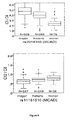
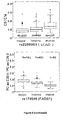


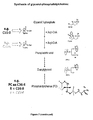
Classifications
-
- C—CHEMISTRY; METALLURGY
- C12—BIOCHEMISTRY; BEER; SPIRITS; WINE; VINEGAR; MICROBIOLOGY; ENZYMOLOGY; MUTATION OR GENETIC ENGINEERING
- C12Q—MEASURING OR TESTING PROCESSES INVOLVING ENZYMES, NUCLEIC ACIDS OR MICROORGANISMS; COMPOSITIONS OR TEST PAPERS THEREFOR; PROCESSES OF PREPARING SUCH COMPOSITIONS; CONDITION-RESPONSIVE CONTROL IN MICROBIOLOGICAL OR ENZYMOLOGICAL PROCESSES
- C12Q1/00—Measuring or testing processes involving enzymes, nucleic acids or microorganisms; Compositions therefor; Processes of preparing such compositions
- C12Q1/68—Measuring or testing processes involving enzymes, nucleic acids or microorganisms; Compositions therefor; Processes of preparing such compositions involving nucleic acids
- C12Q1/6876—Nucleic acid products used in the analysis of nucleic acids, e.g. primers or probes
- C12Q1/6883—Nucleic acid products used in the analysis of nucleic acids, e.g. primers or probes for diseases caused by alterations of genetic material
-
- C—CHEMISTRY; METALLURGY
- C12—BIOCHEMISTRY; BEER; SPIRITS; WINE; VINEGAR; MICROBIOLOGY; ENZYMOLOGY; MUTATION OR GENETIC ENGINEERING
- C12Q—MEASURING OR TESTING PROCESSES INVOLVING ENZYMES, NUCLEIC ACIDS OR MICROORGANISMS; COMPOSITIONS OR TEST PAPERS THEREFOR; PROCESSES OF PREPARING SUCH COMPOSITIONS; CONDITION-RESPONSIVE CONTROL IN MICROBIOLOGICAL OR ENZYMOLOGICAL PROCESSES
- C12Q2600/00—Oligonucleotides characterized by their use
- C12Q2600/156—Polymorphic or mutational markers
-
- C—CHEMISTRY; METALLURGY
- C12—BIOCHEMISTRY; BEER; SPIRITS; WINE; VINEGAR; MICROBIOLOGY; ENZYMOLOGY; MUTATION OR GENETIC ENGINEERING
- C12Q—MEASURING OR TESTING PROCESSES INVOLVING ENZYMES, NUCLEIC ACIDS OR MICROORGANISMS; COMPOSITIONS OR TEST PAPERS THEREFOR; PROCESSES OF PREPARING SUCH COMPOSITIONS; CONDITION-RESPONSIVE CONTROL IN MICROBIOLOGICAL OR ENZYMOLOGICAL PROCESSES
- C12Q2600/00—Oligonucleotides characterized by their use
- C12Q2600/172—Haplotypes
Definitions
- the present invention relates to a method for determining a predisposition of a human subject for physiological susceptibilities that result from alterations in lipid metabolism, comprising determining, in a sample obtained from the human subject, the genotype of that person with respect to at least two genetic polymorphisms selected from the group consisting of a) rs2014355; wherein the minor allele is represented by a cytidine and the major allele is represented by a thymidine; b) rs11161510; wherein the minor allele is represented by a thymidine and the major allele is represented by a cytidine; c) rs2286963; wherein the minor allele is represented by a guanosine and the major allele is represented by a thymidine; d) rs174548; wherein the minor allele is represented by a guanosine and the major allele is represented by a cytidine; e) rs
- the metabolism of lipids i.e. the assimilation of dietary lipids and the synthesis and degradation of lipids, plays a crucial role in cell, tissue and organ physiology as is demonstrated by a large number of genetic studies and by many human diseases that involve the disruption of lipid metabolic enzymes and pathways. Examples of such diseases include cancer, diabetes, as well as neurodegenerative and infectious diseases.
- diseases include cancer, diabetes, as well as neurodegenerative and infectious diseases.
- an explosion of information in the fields of genomics and proteomics has been observed, this has not been matched by a corresponding advancement of knowledge in the field of lipids, most probably because of the complexity of lipids and the lack of powerful tools for their analysis.
- Metabolomics is the rapidly evolving field of measuring the endogenous metabolites in a cell or body fluid (Lindon et al. 2007; Wishart et al. 2007; Assfalg et al. 2008).
- the metabotype or metabolic phenotype provides a readout of the metabolic state of an individual and is the product of genetic and environmental (diet, lifestyle, gut microbial activity) contributions.
- Analyzing metabolites (small molecules ⁇ 1 kDa) in body fluids such as urine and plasma using various spectroscopic methods provides knowledge of the metabotype.
- Such metabolic profiles provide information reflecting true functional end-points of biological events while other functional genomics technologies such as transcriptomics and proteomics, though highly valuable, merely indicate the potential cause for phenotypic response.
- Metabolomics bridges this information gap by depicting in particular such functional information since metabolite differences in biological fluids and tissues provide the closest link to the various phenotypic responses.
- phenotype is not necessarily predicted by genotype.
- the gap between genotype and phenotype is spanned by many biochemical reactions, each with individual dependencies to various influences, including drugs, nutrition and environmental factors.
- metabolites are the quantifiable molecules with the closest link to phenotype.
- Many phenotypic and genotypic states such as a toxic response to a drug or disease prevalence are predicted by differences in the concentrations of functionally relevant metabolites within biological fluids and tissue.
- Genome-wide association (GWA) studies have recently been used to identifiy a number of genetic polymorphisms that convey an increased risk for developing diabetes, coronary artery disease, rheumatoid arthritis, and other common diseases (Samani et al. 2007; Zeggini et al. 2008).
- GWA Genome-wide association
- Maier et al. 2005 describe the association of MCAD sequence variations with distribution of metabolite concentrations in newborns with medium-chain acyl-CoA dehydrogenase deficiency (MCADD), the most frequent inherited defect of fatty acid oxidation which shows a significant morbidity and mortality in undiagnosed patients.
- MCADD medium-chain acyl-CoA dehydrogenase deficiency
- Döring et al. 2008 disclose an investigation into genetic control influences of blood uric acid concentrations as serum uric acid concentrations are correlated with gout and clinical entities such as cardiovascular disease and diabetes. The authors used a genome-wide association study to identify SNPs associated with uric acid concentrations.
- the present invention relates to a method for determining a predisposition of a subject for physiological susceptibilities comprising determining, in a sample obtained from the subject, the genotype of at least two genetic polymorphisms that have been identified as being associated with a variation in the metabotype of said subject, wherein the metabotype is represented by the ratio between at least two metabolites of the same biochemical pathway; and wherein the genotype of said genetic polymorphisms is indicative of a predisposition for physiological susceptibilities that result from alterations in the biochemical pathway underlying this metabotype.
- predisposition in accordance with the invention refers to an increased individual risk of a subject having or developing a certain condition or disease.
- conditions or diseases include, but are not limited to, hyperactivity, a potential benefit from a specific nutrition (e.g. breast feeding and IQ) but also type 2 diabetes, metabolic syndrome, coronary artery disease, Crohn's disease, rheumatic arthritis, border line syndrome as well as levels of cholesterol and triglycerides.
- physiological susceptibilities in accordance with the invention relates to a phenotype that is influenced by a disregulation of metabolic function.
- said term relates to a susceptibility to disregulations of the overall fatty acid metabolism, such as for example a weakness in the fatty acid beta-oxidation, with symptoms such as hypoketotic hypoglycemia, lethargy, encephalopathy, and seizures; a lack or oversupply of polyunsaturated fatty acids (PUFA), with an impact on the prostaglandin or inflammatory pathways downstream of arachidonic acid, or an imbalance in the homeostasis of a given class of phospholipis with a modification of the lipid composition of HDL cholesterol particles and the composition of triglycerides.
- PUFA polyunsaturated fatty acids
- sample refers to body fluids or tissue, preferably to blood, serum, plasma, fetal tissue, saliva, urine, mucosal tissue, mucus, vaginal tissue, fetal tissue obtained from the vagina, skin, hair, hair follicle or another human tissue.
- the sample may be obtained from the subject by any method known to the skilled person, including but not limited to taking cotton swabs from mouth and throat, collecting urine samples or taking blood samples.
- genotype in accordance with the present invention refers to the genetic constitution of the subject with reference to genetic polymorphisms.
- each genetic polymorphism has two allelic forms, the minor and the major allele.
- the genotype describes the allelic make-up of these genetic polymorphisms, i.e. whether either the major or the minor allele is present as two copies (thus being homozygote) or whether one copy of the major allele and one copy of the minor allele is present (heterozygote).
- genetic polymorphism refers to the occurrence of one or more different nucleotides or bases at a given location on a chromosome.
- genetic polymorphisms are distinguished from mutations based on their prevalence. Sometimes a threshold of at least 1% prevalence in a population of individuals is considered for separating polymorphisms (more frequent) from mutations (less frequent).
- the polymorphisms have a prevalence of at least 5%, more preferably of at least 10% and most preferably, the polymorphisms have a prevalence of at least 20%.
- the term “genetic polymorphism” embraces polymorphisms in exons, introns and regulatory regions such as promoters. Polymorphisms in exons may be determined or analysed using genomic DNA or cDNA (or equivalently mRNA). Polymorphisms in introns or regulatory regions such as promoters may be determined or analysed using genomic DNA.
- metabotype is well established in the art and relates to the metabolic phenotype of a subject, which provides a readout of the metabolic state of an individual and is the product of genetic and environmental (diet, lifestyle, gut microbial activity) contributions.
- the metabotype is represented by the ratio between two metabolites of the same biochemical pathway.
- metabolites of the same biochemical pathway relates to the requirement that these metabolites belong to one pathway, i.e. that they are linked by one series of enzymatic reactions that are connected by the intermediate products wherein the reactants (or substrates) of one reaction are the products of the previous one, and so on.
- a variation in the metabotype refers to differences in this metabolic make up of an individual as compared to the general metabolic phenotype of the majority of the population.
- GWA genome-wide association
- This method moreover assures that the identified polymorphisms are indeed located in key enzymes, as only the rate limiting steps in the lipid metabolism will be sensible to a change in enzyme or transporter activity, which is determined by metabolite ratios.
- This fact is confirmed in the literature for the enzymes SCAD, MCAD, LCAD, FADS1, SPTLC3, ACSL1, and PHGDH.
- the thereby identified metabolite pairs are found in all cases to be directly related to the proteins' functions, as represented by the red colored letters in the column "strongest metabolite pair' in Table 1, which indicate the link between the metabolite pair and the general role of the protein (e.g.
- the method of this invention is based on this discovery and allows to "visualize" the metabolic capabilities of any given individual.
- the association of a genetic polymorphism with a variation in the metabotype has been identified by the following steps: a) determining the concentration of metabolites in samples obtained from a group of individuals; b) providing a ratio between at least two of these metabolites, wherein the metabolites are of the same biochemical pathway; c) determining genetic polymorphisms in samples obtained of this group of individuals; and d) associating the genetic polymorphisms identified in (c) with variations in the ratio between the at least two metabolites obtained in (b).
- the step of associating genetic polymorphisms with metabolite ractios in (d) is carried out using a genome-wide association study.
- the invention relates to a method for determining a predisposition of a human subject for physiological susceptibilities that result from alterations in lipid metabolism, comprising determining, in a sample obtained from the human subject, the genotype of that person with respect to at least two genetic polymorphisms selected from the group consisting of a) rs2014355; wherein the minor allele is represented by a cytidine and the major allele is represented by a thymidine; b) rs11161510; wherein the minor allele is represented by a thymidine and the major allele is represented by a cytidine; c) rs2286963; wherein the minor allele is represented by a guanosine and the major allele is represented by a thymidine; d) rs174548; wherein the minor allele is represented by a guanosine and the major allele is represented by a cytidine
- This embodiment represents a preferred embodiment of the method of the invention as disclosed above.
- this embodiment can also be considered an alternative, i.e. independent, embodiment of a method for determining a predisposition of a human subject for physiological susceptibilities that result from alterations in lipid metabolism.
- the term "genotype" has been defined above. The skilled person readily understands that in order to determine the genotype of a particular genetic polymorphism, the presence of a major allele or of a minor allele on both sister chromosomes has to be investigated. It is then immediately possible to deduce whether the genetic polymorphism is homozygous for either the major or minor allele or whether it is heterozygous (i.e. possesses one copy of the major and one copy of the minor allele). The contribution of the alleles to the phenotype is additive, i.e. the presence of two minor alleles is indicative of variations in the metabolic make-up of the subject that are more severe than variations associated with merely one copy of the minor allele.
- rs2014355 relates to the genetic polymorphism rs2014355 located on human chromosome 12, in position 119659907 of the (+) strand (according to the NCBI build 36.3).
- T thymidine
- C cytosine
- the identification of the minor and major alleles as used herein is always based on the (+) strand of the DNA sequence, as shown in Table 2.
- the skilled person understands that also the determination of the corresponding nucleotide in the opposite strand may be used for determining the genotype of a genetic polymorphisms in accordance with the method of the invention.
- the corresponding nucleotides are cytosine where the (+) strand contains a guanosine and correspondingly a guanosine when the (+) strand contains a cytosine. If the (+) strand contains a thymidine the corresponding nucleotide is an adenosine and correspondingly it is a thymidine when the (+) strand contains an adenosine.
- Linkage Disequilibrium in accordance with the present invention refers to the phenomenon that the DNA sequences which are close together in the genome have a tendency to be inherited together. Two or more sequences may be linked because of some selective advantage of co-inheritance. More typically, however, two or more polymorphic sequences are co-inherited because of the relative infrequency with which meiotic recombination events occur within the region between the two polymorphisms. The co-inherited polymorphic alleles are said to be in linkage disequilibrium with one another because, in a given population, they tend to either both occur together or else not occur at all in any particular member of the population.
- multiple polymorphisms in a given chromosomal region are found to be in linkage disequilibrium with one another, they define a quasi-stable genetic "haplotype.”
- a phenotype-causing mutation is found within or in linkage with this haplotype, one or more polymorphic alleles of the haplotype can be used as a diagnostic or prognostic indicator of the likelihood of developing a specific phenotype.
- Identification of a haplotype which spans or is linked to a phenotype-causing mutational change serves as a predictive measure of an individual's likelihood of having inherited that phenotype-causing mutation.
- prognostic or diagnostic procedures can be utilized without necessitating the identification and isolation of the actual phenotype-causing molecule. This is significant because the precise determination of the molecular basis of the establishment of a specific phenotype can be difficult and laborious, especially in the case of multifactorial phenotype.
- the nine genetic polymorphisms of this preferred embodiment are located in genes coding for well-characterized enzymes or transporters of the lipid metabolism.
- the present invention now allows for a convenient prediction of a predisposition for physiological susceptibilities that result from alterations in lipid metabolism in a short amount of time, at low cost, with high accuracy and without significant trouble for the person under investigation.
- Table 2 The location of the genetic polymorphisms (according to the NCBI build 36.3), their surrounding DNA sequence at this chromosomal location, their respective minor and major alleles, as well as the enzymes encoded by the affected genes.
- the human subject is of kaukasian descent.
- the presence of one or two copies of the minor allele of a) rs2014355 or a genetic polymorphism in linkage disequilibrium thereto is associated with a decreased yield of the enzymatic reactions that are catalyzed by SCAD (EC:1.3.99.2); b) rs11161510 or a genetic polymorphism in linkage disequilibrium thereto is associated with a decreased yield of the enzymatic reactions that are catalyzed by MCAD (EC:1.3.99.3); c) rs2286963 or a genetic polymorphism in linkage disequilibrium thereto is associated with an increased yield of the enzymatic reactions that are catalyzed by LCAD (EC:1.3.99.13 and EC:1.3.99.3); d) rs174548 or a genetic polymorphism in linkage disequilibrium thereto is associated with a decreased yield of the enzymatic reactions that are catalyzed by SCAD (EC:1.3.99
- the presence of one or two copies of the minor allele relates to the heterozyous (one copy) or homozygous (two copies) presence of the minor allele of the investigated genetic polymorphism.
- the presence of the minor allele associates in an additive manner with the effect observed on the metabotype. This means that the presence of two copies of the minor allele (i.e. a homozygote subject) is associated with an alteration in the lipid metabolism that is twice as strong as the effect associated with the presence of one copy of the minor allele (i.e. in a heterozygote subject), wherein subjects that are homozygous for the major allele represent a phenotype that is consistent with the majority of the population .
- a decreased yield of the enzymatic reactions that are catalyzed by SCAD (EC:1.3.99.2)
- a decreased yield of the enzymatic reactions that are catalyzed by SCAD relates to a slower degradation of short-chain fatty acids (up to C6) in the beta-oxidation pathway, and more specifically to the acetyl-CoA dehydrogenase reaction that initiates this pathway.
- the beta-oxidation represents the central energy source of the body under starvation conditions
- a decreased yield of the enzymatic reactions that are catalyzed by SCAD is expected to be associated in situations of prolonged starvation or physical activity with hypoglycemia.
- Such individuals may then display the corresponding symptoms, such as tiredness, loss of alertness, headache, and memory problems, or in more extreme cases, systemic disorders with clinical symptoms such as hypoketotic hypoglycemia, lethargy, encephalopathy, and seizures.
- a decreased yield of the enzymatic reactions that are catalyzed by MCAD (EC:1.3.99.3) relates to a slower degradation of medium-chain fatty acids (preferentially C4 to C12) in the beta-oxidation pathway, and more specifically to the acetyl-CoA dehydrogenase reaction that initiates this pathway.
- MCAD medium-chain fatty acids
- a decreased yield of the enzymatic reactions that are catalyzed by MCAD is expected to be associated in situations of prolonged starvation or physical activity with hypoglycemia.
- Such individuals may then display the corresponding symptoms, such as tiredness, loss of alertness, headache, and memory problems, or in more extreme cases, systemic disorders with clinical symptoms such as hypoketotic hypoglycemia, lethargy, encephalopathy, and seizures.
- an increased yield of the enzymatic reactions that are catalyzed by LCAD (EC:1.3.99.13 and EC:1.3.99.3)" in accordance with the present invention relates to a slower degradation of long-chain fatty acids (preferentially C6 to C16) in the beta-oxidation pathway, and more specifically to the acetyl-CoA dehydrogenase reaction that initiates this pathway.
- beta-oxidation represents the central energy source of the body under starvation conditions
- a decreased yield of the enzymatic reactions that are catalyzed by LCAD is expected to be associated in situations of prolonged starvation or physical activity with hypoglycemia.
- Such individuals may then display the corresponding symptoms, such as tiredness, loss of alertness, headache, and memory problems, or in more extreme cases, systemic disorders with clinical symptoms such as hypoketotic hypoglycemia, lethargy, encephalopathy, and seizures.
- a decreased yield of the enzymatic reactions that are catalyzed by FADS1 (EC:1.14.99.25)" in accordance with the present invention relates to a slower conversion of eicosatrienoyl-CoA (C20:3-CoA) to arachidonyl-CoA (C20:4-CoA) by the delta-5 fatty acid desaturase reaction.
- Arachidonic acid (C20:4) is a central metabolite in the the polyunsaturated fatty acid pathway (PUFA).
- PUFA composition in phospholipids has been shown to be associated with the outcome of several complex human diseases such as the metabolic syndrome, cardiovascular diseases, psychiatric disorders and immune-related diseases such as chronic obstructive pulmonary disease and osteoarthritis.
- Fatty acids have been suggested to play a major role in the development of allergies, as PUFAs are processed to powerful promoters of inflammation called eicosanoids such as prostaglandins and leukotrienes.
- PUFA levels in phospholipids are known to be determined by both nutrition and the metabolism.
- a decreased yield of the enzymatic reactions that are catalyzed by FADS1 is therefore expected to disturb the effect of especially designed functional foods, diets or other nutritional treatments by limiting the production in the body of PUFAs beyond C20:3 and also by accumulating smaller PUFAs accordingly.
- An imbalance in the homeostasis of PUFAs is also expected to change the homeostasis of certain classes of phospholipis (PC, PE, PI, with ester and ether bonds) with the consequence of a modification of the lipid composition of HDL cholesterol particles and the composition of triglycerides.
- PC, PE, PI phospholipis
- ADHS attention deficit/hyperactivity syndrome
- a decreased yield of the enzymatic reactions that are catalyzed by ELOVL2 (EC:2.3.1-) in accordance with the present invention relates to a slower elongation of the omega-6 fatty acids C20:4 to C22:4 and C22:4 to C24:4 and of the omega-3 fatty acids C20:5 to C22:5 and C22:5 to C24:5.
- PUFA composition in phospholipids has been shown to be associated with the outcome of several complex human diseases such as the metabolic syndrome, cardiovascular diseases, psychiatric disorders and immune-related diseases such as chronic obstructive pulmonary disease and osteoarthritis.
- Fatty acids have been suggested to play a major role in the development of allergies, as PUFAs are processed to powerful promoters of inflammation called eicosanoids such as prostaglandins and leukotrienes.
- PUFA levels in phospholipids are known to be determined by both nutrition and the metabolism.
- an increased affinity for longer chain sphingomyelins of the regulatory subunit SPTLC3 in the SPT enzymatic complex (EC:2.3.1.50)
- the initial and rate limiting step of the sphingolipid synthesis is negatively regulated by the concentration of sphingolipids themselves.
- the regulatory function of the SPT complex is implemented by SPTLC3.
- the sensibility of SPTLC3 to regulation by sphingolipids differs by sphingolipid chain length.
- SPTLC3 is more sensitive to regulation by longer chain sphingolipids, i.e. it shows an increased affinity for longer chain sphingolipids.
- Sphingolipids are, together with phospholipids and cholesterol the major constituents of cell membranes, including cell membranes of neuronal cell (hence the name sphingolipids).
- Lipid lowering drugs such as statins, may interact with sphingolipid composition. Insulin has also been shown to impact on sphingolipid composition. It can thus be expected that a polymorphism in SPTLC3 can impact the outcome of the testing and application of lipid-targeting drugs..
- an increased yield of the enzymatic reaction that is catalyzed by PHGDH (EC:1.1.1.95) in accordance with the present invention relates to a higher production of serine in the first and rate-limiting step in the phosphorylated pathway of serine biosynthesis by the phosphoglycerate dehydrogenase reaction.
- Serine is used as a substrate in the sphingolipids biosynthesis and thus, the above discussed implications also apply here.
- an increased substrate affinity for longer chain fatty acids of the enzymatic reactions that are catalyzed by ACSL1 (EC:6.2.1.3) in accordance with the present invention relates to a change in preference for free long-chain fatty acids in the conversion into fatty acyl-CoA esters. Thereby this reaction plays a key role in lipid biosynthesis and fatty acid degradation.
- an increased transporter activity of C5-Acylcarnitine that is catalyzed by OCTN1 in accordance with the present invention relates to increases in the transport efficiency or substrate specificity of this protein, that has been described as a member of a familily of polyspecific organic cation transporter in the liver, kidney, intestine, and other organs and that is critical for elimination of many endogenous small organic cations as well as a wide array of drugs and environmental toxins.
- acylcarnitine C5 is impacted by an increased transporter activity that is catalyzed by OCTN1.
- Variants of the OCTN1 also known as SLC22A4 gene are associated with susceptibility to rheumatoid arthritis and Crohn's disease.
- EC number is a numerical classification scheme for enzymes, based on the chemical reactions they catalyze. As a system of enzyme nomenclature, every EC number is associated with a recommended name for the respective enzyme. Every enzyme code consists of the letters "EC" followed by four numbers separated by periods. Those numbers represent a progressively finer classification of the enzyme. The first number defines the enzyme class. In general, enzymes are divided into six different enzyme classes: Oxidoreductases, Transferases, Hydrolases, Lyases, Isomerases and Ligases. The further numbers provide a more detailed characterisation of the enzymes, such as for example information about the substrate, the group that is transferred or the kind of bond that is formed or cleaved.
- SCAD and MCAD genes are also the two polymorphisms in the SCAD and MCAD genes.
- Major deficiencies in the corresponding enzymes are known to be associated with severe systemic disorders and with clinical symptoms such as hypoketotic hypoglycemia, lethargy, encephalopathy, and seizures. Such deficiencies are nowadays systematically identified by neonatal screening programs (Maier et al. 2005 and references therein).
- the genetic variants of SCAD and MCAD genes that were found in accordance with the present invention show a relatively moderate phenotypic expression, but are very frequent in the population (minor allele frequencies > 25%). Individuals that are homozygous for at least one of the minor alleles of the SCAD or MCAD polymorphisms are likely to show signs of impaired beta-oxidation.
- the genotype of at least three genetic polymorphisms is determined.
- Furhter preferrerd in accordance with the present invention is that the genotype of at least four, at least five, at least six, at least seven, at least eight or at least nine genetic polymorphisms is determined.
- the genotype of at least one genetic polymorphism for each of the identified pathways is determined.
- the genotype of at least one of a) rs2014355 (SCAD), rs1116151 (MCAD) or rs2286963 (LCAD) is determined in order to investigate the beta-oxidation of fatty acids;
- b) rs174548 (FADS1) or rs9393903 (ELOVL2) is determined in order to investigate the metabolism of very long chain PUFAs;
- c) rs168622 (SPTLC3) or rs541503 (PHGDH) is determined in order to investigate the metabolism of sphingolipids.
- the approach that lead to identification of the method of the present invention is unique in the field in that it has not been based on any prior hypothesis as to which genes should be screened for a possible association with metabolite ratios.
- this unique approach it was possible to detect proteins that play an essential role in the key pathways of lipid metabolism.
- By determining the genotype of at least one genetic polymorphism for each of these identified key pathways it is now possible to perform a comprehensive investigation of the relevant metabolic pathways of an individual and to predict the particular metabolic capabilities of this individual.
- the presence of at least the genetic polymorphisms of (a) to (i) is determined.
- the genetic polymorphisms are selected from the group consisting of single nucleotide polymorphisms, insertions or deletions.
- single nucleotide polymorphism in accordance with the present invention refers to a DNA sequence variation occurring when a single nucleotide - A, T, C, or G - in the genome differs between paired chromosomes in an individual or between members of a species. Almost all common SNPs have only two alleles. For a variation to be considered a SNP, it must occur in at least 1% of the population. Within a population, SNPs can be assigned a minor allele frequency, which is the lowest allele frequency at a locus that is observed in a particular population.
- Single nucleotide polymorphisms may fall within coding sequences of genes, non-coding regions of genes, or in the intergenic regions between genes. SNPs within a coding sequence will not necessarily change the amino acid sequence of the protein that is produced, due to degeneracy of the genetic code. A SNP in which both forms lead to the same polypeptide sequence is termed synonymous or a silent mutation. If a different polypeptide sequence is produced they are non-synonymous. SNPs that are not in protein-coding regions nonetheless can affect gene splicing, transcription factor binding, or the sequence of non-coding RNA.
- insertion in accordance with the present invention refers to the addition of one or more nucleotides to a nucleic acid molecule, wherein the addition is not to the 5' or 3' end of the nucleic acid molecule.
- deletion refers to the loss of nucleotides.
- the genotype of the genetic polymorphisms is detected by PCR based techniques, DNA sequencing-based techniques, hybridization-based techniques, single-strand conformation polymorphism analysis (SSCA), denaturating gradient gel electrophoresis (DGGE), mismatch cleavage detection, heteroduplex analysis, primer extension-based techniques, or 5'-nuclease assay-based techniques. Said techniques are well known to the person skilled in the art.
- Non-limiting examples for nucleic acid amplification assays and means to perform such include PCR, (including nested PCR, RT-PCR, quantitative real-time detection, PCR extension assays, Nucleic Acid Sequence Base Amplification (NASBA), single-strand confirmation polymorphism (SSCP) PCR, PCR-restriction enzyme fragment length polymorphism (RFLP) analysis), amplification refractory mutation systems (ARMSTM) and amplification refractory mutation system linear extension (ALEXTM) assays. Details of such methods can be found in art, see, for example, Newton et al., Nucleic Acids Res.
- PCR including nested PCR, RT-PCR, quantitative real-time detection, PCR extension assays, Nucleic Acid Sequence Base Amplification (NASBA), single-strand confirmation polymorphism (SSCP) PCR, PCR-restriction enzyme fragment length polymorphism (RFLP) analysis), amplification refractory mutation systems (ARMSTM) and
- sequencing assays comprise without limitation approaches of sequence analysis by direct sequencing, fluorescent SSCP in an automated DNA sequencer and Pyrosequencing. These procedures are common in the art, see e.g. Adams et al. (Ed.), "Automated DNA Sequencing and Analysis", Academic Press, 1994 ; Alphey, “DNA Sequencing: From Experimental Methods to Bioinformatics", Springer Verlag Publishing, 1997 ; Ramon et al., J. Transl. Med. 1 (2003) 9 ; Meng et al., J. Clin. Endocrinol. Metab. 90 (2005) 3419-3422 .
- hybridization assays comprise without limitation Northern and Southern blot assays, heteroduplex analysis, detection of mutations by sequence specific oligonucleotide hybridization, allele-specific oligonucleotide hybridization on DNA chips, assays based on Illumina's ® technology, assays based on the BeadArray ® technology, see, for example, Barnes et al., Nucleic Acids Res. 33 (2005) 5914-5923 ; Fan et al., Biotechniques 39 (2005) 583-588 ; Shen et al., Mutat. Res.-Fund. Mol. M. 573 (2005) 70-82 ; Steemers and Gunderson, Pharmacogenomics, 6 (2005) 777-782 .
- hybridises/hybridising refers to a pairing of a nucleic acid molecule to a (partially) complementary strand of this nucleic acid molecule which thereby form a hybrid.
- Appropriate stringent hybridization conditions for each nucleic acid sequence may be established by a person skilled in the art on well-known parameters such as temperature, composition and length of the nucleic acid molecules, salt conditions etc.; see, for example, Sambrook et al., "Molecular Cloning, A Laboratory Manual”; CSH Press, Cold Spring Harbor, 1989 or Higgins and Hames (eds.), loc. cit. , see in particular the chapter “Hybridization Strategy” by Britten & Davidson, 3 to 15.
- Such conditions comprise, e.g. an overnight incubation at 65°C in 4x SSC (600 mM NaCl, 60 mM sodium citrate) followed by washing at 65°C in 0.1x SSC for one hour.
- hybridization conditions can comprise: an overnight incubation at 42°C in a solution comprising 50% formamide, 5x SSC (750 mM NaCl, 75 mM sodium citrate), 50 mM sodium phosphate (pH 7.6), 5x Denhardt's solution, 10% dextran sulphate, and 20 ⁇ g/ml denatured, sheared salmon sperm DNA, followed by washing in e.g. 0.1-0.5x SSC at about 55-65°C for about 5 to 20 min. Changes in the stringency of hybridization are primarily accomplished through the manipulation of formamide concentration (lower percentages of formamide result in lowered stringency), salt conditions, or temperature.
- the skilled person knows how to determine suitably stringent hybridization conditions capable of specifically detecting even single base pair mismatches. It is of note that variations in the above conditions may be accomplished through the inclusion and/or substitution of alternate blocking reagents.
- Typical blocking reagents include Denhardt's reagent, BLOTTO, heparin, denatured salmon sperm DNA, and commercially available proprietary formulations.
- the inclusion of specific blocking reagents may require modification of the hybridization conditions described above, due to problems with compatibility. Such modifications can generally be effected by the skilled person without further ado.
- a hybridization complex may be formed in solution (e.g., Cot or Rot analysis) or between one nucleic acid sequence present in solution and another nucleic acid sequence immobilized on a solid support (e.g., membranes, filters, chips, pins or glass slides).
- a solid support e.g., membranes, filters, chips, pins or glass slides.
- genotype of the genetic polymorphism is determined using antibodies or sequence-specific DNA-binding proteins.
- Antibodies in accordance with the present invention, can be for example, polyclonal or monoclonal.
- the term “antibody” also comprises derivatives or fragments thereof which still retain the binding specificity. Techniques for the production of antibodies are well known in the art and described, e.g. in Harlow and Lane “Antibodies, A Laboratory Manual”, Cold Spring Harbor Laboratory Press, 1988 and Harlow and Lane “Using Antibodies: A Laboratory Manual” Cold Spring Harbor Laboratory Press, 1999 .
- the antibody described in the context of the invention is capable to specifically bind/interact with the genetic polymorphisms of the invention.
- the term “specifically binding/interacting with” as used in accordance with the present invention means that the antibody does not or essentially does not cross-react with a similar sequence.
- the antibody specificially binds the minor allele does not bind to the major allele of a genetic polymorphism of the present invention.
- Cross-reactivity of a panel of antibodies under investigation may be tested, for example, by assessing binding of said panel of antibodies under conventional conditions to the sequence of interest as well as to a number of more or less closely related sequences. Only those antibodies that bind to the sequence of interest in its relevant context but do not or do not essentially bind to any of the other sequences are considered specific for the sequence of interest and thus to be antibodies in accordance with this invention.
- the antibody of the invention also includes embodiments such as chimeric (human constant domain, non-human variable domain), single chain and humanized (human antibody with the exception of non-human CDRs) antibodies, as well as antibody fragments, like, inter alia, Fab or Fab' fragments.
- Antibody fragments or derivatives further comprise Fd, F(ab') 2 , Fv or scFv fragments; see, for example, Harlow and Lane (1988) and (1999), loc. cit.
- Fd, F(ab') 2 , Fv or scFv fragments see, for example, Harlow and Lane (1988) and (1999), loc. cit.
- the (antibody) derivatives can be produced by peptidomimetics.
- single chain antibodies can be adapted to produce single chain antibodies specific for polypeptide(s) and fusion proteins of this invention.
- transgenic animals or plants see, e.g., US patent 6,080,560 ) may be used to express (humanized) antibodies specific for the target of this invention.
- the antibody of this invention is a monoclonal antibody.
- any technique which provides antibodies produced by continuous cell line cultures can be used.
- antibody comprises antibody constructs which may be expressed in cells, e.g. antibody constructs which may be transfected and/or transduced via, amongst others, viruses or plasmid vectors.
- sequence-specific DNA-binding proteins in accordance with the present invention relates to proteins capable of specifically binding to individual DNA sequences, such as for example the genetic polymorphisms of the invention.
- sequence-specific DNA-binding proteins are zinc finger proteins, that can be modified to recognise specific DNA sequences.
- the genetic polymorphisms are detected using a solid phase support.
- solid phase support is well known to the skilled person.
- Non-limiting examples of a solid phase support are beads, chips and membranes.
- the solid phase support is a DNA chip.
- Methods for the production of DNA chips as well as the use of DNA chip technology are well known in the art and described e.g. in Lohara et al., Nucleic Acids Res. 30 (2002) e87 ; Flavell et al., Nucleic Acids Res. 31 (2003) e115 ; Gunderson et al., Nature Genetics 37 (2005) 549-554 .
- the physiological susceptibilities are selected from sensitivity to drug treatment, functional food, physical health schemes, identification of non-responsiveness to treatment by diet, medication or physical activity.
- sensitivity to drug treatment in accordance with the invention relates to the response of an individual person to a drug that targets a given metabolic pathway. This response varies depending on the person's individual genotype in the corresponding genetically determined metabotype. For instance, a drug that directs more lipids into the beta-oxidation pathway is expected to show a different effect on different individuals, depending on the individuals' genotype in the SCAD, MCAD and LCAD polymorphisms. Based on these findings, the development of personalised medication is possible.
- non-responsiveness to treatment by medication relates to a decreased or missing effect observed by treatment with medication, wherein this effect is based on individual key pathways of the lipid metabolism or the overall homeostasis of the lipid metabolism of a person, which can be determined based on the genotypes of the polymorphisms in key lipid enzymes and transporters as identified in this invention.
- the effect of a medication that targets a change in the overall lipid homeostasis will depend on the strength with which the homeostasis is maintained, and may be inefficient in cases of specific combinations of the genetic variants in these key genes.
- sensitivity to functional food in accordance with the invention relates to the ability or disability of a person to metabolize a given nutritional ingredient, wherein this sensitivity is dependant on the genotype in one or more key lipid enzymes and transporters as identified in this invention. As an example, this has been shown to be the case in the association between breastfeeding and IQ (Caspi et al., 2007). In the context of providing functional food, these findings allow the development of personalised nutrition, for example by providing a food specifically enriched in certain lipids, with the objective to increase a person's intellectual capacities. Accordingly, the term “non-responsiveness to treatment by diet” relates to the effect that a person may not respond as expected to a given diet due to a modified homeostasis of the lipid metabolism.
- sensitivity to physical health schemes in accordance with the invention relates to the effect that a person may not or only slowly respond to weight reduction schemes by intense physical activity. For instance, this would be expected for carriers of the minor alleles of SCAD and MCAD, which would be expected to show a deficiency in directing fat into the beta-oxidation pathway by physical activity.
- non-responsiveness to physical activity relates, accordingly, to the case where a person does not respond at all to weight reduction schemes by intense physical activity.
- the method of the present invention may furthermore be used for preclinical and clinical drug testing and toxicology studies. It is known that in such studies not all examined individuals respond equally to a given drug gavages. Based on the present study, it is expected that in specific cases such differential outcomes will be largely controlled by the individuals' genotype in their genetically determined metabotypes, in particular in situations where lipid metabolism-targeting drugs are used. By discriminating the individuals in the drug test by their genotypes, it is possible to identify groups that respond to the drug from those who do not, or who show toxic side effects. Moreover, this method may also be used for personal genome consulting, such as for example currently offered by companies such as 23andMe as well as in the promotion of functional foods that are adapted to personal genomes.
- the physiological susceptibilities results in a disease or condition selected from hyperactivity, a potential benefit from a specific nutrition (e.g. breast feeding and IQ) but also type 2 diabetes, metabolic syndrome, coronary artery disease, Crohn's disease, rheumatoid arthritis, border line syndrome and increased levels of cholesterol and triglycerides.
- a specific nutrition e.g. breast feeding and IQ
- hyperactivity relates to a physical state in which a person is abnormally and easily excitable or exuberant. Strong emotional reactions, impulsive behavior, and sometimes a short span of attention are also typical for a hyperactive person. Some individuals may show these characteristics naturally, as personality differs from person to person. Nonetheless, when hyperactivity starts to become a problem for the person or others, it may be classified as a medical disorder.
- Type 2 diabetes refers to a disease in which the body does not properly control the amount of sugar in the blood. As a result, the level of sugar in the blood is too high. This disease occurs when the body does not produce enough insulin or does not use it properly.
- Type II diabetes correlates with obesity and insulin resistance, and has its onset in the adult age. It is characterized by an inability of the islets of Langerhans to secrete sufficient insulin to compensate for the body's increased demand for insulin.
- Metabolic syndrome relates to a combination of medical disorders that increase the risk of developing cardiovascular disease and diabetes. It affects a great number of people, and prevalence increases with age. Metabolic syndrome is also known as metabolic syndrome X, syndrome X, insulin resistance syndrome or Reaven's syndrome. Symptoms and features are: Fasting hyperglycemia (diabetes type 2 or impaired fasting glucose, impaired glucose tolerance, or insulin resistance); hypertension; central obesity (also known as visceral, male-pattern or apple-shaped adiposity; overweight with fat deposits mainly around the waist); decreased HDL cholesterol or elevated triglycerides.
- Associated diseases and signs are: elevated uric acid levels, fatty liver (especially in concurrent obesity), progressing to non-alcoholic fatty liver disease, polycystic ovarian syndrome, hemochromatosis (iron overload); and acanthosis nigricans (a skin condition featuring dark patches).
- fatty liver especially in concurrent obesity
- polycystic ovarian syndrome progressing to non-alcoholic fatty liver disease
- hemochromatosis iron overload
- acanthosis nigricans a skin condition featuring dark patches.
- Different organizations dealing with diabetes have elaborated different definitions for metabolic syndrome.
- TG triglycerides
- HDL-C high-density lipoprotein cholesterol
- coronary artery disease relates to a disease that occurs when part of the smooth, elastic lining inside a coronary artery develops atherosclerosis. With atherosclerosis, the artery's lining becomes hardened, stiffened, and swollen with e.g. calcium deposits, fatty deposits, and abnormal inflammatory cells to form a plaque. These plaques start limiting the blood flow to the heart muscle. Coronary artery disease is the end result of this accumulation of plaques within the walls of the arteries that supply the myocardium with oxygen and nutrients. CAD is the most common cause of sudden death, and is also the most common reason for death of men and women over 20 years of age.
- Crohn's disease relates to an inflammatory disease of the digestive system which may affect any part of the gastrointestinal tract from mouth to anus.
- the disease is also known as granulomatous colitis and regional enteritis. Symptoms of Crohn's disease can vary significantly among afflicted individuals. The main gastrointestinal symptoms are abdominal pain, diarrhea (which may be visibly bloody), vomiting, or weight loss. Crohn's disease can also cause complications outside of the gastrointestinal tract such as skin rashes, arthritis, and inflammation of the eye. The precise cause of Crohn's disease is not known.
- the disease occurs when the immune system attacks the gastrointestinal tract. This autoimmune activity produces inflammation in the gastrointestinal tract, and therefore Crohn's disease is classified as an inflammatory bowel disease.
- “Rheumatoid arthritis” in accordance with the present invention is an autoimmune disorder that causes the body's immune system to attack the bone joints ( Muller B et al. 1998. Springer Semin Immunopathol. 20:181-96 ).
- border line syndrome relates to a psychiatric diagnosis that describes a prolonged disturbance of personality function characterized by depth and variability of moods.
- the disorder typically involves unusual levels of instability in mood; chaotic and unstable interpersonal relationships, self-image, identity, and behavior as well as a disturbance in the individual's sense of self. Attempted suicide and completed suicide are possible outcomes, especially without proper care and effective therapy. Onset of symptoms typically occurs during adolescence or young adulthood.
- the sample is blood, serum, plasma, fetal tissue, saliva, urine, mucosal tissue, mucus, vaginal tissue, fetal tissue obtained from the vagina, skin, hair or hair follicle.
- the invention furthermore relates to a kit for determining a predisposition of a subject for physiological susceptibilities that result from alterations in lipid metabolism comprising a set of probes, wherein the set comprises at least two probes selected from the group consisting of a) a probe specifically binding to rs2014355; b) a probe specifically binding to rs11161510; c) a probe specifically binding to rs2286963; d) a probe specifically binding to rs174548; e) a probe specifically binding to rs9393903; f) a probe specifically binding to rs168622; g) a probe specifically binding to rs541503; h) a probe specifically binding to rs2046813; i) a probe specifically binding to rs272889; and j) at least one probe specifically binding to a genetic polymorphism that is in linkage disequilibrium with a genetic polymorphism selected from the group consisting of
- probe in accordance with the invention relates to a sensor molecule that may be used to detect the presence or absence of a target molecule.
- probes include, but are not limited to, nucleic acid molecules, antibodies or sequence-specific DNA-binding proteins.
- the probe is a nucleic acid molecule, preferably for use in molecular-biological hybridisation methods such as the sequence-specific detection of the genetic polymorphisms in accordance with the invention.
- the probes may be prepared with any of the methods known in the art, such as for example enzymatic production or according to conventional protocols of organic chemistry.
- Nucleic acid molecules include naturally occurring nucleic acid molecules such as DNA or RNA. Further included are nucleic acid mimicking molecules known in the art such as synthetic or semisynthetic derivatives of DNA or RNA and mixed polymers, both sense and antisense strands. They may contain additional non-natural or derivatized nucleotide bases, as will be readily appreciated by those skilled in the art. In a preferred embodiment the polynucleotide or the nucleic acid molecule(s) is/are DNA.
- nucleic acid mimicking molecules or nucleic acid derivatives include phosphorothioate nucleic acid, phosphoramidate nucleic acid, 2'-O-methoxyethyl ribonucleic acid, morpholino nucleic acid, hexitol nucleic acid (HNA) and locked nucleic acid (LNA) (see, for example, Braasch and Corey, Chemistry & Biology 8, 1-7 (2001 )).
- LNA is an RNA derivative in which the ribose ring is constrained by a methylene linkage between the 2'-oxygen and the 4'-carbon.
- a peptide nucleic acid is a polyamide type of DNA analog.
- the monomeric units for the corresponding derivatives of adenine, guanine, thymine and cytosine are available commercially (for example from Perceptive Biosystems).
- PNA is a synthetic DNA-mimic with an amide backbone in place of the sugar-phosphate backbone of DNA or RNA. As a consequence, certain components of DNA, such as phosphorus, phosphorus oxides, or deoxyribose derivatives, are not present in PNAs.
- PNAs bind specifically and tightly to complementary DNA strands and are not degraded by nucleases. Furthermore, they are stable under acidic conditions and resistant to proteases ( Demidov et al. (1994), Biochem. Pharmacol., 48, 1310-1313 ). Their electrostatically neutral backbone increases the binding strength to complementary DNA as compared to the stability of the corresponding DNA-DNA duplex ( Wittung et al. (1994), Nature 368, 561-563 ; Ray and Norden (2000), Faseb J., 14, 1041-1060 ).
- PNA binds more strongly to DNA than DNA itself does. This is probably because there is no electrostatic repulsion between the two strands, and also the polyamide backbone is more flexible. Because of this, PNA/DNA duplexes bind under a wider range of stringency conditions than DNA/DNA duplexes, making it easier to perform multiplex hybridization. Smaller probes can be used than with DNA due to the strong binding. In addition, it is more likely that single base mismatches can be determined with PNA/DNA hybridization because a single mismatch in a PNA/DNA 15-mer lowers the melting point (T m ) by 8°-20° C, vs. 4°-16° C for the DNA/DNA 15-mer duplex.
- T m melting point
- PNA For its uncharged nature, PNA also permits the hybridisation of DNA samples at low salt or no-salt conditions, since no inter-strand repulsion as between two negatively charged DNA strands needs to be counteracted. As a consequence, the target DNA has fewer secondary structures under hybridisation conditions and is more accessible to probe molecules.
- derivatives in conjunction with the above described PNAs and PNA chimera relates to molecules wherein these molecules comprise one or more further groups or substituents different from PNA and DNA. All groups or substituents known in the art and used for the synthesis of these molecules, such as protection groups, and/or for applications involving these molecules, such as labels and (cleavable) linkers are envisaged.
- Said nucleic acid molecule probes are at least 10, preferably at least 15 such as at least 25 nucleotides long, if used for example as primers.
- Probes of the present invention to be used as a probe in Southern or Northern blot preferably comprise at least 50, more preferably at least 100, more preferably at least 200, and most preferably at least 500 nucleotides in length. Said probes may also be useful in primer extension protocols respectively. It is required that the probe is uniquely fitting to (hybridizing to/complementary to 100%) the sequences of the genetic polymorphism to be investigated in accordance with the present invention, but not to un-related sequences, so as to allow the detection of single mismatches.
- sequence-specific DNA-binding proteins as used herein has also been described above.
- the terms “specifically binds/binding to”” in accordance with the present invention relates to the sequence-specific binding of a probe to the respective genetic polymorphism, without cross-reactivity with any nucleic acid molecule sample that does not contain said genetic polymorphism.
- the probe is a nucleic acid molecule
- such specific binding maybe achieved by employing stringent hybridisation conditions as described above.
- the term "a probe specifically binding to", as used in accordance with the invention, encompasses probes that are specific for either the major allele of the respective genetic polymorphism or for the minor allele.
- this term relates to a plurality of probes for both the major and the minor allele, that allow the skilled person to determine the genotype of a subject, i.e. whether the subject is heterozygous or homozygous for one of the alleles, with respect to the investigated genetic polymorphism.
- the kit of the present invention allows the convenient and easy determination of the genotypic make-up of a subject. Based on the identified genotype and associated variations of the metabotype, as identified in accordance with the present invention, it is now possible to determine, using the kit of the invention, what the metabolic capacities of the individual subject are.
- kits of the present invention are the provision of a kit-based device that will support a customer in making his daily choices of nutritional supplies in the super market, based on his individual genetic background and personal parameters, such as body mass index, physical fitness, health state, age, and gender.
- a kit-based device would be designed to run in real-time, for example on a mobile phone, by a customer while he visits a supermarket.
- This method could be realized in the following manner: in a first publicitary action, customers would be invited to donate a DNA sample (ideally sputum). The customer's DNA sample would then be analysed using the kit in accordance with the invention.
- the food company that sponsors this activity would then provide a web-service (ideally accessible online in the supermarket via a customized mobile phone application).
- This web service would provide the customer with the option to enter additional personal parameters that describe his health status, such as height, weight, age, gender, present physical activity, and potential health problems.
- the customer would enter the products or product types he intends to acquire.
- the web application would then combine the information of the individuals metabolic capacities, based on the genetic variants described in this invention, with the person's lifestyle parameters and the products he wishes to buy. Based on this information, the customer would obtain a suggestion of an individualized product choise that would be optimally adapted to his body's requirements.
- the functional dependence between the genetic variants, the lifestyle parameters, and effect of the proposed product choices on the outcome of the individual's health will be determined in a prior study, where the kit would also be used. Compliance could encouraged by proposing price reductions if the individualized product advice is followed.
- a similar method could be followed for personalized medication.
- a prior study would be performed on a patient cohort where the response to certain drugs as a function of metabolic capacities, characterized by the gene variants described in this invention, would be recorded. Then doctors would use this knowledge to subscribe personally adapted variants of certain drugs, that would be most efficient given the individual's metabolic capacities.
- Such studies could be conducted by companies that are independant from the drug producing pharma companies, and benefit could be drawn from selling access tot he knowledge bases that would be created in studies that use the set of gene variants of this invention (e.g. using the kit).
- Financial support could also be sought from public health insurance companies that have an interest in providing the most efficient treatment at the best price to their clients.
- One example could be the selection of lipid lowering drugs, such as statins, which have been shown to be beneficial even if given to a healthy person, by lowering her LDL cholesterol levels and thereby her risk of developping coronary artery disease.
- the various components of the kit may be packaged in one or more containers such as one or more vials.
- the vials may, in addition to the components, comprise preservatives or buffers for storage.
- the set of probes comprises probes for identifying the genotype of at least one genetic polymorphisms for each of the pathways identified in accordance with the present invention.
- probes are provided for the determination of the genotype of at least one of a) rs2014355 (SCAD), rs1116151 (MCAD) or rs2286963 (LCAD) for investigating the beta-oxidation of fatty acids; b) rs174548 (FADS1) or rs9393903 (ELOVL2) for investigating the metabolism of very long chain PUFAs; and c) rs168622 (SPTLC3) or rs541503 (PHGDH) for investigating the metabolism of sphingolipids.
- the set of probes comprises at least the probes as defined in (a) to (i).
- the set of probes is provided on a solid phase support.
- Solid phase support As described above, the skilled person understands the term solid phase support.
- Non-limiting examples of a solid phase support include beads, chips and membranes.
- said solid phase support is a DNA chip.
- methods for the production of DNA chips as well as the use of DNA chip technology are well known in the art and described e.g. in Lohara et al., Nucleic Acids Res. 30 (2002) e87 ; Flavell et al., Nucleic Acids Res. 31 (2003) e115 ; Gunderson et al., Nature Genetics 37 (2005) 549-554 .
- Genotyping Genotyping for KORA F3 500K was done using the Affymetrix 500K Array Set, consisting of two chips (Sty / and Nsp /). Hybridization of genomic DNA was done in accordance with the manufacturer's standard recommendations. Genotypes were determined using the BRLMM clustering algorithm ( hftp://www.affymetrix.com/support/technical/whitepapers/brlmm whitepaper.pdf ). The genotypes were determined in batches of at least 400 chips. For quality control purposes, we applied a positive and a negative control DNA every 48 samples. The overall genotyping efficiency of the GWA was 98.26 %.
- a targeted profiling scheme is used to quantitatively screen for known small molecule metabolites using multiple reaction monitoring, neutral loss and precursor ion scans. Quantification of the metabolites of the biological sample is achieved by reference to appropriate internal standards. The method has been proven to be in conformance with 21CFR (Code of Federal Regulations) Part 11, which implies proof of reproducibility within a given error range. It has been applied in different academic and industrial applications (Altmaier et al. 2008). Concentrations of all analyzed metabolites are reported in ⁇ M (except for prostaglandin concentrations which are reported in nM units).
- the metabolomics dataset contains 18 amino acids, nine reducing mono-, di- and oligosaccharides (abbreviated as Hn for n-hexose, dH for desoxyhexose, UA for uronic acid, HNAc for N-acetylglucosamine, P for Pentose, NANA for N-acetylneuraminic-acid), seven biogenic amines, five prostaglandins, arachidonic acid (AA), docosahexaenoic acid (DHA), free carnitine (C0), 28 acylcarnitines (C x:y ), hydroxylacylcarnitines (C(OH) x:y ), and dicarboxylacylcarnitines (C x:y -DC), 85 ceramides (Cer), glucosylceramides (GlcCer), different
- phospholipids including different glycero-phosphatidic acids (PA), glycero-phosphatidylcholines (PC), glycerophosphatidylethanolamines (PE), phosphatidylglycerols (PG), glycero-phosphatidylinositols (PI), glycero-phosphatidylinositol-bisphosphates (PIP2), and glycero-phosphatidylserines (PS).
- PA glycero-phosphatidic acids
- PC glycero-phosphatidylcholines
- PE glycerophosphatidylethanolamines
- PG phosphatidylglycerols
- PI glycero-phosphatidylinositols
- PIP2 glycero-phosphatidylserines
- Lipid side chain composition is abbreviated as Cx:y, where x denotes the number of carbons in the side chain and y the number of double bonds.
- PC ea C33:1 denotes a plasmalogen/plasmenogen phosphatidylcholine with 33 carbons in the two fatty acid side chains and a single double bond in one of them.
- the precise position of the double bonds and the distribution of the carbon atoms in different fatty acid side chains cannot be determined with this technology.
- the mapping of metabolite names to individual masses can be ambiguous. For example, stereo-chemical differences are not always discernible, neither are isobaric fragments. In such cases, possible alternative assignments are indicated.
- the metabolic measures are not independent, and therefore if by chance one trait associates with an SNP its correlate would also be expected to associate with that SNP.
- For the top ranking associations we then carried out a linear regression between the associating SNP (additive genetic model), using all available (max. 363) metabolite concentrations as quantitative traits.
- a strong reduction in p-value indicates that two metabolites may be linked by a metabolic pathway that is modified by the SNP.
- a conservative estimation of the genome-wide significance level (Bonferroni correction) when testing all metabolite pairs, based on a nominal level of 0.05, is 6.6x10 -12 (1.33x10 -9 /201).
- a quantitative metabolomics platform based on electrospray ionization (ESI) tandem mass spectrometry (MS/MS) was chosen to determine the fasting serum concentrations of up to 363 endogenous metabolites, including nine sugar molecules, seven biogenic amines, seven prostaglandins, 29 acylcarnitines, 18 amino acids, 85 sphingolipids, and 208 glycerophospholipids (metabolite naming conventions are defined in the Material and Methods section above and a full list of all measured metabolites is provided in Table 3). Data for 201 of these metabolites was obtained for more than 95% of the samples.
- ESI electrospray ionization
- MS/MS tandem mass spectrometry
- Example 3 A prototype of a genetically determined metabotype: FADS1
- the FADS1 gene codes for the fatty acid delta-5 desaturase, a key enzyme in the metabolism of long-chain polyunsaturated omega-3 and omega-6 fatty acids (a schematic illustration of this pathway is presented in Figure 7 ).
- the minor allele variant of this SNP results in a reduced efficiency of the fatty acid delta-5 desaturase reaction, a fact that can be inferred from the following observations: the concentrations of numerous phosphatidylcholines (PC aa C34:4, PC aa C36:4, PC aa C36:5, PC aa C38:4, PC aa C38:5, PC aa C38:6, PC aa C40:4, PC aa C40:5; metabolite abbreviations are explained in the material and methods section), plasmalogen/plasmenogen phosphatidylcholines (PC ae C36:4, PC ae C38:4, PC ae C38:5, PC ae C38:6, PC ae C40:5), and the phosphatidylinositol PI aa C38:4 with four and more double bonds in their polyunsaturated fatty acid (PUFA) side chains are lowest in individuals that carry the minor all
- PUFA poly
- concentrations of the direct product of FADS1, arachidonic acid as well as those of its lyso-phosphatidylcholine derivative (PC a C20:4) are found to be significantly reduced with increasing copy number of the minor allele.
- concentrations of glycerophospholipids with three and less double bonds in their PUFA side chains show a positive association with the FADS1 genotype.
- metabolites include the phosphatidylcholines PC aa C34:2 and PC aa C36:2, the plasmalogen/plasmenogen phosphatidylcholines PC ae C34:2 and PC ae C36:2, the phosphatidylethanolamines PE aa C34:2 and PE aa C36:2, and the phosphatidylinositol PI aa C36:2.
- the negative association of the sphingomyelin concentrations (SM C22:2, SM C24:2, SM C28:4) can be interpreted as being a result of a changed homeostatis of phosphatidylcholins, since sphingomyelin can be produced from phosphatidylcholine by the action of the sphingomyelin synthase.
- the negative association of the lyso-phosphatidylethanolamin PE a C10:0 can be considered a consequence of the overall changed balance in glycerophospholipid metabolism, since this metabolite can be produced from different phosphatidylethanolamines by abstraction of an arachidonic acid moiety.
- we can conclude that the direction of all those associations can be explained by a modification in the efficiency of the fatty acid delta-5 desaturase reaction.
- Analyzing ratios of metabolite concentrations may strongly reduce the variation in the dataset when a pair of metabolites is closely connected to the direct substrates and products of a given enzymatic reaction.
- concentration ratios leads to drastically decreased variance, and, consequentially, strongly decreased p-values of associations.
- Such a dependency not only provides rational evidence for a positive association, but also points to potentially affected metabolic pathways, as we demonstrate here for the example of the FADS1 case.
- Eicosatrienoyl-CoA (C20:3) and arachidonyl-CoA (C20:4) are the direct substrate and product of the delta-5 desaturase reaction, which is catalyzed by FADS1.
- Synthesis of these metabolites to a glycerol 3-phosphate, and further addition of a palmitoyl-moiety (C16:0), followed by a dephosphorylation step and the addition of a phosphocholin moiety leads to the formation of the glycerol-phosphatidylcholins PC aa C36:3 and PC aa C36:4, respectively (for a schematic view of the phosphatidylcholine biosynthesis at the example of PC aa C36:4 see Fig.
- PC aa C36:3 and PC aa C36:4 can thus be considered as modified substrates and products of the delta-5 desaturase reaction. If the catalytic activity (or the protein abundance) of FADS1 is reduced by a polymorphism in its gene (or in a regulatory element), more eicosatrienoyl-CoA (C20:3) and less arachidonyl-CoA (C20:4) is available for the synthesis of those glycerophospholipids that contain these fatty acids. This translates for example into increased PC aa C36:3 concentrations and reduced PC aa C36:4 concentrations.
- the ratio between the concentrations of the product-substrate pairs of the delta-5 desaturase reaction such as [PC aa C36:4]/[ PC aa C36:3] ( Figure 4a )
- the ratio between the concentrations of the product-substrate pairs of the delta-5 desaturase reaction will be a strong indicator for the efficiency of the FADS1 reaction.
- glycerophospholipids with three double bonds do not associate with the FADS1 polymorphism (p-values ranging from 0.92 to 0.077), whereas the corresponding glycerophospholipids with four double bonds generally display strong associations (most p-values ranging from 10 -3 to 10 -8 ).
- plasmalogen/plasmenogen phospholipids which are thus very likely composed of an arachidonyl-moiety (C20:4) and either a palmitoyl- (C16:0) or a stearoyl-moiety (C18:0), respectively (except for lyso-phosphatidylcholin PC a C20:4, which is formed from a single arachinodyl-moiety).
- Example 6 A second genetically determined metabotype that associates with medical phenotype: LIPC
- the molecular function of LIPC is to break-down triglycerides to diacyl- and monoacylglycerols and fatty acids, which makes this association functionally plausible.
- PARK2 codes for parkin, a ubiquitin ligase for which a loss-of-function mutation has been reported to result in Parkinson's disease.
- ratios between metabolite concentrations we observed up to three orders of magnitude smaller p-values (Table 12). This suggests that this polymorphism impacts some metabolic pathway that involves glutamate on the one hand and a number of other amino acids (except lysine) on the other hand.
- the metabolic footprint of this association is that of an amino acid interconversion, which is supported by the functional role of PARK2 as a ubiquitin ligase in the protein degradation pathway.
- SNP rs9309413 which lies 21 kb upstream of PLEK.
- the PLEK gene codes for pleckstrin, a protein that has been proposed to facilitate protein/lipid interactions and to affect membrane structure.
- the polymorphism we report here impacts on a number of sphingomyelins, which are known to play a major role in membrane lipid structure (Table 7).
- intronic SNP rs2014355, minor allele frequency 25.1 %) located on chromosome 12, and the second lies in the gene coding for the medium-chain acyl-Coenzyme A dehydrogenase (MCAD; e.g. intronic SNP rs11161510, minor allele frequency 31.2%) on chromosome 1.
- MCAD medium-chain acyl-Coenzyme A dehydrogenase
- both genes code for enzymes that initiate the beta-oxidation of fatty acids, but they differ in the preference for their chain lengths.
- Full annotations can be found in the supplementary online data files. Reported are the mean concentrations ( ⁇ M), standard deviation, the number of cases for which metabolite concentrations were obtained (ncases), the p-value of the association, the regression coefficient using an additive genetic model (estimate), and the measure of the observed variance that can be explained by the additive genetic model.
- the improvement of the p-value of association when using metabolite concentration ratios is calculated with respect to the larger of the two p-values for the individual metabolites.
- the "improvement of p-value” is computed using the following formula: min(p[C_enumerator], p[C_nominator]) / p[C_enumerator / C_nominator], where C_ is a metabolite concentration and p[.]the corresponding p-value of association.
Landscapes
- Chemical & Material Sciences (AREA)
- Life Sciences & Earth Sciences (AREA)
- Proteomics, Peptides & Aminoacids (AREA)
- Health & Medical Sciences (AREA)
- Organic Chemistry (AREA)
- Wood Science & Technology (AREA)
- Analytical Chemistry (AREA)
- Zoology (AREA)
- Genetics & Genomics (AREA)
- Engineering & Computer Science (AREA)
- Pathology (AREA)
- Immunology (AREA)
- Microbiology (AREA)
- Molecular Biology (AREA)
- Biotechnology (AREA)
- Biophysics (AREA)
- Physics & Mathematics (AREA)
- Biochemistry (AREA)
- Bioinformatics & Cheminformatics (AREA)
- General Engineering & Computer Science (AREA)
- General Health & Medical Sciences (AREA)
- Measuring Or Testing Involving Enzymes Or Micro-Organisms (AREA)
Abstract
The present invention relates to a method for determining a predisposition of a human subject for physiological susceptibilities that result from alterations in lipid metabolism, comprising determining, in a sample obtained from the human subject, the genotype of that person with respect to at least two genetic polymorphisms selected from the group consisting of a) rs2014355; wherein the minor allele is represented by a cytidine and the major allele is represented by a thymidine; b) rs11161510; wherein the minor allele is represented by a thymidine and the major allele is represented by a cytidine; c) rs2286963; wherein the minor allele is represented by a guanosine and the major allele is represented by a thymidine; d) rs174548; wherein the minor allele is represented by a guanosine and the major allele is represented by a cytidine; e) rs9393903; wherein the minor allele is represented by a adenosine and the major allele is represented by a guanosine; f) rs168622; wherein the minor allele is represented by a thymidine and the major allele is represented by a guanosine; g) rs541503; wherein the minor allele is represented by a cytidine and the major allele is represented by a thymidine; h) rs2046813; wherein the minor allele is represented by a cytidine and the major allele is represented by a thymidine; i) rs272889; wherein the minor allele is represented by a adenosine and the major allele is represented by a guanosine; and j) at least one genetic polymorphism that is in linkage disequilibrium with any of the genetic polymorphisms of (a) to (i), wherein the presence of one or two copies of the minor allele of at least two genetic polymorphisms is indicative of a predisposition for said physiological susceptibilities. Furthermore, the invention relates to a kit for determining a predisposition of a human subject for physiological susceptibilities that result from alterations in lipid metabolism.
Description
- The present invention relates to a method for determining a predisposition of a human subject for physiological susceptibilities that result from alterations in lipid metabolism, comprising determining, in a sample obtained from the human subject, the genotype of that person with respect to at least two genetic polymorphisms selected from the group consisting of a) rs2014355; wherein the minor allele is represented by a cytidine and the major allele is represented by a thymidine; b) rs11161510; wherein the minor allele is represented by a thymidine and the major allele is represented by a cytidine; c) rs2286963; wherein the minor allele is represented by a guanosine and the major allele is represented by a thymidine; d) rs174548; wherein the minor allele is represented by a guanosine and the major allele is represented by a cytidine; e) rs9393903; wherein the minor allele is represented by a adenosine and the major allele is represented by a guanosine; f) rs168622; wherein the minor allele is represented by a thymidine and the major allele is represented by a guanosine; g) rs541503; wherein the minor allele is represented by a cytidine and the major allele is represented by a thymidine; h) rs2046813; wherein the minor allele is represented by a cytidine and the major allele is represented by a thymidine; i) rs272889; wherein the minor allele is represented by a adenosine and the major allele is represented by a guanosine; and j) at least one genetic polymorphism that is in linkage disequilibrium with any of the genetic polymorphisms of (a) to (i), wherein the presence of one or two copies of the minor allele of at least two genetic polymorphisms is indicative of a predisposition for said physiological susceptibilities. Furthermore, the invention relates to a kit for determining a predisposition of a human subject for physiological susceptibilities that result from alterations in lipid metabolism.
- In this specification, a number of documents including patent applications and manufacturer's manuals is cited. The disclosure of these documents, while not considered relevant for the patentability of this invention, is herewith incorporated by reference in its entirety. More specifically, all referenced documents are incorporated by reference to the same extent as if each individual document was specifically and individually indicated to be incorporated by reference.
- The metabolism of lipids, i.e. the assimilation of dietary lipids and the synthesis and degradation of lipids, plays a crucial role in cell, tissue and organ physiology as is demonstrated by a large number of genetic studies and by many human diseases that involve the disruption of lipid metabolic enzymes and pathways. Examples of such diseases include cancer, diabetes, as well as neurodegenerative and infectious diseases. However, whereas an explosion of information in the fields of genomics and proteomics has been observed, this has not been matched by a corresponding advancement of knowledge in the field of lipids, most probably because of the complexity of lipids and the lack of powerful tools for their analysis. Novel analytical approaches such as liquid chromatography and mass spectrometry for use in the systems-level analysis of lipids and their interacting partners (lipidomics) now make this field a promising area of biomedical research, with a variety of applications in drug and biomarker development.
- Metabolomics is the rapidly evolving field of measuring the endogenous metabolites in a cell or body fluid (Lindon et al. 2007; Wishart et al. 2007; Assfalg et al. 2008).The metabotype or metabolic phenotype provides a readout of the metabolic state of an individual and is the product of genetic and environmental (diet, lifestyle, gut microbial activity) contributions. Analyzing metabolites (small molecules <1 kDa) in body fluids such as urine and plasma using various spectroscopic methods provides knowledge of the metabotype. Such metabolic profiles provide information reflecting true functional end-points of biological events while other functional genomics technologies such as transcriptomics and proteomics, though highly valuable, merely indicate the potential cause for phenotypic response. Therefore they cannot necessarily predict drug effects, toxicological response or disease states at the phenotype level unless functional validation is added. Metabolomics bridges this information gap by depicting in particular such functional information since metabolite differences in biological fluids and tissues provide the closest link to the various phenotypic responses. In general, phenotype is not necessarily predicted by genotype. The gap between genotype and phenotype is spanned by many biochemical reactions, each with individual dependencies to various influences, including drugs, nutrition and environmental factors. In this chain of biomolecules from the genes to phenotype, metabolites are the quantifiable molecules with the closest link to phenotype. Many phenotypic and genotypic states, such as a toxic response to a drug or disease prevalence are predicted by differences in the concentrations of functionally relevant metabolites within biological fluids and tissue.
- Genome-wide association (GWA) studies have recently been used to identifiy a number of genetic polymorphisms that convey an increased risk for developing diabetes, coronary artery disease, rheumatoid arthritis, and other common diseases (Samani et al. 2007; Zeggini et al. 2008). However, the effect size of genetic associations with clinical phenotypes is often small. Therefore, large populations need to be screened in order to obtain sufficient statistical power for the identification of new disease-causing genetic variants, as recent genome wide association studies with up to 18,000 participants have demonstrated (WTCCC 2007; Kathiresan et al. 2008; Willer et al. 2008). Moreover, by only associating genotypes with clinical outcomes, little can be inferred on the disease-causing mechanisms themselves.
- Nagan et al. 2003 identified gene variations in SCAD, the enzyme underlying Short-chain acyl-CoA dehydrogenase deficiency. The authors found that the identified gene variations correlate with differences in C4-acylcarnitine concentrations. However, the authors came to the conclusion that none of the observed genotypes was associated with concentrations of C4-acylcarnitines that would be consistent with a biochemical diagnosis of SCAD deficiency.
- Schaffer et al. 2006 investigated the association between SNPs in the genes encoding FADS1 and FADS2 with fatty acid composition in phospholipids. The authors analysed SNPs of the FADS1/FADS2 gene cluster, because this region was considered to be a functional and positional candidate for having a crucial influence on fatty acid composition in phospholipids and on the development of atopic diseases. They found that rare alleles of several SNPs and their respective haplotypes had a lower prevalence of allergic rhinitis in atopic eczema.
- Maier et al. 2005 describe the association of MCAD sequence variations with distribution of metabolite concentrations in newborns with medium-chain acyl-CoA dehydrogenase deficiency (MCADD), the most frequent inherited defect of fatty acid oxidation which shows a significant morbidity and mortality in undiagnosed patients.
- Döring et al. 2008 disclose an investigation into genetic control influences of blood uric acid concentrations as serum uric acid concentrations are correlated with gout and clinical entities such as cardiovascular disease and diabetes. The authors used a genome-wide association study to identify SNPs associated with uric acid concentrations.
- Thus, a number of approaches are described in the art that aim at identifying methods to predict a predisposition for diseases based on a correlation between these diseases and genotype variations. However, research so far has only concentrated on associating genotypes with clinical outcomes and, therefore, there still exists the need for identifying genotypes that allow the identification of the metabolic capacities of individuals independently of diseases and which thus allow a prediction of individual physiological susceptibilities.
- Accordingly, the present invention relates to a method for determining a predisposition of a subject for physiological susceptibilities comprising determining, in a sample obtained from the subject, the genotype of at least two genetic polymorphisms that have been identified as being associated with a variation in the metabotype of said subject, wherein the metabotype is represented by the ratio between at least two metabolites of the same biochemical pathway; and wherein the genotype of said genetic polymorphisms is indicative of a predisposition for physiological susceptibilities that result from alterations in the biochemical pathway underlying this metabotype.
- The term "predisposition" in accordance with the invention refers to an increased individual risk of a subject having or developing a certain condition or disease. Such conditions or diseases include, but are not limited to, hyperactivity, a potential benefit from a specific nutrition (e.g. breast feeding and IQ) but also
type 2 diabetes, metabolic syndrome, coronary artery disease, Crohn's disease, rheumatic arthritis, border line syndrome as well as levels of cholesterol and triglycerides. - The term "physiological susceptibilities" in accordance with the invention relates to a phenotype that is influenced by a disregulation of metabolic function. Preferably, said term relates to a susceptibility to disregulations of the overall fatty acid metabolism, such as for example a weakness in the fatty acid beta-oxidation, with symptoms such as hypoketotic hypoglycemia, lethargy, encephalopathy, and seizures; a lack or oversupply of polyunsaturated fatty acids (PUFA), with an impact on the prostaglandin or inflammatory pathways downstream of arachidonic acid, or an imbalance in the homeostasis of a given class of phospholipis with a modification of the lipid composition of HDL cholesterol particles and the composition of triglycerides.
- The term "sample", according to the invention, refers to body fluids or tissue, preferably to blood, serum, plasma, fetal tissue, saliva, urine, mucosal tissue, mucus, vaginal tissue, fetal tissue obtained from the vagina, skin, hair, hair follicle or another human tissue. The sample may be obtained from the subject by any method known to the skilled person, including but not limited to taking cotton swabs from mouth and throat, collecting urine samples or taking blood samples.
- The term "genotype" in accordance with the present invention refers to the genetic constitution of the subject with reference to genetic polymorphisms. In particular, each genetic polymorphism has two allelic forms, the minor and the major allele. The genotype describes the allelic make-up of these genetic polymorphisms, i.e. whether either the major or the minor allele is present as two copies (thus being homozygote) or whether one copy of the major allele and one copy of the minor allele is present (heterozygote).
- The term "genetic polymorphism", according to the invention, refers to the occurrence of one or more different nucleotides or bases at a given location on a chromosome. Usually, genetic polymorphisms are distinguished from mutations based on their prevalence. Sometimes a threshold of at least 1% prevalence in a population of individuals is considered for separating polymorphisms (more frequent) from mutations (less frequent). Preferably, the polymorphisms have a prevalence of at least 5%, more preferably of at least 10% and most preferably, the polymorphisms have a prevalence of at least 20%. It is understood that the term "genetic polymorphism" embraces polymorphisms in exons, introns and regulatory regions such as promoters. Polymorphisms in exons may be determined or analysed using genomic DNA or cDNA (or equivalently mRNA). Polymorphisms in introns or regulatory regions such as promoters may be determined or analysed using genomic DNA.
- The term "metabotype" is well established in the art and relates to the metabolic phenotype of a subject, which provides a readout of the metabolic state of an individual and is the product of genetic and environmental (diet, lifestyle, gut microbial activity) contributions. In accordance with the present invention, the metabotype is represented by the ratio between two metabolites of the same biochemical pathway. The term " metabolites of the same biochemical pathway" relates to the requirement that these metabolites belong to one pathway, i.e. that they are linked by one series of enzymatic reactions that are connected by the intermediate products wherein the reactants (or substrates) of one reaction are the products of the previous one, and so on. The term "a variation in the metabotype", as used throughout the invention, refers to differences in this metabolic make up of an individual as compared to the general metabolic phenotype of the majority of the population.
- In accordance with the present invention, a genome-wide association (GWA) study with metabolic traits as phenotypic traits, using simultaneous measurements of single nucleotide polymorphisms (SNPs) and serum concentrations of endogenous organic compounds in a human population, has led to the identification of genetically determined variants in metabolic phenotype that exhibit large effect sizes. Nine of these polymorphisms are located in genes coding for well-characterized enzymes or transporters of the lipid metabolism. Thus, it was surprisingly found that individuals with different genotypes in these genes have significantly different metabolic capacities with respect to the synthesis, desaturation and elongation of some polyunsaturated fatty acids, in particular of very long chain polyunsaturated fatty acids, the beta-oxidation of short-, medium-, and long-chain fatty acids, the breakdown of triglycerides, the transport of carnitines, the synthesis of sphingolipids and of serine (a precursor of sphingolipids) as well as the activation of long-chain fatty acids for both synthesis of cellular lipids and degradation via beta-oxidation. These polymorphisms identified in accordance with the present invention all have a prevalence higher than 20% and are thus commonly found in the human population, which corresponds to a minor allele homozygote frequency that is in all cases larger than 4%. Heterozygote (carrier of one copy of the minor allele) frequencies are accordingly larger than 32%. This implies a wide applicability of the present invention, which, contrary to the findings of the prior art, is not limit to the detection of rare genetic disorders. The present invention clearly demonstrates that a GWA study with metabolomic phenotypes provides a more functional approach to the study of human genetic variation, increases the power of such studies, and allows for the identification or confirmation of new associations from previous GWA studies with clinical and non-clinical parameters as phenotypic traits.
- In this approach, the concept of a "genetically determined metabotype" as an intermediate phenotype has been identified as a central concept, as it becomes a measurable quantity in the framework of GWA studies with metabolomics. The investigation of these genetically determined metabotypes in their biochemical context can be used to better understand gene-environment interactions as well as the pathogenesis of common diseases. These findings furthermore result in a step towards personalized health care and nutrition, based on a combination of genotyping and metabolic characterisation.
- Furthermore, analyzing ratios of metabolite concentrations strongly reduces the variation in the dataset when a pair of metabolites is closely connected to the direct substrates and products of a given enzymatic reaction. When a tested genetic polymorphism impacts the efficiency of such a metabolic reaction, then the use of concentration ratios leads to drastically decreased variance and, consequentially, strongly decreased p-values of associations. Such a dependency not only provides rational evidence for a positive association, but also points to potentially affected metabolic pathways, as is demonstrated in accordance with the present invention for the example of the FADS1 case, an observation that holds in fact for all nine SNPs of this invention. Whenever a pair of metabolites is related to the direct substrates and products of an enzymatic conversion, respectively, the ratio between their concentrations can be used as an approximation of the enzymatic activity. We thereby show that the variance in the dataset can be drastically reduced by using these ratios, which increases the power of the GWA study and reduces the corresponding p-values of association by several orders of magnitude. It was surprisingly found that by using metabolite concentration ratios, the p-value of the association with the polymorphism in the FADS1 gene decreases by up to fourteen orders of magnitude to asymptotic p-values that were smaller than 10-21 in the initial study with 284 individual, and that gave rise to asymptotic p-values smaller than 10-100 in a replication study with 1048 individuals. Whereas metabolite concentration ratios have been used previously, they were only used as biomarker for the identification of a rare genetic disease (e.g. newborn screen, Maier et al.). This is the first time that metabolite ratios are used without any prior hypothesis in a genome-wide scan for susceptibility genes. This method moreover assures that the identified polymorphisms are indeed located in key enzymes, as only the rate limiting steps in the lipid metabolism will be sensible to a change in enzyme or transporter activity, which is determined by metabolite ratios. This fact is confirmed in the literature for the enzymes SCAD, MCAD, LCAD, FADS1, SPTLC3, ACSL1, and PHGDH. The thereby identified metabolite pairs are found in all cases to be directly related to the proteins' functions, as represented by the red colored letters in the column "strongest metabolite pair' in Table 1, which indicate the link between the metabolite pair and the general role of the protein (e.g. the short chain lengths of the acyl carnitines C3 and C4 in the case of SCAD or the degree of saturation of the lipid side chains in the case of FADS1 - the enzyme that inserts the fourth double bond into PUFAs). The abbreviations used for the metabolites are summarized in Table 3 in the Examples section.
Table 1. Link between the analysed metabolite pairs and the general role of the proteins in which the genetic polymorphisms are located Enzyme Strongest metabolite pair SNPid KEGG(Pathwayls) General role SCAD aka ACADS C3/C4 rs2014355 PATH:hsa00071 Fatty acid metabolism Short chain fatty acid β-oxidation PATH: hsa00280 Valine, leucine and isoleucine degradation PATH: hsa00650 Butanoate metabolism PATH: hsa00071 Fattyacid metabolism MCAD aka ACADM C12/C8 rs11161510 PATH: hsa00280 Valine, leucine and isoleucine degradation chain fatty acid β-oxidation PATH: hsa00410 beta-Alanine metabolism PATH: hsa00640 Propanoate metabolism PATH: hsa03320 PPAR signaling pathway LCAD aka ACADL C9/C14 rs2286963 PATH: hsa00071 Fatty acid metabolism Long chain fatty acid β-oxidation PATH: hsa03320 PPAR signaling pathway FADS1 PC aa C36:4/ PC aa C36:3 rs174548 PATH: hsa01040 Biosynthesis of unsaturated fatty acids Synthesis of arachidonic acid ELOVL2 PC aa C40:3/ PC aa C42:5 rs9393903 PATH: hsa01040 Biosynthesis of unsaturated fatty acids Elongation of very long chainfatty acids SPTLC3 SM(OH) 22:1/ SM(OH)24:1 rs168622 PATH: hsa00600 Sphingolipid metabolism Rate limiting step in the de novo synthesis of sphingolipids PHGDH Threonine/Serine rs541503 PATH: hsa00260 Glycine, serine and threonine metabolism first and rate-limiting step in the phosphorylated pathway of serine biosynthesis PATH: ko00600 Sphingolipid metabolism (via Serine) ACSL1 PC ae C44:5/ PC ae C42:5 PC ae C42:5 rs2046813 PATH: hsa00071 Fatty acid metabolism acyl-CoA synthetase long-chainfamily; preferentially uses palmitoleate, oleate and linoleate PATH: hsa03320 PPAR signaling pathway PATH: hsa04920 Adipocytokine signaling pathway OCTN1 Valine/C5 rs272889 PATH: this transporter is not described by a KEGG pathway; PATH: this transporter is not described by a KEGG pathway; It is involved in the acyl carnitine metabolism sodium-ion dependent, low affinity carnitine transporter (SLC22A4) - Furthermore, as opposed to standard approaches used in this field, the approach underlying the present invention has not been based on any prior hypothesis as to which genes should be screened for a possible association with metabolite ratios. As can be seen from
Figure 5 , the association between key proteins of the lipid metabolism and the strongest matching metabolite pairs (Figure 6 and Table 1) are automatically identified without any prior hypothesis. For instance, if the molecular function of FADS1 had not been already known, the association between the SNP and the different glycerophospholipid concentrations per se would have allowed to deduce its enzymatic activity of inserting a fourth double bond into long-chain fatty acids. Thus, by using this unique approach it was possible to detect the key proteins of the lipid metabolism that exist in two differently active, or differently regulated, versions in the human inheritance. The method of this invention is based on this discovery and allows to "visualize" the metabolic capabilities of any given individual. - In a preferred embodiment of the method of the invention, the association of a genetic polymorphism with a variation in the metabotype has been identified by the following steps: a) determining the concentration of metabolites in samples obtained from a group of individuals; b) providing a ratio between at least two of these metabolites, wherein the metabolites are of the same biochemical pathway; c) determining genetic polymorphisms in samples obtained of this group of individuals; and d) associating the genetic polymorphisms identified in (c) with variations in the ratio between the at least two metabolites obtained in (b).
- As shown in the appended examples and as discussed above, it was found in the context of the present invention that by determining the concentration of metabolites in samples obtained from a group of individuals and concurrently determining genetic polymorphisms in samples obtained from the same group of individuals, genetic polymorphisms can be identified that are associated with variations observed in the metabolite concentrations between different individuals. Furthermore, whenever a pair of metabolites is related to the direct substrates and products of an enzymatic conversion, respectively, the ratio between their concentrations can be used as an approximation of the enzymatic activity. It was thereby shown in accordance with the present invention that the variance in the dataset can be drastically reduced by using these ratios, which increases the power of the GWA study and reduces the corresponding p-values of association by several orders of magnitude.
- In a further preferred embodiment, the step of associating genetic polymorphisms with metabolite ractios in (d) is carried out using a genome-wide association study.
- In an alternative or a preferred embodiment, the invention relates to a method for determining a predisposition of a human subject for physiological susceptibilities that result from alterations in lipid metabolism, comprising determining, in a sample obtained from the human subject, the genotype of that person with respect to at least two genetic polymorphisms selected from the group consisting of a) rs2014355; wherein the minor allele is represented by a cytidine and the major allele is represented by a thymidine; b) rs11161510; wherein the minor allele is represented by a thymidine and the major allele is represented by a cytidine; c) rs2286963; wherein the minor allele is represented by a guanosine and the major allele is represented by a thymidine; d) rs174548; wherein the minor allele is represented by a guanosine and the major allele is represented by a cytidine; e) rs9393903; wherein the minor allele is represented by a adenosine and the major allele is represented by a guanosine; f) rs168622; wherein the minor allele is represented by a thymidine and the major allele is represented by a guanosine; g) rs541503; wherein the minor allele is represented by a cytidine and the major allele is represented by a thymidine; h) rs2046813; wherein the minor allele is represented by a cytidine and the major allele is represented by a thymidine; i) rs272889; wherein the minor allele is represented by a adenosine and the major allele is represented by a guanosine; and j) at least one genetic polymorphism that is in linkage disequilibrium with any of the genetic polymorphisms of (a) to (i), wherein the presence of one or two copies of the minor allele of the at least two genetic polymorphisms is indicative of a predisposition for said physiological susceptibilities.
- This embodiment, on one hand, represents a preferred embodiment of the method of the invention as disclosed above. On the other hand, this embodiment can also be considered an alternative, i.e. independent, embodiment of a method for determining a predisposition of a human subject for physiological susceptibilities that result from alterations in lipid metabolism.
- The term "genotype" has been defined above. The skilled person readily understands that in order to determine the genotype of a particular genetic polymorphism, the presence of a major allele or of a minor allele on both sister chromosomes has to be investigated. It is then immediately possible to deduce whether the genetic polymorphism is homozygous for either the major or minor allele or whether it is heterozygous (i.e. possesses one copy of the major and one copy of the minor allele). The contribution of the alleles to the phenotype is additive, i.e. the presence of two minor alleles is indicative of variations in the metabolic make-up of the subject that are more severe than variations associated with merely one copy of the minor allele.
- The term "rs2014355" relates to the genetic polymorphism rs2014355 located on
human chromosome 12, in position 119659907 of the (+) strand (according to the NCBI build 36.3). In this genetic polymorphism the thymidine (T), that is present in the majority of people, and thus is the major allele, is replaced by a cytosine (C), which represents the minor allele. The same applies accordingly to the genetic polymorphisms defined in (b) to (i), wherein the location of said genetic polymorphisms, the minor and major alleles, the surrounding sequence as well as the enzyme encoded by the affected gene are as summarised in Table 2. The identification of the minor and major alleles as used herein is always based on the (+) strand of the DNA sequence, as shown in Table 2. - The skilled person understands that also the determination of the corresponding nucleotide in the opposite strand may be used for determining the genotype of a genetic polymorphisms in accordance with the method of the invention. The corresponding nucleotides are cytosine where the (+) strand contains a guanosine and correspondingly a guanosine when the (+) strand contains a cytosine. If the (+) strand contains a thymidine the corresponding nucleotide is an adenosine and correspondingly it is a thymidine when the (+) strand contains an adenosine.
- The term "Linkage Disequilibrium" in accordance with the present invention refers to the phenomenon that the DNA sequences which are close together in the genome have a tendency to be inherited together. Two or more sequences may be linked because of some selective advantage of co-inheritance. More typically, however, two or more polymorphic sequences are co-inherited because of the relative infrequency with which meiotic recombination events occur within the region between the two polymorphisms. The co-inherited polymorphic alleles are said to be in linkage disequilibrium with one another because, in a given population, they tend to either both occur together or else not occur at all in any particular member of the population. Indeed, where multiple polymorphisms in a given chromosomal region are found to be in linkage disequilibrium with one another, they define a quasi-stable genetic "haplotype." Furthermore, where a phenotype-causing mutation is found within or in linkage with this haplotype, one or more polymorphic alleles of the haplotype can be used as a diagnostic or prognostic indicator of the likelihood of developing a specific phenotype. Identification of a haplotype which spans or is linked to a phenotype-causing mutational change, serves as a predictive measure of an individual's likelihood of having inherited that phenotype-causing mutation. Importantly, such prognostic or diagnostic procedures can be utilized without necessitating the identification and isolation of the actual phenotype-causing molecule. This is significant because the precise determination of the molecular basis of the establishment of a specific phenotype can be difficult and laborious, especially in the case of multifactorial phenotype.
- As discussed above, several genetically determined variants in metabolic phenotype that exhibit large effect sizes have been found in accordance with the present invention. The nine genetic polymorphisms of this preferred embodiment are located in genes coding for well-characterized enzymes or transporters of the lipid metabolism. Thus, it was surprisingly found that individuals with different genotypes in these genes have significantly different metabolic capacities with respect to the synthesis, desaturation and elongation of some polyunsaturated fatty acids, in particular of very long chain polyunsaturated fatty acids, the beta-oxidation of short-, medium-, and long-chain fatty acids, the breakdown of triglycerides, the transport of carnitines, the synthesis of sphingolipids and of serine (a precursor of sphingolipids) as well as the activation of long-chain fatty acids for both synthesis of cellular lipids and degradation via beta-oxidation.
- Due to the abundance of established methods for assessing the genotypes of genetic polymorphisms, the present invention now allows for a convenient prediction of a predisposition for physiological susceptibilities that result from alterations in lipid metabolism in a short amount of time, at low cost, with high accuracy and without significant trouble for the person under investigation.
Table 2: The location of the genetic polymorphisms (according to the NCBI build 36.3), their surrounding DNA sequence at this chromosomal location, their respective minor and major alleles, as well as the enzymes encoded by the affected genes. SNP ID Chromosomal location Sequence Minor allele Major allele Enzyme rs2014355 Chr.12: 119659907(+) 
C T Intronic SNP in SCAD aka ACADS: acyl-Coenzyme A dehydrogenase, C-2 to C-3 short chain (EC 1.3.99.2); also ACAD3: Butyryl-CoA dehydrogenase rs1116151 0 Chr1: 75982877(+) 
T C Intronic SNP in MCAD aka ACADM: acyl-Coenzyme A dehydrogenase, C-4 to C-12 straight chain (EC 1.3.99.3); also ACAD1: medium-chain specific acyl-CoA dehydrogenase rs2286963 Chr 2: 210768295(+) 
G T Coding SNP in LCAD aka ACADL: acyl-Coenzyme A dehydrogenase, long chain (EC:1.3.99.13 and EC:1.3.99.3); also ACAD4: long-chain specific acyl-CoA dehydrogenase rs174548 Chr 11: 61327924(+) 
G C Intronic SNP in FADS1: fatty acid desaturase 1 (EC:1.14.99.25); also D5D: Delta(5) fatty acid desaturase rs9393903 Chr 6: 11150895(+) 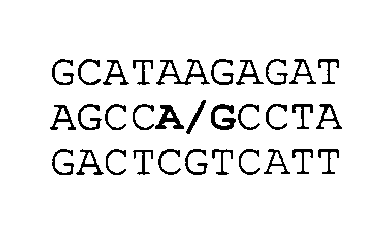
A G Intronic SNP in ELOVL2: elongation of very long chain fatty acids (FEN1/Elo2, SUR4/Elo3, yeast)-like 2 (EC:2.3.1.-) rs168622 Chr 20: 12914089(+) 
T G SNP upstream of and in LD with SPTLC3: serine palmitoyltransferase, long chain base subunit 3 (EC:2.3.1.50); rs541503 Chr1: 120009820(+) 
C T SNP upstream of and in LD with PHGDH: phosphoglycerate dehydrogenase (EC 1.1.1.95) rs2046813 Chr 4: 186006153 (+) 
C T SNP upstream of ACSL1: acyl-CoA synthetase long-chain family member 1 (EC:6.2.1.3); rs272889 Chr5: 131693277(+) 
A G Intronic SNP in SLC22A4: solute carrier family 22 (organic cation / ergothioneine transporter), member 4; also OCTN 1: Organic cation/carnitine transporter 1 - In a further preferred embodiment, the human subject is of kaukasian descent.
- In another preferred embodiment of the method of the invention, the presence of one or two copies of the minor allele of a) rs2014355 or a genetic polymorphism in linkage disequilibrium thereto is associated with a decreased yield of the enzymatic reactions that are catalyzed by SCAD (EC:1.3.99.2); b) rs11161510 or a genetic polymorphism in linkage disequilibrium thereto is associated with a decreased yield of the enzymatic reactions that are catalyzed by MCAD (EC:1.3.99.3); c) rs2286963 or a genetic polymorphism in linkage disequilibrium thereto is associated with an increased yield of the enzymatic reactions that are catalyzed by LCAD (EC:1.3.99.13 and EC:1.3.99.3); d) rs174548 or a genetic polymorphism in linkage disequilibrium thereto is associated with a decreased yield of the enzymatic reactions that are catalyzed by FADS1 (EC:1.14.99.25); e) rs9393903 or a genetic polymorphism in linkage disequilibrium thereto is associated with a decreased yield of the enzymatic reactions that are catalyzed by ELOVL2 (EC:2.3.1.-); f) rs168622 or a genetic polymorphism in linkage disequilibrium thereto is associated with an increased affinity for longer chain sphingomyelins of the regulatory subunit SPTLC3 in the SPT enzymatic complex (EC:2.3.1.50); g) rs541503 or a genetic polymorphism in linkage disequilibrium thereto is associated with a increased yield of the enzymatic reaction that is catalyzed by PHGDH (EC:1.1.1.95); h) rs2046813 or a genetic polymorphism in linkage disequilibrium thereto is associated with an increased substrate affinity for longer chain fatty acids of the enzymatic reactions that are catalyzed by ACSL1 (EC:6.2.1.3); i) rs272889 or a genetic polymorphism in linkage disequilibrium thereto is associated with an increased transporter activity of C5-Acylcarnitine that is catalyzed by OCTN1.
- The term "the presence of one or two copies of the minor allele" as used in accordance with the present invention, relates to the heterozyous (one copy) or homozygous (two copies) presence of the minor allele of the investigated genetic polymorphism. As discussed above, the presence of the minor allele associates in an additive manner with the effect observed on the metabotype. This means that the presence of two copies of the minor allele (i.e. a homozygote subject) is associated with an alteration in the lipid metabolism that is twice as strong as the effect associated with the presence of one copy of the minor allele (i.e. in a heterozygote subject), wherein subjects that are homozygous for the major allele represent a phenotype that is consistent with the majority of the population .
- The term "a decreased yield of the enzymatic reactions that are catalyzed by SCAD (EC:1.3.99.2)" in accordance with the present invention relates to a slower degradation of short-chain fatty acids (up to C6) in the beta-oxidation pathway, and more specifically to the acetyl-CoA dehydrogenase reaction that initiates this pathway. As the beta-oxidation represents the central energy source of the body under starvation conditions, a decreased yield of the enzymatic reactions that are catalyzed by SCAD is expected to be associated in situations of prolonged starvation or physical activity with hypoglycemia. Such individuals may then display the corresponding symptoms, such as tiredness, loss of alertness, headache, and memory problems, or in more extreme cases, systemic disorders with clinical symptoms such as hypoketotic hypoglycemia, lethargy, encephalopathy, and seizures.
- The term "a decreased yield of the enzymatic reactions that are catalyzed by MCAD (EC:1.3.99.3)" in accordance with the present invention relates to a slower degradation of medium-chain fatty acids (preferentially C4 to C12) in the beta-oxidation pathway, and more specifically to the acetyl-CoA dehydrogenase reaction that initiates this pathway.
As the beta-oxidation represents the central energy source of the body under starvation conditions, a decreased yield of the enzymatic reactions that are catalyzed by MCAD is expected to be associated in situations of prolonged starvation or physical activity with hypoglycemia. Such individuals may then display the corresponding symptoms, such as tiredness, loss of alertness, headache, and memory problems, or in more extreme cases, systemic disorders with clinical symptoms such as hypoketotic hypoglycemia, lethargy, encephalopathy, and seizures. - The term "an increased yield of the enzymatic reactions that are catalyzed by LCAD (EC:1.3.99.13 and EC:1.3.99.3)" in accordance with the present invention relates to a slower degradation of long-chain fatty acids (preferentially C6 to C16) in the beta-oxidation pathway, and more specifically to the acetyl-CoA dehydrogenase reaction that initiates this pathway.
- As the beta-oxidation represents the central energy source of the body under starvation conditions, a decreased yield of the enzymatic reactions that are catalyzed by LCAD is expected to be associated in situations of prolonged starvation or physical activity with hypoglycemia. Such individuals may then display the corresponding symptoms, such as tiredness, loss of alertness, headache, and memory problems, or in more extreme cases, systemic disorders with clinical symptoms such as hypoketotic hypoglycemia, lethargy, encephalopathy, and seizures.
- The term " a decreased yield of the enzymatic reactions that are catalyzed by FADS1 (EC:1.14.99.25)" in accordance with the present invention relates to a slower conversion of eicosatrienoyl-CoA (C20:3-CoA) to arachidonyl-CoA (C20:4-CoA) by the delta-5 fatty acid desaturase reaction.
- Arachidonic acid (C20:4) is a central metabolite in the the polyunsaturated fatty acid pathway (PUFA). PUFA composition in phospholipids has been shown to be associated with the outcome of several complex human diseases such as the metabolic syndrome, cardiovascular diseases, psychiatric disorders and immune-related diseases such as chronic obstructive pulmonary disease and osteoarthritis. Fatty acids have been suggested to play a major role in the development of allergies, as PUFAs are processed to powerful promoters of inflammation called eicosanoids such as prostaglandins and leukotrienes. PUFA levels in phospholipids are known to be determined by both nutrition and the metabolism. A decreased yield of the enzymatic reactions that are catalyzed by FADS1 is therefore expected to disturb the effect of especially designed functional foods, diets or other nutritional treatments by limiting the production in the body of PUFAs beyond C20:3 and also by accumulating smaller PUFAs accordingly. An imbalance in the homeostasis of PUFAs is also expected to change the homeostasis of certain classes of phospholipis (PC, PE, PI, with ester and ether bonds) with the consequence of a modification of the lipid composition of HDL cholesterol particles and the composition of triglycerides. There is evidence for a link between the long-chain polyunsaturated fatty acid metabolism and attention deficit/hyperactivity syndrome (ADHS). Genetic variation in the FADS gene cluster has also been shown to moderate the association between breastfeeding and intelligence quotient (IQ), by influencing the ability to metabolize certain fatty acids that are uniquely available in breast milk.
- The term "a decreased yield of the enzymatic reactions that are catalyzed by ELOVL2 (EC:2.3.1-)" in accordance with the present invention relates to a slower elongation of the omega-6 fatty acids C20:4 to C22:4 and C22:4 to C24:4 and of the omega-3 fatty acids C20:5 to C22:5 and C22:5 to C24:5.
- PUFA composition in phospholipids has been shown to be associated with the outcome of several complex human diseases such as the metabolic syndrome, cardiovascular diseases, psychiatric disorders and immune-related diseases such as chronic obstructive pulmonary disease and osteoarthritis. Fatty acids have been suggested to play a major role in the development of allergies, as PUFAs are processed to powerful promoters of inflammation called eicosanoids such as prostaglandins and leukotrienes. PUFA levels in phospholipids are known to be determined by both nutrition and the metabolism.
- The term "an increased affinity for longer chain sphingomyelins of the regulatory subunit SPTLC3 in the SPT enzymatic complex (EC:2.3.1.50)" in accordance with the present invention relates to the concept that enzymatic reactions are often found to be endproduct-regulated, as this is the case here. The initial and rate limiting step of the sphingolipid synthesis is negatively regulated by the concentration of sphingolipids themselves. The regulatory function of the SPT complex is implemented by SPTLC3. The sensibility of SPTLC3 to regulation by sphingolipids differs by sphingolipid chain length. In accordance with the present invention, SPTLC3 is more sensitive to regulation by longer chain sphingolipids, i.e. it shows an increased affinity for longer chain sphingolipids.
- The result of such a regulatory difference is a change in sphingolipid composition. Sphingolipids are, together with phospholipids and cholesterol the major constituents of cell membranes, including cell membranes of neuronal cell (hence the name sphingolipids). Lipid lowering drugs, such as statins, may interact with sphingolipid composition. Insulin has also been shown to impact on sphingolipid composition. It can thus be expected that a polymorphism in SPTLC3 can impact the outcome of the testing and application of lipid-targeting drugs..
- The term "an increased yield of the enzymatic reaction that is catalyzed by PHGDH (EC:1.1.1.95)" in accordance with the present invention relates to a higher production of serine in the first and rate-limiting step in the phosphorylated pathway of serine biosynthesis by the phosphoglycerate dehydrogenase reaction.
Serine is used as a substrate in the sphingolipids biosynthesis and thus, the above discussed implications also apply here. - The term "an increased substrate affinity for longer chain fatty acids of the enzymatic reactions that are catalyzed by ACSL1 (EC:6.2.1.3)" in accordance with the present invention relates to a change in preference for free long-chain fatty acids in the conversion into fatty acyl-CoA esters. Thereby this reaction plays a key role in lipid biosynthesis and fatty acid degradation.
- The term "an increased transporter activity of C5-Acylcarnitine that is catalyzed by OCTN1" in accordance with the present invention relates to increases in the transport efficiency or substrate specificity of this protein, that has been described as a member of a familily of polyspecific organic cation transporter in the liver, kidney, intestine, and other organs and that is critical for elimination of many endogenous small organic cations as well as a wide array of drugs and environmental toxins.
In accordance with the present invention, in particular acylcarnitine C5 is impacted by an increased transporter activity that is catalyzed by OCTN1. Variants of the OCTN1 (also known as SLC22A4) gene are associated with susceptibility to rheumatoid arthritis and Crohn's disease. - The above described enzymes have been classified according to the EC numbering system, which is the common system for enzyme classification used in the art. The Enzyme Commission number (EC number) is a numerical classification scheme for enzymes, based on the chemical reactions they catalyze. As a system of enzyme nomenclature, every EC number is associated with a recommended name for the respective enzyme. Every enzyme code consists of the letters "EC" followed by four numbers separated by periods. Those numbers represent a progressively finer classification of the enzyme. The first number defines the enzyme class. In general, enzymes are divided into six different enzyme classes: Oxidoreductases, Transferases, Hydrolases, Lyases, Isomerases and Ligases. The further numbers provide a more detailed characterisation of the enzymes, such as for example information about the substrate, the group that is transferred or the kind of bond that is formed or cleaved.
- In accordance with the present invention it was found in one aspect that frequent genetically determined metabotypes play a role as discriminating cofactors in the etiology of common multi-factorial diseases. In interactions with environmental factors such as nutrition or life style, these metabotypes may influence the susceptibility of an individual for certain phenotypes. As an example, there is growing evidence for a link between the long-chain polyunsaturated fatty acid metabolism and attention deficit/hyperactivity syndrome (ADHS). An association of the same polymorphism in the FADS1 gene that was identified in accordance with the present invention (rs174548) has recently been reported to be associated with ADHS (Brookes et al. 2006). Genetic variation in the FADS gene cluster has also been shown to moderate the association between breastfeeding and intelligence quotient (IQ), by influencing the ability to metabolize certain fatty acids that are uniquely available in breast milk (Caspi et al. 2007). Such effects may possibly be explained by changes in the membrane fluidity of neuronal cells, which depends on the degree of membrane fatty acid saturation, and consequentially impacts the mobility of membrane-bound neuroreceptors. The differentiation of the population into individuals with different levels of four-fold and higher-fold unsaturated fatty acids, as induced by the FADS1 polymorphism, is thus a prototype of a genetically determined metabotype.
- Of particular interest are also the two polymorphisms in the SCAD and MCAD genes. Major deficiencies in the corresponding enzymes are known to be associated with severe systemic disorders and with clinical symptoms such as hypoketotic hypoglycemia, lethargy, encephalopathy, and seizures. Such deficiencies are nowadays systematically identified by neonatal screening programs (Maier et al. 2005 and references therein). In contrast, the genetic variants of SCAD and MCAD genes that were found in accordance with the present invention show a relatively moderate phenotypic expression, but are very frequent in the population (minor allele frequencies > 25%). Individuals that are homozygous for at least one of the minor alleles of the SCAD or MCAD polymorphisms are likely to show signs of impaired beta-oxidation. One would expect that, for instance in situations of prolonged starvation or physical activity, these individuals may become more readily hypoglycemic and may display the corresponding symptoms, such as tiredness, loss of alertness, headache, and memory problems. It is therefore promising to search for associations between the SCAD/MCAD polymorphisms and phenotypes that are related to impaired beta-oxidation, either in the context of diabetes or in the context of physical activity.
- The identification of genetic variants that alter the homeostasis of key metabolites in the human body will eventually lead to a functional understanding of the genetics of complex diseases. Progress towards individualized medication lies in a combination of genotyping and metabotyping, as shown in the context of the present invention. It is concluded that metabolomics delivers its promise of providing access to functionally relevant endpoints in the framework of GWA studies, and thereby opens new avenues for a functional investigation of the role of gene-environment interactions in the etiology of complex diseases.
- In a further preferred embodiment of the method of the invention, the genotype of at least three genetic polymorphisms is determined.
- Furhter preferrerd in accordance with the present invention is that the genotype of at least four, at least five, at least six, at least seven, at least eight or at least nine genetic polymorphisms is determined.
- In another preferred embodiment of the method of the invention, the genotype of at least one genetic polymorphism for each of the identified pathways is determined. Thus, the genotype of at least one of a) rs2014355 (SCAD), rs1116151 (MCAD) or rs2286963 (LCAD) is determined in order to investigate the beta-oxidation of fatty acids; b) rs174548 (FADS1) or rs9393903 (ELOVL2) is determined in order to investigate the metabolism of very long chain PUFAs; and c) rs168622 (SPTLC3) or rs541503 (PHGDH) is determined in order to investigate the metabolism of sphingolipids.
- As discussed above, the approach that lead to identification of the method of the present invention is unique in the field in that it has not been based on any prior hypothesis as to which genes should be screened for a possible association with metabolite ratios. By using this unique approach it was possible to detect proteins that play an essential role in the key pathways of lipid metabolism. By determining the genotype of at least one genetic polymorphism for each of these identified key pathways, it is now possible to perform a comprehensive investigation of the relevant metabolic pathways of an individual and to predict the particular metabolic capabilities of this individual.
- In another preferred embodiment of the method of the invention, the presence of at least the genetic polymorphisms of (a) to (i) is determined.
- By determining the genotype of all the genetic polymorphisms identified in the context of the present invention as being key enzymes of the lipid metabolism it is furthermore now possible to perform a comprehensive and extensive investigation of the metabolic make-up of an individual and, thus, to predict the particular metabolic capabilities of this individual.
- In a further preferred embodiment of the method of the invention, the genetic polymorphisms are selected from the group consisting of single nucleotide polymorphisms, insertions or deletions.
- The term "single nucleotide polymorphism (SNP)" in accordance with the present invention refers to a DNA sequence variation occurring when a single nucleotide - A, T, C, or G - in the genome differs between paired chromosomes in an individual or between members of a species. Almost all common SNPs have only two alleles. For a variation to be considered a SNP, it must occur in at least 1% of the population. Within a population, SNPs can be assigned a minor allele frequency, which is the lowest allele frequency at a locus that is observed in a particular population. Single nucleotide polymorphisms may fall within coding sequences of genes, non-coding regions of genes, or in the intergenic regions between genes. SNPs within a coding sequence will not necessarily change the amino acid sequence of the protein that is produced, due to degeneracy of the genetic code. A SNP in which both forms lead to the same polypeptide sequence is termed synonymous or a silent mutation. If a different polypeptide sequence is produced they are non-synonymous. SNPs that are not in protein-coding regions nonetheless can affect gene splicing, transcription factor binding, or the sequence of non-coding RNA.
- The term "insertion" in accordance with the present invention refers to the addition of one or more nucleotides to a nucleic acid molecule, wherein the addition is not to the 5' or 3' end of the nucleic acid molecule.
- The term "deletion" as used in accordance with the present invention refers to the loss of nucleotides.
- In another preferred embodiment of the method of the invention, the genotype of the genetic polymorphisms is detected by PCR based techniques, DNA sequencing-based techniques, hybridization-based techniques, single-strand conformation polymorphism analysis (SSCA), denaturating gradient gel electrophoresis (DGGE), mismatch cleavage detection, heteroduplex analysis, primer extension-based techniques, or 5'-nuclease assay-based techniques. Said techniques are well known to the person skilled in the art.
- Non-limiting examples for nucleic acid amplification assays and means to perform such include PCR, (including nested PCR, RT-PCR, quantitative real-time detection, PCR extension assays, Nucleic Acid Sequence Base Amplification (NASBA), single-strand confirmation polymorphism (SSCP) PCR, PCR-restriction enzyme fragment length polymorphism (RFLP) analysis), amplification refractory mutation systems (ARMSTM) and amplification refractory mutation system linear extension (ALEXTM) assays. Details of such methods can be found in art, see, for example, Newton et al., Nucleic Acids Res. 17 (1989) 2503-2516; Agrawal (Ed.), "Protocols for Oligonucleotides and Analogs: Synthesis and Properties (Methods in Molecular Biology, 20)", Humana Press, 1993; Haque et al., Diagn. Mol. Pathol. 7 (1998) 248-252; Innis et al. (Ed.), "PCR Applications: Protocols for Functional Genomics", Academic Press, 1999; Chen and Janes (Ed.), "PCR Cloning Protocols: From Molecular Cloning to Genetic", 2nd edition, Humana Press, 2002; Pissard et al., Clin. Chem. 48 (2002) 769-772; Blondal et al., Nucleic Acids Res 31 (2003) e155; Steemers et al., Nature Meth. 3 (2006) 31-33; Kakavas et al., J. Clin. Lab. Anal. 20 (2006) 1-7.
- Examples for sequencing assays comprise without limitation approaches of sequence analysis by direct sequencing, fluorescent SSCP in an automated DNA sequencer and Pyrosequencing. These procedures are common in the art, see e.g. Adams et al. (Ed.), "Automated DNA Sequencing and Analysis", Academic Press, 1994; Alphey, "DNA Sequencing: From Experimental Methods to Bioinformatics", Springer Verlag Publishing, 1997; Ramon et al., J. Transl. Med. 1 (2003) 9; Meng et al., J. Clin. Endocrinol. Metab. 90 (2005) 3419-3422.
- Examples for hybridization assays comprise without limitation Northern and Southern blot assays, heteroduplex analysis, detection of mutations by sequence specific oligonucleotide hybridization, allele-specific oligonucleotide hybridization on DNA chips, assays based on Illumina's® technology, assays based on the BeadArray® technology, see, for example, Barnes et al., Nucleic Acids Res. 33 (2005) 5914-5923; Fan et al., Biotechniques 39 (2005) 583-588; Shen et al., Mutat. Res.-Fund. Mol. M. 573 (2005) 70-82; Steemers and Gunderson, Pharmacogenomics, 6 (2005) 777-782.
- The term "hybridises/hybridising" as used herein refers to a pairing of a nucleic acid molecule to a (partially) complementary strand of this nucleic acid molecule which thereby form a hybrid.
- It is well known in the art how to perform hybridization experiments with nucleic acid molecules. Correspondingly, the person skilled in the art knows what hybridization conditions she/he has to use to allow for a successful hybridization. The establishment of suitable hybridization conditions is referred to in standard text books such as Sambrook, Russell "Molecular Cloning, A Laboratory Manual", Cold Spring Harbor Laboratory, N.Y. (2001); Ausubel, "Current Protocols in Molecular Biology", Green Publishing Associates and Wiley Interscience, N.Y. (1989), or Higgins and Hames (Eds.) "Nucleic acid hybridization, a practical approach" IRL Press Oxford, Washington DC, (1985).
- Appropriate stringent hybridization conditions for each nucleic acid sequence may be established by a person skilled in the art on well-known parameters such as temperature, composition and length of the nucleic acid molecules, salt conditions etc.; see, for example, Sambrook et al., "Molecular Cloning, A Laboratory Manual"; CSH Press, Cold Spring Harbor, 1989 or Higgins and Hames (eds.), loc. cit. , see in particular the chapter "Hybridization Strategy" by Britten & Davidson, 3 to 15. Such conditions comprise, e.g. an overnight incubation at 65°C in 4x SSC (600 mM NaCl, 60 mM sodium citrate) followed by washing at 65°C in 0.1x SSC for one hour. Alternatively, hybridization conditions can comprise: an overnight incubation at 42°C in a solution comprising 50% formamide, 5x SSC (750 mM NaCl, 75 mM sodium citrate), 50 mM sodium phosphate (pH 7.6), 5x Denhardt's solution, 10% dextran sulphate, and 20 µg/ml denatured, sheared salmon sperm DNA, followed by washing in e.g. 0.1-0.5x SSC at about 55-65°C for about 5 to 20 min. Changes in the stringency of hybridization are primarily accomplished through the manipulation of formamide concentration (lower percentages of formamide result in lowered stringency), salt conditions, or temperature. Based on the above discussed variables composition and length of the nucleic acid molecules, temperature, salt concentrations etc., the skilled person knows how to determine suitably stringent hybridization conditions capable of specifically detecting even single base pair mismatches. It is of note that variations in the above conditions may be accomplished through the inclusion and/or substitution of alternate blocking reagents. Typical blocking reagents include Denhardt's reagent, BLOTTO, heparin, denatured salmon sperm DNA, and commercially available proprietary formulations. The inclusion of specific blocking reagents may require modification of the hybridization conditions described above, due to problems with compatibility. Such modifications can generally be effected by the skilled person without further ado.
- A hybridization complex may be formed in solution (e.g., Cot or Rot analysis) or between one nucleic acid sequence present in solution and another nucleic acid sequence immobilized on a solid support (e.g., membranes, filters, chips, pins or glass slides).
- It is also envisaged herein that the genotype of the genetic polymorphism is determined using antibodies or sequence-specific DNA-binding proteins.
- Antibodies, in accordance with the present invention, can be for example, polyclonal or monoclonal. The term "antibody" also comprises derivatives or fragments thereof which still retain the binding specificity. Techniques for the production of antibodies are well known in the art and described, e.g. in Harlow and Lane "Antibodies, A Laboratory Manual", Cold Spring Harbor Laboratory Press, 1988 and Harlow and Lane "Using Antibodies: A Laboratory Manual" Cold Spring Harbor Laboratory Press, 1999.
The antibody described in the context of the invention is capable to specifically bind/interact with the genetic polymorphisms of the invention. The term "specifically binding/interacting with" as used in accordance with the present invention means that the antibody does not or essentially does not cross-react with a similar sequence. Thus, if the antibody specificially binds the minor allele, then it does not bind to the major allele of a genetic polymorphism of the present invention. Cross-reactivity of a panel of antibodies under investigation may be tested, for example, by assessing binding of said panel of antibodies under conventional conditions to the sequence of interest as well as to a number of more or less closely related sequences. Only those antibodies that bind to the sequence of interest in its relevant context but do not or do not essentially bind to any of the other sequences are considered specific for the sequence of interest and thus to be antibodies in accordance with this invention. - The antibody of the invention also includes embodiments such as chimeric (human constant domain, non-human variable domain), single chain and humanized (human antibody with the exception of non-human CDRs) antibodies, as well as antibody fragments, like, inter alia, Fab or Fab' fragments. Antibody fragments or derivatives further comprise Fd, F(ab')2, Fv or scFv fragments; see, for example, Harlow and Lane (1988) and (1999), loc. cit. Various procedures are known in the art and may be used for the production of such antibodies and/or fragments. Thus, the (antibody) derivatives can be produced by peptidomimetics. Further, techniques described for the production of single chain antibodies (see, inter alia,
US Patent 4,946,778 ) can be adapted to produce single chain antibodies specific for polypeptide(s) and fusion proteins of this invention. Also, transgenic animals or plants (see, e.g.,US patent 6,080,560 ) may be used to express (humanized) antibodies specific for the target of this invention. Most preferably, the antibody of this invention is a monoclonal antibody. For the preparation of monoclonal antibodies, any technique which provides antibodies produced by continuous cell line cultures can be used. Examples for such techniques include the hybridoma technique (Köhler and Milstein Nature 256 (1975), 495-497), the trioma technique, the human B-cell hybridoma technique (Kozbor, Immunology Today 4 (1983), 72) and the EBV-hybridoma technique to produce human monoclonal antibodies (Cole et al., Monoclonal Antibodies and Cancer Therapy, Alan R. Liss, Inc. (1985), 77-96). It is also envisaged in the context of this invention that the term "antibody" comprises antibody constructs which may be expressed in cells, e.g. antibody constructs which may be transfected and/or transduced via, amongst others, viruses or plasmid vectors. - The term "sequence-specific DNA-binding proteins" in accordance with the present invention relates to proteins capable of specifically binding to individual DNA sequences, such as for example the genetic polymorphisms of the invention. Examples of such sequence-specific DNA-binding proteins are zinc finger proteins, that can be modified to recognise specific DNA sequences.
- In another preferred embodiment of the method of the invention, the genetic polymorphisms are detected using a solid phase support.
- The term "solid phase support" is well known to the skilled person. Non-limiting examples of a solid phase support are beads, chips and membranes.
- In a preferred embodiment, the solid phase support is a DNA chip. Methods for the production of DNA chips as well as the use of DNA chip technology are well known in the art and described e.g. in Lohara et al., Nucleic Acids Res. 30 (2002) e87; Flavell et al., Nucleic Acids Res. 31 (2003) e115; Gunderson et al., Nature Genetics 37 (2005) 549-554.
- In a further preferred embodiment of the method of the invention, the physiological susceptibilities are selected from sensitivity to drug treatment, functional food, physical health schemes, identification of non-responsiveness to treatment by diet, medication or physical activity.
- The term "sensitivity to drug treatment" in accordance with the invention relates to the response of an individual person to a drug that targets a given metabolic pathway. This response varies depending on the person's individual genotype in the corresponding genetically determined metabotype. For instance, a drug that directs more lipids into the beta-oxidation pathway is expected to show a different effect on different individuals, depending on the individuals' genotype in the SCAD, MCAD and LCAD polymorphisms. Based on these findings, the development of personalised medication is possible. Accordingly, the term "non-responsiveness to treatment by medication" relates to a decreased or missing effect observed by treatment with medication, wherein this effect is based on individual key pathways of the lipid metabolism or the overall homeostasis of the lipid metabolism of a person, which can be determined based on the genotypes of the polymorphisms in key lipid enzymes and transporters as identified in this invention. The effect of a medication that targets a change in the overall lipid homeostasis will depend on the strength with which the homeostasis is maintained, and may be inefficient in cases of specific combinations of the genetic variants in these key genes.
- The term "sensitivity to functional food" in accordance with the invention relates to the ability or disability of a person to metabolize a given nutritional ingredient, wherein this sensitivity is dependant on the genotype in one or more key lipid enzymes and transporters as identified in this invention. As an example, this has been shown to be the case in the association between breastfeeding and IQ (Caspi et al., 2007). In the context of providing functional food, these findings allow the development of personalised nutrition, for example by providing a food specifically enriched in certain lipids, with the objective to increase a person's intellectual capacities. Accordingly, the term "non-responsiveness to treatment by diet" relates to the effect that a person may not respond as expected to a given diet due to a modified homeostasis of the lipid metabolism.
- The term "sensitivity to physical health schemes" in accordance with the invention relates to the effect that a person may not or only slowly respond to weight reduction schemes by intense physical activity. For instance, this would be expected for carriers of the minor alleles of SCAD and MCAD, which would be expected to show a deficiency in directing fat into the beta-oxidation pathway by physical activity. The term "non-responsiveness to physical activity" relates, accordingly, to the case where a person does not respond at all to weight reduction schemes by intense physical activity.
- The method of the present invention may furthermore be used for preclinical and clinical drug testing and toxicology studies. It is known that in such studies not all examined individuals respond equally to a given drug gavages. Based on the present study, it is expected that in specific cases such differential outcomes will be largely controlled by the individuals' genotype in their genetically determined metabotypes, in particular in situations where lipid metabolism-targeting drugs are used. By discriminating the individuals in the drug test by their genotypes, it is possible to identify groups that respond to the drug from those who do not, or who show toxic side effects. Moreover, this method may also be used for personal genome consulting, such as for example currently offered by companies such as 23andMe as well as in the promotion of functional foods that are adapted to personal genomes. It can also be used for genetic risk or ability assessment. For instance, it can be expected that individuals that are homozygous for the major alleles of both, the SCAD and the MCAD polymorphisms have a higher chance to become a high-performance sportive when trained accordingly, or that individuals that are homozygous for the minor alleles of these two polymorphisms present a higher risk of physical failure when they are put under starvation stress in combination with strong physical activity. In a further preferred embodiment of the method of the invention, the physiological susceptibilities results in a disease or condition selected from hyperactivity, a potential benefit from a specific nutrition (e.g. breast feeding and IQ) but also type 2 diabetes, metabolic syndrome, coronary artery disease, Crohn's disease, rheumatoid arthritis, border line syndrome and increased levels of cholesterol and triglycerides.
- All of the diseases described herein are well known to the skilled person and are defined in accordance with the prior art and the common general knowledge of the skilled person.
- The term "hyperactivity" relates to a physical state in which a person is abnormally and easily excitable or exuberant. Strong emotional reactions, impulsive behavior, and sometimes a short span of attention are also typical for a hyperactive person. Some individuals may show these characteristics naturally, as personality differs from person to person. Nonetheless, when hyperactivity starts to become a problem for the person or others, it may be classified as a medical disorder.
- The term "
type 2 diabetes" as used herein refers to a disease in which the body does not properly control the amount of sugar in the blood. As a result, the level of sugar in the blood is too high. This disease occurs when the body does not produce enough insulin or does not use it properly. Type II diabetes correlates with obesity and insulin resistance, and has its onset in the adult age. It is characterized by an inability of the islets of Langerhans to secrete sufficient insulin to compensate for the body's increased demand for insulin. - The term "metabolic syndrome" relates to a combination of medical disorders that increase the risk of developing cardiovascular disease and diabetes. It affects a great number of people, and prevalence increases with age. Metabolic syndrome is also known as metabolic syndrome X, syndrome X, insulin resistance syndrome or Reaven's syndrome. Symptoms and features are: Fasting hyperglycemia (
diabetes type 2 or impaired fasting glucose, impaired glucose tolerance, or insulin resistance); hypertension; central obesity (also known as visceral, male-pattern or apple-shaped adiposity; overweight with fat deposits mainly around the waist); decreased HDL cholesterol or elevated triglycerides. Associated diseases and signs are: elevated uric acid levels, fatty liver (especially in concurrent obesity), progressing to non-alcoholic fatty liver disease, polycystic ovarian syndrome, hemochromatosis (iron overload); and acanthosis nigricans (a skin condition featuring dark patches). Different organizations dealing with diabetes have elaborated different definitions for metabolic syndrome. The World Health Organization (WHO) criteria (1999) require presence ofdiabetes type 2, impaired glucose tolerance, impaired fasting glucose or insulin resistance, and two of the following: blood pressure: ≥ 140/90 mmHg, dyslipidaemia: triglycerides (TG): ≥ 1.695 mmol/L and high-density lipoprotein cholesterol (HDL-C) ≤ 0.9 mmol/L (male), ≤ 1.0 mmol/L (female), central obesity: waist:hip ratio > 0.90 (male); > 0.85 (female), and/or body mass index > 30 kg/m2, microalbuminuria: urinary albumin excretion ratio ≥ 20 mg/min or albumin:creatinine ratio ≥ 30 mg/g. - The term "coronary artery disease" (CAD) relates to a disease that occurs when part of the smooth, elastic lining inside a coronary artery develops atherosclerosis. With atherosclerosis, the artery's lining becomes hardened, stiffened, and swollen with e.g. calcium deposits, fatty deposits, and abnormal inflammatory cells to form a plaque. These plaques start limiting the blood flow to the heart muscle. Coronary artery disease is the end result of this accumulation of plaques within the walls of the arteries that supply the myocardium with oxygen and nutrients. CAD is the most common cause of sudden death, and is also the most common reason for death of men and women over 20 years of age.
- The term "Crohn's disease" relates to an inflammatory disease of the digestive system which may affect any part of the gastrointestinal tract from mouth to anus. The disease is also known as granulomatous colitis and regional enteritis. Symptoms of Crohn's disease can vary significantly among afflicted individuals. The main gastrointestinal symptoms are abdominal pain, diarrhea (which may be visibly bloody), vomiting, or weight loss. Crohn's disease can also cause complications outside of the gastrointestinal tract such as skin rashes, arthritis, and inflammation of the eye. The precise cause of Crohn's disease is not known. The disease occurs when the immune system attacks the gastrointestinal tract. This autoimmune activity produces inflammation in the gastrointestinal tract, and therefore Crohn's disease is classified as an inflammatory bowel disease.
- "Rheumatoid arthritis" in accordance with the present invention is an autoimmune disorder that causes the body's immune system to attack the bone joints (Muller B et al. 1998. Springer Semin Immunopathol. 20:181-96 ).
- The term "border line syndrome" (BPD) relates to a psychiatric diagnosis that describes a prolonged disturbance of personality function characterized by depth and variability of moods. The disorder typically involves unusual levels of instability in mood; chaotic and unstable interpersonal relationships, self-image, identity, and behavior as well as a disturbance in the individual's sense of self. Attempted suicide and completed suicide are possible outcomes, especially without proper care and effective therapy. Onset of symptoms typically occurs during adolescence or young adulthood.
- In a further preferred embodiment, the sample is blood, serum, plasma, fetal tissue, saliva, urine, mucosal tissue, mucus, vaginal tissue, fetal tissue obtained from the vagina, skin, hair or hair follicle.
- The invention furthermore relates to a kit for determining a predisposition of a subject for physiological susceptibilities that result from alterations in lipid metabolism comprising a set of probes, wherein the set comprises at least two probes selected from the group consisting of a) a probe specifically binding to rs2014355; b) a probe specifically binding to rs11161510; c) a probe specifically binding to rs2286963; d) a probe specifically binding to rs174548; e) a probe specifically binding to rs9393903; f) a probe specifically binding to rs168622; g) a probe specifically binding to rs541503; h) a probe specifically binding to rs2046813; i) a probe specifically binding to rs272889; and j) at least one probe specifically binding to a genetic polymorphism that is in linkage disequilibrium with a genetic polymorphism selected from the group consisting of rs2014355; rs11161510; rs2286963; rs174548; rs9393903; rs168622; rs541503; rs2046813 and rs272889.
- The term "probe" in accordance with the invention relates to a sensor molecule that may be used to detect the presence or absence of a target molecule. According to the present invention, such probes include, but are not limited to, nucleic acid molecules, antibodies or sequence-specific DNA-binding proteins.
- Preferably, the probe is a nucleic acid molecule, preferably for use in molecular-biological hybridisation methods such as the sequence-specific detection of the genetic polymorphisms in accordance with the invention. The probes may be prepared with any of the methods known in the art, such as for example enzymatic production or according to conventional protocols of organic chemistry.
- "Nucleic acid molecules", in accordance with the present invention, include naturally occurring nucleic acid molecules such as DNA or RNA. Further included are nucleic acid mimicking molecules known in the art such as synthetic or semisynthetic derivatives of DNA or RNA and mixed polymers, both sense and antisense strands. They may contain additional non-natural or derivatized nucleotide bases, as will be readily appreciated by those skilled in the art. In a preferred embodiment the polynucleotide or the nucleic acid molecule(s) is/are DNA. Such nucleic acid mimicking molecules or nucleic acid derivatives according to the invention include phosphorothioate nucleic acid, phosphoramidate nucleic acid, 2'-O-methoxyethyl ribonucleic acid, morpholino nucleic acid, hexitol nucleic acid (HNA) and locked nucleic acid (LNA) (see, for example, Braasch and Corey, Chemistry & )). LNA is an RNA derivative in which the ribose ring is constrained by a methylene linkage between the 2'-oxygen and the 4'-carbon.
- For the purposes of the present invention, a peptide nucleic acid (PNA) is a polyamide type of DNA analog. The monomeric units for the corresponding derivatives of adenine, guanine, thymine and cytosine are available commercially (for example from Perceptive Biosystems). PNA is a synthetic DNA-mimic with an amide backbone in place of the sugar-phosphate backbone of DNA or RNA. As a consequence, certain components of DNA, such as phosphorus, phosphorus oxides, or deoxyribose derivatives, are not present in PNAs. As disclosed by Nielsen et al., Science 254:1497 (1991); and Egholm et al., Nature 365:666 (1993), PNAs bind specifically and tightly to complementary DNA strands and are not degraded by nucleases. Furthermore, they are stable under acidic conditions and resistant to proteases (Demidov et al. (1994), Biochem. Pharmacol., 48, 1310-1313). Their electrostatically neutral backbone increases the binding strength to complementary DNA as compared to the stability of the corresponding DNA-DNA duplex (Wittung et al. (1994), Nature 368, 561-563; Ray and Norden (2000), Faseb J., 14, 1041-1060). In fact, PNA binds more strongly to DNA than DNA itself does. This is probably because there is no electrostatic repulsion between the two strands, and also the polyamide backbone is more flexible. Because of this, PNA/DNA duplexes bind under a wider range of stringency conditions than DNA/DNA duplexes, making it easier to perform multiplex hybridization. Smaller probes can be used than with DNA due to the strong binding. In addition, it is more likely that single base mismatches can be determined with PNA/DNA hybridization because a single mismatch in a PNA/DNA 15-mer lowers the melting point (Tm) by 8°-20° C, vs. 4°-16° C for the DNA/DNA 15-mer duplex. Thereby discrimination between perfect matches and mismatches is improved. For its uncharged nature, PNA also permits the hybridisation of DNA samples at low salt or no-salt conditions, since no inter-strand repulsion as between two negatively charged DNA strands needs to be counteracted. As a consequence, the target DNA has fewer secondary structures under hybridisation conditions and is more accessible to probe molecules.
The term "derivatives" in conjunction with the above described PNAs and PNA chimera relates to molecules wherein these molecules comprise one or more further groups or substituents different from PNA and DNA. All groups or substituents known in the art and used for the synthesis of these molecules, such as protection groups, and/or for applications involving these molecules, such as labels and (cleavable) linkers are envisaged. - Said nucleic acid molecule probes are at least 10, preferably at least 15 such as at least 25 nucleotides long, if used for example as primers. Probes of the present invention to be used as a probe in Southern or Northern blot preferably comprise at least 50, more preferably at least 100, more preferably at least 200, and most preferably at least 500 nucleotides in length. Said probes may also be useful in primer extension protocols respectively. It is required that the probe is uniquely fitting to (hybridizing to/complementary to 100%) the sequences of the genetic polymorphism to be investigated in accordance with the present invention, but not to un-related sequences, so as to allow the detection of single mismatches.
- Antibodies, in accordance with the present invention, have been described above.
- The term "sequence-specific DNA-binding proteins" as used herein has also been described above.
- The terms "specifically binds/binding to"" in accordance with the present invention relates to the sequence-specific binding of a probe to the respective genetic polymorphism, without cross-reactivity with any nucleic acid molecule sample that does not contain said genetic polymorphism. For example, in the case where the probe is a nucleic acid molecule, such specific binding maybe achieved by employing stringent hybridisation conditions as described above. The term "a probe specifically binding to ", as used in accordance with the invention, encompasses probes that are specific for either the major allele of the respective genetic polymorphism or for the minor allele. Thus, in a preferred embodiment, this term relates to a plurality of probes for both the major and the minor allele, that allow the skilled person to determine the genotype of a subject, i.e. whether the subject is heterozygous or homozygous for one of the alleles, with respect to the investigated genetic polymorphism.
- The kit of the present invention allows the convenient and easy determination of the genotypic make-up of a subject. Based on the identified genotype and associated variations of the metabotype, as identified in accordance with the present invention, it is now possible to determine, using the kit of the invention, what the metabolic capacities of the individual subject are.
- An envisaged application of the kit of the present invention is the provision of a kit-based device that will support a customer in making his daily choices of nutritional supplies in the super market, based on his individual genetic background and personal parameters, such as body mass index, physical fitness, health state, age, and gender. Such a device would be designed to run in real-time, for example on a mobile phone, by a customer while he visits a supermarket. This method could be realized in the following manner: in a first publicitary action, customers would be invited to donate a DNA sample (ideally sputum). The customer's DNA sample would then be analysed using the kit in accordance with the invention. The food company that sponsors this activity would then provide a web-service (ideally accessible online in the supermarket via a customized mobile phone application). This web service would provide the customer with the option to enter additional personal parameters that describe his health status, such as height, weight, age, gender, present physical activity, and potential health problems. The customer would enter the products or product types he intends to acquire. The web application would then combine the information of the individuals metabolic capacities, based on the genetic variants described in this invention, with the person's lifestyle parameters and the products he wishes to buy. Based on this information, the customer would obtain a suggestion of an individualized product choise that would be optimally adapted to his body's requirements. The functional dependence between the genetic variants, the lifestyle parameters, and effect of the proposed product choices on the outcome of the individual's health will be determined in a prior study, where the kit would also be used. Compliance could encouraged by proposing price reductions if the individualized product advice is followed.
- A similar method could be followed for personalized medication. In this method a prior study would be performed on a patient cohort where the response to certain drugs as a function of metabolic capacities, characterized by the gene variants described in this invention, would be recorded. Then doctors would use this knowledge to subscribe personally adapted variants of certain drugs, that would be most efficient given the individual's metabolic capacities. Such studies could be conducted by companies that are independant from the drug producing pharma companies, and benefit could be drawn from selling access tot he knowledge bases that would be created in studies that use the set of gene variants of this invention (e.g. using the kit). Financial support could also be sought from public health insurance companies that have an interest in providing the most efficient treatment at the best price to their clients. One example could be the selection of lipid lowering drugs, such as statins, which have been shown to be beneficial even if given to a healthy person, by lowering her LDL cholesterol levels and thereby her risk of developping coronary artery disease.
- The various components of the kit may be packaged in one or more containers such as one or more vials. The vials may, in addition to the components, comprise preservatives or buffers for storage.
- In a preferred embodiment of the kit of the invention, the set of probes comprises probes for identifying the genotype of at least one genetic polymorphisms for each of the pathways identified in accordance with the present invention. Thus, probes are provided for the determination of the genotype of at least one of a) rs2014355 (SCAD), rs1116151 (MCAD) or rs2286963 (LCAD) for investigating the beta-oxidation of fatty acids; b) rs174548 (FADS1) or rs9393903 (ELOVL2) for investigating the metabolism of very long chain PUFAs; and c) rs168622 (SPTLC3) or rs541503 (PHGDH) for investigating the metabolism of sphingolipids.
- In another preferred embodiment of the kit of the invention, the set of probes comprises at least the probes as defined in (a) to (i).
- In a preferred embodiment of the kit of the invention, the set of probes is provided on a solid phase support.
- As described above, the skilled person understands the term solid phase support. Non-limiting examples of a solid phase support include beads, chips and membranes.
- In a preferred embodiment said solid phase support is a DNA chip. As described above, methods for the production of DNA chips as well as the use of DNA chip technology are well known in the art and described e.g. in Lohara et al., Nucleic Acids Res. 30 (2002) e87; Flavell et al., Nucleic Acids Res. 31 (2003) e115; Gunderson et al., Nature Genetics 37 (2005) 549-554.
- The figures show:
-
Figure 1 : Schematic illustration of the role of intermediate phenotypes (IPs), such as metabolic traits, demonstrated at the examples of two genes that code for major enzymes of the long-chain fatty acid metabolism (FADS1 and LIPC). We show that new information on the functional basis of the observed associations can be inferred from the biochemical properties of the affected metabolites. Moreover, both genes were previously reported to be associated with common clinical phenotypes, FADS1 in an extent which would not attract immediate attention for follow-up in a genome-wide context. Since several genes and pathways are involved in the development of a clinical endpoint, the IP focuses on one pathway (e.g. cholesterol or a given metabotype) which is already known to be involved in the clinical endpoint (e.g. coronary artery disease (CAD)). It is much easier to identify the genes which are associated with the IP since the associations of genetic variation with the IP is much stronger than with the clinical endpoint. Environmental factors interact at different levels with the IPs and thereby add to the variability in the system. The closer the IP is related to the genetic polymorphism, the stronger the association is expected to be. In our case the association reflects enzymatic activity of FADS1 and LIPC which results in very strong effect sizes of the genetically determined metabotype. -
Figure 2 : P-values of association assuming an additive genetic model, superposing the results obtained from all genome-wide tested metabolic traits. Chromosomal location is indicated by different colors on the x-axis, negative logarithmic p-values are reported on the y-axis. The top ranking SNPs together with the closest gene and the most significant associating metabolite(s) are indicated. A complete list of all associations with p<10-6 is provided in Table 5, together with significant associations from previous GWA studies with medical phenotypes. Metabolite abbreviations are explained in the material and methods section and a full list of all measured metabolites is provided as supplementary data. -
Figure 3 : Boxplots of the metabolite concentrations of five top ranking associations as a function of genotype. They show the differentiation of the population that is induced by these genetically determined metabotypes (0 = major allele homozygote, 1 = heterozygote, 2 = minor allele homozygote). Boxes extend from 1st quartile (Q1) to 3rd quartile (Q3); median is indicated as a horizontal line; whiskers are drawn to the observation that is closest to, but not more than, a distance of 1.5(Q3-Q1) from the end of the box. Observations that are more distant than this are shown individually on the plot. The number of individuals in each group is given below the boxes. P-values for these associations are given in Table 3. -
Figure 4 : Boxplots of the strongest associations of metabolite concentration ratios with polymorphisms in the FADS1 (a; p=2.4x10⁻²²), SCAD (b; p=9.3x10⁻¹⁷), and MCAD (c; p=7.6x10⁻¹⁷) genes (see legend toFig. 3 for details). The metabolic efficiencies of the reactions that are catalyzed by these three enzymes differ considerably between individuals of different genotype. -
Figure 5 : P-values of association assuming an additive genetic model, superposing the results obtained from all genome-wide tested metabolic concentration ratios for the replication study, limited to SNPs with a minor allele frequency greater than 20%, that do not violate the Hardi-Weinberg equilibrium (p>10-6), and that have a call rate larger than 95%. All identified lipid metabolism-related proteins with a p-value of association smaller than 10-10 are annotated.. -
Figure 6 : Boxplots of the strongest associations of metabolite concentration ratios with polymorphisms in the SCAD, MCAD, LCAD, FADS1, ELOVL2, SPTLC3, PHGDH, ACSL1, and OCTN1 genes, as identified inFigure 5 , for the replication study with 1048 individuals are shown. -
Figure 7 : Schematic view of the role of FADS1 in the synthesis of phosphatidylcholine. Long-chain poly-unsaturated fatty acids have to be produced from the essential fatty acid linoleic acids (C18:2) in the omega-6 fatty acid synthesis pathway (top figure) and from alpha-linolenic acid (C18:3) in the omega-3 fatty acid synthesis pathway (not shown). Un- and monosaturated fatty acids with chain lengths of up to 18 carbons, i.e. palmic acid (C16:0), stearic acid (C18:0) and oleic acid (C18:1) can be synthesized de novo in the human body. In the Kennedy pathway, glycerol-phosphatidylcholins (PC) with different fatty acid side chains are then produced from two fatty acid moieties (bottom figure). These are linked to a glycerol 3-phosphate, followed by a dephosphorylation step and the addition of a phosphocholin moiety. Figures and pathways shown here were adapted from the KEGG database at http://www.genome.jp/kegg/ (Kanehisa et al. 2006). - The examples illustrate the invention.
- Study population. This study is based on a previously reported genotyping effort (Döring et al. 2008; Heid et al. in press) whereof we report the essentials here. We recruited the study population for the genome-wide association study from the KORA S3 survey that is a population-based sample from the general population. The dataset comprises individuals aged 25-74 years resident in the region of Augsburg, Southern Germany, examined in 1994-1995. The standardized examinations applied have been described in detail elsewhere (Wichmann et al. 2005 and references therein). We selected 1,644 subjects, who participated in a follow-up examination of S3 (F3 500K), comprising individuals who, at that time, were aged 35-79 years. With regard to possible effects from population stratification it should be noted that previous work with the KORA F3 500K dataset excluded population stratification as the origin of an observed association with uric acid on the basis of comparison with two other studies (Döring et al. 2008). Moreover, possible population stratification in KORA F3 500K was also excluded based on an EIGENSOFT analysis performed in an earlier independent report. Also, recent experimental assessment has found little population stratification to exist within and across Germany.
- Genotyping. Genotyping for KORA F3 500K was done using the Affymetrix 500K Array Set, consisting of two chips (Sty / and Nsp /). Hybridization of genomic DNA was done in accordance with the manufacturer's standard recommendations. Genotypes were determined using the BRLMM clustering algorithm (hftp://www.affymetrix.com/support/technical/whitepapers/brlmm whitepaper.pdf). The genotypes were determined in batches of at least 400 chips. For quality control purposes, we applied a positive and a negative control DNA every 48 samples. The overall genotyping efficiency of the GWA was 98.26 %. Before statistical analysis, we performed filtering of both conspicuous chips and SNPs based on quality measures to ensure robustness of association analysis. On chip level only subjects with overall genotyping efficiencies of at least 93% for both chips and at most one discordant call for 50 SNPs situated on both chips were included. In addition the called gender has to agree with the gender in the KORA study database. On SNP level from a total of 500,568 SNPs, we excluded for the purpose of this study all SNPs on chromosome X leaving 490,032 autosomal SNPs for the GWA screening step. From these 187,454 SNPs (38.25%) passed all subsequent filter criteria, and were selected for the association analyses presented in this paper. Criteria leading to exclusion were genotyping efficiency < 95% (N = 49,325) and genotype frequency of the minor genotype < 5% (N = 252,405). An exact Fisher test was used to detect deviations from Hardy Weinberg Equilibrium, and we excluded all SNPs with P-values below 10-6 (N = 848 after passing the other criteria).
- Sampling. From the 1644 participants genotyped in the KORA F3 500K study population, 284 males (55-79 years) were selected at random for metabolic characterization. Blood samples for metabolic analysis were collected during 2006. To avoid variation due to circadian rhythm, blood was drawn in the morning between 8 and 10 am after a period of overnight fasting. Material was immediately horizontal shaken (10 min), followed by 40 min resting at 4°C to obtain complete coagulation. The material was then centrifuged (2000g; 4°C). Serum was aliquoted and kept for 2-4 hours at 4°C, after which it was deep frozen to -80°C until sampling.
- Metabolite measurements. Targeted metabolite profiling by electrospray ionization (ESI) tandem mass spectrometry (MS/MS) was performed on a fee-for-service basis on a quantitative metabolomics platform at Biocrates Life Sciences AG, Austria. The company had no access to genotype or phenotype information that would have permitted any data pre-filtering other than objective quality control for measurement errors based on internal controls and duplicates. All metabolomics data was used as received from Biocrates. We did not apply any data correction, nor were any data points removed. The experimental metabolomics measurement technique is described in detail by patent
US 2007/0004044 (accessible online at hftp://www.freepatentsonline.com/20070004044.html). Briefly, a targeted profiling scheme is used to quantitatively screen for known small molecule metabolites using multiple reaction monitoring, neutral loss and precursor ion scans. Quantification of the metabolites of the biological sample is achieved by reference to appropriate internal standards. The method has been proven to be in conformance with 21CFR (Code of Federal Regulations) Part 11, which implies proof of reproducibility within a given error range. It has been applied in different academic and industrial applications (Altmaier et al. 2008). Concentrations of all analyzed metabolites are reported in µM (except for prostaglandin concentrations which are reported in nM units). - Metabolite panel. In total, 363 different metabolites were detected (shown in Table 4). The metabolomics dataset contains 18 amino acids, nine reducing mono-, di- and oligosaccharides (abbreviated as Hn for n-hexose, dH for desoxyhexose, UA for uronic acid, HNAc for N-acetylglucosamine, P for Pentose, NANA for N-acetylneuraminic-acid), seven biogenic amines, five prostaglandins, arachidonic acid (AA), docosahexaenoic acid (DHA), free carnitine (C0), 28 acylcarnitines (Cx:y), hydroxylacylcarnitines (C(OH)x:y), and dicarboxylacylcarnitines (Cx:y-DC), 85 ceramides (Cer), glucosylceramides (GlcCer), different sphingomyelins (SMx:y) and sphingomyelin-derivatives, such as N- hydroxyldicarboacyloylsphingosyl-phosphocholine (SM(OH,COOH)x:y) and N- hydroxylacyloylsphingosyl-phosphocholine (SM (OH)x:y). In addition, 208 phospholipids were detected, including different glycero-phosphatidic acids (PA), glycero-phosphatidylcholines (PC), glycerophosphatidylethanolamines (PE), phosphatidylglycerols (PG), glycero-phosphatidylinositols (PI), glycero-phosphatidylinositol-bisphosphates (PIP2), and glycero-phosphatidylserines (PS). Glycerophospholipids are further differentiated with respect to the presence of ester (a) and ether (e) bonds in the glycerol moiety, where two letters (aa=diacyl, ae=acyl-alkyl, ee=dialkyl) denote that two glycerol positions are bound to a fatty acid residue, while a single letter (a=acyl or e=alkyl) indicates the presence of a single fatty acid residue. Lipid side chain composition is abbreviated as Cx:y, where x denotes the number of carbons in the side chain and y the number of double bonds. E.g. "PC ea C33:1" denotes a plasmalogen/plasmenogen phosphatidylcholine with 33 carbons in the two fatty acid side chains and a single double bond in one of them. The precise position of the double bonds and the distribution of the carbon atoms in different fatty acid side chains cannot be determined with this technology. In some cases, the mapping of metabolite names to individual masses can be ambiguous. For example, stereo-chemical differences are not always discernible, neither are isobaric fragments. In such cases, possible alternative assignments are indicated.
- Statistical analysis. In the statistical analysis only SNPs with a minor allele homozygote frequency of at least 5% were included in order to account for the relatively small sample size of the study. The corresponding smallest minor allele frequency (MAF) in the analyzed dataset is 18.2%. In a first full genome-wide screen, metabolites with less than 5% missing values were used (201 metabolite variables). Additive genetic models assuming a trend per copy of the minor allele were used to specify the dependency of metabolites on genotype categories in the genome wide association study. No further adjustment was performed. The linear regression algorithm implemented in the statistical analysis system R (http://www.r-proiect.org/) was used in the genome wide association study and SPSS for Windows (Version 15.0, Chicago: SPSS Inc.) was used for statistical analysis on a case-by-case level. It should be noted that the calculation of p values is based on asymptotic assumptions, which do not apply down to extremely low levels. Such p-values should thus be interpreted merely as indicators for the strength of an association, but not as absolute probabilities. A conservative estimate of a genome-wide significance level (using the Bonferroni correction) based on a nominal level of 0.05 is 1.33x10⁻⁹ (0.05 / (201*187,454)). However, such a small p-value of an association would only be required to confirm an association between a SNP and a single metabolite concentration if all SNPs and metabolites were acting independently. In the case of a GWA study with metabolomics, evidence from multiple metabolic traits can be combined into a multi-factorial "metabolic story", where changes in metabolite concentrations are interpreted in the context of their position on the metabolic pathways. To document the complete story all SNPs that associate with at least one metabolic trait, associations with a p-value smaller than 10-4 are retained for further analysis (2927 SNPs). These have been selected from a set of 187,454 SNPs. Moreover, the metabolic measures are not independent, and therefore if by chance one trait associates with an SNP its correlate would also be expected to associate with that SNP. For the top ranking associations we then carried out a linear regression between the associating SNP (additive genetic model), using all available (max. 363) metabolite concentrations as quantitative traits. In addition, we computed all possible pairs of metabolite concentration ratios for those cases and used those ratios as quantitative traits in a subsequent test. A strong reduction in p-value indicates that two metabolites may be linked by a metabolic pathway that is modified by the SNP. A conservative estimation of the genome-wide significance level (Bonferroni correction) when testing all metabolite pairs, based on a nominal level of 0.05, is 6.6x10⁻¹² (1.33x10⁻⁹/201).
- GWA data from other studies. Genome wide association data (p-values) from three recent GWA studies was downloaded on 21 February 2008 from http://www.broad.mit.edu/diabetes/scandinavs/metatraits.html (Broad Institute (Kathiresan et al. 2008)) and http://www.sph.umich.edu/csg/abecasis/public/lipids/ (University of Michigan (Willer et al. 2008)) and on 14 March 2008 from http://www.wtccc.org.uk/info/summary stats.shtml (Wellcome Trust Case Control Consortium (2007)). All p-values of association of these three GWA studies were combined with our dataset. In the WTCCC study several methods to compute p-values of association were used. Here we only use p-values using the additive frequentist model on the base population (controls and suitable cases merged as described in (WTCCC 2007)). Data points from that study that were flagged as having bad clustering parameters in the genotype calling were excluded.
- A quantitative metabolomics platform based on electrospray ionization (ESI) tandem mass spectrometry (MS/MS) was chosen to determine the fasting serum concentrations of up to 363 endogenous metabolites, including nine sugar molecules, seven biogenic amines, seven prostaglandins, 29 acylcarnitines, 18 amino acids, 85 sphingolipids, and 208 glycerophospholipids (metabolite naming conventions are defined in the Material and Methods section above and a full list of all measured metabolites is provided in Table 3). Data for 201 of these metabolites was obtained for more than 95% of the samples. We conducted a genome-wide association study with these metabolic traits in a group of 284 randomly selected population-based male individuals between 55 and 79 years from the KORA F3 study (Wichmann et al. 2005). Single nucleotide polymorphisms were determined previously on a genome-wide scale for this population using the Affymetrix GeneChip Human Mapping 500K Array Set (Döring et al. 2008; Heid et al. in press). To avoid false positive effects from associations based on small numbers, we limited our analysis to SNPs in which at least 5% of the population is homozygous for the minor allele. The corresponding minor allele frequencies are > 18.2%. The resulting p-values of association for all metabolites when using an additive genetic model are presented in
Figure 2 . After correction for testing multiple loci and multiple metabolic traits, we estimated a conservative genome-wide level of significance of at least 1.33x10⁻⁹. None of the associations that we found attained that level when considering isolated metabolic traits. However, the best SNPs rs9309413 (p=1.95x10⁻⁹; Table 9) 21 kb upstream of the PLEK gene and rs1148259 (p=3.04x10⁻⁹; Table 10) in the 3'UTR of ANKRD30A were only slightly above genome-wide significance. This is notable because, in contrast to most previous GWA studies, in which association with few and mostly independent phenotypes was tested, a GWA study with metabolomics tests multiple and functionally related outcomes. Moreover, we will show in the following that signals of genome-wide significant levels (p-values between 10-16 and 10-21)can be attained when ratios between metabolite concentrations are used, and that some of our associations can also be considered as true positives on biological grounds. - In a follow-up study (called "replication study" hereafter) we measured a panel of 163 metabolites, using the Biocrates AbsolutelDQ kit, in a population comprising a total of 1048 individuals, including male and female individuals aged between 35 and 75. Genotyping was performed on an Affymetrix - Genome-Wide Human SNP Array 6.0. Dataanalysis was performed as in the initial study. The identified SNPs are reported in
Figures 5 and6 . - We started our analysis by considering polymorphisms in functionally well characterized enzymes that are among the top ranking association signals in our GWA study (Tables 4 and 5). SNP rs174548, one of several SNPs that lie in a linkage disequilibrium block containing the FADS1 gene was strongly associated (up to p=4.52x10⁻⁸) with a number of glycerophospholipid concentrations (
Figure 3 and Table 6). This SNP explains up to 10% of the observed variance of certain glycerophospholipids. The FADS1 gene codes for the fatty acid delta-5 desaturase, a key enzyme in the metabolism of long-chain polyunsaturated omega-3 and omega-6 fatty acids (a schematic illustration of this pathway is presented inFigure 7 ). The minor allele variant of this SNP (MAF 27.5%) results in a reduced efficiency of the fatty acid delta-5 desaturase reaction, a fact that can be inferred from the following observations: the concentrations of numerous phosphatidylcholines (PC aa C34:4, PC aa C36:4, PC aa C36:5, PC aa C38:4, PC aa C38:5, PC aa C38:6, PC aa C40:4, PC aa C40:5; metabolite abbreviations are explained in the material and methods section), plasmalogen/plasmenogen phosphatidylcholines (PC ae C36:4, PC ae C38:4, PC ae C38:5, PC ae C38:6, PC ae C40:5), and the phosphatidylinositol PI aa C38:4 with four and more double bonds in their polyunsaturated fatty acid (PUFA) side chains are lowest in individuals that carry the minor allele of rs174548. In particular, the concentrations of the direct product of FADS1, arachidonic acid as well as those of its lyso-phosphatidylcholine derivative (PC a C20:4) are found to be significantly reduced with increasing copy number of the minor allele. On the other hand, concentrations of glycerophospholipids with three and less double bonds in their PUFA side chains show a positive association with the FADS1 genotype. These metabolites include the phosphatidylcholines PC aa C34:2 and PC aa C36:2, the plasmalogen/plasmenogen phosphatidylcholines PC ae C34:2 and PC ae C36:2, the phosphatidylethanolamines PE aa C34:2 and PE aa C36:2, and the phosphatidylinositol PI aa C36:2. The negative association of the sphingomyelin concentrations (SM C22:2, SM C24:2, SM C28:4) can be interpreted as being a result of a changed homeostatis of phosphatidylcholins, since sphingomyelin can be produced from phosphatidylcholine by the action of the sphingomyelin synthase. Similarly, the negative association of the lyso-phosphatidylethanolamin PE a C10:0 can be considered a consequence of the overall changed balance in glycerophospholipid metabolism, since this metabolite can be produced from different phosphatidylethanolamines by abstraction of an arachidonic acid moiety. In summary, we can conclude that the direction of all those associations can be explained by a modification in the efficiency of the fatty acid delta-5 desaturase reaction. - Analyzing ratios of metabolite concentrations may strongly reduce the variation in the dataset when a pair of metabolites is closely connected to the direct substrates and products of a given enzymatic reaction. When a tested SNP impacts the efficiency of such a metabolic reaction, using concentration ratios leads to drastically decreased variance, and, consequentially, strongly decreased p-values of associations. Such a dependency not only provides rational evidence for a positive association, but also points to potentially affected metabolic pathways, as we demonstrate here for the example of the FADS1 case. We find that by using metabolite concentration ratios, the p-value of the association with the polymorphism in the FADS1 gene decreases by up to fourteen orders of magnitude (Table 7). Eicosatrienoyl-CoA (C20:3) and arachidonyl-CoA (C20:4) are the direct substrate and product of the delta-5 desaturase reaction, which is catalyzed by FADS1. Synthesis of these metabolites to a glycerol 3-phosphate, and further addition of a palmitoyl-moiety (C16:0), followed by a dephosphorylation step and the addition of a phosphocholin moiety, leads to the formation of the glycerol-phosphatidylcholins PC aa C36:3 and PC aa C36:4, respectively (for a schematic view of the phosphatidylcholine biosynthesis at the example of PC aa C36:4 see
Fig. 7 ). PC aa C36:3 and PC aa C36:4 can thus be considered as modified substrates and products of the delta-5 desaturase reaction. If the catalytic activity (or the protein abundance) of FADS1 is reduced by a polymorphism in its gene (or in a regulatory element), more eicosatrienoyl-CoA (C20:3) and less arachidonyl-CoA (C20:4) is available for the synthesis of those glycerophospholipids that contain these fatty acids. This translates for example into increased PC aa C36:3 concentrations and reduced PC aa C36:4 concentrations. Thus, the ratio between the concentrations of the product-substrate pairs of the delta-5 desaturase reaction, such as [PC aa C36:4]/[ PC aa C36:3] (Figure 4a ), will be a strong indicator for the efficiency of the FADS1 reaction. As reported in Table 7, glycerophospholipids with three double bonds do not associate with the FADS1 polymorphism (p-values ranging from 0.92 to 0.077), whereas the corresponding glycerophospholipids with four double bonds generally display strong associations (most p-values ranging from 10-3 to 10-8). When considering the ratios between concentrations of matched metabolite pairs, the association with the polymorphism in the FADS1 gene increases by up to fourteen orders of magnitude (p-values below 10-21). This effect is observed not only for one, but for a number of different glycerophospholipid species (PC, PE, PI, incl. plasmalogen/plasmenogen phospholipids) which are thus very likely composed of an arachidonyl-moiety (C20:4) and either a palmitoyl- (C16:0) or a stearoyl-moiety (C18:0), respectively (except for lyso-phosphatidylcholin PC a C20:4, which is formed from a single arachinodyl-moiety). The strongest effect size is observed for phosphatidylcholine diacyl C36:4 (PC aa C36:4) to phosphatidylcholine diacyl C36:3 (PC aa C36:3) ratio (p=2.4x10⁻²²). These metabolites are major constituents of the cell membrane. Here, 28.6% of the total variance in the population can be explained by this SNP (Table 7 andFigure 4a ). If the molecular function of FADS1 had not been already known, the association between the SNP and the different glycerophospholipid concentrations per se would have allowed to deduce its enzymatic activity of inserting a fourth double bond into long-chain fatty acids. - Having shown that this polymorphism in the FADS1 gene strongly influences the serum glycerophospholipid homeostasis, we investigated the effect of this variation on biochemical variables related to medical outcomes. As glycerophospholipids play a major role in cholesterol metabolism, we hypothesized that the FADS1 polymorphism should have a detectable effect on the corresponding serum parameters when looking at a sufficiently large population. This is indeed the case. Two recent GWA studies with up to 18,000 participants (Kathiresan et al. 2008; Willer et al. 2008) report p-values of association for SNP rs174548 with serum low-density lipoprotein (LDL) cholesterol, high-density lipoprotein (HDL) cholesterol and total cholesterol levels that range between 1.89x10⁻⁴ and 6.07x10⁻⁵ (Table 4). These associations have not been included into the list of potential candidates for replication in those studies, as their p-values taken alone were not sufficiently small in the context of a "classical" GWA study. Our association of SNP rs174548 with different glycerophospholipids can be viewed as an indirect replication of the association of FADS1 with HDL, LDL and total cholesterol levels in an independent population. Furthermore, we can now hypothesize that the observed change in cholesterol levels induced by this SNP is functionally related to the availability of polyunsaturated long-chain fatty acids with four and more double bonds and its impact on the homeostasis of different glycerophospholipids. This case shows that a combination of a GWA study using metabolomic phenotypic traits with data from previous GWA studies can make it possible to identify promising new candidate SNPs associated to known phenotypes of medical relevance, and to gain new insight into the functional background of these associations.
- We therefore screened in a further step our strongest associations for overlap with associations in three recent large GWA studies, including serum lipid parameters well known to be involved in cardiovascular diseases as well as seven major common disease phenotypes (WTCCC 2007; Kathiresan et al. 2008; Willer et al. 2008). Following this strategy, we identified a series of SNPs in which the biochemical properties of the associated metabolites support the previously reported associations with their clinical outcomes (Tables 4 and 5). One example is SNP rs4775041, which is also in the list of our top ranking associations. This SNP is located in a linkage disequilibrium block containing the gene coding for LIPC, a key enzyme of the long-chain fatty acid metabolism. This polymorphism associates with the concentrations of numerous glycerophosphatidylcholines, glycerophosphatidylethanolamines and sphingomyelins (up to p=9.66x10⁻⁸;
Figure 7 and Table 8). For instance, homozygotes carrying the minor allele have on average 70% higher concentrations of the phosphatidylethanolamine diacyl C38:6 (PE aa C38:6) than homozygotes for the major allele. The molecular function of LIPC is to break-down triglycerides to diacyl- and monoacylglycerols and fatty acids, which makes this association functionally plausible. In previous GWA studies this locus was reported to be associated with HDL cholesterol (p=2.80x10⁻⁹, 3.0x10⁻⁵, 2.0x10⁻³, and 7.0x10⁻³) and triglyceride levels (p=7.30x10⁻⁵) (Kathiresan et al. 2008; Wallace et al. 2008; Willer et al. 2008; Heid et al. in press). - These results thus not only prove the association of LIPC with HDL cholesterol and triglyceride levels in an independent population, but, similar to the FADS1 case, they provide new insights into the undenying biochemical mechanism of this association by identifying the involved lipid metabolites. Here we find phosphatidylethanolamines as the most strongly affected metabolites, prompting further research on their role in the cholesterol pathway. For instance, one may speculate that the substrate specificity of LIPC is affected by this genetic polymorphism. Interestingly, SNP rs4775041 also weakly associates with
type 2 diabetes (p=0.061), bipolar disorder (p=0.048) and rheumatoid arthritis (p=0.059), and this in a third, independent population (WTCCC 2007). These associations are not significant on a genome-wide scale. However, the associations of this polymorphism with phospholipids reported here, as well as its associations with blood cholesterol levels in independent studies suggests that this genetic variant may indeed be causally related to these diseases, albeit further studies in larger populations will be needed to test this hypothesis. In any case, this example indicates how metabolic traits may serve as intermediate phenotypes to identify potential links between genetic variance and complex diseases (seeFig. 1 ). - It is noteworthy that we could identify and validate two associations (FADS1 and LIPC) with major genetically determined metabotypes (concentrations of metabolites and concentration ratios) among the five strongest associations in our GWA study despite the moderate number of participants in this study. We attribute this fact to the unexpectedly large effect sizes in combination with small variances of the genotype-metabotype associations. As it is evident that a number of the other top ranking candidate associations provide information relevant for causal genotype/phenotype associations, we report these results to serve as a resource for further research (Table 5). To give some illustrative examples, a polymorphism in the PARK2 gene (rs992037; also among the five strongest associations) alters the concentrations of several amino acids. Some of these amino acids are directly connected to the urea cycle (Table 12). PARK2 codes for parkin, a ubiquitin ligase for which a loss-of-function mutation has been reported to result in Parkinson's disease. When using ratios between metabolite concentrations we observed up to three orders of magnitude smaller p-values (Table 12). This suggests that this polymorphism impacts some metabolic pathway that involves glutamate on the one hand and a number of other amino acids (except lysine) on the other hand. Thus, the metabolic footprint of this association is that of an amino acid interconversion, which is supported by the functional role of PARK2 as a ubiquitin ligase in the protein degradation pathway. Another example for a biologically plausible association is SNP rs9309413, which lies 21 kb upstream of PLEK. This SNP has the lowest p-value of association in this study (p=1.95x10⁻⁹). The PLEK gene codes for pleckstrin, a protein that has been proposed to facilitate protein/lipid interactions and to affect membrane structure. The polymorphism we report here impacts on a number of sphingomyelins, which are known to play a major role in membrane lipid structure (Table 7).
- Prompted by the strong increase in the association signal in the FADS1 example by using metabolite concentration ratios, we tested the ratios of all possible metabolite pairs for association with any of the SNPs that have a minor allele frequency higher than 20%. We identified two new loci that are comparable to the FADS1 example in their strength of association and also in terms of the metabolic traits matching the genes' function. The first polymorphism is located in the gene coding for the short-chain acyl-Coenzyme A dehydrogenase (SCAD; e.g. intronic SNP rs2014355, minor allele frequency 25.1 %), located on
chromosome 12, and the second lies in the gene coding for the medium-chain acyl-Coenzyme A dehydrogenase (MCAD; e.g. intronic SNP rs11161510, minor allele frequency 31.2%) onchromosome 1. Coincidentally, both genes code for enzymes that initiate the beta-oxidation of fatty acids, but they differ in the preference for their chain lengths. The metabolite pair that associates most strongly with rs2014355 of SCAD is the ratio between the short-chain acylcarnitines C3 and C4 (p=9.3x10⁻¹⁷, explained variance 21.8%,Fig. 4b ) while the pair that associates most strongly with rs11161510 of MCAD is the ratio between the medium-chain acylcarnitines C12 and C8 (p=7.6x10⁻¹⁷, explained variance 21.9%,Fig. 4c ). Fatty acids are bound to free carnitine for transport and beta-oxidation into the mitochondria. Similar to our argumentation in the FADS1 example, we can therefore consider the short-chain acylcarnitines as indirect substrates and products of SCAD and the medium-chain acylcarnitines as indirect substrates of MCAD, which matches the biochemical function of these enzymes. From the direction of the effect of these polymorphisms (higher concentrations of the longer chain fatty acids (=substrates) when compared to the smaller chain fatty acids (=products) implies a reduced dehydrogenase activity) we can further deduce that in both cases minor allele homozygotes have the lowest enzymatic turnover for these reactions. -
Table 3: Metabolite panel used in this study Metabolite abbreviation (as used by Biocrates) Metabolite class Metabolite name C0 Acylcarnitine Carnitine (free carnitine) C10 Acylcarnitine Acylcarnitine C10:1 Acylcarnitine Acylcarnitine C11 Acylcarnitine Acylcarnitine C12 Acylcarnitine Dodecanoylcarnitine C12:1 Acylcarnitine Dedecenoylcarnitine C14 Acylcarnitine Acylcarnitine C14:1 Acylcarnitine Tetradecenoylcarnitine C14:2 Acylcarnitine Tetradecadienoylcarnitine C16 Acylcarnitine Palmitoylcarnitine C16:1 Acylcarnitine Acylcarnitine C18 Acylcarnitine Stearoylcarnitine C18:1 Acylcarnitine Oleoylcarnitine C18:2 Acylcarnitine Linileylcarnitine C18:2-OH Acylcarnitine Hydroxylacylcarnitine C2 Acylcarnitine Acetylcarnitine C3 Acylcarnitine Propionylcarnitine C3-DC Acylcarnitine Malonylcarnitine C3-DC-M Acylcarnitine Methylmalonylcarnitine C4 Acylcarnitine Butyrylcarnitine C4:1-DC Acylcarnitine Malyl-fumarylcarnitine C5 Acylcarnitine Isovalerylcarnitine C5:1-DC Acylcarnitine Acylcarnitine C5-DC Acylcarnitine Dicarboxylacylcarnitines C5-M-DC Acylcarnitine Methylglutarylcarnitine C6 Acylcarnitine Hexanoylcarnitine C8 Acylcarnitine Octanylcarnitine C8:1 Acylcarnitine Octenoylcarnitine C9 Acylcarnitine Acylcarnitine ALA Amino Acid Alanine ARG Amino Acid Arginine ASP Amino Acid Aspartate CIT Amino Acid Citrulline GLU Amino Acid Glutamate GLY Amino Acid Glycine HIS Amino Acid Histidine LYS Amino Acid Lysine MET Amino Acid Methionine ORN Amino Acid Ornithine PHE Amino Acid Phenylalanine PRO Amino Acid Proline SER Amino Acid Serine THR Amino Acid Threonine TRP Amino Acid Tryptphan TYR Amino Acid Tyrosine VAL Amino Acid Valine XLEU Amino Acid (Iso)Leucine HNAc-H2-dH Sugar HNAc-H2-dH HNAc-H4 Sugar HNAc-H4 P Sugar Pentose UA Sugar Uronic acid DH Sugar Desoxyhexose H1 Sugar Hexose H2 Sugar Dihexose, Maltose, Lactose H3-HNAc2-NANA Sugar Glucose HNAC Sugar HNAC 13S-HODE Prostaglandine 13S-Hydroxyoctadecadiensaure 12S-HETE Prostaglandine 12S-Hydroxyeicosatetraensaure 15S-HETE Prostaglandine 15S-Hydroxyeicosatetraensaure TXB2 Prostaglandine Thromboxan B2 DHA Prostaglandine Docosahexaenoic acid PGE2 Prostaglandine Prostaglandin E2 AA Prostaglandine Arachidonic Acid KYNURENI Biogenic Amine Kynurenine SPERMIDI Biogenic Amine Spermidine PUTRESCI Biogenic Amine Putrescine MET.SULF Biogenic Amine Met.Sulfoxide SEROTONI Biogenic Amine Serotonine ADMA Biogenic Amine Asymmetrical Dimethyl Arginine total DMA Biogenic Amine total Dimethyl Arginine SM (COOH) 18:0 Sphingolipid N-dicarboacyloysphingosylphosphocholine SM (OH) C20:1 Sphingolipid N-hydroxyacyloysphingosylphosphocholine SM (OH) C22:1 Sphingolipid N-hydroxyacyloysphingosylphosphocholine SM (OH) C28:1 Sphingolipid N-hydroxyacyloysphingosylphosphocholine SM (OH) C22:2 Sphingolipid N-hydroxyacyloysphingosylphosphocholine SM (OH) C20:3 Sphingolipid N-hydroxyacyloysphingosyl -phosphocholine SM (OH,COOH) C16:0 Sphingolipid N-hydroxydicarboacyloysphingosylphosphocholine SM (OH,COOH) C20:3 Sphingolipid N-hydroxydicarboacyloysphingosylphosphocholine SM (OH,COOH) C20:4 Sphingolipid N-hydroxydicarboacyloysphingosylphosphocholine SM (COOH) 18:1 Sphingolipid N-dicarboacyloysphingosylphosphocholine SM C14:0 Sphingolipid Sphingomyelin SM C16:0 Sphingolipid Sphingomyelin SM C18:0 (SM (OH,COOH) C14:2) Sphingolipid Sphingomyelin SM C22:0 Sphingolipid Sphingomyelin SM C24:0 Sphingolipid Sphingomyelin SM C16:1 Sphingolipid Sphingomyelin SM C18:1 Sphingolipid Sphingomyelin SM C20:1 Sphingolipid Sphingomyelin SM C22:1 Sphingolipid Sphingomyelin SM C24:1 Sphingolipid Sphingomyelin SM C20:2 Sphingolipid Sphingomyelin SM C22:2 Sphingolipid Sphingomyelin SM C24:2 Sphingolipid Sphingomyelin SM (OH,COOH) C22:0 Sphingolipid N-hydroxydicarboacyloysphingosylphosphocholine SM (OH,COOH) C24:0 Sphingolipid N-hydroxydicarboacyloysphingosylphosphocholine SM (OH,COOH) C14:1 Sphingolipid N-hydroxydicarboacyloysphingosylphosphocholine SM (OH,COOH) C16:1 Sphingolipid N-hydroxydicarboacyloysphingosylphosphocholine SM (OH,COOH) C18:1 Sphingolipid N-hydroxydicarboacyloysphingosylphosphocholine SM (OH,COOH) C24:1 Sphingolipid N-hydroxydicarboacyloysphingosylphosphocholine SM (OH,COOH) C16:2 (SM Sphingolipid N-hydroxydicarboacyloysphingosyl- C20:0) phosphocholine SM (OH,COOH) C18:2 Sphingolipid N-hydroxydicarboacyloysphingosylphosphocholine SM (OH,COOH) C20:2 Sphingolipid N-hydroxydicarboacyloysphingosylphosphocholine SM C20:3 Sphingolipid Sphingomyelin SM C24:3 Sphingolipid Sphingomyelin SM C26:3 Sphingolipid Sphingomyelin SM C28:3 Sphingolipid Sphingomyelin SM C22:4 Sphingolipid Sphingomyelin SM C24:4 Sphingolipid Sphingomyelin SM C26:4 Sphingolipid Sphingomyelin SM C28:4 Sphingolipid Sphingomyelin SM (OH) C20:0 Sphingolipid N-hydroxyacyloysphingosylphosphocholine SM (OH) C22:0 Sphingolipid N-hydroxyacyloysphingosylphosphocholine SM (OH) C26:0 Sphingolipid N-hydroxyacyloysphingosyl- phosphocholine SM (OH) C28:0 Sphingolipid N-hydroxyacyloysphingosylphosphocholine SM (COOH) C12:0 Sphingolipid N-dicarboacyloysphingosylphosphocholine SM (COOH) C16:0 Sphingolipid N-dicarboacyloysphingosylphosphocholine SM (COOH) C18:0 Sphingolipid N-dicarboacyloysphingosylphosphocholine SM (COOH) C16:1 Sphingolipid N-dicarboacyloysphingosylphosphocholine SM (COOH) C18:1 Sphingolipid N-dicarboacyloysphingosylphosphocholine SM (COOH) C16:2 Sphingolipid N-dicarboacyloysphingosylphosphocholine SM (COOH) C18:2 Sphingolipid N-dicarboacyloysphingosylphosphocholine SM (COOH) C18:3 Sphingolipid N-dicarboacyloysphingosylphosphocholine SM (OH) C24:2 Sphingolipid N-hydroxyacyloysphingosylphosphocholine SM C22:3 Sphingolipid Sphingomyelin SM (OH) C24:0 Sphingolipid N-hydroxyacyloysphingosylphosphocholine GalCer sulf C24:2 Sphingolipid Galactosylceramide SM C28:0 Sphingolipid Sphingomyelin SM (OH,COOH) C20:1 Sphingolipid N-hydroxydicarboacyloysphingosylphosphocholine SM (OH,COOH) C20:0 Sphingolipid N-hydroxydicarboacyloysphingosylphosphocholine Cer (OH) C38:0 Sphingolipid Ceramide Cer (OH) C16:1 Sphingolipid Ceramide SM C20:4 Sphingolipid Sphingomyelin SM C24:4 Sphingolipid Sphingomyelin Cer 1 P C26:3 Sphingolipid Ceramide Cer 1 P C26:4 Sphingolipid Ceramide GalCer sulf (OH, COOH) Sphingolipid Galactosylceramide C14:2 Cer (COOH) C14:1 Sphingolipid Ceramide GalCer sulf (OH, COOH) C14:3 Sphingolipid Galactosylceramide GalCer sulf (OH) C14:3 Sphingolipid Galactosylceramide SM C16:3 Sphingolipid Sphingomyelin SM (OH) C14:1 Sphingolipid N-hydroxyacyloysphingosylphosphocholine GalCer sulf C14:0 Sphingolipid Galactosylceramide GalCer sulf C18:0 Sphingolipid Galactosylceramide SM (OH,COOH) C12:0 Sphingolipid N-hydroxydicarboacyloysphingosylphosphocholine SM (OH,COOH) C18:0 Sphingolipid N-hydroxydicarboacyloysphingosylphosphocholine SM C12:0 Sphingolipid Sphingomyelin SM (OH) C16:1 (SM (COOH) C14:1) Sphingolipid N-hydroxyacyloysphingosylphosphocholine SM (OH,COOH) C6:0 Sphingolipid N-hydroxydicarboacyloysphingosylphosphocholine SM (OH) C26:1 Sphingolipid N-hydroxyacyloysphingosylphosphocholine SM (COOH) C14:0 Sphingolipid N-dicarboacyloysphingosylphosphocholine SM (COOH) C14:1 Sphingolipid N-dicarboacyloysphingosylphosphocholine SM (COOH) C14:2 Sphingolipid N-dicarboacyloysphingosylphosphocholine Cer C20:3 (GlcCer C8:0) Sphingolipid Ceramide Cer C24:3 Sphingolipid Ceramide GlcCer C22:2 Sphingolipid Glucosylceramide PI aa (COOH) C14:1 (PI aa Glycerophospholipid Phosphatidylinositol (OH) C16:1, PI a C18:0, PI a (OH, COOH) C14:2) PIP aa C32:1 (PI aa C38:3) Glycerophospholipid Phosphatidylinositol phosphate PC aa (COOH) C14:2 Glycerophospholipid Phoshatidylcholine PC aa (COOH) C26:2 (PC a Glycerophospholipid Phoshatidylcholine C30:1) PC aa (COOH) C30:2 Glycerophospholipid Phoshatidylcholine PC aa (COOH) C14:3 Glycerophospholipid Phoshatidylcholine PC aa (COOH) C30:3 Glycerophospholipid Phoshatidylcholine PC aa (COOH) C16:4 Glycerophospholipid Phoshatidylcholine PC aa (COOH) C30:4 Glycerophospholipid Phoshatidylcholine PC ae (OH) C20:0 (PC ae Glycerophospholipid Phoshatidylcholine C22:6) PC ae (OH) C28:1 Glycerophospholipid Phoshatidylcholine PS aa (OH, COOH) C24:2 Glycerophospholipid Phosphatidylserine PE e (COOH) C12:1 (PE ae Glycerophospholipid Phosphatidylethanolamine C14:0, PE a C14:0, PE e (OH) C14:1, PE e (COOH) C12:1) PE e (COOH) C16:3 (PE e Glycerophospholipid Phosphatidylethanolamine (COOH) C16:3, PE e (OH) C18:3, PE ae (OH, COOH) C14:4, PE a C18:2) PC ae (OH, COOH) C30:3 Glycerophospholipid Phoshatidylcholine PC ae (OH, COOH) C30:4 Glycerophospholipid Phoshatidylcholine PC ae (COOH) C30:3 Glycerophospholipid Phoshatidylcholine PC e C32:2 (PC aa C30:2, PC Glycerophospholipid Phoshatidylcholine aa (OH, COOH) C26:4, PC ae (OH) C30:3, PC ae (COOH) C28:3) PC aa C32:0 (PC ae C34:7, Glycerophospholipid Phoshatidylcholine PC ae (COOH) C30:1, PC aa (OH, COOH) C28:2) PC aa C34:0 (PC ae C36:7, Glycerophospholipid Phoshatidylcholine PC aa (OH, COOH) C30:2) PC aa C36:0 (PC ae C38:7) Glycerophospholipid Phoshatidylcholine PC aa C38:0 (PC ae C40:7) Glycerophospholipid Phoshatidylcholine PC aa C20:1 (PC a (COOH) Glycerophospholipid Phoshatidylcholine C18:2, PC e C22:1, PC ae C22:8, PC aa (OH, COOH) C16:3, PC ae (COOH) C18:2, PC ae (OH) C20:2, PC e (OH, COOH) C18:3) PC aa C26:1 (PC e C28:1, PC Glycerophospholipid Phoshatidylcholine ae C28:8, PC ae (OH) C26:2, PC aa (OH, COOH) C22:3, PC ae (COOH) C24:2) PC aa C32:1 (PC ae (COOH) Glycerophospholipid Phoshatidylcholine C30:2, PC aa (OH, COOH) C28:3, PC ae C34:8) PC aa C34:1 (PC ae C36:8) Glycerophospholipid Phoshatidylcholine PC aa C36:1 (PC ae C38:8) Glycerophospholipid Phoshatidylcholine PC aa C38:1 (PC ae C40:8) Glycerophospholipid Phoshatidylcholine PE a (OH) C12:1 (PE e C14:0, Glycerophospholipid Phosphatidylethanolamine PE aa C12:0) PC e (COOH) C14:0 Glycerophospholipid Phoshatidylcholine PC e (COOH) C12:1 Glycerophospholipid Phoshatidylcholine PC e (COOH) C14:1 (PC ae Glycerophospholipid Phoshatidylcholine C16:0) PC e (COOH) C16:1 (PC ae Glycerophospholipid Phoshatidylcholine (OH, COOH) C14:2, PC aa (COOH) C14:1, PC ae C18:0) PC aa C32:2 Glycerophospholipid Phoshatidylcholine PC aa C34:2 Glycerophospholipid Phoshatidylcholine PC aa C36:2 Glycerophospholipid Phoshatidylcholine PC aa C38:2 Glycerophospholipid Phoshatidylcholine PC aa C34:3 Glycerophospholipid Phoshatidylcholine PC aa C36:3 Glycerophospholipid Phoshatidylcholine PC aa C38:3 Glycerophospholipid Phoshatidylcholine PC aa C34:4 Glycerophospholipid Phoshatidylcholine PC aa C36:4 Glycerophospholipid Phoshatidylcholine PC aa C38:4 Glycerophospholipid Phoshatidylcholine PC aa C40:4 Glycerophospholipid Phoshatidylcholine PC aa C36:5 Glycerophospholipid Phoshatidylcholine PC aa C38:5 Glycerophospholipid Phoshatidylcholine PC aa C40:5 Glycerophospholipid Phoshatidylcholine PC aa C38:6 Glycerophospholipid Phoshatidylcholine PC aa C40:6 Glycerophospholipid Phoshatidylcholine PC aa (OH, COOH) C24:1 (PC Glycerophospholipid Phoshatidylcholine ae (COOH) C26:0, PC ae (OH) C28:0, PC ae C30:6) PC aa (OH, COOH) C30:3 Glycerophospholipid Phoshatidylcholine PC aa (OH, COOH) C28:4 Glycerophospholipid Phoshatidylcholine PC aa (OH, COOH) C30:4 Glycerophospholipid Phoshatidylcholine PC aa (OH) C14:0 (PC e (OH) Glycerophospholipid Phoshatidylcholine C16:0) PC ae C32:0 (PC ae (OH, Glycerophospholipid Phoshatidylcholine COOH) C28:2, PC aa C32:7, PC a C32:0, PC aa (OH) C30:1, PC aa (COOH) C28:1) PC ae C34:0 (PC aa C34:7, Glycerophospholipid Phoshatidylcholine PC aa (COOH) C30:1, PC ae (OH, COOH) C30:2) PC ae C36:0 (PC aa C36:7) Glycerophospholipid Phoshatidylcholine PC ae C38:0 (PC aa C38:7) Glycerophospholipid Phoshatidylcholine PC ae C40:0 (PC aa C40:7) Glycerophospholipid Phoshatidylcholine PC ae C32:1 (PC aa C32:8, Glycerophospholipid Phoshatidylcholine PC a C32: 1, PC aa (OH) C30:2, PC ae (OH, COOH) C28:3, PC aa (COOH) C28:2) PC ae C34:1 (PC aa C34:8) Glycerophospholipid Phoshatidylcholine PC ae C36:1 (PC aa C36:8) Glycerophospholipid Phoshatidylcholine PC ae C38:1 (PC aa C38:8) Glycerophospholipid Phoshatidylcholine PC ae C40:1 (PC aa C40:8) Glycerophospholipid Phoshatidylcholine PC ae C34:2 Glycerophospholipid Phoshatidylcholine PC ae C36:2 Glycerophospholipid Phoshatidylcholine PC ae C38:2 Glycerophospholipid Phoshatidylcholine PC ae C40:2 Glycerophospholipid Phoshatidylcholine PC ae C20:3 (PC a C20:3, PC Glycerophospholipid Phoshatidylcholine aa (OH) C18:4) PC ae C34:3 Glycerophospholipid Phoshatidylcholine PC ae C36:3 Glycerophospholipid Phoshatidylcholine PC ae C38:3 Glycerophospholipid Phoshatidylcholine PC ae C40:3 Glycerophospholipid Phoshatidylcholine PC ae C36:4 Glycerophospholipid Phoshatidylcholine PC ae C38:4 Glycerophospholipid Phoshatidylcholine PC ae C40:4 Glycerophospholipid Phoshatidylcholine PC ae C36:5 (PC aa (OH, Glycerophospholipid Phoshatidylcholine COOH) C30:0) PC ae C38:5 Glycerophospholipid Phoshatidylcholine PC ae C40:5 Glycerophospholipid Phoshatidylcholine PC ae C42:5 Glycerophospholipid Phoshatidylcholine PC ae C44:5 Glycerophospholipid Phoshatidylcholine PC ae C34:6 (PC ae (COOH) Glycerophospholipid Phoshatidylcholine C30:0, PC aa (OH, COOH) C28: 1) PC ae C36:6 (PC aa (OH, Glycerophospholipid Phoshatidylcholine COOH) C30:1) PC ae C38:6 Glycerophospholipid Phoshatidylcholine PC ae C40:6 Glycerophospholipid Phoshatidylcholine PC ae C42:6 Glycerophospholipid Phoshatidylcholine PC ae C32:7 (PC ae (COOH) Glycerophospholipid Phoshatidylcholine C28:1, PC ae (OH) C30:1, PC aa C30:0, PC aa (OH, COOH) C26:2, PC e C32:0, PC ae C32:7) PC ae C32:8 (PC ae (OH) Glycerophospholipid Phoshatidylcholine C30:2, PC e C32:1, PC ae C32:8, PC ae (COOH) C28:2, PC aa C30:1, PC aa (OH, COOH) C26:3) PC a C16:1 (PC e (OH) C16:2) Glycerophospholipid Phoshatidylcholine PC a C18:1 (PC e (COOH) Glycerophospholipid Phoshatidylcholine C16:2, PC ae (OH, COOH) C14:3, PC ae C18:1, PC aa (OH) C16:2, PC e (OH) C18:2, PC a C18:1) PE a (OH, COOH) C12:2 Glycerophospholipid Phosphatidylethanolamine PE a (OH, COOH) C14:3 (PE e Glycerophospholipid Phosphatidylethanolamine (COOH) C16:2) PC a C18:2 (PC e (OH) C18:3, Glycerophospholipid Phoshatidylcholine PC e (COOH) C16:3, PC ae (OH, COOH) C14:4, PC ae C18:2, PC aa (OH) C16:3) PC a C32:2 Glycerophospholipid Phoshatidylcholine PC a C20:4 (PC ae C20:4) Glycerophospholipid Phoshatidylcholine PC e C18:0 (PC a (COOH) Glycerophospholipid Phoshatidylcholine C14:1, PC a C17:0, PC a (OH) C16:1) PC e C30:0 (PC aa (OH, Glycerophospholipid Phoshatidylcholine COOH) C24:2, PC ae C30:7) PC e (OH) C14:1 (PC a C14:0) Glycerophospholipid Phoshatidylcholine PE aa C34:2 Glycerophospholipid Phosphatidylethanolamine PE aa C36:2 Glycerophospholipid Phosphatidylethanolamine PE aa C36:4 Glycerophospholipid Phosphatidylethanolamine PE aa C38:4 Glycerophospholipid Phosphatidylethanolamine PE aa C38:5 Glycerophospholipid Phosphatidylethanolamine PE aa C38:6 Glycerophospholipid Phosphatidylethanolamine PE aa C40:6 Glycerophospholipid Phosphatidylethanolamine PA aa C22:2 Glycerophospholipid Phosphatidic Acid PG a C26:6 Glycerophospholipid Phosphatidylglycerol PE ae C42:7 Glycerophospholipid Phosphatidylethanolamine PE a C10:0 Glycerophospholipid Phosphatidylethanolamine PS ae C42:6 Glycerophospholipid Phosphatidylserine PA aa C42:5 Glycerophospholipid Phosphatidic Acid PA aa C20:7 Glycerophospholipid Phosphatidic Acid PA a C20:1 Glycerophospholipid Phosphatidic Acid PI aa (OH, COOH) C28:1 Glycerophospholipid Phosphatidylinositol PI a (OH, COOH) C12:2 (PI aa Glycerophospholipid Phosphatidylinositol (OH) C14:1, PI a C16:0) PI aa C34:1 (PI aa (OH, Glycerophospholipid Phosphatidylinositol COOH) C30:3) PI aa C36:1 Glycerophospholipid Phosphatidylinositol PI aa C36:2 (PIP aa C30:0) Glycerophospholipid Phosphatidylinositol PI aa C16:3 Glycerophospholipid Phosphatidylinositol PI aa C36:4 (PIP aa C30:2, Glycerophospholipid Phosphatidylinositol PIP2 aa C24:0) PI aa C38:4 (PIP aa C32:2, Glycerophospholipid Phosphatidylinositol PIP2 aa C26:0) PC ae C22:8 Glycerophospholipid Phoshatidylcholine PC ae C30:1 (PC aa (OH) Glycerophospholipid Phoshatidylcholine C28:2, PC a C30:1, PC aa C30:8, PC aa (COOH) C26:2) PC ae (OH, COOH) C28:2 Glycerophospholipid Phoshatidylcholine PC ae (OH, COOH) C30:2 Glycerophospholipid Phoshatidylcholine PC ae (OH, COOH) C28:3 Glycerophospholipid Phoshatidylcholine PIP2 aa C24:0 Glycerophospholipid Phosphatidylinositol bisphosphate PIP2 aa C26:0 Glycerophospholipid Phosphatidylinositol bisphosphate PI aa C20:7 (PI aa (COOH) Glycerophospholipid Phosphatidylinositol C16:1, PI aa (OH) C18:1, PI a C20:0, PI a (OH, COOH) C16:2) PI aa C38:3 Glycerophospholipid Phosphatidylinositol PI e C14:2 (PIP aa C6:0) Glycerophospholipid Phosphatidylinositol PIP aa C28:0 (PI aa C34:2) Glycerophospholipid Phosphatidylinositol phosphate PI a C18:0 Glycerophospholipid Phosphatidylinositol PIP aa C30:2 Glycerophospholipid Phosphatidylinositol phosphate PIP aa C32:2 Glycerophospholipid Phosphatidylinositol phosphate PI aa (OH, COOH) C28:2 Glycerophospholipid Phosphatidylinositol PI a (OH) C12:3 Glycerophospholipid Phosphatidylinositol PI a (OH, COOH) C14:2 Glycerophospholipid Phosphatidylinositol PIP aa C14:3 Glycerophospholipid Phosphatidylinositol phosphate PI aa (OH) C16:1 Glycerophospholipid Phosphatidylinositol PA a (OH) C28:1 Glycerophospholipid Phosphatidic Acid PC e C28:1 (PC ae C28:8, PC Glycerophospholipid Phoshatidylcholine e C28:1, PC ae (OH) C26:2, PC aa C26:1, PC ae (COOH) C24:2, PC aa (OH, COOH) C22:3) PC aa (OH, COOH) C24:2 Glycerophospholipid Phoshatidylcholine PE a (COOH) C12:4 (PE e Glycerophospholipid Phosphatidylethanolamine C16:3) PC a C20:3 (PC ae C20:3, PC Glycerophospholipid Phoshatidylcholine aa (OH) C18:4, PC aa (COOH) C16:4) PS aa C28:3 Glycerophospholipid Phosphatidylserine PE a (OH) C10:0 (PE a Glycerophospholipid Phosphatidylethanolamine (COOH) C8:0) PG a (OH, COOH) C14:3 Glycerophospholipid Phosphatidylglycerol PC a C22:6 (PC a (COOH) Glycerophospholipid Phoshatidylcholine C18:0) PC e C10:0 (PC a C9:0, PC aa Glycerophospholipid Phoshatidylcholine C8:0) PC a (OH) C16:1 (PC a C17:0, Glycerophospholipid Phoshatidylcholine PC e C18:0) PE e C16:2 (PE a (OH) C14:3, Glycerophospholipid Phosphatidylethanolamine PE a (COOH) C12:3, PE ae (OH) C14:3, PE e (OH, COOH) C12:4) PC a (COOH) C18:0 (PC a Glycerophospholipid Phoshatidylcholine C22:6, PC ae (COOH) C18:0, PC ae C22:6, PC ae (OH) C20:0) PC ae C42:3 Glycerophospholipid Phoshatidylcholine PE e (OH, COOH) C12:4 (PE e Glycerophospholipid Phosphatidylethanolamine C16:2) PC aa C40:3 Glycerophospholipid Phoshatidylcholine PC ae C44:6 Glycerophospholipid Phoshatidylcholine PE e C14:0 Glycerophospholipid Phosphatidylethanolamine PE aa C38:3 Glycerophospholipid Phosphatidylethanolamine PE aa C28:0 Glycerophospholipid Phosphatidylethanolamine PE e C30:0 (PE ae C30:7, PE Glycerophospholipid Phosphatidylethanolamine ae (OH) C28:1, PE aa (OH, COOH) C24:2, PE ae (COOH) C26:1) PI aa C34:2 (PIP aa C28:0, PI Glycerophospholipid Phosphatidylinositol aa (OH, COOH) C30:4) PC ae C30:8 (PC aa C28:1) Glycerophospholipid Phoshatidylcholine PC e (OH) C16:0 Glycerophospholipid Phoshatidylcholine PC e C22:1 (PC a (COOH) Glycerophospholipid Phoshatidylcholine C18:2, PC e C22:1, PC ae C22:8, PC ae (COOH) C18:2, PC aa (OH, COOH) C16:3, PC aa C20:1, PC ae (OH) C20:2, PC e (OH, COOH) C18:3) PE aa C40:5 Glycerophospholipid Phosphatidylethanolamine PC aa C36:6 Glycerophospholipid Phoshatidylcholine PE a (COOH) C10:0 Glycerophospholipid Phosphatidylethanolamine PE e (COOH) C14:1 Glycerophospholipid Phosphatidylethanolamine PE e (COOH) C16:1 Glycerophospholipid Phosphatidylethanolamine PE e (COOH) C16:2 Glycerophospholipid Phosphatidylethanolamine PE a (OH) C12:0 Glycerophospholipid Phosphatidylethanolamine PE ae (OH) C28:1 Glycerophospholipid Phosphatidylethanolamine PE ae (OH) C14:4 Glycerophospholipid Phosphatidylethanolamine PC a C26:1 Glycerophospholipid Phoshatidylcholine PE aa (COOH) C14:1 Glycerophospholipid Phosphatidylethanolamine PE ae (OH, COOH) C14:2 Glycerophospholipid Phosphatidylethanolamine PE ae C30:7 Glycerophospholipid Phosphatidylethanolamine PE e (OH) C14:1 Glycerophospholipid Phosphatidylethanolamine PE e (OH) C18:1 Glycerophospholipid Phosphatidylethanolamine PE ae (COOH) C26:1 Glycerophospholipid Phosphatidylethanolamine PC ae C42:2 Glycerophospholipid Phoshatidylcholine PC ae C36:8 Glycerophospholipid Phoshatidylcholine PC ae C38:8 Glycerophospholipid Phoshatidylcholine PC a C30:0 Glycerophospholipid Phoshatidylcholine PE a C22:6 Glycerophospholipid Phosphatidylethanolamine PI a (OH, COOH) C18:2 (PI aa Glycerophospholipid Phosphatidylinositol (COOH) C18:1, PI aa (OH) C20:1, PI a C22:0, PI aa C22:7, PI a (OH, COOH) C18:2) PG aa (OH, COOH) C20:2 Glycerophospholipid Phosphatidylglycerol PG e (OH) C12:2 Glycerophospholipid Phosphatidylglycerol PE e C16:3 (PE aa C14:3) Glycerophospholipid Phosphatidylethanolamine PE a (OH, COOH) C14:2 (PE a Glycerophospholipid Phosphatidylethanolamine C18:0) PI aa (OH) C14:1 Glycerophospholipid Phosphatidylinositol PIP aa C6:0 (PI e C14:2) Glycerophospholipid Phosphatidylinositol phosphate PC ae C32:6 (PC aa (OH, Glycerophospholipid Phoshatidylcholine COOH) C26:1, PC a C32:6, PC ae (OH) C30:0) PI a C14:2 Glycerophospholipid Phosphatidylinositol PC aa (OH, COOH) C22:2 (PC Glycerophospholipid Phoshatidylcholine aa C26:0) PE aa (OH, COOH) C24:2 Glycerophospholipid Phosphatidylethanolamine PI a C16:0 (PI a (OH, COOH) Glycerophospholipid Phosphatidylinositol C12:2) PC ae C32:2 (PC ae C32:2, Glycerophospholipid Phoshatidylcholine PC aa (OH) C30:3, PC a C32:2) PC ae C44:4 Glycerophospholipid Phoshatidylcholine PC a (OH) C14:1 (PC e C16:0, Glycerophospholipid Phoshatidylcholine PC a (COOH) C12:1) PC aa C42:6 Glycerophospholipid Phoshatidylcholine PC a C30:1 (PC aa (OH) Glycerophospholipid Phoshatidylcholine C28:2, PC ae (OH, COOH) C26:3, PC ae C30:1, PC aa (COOH) C26:2, PC aa C30:8) PC a C20:5 Glycerophospholipid Phoshatidylcholine PC a C22:5 Glycerophospholipid Phoshatidylcholine PC ae C42:4 Glycerophospholipid Phoshatidylcholine PE aa C34:1 Glycerophospholipid Phosphatidylethanolamine PE aa C36:3 Glycerophospholipid Phosphatidylethanolamine Table 4: Genetically determined metabotypes with the strongest signal of association. Reported are the SNP identifier (rs number), chromosome, chromosomal position, the minor allele frequency (MAF), the metabolic trait with the lowest p-value of association (test against the null-hypothesis of no association), and percentage of the variance explained by the additive genetic model. Association results for metabolic traits with p<0.05 are provided in Tables 2 and S2 to S5. Data for all 363 metabolic traits are available as supporting online data. P-values of association from previous GWA studies for the same SNP (neighboring SNP rs1200826 for ANKRD30A) are reported for the following traits: (a) HDL cholesterol, LDL cholesterol, triglycerides are from the publication of Willer et al. (2008); (b) 2h glucose, 2h insulin, apolipoproteins A-I, A-II, B, total cholesterol, fasting glucose, fasting insulin, HOMA insulin resistance, insulinogenic index are from the Diabetes Genetics Initiative (DGI) study (Kathiresan et al. 2008); (c) bipolar disorder, coronary artery disease, Crohn's disease, hypertension, rheumatoid arthritis, type 1 andtype 2 diabetes mellitus are from the WTCCC study (2007). Associations with p-values larger than 0.1 are indicated by a '-'.Gene PLEK PARK2 ANKRD30A FADS1 LIPC Position relative to gene 21 kb upstream intron 3'UTR intron 49kb upstream rs number rs9309413 rs992037 rs1148259 (rs1200826) rs174548 rs4775041 Chromosome 2 6 10 11 15 Chromosomal 68,482,423 161,971,847 37,548,456 61,327,924 56,461,987 position Minor allele 45.2% 34.7% 42.2% 27.5% 28.0% frequency Best metabolic trait Sphingomyelin SM C14:0 Lysine Sphingomyelin SM(OH,COOH) C18:2 Phosphatidylcholine PC aa C36:4 Phosphatidylethanolamine PE aa C38:6 P-value of best metabolic trait 1.95x10⁻⁹ 1.20x10⁻⁷ 3.04x10⁻⁹ 4.52x10⁻⁸ 9.66x10⁻⁸ Explained variance 12.0% 9.5% 11.7% 10.1% 9.7% Traits in GWAS HDL cholesterola 0.035 - - 1.89x10⁻⁴ 2.80x10⁻⁹ LDL cholesterola - - - - - Triglyceridesa - - - 0.0014 7.30x10⁻⁵ 2h glucoseb - - - - - 2h insulinb - - - - - Apolipoprotein-I, APOA-1b - - 2.44x10⁻⁴ 0.032 2.75x10⁻⁴ Apolipoprotein-II, APOA-2b - - 0.033 0.0055 0.0032 Apolipoprotein B, APOBb - - - - - Total cholesterolb - - 0.043 1.48x10⁻⁴ 0.055 Fasting glucoseb - - - - - Fasting insulinb - - - - - HDL cholesterolb - - - 0.037 0.0049 fasting insulin, HOMAb - - - - - Insulinogenic indexb - - - - 0.016 LDL cholesterolb - - 0.058 6.07x10⁻⁵ - Triglycerides/HDLb 0.010 - - 0.051 0.025 Triglyceridesb - - - 0.028 0.0071 Bipolar disorderc - - - 0.048 0.046 Coronary artery disease c - - - 0.021 - Crohn's diseasec - - - 0.027 - Hypertensionc - - - - - Rheumatoid arthritisc 0.031 - - - 0.059 Type 1 diabetes mellitusc - - - - - Type 2 diabetes mellitusc - - - - 0.061 Table 5: List of all associations with a p-value of association smaller than 10-6 for at least one of the tested metabolic traits. Reported are the SNP identifier (rs number), its chromosome (Chr.) and its chromosomal position (Position), the minor allele frequency (MAF), and the metabolic trait with the lowest p-value of association (test against the null-hypothesis of no association); where an association (p<0.1) of the same SNP has been reported in one of the recent GWA studies (WTCCC 2007; Kathiresan et al. 2008; Willer et al. 2008), the p-value of the strongest association is reported in the comment column rs number Chr. Position MAF best metabolic trait p- value Comment rs9309413 2 68,482,423 45.2% Sphingomyelin SM C14:0 1.95E-9 21 kb upstream PLEK (pleckstrin); triglyceride/HDL (p=0.010) rs6807064 3 10,510,771 29.3% Phenylalanine 1.31E-07 44kb upstream ATP2B2 (ATPase, plasma membrane calcium pump); TG (p=0.023) rs1382269 3 138,591,180 47.0% Sphingomyelin SM (OH,COOH) C20:3 4.52E-07 intergenic; LDL (p=0.078) rs4453795 3 193,576,677 40.9% Phosphatidylcholine PC aa C34:4 3.86E-07 intron FGF12 (fibroblast growth factor 12); BD (p=0.059) rs10517480 4 60,577,595 30.6% Phosphatidylcholine PC ae C38:3 1.74 E-07 intergenic rs9354308 6 66,622,074 36.7% Serotonin 3.12E-07 intergenic; RA (p=0.044) rs9342503 6 66,622,157 36.7% Serotonin 3.12E-07 intergenic; RA (p=0.049) rs9360161 6 66,622,178 36.7% Serotonin 3.12E-07 intergenic; RA (p=0.040) rs1591830 6 150,744,014 32.3% Sugar H3-HNAc2-NANA 1.28E-07 39kb upstream C6orf71 (iodotyrosine deiodinase); TG (p=0.0192) rs992037 6 161,971,847 34.7% Lysine 1.20E-07 intron PARK2 (parkin) rs10953730 7 112,505,361 34.8% Acylcarnitine C12 C4:1-DC C10 1.93E-07
2.54E-07
2.58E-07intergenic; T2D (p=0.0072) rs1148259 10 37,548,456 42.2% Sphingomyelin SM(OH,COOH) C18:2 3.04E-09 3'UTR ANKRD30A (ankyrin repeat domain 30A) rs1200826 10 37,604,993 48.2% Sphingomyelin SM(OH,COOH) C18:2 5.14E-08 43 kb downstream ANKRD30A (ankyrin repeat domain 30A); APOA1 (p=2.44x10⁻⁴) rs7081443 10 94,997,483 47.2% Phosphatidylethanoa mine PE a C10:0 4.27E-07 59kb downstream FER1 L3 (myoferlin); rs12765326 10 95,004,928 47.2% Phosphatidylethanoa mine PE a C10:0 2.34E-07 TG (p=0.025) intergenic; TG (p=0.028) rs174548 11 61,327,924 27.5% Phosphatidylcholine PC aa C36:4 4.52E-08 intron FADS1 (fatty acid desaturase 1); LDL (p=6.07x10⁻⁵) rs174549 11 61,327,958 27.0% Phosphatidylcholine PC aa C36:4 2.20E-07 intron FADS1 (fatty acid desaturase 1); LDL (p=9.22x10⁻⁵) rs174455 11 61,412,693 35.9% Phosphatidylethanoa mine PE a C18:2 4.23E-07 intron FADS3 (fatty acid desaturase 3); HDL (p=8.13x10⁻⁵) rs2194980 12 113,965,438 33.2% Tyrosine 3.14E-07 intergenic; 2h glucose (p=0.051) rs17267292 13 92,121,147 27.7% Docosahexaonic acid 1.28E-07 intron GPC5 (glypican 5); residual cholesterol (p=0.017) rs4775041 15 56,461,987 28.0% Phosphatidylethanoa mine PE aa C38:6 9.66E-08 49kb upstream LIPC (hepatic lipase); HDL (p=2.80x10⁻⁹) rs756873 15 89,518,332 37.6% Sphingomyelin SM (COOH) C18:3 1.42E-07 52kb upstream SV2B (synaptic vesicle glycoprotein 2B); APOB (p=0.052) rs886144 15 89,518,356 37.6% Sphingomyelin SM (COOH) C18:3 2.17E-07 52kb upstream SV2B (synaptic vesicle glycoprotein 2B); T1D (p=0.065) rs9935875 16 7,444,597 41.2% Phosphatidylcholine PC ae C34:2 4.57E-07 intron A2BP1 (ataxin 2-binding protein 1) rs9935962 16 7,444,671 41.3% Phosphatidylcholine PC ae C34:2 3.93E-07 intron A2BP1 (ataxin 2-binding protein 1) rs9924951 16 7,444,855 40.6% Phosphatidylcholine PC ae C34:2 4.97E-07 intron A2BP1 (ataxin 2-binding protein 1) rs9936248 16 7,445,030 41.5% Phosphatidylcholine PC ae C34:2 4.70E-07 intron A2BP1 (ataxin 2-binding protein 1); HDL (p=0.074) Table 6: Associations of rs174548 (FADS1) with metabolic traits. Metabolites associated (p<0.05) with genotype rs174548 (FADS1) in the additive genetic model; in cases where alternative assignments of the metabolites are possible, these are indicated by a '*'. Full annotations can be found in the supplementary online data files. Reported are the mean concentrations (µM), standard deviation, the number of cases for which metabolite concentrations were obtained (ncases), the p-value of the association, the regression coefficient using an additive genetic model (estimate), and the measure of the observed variance that can be explained by the additive genetic model. metabolite mean ncases p-value estimate explained variance PC aa C36:4 399.41 284 4.52E-08 -0.318 10.11% PC a C20:4* 5.09 284 5.30E-07 -0.293 8.58% PC aa C38:4 209.05 284 4.91 E-06 -0.268 7.17% PC ae C36:5* 19.14 284 1.46E-05 -0.255 6.48% SM C22:2 4.94 284 5.93E-05 -0.236 5.59% PC ae C38:4 30.12 284 1.42E-04 -0.224 5.03% PE aa C34:2 2.22 284 1.54E-04 0.223 4.98% PC ae C38:5 32.72 284 1.80E-04 -0.221 4.88% PC aa C38:5 128.89 284 2.01 E-04 -0.219 4.81% PE e (COOH) C16:3* 5.05 284 1.49E-03 0.188 3.53% PC ae C36:4 35.16 284 1.68E-03 -0.186 3.46% PE a C10:0 4.16 284 2.34E-03 -0.180 3.25% PC aa C34:2 810.00 284 2.68E-03 0.178 3.16% SM (COOH) C18:3 7.30 284 3.08E-03 -0.175 3.07% PC aa C34:4 3.25 284 3.25E-03 -0.174 3.04% PC aa C36:5 47.53 284 4.65E-03 -0.168 2.82% PC ae C36:2 25.33 284 5.87E-03 0.163 2.67% PC aa C40:5 27.52 284 6.21 E-03 -0.162 2.63% Arachidonic acid 4.33 283 9.04E-03 -0.155 2.41% PC ae C40:5 6.79 284 1.05E-02 -0.152 2.31% PC aa C40:4 9.53 284 1.07E-02 -0.151 2.29% SM (OH) C26:1 12.75 63 1.15E-02 -0.317 10.03% PI aa C36:2* 7.37 284 1.15E-02 0.150 2.25% SM C24:2 16.82 221 1.20E-02 -0.169 2.86% PI aa C38:4* 27.03 284 1.21 E-02 -0.149 2.22% PC aa (OH, COOH) C30:4 342.95 284 1.29E-02 0.148 2.18% PC ae C34:2 23.44 284 2.28E-02 0.135 1.83% SM (OH) C24:0 11.80 208 2.94E-02 -0.151 2.29% LYS 215.17 284 3.05E-02 0.129 1.65% PA aa C20:7 197.36 284 3.20E-02 -0.128 1.63% PE aa C36:2 4.42 284 3.52E-02 0.125 1.57% PC aa (COOH) C30:3* 10.38 215 4.00E-02 0.141 1.98% PC ae C38:6 11.67 284 4.40E-02 -0.120 1.44% PC aa C38:6 146.59 284 4.42E-02 -0.120 1.43% C5-DC 0.11 284 4.43E-02 -0.120 1.43% SM (OH,COOH) C6:0 4.79 63 4.64E-02 0.252 6.35% SM C28:4 5.51 284 4.73E-02 -0.118 1.39% PI a (OH, COOH) C18:2* 3.74 63 4.84E-02 0.250 6.24% PC aa C36:2 412.59 284 4.92E-02 0.117 1.37% Table 7: Associations of rs174548 (FADS1) with concentrations and ratios between the concentrations of matching pairs of glycerophospholipid species. Association of SNP rs174548 (FADS1) with concentrations and ratios between the concentrations of matching pairs of glycerophospholipid species with three- (denominator) and four-fold (enumerator) unsaturated carbon bonds in their fatty acid side chains; in cases where alternative assignments of the metabolites are possible, these are indicated by a '*'; reported are the mean (µM), the number of cases for which metabolite concentrations were obtained (ncases), the p-value of the association, the regression coefficient using an additive genetic model (estimate), and the proportion of the observed variance that can be explained by including the genetic polymorphism in the additive genetic model. enumerator denominator mean ncases p-value estimate explained variance Single metabolites (four double bonds) PC a C20:4* 1 5.094 284 5.3x10⁻⁷ -0.293 8.58% PC aa C34:4 1 3.249 284 3.3x10⁻³ -0.174 3.04% PC aa C36:4 1 399.407 284 4.5x10⁻⁸ -0.318 10.11% PC aa C38:4 1 209.050 284 4.9x10⁻⁶ -0.268 7.17% PC ae C36:4 1 35.160 284 1.7x10⁻³ -0.186 3.46% PC ae C38:4 1 30.117 284 1.4x10⁻⁴ -0.224 5.03% PE aa C38:4 1 5.357 284 0.13 -0.090 0.81% PI aa C38:4* 1 27.025 284 0.012 -0.149 2.22% Single metabolites (three double bonds) PC a C20:3* 1 2.461 208 0.86 -0.013 0.02% PC aa C34:3 1 30.751 284 0.21 0.075 0.56% PC aa C36:3 1 250.496 284 0.56 0.035 0.12% PC aa C38:3 1 123.002 284 0.66 -0.027 0.07% PC ae C36:3 1 19.697 284 0.17 0.081 0.66% PC ae C38:3 1 10.641 284 0.74 0.020 0.04% PE aa C38:3 1 1.623 132 0.92 -0.009 0.01% PI aa C38:3* 1 7.791 221 0.077 0.120 1.43% Ratios between metabolite concentrations PC a C20:4* PC a C20:3* 2.224 208 2.9x10⁻⁸ -0.374 13.98% PC aa C34:4 PC aa C34:3 0.107 284 4.2x10⁻⁷ -0.295 8.72% PC aa C36:4 PC aa C36:3 1.613 284 2.4x10⁻²² -0.535 28.62% PC aa C38:4 PC aa C38:3 1.708 284 2.1x10⁻¹⁷ -0.476 22.66% PC ae C36:4 PC ae C36:3 1.832 284 7.3x10⁻⁸ -0.313 9.81% PC ae C38:4 PC ae C38:3 2.888 284 9.7x10⁻⁹ -0.333 11.07% PE aa C38:4 PE aa C38:3 3.693 132 0.013 -0.216 4.64% PI aa C38:4* PI aa C38:3* 3.582 221 1.5x10⁻⁸ -0.370 13.69% Table 8: Metabolites associated (p<0.05) with genotype rs4775041 (LIPC) in the additive genetic model; in cases where alternative assignments of the metabolites are possible, these are indicated by a '*'. Full annotations can be found in the supplementary online data files. Reported are the mean concentrations (µM), standard deviation, the number of cases for which metabolite concentrations were obtained (ncases), the p-value of the association, the regression coefficient using an additive genetic model (estimate), and the measure of the observed variance that can be explained by the additive genetic model. Metabolite mean ncases p-value estimate explained variance PE aa C38:6 3.921 284 9.7E-08 0.311 9.67% PE aa C40:6 3.455 284 7.9E-06 0.263 6.89% PE aa C38:5 3.024 284 4.2E-04 0.209 4.36% PE aa C36:4 2.731 284 7.5E-04 0.200 3.98% PC aa (COOH) C30:4 4.870 76 2.1E-03 0.347 12.04% PE aa C38:4 5.357 284 3.2E-03 0.175 3.06% PE aa C34:2 2.221 284 4.0E-03 0.171 2.93% PC aa (COOH) C30:3* 10.379 215 4.9E-03 0.192 3.68% SM C16:0 77.224 284 1.4E-02 0.146 2.14% PC ae C34:6* 2.852 284 1.4E-02 0.145 2.12% PE aa C40:5 1.575 132 1.5E-02 0.211 4.43% TRP 79.774 284 1.8E-02 -0.140 1.97% SM C16:1 9.982 284 1.8E-02 0.140 1.97% SM C28:3 2.592 284 1.9E-02 0.139 1.94% PC aa C38:6 146.588 284 2.1E-02 0.138 1.89% SM (COOH) C16:2 2.926 284 2.3E-02 0.136 1.84% SM C14:0 7.787 284 2.4E-02 0.135 1.81% XLEU 136.470 284 3.0E-02 -0.129 1.67% SM (OH,COOH) C14:1 2.162 221 3.1E-02 0.146 2.13% PC ae C40:5 6.790 284 3.3E-02 0.127 1.62% PI a (OH) C12:3 4.063 139 3.4E-02 0.181 3.28% PE aa C36:2 4.422 284 3.4E-02 0.126 1.59% VAL 177.570 284 3.9E-02 -0.123 1.51% PC aa (COOH) C30:2 10.572 215 4.1E-02 0.140 1.97% PC ae C38:6 11.669 284 4.1E-02 0.122 1.48% PC ae (OH, COOH) 10.582 215 4.1E-02 0.140 1.96% C30:3 PC aa C40:6 46.067 284 4.4E-02 0.120 1.44% PI aa C38:3* 7.791 221 4.5E-02 0.136 1.84% PE a (OH, COOH) C12:2 2.864 284 4.6E-02 0.119 1.41% PE e (OH) C18:1 3.297 63 4.9E-02 0.249 6.22% PC aa (COOH) C26:2* 3.711 152 4.9E-02 0.161 2.60% GLU 129.766 284 4.9E-02 -0.117 1.37% Table 9: Metabolites associated (p<0.05) with genotype rs9309413 (PLEK) in the additive genetic model. In cases where alternative assignments of the metabolites are possible, these are indicated by a '*'. Full annotations can be found in the supplementary online data files. Reported are the mean concentrations (µM), standard deviation, the number of cases for which metabolite concentrations were obtained (ncases), the p-value of the association, the regression coefficient using an additive genetic model (estimate), and the measure of the observed variance that can be explained by the additive genetic model. metabolite mean ncases p-value estimate explained variance SM C14:0 7.79 284 1.95E-09 0.347 12.01% SM C16:0 77.22 284 4.34E-04 0.207 4.30% PC ae C42:3 1.56 132 1.31 E-03 0.277 7.67% SM C22:1 13.76 284 1.95E-03 0.183 3.35% SM (COOH) C12:0 0.96 208 1.97E-03 0.213 4.55% SM C18:0* 16.46 284 3.35E-03 0.174 3.01% SM C26:4 3.51 284 3.94E-03 0.171 2.91% PC aa (COOH) C26:2* 3.71 152 5.69E-03 0.223 4.99% SM C24:4 118.12 60 6.42E-03 -0.348 12.12% SM C24:3 3.89 284 7.47E-03 0.158 2.51% PC aa C28:1* 4.72 69 7.48E-03 0.319 10.20% PC aa (OH, COOH) 6.61 284 7.59E-03 0.158 2.50% C28:4 PI aa (OH, COOH) 24.13 139 7.80E-03 -0.225 5.05% C28:2 SM (COOH) C18:1 7.84 284 1.02E-02 0.152 2.32% SM C18:1 7.47 284 1.07E-02 0.151 2.29% SM C24:2 16.82 221 1.11E-02 0.171 2.91% PC ae C38:1* 11.49 284 1.21 E-02 0.149 2.21% PE aa (COOH) C14:1 1.40 63 1.26E-02 0.313 9.78% PE ae (OH, COOH) 1.43 63 1.27E-02 0.312 9.76% C14:2 PC ae C40:5 6.79 284 1.33E-02 0.147 2.15% SM C22:3 2.99 208 1.34E-02 0.171 2.93% SM C20:4 206.98 60 1.52E-02 -0.312 9.74% PC ae C40:4 4.81 284 1.83E-02 0.140 1.96% PC ae C38:0* 5.24 284 1.98E-02 0.138 1.91% SM C20:3 10.73 284 2.18E-02 0.136 1.85% SM (OH) C20:1 16.74 284 2.58E-02 0.132 1.75% PC ae C36:2 25.33 284 2.59E-02 0.132 1.75% PC ae C32:7* 10.96 221 2.60E-02 0.150 2.24% SM C20:1 4.18 284 2.61 E-02 0.132 1.74% PE e C14:0 82.97 132 2.75E-02 0.192 3.68% PC aa (COOH) C30:3 10.38 215 2.79E-02 0.150 2.25% PC ae (OH, COOH) 10.38 215 2.79E-02 0.150 2.25% C30:4 Docosahexaonic acid 4.14 283 3.31 E-02 0.127 1.61% PC aa C36:2 412.59 284 3.41 E-02 0.126 1.58% SM C26:3 3.28 284 3.55E-02 0.125 1.56% PC aa (OH, COOH) 342.95 284 3.70E-02 0.124 1.53% C30:4 SM (COOH) C16:0 3.31 284 4.06E-02 0.122 1.48% PC ae C32:0* 7.89 284 4.67E-02 0.118 1.40% PC aa (COOH) C14:2 5.22 215 4.70E-02 0.136 1.84% SM C22:0 21.51 221 4.77E-02 0.133 1.78% PC ae (COOH) C30:3 7.37 208 4.80E-02 0.137 1.88% PC a C18:1* 15.55 284 4.92E-02 0.117 1.36% Table 10: Metabolites associated (p<0.05) with genotype rs1148259 (ANKRD30A) in the additive genetic model. In cases where alternative assignments of the metabolites are possible, these are indicated by a '*'. Full annotations can be found in the supplementary online data files. Reported are the mean concentrations (µM), standard deviation, the number of cases for which metabolite concentrations were obtained (ncases), the p-value of the association, the regression coefficient using an additive genetic model (estimate), and the measure of the observed variance that can be explained by the additive genetic model. metabolite mean ncases p-value estimate explained variance SM (OH,COOH) C18:2 92.45 284 3.04E-09 0.343 11.74% SM (OH,COOH) C16:1 27.23 284 6.40E-07 0.290 8.43% SM (OH,COOH) C18:1 19.27 284 7.81 E-07 0.288 8.30% SM (OH,COOH) C16:2* 84.94 284 1.46E-06 0.281 7.91% SM (OH,COOH) C22:0 17.32 284 2.67E-06 0.274 7.53% SM (OH) C22:1 44.57 284 5.59E-06 0.266 7.06% SM (OH,COOH) C20:2 64.74 284 7.61 E-06 0.262 6.87% SM (OH) C20:3 172.87 284 2.30E-05 0.248 6.17% SM (OH,COOH) C20:4 74.88 284 3.13E-05 0.244 5.97% SM (OH,COOH) C24:0 20.93 284 5.78E-05 0.236 5.58% SM (OH,COOH) C16:0 56.42 284 6.17E-05 0.235 5.54% SM (OH,COOH) C20:3 45.92 284 7.10E-05 0.234 5.45% SM (OH) C22:0 17.06 284 7.73E-05 0.232 5.40% SM (OH) C22:2 31.89 284 8.05E-05 0.232 5.37% SM (OH) C24:0 11.80 208 1.14E-04 0.264 6.99% SM (OH,COOH) C24:1 22.98 284 1.88E-04 0.220 4.83% SM (OH) C20:1 16.74 284 3.04E-04 0.213 4.53% SM (OH) C26:0 30.79 284 7.70E-04 0.198 3.94% SM (OH) C20:0 25.82 284 1.23E-03 0.191 3.64% PE a C10:0 4.16 284 1.26E-03 0.191 3.63% PE e (COOH) C12:1* 42.07 284 1.32E-03 0.190 3.60% SM (COOH) 18:0 21.85 221 1.55E-03 0.212 4.48% SM (OH) C28:0 59.33 284 2.44E-03 0.179 3.21% SM (OH,COOH) C20:0 13.60 132 2.79E-03 0.258 6.67% PC aa C34:4 3.25 284 3.06E-03 0.175 3.07% SM (OH,COOH) C20:1 10.98 69 4.61 E-03 0.337 11.37% SM (OH) C28:1 24.76 284 6.80E-03 0.160 2.57% PG aa (OH, COOH) C20:2 17.35 63 7.45E-03 0.334 11.16% PE e C16:3* 4.72 139 1.59E-02 0.204 4.17% PC aa C36:5 47.53 284 1.93E-02 0.139 1.93% PC ae C36:0 3.42 284 2.13E-02 0.137 1.87% PG a (OH, COOH) C14:3 290.41 76 2.24E-02 0.262 6.85% PE aa (OH, COOH) C24:2 4.58 63 2.52E-02 -0.282 7.94% SM (OH,COOH) C18:0 35.99 63 3.07E-02 0.273 7.43% PE e C16:3 5.27 63 3.10E-02 0.272 7.40% PC aa C38:4 209.05 284 3.24E-02 0.127 1.61% PC a C20:4 5.09 284 3.32E-02 0.126 1.60% GalCer sulf C18:0 31.85 61 3.81 E-02 0.266 7.09% PC aa C36:4 399.41 284 3.92E-02 0.122 1.50% PC aa C30:2 8.99 284 3.96E-02 0.122 1.49% SM (COOH) 18:1 15.29 152 4.02E-02 0.167 2.78% PIP aa C30:2 2.92 76 4.21 E-02 0.234 5.46% PC a C26:1 0.91 63 4.93E-02 0.249 6.19% PC aa C38:3 123.00 284 4.97E-02 0.117 1.36% Table 11: Metabolites associated (p<0.05) with genotype rs992037 (PARK2) in the additive genetic model. In cases where alternative assignments of the metabolites are possible, these are indicated by a '*'. Full annotations can be found in the supplementary online data files. Reported are the mean concentrations (µM), standard deviation, the number of cases for which metabolite concentrations were obtained (ncases), the p-value of the association, the regression coefficient using an additive genetic model (estimate), and the measure of the observed variance that can be explained by the additive genetic model. metabolite mean ncases p-value estimate explained variance LYS 215.17 284 1.20E-07 0.308 9.48% PC aa C38:1* 18.72 284 3.39E-03 0.173 3.00% GLY 162.50 284 5.28E-03 0.165 2.73% HIS 76.52 284 6.17E-03 0.162 2.63% C16:1 0.04 284 6.19E-03 -0.162 2.63% GLU 129.77 284 7.02E-03 -0.160 2.55% C6 0.09 284 8.41 E-03 -0.156 2.44% PC aa C42:6 1.27 63 9.04E-03 -0.326 10.65% SM (OH,COOH) C20:2 64.74 284 9.06E-03 0.155 2.39% C14:1 0.13 284 1.03E-02 -0.152 2.31% C18:2-OH 0.05 284 1.18E-02 -0.149 2.23% Docosahexaonic acid 4.14 283 1.32E-02 -0.147 2.16% SM (OH,COOH) C24:0 20.93 284 1.49E-02 0.144 2.09% PC ae C22:8 11.53 76 1.72E-02 0.273 7.43% ARG 115.97 284 2.01 E-02 0.138 1.90% ORN 57.03 284 2.27E-02 0.135 1.83% PI a (OH, COOH) C14:2 3.74 76 2.37E-02 -0.259 6.73% Methionine Sulfonate 2.39 284 2.45E-02 0.133 1.78% C2 8.60 284 2.59E-02 -0.132 1.75% PA aa C42:5 84.31 284 2.62E-02 -0.132 1.74% C18:1 0.16 284 2.99E-02 -0.129 1.66% C12:1 0.12 284 3.06E-02 -0.128 1.65% PE aa C40:5 1.57 132 3.76E-02 -0.181 3.28% SM (OH,COOH) C18:1 19.27 284 3.76E-02 0.123 1.52% SM (OH,COOH) C14:1 2.16 221 3.91 E-02 -0.139 1.93% PC a C22:5 0.81 63 4.13E-02 -0.258 6.65% PC ae C38:0* 5.24 284 4.35E-02 -0.120 1.44% C10 0.32 284 4.35E-02 -0.120 1.44% SM C28:3 2.59 284 4.87E-02 0.117 1.37% SM (OH,COOH) C18:2 92.45 284 4.95E-02 0.117 1.36% Table 12: Selected metabolite concentration ratios associated (p<0.05) with genotype rs992037 (PARK2) in the additive genetic model (see Table S2 for legend; ncases=284). The improvement of the p-value of association when using metabolite concentration ratios is calculated with respect to the larger of the two p-values for the individual metabolites. *The "improvement of p-value" is computed using the following formula: min(p[C_enumerator], p[C_nominator]) / p[C_enumerator / C_nominator], where C_ is a metabolite concentration and p[.]the corresponding p-value of association. enumerator nominator Mean p-value estimate improvement of p-value* ARG GLU 0.927 4.73E-06 0.268 1484.4 MET GLU 0.333 5.75E-06 0.265 1221.3 LYS GLU 1.773 6.79E-06 0.263 0.018 GLY GLU 1.305 1.07E-05 0.258 491.1 ORN GLU 0.455 1.16E-05 0.257 604.8 HIS GLU 0.613 2.37E-05 0.248 260.0 TRP GLU 0.629 3.20E-05 0.244 219.2 THR GLU 0.540 5.86E-05 0.236 119.8 PHE GLU 0.575 5.94E-05 0.236 118.1 MET.SULF GLU 0.019 1.21 E-04 0.226 58.1 TYR GLU 0.514 2.60E-04 0.215 27.0 ALA GLU 2.248 4.45E-04 0.207 15.8 CIT GLU 0.152 1.28E-03 0.190 5.5 -
- Altmaier E, Ramsay SL, Graber A, Mewes HW, Weinberger KM et al. (2008) Bioinformatics analysis of targeted metabolomics - uncovering old and new tales of diabetic mice under medication. Endocrinology 149: 34783489.
- Assfalg M, Bertini I, Colangiuli D, Luchinat C, Schafer H et al. (2008) Evidence of different metabolic phenotypes in humans. Proc Natl Acad Sci U S A 105(5): 1420-1424.
- Brookes KJ, Chen W, Xu X, Taylor E, Asherson P (2006) Association of fatty acid desaturase genes with attention-deficit/hyperactivity disorder. Biol Psychiatry 60(10): 1053-1061.
- Caspi A, Williams B, Kim-Cohen J, Craig IW, Milne BJ et al. (2007) Moderation of breastfeeding effects on the IQ by genetic variation in fatty acid metabolism. Proc Natl Acad Sci U S A 104(47): 18860-18865.
- D6ring A, Gieger C, Mehta D, Gohlke H, Prokisch H et al. (2008) SLC2A9 influences uric acid concentrations with pronounced sex-specific effects. Nat Genet 40(4): 430-436.
- Heid IM, Boes E, Müller AM, Kollerits B, Lamina C et al. (2008) Genome-wide association analysis of high-density lipoprotein cholesterol in the population-based KORA Study sheds new light on intergenic regions. Circ Cardiovasc Genetics 1:10-20.
- Kathiresan S, Melander O, Guiducci C, Surti A, Burtt NP et al. (2008) Six new loci associated with blood low-density lipoprotein cholesterol, high-density lipoprotein cholesterol or triglycerides in humans. Nat Genet 40(2): 189-197.
- Kanehisa M, Goto S, Hattori M, Aoki-Kinoshita KF, Itoh M et al. (2006) From genomics to chemical genomics: new developments in KEGG. Nucleic Acids Res 34 (Database issue): D354-357.
- Lindon JC, Holmes E, Nicholson JK (2007) Metabonomics in pharmaceutical R&D. Febs J 274(5): 1140-1151.
- Maier EM, Liebl B, Roschinger W, Nennstiel-Ratzel U, Fingerhut R et al. (2005) Population spectrum of ACADM genotypes correlated to biochemical phenotypes in newborn screening for medium-chain acyl-CoA dehydrogenase deficiency. Hum Mutat 25(5): 443-452.
- Malerba G, Schaeffer L, Xumerle L, Klopp N, Trabetti E et al. (2008) SNPs of the FADS Gene Cluster are Associated with Polyunsaturated Fatty Acids in a Cohort of Patients with Cardiovascular Disease. Lipids 43(4): 289-299.
- Nagan N., Kruckeberg KE, Tauscher AL, Bailey KS, Rinaldo P, Matern D. (2003) The frequency of short-chain acyl-CoA dehydrogenase gene variants in the US population and correlation with the C(4)-acylcarnitine concentration in newborn blood spots. Mol Genet Metab. 78(4):239-46.
- Samani NJ, Erdmann J, Hall AS, Hengstenberg C, Mangino M et al. (2007) Genomewide association analysis of coronary artery disease. N Engl J Med 357(5): 443-453.
- Schaeffer L, Gohlke H, Muller M, Heid IM, Palmer LJ et al. (2006) Common genetic variants of the FADS1 FADS2 gene cluster and their reconstructed haplotypes are associated with the fatty acid composition in phospholipids. Hum Mol Genet 15(11): 1745-1756.
- Wallace C, Newhouse SJ, Braund P, Zhang F, Tobin M et al. (2008) Genome-wide association study identifies genes for biomarkers of cardiovascular disease: serum urate and dyslipidemia. Am J Hum Genet 82: 139-149.
- Wichmann HE, Gieger C, Illig T (2005) KORA-gen--resource for population genetics, controls and a broad spectrum of disease phenotypes. Gesundheitswesen 67 Suppl 1: S26-30.
- Willer CJ, Sanna S, Jackson AU, Scuteri A, Bonnycastle LL et al. (2008) Newly identified loci that influence lipid concentrations and risk of coronary artery disease. Nat Genet 40(2): 161-169.
- Wishart DS, Tzur D, Knox C, Eisner R, Guo AC et al. (2007) HMDB: the Human Metabolome Database. Nucleic Acids Res 35(Database issue): D521-526.
- WTCCC (2007) Genome-wide association study of 14,000 cases of seven common diseases and 3,000 shared controls. Nature 447(7145): 661-678.
- Zeggini E, Scott LJ, Saxena R, Voight BF, Marchini JL et al. (2008) Meta-analysis of genome-wide association data and large-scale replication identifies additional susceptibility loci for .
Claims (12)
- A method for determining a predisposition of a human subject for physiological susceptibilities that result from alterations in lipid metabolism, comprising determining, in a sample obtained from the human subject, the genotype of that person with respect to at least two genetic polymorphisms selected from the group consisting ofa) rs2014355; wherein the minor allele is represented by a cytidine and the major allele is represented by a thymidine;b) rs11161510; wherein the minor allele is represented by a thymidine and the major allele is represented by a cytidine;c) rs2286963; wherein the minor allele is represented by a guanosine and the major allele is represented by a thymidine;d) rs174548; wherein the minor allele is represented by a guanosine and the major allele is represented by a cytidine;e) rs9393903; wherein the minor allele is represented by a adenosine and the major allele is represented by a guanosine;f) rs168622; wherein the minor allele is represented by a thymidine and the major allele is represented by a guanosine;g) rs541503; wherein the minor allele is represented by a cytidine and the major allele is represented by a thymidine;h) rs2046813; wherein the minor allele is represented by a cytidine and the major allele is represented by a thymidine;i) rs272889; wherein the minor allele is represented by a adenosine and the major allele is represented by a guanosine; andj) at least one genetic polymorphism that is in linkage disequilibrium with any of the genetic polymorphisms of (a) to (i),wherein the presence of one or two copies of the minor allele of at least two genetic polymorphisms is indicative of a predisposition for said physiological susceptibilities.
- The method of claim 1, whereina) the presence of one or two copies of the minor allele of rs2014355 or a genetic polymorphism in linkage disequilibrium thereto is associated with a decreased yield of the enzymatic reactions that are catalyzed by SCAD (EC:1.3.99.2);b) the presence of one or two copies of the minor allele of rs11161510 or a genetic polymorphism in linkage disequilibrium thereto is associated with a decreased yield of the enzymatic reactions that are catalyzed by MCAD (EC:1.3.99.3);c) the presence of one or two copies of the minor allele of rs2286963 or a genetic polymorphism in linkage disequilibrium thereto is associated with a increased yield of the enzymatic reactions that are catalyzed by LCAD (EC:1.3.99.13 and EC:1.3.99.3);d) the presence of one or two copies of the minor allele of rs174548 or a genetic polymorphism in linkage disequilibrium thereto is associated with a decreased yield of the enzymatic reactions that are catalyzed by FADS1 (EC:1.14.99.25);e) the presence of one or two copies of the minor allele of rs9393903 or a genetic polymorphism in linkage disequilibrium thereto is associated with a decreased yield of the enzymatic reactions that are catalyzed by ELOVL2 (EC:2.3.1.-);f) the presence of one or two copies of the minor allele of rs168622 or a genetic polymorphism in linkage disequilibrium thereto is associated with an increased affinity for longer chain sphingomyelins of the regulatory subunit SPTLC3 in the SPT enzymatic complex (EC:2.3.1.50);g) the presence of one or two copies of the minor allele of rs541503 or a genetic polymorphism in linkage disequilibrium thereto is associated with a increased yield of the enzymatic reaction that is catalyzed by PHGDH (EC:1.1.1.95);h) the presence of one or two copies of the minor allele of rs2046813 or a genetic polymorphism in linkage disequilibrium thereto is associated with an increased substrate affinity for longer chain fatty acids of the enzymatic reactions that are catalyzed by ACSL1 (EC:6.2.1.3);i) the presence of one or two copies of the minor allele of rs272889 or a genetic polymorphism in linkage disequilibrium thereto is associated with an increased transporter activity of C5-Acylcarnitine that is catalyzed by OCTN1.
- The method of claim 1 or 2, wherein the genotype of at least three genetic polymorphisms is determined.
- The method of any one of claims 1 to 3, wherein the genotype of at least the genetic polymorphisms of (a) to (i) is determined.
- The method of any one of claims 1 to 4, wherein the genetic polymorphisms are selected from the group consisting of single nucleotide polymorphisms, insertions or deletions.
- The method of any one of claims 1 to 5, wherein the genotype of the genetic polymorphisms is detected by PCR based techniques, DNA sequencing-based techniques, hybridization-based techniques, single-strand conformation polymorphism analysis (SSCA), denaturating gradient gel electrophoresis (DGGE), mismatch cleavage detection, heteroduplex analysis, primer extension-based techniques or 5'-nuclease assay-based techniques.
- The method of any one of claims 1 to 6, wherein the genotype of the genetic polymorphisms is detected using a solid phase support.
- The method according to any one of claims 1 to 7, wherein the physiological susceptibilities are selected from sensitivity to drug treatment, functional food, physical health schemes, identification of non-responsiveness to treatment by diet, medication or physical activity.
- The method according to any one of claims 1 to 8, wherein the physiological susceptibilities results in a disease or condition selected from hyperactivity, a potential benefit from a specific nutrition (e.g. breast feeding and IQ) but also type 2 diabetes, metabolic syndrome, coronary artery disease, Crohn's disease, rheumatic arthritis, border line syndrome and increased levels of cholesterol and triglycerides.
- The method of any one of claims 1 to 9, wherein the sample is selected from blood, serum, plasma, fetal tissue, saliva, urine, mucosal tissue, mucus, vaginal tissue, fetal tissue obtained from the vagina, skin, hair or hair follicle.
- A kit for determining a predisposition of a subject for physiological susceptibilities that result from alterations in lipid metabolism comprising a set of probes, wherein the set comprises at least two probes selected from the group consisting of:a) a probe specifically binding to rs2014355;b) a probe specifically binding to rs11161510;c) a probe specifically binding to rs2286963;d) a probe specifically binding to rs174548;e) a probe specifically binding to rs9393903;f) a probe specifically binding to rs168622;g) a probe specifically binding to rs541503;h) a probe specifically binding to rs2046813;i) a probe specifically binding to rs272889; andj) at least one probe specifically binding to a genetic polymorphism that is in linkage disequilibrium with a genetic polymorphism selected from the group consisting of rs2014355; rs11161510; rs2286963; rs174548; rs9393903; rs168622; rs541503; rs2046813 and rs272889.
- The kit according to claim 11, wherein the set of probes is provided on a solid phase support.
Priority Applications (4)
| Application Number | Priority Date | Filing Date | Title |
|---|---|---|---|
| EP08020645A EP2192196A1 (en) | 2008-11-27 | 2008-11-27 | Prediction of lipid-metabotype-related physiological susceptibilities |
| PCT/EP2009/066003 WO2010060996A2 (en) | 2008-11-27 | 2009-11-27 | Prediction of lipid-metabotype-related physiological susceptibilities |
| EP09760528A EP2367952A2 (en) | 2008-11-27 | 2009-11-27 | Prediction of lipid-metabotype-related physiological susceptibilities |
| US13/131,242 US20120015357A1 (en) | 2008-11-27 | 2009-11-27 | Prediction of lipid-metabotype-related physiological susceptibilities |
Applications Claiming Priority (1)
| Application Number | Priority Date | Filing Date | Title |
|---|---|---|---|
| EP08020645A EP2192196A1 (en) | 2008-11-27 | 2008-11-27 | Prediction of lipid-metabotype-related physiological susceptibilities |
Publications (1)
| Publication Number | Publication Date |
|---|---|
| EP2192196A1 true EP2192196A1 (en) | 2010-06-02 |
Family
ID=40565221
Family Applications (2)
| Application Number | Title | Priority Date | Filing Date |
|---|---|---|---|
| EP08020645A Ceased EP2192196A1 (en) | 2008-11-27 | 2008-11-27 | Prediction of lipid-metabotype-related physiological susceptibilities |
| EP09760528A Withdrawn EP2367952A2 (en) | 2008-11-27 | 2009-11-27 | Prediction of lipid-metabotype-related physiological susceptibilities |
Family Applications After (1)
| Application Number | Title | Priority Date | Filing Date |
|---|---|---|---|
| EP09760528A Withdrawn EP2367952A2 (en) | 2008-11-27 | 2009-11-27 | Prediction of lipid-metabotype-related physiological susceptibilities |
Country Status (3)
| Country | Link |
|---|---|
| US (1) | US20120015357A1 (en) |
| EP (2) | EP2192196A1 (en) |
| WO (1) | WO2010060996A2 (en) |
Cited By (4)
| Publication number | Priority date | Publication date | Assignee | Title |
|---|---|---|---|---|
| US9250172B2 (en) | 2012-09-21 | 2016-02-02 | Ethicon Endo-Surgery, Inc. | Systems and methods for predicting metabolic and bariatric surgery outcomes |
| US10242756B2 (en) | 2012-09-21 | 2019-03-26 | Ethicon Endo-Surgery, Inc. | Systems and methods for predicting metabolic and bariatric surgery outcomes |
| US11236392B2 (en) | 2012-09-21 | 2022-02-01 | Ethicon Endo-Surgery, Inc. | Clinical predictors of weight loss |
| CN116004845A (en) * | 2022-08-30 | 2023-04-25 | 黑龙江省农业科学院畜牧研究所 | ACSL1 molecular marker for improving quality of Min pork and application thereof |
Families Citing this family (13)
| Publication number | Priority date | Publication date | Assignee | Title |
|---|---|---|---|---|
| EP2951741A2 (en) * | 2013-02-03 | 2015-12-09 | Genelex Corporation | Systems and methods for quantification and presentation of medical risk arising from unknown factors |
| WO2016187317A1 (en) * | 2015-05-18 | 2016-11-24 | Georgetown University | Metabolic biomarkers for memory loss |
| US20170003291A1 (en) * | 2015-06-27 | 2017-01-05 | William Beaumont Hospital | Methods for detecting, diagnosing and treating endometrial cancer |
| JP2019533022A (en) | 2016-10-24 | 2019-11-14 | ユマニティ セラピューティクス,インコーポレーテッド | Compounds and uses thereof |
| CA3049010A1 (en) | 2017-01-06 | 2018-07-12 | Yumanity Therapeutics, Inc. | Methods for the treatment of neurological disorders |
| CA3083000A1 (en) | 2017-10-24 | 2019-05-02 | Yumanity Therapeutics, Inc. | Compounds and uses thereof |
| CA3094527A1 (en) | 2018-03-23 | 2019-09-26 | Yumanity Therapeutics, Inc. | Compounds and uses thereof |
| US12098146B2 (en) | 2019-01-24 | 2024-09-24 | Janssen Pharmaceutica Nv | Compounds and uses thereof |
| EA202192047A1 (en) | 2019-11-13 | 2021-12-08 | Юманити Терапьютикс, Инк. | COMPOUNDS AND THEIR APPLICATIONS |
| JP7722640B2 (en) * | 2019-11-15 | 2025-08-13 | 国立研究開発法人理化学研究所 | Method and system for assessing risk of ischemic heart disease |
| CN113549702A (en) * | 2021-09-14 | 2021-10-26 | 北京大学第三医院(北京大学第三临床医学院) | Human fatty acid metabolism key enzyme gene detection method and kit |
| CN113604573A (en) * | 2021-09-14 | 2021-11-05 | 北京大学第三医院(北京大学第三临床医学院) | Method and kit for detecting at least eight fatty acid metabolism key enzyme genes |
| CN116539880B (en) * | 2022-12-05 | 2023-12-08 | 四川大学华西医院 | Application of reagent for detecting metabolites and/or tissue proteins in preparation of gouty arthritis screening kit |
Citations (3)
| Publication number | Priority date | Publication date | Assignee | Title |
|---|---|---|---|---|
| US4946778A (en) | 1987-09-21 | 1990-08-07 | Genex Corporation | Single polypeptide chain binding molecules |
| US6080560A (en) | 1994-07-25 | 2000-06-27 | Monsanto Company | Method for producing antibodies in plant cells |
| US20070004044A1 (en) | 2005-06-30 | 2007-01-04 | Biocrates Life Sciences Gmbh | Apparatus and method for analyzing a metabolite profile |
-
2008
- 2008-11-27 EP EP08020645A patent/EP2192196A1/en not_active Ceased
-
2009
- 2009-11-27 EP EP09760528A patent/EP2367952A2/en not_active Withdrawn
- 2009-11-27 WO PCT/EP2009/066003 patent/WO2010060996A2/en not_active Ceased
- 2009-11-27 US US13/131,242 patent/US20120015357A1/en not_active Abandoned
Patent Citations (3)
| Publication number | Priority date | Publication date | Assignee | Title |
|---|---|---|---|---|
| US4946778A (en) | 1987-09-21 | 1990-08-07 | Genex Corporation | Single polypeptide chain binding molecules |
| US6080560A (en) | 1994-07-25 | 2000-06-27 | Monsanto Company | Method for producing antibodies in plant cells |
| US20070004044A1 (en) | 2005-06-30 | 2007-01-04 | Biocrates Life Sciences Gmbh | Apparatus and method for analyzing a metabolite profile |
Non-Patent Citations (70)
| Title |
|---|
| "Nucleic acid hybridization, a practical approach", 1985, IRL PRESS |
| "PCR Applications: Protocols for Functional Genomics", 1999, ACADEMIC PRESS |
| "PCR Cloning Protocols: From Molecular Cloning to Genetic", 2002, HUMANA PRESS |
| "Protocols for Oligonucleotides and Analogs: Synthesis and Properties (Methods in Molecular Biology, 20", 1993, HUMANA PRESS |
| ADAMS ET AL.: "Automated DNA Sequencing and Analysis", 1994, ACADEMIC PRESS |
| AFFYMETRIX: "Data Sheets GeneChip Human Mapping 500K Array Set", 2006, pages 1 - 4, XP002525406, Retrieved from the Internet <URL:http://www.affymetrix.com/support/technical/datasheets/500k_datasheet.pdf> [retrieved on 20090427] * |
| AFFYMETRIX: "Genome-Wide Human SNP Array 6.0 Data Sheet", AFFYMETRIX HOMEPAGE, 2007, pages 1 - 4, XP002525407 * |
| ALPHEY: "DNA Sequencing: From Experimental Methods to Bioinformatics", 1997, SPRINGER VERLAG PUBLISHING |
| ALTMAIER E ET AL.: "Bioinformatics analysis of targeted metabolomics - uncovering old and new tales of diabetic mice under medication", ENDOCRINOLOGY, vol. 149, 2008, pages 34783489 |
| ANDRESEN B S ET AL: "Medium-chain acyl-CoA dehydrogenase (MCAD) mutations identified by MS/MS-based prospective screening of newborns differ from those observed in patients with clinical symptoms: identification and characterization of a new, prevalent mutation that results in mild MCAD deficiency.", AMERICAN JOURNAL OF HUMAN GENETICS JUN 2001, vol. 68, no. 6, June 2001 (2001-06-01), pages 1408 - 1418, XP002525410, ISSN: 0002-9297 * |
| ASSFALG M, BERTINI ET AL.: "Evidence of different metabolic phenotypes in humans", PROC NATL ACAD SCI U S A, vol. 105, no. 5, 2008, pages 1420 - 1424 |
| AUSUBEL: "Current Protocols in Molecular Biology", 1989, GREEN PUBLISHING ASSOCIATES AND WILEY INTERSCIENCE |
| BARNES ET AL., NUCLEIC ACIDS RES., vol. 33, 2005, pages 5914 - 5923 |
| BLOIS B ET AL: "Newborns with C8-acylcarnitine level over the 90th centile have an increased frequency of the common MCAD 985A>G mutation", JOURNAL OF INHERITED METABOLIC DISEASE, KLUWER ACADEMIC PUBLISHERS, DO, vol. 28, no. 4, 1 June 2005 (2005-06-01), pages 551 - 556, XP019232621, ISSN: 1573-2665 * |
| BLONDAL ET AL., NUCLEIC ACIDS RES, vol. 31, 2003, pages 155 |
| BRAASCH; COREY, CHEMISTRY & BIOLOGY, vol. 8, 2001, pages 1 - 7 |
| BRITTEN; DAVIDSON: "Hybridization Strategy", pages: 3 - 15 |
| BROOKES KJ ET AL.: "Association of fatty acid desaturase genes with attention-deficit/hyperactivity disorder", BIOL PSYCHIATRY, vol. 60, no. 10, 2006, pages 1053 - 1061 |
| CASPI A ET AL.: "Moderation of breastfeeding effects on the IQ by genetic variation in fatty acid metabolism", PROC NATL ACAD SCI U S A, vol. 104, no. 47, 2007, pages 18860 - 18865 |
| COLE ET AL.: "Monoclonal Antibodies and Cancer Therapy", 1985, ALAN R. LISS, INC., pages: 77 - 96 |
| CORYDON M J ET AL: "ROLE OF COMMON GENE VARIATONS IN THE MOLECULAR PATHOGENESIS OF SHORT-CHAIN ACYL-COA DEHYDROGENASE DEFICIENCY", PEDIATRIC RESEARCH, WILLIAMS AND WILKINS, BALTIMORE, MD, US, vol. 49, no. 1, 1 January 2001 (2001-01-01), pages 18 - 23, XP001188214, ISSN: 0031-3998 * |
| D6RING A ET AL.: "SLC2A9 influences uric acid concentrations with pronounced sex-specific effects", NAT GENET, vol. 40, no. 4, 2008, pages 430 - 436 |
| DEMIDOV ET AL., BIOCHEM. PHARMACOL., vol. 48, 1994, pages 1310 - 1313 |
| DÖRING ANGELA ET AL: "SLC2A9 influences uric acid concentrations with pronounced sex-specific effects.", NATURE GENETICS APR 2008, vol. 40, no. 4, April 2008 (2008-04-01), pages 430 - 436, XP002525408, ISSN: 1546-1718 * |
| EGHOLM ET AL., NATURE, vol. 365, 1993, pages 666 |
| FAN ET AL., BIOTECHNIQUES, vol. 39, 2005, pages 583 - 588 |
| FLAVELL ET AL., NUCLEIC ACIDS RES., vol. 31, 2003, pages 115 |
| GIEGER CHRISTIAN ET AL: "Genetics meets metabolomics: a genome-wide association study of metabolite profiles in human serum.", PLOS GENETICS NOV 2008, vol. 4, no. 11, November 2008 (2008-11-01), pages e1000282, XP002525411, ISSN: 1553-7404 * |
| GREGERSEN N ET AL: "MUTATION ANALYSIS IN MITOCHONDRIAL FATTY ACID OXIDATION DEFECTS: EXEMPLIFIED BY ACYL-COA DEHYDROGENASE DEFICIENCIES, WITH SPECIAL FOCUS ON GENOTYPE-PHENOTYPE RELATIONSHIP", HUMAN MUTATION, WILEY-LISS, NEW YORK, NY, US, vol. 18, no. 3, 1 September 2001 (2001-09-01), pages 169 - 189, XP009022026, ISSN: 1059-7794 * |
| GUNDERSON ET AL., NATURE GENETICS, vol. 37, 2005, pages 549 - 554 |
| HAQUE ET AL., DIAGN. MOL. PATHOL., vol. 7, 1998, pages 248 - 252 |
| HARLOW; LANE: "Antibodies, A Laboratory Manual", 1988, COLD SPRING HARBOR LABORATORY PRESS |
| HARLOW; LANE: "Using Antibodies: A Laboratory Manual", 1999, COLD SPRING HARBOR LABORATORY PRESS |
| HEID IM ET AL.: "Genome-wide association analysis of high-density lipoprotein cholesterol in the population-based KORA Study sheds new light on intergenic regions", CIRC CARDIOVASC GENETICS, vol. 1, 2008, pages 10 - 20 |
| KAKAVAS ET AL., J. CLIN. LAB. ANAL., vol. 20, 2006, pages 1 - 7 |
| KANEHISA M ET AL.: "From genomics to chemical genomics: new developments in KEGG", NUCLEIC ACIDS RES, vol. 34, 2006, pages 354 - 357 |
| KATHIRESAN S ET AL.: "Six new loci associated with blood low-density lipoprotein cholesterol, high-density lipoprotein cholesterol or triglycerides in humans.", NAT GENET, vol. 40, no. 2, 2008, pages 189 - 197 |
| KATHIRESAN SEKAR ET AL: "Six new loci associated with blood low-density lipoprotein cholesterol, high-density lipoprotein cholesterol or triglycerides in humans", NATURE GENETICS, NATURE PUBLISHING GROUP, NEW YORK, US, vol. 40, no. 2, 1 February 2008 (2008-02-01), pages 189 - 197, XP002516887, ISSN: 1061-4036 * |
| KOH)ER; MILSTEIN, NATURE, vol. 256, 1975, pages 495 - 497 |
| KOZBOR, IMMUNOLOGY TODAY, vol. 4, 1983, pages 72 |
| KRAUSE D ET AL: "Mutation typing in patients with medium chain AcylCoA dehydrogenase deficiency (MCADD) and PCR based mutation screening in SIDS victims", INTERNATIONAL CONGRESS SERIES, EXCERPTA MEDICA, AMSTERDAM, vol. 1288, 1 April 2006 (2006-04-01), pages 682 - 684, XP025082887, ISSN: 0531-5131, [retrieved on 20060401] * |
| LINDON JC; HOLMES E; NICHOLSON JK: "Metabonomics in pharmaceutical R&D", FEBS J, vol. 274, no. 5, 2007, pages 1140 - 1151 |
| LOHARA ET AL., NUCLEIC ACIDS RES., vol. 30, 2002, pages 87 |
| MAIER EM ET AL.: "Population spectrum of ACADM genotypes correlated to biochemical phenotypes in newborn screening for medium-chain acyl-CoA dehydrogenase deficiency", HUM MUTAT, vol. 25, no. 5, 2005, pages 443 - 452 |
| MALERBA G ET AL.: "SNPs of the FADS Gene Cluster are Associated with Polyunsaturated Fatty Acids in a Cohort of Patients with Cardiovascular Disease", LIPIDS, vol. 43, no. 4, 2008, pages 289 - 299 |
| MENG ET AL., J. CLIN. ENDOCRINOL. METAB., vol. 90, 2005, pages 3419 - 3422 |
| MULLER B ET AL., SPRINGER SEMIN IMMUNOPATHOL., vol. 20, 1998, pages 181 - 96 |
| NAGAN N. ET AL.: "The frequency of short-chain acyl-CoA dehydrogenase gene variants in the US population and correlation with the C(4)-acylcarnitine concentration in newborn blood spots", MOL GENET METAB., vol. 78, no. 4, 2003, pages 239 - 46 |
| NEWTON ET AL., NUCLEIC ACIDS RES., vol. 17, 1989, pages 2503 - 2516 |
| NIELS GREGERSEN ET AL: "Mitochondrial fatty acid oxidation defectsâ remaining challenges", JOURNAL OF INHERITED METABOLIC DISEASE, KLUWER ACADEMIC PUBLISHERS, DO, vol. 31, no. 5, 7 October 2008 (2008-10-07), pages 643 - 657, XP019639804, ISSN: 1573-2665 * |
| NIELSEN ET AL., SCIENCE, vol. 254, 1991, pages 1497 |
| PEDERSEN CHRISTINA BAK ET AL: "Misfolding, degradation, and aggregation of variant proteins. The molecular pathogenesis of short chain acyl-CoA dehydrogenase (SCAD) deficiency.", THE JOURNAL OF BIOLOGICAL CHEMISTRY 28 NOV 2003, vol. 278, no. 48, 28 November 2003 (2003-11-28), pages 47449 - 47458, XP002525409, ISSN: 0021-9258 * |
| PISSARD ET AL., CLIN. CHEM., vol. 48, 2002, pages 769 - 772 |
| RAMON ET AL., J. TRANSL. MED., vol. 1, 2003, pages 9 |
| RAY; NORDEN, FASEB J., vol. 14, 2000, pages 1041 - 1060 |
| SAMANI NJ ET AL.: "Genomewide association analysis of coronary artery disease", N ENGL J MED, vol. 357, no. 5, 2007, pages 443 - 453 |
| SAMBROOK ET AL.: "Molecular Cloning, A Laboratory Manual", 1989, CSH PRESS |
| SAMBROOK; RUSSELL: "Molecular Cloning, A Laboratory Manual", 2001, COLD SPRING HARBOR LABORATORY |
| SCHAEFFER L ET AL.: "Common genetic variants of the FADS1 FADS2 gene cluster and their reconstructed haplotypes are associated with the fatty acid composition in phospholipids", HUM MOL GENET, vol. 15, no. 11, 2006, pages 1745 - 1756 |
| SHEN ET AL., MUTAT. RES.-FUND. MOL. M., vol. 573, 2005, pages 70 - 82 |
| STEEMERS ET AL., NATURE METH., vol. 3, 2006, pages 31 - 33 |
| STEEMERS; GUNDERSON, PHARMACOGENOMICS, vol. 6, 2005, pages 777 - 782 |
| WALLACE C ET AL.: "Genome-wide association study identifies genes for biomarkers of cardiovascular disease: serum urate and dyslipidemia", AM J HUM GENET, vol. 82, 2008, pages 139 - 149 |
| WICHMANN HE; GIEGER C; ILLIG T: "KORA-gen--resource for population genetics, controls and a broad spectrum of disease phenotypes", GESUNDHEITSWESEN, vol. 67, no. 1, 2005, pages 26 - 30 |
| WILLER CJ ET AL.: "Newly identified loci that influence lipid concentrations and risk of coronary artery disease", NAT GENET, vol. 40, no. 2, 2008, pages 161 - 169 |
| WILLER CRISTEN J ET AL: "Newly identified loci that influence lipid concentrations and risk of coronary artery disease", NATURE GENETICS, NATURE PUBLISHING GROUP, NEW YORK, US, vol. 40, no. 2, 1 February 2008 (2008-02-01), pages 161 - 169, XP002516888, ISSN: 1061-4036 * |
| WISHART DS ET AL.: "HMDB: the Human Metabolome Database", NUCLEIC ACIDS RES, vol. 35, 2007, pages 521 - 526 |
| WITTUNG ET AL., NATURE, vol. 368, 1994, pages 561 - 563 |
| WTCCC: "Genome-wide association study of 14,000 cases of seven common diseases and 3,000 shared controls", NATURE, vol. 447, no. 7145, 2007, pages 661 - 678 |
| ZEGGINI E ET AL.: "Meta-analysis of genome-wide association data and large-scale replication identifies additional susceptibility loci for type 2 diabetes", NAT GENET, vol. 40, no. 5, 2008, pages 638 - 645 |
Cited By (6)
| Publication number | Priority date | Publication date | Assignee | Title |
|---|---|---|---|---|
| US9250172B2 (en) | 2012-09-21 | 2016-02-02 | Ethicon Endo-Surgery, Inc. | Systems and methods for predicting metabolic and bariatric surgery outcomes |
| US10242756B2 (en) | 2012-09-21 | 2019-03-26 | Ethicon Endo-Surgery, Inc. | Systems and methods for predicting metabolic and bariatric surgery outcomes |
| US11236392B2 (en) | 2012-09-21 | 2022-02-01 | Ethicon Endo-Surgery, Inc. | Clinical predictors of weight loss |
| US11437143B2 (en) | 2012-09-21 | 2022-09-06 | Ethicon Endo-Surgery, Inc. | Systems and methods for predicting metabolic and bariatric surgery outcomes |
| CN116004845A (en) * | 2022-08-30 | 2023-04-25 | 黑龙江省农业科学院畜牧研究所 | ACSL1 molecular marker for improving quality of Min pork and application thereof |
| CN116004845B (en) * | 2022-08-30 | 2023-10-17 | 黑龙江省农业科学院畜牧研究所 | ACSL1 molecular marker for improving quality of Min pork and application thereof |
Also Published As
| Publication number | Publication date |
|---|---|
| WO2010060996A3 (en) | 2010-08-12 |
| US20120015357A1 (en) | 2012-01-19 |
| EP2367952A2 (en) | 2011-09-28 |
| WO2010060996A2 (en) | 2010-06-03 |
Similar Documents
| Publication | Publication Date | Title |
|---|---|---|
| US20120015357A1 (en) | Prediction of lipid-metabotype-related physiological susceptibilities | |
| Takei et al. | Genetic association study on in and around the APOE in late-onset Alzheimer disease in Japanese | |
| Reymer et al. | A frequently occurring mutation in the lipoprotein lipase gene (Asn291Ser) contributes to the expression of familial combined hyperlipidemia | |
| KR20110018909A (en) | Genetic markers for weight management and how to use them | |
| CN106559998B (en) | Genetic markers for predicting responsiveness to therapy with HDL-raising or HDL mimicking agents | |
| Gonzalez-Sanchez et al. | Endothelial nitric oxide synthase haplotypes are associated with features of metabolic syndrome | |
| Rhee et al. | Trans-ethnic genome-wide association study of blood metabolites in the Chronic Renal Insufficiency Cohort (CRIC) study | |
| AlDehaini et al. | The influence of TERC, TERT and ACYP2 genes polymorphisms on plasma telomerase concentration, telomeres length and T2DM | |
| Aboulmaouahib et al. | First mitochondrial genome-wide association study with metabolomics | |
| Herron et al. | Associations between plasma lipid parameters and APOC3 and APOA4 genotypes in a healthy population are independent of dietary cholesterol intake | |
| JP5478835B2 (en) | Genetic risk detection method for lipid metabolism disorders | |
| Védie et al. | A new DNA polymorphism in the 5′ untranslated region of the human SREBP-1a is related to development of atherosclerosis in high cardiovascular risk population | |
| Sajuthi et al. | Genetic regulation of adipose tissue transcript expression is involved in modulating serum triglyceride and HDL-cholesterol | |
| Zhu et al. | QTL mapping of leukocyte telomere length in American Indians: the Strong Heart Family Study | |
| WO2008144940A1 (en) | Biomarker for hypertriglyceridemia | |
| Hsu et al. | Apolipoprotein A5 gene− 1131T/C polymorphism is associated with the risk of metabolic syndrome in ethnic Chinese in Taiwan. | |
| Cheon et al. | Novel association between CDKAL1 and cholesterol efflux capacity: Replication after GWAS-based discovery | |
| Ohnuma et al. | Association analysis of glycine-and serine-related genes in a Japanese population of patients with schizophrenia | |
| US20110159489A1 (en) | Single nucleotide polymorphisms associated with dietary weight loss | |
| Müller et al. | SNP dependent modulation of circulating miRNAs from the miR25/93/106 cluster in patients undergoing weight loss | |
| Liu et al. | Interactions among genetic variants from SREBP2 activating-related pathway on risk of coronary heart disease in Chinese Han population | |
| Petrova et al. | Genotyping of CYP3A5 polymorphisms among Bulgarian patients with sporadic colorectal cancer and controls | |
| EP2930246B1 (en) | Novel single nucleotide polymorphisms associated with prostate cancer | |
| Rasheid | Effect of CETP Gene Taq1. B Polymorphism on Lipid Profile Abnormalities in Iraqi Type 2 Diabetic Patients | |
| WO2008121788A2 (en) | Haplotypes of lipoprotein lipase, visceral adiposity and fasting insulin levels |
Legal Events
| Date | Code | Title | Description |
|---|---|---|---|
| PUAI | Public reference made under article 153(3) epc to a published international application that has entered the european phase |
Free format text: ORIGINAL CODE: 0009012 |
|
| AK | Designated contracting states |
Kind code of ref document: A1 Designated state(s): AT BE BG CH CY CZ DE DK EE ES FI FR GB GR HR HU IE IS IT LI LT LU LV MC MT NL NO PL PT RO SE SI SK TR |
|
| AX | Request for extension of the european patent |
Extension state: AL BA MK RS |
|
| STAA | Information on the status of an ep patent application or granted ep patent |
Free format text: STATUS: THE APPLICATION HAS BEEN REFUSED |
|
| 18R | Application refused |
Effective date: 20100703 |