EP2191851A1 - Process for producing material for hard tissue contact tool, and hard tissue contact tool - Google Patents
Process for producing material for hard tissue contact tool, and hard tissue contact tool Download PDFInfo
- Publication number
- EP2191851A1 EP2191851A1 EP08832377A EP08832377A EP2191851A1 EP 2191851 A1 EP2191851 A1 EP 2191851A1 EP 08832377 A EP08832377 A EP 08832377A EP 08832377 A EP08832377 A EP 08832377A EP 2191851 A1 EP2191851 A1 EP 2191851A1
- Authority
- EP
- European Patent Office
- Prior art keywords
- hard tissue
- tissue contact
- zirconium
- contact tool
- contact device
- Prior art date
- Legal status (The legal status is an assumption and is not a legal conclusion. Google has not performed a legal analysis and makes no representation as to the accuracy of the status listed.)
- Withdrawn
Links
- 239000000463 material Substances 0.000 title claims abstract description 62
- 238000000034 method Methods 0.000 title claims abstract description 31
- MHAJPDPJQMAIIY-UHFFFAOYSA-N Hydrogen peroxide Chemical compound OO MHAJPDPJQMAIIY-UHFFFAOYSA-N 0.000 claims abstract description 38
- 230000010287 polarization Effects 0.000 claims abstract description 28
- 239000008151 electrolyte solution Substances 0.000 claims abstract description 21
- QCWXUUIWCKQGHC-UHFFFAOYSA-N Zirconium Chemical compound [Zr] QCWXUUIWCKQGHC-UHFFFAOYSA-N 0.000 claims abstract description 13
- 229910052726 zirconium Inorganic materials 0.000 claims abstract description 13
- 239000001506 calcium phosphate Substances 0.000 claims abstract description 12
- 229910000389 calcium phosphate Inorganic materials 0.000 claims abstract description 12
- 235000011010 calcium phosphates Nutrition 0.000 claims abstract description 12
- QORWJWZARLRLPR-UHFFFAOYSA-H tricalcium bis(phosphate) Chemical compound [Ca+2].[Ca+2].[Ca+2].[O-]P([O-])([O-])=O.[O-]P([O-])([O-])=O QORWJWZARLRLPR-UHFFFAOYSA-H 0.000 claims abstract description 12
- 229910001093 Zr alloy Inorganic materials 0.000 claims abstract description 11
- 238000001556 precipitation Methods 0.000 claims abstract description 8
- 150000003755 zirconium compounds Chemical class 0.000 claims abstract description 8
- 238000004519 manufacturing process Methods 0.000 claims abstract description 4
- QAOWNCQODCNURD-UHFFFAOYSA-L Sulfate Chemical compound [O-]S([O-])(=O)=O QAOWNCQODCNURD-UHFFFAOYSA-L 0.000 claims description 4
- 239000007864 aqueous solution Substances 0.000 claims description 2
- 230000001737 promoting effect Effects 0.000 claims description 2
- 238000002513 implantation Methods 0.000 abstract description 8
- 238000004381 surface treatment Methods 0.000 abstract description 8
- 210000001519 tissue Anatomy 0.000 description 32
- UFHFLCQGNIYNRP-UHFFFAOYSA-N Hydrogen Chemical compound [H][H] UFHFLCQGNIYNRP-UHFFFAOYSA-N 0.000 description 12
- 230000000052 comparative effect Effects 0.000 description 9
- 238000007654 immersion Methods 0.000 description 8
- 239000000243 solution Substances 0.000 description 7
- 238000006243 chemical reaction Methods 0.000 description 6
- 239000003115 supporting electrolyte Substances 0.000 description 6
- 239000003513 alkali Substances 0.000 description 5
- XLYOFNOQVPJJNP-ZSJDYOACSA-N heavy water Substances [2H]O[2H] XLYOFNOQVPJJNP-ZSJDYOACSA-N 0.000 description 5
- 238000005498 polishing Methods 0.000 description 5
- NBIIXXVUZAFLBC-UHFFFAOYSA-N Phosphoric acid Chemical compound OP(O)(O)=O NBIIXXVUZAFLBC-UHFFFAOYSA-N 0.000 description 4
- 230000007797 corrosion Effects 0.000 description 4
- 238000005260 corrosion Methods 0.000 description 4
- BASFCYQUMIYNBI-UHFFFAOYSA-N platinum Chemical compound [Pt] BASFCYQUMIYNBI-UHFFFAOYSA-N 0.000 description 4
- 238000001878 scanning electron micrograph Methods 0.000 description 4
- PMZURENOXWZQFD-UHFFFAOYSA-L Sodium Sulfate Chemical compound [Na+].[Na+].[O-]S([O-])(=O)=O PMZURENOXWZQFD-UHFFFAOYSA-L 0.000 description 3
- 238000010521 absorption reaction Methods 0.000 description 3
- 239000006227 byproduct Substances 0.000 description 3
- 230000002950 deficient Effects 0.000 description 3
- 239000004053 dental implant Substances 0.000 description 3
- 230000000694 effects Effects 0.000 description 3
- 239000002245 particle Substances 0.000 description 3
- 229910052938 sodium sulfate Inorganic materials 0.000 description 3
- 235000011152 sodium sulphate Nutrition 0.000 description 3
- BVKZGUZCCUSVTD-UHFFFAOYSA-L Carbonate Chemical compound [O-]C([O-])=O BVKZGUZCCUSVTD-UHFFFAOYSA-L 0.000 description 2
- VEXZGXHMUGYJMC-UHFFFAOYSA-M Chloride anion Chemical compound [Cl-] VEXZGXHMUGYJMC-UHFFFAOYSA-M 0.000 description 2
- KRHYYFGTRYWZRS-UHFFFAOYSA-M Fluoride anion Chemical compound [F-] KRHYYFGTRYWZRS-UHFFFAOYSA-M 0.000 description 2
- XEEYBQQBJWHFJM-UHFFFAOYSA-N Iron Chemical compound [Fe] XEEYBQQBJWHFJM-UHFFFAOYSA-N 0.000 description 2
- CSNNHWWHGAXBCP-UHFFFAOYSA-L Magnesium sulfate Chemical compound [Mg+2].[O-][S+2]([O-])([O-])[O-] CSNNHWWHGAXBCP-UHFFFAOYSA-L 0.000 description 2
- PXHVJJICTQNCMI-UHFFFAOYSA-N Nickel Chemical compound [Ni] PXHVJJICTQNCMI-UHFFFAOYSA-N 0.000 description 2
- 229910019142 PO4 Inorganic materials 0.000 description 2
- KDLHZDBZIXYQEI-UHFFFAOYSA-N Palladium Chemical compound [Pd] KDLHZDBZIXYQEI-UHFFFAOYSA-N 0.000 description 2
- VYPSYNLAJGMNEJ-UHFFFAOYSA-N Silicium dioxide Chemical compound O=[Si]=O VYPSYNLAJGMNEJ-UHFFFAOYSA-N 0.000 description 2
- FAPWRFPIFSIZLT-UHFFFAOYSA-M Sodium chloride Chemical compound [Na+].[Cl-] FAPWRFPIFSIZLT-UHFFFAOYSA-M 0.000 description 2
- RTAQQCXQSZGOHL-UHFFFAOYSA-N Titanium Chemical compound [Ti] RTAQQCXQSZGOHL-UHFFFAOYSA-N 0.000 description 2
- 239000012670 alkaline solution Substances 0.000 description 2
- 229910000147 aluminium phosphate Inorganic materials 0.000 description 2
- 210000000988 bone and bone Anatomy 0.000 description 2
- 150000001875 compounds Chemical class 0.000 description 2
- 229910003460 diamond Inorganic materials 0.000 description 2
- 239000010432 diamond Substances 0.000 description 2
- 239000003792 electrolyte Substances 0.000 description 2
- 239000001257 hydrogen Substances 0.000 description 2
- 229910052739 hydrogen Inorganic materials 0.000 description 2
- 229910052588 hydroxylapatite Inorganic materials 0.000 description 2
- 230000002401 inhibitory effect Effects 0.000 description 2
- 229910052751 metal Inorganic materials 0.000 description 2
- 239000002184 metal Substances 0.000 description 2
- 238000001000 micrograph Methods 0.000 description 2
- 229910052758 niobium Inorganic materials 0.000 description 2
- 239000010955 niobium Substances 0.000 description 2
- GUCVJGMIXFAOAE-UHFFFAOYSA-N niobium atom Chemical compound [Nb] GUCVJGMIXFAOAE-UHFFFAOYSA-N 0.000 description 2
- 238000000879 optical micrograph Methods 0.000 description 2
- 230000011164 ossification Effects 0.000 description 2
- XYJRXVWERLGGKC-UHFFFAOYSA-D pentacalcium;hydroxide;triphosphate Chemical compound [OH-].[Ca+2].[Ca+2].[Ca+2].[Ca+2].[Ca+2].[O-]P([O-])([O-])=O.[O-]P([O-])([O-])=O.[O-]P([O-])([O-])=O XYJRXVWERLGGKC-UHFFFAOYSA-D 0.000 description 2
- NBIIXXVUZAFLBC-UHFFFAOYSA-K phosphate Chemical compound [O-]P([O-])([O-])=O NBIIXXVUZAFLBC-UHFFFAOYSA-K 0.000 description 2
- 239000010452 phosphate Substances 0.000 description 2
- 238000007750 plasma spraying Methods 0.000 description 2
- 229910052697 platinum Inorganic materials 0.000 description 2
- 239000002244 precipitate Substances 0.000 description 2
- 229910052719 titanium Inorganic materials 0.000 description 2
- 239000010936 titanium Substances 0.000 description 2
- VYZAMTAEIAYCRO-UHFFFAOYSA-N Chromium Chemical compound [Cr] VYZAMTAEIAYCRO-UHFFFAOYSA-N 0.000 description 1
- RYGMFSIKBFXOCR-UHFFFAOYSA-N Copper Chemical compound [Cu] RYGMFSIKBFXOCR-UHFFFAOYSA-N 0.000 description 1
- ATJFFYVFTNAWJD-UHFFFAOYSA-N Tin Chemical compound [Sn] ATJFFYVFTNAWJD-UHFFFAOYSA-N 0.000 description 1
- 229910045601 alloy Inorganic materials 0.000 description 1
- 239000000956 alloy Substances 0.000 description 1
- 229910052782 aluminium Inorganic materials 0.000 description 1
- XAGFODPZIPBFFR-UHFFFAOYSA-N aluminium Chemical compound [Al] XAGFODPZIPBFFR-UHFFFAOYSA-N 0.000 description 1
- 229910052804 chromium Inorganic materials 0.000 description 1
- 239000011651 chromium Substances 0.000 description 1
- 239000011248 coating agent Substances 0.000 description 1
- 238000000576 coating method Methods 0.000 description 1
- 229910052802 copper Inorganic materials 0.000 description 1
- 239000010949 copper Substances 0.000 description 1
- 230000003247 decreasing effect Effects 0.000 description 1
- ZOMNIUBKTOKEHS-UHFFFAOYSA-L dimercury dichloride Chemical class Cl[Hg][Hg]Cl ZOMNIUBKTOKEHS-UHFFFAOYSA-L 0.000 description 1
- 238000011156 evaluation Methods 0.000 description 1
- 239000000945 filler Substances 0.000 description 1
- 230000004927 fusion Effects 0.000 description 1
- 239000011521 glass Substances 0.000 description 1
- 238000010438 heat treatment Methods 0.000 description 1
- 239000012535 impurity Substances 0.000 description 1
- 238000005468 ion implantation Methods 0.000 description 1
- 238000010884 ion-beam technique Methods 0.000 description 1
- 229910052742 iron Inorganic materials 0.000 description 1
- 229910052943 magnesium sulfate Inorganic materials 0.000 description 1
- 235000019341 magnesium sulphate Nutrition 0.000 description 1
- 230000007935 neutral effect Effects 0.000 description 1
- 229910052759 nickel Inorganic materials 0.000 description 1
- 230000003287 optical effect Effects 0.000 description 1
- RVTZCBVAJQQJTK-UHFFFAOYSA-N oxygen(2-);zirconium(4+) Chemical compound [O-2].[O-2].[Zr+4] RVTZCBVAJQQJTK-UHFFFAOYSA-N 0.000 description 1
- 229910052763 palladium Inorganic materials 0.000 description 1
- OTYBMLCTZGSZBG-UHFFFAOYSA-L potassium sulfate Chemical compound [K+].[K+].[O-]S([O-])(=O)=O OTYBMLCTZGSZBG-UHFFFAOYSA-L 0.000 description 1
- 229910052939 potassium sulfate Inorganic materials 0.000 description 1
- 235000011151 potassium sulphates Nutrition 0.000 description 1
- 229920006395 saturated elastomer Polymers 0.000 description 1
- 239000000377 silicon dioxide Substances 0.000 description 1
- 239000011780 sodium chloride Substances 0.000 description 1
- 230000001629 suppression Effects 0.000 description 1
- 229910052715 tantalum Inorganic materials 0.000 description 1
- GUVRBAGPIYLISA-UHFFFAOYSA-N tantalum atom Chemical compound [Ta] GUVRBAGPIYLISA-UHFFFAOYSA-N 0.000 description 1
- 229910052718 tin Inorganic materials 0.000 description 1
- 239000011135 tin Substances 0.000 description 1
- 229910052720 vanadium Inorganic materials 0.000 description 1
- 229910001928 zirconium oxide Inorganic materials 0.000 description 1
Images

Classifications
-
- A—HUMAN NECESSITIES
- A61—MEDICAL OR VETERINARY SCIENCE; HYGIENE
- A61L—METHODS OR APPARATUS FOR STERILISING MATERIALS OR OBJECTS IN GENERAL; DISINFECTION, STERILISATION OR DEODORISATION OF AIR; CHEMICAL ASPECTS OF BANDAGES, DRESSINGS, ABSORBENT PADS OR SURGICAL ARTICLES; MATERIALS FOR BANDAGES, DRESSINGS, ABSORBENT PADS OR SURGICAL ARTICLES
- A61L27/00—Materials for grafts or prostheses or for coating grafts or prostheses
- A61L27/02—Inorganic materials
- A61L27/04—Metals or alloys
- A61L27/047—Other specific metals or alloys not covered by A61L27/042 - A61L27/045 or A61L27/06
-
- A—HUMAN NECESSITIES
- A61—MEDICAL OR VETERINARY SCIENCE; HYGIENE
- A61L—METHODS OR APPARATUS FOR STERILISING MATERIALS OR OBJECTS IN GENERAL; DISINFECTION, STERILISATION OR DEODORISATION OF AIR; CHEMICAL ASPECTS OF BANDAGES, DRESSINGS, ABSORBENT PADS OR SURGICAL ARTICLES; MATERIALS FOR BANDAGES, DRESSINGS, ABSORBENT PADS OR SURGICAL ARTICLES
- A61L31/00—Materials for other surgical articles, e.g. stents, stent-grafts, shunts, surgical drapes, guide wires, materials for adhesion prevention, occluding devices, surgical gloves, tissue fixation devices
- A61L31/02—Inorganic materials
- A61L31/022—Metals or alloys
-
- A—HUMAN NECESSITIES
- A61—MEDICAL OR VETERINARY SCIENCE; HYGIENE
- A61L—METHODS OR APPARATUS FOR STERILISING MATERIALS OR OBJECTS IN GENERAL; DISINFECTION, STERILISATION OR DEODORISATION OF AIR; CHEMICAL ASPECTS OF BANDAGES, DRESSINGS, ABSORBENT PADS OR SURGICAL ARTICLES; MATERIALS FOR BANDAGES, DRESSINGS, ABSORBENT PADS OR SURGICAL ARTICLES
- A61L2400/00—Materials characterised by their function or physical properties
- A61L2400/18—Modification of implant surfaces in order to improve biocompatibility, cell growth, fixation of biomolecules, e.g. plasma treatment
Definitions
- the present invention relates to a process for producing a material for a hard tissue contact device implanted in a living body, and a hard tissue contact device.
- Devices such as dental implants and hip prosthesis stems to be in direct contact with a hard tissue are required to be capable of rapid fusion with the hard tissue.
- a surface treatment for imparting functionality to device materials has been carried out.
- a surface treatment method which has been conventionally carried out predominantly is an alkali treatment method which includes the steps of immersing the device material in a phosphate solution, and thereafter immersing the same in a phosphoric acid solution (for example, see Patent Document 1).
- the device material by immersing a device material in a phosphate solution, a large amount of calcium phosphate is precipitated on the surface of the device material when brought into contact with a phosphoric acid solution.
- the device material can rapidly fuse with a hard tissue, and/or the bone can be quickly formed.
- Patent Document 1 Japanese Translation of PCT International Publication, Publication No. 2005-503850
- the present invention was made in view of the foregoing circumstances, and an object of the invention is to provide a process for producing a material for a hard tissue contact device, which can satisfactorily impart functionality and can improve surface treatment efficiency, and the hard tissue contact device.
- the present inventors found that a cathode polarization treatment carried out in an electrolyte solution containing hydrogen peroxide enables the treatment efficiency to be improved, and the treatment time to be shortened. Accordingly, the present invention was completed. Specifically, the present invention provides the following.
- a first aspect of the present invention provides a process for production of a material for a hard tissue contact device, the process including: subjecting an electroconductive material having a surface formed of at least one selected from the group consisting of zirconium, a zirconium compound, and a zirconium alloy to a cathode polarization treatment in an aqueous electrolyte solution containing an effective amount of hydrogen peroxide.
- the electroconductive material is alkalized in the vicinity of the surface thereof: O 2 +2H 2 O+4 e - ⁇ 4OH - ; and 2H 2 O+2e - ⁇ H 2 ⁇ 2OH -
- hydrogen gas is generated as a byproduct, and this hydrogen gas may be absorbed into the electroconductive material, resulting in possible risks of: embrittlement of the electric conductivity material; inhibiting polarization; and disturbing the alkaline condition in the vicinity of the surface of the electroconductive material due to a convection phenomenon.
- the material for a hard tissue contact device can satisfactorily impart functionality when implanted in a living body, since a large amount of calcium phosphate precipitates on its surface.
- the cathode polarization treatment allows the aforementioned functionality to be achieved in a significantly shorter period of time as compared with conventional alkali treatment methods; therefore, the surface treatment efficiency can be greatly improved.
- a second aspect of the invention provides the process according to the first aspect in which the electrolyte solution is an aqueous solution containing sulfate.
- a third aspect of the present invention provides a hard tissue contact device formed with the material produced by the process according to the first or second aspect.
- a forth aspect of the present invention provides a method for promoting precipitation of calcium phosphate on a surface constituted with at least one selected from the group consisting of zirconium, a zirconium compound, and a zirconium alloy in a living body environment, the method including: subjecting the surface to a cathode polarization treatment in an aqueous electrolyte solution containing an effective amount of hydrogen peroxide.
- an electroconductive material is alkalized in the vicinity of the surface by subjecting to a cathode polarization treatment.
- a cathode polarization treatment since an effective amount of hydrogen peroxide is contained in the aqueous electrolyte solution, a byproduct, hydrogen gas, is consumed. Therefore, when implanted in a living body, the material can satisfactorily impart biological functionality, i.e., precipitation of a large amount of calcium phosphate on the surface.
- the cathode polarization treatment allows the aforementioned functionality to be achieved in a significantly shorter period of time as compared with conventional alkali treatment methods; therefore, the surface treatment efficiency can be greatly improved.
- the process for production of a material for a hard tissue contact device of the present invention includes the step of subjecting an electroconductive material to a cathode polarization treatment in an aqueous electrolyte solution.
- the electroconductive material used in the present invention has a surface formed of at least one selected from the group consisting of zirconium, a zirconium compound, and a zirconium alloy.
- zirconium compound herein means a compound containing zirconium as an element, and for example, zirconium oxide may be included.
- zirconium alloy refers to an alloy of zirconium or the zirconium compound with other elemental metal or a compound containing other element, and for example, alloys of zirconium typified by a zircaloy alloy, which is formed by addition of tin, iron, chromium, niobium or the like, and zirconium bulk metal glasses including zirconium as a principal component (alloys of zirconium formed by addition of copper, nickel, aluminum, niobium or the like) may be included.
- the other element include elements that are highly safe in living bodies such as titanium and tantalum, and elements to be added in a slight amount for improving corrosion resistance such as platinum and palladium.
- zirconium based electroconductive materials generally have greater strength and superior stretchability than materials such as titanium, a highly versatile material for a hard tissue contact device can be produced.
- the "surface” referred to herein may be either the surface of the electroconductive material itself, or a coating formed on the material.
- the electrolyte solution used in the present invention contains an effective amount of hydrogen peroxide.
- the term "effective amount” herein refers to the amount of hydrogen peroxide required for decreasing the amount of the generated hydrogen gas to a desired level, and minimum amounts which can be present as an impurity by chance should be excluded.
- the effective amount may be determined appropriately depending on the conditions, but excess amounts may result in absorption of hydrogen peroxide itself into the electroconductive material to make the electric conductivity material brittle, whereas insufficient amounts lead to failure in satisfactory decrease of hydrogen gas. Taking into consideration these, the effective amount is preferably no less than 0.01 mass% and no greater than 1 mass%, in general.
- Addition of hydrogen peroxide to the electrolyte is generally conducted prior to the cathode polarization treatment; however, the addition may be conducted continuously or intermittently during cathode polarization.
- the electrolyte solution contains a supporting electrolyte in addition to hydrogen peroxide.
- a supporting electrolyte commonly used neutral supporting electrolytes such as sodium sulfate and sodium chloride may be exemplified, and sulfate (e.g., sodium sulfate, potassium sulfate and magnesium sulfate) are preferred in light of pertinence to the treatment of zirconium based surfaces.
- the concentration of the supporting electrolyte is preferably no less than 0.1 mol/L taking into consideration that deficient supporting electrolyte may lead to insufficient electric conductivity of the electrolyte solution.
- the concentration should be appropriately set since an excessively high concentration may result in corrosion of the electrode.
- the voltage applied is preferably no lower than -1 V and no higher than -5 V relative to the standard hydrogen electrode.
- the electric current density with respect to the surface area of the cathode is preferably no lower than 1 x 10 - 2 A/dm 2 and no higher than 1 x 10 1 A/dm 2 .
- the electroconductive material is alkalized in the vicinity of the surface. O 2 2H 2 O+4e - ⁇ 4OH - ; and 2H 2 +2e - ⁇ H 2 ⁇ 2OH -
- the alkalization is promoted by the following reactions. H 2 O 2 +2e - ⁇ 2OH - ; and HO 2 - +H 2 O+2e - ⁇ 3Oh -
- a cathode polarization treatment is carried out in a state in which the electric conductivity material is immersed in the electrolyte solution, a material for a hard tissue contact device having the entire surface treated efficiently and uniformly can be produced in a short period of time.
- the cathode polarization procedure is completed generally within about one hour.
- ion implantation methods by way of ion beams, and plasma spraying methods with hydroxyapatite an insufficiently treated surface portion is likely to occur when the material has a complicated shape.
- the cathode polarization treatment enables a uniform surface treatment even though the electroconductive material has a complicated shape, due to alkalization of the vicinity of the entire surface.
- the preset temperature during the cathode polarization treatment is not particularly limited, and room temperature is generally acceptable. However, the preset temperature is preferably about 5°C when suppression of absorption of hydrogen into the electric conductivity material is particularly needed.
- a hard tissue contact device By subjecting thus produced material for a hard tissue contact device to processing so as to have appropriate shape and dimensions, a hard tissue contact device can be manufactured. Since this hard tissue contact device allows calcium phosphate to precipitate on the surface in living body environments, it can rapidly fuse with a hard tissue, or can quickly permit bone formation.
- the hard tissue contact device of the present invention may be used under conditions to be in contact with a hard tissue after implantation in a living body, and can be preferably used as, for example, dental implants, artificial dentures, bridges, crown restoration matters (fillers, restoration materials, etc.), plates, bolts, screws, and the like.
- dental implants artificial dentures, bridges, crown restoration matters (fillers, restoration materials, etc.), plates, bolts, screws, and the like.
- the coated layer may separate before implantation, whereby satisfactory performance may not be achieved after the implantation.
- the hard tissue contact device of the present invention since calcium phosphate spontaneously precipitates on the surface after the implantation, biological functionality can be sufficiently exerted after implantation in a living body.
- a cylinder (diameter: 8 mm) made of zirconium having a purity of 99.6% was cut at 2 mm intervals along an axial direction, and the cut surfaces were polished using abrasive paper with a ground particle grade of #320 to #800. Thereafter, polishing with a diamond paste having a particle size of 9 ⁇ m, a subsequent diamond paste having a particle size of 3 ⁇ m, and a 0.04 ⁇ m silica paste for final finishing was carried out, whereby mirror polishing of the surface of the electroconductive material was completed.
- Electrodes were immersed in an electrolyte solution (supporting electrolyte: 0.5 mol/L sodium sulfate, and 0.3 mass% hydrogen peroxide).
- a material for a hard tissue contact device was produced by applying a voltage of -3 V (relative to the saturated calomelel electrode as a standard) to these electrodes using a potentiostat "HA-501G" (manufactured by Hokuto Denko Corporation) at 37°C for 1 hour.
- a material for a hard tissue contact device was produced according to a similar procedure to Example except that the cathode polarization treatment was not carried out.
- a material for a hard tissue contact device was produced according to a similar procedure to Example except that hydrogen peroxide was not contained in the electrolyte solution.
- each of the materials for a hard tissue contact device produced in Example and Comparative Examples 1 and 2 was immersed in a Hanks' solution, and left to stand for one week. On day 3 after starting the immersion, the solution was replaced with a fresh Hanks' solution.
- Example and Comparative Example 1 the material for a hard tissue contact device was sampled at each time point of after the mirror polishing, after the cathode polarization treatment, and after the immersion. The surface of each sample was observed with an optical microscope or a scanning electron microscope. The results are shown in Fig. 1 .
- Comparative Example 2 the material for a hard tissue contact device after the immersion was sampled, and its surface was observed with a scanning electron microscope. The results are shown in Fig. 2 .
- Fig. 1 shows an optical micrograph of the Example after the mirror polishing;
- (b) shows a scanning electron micrograph of the Example after the mirror polishing;
- (c) shows an optical micrograph of the Example after the cathode polarization treatment;
- (d) shows a scanning electron micrograph of the Example after the cathode polarization treatment;
- (e) shows a scanning electron micrograph of the Example after the immersion; and
- (f) shows a scanning electron micrograph of the Comparative Example 1 after the immersion.
Landscapes
- Health & Medical Sciences (AREA)
- Chemical & Material Sciences (AREA)
- Veterinary Medicine (AREA)
- Inorganic Chemistry (AREA)
- Public Health (AREA)
- General Health & Medical Sciences (AREA)
- Animal Behavior & Ethology (AREA)
- Epidemiology (AREA)
- Life Sciences & Earth Sciences (AREA)
- Transplantation (AREA)
- Oral & Maxillofacial Surgery (AREA)
- Medicinal Chemistry (AREA)
- Dermatology (AREA)
- Heart & Thoracic Surgery (AREA)
- Surgery (AREA)
- Vascular Medicine (AREA)
- Materials For Medical Uses (AREA)
Abstract
Description
- The present invention relates to a process for producing a material for a hard tissue contact device implanted in a living body, and a hard tissue contact device.
- Devices such as dental implants and hip prosthesis stems to be in direct contact with a hard tissue are required to be capable of rapid fusion with the hard tissue. In addition, it is necessary for scaffolding devices used in tissue engineering to have characteristics which permits quick bone formation, on its surface.
- In order to meet such demands, a surface treatment for imparting functionality to device materials has been carried out. A surface treatment method which has been conventionally carried out predominantly is an alkali treatment method which includes the steps of immersing the device material in a phosphate solution, and thereafter immersing the same in a phosphoric acid solution (for example, see Patent Document 1).
- According to this method, by immersing a device material in a phosphate solution, a large amount of calcium phosphate is precipitated on the surface of the device material when brought into contact with a phosphoric acid solution. Thus, the device material can rapidly fuse with a hard tissue, and/or the bone can be quickly formed.
- Patent Document 1: Japanese Translation of PCT International Publication, Publication No.
2005-503850 - However, in order to achieve the effects as described above according to the alkali treatment method, it is necessary to carry out the immersion in an alkaline solution for a time period as long as one or more days, and heating after the immersion for several days. Thus, treatment efficiency has been inferior when satisfactorily imparting functionality is intended because of step prolongation.
- The present invention was made in view of the foregoing circumstances, and an object of the invention is to provide a process for producing a material for a hard tissue contact device, which can satisfactorily impart functionality and can improve surface treatment efficiency, and the hard tissue contact device.
- The present inventors found that a cathode polarization treatment carried out in an electrolyte solution containing hydrogen peroxide enables the treatment efficiency to be improved, and the treatment time to be shortened. Accordingly, the present invention was completed. Specifically, the present invention provides the following.
- A first aspect of the present invention provides a process for production of a material for a hard tissue contact device, the process including: subjecting an electroconductive material having a surface formed of at least one selected from the group consisting of zirconium, a zirconium compound, and a zirconium alloy to a cathode polarization treatment in an aqueous electrolyte solution containing an effective amount of hydrogen peroxide.
- According to the first aspect of the invention, since the following reactions are caused by carrying out a cathode polarization treatment, the electroconductive material is alkalized in the vicinity of the surface thereof:
O2+2H2O+4e- →4OH-; and
2H2O+2e-→H2→2OH- - However, hydrogen gas is generated as a byproduct, and this hydrogen gas may be absorbed into the electroconductive material, resulting in possible risks of: embrittlement of the electric conductivity material; inhibiting polarization; and disturbing the alkaline condition in the vicinity of the surface of the electroconductive material due to a convection phenomenon.
- In this respect, according to the first aspect of the invention, since an effective amount of hydrogen peroxide is contained in the aqueous electrolyte solution, hydrogen gas is consumed in accordance with the following reaction: H2+H2O2→2H2O
- In addition, the following reactions promote alkalization:
H2O2+2e-→2OH-
; and
HO2- +H2O+2e-→3OH-
- Thus, the material for a hard tissue contact device can satisfactorily impart functionality when implanted in a living body, since a large amount of calcium phosphate precipitates on its surface. In addition, the cathode polarization treatment allows the aforementioned functionality to be achieved in a significantly shorter period of time as compared with conventional alkali treatment methods; therefore, the surface treatment efficiency can be greatly improved.
- A second aspect of the invention provides the process according to the first aspect in which the electrolyte solution is an aqueous solution containing sulfate.
- When a chloride ion, a fluoride ion, a carbonate ion and the like are contained in an electrolyte solution, there is a risk of corrosion of a zirconium based surface upon a cathode polarization treatment.
- In this respect, according to the second aspect of the invention, since sulfate is employed as the electrolyte, corrosion of the electroconductive material upon a cathode polarization treatment is suppressed. Thus, a stronger material for a hard tissue contact device can be produced.
- A third aspect of the present invention provides a hard tissue contact device formed with the material produced by the process according to the first or second aspect.
- According to the third aspect of the invention, similar effects to those of the first or second aspect are achieved.
- A forth aspect of the present invention provides a method for promoting precipitation of calcium phosphate on a surface constituted with at least one selected from the group consisting of zirconium, a zirconium compound, and a zirconium alloy in a living body environment, the method including:
subjecting the surface to a cathode polarization treatment in an aqueous electrolyte solution containing an effective amount of hydrogen peroxide. - According to the present invention, an electroconductive material is alkalized in the vicinity of the surface by subjecting to a cathode polarization treatment. Upon the treatment, since an effective amount of hydrogen peroxide is contained in the aqueous electrolyte solution, a byproduct, hydrogen gas, is consumed. Therefore, when implanted in a living body, the material can satisfactorily impart biological functionality, i.e., precipitation of a large amount of calcium phosphate on the surface. In addition, the cathode polarization treatment allows the aforementioned functionality to be achieved in a significantly shorter period of time as compared with conventional alkali treatment methods; therefore, the surface treatment efficiency can be greatly improved.
-
-
Fig. 1 shows micrographs illustrating surface states of the materials for a hard tissue contact device according to Examples of the present invention and Comparative Examples; and -
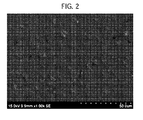
Fig. 2 shows a micrograph illustrating a surface state of the material for a hard tissue contact device according to Comparative Example. - Hereinafter, embodiments of the present invention are explained, but limitation of the present invention thereto is not intended.
- The process for production of a material for a hard tissue contact device of the present invention includes the step of subjecting an electroconductive material to a cathode polarization treatment in an aqueous electrolyte solution.
- The electroconductive material used in the present invention has a surface formed of at least one selected from the group consisting of zirconium, a zirconium compound, and a zirconium alloy. The "zirconium compound" herein means a compound containing zirconium as an element, and for example, zirconium oxide may be included. Furthermore, the "zirconium alloy" refers to an alloy of zirconium or the zirconium compound with other elemental metal or a compound containing other element, and for example, alloys of zirconium typified by a zircaloy alloy, which is formed by addition of tin, iron, chromium, niobium or the like, and zirconium bulk metal glasses including zirconium as a principal component (alloys of zirconium formed by addition of copper, nickel, aluminum, niobium or the like) may be included. Examples of the other element include elements that are highly safe in living bodies such as titanium and tantalum, and elements to be added in a slight amount for improving corrosion resistance such as platinum and palladium.
- Since such zirconium based electroconductive materials generally have greater strength and superior stretchability than materials such as titanium, a highly versatile material for a hard tissue contact device can be produced. The "surface" referred to herein may be either the surface of the electroconductive material itself, or a coating formed on the material.
- The electrolyte solution used in the present invention contains an effective amount of hydrogen peroxide. The term "effective amount" herein refers to the amount of hydrogen peroxide required for decreasing the amount of the generated hydrogen gas to a desired level, and minimum amounts which can be present as an impurity by chance should be excluded. The effective amount may be determined appropriately depending on the conditions, but excess amounts may result in absorption of hydrogen peroxide itself into the electroconductive material to make the electric conductivity material brittle, whereas insufficient amounts lead to failure in satisfactory decrease of hydrogen gas. Taking into consideration these, the effective amount is preferably no less than 0.01 mass% and no greater than 1 mass%, in general.
- Addition of hydrogen peroxide to the electrolyte is generally conducted prior to the cathode polarization treatment; however, the addition may be conducted continuously or intermittently during cathode polarization.
- The electrolyte solution contains a supporting electrolyte in addition to hydrogen peroxide. As such a supporting electrolyte, commonly used neutral supporting electrolytes such as sodium sulfate and sodium chloride may be exemplified, and sulfate (e.g., sodium sulfate, potassium sulfate and magnesium sulfate) are preferred in light of pertinence to the treatment of zirconium based surfaces.
- The concentration of the supporting electrolyte is preferably no less than 0.1 mol/L taking into consideration that deficient supporting electrolyte may lead to insufficient electric conductivity of the electrolyte solution. In addition, when a chloride ion, a fluoride ion, a carbonate ion or the like is included in the electrolyte solution, the concentration should be appropriately set since an excessively high concentration may result in corrosion of the electrode.
- Taking into account that excessively high voltage applied in the cathode polarization treatment leads to generation of hydrogen gas exceeding the allowable value, whereas deficient voltage leads to need of a significantly long time for the surface treatment, the voltage applied is preferably no lower than -1 V and no higher than -5 V relative to the standard hydrogen electrode. Moreover, taking into account that excessively high electric current density with respect to the surface area of the cathode leads to generation of hydrogen gas exceeding the allowable value, whereas deficient density leads to insufficient electric conductivity of the electrolyte solution, the electric current density with respect to the surface area of the cathode is preferably no lower than 1 x 10- 2 A/dm2 and no higher than 1 x 101 A/dm2.
- Since the reactions as in the following occur when the cathode polarization treatment as described above is carried out, the electroconductive material is alkalized in the vicinity of the surface.
O22H2O+4e-→4OH-
; and
2H2+2e-→H2→2OH-
- In addition, hydrogen gas which may be generated as a byproduct is consumed by hydrogen peroxide according to the following reaction.
H2+H2O2→2H2O
- Moreover, the alkalization is promoted by the following reactions.
H2O2+2e-→2OH-
; and
HO2- +H2O+2e-→3Oh-
- Accordingly, events of: making the electric conductivity material brittle; inhibiting polarization; and disturbing the alkaline condition in the vicinity of the surface of the electroconductive material due to a convection phenomenon can be avoided, which may occur through absorption of the hydrogen gas into the electroconductive material.
- Since such a cathode polarization treatment is carried out in a state in which the electric conductivity material is immersed in the electrolyte solution, a material for a hard tissue contact device having the entire surface treated efficiently and uniformly can be produced in a short period of time. Although it is necessary to immerse a material in an alkaline solution for usually about one day according to alkali treatment methods in fact, the cathode polarization procedure is completed generally within about one hour. Furthermore, according to ion implantation methods by way of ion beams, and plasma spraying methods with hydroxyapatite, an insufficiently treated surface portion is likely to occur when the material has a complicated shape. However, the cathode polarization treatment enables a uniform surface treatment even though the electroconductive material has a complicated shape, due to alkalization of the vicinity of the entire surface.
- It should be noted that the preset temperature during the cathode polarization treatment is not particularly limited, and room temperature is generally acceptable. However, the preset temperature is preferably about 5°C when suppression of absorption of hydrogen into the electric conductivity material is particularly needed.
- By subjecting thus produced material for a hard tissue contact device to processing so as to have appropriate shape and dimensions, a hard tissue contact device can be manufactured. Since this hard tissue contact device allows calcium phosphate to precipitate on the surface in living body environments, it can rapidly fuse with a hard tissue, or can quickly permit bone formation.
- The hard tissue contact device of the present invention may be used under conditions to be in contact with a hard tissue after implantation in a living body, and can be preferably used as, for example, dental implants, artificial dentures, bridges, crown restoration matters (fillers, restoration materials, etc.), plates, bolts, screws, and the like. In the case of plasma spraying methods and the like in which the surface is coated with hydroxyapatite or the like, when applied to bone plates and the like used following deformation of the shape prior to implantation thereof, as well as to dental implants, screws and the like to which an enormous force is applied on the surface upon implantation, the coated layer may separate before implantation, whereby satisfactory performance may not be achieved after the implantation. However, according to the hard tissue contact device of the present invention, since calcium phosphate spontaneously precipitates on the surface after the implantation, biological functionality can be sufficiently exerted after implantation in a living body.
- First, a cylinder (diameter: 8 mm) made of zirconium having a purity of 99.6% was cut at 2 mm intervals along an axial direction, and the cut surfaces were polished using abrasive paper with a ground particle grade of #320 to #800. Thereafter, polishing with a diamond paste having a particle size of 9 µm, a subsequent diamond paste having a particle size of 3 µm, and a 0.04 µm silica paste for final finishing was carried out, whereby mirror polishing of the surface of the electroconductive material was completed.
- Next, using the electroconductive material as a working electrode, a platinum electrode as a counter electrode, and a saturated calomel electrode as a reference electrode, these electrodes were immersed in an electrolyte solution (supporting electrolyte: 0.5 mol/L sodium sulfate, and 0.3 mass% hydrogen peroxide). A material for a hard tissue contact device was produced by applying a voltage of -3 V (relative to the saturated calomelel electrode as a standard) to these electrodes using a potentiostat "HA-501G" (manufactured by Hokuto Denko Corporation) at 37°C for 1 hour.
- A material for a hard tissue contact device was produced according to a similar procedure to Example except that the cathode polarization treatment was not carried out.
- A material for a hard tissue contact device was produced according to a similar procedure to Example except that hydrogen peroxide was not contained in the electrolyte solution.
- In order to create a simulated living body environment, each of the materials for a hard tissue contact device produced in Example and Comparative Examples 1 and 2 was immersed in a Hanks' solution, and left to stand for one week. On day 3 after starting the immersion, the solution was replaced with a fresh Hanks' solution.
- With respect to Example and Comparative Example 1, the material for a hard tissue contact device was sampled at each time point of after the mirror polishing, after the cathode polarization treatment, and after the immersion. The surface of each sample was observed with an optical microscope or a scanning electron microscope. The results are shown in
Fig. 1 . In addition, with respect to Comparative Example 2, the material for a hard tissue contact device after the immersion was sampled, and its surface was observed with a scanning electron microscope. The results are shown inFig. 2 . - It should be noted that in
Fig. 1 , (a) shows an optical micrograph of the Example after the mirror polishing; (b) shows a scanning electron micrograph of the Example after the mirror polishing; (c) shows an optical micrograph of the Example after the cathode polarization treatment; (d) shows a scanning electron micrograph of the Example after the cathode polarization treatment; (e) shows a scanning electron micrograph of the Example after the immersion; and (f) shows a scanning electron micrograph of the Comparative Example 1 after the immersion. - As shown in
Fig. 1 (e) , precipitation of a large amount of calcium phosphate was confirmed after the immersion on the surface of the material for a hard tissue contact device produced in the Example, whereas such precipitation of calcium phosphate was not confirmed on the surfaces of the materials for a hard tissue contact device produced in Comparative Examples 1 and 2, as shown inFig. 1 (f) andFig. 2 . - From these results, it was revealed that precipitation of calcium phosphate on a surface treated by a cathode polarization treatment using an electrolyte solution containing hydrogen peroxide occurs in a simulated living body environment. Therefore, it was expected that biological functionality, i.e., precipitation of a large amount of calcium phosphate on the surface, can be satisfactorily imparted when implanted in a living body.
Claims (4)
- A process for production of a material for a hard tissue contact device, the process comprising
subjecting an electroconductive material having a surface formed of at least one selected from the group consisting of zirconium, a zirconium compound, and a zirconium alloy to a cathode polarization treatment in an aqueous electrolyte solution containing an effective amount of hydrogen peroxide. - The process according to claim 1, wherein the electrolyte solution is an aqueous solution containing sulfate.
- A hard tissue contact device formed with the material produced by the process according to claim 1 or 2.
- A method for promoting precipitation of calcium phosphate on a surface constituted with at least one selected from the group consisting of zirconium, a zirconium compound, and a zirconium alloy in a living body environment, the method comprising: subjecting the surface to a cathode polarization treatment in an aqueous electrolyte solution containing an effective amount of hydrogen peroxide.
Applications Claiming Priority (2)
| Application Number | Priority Date | Filing Date | Title |
|---|---|---|---|
| JP2007241100A JP5212933B2 (en) | 2007-09-18 | 2007-09-18 | Method for manufacturing material for hard tissue contact device, and hard tissue contact device |
| PCT/JP2008/066054 WO2009037983A1 (en) | 2007-09-18 | 2008-09-05 | Process for producing material for hard tissue contact tool, and hard tissue contact tool |
Publications (2)
| Publication Number | Publication Date |
|---|---|
| EP2191851A1 true EP2191851A1 (en) | 2010-06-02 |
| EP2191851A4 EP2191851A4 (en) | 2013-01-02 |
Family
ID=40467802
Family Applications (1)
| Application Number | Title | Priority Date | Filing Date |
|---|---|---|---|
| EP08832377A Withdrawn EP2191851A4 (en) | 2007-09-18 | 2008-09-05 | METHOD FOR PRODUCING MATERIAL FOR TOOL COMING IN CONTACT WITH BONE TISSUES AND TOOL COMING IN CONTACT WITH BONE TISSUES |
Country Status (4)
| Country | Link |
|---|---|
| US (1) | US20100234950A1 (en) |
| EP (1) | EP2191851A4 (en) |
| JP (1) | JP5212933B2 (en) |
| WO (1) | WO2009037983A1 (en) |
Families Citing this family (2)
| Publication number | Priority date | Publication date | Assignee | Title |
|---|---|---|---|---|
| KR101878212B1 (en) * | 2010-09-08 | 2018-07-16 | 신세스 게엠바하 | Fixation device with magnesium core |
| US10478312B2 (en) | 2016-10-25 | 2019-11-19 | Institute for Musculoskeletal Science and Education, Ltd. | Implant with protected fusion zones |
Family Cites Families (9)
| Publication number | Priority date | Publication date | Assignee | Title |
|---|---|---|---|---|
| JP2795824B2 (en) * | 1995-05-12 | 1998-09-10 | オオタ株式会社 | Surface treatment method for titanium-based implant and biocompatible titanium-based implant |
| IT1302202B1 (en) * | 1998-09-11 | 2000-07-31 | Henkel Kgaa | ELECTROLYTIC PICKLING PROCESS WITH SOLUTIONS FREE FROM ACIDONITRICO. |
| EP1023910A1 (en) * | 1999-01-29 | 2000-08-02 | Institut Straumann AG | Preparation of osteophilic surfaces for metallic prosthetic devices anchorable to bone |
| US6893462B2 (en) | 2000-01-11 | 2005-05-17 | Regeneration Technologies, Inc. | Soft and calcified tissue implants |
| AU2003272451A1 (en) * | 2002-09-16 | 2004-04-30 | Lynntech Coatings, Ltd. | Anodically treated biocompatible implants |
| US20080011613A1 (en) * | 2004-07-21 | 2008-01-17 | Rizhi Wang | Method of electrolytically depositing a pharmaceutical coating onto a conductive osteal implant |
| US20060137995A1 (en) * | 2004-12-29 | 2006-06-29 | Sukanta Ghosh | Method for removal of metal from a workpiece |
| US8012338B2 (en) * | 2006-02-10 | 2011-09-06 | Syracuse University | Method for preparing biomedical surfaces |
| JP2008080102A (en) * | 2006-08-29 | 2008-04-10 | Nagasaki Univ | Implant |
-
2007
- 2007-09-18 JP JP2007241100A patent/JP5212933B2/en not_active Expired - Fee Related
-
2008
- 2008-09-05 US US12/677,877 patent/US20100234950A1/en not_active Abandoned
- 2008-09-05 WO PCT/JP2008/066054 patent/WO2009037983A1/en not_active Ceased
- 2008-09-05 EP EP08832377A patent/EP2191851A4/en not_active Withdrawn
Also Published As
| Publication number | Publication date |
|---|---|
| WO2009037983A1 (en) | 2009-03-26 |
| JP2009066358A (en) | 2009-04-02 |
| EP2191851A4 (en) | 2013-01-02 |
| JP5212933B2 (en) | 2013-06-19 |
| US20100234950A1 (en) | 2010-09-16 |
Similar Documents
| Publication | Publication Date | Title |
|---|---|---|
| Kar et al. | Electrodeposition of hydroxyapatite onto nanotubular TiO2 for implant applications | |
| US5723038A (en) | Process for producing a gradient coating made of calcium phosphate phases and metal oxide phase on metallic implants | |
| US5310464A (en) | Electrocrystallization of strongly adherent brushite coatings on prosthetic alloys | |
| Lamolle et al. | Titanium implant surface modification by cathodic reduction in hydrofluoric acid: surface characterization and in vivo performance | |
| US4818572A (en) | Process for production of calcium phosphate compound-coated composite material | |
| Zhang et al. | Electrochemical activation of titanium for biomimetic coating of calcium phosphate | |
| JP4457230B2 (en) | Surface treatment method for medical implant material | |
| CA2388903C (en) | Apatite-coated metallic material, process for its preparation, and its use | |
| Neupane et al. | Study of anodic oxide films of titanium fabricated by voltammetric technique in phosphate buffer media | |
| AU2011263550B2 (en) | Metal treatment | |
| KR101283780B1 (en) | Titanium implant and preparation method thereof | |
| KR20030031664A (en) | An electrochemical surface treating method for implants comprising metallic titanium or titanium alloys | |
| US20100234950A1 (en) | Process for producing material for hard tissue contact tool, and hard tissue contact tool | |
| KR101015462B1 (en) | Titanium Dioxide Ceramics for Implants and Manufacturing Method Thereof | |
| KR101304990B1 (en) | Method for forming hydroxyapatite coating layer on titanium implant surface and titanium implant having coating layer formed by the same | |
| US20050173258A1 (en) | Method for electrolytic polishing of dental instruments made of nickel-titanium alloy | |
| CN106456839A (en) | Method for the surface treatment of a biocorrodable implant | |
| Jiang | Enhancement of titanium alloy corrosion resistance via anodic oxidation treatment | |
| RU2854244C1 (en) | Method for increasing the corrosion resistance of niti scaffolds | |
| KR101314073B1 (en) | MANUFACTURING METHOD FOR TITANIUM IMPLANT COATED BY OXIDE FILM HAVING β-TRICALCIUM PHOSPHATE AND TITANIUM IMPLANT BY THESAME | |
| US20180112316A1 (en) | Method for the surface treatment of a biocorrodable implant | |
| Amhal et al. | Study of the Corrosion Resistance of Titanium | |
| KR20200004577A (en) | Method for surface treatment of biocompatible affinity metal material | |
| EP4218841A1 (en) | Bone implant having porous membrane, and production method therefor | |
| Venkateswarlu et al. | Effect of micro arc oxidation treatment time on in-vitro corrosion characteristics of titania films on Cp Ti |
Legal Events
| Date | Code | Title | Description |
|---|---|---|---|
| PUAI | Public reference made under article 153(3) epc to a published international application that has entered the european phase |
Free format text: ORIGINAL CODE: 0009012 |
|
| 17P | Request for examination filed |
Effective date: 20100319 |
|
| AK | Designated contracting states |
Kind code of ref document: A1 Designated state(s): AT BE BG CH CY CZ DE DK EE ES FI FR GB GR HR HU IE IS IT LI LT LU LV MC MT NL NO PL PT RO SE SI SK TR |
|
| AX | Request for extension of the european patent |
Extension state: AL BA MK RS |
|
| DAX | Request for extension of the european patent (deleted) | ||
| A4 | Supplementary search report drawn up and despatched |
Effective date: 20121130 |
|
| RIC1 | Information provided on ipc code assigned before grant |
Ipc: A61L 27/00 20060101AFI20121126BHEP Ipc: A61L 31/02 20060101ALI20121126BHEP |
|
| STAA | Information on the status of an ep patent application or granted ep patent |
Free format text: STATUS: THE APPLICATION IS DEEMED TO BE WITHDRAWN |
|
| 18D | Application deemed to be withdrawn |
Effective date: 20130629 |