EP2190169A1 - Personal broadcast service transmitter and mobile terminal - Google Patents
Personal broadcast service transmitter and mobile terminal Download PDFInfo
- Publication number
- EP2190169A1 EP2190169A1 EP09173274A EP09173274A EP2190169A1 EP 2190169 A1 EP2190169 A1 EP 2190169A1 EP 09173274 A EP09173274 A EP 09173274A EP 09173274 A EP09173274 A EP 09173274A EP 2190169 A1 EP2190169 A1 EP 2190169A1
- Authority
- EP
- European Patent Office
- Prior art keywords
- personal broadcast
- broadcast service
- mobile terminal
- personal
- transmitter
- Prior art date
- Legal status (The legal status is an assumption and is not a legal conclusion. Google has not performed a legal analysis and makes no representation as to the accuracy of the status listed.)
- Withdrawn
Links
- 238000010295 mobile communication Methods 0.000 claims abstract description 51
- 230000005540 biological transmission Effects 0.000 claims description 2
- 238000000034 method Methods 0.000 description 9
- 238000010586 diagram Methods 0.000 description 8
- 230000008569 process Effects 0.000 description 6
- 238000004891 communication Methods 0.000 description 5
- 238000005516 engineering process Methods 0.000 description 5
- 230000002452 interceptive effect Effects 0.000 description 5
- 230000008901 benefit Effects 0.000 description 3
- 238000010276 construction Methods 0.000 description 2
- 238000011161 development Methods 0.000 description 2
- 238000012986 modification Methods 0.000 description 2
- 230000004048 modification Effects 0.000 description 2
- 206010039203 Road traffic accident Diseases 0.000 description 1
- 230000001413 cellular effect Effects 0.000 description 1
- 238000001514 detection method Methods 0.000 description 1
- 238000005259 measurement Methods 0.000 description 1
- 230000007246 mechanism Effects 0.000 description 1
Images





Classifications
-
- H—ELECTRICITY
- H04—ELECTRIC COMMUNICATION TECHNIQUE
- H04W—WIRELESS COMMUNICATION NETWORKS
- H04W4/00—Services specially adapted for wireless communication networks; Facilities therefor
- H04W4/02—Services making use of location information
-
- H—ELECTRICITY
- H04—ELECTRIC COMMUNICATION TECHNIQUE
- H04L—TRANSMISSION OF DIGITAL INFORMATION, e.g. TELEGRAPHIC COMMUNICATION
- H04L12/00—Data switching networks
- H04L12/02—Details
- H04L12/16—Arrangements for providing special services to substations
- H04L12/18—Arrangements for providing special services to substations for broadcast or conference, e.g. multicast
- H04L12/1859—Arrangements for providing special services to substations for broadcast or conference, e.g. multicast adapted to provide push services, e.g. data channels
-
- H—ELECTRICITY
- H04—ELECTRIC COMMUNICATION TECHNIQUE
- H04H—BROADCAST COMMUNICATION
- H04H40/00—Arrangements specially adapted for receiving broadcast information
-
- H—ELECTRICITY
- H04—ELECTRIC COMMUNICATION TECHNIQUE
- H04L—TRANSMISSION OF DIGITAL INFORMATION, e.g. TELEGRAPHIC COMMUNICATION
- H04L67/00—Network arrangements or protocols for supporting network services or applications
- H04L67/2866—Architectures; Arrangements
- H04L67/30—Profiles
- H04L67/306—User profiles
-
- H—ELECTRICITY
- H04—ELECTRIC COMMUNICATION TECHNIQUE
- H04L—TRANSMISSION OF DIGITAL INFORMATION, e.g. TELEGRAPHIC COMMUNICATION
- H04L67/00—Network arrangements or protocols for supporting network services or applications
- H04L67/50—Network services
- H04L67/52—Network services specially adapted for the location of the user terminal
-
- H—ELECTRICITY
- H04—ELECTRIC COMMUNICATION TECHNIQUE
- H04W—WIRELESS COMMUNICATION NETWORKS
- H04W4/00—Services specially adapted for wireless communication networks; Facilities therefor
- H04W4/02—Services making use of location information
- H04W4/029—Location-based management or tracking services
-
- H—ELECTRICITY
- H04—ELECTRIC COMMUNICATION TECHNIQUE
- H04W—WIRELESS COMMUNICATION NETWORKS
- H04W4/00—Services specially adapted for wireless communication networks; Facilities therefor
- H04W4/06—Selective distribution of broadcast services, e.g. multimedia broadcast multicast service [MBMS]; Services to user groups; One-way selective calling services
-
- H—ELECTRICITY
- H04—ELECTRIC COMMUNICATION TECHNIQUE
- H04W—WIRELESS COMMUNICATION NETWORKS
- H04W64/00—Locating users or terminals or network equipment for network management purposes, e.g. mobility management
Definitions
- the following description relates to a broadcast communication technology and, more particularly, to a personal broadcast service technology.
- Mobile data communication services through mobile terminals have recently been increasing.
- the mobile terminal has enhanced multimedia capabilities with a television function or a digital broadcast receiver. Accordingly, broadcast services are expected to be provided through mobile terminals.
- server and network environments have been developed so that individuals or private entities rather than existing public broadcast entities may generate customized content using a variety of tools and broadcast the content to specified receivers or general individuals.
- Existing personal broadcast includes an interactive broadcast service and a non-interactive broadcast service.
- a personal broadcast receiver uses a personal computer with wired or wireless Internet capabilities to access a personal broadcast server and receives personal broadcast services.
- a personal broadcast receiver and a content provider are interactive with each other so that the receiver may receive his or her desired content from the content provider.
- the existing personal broadcast service is primarily provided for the benefit of the personal broadcast content provider and the personal broadcast service provider. As a result, it is difficult for the personal broadcast service receiver to obtain his or her desired content from the personal broadcast service.
- the following description relates to a mobile terminal and a personal broadcast service transmitter which transmits customized location-based personal broadcast services.
- a mobile terminal receiving a personal broadcast service includes a location information transmitter to transmit location information of the mobile terminal to a personal broadcast service transmitter transmitting the personal broadcast service over a mobile communication network; and a personal broadcast service receiver to receive from the personal broadcast service transmitter the personal broadcast service generated based on the location information of the mobile terminal.
- a personal broadcast service transmitter includes a terminal location information receiver to receive, over a mobile communication network, location information of a mobile terminal which has requested a personal broadcast service; and a personal broadcast service provider to generate a personal broadcast service based on the location information of the mobile terminal and provide the personal broadcast service to the mobile terminal.
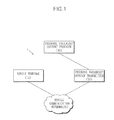
- FIG. 1 is a diagram illustrating an exemplary personal broadcast service system 1.
- the personal broadcast service system 1 includes a mobile terminal 10, a personal broadcast service transmitter 20, a mobile communication network 30, and a personal broadcast content provider 40.
- the personal broadcast service transmitter 20 transmits a personal broadcast service based on a location of the mobile terminal 10 which has requested the personal broadcast service.
- the mobile terminal 10 sends its location information to the personal broadcast service transmitter 20 over the mobile communication network 30.
- the mobile terminal 10 may receive personal broadcast services which are customized to suit service receive's needs.
- personal broadcast services are provided to suit the needs of service receivers rather than of personal broadcast content providers or personal broadcast service providers.
- the personal broadcast service transmitter 20 and the personal broadcast content provider 40 may be operatively connected with the mobile communication network 30 for the mobile terminal 10 to conveniently receive location-based personal broadcast services.
- Examples of the mobile terminal 10 include, but not limited to, cellular phones, personal digital assistant (PDAs), hand personal computers (HPCs), web pads, notebooks, smart phones, wireless application protocol (WAP) phones, palm PCs, e-Book terminals, hand-held terminals (HHTs), and any other communication equipment receiving personal broadcast services.
- the mobile terminal 10 exchanges information with the mobile communication network 30 so that the mobile communication network 30 may detect a location of the mobile terminal 10.
- the mobile terminal 10 further displays multimedia content, including images or voice, on its display. The configuration of the mobile terminal 10 will be described in detail with reference to FIG. 2 .
- the personal broadcast service transmitter 20 receives personal broadcast content from the personal broadcast content provider 40.
- the personal broadcast service transmitter 20 further receives location information of the mobile terminal 10 over the mobile communication network 30.
- the personal broadcast service transmitter 20 then sends a customized personal broadcast service to the mobile terminal 10 based on the location information.
- the configuration of the personal broadcast service transmitter 20 will be described in detail with reference to FIG. 3 .
- the mobile communication network 30 may be divided into an access network and a core network.
- the access network controls wireless access or wireless transmission of the mobile terminal 10
- the core network controls the access network and manages location information of the mobile terminal 10.
- the mobile communication network 30 may be a typical second or third generation (2G or 3G) mobile communication network or a WiBro network. Multicast and broadcast functions may be provided on the access and core networks depending on the type of mobile communication network 30 or may be distributed. Management of the location information of the mobile terminal 10 may be implemented according to the mechanism of mobile communication systems which are now in use or has been standardized.
- FIG. 2 is a diagram illustrating an exemplary mobile terminal 10.
- the mobile terminal 10 includes a location information transmitter 100 and a personal broadcast service receiver 110.
- the location information transmitter 100 transmits location information of the mobile terminal 10 to the personal broadcast service transmitter 20 over the mobile communication network 30.
- the mobile communication network 30 receives a location-based personal broadcast service request from the mobile terminal 10.
- the mobile communication network 30 detects a location of the mobile terminal 10 and forwards the location information to the personal broadcast service transmitter 20.
- Data in the mobile communication network 30 may be used for the location information of the mobile terminal 10.
- the mobile terminal 10 and the mobile communication network 30 exchange data with each other so that the mobile communication network 30 may detect the location information of the mobile terminal 10.
- the mobile communication network 30 may measure the location of the mobile terminal 10 and use a location-based service (LBS) for providing information services associated with the measured location.
- LBS utilizes a location detection technology (LDT) to detect the location of the mobile terminal 10 over the mobile communication network 30 and provide information services associated with the measurement.
- LDT location detection technology
- LBS may provide high value-added services to mobile terminals which are expected to have enhanced capabilities with development of 3G communication technologies. Service providers as well as communication equipment manufacturers are taking an active part in technology development and market expansion.
- the mobile communication network 30 may utilize, without limitation, base station PN, BASE_ID, etc. to acquire the location information of the mobile terminal 10.
- the personal broadcast service receiver 110 receives personal broadcast services from the personal broadcast service transmitter 20 based on the location information of the mobile terminal 10.
- the personal broadcast service receiver 110 may have a customized personal broadcast service over the mobile communication network 30.
- the personal broadcast service receiver 110 may receive a personal broadcast service which can be received at a current location of the mobile terminal 10 using the location information of the mobile terminal 10.
- the personal broadcast service receiver 110 may receive from the personal broadcast service transmitter 20 information about a personal broadcast list created depending on the location information of the mobile terminal 10 :
- the personal broadcast list refers to a list of personal broadcast services which a user can select. In this case, when the user selects a personal broadcast service from among the personal broadcast list, the personal broadcast service receiver 110 may request and receive the selected personal broadcast service from the personal broadcast service transmitter 20.
- the personal broadcast service receiver 110 may receive from the personal broadcast service transmitter 20 a personal broadcast service on which location information of a personal broadcast content provider is reflected. Accordingly, since both the location of the personal broadcast content provider and the location of the mobile terminal 10 are detected, the mobile terminal 10 may receive a customized personal broadcast service from a personal broadcast content provider who is adjacent to the mobile terminal 10.
- the personal broadcast service receiver 110 may receive in multicast over the mobile communication network 30 a personal broadcast service transmitted from the personal broadcast service transmitter 20.
- a multicast function of the mobile communication network 30 enables a plurality of mobile terminals 10 to receive the same content from the same personal broadcast channel.
- FIG. 3 is a diagram illustrating an exemplary personal broadcast service transmitter 20.
- the personal broadcast service transmitter 20 includes a terminal location information receiver 200 and a personal broadcast service provider 210.
- the personal broadcast service transmitter 20 may be, but not limited to, a personal broadcast server which receives personal broadcast content from a personal broadcast content provider and sends it to the mobile terminal 10.
- Examples of the personal broadcast content provider may include public institutions or enterprises other than public broadcast entities, private enterprises or individuals.
- Such personal broadcast content providers may produce their own personal broadcast content, such as public relations, commercials or sports event programs, and provide them to the personal broadcast service transmitter 20.
- the personal broadcast service transmitter 20 may be incorporated in or separated from the mobile communication network 30. If the personal broadcast service transmitter 20 is incorporated in the mobile communication network 30, a mobile communication provider provides personal broadcast services. If the personal broadcast service transmitter 20 is separated from the mobile communication network 30, personal broadcast providers other than the mobile communication provider, entities or individuals provide personal broadcast services.
- the personal broadcast service transmitter 20 receives location information of the mobile terminal 10 and a personal broadcast service request message from the mobile communication network 30.
- the personal broadcast service transmitter 20 generates a personal broadcast service list for a user of the mobile terminal 10,
- the personal broadcast service transmitter 20 receives location information of a personal broadcast content provider and broadcast content from the personal broadcast content provider.
- the personal broadcast service transmitter 20 sends personal broadcast content to the mobile terminal 10.
- the terminal location information receiver 200 receives, over the mobile communication network 30, location information of the mobile terminal 10 which has requested a personal broadcast service.
- the personal broadcast service provider 210 provides the personal broadcast service to the mobile terminal 10 based on the location information of the mobile terminal 10 received from the terminal location information receiver 200. That is, the personal broadcast service provider 210 may provide the mobile terminal 10 with personal broadcast services which can be received at a current location of the mobile terminal 10 using the location information of the mobile terminal 10. In this case, the personal broadcast service provider 210 may generate a personal broadcast list according to the location information of the mobile terminal 10 and provide it to the mobile terminal 10. Furthermore, when the personal broadcast service is provided, location information of a personal broadcast content provider may be considered.
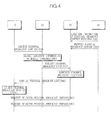
- FIG. 4 is a flow chart of an exemplary personal broadcast service process.
- the mobile terminal 10 requests a personal broadcast service over the mobile communication network 30 (operation 320).
- the mobile communication network 30 detects location information of the mobile terminal 10 (operation 330).
- the mobile communication network 30 sends the location information of the mobile terminal 10 to the personal broadcast service transmitter 20 white requesting a personal broadcast list from the personal broadcast service transmitter 20 (operation 340).
- the personal broadcast service transmitter 20 Before receiving the personal broadcast service request from the mobile terminal 20, the personal broadcast service transmitter 20 detects location information of the personal broadcast content provider 40 (operation 300), and receives personal broadcast content from the personal broadcast content provider 40 (operation 310), The location information of the personal broadcast content provider 40 will be used in generating a personal broadcast list which can be received by the mobile terminal 10.
- the personal broadcast service transmitter 20 generates a personal broadcast list using the location information of the mobile terminal 10 (operation 350).
- the personal broadcast service transmitter 20 provides the personal broadcast list to the mobile terminal 10 over the mobile communication network 30 (operation 360).
- a user selects a personal broadcast service on the mobile terminal 10 based on the personal broadcast list (operation 370).
- the mobile terminal 10 requests the selected personal broadcast service from the personal broadcast service transmitter 20 over the mobile communication network 30 (operation 380) and receives the personal broadcast service from the personal broadcast service transmitter 20 (operation 390).
- the mobile terminal 10 receives a customized personal broadcast service according to the locations of the mobile terminal 10 and the personal broadcast content provider 40.
- FIG. 5 is a flow chart of an exemplary personal broadcast multicast process. While FIG. 4 illustrates a personal broadcast service process where a single subscriber makes a request from a single personal broadcast channel (single personal broadcast content), FIG. 5 illustrates a personal broadcast channel multicast process where a plurality of subscribers make a request from a single personal broadcast channel.
- the mobile terminal 10 may receive a personal broadcast service, which is sent from the personal broadcast service transmitter 20, in multicast over the mobile communication network 30.
- a plurality of users of a plurality of mobile terminals 10a, 10b,..., 10n request a personal broadcast service from a personal broadcast channel (operation 400).
- the content on the personal broadcast channel may be sent to a plurality of mobile terminals 10 using a multicast function of the mobile communication network 30.
- the personal broadcast service transmitter 20 sends the selected personal broadcast service over the mobile communication network 30 (operation 410).
- the mobile communication network 30 provides in multicast the personal broadcast service on the selected channel (operation 420). Accordingly, the same personal broadcast service may be provided to a plurality of personal broadcast receivers in real time through the multicast function of the mobile communication network 30.
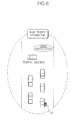
- FIGS. 6 to 9 are diagrams illustrating exemplary personal broadcast services.
- Examples of the personal broadcast service include road guidance information service, road traffic information service, sports event information service, shopping mall information service, public guidance information service such as public institution guidance information service, and private commercials service.
- an exemplary personal broadcast service may be a road traffic information service.
- the road traffic information service allows a mobile terminal user, as a personal broadcast service receiver, to check a traffic condition of a road congested with traffic.
- the user may receive a personal broadcast service on whether or not there is a traffic accident ahead, a road is under construction, etc.
- a vehicle equipped with a mobile terminal receiving a personal broadcast service at the scene of an accident may receive a personal broadcast service on a road condition from a terminal which provides personal broadcast content of a closed-circuit television installed on the road, for example.
- the personal broadcast service receiver may make out the reason of congested traffic and make a detour to avoid the congested area by receiving a personal broadcast service on road and traffic conditions.
- an exemplary personal broadcast service may be a road guidance information service.
- the road guidance information service helps a personal broadcast service receiver to find a desired place by receiving a personal broadcast at his or her current location.
- the service receiver receives a personal broadcast service which is broadcast at his or her current location, such as public facility, restaurant, shopping mall, or hospital, to obtain the road guidance information and find his or her desired place.
- personal broadcast service providers such as public or private entities, may advertise their information, such as locations, business hours, or types of service, while personal broadcast service receivers may make use of such information.
- an exemplary personal broadcast service may be a shopping mall information service.
- the personal broadcast service provider and receiver may benefit from the personal broadcast service.
- stores in a wide shopping mall as shown in FIG. 8 may advertise a variety of information, such as sale items, prices, bargain sales and business hours, through their personal broadcast services.
- the personal broadcast service receivers may obtain shopping information from the personal broadcast service and purchase goods.
- an exemplary personal broadcast service may be a sports event information service.
- the sports event information service provides information about sport events which are being held in an area with a number of sports facilities.
- a personal broadcast service receiver may receive a personal broadcast channel which is broadcast at a stadium in the vicinity of the receiver, and view an ongoing sport game on the personal broadcast channel. It will be apparent to a person skilled in the art that other exemplary examples can be implemented in addition to the foregoing personal broadcast services.
- the exemplary mobile terminal which is a personal broadcast service receiver
- the personal broadcast service receiver may receive customized location-based personal broadcast services using the location information of the mobile terminal, which receives the personal broadcast services, and of the personal broadcast content provider.
- a personal broadcast system which provides personal broadcast services
- a mobile communication system which provides mobile communication services
Landscapes
- Engineering & Computer Science (AREA)
- Signal Processing (AREA)
- Computer Networks & Wireless Communication (AREA)
- Multimedia (AREA)
- Mobile Radio Communication Systems (AREA)
- Telephonic Communication Services (AREA)
Abstract
A personal broadcast service transmitter and a mobile terminal are provided. The mobile terminal receiving a personal broadcast service includes a location information transmitter to transmit location information of the mobile terminal to a personal broadcast service transmitter transmitting the personal broadcast service over a mobile communication network; and a personal broadcast service receiver to receive from the personal broadcast service transmitter the personal broadcast service generated based on the location information of the mobile terminal.
Description
- This application claims the benefit under 35 U.S.C. §119(a) of Korean Patent Application No.
10-2008-0117069, filed on November 24, 2008 - The following description relates to a broadcast communication technology and, more particularly, to a personal broadcast service technology.
- Mobile data communication services through mobile terminals have recently been increasing. The mobile terminal has enhanced multimedia capabilities with a television function or a digital broadcast receiver. Accordingly, broadcast services are expected to be provided through mobile terminals.
- On the other hand, server and network environments have been developed so that individuals or private entities rather than existing public broadcast entities may generate customized content using a variety of tools and broadcast the content to specified receivers or general individuals.
- Existing personal broadcast includes an interactive broadcast service and a non-interactive broadcast service. For the non-interactive broadcast service, a personal broadcast receiver uses a personal computer with wired or wireless Internet capabilities to access a personal broadcast server and receives personal broadcast services. For the interactive broadcast service, a personal broadcast receiver and a content provider are interactive with each other so that the receiver may receive his or her desired content from the content provider.
- However, the existing personal broadcast service is primarily provided for the benefit of the personal broadcast content provider and the personal broadcast service provider. As a result, it is difficult for the personal broadcast service receiver to obtain his or her desired content from the personal broadcast service.
- The following description relates to a mobile terminal and a personal broadcast service transmitter which transmits customized location-based personal broadcast services.
- In one general aspect, a mobile terminal receiving a personal broadcast service includes a location information transmitter to transmit location information of the mobile terminal to a personal broadcast service transmitter transmitting the personal broadcast service over a mobile communication network; and a personal broadcast service receiver to receive from the personal broadcast service transmitter the personal broadcast service generated based on the location information of the mobile terminal.
- In another general aspect, a personal broadcast service transmitter includes a terminal location information receiver to receive, over a mobile communication network, location information of a mobile terminal which has requested a personal broadcast service; and a personal broadcast service provider to generate a personal broadcast service based on the location information of the mobile terminal and provide the personal broadcast service to the mobile terminal.
- However, other features and aspects will be apparent from the following description, the drawings, and the claims.
-
-
FIG. 1 is a diagram illustrating an exemplary personal broadcast service system. -
FIG. 2 is a diagram illustrating an exemplary mobile terminal. -
FIG. 3 is a diagram illustrating an exemplary personal broadcast service transmitter. -
FIG. 4 is a flow chart of an exemplary personal broadcast service process. -
FIG. 5 is a flow chart of an exemplary personal broadcast multicast process. -
FIGS. 6 to 9 are diagrams illustrating exemplary personal broadcast services. - Throughout the drawings and the detailed description, unless otherwise described, the same drawing reference numbers refer to the same elements, features, and structures. The relative size and depiction of these elements may be exaggerated for clarity, illustration, and convenience.
- The detailed description is provided to assist the reader in gaining a comprehensive understanding of the methods, apparatuses and/or systems described herein. Accordingly, various changes, modifications, and equivalents of the systems, apparatuses, and/or methods described herein will be suggested to those of ordinary skill in the art. Also, descriptions of well-known functions and constructions are omitted to increase clarity and conciseness.
-
FIG. 1 is a diagram illustrating an exemplary personal broadcast service system 1. - Referring to
FIG. 1 , the personal broadcast service system 1 includes amobile terminal 10, a personalbroadcast service transmitter 20, amobile communication network 30, and a personalbroadcast content provider 40. The personalbroadcast service transmitter 20 transmits a personal broadcast service based on a location of themobile terminal 10 which has requested the personal broadcast service. Themobile terminal 10 sends its location information to the personalbroadcast service transmitter 20 over themobile communication network 30. - In one example, the
mobile terminal 10 may receive personal broadcast services which are customized to suit service receive's needs. In other words, personal broadcast services are provided to suit the needs of service receivers rather than of personal broadcast content providers or personal broadcast service providers. The personalbroadcast service transmitter 20 and the personalbroadcast content provider 40 may be operatively connected with themobile communication network 30 for themobile terminal 10 to conveniently receive location-based personal broadcast services. - Examples of the
mobile terminal 10 include, but not limited to, cellular phones, personal digital assistant (PDAs), hand personal computers (HPCs), web pads, notebooks, smart phones, wireless application protocol (WAP) phones, palm PCs, e-Book terminals, hand-held terminals (HHTs), and any other communication equipment receiving personal broadcast services. Themobile terminal 10 exchanges information with themobile communication network 30 so that themobile communication network 30 may detect a location of themobile terminal 10. Themobile terminal 10 further displays multimedia content, including images or voice, on its display. The configuration of themobile terminal 10 will be described in detail with reference toFIG. 2 . - The personal
broadcast service transmitter 20 receives personal broadcast content from the personalbroadcast content provider 40. The personalbroadcast service transmitter 20 further receives location information of themobile terminal 10 over themobile communication network 30. The personalbroadcast service transmitter 20 then sends a customized personal broadcast service to themobile terminal 10 based on the location information. The configuration of the personalbroadcast service transmitter 20 will be described in detail with reference toFIG. 3 . - The
mobile communication network 30 may be divided into an access network and a core network. In this case, the access network controls wireless access or wireless transmission of themobile terminal 10, while the core network controls the access network and manages location information of themobile terminal 10. Themobile communication network 30 may be a typical second or third generation (2G or 3G) mobile communication network or a WiBro network. Multicast and broadcast functions may be provided on the access and core networks depending on the type ofmobile communication network 30 or may be distributed. Management of the location information of themobile terminal 10 may be implemented according to the mechanism of mobile communication systems which are now in use or has been standardized. -
FIG. 2 is a diagram illustrating an exemplarymobile terminal 10. - Referring to
FIG. 2 , themobile terminal 10 includes alocation information transmitter 100 and a personalbroadcast service receiver 110. - The
location information transmitter 100 transmits location information of themobile terminal 10 to the personalbroadcast service transmitter 20 over themobile communication network 30. Themobile communication network 30 receives a location-based personal broadcast service request from themobile terminal 10. Themobile communication network 30 then detects a location of themobile terminal 10 and forwards the location information to the personalbroadcast service transmitter 20. Data in themobile communication network 30 may be used for the location information of themobile terminal 10. Themobile terminal 10 and themobile communication network 30 exchange data with each other so that themobile communication network 30 may detect the location information of themobile terminal 10. - More specifically, to detect a current location of the
mobile terminal 10, themobile communication network 30 may measure the location of themobile terminal 10 and use a location-based service (LBS) for providing information services associated with the measured location. LBS utilizes a location detection technology (LDT) to detect the location of themobile terminal 10 over themobile communication network 30 and provide information services associated with the measurement. - LBS may provide high value-added services to mobile terminals which are expected to have enhanced capabilities with development of 3G communication technologies. Service providers as well as communication equipment manufacturers are taking an active part in technology development and market expansion. The
mobile communication network 30 may utilize, without limitation, base station PN, BASE_ID, etc. to acquire the location information of themobile terminal 10. - The personal
broadcast service receiver 110 receives personal broadcast services from the personalbroadcast service transmitter 20 based on the location information of themobile terminal 10. In this case, the personalbroadcast service receiver 110 may have a customized personal broadcast service over themobile communication network 30. For example, the personalbroadcast service receiver 110 may receive a personal broadcast service which can be received at a current location of themobile terminal 10 using the location information of themobile terminal 10. - Furthermore, the personal
broadcast service receiver 110 may receive from the personalbroadcast service transmitter 20 information about a personal broadcast list created depending on the location information of themobile terminal 10: The personal broadcast list refers to a list of personal broadcast services which a user can select. In this case, when the user selects a personal broadcast service from among the personal broadcast list, the personalbroadcast service receiver 110 may request and receive the selected personal broadcast service from the personalbroadcast service transmitter 20. - In addition, the personal
broadcast service receiver 110 may receive from the personal broadcast service transmitter 20 a personal broadcast service on which location information of a personal broadcast content provider is reflected. Accordingly, since both the location of the personal broadcast content provider and the location of themobile terminal 10 are detected, themobile terminal 10 may receive a customized personal broadcast service from a personal broadcast content provider who is adjacent to themobile terminal 10. - Furthermore, the personal
broadcast service receiver 110 may receive in multicast over the mobile communication network 30 a personal broadcast service transmitted from the personalbroadcast service transmitter 20. For example, although content of a personal broadcast channel selected by a user of amobile terminal 10 receiving a personal broadcast service is being used by another user, a multicast function of themobile communication network 30 enables a plurality ofmobile terminals 10 to receive the same content from the same personal broadcast channel. -
FIG. 3 is a diagram illustrating an exemplary personalbroadcast service transmitter 20. - Referring to
FIG. 3 , the personalbroadcast service transmitter 20 includes a terminallocation information receiver 200 and a personalbroadcast service provider 210. - The personal
broadcast service transmitter 20 may be, but not limited to, a personal broadcast server which receives personal broadcast content from a personal broadcast content provider and sends it to themobile terminal 10. Examples of the personal broadcast content provider may include public institutions or enterprises other than public broadcast entities, private enterprises or individuals. Such personal broadcast content providers may produce their own personal broadcast content, such as public relations, commercials or sports event programs, and provide them to the personalbroadcast service transmitter 20. - The personal
broadcast service transmitter 20 may be incorporated in or separated from themobile communication network 30. If the personalbroadcast service transmitter 20 is incorporated in themobile communication network 30, a mobile communication provider provides personal broadcast services. If the personalbroadcast service transmitter 20 is separated from themobile communication network 30, personal broadcast providers other than the mobile communication provider, entities or individuals provide personal broadcast services. - The personal
broadcast service transmitter 20 receives location information of themobile terminal 10 and a personal broadcast service request message from themobile communication network 30. The personalbroadcast service transmitter 20 generates a personal broadcast service list for a user of themobile terminal 10, The personalbroadcast service transmitter 20 receives location information of a personal broadcast content provider and broadcast content from the personal broadcast content provider. The personalbroadcast service transmitter 20 sends personal broadcast content to themobile terminal 10. - More specifically, the terminal
location information receiver 200 receives, over themobile communication network 30, location information of themobile terminal 10 which has requested a personal broadcast service. The personalbroadcast service provider 210 provides the personal broadcast service to themobile terminal 10 based on the location information of themobile terminal 10 received from the terminallocation information receiver 200. That is, the personalbroadcast service provider 210 may provide themobile terminal 10 with personal broadcast services which can be received at a current location of themobile terminal 10 using the location information of themobile terminal 10. In this case, the personalbroadcast service provider 210 may generate a personal broadcast list according to the location information of themobile terminal 10 and provide it to themobile terminal 10. Furthermore, when the personal broadcast service is provided, location information of a personal broadcast content provider may be considered. -
FIG. 4 is a flow chart of an exemplary personal broadcast service process. - Referring to
FIG. 4 , the mobile terminal 10 requests a personal broadcast service over the mobile communication network 30 (operation 320). Themobile communication network 30 detects location information of the mobile terminal 10 (operation 330). Themobile communication network 30 sends the location information of themobile terminal 10 to the personalbroadcast service transmitter 20 white requesting a personal broadcast list from the personal broadcast service transmitter 20 (operation 340). - Before receiving the personal broadcast service request from the
mobile terminal 20, the personalbroadcast service transmitter 20 detects location information of the personal broadcast content provider 40 (operation 300), and receives personal broadcast content from the personal broadcast content provider 40 (operation 310), The location information of the personalbroadcast content provider 40 will be used in generating a personal broadcast list which can be received by themobile terminal 10. - The personal
broadcast service transmitter 20 generates a personal broadcast list using the location information of the mobile terminal 10 (operation 350). The personalbroadcast service transmitter 20 provides the personal broadcast list to themobile terminal 10 over the mobile communication network 30 (operation 360). - A user selects a personal broadcast service on the
mobile terminal 10 based on the personal broadcast list (operation 370). The mobile terminal 10 requests the selected personal broadcast service from the personalbroadcast service transmitter 20 over the mobile communication network 30 (operation 380) and receives the personal broadcast service from the personal broadcast service transmitter 20 (operation 390). As such, themobile terminal 10 receives a customized personal broadcast service according to the locations of themobile terminal 10 and the personalbroadcast content provider 40. -
FIG. 5 is a flow chart of an exemplary personal broadcast multicast process. WhileFIG. 4 illustrates a personal broadcast service process where a single subscriber makes a request from a single personal broadcast channel (single personal broadcast content),FIG. 5 illustrates a personal broadcast channel multicast process where a plurality of subscribers make a request from a single personal broadcast channel. - Referring to
FIG. 5 , themobile terminal 10 may receive a personal broadcast service, which is sent from the personalbroadcast service transmitter 20, in multicast over themobile communication network 30. In one example, a plurality of users of a plurality ofmobile terminals mobile terminals 10 using a multicast function of themobile communication network 30. In this case, the personalbroadcast service transmitter 20 sends the selected personal broadcast service over the mobile communication network 30 (operation 410). Themobile communication network 30 provides in multicast the personal broadcast service on the selected channel (operation 420). Accordingly, the same personal broadcast service may be provided to a plurality of personal broadcast receivers in real time through the multicast function of themobile communication network 30. -
FIGS. 6 to 9 are diagrams illustrating exemplary personal broadcast services. - Examples of the personal broadcast service include road guidance information service, road traffic information service, sports event information service, shopping mall information service, public guidance information service such as public institution guidance information service, and private commercials service.
- Referring to
FIG. 6 , an exemplary personal broadcast service may be a road traffic information service. The road traffic information service allows a mobile terminal user, as a personal broadcast service receiver, to check a traffic condition of a road congested with traffic. In this case, the user may receive a personal broadcast service on whether or not there is a traffic accident ahead, a road is under construction, etc. For example, a vehicle equipped with a mobile terminal receiving a personal broadcast service at the scene of an accident may receive a personal broadcast service on a road condition from a terminal which provides personal broadcast content of a closed-circuit television installed on the road, for example. Accordingly, the personal broadcast service receiver may make out the reason of congested traffic and make a detour to avoid the congested area by receiving a personal broadcast service on road and traffic conditions. - Referring to
FIG. 7 , an exemplary personal broadcast service may be a road guidance information service. The road guidance information service helps a personal broadcast service receiver to find a desired place by receiving a personal broadcast at his or her current location. For example, when the service receiver needs the guidance of a road, the service receiver receives a personal broadcast service which is broadcast at his or her current location, such as public facility, restaurant, shopping mall, or hospital, to obtain the road guidance information and find his or her desired place. In this case, personal broadcast service providers, such as public or private entities, may advertise their information, such as locations, business hours, or types of service, while personal broadcast service receivers may make use of such information. - Referring to
FIG. 8 , an exemplary personal broadcast service may be a shopping mall information service. Also in this case, the personal broadcast service provider and receiver may benefit from the personal broadcast service. For example, stores in a wide shopping mall as shown inFIG. 8 may advertise a variety of information, such as sale items, prices, bargain sales and business hours, through their personal broadcast services. The personal broadcast service receivers may obtain shopping information from the personal broadcast service and purchase goods. - Referring to
FIG. 9 , an exemplary personal broadcast service may be a sports event information service. The sports event information service provides information about sport events which are being held in an area with a number of sports facilities. In this case, a personal broadcast service receiver may receive a personal broadcast channel which is broadcast at a stadium in the vicinity of the receiver, and view an ongoing sport game on the personal broadcast channel. It will be apparent to a person skilled in the art that other exemplary examples can be implemented in addition to the foregoing personal broadcast services. - As apparent from the above description, the exemplary mobile terminal, which is a personal broadcast service receiver, may receive customized location-based personal broadcast services. In other words, the personal broadcast service receiver may receive customized location-based personal broadcast services using the location information of the mobile terminal, which receives the personal broadcast services, and of the personal broadcast content provider. Furthermore, by operatively connecting a personal broadcast system, which provides personal broadcast services, with a mobile communication system, which provides mobile communication services, it is possible to extend the personal broadcast services and provide useful personal broadcast services to users.
- A number of exemplary embodiments have been described above. Nevertheless, it will be understood that various modifications may be made. For example, suitable results may be achieved if the described techniques are performed in a different order and/or if components in a described system, architecture, device, or circuit are combined in a different manner and/or replaced or supplemented by other components or their equivalents. Accordingly, other implementations are within the scope of the following claims.
Claims (13)
- A mobile terminal receiving a personal broadcast service, comprising:a location information transmitter to transmit location information of the mobile terminal to a personal broadcast service transmitter transmitting the personal broadcast service over a mobile communication network; anda personal broadcast service receiver to receive from the personal broadcast service transmitter the personal broadcast service generated based on the location information of the mobile terminal.
- The mobile terminal of claim 1, wherein the personal broadcast service receiver receives a customized personal broadcast service, which is received at a location of the mobile terminal, using the location information of the mobile terminal.
- The mobile terminal of claim 1, wherein the personal broadcast service receiver receives from the personal broadcast service transmitter a personal broadcast list generated depending on the location information of the mobile terminal.
- The mobile terminal of claim 3, wherein when a user selects a personal broadcast service from the personal broadcast list, the personal broadcast service receiver requests and receives the selected personal broadcast service from the personal broadcast service transmitter.
- The mobile terminal of claim 1, wherein the personal broadcast service receiver receives from the personal broadcast service transmitter a personal broadcast service on which location information of a personal broadcast content provider is reflected.
- The mobile terminal of one of claims 1 to 5, wherein the personal broadcast service receiver receives in multicast over the mobile communication network a personal broadcast service which is sent from the personal broadcast service transmitter.
- The mobile terminal of one of claims 1 to 6, wherein the mobile communication network comprises an access network to control wireless access or wireless transmission of the mobile terminal, and a core network to control the access network and manage location information of the mobile terminal.
- The mobile terminal of one of claims 1 to 7, wherein the personal broadcast service comprises at least one of a road guidance information service, a road traffic information service, a sports event information service, a shopping mall information service, a public guidance information service or a private commercials service.
- A personal broadcast service transmitter comprising:a terminal location information receiver to receive, over a mobile communication network, location information of a mobile terminal which has requested a personal broadcast service; anda personal broadcast service provider to generate a personal broadcast service based on the location information of the mobile terminal and provide the personal broadcast service to the mobile terminal
- The personal broadcast service transmitter of claim 9, wherein the personal broadcast service transmitter is a personal broadcast server which receives personal broadcast content from a personal broadcast content provider and provides the personal broadcast content to the mobile terminal over the mobile communication network.
- The personal broadcast service transmitter of claim 9, wherein the personal broadcast service provider reflects location information of a personal broadcast content provider when providing the personal broadcast service.
- The personal broadcast service transmitter of claim 9, wherein the personal broadcast service provider generates a personal broadcast list according to the location information of the mobile terminal and provide the personal broadcast list to the mobile terminal.
- The personal broadcast service transmitter of claim 9, wherein the personal broadcast service transmitter is incorporated in or separated from the mobile communication network.
Applications Claiming Priority (1)
| Application Number | Priority Date | Filing Date | Title |
|---|---|---|---|
| KR1020080117069A KR20100058313A (en) | 2008-11-24 | 2008-11-24 | Apparatus for transmitting private broadcasting service and mobile terminal |
Publications (1)
| Publication Number | Publication Date |
|---|---|
| EP2190169A1 true EP2190169A1 (en) | 2010-05-26 |
Family
ID=41835090
Family Applications (1)
| Application Number | Title | Priority Date | Filing Date |
|---|---|---|---|
| EP09173274A Withdrawn EP2190169A1 (en) | 2008-11-24 | 2009-10-16 | Personal broadcast service transmitter and mobile terminal |
Country Status (3)
| Country | Link |
|---|---|
| US (1) | US20100130234A1 (en) |
| EP (1) | EP2190169A1 (en) |
| KR (1) | KR20100058313A (en) |
Families Citing this family (3)
| Publication number | Priority date | Publication date | Assignee | Title |
|---|---|---|---|---|
| MX342956B (en) * | 2011-08-30 | 2016-10-19 | Allure Energy Inc | RESOURCE MANAGER, SYSTEM AND METHOD TO COMMUNICATE RESOURCE ADMINISTRATION INFORMATION FOR INTELLIGENT ENERGY AND MEDIA RESOURCES. |
| JP5811784B2 (en) * | 2011-11-08 | 2015-11-11 | 住友電気工業株式会社 | Wireless communication system, information providing apparatus, mobile terminal, and method for providing information to mobile terminal |
| KR101384668B1 (en) * | 2013-10-15 | 2014-04-14 | 조용상 | Using a hybrid app-based social network services solution that provides real-time live broadcast system and method |
Citations (3)
| Publication number | Priority date | Publication date | Assignee | Title |
|---|---|---|---|---|
| US20020046084A1 (en) * | 1999-10-08 | 2002-04-18 | Scott A. Steele | Remotely configurable multimedia entertainment and information system with location based advertising |
| US20020133545A1 (en) * | 2001-03-19 | 2002-09-19 | Fano Andrew E. | Mobile valet |
| US20060218294A1 (en) * | 2005-03-26 | 2006-09-28 | Outland Research, L.L.C. | Media player with user-specified newscast capabilities |
Family Cites Families (1)
| Publication number | Priority date | Publication date | Assignee | Title |
|---|---|---|---|---|
| US7532899B2 (en) * | 2004-04-15 | 2009-05-12 | At&T Mobility Ii Llc | System for providing location-based services in a wireless network, such as locating sets of desired locations |
-
2008
- 2008-11-24 KR KR1020080117069A patent/KR20100058313A/en not_active Ceased
-
2009
- 2009-10-15 US US12/580,031 patent/US20100130234A1/en not_active Abandoned
- 2009-10-16 EP EP09173274A patent/EP2190169A1/en not_active Withdrawn
Patent Citations (3)
| Publication number | Priority date | Publication date | Assignee | Title |
|---|---|---|---|---|
| US20020046084A1 (en) * | 1999-10-08 | 2002-04-18 | Scott A. Steele | Remotely configurable multimedia entertainment and information system with location based advertising |
| US20020133545A1 (en) * | 2001-03-19 | 2002-09-19 | Fano Andrew E. | Mobile valet |
| US20060218294A1 (en) * | 2005-03-26 | 2006-09-28 | Outland Research, L.L.C. | Media player with user-specified newscast capabilities |
Also Published As
| Publication number | Publication date |
|---|---|
| US20100130234A1 (en) | 2010-05-27 |
| KR20100058313A (en) | 2010-06-03 |
Similar Documents
| Publication | Publication Date | Title |
|---|---|---|
| JP5980850B2 (en) | Target advertisement location-based service (LBS) system and method | |
| USRE47401E1 (en) | Method and system of providing event content sharing by mobile communication devices | |
| CN101346974B (en) | Dynamic resource matching device, apparatus, method and processing unit | |
| EP1293084B1 (en) | Method for informing a user to obtain a product and communication system employing same | |
| JP5086421B2 (en) | Advertisement distribution system, advertisement distribution management device, advertisement distribution management method, and advertisement distribution management program | |
| US20040203630A1 (en) | Method and apparatus for targeting service delivery to mobile devices | |
| US8611517B2 (en) | Method and system for alphanumeric indexing for advertising with cloud computing | |
| EP1170950B1 (en) | Use of local equipment by mobile phone | |
| US20050054352A1 (en) | Introduction system and method utilizing mobile communicators | |
| US20100284390A1 (en) | System and method for managing and appling history information of terminal in converged personal network service environment, and converged personal network service server, mobile communication and end device therefor | |
| CA2499524A1 (en) | Apparatus and method of wireless instant messaging | |
| US20070149174A1 (en) | Service trial system and method for individuals and communities | |
| WO2006007623A1 (en) | Location dependent content provision | |
| TWI441535B (en) | Method for using geographic signal fingerprint cluster to implement end-to-end message push | |
| US20100010824A1 (en) | Recommendation system for user's decision about the sharing of private information to other party and method thereof | |
| CN102187652A (en) | Position acquisition system and position information acquisition method | |
| KR20120058270A (en) | Method and system for offering location information | |
| KR101543425B1 (en) | Method for providing chat service and system therefor | |
| KR20060062360A (en) | Method and system for providing advertising message service based on location of mobile communication terminal | |
| KR20090118460A (en) | Ad message transmission system and method using location information | |
| US20100130234A1 (en) | Personal broadcast service transmitter and mobile terminal | |
| US20130103480A1 (en) | Providing coupons | |
| CN104581888B (en) | Upper net guided system and method based on wireless access point | |
| KR20020007650A (en) | Internet advertisement using a mobile phone | |
| JP2011233095A (en) | Information providing system, information providing method, information display device, and information display method |
Legal Events
| Date | Code | Title | Description |
|---|---|---|---|
| PUAI | Public reference made under article 153(3) epc to a published international application that has entered the european phase |
Free format text: ORIGINAL CODE: 0009012 |
|
| AK | Designated contracting states |
Kind code of ref document: A1 Designated state(s): AT BE BG CH CY CZ DE DK EE ES FI FR GB GR HR HU IE IS IT LI LT LU LV MC MK MT NL NO PL PT RO SE SI SK SM TR |
|
| AX | Request for extension of the european patent |
Extension state: AL BA RS |
|
| 17P | Request for examination filed |
Effective date: 20101126 |
|
| 17Q | First examination report despatched |
Effective date: 20110117 |
|
| STAA | Information on the status of an ep patent application or granted ep patent |
Free format text: STATUS: THE APPLICATION IS DEEMED TO BE WITHDRAWN |
|
| 18D | Application deemed to be withdrawn |
Effective date: 20150501 |