EP2189541A2 - Methods and reagents for treatment and diagnosis of age-related macular degeneration - Google Patents
Methods and reagents for treatment and diagnosis of age-related macular degeneration Download PDFInfo
- Publication number
- EP2189541A2 EP2189541A2 EP20100150252 EP10150252A EP2189541A2 EP 2189541 A2 EP2189541 A2 EP 2189541A2 EP 20100150252 EP20100150252 EP 20100150252 EP 10150252 A EP10150252 A EP 10150252A EP 2189541 A2 EP2189541 A2 EP 2189541A2
- Authority
- EP
- European Patent Office
- Prior art keywords
- biomarkers
- amd
- levels
- protein
- individuals
- Prior art date
- Legal status (The legal status is an assumption and is not a legal conclusion. Google has not performed a legal analysis and makes no representation as to the accuracy of the status listed.)
- Withdrawn
Links
- 206010064930 age-related macular degeneration Diseases 0.000 title claims abstract description 330
- 208000002780 macular degeneration Diseases 0.000 title claims abstract description 330
- 238000000034 method Methods 0.000 title claims abstract description 289
- 238000011282 treatment Methods 0.000 title claims abstract description 109
- 238000003745 diagnosis Methods 0.000 title description 6
- 239000003153 chemical reaction reagent Substances 0.000 title description 2
- 108090000623 proteins and genes Proteins 0.000 claims abstract description 273
- 102000004169 proteins and genes Human genes 0.000 claims abstract description 269
- 210000004369 blood Anatomy 0.000 claims abstract description 13
- 239000008280 blood Substances 0.000 claims abstract description 13
- 239000000090 biomarker Substances 0.000 claims description 802
- 230000003247 decreasing effect Effects 0.000 claims description 44
- 230000000295 complement effect Effects 0.000 claims description 37
- 108090000790 Enzymes Proteins 0.000 claims description 32
- 102000004190 Enzymes Human genes 0.000 claims description 32
- 239000003795 chemical substances by application Substances 0.000 claims description 32
- 101000591312 Homo sapiens Putative MORF4 family-associated protein 1-like protein UPP Proteins 0.000 claims description 31
- 102100034096 Putative MORF4 family-associated protein 1-like protein UPP Human genes 0.000 claims description 31
- 102000004338 Transferrin Human genes 0.000 claims description 30
- 108090000901 Transferrin Proteins 0.000 claims description 30
- 101710172711 Structural protein Proteins 0.000 claims description 29
- 102000015395 alpha 1-Antitrypsin Human genes 0.000 claims description 26
- 108010050122 alpha 1-Antitrypsin Proteins 0.000 claims description 26
- 229940024142 alpha 1-antitrypsin Drugs 0.000 claims description 25
- 239000012581 transferrin Substances 0.000 claims description 25
- 102100033824 A-kinase anchor protein 12 Human genes 0.000 claims description 23
- 108010073614 apolipoprotein A-IV Proteins 0.000 claims description 22
- 102100037320 Apolipoprotein A-IV Human genes 0.000 claims description 21
- 210000002966 serum Anatomy 0.000 claims description 20
- 102100040894 Amylo-alpha-1,6-glucosidase Human genes 0.000 claims description 19
- 101000779382 Homo sapiens A-kinase anchor protein 12 Proteins 0.000 claims description 19
- 101710158469 Ig mu chain C region Proteins 0.000 claims description 18
- 102100039352 Immunoglobulin heavy constant mu Human genes 0.000 claims description 18
- 108010029485 Protein Isoforms Proteins 0.000 claims description 18
- 102000001708 Protein Isoforms Human genes 0.000 claims description 18
- 210000002381 plasma Anatomy 0.000 claims description 18
- 102100033312 Alpha-2-macroglobulin Human genes 0.000 claims description 15
- 101001109269 Homo sapiens NudC domain-containing protein 3 Proteins 0.000 claims description 15
- 102100022905 Keratin, type II cytoskeletal 1 Human genes 0.000 claims description 15
- 102100022471 NudC domain-containing protein 3 Human genes 0.000 claims description 15
- 108010015078 Pregnancy-Associated alpha 2-Macroglobulins Proteins 0.000 claims description 15
- 102000014702 Haptoglobin Human genes 0.000 claims description 14
- 108050005077 Haptoglobin Proteins 0.000 claims description 14
- 102100036640 Myosin-10 Human genes 0.000 claims description 13
- 108090000183 alpha-2-Antiplasmin Proteins 0.000 claims description 12
- 101710104691 Amylo-alpha-1,6-glucosidase Proteins 0.000 claims description 11
- 108010070514 Keratin-1 Proteins 0.000 claims description 11
- 108700026244 Open Reading Frames Proteins 0.000 claims description 11
- 102100022524 Alpha-1-antichymotrypsin Human genes 0.000 claims description 10
- 101710089434 Myosin heavy chain, non-muscle Proteins 0.000 claims description 10
- 102100022509 Cadherin-23 Human genes 0.000 claims description 9
- 102100025800 E3 SUMO-protein ligase ZBED1 Human genes 0.000 claims description 9
- 101100494478 Homo sapiens CDH23 gene Proteins 0.000 claims description 9
- 101000786317 Homo sapiens E3 SUMO-protein ligase ZBED1 Proteins 0.000 claims description 9
- 101000625727 Homo sapiens Tubulin beta chain Proteins 0.000 claims description 9
- 101000788517 Homo sapiens Tubulin beta-2A chain Proteins 0.000 claims description 9
- 102100022838 Kelch repeat and BTB domain-containing protein 4 Human genes 0.000 claims description 9
- 102100024717 Tubulin beta chain Human genes 0.000 claims description 9
- 102000050760 Vitamin D-binding protein Human genes 0.000 claims description 9
- 101710179590 Vitamin D-binding protein Proteins 0.000 claims description 9
- 210000000349 chromosome Anatomy 0.000 claims description 9
- 229940012952 fibrinogen Drugs 0.000 claims description 9
- 108010076457 nonmuscle myosin type IIB heavy chain Proteins 0.000 claims description 9
- 108091000053 retinol binding Proteins 0.000 claims description 9
- 102000029752 retinol binding Human genes 0.000 claims description 9
- 102100023157 AT-rich interactive domain-containing protein 2 Human genes 0.000 claims description 8
- 102000004881 Angiotensinogen Human genes 0.000 claims description 8
- 108090001067 Angiotensinogen Proteins 0.000 claims description 8
- 108091005753 BiP proteins Proteins 0.000 claims description 8
- 101710094323 DNA replication licensing factor mcm4 Proteins 0.000 claims description 8
- 102000009123 Fibrin Human genes 0.000 claims description 8
- 108010073385 Fibrin Proteins 0.000 claims description 8
- 101000685261 Homo sapiens AT-rich interactive domain-containing protein 2 Proteins 0.000 claims description 8
- 101000913079 Homo sapiens IgG receptor FcRn large subunit p51 Proteins 0.000 claims description 8
- 101000801282 Homo sapiens Protein O-mannosyl-transferase TMTC1 Proteins 0.000 claims description 8
- 102100026120 IgG receptor FcRn large subunit p51 Human genes 0.000 claims description 8
- 102100035987 Leucine-rich alpha-2-glycoprotein Human genes 0.000 claims description 8
- 101710083711 Leucine-rich alpha-2-glycoprotein Proteins 0.000 claims description 8
- 108010013709 Leukocyte Common Antigens Proteins 0.000 claims description 8
- 108010071690 Prealbumin Proteins 0.000 claims description 8
- 102100033739 Protein O-mannosyl-transferase TMTC1 Human genes 0.000 claims description 8
- 102100023406 Zinc finger RNA-binding protein Human genes 0.000 claims description 8
- 108010091628 alpha 1-Antichymotrypsin Proteins 0.000 claims description 8
- 229950003499 fibrin Drugs 0.000 claims description 8
- 230000035939 shock Effects 0.000 claims description 8
- 210000002700 urine Anatomy 0.000 claims description 8
- 108010030526 1-aminocyclopropanecarboxylate synthase Proteins 0.000 claims description 7
- 206010003591 Ataxia Diseases 0.000 claims description 7
- 102000009109 Fc receptors Human genes 0.000 claims description 7
- 108010087819 Fc receptors Proteins 0.000 claims description 7
- BWGVNKXGVNDBDI-UHFFFAOYSA-N Fibrin monomer Chemical compound CNC(=O)CNC(=O)CN BWGVNKXGVNDBDI-UHFFFAOYSA-N 0.000 claims description 7
- 108010049003 Fibrinogen Proteins 0.000 claims description 7
- 102000008946 Fibrinogen Human genes 0.000 claims description 7
- 102000006587 Glutathione peroxidase Human genes 0.000 claims description 7
- 108700016172 Glutathione peroxidases Proteins 0.000 claims description 7
- 108010058102 Glycogen Debranching Enzyme System Proteins 0.000 claims description 7
- 101001047009 Homo sapiens Kelch repeat and BTB domain-containing protein 4 Proteins 0.000 claims description 7
- 101001133936 Homo sapiens Prolyl 3-hydroxylase 2 Proteins 0.000 claims description 7
- 102000011782 Keratins Human genes 0.000 claims description 7
- 108010076876 Keratins Proteins 0.000 claims description 7
- 108091000080 Phosphotransferase Proteins 0.000 claims description 7
- 102100034015 Prolyl 3-hydroxylase 2 Human genes 0.000 claims description 7
- 102000007562 Serum Albumin Human genes 0.000 claims description 7
- 108010071390 Serum Albumin Proteins 0.000 claims description 7
- 102100024687 Zinc finger protein 2 Human genes 0.000 claims description 7
- 101710180929 Zinc finger protein 2 Proteins 0.000 claims description 7
- 230000002583 anti-histone Effects 0.000 claims description 7
- 102000020233 phosphotransferase Human genes 0.000 claims description 7
- 210000003705 ribosome Anatomy 0.000 claims description 7
- 101000818823 Homo sapiens Zinc finger protein 438 Proteins 0.000 claims description 6
- 102100021348 Zinc finger protein 438 Human genes 0.000 claims description 6
- 239000012474 protein marker Substances 0.000 claims description 5
- 102000003886 Glycoproteins Human genes 0.000 claims description 2
- 108090000288 Glycoproteins Proteins 0.000 claims description 2
- 108010071619 Apolipoproteins Proteins 0.000 claims 1
- 102000007592 Apolipoproteins Human genes 0.000 claims 1
- 101710088194 Dehydrogenase Proteins 0.000 claims 1
- 102000017475 Glycogen debranching enzyme Human genes 0.000 claims 1
- 102000006947 Histones Human genes 0.000 claims 1
- 108010033040 Histones Proteins 0.000 claims 1
- 102000017095 Leukocyte Common Antigens Human genes 0.000 claims 1
- 102000009664 Microtubule-Associated Proteins Human genes 0.000 claims 1
- 108010020004 Microtubule-Associated Proteins Proteins 0.000 claims 1
- 102000007584 Prealbumin Human genes 0.000 claims 1
- HCHKCACWOHOZIP-UHFFFAOYSA-N Zinc Chemical compound [Zn] HCHKCACWOHOZIP-UHFFFAOYSA-N 0.000 claims 1
- 102000003801 alpha-2-Antiplasmin Human genes 0.000 claims 1
- 239000011701 zinc Substances 0.000 claims 1
- 229910052725 zinc Inorganic materials 0.000 claims 1
- 238000012544 monitoring process Methods 0.000 abstract description 23
- 230000002829 reductive effect Effects 0.000 abstract description 14
- 235000018102 proteins Nutrition 0.000 description 243
- 239000000523 sample Substances 0.000 description 151
- 241000282414 Homo sapiens Species 0.000 description 141
- 238000002349 difference gel electrophoresis Methods 0.000 description 36
- 201000010099 disease Diseases 0.000 description 33
- 208000037265 diseases, disorders, signs and symptoms Diseases 0.000 description 33
- 229940088598 enzyme Drugs 0.000 description 26
- 239000002243 precursor Substances 0.000 description 16
- 102100035991 Alpha-2-antiplasmin Human genes 0.000 description 12
- 239000000499 gel Substances 0.000 description 12
- 238000001840 matrix-assisted laser desorption--ionisation time-of-flight mass spectrometry Methods 0.000 description 12
- 102100033326 Alpha-1B-glycoprotein Human genes 0.000 description 11
- 101710104910 Alpha-1B-glycoprotein Proteins 0.000 description 11
- 102100030149 Complement C1r subcomponent Human genes 0.000 description 9
- 101000794279 Homo sapiens Complement C1r subcomponent Proteins 0.000 description 9
- 101000998953 Homo sapiens Immunoglobulin heavy variable 1-2 Proteins 0.000 description 9
- 102100036887 Immunoglobulin heavy variable 1-2 Human genes 0.000 description 9
- 102000004866 Microtubule-associated protein 1B Human genes 0.000 description 9
- 108090001040 Microtubule-associated protein 1B Proteins 0.000 description 9
- 239000012472 biological sample Substances 0.000 description 9
- 239000000047 product Substances 0.000 description 9
- 102000052553 3-Hydroxyacyl CoA Dehydrogenase Human genes 0.000 description 8
- 108700020831 3-Hydroxyacyl-CoA Dehydrogenase Proteins 0.000 description 8
- 102100022712 Alpha-1-antitrypsin Human genes 0.000 description 8
- 102100022133 Complement C3 Human genes 0.000 description 8
- 108010023922 Enoyl-CoA hydratase Proteins 0.000 description 8
- 102000011426 Enoyl-CoA hydratase Human genes 0.000 description 8
- 102100037422 Receptor-type tyrosine-protein phosphatase C Human genes 0.000 description 8
- 102000009190 Transthyretin Human genes 0.000 description 8
- 230000024203 complement activation Effects 0.000 description 8
- 239000012528 membrane Substances 0.000 description 8
- 101000901154 Homo sapiens Complement C3 Proteins 0.000 description 7
- 101000984533 Homo sapiens Ribosome biogenesis protein BMS1 homolog Proteins 0.000 description 7
- 102100027057 Ribosome biogenesis protein BMS1 homolog Human genes 0.000 description 7
- 108090000765 processed proteins & peptides Proteins 0.000 description 7
- 102000004506 Blood Proteins Human genes 0.000 description 6
- 108010017384 Blood Proteins Proteins 0.000 description 6
- 108010028780 Complement C3 Proteins 0.000 description 6
- 102000016918 Complement C3 Human genes 0.000 description 6
- 239000013078 crystal Substances 0.000 description 6
- 238000011002 quantification Methods 0.000 description 6
- 101710170216 A-kinase anchor protein 12 Proteins 0.000 description 5
- 102100022188 Dihydropyrimidinase-related protein 1 Human genes 0.000 description 5
- 101000823116 Homo sapiens Alpha-1-antitrypsin Proteins 0.000 description 5
- 101000956004 Homo sapiens Vitamin D-binding protein Proteins 0.000 description 5
- 102100032971 Myomesin-1 Human genes 0.000 description 5
- 102100021144 Zinc-alpha-2-glycoprotein Human genes 0.000 description 5
- 101710201241 Zinc-alpha-2-glycoprotein Proteins 0.000 description 5
- 238000004458 analytical method Methods 0.000 description 5
- 230000001404 mediated effect Effects 0.000 description 5
- 210000003205 muscle Anatomy 0.000 description 5
- 230000037361 pathway Effects 0.000 description 5
- 210000001519 tissue Anatomy 0.000 description 5
- 108010028774 Complement C1 Proteins 0.000 description 4
- 102000016917 Complement C1 Human genes 0.000 description 4
- 102100033236 Geranylgeranyl transferase type-2 subunit alpha Human genes 0.000 description 4
- 101710115163 Myosin-10 Proteins 0.000 description 4
- 102100032859 Protein AMBP Human genes 0.000 description 4
- 108010055078 Rab geranylgeranyltransferase Proteins 0.000 description 4
- 238000003556 assay Methods 0.000 description 4
- 239000006227 byproduct Substances 0.000 description 4
- 210000004027 cell Anatomy 0.000 description 4
- 230000008859 change Effects 0.000 description 4
- 108010022820 collapsin response mediator protein-1 Proteins 0.000 description 4
- 238000001514 detection method Methods 0.000 description 4
- 239000012530 fluid Substances 0.000 description 4
- 102000051433 human GC Human genes 0.000 description 4
- 238000004949 mass spectrometry Methods 0.000 description 4
- 238000004393 prognosis Methods 0.000 description 4
- 238000000926 separation method Methods 0.000 description 4
- 230000001225 therapeutic effect Effects 0.000 description 4
- 108010085238 Actins Proteins 0.000 description 3
- 102000007469 Actins Human genes 0.000 description 3
- 102100031037 Complement component C9 Human genes 0.000 description 3
- 102100035432 Complement factor H Human genes 0.000 description 3
- XUIIKFGFIJCVMT-GFCCVEGCSA-N D-thyroxine Chemical compound IC1=CC(C[C@@H](N)C(O)=O)=CC(I)=C1OC1=CC(I)=C(O)C(I)=C1 XUIIKFGFIJCVMT-GFCCVEGCSA-N 0.000 description 3
- 101000732617 Homo sapiens Angiotensinogen Proteins 0.000 description 3
- 101001010513 Homo sapiens Leukocyte elastase inhibitor Proteins 0.000 description 3
- 101000589010 Homo sapiens Myomesin-1 Proteins 0.000 description 3
- 101000797623 Homo sapiens Protein AMBP Proteins 0.000 description 3
- 101000837639 Homo sapiens Thyroxine-binding globulin Proteins 0.000 description 3
- 102000008100 Human Serum Albumin Human genes 0.000 description 3
- 108091006905 Human Serum Albumin Proteins 0.000 description 3
- 206010061218 Inflammation Diseases 0.000 description 3
- 241000283973 Oryctolagus cuniculus Species 0.000 description 3
- 102100024264 Protocadherin alpha-2 Human genes 0.000 description 3
- 238000000692 Student's t-test Methods 0.000 description 3
- 102100028709 Thyroxine-binding globulin Human genes 0.000 description 3
- 230000027455 binding Effects 0.000 description 3
- 210000001175 cerebrospinal fluid Anatomy 0.000 description 3
- 238000004587 chromatography analysis Methods 0.000 description 3
- 150000001875 compounds Chemical class 0.000 description 3
- XUJNEKJLAYXESH-UHFFFAOYSA-N cysteine Natural products SCC(N)C(O)=O XUJNEKJLAYXESH-UHFFFAOYSA-N 0.000 description 3
- 235000018417 cysteine Nutrition 0.000 description 3
- 239000003814 drug Substances 0.000 description 3
- 230000002255 enzymatic effect Effects 0.000 description 3
- 230000002757 inflammatory effect Effects 0.000 description 3
- 238000012423 maintenance Methods 0.000 description 3
- 239000000137 peptide hydrolase inhibitor Substances 0.000 description 3
- 238000000955 peptide mass fingerprinting Methods 0.000 description 3
- 102000004196 processed proteins & peptides Human genes 0.000 description 3
- 229940034208 thyroxine Drugs 0.000 description 3
- XUIIKFGFIJCVMT-UHFFFAOYSA-N thyroxine-binding globulin Natural products IC1=CC(CC([NH3+])C([O-])=O)=CC(I)=C1OC1=CC(I)=C(O)C(I)=C1 XUIIKFGFIJCVMT-UHFFFAOYSA-N 0.000 description 3
- 108010027644 Complement C9 Proteins 0.000 description 2
- 108010053085 Complement Factor H Proteins 0.000 description 2
- 108010034753 Complement Membrane Attack Complex Proteins 0.000 description 2
- 108010002947 Connectin Proteins 0.000 description 2
- 102000004726 Connectin Human genes 0.000 description 2
- 102100021389 DNA replication licensing factor MCM4 Human genes 0.000 description 2
- 108050002656 Dihydropyrimidinase-related protein 1 Proteins 0.000 description 2
- 102000010911 Enzyme Precursors Human genes 0.000 description 2
- 108010062466 Enzyme Precursors Proteins 0.000 description 2
- 101710134582 Geranylgeranyl transferase type-2 subunit alpha Proteins 0.000 description 2
- 101000678026 Homo sapiens Alpha-1-antichymotrypsin Proteins 0.000 description 2
- 101000908019 Homo sapiens Ceruloplasmin Proteins 0.000 description 2
- 101001071139 Homo sapiens Geranylgeranyl transferase type-2 subunit alpha Proteins 0.000 description 2
- 101001046960 Homo sapiens Keratin, type II cytoskeletal 1 Proteins 0.000 description 2
- 101001116941 Homo sapiens Protocadherin alpha-2 Proteins 0.000 description 2
- 101001106322 Homo sapiens Rho GTPase-activating protein 7 Proteins 0.000 description 2
- 101100268523 Homo sapiens SERPINA1 gene Proteins 0.000 description 2
- 101000667110 Homo sapiens Vacuolar protein sorting-associated protein 13B Proteins 0.000 description 2
- 101000798089 Homo sapiens tRNA (cytosine(38)-C(5))-methyltransferase Proteins 0.000 description 2
- 108091013887 Kelch repeat and BTB domain-containing protein 4 Proteins 0.000 description 2
- 101710194922 Keratin, type II cytoskeletal 1 Proteins 0.000 description 2
- 102100026553 Mannose-binding protein C Human genes 0.000 description 2
- 101710085938 Matrix protein Proteins 0.000 description 2
- 101710127721 Membrane protein Proteins 0.000 description 2
- 108010079786 Minichromosome Maintenance Complex Component 4 Proteins 0.000 description 2
- 101710106571 Myomesin-1 Proteins 0.000 description 2
- 102100032965 Myomesin-2 Human genes 0.000 description 2
- 101710115194 Protease inhibitor 1 Proteins 0.000 description 2
- 102100021446 Rho GTPase-activating protein 7 Human genes 0.000 description 2
- MTCFGRXMJLQNBG-UHFFFAOYSA-N Serine Natural products OCC(N)C(O)=O MTCFGRXMJLQNBG-UHFFFAOYSA-N 0.000 description 2
- 102100039113 Vacuolar protein sorting-associated protein 13B Human genes 0.000 description 2
- 210000001124 body fluid Anatomy 0.000 description 2
- 239000010839 body fluid Substances 0.000 description 2
- 230000003197 catalytic effect Effects 0.000 description 2
- 238000007796 conventional method Methods 0.000 description 2
- 230000007423 decrease Effects 0.000 description 2
- 230000002950 deficient Effects 0.000 description 2
- 239000000975 dye Substances 0.000 description 2
- 230000000694 effects Effects 0.000 description 2
- 238000001962 electrophoresis Methods 0.000 description 2
- 239000007850 fluorescent dye Substances 0.000 description 2
- 238000001502 gel electrophoresis Methods 0.000 description 2
- 230000004054 inflammatory process Effects 0.000 description 2
- 230000002401 inhibitory effect Effects 0.000 description 2
- 239000000463 material Substances 0.000 description 2
- 238000000816 matrix-assisted laser desorption--ionisation Methods 0.000 description 2
- 238000005259 measurement Methods 0.000 description 2
- 230000036961 partial effect Effects 0.000 description 2
- 238000003127 radioimmunoassay Methods 0.000 description 2
- 230000004044 response Effects 0.000 description 2
- 210000003296 saliva Anatomy 0.000 description 2
- 238000007390 skin biopsy Methods 0.000 description 2
- 238000001228 spectrum Methods 0.000 description 2
- 208000024891 symptom Diseases 0.000 description 2
- 201000000596 systemic lupus erythematosus Diseases 0.000 description 2
- 102100032270 tRNA (cytosine(38)-C(5))-methyltransferase Human genes 0.000 description 2
- 230000004304 visual acuity Effects 0.000 description 2
- 108010043797 4-alpha-glucanotransferase Proteins 0.000 description 1
- 102000011767 Acute-Phase Proteins Human genes 0.000 description 1
- 108010062271 Acute-Phase Proteins Proteins 0.000 description 1
- 102000013918 Apolipoproteins E Human genes 0.000 description 1
- 108010025628 Apolipoproteins E Proteins 0.000 description 1
- 101000931101 Arabidopsis thaliana DNA (cytosine-5)-methyltransferase 1 Proteins 0.000 description 1
- 101000931105 Arabidopsis thaliana DNA (cytosine-5)-methyltransferase 2 Proteins 0.000 description 1
- 101001057320 Arabidopsis thaliana Methionine aminopeptidase 1B, chloroplastic Proteins 0.000 description 1
- 102100022146 Arylsulfatase A Human genes 0.000 description 1
- 102000008836 BTB/POZ domains Human genes 0.000 description 1
- 108050000749 BTB/POZ domains Proteins 0.000 description 1
- 201000004569 Blindness Diseases 0.000 description 1
- 102100021703 C3a anaphylatoxin chemotactic receptor Human genes 0.000 description 1
- 102100037084 C4b-binding protein alpha chain Human genes 0.000 description 1
- 102100037080 C4b-binding protein beta chain Human genes 0.000 description 1
- 102100032957 C5a anaphylatoxin chemotactic receptor 1 Human genes 0.000 description 1
- 108010017009 CD11b Antigen Proteins 0.000 description 1
- 108010036867 Cerebroside-Sulfatase Proteins 0.000 description 1
- 102100028289 Coatomer subunit delta Human genes 0.000 description 1
- 101710202359 Coatomer subunit delta Proteins 0.000 description 1
- 102000029816 Collagenase Human genes 0.000 description 1
- 108060005980 Collagenase Proteins 0.000 description 1
- 108700040183 Complement C1 Inhibitor Proteins 0.000 description 1
- 102000055157 Complement C1 Inhibitor Human genes 0.000 description 1
- 102100037077 Complement C1q subcomponent subunit A Human genes 0.000 description 1
- 102100037085 Complement C1q subcomponent subunit B Human genes 0.000 description 1
- 102100025849 Complement C1q subcomponent subunit C Human genes 0.000 description 1
- 108010067641 Complement C3-C5 Convertases Proteins 0.000 description 1
- 102000016574 Complement C3-C5 Convertases Human genes 0.000 description 1
- 108010077840 Complement C3a Proteins 0.000 description 1
- 102000000989 Complement System Proteins Human genes 0.000 description 1
- 108010069112 Complement System Proteins Proteins 0.000 description 1
- 108050000891 Complement component C9 Proteins 0.000 description 1
- 102100030886 Complement receptor type 1 Human genes 0.000 description 1
- 102100032768 Complement receptor type 2 Human genes 0.000 description 1
- 241000797084 Cryptococcus neoformans var. neoformans B-3501A Species 0.000 description 1
- 102000012122 Dihydropyrimidinase-related protein 1 Human genes 0.000 description 1
- 206010061818 Disease progression Diseases 0.000 description 1
- 102100036443 Epiplakin Human genes 0.000 description 1
- 101710171298 Epiplakin Proteins 0.000 description 1
- 102100033053 Glutathione peroxidase 3 Human genes 0.000 description 1
- 101710119049 Glutathione peroxidase 3 Proteins 0.000 description 1
- 229920002527 Glycogen Polymers 0.000 description 1
- 101000896583 Homo sapiens C3a anaphylatoxin chemotactic receptor Proteins 0.000 description 1
- 101000740685 Homo sapiens C4b-binding protein alpha chain Proteins 0.000 description 1
- 101000740689 Homo sapiens C4b-binding protein beta chain Proteins 0.000 description 1
- 101000867983 Homo sapiens C5a anaphylatoxin chemotactic receptor 1 Proteins 0.000 description 1
- 101100275686 Homo sapiens CR2 gene Proteins 0.000 description 1
- 101000740726 Homo sapiens Complement C1q subcomponent subunit A Proteins 0.000 description 1
- 101000740680 Homo sapiens Complement C1q subcomponent subunit B Proteins 0.000 description 1
- 101000933636 Homo sapiens Complement C1q subcomponent subunit C Proteins 0.000 description 1
- 101000727061 Homo sapiens Complement receptor type 1 Proteins 0.000 description 1
- 101001055956 Homo sapiens Mannan-binding lectin serine protease 1 Proteins 0.000 description 1
- 101001056015 Homo sapiens Mannan-binding lectin serine protease 2 Proteins 0.000 description 1
- 101001056128 Homo sapiens Mannose-binding protein C Proteins 0.000 description 1
- 101000969594 Homo sapiens Modulator of apoptosis 1 Proteins 0.000 description 1
- 101001128170 Homo sapiens NACHT, LRR and PYD domains-containing protein 8 Proteins 0.000 description 1
- 101000738771 Homo sapiens Receptor-type tyrosine-protein phosphatase C Proteins 0.000 description 1
- 101000704203 Homo sapiens Spectrin alpha chain, non-erythrocytic 1 Proteins 0.000 description 1
- 101100482144 Homo sapiens TF gene Proteins 0.000 description 1
- 101000803709 Homo sapiens Vitronectin Proteins 0.000 description 1
- 101000916526 Homo sapiens Zinc finger and BTB domain-containing protein 46 Proteins 0.000 description 1
- 101000760180 Homo sapiens Zinc finger protein 43 Proteins 0.000 description 1
- 108060003951 Immunoglobulin Proteins 0.000 description 1
- 101000668058 Infectious salmon anemia virus (isolate Atlantic salmon/Norway/810/9/99) RNA-directed RNA polymerase catalytic subunit Proteins 0.000 description 1
- 102100022338 Integrin alpha-M Human genes 0.000 description 1
- 101800001691 Inter-alpha-trypsin inhibitor light chain Proteins 0.000 description 1
- 108010006444 Leucine-Rich Repeat Proteins Proteins 0.000 description 1
- 102000004895 Lipoproteins Human genes 0.000 description 1
- 108090001030 Lipoproteins Proteins 0.000 description 1
- 206010025421 Macule Diseases 0.000 description 1
- 241000124008 Mammalia Species 0.000 description 1
- 102100026061 Mannan-binding lectin serine protease 1 Human genes 0.000 description 1
- 102100026046 Mannan-binding lectin serine protease 2 Human genes 0.000 description 1
- 108010087870 Mannose-Binding Lectin Proteins 0.000 description 1
- 108010052285 Membrane Proteins Proteins 0.000 description 1
- 102000018697 Membrane Proteins Human genes 0.000 description 1
- 102100021440 Modulator of apoptosis 1 Human genes 0.000 description 1
- 101100275687 Mus musculus Cr2 gene Proteins 0.000 description 1
- 101000589013 Mus musculus Myomesin-1 Proteins 0.000 description 1
- 102100031886 NACHT, LRR and PYD domains-containing protein 8 Human genes 0.000 description 1
- 102100034434 Nebulin Human genes 0.000 description 1
- 108010023358 Nonmuscle Myosin Type IIB Proteins 0.000 description 1
- 108010017543 Nuclear Receptor Co-Repressor 2 Proteins 0.000 description 1
- 102100030569 Nuclear receptor corepressor 2 Human genes 0.000 description 1
- 108091005804 Peptidases Proteins 0.000 description 1
- 239000004365 Protease Substances 0.000 description 1
- 108010026552 Proteome Proteins 0.000 description 1
- 101710167876 Protocadherin alpha-2 Proteins 0.000 description 1
- 108010023027 Rab geranylgeranyl transferase beta-subunit Proteins 0.000 description 1
- 102100037486 Reverse transcriptase/ribonuclease H Human genes 0.000 description 1
- 101150097162 SERPING1 gene Proteins 0.000 description 1
- 102100026414 Serotransferrin Human genes 0.000 description 1
- 102100031874 Spectrin alpha chain, non-erythrocytic 1 Human genes 0.000 description 1
- 102000007962 Type II Keratins Human genes 0.000 description 1
- 108010089374 Type II Keratins Proteins 0.000 description 1
- 102100038611 Vitamin D-binding protein Human genes 0.000 description 1
- 102100035140 Vitronectin Human genes 0.000 description 1
- 241000212749 Zesius chrysomallus Species 0.000 description 1
- 102100028861 Zinc finger and BTB domain-containing protein 46 Human genes 0.000 description 1
- 102100028453 Zinc finger protein 318 Human genes 0.000 description 1
- 101710146934 Zinc finger protein 318 Proteins 0.000 description 1
- 102100024666 Zinc finger protein 43 Human genes 0.000 description 1
- 239000012190 activator Substances 0.000 description 1
- -1 alpha subunit Proteins 0.000 description 1
- 108010006759 amylo-1,6-glucosidase Proteins 0.000 description 1
- 239000004019 antithrombin Substances 0.000 description 1
- 230000008436 biogenesis Effects 0.000 description 1
- 239000013060 biological fluid Substances 0.000 description 1
- 210000004899 c-terminal region Anatomy 0.000 description 1
- 238000005251 capillar electrophoresis Methods 0.000 description 1
- 210000000170 cell membrane Anatomy 0.000 description 1
- 238000012512 characterization method Methods 0.000 description 1
- 238000006243 chemical reaction Methods 0.000 description 1
- 210000003161 choroid Anatomy 0.000 description 1
- 239000003541 chymotrypsin inhibitor Substances 0.000 description 1
- 229960002424 collagenase Drugs 0.000 description 1
- 230000004154 complement system Effects 0.000 description 1
- 238000012926 crystallographic analysis Methods 0.000 description 1
- 230000006735 deficit Effects 0.000 description 1
- 230000003412 degenerative effect Effects 0.000 description 1
- 238000011161 development Methods 0.000 description 1
- 230000005750 disease progression Effects 0.000 description 1
- 229940079593 drug Drugs 0.000 description 1
- 229940000406 drug candidate Drugs 0.000 description 1
- 230000002124 endocrine Effects 0.000 description 1
- 230000001747 exhibiting effect Effects 0.000 description 1
- 238000002474 experimental method Methods 0.000 description 1
- 230000020764 fibrinolysis Effects 0.000 description 1
- 238000000684 flow cytometry Methods 0.000 description 1
- 238000001943 fluorescence-activated cell sorting Methods 0.000 description 1
- 239000012634 fragment Substances 0.000 description 1
- 230000005714 functional activity Effects 0.000 description 1
- 229940096919 glycogen Drugs 0.000 description 1
- 238000004128 high performance liquid chromatography Methods 0.000 description 1
- 102000051563 human AKAP12 Human genes 0.000 description 1
- 230000001900 immune effect Effects 0.000 description 1
- 210000000987 immune system Anatomy 0.000 description 1
- 238000003018 immunoassay Methods 0.000 description 1
- 230000000951 immunodiffusion Effects 0.000 description 1
- 238000000760 immunoelectrophoresis Methods 0.000 description 1
- 102000018358 immunoglobulin Human genes 0.000 description 1
- 229940072221 immunoglobulins Drugs 0.000 description 1
- 238000010324 immunological assay Methods 0.000 description 1
- 239000003112 inhibitor Substances 0.000 description 1
- 108010093564 inter-alpha-inhibitor Proteins 0.000 description 1
- 230000003993 interaction Effects 0.000 description 1
- 238000001155 isoelectric focusing Methods 0.000 description 1
- 210000004901 leucine-rich repeat Anatomy 0.000 description 1
- 230000004576 lipid-binding Effects 0.000 description 1
- 108010066354 methylcobalamin-coenzyme M methyltransferase Proteins 0.000 description 1
- 239000000203 mixture Substances 0.000 description 1
- 238000012986 modification Methods 0.000 description 1
- 230000004048 modification Effects 0.000 description 1
- LQEATNFJCMVKAC-UHFFFAOYSA-N n-[2-(1h-indol-3-yl)ethyl]-n-prop-2-enylprop-2-en-1-amine Chemical compound C1=CC=C2C(CCN(CC=C)CC=C)=CNC2=C1 LQEATNFJCMVKAC-UHFFFAOYSA-N 0.000 description 1
- 108010054130 nebulin Proteins 0.000 description 1
- 230000001537 neural effect Effects 0.000 description 1
- 108020004707 nucleic acids Proteins 0.000 description 1
- 102000039446 nucleic acids Human genes 0.000 description 1
- 150000007523 nucleic acids Chemical class 0.000 description 1
- 244000052769 pathogen Species 0.000 description 1
- 231100000915 pathological change Toxicity 0.000 description 1
- 230000036285 pathological change Effects 0.000 description 1
- 229920001184 polypeptide Polymers 0.000 description 1
- 230000003389 potentiating effect Effects 0.000 description 1
- 230000008569 process Effects 0.000 description 1
- 230000000770 proinflammatory effect Effects 0.000 description 1
- 108010054213 protease C1 Proteins 0.000 description 1
- 235000019419 proteases Nutrition 0.000 description 1
- 102000005962 receptors Human genes 0.000 description 1
- 108020003175 receptors Proteins 0.000 description 1
- 210000001525 retina Anatomy 0.000 description 1
- 210000003583 retinal pigment epithelium Anatomy 0.000 description 1
- 102000000568 rho-Associated Kinases Human genes 0.000 description 1
- 108010041788 rho-Associated Kinases Proteins 0.000 description 1
- 238000005070 sampling Methods 0.000 description 1
- 230000019491 signal transduction Effects 0.000 description 1
- 150000003384 small molecules Chemical class 0.000 description 1
- 239000007787 solid Substances 0.000 description 1
- 238000010561 standard procedure Methods 0.000 description 1
- 238000007619 statistical method Methods 0.000 description 1
- 238000012353 t test Methods 0.000 description 1
- 239000012588 trypsin Substances 0.000 description 1
- 238000001262 western blot Methods 0.000 description 1
Images



Classifications
-
- G—PHYSICS
- G01—MEASURING; TESTING
- G01N—INVESTIGATING OR ANALYSING MATERIALS BY DETERMINING THEIR CHEMICAL OR PHYSICAL PROPERTIES
- G01N33/00—Investigating or analysing materials by specific methods not covered by groups G01N1/00 - G01N31/00
- G01N33/48—Biological material, e.g. blood, urine; Haemocytometers
- G01N33/50—Chemical analysis of biological material, e.g. blood, urine; Testing involving biospecific ligand binding methods; Immunological testing
- G01N33/68—Chemical analysis of biological material, e.g. blood, urine; Testing involving biospecific ligand binding methods; Immunological testing involving proteins, peptides or amino acids
- G01N33/6893—Chemical analysis of biological material, e.g. blood, urine; Testing involving biospecific ligand binding methods; Immunological testing involving proteins, peptides or amino acids related to diseases not provided for elsewhere
-
- C—CHEMISTRY; METALLURGY
- C12—BIOCHEMISTRY; BEER; SPIRITS; WINE; VINEGAR; MICROBIOLOGY; ENZYMOLOGY; MUTATION OR GENETIC ENGINEERING
- C12Q—MEASURING OR TESTING PROCESSES INVOLVING ENZYMES, NUCLEIC ACIDS OR MICROORGANISMS; COMPOSITIONS OR TEST PAPERS THEREFOR; PROCESSES OF PREPARING SUCH COMPOSITIONS; CONDITION-RESPONSIVE CONTROL IN MICROBIOLOGICAL OR ENZYMOLOGICAL PROCESSES
- C12Q1/00—Measuring or testing processes involving enzymes, nucleic acids or microorganisms; Compositions therefor; Processes of preparing such compositions
- C12Q1/68—Measuring or testing processes involving enzymes, nucleic acids or microorganisms; Compositions therefor; Processes of preparing such compositions involving nucleic acids
- C12Q1/6876—Nucleic acid products used in the analysis of nucleic acids, e.g. primers or probes
- C12Q1/6883—Nucleic acid products used in the analysis of nucleic acids, e.g. primers or probes for diseases caused by alterations of genetic material
-
- C—CHEMISTRY; METALLURGY
- C12—BIOCHEMISTRY; BEER; SPIRITS; WINE; VINEGAR; MICROBIOLOGY; ENZYMOLOGY; MUTATION OR GENETIC ENGINEERING
- C12Q—MEASURING OR TESTING PROCESSES INVOLVING ENZYMES, NUCLEIC ACIDS OR MICROORGANISMS; COMPOSITIONS OR TEST PAPERS THEREFOR; PROCESSES OF PREPARING SUCH COMPOSITIONS; CONDITION-RESPONSIVE CONTROL IN MICROBIOLOGICAL OR ENZYMOLOGICAL PROCESSES
- C12Q2600/00—Oligonucleotides characterized by their use
- C12Q2600/156—Polymorphic or mutational markers
-
- G—PHYSICS
- G01—MEASURING; TESTING
- G01N—INVESTIGATING OR ANALYSING MATERIALS BY DETERMINING THEIR CHEMICAL OR PHYSICAL PROPERTIES
- G01N2800/00—Detection or diagnosis of diseases
- G01N2800/16—Ophthalmology
- G01N2800/164—Retinal disorders, e.g. retinopathy
-
- G—PHYSICS
- G01—MEASURING; TESTING
- G01N—INVESTIGATING OR ANALYSING MATERIALS BY DETERMINING THEIR CHEMICAL OR PHYSICAL PROPERTIES
- G01N2800/00—Detection or diagnosis of diseases
- G01N2800/52—Predicting or monitoring the response to treatment, e.g. for selection of therapy based on assay results in personalised medicine; Prognosis
-
- G—PHYSICS
- G01—MEASURING; TESTING
- G01N—INVESTIGATING OR ANALYSING MATERIALS BY DETERMINING THEIR CHEMICAL OR PHYSICAL PROPERTIES
- G01N2800/00—Detection or diagnosis of diseases
- G01N2800/70—Mechanisms involved in disease identification
- G01N2800/7042—Aging, e.g. cellular aging
Definitions
- Age-related macular degeneration is a degenerative condition of a specialized region of the central retina called the macula. AMD is the leading cause of blindness in adults over 60, affecting more than 50 million people worldwide ( Klein et al., Am J Ophthalmol. 137:486, 2004 ). Although some therapeutic options are available for patients with AMD, and others are being developed, there is a great need for additional treatments. Similarly, there is a great need for new methods for diagnosis of AMD, and for prognosis of AMD patients. The present invention addresses these and other needs.
- the invention relates to proteins associated with age-related macular degeneration (AMD). These AMD-associated proteins (biomarkers) are differentially present in the serum or blood fraction of individuals with AMD at elevated or reduced levels compared to healthy individuals.
- AMD-associated proteins present at elevated levels in individuals with AMD include gi
- AMD-associated proteins present at elevated levels in individuals with AND include gi
- Exemplary AMD-associated proteins present at decreased levels in individuals with AMD include gi
- AMD-associated proteins differentially present in individuals with AMD include complement related proteins, including gi
- the invention provides methods for diagnosing AMD, assessing the efficacy of treatment of AMD, and monitoring the progression of AMD by determining the levels of one or more biomarkers in an individual and comparing the levels of the one or more biomarkers to an earlier determined levels or reference levels of the one or more biomarkers. Determination that a biomarker is at a level characteristic of a disease state in a subject suggests that the tested subject has or may be developing the disease, while determination that a biomarker is at a level characteristic of a non-disease state in a subject suggests that the tested subject does not have or is not developing the disease.
- a change of biomarker levels over time to a level closer to that of a disease state suggests progression of the disease
- change of biomarker levels over time to a level closer to that of a non-disease state suggests regression of the disease ( e . g ., therapeutic efficacy).
- the methods for diagnosing AMD, assessing the efficacy of treatment of AMD, or monitoring the progression of AMD involves determining the levels of at least two biomarkers in an individual and comparing the levels of the at least two biomarkers to earlier determined levels and/or to reference levels of the at least two biomarkers.
- At least one of the at least two biomarkers for diagnosing AMD, assessing the efficacy of treatment of AMD, or monitoring the progression of AMD in an individual are complement related proteins indicated in Tables 2, 4, 5 or 6.
- At least one of the at least two biomarker for diagnosing AMD, assessing the efficacy of treatment of AMD, or monitoring the progression of AMD in an individual are immune related proteins indicated in Tables 2, 4, 5 or 6.
- At least one of the at least two biomarkers for diagnosing AMD, assessing the efficacy of treatment of AMD, or monitoring the progression of AMD in an individual are structural proteins indicated in Tables 2, 4, 5 or 6.
- At least one of the at least two biomarkers for diagnosing AMD, assessing the efficacy of treatment of AMD, or monitoring the progression of AMD in an individual are enzymes indicated in Tables 2, 4, 5 or 6.
- At least one of the at least two biomarkers for diagnosing AMD, assessing the efficacy of treatment of AMD, or monitoring the progression of AMD are proteins of unknown or undetermined function in Tables 2, 4, 5 or 6.
- the invention provides a method for diagnosing AMD in an individual, by determining the levels of one or more biomarkers in a sample from the individual, and comparing the levels of the one or more biomarkers in the sample from the individual to reference levels of the one or more biomarkers characteristic of a control population, where a difference in the levels of the one or more biomarkers between the sample from the individual and the control population indicates that the individual is developing or has AMD.
- the methods may include the steps of obtaining a sample from the individual and determining the levels of the one or more biomarkers.
- the levels of certain biomarkers are significantly different in individuals with AMD than in healthy individuals.
- the levels of certain biomarkers are higher in individuals with AMD than in healthy individuals.
- the levels of certain biomarkers are lower in individuals with AMD than in healthy individuals.
- the levels of the one or more biomarkers can be determined by any suitable method, such as conventional techniques known in the art, including, for example and not for limitation, separation-based methods (e . g ., gel electrophoresis), protein-based methods (e . g ., mass spectroscopy), immunoassay methods ( e . g ., antibody-based detection), and function-based methods ( e . g ., enzymatic or binding activity).
- separation-based methods e . g ., gel electrophoresis
- protein-based methods e . g ., mass spectroscopy
- immunoassay methods e . g ., antibody-based detection
- function-based methods e . g ., enzymatic or binding activity
- a method for diagnosing AMD in an individual involves obtaining a sample from the individual and determining the levels of the one or more biomarkers by separating proteins by 2-dimensional difference gel electrophoresis (DIGE).
- DIGE 2-dimensional difference gel electrophoresis
- the one or more biomarkers can be obtained in a biological sample, preferably a fluid sample, of the individual.
- the biological sample can also be a tissue sample, e . g ., a skin biopsy.
- the precise sample to be taken from an individual may vary, but the sampling is typically minimally invasive and is easily performed by conventional techniques known in the art.
- the one or more biomarkers are preferentially obtained in a sample of the individual's blood, serum, plasma, urine, cerebral spinal fluid (CSF), or saliva.
- CSF cerebral spinal fluid
- the invention provides a method for assessing the efficacy of treatment of AMD in an individual, by determining the levels of one or more biomarkers in a sample from the individual before treatment or at a first time point after treatment, determining the levels of the one or more biomarkers in the individual at a later time point during treatment or after treatment, and comparing the levels of the one or more biomarkers at the two time points, where a difference in the levels of the one or more biomarkers between the two determinations in which the levels of the one or more biomarkers move closer to reference levels of the one or more biomarkers characteristic of a control population indicates that the treatment is effective.
- the methods may include the steps of obtaining a sample from the individual and determining the levels of the one or more biomarkers as above.
- the levels of certain biomarkers are higher in individuals with AMD than in healthy individuals.
- the levels of these biomarkers in individuals with AMD decreases ( i . e ., moves to a more normal level) upon treatment with an agent effective to treat AMD.
- the levels of certain other biomarkers are lower in individuals with AMD than in healthy individuals.
- the levels of these biomarkers in individuals with AMD increases ( i . e ., moves to a more normal level) upon treatment with an agent effective to treat AMD.
- a method for assessing the efficacy of treatment of AMD in an individual involves the individual being treated with an agent effective to treat the disease.
- a method for assessing the efficacy of treatment of AMD in an individual involves obtaining a sample from the individual and determining the levels of the one or more biomarkers by separating proteins by 2-dimensional difference gel electrophoresis (DIGE).
- DIGE 2-dimensional difference gel electrophoresis
- a method for assessing the efficacy of treatment of AMD in a individual involves obtaining a sample of blood, serum, plasma or urine from the individual and determining the level of the one or more biomarkers.
- the invention provides a method for assessing the efficacy of treatment of AMD in an individual, by determining the levels of one or more biomarkers in a sample from the individual at a first time point during the course of treatment with an agent, determining the levels of the one or more biomarkers in the individual at a later time point during or after treatment with the agent, and comparing the levels of the one or more biomarkers at the two time points, where detection of more normal levels at a later time-point indicates regression of disease ( e . g ., therapeutic efficacy) and detection of levels less like the normal level at a later time-point indicates progression of disease.
- the methods may include the steps of obtaining a sample from the individual and determining the levels of the one or more biomarkers as above.
- the invention provides a method for assessing the efficacy of treatment of AMD in an individual, comprising comparing levels of one or more biomarkers in a sample from the individual after administration of an agent to levels of the one or more biomarkers in a sample from the individual at an earlier time point and to reference levels of the one or more biomarkers characteristic of a control population, where a reduced difference between the levels of the one or more biomarkers in the individual after administration of the agent compared to the reference levels and the levels of the one or more biomarkers in the individual taken at an earlier time point compared to the reference levels in which the levels of the one or more biomarkers move closer to reference levels of the one or more biomarkers characteristic of a control population indicates that the treatment is effective.
- the methods may include the steps of obtaining a sample from the individual and determining the levels of the one or more biomarkers as above.
- the invention provides a method for monitoring the progression of AMD, comprising detecting the levels of one or more biomarkers in a sample from the individual.
- the individual is being administered with an agent effective to treat or prevent AMD, and the levels of the one or more biomarkers determines the future treatment regime for the individual.
- the methods may include the steps of obtaining a sample from the individual and determining the levels of the one or more biomarkers as above.
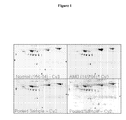
- FIG 1 The DIGE system produces data for three samples in one gel, using different wavelengths of light to fluoresce the control (Normal (166-04) - Cy3), AMD (AMD (145-04) - Cy5) and pooled samples (Pooled Sample - Cy2).
- FIG. 2 Merged 2D-DIGE overlay. Solid green or red spots represent proteins unique to control and AMD samples, respectively. Yellow spots represent proteins that are present in both samples, but not necessarily of equal proportion.
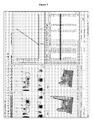
- FIG 3 Representation of the analysis output of DeCyder software applied to the proteins separated by DIGE in Figure 2 .
- the software matches spots across all gels, measures spot areas and volumes, and calculates fluorescent intensity group differences. This is most apparent in the graph view panel (above right), which depicts the mean intensities of the 2 groups for the selected gel spot.
- FIG 4 Image of the serum proteins from control individuals and AMD patients separated by DIGE in Figure 2 depicting the spots/proteins picked using an Ettan Spot Picker with >2-fold changes in fluorescent intensities. Each spot/protein that was picked for quantification was given a master spot number as indicated. The identity of the proteins in the spots, as determined by MALDI-ToF peptide mass fingerprinting analysis, is shown in Table 1.
- FIG. 5 Image of the serum proteins from control individuals and AMD patients depicting the spots/proteins picked using an Ettan Spot Picker. Each spot/protein that was picked for quantification was given a master spot number as indicated. The identity of proteins corresponding to each master spot number is shown in Table 2.
- FIG. 6 Image of the serum proteins from control individuals and AMD patients depicting the spots/proteins picked using an Ettan Spot Picker. Each spot/protein that was picked for quantification was given a master spot number as indicated. The identity of proteins corresponding to each master spot number is shown in Table 3.
- FIG. 7 Mean fluorescence intensities of plasma C3a in AMD patients and control individuals. AMD plasma showed significantly higher levels (p ⁇ 0.003) of C3a.
- the invention relates to biomarkers associated with age-related macular degeneration (AMD).
- the biomarkers are proteins, the levels of which differ between individuals with AMD and age-matched control individuals. Certain of these biomarkers are present at elevated levels in individuals with AMD compared to controls. Certain other of these biomarkers are present at reduced levels in individuals with AMD compared to controls.
- the invention provides methods for diagnosing AMD by determining the levels of one or more biomarkers in an individual and comparing the levels of the one or more biomarkers with reference levels characteristic of a control, healthy population.
- the invention provides methods for monitoring the progression of AND by determining the levels of one or more biomarkers in an individual with AMD being treated for the disease and comparing the levels of the one or more biomarkers to an earlier determined levels or reference levels of the biomarker.
- the invention provides methods for assessing the efficacy of treatment of AMD by determining the levels of one or more biomarkers in an individual with AMD being treated for the disease and comparing the levels of the one or more biomarkers to earlier determined levels or reference levels of the biomarker.
- biomarker refers to a protein found at different levels in a biological fluid sample from an individual with AMD compared to an age-matched control individual.
- complement protein and “complement related protein” refer to any of more than 35 plasma or cell membrane proteins that make up the complement system, a biochemical cascade of the immune system that helps clear the body of pathogens.
- Complement related proteins refer to proteins that are involved in the classical complement pathway, the alternative complement pathway or the mannose-binding lectin pathway, and include, for example and not for limitation, activators C6, C7, C9, MBL2, and PFC, complexes C1Q (C1QA, C1QB, C1QG), C3-convertase, C8 (C8A, C8B, C8G), and membrane attack complex (MAC), enzymes BF, C1R, C1S, C2, C3, C4, C5, DF, MASP1, and MASP2, inhibitors Clinh, C4BP (C4BPA, C4BPB), CLU, DAF, complement factor H (CFH or HF1), SERPING1, and VTN, and receptors C3AR1, C5R1,
- treating or “treatment” refers to the treatment of a disease or condition in a mammal, preferably a human, in which the disease or condition has been diagnosed as AMD involving impairment of visual acuity. Treating or treatment includes inhibiting the disease or condition ( i . e ., arresting progression), relieving or ameliorating the disease or condition ( i . e ., causing regression), or preventing progression of the disease or condition ( i . e ., delaying progression). Treating or treatment can involve a course of treatment in which an individual with AMD is administered an agent more than once periodically over time that is expected to be effective in inhibiting, relieving or ameliorating, or preventing progression of the disease.
- agent refers to a drug or drug candidate.
- An agent may be a naturally occurring molecule or may be a synthetic compound, including, for example and not for limitation, a small molecule ( e . g ., a molecule having a molecular wight ⁇ 1000), a peptide, a protein, an antibody, or a nucleic acid, used to treat an individual with AMD or other disease of the eye.
- the term "level” refers to the amount of a biomarker in a biological sample obtained from an individual.
- the amount of the biomarker can be determined by any method known in the art and will depend in part on the nature of the biomarker (e . g ., electrophoresis, including capillary electrophoresis, 1 - and 2-dimensional electrophoresis, 2-dimensional difference gel electrophoresis DIGE followed by MALDI-ToF mass spectroscopy, chromatographic methods such as high performance liquid chromatography (HPLC), than layer chromatography (TLC), hyperdiffusion chromatography, mass spectrometry (MS), various immunological methods such as fluid or gel precipitin reactions, single or double immunodiffusion, immunoelectrophoresis, radioimmunoassay (RIA), enzyme-linked immunosorbant assays (ELISA), immunofluorescent assays, Western blotting and others, and enzyme- or function-based activity assays).
- electrophoresis including capillary electrophore
- the amount of the biomarker need not be determined in absolute terms, but can be determined in relative terms.
- the amount of the biomarker may be expressed by its concentration in a biological sample, by the concentration of an antibody that binds to the biomarker, or by the functional activity ( i . e ., binding or enzymatic activity) of the biomarker.
- the level(s) of a biomarker(s) can be determined as described above for a single biomarker or for a "set" of biomarkers.
- a set of biomarkers refers to a group of more than one biomarkers that have been grouped together, for example and not for limitation, by a shared property such as their presence at elevated levels in AMD patients compared to controls, by their presence at reduced levels in AMD patients compared to controls, by their ratio or difference in levels between AMD patients and controls ( e . g ., difference between 1.25- and 2-fold, difference between 2- and 3-fold, difference between 3- and 5-fold, and difference of at least 5-fold), or by function.
- difference refers to a difference that is statistically different.
- a difference is statistically different, for example and not for limitation, if the expectation is ⁇ 0.05, the p value determined using the Student's t-test is ⁇ 0.05, or if the p value determined using the Student's t-test is ⁇ 0.1.
- the difference in level of a biomarker between an individual with AMD and a control individual or population can be, for example and not for limitation, at least 10% different (1.10 fold), at least 25% different (1.25-fold), at least 50% different (1.5-fold), at least 100% different (2-fold), at least 200% different (3-fold), at least 400% different (5-fold), at least 10-fold different, at least 20-fold different, at least 50-fold different, at least 100-fold different, at least 150-fold, or at least 200-fold different.
- progression refers to an increase in symptoms of AMD, including, for example and not for limitation, decreased visual acuity of an individual with AMD undergoing treatment for the disease.
- the term "reference" as it relates to a biomarker of the invention refers to an amount of a biomarker in a healthy individual or control population.
- the reference level or amount may be determined by obtaining a sample and detecting the biomarker in a healthy individual, or may be determined by taking the level or amount known or readily determine from a control population.
- control refers to an individual who has not been diagnosed as having AMD, or who has not displayed upon examination any symptoms characteristic of AMD, or a group of such individuals.
- Biological compounds present in the blood, plasma, serum or other body fluid, or in a tissue sample may be present at different levels in individuals with a disease or condition as compared to otherwise healthy individuals or a control population.
- the inventor has discovered that levels of particular serum proteins differ between individuals with AMD and age-matched control individuals.
- the invention relates to biological compounds, in particular, proteins, that are differentially present in serum from individuals with AMD as compared to age-matched control individuals (individuals without the disease). These proteins are therefore associated with AMD and termed AMD-associated proteins (biomarkers). These biomarkers are present at different levels in individuals with AMD as compared to individuals without the disease. These biomarkers are present in individuals with AMD at either elevated or reduced levels compared to healthy individuals. Exemplary biomarkers shown to be present in individuals with AMD at different levels compared to age-matched control individuals are provided in Tables 1 to 7 and in Examples 1 to 3.
- biomarkers were identified by first separating proteins in a serum sample by 2-dimensional difference gel electrophoresis (DIGE), followed by identifying the proteins by MALDI-ToF mass spectroscopy.
- DIGE 2-dimensional difference gel electrophoresis
- Figures 1 to 4 discussed in Example 1 show that DIGE, in combination with fluorescent dyes, was able to detect and to subsequently quantify the levels of thousands of spots ( i . e ., proteins).
- MALDI-ToF mass spectroscopy was then used to determine the identity of spots ( i . e. , proteins) that were differentially present between individuals with AMD and control individuals.
- Table 1 in Example 1 lists 36 proteins that were identified via MALDI-TOF peptide mass fingerprinting analysis and shown to be present at significantly different levels in serum samples from individuals with AMD compared to controls.
- biomarkers can be obtained in a biological sample, preferably a fluid sample, of the individual.
- the biomarkers are preferentially obtained in a sample of the individual's blood, serum, plasma, urine, CSF or saliva.
- the biological sample can also be a tissue sample, e . g ., a skin biopsy.
- a method for assessing the efficacy of treatment of AMD in an individual involves obtaining a sample of blood, serum or plasma from the individual and determining the levels of one or more biomarkers.
- the biomarkers of the invention were obtained from the serum of individuals with AMD and age-matched control individuals, as described in Materials and Methods in Example 1.
- AMD biomarkers can be detected in any of a number of methods including immunological assays (e . g ., ELISA), separation-based methods (e . g ., gel electrophoresis), protein-based methods (e . g ., mass spectroscopy), function-based methods ( e . g ., enzymatic or binding activity), or the like.
- immunological assays e . g ., ELISA
- separation-based methods e . g ., gel electrophoresis
- protein-based methods e . g ., mass spectroscopy
- function-based methods e . g ., enzymatic or binding activity
- the method for separating and determining the levels of the one or more biomarkers of the invention involve obtaining a biological sample from a individual, separating and determining the levels of the proteins by 2-dimensional difference gel electrophoresis (DIGE), and identifying the proteins by MALDI-ToF mass spectroscopy, as shown in Example 1.
- DIGE 2-dimensional difference gel electrophoresis
- MALDI-ToF mass spectroscopy as shown in Example 1.
- the proteins separated by DIGE can be identified by comparison to a known separation pattern of proteins using DIGE.
- normal levels can be determined for any particular population, subpopulation, or group of organisms according to standard methods well known to those of skill in the art.
- baseline (normal) levels of biomarkers are determined by quantifying the amount of biomarker in biological samples (e . g ., fluids, cells or tissues) obtained from normal (healthy) subjects.
- biological samples e . g ., fluids, cells or tissues
- application of standard statistical methods used in medicine permits determination of baseline levels of expression, as well as significant deviations from such baseline levels.
- diagnostic value refers to a value that is determined for the biomarker gene product detected in a sample which, when compared to a normal (or “baseline”) range of the biomarker gene product is indicative of the presence of a disease.
- Prognostic value refers to an amount of the biomarker that is consistent with a particular diagnosis and prognosis for the disease. The amount of the biomarker gene product detected in a sample is compared to the prognostic value for the cell such that the relative comparison of the values indicates the presence of disease or the likely outcome of the disease progression.
- data are collected to obtain a statistically significant correlation of biomarker levels with different AMD classes or grades.
- a predetermined range of biomarker levels is established from subjects having known clinical outcomes.
- a sufficient number of measurements is made to produce a statistically significant value (or range of values) to which a comparison will be made.
- the assay methods do not necessarily require measurement of absolute values of biomarker, unless it is so desired, because relative values are sufficient for many applications of the methods of the present invention.
- the present invention provides reagents such that virtually any known method for quantifying gene products can be used.
- the invention provides a method for diagnosing AMD in a individual, by determining the levels of one or more biomarkers in a sample from the individual, and comparing the levels of the one or more biomarkers in the sample from the individual to reference levels of the biomarkers characteristic of a control population, where a difference in the levels of the one or more biomarkers between the sample from the individual and the control population indicates that the individual has AMD.
- the methods include obtaining a sample from the individual and determining the levels of the one or more biomarkers.
- the levels of certain biomarkers are significantly different in individuals with AMD than in healthy individuals.
- the levels of certain biomarkers are higher in individuals with AMD than in healthy individuals.
- the levels of certain biomarkers are lower in individuals with AMD than in healthy individuals.
- the biomarkers can be obtained in a biological sample, and the levels of the one or more biomarkers can be determined, by any suitable method, as described above.
- diagnosis is not limited to a definitive or near definitive determination that an individual has a disease, but also includes determining that an individual has an increased likelihood of having or developing the disease, compared to healthy individuals or to the general population.
- a method for diagnosing AMD in a individual involves obtaining a sample from the individual and determining the levels of the one or more biomarkers by separating proteins by 2-dimensional difference gel electrophoresis (DIGE) or other methods.
- DIGE 2-dimensional difference gel electrophoresis
- a method for diagnosing AMD in a individual involves obtaining a sample of blood, serum, plasma or urine from the individual and determining the levels of the one or more biomarkers.
- the method for diagnosing AMD involves determining the levels of one biomarker.
- An example of a single biomarker that may be used is the complement activation byproduct C3a, as shown in Figure 7 in Example 3.
- the method for diagnosing AMD involves determining the levels of a set of biomarkers (i . e ., more than one biomarker).
- the biomarkers in a particular set may be related or grouped in a number of ways. By measuring multiple biomarkers, conclusions can be reached that are more precise and with higher confidence.
- the biomarkers in a set may be related by their function, for example, proteins associated with immune-mediated and inflammatory pathways, immunoglobulins, serum enzymes, and structural proteins. An example of such a set of biomarkers is provided in Table 7, below.
- the biomarkers in a set may be related by the magnitude of the difference in their levels between individuals with AMD and control individuals.
- the levels of biomarkers in controls compared to AMD patients differs by a factor of at least 1.5-fold, sometime at least 2-fold and sometimes at least 2.5-fold.
- Other sets include biomarkers having an at least 1.25-fold, at least 3 -fold, at least 4-fold, at least 5-fold, or at least 10-fold difference between AMD patients and control individuals.
- biomarkers in a set are related by the direction of change in AMD patients compared to controls, i . e ., at elevated (see Tables 4 and 5) or reduced (see Table 6) levels.
- the method for diagnosing AMD involves determining the levels of a set of biomarkers (i . e ., more than one biomarker) in which all of the biomarkers in the set are present at elevated levels in individuals with AMD as compared to control individuals.
- a set of biomarkers are provided in Tables 4 and 5 below.
- the set of biomarkers can comprise at least 2, at least 3, or at least 4of the biomarkers listed in Table 4.
- the set of biomarkers can comprise at least 2, or at least 3 of the biomarkers listed in Table 5.
- the set of biomarkers can comprise at least 2, at least 3, at least 4, or at least 5 of the biomarkers listed in Tables 4 and 5, taken together.
- the method for diagnosing AMD involves determining the levels of a set of biomarkers (i . e ., more than one biomarker) in which all of the biomarkers in the set are present at reduced levels in individuals with AMD as compared to control individuals.
- a set of biomarkers i . e ., more than one biomarker
- An example of such a set of biomarkers is provided in Table 6.
- the set of biomarkers can comprise at least 2, at least 3, at least 4, or at least 5 of the biomarkers listed in Table 6.
- the method for diagnosing AMD involves determining the levels of a set of biomarkers such as, without limitation, those sets described in Section VII below.
- BIOMARKERS AS SURROGATE ENDPOINTS FOR ASSESSING THE EFFICACY OF TREATMENT OF AMD
- the invention provides a method for assessing the efficacy of treatment of AMD in an individual, comprising determining the levels of one or more biomarkers in a sample from the individual before treatment or at a first time point after treatment, and determining the levels of the one or more biomarkers in the individual at a later time point or time points during treatment or after treatment, and comparing the levels of the one or more biomarkers at the two or more time points.
- a change from a level characteristic of AMD to a more normal level is an indication of efficacy of the treatment.
- the methods include obtaining a sample from the individual and determining the levels of the one or more biomarkers. The levels of certain biomarkers are higher in individuals with AMD than in healthy individuals.
- the levels of these biomarkers in an individual with AMD decrease upon treatment with an agent effective to treat AMD.
- the levels of certain other biomarkers are lower in individuals with AMD than in healthy individuals.
- the levels of these biomarkers in an individual with AMD increase upon treatment with an agent effective to treat AMD.
- the methods include obtaining a sample from the individual and determining the levels of the one or more biomarkers as above.
- a method for assessing the efficacy of treatment of AMD in an individual involves the individual being treated with an agent effective to treat the disease.
- a method for assessing the efficacy of treatment of AMD in an individual involves obtaining a sample from the individual and determining the levels of the one or more biomarkers by separating proteins by 2-dimensional difference gel electrophoresis (DIGE) or other methods.
- DIGE 2-dimensional difference gel electrophoresis
- a method for assessing the efficacy of treatment of AMD in an individual involves obtaining a sample of blood, serum, plasma or urine from the individual and determining the levels of the one or more biomarkers.
- the method for assessing the efficacy of treatment of AMD involves determining the levels of one biomarker.
- An example of a single biomarker that may be used is the complement activation by-product C3a, as shown in Figure 7 .
- the method for assessing the efficacy of treatment of AMD involves determining the levels of a set of biomarkers ( i . e ., more than one biomarker).
- Sets may be defined, for example, as described above.
- the invention provides a method for assessing the efficacy of treatment of AMD in an individual, comprising first determining the levels of one or more biomarkers in a sample from the individual at a first time point during the course of treatment with an agent, and determining the levels of the one or more biomarkers in a sample from the individual at multiple later time points during or after treatment with the agent, and second comparing the levels of the one or more biomarkers at the first time point and the later time point.
- the methods include obtaining a sample from the individual and determining the levels of the one or more biomarkers as above.
- the invention provides a method for assessing the efficacy of treatment of AMD in an individual, comprising comparing the levels of one or more biomarkers in a sample from the individual after administration of an agent to the levels of the one or more biomarkers in a sample from the same individual taken at an earlier time point and to reference levels of the one or more biomarkers characteristic of a control population, wherein a reduced difference between the levels of the one or more biomarkers in the individual after administration of the agent compared to the reference levels and the levels of the one or more biomarkers in the individual taken at an earlier time point compared to the reference levels indicates that the treatment is effective.
- Methods to determine the reference levels of the one or more biomarkers characteristic of a control population are well-known in the art. The methods can include obtaining a sample from the individual and determining the levels of the one or more biomarkers as above.
- the method for assessing the efficacy of treatment of AMD involves determining the levels of a set of biomarkers such as, without limitation, those sets described in Section VII below.
- the invention provides a method for monitoring the progression of AMD, comprising detecting one of more biomarkers in a sample from the individual.
- the individual is under treatment with an agent effective to treat or prevent AMD, and the levels of the one or more biomarkers determines the future treatment regime for the individual.
- the methods include obtaining a sample from the individual and determining the levels of the one or more biomarkers as above.
- a method for monitoring the progression of treatment of AMD in an individual involves obtaining a sample from the individual and determining the levels of the one or more biomarkers by separating proteins by 2-dimensional difference gel electrophoresis (DICE) or other methods.
- DICE 2-dimensional difference gel electrophoresis
- a method for monitoring the progression of treatment of AMD in an individual involves obtaining a sample of blood, serum, plasma or urine from the individual and determining the levels of the one or more biomarkers.
- the method for monitoring the progression of treatment of AMD involves determining the levels of one biomarker.
- An example of a single biomarker that may be used is the complement activation byproduct C3a, as shown in Figure 7 .
- the method for monitoring the progression of treatment of AMD involves determining the levels of a set of biomarkers ( i . e ., more than one biomarker).
- the biomarkers in a set may be related by their function, for example, proteins associated with immune-mediated and inflammatory pathways.
- An example of such a set of biomarkers is provided in Table 7.
- the method for monitoring the progression of treatment of AMD involves determining the levels of a set of biomarkers such as, without limitation, those sets described in Section VII below.
- the invention provides a method for diagnosing age-related macular degeneration (AMD) in an individual, by determining levels of at least one, preferably at least two, AMD-associated protein markers (biomarkers) in a sample from the individual, and comparing the levels of the biomarkers in the sample to reference levels of the biomarkers characteristic of a control population of individuals without AMD, where a difference in the levels of the biomarkers between the sample from the individual and the control population indicates that the individual has an increased likelihood of having AMD.
- at least one of the biomarkers is other than a complement related protein.
- at least one of the biomarkers is a complement related protein expressed at elevated levels in individuals with AMD.
- At least one of the biomarkers is a complement related protein expressed at decreased levels in individuals with AMD. In some embodiments, at least one of the biomarkers is an immune related protein expressed at elevated levels in individuals with AMD. In some embodiments, at least one of the biomarkers is an immune related protein expressed at decreased levels in individuals with AMD. In some embodiments, at least one of the biomarkers is a structural protein expressed at elevated levels in individuals with AMD. In some embodiments, at least one of the biomarkers is a structural protein expressed at decreased levels in individuals with AMD. In some embodiments, at least one of the biomarkers is an enzyme expressed at elevated levels in individuals with AMD. In some embodiments, at least one of the biomarkers is an enzyme expressed at decreased levels in individuals with AMD. In some embodiments, the biomarker is not a complement related protein. In some embodiments, the biomarker is not an immune related protein. In some embodiments, the biomarker is not a structural protein. In some embodiments, the biomarker is not an enzyme.
- the invention provides a method for assessing the efficacy of a treatment for age-related macular degeneration (AMD) in an individual, by (a) determining levels of at least one, preferably at least two, biomarkers in a sample from the individual either before treatment or at a first time point after treatment with an agent and (b) determining levels of the biomarkers in a sample from the individual at a later time point during treatment or after treatment with the agent, where a difference in the levels of the biomarkers measured in (b) compared to (a) in which the levels of the biomarkers moves closer to reference levels of the biomarkers characteristic of a control population of individuals without AMD indicates that the treatment is effective,
- at least one of the biomarkers is other than a complement related protein.
- At least one of the biomarkers is a complement related protein expressed at elevated levels in individuals with AMD. In some embodiments, at least one of the biomarkers is a complement related protein expressed at decreased levels in individuals with AMD. In some embodiments, at least one of the biomarkers is an immune related protein expressed at elevated levels in individuals with AMD. In some embodiments, at least one of the biomarker is an immune related protein expressed at decreased levels in individuals with AMD. In some embodiments, at least one of the biomarkers is a structural protein expressed at elevated levels in individuals with AMD. In some embodiments, at least one of the biomarkers is a structural protein expressed at decreased levels in individuals with AMD. In some embodiments, at least one of the biomarkers is an enzyme expressed at elevated levels in individuals with AMD.
- the biomarkers is an enzyme expressed at decreased levels in individuals with AMD.
- the biomarker is not a complement related protein.
- the biomarker is not an immune related protein.
- the biomarker is not a structural protein.
- the biomarker is not an enzyme.
- the method for diagnosing AMD or assessing the efficacy of a treatment for AMD involves determining the levels of biomarkers where at least one of the biomarkers is a complement related protein expressed at elevated levels in individuals with AMD (e . g ., as described in Tables 4 or 5).
- the method for diagnosing AMD or assessing the efficacy of a treatment for AMD involves determining the levels of biomarkers where at least one of the biomarkers is a complement related protein expressed at decreased levels in individuals with AMD (e . g ., as described in Table 6).
- the method for diagnosing AMD or assessing the efficacy of a treatment for AMD involves determining the levels of biomarkers where at least one of the biomarkers is an immune related protein expressed at elevated levels in individuals with AMD (e . g ., as described in Tables 4 or 5).
- the method for diagnosing AMD or assessing the efficacy of a treatment for AMD involves determining the levels of biomarkers where at least one of the biomarkers is an immune related protein expressed at decreased levels in individuals with AMD (e . g ., as described in Table 6).
- the method for diagnosing AMD or assessing the efficacy of a treatment for AMD involves determining the levels of biomarkers where at least one of the biomarkers is a structural protein expressed at elevated levels in individuals with AMD (e . g ., as described in Tables 4 or 5).
- the method for diagnosing AMD or assessing the efficacy of a treatment for AMD involves determining the levels of biomarkers where at least one of the biomarkers is a structural protein expressed at decreased levels in individuals with AMD (e . g ., as described in Table 6).
- the method for diagnosing AMD or assessing the efficacy of a treatment for AMD involves determining the levels of biomarkers where at least one of the biomarkers is an enzyme expressed at elevated levels in individuals with AMD (e . g ., as described in Tables 4 or 5).
- the method fordiagnosing AMD or assessing the efficacy of a treatment for AMD involves determining the levels of biomarkers where at least one of the biomarkers is an enzyme expressed at elevated levels in individuals with AMD (e . g ., as described in Table 6).
- the methods involve determining the levels of bioanarkers that are immune related proteins selected from the group consisting of: gi
- the methods involve determining the levels of biomarkers that are structural proteins selected from the group consisting of: gi
- the methods involve determining the levels of biomarkers that are enzymes selected from the group consisting of: gi
- biomarkers that are enzymes selected from the group consisting of: gi
- the methods involve determining the levels of biomarkers that are proteins selected from the group consisting of: gi
- biomarkers are proteins selected from the group consisting of: gi
- the methods involve determining the levels of biomarkers wherein at least one of the biomarkers is a complement related protein and at least one of the biomarkers is an immune related protein.
- the methods involve determining the levels of biomarkers wherein at least one of the biomarkers is a complement related protein and at least one of the biomarkers is a structural protein.
- the methods involve determining the levels of biomarkers wherein at least one of the biomarkers is a complement related protein and at least one of the biomarkers is an enzyme.
- the methods involve determining the levels of biomarkers wherein at least one of the biomarkers is an immune related protein and at least one of the biomarkers is a structural protein.
- the methods involve determining the levels of biomarkers wherein at least one of the biomarkers is an immune related protein and at least one of the biomarkers is an enzyme.
- the methods involve determining the levels of biomarkers wherein at least one of the biomarkers is a structural protein and at least one of the biomarkers is an enzyme.
- At least one, optionally both, of the at least two biomarkers for diagnosing AMD, assessing the efficacy of treatment of AMD, or monitoring the progression of AMD in an individual are not complement related proteins indicated in Tables 2, 4, 5 or 6.
- At least one, optionally both, of the at least two biomarkers for diagnosing AMD, assessing the efficacy of treatment of AMD, or monitoring the progression of AMD in an individual are not immune related proteins indicated in Tables 2, 4, 5 or 6.
- At least one, optionally both, of the at least two biomarkers for diagnosing AMD, assessing the efficacy of treatment of AMD, or monitoring the progression of AMD in an individual are not structural proteins indicated in Tables 2, 4, 5 or 6.
- At least one, optionally both, of the at least two biomarkers for diagnosing AMD, assessing the efficacy of treatment of AMD, or monitoring the progression of AMD in an individual are not enzymes indicated in Tables 2, 4, 5 or 6.
- At least one, optionally both, of the at least two biomarkers for diagnosing AMD, assessing the efficacy of treatment of AMD, or monitoring the progression of AMD are not proteins of unknown or undetermined function in Tables 2, 4, 5 or 6.
- the methods involve determining the levels of a set of biomarkers, wherein the set of biomarkers includes at least 2, at least 3, or at least 4 of the other biomarkers listed in Table 4.
- the methods involve determining the levels of a set of biomarkers, wherein the set of biomarkers includes at least 2, or at least 3 of the other biomarkers listed in Table 5.
- the methods involve determining the levels of a set of biomarkers, wherein the set of biomarkers includes at least 2, at least 3, at least 4, at least 5, at least 6, at least 7, at least 8, at least 9, at least 10, or at least 15 of the other biomarkers listed in Tables 4 and 6.
- the methods involve determining the levels of a set of biomarkers, wherein the set of biomarkers includes at least 2, at least 3, at least 4, at least 5, at least 6, at least 7, at least 8, at least 9, at least 10, or at least 15 of the other biomarkers listed in Tables 5 and 6.
- the methods involve determining the levels of a set of biomarkers, wherein the set of biomarkers includes at least 2, at least 3, at least 4, at least 5, at least 6, at least 7, at least 8, at least 9, at least 10, or at least 15 of the other biomarkers listed in Tables 4, 5 and 6.
- the methods involve determining the levels of a set of biomarkers, wherein the set of biomarkers includes at least 2, at least 3, at least 4, or at least 5 of the other biomarkers listed in Tables 4 and 5.
- the methods involve determining the levels of a set of biomarkers, wherein the set of biomarkers includes at least 2, at least 3, at least 4, at least 5, at least 6, at least 7, at least 8, at least 9, at least 10, or at least 15 of the other biomarkers listed in Table 6.
- the methods involve determining the levels of a set of biomarkers, wherein the set of biomarkers includes gi
- the set of biomarkers includes gi
- the methods involve determining the levels of a set of biomarkers, wherein the set of biomarkers includes gi
- the set of biomarkers includes gi
- the methods involve determining the levels of a set of biomarkers, wherein the set of biomarkers includes gi
- the set of biomarkers includes gi
- the methods involve determining the levels of a set of biomarkers, wherein the set of biomarkers includes gi
- the set of biomarkers includes gi
- the methods involve determining the levels of a set of biomarkers, wherein the set of biomarkers includes gi
- the set of biomarkers includes gi
- the methods involve determining the levels of a set of biomarkers, wherein the set of biomarkers includes gi
- the set of biomarkers includes gi
- the methods involve determining the levels of a set of biomarkers, wherein the set of biomarkers includes gi
- the set of biomarkers includes gi
- the methods involve determining the levels of a set of biomarkers, wherein the set of biomarkers includes gi
- the set of biomarkers includes gi
- the methods involve determining the levels of a set of biomarkers, wherein the set of biomarkers includes gi
- the set of biomarkers includes gi
- the methods involve determining the levels of a set of biomarkers, wherein the set of biomarkers includes gi
- the set of biomarkers includes gi
- the methods involve determining the levels of a set of biomarkers, wherein the set of biomarkers includes P01011 (Alpha-1 antichymotrypsin) and at least 1, at least 2, at least 3, at least 4, at least 5, at least 6, at least 7, at least 8, at least 9, at least 10, or at least 15 of the other biomarkers listed in Tables 4, 5 and 6.
- P01011 Alpha-1 antichymotrypsin
- the methods involve determining the levels of a set of biomarkers, wherein the set of biomarkers includes P01011 (Alpha-1 antichymotrypsin) and at least 1, at least 2, at least 3, or at least 4 of the other biomarkers listed in Tables 4 and 5.
- P01011 Alpha-1 antichymotrypsin
- the methods involve determining the levels of a set of biomarkers, wherein the set of biomarkers includes NP_000925.1 (Alpha-2 antiplasmin) and at least 1, at least 2, at least 3, at least 4, at least 5, at least 6, at least 7, at least 8, at least 9, at least 10, or at least 15 of the other biomarkers listed in Tables 4, 5 and 6.
- NP_000925.1 Alpha-2 antiplasmin
- the methods involve determining the levels of a set of biomarkers, wherein the set of biomarkers includes NP_000925.1 (Alpha-2 antiplasmin) and at least 1, at least 2, at least 3, or at least 4 of the other biomarkers listed in Tables 4 and 5.
- NP_000925.1 Alpha-2 antiplasmin
- the methods involve determining the levels of a set of biomarkers, wherein the set of biomarkers includes gi
- the set of biomarkers includes gi
- the methods involve determining the levels of a set of biomarkers, wherein the set of biomarkers includes gi
- the set of biomarkers includes gi
- the methods involve determining the levels of a set of biomarkers, wherein the set of biomarkers includes gi
- the set of biomarkers includes gi
- the methods involve determining the levels of a set of biomarkers, wherein the set of biomarkers includes gi
- the set of biomarkers includes gi
- the methods involve determining the levels of a set of biomarkers, wherein the set of biomarkers includes gi
- the set of biomarkers includes gi
- the methods involve determining the levels of a set of biomarkers, wherein the set of biomarkers includes gi
- the set of biomarkers includes gi
- the methods involve determining the levels of a set of biomarkers, wherein the set of biomarkers includes gi
- the set of biomarkers includes gi
- the methods involve determining the levels of a set of biomarkers, wherein the set of biomarkers includes gi
- the set of biomarkers includes gi
- the methods involve determining the levels of a set of biomarkers, wherein the set of biomarkers includes gi
- AKAP 250 A-kinase anchor protein 12
- the methods involve determining the levels of a set of biomarkers, wherein the set of biomarkers includes gi
- AK12_ HUMAN A-kinase anchor protein 12 (AKAP 250) (Myasthenia gravis autoantigen gravin)
- AKAP 250 Myasthenia gravis autoantigen gravin
- the methods involve determining the levels of a set of biomarkers, wherein the set of biomarkers includes gi
- the set of biomarkers includes gi
- the methods involve determining the levels of a set of biomarkers, wherein the set of biomarkers includes gi
- the set of biomarkers includes gi
- the methods involve determining the levels of a set of biomarkers, wherein the set of biomarkers includes gi
- the set of biomarkers includes gi
- the methods involve determining the levels of a set of biomarkers, wherein the set of biomarkers includes gi
- the set of biomarkers includes gi
- the methods involve determining the levels of a set of biomarkers, wherein the set of biomarkers includes gi
- the set of biomarkers includes gi
- the methods involve determining the levels of a set of biomarkers, wherein the set of biomarkers includes gi
- the set of biomarkers includes gi
- the methods involve determining the levels of a set of biomarkers, wherein the set of biomarkers includes gi
- the set of biomarkers includes gi
- the methods involve determining the levels of a set of biomarkers, wherein the set of biomarkers includes gi
- the set of biomarkers includes gi
- the methods involve determining the levels of a set of biomarkers, wherein the set of biomarkers includes gi
- the set of biomarkers includes gi
- the methods involve determining the levels of a set of biomarkers, wherein the set of biomarkers includes gi
- the set of biomarkers includes gi
- the methods involve determining the levels of a set of biomarkers, wherein the set of biomarkers includes gi
- the set of biomarkers includes gi
- the methods involve determining the levels of a set of biomarkers, wherein the set of biomarkers includes gi
- the set of biomarkers includes gi
- the methods involve determining the levels of a set of biomarkers, wherein the set of biomarkers includes gi
- the set of biomarkers includes gi
- the methods involve determining the levels of a set of biomarkers, wherein the set of biomarkers includes gi
- the set of biomarkers includes gi
- the methods involve determining the levels of a set of biomarkers, wherein the set of biomarkers includes gi
- GDE_RABIT Glycogen debranching enzyme
- the methods involve determining the levels of a set of biomarkers, wherein the set of biomarkers includes gi
- GDE_RABIT Glycogen debranching enzyme
- the methods involve determining the levels of a set of biomarkers, wherein the set of biomarkers includes gi
- the set of biomarkers includes gi
- the methods involve determining the levels of a set of biomarkers, wherein the set of biomarkers includes gi
- the set of biomarkers includes gi
- the methods involve determining the levels of a set of biomarkers, wherein the set of biomarkers includes gi
- A-T Ataxia telangectasia mutated
- the methods involve determining the levels of a set of biomarkers, wherein the set of biomarkers includes gi
- A-T Ataxia telangectasia mutated
- the methods involve determining the levels of a set of biomarkers, wherein the set of biomarkers includes gi
- the set of biomarkers includes gi
- the methods involve determining the levels of a set of biomarkers, wherein the set of biomarkers includes gi
- the set of biomarkers includes gi
- the methods involve determining the levels of a set of biomarkers, wherein the set of biomarkers includes gi
- the methods involve determining the levels of a set of biomarkers, wherein the set of biomarkers includes gi
- the set of biomarkers includes gi
- the methods involve determining the levels of a set of biomarkers, wherein the set of biomarkers includes gi
- the set of biomarkers includes gi
- the methods involve determining the levels of a set of biomarkers, wherein the set of biomarkers includes gi
- the set of biomarkers includes gi
- the methods involve determining the levels of a set of biomarkers, wherein the set of biomarkers includes gi
- the set of biomarkers includes gi
- the methods involve determining the levels of a set of biomarkers, wherein the set of biomarkers includes gi
- the set of biomarkers includes gi
- the methods involve determining the levels of a set of biomarkers, wherein the set of biomarkers includes gi
- the set of biomarkers includes gi
- the methods involve determining the levels of a set of biomarkers, wherein the set of biomarkers includes gi
- the set of biomarkers includes gi
- the methods involve determining the levels of a set of biomarkers, wherein the set of biomarkers includes gi
- the set of biomarkers includes gi
- the methods involve determining the levels of a set of biomarkers, wherein the set of biomarkers includes gi
- the set of biomarkers includes gi
- the methods involve determining the levels of a set of biomarkers, wherein the set of biomarkers includes P06727 (Apolipoprotein A-IV) and at least 1, at least 2, at least 3, at least 4, at least 5, at least 6, at least 7, at least 8, at least 9, at least 10, or at least 15 of the other biomarkers listed in Tables 4, 5 and 6.
- P06727 Polipoprotein A-IV
- the methods involve determining the levels of a set of biomarkers, wherein the set of biomarkers includes P06727 (Apolipoprotein A-IV) and at least 1, at least 2, at least 3, at least 4, at least 5, at least 6, at least 7, at least 8, at least 9, at least 10, or at least 15 of the other biomarkers listed in Table 6.
- P06727 Polipoprotein A-IV
- the methods involve determining the levels of a set of biomarkers, wherein the set of biomarkers includes gi
- BMS1-like similar to KIAA0187; ribosomal
- the methods involve determining the levels of a set of biomarkers, wherein the set of biomarkers includes gi
- BMS1-like similar to KIAA0187; ribosomal
- the methods involve determining the levels of a set of biomarkers, wherein the set of biomarkers includes gi
- the set of biomarkers includes gi
- the methods involve determining the levels of a set of biomarkers, wherein the set of biomarkers includes gi
- the set of biomarkers includes gi
- the methods involve determining the levels of a set of biomarkers, wherein the set of biomarkers includes gi
- the set of biomarkers includes gi
- the methods involve determining the levels of a set of biomarkers, wherein the set of biomarkers includes gi
- the set of biomarkers includes gi
- the methods involve determining the levels of a set of biomarkers, wherein the set of biomarkers includes gi
- the set of biomarkers includes gi
- the methods involve determining the levels of a set of biomarkers, wherein the set of biomarkers includes gi
- the set of biomarkers includes gi
- the methods involve determining the levels of a set of biomarkers, wherein the set of biomarkers includes P25311 (Zinc alpha-2 glycoprotein) and at least 1, at least 2, at least 3, at least 4, at least 5, at least 6, at least 7, at least 8, at least 9, at least 10, or at least 15 of the other biomarkers listed in Tables 4, 5 and 6.
- P25311 Zinc alpha-2 glycoprotein
- the methods involve determining the levels of a set of biomarkers, wherein the set of biomarkers includes P25311 (Zinc alpha-2 glycoprotein) and at least 1, at least 2, at least 3, at least 4, at least 5, at least 6, at least 7, at least 8, at least 9, at least 10, or at least 15 of the other biomarkers listed in Table 6.
- P25311 Zinc alpha-2 glycoprotein
- the methods involve determining the levels of a set of biomarkers, wherein the set of biomarkers includes gi
- the set of biomarkers includes gi
- the methods involve determining the levels of a set of biomarkers, wherein the set of biomarkers includes gi
- the set of biomarkers includes gi
- the methods involve determining the levels of a set of biomarkers, wherein the set of biomarkers includes gi
- the set of biomarkers includes gi
- the methods involve determining the levels of a set of biomarkers, wherein the set of biomarkers includes gi
- the set of biomarkers includes gi
- the methods involve determining the levels of a set of biomarkers, wherein the set of biomarkers includes gi
- the set of biomarkers includes gi
- the methods involve determining the levels of a set of biomarkers, wherein the set of biomarkers includes gi
- the set of biomarkers includes gi
- the methods involve determining the levels of a set of biomarkers, wherein the set of biomarkers includes gi
- the set of biomarkers includes gi
- the methods involve determining the levels of a set of biomarkers, wherein the set of biomarkers includes gi
- the set of biomarkers includes gi
- the methods involve determining the levels of a set of biomarkers, wherein the set of biomarkers includes gi
- the set of biomarkers includes gi
- the methods involve determining the levels of a set of biomarkers, wherein the set of biomarkers includes gi
- the set of biomarkers includes gi
- the methods involve determining the levels of a set of biomarkers, wherein the set of biomarkers includes gi
- the set of biomarkers includes gi
- the methods involve determining the levels of a set of biomarkers, wherein the set of biomarkers includes gi
- the set of biomarkers includes gi
- the methods involve determining the levels of a set of biomarkers, wherein the set of biomarkers includes gi
- the set of biomarkers includes gi
- the methods involve determining the levels of a set of biomarkers, wherein the set of biomarkers includes gi
- the set of biomarkers includes gi
- the methods involve determining the levels of a set of biomarkers, wherein the set of biomarkers includes gi
- the set of biomarkers includes gi
- the methods involve determining the levels of a set of biomarkers, wherein the set of biomarkers includes gi
- the set of biomarkers includes gi
- the methods involve determining the levels of a set of biomarkers, wherein the set of biomarkers includes gi
- the set of biomarkers includes gi
- the methods involve determining the levels of a set of biomarkers, wherein the set of biomarkers includes gi
- the set of biomarkers includes gi
- the methods involve determining the levels of a set of biomarkers, wherein the set of biomarkers includes gi
- the set of biomarkers includes gi
- the methods involve determining the levels of a set of biomarkers, wherein the set of biomarkers includes gi
- the set of biomarkers includes gi
- the methods involve determining the levels of a set of biomarkers, wherein the set of biomarkers includes gi
- the set of biomarkers includes gi
- the methods involve determining the levels of a set of biomarkers, wherein the set of biomarkers includes gi
- the set of biomarkers includes gi
- the methods involve determining the levels of a set of biomarkers, wherein the set of biomarkers includes gi
- the set of biomarkers includes gi
- the methods involve determining the levels of a set of biomarkers, wherein the set of biomarkers includes gi
- the set of biomarkers includes gi
- the methods involve determining the levels of a set of biomarkers, wherein the set of biomarkers includes gi
- the set of biomarkers includes gi
- the methods involve determining the levels of a set of biomarkers, wherein the set of biomarkers includes gi
- the set of biomarkers includes gi
- the methods involve determining the levels of a set of biomarkers, wherein the set of biomarkers includes gi
- the set of biomarkers includes gi
- the methods involve determining the levels of a set of biomarkers, wherein the set of biomarkers includes gi
- the set of biomarkers includes gi
- the methods involve determining the levels of a set of biomarkers, wherein the set of biomarkers includes gi
- the set of biomarkers includes gi
- the methods involve determining the levels of a set of biomarkers, wherein the set of biomarkers includes gi
- the set of biomarkers includes gi
- the methods involve determining the levels of a set of biomarkers, wherein the set of biomarkers includes gi
- the set of biomarkers includes gi
- the methods involve determining the levels of a set of biomarkers, wherein the set of biomarkers includes gi
- the set of biomarkers includes gi
- the methods involve determining the levels of a set of biomarkers, wherein the set of biomarkers includes gi
- the set of biomarkers includes gi
- the methods involve determining the levels of a set of biomarkers, wherein the set of biomarkers includes gi
- the set of biomarkers includes gi
- the methods involve determining the levels of a set of biomarkers, wherein the set of biomarkers includes gi
- the set of biomarkers includes gi
- the methods involve determining the levels of a set of biomarkers, wherein the set of biomarkers includes gi
- the set of biomarkers includes gi
- the methods involve determining the levels of a set of biomarkers, wherein the set of biomarkers includes gi
- the set of biomarkers includes gi
- the methods involve determining the levels of a set of biomarkers, wherein the set of biomarkers includes gi
- the methods involve determining the levels of a set of biomarkers, wherein the set of biomarkers includes gi
- the set of biomarkers includes gi
- the methods involve determining the levels of a set of biomarkers, wherein the set of biomarkers includes gi
- the set of biomarkers includes gi
- the methods involve determining the levels of a set of biomarker, wherein the set of biomarkers includes gi
- the set of biomarkers includes gi
- the methods involve determining the levels of a set of biomarkers, wherein the set of biomarkers includes gi
- the set of biomarkers includes gi
- the methods involve determining the levels of a set of biomarkers, wherein the set of biomarkers includes gi
- the set of biomarkers includes gi
- the methods involve determining the levels of a set of biomarkers, wherein the set of biomarkers includes gi
- the set of biomarkers includes gi
- the methods involve determining the levels of a set of biomarkers, wherein the set of biomarkers includes gi
- the set of biomarkers includes gi
- the methods involve determining the levels of a set of biomarkers, wherein the set of biomarkers includes gi
- the set of biomarkers includes gi
- the methods involve determining the levels of a set of biomarkers, wherein the set of biomarkers includes gi
- the set of biomarkers includes gi
- the methods involve determining the levels of a set of biomarkers, wherein the set of biomarkers includes gi
- the set of biomarkers includes gi
- the methods involve determining the levels of a set of biomarkers, wherein the set of biomarkers includes gi
- the set of biomarkers includes gi
- the methods involve determining the levels of a set of biomarkers, wherein the set of biomarkers includes gi
- the set of biomarkers includes gi
- the methods involve determining the levels of a set of biomarkers, wherein the set of biomarkers includes gi
- the set of biomarkers includes gi
- the methods involve determining the levels of a set of biomarkers, wherein the set of biomarkers includes gi
- the set of biomarkers includes gi
- the methods involve determining the levels of a set of biomarkers, wherein the set of biomarkers includes gi
- the set of biomarkers includes gi
- the methods involve determining the levels of a set of biomarkers, wherein the set of biomarkers includes gi
- the set of biomarkers includes gi
- the methods involve determining the levels of a set of biomarkers, wherein the set of biomarkers includes gi
- the set of biomarkers includes gi
- the methods involve determining the levels of a set of biomarkers, wherein the set of biomarkers includes gi
- the set of biomarkers includes gi
- the methods involve determining the levels of a set of biomarkers, wherein the set of biomarkers includes gi
- the set of biomarkers includes gi
- the methods involve determining the levels of a set of biomarkers, wherein the set of biomarkers includes gi
- the set of biomarkers includes gi
- the methods involve determining the levels of a set of biomarkers, wherein the set of biomarkers includes gi
- the set of biomarkers includes gi
- the methods involve determining the levels of a set of biomarkers, wherein the set of biomarkers includes gi
- the set of biomarkers includes gi
- the methods involve determining the levels of a set of biomarkers, wherein the set of biomarkers includes gi
- the set of biomarkers includes gi
- the methods involve determining the levels of a set of biomarkers, wherein the set of biomarkers includes gi
- the set of biomarkers includes gi
- the methods involve determining the levels of a set of biomarkers, wherein the set of biomarkers includes gi
- the set of biomarkers includes gi
- the methods involve determining the levels of a set of biomarkers, wherein the set of biomarkers includes gi
- the set of biomarkers includes gi
- the methods involve determining the levels of a set of biomarkers, wherein the set of biomarkers includes gi
- the set of biomarkers includes gi
- the methods involve determining the levels of a set of biomarkers, wherein the set of biomarkers includes gi
- the set of biomarkers includes gi
- the methods involve determining the levels of a set of biomarkers, wherein the set of biomarkers includes gi
- the set of biomarkers includes gi
- the methods involve determining the levels of a set of biomarkers, wherein the set of biomarkers includes gi
- the set of biomarkers includes gi
- the methods involve determining the levels of a set of biomarkers, wherein the set of biomarkers includes gi
- the set of biomarkers includes gi
- the methods involve determining the levels of a set of biomarkers, wherein the set of biomarkers includes gi
- the set of biomarkers includes gi
- the methods involve determining the levels of a set of biomarkers, wherein the set of biomarkers includes gi
- the set of biomarkers includes gi
- the methods involve determining the levels of a set of biomarkers, wherein the set of biomarkers includes gi
- the set of biomarkers includes gi
- the methods involve determining the levels of a set of biomarkers, wherein the set of biomarkers includes gi
- the set of biomarkers includes gi
- the methods involve determining the levels of a set of biomarkers, wherein the set of biomarkers includes gi
- the set of biomarkers includes gi
- AAR89906.1 - complement component 3 1 6.
- CAH18188.1 - hypothetical protein 5 7.
- CAH18343.1 - hypothetical protein 5 8.
- CAH18343.1 - hypothetical protein 5 9. BAC19850.2 - r subcomponent of complement component 1 1
- CAB53743.1 - dJ20N2.2 novel protein similar to tubulin, beta polypeptide 4, member Q (TUBB4Q)) 3 11.
- AAR03501.1 angiotensinogen (serine (or cysteine) proteinase inhibitor, clade A (alpha-1 antiproteinase, antitrypsin), member 8) 3 20.
- NBHUA2 leucine-rich alpha-2-glycoprotein 3 24.
- NP_005955.1 myosin, heavy polypeptide 10, non-muscle; myosin heavy chain, nonmuscle type B; cellular myosin heavy chain, type B 3 33.
- AAH20197.1 1-amrnocyclopropane-1-carboxylate synthase 4 35.
- AAK84185.1 anti-thrombospondin immunoglobulin heavy chain variable region 2 36.
- pombe cell devision cycle 21 DNA replication licensing factor MCM4; minichromosome maintenance deficient (S. cerevislae) 4 [Homo sapiens] gi
- neoformans B-3501A 9.5 5.2 159.99 3 0.446 gi
- C3a a potent proinflammatory by-product of complement activation
Landscapes
- Life Sciences & Earth Sciences (AREA)
- Chemical & Material Sciences (AREA)
- Health & Medical Sciences (AREA)
- Engineering & Computer Science (AREA)
- Proteomics, Peptides & Aminoacids (AREA)
- Organic Chemistry (AREA)
- Analytical Chemistry (AREA)
- Molecular Biology (AREA)
- Immunology (AREA)
- Genetics & Genomics (AREA)
- Zoology (AREA)
- Wood Science & Technology (AREA)
- Physics & Mathematics (AREA)
- General Health & Medical Sciences (AREA)
- Biotechnology (AREA)
- Microbiology (AREA)
- Pathology (AREA)
- Biochemistry (AREA)
- Biomedical Technology (AREA)
- Hematology (AREA)
- Urology & Nephrology (AREA)
- General Engineering & Computer Science (AREA)
- Bioinformatics & Cheminformatics (AREA)
- Biophysics (AREA)
- Cell Biology (AREA)
- Food Science & Technology (AREA)
- Medicinal Chemistry (AREA)
- General Physics & Mathematics (AREA)
- Investigating Or Analysing Biological Materials (AREA)
Abstract
Description
- Pathological changes associated with many disease states are reflected in the protein profile of serum and plasma (because blood comes into contact with most of the tissues in the human body) as well as other body fluids. Monitoring the levels (and changes in levels) of such proteins, or "biomarkers" is useful for diagnosis and prognosis of diseases. In addition, changes in levels of biomarker can serve as surrogate endpoints for assessing the effects and efficacy of therapeutic interventions.
- Age-related macular degeneration (AMD) is a degenerative condition of a specialized region of the central retina called the macula. AMD is the leading cause of blindness in adults over 60, affecting more than 50 million people worldwide (Klein et al., Am J Ophthalmol. 137:486, 2004). Although some therapeutic options are available for patients with AMD, and others are being developed, there is a great need for additional treatments. Similarly, there is a great need for new methods for diagnosis of AMD, and for prognosis of AMD patients. The present invention addresses these and other needs.
- The invention relates to proteins associated with age-related macular degeneration (AMD). These AMD-associated proteins (biomarkers) are differentially present in the serum or blood fraction of individuals with AMD at elevated or reduced levels compared to healthy individuals. Exemplary AMD-associated proteins present at elevated levels in individuals with AMD include gi|178779|gb|AAA51748.1 (Apolipoprotein A-IV), gi|3337390|gb|AAC27432.1 (Haptoglobin), gil|82440|gb|AAB59530.1 (Fibrinogen gamma prime chain), and gi|223002|prf∥0401173A (Fibrin beta). Other exemplary AMD-associated proteins present at elevated levels in individuals with AND include gi|4558178|pdb|1QAB|D (Retinol Binding Protein), P01011 (Alpha-1 antichymotrypsin), and NP_000925.1 (Alpha-2 antiplasmin). Exemplary AMD-associated proteins present at decreased levels in individuals with AMD include gi|7023232|dbj|BAA91891.1 (Unnamed protein product), gi|28373620|pdb|1MA9|A (Vitamin D binding protein), gi|5174525|ref|NP_005900.1 (Microtubule-associated protein 1B isoform 1), gi|8928566|sp|Q02952|AK12_ HUMAN (A-kinase anchor protein 12 (AKAP 250) (Myasthenia gravis autoantigen gravin)), gi|15099973|gb|AAK84185.1 (Ig heavy chain variable region (anti-thrombospondin)), gi|41406064|ref|NP_005955.1 (Myosin, heavy polypeptide 10, non-muscle), gi|17318569|ref|NP_906112.2 (Keratin 1), gi|86854|gb|AAA36153.1 (Keratin type II subunit protein), gi|1346640|sp|P35580|MYHA_HUMAN (Myosin heavy chain, nonmuscle type B), gi|22761659|db|BAC11646.1 (Unnamed protein product), gi|544379|sp|P35574|GDE_RABIT (Glycogen debranching enzyme (Glycogen debrancher)), gi|4838009|gb|AAD30796.1 (Ig heavy chain variable region), gi|1154664|emb|CAA62603.1 (Ataxia telangectasia mutated (A-T)), gi|34365215|emb|CAE45949.1 (TNN13-interacting kinase (FPGT-encoded)), gi|339685|gb|AAA61181.1 (Transthyretin), gi|31615331|pdb|1HK3|A (Serum Albumin (mutant R218p)), gi|18044197|gb|AAH20197.1 (1-aminocyclopropanc-1-carboxylate synthase), gi|546095|gb|AAB30327.1 (Ig heavy chain variable region (anti-bistone H1 WRI-170 antibody)), gi|51476396|emb|CAH18188.1 (Alpha-2 macroglobulin), P06727 (Apolipoprotein A-IV), gi|51467959|ref|XP_497224.1 (BMS1-like (similar to KIAA0187; ribosomal)), gi|23273927|gb|AAH35014.1 (NudC domain containing 3 (KIAA1068 protein)), gi|34526199|dbj|BAC85198.1 (Unnamed protein product), P25311 (Zinc alpha-2 glycoprotein), gi|28466999|ref|NP_787057.1 (ARG99 protein), gi|404108|dbj|BAA03864.1 (Glutathione peroxidase), gi|50255295|gb|EAL18030.1 (Hypothetical protein CNBK0510), gi|7428606|pir|MHHUM (Ig mu chain C region, membrane-bound splice form), gi|38649048|gb|AAH62986.1 (ZFR protein), gi|37790798|gb|AAR03501.1 (Angiotensinogen, member 8), gi|24308400|ref|NT_612366.1 (Chromosome 10 open reading frame 42), gi|14625439|dbj|BAB61902.1 (KIAA1774 protein), gi|47124562|gb|AAH70299.1 (Haptoglobin), gi|539627|pir∥A46546 (Leukocyte common antigen long splice form), gi|4557225|ref|NP_000005.1 (Alpha-2 macroglobulin), gi|14600217|gb|AAK71298.1 (TCR beta chain Vbeta13S3), gi|114006|sp|P06727|APA4_HUMAN (Apolipoprotein A-IV), gi|40788364|dbj|BAA34505.2 (KIAA0785 protein), gi|7023207|dbj|BAA91880.1 (BTB and kelch domain containing 4 protein), gi|862457|dbj|BAA03941.1 (Enoyl-CoA hydratase/3-hydroxyacyl-CoA dehydrogenase alpha-subunit of trifunctional protein), gi|7022921|dbj|BAA91769.1 (LEPRFL1 protein), gi|10437767|dbj|BAB15104.1 (Zinc finger protein 2), gi|21071030|ref|NP_570602.2 (Alpha 1B glycoprotein), gi|28207863|emb|CAD62585.1 (Alpha-1 antitrypsin), gi|51471047|ref|XP_370690.3 (AT rich interactive domain 2 (ARID, RFX-like)), gi|6470150|gb|AAF13605.1 (BiP protein), gi|11138513|gb|AAG31421.1 (FcRn alpha chain), gi|10120958|pdb|1EXU|A (MHC-related Fc Receptor), gi|37747855|gb|AAH59367.1 (Transferrin), gi|339486|gb|AAA61148.1 (Transferrin), gi|5817245|emb|CAB53743.1 (dJ20N2.2 (novel protein similar to tubulin,
beta polypeptide 4, member Q (TUBB4Q)), gi|51476755|emb|CAH18343.1 (Hypothetical protein), gi|50363219|ref|NP_001002236.1 (Alpha-1 antitrypsin, member 1), gi|28566306|gb|AA043053.1 (Heat shock regulate-1), gi|7428607|pir∥MHHU (Ig mu chain C region, secreted splice form), gi|1703025|sp|P01009 (Alpha-1 antitrypsin), gi|72059|pir∥NBHUA2 (Leucme-rich alpha-2-glycoprotein), gi|33469917|ref|NP_877423.1 (Minichromosome maintenance protein 4), gi|6650772|gb|AAF22007.1 (Serotransferrin), gi|553788|gb|AAA61141.1 (Transferrin), and gi|47077177|dbj|BAD18510.1 (ZNF438 variant 3). Other exemplary AMD-associated proteins differentially present in individuals with AMD include complement related proteins, including gi|40786791|gb|AAR89906.1 (Complement component 3), gi|22218654|pdb|1GPZ|B (Complement component 1, r subcomponent), and gi|39573703|dbj|BAC19850.2 (complement component 1, r subcomponent). - The invention provides methods for diagnosing AMD, assessing the efficacy of treatment of AMD, and monitoring the progression of AMD by determining the levels of one or more biomarkers in an individual and comparing the levels of the one or more biomarkers to an earlier determined levels or reference levels of the one or more biomarkers. Determination that a biomarker is at a level characteristic of a disease state in a subject suggests that the tested subject has or may be developing the disease, while determination that a biomarker is at a level characteristic of a non-disease state in a subject suggests that the tested subject does not have or is not developing the disease. Likewise, a change of biomarker levels over time to a level closer to that of a disease state suggests progression of the disease, while change of biomarker levels over time to a level closer to that of a non-disease state suggests regression of the disease (e.g., therapeutic efficacy).
- In one embodiment, the methods for diagnosing AMD, assessing the efficacy of treatment of AMD, or monitoring the progression of AMD involves determining the levels of at least two biomarkers in an individual and comparing the levels of the at least two biomarkers to earlier determined levels and/or to reference levels of the at least two biomarkers.
- In one embodiment, at least one of the at least two biomarkers for diagnosing AMD, assessing the efficacy of treatment of AMD, or monitoring the progression of AMD in an individual are complement related proteins indicated in Tables 2, 4, 5 or 6.
- In one embodiment, at least one of the at least two biomarker for diagnosing AMD, assessing the efficacy of treatment of AMD, or monitoring the progression of AMD in an individual are immune related proteins indicated in Tables 2, 4, 5 or 6.
- In one embodiment, at least one of the at least two biomarkers for diagnosing AMD, assessing the efficacy of treatment of AMD, or monitoring the progression of AMD in an individual are structural proteins indicated in Tables 2, 4, 5 or 6.
- In one embodiment, at least one of the at least two biomarkers for diagnosing AMD, assessing the efficacy of treatment of AMD, or monitoring the progression of AMD in an individual are enzymes indicated in Tables 2, 4, 5 or 6.
- In one embodiment, at least one of the at least two biomarkers for diagnosing AMD, assessing the efficacy of treatment of AMD, or monitoring the progression of AMD are proteins of unknown or undetermined function in Tables 2, 4, 5 or 6.
- In a first aspect, the invention provides a method for diagnosing AMD in an individual, by determining the levels of one or more biomarkers in a sample from the individual, and comparing the levels of the one or more biomarkers in the sample from the individual to reference levels of the one or more biomarkers characteristic of a control population, where a difference in the levels of the one or more biomarkers between the sample from the individual and the control population indicates that the individual is developing or has AMD. The methods may include the steps of obtaining a sample from the individual and determining the levels of the one or more biomarkers. The levels of certain biomarkers are significantly different in individuals with AMD than in healthy individuals. The levels of certain biomarkers are higher in individuals with AMD than in healthy individuals. The levels of certain biomarkers are lower in individuals with AMD than in healthy individuals.
- The levels of the one or more biomarkers can be determined by any suitable method, such as conventional techniques known in the art, including, for example and not for limitation, separation-based methods (e.g., gel electrophoresis), protein-based methods (e.g., mass spectroscopy), immunoassay methods (e.g., antibody-based detection), and function-based methods (e.g., enzymatic or binding activity).
- In one embodiment, a method for diagnosing AMD in an individual involves obtaining a sample from the individual and determining the levels of the one or more biomarkers by separating proteins by 2-dimensional difference gel electrophoresis (DIGE).
- The one or more biomarkers can be obtained in a biological sample, preferably a fluid sample, of the individual. The biological sample can also be a tissue sample, e.g., a skin biopsy. The precise sample to be taken from an individual may vary, but the sampling is typically minimally invasive and is easily performed by conventional techniques known in the art. The one or more biomarkers are preferentially obtained in a sample of the individual's blood, serum, plasma, urine, cerebral spinal fluid (CSF), or saliva.
- In another aspect, the invention provides a method for assessing the efficacy of treatment of AMD in an individual, by determining the levels of one or more biomarkers in a sample from the individual before treatment or at a first time point after treatment, determining the levels of the one or more biomarkers in the individual at a later time point during treatment or after treatment, and comparing the levels of the one or more biomarkers at the two time points, where a difference in the levels of the one or more biomarkers between the two determinations in which the levels of the one or more biomarkers move closer to reference levels of the one or more biomarkers characteristic of a control population indicates that the treatment is effective. The methods may include the steps of obtaining a sample from the individual and determining the levels of the one or more biomarkers as above. The levels of certain biomarkers are higher in individuals with AMD than in healthy individuals. The levels of these biomarkers in individuals with AMD decreases (i.e., moves to a more normal level) upon treatment with an agent effective to treat AMD. The levels of certain other biomarkers are lower in individuals with AMD than in healthy individuals. The levels of these biomarkers in individuals with AMD increases (i.e., moves to a more normal level) upon treatment with an agent effective to treat AMD.
- In one embodiment, a method for assessing the efficacy of treatment of AMD in an individual involves the individual being treated with an agent effective to treat the disease.
- In one embodiment, a method for assessing the efficacy of treatment of AMD in an individual involves obtaining a sample from the individual and determining the levels of the one or more biomarkers by separating proteins by 2-dimensional difference gel electrophoresis (DIGE).
- In one embodiment, a method for assessing the efficacy of treatment of AMD in a individual involves obtaining a sample of blood, serum, plasma or urine from the individual and determining the level of the one or more biomarkers.
- For example, the invention provides a method for assessing the efficacy of treatment of AMD in an individual, by determining the levels of one or more biomarkers in a sample from the individual at a first time point during the course of treatment with an agent, determining the levels of the one or more biomarkers in the individual at a later time point during or after treatment with the agent, and comparing the levels of the one or more biomarkers at the two time points, where detection of more normal levels at a later time-point indicates regression of disease (e.g., therapeutic efficacy) and detection of levels less like the normal level at a later time-point indicates progression of disease. The methods may include the steps of obtaining a sample from the individual and determining the levels of the one or more biomarkers as above.
- In another aspect, the invention provides a method for assessing the efficacy of treatment of AMD in an individual, comprising comparing levels of one or more biomarkers in a sample from the individual after administration of an agent to levels of the one or more biomarkers in a sample from the individual at an earlier time point and to reference levels of the one or more biomarkers characteristic of a control population, where a reduced difference between the levels of the one or more biomarkers in the individual after administration of the agent compared to the reference levels and the levels of the one or more biomarkers in the individual taken at an earlier time point compared to the reference levels in which the levels of the one or more biomarkers move closer to reference levels of the one or more biomarkers characteristic of a control population indicates that the treatment is effective. The methods may include the steps of obtaining a sample from the individual and determining the levels of the one or more biomarkers as above.
- In another aspect, the invention provides a method for monitoring the progression of AMD, comprising detecting the levels of one or more biomarkers in a sample from the individual. In one embodiment, the individual is being administered with an agent effective to treat or prevent AMD, and the levels of the one or more biomarkers determines the future treatment regime for the individual. The methods may include the steps of obtaining a sample from the individual and determining the levels of the one or more biomarkers as above.
-
Figure 1 . The DIGE system produces data for three samples in one gel, using different wavelengths of light to fluoresce the control (Normal (166-04) - Cy3), AMD (AMD (145-04) - Cy5) and pooled samples (Pooled Sample - Cy2). -
Figure 2 . Merged 2D-DIGE overlay. Solid green or red spots represent proteins unique to control and AMD samples, respectively. Yellow spots represent proteins that are present in both samples, but not necessarily of equal proportion. -
Figure 3 . Representation of the analysis output of DeCyder software applied to the proteins separated by DIGE inFigure 2 . The software matches spots across all gels, measures spot areas and volumes, and calculates fluorescent intensity group differences. This is most apparent in the graph view panel (above right), which depicts the mean intensities of the 2 groups for the selected gel spot. -
Figure 4 . Image of the serum proteins from control individuals and AMD patients separated by DIGE inFigure 2 depicting the spots/proteins picked using an Ettan Spot Picker with >2-fold changes in fluorescent intensities. Each spot/protein that was picked for quantification was given a master spot number as indicated. The identity of the proteins in the spots, as determined by MALDI-ToF peptide mass fingerprinting analysis, is shown in Table 1. -
Figure 5 . Image of the serum proteins from control individuals and AMD patients depicting the spots/proteins picked using an Ettan Spot Picker. Each spot/protein that was picked for quantification was given a master spot number as indicated. The identity of proteins corresponding to each master spot number is shown in Table 2. -
Figure 6 . Image of the serum proteins from control individuals and AMD patients depicting the spots/proteins picked using an Ettan Spot Picker. Each spot/protein that was picked for quantification was given a master spot number as indicated. The identity of proteins corresponding to each master spot number is shown in Table 3. -
Figure 7 . Mean fluorescence intensities of plasma C3a in AMD patients and control individuals. AMD plasma showed significantly higher levels (p<0.003) of C3a. - The invention relates to biomarkers associated with age-related macular degeneration (AMD). The biomarkers are proteins, the levels of which differ between individuals with AMD and age-matched control individuals. Certain of these biomarkers are present at elevated levels in individuals with AMD compared to controls. Certain other of these biomarkers are present at reduced levels in individuals with AMD compared to controls.
- The invention provides methods for diagnosing AMD by determining the levels of one or more biomarkers in an individual and comparing the levels of the one or more biomarkers with reference levels characteristic of a control, healthy population. In one aspect, the invention provides methods for monitoring the progression of AND by determining the levels of one or more biomarkers in an individual with AMD being treated for the disease and comparing the levels of the one or more biomarkers to an earlier determined levels or reference levels of the biomarker. In one aspect, the invention provides methods for assessing the efficacy of treatment of AMD by determining the levels of one or more biomarkers in an individual with AMD being treated for the disease and comparing the levels of the one or more biomarkers to earlier determined levels or reference levels of the biomarker.
- The following definitions are provided to aid in understanding the invention. Unless otherwise defined, all terms of art, notations and other scientific or medical terms or terminology used herein are intended to have the meanings commonly understood by those of skill in the arts of medicine and molecular biology. In some cases, terms with commonly understood meanings are defined herein for clarity and/or for ready reference, and the inclusion of such definitions herein should not be assumed to represent a substantial difference over what is generally understood in the art.
- The term "biomarker" refers to a protein found at different levels in a biological fluid sample from an individual with AMD compared to an age-matched control individual.
- The terms "complement protein" and "complement related protein" refer to any of more than 35 plasma or cell membrane proteins that make up the complement system, a biochemical cascade of the immune system that helps clear the body of pathogens. Complement related proteins as used herein refer to proteins that are involved in the classical complement pathway, the alternative complement pathway or the mannose-binding lectin pathway, and include, for example and not for limitation, activators C6, C7, C9, MBL2, and PFC, complexes C1Q (C1QA, C1QB, C1QG), C3-convertase, C8 (C8A, C8B, C8G), and membrane attack complex (MAC), enzymes BF, C1R, C1S, C2, C3, C4, C5, DF, MASP1, and MASP2, inhibitors Clinh, C4BP (C4BPA, C4BPB), CLU, DAF, complement factor H (CFH or HF1), SERPING1, and VTN, and receptors C3AR1, C5R1, CR1, CR2, and ITGAM.
- The term "treating" or "treatment" refers to the treatment of a disease or condition in a mammal, preferably a human, in which the disease or condition has been diagnosed as AMD involving impairment of visual acuity. Treating or treatment includes inhibiting the disease or condition (i.e., arresting progression), relieving or ameliorating the disease or condition (i.e., causing regression), or preventing progression of the disease or condition (i.e., delaying progression). Treating or treatment can involve a course of treatment in which an individual with AMD is administered an agent more than once periodically over time that is expected to be effective in inhibiting, relieving or ameliorating, or preventing progression of the disease.
- The term "agent" refers to a drug or drug candidate. An agent may be a naturally occurring molecule or may be a synthetic compound, including, for example and not for limitation, a small molecule (e.g., a molecule having a molecular wight < 1000), a peptide, a protein, an antibody, or a nucleic acid, used to treat an individual with AMD or other disease of the eye.
- The term "level" refers to the amount of a biomarker in a biological sample obtained from an individual. The amount of the biomarker can be determined by any method known in the art and will depend in part on the nature of the biomarker (e.g., electrophoresis, including capillary electrophoresis, 1 - and 2-dimensional electrophoresis, 2-dimensional difference gel electrophoresis DIGE followed by MALDI-ToF mass spectroscopy, chromatographic methods such as high performance liquid chromatography (HPLC), than layer chromatography (TLC), hyperdiffusion chromatography, mass spectrometry (MS), various immunological methods such as fluid or gel precipitin reactions, single or double immunodiffusion, immunoelectrophoresis, radioimmunoassay (RIA), enzyme-linked immunosorbant assays (ELISA), immunofluorescent assays, Western blotting and others, and enzyme- or function-based activity assays). It is understood that the amount of the biomarker need not be determined in absolute terms, but can be determined in relative terms. For example, the amount of the biomarker may be expressed by its concentration in a biological sample, by the concentration of an antibody that binds to the biomarker, or by the functional activity (i.e., binding or enzymatic activity) of the biomarker.
- The level(s) of a biomarker(s) can be determined as described above for a single biomarker or for a "set" of biomarkers. A set of biomarkers refers to a group of more than one biomarkers that have been grouped together, for example and not for limitation, by a shared property such as their presence at elevated levels in AMD patients compared to controls, by their presence at reduced levels in AMD patients compared to controls, by their ratio or difference in levels between AMD patients and controls (e.g., difference between 1.25- and 2-fold, difference between 2- and 3-fold, difference between 3- and 5-fold, and difference of at least 5-fold), or by function.
- The term "difference" as it relates to the level of a biomarker of the invention refers to a difference that is statistically different. A difference is statistically different, for example and not for limitation, if the expectation is < 0.05, the p value determined using the Student's t-test is < 0.05, or if the p value determined using the Student's t-test is < 0.1. The difference in level of a biomarker between an individual with AMD and a control individual or population can be, for example and not for limitation, at least 10% different (1.10 fold), at least 25% different (1.25-fold), at least 50% different (1.5-fold), at least 100% different (2-fold), at least 200% different (3-fold), at least 400% different (5-fold), at least 10-fold different, at least 20-fold different, at least 50-fold different, at least 100-fold different, at least 150-fold, or at least 200-fold different.
- The term "progression" refers to an increase in symptoms of AMD, including, for example and not for limitation, decreased visual acuity of an individual with AMD undergoing treatment for the disease.
- The term "reference" as it relates to a biomarker of the invention refers to an amount of a biomarker in a healthy individual or control population. The reference level or amount may be determined by obtaining a sample and detecting the biomarker in a healthy individual, or may be determined by taking the level or amount known or readily determine from a control population.
- The term "control" refers to an individual who has not been diagnosed as having AMD, or who has not displayed upon examination any symptoms characteristic of AMD, or a group of such individuals.
- Biological compounds present in the blood, plasma, serum or other body fluid, or in a tissue sample, may be present at different levels in individuals with a disease or condition as compared to otherwise healthy individuals or a control population. The inventor has discovered that levels of particular serum proteins differ between individuals with AMD and age-matched control individuals.
- In one aspect, the invention relates to biological compounds, in particular, proteins, that are differentially present in serum from individuals with AMD as compared to age-matched control individuals (individuals without the disease). These proteins are therefore associated with AMD and termed AMD-associated proteins (biomarkers). These biomarkers are present at different levels in individuals with AMD as compared to individuals without the disease. These biomarkers are present in individuals with AMD at either elevated or reduced levels compared to healthy individuals. Exemplary biomarkers shown to be present in individuals with AMD at different levels compared to age-matched control individuals are provided in Tables 1 to 7 and in Examples 1 to 3.
- As discussed in the examples, biomarkers were identified by first separating proteins in a serum sample by 2-dimensional difference gel electrophoresis (DIGE), followed by identifying the proteins by MALDI-ToF mass spectroscopy.
Figures 1 to 4 discussed in Example 1 show that DIGE, in combination with fluorescent dyes, was able to detect and to subsequently quantify the levels of thousands of spots (i.e., proteins). MALDI-ToF mass spectroscopy was then used to determine the identity of spots (i.e., proteins) that were differentially present between individuals with AMD and control individuals. Table 1 in Example 1 lists 36 proteins that were identified via MALDI-TOF peptide mass fingerprinting analysis and shown to be present at significantly different levels in serum samples from individuals with AMD compared to controls. - In the practice of the invention biomarkers can be obtained in a biological sample, preferably a fluid sample, of the individual. The biomarkers are preferentially obtained in a sample of the individual's blood, serum, plasma, urine, CSF or saliva. The biological sample can also be a tissue sample, e.g., a skin biopsy.
- In one embodiment, a method for assessing the efficacy of treatment of AMD in an individual involves obtaining a sample of blood, serum or plasma from the individual and determining the levels of one or more biomarkers. As an example, the biomarkers of the invention were obtained from the serum of individuals with AMD and age-matched control individuals, as described in Materials and Methods in Example 1.
- AMD biomarkers can be detected in any of a number of methods including immunological assays (e.g., ELISA), separation-based methods (e.g., gel electrophoresis), protein-based methods (e.g., mass spectroscopy), function-based methods (e.g., enzymatic or binding activity), or the like. Other methods will be known to those of skill in the art guided by this specification. The particular preferred method for determining the levels will depend, in part on the identity and nature of the biomarker protein.
- In one embodiment, the method for separating and determining the levels of the one or more biomarkers of the invention involve obtaining a biological sample from a individual, separating and determining the levels of the proteins by 2-dimensional difference gel electrophoresis (DIGE), and identifying the proteins by MALDI-ToF mass spectroscopy, as shown in Example 1. In a related embodiment, the proteins separated by DIGE can be identified by comparison to a known separation pattern of proteins using DIGE.
- In some cases it will be desirable to establish normal or baseline values (or ranges) for biomarker expression levels. Normal levels can be determined for any particular population, subpopulation, or group of organisms according to standard methods well known to those of skill in the art. Generally, baseline (normal) levels of biomarkers are determined by quantifying the amount of biomarker in biological samples (e.g., fluids, cells or tissues) obtained from normal (healthy) subjects. Application of standard statistical methods used in medicine permits determination of baseline levels of expression, as well as significant deviations from such baseline levels.
- In carrying out the diagnostic and prognostic methods of the invention, as described above, it will sometimes be useful to refer to "diagnostic" and "prognostic values." As used herein, "diagnostic value" refers to a value that is determined for the biomarker gene product detected in a sample which, when compared to a normal (or "baseline") range of the biomarker gene product is indicative of the presence of a disease. "Prognostic value" refers to an amount of the biomarker that is consistent with a particular diagnosis and prognosis for the disease. The amount of the biomarker gene product detected in a sample is compared to the prognostic value for the cell such that the relative comparison of the values indicates the presence of disease or the likely outcome of the disease progression. In one embodiment, for example, to assess AMD prognosis, data are collected to obtain a statistically significant correlation of biomarker levels with different AMD classes or grades. A predetermined range of biomarker levels is established from subjects having known clinical outcomes. A sufficient number of measurements is made to produce a statistically significant value (or range of values) to which a comparison will be made.
- It will be appreciated that the assay methods do not necessarily require measurement of absolute values of biomarker, unless it is so desired, because relative values are sufficient for many applications of the methods of the present invention. Where quantification is desirable, the present invention provides reagents such that virtually any known method for quantifying gene products can be used.
- In a first aspect, the invention provides a method for diagnosing AMD in a individual, by determining the levels of one or more biomarkers in a sample from the individual, and comparing the levels of the one or more biomarkers in the sample from the individual to reference levels of the biomarkers characteristic of a control population, where a difference in the levels of the one or more biomarkers between the sample from the individual and the control population indicates that the individual has AMD. The methods include obtaining a sample from the individual and determining the levels of the one or more biomarkers. The levels of certain biomarkers are significantly different in individuals with AMD than in healthy individuals. The levels of certain biomarkers are higher in individuals with AMD than in healthy individuals. The levels of certain biomarkers are lower in individuals with AMD than in healthy individuals. The biomarkers can be obtained in a biological sample, and the levels of the one or more biomarkers can be determined, by any suitable method, as described above.
- As used herein, the term "diagnosis" is not limited to a definitive or near definitive determination that an individual has a disease, but also includes determining that an individual has an increased likelihood of having or developing the disease, compared to healthy individuals or to the general population.
- In one embodiment, a method for diagnosing AMD in a individual involves obtaining a sample from the individual and determining the levels of the one or more biomarkers by separating proteins by 2-dimensional difference gel electrophoresis (DIGE) or other methods.
- In one embodiment, a method for diagnosing AMD in a individual involves obtaining a sample of blood, serum, plasma or urine from the individual and determining the levels of the one or more biomarkers.
- In one embodiment, the method for diagnosing AMD involves determining the levels of one biomarker. An example of a single biomarker that may be used is the complement activation byproduct C3a, as shown in
Figure 7 in Example 3. - In one embodiment, the method for diagnosing AMD involves determining the levels of a set of biomarkers (i.e., more than one biomarker). The biomarkers in a particular set may be related or grouped in a number of ways. By measuring multiple biomarkers, conclusions can be reached that are more precise and with higher confidence. The biomarkers in a set may be related by their function, for example, proteins associated with immune-mediated and inflammatory pathways, immunoglobulins, serum enzymes, and structural proteins. An example of such a set of biomarkers is provided in Table 7, below. The biomarkers in a set may be related by the magnitude of the difference in their levels between individuals with AMD and control individuals. For example, in one embodiment the levels of biomarkers in controls compared to AMD patients differs by a factor of at least 1.5-fold, sometime at least 2-fold and sometimes at least 2.5-fold. Other sets include biomarkers having an at least 1.25-fold, at least 3 -fold, at least 4-fold, at least 5-fold, or at least 10-fold difference between AMD patients and control individuals. In one embodiment, biomarkers in a set are related by the direction of change in AMD patients compared to controls, i.e., at elevated (see Tables 4 and 5) or reduced (see Table 6) levels.
- In one embodiment, the method for diagnosing AMD involves determining the levels of a set of biomarkers (i.e., more than one biomarker) in which all of the biomarkers in the set are present at elevated levels in individuals with AMD as compared to control individuals. Examples of such a set of biomarkers are provided in Tables 4 and 5 below. In one embodiment, the set of biomarkers can comprise at least 2, at least 3, or at least 4of the biomarkers listed in Table 4. In one embodiment, the set of biomarkers can comprise at least 2, or at least 3 of the biomarkers listed in Table 5. In one embodiment, the set of biomarkers can comprise at least 2, at least 3, at least 4, or at least 5 of the biomarkers listed in Tables 4 and 5, taken together.
- In one embodiment, the method for diagnosing AMD involves determining the levels of a set of biomarkers (i.e., more than one biomarker) in which all of the biomarkers in the set are present at reduced levels in individuals with AMD as compared to control individuals. An example of such a set of biomarkers is provided in Table 6. In one embodiment, the set of biomarkers can comprise at least 2, at least 3, at least 4, or at least 5 of the biomarkers listed in Table 6.
- In one embodiment, the method for diagnosing AMD involves determining the levels of a set of biomarkers such as, without limitation, those sets described in Section VII below.
- In a first aspect, the invention provides a method for assessing the efficacy of treatment of AMD in an individual, comprising determining the levels of one or more biomarkers in a sample from the individual before treatment or at a first time point after treatment, and determining the levels of the one or more biomarkers in the individual at a later time point or time points during treatment or after treatment, and comparing the levels of the one or more biomarkers at the two or more time points. A change from a level characteristic of AMD to a more normal level is an indication of efficacy of the treatment. The methods include obtaining a sample from the individual and determining the levels of the one or more biomarkers. The levels of certain biomarkers are higher in individuals with AMD than in healthy individuals. The levels of these biomarkers in an individual with AMD decrease upon treatment with an agent effective to treat AMD. The levels of certain other biomarkers are lower in individuals with AMD than in healthy individuals. The levels of these biomarkers in an individual with AMD increase upon treatment with an agent effective to treat AMD. The methods include obtaining a sample from the individual and determining the levels of the one or more biomarkers as above.
- In one embodiment, a method for assessing the efficacy of treatment of AMD in an individual involves the individual being treated with an agent effective to treat the disease.
- In one embodiment, a method for assessing the efficacy of treatment of AMD in an individual involves obtaining a sample from the individual and determining the levels of the one or more biomarkers by separating proteins by 2-dimensional difference gel electrophoresis (DIGE) or other methods.
- In one embodiment, a method for assessing the efficacy of treatment of AMD in an individual involves obtaining a sample of blood, serum, plasma or urine from the individual and determining the levels of the one or more biomarkers.
- In one embodiment, the method for assessing the efficacy of treatment of AMD involves determining the levels of one biomarker. An example of a single biomarker that may be used is the complement activation by-product C3a, as shown in
Figure 7 . - In one embodiment, the method for assessing the efficacy of treatment of AMD involves determining the levels of a set of biomarkers (i.e., more than one biomarker). Sets may be defined, for example, as described above.
- In a second aspect, the invention provides a method for assessing the efficacy of treatment of AMD in an individual, comprising first determining the levels of one or more biomarkers in a sample from the individual at a first time point during the course of treatment with an agent, and determining the levels of the one or more biomarkers in a sample from the individual at multiple later time points during or after treatment with the agent, and second comparing the levels of the one or more biomarkers at the first time point and the later time point. The methods include obtaining a sample from the individual and determining the levels of the one or more biomarkers as above.
- In a third aspect, the invention provides a method for assessing the efficacy of treatment of AMD in an individual, comprising comparing the levels of one or more biomarkers in a sample from the individual after administration of an agent to the levels of the one or more biomarkers in a sample from the same individual taken at an earlier time point and to reference levels of the one or more biomarkers characteristic of a control population, wherein a reduced difference between the levels of the one or more biomarkers in the individual after administration of the agent compared to the reference levels and the levels of the one or more biomarkers in the individual taken at an earlier time point compared to the reference levels indicates that the treatment is effective. Methods to determine the reference levels of the one or more biomarkers characteristic of a control population are well-known in the art. The methods can include obtaining a sample from the individual and determining the levels of the one or more biomarkers as above.
- In one embodiment, the method for assessing the efficacy of treatment of AMD involves determining the levels of a set of biomarkers such as, without limitation, those sets described in Section VII below.
- In one aspect, the invention provides a method for monitoring the progression of AMD, comprising detecting one of more biomarkers in a sample from the individual. In one embodiment, the individual is under treatment with an agent effective to treat or prevent AMD, and the levels of the one or more biomarkers determines the future treatment regime for the individual. The methods include obtaining a sample from the individual and determining the levels of the one or more biomarkers as above.
- In one embodiment, a method for monitoring the progression of treatment of AMD in an individual involves obtaining a sample from the individual and determining the levels of the one or more biomarkers by separating proteins by 2-dimensional difference gel electrophoresis (DICE) or other methods.
- In one embodiment, a method for monitoring the progression of treatment of AMD in an individual involves obtaining a sample of blood, serum, plasma or urine from the individual and determining the levels of the one or more biomarkers.
- In one embodiment, the method for monitoring the progression of treatment of AMD involves determining the levels of one biomarker. An example of a single biomarker that may be used is the complement activation byproduct C3a, as shown in
Figure 7 . - In one embodiment, the method for monitoring the progression of treatment of AMD involves determining the levels of a set of biomarkers (i.e., more than one biomarker). The biomarkers in a set may be related by their function, for example, proteins associated with immune-mediated and inflammatory pathways. An example of such a set of biomarkers is provided in Table 7.
- In one embodiment, the method for monitoring the progression of treatment of AMD involves determining the levels of a set of biomarkers such as, without limitation, those sets described in Section VII below.
- In one aspect, the invention provides a method for diagnosing age-related macular degeneration (AMD) in an individual, by determining levels of at least one, preferably at least two, AMD-associated protein markers (biomarkers) in a sample from the individual, and comparing the levels of the biomarkers in the sample to reference levels of the biomarkers characteristic of a control population of individuals without AMD, where a difference in the levels of the biomarkers between the sample from the individual and the control population indicates that the individual has an increased likelihood of having AMD. In some embodiments, at least one of the biomarkers is other than a complement related protein. In some embodiments, at least one of the biomarkers is a complement related protein expressed at elevated levels in individuals with AMD. In some embodiments, at least one of the biomarkers is a complement related protein expressed at decreased levels in individuals with AMD. In some embodiments, at least one of the biomarkers is an immune related protein expressed at elevated levels in individuals with AMD. In some embodiments, at least one of the biomarkers is an immune related protein expressed at decreased levels in individuals with AMD. In some embodiments, at least one of the biomarkers is a structural protein expressed at elevated levels in individuals with AMD. In some embodiments, at least one of the biomarkers is a structural protein expressed at decreased levels in individuals with AMD. In some embodiments, at least one of the biomarkers is an enzyme expressed at elevated levels in individuals with AMD. In some embodiments, at least one of the biomarkers is an enzyme expressed at decreased levels in individuals with AMD. In some embodiments, the biomarker is not a complement related protein. In some embodiments, the biomarker is not an immune related protein. In some embodiments, the biomarker is not a structural protein. In some embodiments, the biomarker is not an enzyme.
- In another aspect, the invention provides a method for assessing the efficacy of a treatment for age-related macular degeneration (AMD) in an individual, by (a) determining levels of at least one, preferably at least two, biomarkers in a sample from the individual either before treatment or at a first time point after treatment with an agent and (b) determining levels of the biomarkers in a sample from the individual at a later time point during treatment or after treatment with the agent, where a difference in the levels of the biomarkers measured in (b) compared to (a) in which the levels of the biomarkers moves closer to reference levels of the biomarkers characteristic of a control population of individuals without AMD indicates that the treatment is effective, In some embodiments, at least one of the biomarkers is other than a complement related protein. In some embodiments, at least one of the biomarkers is a complement related protein expressed at elevated levels in individuals with AMD. In some embodiments, at least one of the biomarkers is a complement related protein expressed at decreased levels in individuals with AMD. In some embodiments, at least one of the biomarkers is an immune related protein expressed at elevated levels in individuals with AMD. In some embodiments, at least one of the biomarker is an immune related protein expressed at decreased levels in individuals with AMD. In some embodiments, at least one of the biomarkers is a structural protein expressed at elevated levels in individuals with AMD. In some embodiments, at least one of the biomarkers is a structural protein expressed at decreased levels in individuals with AMD. In some embodiments, at least one of the biomarkers is an enzyme expressed at elevated levels in individuals with AMD. In some embodiments, at least one of the biomarkers is an enzyme expressed at decreased levels in individuals with AMD. In some embodiments, the biomarker is not a complement related protein. In some embodiments, the biomarker is not an immune related protein. In some embodiments, the biomarker is not a structural protein. In some embodiments, the biomarker is not an enzyme.
- In one embodiment, the method for diagnosing AMD or assessing the efficacy of a treatment for AMD involves determining the levels of biomarkers where at least one of the biomarkers is a complement related protein expressed at elevated levels in individuals with AMD (e.g., as described in Tables 4 or 5).
- In one embodiment, the method for diagnosing AMD or assessing the efficacy of a treatment for AMD involves determining the levels of biomarkers where at least one of the biomarkers is a complement related protein expressed at decreased levels in individuals with AMD (e.g., as described in Table 6).
- In one embodiment, the method for diagnosing AMD or assessing the efficacy of a treatment for AMD involves determining the levels of biomarkers where at least one of the biomarkers is an immune related protein expressed at elevated levels in individuals with AMD (e.g., as described in Tables 4 or 5).
- In one embodiment, the method for diagnosing AMD or assessing the efficacy of a treatment for AMD involves determining the levels of biomarkers where at least one of the biomarkers is an immune related protein expressed at decreased levels in individuals with AMD (e.g., as described in Table 6).
- In one embodiment, the method for diagnosing AMD or assessing the efficacy of a treatment for AMD involves determining the levels of biomarkers where at least one of the biomarkers is a structural protein expressed at elevated levels in individuals with AMD (e.g., as described in Tables 4 or 5).
- In one embodiment, the method for diagnosing AMD or assessing the efficacy of a treatment for AMD involves determining the levels of biomarkers where at least one of the biomarkers is a structural protein expressed at decreased levels in individuals with AMD (e.g., as described in Table 6).
- In one embodiment, the method for diagnosing AMD or assessing the efficacy of a treatment for AMD involves determining the levels of biomarkers where at least one of the biomarkers is an enzyme expressed at elevated levels in individuals with AMD (e.g., as described in Tables 4 or 5).
- In one embodiment, the method fordiagnosing AMD or assessing the efficacy of a treatment for AMD involves determining the levels of biomarkers where at least one of the biomarkers is an enzyme expressed at elevated levels in individuals with AMD (e.g., as described in Table 6).
- In one embodiment, the methods involve determining the levels of bioanarkers that are immune related proteins selected from the group consisting of: gi|3337390|gb|AAC27432.1 (Haptoglobin), gi|182440|gb|AAB59530.1 (Fibrinogsn gamma prime chain), gi|223002|prf∥0401173A (Fibrin beta), gi|4558178|pdb|1QAB|D (Retinol Binding Protein), gi|28373620|pdb|1MA9|A (Vitamin D binding protein), gi|15099973|gb|AAK84185.1 (Ig heavy chain variable region (anti-thrombospondin)), gi|4838009jgbjAAD30796.1 (Ig heavy chain variable region), gi|546095|gb|AAB30327.1 (Ig heavy chain variable region (anti-histone H1 WRI-170 antibody)), gi|7428606|pir∥MHHUM (Ig mu chain C region, membrane-bound splice form), gi|47124562|gb|AAH70299.1 (Haptoglobin), gi|539627|pir∥A46546 (Leukocyte common antigen long splice form), gi|14600217|gb|AAK71298.1 (TCR beta chain Vbeta13S3), gi|11138513|gb|AAG31421.1 (FcRn alpha chain), gi|10120958|pdb|1EXU|A (MHC-related Fc Receptor), and gi|7428607|pir∥MHHU (Ig mu chain C region, secreted splice form).
- In one embodiment, the methods involve determining the levels of biomarkers that are structural proteins selected from the group consisting of: gi|178779|gb|AAA51748.1 (Apolipoprotein A-IV), P01011 (Alpha-1 antichymotrypsin), NP_000925.1 (Alpha-2 antiplasmin), gi|5174525|ref|NP_005900.1 (Microtubule-associated protein 1B isoform 1), gi|8928566|sp|Q02952|AK12_HUMAN (A-kinase anchor protein 12 (AKAP 250) (Myasthenia gravis autoantigen gravin)), gi|41406064|ref|NP_005955.1 (Myosin, heavy polypeptide 10, non-muscle), gi|17318569|ref|NP_006112.2 (Keratin 1), gi|386854|gb|AAA36153.1 (Keratin type II subunit protein), gi|1346640|sp|P35580|MYHA_HUMAN (Myosin heavy chain, nonmuscle type B), gi|1154664|emb|CAA62603.1 (Ataxia telangectasia mutated (A-T)), gi|339685|gb|AAA61181.1 (Transthyretin), gi|31615331|pdb|1HK3|A (Serum Albumin (mutant R218p)), gi|51476396|emb|CAH18188.1 (Alpha-2 macroglobulin), P06727 (Apolipoprotein A-IV), gi|51467959|ref|XP_497224.1 (BMS1-like (similar to KIAA0187; ribosomal)), gi|23273927|gb|AAH35014.1 (NudC domain containing 3 (KIAA1068 protein)), P25311 (Zinc alpha-2 glycoprotein), gi|28466999|ref|NP_787057.1 (ARG99 protein), gi|38649048|gb|AAH62986.1 (ZFR protein), gi|37790798|gb|AAR03501.1 (Angiotensinogen, member 8), gi|4557225|ref|NP_000005.1 (Alpha-2 macroglobulin), gi|114006|sp|P06727|APA4_HUMAN (Apolipoprotein A-IV), gi|7023207|dbj|BAA91880.1 (BTB and kelch domain containing 4 protein), gi|7022921|dbj|BAA91769.1 (LEPREL1 protein), gi|10437767|dbj|BAB15104.1 (Zinc finger protein 2), gi|21071030|ref|NP_570602.2 (Alpha 1B glycoprotein), gi|28207863|emb|CAD62585.1 (Alpha-1 antitrypsin), gi|51471047|ref|XP_370690.3 (AT rich interactive domain 2 (ARID, RFX-like)), gi|6470150|gb|AAF13605.1 (BiP protein), gi|37747855|gb|AAH59367.1 (Transferrin), gi|339486|gb|AAA61148.1 (Transferrin), gi|5817245|emb|CAB53743.1 (dJ20N2.2 (novel protein similar to tubulin, beta polypeptide 4, member Q (TUBB4Q)), gi|50363219|ref|NP_001002236.1 (Alpha-1 antitrypsin, member 1), gi|28566306|gb|AA043053.1 (Heat shock regulate-1), gi|1703025|sp|P01009 (Alpha-1 antitrypsin), gi|72059|pir∥NBHUA2 (Leucine-rich alpha-2-glycoprotein), gi|33469917|ref|NP_877423.1 (Minichromosome maintenance protein 4), gi|6650772|gb|AAF22007.1 (Serotransferrin), gi|553788|gb|AAA61141.1 (Transferrin), and gi|47077177|dbj|BAD18510.1 (ZNF438 variant 3).
- In one embodiment, the methods involve determining the levels of biomarkers that are enzymes selected from the group consisting of: gi|544379|sp|P35574|GDE_RABIT (Glycogen debranching enzyme (Glycogen debrancher)), gi|34365215|emb|CAE45949.1 (TNN13-interacting kinase (FPGT-encoded)), gi|18044197|gb|AAH20197.1 (1-aminocyclopropane-1-carboxylate synthase), gi|404108|dbj|BAA03864.1 (Glutathione peroxidase), and gi|862457|dbj|BAA03941.1 (Enoyl-CoA hydratase/3-hydroxyacyl-CoA dehydrogenase alpha-subunit of trifunctional protein).
- In one embodiment, the methods involve determining the levels of biomarkers that are proteins selected from the group consisting of: gi|7023232|dbj|BAA91891.1 (Unnamed protein product), gi|22761659|dbj|BAC11646.1 (Unnamed protein product), gi|50255295|gb|EAL18030.1 gi|34526199|dbj|BAC85198.1 (Unnamed protein product), (Hypothetical protein CNBK0510), gi|24308400|ref|NP_612366.1 (Chromosome 10 open reading frame 42), gi|14625439|dbj|BAB61902.1 (KIAA1774 protein), gi|40788364|dbj|BAA34505.2 (KIAA0785 protein), and gi|51476755|emb|CAH18343.1 (Hypothetical protein).
- In one embodiment, the methods involve determining the levels of biomarkers wherein at least one of the biomarkers is a complement related protein and at least one of the biomarkers is an immune related protein.
- In one embodiment, the methods involve determining the levels of biomarkers wherein at least one of the biomarkers is a complement related protein and at least one of the biomarkers is a structural protein.
- In one embodiment, the methods involve determining the levels of biomarkers wherein at least one of the biomarkers is a complement related protein and at least one of the biomarkers is an enzyme.
- In one embodiment, the methods involve determining the levels of biomarkers wherein at least one of the biomarkers is an immune related protein and at least one of the biomarkers is a structural protein.
- In one embodiment, the methods involve determining the levels of biomarkers wherein at least one of the biomarkers is an immune related protein and at least one of the biomarkers is an enzyme.
- In one embodiment, the methods involve determining the levels of biomarkers wherein at least one of the biomarkers is a structural protein and at least one of the biomarkers is an enzyme.
- In one embodiment, at least one, optionally both, of the at least two biomarkers for diagnosing AMD, assessing the efficacy of treatment of AMD, or monitoring the progression of AMD in an individual are not complement related proteins indicated in Tables 2, 4, 5 or 6.
- In one embodiment, at least one, optionally both, of the at least two biomarkers for diagnosing AMD, assessing the efficacy of treatment of AMD, or monitoring the progression of AMD in an individual are not immune related proteins indicated in Tables 2, 4, 5 or 6.
- In one embodiment, at least one, optionally both, of the at least two biomarkers for diagnosing AMD, assessing the efficacy of treatment of AMD, or monitoring the progression of AMD in an individual are not structural proteins indicated in Tables 2, 4, 5 or 6.
- In one embodiment, at least one, optionally both, of the at least two biomarkers for diagnosing AMD, assessing the efficacy of treatment of AMD, or monitoring the progression of AMD in an individual are not enzymes indicated in Tables 2, 4, 5 or 6.
- In one embodiment, at least one, optionally both, of the at least two biomarkers for diagnosing AMD, assessing the efficacy of treatment of AMD, or monitoring the progression of AMD are not proteins of unknown or undetermined function in Tables 2, 4, 5 or 6.
- In one embodiment, the methods involve determining the levels of a set of biomarkers, wherein the set of biomarkers includes at least 2, at least 3, or at least 4 of the other biomarkers listed in Table 4.
- In one embodiment, the methods involve determining the levels of a set of biomarkers, wherein the set of biomarkers includes at least 2, or at least 3 of the other biomarkers listed in Table 5.
- In one embodiment, the methods involve determining the levels of a set of biomarkers, wherein the set of biomarkers includes at least 2, at least 3, at least 4, at least 5, at least 6, at least 7, at least 8, at least 9, at least 10, or at least 15 of the other biomarkers listed in Tables 4 and 6.
- In one embodiment, the methods involve determining the levels of a set of biomarkers, wherein the set of biomarkers includes at least 2, at least 3, at least 4, at least 5, at least 6, at least 7, at least 8, at least 9, at least 10, or at least 15 of the other biomarkers listed in Tables 5 and 6.
- In one embodiment, the methods involve determining the levels of a set of biomarkers, wherein the set of biomarkers includes at least 2, at least 3, at least 4, at least 5, at least 6, at least 7, at least 8, at least 9, at least 10, or at least 15 of the other biomarkers listed in Tables 4, 5 and 6.
- In one embodiment, the methods involve determining the levels of a set of biomarkers, wherein the set of biomarkers includes at least 2, at least 3, at least 4, or at least 5 of the other biomarkers listed in Tables 4 and 5.
- In one embodiment, the methods involve determining the levels of a set of biomarkers, wherein the set of biomarkers includes at least 2, at least 3, at least 4, at least 5, at least 6, at least 7, at least 8, at least 9, at least 10, or at least 15 of the other biomarkers listed in Table 6.
- In one embodiment, the methods involve determining the levels of a set of biomarkers, wherein the set of biomarkers includes gi|178779|gb|AAA51748.1 (Apolipoprotein A-IV) and at least 1, at least 2, at least 3, at least 4, at least 5, at least 6, at least 7, at least 8, at least 9, at least 10, or at least 15 of the other biomarkers listed in Tables 4, 5 and 6.
- In one embodiment, the methods involve determining the levels of a set of biomarkers, wherein the set of biomarkers includes gi|178779|gb|AAA51748.1 (Apolipoprotein A-IV) and at least 1, at least 2, at least 3, or at least 4 of the other biomarkers listed in Tables 4 and 5.
- In one embodiment, the methods involve determining the levels of a set of biomarkers, wherein the set of biomarkers includes gi|3337390|gb|AAC27432.1 (Haptoglobin) and at least 1, at least 2, at least 3, at least 4, at least 5, at least 6, at least 7, at least 8, at least 9, at least 10, or at least 15 of the other biomarkers listed in Tables 4, 5 and 6.
- In one embodiment, the methods involve determining the levels of a set of biomarkers, wherein the set of biomarkers includes gi|3337390|gb|AAC27432.1 (Haptoglobin) and at least 1, at least 2, at least 3, or at least 4 of the other biomarkers listed in Tables 4 and 5.
- In one embodiment, the methods involve determining the levels of a set of biomarkers, wherein the set of biomarkers includes gi|182440|gb|AAB59530.1 (Fibrinogen gamma prime chain) and at least 1, at least 2, at least 3, at least 4, at least 5, at least 6, at least 7, at least 8, at least 9, at least 10, or at least 15 of the other biomarkers listed in Tables 4, 5 and 6.
- In one embodiment, the methods involve determining the levels of a set of biomarkers, wherein the set of biomarkers includes gi|182440|gb|AAB59530.1 (Fibrinogen gamma prime chain) and at least 1, at least 2, at least 3, or at least 4 of the other biomarkers listed in Tables 4 and 5.
- In one embodiment, the methods involve determining the levels of a set of biomarkers, wherein the set of biomarkers includes gi|223002|prf∥0401173A (Fibrin beta) and at least 1, at least 2, at least 3, at least 4, at least 5, at least 6, at least 7, at least 8, at least 9, at least 10, or at least 15 of the other biomarkers listed in Tables 4, 5 and 6.
- In one embodiment, the methods involve determining the levels of a set of biomarkers, wherein the set of biomarkers includes gi|223002|prf∥0401173A (Fibrin beta) and at least 1, at least 2, at least 3, or at least 4 of the other biomarkers listed in Tables 4 and 5.
- In one embodiment, the methods involve determining the levels of a set of biomarkers, wherein the set of biomarkers includes gi|4558178|pdb|1QAB|D (Retinol Binding Protein) and at least 1, at least 2, at least 3, at least 4, at least 5, at least 6, at least 7, at least 8, at least 9, at least 10, or at least 15 of the other biomarkers listed in Tables 4, 5 and 6.
- In one embodiment, the methods involve determining the levels of a set of biomarkers, wherein the set of biomarkers includes gi|4558178|pdb|1QAB|D (Retinol Binding Protein) and at least 1, at least 2, at least 3, or at least 4 of the other biomarkers listed in Tables 4 and 5.
- In one embodiment, the methods involve determining the levels of a set of biomarkers, wherein the set of biomarkers includes P01011 (Alpha-1 antichymotrypsin) and at least 1, at least 2, at least 3, at least 4, at least 5, at least 6, at least 7, at least 8, at least 9, at least 10, or at least 15 of the other biomarkers listed in Tables 4, 5 and 6.
- In one embodiment, the methods involve determining the levels of a set of biomarkers, wherein the set of biomarkers includes P01011 (Alpha-1 antichymotrypsin) and at least 1, at least 2, at least 3, or at least 4 of the other biomarkers listed in Tables 4 and 5.
- In one embodiment, the methods involve determining the levels of a set of biomarkers, wherein the set of biomarkers includes NP_000925.1 (Alpha-2 antiplasmin) and at least 1, at least 2, at least 3, at least 4, at least 5, at least 6, at least 7, at least 8, at least 9, at least 10, or at least 15 of the other biomarkers listed in Tables 4, 5 and 6.
- In one embodiment, the methods involve determining the levels of a set of biomarkers, wherein the set of biomarkers includes NP_000925.1 (Alpha-2 antiplasmin) and at least 1, at least 2, at least 3, or at least 4 of the other biomarkers listed in Tables 4 and 5.
- In one embodiment, the methods involve determining the levels of a set of biomarkers, wherein the set of biomarkers includes gi|7023232|dbj|BAA91891.1 (Unnamed protein product) and at least 1, at least 2, at least 3, at least 4, at least 5, at least 6, at least 7, at least 8, at least 9, at least 10, or at least 15 of the other biomarkers listed in Tables 4, 5 and 6.
- In one embodiment, the methods involve determining the levels of a set of biomarkers, wherein the set of biomarkers includes gi|7023232|dbj|BAA91891.1 (Unnamed protein product) and at least 1, at least 2, at least 3, at least 4, at least 5, at least 6, at least 7, at least 8, at least 9, at least 10, or at least 15 of the other biomarkers listed in Table 6.
- In one embodiment, the methods involve determining the levels of a set of biomarkers, wherein the set of biomarkers includes gi|28373620|pdb|1MA9|A (Vitamin D binding protein) and at least 1, at least 2, at least 3, at least 4, at least 5, at least 6, at least 7, at least 8, at least 9, at least 10, or at least 15 of the other biomarkers listed in Tables 4, 5 and 6.
- In one embodiment, the methods involve determining the levels of a set of biomarkers, wherein the set of biomarkers includes gi|28373620|pdb|1MA9|A (Vitamin D binding protein) and at least 1, at least 2, at least 3, at least 4, at least 5, at least 6, at least 7, at least 8, at least 9, at least 10, or at least 15 of the other biomarkers listed in Table 6.
- In one embodiment, the methods involve determining the levels of a set of biomarkers, wherein the set of biomarkers includes gi|40786791|gb|AAR89906.1 (Complement component 3) and at least 1, at least 2, at least 3, at least 4, at least 5, at least 6, at least 7, at least 8, at least 9, at least 10, or at least 15 of the other biomarkers listed in Tables 4, 5 and 6.
- In one embodiment, the methods involve determining the levels of a set of biomarkers, wherein the set of biomarkers includes gi|40786791gb|AAR89906.1 (Complement component 3) and at least 1, at least 2, at least 3, at least 4, at least 5, at least 6, at least 7, at least 8, at least 9, at least 10, or at least 15 of the other biomarkers listed in Table 6.
- In one embodiment, the methods involve determining the levels of a set of biomarkers, wherein the set of biomarkers includes gi|5174525|ref|NP_005900.1 (Microtubule-associated protein 1B isoform 1) and at least 1, at least 2, at least 3, at least 4, at least 5, at least 6, at least 7, at least 8, at least 9, at least 10, or at least 15 of the other biomarkers listed in Tables 4, 5 and 6.
- In one embodiment, the methods involve determining the levels of a set of biomarkers, wherein the set of biomarkers includes gi|5174525|ref|NP_005900.1 (Microtubule-associated protein 1B isoform 1) and at least 1, at least 2, at least 3, at least 4, at least 5, at least 6, at least 7, at least 8, at least 9, at least 10, or at least 15 of the other biomarkers listed in Table 6.
- In one embodiment, the methods involve determining the levels of a set of biomarkers, wherein the set of biomarkers includes gi|8928566|sp|Q02952|AK12_ HUMAN (A-kinase anchor protein 12 (AKAP 250) (Myasthenia gravis autoantigen gravin)) and at least 1, at least 2, at least 3, at least 4, at least 5, at least 6, at least 7, at least 8, at least 9, at least 10, or at least 15 of the other biomarkers listed in Tables 4, 5 and 6.
- In one embodiment, the methods involve determining the levels of a set of biomarkers, wherein the set of biomarkers includes gi|8928566|sp|Q02952|AK12_ HUMAN (A-kinase anchor protein 12 (AKAP 250) (Myasthenia gravis autoantigen gravin)) and at least 1, at least 2, at least 3, at least 4, at least 5, at least 6, at least 7, at least 8, at least 9, at least 10, or at least 15 of the other biomarkers listed in Table 6.
- In one embodiment, the methods involve determining the levels of a set of biomarkers, wherein the set of biomarkers includes gi|22218654|pdb|1GPZ|B (Complement component 1, r subcomponent) and at least 1, at least 2, at least 3, at least 4, at least 5, at least 6, at least 7, at least 8, at least 9, at least 10, or at least 15 of the other biomarkers listed in Tables 4, 5 and 6.
- In one embodiment, the methods involve determining the levels of a set of biomarkers, wherein the set of biomarkers includes gi|22218654|pdb|1GPZ|B (Complement component 1, r subcomponent) and at least 1, at least 2, at least 3, at least 4, at least 5, at least 6, at least 7, at least 8, at least 9, at least 10, or at least 15 of the other biomarkers listed in Table 6.
- In one embodiment, the methods involve determining the levels of a set of biomarkers, wherein the set of biomarkers includes gi|15099973|gb|AAK84185.1 (Ig heavy chain variable region (anti-thrombospondin)) and at least 1, at least 2, at least 3, at least 4, at least 5, at least 6, at least 7, at least 8, at least 9, at least 10, or at least 15 of the other biomarkers listed in Tables 4, 5 and 6.
- In one embodiment, the methods involve determining the levels of a set of biomarkers, wherein the set of biomarkers includes gi|15099973|gb|AAK84185.1 (Ig heavy chain variable region (anti-thrombospondin)) and at least 1, at least 2, at least 3, at least 4, at least 5, at least 6, at least 7, at least 8, at least 9, at least 10, or at least 15 of the other biomarkers listed in Table 6.
- In one embodiment, the methods involve determining the levels of a set of biomarkers, wherein the set of biomarkers includes gi|41406064|ref|NP_005955.1 (Myosin, heavy polypeptide 10, non-muscle) and at least 1, at least 2, at least 3, at least 4, at least 5, at least 6, at least 7, at least 8, at least 9, at least 10, or at least 15 of the other biomarkers listed in Tables 4, 5 and 6.
- In one embodiment, the methods involve determining the levels of a set of biomarkers, wherein the set of biomarkers includes gi|41406064|ref|NP_005955.1 (Myosin, heavy polypeptide 10, non-muscle) and at least 1, at least 2, at least 3, at least 4, at least 5, at least 6, at least 7, at least 8, at least 9, at least 10, or at least 15 of the other biomarkers listed in Table 6.
- In one embodiment, the methods involve determining the levels of a set of biomarkers, wherein the set of biomarkers includes gi|17318569|ref|NP_006112.2 (Keratin 1) and at least 1, at least 2, at least 3, at least 4, at least 5, at least 6, at least 7, at least 8, at least 9, at least 10, or at least 15 of the other biomarkers listed in Tables 4, 5 and 6.
- In one embodiment, the methods involve determining the levels of a set of biomarkers, wherein the set of biomarkers includes gi|17318569|ref|NP_006112.2 (Keratin 1) and at least 1, at least 2, at least 3, at least 4, at least 5, at least 6, at least 7, at least 8, at least 9, at least 10, or at least 15 of the other biomarkers listed in Table 6.
- In one embodiment, the methods involve determining the levels of a set of biomarkers, wherein the set of biomarkers includes gi|386854|gb|AAA36153.1 (Keratin type II subunit protein) and at least 1, at least 2, at least 3, at least 4, at least 5, at least 6, at least 7, at least 8, at least 9, at least 10, or at least 15 of the other biomarkers listed in Tables 4, 5 and 6.
- In one embodiment, the methods involve determining the levels of a set of biomarkers, wherein the set of biomarkers includes gi|386854|gb|AAA36153.1 (Keratin type II subunit protein) and at least 1, at least 2, at least 3, at least 4, at least 5, at least 6, at least 7, at least 8, at least 9, at least 10, or at least 15 of the other biomarkers listed in Table 6.
- In one embodiment, the methods involve determining the levels of a set of biomarkers, wherein the set of biomarkers includes gi|1346640|sp|P35580|MYHA_HUMAN (Myosin heavy chain, nonmuscle type B) and at least 1, at least 2, at least 3, at least 4, at least 5, at least 6, at least 7, at least 8, at least 9, at least 10, or at least 15 of the other biomarkers listed in Tables 4, 5 and 6.
- In one embodiment, the methods involve determining the levels of a set of biomarkers, wherein the set of biomarkers includes gi|1346640|sp|P35580|MYHA_HUMAN (Myosin heavy chain, nonmuscle type B) and at least 1, at least 2, at least 3, at least 4, at least 5, at least 6, at least 7, at least 8, at least 9, at least 10, or at least 15 of the other biomarkers listed in Table 6.
- In one embodiment, the methods involve determining the levels of a set of biomarkers, wherein the set of biomarkers includes gi|22761659|dbj|BAC11646.1 (Unnamed protein product) and at least 1, at least 2, at least 3, at least 4, at least 5, at least 6, at least 7, at least 8, at least 9, at least 10, or at least 15 of the other biomarkers listed in Tables 4, 5 and 6.
- In one embodiment, the methods involve determining the levels of a set of biomarkers, wherein the set of biomarkers includes gi|22761659|dbj|BAC11646.1 (Unnamed protein product) and at least 1, at least 2, at least 3, at least 4, at least 5, at least 6, at least 7, at least 8, at least 9, at least 10, or at least 15 of the other biomarkers listed in Table 6.
- In one embodiment, the methods involve determining the levels of a set of biomarkers, wherein the set of biomarkers includes gi|544379|sp|P35574|GDE_RABIT (Glycogen debranching enzyme (Glycogen debrancher)) and at least 1, at least 2, at least 3, at least 4, at least 5, at least 6, at least 7, at least 8, at least 9, at least 10, or at least 15 of the other biomarkers listed in Tables 4, 5 and 6.
- In one embodiment, the methods involve determining the levels of a set of biomarkers, wherein the set of biomarkers includes gi|544379|sp|P35574|GDE_RABIT (Glycogen debranching enzyme (Glycogen debrancher)) and at least 1, at least 2, at least 3, at least 4, at least 5, at least 6, at least 7, at least 8, at least 9, at least 10, or at least 15 of the other biomarkers listed in Table 6.
- In one embodiment, the methods involve determining the levels of a set of biomarkers, wherein the set of biomarkers includes gi|4838009|gb|AAD30796.1 (Ig heavy chain variable region) and at least 1, at least 2, at least 3, at least 4, at least 5, at least 6, at least 7, at least 8, at least 9, at least 10, or at least 15 of the other biomarkers listed in Tables 4, 5 and 6.
- In one embodiment, the methods involve determining the levels of a set of biomarkers, wherein the set of biomarkers includes gi|4838009|gb|AAD30796.1 (Ig heavy chain variable region) and at least 1, at least 2, at least 3, at least 4, at least 5, at least 6, at least 7, at least 8, at least 9, at least 10, or at least 15 of the other biomarkers listed in Table 6.
- In one embodiment, the methods involve determining the levels of a set of biomarkers, wherein the set of biomarkers includes gi|1154664|emb|CAA62603.1 (Ataxia telangectasia mutated (A-T)) and at least 1, at least 2, at least 3, at least 4, at least 5, at least 6, at least 7, at least 8, at least 9, at least 10, or at least 15 of the other biomarkers listed in Tables 4, 5 and 6.
- In one embodiment, the methods involve determining the levels of a set of biomarkers, wherein the set of biomarkers includes gi|1154664|emb|CAA62603.1 (Ataxia telangectasia mutated (A-T)) and at least 1, at least 2, at least 3, at least 4, at least 5, at least 6, at least 7, at least 8, at least 9, at least 10, or at least 15 of the other biomarkers listed in Table 6.
- In one embodiment, the methods involve determining the levels of a set of biomarkers, wherein the set of biomarkers includes gi|34365215|emb|CAE45949.1 (TNN13-interacting kinase (FPGT-encoded)) and at least 1, at least 2, at least 3, at least 4, at least 5, at least 6, at least 7, at least 8, at least 9, at least 10, or at least 15 of the other biomarkers listed in Tables 4, 5 and 6.
- In one embodiment, the methods involve determining the levels of a set of biomarkers, wherein the set of biomarkers includes gi|34365215|emb|CAE45949.1 (TNN13-interacting kinase (FPGT-encoded)) and at least 1, at least 2, at least 3, at least 4, at least 5, at least 6, at least 7, at least 8, at least 9, at least 10, or at least 15 of the other biomarkers listed in Table 6.
- In one embodiment, the methods involve determining the levels of a set of biomarkers, wherein the set of biomarkers includes gi|339685|gb|AAA61181.1 (Transthyretin) and at least 1, at least 2, at least 3, at least 4, at least 5, at least 6, at least 7, at least 8, at least 9, at least 10, or at least 15 of the other biomarkers listed in Tables 4, 5 and 6
- In one embodiment, the methods involve determining the levels of a set of biomarkers, wherein the set of biomarkers includes gi|339685|gb|AAA61181.1 (Transthyretin) and at least 1, at least 2, at least 3, at least 4, at least 5, at least 6, at least 7, at least 8, at least 9, at least 10, or at least 15 of the other biomarkers listed in Table 6.
- In one embodiment, the methods involve determining the levels of a set of biomarkers, wherein the set of biomarkers includes gi|31615331|pdb|1HK3|A (Serum Albumin (mutant R218p)) and at least 1, at least 2, at least 3, at least 4, at least 5, at least 6, at least 7, at least 8, at least 9, at least 10, or at least 15 of the other biomarkers listed in Tables 4, 5 and 6.
- In one embodiment, the methods involve determining the levels of a set of biomarkers, wherein the set of biomarkers includes gi|31615331|pdb|1HK3|A (Serum Albumin (mutant R218p)) and at least 1, at least 2, at least 3, at least 4, at least 5, at least 6, at least 7, at least 8, at least 9, at least 10, or at least 15 of the other biomarkers listed in Table 6.
- In one embodiment, the methods involve determining the levels of a set of biomarkers, wherein the set of biomarkers includes gi|18044197|gb|AAH20197.1 (1-aminocyclopropane-1-carboxylate synthase) and at least 1, at least 2, at least 3, at least 4, at least 5, at least 6, at least 7, at least 8, at least 9, at least 10, or at least 15 of the other biomarkers listed in Tables 4, 5 and 6.
- In one embodiment, the methods involve determining the levels of a set of biomarkers, wherein the set of biomarkers includes gi|18044197|gb|AAH20197.1 (1-aminocyclopropane-1-carboxylate synthase) and at least 1, at least 2, at least 3, at least 4, at least 5, at least 6, at least 7, at least 8, at least 9, at least 10, or at least 15 of the other biomarkers listed in Table 6.
- In one embodiment, the methods involve determining the levels of a set of biomarkers, wherein the set of biomarkers includes gi|546095|gb|AAB30327.1 (Ig heavy chain variable region (anti-histone H1 WRI-170 antibody)) and at least 1, at least 2, at least 3, at least 4, at least 5, at least 6, at least 7, at least 8, at least 9, at least 10, or at least 15 of the other biomarkers listed in Tables 4, 5 and 6.
- In one embodiment, the methods involve determining the levels of a set of biomarkers, wherein the set of biomarkers includes gi|546095|gb|AAB30327.1 (Ig heavy chain variable region (anti-histone H1 WRI-170 antibody)) and at least 1, at least 2, at least 3, at least 4, at least 5, at least 6, at least 7, at least 8, at least 9, at least 10, or at least 15 of the other biomarkers listed in Table 6.
- In one embodiment, the methods involve determining the levels of a set of biomarkers, wherein the set of biomarkers includes gi|51476396|emb|CAH18188.1 (Alpha-2 macroglobulin) and at least 1, at least 2, at least 3, at least 4, at least 5, at least 6, at least 7, at least 8, at least 9, at least 10, or at least 15 of the other biomarkers listed in Tables 4, 5 and 6.
- In one embodiment, the methods involve determining the levels of a set of biomarkers, wherein the set of biomarkers includes gi|51476396|emb|CAH18188.1 (Alpha-2 macroglobulin) and at least 1, at least 2, at least 3, at least 4, at least 5, at least 6, at least 7, at least 8, at least 9, at least 10, or at least 15 of the other biomarkers listed in Table 6.
- In one embodiment, the methods involve determining the levels of a set of biomarkers, wherein the set of biomarkers includes P06727 (Apolipoprotein A-IV) and at least 1, at least 2, at least 3, at least 4, at least 5, at least 6, at least 7, at least 8, at least 9, at least 10, or at least 15 of the other biomarkers listed in Tables 4, 5 and 6.
- In one embodiment, the methods involve determining the levels of a set of biomarkers, wherein the set of biomarkers includes P06727 (Apolipoprotein A-IV) and at least 1, at least 2, at least 3, at least 4, at least 5, at least 6, at least 7, at least 8, at least 9, at least 10, or at least 15 of the other biomarkers listed in Table 6.
- In one embodiment, the methods involve determining the levels of a set of biomarkers, wherein the set of biomarkers includes gi|51467959|ref|XP_497224.1 (BMS1-like (similar to KIAA0187; ribosomal)) and at least 1, at least 2, at least 3, at least 4, at least 5, at least 6, at least 7, at least 8, at least 9, at least 10, or at least 15 of the other biomarkers listed in Tables 4, 5 and 6.
- In one embodiment, the methods involve determining the levels of a set of biomarkers, wherein the set of biomarkers includes gi|51467959|ref|XP_497224.1 (BMS1-like (similar to KIAA0187; ribosomal)) and at least 1, at least 2, at least 3, at least 4, at least 5, at least 6, at least 7, at least 8, at least 9, at least 10, or at least 15 of the other biomarkers listed in Table 6.
- In one embodiment, the methods involve determining the levels of a set of biomarkers, wherein the set of biomarkers includes gi|39573703|dbj|BAC19850.2 (complement component 1, r subcomponent) and at least 1, at least 2, at least 3, at least 4, at least 5, at least 6, at least 7, at least 8, at least 9, at least 10, or at least 15 of the other biomarkers listed in Tables 4, 5 and 6.
- In one embodiment, the methods involve determining the levels of a set of biomarkers, wherein the set of biomarkers includes gi|39573703|dbj|BAC19850.2 (complement component 1, r subcomponent) and at least 1, at least 2, at least 3, at least 4, at least 5, at least 6, at least 7, at least 8, at least 9, at least 10, or at least 15 of the other biomarkers listed in Table 6.
- In one embodiment, the methods involve determining the levels of a set of biomarkers, wherein the set of biomarkers includes gi|23273927|gb|AAH35014.1 (NudC domain containing 3 (KIAA1068 protein)) and at least 1, at least 2, at least 3, at least 4, at least 5, at least 6, at least 7, at least 8, at least 9, at least 10, or at least 15 of the other biomarkers listed in Tables 4, 5 and 6.
- In one embodiment, the methods involve determining the levels of a set of biomarkers, wherein the set of biomarkers includes gi|23273927|gb|AAH35014.1 (NudC domain containing 3 (KIAA1068 protein)) and at least 1, at least 2, at least 3, at least 4, at least 5, at least 6, at least 7, at least 8, at least 9, at least 10, or at least 15 of the other biomarkers listed in Table 6.
- In one embodiment, the methods involve determining the levels of a set of biomarkers, wherein the set of biomarkers includes gi|34526199|dbj|BAC85198.1 (Unnamed protein product) and at least 1, at least 2, at least 3, at least 4, at least 5, at least 6, at least 7, at least 8, at least 9, at least 10, or at least 15 of the other biomarkers listed in Tables 4, 5 and 6.
- In one embodiment, the methods involve determining the levels of a set of biomarkers, wherein the set of biomarkers includes gi|34526199|dbj|BAC85198.1 (Unnamed protein product) and at least 1, at least 2, at least 3, at least 4, at least 5, at least 6, at least 7, at least 8, at least 9, at least 10, or at least 15 of the other biomarkers listed in Table 6.
- In one embodiment, the methods involve determining the levels of a set of biomarkers, wherein the set of biomarkers includes P25311 (Zinc alpha-2 glycoprotein) and at least 1, at least 2, at least 3, at least 4, at least 5, at least 6, at least 7, at least 8, at least 9, at least 10, or at least 15 of the other biomarkers listed in Tables 4, 5 and 6.
- In one embodiment, the methods involve determining the levels of a set of biomarkers, wherein the set of biomarkers includes P25311 (Zinc alpha-2 glycoprotein) and at least 1, at least 2, at least 3, at least 4, at least 5, at least 6, at least 7, at least 8, at least 9, at least 10, or at least 15 of the other biomarkers listed in Table 6.
- In one embodiment, the methods involve determining the levels of a set of biomarkers, wherein the set of biomarkers includes gi|28466999|ref|NP_787057.1 (ARG99 protein) and at least 1, at least 2, at least 3, at least 4, at least 5, at least 6, at least 7, at least 8, at least 9, at least 10, or at least 15 of the other biomarkers listed in Tables 4, 5 and 6.
- In one embodiment, the methods involve determining the levels of a set of biomarkers, wherein the set of biomarkers includes gi|28466999|ref|NP_787057.1 (ARG99 protein) and at least 1, at least 2, at least 3, at least 4, at least 5, at least 6, at least 7, at least 8, at least 9, at least 10, or at least 15 of the other biomarkers listed in Table 6.
- In one embodiment, the methods involve determining the levels of a set of biomarkers, wherein the set of biomarkers includes gi|404108|dbj|BAA03864.1 (Glutathione peroxidase) and at least 1, at least 2, at least 3, at least 4, at least 5, at least 6, at least 7, at least 8, at least 9, at least 10, or at least 15 of the other biomarkers listed in Tables 4, 5 and 6.
- In one embodiment, the methods involve determining the levels of a set of biomarkers, wherein the set of biomarkers includes gi|404108|dbj|BAA03864.1 (Glutathione peroxidase) and at least 1, at least 2, at least 3, at least 4, at least 5, at least 6, at least 7, at least 8, at least 9, at least 10, or at least 15 of the other biomarkers listed in Table 6.
- In one embodiment, the methods involve determining the levels of a set of biomarkers, wherein the set of biomarkers includes gi|50255295|gb|EAL18030.1 (Hypothetical protein CNBK0510) and at least 1, at least 2, at least 3, at least 4, at least 5, at least 6, at least 7, at least 8, at least 9, at least 10, or at least 15 of the other biomarkers listed in Tables 4, 5 and 6.
- In one embodiment, the methods involve determining the levels of a set of biomarkers, wherein the set of biomarkers includes gi|50255295|gb|EAL18030.1 (Hypothetical protein CNBK0510) and at least 1, at least 2, at least 3, at least 4, at least 5, at least 6, at least 7, at least 8, at least 9, at least 10, or at least 15 of the other biomarkers listed in Table 6.
- In one embodiment, the methods involve determining the levels of a set of biomarkers, wherein the set of biomarkers includes gi|7428606|pir∥MHHUM (Ig mu chain C region, membrane-bound splice form) and at least 1, at least 2, at least 3, at least 4, at least 5, at least 6, at least 7, at least 8, at least 9, at least 10, or at least 15 of the other biomarkers listed in Tables 4, 5 and 6.
- In one embodiment, the methods involve determining the levels of a set of biomarkers, wherein the set of biomarkers includes gi|7428606|pir∥MHHUM (Ig mu chain C region, membrane-bound splice form) and at least 1, at least 2, at least 3, at least 4, at least 5, at least 6, at least 7, at least 8, at least 9, at least 10, or at least 15 of the other biomarkers listed in Table 6.
- In one embodiment, the methods involve determining the levels of a set of biomarkers, wherein the set of biomarkers includes gi|38649048|gb|AAH62986.1 (ZFR protein) and at least 1, at least 2, at least 3, at least 4, at least 5, at least 6, at least 7, at least 8, at least 9, at least 10, or at least 15 of the other biomarkers listed in Tables 4, 5 and 6.
- In one embodiment, the methods involve determining the levels of a set of biomarkers, wherein the set of biomarkers includes gi|38649048|gb|AAH62986.1 (ZFR protein) and at least 1, at least 2, at least 3, at least 4, at least 5, at least 6, at least 7, at least 8, at least 9, at least 10, or at least 15 of the other biomarkers listed in Table 6.
- In one embodiment, the methods involve determining the levels of a set of biomarkers, wherein the set of biomarkers includes gi|37790798|gb|AAR03501.1 (Angiotensinogen, member 8) and at least 1, at least 2, at least 3, at least 4, at least 5, at least 6, at least 7, at least 8, at least 9, at least 10, or at least 15 of the other biomarkers listed in Tables 4, 5 and 6.
- In one embodiment, the methods involve determining the levels of a set of biomarkers, wherein the set of biomarkers includes gi|37790798|gb|AAR03501.1 (Angiotensinogen, member 8) and at least 1, at least 2, at least 3, at least 4, at least 5, at least 6, at least 7, at least 8, at least 9, at least 10, or at least 15 of the other biomarkers listed in Table 6.
- In one embodiment, the methods involve determining the levels of a set of biomarkers, wherein the set of biomarkers includes gi|24308400|ref|NP_612366.1 (Chromosome 10 open reading frame 42) and at least 1, at least 2, at least 3, at least 4, at least 5, at least 6, at least 7, at least 8, at least 9, at least 10, or at least 15 of the other biomarkers listed in Tables 4, 5 and 6.
- In one embodiment, the methods involve determining the levels of a set of biomarkers, wherein the set of biomarkers includes gi|24308400|ref|NP_612366.1 (Chromosome 10 open reading frame 42) and at least 1, at least 2, at least 3, at least 4, at least 5, at least 6, at least 7, at least 8, at least 9, at least 10, or at least 15 of the other biomarkers listed in Table 6.
- In one embodiment, the methods involve determining the levels of a set of biomarkers, wherein the set of biomarkers includes gi|14625439|dbj|BAB61902.1 (KIAA1774 protein) and at least 1, at least 2, at least 3, at least 4, at least 5, at least 6, at least 7, at least 8, at least 9, at least 10, or at least 15 of the other biomarkers listed in Tables 4, 5 and 6.
- In one embodiment, the methods involve determining the levels of a set of biomarkers, wherein the set of biomarkers includes gi|14625439|dbj|BAB61902.1 (KIAA1774 protein) and at least 1, at least 2, at least 3, at least 4, at least 5, at least 6, at least 7, at least 8, at least 9, at least 10, or at least 15 of the other biomarkers listed in Table 6.
- In one embodiment, the methods involve determining the levels of a set of biomarkers, wherein the set of biomarkers includes gi|47124562|gb|AAH70299.1 (Haptoglobin) and at least 1, at least 2, at least 3, at least 4, at least 5, at least 6, at least 7, at least 8, at least 9, at least 10, or at least 15 of the other biomarkers listed in Tables 4, 5 and 6.
- In one embodiment, the methods involve determining the levels of a set of biomarkers, wherein the set of biomarkers includes gi|47124562|gb|AAH70299.1 (Haptoglobin) and at least 1, at least 2, at least 3, at least 4, at least 5, at least 6, at least 7, at least 8, at least 9, at least 10, or at least 15 of the other biomarkers listed in Table 6.
- In one embodiment, the methods involve determining the levels of a set of biomarkers, wherein the set of biomarkers includes gi|539627|pir∥A46546 (Leukocyte common antigen long splice form) and at least 1, at least 2, at least 3, at least 4, at least 5, at least 6, at least 7, at least 8, at least 9, at least 10, or at least 15 of the other biomarkers listed in Tables 4, 5 and 6.
- In one embodiment, the methods involve determining the levels of a set of biomarkers, wherein the set of biomarkers includes gi|539627|pir∥A46546 (Leukocyte common antigen long splice form) and at least 1, at least 2, at least 3, at least 4, at least 5, at least 6, at least 7, at least 8, at least 9, at least 10, or at least 15 of the other biomarkers listed in Table 6.
- In one embodiment, the methods involve determining the levels of a set of biomarkers, wherein the set of biomarkers includes gi|4557225|ref|NP_000005.1 (Alpha-2 macroglobulin) and at least 1, at least 2, at least 3, at least 4, at least 5, at least 6, at least 7, at least 8, at least 9, at least 10, or at least 15 of the other biomarkers listed in Tables 4, 5 and 6.
- In one embodiment, the methods involve determining the levels of a set of biomarkers, wherein the set of biomarkers includes gi|4557225|ref|NP_000005.1 (Alpha-2 macroglobulin) and at least 1, at least 2, at least 3, at least 4, at least 5, at least 6, at least 7, at least 8, at least 9, at least 10, or at least 15 of the other biomarkers listed in Table 6.
- In one embodiment, the methods involve determining the levels of a set of biomarkers, wherein the set of biomarkers includes gi|14600217|gb|AAK71298.1 (TCR beta chain Vbeta13S3) and at least 1, at least 2, at least 3, at least 4, at least 5, at least 6, at least 7, at least 8, at least 9, at least 10, or at least 15 of the other biomarkers listed in Tables 4, 5 and 6.
- In one embodiment, the methods involve determining the levels of a set of biomarkers, wherein the set of biomarkers includes gi|14600217|gb|AAK71298.1 (TCR beta chain Vbeta13S3) and at least 1, at least 2, at least 3, at least 4, at least 5, at least 6, at least 7, at least 8, at least 9, at least 10, or at least 15 of the other biomarkers listed in Table 6.
- In one embodiment, the methods involve determining the levels of a set of biomarkers, wherein the set of biomarkers includes gi|114006|sp|P06727|APA4_HUMAN (Apolipoprotein A-IV) and at least 1, at least 2, at least 3, at least 4, at least 5, at least 6, at least 7, at least 8, at least 9, at least 10, or at least 15 of the other biomarkers listed in Tables 4, 5 and 6.
- In one embodiment, the methods involve determining the levels of a set of biomarkers, wherein the set of biomarkers includes gi|114006|sp|P06727|APA4_HUMAN (Apolipoprotein A-IV) and at least 1, at least 2, at least 3, at least 4, at least 5, at least 6, at least 7, at least 8, at least 9, at least 10, or at least 15 of the other biomarkers listed in Table 6.
- In one embodiment, the methods involve determining the levels of a set of biomarkers, wherein the set of biomarkers includes gi|40788364|dbj|BAA34505.2 (KIAA0785 protein) and at least 1, at least 2, at least 3, at least 4, at least 5, at least 6, at least 7, at least 8, at least 9, at least 10, or at least 15 of the other biomarkers listed in Tables 4, 5 and 6.
- In one embodiment, the methods involve determining the levels of a set of biomarkers, wherein the set of biomarkers includes gi|40788364|dbj|BAA34505.2 (KIAA0785 protein) and at least 1, at least 2, at least 3, at least 4, at least 5, at least 6, at least 7, at least 8, at least 9, at least 10, or at least 15 of the other biomarkers listed in Table 6.
- In one embodiment, the methods involve determining the levels of a set of biomarkers, wherein the set of biomarkers includes gi|7023207|dbj|BAA91880.1 (BTB and kelch domain containing 4 protein) and at least 1, at least 2, at least 3, at least 4, at least 5, at least 6, at least 7, at least 8, at least 9, at least 10, or at least 15 of the other biomarkers listed in Tables 4, 5 and 6.
- In one embodiment, the methods involve determining the levels of a set of biomarkers, wherein the set of biomarkers includes gi|7023207|dbj|BAA91880.1 (BTB and kelch domain containing 4 protein) and at least 1, at least 2, at least 3, at least 4, at least 5, at least 6, at least 7, at least 8, at least 9, at least 10, or at least 15 of the other biomarkers listed in Table 6.
- In one embodiment, the methods involve determining the levels of a set of biomarkers, wherein the set of biomarkers includes gi|862457|dbj|BAA03941.1 (Enoyl-CoA hydratase/3-hydroxyacyl-CoA dehydrogenase alpha-subunit of trifunctional protein) and at least 1, at least 2, at least 3, at least 4, at least 5, at least 6, at least 7, at least 8, at least 9, at least 10, or at least 15 of the other biomarkers listed in Tables 4, 5 and 6.
- In one embodiment, the methods involve determining the levels of a set of biomarkers, wherein the set of biomarkers includes gi|862457|dbj|BAA03941.1 (Enoyl-CoA hydratase/3-hydroxyacyl-CoA dehydrogenase alpha-subunit of trifunctional protein) and at least 1, at least 2, at least 3, at least 4, at least 5, at least 6, at least 7, at least 8, at least 9, at least 10, or at least 15 of the other biomarkers listed in Table 6.
- In one embodiment, the methods involve determining the levels of a set of biomarkers, wherein the set of biomarkers includes gi|7022921|dbj|BAA91769.1 (LEPREL1 protein) and at least 1, at least 2, at least 3, at least 4, at least 5, at least 6, at least 7, at least 8, at least 9, at least 10, or at least 15 of the other biomarkers listed in Tables 4, 5 and 6.
- In one embodiment, the methods involve determining the levels of a set of biomarkers, wherein the set of biomarkers includes gi|7022921|dbj|BAA91769.1 (LEPREL1 protein) and at least 1, at least 2, at least 3, at least 4, at least 5, at least 6, at least 7, at least 8, at least 9, at least 10, or at least 15 of the other biomarkers listed in Table 6.
- In one embodiment, the methods involve determining the levels of a set of biomarkers, wherein the set of biomarkers includes gi|10437767|dbj|BAB15104.1 (Zinc finger protein 2) and at least 1, at least 2, at least 3, at least 4, at least 5, at least 6, at least 7, at least 8, at least 9, at least 10, or at least 15 of the other biomarkers listed in Tables 4, 5 and 6.
- In one embodiment, the methods involve determining the levels of a set of biomarkers, wherein the set of biomarkers includes gi|10437767|dbj|BAB15104.1 (Zinc finger protein 2) and at least 1, at least 2, at least 3, at least 4, at least 5, at least 6, at least 7, at least 8, at least 9, at least 10, or at least 15 of the other biomarkers listed in Table 6.
- In one embodiment, the methods involve determining the levels of a set of biomarkers, wherein the set of biomarkers includes gi|21071030|ref|NP_57602.2 (Alpha 1B glycoprotein) and at least 1, at least 2, at least 3, at least 4, at least 5, at least 6, at least 7, at least 8, at least 9, at least 10, or at least 15 of the other biomarkers listed in Tables 4, 5 and 6.
- In one embodiment, the methods involve determining the levels of a set of biomarkers, wherein the set of biomarkers includes gi|21071030|ref|NP_570602.2 (Alpha 1B glycoprotein) and at least 1, at least 2, at least 3, at least 4, at least 5, at least 6, at least 7, at least 8, at least 9, at least 10, or at least 15 of the other biomarkers listed in Table 6
- In one embodiment, the methods involve determining the levels of a set of biomarkers, wherein the set of biomarkers includes gi|28207863|emb|CAD62585.1 (Alpha-1 antitrypsin) and at least 1, at least 2, at least 3, at least 4, at least 5, at least 6, at least 7, at least 8, at least 9, at least 10, or at least 15 of the other biomarkers listed in Tables 4, 5 and 6.
- In one embodiment, the methods involve determining the levels of a set of biomarkers, wherein the set of biomarkers includes gi|28207863|emb|CAD62585.1 (Alpha-1 antitrypsin) and at least 1, at least 2, at least 3, at least 4, at least 5, at least 6, at least 7, at least 8, at least 9, at least 10, or at least 15 of the other biomarkers listed in Table 6.
- In one embodiment, the methods involve determining the levels of a set of biomarker, wherein the set of biomarkers includes gi|51471047|ref|XP_370690.3 (AT rich interactive domain 2 (ARID, RFX-like)) and at least 1, at least 2, at least 3, at least 4, at least 5, at least 6, at least 7, at least 8, at least 9, at least 10, or at least 15 of the other biomarkers listed in Tables 4, 5 and 6.
- In one embodiment, the methods involve determining the levels of a set of biomarkers, wherein the set of biomarkers includes gi|51471047|ref|XP_370690.3 (AT rich interactive domain 2 (ARID, RFX-like)) and at least 1, at least 2, at least 3, at least 4, at least 5, at least 6, at least 7, at least 8, at least 9, at least 10, or at least 15 of the other biomarkers, listed in Table 6.
- In one embodiment, the methods involve determining the levels of a set of biomarkers, wherein the set of biomarkers includes gi|6470150|gb|AAF13605.1 (BiP protein) and at least 1, at least 2, at least 3, at least 4, at least 5, at least 6, at least 7, at least 8, at least 9, at least 10, or at least 15 of the other biomarkers listed in Tables 4, 5 and 6.
- In one embodiment, the methods involve determining the levels of a set of biomarkers, wherein the set of biomarkers includes gi|6470150|gb|AAF13605.1 (BiP protein) and at least 1, at least 2, at least 3, at least 4, at least 5, at least 6, at least 7, at least 8, at least 9, at least 10, or at least 15 of the other biomarkers listed in Table 6.
- In one embodiment, the methods involve determining the levels of a set of biomarkers, wherein the set of biomarkers includes gi|11138513|gb|AAG31421.1 (FcRn alpha chain) and at least 1, at least 2, at least 3, at least 4, at least 5, at least 6, at least 7, at least 8, at least 9, at least 10, or at least 15 of the other biomarkers listed in Tables 4, 5 and 6.
- In one embodiment, the methods involve determining the levels of a set of biomarkers, wherein the set of biomarkers includes gi|1138513|gb|AAG31421.1 (FcRn alpha chain) and at least 1, at least 2, at least 3, at least 4, at least 5, at least 6, at least 7, at least 8, at least 9, at least 10, or at least 15 of the other biomarkers listed in Table 6.
- In one embodiment, the methods involve determining the levels of a set of biomarkers, wherein the set of biomarkers includes gi|10120958|pdb|1EXU|A (MHC-related Fc Receptor) and at least 1, at least 2, at least 3, at least 4, at least 5, at least 6, at least 7, at least 8, at least 9, at least 10, or at least 15 of the other biomarkers listed in Tables 4, 5 and 6.
- In one embodiment, the methods involve determining the levels of a set of biomarkers, wherein the set of biomarkers includes gi|10120958|pdb|1EXU|A (MHC-related Fe Receptor) and at least 1, at least 2, at least 3, at least 4, at least 5, at least 6, at least 7, at least 8, at least 9, at least 10, or at least 15 of the other biomarkers listed in Table 6.
- In one embodiment, the methods involve determining the levels of a set of biomarkers, wherein the set of biomarkers includes gi|37747855|gb|AAH59367.1 (Transferrin) and at least 1, at least 2, at least 3, at least 4, at least 5, at least 6, at least 7, at least 8, at least 9, at least 10, or at least 15 of the other biomarkers listed in Tables 4, 5 and 6.
- In one embodiment, the methods involve determining the levels of a set of biomarkers, wherein the set of biomarkers includes gi|37747855|gb|AAH59367.1 (Transferrin) and at least 1, at least 2, at least 3, at least 4, at least 5, at least 6, at least 7, at least 8, at least 9, at least 10, or at least 15 of the other biomarkers listed in Table 6.
- In one embodiment, the methods involve determining the levels of a set of biomarkers, wherein the set of biomarkers includes gi|339486|gb|AAA61148.1 (Transferrin) and at least 1, at least 2, at least 3, at least 4, at least 5, at least 6, at least 7, at least 8, at least 9, at least 10, or at least 15 of the other biomarkers listed in Tables 4, 5 and 6.
- In one embodiment, the methods involve determining the levels of a set of biomarkers, wherein the set of biomarkers includes gi|339486|gb|AAA61148.1 (Transferrin) and at least 1, at least 2, at least 3, at least 4, at least 5, at least 6, at least 7, at least 8, at least 9, at least 10, or at least 15 of the other biomarkers listed in Table 6.
- In one embodiment, the methods involve determining the levels of a set of biomarkers, wherein the set of biomarkers includes gi|5817245|emb|CAB53743.1 (dJ20N2.2 (novel protein similar to tubulin,
beta polypeptide 4, member Q (TUBB4Q)) and at least 1, at least 2, at least 3, at least 4, at least 5, at least 6, at least 7, at least 8, at least 9, at least 10, or at least 15 of the other biomarkers listed in Tables 4, 5 and 6. - In one embodiment, the methods involve determining the levels of a set of biomarkers, wherein the set of biomarkers includes gi|5817245|emb|CAB53743.1 (dJ20N2.2 (novel protein similar to tubulin,
beta polypeptide 4, member Q (TUBB4Q)) and at least 1, at least 2, at least 3, at least 4, at least 5, at least 6, at least 7, at least 8, at least 9, at least 10, or at least 15 of the other biomarkers listed in Table 6. - In one embodiment, the methods involve determining the levels of a set of biomarkers, wherein the set of biomarkers includes gi|51476755|emb|CAH18343.1 (Hypothetical protein) and at least 1, at least 2, at least 3, at least 4, at least 5, at least 6, at least 7, at least 8, at least 9, at least 10, or at least 15 of the other biomarkers listed in Tables 4, 5 and 6.
- In one embodiment, the methods involve determining the levels of a set of biomarkers, wherein the set of biomarkers includes gi|51476755|emb|CAH18343.1 (Hypothetical protein) and at least 1, at least 2, at least 3, at least 4, at least 5, at least 6, at least 7, at least 8, at least 9, at least 10, or at least 15 of the other biomarkers listed in Table 6.
- In one embodiment, the methods involve determining the levels of a set of biomarkers, wherein the set of biomarkers includes gi|50363219|ref|NP_01002236.1 (Alpha-1 antitrypsin, member 1) and at least 1, at least 2, at least 3, at least 4, at least 5, at least 6, at least 7, at least 8, at least 9, at least 10, or at least 15 of the other biomarkers listed in Tables 4, 5 and 6.
- In one embodiment, the methods involve determining the levels of a set of biomarkers, wherein the set of biomarkers includes gi|50363219|ref|NP_01002236.1 (Alpha-1 antitrypsin, member 1) and at least 1, at least 2, at least 3, at least 4, at least 5, at least 6, at least 7, at least 8, at least 9, at least 10, or at least 15 of the other biomarkers listed in Table 6.
- In one embodiment, the methods involve determining the levels of a set of biomarkers, wherein the set of biomarkers includes gi|28566306|gb|AAO43053.1 (Heat shock regulated-1) and at least 1, at least 2, at least 3, at least 4, at least 5, at least 6, at least 7, at least 8, at least 9, at least 10, or at least 15 of the other biomarkers listed in Tables 4, 5 and 6.
- In one embodiment, the methods involve determining the levels of a set of biomarkers, wherein the set of biomarkers includes gi|28566306|gb|AAO43053.1 (Heat shock regulate-1) and at least 1, at least 2, at least 3, at least 4, at least 5, at least 6, at least 7, at least 8, at least 9, at least 10, or at least 15 of the other biomarkers listed in Table 6.
- In one embodiment, the methods involve determining the levels of a set of biomarkers, wherein the set of biomarkers includes gi|7428607|pir∥MHHU (Ig mu chain C region, secreted splice form) and at least 1, at least 2, at least 3, at least 4, at least 5, at least 6, at least 7, at least 8, at least 9, at least 10, or at least 15 of the other biomarkers listed in Tables 4, 5 and 6.
- In one embodiment, the methods involve determining the levels of a set of biomarkers, wherein the set of biomarkers includes gi|7428607|pir∥MHHU (Ig mu chain C region, secreted splice form) and at least 1, at least 2, at least 3, at least 4, at least 5, at least 6, at least 7, at least 8, at least 9, at least 10, or at least 15 of the other biomarkers listed in Table 6.
- In one embodiment, the methods involve determining the levels of a set of biomarkers, wherein the set of biomarkers includes gi|1703025|sp|P01009 (Alpha-1 antitrypsin) and at least 1, at least 2, at least 3, at least 4, at least 5, at least 6, at least 7, at least 8, at least 9, at least 10, or at least 15 of the other biomarkers listed in Tables 4, 5 and 6.
- In one embodiment, the methods involve determining the levels of a set of biomarkers, wherein the set of biomarkers includes gi|1703025|sp|P01009 (Alpha-1 antitrypsin) and at least 1, at least 2, at least 3, at least 4, at least 5, at least 6, at least 7, at least 8, at least 9, at least 10, or at least 15 of the other biomarkers listed in Table 6.
- In one embodiment, the methods involve determining the levels of a set of biomarkers, wherein the set of biomarkers includes gi|72059|pir∥NBHUA2 (Leucine-rich alpha-2-glycoprotein) and at least 1, at least 2, at least 3, at least 4, at least 5, at least 6, at least 7, at least 8, at least 9, at least 10, or at least 15 of the other biomarkers listed in Tables 4, 5 and 6.
- In one embodiment, the methods involve determining the levels of a set of biomarkers, wherein the set of biomarkers includes gi|72059|pir∥NBHUA2 (Leucine-rich alpha-2-glycoprotein) and at least 1, at least 2, at least 3, at least 4, at least 5, at least 6, at least 7, at least 8, at least 9, at least 10, or at least 15 of the other biomarkers listed in Table 6.
- In one embodiment, the methods involve determining the levels of a set of biomarkers, wherein the set of biomarkers includes gi|33469917|ref|NP_877423.1 (Minichromosome maintenance protein 4) and at least 1, at least 2, at least 3, at least 4, at least 5, at least 6, at least 7, at least 8, at least 9, at least 10, or at least 15 of the other biomarkers listed in Tables 4, 5 and 6.
- In one embodiment, the methods involve determining the levels of a set of biomarkers, wherein the set of biomarkers includes gi|33469917|ref|NP_877423.1 (Minichromosome maintenance protein 4) and at least 1, at least 2, at least 3, at least 4, at least 5, at least 6, at least 7, at least 8, at least 9, at least 10, or at least 15 of the other biomarkers listed in Table 6.
- In one embodiment, the methods involve determining the levels of a set of biomarkers, wherein the set of biomarkers includes gi|6650772|gb|AAF22007.1 (Serotransferrin) and at least 1, at least 2, at least 3, at least 4, at least 5, at least 6, at least 7, at least 8, at least 9, at least 10, or at least 15 of the other biomarkers listed in Tables 4, 5 and 6.
- In one embodiment, the methods involve determining the levels of a set of biomarkers, wherein the set of biomarkers includes gi|6650772|gb|AAF22007.1 (Serotransferrin) and at least 1, at least 2, at least 3, at least 4, at least 5, at least 6, at least 7, at least 8, at least 9, at least 10, or at least 15 of the other biomarkers listed in Table 6.
- In one embodiment, the methods involve determining the levels of a set of biomarkers, wherein the set of biomarkers includes gi|553788|gb|AAA61141.1 (Transferrin) and at least 1, at least 2, at least 3, at least 4, at least 5, at least 6, at least 7, at least 8, at least 9, at least 10, or at least 15 of the other biomarkers listed in Tables 4, 5 and 6.
- In one embodiment, the methods involve determining the levels of a set of biomarkers, wherein the set of biomarkers includes gi|553788|gb|AAA61141.1 (Transferrin) and at least 1, at least 2, at least 3, at least 4, at least 5, at least 6, at least 7, at least 8, at least 9, at least 10, or at least 15 of the other biomarkers listed in Table 6.
- In one embodiment, the methods involve determining the levels of a set of biomarkers, wherein the set of biomarkers includes gi|47077177|dbj|BAD18510.1 (ZNF438 variant 3) and at least 1, at least 2, at least 3, at least 4, at least 5, at least 6, at least 7, at least 8, at least 9, at least 10, or at least 15 of the other biomarkers listed in Tables 4, 5 and 6.
- In one embodiment, the methods involve determining the levels of a set of biomarkers, wherein the set of biomarkers includes gi|47077177|dbj|BAD18510.1 (ZNF438 variant 3) and at least 1, at least 2, at least 3, at least 4, at least 5, at least 6, at least 7, at least 8, at least 9, at least 10, or at least 15 of the other biomarkers listed in Table 6.
- Inflammation and/or immune-mediated processes, and particularly the alternative complement pathway, are strongly associated with the development of AMD (Hageman et al., Am J Ophthalmol. 132:411, 2002). Components of complement and immune-mediated pathways accumulate within drusen, the hallmark ocular deposits associated with AMD; many of these molecules are synthesized locally by the retinal pigment epithelium and choroid. Recently, a highly significant association between variations in the Factor H gene (CFH), which encodes a key regulator of the alternative complement pathway, and AMD have been documented. These data confirm and highlight the critical role of inflammation in AMD (Hageman et al., Proc Natl Acad Sci USA 102:7227, 2005).
- We used serum proteome profiling to identify surrogate serum biomarkers for AMD by analyzing 20 pairs of serum/plasma samples obtained from two independent groups of AMD cases and age-matched controls.
- Individuals of European-American descent, over the age of 60, were enrolled under UI IRB approved protocols. Sera were collected under rigorous criteria and analyzed by 2-Dimensional Difference Gel Electrophoresis (DIGE), in combination with MALDI-ToF mass spectroscopy. 50 µg protein from pairs of samples (one control and one AMD) and a pooled internal standard were labeled using CyDye DIGE Fluor minimal dyes (Cy3, Cy5 and Cy2 respectively). The mixture, along with approximately 300 µg unlabelled pooled sample (for spot picking) was first separated on an immobiline IPG strip pH 3-10 via iso-electric focusing. Samples on the IPG strip were then reduced and alkylated followed by 2nd dimension gel separation on a 25x20 cm TRIS-Gly 12.5% gel using the Ettan DALT Six system. Separated gel spots were imaged using a TYPHOON 9400 laser scanner at 3 different wavelengths corresponding to the 3 dyes used to label samples (see
Figure 1 ). Unlabeled protein spots were post-stained with Deep Purple fluorescent dye and imaged at a different wavelength. Ettan DeCyder software was used to obtain accurate quantification of differences between the samples, with an associated statistical significance. - A total of approximately 1,800 spots were detected in the gel depicted in
Figure 2 . Statistics were performed on gel spot volumes comparing serum proteins from AMD patients and control individuals. 90 protein spots showed significant t-test differences with p < 0.01. The average ratios between the fluorescent data ranged from 1.2-128 between AMD patients and control individuals. - Of the spots exhibiting significant differences between control individuals and AMD patients, 36 of the most significant proteins were excised from the pick gel using an Ettan Spot Picker (see
Figures 3 and4 ). Automated spot matching was employed to compare the distribution of spots between multiple gels. Spots were identified that were reliably and specifically present/absent or increased/reduced in the sera/plasma of patients with AMD compared to sera/plasma from patients without AMD. Protein identifications were made by matching the acquired peptide MS spectra to theoretical spectra generated from protein data bases (SwissProt). Thirty of 36 proteins were identified via MALDI-TOF peptide mass fingerprinting analysis with expectation < 0.05 (see Table 1) The proteins in Table 1 were classified according to their structure and/or function (e.g., complement related protein, immune related protein, structural protein, enzyme, or protein of unknown or undetermined function).Table 1 IDENTIFICATION OF PROTEINS PRESENT AT SIGNIFICANTLY DIFFERENT LEVELS IN SERA OF AMD PATIENTS COMPARED TO CONTROLS Protein Spots Identified from Gel in Figure 2 (highest differential scores only)*1. CAD62585.1 - unnamed protein product 52. CAH18188.1 - hypothetical protein5 3. NP_000005.1 - alpha-2- macroglobulin precursor 34. NP_001002236.1- serine (or cysteine) proteinase inhibitor, clade A (alpha-1 antiproteinase, antitrypsin), member 1; protease inhibitor 1 (anti- elastase), alpha-1-antitrypsin3 5. AAR89906.1 - complement component 31 6. CAH18188.1 - hypothetical protein5 7. CAH18343.1 - hypothetical protein 58. CAH18343.1 - hypothetical protein 59. BAC19850.2 - r subcomponent of complement component 11 10. CAB53743.1 - dJ20N2.2 (novel protein similar to tubulin, beta polypeptide 4, member Q (TUBB4Q))311. MHHUM - Ig mu chain C region, membrane-bound splice form2 12. MHHU - Ig mu chain C region, secreted splice form2 13.AAA61141.1- transferrin3 14. BAA03941.1 - enoyl-CoA hydratase/3-hydroxyacyl-CoA dehydrogenase alpha-subunit of trifunctional protein4 15. BAC11646.1 - unnamed protein product5 16. NP_000925.1 - alpha-2-plasmin inhibitor; alpha-2-antiplasmin3 17. AAH59367.1 - Transferrin3 18. NP_570602.2 - alpha 1B-glycoprotein3 19. AAR03501.1 - angiotensinogen (serine (or cysteine) proteinase inhibitor, clade A (alpha-1 antiproteinase, antitrypsin), member 8)3 20. BAC19850.2 - r subcomponent of complement component 11 21. 1MA9|A - Chain A, Crystal Structure Of The Complex Of Human Vitamin D Binding Protein And Rabbit Muscle Actin2 22. AAK71298.1- TCR beta chain Vbeta13S3-VAGARNTEAFF-Jbetal.12 23. NBHUA2 - leucine-rich alpha-2-glycoprotein3 24. APA4_HUMAN- Apolipoprotein A-IV precursor3 25. AAH70299.1 - HP protein2 26. AAD30796.1 - immunoglobulin heavy chain variable region2 27. AAK84185.1 - anti-thrombospondin immunoglobulin heavy chain variable region2 28. 1GPZ|B - Chain B, The Crystal Structure Of The Zymogen Catalytic Domain Of Complement Protease C11 29. NP_006112.2 - keratin 1; (Keratin-1; cytokeratin 1; hair alpha protein3 30. AAK84185.1 - anti-thrombospondin immunoglobulin heavy chain variable region2 31. BAA34505.2 - KIAA0785 protein5 32. NP_005955.1 - myosin, heavy polypeptide 10, non-muscle; myosin heavy chain, nonmuscle type B; cellular myosin heavy chain, type B3 33. NF_787057.1 - ARG99 protein3 34. AAH20197.1 - 1-amrnocyclopropane-1-carboxylate synthase4 35. AAK84185.1 - anti-thrombospondin immunoglobulin heavy chain variable region2 36. AAA61181.1 - transthyretin3 *Proteins in this table were classified according to their structure and/or function:
1complement related protein; 2immune related protein; 3structural protein; 4enzyme; 5protein of unknown or undetermined function. - Sera from AMD patients and age-matched control individuals were analyzed by 2-dimensional difference gel electrophoresis (DIGE) followed by protein identification by MALDI-ToF mass spectroscopy as described in Example 1. The image of proteins separated by DIGE depicting the spots/proteins picked using an Ettan Spot Picker are shown in
Figures 5 and6 . Each spot/protein that was picked for quantification was given a master spot number as indicated in the figures and tables below. The identity of proteins corresponding to each master spot number inFigures 5 and6 is shown below in Tables 2 and 3, respectively.Table 2 MALDI REPORT OF PROTEIN IDENTIFICATION FOR SPOTS IN THE DIGE SHOWN IN FIGURE 5 Pos. Master Spot no. Method Rank Expect. Protein information Cov. pI Mass [kDa] 1 212 Sample 1 1 0.000 gi|1942284|pdb|1KCW - X-Ray Crystal Structure Of Human Ceruloplasmin At 3.0 Angstroms 32.8 5.4 120.87 2 222 Sample 2 1 0.000 gi|1942284|pdb|1KCW - X-Ray Crystal Structure Of Human Ceruloplasmin At 3.0 Angstroms 25.9 5.4 120.87 2 0.198 gi|38568178|ref|MP_056099.1 -KIAA0467 protein [Homo saplens] 6.3 6.3 219.86 3 0.339 gi|7512684|pir∥T34543 - hypothetical protein DKFZp43401221.1 - human (fragment) gi|6102944|emb|CAB59276.1| hypothetical protein [Homo sapiens] 18.5 9.7 42.08 3 704 Sample 3 1 0.000 gi|69990|pir∥OMHU1B - alpha-1-B-glycoprotein - human 33.1 5.6 52.49 2 0.025 gi|14488709|pdb|1E33|P - Chain P, Crystal Structure Of An Arylsulfatase A Mutant P4261 17.6 5.5 52.61 3 0.043 gi|4505313|ref|NP_003794.1-myomesin 1; myomesin (M-protein) 1 (165kD); myomesin (M-protein) 1 (190kD); myomesin 1 (skelemin) (185kD); skelemin; EH-myomesin [Homo sapiens] gi|1709202|sp|P52179|MYM1_HUMAN Myomesin 1 (190 kDa titin-associated protein) (190 kDa connectin-associated protein) gi|631050|pir∥S42167 190K protein - human gi|407099|emb|CAA48833.1| 190kD protein [Homo sapiens] 7.2 6.1 163.80 4 730 Sample 4 1 0.000 gi|69990|pir∥OMHU1B - alpha-1-B-glycoprotein - human 34.8 5.6 52.49 2 0.426 gi|28872776|ref|NP_788274.1-DNA methyltransferase 2 isoform f; DNA methyltransferase-2; DNA methyltransferase homolog HsaIIP; DNA MTase homolog HsaIIP [Homo sapiens] 24.8 9.6 13.15 5 778 Sample 5 1 0.000 gi|4557871|ref|NP_001054.1 -transferrin [Homo sapiens] 35.7 6.9 79.31 2 0.321 gi|21748558|dbj|BAC03416.1 -FLJ00353 protein [Homo saplens] 7.5 6.2 200.78 6 785 Sample 6 1 0.000 gi|11386143|ref|NP_000925.1 - alpha-2-plasmin Inhibitor; alpha-2-antiplasmin [Homo sapiens] 25.5 5.8 54.92 2 0.388 gi|12232415|ref|NP_073588.1 -chromosome 18 open reading frame 11 [Homo sapiens] gi|10437739|dbj|BAB15094.1| unnamed protein product [Homo sapiens] 13.5 6.3 98.51 7 810 Sample 7 1 0.000 gi|31615330|pdb|lHK2|A - Chain A, Human Serum Albumin Mutant R218h Complexed With Thyroxine (3,3',5,5'-Tetralodo-L-Thyronine) 35.0 5.7 68.43 2 0.003 gi|15679996|gb|AAH14308.1-Unknown (protein for IMAGE:3934797) [Homo sapiens] 41.3 8.6 23.32 3 0.239 gi|34740327|ref|NP_919226.1 - similar to C630007C17Rik protein [Homo sapiens] gi|33087209|gb|AAP92799.1| hypothetical protein [Homo sapiens] 8.3 8.7 138.70 8 825 Sample 8 1 0.000 gi|31615331|pdb|1HK3|A - Chain A, Human Serum Albumin Mutant R218p Complexed With Thyroxine (3,3',5,5'-Tetralodo-L-Thyronine) 40.7 5.6 68.39 2 0.149 gi|15679996|gb|AAH14308.1 - Unknown (protein for IMAGE:3934797) [Homo sapiens] 35.3 8.6 23.32 3 0.256 gi|34740327|ref|NP_919226.1-simllar to C630007C17Rlk protein [Homo sapiens] gi|33087209|gb|AAP92799.1| hypothetical protein [Homo sapiens] 9.9 8.7 138.70 9 857 Sample 9 1 0.000 gi|31615331|pdb|1HK3|A - Chain A, Human Serum Albumin Mutant R218p Complexed With Thyroxine (3,3',5,5'-Tetralodo-L-Thyronine) 40.3 5.6 68.39 2 0.001 gi|15679996|gb|AAH14308.1 - Unknown (protein for IMAGE:3934797) [Homo sapiens] 51.7 8.6 23.32 10 863 Sample 10 1 0.034 gi|443345|pdb|2ACH|A - Chain A, Alpha1 Antichymotrypsin 21.7 5.1 40.70 2 0.049 gi|112874|sp|P01011|AACT_HUMAN -Alpha-1-antichymotrypsin precursor (ACT) gi|13097705|gb|AAH03559.1| SERPINA3 protein [Homo sapiens] gi|14714766|gb|AAH10530.1| SERPINA3 protein [Homo sapiens] 16.8 5.3 47.80 3 0.465 gi|33469951|ref|NP_878256.1 - Rab geranylgeranyltransferase, alpha subunit isoform a [Homo sapiens] gi|6093707|sp|Q92696|PGTA_HUMAN Geranylgeranyl transferase type II alpha subunit (Rab geranylgeranyltransferase alpha subunit) (Rab geranyl-geranyltransferase alpha subunit) (Rab GG transferase alpha) (Rab GGTase alpha) gi|7513291|pir∥JC5538 Rab geranylgeranyl transferase (EC 2.5.1.-) alpha chain - human gi|2950170|emb|CAA69382.1| rab geranylgeranyl transferase [Homo sapiens] gi|13111853|gb|AAH03093.1| Rab geranylgeranyltransferase, alpha subunit, isoform a [Homo sapiens] 14.6 5.5 66.14 11 893 Sample 11 1 0.120 gi|21450669|ref|NP_659417.1 -chromosome 6 open reading frame 118 [Homo sapiens] 15.4 8.8 54.40 12 942 Sample 12 1 0.000 gi|999514|pdb|1ATH|B - Chain B, Antithrombin Ill 34.0 6.0 49.27 2 0.000 gi|34526199|dbj|BAC85198.1 -unnamed protein product [Homo sapiens] 27.9 7.9 54.34 3 0.053 gi|229537|prf∥752400A - Ig A H 22.7 10.0 52.08 13 1016 Sample 13 1 0.000 gi|1703025|sp|P01009|A1AT_HUMAN -Alpha-1-antitrypsin precursor (Alpha-1 protease Inhibitor) (Alpha-1-antiproteinase) (PRO0684/PRO2209) 37.8 5.4 46.89 14 1039 Sample 14 1 0.000 gi|28207863|emb|CAD62585.1 -unnamed protein product [Homo sapiens] 24.9 5.1 41.60 2 0.031 gi|35493719|ref|NP_908931.1 - Cohen syndrome 1 protein isoform 2 [Homo sapiens] 9.4 5.5 161.94 3 0.083 gi|177827|gb|AAA51546.1 - alpha-1-antitrypsin 18.0 5.4 46.80 15 1100 Sample 15 - - - - - - 16 1103 Sample 16 1 0.001 gi|223002|prfi|0401173A - fibrin beta 32.0 8.3 51.37 2 0.172 gi|31565122|gb|AAH53521.1 - SPTAN1 protein [Homo sapiens] 6.9 5.2 283.06 3 0.194 gi|29421212|dbj|BAC02706.2 -KIAA1997 protein [Homo sapiens] 9.3 6.3 192.86 17 1120 Sample 17 - - - - - - 18 1135 Sample 18 1 0.039 gi|29421212|dbj|BAC02706.2 -KIAA1997 protein [Homo sapiens] 6.5 6.3 192.86 19 1137 Sample 19 1 0.000 gi|28373620|pdb|1MA91A - Chain A, Crystal Structure Of The Complex Of Human Vitamin D Binding Protein And Rabbit Muscle Actin 53.3 5.2 52.81 2 0.297 gi|35493719|ref|NP_908931.1 - Cohen syndrome 1 protein Isoform 2 [Homo sapiens] 8.0 5.5 161.94 20 1147 Sample 20 1 0.000 gi|18655424|pdb|1378|A-Chain A, Crystallographic Analysis Of The Human Vitamin D Binding Protein 51.5 5.2 52.80 2 0.187 gi|14165405|ref|NP_113683.1 -protocadherin alpha 2 isoform 2 precursor; KIAA0345-like 12 [Homo sapiens] gi|3540168|gb|AAC34324.1| KIAA0345-like 12 [Homo sapiens] gi|5457009|gb|AAD43741.1| protocadherin alpha 2 short form protein [Homo sapiens] 10.7 4.9 89.36 21 11481 Sample 21 1 0.000 gi|18655424|pdb|1378|A-Chain A, Crystahographte Analysis Of The Human Vitamin D Binding Protein 53.3 5.2 52.80 22 1203 Sample 22 1 0.006 gi|4503715|ref|MP_000500.1-fibrinogen, gamma chain isoform gamma-A precursor [Homo sapiens] 24.9 5.6 50.09 2 0.257 gi|22766790|gb|AAH32944.1 - Similar to ubiqultin-ligase [Homo sapiens] 14.3 7.8 91.23 23 1245 Sample 23 1 0.000 gl|71827|pir∥FGHUG - fibrinogen gamma-A chain precursor [valldated] -human 51.5 5.7 50.11 2 0.332 gi|3667040|ref|NP_789781.2-NACHT, leucine rich repeat and PYD containing 8; NACHT, LRR and PYD containing protein 8 [Homo sapiens] gi|30348942|tpg|DAA01242.1| TPA: NOD16 [Homo sapiens] 10.6 9.1 121.92 3 0.381 gi|20530939|gb|AAM27295.1 -phosphoglycerate mutase processed protein [Homo sapiens] 35.0 6.0 28.90 24 1259 Sample 24 1 0.000 gi|11761633|ref|NP_68656.1-fibrinogen, gamma chain isoform gamma-B precursor [Homo sapiens] 49.7 5.3 52.11 1 1292 Sample 1 1 0.001 gi|337390|gb|AAC27432.1 -haptoglobin [Homo sapiens] 26.7 6.1 38.73 2 0.195 gi|38348290|ref|NP_940890.1 -FLJ46072 protein [Homo sapiens] gl|34535099|dbj|BAC87207.1| unnamed protein product [Homo sapiens] 10.5 9.1 94.58 2 1360 Sample 2 1 0.000 gi|178779|gb|AAA1748.1 -apolipoproteln A-IV precursor 63.6 5.2 43.37 2 0.333 gi|773575|emb|CAA57072.1 - archain [Homo sapiens] 16.3 5.5 53.39 3 0.450 gi|4520225|dbj|BM75636.1 - Rho kinase [Homo sapiens] 7.3 5.8 162,01 3 1498 Sample 3 1 0.154 gi|4028545|gb|AAC96300.1 - neural UM domain only 7 [Homo sapiens] 80.4 12.3 5.20 4 1506 Sample 4 1 0.018 gl|4502067|ref|NP_001624.1 - alpha-1-microglobulin/bikunin precursor; Alpha-1-microglobulin/bikunin precursor (inter-alpha-trypsin inhibitor, light chain; protein HC); Alpha-1-mlcroglobulin/bikunin precursor; Inter-alpha-trypsin [Homo sapiens] 24.7 6.0 39.89 5 1513 Sample 5 1 0.364 gi|2654365|emb|CAA77836.1 -selenoprotein P [Homo sapiens] 27.3 8.4 42.63 6 1569 Sample 6 1 0.049 gi|40786420|ref|NP_955383.1 - Clorf32 putative protein [Homo sapiens] 13.5 8.9 72.15 2 0.176 gi|41148476|ref|XP_372063.1 - similar to epiplakin [Homo sapiens] 4.0 5.7 274.91 3 0.248 gi|34530791|dbj|BAC85978.1-unnamed protein product [Homo sapiens] 15.2 9.0 36.94 7 1723 Sample 7 1 0.001 gi|78775|gb|AAA51747.1-proapolipoprotein 43.8 5.4 28.94 8 1729 Sample 8 1 0.001 gi|178775|gb|AAA51747.1 - proapolipoprotein 44.6 5.4 28.94 2 0.064 gi|i205990|gb|AA802621.1 - nebulin 7.1 9.2 286.75 3 0.232 gi|229479|prf||740525A - lipoprotein Gln I gi|229513|prf||750843A protein,lipid binding AI 28.2 5.3 28.33 9 1732 Sample 9 1 0,000 gi|178775|gb|AAA51747.1 -proapolipoprotein 49.0 5.4 28.94 2 0.390 gi|20521001|db|BAA20786.3 -KIAA0328 protein [Homo sapiens] 5.3 8.5 232.19 10 1740 Sample 10 1 0.080 gi|14165456|ref|NP|-114399.1 - microtubule-associated protein 1B isoform 2 [Homo sapiens] 6.0 4.7 257.83 2 0.098 gl14503051|ref|NP_001304.1 - collapsin response mediator protein 1; collapsin response mediator protein 1 (dihydropyrimidinase-ilke 1) [Homo sapiens] gi|3122031|sp|Q14194|DPY1_HUMAN Dthydropyrimidinase related protein-1 (DRP-1) (Coilapsin response mediator protein 1) (CRMP-1) g|17512386|pir||Jc5316 dlhydropyrimidinase related protein 1 -human gi|1330238|dbj|BAA11190.1| dihydropyrimidinase related protein-1 [Homo sapiens] gi|12652983|gb|AA1400252.1| Collapsin response mediator protein 1 [Homo sapiens] gi|14043246|gb|AAH07613.1| Collapsin response mediator protein 1 [Homo sapiens] gi|30582451|gb|AAP35452.1| coliapsin response mediator protein 1 [Homo sapiens] 12.8 6.6 62.51 3 0.209 g|14502511|ref|NP_001728.1 -complement component 9 [Homo sapiens] gi|1352108|sp|P02748|CO9_HUMAN Complement component C9 precursor gi|25757818|pir||C9HU complement C9 precursor [validated] - human gi|29581|emb|CAA26117.1| unnamed protein product [Homo sapiens] gi|18088821|gb|AAH20721.11 Complement component 9 [Homo sapiens] 15.2 5.4 64.64 11 1742 Sample 11 1 0.000 gi|230284|pdb|RBP - Retinol Binding Protein 63.2 5.3 21.28 2 0.075 gi|7657184|ref|NP_055160.1 - zinc finger protein 318; endocrine regulator [Homo sapiens] gi|S712209|gb|AAD47387.1| unknown [Homo sapiens] 5.5 6.0 233.50 12 1771 Sample 12 1 0.002 gi|4558176|pdb|1QAB|B - Chain B, The Structure Of Human Retinol Binding Protein With Its Carrier Protein Transthyretin Reveals Interaction With The Carboxy Terminus Of Rbp 61.0 5.5 12.98 13 1790 Sample 13 1 0.210 gi|4559298|gb|AAD22973.1 - silencing mediator of retinoic acid and thyroid hormone receptor extended isoform [Homo sapiens] 5.3 7.5 274.07 *Cov. (coverage) indicates the percentage of peptides that were identified by MALDI-ToF mass spectroscopy for each of the indicated proteins. Table 3. MALDI REPORT OF PROTEIN IDENTIFICATION FOR SPOTS IN THE DIGE SHOWN IN FIGURE 6 Pos. Master spot no. Method Rank Expect. Protein information Cov. pI Mass [kDa] 1 65 Sample 1 1 0.006 gi|28207863|emb|CAD62585.1-unnamed protein product [Homo sapiens] 19.7 5.1 41.60 2 0.059 gi|10120958|pdb|1EXU|A - Chain A, Crystal Structure Of The Human Mhc-Related Fc Receptor 25.5 6.1 30.01 3 0.113 gi|1138513|gb|AAG31421.1 - FcRn alpha chain [Homo sapiens] 18.0 5.9 39.72 2 81 Sample 2 1 0.000 g|151476396|emb|CAH18188.1 -hypothetical protein [Homo sapiens] 8.0 6.0 164.72 3 106 Sample 3 1 0.000 gi|4557225|ref|NP_00005.1 - alpha-2-macroglobulin precursor [Homo sapiens] 13.7 6.0 164.69 4 111 Sample 4 1 0.000 gi|50363219|ref|NP_001002236.1 -serine (or cysteine) proteinase inhibitor, clade A (alpha-1 antiproteinase, antitrypsin), member 1; protease inhibitor 1 (anti-elastase), alpha-1-antitrypsin [Homo sapiens] 34.9 5.4 46.89 2 0.375 gi|28566306|gb|AA043053.1 - heat shock regulated-1 [Homo sapiens] 5.2 6.1 224.89 5 209 Sample 5 1 0.044 - gi|40786791|gb|AAR89906.1 -complement component 3 [Homo sapiens] 5.3 6.0 188.67 2 0.061 g!|5174525|ref|NP_005900.1 -microtubule-assoclated protein 1B isoform 1 [Homo sapiens] gi|1170875|sp|P46821|MAPB_HUMAN Microtubule-associated protein 1B (MAP 1B) [Contains: MAP1 ilght chain LC1] gi|473431|gb|AAA18904.1| microtubule-associated protein 1B 4.7 4.7 271.80 3 0.118 gi|8928566|sp|Q02952|AK12_HUMAN -A-kinase anchor protein 12 (A-kinase anchor protein 250 kDa) (AKAP 250) (Myasthenia gravis autoantigen gravin) gi|2218077|gb|AAC51366.1| gravin [Homo sapiens] 5.3 4.4 191.99 6 235 Sample 6 - - - - - 7 256 Sample 7 1 0.004 gi|51476396|emb|CAH18188.1 -hypothetical protein [Homo sapiens] 7.1 6.0 164.72 2 0.226 gi|1154664|emb|CAA62603.1 - A-T [Homo sapiens] 6.2 6.4 159.31 8 322 Sample 8 1 0.012 gi|51476755|emb|CAH18343.1 -hypothetical protein [Homo sapiens] 12.9 5.9 81.70 2 0.053 gi|14625439|dbj|BAB61902.1 - KIAA1774 protein [Homo sapiens] 6.8 4.6 126.87 3 0.200 gi|7022921|dbj|AA91769.1 - unnamed protein product [Homo sapiens] gi|13477143|gb|AAH05029.1i| LEPREL1 protein [Homo sapiens] 12.9 5.0 61.05 9 332 Sample 9 1 0.000 gi|51476755|emb|CAH18343.1 -hypothetical protein [Homo sapiens] 20.4 5.9 81.70 2 0.181 gi|38649048|gb|AAH62986.1 - ZFR protein [Homo sapiens] 13.5 9.3 69.18 10 350 Sample 10 1 0.007 gi|39573703|db|BAC19850.2 - r subcomponent of complement component 1 [Homo sapiens] 11.8 5.9 81.72 2 0.084 gi|14625439|db|BAB61902.1 - KIAA1774 protein [Homo sapiens] 4.7 4.6 126.87 11 447 Sample 11 1 0.278 gi|58|7245|emb|CAB53743.1 - dJ20N2.2 (novel protein similar to tubulin, beta polypeptide 4, member Q (TUBB4Q)) [Homo sapiens] 12.2 4.4 18.90 2 0.410 gi|546095|gb|AAB30327.1-anti-histone H1 WM-170 antibody heavy chain variable region [human, systemic lupus erythematosus (Wri) patient, Peptide Partial, 98 aa] 55.1 9.5 10.83 12 468 Sample 12 1 0.012 gi|7428606|pir||MHHUM - Ig mu chain C region, membrane-bound splice form -human 15.0 5.8 52.43 13 473 Sample 13 1 0.000 gi|7428607|pir||MHHU - Ig mu chain C region, secreted splice form - human 19.7 6.4 50.01 14 496 Sample 14 1 0.000 gi|6650772|gb|AAF22007.1 - PRO1400 [Homo sapiens] 23.1 7.0 65.33 2 0.002 gi|553788|gb|AAA61141.1 - transferin 18.6 6.0 55.23 3 0.178 gi|33469917|ref|NP_877423.1-minichromosome maintenance protein 4; homolog of S. pombe cell devision cycle 21; DNA replication licensing factor MCM4; minichromosome maintenance deficient (S. cerevislae) 4 [Homo sapiens] gi|3469919|ref|NP_005905.21 minichromosome maintenance protein 4; homolog of S. pombe cell devision cycle 21; DNA replication licensing factor MCM4; minichromosome maintenance deficient (S. cerevislae) 4 [Homo sapiens] 6.7 6.3 97.11 15 500 Sample 15 1 0.276 gi|862457|db|BAA03941.1 - enoyl-CoA hydratase/3-hydroxyacyl-CoA dehydrogenase alpha-subunit of trifunctional protein [Homo sapiens] 13.8 9.4 83.68 2 0.298 gi|10437767|dbj|BAB15104.1 - unnamed protein product [Homo sapiens] 17.0 9.9 46.47 3 0.431 gi|7023207|dbj|BAA91880.1 - unnamed protein product [Homo sapiens] gi|32189385|ref|NP_057590.21 keich repeat and BTB (POZ) domain containing 4; BTB and keich domain containing 4 [Homo sapiens] gi|47117914|sp|Q9NVX7|KBT4_HUMAN Kelch repeat and BTB domain containing protein 4 (BTB and kelch domain containing protein 4) 17.6 5.4 59.05 16 555 Sample 16 1 0.031 gi|22761659|dbj|BAC11646.1 - unnamed protein product [Homo sapiens] 30.2 5.6 24.91 17 572 Sample 17 1 0.001 gi|11386143|ref|NP_000925.1 - alpha-2 plasmin inhibitor; alpha-2-antiplasmln [Homo sapiens] 18.1 5.8 54.92 2 0.027 gi|21071030|ref|NP_570602.2 - alpha IB-glycoprotein [Homo sapiens] gi|51555785|db|BAD38648.1| alpha-1-B glycoprotein precursor [Homo sapiens] 20.6 5.6 54.81 3 0.038 gi|6470150|gb|AAF13605.1 - BiP protein [Homo sapiens] 18.2 5.2 71.03 18 581 Sample 18 1 0.000 gi|37747855|gb|AAH59367.1 -Transferrin [Homo sapiens] 30.9 7.1 79.34 2 0.002 gi|339486|gb|AAA61148.1 - transferrin 54.1 9.1 16.00 3 0.147 gi|51471047|ref|XP_370690.3 -PREDICTED: AT rich interactive domain 2 (ARID, RFX-like) [Homo sapiens] 6.9 9.3 215.12 19 601 Sample 19 1 0.005 gi|21071030|ref|NP_570602.2 - alpha 1B-glycoprotein [Homo sapiens] 24.4 5.6 54.81 2 0.022 gi|6470150|gb|AAF13605.1 - BIP protein [Homo sapiens] 21.8 5.2 71.03 3 0.123 gi|28207863|emb|CAD62585.1 -unnamed protein product [Homo sapiens] 20.8 5.1 41.60 20 872 Sample 20 1 0.000 gi|37790798|gb|AAR03501.1-angiotensinogen (serine (or cysteine) proteinase inhibitor, clade A (alpha-1 antiproteinase, antitrypsin), member 8) [Homo sapiens] 23.1 5.9 53.39 2 0.103 gi|24308400|ref|NP-612366.1 -chromosome 10 open reading frame 42 [Homo sapiens] gi|21707703|gb|AAH34235.1| Chromosome 10 open reading frame 42 [Homo sapiens] 21.9 9.1 40.13 21 876 Sample 21 1 0.001 gi|39573703|dbj|BAC19850.2 -subcomponent of complement component 1 [Homo sapiens] 16.2 5.9 81.72 2 0.020 gi|23273927|gb|AAH35014.1 - KIAA1068 protein [Homo sapiens] 24.7 5.1 40.88 3 0.471 gi|51467959|ref|XP_497224.1 -PREDICTED: similar to KIAA0187 [Homo sapiens] 16.2 9.6 59.06 22 946 Sample 22 1 0.000 gi|28373620|pdb|1MA9|A-Chain A. Crystal Structure Of The Complex Of Human. Vitamin D Binding Protein And Rabbit Muscle Actin 25.1 5.2 52.81 2 0.377 gi|7023232|dbj|BAA91891.1 - unnamed protein product [Homo sapiens] 8.5 6.6 84.79 23 952 Sample 23 - - - - - - 24 958 Sample 24 1 0.332 gi|14600217|gbl|AK71298.1 - TCR beta chain Vbeta13S3-VAGARMTEAFF-Jbetal.11 [Homo sapiens] 45.3 5.7 16.65 Pos. Master spot no. Method Rank Expect. Protein information Cov. pI Mass [kDa] 1 1127 Sample 1 1 0.000 gi|72059|pir||NBHUA2 - leucine-rich alpha-2-glycoprotein - human 29.2 5.7 34.56 2 0.385 gi|47077177|dbj|BAD18510.1 - unnamed protein product [Homo sapiens] 9.4 9.8 87.74 2 2 1162 Sample 2 - - - - - - 3 1260 Sample 3 1 0.000 gi|114006|sp|P06727|APA4_HUMAN -Apolipoprotein A-IV precursor (Apo-AIV) 38.6 5.3 45.35 4 1305 Sample 4 1 0.000 gi|47124562|gb|AAH70299.1 - HP protein [Homo sapiens] 31.7 8.8 31.65 2 0.031 gi|539627|pir||A46546 - leukocyte common antigen long splice form precursor - human 7.3 5.7 148.81 5 1386 Sample 5 1 0.362 gi|4838009|gb|AAD30796.1 - immunoglobulin heavy chain variable region [Homo sapiens] 52.5 8.8 13.46 2 0.088 gi|4838009|gb|AAD30796.1 -immunoglobulin heavy chain variable region [Homo sapiens] 52.5 8.8 13.46 3 0.379 gi|544379|sp|P35574|GDE_RABIT -Glycogen debranching enzyme (Glycogen debrancher) [Includes: 4-alpha-gLucanotransferase (Oligo-1,4-1,4-glucantransferase); Amylo-alpha-1,6-glucosidase (Amylo-1,6-glucosidase) (Dextrin 6-alpha-D-glucosidase)] 7.8 6.4 179.92 6 1400 Sample 6 1 0.062 gi|15099973|gb|AAK84185.1 - anti-thrombospondin immunoglobulin heavy chain variable region [Homo sapiens] 43.6 9.1 12.77 7 1439 Sample 7 1 0.002 gi|22218654|pdb|1GPZ|B - Chain B, The Crystal Structure Of The Zymogen Catalytic Domain Of Complement Protease C1r 24.8 6.6 46.14 8 1529 Sample 8 1 0.000 gi|17318569|ref|NP_006112.2 - keratin 1; Keratin-1; cytokeratin 1; hair alpha protein [Homo sapiens] 17.5 8.3 66.22 2 0.080 gi|386854|gb|AAA36153.1 - type II keratin subunit protein 13.2 5.3 52.94 3 0.238 gi|1346640|sp|P35580|MYHA_HUMAN -Myosin heavy chain, nonmuscle type B (Cellular myosin heavy chain, type B) (Nonmuscle myosin heavy chain-B) (NMMHC-B) gi|11276948|pir||A59252 myosin heavy chain, nonmuscle, form IIB - human gi|641958|gb|AAA99177.11 non-muscle myosin B 5.9 5.4 229.95 9 1620 Sample 91 0.318 gi|15099973|gb|AAK84185.1- anti-thrombospondin immunoglobulin heavy chain variable region [Homo sapiens] 43.6 9.1 10 1621 Sample 10 1 0.457 gi|40789364|dbj|BAA34505.2 - KIAA0785 protein [Homo sapiens] 9.3 5.7 79.96 11 1743 Sample 11 1 0.136 gi|41406064|ref|NP_005955.1-myosin, heavy polypeptide 10, non-muscle; myosin heavy chain, nonmuscle type B; cellular myosin heavy chain, type B type B [Homo sapiens] 6.3 5.4 229.95 2 0.169 gi|15099973|gb|AAK84185.1-anti-thrombospondin immunoglobulin heavy chain variable region [Homo sapiens] 43.6 9.1 12.77 12 1827 Sample 12 1 0.325 gi|28466999|ref|NP_787057.1-ARG99 protein [Homo sapiens] 9.9 9.3 88.25 2 0.228 gi|50255295|gb|EAL18030.1 -hypothetical protein CNBK0510 [Cryptococcus neoformans var. neoformans B-3501A] 9.5 5.2 159.99 3 0.446 gi|404108|dbj|lBAA03864.1 - plasma glutathione peroxidase [Homo sapiens] 35.9 9.2 16.75 13 1875 Sample 13 1 0.239 gi|18044197|gb|AAH20197.1 - 1-aminocyclopropane-1-carboxylate synthase [Homo sapiens] 10.8 6.0 57.89 14 1884 Sample 14 - - - - - - 15 1918 Sample 15 1 0.038 gi|15099973|gb|AAK84185.1-anti-thrombospondin immunoglobulin heavy chain variable region [Homo sapiens] 43.6 9.1 12.77 2 0.285 gi|546095|gb|AAB30327.1 - anti-histone H1 WRI-170 antibody heavy chain variable region [human, systemic lupus erythematosus (Wri) patient, Peptide Partial, 98 aa] 58.2 9.5 10.83 16 1919 Sample 16 1 0.000 gi|339685|gb|AAA61181.1 - tr-ansthyretin, 62.4 5.3 12.83 2 0.365 gi|4365215|emb|CAE45949.1 -hypothetical protein [Homo sapiens] 11.1 6.6 80.67 *Cov. (coverage) indicates the percentage of peptides that were identified by MALDI-ToF mass spectroscopy for each of the indicated proteins. - Sera more than 50 AMD patients and age-matched control individuals, representing more than 20 paired experiments, were analyzed by 2-dimensional difference gel electrophoresis (DICE) followed by protein identification by MALDI-ToF mass spectroscopy as described in Example 1, for which examples are provided in Example 2. Proteins that were identified as being present at elevated levels in sera from AMD patients compared to control individuals are listed in Tables 4 and 5 below. Proteins that were identified as being present at reduced levels in sera from AMD patients compared to control individuals are listed in Table6 below.
Table 4 IDENTIFICATION OF PROTEINS PRESENT AT ELEVATED LEVELS IN SERA FROM AMD PATIENTS AS COMPARED TO CONTROLS (P < 0.05) Avg. Mass Protein ID Protein Name* Ratio pI (kDa) gi|178779|gb|AAA51748.1 Apolipoprotein A-IV3 2.31 5.2 43.37 gi|3337390|gb|AAC27432.1 Haptoglobin2 2.25 6.1 38.73 gi|182440|gb|AAB59530.1 Fibrinogen gamma prime chain 1.6 5.3 52.11 gi|223002|prf∥0401173A Fibrin beta2 1.59 8.3 51.37 *Proteins in this table were classified according to their structure and/or function:
1complement related protein; 2immune related protein; 3structural protein; 4enzyme; 5protein of unknown or undetermined function.Table 5 IDENTIFICATION OF PROTEINS PRESENT AT ELEVATED LEVELS IN SERA FROM AMD PATIENTS AS COMPARED TO CONTROLS (P < 0.1 AND > 0.05) Avg. Mass Protein ID Protein Name* Ratio pI (kDa) gi|4558178|pdb|1QAB|D Retinol Binding Protein2 2.57 5.5 12.98 P0101 Alpha-1 antichymotrypsin3 1.41 NP_000925.1 Alpha-2 antiplasmin3 1.41 *Proteins in this table were classified according to their structure and/or function:
1complement related protein; 2immune related protein; 3structural protein; 4enzyme; 5protein of unknown or undetermined function.Table 6 IDENTIFICATION OF PROTEINS PRESENT IN SIGNIFICANTLY REDUCED LEVELS IN SERA FROM AMD PATIENTS AS COMPARED TO CONTROLS (P < 0.05) Protein ID Protein Name* Avg. Ratio pI Mass (kDa) gi|7023232|dbj|BAA91891.1 Unnamed protein product5 37.3 6.6 84.79 gi|28373620|pdb|MA9|A Vitamin D binding protein2 37.3 5.2 52.81 gi|40786791|gb|AAR89906.1 Complement component 31 16.11 6 188.67 gi|5174525|ref|NP_005900.1 Microtubule-associated protein 1B isoform 13 16.11 4.7 271.8 g|8928566|sp|Q02952|AK12_ HUMAN A-kinase anchor protein 12 (AKAP 250) (Myasthenia gravis autoantigen gravin)3 16.1 4.4 191.99 gi|22218654|pdb|1GPZ|B Complement component 1, r subcomponent1 4.84 6.6 46.14 gi|15099973|gb|AAK84185.1 Ig heavy chain variable region (anti-thrombospondin)2 4.71 9.1 12.77 gi|41406064|ref|NP_005955.1 Myosin, heavy polypeptide 10, non-muscle3 2.73 5.4 229.95 gi|7318569|ref|NP_006112.2 Keratin 13 2.47 8.3 66.22 gi|386854|gb|AAA36153.1 Keratin type II subunit protein3 2.47 5.3 52.94 gi|1346640|sp|P35580|MYHA_H UMAN Myosin heavy chain, nonmuscle type B3 2.47 5.4 229.95 gi|22761659|db|BAC11646.1 Unnamed protein produce5 2.45 5.6 24.91 gi|544379|sp|P35574|GDE_ RABIT Glycogen debranching enzyme (Glycogen debrancher)4 2.25 6.4 179,92 gi|4838009|gb|AAD30796.1 Ig heavy chain variable rsgion2 2.25 8.8 13.46 gi|1154664|emb|CAA62603.1 Ataxia telangectasia mutated (A-T)3 2.24 6.4 159.31 gi|34365215|emb|CAE45949.1 TNN13-interacting kinase (FPGT-encoded)4 2.17 6.6 80.67 gi|339685|gb|AAA61181.1 Transthyretin3 2.17 5.3 12.83 gi|31615331|pdb|1HK3|A Serum Albumin (mutant R218p)3 2.11 5.6 68.39 gi|18044197|gb|AAH20197.1 1-aminocyclopropane-1-carboxylate synthase4 1.94 6 57.89 gi|546095|gb|AAB30327.1 Ig heavy chain variable region (anti-histone H1 WRI-170 antibody) 1.88 9.5 10.83 gi|51476396|emb|CAH18188.1 P06727 Alpha-2 macroglobulin3 Apolipoprotein A-IV3 1.78 1.77 6 164.72 gi|51467959|ref|XP_497224.1 BMS1-like (similar to KIAA0187; ribosomal)3 1.77 9.6 59.06 gi|39573703|dbj|BAC19850.2 complement component 1, r subcomponent1 1.77 5.9 81.72 gi|23273927|gb|AAH35014.1 NudC domain containing 3 (KIAA1068 protein)3 1.77 5.1 40.88 gi|34526199|dbj|BAC85198.1 Unnamed protein product5 1.77 7.9 54.34 P25311 Zinc alpha-2 glycoprotein3 1.77 gi|28466999|ref|NP_787057.1 ARG99 protein3 1.76 9.3 88.25 gi|404108|dbj|BAA03864.1 Glutathione peroxidase4 1.76 9.2 16.75 gi|50255295|gb|EAL18030.1 Hypothetical protein CNBK05105 1.76 5.2 159.99 gi|7428606|pir∥MHHUM Ig mu chain C region, membrane-bound splice form2 1.74 5.8 52.43 gi|38649048|gb|AAH62986.1 ZFR protein3 1.74 9.3 69.18 gi|37790798|gb|AAR03501.1 Angiotensinogen, member 83 1.72 5.9 53.39 gi|24308400|rsf|NP_612366.1 Chromosome 10 open reading frame 425 1.72 9.1 40.13 gi|14625439|dbj|BAB61902.1 KIAA1774 protein5 1.71 4.6 126.87 gi|47124562|gb|AAH70299.1 Haptoglobin2 1.63 8.8 31.65 gi|539627|pir∥A46546 Leukocyte common antigen long splice form2 1.63 5.7 148.81 gi|4557225|ref|NP_000005.1 Alpha-2 macroglobulin3 1.62 6 164.69 gi|14600217|gb|AAK71298.1 TCR beta chain Vbeta13S32 1.61 5.7 16.65 gi|114006|sp|P06727|APA4_ HUMAN Apolipoprotein A-IV4 1.57 5.3 45.35 gi|40788364|dbj|BAA34505.2 KIAA0785 protein5 1.57 5.7 79.96 gi|7023207|dbj|BAA91880.1 BTB and kelch domain containing 4 protein3 1.56 5.4 59.05 gi|862457|dbj|BAA03941.1 Enoyl-CoA hydratase/3-hydroxyacyl-CoA dehydrogenase alpha-subunit of trifunctional protein4 1.56 9.4 83.68 gi|7022921|dbj|BAA91769.1 LEPREL1 protein3 1.56 5 61.05 gi|10437767|dbj|BAB15104.1 Zinc finger protein 23 1.56 9.9 46.47 gi|21071030|ref|NP_570602.2 Alpha 1B glycoprotein3 1.55 5.6 54.81 gi|28207863|emb|CAD62585.1 Alpha-1 antitrypsin3 1.55 5.1 41.6 gi|51471047|ref|XP_370690.3 AT rich interactive domain 2 (ARID, RFX-like)3 1.55 9.3 215.12 gi|6470150|gb|AAF13605.1 BiP protein3 1.55 5.2 71.03 gi|11138513|gb|AAG31421.1 FcRn alpha chain2 1.55 5.9 39.72 gi|10120958|pdb|1EXU|A MHC-related Fc Receptor2 1.55 6.1 30.01 gi|37747855|gb|AAH59367.1 Transferrin3 1.55 7.1 79.34 gi|339486|gb|AAA61148.1 Transferrin3 1.55 9.1 16 gi|5817245|emb|CAB53743.1 dJ20N2.2 (novel protein similar to tubulin, beta polypeptide 4, member Q (TUBB4Q)3 1.54 4.4 18.9 gi|51476755|emb|CAH18343.1 Hypothetical protein5 1.54 5.9 81.7 gi|50363219|ref|NP_001002236.1 Alpha-1 antitrypsin, member 13 1.52 5.4 46.89 gi|28566306|gb|AAO43053.1 Heat shock regulated-13 1.52 6.1 224.89 gi|7428607|pir∥MHHU Ig mu chain C region, secreted splice form2 1.52 6.4 50.01 gl|1703025|sp|P01009 Alpha-1 antitrypsin3 1.5 5.4 46.89 gi|72059|pir∥NBHUA2 Leucine-rich alpha-2-glycoprotein3 1.5 5.7 34.56 gi|33469917|ref|NP_877423.1 Minichromosome maintenance protein 43 1.5 6.3 97.11 gi|6650772|gb|AAF22007.1 Serotransferrin3 1.5 7 65.33 gi|553788|gb|AAA61141.1 Transferrin3 1.5 6 55.23 gi|47077177|dbj|BAD18510.1 ZNF43 variant 33 1.5 9.8 87.74 *Proteins in this table were classified according to their structure and/or function:
1complement related protein; 2immune related protein; 3structural protein; 4enzyme; 5protein of unknown or undetermined function. - Notably, a number of proteins associated with immune-mediated and inflammatory pathways, and drusen biogenesis (see Table 7), confirming previous observations from this laboratory.
Table 7 INFLAMMATION-RELATED AND DRUSEN PROTEINS DIFFERENTIALLY EXPRESSED IN SERA FROM AMD PATIENTS COMPARED TO CONTROLS Protein Chromosome Functional System C1r 12p13 Complement C3/C3a 19p13 Complement ApoE 9q13 Complement IgG HV 14q32 Immune IgM 14q32 Immune CD45 1q32 Immune Hp 16q22 Acute Phase Protein VDBP 4q123 Acute Phase Protein A1AT 14q32 Anti-elastase A2MG 12p13 Collagenase A2AP 17p12 Fibrinolysis - Based upon the data generated, we sought to confirm the differential expression of C3a, a potent proinflammatory by-product of complement activation, in a larger sample set. We analyzed plasma derived from 20 patients with AMD and 20 age-matched control subjects using FACS (BD) flow cytometry. The mean concentration (pg/ml) of C3a was significantly higher (p<0.003) in the AMD patient plasma set, confirming the data obtained using DIGE (
Figure 7 ). - Although the present invention has been described in detail with reference to specific embodiments, those of skill in the art will recognize that modifications and improvements are within the scope and spirit of the invention, as set forth in the claims which follow. All publications and patent documents cited herein are incorporated herein by reference as if each such publication or document was specifically and individually indicated to be incorporated herein by reference. Citation of publications and patent documents (patents, published patent applications, and unpublished patent applications) is not intended as an admission that any such document is pertinent prior art, nor does it constitute any admission as to the contents or date of the same. The invention having now been described by way of written description, those of skill in the art will recognize that the invention can be practiced in a variety of embodiments and that the foregoing description is for purposes of illustration and not limitation of the following claims.
- Preferred embodiments of the present invention are disclosed below and are designated as embodiment E1 to embodiment E24.
- E1. A method for diagnosing age-related macular degeneration (AMD) in an individual, comprising:
- (a) determining levels of at least two AMD-associated protein markers (biomarkers) in a sample from the individual; and
- (b) comparing the levels of the at least two biomarkers in the sample to reference levels of the at least two biomarkers characteristic of a control population of individuals without AMD,
wherein at least one of the biomarkers is other than a complement related protein, and
wherein at least one of the biomarkers is a complement related protein expressed at elevated levels in individuals with AMD, a complement related protein expressed at decreased levels in individuals with AMD, an immune related protein expressed at elevated levels in individuals with AMD, an immune related protein expressed at decreased levels in individuals with AMD, a structural protein expressed at elevated levels in individuals with AMD, a structural protein expressed at decreased levels in individuals with AMD, an enzyme expressed at elevated levels in individuals with AMD, an enzyme expressed at decreased levels in individuals with AMD, an immune related protein expressed at decreased levels in individuals with AMD, or an immune related protein expressed at decreased levels in individuals with AMD. -
E 2. A method for assessing the efficacy of a treatment for age-related macular degeneration (AMD) in an individual, comprising:- (a) determining levels of at least two biomarkers in a sample from the individual either before treatment or at a first time point after treatment with an agent; and
- (b) determining levels of the at least two biomarkers in a sample from the individual at a later time point during treatment or after treatment with the agent,
wherein at least one of the biomarkers is other than a complement related protein, and
wherein at least one of the biomarkers is a complement related protein expressed at elevated levels in individuals with AMD, a complement related protein expressed at decreased levels in individuals with AMD, an immune related protein expressed at elevated levels in individuals with AMD, an immune related protein expressed at decreased levels in individuals with AMD, a structural protein expressed at elevated levels in individuals with AMD, a structural protein expressed at decreased levels in individuals with AMD, an enzyme expressed at elevated levels in individuals with AMD, an enzyme expressed at decreased levels in individuals with AMD, an immune related protein expressed at decreased levels in individuals with AMD, or an immune related protein expressed at decreased levels in individuals with AMD. - E 3. The method of
E 1 or 2, wherein at least one of the biomarkers is a complement related protein expressed at elevated levels in individuals with AMD. -
E 4. The method ofE 1 or 2, wherein at least one of the biomarkers is a complement related protein expressed at decreased levels in individuals with AMD - E 5. The method of
E 1 or 2, wherein at least one of the biomarkers is an immune related protein expressed at elevated levels in individuals with AMD. - E 6. The method of
E 1 or 2, wherein at least one of the biomarkers is an immune related protein expressed at decreased levels in individuals with AMD. - E 7. The method of
E 1 or 2, wherein at least one of the biomarkers is a structural protein expressed at elevated levels in individuals with AMD. -
E 8. The method ofE 1 or 2, wherein at least one of the biomarkers is a structural protein expressed at decreased levels in individuals with AMD. -
E 9. The method ofE 1 or 2, wherein at least one of the biomarkers is an enzyme expressed at elevated levels in individuals with AMD. - E 10. The method of
E 1 or 2, wherein at least one of the biomarkers is an enzyme expressed at elevated levels in individuals with AMD. - E 11. The method of E 1, 2, 5, or 6 wherein the biomarkers are immune related proteins selected from the group consisting of: gi|3337390|gb|AAC27432.1 (Haptoglobin), gi|82440|gb|AAB59530.1 (Fibrinogen gamma prime chain), gi|223002|prf∥0401173A (Fibrin beta), gi|4558178|pdb|1QAB|D (Retinol Binding Protein), gi|28373620|pdb|1MA9|A (Vitamin D binding protein), gi|15099973|gb|AAK84185.1 (Ig heavy chain variable region (anti-thrombospondin)), gi|4838009|gb|AAD30796.1 (Ig heavy chain variable region), gi|546095|gb|AAB30327.1 (Ig heavy chain variable region (anti-histone H1 WRI-170 antibody)), gi|7428606|pir∥MHHUM (Ig mu chain C region, membrane-bound splice form), gi|47124562|gb|AAH70299.1 (Haptoglobin), gi|539627|pir∥A46546 (Leukocyte common antigen long splice form), gi|14600217|gb|AAK71298.1 (TCR beta chain Vbeta13S3), gi|11138513|gb|AAG31421.1 (FcRn alpha chain), gi|10120958|pdb|1EXU|A (MHC-related Fc Receptor), and gi|7428607|pir∥MHHU (Ig mu chain C region, secreted splice form).
- E 12. The method of E 1, 2, 7, or 8 wherein the biomarkers are structural proteins selected from the group consisting of: gi|178779|gb|AAA51748.1 (Apolipoprotein A-IV), P01011 (Alpha-1 antichymotrypsin), NP_000925.1 (Alpha-2 antiplasmin), gi|5174525|ref|NP_005900.1 (Microtubule-associated protein 1B isoform 1), gi|8928566|sp|Q02952|AK12_HUMAN (A-kinase anchor protein 12 (AKAP 250) (Myasthenia gravis autoantigen gravin)), gi|41406064|ref|NP_005955.1 (Myosin, heavy polypeptide 10, non-muscle), gi|17318569|ref|NP_006112.2 (Keratin 1), gi|386854|gb|AAA36153.1 (Keratin type II subunit protein), gi|1346640|sp|P35580|MYHA_HUMAN (Myosin heavy chain, nonmuscle type B), gi|1154664|emb|CAA62603.1 (Ataxia telangectasia mutated (A-T)), gi|339685|gb|AAA61181.1 (Transthyretin), gi|31615331|pdb|1HK3|A (Serum Albumin (mutant R218p)), gi|51476396|emb|CAH18188.1 (Alpha-2 macroglobulin), P06727 (Apolipoprotein A-IV), gi|51467959|ref|XP_497224.1 (BMS1-like (similar to KIAA0187; ribosomal)), gi|23273927|gb|AAH35014.1 (NudC domain containing 3 (KIAA1068 protein)), P25311 (Zine alpha-2 glycoprotein), gi|28466999|ref|NP_787057.1 (ARG99 protein), gi|38649048|gb|AAH62986.1 (ZFR protein), gi|37790798|gb|AAR03501.1 (Angiotensinogen, member 8), gi|4557225|ref|NP_000005.1 (Alpha-2 macroglobulin), gi|114006|sp|P06727|APA4_HUMAN (Apolipoprotein A-IV), gi|7023207|dbj|BAA91880.1 (BTB and kelch domain containing 4 protein), gi|7022921|dbj|BAA91769.1 (LEPREL1 protein), gi|10437767|dbj|BAB15104.1 (Zinc finger protein 2), gi|21071030|ref|NP_570602.2 (Alpha 1B glycoprotein), gi|28207863|emb|CAD62585.1 (Alpha-1 antitrypsin), gi|51471047|ref|XP_370690.3 (AT rich interactive domain 2 (ARID, RFX-like)), gi|6470150|gb|AAF13605.1 (BiP protein), gi|37747855|gb|AAH59367.1 (Transferrin), gi|339486|gb|AAA61148.1 (Transferrin), gi|5817245|emb|CAB53743.1 (dJ20N2.2 (novel protein similar to tubulin, beta polypeptide 4, member Q (TUBB4Q)), gi|50363219|ref|NP_001002236.1 (Alpha-1 antitrypsin, member 1), gi|28566306|gb|AA043053.1 (Heat shock regulate-1), gi|1703025|sp|P01009 (Alpha-1 antitrypsin), gi|72059|pir|NBHUA2 (Leucine-rich alpha-2-glycoprotein), gi|33469917|ref|NP_877423.1 (Minichromosome maintenance protein 4), gi|6650772|gb|AAF22007.1 (Serotransferrin), gi|553788|gb|AAA61141.1 (Transferrin), and gi|47077177|dbj|BAD18510.1 (ZNF438 variant 3).
- E 13. The method of
E - E 14. The method of
E 1 or 2, wherein the biomarkers are proteins selected from the group consisting of: gr|7023232|dbj|BAA91891.1 (Unnamed protein product), gi|22761659|dbj|BAC11646.1 (Unnamed protein product), gi|50255295|gb|EAL18030.1 gi|34526199|dbj|BAC85198.1 (Unnamed protein product), (Hypothetical protein CNBK0510), gi|24308400|ref|NP_612366.1 (Chromosome 10 open reading frame 42), gi|14625439|dbj|BAB61902.1 (KIAA1774 protein), gi|40788364|dbj|BAA34505.2 (KIAA0785 protein), and gi|51476755|emb|CAH18343.1 (Hypothetical protein). - E 15. A method for diagnosing age-related macular degeneration (AMD) in an individual, comprising determining a level of an AMD-associated protein marker (biomarker) in a sample from the individual and comparing the level of the biomarker in the sample from the individual to a reference level of the biomarker characteristic of a control population of individuals without AMD, where a difference in the level of the biomarker between the sample from the individual and the control population indicates that the individual has an increased likelihood of having or developing AMD.
- E 16. A method for assessing the efficacy of a treatment for age-related macular degeneration (AMD) in a individual, comprising:
- (a) determining a baseline level of an AMD-associated protein marker (biomarker) in a sample from the individual before treatment or at a first time point after treatment; and
- (b) determining the levels of the biomarker in a sample from the individual at a later time point during treatment or after treatment,
- E 17. The method of E 16, wherein the individual is treated with an agent effective to treat the disease.
- E 18. A method for assessing the efficacy of treatment of age-related macular degeneration (AMD) in a individual, comprising:
- (a) determining a baseline level of an AMD-associated protein marker (biomarker) in a sample from the individual at a first time point during a course of treatment with an agent; and
- (b) determining the level of the biomarker in a sample from the individual at a second later time point during or after treatment with the agent,
- E 19. A method for assessing the efficacy of treatment of age-related macular degeneration (AMD) in an individual, comprising comparing a level of an AMD-associated protein marker (biomarker) in a sample from the individual after administration of an agent to a level of the biomarker in a sample from the individual taken at an earlier time point and to a reference level of the biomarker characteristic of a control population of individuals without AMD, wherein a reduced difference between the level of the biomarker in the individual after administration of the agent compared to the reference level and the level of the biomarker in the individual taken at an earlier time point compared to the reference level indicates that the treatment is effective.
- E 20. The method of E 15, 16, 17, 18, or 19, wherein the level of the biomarker is measured by 2-dimensional difference gel electrophoresis (DIGE).
- E 21. The method of E 15,16,17,18, or 19, wherein the sample is from the blood, serum, plasma, or urine of the individual.
- E 22. The method of E 5, 16, 17, 18, or 19, wherein the levels of a set of biomarkers is determined.
- E 23. The method of E 22, wherein the set of biomarkers comprises at least, 2, at least 3, at least 4, or at least 5 of the biomarkers listed in Tables 4 and 5.
- E 24. The method of E 22, wherein the set of biomarkers comprises at least, 2, at least 3, at least 4, or at least 5 of the biomarkers listed in Table 6.
Claims (15)
- A method for diagnosing age-related macular degeneration (AMD) in an individual, comprising:(a) determining levels of one or more AMD-associated protein markers (biomarkers) in a sample from the individual; and(b) comparing the levels of the one or more biomarkers in the sample to reference levels of the one or more biomarkers characteristic of a control population of individuals without. AMD,wherein a difference in the levels of the one or more biomarkers between the sample from the individual and the control population indicates that the individual has an increased likelihood of having AMD,
wherein at least one of the biomarkers is a complement related protein expressed at elevated levels in individuals with AMD, a complement related protein expressed at decreased levels in individuals with AMD, an immune related protein expressed at elevated levels in individuals with AMD, an immune related protein expressed at decreased levels in individuals with AMD, a structural protein expressed at elevated levels in individuals with AMD, a structural protein expressed at decreased levels in individuals with AMD, an enzyme expressed at elevated levels in individuals with AMD, an enzyme expressed at decreased levels in individuals with AMD, an immune related protein expressed at decreased levels in individuals with AMD, or an immune related protein expressed at decreased levels in individuals with AMD. - A method for assessing the efficacy of a treatment for age-related macular degeneration (AMD) in an individual, comprising:(a) determining levels of one or more biomarkers in a sample from the individual either before treatment or at a first time point after treatment with an agent; and(b) determining levels of the one or more biomarkers in a sample from the individual at a later time point during treatment or after treatment with the agent,wherein a difference in the levels of the one or more biomarkers measured in (b) compared to (a) in which the levels of the one or more biomarkers moves closer to reference levels of the biomarkers characteristic of a control population of individuals without AMD indicates that the treatment is effective,
wherein at least one of the biomarkers is a complement related protein expressed at elevated levels in individuals with AMD, a complement related protein expressed at decreased levels in individuals with AMD5 an immune related protein expressed at elevated levels in individuals with AMD, an immune related protein expressed at decreased levels in individuals with AMD, a structural protein expressed at elevated levels in individuals with AMD, a structural protein expressed at decreased levels in individuals with AMD, an enzyme expressed at elevated levels in individuals with AMD, an enzyme expressed at decreased levels in individuals with AMD, an immune related protein expressed at decreased levels in individuals with AMD, or an immune related protein expressed at decreased levels in individuals with AMD. - The method of claims 1 or 2, wherein at least two biomarkers are detected and at least one of the biomarkers is a complement related protein expressed at elevated or decreased levels in individuals with AMD.
- The method of claims 1 or 2, wherein at least, two biomarkers are detected and at least one of the biomarkers is an immune related protein expressed at elevated or decreased levels in individuals with AMD.
- The method of claims 1 or 2, wherein at least one of the biomarkers is a structural protein or is an enzyme expressed at elevated or decreased levels in individuals with AMD.
- The method of claims 1, 2, or 4, wherein at least one biomarker is a protein expressed at decreased levels in individuals with AMD and is gi|28373620|pdb|MA9|A (Vitamin D binding protein).
- The method of claims 1, 2 or 4, wherein the biomarkers are immune related proteins selected from the group consisting of: gi|28373620|pdb|MA91A (Vitamin D binding protein), gi|3337390|gb|AAC27432.1 (Haptoglobin), gi|182440|gb|AAB59530.1 (Fibrinogen gamma prime chain), gi|223002|prf|0401173A (Fibrin beta), gi|45581781pdb|1QAB|D (Retinol Binding Protein), gi|15099973|gb|AAK84185.1 (Ig heavy chain variable region (anti-thrombospondin)), gi|4838009|gb|AAD30796.1 (Ig heavy chain variable region), gi|546095|gb|AAB30327.1 (Ig heavy chain variable region (anti- histone H1 WRI- 170 antibody)), gi|7428606|pir|MHHUM (Ig mu chain C region, membrane- bound splice form), gi|47124562|gb|AAH70299.1 (Haptoglobin), gi|539627|pir||A46546 (Leukocyte common antigen long splice form), gi|14600217|gb|AAK71298.1 (TCR beta chain Vbeta13S3), gi|11138513|gb|AAG31421.1 (FcRn alpha chain), gi|0120958|pdb|1EXU|A (MHC-related Fc Receptor), gi|22218654|pdb|1GPZ|B (C1r chain B) and gi|7428607]pir||MHHU (Ig mu chain C region, secreted splice form).
- The method of claims 1, 2 or 5, wherein the biomarkers are structural proteins selected from the group consisting of: gi|178779|gb|AAA51748.1 (Apolipoprotein A-IV)3 POIOI1 (Alpha- 1 antichymotrypsin), NP_000925.1 (Alpha-2 antiplasmin), gi|5174525 jref|NP_005900.1 (Microtubule-associated protein IB isoform 1), gi|8928566|sp|Q02952|AK12_HUMAN (A-ldnase anchor protein 12 (AKAP 250) (Myasthenia gravis autoantigen gravin)), gi|41406064|ref|NP_00.5955.1 (Myosin, heavy polypeptide 10, non-muscle), gi|17318569|ref|NP_006112.2 (Keratin 1), gi|386854|gb|AAA36153.1 (Keratin type II subunit protein), gi|1346640|sp|P35580|MYHA_HUMAN (Myosin heavy chain, nonmuscle type B), gi|1154664|emb|CAA62603.1 (Ataxia telangectasia mutated (A-T)), gi|339685|gb|AAA61181.1 (Transthyretin), gi|31615331|pdb|1HK3|A (Serum Albumin (mutant R218ρ)), gi|51476396|emb|CAH18188.1 (Alpha-2 macro globulin), P06727 (Apolipoprotein A∼IV), gi|51467959 |reflXP_497224.1 (BMS1-like (similar to KIAAO1 87; ribosomal)), gi|23273927|gb|AAH35014.1 (NudC domain containing 3 (KIAA1068 protein)), P25311 (Zinc alρha-2 glyeoprotein), gi|28466999|ref|NP_787057.1 (ARG99 protein), gi|38649048|gb|AAH62986.1 (ZFR protein), gi|37790798|gb|AAR03.501.1 (Angiotensinogen, member 8), gi|4557225|ref)NP_000005.1 (Alρha-2 macroglobulin), gi|114006|sp|P06727|APA4_HUMAN (Apolipoprotein A-IV), gi|7023207|dbj|BAA91880.1 (BTB and kelch domain containing 4 protein), gi|7022921|dbj|BAA91769.1 (LEPREL1 protein), gi|10437767|dbj|BAB15104.1 (Zinc finger protein 2), gi|21071030|ref|NP_570602.2 (Alpha IB glycoprotein), gi|28207863|emb|CAD62585.1 (Alpha-1 antitrypsin), gi|51471047|ref|XP_370690.3 (AT rich interactive domain 2 (ARID, RFX-like)), gi|6470150|gb|AAF13605.1 (BiP protein), gi|37747855|gb|AAH59367.1 (Transferrin), gi|33394861gb)AAA61148.1 (Transferrin), gi|5817245)emb|CAB53743.1 (dJ20N2.2 (novel protein similar to tubulin, beta polypeptide 4, member Q (TUBB4Q)), gi|50363219|ref|NP_001002236.1 (Alpha-1 antitrypsin, member 1), gi|28566306|gb|AAO43053.1 (Heat shock regulated- 1), gi| 1703025 |sp|PO 1009 (Alpha-1 antitrypsin), gi|72059|piii|NBHUA2 (Leucine-rich alpha-2-glycoprotein), gi|33469917|reflNP_877423.1 (Minichromosome maintenance protein 4), gi|6650772|gb|AAF22007.1 (Serotransferrin), gi|53788|gb|AAA61141.1 (Transferrin), and gi|47077177|db|BAD18510.1 (ZNF438 variant 3).
- The method of claims 1, 2 or 6, wherein the biomarkers are enzymes selected from the group consisting of: gi|544379|sp|P35574|GDE_RABIT (Glycogen debranching enzyme (Glycogen debrancher)), gi|34365215|emb|CAE45949.1 (TNN1 3-interacting kinase (FPGT-encoded)), gi|18044197|gb|AAH20197.1 (1- aminocyclopropane-1-carboxylate synthase), gi|404108|dbj|BAA03864.1 (Glutathione peroxidase), and gi|862457|dbj|BAA03941.1 (Enoyl-CoA hydrarase/S-bydroxyacyl-CoA dehydrogenase alpha-subunit of trifunctional protein).
- The method of claims. 1 or 2, wherein the biomarkers are proteins selected from the group consisting of: gi|7023232|dbj|BAA91891.1 (Unnamed protein product), gi|22761659|dbj |BAC11646.1 (Unnamed protein product), gi|50255295|gb|EAL18030.1 gi|34526199|dbj|BAC85198.1 (Unnamed protein product), (Hypothetical protein CNBK0510), gi|24308400|ref|NP_612366.1 (Chromosome 10 open reading frame 42), gi|14625439|dbj|BAB61902.1 (KIAA1774 protein), gi|40788364)dbj|BAA34505.2 (KIAA0785 protein), and gi|51476755|emb|CAH18343.1 (Hypothetical protein).
- A method for assessing the efficacy of treatment of age-related macular degeneration (AMD) in a individual, comprising:(a) determining a baseline level of an AMD-associated protein marker (biomarker) in a sample from the individual at a first time point during a course of treatment with an agent; and(b) determining the level of the biomarker in a sample from the individual at a second later time point during or after treatment with the agent,wherein a difference in the level of the biomarker measured in (b) compared to (a) in which the level of the biomarker moves closer to a reference level of the biomarkers characteristic of a control population of individuals without AMD indicates that the treatment is effective,
- The method of claim 11, wherein the sample is the blood, serum, plasma, or urine of the individual.
- The method of claim 1 or 2, wherein the biomarkers comprises at least, 2, at least 3, at least 4, or at least 5 of the biomarkers listed in Tables 4 and 5.
- The method of claim 1 or 2, wherein the biomarkers comprises at least, 2, at least 3, at least 4, or at least 5 of the biomarkers listed in Table 6.
- The method of claim 1 or 2, wherein the biomarkers comprises at least, 2, at least 3, at least 4, or at least 5 of the biomarkers listed in Table 7.
Applications Claiming Priority (2)
| Application Number | Priority Date | Filing Date | Title |
|---|---|---|---|
| US71550305P | 2005-09-09 | 2005-09-09 | |
| EP06813703A EP1937706A4 (en) | 2005-09-09 | 2006-08-23 | BIOLOGICAL MARKERS ASSOCIATED WITH AGE-RELATED MACULAR DEGENERATION |
Related Parent Applications (1)
| Application Number | Title | Priority Date | Filing Date |
|---|---|---|---|
| EP06813703.3 Division | 2006-08-23 |
Publications (2)
| Publication Number | Publication Date |
|---|---|
| EP2189541A2 true EP2189541A2 (en) | 2010-05-26 |
| EP2189541A3 EP2189541A3 (en) | 2010-09-08 |
Family
ID=37865433
Family Applications (2)
| Application Number | Title | Priority Date | Filing Date |
|---|---|---|---|
| EP06813703A Withdrawn EP1937706A4 (en) | 2005-09-09 | 2006-08-23 | BIOLOGICAL MARKERS ASSOCIATED WITH AGE-RELATED MACULAR DEGENERATION |
| EP20100150252 Withdrawn EP2189541A3 (en) | 2005-09-09 | 2006-08-23 | Methods and reagents for treatment and diagnosis of age-related macular degeneration |
Family Applications Before (1)
| Application Number | Title | Priority Date | Filing Date |
|---|---|---|---|
| EP06813703A Withdrawn EP1937706A4 (en) | 2005-09-09 | 2006-08-23 | BIOLOGICAL MARKERS ASSOCIATED WITH AGE-RELATED MACULAR DEGENERATION |
Country Status (4)
| Country | Link |
|---|---|
| US (2) | US20080318264A1 (en) |
| EP (2) | EP1937706A4 (en) |
| CA (1) | CA2621953A1 (en) |
| WO (1) | WO2007032876A2 (en) |
Families Citing this family (15)
| Publication number | Priority date | Publication date | Assignee | Title |
|---|---|---|---|---|
| DK1713503T3 (en) | 2004-02-10 | 2013-11-04 | Univ Colorado Regents | INHIBITION OF FACTOR B, THE ALTERNATIVE COMPLEMENT PATHWAY AND RELATED PROCEDURE |
| US8088579B2 (en) * | 2005-02-14 | 2012-01-03 | University Of Iowa Research Foundation | Complement factor H for diagnosis of age-related macular degeneration |
| US8911733B2 (en) | 2005-05-26 | 2014-12-16 | Musc Foundation For Research Development | Inhibition of the alternative complement pathway for treatment of traumatic brain injury, spinal cord injury and related conditions |
| US20090053816A1 (en) * | 2006-03-24 | 2009-02-26 | University Of Louisville Research Foundation, Inc. | Hemoglobin-based methods for prophylaxis, diagnosis and/or treatment of retinal disorders |
| WO2008024495A2 (en) * | 2006-08-23 | 2008-02-28 | University Of Iowa Research Foundation | Biomarkers associated with age-related macular degeneration |
| CA2680344A1 (en) | 2007-03-14 | 2008-11-20 | Woodruff Emlen | Humaneered anti-factor b antibody |
| RS20120461A1 (en) | 2009-07-02 | 2013-06-28 | Musc Foundation For Research Development | METHODS FOR STIMULATION OF LIVER REGENERATION |
| CA2781595C (en) | 2009-07-10 | 2016-07-05 | The Regents Of The University Of Michigan | Compositions and methods for diagnosing and treating macular degeneration |
| JPWO2011148669A1 (en) * | 2010-05-25 | 2013-07-25 | 株式会社島津製作所 | Colorectal cancer marker vitronectin and method for analyzing vitronectin concentration in blood samples |
| GB201115098D0 (en) * | 2011-09-01 | 2011-10-19 | Belgian Volition Sa | Method for detecting nucleosomes containing histone variants |
| US9803005B2 (en) | 2012-05-24 | 2017-10-31 | Alexion Pharmaceuticals, Inc. | Humaneered anti-factor B antibody |
| KR101819591B1 (en) | 2015-07-24 | 2018-02-28 | 고려대학교 산학협력단 | biomarker comprising AGL gene in common associating aging, cancer and obesity and diagnosis kit using thereof |
| WO2017180735A1 (en) * | 2016-04-12 | 2017-10-19 | Biocrypton Inc. | Compositions and methods for screening, monitoring and treating gastrointestinal diseases |
| KR102406441B1 (en) * | 2021-12-29 | 2022-06-08 | 줄리아 연구소 주식회사 | Composition for diagnosing age-related macular degeneration using proteomic analysis and biomarkers, method for providing information for diagnosing age-related macular degeneration, and screening method for substances for treatment of age-related macular degeneration |
| WO2025076604A1 (en) * | 2023-10-09 | 2025-04-17 | R&R Novabio Pesquisa E Desenvolvimento Em Ciencias Naturais Ltda | Biomarker identification method for predicting and monitoring ophthalmological diseases, biomarker identification kit and uses thereof |
Citations (1)
| Publication number | Priority date | Publication date | Assignee | Title |
|---|---|---|---|---|
| WO2005019429A2 (en) * | 2003-08-22 | 2005-03-03 | Potentia Pharmaceuticals, Inc. | Compositions and methods for enhancing phagocytosis or phagocyte activity |
Family Cites Families (14)
| Publication number | Priority date | Publication date | Assignee | Title |
|---|---|---|---|---|
| JP2003506016A (en) * | 1999-02-19 | 2003-02-18 | ザ ユニヴァーシティー オブ アイオワ リサーチ ファンデーション | Diagnostic and therapeutic agents for arterial rupture disorders |
| EP1161686A2 (en) * | 1999-03-05 | 2001-12-12 | University Of Iowa Research Foundation | Diagnostics and therapeutics for drusen associated ocular disorders |
| US7011952B2 (en) * | 2000-02-22 | 2006-03-14 | University Of Iowa Research Foundation | Diagnostics and therapeutics for macular degeneration-related disorders |
| DK2026073T3 (en) * | 2000-04-29 | 2016-07-25 | Univ Iowa Res Found | Diagnosis and treatment of macular degeneration-related disorders |
| WO2003106493A1 (en) * | 2002-06-14 | 2003-12-24 | Dyax Corporation | Protein analysis |
| AU2003253014A1 (en) * | 2002-06-21 | 2004-01-06 | Innogenetics N.V. | Method for the diagnosis and differential diagnosis of neurological diseases |
| US20050112706A1 (en) * | 2002-11-07 | 2005-05-26 | Susan Kasper | Diagnostic and prognostic methods for prostate cancers |
| US7191068B2 (en) * | 2003-03-25 | 2007-03-13 | Proteogenix, Inc. | Proteomic analysis of biological fluids |
| US7309487B2 (en) * | 2004-02-09 | 2007-12-18 | George Inana | Methods and compositions for detecting and treating retinal diseases |
| WO2005083430A1 (en) * | 2004-02-25 | 2005-09-09 | Massachusetts Eye & Ear Infirmary | Biomarkers for age-related macular degeneration (amd) |
| US8088579B2 (en) * | 2005-02-14 | 2012-01-03 | University Of Iowa Research Foundation | Complement factor H for diagnosis of age-related macular degeneration |
| CA2725709A1 (en) * | 2005-06-08 | 2006-12-14 | University Of Pittsburgh - Of The Commonwealth System Of Higher Educatio N | Susceptibility genes for age-related maculopathy (arm) on chromosome 10q26 |
| EP2008101A4 (en) * | 2006-04-03 | 2009-04-29 | Univ Iowa Res Found | Binding of complement factor h to c-reactive protein |
| WO2008024495A2 (en) * | 2006-08-23 | 2008-02-28 | University Of Iowa Research Foundation | Biomarkers associated with age-related macular degeneration |
-
2006
- 2006-08-23 EP EP06813703A patent/EP1937706A4/en not_active Withdrawn
- 2006-08-23 US US12/066,222 patent/US20080318264A1/en not_active Abandoned
- 2006-08-23 CA CA002621953A patent/CA2621953A1/en not_active Abandoned
- 2006-08-23 WO PCT/US2006/033074 patent/WO2007032876A2/en not_active Ceased
- 2006-08-23 EP EP20100150252 patent/EP2189541A3/en not_active Withdrawn
-
2015
- 2015-09-29 US US14/869,648 patent/US20160178641A1/en not_active Abandoned
Patent Citations (1)
| Publication number | Priority date | Publication date | Assignee | Title |
|---|---|---|---|---|
| WO2005019429A2 (en) * | 2003-08-22 | 2005-03-03 | Potentia Pharmaceuticals, Inc. | Compositions and methods for enhancing phagocytosis or phagocyte activity |
Non-Patent Citations (6)
| Title |
|---|
| "ACKNOWLEDGMENTS", 1 July 2012 (2012-07-01), XP055187592, Retrieved from the Internet <URL:http://onlinelibrary.wiley.com/store/10.1111/j.1532-5415.2012.04015.x/asset/jgs4015.pdf?v=1&t=i9cgw3b4&s=ed708a67353cafc962fdc9efa2f91eb6071cedd3> [retrieved on 20150506] * |
| CHUN RENE F: "New perspectives on the vitamin D binding protein.", CELL BIOCHEMISTRY AND FUNCTION AUG 2012, vol. 30, no. 6, August 2012 (2012-08-01), pages 445 - 456, ISSN: 1099-0844 * |
| DATABASE MEDLINE [online] US NATIONAL LIBRARY OF MEDICINE (NLM), BETHESDA, MD, US; August 2012 (2012-08-01), CHUN RENE F: "New perspectives on the vitamin D binding protein.", Database accession no. NLM22528806 * |
| HO AI-SHENG ET AL: "Novel biomarkers predict liver fibrosis in hepatitis C patients: alpha 2 macroglobulin, vitamin D binding protein and apolipoprotein AI", JOURNAL OF BIOMEDICAL SCIENCE, KLUWER ACADEMIC PUBLISHERS, DO, vol. 17, no. 1, 15 July 2010 (2010-07-15), pages 58, XP021071241, ISSN: 1423-0127, DOI: 10.1186/1423-0127-17-58 * |
| JOHANNA M. SEDDON ET AL: "Smoking, Dietary Betaine, Methionine, and Vitamin D in Monozygotic Twins with Discordant Macular Degeneration: Epigenetic Implications", OPHTHALMOLOGY, 1 May 2011 (2011-05-01), XP055187576, ISSN: 0161-6420, DOI: 10.1016/j.ophtha.2010.12.020 * |
| MARGAUX A MORRISON ET AL: "Systems biology-based analysis implicates a novel role for vitamin D metabolism in the pathogenesis of age-related macular degeneration", HUMAN GENOMICS, BIOMED CENTRAL LTD, LONDON, UK, vol. 5, no. 6, 1 October 2011 (2011-10-01), pages 538 - 568, XP021127016, ISSN: 1479-7364, DOI: 10.1186/1479-7364-5-6-538 * |
Also Published As
| Publication number | Publication date |
|---|---|
| CA2621953A1 (en) | 2007-03-22 |
| WO2007032876A2 (en) | 2007-03-22 |
| EP1937706A2 (en) | 2008-07-02 |
| EP1937706A4 (en) | 2008-10-22 |
| EP2189541A3 (en) | 2010-09-08 |
| US20080318264A1 (en) | 2008-12-25 |
| US20160178641A1 (en) | 2016-06-23 |
| WO2007032876A3 (en) | 2007-08-02 |
Similar Documents
| Publication | Publication Date | Title |
|---|---|---|
| US20160178641A1 (en) | Biomarkers associated with age-related macular degeneration | |
| JP5420396B2 (en) | Examination of mucosal dryness | |
| EP3444358A1 (en) | Methods for diagnosis and prognosis of colorectal cancer | |
| US20070224644A1 (en) | Ocular fluid markers | |
| AU2011254386B2 (en) | Diagnostic methods | |
| KR20160045547A (en) | Composition for diagnosing pancreatic cancer and method for diagnosing pancreatic cancer using the same | |
| Devic et al. | Proteomic analysis of saliva from patients with oral chronic graft-versus-host disease | |
| US20230152333A1 (en) | Method of differentiating of a chronic kidney disease or glomerulopathy, method of monitoring a response to treatment of a chronic kidney disease or glomerulop athy in a subject and a method of treatment of a chronic kidney disease or glomerulopathy | |
| Techatanawat et al. | Salivary and serum cystatin SA levels in patients with type 2 diabetes mellitus or diabetic nephropathy | |
| US20100248263A1 (en) | Biomarkers associated with age-related macular degeneration | |
| US20160123997A1 (en) | Materials and methods relating to alzheimer's disease | |
| US12449426B2 (en) | Method of screening for a chronic kidney disease or glomerulopathy method of monitoring a response to treatment of a chronic kidney disease or glomerulopathy in a subject and a method of treatment of a chronic kidney disease or glomerulopathy | |
| US20140206563A1 (en) | Biomarkers for psoriasis | |
| EP3339861A1 (en) | Biomarker test for prediction or early detection of preeclampsia and/or hellp syndrome | |
| KR101334123B1 (en) | Composition for diagnosis of small cell lung cancer and diagnosis kit of small cell lung cancer | |
| US20230357851A1 (en) | Frataxin-sensitive markers for monitoring frataxin-replacement therapy | |
| KR102069435B1 (en) | Method for diagnosing parkinson's disease using nasal mucus, composition therefore, and kit comprising the same | |
| EP2904404B1 (en) | Method for aiding diagnosis of alzheimer's disease | |
| CA3173639C (en) | Method of screening for a chronic kidney disease or glomerulopathy, method of monitoring a response to treatment of a chronic kidney disease or glomerulopathy in a subject and a method of treatment of a chronic kidney disease or glomerulopath | |
| KR20250142600A (en) | Novel biomarkers for predicting prognosis of oral lichen planus and their uses | |
| KR20250142603A (en) | Novel biomarkers for diagnosing of oral lichen planus and their uses | |
| KR20250059061A (en) | Composition, kit and method of providing information for diagnosis of canine lymphoma |
Legal Events
| Date | Code | Title | Description |
|---|---|---|---|
| PUAI | Public reference made under article 153(3) epc to a published international application that has entered the european phase |
Free format text: ORIGINAL CODE: 0009012 |
|
| AC | Divisional application: reference to earlier application |
Ref document number: 1937706 Country of ref document: EP Kind code of ref document: P |
|
| AK | Designated contracting states |
Kind code of ref document: A2 Designated state(s): AT BE BG CH CY CZ DE DK EE ES FI FR GB GR HU IE IS IT LI LT LU LV MC NL PL PT RO SE SI SK TR |
|
| PUAL | Search report despatched |
Free format text: ORIGINAL CODE: 0009013 |
|
| AK | Designated contracting states |
Kind code of ref document: A3 Designated state(s): AT BE BG CH CY CZ DE DK EE ES FI FR GB GR HU IE IS IT LI LT LU LV MC NL PL PT RO SE SI SK TR |
|
| 17P | Request for examination filed |
Effective date: 20110307 |
|
| 17Q | First examination report despatched |
Effective date: 20110520 |
|
| RAC | Divisional application: reference to earlier application (corrected) |
Ref document number: 1937706 Country of ref document: EP Kind code of ref document: P |
|
| RAP1 | Party data changed (applicant data changed or rights of an application transferred) |
Owner name: UNIVERSITY OF IOWA RESEARCH FOUNDATION |
|
| STAA | Information on the status of an ep patent application or granted ep patent |
Free format text: STATUS: THE APPLICATION IS DEEMED TO BE WITHDRAWN |
|
| 18D | Application deemed to be withdrawn |
Effective date: 20151126 |