EP2184925A1 - A method and device selecting intra-frame predictive coding best mode for video coding - Google Patents
A method and device selecting intra-frame predictive coding best mode for video coding Download PDFInfo
- Publication number
- EP2184925A1 EP2184925A1 EP08773046A EP08773046A EP2184925A1 EP 2184925 A1 EP2184925 A1 EP 2184925A1 EP 08773046 A EP08773046 A EP 08773046A EP 08773046 A EP08773046 A EP 08773046A EP 2184925 A1 EP2184925 A1 EP 2184925A1
- Authority
- EP
- European Patent Office
- Prior art keywords
- rate
- estimated
- block
- computing
- coded
- Prior art date
- Legal status (The legal status is an assumption and is not a legal conclusion. Google has not performed a legal analysis and makes no representation as to the accuracy of the status listed.)
- Withdrawn
Links
- 238000000034 method Methods 0.000 title claims abstract description 34
- 230000003044 adaptive effect Effects 0.000 claims description 11
- 238000011002 quantification Methods 0.000 claims description 8
- 238000005259 measurement Methods 0.000 claims description 7
- 238000005457 optimization Methods 0.000 abstract description 16
- 230000008569 process Effects 0.000 abstract description 5
- 238000013139 quantization Methods 0.000 description 9
- 230000009466 transformation Effects 0.000 description 9
- 239000011159 matrix material Substances 0.000 description 6
- 230000006835 compression Effects 0.000 description 4
- 238000007906 compression Methods 0.000 description 4
- 230000008859 change Effects 0.000 description 3
- 230000000694 effects Effects 0.000 description 3
- 238000010586 diagram Methods 0.000 description 2
- 238000012986 modification Methods 0.000 description 2
- 230000004048 modification Effects 0.000 description 2
- 241000282979 Alces alces Species 0.000 description 1
- 238000013461 design Methods 0.000 description 1
- 238000001914 filtration Methods 0.000 description 1
- 238000012812 general test Methods 0.000 description 1
- 230000008520 organization Effects 0.000 description 1
- 238000012545 processing Methods 0.000 description 1
- 238000007670 refining Methods 0.000 description 1
- 238000012360 testing method Methods 0.000 description 1
Images


Classifications
-
- H—ELECTRICITY
- H04—ELECTRIC COMMUNICATION TECHNIQUE
- H04N—PICTORIAL COMMUNICATION, e.g. TELEVISION
- H04N19/00—Methods or arrangements for coding, decoding, compressing or decompressing digital video signals
- H04N19/10—Methods or arrangements for coding, decoding, compressing or decompressing digital video signals using adaptive coding
- H04N19/189—Methods or arrangements for coding, decoding, compressing or decompressing digital video signals using adaptive coding characterised by the adaptation method, adaptation tool or adaptation type used for the adaptive coding
- H04N19/19—Methods or arrangements for coding, decoding, compressing or decompressing digital video signals using adaptive coding characterised by the adaptation method, adaptation tool or adaptation type used for the adaptive coding using optimisation based on Lagrange multipliers
-
- H—ELECTRICITY
- H04—ELECTRIC COMMUNICATION TECHNIQUE
- H04N—PICTORIAL COMMUNICATION, e.g. TELEVISION
- H04N19/00—Methods or arrangements for coding, decoding, compressing or decompressing digital video signals
- H04N19/10—Methods or arrangements for coding, decoding, compressing or decompressing digital video signals using adaptive coding
- H04N19/102—Methods or arrangements for coding, decoding, compressing or decompressing digital video signals using adaptive coding characterised by the element, parameter or selection affected or controlled by the adaptive coding
- H04N19/103—Selection of coding mode or of prediction mode
- H04N19/11—Selection of coding mode or of prediction mode among a plurality of spatial predictive coding modes
-
- H—ELECTRICITY
- H04—ELECTRIC COMMUNICATION TECHNIQUE
- H04N—PICTORIAL COMMUNICATION, e.g. TELEVISION
- H04N19/00—Methods or arrangements for coding, decoding, compressing or decompressing digital video signals
- H04N19/10—Methods or arrangements for coding, decoding, compressing or decompressing digital video signals using adaptive coding
- H04N19/134—Methods or arrangements for coding, decoding, compressing or decompressing digital video signals using adaptive coding characterised by the element, parameter or criterion affecting or controlling the adaptive coding
- H04N19/146—Data rate or code amount at the encoder output
- H04N19/147—Data rate or code amount at the encoder output according to rate distortion criteria
-
- H—ELECTRICITY
- H04—ELECTRIC COMMUNICATION TECHNIQUE
- H04N—PICTORIAL COMMUNICATION, e.g. TELEVISION
- H04N19/00—Methods or arrangements for coding, decoding, compressing or decompressing digital video signals
- H04N19/10—Methods or arrangements for coding, decoding, compressing or decompressing digital video signals using adaptive coding
- H04N19/169—Methods or arrangements for coding, decoding, compressing or decompressing digital video signals using adaptive coding characterised by the coding unit, i.e. the structural portion or semantic portion of the video signal being the object or the subject of the adaptive coding
- H04N19/17—Methods or arrangements for coding, decoding, compressing or decompressing digital video signals using adaptive coding characterised by the coding unit, i.e. the structural portion or semantic portion of the video signal being the object or the subject of the adaptive coding the unit being an image region, e.g. an object
- H04N19/176—Methods or arrangements for coding, decoding, compressing or decompressing digital video signals using adaptive coding characterised by the coding unit, i.e. the structural portion or semantic portion of the video signal being the object or the subject of the adaptive coding the unit being an image region, e.g. an object the region being a block, e.g. a macroblock
-
- H—ELECTRICITY
- H04—ELECTRIC COMMUNICATION TECHNIQUE
- H04N—PICTORIAL COMMUNICATION, e.g. TELEVISION
- H04N19/00—Methods or arrangements for coding, decoding, compressing or decompressing digital video signals
- H04N19/50—Methods or arrangements for coding, decoding, compressing or decompressing digital video signals using predictive coding
- H04N19/593—Methods or arrangements for coding, decoding, compressing or decompressing digital video signals using predictive coding involving spatial prediction techniques
-
- H—ELECTRICITY
- H04—ELECTRIC COMMUNICATION TECHNIQUE
- H04N—PICTORIAL COMMUNICATION, e.g. TELEVISION
- H04N19/00—Methods or arrangements for coding, decoding, compressing or decompressing digital video signals
- H04N19/60—Methods or arrangements for coding, decoding, compressing or decompressing digital video signals using transform coding
- H04N19/61—Methods or arrangements for coding, decoding, compressing or decompressing digital video signals using transform coding in combination with predictive coding
Definitions
- the present invention relates to the field of video coding, and particularly relates to a method and a device for selecting the best mode of intra prediction coding for video coding.
- the video coding standard H.264/AVC is the latest video compression standard drafted by the Joint Video Team (JVT) established by the International Standardization Organization (ISO)/the International Electrotechnical Commission (IEC) and the International Telecommunication Union Telecommunication Standardization Sector (ITU-T). Compared with the preceding video compression standards, this standard has made remarkable improvements in the efficiency of video compression. Under the same Peak Signal to Noise Ratio (PSNR) quality, the code rate of H.264/AVC coder is reduced by approximately 50% compared with the code rate of MPEG-4 Advance Simple Profile (ASP).
- PSNR Peak Signal to Noise Ratio
- RDO Rate Distortion Optimization
- the best predictive mode corresponding to 16 pixels is determined by selecting the optimized rate distortion cost:
- RDCost_init SSD s , c , IMODE
- IMODE represents one of nine 4 ⁇ 4 block intra prediction modes
- Q p represents the quantization parameter of a macro block
- ⁇ MODE represents the Lagrange multiplier
- R ( ⁇ ) represents the bit number of the selecting mode corresponding to the required coding
- SSD ( ⁇ ) represents the sum of square of the difference between the original 4 ⁇ 4 luminance block s and the reconstructed block c corresponding to each of the candidate mode.
- c ij is a reconstructed pixel value after being transformed, quantified, inversely quantified and inversely transformed. This means that the corresponding subblock is required to be coded each time when a candidate mode is detected.
- the Discrete Cosine Transform (DCT), quantification and computing of entropy coding are very complex.
- the rate distortion cost for the combination of all chromaticity components and luminance components in the macro block should be repeatedly computed, that is, M 8 ⁇ ( M 4 ⁇ 16+ M 16), wherein M 8, M 4 and M 16 respectively represent the mode number of the chroma block prediction, the luminance block I 4 MB (intra-frame macro block 4 ⁇ 4 luminance manner) prediction and the I 16 MB (intra-frame macro block 16 ⁇ 16 luminance manner) prediction.
- this compression standard it is hard to apply this compression standard to a real time system with a low complexity processing capability, e.g. a mobile device.
- JM6.1d provides a new rate distortion cost function to improve the coding performance:
- RDCost_SAD SAD s p + 4 ⁇ P ⁇ ⁇ MODE
- the Sum of Absolute Differences ( SAD ) is computed by using the following formula:
- p ij is the ( i, j ) th element in the predictive block.
- C. C. Cheng has proposed a three-step rapid algorithm for the intra-4 ⁇ 4 prediction block.
- the algorithm in the first step, three most probable modes are initially compared, and they are the horizontal mode, the perpendicular mode and the Direct Coefficient (DC) mode respectively.
- the second step based on the probable mode determined in the first step, two modes at the adjacent directions are selected for further refining the direction. Finally, the rate distortion costs of all modes after the refinement are computed to determine the final mode.
- C. S. Kim has proposed a solution of synthetically considering the characteristics of the target block spatial domain and the transform domain, and filtering out most of candidate modes by analyzing the relationship between the posterior error probability and average rate-distortion loss.
- the present invention provides a method and a device for selecting the best mode of intra prediction coding for video coding, thereby the problems of a difficulty in ensuring the selection of intra prediction mode to be close to the best mode selected by the original rate distortion optimization model, and the high computing complexity of repeatedly calculating the coding rate of the block in each predictive mode in the prior art are solved.
- the present invention provides a method for selecting the best mode of intra prediction coding for video coding, including the following steps:
- the step of constructing a rate distortion cost function based on an estimated rate to be encoded specifically includes the following steps:
- the step of computing the estimated rate of the block to be coded specifically includes the following steps:
- the predictive mode is a valid predictive mode.
- the present invention further provides a device for selecting the best mode of intra prediction coding for video coding, including:
- the rate distortion cost function constructing unit further includes:
- the estimated rate to be encoded computing subunit further includes:
- the predictive mode is a valid predictive mode.
- the present invention constructs a new rate distortion cost function which employs simple computing means and synthetically refers to the effects of the quantized residual error value and the estimated rate to be encoded with respect to the mode selection, by directly estimating the residual error value between the predictive block and the pixel corresponding to the orignal block to be coded to predict the numbers of zero coefficients and ⁇ 1 coefficients comprised in the quantified DCT coefficients, and further by predicting the code rate required by the coding according to the predicted numbers together with the characteristic of the Context-based Adaptive Variable Length Coding (CAVLC) method, and by synthetically considering the distortion measurement SAD and the estimated rate to be encoded.
- CAVLC Context-based Adaptive Variable Length Coding
- the mode selection in the present invention is closer to the best mode selected by the original rate distortion optimization model, the need to code every block actually in the process of the rate distortion optimization is effectively avoided, and the coding efficiency is grealy improved in the condition that the code rate and PSNR of coding and all direction search method change little.
- the present invention provides a method for selecting the best mode of intra prediction coding for video coding. Based on the fact that the mode selection in the present invention is closer to the best mode selected by the original rate distortion optimization model, the need to code every block actually in the process of the rate distortion optimization is effectively avoided, and the coding efficiency is grealy improved in the condition that the code rate and PSNR of coding and all direction search method change little.
- FIG. 1 it is a flow chart of realizing a method for selecting the best mode of intra prediction coding for video coding in the present invention, comprising the following steps:
- FIG 2 it is a flow chart of constructing a rate distortion cost function based on an estimated rate to be encoded in the present invention, comprising the following steps:
- FIG. 3 it is a flow chart of computing the estimated rate of the block to be coded in the present invention, comprising the following steps:
- the selection is implemented on the reference software verification model JM8.6 coder.
- the detailed working environment is a PC with Intel Pentium D 2.80GHz processor, 1 GB DDR RAM, and Microsoft Windows 2003 Server.
- Main Profile of JVT is used as the configuration file, and the main parameters of which are shown as follows:
- the method for selecting the best mode of intra prediction coding for an H.2541AVC 4 ⁇ 4 block in the present invention comprising the following steps:
- the formula (3) should be considered to obtain a quantized value T ( u,v ) when determining whether the value of each element in integer DCT coefficient matrix ⁇ is 0.
- condition of determining that the DCT coefficient after quantization is 0 is represented as follows: Y ⁇ u v ⁇ T u v
- Y ⁇ u v > T u v can serve as a condition that the DCT coefficient after quantization is not 0 to determine whether all DCT coefficients after quantization are nonzero coefficients, and the statistics of the number of the nonzero coefficients is performed.
- S1400 for all valid predictive modes, predicting the code rate required by the block to be coded according to the coding characteristic of the Context-based Adaptive Variable Length Coding (CAVLC) together with the predicted numbers of zero coefficients and ⁇ 1 coefficients; based on the analysis of characteristic of the algorithm of CAVLC entropy coding, it is deemed that there are three important parameters affecting the coding length in CAVLC coding, they are: N Coeff , N one and N Zero , wherein N Coeff represents the number of nonzero coefficients, N one represents the number of ⁇ 1 coefficients, and N Zero represents the number of zero coefficients after the first nonzero coefficient.
- CAVLC Context-based Adaptive Variable Length Coding
- the coefficient fitting to the coefficient formula to be fitted is performed to obtain coefficients a and b to be fitted, and to further obtain an estimated rate of the block to be coded.
- rate_pre 6.3 ⁇ 16 - N pre_Zero - 2.3 ⁇ N pre_One + rate_mode
- rate_pre represents the estimated rate to be encoded
- N pre _ Zero and N Pre_One respectively represent the estimated numbers of zero coefficients and ⁇ 1 coefficients in the quantified transformation coefficient of the block to be predictive coding obtained in S 1300.
- the estimated rate fitting coefficients of all valid predictive modes obtained by this means are the same with each other.
- the fitting coefficient value can be determined by using an adaptive manner based on the characteristics of the sequences themselves during coding to obtain the estimated rate of the block to be coded, and it is unnecessary to obtain the coefficient to be fitted first and to make it serve as an experience reference value.
- the estimated rate fitting coefficients of all valid predictive modes obtained by means of an adaptive way may be different from each other.
- the fitting coefficients in a rate distortion cost function based on an estimated rate to be encoded constructed in all valid predictive modes may be different from each other.
- Mode_best Mode min RDCost_modified
- the present invention further provides a device for selecting the best mode of intra prediction coding for video coding, including:
- the rate distortion cost function constructing unit 10 specifically includes:
- the estimated rate to be encoded computing subunit 102 specifically includes:
Landscapes
- Engineering & Computer Science (AREA)
- Multimedia (AREA)
- Signal Processing (AREA)
- Compression Or Coding Systems Of Tv Signals (AREA)
- Compression, Expansion, Code Conversion, And Decoders (AREA)
Abstract
Description
- The present invention relates to the field of video coding, and particularly relates to a method and a device for selecting the best mode of intra prediction coding for video coding.
- The video coding standard H.264/AVC is the latest video compression standard drafted by the Joint Video Team (JVT) established by the International Standardization Organization (ISO)/the International Electrotechnical Commission (IEC) and the International Telecommunication Union Telecommunication Standardization Sector (ITU-T). Compared with the preceding video compression standards, this standard has made remarkable improvements in the efficiency of video compression. Under the same Peak Signal to Noise Ratio (PSNR) quality, the code rate of H.264/AVC coder is reduced by approximately 50% compared with the code rate of MPEG-4 Advance Simple Profile (ASP).
- In the design of H.264/AVC coder, a method of Rate Distortion Optimization (RDO) is adopted by both intra and inter predictions to perform decision. The object of introduction of this method is to select the best predictive mode from the possible combinations of all candidate predictive modes. The best coding mode selected based on rate distortion optimization means that in all possible mode combinations, a coding mode having the best video quality is selected in the condition of a given code rate, instead of simply minimizing the code rate or maximizing the video quality.
- For an intra-4×4 prediction block, the best predictive mode corresponding to 16 pixels is determined by selecting the optimized rate distortion cost:

Wherein IMODE represents one of nine 4×4 block intra prediction modes; Qp represents the quantization parameter of a macro block; λ MODE represents the Lagrange multiplier; R(·) represents the bit number of the selecting mode corresponding to the required coding; SSD(·) represents the sum of square of the difference between the original 4×4 luminance block s and the reconstructed block c corresponding to each of the candidate mode. Wherein:
- In each computing process of SSD, cij is a reconstructed pixel value after being transformed, quantified, inversely quantified and inversely transformed. This means that the corresponding subblock is required to be coded each time when a candidate mode is detected. The Discrete Cosine Transform (DCT), quantification and computing of entropy coding are very complex. Before the best predictive mode combination of a macro block is determined, the rate distortion cost for the combination of all chromaticity components and luminance components in the macro block should be repeatedly computed, that is, M8 ×(M4×16+M16), wherein M8, M4 and M16 respectively represent the mode number of the chroma block prediction, the luminance block I4MB (
intra-frame macro block 4×4 luminance manner) prediction and the I16MB (intra-frame macro block 16×16 luminance manner) prediction. This means that the rate distortion optimization process of a macro block should be computed 4×(9×16+4)=592 times, which results in that the complexity of the algorithm of the H.264 coder sharply increases. Thus, it is hard to apply this compression standard to a real time system with a low complexity processing capability, e.g. a mobile device. - In order to solve this problem, JM6.1d provides a new rate distortion cost function to improve the coding performance:

Wherein the Sum of Absolute Differences (SAD) is computed by using the following formula:
Wherein pij is the (i, j)th element in the predictive block. When the predictive mode is the same as the most probable predictive mode, the factor P equals to 0, otherwise, it equals to 1 with respect to other modes. - This cost function greatly reduces the complexity of computing. However, since the SAD-based rate distortion cost function RDCost_SAD neglects the effect of the code rate, the SAD-based rate distortion cost RDCost_SAD is more different from the selected result of the cost value RDCost_init in the original rate distortion optimization model. Particularly, when comparing nine modes, if there is a trivial difference between the minimum SAD value and the second minimal SAD value, and the code rate corresponding to the minimum SAD is comparatively big, after multiplying with the constant coefficient λ MODE, the mode selected by the original rate distortion optimization model will be different from the mode selected by the SAD-based rate distortion cost.
- Meanwhile, the domestic and foreign scholars and researchers also propose some fast algorithms for the intra prediction mode determination in H.264/AVC. F. Pan et al. have proposed a rapid mode selecting algorithm based on local edge information. The local edge map of the block to be coded is determined by means of the Sobel operator, and corresponding edge histogram map is established, so, the rate distortion optimization cost is computed by selecting a mode based on the proximal edge direction.
- C. C. Cheng has proposed a three-step rapid algorithm for the intra-4×4 prediction block. In the algorithm, in the first step, three most probable modes are initially compared, and they are the horizontal mode, the perpendicular mode and the Direct Coefficient (DC) mode respectively. In the second step, based on the probable mode determined in the first step, two modes at the adjacent directions are selected for further refining the direction. Finally, the rate distortion costs of all modes after the refinement are computed to determine the final mode.
- C. S. Kim has proposed a solution of synthetically considering the characteristics of the target block spatial domain and the transform domain, and filtering out most of candidate modes by analyzing the relationship between the posterior error probability and average rate-distortion loss.
- The main idea of theses methods is to select a mode in which is most relative with the gray direction in the block to be predicted. From the view of essence, it is to look for a mode having the minimum SAD compared with the block to be coded from the nine candidate predictive mode blocks, but the effect of the code rate in the rate distortion optimization cost function is not considered. In order to avoid the error caused by merely considering SAD, these rapid algorithms during designing usually rely on selecting much more candidate modes, e.g. two modes at the adjacent directions of the modes corresponding to the minimum SAD and DC mode, to compute the rate distortion optimization cost.
- The present invention provides a method and a device for selecting the best mode of intra prediction coding for video coding, thereby the problems of a difficulty in ensuring the selection of intra prediction mode to be close to the best mode selected by the original rate distortion optimization model, and the high computing complexity of repeatedly calculating the coding rate of the block in each predictive mode in the prior art are solved.
- The present invention provides a method for selecting the best mode of intra prediction coding for video coding, including the following steps:
- constructing a rate distortion cost function based on an estimated rate to be encoded;
- computing the rate distortion cost for all predictive modes by using the constructed function, and
- selecting the prodictive mode with the minimum rate distortion cost as the best mode of intra prediction coding based on the computing results.
- The step of constructing a rate distortion cost function based on an estimated rate to be encoded specifically includes the following steps:
- computing to estimate the residual error after intra prediction of the block to be coded;
- computing the estimated rate of the block to be coded;
- constructing the rate distortion cost function based on the estimated rate to be encoded by using the estimated residual error of the block to be coded as the distortion measurement, together with the estimated rate of the block to be coded.
- The step of computing the estimated rate of the block to be coded specifically includes the following steps:
- estimating the numbers of zero coefficients and ±1 coefficients comprised in the coefficients of the block to be coded after DCT and quantification during practical coding, based on the estimated residual error of the block to be coded;
- predicting the estimated rate of the block to be coded, according to the characteristic of the Context-based Adaptive Variable Length Coding (CAVLC) method together with the estimated numbers of zero coefficients and ±1 coefficients.
- The predictive mode is a valid predictive mode.
- The present invention further provides a device for selecting the best mode of intra prediction coding for video coding, including:
- a rate distortion cost funcion constructing unit for constructing a rate distortion cost function based on an estimated rate to be encoded;
- a rate distortion cost computing unit for computing the rate distortion costs for all predictive modes based on the rate distortion cost function constructed by the rate distortion cost function constructing unit;
- an intra prediction coding best mode selecting unit for selecting the predictive mode with the minimum rate distortion cost as the best mode of intra prediction coding based on the result obtained by the computation of the rate distortion cost computing unit.
- The rate distortion cost function constructing unit further includes:
- an estimated residual error computing subunit for computing to estimate residual error after intra prediction of the block to be coded;
- an estimated rate to be encoded computing subunit for computing the estimated rate of the block to be coded;
- a rate distortion cost function generating subunit for constructing a rate distortion cost function based on the estimated rate to be encoded by using the estimated residual error of the block to be coded obtained by the computation of the estimated residual error computing subunit as the distortion measurement, together with the estimated rate of the block to be coded obtained by the computation of the estimated rate to be encoded computing subunit.
- The estimated rate to be encoded computing subunit further includes:
- a coefficient estimating subunit for estimating the numbers of zero coefficients and ±1 coefficients comprised in the coefficients of the block to be coded after DCT and quantification during practical coding, based on the estimated residual error of the block to be coded obtained by the computation of the estimated residual error computing subunit;
- a code rate predicting subunit for predicting the estimated rate of the block to be coded according to the characteristic of the Context-based Adaptive Variable Length Coding (CAVLC) method together with the numbers of zero coefficients and ±1 coefficients estimated by the coefficient estimating subunit.
- The predictive mode is a valid predictive mode.
- The present invention constructs a new rate distortion cost function which employs simple computing means and synthetically refers to the effects of the quantized residual error value and the estimated rate to be encoded with respect to the mode selection, by directly estimating the residual error value between the predictive block and the pixel corresponding to the orignal block to be coded to predict the numbers of zero coefficients and ±1 coefficients comprised in the quantified DCT coefficients, and further by predicting the code rate required by the coding according to the predicted numbers together with the characteristic of the Context-based Adaptive Variable Length Coding (CAVLC) method, and by synthetically considering the distortion measurement SAD and the estimated rate to be encoded. Therefore, based on the fact that the mode selection in the present invention is closer to the best mode selected by the original rate distortion optimization model, the need to code every block actually in the process of the rate distortion optimization is effectively avoided, and the coding efficiency is grealy improved in the condition that the code rate and PSNR of coding and all direction search method change little.
-
-
FIG. 1 is a flow chart of realizing a method for selecting the best mode of intra prediction coding for video coding in the present invention; -
FIG. 2 is a flow chart of constructing a rate distortion cost function based on an estimated rate to be encoded in the present invention; -
FIG. 3 is a flow chart of computing the estimated rate of the block to be coded in the present invention; -
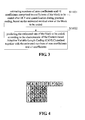
FIG. 4 is a schematic diagram of the block to be predicted and reference pixel in the embodiments of the present invention; -
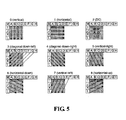
FIG. 5 is a mode chart of 4×4 luminance prediction in the embodiments of the present invention; -
FIG. 6 is a structure diagram of a device for selecting the best mode of intra prediction coding for video coding in the present invention. - The present invention provides a method for selecting the best mode of intra prediction coding for video coding. Based on the fact that the mode selection in the present invention is closer to the best mode selected by the original rate distortion optimization model, the need to code every block actually in the process of the rate distortion optimization is effectively avoided, and the coding efficiency is grealy improved in the condition that the code rate and PSNR of coding and all direction search method change little.
- As shown in
FIG. 1 , it is a flow chart of realizing a method for selecting the best mode of intra prediction coding for video coding in the present invention, comprising the following steps: - S 110: constructing a rate distortion cost function based on an estimated rate to be encoded;
- S120: computing the rate distortion costs for all predictive modes by using the constructed function, and
- S130: selecting a predictive mode with the minimum rate distortion cost as the best mode of intra prediction coding based on the computing result.
- As shown in
FIG 2 , it is a flow chart of constructing a rate distortion cost function based on an estimated rate to be encoded in the present invention, comprising the following steps: - S1101: computing to estimate the residual error after intra prediction of the block to be coded;
- S 1102: computing the estimated rate of the block to be coded;
- S 1103: constructing the rate distortion cost function based on the estimated rate to be encoded by using the estimated residual error of the block to be coded as the distortion measurement, together with the estimated rate of the block to be coded.
- As shown in
FIG. 3 , it is a flow chart of computing the estimated rate of the block to be coded in the present invention, comprising the following steps: - S11021: estimating numbers of zero coefficients and ±1 coefficients comprised in the coefficients of the block to be coded after DCT and quantification during practical coding, based on the estimated residual error of the block to be coded;
- S 11022: predicting the estimated rate of the block to be coded, according to the characteristic of the Context-based Adaptive Variable Length Coding (CAVLC) method together with the estimated numbers of zero coefficients and ±1 coefficients.
- The following preferred embodiment of the selection of the best mode of intra prediction coding for an H.264/
AVC 4×4 block according to the present invention is described by reference of the drawings of the Description: - The selection is implemented on the reference software verification model JM8.6 coder. The detailed working environment is a PC with Intel Pentium D 2.80GHz processor, 1 GB DDR RAM, and Microsoft Windows 2003 Server. Main Profile of JVT is used as the configuration file, and the main parameters of which are shown as follows:
- 1) the movement vector MV searching scope is ± 16 pixel value;
- 2) using the rate distortion optimization;
- 3) the reference frame number is set to 0;
- 4) the entropy coding mode is CAVLC;
- 5) the precision of the movement vector MV is 1/4 pixel;
- 6) the GOP structure is a full I frame structure.
- The method for selecting the best mode of intra prediction coding for an
H.2541AVC 4×4 block in the present invention, comprising the following steps: - S1100: selecting valid predictive modes from nine luminance predictive modes based on valid reference pixel value, and performing intra prediction coding for 16 pixels in the original block s to be predicted respectively to obtain the predictive block p.
-
FIG. 4 shows a 4×4 luminance block to be predictive coding, the pixels (which are labeled as A,B, ...,M inFIG. 4 ) located on the left side and upper side of which have been coded and reconstructed, thereby they serve as predictive reference values in the coder. The pixel values a, b, c, ...,p in the block to be predicted are computed according to all directions shown inFIG. 5 based on reference pixel values A,B, ...,M. In mode 2 (DC mode), the predictive computing is performed based on all reference pixel values A,B, ...,M; while in other modes, the computing is performed only if the required predictive pixel value is available. Therefore, the predictive values of 16 pixels corresponding to predictive block pij in all valid modes are obtained. - S 1200: for different valid predictive modes, the estimated residual error is calculated between the predictive block obtained in S1100 and the pixel on the position corresponding to the original block, respectively:

- S1300: for different valid predictive modes, performing estimation based on the estimated residual error value, and predicting the numbers of zero coefficients and ±1 coefficients comprised in 4×4 block respectively after DCT and quantification during practical coding; the traditional computing of 4×4 forward DCT transformation is shown as follows:

Wherein A is a transformation matrix, and corresponding items are α = 1/2,

- When the integer DCT coefficient Y(u,v), the quantization parameter Qp and the quantization coefficient Z(u,v) are given, it is represented as follows:

Wherein qbits=15+floor(Qp /6), the value range of Qp is 0 to 51. For the intra prediction block, f=(2qbits /3). M(u,v) is a multiplication factor with respect to Qp %6, and there are three categories based on locations correspondingly, which is shown in Table 1.Table 1 Quantization Coefficient Classification Table Corresponding to Different Locations Qp %6 1st
(1,1), (1,3), (3,1) (3,3)2nd
Other locations 3rd
(0,0), (0,2),(2,0),(2,2)0 5243 8066 13107 1 4660 7490 11916 2 4194 6554 10082 3 3647 5825 9362 4 3355 5243 8192 5 2893 4559 7282 - Further expanding the DCT transformation in formula (2), constructing a new transformation matrix Aa(u,v)=[A(x,u)·A(y,v)]4×4 correspondingly, and then the transformation expression can be replaced by the following formula:

Wherein Xa =[X(x,y)]4×4 , ⊗represents that each element of matrix Xa is multiplied by the element in the same position of transformation maxtrix Aa (u,v). - The formula (3) should be considered to obtain a quantized value T(u,v) when determining whether the value of each element in integer DCT coefficient matrix Ŷ is 0.

Then condition of determining that the DCT coefficient after quantization is 0 is represented as follows:
- Taking u=0, v=1 as an example:

- Since the transformation matrix Aa (u,v) is regularly distributed and is highly symmetrical, it is divided into four 4×4 blocks, for example:

to further obtain:
So, the condition that the DCT coefficient at the location (0,1) after quantization is 0 is as follows:
- Similarly, for other locations in the residual error matrix, different block divisions can be performed correspondingly to different transformation matrixes respectively to perform a rapid computing, and the statistics of the number Npre_Zero of zero coefficients is performed.
- Certainly, the following formula

can serve as a condition that the DCT coefficient after quantization is not 0 to determine whether all DCT coefficients after quantization are nonzero coefficients, and the statistics of the number of the nonzero coefficients is performed. - Additionally, considering the following condition of determining ±1 coefficients:

This condition is used to determine whether the DCT coefficients after quantization are ±1, and the statistics of the number Npre_One of ±1 coefficients is performed. - S1400: for all valid predictive modes, predicting the code rate required by the block to be coded according to the coding characteristic of the Context-based Adaptive Variable Length Coding (CAVLC) together with the predicted numbers of zero coefficients and ±1 coefficients; based on the analysis of characteristic of the algorithm of CAVLC entropy coding, it is deemed that there are three important parameters affecting the coding length in CAVLC coding, they are: NCoeff, None and NZero, wherein NCoeff represents the number of nonzero coefficients, None represents the number of ±1 coefficients, and NZero represents the number of zero coefficients after the first nonzero coefficient. From CAVLC code table, it can be seen that the bigger the value of NCoeff is, the more the code words will be generated correspondingly, while the bigger the value of NZero is, the less the corresponding code words will be. Therefore, we could consider corresponding NCoeff and NZero as a whole unit. In order to estimate the bit number of the corresponding block obtained by CAVLC coding, the following coefficient formula to be fitted is constructed:

Wherein rate_mode equals to 1 for most probable predictive mode, and equals to 4 for other modes. - By using n given triad (Ncoeff, None, actual_rate), the coefficient fitting to the coefficient formula to be fitted is performed to obtain coefficients a and b to be fitted, and to further obtain an estimated rate of the block to be coded. For instance, several sequences of practical coding are adopted, two coefficients to be determined are obtained first as reference coefficient values of the estimated rate formula: five general test sequences and three video clips collected in practical are used for testing, and after using CAVLC to code, the statistics of the numbers of the required nonzero coefficients and ±1 coefficients, and actual code rate corresponding to each 4×4 luminance block are performed, and by using a method of least square fitting, the correspondingly best fitting coefficients a=6.3, b=-2.3 can be obtained, thereby the following estimated rate formula is obtained:

Wherein rate_pre represents the estimated rate to be encoded, Npre_Zero and NPre_One respectively represent the estimated numbers of zero coefficients and ±1 coefficients in the quantified transformation coefficient of the block to be predictive coding obtained in S 1300. The estimated rate fitting coefficients of all valid predictive modes obtained by this means are the same with each other. - Certainly, the fitting coefficient value can be determined by using an adaptive manner based on the characteristics of the sequences themselves during coding to obtain the estimated rate of the block to be coded, and it is unnecessary to obtain the coefficient to be fitted first and to make it serve as an experience reference value. The estimated rate fitting coefficients of all valid predictive modes obtained by means of an adaptive way may be different from each other.
- S 1500: for all valid predictive modes, constructing a rate distortion cost function based on the estimated rate to be encoded by using SAD of the block to be coded to estimate the intra prediction residual error and the estimated rate of the block to be coded:

- Additionally, if the estimated rate to be encoded uses an adaptive way to determine the fitting coefficient, the fitting coefficients in a rate distortion cost function based on an estimated rate to be encoded constructed in all valid predictive modes may be different from each other.
- S1600: using the rate distortion cost function based on the estimated rate to be encoded obtained in S1500 to respectively compute the rate distortion costs for all valid predictive modes, and thereby selecting the mode due to which the rate distortion cost is minimum as the best mode of intra prediction coding.

- Wherein if the fitting coefficients in the rate distortion cost function constructed in all valid predictive modes are the same with each other, i.e., an identical rate distortion cost function is constructed for all valid modes, thereby this identical rate distortion cost function is used to respectively compute the rate distortion costs for all valid modes; if the fitting coefficients in the rate distortion cost function constructed in all valid predictive modes are different from each other, corresponding rate distortion cost functions are constructed for all valid modes, thereby the rate distortion costs for all valid modes are respectively computed by respectively corresponding rate distortion cost functions.
- As shown in
FIG. 6 , the present invention further provides a device for selecting the best mode of intra prediction coding for video coding, including: - a rate distortion cost
function constructing unit 10 for constructing a rate distortion cost function based on an estimated rate to be encoded; - a rate distortion
cost computing unit 20 for computing the rate distortion costs for all predictive modes based on the rate distortion cost function constructed by the rate distortion costfunction constructing unit 10; - an intra prediction coding best
mode selecting unit 30 for selecting a predictive mode with the minimum rate distortion cost as the best mode of intra prediction coding based on the computing result of the rate distortioncost computing unit 20. - Further, the rate distortion cost
function constructing unit 10 specifically includes: - an estimated residual
error computing subunit 101 for computing to estimate residual error after the intra prediction of the block to be coded; - an estimated rate to be encoded
computing subunit 102 for computing the estimated rate of the block to be coded; - a rate distortion cost
function generating subunit 103 for constructing a rate distortion cost function based on the estimated rate to be encoded by using the estimated residual error of the block to be coded obtained by the computation of the estimated residualerror computing subunit 101 as the distortion measurement, together with the estimated rate of the block to be coded obtained by the computation of the estimated rate to be encodedcomputing subunit 102. - Further, the estimated rate to be encoded
computing subunit 102 specifically includes: - a
coefficient estimating subunit 1021 for estimating numbers of zero coefficients and ±1 coefficients comprised in the coefficients of the block to be coded after DCT and quantification during practical coding, based on the estimated residual error of the block to be coded obtained by the computation of the estimated residualerror computing subunit 101; - a code
rate predicting subunit 1022 for predicting the estimated rate of the block to be coded according to the characteristic of the Context-based Adaptive Variable Length Coding (CAVLC) method together with the numbers of zero coefficients and ±1 coefficients estimated by thecoefficient estimating subunit 1021. - Obviously, a person skilled in the art may modify or change the present invention within the spirit and scope of the present invention. Thus, if the modifications or changes for the present invention are within the scopes of the claims of the present invention and equal techniques, the present invention would like to include these modifications and changes.
Claims (8)
- A method for selecting the best mode of intra prediction coding for video coding, characterized in including steps of:constructing a rate distortion cost function based on an estimated rate to be encoded;computing rate distortion costs for all predictive modes by using the constructed function, andselecting a predictive mode with the minimum rate distortion cost as the best mode of intra prediction coding according to computing results.
- The method according to claim 1, characterized in that constructing a rate distortion cost function based on an estimated rate to be encoded specifically includes steps of:computing to estimate the residual error after intra prediction of a block to be coded;computing the estimated rate of the block to be coded;constructing a rate distortion cost function based on the estimated rate to be encoded by using the estimated residual error of the block to be coded as distortion measurement, together with the estimated rate of the block to be coded.
- The method according to claim 2, characterized in that computing the estimated rate of the block to be coded specifically includes steps of:estimating numbers of zero coefficients and ±1 coefficients comprised in coefficients of the block to be coded after DCT and quantification during practical coding, based on the estimated residual error of the block to be coded;predicting the estimated rate of the block to be coded, according to the characteristic of the Context-based Adaptive Variable Length Coding method together with the estimated numbers of zero coefficients and ±1 coefficients.
- The method accoridng to claim 1, 2 or 3, characterized in that the predictive mode is a valid predictive mode.
- A device for selecting the best mode of intra prediction for video coding, characterized in including:a rate distortion cost function constructing unit for constructing a rate distortion cost function based on an estimated rate to be encoded;a rate distortion cost computing unit for computing rate distortion costs for all predictive modes based on the rate distortion cost function constructed by the rate distortion cost function constructing unit;an intra prediction coding best mode selecting unit for selecting a predictive mode with the minimum rate distortion cost as the best mode of intra prediction coding based on computing results of the rate distortion cost comptuitng unit.
- The deivce according to claim 5, characterized in that the rate distortion cost function constructing unit further includes:an estimated residual error computing subunit for computing to estimate residual error after intra prediction of a block to be coded;an estimated rate to be encoded computing subunit for computing the estimated rate of the block to be coded;a rate distortion cost function generating subunit for constructing a rate distortion cost function based on the estimated rate to be encoded by using the estimated residual error of the block to be coded obtained by the computation of the estimated residual error computing subunit as distortion measurement, together with the estimated rate of the block to be coded obtained by the computation of the estimated rate to be encoded computing subunit.
- The device according to claim 6, characterized in that the estimated rate to be encoded computing subunit further includes:a coefficient estimating subunit for estimating numbers of zero coefficients and ±1 coefficients comprised in coefficients of the block to be coded after DCT and quantification during practical coding, based on the estimated residual error of the block to be coded obtained by the computation of the estimated residual error computing subunit;a code rate predicting subunit for predicting the estimated rate of the block to be coded according to the characteristic of the Context-based Adaptive Variable Length Coding method together with the numbers of zero coefficients and ±1 coefficients estimated by the coefficient estimating subunit.
- The device according to claim 5, 6 or 7, characterized in that the predictive mode is a valid predictive mode.
Applications Claiming Priority (2)
| Application Number | Priority Date | Filing Date | Title |
|---|---|---|---|
| CNB200710119777XA CN100566427C (en) | 2007-07-31 | 2007-07-31 | Method and device for selecting optimal mode of intra-frame prediction coding for video coding |
| PCT/CN2008/001343 WO2009015553A1 (en) | 2007-07-31 | 2008-07-18 | A method and device selecting intra-frame predictive coding best mode for video coding |
Publications (2)
| Publication Number | Publication Date |
|---|---|
| EP2184925A1 true EP2184925A1 (en) | 2010-05-12 |
| EP2184925A4 EP2184925A4 (en) | 2012-11-07 |
Family
ID=39193344
Family Applications (1)
| Application Number | Title | Priority Date | Filing Date |
|---|---|---|---|
| EP08773046A Withdrawn EP2184925A4 (en) | 2007-07-31 | 2008-07-18 | METHOD AND DEVICE FOR SELECTING THE BEST INTRA-FRAME PREDICTIVE CODING MODE FOR VIDEO CODING |
Country Status (4)
| Country | Link |
|---|---|
| US (1) | US8406286B2 (en) |
| EP (1) | EP2184925A4 (en) |
| CN (1) | CN100566427C (en) |
| WO (1) | WO2009015553A1 (en) |
Cited By (13)
| Publication number | Priority date | Publication date | Assignee | Title |
|---|---|---|---|---|
| US20100290521A1 (en) * | 2007-07-31 | 2010-11-18 | Peking University Founder Group Co., Ltd. | Method and Device For Selecting Best Mode Of Intra Predictive Coding For Video Coding |
| CN102355584A (en) * | 2011-10-31 | 2012-02-15 | 电子科技大学 | Code rate control method based on intra-frame predictive coding modes |
| GB2492330A (en) * | 2011-06-24 | 2013-01-02 | Skype | Rate-distortion optimisation (RDO) with optimal encoding mode selection |
| CN103299634A (en) * | 2010-11-22 | 2013-09-11 | 联发科技(新加坡)私人有限公司 | Apparatus and method of constrained partition size for high efficiency video coding |
| US8804981B2 (en) | 2011-02-16 | 2014-08-12 | Skype | Processing audio signals |
| US8804836B2 (en) | 2011-08-19 | 2014-08-12 | Skype | Video coding |
| CN104093022A (en) * | 2014-06-25 | 2014-10-08 | 华为技术有限公司 | Rate distortion optimization method and device |
| US8908761B2 (en) | 2011-09-02 | 2014-12-09 | Skype | Video coding |
| US9131248B2 (en) | 2011-06-24 | 2015-09-08 | Skype | Video coding |
| US9143806B2 (en) | 2011-06-24 | 2015-09-22 | Skype | Video coding |
| US9338473B2 (en) | 2011-09-02 | 2016-05-10 | Skype | Video coding |
| US9854274B2 (en) | 2011-09-02 | 2017-12-26 | Skype Limited | Video coding |
| WO2019127358A1 (en) * | 2017-12-29 | 2019-07-04 | Intel Corporation | Modular motion estimation engine for tree-based video |
Families Citing this family (48)
| Publication number | Priority date | Publication date | Assignee | Title |
|---|---|---|---|---|
| CN100596202C (en) * | 2008-05-30 | 2010-03-24 | 四川虹微技术有限公司 | Fast mode selection method in frame |
| JP2010251953A (en) * | 2009-04-14 | 2010-11-04 | Sony Corp | Image coding apparatus, image coding method, and computer program |
| KR101379186B1 (en) * | 2009-08-21 | 2014-04-10 | 에스케이 텔레콤주식회사 | Inrtra Prediction Enoding/Decoding Method and Apparatus |
| WO2011031332A1 (en) * | 2009-09-14 | 2011-03-17 | Thomson Licensing | Methods and apparatus for efficient video encoding and decoding of intra prediction mode |
| CN101827270B (en) * | 2009-12-16 | 2011-12-14 | 香港应用科技研究院有限公司 | Method for obtaining pixel predicted value in intra-frame prediction |
| CN102098507B (en) * | 2010-06-08 | 2013-12-25 | 同济大学 | Integrative compressing method and device of image |
| CN101895788B (en) * | 2010-07-21 | 2013-07-03 | 深圳市融创天下科技股份有限公司 | Method and system for objectively evaluating video coding performance |
| US8885704B2 (en) * | 2010-10-01 | 2014-11-11 | Qualcomm Incorporated | Coding prediction modes in video coding |
| US9055305B2 (en) | 2011-01-09 | 2015-06-09 | Mediatek Inc. | Apparatus and method of sample adaptive offset for video coding |
| CN101969561B (en) * | 2010-10-27 | 2016-03-30 | 北京中星微电子有限公司 | A kind of intra-frame mode selection method, device and a kind of encoder |
| CN103404137B (en) * | 2011-01-09 | 2016-10-19 | 寰发股份有限公司 | Effective sample adaptive compensation method and device |
| US9161041B2 (en) | 2011-01-09 | 2015-10-13 | Mediatek Inc. | Apparatus and method of efficient sample adaptive offset |
| TWI586151B (en) | 2011-05-30 | 2017-06-01 | Jvc Kenwood Corp | An image decoding apparatus, an image decoding method, and an image decoding program recording medium |
| CN104869420B (en) * | 2011-06-28 | 2018-04-24 | 三星电子株式会社 | Decoded method is carried out to video data |
| BR112013003521B1 (en) * | 2011-07-18 | 2022-03-03 | Sun Patent Trust | Image encoding method, image decoding method, image encoding apparatus, image decoding apparatus and image encoding and decoding apparatus |
| US9161060B2 (en) * | 2011-09-30 | 2015-10-13 | Broadcom Corporation | Multi-mode error concealment, recovery and resilience coding |
| KR20130049526A (en) * | 2011-11-04 | 2013-05-14 | 오수미 | Method for generating reconstructed block |
| CN103024392B (en) * | 2012-12-26 | 2015-07-15 | 清华大学 | Method and device for intra-frame mode prediction based on two-dimensional Hadamard transformation |
| US9503723B2 (en) * | 2013-01-11 | 2016-11-22 | Futurewei Technologies, Inc. | Method and apparatus of depth prediction mode selection |
| CN103118262B (en) * | 2013-02-04 | 2016-03-16 | 深圳广晟信源技术有限公司 | Rate distortion optimization method and device, and video coding method and system |
| WO2014190468A1 (en) | 2013-05-27 | 2014-12-04 | Microsoft Corporation | Video encoder for images |
| CN103338371B (en) * | 2013-06-07 | 2016-11-09 | 东华理工大学 | One rapidly and efficiently rate Video coding frame mode decision method |
| CN103327339B (en) * | 2013-06-09 | 2016-08-10 | 深圳市云宙多媒体技术有限公司 | The coded method of a kind of intra-frame prediction block division and system |
| US10136140B2 (en) | 2014-03-17 | 2018-11-20 | Microsoft Technology Licensing, Llc | Encoder-side decisions for screen content encoding |
| CN104954788B (en) * | 2014-03-27 | 2018-09-04 | 浙江大华技术股份有限公司 | HEVC method for choosing frame inner forecast mode and device |
| CN106416254B (en) | 2015-02-06 | 2019-08-02 | 微软技术许可有限责任公司 | Skip the evaluation phase during media encoding |
| CN107810632B (en) * | 2015-05-06 | 2020-06-23 | Ng编译码器股份有限公司 | Intra prediction processor with reduced cost block partitioning and refined intra mode selection |
| US10038917B2 (en) | 2015-06-12 | 2018-07-31 | Microsoft Technology Licensing, Llc | Search strategies for intra-picture prediction modes |
| US10136132B2 (en) | 2015-07-21 | 2018-11-20 | Microsoft Technology Licensing, Llc | Adaptive skip or zero block detection combined with transform size decision |
| CN106488235A (en) * | 2015-09-01 | 2017-03-08 | 北京君正集成电路股份有限公司 | A kind of SSE simplified calculation method for rate-distortion optimization and device |
| KR102390162B1 (en) * | 2015-10-16 | 2022-04-22 | 삼성전자주식회사 | Apparatus and method for encoding data |
| CN107306353B (en) * | 2016-04-19 | 2020-05-01 | 广州市动景计算机科技有限公司 | Image space prediction mode selection method and device, and image compression method and device |
| CN105933717B (en) * | 2016-04-25 | 2019-03-12 | 北京奇艺世纪科技有限公司 | A kind of mode decision method and apparatus of coding unit |
| CN106454360B (en) | 2016-10-26 | 2019-05-07 | 北京大学深圳研究生院 | A Bit Rate Estimation Method for Intra-frame Coding in Video Coding |
| US11508096B2 (en) * | 2017-07-10 | 2022-11-22 | Sony Corporation | Information processing apparatus and method |
| CN108172168B (en) * | 2017-12-22 | 2019-11-15 | 深圳市华星光电半导体显示技术有限公司 | A kind of compensation table compression method |
| CN109413435B (en) * | 2018-10-26 | 2020-10-16 | 苏州市吴越智博大数据科技有限公司 | Prediction method based on video compression |
| US11393047B2 (en) | 2018-12-11 | 2022-07-19 | Nielsen Consumer Llc | Methods, systems, articles of manufacture and apparatus to monitor auditing devices |
| EP3939286A4 (en) * | 2019-03-11 | 2022-12-21 | Beijing Dajia Internet Information Technology Co., Ltd. | CODING OF VIDEO CODING TRANSFORM COEFFICIENTS |
| CN110191339B (en) * | 2019-05-22 | 2021-04-02 | 上海富瀚微电子股份有限公司 | Code rate estimation core unit, code rate estimation device and code rate estimation method |
| CN110267041B (en) | 2019-06-28 | 2021-11-09 | Oppo广东移动通信有限公司 | Image encoding method, image encoding device, electronic device, and computer-readable storage medium |
| US11284074B2 (en) * | 2019-12-20 | 2022-03-22 | Intel Corporation | Cross-channel look ahead rate control for multi-channel video encoding |
| CN111447438B (en) * | 2020-04-24 | 2023-05-26 | 西安理工大学 | A Fast Intra Prediction Mode Decision Method for General Video Coding |
| CN113747161B (en) * | 2020-05-29 | 2024-07-19 | 北京金山云网络技术有限公司 | Information acquisition method and device, storage medium and electronic device |
| CN111918058B (en) * | 2020-07-02 | 2022-10-28 | 北京大学深圳研究生院 | Hardware-friendly intra prediction mode fast determination method, device and storage medium |
| CN113891074B (en) * | 2021-11-18 | 2023-08-01 | 北京达佳互联信息技术有限公司 | Video encoding method and apparatus, electronic apparatus, and computer-readable storage medium |
| CN114786008B (en) * | 2022-03-07 | 2025-09-16 | 杭州未名信科科技有限公司 | Method and device for selecting intra-frame prediction mode, storage medium and electronic equipment |
| CN116600123B (en) * | 2023-07-17 | 2023-11-07 | 北京中星微人工智能芯片技术有限公司 | Video encoding method and device, video decoding method and device and electronic equipment |
Family Cites Families (40)
| Publication number | Priority date | Publication date | Assignee | Title |
|---|---|---|---|---|
| KR19990042668A (en) * | 1997-11-27 | 1999-06-15 | 정선종 | Video encoding apparatus and method for multiple video transmission |
| US6421467B1 (en) * | 1999-05-28 | 2002-07-16 | Texas Tech University | Adaptive vector quantization/quantizer |
| US6735249B1 (en) * | 1999-08-11 | 2004-05-11 | Nokia Corporation | Apparatus, and associated method, for forming a compressed motion vector field utilizing predictive motion coding |
| US6639942B1 (en) * | 1999-10-21 | 2003-10-28 | Toshiba America Electronic Components, Inc. | Method and apparatus for estimating and controlling the number of bits |
| FR2837330B1 (en) * | 2002-03-14 | 2004-12-10 | Canon Kk | METHOD AND DEVICE FOR SELECTING A TRANSCODING METHOD FROM A SET OF TRANSCODING METHODS |
| KR100468726B1 (en) * | 2002-04-18 | 2005-01-29 | 삼성전자주식회사 | Apparatus and method for performing variable bit rate control in real time |
| CN1206864C (en) * | 2002-07-22 | 2005-06-15 | 中国科学院计算技术研究所 | Association rate distortion optimized code rate control method and apparatus thereof |
| US7006811B2 (en) * | 2003-02-27 | 2006-02-28 | Nokia Corporation | Method and apparatus for switching on and off interference cancellation in a receiver |
| CN1204753C (en) * | 2003-05-19 | 2005-06-01 | 北京工业大学 | Interframe predicting method based on adjacent pixel prediction |
| US8094711B2 (en) * | 2003-09-17 | 2012-01-10 | Thomson Licensing | Adaptive reference picture generation |
| JP2008519484A (en) * | 2004-11-04 | 2008-06-05 | トムソン ライセンシング | Fast intra mode prediction in video encoders |
| US7764740B2 (en) * | 2004-11-24 | 2010-07-27 | Electronics And Telecommunications Research Institute | Fast block mode determining method for motion estimation, and apparatus thereof |
| JP4074868B2 (en) * | 2004-12-22 | 2008-04-16 | 株式会社東芝 | Image coding control method and apparatus |
| TWI277013B (en) * | 2005-02-01 | 2007-03-21 | Ind Tech Res Inst | Method for reducing buffered-frame memory sizes and accesses in a video codec |
| CN100348051C (en) * | 2005-03-31 | 2007-11-07 | 华中科技大学 | An enhanced in-frame predictive mode coding method |
| US20070121728A1 (en) * | 2005-05-12 | 2007-05-31 | Kylintv, Inc. | Codec for IPTV |
| EP1727374B1 (en) * | 2005-05-27 | 2018-10-24 | InterDigital Madison Patent Holdings | Method for controlling the encoder output bit rate in a block-based video encoder, and corresponding video encoder apparatus |
| KR100736086B1 (en) * | 2005-09-06 | 2007-07-06 | 삼성전자주식회사 | Method and apparatus for enhancing performance of entropy coding, video coding method and apparatus using the method |
| CN100417228C (en) | 2005-10-31 | 2008-09-03 | 连展科技(天津)有限公司 | Method of selecting in frame prediction mode based on H.264/AVC standard frame image |
| US8170102B2 (en) * | 2005-12-19 | 2012-05-01 | Seiko Epson Corporation | Macroblock homogeneity analysis and inter mode prediction |
| KR100770849B1 (en) * | 2006-02-17 | 2007-10-26 | 삼성전자주식회사 | Compressed Video Matching Device and Method in Wireless Fading Environment |
| US8130828B2 (en) * | 2006-04-07 | 2012-03-06 | Microsoft Corporation | Adjusting quantization to preserve non-zero AC coefficients |
| KR100791299B1 (en) * | 2006-04-11 | 2008-01-04 | 삼성전자주식회사 | Multi-layer based video encoding method and apparatus |
| KR101266168B1 (en) * | 2006-08-16 | 2013-05-21 | 삼성전자주식회사 | Method and apparatus for encoding, decoding video |
| US8467448B2 (en) * | 2006-11-15 | 2013-06-18 | Motorola Mobility Llc | Apparatus and method for fast intra/inter macro-block mode decision for video encoding |
| US8290045B2 (en) * | 2006-11-21 | 2012-10-16 | Vixs Systems, Inc. | Motion refinement engine for use in video encoding in accordance with a plurality of compression standards and methods for use therewith |
| KR100888501B1 (en) * | 2006-12-01 | 2009-03-12 | 한국전자통신연구원 | Modifying apparutus and restoring apparutus of management message and method thereof |
| US8265136B2 (en) * | 2007-02-20 | 2012-09-11 | Vixs Systems, Inc. | Motion refinement engine for use in video encoding in accordance with a plurality of sub-pixel resolutions and methods for use therewith |
| US8160150B2 (en) * | 2007-04-10 | 2012-04-17 | Texas Instruments Incorporated | Method and system for rate distortion optimization |
| JP2008263529A (en) * | 2007-04-13 | 2008-10-30 | Sony Corp | Encoding apparatus, encoding method, encoding method program, and recording medium recording the encoding method program |
| US7957600B2 (en) * | 2007-05-08 | 2011-06-07 | Arris Group, Inc. | Methods and systems for rate-distortion optimized quantization of transform blocks in block transform video coding |
| US8175150B1 (en) * | 2007-05-18 | 2012-05-08 | Maxim Integrated Products, Inc. | Methods and/or apparatus for implementing rate distortion optimization in video compression |
| KR101362757B1 (en) * | 2007-06-11 | 2014-02-14 | 삼성전자주식회사 | Method and apparatus for image encoding and decoding using inter color compensation |
| CN100566427C (en) | 2007-07-31 | 2009-12-02 | 北京大学 | Method and device for selecting optimal mode of intra-frame prediction coding for video coding |
| TW200910971A (en) * | 2007-08-22 | 2009-03-01 | Univ Nat Cheng Kung | Direction detection algorithms for H.264 intra prediction |
| US8160141B2 (en) * | 2008-03-17 | 2012-04-17 | Sony Corporation | Advanced video coded pictures—reduced cost computation of an intra mode decision in the frequency domain |
| US20090274213A1 (en) * | 2008-04-30 | 2009-11-05 | Omnivision Technologies, Inc. | Apparatus and method for computationally efficient intra prediction in a video coder |
| KR101306834B1 (en) * | 2008-09-22 | 2013-09-10 | 에스케이텔레콤 주식회사 | Video Encoding/Decoding Apparatus and Method by Using Prediction Possibility of Intra Prediction Mode |
| KR20120006488A (en) * | 2009-04-28 | 2012-01-18 | 텔레폰악티에볼라겟엘엠에릭슨(펍) | Distortion weighting |
| US8537200B2 (en) * | 2009-10-23 | 2013-09-17 | Qualcomm Incorporated | Depth map generation techniques for conversion of 2D video data to 3D video data |
-
2007
- 2007-07-31 CN CNB200710119777XA patent/CN100566427C/en not_active Expired - Fee Related
-
2008
- 2008-07-18 US US12/671,048 patent/US8406286B2/en not_active Expired - Fee Related
- 2008-07-18 WO PCT/CN2008/001343 patent/WO2009015553A1/en not_active Ceased
- 2008-07-18 EP EP08773046A patent/EP2184925A4/en not_active Withdrawn
Non-Patent Citations (3)
| Title |
|---|
| JIAYING LIU ET AL: "Efficient Intra-4x4 Mode Decision Based on Bit-rate Estimation in H.264/AVC", CIRCUITS AND SYSTEMS, 2008. ISCAS 2008. IEEE INTERNATIONAL SYMPOSIUM ON, IEEE, PISCATAWAY, NJ, USA, 18 May 2008 (2008-05-18), pages 492-495, XP031392017, DOI: 10.1109/ISCAS.2008.4541462 ISBN: 978-1-4244-1683-7 * |
| See also references of WO2009015553A1 * |
| TSENG C-H ET AL: "Enhanced Intra-4 X 4 Mode Decision for H.264/AVC Coders", IEEE TRANSACTIONS ON CIRCUITS AND SYSTEMS FOR VIDEO TECHNOLOGY, IEEE SERVICE CENTER, PISCATAWAY, NJ, US, vol. 16, no. 8, 1 August 2006 (2006-08-01) , pages 1027-1032, XP001548853, ISSN: 1051-8215, DOI: 10.1109/TCSVT.2006.878146 * |
Cited By (21)
| Publication number | Priority date | Publication date | Assignee | Title |
|---|---|---|---|---|
| US20100290521A1 (en) * | 2007-07-31 | 2010-11-18 | Peking University Founder Group Co., Ltd. | Method and Device For Selecting Best Mode Of Intra Predictive Coding For Video Coding |
| US8406286B2 (en) * | 2007-07-31 | 2013-03-26 | Peking University Founder Group Co., Ltd. | Method and device for selecting best mode of intra predictive coding for video coding |
| CN103299634B (en) * | 2010-11-22 | 2017-06-09 | 寰发股份有限公司 | Method and device for high-efficiency video coding constrained partition size |
| CN103299634A (en) * | 2010-11-22 | 2013-09-11 | 联发科技(新加坡)私人有限公司 | Apparatus and method of constrained partition size for high efficiency video coding |
| US8804981B2 (en) | 2011-02-16 | 2014-08-12 | Skype | Processing audio signals |
| US9036699B2 (en) | 2011-06-24 | 2015-05-19 | Skype | Video coding |
| US9131248B2 (en) | 2011-06-24 | 2015-09-08 | Skype | Video coding |
| GB2492330B (en) * | 2011-06-24 | 2017-10-18 | Skype | Rate-Distortion Optimization with Encoding Mode Selection |
| US9143806B2 (en) | 2011-06-24 | 2015-09-22 | Skype | Video coding |
| GB2492330A (en) * | 2011-06-24 | 2013-01-02 | Skype | Rate-distortion optimisation (RDO) with optimal encoding mode selection |
| US8804836B2 (en) | 2011-08-19 | 2014-08-12 | Skype | Video coding |
| US8908761B2 (en) | 2011-09-02 | 2014-12-09 | Skype | Video coding |
| US9307265B2 (en) | 2011-09-02 | 2016-04-05 | Skype | Video coding |
| US9338473B2 (en) | 2011-09-02 | 2016-05-10 | Skype | Video coding |
| US9854274B2 (en) | 2011-09-02 | 2017-12-26 | Skype Limited | Video coding |
| CN102355584B (en) * | 2011-10-31 | 2013-09-25 | 电子科技大学 | Code rate control method based on intra-frame predictive coding modes |
| CN102355584A (en) * | 2011-10-31 | 2012-02-15 | 电子科技大学 | Code rate control method based on intra-frame predictive coding modes |
| CN104093022B (en) * | 2014-06-25 | 2017-08-18 | 华为技术有限公司 | A kind of Rate-distortion optimization method and device |
| CN104093022A (en) * | 2014-06-25 | 2014-10-08 | 华为技术有限公司 | Rate distortion optimization method and device |
| WO2019127358A1 (en) * | 2017-12-29 | 2019-07-04 | Intel Corporation | Modular motion estimation engine for tree-based video |
| US11729416B2 (en) | 2017-12-29 | 2023-08-15 | Intel Corporation | Modular motion estimation engine for tree-based video |
Also Published As
| Publication number | Publication date |
|---|---|
| EP2184925A4 (en) | 2012-11-07 |
| US20100290521A1 (en) | 2010-11-18 |
| US8406286B2 (en) | 2013-03-26 |
| CN100566427C (en) | 2009-12-02 |
| WO2009015553A1 (en) | 2009-02-05 |
| CN101141649A (en) | 2008-03-12 |
Similar Documents
| Publication | Publication Date | Title |
|---|---|---|
| US8406286B2 (en) | Method and device for selecting best mode of intra predictive coding for video coding | |
| US8325804B2 (en) | Video encoding with intra encoding selection | |
| US7978766B2 (en) | Method and apparatus for encoding and/or decoding moving pictures | |
| US8249145B2 (en) | Estimating sample-domain distortion in the transform domain with rounding compensation | |
| US6876703B2 (en) | Method and apparatus for video coding | |
| US8121190B2 (en) | Method for video coding a sequence of digitized images | |
| KR101379255B1 (en) | Method and apparatus for encoding and decoding based on intra prediction using differential equation | |
| KR101375664B1 (en) | Method and apparatus of encoding/decoding image using diffusion property of image | |
| EP1675402A1 (en) | Optimisation of a quantisation matrix for image and video coding | |
| EP3066832B1 (en) | Adaptive prediction of coefficients of a video block | |
| US20050190977A1 (en) | Method and apparatus for video encoding | |
| US20090257489A1 (en) | Rate-distortion quantization for context-adaptive variable length coding (cavlc) | |
| EP1773071A2 (en) | Method of and apparatus for lossless video encoding and decoding | |
| Jamali et al. | Fast HEVC intra mode decision based on edge detection and SATD costs classification | |
| US10091514B1 (en) | Apparatus and method for inter and intra mode selection and block partitioning | |
| US20100309978A1 (en) | Video encoding apparatus and video encoding method | |
| US9036712B1 (en) | Methods and/or apparatus for controlling zero-residual coding in predictive image/video coding | |
| US20120218443A1 (en) | Decoder-derived geometric transformations for motion compensated inter prediction | |
| Andy et al. | Efficient intra-and inter-mode selection algorithms for H. 264/AVC | |
| US20070076964A1 (en) | Method of and an apparatus for predicting DC coefficient in transform domain | |
| US20230199196A1 (en) | Methods and Apparatuses of Frequency Domain Mode Decision in Video Encoding Systems | |
| EP1704723A1 (en) | Method and apparatus for video encoding | |
| Wang et al. | A fast two-step block type decision algorithm for intra prediction in H. 264/AVC high profile | |
| EP1675405A1 (en) | Optimisation of a quantisation matrix for image and video coding | |
| Jdidia et al. | Subjective evaluation of approximate discrete Sine transform for the versatile video coding standard |
Legal Events
| Date | Code | Title | Description |
|---|---|---|---|
| PUAI | Public reference made under article 153(3) epc to a published international application that has entered the european phase |
Free format text: ORIGINAL CODE: 0009012 |
|
| 17P | Request for examination filed |
Effective date: 20100224 |
|
| AK | Designated contracting states |
Kind code of ref document: A1 Designated state(s): AT BE BG CH CY CZ DE DK EE ES FI FR GB GR HR HU IE IS IT LI LT LU LV MC MT NL NO PL PT RO SE SI SK TR |
|
| AX | Request for extension of the european patent |
Extension state: AL BA MK RS |
|
| DAX | Request for extension of the european patent (deleted) | ||
| A4 | Supplementary search report drawn up and despatched |
Effective date: 20121010 |
|
| RIC1 | Information provided on ipc code assigned before grant |
Ipc: H04N 7/26 20060101ALI20121004BHEP Ipc: H04N 7/32 20060101AFI20121004BHEP Ipc: H04N 7/34 20060101ALI20121004BHEP Ipc: H04N 7/50 20060101ALI20121004BHEP |
|
| 17Q | First examination report despatched |
Effective date: 20160615 |
|
| STAA | Information on the status of an ep patent application or granted ep patent |
Free format text: STATUS: THE APPLICATION IS DEEMED TO BE WITHDRAWN |
|
| 18D | Application deemed to be withdrawn |
Effective date: 20161026 |