EP2184885A2 - System and method for providing digital content - Google Patents
System and method for providing digital content Download PDFInfo
- Publication number
- EP2184885A2 EP2184885A2 EP09174694A EP09174694A EP2184885A2 EP 2184885 A2 EP2184885 A2 EP 2184885A2 EP 09174694 A EP09174694 A EP 09174694A EP 09174694 A EP09174694 A EP 09174694A EP 2184885 A2 EP2184885 A2 EP 2184885A2
- Authority
- EP
- European Patent Office
- Prior art keywords
- content
- user
- credential information
- key
- cad
- Prior art date
- Legal status (The legal status is an assumption and is not a legal conclusion. Google has not performed a legal analysis and makes no representation as to the accuracy of the status listed.)
- Granted
Links
Images
Classifications
-
- H—ELECTRICITY
- H04—ELECTRIC COMMUNICATION TECHNIQUE
- H04L—TRANSMISSION OF DIGITAL INFORMATION, e.g. TELEGRAPHIC COMMUNICATION
- H04L63/00—Network architectures or network communication protocols for network security
- H04L63/08—Network architectures or network communication protocols for network security for authentication of entities
- H04L63/0853—Network architectures or network communication protocols for network security for authentication of entities using an additional device, e.g. smartcard, SIM or a different communication terminal
-
- H—ELECTRICITY
- H04—ELECTRIC COMMUNICATION TECHNIQUE
- H04L—TRANSMISSION OF DIGITAL INFORMATION, e.g. TELEGRAPHIC COMMUNICATION
- H04L9/00—Cryptographic mechanisms or cryptographic arrangements for secret or secure communications; Network security protocols
- H04L9/32—Cryptographic mechanisms or cryptographic arrangements for secret or secure communications; Network security protocols including means for verifying the identity or authority of a user of the system or for message authentication, e.g. authorization, entity authentication, data integrity or data verification, non-repudiation, key authentication or verification of credentials
- H04L9/3234—Cryptographic mechanisms or cryptographic arrangements for secret or secure communications; Network security protocols including means for verifying the identity or authority of a user of the system or for message authentication, e.g. authorization, entity authentication, data integrity or data verification, non-repudiation, key authentication or verification of credentials involving additional secure or trusted devices, e.g. TPM, smartcard, USB or software token
-
- H—ELECTRICITY
- H04—ELECTRIC COMMUNICATION TECHNIQUE
- H04L—TRANSMISSION OF DIGITAL INFORMATION, e.g. TELEGRAPHIC COMMUNICATION
- H04L9/00—Cryptographic mechanisms or cryptographic arrangements for secret or secure communications; Network security protocols
- H04L9/32—Cryptographic mechanisms or cryptographic arrangements for secret or secure communications; Network security protocols including means for verifying the identity or authority of a user of the system or for message authentication, e.g. authorization, entity authentication, data integrity or data verification, non-repudiation, key authentication or verification of credentials
- H04L9/3297—Cryptographic mechanisms or cryptographic arrangements for secret or secure communications; Network security protocols including means for verifying the identity or authority of a user of the system or for message authentication, e.g. authorization, entity authentication, data integrity or data verification, non-repudiation, key authentication or verification of credentials involving time stamps, e.g. generation of time stamps
-
- H—ELECTRICITY
- H04—ELECTRIC COMMUNICATION TECHNIQUE
- H04N—PICTORIAL COMMUNICATION, e.g. TELEVISION
- H04N21/00—Selective content distribution, e.g. interactive television or video on demand [VOD]
- H04N21/20—Servers specifically adapted for the distribution of content, e.g. VOD servers; Operations thereof
- H04N21/25—Management operations performed by the server for facilitating the content distribution or administrating data related to end-users or client devices, e.g. end-user or client device authentication, learning user preferences for recommending movies
- H04N21/258—Client or end-user data management, e.g. managing client capabilities, user preferences or demographics, processing of multiple end-users preferences to derive collaborative data
- H04N21/25808—Management of client data
- H04N21/25816—Management of client data involving client authentication
-
- H—ELECTRICITY
- H04—ELECTRIC COMMUNICATION TECHNIQUE
- H04N—PICTORIAL COMMUNICATION, e.g. TELEVISION
- H04N21/00—Selective content distribution, e.g. interactive television or video on demand [VOD]
- H04N21/20—Servers specifically adapted for the distribution of content, e.g. VOD servers; Operations thereof
- H04N21/25—Management operations performed by the server for facilitating the content distribution or administrating data related to end-users or client devices, e.g. end-user or client device authentication, learning user preferences for recommending movies
- H04N21/258—Client or end-user data management, e.g. managing client capabilities, user preferences or demographics, processing of multiple end-users preferences to derive collaborative data
- H04N21/25808—Management of client data
- H04N21/25841—Management of client data involving the geographical location of the client
-
- H—ELECTRICITY
- H04—ELECTRIC COMMUNICATION TECHNIQUE
- H04N—PICTORIAL COMMUNICATION, e.g. TELEVISION
- H04N21/00—Selective content distribution, e.g. interactive television or video on demand [VOD]
- H04N21/40—Client devices specifically adapted for the reception of or interaction with content, e.g. set-top-box [STB]; Operations thereof
- H04N21/45—Management operations performed by the client for facilitating the reception of or the interaction with the content or administrating data related to the end-user or to the client device itself, e.g. learning user preferences for recommending movies, resolving scheduling conflicts
- H04N21/4508—Management of client data or end-user data
- H04N21/4524—Management of client data or end-user data involving the geographical location of the client
-
- H—ELECTRICITY
- H04—ELECTRIC COMMUNICATION TECHNIQUE
- H04N—PICTORIAL COMMUNICATION, e.g. TELEVISION
- H04N21/00—Selective content distribution, e.g. interactive television or video on demand [VOD]
- H04N21/80—Generation or processing of content or additional data by content creator independently of the distribution process; Content per se
- H04N21/83—Generation or processing of protective or descriptive data associated with content; Content structuring
- H04N21/835—Generation of protective data, e.g. certificates
- H04N21/8355—Generation of protective data, e.g. certificates involving usage data, e.g. number of copies or viewings allowed
-
- H—ELECTRICITY
- H04—ELECTRIC COMMUNICATION TECHNIQUE
- H04L—TRANSMISSION OF DIGITAL INFORMATION, e.g. TELEGRAPHIC COMMUNICATION
- H04L63/00—Network architectures or network communication protocols for network security
- H04L63/10—Network architectures or network communication protocols for network security for controlling access to devices or network resources
- H04L63/107—Network architectures or network communication protocols for network security for controlling access to devices or network resources wherein the security policies are location-dependent, e.g. entities privileges depend on current location or allowing specific operations only from locally connected terminals
Definitions
- the present invention relates generally to delivering digital content to a user, and, more specifically, to delivering content to a user after the user has collected one or more objects to provide the user with the proper credentials to receive the content.
- digital content or just “content” refers broadly to the information contained in a transmitted signal that provides value to an end-user/audience, and includes, for example, entertainment, news, and commercials in the form of, for example, video, audio, Internet websites, and interactive games, just to name a few.
- the delivery of content is typically controlled by operators of information networks (e.g., cable, fiber optic service, hybrid fiber-coaxial (HFC), and satellite networks), or by content providers (e.g., website hosts, television networks, and some cable system and multiple system operators (MSOs)).
- information networks e.g., cable, fiber optic service, hybrid fiber-coaxial (HFC), and satellite networks
- content providers e.g., website hosts, television networks, and some cable system and multiple system operators (MSOs)
- MSOs cable system and multiple system operators
- credentials or “credential information” refers to information associated with the user that verifies that the user is entitled or allowed to receive or gain access to the content.
- credentials such as fingerprints, voice recognition, retinal scans, x.509 Public Key Certificate, and so on, in the delivery of content, the classic combination of a user account number or name and possibly a password is typical.
- a common approach for verifying the credentials of a user is to have the credentials encoded into or otherwise associated with a specific piece of hardware, such as a set top box (STB).
- STB set top box
- a “set top box” or “STB” is a device that connects to a monitor and an external source of signal, and converts the signal into content for display on the monitor.
- the signal source might be an Ethernet cable, a satellite dish, a coaxial cable (cable television), optical fiber, a telephone line (including DSL connections), Broadband over Power Line, or even an ordinary VHF or UHF antenna.
- the STB is typically configured to transmit an identification, which a server recognizes as belonging to a user having a certain subscription plan that defines the scope of services and content the user is entitled to receive. The user identification and subscription plan therefore provide the credentials for delivering content to a user.
- Applicants have identified shortcomings of having credentials embedded in a specific device, such as a STB. For example, limiting credentialing to a specific device ignores the vast number of networks separate from the specific device. Such networks can be found, for example, in Wi-Fi enabled coffee shops, sports venues, public bars and restaurants. These venues provide potentially interesting opportunities for downloading content to users. The delivery of such content, however, is limited because users are often unable to provide their credentials, however, because their credentials are embedded in a particular set top box, at home.
- the present invention represents a paradigm shift in how content is provided. Rather than having credentialing limited to a subscription plan that is specific to certain hardware or the input of a user password, the present invention uses objects or "keys" tagged with credential information to provide access to content when the keys are proximate to a credential-acquisition device (CAD). In other words, content is provided based not on a subscription, but on possession of a key.
- CAD credential-acquisition device
- the key "unlocks" the authorization controls on specified content allowing the user to receive the content while the key is proximate to the CAD.
- CADs located where content delivery is possible, for example, in or near STBs, WiFi networks, WWANs, and LANs, content becomes available in these locations if the key is present.
- the present invention connects locations and content through a key.
- the subject matter of the content may be related to the key for promotional purposes.
- the ability to receive content may be used as an incentive for a user to purchase or otherwise obtain a key.
- Specific examples include providing exclusive content on a sports team if the user purchases a team jersey or similar merchandise. In this case, the merchandise is tagged with the credentials.
- a ticket may be purchased that can provide access not only to the event, but also to content while the user is at the event. In this case, the admission ticket to the event is the key.
- the present invention may also be used to incentivize one or more users to collect a number of keys to gain access to desired content.
- a specific example of this may be using a bottle top as a key and requiring a number of bottle tops to be collected and presented to a CAD before access to the content is granted.
- different levels of content can be provided based on the number of keys collected-i.e., more keys unlock more content.
- one aspect of the invention is a method of providing access to certain content based on one or more keys tagged with credential information being in a certain location.
- the method comprises: (a) acquiring credential information from at least one key tagged with credential information using a credential acquisition device (CAD) at the certain location; (b) confirming that the credential information meets requirements for receiving the content; and (c) providing access to the content after steps (a) and (b).
- Another aspect of the invention is a system for providing access to content based on one or more keys tagged with credential information being proximate to a certain location.
- the system comprises: (a) a credential-acquisition device (CAD) in the certain location configured for receiving credential information from keys tagged with the credential information; (b) a server operatively connected to the CAD and configured to receive the credential information to determine if the credential information meets requirements for making content available for a user at the location; and (c) a content server interface configured for interfacing with a content server to provide the user with access to the content if the key is determined to have adequate credential information.
- CAD credential-acquisition device
- the key for providing the credential information to a network operator or content provider.
- the key comprises an item and a tag associated with the item, the tag having credential information and being configured to communicate with a credential-acquisition device (CAD) to provide the CAD with the credential information.
- CAD credential-acquisition device
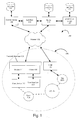
- Fig. 1 is a schematic of one embodiment of the system of the present invention.
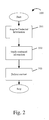
- Fig. 2 is a flow chart of a method of the present invention.
- System 100 functions to provide access to content based upon one or more adequately-credentialed keys 101 being proximate to a certain location 150.
- the system comprises at least one credential-acquisition device (CAD) 102 in the certain location 150 for receiving credential information transmitted from keys 101.
- the system 100 also comprises a server 103 operatively connected to the CAD 102 and configured to receive credential information to determine if the credential information meets requirements for making the content available to a user 104 at the location.
- the system also comprises a content server interface 105 configured for interfacing with a content server 106 to provide the user with access to the content after the credential information is determined to meet the requirements.
- Fig. 1 The elements above are discussed in greater detail below. It should be understood, however, that the schematic of Fig. 1 is provided for illustrative purposes only, and the system and process of the present invention may be practiced in ways not specifically shown in Fig. 1 .
- the servers, CADs and data stores disclosed may be further distributed among multiple servers, CADs and storage devices, or they may be consolidated in fewer servers, CADs and storage devices.
- the server 103 and content server 106 may be integrated or multiple CADs may be employed the location 150.
- the various components shown in Fig. 1 are not necessarily housed in a common area or even operated by a common entity. That is, the various servers and data stores may be operated by different companies and networked together.
- the server 103 may be maintained by one party and the back office system 107 operated by another party. Therefore, the schematic of system 100 should not be used to limit the structure of the system more narrowly than the claims.
- the key 101 may be any mobile, tangible item that comprises a tag 101a for storing credential information and for providing the credential information to CAD 102.
- Credential information may include, for example, an identification of the key, a time stamp, information with respect to who purchased the key or other information that can be used to determine user identity and possibly a user's preferences/profile, and entitlements.
- the selection of the item for tagging depends upon the application. As mentioned above, one of the principal purposes of the present invention is to promote the sale of the item by offering exclusive content. Accordingly, in one embodiment, some relationship between the tagged item and the content is generally preferred such that a user is inclined to purchase the item to obtain the content.
- One approach is to have the item be merchandise related to the subject matter of the content.
- a sports team may promote the sale of clothing and other merchandise bearing the team logo by offering exclusive content on the team (e.g., highlights or personal interviews) for those that purchase the merchandise.
- a television program may promote the sale of action figures and other merchandise related to the program by offering exclusive content about the show (e.g., behind the scenes action or alternative shows) for those that purchase the merchandise.
- the items i.e., clothing and action figures
- Another approach is to have the key be associated with a consumable item, which in turn is associated with content.
- a beverage or food stuff seller may promote the sale of its products by offering desirable content that is unavailable to the public for those that purchase the product.
- an event promoter for example, a rock concert promoter or studio, may promote the sale of tickets by offering to ticket holders content related to the event (concert or movie), such as, for example, interviews with the band members or actors.
- the tagged item might be free and intended to influence user behavior such as attending certain events or visiting certain establishments.
- the tagged item may be a free coupon for presentation to a CAD located at a restaurant or tavern. Presumably, while the user is at the restaurant or tavern, he or she will purchase food and beverages there. Thus, the tagged item may be used to influence the user's spending/consumption behavior.
- the CAD 102 may be any system suitable for acquiring the credential information from the key 101, and includes both wireless and physical connection systems. Examples of physical connection systems include hardwired connections using known interfaces, such as RJ connections, USB ports, or any other known electrical interfaces.
- the key may even interface with the CAD 102 through a physical lock/key mechanism in which the key actuates a physical mechanism to identify the key and the credential information it contains.
- the CAD 102 may communicate with the key 101 through a wireless interface.
- Suitable wireless interfaces include any known technologies for establishing communication between devices including, for example, radio frequency identification (RFID), bar coding, scanning (OCR), magnetic (disk or strip), chemical marking technology (e.g., based on excitation patterns under certain light (e.g., UV light)), Wi-Fi, Bluetooth, infrared, and even acoustic.
- RFID radio frequency identification
- OCR scanning
- magnetic (disk or strip) magnetic (disk or strip)
- chemical marking technology e.g., based on excitation patterns under certain light (e.g., UV light)
- Wi-Fi Wireless Fidelity
- Bluetooth infrared
- the tag be relatively small such that a user can readily carry or wear the key or such that it can be incorporated into other items.
- RFID is employed due to its miniaturization potential.
- CAD 102 is an RFID reader or interrogator and the key 101 has an RFID tag.
- RFID is an automatic identification method, relying on storing and remotely retrieving data using devices called RFID tags or transponders.
- An RFID tag is an object that can be applied to or incorporated into an item, in this case, a key, for the purpose of identification and tracking using radio waves.
- RFID tags--passive, active, or semi-passive also known as battery-assisted.
- Passive tags require no internal power source (they are only active when a reader is nearby to power them), whereas semi-passive and active tags require a power source, usually a small battery.
- Most passive tags signal by "backscattering" the carrier wave from the reader. Specifically, these tags operate by having a minute electrical current induced in their antenna by the incoming radio frequency signal. This means that the antenna has to be designed both to collect power from the incoming signal and to transmit the outbound backscatter signal. Due to their simplicity in design, RFID tag antennas are also suitable for manufacture using a printing process.
- RFID tags may a have a chip for communicating information or they may be chipless.
- a chip-containing RFID tag typically contains two parts--an integrated circuit for storing and processing information, modulating and demodulating a (RF) signal, and other specialized functions, and an antenna for receiving and transmitting the signal.
- RF radio frequency
- a chipless RFID allows for discrete identification of tags without an integrated circuit, thereby allowing tags to be "printed" directly onto the items at relatively low cost. Accordingly, passive, chipless RFID tags are generally preferred from a simplicity standpoint.
- a tag may contain non-volatile data, possibly a writable EEPROM for storing data.
- the tag identification and non-volatile data are the credential information.
- passive tags can be quite small.
- commercially available passive RFID tags exist that can be embedded in a sticker (see, for example, Hara, Yoshiko (2006-02-06). "Hitachi advances paper-thin RFID chip", EETimes ).
- suitable technologies are described in the following US patents, which are hereby incorporated by reference:
- the keys must be within a certain location to communicate with the CAD 102.
- the reason behind this is that the promotion of the key and content is often related to the location-e.g., sports arena, public bar/restaurant, or point of sale.
- the CAD 102 in such an embodiment, should have an ability to limit the keys being identified to just those in the certain location. This is readily achievable using the RFID communication described above. More specifically, at this time, passive tags have practical read distances ranging from about 11 cm (4 in) with near-field (ISO 14443), up to approximately 10 meters (33 feet) with far-field (ISO 18000-6) and can reach up to 600 feet (183 meters) when combined with a phased array. The reading and writing depend on the chosen radio frequency and the antenna design/size. Accordingly, the keys, specifically, the RFID antennas, can be designed to establish the desired range around the CAD 102 to define the location 150.
- the server 103 functions to interface with the CAD 102 in location 150, or with multiple CADs in location 150 or in different locations to obtain and verify credential information from the tag 101A of the key 101. Servers capable of performing this function are well known and commercially available.
- the network configuration of the server 103 and CAD 102 may be any one of known configurations including, for example, local area networks (LANs), wireless local area networks (WLANs), personal area networks (PANs), campus area networks (CANs), metropolitan area networks (MANs), wide area networks (WANs) (such as the Internet), wireless wide area networks (WWANs), and virtual private networks (VPNs), just to name a few.
- LANs local area networks
- WLANs wireless local area networks
- PANs personal area networks
- CANs campus area networks
- MANs metropolitan area networks
- WANs wide area networks
- VPNs virtual private networks
- Such networks may have any suitable architecture, including, for example, client-server, 3-tier architecture, N-tier architecture, distributed objects, loose coupling, or tight coupling.
- the server 103 may communicate with the CAD 102 via the internet 190 or other WAN such as a cable system or telephone. It should be understood that in this configuration, the CAD 102 is a client of server 103. Accordingly, any known client/server architecture and components may be used.
- the server determines whether the credential information meets the requirements for providing a user access to the content.
- the server 103 may access the requirements stored in data store 114.
- the requirements may include, for example, acceptable key identifications, acceptable time range, acceptable user identification, acceptable locations, acceptable product/feature codes, acceptable billing rate codes, acceptable entitlements/service IDs, acceptable capabilities information, acceptable credential encryption cipher/strength, acceptable designated market area/zip code, acceptable content decoding/rendering capabilities, acceptable bandwidth capability, acceptable conditional access capabilities.
- the server 103 interfaces with a back office system 107 to identify the user and obtain a user profile from data store 113.
- the user's identity can be determined based upon the credential information of tag 101a and/or information based on the location 150.
- the tag 101a may contain not only credential information, but also information on the user that purchased or otherwise acquired key 101.
- the back office system 107 may also use other correlation techniques to determine the identity of the user such as, for example, associating purchase information of the key 101 with the user using, for example, credit card information.
- the location 150 may provide information on the user.
- location 150 may be used to determine the identity of the user being associated with the location 150.
- the server 103 may obtain user identification information directly from the user through a keypad or other data entry means at the location 150.
- the server 103 may obtain localized authorization data, e.g., via back office system 107, that is relevant for the location 150.
- the server 103 may obtain localized content delivery parameters that are relevant for the location 150.
- the server 103 communicates with the content server 106 through a content server interface 105.
- the content interface 105 enables the server 103 to communicate back and forth with the content server 106 to ensure that content is delivered properly once the credential information is verified.
- the content server 106 functions to deliver content to the user once server 103 verifies that the user is properly credentialed.
- content servers are well known and commercially available.
- the content may be provided from a data store 170 or the content server 106 may interface with other content servers to provide the content.
- the content server 106 is integrated with the server 103.
- the content server 106 transmits content to the user 104 via a network interface 108.
- the distribution of content from the content server 106 to the user may be accomplished using any know information networks, including, for example, local area networks (LANs), wireless local area networks (WLANs), personal area networks (PANs), virtual private networks (VPNs), campus area networks (CANs), metropolitan area networks (MANs), wide area networks (WANs) (such as the Internet), and wireless wide area networks (WWANs), just to name a few.
- Such networks may have any suitable architecture, including, for example, client-server, 3-tier architecture, N-tier architecture, distributed objects, loose coupling, or tight coupling.
- the content is delivered using a broadband network, which includes, for example, cable, fiber optic service, hybrid fibre-coaxial (HFC), and satellite networks.
- HFC hybrid fibre-coaxial
- the content may be transmitted to the user using any known media.
- Media refers to the forms in which content may be transmitted.
- the most common transmitted media are audio (e.g., music, speech) and visual (photographs, drawings, motion pictures, web pages, animation). These media are typically represented in electronic formats, such as, for example, HTTP, NNTP, UDP, JMS, TCP, MPEG, MP3, wave files, HTML, JPEG, TIFF, and PDF.
- transmitted media will likely involve other sensory data such as taste, smell and touch.
- the network interface 108 is located at location 150 and functions to provide the user 104 with access to the content.
- the network interface 108 may have different embodiments, including for example a modem or a 10/100/1000 Mbps Ethernet interface.
- it comprises a modem 111 to provide content access to a user device 112, such as a personal computer or a personal digital assistant (PDA).
- Suitable modems include, for example, narrowband/phone-line dialup modems, wireless radio modems (e.g., direct broadcast satellite, Wi-fi and WiMax), mobile modems (e.g., GPRS, UMTS, HSPA, EVDO, etc.), and broadband (cable, doubleway satellite, power line, etc.).
- the network interface 108 may be configured to function with a client 109 such as, for example, a satellite radio or a set top box (STB).
- a client 109 such as, for example, a satellite radio or a set top box (STB).
- STB may be a discrete unit or its functionality may be embedded in or distributed among other components of the user's system such as the monitor, TV, DVR, or personal computer.
- the STB may be a portable, modular unit (i.e., a personal STB) or it may be integrated into a stationary TV system.
- the network interface 108 is integrated with the CAD 102 to provide a single unit. Such an approach has the advantage of consolidating the connection with the server side of the system 100. Additionally, such an embodiment ensures that credential acquisition and content delivery occur within the same location 150.
- the CAD 102, network interface 108 and client 109 are integrated into a STB.
- one embodiment of the invention involves distributing the content proximate to the CAD, this is not required. That is, rather than limiting access to the exclusive content while the user proximate to the CAD, it may be beneficial to offer the content to the user at a location different from that of where the CAD is located. For example, once the user presents a key having the proper credentials to a CAD, the content may be made available to the user through his or her STB at a location remote from the CAD. For example, a user may present keys in the form of coupons to a CAD at a store in return for an extra video-on-demand selection on the user's STB.
- the client 109 is connected to a user interface 110, which may be any know device for communicating content to a user, including, for example, a television, a monitor, a loudspeaker, projector, etc.
- the user interface may be the user's television, or it may be one or more televisions in a public place, such as a bar or restaurant, or it may be a display of a computer connected to the Internet.
- the content may be delivered to the user in various ways.
- the content may be pre-determined and delivered to the user after the proper credentials are provided.
- the content may be customized and delivered to the user as part of an interactive session with the user, or in response to a user's selection. Still other ways of delivering content will be obvious to one of skill in the art in light of this disclosure.
- System 100 provides a method of providing content at a certain location based upon one or more adequately-credentialed keys related to the content being proximate to the certain location.
- the method 200 of using system 100 is described.
- the credential information is acquired from at least one key 101 in a certain location 150 using a credential-acquisition device (CAD) 150 in the location.
- CAD credential-acquisition device
- the CAD 102 acquires the credential information from the tag 101a of key 101 and transmits this information to server 103 to determine the adequacy of the credentials.
- the server 103 determines whether the credential information meets the requirements of delivering the content.
- the server 103 may communicate with a back office system 107 to determine user identity and/or profile/preferences. If the credential information meets the requirement for content delivery, the server 103 communicates with the content server 106 to deliver the content to the user. Further, if the identity of the user is known, the server 103 may correlate the content delivered with the user profile obtained from the data store 113.
- the content server 106 provides the content to a network interface 108, which is accessible by the user in different ways. For example, the user may use a client 109 connected to the network interface 108 to access the content, or the user may obtain the content through his PDA or similar user device 112 via the network interface 108. As discussed in the examples below, the method 200 allows access to exclusive content to be used as an incentive to purchase keys.
- the key 101 is a sports jersey of a particular team having an RFID tag 101a containing credential information
- the CAD 102 is an RFID reader incorporated into a user's STB.
- step 201 when the user is wearing the jersey or is otherwise in possession of it near the STB, the CAD in the STB acquires the credential information and transmits it to the server 103.
- step 202 the server 103 verifies that the credential information meets requirements for delivering the content to the user. If so, in step 203, the server 103 communicates with the content server 106 through the interface 105 to make the special content available to the user through his or her STB for display on the user's TV.
- One way to do this is to offer the content as an additional video-on-demand selection on the user's STB.
- the special content might be, for example, highlights of the team's play or interviews with its members.
- This example demonstrates how exclusive content of an organization, person, place, or thing, can be used to promote the sale of merchandise related to the organization, person, place or thing.
- the key 101 is a bottle cap having an RFID tag 101a with credential information.
- the CAD is a RFID reader located in a tavern.
- the CAD acquires the credential information from the tag of each cap, and transmits it to the server 103.
- the acquisition of the credential information may occur, for example, at the time the cap is removed from the bottle. More specifically, the act of removing the cap may be used to close a circuit or otherwise activate the cap's RFID tag. Such a mechanism would avoid caps on bottles not yet purchased or opened from being read by the CAD. Alternatively, the users may be required to scan each cap at the CAD once they are removed from the bottle.
- the credential information may contain an identification of the cap as well as a time stamp.
- the server 103 keeps track of the number of keys whose credentials are transmitted. Once the number of verified credentials having valid time stamps reaches a minimum, exclusive content is made available through the STB of the bar for display on the monitors in the bar in step 203.
- the exclusive content may be, for example, a soccer or boxing match or other sporting event that is not being broadcast. This example demonstrates how a seller of consumable items can appeal to groups of people to gather, purchase and consume its product in certain locations in return for entertainment at those locations.
- the key 101 is a ticket to a sporting event.
- the ticket has an RFID tag 101a containing credential information.
- the CAD is an RFID reader or an array of RFID readers in the arena in which the sport team plays.
- the CAD 102 detects the key as the user enters the arena, acquires its credential information and transmits it to the server 103.
- the credential information of the ticket may also comprise a time stamp.
- the server 103 determines if the credential information meets the requirements for delivering special content.
- the server 103 may also rely on a back office system 107 to determine the user's identity by correlating the ticket identification with the purchaser who is presumably the user.
- step 203 once the credential information is verified as being adequate and having a time stamp within a certain time range, the content is delivered to the user's PDA.
- the content may be made available through the user's STB for the user to enjoy once he or she returns home.
- the content may be, for example, replays of the action on the field, looker room reports on the condition of players, or any other exclusive content of interest to a fan present at the arena. This example demonstrates how a sports team can increase appeal to fans to attend games by offering exclusive content of the game while the user is at the game, or after the game to "relive" the experience.
Landscapes
- Engineering & Computer Science (AREA)
- Computer Security & Cryptography (AREA)
- Signal Processing (AREA)
- Databases & Information Systems (AREA)
- Multimedia (AREA)
- Computer Networks & Wireless Communication (AREA)
- Computer Graphics (AREA)
- General Engineering & Computer Science (AREA)
- Computing Systems (AREA)
- Computer Hardware Design (AREA)
- Storage Device Security (AREA)
- Telephonic Communication Services (AREA)
- Management, Administration, Business Operations System, And Electronic Commerce (AREA)
Abstract
Description
- The present invention relates generally to delivering digital content to a user, and, more specifically, to delivering content to a user after the user has collected one or more objects to provide the user with the proper credentials to receive the content.
- With the advent of sophisticated telecommunications, much of today's entertainment is derived from video content transmitted to users via television and the Internet. As used herein, "digital content" or just "content" refers broadly to the information contained in a transmitted signal that provides value to an end-user/audience, and includes, for example, entertainment, news, and commercials in the form of, for example, video, audio, Internet websites, and interactive games, just to name a few.
- The delivery of content is typically controlled by operators of information networks (e.g., cable, fiber optic service, hybrid fiber-coaxial (HFC), and satellite networks), or by content providers (e.g., website hosts, television networks, and some cable system and multiple system operators (MSOs)). Such operators or content providers often limit distribution of content to only those users having proper credentials to receive such content. As used herein in the telecommunication context, the term "credentials" or "credential information" refers to information associated with the user that verifies that the user is entitled or allowed to receive or gain access to the content. Although an increasing number of information networks use credentials, such as fingerprints, voice recognition, retinal scans, x.509 Public Key Certificate, and so on, in the delivery of content, the classic combination of a user account number or name and possibly a password is typical.
- A common approach for verifying the credentials of a user is to have the credentials encoded into or otherwise associated with a specific piece of hardware, such as a set top box (STB). As used herein, a "set top box" or "STB" is a device that connects to a monitor and an external source of signal, and converts the signal into content for display on the monitor. The signal source might be an Ethernet cable, a satellite dish, a coaxial cable (cable television), optical fiber, a telephone line (including DSL connections), Broadband over Power Line, or even an ordinary VHF or UHF antenna. The STB is typically configured to transmit an identification, which a server recognizes as belonging to a user having a certain subscription plan that defines the scope of services and content the user is entitled to receive. The user identification and subscription plan therefore provide the credentials for delivering content to a user.
- Despite the ubiquity of this approach, Applicants have identified shortcomings of having credentials embedded in a specific device, such as a STB. For example, limiting credentialing to a specific device ignores the vast number of networks separate from the specific device. Such networks can be found, for example, in Wi-Fi enabled coffee shops, sports venues, public bars and restaurants. These venues provide potentially interesting opportunities for downloading content to users. The delivery of such content, however, is limited because users are often unable to provide their credentials, however, because their credentials are embedded in a particular set top box, at home.
- Although such venues may allow credentials to be provided by keying in a password or by entering credit card information, this requires the user to be proactive, which may be enough of a nuisance to dissuade the user for using the network. Additionally, passwords and credit card information can be lost or stolen, thereby allowing others, who actually do not have legitimate credentials, to fraudulently gain access to certain content by using misappropriated passwords or credit cards.
- Therefore, a need exists to exploit the availability of content in locations where user-specific hardware is unavailable or cannot be used practically. To this end, a credentialing approach is required that is not constrained by location, hardware, and password limitations. The present invention fulfills this need among others.
- The present invention represents a paradigm shift in how content is provided. Rather than having credentialing limited to a subscription plan that is specific to certain hardware or the input of a user password, the present invention uses objects or "keys" tagged with credential information to provide access to content when the keys are proximate to a credential-acquisition device (CAD). In other words, content is provided based not on a subscription, but on possession of a key.
- The key "unlocks" the authorization controls on specified content allowing the user to receive the content while the key is proximate to the CAD. By having CADs located where content delivery is possible, for example, in or near STBs, WiFi networks, WWANs, and LANs, content becomes available in these locations if the key is present.
- Therefore, the present invention connects locations and content through a key. This provides for a number of benefits. For example, the subject matter of the content may be related to the key for promotional purposes. In other words, the ability to receive content may be used as an incentive for a user to purchase or otherwise obtain a key. Specific examples include providing exclusive content on a sports team if the user purchases a team jersey or similar merchandise. In this case, the merchandise is tagged with the credentials. Likewise, a ticket may be purchased that can provide access not only to the event, but also to content while the user is at the event. In this case, the admission ticket to the event is the key. The present invention may also be used to incentivize one or more users to collect a number of keys to gain access to desired content. A specific example of this may be using a bottle top as a key and requiring a number of bottle tops to be collected and presented to a CAD before access to the content is granted. Likewise, different levels of content can be provided based on the number of keys collected-i.e., more keys unlock more content.
- Accordingly, one aspect of the invention is a method of providing access to certain content based on one or more keys tagged with credential information being in a certain location. In a preferred embodiment, the method comprises: (a) acquiring credential information from at least one key tagged with credential information using a credential acquisition device (CAD) at the certain location; (b) confirming that the credential information meets requirements for receiving the content; and (c) providing access to the content after steps (a) and (b). Another aspect of the invention is a system for providing access to content based on one or more keys tagged with credential information being proximate to a certain location. In one embodiment, the system comprises: (a) a credential-acquisition device (CAD) in the certain location configured for receiving credential information from keys tagged with the credential information; (b) a server operatively connected to the CAD and configured to receive the credential information to determine if the credential information meets requirements for making content available for a user at the location; and (c) a content server interface configured for interfacing with a content server to provide the user with access to the content if the key is determined to have adequate credential information.
- Yet another aspect of the invention is the key for providing the credential information to a network operator or content provider. In one embodiment, the key comprises an item and a tag associated with the item, the tag having credential information and being configured to communicate with a credential-acquisition device (CAD) to provide the CAD with the credential information.
-
Fig. 1 is a schematic of one embodiment of the system of the present invention. -
Fig. 2 is a flow chart of a method of the present invention. - Referring to
Fig. 1 , an embodiment of thesystem 100 of the present invention is shown.System 100 functions to provide access to content based upon one or more adequately-credentialed keys 101 being proximate to acertain location 150. The system comprises at least one credential-acquisition device (CAD) 102 in thecertain location 150 for receiving credential information transmitted fromkeys 101. Thesystem 100 also comprises aserver 103 operatively connected to theCAD 102 and configured to receive credential information to determine if the credential information meets requirements for making the content available to a user 104 at the location. The system also comprises acontent server interface 105 configured for interfacing with acontent server 106 to provide the user with access to the content after the credential information is determined to meet the requirements. - The elements above are discussed in greater detail below. It should be understood, however, that the schematic of
Fig. 1 is provided for illustrative purposes only, and the system and process of the present invention may be practiced in ways not specifically shown inFig. 1 . For example, the servers, CADs and data stores disclosed may be further distributed among multiple servers, CADs and storage devices, or they may be consolidated in fewer servers, CADs and storage devices. For example, theserver 103 andcontent server 106 may be integrated or multiple CADs may be employed thelocation 150. Additionally, it should be understood that the various components shown inFig. 1 are not necessarily housed in a common area or even operated by a common entity. That is, the various servers and data stores may be operated by different companies and networked together. For example, theserver 103 may be maintained by one party and the back office system 107 operated by another party. Therefore, the schematic ofsystem 100 should not be used to limit the structure of the system more narrowly than the claims. - The
key 101 may be any mobile, tangible item that comprises atag 101a for storing credential information and for providing the credential information toCAD 102. In other words, once an item is tagged with credential information, it becomes a key. Credential information may include, for example, an identification of the key, a time stamp, information with respect to who purchased the key or other information that can be used to determine user identity and possibly a user's preferences/profile, and entitlements. - The selection of the item for tagging depends upon the application. As mentioned above, one of the principal purposes of the present invention is to promote the sale of the item by offering exclusive content. Accordingly, in one embodiment, some relationship between the tagged item and the content is generally preferred such that a user is inclined to purchase the item to obtain the content.
- One approach is to have the item be merchandise related to the subject matter of the content. For example, a sports team may promote the sale of clothing and other merchandise bearing the team logo by offering exclusive content on the team (e.g., highlights or personal interviews) for those that purchase the merchandise. Likewise, a television program may promote the sale of action figures and other merchandise related to the program by offering exclusive content about the show (e.g., behind the scenes action or alternative shows) for those that purchase the merchandise. In the examples above, the items (i.e., clothing and action figures) are tagged with credential information sufficient to gain access to the content once the credential information is transmitted to the
server 103. - Another approach is to have the key be associated with a consumable item, which in turn is associated with content. For example, a beverage or food stuff seller may promote the sale of its products by offering desirable content that is unavailable to the public for those that purchase the product. Likewise, an event promoter, for example, a rock concert promoter or studio, may promote the sale of tickets by offering to ticket holders content related to the event (concert or movie), such as, for example, interviews with the band members or actors. Again, in this approach, the items--i.e., the beverage bottles/caps, box tops, "prizes" in the box, or tickets--are tagged with credential information sufficient to gain access to the content once the credential information is transmitted to the
server 103. - Alternatively, the tagged item might be free and intended to influence user behavior such as attending certain events or visiting certain establishments. For example, the tagged item may be a free coupon for presentation to a CAD located at a restaurant or tavern. Presumably, while the user is at the restaurant or tavern, he or she will purchase food and beverages there. Thus, the tagged item may be used to influence the user's spending/consumption behavior.
- The
CAD 102 may be any system suitable for acquiring the credential information from the key 101, and includes both wireless and physical connection systems. Examples of physical connection systems include hardwired connections using known interfaces, such as RJ connections, USB ports, or any other known electrical interfaces. The key may even interface with theCAD 102 through a physical lock/key mechanism in which the key actuates a physical mechanism to identify the key and the credential information it contains. - Alternatively, the
CAD 102 may communicate with the key 101 through a wireless interface. Suitable wireless interfaces include any known technologies for establishing communication between devices including, for example, radio frequency identification (RFID), bar coding, scanning (OCR), magnetic (disk or strip), chemical marking technology (e.g., based on excitation patterns under certain light (e.g., UV light)), Wi-Fi, Bluetooth, infrared, and even acoustic. It should be understood that the key may actively transmit or passively transmit credential information to the CAD. - Given the mobility requirements of the items, it is preferable that the tag be relatively small such that a user can readily carry or wear the key or such that it can be incorporated into other items. Accordingly, in one embodiment, RFID is employed due to its miniaturization potential. In this embodiment,
CAD 102 is an RFID reader or interrogator and the key 101 has an RFID tag. By way of background, RFID is an automatic identification method, relying on storing and remotely retrieving data using devices called RFID tags or transponders. An RFID tag is an object that can be applied to or incorporated into an item, in this case, a key, for the purpose of identification and tracking using radio waves. - There are essentially three types of RFID tags--passive, active, or semi-passive (also known as battery-assisted). Passive tags require no internal power source (they are only active when a reader is nearby to power them), whereas semi-passive and active tags require a power source, usually a small battery. Most passive tags signal by "backscattering" the carrier wave from the reader. Specifically, these tags operate by having a minute electrical current induced in their antenna by the incoming radio frequency signal. This means that the antenna has to be designed both to collect power from the incoming signal and to transmit the outbound backscatter signal. Due to their simplicity in design, RFID tag antennas are also suitable for manufacture using a printing process.
- RFID tags may a have a chip for communicating information or they may be chipless. A chip-containing RFID tag typically contains two parts--an integrated circuit for storing and processing information, modulating and demodulating a (RF) signal, and other specialized functions, and an antenna for receiving and transmitting the signal. In contrast, a chipless RFID allows for discrete identification of tags without an integrated circuit, thereby allowing tags to be "printed" directly onto the items at relatively low cost. Accordingly, passive, chipless RFID tags are generally preferred from a simplicity standpoint.
- The response of a passive RFID tag is not limited to just the tag identification number. A tag may contain non-volatile data, possibly a writable EEPROM for storing data. In the present invention, the tag identification and non-volatile data are the credential information.
- Because onboard power is not required, passive tags can be quite small. For example, commercially available passive RFID tags exist that can be embedded in a sticker (see, for example, Hara, Yoshiko (2006-02-06). "Hitachi advances paper-thin RFID chip", EETimes). Furthermore, examples of suitable technologies are described in the following US patents, which are hereby incorporated by reference:
- 7,230,534
- Method and system for identifying lost or stolen devices;
- 6,137,403
- Sash sensor and method of sensing a sash using an array of multiplexed elements;
- 6,097,301
- RF identification system with restricted range;
- 6,078,791
- Radio frequency identification transceiver and antenna;
- 6,045,652
- Method of manufacturing an enclosed transceiver;
- 5,983,363
- In-sheet transceiver testing;
- 5,972,152
- Methods of fixturing flexible circuit substrates and a processing carrier, processing a flexible circuit and processing a flexible circuit substrate relative to a processing carrier; and
- 5,779,839
- Method of manufacturing an enclosed transceiver.
- In one embodiment, the keys must be within a certain location to communicate with the
CAD 102. The reason behind this is that the promotion of the key and content is often related to the location-e.g., sports arena, public bar/restaurant, or point of sale. TheCAD 102, in such an embodiment, should have an ability to limit the keys being identified to just those in the certain location. This is readily achievable using the RFID communication described above. More specifically, at this time, passive tags have practical read distances ranging from about 11 cm (4 in) with near-field (ISO 14443), up to approximately 10 meters (33 feet) with far-field (ISO 18000-6) and can reach up to 600 feet (183 meters) when combined with a phased array. The reading and writing depend on the chosen radio frequency and the antenna design/size. Accordingly, the keys, specifically, the RFID antennas, can be designed to establish the desired range around theCAD 102 to define thelocation 150. - The
server 103 functions to interface with theCAD 102 inlocation 150, or with multiple CADs inlocation 150 or in different locations to obtain and verify credential information from the tag 101A of the key 101. Servers capable of performing this function are well known and commercially available. The network configuration of theserver 103 andCAD 102 may be any one of known configurations including, for example, local area networks (LANs), wireless local area networks (WLANs), personal area networks (PANs), campus area networks (CANs), metropolitan area networks (MANs), wide area networks (WANs) (such as the Internet), wireless wide area networks (WWANs), and virtual private networks (VPNs), just to name a few. Such networks may have any suitable architecture, including, for example, client-server, 3-tier architecture, N-tier architecture, distributed objects, loose coupling, or tight coupling. Specifically, theserver 103 may communicate with theCAD 102 via theinternet 190 or other WAN such as a cable system or telephone. It should be understood that in this configuration, theCAD 102 is a client ofserver 103. Accordingly, any known client/server architecture and components may be used. - Once the credential information is obtained, the server determines whether the credential information meets the requirements for providing a user access to the content. To this end, the
server 103 may access the requirements stored indata store 114. The requirements may include, for example, acceptable key identifications, acceptable time range, acceptable user identification, acceptable locations, acceptable product/feature codes, acceptable billing rate codes, acceptable entitlements/service IDs, acceptable capabilities information, acceptable credential encryption cipher/strength, acceptable designated market area/zip code, acceptable content decoding/rendering capabilities, acceptable bandwidth capability, acceptable conditional access capabilities. - In one embodiment, there may be a minimum number of acceptable keys required to gain access to certain content or to different levels of content. That is, one promotion technique is to require the collection of a multitude of keys and/or a congregation of numerous users having keys in a certain location before certain content is made available. For example, a beer company may require a multitude of keys be accumulated in a bar before the desired content can be displayed in the bar. Likewise, rather than amassing a certain quantity of keys, a promoter may require that a certain combination of keys be presented to a CAD. For example, a promotion may be offered in which different keys corresponding to different products, perhaps over a product line (e.g., different cereals), must be presented to the CAD to acquire access to certain content. Along the same lines, a "scavenger hunt" type promotion may be used encourage users to find/purchase different items for their keys. Still many other promotions are possible by practicing the present invention.
- In one embodiment, the
server 103 interfaces with a back office system 107 to identify the user and obtain a user profile fromdata store 113. In one particular embodiment, the user's identity can be determined based upon the credential information oftag 101a and/or information based on thelocation 150. For example, thetag 101a may contain not only credential information, but also information on the user that purchased or otherwise acquired key 101. The back office system 107 may also use other correlation techniques to determine the identity of the user such as, for example, associating purchase information of the key 101 with the user using, for example, credit card information. Alternatively, or in conjunction with this approach, thelocation 150 may provide information on the user. For example, if theCAD 102 is part of a user's STB or otherwise associated with a user's residence,location 150 may be used to determine the identity of the user being associated with thelocation 150. In yet another embodiment, theserver 103 may obtain user identification information directly from the user through a keypad or other data entry means at thelocation 150. In yet another embodiment, theserver 103 may obtain localized authorization data, e.g., via back office system 107, that is relevant for thelocation 150. In yet another embodiment, theserver 103 may obtain localized content delivery parameters that are relevant for thelocation 150. - The
server 103 communicates with thecontent server 106 through acontent server interface 105. Thecontent interface 105 enables theserver 103 to communicate back and forth with thecontent server 106 to ensure that content is delivered properly once the credential information is verified. - The
content server 106 functions to deliver content to the user onceserver 103 verifies that the user is properly credentialed. As with theserver 103, content servers are well known and commercially available. The content may be provided from adata store 170 or thecontent server 106 may interface with other content servers to provide the content. In one embodiment, thecontent server 106 is integrated with theserver 103. - The
content server 106 transmits content to the user 104 via anetwork interface 108. The distribution of content from thecontent server 106 to the user may be accomplished using any know information networks, including, for example, local area networks (LANs), wireless local area networks (WLANs), personal area networks (PANs), virtual private networks (VPNs), campus area networks (CANs), metropolitan area networks (MANs), wide area networks (WANs) (such as the Internet), and wireless wide area networks (WWANs), just to name a few. Such networks may have any suitable architecture, including, for example, client-server, 3-tier architecture, N-tier architecture, distributed objects, loose coupling, or tight coupling. Preferably, the content is delivered using a broadband network, which includes, for example, cable, fiber optic service, hybrid fibre-coaxial (HFC), and satellite networks. - Additionally, the content may be transmitted to the user using any known media. "Media" refers to the forms in which content may be transmitted. Presently, the most common transmitted media are audio (e.g., music, speech) and visual (photographs, drawings, motion pictures, web pages, animation). These media are typically represented in electronic formats, such as, for example, HTTP, NNTP, UDP, JMS, TCP, MPEG, MP3, wave files, HTML, JPEG, TIFF, and PDF. As transmission technologies become more advanced, however, transmitted media will likely involve other sensory data such as taste, smell and touch.
- The
network interface 108 is located atlocation 150 and functions to provide the user 104 with access to the content. Thenetwork interface 108 may have different embodiments, including for example a modem or a 10/100/1000 Mbps Ethernet interface. In one embodiment, it comprises amodem 111 to provide content access to a user device 112, such as a personal computer or a personal digital assistant (PDA). Suitable modems include, for example, narrowband/phone-line dialup modems, wireless radio modems (e.g., direct broadcast satellite, Wi-fi and WiMax), mobile modems (e.g., GPRS, UMTS, HSPA, EVDO, etc.), and broadband (cable, doubleway satellite, power line, etc.). - Alternatively, or in conjunction with the
modem 111, thenetwork interface 108 may be configured to function with aclient 109 such as, for example, a satellite radio or a set top box (STB). The STB may be a discrete unit or its functionality may be embedded in or distributed among other components of the user's system such as the monitor, TV, DVR, or personal computer. For example, the STB may be a portable, modular unit (i.e., a personal STB) or it may be integrated into a stationary TV system. - In one embodiment, the
network interface 108 is integrated with theCAD 102 to provide a single unit. Such an approach has the advantage of consolidating the connection with the server side of thesystem 100. Additionally, such an embodiment ensures that credential acquisition and content delivery occur within thesame location 150. In one embodiment, theCAD 102,network interface 108 andclient 109 are integrated into a STB. - Although one embodiment of the invention involves distributing the content proximate to the CAD, this is not required. That is, rather than limiting access to the exclusive content while the user proximate to the CAD, it may be beneficial to offer the content to the user at a location different from that of where the CAD is located. For example, once the user presents a key having the proper credentials to a CAD, the content may be made available to the user through his or her STB at a location remote from the CAD. For example, a user may present keys in the form of coupons to a CAD at a store in return for an extra video-on-demand selection on the user's STB.
- The
client 109, in one embodiment, is connected to a user interface 110, which may be any know device for communicating content to a user, including, for example, a television, a monitor, a loudspeaker, projector, etc. In one particular example, the user interface may be the user's television, or it may be one or more televisions in a public place, such as a bar or restaurant, or it may be a display of a computer connected to the Internet. - The content may be delivered to the user in various ways. For example, the content may be pre-determined and delivered to the user after the proper credentials are provided. Alternatively, the content may be customized and delivered to the user as part of an interactive session with the user, or in response to a user's selection. Still other ways of delivering content will be obvious to one of skill in the art in light of this disclosure.
-
System 100 provides a method of providing content at a certain location based upon one or more adequately-credentialed keys related to the content being proximate to the certain location. Referring toFig. 2 , themethod 200 of usingsystem 100 is described. Instep 201, the credential information is acquired from at least one key 101 in acertain location 150 using a credential-acquisition device (CAD) 150 in the location. Specifically, when the key enters thelocation 150, theCAD 102 acquires the credential information from thetag 101a ofkey 101 and transmits this information toserver 103 to determine the adequacy of the credentials. Instep 202, theserver 103 determines whether the credential information meets the requirements of delivering the content. To this end, theserver 103 may communicate with a back office system 107 to determine user identity and/or profile/preferences. If the credential information meets the requirement for content delivery, theserver 103 communicates with thecontent server 106 to deliver the content to the user. Further, if the identity of the user is known, theserver 103 may correlate the content delivered with the user profile obtained from thedata store 113. Instep 203, thecontent server 106 provides the content to anetwork interface 108, which is accessible by the user in different ways. For example, the user may use aclient 109 connected to thenetwork interface 108 to access the content, or the user may obtain the content through his PDA or similar user device 112 via thenetwork interface 108. As discussed in the examples below, themethod 200 allows access to exclusive content to be used as an incentive to purchase keys. - This method is illustrated further by reference to three examples. In the first example, the key 101 is a sports jersey of a particular team having an
RFID tag 101a containing credential information, and theCAD 102 is an RFID reader incorporated into a user's STB. Instep 201, when the user is wearing the jersey or is otherwise in possession of it near the STB, the CAD in the STB acquires the credential information and transmits it to theserver 103. Instep 202, theserver 103 verifies that the credential information meets requirements for delivering the content to the user. If so, instep 203, theserver 103 communicates with thecontent server 106 through theinterface 105 to make the special content available to the user through his or her STB for display on the user's TV. One way to do this is to offer the content as an additional video-on-demand selection on the user's STB. The special content might be, for example, highlights of the team's play or interviews with its members. This example demonstrates how exclusive content of an organization, person, place, or thing, can be used to promote the sale of merchandise related to the organization, person, place or thing. - In the second example, the key 101 is a bottle cap having an
RFID tag 101a with credential information. The CAD is a RFID reader located in a tavern. Instep 201, as patrons purchase and collect bottle caps, the CAD acquires the credential information from the tag of each cap, and transmits it to theserver 103. The acquisition of the credential information may occur, for example, at the time the cap is removed from the bottle. More specifically, the act of removing the cap may be used to close a circuit or otherwise activate the cap's RFID tag. Such a mechanism would avoid caps on bottles not yet purchased or opened from being read by the CAD. Alternatively, the users may be required to scan each cap at the CAD once they are removed from the bottle. The credential information may contain an identification of the cap as well as a time stamp. Instep 202, theserver 103 keeps track of the number of keys whose credentials are transmitted. Once the number of verified credentials having valid time stamps reaches a minimum, exclusive content is made available through the STB of the bar for display on the monitors in the bar instep 203. The exclusive content may be, for example, a soccer or boxing match or other sporting event that is not being broadcast. This example demonstrates how a seller of consumable items can appeal to groups of people to gather, purchase and consume its product in certain locations in return for entertainment at those locations. - In a third example, the key 101 is a ticket to a sporting event. The ticket has an
RFID tag 101a containing credential information. The CAD is an RFID reader or an array of RFID readers in the arena in which the sport team plays. Instep 201, theCAD 102 detects the key as the user enters the arena, acquires its credential information and transmits it to theserver 103. The credential information of the ticket may also comprise a time stamp. Instep 202, theserver 103 determines if the credential information meets the requirements for delivering special content. Theserver 103 may also rely on a back office system 107 to determine the user's identity by correlating the ticket identification with the purchaser who is presumably the user. This could be done, for example, by correlating a particular ticket to the credit card used to purchase it, and then using credit card to obtain the user's identification. Of course, in such an embodiment, privacy issues must be considered. Instep 203, once the credential information is verified as being adequate and having a time stamp within a certain time range, the content is delivered to the user's PDA. Alternatively, the content may be made available through the user's STB for the user to enjoy once he or she returns home. The content may be, for example, replays of the action on the field, looker room reports on the condition of players, or any other exclusive content of interest to a fan present at the arena. This example demonstrates how a sports team can increase appeal to fans to attend games by offering exclusive content of the game while the user is at the game, or after the game to "relive" the experience. - The examples and description above are illustrative of the present invention and should not be used to limit the scope of the claims. Indeed, many other uses and applications of the present invention will be apparent to one of skill of art in light of this disclosure.
-
- 1. A method of providing access to content based upon one or more adequately-credentialed keys being proximate to a certain location, said method comprising:
- (a) acquiring credential information from at least one key tagged with credential information using a credential acquisition device (CAD) at said certain location;
- (b) confirming that said credential information meets requirements for providing access to said content; and
- (c) providing access to said content after steps (a) and (b).
- 2. The method of statement 1, wherein said access is provided at said certain location.
- 3. The method of statement 1, wherein said access is provided at a location different from said certain location.
- 4. The method of statement 1, wherein step (a) comprises said key transmitting said credential information wirelessly to said CAD.
- 5. The method of statement 4, wherein said key comprises an RFID tag.
- 6. The method of statement 1, wherein said credential information comprises at least one of key identification, a time stamp, or user identification.
- 7. The method of statement 1, wherein said content is related to said key.
- 8. The method of statement 7, wherein said key is a merchandise item.
- 9. The method of statement 8, wherein said key is a branded merchandise item.
- 10. The method of statement 9, wherein said branded merchandise item is an article of apparel relating to a sports team and said content relates to said sports team.
- 11. The method of statement 8, further comprising: offering said content as an incentive to purchase said key.
- 12. The method of statement 1, wherein said key at least partially contains a consumable item.
- 13. The method of statement 1, wherein step (b) comprises determining whether a predetermined plurality of keys is at said certain location before providing access to said content.
- 14. The method of statement 1, wherein step (b) comprises determining whether a time stamp of said credential information is within a predetermined time range.
- 15. The method of statement 1, further comprising determining the identity of said user.
- 16. The method of statement 15, wherein said content is correlated with a profile of the identified user.
- 17. The method of statement 1, wherein said content is advertising.
- 18. The method of statement 1, wherein said CAD is incorporated into a set top box.
- 19. The method of statement 1, wherein said content is provided automatically to said user following steps (a) and (b).
- 20. The method of statement 1, wherein, in step (c), said content is rendered via a user interface at said location.
- 21. A system for providing access to content based upon one or more adequately-credentialed keys being proximate to a certain location, said system comprising:
- a credential-acquisition device (CAD) in said certain location configured for receiving credential information from keys tagged with said credential information;
- a server operatively connected to said CAD and configured to receive said credential information to determine if said credential information meets requirements for making content available to a user at said location; and
- a content server interface configured for interfacing with a content server to provide said user with access to said content if said key is determined to have adequate credential information.
- 22. The system of statement 21, wherein said CAD is an RFID interrogator.
- 23. The system of statement 22, further comprising:
- a key comprising an RFID tag having said credential information.
- 24. The system of statement 21, wherein said server is configured to interface with a back office system to identify said user and obtain a profile on said user.
- 25. The system of statement 24, further comprising said back office system, wherein said back office system is configured to use said credential information to determine identity of said user.
- 26. The system of statement 21, further comprising said content server.
- 27. The system of statement 26, wherein said content server is integrated with said server receiving said credential information.
- 28. The system of statement 21, further comprising:
- a network interface at said location for providing said user access to said content.
- 29. The system of statement 28, wherein said network interface comprises a client integrated with said CAD.
- 30. The system of statement 28, wherein said network interface comprises a client integrated with a user interface.
- 31. The system of statement 28, wherein said network interface comprises a set top box.
- 32. The system of statement 31, wherein said set top box is integrated with a user interface.
- 33. A key comprising an item and a tag associated with said item, said tag having credential information and being configured to communicate with a credential-acquisition device (CAD) to provide said CAD with said credential information.
- 34. The key of statement 33, wherein said tag is configured to communicate with said CAD wirelessly.
- 35. The key of statement 34, wherein said tag comprises an RFID tag containing said credential information.
- 36. The item of statement 33, wherein said item is at least one of an article of apparel, a ticket, a coupon, or a consumable, and said tag is at least attached to said item, contained by said item, or at least partially contains said item.
Claims (15)
- A method of providing access to content based upon one or more adequately-credentialed keys being proximate to a certain location, said method comprising:(a) acquiring credential information from at least one key tagged with credential information using a credential acquisition device (CAD) at said certain location;(b) confirming that said credential information meets requirements for providing access to said content; and(c) providing access to said content after steps (a) and (b).
- The method of claim 1, wherein said access is provided at said certain location, or
wherein said access is provided at a location different from said certain location, and/or
wherein step (a) comprises said key transmitting said credential information wirelessly to said CAD and wherein said key may comprise an RFID tag, and/or
wherein said credential information comprises at least one of key identification, a time stamp, or user identification. - The method of claim 1 or claim 2, wherein said content is related to said key and said key may be a merchandise item and may be a branded merchandise item, and wherein when said key is a branded merchandise item:said branded merchandise item is an article of apparel relating to a sports team and said content relates to said sports team.
- The method of any preceding claim wherein said content is related to said key and said key is a branded merchandise item, said method further comprising: offering said content as an incentive to purchase said key.
- The method of any preceding claim, wherein said key at least partially contains a consumable item.
- The method of any preceding claim, wherein step (b) comprises:determining whether a predetermined plurality of keys is at said certain location before providing access to said content, and/or wherein step (b) comprises:determining whether a time stamp of said credential information is within a predetermined time range.
- The method of any preceding claim, further comprising determining the identity of said user and further wherein said content may be correlated with a profile of the identified user.
- The method of any preceding claim, wherein said content is advertising, and/or
wherein said CAD is incorporated into a set top box, and/or
wherein said content is provided automatically to said user following steps (a) and (b), and/or
wherein, in step (c), said content is rendered via a user interface at said location. - A system for providing access to content based upon one or more adequately-credentialed keys being proximate to a certain location, said system comprising:a credential-acquisition device (CAD) in said certain location configured for receiving credential information from keys tagged with said credential information;a server operatively connected to said CAD and configured to receive said credential information to determine if said credential information meets requirements for making content available to a user at said location; anda content server interface configured for interfacing with a content server to provide said user with access to said content if said key is determined to have adequate credential information.
- The system of claim 9, wherein said CAD is an RFID interrogator and wherein said system may further comprise:a key comprising an RFID tag having said credential information.
- The system of claim 9 or claim 10, wherein said server is configured to interface with a back office system to identify said user and obtain a profile on said user and wherein said system may further comprise:said back office system, wherein said back office system is configured to use said credential information to determine identity of said user.
- The system of any of claims 9 to 12, further comprising said content server wherein said content server may be integrated with said server receiving said credential information, and/or wherein said system further comprises:a network interface at said location for providing said user access to said content, said network interface may comprise:a client integrated with said CAD and/ora client integrated with a user interface and/ora set top box, where said set top box may be integrated with a user interface.
- A key comprising an item and a tag associated with said item, said tag having credential information and being configured to communicate with a credential-acquisition device (CAD) to provide said CAD with said credential information.
- The key of claim 13, wherein said tag is configured to communicate with said CAD wirelessly and wherein said tag may comprise an RFID tag containing said credential information
- The item of claim 13 or claim 14, wherein said item is at least one of an article of apparel, a ticket, a coupon, or a consumable, and said tag is at least attached to said item, contained by said item, or at least partially contains said item.
Applications Claiming Priority (1)
| Application Number | Priority Date | Filing Date | Title |
|---|---|---|---|
| US12/265,169 US8644511B2 (en) | 2008-11-05 | 2008-11-05 | System and method for providing digital content |
Publications (3)
| Publication Number | Publication Date |
|---|---|
| EP2184885A2 true EP2184885A2 (en) | 2010-05-12 |
| EP2184885A3 EP2184885A3 (en) | 2013-01-02 |
| EP2184885B1 EP2184885B1 (en) | 2017-03-22 |
Family
ID=41807536
Family Applications (1)
| Application Number | Title | Priority Date | Filing Date |
|---|---|---|---|
| EP09174694.1A Active EP2184885B1 (en) | 2008-11-05 | 2009-10-30 | System and method for providing digital content |
Country Status (3)
| Country | Link |
|---|---|
| US (2) | US8644511B2 (en) |
| EP (1) | EP2184885B1 (en) |
| CA (1) | CA2684228C (en) |
Cited By (1)
| Publication number | Priority date | Publication date | Assignee | Title |
|---|---|---|---|---|
| EP3672260A1 (en) * | 2018-12-21 | 2020-06-24 | Nagravision SA | Device location determination |
Families Citing this family (7)
| Publication number | Priority date | Publication date | Assignee | Title |
|---|---|---|---|---|
| CN101534309B (en) * | 2009-04-14 | 2013-03-13 | 华为技术有限公司 | A node registration method, a routing update method, a communication system and the relevant equipment |
| US20130132981A1 (en) * | 2011-05-18 | 2013-05-23 | Lauralee Bell Martin | Interactive Webisodic or Episodic Product Presentation and Sales System |
| US8745081B2 (en) * | 2012-03-13 | 2014-06-03 | Yahoo! Inc. | Personalization of news articles based on news sources |
| US9009764B2 (en) * | 2012-04-12 | 2015-04-14 | Qualcomm Incorporated | Broadcast content via over the top delivery |
| US9008696B1 (en) * | 2013-10-21 | 2015-04-14 | At&T Intellectual Property I, Lp | Method and apparatus for distributing services and data |
| JP6536095B2 (en) * | 2015-03-11 | 2019-07-03 | 富士通株式会社 | Content distribution method, content distribution apparatus and content distribution program |
| CN108882030A (en) * | 2018-06-12 | 2018-11-23 | 成都三零凯天通信实业有限公司 | A kind of monitor video classification encryption and decryption method and system based on time-domain information |
Family Cites Families (88)
| Publication number | Priority date | Publication date | Assignee | Title |
|---|---|---|---|---|
| DE4319878A1 (en) * | 1992-06-17 | 1993-12-23 | Micron Technology Inc | High frequency identification system card - has integrated circuit chip or carrier layer sealed by top layer and coupled to batteries and antenna system |
| US6045652A (en) * | 1992-06-17 | 2000-04-04 | Micron Communications, Inc. | Method of manufacturing an enclosed transceiver |
| US5779839A (en) * | 1992-06-17 | 1998-07-14 | Micron Communications, Inc. | Method of manufacturing an enclosed transceiver |
| US5983363A (en) * | 1992-11-20 | 1999-11-09 | Micron Communications, Inc. | In-sheet transceiver testing |
| US6097301A (en) * | 1996-04-04 | 2000-08-01 | Micron Communications, Inc. | RF identification system with restricted range |
| US6948070B1 (en) * | 1995-02-13 | 2005-09-20 | Intertrust Technologies Corporation | Systems and methods for secure transaction management and electronic rights protection |
| US7057492B2 (en) * | 1995-10-11 | 2006-06-06 | Motorola, Inc. | Enabling/enhancing a feature of an electronic device using radio frequency identification technology |
| US5972152A (en) * | 1997-05-16 | 1999-10-26 | Micron Communications, Inc. | Methods of fixturing flexible circuit substrates and a processing carrier, processing a flexible circuit and processing a flexible circuit substrate relative to a processing carrier |
| US7246098B1 (en) * | 1997-07-15 | 2007-07-17 | Silverbrook Research Pty Ltd | Consumable authentication protocol and system |
| US6609656B1 (en) * | 1998-03-27 | 2003-08-26 | Micron Technology, Inc. | Method and system for identifying lost or stolen devices |
| US6226619B1 (en) * | 1998-10-29 | 2001-05-01 | International Business Machines Corporation | Method and system for preventing counterfeiting of high price wholesale and retail items |
| US6137403A (en) * | 1998-12-10 | 2000-10-24 | Phoenix Controls Corporation | Sash sensor and method of sensing a sash using an array of multiplexed elements |
| US8050964B2 (en) * | 1999-05-06 | 2011-11-01 | Etagz, Inc. | Computer-readable medium product label apparatus and method |
| JP2001175540A (en) * | 1999-12-22 | 2001-06-29 | Nec Corp | Access right management system, portable terminal, gateway and contents server |
| WO2001047789A1 (en) * | 1999-12-28 | 2001-07-05 | Matsushita Electric Industrial Co., Ltd. | Information recording medium, noncontact ic tag, access device, access system, life cycle management system, input/output method, and access method |
| US6773344B1 (en) * | 2000-03-16 | 2004-08-10 | Creator Ltd. | Methods and apparatus for integration of interactive toys with interactive television and cellular communication systems |
| US7213254B2 (en) * | 2000-04-07 | 2007-05-01 | Koplar Interactive Systems International Llc | Universal methods and device for hand-held promotional opportunities |
| US6879963B1 (en) * | 2000-04-12 | 2005-04-12 | Music Choice | Cross channel delivery system and method |
| EP1287501A1 (en) * | 2000-04-17 | 2003-03-05 | Robert Kaplan | Method and apparatus for transferring or receiving data via the internet securely |
| KR100601633B1 (en) * | 2000-04-26 | 2006-07-14 | 삼성전자주식회사 | Multilevel distribution system and method of digital content |
| JP2002083116A (en) * | 2000-06-20 | 2002-03-22 | Disparce Inc | Customer information collecting method, customer information providing method, point imparting method, commodity information providing method and customer information collecting device using network |
| AU7593601A (en) * | 2000-07-14 | 2002-01-30 | Atabok Inc | Controlling and managing digital assets |
| US7143289B2 (en) * | 2000-10-30 | 2006-11-28 | Geocodex Llc | System and method for delivering encrypted information in a communication network using location identity and key tables |
| GB0027280D0 (en) * | 2000-11-08 | 2000-12-27 | Malcolm Peter | An information management system |
| AU2002225768A1 (en) * | 2000-11-28 | 2002-06-11 | Rcd Technology, Inc. | Replacing stored code with user inputting code on the rf id card |
| AU2002247173A1 (en) * | 2001-02-20 | 2002-09-04 | Caron S. Ellis | Enhanced radio systems and methods |
| EP1378092B1 (en) * | 2001-02-22 | 2008-06-25 | Bea Systems, Inc. | System and method for message encryption and signing in a transaction processingsystem |
| US7136840B2 (en) * | 2001-04-20 | 2006-11-14 | Intertrust Technologies Corp. | Systems and methods for conducting transactions and communications using a trusted third party |
| US20060059544A1 (en) * | 2004-09-14 | 2006-03-16 | Guthrie Paul D | Distributed secure repository |
| AU2002223993A1 (en) * | 2001-06-11 | 2002-12-23 | Nds Limited | Anonymous ordering system |
| US8818871B2 (en) * | 2001-06-21 | 2014-08-26 | Thomson Licensing | Method and system for electronic purchases using an intelligent data carrier medium, electronic coupon system, and interactive TV infrastructure |
| US8024752B2 (en) * | 2001-06-29 | 2011-09-20 | Thomson Licensing | Method and apparatus for permitting unconfirmed viewing time with addressable pay TV |
| US8548927B2 (en) * | 2001-07-10 | 2013-10-01 | Xatra Fund Mx, Llc | Biometric registration for facilitating an RF transaction |
| US7249107B2 (en) * | 2001-07-20 | 2007-07-24 | Microsoft Corporation | Redistribution of rights-managed content |
| US6831570B2 (en) * | 2001-09-19 | 2004-12-14 | Intel Corporation | Method and apparatus to select content |
| US8504652B2 (en) * | 2006-04-10 | 2013-08-06 | Portulim Foundation Llc | Method and system for selectively supplying media content to a user and media storage device for use therein |
| US6865555B2 (en) * | 2001-11-21 | 2005-03-08 | Digeo, Inc. | System and method for providing conditional access to digital content |
| US7260555B2 (en) * | 2001-12-12 | 2007-08-21 | Guardian Data Storage, Llc | Method and architecture for providing pervasive security to digital assets |
| US20030167471A1 (en) * | 2002-03-04 | 2003-09-04 | Cliff Roth | System and method for selection of video products that are deliverable on demand |
| US6967566B2 (en) * | 2002-04-05 | 2005-11-22 | Creative Kingdoms, Llc | Live-action interactive adventure game |
| EP1383327B1 (en) * | 2002-06-11 | 2013-12-25 | Panasonic Corporation | Content distributing system and data-communication controlling device |
| IL166398A0 (en) | 2002-09-18 | 2006-01-15 | Nds Ltd | System for multimedia viewing based on entitlements |
| KR101029211B1 (en) * | 2002-11-05 | 2011-04-12 | 비지오네어 가부시끼가이샤 | View management method of specific content recorded in information recording medium |
| US20040117843A1 (en) * | 2002-12-11 | 2004-06-17 | Jeyhan Karaoguz | Media exchange network supporting local and remote personalized media overlay |
| US7493289B2 (en) * | 2002-12-13 | 2009-02-17 | Aol Llc | Digital content store system |
| DE10308011B4 (en) * | 2003-02-25 | 2005-04-28 | Siemens Ag | A method for reward-based recommending content objects downloadable to a mobile station |
| US20040177369A1 (en) * | 2003-03-06 | 2004-09-09 | Akins Glendon L. | Conditional access personal video recorder |
| AU2003902796A0 (en) * | 2003-06-04 | 2003-06-19 | Shaw Ip Pty Ltd | A system for and method of monitoring supply of an item |
| EP1536306A1 (en) * | 2003-09-30 | 2005-06-01 | Broadcom Corporation | Proximity authentication system |
| US20050076092A1 (en) * | 2003-10-02 | 2005-04-07 | Sony Corporation And Sony Electronics Inc. | User shared virtual channel via media storage |
| US7225167B2 (en) * | 2003-11-21 | 2007-05-29 | International Business Machines Corporation | Merchandise-integral transaction receipt and auditable product ownership trail |
| US20050192902A1 (en) * | 2003-12-05 | 2005-09-01 | Motion Picture Association Of America | Digital rights management using multiple independent parameters |
| WO2005080187A1 (en) | 2004-02-13 | 2005-09-01 | Wham-O, Inc. | Children’s water board with manually-operable spray mechanism |
| CA2597872C (en) * | 2004-02-25 | 2015-08-11 | Accenture Global Services Gmbh | Rfid protected media system and method that provides dynamic downloadable media |
| US20050289061A1 (en) * | 2004-06-24 | 2005-12-29 | Michael Kulakowski | Secure authentication system for collectable and consumer items |
| US20060094504A1 (en) * | 2004-11-03 | 2006-05-04 | George Polchin | Method and apparatus for dynamic enhancement of video games with vendor specific data |
| US20060132311A1 (en) * | 2004-11-09 | 2006-06-22 | Neology, Inc. | Systems and methods for tracking containers |
| KR100688079B1 (en) * | 2004-12-17 | 2007-03-02 | 한국전자통신연구원 | Profile information classification and processing method for personalization service and personalization service provision system using same |
| KR100784688B1 (en) * | 2005-01-26 | 2007-12-12 | 한국전자통신연구원 | Contents Execution Device equipped with Independent Authentication Means and Contents Re-Distribution Method |
| CN101116080B (en) * | 2005-02-04 | 2017-07-28 | 皇家飞利浦电子股份有限公司 | Method, device, system, token for creating authorized domain |
| US20060259927A1 (en) * | 2005-05-16 | 2006-11-16 | Swarup Acharya | Method and apparatus for providing remote access to subscription television services |
| US8429755B2 (en) * | 2005-05-26 | 2013-04-23 | Sandisk Technologies Inc. | System and method for receiving digital content |
| US20060271437A1 (en) * | 2005-05-26 | 2006-11-30 | Maggio Frank S | System and method for home product delivery |
| JP4935015B2 (en) * | 2005-07-29 | 2012-05-23 | ソニー株式会社 | Content distribution system, content distribution method, content transmission terminal, and content reception terminal |
| US20070046439A1 (en) * | 2005-09-01 | 2007-03-01 | Yoshitsugu Takaku | Radio frequency identification system with device for protecting privacy and method of operation |
| US7830259B2 (en) * | 2005-10-11 | 2010-11-09 | Nanonation Incorporated | Method and apparatus for RFID initiated interactive retail merchandising |
| US8127331B2 (en) * | 2005-12-20 | 2012-02-28 | Bce Inc. | Method, system and apparatus for conveying personalized content to a viewer |
| US20070226765A1 (en) * | 2006-03-24 | 2007-09-27 | General Instrument Corporation | Managing Blackout of Media Content |
| KR100806107B1 (en) * | 2006-04-11 | 2008-02-21 | 엘지전자 주식회사 | How to protect unprotected content in DDR |
| US8280982B2 (en) * | 2006-05-24 | 2012-10-02 | Time Warner Cable Inc. | Personal content server apparatus and methods |
| US8024762B2 (en) * | 2006-06-13 | 2011-09-20 | Time Warner Cable Inc. | Methods and apparatus for providing virtual content over a network |
| US7978720B2 (en) * | 2006-06-30 | 2011-07-12 | Russ Samuel H | Digital media device having media content transfer capability |
| EP2057844A2 (en) * | 2006-08-25 | 2009-05-13 | Koninklijke Philips Electronics N.V. | Storing tv-anytime crids in objects |
| US20080103890A1 (en) * | 2006-10-30 | 2008-05-01 | Mastercard International Incorporated | Apparatus and method for consumer product promotion using payment device |
| US7860809B2 (en) * | 2006-11-10 | 2010-12-28 | At&T Intellectual Property I, Lp | Methods and devices for digital media distribution |
| US20090070213A1 (en) * | 2006-12-08 | 2009-03-12 | Carol Miller | Method, system, and apparatus for providing supplemental content for a social expression product |
| US20080148363A1 (en) * | 2006-12-15 | 2008-06-19 | Nbc Universal, Inc. | Digital rights management copy sharing system and method |
| US8438603B2 (en) * | 2006-12-22 | 2013-05-07 | Time Warner Cable Inc. | Methods and apparatus for supporting content distribution |
| US20080155591A1 (en) * | 2006-12-26 | 2008-06-26 | Mahajan Manish W | Method, system and device for providing advertisement content in place-shifted multimedia content |
| US20080198013A1 (en) * | 2007-02-15 | 2008-08-21 | Vogt Eric E | Methods and systems for providing mechanisms for authenticating contents of a bottle during its progress through a distribution channel |
| US20080235108A1 (en) * | 2007-03-21 | 2008-09-25 | Michael Kulakowski | Electronic Secure Authorization for Exchange Application Interface Device (eSafeAID) |
| US7873578B2 (en) * | 2007-03-30 | 2011-01-18 | Microsoft Corporation | Buy once play anywhere |
| US20080275761A1 (en) * | 2007-04-26 | 2008-11-06 | 1821 Wine Company, Inc. | Wine database and recommendation system |
| JP4416013B2 (en) * | 2007-06-20 | 2010-02-17 | ソニー株式会社 | Content viewing system, content viewing apparatus, and viewing approval apparatus |
| US20090037306A1 (en) * | 2007-07-31 | 2009-02-05 | Bank Of America Corporation | System and Method for Managing Customer Interactions |
| US9064102B2 (en) * | 2007-09-11 | 2015-06-23 | Google Technology Holdings LLC | Method, system and device for secured access to protected digital material |
| US7496948B1 (en) * | 2008-02-04 | 2009-02-24 | International Business Machines Corporation | Method for controlling access to a target application |
| US20100083322A1 (en) * | 2008-09-29 | 2010-04-01 | Alan Rouse | Providing selective video program content and associated license in response to a promotion token |
-
2008
- 2008-11-05 US US12/265,169 patent/US8644511B2/en active Active
-
2009
- 2009-10-30 CA CA2684228A patent/CA2684228C/en active Active
- 2009-10-30 EP EP09174694.1A patent/EP2184885B1/en active Active
-
2014
- 2014-02-03 US US14/171,112 patent/US9300662B2/en active Active
Cited By (5)
| Publication number | Priority date | Publication date | Assignee | Title |
|---|---|---|---|---|
| EP3672260A1 (en) * | 2018-12-21 | 2020-06-24 | Nagravision SA | Device location determination |
| WO2020127736A1 (en) * | 2018-12-21 | 2020-06-25 | Nagravision Sa | Device location determination |
| US11570499B2 (en) | 2018-12-21 | 2023-01-31 | Nagravision S.A. | Device location determination |
| EP4270964A3 (en) * | 2018-12-21 | 2023-12-27 | Nagravision S.A. | Device location determination |
| US12143655B2 (en) | 2018-12-21 | 2024-11-12 | Nagravision S.A. | Device location determination |
Also Published As
| Publication number | Publication date |
|---|---|
| CA2684228C (en) | 2017-10-10 |
| EP2184885B1 (en) | 2017-03-22 |
| US9300662B2 (en) | 2016-03-29 |
| CA2684228A1 (en) | 2010-05-05 |
| US20100115572A1 (en) | 2010-05-06 |
| US8644511B2 (en) | 2014-02-04 |
| US20140215591A1 (en) | 2014-07-31 |
| EP2184885A3 (en) | 2013-01-02 |
Similar Documents
| Publication | Publication Date | Title |
|---|---|---|
| US9300662B2 (en) | System and method for providing digital content | |
| US9084005B2 (en) | Two-dimensional barcode system | |
| USRE47844E1 (en) | OFDM signal transmission system, portable terminal and E-commerce system | |
| US20030028883A1 (en) | System and method for using user-specific information to configure and enable functions in remote control, broadcast and interactive systems | |
| US20070107016A1 (en) | Interactive Multiple Channel User Enrollment, Purchase Confirmation Transactional System with Fulfillment Response Feature for Video On Demand Cable Systems | |
| US20020142815A1 (en) | Method for creating a user profile through game play | |
| WO2001057619A2 (en) | Physical presence digital authentication system | |
| KR20100102099A (en) | Multimedia operation, advertisement, content and service system | |
| US20100121766A1 (en) | Data processing system and data processing method | |
| US10070189B2 (en) | Electronic support allowing access to remote audio/video assets | |
| US9204060B2 (en) | System and method for embedding dynamic marks into visual images in a detectable manner | |
| KR100847380B1 (en) | Apparatus and method for providing contents using device readable code | |
| US20130097671A1 (en) | Device and method for interfacing at least one data storage and transmission terminal with at least one data transmission medium | |
| EP2366165A1 (en) | Method of controlling access to a system by a plurality of users, and system affording access to services | |
| US20110016502A1 (en) | Device for signal receiving, such as a set-top box | |
| JP2002074153A (en) | Data processing system, data processing device, information terminal used for the same, and data processing method | |
| KR100948034B1 (en) | Method and system for providing IPTV service through user authentication using RDF tag data | |
| JP2009003703A (en) | Data processing system and data processing method | |
| JP2006236295A (en) | System for improving security of portable broadcasting receiving terminal | |
| US20140201784A1 (en) | Method for signal receiving | |
| US20180158065A1 (en) | Secure automated payment system | |
| KR20040084505A (en) | Home-Shopping System through Satellite and Internet Communication |
Legal Events
| Date | Code | Title | Description |
|---|---|---|---|
| PUAI | Public reference made under article 153(3) epc to a published international application that has entered the european phase |
Free format text: ORIGINAL CODE: 0009012 |
|
| 17P | Request for examination filed |
Effective date: 20091030 |
|
| AK | Designated contracting states |
Kind code of ref document: A2 Designated state(s): AT BE BG CH CY CZ DE DK EE ES FI FR GB GR HR HU IE IS IT LI LT LU LV MC MK MT NL NO PL PT RO SE SI SK SM TR |
|
| AX | Request for extension of the european patent |
Extension state: AL BA RS |
|
| PUAL | Search report despatched |
Free format text: ORIGINAL CODE: 0009013 |
|
| AK | Designated contracting states |
Kind code of ref document: A3 Designated state(s): AT BE BG CH CY CZ DE DK EE ES FI FR GB GR HR HU IE IS IT LI LT LU LV MC MK MT NL NO PL PT RO SE SI SK SM TR |
|
| AX | Request for extension of the european patent |
Extension state: AL BA RS |
|
| RIC1 | Information provided on ipc code assigned before grant |
Ipc: H04N 7/16 20110101ALI20121129BHEP Ipc: H04L 9/32 20060101AFI20121129BHEP |
|
| 17Q | First examination report despatched |
Effective date: 20141205 |
|
| GRAP | Despatch of communication of intention to grant a patent |
Free format text: ORIGINAL CODE: EPIDOSNIGR1 |
|
| RIC1 | Information provided on ipc code assigned before grant |
Ipc: H04N 21/258 20110101ALI20160809BHEP Ipc: H04N 21/8355 20110101ALI20160809BHEP Ipc: H04L 9/32 20060101AFI20160809BHEP Ipc: H04L 29/06 20060101ALI20160809BHEP Ipc: H04N 21/45 20110101ALI20160809BHEP |
|
| INTG | Intention to grant announced |
Effective date: 20160914 |
|
| GRAJ | Information related to disapproval of communication of intention to grant by the applicant or resumption of examination proceedings by the epo deleted |
Free format text: ORIGINAL CODE: EPIDOSDIGR1 |
|
| STAA | Information on the status of an ep patent application or granted ep patent |
Free format text: STATUS: EXAMINATION IS IN PROGRESS |
|
| GRAR | Information related to intention to grant a patent recorded |
Free format text: ORIGINAL CODE: EPIDOSNIGR71 |
|
| GRAS | Grant fee paid |
Free format text: ORIGINAL CODE: EPIDOSNIGR3 |
|
| STAA | Information on the status of an ep patent application or granted ep patent |
Free format text: STATUS: GRANT OF PATENT IS INTENDED |
|
| GRAA | (expected) grant |
Free format text: ORIGINAL CODE: 0009210 |
|
| STAA | Information on the status of an ep patent application or granted ep patent |
Free format text: STATUS: THE PATENT HAS BEEN GRANTED |
|
| INTC | Intention to grant announced (deleted) | ||
| INTG | Intention to grant announced |
Effective date: 20170206 |
|
| AK | Designated contracting states |
Kind code of ref document: B1 Designated state(s): AT BE BG CH CY CZ DE DK EE ES FI FR GB GR HR HU IE IS IT LI LT LU LV MC MK MT NL NO PL PT RO SE SI SK SM TR |
|
| REG | Reference to a national code |
Ref country code: GB Ref legal event code: FG4D |
|
| REG | Reference to a national code |
Ref country code: CH Ref legal event code: EP |
|
| REG | Reference to a national code |
Ref country code: AT Ref legal event code: REF Ref document number: 878708 Country of ref document: AT Kind code of ref document: T Effective date: 20170415 |
|
| REG | Reference to a national code |
Ref country code: IE Ref legal event code: FG4D |
|
| REG | Reference to a national code |
Ref country code: DE Ref legal event code: R096 Ref document number: 602009044890 Country of ref document: DE |
|
| REG | Reference to a national code |
Ref country code: NL Ref legal event code: MP Effective date: 20170322 |
|
| PG25 | Lapsed in a contracting state [announced via postgrant information from national office to epo] |
Ref country code: GR Free format text: LAPSE BECAUSE OF FAILURE TO SUBMIT A TRANSLATION OF THE DESCRIPTION OR TO PAY THE FEE WITHIN THE PRESCRIBED TIME-LIMIT Effective date: 20170623 Ref country code: HR Free format text: LAPSE BECAUSE OF FAILURE TO SUBMIT A TRANSLATION OF THE DESCRIPTION OR TO PAY THE FEE WITHIN THE PRESCRIBED TIME-LIMIT Effective date: 20170322 Ref country code: FI Free format text: LAPSE BECAUSE OF FAILURE TO SUBMIT A TRANSLATION OF THE DESCRIPTION OR TO PAY THE FEE WITHIN THE PRESCRIBED TIME-LIMIT Effective date: 20170322 Ref country code: NO Free format text: LAPSE BECAUSE OF FAILURE TO SUBMIT A TRANSLATION OF THE DESCRIPTION OR TO PAY THE FEE WITHIN THE PRESCRIBED TIME-LIMIT Effective date: 20170622 Ref country code: LT Free format text: LAPSE BECAUSE OF FAILURE TO SUBMIT A TRANSLATION OF THE DESCRIPTION OR TO PAY THE FEE WITHIN THE PRESCRIBED TIME-LIMIT Effective date: 20170322 |
|
| REG | Reference to a national code |
Ref country code: LT Ref legal event code: MG4D |
|
| REG | Reference to a national code |
Ref country code: AT Ref legal event code: MK05 Ref document number: 878708 Country of ref document: AT Kind code of ref document: T Effective date: 20170322 |
|
| PG25 | Lapsed in a contracting state [announced via postgrant information from national office to epo] |
Ref country code: LV Free format text: LAPSE BECAUSE OF FAILURE TO SUBMIT A TRANSLATION OF THE DESCRIPTION OR TO PAY THE FEE WITHIN THE PRESCRIBED TIME-LIMIT Effective date: 20170322 Ref country code: BG Free format text: LAPSE BECAUSE OF FAILURE TO SUBMIT A TRANSLATION OF THE DESCRIPTION OR TO PAY THE FEE WITHIN THE PRESCRIBED TIME-LIMIT Effective date: 20170622 Ref country code: SE Free format text: LAPSE BECAUSE OF FAILURE TO SUBMIT A TRANSLATION OF THE DESCRIPTION OR TO PAY THE FEE WITHIN THE PRESCRIBED TIME-LIMIT Effective date: 20170322 |
|
| PG25 | Lapsed in a contracting state [announced via postgrant information from national office to epo] |
Ref country code: NL Free format text: LAPSE BECAUSE OF FAILURE TO SUBMIT A TRANSLATION OF THE DESCRIPTION OR TO PAY THE FEE WITHIN THE PRESCRIBED TIME-LIMIT Effective date: 20170322 |
|
| REG | Reference to a national code |
Ref country code: FR Ref legal event code: PLFP Year of fee payment: 9 |
|
| PG25 | Lapsed in a contracting state [announced via postgrant information from national office to epo] |
Ref country code: ES Free format text: LAPSE BECAUSE OF FAILURE TO SUBMIT A TRANSLATION OF THE DESCRIPTION OR TO PAY THE FEE WITHIN THE PRESCRIBED TIME-LIMIT Effective date: 20170322 Ref country code: RO Free format text: LAPSE BECAUSE OF FAILURE TO SUBMIT A TRANSLATION OF THE DESCRIPTION OR TO PAY THE FEE WITHIN THE PRESCRIBED TIME-LIMIT Effective date: 20170322 Ref country code: CZ Free format text: LAPSE BECAUSE OF FAILURE TO SUBMIT A TRANSLATION OF THE DESCRIPTION OR TO PAY THE FEE WITHIN THE PRESCRIBED TIME-LIMIT Effective date: 20170322 Ref country code: AT Free format text: LAPSE BECAUSE OF FAILURE TO SUBMIT A TRANSLATION OF THE DESCRIPTION OR TO PAY THE FEE WITHIN THE PRESCRIBED TIME-LIMIT Effective date: 20170322 Ref country code: EE Free format text: LAPSE BECAUSE OF FAILURE TO SUBMIT A TRANSLATION OF THE DESCRIPTION OR TO PAY THE FEE WITHIN THE PRESCRIBED TIME-LIMIT Effective date: 20170322 Ref country code: IT Free format text: LAPSE BECAUSE OF FAILURE TO SUBMIT A TRANSLATION OF THE DESCRIPTION OR TO PAY THE FEE WITHIN THE PRESCRIBED TIME-LIMIT Effective date: 20170322 Ref country code: SK Free format text: LAPSE BECAUSE OF FAILURE TO SUBMIT A TRANSLATION OF THE DESCRIPTION OR TO PAY THE FEE WITHIN THE PRESCRIBED TIME-LIMIT Effective date: 20170322 |
|
| PG25 | Lapsed in a contracting state [announced via postgrant information from national office to epo] |
Ref country code: PT Free format text: LAPSE BECAUSE OF FAILURE TO SUBMIT A TRANSLATION OF THE DESCRIPTION OR TO PAY THE FEE WITHIN THE PRESCRIBED TIME-LIMIT Effective date: 20170724 Ref country code: SM Free format text: LAPSE BECAUSE OF FAILURE TO SUBMIT A TRANSLATION OF THE DESCRIPTION OR TO PAY THE FEE WITHIN THE PRESCRIBED TIME-LIMIT Effective date: 20170322 Ref country code: PL Free format text: LAPSE BECAUSE OF FAILURE TO SUBMIT A TRANSLATION OF THE DESCRIPTION OR TO PAY THE FEE WITHIN THE PRESCRIBED TIME-LIMIT Effective date: 20170322 Ref country code: IS Free format text: LAPSE BECAUSE OF FAILURE TO SUBMIT A TRANSLATION OF THE DESCRIPTION OR TO PAY THE FEE WITHIN THE PRESCRIBED TIME-LIMIT Effective date: 20170722 |
|
| REG | Reference to a national code |
Ref country code: DE Ref legal event code: R097 Ref document number: 602009044890 Country of ref document: DE |
|
| PLBE | No opposition filed within time limit |
Free format text: ORIGINAL CODE: 0009261 |
|
| STAA | Information on the status of an ep patent application or granted ep patent |
Free format text: STATUS: NO OPPOSITION FILED WITHIN TIME LIMIT |
|
| PG25 | Lapsed in a contracting state [announced via postgrant information from national office to epo] |
Ref country code: DK Free format text: LAPSE BECAUSE OF FAILURE TO SUBMIT A TRANSLATION OF THE DESCRIPTION OR TO PAY THE FEE WITHIN THE PRESCRIBED TIME-LIMIT Effective date: 20170322 |
|
| 26N | No opposition filed |
Effective date: 20180102 |
|
| PG25 | Lapsed in a contracting state [announced via postgrant information from national office to epo] |
Ref country code: SI Free format text: LAPSE BECAUSE OF FAILURE TO SUBMIT A TRANSLATION OF THE DESCRIPTION OR TO PAY THE FEE WITHIN THE PRESCRIBED TIME-LIMIT Effective date: 20170322 |
|
| PG25 | Lapsed in a contracting state [announced via postgrant information from national office to epo] |
Ref country code: MC Free format text: LAPSE BECAUSE OF FAILURE TO SUBMIT A TRANSLATION OF THE DESCRIPTION OR TO PAY THE FEE WITHIN THE PRESCRIBED TIME-LIMIT Effective date: 20170322 |
|
| REG | Reference to a national code |
Ref country code: CH Ref legal event code: PL |
|
| REG | Reference to a national code |
Ref country code: IE Ref legal event code: MM4A |
|
| PG25 | Lapsed in a contracting state [announced via postgrant information from national office to epo] |
Ref country code: LU Free format text: LAPSE BECAUSE OF NON-PAYMENT OF DUE FEES Effective date: 20171030 Ref country code: CH Free format text: LAPSE BECAUSE OF NON-PAYMENT OF DUE FEES Effective date: 20171031 Ref country code: LI Free format text: LAPSE BECAUSE OF NON-PAYMENT OF DUE FEES Effective date: 20171031 |
|
| REG | Reference to a national code |
Ref country code: BE Ref legal event code: MM Effective date: 20171031 |
|
| PG25 | Lapsed in a contracting state [announced via postgrant information from national office to epo] |
Ref country code: BE Free format text: LAPSE BECAUSE OF NON-PAYMENT OF DUE FEES Effective date: 20171031 |
|
| PG25 | Lapsed in a contracting state [announced via postgrant information from national office to epo] |
Ref country code: MT Free format text: LAPSE BECAUSE OF NON-PAYMENT OF DUE FEES Effective date: 20171030 |
|
| REG | Reference to a national code |
Ref country code: FR Ref legal event code: PLFP Year of fee payment: 10 |
|
| PG25 | Lapsed in a contracting state [announced via postgrant information from national office to epo] |
Ref country code: IE Free format text: LAPSE BECAUSE OF NON-PAYMENT OF DUE FEES Effective date: 20171030 |
|
| PG25 | Lapsed in a contracting state [announced via postgrant information from national office to epo] |
Ref country code: HU Free format text: LAPSE BECAUSE OF FAILURE TO SUBMIT A TRANSLATION OF THE DESCRIPTION OR TO PAY THE FEE WITHIN THE PRESCRIBED TIME-LIMIT; INVALID AB INITIO Effective date: 20091030 |
|
| PG25 | Lapsed in a contracting state [announced via postgrant information from national office to epo] |
Ref country code: CY Free format text: LAPSE BECAUSE OF NON-PAYMENT OF DUE FEES Effective date: 20170322 |
|
| PG25 | Lapsed in a contracting state [announced via postgrant information from national office to epo] |
Ref country code: MK Free format text: LAPSE BECAUSE OF FAILURE TO SUBMIT A TRANSLATION OF THE DESCRIPTION OR TO PAY THE FEE WITHIN THE PRESCRIBED TIME-LIMIT Effective date: 20170322 |
|
| PG25 | Lapsed in a contracting state [announced via postgrant information from national office to epo] |
Ref country code: TR Free format text: LAPSE BECAUSE OF FAILURE TO SUBMIT A TRANSLATION OF THE DESCRIPTION OR TO PAY THE FEE WITHIN THE PRESCRIBED TIME-LIMIT Effective date: 20170322 |
|
| P01 | Opt-out of the competence of the unified patent court (upc) registered |
Effective date: 20230504 |
|
| PGFP | Annual fee paid to national office [announced via postgrant information from national office to epo] |
Ref country code: DE Payment date: 20251029 Year of fee payment: 17 |
|
| PGFP | Annual fee paid to national office [announced via postgrant information from national office to epo] |
Ref country code: GB Payment date: 20251027 Year of fee payment: 17 |
|
| PGFP | Annual fee paid to national office [announced via postgrant information from national office to epo] |
Ref country code: FR Payment date: 20251027 Year of fee payment: 17 |