EP2184689A1 - Normalizing a filter condition of a database query - Google Patents
Normalizing a filter condition of a database query Download PDFInfo
- Publication number
- EP2184689A1 EP2184689A1 EP09013912A EP09013912A EP2184689A1 EP 2184689 A1 EP2184689 A1 EP 2184689A1 EP 09013912 A EP09013912 A EP 09013912A EP 09013912 A EP09013912 A EP 09013912A EP 2184689 A1 EP2184689 A1 EP 2184689A1
- Authority
- EP
- European Patent Office
- Prior art keywords
- filter condition
- operator
- query
- member sets
- normalized
- Prior art date
- Legal status (The legal status is an assumption and is not a legal conclusion. Google has not performed a legal analysis and makes no representation as to the accuracy of the status listed.)
- Granted
Links
Images







Classifications
-
- G—PHYSICS
- G06—COMPUTING OR CALCULATING; COUNTING
- G06F—ELECTRIC DIGITAL DATA PROCESSING
- G06F16/00—Information retrieval; Database structures therefor; File system structures therefor
- G06F16/20—Information retrieval; Database structures therefor; File system structures therefor of structured data, e.g. relational data
- G06F16/28—Databases characterised by their database models, e.g. relational or object models
- G06F16/283—Multi-dimensional databases or data warehouses, e.g. MOLAP or ROLAP
-
- G—PHYSICS
- G06—COMPUTING OR CALCULATING; COUNTING
- G06F—ELECTRIC DIGITAL DATA PROCESSING
- G06F16/00—Information retrieval; Database structures therefor; File system structures therefor
- G06F16/20—Information retrieval; Database structures therefor; File system structures therefor of structured data, e.g. relational data
- G06F16/24—Querying
- G06F16/245—Query processing
- G06F16/2452—Query translation
Definitions
- the invention generally relates to the field of multi-dimensional data sources and systems. More particularly the invention relates to converting a database query involving a propositional formula to a multi-dimensional expression query by normalizing and translating the database query.
- Queries are used create, modify, retrieve and manipulate data in a data source, such as, a database, a data warehouse, a plurality of reports, and the like.
- Filtering is the application of filters.
- a filter is a condition used to limit information retrieved from a data source to a subset of the whole result of an unfiltered query. Filters are usually expressed in form a propositional formula that states the condition.
- OLAP tools are a subset of business intelligence tools. There are a number of commercially available OLAP tools including BusinessObjects OLAP VoyagerTM which is available from Business Objects of San Jose, California. OLAP tools are a report generation tool, and a tool suited to ad hoc analyses. OLAP generally refers to a technique of providing fast analysis of shared multi-dimensional information stored in a database. In some OLAP tools the data is arranged in a schema which simulates a multidimensional schema. Conceptually the information is in a hyper cube. The multi-dimensional schema means redundant information is stored, but it allows for users to initiate queries without the need to know how the data is organized.
- MDX Multidimensional Expressions
- SQL is a query language for relational databases.
- an MDX statement can be used to query for a result from an OLAP data source, i.e., a cube.
- the MDX statement can resemble SQL statements where one can ask for data on a row and columns from a cube.
- each MDX query requires a data request (the "SELECT” clause), a starting point (the "FROM” clause), and a filter (the "WHERE” clause).
- SQL queries are used to generate a two dimensional result - zero or more rows. This result is a relation.
- the query process includes selecting columns; selecting from relations; and applying filters using predicates.
- MDX queries are used to generate a multidimensional result - the result is a (hyper-) cube.
- the process includes selecting sets of members; selecting from a cube; and applying filters.
- the filters are set operators for members & predicates for values. Not all SQL queries can be converted MDX queries. Most filter conditions cannot be directly translated as predicates.
- the filter condition is converted to a normalized filter condition by analyzing a semantic context of one or more member sets in the filter condition, converting the one or more member sets into a normal form and replacing logical operators between the one or more member sets with normalized operators.
- the normalized filter condition along with the result object and the data source is then translated to a multi-dimensional expression query in a second format.
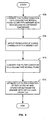
- FIG. 1 is a flow diagram for converting a query in a first format to a multi-dimensional expression (MDX) query in a second format according to an embodiment of the invention.
- MDX multi-dimensional expression
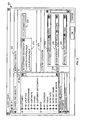
- FIG. 2 is an exemplary screen display of a user interface to create a query in a first format according to an embodiment of the invention.
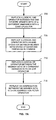
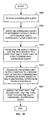
- FIG. 3 is a flow diagram for normalizing a filter condition of the query in the first format according to an embodiment of the invention.
- FIG. 4 is an illustration of semantic analysis of a filter condition in a query of FIG. 2 according to an embodiment of the invention.
- FIG. 5 is a flow diagram for analyzing a filter condition to determine a semantic context of member sets in the filter condition according to an embodiment of the invention.
- FIG. 6 is a flow diagram for converting the filter condition to normal form according to an embodiment of the invention.
- FIG. 7A is a flow diagram for replacing logical operators with normalized operators in the filter condition according to an embodiment of the invention.
- FIG. 7B continues the example in FIG. 4 and is an illustration of replacing logical operators with normalized operators in the filter condition according to an embodiment of the invention.
- FIG. 8 is an example of converting a logical expression to conjunctive normal form according to an embodiment of the invention.
- FIG. 9 is an example of the conversion of a part of a filter condition to a disjunctive normal form according to an embodiment of the invention.
- FIG. 10 shows the optimizing of an example filter condition by replacing an IAND operator with CAND operator according to an embodiment of the invention.
- FIG. 11 is a normalization graph depicting structure of a normalized filter condition according to an embodiment of the invention.
- FIG. 12 continues the example in FIGS. 2 and 7B by showing a normalized query of FIG.2 according to an embodiment of the invention.
- FIG. 13 furthers the example in FIG. 12 by showing a translation of a result object in a normalized query to a first part of an MDX query according to an embodiment of the invention.
- FIG. 14 extends the example in FIGS. 7B and 13 by illustrating the translation a normalized filter condition of the normalized query to a second part of the MDX query according to an embodiment of the invention.
- FIG. 15 continues the example in FIG. 14 by depicting the MDX query of a query of FIG. 2 according to an embodiment of the invention.
- FIG. 16 is a flow diagram for converting a normalized query to a multi-dimensional expression query according to an embodiment of the invention.
- FIG. 17 depicts a table of a source query filter condition, its normalized filter condition and MDX filter condition according to an embodiment of the invention.
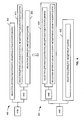
- FIG. 18 is a block diagram for converting a query in a first format to the MDX query in the second format according to an embodiment of the invention.
- a dimension may have a number of hierarchical levels in it.
- dimension geography may have at least three hierarchical levels namely country, state, and district.
- a measure or a metric is a quantity as ascertained by comparison with a standard, usually denoted in some metric, for example, units sold and dollars.
- FIG. 1 is a flow diagram for converting a query in a first format to a multi-dimensional expression (MDX) query in a second format according to an embodiment of the invention.
- the MDX query is used to access data in a multi-dimensional database such as the OLAP cube.
- a query in a first format is received.
- An example of the first format includes a structured query language (SQL), other declarative query languages, and a query created in a declarative way using a user interface such as a query panel in the BusinessObjects Web IntelligenceTM product provided by Business Objects Americas of San Jose in California.
- the query is normalized into a canonical form that is suitable for a translation to the MDX query.
- a canonical form (often called normal form or standard form) of an object is a standard way of presenting that object.
- the normalization process converts a filter condition in the query to a structured pattern wherein each structured pattern has a defined MDX query translation.
- the normalized query is translated to the MDX query in a second format.
- An example of the second format includes query languages such as Analysis Services (AS) 2000 and AS 2005 provided by Microsoft of Redmond, and MaxL from Oracle Essbase. These query languages are based on a MDX specification defined by Microsoft.
- FIG. 2 is an exemplary screen display of a user interface to create a query in a first format according to an embodiment of the invention.
- a user may create a query in a declarative way using a user interface such as query panel 200.
- the query is created by a user selection of result set, data source and filter criteria parameters unlike creating a query by writing a source code.
- the query in query panel 200 fetches a count of customers in "United States” and "California" those who have bought a product which is not in the category of "bikes", and not in the sub category of "caps” and not in fiscal year "2002".
- the result set of the query "a count of customers in United States and California” is defined as customer geography 215 and customer count 220 in result objects 205.
- the filter criteria of the query "product not in the category of bikes, not in the sub category of caps and not in fiscal year 2002" are defined in filter condition 225 as first predicate 235, second predicate 240 and third predicate 245 respectively.
- An AND operator 230 defines the relation between predicates of filter condition 225.
- FIG. 3 is a flow diagram for normalizing a filter condition of the query in the first format according to an embodiment of the invention.
- a query in a first format is received.
- An example of the query in the first format includes a SQL query and a query created using query panel 200.
- a query specification is also received to identify a format of the query received. Based on the format received, different parts of the query such as result objects, a filter condition and a data source may be retrieved.
- the query is parsed to determine a filter condition 225 of the query.
- filter condition 225 is analyzed to determine a semantic context of member sets in filter condition 225.
- a member set is a predicate that applies on a single dimension.
- first predicate 235 in the product category and the second predicate 240 in the product sub-category form a single member set since they share a same dimension, product.
- the third predicate 245 which is on a time dimension forms another member set.
- the filter condition also includes a predicate that involves a measure.
- the measure represents a quantity such as revenue, number of units etc.
- the member set represents a relationship or a property such as name of a product and category of a product.
- DNF disjunctive normal form
- the DNF is a format of logical expression.
- the DNF is a standard way to write a logical expression that is characterized by one or more disjunctions joining two or more conjunctive clauses.
- a disjunction is an "OR" operation.
- the following expressions are in DNF: X ⁇ Y; X; (X ⁇ Y) ⁇ Z and (X ⁇ ⁇ Y ⁇ ⁇ Z) ⁇ ( ⁇ A ⁇ B ⁇ C).
- Logical expressions can be converted to DNF by using logical equivalences.
- a conjunction is an "AND" operation.
- An expression is in conjunctive normal form (CNF) if it is a conjunction of clauses.
- a conjunctive clause is one or more variables, or negations of a variable - combined by zero, one or more "and” operations.
- the following expressions are in CNF: X ⁇ Y; (X ⁇ Y) ⁇ (X ⁇ Z).
- a normalized filter condition is created by replacing logical operators such as "AND” and “OR” between the member sets in the filter condition with normalized operators.
- the normalized operators include crossjoin-and (CAND), intersect-and (IAND), union-or (UOR) and AGGREGATION FILTER.
- the CAND operator computes an intersection of member sets of different dimensions.
- the IAND operator computes an intersection of the member sets of multiple dimensions having at least one common dimension on either side of the logical AND operator.
- the UOR operator computes a union of member sets of different dimensions.
- the aggregation filter operator aggregates a measure over the one or more member sets.
- the logical AND operator computes an intersection of member sets of same dimension and the logical OR operator computes a union of member sets of same dimension.
- the normalized filter condition has the member sets in a normal form with normalized operators.
- the normalized filter condition may be translated to the MDX query in a second format such as AS 2000.
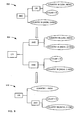
- FIG. 4 is an illustrated example of semantic analysis of a filter condition according to an embodiment of the invention.
- the query of FIG. 2 is analyzed to determine a semantic context for one or more member sets.
- a first filter condition 400 is a graphical representation of filter condition 225.
- the first filter condition 400 has three predicates, first predicate 405 having a product category as a filter criterion, second predicate 410 having a product sub category as a filter criterion, and third predicate 415 having a fiscal year as a filter criterion.
- the first filter condition 400 is converted to second filter condition 420 after a semantic analysis of first filter condition 400.
- first predicate 405 and second predicate 410 are grouped into first member set 425 since they share a same dimension, product.
- the third predicate 415 having a different dimension, time, is grouped as second member set 430.
- FIG. 5 is a flow diagram for analyzing a filter condition to determine a semantic context of member sets in the filter condition of FIG. 4 according to an embodiment of the invention.
- the dimensions of predicates in first filter condition 400 are identified.
- the dimension of first predicate 405 and second predicate 410 is product
- the dimension of third predicate 415 is identified as time.
- the predicates having a same dimension are grouped into a single member set. Therefore, first predicate 405 and second predicate 410 having the same dimension, product are grouped into first member set 425.
- the third predicate 415 having the dimension, time is grouped as second member set 430.
- the filter condition 400 has a measure. If no, the semantic analysis process ends. If yes, then a hierarchy level in the dimension of the member set for which a measure is aggregated is determined.
- the semantic context for a measure is the list of hierarchical levels in a dimension on which the measure is aggregated.
- the semantic context is either explicit, that is, associated to the measure within the filter condition or implicit, that is, derived from the result objects of the query. For example, in query panel 200, if the query had below parameters:
- the result objects involve two dimensions, customer and product.
- the deepest hierarchical levels for these two dimensions in result objects are [Customer].[City] which is below [Customer].[Country] and [Product].[Category]. Any measure that appears in filter condition 225 of the query is assumed to be aggregated on [City] and [Category], whatever the hierarchical levels in the rest of filter condition 225 is.
- the filter condition in the above example involves an aggregation of the measure on [Product].[Subcategory] which is a level below [Category], but [Revenue] is still aggregated on [Category].
- FIG. 6 is a flow diagram showing an example of process block 315 used in some embodiments of the invention.
- the flow diagram depicts converting the filter condition to disjunctive normal form..
- the predicates After performing a semantic analysis on the filter condition of the query the predicates have been grouped by like dimensions to form member sets. Now, the member sets in the filter condition are converted to a disjunctive normal form.
- the member sets in the filter condition are converted to a conjunctive normal form.
- the member sets are first converted to CNF in order to separate member sets of different dimensions. Once, the member sets are separated based on their dimension, they can be translated to their respective axis in an MDX query.
- the predicates of the filter condition are again grouped into member sets as described in FIG. 5 .
- the operators on member sets are converted to DNF whenever the filter condition initially involves an intersection of unions of the member sets. After conversion, such a condition is expressed as a union of intersection of member set.
- the filter condition is optimized by replacing an intersection-AND (IAND) operator with a cross-join AND (CAND) operator.
- IAND intersection-AND
- CAND cross-join AND
- the IAND operator is used to compute an intersection between the member sets of multiple dimensions having at least one dimension in common on either sides of the logical AND operator.
- a CAND operator is used to compute an intersection between member sets of different dimensions. Translating an IAND operator to an MDX equivalent is more expensive in terms of time and memory than a CAND operator. Hence, the IAND operator is replaced with CAND operator wherever possible.
- FIG. 7A is a flow diagram for replacing logical operators with normalized operators in the filter condition according to an embodiment of the invention.
- processing block 320 replaces the logical operators in the filter condition with normalized operators.
- the normalized operators include but not limited to operators such as CAND, IAND, UOR, AGGREGATION FILTER.
- a logical AND operator between the member sets of a different dimension is replaced with a CAND operator.
- the member sets on either sides of the AND operator in the above filter condition have different dimensions, geography and time respectively.
- a logical AND operator between the member sets of multiple dimensions having at least one dimension in common between the member sets on either sides of the logical AND operator is replaced with an IAND operator.
- a logical OR operator between the member sets of different dimensions is replaced with a UOR operator.
- an aggregation between the member sets is converted to an AGGREGATION FILTER operator.
- the logical AND and logical OR operators are replaced with the normalized operators such as CAND, IAND, UOR, AGGREGATION FILTER because each of the normalized operators has a straight forward translation in the MDX query.
- the process of translating the query becomes easier and efficient if a filter condition in the query is converted to the normalized filter condition.
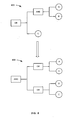
- FIG. 7B illustrates replacing logical operators with normalized operators in the filter condition according to an embodiment of the invention.
- the filter condition 715 of the query in query panel 200 is normalized by replacing the logical operators with normalized operators to create a normalized filter condition 740.
- a first logical AND operator 720 is between a first member set 730 and second member set 735 which are of different dimensions.
- the first logical AND operator 720 is replaced with CAND operator 745 in the normalized filter condition 740.
- a second logical AND operator 725 is retained in the normalized filter condition 740 since it is an AND operation between two predicates of same dimensions.
- FIG. 8 shows an example of converting a logical expression to conjunctive normal form.
- Such a conversion is used by some embodiments of the invention to convert filter conditions.
- the main goal in normalizing a filter condition is to obtain cartesian products on distinct dimensions since these operations are efficiently executed in MDX.
- the member sets are first converted to CNF in order to separate member sets of different dimensions. Once, the member sets are separated based on their dimension, they can be projected to their respective axis in an MDX query.
- a first logical expression 800 which is (A AND B) OR C. Converting first logical expression 800 to CNF based on logical equivalences, we get
- FIG. 9 is a block diagram for converting the filter condition to a disjunctive normal form according to an embodiment of the invention. After converting the filter condition to CNF and grouping the predicates of the same dimension into member sets, portions of the filter condition that involves a set intersection are converted to DNF.
- first filter condition 900 which is in CNF.
- DNF disjunctive normal form
- FIG. 10 is a block diagram for optimizing a normalized filter condition by replacing an IAND operator with CAND operator according to an embodiment of the invention.
- Translating an IAND operator to an MDX equivalent is more expensive in terms of time and memory than a CAND operator.
- the IAND operator is replaced with CAND operator wherever possible.
- the IAND is converted to a logical AND operator, the member sets of different dimensions are separated and the logical AND between the different dimensions is converted to the CAND operator.
- the first normalized filter condition 1000 is optimized by converting an expensive IAND operator to a less expensive CAND operator as follows:
- Second normalized filter condition 1025 Replacing the logical operators in filter condition 1005 with the normalized operators, we get second normalized filter condition 1025.
- Second normalized filter condition 1025 Second normalized filter condition 1025:
- a first logical AND operator 1010 is replaced with a first CAND operator 1030
- a logical OR operator 1015 is replaced with an UOR operator 1035
- a second logical AND operator 1020 is replaced with a second CAND operator 1040 in the normalized filter condition 1025 based on rules described in FIG. 7A .
- the normalized filter condition is then combined with a result object and a data source of the query to form a normalized query. For instance, consider a query in query panel 200, the normalized query would consist of result objects 205, data source (not shown in the figure) and normalized filter condition 740.
- FIG. 11 is a normalization graph 1100 depicting structure of a normalized filter condition 1105 according to an embodiment of the invention.
- the normalization process as described in FIG. 3 at block 320 reduces the normalized filter condition 1105 to a format described by, and constrained to, the normalization graph 1100 or a sub graph.
- the normalized filter condition 1105 has normalized operators that include but not limited to CAND 1110, UOR 1115, IAND 1125, MEMBER SET 1130 which is a semantic wrapper that groups predicates of same dimension, and AGGREGATION FILTER 1135 apart from logical AND and OR operators.
- the normalization graph 1100 shows the structure of the normalized filter condition 1105, that is, order of the normalized operators and operands the normalized operators have in some embodiments.
- the operator at the top is CAND it separates non overlapping dimensions allowing for easy association with an axis in an MDX query.
- operator CAND 1110 may have its operands as operators UOR 1115 as indicated by first arrow 1111, IAND 1125 as indicated by second arrow 1112, MEMBSER SET 1130 as indicated by third arrow 1113, and AGGREGATION FILTER 1135 as indicated by fourth arrow 1113.
- Statements in DNF are faster to evaluate that those in CNF. It is faster to compute unions of low cardinality sets than intersections of high cardinality sets.
- UOR 1115 may have its operands as operators CAND 1120 and IAND 1125; as well as MEMBSER SET 1130 and AGGREGATION FILTER 1135. Whereas operator IAND 1125 may have only MEMBSER SET 1130 and AGGREGATION FILTER 1135 as its operands.
- MEMBER SET 1130 may have a selection on dimension 1140 such as "SELECT [PRODUCT].[CATEGORY].&BIKES” as its operand.
- the AGGREGATION FILTER 1135 may have a selection on measure 1145 such as "SELECT revenue > 100" as its operand.
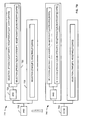
- FIG. 12 depicts a normalized query of FIG. 2 according to an embodiment of the invention.
- the normalized query 1200 has result objects 205, a data source, and a normalized filter condition 740 of the query in query panel 200.
- the normalized query 1200 forms an input to the MDX query translation process.
- FIG. 13 is a block diagram for translating a result object in a normalized query to a first part of an MDX query according to an embodiment of the invention.
- the MDX query has a syntax with at least the following three parts: SELECT ⁇ query_axis> (first part) FROM SELECT ⁇ slicer_axis> (second part) ... ... FROM ⁇ data source> (third part) where query_axis specifies a result set of the MDX query, that is, result objects 1300; slicer_axis specifies a filter condition of the MDX query; and data source specifies a data source such as an OLAP cube from which the data is retrieved.
- result objects 1300 of normalized query 1200 is translated to the query_axis of the SELECT clause.
- the result set contains two columns, Customer geography 1305, Customer Count 1310 and two rows, one for United States and the other for California. Therefore, result objects 1300 is translated to the first part 1315 of the MDX query as follows:
- a data source specified in normalized query 1200 is translated to a third part of the MDX query as follows:
- FIG. 14 is a block diagram illustrating the translating of a normalized filter condition of the normalized query 1200 to a second part of the MDX query according to an embodiment of the invention.
- the normalized filter condition 1450 is translated to the slicer_axis of the FROM SELECT clause of the MDX query.
- normalized filter condition 1450 of normalized query 1200 is translated to second part 1455 of the MDX query.
- the MDX query based on a syntax of the AS 2000 query language.
- the second part 1455 has MDX operators that include but not limited to CROSSJOIN, INTERSECT, UNION, FROM SELECT UNION, and FILTER.
- the translation of normalized filter condition 1450 is done based on the multi-dimensional expression translation rules that include but not limited to:
- the GENERATE clause in MDX returns a concatenated string created by evaluating a string expression over a set.
- the EXCEPT clause evaluates two sets and removes those tuples in the first set that also exist in the second set.
- the DESCENDANTS clause returns the set of descendants of a member at a specified level or distance.
- FIG. 15 depicts the MDX query 1500 of a query of FIG. 2 according to an embodiment of the invention.
- the three parts are merged to form the MDX query in AS 2000 query language. Therefore, merging first part 1305, second part 1400 and the third part 1210, the MDX query 1500 reads as follows:
- FIG. 16 is a flow diagram for converting a normalized query to a multi-dimensional expression query according to an embodiment of the invention.
- a normalized query is received.
- the normalized query is parsed to determine a result object, a data source and a normalized filter condition.
- the result object and the data source are translated to a first part and a third part of the MDX query.
- the translation is done based on syntax of the MDX query language that includes but not limited to AS 2000, AS 2005 and MaxL.
- the normalized filter condition is translated to a second part of the MDX query based on MDX translation rules.
- the MDX translation rules include rules for translating the normalized operators to MDX operators in the MDX query as described in FIG. 14 .
- the first part specifying a result set of the MDX query, the second part specifying the filter condition of the MDX query and the third part specifying the data source of the MDX query are merged to form the MDX query.
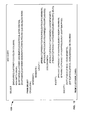
- FIG. 17 depicts a table of a source query filter condition, its normalized filter condition and MDX filter condition according to an embodiment of the invention.
- Source filter AND (s1@selection1 ([Product]), s2@selection2 ([Product])
- Normalized filter condition MemberSet ([Product], AND (s1, s2))
- MDX filter condition INTERSECT (translate (s1), translate (s2))
- S1@SELECTION1[PRODUCT] is a selection condition on a PRODUCT dimension such as Selection ([Product].[Category], neq ([Product].[Category].[Bikes]) and similarly S2 is another selection condition on the PRODUCT dimension.
- a logical AND operation is between two predicates S1 and S2 of the same dimension, PRODUCT. Therefore, in the normalized filter, MemberSet ([Product], AND (s1, s2)), the predicates S1 and S2 are grouped into a member set of PRODUCT and then a logical AND operation is performed between the predicates.
- the normalized filter translates to an INTERSECT operation between predicates (translate (S1), translate (S2)) in the MDX filter.
- the predicates translate (S1) and translate (S2) are translated to query languages such as AS 2000.
- FIG. 18 is a block diagram of a system for converting a query in a first format to a MDX query in the second format according to an embodiment of the invention.
- System 1800 includes query provider 1805 that provides a query in the first format which is translated to MDX query 1855.
- the first format includes SQL, other declarative query languages, and queries created in a declarative way in tools such as Web Intelligence from Business Objects.
- the second format in which the MDX query is generated includes but not limited to query languages such as AS 2000, AS 2005 and MaxL.
- query provider 1805 also provides a query specification to identify a format of the query. Based on the format of the query, different parts of the query such as result objects, a filter condition and a data source may be identified.
- a parser 1810 in communication with query provider 1805 parses the query to determine a result object and data source 1860 and a filter condition of the query.
- a semantic analyzer 1815 in communication with parser 1810 analyzes the filter condition of the query to determine a semantic context such as dimensions of predicates of the filter condition and a hierarchy level in the dimension of a member set to which a measure is aggregated. The semantic analyzer 1815 groups the predicates having a same dimension into a member set.
- a normalization engine 1820 in communication with pattern matching tool 1825 normalizes the semantically analyzed filter condition by converting the filter condition to disjunctive normal form.
- pattern matching tool 1825 includes To One Matching (TOM) framework provided by INRIA of France.
- the pattern matching tool 1825 has rules for converting logical expressions to disjunctive normal form, conjunctive normal form and converting between the two. The rules are based on logical equivalences.
- the normalization engine 1820 has rules for replacing logical operators with normalized operators.
- the normalization engine 1820 in communication with pattern matching tool 1825 replaces the logical operators with the normalized operators.
- a query optimizer 1830 optimizes the filter condition by replacing an IAND operator with a CAND operator and creates normalized filter condition 1835. This optimization may involve repeated conversions of the filter condition to disjunctive normal form and conjunctive normal form. So the query optimizer 1830 is in communication with normalization engine 1820.
- the normalized filter condition 1835 and result object and data source 1860 are converted to MDX query 1855 by MDX engine 1840 and translator 1850.
- the MDX engine 1840 converts the normalized filter condition 1835 and result object and data source 1860 to an intermediate MDX query based on MDX translation rules. Further, the intermediate format of the MDX filter is translated to MDX query 1855 by translator 1850.
- the MDX engine 1840 identifies the normalized operators in normalized filter condition 1835 and provides them to pattern matching tool 1825 along with result object and data source 1860 to convert them to the intermediate MDX query.
- the pattern matching tool 1825 constructs the intermediate MDX query by
- the translator 1850 further translates the intermediate MDX query to MDX query 1855 in a query language that includes but not limited to AS 2000, AS 2005 and MaxL.
- the translator 1850 obtains syntax of the query language from syntax file 1845.
- Embodiments of the invention may include various steps as set forth above.
- the steps may be embodied in machine-executable program code which causes a general-purpose or special-purpose processor to perform certain steps.
- these steps may be performed by specific hardware components that contain hardwired logic for performing the steps, or by any combination of programmed computer components and custom hardware components.
- Embodiments of the present invention may also be provided as a machine-readable medium for storing the machine-executable instructions.
- the machine-readable medium may include, but is not limited to, flash memory, optical disks, CD-ROMs, DVD ROMs, RAMs, EPROMs, EEPROMs, magnetic or optical cards, or any other type of machine-readable media suitable for tangibly storing electronic instructions.
- the machine readable medium can provide the instructions stored therein to a computer system comprising a processor capable of reading and executing the instructions to implement the method steps described herein.
Landscapes
- Engineering & Computer Science (AREA)
- Databases & Information Systems (AREA)
- Theoretical Computer Science (AREA)
- Data Mining & Analysis (AREA)
- Physics & Mathematics (AREA)
- General Engineering & Computer Science (AREA)
- General Physics & Mathematics (AREA)
- Computational Linguistics (AREA)
- Information Retrieval, Db Structures And Fs Structures Therefor (AREA)
Abstract
Description
- The invention generally relates to the field of multi-dimensional data sources and systems. More particularly the invention relates to converting a database query involving a propositional formula to a multi-dimensional expression query by normalizing and translating the database query.
- Queries are used create, modify, retrieve and manipulate data in a data source, such as, a database, a data warehouse, a plurality of reports, and the like. Filtering is the application of filters. A filter is a condition used to limit information retrieved from a data source to a subset of the whole result of an unfiltered query. Filters are usually expressed in form a propositional formula that states the condition.
- OLAP tools are a subset of business intelligence tools. There are a number of commercially available OLAP tools including BusinessObjects OLAP Voyager™ which is available from Business Objects of San Jose, California. OLAP tools are a report generation tool, and a tool suited to ad hoc analyses. OLAP generally refers to a technique of providing fast analysis of shared multi-dimensional information stored in a database. In some OLAP tools the data is arranged in a schema which simulates a multidimensional schema. Conceptually the information is in a hyper cube. The multi-dimensional schema means redundant information is stored, but it allows for users to initiate queries without the need to know how the data is organized.
- Multidimensional Expressions (MDX) is a query language for OLAP databases, like SQL is a query language for relational databases. Thus, an MDX statement can be used to query for a result from an OLAP data source, i.e., a cube. The MDX statement can resemble SQL statements where one can ask for data on a row and columns from a cube. As with an SQL query, each MDX query requires a data request (the "SELECT" clause), a starting point (the "FROM" clause), and a filter (the "WHERE" clause). These and other keywords provide the tools used to extract specific portions of data from a cube for analysis, e.g., to extract a slice.
- SQL queries are used to generate a two dimensional result - zero or more rows. This result is a relation. The query process includes selecting columns; selecting from relations; and applying filters using predicates. MDX queries are used to generate a multidimensional result - the result is a (hyper-) cube. The process includes selecting sets of members; selecting from a cube; and applying filters. The filters are set operators for members & predicates for values. Not all SQL queries can be converted MDX queries. Most filter conditions cannot be directly translated as predicates.
- Described are methods and systems for receiving a query in a first format, parsing the query to determine a result object, a data source and a filter condition in the query. The filter condition is converted to a normalized filter condition by analyzing a semantic context of one or more member sets in the filter condition, converting the one or more member sets into a normal form and replacing logical operators between the one or more member sets with normalized operators. The normalized filter condition along with the result object and the data source is then translated to a multi-dimensional expression query in a second format.
- The following description includes discussion of figures having illustrations given by way of example of implementations of embodiments of the invention. The drawings should be understood by way of example, and not by way of limitation. As used herein, references to one or more "embodiments" are to be understood as describing a particular feature, structure, or characteristic included in at least one implementation of the invention. Thus, phrases such as "in one embodiment" or "in an alternate embodiment" appearing herein describe various embodiments and implementations of the invention, and do not necessarily all refer to the same embodiment. However, they are also not necessarily mutually exclusive.
-
FIG. 1 is a flow diagram for converting a query in a first format to a multi-dimensional expression (MDX) query in a second format according to an embodiment of the invention. -
FIG. 2 is an exemplary screen display of a user interface to create a query in a first format according to an embodiment of the invention. -
FIG. 3 is a flow diagram for normalizing a filter condition of the query in the first format according to an embodiment of the invention. -
FIG. 4 is an illustration of semantic analysis of a filter condition in a query ofFIG. 2 according to an embodiment of the invention. -
FIG. 5 is a flow diagram for analyzing a filter condition to determine a semantic context of member sets in the filter condition according to an embodiment of the invention. -
FIG. 6 is a flow diagram for converting the filter condition to normal form according to an embodiment of the invention. -
FIG. 7A is a flow diagram for replacing logical operators with normalized operators in the filter condition according to an embodiment of the invention. -
FIG. 7B continues the example inFIG. 4 and is an illustration of replacing logical operators with normalized operators in the filter condition according to an embodiment of the invention. -
FIG. 8 is an example of converting a logical expression to conjunctive normal form according to an embodiment of the invention. -
FIG. 9 is an example of the conversion of a part of a filter condition to a disjunctive normal form according to an embodiment of the invention. -
FIG. 10 shows the optimizing of an example filter condition by replacing an IAND operator with CAND operator according to an embodiment of the invention. -
FIG. 11 is a normalization graph depicting structure of a normalized filter condition according to an embodiment of the invention. -
FIG. 12 continues the example inFIGS. 2 and7B by showing a normalized query ofFIG.2 according to an embodiment of the invention. -
FIG. 13 furthers the example inFIG. 12 by showing a translation of a result object in a normalized query to a first part of an MDX query according to an embodiment of the invention. -
FIG. 14 extends the example inFIGS. 7B and13 by illustrating the translation a normalized filter condition of the normalized query to a second part of the MDX query according to an embodiment of the invention. -
FIG. 15 continues the example inFIG. 14 by depicting the MDX query of a query ofFIG. 2 according to an embodiment of the invention. -
FIG. 16 is a flow diagram for converting a normalized query to a multi-dimensional expression query according to an embodiment of the invention. -
FIG. 17 depicts a table of a source query filter condition, its normalized filter condition and MDX filter condition according to an embodiment of the invention. -
FIG. 18 is a block diagram for converting a query in a first format to the MDX query in the second format according to an embodiment of the invention. - In a multi-dimensional database such as an online analytical processing (OLAP) cube contains data in various dimensions such as products, people, geography, financial elements, and time. A dimension may have a number of hierarchical levels in it. For example, dimension geography may have at least three hierarchical levels namely country, state, and district. A measure or a metric is a quantity as ascertained by comparison with a standard, usually denoted in some metric, for example, units sold and dollars.
-
FIG. 1 is a flow diagram for converting a query in a first format to a multi-dimensional expression (MDX) query in a second format according to an embodiment of the invention. The MDX query is used to access data in a multi-dimensional database such as the OLAP cube. Atprocess block 100, a query in a first format is received. An example of the first format includes a structured query language (SQL), other declarative query languages, and a query created in a declarative way using a user interface such as a query panel in the BusinessObjects Web Intelligence™ product provided by Business Objects Americas of San Jose in California. Atprocess block 105, the query is normalized into a canonical form that is suitable for a translation to the MDX query. A canonical form (often called normal form or standard form) of an object is a standard way of presenting that object. The normalization process converts a filter condition in the query to a structured pattern wherein each structured pattern has a defined MDX query translation. Atprocess block 110, the normalized query is translated to the MDX query in a second format. An example of the second format includes query languages such as Analysis Services (AS) 2000 and AS 2005 provided by Microsoft of Redmond, and MaxL from Oracle Essbase. These query languages are based on a MDX specification defined by Microsoft. -
FIG. 2 is an exemplary screen display of a user interface to create a query in a first format according to an embodiment of the invention. A user may create a query in a declarative way using a user interface such asquery panel 200. In a declarative way, the query is created by a user selection of result set, data source and filter criteria parameters unlike creating a query by writing a source code. The query inquery panel 200 fetches a count of customers in "United States" and "California" those who have bought a product which is not in the category of "bikes", and not in the sub category of "caps" and not in fiscal year "2002". The result set of the query, "a count of customers in United States and California" is defined ascustomer geography 215 andcustomer count 220 in result objects 205. The filter criteria of the query, "product not in the category of bikes, not in the sub category of caps and not infiscal year 2002" are defined infilter condition 225 asfirst predicate 235,second predicate 240 andthird predicate 245 respectively. An ANDoperator 230 defines the relation between predicates offilter condition 225. -
FIG. 3 is a flow diagram for normalizing a filter condition of the query in the first format according to an embodiment of the invention. Atprocess block 300, a query in a first format is received. An example of the query in the first format includes a SQL query and a query created usingquery panel 200. Along with the query, a query specification is also received to identify a format of the query received. Based on the format received, different parts of the query such as result objects, a filter condition and a data source may be retrieved. Atprocess block 305, the query is parsed to determine afilter condition 225 of the query. Atprocess block 310,filter condition 225 is analyzed to determine a semantic context of member sets infilter condition 225. A member set is a predicate that applies on a single dimension. For example, infilter condition 225,first predicate 235 in the product category and thesecond predicate 240 in the product sub-category form a single member set since they share a same dimension, product. Thethird predicate 245 which is on a time dimension forms another member set. The filter condition also includes a predicate that involves a measure. The measure represents a quantity such as revenue, number of units etc. The member set represents a relationship or a property such as name of a product and category of a product. - At
process block 315, AND/OR operators applied on analyzed member sets are converted into a normal form that involves multiple layers of conjunctions and disjunctions. In an embodiment, semantically analyzed member sets may be converted into a disjunctive normal form (DNF) in the filter condition. The DNF is a format of logical expression. The DNF is a standard way to write a logical expression that is characterized by one or more disjunctions joining two or more conjunctive clauses. A disjunction is an "OR" operation. The following expressions are in DNF: X∨Y; X; (X ∧Y) ∨ Z and (X ∧ ¬Y ∧ ¬Z) ∨ (¬A ∧ B ∧ C). Logical expressions can be converted to DNF by using logical equivalences. - A conjunction is an "AND" operation. An expression is in conjunctive normal form (CNF) if it is a conjunction of clauses. A conjunctive clause is one or more variables, or negations of a variable - combined by zero, one or more "and" operations. The following expressions are in CNF: X∧Y; (X ∨Y) ∧ (X ∨ Z).
- At
process block 320, a normalized filter condition is created by replacing logical operators such as "AND" and "OR" between the member sets in the filter condition with normalized operators. The normalized operators include crossjoin-and (CAND), intersect-and (IAND), union-or (UOR) and AGGREGATION FILTER. The CAND operator computes an intersection of member sets of different dimensions. The IAND operator computes an intersection of the member sets of multiple dimensions having at least one common dimension on either side of the logical AND operator. The UOR operator computes a union of member sets of different dimensions. The aggregation filter operator aggregates a measure over the one or more member sets. The logical AND operator computes an intersection of member sets of same dimension and the logical OR operator computes a union of member sets of same dimension. - The normalized filter condition has the member sets in a normal form with normalized operators. The normalized filter condition may be translated to the MDX query in a second format such as AS 2000.
-
FIG. 4 is an illustrated example of semantic analysis of a filter condition according to an embodiment of the invention. The query ofFIG. 2 is analyzed to determine a semantic context for one or more member sets. Afirst filter condition 400 is a graphical representation offilter condition 225. Thefirst filter condition 400 has three predicates,first predicate 405 having a product category as a filter criterion,second predicate 410 having a product sub category as a filter criterion, andthird predicate 415 having a fiscal year as a filter criterion. - The
first filter condition 400 is converted tosecond filter condition 420 after a semantic analysis offirst filter condition 400. As a result of semantic analysis,first predicate 405 andsecond predicate 410 are grouped into first member set 425 since they share a same dimension, product. Thethird predicate 415 having a different dimension, time, is grouped as second member set 430. -
FIG. 5 is a flow diagram for analyzing a filter condition to determine a semantic context of member sets in the filter condition ofFIG. 4 according to an embodiment of the invention. Atprocess block 500, the dimensions of predicates infirst filter condition 400 are identified. For example, the dimension offirst predicate 405 andsecond predicate 410 is product, and the dimension ofthird predicate 415 is identified as time. Atprocess block 505, the predicates having a same dimension are grouped into a single member set. Therefore,first predicate 405 andsecond predicate 410 having the same dimension, product are grouped into first member set 425. Thethird predicate 415 having the dimension, time is grouped as second member set 430. - At
process block 510, it is checked if thefilter condition 400 has a measure. If no, the semantic analysis process ends. If yes, then a hierarchy level in the dimension of the member set for which a measure is aggregated is determined. The semantic context for a measure is the list of hierarchical levels in a dimension on which the measure is aggregated. The semantic context is either explicit, that is, associated to the measure within the filter condition or implicit, that is, derived from the result objects of the query. For example, inquery panel 200, if the query had below parameters: - Result objects = [Customer].[Country], [Customer].[City], [Product].[Category], [Measures].[Revenue]
- Filter Condition = ([Measures].[Revenue] > 100) AND ([Product].[Subcategory] inlist ("beer", "soda"))
- The result objects involve two dimensions, customer and product. The deepest hierarchical levels for these two dimensions in result objects are [Customer].[City] which is below [Customer].[Country] and [Product].[Category]. Any measure that appears in
filter condition 225 of the query is assumed to be aggregated on [City] and [Category], whatever the hierarchical levels in the rest offilter condition 225 is. The filter condition in the above example involves an aggregation of the measure on [Product].[Subcategory] which is a level below [Category], but [Revenue] is still aggregated on [Category]. -
FIG. 6 is a flow diagram showing an example of process block 315 used in some embodiments of the invention. The flow diagram depicts converting the filter condition to disjunctive normal form.. After performing a semantic analysis on the filter condition of the query the predicates have been grouped by like dimensions to form member sets. Now, the member sets in the filter condition are converted to a disjunctive normal form. In a multi-dimensional environment wherein a filter condition has predicates of multiple dimensions, it is more efficient to evaluate the filter condition as a "union of intersections" rather than an "intersection of unions". - At
process block 600, the member sets in the filter condition are converted to a conjunctive normal form. The member sets are first converted to CNF in order to separate member sets of different dimensions. Once, the member sets are separated based on their dimension, they can be translated to their respective axis in an MDX query. Consider a filter condition of the form
      Filter condition = (A AND B) OR C.
 Converting this to CNF based on logical equivalences, we get
      Filter condition in CNF = (A OR C) AND (B OR C)
      Filter condition = ((Count = N) OR (Country in {INDIA, USA})) AND
                            Country in {CHINA, INDIA}
 Converting to DNF, we get
      Filter condition = (Country = INDIA) OR
                            ((Count = N) AND (Country in {INDIA, CHINA}))
      Where,
      OR operator is a union operation; and
      AND operator is an intersect operation.
Filter Condition: (Year ≥ 2007) IAND ((Product = SODA) OR (Year = 2007)). Optimizing the above filter condition by replacing the IAND operator with CAND operator, we get
Filter condition: (Year = 2007) OR ((Year ≥ 2007) CAND (Product = SODA))
Filter Condition: (Country = USA) AND (Year = 2007)
The member sets on either sides of the AND operator in the above filter condition have different dimensions, geography and time respectively. Hence, the logical AND operator becomes a CAND operator in the normalized filter condition. Therefore, the normalized filter condition reads as
Filter Condition: (Country = USA) CAND (Year = 2007)
Filter Condition: (Year ≥ 2007) AND ((Product = SODA) OR (Year = 2007))
In the above filter condition, there are multiple dimensions on either side of the AND operator; dimension, time on the left side and dimensions, product and time on the right side of the AND operator. But, the member set (Year ≥ 2007) on the left side of the AND operator and the member set (Year = 2007) on the right side of the operator have the same dimension, time. Therefore, the AND operator is replaced with an IAND operator.
The normalized filter condition will read as
Filter Condition: (Year ≥ 2007) IAND ((Product = SODA) OR (Year = 2007)).
Filter Condition: (Year = 2007) OR (Product = Soda)
Since the member sets (Year = 2007) and (Product = Soda) have different dimensions, time and product, the logical OR operator is replaced with the normalized UOR operator. The normalized filter condition reads as,
Filter Condition: (Year = 2007) UOR (Product = Soda)
Filter Condition: (Country = USA) AND (Revenue > 1000) is converted to = AGGREGATION FILTER (Country = USA, Revenue > 1000)
The above filter condition means that a result set is first filtered by predicate (Country = USA) and then a measure such as (Revenue > 1000) is applied on the filtered result set.
             = (A AND B) OR (C)
             = (A OR C) AND (B OR C)
             which is the second logical expression 805.
             = ((Country in {USA, INDIA}) OR (Count = N))
                            AND
               (Country in {INDIA, CHINA})

             = (Country in {USA, INDIA }) AND (Country in {INDIA, CHINA })
                            OR
               ((Country in {INDIA, CHINA}) AND (Count = N)) which is second filter
 condition 905. The structural similarity between  logical expressions  800 and 805 and
 filter  conditions  900 and 905 should be apparent. Because the filter condition 905 is in
 disjunctive normal form with AND / Intersection operators between elements of the
 member sets. And because the member sets are along common dimensions the member
 sets with the filter conditions can be simplified.
             = (Country = INDIA)
                    OR
               ((Count = N) AND (Country in {INDIA, CHINA})) which is third filter
 condition 910 in DNF.
              [(Product= SODA) UOR (Year = 2007)]
                            IAND
             (Year ≥ 2007) AND (Country = USA)
The UOR is converted to logical OR. The IAND is converted to logical AND. The predicate with year inequality is distributed over the clause containing OR.
             = {[(Product= SODA) AND (Year ≥ 2007)]
                           OR
               [(Year = 2007) AND (Year ≥ 2007)]}
                           AND
                     (Country = USA)
 Since [(Year = 2007) AND (Year ≥ 2007)] can be simplified.
             = {[(Product= SODA) AND (Year ≥ 2007)]
                           OR
                      (Year = 2007)}
                           AND
                     (Country = USA)
This is = {[(Product= SODA) CAND (Year ≥ 2007)]
UOR
(Year = 2007)}
CAND
(Country = USA)
Statements in DNF are faster to evaluate that those in CNF. It is faster to compute unions of low cardinality sets than intersections of high cardinality sets. Hence
| SELECT <query_axis> | (first part) |
| FROM SELECT <slicer_axis> | (second part) |
| ... | |
| ... | |
| FROM <data source> | (third part) |
query_axis specifies a result set of the MDX query, that is, result objects 1300;
slicer_axis specifies a filter condition of the MDX query; and
data source specifies a data source such as an OLAP cube from which the data is retrieved.
 First part =
      SELECT
             {[Measures].Customer Count]} on columns,
             Non Empty Union
             ({[Customer].[Customer Geography].[Country].&United States},
             {[Customer].[Customer Geography].[State-Province].&Ca&Us}) on rows.
- Third part = FROM (Customer_Cube)
- Translate a CAND operator in the normalized filter condition to MDX CROSSJOIN operator in the MDX query;
- Translate an IAND operator in the normalized filter condition to MDX INTERSECT operator in the MDX query;
- Translate an AND operator in the normalized filter condition to MDX INTERSECT operator in the MDX query;
- Translate an OR operator in the normalized filter condition to MDX UNION operator in the MDX query;
- Translate an UOR operator in the normalized filter condition to MDX FROM SELECT UNION operator in the MDX query;
- Translate an AGGREGATIONFILTER operator in the normalized filter condition to MDX FILTER operator in the MDX query; and
- Translate predicates in the normalized filter condition to the MDX query based on syntax of the MDX language.
-
CAND operator 1400 is translated toCROSSJOIN operator 1445; - AND
operator 1405 is translated toINTERSECT operator 1430; and - Predicates,
first predicate 1410,second predicate 1415, andthird predicate 1420 are translated to predicatesfourth predicate 1425,fifth predicate 1435 andsixth predicate 1440 respectively based on syntax of AS 2000 query language.
 Second part =
      FROM (SELECT
      CROSSJOIN (
              INTERSECT (
                     GENERATE (
                            EXCEPT (
                                   [Product].[ProductCategories].[Category].Members,
                                   {[Product].[ProductCategories].[Category].&Bikes}),
                            DESCENDANTS (
                                   [Product]. [Product Categories].Currentmember,
                                   [Product].[Product Categories].[Subcategory], Self),
                     EXCEPT (
                            [Product]. [Product Categories]. [Subcategory].Members,
                            {[Product].[Product Categories].[Subcategory].&CAPS})),
              EXCEPT (
                     [Date].[Fiscal].[Fiscal Year].Members,
                     {[Date].[Fiscal].[Fiscal Year].&[2002]}))) on columns.
 MDX Query =
      SELECT
              {[Measures].Customer Count]} on columns,
             Non Empty Union
              ({[Customer]. [Customer Geography].[Country].&United States},
              {[Customer].[Customer Geography].[State-Province].&Ca&Us}) on rows
      FROM (SELECT
      CROSSJOIN (
             INTERSECT (
                    GENERATE( (
                            EXCEPT (
                                   [Product]. [ProductCategories]. [Category].Members,
                                   {[Product]. [ProductCategories].[Category].&Bikes}),
                            DESCENDANTS (
                                   [Product]. [Product Categories].Currentmember,
                                   [Product].[Product Categories].[Subcategory], Self)),
                    EXCEPT (
                            [Product]. [Product Categories]. [Subcategory].Members,
                            {[Product].[Product Categories].[Subcategory].&CAPS})),
             EXCEPT (
                     [Date].[Fiscal].[Fiscal Year].Members,
                     {[Date].[Fiscal].[Fiscal Year].&[2002]})) on columns
      FROM (Customer_Cube).
Source filter = AND (s1@selection1 ([Product]), s2@selection2 ([Product])
Normalized filter condition = MemberSet ([Product], AND (s1, s2))
MDX filter condition = INTERSECT (translate (s1), translate (s2))
where
S1@SELECTION1[PRODUCT] is a selection condition on a PRODUCT dimension such as
Selection ([Product].[Category], neq ([Product].[Category].[Bikes])
and similarly S2 is another selection condition on the PRODUCT dimension.
- replacing the normalized operators in normalized
filter condition 1835 with MDX operators; - converting predicates in normalized
filter condition 1835 to translation ready predicates. The translation ready predicates are created by concatenating a phrase "translate" with a predicate in the normalized filter condition; for instance, translate (S1) where S1 is a predicate in the normalized filter condition; and - converting result object and
data source 1860 to translation ready result object and data source in a similar way that translation ready predicates are created.
Claims (21)
- An article of manufacture, comprising:a machine readable medium having instructions which when executed by a machine cause the machine to perform operations comprising:receiving a query in a first format;parsing the query to determine a filter condition in the query;analyzing the filter condition to determine a semantic context of one or more member sets of the filter condition;converting the filter condition into a disjunctive normal form based on the semantic context by placing disjunctions between member sets; andcreating a normalized filter condition by replacing logical operators between the one or more member sets with normalized operators.
- The article of manufacture in claim 1, wherein analyzing the filter condition to determine a semantic context comprises:identifying a dimension of one or more predicates in the filter condition;grouping the one or more predicates of a same dimension into a member set; andif the filter condition has a measure, determining a hierarchy level in the dimension of the one or more member sets for which the measure is aggregated.
- The article of manufacture in claim 2, wherein determining a hierarchy level in the dimension comprises determining a lowest hierarchy level in the dimension of the one or more member sets in result objects or the filter condition of the query for which the measure is aggregated
- The article of manufacture in claim 2 or 3 further comprising instructions for evaluating the member set using an operation selected from a group consisting of a conjunction and a disjunction after grouping the one or more predicates.
- The article of manufacture in any one of claims 1 to 4, wherein the normalized filter condition comprises an operator selected from a group consisting of "cross-join" (CAND), "intersection-and" (IAND), "union-or" (UOR), aggregation filter, logical AND, and logical OR.
- The article of manufacture in claim 5, wherein the normalized operators
CAND represents an intersection of member sets of different dimensions,
IAND represents an intersection of the member sets of multiple dimensions having at least one common dimension on either side of the logical AND operator,
UOR represents a union of member sets of different dimensions,
aggregation filter aggregates a measure over the one or more member sets,
logical AND represents an intersection of member sets of same dimension, and
logical OR represents a union of member sets of same dimension. - The article of manufacture in any one of claims 1 to 6, wherein converting the one or more member sets into a normal form comprises:converting the filter condition to a conjunctive normal form to identify the one or more member sets that belong to different dimensions;grouping one or more predicates of a same dimension into one of the one or more member sets of the same dimension; andconverting the filter condition to the disjunctive normal form by representing the one or more member sets as a union of intersections of the one or more member sets.
- The article of manufacture in claim 7 further comprising instructions for converting the filter condition to a normalized form containing combination of conjunctions and disjunctions using a pattern matching tool.
- The article of manufacture in any one of claims 1 to 8, where in converting the one or more member sets into a disjunctive normal form further comprises optimizing the filter condition by replacing an IAND operator with a CAND operator.
- The article of manufacture in any one of claims 1 to 9, wherein replacing the logical operators comprises replacing a logical operator with a normalized operator according to a rule selected from a group consisting of:replacing a logical AND operator between the one or more member sets of a different dimension with a CAND operator;replacing a logical AND operator with an IAND operator between member sets wherein the member sets on either side of the logical AND operator have at least one dimension in common; andreplacing a logical OR operator between the one or more member sets of a different dimension with an UOR operator implying a disjunction.
- The article of manufacture in any one of claims 1 to 10, wherein the first format of the query comprises a query selected from a group consisting of a structure query language query, a query expressed in a declarative language and a query created in a declarative way using a user interface.
- The article of manufacture in any one of claims 1 to 11 wherein the normalized filter condition conforms to a normalization graph defining a structure of the normalized filter condition.
- A computer system including a processor and a memory, the memory comprising instructions that are executable by the processor, the instructions comprising:a query provider to provide a query;a semantic analyzer to analyze a filter condition of the query to determine a semantic context of one or more member sets of the filter condition; anda normalization engine in communication with the semantic analyzer to create a normalized filter condition having one or more member sets in a disjunctive normal form.
- The system in claim 13 further comprising a pattern matching tool in communication with the normalization engine to define rules for converting the one or more member sets to a disjunctive normal form and a conjunctive normal form.
- The system in claim 13 or 14 further comprising a query optimizer in communication with the normalization engine to optimize the normalized filter condition that includes replacing an "intersection-and" (IAND) operator with a "cross-join" (CAND) operator.
- A computer implemented method for receiving a database query in a first format, and normalizing the database query into a canonical form, the method comprising:parsing a query to determine a filter condition in the query;analyzing the filter condition to determine a semantic context of one or more member sets of the filter condition;converting the one or more member sets into a disjunctive normal form based on the semantic context; andcreating a normalized filter condition by replacing logical operators between the one or more member sets with normalized operators.
- The computer implemented method in claim 16 wherein analyzing the filter condition comprises:identifying a dimension of one or more predicates in the filter condition;grouping the one or more predicates of a same dimension into a member set; andif the filter condition has a measure, determining a hierarchy level in the dimension of the one or more member sets for which the measure is evaluated.
- The computer implemented method in claim 16 or 17, wherein converting the one or more member sets into the disjunctive normal form comprises:converting the filter condition to a conjunctive normal form to identify the one or more member sets that belong to different dimensions;grouping one or more predicates of a same dimension into one of the one or more member sets of the same dimension;converting the filter condition to the disjunctive normal form by representing the one or more member sets as a union of intersections of the one or more member sets; andoptimizing the filter condition by replacing an "intersection-and" (IAND) operator between the one or more member sets with a "cross-join" (CAND) operator.
- The computer implemented method in any one of claims 16 to 18, wherein replacing logical operators comprises:replacing a logical AND operator between the one or more member sets of a different dimension with a CAND operator implying a Cartesian product of the one or more member sets of the different dimension;replacing a logical AND operator with an IAND operator between member sets of multiple dimensions wherein the member sets on either side of the logical AND operator have at least one dimension in common; andreplacing a logical OR operator between the one or more member sets of a different dimension with a "union-or" (UOR) operator implying a disjunction.
- The computer implemented method in any one of claims 16 to 19 further comprising having the normalized operators in an order defined by a normalization graph.
- An article of manufacture having encoded thereon a normalization graph representing a structure of normalized operators in a normalized filter condition, the normalized operators comprising:a CAND operator that represents an intersection of member sets of different dimensions;an IAND operator that represents an intersection of the member sets of multiple dimensions having at least one common dimension on either side of the logical AND operator;an UOR operator that represents an union of member sets of different dimensions;an aggregation filter operator that aggregates a measure over the one or more member sets;a logical AND operator that represents an intersection of member sets of same dimension; anda logical OR operator that represents an union of member sets of same dimension.
Applications Claiming Priority (1)
| Application Number | Priority Date | Filing Date | Title |
|---|---|---|---|
| US12/266,571 US20100121869A1 (en) | 2008-11-07 | 2008-11-07 | Normalizing a filter condition of a database query |
Publications (2)
| Publication Number | Publication Date |
|---|---|
| EP2184689A1 true EP2184689A1 (en) | 2010-05-12 |
| EP2184689B1 EP2184689B1 (en) | 2015-04-29 |
Family
ID=41665121
Family Applications (1)
| Application Number | Title | Priority Date | Filing Date |
|---|---|---|---|
| EP20090013912 Active EP2184689B1 (en) | 2008-11-07 | 2009-11-05 | Normalizing a filter condition of a database query |
Country Status (2)
| Country | Link |
|---|---|
| US (1) | US20100121869A1 (en) |
| EP (1) | EP2184689B1 (en) |
Cited By (2)
| Publication number | Priority date | Publication date | Assignee | Title |
|---|---|---|---|---|
| WO2015012679A3 (en) * | 2013-07-24 | 2015-05-07 | Mimos Berhad | A system and method for interpreting logical connectives in natural language query |
| CN112650826A (en) * | 2020-12-30 | 2021-04-13 | 中铁第五勘察设计院集团有限公司 | Method and system for leading and connecting multisource heterogeneous data in railway geological survey |
Families Citing this family (17)
| Publication number | Priority date | Publication date | Assignee | Title |
|---|---|---|---|---|
| GB2466851A (en) * | 2009-01-13 | 2010-07-14 | Oracle Int Corp | Method and interface for defining a complex Boolean expression |
| US20100228752A1 (en) * | 2009-02-25 | 2010-09-09 | Microsoft Corporation | Multi-condition filtering of an interactive summary table |
| US20110153519A1 (en) * | 2009-12-22 | 2011-06-23 | Sap Ag | Systems and methods for generating trigger networks corresponding to event-condition-action rules |
| WO2011145044A1 (en) * | 2010-05-17 | 2011-11-24 | Green Sql Ltd | Database translation system and method |
| US10311105B2 (en) * | 2010-12-28 | 2019-06-04 | Microsoft Technology Licensing, Llc | Filtering queried data on data stores |
| US8533142B2 (en) * | 2011-02-22 | 2013-09-10 | Siemens Product Lifecycle Management Software Inc. | Product lifecycle management system using partial solve |
| US20130091266A1 (en) | 2011-10-05 | 2013-04-11 | Ajit Bhave | System for organizing and fast searching of massive amounts of data |
| US9372884B2 (en) * | 2012-06-14 | 2016-06-21 | Microsoft Technology Licensing, Llc | Extensible data query scenario definition and consumption |
| WO2014168717A2 (en) * | 2013-03-15 | 2014-10-16 | Advanced Search Laboratories, Inc. | System and apparatus for information retrieval |
| US9275111B2 (en) * | 2013-03-15 | 2016-03-01 | International Business Machines Corporation | Minimizing result set size when converting from asymmetric to symmetric requests |
| US9965512B2 (en) * | 2013-06-25 | 2018-05-08 | Sap Se | Operators for constants in aggregated formulas |
| US10339133B2 (en) | 2013-11-11 | 2019-07-02 | International Business Machines Corporation | Amorphous data preparation for efficient query formulation |
| US9779098B2 (en) | 2013-11-13 | 2017-10-03 | Upthere, Inc. | Navigating through media object collection |
| US9442968B2 (en) | 2014-03-31 | 2016-09-13 | Sap Se | Evaluation of variant configuration using in-memory technology |
| US10489463B2 (en) * | 2015-02-12 | 2019-11-26 | Microsoft Technology Licensing, Llc | Finding documents describing solutions to computing issues |
| US10762099B2 (en) * | 2016-06-07 | 2020-09-01 | International Business Machines Corporation | Syntactical transformation of database interaction statements |
| US11880365B2 (en) | 2022-03-23 | 2024-01-23 | Bank Of America Corporation | Multimodal and distributed database system structured for dynamic latency reduction |
Citations (2)
| Publication number | Priority date | Publication date | Assignee | Title |
|---|---|---|---|---|
| WO2003012698A2 (en) * | 2001-08-01 | 2003-02-13 | Harmony Software, Inc. | Method and apparatus for processing a query to a multi-dimensional data structure |
| WO2006136025A1 (en) | 2005-06-24 | 2006-12-28 | Orbital Technologies Inc. | System and method for translating between relational database queries and multidimensional database queries |
Family Cites Families (6)
| Publication number | Priority date | Publication date | Assignee | Title |
|---|---|---|---|---|
| US6275819B1 (en) * | 1999-03-16 | 2001-08-14 | Novell, Inc. | Method and apparatus for characterizing and retrieving query results |
| CA2429909A1 (en) * | 2003-05-27 | 2004-11-27 | Cognos Incorporated | Transformation of tabular and cross-tabulated queries based upon e/r schema into multi-dimensional expression queries |
| US7657516B2 (en) * | 2003-12-01 | 2010-02-02 | Siebel Systems, Inc. | Conversion of a relational database query to a query of a multidimensional data source by modeling the multidimensional data source |
| US9158837B2 (en) * | 2007-10-10 | 2015-10-13 | International Business Machines Corporation | Methods and apparatus for adaptive source filtering and load shedding for data stream processing |
| US8606803B2 (en) * | 2008-04-01 | 2013-12-10 | Microsoft Corporation | Translating a relational query to a multidimensional query |
| US20100017395A1 (en) * | 2008-07-16 | 2010-01-21 | Sapphire Information Systems Ltd. | Apparatus and methods for transforming relational queries into multi-dimensional queries |
-
2008
- 2008-11-07 US US12/266,571 patent/US20100121869A1/en not_active Abandoned
-
2009
- 2009-11-05 EP EP20090013912 patent/EP2184689B1/en active Active
Patent Citations (2)
| Publication number | Priority date | Publication date | Assignee | Title |
|---|---|---|---|---|
| WO2003012698A2 (en) * | 2001-08-01 | 2003-02-13 | Harmony Software, Inc. | Method and apparatus for processing a query to a multi-dimensional data structure |
| WO2006136025A1 (en) | 2005-06-24 | 2006-12-28 | Orbital Technologies Inc. | System and method for translating between relational database queries and multidimensional database queries |
Cited By (2)
| Publication number | Priority date | Publication date | Assignee | Title |
|---|---|---|---|---|
| WO2015012679A3 (en) * | 2013-07-24 | 2015-05-07 | Mimos Berhad | A system and method for interpreting logical connectives in natural language query |
| CN112650826A (en) * | 2020-12-30 | 2021-04-13 | 中铁第五勘察设计院集团有限公司 | Method and system for leading and connecting multisource heterogeneous data in railway geological survey |
Also Published As
| Publication number | Publication date |
|---|---|
| EP2184689B1 (en) | 2015-04-29 |
| US20100121869A1 (en) | 2010-05-13 |
Similar Documents
| Publication | Publication Date | Title |
|---|---|---|
| EP2184689B1 (en) | Normalizing a filter condition of a database query | |
| US20100121868A1 (en) | Converting a database query to a multi-dimensional expression query | |
| US12222944B2 (en) | Processing database queries using format conversion | |
| US7680862B2 (en) | Rewriting table functions as SQL strings | |
| US7945575B2 (en) | Method of transforming queries based upon E/R schema into multi-dimensional expression queries | |
| US8719250B2 (en) | Integrating RDF data into a relational database system | |
| US7644066B2 (en) | Techniques of efficient XML meta-data query using XML table index | |
| US9563662B2 (en) | Detecting and processing cache hits for queries with aggregates | |
| US7716167B2 (en) | System and method for automatically building an OLAP model in a relational database | |
| US9286370B2 (en) | Viewing a dimensional cube as a virtual data source | |
| US10423623B2 (en) | Hierarchy modeling and query | |
| US20050102613A1 (en) | Generating a hierarchical plain-text execution plan from a database query | |
| US20100017395A1 (en) | Apparatus and methods for transforming relational queries into multi-dimensional queries | |
| US20050108209A1 (en) | Context quantifier transformation in XML query rewrite | |
| CN118210951A (en) | Unified query engine for graph and relational data | |
| US20060161525A1 (en) | Method and system for supporting structured aggregation operations on semi-structured data | |
| Follenfant et al. | RDF modelling and SPARQL processing of SQL abstract syntax trees | |
| Carreira et al. | Data mapper: An operator for expressing one-to-many data transformations | |
| Huang et al. | Calibration: A Simple Trick for Wide-table Delta Analytics | |
| KR100989453B1 (en) | A computer-readable recording medium recording a method, a computer system, and a program implementing the method using a new escuel function and operator in a recursive query to generate a recursive XML from relational data. | |
| US20250036672A1 (en) | Object-based text searching using group score expressions | |
| US20250036619A1 (en) | Text searching using partial score expressions | |
| Aichinger | Structure-guided query optimization in column-stores | |
| Lorber | Compiling SQL for the Saola Process Mining Engine | |
| CN121009109A (en) | A method and system for automatically generating and accelerating the execution of standard SQL statements. |
Legal Events
| Date | Code | Title | Description |
|---|---|---|---|
| PUAI | Public reference made under article 153(3) epc to a published international application that has entered the european phase |
Free format text: ORIGINAL CODE: 0009012 |
|
| AK | Designated contracting states |
Kind code of ref document: A1 Designated state(s): AT BE BG CH CY CZ DE DK EE ES FI FR GB GR HR HU IE IS IT LI LT LU LV MC MK MT NL NO PL PT RO SE SI SK SM TR |
|
| AX | Request for extension of the european patent |
Extension state: AL BA RS |
|
| 17P | Request for examination filed |
Effective date: 20100909 |
|
| GRAP | Despatch of communication of intention to grant a patent |
Free format text: ORIGINAL CODE: EPIDOSNIGR1 |
|
| INTG | Intention to grant announced |
Effective date: 20140527 |
|
| GRAP | Despatch of communication of intention to grant a patent |
Free format text: ORIGINAL CODE: EPIDOSNIGR1 |
|
| INTG | Intention to grant announced |
Effective date: 20150202 |
|
| GRAS | Grant fee paid |
Free format text: ORIGINAL CODE: EPIDOSNIGR3 |
|
| GRAA | (expected) grant |
Free format text: ORIGINAL CODE: 0009210 |
|
| AK | Designated contracting states |
Kind code of ref document: B1 Designated state(s): AT BE BG CH CY CZ DE DK EE ES FI FR GB GR HR HU IE IS IT LI LT LU LV MC MK MT NL NO PL PT RO SE SI SK SM TR |
|
| REG | Reference to a national code |
Ref country code: GB Ref legal event code: FG4D |
|
| REG | Reference to a national code |
Ref country code: CH Ref legal event code: EP |
|
| REG | Reference to a national code |
Ref country code: AT Ref legal event code: REF Ref document number: 724787 Country of ref document: AT Kind code of ref document: T Effective date: 20150515 |
|
| REG | Reference to a national code |
Ref country code: IE Ref legal event code: FG4D |
|
| REG | Reference to a national code |
Ref country code: DE Ref legal event code: R096 Ref document number: 602009030908 Country of ref document: DE Effective date: 20150611 |
|
| REG | Reference to a national code |
Ref country code: NL Ref legal event code: VDEP Effective date: 20150429 |
|
| REG | Reference to a national code |
Ref country code: AT Ref legal event code: MK05 Ref document number: 724787 Country of ref document: AT Kind code of ref document: T Effective date: 20150429 |
|
| REG | Reference to a national code |
Ref country code: LT Ref legal event code: MG4D |
|
| PG25 | Lapsed in a contracting state [announced via postgrant information from national office to epo] |
Ref country code: NL Free format text: LAPSE BECAUSE OF FAILURE TO SUBMIT A TRANSLATION OF THE DESCRIPTION OR TO PAY THE FEE WITHIN THE PRESCRIBED TIME-LIMIT Effective date: 20150429 |
|
| REG | Reference to a national code |
Ref country code: FR Ref legal event code: PLFP Year of fee payment: 7 |
|
| PG25 | Lapsed in a contracting state [announced via postgrant information from national office to epo] |
Ref country code: LT Free format text: LAPSE BECAUSE OF FAILURE TO SUBMIT A TRANSLATION OF THE DESCRIPTION OR TO PAY THE FEE WITHIN THE PRESCRIBED TIME-LIMIT Effective date: 20150429 Ref country code: HR Free format text: LAPSE BECAUSE OF FAILURE TO SUBMIT A TRANSLATION OF THE DESCRIPTION OR TO PAY THE FEE WITHIN THE PRESCRIBED TIME-LIMIT Effective date: 20150429 Ref country code: PT Free format text: LAPSE BECAUSE OF FAILURE TO SUBMIT A TRANSLATION OF THE DESCRIPTION OR TO PAY THE FEE WITHIN THE PRESCRIBED TIME-LIMIT Effective date: 20150831 Ref country code: NO Free format text: LAPSE BECAUSE OF FAILURE TO SUBMIT A TRANSLATION OF THE DESCRIPTION OR TO PAY THE FEE WITHIN THE PRESCRIBED TIME-LIMIT Effective date: 20150729 Ref country code: FI Free format text: LAPSE BECAUSE OF FAILURE TO SUBMIT A TRANSLATION OF THE DESCRIPTION OR TO PAY THE FEE WITHIN THE PRESCRIBED TIME-LIMIT Effective date: 20150429 Ref country code: ES Free format text: LAPSE BECAUSE OF FAILURE TO SUBMIT A TRANSLATION OF THE DESCRIPTION OR TO PAY THE FEE WITHIN THE PRESCRIBED TIME-LIMIT Effective date: 20150429 |
|
| PG25 | Lapsed in a contracting state [announced via postgrant information from national office to epo] |
Ref country code: LV Free format text: LAPSE BECAUSE OF FAILURE TO SUBMIT A TRANSLATION OF THE DESCRIPTION OR TO PAY THE FEE WITHIN THE PRESCRIBED TIME-LIMIT Effective date: 20150429 Ref country code: IS Free format text: LAPSE BECAUSE OF FAILURE TO SUBMIT A TRANSLATION OF THE DESCRIPTION OR TO PAY THE FEE WITHIN THE PRESCRIBED TIME-LIMIT Effective date: 20150829 Ref country code: GR Free format text: LAPSE BECAUSE OF FAILURE TO SUBMIT A TRANSLATION OF THE DESCRIPTION OR TO PAY THE FEE WITHIN THE PRESCRIBED TIME-LIMIT Effective date: 20150730 Ref country code: AT Free format text: LAPSE BECAUSE OF FAILURE TO SUBMIT A TRANSLATION OF THE DESCRIPTION OR TO PAY THE FEE WITHIN THE PRESCRIBED TIME-LIMIT Effective date: 20150429 |
|
| PG25 | Lapsed in a contracting state [announced via postgrant information from national office to epo] |
Ref country code: DK Free format text: LAPSE BECAUSE OF FAILURE TO SUBMIT A TRANSLATION OF THE DESCRIPTION OR TO PAY THE FEE WITHIN THE PRESCRIBED TIME-LIMIT Effective date: 20150429 Ref country code: EE Free format text: LAPSE BECAUSE OF FAILURE TO SUBMIT A TRANSLATION OF THE DESCRIPTION OR TO PAY THE FEE WITHIN THE PRESCRIBED TIME-LIMIT Effective date: 20150429 |
|
| REG | Reference to a national code |
Ref country code: DE Ref legal event code: R097 Ref document number: 602009030908 Country of ref document: DE |
|
| PG25 | Lapsed in a contracting state [announced via postgrant information from national office to epo] |
Ref country code: SK Free format text: LAPSE BECAUSE OF FAILURE TO SUBMIT A TRANSLATION OF THE DESCRIPTION OR TO PAY THE FEE WITHIN THE PRESCRIBED TIME-LIMIT Effective date: 20150429 Ref country code: RO Free format text: LAPSE BECAUSE OF NON-PAYMENT OF DUE FEES Effective date: 20150429 Ref country code: CZ Free format text: LAPSE BECAUSE OF FAILURE TO SUBMIT A TRANSLATION OF THE DESCRIPTION OR TO PAY THE FEE WITHIN THE PRESCRIBED TIME-LIMIT Effective date: 20150429 Ref country code: PL Free format text: LAPSE BECAUSE OF FAILURE TO SUBMIT A TRANSLATION OF THE DESCRIPTION OR TO PAY THE FEE WITHIN THE PRESCRIBED TIME-LIMIT Effective date: 20150429 |
|
| PLBE | No opposition filed within time limit |
Free format text: ORIGINAL CODE: 0009261 |
|
| STAA | Information on the status of an ep patent application or granted ep patent |
Free format text: STATUS: NO OPPOSITION FILED WITHIN TIME LIMIT |
|
| 26N | No opposition filed |
Effective date: 20160201 |
|
| PG25 | Lapsed in a contracting state [announced via postgrant information from national office to epo] |
Ref country code: IT Free format text: LAPSE BECAUSE OF FAILURE TO SUBMIT A TRANSLATION OF THE DESCRIPTION OR TO PAY THE FEE WITHIN THE PRESCRIBED TIME-LIMIT Effective date: 20150429 |
|
| PG25 | Lapsed in a contracting state [announced via postgrant information from national office to epo] |
Ref country code: SI Free format text: LAPSE BECAUSE OF FAILURE TO SUBMIT A TRANSLATION OF THE DESCRIPTION OR TO PAY THE FEE WITHIN THE PRESCRIBED TIME-LIMIT Effective date: 20150429 |
|
| PG25 | Lapsed in a contracting state [announced via postgrant information from national office to epo] |
Ref country code: LU Free format text: LAPSE BECAUSE OF FAILURE TO SUBMIT A TRANSLATION OF THE DESCRIPTION OR TO PAY THE FEE WITHIN THE PRESCRIBED TIME-LIMIT Effective date: 20151105 Ref country code: MC Free format text: LAPSE BECAUSE OF FAILURE TO SUBMIT A TRANSLATION OF THE DESCRIPTION OR TO PAY THE FEE WITHIN THE PRESCRIBED TIME-LIMIT Effective date: 20150429 |
|
| REG | Reference to a national code |
Ref country code: CH Ref legal event code: PL |
|
| PG25 | Lapsed in a contracting state [announced via postgrant information from national office to epo] |
Ref country code: LI Free format text: LAPSE BECAUSE OF NON-PAYMENT OF DUE FEES Effective date: 20151130 Ref country code: CH Free format text: LAPSE BECAUSE OF NON-PAYMENT OF DUE FEES Effective date: 20151130 |
|
| REG | Reference to a national code |
Ref country code: IE Ref legal event code: MM4A |
|
| PG25 | Lapsed in a contracting state [announced via postgrant information from national office to epo] |
Ref country code: BE Free format text: LAPSE BECAUSE OF FAILURE TO SUBMIT A TRANSLATION OF THE DESCRIPTION OR TO PAY THE FEE WITHIN THE PRESCRIBED TIME-LIMIT Effective date: 20150429 |
|
| PG25 | Lapsed in a contracting state [announced via postgrant information from national office to epo] |
Ref country code: IE Free format text: LAPSE BECAUSE OF NON-PAYMENT OF DUE FEES Effective date: 20151105 |
|
| REG | Reference to a national code |
Ref country code: FR Ref legal event code: PLFP Year of fee payment: 8 |
|
| PG25 | Lapsed in a contracting state [announced via postgrant information from national office to epo] |
Ref country code: BG Free format text: LAPSE BECAUSE OF FAILURE TO SUBMIT A TRANSLATION OF THE DESCRIPTION OR TO PAY THE FEE WITHIN THE PRESCRIBED TIME-LIMIT Effective date: 20150429 Ref country code: SM Free format text: LAPSE BECAUSE OF FAILURE TO SUBMIT A TRANSLATION OF THE DESCRIPTION OR TO PAY THE FEE WITHIN THE PRESCRIBED TIME-LIMIT Effective date: 20150429 Ref country code: HU Free format text: LAPSE BECAUSE OF FAILURE TO SUBMIT A TRANSLATION OF THE DESCRIPTION OR TO PAY THE FEE WITHIN THE PRESCRIBED TIME-LIMIT; INVALID AB INITIO Effective date: 20091105 |
|
| PG25 | Lapsed in a contracting state [announced via postgrant information from national office to epo] |
Ref country code: CY Free format text: LAPSE BECAUSE OF FAILURE TO SUBMIT A TRANSLATION OF THE DESCRIPTION OR TO PAY THE FEE WITHIN THE PRESCRIBED TIME-LIMIT Effective date: 20150429 Ref country code: SE Free format text: LAPSE BECAUSE OF FAILURE TO SUBMIT A TRANSLATION OF THE DESCRIPTION OR TO PAY THE FEE WITHIN THE PRESCRIBED TIME-LIMIT Effective date: 20150429 |
|
| PG25 | Lapsed in a contracting state [announced via postgrant information from national office to epo] |
Ref country code: MT Free format text: LAPSE BECAUSE OF FAILURE TO SUBMIT A TRANSLATION OF THE DESCRIPTION OR TO PAY THE FEE WITHIN THE PRESCRIBED TIME-LIMIT Effective date: 20150429 Ref country code: TR Free format text: LAPSE BECAUSE OF FAILURE TO SUBMIT A TRANSLATION OF THE DESCRIPTION OR TO PAY THE FEE WITHIN THE PRESCRIBED TIME-LIMIT Effective date: 20150429 |
|
| REG | Reference to a national code |
Ref country code: FR Ref legal event code: PLFP Year of fee payment: 9 |
|
| PG25 | Lapsed in a contracting state [announced via postgrant information from national office to epo] |
Ref country code: MK Free format text: LAPSE BECAUSE OF FAILURE TO SUBMIT A TRANSLATION OF THE DESCRIPTION OR TO PAY THE FEE WITHIN THE PRESCRIBED TIME-LIMIT Effective date: 20150429 |
|
| REG | Reference to a national code |
Ref country code: DE Ref legal event code: R079 Ref document number: 602009030908 Country of ref document: DE Free format text: PREVIOUS MAIN CLASS: G06F0017300000 Ipc: G06F0016000000 |
|
| PGFP | Annual fee paid to national office [announced via postgrant information from national office to epo] |
Ref country code: DE Payment date: 20251119 Year of fee payment: 17 |
|
| PGFP | Annual fee paid to national office [announced via postgrant information from national office to epo] |
Ref country code: GB Payment date: 20251121 Year of fee payment: 17 |
|
| PGFP | Annual fee paid to national office [announced via postgrant information from national office to epo] |
Ref country code: FR Payment date: 20251121 Year of fee payment: 17 |