EP2184282A1 - Novel salt of isoquinoline compound and crystal thereof - Google Patents
Novel salt of isoquinoline compound and crystal thereof Download PDFInfo
- Publication number
- EP2184282A1 EP2184282A1 EP08792346A EP08792346A EP2184282A1 EP 2184282 A1 EP2184282 A1 EP 2184282A1 EP 08792346 A EP08792346 A EP 08792346A EP 08792346 A EP08792346 A EP 08792346A EP 2184282 A1 EP2184282 A1 EP 2184282A1
- Authority
- EP
- European Patent Office
- Prior art keywords
- crystal
- isoquinolin
- ethyl
- hydroxymethylpyrrolidin
- methyl
- Prior art date
- Legal status (The legal status is an assumption and is not a legal conclusion. Google has not performed a legal analysis and makes no representation as to the accuracy of the status listed.)
- Granted
Links
Images









Classifications
-
- C—CHEMISTRY; METALLURGY
- C07—ORGANIC CHEMISTRY
- C07D—HETEROCYCLIC COMPOUNDS
- C07D403/00—Heterocyclic compounds containing two or more hetero rings, having nitrogen atoms as the only ring hetero atoms, not provided for by group C07D401/00
- C07D403/02—Heterocyclic compounds containing two or more hetero rings, having nitrogen atoms as the only ring hetero atoms, not provided for by group C07D401/00 containing two hetero rings
- C07D403/06—Heterocyclic compounds containing two or more hetero rings, having nitrogen atoms as the only ring hetero atoms, not provided for by group C07D401/00 containing two hetero rings linked by a carbon chain containing only aliphatic carbon atoms
-
- A—HUMAN NECESSITIES
- A61—MEDICAL OR VETERINARY SCIENCE; HYGIENE
- A61P—SPECIFIC THERAPEUTIC ACTIVITY OF CHEMICAL COMPOUNDS OR MEDICINAL PREPARATIONS
- A61P43/00—Drugs for specific purposes, not provided for in groups A61P1/00-A61P41/00
-
- A—HUMAN NECESSITIES
- A61—MEDICAL OR VETERINARY SCIENCE; HYGIENE
- A61P—SPECIFIC THERAPEUTIC ACTIVITY OF CHEMICAL COMPOUNDS OR MEDICINAL PREPARATIONS
- A61P9/00—Drugs for disorders of the cardiovascular system
- A61P9/10—Drugs for disorders of the cardiovascular system for treating ischaemic or atherosclerotic diseases, e.g. antianginal drugs, coronary vasodilators, drugs for myocardial infarction, retinopathy, cerebrovascula insufficiency, renal arteriosclerosis
-
- C—CHEMISTRY; METALLURGY
- C07—ORGANIC CHEMISTRY
- C07D—HETEROCYCLIC COMPOUNDS
- C07D401/00—Heterocyclic compounds containing two or more hetero rings, having nitrogen atoms as the only ring hetero atoms, at least one ring being a six-membered ring with only one nitrogen atom
- C07D401/02—Heterocyclic compounds containing two or more hetero rings, having nitrogen atoms as the only ring hetero atoms, at least one ring being a six-membered ring with only one nitrogen atom containing two hetero rings
- C07D401/06—Heterocyclic compounds containing two or more hetero rings, having nitrogen atoms as the only ring hetero atoms, at least one ring being a six-membered ring with only one nitrogen atom containing two hetero rings linked by a carbon chain containing only aliphatic carbon atoms
Definitions
- the present invention relates to a salt of (R)-3-[2-(2-hydroxymethylpyrrolidin-1-yl)ethyl]-5-methyl-2H-isoquinolin-1-one and a crystal thereof, and a pharmaceutical use thereof.
- the problem of the present invention is to provide a novel salt form of (R)-3-[2-(2-hydroxymethylpyrrolidin-1-yl)ethyl]-5-methyl-2H-isoquinolin-1-one.
- the present invention provides the following.
- the present invention provides a novel salt form of (R)-3-[2-(2-hydroxymethylpyrrolidin-1-yl)ethyl]-5-methyl-2H-isoquinolin-1-one represented by the following compound (I):
- Compound (I) includes tautomers such as the following compound (II).
- compound names are indicated by the ketone form (compound (I)), which is considered to be generally stable, as a representative example of such tautomers. That is, while compound names are indicated using the ketone form in the present invention, exclusion of those present in an enol (compound (II)) form is not intended, and enol form compounds are also encompassed in the present invention.
- a preferable embodiment of monophosphate is anhydrate, and more preferable embodiment is crystal.
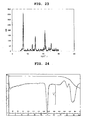
- a crystal of a preferable embodiment has a powder X-ray diffraction pattern shown in Fig. 3 and/or a thermogravimetry-differential thermal analysis (hereinafter sometimes to be indicated as TG/DTA) curve shown in Fig. 4 .
- characteristic peaks in a powder X-ray diffraction spectrum are at diffraction angles represented by 2 ⁇ of around 12.0°, 15.0°, 17.8°, 19.6°, 22.8° and/or 25.8° (each ⁇ 0.2°).
- the melting point (extrapolated onset temperature) by TG/DTA is about 216°C to about 217°C, preferably about 216°C.
- Monophosphate can be obtained by reacting, for example, more than 0.5 mol and less than 2 mol, preferably not less than 0.67 mol and not more than 1.1 mol, more preferably 1 mol of phosphoric acid per 1 mol of (R)-3-[2-(2-hydroxymethylpyrrolidin-1-yl)ethyl]-5-methyl-2H-isoquinolin-1-one (hereinafter sometimes to be indicated as a free form) that can be produced according to the synthesis method described in Example 36 of WO 2004/031171 . In addition, it can also be obtained according to the methods of the Examples described later and the like.
- monophosphate can also be obtained by using (R)-3-[2-(2-hydroxymethylpyrrolidin-1-yl)ethyl]-5-methyl-2H-isoquinolin-1-one hemiphosphate (hereinafter sometimes to be indicated simply as hemiphosphate), (R)-3-[2-(2-hydroxymethylpyrrolidin-1-yl)ethyl]-5-methyl-2H-isoquinolin-1-one diphosphate (hereinafter sometimes to be indicated simply as diphosphate) or anhydrous (R)-3-[2-(2-hydroxymethylpyrrolidin-1-yl)ethyl]-5-methyl-2H-isoquinolin-1-one monohydrochloride (hereinafter sometimes to be indicated simply as anhydrous monohydrochloride) as a production intermediate or starting material.
- Examples of the method for obtaining monophosphate from hemiphosphate include a method comprising reacting more than 0 mol and less than 1.5 mol, preferably not less than 0.17 mol and not more than 0.6 mol, more preferably 0.5 mol, of phosphoric acid per 1 mol of hemiphosphate.
- hemiphosphate can be converted to a free form and then to monophosphate, according to a method to be mentioned later comprising converting anhydrous monohydrochloride to a free form and then to monophosphate.
- Examples of the method for obtaining monophosphate from diphosphate include reacting more than 0 mol and less than 3 mol, preferably not less than 0.8 mol and not more than 2 mol, more preferably 1 mol, of a free form per 1 mol of diphosphate.
- diphosphate can be converted to a free form and then to monophosphate, according to a method to be mentioned later comprising converting anhydrous monohydrochloride to a free form and then to monophosphate.
- Examples of the method for obtaining monophosphate from anhydrous monohydrochloride, anhydrous monohydrobromide, monohydrobromide dihydrate, anhydrous monomesylate, anhydrous hemisulfate, hemisulfate sesquihydrate, anhydrous monosulfate, monosulfate monohydrate, mono-D-tartrate monohydrate or mono-L-tartrate monohydrate include adding anhydrous monohydrochloride to a biphasic solvent consisting of a suitable organic solvent such as dichloromethane, chloroform, ethyl acetate and the like and a suitable alkaline aqueous solution such as aqueous sodium hydroxide solution, potassium carbonate, aqueous sodium carbonate solution, sodium hydrogen carbonate and the like, shaking the mixture, obtaining a free form from an organic solvent layer, and reacting 1 mol of the obtained free form with more than 0.5 mol and less than 2 mol, preferably not less than 0.67 mol and not more than 1.1
- Hemiphosphate can be obtained as a monohydrate crystal.
- a crystal of a preferable embodiment has a powder X-ray diffraction pattern shown in Fig. 5 and/or a TG/DTA curve shown in Fig. 6 .
- characteristic peaks in a powder X-ray diffraction spectrum are at diffraction angles represented by 2 ⁇ of around 8.8°, 11.8°, 14.4°, 21.4°, 23.7°, 24.6° and 26.6° (each ⁇ 0.2°).
- the melting point (extrapolated onset temperature) by TG/DTA is about 199°C.
- Hemiphosphate can be obtained according to a production method of monophosphate and using a free form as a starting material, or can also be obtained according to the methods of the Examples described later.
- Diphosphate can be obtained as a crystal of monohydrate 0.5 ethanol solvate.
- a crystal of a preferable embodiment has a powder X-ray diffraction pattern shown in Fig. 7 and/or a TG/DTA curve shown in Fig. 8 .
- characteristic peaks in a powder X-ray diffraction spectrum are at diffraction angles represented by 2 ⁇ of around 6.6°, 13.1°, 23.1° and 26.4° (each ⁇ 0.2°).
- the melting point (extrapolated onset temperature) by TG/DTA is about 196°C.
- Diphosphate can be obtained according to a production method of monophosphate and using a free form as a starting material, and can also be obtained according to the methods of the Examples described later.
- Anhydrous monohydrochloride can be obtained as a crystal.
- a crystal of a preferable embodiment is a crystal (form II) having a powder X-ray diffraction pattern shown in Fig. 9 and/or a melting point (extrapolated onset temperature) by TG/DTA of about 110°C.
- characteristic peaks in a powder X-ray diffraction spectrum are at diffraction angles represented by 2 ⁇ of around 6.7°, 21.8° and 30.2° (each ⁇ 0.20).
- a crystal of another preferable embodiment is a crystal (form III) having a powder X-ray diffraction pattern shown in Fig.
- a crystal of still another preferable embodiment is a crystal (form IV) having a powder X-ray diffraction pattern shown in Fig. 11 and/or a TG/DTA curve shown in Fig. 12 .
- Anhydrous monohydrochloride can be obtained by reacting 1 to 10 mol, preferably 1 to 2 mol, more preferably 1 mol, of hydrochloric acid per 1 mol of a free form. In addition, it can also be obtained according to the methods of the Examples described later.
- a crystal of a preferable embodiment is a crystal (form I) having a powder X-ray diffraction pattern shown in Fig. 15 and/or a melting point (extrapolated onset temperature) by TG/DTA of about 173°C.
- characteristic peaks in a powder X-ray diffraction spectrum are at diffraction angles represented by 2 ⁇ of around 11.0°, 12.8° and 20.3° (each ⁇ 0.2°).
- a crystal of another preferable embodiment is a crystal (form II) having a powder X-ray diffraction pattern shown in Fig.
- Anhydrous monohydrobromide can be obtained by reacting 1 to 10 mol, preferably 1 to 2 mol, more preferably 1 mol, of hydrobromic acid per 1 mol of a free form, and drying at low temperature to give form I crystal, or drying at a high temperature to give form II crystal. In addition, it can also be obtained according to the methods of the Examples described later.
- Monohydrobromide dihydrate can be obtained as a crystal.
- a crystal of a preferable embodiment is a crystal having a powder X-ray diffraction pattern shown in Fig. 19 and/or a TG/DTA curve shown in Fig. 20 .
- characteristic peaks in a powder X-ray diffraction spectrum are at diffraction angles represented by 2 ⁇ of around 11.7°, 17.4°, 21.1° and 26.0° (each ⁇ 0.2°).
- Monohydrobromide dihydrate can be obtained by reacting 1 to 10 mol, preferably 1 to 2 mol, more preferably 1 mol, of hydrobromic acid per 1 mol of a free form, and adjusting the humidity. In addition, it can also be obtained according to the methods of the Examples described later.
- Anhydrous monomesylate can be obtained as a crystal.
- a crystal of a preferable embodiment is a crystal having a powder X-ray diffraction pattern shown in Fig. 21 and/or a melting point (extrapolated onset temperature) by TG/DTA of about 176°C.
- characteristic peaks in a powder X-ray diffraction spectrum are at diffraction angles represented by 2 ⁇ of around 15.6° and 20.7° (each ⁇ 0.2°).
- Anhydrous monomesylate can be obtained by reacting 1 to 10 mol, preferably 1 to 2 mol, more preferably 1 mol, of mesylic acid per 1 mol of a free form. In addition, it can also be obtained according to the methods of the Examples described later.
- Anhydrous hemisulfate can be obtained as a crystal.
- a crystal of a preferable embodiment is a crystal having a powder X-ray diffraction pattern shown in Fig. 23 and/or a melting point (extrapolated onset temperature) by TG/DTA of about 166°C.
- characteristic peaks in a powder X-ray diffraction spectrum are at diffraction angles represented by 2 ⁇ of around 7.2°, 13.1° and 25.2° (each ⁇ 0.2°).
- Anhydrous hemisulfate can be obtained by reacting 0.3 to 0.6 mol, preferably 0.5 mol, of sulfuric acid per 1 mol of a free form. In addition, it can also be obtained according to the methods of the Examples described later.
- Hemisulfate sesquihydrate can be obtained as a crystal.
- a crystal of a preferable embodiment is a crystal having a powder X-ray diffraction pattern shown in Fig. 25 and/or a melting point (extrapolated onset temperature) by TG/DTA of about 106°C.
- characteristic peaks in a powder X-ray diffraction spectrum are at diffraction angles represented by 2 ⁇ of around 5.3°, 8.1°, 10.6° and 22.9° (each ⁇ 0.2°).
- Hemisulfate sesquihydrate can be obtained by reacting 0.3 to 0.6 mol, preferably 0.5 mol, of sulfuric acid per 1 mol of a free form, and adjusting the humidity. In addition, it can also be obtained according to the methods of the Examples described later.
- Anhydrous monosulfate can be obtained as a crystal.
- a crystal of a preferable embodiment is a crystal having a powder X-ray diffraction pattern shown in Fig. 27 and/or a melting point (extrapolated onset temperature) by TG/DTA of about 176°C.
- characteristic peaks in a powder X-ray diffraction spectrum are at diffraction angles represented by 2 ⁇ of around 12.2° and 21.7° (each ⁇ 0.2°).
- Anhydrous monosulfate can be obtained by reacting 1 to 10 mol, preferably 1 to 2 mol, more preferably 1 mol, of sulfuric acid per 1 mol of a free form. In addition, it can also be obtained according to the methods of the Examples described later.
- Monosulfate monohydrate can be obtained as a crystal.
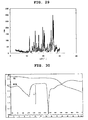
- a crystal of a preferable embodiment is a crystal having a powder X-ray diffraction pattern shown in Fig. 29 and/or a TG/DTA curve shown in Fig. 30 .
- characteristic peaks in a powder X-ray diffraction spectrum are at diffraction angles represented by 2 ⁇ of around 11.7°, 15.2° and 19.7° (each ⁇ 0.2°).
- Monosulfate monohydrate can be obtained by reacting 1 to 10 mol, preferably 1 to 2 mol, more preferably 1 mol, of sulfuric acid per 1 mol of a free form, and adjusting the humidity. In addition, it can also be obtained according to the methods of the Examples described later.
- Mono-D-tartrate monohydrate can be obtained as a crystal.
- a crystal of a preferable embodiment is a crystal having a powder X-ray diffraction pattern shown in Fig. 31 and/or a melting point (extrapolated onset temperature) by TG/DTA of about 169°C.
- characteristic peaks in a powder X-ray diffraction spectrum are at diffraction angles represented by 2 ⁇ of around 8.5°, 21.1° and 22.1° (each ⁇ 0.2°).
- Mono-D-tartrate monohydrate can be obtained by reacting 1 to 10 mol, preferably 1 to 2 mol, more preferably 1 mol, of D-tartaric acid per 1 mol of a free form. In addition, it can also be obtained according to the methods of the Examples described later.
- Mono-L-tartrate monohydrate can be obtained as a crystal.
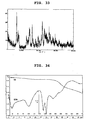
- a crystal of a preferable embodiment is a crystal (form I) having a powder X-ray diffraction pattern shown in Fig. 33 and/or a melting point (extrapolated onset temperature) by TG/DTA of about 148°C.
- characteristic peaks in a powder X-ray diffraction spectrum are at diffraction angles represented by 2 ⁇ of around 7.2°, 16.2° and 22.0° (each ⁇ 0.2°).
- Mono-L-tartrate monohydrate can be obtained by reacting 1 to 10 mol, preferably 1 to 2 mol, more preferably 1 mol, of L-tartaric acid per 1 mol of a free form. In addition, it can also be obtained according to the methods of the Examples described later.
- Monophosphate is present as (R)-3-[2-(2-hydroxymethylpyrrolidin-1-yl)ethyl]-5-methyl-2H-isoquinolin-1-one in a solution state, and it is known that this compound possesses a potent PARP inhibitory action ( WO 2004/031171 , Experimental Example, Table 1 (pp. 82-83)).
- monophosphate is useful as a PARP inhibitor, and useful as a drug for the prophylaxis and/or treatment of cerebral infarction (more preferably in acute stage of cerebral infarction) or improvement of neurological symptoms associated with cerebral infarction (more preferably in acute stage of cerebral infarction).
- monophosphate When used as the aforementioned prophylactic and/or therapeutic drug, it can be generally administered orally or parenterally in the form of a pharmaceutical composition or preparation (e.g., tablet, liquid etc.) obtained by mixing monophosphate with a pharmaceutically acceptable carrier.
- a pharmaceutical composition or preparation e.g., tablet, liquid etc.
- the pharmaceutical composition can be formulated into a preparation according to a conventional method.
- the dose is determined according to the age, body weight, general health condition, sex, diet, administration time, administration method, clearance rate, combination of drugs, and the level of disease for which patients are undergoing treatments at that time, or further in consideration of other factors.
- Monophosphate is low toxic and can be used safely. While the daily dose thereof varies depending on the condition and body weight of patient, the kind of the compound, administration route and the like, it is preferably, for example, 0.01 to 150 mg/patient/day by oral administration, and about 0.01 to 50 mg/patient/day by parenteral administration.
- the "prophylactic drug” is a drug to be administered to a healthy person who has not developed a disease and is, for example, a drug to be administered for the purpose of preventing the onset of a disease.
- the "therapeutic drug” is a drug to be administered by a doctor to a person diagnosed by a doctor to have developed a disease (patient) and is, for example, a drug to be administered for the purpose of alleviating a disease or symptom, or recovering health. Even when the object of administration is prevention of aggravation of a disease or symptom, or prevention of attack, as long as it is administered to a patient, it is a therapeutic drug.
- the results are shown in Fig. 3 .
- the characteristic peaks of the crystal were at diffraction angles represented by 2 ⁇ of 12.0°, 15.0°, 17.8°, 19.6°, 20.0°, 22.8° and 25.8° ( ⁇ 0.2°).
- measurement method and results of melting point (TG/DTA) By a method similar to that of Production Example 1, weight changes (TG) of the sample and temperature difference (DTA) from that of the standard substance were measured.
- the results are shown in Fig. 4 .
- the melting point extractated onset temperature
- Monohydrochloride dihydrate crystal (6.9 mg) was dried at 30°C, 5% of relative humidity or below for 7 hr to give the title compound (form II crystal) as crystals almost quantitatively.
- measurement method and results of powder X-ray By a method similar to that of Production Example 1, powder X-ray diffraction pattern was measured. The results are shown in Fig. 9 .
- the characteristic peaks of the crystal were at diffraction angles represented by 2 ⁇ of 6.7°, 21.8° and 30.2° ( ⁇ 0.2°).
- the melting point (extrapolated onset temperature) from Fig. 2 was 110°C.
- Example 4 The compound (6 mg) obtained in Example 4 was heated to 200°C at 5% of relative humidity or below to give the title compound (form III crystal) as crystals almost quantitatively.
- measurement method and results of powder X-ray By a method similar to that of Production Example 1, powder X-ray diffraction pattern was measured. The results are shown in Fig. 10 .
- the characteristic peaks of the crystal were at diffraction angles represented by 2 ⁇ of 15.5°, 29.4°, 31.4°, 31.9° and 34.3° ( ⁇ 0.2°).
- the melting point (extrapolated onset temperature) from Fig. 2 was 231°C.
- the characteristic peaks of the crystal were at diffraction angles represented by 2 ⁇ of 9.1°, 19.8°, 20.9°, 28.6° and 28.8° ( ⁇ 0.2°).
- measurement method and results of melting point (TG/DTA) By a method similar to that of Production Example 1 except that the measurement range was changed to 25°C-250°C, weight changes (TG) of the sample and temperature difference (DTA) from that of the standard substance were measured. The results are shown in Fig. 12 .
- the melting point (extrapolated onset temperature) was 208°C. Also, from the behavior of moisture weight decrease, the compound was confirmed to be anhydrate.
- the bath was removed and seed crystals were added. After stirring at room temperature followed by under ice-cooling, the crystals were collected through filtration, and washed with cold water. The crystals were dried under reduced pressure at 50°C for 18 hr to give the title compound (707 mg).
- Fig. 15 The characteristic peaks of the crystal were at diffraction angles represented by 2 ⁇ of 11.0°, 12.8° and 20.3° ( ⁇ 0.2°).
- measurement method and results of melting point (TG/DTA) By a method similar to that of Production Example 1, weight changes (TG) of the sample and temperature difference (DTA) from that of the standard substance were measured.
- the results are shown in Fig. 16 .
- the melting point (extrapolated onset temperature) was 173°C.
- the characteristic peaks of the crystal were at diffraction angles represented by 2 ⁇ of 11.7°, 17.4°, 21.1° and 26.0° ( ⁇ 0.2°).
- measurement method and results of melting point (TG/DTA) By a method similar to that of Production Example 1, weight changes (TG) of the sample and temperature difference (DTA) from that of the standard substance were measured. The results are shown in Fig. 20 .
- Fig. 21 The characteristic peaks of the crystal were at diffraction angles represented by 2 ⁇ of 15.6°, and 20.7° ( ⁇ 0.2°).
- measurement method and results of melting point (TG/DTA) By a method similar to that of Production Example 1, weight changes (TG) of the sample and temperature difference (DTA) from that of the standard substance were measured.
- the results are shown in Fig. 22 .
- the melting point (extrapolated onset temperature) was 176°C.
- Example 11 anhydrous (R)-3-[2-(2-hydroxymethylpyrrolidin-1-yl)ethyl]-5-methyl-2H-isoquinolin-1-one hemisulfate
- Fig. 23 The characteristic peaks of the crystal were at diffraction angles represented by 2 ⁇ of 7.2°, 13.1° and 25.2° ( ⁇ 0.2°). measurement method and results of melting point (TG/DTA) By a method similar to that of Production Example 1, weight changes (TG) of the sample and temperature difference (DTA) from that of the standard substance were measured. The results are shown in Fig. 24 .
- the melting point (extrapolated onset temperature) was 166°C.
- the characteristic peaks of the crystal were at diffraction angles represented by 2 ⁇ of 5.3°, 8.1°, 10.6° and 22.9° ( ⁇ 0.2°).
- measurement method and results of melting point (TG/DTA) By a method similar to that of Production Example 1, weight changes (TG) of the sample and temperature difference (DTA) from that of the standard substance were measured. The results are shown in Fig. 26 .
- the melting point extractated onset temperature was 106°C.
- Fig. 27 The characteristic peaks of the crystal were at diffraction angles represented by 2 ⁇ of 12.2° and 21.7° ( ⁇ 0.2°).
- measurement method and results of melting point (TG/DTA) By a method similar to that of Production Example 1, weight changes (TG) of the sample and temperature difference (DTA) from that of the standard substance were measured. The results are shown in Fig. 28 .
- the melting point (extrapolated onset temperature) was 176°C.
- the characteristic peaks of the crystal were at diffraction angles represented by 2 ⁇ of 11.7°, 15.2° and 19.7° ( ⁇ 0.2°).
- measurement method and results of melting point (TG/DTA) By a method similar to that of Production Example 1, weight changes (TG) of the sample and temperature difference (DTA) from that of the standard substance were measured. The results are shown in Fig. 30 .
- Fig. 31 The characteristic peaks of the crystal were at diffraction angles represented by 2 ⁇ of 8.5°, 21.1° and 22.1° ( ⁇ 0.2°).
- measurement method and results of melting point (TG/DTA) By a method similar to that of Production Example 1, weight changes (TG) of the sample and temperature difference (DTA) from that of the standard substance were measured.
- Fig. 32 The melting point (extrapolated onset temperature) was 169°C.
- Fig. 33 The characteristic peaks of the crystal were at diffraction angles represented by 2 ⁇ of 7.2°, 16.2° and 22.0° ( ⁇ 0.2°).
- measurement method and results of melting point (TG/DTA) By a method similar to that of Production Example 1, weight changes (TG) of the sample and temperature difference (DTA) from that of the standard substance were measured.
- Fig. 34 The melting point (extrapolated onset temperature) was 148°C.
- Chemical stability evaluation method The compound (monophosphate) described in Example 1 and a free form obtained according to the method described in WO 2004/031171 were measured by 20 mg each in a weighing bottle, and preserved for one month at 30°C, 40°C, 50°C and 40°C at 75% of relative humidity. The sample after preservation was measured for chemical purity by HPLC. The HPLC conditions are shown below.
- Table 1 Increase rate of related substances (%) monophosphate free form 30°C -0.01 +0.16 40°C -0.01 +0.18 50°C -0.01 +1.30 40°C 75%RH -0.02 +0.28
- Monophosphate is a compound which is chemically stable, has high solubility, and shows less weight change due to humidity as compared to conventionally-known free form and monohydrochloride dihydrate, and is superior as a bulk drug for pharmaceutical products.
- This application is based on a patent application No. 2007-208693 filed in Japan, the contents of which are incorporated in full herein by this reference.
Landscapes
- Organic Chemistry (AREA)
- Chemical & Material Sciences (AREA)
- Health & Medical Sciences (AREA)
- Bioinformatics & Cheminformatics (AREA)
- Engineering & Computer Science (AREA)
- Life Sciences & Earth Sciences (AREA)
- General Health & Medical Sciences (AREA)
- Nuclear Medicine, Radiotherapy & Molecular Imaging (AREA)
- General Chemical & Material Sciences (AREA)
- Pharmacology & Pharmacy (AREA)
- Chemical Kinetics & Catalysis (AREA)
- Animal Behavior & Ethology (AREA)
- Medicinal Chemistry (AREA)
- Public Health (AREA)
- Veterinary Medicine (AREA)
- Urology & Nephrology (AREA)
- Vascular Medicine (AREA)
- Cardiology (AREA)
- Heart & Thoracic Surgery (AREA)
- Pharmaceuticals Containing Other Organic And Inorganic Compounds (AREA)
- Plural Heterocyclic Compounds (AREA)
Abstract
Description
- The present invention relates to a salt of (R)-3-[2-(2-hydroxymethylpyrrolidin-1-yl)ethyl]-5-methyl-2H-isoquinolin-1-one and a crystal thereof, and a pharmaceutical use thereof.
- (R)-3-[2-(2-Hydroxymethylpyrrolidin-1-yl)ethyl]-5-methyl-2H-isoquinolin-1-one and hydrochloride dihydrate thereof is a compound described in Example 36 of
WO 2004/031171 (patent document 1). This compound possesses a potent poly(ADP-ribose)polymerase (Poly(ADP-ribose)polymerase; hereinafter to be abbreviated as "PARP") inhibitory action, and is useful for the treatment or prophylaxis of cerebral infarction.
While a free form and hydrochloride dihydrate of the aforementioned compound are described in Example 36 ofpatent document 1, other salt forms are not specifically described. patent document 1:WO 2004/031171 - The problem of the present invention is to provide a novel salt form of (R)-3-[2-(2-hydroxymethylpyrrolidin-1-yl)ethyl]-5-methyl-2H-isoquinolin-1-one. Means of Solving the Problems
- In view of the above-mentioned problem, the present inventors have conducted intensive studies and found that, from among the compounds of the present invention, (R)-3-[2-(2-hydroxymethylpyrrolidin-1-yl)ethyl]-5-methyl-2H-isoquinolin-1-one monophosphate (hereinafter sometimes to be simply indicated as monophosphate) is particularly superior in the chemical stability and has high solubility as compared to its free form, as well as shows low hygroscopicity and has high solubility as compared to (R)-3-[2-(2-hydroxymethylpyrrolidin-1-yl)ethyl]-5-methyl-2H-isoquinolin-1-one hydrochloride dihydrate, which resulted in the completion of the present invention.
- Accordingly, the present invention provides the following.
- (1) (R)-3-[2-(2-Hydroxymethylpyrrolidin-1-yl)ethyl]-5-methyl-2H-isoquinolin-1-one monophosphate.
- (2) The (R)-3-[2-(2-hydroxymethylpyrrolidin-1-yl)ethyl]-5-methyl-2H-isoquinolin-1-one monophosphate described above, which is an anhydrate.
- (3) The (R)-3-[2-(2-hydroxymethylpyrrolidin-1-yl)ethyl]-5-methyl-2H-isoquinolin-1-one monophosphate described above, which is a crystal.
- (4) An anhydrous crystal of (R)-3-[2-(2-hydroxymethylpyrrolidin-1-yl)ethyl]-5-methyl-2H-isoquinolin-1-one monophosphate.
- (5) The crystal described above showing a powder X-ray diffraction spectrum having a peak at a diffraction angle represented by 2θ of around 12.0° (±0.2°).
- (6) The crystal described above showing a powder X-ray diffraction spectrum having a peak at a diffraction angle represented by 2θ of around 22.8° (±0.2°).
- (7) The crystal described above showing a powder X-ray diffraction spectrum having a peak at a diffraction angle represented by 2θ of around 15.0° (±0.2°).
- (8) The crystal described above showing a powder X-ray diffraction spectrum having a peak at a diffraction angle represented by 2θ of around 19.6° (±0.2°).
- (9) The crystal described above showing a powder X-ray diffraction spectrum having a peak at a diffraction angle represented by 2θ of around 25.8° (±0.2°).
- (10) The crystal described above showing a powder X-ray diffraction spectrum having a peak at a diffraction angle represented by 2θ of around 17.8° (±0.2°).
- (11) The crystal described above showing a powder X-ray diffraction spectrum having peaks at diffraction angles represented by 2θ of around 12.0°, 15.0°, 17.8°, 19.6°, 20.0°, 22.8° and 25.8° (each ±0.2°).
- (12) The crystal described above having a melting point (extrapolated onset temperature) by thermogravimetry-differential thermal analysis of about 216°C to about 217°C.
- (13) The crystal described above having a melting point (extrapolated onset temperature) by thermogravimetry-differential thermal analysis of about 216°C.
- (14) An anhydrous crystal of (R)-3-[2-(2-hydroxymethylpyrrolidin-1-yl)ethyl]-5-methyl-2H-isoquinolin-1-one monophosphate having physicochemical properties shown by the following A and/or B:
- A: having a powder X-ray diffraction pattern shown in
Fig. 3 , - B: having a thermogravimetry-differential thermal analysis curve shown in
Fig. 4 .
- A: having a powder X-ray diffraction pattern shown in
- (15) (R)-3-[2-(2-Hydroxymethylpyrrolidin-1-yl)ethyl]-5-methyl-2H-isoquinolin-1-one hemiphosphate.
- (16) The (R)-3-[2-(2-hydroxymethylpyrrolidin-1-yl)ethyl]-5-methyl-2H-isoquinolin-1-one hemiphosphate described above, which is a monohydrate.
- (17) The (R)-3-[2-(2-hydroxymethylpyrrolidin-1-y1)ethyl]-5-methyl-2H-isoquinolin-1-one hemiphosphate described above, which is a crystal.
- (18) A crystal of (R)-3-[2-(2-hydroxymethylpyrrolidin-1-yl)ethyl]-5-methyl-2H-isoquinolin-1-one hemiphosphate monohydrate.
- (19) The crystal described above showing a powder X-ray diffraction spectrum having peaks at diffraction angles represented by 2θ of around 8.8°, 11.8°, 14.4°, 21.4°, 23.7°, 24.6° and 26. 6° (each ±0.2°).
- (20) The crystal described above having a melting point (extrapolated onset temperature) by thermogravimetry-differential thermal analysis of about 199°C.
- (21) A crystal of (R)-3-[2-(2-hydroxymethylpyrrolidin-1-yl)ethyl]-5-methyl-2H-isoquinolin-1-one hemiphosphate monohydrate having physicochemical properties shown by the following C and/or D:
- C: having a powder X-ray diffraction pattern shown in
Fig. 5 , D: having a thermogravimetry-differential thermal analysis curve shown inFig. 6 .
- C: having a powder X-ray diffraction pattern shown in
- (22) (R)-3-[2-(2-Hydroxymethylpyrrolidin-1-yl)ethyl]-5-methyl-2H-isoquinolin-1-one diphosphate.
- (23) The (R)-3-[2-(2-hydroxymethylpyrrolidin-1-yl)ethyl]-5-methyl-2H-isoquinolin-1-one diphosphate described above, which is a monohydrate 0.5 ethanol solvate.
- (24) The (R)-3-[2-(2-hydroxymethylpyrrolidin-1-yl)ethyl]-5-methyl-2H-isoquinolin-1-one diphosphate described above, which is a crystal.
- (25) A crystal of (R)-3-[2-(2-hydroxymethylpyrrolidin-1-yl)ethyl]-5-methyl-2H-isoquinolin-1-one diphosphate monohydrate 0.5 ethanol solvate.
- (26) The crystal described above showing a powder X-ray diffraction spectrum having peaks at diffraction angles represented by 2θ of around 6.6°, 13.1°, 23.1° and 26.4° (each ±0.2°).
- (27) The crystal described above having a melting point (extrapolated onset temperature) by thermogravimetry-differential thermal analysis of about 196°C.
- (28) A crystal of (R)-3-[2-(2-hydroxymethylpyrrolidin-1-yl)ethyl]-5-methyl-2H-isoquinolin-1-one diphosphate monohydrate 0.5 ethanol solvate having physicochemical properties shown by the following E and/or F:
- E: having a powder X-ray diffraction pattern shown in
Fig. 7 , F: having a thermogravimetry-differential thermal analysis curve shown inFig. 8 .
- E: having a powder X-ray diffraction pattern shown in
- (29) Anhydrous (R)-3-[2-(2-hydroxymethylpyrrolidin-1-yl)ethyl]-5-methyl-2H-isoquinolin-1-one monohydrochloride.
- (30) An anhydrous crystal of (R)-3-[2-(2-hydroxymethylpyrrolidin-1-yl)ethyl]-5-methyl-2H-isoquinolin-1-one monohydrochloride.
- (31) The crystal described above showing a powder X-ray diffraction spectrum having peaks at diffraction angles represented by 2θ of around 6.7°, 21.8° and 30.2° (each +0.2°) .
- (32) The crystal described above having a melting point (extrapolated onset temperature) by thermogravimetry-differential thermal analysis of about 110°C.
- (33) An anhydrous crystal of (R)-3-[2-(2-hydroxymethylpyrrolidin-1-yl)ethyl]-5-methyl-2H-isoquinolin-1-one monohydrochloride having physicochemical property shown by the following G:
- G: having a powder X-ray diffraction pattern shown in
Fig. 9 .
- G: having a powder X-ray diffraction pattern shown in
- (34) The crystal described above showing a powder X-ray diffraction spectrum having peaks at diffraction angles represented by 2θ of around 15.5°, 29.4°, 31.4°, 31.9° and 34.3° (each ±0.2°).
- (35) The crystal described above having a melting point (extrapolated onset temperature) by thermogravimetry-differential thermal analysis of about 231°C.
- (36) An anhydrous crystal of (R)-3-[2-(2-hydroxymethylpyrrolidin-1-yl)ethyl]-5-methyl-2H-isoquinolin-1-one monohydrochloride having physicochemical property shown by the following H:
- H: having a powder X-ray diffraction pattern shown in
Fig. 10 .
- H: having a powder X-ray diffraction pattern shown in
- (37) The crystal described above showing a powder X-ray diffraction spectrum having peaks at diffraction angles represented by 2θ of around 9.1°, 19.8°, 20.9° and 28.6° (each ±0.2°).
- (38) The crystal described above having a melting point (extrapolated onset temperature) by thermogravimetry-differential thermal analysis of about 208°C.
- (39) An anhydrous crystal of (R)-3-[2-(2-hydroxymethylpyrrolidin-1-yl)ethyl]-5-methyl-2H-isoquinolin-1-one monohydrochloride having physicochemical properties shown by the following I and/or J:
- I: having a powder X-ray diffraction pattern shown in
Fig. 11 , - J: having a thermogravimetry-differential thermal analysis curve shown in
Fig. 12 .
- I: having a powder X-ray diffraction pattern shown in
- (40) Anhydrous (R)-3-[2-(2-hydroxymethylpyrrolidin-1-yl)ethyl]-5-methyl-2H-isoquinolin-1-one monohydrobromide.
- (41) An anhydrous crystal of (R)-3-[2-(2-hydroxymethylpyrrolidin-1-yl)ethyl]-5-methyl-2H-isoquinolin-1-one monohydrobromide.
- (42) The crystal described above showing a powder X-ray diffraction spectrum having peaks at diffraction angles represented by 2θ of around 11.0°, 12.8° and 20.3° (each ±0.2°).
- (43) The crystal described above having a melting point (extrapolated onset temperature) by thermogravimetry-differential thermal analysis of about 173°C.
- (44) An anhydrous crystal of (R)-3-[2-(2-hydroxymethylpyrrolidin-1-yl)ethyl]-5-methyl-2H-isoquinolin-1-one monohydrobromide having physicochemical properties shown by the following K and/or L:
- K: having a powder X-ray diffraction pattern shown in
Fig. 15 , - L: having a thermogravimetry-differential thermal analysis curve shown in
Fig. 16 .
- K: having a powder X-ray diffraction pattern shown in
- (45) The crystal described above showing a powder X-ray diffraction spectrum having peaks at diffraction angles represented by 2θ of around 8.3°, 9.2° and 14.0° (each ±0.2°).
- (46) The crystal described above having a melting point (extrapolated onset temperature) by thermogravimetry-differential thermal analysis of about 235°C.
- (47) An anhydrous crystal of (R)-3-[2-(2-hydroxymethylpyrrolidin-1-yl)ethyl]-5-methyl-2H-isoquinolin-1-one monohydrobromide having physicochemical properties shown by the following M and/or N:
- M: having a powder X-ray diffraction pattern shown in
Fig. 17 , - N: having a thermogravimetry-differential thermal analysis curve shown in
Fig. 18 .
- M: having a powder X-ray diffraction pattern shown in
- (48) (R)-3-[2-(2-Hydroxymethylpyrrolidin-1-yl)ethyl]-5-methyl-2H-isoquinolin-1-one monohydrobromide.
- (49) The (R)-3-[2-(2-hydroxymethylpyrrolidin-1-yl)ethyl]-5-methyl-2H-isoquinolin-1-one monohydrobromide described above, which is a dihydrate.
- (50) The (R)-3-[2-(2-hydroxymethylpyrrolidin-1-yl)ethyl]-5-methyl-2H-isoquinolin-1-one monohydrobromide described above, which is a crystal.
- (51) A crystal of (R)-3-[2-(2-hydroxymethylpyrrolidin-1-yl)ethyl]-5-methyl-2H-isoquinolin-1-one monohydrobromide dihydrate.
- (52) The crystal described above showing a powder X-ray diffraction spectrum having peaks at diffraction angles represented by 2θ of around 11.7°, 17.4°, 21.1° and 26.0° (each ±0.2°).
- (53) A crystal of (R)-3-[2-(2-hydroxymethylpyrrolidin-1-yl)ethyl]-5-methyl-2H-isoquinolin-1-one monohydrobromide dihydrate having physicochemical properties shown by the following O and/or P:
- O: having a powder X-ray diffraction pattern shown in
Fig. 19 , - P: having a thermogravimetry-differential thermal analysis curve shown in
Fig. 20 .
- O: having a powder X-ray diffraction pattern shown in
- (54) Anhydrous (R)-3-[2-(2-hydroxymethylpyrrolidin-1-yl)ethyl]-5-methyl-2H-isoquinolin-1-one monomesylate.
- (55) An anhydrous crystal of (R)-3-[2-(2-hydroxymethylpyrrolidin-1-yl)ethyl]-5-methyl-2H-isoquinolin-1-one monomesylate.
- (56) The crystal described above showing a powder X-ray diffraction spectrum having peaks at diffraction angles represented by 2θ of around 15.6° and 20.7° (each ±0.2°).
- (57) The crystal described above having a melting point (extrapolated onset temperature) by thermogravimetry-differential thermal analysis of about 176°C.
- (58) An anhydrous crystal of (R)-3-[2-(2-hydroxymethylpyrrolidin-1-yl)ethyl]-5-methyl-2H-isoquinolin-1-one monomesylate having physicochemical properties shown by the following Q and/or R:
- Q: having a powder X-ray diffraction pattern shown in
Fig. 21 , - R: having a thermogravimetry-differential thermal analysis curve shown in
Fig. 22 .
- Q: having a powder X-ray diffraction pattern shown in
- (59) Anhydrous (R)-3-[2-(2-hydroxymethylpyrrolidin-1-yl)ethyl]-5-methyl-2H-isoquinolin-1-one hemisulfate.
- (60) An anhydrous crystal of (R)-3-[2-(2-hydroxymethylpyrrolidin-1-yl)ethyl]-5-methyl-2H-isoquinolin-1-one hemisulfate.
- (61) The crystal described above showing a powder X-ray diffraction spectrum having peaks at diffraction angles represented by 2θ of around 7.2°, 13.1° and 25.2° (each ±0.2°).
- (62) The crystal described above having a melting point (extrapolated onset temperature) by thermogravimetry-differential thermal analysis of about 166°C.
- (63) An anhydrous crystal of (R)-3-[2-(2-hydroxymethylpyrrolidin-1-yl)ethyl]-5-methyl-2H-isoquinolin-1-one hemisulfate having physicochemical properties shown by the following S and/or T:
- S: having a powder X-ray diffraction pattern shown in
Fig. 23 , - T: having a thermogravimetry-differential thermal analysis curve shown in
Fig. 24 .
- S: having a powder X-ray diffraction pattern shown in
- (64) (R)-3-[2-(2-Hydroxymethylpyrrolidin-1-yl)ethyl]-5-methyl-2H-isoquinolin-1-one hemisulfate.
- (65) The (R)-3-[2-(2-hydroxymethylpyrrolidin-1-yl)ethyl]-5-methyl-2H-isoquinolin-1-one hemisulfate described above, which is a sesquihydrate.
- (66) The (R)-3-[2-(2-hydroxymethylpyrrolidin-1-yl)ethyl]-5-methyl-2H-isoquinolin-1-one hemisulfate described above, which is a crystal.
- (67) A crystal of (R)-3-[2-(2-hydroxymethylpyrrolidin-1-yl)ethyl]-5-methyl-2H-isoquinolin-1-one hemisulfate sesquihydrate.
- (68) The crystal described above showing a powder X-ray diffraction spectrum having peaks at diffraction angles represented by 2θ of around 5.3°, 8.1°, 10.6° and 22.9° (each ±0.2°).
- (69) The crystal described above having a melting point (extrapolated onset temperature) by thermogravimetry-differential thermal analysis of about 106°C.
- (70) A crystal of (R)-3-[2-(2-hydroxymethylpyrrolidin-1-yl)ethyl]-5-methyl-2H-isoquinolin-1-one hemisulfate sesquihydrate having physicochemical properties shown by the following U and/or V:
- U: having a powder X-ray diffraction pattern shown in
Fig. 25 , - V: having a thermogravimetry-differential thermal analysis curve shown in
Fig. 26 .
- U: having a powder X-ray diffraction pattern shown in
- (71) Anhydrous (R)-3-[2-(2-hydroxymethylpyrrolidin-1-yl)ethyl]-5-methyl-2H-isoquinolin-1-one monosulfate.
- (72) An anhydrous crystal of (R)-3-[2-(2-hydroxymethylpyrrolidin-1-yl)ethyl]-5-methyl-2H-isoquinolin-1-one monosulfate.
- (73) The crystal described above showing a powder X-ray diffraction spectrum having peaks at diffraction angles represented by 2θ of around 12.2° and 21.7° (each ±0.2°).
- (74) The crystal described above having a melting point (extrapolated onset temperature) by thermogravimetry-differential thermal analysis of about 176°C.
- (75) An anhydrous crystal of (R)-3-[2-(2-hydroxymethylpyrrolidin-1-yl)ethyl]-5-methyl-2H-isoquinolin-1-one monosulfate having physicochemical properties shown by the following W and/or X:
- W: having a powder X-ray diffraction pattern shown in
Fig. 27 , - X: having a thermogravimetry-differential thermal analysis curve shown in
Fig. 28 .
- W: having a powder X-ray diffraction pattern shown in
- (76) (R)-3-[2-(2-Hydroxymethylpyrrolidin-1-yl)ethyl]-5-methyl-2H-isoquinolin-1-one monosulfate.
- (77) The (R)-3-[2-(2-hydroxymethylpyrrolidin-1-yl)ethyl]-5-methyl-2H-isoquinolin-1-one monosulfate described above, which is a monohydrate.
- (78) The (R)-3-[2-(2-hydroxymethylpyrrolidin-1-yl)ethyl]-5-methyl-2H-isoquinolin-1-one monosulfate described above, which is a crystal.
- (79) A crystal of (R)-3-[2-(2-hydroxymethylpyrrolidin-1-yl)ethyl]-5-methyl-2H-isoquinolin-1-one monosulfate monohydrate.
- (80) The crystal described above showing a powder X-ray diffraction spectrum having peaks at diffraction angles represented by 2θ of around 11.7°, 15.2° and 19.7° (each ±0.2°).
- (81) A crystal of (R)-3-[2-(2-hydroxymethylpyrrolidin-1-yl)ethyl]-5-methyl-2H-isoquinolin-1-one monosulfate monohydrate having physicochemical properties shown by the following Y and/or Z:
- Y: having a powder X-ray diffraction pattern shown in
Fig. 29 , - Z: having a thermogravimetry-differential thermal analysis curve shown in
Fig. 30 .
- Y: having a powder X-ray diffraction pattern shown in
- (82) (R)-3-[2-(2-Hydroxymethylpyrrolidin-1-yl)ethyl]-5-methyl-2H-isoquinolin-1-one mono-D-tartrate.
- (83) The (R)-3-[2-(2-hydroxymethylpyrrolidin-1-yl)ethyl]-5-methyl-2H-isoquinolin-1-one mono-D-tartrate described above, which is a monohydrate.
- (84) The (R)-3-[2-(2-hydroxymethylpyrrolidin-1-yl)ethyl]-5-methyl-2H-isoquinolin-1-one mono-D-tartrate described above, which is a crystal.
- (85) A crystal of (R)-3-[2-(2-hydroxymethylpyrrolidin-1-yl)ethyl]-5-methyl-2H-isoquinolin-1-one mono-D-tartrate monohydrate.
- (86) The crystal described above showing a powder X-ray diffraction spectrum having peaks at diffraction angles represented by 2θ of around 8.5°, 21.1° and 22.1° (each ±0.2°).
- (87) The crystal described above having a melting point (extrapolated onset temperature) by thermogravimetry-differential thermal analysis of about 169°C.
- (88) A crystal of (R)-3-[2-(2-hydroxymethylpyrrolidin-1-yl)ethyl]-5-methyl-2H-isoquinolin-1-one mono-D-tartrate monohydrate having physicochemical properties shown by the following a and/or b:
- a: having a powder X-ray diffraction pattern shown in
Fig. 31 , b: having a thermogravimetry-differential thermal analysis curve shown inFig. 32 .
- a: having a powder X-ray diffraction pattern shown in
- (89) (R)-3-[2-(2-Hydroxymethylpyrrolidin-1-yl)ethyl]-5-methyl-2H-isoquinolin-1-one mono-L-tartrate.
- (90) The (R)-3-[2-(2-hydroxymethylpyrrolidin-1-yl)ethyl]-5-methyl-2H-isoquinolin-1-one mono-L-tartrate described above, which is a monohydrate.
- (91) The (R)-3-[2-(2-hydroxymethylpyrrolidin-1-yl)ethyl]-5-methyl-2H-isoquinolin-1-one mono-L-tartrate described above, which is a crystal.
- (92) A crystal of (R)-3-[2-(2-hydroxymethylpyrrolidin-1-yl)ethyl]-5-methyl-2H-isoquinolin-1-one mono-L-tartrate monohydrate.
- (93) The crystal described above showing a powder X-ray diffraction spectrum having peaks at diffraction angles represented by 2θ of around 7.2°, 16.2° and 22.0° (each ±0.2°).
- (94) The crystal described above having a melting point (extrapolated onset temperature) by thermogravimetry-differential thermal analysis of about 148°C.
- (95) A crystal of (R)-3-[2-(2-hydroxymethylpyrrolidin-1-yl)ethyl]-5-methyl-2H-isoquinolin-1-one mono-L-tartrate monohydrate having physicochemical properties shown by the following c and/or d:
- c: having a powder X-ray diffraction pattern shown in
Fig. 33 , d: having a thermogravimetry-differential thermal analysis curve shown inFig. 34 .
- c: having a powder X-ray diffraction pattern shown in
- (96) A medicament comprising the compound described above.
- (97) A pharmaceutical composition comprising the compound described above and a pharmaceutically acceptable additive.
- (98) A poly(ADP-ribose)polymerase inhibitor comprising the compound described above as an active ingredient.
- (99) A medicament for the prophylaxis and/or treatment of a disease caused by hyperactivity of a poly(ADP-ribose)polymerase, which comprises the compound described above as an active ingredient.
- (100) A medicament for the prophylaxis and/or treatment of cerebral infarction, which comprises the compound described above as an active ingredient.
- (101) A medicament for improving neurological symptoms associated with cerebral infarction, which comprises the compound described above as an active ingredient.
- (102) The medicament described above, which is used in an acute stage of cerebral infarction.
- It is possible to provide a novel salt form of (R)-3-[2-(2-hydroxymethylpyrrolidin-1-yl)ethyl]-5-methyl-2H-isoquinolin-1-one.
-
-
Fig. 1 shows a powder X-ray diffraction pattern of monohydrochloride dihydrate (form I crystal). -
Fig. 2 shows a TG/DTA curve of monohydrochloride dihydrate (form I crystal). -
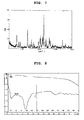
Fig. 3 shows a powder X-ray diffraction pattern of anhydrous monophosphate. -
Fig. 4 shows a TG/DTA curve of anhydrous monophosphate. -
Fig. 5 shows a powder X-ray diffraction pattern of hemiphosphate monohydrate. -
Fig. 6 shows a TG/DTA curve of hemiphosphate monohydrate. -
Fig. 7 shows a powder X-ray diffraction pattern of diphosphate monohydrate 0.5 ethanol solvate. -
Fig. 8 shows a TG/DTA curve of diphosphate monohydrate 0.5 ethanol solvate. -
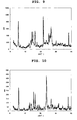
Fig. 9 shows a powder X-ray diffraction pattern of anhydrous monohydrochloride (form II crystal). -
Fig. 10 shows a powder X-ray diffraction pattern of anhydrous monohydrochloride (form III crystal). -
Fig. 11 shows a powder X-ray diffraction pattern of anhydrous monohydrochloride (form IV crystal). -
Fig. 12 shows a TG/DTA curve of anhydrous monohydrochloride (form IV crystal). -
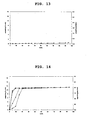
Fig. 13 shows an adsorption isotherm curve of monophosphate. -
Fig. 14 shows an adsorption isotherm curve of monohydrochloride dihydrate. -
Fig. 15 shows a powder X-ray diffraction pattern of anhydrous monohydrobromide (form I crystal). -
Fig. 16 shows a TG/DTA curve of anhydrous monohydrobromide (form I crystal). -
Fig. 17 shows a powder X-ray diffraction pattern of anhydrous monohydrobromide (form II crystal). -
Fig. 18 shows a TG/DTA curve of anhydrous monohydrobromide (form II crystal). -
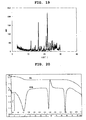
Fig. 19 shows a powder X-ray diffraction pattern of monohydrobromide dihydrate. -
Fig. 20 shows a TG/DTA curve of monohydrobromide dihydrate. -
Fig. 21 shows a powder X-ray diffraction pattern of anhydrous monomesylate. -
Fig. 22 shows a TG/DTA curve of anhydrous monomesylate. -
Fig. 23 shows a powder X-ray diffraction pattern of anhydrous hemisulfate. -
Fig. 24 shows a TG/DTA curve of anhydrous hemisulfate. -
Fig. 25 shows a powder X-ray diffraction pattern of hemisulfate sesquihydrate. -
Fig. 26 shows a TG/DTA curve of hemisulfate sesquihydrate. -
Fig. 27 shows a powder X-ray diffraction pattern of anhydrous monosulfate. -
Fig. 28 shows a TG/DTA curve of anhydrous monosulfate. -
Fig. 29 shows a powder X-ray diffraction pattern of monosulfate monohydrate. -
Fig. 30 shows a TG/DTA curve of monosulfate monohydrate. -
Fig. 31 shows a powder X-ray diffraction pattern of mono-D-tartrate monohydrate. -
Fig. 32 shows a TG/DTA curve of mono-D-tartrate monohydrate. -
Fig. 33 shows a powder X-ray diffraction pattern of mono-L-tartrate monohydrate. -
Fig. 34 shows a TG/DTA curve of mono-L-tartrate monohydrate. - The present invention provides a novel salt form of (R)-3-[2-(2-hydroxymethylpyrrolidin-1-yl)ethyl]-5-methyl-2H-isoquinolin-1-one represented by the following compound (I):
-

- Compound (I) includes tautomers such as the following compound (II). In the present specification, compound names are indicated by the ketone form (compound (I)), which is considered to be generally stable, as a representative example of such tautomers. That is, while compound names are indicated using the ketone form in the present invention, exclusion of those present in an enol (compound (II)) form is not intended, and enol form compounds are also encompassed in the present invention.
-

- A preferable embodiment of monophosphate is anhydrate, and more preferable embodiment is crystal. Of the anhydrous monophosphate crystals, a crystal of a preferable embodiment has a powder X-ray diffraction pattern shown in
Fig. 3 and/or a thermogravimetry-differential thermal analysis (hereinafter sometimes to be indicated as TG/DTA) curve shown inFig. 4 . Here, characteristic peaks in a powder X-ray diffraction spectrum are at diffraction angles represented by 2θ of around 12.0°, 15.0°, 17.8°, 19.6°, 22.8° and/or 25.8° (each ±0.2°). In addition, the melting point (extrapolated onset temperature) by TG/DTA is about 216°C to about 217°C, preferably about 216°C. - Monophosphate can be obtained by reacting, for example, more than 0.5 mol and less than 2 mol, preferably not less than 0.67 mol and not more than 1.1 mol, more preferably 1 mol of phosphoric acid per 1 mol of (R)-3-[2-(2-hydroxymethylpyrrolidin-1-yl)ethyl]-5-methyl-2H-isoquinolin-1-one (hereinafter sometimes to be indicated as a free form) that can be produced according to the synthesis method described in Example 36 of
WO 2004/031171 . In addition, it can also be obtained according to the methods of the Examples described later and the like. - In addition, monophosphate can also be obtained by using (R)-3-[2-(2-hydroxymethylpyrrolidin-1-yl)ethyl]-5-methyl-2H-isoquinolin-1-one hemiphosphate (hereinafter sometimes to be indicated simply as hemiphosphate), (R)-3-[2-(2-hydroxymethylpyrrolidin-1-yl)ethyl]-5-methyl-2H-isoquinolin-1-one diphosphate (hereinafter sometimes to be indicated simply as diphosphate) or anhydrous (R)-3-[2-(2-hydroxymethylpyrrolidin-1-yl)ethyl]-5-methyl-2H-isoquinolin-1-one monohydrochloride (hereinafter sometimes to be indicated simply as anhydrous monohydrochloride) as a production intermediate or starting material.
- Examples of the method for obtaining monophosphate from hemiphosphate include a method comprising reacting more than 0 mol and less than 1.5 mol, preferably not less than 0.17 mol and not more than 0.6 mol, more preferably 0.5 mol, of phosphoric acid per 1 mol of hemiphosphate. In addition, hemiphosphate can be converted to a free form and then to monophosphate, according to a method to be mentioned later comprising converting anhydrous monohydrochloride to a free form and then to monophosphate.
- Examples of the method for obtaining monophosphate from diphosphate include reacting more than 0 mol and less than 3 mol, preferably not less than 0.8 mol and not more than 2 mol, more preferably 1 mol, of a free form per 1 mol of diphosphate. In addition, diphosphate can be converted to a free form and then to monophosphate, according to a method to be mentioned later comprising converting anhydrous monohydrochloride to a free form and then to monophosphate.
- Examples of the method for obtaining monophosphate from anhydrous monohydrochloride, anhydrous monohydrobromide, monohydrobromide dihydrate, anhydrous monomesylate, anhydrous hemisulfate, hemisulfate sesquihydrate, anhydrous monosulfate, monosulfate monohydrate, mono-D-tartrate monohydrate or mono-L-tartrate monohydrate include adding anhydrous monohydrochloride to a biphasic solvent consisting of a suitable organic solvent such as dichloromethane, chloroform, ethyl acetate and the like and a suitable alkaline aqueous solution such as aqueous sodium hydroxide solution, potassium carbonate, aqueous sodium carbonate solution, sodium hydrogen carbonate and the like, shaking the mixture, obtaining a free form from an organic solvent layer, and reacting 1 mol of the obtained free form with more than 0.5 mol and less than 2 mol, preferably not less than 0.67 mol and not more than 1.1 mol, more preferably 1 mol, of phosphoric acid.
- When obtaining monophosphate, a free form is once crudely purified as (R)-3-[2-(2-hydroxymethylpyrrolidin-1-yl)ethyl]-5-methyl-2H-isoquinolin-1-one monohydrochloride and then converted to monophosphate, whereby monophosphate with higher purity can be obtained.
- Hemiphosphate can be obtained as a monohydrate crystal. Of the hemiphosphate monohydrate crystals, a crystal of a preferable embodiment has a powder X-ray diffraction pattern shown in
Fig. 5 and/or a TG/DTA curve shown inFig. 6 . Here, characteristic peaks in a powder X-ray diffraction spectrum are at diffraction angles represented by 2θ of around 8.8°, 11.8°, 14.4°, 21.4°, 23.7°, 24.6° and 26.6° (each ±0.2°). In addition, the melting point (extrapolated onset temperature) by TG/DTA is about 199°C. Hemiphosphate can be obtained according to a production method of monophosphate and using a free form as a starting material, or can also be obtained according to the methods of the Examples described later. - Diphosphate can be obtained as a crystal of monohydrate 0.5 ethanol solvate. Of the diphosphate monohydrate 0.5 ethanol solvate crystals, a crystal of a preferable embodiment has a powder X-ray diffraction pattern shown in
Fig. 7 and/or a TG/DTA curve shown inFig. 8 . Here, characteristic peaks in a powder X-ray diffraction spectrum are at diffraction angles represented by 2θ of around 6.6°, 13.1°, 23.1° and 26.4° (each ±0.2°). In addition, the melting point (extrapolated onset temperature) by TG/DTA is about 196°C. Diphosphate can be obtained according to a production method of monophosphate and using a free form as a starting material, and can also be obtained according to the methods of the Examples described later. - Anhydrous monohydrochloride can be obtained as a crystal. Of the anhydrous monohydrochloride crystals, a crystal of a preferable embodiment is a crystal (form II) having a powder X-ray diffraction pattern shown in
Fig. 9 and/or a melting point (extrapolated onset temperature) by TG/DTA of about 110°C. Here, characteristic peaks in a powder X-ray diffraction spectrum are at diffraction angles represented by 2θ of around 6.7°, 21.8° and 30.2° (each ±0.20). A crystal of another preferable embodiment is a crystal (form III) having a powder X-ray diffraction pattern shown inFig. 10 and/or a melting point (extrapolated onset temperature) by TG/DTA of about 231°C. Here, characteristic peaks in a powder X-ray diffraction spectrum are at diffraction angles represented by 2θ of around 15.5°, 29.4°, 31.4°, 31.9° and 34.3° (each ±0.2°). A crystal of still another preferable embodiment is a crystal (form IV) having a powder X-ray diffraction pattern shown inFig. 11 and/or a TG/DTA curve shown inFig. 12 . Here, characteristic peaks in a powder X-ray diffraction spectrum are at diffraction angles represented by 2θ of around 9.1°, 19.8°, 20.9° and 28.6° (each ±0.2°). In addition, the melting point (extrapolated onset temperature) by TG/DTA is about 208°C. Anhydrous monohydrochloride can be obtained by reacting 1 to 10 mol, preferably 1 to 2 mol, more preferably 1 mol, of hydrochloric acid per 1 mol of a free form. In addition, it can also be obtained according to the methods of the Examples described later. - Anhydrous monohydrobromide can be obtained as a crystal. Of the anhydrous monohydrobromide crystals, a crystal of a preferable embodiment is a crystal (form I) having a powder X-ray diffraction pattern shown in
Fig. 15 and/or a melting point (extrapolated onset temperature) by TG/DTA of about 173°C. Here, characteristic peaks in a powder X-ray diffraction spectrum are at diffraction angles represented by 2θ of around 11.0°, 12.8° and 20.3° (each ±0.2°). A crystal of another preferable embodiment is a crystal (form II) having a powder X-ray diffraction pattern shown inFig. 17 and/or a melting point (extrapolated onset temperature) by TG/DTA of about 235°C. Here, characteristic peaks in a powder X-ray diffraction spectrum are at diffraction angles represented by 2θ of around 8.3°, 9.2° and 14.0° (each ±0.2°). Anhydrous monohydrobromide can be obtained by reacting 1 to 10 mol, preferably 1 to 2 mol, more preferably 1 mol, of hydrobromic acid per 1 mol of a free form, and drying at low temperature to give form I crystal, or drying at a high temperature to give form II crystal. In addition, it can also be obtained according to the methods of the Examples described later. - Monohydrobromide dihydrate can be obtained as a crystal. Of the monohydrobromide dihydrate crystals, a crystal of a preferable embodiment is a crystal having a powder X-ray diffraction pattern shown in
Fig. 19 and/or a TG/DTA curve shown inFig. 20 . Here, characteristic peaks in a powder X-ray diffraction spectrum are at diffraction angles represented by 2θ of around 11.7°, 17.4°, 21.1° and 26.0° (each ±0.2°). Monohydrobromide dihydrate can be obtained by reacting 1 to 10 mol, preferably 1 to 2 mol, more preferably 1 mol, of hydrobromic acid per 1 mol of a free form, and adjusting the humidity. In addition, it can also be obtained according to the methods of the Examples described later. - Anhydrous monomesylate can be obtained as a crystal. Of the anhydrous monomesylate crystals, a crystal of a preferable embodiment is a crystal having a powder X-ray diffraction pattern shown in
Fig. 21 and/or a melting point (extrapolated onset temperature) by TG/DTA of about 176°C. Here, characteristic peaks in a powder X-ray diffraction spectrum are at diffraction angles represented by 2θ of around 15.6° and 20.7° (each ±0.2°). Anhydrous monomesylate can be obtained by reacting 1 to 10 mol, preferably 1 to 2 mol, more preferably 1 mol, of mesylic acid per 1 mol of a free form. In addition, it can also be obtained according to the methods of the Examples described later. - Anhydrous hemisulfate can be obtained as a crystal. Of the anhydrous hemisulfate crystals, a crystal of a preferable embodiment is a crystal having a powder X-ray diffraction pattern shown in
Fig. 23 and/or a melting point (extrapolated onset temperature) by TG/DTA of about 166°C. Here, characteristic peaks in a powder X-ray diffraction spectrum are at diffraction angles represented by 2θ of around 7.2°, 13.1° and 25.2° (each ±0.2°). Anhydrous hemisulfate can be obtained by reacting 0.3 to 0.6 mol, preferably 0.5 mol, of sulfuric acid per 1 mol of a free form. In addition, it can also be obtained according to the methods of the Examples described later. - Hemisulfate sesquihydrate can be obtained as a crystal. Of the hemisulfate sesquihydrate crystals, a crystal of a preferable embodiment is a crystal having a powder X-ray diffraction pattern shown in
Fig. 25 and/or a melting point (extrapolated onset temperature) by TG/DTA of about 106°C. Here, characteristic peaks in a powder X-ray diffraction spectrum are at diffraction angles represented by 2θ of around 5.3°, 8.1°, 10.6° and 22.9° (each ±0.2°). Hemisulfate sesquihydrate can be obtained by reacting 0.3 to 0.6 mol, preferably 0.5 mol, of sulfuric acid per 1 mol of a free form, and adjusting the humidity. In addition, it can also be obtained according to the methods of the Examples described later. - Anhydrous monosulfate can be obtained as a crystal. Of the anhydrous monosulfate crystals, a crystal of a preferable embodiment is a crystal having a powder X-ray diffraction pattern shown in
Fig. 27 and/or a melting point (extrapolated onset temperature) by TG/DTA of about 176°C. Here, characteristic peaks in a powder X-ray diffraction spectrum are at diffraction angles represented by 2θ of around 12.2° and 21.7° (each ±0.2°). Anhydrous monosulfate can be obtained by reacting 1 to 10 mol, preferably 1 to 2 mol, more preferably 1 mol, of sulfuric acid per 1 mol of a free form. In addition, it can also be obtained according to the methods of the Examples described later. - Monosulfate monohydrate can be obtained as a crystal. Of the monosulfate monohydrate crystals, a crystal of a preferable embodiment is a crystal having a powder X-ray diffraction pattern shown in
Fig. 29 and/or a TG/DTA curve shown inFig. 30 . Here, characteristic peaks in a powder X-ray diffraction spectrum are at diffraction angles represented by 2θ of around 11.7°, 15.2° and 19.7° (each ±0.2°). Monosulfate monohydrate can be obtained by reacting 1 to 10 mol, preferably 1 to 2 mol, more preferably 1 mol, of sulfuric acid per 1 mol of a free form, and adjusting the humidity. In addition, it can also be obtained according to the methods of the Examples described later. - Mono-D-tartrate monohydrate can be obtained as a crystal. Of the mono-D-tartrate monohydrate crystals, a crystal of a preferable embodiment is a crystal having a powder X-ray diffraction pattern shown in
Fig. 31 and/or a melting point (extrapolated onset temperature) by TG/DTA of about 169°C. Here, characteristic peaks in a powder X-ray diffraction spectrum are at diffraction angles represented by 2θ of around 8.5°, 21.1° and 22.1° (each ±0.2°). Mono-D-tartrate monohydrate can be obtained by reacting 1 to 10 mol, preferably 1 to 2 mol, more preferably 1 mol, of D-tartaric acid per 1 mol of a free form. In addition, it can also be obtained according to the methods of the Examples described later. - Mono-L-tartrate monohydrate can be obtained as a crystal. Of the mono-L-tartrate monohydrate crystals, a crystal of a preferable embodiment is a crystal (form I) having a powder X-ray diffraction pattern shown in
Fig. 33 and/or a melting point (extrapolated onset temperature) by TG/DTA of about 148°C. Here, characteristic peaks in a powder X-ray diffraction spectrum are at diffraction angles represented by 2θ of around 7.2°, 16.2° and 22.0° (each ±0.2°). Mono-L-tartrate monohydrate can be obtained by reacting 1 to 10 mol, preferably 1 to 2 mol, more preferably 1 mol, of L-tartaric acid per 1 mol of a free form. In addition, it can also be obtained according to the methods of the Examples described later. - Monophosphate is present as (R)-3-[2-(2-hydroxymethylpyrrolidin-1-yl)ethyl]-5-methyl-2H-isoquinolin-1-one in a solution state, and it is known that this compound possesses a potent PARP inhibitory action (
WO 2004/031171 , Experimental Example, Table 1 (pp. 82-83)). Thus, monophosphate is useful as a PARP inhibitor, and useful as a drug for the prophylaxis and/or treatment of cerebral infarction (more preferably in acute stage of cerebral infarction) or improvement of neurological symptoms associated with cerebral infarction (more preferably in acute stage of cerebral infarction). - When monophosphate is used as the aforementioned prophylactic and/or therapeutic drug, it can be generally administered orally or parenterally in the form of a pharmaceutical composition or preparation (e.g., tablet, liquid etc.) obtained by mixing monophosphate with a pharmaceutically acceptable carrier. The pharmaceutical composition can be formulated into a preparation according to a conventional method.
- The dose is determined according to the age, body weight, general health condition, sex, diet, administration time, administration method, clearance rate, combination of drugs, and the level of disease for which patients are undergoing treatments at that time, or further in consideration of other factors. Monophosphate is low toxic and can be used safely. While the daily dose thereof varies depending on the condition and body weight of patient, the kind of the compound, administration route and the like, it is preferably, for example, 0.01 to 150 mg/patient/day by oral administration, and about 0.01 to 50 mg/patient/day by parenteral administration.
- In the present specification, the "prophylactic drug" is a drug to be administered to a healthy person who has not developed a disease and is, for example, a drug to be administered for the purpose of preventing the onset of a disease. The "therapeutic drug" is a drug to be administered by a doctor to a person diagnosed by a doctor to have developed a disease (patient) and is, for example, a drug to be administered for the purpose of alleviating a disease or symptom, or recovering health. Even when the object of administration is prevention of aggravation of a disease or symptom, or prevention of attack, as long as it is administered to a patient, it is a therapeutic drug.
- The present invention is explained in detail in the following by referring to Examples and the like, which are not to be construed as limitative.
The chemical shift value of 1H-NMR was measured using tetramethylsilane (TMS) as an internal standard and the relative delta (δ) value is shown in parts per million (ppm). As for the coupling constant, obvious multiplicity is shown in hertz (Hz), using s (singlet), d (doublet), t (triplet), q (quartet), sept (septet), m (multiplet), dd (double doublet), brs (broad singlet) and the like. - Production Example 1 (R)-3-[2-(2-hydroxymethylpyrrolidin-1-yl)ethyl]-5-methyl-2H-isoquinolin-1-one monohydrochloride dihydrate (form I crystal; hereinafter sometimes to be indicated simply as monohydrochloride dihydrate)
To a solution of a free form obtained according to the method described inWO 2004/031171 was added hydrochloric acid and the mixture was stirred to give (R)-3-[2-(2-hydroxymethylpyrrolidin-1-yl)ethyl]-5-methyl-2H-isoquinolin-1-one monohydrochloride. The obtained compound was humidity-conditioned for 7 days in a desiccator with 75% of relative humidity (sodium chloride humidity-conditioned salt) to give the title compound.
elemental analysis
C17H22N2O2·1HCl·2H2O
Calculated; C: 56.90, H: 7.58, N: 7.81, Cl: 9.88
Found; C: 56.98, H: 7.33, N: 7.57, Cl: 9.74 - measurement method and results of powder X ray
- apparatus: RINT2200/Ultima+ (Rigaku Corporation)
- X-ray: Cu K-ALPHA/40 kV/40 mA
- goniometer: Ultima+horizon goniometer TYPE I
- attachment: standard sample holder
- filter: not used
- counter monochromator: fixed monochromator
- divergence slit: 0.5°/scattering slit: 0.73 mm/receiving slit: 0.3 mm
- scanning mode: continuous
- scan speed: 4°/min
- sampling period: 0.02°
- scan axis: 2θ/θ
- scan range: 2-40°
- cumulated number: 1
- measurement method and results of melting point (TG/DTA)
- apparatus: TG/SDTA 851e (Mettler-Toledo Inc.)
- measurement condition: measurement range 25°C-300°C
- temperature rise rate 10 K/min
-
atmospheric nitrogen 40 mL/min - measurement operation: A sample (4.2 mg) was filled in a
- A free form (1 g) of (R)-3-[2-(2-hydroxymethylpyrrolidin-1-yl)ethyl]-5-methyl-2H-isoquinolin-1-one was measured, ethanol (40 ml) was added and the mixture was completely dissolved by heating under reflux. Thereto was added commercially available 85% phosphoric acid (200 µL) and the mixture was left stirring at room temperature for 1 hr. The precipitate was collected by filtration and dissolved again in water (1 mL) at 80°C. Ethanol (8 mL) was added and the mixture was left standing at room temperature for 1 hr. The resulting precipitate was collected by filtration and dried under reduced pressure at 50°C for 9 hr to give the title compound (838 mg).
1H-NMR
δ: 1.56-1.94 (4H, m), 2.46 (3H, s), 2.50-2.87 (5H, m), 3.22-3.54 (4H, m), 6.47 (1H, s), 7.30 (1H, t, J=8Hz), 7.50 (1H, d, J=7Hz), 8.00 (1H, d, J=8Hz)
elemental analysis C17H22N2O2·1H3O4P
Calculated; C: 53.12, H: 6.56, N: 7.29, P: 8.06
Found; C: 52.87, H: 6.63, N: 7.27, P: 7.87
measurement method and results of powder X-ray
By a method similar to that of Production Example 1, powder X-ray diffraction pattern was measured. The results are shown inFig. 3 . The characteristic peaks of the crystal were at diffraction angles represented by 2θ of 12.0°, 15.0°, 17.8°, 19.6°, 20.0°, 22.8° and 25.8° (±0.2°).
measurement method and results of melting point (TG/DTA)
By a method similar to that of Production Example 1, weight changes (TG) of the sample and temperature difference (DTA) from that of the standard substance were measured. The results are shown inFig. 4 . The melting point (extrapolated onset temperature) was 216°C. - A free form (502 mg) of (R)-3-[2-(2-hydroxymethylpyrrolidin-1-yl)ethyl]-5-methyl-2H-isoquinolin-1-one was measured in a reaction test tube, aqueous ethanol (5.8 mL, ethanol:water =8:1) was added and the mixture was completely dissolved by heating under reflux. Thereto was added aqueous phosphoric acid solution (501 µL, solution prepared by diluting commercially available 85% phosphoric acid (2.02 g) with the above-mentioned aqueous ethanol to scale up to 10 mL), and the mixture was stirred at room temperature for one day and left standing. The precipitate was collected by filtration. The precipitate (301 mg) was measured in a reaction test tube, and aqueous ethanol (2.6 mL, ethanol:water =4:1) was added. The mixture was completely dissolved by heating under reflux, stirred at room temperature for one day and left standing. The precipitate was collected by filtration, and dried under reduced pressure at 50°C for 5 hr to give the title compound (264 mg).
elemental analysis C17H22N2O2·0.5H3O4P·1H2O
Calculated; C: 57.78, H: 7.27, N: 7.93, P: 4.38
Found; C: 57.80, H: 7.30, N: 7.84, P: 4.08
measurement method and results of powder X-ray
By a method similar to that of Production Example 1, powder X-ray diffraction pattern was measured. The results are shown inFig. 5 . The characteristic peaks of the crystal were at diffraction angles represented by 2θ of 8.8°, 11.8°, 14.4°, 21.4°, 23.7°, 24.6° and 26.6° (±0.2°).
measurement method and results of melting point (TG/DTA)
By a method similar to that of Production Example 1, weight changes (TG) of the sample and temperature difference (DTA) from that of the standard substance were measured. The results are shown inFig. 6 . The melting point (extrapolated onset temperature) was 199°C. - A free form (501 mg) of (R)-3-[2-(2-hydroxymethylpyrrolidin-1-yl)ethyl]-5-methyl-2H-isoquinolin-1-one was measured in a reaction test tube, aqueous ethanol (4.3 mL, ethanol:water =8:1) was added and the mixture was completely dissolved by heating under reflux. Thereto was added aqueous phosphoric acid solution (2 mL, solution prepared by diluting commercially available 85% phosphoric acid (2.02 g) with the above-mentioned aqueous ethanol to scale up to 10 mL), and the mixture was stirred at room temperature for one day and left standing. The precipitate was collected by filtration. The obtained precipitate (302 mg) was measured in a reaction test tube, aqueous ethanol (2.4 mL, ethanol:water =6:1) was added, and the mixture was completely dissolved by heating under reflux. The mixture was stirred at room temperature for one day and left standing. The precipitate was collected by filtration and dried under reduced pressure at 50°C for 5 hr to give the title compound (260 mg).
elemental analysis C17H22N2O2·2H3O4P·1H2O·0.5C2H6O
Calculated; C: 41.36, H: 6.28, N: 5.41, P: 11.97
Found; C: 41.30, H: 6.35, N: 5.35, P: 11.84
measurement method and results of powder X-ray
By a method similar to that of Production Example 1, powder X-ray diffraction pattern was measured. The results are shown inFig. 7 . The characteristic peaks of the crystal were at diffraction angles represented by 2θ of 6.6°, 13.1°, 23.1° and 26.4° (±0.2°).
measurement method and results of melting point (TG/DTA)
By a method similar to that of Production Example 1, weight changes (TG) of the sample and temperature difference (DTA) from that of the standard substance were measured. The results are shown inFig. 8 . The melting point (extrapolated onset temperature) was 196°C. - Monohydrochloride dihydrate crystal (6.9 mg) was dried at 30°C, 5% of relative humidity or below for 7 hr to give the title compound (form II crystal) as crystals almost quantitatively.
measurement method and results of powder X-ray
By a method similar to that of Production Example 1, powder X-ray diffraction pattern was measured. The results are shown inFig. 9 . The characteristic peaks of the crystal were at diffraction angles represented by 2θ of 6.7°, 21.8° and 30.2° (±0.2°).
The melting point (extrapolated onset temperature) fromFig. 2 was 110°C. - The compound (6 mg) obtained in Example 4 was heated to 200°C at 5% of relative humidity or below to give the title compound (form III crystal) as crystals almost quantitatively.
measurement method and results of powder X-ray
By a method similar to that of Production Example 1, powder X-ray diffraction pattern was measured. The results are shown inFig. 10 . The characteristic peaks of the crystal were at diffraction angles represented by 2θ of 15.5°, 29.4°, 31.4°, 31.9° and 34.3° (±0.2°).
The melting point (extrapolated onset temperature) fromFig. 2 was 231°C. - (R)-3-[2-(2-Hydroxymethylpyrrolidin-1-yl)ethyl]-5-methyl-2H-isoquinolin-1-one monohydrochloride (4.65 g) was dissolved in ethanol/water mixed solvent while stirring with heating, and the mixture was cooled to room temperature. The resulting precipitate was collected by filtration, washed with ethyl acetate and dried under reduced pressure at 80°C to give the title compound (2.3 g, form IV crystal).
elemental analysis
C17H22N2O2·1HCl·0.54H2O (as a result of the TG/DTA measurement to be mentioned later, weight decrease was observed from around room temperature, and therefore, 0.54 H2O is not crystal water but considered to be attached water, whereby the title compound is considered to be anhydrate)
Calculated; C: 61.40, H: 7.30, N: 8.42
Found; C: 61.10, H: 7.07, N: 8.25
measurement method and results of powder X-ray
By a method similar to that of Production Example 1, powder X-ray diffraction pattern was measured. The results are shown inFig. 11 . The characteristic peaks of the crystal were at diffraction angles represented by 2θ of 9.1°, 19.8°, 20.9°, 28.6° and 28.8° (±0.2°).
measurement method and results of melting point (TG/DTA)
By a method similar to that of Production Example 1 except that the measurement range was changed to 25°C-250°C, weight changes (TG) of the sample and temperature difference (DTA) from that of the standard substance were measured. The results are shown inFig. 12 . The melting point (extrapolated onset temperature) was 208°C. Also, from the behavior of moisture weight decrease, the compound was confirmed to be anhydrate. - To a solution (12 mL) of a free form (750 mg) of (R)-3-[2-(2-hydroxymethylpyrrolidin-1-yl)ethyl]-5-methyl-2H-isoquinolin-1-one in ethanol was added dropwise 2M HBr ethanol solution (1.5 mL) with stirring on an oil bath at 50°C. The bath was removed, seed crystals were added and the mixture was stirred to allow precipitation of crystals. After stirring for 1hr at room temperature followed by under ice-cooling for 30 min, the crystals were collected through filtration, washed with ethanol and dried to give 885 mg of salt. Water (2 mL) was added to the salt, and the mixture was stirred to dissolve completely under heating. In the same manner as above, the bath was removed and seed crystals were added. After stirring at room temperature followed by under ice-cooling, the crystals were collected through filtration, and washed with cold water. The crystals were dried under reduced pressure at 50°C for 18 hr to give the title compound (707 mg).
1H-NMR
δ:1.74-2.13 (4H, m), 2.49 (3H, s), 2.95-3.43 (4H, m), 3.56-3.81 (5H, m), 5.51 (1H, t, J=5Hz), 6.55 (1H, s), 7.34 (1H, t, J=8Hz), 7.54 (1H, d, J=7Hz), 8.02 (1H, d, J=8Hz), 9.24 (1H, brs), 11.43 (1H, brs)
elemental analysis
C17H22N2O2·1HBr·0.5H2O (as a result of the TG/DTA measurement to be mentioned later, weight decrease was observed from around room temperature, and therefore, 0.54 H2O is not crystal water but considered to be attached water, whereby the title compound is considered to be anhydrate)
Calculated; C: 54.26, H: 6.43, N: 7.44, Br: 21.20
Found; C: 54.50, H: 6.24, N: 7.38, Br: 21.07
measurement method and results of powder X-ray
By a method similar to that of Production Example 1, powder X-ray diffraction pattern was measured. The results are shown inFig. 15 . The characteristic peaks of the crystal were at diffraction angles represented by 2θ of 11.0°, 12.8° and 20.3° (±0.2°).
measurement method and results of melting point (TG/DTA)
By a method similar to that of Production Example 1, weight changes (TG) of the sample and temperature difference (DTA) from that of the standard substance were measured. The results are shown inFig. 16 . The melting point (extrapolated onset temperature) was 173°C. - (R)-3-[2-(2-Hydroxymethylpyrrolidin-1-yl)ethyl]-5-methyl-2H-isoquinolin-1-one anhydrous monohydrobromide (form I crystal) was heated under normal pressure at 190°C for 4 hr to give the title compound.
measurement method and results of powder X-ray
By a method similar to that of Production Example 1, powder X-ray diffraction pattern was measured. The results are shown inFig. 17 . The characteristic peaks of the crystal were at diffraction angles represented by 2θ of 8.3°, 9.2° and 14.0° (±0.2°).
measurement method and results of melting point (TG/DTA)
By a method similar to that of Production Example 1, weight changes (TG) of the sample and temperature difference (DTA) from that of the standard substance were measured. The results are shown inFig. 18 . The melting point (extrapolated onset temperature) was 235°C. - (R)-3-[2-(2-Hydroxymethylpyrrolidin-1-yl)ethyl]-5-methyl-2H-isoquinolin-1-one anhydrous monohydrobromide (form I crystal) was preserved in a desiccator at room temperature, 75% of relative humidity for 6 days to give the title compound.
elemental analysis C17H22N2O2·1HBr·2H2O
Calculated; C: 50.63, H: 6.75, N: 6.95
Found; C: 50.73, H: 6.68, N: 6.86
measurement method and results of powder X-ray
By a method similar to that of Production Example 1, powder X-ray diffraction pattern was measured. The results are shown inFig. 19 . The characteristic peaks of the crystal were at diffraction angles represented by 2θ of 11.7°, 17.4°, 21.1° and 26.0° (±0.2°).
measurement method and results of melting point (TG/DTA)
By a method similar to that of Production Example 1, weight changes (TG) of the sample and temperature difference (DTA) from that of the standard substance were measured. The results are shown inFig. 20 . - To a solution (4 mL) of a free form (500 mg) of (R)-3-[2-(2-hydroxymethylpyrrolidin-1-yl)ethyl]-5-methyl-2H-isoquinolin-1-one in ethanol was added dropwise 2M methanesulfonic acid ethanol solution (1 mL) with stirring on an oil bath at 50°C. The bath was removed, ethyl acetate (8 mL) and seed crystals were added and the mixture was stirred to allow precipitation of crystals. After stirring under ice-cooling, the crystals were collected through filtration, washed with ethyl acetate/ethanol (2:1) and dried under reduced pressure at 50°C for 18 hr to give the title compound (507 mg).
1H-NMR
δ:1.75-2.09 (4H, m), 2.30 (3H, s), 2.49 (3H, s), 2.95-3.38 (4H, m), 3.58-3.81 (5H, m), 5.52 (1H, t, J=5Hz), 6.55 (1H, s), 7.34 (1H, t, J=8Hz), 7.54 (1H, d, J=7Hz), 8.02 (1H, d, J=8Hz), 9.23 (1H, brs), 11.42 (1H, brs)
elemental analysis C17H22N2O2·1MsOH
Calculated; C: 56.52, H: 6.85, N: 7.32, S: 8.38
Found; C: 56.38, H: 6.81, N: 7.24, S: 8.26
measurement method and results of powder X-ray
By a method similar to that of Production Example 1, powder X-ray diffraction pattern was measured. The results are shown inFig. 21 . The characteristic peaks of the crystal were at diffraction angles represented by 2θ of 15.6°, and 20.7° (±0.2°).
measurement method and results of melting point (TG/DTA)
By a method similar to that of Production Example 1, weight changes (TG) of the sample and temperature difference (DTA) from that of the standard substance were measured. The results are shown inFig. 22 . The melting point (extrapolated onset temperature) was 176°C. - To a solution (7 mL) of a free form (700 mg) of (R)-3-[2-(2-hydroxymethylpyrrolidin-1-yl)ethyl]-5-methyl-2H-isoquinolin-1-one in ethanol was added dropwise 2M sulfuric acid ethanol solution (612 µL) with stirring on an oil bath at 50°C. The bath was removed, ethyl acetate (11.5 mL) and seed crystals were added with stirring at room temperature to allow precipitation of crystals. After stirring under ice-cooling, the crystals were collected through filtration, washed with ethyl acetate/ethanol (2:1) and dried under reduced pressure at 50°C for 28 hr to give the title compound (714 mg).
1H-NMR
δ:1.64-1.98 (4H, m), 2.47 (3H, s), 2.81-3.52 (9H, m), 4.97 (1H, brs), 6.49 (1H, s), 7.31 (1H, t, J=8Hz), 7.51 (1H, d, J=7Hz), 8.00 (1H, d, J=8Hz), 9.47 (1H, brs), 11.39 (1H, brs)
elemental analysis
C17H22N2O2·0.5H2SO4·0.3H2O (By moisture adsorption measurement, it was clarified that attached water is present around 60% of relative humidity or above, therefrom it is considered that attached water corresponding to 0.3 H2O was present in the elemental analysis measurement and the title compound is anhydrate.)
Calculated; C: 60.39, H: 6.95, N: 8.29, S: 4.74
Found; C: 60.40, H: 6.85, N: 8.21, S: 4.67
measurement method and results of powder X-ray
By a method similar to that of Production Example 1, powder X-ray diffraction pattern was measured. The results are shown inFig. 23 . The characteristic peaks of the crystal were at diffraction angles represented by 2θ of 7.2°, 13.1° and 25.2° (±0.2°).
measurement method and results of melting point (TG/DTA)
By a method similar to that of Production Example 1, weight changes (TG) of the sample and temperature difference (DTA) from that of the standard substance were measured. The results are shown inFig. 24 . The melting point (extrapolated onset temperature) was 166°C. - Anhydrous (R)-3-[2-(2-hydroxymethylpyrrolidin-1-yl)ethyl]-5-methyl-2H-isoquinolin-1-one hemisulfate was preserved in a desiccator at room temperature, 75% of relative humidity for 2 days to give the title compound.
elemental analysis
C17H22N2O2·0.5H2SO4·1.6H2O (By moisture adsorption measurement, it was clarified that the compound reached equilibrated state of the weight corresponding to 1.5 H2O at 10 to 90% of relative humidity, and contained a slight amount of attached water, therefrom it is considered that attached water corresponding to 0.1 H2O was present in the elemental analysis measurement and the title compound is sesquihydrate.)
Calculated; C: 56.06, H: 7.25, N: 7.69
Found; C: 55.78, H: 7.21, N: 7.52
measurement method and results of powder X-ray
By a method similar to that of Production Example 1, powder X-ray diffraction pattern was measured. The results are shown inFig. 25 . The characteristic peaks of the crystal were at diffraction angles represented by 2θ of 5.3°, 8.1°, 10.6° and 22.9° (±0.2°).
measurement method and results of melting point (TG/DTA)
By a method similar to that of Production Example 1, weight changes (TG) of the sample and temperature difference (DTA) from that of the standard substance were measured. The results are shown inFig. 26 . The melting point (extrapolated onset temperature) was 106°C. - To a solution (4.8 mL) of a free form (600 mg) of (R)-3-[2-(2-hydroxymethylpyrrolidin-1-yl)ethyl]-5-methyl-2H-isoquinolin-1-one in ethanol was added dropwise 2M sulfuric acid ethanol solution (1.2 mL) with stirring on an oil bath at 50°C. The bath was removed, ethyl acetate (2.4 mL) and seed crystals were added with stirring at room temperature to allow precipitation of crystals. After stirring under ice-cooling, the crystals were collected through filtration, washed with ethyl acetate/ethanol (2:1) and dried under reduced pressure at 50°C for 18 hr to give the title compound (722 mg).
1H-NMR
δ:1.74-2.12 (4H, m), 2.49 (3H, s), 2.95-3.33 (4H, m), 3.58-3.80 (5H, m), 5.50 (1H, brs), 6.55 (1H, s), 7.34 (1H, t, J=8Hz), 7.54 (1H, d, J=7Hz), 8.02 (1H, d, J=8Hz), 9.23 (1H, brs), 11.42 (1H, brs)
elemental analysis C17H22N2O2·1H2SO4
Calculated; C: 53.11, H: 6.29, N: 7.29, S: 8.34
Found; C: 53.04, H: 6.19, N: 7.17, S: 8.21
measurement method and results of powder X-ray
By a method similar to that of Production Example 1, powder X-ray diffraction pattern was measured. The results are shown inFig. 27 . The characteristic peaks of the crystal were at diffraction angles represented by 2θ of 12.2° and 21.7° (±0.2°).
measurement method and results of melting point (TG/DTA)
By a method similar to that of Production Example 1, weight changes (TG) of the sample and temperature difference (DTA) from that of the standard substance were measured. The results are shown inFig. 28 . The melting point (extrapolated onset temperature) was 176°C. - Anhydrous (R)-3-[2-(2-Hydroxymethylpyrrolidin-1-yl)ethyl]-5-methyl-2H-isoquinolin-1-one monosulfate was preserved in a desiccator at room temperature, 75% of relative humidity for 2 days to give the title compound.
elemental analysis
C17H22N2O2·1H2SO4·1H2O
Calculated; C: 50.73, H: 6.51, N: 6.96
Found; C: 50.72, H: 6.56, N: 6.85
measurement method and results of powder X-ray
By a method similar to that of Production Example 1, powder X-ray diffraction pattern was measured. The results are shown inFig. 29 . The characteristic peaks of the crystal were at diffraction angles represented by 2θ of 11.7°, 15.2° and 19.7° (±0.2°).
measurement method and results of melting point (TG/DTA)
By a method similar to that of Production Example 1, weight changes (TG) of the sample and temperature difference (DTA) from that of the standard substance were measured. The results are shown inFig. 30 . - To a solution (500 mL) of a free form (51 mg) of (R)-3-[2-(2-hydroxymethylpyrrolidin-1-yl)ethyl]-5-methyl-2H-isoquinolin-1-one in ethanol was added dropwise 100 mg/mL D-tartaric acid ethanol solution (272 µL) under ice-cooling with stirring and the mixture was left standing for 1 hr. The resulting precipitate was collected by filtration, washed with cold ethanol (2 mL) and dried under reduced pressure at 40°C for 4 hr to give the title compound (74 mg).
1H-NMR
δ:1.59-1.94 (4H, m), 2.46 (3H, s), 2.62-2.94 (4H, m), 3.26-3.54 (5H, m), 4.11 (2H, s), 6.48 (1H, s), 7.30 (1H, t, J=8Hz), 7.50 (1H, d, J=7Hz), 8.00 (1H, d, J=8Hz), 11.38 (1H, brs)
elemental analysis C17H22N2O2·1C4H6O6·1H2O
Calculated; C: 55.50, H: 6.65, N: 6.16
Found; C: 55.59, H: 6.51, N: 6.03
measurement method and results of powder X-ray
By a method similar to that of Production Example 1, powder X-ray diffraction pattern was measured. The results are shown inFig. 31 . The characteristic peaks of the crystal were at diffraction angles represented by 2θ of 8.5°, 21.1° and 22.1° (±0.2°).
measurement method and results of melting point (TG/DTA)
By a method similar to that of Production Example 1, weight changes (TG) of the sample and temperature difference (DTA) from that of the standard substance were measured. The results are shown inFig. 32 . The melting point (extrapolated onset temperature) was 169°C. - To a solution (500 µL) of a free form (52 mg) of (R)-3-[2-(2-hydroxymethylpyrrolidin-1-yl)ethyl]-5-methyl-2H-isoquinolin-1-one in ethanol was added dropwise 100 mg/mL L-tartaric acid ethanol solution (272 µL) under ice-cooling with stirring and the mixture was left standing for 1 hr. The resulting precipitate was collected by filtration, washed with cold ethanol (2 mL) and dried under reduced pressure at 50°C for 10 hr to give the title compound (44 mg).
1H-NMR
δ:1.61-1.93 (4H, m), 2.46 (3H, s), 2.60-2.89 (4H, m), 3.17-3.53 (5H, m), 4.10 (2H, s), 6.48 (1H, s), 7.30 (1H, t, J=8Hz), 7.50 (1H, d, J=7Hz), 8.00 (1H, d, J=8Hz), 11.38 (1H, brs)
elemental analysis
C17H22N2O2·1C4H6O6·1.3H2O (By moisture adsorption measurement, it was clarified that the compound reached equilibrated state of the weight corresponding to 1.0 H2O at 5 to 95% of relative humidity, and contained a slight amount of attached water, therefrom it is considered that attached water corresponding to 0.3 H2O was present in the elemental analysis measurement and the title compound is monohydrate.)
Calculated; C: 54.85, H: 6.71, N: 6.09
Found; C: 54.66, H: 6.43, N: 5.98
measurement method and results of powder X-ray
By a method similar to that of Production Example 1, powder X-ray diffraction pattern was measured. The results are shown inFig. 33 . The characteristic peaks of the crystal were at diffraction angles represented by 2θ of 7.2°, 16.2° and 22.0° (±0.2°).
measurement method and results of melting point (TG/DTA)
By a method similar to that of Production Example 1, weight changes (TG) of the sample and temperature difference (DTA) from that of the standard substance were measured. The results are shown inFig. 34 . The melting point (extrapolated onset temperature) was 148°C. - Chemical stability evaluation method: The compound (monophosphate) described in Example 1 and a free form obtained according to the method described in
WO 2004/031171 were measured by 20 mg each in a weighing bottle, and preserved for one month at 30°C, 40°C, 50°C and 40°C at 75% of relative humidity. The sample after preservation was measured for chemical purity by HPLC. The HPLC conditions are shown below.
apparatus: SHIMADZU Corporation
column: Inertsil ODS-3V (GL Sciences Inc.) inner diameter 4.6 mm andlength 150 mm
column oven: 40°C
detection wavelength: 234 nm
measurement operation: a sample (about 1 mg) was measured in a vial container for HPLC, dissolved in a mixture (1 mL) of water/acetonitrile=1:1, and analyzed under the following conditions.
eluent composition: SOLUTION A 0.1% trifluoroacetic acid/water SOLUTION B 0.1% trifluoroacetic acid/acetonitrile
gradient: SOLUTION B concentration: 5→100% (60 min)
mobile phase flow rate: 1.0 mL/min
injection volume: 5 µL
An increase rate of related substances after one month preservation was determined from the peak area in the HPLC chromatogram. The results are shown in Table 1. -
Table 1 Increase rate of related substances (%) monophosphate free form 30°C -0.01 +0.16 40°C -0.01 +0.18 50°C -0.01 +1.30 40°C 75%RH -0.02 +0.28 - From the above results, it was clarified that monophosphate is superior in the chemical stability as compared to the free form, and is suitable as a bulk drug for pharmaceutical products.
- Experimental Example 2 solubility comparison test of monophosphate and free form
solubility measurement method of monophosphate in water at room temperature: About 100 mg of the compound (monophosphate) described in Example 1 was measured in an Eppendorf tube, and water (100 µL) was added. This was subjected to ultrasonication on a water bath for 10 min, and gently shaken in a twin mixer (TM-282, AS ONE Corporation) at room temperature for 1 hr. After shaking, the mixture was centrifuged by a portable ultracentrifuge (10000 rpm ×10 min., MC-150, TOMY SEIKO CO., LTD.) and the supernatant was filtered (Millex-LH, Millipore Corporation). The filtrate was 100-fold diluted twice with HPLC solvent (water:acetonitrile=8:2, containing 0.1% trifluoroacetic acid) to give a 10,000-fold diluted solution, which was quantified by HPLC to find the solubility of 469 mg/mL. The HPLC conditions are shown below. apparatus: SHIMADZU Corporation
column: Inertsil ODS-3V (GL Sciences Inc.) inner diameter 4.6 mm andlength 150 mm
column oven: 40°C
detection wavelength: 234 nm
eluent composition: SOLUTION A 0.1% trifluoroacetic acid/water
SOLUTION B 0.1% trifluoroacetic acid/acetonitrile isocratic: SOLUTION B concentration: 20% (10 min)
mobile phase flow rate: 1.0 mL/min
injection volume: 5 µL
solubility measurement method of free form in water at room temperature: A free form (1 mg) obtained according to the method described inWO 2004/031171 was measured in a sample tube, and water (1 mL) was added at room temperature. This was subjected to ultrasonication and visually confirmed to find a clear undissolved material. Therefrom it was shown that the solubility of the free form was 1 mg/mL or below.
From the above results, it was clarified that monophosphate (solubility: 469 mg/mL) has higher solubility in water than that of the free form (solubility: 1 mg/mL or below). A higher water-solubility is the advantage for the straightforward preparation of liquid pharmaceutical formulation (e.g., injection etc.). Simultaneously, moreover, it is considered to contribute to the enhancement of oral absorbability. From these, it was clarified that monophosphate has properties suitable as a bulk drug for pharmaceutical products as compared to the free form. - An adsorption isotherm curve measurement was performed under the following conditions.
- apparatus: DVS-1 (sms Ltd., UK)
- measurement temperature: 25°C
- measurement operation: a sample was measured in a sample cup, sample weight was measured by successively changing the relative humidity at 50→0→95→0→50%RH.
- The solubility of monophosphate in water at room temperature was 469 mg/mL as stated in Experimental Example 2. On the other hand, the solubility of monohydrochloride dihydrate in water at room temperature was 45 mg/mL when measured under the same conditions as in the solubility measurement method for monophosphate in Experimental Example 2.
From the above results, it was clarified that monophosphate possesses higher solubility in water than monohydrochloride dihydrate. For the reasons mentioned in Experimental Example 2, monophosphate was clarified to have properties suitable as a bulk drug for the novel salt, particularly a pharmaceutical product, of the present invention as compared to monohydrochloride dihydrate. - Monophosphate is a compound which is chemically stable, has high solubility, and shows less weight change due to humidity as compared to conventionally-known free form and monohydrochloride dihydrate, and is superior as a bulk drug for pharmaceutical products.
This application is based on a patent application No.2007-208693
Claims (102)
- (R)-3-[2-(2-Hydroxymethylpyrrolidin-1-yl)ethyl]-5-methyl-2H-isoquinolin-1-one monophosphate.
- The (R)-3-[2-(2-hydroxymethylpyrrolidin-1-yl)ethyl]-5-methyl-2H-isoquinolin-1-one monophosphate according to claim 1, which is an anhydrate.
- The (R)-3-[2-(2-hydroxymethylpyrrolidin-1-yl)ethyl]-5-methyl-2H-isoquinolin-1-one monophosphate according to claim 1 or 2, which is a crystal.
- An anhydrous crystal of (R)-3-[2-(2-hydroxymethylpyrrolidin-1-yl)ethyl]-5-methyl-2H-isoquinolin-1-one monophosphate.
- The crystal according to claim 4, showing a powder X-ray diffraction spectrum having a peak at a diffraction angle represented by 2θ of around 12.0° (±0.2°).
- The crystal according to claim 4 or 5, showing a powder X-ray diffraction spectrum having a peak at a diffraction angle represented by 2θ of around 22.8° (±0.2°).
- The crystal according to any one of claims 4 to 6, showing a powder X-ray diffraction spectrum having a peak at a diffraction angle represented by 2θ of around 15.0° (±0.2°).
- The crystal according to any one of claims 4 to 7, showing a powder X-ray diffraction spectrum having a peak at a diffraction angle represented by 2θ of around 19.6° (±0.2°).
- The crystal according to any one of claims 4 to 8, showing a powder X-ray diffraction spectrum having a peak at a diffraction angle represented by 2θ of around 25.8° (±0.2°).
- The crystal according to any one of claims 4 to 9, showing a powder X-ray diffraction spectrum having a peak at a diffraction angle represented by 2θ of around 17.8° (±0.2°).
- The crystal according to any one of claims 4 to 10, showing a powder X-ray diffraction spectrum having peaks at diffraction angles represented by 2θ of around 12.0°, 15.0°, 17.8°, 19.6°, 20.0°, 22.8° and 25.8° (each ±0.2°).
- The crystal according to any one of claims 4 to 11, having a melting point (extrapolated onset temperature) by thermogravimetry-differential thermal analysis of about 216°C to about 217°C.
- The crystal according to any one of claims 4 to 12, having a melting point (extrapolated onset temperature) by thermogravimetry-differential thermal analysis of about 216°C.
- An anhydrous crystal of (R)-3-[2-(2-hydroxymethylpyrrolidin-1-yl)ethyl]-5-methyl-2H-isoquinolin-1-one monophosphate having physicochemical properties shown by the following A and/or B:A: having a powder X-ray diffraction pattern shown in Fig. 3,B: having a thermogravimetry-differential thermal analysis curve shown in Fig. 4.
- (R)-3-[2-(2-Hydroxymethylpyrrolidin-1-yl)ethyl]-5-methyl-2H-isoquinolin-1-one hemiphosphate.
- The (R)-3-[2-(2-hydroxymethylpyrrolidin-1-yl)ethyl]-5-methyl-2H-isoquinolin-1-one hemiphosphate according to claim 15, which is a monohydrate.
- The (R)-3-[2-(2-hydroxymethylpyrrolidin-1-yl)ethyl]-5-methyl-2H-isoquinolin-1-one hemiphosphate according to claim 15 or 16, which is a crystal.
- A crystal of (R)-3-[2-(2-hydroxymethylpyrrolidin-1-yl)ethyl]-5-methyl-2H-isoquinolin-1-one hemiphosphate monohydrate.
- The crystal according to claim 18, showing a powder X-ray diffraction spectrum having peaks at diffraction angles represented by 2θ of around 8.8°, 11.8°, 14.4°, 21.4°, 23.7°, 24.6° and 26. 6° (each ±0.2°).
- The crystal according to claim 18 or 19, having a melting point (extrapolated onset temperature) by thermogravimetry-differential thermal analysis of about 199°C.
- A crystal of (R)-3-[2-(2-hydroxymethylpyrrolidin-1-yl)ethyl]-5-methyl-2H-isoquinolin-1-one hemiphosphate monohydrate having physicochemical properties shown by the following C and/or D:C: having a powder X-ray diffraction pattern shown in Fig. 5, D: having a thermogravimetry-differential thermal analysis curve shown in Fig. 6.
- (R)-3-[2-(2-Hydroxymethylpyrrolidin-1-yl)ethyl]-5-methyl-2H-isoquinolin-1-one diphosphate.
- The (R)-3-[2-(2-hydroxymethylpyrrolidin-1-yl)ethyl]-5-methyl-2H-isoquinolin-1-one diphosphate according to claim 22, which is a monohydrate 0.5 ethanol solvate.
- The (R)-3-[2-(2-hydroxymethylpyrrolidin-1-yl)ethyl]-5-methyl-2H-isoquinolin-1-one diphosphate according to claim 22 or 23, which is a crystal.
- A crystal of (R)-3-[2-(2-hydroxymethylpyrrolidin-1-yl)ethyl]-5-methyl-2H-isoquinolin-1-one diphosphate monohydrate 0.5 ethanol solvate.
- The crystal according to claim 25, showing a powder X-ray diffraction spectrum having peaks at diffraction angles represented by 2θ of around 6.6°, 13.1°, 23.1° and 26.4° (each ±0.2°).
- The crystal according to claim 25 or 26, having a melting point (extrapolated onset temperature) by thermogravimetry-differential thermal analysis of about 196°C.
- A crystal of (R)-3-[2-(2-hydroxymethylpyrrolidin-1-yl)ethyl]-5-methyl-2H-isoquinolin-1-one diphosphate monohydrate 0.5 ethanol solvate having physicochemical properties shown by the following E and/or F:E: having a powder X-ray diffraction pattern shown in Fig. 7,F: having a thermogravimetry-differential thermal analysis curve shown in Fig. 8.
- Anhydrous (R)-3-[2-(2-hydroxymethylpyrrolidin-1-yl)ethyl]-5-methyl-2H-isoquinolin-1-one monohydrochloride.
- An anhydrous crystal of (R)-3-[2-(2-hydroxymethylpyrrolidin-1-yl)ethyl]-5-methyl-2H-isoquinolin-1-one monohydrochloride.
- The crystal according to claim 30, showing a powder X-ray diffraction spectrum having peaks at diffraction angles represented by 2θ of around 6.7°, 21.8° and 30.2° (each ±0.2°).
- The crystal according to claim 30 or 31, having a melting point (extrapolated onset temperature) by thermogravimetry-differential thermal analysis of about 110°C.
- An anhydrous crystal of (R)-3-[2-(2-hydroxymethylpyrrolidin-1-yl)ethyl]-5-methyl-2H-isoquinolin-1-one monohydrochloride having physicochemical property shown by the following G:G: having a powder X-ray diffraction pattern shown in Fig. 9.
- The crystal according to claim 30, showing a powder X-ray diffraction spectrum having peaks at diffraction angles represented by 2θ of around 15.5°, 29.4°, 31.4°, 31.9° and 34.3° (each ±0.2°).
- The crystal according to claim 30 or 34, having a melting point (extrapolated onset temperature) by thermogravimetry-differential thermal analysis of about 231°C.
- An anhydrous crystal of (R)-3-[2-(2-hydroxymethylpyrrolidin-1-yl)ethyl]-5-methyl-2H-isoquinolin-1-one monohydrochloride having physicochemical property shown by the following H:H: having a powder X-ray diffraction pattern shown in Fig. 10.
- The crystal according to claim 30, showing a powder X-ray diffraction spectrum having peaks at diffraction angles represented by 2θ of around 9.1°, 19.8°, 20.9° and 28.6° (each ±0.2°).
- The crystal according to claim 30 or 37, having a melting point (extrapolated onset temperature) by thermogravimetry-differential thermal analysis of about 208°C.
- An anhydrous crystal of (R)-3-[2-(2-hydroxymethylpyrrolidin-1-yl)ethyl]-5-methyl-2H-isoquinolin-1-one monohydrochloride having physicochemical properties shown by the following I and/or J:I: having a powder X-ray diffraction pattern shown in Fig. 11,J: having a thermogravimetry-differential thermal analysis curve shown in Fig. 12.
- Anhydrous (R)-3-[2-(2-hydroxymethylpyrrolidin-1-yl)ethyl]-5-methyl-2H-isoquinolin-1-one monohydrobromide.
- An anhydrous crystal of (R)-3-[2-(2-hydroxymethylpyrrolidin-1-yl)ethyl]-5-methyl-2H-isoquinolin-1-one monohydrobromide.
- The crystal according to claim 41, showing a powder X-ray diffraction spectrum having peaks at diffraction angles represented by 2θ of around 11.0°, 12.8° and 20.3° (each ±0.2°).
- The crystal according to claim 41 or 42, having a melting point (extrapolated onset temperature) by thermogravimetry-differential thermal analysis of about 173°C.
- An anhydrous crystal of (R)-3-[2-(2-hydroxymethylpyrrolidin-1-yl)ethyl]-5-methyl-2H-isoquinolin-1-one monohydrobromide having physicochemical properties shown by the following K and/or L:K: having a powder X-ray diffraction pattern shown in Fig. 15,L: having a thermogravimetry-differential thermal analysis curve shown in Fig. 16.
- The crystal according to claim 41, showing a powder X-ray diffraction spectrum having peaks at diffraction angles represented by 2θ of around 8.3°, 9.2° and 14.0° (each ±0.2°).
- The crystal according to claim 41 or 45, having a melting point (extrapolated onset temperature) by thermogravimetry-differential thermal analysis of about 235°C.
- An anhydrous crystal of (R)-3-[2-(2-hydroxymethylpyrrolidin-1-yl)ethyl]-5-methyl-2H-isoquinolin-1-one monohydrobromide having physicochemical properties shown by the following M and/or N:M: having a powder X-ray diffraction pattern shown in Fig. 17,N: having a thermogravimetry-differential thermal analysis curve shown in Fig. 18.
- (R)-3-[2-(2-Hydroxymethylpyrrolidin-1-yl)ethyl]-5-methyl-2H-isoquinolin-1-one monohydrobromide.
- The (R)-3-[2-(2-hydroxymethylpyrrolidin-1-yl)ethyl]-5-methyl-2H-isoquinolin-1-one monohydrobromide according to claim 48, which is a dihydrate.
- The (R)-3-[2-(2-hydroxymethylpyrrolidin-1-yl)ethyl]-5-methyl-2H-isoquinolin-1-one monohydrobromide according to claim 48 or 49, which is a crystal.
- A crystal of (R)-3-[2-(2-hydroxymethylpyrrolidin-1-yl)ethyl]-5-methyl-2H-isoquinolin-1-one monohydrobromide dihydrate.
- The crystal according to claim 51, showing a powder X-ray diffraction spectrum having peaks at diffraction angles represented by 2θ of around 11.7°, 17.4°, 21.1° and 26.0° (each ±0.2°).
- A crystal of (R)-3-[2-(2-hydroxymethylpyrrolidin-1-yl)ethyl]-5-methyl-2H-isoquinolin-1-one monohydrobromide dihydrate having physicochemical properties shown by the following O and/or P:O: having a powder X-ray diffraction pattern shown in Fig. 19,P: having a thermogravimetry-differential thermal analysis curve shown in Fig. 20.
- Anhydrous (R)-3-[2-(2-hydroxymethylpyrrolidin-1-yl)ethyl]-5-methyl-2H-isoquinolin-1-one monomesylate.
- An anhydrous crystal of (R)-3-[2-(2-hydroxymethylpyrrolidin-1-yl)ethyl]-5-methyl-2H-isoquinolin-1-one monomesylate.
- The crystal according to claim 55, showing a powder X-ray diffraction spectrum having peaks at diffraction angles represented by 2θ of around 15.6° and 20.7° (each ±0.2°).
- The crystal according to claim 55 or 56, having a melting point (extrapolated onset temperature) by thermogravimetry-differential thermal analysis of about 176°C.
- An anhydrous crystal of (R)-3-[2-(2-hydroxymethylpyrrolidin-1-yl)ethyl]-5-methyl-2H-isoquinolin-1-one monomesylate having physicochemical properties shown by the following Q and/or R:Q: having a powder X-ray diffraction pattern shown in Fig. 21,R: having a thermogravimetry-differential thermal analysis curve shown in Fig. 22.
- Anhydrous (R)-3-[2-(2-hydroxymethylpyrrolidin-1-yl)ethyl]-5-methyl-2H-isoquinolin-1-one hemisulfate.
- An anhydrous crystal of (R)-3-[2-(2-hydroxymethylpyrrolidin-1-yl)ethyl]-5-methyl-2H-isoquinolin-1-one hemisulfate.
- The crystal according to claim 60, showing a powder X-ray diffraction spectrum having peaks at diffraction angles represented by 2θ of around 7.2°, 13.1° and 25.2° (each ±0.2°).
- The crystal according to claim 60 or 61, having a melting point (extrapolated onset temperature) by thermogravimetry-differential thermal analysis of about 166°C.
- An anhydrous crystal of (R)-3-[2-(2-hydroxymethylpyrrolidin-1-yl)ethyl]-5-methyl-2H-isoquinolin-1-one hemisulfate having physicochemical properties shown by the following S and/or T:S: having a powder X-ray diffraction pattern shown in Fig. 23,T: having a thermogravimetry-differential thermal analysis curve shown in Fig. 24.
- (R)-3-[2-(2-Hydroxymethylpyrrolidin-1-yl)ethyl]-5-methyl-2H-isoquinolin-1-one hemisulfate.
- The (R)-3-[2-(2-hydroxymethylpyrrolidin-1-yl)ethyl]-5-methyl-2H-isoquinolin-1-one hemisulfate according to claim 64, which is a sesquihydrate.
- The (R)-3-[2-(2-hydroxymethylpyrrolidin-1-yl)ethyl]-5-methyl-2H-isoquinolin-1-one hemisulfate according to claim 64 or 65, which is a crystal.
- A crystal of (R)-3-[2-(2-hydroxymethylpyrrolidin-1-yl)ethyl]-5-methyl-2H-isoquinolin-1-one hemisulfate sesquihydrate.
- The crystal according to claim 67, showing a powder X-ray diffraction spectrum having peaks at diffraction angles represented by 2θ of around 5.3°, 8.1°, 10.6° and 22.9° (each ±0.2°).
- The crystal according to claim 67 or 68, having a melting point (extrapolated onset temperature) by thermogravimetry-differential thermal analysis of about 106°C.
- A crystal of (R)-3-[2-(2-hydroxymethylpyrrolidin-1-yl)ethyl]-5-methyl-2H-isoquinolin-1-one hemisulfate sesquihydrate having physicochemical properties shown by the following U and/or V:U: having a powder X-ray diffraction pattern shown in Fig. 25, V: having a thermogravimetry-differential thermal analysis curve shown in Fig. 26.
- Anhydrous (R)-3-[2-(2-hydroxymethylpyrrolidin-1-yl)ethyl]-5-methyl-2H-isoquinolin-1-one monosulfate.
- An anhydrous crystal of (R)-3-[2-(2-hydroxymethylpyrrolidin-1-yl)ethyl]-5-methyl-2H-isoquinolin-1-one monosulfate.
- The crystal according to claim 72, showing a powder X-ray diffraction spectrum having peaks at diffraction angles represented by 2θ of around 12.2° and 21.7° (each ±0.2°).
- The crystal according to claim 72 or 73, having a melting point (extrapolated onset temperature) by thermogravimetry-differential thermal analysis of about 176°C.
- An anhydrous crystal of (R)-3-[2-(2-hydroxymethylpyrrolidin-1-yl)ethyl]-5-methyl-2H-isoquinolin-1-one monosulfate having physicochemical properties shown by the following W and/or X:W: having a powder X-ray diffraction pattern shown in Fig. 27, X: having a thermogravimetry-differential thermal analysis curve shown in Fig. 28.
- (R)-3-[2-(2-Hydr.oxymethylpyrrolidin-1-yl)ethyl]-5-methyl-2H-isoquinolin-1-one monosulfate.
- The (R)-3-[2-(2-hydroxymethylpyrrolidin-1-yl)ethyl]-5-methyl-2H-isoquinolin-1-one monosulfate according to claim 76, which is a monohydrate.
- The (R)-3-[2-(2-hydroxymethylpyrrolidin-1-yl)ethyl]-5-methyl-2H-isoquinolin-1-one monosulfate according to claim 76 or 77, which is a crystal.
- A crystal of (R)-3-[2-(2-hydroxymethylpyrrolidin-1-yl)ethyl]-5-methyl-2H-isoquinolin-1-one monosulfate monohydrate.
- The crystal according to claim 79, showing a powder X-ray diffraction spectrum having peaks at diffraction angles represented by 2θ of around 11.7°, 15.2° and 19.7° (each ±0.2°).
- A crystal of (R)-3-[2-(2-hydroxymethylpyrrolidin-1-yl)ethyl]-5-methyl-2H-isoquinolin-1-one monosulfate monohydrate having physicochemical properties shown by the following Y and/or Z:Y: having a powder X-ray diffraction pattern shown in Fig. 29,Z: having a thermogravimetry-differential thermal analysis curve shown in Fig. 30.
- (R)-3-[2-(2-Hydroxymethylpyrrolidin-1-yl)ethyl]-5-methyl-2H-isoquinolin-1-one mono-D-tartrate.
- The (R)-3-[2-(2-hydroxymethylpyrrolidin-1-yl)ethyl]-5-methyl-2H-isoquinolin-1-one mono-D-tartrate according to claim 82, which is a monohydrate.
- The (R)-3-[2-(2-hydroxymethylpyrrolidin-1-yl)ethyl]-5-methyl-2H-isoquinolin-1-one mono-D-tartrate according to claim 82 or 83, which is a crystal.
- A crystal of (R)-3-[2-(2-hydroxymethylpyrrolidin-1-yl)ethyl]-5-methyl-2H-isoquinolin-1-one mono-D-tartrate monohydrate.
- The crystal according to claim 85, showing a powder X-ray diffraction spectrum having peaks at diffraction angles represented by 2θ of around 8.5°, 21.1° and 22.1° (each ±0.2°).
- The crystal according to claim 85 or 86, having a melting point (extrapolated onset temperature) by thermogravimetry-differential thermal analysis of about 169°C.
- A crystal of (R)-3-[2-(2-hydroxymethylpyrrolidin-1-yl)ethyl]-5-methyl-2H-isoquinolin-1-one mono-D-tartrate monohydrate having physicochemical properties shown by the following a and/or b:a: having a powder X-ray diffraction pattern shown in Fig. 31,b: having a thermogravimetry-differential thermal analysis curve shown in Fig. 32.
- (R)-3-[2-(2-Hydroxymethylpyrrolidin-1-yl)ethyl]-5-methyl-2H-isoquinolin-1-one mono-L-tartrate.
- The (R)-3-[2-(2-hydroxymethylpyrrolidin-1-yl)ethyl]-5-methyl-2H-isoquinolin-1-one mono-L-tartrate according to claim 89, which is a monohydrate.
- The (R)-3-[2-(2-hydroxymethylpyrrolidin-1-yl)ethyl]-5-methyl-2H-isoquinolin-1-one mono-L-tartrate according to claim 89 or 90, which is a crystal.
- A crystal of (R)-3-[2-(2-hydroxymethylpyrrolidin-1-yl)ethyl]-5-methyl-2H-isoquinolin-1-one mono-L-tartrate monohydrate.
- The crystal according to claim 92, showing a powder X-ray diffraction spectrum having peaks at diffraction angles represented by 2θ of around 7.2°, 16.2° and 22.0° (each ±0.2°).
- The crystal according to claim 92 or 93, having a melting point (extrapolated onset temperature) by thermogravimetry-differential thermal analysis of about 148°C.
- A crystal of (R)-3-[2-(2-hydroxymethylpyrrolidin-1-yl)ethyl]-5-methyl-2H-isoquinolin-1-one mono-L-tartrate monohydrate having physicochemical properties shown by the following c and/or d:c: having a powder X-ray diffraction pattern shown in Fig. 33,d: having a thermogravimetry-differential thermal analysis curve shown in Fig. 34.
- A medicament comprising the compound according to any one of claims 1 to 14.
- A pharmaceutical composition comprising the compound according to any one of claims 1 to 14 and a pharmaceutically acceptable additive.
- A poly(ADP-ribose)polymerase inhibitor comprising the compound according to any one of claims 1 to 14 as an active ingredient.
- A medicament for the prophylaxis and/or treatment of a disease caused by hyperactivity of a poly(ADP-ribose)polymerase, which comprises the compound according to any one of claims 1 to 14 as an active ingredient.
- A medicament for the prophylaxis and/or treatment of cerebral infarction, which comprises the compound according to any one of claims 1 to 14 as an active ingredient.
- A medicament for improving neurological symptoms associated with cerebral infarction, which comprises the compound according to any one of claims 1 to 14 as an active ingredient.
- The medicament according to claim 100 or 101, which is used in an acute stage of cerebral infarction.
Applications Claiming Priority (2)
| Application Number | Priority Date | Filing Date | Title |
|---|---|---|---|
| JP2007208693 | 2007-08-10 | ||
| PCT/JP2008/064289 WO2009022642A1 (en) | 2007-08-10 | 2008-08-08 | Novel salt of isoquinoline compound and crystal thereof |
Publications (3)
| Publication Number | Publication Date |
|---|---|
| EP2184282A1 true EP2184282A1 (en) | 2010-05-12 |
| EP2184282A4 EP2184282A4 (en) | 2011-08-03 |
| EP2184282B1 EP2184282B1 (en) | 2014-10-08 |
Family
ID=40350695
Family Applications (1)
| Application Number | Title | Priority Date | Filing Date |
|---|---|---|---|
| EP08792346.2A Not-in-force EP2184282B1 (en) | 2007-08-10 | 2008-08-08 | Novel salt of isoquinoline compound and crystal thereof |
Country Status (7)
| Country | Link |
|---|---|
| US (1) | US8309573B2 (en) |
| EP (1) | EP2184282B1 (en) |
| JP (1) | JP5282037B2 (en) |
| AU (1) | AU2008287831B2 (en) |
| CA (1) | CA2695973C (en) |
| ES (1) | ES2514517T3 (en) |
| WO (1) | WO2009022642A1 (en) |
Families Citing this family (5)
| Publication number | Priority date | Publication date | Assignee | Title |
|---|---|---|---|---|
| MX385227B (en) | 2012-01-20 | 2025-03-14 | Del Mar Pharmaceuticals | USE OF SUBSTITUTED HEXITOLS INCLUDING DIANHYDROGALACTITOL AND ANALOGUES TO TREAT NEOPLASTIC DISEASE AND CANCER STEM CELLS INCLUDING GLIOBLASTOMA MULTIFORME AND MEDULOBLASTOMA. |
| EP2983674A4 (en) | 2013-04-08 | 2017-05-10 | Dennis M. Brown | Therapeutic benefit of suboptimally administered chemical compounds |
| CA2928568A1 (en) | 2013-07-26 | 2015-01-29 | Update Pharma Inc. | Combinatorial methods to improve the therapeutic benefit of bisantrene |
| JP6783224B2 (en) | 2014-04-04 | 2020-11-11 | デル マー ファーマシューティカルズ | Use of dianehydrogalactitol and its analogs or derivatives to treat non-small cell lung cancer and ovarian cancer |
| TWI721947B (en) * | 2014-06-11 | 2021-03-21 | 美商基利法瑪席特有限責任公司 | Solid forms of an antiviral compound |
Family Cites Families (2)
| Publication number | Priority date | Publication date | Assignee | Title |
|---|---|---|---|---|
| CN100390164C (en) | 2002-10-01 | 2008-05-28 | 三菱制药株式会社 | Isoquinoline compound and medical application thereof |
| JP2007208693A (en) | 2006-02-02 | 2007-08-16 | Toshiba Corp | COMMUNICATION DEVICE, COMMUNICATION SYSTEM, COMMUNICATION METHOD, AND COMMUNICATION PROGRAM |
-
2008
- 2008-08-08 EP EP08792346.2A patent/EP2184282B1/en not_active Not-in-force
- 2008-08-08 US US12/672,784 patent/US8309573B2/en not_active Expired - Fee Related
- 2008-08-08 JP JP2009528110A patent/JP5282037B2/en not_active Expired - Fee Related
- 2008-08-08 ES ES08792346.2T patent/ES2514517T3/en active Active
- 2008-08-08 WO PCT/JP2008/064289 patent/WO2009022642A1/en not_active Ceased
- 2008-08-08 CA CA2695973A patent/CA2695973C/en not_active Expired - Fee Related
- 2008-08-08 AU AU2008287831A patent/AU2008287831B2/en not_active Ceased
Non-Patent Citations (2)
| Title |
|---|
| No further relevant documents disclosed * |
| See also references of WO2009022642A1 * |
Also Published As
| Publication number | Publication date |
|---|---|
| CA2695973A1 (en) | 2009-02-19 |
| AU2008287831A1 (en) | 2009-02-19 |
| US20110130419A1 (en) | 2011-06-02 |
| JPWO2009022642A1 (en) | 2010-11-18 |
| WO2009022642A1 (en) | 2009-02-19 |
| US8309573B2 (en) | 2012-11-13 |
| ES2514517T3 (en) | 2014-10-28 |
| CA2695973C (en) | 2012-12-04 |
| AU2008287831B2 (en) | 2013-05-23 |
| EP2184282B1 (en) | 2014-10-08 |
| JP5282037B2 (en) | 2013-09-04 |
| EP2184282A4 (en) | 2011-08-03 |
Similar Documents
| Publication | Publication Date | Title |
|---|---|---|
| JP7444957B2 (en) | Crystal polymorph of the free base of 2-hydroxy-6-((2-(1-isopropyl-1H-pyrazol-5-yl)pyridin-3-yl)methoxy)benzaldehyde | |
| JP7379680B2 (en) | Novel salts of terphenyl compounds | |
| RU2414470C2 (en) | Crystalline forms of thiazolidinedione compounds and synthesis method thereof | |
| EP3029039B1 (en) | Pharmaceutical formulations comprising crystalline forms of (r)-7-chloro-n-(quinuclidin-3-yl)benzo(b)thiophene-2-carboxamide hydrochloride monohydrate | |
| JP2007302658A (en) | POLYMORPHIC FORM AND NEW CRYSTAL FORM AND AMORPHOUS FORM OF IMATINIB MESYLATE, AND METHOD FOR PREPARING FORMalpha | |
| EP3544972B1 (en) | Heteroarylphenoxy benzamide kappa opioid ligands | |
| EP2875016B1 (en) | Carbamate/urea derivatives | |
| RU2434851C1 (en) | Cyclic n,n'-diarylthioureas or n,n'-diarylureas - antagonists of androgen receptors, anti-cancer medication, method of obtaining and application | |
| HK1225719A1 (en) | Pharmaceutical formulations comprising crystalline forms of (r)-7-chloro-n-(quinuclidin-3-yl) benzo(b)thiophene-2-carboxamide hydrochloride monohydrate | |
| EP2184282B1 (en) | Novel salt of isoquinoline compound and crystal thereof | |
| CN104159584A (en) | Aprepitant L-proline solvate - composition and co-crystal | |
| EP2896623A1 (en) | CRYSTAL OF N-[2-({2-[(2S)-2-CYANOPYRROLIDIN-1-YL]-2- OXOETHYL}AMINO)-2-METHYLPROPYL]-2-METHYLPYRAZOLO[1,5-a]PYRIMIDINE-6-CARBOXAMIDE | |
| US8030303B2 (en) | Salt of morpholine compound | |
| US20130059855A1 (en) | Crystal of di(arylamino)aryl compound | |
| EP2345649A1 (en) | Benzimidazole compound in crystal form and salt thereof | |
| JPWO2004020433A1 (en) | New crystal | |
| JP2009517483A (en) | Imidazole derivatives as inhibitors of dimerization of nitric oxide synthase | |
| US20110172274A1 (en) | Fluoro-substituted 3,4-diaryl-4,5-dihydro-1h-pyrazole-1-carboxamidine derivatives having cb1-antagonistic activity | |
| KR20250024987A (en) | Crystalline form of 4-[(5-chloropyridin-2-yl)methoxy]-1-[3-(propan-2-yl)-1H,2H,3H,4H,5H-[1,4]diazepino[1,7-a]indol-9-yl]-1,2-dihydropyridin-2-one and salts thereof, preparation method and use thereof | |
| KR101426408B1 (en) | 4-membered cyclic nitrogen compounds, pharmaceutical composition for treatment or prevention of depression, mental disease, premature ejaculation, or neuropathic pain comprising the same, and medicine comprising the same | |
| HK40063209B (en) | Solid state forms | |
| HK40014240B (en) | Heteroarylphenoxy benzamide kappa opioid ligands | |
| HK1204609B (en) | Carbamate/urea derivatives | |
| BR112019005969B1 (en) | SELECTIVE JAK1 INHIBITORS AND THEIR USES |
Legal Events
| Date | Code | Title | Description |
|---|---|---|---|
| PUAI | Public reference made under article 153(3) epc to a published international application that has entered the european phase |
Free format text: ORIGINAL CODE: 0009012 |
|
| 17P | Request for examination filed |
Effective date: 20100225 |
|
| AK | Designated contracting states |
Kind code of ref document: A1 Designated state(s): AT BE BG CH CY CZ DE DK EE ES FI FR GB GR HR HU IE IS IT LI LT LU LV MC MT NL NO PL PT RO SE SI SK TR |
|
| AX | Request for extension of the european patent |
Extension state: AL BA MK RS |
|
| RAP1 | Party data changed (applicant data changed or rights of an application transferred) |
Owner name: MITSUBISHI TANABE PHARMA CORPORATION |
|
| DAX | Request for extension of the european patent (deleted) | ||
| RIN1 | Information on inventor provided before grant (corrected) |
Inventor name: SATOH, HIROYUKI Inventor name: ITO, TAKANORI Inventor name: FUJIO, MASAKAZU Inventor name: TAKAYANAGI, HISAO Inventor name: TANAKA, TOSHIHIKO |
|
| A4 | Supplementary search report drawn up and despatched |
Effective date: 20110706 |
|
| RIC1 | Information provided on ipc code assigned before grant |
Ipc: C07D 403/06 20060101AFI20110630BHEP Ipc: A61P 43/00 20060101ALI20110630BHEP Ipc: A61P 9/10 20060101ALI20110630BHEP Ipc: A61K 31/4725 20060101ALI20110630BHEP |
|
| 17Q | First examination report despatched |
Effective date: 20130130 |
|
| GRAP | Despatch of communication of intention to grant a patent |
Free format text: ORIGINAL CODE: EPIDOSNIGR1 |
|
| INTG | Intention to grant announced |
Effective date: 20140519 |
|
| GRAS | Grant fee paid |
Free format text: ORIGINAL CODE: EPIDOSNIGR3 |
|
| GRAA | (expected) grant |
Free format text: ORIGINAL CODE: 0009210 |
|
| AK | Designated contracting states |
Kind code of ref document: B1 Designated state(s): AT BE BG CH CY CZ DE DK EE ES FI FR GB GR HR HU IE IS IT LI LT LU LV MC MT NL NO PL PT RO SE SI SK TR |
|
| REG | Reference to a national code |
Ref country code: GB Ref legal event code: FG4D |
|
| REG | Reference to a national code |
Ref country code: CH Ref legal event code: EP Ref country code: AT Ref legal event code: REF Ref document number: 690515 Country of ref document: AT Kind code of ref document: T Effective date: 20141015 |
|
| REG | Reference to a national code |
Ref country code: ES Ref legal event code: FG2A Ref document number: 2514517 Country of ref document: ES Kind code of ref document: T3 Effective date: 20141028 |
|
| REG | Reference to a national code |
Ref country code: IE Ref legal event code: FG4D |
|
| REG | Reference to a national code |
Ref country code: DE Ref legal event code: R096 Ref document number: 602008034801 Country of ref document: DE Effective date: 20141120 |
|
| REG | Reference to a national code |
Ref country code: NL Ref legal event code: VDEP Effective date: 20141008 |
|
| REG | Reference to a national code |
Ref country code: AT Ref legal event code: MK05 Ref document number: 690515 Country of ref document: AT Kind code of ref document: T Effective date: 20141008 |
|
| REG | Reference to a national code |
Ref country code: LT Ref legal event code: MG4D |
|
| PG25 | Lapsed in a contracting state [announced via postgrant information from national office to epo] |
Ref country code: NL Free format text: LAPSE BECAUSE OF FAILURE TO SUBMIT A TRANSLATION OF THE DESCRIPTION OR TO PAY THE FEE WITHIN THE PRESCRIBED TIME-LIMIT Effective date: 20141008 |
|
| PG25 | Lapsed in a contracting state [announced via postgrant information from national office to epo] |
Ref country code: NO Free format text: LAPSE BECAUSE OF FAILURE TO SUBMIT A TRANSLATION OF THE DESCRIPTION OR TO PAY THE FEE WITHIN THE PRESCRIBED TIME-LIMIT Effective date: 20150108 Ref country code: LT Free format text: LAPSE BECAUSE OF FAILURE TO SUBMIT A TRANSLATION OF THE DESCRIPTION OR TO PAY THE FEE WITHIN THE PRESCRIBED TIME-LIMIT Effective date: 20141008 Ref country code: PT Free format text: LAPSE BECAUSE OF FAILURE TO SUBMIT A TRANSLATION OF THE DESCRIPTION OR TO PAY THE FEE WITHIN THE PRESCRIBED TIME-LIMIT Effective date: 20150209 Ref country code: FI Free format text: LAPSE BECAUSE OF FAILURE TO SUBMIT A TRANSLATION OF THE DESCRIPTION OR TO PAY THE FEE WITHIN THE PRESCRIBED TIME-LIMIT Effective date: 20141008 Ref country code: IS Free format text: LAPSE BECAUSE OF FAILURE TO SUBMIT A TRANSLATION OF THE DESCRIPTION OR TO PAY THE FEE WITHIN THE PRESCRIBED TIME-LIMIT Effective date: 20150208 |
|
| PG25 | Lapsed in a contracting state [announced via postgrant information from national office to epo] |
Ref country code: PL Free format text: LAPSE BECAUSE OF FAILURE TO SUBMIT A TRANSLATION OF THE DESCRIPTION OR TO PAY THE FEE WITHIN THE PRESCRIBED TIME-LIMIT Effective date: 20141008 Ref country code: SE Free format text: LAPSE BECAUSE OF FAILURE TO SUBMIT A TRANSLATION OF THE DESCRIPTION OR TO PAY THE FEE WITHIN THE PRESCRIBED TIME-LIMIT Effective date: 20141008 Ref country code: AT Free format text: LAPSE BECAUSE OF FAILURE TO SUBMIT A TRANSLATION OF THE DESCRIPTION OR TO PAY THE FEE WITHIN THE PRESCRIBED TIME-LIMIT Effective date: 20141008 Ref country code: HR Free format text: LAPSE BECAUSE OF FAILURE TO SUBMIT A TRANSLATION OF THE DESCRIPTION OR TO PAY THE FEE WITHIN THE PRESCRIBED TIME-LIMIT Effective date: 20141008 Ref country code: CY Free format text: LAPSE BECAUSE OF FAILURE TO SUBMIT A TRANSLATION OF THE DESCRIPTION OR TO PAY THE FEE WITHIN THE PRESCRIBED TIME-LIMIT Effective date: 20141008 Ref country code: GR Free format text: LAPSE BECAUSE OF FAILURE TO SUBMIT A TRANSLATION OF THE DESCRIPTION OR TO PAY THE FEE WITHIN THE PRESCRIBED TIME-LIMIT Effective date: 20150109 Ref country code: LV Free format text: LAPSE BECAUSE OF FAILURE TO SUBMIT A TRANSLATION OF THE DESCRIPTION OR TO PAY THE FEE WITHIN THE PRESCRIBED TIME-LIMIT Effective date: 20141008 |
|
| REG | Reference to a national code |
Ref country code: DE Ref legal event code: R097 Ref document number: 602008034801 Country of ref document: DE |
|
| PG25 | Lapsed in a contracting state [announced via postgrant information from national office to epo] |
Ref country code: SK Free format text: LAPSE BECAUSE OF FAILURE TO SUBMIT A TRANSLATION OF THE DESCRIPTION OR TO PAY THE FEE WITHIN THE PRESCRIBED TIME-LIMIT Effective date: 20141008 Ref country code: DK Free format text: LAPSE BECAUSE OF FAILURE TO SUBMIT A TRANSLATION OF THE DESCRIPTION OR TO PAY THE FEE WITHIN THE PRESCRIBED TIME-LIMIT Effective date: 20141008 Ref country code: CZ Free format text: LAPSE BECAUSE OF FAILURE TO SUBMIT A TRANSLATION OF THE DESCRIPTION OR TO PAY THE FEE WITHIN THE PRESCRIBED TIME-LIMIT Effective date: 20141008 Ref country code: EE Free format text: LAPSE BECAUSE OF FAILURE TO SUBMIT A TRANSLATION OF THE DESCRIPTION OR TO PAY THE FEE WITHIN THE PRESCRIBED TIME-LIMIT Effective date: 20141008 Ref country code: RO Free format text: LAPSE BECAUSE OF FAILURE TO SUBMIT A TRANSLATION OF THE DESCRIPTION OR TO PAY THE FEE WITHIN THE PRESCRIBED TIME-LIMIT Effective date: 20141008 |
|
| PLBE | No opposition filed within time limit |
Free format text: ORIGINAL CODE: 0009261 |
|
| STAA | Information on the status of an ep patent application or granted ep patent |
Free format text: STATUS: NO OPPOSITION FILED WITHIN TIME LIMIT |
|
| 26N | No opposition filed |
Effective date: 20150709 |
|
| PG25 | Lapsed in a contracting state [announced via postgrant information from national office to epo] |
Ref country code: SI Free format text: LAPSE BECAUSE OF FAILURE TO SUBMIT A TRANSLATION OF THE DESCRIPTION OR TO PAY THE FEE WITHIN THE PRESCRIBED TIME-LIMIT Effective date: 20141008 |
|
| PG25 | Lapsed in a contracting state [announced via postgrant information from national office to epo] |
Ref country code: LU Free format text: LAPSE BECAUSE OF FAILURE TO SUBMIT A TRANSLATION OF THE DESCRIPTION OR TO PAY THE FEE WITHIN THE PRESCRIBED TIME-LIMIT Effective date: 20150808 Ref country code: MC Free format text: LAPSE BECAUSE OF FAILURE TO SUBMIT A TRANSLATION OF THE DESCRIPTION OR TO PAY THE FEE WITHIN THE PRESCRIBED TIME-LIMIT Effective date: 20141008 |
|
| REG | Reference to a national code |
Ref country code: CH Ref legal event code: PL |
|
| PG25 | Lapsed in a contracting state [announced via postgrant information from national office to epo] |
Ref country code: LI Free format text: LAPSE BECAUSE OF NON-PAYMENT OF DUE FEES Effective date: 20150831 Ref country code: CH Free format text: LAPSE BECAUSE OF NON-PAYMENT OF DUE FEES Effective date: 20150831 |
|
| REG | Reference to a national code |
Ref country code: IE Ref legal event code: MM4A |
|
| REG | Reference to a national code |
Ref country code: FR Ref legal event code: PLFP Year of fee payment: 9 |
|
| PG25 | Lapsed in a contracting state [announced via postgrant information from national office to epo] |
Ref country code: IE Free format text: LAPSE BECAUSE OF NON-PAYMENT OF DUE FEES Effective date: 20150808 |
|
| PG25 | Lapsed in a contracting state [announced via postgrant information from national office to epo] |
Ref country code: MT Free format text: LAPSE BECAUSE OF FAILURE TO SUBMIT A TRANSLATION OF THE DESCRIPTION OR TO PAY THE FEE WITHIN THE PRESCRIBED TIME-LIMIT Effective date: 20141008 |
|
| PG25 | Lapsed in a contracting state [announced via postgrant information from national office to epo] |
Ref country code: HU Free format text: LAPSE BECAUSE OF FAILURE TO SUBMIT A TRANSLATION OF THE DESCRIPTION OR TO PAY THE FEE WITHIN THE PRESCRIBED TIME-LIMIT; INVALID AB INITIO Effective date: 20080808 Ref country code: BG Free format text: LAPSE BECAUSE OF FAILURE TO SUBMIT A TRANSLATION OF THE DESCRIPTION OR TO PAY THE FEE WITHIN THE PRESCRIBED TIME-LIMIT Effective date: 20141008 |
|
| REG | Reference to a national code |
Ref country code: FR Ref legal event code: PLFP Year of fee payment: 10 |
|
| PG25 | Lapsed in a contracting state [announced via postgrant information from national office to epo] |
Ref country code: TR Free format text: LAPSE BECAUSE OF FAILURE TO SUBMIT A TRANSLATION OF THE DESCRIPTION OR TO PAY THE FEE WITHIN THE PRESCRIBED TIME-LIMIT Effective date: 20141008 |
|
| PG25 | Lapsed in a contracting state [announced via postgrant information from national office to epo] |
Ref country code: BE Free format text: LAPSE BECAUSE OF FAILURE TO SUBMIT A TRANSLATION OF THE DESCRIPTION OR TO PAY THE FEE WITHIN THE PRESCRIBED TIME-LIMIT Effective date: 20141008 |
|
| PGFP | Annual fee paid to national office [announced via postgrant information from national office to epo] |
Ref country code: GB Payment date: 20200729 Year of fee payment: 13 Ref country code: FR Payment date: 20200715 Year of fee payment: 13 Ref country code: DE Payment date: 20200729 Year of fee payment: 13 Ref country code: ES Payment date: 20200901 Year of fee payment: 13 |
|
| PGFP | Annual fee paid to national office [announced via postgrant information from national office to epo] |
Ref country code: IT Payment date: 20200713 Year of fee payment: 13 |
|
| REG | Reference to a national code |
Ref country code: DE Ref legal event code: R119 Ref document number: 602008034801 Country of ref document: DE |
|
| GBPC | Gb: european patent ceased through non-payment of renewal fee |
Effective date: 20210808 |
|
| PG25 | Lapsed in a contracting state [announced via postgrant information from national office to epo] |
Ref country code: IT Free format text: LAPSE BECAUSE OF NON-PAYMENT OF DUE FEES Effective date: 20210808 Ref country code: GB Free format text: LAPSE BECAUSE OF NON-PAYMENT OF DUE FEES Effective date: 20210808 Ref country code: FR Free format text: LAPSE BECAUSE OF NON-PAYMENT OF DUE FEES Effective date: 20210831 Ref country code: DE Free format text: LAPSE BECAUSE OF NON-PAYMENT OF DUE FEES Effective date: 20220301 |
|
| REG | Reference to a national code |
Ref country code: ES Ref legal event code: FD2A Effective date: 20221005 |
|
| PG25 | Lapsed in a contracting state [announced via postgrant information from national office to epo] |
Ref country code: ES Free format text: LAPSE BECAUSE OF NON-PAYMENT OF DUE FEES Effective date: 20210809 |