EP2183273B1 - Cyclic depsipeptides - Google Patents
Cyclic depsipeptides Download PDFInfo
- Publication number
- EP2183273B1 EP2183273B1 EP08803036.6A EP08803036A EP2183273B1 EP 2183273 B1 EP2183273 B1 EP 2183273B1 EP 08803036 A EP08803036 A EP 08803036A EP 2183273 B1 EP2183273 B1 EP 2183273B1
- Authority
- EP
- European Patent Office
- Prior art keywords
- alkyl
- cyclic depsipeptide
- cyclic
- compound
- aryl
- Prior art date
- Legal status (The legal status is an assumption and is not a legal conclusion. Google has not performed a legal analysis and makes no representation as to the accuracy of the status listed.)
- Active
Links
- 0 *OC(CC1(C2C1)N)NC2=O Chemical compound *OC(CC1(C2C1)N)NC2=O 0.000 description 2
- DRIAJXVFJKULAA-UHFFFAOYSA-N NC(C1)(CCN2)C1C2=O Chemical compound NC(C1)(CCN2)C1C2=O DRIAJXVFJKULAA-UHFFFAOYSA-N 0.000 description 2
- GBLTXHBBMROQKQ-NSCUHMNNSA-N C/C=C/C(C1)(C1C(N)=O)N Chemical compound C/C=C/C(C1)(C1C(N)=O)N GBLTXHBBMROQKQ-NSCUHMNNSA-N 0.000 description 1
- RMAWDJOSLIHKPD-BRRQVDLXSA-N CCC(C)C(C(N(C)C(Cc(cc1)ccc1O)C(N[C@@H](C(CC)CC(C(C(NC(CC(C)C)C(NC1CC[C@@H]2O)=O)=O)NC([C@H](CCC(N)=O)NC(C(C)C)=O)=O)O3)C3=O)=O)=O)N2C1=O Chemical compound CCC(C)C(C(N(C)C(Cc(cc1)ccc1O)C(N[C@@H](C(CC)CC(C(C(NC(CC(C)C)C(NC1CC[C@@H]2O)=O)=O)NC([C@H](CCC(N)=O)NC(C(C)C)=O)=O)O3)C3=O)=O)=O)N2C1=O RMAWDJOSLIHKPD-BRRQVDLXSA-N 0.000 description 1
- RHFGJKOIJBGZPY-AVIBEGSVSA-N CCC(C)[C@@H](C(O[C@H](C)[C@@H](C(N[C@@H](CC(C)C)C(NC(C1)(C[C@@H](N2[C@@H](C(C)CC)C(N(C)[C@H]3Cc(cc4)ccc4O)=O)O)C1C2=O)=O)=O)NC([C@H](CCC(O)=O)NC(C(C)C)=O)=O)=O)NC3=O Chemical compound CCC(C)[C@@H](C(O[C@H](C)[C@@H](C(N[C@@H](CC(C)C)C(NC(C1)(C[C@@H](N2[C@@H](C(C)CC)C(N(C)[C@H]3Cc(cc4)ccc4O)=O)O)C1C2=O)=O)=O)NC([C@H](CCC(O)=O)NC(C(C)C)=O)=O)=O)NC3=O RHFGJKOIJBGZPY-AVIBEGSVSA-N 0.000 description 1
- NCGWWIYETNAZNX-UHFFFAOYSA-N CCC(CCN1)(C1=O)N Chemical compound CCC(CCN1)(C1=O)N NCGWWIYETNAZNX-UHFFFAOYSA-N 0.000 description 1
- AAZMLDZNLMGBEF-UHFFFAOYSA-N CNCCC(C1)(C1C=O)N Chemical compound CNCCC(C1)(C1C=O)N AAZMLDZNLMGBEF-UHFFFAOYSA-N 0.000 description 1
- FNCZDHZUTRKQBG-UHFFFAOYSA-N NC(C1)(CC(N2)O)C1C2=O Chemical compound NC(C1)(CC(N2)O)C1C2=O FNCZDHZUTRKQBG-UHFFFAOYSA-N 0.000 description 1
- MFUWMQZVPCBAJK-UHFFFAOYSA-N NC12C=CNCC1C2 Chemical compound NC12C=CNCC1C2 MFUWMQZVPCBAJK-UHFFFAOYSA-N 0.000 description 1
Images


Classifications
-
- C—CHEMISTRY; METALLURGY
- C07—ORGANIC CHEMISTRY
- C07K—PEPTIDES
- C07K7/00—Peptides having 5 to 20 amino acids in a fully defined sequence; Derivatives thereof
- C07K7/50—Cyclic peptides containing at least one abnormal peptide link
-
- A—HUMAN NECESSITIES
- A61—MEDICAL OR VETERINARY SCIENCE; HYGIENE
- A61P—SPECIFIC THERAPEUTIC ACTIVITY OF CHEMICAL COMPOUNDS OR MEDICINAL PREPARATIONS
- A61P1/00—Drugs for disorders of the alimentary tract or the digestive system
-
- A—HUMAN NECESSITIES
- A61—MEDICAL OR VETERINARY SCIENCE; HYGIENE
- A61K—PREPARATIONS FOR MEDICAL, DENTAL OR TOILETRY PURPOSES
- A61K38/00—Medicinal preparations containing peptides
- A61K38/04—Peptides having up to 20 amino acids in a fully defined sequence; Derivatives thereof
- A61K38/15—Depsipeptides; Derivatives thereof
-
- A—HUMAN NECESSITIES
- A61—MEDICAL OR VETERINARY SCIENCE; HYGIENE
- A61P—SPECIFIC THERAPEUTIC ACTIVITY OF CHEMICAL COMPOUNDS OR MEDICINAL PREPARATIONS
- A61P1/00—Drugs for disorders of the alimentary tract or the digestive system
- A61P1/18—Drugs for disorders of the alimentary tract or the digestive system for pancreatic disorders, e.g. pancreatic enzymes
-
- A—HUMAN NECESSITIES
- A61—MEDICAL OR VETERINARY SCIENCE; HYGIENE
- A61P—SPECIFIC THERAPEUTIC ACTIVITY OF CHEMICAL COMPOUNDS OR MEDICINAL PREPARATIONS
- A61P11/00—Drugs for disorders of the respiratory system
-
- A—HUMAN NECESSITIES
- A61—MEDICAL OR VETERINARY SCIENCE; HYGIENE
- A61P—SPECIFIC THERAPEUTIC ACTIVITY OF CHEMICAL COMPOUNDS OR MEDICINAL PREPARATIONS
- A61P11/00—Drugs for disorders of the respiratory system
- A61P11/06—Antiasthmatics
-
- A—HUMAN NECESSITIES
- A61—MEDICAL OR VETERINARY SCIENCE; HYGIENE
- A61P—SPECIFIC THERAPEUTIC ACTIVITY OF CHEMICAL COMPOUNDS OR MEDICINAL PREPARATIONS
- A61P17/00—Drugs for dermatological disorders
-
- A—HUMAN NECESSITIES
- A61—MEDICAL OR VETERINARY SCIENCE; HYGIENE
- A61P—SPECIFIC THERAPEUTIC ACTIVITY OF CHEMICAL COMPOUNDS OR MEDICINAL PREPARATIONS
- A61P17/00—Drugs for dermatological disorders
- A61P17/02—Drugs for dermatological disorders for treating wounds, ulcers, burns, scars, keloids, or the like
-
- A—HUMAN NECESSITIES
- A61—MEDICAL OR VETERINARY SCIENCE; HYGIENE
- A61P—SPECIFIC THERAPEUTIC ACTIVITY OF CHEMICAL COMPOUNDS OR MEDICINAL PREPARATIONS
- A61P17/00—Drugs for dermatological disorders
- A61P17/04—Antipruritics
-
- A—HUMAN NECESSITIES
- A61—MEDICAL OR VETERINARY SCIENCE; HYGIENE
- A61P—SPECIFIC THERAPEUTIC ACTIVITY OF CHEMICAL COMPOUNDS OR MEDICINAL PREPARATIONS
- A61P17/00—Drugs for dermatological disorders
- A61P17/06—Antipsoriatics
-
- A—HUMAN NECESSITIES
- A61—MEDICAL OR VETERINARY SCIENCE; HYGIENE
- A61P—SPECIFIC THERAPEUTIC ACTIVITY OF CHEMICAL COMPOUNDS OR MEDICINAL PREPARATIONS
- A61P17/00—Drugs for dermatological disorders
- A61P17/10—Anti-acne agents
-
- A—HUMAN NECESSITIES
- A61—MEDICAL OR VETERINARY SCIENCE; HYGIENE
- A61P—SPECIFIC THERAPEUTIC ACTIVITY OF CHEMICAL COMPOUNDS OR MEDICINAL PREPARATIONS
- A61P19/00—Drugs for skeletal disorders
- A61P19/02—Drugs for skeletal disorders for joint disorders, e.g. arthritis, arthrosis
-
- A—HUMAN NECESSITIES
- A61—MEDICAL OR VETERINARY SCIENCE; HYGIENE
- A61P—SPECIFIC THERAPEUTIC ACTIVITY OF CHEMICAL COMPOUNDS OR MEDICINAL PREPARATIONS
- A61P29/00—Non-central analgesic, antipyretic or antiinflammatory agents, e.g. antirheumatic agents; Non-steroidal antiinflammatory drugs [NSAID]
-
- A—HUMAN NECESSITIES
- A61—MEDICAL OR VETERINARY SCIENCE; HYGIENE
- A61P—SPECIFIC THERAPEUTIC ACTIVITY OF CHEMICAL COMPOUNDS OR MEDICINAL PREPARATIONS
- A61P35/00—Antineoplastic agents
-
- A—HUMAN NECESSITIES
- A61—MEDICAL OR VETERINARY SCIENCE; HYGIENE
- A61P—SPECIFIC THERAPEUTIC ACTIVITY OF CHEMICAL COMPOUNDS OR MEDICINAL PREPARATIONS
- A61P37/00—Drugs for immunological or allergic disorders
- A61P37/08—Antiallergic agents
-
- C—CHEMISTRY; METALLURGY
- C07—ORGANIC CHEMISTRY
- C07K—PEPTIDES
- C07K11/00—Depsipeptides having up to 20 amino acids in a fully defined sequence; Derivatives thereof
- C07K11/02—Depsipeptides having up to 20 amino acids in a fully defined sequence; Derivatives thereof cyclic, e.g. valinomycins ; Derivatives thereof
-
- A—HUMAN NECESSITIES
- A61—MEDICAL OR VETERINARY SCIENCE; HYGIENE
- A61K—PREPARATIONS FOR MEDICAL, DENTAL OR TOILETRY PURPOSES
- A61K38/00—Medicinal preparations containing peptides
Definitions
- the present invention relates to cyclic depsipeptides.
- Kallikrein 7 is a S1 serine protease of the kallikrein gene family displaying a chymotrypsin like activity.
- Human kallikrein 7 (hK7, KLK7 or stratum corneum chymotryptic enzyme (SCCE), Swissprot P49862) plays an important role in skin physiology (1, 2, 3). It is mainly expressed in the skin and has been reported to play an important role in skin physiology.
- hK7 is involved in the degradation of the intercellular cohesive structures in cornified squamous epithelia in the process of desquamation.
- hK7 is reported to be able to cleave the corneodesmosomal proteins corneodesmosin and desmocollin 1 (4, 5, 6). The degradation of both corneodesmosomes is required for desquamation.
- hK7 very recently it has been shown that the two lipid processing enzymes ⁇ -glucocerebrosidase and acidic sphingomyelinase can be degraded by hK7 (7).
- lipid processing enzymes are co-secreted with their substrates glucosylceramides and sphingomyelin and process these polar lipid precursors into their more non-polar products e.g. ceramides, which are subsequently incorporated into the extracellular lamellar membranes.
- the lamellar membrane architecture is critical for a functional skin barrier.
- hK7 has been shown to activate Interleukin-1 ⁇ (IL-1 ⁇ ) precursor to its active form in vitro (8).
- IL-1 ⁇ activation in human epidermis occurs via another protease, a potential candidate being hK7.
- the amount of protease being expressed might be influenced by genetic factors.
- Such a genetic link a polymorphism in the 3'-UTR in the hK7 gene, was recently described (9). The authors hypothesise that the described 4 base pair insertion in the 3'-UTR of the kallikrein 7 gene stabilizes the hK7 mRNA and results in an overexpression of hK7.
- hK7 is secreted via lamellar bodies to the stratum corneum extracellular space as zymogen and it is not able to autoactivate, it needs to be activated by another protease e.g. hK5 (5). Uncontrolled activity of such an activating enzyme might result in an overactivation of hK7.
- activated hK7 can be inhibited by natural inhibitors like LEKTI, ALP or elafin (10, 11). The decreased expression or the lack of such inhibitors might result in an enhanced activity of hK7.
- hK7 has a neutral to slightly alkaline pH optimum (2) and there is a pH gradient from neutral to acidic from the innermost to the outermost layers in the skin.
- Environmental factors like soap might result in a pH increase in the outermost layers of the stratum corneum towards the pH optimum of hK7 thereby increasing the hK7 activity.
- hK7 skin diseases with an impaired skin barrier including inflammatory and hyperpoliferative skin diseases
- Netherton's syndrome patients show a phenotype dependent increase in serine protease activity, a decrease in corneodesmosomes, a decrease in the lipid processing enzymes ⁇ -glucocerebrosidase and acidic sphingomyelinase, and an impaired barrier function (15, 16).
- a transgenic mice overexpressing human kallikrein 7 shows a skin phenotype similar to that found in patients with atopic dermatitis (17, 18, 19).
- hK7 is considered to be a potential target for the treatment of diseases involved with epithelial dysfunction such as inflammatory and/or hyperpoliferative and pruritic skin diseases like atopic dermatitis, psoriasis, Netherton's syndrome or other pruritic dermatoses such as prurigo nodularis, unspecified itch of the elderly as well as other diseases with epithelial barrier dysfunction such as inflammatory bowel disease and Crohn's disease and there is a need for specific modulators (agonists or inhibitors) thereof.
- diseases involved with epithelial dysfunction such as inflammatory and/or hyperpoliferative and pruritic skin diseases like atopic dermatitis, psoriasis, Netherton's syndrome or other pruritic dermatoses such as prurigo nodularis, unspecified itch of the elderly as well as other diseases with epithelial barrier dysfunction such as inflammatory bowel disease and Crohn's disease and there is a need for specific modulators (agonists or inhibitors)
- HNE Human neutrophil elastase
- HLE Human neutrophil elastase
- the enzyme is composed of a single peptide chain of 218 amino acid residues and four disulfide bridges. It shows 30 to 40% sequence identity with other elastinolytic or nonelastinolytic serine proteinases.
- HNE preferentially cleaves the oxidized insulin B chain with Val at the P1 position, but it also hydrolyzes bonds with Ala, Ser, or Cys in the P1 position.
- HNE is located in the azurophilic granules of polymorphonuclear leukocytes (PMNLs), where the HNE concentration is rather high (3 ⁇ g of enzyme/106 cells).
- PMNLs polymorphonuclear leukocytes
- the major physiological function is to digest bacteria and immune complexes and to take part in the host defense process.
- HNE aids in the migration of neutrophils from blood to various tissues such as the airways in response to chemotactic factors.
- HNE also takes part in wound healing, tissue repair, and in the apoptosis of PMNLs.
- HNE In addition to elastin (highly flexible and highly hydrophobic component of lung connective tissue, arteries, skin, and ligaments), HNE cleaves many proteins with important biological functions, including different types of collagens, membrane proteins, and cartilage proteoglycans. HNE also indirectly favours the breakdown of extracellular matrix proteins by activating procollagenase, prostromelysin, and progelatinase. HNE inactivates a number of endogenous proteinase inhibitors such as ⁇ 2-antiplasmin, ⁇ 1-antichymotrypsin, antithrombin, and tissue inhibitor of metalloproteinases.
- Extracellular elastase activity is tightly controlled in the pulmonary system by ⁇ 1-protease inhibitor ( ⁇ 1PI), responsible for protection of the lower airways from elastolytic damage, whereas the secretory leukocyte proteinase inhibitor protects mainly the upper airways.
- ⁇ 1-protease inhibitor ⁇ 1PI
- the secretory leukocyte proteinase inhibitor protects mainly the upper airways.
- endogenous elastase inhibitors are inefficient in regulating HNE activity.
- HNE is considered to be the primary source of tissue damage associated with inflammatory diseases such as pulmonary emphysema, adult respiratory distress syndrome (ARDS), chronic bronchitis, chronic obstructive pulmonary disease (COPD), pulmonary hypertension, and other inflammatory diseases as well as bronchopulmonary dysplasia in premature neonates.
- HNE is involved in the pathogenesis of increased and abnormal airway secretions commonly associated with airway inflammatory diseases.
- bronchoalveolar lavage (BAL) fluid from patients with chronic bronchitis and cystic fibrosis has increased HNE activity.
- excessive elastase has been proposed to contribute not only to these chronic inflammatory diseases but also to acute inflammatory diseases such as ARDS and septic shock.
- HNE is considered to be a potential target for the treatment of diseases involved with HNE activity such as inflammatory diseases such as pulmonary emphysema, adult respiratory distress syndrome (ARDS), chronic bronchitis, chronic obstructive pulmonary disease (COPD), pulmonary hypertension, and other inflammatory diseases as well as bronchopulmonary dysplasia in premature neonates, and diseases involved with increased and abnormal airway secretions as well as acute inflammatory diseases.
- diseases involved with HNE activity such as inflammatory diseases such as pulmonary emphysema, adult respiratory distress syndrome (ARDS), chronic bronchitis, chronic obstructive pulmonary disease (COPD), pulmonary hypertension, and other inflammatory diseases as well as bronchopulmonary dysplasia in premature neonates, and diseases involved with increased and abnormal airway secretions as well as acute inflammatory diseases.
- ARDS adult respiratory distress syndrome
- COPD chronic obstructive pulmonary disease
- pulmonary hypertension and other inflammatory diseases as well as bronchopulmonary dysplasia
- Chondromyces is a genus in the family Polyangiaceae, which belongs to the order Myxococcales within the Delta-proteobacteria. Bacteria of the order Myxococcales, also called myxobacteria, are gram-negative rod-shaped bacteria with two characteristics distinguishing them from most other bacteria. They swarm on solid surfaces using an active gliding mechanism and aggregate to form fruiting bodies upon starvation (Kaiser (2003)). The present inventors have identified cyclic depsipeptide produced by Chondromyces that are able to specifically modulate kallikrein 7.
- the present invention relates to cyclic depsipeptides, having the structure of formula (I):
- the present invention also relates to the above-described depsipeptides for use as a medicament.
- cancer in particular ovarian cancer
- inflammatory and/or hyperpoliferative and pruritic skin diseases such as keloids, hypertrophic scars, acne, atopic dermatitis, psoriasis, pustular psoriasis, rosacea, Netherton's syndrome or other pruritic dermatoses such as prurigo nodularis, unspecified itch of the elderly as well as other diseases with epithelial barrier dysfunction such as aged skin, inflammatory bowel disease and Crohn's disease, as well as pancreatitis, or of cancer, in particular ovarian cancer, cystic fibrosis (CF), chronic obstructive pulmonary disease (COPD), pulmonary fibrosis, adult respiratory distress syndrome, chronic bronchitis, hereditary emphysema, rheumatoid arthritis, IBD,
- CF cystic fibro
- the present invention relates to the above-described depsipeptides for use as a medicament for the treatment of inflammatory and/or hyperpoliferative and pruritic skin diseases such as keloids, hypertrophic scars, acne, atopic dermatitis, psoriasis, pustular psoriasis, rosacea, Netherton's syndrome or other pruritic dermatoses such as prurigo nodularis, unspecified itch of the elderly as well as other diseases with epithelial barrier dysfunction such as aged skin, inflammatory bowel disease and Crohn's disease, as well as pancreatitis, or of cancer, in particular ovarian cancer.
- inflammatory and/or hyperpoliferative and pruritic skin diseases such as keloids, hypertrophic scars, acne, atopic dermatitis, psoriasis, pustular psoriasis, rosacea, Netherton's syndrome or other pruritic dermatoses such as prurigo
- the present invention relates to the above-described depsipeptides for useas a medicament for the treatment of cystic fibrosis (CF), chronic obstructive pulmonary disease (COPD), pulmonary fibrosis, adult respiratory distress syndrome, chronic bronchitis, hereditary emphysema, rheumatoid arthritis, IBD, psoriasis, asthma.
- CF cystic fibrosis
- COPD chronic obstructive pulmonary disease
- the present invention relates to the above-described depsipeptides for use as a medicament for the treatment of inflammatory and/or hyperpoliferative and pruritic skin diseases such as keloids, hypertrophic scars, acne, atopic dermatitis, psoriasis, pustular psoriasis, rosacea, Netherton's syndrome or other pruritic dermatoses such as prurigo nodularis, unspecified itch of the elderly.
- inflammatory and/or hyperpoliferative and pruritic skin diseases such as keloids, hypertrophic scars, acne, atopic dermatitis, psoriasis, pustular psoriasis, rosacea, Netherton's syndrome or other pruritic dermatoses such as prurigo nodularis, unspecified itch of the elderly.
- the present invention also encompasses processes for producing the cyclic depsipeptide of the invention, for instance by cultivation of Chondromyces crocatus (DSM 19329), a variant or a mutant thereof, in a suitable medium, and optionally chemical derivation of the so-produced cyclic depsipeptide, or by expression of the biosynthesis genes Chondromyces crocatus (DSM 19329), a variant or a mutant thereof, in a heterologous microbial host strain, and optionally chemical derivation of the so-produced cyclic depsipeptide.
- the present invention hence also relates to isolated Chondromyces microorganisms deposited under the accession number DSM 19329 and to cyclic depsipeptides produced by the isolated Chondromyces microorganisms.
- the present invention relates to cyclic depsipeptides, having the structure of formula (I):
- cyclic depsipeptides of the invention A4 can be the Ahp derivative 3-amino-piperidin-2-one, Ahp-I or Ahp-II.
- A4 is Ahp and A 5 is isoleucine, and the remaining variables are as defined in claim 1.
- A4 is Ahp-I and A5 is isoleucine, and the remaining variables are as defined in claim 1.
- A4 is Ahp-II and A5 is isoleucine, and the remaining variables are as defined in claim 1.
- A4 is Ahp
- A5 and A7 is isoleucine
- the remaining variables are as defined in claim 1.
- A4 is Ahp-1
- A5 and A7 is isoleucine
- the remaining variables are as defined in claim 1.
- A4 is Ahp-II
- A5 and A7 is isoleucine
- the remaining variables are as defined in claim 1.
- A4 is 5-hydroxyproline
- A5 and A7 is isoleucine
- the remaining variables are as defined in claim 1.
- the nitrogen atom of the amid bond between A5 and A6 is substituted with a methyl and the OH group of the tyrosine is OR, wherein R is selected from the group consisting of hydrogen, (C 1-12 )alkyl, (C 2-12 )alkenyl, (C 2-12 )alkynyl, halo(C 1-12 )alkyl, halo(C 2-12 )alkenyl, halo(C 2-12 )alkynyl, (C 1-12 )alkoxycarbonyl, (C 1-12 )alkoxy-carbonyl(C 1-12 )alkyl, (C 1-12 )alkylaminocarbonyl, unsubstituted or further substituted by aryl, arylalkyl, arylalkenyl or arylalkynyl, heterocyclyl and heterocyclylalkyl.
- cyclic depsipeptides of the invention A1 is glutamic acid, or a derivative thereof seleted from glutamic nitrile, glutamic acid ester selected from C 1-12 alkyl ester or C 6-24 aryl ester.
- the present invention also relates the above-described depsipeptides for use as a medicament.
- cancer in particular ovarian cancer
- inflammatory and/or hyperpoliferative and pruritic skin diseases such as keloids, hypertrophic scars, acne, atopic dermatitis, psoriasis, Netherton's syndrome or other pruritic dermatoses such as prurigo nodularis, unspecified itch of the elderly as well as other diseases with epithelial barrier dysfunction such as inflammatory bowel disease and Crohn's disease, as well as pancreatitis.
- a depsipeptide of claim 1 which is a compound in accordance to formulae A or B,
- a pharmaceutical composition comprising a cyclic depsipeptide of the invention in conjunction with a pharmaceutical acceptable carrier and/or ingredient.
- the cyclic depsipeptide of the invention for use as a medicament.
- the present invention relates to cyclic depsipeptides of the invention for use in a method of treating a subject suffering from inflammatory and/or hyperpoliferative and pruritic skin diseases such as keloids, hypertrophic scars, acne, atopic dermatitis, psoriasis, pustular psoriasis, rosacea, Netherton's syndrome or other pruritic dermatoses such as prurigo nodularis, unspecified itch of the elderly as well as other diseases with epithelial barrier dysfunction such as aged skin, inflammatory bowel disease and Crohn's disease, as well as pancreatitis, or of cancer, in particular ovarian cancer, cystic fibrosis (CF), chronic obstructive pulmonary disease (COPD), pulmonary fibrosis, adult respiratory distress syndrome, chronic bronchitis, hereditary emphysema, rheumatoid arthritis, IBD, psoriasis, asthma.
- the present invention relates to cyclic depsipeptides of the invention for use in a method of treating a subject, wherein the subject suffers from keloids, hypertrophic scars, acne, atopic dermatitis, psoriasis, pustular psoriasis, rosacea, Netherton's syndrome or other pruritic dermatoses such as prurigo nodularis, unspecified itch of the elderly as well as other diseases with epithelial barrier dysfunction such as aged skin, inflammatory bowel disease and Crohn's disease, as well as pancreatitis, or of cancer, in particular ovarian cancer.
- the present invention relates to cyclic depsipeptides of the invention for use in a method of treating a subject wherein the subject suffers from keloids, hypertrophic scars, acne, atopic dermatitis, psoriasis, pustular psoriasis, rosacea, Netherton's syndrome or other pruritic dermatoses such as prurigo nodularis, unspecified itch of the elderly as well as other diseases with epithelial barrier dysfunction such as aged skin.
- the present invention relates to cyclic depsipeptides of the invention for use in a method of treating a subject, wherein the subject suffers from cystic fibrosis (CF), chronic obstructive pulmonary disease (COPD), pulmonary fibrosis, adult respiratory distress syndrome, chronic bronchitis, hereditary emphysema, rheumatoid arthritis, IBD, psoriasis, asthma.
- CF cystic fibrosis
- COPD chronic obstructive pulmonary disease
- the present invention relates to a process for producing the cyclic depsipeptide of the invention comprising cultivation of Chondromyces crocatus (DSM 19329), a variant or a mutant thereof, in a suitable medium, and optionally chemical derivation of the so-produced cyclic depsipeptide.
- the present invention relates to a process for producing the cyclic depsipeptide of the invention comprising expressing the biosynthesis genes of Chondromyces crocatus (DSM 19329), a variant or a mutant thereof, in a heterologous microbial host strain, and optionally chemical derivation of the so-produced cyclic depsipeptide.
- the present invention relates to an isolated Chondromyces microorganism producing the cyclic depsipeptide of the invention, deposited under the accession number DSM 19329.
- the present invention relates to a cyclic depsipeptide of the invention produced by the isolated Chondromyces microorganism wherein the strain is Chondromyces crocatus (DSM 19329)or obtained by a process comprising expressing the biosynthesis genes of Chondromyces crocatus (DSM 19329), a variant or a mutant thereof, in a heterologous microbial host strain, and optionally chemical derivation of the so-produced cyclic depsipeptide.
- DSM 19329 Chondromyces crocatus
- the present invention relates to a process for the preparation of a cyclic depsipeptide of the invention which comprises alternatively
- the present invention relates to a cyclic depsipeptide or a pharmaceutically acceptable salt thereof, in particular and essentially as described in the description and/or the working examples.
- the cyclic depsipeptides of formula (II)-(VII), (XI)-(XIV) and (XVII) can be produced by the Chondromyces crocatus strain of the invention (DSM 19329).
- the cyclic depsipeptides of formula (VIII)-(X) can be produced by the Chondromyces robustus (DSM 19330).
- the cyclic depsipeptides of formula (XV)-(XVI) can be produced by the Chondromyces apiculatus of the invention (DSM 21595).
- a “chemical residue” can be any organic or anorganic chemical moiety.
- the expression “chemical residue” includes, but is not limited to substituted or unsubstituted aliphatic group, e.g. C 1 -C 3 alkyl, C 1 -C 6 alkyl, or C 1 -C 12 alkyl, substituted or unsubstituted aryl, substituted or unsubstituted arylalkyl, substituted or unsubstituted heteroaryl, or halogen.
- a chemical residue as defined in the claims can be any of the chemical groups described herein-below.
- chemical residue includes, but is not limited to amino acids, peptides, polypeptides, proteins and the like.
- anorganic chemical moiety examples include halogens, such as Br or Cl.
- an "aliphatic group” is non-aromatic moiety that may contain any combination of carbon atoms, hydrogen atoms, halogen atoms, oxygen, nitrogen or other atoms, and optionally contain one or more units of unsaturation, e.g., double and/or triple bonds.
- An aliphatic group may be straight chained, branched or cyclic and preferably contains between about 1 and about 24 carbon atoms, more typically between about 1 and about 12 carbon atoms.
- aliphatic groups include, for example, polyalkoxyalkyls, such as polyalkylene glycols, polyamines, and polyimines, for example. Such aliphatic groups may be further substituted.
- C 1 -C 3 alkyl refers to saturated, straight-or branched-chain hydrocarbon radicals containing between one and three, one and twelve, or one and six carbon atoms, respectively.
- C 1 -C 3 alkyl radicals include methyl, ethyl, propyl and isopropyl radicals
- examples of C 1 -C 6 alkyl radicals include, but are not limited to, methyl, ethyl, propyl, isopropyl, n-butyl, tert-butyl, sec-butyl, n-pentyl, neopentyl and n-hexyl radicals
- examples of C 1 -C 12 alkyl radicals include, but are not limited to, ethyl, propyl, isopropyl, hexyl, heptyl, octyl, nonyl, decyl, undecyl, dodecyl radicals and the like.
- substituted alkyl refers to an alkyl, such as a C 1 -C 12 alkyl or C 1 -C 6 alkyl group, substituted by one, two, three or more aliphatic substituents.
- Suitable aliphatic substituents include, but are not limited to,--F,--Cl,--Br,--I,--OH, protected hydroxy, aliphatic ethers, aromatic ethers, oxo,--NO 2 ,--CN,--C 1 -C 12 -alkyl optionally substituted with halogen (such as perhaloalkyls), C 2 -C 12 -alkenyl optionally substituted with halogen,--C 2 -C 12 -alkynyl optionally substituted with halogen,--NH 2 , protected amino,--NH--C 1 -C 12 -alkyl,--NH--C 2 -C 12 -alkenyl,--NH--C 2 -C 12 -al kenyl,--NH--C 3 -C 12 -cycloalkyl,--NH-aryl,--NH-heteroaryl,--NH-hetero
- C 2 -C 12 alkenyl or "C 2 -C 6 alkenyl,” as used herein, denote a monovalent group derived from a hydrocarbon moiety containing from two to twelve or two to six carbon atoms having at least one carbon-carbon double bond by the removal of a single hydrogen atom.
- Alkenyl groups include, but are not limited to, for example, ethenyl, propenyl, butenyl, 1-methyl-2-buten-1-yl, alkadienes and the like.
- substituted alkenyl refers to a "C 2 -C 12 alkenyl” or “C 2 -C 6 alkenyl” group as previously defined, substituted by one, two, three or more aliphatic substituents.
- C 2 -C 12 alkynyl or “C 2 -C 6 alkynyl,” as used herein, denote a monovalent group derived from a hydrocarbon moiety containing from two to twelve or two to six carbon atoms having at least one carbon-carbon triple bond by the removal of a single hydrogen atom.
- Representative alkynyl groups include, but are not limited to, for example, ethynyl, 1-propynyl, 1-butynyl, and the like.
- substituted alkynyl refers to a "C 2 -C 12 alkynyl” or "C 2 -C 6 alkynyl” group as previously defined, substituted by one, two, three or more aliphatic substituents.
- C 1 -C 6 alkoxy refers to a C 1 -C 6 alkyl group, as previously defined, attached to the parent molecular moiety through an oxygen atom.
- C 1 -C 6 -alkoxy examples include, but are not limited to, methoxy, ethoxy, propoxy, isopropoxy, n-butoxy, sec-butoxy, tert-butoxy, n-pentoxy, neopentoxy and n-hexoxy.
- halo and halogen, as used herein, refer to an atom selected from fluorine, chlorine, bromine and iodine.
- aryl refers to a mono-or bicyclic carbocyclic ring system having one or two aromatic rings including, but not limited to, phenyl, naphthyl, tetrahydronaphthyl, indanyl, idenyl and the like.
- substituted aryl refers to an aryl group, as previously defined, substituted by one, two, three or more aromatic substituents.
- Aromatic substituents include, but are not limited to,--F,--Cl,--Br,--I,--OH, protected hydroxy, aliphatic ethers, aromatic ethers, oxo,--NO 2 ,--CN,--C 1 -C 12 -alkyl, optionally substituted with halogen (such as perhaloalkyls), C 2 -C 12 -alkenyl optionally substituted with halogen,--C 2 -C 12 -alkynyl optionally substituted with halogen,--NH 2 , protected amino,--NH--C 1 -C 12 -alkyl,--NH--C 2 -C 12 -alkenyl,--NH--C 2 -C 12 -alkenyl,---NH--C 2 -C 12
- arylalkyl refers to an aryl group attached to the parent compound via a C 1 -C 3 alkyl or C 1 -C 6 alkyl residue. Examples include, but are not limited to, benzyl, phenethyl and the like.
- substituted arylalkyl refers to an arylalkyl group, as previously defined, substituted by one, two, three or more aromatic substituents.
- heteroaryl refers to a mono-, bi-, or tri-cyclic aromatic radical or ring having from five to ten ring atoms of which at least one ring atom is selected from S, O and N; zero, one or two ring atoms are additional heteroatoms independently selected from S, O and N; and the remaining ring atoms are carbon, wherein any N or S contained within the ring may be optionally oxidized.
- Heteroaryl includes, but is not limited to, pyridinyl, pyrazinyl, pyrimidinyl, pyrrolyl, pyrazolyl, imidazolyl, thiazolyl, oxazolyl, isooxazolyl, thiadiazolyl, oxadiazolyl, thiophenyl, furanyl, quinolinyl, isoquinolinyl, benzimidazolyl, benzooxazolyl, quinoxalinyl, and the like.
- the heteroaromatic ring may be bonded to the chemical structure through a carbon or hetero atom.
- substituted heteroaryl refers to a heteroaryl group as previously defined, substituted by one, two, three or four aromatic substituents.
- C 3 -C 12 -cycloalkyl denotes a monovalent group derived from a monocyclic or bicyclic saturated carbocyclic ring compound by the removal of a single hydrogen atom. Examples include, but not limited to, cyclopropyl, cyclobutyl, cyclopentyl, cyclohexyl, bicyclo[2.2.1]heptyl, and bicyclo[2.2.2]octyl.
- substituted C 3 -C 12 -cycloalkyl refers to a C 3 -C 12 -cycloalkyl group as previously defined, substituted by one, two, three or more aliphatic substituents.
- heterocycloalkyl refers to a non-aromatic 5-, 6-or 7-membered ring or a bi-or tri-cyclic group fused system, where (i) each ring contains between one and three heteroatoms independently selected from oxygen, sulfur and nitrogen, (ii) each 5-membered ring has 0 to 1 double bonds and each 6-membered ring has 0 to 2 double bonds, (iii) the nitrogen and sulfur heteroatoms may optionally be oxidized, (iv) the nitrogen heteroatom may optionally be quaternized, (iv) any of the above rings may be fused to a benzene ring, and (v) the remaining ring atoms are carbon atoms which may be optionally oxo-substituted.
- heterocycloalkyl groups include, but are not limited to, [1,3]dioxolane, pyrrolidinyl, pyrazolinyl, pyrazolidinyl, imidazolinyl, imidazolidinyl, piperidinyl, piperazinyl, oxazolidinyl, isoxazolidinyl, morpholinyl, thiazolidinyl, isothiazolidinyl, quinoxalinyl, pyridazinonyl, and tetrahydrofuryl.
- substituted heterocycloalkyl refers to a heterocycloalkyl group, as previously defined, substituted by one, two, three or more aliphatic substituents.
- heteroarylalkyl as used herein, to an heteroaryl group attached to the parent compound via a C 1 -C 6 alkyl or C 1 -C 6 alkyl residue. Examples include, but are not limited to, pyridinylmethyl, pyrimidinylethyl and the like.
- substituted heteroarylalkyl refers to a heteroarylalkyl group, as previously defined, substituted by independent replacement of one, two, or three or more aromatic substituents.
- C 1 -C 3 -alkylamino refers to one or two C 1 -C 3 -alkyl groups, as previously defined, attached to the parent molecular moiety through a nitrogen atom.
- Examples of C 1 -C 3 -alkylamino include, but are not limited to, methylamino, dimethylamino, ethylamino, diethylamino, and propylamino.
- alkylamino refers to a group having the structure--NH(C 1 -C 12 alkyl) where C 1 -C 12 alkyl is as previously defined.
- dialkylamino refers to a group having the structure--N(C 1 -C 12 alkyl) (C 1 -C 12 alkyl), where C 1 -C 12 alkyl is as previously defined.
- Examples of dialkylamino are, but not limited to, dimethylamino, diethylamino, methylethylamino, piperidino, and the like.
- alkoxycarbonyl represents an ester group, i.e., an alkoxy group, attached to the parent molecular moiety through a carbonyl group such as methoxycarbonyl, ethoxycarbonyl, and the like.
- carboxaldehyde refers to a group of formula--CHO.
- carboxamide refers to a group of formula--C(O)NH(C 1 -C 12 alkyl) or--C(O)N(C 1 -C 12 alkyl) (C 1 -C 12 alkyl),-C(O)NH 2 , NHC(O)(C 1 -C 12 alkyl), N(C 1 -C 12 alkyl)C(O)(C 1 -C 12 alkyl) and the like.
- hydroxy protecting group refers to a labile chemical moiety which is known in the art to protect a hydroxyl group against undesired reactions during synthetic procedures. After said synthetic procedure(s) the hydroxy protecting group as described herein may be selectively removed. Hydroxy protecting groups as known in the are described generally in T. H. Greene and P. G. M. Wuts, Projective Groups in Organic Synthesis, 3rd edition, John Wiley & Sons, New York (1999 ).
- hydroxyl protecting groups include benzyloxycarbonyl, 4-nitrobenzyloxycarbonyl, 4-bromobenzyloxycarbonyl, 4-methoxybenzyloxycarbonyl, methoxycarbonyl, tert-butoxycarbonyl, isopropoxycarbonyl, diphenylmethoxycarbonyl, 2,2,2-trichloroethoxycarbonyl, 2-(trimethylsilyl)ethoxycarbonyl, 2-furfuryloxycarbonyl, allyloxycarbonyl, acetyl, formyl, chloroacetyl, trifluoroacetyl, methoxyacetyl, phenoxyacetyl, benzoyl, methyl, t-butyl, 2,2,2-trichloroethyl, 2-trimethylsilyl ethyl, 1,1-dimethyl-2-propenyl, 3-methyl-3-butenyl, allyl, benzyl, para-methoxybenzyldip
- Preferred hydroxyl protecting groups for the present invention are acetyl (Ac or--C(O)CH 3 ), benzoyl (Bn or--C(O)C 6 H 5 ), and trimethylsilyl (TMS or--Si(CH 3 ) 3 ).
- protected hydroxy refers to a hydroxy group protected with a hydroxy protecting group, as defined above, including benzoyl, acetyl, trimethylsilyl, triethylsilyl, methoxymethyl groups, for example.
- amino protecting group refers to a labile chemical moiety which is known in the art to protect an amino group against undesired reactions during synthetic procedures. After said synthetic procedure(s) the amino protecting group as described herein may be selectively removed.
- Amino protecting groups as known in the are described generally in T. H. Greene and P. G. M. Wuts, Protective Groups in Organic Synthesis, 3rd edition, John Wiley & Sons, New York (1999 ). Examples of amino protecting groups include, but are not limited to, t-butoxycarbonyl, 9-fluorenylmethoxycarbonyl, benzyloxycarbonyl, and the like.
- protected amino refers to an amino group protected with an amino protecting group as defined above.
- acyl includes residues derived from acids, including but not limited to carboxylic acids, carbamic acids, carbonic acids, sulfonic acids, and phosphorous acids. Examples include aliphatic carbonyls, aromatic carbonyls, aliphatic sulfonyls, aromatic sulfinyls, aliphatic sulfinyls, aromatic sulfonyls, aliphatic sulfamyls, aromatic sulfamyls, aromatic phosphates and aliphatic phosphates.
- amino acid is a molecule that contains both amine and carboxyl functional groups with the general formula NH2CHRCOOH.
- amino acid includes standard amino acids and nonstandard amino acids.
- Standard amino acids are alanine, arginine, asparagine, aspartic acid, cysteine, glutamic acid, glutamine, glycine, histidine, isoleucine, leucine, lysine, methionine, phenylalanine, proline, serine, threonine, tryptophan, tyrosine, and valine.
- a "standard amino acid which is not aspartic acid” is selected from the group consisting of alanine, arginine, asparagine, cysteine, glutamic acid, glutamine, glycine, histidine, isoleucine, leucine, lysine, methionine, phenylalanine, proline, serine, threonine, tryptophan, tyrosine, and valine.
- a “derivative thereof” is e.g. a nitrile or an ester, such as e.g. glutamine-nitrile, glutamic acid ester.
- Nonstandard amino acids are amino acids (molecules that contains both amine and carboxyl functional groups) which are not one of the standard amino acids. Examples thereof are selenocysteine (incorporated into some proteins at a UGA codon), pyrrolysine (used by some methanogenic bacteria in enzymes to produce methane and coded for with the codon UAG), lanthionine, 2-aminoisobutyric acid, dehydroalanine, 3-amino-6-hydroxy-2-piperidone, gamma-aminobutyric acid, ornithine, citrulline, homocysteine, dopamine or hydroxyproline.
- Non-basic standard amino acids are alanine, asparagine, aspartic acid, cysteine, glutamic acid, glutamine, glycine, isoleucine, leucine, methionine, phenylalanine, proline, serine, threonine, tryptophan, tyrosine, and valine.
- Ahp (3-amino-6-hydroxy-piperidin-2-one) is a nonstandard amino acid found for instance in cyanobacteria.
- Ahp derivatives include, but are not limited to 3-amino-3,4-dihydro-1H-pyridin-2-one (dehydro-AHP), 3-amino-piperidin-2-one and "ether and ester derivatives of AHP.
- Preferred Ahp derivatives are 3-amino-piperidin-2-one, or Ahp-I or Ahp-II as depicted below wherein R is selected from the group consisting of (C 1-12 )alkyl, (C 2-12 )alkenyl, (C 2-12 )alkynyl halo(C 1-12 )alkyl, (C 1-12 )alkoxy(C 1-12 )alkyl, (C 1-12 )alkoxy(C 1-12 )alkoxy(C 1-12 )alkyl, hydroxy(C 1-12 )alkyl, phenyl and phenyl(C 1-6 )alkyl.
- Proline derivative includes e.g. 5-hydroxyprolin.
- Amino acid derivatives include, but are not limited to, O-alkyl, O-aryl, O-acyl, S-alkyl, S-aryl, S-S-alkyl, alkoxycarbonyl, O-carbonyl-alkoxy, carbonate, O-carbonyl-aryloxy, O-carbonyl-alkylamino, O-carbonyl-arylamino, N-alkyl, N-dialkyl, N-trialkylammonium, N-acyl, N-carbonyl-alkoxy, N-carbonyl-aryloxy, N-carbonyl-alkylamino, N-carbonyl-arylamino, N-sulfonylalkyl, or N-sulfonylaryl.
- Non-basic standard amino acid derivatives include, but are not limited to, O-alkyl, O-aryl, O-acyl, S-alkyl, S-aryl, S-S-alkyl, alkoxycarbonyl, O-carbonyl-alkoxy, carbonate, O-carbonyl-aryloxy, O-carbonyl-alkylamino, O-carbonyl-arylamino, N-alkyl, N-dialkyl, N-trialkylammonium, N-acyl, N-carbonyl-alkoxy, N-carbonyl-aryloxy, N-carbonyl-alkylamino, N-carbonyl-arylamino, N-sulfonylalkyl, or N-sulfonylaryl.
- Tyrosine derivative include, but are not limited to, -O-alkyl, O-aryl, O-heteroaryl, O-acyl, O-PO 3 H and O-SO 3 H, as well as halogenation, in ortho or meta position.
- the OH group of the tyrosine may be OR, wherein R is selected from the group consisting of hydrogen, (C 1-12 )alkyl, (C 2-12 )alkenyl, (C 2-12 )alkynyl, halo(C 1-12 )alkyl, halo(C 2-12 )alkenyl, halo(C 2-12 )alkynyl, (C 1-12 )alkoxycarbonyl, (C 1-12 )alkoxycarbonyl(C 1-12 )alkyl, (C 1-12 )alkylaminocarbonyl, unsubstituted or further substituted by aryl, arylalkyl, arylalkenyl or arylalkynyl, heterocyclyl and heterocyclylalkyl.
- Depsipeptide derivative include but are not limited to, depsipeptides modified as described herein and to those specifically described in the examples below. Said derivatives can be prepared using methods well known in the art.
- the invention further relates to pharmaceutically acceptable salts and derivatives of the compounds of the present invention and to methods for obtaining such compounds.
- One method of obtaining the compound is by cultivating Chondromyces crocatus (DSM 19329)of the invention, or a mutant or a variant thereof, under suitable conditions, preferably using the fermentation protocol described herein-below.
- Salts of compounds of the present invention having at least one salt-forming group may be prepared in a manner known per se.
- salts of compounds of the present invention having acid groups may be formed, for example, by treating the compounds with metal compounds, such as alkali metal salts of suitable organic carboxylic acids, e.g ., the sodium salt of 2-ethylhexanoic acid, with organic alkali metal or alkaline earth metal compounds, such as the corresponding hydroxides, carbonates or hydrogen carbonates, such as sodium or potassium hydroxide, carbonate or hydrogen carbonate, with corresponding calcium compounds or with ammonia or a suitable organic amine, stoichiometric amounts or only a small excess of the salt-forming agent preferably being used.
- metal compounds such as alkali metal salts of suitable organic carboxylic acids, e.g ., the sodium salt of 2-ethylhexanoic acid
- organic alkali metal or alkaline earth metal compounds such as the corresponding hydroxides, carbonates or hydrogen carbonates
- Acid addition salts of compounds of the present invention are obtained in customary manner, e.g ., by treating the compounds with an acid or a suitable anion exchange reagent.
- Internal salts of compounds of the present invention containing acid and basic salt-forming groups, e.g ., a free carboxy group and a free amino group, may be formed, e.g ., by the neutralisation of salts, such as acid addition salts, to the isoelectric point, e.g ., with weak bases, or by treatment with ion exchangers.
- Salts can be converted in customary manner into the free compounds; metal and ammonium salts can be converted, for example, by treatment with suitable acids, and acid addition salts, for example, by treatment with a suitable basic agent.
- diastereoisomers can be separated in a manner known per se into the individual isomers; diastereoisomers can be separated, for example, by partitioning between polyphasic solvent mixtures, recrystallisation and/or chromatographic separation, for example over silica gel or by, e.g ., medium pressure liquid chromatography over a reversed phase column, and racemates can be separated, for example, by the formation of salts with optically pure salt-forming reagents and separation of the mixture of diastereoisomers so obtainable, for example by means of fractional crystallisation, or by chromatography over optically active column materials.
- Intermediates and final products can be worked up and/or purified according to standard methods, e.g ., using chromatographic methods, distribution methods, (re-) crystallization, and the like.
- the cyclic depsipeptides of the invention can inhibit of chymotrypsin-like proteases.
- chymotrypsin-like proteases are elastases and kallikrein 7.
- the cyclic depsipeptides of the invention are excellent inhibitors of kallikrein 7.
- an “inhibitor” is a cyclic depsipeptide that inhibits an enzymatic reaction with a measure IC 50 of less than 100 ⁇ M, for instance 50 ⁇ M, 30 ⁇ M, 20 ⁇ M or 10 ⁇ M. Particularly preferred are cyclic depsipeptides with an IC 50 of less than 30 ⁇ M for human kallikrein 7, for instance cyclic depsipeptides with an IC 50 of less than 10 ⁇ M, 1 ⁇ M, 100 nM, 50 nM, 40 nM, 30 nM, 20 nM, 10 nM, or less.
- IC 50 cyclic depsipeptide that inhibits an enzymatic reaction with a measure IC 50 of less than 100 ⁇ M, for instance 50 ⁇ M, 30 ⁇ M, 20 ⁇ M or 10 ⁇ M.
- IC 50 for human kallikrein can be measured using the fluorescence-quenched substrate Ac-Glu-Asp(EDANS)-Lys-Pro-Ile-Leu-Phe ⁇ Arg-Leu-Gly-Lys(DABCYL)-Glu-NH 2 (where ⁇ indicates the scissile bond, identified by MS analysis) which can be purchased from Biosyntan (Berlin, Germany). Enzymatic reactions are conducted in 50 mM sodium citrate buffer at pH 5.6 containing 150 mM NaCl and 0.05 % (w/v) CHAPS.
- IC 50 values For the determination of IC 50 values the assay is performed at room temperature in 384-well plates. All final assay volumes are 30 ⁇ l. Test compounds are dissolved in 90 % (v/v) DMSO/water and diluted in water (containing 0.05 % (w/v) CHAPS) to 3-times the desired assay concentration. The 11 final compound concentrations are: 0.3 nM, 1 nM, 3 nM, 10 nM, 30 nM, 100 nM, 300 nM, 1 ⁇ M, 3 ⁇ M, 10 ⁇ M and 30 ⁇ M. For each assay, 10 ⁇ l water/CHAPS ( ⁇ test compound) are added per well, followed by 10 ⁇ l protease solution (diluted with 1.5x assay buffer).
- Diseases and disorders which may hence be treated or prevented using the cyclic depsipeptides, are diseases known to be related with chymotrypsin-like proteases. More preferred are diseases known to be related to elastases or kallikrein 7 activity. Equally preferred are diseases known to be related to human neutrophil elastase.
- Diseases and disorders which may hence be treated or prevented using the cyclic depsipeptides of the invention include pain, acute inflammation, chronic inflammation, arthritis, inflamed joints, bursitis, osteoarthritis, rheumatoid arthritis, juvenile rheumatoid arthritis, septic arthritis, fibromyalgia, systemic lupus erythematosus, phlebitis, tendinitis, rash, psoriasis, acne, eczema, facial seborrheic eczema, eczema of the hands, face or neck, foreskin infections, athlete's foot, fistulae infections, infected topical ulcers, navel infections in newborns, wrinkels, scars, kelloids, boils, warts and allergic itch, hemorrhoids, wounds, wound infections, wounds from burns, a fungal infection and an immunogical disorder including an autoimmune disease.
- Preferred diseases which may be treated or prevented using the cyclic depsipeptides of the invention include chronic obstructive pulmonary disease (including pulmonary emphysema and chronic bronchitis), chronic and acute interstitial pneumonia, idiopathic interstitial pneumonia (IIP), diffuse panbronchiolitis, cystic lung fibrosis, acute lung injury (ALI)/acute respiratory distress syndrome (ARDS), bronchiectasis, asthma, pancreatitis, nephritis, hepatitis (hepatic failure), chronic rheumatoid arthritis, arthrosclerosis, osteroarthritis, psoriasis, periodontal disease, atherosclerosis, organ transplant rejection, tissue injury caused by ischemia/reperfusion, shock, septicemia, blood coagulopathy including disseminated intravascular coagulation (DIC) and deep vein-thrombosis, conjunctivitis, keratitis, corneal ulcer, Crohn'
- More preferred diseases and disorders which may be treated or prevented using the cyclic depsipeptides of the invention are "epithelial dysfunction" or "epithelial disease” including, but are not limited to, inflammatory and/or hyperpoliferative and pruritic skin diseases such as keloids, hypertrophic scars, acne, atopic dermatitis, psoriasis, Netherton's syndrome or other pruritic dermatoses such as prurigo nodularis, unspecified itch of the elderly as well as other diseases with epithelial barrier dysfunction such as inflammatory bowel disease and Crohn's disease, cystic fibrosis (CF), chronic obstructive pulmonary disease (COPD), pulmonary fibrosis, adult respiratory distress syndrome, chronic bronchitis, hereditary emphysema, rheumatoid arthritis, IBD, psoriasis, asthma.
- the cyclic depsipeptdes of the invention can be use to treat cancer
- Diseases and disorders which may hence be preferably treated or prevented using the cyclic depsipeptides of the invention include inflammatory and/or hyperpoliferative and pruritic skin diseases such as keloids, hypertrophic scars, acne, atopic dermatitis, psoriasis, pustular psoriasis, rosacea, Netherton's syndrome or other pruritic dermatoses such as prurigo nodularis, unspecified itch of the elderly as well as other diseases with epithelial barrier dysfunction such as aged skin, inflammatory bowel disease and Crohn's disease, as well as pancreatitis, or of cancer, in particular ovarian cancer, cystic fibrosis (CF), chronic obstructive pulmonary disease (COPD), pulmonary fibrosis, adult respiratory distress syndrome, chronic bronchitis, hereditary emphysema, rheumatoid arthritis, IBD, psoriasis, and asthma.
- Diseases and disorders which may hence be more preferably treated or prevented using the cyclic depsipeptides of the invention include keloids, hypertrophic scars, acne, atopic dermatitis, psoriasis, pustular psoriasis, rosacea, Netherton's syndrome or other pruritic dermatoses such as prurigo nodularis, unspecified itch of the elderly as well as other diseases with epithelial barrier dysfunction such as aged skin, inflammatory bowel disease and Crohn's disease, as well as pancreatitis, or of cancer, in particular ovarian cancer.
- CF cystic fibrosis
- COPD chronic obstructive pulmonary disease
- pulmonary fibrosis adult respiratory distress syndrome
- chronic bronchitis hereditary emphysema
- rheumatoid arthritis IBD
- psoriasis asthma.
- Diseases and disorders which may be even more preferably treated or prevented using the cyclic depsipeptides of the invention include keloids, hypertrophic scars, acne, atopic dermatitis, psoriasis, pustular psoriasis, rosacea, Netherton's syndrome or other pruritic dermatoses such as prurigo nodularis, unspecified itch of the elderly, as well as other diseases with epithelial barrier dysfunction such as aged skin.
- Human kallikrein 7 is an enzyme with serine protease activity located in the human skin. It was first described as stratum corneum chymotryptic enzyme (SCCE) and may play a role in desquamation of stratum corneum by cleaving proteins of the stratum corneum (e.g., corneodesmosin and plakoglobin).
- SCCE stratum corneum chymotryptic enzyme
- the stratum corneum is the barrier-forming outermost layer of the epidermis and consists of cornified epithelial cells surrounded by highly organized lipids. It is continuously being formed by epidermal differentiation and in normal epidermis the constant thickness of the stratum corneum is maintained by a balance between the proliferation of the keratinocytes and desquamation.
- Enhanced expression of SCCE in inflammatory skin disease may be of etiological significance (Hansson, et al. (2002)).
- Transgenic mice expressing human kallikrein 7 in epidermal keratinocytes were found to develop pathologic skin changes with increased epidermal thickness, hyperkeratosis, dermal inflammation, and severe pruritis.
- a genetic association between a 4 bp (AACC) insertion in the 3'UTR of the stratum corneum chymotryptic enzyme gene and atopic dermatitis has been reported (Vasilopoulos, et al. (2004)), suggesting that the enzyme could have an important role in the development of atopic dermatitis.
- Atopic dermatitis is a disease with an impaired skin barrier that affects 15%-20% of children.
- the depsipeptides according to the invention are obtained by cultivating a Chondromyces crocatus strain which was deposited on 24 th April 2007 with the DSMZ (DSM 19329).
- Other specific cyclic depsipeptides herein described are obtained by cultivating a Chondromyces robustus strain which was deposited on 24 th April 2007 with the DSMZ (DSM 19330) or are obtained by cultivating a Chondromyces apiculatus strain which was deposited on 23 rd June 2008 with the DSMZ (DSM 21595).
- the deposit of the strains was made under the terms of the Budapest Treaty on the International Recognition of the Deposit of Microorganisms for Purposes of Patent Procedure.
- the deposited strains will be irrevocably and without restriction or condition released to the public upon the issuance of a patent.
- the deposited strains are provided merely as convenience to those skilled in the art and are not an admission that a deposit is required for enablement.
- the present invention is not limited to cultivation of the particular strains Chondromyces crocatus and Chondromyces robustus and Chondromyces apiculatus . Rather, the present invention contemplates the cultivation of other organisms capable of producing depsipeptides, such as mutants or variants of the strains that can be derived from this organism by known means such as X-ray irradiation, ultraviolet irradiation, treatment with chemical mutagens, phage exposure, antibiotic selection and the like.
- the depsipeptides of the present invention may be biosynthesized by various microorganisms.
- Microorganisms that may synthesize the compounds of the present invention include but are not limited to bacteria of the order Myxococcales , also referred to as myxobacteria.
- Non-limiting examples of members belonging to the genera of myxobacteria include Chondromyces, Sorangium, Polyangium, Byssophaga, Haploangium, Jahnia, Nannocystis, Koffleria, Myxococcus, Corallococcus, Cystobacter, Archangium , Stigmatella, Hyalangium, Melittangium, Pyxicoccus ,.
- the compounds of structural formulas (I-XVII) are produced by the aerobic fermentation of a suitable medium under controlled conditions via inoculation with a culture of Chondromyces crocatus or Chondromyces robustus or Chondromyces apiculatus .
- the suitable medium is preferably aqueous and contains sources of assimilable carbon, nitrogen, and inorganic salts.
- Suitable media include, without limitation, the growth media mentioned below in examples 1 and 2.
- the fermentation is conducted for about 3 to about 20 days at temperatures ranging from about 10°C to about 40°C; however for optimum results it is preferred to conduct the fermentation at about 30°C.
- the pH of the nutrient medium during the fermentation can be about 6.0 to about 9.0.
- the culture media inoculated with the depsipeptides producing microorganisms may be incubated under aerobic conditions using, for example, a rotary shaker or a stirred tank fermentor Aeration may be achieved by the injection of air, oxygen or an appropriate gaseous mixture to the inoculated culture media during incubation.
- Aeration may be achieved by the injection of air, oxygen or an appropriate gaseous mixture to the inoculated culture media during incubation.
- they may be concentrated and isolated from the culture in conventional and usual manner, for example by extraction- and chromatographic methods, precipitation or crystallization, and/or in a manner disclosed herein.
- the culture can be mixed and stirred with a suitable organic solvent such as n-butanol, ethyl acetate, cyclohexane, n-hexane, toluene, n-butyl acetate or 4-methyl-2-pentanone, the depsipeptide compounds in the organic layer can be recovered by removal of the solvent under reduced pressure.
- the resulting residue can optionally be reconstituted with for example water, ethanol, methanol or a mixture thereof, and re-extracted with a suitable organic solvent such as hexane, carbon tetrachloride, dichloromethane or a mixture thereof.
- the compounds may be further purified for example by chromatographic methods.
- stationary phases such as silica gel or aluminia oxide can be applied, with organic eluting solvents or mixtures thereof, including ethers, ketones, esters, halogenated hydrocarbons or alcohols, or reversed-phase chromatography on modified silica gel having various functional groups and eluting with organic solvents or aqueous mixtures thereof, like acetonitrile, methanol or tetrahydrofuran at different pH.
- partition-chromatography for example in the solid-liquid or in the liquid-liquid mode.
- size exclusion chromatography may be applied, for example using Sephadex LH-20 (Sigma-Aldrich) and eluting with different solvents, preferably with alcohols.
- the production as well as the recovery and purification process may be monitored by a variety of analytical methods, including bioassays, TLC, HPLC or a combination thereof, and applying different detection methods, for TLC typically UV light, iodine vapour or spraying colouring reagents, for HPLC typically UV light, mass sensitive or light scattering methods.
- TLC typically UV light
- HPLC typically UV light
- mass sensitive or light scattering methods for example a HPLC technique is represented by using a reversed-phase column with a functionalized silica gel and applying an eluent which is a linear gradient mixture of a polar water miscible solvent and water at a specific pH, and a detection method with UV light at different wavelengths and a mass sensitive detector.
- depsipetides biosynthesized by microorganisms may optionally be subjected to random and/or directed chemical modifications to form compounds that are derivatives or structural analogs. Such derivatives or structural analogs having similar functional activities are within the scope of the present invention.
- Depsipeptides may optionally be modified using methods well-known in the art and described herein.
- depsipeptidesof the invention may be prepared by derivatization of cyclic depsipeptides of formula which comprises
- the Chondromyces crocatus strain was isolated from an environmental sample, rotten wood of a walnut tree, in our laboratories.
- the strain has been unambiguously identified as a Chondromyces crocatus based on the morphology of the fruiting bodies as well as on the partial sequence of the 16S-RNA gene.
- C. crocatus was assigned to biological risk group 1 by the DSMZ (DSMZ (2007)).
- Chondromyces is a genus in the family Polyangiaceae, which belongs to the order Myxococcales within the Delta-proteobacteria. Bacteria of the order Myxococcales, also called myxobacteria, are gram-negative rod-shaped bacteria with two characteristics distinguishing them from most other bacteria. They swarm on solid surfaces using an active gliding mechanism and aggregate to form fruiting bodies upon starvation (Kaiser (2003)).
- the Chondromyces crocatus strain of the invention has been deposited at the DSMZ under the accession number 19329.
- the Chondromyces crocatus strain of the invention is not viable as a pure culture and cannot be maintained without a companion strain.
- the companion strain can be obtained and maintained as a pure culture by streaking an aliquot of a fermentation co-culture on agar plates (LB medium).
- LB medium agar plates
- the 424 bp sequence fragment 16S-rRNA investigated has about 98% identity (at least 8 nucleotide exchanges) to sequence AF508112 ( B. thiooxidans ) from genebank.
- B. thiooxidans was isolated from soil samples collected from different agricultural fields around Calcutta, India. It is capable to oxidate reduced inorganic sulfur compounds in the presence of some organic substrates and was described as a novel species and a novel genus in 1996 (Das, et al. (1996)).
- a phylogenetic tree derived from the partial 16S-RNA sequences of all 5 described Bosea species indicates a separate position for the Bosea companion strain isolated from C. crocatus.
- Cultivation 100L fermentor cultures were performed according to the following protocol:
- the culture filtrate was extracted with 200 1 ethyl acetate. After 2 hours contact time, including 1 hour of turaxing, the organic phase was separated, washed with 201 water and finally evaporated to obtain a dry extract referred to as 'culture filtrate extract'.
- Table 1 HPLC gradient used for purification of the cyclic depsipeptide according to formula (II) time (min) solvent A (%) solvent B (%) 0.0 90 10 1.0 90 10 23.0 50 50 23.1 0 100 27.0 0 100 27.1 90 10 30.0 90 10
- Table 2 Gradient used for normal phase separation time (min) cyclohexane (%) ethyl acetate (%) methanol (%) 0 75 25 0 10 75 25 0 33 25 75 0 56 20 70 10 79 0 50 50 93 0 50 50
- the cell extract (6.67 g) was dissolved in dichloromethane/methanol 4:1. The solution was filtered and the filtrate was adsorbed on diatom (2g diatom / 1 g extract, Isolate®, International Sorbent Technology Ltd., Hengoed Mid Glam, UK) followed by evaporation. The solid residue was loaded on a pre-packed silica gel column (4x18cm, 90 g silica gel 40-63) and eluted with a gradient of cyclohexane, ethyl acetate and methanol. The gradient is shown in Table 2, the flow rate was 28 ml/min. Fractions volumes of 28 ml were collected.
- cyclic depsipeptide according to formula (II) have also been found at a lesser concentration in the cell extract.
- these other cyclic depsipeptides were those according to formula (IV), (V) and (XI)-(XV) and (XVII).
- the Chondromyces robustus strain was isolated from a dung sample.
- the Chondromyces robustus strain of the invention has been identified as a Chondromyces robustus based on the morphology of the fruiting bodies as well as on the partial sequence of the 16S-RNA gene.
- C. robustus was assigned to biological risk group 1 by the DSMZ (DSMZ (2007)).
- Chondromyces is a genus in the family Polyangiaceae, which belongs to the order Myxococcales within the Delta-proteobacteria. Bacteria of the order Myxococcales, also called myxobacteria, are gram-negative rod-shaped bacteria with two characteristics distinguishing them from most other bacteria. They swarm on solid surfaces using an active gliding mechanism and aggregate to form fruiting bodies upon starvation (Kaiser (2003)).
- the Chondromyces robustus strain of the invention has been deposited at the DSMZ under the accession number 19330.
- the culture filtrate was extracted with 200 1 ethyl acetate. After 2 hours contact time, including 1 hour of turaxing, the organic phase was separated, washed with 20 1 water and finally evaporated to obtain 12.5 g of dry extract referred to as 'culture filtrate extract'.
- the fractions were combined according to the peaks visible in the UV-trace.
- the fraction containing the cyclic depsipeptide of the invention was further purified using reversed-phase chromatography (Waters Sunfire RP18 10 ⁇ m, 30x150 mm) using 0.01% formic acid (solvent A), and acetonitrile containing 0.1% formic acid (solvent B) as solvents.
- the flow rate was 50 mL/min.
- the gradient is shown in Table 5.
- the material was dissolved in MeOH/DMSO 1:1 (concentration 200mg/mL).
- the collected fractions were analyzed by HPLC, fractions containing the cyclic depsipeptide of the invention were combined and evaporated in vacuum to dryness.
- cyclic depsipeptide according to formula (VIII) have also been found at a lesser concentration in the cell extract.
- these other cyclic depsipeptides were those according to formula (IX) and (X).
- Table 4 Gradient used for normal phase separation time (min) cyclohexane (%) ethyl acetate (%) methanol (%) 0 75 25 0 10 75 25 0 33 25 75 0 56 20 70 10 79 0 50 50 93 0 50 50
- the Chondromyces apiculatus strain was isolated from a soil sample.
- the Chondromyces strain of the invention has been identified as a Chondromyces apiculatus based on the partial sequence of the 16S-RNA gene.
- C . apiculatus was assigned to biological risk group 1 by the DSMZ (DSMZ (2007)).
- Chondromyces is a genus in the family Polyangiaceae, which belongs to the order Myxococcales within the Delta-proteobacteria. Bacteria of the order Myxococcales, also called myxobacteria, are gram-negative rod-shaped bacteria with two characteristics distinguishing them from most other bacteria. They swarm on solid surfaces using an active gliding mechanism and aggregate to form fruiting bodies upon starvation (Kaiser (2003)).
- the Chondromyces robustus strain of the invention has been deposited at the DSMZ under the accession number DSM 21595.
- the extract (5g) was dissolved in dichloromethane/methanol 4:1. The solution was filtered and the filtrate was adsorbed on diatom (2g diatom / 1 g extract, Isolute ® , International Sorbent Technology Ltd., Hengoed Mid Glam, UK) followed by evaporation. The solid residue was loaded on a pre-packed silica gel column (4x18cm, 100 g silica gel 40-63) and eluted with a gradient of cyclohexane, ethyl acetate and methanol. The gradient is shown in Table 2, the flow rate was 28 ml/min. Fractions volumes of 28 ml were collected. The fractions were combined according to the peaks visible in the UV-trace.
- the fraction containing the cyclic depsipeptides of the invention were further purified using reversed-phase chromatography (Waters Sunfire RP18 10 ⁇ m, 30x150 mm) using 0.01% formic acid (solvent A), and acetonitrile containing 0.1% formic acid (solvent B) as solvents.
- the flow rate was 50 mL/min.
- the gradient is shown in Table 1.
- For injection the material was dissolved in 1.6 mL MeOH/DMSO 1:1.
- the collected fractions were analyzed by HPLC, fractions containing the cyclic depsipeptides of the invention were combined and evaporated in vacuum to dryness.
- the chromatography of the extract yielded in 7 mg pure cyclic depsipeptide according to formula (XV) and 1.2 g pure cyclic depsipetide accordinging to formula (XVI)
- the compounds of the present invention are found to inhibit Kallikrein-7 activity and HNE activity.
- Compounds of the present invention have IC 50 values between 1 nM and 10 ⁇ M as determined in the following assay:
- the fluorescence-quenched substrate Ac-Glu-Asp(EDANS)-Lys-Pro-Ile-Leu-Phe ⁇ Arg-Leu-Gly-Lys(DABCYL)-Glu-NH 2 (where ⁇ indicates the scissile bond, identified by MS analysis) is purchased from Biosyntan (Berlin, Germany) and kept as a 5 mM stock solution in DMSO at -20°C. All other chemicals are of analytical grade.
- Enzymatic reactions are conducted in 50 mM sodium citrate buffer at pH 5.6 containing 150 mM NaCl and 0.05 % (w/v) CHAPS.
- FI fluorescence intensity
- IC 50 values For the determination of IC 50 values the assay is performed at room temperature in 384-well plates. All final assay volumes were 30 ⁇ l. Test compounds are dissolved in 90 % (v/v) DMSO/water and diluted in water (containing 0.05 % (w/v) CHAPS) to 3-times the desired assay concentration. The 11 final compound concentrations are: 0.3 nM, 1 nM, 3 nM, 10 nM, 30 nM, 100 nM, 300 nM, 1 ⁇ M, 3 ⁇ M, 10 ⁇ M and 30 ⁇ M. For each assay, 10 ⁇ l water/CHAPS ( ⁇ test compound) are added per well, followed by 10 ⁇ l protease solution (diluted with 1.5x assay buffer).
- the protease concentration in final assay solution is 0.2 nM (according to the enzyme concentrations determined by the Bradford method). After 1 hour of incubation at room temperature, the reaction is started by addition of 10 ⁇ l substrate solution (substrate dissolved in 1.5x assay buffer, final concentration was 2 ⁇ M). The effect of the compound on the enzymatic activity is obtained from the linear progress curves and determined from two readings, the first one taken directly after the addition of substrate and the second one after 1 hour. The IC 50 value is calculated from the plot of percentage of inhibition vs . inhibitor concentration using non-linear regression analysis software (XLfit, Vers. 4.0; ID Business Solution Ltd., Guildford, Surrey, UK).
- Human neutrophil elastase (cat. no. SE563) is purchased from Elastin Products Company, Inc. (EPC, Owensville, USA). The dry powder (purity > 95 % stated by the supplier) was dissolved in 20 mM sodium acetate buffer, pH 5.0, 50 % (v/v) glycerol, and frozen at - 80 °C in aliquots.
- the fluorescence-quenched substrate (DABCYL-Ser-Glu-Val ⁇ Asn-Leu-Asp-Ala-Glu-Phe-EDANS, where ⁇ indicates the scissile bond, identified by MS analysis) was purchased from Bachem AG (Bubendorf, Switzerland), and kept as a 5 mM stock solution in DMSO at - 20 °C. All other chemicals were of analytical grade. Enzymatic reactions were conducted in 100 mM Tris/HCl buffer at pH 7.5, containing 500 mM NaCl, and 0.05 % (w/v) CHAPS.
- the compound solutions as well as the enzyme and the substrate solutions are transferred to the 384-well plates (black Cliniplate; cat. no. 95040020 Labsystems Oy, Finland) by means of a CyBi-Well 96-channel pipettor (CyBio AG, Jena, Germany).
- FI fluorescence intensity
- cyclic depsipeptides inhibited human chymotrypsin with an IC50 ranging from 0.001 ⁇ M to 0.02 ⁇ M.
- the biological activity of the cyclic depsipeptide according to formula (VIII) was determined with kallikrein 7.
- This cyclic depsipeptide of the invention inhibits human kallikrein 7 with an IC 50 of less than 3 nM.
- This cyclic depsipeptide inhibited human chymotrypsin and human neutrophile elastase with an IC50 around 0.004 ⁇ M and around 0.0025 ⁇ M, respectively.
- test compound the Cyclic depsipeptide according to formula II
- p ⁇ 0.05 the test compound
- Table 12 Animals % Recovery in barrier disruption Mean (SD values), n: 4 animals per group) Treated with test compound (the Cyclic depsipeptide according to formula II) at 10 mM 72.0 (9.1) Treated with solvent alone 45.8 (8.0)
- DNFB dinitrofluorobenzene
- test sites were clinically examined 24 hrs after the challenge when inflammation peaked. The changes were scored on a scale from 0 to 4 (Table 15), allowing a combined maximal score of 12 per designated site. Skin reddening was measured reflectometrically using a* values. Table 15 Scoring of clinical signs of test sites affected with ACD Score Erythema/Intensity Erythema / Extent Induration 0 absent absent absent 1 scarcely visible small spotted scarcely palpable 2 mild large spotted mild hardening 3 pronounced confluent pronounced hardening 4 severe (or livid discoloring) homogenous redness pronounced and elevated hardening
- Example 26 Derivatisation of a cyclic depsipeptide of the invention
- Example R ESI MS [M+Na] + 27 isobutyl 1035.38 28 2-methoxyethyl 1037.36 29 ethyl 1007.35 30* 1347.63 31 1-octyl 1091.42 *Reference Example
- Example 46 Derivatisation of a cyclic depsipeptide of the invention
Landscapes
- Health & Medical Sciences (AREA)
- Chemical & Material Sciences (AREA)
- Organic Chemistry (AREA)
- Life Sciences & Earth Sciences (AREA)
- Medicinal Chemistry (AREA)
- General Health & Medical Sciences (AREA)
- Pharmacology & Pharmacy (AREA)
- Animal Behavior & Ethology (AREA)
- Public Health (AREA)
- Veterinary Medicine (AREA)
- Nuclear Medicine, Radiotherapy & Molecular Imaging (AREA)
- General Chemical & Material Sciences (AREA)
- Chemical Kinetics & Catalysis (AREA)
- Engineering & Computer Science (AREA)
- Bioinformatics & Cheminformatics (AREA)
- Proteomics, Peptides & Aminoacids (AREA)
- Dermatology (AREA)
- Genetics & Genomics (AREA)
- Biochemistry (AREA)
- Molecular Biology (AREA)
- Biophysics (AREA)
- Pulmonology (AREA)
- Immunology (AREA)
- Rheumatology (AREA)
- Epidemiology (AREA)
- Pain & Pain Management (AREA)
- Orthopedic Medicine & Surgery (AREA)
- Gastroenterology & Hepatology (AREA)
- Physical Education & Sports Medicine (AREA)
- Medicines That Contain Protein Lipid Enzymes And Other Medicines (AREA)
- Peptides Or Proteins (AREA)
- Hydrogenated Pyridines (AREA)
- Acyclic And Carbocyclic Compounds In Medicinal Compositions (AREA)
- Heterocyclic Carbon Compounds Containing A Hetero Ring Having Nitrogen And Oxygen As The Only Ring Hetero Atoms (AREA)
- Preparation Of Compounds By Using Micro-Organisms (AREA)
Description
- The present invention relates to cyclic depsipeptides.
- Kallikrein 7 is a S1 serine protease of the kallikrein gene family displaying a chymotrypsin like activity. Human kallikrein 7 (hK7, KLK7 or stratum corneum chymotryptic enzyme (SCCE), Swissprot P49862) plays an important role in skin physiology (1, 2, 3). It is mainly expressed in the skin and has been reported to play an important role in skin physiology. hK7 is involved in the degradation of the intercellular cohesive structures in cornified squamous epithelia in the process of desquamation. The desquamation process is well regulated and delicately balanced with the de novo production of corneocytes to maintain a constant thickness of the stratum corneum, the outermost layer of the skin critically involved in skin barrier function. In this regard, hK7 is reported to be able to cleave the corneodesmosomal proteins corneodesmosin and desmocollin 1 (4, 5, 6). The degradation of both corneodesmosomes is required for desquamation. In addition, very recently it has been shown that the two lipid processing enzymes β-glucocerebrosidase and acidic sphingomyelinase can be degraded by hK7 (7). Both lipid processing enzymes are co-secreted with their substrates glucosylceramides and sphingomyelin and process these polar lipid precursors into their more non-polar products e.g. ceramides, which are subsequently incorporated into the extracellular lamellar membranes. The lamellar membrane architecture is critical for a functional skin barrier. Finally, hK7 has been shown to activate Interleukin-1β (IL-1β) precursor to its active form in vitro (8). Since keratinocytes express IL-1β but not the active form of the specific IL-1β converting enzyme (ICE or caspase 1), it is proposed that IL-1β activation in human epidermis occurs via another protease, a potential candidate being hK7.
- Recent studies link an increased activity of hK7 to inflammatory skin diseases like atopic dermatitis, psoriasis or Netherton's syndrome. This might lead to an uncontrolled degradation of corneodesmosomes resulting in a miss-regulated desquamation, an enhanced degradation of lipid processing enzymes resulting in a disturbed lamellar membrane architecture or an uncontrolled activation of the proinflammatory cytokine IL-1β. The net result would be an impaired skin barrier function and inflammation (see also
WO-A-2004/108139 ). - Due to the fact that the hK7 activity is controlled at several levels, various factors might be responsible for an increased hK7 activity in inflammatory skin diseases. Firstly, the amount of protease being expressed might be influenced by genetic factors. Such a genetic link, a polymorphism in the 3'-UTR in the hK7 gene, was recently described (9). The authors hypothesise that the described 4 base pair insertion in the 3'-UTR of the
kallikrein 7 gene stabilizes the hK7 mRNA and results in an overexpression of hK7. Secondly, since hK7 is secreted via lamellar bodies to the stratum corneum extracellular space as zymogen and it is not able to autoactivate, it needs to be activated by another protease e.g. hK5 (5). Uncontrolled activity of such an activating enzyme might result in an overactivation of hK7. Thirdly, activated hK7 can be inhibited by natural inhibitors like LEKTI, ALP or elafin (10, 11). The decreased expression or the lack of such inhibitors might result in an enhanced activity of hK7. Recently it was found, that mutations in the spink5 gene, coding for LEKTI, are causative for Netherton's syndrome (12) and a single point mutation in the gene is linked to atopic dermatitis (13, 14). Finally, another level of controlling the activity of hK7 is the pH. hK7 has a neutral to slightly alkaline pH optimum (2) and there is a pH gradient from neutral to acidic from the innermost to the outermost layers in the skin. Environmental factors like soap might result in a pH increase in the outermost layers of the stratum corneum towards the pH optimum of hK7 thereby increasing the hK7 activity. - The hypothesis that an increased activity of hK7 is linked to skin diseases with an impaired skin barrier including inflammatory and hyperpoliferative skin diseases is supported by the following studies: Firstly, Netherton's syndrome patients show a phenotype dependent increase in serine protease activity, a decrease in corneodesmosomes, a decrease in the lipid processing enzymes β-glucocerebrosidase and acidic sphingomyelinase, and an impaired barrier function (15, 16). Secondly, a transgenic mice overexpressing
human kallikrein 7 shows a skin phenotype similar to that found in patients with atopic dermatitis (17, 18, 19). Thirdly, in the skin of atopic dermatitis and psoriasis patients elevated levels of hK7 were described (17, 20). Furthermore, increased activity of K7 and thus epithelial barrier dysfunction may also play an important role in the pathology of other epithelial diseases such as inflammatory bowel disease and Crohn's disease. - Therefore, hK7 is considered to be a potential target for the treatment of diseases involved with epithelial dysfunction such as inflammatory and/or hyperpoliferative and pruritic skin diseases like atopic dermatitis, psoriasis, Netherton's syndrome or other pruritic dermatoses such as prurigo nodularis, unspecified itch of the elderly as well as other diseases with epithelial barrier dysfunction such as inflammatory bowel disease and Crohn's disease and there is a need for specific modulators (agonists or inhibitors) thereof.
- Human neutrophil elastase (HNE, also know as human leukocyte elastase, HLE) belongs to the chymotrypsin family of serine proteinases. Its catalytic activity is optimal around
pH 7, and the catalytic site is composed of three hydrogenbonded amino acid residues: His57, Asp102, and Ser195 (in chymotrypsin numbering), which form the so-called catalytic triad. The enzyme is composed of a single peptide chain of 218 amino acid residues and four disulfide bridges. It shows 30 to 40% sequence identity with other elastinolytic or nonelastinolytic serine proteinases. HNE preferentially cleaves the oxidized insulin B chain with Val at the P1 position, but it also hydrolyzes bonds with Ala, Ser, or Cys in the P1 position. - HNE is located in the azurophilic granules of polymorphonuclear leukocytes (PMNLs), where the HNE concentration is rather high (3 µg of enzyme/106 cells). The major physiological function is to digest bacteria and immune complexes and to take part in the host defense process. HNE aids in the migration of neutrophils from blood to various tissues such as the airways in response to chemotactic factors. HNE also takes part in wound healing, tissue repair, and in the apoptosis of PMNLs.
- In addition to elastin (highly flexible and highly hydrophobic component of lung connective tissue, arteries, skin, and ligaments), HNE cleaves many proteins with important biological functions, including different types of collagens, membrane proteins, and cartilage proteoglycans. HNE also indirectly favours the breakdown of extracellular matrix proteins by activating procollagenase, prostromelysin, and progelatinase. HNE inactivates a number of endogenous proteinase inhibitors such as α2-antiplasmin, α1-antichymotrypsin, antithrombin, and tissue inhibitor of metalloproteinases.
Extracellular elastase activity is tightly controlled in the pulmonary system by α1-protease inhibitor (α1PI), responsible for protection of the lower airways from elastolytic damage, whereas the secretory leukocyte proteinase inhibitor protects mainly the upper airways. In a number of pulmonary pathophysiological states, e.g., pulmonary emphysema, chronic bronchitis, and cystic fibrosis, endogenous elastase inhibitors are inefficient in regulating HNE activity. - HNE is considered to be the primary source of tissue damage associated with inflammatory diseases such as pulmonary emphysema, adult respiratory distress syndrome (ARDS), chronic bronchitis, chronic obstructive pulmonary disease (COPD), pulmonary hypertension, and other inflammatory diseases as well as bronchopulmonary dysplasia in premature neonates. HNE is involved in the pathogenesis of increased and abnormal airway secretions commonly associated with airway inflammatory diseases. Thus, bronchoalveolar lavage (BAL) fluid from patients with chronic bronchitis and cystic fibrosis has increased HNE activity. Furthermore, excessive elastase has been proposed to contribute not only to these chronic inflammatory diseases but also to acute inflammatory diseases such as ARDS and septic shock.
- Therefore, HNE is considered to be a potential target for the treatment of diseases involved with HNE activity such as inflammatory diseases such as pulmonary emphysema, adult respiratory distress syndrome (ARDS), chronic bronchitis, chronic obstructive pulmonary disease (COPD), pulmonary hypertension, and other inflammatory diseases as well as bronchopulmonary dysplasia in premature neonates, and diseases involved with increased and abnormal airway secretions as well as acute inflammatory diseases. Thus there is a need for specific modulators (agonists or inhibitors) if HNE.
Treatment can be by local or systemic application such a creams, ointments and suppositories or by oral or sc or iv application or by inhalation, respectively. - Chondromyces is a genus in the family Polyangiaceae, which belongs to the order Myxococcales within the Delta-proteobacteria. Bacteria of the order Myxococcales, also called myxobacteria, are gram-negative rod-shaped bacteria with two characteristics distinguishing them from most other bacteria. They swarm on solid surfaces using an active gliding mechanism and aggregate to form fruiting bodies upon starvation (Kaiser (2003)). The present inventors have identified cyclic depsipeptide produced by Chondromyces that are able to specifically modulate
kallikrein 7. - In one aspect the present invention relates to cyclic depsipeptides, having the structure of formula (I):

- wherein an ester bond is formed between the carboxy group of A7 and the hydroxy group of A2,
- wherein the acyl residue X is CH3CH2CH(CH3)CO or (CH3)2CHCO,
- A1 is glutamine, glutamic acid, or a derivative thereof, selected from glutamic nitrile, glutamic acid C1-12alkyl ester or glutamic acid C6-24aryl ester,
- A2 is threonine,
- A3 is leucine,
- A4 is Ahp, 3-amino-piperidine-2-one, proline, 5-hydroxy-proline or a derivative thereof, selected from 3-amino-3,4-dihydro-1H-pyridin-2-one,


- wherein R is selected from the group consisting of (C1-12)alkyl, (C2-12)alkenyl, (C2-12)alkynyl, halo(C1-12)alkyl, (C1-12)alkoxy(C1-12)alkyl, (C1-12)alkoxy(C1-12)alkoxy(C1-12)alkyl, hydroxy(C1-12)alkyl, phenyl and phenyl(C1-6)alkyl.,
- A5 is isoleucine,
- A6 is tyrosine, N-Me-tyrosine or a derivative thereof, selected from N-Me-tyrosine where the OH group of the tyrosine or N-Me-tyrosine is OR, wherein R is selected from the group consisting of (C1-12)alkyl, (C2-12)alkenyl, (C2-12)alkynyl, halo(C1-12)alkyl, halo(C2-12)alkenyl, halo(C2-12)alkynyl, (C1-12)alkoxycarbonyl, (C1-12)alkoxy-carbonyl(C1-12)alkyl, (C1-12)alkylaminocarbonyl, wherein the alkyl, alkenyl and alkinyl moieties of groups R can be unsubstituted or further substituted by aryl, aryl(C1-6)alkyl, aryl(C2-12)alkenyl or aryl(C2-12)alkynyl, heterocyclyl and heterocyclyl(C1-12)alkyl, A7 is isoleucine or valine,
- The present invention also relates to the above-described depsipeptides for use as a medicament. For instance for the treatment of cancer, in particular ovarian cancer, or for the treatment of inflammatory and/or hyperpoliferative and pruritic skin diseases such as keloids, hypertrophic scars, acne, atopic dermatitis, psoriasis, pustular psoriasis, rosacea, Netherton's syndrome or other pruritic dermatoses such as prurigo nodularis, unspecified itch of the elderly as well as other diseases with epithelial barrier dysfunction such as aged skin, inflammatory bowel disease and Crohn's disease, as well as pancreatitis, or of cancer, in particular ovarian cancer, cystic fibrosis (CF), chronic obstructive pulmonary disease (COPD), pulmonary fibrosis, adult respiratory distress syndrome, chronic bronchitis, hereditary emphysema, rheumatoid arthritis, IBD, psoriasis, asthma.
- In one embodiment the present invention relates to the above-described depsipeptides for use as a medicament for the treatment of inflammatory and/or hyperpoliferative and pruritic skin diseases such as keloids, hypertrophic scars, acne, atopic dermatitis, psoriasis, pustular psoriasis, rosacea, Netherton's syndrome or other pruritic dermatoses such as prurigo nodularis, unspecified itch of the elderly as well as other diseases with epithelial barrier dysfunction such as aged skin, inflammatory bowel disease and Crohn's disease, as well as pancreatitis, or of cancer, in particular ovarian cancer.
- In another embodiment the present invention relates to the above-described depsipeptides for useas a medicament for the treatment of cystic fibrosis (CF), chronic obstructive pulmonary disease (COPD), pulmonary fibrosis, adult respiratory distress syndrome, chronic bronchitis, hereditary emphysema, rheumatoid arthritis, IBD, psoriasis, asthma.
- In yet another embodiment the present invention relates to the above-described depsipeptides for use as a medicament for the treatment of inflammatory and/or hyperpoliferative and pruritic skin diseases such as keloids, hypertrophic scars, acne, atopic dermatitis, psoriasis, pustular psoriasis, rosacea, Netherton's syndrome or other pruritic dermatoses such as prurigo nodularis, unspecified itch of the elderly.
- The present invention also encompasses processes for producing the cyclic depsipeptide of the invention, for instance by cultivation of Chondromyces crocatus (DSM 19329), a variant or a mutant thereof, in a suitable medium, and optionally chemical derivation of the so-produced cyclic depsipeptide, or by expression of the biosynthesis genes Chondromyces crocatus (DSM 19329), a variant or a mutant thereof, in a heterologous microbial host strain, and optionally chemical derivation of the so-produced cyclic depsipeptide.
- The present invention hence also relates to isolated Chondromyces microorganisms deposited under the accession number DSM 19329 and to cyclic depsipeptides produced by the isolated Chondromyces microorganisms.
-
- Figure 1:
- 1H-NMR spectrum of the compound of formula (II) (600 MHz, d6-DMSO)
- Figure 2:
- 13C-NMR spectrum of the compound of formula (II) (150 MHz, d6-DMSO)
- Figure 3:
- 1H-NMR spectrum of the compound of formula (VIII) (600 MHz, d6-DMSO)
- Figure 4:
- 13C-NMR spectrum of the compound of formula (VIII) (150 MHz, d6-DMSO).
- Figure 5:
- 1H-NMR spectrum of a. derivative of the cyclic depsipeptide according to formula (II) wherein the Ahp has been converted into 3-amino-piperidin-2-one (Example 4).
- Figure 6:
- 1H NMR spectrum of a. derivative of the cyclic depsipeptide according to Example 5. (500 MHz, d6-DMSO)
- Figure 7:
- 1H-NMR spectrum of a. derivative of the cyclic depsipeptide according to Example 19. (500 MHz, d6-DMSO)
- Figure 8:
- 1H-NMR spectrum of a. derivative of the cyclic depsipeptide according to Example 21. (500 MHz, d6-DMSO)
- Figure 9:
- 1H NMR spectrum of a. derivative of the cyclic depsipeptide according to Example 26. (500 MHz, d6-DMSO)
- Figure 10:
- 1H-NMR spectrum of a. derivative of the cyclic depsipeptide according to Example 32. (500 MHz, d6-DMSO)
- Figure 11:
- 1H-NMR spectrum of a. derivative of the cyclic depsipeptide according to Example 44. (500 MHz, d6-DMSO)
- Figure 12:
- 1H-NMR spectrum of a. derivative of the cyclic depsipeptide according to Example 45. (500 MHz, d6-DMSO)
- In one aspect the present invention relates to cyclic depsipeptides, having the structure of formula (I):

- wherein an ester bond is formed between the carboxy group of A7 and the hydroxy group of A2,
- wherein the acyl residue X is CH3CH2CH(CH3)CO or (CH3)2CHCO,
- A1 is glutamine, glutamic acid, or a derivative thereof, selected from glutamic nitrile, glutamic acid C1-12alkyl ester or glutamic acid C6-24aryl ester,
- A2 is threonine,
- A3 is leucine,
- A4 is Ahp, 3-amino-piperidine-2-one, proline, 5-hydroxy-proline or a derivative thereof, selected from 3-amino-3,4-dihydro-1H-pyridin-2-one,


- wherein R is selected from the group consisting of (C1-12)alkyl, (C2-12)alkenyl, (C2-12)alkynyl, halo(C1-12)alkyl, (C1-12)alkoxy(C1-12)alkyl, (C1-12)alkoxy(C1-12)alkoxy(C1-12)alkyl, hydroxy(C1-12)alkyl, phenyl and phenyl(C1-6)alkyl.,
- A5 is isoleucine,
- A6 is tyrosine, N-Me-tyrosine or a derivative thereof, selected from N-Me-tyrosine where the OH group of the tyrosine or N-Me-tyrosine is OR, wherein R is selected from the group consisting of (C1-12)alkyl, (C2-12)alkenyl, (C2-12)alkynyl, halo(C1-12)alkyl, halo(C2-12)alkenyl, halo(C2-12)alkynyl, (C1-12)alkoxycarbonyl, (C1-12)alkoxy-carbonyl(C1-12)alkyl, (C1-12)alkylaminocarbonyl, wherein the alkyl, alkenyl and alkinyl moieties of groups R can be unsubstituted or further substituted by aryl, aryl(C1-6)alkyl, aryl(C2-12)alkenyl or aryl(C2-12)alkynyl, heterocyclyl and heterocyclyl(C1-12)alkyl, A7 is isoleucine or valine,
- In some embodiments of the cyclic depsipeptides of the invention A4 can be the Ahp derivative 3-amino-piperidin-2-one, Ahp-I or Ahp-II.
- In another embodiment, A4 is Ahp and A5 is isoleucine, and the remaining variables are as defined in
claim 1. - In another embodiment, A4 is Ahp-I and A5 is isoleucine, and the remaining variables are as defined in
claim 1. - In another embodiment, A4 is Ahp-II and A5 is isoleucine, and the remaining variables are as defined in
claim 1. - In another embodiment, A4 is Ahp, A5 and A7 is isoleucine, and the remaining variables are as defined in
claim 1. - In another embodiment, A4 is Ahp-1, A5 and A7 is isoleucine, and the remaining variables are as defined in
claim 1. - In another embodiment, A4 is Ahp-II, A5 and A7 is isoleucine, and the remaining variables are as defined in
claim 1. - In another embodiment, A4 is 5-hydroxyproline, A5 and A7 is isoleucine, and the remaining variables are as defined in
claim 1. - In one embodiment of the cyclic depsipeptides of the invention, the nitrogen atom of the amid bond between A5 and A6 is substituted with a methyl and the OH group of the tyrosine is OR, wherein R is selected from the group consisting of hydrogen, (C1-12)alkyl, (C2-12)alkenyl, (C2-12)alkynyl, halo(C1-12)alkyl, halo(C2-12)alkenyl, halo(C2-12)alkynyl, (C1-12)alkoxycarbonyl, (C1-12)alkoxy-carbonyl(C1-12)alkyl, (C1-12)alkylaminocarbonyl, unsubstituted or further substituted by aryl, arylalkyl, arylalkenyl or arylalkynyl, heterocyclyl and heterocyclylalkyl.
- In one embodiment of the cyclic depsipeptides of the invention A1 is glutamic acid, or a derivative thereof seleted from glutamic nitrile, glutamic acid ester selected from C1-12alkyl ester or C6-24aryl ester.
- The present invention also relates the above-described depsipeptides for use as a medicament. For instance for the treatment of cancer, in particular ovarian cancer, or for the treatment of inflammatory and/or hyperpoliferative and pruritic skin diseases such as keloids, hypertrophic scars, acne, atopic dermatitis, psoriasis, Netherton's syndrome or other pruritic dermatoses such as prurigo nodularis, unspecified itch of the elderly as well as other diseases with epithelial barrier dysfunction such as inflammatory bowel disease and Crohn's disease, as well as pancreatitis.
- A depsipeptide of
claim 1, which is a compound in accordance to formulae A or B,
- wherein X and A1 are as defined in
claim 1, and wherein - R2 is methyl,
- R3 the side chain of leucine,
- R5 is the side chain of the amino acid isoleucine,
- R6 is the side chain of tyrosine optionally derivatized on its hydroxyl group as defined in
claim 2, R7 is the side chain of the amino acid isoleucine or valine, - Y is either hydrogen or a methyl.
- The cyclic depsipeptide of any of claims 1-6 wherein A1, A2, A3, A5, A6 and A7 are L-amino acids.
- The cyclic depsipeptide of any of claims 1-7 wherein A4 is 3S,6R Ahp.
- A pharmaceutical composition comprising a cyclic depsipeptide of the invention in conjunction with a pharmaceutical acceptable carrier and/or ingredient.
- The cyclic depsipeptide of the invention for use as a medicament.
- In one embodiment, the present invention relates to cyclic depsipeptides of the invention for use in a method of treating a subject suffering from inflammatory and/or hyperpoliferative and pruritic skin diseases such as keloids, hypertrophic scars, acne, atopic dermatitis, psoriasis, pustular psoriasis, rosacea, Netherton's syndrome or other pruritic dermatoses such as prurigo nodularis, unspecified itch of the elderly as well as other diseases with epithelial barrier dysfunction such as aged skin, inflammatory bowel disease and Crohn's disease, as well as pancreatitis, or of cancer, in particular ovarian cancer, cystic fibrosis (CF), chronic obstructive pulmonary disease (COPD), pulmonary fibrosis, adult respiratory distress syndrome, chronic bronchitis, hereditary emphysema, rheumatoid arthritis, IBD, psoriasis, asthma.
- In one embodiment, the present invention relates to cyclic depsipeptides of the invention for use in a method of treating a subject, wherein the subject suffers from keloids, hypertrophic scars, acne, atopic dermatitis, psoriasis, pustular psoriasis, rosacea, Netherton's syndrome or other pruritic dermatoses such as prurigo nodularis, unspecified itch of the elderly as well as other diseases with epithelial barrier dysfunction such as aged skin, inflammatory bowel disease and Crohn's disease, as well as pancreatitis, or of cancer, in particular ovarian cancer.
- In one embodiment, the present invention relates to cyclic depsipeptides of the invention for use in a method of treating a subject wherein the subject suffers from keloids, hypertrophic scars, acne, atopic dermatitis, psoriasis, pustular psoriasis, rosacea, Netherton's syndrome or other pruritic dermatoses such as prurigo nodularis, unspecified itch of the elderly as well as other diseases with epithelial barrier dysfunction such as aged skin.
- In one embodiment, the present invention relates to cyclic depsipeptides of the invention for use in a method of treating a subject, wherein the subject suffers from cystic fibrosis (CF), chronic obstructive pulmonary disease (COPD), pulmonary fibrosis, adult respiratory distress syndrome, chronic bronchitis, hereditary emphysema, rheumatoid arthritis, IBD, psoriasis, asthma.
- In one embodiment, the present invention relates to a process for producing the cyclic depsipeptide of the invention comprising cultivation of Chondromyces crocatus (DSM 19329), a variant or a mutant thereof, in a suitable medium, and optionally chemical derivation of the so-produced cyclic depsipeptide.
- In one embodiment, the present invention relates to a process for producing the cyclic depsipeptide of the invention comprising expressing the biosynthesis genes of Chondromyces crocatus (DSM 19329), a variant or a mutant thereof, in a heterologous microbial host strain, and optionally chemical derivation of the so-produced cyclic depsipeptide. In one embodiment, the present invention relates to an isolated Chondromyces microorganism producing the cyclic depsipeptide of the invention, deposited under the accession number DSM 19329.
- In one embodiment, the present invention relates to a cyclic depsipeptide of the invention produced by the isolated Chondromyces microorganism wherein the strain is Chondromyces crocatus (DSM 19329)or obtained by a process comprising expressing the biosynthesis genes of Chondromyces crocatus (DSM 19329), a variant or a mutant thereof, in a heterologous microbial host strain, and optionally chemical derivation of the so-produced cyclic depsipeptide.
- In one embodiment, the present invention relates to a process for the preparation of a cyclic depsipeptide of the invention which comprises alternatively
- a) - the preparation of a cyclic depsipeptide of the invention wherein A4 is


- b) - the preparation of a cyclic depsipeptide of the invention wherein A4 is


- c) - the preparation of a cyclic depsipeptide of the invention wherein A4 is


- d) - the preparation of a cyclic depsipeptide of the invention wherein A4 is


- e) - the preparation of a cyclic depsipeptide of the invention wherein A1 is


- f) - the preparation of a cyclic depsipeptide of the inventionwherein A1 is

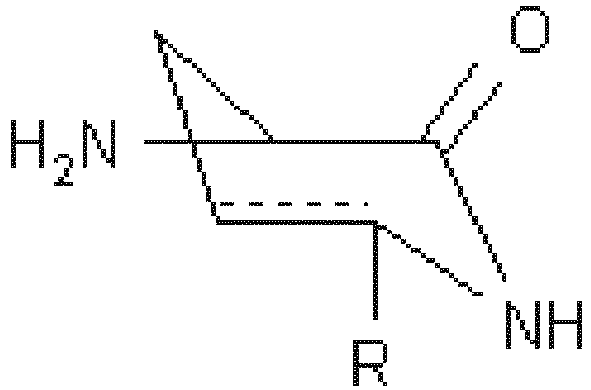
- g) - the preparation of a cyclic depsipeptide of the inventionwherein A4 is


- In one embodiment, the present invention relates to a cyclic depsipeptide or a pharmaceutically acceptable salt thereof, in particular and essentially as described in the description and/or the working examples.
- Specific embodiments of cyclic depsipeptides of the invention are:


- Other specific cyclic depsipeptides herein described are:


- The cyclic depsipeptides of formula (II)-(VII), (XI)-(XIV) and (XVII) can be produced by the Chondromyces crocatus strain of the invention (DSM 19329).
- Other specific cyclic depsipeptides herein described are:

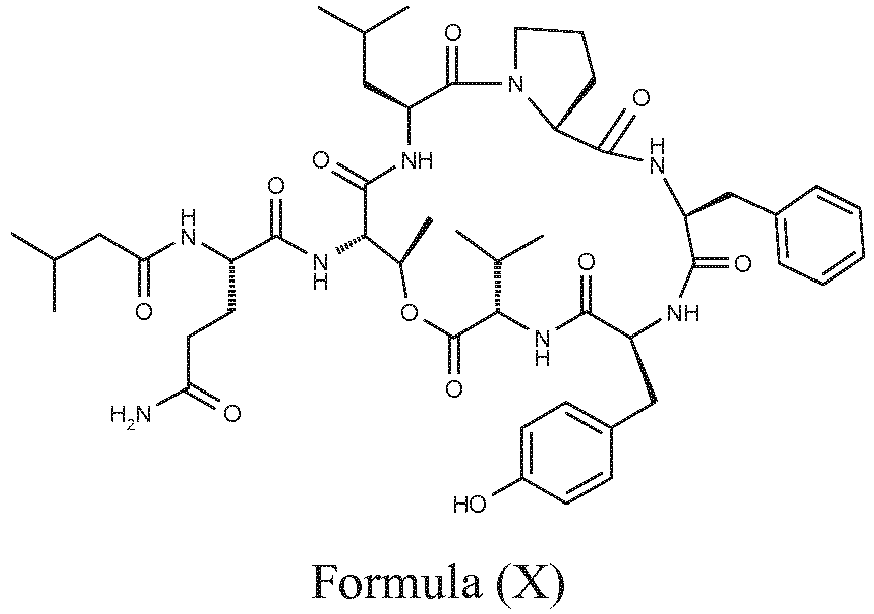
- The cyclic depsipeptides of formula (VIII)-(X) can be produced by the Chondromyces robustus (DSM 19330).
- Other specific cyclic depsipeptides herein described are:

- The cyclic depsipeptides of formula (XV)-(XVI) can be produced by the Chondromyces apiculatus of the invention (DSM 21595).
-
- Ahp
- 3-amino-6-hydroxy-2-piperidone
- DSMZ
- Deutsche Sammlung von Mikroorganismen und Zellkulturen GmbH
- hK7
-
Human kallikrein 7 - HPLC
- High performance/pressure liquid chromatography
- HTS
- High Throughput Screening
- IC
- Intermediary culture
- ID
- Identification
- MB
- Myxobacteria
- MC
- Main-culture
- PC
- Pre-culture
- pO2
- Partial pressure of oxygen in culture broth (100% = saturation with air)
- rpm
- Rotations per minute
- SCCE
- Stratum corneum chymotryptic enzyme
- SPEX
- Solid phase extraction
- vvm
- Aeration rate (Volume of air per culture volume and per minute)
- A "chemical residue" can be any organic or anorganic chemical moiety. The expression "chemical residue" includes, but is not limited to substituted or unsubstituted aliphatic group, e.g. C1-C3 alkyl, C1-C6 alkyl, or C1-C12 alkyl, substituted or unsubstituted aryl, substituted or unsubstituted arylalkyl, substituted or unsubstituted heteroaryl, or halogen. For instance, a chemical residue as defined in the claims can be any of the chemical groups described herein-below.
- The expression "chemical residue" includes, but is not limited to amino acids, peptides, polypeptides, proteins and the like.
- Examples of anorganic chemical moiety are for instance halogens, such as Br or Cl.
- An "aliphatic group" is non-aromatic moiety that may contain any combination of carbon atoms, hydrogen atoms, halogen atoms, oxygen, nitrogen or other atoms, and optionally contain one or more units of unsaturation, e.g., double and/or triple bonds. An aliphatic group may be straight chained, branched or cyclic and preferably contains between about 1 and about 24 carbon atoms, more typically between about 1 and about 12 carbon atoms. In addition to aliphatic hydrocarbon groups, aliphatic groups include, for example, polyalkoxyalkyls, such as polyalkylene glycols, polyamines, and polyimines, for example. Such aliphatic groups may be further substituted.
- The terms "C1-C3 alkyl", "C1-C6 alkyl," or "C1-C12 alkyl," as used herein, refer to saturated, straight-or branched-chain hydrocarbon radicals containing between one and three, one and twelve, or one and six carbon atoms, respectively. Examples of C1-C3 alkyl radicals include methyl, ethyl, propyl and isopropyl radicals; examples of C1-C6 alkyl radicals include, but are not limited to, methyl, ethyl, propyl, isopropyl, n-butyl, tert-butyl, sec-butyl, n-pentyl, neopentyl and n-hexyl radicals; and examples of C1-C12 alkyl radicals include, but are not limited to, ethyl, propyl, isopropyl, hexyl, heptyl, octyl, nonyl, decyl, undecyl, dodecyl radicals and the like.
- The term "substituted alkyl," as used herein, refers to an alkyl, such as a C1-C12 alkyl or C1-C6 alkyl group, substituted by one, two, three or more aliphatic substituents. Suitable aliphatic substituents include, but are not limited to,--F,--Cl,--Br,--I,--OH, protected hydroxy, aliphatic ethers, aromatic ethers, oxo,--NO2,--CN,--C1-C12-alkyl optionally substituted with halogen (such as perhaloalkyls), C2-C12-alkenyl optionally substituted with halogen,--C2-C12-alkynyl optionally substituted with halogen,--NH2, protected amino,--NH--C1-C12-alkyl,--NH--C2-C12-alkenyl,--NH--C2-C12-al kenyl,--NH--C3-C12-cycloalkyl,--NH-aryl,--NH-heteroaryl,--NH-heterocycloalkyl,-dialkylamino,-diarylamino, -diheteroarylamino,--O--C1-C12-alkyl,--O--C2-C12-alkenyl,--O--C2-C12-alkynyl,--O--C3-C12-cycloalkyl,--O-aryl,--O-hetero aryl,--O-heterocycloalkyl,--C(O)--C1 -C12-alkyl,--C(O)--C2-C12-alkenyl,--C(O)--C2-C12-alkynyl,--C(O)--C3 -C12-cycloalkyl,--C(O)-aryl,--C(O)-heteroaryl,--C(O)-heterocycl oalkyl,--CONH2,--CONH--C1-C12-alkyl,--CONH--C2-C12-alkenyl,--CONH--C2-C12-alkynyl,--CONH--C3 -C12-cycloalkyl,-CONH-aryl,--CONH-heteroaryl,--CONH-heterocycl oalkyl,-CO2--C1-C12-alkyl,--CO2--C2-C12-alkenyl,--CO2--C2-C12-alkynyl,--CO 2--C3-C12-cycloalkyl,--CO2-aryl,--CO 2-heteroaryl,--CO2-hetero cycloalkyl,--OCO2--C1-C12-alkyl,--OCO2--C2-C12-alkenyl,--OCO2--C2-C12-alkynyl,-OCO2--C3-C12-cycloalkyl,--OCO2-aryl,--OCO2-heteroaryl,--OCO2-heterocycloalkyl,--OCONH2,-OCONH--C1-C12-alkyl,--OCONH--C2-C12-alkenyl,--OCONH--C2-C12-alkynyl,--OCONH--C3-C 12-cycloalkyl,--OCONH-aryl,--OCONH-heteroaryl,--OCONH-heterocycloalkyl,--N HC(O)--C1-C12-alkyl,--NHC (O)--C2-C12-alkenyl,--NHC(O)--C2-C12 -alkynyl,--NHC(O)--C3-C12 -cycloalkyl,--NHC(O)-aryl,--NHC(O)-heteroaryl,--NHC(O)-heterocycloalkyl,--NHCO2--C1-C12-alkyl, -NHCO2--C2-C12-alkenyl,--NHCO2--C2-C12-alkynyl,--NHCO2--C3-C12-cycloalkyl,--NHCO2-aryl,--NHCO2-heteroaryl,--NHCO2-heteroc ycloalkyl,--NHC(O)NH2, NHC(O)NH--C1-C12-alkyl,-NHC(O)NH--C2-C12-alkenyl,--NHC(O)NH--C2-C12-alkynyl,--NHC(O)NH--C3-C12-cycloalkyl,-NHC(O)NH-a ryl,--NHC(O)NH-heteroaryl,--NHC(O)NH-heterocycl oalkyl, NHC(S)NR2, NHC(S)NH--C1-C12-alkyl,--NHC(S)NH--C2-C12-alkenyl,--NHC(S)NH--C2-C12-alkynyl,-NHC(S)NH--C3-C12-cycloalkyl,--NHC(S)NH-aryl,--NHC(S)NR-heteroaryl,--NHC(S)NH-heterocycl oalkyl,--NHC(NH)NH2, NHC(NH)NH-C1-C12-alkyl,-NHC(NH)NH-C2-C12-alkenyl,--NHC(NH)NH--C2-C12-alkynyl,--NHC(NH)NH--C3-C12-cycloalkyl,--NHC(NH)NH-aryl,-NHC(NH)NH-heteroaryl,--NHC(NH)NH-het erocycloalkyl, NHC(NH)--C1-C12-alkyl,--NHC(NH)--C2-C12-alkenyl,--NHC(NH)--C2-C12-alkynyl,--NHC(NH)--C3-C12-cycloalkyl,--NHC(NH)-aryl,-NHC(NH)-heteroaryl,--NHC(NH)-heterocycloalkyl, --C(NR)NH--C1-C12-alkyl,--C(NH)NH--C2-C12-alkenyl,--C(NR)NH--C2-C12-alkynyl,--C(NH)NH--C3-C12-cycloalkyl,--C(NH)NH-aryl ,-C(NH)NH-heteroaryl,--C(NH)NH-heterocycloalky 1,--S(O)--C1-C12-alkyl,--S(O)--C2-C12-alkenyl,--S(O)--C2-C12-alkynyl,--S(O)--C3-C12-cycloalkyl,--S(O)-aryl,--S(O)-heter oaryl,--S(O)-heterocycloalkyl-SO2NH2,--SO2NH--C1-C12-alkyl,--SO2NH--C2-C12-alkenyl,--SO2NH--C2-C12-alkynyl,--SO2NH--C3-C12-cycloalkyl,--SO2NH-aryl,--SO2NH-heteroaryl,--SO2NH-heterocycloalkyl,--N HSO2--C1-C12-alkyl,--NHSO2--C2-C12-alkenyl,--NHSO2--C2-C12-alkynyl,-NHSO2--C3-C12-cycloalkyl,--NHSO2-aryl,--NH SO2-heteroaryl,--NHSO2-he terocycloalkyl,-CH2NH2,--CH2SO2CH3,-aryl,-arylalkyl,-heteroaryl,-hetero arylalkyl,-heterocycloalkyl,--C3-C12-cycloalkyl, polyalkoxyalkyl, polyalkoxy,-methoxymethoxy,-methoxyethoxy,--SH,--S--C1-C12-alkyl,--S--C2-C12-alkeny 1,--S--C2-C12-alkynyl,--S--C3-C12-cy cloalkyl,--S-aryl,--S-heteroaryl,-S-heterocyclo alkyl, or methylthiomethyl. It is understood that the aryls, heteroaryls, alkyls and the like can be further substituted.
- The terms "C2-C12 alkenyl" or "C2-C6 alkenyl," as used herein, denote a monovalent group derived from a hydrocarbon moiety containing from two to twelve or two to six carbon atoms having at least one carbon-carbon double bond by the removal of a single hydrogen atom. Alkenyl groups include, but are not limited to, for example, ethenyl, propenyl, butenyl, 1-methyl-2-buten-1-yl, alkadienes and the like.
- The term "substituted alkenyl," as used herein, refers to a "C2-C12 alkenyl" or "C2-C6 alkenyl" group as previously defined, substituted by one, two, three or more aliphatic substituents. The terms "C2-C12 alkynyl" or "C2-C6 alkynyl," as used herein, denote a monovalent group derived from a hydrocarbon moiety containing from two to twelve or two to six carbon atoms having at least one carbon-carbon triple bond by the removal of a single hydrogen atom. Representative alkynyl groups include, but are not limited to, for example, ethynyl, 1-propynyl, 1-butynyl, and the like.
- The term "substituted alkynyl," as used herein, refers to a "C2-C12 alkynyl" or "C2-C6 alkynyl" group as previously defined, substituted by one, two, three or more aliphatic substituents. The term "C1-C6 alkoxy," as used herein, refers to a C1-C6 alkyl group, as previously defined, attached to the parent molecular moiety through an oxygen atom. Examples of C1-C6-alkoxy include, but are not limited to, methoxy, ethoxy, propoxy, isopropoxy, n-butoxy, sec-butoxy, tert-butoxy, n-pentoxy, neopentoxy and n-hexoxy.
- The terms "halo" and "halogen," as used herein, refer to an atom selected from fluorine, chlorine, bromine and iodine.
- The term "aryl," as used herein, refers to a mono-or bicyclic carbocyclic ring system having one or two aromatic rings including, but not limited to, phenyl, naphthyl, tetrahydronaphthyl, indanyl, idenyl and the like.
- The term "substituted aryl," as used herein, refers to an aryl group, as previously defined, substituted by one, two, three or more aromatic substituents.
Aromatic substituents include, but are not limited to,--F,--Cl,--Br,--I,--OH, protected hydroxy, aliphatic ethers, aromatic ethers, oxo,--NO2,--CN,--C1-C12-alkyl, optionally substituted with halogen (such as perhaloalkyls), C2-C12-alkenyl optionally substituted with halogen,--C2-C12-alkynyl optionally substituted with halogen,--NH2, protected amino,--NH--C1-C12-alkyl,--NH--C2-C12-alkenyl,--NH--C2-C12-alkenyl,--NH--C3-C12-cycloalkyl,-NH-aryl,-NH-heteroaryl,-NH-heterocycloalkyl,-dialkylamino,-diarylamino, -diheteroarylamino,--O--C1-C12-alkyl,--O--C2-C12-alkenyl,--O--C2-C12-alkynyl,--O--C3-C12-cycloalkyl,--O-aryl,--O-hetero aryl,--O-heterocycloalkyl,--C(O)--C1-C12-alkyl,--C(O)--C2-C12-alkenyl,--C(O)--C2-C12-alkynyl,--C(O)--C3 -C12-cycloalkyl,--C(O)-aryl,--C(O)-heteroaryl,--C(O)-heterocycloalkyl,--CONH2,--CONH--C1-C12-alkyl,--CONH--C2-C12-alkenyl,--CONH--C2-C12-alkynyl,--CONH--C3-C12-cycloalkyl,-CONH-aryl,--CONH-heteroaryl,--CONH-heterocycloalkyl,--CO2--C1-C12 -alkyl,--CO2--C2-C12-alkenyl,--CO2--C2-C12-alkynyl,--CO2--C3-C12-cycloalkyl,--CO2-aryl,--CO2-heteroaryl,--CO2-hetero cycloalkyl,--OCO2--C1-C12-alkyl,--OCO2--C2-C12-alkenyl,--OCO2--C2-C12-alkynyl,-OCO2-C3-C12-cycloalkyl,--OCO2-aryl,--OCO2-heteroaryl,--OCO2-heterocycloalkyl,--OCONH2,-OCONH--C1-C12-alkyl,--OCONH--C2-C12-alkenyl,--OCONH--C2-C12-alkynyl,-OCONH-C3-C1 2-cycloalkyl,--OCONH-aryl,--OCONH-heteroaryl,--OCONH-heterocycloalkyl,--NHC(O)--C1-C12-alkyl,--NHC(O)--C2-C12-alkenyl,--NHC(O)--C2-C12-alkynyl,--NHC(O)--C3-C12-cycloalkyl,-NHC(O)-aryl,--NHC(O)-heteroaryl,--NHC(O)-heterocycloalkyl,--NHCO2--C1-C12-alkyl,-NHCO2--C2-C12-alkenyl,--NHCO2--C2-C12-alkynyl,--NHCO2--C3-C12-cycloalkyl,--NHCO2-aryl,--NHCO2-heteroaryl,--NHCO2-heterocy cloalkyl,--NHC(O)NH2, NHC(O)NH--C1-C12-alkyl,-NHC(O)NH--C2-C12-alkenyl,--NHC(O)NH--C2-C12-alkynyl,--NHC(O)NH--C3-C12-cycloalkyl,-NHC(O)NH-aryl,--NHC(O)NH-heteroaryl,--NHC(O)NH-heterocycl oalkyl, NHC(S)NH2, NHC(S)NH--C1-C12-alkyl,--NHC(S)NH--C2-C12-alkenyl,--NHC(S)NH--C2-C12-alkynyl,-NHC(S)NH--C3-C12-cycloalkyl,--NHC(S)NH-aryl,--NHC(S)NH-heteroaryl,--NHC(S)NH-heterocycl oalkyl,--NHC(NH)NH2, NHC(NH)NH--C1-C12-alkyl,-NHC(NH)NH--C2-C12-alkenyl,--NHC(NH)NH--C2-C12-alkynyl,--NHC(NH)NH--C3-C12-cycloalkyl,--NHC(NH)NH-aryl,-NHC(NH)NH-heteroaryl,--NHC(NH)NH-het erocycloalkyl, NHC(NH)--C1-C12-alkyl,-NHC(NH)--C2-C12-alkenyl,--NHC(NH)--C2-C12-alkynyl,--NHC(NH)--C3-C12-cycloalkyl,--NHC(NH)-aryl,-NHC(NH)-heteroaryl,--NHC(NH)-heterocycloalkyl, --C(NH)NH--C1-C12-alkyl,--C(NH)NH--C2-C12-alkenyl,--C(NH)NH--C2-C12 -alkynyl,--C(NH)NH--C3-C12-cycloalkyl,--C(NH)NH-aryl,-C(NH)NH-heteroaryl,--C(NH)NH-heterocycloalky 1,--S(O)--C1-C12-alkyl,--S(O)--C2-C12-alkenyl,--S(O)--C2-C12-alkynyl,--S(O)--C3-C12-cycloalkyl,--S(O)-aryl,--S(O)-heter oaryl,--S(O)-heterocycloalkyl-SO2NH2,--SO2NH--C1-C12-alkyl,--SO2NH--C2-C12-alkenyl,--SO2NH--C2-C12-alkynyl,--SO2NH--C3-C12-cycloalkyl,--SO2NH-aryl,--SO2NH-heteroaryl,--SO2NH-heterocycloalkyl,--NHSO2--C1-C12-alkyl,--NHSO2--C2-C12-alkenyl,--NHSO2 --C2-C12-alkynyl,-NHSO2--C3-C12-cycloalkyl,--NHSO2-aryl,--NH SO2-heteroaryl,--NHSO2-he terocycloalkyl,-CH2NH2,--CH2SO2CH3,-aryl,-arylalkyl,-heteroaryl,-hetero arylalkyl,-heterocycloalkyl,--C3-C12-cycloalkyl, polyalkoxyalkyl, polyalkoxy,-methoxymethoxy,-methoxyethoxy,--SH,--S--C1-C12-alkyl,--S--C2-C12-alkeny 1,--S--C2-C12-alkynyl,--S--C3-C12-cy cloalkyl,--S-aryl,--S-heteroaryl,--S-heterocycl oalkyl, or methylthiomethyl. It is understood that the aryls, heteroaryls, alkyls and the like can be further substituted. - The term "arylalkyl," as used herein, refers to an aryl group attached to the parent compound via a C1-C3 alkyl or C1-C6 alkyl residue. Examples include, but are not limited to, benzyl, phenethyl and the like.
- The term "substituted arylalkyl," as used herein, refers to an arylalkyl group, as previously defined, substituted by one, two, three or more aromatic substituents.
- The term "heteroaryl," as used herein, refers to a mono-, bi-, or tri-cyclic aromatic radical or ring having from five to ten ring atoms of which at least one ring atom is selected from S, O and N; zero, one or two ring atoms are additional heteroatoms independently selected from S, O and N; and the remaining ring atoms are carbon, wherein any N or S contained within the ring may be optionally oxidized. Heteroaryl includes, but is not limited to, pyridinyl, pyrazinyl, pyrimidinyl, pyrrolyl, pyrazolyl, imidazolyl, thiazolyl, oxazolyl, isooxazolyl, thiadiazolyl, oxadiazolyl, thiophenyl, furanyl, quinolinyl, isoquinolinyl, benzimidazolyl, benzooxazolyl, quinoxalinyl, and the like. The heteroaromatic ring may be bonded to the chemical structure through a carbon or hetero atom.
- The term "substituted heteroaryl," as used herein, refers to a heteroaryl group as previously defined, substituted by one, two, three or four aromatic substituents.
The term "C3-C12-cycloalkyl," as used herein, denotes a monovalent group derived from a monocyclic or bicyclic saturated carbocyclic ring compound by the removal of a single hydrogen atom. Examples include, but not limited to, cyclopropyl, cyclobutyl, cyclopentyl, cyclohexyl, bicyclo[2.2.1]heptyl, and bicyclo[2.2.2]octyl. - The term "substituted C3-C12-cycloalkyl," as used herein, refers to a C3-C12-cycloalkyl group as previously defined, substituted by one, two, three or more aliphatic substituents.
- The term "heterocycloalkyl," as used herein, refers to a non-aromatic 5-, 6-or 7-membered ring or a bi-or tri-cyclic group fused system, where (i) each ring contains between one and three heteroatoms independently selected from oxygen, sulfur and nitrogen, (ii) each 5-membered ring has 0 to 1 double bonds and each 6-membered ring has 0 to 2 double bonds, (iii) the nitrogen and sulfur heteroatoms may optionally be oxidized, (iv) the nitrogen heteroatom may optionally be quaternized, (iv) any of the above rings may be fused to a benzene ring, and (v) the remaining ring atoms are carbon atoms which may be optionally oxo-substituted. Representative heterocycloalkyl groups include, but are not limited to, [1,3]dioxolane, pyrrolidinyl, pyrazolinyl, pyrazolidinyl, imidazolinyl, imidazolidinyl, piperidinyl, piperazinyl, oxazolidinyl, isoxazolidinyl, morpholinyl, thiazolidinyl, isothiazolidinyl, quinoxalinyl, pyridazinonyl, and tetrahydrofuryl.
- The term "substituted heterocycloalkyl," as used herein, refers to a heterocycloalkyl group, as previously defined, substituted by one, two, three or more aliphatic substituents.
The term "heteroarylalkyl," as used herein, to an heteroaryl group attached to the parent compound via a C1-C6 alkyl or C1-C6 alkyl residue. Examples include, but are not limited to, pyridinylmethyl, pyrimidinylethyl and the like. - The term "substituted heteroarylalkyl," as used herein, refers to a heteroarylalkyl group, as previously defined, substituted by independent replacement of one, two, or three or more aromatic substituents.
- The term "C1-C3-alkylamino," as used herein, refers to one or two C1-C3-alkyl groups, as previously defined, attached to the parent molecular moiety through a nitrogen atom. Examples of C1-C3-alkylamino include, but are not limited to, methylamino, dimethylamino, ethylamino, diethylamino, and propylamino.
- The term "alkylamino" refers to a group having the structure--NH(C1-C12 alkyl) where C1-C12 alkyl is as previously defined.
- The term "dialkylamino" refers to a group having the structure--N(C1-C12 alkyl) (C1-C12 alkyl), where C1-C12 alkyl is as previously defined. Examples of dialkylamino are, but not limited to, dimethylamino, diethylamino, methylethylamino, piperidino, and the like.
The term "alkoxycarbonyl" represents an ester group, i.e., an alkoxy group, attached to the parent molecular moiety through a carbonyl group such as methoxycarbonyl, ethoxycarbonyl, and the like. - The term "carboxaldehyde," as used herein, refers to a group of formula--CHO.
- The term "carboxy," as used herein, refers to a group of formula--COOH.
- The term "carboxamide," as used herein, refers to a group of formula--C(O)NH(C1-C12 alkyl) or--C(O)N(C1-C12 alkyl) (C1-C12alkyl),-C(O)NH2, NHC(O)(C1-C12 alkyl), N(C1-C12 alkyl)C(O)(C1-C12 alkyl) and the like.
- The term "hydroxy protecting group" as used herein, refers to a labile chemical moiety which is known in the art to protect a hydroxyl group against undesired reactions during synthetic procedures. After said synthetic procedure(s) the hydroxy protecting group as described herein may be selectively removed. Hydroxy protecting groups as known in the are described generally in T. H. Greene and P. G. M. Wuts, Projective Groups in Organic Synthesis, 3rd edition, John Wiley & Sons, New York (1999). Examples of hydroxyl protecting groups include benzyloxycarbonyl, 4-nitrobenzyloxycarbonyl, 4-bromobenzyloxycarbonyl, 4-methoxybenzyloxycarbonyl, methoxycarbonyl, tert-butoxycarbonyl, isopropoxycarbonyl, diphenylmethoxycarbonyl, 2,2,2-trichloroethoxycarbonyl, 2-(trimethylsilyl)ethoxycarbonyl, 2-furfuryloxycarbonyl, allyloxycarbonyl, acetyl, formyl, chloroacetyl, trifluoroacetyl, methoxyacetyl, phenoxyacetyl, benzoyl, methyl, t-butyl, 2,2,2-trichloroethyl, 2-trimethylsilyl ethyl, 1,1-dimethyl-2-propenyl, 3-methyl-3-butenyl, allyl, benzyl, para-methoxybenzyldiphenylmethyl, triphenylmethyl (trityl), tetrahydrofuryl, methoxymethyl, methylthiomethyl, benzyloxymethyl, 2,2,2-triehloroethoxymethyl, 2-(trimethylsilyl)ethoxymethyl, methanesulfonyl, para-toluenesulfonyl, trimethylsilyl, triethylsilyl, triisopropylsilyl, and the like. Preferred hydroxyl protecting groups for the present invention are acetyl (Ac or--C(O)CH3), benzoyl (Bn or--C(O)C6H5), and trimethylsilyl (TMS or--Si(CH3)3).
- The term "protected hydroxy", as used herein, refers to a hydroxy group protected with a hydroxy protecting group, as defined above, including benzoyl, acetyl, trimethylsilyl, triethylsilyl, methoxymethyl groups, for example.
- The term "amino protecting group", as used herein, refers to a labile chemical moiety which is known in the art to protect an amino group against undesired reactions during synthetic procedures. After said synthetic procedure(s) the amino protecting group as described herein may be selectively removed. Amino protecting groups as known in the are described generally in T. H. Greene and P. G. M. Wuts, Protective Groups in Organic Synthesis, 3rd edition, John Wiley & Sons, New York (1999). Examples of amino protecting groups include, but are not limited to, t-butoxycarbonyl, 9-fluorenylmethoxycarbonyl, benzyloxycarbonyl, and the like.
- The term "protected amino", as used herein, refers to an amino group protected with an amino protecting group as defined above.
- The term "acyl" includes residues derived from acids, including but not limited to carboxylic acids, carbamic acids, carbonic acids, sulfonic acids, and phosphorous acids. Examples include aliphatic carbonyls, aromatic carbonyls, aliphatic sulfonyls, aromatic sulfinyls, aliphatic sulfinyls, aromatic sulfonyls, aliphatic sulfamyls, aromatic sulfamyls, aromatic phosphates and aliphatic phosphates.
- An "amino acid" is a molecule that contains both amine and carboxyl functional groups with the general formula NH2CHRCOOH. The term amino acid includes standard amino acids and nonstandard amino acids.
- "Standard amino acids" are alanine, arginine, asparagine, aspartic acid, cysteine, glutamic acid, glutamine, glycine, histidine, isoleucine, leucine, lysine, methionine, phenylalanine, proline, serine, threonine, tryptophan, tyrosine, and valine.
- A "standard amino acid which is not aspartic acid" is selected from the group consisting of alanine, arginine, asparagine, cysteine, glutamic acid, glutamine, glycine, histidine, isoleucine, leucine, lysine, methionine, phenylalanine, proline, serine, threonine, tryptophan, tyrosine, and valine. In the case of glutamine or glutamic acid, a "derivative thereof" is e.g. a nitrile or an ester, such as e.g. glutamine-nitrile, glutamic acid ester.
- "Nonstandard amino acids" are amino acids (molecules that contains both amine and carboxyl functional groups) which are not one of the standard amino acids. Examples thereof are selenocysteine (incorporated into some proteins at a UGA codon), pyrrolysine (used by some methanogenic bacteria in enzymes to produce methane and coded for with the codon UAG), lanthionine, 2-aminoisobutyric acid, dehydroalanine, 3-amino-6-hydroxy-2-piperidone, gamma-aminobutyric acid, ornithine, citrulline, homocysteine, dopamine or hydroxyproline.
- "Non-basic standard amino acids" are alanine, asparagine, aspartic acid, cysteine, glutamic acid, glutamine, glycine, isoleucine, leucine, methionine, phenylalanine, proline, serine, threonine, tryptophan, tyrosine, and valine.
- "Ahp" (3-amino-6-hydroxy-piperidin-2-one) is a nonstandard amino acid found for instance in cyanobacteria. "Ahp derivatives" include, but are not limited to 3-amino-3,4-dihydro-1H-pyridin-2-one (dehydro-AHP), 3-amino-piperidin-2-one and "ether and ester derivatives of AHP. Preferred Ahp derivatives are 3-amino-piperidin-2-one, or Ahp-I or Ahp-II as depicted below wherein R is selected from the group consisting of (C1-12)alkyl, (C2-12)alkenyl, (C2-12)alkynyl halo(C1-12)alkyl, (C1-12)alkoxy(C1-12)alkyl, (C1-12)alkoxy(C1-12)alkoxy(C1-12)alkyl, hydroxy(C1-12)alkyl, phenyl and phenyl(C1-6)alkyl.
- Different members of this family of nonstandard amino acids are:




- Proline derivative includes e.g. 5-hydroxyprolin.
- "Amino acid derivatives" include, but are not limited to, O-alkyl, O-aryl, O-acyl, S-alkyl, S-aryl, S-S-alkyl, alkoxycarbonyl, O-carbonyl-alkoxy, carbonate, O-carbonyl-aryloxy, O-carbonyl-alkylamino, O-carbonyl-arylamino, N-alkyl, N-dialkyl, N-trialkylammonium, N-acyl, N-carbonyl-alkoxy, N-carbonyl-aryloxy, N-carbonyl-alkylamino, N-carbonyl-arylamino, N-sulfonylalkyl, or N-sulfonylaryl.
- "Non-basic standard amino acid derivatives" include, but are not limited to, O-alkyl, O-aryl, O-acyl, S-alkyl, S-aryl, S-S-alkyl, alkoxycarbonyl, O-carbonyl-alkoxy, carbonate, O-carbonyl-aryloxy, O-carbonyl-alkylamino, O-carbonyl-arylamino, N-alkyl, N-dialkyl, N-trialkylammonium, N-acyl, N-carbonyl-alkoxy, N-carbonyl-aryloxy, N-carbonyl-alkylamino, N-carbonyl-arylamino, N-sulfonylalkyl, or N-sulfonylaryl.
- "Tyrosine derivative" include, but are not limited to, -O-alkyl, O-aryl, O-heteroaryl, O-acyl, O-PO3H and O-SO3H, as well as halogenation, in ortho or meta position.
The OH group of the tyrosine may be OR, wherein R is selected from the group consisting of hydrogen, (C1-12)alkyl, (C2-12)alkenyl, (C2-12)alkynyl, halo(C1-12)alkyl,
halo(C2-12)alkenyl, halo(C2-12)alkynyl, (C1-12)alkoxycarbonyl,
(C1-12)alkoxycarbonyl(C1-12)alkyl,
(C1-12)alkylaminocarbonyl, unsubstituted or further substituted by aryl, arylalkyl, arylalkenyl or arylalkynyl, heterocyclyl and heterocyclylalkyl. - "Depsipeptide derivative" include but are not limited to, depsipeptides modified as described herein and to those specifically described in the examples below. Said derivatives can be prepared using methods well known in the art.
- The invention further relates to pharmaceutically acceptable salts and derivatives of the compounds of the present invention and to methods for obtaining such compounds. One method of obtaining the compound is by cultivating Chondromyces crocatus (DSM 19329)of the invention, or a mutant or a variant thereof, under suitable conditions, preferably using the fermentation protocol described herein-below.
- "Salts" of compounds of the present invention having at least one salt-forming group may be prepared in a manner known per se. For example, salts of compounds of the present invention having acid groups may be formed, for example, by treating the compounds with metal compounds, such as alkali metal salts of suitable organic carboxylic acids, e.g., the sodium salt of 2-ethylhexanoic acid, with organic alkali metal or alkaline earth metal compounds, such as the corresponding hydroxides, carbonates or hydrogen carbonates, such as sodium or potassium hydroxide, carbonate or hydrogen carbonate, with corresponding calcium compounds or with ammonia or a suitable organic amine, stoichiometric amounts or only a small excess of the salt-forming agent preferably being used. Acid addition salts of compounds of the present invention are obtained in customary manner, e.g., by treating the compounds with an acid or a suitable anion exchange reagent. Internal salts of compounds of the present invention containing acid and basic salt-forming groups, e.g., a free carboxy group and a free amino group, may be formed, e.g., by the neutralisation of salts, such as acid addition salts, to the isoelectric point, e.g., with weak bases, or by treatment with ion exchangers.
- Salts can be converted in customary manner into the free compounds; metal and ammonium salts can be converted, for example, by treatment with suitable acids, and acid addition salts, for example, by treatment with a suitable basic agent.
- Mixtures of isomers obtainable according to the invention can be separated in a manner known per se into the individual isomers; diastereoisomers can be separated, for example, by partitioning between polyphasic solvent mixtures, recrystallisation and/or chromatographic separation, for example over silica gel or by, e.g., medium pressure liquid chromatography over a reversed phase column, and racemates can be separated, for example, by the formation of salts with optically pure salt-forming reagents and separation of the mixture of diastereoisomers so obtainable, for example by means of fractional crystallisation, or by chromatography over optically active column materials.
- Intermediates and final products can be worked up and/or purified according to standard methods, e.g., using chromatographic methods, distribution methods, (re-) crystallization, and the like.
- The cyclic depsipeptides of the invention can inhibit of chymotrypsin-like proteases. Examples of chymotrypsin-like proteases are elastases and
kallikrein 7. In particular, the cyclic depsipeptides of the invention are excellent inhibitors ofkallikrein 7. - An "inhibitor" is a cyclic depsipeptide that inhibits an enzymatic reaction with a measure IC50 of less than 100 µM, for instance 50 µM, 30 µM, 20 µM or 10 µM. Particularly preferred are cyclic depsipeptides with an IC50 of less than 30 µM for
human kallikrein 7, for instance cyclic depsipeptides with an IC50 of less than 10 µM, 1 µM, 100 nM, 50 nM, 40 nM, 30 nM, 20 nM, 10 nM, or less. E.g. compounds of examples 5, 19 and 33 show IC50 values of 0.009µM, 0.007µM, 0.005µM, respectively. IC50 for human kallikrein can be measured using the fluorescence-quenched substrate Ac-Glu-Asp(EDANS)-Lys-Pro-Ile-Leu-Phe^Arg-Leu-Gly-Lys(DABCYL)-Glu-NH2 (where ^ indicates the scissile bond, identified by MS analysis) which can be purchased from Biosyntan (Berlin, Germany). Enzymatic reactions are conducted in 50 mM sodium citrate buffer at pH 5.6 containing 150 mM NaCl and 0.05 % (w/v) CHAPS. For the determination of IC50 values the assay is performed at room temperature in 384-well plates. All final assay volumes are 30 µl. Test compounds are dissolved in 90 % (v/v) DMSO/water and diluted in water (containing 0.05 % (w/v) CHAPS) to 3-times the desired assay concentration. The 11 final compound concentrations are: 0.3 nM, 1 nM, 3 nM, 10 nM, 30 nM, 100 nM, 300 nM, 1 µM, 3 µM, 10 µM and 30 µM. For each assay, 10 µl water/CHAPS (± test compound) are added per well, followed by 10 µl protease solution (diluted with 1.5x assay buffer). The protease concentration in final assay solution is 0.2 nM (according to the enzyme concentrations determined by the Bradford method). After 1 hour of incubation at room temperature, the reaction is started by addition of 10 µl substrate solution (substrate dissolved in 1.5x assay buffer, final concentration is 2 µM). The effect of the compound on the enzymatic activity is obtained from the linear progress curves and determined from two readings, the first one taken directly after the addition of substrate (t = 0 min) and the second one after 1 hour (t = 60 min). The IC50 value is calculated from the plot of percentage of inhibition vs. inhibitor concentration using non-linear regression analysis software (XLfit, Vers. 4.0; ID Business Solution Ltd., Guildford, Surrey, UK). - "Diseases" and "disorders" which may hence be treated or prevented using the cyclic depsipeptides, are diseases known to be related with chymotrypsin-like proteases. More preferred are diseases known to be related to elastases or
kallikrein 7 activity. Equally preferred are diseases known to be related to human neutrophil elastase. Diseases and disorders which may hence be treated or prevented using the cyclic depsipeptides of the invention include pain, acute inflammation, chronic inflammation, arthritis, inflamed joints, bursitis, osteoarthritis, rheumatoid arthritis, juvenile rheumatoid arthritis, septic arthritis, fibromyalgia, systemic lupus erythematosus, phlebitis, tendinitis, rash, psoriasis, acne, eczema, facial seborrheic eczema, eczema of the hands, face or neck, foreskin infections, athlete's foot, fistulae infections, infected topical ulcers, navel infections in newborns, wrinkels, scars, kelloids, boils, warts and allergic itch, hemorrhoids, wounds, wound infections, wounds from burns, a fungal infection and an immunogical disorder including an autoimmune disease. Preferred diseases which may be treated or prevented using the cyclic depsipeptides of the invention include chronic obstructive pulmonary disease (including pulmonary emphysema and chronic bronchitis), chronic and acute interstitial pneumonia, idiopathic interstitial pneumonia (IIP), diffuse panbronchiolitis, cystic lung fibrosis, acute lung injury (ALI)/acute respiratory distress syndrome (ARDS), bronchiectasis, asthma, pancreatitis, nephritis, hepatitis (hepatic failure), chronic rheumatoid arthritis, arthrosclerosis, osteroarthritis, psoriasis, periodontal disease, atherosclerosis, organ transplant rejection, tissue injury caused by ischemia/reperfusion, shock, septicemia, blood coagulopathy including disseminated intravascular coagulation (DIC) and deep vein-thrombosis, conjunctivitis, keratitis, corneal ulcer, Crohn's disease, systemic lupus erythematosus. More preferred diseases and disorders which may be treated or prevented using the cyclic depsipeptides of the invention are "epithelial dysfunction" or "epithelial disease" including, but are not limited to, inflammatory and/or hyperpoliferative and pruritic skin diseases such as keloids, hypertrophic scars, acne, atopic dermatitis, psoriasis, Netherton's syndrome or other pruritic dermatoses such as prurigo nodularis, unspecified itch of the elderly as well as other diseases with epithelial barrier dysfunction such as inflammatory bowel disease and Crohn's disease, cystic fibrosis (CF), chronic obstructive pulmonary disease (COPD), pulmonary fibrosis, adult respiratory distress syndrome, chronic bronchitis, hereditary emphysema, rheumatoid arthritis, IBD, psoriasis, asthma. In another preferred embodiment, the cyclic depsipeptdes of the invention can be use to treat cancer, in particular ovarian cancer. - Diseases and disorders which may hence be preferably treated or prevented using the cyclic depsipeptides of the invention include inflammatory and/or hyperpoliferative and pruritic skin diseases such as keloids, hypertrophic scars, acne, atopic dermatitis, psoriasis, pustular psoriasis, rosacea, Netherton's syndrome or other pruritic dermatoses such as prurigo nodularis, unspecified itch of the elderly as well as other diseases with epithelial barrier dysfunction such as aged skin, inflammatory bowel disease and Crohn's disease, as well as pancreatitis, or of cancer, in particular ovarian cancer, cystic fibrosis (CF), chronic obstructive pulmonary disease (COPD), pulmonary fibrosis, adult respiratory distress syndrome, chronic bronchitis, hereditary emphysema, rheumatoid arthritis, IBD, psoriasis, and asthma.
- Diseases and disorders which may hence be more preferably treated or prevented using the cyclic depsipeptides of the invention include keloids, hypertrophic scars, acne, atopic dermatitis, psoriasis, pustular psoriasis, rosacea, Netherton's syndrome or other pruritic dermatoses such as prurigo nodularis, unspecified itch of the elderly as well as other diseases with epithelial barrier dysfunction such as aged skin, inflammatory bowel disease and Crohn's disease, as well as pancreatitis, or of cancer, in particular ovarian cancer.
- Diseases and disorders which may hence be equally preferably treated or prevented using the cyclic depsipeptides of the invention include cystic fibrosis (CF), chronic obstructive pulmonary disease (COPD), pulmonary fibrosis, adult respiratory distress syndrome, chronic bronchitis, hereditary emphysema, rheumatoid arthritis, IBD, psoriasis, asthma.
- Diseases and disorders which may be even more preferably treated or prevented using the cyclic depsipeptides of the invention include keloids, hypertrophic scars, acne, atopic dermatitis, psoriasis, pustular psoriasis, rosacea, Netherton's syndrome or other pruritic dermatoses such as prurigo nodularis, unspecified itch of the elderly, as well as other diseases with epithelial barrier dysfunction such as aged skin.
- Human kallikrein 7 (hK7) is an enzyme with serine protease activity located in the human skin. It was first described as stratum corneum chymotryptic enzyme (SCCE) and may play a role in desquamation of stratum corneum by cleaving proteins of the stratum corneum (e.g., corneodesmosin and plakoglobin). The stratum corneum is the barrier-forming outermost layer of the epidermis and consists of cornified epithelial cells surrounded by highly organized lipids. It is continuously being formed by epidermal differentiation and in normal epidermis the constant thickness of the stratum corneum is maintained by a balance between the proliferation of the keratinocytes and desquamation. Enhanced expression of SCCE in inflammatory skin disease may be of etiological significance (Hansson, et al. (2002)). Transgenic mice expressing
human kallikrein 7 in epidermal keratinocytes were found to develop pathologic skin changes with increased epidermal thickness, hyperkeratosis, dermal inflammation, and severe pruritis. A genetic association between a 4 bp (AACC) insertion in the 3'UTR of the stratum corneum chymotryptic enzyme gene and atopic dermatitis has been reported (Vasilopoulos, et al. (2004)), suggesting that the enzyme could have an important role in the development of atopic dermatitis. Atopic dermatitis is a disease with an impaired skin barrier that affects 15%-20% of children. - In one aspect the depsipeptides according to the invention are obtained by cultivating a Chondromyces crocatus strain which was deposited on 24th April 2007 with the DSMZ (DSM 19329). Other specific cyclic depsipeptides herein described are obtained by cultivating a Chondromyces robustus strain which was deposited on 24th April 2007 with the DSMZ (DSM 19330) or are obtained by cultivating a Chondromyces apiculatus strain which was deposited on 23rd June 2008 with the DSMZ (DSM 21595).
The deposit of the strains was made under the terms of the Budapest Treaty on the International Recognition of the Deposit of Microorganisms for Purposes of Patent Procedure. The deposited strains will be irrevocably and without restriction or condition released to the public upon the issuance of a patent. The deposited strains are provided merely as convenience to those skilled in the art and are not an admission that a deposit is required for enablement. - It is to be understood that the present invention is not limited to cultivation of the particular strains Chondromyces crocatus and Chondromyces robustus and Chondromyces apiculatus. Rather, the present invention contemplates the cultivation of other organisms capable of producing depsipeptides, such as mutants or variants of the strains that can be derived from this organism by known means such as X-ray irradiation, ultraviolet irradiation, treatment with chemical mutagens, phage exposure, antibiotic selection and the like.
- The depsipeptides of the present invention may be biosynthesized by various microorganisms. Microorganisms that may synthesize the compounds of the present invention include but are not limited to bacteria of the order Myxococcales, also referred to as myxobacteria. Non-limiting examples of members belonging to the genera of myxobacteria include Chondromyces, Sorangium, Polyangium, Byssophaga, Haploangium, Jahnia, Nannocystis, Koffleria, Myxococcus, Corallococcus, Cystobacter, Archangium, Stigmatella, Hyalangium, Melittangium, Pyxicoccus,. The taxonomy of myxobacteria is complex and reference is made to Garrity GM, Bell JY, Lilburn TG (2004) Taxonomic outline of the prokaryotes, Bergey's manual of systematic bacteriology, 2nd edition, release 5.0 May 2004. (http://141.150.157.80/bergeysoutline/main.htm).
- The compounds of structural formulas (I-XVII) are produced by the aerobic fermentation of a suitable medium under controlled conditions via inoculation with a culture of Chondromyces crocatus or Chondromyces robustus or Chondromyces apiculatus. The suitable medium is preferably aqueous and contains sources of assimilable carbon, nitrogen, and inorganic salts.
- Suitable media include, without limitation, the growth media mentioned below in examples 1 and 2. The fermentation is conducted for about 3 to about 20 days at temperatures ranging from about 10°C to about 40°C; however for optimum results it is preferred to conduct the fermentation at about 30°C. The pH of the nutrient medium during the fermentation can be about 6.0 to about 9.0.
- The culture media inoculated with the depsipeptides producing microorganisms may be incubated under aerobic conditions using, for example, a rotary shaker or a stirred tank fermentor Aeration may be achieved by the injection of air, oxygen or an appropriate gaseous mixture to the inoculated culture media during incubation. As soon as a sufficient amount of the depsipetide compounds have accumulated, they may be concentrated and isolated from the culture in conventional and usual manner, for example by extraction- and chromatographic methods, precipitation or crystallization, and/or in a manner disclosed herein. As an example for extraction, the culture can be mixed and stirred with a suitable organic solvent such as n-butanol, ethyl acetate, cyclohexane, n-hexane, toluene, n-butyl acetate or 4-methyl-2-pentanone, the depsipeptide compounds in the organic layer can be recovered by removal of the solvent under reduced pressure. The resulting residue can optionally be reconstituted with for example water, ethanol, methanol or a mixture thereof, and re-extracted with a suitable organic solvent such as hexane, carbon tetrachloride, dichloromethane or a mixture thereof. Following removal of the solvent, the compounds may be further purified for example by chromatographic methods. As an example for chromatography, stationary phases such as silica gel or aluminia oxide can be applied, with organic eluting solvents or mixtures thereof, including ethers, ketones, esters, halogenated hydrocarbons or alcohols, or reversed-phase chromatography on modified silica gel having various functional groups and eluting with organic solvents or aqueous mixtures thereof, like acetonitrile, methanol or tetrahydrofuran at different pH. Another example is partition-chromatography, for example in the solid-liquid or in the liquid-liquid mode. Also size exclusion chromatography may be applied, for example using Sephadex LH-20 (Sigma-Aldrich) and eluting with different solvents, preferably with alcohols.
- As it is usual in this field, the production as well as the recovery and purification process may be monitored by a variety of analytical methods, including bioassays, TLC, HPLC or a combination thereof, and applying different detection methods, for TLC typically UV light, iodine vapour or spraying colouring reagents, for HPLC typically UV light, mass sensitive or light scattering methods. For example a HPLC technique is represented by using a reversed-phase column with a functionalized silica gel and applying an eluent which is a linear gradient mixture of a polar water miscible solvent and water at a specific pH, and a detection method with UV light at different wavelengths and a mass sensitive detector.
- The depsipetides biosynthesized by microorganisms may optionally be subjected to random and/or directed chemical modifications to form compounds that are derivatives or structural analogs. Such derivatives or structural analogs having similar functional activities are within the scope of the present invention. Depsipeptides may optionally be modified using methods well-known in the art and described herein.
- For instance, depsipeptidesof the invention may be prepared by derivatization of cyclic depsipeptides of formula

- a) - the preparation of compounds wherein A4 is


- b) - the preparation of compounds wherein A4 is


- c) - the preparation of compounds wherein A4 is


- d) - the preparation of compounds wherein A4 is


- e) - the preparation of compounds wherein A1 is

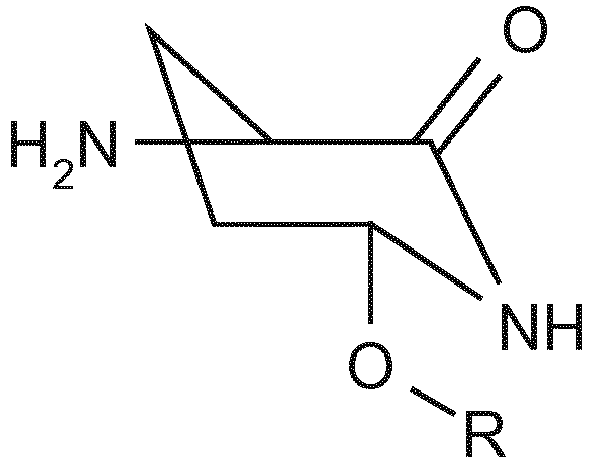

- f) - the preparation of compounds wherein A1 is


- g) - the preparation of compounds wherein A4 is


with an alkylating agent e.g. methyl iodide, benzyl bromide, proargyl bromide or an acylating agent e.g. ethyl chloroformate or an alkyl or aryl isocyanate in presence of a base e.g. sodium carbonate in a solvent e.g. DMF or without a solvent at a temperature between -78 °C and 150 °C, preferentially between -30°C and room temperature, preferably promoted by ultrasound. - Unless otherwise indicated, all numbers expressing quantities of ingredients, properties such as molecular weight, reaction conditions, IC50 and so forth used in the specification and claims are to be understood as being modified in all instances by the term "about". Accordingly, unless indicated to the contrary, the numerical parameters set forth in the present specification and attached claims are approximations. At the very least, and not as an attempt to limit the application of the doctrine of equivalents to the scope of the claims, each numerical parameter should at least be construed in light of the number of significant figures and by applying ordinary rounding techniques. Notwithstanding that the numerical ranges and parameters setting forth the broad scope of the invention are approximations, the numerical values set in the examples, Tables and Figures are reported as precisely as possible. Any numerical values may inherently contain certain errors resulting from variations in experiments, testing measurements, statistical analyses and such.
- Unless otherwise defined, all technical and scientific terms used herein have the same meaning as commonly understood by one of ordinary skill in the art to which this invention belongs. Although methods and materials similar or equivalent to those described herein can be used in the practice or testing of the present invention, suitable methods and materials are described below. In case of conflict, the present specification, including definitions, will control. In addition, the materials, methods, and examples are illustrative only and not intended to be limiting.
- Strain: The Chondromyces crocatus strain was isolated from an environmental sample, rotten wood of a walnut tree, in our laboratories.
- The strain has been unambiguously identified as a Chondromyces crocatus based on the morphology of the fruiting bodies as well as on the partial sequence of the 16S-RNA gene. C. crocatus was assigned to
biological risk group 1 by the DSMZ (DSMZ (2007)). Chondromyces is a genus in the family Polyangiaceae, which belongs to the order Myxococcales within the Delta-proteobacteria. Bacteria of the order Myxococcales, also called myxobacteria, are gram-negative rod-shaped bacteria with two characteristics distinguishing them from most other bacteria. They swarm on solid surfaces using an active gliding mechanism and aggregate to form fruiting bodies upon starvation (Kaiser (2003)). - The Chondromyces crocatus strain of the invention has been deposited at the DSMZ under the accession number 19329.
- The Chondromyces crocatus strain of the invention is not viable as a pure culture and cannot be maintained without a companion strain. The companion strain can be obtained and maintained as a pure culture by streaking an aliquot of a fermentation co-culture on agar plates (LB medium). A similar observation was made by the Reichenbach group (Jacobi, et al. (1996), Jacobi, et al. (1997)). Based on a partial DNA sequence of the 16S-rRNA gene of the companion strain of Chondromyces crocatus of this invention, the closest match is Bosea thiooxidans from the order Rhizobiales within the Alpha-proteobacteria. The 424 bp sequence fragment 16S-rRNA investigated has about 98% identity (at least 8 nucleotide exchanges) to sequence AF508112 (B. thiooxidans) from genebank. B. thiooxidans was isolated from soil samples collected from different agricultural fields around Calcutta, India. It is capable to oxidate reduced inorganic sulfur compounds in the presence of some organic substrates and was described as a novel species and a novel genus in 1996 (Das, et al. (1996)). A phylogenetic tree derived from the partial 16S-RNA sequences of all 5 described Bosea species indicates a separate position for the Bosea companion strain isolated from C. crocatus. Cultivation: 100L fermentor cultures were performed according to the following protocol:
- Precultures were started by inoculation of 5 ml (=10%) from a liquid culture of Chondromyces crocatus strain of the invention into 50 ml of medium MD1 (adapted after Bode et al. 2003, see table 6) in a 200-ml baffled shake flask. After 11 days incubation at 30°C and 120 rpm on a rotary shaker a 1 st intermediate culture was started by inoculation of 10 ml each (=10%) from the preculture into 5x 100 ml of medium MD1 in 500-ml baffled shake flasks. After 7 days incubation at 30°C and 120 rpm on a rotary shaker a 2nd intermediate culture was started by inoculation of 25 ml each (=5%) from the 1st intermediate culture into 19x 500 ml of medium MD1 in 2-L nonbaffled shake flasks. After 6 days of incubation at 30°C and 150 rpm on a rotary shaker the whole 2nd intermediate culture (9.5 liters = 9.5%) was used to inoculate 100 liters of production medium POL1 .(adapted after Kunze et al. 1995, see table 7)
- This 100-L main culture was performed in a 100-L scale steel tank fermentor. Temperature was controlled at 30°C, aeration was 20 1/min (= 0.2 vvm) and agitation speed was 50 rpm. A slight overpressure of 0.5 bar was maintained inside of the fermentor vessel. Culture pH was maintained at 6.9-7.1 by controlled addition of 3N H2SO4 or 3N NaOH. After a lag-phase of about 1 day oxygen consumption accelerated for about 4 days indicating exponential growth of the culture.
- During the last 2 days oxygen consumption was slightly reduced indicating a stationary phase of the culture. After 7 days the culture was harvested with a titer of 5.3 mg/l of a cyclic depsipetide according to Formula II.
- Extraction: The whole fermentation broth was transferred into a 1600 1 steel vessel and decanted for 1 hour. The wet cell pellet (200 g) was harvested from the bottom fraction by filtration through a paper filter. The cell pellet was extracted 3 times by turaxing it 30 minutes each with 10 1 ethyl acetate. Then the residual water was separated from the solvent phase. The solvent phase was washed with 5 1 water and then evaporated to obtain a dry extract referred to as 'cell extract'.
- The culture filtrate was extracted with 200 1 ethyl acetate. After 2 hours contact time, including 1 hour of turaxing, the organic phase was separated, washed with 201 water and finally evaporated to obtain a dry extract referred to as 'culture filtrate extract'.
- Compound isolation: The culture filtrate extract (4.4 g) was dissolved in 80 mL Methanol. The insoluble ingredients were removed by centrifugation and the supernatant was evaporated to dryness yielding in 3.3 g extract. The extract was dissolved in 7.5 mL MeOH, 3 mL DMSO and 0.5 mL dichloromethane and purified by reversed phase chromatography (Waters Sunfire RP18 10µm, 30x150 mm) using 0.01% formic acid (solvent A), and acetonitrile containing 0.1% formic acid (solvent B) as solvents The flow rate was 50 mL/min. The gradient is shown in Table 1. The material was purified in 7 chromatographic runs. From each run the collected fractions were analyzed by HPLC, fractions containing the cyclic depsipeptide according to the invention were combined and evaporated in vacuum to dryness. The chromatography yielded in 134 mg cyclic depsipeptide according to formula (II) with a purity of >97% and 80 mg with a purity of 90%.
Table 1 HPLC gradient used for purification of the cyclic depsipeptide according to formula (II) time (min) solvent A (%) solvent B (%) 0.0 90 10 1.0 90 10 23.0 50 50 23.1 0 100 27.0 0 100 27.1 90 10 30.0 90 10 Table 2 Gradient used for normal phase separation time (min) cyclohexane (%) ethyl acetate (%) methanol (%) 0 75 25 0 10 75 25 0 33 25 75 0 56 20 70 10 79 0 50 50 93 0 50 50 - The cell extract (6.67 g) was dissolved in dichloromethane/methanol 4:1. The solution was filtered and the filtrate was adsorbed on diatom (2g diatom / 1 g extract, Isolate®, International Sorbent Technology Ltd., Hengoed Mid Glam, UK) followed by evaporation. The solid residue was loaded on a pre-packed silica gel column (4x18cm, 90 g silica gel 40-63) and eluted with a gradient of cyclohexane, ethyl acetate and methanol. The gradient is shown in Table 2, the flow rate was 28 ml/min. Fractions volumes of 28 ml were collected. The fractions were combined according to the peaks visible in the UV-trace yielding in 12 pooled fractions (A-L). Fractions containing the depsipeptides (H-J) were further purified using reversed-phase chromatography. The chromatographic method and work up procedure is identical to the purification method described for the culture filtrate. In total 46.1 mg cyclic depsipeptide according to formula (II),17.9 mg cyclic depsipeptide according to formula (III) and 6.1 mg of a 1:1 mixture of the depsipetides according to formula (VI) and (VII) have been isolated. The assignment of the structures of compound (VI) and (VII) is based on high resolution MS and the comparison of the 1H-NMR data of the mixture of compound (VI) and (VII) with the 1H-NMR data of compound (II).
- Other cyclic depsipeptide according to formula (II) have also been found at a lesser concentration in the cell extract. Among these other cyclic depsipeptides were those according to formula (IV), (V) and (XI)-(XV) and (XVII).
-
- Physical data of compound of formula (II)
IR (KBr pellet): 3337, 3297, 3062, 2966, 2936, 2877, 1736, 1659, 1533, 1519, 1464, 1445, 1410, 1385, 1368, 1249, 1232, 1205, 989, 832 cm -1
FT-MS (9.4 T APEX-III): 951.5165; calc. for C46H72N8O12+Na: 951.5162
1H NMR (600 MHz, d6-DMSO) δH:. -0.10 (3H, d, J =7.0 Hz), 0.65 (4H, m), 0.78 (3H, d, J = 7.0 Hz), 0.82 (3H, t, J = 7.2 Hz), 0.85 (3H, d, J = 7.0 Hz), 0.89 (3H, d, J = 7.0 Hz), 1.02 (1H, m), 1.03 (6H, 2 x d, J = 7.0 Hz), 1.10 (1H, m), 1.21 (3H, d, J = 7.0 Hz), 1.25 (1H, m), 1.40 (1H, m), 1.52 (1H, m), 1.76 (6H, m), 1.84 (1H, m), 1.93 (1H, m), 2.15 (2H, m), 2.48 (1H, m), 2.59 (1H, m), 2.69 (1H, m), 2.72 (3H, s), 3.17 (1H, m), 4.32 (2H, m), 4.44 (2H, m), 4.64 (1H, d, J = 9.5 Hz), 4.71 (1H, m), 4.94 (1H, s), 5.06 (1H, m), 5.49 (1H, m), 6.08 (1H, d, J = 2.2 Hz), 6.65 (2H, d, J = 8.4), 6.74 (1H, s), 7.00 (2H, d, J = 8.4 Hz), 7.27 (1H, s), 7.36 (1H, d, J = 9.5 Hz), 7.66 (1H, d, J = 10.2 Hz), 7.74 (1H, d, J = 8.8 Hz), 8.02 (1H, d, J = 8.1 Hz), 8.43 (1H, d, J = 8.1 Hz), 9.19 (1H, s).
13C NMR (150 MHz) d6-DMSO δC: 10.35, CH3; 11.22, CH3; 13.79, CH3; 16.00, CH3; 17.63, CH3; 19.49, 2 x CH3; 20.83, CH3; 21.72, CH2; 23.30, CH3; 23.70, CH2 ; 24.16, CH; 24.41, CH2 ; 27.35, CH2; 29.74, CH2; 30.07, CH3; 31.44, CH2; 33.13, CH; 33.19, CH2; 33.68, CH; 37.39, CH; 39.05, CH2; 48.75, CH; 50.59, CH; 52.01, CH; 54.11, CH; 54.65, CH; 55.24, CH; 60.60, CH; 71.86 CH; 73.89, CH; 115.28, 2 x CH; 127.31, Cq; 130.35, 2 x CH; 156.25, Cq; 169.09, Cq; 169.25, Cq; 169.34, Cq; 169.74, Cq; 170.60, Cq; 172.41, Cq; 172.52, Cq; 173.78, Cq; 176.32, Cq - Physical data of compound of formula (III)
FT-MS (9.4 T APEX-III): Found: 965.5318; calc. for C47H74N8O12+Na: 965.5318
1H NMR (600 MHz) d6-DMSO δH: -0.10 (3H, d, J = 7.0 Hz), 0.64 (4H, m), 0.78 (3H,d, J = 7.0 Hz), 0.82 (3H, t, J = 7.0 Hz), 0.83 (3H, t, J = 7.3 Hz), 0.85 (3H, d, J = 7.0 Hz), 0.89 (3H, d, J = 7.0 Hz), 1.01 (3H, d, J = 7.1 Hz), 1.04 (1H, m), 1.10 (1H, m), 1.21 (3H, d, J = 7.0 Hz), 1.25 (1H, m), 1.32 (1H, m), 1.40 (1H, m), 1.53 (2H, m), 1.77 (6H, m), 1.84 (1H, m), 1.92 (1H, m), 2.12 (1H, m), 2.16 (1H, m), 2.28 (1H, m), 2.59 (1H, m), 2.68 (1H, m), 2.72 (3H, s), 3.17 (1H, m), 4.32 (1H, m), 4.38 (1H, m), 4.43 (1H, d, J = 10.2 Hz), 4.46 (1H, m), 4.63 (1H, d, J = 9.5 Hz), 4.71 (1H, m), 4.94 (1H, m), 5.06 (1H, m), 5.49 (1H, m), 6.11 (1H, s, broad), 6.65 (2H, d, J = 8.8 Hz), 6.73 (1H, s), 7.00 (2H, d, J = 8.8 Hz), 7.27 (1H, s), 7.37 (1H, d, J = 9.5 Hz), 7.66 (1H, d, J = 10.2 Hz), 7.75 (1H, d, J = 9.7 Hz), 8.07 (1H, d, J = 8.1 Hz), 8.45 (1H, d, J = 8.8 Hz), 9.24 (1H, broad) - Physical data of compound of formula (IV)
FT-MS (9.4 T APEX-III): Found: 947.5196; calc. for C47H72N8O11+Na: 947.5213
1H NMR (600 MHz) d6-DMSO δH: 0.08 (3H, d, J = 7.0 Hz), 0.68 (3H, t, J = 7.2 Hz), 0.71 (3H, d, J = 7.0 Hz), 0.78 (3H, d, J = 7.0 Hz), 0.83 (3H, t, J = 7.3 Hz), 0.84 (1H, m), 0.87 (3H, t, J = 7.2 Hz), 0.88 (3H, d, J = 7.0 Hz), 0.99 (3H, d, J = 7.1 Hz), 1.08 (1H, m), 1.17 (3H, d, J = 6.7 Hz), 1.18 (1H, m), 1.31 (2H, m), 1.43 (1H, m), 1.51 (1H, m), 1.54 (1H, m), 1.76 (2H, m), 1.90 (1H, m), 1.94 (1H, m), 2.01 (1H, m), 2.10 (1H, m), 2.16 (1H, m), 2.26 (1H, m), 2.46 (2H, m), 2.73 (1H, m), 2.74 (3H, s), 3.19 (1H, m), 4.34 (1H, m), 4.36 (1H, m), 4.51 (1H, m), 4.55 (1H, m), 4.66 (1H, d, J = 10.0 Hz), 4.79 (1H, d, J = 11.0 Hz), 5.19 (1H, m), 5.28 (1H, m), 5.44 (1H, m), 6.25 (1H, d, J = 7.3 Hz), 6.33 (1H, d, J = 8.8 Hz), 6.68 (2H, d, J = 8.8 Hz), 6.75 (1H, s), 7.04 (2H, d, J = 8.8 Hz), 7.28 (1H, s), 7.32 (1H, d, J = 8.8 Hz), 7.91 (1H, d, J = 9.5 Hz), 8.05 (1H, d, J = 8.1 Hz), 8.57 (1H, d, J = 8.9 Hz), 9.38 (1H, broad) - Physical data of compound of formula (V)
FT-MS (9.4 T APEX-III): Found: 933.5053; calc. for C46H70N8O11+Na: 953.5056
1H NMR (600 MHz) d6-DMSO δH: 0.08 (3H, d, J = 7.0 Hz), 0.68 (3H, t, J = 7.2 Hz), 0.71 (3H, d, J = 7.0 Hz), 0.79 (3H, d, J = 7.0 Hz), 0.83 (1H, m), 0.88 (3H, t, J = 7.2 Hz), 0.89 (3H, d, J = 7.0 Hz), 1.01 (3H, d, J = 7.0 Hz), 1.03 (3H, d, J = 7.0 Hz) 1.08 (1H, m), 1.17 (3H, d, J = 6.7 Hz), 1.20 (1H, m), 1.31 (1H, m), 1.42 (1H, m), 1.54 (1H, m), 1.74 (2H, m), 1.91 (2H, m), 2.02 (1H, m), 2.10 (1H, m), 2.15 (1H, m), 2.46 (3H, m), 2.75 (3H, s), 2.76 (1H, m), 3.19 (1H, m), 4.32 (1H, m), 4.34 (1H, m), 4.51 (1H, m), 4.55 (1H, m), 4.66 (1H, d, J = 9.5 Hz), 4.79 (1H, d, J = 11.0 Hz), 5.19 (1H, m), 5.28 (1H, m), 5.43 (1H, m), 6.25 (1H, d, J = 7.0 Hz), 6.33 (1H, d, J = 8.5 Hz), 6.68 (2H, d, J = 8.8 Hz), 6.75 (1H, s), 7.04 (2H, d, J = 8.8 Hz), 7.28 (1H, s), 7.31 (1H, d, J = 8.8 Hz), 7.90 (1H, d, J = 9.5 Hz), 7.99 (1H, d, J = 8.1 Hz), 8.52 (1H, d, J = 8.8 Hz), 9.30 (1H, broad) - Physical data of compound of formula (XI)
ESI-MS: pos. mode: m/z = 951.5 (M+Na), neg. Mode: m/z = 927.5 (M-H); monoisotopic MW 928.5, C46H72N8O12
1H NMR (600 MHz) d6-DMSO δH: -0.11 (3H, d, J = 6.6 Hz), 0.64 (4H, m), 0.77 (3H,d, J = 6.6 Hz), 0.83 (3H, m), 0.85 (3H, m), 0.87 (3H, m), 0.89 (3H, m), 1.01 (3H, m), 1.10 (1H, m), 1.21 (3H, d, J = 5.9 Hz), 1.32 (1H, m), 1.40 (1H, m), 1.52 (2H, m), 1.75 (5H, m), 1.84 (1H, m), 1.91 (1H, m), 2.05 (1H, m), 2.15 (2H, m), 2.27 (1H, m), 2.59 (1H, m), 2.68 (1H, m), 2.73 (3H, s), 3.16 (1H, m), 4.31 (1H, m), 4.37 (1H, m), 4.43 (1H, m), 4.45 (1H, m), 4.63 (1H, d, J = 8.8 Hz), 4.69 (1H, m), 4.94 (1H, m), 5.05 (1H, m), 5.50 (1H, m), 6.15 (1H, s, broad), 6.65 (2H, d, J = 8.1 Hz), 6.75 (1H, s), 7.00 (2H, d, J = 8.1 Hz), 7.29 (1H, s), 7.37 (1H, d, J = 9.5 Hz), 7.64 (1H, d, J = 9.5 Hz), 7.78 (1H, d, J = 8.8 Hz), 8.09 (1H, d, J = 8.1 Hz), 8.49 (1H, d, J = 9.5 Hz), (OH of tyrosine not visible) - Physical data of compound of formula (XII)
ESI-MS: pos. mode: m/z = 923.5 (M+Na), neg. Mode: m/z = 899.5 (M-H); monoisotopic MW 900.5, C44H68N8O12
1H NMR (500 MHz) d6-DMSO δH: -0.11 (3H, d, J = 6.4 Hz), 0.63 (4H, m), 0.75 (3H, d, J = 6.4 Hz), 0.83 (6H, d, J = 7.0 Hz), 0.87 (3H, d, J = 6.4 Hz), 1.03 (1H, m), 1.10 (1H, m), 1.20 (3H, d, J = 6.4 Hz), 1.25 (1H, m), 1.38 (1H, m), 1.50 (1H, m), 1.73 (1H, m), 1.75 (2H, m), 1.77 (1H, m), 1.79 (3H, m), 1.85 (3H, s), 1.85 (1H, m), 2.12 (1H, m), 2.16 (1H, m), 2.55 (1H, m), 2.67 (1H, m), 2.70 (3H, s), 3.13 (1H, m), 4.30 (1H, m), 4.40 (1H, m), 4.43 (2H, m), 4.59 (1H, d, J = 9.5 hz), 4.71 (1H, m), 4.92 (1H, m), 5.02 (1H, m), 5.46 (1H, m), 6.08 (1H, s, broad), 6.62 (2H, d, J = 8.5 Hz), 6.71 (1H, s), 6.97 (2H, d, J = 8.5 Hz), 7.22 (1H, s), 7.34 (1H, d, J = 9.2 Hz), 7.64 (1H, d, J = 9.5 Hz), 7.93 (1H, d, J = 9.2 Hz), 8.06 (1H, d, J = 7.6 Hz), 8.39 (1H, d, J = 8.5 Hz), 9.06 (1H, s, broad) - Physical data of compound of formula (XIII)
FT-MS (9.4 T APEX-III): Found: 961.5039; calc. for C49H70N8O12+Na: 985.5005
1H NMR (500 MHz) d6-DMSO δH: -0.12 (3H, d, J = 6.4 Hz), 0.62 (4H, m), 0.75 (3H, d, J = 6.4 Hz), 0.81 (4H, m), 0.87 (3H, d, J = 6.4 Hz), 1.08 (1H, m), 1.20 (3H, m), 1.22 (3H, m), 1.38 (1H, m), 1.46 (1H, m), 1.50 (1H, m), 1.71 (1H, m), 1.73 (2H, m), 1.76 (2H, m), 1.82 (1H, m), 1.94 (1H, m), 2.01 (1H, m), 2.23 (2H, m), 2.56 (1H, m), 2.66 (1H, m), 2.69 (3H, s), 3.13 (1H, m), 4.30 (1H, m), 4.41 (2H, m), 4.55 (1H, m), 4.65 (1H, d, J = 9.5 Hz), 4.70 (1H, m), 4.92 (1H, m), 5.04 (1H, m), 5.48 (1H, m), 6.09 (1H, s, broad), 6.64 (2H, d, J = 8.5 Hz), 6.81 (1H, s), 6.97 (2H, d, J = 8.5 Hz), 7.33 (1H, s), 7.35 (1H, d, J = 9.2 Hz), 7.46 (2H, t, J = 7.3 Hz), 7.53 (1H, t, J = 7.3 Hz), 7.66 (1H, d, J = 9.5 Hz), 7.88 (2H, d, J = 7.3 Hz), 7.95 (1H, d, J = 9.5 Hz), 8.46 (1H, d, J = 8.5 Hz), 8.71 (1H, d, J = 7.3 Hz); (OH of tyrosine not visible) - Physical data of compound of formula (XIV)
ESI-MS: pos. mode: m/z = 927.5 (M+H), neg. Mode: m/z = 925.5 (M-H); monoisotopic MW 926.5, C47H74N8O11
1H NMR (500 MHz) d6-DMSO δH: 0.00 (1H, m), 0.48 (3H, t, J = 7.5 Hz), 0.70 (3H,d, J = 7.0 Hz), 0.73 (3H, t, J = 7.0 Hz), 0.76 (3H, d, J = 7.3 Hz), 0.79 (3H, t, J = 7.3 Hz), 0.83 (6H, d, J = 6.4 Hz), 0.89 (1H, m), 0.95 (1H, m), 0.98 (3H, d, J = 7.0 Hz), 1.04 (3H, d, J = 6.1 Hz), 1.09 (1H, m), 1.17 (1H, m), 1.28 (1H, m), 1.31 (1H, m), 1.36 (1H, m), 1.38 (1H, m), 1.55 (1H, m), 1.61 (1H, m), 1.68 (1H, m), 1.79 (1H, m), 1.82 (1H, m), 1.95 (2H, m), 2.15 (3H, m), 2.25 (1H, m), 2.66 (3H, s), 2.76 (1H, m), 3.14 (1H, m), 3.40 (1H, m), 3.42 (1H, m), 4.33 (1H, m), 4.36 (1H, m), 4.45 (2H, m), 4.55 (2H, m), 4.69 (1H, m), 5.06 (1H, m), 6.63 (2H, d, J = 8.2 Hz), 6.71(1H, s, broad), 7.01 (2H, d, J = 8.2 Hz), 7.27 (1H, s, broad), 7.36 (1H, d, J = 9.5 Hz), 8.00 (1H, d, J = 9.5 Hz), 8.17 (1H, d, J = 4.00 Hz), 8.22 (1H, d, J = 7.3 Hz), 8.53 (1H, d, J = 9.5 Hz), 9.14 (1H, s, broad) - Physical data of compound of formula (XVII)
ESI-MS: pos. mode: m/z = 985.4 (M+Na), neg. Mode: m/z = 961.5 (M-H); monoisotopic MW 962.5, C45H70N8O13S
1H NMR (600 MHz) d6-DMSO δH:).□δH: no assignment of chemical shifts (mixture of two diastereomers, structure assignment trough comparison with other related compounds, e.g. compound (II) - The Chondromyces robustus strain was isolated from a dung sample. The Chondromyces robustus strain of the invention has been identified as a Chondromyces robustus based on the morphology of the fruiting bodies as well as on the partial sequence of the 16S-RNA gene. C. robustus was assigned to
biological risk group 1 by the DSMZ (DSMZ (2007)). Chondromyces is a genus in the family Polyangiaceae, which belongs to the order Myxococcales within the Delta-proteobacteria. Bacteria of the order Myxococcales, also called myxobacteria, are gram-negative rod-shaped bacteria with two characteristics distinguishing them from most other bacteria. They swarm on solid surfaces using an active gliding mechanism and aggregate to form fruiting bodies upon starvation (Kaiser (2003)). - The Chondromyces robustus strain of the invention has been deposited at the DSMZ under the accession number 19330.
- 100L fermentor cultures were performed according to the following protocol:
- Precultures were started by inoculation of 20 ml each (=20%) from a liquid culture of the Chondromyces robustus strain of the invention into 6x 100 ml of medium MD1 (adapted after Bode et al. 2003) in 500-ml baffled shake flasks. After 1 day of incubation at 30°C and 120 rpm on a rotary shaker a 1st intermediate culture was started by inoculation of 100 ml each (=25%) from the preculture into 6x 400 ml of medium MD1 in 2-L baffled shake flasks. After 3 days incubation at 30°C and 120 rpm on a rotary shaker a 2nd intermediate culture was started by inoculation of 3 liters (=20%) from the 1st intermediate culture into a 20-L steel tank fermentor containing 15 liters of medium MD1. Temperature was controlled at 30°C, aeration was 201/min (= 1.0 wm) and agitation speed was 80 rpm. A slight overpressure of 0.5 bar was maintained inside of the fermentor vessel. Although there was no pH control the pH of the culture decreased only slightly from pH 6.95 at start to pH 6.88 on
day 7. After 7 days the whole 2nd intermediate culture (18 liters = 20%) was used to inoculate 90 liters of production medium POL1 (adapted after Kunze et al. 1995) (starting volume = 108 liters). The main culture was performed in a 100-L scale steel tank fermentor. Temperature was controlled at 30°C, aeration was 301/min (= 0.3 wm) and agitation speed was in the beginning 50 rpm and after 4days 80 rpm. A slight overpressure of 0.5 bar was maintained inside of the fermentor vessel. Culture pH was maintained at 6.8-7.2 by controlled addition of 2N H2SO4 or 1.5N NaOH. After 14 days the culture was harvested with a titer of 3 mg/l. Extraction: The whole fermentation broth was transferred into a 1600 1 steel vessel and decanted for 1 hour. The wet cell pellet (about 200 g) was harvested from the bottom fraction by filtration through a paper filter. The cell pellet was extracted 3 times by turaxing it 30 minutes each with 10 1 ethyl acetate. Then the residual water was separated from the solvent phase. The solvent phase was washed with 5 1 water and then evaporated to obtain 11.9 g dry extract referred to as 'cell extract'. - The culture filtrate was extracted with 200 1 ethyl acetate. After 2 hours contact time, including 1 hour of turaxing, the organic phase was separated, washed with 20 1 water and finally evaporated to obtain 12.5 g of dry extract referred to as 'culture filtrate extract'.
- Each extract (from mycelium and culture filtrate) was dissolved in dichloromethane/methanol 4:1. The solution was filtered and the filtrate was adsorbed on diatom (2g diatom / 1 g extract, Isolute®, International Sorbent Technology Ltd., Hengoed Mid Glam, UK) followed by evaporation. The solid residue was loaded on a pre-packed silica gel column (4x18cm, 100 g silica gel 40-63) and eluted with a gradient of cyclohexane, ethyl acetate and methanol. The gradient is shown in Table 4, the flow rate was 28 ml/min. Fractions volumes of 28 ml were collected. The fractions were combined according to the peaks visible in the UV-trace. The fraction containing the cyclic depsipeptide of the invention was further purified using reversed-phase chromatography (Waters Sunfire RP18 10µm, 30x150 mm) using 0.01% formic acid (solvent A), and acetonitrile containing 0.1% formic acid (solvent B) as solvents. The flow rate was 50 mL/min. The gradient is shown in Table 5. For injection the material was dissolved in MeOH/DMSO 1:1 (concentration 200mg/mL). The collected fractions were analyzed by HPLC, fractions containing the cyclic depsipeptide of the invention were combined and evaporated in vacuum to dryness. The chromatography of the extract yielded in 52 mg pure (>97%) cyclic depsipeptide according to formula (VIII) A total of 85 mg pure cyclic depsipeptide according to formula (VIII) could be isolated from the combined extracts.
- Other cyclic depsipeptide according to formula (VIII) have also been found at a lesser concentration in the cell extract. Among these other cyclic depsipeptides were those according to formula (IX) and (X).
Table 4 Gradient used for normal phase separation time (min) cyclohexane (%) ethyl acetate (%) methanol (%) 0 75 25 0 10 75 25 0 33 25 75 0 56 20 70 10 79 0 50 50 93 0 50 50 Table 5 HPLC gradient used for purification of cyclic depsipeptide according to formula (VIII) time (min) solvent A (%) solvent B (%) 0.0 75 25 1.0 75 25 23.0 55 45 23.1 0 100 27.0 0 100 27.1 75 25 30.0 75 25 -
Table 6 MD1 (pre-culture medium) Substance Concentration [g/L] Casitone 3 CaCl2 x 2 H2O 0.5 MgSO4 x 7 H2O 2 D(+)-Glucose water free 1 Cyanocobalamine 0.5 mg Antifoam B 0.2 mL Ferrioxamine solution [100ng/mL] 1 mL Table 7 POL1 (production medium) Substance Concentration [g/L] Potato protein 4 Soluble starch 3 CaCl2 x 2 H2O 0.5 MgSO4 x 7 H2O 2 Cyanocobalamine 0.25 mg HEPES 12 Standard Trace Element Solution 1901 1 mL XAD16 35 -
- Physical data of compound of formula (VIII)
FT-MS (9.4 T APEX-III): Found: 985.5007; calc. for C49H70NgO12+Na: 985.5005.
1H NMR (600 MHz) d6-DMSO δH: 0.74 (6H, d, J = 7.0 Hz), 0.85 (3H, d, J = 7.0 Hz), 0.88 (3H, d, J = 7.0 Hz), 0.89 (6H, d, J = 7.0 Hz), 1.18 (3H, d, J = 6.7 Hz), 1.32 (1H, m), 1.46 (1H, m), 1.57 (2H, m), 1.72 (3H, m), 1.81 (1H, m), 1.88 (1H, m), 1.98 (1H, m), 2.02 (2H, m), 2.11 (3H, m), 2.42 (1H, m), 2.73 (1H, m), 2.77 (3H, s), 2.87 (1H, m), 3.12 (1H, m), 3.64 (1H, m), 4.23 (1H, m), 4.40 (1H, m), 4.58 (1H, d, J = 9.5 Hz), 4.75 (2H, m), 4.93 (1H, m), 5.07 (1H, s), 5.40 (1H, m), 6.03 (1H, s), 6.74 (1H, s), 6.79 (2H, d, J = 8.4 Hz), 6.84 (2H, d, J = 7.8 Hz), 7.02 (2H, d, J = 8.4 Hz), 7.10 (1H, d, J = 9.3 Hz), 7.14 (1H, t, J = 7.8 Hz), 7.19 (2H, t, J = 7.8 Hz), 7.26 (1H, s), 7.42 (1H, d, J = 9.8 Hz), 7.89 (1H, d, J = 9.2 Hz), 8.03 (1H, d, J = 7.9 Hz), 8.38 (1H, d, J = 8.9 Hz), 9.40 (1H, s)
13C NMR (150 MHz) d6-DMSO δC: 17.13, CH3; 17.63, CH3; 19.32, CH3; 20.90, CH3; 21.64, CH2; 22.34, CH3; 22.34, CH3; 23.32, CH3; 24.10, CH; 25.63, CH; 27.63, CH2; 29.30, CH2; 30.37, CH3; 30.86, CH; 31.52, CH2; 32.83, CH2; 35.33, CH2; 38.98, CH2; 44.42, CH2; 48.52, CH; 50.19, CH; 50.24, CH; 51.99, CH; 54.62, CH; 55.63, CH; 60.90, CH; 71.86 CH; 73.70, CH; 115.32, 2 x CH; 126.21, CH; 127.50, Cq; 127.74, 2 x CH; 129.42,2 x CH; 130.43, 2 x CH; 136.72, Cq; 156.23, Cq; 168.93, Cq; 169.18, Cq; 169.18, Cq; 170.18, Cq; 170.39, Cq; 171.72, Cq; 171.96, Cq; 172.50, Cq; 173.82, Cq - Physical data of compound of formula (IX)
FT-MS (9.4 T APEX-III): Found: 969.5058; calc. for C49H70N8O11+Na; 969.5056.
1H NMR (600 MHz) d6-DMSO δH:): 0.53 (3H, d, J = 6.6 Hz), 0.73 (3H, d, J = 6.6 Hz), 0.74 (3H, d, J = 6.6 Hz), 0.81 (3H, d, J = 6.6 Hz), 0.86 (6H, d, J = 6.6 Hz), 1.08 (3H, d, J = 6.5 Hz), 1.20 (1H, m), 1.33 (3H, m), 1.52 (1H, m), 1.64 (1H, m), 1.80 (2H, m), 2.01 (1H, m), 2.04 (2H, m), 2.15 (4H, m), 2.25 (1H, m), 2.30 (1H, m), 2.74 (3H, s), 2.83 (1H, m), 3.12 (1H, m), 3.32 (1H, m), 3.38 (1H, m), 4.14 (1H, m), 4.27 (1H, m), 4.40 (1H, m), 4.59 (1H, m), 4.61 (1H, m), 4.94 (1H, m), 4.99 (1H, m), 5.10 (1H, m), 6.42 (2H, d, J = 8.8 Hz), 6.75 (1H, s), 7.04 (2H, d, J = 8.8 Hz),7.10 (1H, t, J = 7.3 Hz), 7.15 (2H, t, J = 7.3 Hz), 7.23 (2H, d, J = 7.3 Hz), 7.30 (1H, s), 7.41 (1H, d, J = 9.5 Hz), 8.05 (1H, d, J = 9.5 Hz), 8.23 (1H, d, J = 8.1 Hz), 8.47 (1H, d, J = 4.4 Hz), 8.71 (1H, d, J = 10.2 Hz). (signal of proton of hydroxy group of tyrosine not visible) - Physical data of compound of formula (X)
FT-MS (9.4 T APEX-III): Found: 955.4896; calc. for C48H68N8O11+Na:955.4900.
1H NMR (600 MHz) d6-DMSO □H).□□H: no assignment of chemical shifts (mixture of rotameres, assignment of structure based on comparison of NMR data (missing N-mehtylgroup) with NMR data of compound (IX). - The Chondromyces apiculatus strain was isolated from a soil sample. The Chondromyces strain of the invention has been identified as a Chondromyces apiculatus based on the partial sequence of the 16S-RNA gene. C. apiculatus was assigned to
biological risk group 1 by the DSMZ (DSMZ (2007)). Chondromyces is a genus in the family Polyangiaceae, which belongs to the order Myxococcales within the Delta-proteobacteria. Bacteria of the order Myxococcales, also called myxobacteria, are gram-negative rod-shaped bacteria with two characteristics distinguishing them from most other bacteria. They swarm on solid surfaces using an active gliding mechanism and aggregate to form fruiting bodies upon starvation (Kaiser (2003)). - The Chondromyces robustus strain of the invention has been deposited at the DSMZ under the accession number DSM 21595.
- Precultures were started by inoculation of 20 ml each (=20%) from a liquid culture of the Chondromyces apiculatus strain of the invention into 10x 100 ml of medium MD1 (adapted after Bode et al. 2003) in 500-ml baffled shake flasks. After 6 days of incubation at 30°C and 120 rpm on a rotary shaker the cultures with total volume of 1 L were transferred into a 50L Wave® bag together with 5 L of medium MD1. After 7 days of incubation in a
BioWave 200 SPS reactor (Wave Biotec AG, Switzerland) 40 L of medium M7/14 were added to the bag to start the production. The culture was harvested after 19 days. - For harvesting the air in the headspace of the wave bag was removed with vacuum and the bag was hang up to allow sedimentation of the resin and the cells. After 1 hour of sedimentation 43 1 of supernatant were removed and discarded. The residual 71 containing the cells and the resin were frozen overnight. After thawing, cells and resin were gained by filtration through a paper filter. The filtrate was discarded. The cell/resin pellet (wet weight approximately 3 kg) was transferred into a metal vessel and extracted two times with 15 1 ethyl acetate, with 5 minutes turaxing during the first extraction. The mixtures of both batches were separated through a paper filtration and the filtrates then unified. After separating the organic solvent phase from the water phase the solvent phase was washed with 21 of pure water and then evaporated until dry. The water phases were discarded.
- The extract (5g) was dissolved in dichloromethane/methanol 4:1. The solution was filtered and the filtrate was adsorbed on diatom (2g diatom / 1 g extract, Isolute®, International Sorbent Technology Ltd., Hengoed Mid Glam, UK) followed by evaporation. The solid residue was loaded on a pre-packed silica gel column (4x18cm, 100 g silica gel 40-63) and eluted with a gradient of cyclohexane, ethyl acetate and methanol. The gradient is shown in Table 2, the flow rate was 28 ml/min. Fractions volumes of 28 ml were collected. The fractions were combined according to the peaks visible in the UV-trace. The fraction containing the cyclic depsipeptides of the invention were further purified using reversed-phase chromatography (Waters Sunfire RP18 10µm, 30x150 mm) using 0.01% formic acid (solvent A), and acetonitrile containing 0.1% formic acid (solvent B) as solvents. The flow rate was 50 mL/min. The gradient is shown in Table 1. For injection the material was dissolved in 1.6 mL MeOH/DMSO 1:1. The collected fractions were analyzed by HPLC, fractions containing the cyclic depsipeptides of the invention were combined and evaporated in vacuum to dryness. The chromatography of the extract yielded in 7 mg pure cyclic depsipeptide according to formula (XV) and 1.2 g pure cyclic depsipetide acording to formula (XVI)
-
Table 8 MD1 (pre-culture medium) Substance Concentration [g/L] Casitone 3 CaCl2 x 2 H2O 0.5 MgSO4 x 7 H2O 2 D(+)-Glucose water free 1 Cyanocobalamine 0.5 mg Antifoam B 0.2 mL Ferrioxamine solution [100ng/mL] 1 mL (Adjusted to pH 7.0 with 50mM HEPES) Table 9 M7/14 (production medium) Substance Concentration [g/L] Yeast extract 1 CaCl2 x 2 H2O 1 MgSO4 x 7 H2O 1 Potato starch 5 HEPES 12 Potato protein 5 D(+)-Glucose water free 2 Cyanocobalamine 0.1 mg Antifoam B 0.2 mL Ferrioxamine solution [100ng/mL] 3 mL XAD-16 resin 35 (Adjusted to pH 7.4) -
- Physical data of compound of formula (XV)
FT-MS (9.4 T APEX-III): Found: 1014.5272; calc. for C50H73N9O12+Na:1014.5276.
1H NMR (600 MHz) d6-DMSO δH: 0.72 (3H, d, J = 6.6 Hz), 0.82 (3H, d, J = 6.6 Hz), 0.85 (6H, d, J = 6.6 Hz), 1.01 (1H, m), 1.02 (6H, d, J = 6.6 Hz), 1.17 (3H, d, J = 6.6 Hz), 1.21 (1H, m), 1.31 (1H, m), 1.36 (2H, m), 1.42 (1H, m), 1.49 (1H, m), 1.54 (1H, m), 1.56 (1H, m), 1.69 (3H, m), 1.79 (1H, m), 1.81 (1H, m), 2.40 (1H, m), 2.48 (1H, m), 2.73 (1H, m), 2.76 (3H, s), 2.87 (1H, m), 2.91 (1H, m), 2.98 (1H, m), 3.10 (1H, m), 3.63 (1H, m), 4.22 (1H, m), 4.42 (1H, td, J = 8.1, 5.1 Hz), 4.58 (1H, m), 4.75 (2H, m), 4.90 (1H, m), 5.06 (1H, m), 5.38 (1H, m), 5.42 (2H, broad), 5.96 (1H, t, J = 5.5 Hz), 6.06 (1H, s, broad), 6.78 (2H, d, J = 8.1 Hz), 6.83 (2H, d, J = 7.3 Hz), 7.00 (2H, d, J = 8.1 Hz), 7.10 (1H, d, J = 9.5 Hz), 7.14 (1H, t, J = 7.3 Hz), 7.19 (2H, t, J = 7.3 Hz), 7.46 (1H, d, J = 9.5 Hz), 7.77 (1H, d, J = 9.5 Hz), 7.97 (1H, d , J = 8.1 Hz), 8.37 (1H, d, J = 8.8 Hz), 9.50 (1H, s, broad) - Physical data of compound of formula (XVI)
ESI-MS: pos. mode: m/z = 1004.4 (M+Na), neg. Mode: m/z = 976.5 (M-H); monoisotopic MW 977.5, C49H71N9O12
1H NMR (600 MHz) d6-DMSO δH: 0.72 (6H, d, J = 6.6 Hz), 0.85 (3H, d, J = 6.6 Hz), 0.87 (3H, d, J = 6.6 Hz), 1.01 (6H, d, J = 6.6 Hz), 1.17 (3H, d, J = 6.6 Hz), 1.30 (1H, m), 1.35 (2H, m), 1.43 (1H, m), 1.48 (1H, m), 1.56 (1H, m), 1.57 (1H, m), 1.69 (1H, m), 1.71 (2H, m), 1.79 (1H, m), 2.08 (1H, m), 2.41 (1H, m), 2.48 (1H, m), 2.77 (3H, s), 2.87 (1H, m), 2.92 (1H, m), 2.98 (1H, m), 3.09 (1H, m), 3.63 (1H, m), 4.22 (1H, m), 4.42 (1h, td, J = 8.1, 5.1 Hz), 4.57 (1H, m), 4.74 (1, m), 4.76 (1H, m), 4.91 (1H, m), 5.06 (1H, s), 5.39 (1H, m), 5.43 (2H, s, broad), 5.96 (1H, t, J = 5.5 Hz), 6.07 (1H, s, broad), 6.78 (2H, d, J = 8.1 Hz), 6.84 (2H, d, J = 7.3 Hz), 7.00 (2H, d, J = 8.1 Hz), 7.11 (1H, d, J = 9.5 Hz), 7.15 (1H, t, J = 7.3 Hz), 7.19 (2H, t, J = 7.3 Hz), 7.42 (1H, d, J = 9.5 Hz), 7.78 (1H, d, J = 9.5 Hz), 7.98 (1H, d, J = 8.1 Hz), 8.39 (1H, d, J = 8.8 Hz), 9.52 (1H, s, broad) - The compounds of the present invention and the compounds described herein, e.g. including a compound of formula II-X, exhibit pharmacological activity and are therefore useful as pharmaceuticals. E.g., the compounds of the present invention are found to inhibit Kallikrein-7 activity and HNE activity.
- Compounds of the present invention have IC50 values between 1 nM and 10 µM as determined in the following assay:
- The fluorescence-quenched substrate Ac-Glu-Asp(EDANS)-Lys-Pro-Ile-Leu-Phe^Arg-Leu-Gly-Lys(DABCYL)-Glu-NH2 (where ^ indicates the scissile bond, identified by MS analysis) is purchased from Biosyntan (Berlin, Germany) and kept as a 5 mM stock solution in DMSO
at -20°C. All other chemicals are of analytical grade. - Enzymatic reactions are conducted in 50 mM sodium citrate buffer at pH 5.6 containing 150 mM NaCl and 0.05 % (w/v) CHAPS.
- All protein and peptide containing solutions are handled in siliconized tubes (Life Systems Design, Merenschwand, Switzerland). The compound solutions as well as the enzyme and the substrate solutions are transferred to the 384-well plates (black Cliniplate; cat. no. 95040020 Labsystems Oy, Finland) by means of a CyBi-Well 96-channel pipettor (CyBio AG, Jena, Germany).
- For fluorescence intensity (FI) measurements an Ultra Evolution reader (TECAN, Maennedorf, Switzerland) is used. The instrument is equipped with a combination of a 350 nm (20 nm bandwidth) and a 500 nm (25 nm bandwidth) bandpass filter for fluorescence excitation and emission acquisition, respectively. To increase the signal:background ratio, an appropriate dichroic mirror is employed. The optical filters and the dichroic mirror are purchased from TECAN. The fluorophores in each well are excited by three flashes per measurement.
- For the determination of IC50 values the assay is performed at room temperature in 384-well plates. All final assay volumes were 30 µl. Test compounds are dissolved in 90 % (v/v) DMSO/water and diluted in water (containing 0.05 % (w/v) CHAPS) to 3-times the desired assay concentration. The 11 final compound concentrations are: 0.3 nM, 1 nM, 3 nM, 10 nM, 30 nM, 100 nM, 300 nM, 1 µM, 3 µM, 10 µM and 30 µM. For each assay, 10 µl water/CHAPS (± test compound) are added per well, followed by 10 µl protease solution (diluted with 1.5x assay buffer). The protease concentration in final assay solution is 0.2 nM (according to the enzyme concentrations determined by the Bradford method). After 1 hour of incubation at room temperature, the reaction is started by addition of 10 µl substrate solution (substrate dissolved in 1.5x assay buffer, final concentration was 2 µM). The effect of the compound on the enzymatic activity is obtained from the linear progress curves and determined from two readings, the first one taken directly after the addition of substrate and the second one after 1 hour. The IC50 value is calculated from the plot of percentage of inhibition vs. inhibitor concentration using non-linear regression analysis software (XLfit, Vers. 4.0; ID Business Solution Ltd., Guildford, Surrey, UK).
- The cyclic depsipeptides inhibited hKallikrein7 with IC50 values as indicated in table 11.
Table 10 Cyclic depsipeptide according to formula (II) Cyclic depsipeptide according to formula (III) Enzyme IC50 µM IC50 µM hKallikrein7 0.001 0.0004 Table 11 Cyclic depsipeptide according to formula: human neutrophile elastase IC 50 [µM] hKallikrein7 IC 50 [µM] formula II 0.01 0.001 formula III 0.01 0.0004 formula IV 0.07 0.005 formula V 0.06 0.006 formula IX 0.01 0.001 formula X 0.2 0.02 formula XII 0.05 0.004 formula XIII 0.03 0.0007 formula XIV 2.7 0.2 formula XV 0.08 0.004 example 4 0.055 0.006 example 5 0.005 0.008 example 6 0.055 0.095 example 7 0.006 0.050 example 9 0.003 0.002 example 10 0.009 0.0035 example 11 0.012 0.006 example 12 0.006 0.0085 example 13 0.004 0.006 example 14 0.005 0.01 example 15 0.005 0.015 example 16 0.005 0.015 example 17 0.0075 0.003 example 18 0.0025 0.005 example 19 0.0135 0.0065 example 20 0.008 0.0015 example 21 0.009 0.0025 example 22 0.04 0.006 example 23 0.003 0.005 example 24 0.004 0.007 example 25 0.0025 0.00375 example 26 0.0045 0.00085 example 27 0.02 0.003 example 28 0.03 0.0025 example 29 0.025 0.003 example 30 4.55 1.05 example 31 0.3 0.2 example 32 0.03 0.1 example 33 0.035 0.0045 example 34 0.005 0.004 example 35 0.003 0.0085 example 36 0.0035 0.0085 example 37 0.0025 0.0045 example 38 0.0015 0.004 example 39 0.0035 0.0085 example 40 0.0025 0.0065 example 41 0.001 0.002 example 42 0.001 0.001 example 43 0.001 0.0002 example 44 0.009 0.0035 example 45 0.003 0.002 example 46 0.1 0.01 example 47 0.01 0.1 - Human neutrophil elastase (cat. no. SE563) is purchased from Elastin Products Company, Inc. (EPC, Owensville, USA). The dry powder (purity > 95 % stated by the supplier) was dissolved in 20 mM sodium acetate buffer, pH 5.0, 50 % (v/v) glycerol, and frozen at - 80 °C in aliquots.
- The fluorescence-quenched substrate (DABCYL-Ser-Glu-Val^Asn-Leu-Asp-Ala-Glu-Phe-EDANS, where ^ indicates the scissile bond, identified by MS analysis) was purchased from Bachem AG (Bubendorf, Switzerland), and kept as a 5 mM stock solution in DMSO at - 20 °C.
All other chemicals were of analytical grade.
Enzymatic reactions were conducted in 100 mM Tris/HCl buffer at pH 7.5, containing 500 mM NaCl, and 0.05 % (w/v) CHAPS. - All protein and peptide containing solutions are handled in siliconized tubes (Life Systems Design, Merenschwand, Switzerland).
- The compound solutions as well as the enzyme and the substrate solutions are transferred to the 384-well plates (black Cliniplate; cat. no. 95040020 Labsystems Oy, Finland) by means of a CyBi-Well 96-channel pipettor (CyBio AG, Jena, Germany).
- For fluorescence intensity (FI) measurements an Ultra Evolution reader (TECAN, Maennedorf, Switzerland) is used. The instrument is equipped with a combination of a 350 nm (20 nm bandwidth) and a 500 nm (25 nm bandwidth) bandpass filter for fluorescence excitation and emission acquisition, respectively. To increase the signal:background ratio, an appropriate dichroic mirror is employed. The optical filters and the dichroic mirror are purchased from TECAN. The fluorophores in each well are excited by three flashes per measurement.
- The cyclic depsipeptides inhibited human neutrophile elastase with IC50 values as indicated in table 11.
- In addition the cyclic depsipeptides inhibited human chymotrypsin with an IC50 ranging from 0.001 µM to 0.02 µM.
- The biological activity of the cyclic depsipeptide according to formula (VIII) was determined with
kallikrein 7. This cyclic depsipeptide of the invention inhibitshuman kallikrein 7 with an IC50 of less than 3 nM. This cyclic depsipeptide inhibited human chymotrypsin and human neutrophile elastase with an IC50 around 0.004 µM and around 0.0025 µM, respectively. - Method: Skin barrier disruption was achieved in groups of hairless SKH1 mice with repeated stripping of the skin with S-Sqame® skin sampling disks. The procedure was completed when transepidermal water loss (TEWL) achieved ≥ 40 mg/cm2/h. TEWL was assessed with a Tewameter TM210 (Courage Khazaka, Cologne, DE). Immediately after barrier disruption 30 µl the test compound was applied at 10 mM concentration. Control animals were treated similarly with the solvent (ethanol / propylene glycol, 3/7 (v/v)) alone. TEWL was measured before, immediately after, and at 3 hrs after barrier disruption. In each animal, the percentage recovery was calculated using the formula: ( 1- [TEWL at 3 hrs - base line TEWL]/[TEWL immediately after stripping - base line TEWL]) x 100%.
- A single application of the test compound (the Cyclic depsipeptide according to formula II) accelerated barrier repair by 57% compared to repair in mice treated with the solvent alone (p < 0.05), Table 12.
Table 12 Animals % Recovery in barrier disruption Mean (SD values), n: 4 animals per group) Treated with test compound (the Cyclic depsipeptide according to formula II) at 10 mM 72.0 (9.1) Treated with solvent alone 45.8 (8.0) - Method: Crl:NMRI mice were sensitized on the shaved abdomen with 50 µl of 2% oxazolone on
day 1 and challenged with 10 µl oxazolone on the inner surface of the right ear onday 8. The unchallenged left ears served as normal controls and dermatitis was evaluated from the difference in auricular weight (taken as a measure of inflammatory swelling) onday 9. The animals were treated topically with 10 µl test compound or the solvent only 30 min after the challenge. The efficacy of the treatment was calculated as the percentage inhibition of inflammatory auricular swelling relative to animals treated with the vehicle alone. - Results: A single application of the test compound (the Cyclic depsipeptide according to formula II) inhibited inflammatory swelling in ACD by 40% at 10 mM) and by 46% at 30 mM concentration (p < 0.001 vs solvent-treated animals (Table 13/14).
Table 13 Animals Δ Auricular weights Mean (SD), n: 8 animals per group % Inhibition of inflammatory swelling Mean ± SE Treated with test compound (the Cyclic depsipeptide according to formula II) at 30 mM 15.3 (5.4) 46 ± 7.5 Treated with test compound (the Cyclic depsipeptide according to formula II) at 10 mM 17.0(4.8) 40 ± 6.9 Treated with solvent+ alone 28.1 (4.6) - +: mixture of dimethylacetamide/ethanol/acetone (1/2/2) Table 14 % Inhibition of inflammatory swelling % Inhibition of inflammatory swelling concentration of test compound concentration of test compound Compound according to formula 30 mM 10 mM example 9 38 42 example 10 25 22 example 23 40 48 example 25 38 39 example 43 55 42 - Eight days before the elicitation of the ACD, 500 µl of 10% 2, 4-dinitrofluorobenzene (DNFB, dissolved in DMSO / acetone / olive oil [1/5/3, v/v/v]) were applied epicutaneously in divided volumes onto the basis of both ears and onto both groins (100 µl / site) for sensitization. The challenge reactions were elicited with 15 µl of DNFB (1.0%) on contralateral test sites (each 7 cm2 in size) of the shaved dorsolateral back. For treatment, the test compound and the placebo (solvent only) were applied contralaterally to 2 test sites in each animal 0.5 and 6 hrs after the challenge. The test sites were clinically examined 24 hrs after the challenge when inflammation peaked. The changes were scored on a scale from 0 to 4 (Table 15), allowing a combined maximal score of 12 per designated site. Skin reddening was measured reflectometrically using a* values.
Table 15 Scoring of clinical signs of test sites affected with ACD Score Erythema/Intensity Erythema / Extent Induration 0 absent absent absent 1 scarcely visible small spotted scarcely palpable 2 mild large spotted mild hardening 3 pronounced confluent pronounced hardening 4 severe (or livid discoloring) homogenous redness pronounced and elevated hardening - Results: Treatment of test sites affected with ACD twice with a 1% solution of the test compound (the Cyclic depsipeptide according to formula II) inhibited clinical inflammatory changes by 30% (p < 0.01) and measured skin redness by 27% ( p < 0.05) (Table 16)
Table 16 Test sites Clinical score (Mean, SD, n: 8+) A* value (Mean, SD, n: 8+) Treated with 1% test compound (the Cyclic depsipeptide according to formula II) 5.1 (1.7) 8.6 (1.4) Treated with placebo (solvent) 7.2 (1.9) 12.0 (2.5) Inhibition vs placebo-treated sites 29.9 (11.7) 27.0 (2.5) +: 2 test sites each in 4 animals -
- a) One-step procedure: To a solution of 20 mg of cyclic depsipeptide according to formula (II) and 0.027 mL triethylsilane in 2 mL of dichloromethane/acetonitrile (1:1) at -50 °C 0.014 mL of boron trifluoride etherate were slowly added. The reaction mixture was allowed to warm up to -5 °C and kept at this temperature for additional 30 minutes, poured into a saturated NaHCO3 solution, and was extracted with EtOAc. The organic layer was dried over sodium sulfate and the solvent was removed in vacuo. Purification of the residue obtained by HPLC (XTerra [5cm]; acetonitrile/ammonium carbonate buffer pH10 gradient) provided 9.8 mg of a derivative of the cyclic depsipeptide according to formula (II) wherein the Ahp has been converted into 3-amino-piperidin-2-one. ESI MS: 935.36 [M+Na]+.
- b) Two-step procedure: To a solution of 1 g of cyclic depsipeptide according to formula (II) in 300 mL of dichloromethane/acetonitrile (1:) at -50 °C 0.68 mL of boron trifluoride etherate were slowly added. The reaction mixture was allowed to warm up to -20 °C. Then additional 0.68 mL of boron trifluoride etherate were slowly added the reaction mixture kept at this temperature until no more starting material could be observed (HPLC). Then the reaction mixture was poured into a saturated NaHCO3 solution, and was extracted with EtOAc. The organic layer was dried over sodium sulfate and the solvent was removed in vacuo providing a derivative of the cyclic depsipeptide according to formula (II) wherein the Ahp has been converted into 3-amino-3,4-dihydro-1H-pyridin-2-one. ESI MS: 933.28 [M+Na]+.
- The crude material was dissolved in 400 mL of 2-propanol, 115 mg of Pd/C (10%) were added and the mixture was hydrogenated under atmospheric pressure until the starting material was consumed (HPLC). The residue obtained was purified by chromatography (SiO2; cHex/EtOAc (1:1) + 10% MeOH) providing 684 mg of the cyclic depsipeptide according to formula (II) wherein the Ahp has been converted into 3-amino-piperidine-2-one.
- To a solution of 75 mg (0.081 mmol) of cyclic depsipeptide according to formula (II) in 5 mL of 1-PrOH 30µL of sulfuric acid were added and the reaction mixture was stirred at r.t. for 48 hours. For workup the reaction mixture was diluted with dichloromethane and washed with sat. bicarbonate solution. After drying of the organic layer over sodium sulfate the solvent was removed and the residue obtained purified by chromatography on silica gel (cHex/EtOAc (1:1) + 10% MeOH). Yield: 65 mg (83%) of a derivative of the cyclic depsipeptide according to formula (II) wherein the Ahp has been converted into 3-amino-6-propoxy-piperidin-2-one. ESI MS: 993.37 [M+Na]+.
- Similarly, treatment with the corresponding alcohol provided the following compounds:
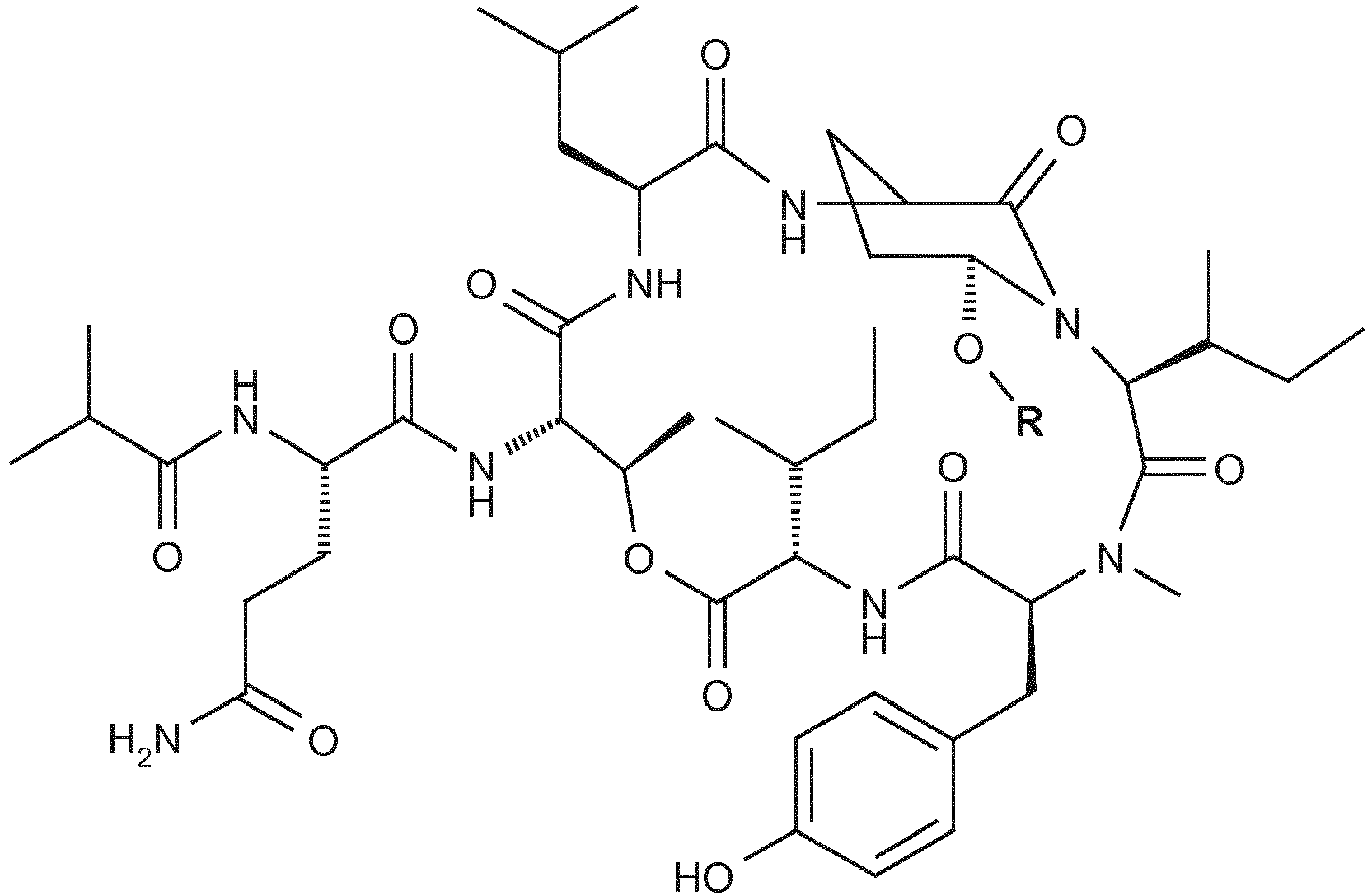
Table 17 Example R ESI MS [M+Na]+ 6 1-octyl 1063.41 7 2,2,2-trifluoroethyl 1033.30 8 2-propyl 993.43 9 benzyl 1041.16 10 ethyl 979.22 11 1-butyl 1007.29 12 Isobutyl 1007.35 13 2-methoxyethyl 1009.31 14 2-hydroxyethyl 995.28 15* 2-(2-hydroxyethoxyl)ethyl 1039.31 16 2-(2-methoxyethoxy)ethyl 1053.33 17 methyl 965.27 18 propargyl 989.21 *Reference Example - Simultaneously, compounds of the following type were obtained under the same conditions:

Table 18 Example R1, R2 ESI MS [M+Na]+ 19 1-propyl, 1136.33 20 methyl 980.21 - A solution of 25 mg (0.027 mmol) of of cyclic depsipeptide according to formula (II) in 2 mL of dichloromethane was cooled to 0 °C. Then DIPEA and trifluoroacetic acid anhydride (TFAA) was added. The reaction mixture was slowly warmed up to room temperature and stirred for additional 4 hours. For workup the reaction mixture was diluted with dichloromethane and washed with hydrochloric acid and sat. bicarbonate solution. After drying over sodium sulfate the the solvent was removed and the residue obtained purified by chromatography on silica gel (cHex/EtOAc (1:1) + 10% MeOH). Yield: 14 mg (57%) of a derivative of the cyclic depsipeptide according to formula (II) wherein the amide in the sidechain of Al has been converted into a nitrile. ESI MS: 933.30 [M+Na]+.
- Similarly, compounds of the following type was obtained:

Table 19 Example R ESI MS [M+Na]+ 22 H 917.30 23 ethyl 961.20 24 1-propyl, 975.29 25 benzyl 1023.14 - A solution of 25 mg (0.027 mmol) of a cyclic depsipeptide according to formula (II) in 2 mL of dichloromethane (MC) was cooled to 0 °C. Then 24 µL of DIPEA and 14 µL of hexyl chloroformate was slowly added. The reaction mixture was allowed to warm up to rt and stirred for additional 4 hours. For workup the reaction mixture was diluted with dichloromethane and washed with hydrochloric acid and sat. bicarbonate solution, and brine. After drying over sodium sulfate the solvent was removed and the residue obtained purified by chromatography on silica gel (cHex/EtOAc (1:1) + 10% MeOH). Yield: 20 mg (70%) of a derivative of the cyclic depsipeptide according to formula (II) wherein the phenol moiety of A6 has been transformed into the corresponding carbonic acid hexyl ester. ESI MS: 1079.41 [M+Na]+.
- Analogously, using a compound described in Example 4 as starting material the following compounds were obtained:

Table 20 Example R ESI MS [M+Na]+ 27 isobutyl 1035.38 28 2-methoxyethyl 1037.36 29 ethyl 1007.35 30* 
1347.63 31 1-octyl 1091.42 *Reference Example - To a mixture of 200 mg (0.21 mmol) of cyclic depsipeptide according Example 5, 57.5 mg (0.41 mmol) of K2CO3 in 2 mL of dry acetone 60.5 mg (0.31 mmol) of (E)-3-phenyl-2-propenyl bromide was added and treated with ultrasound overnight (temperature raises to about 50 °C). For workup the reaction mixture was diluted with dichloromethane and washed with water. After drying of the organic layer over sodium sulfate the solvent was removed and the residue obtained purified by HPLC (15 cm Zorbax; acetonitrile/aqu. NH4OAc buffer: 20→95%). Yield: 100 mg (45%) of a derivative of cyclic depsipeptide according Example 5 featuring O-((E)-3-phenyl-2-propen-1-yl)-L-tyrosine in A6. ESI MS: 1109.37 [M+Na]+.
- Analogously, treatment of cyclic depsipeptides according Example 4 or 5 with the appropriate alkylating agent provide the following compounds:
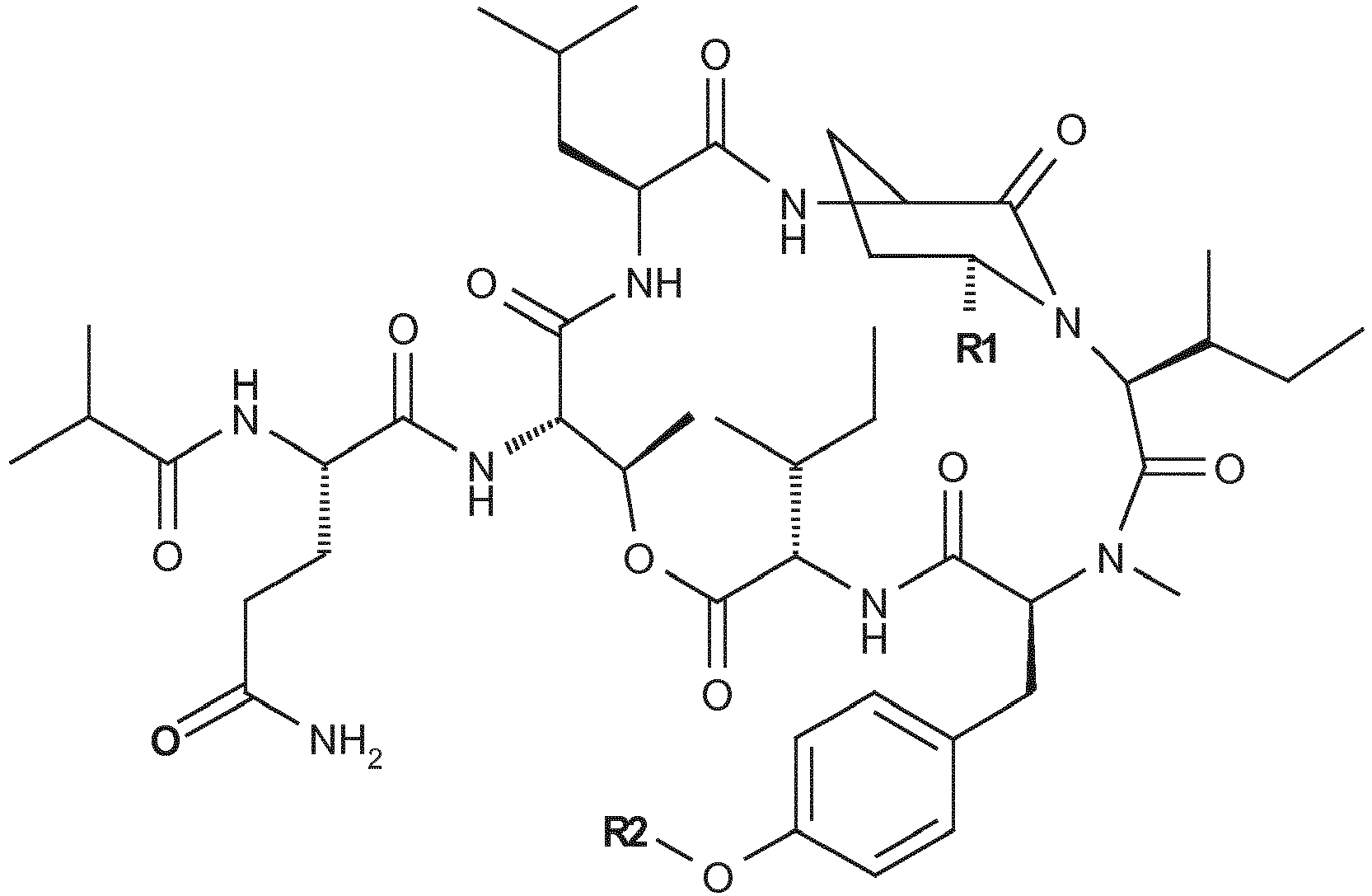
Table 21 Example R1 R2 ESI MS [M+Na]+ 33 H t-buthoxycarbonylmethyl 1049.33 34 propoxy t-buthoxycarbonylmethyl 1107.33 35 propoxy 1-(E)-pent-2-enyl 1061.36 36 propoxy 1-(E)-4,4,4-trifluoro-but-2-enyl 1101.25 37 propoxy methyl 1007.29 38 propoxy 3-methyl-but-2-enyl 1061.36 39 propoxy benzyl 1083.38 40 propoxy allyl 1033.37 41 propoxy propargyl 1031.25 - To a mixture of 200 mg (0.21 mmol) of cyclic depsipeptide according Example 5, 46.5 mg (0.31 mmol) of sodium iodide, and 57.5 mg (0.41 mmol) of K2CO3 in 2 mL of dry acetone 44 mg (0.31 mmol) of 3-(chloromethyl)-1,5-dimethyl-1H-pyrazole was added and treated with ultrasound overnight (temperature raises to about 50 °C). For workup the reaction mixture was diluted with dichloromethane and washed with water. After drying of the organic layer over sodium sulfate the solvent was removed and the residue obtained purified by HPLC (15 cm Zorbax; acetonitrile/aqu. NH4OAc buffer: 20→95%). Yield: 90 mg (40.5%) of a derivative of cyclic depsipeptide according Example 5 featuring O-(1,5-dimethyl-1H-pyrazol-3-yl)methyl-L-tyrosine in A6. ESI MS: 1101.39 [M+Na]+.
- Analogously, treatment of cyclic depsipeptide of cyclic depsipeptide according to formula (II) with 3-(chloromethyl)-1,5-dimethyl-1H-pyrazole provides a compound featuring O-(1,5-dimethyl-1H-pyrazol-3-yl)methyl-L-tyrosine in A6. ESI MS: 1059.19 [M+Na]+.
-

- To a solution of 17 mg (0.0165 mmol) of cyclic depsipeptide according Example 33 in 2 mL of dichloromethane 845 µL of trifluoroacetic acid was added and stirred at r.t. for 4 hours. The reaction mixture was diluted with toluene and the solvent was removed in vacuo providing 22.5 mg of the corresponding crude acid.
- 20 mg of the aforementioned acid, 6.81 mg (0.031 mmol) of 8-amino-3,6-dioxaoctanoic acid tert-butylester, and 15.8 mg (0.041 mmol) of HATU were dissolved in 2 mL of dry DMF and 11 µL of DIEPA were added and stirred at r.t. overnight. For workup, the reaction mixture was diluted with EtOAc and washed with sat. NaHSO4 and NaHCO3 solutions and brine. After drying of the organic layer over sodium sulfate the solvent was removed and the residue obtained purified by HPLC (15 cm Zorbax; acetonitrile/aqu. NH4OAc buffer: 20→95%). Yield: 7 mg (29%) of the title compound. ESI MS: 1194.32 [M+Na]+.
- 100 mg (0.226 mmol) of 8-(9-Fluorenylmethoxycarbonylamino)-3,6-dioxaoctanoic acid tert-butylester in 1 mL of dry DMF were treated with piperidine (89.5 µL; 0.862 mmol) at r.t. for 3 hours. The solvent was evaporated and the residue purified purified by chromatography on silica gel with a gradient cHex→EtOAcΔEtOAc/MeOH(1:1) + 3% MeOH. Yield: 12 mg (24%) of the title compound. ESI MS: 220.08 [M+H]+.
- A solution of 150 mg (0.389 mmol) of 8-(9-Fluorenylmethoxycarbonylamino)-3,6-dioxaoctanoic acid, 546 mg (9.73 mmol) isobutylene, and 4.3 µL of 95-98% H2SO4 was stirred at r.t. for 3 days.
- For workup the reaction solution was diluted with dichloromethane and washed with sat. bicarbonate solution. After drying over sodium sulfate the solvent was removed and the residue obtained purified by chromatography on silica gel with a cHex/EtOAc gradient providing 145 mg (84.4%) of the title compound. ESI MS: 464.12 [M+Na]+.
-

- To a mixture of 101 mg (0.1 mmol) of a compound of Example 41 and 40 mg CuI in 11 ml of toluene/DMF (10:1) 50 L of DIEPA and 1 mL of a 1M solution of 1-azido-2-[2-(2-azido-ethoxy)-ethoxy]-ethane was added and stirred at 45 °C for 6 hours. Then the reaction mixture was washed with a sat. NaH2PO4 solution, dried over sodium sulfate, and the solvent was evaporated. The residue obtained was purified by chromatography (SiO2; cHex/EtOAc (1: 1) + 20% MeOH) providing 14 mg (11.7%) of the title compound. ESI MS: 1231.34 [M+Na]+.
-

- A solution of 25 mg of depsipeptide according to formula (II) in 25 mL water was stirred at room temperature. In this solution an additional peak was observed in HPLC analysis, which forms an equilibrium with the depsipeptide according to formula (II). After 20 days the solution was dried using lyophilization and the additional peak was isolated using reversed phase chromatography as described in example 1. This provided 0.75 mg cyclic depsipeptide according to example 46, wherein Ahp has been converted into 5-hydroxyproline.
ESI-MS: pos. mode: m/z = 951.5 (M+Na), neg. Mode: m/z = 927.4 (M-H); monoisotopic MW 928.5, C46H72N8O12
1H NMR (600 MHz) d6-DMSO δH: 0.00 (1H, m), 0.50 (3H, t, J = 7.3 Hz), 0.71 (3H, m), 0.76 (3H, t, J = 7.0 Hz), 0.76 (3H, d, J = 7.3 Hz), 0.85 (6H, d, J = 6.6 Hz), 0.88 (1H, m), 1.00 (1H, m), 1.03 (3H, d, J = 6.6 Hz), 1.06 (6H, d, J = 6.6 Hz), 1.10 (1H, m), 1.16 (1H, m), 1.26 (1H, m), 1.36 (1H, m), 1.43 (1H, m), 1.51 (2H, m), 1.79 (1H, m), 1.83 (1H, m), 1.97 (1H, m), 1.99 (1H, m), 2.17 (2H, t, J = 7.7 Hz), 2.39 (1H, m), 2.48 (1H, m), 2.67 (3H, s), 2.78 (1H, m), 3.43 (1H, m), 4.32 (1H, m), 4.33 (1H, m), 4.45 (1H, m), 4.48 (1H, m), 4.58 (1H, m), 4.61 (1H, m), 4.67 (1H, m), 5.09 (1H, m), 5.47 (1H, m), 6.66 (2H, d, J = 8.1 Hz), 6.74 (1H, s, broad), 7.03 (2H, d, J = 8.1 Hz), 7.31 (1H, s, broad), 7.33 (1H, d, J = 9.5 Hz), 8.04 (1H, d, J = 9.5 Hz), 8.17 (1H, d, J = 8.1 Hz), 8.23 (1H, d, J = 2.9 Hz), 8.43 (1H, d, J = 9.5 Hz), 9.25 (1H, s, broad), (OH group of hydroxyproline not visible). -

- A solution of 100 mg of depsipeptide according to formula (II) in 25 mL 0.5 N HCl was stirred at 50°C for 24 h. For workup the pH of the reaction mixture was adjusted to
pH 7 with 5 N NaOH and was extracted with ethyl acetate. The organic layer was dried over sodium sulfate and the solvent was removed in vacuo. The residue obtained was purified by reversed phase chromatography (same conditions as described example 1) providing 17 mg of cyclic depsipeptide according to example 47, wherein glutamine in A1 has been replaced by glutamic acid.
ESI-MS: pos. mode: m/z = 952.8 (M+Na), neg. Mode: m/z = 928.5 (M-H); monoisotopic MW 929.5, C46H71N7O13
1H NMR (600 MHz, d6-DMSO) δH:. -0.11 (3H, d, J =6.6 Hz), 0.64 (4H, m), 0.77 (3H, d, J = 6.6 Hz), 0.81 (3H, t, J = 7.3 Hz), 0.84 (3H, d, J = 6.6 Hz), 0.88 (3H, d, J = 6.6 Hz), 1.02 (6H, m), 1.05 (1H, m), 1.10 (1H, m), 1.19 (3H, d, J = 5.9 Hz), 1.24 (1H, m), 1.40 (1H, m), 1.51 (1H, m), 1.75 (1H, m), 1.78 (5H, m), 1.85 (2H, m), 2.10 (2H, m), 2.45 (1H, m), 2.60 (1H, m), 2.67 (1H, m), 2.71 (3H, s), 3.20 (1H, m), 4.28 (1H, m), 4.29 (1H, m), 4.44 (2H, m), 4.63 (1H, d, J = 9.5 Hz), 4.69 (1H, m), 4.93 (1H, m), 5.04 (1H, m), 5.47 (1H, m), 6.24 (1H, s, broad), 6.64 (2H, d, J = 8.8), 6.99 (2H, d, J = 8.8 Hz), 7.37 (1H, d, J = 9.5 Hz), 7.69 (1H, d, J = 9.5 Hz), 7.80 (1H, d, J = 9.5 Hz), 8.51 (1H, d, J = 8.8 Hz), 8.57 (1H, d, J = 5.1 Hz), OH group of Tyrosine and glutamic acid not visible) -
- [Bode HB, Zeggel B, Silakowski B, Wenzel SC, Reichenbach H, Müller R (2003)] Steroid biosynthesis in prokaryotes: identification of myxobacterial steroids and cloning of the first bacterial 2,3(S)-oxidosqualene cyclase from the myxobacterium Stigmatella aurantiaca. Mol Microbiol 47:471-481
- [Das SK, Mishra AK, Tindall BJ, Rainey FA, Stackebrandt E (1996)] Oxidation fo thiosulfate by a new bacterium, Bosea thiooxidans (strain BI-42) gen. nov., sp. nov.: Analysis of phylogeny based on chemotaxonomy and 16S ribosomal DNA sequencing. Int J Syst Bacteriol 46:981-987
- [Dictionary of Natural Products (2007)] Dictionary of Natural products on CD-ROM, version 15.2, 2007, Hampen Data services Ltd.
- [DSMZ (2007)] Description of biological risk group fo Chondromyces strains available on the website http://www.dsmz.de/
- [Gerth K, Pradell A, Perlova O, et al. (2003)] Myxobacteria: proficient producers fo novel natural products with various biological activities - past and future biotechnological aspects with the focus on the genus Sorangium. J Biotechnol 106:233-253
- [Hansson L, Backman A, Ny A, Edlund M, Ekholm E, Ekstrand Hammarstrom B, Tornell J, Wallbrandt P, Wennbo H, Egelrud T (2002)] Epidermal overexpression of stratum corneum chymotryptic enzyme in mice: a model for chronic itchy dermatitis. J Invest Dermatol 118:444-449
- [Ishida K, Matsuda H, Murakami M, Yamaguchi K (1996)] The Absolute Stereochemistry of micropeptin 90. Tetrahedron letters 37:51-52.
- [Jacobi CA, Reichenback H, Tindall BJ, Stackebrandt E (1996)] "Candidatus comitans," a bacterium living in coculture with Chondromyces crocatus (Myxobacteria). Int J Syst Bacteriol 46:119-122
- [Jacobi CA, Assmus B, Reichenbach H, Stackebrandt E (1997)] Molecular evidence for association between the Sphingobacterium-like organism "Candidatus comitans" and the myxobacterium Chondromyces crocatus. Appl Environ Microbiol 63:719-723
- [Jansen R, Kunse B, Reichenbach H, Höfle G (2002)] The ajudazols A and B, novel isochromanones from Chondromyces crocatus (Myxobacteria): Isolation and structure elucidation. Eur J Org Chem 2002:917-921
- [Kaiser D (2003)] Coupling cell movement to multicellular development in myxobacteria. Nature Reviews Micobiol 1:45-54
- [Kunze B, Jansen R, Sasse F, et al. (1995)] Chondramides A ~ D, new antifungal and cytostatic depsipeptides from Chondromyces crocatus (Myxobacteria): Production, physicochemical and biological properties. J Antibiotics 48:1262-1266
- [La Scola B, Mallet M-N, Grimont PAD, Raoult D (2003)] Bosea eneae sp. nov., Bosea massiliensis sp. nov. and Bosea vestrisii sp. nov., isolated from hospital water supplies, and emendation of the genus Bosea (Das et al. 1996). Int J Syst Evol Microbiol 53:15-20
- [Lee AY, Smitka TA, Bonjouklian R, Clardy J (1994)] Atomic structure of the trypsin- A90720A complex: a unified approach to structure and function. Chemistry & Biology 1:113- 117
- [Matern U, Schleberger C, Jelakovic S, Weckesser J, Schulz GE (2003)] Binding structure of elastase inhibitor scyptolin A. Chemistry & Biology 10:997-1001
- [Rahid S, et al. (2006)] Molecular and biochemical studies of chondramide formation - highly cytotoxic natural products from Chondromyces crocatus Cm c5. Chem & Biol 14:667-681
- [Rouhiainen L, Paulin L, Suomalainen S, Hyytiäinen H, Buikema W, Haselkorn R, Sivonen K (2000)] Genes encoding for synthetases of cyclic depsipetides, anabaenopeptilides, in Anabaena strain 90. Molecular Microbiology 37:156-167.
- [Vasilopoulos Y, Cork MJ, Murphy R, et al. (2004)] Genetic association between an AACC insertion in the 3'UTR of the stratum corneum chymotryptic enzyme gene and atopic dermatitis. J Invest Dermatol 123:62-66
Claims (26)
- A cyclic depsipeptide having the structure of formula (I):
 wherein an ester bond is formed between the carboxy group of A7 and the hydroxy group of A2,wherein the acyl residue X is CH3CH2CH(CH3)CO or (CH3)2CHCO,A1 is glutamine, glutamic acid, or a derivative thereof, selected from glutamic nitrile, glutamic acid C1-12alkyl ester or glutamic acid C6-24aryl ester,A2 is threonine,A3 is leucine,A4 is Ahp, wherein AHP is 3-amino-6-hydroxy-pipiridin-2-one, 3-amino-piperidine-2-one, proline, 5-hydroxy-proline or a derivative thereof, selected from 3-amino-3,4-dihydro-1H-pyridin-2-one,
 wherein R is selected from the group consisting of (C1-12)alkyl, (C2-12)alkenyl, (C2-12)alkynyl, halo(C1-12)alkyl, (C1-12)alkoxy(C1-12)alkyl, (C1-12)alkoxy(C1-12)alkoxy(C1-12)alkyl, hydroxy(C1-12)alkyl, phenyl and phenyl(C1-6)alkyl.,A5 is isoleucine,A6 is tyrosine, N-Me-tyrosine or a derivative thereof, selected from N-Me-tyrosine where the OH group of the tyrosine or N-Me-tyrosine is OR, wherein R is selected from the group consisting of (C1-12)alkyl, (C2-12)alkenyl, (C2-12)alkynyl, halo(C1-12)alkyl, halo(C2-12)alkenyl, halo(C2-12)alkynyl, (C1-12)alkoxycarbonyl, (C1-12)alkoxy-carbonyl(C1-12)alkyl, (C1-12)alkylaminocarbonyl, wherein the alkyl, alkenyl and alkinyl moieties of groups R can be unsubstituted or further substituted by aryl, aryl(C1-6)alkyl, aryl(C2-12)alkenyl or aryl(C2-12)alkynyl, heterocyclyl and heterocyclyl(C1-12)alkyl, A7 is isoleucine or valine,or a pharmaceutically acceptable salt thereof.
 - The depsipeptide of claim 1 wherein the nitrogen atom of the amid bond between A5 and A6 is substituted with a methyl and the OH group of the tyrosine is OR, wherein R is selected from the group consisting of hydrogen, (C1-12)alkyl, (C2-12)alkenyl, (C2-12)alkynyl, halo(C1-12)alkyl, halo (C2-12)alkenyl, halo(C2-12)alkynyl, (C1-12)alkoxycarbonyl, (C1-12)alkoxy-carbonyl(C1-12)alkyl, (C1-12)alkylaminocarbonyl, unsubstituted or further substituted by aryl, arylalkyl, arylalkenyl or arylalkynyl, heterocyclyl and heterocyclylalkyl.
- The cyclic depsipeptide of any of the previous claims wherein A1 is glutamic acid, or a derivative thereof seleted from glutamic nitrile, glutamic acid ester selected from C1-12alkyl ester or C6-24aryl ester.
- A depsipeptide of claim 1, which is a compound in accordance to formulae A or B,
 wherein X and A1 are as defined in claim 1, and whereinR2 is methyl,R3 is the side chain of leucine,R5 is the side chain of the amino acid isoleucine,R6 is the side chain of tyrosine optionally derivatized on its hydroxyl group as defined in claim 2,R7 is the side chain of the amino acid isoleucine or valine,Y is either hydrogen or a methyl.
 - The cyclic depsipeptide of claim 4 wherein
X is (CH3)2CHCO. - The cyclic depsipeptide of claim 4 wherein
R7 is the side chain of the amino acid isoleucine. - The cyclic depsipeptide of any of the previous claims wherein A1, A2, A3, A5, A6 and A7 are L-amino acids.
- The cyclic depsipeptide of any of the previous claims wherein A4 is 3S,6R Ahp.
- The cyclic depsipeptide of claim 1 selected from


Example R 6 1-octyl 7 2,2,2-trifluoroethyl 8 2-propyl 9 benzyl 10 ethyl 11 1-butyl 12 isobutyl 13 2-methoxyethyl 14 2-hydroxyethyl 16 2-(2-methoxyethoxy)ethyl 17 methyl 18 propargyl 
Example R, R2 19 1-propyl 20 methyl 
Example R1 22 H 23 ethyl 24 1-propyl 25 benzyl 
Example R3 27 isobutyl 28 2-methoxyethyl 29 ethyl 31 1-octyl 
Example R1 R4 33 H t-butoxycarbonylmethyl 34 propoxy t-butoxycarbonylmethyl 35 propoxy 1-(E)-pent-2-enyl 36 propoxy 1-(E)-4,4,4-trifluoro-but-2-enyl 37 propoxy methyl 38 propoxy 3-methyl-but-2-enyl 39 propoxy benzyl 40 propoxy allyl 41 propoxy propargyl - The cyclic depsipeptide of claim 1 selected from

- The cyclic depsipeptide of claim 1 selected from

- The cyclic depsipeptide of claim 1 selected from

- The cyclic depsipeptide of claim 1 selected from

- The cyclic depsipeptide of claim 1 selected from

- A pharmaceutical composition comprising a cyclic depsipeptide of any of the previous claims in conjunction with a pharmaceutical acceptable carrier and/or ingredient.
- The cyclic depsipeptide of any of any of claims 1 - 14 for use as a medicament.
- Use of depsipeptides of any of claims 1 - 14 in the manufacture of a medicament for the treatment in a disease or disorder selected from pruritic skin diseases such as keloids, hypertrophic scars, acne, atopic dermatitis, psoriasis, pustular psoriasis, rosacea, Netherton's syndrome or other pruritic dermatoses such as prurigo nodularis, unspecified itch of the elderly as well as other diseases with epithelial barrier dysfunction such as aged skin, inflammatory bowel disease and Crohn's disease, as well as pancreatitis, or of cancer, in particular ovarian cancer, cystic fibrosis (CF), chronic obstructive pulmonary disease (COPD), pulmonary fibrosis, adult respiratory distress syndrome, chronic bronchitis, hereditary emphysema, rheumatoid arthritis, IBD, psoriasis, asthma.
- Use according to claim 17, for the treatment of keloids, hypertrophic scars, acne, atopic dermatitis, psoriasis, pustular psoriasis, rosacea, Netherton's syndrome or other pruritic dermatoses such as prurigo nodularis, unspecified itch of the elderly as well as other diseases with epithelial barrier dysfunction such as aged skin, inflammatory bowel disease and Crohn's disease, as well as pancreatitis, or of cancer, in particular ovarian cancer.
- Use according to claim 18, for the treatment of keloids, hypertrophic scars, acne, atopic dermatitis, psoriasis, pustular psoriasis, rosacea, Netherton's syndrome or other pruritic dermatoses such as prurigo nodularis, unspecified itch of the elderly as well as other diseases with epithelial barrier dysfunction such as aged skin.
- Use according to claim 17, for the treatment of cystic fibrosis (CF), chronic obstructive pulmonary disease (COPD), pulmonary fibrosis, adult respiratory distress syndrome, chronic bronchitis, hereditary emphysema, rheumatoid arthritis, IBD, psoriasis, asthma.
- Use according to claims 17-20, wherein the treatment is by local or systemic application such as creams, ointments and suppositories or by oral or sc or iv application or by inhalation, respectively.
- A process for producing the cyclic depsipeptide of any of claims 1-14 comprising cultivation of Chondromyces crocatus (DSM 19329), a variant or a mutant thereof, in a suitable medium, and optionally chemical derivation of the so-produced cyclic depsipeptide.
- A process for producing the cyclic depsipeptide of any of claims 1-14 comprising expressing the biosynthesis genes of Chondromyces crocatus (DSM 19329), a variant or a mutant thereof, in a heterologous microbial host strain, and optionally chemical derivation of the so-produced cyclic depsipeptide.
- An isolated Chondromyces microorganism producing the cyclic depsipeptide of any of claims 1-14, deposited under the accession number DSM 19329.
- A cyclic depsipeptide of any of claims 1 - 14 produced by the isolated Chondromyces microorganism of claim 25 or obtained by a process according to claims 23-24.
- A process for the preparation of a cyclic depsipeptide according to claim 1 which comprises alternativelya) - the preparation of a cyclic depsipeptide according to claim 1 wherein A4 is

 b) - the preparation of a cyclic depsipeptide according to claim 1 wherein A4 is
 c) - the preparation of a cyclic depsipeptide according to claim 1 wherein A4 is
 d) - the preparation of a cyclic depsipeptide according to claim 1 wherein A4 is
 e) - the preparation of a cyclic depsipeptide according to claim 1 wherein A1 is

 f) - the preparation of a cyclic depsipeptide according to claim 1 wherein A1 is
 g) - the preparation of a cyclic depsipeptide according to claim 1 wherein A4 is


Priority Applications (1)
| Application Number | Priority Date | Filing Date | Title |
|---|---|---|---|
| EP08803036.6A EP2183273B1 (en) | 2007-08-17 | 2008-08-14 | Cyclic depsipeptides |
Applications Claiming Priority (3)
| Application Number | Priority Date | Filing Date | Title |
|---|---|---|---|
| EP07114507 | 2007-08-17 | ||
| PCT/EP2008/060689 WO2009024527A1 (en) | 2007-08-17 | 2008-08-14 | Cyclic depsipeptides |
| EP08803036.6A EP2183273B1 (en) | 2007-08-17 | 2008-08-14 | Cyclic depsipeptides |
Publications (2)
| Publication Number | Publication Date |
|---|---|
| EP2183273A1 EP2183273A1 (en) | 2010-05-12 |
| EP2183273B1 true EP2183273B1 (en) | 2017-04-05 |
Family
ID=38805728
Family Applications (1)
| Application Number | Title | Priority Date | Filing Date |
|---|---|---|---|
| EP08803036.6A Active EP2183273B1 (en) | 2007-08-17 | 2008-08-14 | Cyclic depsipeptides |
Country Status (30)
| Country | Link |
|---|---|
| US (2) | US8178650B2 (en) |
| EP (1) | EP2183273B1 (en) |
| JP (1) | JP5520824B2 (en) |
| KR (2) | KR20120123579A (en) |
| CN (1) | CN103298827B (en) |
| AR (1) | AR068343A1 (en) |
| AU (1) | AU2008290567B2 (en) |
| BR (1) | BRPI0815547B8 (en) |
| CA (1) | CA2696570C (en) |
| CL (1) | CL2008002394A1 (en) |
| CO (1) | CO6260099A2 (en) |
| CR (1) | CR11251A (en) |
| CU (2) | CU23943B1 (en) |
| EA (1) | EA017735B1 (en) |
| EC (1) | ECSP109968A (en) |
| ES (1) | ES2632392T3 (en) |
| GT (1) | GT201000037A (en) |
| MA (1) | MA31701B1 (en) |
| MX (1) | MX2010001849A (en) |
| MY (1) | MY151973A (en) |
| NZ (1) | NZ583284A (en) |
| PE (2) | PE20141199A1 (en) |
| PL (1) | PL2183273T3 (en) |
| PT (1) | PT2183273T (en) |
| SV (1) | SV2010003485A (en) |
| TN (1) | TN2010000074A1 (en) |
| TW (1) | TW200922613A (en) |
| UA (1) | UA98658C2 (en) |
| WO (1) | WO2009024527A1 (en) |
| ZA (1) | ZA201000776B (en) |
Families Citing this family (16)
| Publication number | Priority date | Publication date | Assignee | Title |
|---|---|---|---|---|
| JP5401459B2 (en) | 2007-08-17 | 2014-01-29 | ノバルティス アーゲー | Use of cyclic depsipeptides to inhibit kallikrein 7 |
| MX2010001849A (en) | 2007-08-17 | 2010-03-10 | Novartis Ag | Cyclic depsipeptides. |
| EP2396344A2 (en) * | 2009-02-13 | 2011-12-21 | Novartis AG | Nucleic acid molecule of a biosynthetic cluster encoding non ribosomal peptide synthases and uses thereof |
| US8680054B2 (en) * | 2011-04-20 | 2014-03-25 | Novartis Ag | Suspension type topical formulations comprising cyclic depsipeptide |
| AR086168A1 (en) * | 2011-04-20 | 2013-11-27 | Novartis Ag | PROCESSES FOR THE ELABORATION OF MACROCICLICAL AND INTERMEDIARY DEPSIPEPTIDES |
| US8987413B2 (en) | 2012-10-09 | 2015-03-24 | Novartis Ag | Aldehyde acetal based processes for the manufacture of macrocyclic depsipeptides and new intermediates |
| US9067978B2 (en) * | 2012-10-09 | 2015-06-30 | Novartis Ag | Solution phase processes for the manufacture of macrocyclic depsipeptides and new intermediates |
| EP3097084B1 (en) | 2014-01-23 | 2020-09-30 | Sixera Pharma AB | New kallikrein 7 inhibitors |
| WO2015114144A1 (en) * | 2014-02-03 | 2015-08-06 | INSERM (Institut National de la Santé et de la Recherche Médicale) | Methods and pharmaceutical compositions for the treatment of netherton syndrome |
| WO2015155676A1 (en) | 2014-04-08 | 2015-10-15 | Novartis Ag | Novel aldehyde acetal based processes for the manufacture of macrocyclic depsipeptides and new intermediates |
| US9453018B2 (en) | 2014-10-01 | 2016-09-27 | Bristol-Myers Squibb Company | Pyrimidinones as factor XIa inhibitors |
| KR101729848B1 (en) | 2015-06-30 | 2017-04-24 | 영남대학교 산학협력단 | Novel marine Bacillus sp., compounds isolated from the marine Bacillus sp. and pharmaceutical use of the compounds |
| CN106518868B (en) * | 2015-11-04 | 2018-02-23 | 衡阳师范学院 | Kallikrein 7 micromolecular inhibitor and preparation method thereof, purposes |
| US20200040103A1 (en) | 2018-03-14 | 2020-02-06 | Genentech, Inc. | Anti-klk5 antibodies and methods of use |
| WO2020018888A1 (en) | 2018-07-20 | 2020-01-23 | The Board Of Regents Of The University Of Oklahoma | Antimicrobial peptides and methods of use |
| US12312414B2 (en) | 2019-09-18 | 2025-05-27 | Genentech, Inc. | Anti-KLK7 antibodies, anti-KLK5 antibodies, multispecific anti-KLK5/KLK7 antibodies, and methods of use |
Family Cites Families (24)
| Publication number | Priority date | Publication date | Assignee | Title |
|---|---|---|---|---|
| DE3043252C2 (en) | 1980-11-15 | 1982-12-02 | Degussa Ag, 6000 Frankfurt | Cyclic acetals of N-acylglutamic acid - γ - semialdehydes, processes for their preparation and their use |
| US5595756A (en) | 1993-12-22 | 1997-01-21 | Inex Pharmaceuticals Corporation | Liposomal compositions for enhanced retention of bioactive agents |
| DE4421113A1 (en) * | 1994-06-16 | 1995-12-21 | Biotechnolog Forschung Gmbh | Chondramide, extraction process, means with chondrams and mixed culture for chondramide production |
| DE19828043A1 (en) | 1998-06-24 | 1999-12-30 | Bayer Ag | Use of cyclooctadepsipeptide derivatives |
| JP2000154198A (en) | 1998-11-20 | 2000-06-06 | Nisshin Flour Milling Co Ltd | Solid phase synthesis of cyclic depsipeptide and its intermediate |
| GB0108234D0 (en) | 2001-04-02 | 2001-05-23 | Pharma Mar Sa | Process for producing trunkamide A compounds |
| US20040110228A1 (en) | 2002-04-01 | 2004-06-10 | Mcalpine Shelli R. | Combinatorial organic synthesis of unique biologically active compounds |
| US7872052B2 (en) | 2003-06-06 | 2011-01-18 | Arexis Ab | Use of heterocyclic compounds as SCCE inhibitors |
| GB0322140D0 (en) | 2003-09-22 | 2003-10-22 | Pfizer Ltd | Combinations |
| WO2005075667A1 (en) * | 2004-02-03 | 2005-08-18 | Bayer Healthcare Ag | Diagnostics and therapeutics for diseases associated with kallikrein 7 (klk7) |
| US20090186042A1 (en) * | 2006-02-27 | 2009-07-23 | Arizona Board Of Regents For And On Behalf Of Arizona State University | Identification and use of novopeptides for the treatment of cancer |
| MX2010001849A (en) | 2007-08-17 | 2010-03-10 | Novartis Ag | Cyclic depsipeptides. |
| JP5401459B2 (en) * | 2007-08-17 | 2014-01-29 | ノバルティス アーゲー | Use of cyclic depsipeptides to inhibit kallikrein 7 |
| US20110112121A1 (en) | 2009-07-06 | 2011-05-12 | Joerg Berghausen | Pharmaceutical Compositions and Solid Forms |
| KR101004362B1 (en) | 2010-03-19 | 2010-12-28 | 가톨릭대학교 산학협력단 | NTF-α and TVE double antagonists for the prevention and treatment of autoimmune diseases |
| US20120064136A1 (en) | 2010-09-10 | 2012-03-15 | Nanobio Corporation | Anti-aging and wrinkle treatment methods using nanoemulsion compositions |
| WO2012035468A2 (en) | 2010-09-14 | 2012-03-22 | Trima - Israel Pharmaceutical Products Maabarot Ltd. | Foamable topical composition |
| US8673974B2 (en) | 2010-11-16 | 2014-03-18 | Novartis Ag | Substituted amino bisphenyl pentanoic acid derivatives as NEP inhibitors |
| JP5943258B2 (en) | 2011-01-24 | 2016-07-05 | アンテリオス, インコーポレイテッド | Nanoparticle composition, formulation thereof and use thereof |
| TR201905477T4 (en) | 2011-01-24 | 2019-05-21 | Anterios Inc | Nano-particle compositions. |
| AR086168A1 (en) | 2011-04-20 | 2013-11-27 | Novartis Ag | PROCESSES FOR THE ELABORATION OF MACROCICLICAL AND INTERMEDIARY DEPSIPEPTIDES |
| US8680054B2 (en) | 2011-04-20 | 2014-03-25 | Novartis Ag | Suspension type topical formulations comprising cyclic depsipeptide |
| US9067978B2 (en) | 2012-10-09 | 2015-06-30 | Novartis Ag | Solution phase processes for the manufacture of macrocyclic depsipeptides and new intermediates |
| US8987413B2 (en) | 2012-10-09 | 2015-03-24 | Novartis Ag | Aldehyde acetal based processes for the manufacture of macrocyclic depsipeptides and new intermediates |
-
2008
- 2008-08-14 MX MX2010001849A patent/MX2010001849A/en active IP Right Grant
- 2008-08-14 BR BRPI0815547A patent/BRPI0815547B8/en not_active IP Right Cessation
- 2008-08-14 AU AU2008290567A patent/AU2008290567B2/en not_active Ceased
- 2008-08-14 CL CL2008002394A patent/CL2008002394A1/en unknown
- 2008-08-14 UA UAA201001638A patent/UA98658C2/en unknown
- 2008-08-14 KR KR1020127024969A patent/KR20120123579A/en not_active Withdrawn
- 2008-08-14 CN CN200880112017.9A patent/CN103298827B/en not_active Expired - Fee Related
- 2008-08-14 JP JP2010520585A patent/JP5520824B2/en not_active Expired - Fee Related
- 2008-08-14 EP EP08803036.6A patent/EP2183273B1/en active Active
- 2008-08-14 PT PT88030366T patent/PT2183273T/en unknown
- 2008-08-14 ES ES08803036.6T patent/ES2632392T3/en active Active
- 2008-08-14 WO PCT/EP2008/060689 patent/WO2009024527A1/en not_active Ceased
- 2008-08-14 CA CA2696570A patent/CA2696570C/en active Active
- 2008-08-14 KR KR1020107005806A patent/KR101227231B1/en active Active
- 2008-08-14 MY MYPI20100520 patent/MY151973A/en unknown
- 2008-08-14 EA EA201000329A patent/EA017735B1/en not_active IP Right Cessation
- 2008-08-14 AR ARP080103553A patent/AR068343A1/en unknown
- 2008-08-14 NZ NZ583284A patent/NZ583284A/en not_active IP Right Cessation
- 2008-08-14 PL PL08803036T patent/PL2183273T3/en unknown
- 2008-08-15 TW TW097131312A patent/TW200922613A/en unknown
- 2008-08-15 PE PE2014000462A patent/PE20141199A1/en not_active Application Discontinuation
- 2008-08-15 PE PE2008001396A patent/PE20091007A1/en not_active Application Discontinuation
- 2008-08-18 US US12/193,338 patent/US8178650B2/en active Active
-
2010
- 2010-02-02 ZA ZA201000776A patent/ZA201000776B/en unknown
- 2010-02-03 CR CR11251A patent/CR11251A/en unknown
- 2010-02-12 TN TNP2010000074A patent/TN2010000074A1/en unknown
- 2010-02-15 GT GT201000037A patent/GT201000037A/en unknown
- 2010-02-16 CO CO10017551A patent/CO6260099A2/en active IP Right Grant
- 2010-02-17 SV SV2010003485A patent/SV2010003485A/en not_active Application Discontinuation
- 2010-02-17 CU CU2010000032A patent/CU23943B1/en active IP Right Grant
- 2010-02-17 EC EC2010009968A patent/ECSP109968A/en unknown
- 2010-03-12 MA MA32690A patent/MA31701B1/en unknown
-
2012
- 2012-02-14 US US13/372,758 patent/US9127044B2/en active Active
-
2013
- 2013-05-02 CU CU2013000063A patent/CU20130063A7/en unknown
Non-Patent Citations (1)
| Title |
|---|
| None * |
Also Published As
Similar Documents
| Publication | Publication Date | Title |
|---|---|---|
| US9127044B2 (en) | Cyclic depsipeptides | |
| EP2183270B1 (en) | Use of cyclic depsipeptides to inhibit kallikrein 7 | |
| US20100267609A1 (en) | Compounds which inhibit beta-secretase activity and methods of use thereof | |
| AU2002359301B2 (en) | Beta-secretase inhibitors and methods of use | |
| WO2009100225A1 (en) | Inhibitors of cathepsin b | |
| CA2123104A1 (en) | Collagenase inhibitor | |
| US12084476B2 (en) | Tailored cyclodepsipeptides as potent non-covalent serine protease inhibitors | |
| Burchacka et al. | Phosphonic analogues of glutamic acid as irreversible inhibitors of Staphylococcus aureus endoproteinase GluC: an efficient synthesis and inhibition of the human IgG degradation | |
| MXPA01008836A (en) | Heterocyclic compounds, intermediates thereof and elastase inhibitors. | |
| RU2498995C2 (en) | Peptides with large number of bridge links, which are extracted from actinomadura namibiensis | |
| US20060234944A1 (en) | Beta-secretase inhibitors and methods of use | |
| US7067491B2 (en) | Heterocyclic compounds having elastase-inhibiting activity and intermediates thereof | |
| Badalassi et al. | A selective HIV‐protease assay based on a chromogenic amino acid | |
| ZA200300170B (en) | Pyrrolidine derivatives as metalloprotease inhibitors. | |
| WO2023049785A1 (en) | Small molecule inhibitors of bacterial toxins | |
| JPH1036284A (en) | Proteasome inhibitor |
Legal Events
| Date | Code | Title | Description |
|---|---|---|---|
| PUAI | Public reference made under article 153(3) epc to a published international application that has entered the european phase |
Free format text: ORIGINAL CODE: 0009012 |
|
| 17P | Request for examination filed |
Effective date: 20100317 |
|
| AK | Designated contracting states |
Kind code of ref document: A1 Designated state(s): AT BE BG CH CY CZ DE DK EE ES FI FR GB GR HR HU IE IS IT LI LT LU LV MC MT NL NO PL PT RO SE SI SK TR |
|
| AX | Request for extension of the european patent |
Extension state: AL BA MK RS |
|
| REG | Reference to a national code |
Ref country code: HK Ref legal event code: DE Ref document number: 1141302 Country of ref document: HK |
|
| RAX | Requested extension states of the european patent have changed |
Extension state: RS Payment date: 20100317 Extension state: BA Payment date: 20100317 Extension state: AL Payment date: 20100317 |
|
| 17Q | First examination report despatched |
Effective date: 20140521 |
|
| GRAP | Despatch of communication of intention to grant a patent |
Free format text: ORIGINAL CODE: EPIDOSNIGR1 |
|
| INTG | Intention to grant announced |
Effective date: 20160614 |
|
| GRAJ | Information related to disapproval of communication of intention to grant by the applicant or resumption of examination proceedings by the epo deleted |
Free format text: ORIGINAL CODE: EPIDOSDIGR1 |
|
| GRAP | Despatch of communication of intention to grant a patent |
Free format text: ORIGINAL CODE: EPIDOSNIGR1 |
|
| INTC | Intention to grant announced (deleted) | ||
| INTG | Intention to grant announced |
Effective date: 20161104 |
|
| GRAS | Grant fee paid |
Free format text: ORIGINAL CODE: EPIDOSNIGR3 |
|
| GRAA | (expected) grant |
Free format text: ORIGINAL CODE: 0009210 |
|
| RIN1 | Information on inventor provided before grant (corrected) |
Inventor name: KRASTEL, PHILIPP Inventor name: SCHREINER, ERWIN PAUL Inventor name: MEINGASSNER, JOSEF GOTTFRIED Inventor name: SCHMITT, ESTHER Inventor name: LIECHTY, BRIGITTA-MARIA |
|
| AK | Designated contracting states |
Kind code of ref document: B1 Designated state(s): AT BE BG CH CY CZ DE DK EE ES FI FR GB GR HR HU IE IS IT LI LT LU LV MC MT NL NO PL PT RO SE SI SK TR |
|
| AX | Request for extension of the european patent |
Extension state: AL BA RS |
|
| REG | Reference to a national code |
Ref country code: GB Ref legal event code: FG4D |
|
| REG | Reference to a national code |
Ref country code: CH Ref legal event code: EP |
|
| REG | Reference to a national code |
Ref country code: AT Ref legal event code: REF Ref document number: 881734 Country of ref document: AT Kind code of ref document: T Effective date: 20170415 |
|
| REG | Reference to a national code |
Ref country code: IE Ref legal event code: FG4D |
|
| REG | Reference to a national code |
Ref country code: DE Ref legal event code: R096 Ref document number: 602008049629 Country of ref document: DE |
|
| REG | Reference to a national code |
Ref country code: PT Ref legal event code: SC4A Ref document number: 2183273 Country of ref document: PT Date of ref document: 20170522 Kind code of ref document: T Free format text: AVAILABILITY OF NATIONAL TRANSLATION Effective date: 20170508 |
|
| REG | Reference to a national code |
Ref country code: NL Ref legal event code: FP |
|
| REG | Reference to a national code |
Ref country code: FR Ref legal event code: PLFP Year of fee payment: 10 |
|
| REG | Reference to a national code |
Ref country code: LT Ref legal event code: MG4D |
|
| REG | Reference to a national code |
Ref country code: ES Ref legal event code: FG2A Ref document number: 2632392 Country of ref document: ES Kind code of ref document: T3 Effective date: 20170912 |
|
| PG25 | Lapsed in a contracting state [announced via postgrant information from national office to epo] |
Ref country code: FI Free format text: LAPSE BECAUSE OF FAILURE TO SUBMIT A TRANSLATION OF THE DESCRIPTION OR TO PAY THE FEE WITHIN THE PRESCRIBED TIME-LIMIT Effective date: 20170405 Ref country code: LT Free format text: LAPSE BECAUSE OF FAILURE TO SUBMIT A TRANSLATION OF THE DESCRIPTION OR TO PAY THE FEE WITHIN THE PRESCRIBED TIME-LIMIT Effective date: 20170405 Ref country code: NO Free format text: LAPSE BECAUSE OF FAILURE TO SUBMIT A TRANSLATION OF THE DESCRIPTION OR TO PAY THE FEE WITHIN THE PRESCRIBED TIME-LIMIT Effective date: 20170705 Ref country code: HR Free format text: LAPSE BECAUSE OF FAILURE TO SUBMIT A TRANSLATION OF THE DESCRIPTION OR TO PAY THE FEE WITHIN THE PRESCRIBED TIME-LIMIT Effective date: 20170405 |
|
| REG | Reference to a national code |
Ref country code: GR Ref legal event code: EP Ref document number: 20170401771 Country of ref document: GR Effective date: 20171122 |
|
| PG25 | Lapsed in a contracting state [announced via postgrant information from national office to epo] |
Ref country code: BG Free format text: LAPSE BECAUSE OF FAILURE TO SUBMIT A TRANSLATION OF THE DESCRIPTION OR TO PAY THE FEE WITHIN THE PRESCRIBED TIME-LIMIT Effective date: 20170705 Ref country code: SE Free format text: LAPSE BECAUSE OF FAILURE TO SUBMIT A TRANSLATION OF THE DESCRIPTION OR TO PAY THE FEE WITHIN THE PRESCRIBED TIME-LIMIT Effective date: 20170405 Ref country code: LV Free format text: LAPSE BECAUSE OF FAILURE TO SUBMIT A TRANSLATION OF THE DESCRIPTION OR TO PAY THE FEE WITHIN THE PRESCRIBED TIME-LIMIT Effective date: 20170405 Ref country code: IS Free format text: LAPSE BECAUSE OF FAILURE TO SUBMIT A TRANSLATION OF THE DESCRIPTION OR TO PAY THE FEE WITHIN THE PRESCRIBED TIME-LIMIT Effective date: 20170805 |
|
| REG | Reference to a national code |
Ref country code: DE Ref legal event code: R097 Ref document number: 602008049629 Country of ref document: DE |
|
| PG25 | Lapsed in a contracting state [announced via postgrant information from national office to epo] |
Ref country code: RO Free format text: LAPSE BECAUSE OF FAILURE TO SUBMIT A TRANSLATION OF THE DESCRIPTION OR TO PAY THE FEE WITHIN THE PRESCRIBED TIME-LIMIT Effective date: 20170405 Ref country code: EE Free format text: LAPSE BECAUSE OF FAILURE TO SUBMIT A TRANSLATION OF THE DESCRIPTION OR TO PAY THE FEE WITHIN THE PRESCRIBED TIME-LIMIT Effective date: 20170405 Ref country code: SK Free format text: LAPSE BECAUSE OF FAILURE TO SUBMIT A TRANSLATION OF THE DESCRIPTION OR TO PAY THE FEE WITHIN THE PRESCRIBED TIME-LIMIT Effective date: 20170405 Ref country code: DK Free format text: LAPSE BECAUSE OF FAILURE TO SUBMIT A TRANSLATION OF THE DESCRIPTION OR TO PAY THE FEE WITHIN THE PRESCRIBED TIME-LIMIT Effective date: 20170405 Ref country code: CZ Free format text: LAPSE BECAUSE OF FAILURE TO SUBMIT A TRANSLATION OF THE DESCRIPTION OR TO PAY THE FEE WITHIN THE PRESCRIBED TIME-LIMIT Effective date: 20170405 |
|
| PLBE | No opposition filed within time limit |
Free format text: ORIGINAL CODE: 0009261 |
|
| STAA | Information on the status of an ep patent application or granted ep patent |
Free format text: STATUS: NO OPPOSITION FILED WITHIN TIME LIMIT |
|
| 26N | No opposition filed |
Effective date: 20180108 |
|
| PG25 | Lapsed in a contracting state [announced via postgrant information from national office to epo] |
Ref country code: MC Free format text: LAPSE BECAUSE OF FAILURE TO SUBMIT A TRANSLATION OF THE DESCRIPTION OR TO PAY THE FEE WITHIN THE PRESCRIBED TIME-LIMIT Effective date: 20170405 |
|
| REG | Reference to a national code |
Ref country code: IE Ref legal event code: MM4A |
|
| PG25 | Lapsed in a contracting state [announced via postgrant information from national office to epo] |
Ref country code: SI Free format text: LAPSE BECAUSE OF FAILURE TO SUBMIT A TRANSLATION OF THE DESCRIPTION OR TO PAY THE FEE WITHIN THE PRESCRIBED TIME-LIMIT Effective date: 20170405 |
|
| PG25 | Lapsed in a contracting state [announced via postgrant information from national office to epo] |
Ref country code: LU Free format text: LAPSE BECAUSE OF NON-PAYMENT OF DUE FEES Effective date: 20170814 |
|
| REG | Reference to a national code |
Ref country code: FR Ref legal event code: PLFP Year of fee payment: 11 |
|
| PG25 | Lapsed in a contracting state [announced via postgrant information from national office to epo] |
Ref country code: IE Free format text: LAPSE BECAUSE OF NON-PAYMENT OF DUE FEES Effective date: 20170814 |
|
| PG25 | Lapsed in a contracting state [announced via postgrant information from national office to epo] |
Ref country code: MT Free format text: LAPSE BECAUSE OF NON-PAYMENT OF DUE FEES Effective date: 20170814 |
|
| PG25 | Lapsed in a contracting state [announced via postgrant information from national office to epo] |
Ref country code: HU Free format text: LAPSE BECAUSE OF FAILURE TO SUBMIT A TRANSLATION OF THE DESCRIPTION OR TO PAY THE FEE WITHIN THE PRESCRIBED TIME-LIMIT; INVALID AB INITIO Effective date: 20080814 |
|
| REG | Reference to a national code |
Ref country code: AT Ref legal event code: UEP Ref document number: 881734 Country of ref document: AT Kind code of ref document: T Effective date: 20170405 |
|
| PG25 | Lapsed in a contracting state [announced via postgrant information from national office to epo] |
Ref country code: CY Free format text: LAPSE BECAUSE OF NON-PAYMENT OF DUE FEES Effective date: 20170405 |
|
| PGFP | Annual fee paid to national office [announced via postgrant information from national office to epo] |
Ref country code: AT Payment date: 20220725 Year of fee payment: 15 |
|
| P01 | Opt-out of the competence of the unified patent court (upc) registered |
Effective date: 20230513 |
|
| PGFP | Annual fee paid to national office [announced via postgrant information from national office to epo] |
Ref country code: PT Payment date: 20230630 Year of fee payment: 16 Ref country code: NL Payment date: 20230614 Year of fee payment: 16 Ref country code: FR Payment date: 20230608 Year of fee payment: 16 |
|
| PGFP | Annual fee paid to national office [announced via postgrant information from national office to epo] |
Ref country code: PL Payment date: 20230607 Year of fee payment: 16 |
|
| PGFP | Annual fee paid to national office [announced via postgrant information from national office to epo] |
Ref country code: TR Payment date: 20230811 Year of fee payment: 16 Ref country code: IT Payment date: 20230711 Year of fee payment: 16 Ref country code: GB Payment date: 20230622 Year of fee payment: 16 Ref country code: ES Payment date: 20230905 Year of fee payment: 16 Ref country code: CH Payment date: 20230902 Year of fee payment: 16 |
|
| PGFP | Annual fee paid to national office [announced via postgrant information from national office to epo] |
Ref country code: GR Payment date: 20230713 Year of fee payment: 16 Ref country code: DE Payment date: 20230620 Year of fee payment: 16 Ref country code: BE Payment date: 20230719 Year of fee payment: 16 |
|
| REG | Reference to a national code |
Ref country code: AT Ref legal event code: MM01 Ref document number: 881734 Country of ref document: AT Kind code of ref document: T Effective date: 20230814 |
|
| PG25 | Lapsed in a contracting state [announced via postgrant information from national office to epo] |
Ref country code: AT Free format text: LAPSE BECAUSE OF NON-PAYMENT OF DUE FEES Effective date: 20230814 |
|
| PG25 | Lapsed in a contracting state [announced via postgrant information from national office to epo] |
Ref country code: AT Free format text: LAPSE BECAUSE OF NON-PAYMENT OF DUE FEES Effective date: 20230814 |
|
| REG | Reference to a national code |
Ref country code: DE Ref legal event code: R119 Ref document number: 602008049629 Country of ref document: DE |
|
| REG | Reference to a national code |
Ref country code: CH Ref legal event code: PL |
|
| REG | Reference to a national code |
Ref country code: NL Ref legal event code: MM Effective date: 20240901 |
|
| PG25 | Lapsed in a contracting state [announced via postgrant information from national office to epo] |
Ref country code: PT Free format text: LAPSE BECAUSE OF NON-PAYMENT OF DUE FEES Effective date: 20250214 |
|
| GBPC | Gb: european patent ceased through non-payment of renewal fee |
Effective date: 20240814 |
|
| PG25 | Lapsed in a contracting state [announced via postgrant information from national office to epo] |
Ref country code: GR Free format text: LAPSE BECAUSE OF NON-PAYMENT OF DUE FEES Effective date: 20250306 Ref country code: CH Free format text: LAPSE BECAUSE OF NON-PAYMENT OF DUE FEES Effective date: 20240831 |
|
| PG25 | Lapsed in a contracting state [announced via postgrant information from national office to epo] |
Ref country code: NL Free format text: LAPSE BECAUSE OF NON-PAYMENT OF DUE FEES Effective date: 20240901 |
|
| REG | Reference to a national code |
Ref country code: BE Ref legal event code: MM Effective date: 20240831 |
|
| PG25 | Lapsed in a contracting state [announced via postgrant information from national office to epo] |
Ref country code: DE Free format text: LAPSE BECAUSE OF NON-PAYMENT OF DUE FEES Effective date: 20250301 |
|
| PG25 | Lapsed in a contracting state [announced via postgrant information from national office to epo] |
Ref country code: GB Free format text: LAPSE BECAUSE OF NON-PAYMENT OF DUE FEES Effective date: 20240814 |
|
| PG25 | Lapsed in a contracting state [announced via postgrant information from national office to epo] |
Ref country code: IT Free format text: LAPSE BECAUSE OF NON-PAYMENT OF DUE FEES Effective date: 20240814 Ref country code: BE Free format text: LAPSE BECAUSE OF NON-PAYMENT OF DUE FEES Effective date: 20240831 |
|
| PG25 | Lapsed in a contracting state [announced via postgrant information from national office to epo] |
Ref country code: FR Free format text: LAPSE BECAUSE OF NON-PAYMENT OF DUE FEES Effective date: 20240831 |
|
| REG | Reference to a national code |
Ref country code: ES Ref legal event code: FD2A Effective date: 20250929 |
|
| PG25 | Lapsed in a contracting state [announced via postgrant information from national office to epo] |
Ref country code: ES Free format text: LAPSE BECAUSE OF NON-PAYMENT OF DUE FEES Effective date: 20240815 |
|
| PG25 | Lapsed in a contracting state [announced via postgrant information from national office to epo] |
Ref country code: PL Free format text: LAPSE BECAUSE OF NON-PAYMENT OF DUE FEES Effective date: 20240814 |