EP2182230A1 - Palier magnétique axial chemisé - Google Patents
Palier magnétique axial chemisé Download PDFInfo
- Publication number
- EP2182230A1 EP2182230A1 EP09174351A EP09174351A EP2182230A1 EP 2182230 A1 EP2182230 A1 EP 2182230A1 EP 09174351 A EP09174351 A EP 09174351A EP 09174351 A EP09174351 A EP 09174351A EP 2182230 A1 EP2182230 A1 EP 2182230A1
- Authority
- EP
- European Patent Office
- Prior art keywords
- outer side
- side walls
- annular
- bearing according
- liner
- Prior art date
- Legal status (The legal status is an assumption and is not a legal conclusion. Google has not performed a legal analysis and makes no representation as to the accuracy of the status listed.)
- Granted
Links
Images
Classifications
-
- F—MECHANICAL ENGINEERING; LIGHTING; HEATING; WEAPONS; BLASTING
- F16—ENGINEERING ELEMENTS AND UNITS; GENERAL MEASURES FOR PRODUCING AND MAINTAINING EFFECTIVE FUNCTIONING OF MACHINES OR INSTALLATIONS; THERMAL INSULATION IN GENERAL
- F16C—SHAFTS; FLEXIBLE SHAFTS; ELEMENTS OR CRANKSHAFT MECHANISMS; ROTARY BODIES OTHER THAN GEARING ELEMENTS; BEARINGS
- F16C32/00—Bearings not otherwise provided for
- F16C32/04—Bearings not otherwise provided for using magnetic or electric supporting means
- F16C32/0406—Magnetic bearings
- F16C32/044—Active magnetic bearings
- F16C32/047—Details of housings; Mounting of active magnetic bearings
-
- F—MECHANICAL ENGINEERING; LIGHTING; HEATING; WEAPONS; BLASTING
- F16—ENGINEERING ELEMENTS AND UNITS; GENERAL MEASURES FOR PRODUCING AND MAINTAINING EFFECTIVE FUNCTIONING OF MACHINES OR INSTALLATIONS; THERMAL INSULATION IN GENERAL
- F16C—SHAFTS; FLEXIBLE SHAFTS; ELEMENTS OR CRANKSHAFT MECHANISMS; ROTARY BODIES OTHER THAN GEARING ELEMENTS; BEARINGS
- F16C32/00—Bearings not otherwise provided for
- F16C32/04—Bearings not otherwise provided for using magnetic or electric supporting means
- F16C32/0406—Magnetic bearings
- F16C32/044—Active magnetic bearings
- F16C32/0474—Active magnetic bearings for rotary movement
- F16C32/0476—Active magnetic bearings for rotary movement with active support of one degree of freedom, e.g. axial magnetic bearings
-
- F—MECHANICAL ENGINEERING; LIGHTING; HEATING; WEAPONS; BLASTING
- F16—ENGINEERING ELEMENTS AND UNITS; GENERAL MEASURES FOR PRODUCING AND MAINTAINING EFFECTIVE FUNCTIONING OF MACHINES OR INSTALLATIONS; THERMAL INSULATION IN GENERAL
- F16C—SHAFTS; FLEXIBLE SHAFTS; ELEMENTS OR CRANKSHAFT MECHANISMS; ROTARY BODIES OTHER THAN GEARING ELEMENTS; BEARINGS
- F16C2226/00—Joining parts; Fastening; Assembling or mounting parts
- F16C2226/30—Material joints
- F16C2226/36—Material joints by welding
-
- F—MECHANICAL ENGINEERING; LIGHTING; HEATING; WEAPONS; BLASTING
- F16—ENGINEERING ELEMENTS AND UNITS; GENERAL MEASURES FOR PRODUCING AND MAINTAINING EFFECTIVE FUNCTIONING OF MACHINES OR INSTALLATIONS; THERMAL INSULATION IN GENERAL
- F16C—SHAFTS; FLEXIBLE SHAFTS; ELEMENTS OR CRANKSHAFT MECHANISMS; ROTARY BODIES OTHER THAN GEARING ELEMENTS; BEARINGS
- F16C2240/00—Specified values or numerical ranges of parameters; Relations between them
- F16C2240/40—Linear dimensions, e.g. length, radius, thickness, gap
- F16C2240/46—Gap sizes or clearances
-
- F—MECHANICAL ENGINEERING; LIGHTING; HEATING; WEAPONS; BLASTING
- F16—ENGINEERING ELEMENTS AND UNITS; GENERAL MEASURES FOR PRODUCING AND MAINTAINING EFFECTIVE FUNCTIONING OF MACHINES OR INSTALLATIONS; THERMAL INSULATION IN GENERAL
- F16C—SHAFTS; FLEXIBLE SHAFTS; ELEMENTS OR CRANKSHAFT MECHANISMS; ROTARY BODIES OTHER THAN GEARING ELEMENTS; BEARINGS
- F16C2300/00—Application independent of particular apparatuses
- F16C2300/40—Application independent of particular apparatuses related to environment, i.e. operating conditions
- F16C2300/42—Application independent of particular apparatuses related to environment, i.e. operating conditions corrosive, i.e. with aggressive media or harsh conditions
Definitions
- the present invention relates to a jacketed axial magnetic bearing for rotating machine equipped with a rotor in contact with a corrosive gas atmosphere, acid or particle carrier.
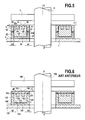
- the figure 6 shows an example of known jacketed axial bearing which comprises a disk-shaped rotor armature 107 integral with a rotor 106 and placed in a corrosive gas atmosphere, acid or particle carrier.
- a stator armature 104 secured to a fixed support device 101 is placed facing the rotor armature 107.
- the stator armature 104 comprises at least one winding 142, 143 and a ferromagnetic body 141 placed in a protective enclosure metal 102, 103.
- the enclosure 102, 103 comprises an annular support 102 which comprises a bottom wall 120 and inner and outer side walls 121, 122 having thicknesses d1, d2 of several millimeters and extending over the entire height of the ferromagnetic body 141.
- a plate-shaped jacket 103 having a thickness d0 is attached to the annular support 102 and is welded by weld zones 151, 152 to the free ends of the inner and outer side walls 121, 122 of the annular support 102.
- the annular support 102 may be made of a stainless material such as, for example, a magnetic stainless steel, in particular of the 17-4 PH type.
- the liner 103 or closure plate may be made of the same material as the annular support 102, for example stainless steel 17-4 PH, or be made of a different metallic material, such as for example inconel.
- the liner 103 is welded by laser welding, electronic bombardment or TIG welding to the annular support 102.
- the operation of the bearing is not optimum if the thickness d 0 of the liner 103 is too great, since the distance between the stator armature 104 and the rotor armature 107 is too great and the bearing's attraction capacity is then too limited.
- the thickness d 0 of the liner 103 be reduced and that the liner 103 be constituted by a thin sheet, typically 0.5 mm thick.
- jacketed bearings makes it possible to work in dirty or corrosive environments, their use in pressurized operation requires a perfect hermeticity over time in order to overcome problems related to decompression (explosive depressurization, deformation by swelling).
- the realization of a jacketed axial bearing thus introduces specific limits to the geometry.
- the lining with a thin sheet (typically of thickness 0.5 mm) and flat of large size creates a high sensitivity of the assembly to the different coefficients of thermal expansion of the materials involved.
- a 17-4 PH stainless steel plate or inconel which are materials typically used for the lining bearings strongly laminated may have different expansion coefficients of a massive support of the same nature .
- the closing plate expands more than the support, even with values as low as about 5 ⁇ m, the sheet is compression and deforms until it is likely to touch the rotor (as a result of a deformation bulge which can reach for example 0.6 or 0.7 mm for the 5 microns of deformation applied to the abutment of 45000 N above) , since the air gap ⁇ generally has values of the order of 0.4 to 1.2 mm. At the same time the welds connecting the sheet to the support are put in stress.
- the present invention aims to remedy the aforementioned drawbacks and to allow to tolerate, in a jacketed axial magnetic bearing, slightly different expansion coefficients between a jacket constituted by a sheet of relatively thin thickness and its support, without thereby putting the welds of binding in excessive stress, nor risk that the liner deforms until it touches the rotor armature of the bearing.
- a jacketed axial magnetic bearing for a rotating machine equipped with a rotor in contact with a corrosive gaseous atmosphere, acid or particle carrier comprising a disk-shaped rotor armature integral with the rotor and placed in said gaseous atmosphere and a stator armature integral with a fixed support device and placed opposite said rotor armature, the stator armature comprising at least one coil and a ferromagnetic body placed in a metal protective enclosure , characterized in that said protective enclosure comprises on the one hand a U-shaped annular support with a bottom wall, and inner and outer lateral walls having a thickness of several millimeters and a length less than that of the armature stator and on the other hand a ring-shaped annular sleeve-shaped profile machined in the mass and therefore seamless, av ec of the inner and outer side walls having a thickness of several millimeters and a closure wall having a thickness
- the annular sleeve is shrunk onto the ferromagnetic body, which allows to take into account differences in coefficient of expansion.
- the annular jacket has a coefficient of expansion slightly less than that of the ferromagnetic body, which allows a tension on the jacket when the temperature increases.
- the annular liner comprises flexible grooves formed in the inner and outer side walls, which makes it possible to release stresses at the level of the welds.
- the bearing comprises at least first and second O-rings disposed on either side of the weld between the inner side wall of the liner and the inner side wall of the annular support and third and fourth O-rings disposed on either side of the weld between the outer side wall of the liner and the outer side wall of the annular support.
- each of said first, second, third and fourth O-rings constitutes a double seal.
- the O-rings allow the installation of a second hermetic barrier and compensate for defects that may occur in case of non-completely sealed welds.
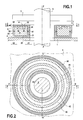
- This axial bearing comprises a stator armature 4 conventionally comprising one or two annular windings 42, 43 and a ferromagnetic body 41, the stator armature 4 being placed facing a rotor armature 7 secured to a rotating shaft 6 ZZ 'axis.
- the ferromagnetic body 41 may be solid or locally laminated.
- stator armature 4 is placed in a sealed metal protection enclosure 2, 3 which is itself secured to a fixed support member 1.
- the stator armature 4 and its protective enclosure 2, 3 define an air gap ⁇ with respect to the rotor armature 7.
- the air gap ⁇ can be between 0.4 and 1.5 mm, and preferably between 0, 4 and 1.2 mm.
- the protective enclosure of the stator armature 4 comprises first and foremost a U-shaped annular support 2 with a bottom wall 20 and internal and external lateral walls 21 and 21. thicknesses e1, e2 of several millimeters each, for example between 3 and 10 mm, and a length in the direction of the axis ZZ 'of the rotating shaft 6 which is less than the length of the ferromagnetic body 41 of the stator armature 4.
- the protective enclosure of the stator armature 4 comprises secondly an annular jacket 3 in the form of a U-shaped casing machined in the mass, with a closure wall 30 having a thickness e0 less than the thickness of the walls.
- lateral 31 and outer 32 which have thicknesses e1 and e2 respectively of several millimeters which are substantially equal to the thicknesses of the inner side walls 21 and outer 22 of the annular support 2, without necessarily being identical.
- the free ends of the inner side walls 31 and outer 32 of the jacket 3 are welded to the free ends of the inner side walls 21 and outer 22 of the annular support 2.
- the welding areas 51, 52 are thus formed between pieces of thickness of several millimeters, the thicknesses e1 and e2 being advantageously greater than 3 mm.
- the welds 51, 52 between the jacket 3 and the annular support 2 may be made for example by laser welding, electron bombardment or TIG welding.
- the closing wall 30 of the annular liner 3 preferably has a reduced thickness, lower than that of the side walls 31, 32 and which can be between 0.3 and 2 mm, and preferably between 0.4 and 1 mm in order to not to increase too much the distance between the ferromagnetic armature 41 and the rotor armature 7.
- the annular support 2 and the liner 3 may be made for example of a magnetic stainless steel, in particular of 17-4 PH type, but other materials are also possible. Furthermore, the material of the liner 3 may also be different from that of the annular support 2. Thus, the liner 3 can be made for example in inconel.
- the jacket 3 constituting the closure plate has a shape of U.
- This U has been machined in the mass of a material of greater thickness (obtained or not by the same process as the material of the annular support 2).
- the plate of the active face (outer face of the wall 30) is machined by fine machining to limit the maximum changing the characteristics of the materials until the desired thickness e0 (typically 0.5 mm) is obtained.
- the legs 31, 32 of the U are machined to have a thickness e1, e2 much larger and the weld of the assembly on its support 2 is made at the base of the U allowing the implementation of welds 51, 52 much thicker (typically 5 mm instead of 0.5 mm) ensuring much better strength and much better hermeticity than with achievements requiring the welding of thin materials such as those known in the prior art.
- the U-shaped liner 3 can be inserted on the ferromagnetic support 41 by shrinking a few tens of ⁇ m in order to take into account the small difference in coefficient of thermal expansion and thus prestressing the liner 3 (see the embodiment of FIG. realization of the figure 5 with hooping zones 31a, 32a created in the vicinity of the legs 31, 32 of the jacket 3).
- the jacket 3 preferably has a coefficient of expansion smaller than that of the ferromagnetic body 41.
- the location of the welds 51, 52 remotely at the base of the legs 31, 32 of the liner 3 makes it possible to modify the mechanical loading of the weld so as to relieve the stresses thereof and thus guarantee its integrity. .
- No welding of thin materials then works in direct tension-compression.
- the lengths of the legs 31, 32 of the jacket 3 then directly influence the loading of the welds 51, 52 by multiplying the swiveling angle.
- the legs 31, 32 of the U must therefore be long enough to minimize the stresses in the welds 51, 52 due to different expansions and contractions.
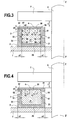
- O'Ring O-rings 81 to 88 can be easily added in order to either render the seal 51, 52 non-functional or unnecessary, or to provide a double sealing barrier (see realization of the figure 3 ).
- At least O-rings 81, 82 are disposed on either side of the weld 51 between the inner side wall 31 of the liner 3 and the inner side wall 21 of the annular support 2. Similar way at least the O-rings 83, 84 are arranged on each side and other of the weld 52 between the outer side wall 32 of the liner 3 and the outer side wall 22 of the annular support 2.
- two O-rings 81, 85 can be arranged; 82, 86; 83, 87; 84, 88 on each side of each weld 51, 52, to form a double seal.
- the annular liner 3 may comprise flexible grooves 91, 92 formed in the inner side walls 31 and outer 32 respectively.
- the flexibility grooves 91, 92 make it possible to release the stresses at the level of the welds 51, 52.
- a second stator armature 4 with a casing 2, 3 could be arranged symmetrically with respect to the rotor armature 7 so as to form a double-acting axial abutment.
Landscapes
- Engineering & Computer Science (AREA)
- General Engineering & Computer Science (AREA)
- Mechanical Engineering (AREA)
- Magnetic Bearings And Hydrostatic Bearings (AREA)
Abstract
Description
- La présente invention concerne un palier magnétique axial chemisé pour machine tournante équipée d'un rotor en contact avec une atmosphère gazeuse corrosive, acide ou porteuse de particules.
- On a déjà décrit, par exemple dans le document
EP 1 830 081 A1 , un palier magnétique actif chemisé qui peut être appliqué à un palier radial ou un palier axial. Un tel type de palier chemisé est destiné à travailler dans des ambiances sales ou corrosives. - La
figure 6 montre un exemple de palier axial chemisé connu qui comprend une armature rotorique 107 en forme de disque solidaire d'un rotor 106 et placée dans une atmosphère gazeuse corrosive, acide ou porteuse de particules. - Un induit de stator 104 solidaire d'un dispositif de support fixe 101 est placé en regard de l'armature rotorique 107. L'induit de stator 104 comprend au moins un bobinage 142, 143 et un corps ferromagnétique 141 placés dans une enceinte de protection métallique 102, 103.
- L'enceinte de protection 102, 103 comprend un support annulaire 102 qui comprend une paroi de fond 120 et des parois latérales interne et externe 121, 122 présentant des épaisseurs d1, d2 de plusieurs millimètres et s'étendant sur toute la hauteur du corps ferromagnétique 141.
- Une chemise 103 en forme de plaque présentant une épaisseur d0 est rapportée sur le support annulaire 102 et est soudée par des zones de soudure 151, 152 sur les extrémités libres des parois latérales interne et externe 121, 122 du support annulaire 102.
- Le support annulaire 102 peut être en un matériau inoxydable tel que par exemple un acier inoxydable magnétique, notamment du type 17-4 PH. La chemise 103 ou plaque de fermeture peut être réalisée dans le même matériau que le support annulaire 102, par exemple en acier inoxydable 17-4 PH, ou être réalisée en un matériau métallique différent, tel que par exemple de l'inconel.
- La chemise 103 est soudée par soudage laser, bombardement électronique ou soudage TIG, au support annulaire 102.
- Le fonctionnement du palier n'est pas optimum si l'épaisseur d0 de la chemise 103 est trop importante, car la distance entre l'induit de stator 104 et l'armature rotorique 107 est trop importante et la capacité d'attraction du palier est alors trop limitée.
- Il est donc souhaitable que l'épaisseur d0 de la chemise 103 soit réduite et que la chemise 103 soit constituée par une tôle fine, typiquement de 0,5 mm d'épaisseur. Toutefois, ceci pose des problèmes de conception délicats.
- Il est à noter que si l'utilisation de paliers chemisés permet de travailler dans des ambiances sales ou corrosives, leur utilisation en fonctionnement pressurisé nécessite une herméticité parfaite dans le temps afin de s'affranchir de problèmes liés à la décompression (dépressurisation explosive, déformation par gonflement).
- La réalisation d'un palier axial chemisé introduit ainsi des limites spécifiques à la géométrie. Le chemisage par une tôle fine (typiquement d'épaisseur 0,5 mm) et plate de grande dimension (car par exemple une butée axiale de 45 000 N a typiquement un diamètre externe de 470 mm et un diamètre interne de 270 mm) crée une grande sensibilité du montage aux différents coefficients de dilatation thermique des matériaux mis en jeu.
- Bien que les matériaux en présence soient choisis pour avoir des coefficients de dilatation thermique égaux, la méthode de fabrication et d'usinage peut avoir une influence significative.
- A titre d'exemple, une plaque d'acier inoxydable 17-4 PH ou d'inconel (qui sont des matériaux typiquement utilisés pour le chemisage des paliers) fortement laminée peut avoir des coefficients de dilatation différents d'un support massif de même nature.
- D'autre part, sous l'effet de la température et de la pression ambiante, les soudures liant la chemise en forme de plaque au support massif peuvent être soumises à des contraintes importantes si les différents éléments ne se dilatent ou ne se contractent pas de manières identiques.
- Lorsque la tôle de fermeture se dilate plus que le support, même avec des valeurs aussi faibles qu'environ 5 µm, la tôle est mise en compression et se déforme jusqu'à être susceptible de toucher le rotor (par suite d'un bombé de déformation qui peut atteindre par exemple 0,6 ou 0,7 mm pour les 5 µm de déformation appliqués à la butée de 45000 N précitée), du fait que l'entrefer Δ a généralement des valeurs de l'ordre de 0,4 à 1,2 mm. Dans un même temps les soudures reliant la tôle au support sont mises en contrainte.
- Lorsque le stator se dilate plus que la tôle de fermeture, les soudures tirent sur la tôle et sont donc mises en contraintes de traction.
- La présente invention vise à remédier aux inconvénients précités et à permettre de tolérer, dans un palier magnétique axial chemisé, des coefficients de dilatation légèrement différents entre une chemise constituée par une tôle de relativement faible épaisseur et son support, sans pour cela mettre les soudures de liaison en contraintes excessives, ni risquer que la chemise se déforme jusqu'à venir toucher l'armature rotorique du palier.
- Ces buts sont atteints, conformément à l'invention, grâce à un palier magnétique axial chemisé pour machine tournante équipée d'un rotor en contact avec une atmosphère gazeuse corrosive, acide ou porteuse de particules, comprenant une armature rotorique en forme de disque solidaire du rotor et placée dans ladite atmosphère gazeuse et un induit de stator solidaire d'un dispositif de support fixe et placé en regard de ladite armature rotorique, l'induit de stator comprenant au moins un bobinage et un corps ferromagnétique placés dans une enceinte de protection métallique, caractérisé en ce que ladite enceinte de protection comprend d'une part un support annulaire à profil en U avec une paroi de fond, et des parois latérales interne et externe présentant une épaisseur de plusieurs millimètres et une longueur inférieure à celle de l'induit de stator et d'autre part une chemise annulaire en forme de coiffe à profil en U usinée dans la masse et donc sans soudure, avec des parois latérales interne et externe présentant une épaisseur de plusieurs millimètres et une paroi de fermeture présentant une épaisseur plus faible que celle des parois latérales interne et externe, les extrémités libres des parois latérales interne et externe de la chemise étant soudées aux extrémités libres des parois latérales interne et externe dudit support annulaire.
- On obtient ainsi une surface de faible épaisseur e0 n'ayant aucune soudure sensible aux contraintes thermiques ou autres.
- Selon un mode particulier de réalisation possible, la chemise annulaire est frettée sur le corps ferromagnétique, ce qui permet de prendre en compte des différences de coefficient de dilatation.
- Dans ce cas, il est avantageux que la chemise annulaire présente un coefficient de dilatation légèrement inférieur à celui du corps ferromagnétique, ce qui permet une tension sur la chemise quand la température augmente.
- Selon un autre mode de réalisation possible, la chemise annulaire comprend des gorges de souplesse formées dans les parois latérales interne et externe, ce qui permet de libérer des contraintes au niveau des soudures.
- Selon encore une autre caractéristique avantageuse de la présente invention, le palier comprend au moins des premier et deuxième joints toriques disposés de part et d'autre de la soudure entre la paroi latérale interne de la chemise et la paroi latérale interne du support annulaire et des troisième et quatrième joints toriques disposés de part et d'autre de la soudure entre la paroi latérale externe de la chemise et la paroi latérale externe du support annulaire.
- Dans ce cas, avantageusement, chacun desdits premier, deuxième, troisième et quatrième joints toriques constitue une double étanchéité.
- Les joints toriques permettent l'installation d'une seconde barrière d'herméticité et compensent les défauts susceptibles d'apparaître en cas de réalisation de soudures non complètement hermétiques.
- D'autres caractéristiques et avantages de l'invention ressortiront à la lecture de la description suivante de modes particuliers de réalisation de l'invention, donnés à titre d'exemples, en référence aux dessins annexés, sur lesquels :
- la
figure 1 est une vue en coupe axiale selon la ligne I-I de lafigure 2 , d'un premier exemple de réalisation d'un palier magnétique axial chemisé selon l'invention ; - la
figure 2 est une vue en coupe radiale selon la ligne II-II de lafigure 1 ; - la
figure 3 est une vue en demi-coupe axiale d'un deuxième exemple de réalisation d'un palier magnétique axial chemisé selon l'invention ; - la
figure 4 est une vue en demi-coupe axiale d'un troisième exemple de réalisation d'un palier magnétique axial chemisé selon l'invention ; - la
figure 5 est une vue en coupe axiale d'un quatrième exemple de réalisation d'un palier magnétique axial chemisé selon l'invention ; et - la
figure 6 est une vue en coupe axiale d'un palier magnétique axial chemisé selon l'art antérieur. - On a représenté sur les
figures 1 et 2 un premier exemple de réalisation d'un palier magnétique axial chemisé selon la présente invention. - Ce palier axial comprend un induit de stator 4 comprenant de façon classique un ou deux bobinages annulaires 42, 43 et un corps ferromagnétique 41, l'induit de stator 4 étant placé en regard d'une armature rotorique 7 solidaire d'un arbre tournant 6 d'axe ZZ'. Le corps ferromagnétique 41 peut être massif ou localement feuilleté.
- L'induit de stator 4 est placé dans une enceinte de protection métallique étanche 2, 3 qui est elle-même solidaire d'un organe de support fixe 1.
- L'induit de stator 4 et son enceinte de protection 2, 3 définissent un entrefer Δ par rapport à l'armature rotorique 7. L'entrefer Δ peut être compris entre 0,4 et 1,5 mm, et de préférence entre 0,4 et 1,2 mm.
- L'enceinte de protection de l'induit de stator 4 comprend en premier lieu un support annulaire 2 à profil en U avec une paroi de fond 20 et des parois latérales interne 21 et externe 22. Les parois latérales interne 21 et externe 22 présentent respectivement des épaisseurs e1, e2 de plusieurs millimètres chacune, par exemple entre 3 et 10 mm, et une longueur selon la direction de l'axe ZZ' de l'arbre tournant 6 qui est inférieure à la longueur du corps ferromagnétique 41 de l'induit de stator 4.
- L'enceinte de protection de l'induit de stator 4 comprend en second lieu une chemise 3 annulaire en forme de coiffe à profil en U usinée dans la masse, avec une paroi de fermeture 30 présentant une épaisseur e0 inférieure à l'épaisseur des parois latérales interne 31 et externe 32 qui présentent des épaisseurs e1 et e2 respectivement de plusieurs millimètres qui sont sensiblement égales aux épaisseurs des parois latérales interne 21 et externe 22 du support annulaire 2, sans être nécessairement identiques.
- Les extrémités libres des parois latérales interne 31 et externe 32 de la chemise 3 sont soudées aux extrémités libres des parois latérales interne 21 et externe 22 du support annulaire 2. Les zones de soudage 51, 52 sont ainsi réalisées entre des pièces d'épaisseur de plusieurs millimètres, les épaisseurs e1 et e2 étant avantageusement supérieures à 3 mm.
- Les soudures 51, 52 entre la chemise 3 et le support annulaire 2 peuvent être réalisées par exemple par soudage laser, bombardement électronique ou encore soudage TIG.
- La paroi 30 de fermeture de la chemise annulaire 3 présente de préférence une épaisseur réduite, inférieure à celle des parois latérales 31, 32 et qui peut être comprise entre 0,3 et 2 mm, et de préférence entre 0,4 et 1 mm afin de ne pas trop augmenter la distance entre l'induit ferromagnétique 41 et l'armature rotorique 7.
- Le support annulaire 2 et la chemise 3 peuvent être réalisés par exemple en un acier inoxydable magnétique, notamment de type 17-4 PH, mais d'autres matériaux sont également possibles. Par ailleurs, le matériau de la chemise 3 peut aussi être différent de celui du support annulaire 2. Ainsi, la chemise 3 peut être réalisée par exemple en inconel.
- Dans ce montage selon l'invention, la chemise 3 constituant la tôle de fermeture a une forme de U. Ce U a été usiné dans la masse d'un matériau de plus forte épaisseur (obtenu ou non par le même procédé que le matériau du support annulaire 2).
- Le plat de la face active (face extérieure de la paroi 30) est usiné par un usinage fin permettant de limiter au maximum le changement de caractéristiques des matériaux jusqu'à l'obtention de l'épaisseur désirée e0 (typiquement 0,5 mm).
- Les jambes 31, 32 du U sont usinées pour avoir une épaisseur e1, e2 beaucoup plus importante et la soudure de l'ensemble sur son support 2 est réalisée à la base du U permettant la mise en oeuvre de soudures 51, 52 beaucoup plus épaisses (typiquement 5 mm au lieu de 0,5 mm) garantissant une bien meilleure robustesse et bien meilleure herméticité qu'avec des réalisations nécessitant la soudure de matériaux de faible épaisseur telles que celles connues dans l'art antérieur.
- De plus, la chemise 3 en forme de U peut être insérée sur le support ferromagnétique 41 par frettage de quelques dizaines de µm afin de prendre en compte la petite différence de coefficient de dilatation thermique et ainsi mettre en précontraintes la chemise 3 (voir le mode de réalisation de la
figure 5 avec des zones de frettage 31a, 32a créées au voisinage des jambes 31, 32 de la chemise 3). Dans ce cas, la chemise 3 présente de préférence un coefficient de dilatation inférieur à celui du corps ferromagnétique 41. - De plus, la localisation des soudures 51, 52 de façon déportée à la base des jambes 31, 32 de la chemise 3, permet de modifier le chargement mécanique de la soudure de façon à soulager les sollicitations de celle-ci et ainsi garantir son intégrité. Aucune soudure de matériaux de faible épaisseur ne travaille alors en traction-compression directe. Les longueurs des jambes 31, 32 de la chemise 3 influencent alors directement le chargement des soudures 51, 52 en démultipliant l'angle de rotulage. Les jambes 31, 32 du U doivent donc être suffisamment longues pour minimiser les contraintes dans les soudures 51, 52 dues aux différentes dilatations et contractions.
- De plus, des joints toriques de type O'Ring 81 à 88 peuvent être facilement ajoutés afin soit de rendre l'herméticité de la soudure 51, 52 non fonctionnelle ou non nécessaire, soit de mettre une double barrière d'étanchéité (voir le mode de réalisation de la
figure 3 ). - Comme on l'a représenté sur la
figure 3 , selon un mode de réalisation avantageux, au moins des joints toriques 81, 82 sont disposés de part et d'autre de la soudure 51 entre la paroi latérale interne 31 de la chemise 3 et la paroi latérale interne 21 du support annulaire 2. De façon similaire au moins des joints toriques 83, 84 sont disposés de part et d'autre de la soudure 52 entre la paroi latérale externe 32 de la chemise 3 et la paroi latérale externe 22 du support annulaire 2. - Avantageusement, comme représenté sur la
figure 3 , on peut disposer deux joint toriques 81, 85 ; 82, 86 ; 83, 87 ; 84, 88 de part et d'autre de chaque soudure 51, 52, afin de former une double étanchéité. - De façon optionnelle, comme représenté sur la
figure 4 , la chemise annulaire 3 peut comprendre des gorges de souplesse 91, 92 formées dans les parois latérales interne 31 et externe 32 respectivement. - Les gorges de souplesse 91, 92 permettent de libérer les contraintes au niveau des soudures 51, 52.
- Naturellement, les différents modes de réalisation décrits sur les
figures 1 ,3 ,4 et5 peuvent se combiner entre eux. - De même, un deuxième induit de stator 4 avec une enveloppe 2, 3 conforme à l'invention pourrait être disposé de façon symétrique par rapport à l'armature rotorique 7 de manière à former une butée axiale à double effet.
- On n'a pas décrit dans la présente demande les détecteurs de position, ni les circuits d'alimentation du palier magnétique axial actif chemisé, car ces éléments sont classiques et indépendants du mode de réalisation de l'enveloppe 2, 3.
Claims (11)
- Palier magnétique axial chemisé pour machine tournante équipée d'un rotor (6) en contact avec une atmosphère gazeuse corrosive, acide ou porteuse de particules, comprenant une armature rotorique (7) en forme de disque solidaire du rotor (6) et placée dans ladite atmosphère gazeuse et un induit de stator (4) solidaire d'un dispositif de support fixe (1) et placé en regard de ladite armature rotorique (7), l'induit de stator (4) comprenant au moins un bobinage (42, 43) et un corps ferromagnétique (41) placés dans une enceinte de protection (2,3) métallique, caractérisé en ce que ladite enceinte de protection (2, 3) comprend d'une part un support annulaire (2) à profil en U avec une paroi de fond (20), et des parois latérales interne et externe (21, 22) présentant une épaisseur de plusieurs millimètres et une longueur inférieure à celle de l'induit de stator (4) et d'autre part une chemise (3) annulaire en forme de coiffe à profil en U usinée dans la masse et donc sans soudure, avec des parois latérales interne et externe (31, 32) et une paroi de fermeture (30) présentant une épaisseur (e0) plus faible que celle (e1, e2) des parois latérales interne et externe (31, 32), les extrémités libres des parois latérales interne et externe (31, 32) de la chemise (3) étant soudées aux extrémités libres des parois latérales interne et externe (21, 22) dudit support annulaire (2).
- Palier selon la revendication 1, caractérisé en ce que la chemise annulaire (3) est frettée sur ledit corps ferromagnétique (41).
- Palier selon la revendication 1 ou la revendication 2, caractérisé en ce que la chemise annulaire (3) comprend des gorges de souplesse (91, 92) formées dans les parois latérales interne et externe (31, 32).
- Palier selon l'une quelconque des revendications 1 à 3, caractérisé en ce qu'il comprend au moins des premier et deuxième joints toriques (81, 82) disposés de part et d'autre de la soudure (51) entre la paroi latérale interne (31) de la chemise (3) et la paroi latérale interne (21) du support annulaire (2) et des troisième et quatrième joints toriques (83, 84) disposés de part et d'autre de la soudure (52) entre la paroi latérale externe (32) de la chemise (3) et la paroi latérale externe (22) du support annulaire (2).
- Palier selon la revendication 4, caractérisé en ce que chacun desdits premier, deuxième, troisième et quatrième joints toriques (81, 85 ; 82, 86 ; 83, 87 ; 84, 88) comprend deux joints constituant une double étanchéité.
- Palier selon l'une quelconque des revendications 1 à 5, caractérisé en ce que la chemise annulaire (3) et le support annulaire (2) sont en acier inoxydable magnétique du type 17-4 PH ou en inconel.
- Palier selon l'une quelconque des revendications 1 à 6, caractérisé en ce que la paroi de fermeture (30) de la chemise annulaire (3) présente une épaisseur (e0) comprise entre 0,3 et 2 mm.
- Palier selon l'une quelconque des revendications 1 à 7, caractérisé en ce que les soudures (51, 52) entre la chemise (3) et le support annulaire (2) sont réalisées sur des parois présentant une épaisseur supérieure à 3 mm.
- Palier selon l'une quelconque des revendications 1 à 8, caractérisé en ce que les soudures (51, 52) entre la chemise (3) et le support annulaire (2) sont réalisées par soudage laser, bombardement électronique ou soudage TIG.
- Palier selon l'une quelconque des revendications 1 à 9, caractérisé en ce que l'entrefer (Δ) entre l'armature rotorique (7) et l'induit de stator (4) est compris entre 0,4 et 1,2 mm.
- Palier selon la revendication 2, caractérisé en ce que la chemise annulaire (3) présente un coefficient de dilatation inférieur à celui du corps ferromagnétique (41).
Applications Claiming Priority (1)
| Application Number | Priority Date | Filing Date | Title |
|---|---|---|---|
| FR0857455A FR2938028B1 (fr) | 2008-11-03 | 2008-11-03 | Palier magnetique axial chemise. |
Publications (2)
| Publication Number | Publication Date |
|---|---|
| EP2182230A1 true EP2182230A1 (fr) | 2010-05-05 |
| EP2182230B1 EP2182230B1 (fr) | 2015-02-25 |
Family
ID=40973140
Family Applications (1)
| Application Number | Title | Priority Date | Filing Date |
|---|---|---|---|
| EP09174351.8A Active EP2182230B1 (fr) | 2008-11-03 | 2009-10-28 | Palier magnétique axial chemisé |
Country Status (5)
| Country | Link |
|---|---|
| US (1) | US7986066B2 (fr) |
| EP (1) | EP2182230B1 (fr) |
| JP (1) | JP5384296B2 (fr) |
| CA (1) | CA2682563C (fr) |
| FR (1) | FR2938028B1 (fr) |
Cited By (2)
| Publication number | Priority date | Publication date | Assignee | Title |
|---|---|---|---|---|
| EP2746606A1 (fr) * | 2012-12-21 | 2014-06-25 | Nuovo Pignone S.r.l. | Palier magnétique et machine rotative comprenant un tel palier |
| EP2746607A1 (fr) * | 2012-12-21 | 2014-06-25 | Nuovo Pignone S.r.l. | Palier magnétique à enveloppe et machine rotative comprenant un tel palier |
Families Citing this family (9)
| Publication number | Priority date | Publication date | Assignee | Title |
|---|---|---|---|---|
| US8875380B2 (en) * | 2007-03-08 | 2014-11-04 | General Electric Company | Process of forming an encapsulated magnet assembly |
| US8317651B2 (en) | 2008-05-07 | 2012-11-27 | Fallbrook Intellectual Property Company Llc | Assemblies and methods for clamping force generation |
| DE102010064067A1 (de) | 2010-12-23 | 2012-06-28 | Siemens Aktiengesellschaft | Radialmagnetlager zur magnetischen Lagerung eines Rotors |
| FR2981710B1 (fr) | 2011-10-20 | 2014-07-25 | Mecanique Magnetique Sa | Stator chemise de machine electromagnetique pour ambiance corrosive et sans traitement thermique |
| DE102012201252A1 (de) * | 2012-01-30 | 2013-08-01 | Siemens Aktiengesellschaft | Längslagerscheibe für einen Strömungsmaschinenrotor |
| ITCO20120045A1 (it) | 2012-09-20 | 2014-03-21 | Nuovo Pignone Spa | Cuscinetto reggi-spinta magnetico, turbomacchina e metodo |
| EP2808572B1 (fr) * | 2013-05-29 | 2020-01-01 | Nuovo Pignone S.r.l. | Ensemble de palier magnétique à ventilation interne |
| CN108544057A (zh) * | 2018-04-11 | 2018-09-18 | 江阴市光科真空机械有限公司 | 离子注入工艺腔体的焊接工艺 |
| CN112177868B (zh) * | 2019-07-01 | 2022-04-12 | 中国航天科工飞航技术研究院(中国航天海鹰机电技术研究院) | 调心磁悬浮轴承系统及发电机 |
Citations (7)
| Publication number | Priority date | Publication date | Assignee | Title |
|---|---|---|---|---|
| US3223043A (en) * | 1963-09-24 | 1965-12-14 | Gen Dynamics Corp | Axial air gap motor adapted for canned pump |
| US5698917A (en) * | 1995-09-25 | 1997-12-16 | Glacier Rpb Inc. | Electromagnetic bearing with a stationary armature canning arrangement |
| EP1137126A1 (fr) * | 1998-11-30 | 2001-09-26 | Ebara Corporation | Laser excimere a excitation de decharge electrique |
| EP1137128A2 (fr) | 2000-03-13 | 2001-09-26 | The Furukawa Electric Co., Ltd. | Composant optique |
| US20040112800A1 (en) * | 2002-12-17 | 2004-06-17 | Hideki Ogino | Centrifugal extractor of non-contact journaled construction |
| EP1830081A1 (fr) * | 2006-02-27 | 2007-09-05 | Societe De Mecanique Magnetique | Palier magnétique actif chemisé |
| EP1967286A2 (fr) * | 2007-03-08 | 2008-09-10 | General Electric Company | Ensemble de stator encapsulé et processus de fabrication |
Family Cites Families (6)
| Publication number | Priority date | Publication date | Assignee | Title |
|---|---|---|---|---|
| FR2377549A1 (fr) * | 1977-01-12 | 1978-08-11 | Europ Propulsion | Montage de rotor court de grand diametre |
| US4180296A (en) * | 1978-01-06 | 1979-12-25 | Societe Europeenne De Propulsion | Axial electromagnetic bearing for a shaft rotating at high speed |
| US4920291A (en) * | 1989-01-19 | 1990-04-24 | Contraves Goerz Corporation | Magnetic thrust bearing with high force modulation capability |
| GB2239295B (en) * | 1989-08-04 | 1993-04-21 | Glacier Metal Co Ltd | Magnetic bearings |
| US5084644A (en) * | 1990-12-20 | 1992-01-28 | Nova Corporation Of Alberta | Control of magnetization of a machine with axial magnetic bearings |
| US5153475A (en) * | 1991-01-08 | 1992-10-06 | Contraves Usa, Inc. | Magnetic axial force actuator construction |
-
2008
- 2008-11-03 FR FR0857455A patent/FR2938028B1/fr not_active Expired - Fee Related
-
2009
- 2009-08-10 US US12/538,397 patent/US7986066B2/en active Active
- 2009-10-14 CA CA2682563A patent/CA2682563C/fr active Active
- 2009-10-28 EP EP09174351.8A patent/EP2182230B1/fr active Active
- 2009-11-04 JP JP2009253065A patent/JP5384296B2/ja not_active Expired - Fee Related
Patent Citations (7)
| Publication number | Priority date | Publication date | Assignee | Title |
|---|---|---|---|---|
| US3223043A (en) * | 1963-09-24 | 1965-12-14 | Gen Dynamics Corp | Axial air gap motor adapted for canned pump |
| US5698917A (en) * | 1995-09-25 | 1997-12-16 | Glacier Rpb Inc. | Electromagnetic bearing with a stationary armature canning arrangement |
| EP1137126A1 (fr) * | 1998-11-30 | 2001-09-26 | Ebara Corporation | Laser excimere a excitation de decharge electrique |
| EP1137128A2 (fr) | 2000-03-13 | 2001-09-26 | The Furukawa Electric Co., Ltd. | Composant optique |
| US20040112800A1 (en) * | 2002-12-17 | 2004-06-17 | Hideki Ogino | Centrifugal extractor of non-contact journaled construction |
| EP1830081A1 (fr) * | 2006-02-27 | 2007-09-05 | Societe De Mecanique Magnetique | Palier magnétique actif chemisé |
| EP1967286A2 (fr) * | 2007-03-08 | 2008-09-10 | General Electric Company | Ensemble de stator encapsulé et processus de fabrication |
Cited By (6)
| Publication number | Priority date | Publication date | Assignee | Title |
|---|---|---|---|---|
| EP2746606A1 (fr) * | 2012-12-21 | 2014-06-25 | Nuovo Pignone S.r.l. | Palier magnétique et machine rotative comprenant un tel palier |
| EP2746607A1 (fr) * | 2012-12-21 | 2014-06-25 | Nuovo Pignone S.r.l. | Palier magnétique à enveloppe et machine rotative comprenant un tel palier |
| WO2014095741A1 (fr) * | 2012-12-21 | 2014-06-26 | Nuovo Pignone Srl | Palier magnétique chemisé et machine rotative comprenant un tel palier |
| WO2014095788A1 (fr) * | 2012-12-21 | 2014-06-26 | Nuovo Pignone Srl | Palier magnétique et machine tournante comprenant un tel palier |
| CN105339689A (zh) * | 2012-12-21 | 2016-02-17 | 诺沃皮尼奥内股份有限公司 | 磁性轴承和包括此种轴承的旋转机械 |
| US10378582B2 (en) | 2012-12-21 | 2019-08-13 | Nuovo Pignone Srl | Magnetic bearing and rotary machine comprising such a bearing |
Also Published As
| Publication number | Publication date |
|---|---|
| FR2938028A1 (fr) | 2010-05-07 |
| JP5384296B2 (ja) | 2014-01-08 |
| CA2682563C (fr) | 2016-03-15 |
| CA2682563A1 (fr) | 2010-05-03 |
| EP2182230B1 (fr) | 2015-02-25 |
| JP2010159874A (ja) | 2010-07-22 |
| US7986066B2 (en) | 2011-07-26 |
| FR2938028B1 (fr) | 2010-12-31 |
| US20100187926A1 (en) | 2010-07-29 |
Similar Documents
| Publication | Publication Date | Title |
|---|---|---|
| EP2182230B1 (fr) | Palier magnétique axial chemisé | |
| EP0003091A1 (fr) | Joint annulaire | |
| WO2008084157A2 (fr) | Machine electrique chemisee ou surmoulee | |
| EP1772660B1 (fr) | Dispositif de liaison à brides | |
| FR2897911A1 (fr) | Palier magnetique actif chemise | |
| EP2071216A1 (fr) | Joint d'étanchéité superplastique, de préférence pour système à cellules électrochimiques | |
| FR2965598A1 (fr) | Assemblage de soufflet d'etancheite soude | |
| WO2010026182A1 (fr) | Procede de fabrication d'une piece thermomecanique de revolution circulaire comportant un substrat porteur a base de titane revetu d'acier ou superalliage, carter de compresseur de turbomachine resistant au feu de titane obtenu selon ce procede | |
| FR2766252A1 (fr) | Bague d'etancheite metallique | |
| EP3755925B1 (fr) | Assemblage d'étanchéité métallique pour l'étanchéité entre un arbre tournant et un bâti fixe | |
| FR3104225A1 (fr) | Joint mécanique avec soufflet soudé | |
| EP3280563B1 (fr) | Procédé d'assemblage permettant de fixer une première pièce à une seconde pièce | |
| FR3086122A1 (fr) | Rotor pour machine electrique asynchrone a arbre non traversant | |
| EP2584210B1 (fr) | Stator chemisé de machine électromagnétique pour ambiance corrosive sans traitement thermique | |
| EP2017491A1 (fr) | Procédé de fabrication et rondelle d'autocentrage renforcée mécaniquement | |
| EP2270958B1 (fr) | Machine tournante chemisée et son procédé de fabrication | |
| EP2914883B1 (fr) | Joint statique métallique annulaire performant a bas coût pour hautes pressions et grands diamètres | |
| EP3115226B1 (fr) | Pièce de centrage pour un roulement de roue, roulement et assemblage de roue de véhicule associés | |
| EP3115225B1 (fr) | Moyeu de roue, roulement de roue, et assemblage de roue de vehicule | |
| EP3243670B1 (fr) | Roue d'aeronef | |
| FR3055820A1 (fr) | Procede d'assemblage de coques en metal dont une est realisee par depot laser | |
| FR2720563A1 (fr) | Machine tournante chemisée. | |
| FR2469582A1 (fr) | Dispositif d'etancheite d'une pompe centrifuge pour un fluide cryogene | |
| EP4644752A1 (fr) | Composant tubulaire chemisé | |
| WO2022184991A1 (fr) | Elément tubulaire fileté à segment |
Legal Events
| Date | Code | Title | Description |
|---|---|---|---|
| PUAI | Public reference made under article 153(3) epc to a published international application that has entered the european phase |
Free format text: ORIGINAL CODE: 0009012 |
|
| AK | Designated contracting states |
Kind code of ref document: A1 Designated state(s): AT BE BG CH CY CZ DE DK EE ES FI FR GB GR HR HU IE IS IT LI LT LU LV MC MK MT NL NO PL PT RO SE SI SK SM TR |
|
| AX | Request for extension of the european patent |
Extension state: AL BA RS |
|
| 17P | Request for examination filed |
Effective date: 20101011 |
|
| 17Q | First examination report despatched |
Effective date: 20101108 |
|
| RAP1 | Party data changed (applicant data changed or rights of an application transferred) |
Owner name: SKF MAGNETIC MECHATRONICS |
|
| GRAP | Despatch of communication of intention to grant a patent |
Free format text: ORIGINAL CODE: EPIDOSNIGR1 |
|
| RIC1 | Information provided on ipc code assigned before grant |
Ipc: H02K 5/128 20060101ALI20140731BHEP Ipc: F16C 32/04 20060101AFI20140731BHEP |
|
| INTG | Intention to grant announced |
Effective date: 20140819 |
|
| GRAS | Grant fee paid |
Free format text: ORIGINAL CODE: EPIDOSNIGR3 |
|
| GRAP | Despatch of communication of intention to grant a patent |
Free format text: ORIGINAL CODE: EPIDOSNIGR1 |
|
| INTG | Intention to grant announced |
Effective date: 20150112 |
|
| GRAA | (expected) grant |
Free format text: ORIGINAL CODE: 0009210 |
|
| AK | Designated contracting states |
Kind code of ref document: B1 Designated state(s): AT BE BG CH CY CZ DE DK EE ES FI FR GB GR HR HU IE IS IT LI LT LU LV MC MK MT NL NO PL PT RO SE SI SK SM TR |
|
| REG | Reference to a national code |
Ref country code: GB Ref legal event code: FG4D Free format text: NOT ENGLISH |
|
| REG | Reference to a national code |
Ref country code: CH Ref legal event code: EP |
|
| REG | Reference to a national code |
Ref country code: IE Ref legal event code: FG4D Free format text: LANGUAGE OF EP DOCUMENT: FRENCH |
|
| REG | Reference to a national code |
Ref country code: DE Ref legal event code: R096 Ref document number: 602009029513 Country of ref document: DE Effective date: 20150409 |
|
| REG | Reference to a national code |
Ref country code: AT Ref legal event code: REF Ref document number: 712251 Country of ref document: AT Kind code of ref document: T Effective date: 20150415 Ref country code: CH Ref legal event code: NV Representative=s name: MICHELI AND CIE SA, CH |
|
| REG | Reference to a national code |
Ref country code: NL Ref legal event code: T3 |
|
| REG | Reference to a national code |
Ref country code: AT Ref legal event code: MK05 Ref document number: 712251 Country of ref document: AT Kind code of ref document: T Effective date: 20150225 |
|
| REG | Reference to a national code |
Ref country code: LT Ref legal event code: MG4D |
|
| PG25 | Lapsed in a contracting state [announced via postgrant information from national office to epo] |
Ref country code: HR Free format text: LAPSE BECAUSE OF FAILURE TO SUBMIT A TRANSLATION OF THE DESCRIPTION OR TO PAY THE FEE WITHIN THE PRESCRIBED TIME-LIMIT Effective date: 20150225 Ref country code: LT Free format text: LAPSE BECAUSE OF FAILURE TO SUBMIT A TRANSLATION OF THE DESCRIPTION OR TO PAY THE FEE WITHIN THE PRESCRIBED TIME-LIMIT Effective date: 20150225 Ref country code: SE Free format text: LAPSE BECAUSE OF FAILURE TO SUBMIT A TRANSLATION OF THE DESCRIPTION OR TO PAY THE FEE WITHIN THE PRESCRIBED TIME-LIMIT Effective date: 20150225 Ref country code: NO Free format text: LAPSE BECAUSE OF FAILURE TO SUBMIT A TRANSLATION OF THE DESCRIPTION OR TO PAY THE FEE WITHIN THE PRESCRIBED TIME-LIMIT Effective date: 20150525 Ref country code: ES Free format text: LAPSE BECAUSE OF FAILURE TO SUBMIT A TRANSLATION OF THE DESCRIPTION OR TO PAY THE FEE WITHIN THE PRESCRIBED TIME-LIMIT Effective date: 20150225 Ref country code: FI Free format text: LAPSE BECAUSE OF FAILURE TO SUBMIT A TRANSLATION OF THE DESCRIPTION OR TO PAY THE FEE WITHIN THE PRESCRIBED TIME-LIMIT Effective date: 20150225 |
|
| PG25 | Lapsed in a contracting state [announced via postgrant information from national office to epo] |
Ref country code: LV Free format text: LAPSE BECAUSE OF FAILURE TO SUBMIT A TRANSLATION OF THE DESCRIPTION OR TO PAY THE FEE WITHIN THE PRESCRIBED TIME-LIMIT Effective date: 20150225 Ref country code: IS Free format text: LAPSE BECAUSE OF FAILURE TO SUBMIT A TRANSLATION OF THE DESCRIPTION OR TO PAY THE FEE WITHIN THE PRESCRIBED TIME-LIMIT Effective date: 20150625 Ref country code: AT Free format text: LAPSE BECAUSE OF FAILURE TO SUBMIT A TRANSLATION OF THE DESCRIPTION OR TO PAY THE FEE WITHIN THE PRESCRIBED TIME-LIMIT Effective date: 20150225 Ref country code: GR Free format text: LAPSE BECAUSE OF FAILURE TO SUBMIT A TRANSLATION OF THE DESCRIPTION OR TO PAY THE FEE WITHIN THE PRESCRIBED TIME-LIMIT Effective date: 20150526 |
|
| PG25 | Lapsed in a contracting state [announced via postgrant information from national office to epo] |
Ref country code: RO Free format text: LAPSE BECAUSE OF FAILURE TO SUBMIT A TRANSLATION OF THE DESCRIPTION OR TO PAY THE FEE WITHIN THE PRESCRIBED TIME-LIMIT Effective date: 20150225 Ref country code: SK Free format text: LAPSE BECAUSE OF FAILURE TO SUBMIT A TRANSLATION OF THE DESCRIPTION OR TO PAY THE FEE WITHIN THE PRESCRIBED TIME-LIMIT Effective date: 20150225 Ref country code: EE Free format text: LAPSE BECAUSE OF FAILURE TO SUBMIT A TRANSLATION OF THE DESCRIPTION OR TO PAY THE FEE WITHIN THE PRESCRIBED TIME-LIMIT Effective date: 20150225 Ref country code: DK Free format text: LAPSE BECAUSE OF FAILURE TO SUBMIT A TRANSLATION OF THE DESCRIPTION OR TO PAY THE FEE WITHIN THE PRESCRIBED TIME-LIMIT Effective date: 20150225 Ref country code: CZ Free format text: LAPSE BECAUSE OF FAILURE TO SUBMIT A TRANSLATION OF THE DESCRIPTION OR TO PAY THE FEE WITHIN THE PRESCRIBED TIME-LIMIT Effective date: 20150225 |
|
| REG | Reference to a national code |
Ref country code: FR Ref legal event code: PLFP Year of fee payment: 7 |
|
| REG | Reference to a national code |
Ref country code: DE Ref legal event code: R097 Ref document number: 602009029513 Country of ref document: DE |
|
| PG25 | Lapsed in a contracting state [announced via postgrant information from national office to epo] |
Ref country code: PL Free format text: LAPSE BECAUSE OF FAILURE TO SUBMIT A TRANSLATION OF THE DESCRIPTION OR TO PAY THE FEE WITHIN THE PRESCRIBED TIME-LIMIT Effective date: 20150225 |
|
| PLBE | No opposition filed within time limit |
Free format text: ORIGINAL CODE: 0009261 |
|
| STAA | Information on the status of an ep patent application or granted ep patent |
Free format text: STATUS: NO OPPOSITION FILED WITHIN TIME LIMIT |
|
| 26N | No opposition filed |
Effective date: 20151126 |
|
| PG25 | Lapsed in a contracting state [announced via postgrant information from national office to epo] |
Ref country code: SI Free format text: LAPSE BECAUSE OF FAILURE TO SUBMIT A TRANSLATION OF THE DESCRIPTION OR TO PAY THE FEE WITHIN THE PRESCRIBED TIME-LIMIT Effective date: 20150225 |
|
| PGFP | Annual fee paid to national office [announced via postgrant information from national office to epo] |
Ref country code: NL Payment date: 20151023 Year of fee payment: 7 |
|
| PG25 | Lapsed in a contracting state [announced via postgrant information from national office to epo] |
Ref country code: LU Free format text: LAPSE BECAUSE OF FAILURE TO SUBMIT A TRANSLATION OF THE DESCRIPTION OR TO PAY THE FEE WITHIN THE PRESCRIBED TIME-LIMIT Effective date: 20151028 |
|
| PG25 | Lapsed in a contracting state [announced via postgrant information from national office to epo] |
Ref country code: MC Free format text: LAPSE BECAUSE OF FAILURE TO SUBMIT A TRANSLATION OF THE DESCRIPTION OR TO PAY THE FEE WITHIN THE PRESCRIBED TIME-LIMIT Effective date: 20150225 |
|
| REG | Reference to a national code |
Ref country code: IE Ref legal event code: MM4A |
|
| REG | Reference to a national code |
Ref country code: FR Ref legal event code: PLFP Year of fee payment: 8 |
|
| PG25 | Lapsed in a contracting state [announced via postgrant information from national office to epo] |
Ref country code: IE Free format text: LAPSE BECAUSE OF NON-PAYMENT OF DUE FEES Effective date: 20151028 |
|
| PG25 | Lapsed in a contracting state [announced via postgrant information from national office to epo] |
Ref country code: HU Free format text: LAPSE BECAUSE OF FAILURE TO SUBMIT A TRANSLATION OF THE DESCRIPTION OR TO PAY THE FEE WITHIN THE PRESCRIBED TIME-LIMIT; INVALID AB INITIO Effective date: 20091028 Ref country code: BG Free format text: LAPSE BECAUSE OF FAILURE TO SUBMIT A TRANSLATION OF THE DESCRIPTION OR TO PAY THE FEE WITHIN THE PRESCRIBED TIME-LIMIT Effective date: 20150225 Ref country code: SM Free format text: LAPSE BECAUSE OF FAILURE TO SUBMIT A TRANSLATION OF THE DESCRIPTION OR TO PAY THE FEE WITHIN THE PRESCRIBED TIME-LIMIT Effective date: 20150225 |
|
| REG | Reference to a national code |
Ref country code: NL Ref legal event code: MM Effective date: 20161101 |
|
| PG25 | Lapsed in a contracting state [announced via postgrant information from national office to epo] |
Ref country code: CY Free format text: LAPSE BECAUSE OF FAILURE TO SUBMIT A TRANSLATION OF THE DESCRIPTION OR TO PAY THE FEE WITHIN THE PRESCRIBED TIME-LIMIT Effective date: 20150225 |
|
| PG25 | Lapsed in a contracting state [announced via postgrant information from national office to epo] |
Ref country code: BE Free format text: LAPSE BECAUSE OF NON-PAYMENT OF DUE FEES Effective date: 20151031 |
|
| PG25 | Lapsed in a contracting state [announced via postgrant information from national office to epo] |
Ref country code: MT Free format text: LAPSE BECAUSE OF FAILURE TO SUBMIT A TRANSLATION OF THE DESCRIPTION OR TO PAY THE FEE WITHIN THE PRESCRIBED TIME-LIMIT Effective date: 20150225 Ref country code: NL Free format text: LAPSE BECAUSE OF NON-PAYMENT OF DUE FEES Effective date: 20161101 Ref country code: TR Free format text: LAPSE BECAUSE OF FAILURE TO SUBMIT A TRANSLATION OF THE DESCRIPTION OR TO PAY THE FEE WITHIN THE PRESCRIBED TIME-LIMIT Effective date: 20150225 |
|
| REG | Reference to a national code |
Ref country code: FR Ref legal event code: PLFP Year of fee payment: 9 |
|
| PG25 | Lapsed in a contracting state [announced via postgrant information from national office to epo] |
Ref country code: MK Free format text: LAPSE BECAUSE OF FAILURE TO SUBMIT A TRANSLATION OF THE DESCRIPTION OR TO PAY THE FEE WITHIN THE PRESCRIBED TIME-LIMIT Effective date: 20150225 Ref country code: PT Free format text: LAPSE BECAUSE OF FAILURE TO SUBMIT A TRANSLATION OF THE DESCRIPTION OR TO PAY THE FEE WITHIN THE PRESCRIBED TIME-LIMIT Effective date: 20150225 |
|
| REG | Reference to a national code |
Ref country code: FR Ref legal event code: PLFP Year of fee payment: 10 |
|
| P01 | Opt-out of the competence of the unified patent court (upc) registered |
Effective date: 20230514 |
|
| REG | Reference to a national code |
Ref country code: CH Ref legal event code: U11 Free format text: ST27 STATUS EVENT CODE: U-0-0-U10-U11 (AS PROVIDED BY THE NATIONAL OFFICE) Effective date: 20251101 |
|
| PGFP | Annual fee paid to national office [announced via postgrant information from national office to epo] |
Ref country code: DE Payment date: 20251028 Year of fee payment: 17 |
|
| PGFP | Annual fee paid to national office [announced via postgrant information from national office to epo] |
Ref country code: GB Payment date: 20251023 Year of fee payment: 17 |
|
| PGFP | Annual fee paid to national office [announced via postgrant information from national office to epo] |
Ref country code: IT Payment date: 20251022 Year of fee payment: 17 |
|
| PGFP | Annual fee paid to national office [announced via postgrant information from national office to epo] |
Ref country code: FR Payment date: 20251027 Year of fee payment: 17 |
|
| PGFP | Annual fee paid to national office [announced via postgrant information from national office to epo] |
Ref country code: CH Payment date: 20251101 Year of fee payment: 17 |