EP2180733A1 - User device, base station, and upstream link control channel configuration method - Google Patents
User device, base station, and upstream link control channel configuration method Download PDFInfo
- Publication number
- EP2180733A1 EP2180733A1 EP08827570A EP08827570A EP2180733A1 EP 2180733 A1 EP2180733 A1 EP 2180733A1 EP 08827570 A EP08827570 A EP 08827570A EP 08827570 A EP08827570 A EP 08827570A EP 2180733 A1 EP2180733 A1 EP 2180733A1
- Authority
- EP
- European Patent Office
- Prior art keywords
- control information
- control channel
- information
- radio resource
- user equipment
- Prior art date
- Legal status (The legal status is an assumption and is not a legal conclusion. Google has not performed a legal analysis and makes no representation as to the accuracy of the status listed.)
- Withdrawn
Links
Images



Classifications
-
- H—ELECTRICITY
- H04—ELECTRIC COMMUNICATION TECHNIQUE
- H04L—TRANSMISSION OF DIGITAL INFORMATION, e.g. TELEGRAPHIC COMMUNICATION
- H04L5/00—Arrangements affording multiple use of the transmission path
- H04L5/003—Arrangements for allocating sub-channels of the transmission path
- H04L5/0053—Allocation of signalling, i.e. of overhead other than pilot signals
-
- H—ELECTRICITY
- H04—ELECTRIC COMMUNICATION TECHNIQUE
- H04J—MULTIPLEX COMMUNICATION
- H04J13/00—Code division multiplex systems
- H04J13/0007—Code type
- H04J13/0055—ZCZ [zero correlation zone]
- H04J13/0059—CAZAC [constant-amplitude and zero auto-correlation]
-
- H—ELECTRICITY
- H04—ELECTRIC COMMUNICATION TECHNIQUE
- H04L—TRANSMISSION OF DIGITAL INFORMATION, e.g. TELEGRAPHIC COMMUNICATION
- H04L1/00—Arrangements for detecting or preventing errors in the information received
- H04L1/0001—Systems modifying transmission characteristics according to link quality, e.g. power backoff
- H04L1/0023—Systems modifying transmission characteristics according to link quality, e.g. power backoff characterised by the signalling
- H04L1/0026—Transmission of channel quality indication
-
- H—ELECTRICITY
- H04—ELECTRIC COMMUNICATION TECHNIQUE
- H04L—TRANSMISSION OF DIGITAL INFORMATION, e.g. TELEGRAPHIC COMMUNICATION
- H04L1/00—Arrangements for detecting or preventing errors in the information received
- H04L1/0001—Systems modifying transmission characteristics according to link quality, e.g. power backoff
- H04L1/0023—Systems modifying transmission characteristics according to link quality, e.g. power backoff characterised by the signalling
- H04L1/0027—Scheduling of signalling, e.g. occurrence thereof
-
- H—ELECTRICITY
- H04—ELECTRIC COMMUNICATION TECHNIQUE
- H04L—TRANSMISSION OF DIGITAL INFORMATION, e.g. TELEGRAPHIC COMMUNICATION
- H04L1/00—Arrangements for detecting or preventing errors in the information received
- H04L1/12—Arrangements for detecting or preventing errors in the information received by using return channel
- H04L1/16—Arrangements for detecting or preventing errors in the information received by using return channel in which the return channel carries supervisory signals, e.g. repetition request signals
-
- H—ELECTRICITY
- H04—ELECTRIC COMMUNICATION TECHNIQUE
- H04L—TRANSMISSION OF DIGITAL INFORMATION, e.g. TELEGRAPHIC COMMUNICATION
- H04L1/00—Arrangements for detecting or preventing errors in the information received
- H04L1/12—Arrangements for detecting or preventing errors in the information received by using return channel
- H04L1/16—Arrangements for detecting or preventing errors in the information received by using return channel in which the return channel carries supervisory signals, e.g. repetition request signals
- H04L1/1607—Details of the supervisory signal
-
- H—ELECTRICITY
- H04—ELECTRIC COMMUNICATION TECHNIQUE
- H04L—TRANSMISSION OF DIGITAL INFORMATION, e.g. TELEGRAPHIC COMMUNICATION
- H04L1/00—Arrangements for detecting or preventing errors in the information received
- H04L1/12—Arrangements for detecting or preventing errors in the information received by using return channel
- H04L1/16—Arrangements for detecting or preventing errors in the information received by using return channel in which the return channel carries supervisory signals, e.g. repetition request signals
- H04L1/18—Automatic repetition systems, e.g. Van Duuren systems
- H04L1/1829—Arrangements specially adapted for the receiver end
- H04L1/1854—Scheduling and prioritising arrangements
-
- H—ELECTRICITY
- H04—ELECTRIC COMMUNICATION TECHNIQUE
- H04L—TRANSMISSION OF DIGITAL INFORMATION, e.g. TELEGRAPHIC COMMUNICATION
- H04L1/00—Arrangements for detecting or preventing errors in the information received
- H04L1/12—Arrangements for detecting or preventing errors in the information received by using return channel
- H04L1/16—Arrangements for detecting or preventing errors in the information received by using return channel in which the return channel carries supervisory signals, e.g. repetition request signals
- H04L1/18—Automatic repetition systems, e.g. Van Duuren systems
- H04L1/1829—Arrangements specially adapted for the receiver end
- H04L1/1861—Physical mapping arrangements
-
- H—ELECTRICITY
- H04—ELECTRIC COMMUNICATION TECHNIQUE
- H04W—WIRELESS COMMUNICATION NETWORKS
- H04W72/00—Local resource management
- H04W72/04—Wireless resource allocation
- H04W72/044—Wireless resource allocation based on the type of the allocated resource
- H04W72/0453—Resources in frequency domain, e.g. a carrier in FDMA
-
- H—ELECTRICITY
- H04—ELECTRIC COMMUNICATION TECHNIQUE
- H04W—WIRELESS COMMUNICATION NETWORKS
- H04W72/00—Local resource management
- H04W72/12—Wireless traffic scheduling
-
- H—ELECTRICITY
- H04—ELECTRIC COMMUNICATION TECHNIQUE
- H04W—WIRELESS COMMUNICATION NETWORKS
- H04W72/00—Local resource management
- H04W72/20—Control channels or signalling for resource management
- H04W72/21—Control channels or signalling for resource management in the uplink direction of a wireless link, i.e. towards the network
-
- H—ELECTRICITY
- H04—ELECTRIC COMMUNICATION TECHNIQUE
- H04L—TRANSMISSION OF DIGITAL INFORMATION, e.g. TELEGRAPHIC COMMUNICATION
- H04L5/00—Arrangements affording multiple use of the transmission path
- H04L5/0091—Signalling for the administration of the divided path, e.g. signalling of configuration information
- H04L5/0092—Indication of how the channel is divided
Definitions
- the present invention relates to a user equipment terminal, a base station, and an uplink control channel configuration method.
- next-generation communication system of the W-CDMA (Wideband Code Division Multiple Access) system and the HSDPA (High Speed Downlink Packet Access) system an LTE (Long Term Evolution) system has been studied by 3GPP (3 rd Generation Partnership Project).
- LTE Long Term Evolution
- SC-FDMA Single-Carrier Frequency Division Multiple Access
- uplink communications see 3GPP TR 25.814 (V7.0.0), " Physical Layer Aspects for Evolved UTRA", June 2006 , for example).
- Fig. 1 shows an example configuration of uplink communication channels in LTE.
- the system band is divided into plural frequency blocks.
- the frequency block is also referred to as a resource block, which is a minimum unit used in assigning a band.
- the time domain is divided into transmission units referred to as subframes.
- the subframe is further divided into two slots.
- an uplink shared channel (PUSCH: Physical Uplink Shared Channel) and uplink control channels A and B (PUCCHs: Physical Uplink Control Channels) are used.
- User data are transmitted on the uplink shared channel.
- Control information such as channel quality information (CQI: Channel Quality Indicator) used for AMC (Adaptive Modulation and Coding), acknowledge information (ACK/NACK) in response to a downlink shared channel, scheduling request information for requesting a base station to perform scheduling when user data are generated in a user equipment terminal, or the like, is transmitted on the uplink control channels A and B.
- CQI Channel Quality Indicator
- AMC Adaptive Modulation and Coding
- ACK/NACK acknowledge information
- scheduling request information for requesting a base station to perform scheduling when user data are generated in a user equipment terminal, or the like is transmitted on the uplink control channels A and B.
- the uplink control channels A and B are mapped to different slots in a single subframe. In other words, frequency hopping is applied (see R1-0
- channel quality information CQI
- acknowledge information ACK/NACK
- scheduling request information are multiplexed into the uplink control channel.
- Control information transmitted on the uplink control channel increases with the increase in the amount of traffic. As a result, control information may not be transmitted in a single frequency block. In this case, radio resources may be wasted, unless the uplink control channel and the uplink shared channel are efficiently assigned in the system band.
- radio resources reserved for the uplink shared channel may not be efficiently used, unless channel quality information (CQI), acknowledge information (ACK/NACK), and scheduling request information are efficiently multiplexed into the uplink control channel.
- CQI channel quality information
- ACK/NACK acknowledge information
- scheduling request information are efficiently multiplexed into the uplink control channel.
- processing of the uplink shared channel may be complicated.
- a user equipment terminal for transmitting an uplink control channel to a base station according to a single carrier scheme, including:
- a base station for receiving an uplink control channel from a user equipment terminal according to a single carrier scheme including:
- an uplink control channel configuration method of configuring an uplink control channel which is transmitted from a user equipment terminal to a base station according to a single carrier scheme including the steps of:
- Fig. 2 shows a conceptual diagram illustrating a multiplexing scheme of control information into an uplink control channel in accordance with an embodiment of the present invention.
- Fig. 3 shows an example configuration of the uplink communication channels.
- Control information multiplexed into the uplink control channel includes channel quality information (CQI), acknowledge information (ACK/NACK), scheduling request information, and acknowledge information in response to data transmitted according to persistent scheduling.
- the channel quality information includes quality information such as the number of antennas (rank) or a weight (precoding vector) for MIMO (Multiple Input Multiple Output) transmission.
- Acknowledge information (ACK/NACK) in response to downlink data which are scheduled in the bases station and transmitted to the user equipment terminal includes an index in a one-to-one relationship with a radio resource number of a downlink control channel.
- the acknowledge information (ACK/NACK) can use radio resources shared by users.
- a radio resource for acknowledge information (ACK/NACK) in response to the downlink data is uniquely determined.
- the base station need not reserve a radio resource dedicated to the user.
- the base station may merely determine a predetermined amount of the radio resources shared by users in advance. When the base station receives acknowledge information with the radio resources shared by users, the base station can uniquely determine in response to which downlink data the acknowledge information is transmitted.
- channel quality information (CQI) and scheduling request information have no relationship with the downlink control channel.
- the base station needs to dedicate (dedicatedly assign) a radio resource to the user by means of upper layer signaling, for example, and report the position of the radio resource to the user equipment terminal by means of upper layer signaling, for example.
- acknowledge information in response to data transmitted according to persistent scheduling has no relationship with the downlink control channel.
- the base station needs to dedicate a radio resource to the user and report the position of the radio resource to the user equipment terminal by means of upper layer signaling, for example.
- radio resources shared by users are assigned to the end of the system band, as shown in Fig. 2 , when these types of control information are multiplexed into the uplink control channel. Since the amount of acknowledge information (ACK/NACK) is determined based on the amount of downlink data, the radio resources may be statically assigned in advance based on the amount of information which can be transmitted in downlink. Then, radio resources for other control channels (channel quality information, scheduling request information, and acknowledge information in response to data transmitted according to persistent scheduling) are assigned adjacent to the radio resources for acknowledge information. This assignment allows for efficient use of radio resources for the uplink control channel and facilitates processing of the uplink control channel in the base station.
- ACK/NACK acknowledge information
- an upper limit may be set for the amount of radio resources for the uplink control channel.
- the base station performs scheduling of downlink data, such that the amount of radio resources for the uplink control channel does not exceed the upper limit. Setting the upper limit for the amount of radio resources can reduce the number of control bits to be assigned to the user equipment terminal.
- the amount of traffic regarding control information increases with the increase in acknowledge information associated with the increase in the amount of data, with a detailed report of channel quality information for each frequency block, and with the increase in scheduling requests associated with the increase in the amount of data transmission from the user equipment terminals. For this reason, all the control information may not be transmitted with the frequency blocks A and B positioned one at each end of the system band. In this case, frequency blocks C and D adjacent to the frequency blocks A and B are assigned to the uplink control channel. In this manner, frequency blocks are assigned to the uplink control channel beginning from the end of the system band, and consequently continuous frequency blocks at the central portion can be assigned to the uplink shared channel. When one piece of user data is assigned to continuous frequency blocks, overhead can be reduced. In this manner, assigning the uplink control channel at the end of the system band allows for efficient use of radio resources.
- setting the upper limit for the amount of radio resources for the uplink control channel corresponds to setting an upper limit for the number of frequency blocks used for the uplink control channel.
- the configuration of the uplink control channel as shown in Figs. 2 and 3 allows for efficient multiplexing of control information into the uplink control channel and efficient use of radio resources.
- acknowledge information (ACK/NACK) in response to downlink data which are scheduled in the base station and transmitted to the user equipment terminal includes an index in a one-to-one relationship with the radio resource number of the downlink control channel.
- the user equipment terminal can multiplex the acknowledge information in the code domain.
- the acknowledge information is expressed in the form of a CAZAC sequence
- a predetermined number of codes can be orthogonalized using a single CAZAC sequence by block-spreading the CAZAC sequence. For example, when the phase rotation of 120 degrees is provided, three codes can be orthogonalized using the single CAZAC sequence.
- a predetermined number for example, six
- codes can be further orthogonalized using the single CAZAC sequence by cyclic-shifting the CAZAC sequence.
- the use of the CAZAC sequence allows plural items of acknowledge information to be multiplexed in a single frequency block.
- control information that requires a radio resource to be dedicated to a user is assigned to the remaining radio resources in the uplink control channel.
- the control information that requires the radio resource to be dedicated to the user is multiplexed in the code domain.
- the next frequency block is used. Since the positions of the radio resources for CQI information, scheduling request information, and acknowledge information in response to data transmitted according to persistent scheduling are identified by means of upper layer signaling, these types of information may be multiplexed in any order.
- the corresponding acknowledge information is not transmitted.
- other types of control information control information that requires a radio resource to be dedicated to a user may be assigned to this available radio resource.
- a configuration of a user equipment terminal 10 in accordance with an embodiment of the present invention is described below.
- the user equipment terminal 10 includes a control information generating unit 101, a control information multiplexing unit 103, and a downlink data receiving unit 105.
- the control information generating unit 101 generates control information to be transmitted with a radio resource dedicated to the user. For example, the control information generating unit 101 generates channel quality information (including quality information for MIMO transmission), scheduling request information, and acknowledge information in response to data transmitted according to persistent scheduling.
- channel quality information including quality information for MIMO transmission
- scheduling request information including scheduling request information
- acknowledge information in response to data transmitted according to persistent scheduling.
- the downlink data receiving unit 105 receives data transmitted from the base station according to scheduling. When the data are successfully received, the downlink data receiving unit 105 generates acknowledgement (ACK). When the data have an error, the downlink data receiving unit 105 generates negative acknowledgement (NACK).
- ACK acknowledgement
- NACK negative acknowledgement
- the control information multiplexing unit 103 assigns acknowledge information (ACK/NACK) generated by the downlink data receiving unit 105 to the radio resources positioned at the end of the system band. Within the radio resources positioned at the end of the system band, the acknowledge information (ACK/NACK) is assigned to the position corresponding to the radio resource number of downlink data. Then, the control information multiplexing unit 103 assigns to its adjacent radio resources control information to be transmitted with the radio resource dedicated to the user. Within the radio resources adjacent to the radio resources assigned to the acknowledge information, the control information is assigned to the position specified by means of upper layer signaling from the base station. In this manner, the control information multiplexing unit 103 multiplexes acknowledge information (ACK/NACK) and other types of control information into the uplink control channel. When the amount of information in the uplink control channel exceeds the amount of information which can be transmitted in a single frequency block, frequency blocks are used beginning from the end of the system band. The control information multiplexed into the uplink control channel is transmitted to the base station.
- While the user equipment terminal 10 is described with separate components for illustrating the embodiment of the present invention, the combination of these components may be embodied in a single piece of hardware or software. Alternatively, one of these components may be embodied in plural pieces of hardware or software.
- a configuration of a base station 20 in accordance with the present invention is described below.
- the base station 20 includes a control channel assigning unit 201, a control information separating unit 203, a control information receiving unit 205, a user-dedicated control channel information generating unit 207, a user-common control channel information generating unit 209, and a control channel information multiplexing unit 211.
- the control channel assigning unit 201 determines radio resources for control information to be assigned to the uplink control channel. Radio resources for receiving from the user equipment terminal acknowledge information in response to downlink data scheduled in the base station are positioned at the end of the uplink control channel. The amount of the radio resources for acknowledge information may be limited to a predetermined amount. In addition, radio resources for channel quality information, scheduling request information, and acknowledge information in response to data transmitted according to persistent scheduling are assigned adjacent to the radio resources for the acknowledge information. Assignment information indicating where control information is actually positioned in these radio resources is reported to the user equipment terminal 10 by means of upper layer signaling, via the user-dedicated control channel information generating unit 207 and the control channel information multiplexing unit 211, as described below.
- the control information separating unit 203 separates control information based on the assignment information from the control channel assigning unit 201.
- Acknowledge information in response to downlink data transmitted to the user equipment terminal according to scheduling is identified by the radio resource number of the downlink control channel within the radio resources positioned at the end of the system band.
- other types of control information are identified by the positions reported to the user equipment terminal by means of upper layer signaling. These types of control information are processed for each user in the control information receiving unit 205. For example, the acknowledge information is used for data retransmission, and the channel quality information and the scheduling request information are used for scheduling.
- the user-dedicated control channel information generating unit 207 generates control channel information to report to the user equipment terminal the assignment information of the radio resource dedicated to the user by means of upper layer signaling.
- the user-common control channel information generating unit 209 generates control channel information to report to the user equipment terminal radio resources to be used for receiving from the user equipment terminal acknowledge information in response to downlink data according to scheduling. It should be noted that the radio resources are shared by users.
- the control channel information multiplexing unit 211 multiplexes the control channel information generated by the user-dedicated control channel information generating unit 207 and the control channel information generated by the user-common control channel information generating unit 209. These types of control channel information are transmitted to the user equipment terminals as uplink control channel assignment information.
- the base station 20 is described with separate components for illustrating the embodiment of the present invention, the combination of these components may be embodied in a single piece of hardware or software.
- the control information receiving unit 205 and the user-dedicated control channel information generating unit 207 may be embodied in a single piece of hardware.
- one of these components may be embodied in plural pieces of hardware or software.
- the base station (Node B) 20 determines assignment of radio resources in the uplink control channel (step S101). Specifically, the base station 20 reserves radio resources positioned at the end of the system band for acknowledge information, and also reserves radio resources adjacent to the radio resources for other types of control information (CQI or the like). In this step, information is determined as to which radio resource is used by the user equipment terminals 10 in the uplink control channel, and then transmitted to the user equipment terminal (UE) 10 as uplink control channel assignment information (step S103).
- the base station 20 When downlink data are generated in the base station 20 (step S105), the base station 20 performs scheduling of the downlink data (step S107), transmits the position of the radio resource for the downlink data on the downlink control channel, and transmits the downlink data (step S109).
- the user equipment terminal 10 determines whether the downlink data are successfully received (step S111).
- the determination result (ACK/NACK) is multiplexed at the end of the system band specified by the uplink control channel assignment information.
- other types of control information (CQI or the like) are multiplexed at the positions specified by the uplink control channel assignment information (step S113).
- the user equipment terminal 10 transmits the acknowledge information and other types of control information (CQI or the like) to the base station 20 on the uplink control channel (step S115).
- the base station 20 separates the types of control information from the uplink control channels received from the user equipment terminals 10 and performs retransmission or scheduling according to the control information (step S117).
- the present invention it is possible to efficiently multiplex control information into the uplink control channel and to efficiently use radio resources. While the preferred embodiments of the present invention have been described, the present invention is not limited to these embodiments. Rather, the present invention can be changed or modified within the scope of the appended claims. For example, the present invention is not limited to the mobile communication system according to LTE, but may be applied to any mobile communication system in which an uplink control channel is transmitted according to a single-carrier scheme.
Landscapes
- Engineering & Computer Science (AREA)
- Signal Processing (AREA)
- Computer Networks & Wireless Communication (AREA)
- Quality & Reliability (AREA)
- Power Engineering (AREA)
- Mobile Radio Communication Systems (AREA)
Abstract
Description
- The present invention relates to a user equipment terminal, a base station, and an uplink control channel configuration method.
- As a next-generation communication system of the W-CDMA (Wideband Code Division Multiple Access) system and the HSDPA (High Speed Downlink Packet Access) system, an LTE (Long Term Evolution) system has been studied by 3GPP (3rd Generation Partnership Project). In the LTE system, a single carrier scheme (SC-FDMA: Single-Carrier Frequency Division Multiple Access) has been studied to be applied to uplink communications (see 3GPP TR 25.814 (V7.0.0), "Physical Layer Aspects for Evolved UTRA", June 2006, for example).
-
Fig. 1 shows an example configuration of uplink communication channels in LTE. As shown inFig. 1 , the system band is divided into plural frequency blocks. The frequency block is also referred to as a resource block, which is a minimum unit used in assigning a band. The time domain is divided into transmission units referred to as subframes. The subframe is further divided into two slots. - As the uplink communication channels, an uplink shared channel (PUSCH: Physical Uplink Shared Channel) and uplink control channels A and B (PUCCHs: Physical Uplink Control Channels) are used. User data are transmitted on the uplink shared channel. Control information, such as channel quality information (CQI: Channel Quality Indicator) used for AMC (Adaptive Modulation and Coding), acknowledge information (ACK/NACK) in response to a downlink shared channel, scheduling request information for requesting a base station to perform scheduling when user data are generated in a user equipment terminal, or the like, is transmitted on the uplink control channels A and B. It should be noted that the uplink control channels A and B are mapped to different slots in a single subframe. In other words, frequency hopping is applied (see R1-070100, "CDMA-Based Multiplexing Method for Multiple ACK/NACK and CQI in E-UTRA Uplink", January 2007, for example).
- As described above, channel quality information (CQI), acknowledge information (ACK/NACK), and scheduling request information are multiplexed into the uplink control channel. Control information transmitted on the uplink control channel increases with the increase in the amount of traffic. As a result, control information may not be transmitted in a single frequency block. In this case, radio resources may be wasted, unless the uplink control channel and the uplink shared channel are efficiently assigned in the system band.
- Furthermore, radio resources reserved for the uplink shared channel may not be efficiently used, unless channel quality information (CQI), acknowledge information (ACK/NACK), and scheduling request information are efficiently multiplexed into the uplink control channel. As a result, processing of the uplink shared channel may be complicated.
- In order to solve at least one of these problems, it is a general object of the present invention to efficiently multiplex control information into the uplink control channel and to efficiently use radio resources.
- In one aspect of the present invention, there is provided a user equipment terminal for transmitting an uplink control channel to a base station according to a single carrier scheme, including:
- a reception determining unit configured to determine reception of data, which are transmitted from the base station according to scheduling, and generate a reception determination result as first control information; and
- a control information multiplexing unit configured to assign the first control information to a first radio resource positioned at an end of a system band and assign second control information, which is transmitted with a radio resource dedicated to the user equipment terminal, to a predetermined position in a second radio resource adjacent to the first radio resource, to multiplex the first control information and the second control information into the uplink control channel.
- In another aspect of the present invention, there is provided a base station for receiving an uplink control channel from a user equipment terminal according to a single carrier scheme, including:
- a first control channel information generating unit configured to determine assignment of the uplink control channel, such that a reception determination result, which is generated as first control information in response to data transmitted to the user equipment terminal according to scheduling, is assigned to a first radio resource positioned at an end of a system band; and
- a second control channel information generating unit configured to determine assignment of the uplink control channel, such that second control information, which is transmitted with a radio resource dedicated to the user equipment terminal, is assigned to a second radio resource adjacent to the first radio resource.
- In another aspect of the present invention, there is provided an uplink control channel configuration method of configuring an uplink control channel which is transmitted from a user equipment terminal to a base station according to a single carrier scheme, including the steps of:
- determining, by the base station, assignment of the uplink control channel, such that a reception determination result, which is generated as first control information in response to data transmitted to the user equipment terminal according to scheduling, is assigned to a first radio resource positioned at an end of a system band;
- determining, by the base station, assignment of the uplink control channel, such that second control information, which is transmitted with a radio resource dedicated to the user equipment terminal, is assigned to a second radio resource adjacent to the first radio resource;
- determining, by the user equipment terminal, reception of data, which are transmitted from the base station according to scheduling, and generate a reception determination result as the first control information; and
- assigning, by the user equipment terminal, the first control information to the first radio resource and assigning the second control information to a predetermined position in the second radio resource, to multiplex the first control information and the second control information into the uplink control channel.
- According to an embodiment of the present invention, it is possible to efficiently multiplex control information into the uplink control channel and to efficiently use radio resources.
-
-
Fig. 1 shows an example configuration of uplink communication channels in LTE. -
Fig. 2 shows a conceptual diagram illustrating a multiplexing scheme of control information into an uplink control channel in accordance with an embodiment of the present invention. -
Fig. 3 shows an example configuration of uplink communication channels in accordance with an embodiment of the present invention. -
Fig. 4 shows a conceptual diagram illustrating a multiplexing scheme of acknowledge information in a code domain. -
Fig. 5 shows a conceptual diagram illustrating a multiplexing scheme of control information into an uplink control channel in accordance with an embodiment of the present invention. -
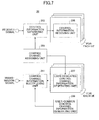
Fig. 6 shows a block diagram of a user equipment terminal in accordance with an embodiment of the present invention. -
Fig. 7 shows a block diagram of a base station in accordance with an embodiment of the present invention. -
Fig. 8 shows a flowchart of an uplink control information transmission method in accordance with an embodiment of the present invention. -
- 10
- user equipment terminal
- 101
- control information generating unit
- 103
- control information multiplexing unit
- 105
- downlink data receiving unit
- 20
- base station
- 201
- control channel assigning unit
- 203
- control information separating unit
- 205
- control information receiving unit
- 207
- user-dedicated control channel information generating unit
- 209
- user-common control channel information generating unit
- 211
- control channel information multiplexing unit
- With reference to the accompanying drawings, a description is given below with regard to embodiments of the present invention.
- With reference to
Figs. 2 and3 , a configuration of uplink communication channels is described below.Fig. 2 shows a conceptual diagram illustrating a multiplexing scheme of control information into an uplink control channel in accordance with an embodiment of the present invention.Fig. 3 shows an example configuration of the uplink communication channels. - Control information multiplexed into the uplink control channel includes channel quality information (CQI), acknowledge information (ACK/NACK), scheduling request information, and acknowledge information in response to data transmitted according to persistent scheduling. In a broad sense, the channel quality information includes quality information such as the number of antennas (rank) or a weight (precoding vector) for MIMO (Multiple Input Multiple Output) transmission. These types of control information are classified into control information that requires a radio resource to be dedicated (dedicatedly assigned) to a user by means of upper layer signaling and control information that can use radio resources shared by users.
- Acknowledge information (ACK/NACK) in response to downlink data which are scheduled in the bases station and transmitted to the user equipment terminal includes an index in a one-to-one relationship with a radio resource number of a downlink control channel. Thus, the acknowledge information (ACK/NACK) can use radio resources shared by users. In other words, once a radio resource for downlink data is determined, a radio resource for acknowledge information (ACK/NACK) in response to the downlink data is uniquely determined. Accordingly, the base station need not reserve a radio resource dedicated to the user. The base station may merely determine a predetermined amount of the radio resources shared by users in advance. When the base station receives acknowledge information with the radio resources shared by users, the base station can uniquely determine in response to which downlink data the acknowledge information is transmitted.
- On the other hand, channel quality information (CQI) and scheduling request information have no relationship with the downlink control channel. Thus, the base station needs to dedicate (dedicatedly assign) a radio resource to the user by means of upper layer signaling, for example, and report the position of the radio resource to the user equipment terminal by means of upper layer signaling, for example. Also, when persistent scheduling is applied, according to which periodic radio resources are assigned for data transmission and reception to and from the user equipment terminal, acknowledge information in response to data transmitted according to persistent scheduling has no relationship with the downlink control channel. Thus, the base station needs to dedicate a radio resource to the user and report the position of the radio resource to the user equipment terminal by means of upper layer signaling, for example.
- In order to efficiently use radio resources for the uplink control channel, radio resources shared by users are assigned to the end of the system band, as shown in
Fig. 2 , when these types of control information are multiplexed into the uplink control channel. Since the amount of acknowledge information (ACK/NACK) is determined based on the amount of downlink data, the radio resources may be statically assigned in advance based on the amount of information which can be transmitted in downlink. Then, radio resources for other control channels (channel quality information, scheduling request information, and acknowledge information in response to data transmitted according to persistent scheduling) are assigned adjacent to the radio resources for acknowledge information. This assignment allows for efficient use of radio resources for the uplink control channel and facilitates processing of the uplink control channel in the base station. - In addition, an upper limit may be set for the amount of radio resources for the uplink control channel. For example, the base station performs scheduling of downlink data, such that the amount of radio resources for the uplink control channel does not exceed the upper limit. Setting the upper limit for the amount of radio resources can reduce the number of control bits to be assigned to the user equipment terminal.
- With reference to
Fig. 3 , an approach for assigning the uplink control channel into which control information is to be multiplexed to the uplink communication channels is described below. - The amount of traffic regarding control information increases with the increase in acknowledge information associated with the increase in the amount of data, with a detailed report of channel quality information for each frequency block, and with the increase in scheduling requests associated with the increase in the amount of data transmission from the user equipment terminals. For this reason, all the control information may not be transmitted with the frequency blocks A and B positioned one at each end of the system band. In this case, frequency blocks C and D adjacent to the frequency blocks A and B are assigned to the uplink control channel. In this manner, frequency blocks are assigned to the uplink control channel beginning from the end of the system band, and consequently continuous frequency blocks at the central portion can be assigned to the uplink shared channel. When one piece of user data is assigned to continuous frequency blocks, overhead can be reduced. In this manner, assigning the uplink control channel at the end of the system band allows for efficient use of radio resources.
- It should be noted that setting the upper limit for the amount of radio resources for the uplink control channel corresponds to setting an upper limit for the number of frequency blocks used for the uplink control channel.
- The configuration of the uplink control channel as shown in
Figs. 2 and3 allows for efficient multiplexing of control information into the uplink control channel and efficient use of radio resources. - With reference to
Figs. 4 and5 , an approach for multiplexing control information into the uplink control channel is described in detail below. - As described above, acknowledge information (ACK/NACK) in response to downlink data which are scheduled in the base station and transmitted to the user equipment terminal includes an index in a one-to-one relationship with the radio resource number of the downlink control channel. To multiplex acknowledge information corresponding to indexes #1-#9 as shown in
Fig. 4 , the user equipment terminal can multiplex the acknowledge information in the code domain. Specifically, assuming that the acknowledge information is expressed in the form of a CAZAC sequence, a predetermined number of codes can be orthogonalized using a single CAZAC sequence by block-spreading the CAZAC sequence. For example, when the phase rotation of 120 degrees is provided, three codes can be orthogonalized using the single CAZAC sequence. In addition, a predetermined number (for example, six) of codes can be further orthogonalized using the single CAZAC sequence by cyclic-shifting the CAZAC sequence. In this manner, the use of the CAZAC sequence allows plural items of acknowledge information to be multiplexed in a single frequency block. - As described with reference to
Fig. 2 , after acknowledge information is assigned to (multiplexed into) the uplink control channel, control information that requires a radio resource to be dedicated to a user is assigned to the remaining radio resources in the uplink control channel. As shown inFig. 5 , the control information that requires the radio resource to be dedicated to the user is multiplexed in the code domain. When all radio resources available for multiplexing into a single frequency block in the code domain are used, the next frequency block is used. Since the positions of the radio resources for CQI information, scheduling request information, and acknowledge information in response to data transmitted according to persistent scheduling are identified by means of upper layer signaling, these types of information may be multiplexed in any order. - When no downlink data are scheduled in the base station, the corresponding acknowledge information is not transmitted. In other words, there is an available radio resource for the acknowledge information. In this case, other types of control information (control information that requires a radio resource to be dedicated to a user) may be assigned to this available radio resource.
- With reference to
Fig. 6 , a configuration of auser equipment terminal 10 in accordance with an embodiment of the present invention is described below. - The
user equipment terminal 10 includes a controlinformation generating unit 101, a controlinformation multiplexing unit 103, and a downlinkdata receiving unit 105. - The control
information generating unit 101 generates control information to be transmitted with a radio resource dedicated to the user. For example, the controlinformation generating unit 101 generates channel quality information (including quality information for MIMO transmission), scheduling request information, and acknowledge information in response to data transmitted according to persistent scheduling. - The downlink
data receiving unit 105 receives data transmitted from the base station according to scheduling. When the data are successfully received, the downlinkdata receiving unit 105 generates acknowledgement (ACK). When the data have an error, the downlinkdata receiving unit 105 generates negative acknowledgement (NACK). - The control
information multiplexing unit 103 assigns acknowledge information (ACK/NACK) generated by the downlinkdata receiving unit 105 to the radio resources positioned at the end of the system band. Within the radio resources positioned at the end of the system band, the acknowledge information (ACK/NACK) is assigned to the position corresponding to the radio resource number of downlink data. Then, the controlinformation multiplexing unit 103 assigns to its adjacent radio resources control information to be transmitted with the radio resource dedicated to the user. Within the radio resources adjacent to the radio resources assigned to the acknowledge information, the control information is assigned to the position specified by means of upper layer signaling from the base station. In this manner, the controlinformation multiplexing unit 103 multiplexes acknowledge information (ACK/NACK) and other types of control information into the uplink control channel. When the amount of information in the uplink control channel exceeds the amount of information which can be transmitted in a single frequency block, frequency blocks are used beginning from the end of the system band. The control information multiplexed into the uplink control channel is transmitted to the base station. - While the
user equipment terminal 10 is described with separate components for illustrating the embodiment of the present invention, the combination of these components may be embodied in a single piece of hardware or software. Alternatively, one of these components may be embodied in plural pieces of hardware or software. - With reference to
Fig. 7 , a configuration of abase station 20 in accordance with the present invention is described below. - The
base station 20 includes a controlchannel assigning unit 201, a controlinformation separating unit 203, a controlinformation receiving unit 205, a user-dedicated control channelinformation generating unit 207, a user-common control channelinformation generating unit 209, and a control channelinformation multiplexing unit 211. - The control
channel assigning unit 201 determines radio resources for control information to be assigned to the uplink control channel. Radio resources for receiving from the user equipment terminal acknowledge information in response to downlink data scheduled in the base station are positioned at the end of the uplink control channel. The amount of the radio resources for acknowledge information may be limited to a predetermined amount. In addition, radio resources for channel quality information, scheduling request information, and acknowledge information in response to data transmitted according to persistent scheduling are assigned adjacent to the radio resources for the acknowledge information. Assignment information indicating where control information is actually positioned in these radio resources is reported to theuser equipment terminal 10 by means of upper layer signaling, via the user-dedicated control channelinformation generating unit 207 and the control channelinformation multiplexing unit 211, as described below. - The control
information separating unit 203 separates control information based on the assignment information from the controlchannel assigning unit 201. Acknowledge information in response to downlink data transmitted to the user equipment terminal according to scheduling is identified by the radio resource number of the downlink control channel within the radio resources positioned at the end of the system band. In addition, other types of control information are identified by the positions reported to the user equipment terminal by means of upper layer signaling. These types of control information are processed for each user in the controlinformation receiving unit 205. For example, the acknowledge information is used for data retransmission, and the channel quality information and the scheduling request information are used for scheduling. - The user-dedicated control channel
information generating unit 207 generates control channel information to report to the user equipment terminal the assignment information of the radio resource dedicated to the user by means of upper layer signaling. - The user-common control channel
information generating unit 209 generates control channel information to report to the user equipment terminal radio resources to be used for receiving from the user equipment terminal acknowledge information in response to downlink data according to scheduling. It should be noted that the radio resources are shared by users. - The control channel
information multiplexing unit 211 multiplexes the control channel information generated by the user-dedicated control channelinformation generating unit 207 and the control channel information generated by the user-common control channelinformation generating unit 209. These types of control channel information are transmitted to the user equipment terminals as uplink control channel assignment information. - While the
base station 20 is described with separate components for illustrating the embodiment of the present invention, the combination of these components may be embodied in a single piece of hardware or software. For example, the controlinformation receiving unit 205 and the user-dedicated control channelinformation generating unit 207 may be embodied in a single piece of hardware. Alternatively, one of these components may be embodied in plural pieces of hardware or software. - With reference to
Fig. 8 , an uplink control information transmission method is described below. - First, the base station (
Node B) 20 determines assignment of radio resources in the uplink control channel (step S101). Specifically, thebase station 20 reserves radio resources positioned at the end of the system band for acknowledge information, and also reserves radio resources adjacent to the radio resources for other types of control information (CQI or the like). In this step, information is determined as to which radio resource is used by theuser equipment terminals 10 in the uplink control channel, and then transmitted to the user equipment terminal (UE) 10 as uplink control channel assignment information (step S103). - When downlink data are generated in the base station 20 (step S105), the
base station 20 performs scheduling of the downlink data (step S107), transmits the position of the radio resource for the downlink data on the downlink control channel, and transmits the downlink data (step S109). - The
user equipment terminal 10 determines whether the downlink data are successfully received (step S111). The determination result (ACK/NACK) is multiplexed at the end of the system band specified by the uplink control channel assignment information. In addition, other types of control information (CQI or the like) are multiplexed at the positions specified by the uplink control channel assignment information (step S113). Theuser equipment terminal 10 transmits the acknowledge information and other types of control information (CQI or the like) to thebase station 20 on the uplink control channel (step S115). - The
base station 20 separates the types of control information from the uplink control channels received from theuser equipment terminals 10 and performs retransmission or scheduling according to the control information (step S117). - As described above, according to an embodiment of the present invention, it is possible to efficiently multiplex control information into the uplink control channel and to efficiently use radio resources. While the preferred embodiments of the present invention have been described, the present invention is not limited to these embodiments. Rather, the present invention can be changed or modified within the scope of the appended claims. For example, the present invention is not limited to the mobile communication system according to LTE, but may be applied to any mobile communication system in which an uplink control channel is transmitted according to a single-carrier scheme.
- This international application claims the benefit of the priority dates of Japanese Patent Application No.
2007-211596 filed on August 14, 2007
Claims (7)
- A user equipment terminal for transmitting an uplink control channel to a base station according to a single carrier scheme, comprising:a reception determining unit configured to determine reception of data, which are transmitted from the base station according to scheduling, and generate a reception determination result as first control information; anda control information multiplexing unit configured to assign the first control information to a first radio resource positioned at an end of a system band and assign second control information, which is transmitted with a radio resource dedicated to the user equipment terminal, to a predetermined position in a second radio resource adjacent to the first radio resource, to multiplex the first control information and the second control information into the uplink control channel.
- The user equipment terminal as claimed in Claim 1, wherein:the control information multiplexing unit assigns the uplink control channel to a first frequency block positioned at the end of the system band, and then assigns the uplink control channel to a second frequency block which is adjacent to the first frequency block in a frequency domain.
- The user equipment terminal as claimed in Claim 2, wherein:the control information multiplexing unit multiplexes the first control information and the second control information in a code domain, assigns the first control information and the second control information to the first frequency block, and then assigns the first control information and the second control information to the second frequency block.
- The user equipment terminal as claimed in Claim 1, wherein:the amount of radio resources in the uplink control channel has a predetermined upper limit.
- The user equipment terminal as claimed in Claim 1, wherein:the second control information includes at least one ofchannel quality information;scheduling request information; anda reception determination result in response to data transmitted according to persistent scheduling.
- A base station for receiving an uplink control channel from a user equipment terminal according to a single carrier scheme, comprising:a first control channel information generating unit configured to determine assignment of the uplink control channel, such that a reception determination result, which is generated as first control information in response to data transmitted to the user equipment terminal according to scheduling, is assigned to a first radio resource positioned at an end of a system band; anda second control channel information generating unit configured to determine assignment of the uplink control channel, such that second control information, which is transmitted with a radio resource dedicated to the user equipment terminal, is assigned to a second radio resource adjacent to the first radio resource.
- An uplink control channel configuration method of configuring an uplink control channel which is transmitted from a user equipment terminal to a base station according to a single carrier scheme, comprising the steps of:determining, by the base station, assignment of the uplink control channel, such that a reception determination result, which is generated as first control information in response to data transmitted to the user equipment terminal according to scheduling, is assigned to a first radio resource positioned at an end of a system band;determining, by the base station, assignment of the uplink control channel, such that second control information, which is transmitted with a radio resource dedicated to the user equipment terminal, is assigned to a second radio resource adjacent to the first radio resource;determining, by the user equipment terminal, reception of data, which are transmitted from the base station according to scheduling, and generate a reception determination result as the first control information; andassigning, by the user equipment terminal, the first control information to the first radio resource and assigning the second control information to a predetermined position in the second radio resource, to multiplex the first control information and the second control information into the uplink control channel.
Applications Claiming Priority (2)
| Application Number | Priority Date | Filing Date | Title |
|---|---|---|---|
| JP2007211596A JP4558020B2 (en) | 2007-08-14 | 2007-08-14 | User apparatus, transmission method, and communication system |
| PCT/JP2008/064538 WO2009022704A1 (en) | 2007-08-14 | 2008-08-13 | User device, base station, and upstream link control channel configuration method |
Publications (2)
| Publication Number | Publication Date |
|---|---|
| EP2180733A1 true EP2180733A1 (en) | 2010-04-28 |
| EP2180733A4 EP2180733A4 (en) | 2014-09-17 |
Family
ID=40350756
Family Applications (1)
| Application Number | Title | Priority Date | Filing Date |
|---|---|---|---|
| EP08827570.6A Withdrawn EP2180733A4 (en) | 2007-08-14 | 2008-08-13 | USER DEVICE, BASE STATION, AND ASCENDING LINK CONTROL CHANNEL CONFIGURATION METHOD |
Country Status (10)
| Country | Link |
|---|---|
| US (2) | US8325667B2 (en) |
| EP (1) | EP2180733A4 (en) |
| JP (1) | JP4558020B2 (en) |
| KR (1) | KR101500526B1 (en) |
| CN (2) | CN102781106B (en) |
| BR (1) | BRPI0815172A2 (en) |
| CA (1) | CA2695524A1 (en) |
| MX (1) | MX2010001644A (en) |
| RU (2) | RU2468530C2 (en) |
| WO (1) | WO2009022704A1 (en) |
Cited By (2)
| Publication number | Priority date | Publication date | Assignee | Title |
|---|---|---|---|---|
| CN103384979A (en) * | 2011-02-11 | 2013-11-06 | 交互数字专利控股公司 | Multi-carrier HSDPA control method and apparatus |
| US8724569B2 (en) | 2009-03-25 | 2014-05-13 | Ntt Docomo, Inc. | Radio base station and mobile communication method |
Families Citing this family (27)
| Publication number | Priority date | Publication date | Assignee | Title |
|---|---|---|---|---|
| KR101384078B1 (en) | 2007-01-10 | 2014-04-09 | 삼성전자주식회사 | Method and apparatus for allocating and signalling ack/nack channel resources in wireless communication systems |
| JP4713553B2 (en) * | 2007-08-15 | 2011-06-29 | Kddi株式会社 | Wireless terminal apparatus and wireless base station apparatus |
| US8837421B2 (en) | 2008-03-26 | 2014-09-16 | Nokia Siemens Neworks Oy | Channelization procedure for implementing persistent ACK/NACK and scheduling request |
| KR100987458B1 (en) * | 2008-06-24 | 2010-10-13 | 엘지전자 주식회사 | Uplink Signal Transmission Method |
| JP2010206403A (en) * | 2009-03-02 | 2010-09-16 | Toshiba Corp | Base station, terminal and radio communication system |
| JP5222765B2 (en) * | 2009-03-25 | 2013-06-26 | 株式会社エヌ・ティ・ティ・ドコモ | Radio base station and mobile communication method |
| JP5164903B2 (en) * | 2009-03-25 | 2013-03-21 | 株式会社エヌ・ティ・ティ・ドコモ | Radio base station and mobile communication method |
| CA2758216C (en) | 2009-04-24 | 2016-08-02 | Sharp Kabushiki Kaisha | Wireless communication system, communication apparatus, communication method and communication program |
| US20120057561A1 (en) | 2009-05-25 | 2012-03-08 | Tetsuo Mabuchi | Base station apparatus, communication system, mapping control method and program storage medium |
| WO2010146924A1 (en) * | 2009-06-19 | 2010-12-23 | シャープ株式会社 | Wireless communication system, base station device, mobile station device, wireless communication method, and wireless communication program |
| JP5122529B2 (en) * | 2009-06-23 | 2013-01-16 | 株式会社エヌ・ティ・ティ・ドコモ | Mobile terminal apparatus, radio base station apparatus, radio communication method, and radio communication system |
| US8670396B2 (en) * | 2009-09-29 | 2014-03-11 | Qualcomm Incorporated | Uplink control channel resource allocation for transmit diversity |
| US9143281B2 (en) * | 2009-10-09 | 2015-09-22 | Qualcomm Incorporated | Blind decoding of uplink control channels |
| CN102045789B (en) | 2009-10-16 | 2013-05-08 | 中兴通讯股份有限公司 | Frequency physics resource scheduling method and system based on frequency hopping |
| US8565290B2 (en) * | 2009-11-17 | 2013-10-22 | Nokia Corporation | Method and apparatus for latency-aware scheduling using interference cancellation |
| EP2555574B1 (en) | 2010-03-30 | 2018-05-30 | Sharp Kabushiki Kaisha | Mobile communication system, base station apparatus, mobile station apparatus, mobile communication method and integrated circuit |
| CN102215595A (en) * | 2010-04-07 | 2011-10-12 | 北京三星通信技术研究有限公司 | Method for transmitting ascending scheduling requirement |
| JP2011050105A (en) * | 2010-11-17 | 2011-03-10 | Kddi Corp | Radio terminal device, and radio base station device |
| KR101752229B1 (en) * | 2011-01-12 | 2017-06-29 | 삼성전자주식회사 | Method and apparatus for coordinating between cells in wireless communication system |
| CN102685797B (en) * | 2011-03-11 | 2017-04-12 | 夏普株式会社 | Remote radio head (RRH) enhancing cooperation multipoint transmission system and channel state information-regenerator section (CSI-RS) configuration method thereof |
| US8958836B2 (en) * | 2011-06-30 | 2015-02-17 | Fujitsu Limited | System and method for implementing coordinated resource allocations |
| US9526092B2 (en) * | 2012-05-14 | 2016-12-20 | Industrial Technology Research Institute | Method of allocating resources for scheduling request and user equipment using the same and a control node using the same |
| JP6022090B2 (en) * | 2014-01-31 | 2016-11-09 | 京セラ株式会社 | User terminal and processor |
| US10321386B2 (en) | 2017-01-06 | 2019-06-11 | At&T Intellectual Property I, L.P. | Facilitating an enhanced two-stage downlink control channel in a wireless communication system |
| JP2020065092A (en) * | 2017-02-03 | 2020-04-23 | 株式会社Nttドコモ | Base station and user equipment |
| KR102026134B1 (en) * | 2017-03-15 | 2019-09-27 | 한국전자통신연구원 | Method for transmitting and receiving control information in communication system and apparatus for the same |
| JP6894404B2 (en) * | 2018-05-25 | 2021-06-30 | Kddi株式会社 | Base station equipment, its control method, and programs that enable effective use of uplink resources |
Family Cites Families (17)
| Publication number | Priority date | Publication date | Assignee | Title |
|---|---|---|---|---|
| FI112842B (en) * | 1999-01-11 | 2004-01-15 | Nokia Corp | Method and apparatus for realizing a continued packet switching radio connection |
| EP1148689B1 (en) * | 2000-04-18 | 2006-06-14 | Motorola, Inc. | Downloading web pages |
| FI20001876A7 (en) * | 2000-08-25 | 2002-02-26 | Nokia Corp | Improved method and arrangement for data transmission in packet radio service |
| ES2186531B1 (en) * | 2001-04-19 | 2005-03-16 | Diseño De Sistemas En Silicio, S.A. | PROCEDURE FOR MULTIPLE AND MULTIPLE DATA TRANSMISSION FOR A MULTI-USER DIGITAL DATA TRANSMISSION SYSTEM POINT TO MULTIPOINT ON ELECTRICAL NETWORK. |
| RU2369017C2 (en) * | 2003-02-18 | 2009-09-27 | Квэлкомм Инкорпорейтед | Multiplexing commands with code division in multiplex code division channel |
| RU2320086C2 (en) * | 2003-08-13 | 2008-03-20 | Квэлкомм Флэрион Текнолоджиз, Инк. | Methods and device for transmitting user data using an information channel |
| KR100651430B1 (en) * | 2003-11-07 | 2006-11-28 | 삼성전자주식회사 | System and method for performing handover in a communication system |
| US7792134B2 (en) * | 2004-04-30 | 2010-09-07 | Alcatel-Lucent Usa Inc. | Method and apparatus for detecting an uplink packet data channel in a CDMA wireless communications system |
| JP4515312B2 (en) * | 2005-03-31 | 2010-07-28 | 株式会社エヌ・ティ・ティ・ドコモ | Mobile station, transmission method, and mobile radio communication system |
| US8107418B2 (en) * | 2005-07-27 | 2012-01-31 | Sharp Kabushiki Kaisha | Mobile communication system, mobile station apparatus, base station apparatus, mobile communication method, program and recording medium |
| CA2653602A1 (en) * | 2006-06-21 | 2007-12-27 | Qualcomm Incorporated | Wireless resource allocation methods and apparatus |
| EP2119081A2 (en) * | 2007-01-08 | 2009-11-18 | Nokia Corporation | Methods and apparatus for providing control signalling |
| JP4481316B2 (en) * | 2007-01-09 | 2010-06-16 | 株式会社エヌ・ティ・ティ・ドコモ | User device and transmission method |
| JP5206921B2 (en) * | 2007-03-16 | 2013-06-12 | 日本電気株式会社 | Resource allocation control method and apparatus in mobile radio system |
| US8369299B2 (en) * | 2007-05-07 | 2013-02-05 | Qualcomm Incorporated | Method and apparatus for multiplexing CDM pilot and FDM data |
| US8036166B2 (en) * | 2007-06-18 | 2011-10-11 | Nokia Corporation | Signaling of implicit ACK/NACK resources |
| CN105812101B (en) * | 2011-01-05 | 2019-06-21 | 太阳专利信托公司 | Terminal device and communication method |
-
2007
- 2007-08-14 JP JP2007211596A patent/JP4558020B2/en active Active
-
2008
- 2008-08-13 KR KR1020107003759A patent/KR101500526B1/en not_active Expired - Fee Related
- 2008-08-13 MX MX2010001644A patent/MX2010001644A/en active IP Right Grant
- 2008-08-13 WO PCT/JP2008/064538 patent/WO2009022704A1/en not_active Ceased
- 2008-08-13 RU RU2010105954/07A patent/RU2468530C2/en not_active IP Right Cessation
- 2008-08-13 CN CN201210298642.5A patent/CN102781106B/en active Active
- 2008-08-13 US US12/672,628 patent/US8325667B2/en active Active
- 2008-08-13 CN CN2008801106523A patent/CN101822111B/en not_active Expired - Fee Related
- 2008-08-13 CA CA2695524A patent/CA2695524A1/en not_active Abandoned
- 2008-08-13 EP EP08827570.6A patent/EP2180733A4/en not_active Withdrawn
- 2008-08-13 BR BRPI0815172 patent/BRPI0815172A2/en not_active IP Right Cessation
-
2012
- 2012-07-12 RU RU2012129343/07A patent/RU2507708C1/en not_active IP Right Cessation
- 2012-10-19 US US13/656,373 patent/US8780850B2/en active Active
Non-Patent Citations (5)
| Title |
|---|
| "Uplink control signaling, ACK/NACK multiplexing", 3GPP DRAFT; R1-071308 UPLINK CONTROL SIGNALING ACKNACK MULTIPLEXING, 3RD GENERATION PARTNERSHIP PROJECT (3GPP), MOBILE COMPETENCE CENTRE ; 650, ROUTE DES LUCIOLES ; F-06921 SOPHIA-ANTIPOLIS CEDEX ; FRANCE, vol. RAN WG1, no. St. Julian; 20070403, 3 April 2007 (2007-04-03), XP050105268, [retrieved on 2007-04-03] * |
| NEC GROUP: "Multiplexing of uplink data-non-associated control signal without data", 3GPP DRAFT; R1-072834, 3RD GENERATION PARTNERSHIP PROJECT (3GPP), MOBILE COMPETENCE CENTRE ; 650, ROUTE DES LUCIOLES ; F-06921 SOPHIA-ANTIPOLIS CEDEX ; FRANCE, vol. RAN WG1, no. Orlando, USA; 20070620, 20 June 2007 (2007-06-20), XP050106515, [retrieved on 2007-06-20] * |
| NTT DOCOMO ET AL: "CDMA-Based Multiplexing Method for Multiple ACK/NACK and CQI in E-UTRA Uplink", 3GPP DRAFT; R1-070100 UL CDMA-BASED MULTIPLEXING OF MULTIPLE ACK AND CQI, 3RD GENERATION PARTNERSHIP PROJECT (3GPP), MOBILE COMPETENCE CENTRE ; 650, ROUTE DES LUCIOLES ; F-06921 SOPHIA-ANTIPOLIS CEDEX ; FRANCE, vol. RAN WG1, no. Sorrento, Italy; 20070110, 10 January 2007 (2007-01-10), XP050104152, [retrieved on 2007-01-10] * |
| SAMSUNG: "Uplink control channel multiplexing", 3GPP DRAFT; R1-070330 UL CONTROL STRUCTURE, 3RD GENERATION PARTNERSHIP PROJECT (3GPP), MOBILE COMPETENCE CENTRE ; 650, ROUTE DES LUCIOLES ; F-06921 SOPHIA-ANTIPOLIS CEDEX ; FRANCE, vol. RAN WG1, no. Sorrento, Italy; 20070110, 10 January 2007 (2007-01-10), XP050104365, [retrieved on 2007-01-10] * |
| See also references of WO2009022704A1 * |
Cited By (4)
| Publication number | Priority date | Publication date | Assignee | Title |
|---|---|---|---|---|
| US8724569B2 (en) | 2009-03-25 | 2014-05-13 | Ntt Docomo, Inc. | Radio base station and mobile communication method |
| CN103384979A (en) * | 2011-02-11 | 2013-11-06 | 交互数字专利控股公司 | Multi-carrier HSDPA control method and apparatus |
| CN103384979B (en) * | 2011-02-11 | 2017-05-10 | 交互数字专利控股公司 | Multi-carrier HSDPA control method and apparatus |
| US9887752B2 (en) | 2011-02-11 | 2018-02-06 | Interdigital Patent Holdings, Inc. | Managing control signaling overhead for multi-carrier HSDPA |
Also Published As
| Publication number | Publication date |
|---|---|
| WO2009022704A1 (en) | 2009-02-19 |
| CA2695524A1 (en) | 2009-02-19 |
| US20110032887A1 (en) | 2011-02-10 |
| CN102781106A (en) | 2012-11-14 |
| BRPI0815172A2 (en) | 2015-03-31 |
| US8780850B2 (en) | 2014-07-15 |
| RU2507708C1 (en) | 2014-02-20 |
| KR20100044861A (en) | 2010-04-30 |
| RU2468530C2 (en) | 2012-11-27 |
| US8325667B2 (en) | 2012-12-04 |
| EP2180733A4 (en) | 2014-09-17 |
| CN101822111B (en) | 2013-02-13 |
| JP2009049539A (en) | 2009-03-05 |
| KR101500526B1 (en) | 2015-03-09 |
| MX2010001644A (en) | 2010-03-15 |
| AU2008287801A1 (en) | 2009-02-19 |
| CN102781106B (en) | 2015-04-29 |
| JP4558020B2 (en) | 2010-10-06 |
| RU2012129343A (en) | 2014-01-20 |
| RU2010105954A (en) | 2011-09-20 |
| CN101822111A (en) | 2010-09-01 |
| US20130039330A1 (en) | 2013-02-14 |
Similar Documents
| Publication | Publication Date | Title |
|---|---|---|
| EP2180733A1 (en) | User device, base station, and upstream link control channel configuration method | |
| EP2187685B1 (en) | User equipment terminal, base station, and control information transmission method | |
| JP4481316B2 (en) | User device and transmission method | |
| KR102140550B1 (en) | Method and apparatus for transmitting uplink control information | |
| EP2070241B1 (en) | Uplink allocations for acknowledgement of downlink data | |
| CN103346865B (en) | Base station apparatus, method of reseptance, user's set and sending method | |
| EP3451567B1 (en) | Method of feeding back ack/nack information, terminal equipment, and network equipment | |
| CN102647261A (en) | Scheduling signaling sending and response feedback method, system and equipment | |
| CN110267352B (en) | User terminal scheduling method and device | |
| JP4764949B2 (en) | Base station and reception method | |
| JP5149363B2 (en) | User apparatus, transmission method, and communication system | |
| HK40007522A (en) | Uplink control information transmission method, terminal device and network device | |
| HK40007522B (en) | Uplink control information transmission method, terminal device and network device | |
| HK1131482B (en) | Uplink allocations for acknowledgement of downlink data | |
| HK1131482A (en) | Uplink allocations for acknowledgement of downlink data |
Legal Events
| Date | Code | Title | Description |
|---|---|---|---|
| PUAI | Public reference made under article 153(3) epc to a published international application that has entered the european phase |
Free format text: ORIGINAL CODE: 0009012 |
|
| 17P | Request for examination filed |
Effective date: 20100222 |
|
| AK | Designated contracting states |
Kind code of ref document: A1 Designated state(s): AT BE BG CH CY CZ DE DK EE ES FI FR GB GR HR HU IE IS IT LI LT LU LV MC MT NL NO PL PT RO SE SI SK TR |
|
| AX | Request for extension of the european patent |
Extension state: AL BA MK RS |
|
| DAX | Request for extension of the european patent (deleted) | ||
| A4 | Supplementary search report drawn up and despatched |
Effective date: 20140821 |
|
| RIC1 | Information provided on ipc code assigned before grant |
Ipc: H04L 1/16 20060101ALI20140814BHEP Ipc: H04J 13/00 20110101ALI20140814BHEP Ipc: H04L 1/18 20060101ALI20140814BHEP Ipc: H04L 27/01 20060101ALI20140814BHEP Ipc: H04W 4/00 20090101AFI20140814BHEP Ipc: H04L 5/00 20060101ALI20140814BHEP Ipc: H04W 72/04 20090101ALI20140814BHEP Ipc: H04L 1/00 20060101ALI20140814BHEP Ipc: H04J 11/00 20060101ALI20140814BHEP |
|
| 17Q | First examination report despatched |
Effective date: 20151113 |
|
| GRAP | Despatch of communication of intention to grant a patent |
Free format text: ORIGINAL CODE: EPIDOSNIGR1 |
|
| INTG | Intention to grant announced |
Effective date: 20170602 |
|
| GRAJ | Information related to disapproval of communication of intention to grant by the applicant or resumption of examination proceedings by the epo deleted |
Free format text: ORIGINAL CODE: EPIDOSDIGR1 |
|
| INTC | Intention to grant announced (deleted) | ||
| STAA | Information on the status of an ep patent application or granted ep patent |
Free format text: STATUS: THE APPLICATION IS DEEMED TO BE WITHDRAWN |
|
| 18D | Application deemed to be withdrawn |
Effective date: 20181012 |