EP2178332A1 - Method and system for service dependent resource allocation - Google Patents
Method and system for service dependent resource allocation Download PDFInfo
- Publication number
- EP2178332A1 EP2178332A1 EP08018309A EP08018309A EP2178332A1 EP 2178332 A1 EP2178332 A1 EP 2178332A1 EP 08018309 A EP08018309 A EP 08018309A EP 08018309 A EP08018309 A EP 08018309A EP 2178332 A1 EP2178332 A1 EP 2178332A1
- Authority
- EP
- European Patent Office
- Prior art keywords
- service
- resource
- service type
- requests
- total number
- Prior art date
- Legal status (The legal status is an assumption and is not a legal conclusion. Google has not performed a legal analysis and makes no representation as to the accuracy of the status listed.)
- Granted
Links
Images

Classifications
-
- H—ELECTRICITY
- H04—ELECTRIC COMMUNICATION TECHNIQUE
- H04W—WIRELESS COMMUNICATION NETWORKS
- H04W72/00—Local resource management
- H04W72/50—Allocation or scheduling criteria for wireless resources
- H04W72/52—Allocation or scheduling criteria for wireless resources based on load
-
- H—ELECTRICITY
- H04—ELECTRIC COMMUNICATION TECHNIQUE
- H04W—WIRELESS COMMUNICATION NETWORKS
- H04W72/00—Local resource management
- H04W72/50—Allocation or scheduling criteria for wireless resources
- H04W72/56—Allocation or scheduling criteria for wireless resources based on priority criteria
Definitions
- the invention relates to a method and system for service dependent resource allocation. More specifically, the invention relates to a method of allocating a resource in a radio communications network configured for providing at least a first service type and a second service type in a cell of said network to a user device, said first service type and said second service type both requiring said resource.
- the invention also relates to a radio communications network (or a node of such a network) having implemented such a method and to a computer program comprising software code portions for executing such a method.
- Radio communications networks are expected to provide more and more services to user devices (mobile phones, portable computers, etc), such as voice, data and real-time services (e.g. mobile TV).
- user devices mobile phones, portable computers, etc
- voice, data and real-time services e.g. mobile TV
- MNOs mobile network operators
- Delivering voice and data services together with broadcast/multicast services using the same share of radio resources is likely to reduce the economic efficiency of the mobile network. This is because broadcast/multicast services require large amounts of resources, as compared with voice and data services and in situations where there is a lack of available resource, service blockage occurs.
- radio network resources examples include power, bandwidth, code tree usage etc.
- a Radio Resource Control (RRC) part of the protocol stack is responsible for the assignment, configuration and release of radio resources between the UE and the UTRAN.
- RRC Radio Resource Control
- Future generations of networks also provide for allocation and management of resources.
- the RRC part of the protocol stack is responsible for the assignment, configuration and release of radio resources between the UE and the E-UTRAN (Evolved UTRAN).
- This RRC protocol is described in detail in the 3GPP TS 36.331 specifications.
- the general principle of resource allocation when a new request is received is based on assessing how much of a resource is used and, based on this assessment, allocating the resource if this is available.
- the allocation algorithm is designed such that a resource cannot be used completely by the user devices in order to reserve a sufficient amount of resource for tasks of the network, such as handover.
- This method of resource allocation in a radio communications network does not allow a mobile network operator to tune the allocation to his specific needs or desires.
- a method of allocating a resource in a radio communications network is proposed that is configured for providing to a user device at least a first service type and a second service type in a cell of the radio network.
- the first service type and second service type both require the resource for operation.
- a request for a service, requiring the resource is received in the radio network.
- the total number of service requests (either actual or predicted) within the cell is also obtained and it is determined whether the request from the user device is for a service of the first type or the second type. If the request is for the first service type, the resource is allocated to provide the first service type to the user device only if the total number of requests complies with a first threshold being specific for the first service type. If the request is for the second service type, the resource is allocated to provide the second service type to the user device only if the total number of requests complies with a second threshold being specific for the second service type.
- a computer program comprising software code portions configured for, when executed on a computing device, performing this method is also proposed.
- a radio communications network configured for providing to a user device at least a first service type and a second service type in a cell of the network. Both the first service type and second service type require a same resource.
- the radio communications network comprises a node configured for receiving a request for a service from the user device;
- the radio communications network also comprises means configured for obtaining a total number of requests (actual or predicted) for services (all service types) in the cell and determination means configured for determining whether the request for a service from the user device is for the first service type or the second service type.
- Allocation means are provided for allocating the resource for providing the first service type or the second service type.
- the resource is allocated to provide the first service type to the user device only if the total number of requests complies with a first threshold being specific for the first service type. If the request is for the second service type, the resource is allocated to provide the second service type to the user device only if the total number of requests complies with a second threshold being specific for the second service type.
- Examples of service types include voice, data and real-time services, such as mobile TV.
- At least one step of the method can be performed in a node of a radio communications network, such as a radio network controller.
- a radio communications network such as a radio network controller.
- This may be a suitable node in a UMTS network.
- one or more steps of the resource allocation method may be performed in a controller of the eNB of the cell.
- the proposed method, computer program and radio communications network allow a network operator to decide on resource allocation on a service specific basis, thereby allowing him to prioritize a specific service at the expense of another service.
- the resource can be used in a more efficient way.
- the total number of requests can be obtained by predictive calculation, as example of which is described in US 6,721,568 , which is incorporated in the present application by reference in its entirety.
- a current measured parameter value in a cell may be determined and a future value associated with an event that may impact the measured parameter value may be predicted.
- the current measured value and the predicted value may then be combined to provide a combined value.
- the total number of requests may include the number of active user devices in a cell requesting or using the corresponding resource.
- the service specific thresholds may be varied by the network operator in order to vary prioritization of services.
- the usage of the resource may first be evaluated and compared to one or more non-service specific thresholds.
- resource usage e.g. the percentage of usage
- the resource usage is above a first non-service specific threshold (in order to guarantee sufficient resource capacity for handling network requests)
- the resource should not be allocated and the request should be rejected without comparing the total number of requests in the cell with a service specific threshold.
- resource usage is below a second non-service specific threshold (defining that sufficient resource capacity is available independent of the service type requested)
- the resource should always be allocated and the request should be accepted without comparing the total number of requests in the cell with a service specific threshold.
- FIG. 1A is a schematic illustration of a UMTS communication system 1.
- UMTS communication system 1 comprises a radio access network having a plurality of wireless access stations 2A, 2B, 2C and a radio network controller 3.
- the wireless access stations 2A-2C are referred to as Node-Bs, whereas controller 3 is abbreviated as RNC (radio network controller) for the system of FIG. 1A .
- RNC radio network controller
- the Node-Bs 2A-2C provide wireless access for a user device 4 (also referred to as user equipment UE) by defining and supporting one or more cells C.
- the radio interface between the UE 4 and Node-B is referred to as the Uu-interface.
- Each Node-B 2A-2C has a corresponding data connection 5A-5C to the RNC 3 of the radio access network.
- the interface between a Node-B and the RNC is referred to as the Iub interface.
- the data connections 5A-5C may e.g. be E1 data connections with a data transmission capacity of 2Mbps. Higher data transmission capacities may be obtained by using multiple E1 data connections or using E3 data connections (34 Mbps) or STM-1 data connections (150 Mbps).
- RNC 3 connects Node-Bs 2A-2C to the core network.
- the core network is configured for transferring user data either via a MSC and a GMSC to e.g. a PSTN network (for voice service) or via an SMSC and a GGSN to e.g. an IP network (for data services).
- services may be provided from the core network upon request by the user device 4, via the RNC 3 and Node-B 2A to the user device 4 (downlink communication), assuming that user terminal is in one of the cells C of Node-B 2A.
- Resource allocation for provided the service(s) is managed in the RNC 3.
- Network 7 may comprise a controller 8 configured for performing one or more steps according to an embodiment of the invention by managing radio resources.
- the controller 8 may be a GGSN-like module.
- the controller 8 is provided with each of the wireless access stations. Examples of such communication systems include Long Term Evolution (LTE, also referred to as '4G') communication systems or WiMAX communication systems. In LTE systems, wireless access stations 2A'-2C' are referred to as eNBs.
- LTE Long Term Evolution
- eNBs wireless access stations 2A'-2C' are referred to as eNBs.
- Embodiments of the invention will now be explained with reference to FIGS. 2 and 3 with regard to the communication system 1 of FIG. 1A or FIG. 1B for downlink communication. It should be appreciated however, the embodiments are, mutatis mutandis, suitable for uplink communication or downlink communication.
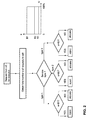
- FIG. 2 shows a flow chart of a method of resource allocation according to a first embodiment of the invention.
- a request is received from a user device 4 in cell C for a service, e.g. voice.
- a service e.g. voice
- one or more resources from the radio network are required.
- the flow chart of FIG. 2 is applicable for one or more of the requested resources. It should be appreciated that if a plurality of resources is required to provide a service, the proposed method can be used for allocating one or more of the resources, while other methods are used for other resources.
- the total number e of requests is determined upon receiving the request for the said service. This number may be calculated by using historical averaging (the average number of users at a particular moment in the past) or otherwise (such as the method disclosed in US 6,721,568 ).
- service type 1 is a voice service
- service type 2 is a data service
- service type 3 is a real-time service (e.g. mobile TV).
- a service specific threshold B1, B2, B3 For each service type, a service specific threshold B1, B2, B3 has been determined.
- This threshold preferably relates to the number of connections that the network operator allows in the specific cell C for each service.
- the network operator may have determined that 60 connections are allowed in the cell C for accepting new voice services, 30 for accepting new data services and 10 for accepting new real time services as shown in the right-hand side diagram of FIG. 2 (wherein U is the usage of the resource in percentages).
- these thresholds B1, B2, B3 could also be the same if the same priority is applied by the operator.
- a voice service is requested, i.e. service type 1.
- service type 1 a voice service is requested.
- B1 voice service specific threshold
- B2 thresholds B2, B3, different from B1 are used to determine whether or not a resource should be allocated.
- B1, B2 and B3 may be varied by the operator in accordance with his preferences.
- the threshold B2 can be increased.
- An Operator might change the thresholds also if it measured that the threshold is too conservative and the resources are underutilized. If the operator has increased the efficiency of the network (new technology) the threshold might be increased because more users can be served with the same amount of resources. If the operator has extended the capacity then the thresholds can be increased.
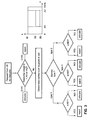
- the overall usage of the resource may first be taken into account prior to performing the analysis as described with reference to FIG. 2 in order to avoid unnecessary processing in the network. This embodiment is shown in the flow chart of FIG. 3 .
- the overall usage U of the resource(s) is determined by analysing this usage with respect to service-independent thresholds A1 and A2. In particular, if the resource usage is below 40% (A1), a request for service may be allowed independent of the type of service requested. On the other hand, if the resource usage U is above 90% (A2), the request for service should never be allowed (also independent of the type of service requested), since sufficient resource capacity should remain for the network.
- This filtering procedure is schematically illustrated in the right-hand side diagram of FIG. 3 .
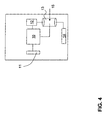
- FIG. 4 provides a schematic illustration of the RNC showing modules (which may be portions of software code running on a processor) responsible for carrying out one or more steps of the algorithm.
- the RNC 3 comprises a processor 10, a receiver 11 configured for receiving a request for a resource (service) and means 12 for obtaining the total number of requests for service in the cell C.
- Service dependent thresholds B1, B2, and B3 and service independent thresholds A1, A2 are stored in storage module 13. Also, the total number e of requests as defined above can be stored in this module 13.
- Variation means 14 are provided to vary the service dependent thresholds B1, B2 and B3.
- the arrow 15 indicates that data may also be received from externally, such as updates for the total number e of requests for a resource based on historical averaging or predictive calculation.
Landscapes
- Engineering & Computer Science (AREA)
- Computer Networks & Wireless Communication (AREA)
- Signal Processing (AREA)
- Mobile Radio Communication Systems (AREA)
Abstract
Description
- The invention relates to a method and system for service dependent resource allocation. More specifically, the invention relates to a method of allocating a resource in a radio communications network configured for providing at least a first service type and a second service type in a cell of said network to a user device, said first service type and said second service type both requiring said resource. The invention also relates to a radio communications network (or a node of such a network) having implemented such a method and to a computer program comprising software code portions for executing such a method.
- Radio communications networks are expected to provide more and more services to user devices (mobile phones, portable computers, etc), such as voice, data and real-time services (e.g. mobile TV). However, the most requested and profitable services at present for mobile network operators (MNOs) are still voice and data. Delivering voice and data services together with broadcast/multicast services using the same share of radio resources is likely to reduce the economic efficiency of the mobile network. This is because broadcast/multicast services require large amounts of resources, as compared with voice and data services and in situations where there is a lack of available resource, service blockage occurs.
- One of the main concerns related to resource management is that users of the network should receive their contracted quality of service irrespective of the service given to the other users of the network. Also, users will be dissatisfied when services appear not to be available or are not provided with a reasonable quality. Thus, given the fact that network resources are limited by definition, both contractual and perceptual issues matter in allocating radio network resources.
- Examples of radio network resources include power, bandwidth, code tree usage etc.
- In a UMTS network, a Radio Resource Control (RRC) part of the protocol stack is responsible for the assignment, configuration and release of radio resources between the UE and the UTRAN. This RRC protocol is described in detail in the 3GPP TS 25.331 specifications.
- Future generations of networks, e.g. LTE, also provide for allocation and management of resources. For example in LTE, the RRC part of the protocol stack is responsible for the assignment, configuration and release of radio resources between the UE and the E-UTRAN (Evolved UTRAN). This RRC protocol is described in detail in the 3GPP TS 36.331 specifications.
- In the prior art, the general principle of resource allocation when a new request is received is based on assessing how much of a resource is used and, based on this assessment, allocating the resource if this is available. Normally, the allocation algorithm is designed such that a resource cannot be used completely by the user devices in order to reserve a sufficient amount of resource for tasks of the network, such as handover.
- This method of resource allocation in a radio communications network does not allow a mobile network operator to tune the allocation to his specific needs or desires.
- It is an object of the present invention to provide an improved method of resource allocation in a radio communications network.
- To that end, a method of allocating a resource in a radio communications network is proposed that is configured for providing to a user device at least a first service type and a second service type in a cell of the radio network. The first service type and second service type both require the resource for operation. A request for a service, requiring the resource, is received in the radio network. The total number of service requests (either actual or predicted) within the cell is also obtained and it is determined whether the request from the user device is for a service of the first type or the second type. If the request is for the first service type, the resource is allocated to provide the first service type to the user device only if the total number of requests complies with a first threshold being specific for the first service type. If the request is for the second service type, the resource is allocated to provide the second service type to the user device only if the total number of requests complies with a second threshold being specific for the second service type.
- A computer program comprising software code portions configured for, when executed on a computing device, performing this method is also proposed.
- Furthermore, a radio communications network configured for providing to a user device at least a first service type and a second service type in a cell of the network is proposed. Both the first service type and second service type require a same resource. The radio communications network comprises a node configured for receiving a request for a service from the user device; The radio communications network also comprises means configured for obtaining a total number of requests (actual or predicted) for services (all service types) in the cell and determination means configured for determining whether the request for a service from the user device is for the first service type or the second service type. Allocation means are provided for allocating the resource for providing the first service type or the second service type. If the request is for the first service type, the resource is allocated to provide the first service type to the user device only if the total number of requests complies with a first threshold being specific for the first service type. If the request is for the second service type, the resource is allocated to provide the second service type to the user device only if the total number of requests complies with a second threshold being specific for the second service type.
- Examples of service types include voice, data and real-time services, such as mobile TV.
- At least one step of the method can be performed in a node of a radio communications network, such as a radio network controller. This may be a suitable node in a UMTS network.
- For other networks, such as LTE, one or more steps of the resource allocation method may be performed in a controller of the eNB of the cell.
- By introducing service specific thresholds in the resource allocation management algorithm, the proposed method, computer program and radio communications network allow a network operator to decide on resource allocation on a service specific basis, thereby allowing him to prioritize a specific service at the expense of another service. By prioritizing different services with thresholds in the total number requests, instead of thresholds in the normally used resource usage, the resource can be used in a more efficient way.
- The total number of requests can be obtained by predictive calculation, as example of which is described in
US 6,721,568 , which is incorporated in the present application by reference in its entirety. In particular, a current measured parameter value in a cell may be determined and a future value associated with an event that may impact the measured parameter value may be predicted. The current measured value and the predicted value may then be combined to provide a combined value. - The total number of requests may include the number of active user devices in a cell requesting or using the corresponding resource.
- The service specific thresholds may be varied by the network operator in order to vary prioritization of services.
- In order to avoid unnecessary processing, the usage of the resource (e.g. the percentage of usage) may first be evaluated and compared to one or more non-service specific thresholds. In particular, if, upon receiving a request for a service, resource usage is above a first non-service specific threshold (in order to guarantee sufficient resource capacity for handling network requests), the resource should not be allocated and the request should be rejected without comparing the total number of requests in the cell with a service specific threshold. On the other hand, if, upon receiving a request for a service, resource usage is below a second non-service specific threshold (defining that sufficient resource capacity is available independent of the service type requested), the resource should always be allocated and the request should be accepted without comparing the total number of requests in the cell with a service specific threshold.
- Hereinafter, embodiments of the invention will be described in further detail. It should be appreciated, however, that these embodiments may not be construed as limiting the scope of protection for the present invention.
- In the drawings:
-
FIGS. 1A and 1B show schematic illustrations of a radio communications networks; -
FIG. 2 shows a flow chart of a method of resource allocation according to a first embodiment of the invention; -
FIG. 3 shows a flow chart of a method of resource allocation according to a second embodiment of the invention; and -
FIG. 4 is a schematic illustration of a network node comprising modules for a resource allocation algorithm according toFIGS. 2 or3 . -
FIG. 1A is a schematic illustration of aUMTS communication system 1.UMTS communication system 1 comprises a radio access network having a plurality ofwireless access stations radio network controller 3. Below, thewireless access stations 2A-2C are referred to as Node-Bs, whereascontroller 3 is abbreviated as RNC (radio network controller) for the system ofFIG. 1A . - The Node-
Bs 2A-2C provide wireless access for a user device 4 (also referred to as user equipment UE) by defining and supporting one or more cells C. The radio interface between theUE 4 and Node-B is referred to as the Uu-interface. - Each Node-
B 2A-2C has a correspondingdata connection 5A-5C to theRNC 3 of the radio access network. The interface between a Node-B and the RNC is referred to as the Iub interface. Thedata connections 5A-5C may e.g. be E1 data connections with a data transmission capacity of 2Mbps. Higher data transmission capacities may be obtained by using multiple E1 data connections or using E3 data connections (34 Mbps) or STM-1 data connections (150 Mbps). -
RNC 3 connects Node-Bs 2A-2C to the core network. The core network is configured for transferring user data either via a MSC and a GMSC to e.g. a PSTN network (for voice service) or via an SMSC and a GGSN to e.g. an IP network (for data services). - In operation, services may be provided from the core network upon request by the
user device 4, via theRNC 3 and Node-B 2A to the user device 4 (downlink communication), assuming that user terminal is in one of the cells C of Node-B 2A. Resource allocation for provided the service(s) is managed in theRNC 3. - Other communication systems, such as system 1' schematically depicted in
FIG. 1B , may not have an RNC. AnIP network 7, or other network, is provided between thewireless access stations 2A' - 2C' and thecore network 6.Network 7 may comprise acontroller 8 configured for performing one or more steps according to an embodiment of the invention by managing radio resources. Thecontroller 8 may be a GGSN-like module. Alternatively, thecontroller 8 is provided with each of the wireless access stations. Examples of such communication systems include Long Term Evolution (LTE, also referred to as '4G') communication systems or WiMAX communication systems. In LTE systems,wireless access stations 2A'-2C' are referred to as eNBs. - Embodiments of the invention will now be explained with reference to
FIGS. 2 and3 with regard to thecommunication system 1 ofFIG. 1A or FIG. 1B for downlink communication. It should be appreciated however, the embodiments are, mutatis mutandis, suitable for uplink communication or downlink communication. -
FIG. 2 shows a flow chart of a method of resource allocation according to a first embodiment of the invention. A request is received from auser device 4 in cell C for a service, e.g. voice. In order to service this request, one or more resources from the radio network are required. The flow chart ofFIG. 2 is applicable for one or more of the requested resources. It should be appreciated that if a plurality of resources is required to provide a service, the proposed method can be used for allocating one or more of the resources, while other methods are used for other resources. - In order to perform the algorithm, the total number e of requests (for all services) is determined upon receiving the request for the said service. This number may be calculated by using historical averaging (the average number of users at a particular moment in the past) or otherwise (such as the method disclosed in
US 6,721,568 ). - Also, the request for the service from the user device is analyzed to determine the type of the requested service. For example,
service type 1 is a voice service,service type 2 is a data service andservice type 3 is a real-time service (e.g. mobile TV). - For each service type, a service specific threshold B1, B2, B3 has been determined. This threshold preferably relates to the number of connections that the network operator allows in the specific cell C for each service. As an example, the network operator may have determined that 60 connections are allowed in the cell C for accepting new voice services, 30 for accepting new data services and 10 for accepting new real time services as shown in the right-hand side diagram of
FIG. 2 (wherein U is the usage of the resource in percentages).In principle, these thresholds B1, B2, B3 could also be the same if the same priority is applied by the operator. - Upon receipt of the request from the
user device 4, it is determined what type of service is requested by the user device in a manner known as such for the person skilled in the art. In the present example, a voice service is requested, i.e.service type 1. Then, it is determined whether the total number e of requests in the cell at the moment of receiving the request exceeds voice service specific threshold B1. If so, the resource will not be allocated and the request for the service will be rejected. If e<B1, the resource will be allocated and the request for the voice service will be accepted. A similar algorithm is performed for requests forservice types - Upon receipt of the request for a specific service from
user device 4, the overall usage of the resource may first be taken into account prior to performing the analysis as described with reference toFIG. 2 in order to avoid unnecessary processing in the network. This embodiment is shown in the flow chart ofFIG. 3 . - When the request for a specific service is received from the
user device 4, the overall usage U of the resource(s) is determined by analysing this usage with respect to service-independent thresholds A1 and A2. In particular, if the resource usage is below 40% (A1), a request for service may be allowed independent of the type of service requested. On the other hand, if the resource usage U is above 90% (A2), the request for service should never be allowed (also independent of the type of service requested), since sufficient resource capacity should remain for the network. This filtering procedure is schematically illustrated in the right-hand side diagram ofFIG. 3 . - As mentioned above, the RNC 3 (or more generally: a network node) in the radio communications network may perform the tasks described with reference to
FIGS. 2 and3 .FIG. 4 provides a schematic illustration of the RNC showing modules (which may be portions of software code running on a processor) responsible for carrying out one or more steps of the algorithm. In particular, theRNC 3 comprises aprocessor 10, areceiver 11 configured for receiving a request for a resource (service) and means 12 for obtaining the total number of requests for service in the cell C. Service dependent thresholds B1, B2, and B3 and service independent thresholds A1, A2 are stored instorage module 13. Also, the total number e of requests as defined above can be stored in thismodule 13.Processor 10, while performing the above algorithm using these modules, functions as an allocation means for allocating the resources. Variation means 14 are provided to vary the service dependent thresholds B1, B2 and B3. Thearrow 15 indicates that data may also be received from externally, such as updates for the total number e of requests for a resource based on historical averaging or predictive calculation.
Claims (15)
- A method of allocating a resource in a radio communications network configured for providing to a user device at least a first service type and a second service type in a cell of said network, said first service type and said second service type both requiring said resource, said method comprising the steps in the radio communications network of:- receiving, from said user device, a request for a service requiring said resource;- obtaining a total number of service requests for said cell;- determining whether said request for a service is for said first service type or said second service type; and- depending on whether said request is for said first service type or said second service type, allocating said resource to provide said first service type to said user device only if said total number of requests complies with a first threshold being specific for said first service type or allocating said resource to provide said second service type to said user device only if said total number of requests complies with a second threshold being specific for said second service type.
- The method according to claim 1, further comprising the step of obtaining said total number of service requests for said cell by predictive calculation.
- The method according to claim 1, wherein said first and second service specific thresholds relate to a pre-determined number of requests to be allowed for said first service type and said second service type, respectively.
- The method according to one or more of the preceding claims, further comprising the step of varying at least one of said first and second service specific thresholds by an operator of said radio communications network.
- The method according to one or more of the preceding claims, further comprising the steps of:- determining usage of said resource; and- rejecting said request without determining whether said total number of requests complies with said first or second service specific thresholds if said resource usage exceeds a first non-service specific threshold.
- The method according to one or more of the preceding claims, further comprising the steps of:- determining usage of said resource; and- allocating said resource without determining whether said total number of requests complies with said first or second service specific thresholds if said resource usage remains below a second non-service specific threshold.
- The method according to claim 5 and 6, further comprising the step of determining whether said resource should be allocated only if said resource usage is between said first and second non-service specific thresholds.
- A computer program comprising software code portions configured for, when executed on a computing device, performing the method according to one or more of the preceding claims.
- A radio communications network configured for providing to a user device at least a first service type and a second service type in a cell of said network, both said first service type and said second service type requiring a same resource, the radio communications network comprising:- a node configured for receiving a request for a service from said user device;- means configured for obtaining a total number of requests for service in said cell;- determination means configured for determining whether said request for a service is for said first service type or said second service type; and- allocation means configured for, depending on whether said request is for said first service type or said second service type, allocating said resource for providing said first service type to said user device only if said total number of requests complies with a first threshold being specific for said first service type or allocating said resource for providing said second service type to said user device only if said total number of requests complies with a second threshold being specific for said second service type.
- The radio communications network according to claim 9, further comprising calculation means for obtaining said total number of service requests in said cell.
- The radio communications network according to claim 9 or 10, wherein said first and second service specific thresholds relate to a pre-determined number of requests to be allowed for said first service type and second service type, respectively.
- The radio communications network according to claim 10 or 11, further comprising variation means configured for varying at least one of said first and second service specific thresholds.
- The radio communications network according to one or more of the preceding claims 9-12, further comprising:- means configured for determining usage of said resource;- a rejector configured for rejecting said request without determining whether said total number of requests complies with said first and second service specific thresholds if said resource usage exceeds a first non-service specific threshold.
- The radio communications network according to one or more of the preceding claims 10-13, further comprising means configured for determining usage of said resource, wherein said allocation means are configured for allocating said resource without determining whether said total number of requests complies with said first and second service specific thresholds if said resource usage remains below a second non-service specific threshold.
- The radio communications network according to claim 13 and 14, further comprising processing means configured for determining whether said resource should be allocated only if said resource usage is between said first and second non-service specific thresholds.
Priority Applications (3)
| Application Number | Priority Date | Filing Date | Title |
|---|---|---|---|
| EP08018309A EP2178332B1 (en) | 2008-10-20 | 2008-10-20 | Method and system for service dependent resource allocation |
| AT08018309T ATE553624T1 (en) | 2008-10-20 | 2008-10-20 | PROCEDURE AND SYSTEM FOR SERVICE-DEPENDENT RESOURCE ALLOCATION |
| US12/582,481 US20100098013A1 (en) | 2008-10-20 | 2009-10-20 | Method and System for Service Dependent Resource Allocation |
Applications Claiming Priority (1)
| Application Number | Priority Date | Filing Date | Title |
|---|---|---|---|
| EP08018309A EP2178332B1 (en) | 2008-10-20 | 2008-10-20 | Method and system for service dependent resource allocation |
Publications (2)
| Publication Number | Publication Date |
|---|---|
| EP2178332A1 true EP2178332A1 (en) | 2010-04-21 |
| EP2178332B1 EP2178332B1 (en) | 2012-04-11 |
Family
ID=40578206
Family Applications (1)
| Application Number | Title | Priority Date | Filing Date |
|---|---|---|---|
| EP08018309A Not-in-force EP2178332B1 (en) | 2008-10-20 | 2008-10-20 | Method and system for service dependent resource allocation |
Country Status (3)
| Country | Link |
|---|---|
| US (1) | US20100098013A1 (en) |
| EP (1) | EP2178332B1 (en) |
| AT (1) | ATE553624T1 (en) |
Families Citing this family (5)
| Publication number | Priority date | Publication date | Assignee | Title |
|---|---|---|---|---|
| CN103068048A (en) * | 2011-10-24 | 2013-04-24 | 北京三星通信技术研究有限公司 | Method and apparatus for cellular communication |
| US9223623B2 (en) * | 2012-03-28 | 2015-12-29 | Bmc Software, Inc. | Dynamic service resource control |
| US9292060B1 (en) * | 2012-06-28 | 2016-03-22 | Amazon Technologies, Inc. | Allowing clients to limited control on power consumed by the cloud while executing the client's tasks |
| US9348391B1 (en) * | 2012-06-28 | 2016-05-24 | Amazon Technologies, Inc. | Managing resource power states in shared environments |
| US9547353B1 (en) | 2012-09-19 | 2017-01-17 | Amazon Technologies, Inc. | Processor energy monitoring and dynamic adjustment |
Citations (5)
| Publication number | Priority date | Publication date | Assignee | Title |
|---|---|---|---|---|
| WO2001028130A1 (en) * | 1999-10-08 | 2001-04-19 | Motorola, Inc. | Dynamic allocation of satellite spectrum resources |
| EP1227695A1 (en) * | 2001-01-26 | 2002-07-31 | NTT DoCoMo, Inc. | Call admission control method communication system and base station device |
| EP1298951A2 (en) * | 2001-10-01 | 2003-04-02 | NTT DoCoMo, Inc. | Resource control method, mobile communication system, base station and mobile station |
| US20030148768A1 (en) * | 2002-02-01 | 2003-08-07 | Naveen Kakani | Method and system for service rate allocation, traffic learning process, and QoS provisioning measurement of traffic flows |
| US6721568B1 (en) | 1999-11-10 | 2004-04-13 | Telefonaktiebolaget Lm Ericsson (Publ) | Admission control in a mobile radio communications system |
Family Cites Families (1)
| Publication number | Priority date | Publication date | Assignee | Title |
|---|---|---|---|---|
| US6282424B1 (en) * | 1997-07-01 | 2001-08-28 | Opuswave Networks, Inc. | Resource controllers for use in a non-unitary service system |
-
2008
- 2008-10-20 EP EP08018309A patent/EP2178332B1/en not_active Not-in-force
- 2008-10-20 AT AT08018309T patent/ATE553624T1/en active
-
2009
- 2009-10-20 US US12/582,481 patent/US20100098013A1/en not_active Abandoned
Patent Citations (5)
| Publication number | Priority date | Publication date | Assignee | Title |
|---|---|---|---|---|
| WO2001028130A1 (en) * | 1999-10-08 | 2001-04-19 | Motorola, Inc. | Dynamic allocation of satellite spectrum resources |
| US6721568B1 (en) | 1999-11-10 | 2004-04-13 | Telefonaktiebolaget Lm Ericsson (Publ) | Admission control in a mobile radio communications system |
| EP1227695A1 (en) * | 2001-01-26 | 2002-07-31 | NTT DoCoMo, Inc. | Call admission control method communication system and base station device |
| EP1298951A2 (en) * | 2001-10-01 | 2003-04-02 | NTT DoCoMo, Inc. | Resource control method, mobile communication system, base station and mobile station |
| US20030148768A1 (en) * | 2002-02-01 | 2003-08-07 | Naveen Kakani | Method and system for service rate allocation, traffic learning process, and QoS provisioning measurement of traffic flows |
Also Published As
| Publication number | Publication date |
|---|---|
| US20100098013A1 (en) | 2010-04-22 |
| ATE553624T1 (en) | 2012-04-15 |
| EP2178332B1 (en) | 2012-04-11 |
Similar Documents
| Publication | Publication Date | Title |
|---|---|---|
| EP2800414B1 (en) | Load balancing method and related device | |
| US8611217B2 (en) | Subscriber/service differentiation in advanced wireless networks | |
| US8676186B2 (en) | Cell load balancing method, cell load measuring method, and devices thereof | |
| US8792340B2 (en) | Admission control for shared LTE network | |
| JP5279717B2 (en) | Load-dependent rate regulation method and system | |
| EP2262335B1 (en) | Method and apparatus for multiple providers sharing carrier frequency resourse | |
| KR101740929B1 (en) | Mobile communication systems for controlling load in distributed manner and method threrof | |
| US20190320436A1 (en) | Information transmission method and radio access network device | |
| EP3128778B1 (en) | Network sharing method, apparatus and computer storage medium | |
| US20250193743A1 (en) | Communication method and apparatus | |
| EP2922336A1 (en) | Method, apparatus, and system for radio bearer control | |
| US20160105894A1 (en) | eMBMS Management Method, Multimedia Broadcast Multicast Service Coordination Entity, and Base Station | |
| EP2178332B1 (en) | Method and system for service dependent resource allocation | |
| KR20050047250A (en) | Apparatus and method of call admission control for qos provisioning in highspeed protable internet network | |
| CN114980148B (en) | Network capability determining method and device | |
| CN110366217B (en) | Carrier switching method, device and medium based on asymmetric uplink carrier aggregation | |
| US9282555B2 (en) | Resource control method, device and base station | |
| EP2871889B1 (en) | Terminal selection method, network entity, and system based on self-organizing networks | |
| CN104202775A (en) | Wireless access control method capable of lowering 'signaling storm' | |
| CN112770339B (en) | Cooperative cell determination method and device | |
| KR100566233B1 (en) | Apparatus and method for transmitting data rate of terminal in mobile communication system | |
| US8116204B2 (en) | Scheduler | |
| Nasser | Service adaptability in multimedia wireless networks | |
| US20110249565A1 (en) | Systems and Methods for Adapting Network Capacity Assigned to a Partition | |
| US20140313894A1 (en) | Mobility load balancing method and access network device |
Legal Events
| Date | Code | Title | Description |
|---|---|---|---|
| PUAI | Public reference made under article 153(3) epc to a published international application that has entered the european phase |
Free format text: ORIGINAL CODE: 0009012 |
|
| AK | Designated contracting states |
Kind code of ref document: A1 Designated state(s): AT BE BG CH CY CZ DE DK EE ES FI FR GB GR HR HU IE IS IT LI LT LU LV MC MT NL NO PL PT RO SE SI SK TR |
|
| AX | Request for extension of the european patent |
Extension state: AL BA MK RS |
|
| 17P | Request for examination filed |
Effective date: 20101021 |
|
| AKX | Designation fees paid |
Designated state(s): AT BE BG CH CY CZ DE DK EE ES FI FR GB GR HR HU IE IS IT LI LT LU LV MC MT NL NO PL PT RO SE SI SK TR |
|
| 17Q | First examination report despatched |
Effective date: 20101213 |
|
| GRAP | Despatch of communication of intention to grant a patent |
Free format text: ORIGINAL CODE: EPIDOSNIGR1 |
|
| GRAS | Grant fee paid |
Free format text: ORIGINAL CODE: EPIDOSNIGR3 |
|
| GRAA | (expected) grant |
Free format text: ORIGINAL CODE: 0009210 |
|
| AK | Designated contracting states |
Kind code of ref document: B1 Designated state(s): AT BE BG CH CY CZ DE DK EE ES FI FR GB GR HR HU IE IS IT LI LT LU LV MC MT NL NO PL PT RO SE SI SK TR |
|
| REG | Reference to a national code |
Ref country code: GB Ref legal event code: FG4D |
|
| REG | Reference to a national code |
Ref country code: CH Ref legal event code: EP |
|
| REG | Reference to a national code |
Ref country code: AT Ref legal event code: REF Ref document number: 553624 Country of ref document: AT Kind code of ref document: T Effective date: 20120415 |
|
| REG | Reference to a national code |
Ref country code: IE Ref legal event code: FG4D |
|
| REG | Reference to a national code |
Ref country code: DE Ref legal event code: R096 Ref document number: 602008014721 Country of ref document: DE Effective date: 20120606 |
|
| REG | Reference to a national code |
Ref country code: NL Ref legal event code: T3 |
|
| REG | Reference to a national code |
Ref country code: SE Ref legal event code: TRGR |
|
| REG | Reference to a national code |
Ref country code: AT Ref legal event code: MK05 Ref document number: 553624 Country of ref document: AT Kind code of ref document: T Effective date: 20120411 |
|
| LTIE | Lt: invalidation of european patent or patent extension |
Effective date: 20120411 |
|
| PG25 | Lapsed in a contracting state [announced via postgrant information from national office to epo] |
Ref country code: IS Free format text: LAPSE BECAUSE OF FAILURE TO SUBMIT A TRANSLATION OF THE DESCRIPTION OR TO PAY THE FEE WITHIN THE PRESCRIBED TIME-LIMIT Effective date: 20120811 Ref country code: CY Free format text: LAPSE BECAUSE OF FAILURE TO SUBMIT A TRANSLATION OF THE DESCRIPTION OR TO PAY THE FEE WITHIN THE PRESCRIBED TIME-LIMIT Effective date: 20120411 Ref country code: PL Free format text: LAPSE BECAUSE OF FAILURE TO SUBMIT A TRANSLATION OF THE DESCRIPTION OR TO PAY THE FEE WITHIN THE PRESCRIBED TIME-LIMIT Effective date: 20120411 Ref country code: NO Free format text: LAPSE BECAUSE OF FAILURE TO SUBMIT A TRANSLATION OF THE DESCRIPTION OR TO PAY THE FEE WITHIN THE PRESCRIBED TIME-LIMIT Effective date: 20120711 Ref country code: LT Free format text: LAPSE BECAUSE OF FAILURE TO SUBMIT A TRANSLATION OF THE DESCRIPTION OR TO PAY THE FEE WITHIN THE PRESCRIBED TIME-LIMIT Effective date: 20120411 |
|
| PG25 | Lapsed in a contracting state [announced via postgrant information from national office to epo] |
Ref country code: GR Free format text: LAPSE BECAUSE OF FAILURE TO SUBMIT A TRANSLATION OF THE DESCRIPTION OR TO PAY THE FEE WITHIN THE PRESCRIBED TIME-LIMIT Effective date: 20120712 Ref country code: PT Free format text: LAPSE BECAUSE OF FAILURE TO SUBMIT A TRANSLATION OF THE DESCRIPTION OR TO PAY THE FEE WITHIN THE PRESCRIBED TIME-LIMIT Effective date: 20120813 Ref country code: SI Free format text: LAPSE BECAUSE OF FAILURE TO SUBMIT A TRANSLATION OF THE DESCRIPTION OR TO PAY THE FEE WITHIN THE PRESCRIBED TIME-LIMIT Effective date: 20120411 Ref country code: LV Free format text: LAPSE BECAUSE OF FAILURE TO SUBMIT A TRANSLATION OF THE DESCRIPTION OR TO PAY THE FEE WITHIN THE PRESCRIBED TIME-LIMIT Effective date: 20120411 Ref country code: HR Free format text: LAPSE BECAUSE OF FAILURE TO SUBMIT A TRANSLATION OF THE DESCRIPTION OR TO PAY THE FEE WITHIN THE PRESCRIBED TIME-LIMIT Effective date: 20120411 |
|
| PG25 | Lapsed in a contracting state [announced via postgrant information from national office to epo] |
Ref country code: BE Free format text: LAPSE BECAUSE OF FAILURE TO SUBMIT A TRANSLATION OF THE DESCRIPTION OR TO PAY THE FEE WITHIN THE PRESCRIBED TIME-LIMIT Effective date: 20120411 |
|
| PG25 | Lapsed in a contracting state [announced via postgrant information from national office to epo] |
Ref country code: AT Free format text: LAPSE BECAUSE OF FAILURE TO SUBMIT A TRANSLATION OF THE DESCRIPTION OR TO PAY THE FEE WITHIN THE PRESCRIBED TIME-LIMIT Effective date: 20120411 Ref country code: SK Free format text: LAPSE BECAUSE OF FAILURE TO SUBMIT A TRANSLATION OF THE DESCRIPTION OR TO PAY THE FEE WITHIN THE PRESCRIBED TIME-LIMIT Effective date: 20120411 Ref country code: DK Free format text: LAPSE BECAUSE OF FAILURE TO SUBMIT A TRANSLATION OF THE DESCRIPTION OR TO PAY THE FEE WITHIN THE PRESCRIBED TIME-LIMIT Effective date: 20120411 Ref country code: RO Free format text: LAPSE BECAUSE OF FAILURE TO SUBMIT A TRANSLATION OF THE DESCRIPTION OR TO PAY THE FEE WITHIN THE PRESCRIBED TIME-LIMIT Effective date: 20120411 Ref country code: EE Free format text: LAPSE BECAUSE OF FAILURE TO SUBMIT A TRANSLATION OF THE DESCRIPTION OR TO PAY THE FEE WITHIN THE PRESCRIBED TIME-LIMIT Effective date: 20120411 Ref country code: CZ Free format text: LAPSE BECAUSE OF FAILURE TO SUBMIT A TRANSLATION OF THE DESCRIPTION OR TO PAY THE FEE WITHIN THE PRESCRIBED TIME-LIMIT Effective date: 20120411 |
|
| PLBE | No opposition filed within time limit |
Free format text: ORIGINAL CODE: 0009261 |
|
| STAA | Information on the status of an ep patent application or granted ep patent |
Free format text: STATUS: NO OPPOSITION FILED WITHIN TIME LIMIT |
|
| PG25 | Lapsed in a contracting state [announced via postgrant information from national office to epo] |
Ref country code: IT Free format text: LAPSE BECAUSE OF FAILURE TO SUBMIT A TRANSLATION OF THE DESCRIPTION OR TO PAY THE FEE WITHIN THE PRESCRIBED TIME-LIMIT Effective date: 20120411 |
|
| 26N | No opposition filed |
Effective date: 20130114 |
|
| PG25 | Lapsed in a contracting state [announced via postgrant information from national office to epo] |
Ref country code: ES Free format text: LAPSE BECAUSE OF FAILURE TO SUBMIT A TRANSLATION OF THE DESCRIPTION OR TO PAY THE FEE WITHIN THE PRESCRIBED TIME-LIMIT Effective date: 20120722 |
|
| REG | Reference to a national code |
Ref country code: DE Ref legal event code: R097 Ref document number: 602008014721 Country of ref document: DE Effective date: 20130114 |
|
| PG25 | Lapsed in a contracting state [announced via postgrant information from national office to epo] |
Ref country code: MC Free format text: LAPSE BECAUSE OF NON-PAYMENT OF DUE FEES Effective date: 20121031 |
|
| REG | Reference to a national code |
Ref country code: CH Ref legal event code: PL |
|
| REG | Reference to a national code |
Ref country code: IE Ref legal event code: MM4A |
|
| PG25 | Lapsed in a contracting state [announced via postgrant information from national office to epo] |
Ref country code: IE Free format text: LAPSE BECAUSE OF NON-PAYMENT OF DUE FEES Effective date: 20121020 Ref country code: BG Free format text: LAPSE BECAUSE OF FAILURE TO SUBMIT A TRANSLATION OF THE DESCRIPTION OR TO PAY THE FEE WITHIN THE PRESCRIBED TIME-LIMIT Effective date: 20120711 Ref country code: CH Free format text: LAPSE BECAUSE OF NON-PAYMENT OF DUE FEES Effective date: 20121031 Ref country code: LI Free format text: LAPSE BECAUSE OF NON-PAYMENT OF DUE FEES Effective date: 20121031 |
|
| PG25 | Lapsed in a contracting state [announced via postgrant information from national office to epo] |
Ref country code: MT Free format text: LAPSE BECAUSE OF FAILURE TO SUBMIT A TRANSLATION OF THE DESCRIPTION OR TO PAY THE FEE WITHIN THE PRESCRIBED TIME-LIMIT Effective date: 20120411 |
|
| PG25 | Lapsed in a contracting state [announced via postgrant information from national office to epo] |
Ref country code: TR Free format text: LAPSE BECAUSE OF FAILURE TO SUBMIT A TRANSLATION OF THE DESCRIPTION OR TO PAY THE FEE WITHIN THE PRESCRIBED TIME-LIMIT Effective date: 20120411 |
|
| PG25 | Lapsed in a contracting state [announced via postgrant information from national office to epo] |
Ref country code: LU Free format text: LAPSE BECAUSE OF NON-PAYMENT OF DUE FEES Effective date: 20121020 |
|
| PG25 | Lapsed in a contracting state [announced via postgrant information from national office to epo] |
Ref country code: HU Free format text: LAPSE BECAUSE OF FAILURE TO SUBMIT A TRANSLATION OF THE DESCRIPTION OR TO PAY THE FEE WITHIN THE PRESCRIBED TIME-LIMIT Effective date: 20081020 |
|
| REG | Reference to a national code |
Ref country code: FR Ref legal event code: PLFP Year of fee payment: 8 |
|
| REG | Reference to a national code |
Ref country code: FR Ref legal event code: PLFP Year of fee payment: 9 |
|
| REG | Reference to a national code |
Ref country code: FR Ref legal event code: PLFP Year of fee payment: 10 |
|
| REG | Reference to a national code |
Ref country code: FR Ref legal event code: PLFP Year of fee payment: 11 |
|
| PGFP | Annual fee paid to national office [announced via postgrant information from national office to epo] |
Ref country code: FI Payment date: 20201022 Year of fee payment: 13 Ref country code: SE Payment date: 20201028 Year of fee payment: 13 |
|
| REG | Reference to a national code |
Ref country code: FI Ref legal event code: MAE |
|
| REG | Reference to a national code |
Ref country code: SE Ref legal event code: EUG |
|
| PG25 | Lapsed in a contracting state [announced via postgrant information from national office to epo] |
Ref country code: SE Free format text: LAPSE BECAUSE OF NON-PAYMENT OF DUE FEES Effective date: 20211021 |
|
| PG25 | Lapsed in a contracting state [announced via postgrant information from national office to epo] |
Ref country code: FI Free format text: LAPSE BECAUSE OF NON-PAYMENT OF DUE FEES Effective date: 20211020 |
|
| P01 | Opt-out of the competence of the unified patent court (upc) registered |
Effective date: 20230517 |
|
| PGFP | Annual fee paid to national office [announced via postgrant information from national office to epo] |
Ref country code: NL Payment date: 20231019 Year of fee payment: 16 |
|
| PGFP | Annual fee paid to national office [announced via postgrant information from national office to epo] |
Ref country code: GB Payment date: 20231020 Year of fee payment: 16 |
|
| PGFP | Annual fee paid to national office [announced via postgrant information from national office to epo] |
Ref country code: FR Payment date: 20231024 Year of fee payment: 16 Ref country code: DE Payment date: 20231020 Year of fee payment: 16 |
|
| REG | Reference to a national code |
Ref country code: DE Ref legal event code: R119 Ref document number: 602008014721 Country of ref document: DE |
|
| REG | Reference to a national code |
Ref country code: NL Ref legal event code: MM Effective date: 20241101 |
|
| GBPC | Gb: european patent ceased through non-payment of renewal fee |
Effective date: 20241020 |
|
| PG25 | Lapsed in a contracting state [announced via postgrant information from national office to epo] |
Ref country code: DE Free format text: LAPSE BECAUSE OF NON-PAYMENT OF DUE FEES Effective date: 20250501 |
|
| PG25 | Lapsed in a contracting state [announced via postgrant information from national office to epo] |
Ref country code: GB Free format text: LAPSE BECAUSE OF NON-PAYMENT OF DUE FEES Effective date: 20241020 |
|
| PG25 | Lapsed in a contracting state [announced via postgrant information from national office to epo] |
Ref country code: NL Free format text: LAPSE BECAUSE OF NON-PAYMENT OF DUE FEES Effective date: 20241101 |
|
| PG25 | Lapsed in a contracting state [announced via postgrant information from national office to epo] |
Ref country code: FR Free format text: LAPSE BECAUSE OF NON-PAYMENT OF DUE FEES Effective date: 20241031 |