EP2177518A1 - Organic compounds - Google Patents
Organic compounds Download PDFInfo
- Publication number
- EP2177518A1 EP2177518A1 EP09175034A EP09175034A EP2177518A1 EP 2177518 A1 EP2177518 A1 EP 2177518A1 EP 09175034 A EP09175034 A EP 09175034A EP 09175034 A EP09175034 A EP 09175034A EP 2177518 A1 EP2177518 A1 EP 2177518A1
- Authority
- EP
- European Patent Office
- Prior art keywords
- alkyl
- substituted
- unsubstituted
- alkoxy
- phenyl
- Prior art date
- Legal status (The legal status is an assumption and is not a legal conclusion. Google has not performed a legal analysis and makes no representation as to the accuracy of the status listed.)
- Withdrawn
Links
- 150000002894 organic compounds Chemical class 0.000 title 1
- -1 piperidine compound Chemical class 0.000 claims abstract description 352
- 150000001875 compounds Chemical class 0.000 claims abstract description 272
- 238000002360 preparation method Methods 0.000 claims abstract description 144
- 208000037265 diseases, disorders, signs and symptoms Diseases 0.000 claims abstract description 70
- 108090000783 Renin Proteins 0.000 claims abstract description 59
- 102100028255 Renin Human genes 0.000 claims abstract description 57
- 238000000034 method Methods 0.000 claims abstract description 56
- 230000000694 effects Effects 0.000 claims abstract description 52
- 201000010099 disease Diseases 0.000 claims abstract description 46
- 238000011282 treatment Methods 0.000 claims abstract description 46
- 239000008194 pharmaceutical composition Substances 0.000 claims abstract description 26
- 230000015572 biosynthetic process Effects 0.000 claims abstract description 19
- 238000003786 synthesis reaction Methods 0.000 claims abstract description 16
- 241001465754 Metazoa Species 0.000 claims abstract description 12
- 238000004519 manufacturing process Methods 0.000 claims abstract description 10
- 230000001225 therapeutic effect Effects 0.000 claims abstract description 10
- 125000001997 phenyl group Chemical group [H]C1=C([H])C([H])=C(*)C([H])=C1[H] 0.000 claims description 121
- 125000000623 heterocyclic group Chemical group 0.000 claims description 115
- 239000000463 material Substances 0.000 claims description 99
- 229910052739 hydrogen Inorganic materials 0.000 claims description 96
- 239000001257 hydrogen Substances 0.000 claims description 92
- 150000003839 salts Chemical class 0.000 claims description 90
- 125000005843 halogen group Chemical group 0.000 claims description 85
- 229910052799 carbon Inorganic materials 0.000 claims description 84
- 239000000203 mixture Substances 0.000 claims description 80
- IJGRMHOSHXDMSA-UHFFFAOYSA-N Atomic nitrogen Chemical compound N#N IJGRMHOSHXDMSA-UHFFFAOYSA-N 0.000 claims description 79
- 125000001424 substituent group Chemical group 0.000 claims description 78
- 229910052757 nitrogen Inorganic materials 0.000 claims description 76
- 125000001624 naphthyl group Chemical group 0.000 claims description 73
- 125000002924 primary amino group Chemical group [H]N([H])* 0.000 claims description 71
- OKTJSMMVPCPJKN-UHFFFAOYSA-N Carbon Chemical compound [C] OKTJSMMVPCPJKN-UHFFFAOYSA-N 0.000 claims description 57
- 125000003118 aryl group Chemical group 0.000 claims description 56
- 125000003178 carboxy group Chemical group [H]OC(*)=O 0.000 claims description 54
- 125000006239 protecting group Chemical group 0.000 claims description 44
- 125000004076 pyridyl group Chemical group 0.000 claims description 43
- 125000003107 substituted aryl group Chemical group 0.000 claims description 41
- 125000004093 cyano group Chemical group *C#N 0.000 claims description 36
- 229910052760 oxygen Inorganic materials 0.000 claims description 36
- 125000004435 hydrogen atom Chemical group [H]* 0.000 claims description 35
- 125000005346 substituted cycloalkyl group Chemical group 0.000 claims description 34
- 125000000472 sulfonyl group Chemical group *S(*)(=O)=O 0.000 claims description 34
- 150000002431 hydrogen Chemical group 0.000 claims description 33
- 125000000547 substituted alkyl group Chemical group 0.000 claims description 32
- 229910052717 sulfur Inorganic materials 0.000 claims description 32
- UFHFLCQGNIYNRP-UHFFFAOYSA-N Hydrogen Chemical compound [H][H] UFHFLCQGNIYNRP-UHFFFAOYSA-N 0.000 claims description 30
- 125000000217 alkyl group Chemical group 0.000 claims description 29
- 125000001041 indolyl group Chemical group 0.000 claims description 28
- 125000003386 piperidinyl group Chemical group 0.000 claims description 28
- 125000002915 carbonyl group Chemical group [*:2]C([*:1])=O 0.000 claims description 25
- 125000002252 acyl group Chemical group 0.000 claims description 24
- 125000002950 monocyclic group Chemical group 0.000 claims description 24
- 125000000714 pyrimidinyl group Chemical group 0.000 claims description 24
- 125000000753 cycloalkyl group Chemical group 0.000 claims description 23
- 125000004397 aminosulfonyl group Chemical group NS(=O)(=O)* 0.000 claims description 22
- 125000003831 tetrazolyl group Chemical group 0.000 claims description 22
- QJGQUHMNIGDVPM-UHFFFAOYSA-N nitrogen group Chemical group [N] QJGQUHMNIGDVPM-UHFFFAOYSA-N 0.000 claims description 21
- 125000003917 carbamoyl group Chemical group [H]N([H])C(*)=O 0.000 claims description 20
- 125000003226 pyrazolyl group Chemical group 0.000 claims description 20
- 239000007858 starting material Substances 0.000 claims description 20
- 125000005955 1H-indazolyl group Chemical group 0.000 claims description 19
- 125000003396 thiol group Chemical class [H]S* 0.000 claims description 19
- 125000002496 methyl group Chemical group [H]C([H])([H])* 0.000 claims description 18
- 230000008569 process Effects 0.000 claims description 18
- 125000000304 alkynyl group Chemical group 0.000 claims description 17
- 125000001495 ethyl group Chemical group [H]C([H])([H])C([H])([H])* 0.000 claims description 16
- 229920006395 saturated elastomer Polymers 0.000 claims description 16
- 125000001544 thienyl group Chemical group 0.000 claims description 16
- 125000003342 alkenyl group Chemical group 0.000 claims description 15
- 125000002619 bicyclic group Chemical group 0.000 claims description 15
- 125000004196 benzothienyl group Chemical group S1C(=CC2=C1C=CC=C2)* 0.000 claims description 13
- 125000004432 carbon atom Chemical group C* 0.000 claims description 13
- 125000004122 cyclic group Chemical group 0.000 claims description 13
- 125000000168 pyrrolyl group Chemical group 0.000 claims description 13
- 125000001425 triazolyl group Chemical group 0.000 claims description 13
- 125000000499 benzofuranyl group Chemical group O1C(=CC2=C1C=CC=C2)* 0.000 claims description 12
- 125000002541 furyl group Chemical group 0.000 claims description 12
- 125000003453 indazolyl group Chemical group N1N=C(C2=C1C=CC=C2)* 0.000 claims description 12
- 125000002183 isoquinolinyl group Chemical group C1(=NC=CC2=CC=CC=C12)* 0.000 claims description 12
- 125000000449 nitro group Chemical group [O-][N+](*)=O 0.000 claims description 12
- 125000004193 piperazinyl group Chemical group 0.000 claims description 12
- 125000002943 quinolinyl group Chemical group N1=C(C=CC2=CC=CC=C12)* 0.000 claims description 12
- 125000004426 substituted alkynyl group Chemical group 0.000 claims description 12
- 125000005956 isoquinolyl group Chemical group 0.000 claims description 11
- 125000005493 quinolyl group Chemical group 0.000 claims description 11
- 125000005017 substituted alkenyl group Chemical group 0.000 claims description 11
- 125000000475 sulfinyl group Chemical group [*:2]S([*:1])=O 0.000 claims description 11
- 150000001412 amines Chemical class 0.000 claims description 10
- 125000001246 bromo group Chemical group Br* 0.000 claims description 10
- 125000001449 isopropyl group Chemical group [H]C([H])([H])C([H])(*)C([H])([H])[H] 0.000 claims description 10
- 125000006413 ring segment Chemical group 0.000 claims description 10
- 125000001559 cyclopropyl group Chemical group [H]C1([H])C([H])([H])C1([H])* 0.000 claims description 9
- 125000001153 fluoro group Chemical group F* 0.000 claims description 9
- 125000004108 n-butyl group Chemical group [H]C([H])([H])C([H])([H])C([H])([H])C([H])([H])* 0.000 claims description 9
- 125000003170 phenylsulfonyl group Chemical group C1(=CC=CC=C1)S(=O)(=O)* 0.000 claims description 9
- 125000003367 polycyclic group Chemical group 0.000 claims description 9
- 125000002873 tetrahydrofuranonyl group Chemical group 0.000 claims description 9
- 125000001309 chloro group Chemical group Cl* 0.000 claims description 8
- 125000005842 heteroatom Chemical group 0.000 claims description 8
- 125000004123 n-propyl group Chemical group [H]C([H])([H])C([H])([H])C([H])([H])* 0.000 claims description 8
- 125000005186 naphthyloxy group Chemical group C1(=CC=CC2=CC=CC=C12)O* 0.000 claims description 8
- 125000000999 tert-butyl group Chemical group [H]C([H])([H])C(*)(C([H])([H])[H])C([H])([H])[H] 0.000 claims description 8
- 125000000113 cyclohexyl group Chemical group [H]C1([H])C([H])([H])C([H])([H])C([H])(*)C([H])([H])C1([H])[H] 0.000 claims description 7
- 238000006268 reductive amination reaction Methods 0.000 claims description 7
- 125000002914 sec-butyl group Chemical group [H]C([H])([H])C([H])([H])C([H])(*)C([H])([H])[H] 0.000 claims description 7
- 125000006552 (C3-C8) cycloalkyl group Chemical group 0.000 claims description 6
- 125000004423 acyloxy group Chemical group 0.000 claims description 6
- 125000006193 alkinyl group Chemical group 0.000 claims description 6
- 125000001995 cyclobutyl group Chemical group [H]C1([H])C([H])([H])C([H])(*)C1([H])[H] 0.000 claims description 6
- 125000001511 cyclopentyl group Chemical group [H]C1([H])C([H])([H])C([H])([H])C([H])(*)C1([H])[H] 0.000 claims description 6
- 125000002346 iodo group Chemical group I* 0.000 claims description 6
- 125000005146 naphthylsulfonyl group Chemical group C1(=CC=CC2=CC=CC=C12)S(=O)(=O)* 0.000 claims description 6
- 125000005029 naphthylthio group Chemical group C1(=CC=CC2=CC=CC=C12)S* 0.000 claims description 6
- 125000003356 phenylsulfanyl group Chemical group [*]SC1=C([H])C([H])=C([H])C([H])=C1[H] 0.000 claims description 6
- 125000001412 tetrahydropyranyl group Chemical group 0.000 claims description 6
- 125000005034 trifluormethylthio group Chemical group FC(S*)(F)F 0.000 claims description 6
- 125000000876 trifluoromethoxy group Chemical group FC(F)(F)O* 0.000 claims description 6
- 125000004104 aryloxy group Chemical group 0.000 claims description 5
- 125000001797 benzyl group Chemical group [H]C1=C([H])C([H])=C(C([H])=C1[H])C([H])([H])* 0.000 claims description 5
- 229910052736 halogen Inorganic materials 0.000 claims description 5
- 125000006517 heterocyclyl carbonyl group Chemical group 0.000 claims description 5
- 125000004453 alkoxycarbonyl group Chemical group 0.000 claims description 4
- 125000004202 aminomethyl group Chemical group [H]N([H])C([H])([H])* 0.000 claims description 4
- QVGXLLKOCUKJST-UHFFFAOYSA-N atomic oxygen Chemical group [O] QVGXLLKOCUKJST-UHFFFAOYSA-N 0.000 claims description 4
- 150000002367 halogens Chemical class 0.000 claims description 4
- 125000000959 isobutyl group Chemical group [H]C([H])([H])C([H])(C([H])([H])[H])C([H])([H])* 0.000 claims description 4
- 125000004573 morpholin-4-yl group Chemical group N1(CCOCC1)* 0.000 claims description 4
- 239000001301 oxygen Chemical group 0.000 claims description 4
- 125000003837 (C1-C20) alkyl group Chemical group 0.000 claims description 3
- 125000004178 (C1-C4) alkyl group Chemical group 0.000 claims description 3
- 125000006701 (C1-C7) alkyl group Chemical group 0.000 claims description 3
- YBYIRNPNPLQARY-UHFFFAOYSA-N 1H-indene Natural products C1=CC=C2CC=CC2=C1 YBYIRNPNPLQARY-UHFFFAOYSA-N 0.000 claims description 3
- 125000004200 2-methoxyethyl group Chemical group [H]C([H])([H])OC([H])([H])C([H])([H])* 0.000 claims description 3
- NINIDFKCEFEMDL-UHFFFAOYSA-N Sulfur Chemical group [S] NINIDFKCEFEMDL-UHFFFAOYSA-N 0.000 claims description 3
- 125000004448 alkyl carbonyl group Chemical group 0.000 claims description 3
- 125000002947 alkylene group Chemical group 0.000 claims description 3
- 125000003368 amide group Chemical group 0.000 claims description 3
- 125000005129 aryl carbonyl group Chemical group 0.000 claims description 3
- 125000005161 aryl oxy carbonyl group Chemical group 0.000 claims description 3
- 125000005135 aryl sulfinyl group Chemical group 0.000 claims description 3
- 125000004391 aryl sulfonyl group Chemical group 0.000 claims description 3
- 125000005110 aryl thio group Chemical group 0.000 claims description 3
- 125000006254 cycloalkyl carbonyl group Chemical group 0.000 claims description 3
- 125000005170 cycloalkyloxycarbonyl group Chemical group 0.000 claims description 3
- 125000000582 cycloheptyl group Chemical group [H]C1([H])C([H])([H])C([H])([H])C([H])([H])C([H])(*)C([H])([H])C1([H])[H] 0.000 claims description 3
- 239000003937 drug carrier Substances 0.000 claims description 3
- 125000003983 fluorenyl group Chemical group C1(=CC=CC=2C3=CC=CC=C3CC12)* 0.000 claims description 3
- 125000002485 formyl group Chemical group [H]C(*)=O 0.000 claims description 3
- 125000005844 heterocyclyloxy group Chemical group 0.000 claims description 3
- 125000003454 indenyl group Chemical group C1(C=CC2=CC=CC=C12)* 0.000 claims description 3
- SYSQUGFVNFXIIT-UHFFFAOYSA-N n-[4-(1,3-benzoxazol-2-yl)phenyl]-4-nitrobenzenesulfonamide Chemical class C1=CC([N+](=O)[O-])=CC=C1S(=O)(=O)NC1=CC=C(C=2OC3=CC=CC=C3N=2)C=C1 SYSQUGFVNFXIIT-UHFFFAOYSA-N 0.000 claims description 3
- 125000004923 naphthylmethyl group Chemical group C1(=CC=CC2=CC=CC=C12)C* 0.000 claims description 3
- 125000004430 oxygen atom Chemical group O* 0.000 claims description 3
- 125000005561 phenanthryl group Chemical group 0.000 claims description 3
- 125000006678 phenoxycarbonyl group Chemical group 0.000 claims description 3
- 125000004646 sulfenyl group Chemical group S(*)* 0.000 claims description 3
- 239000011593 sulfur Chemical group 0.000 claims description 3
- 125000002023 trifluoromethyl group Chemical group FC(F)(F)* 0.000 claims description 3
- 125000004356 hydroxy functional group Chemical group O* 0.000 claims 56
- 125000000325 methylidene group Chemical group [H]C([H])=* 0.000 claims 18
- 239000000543 intermediate Substances 0.000 abstract description 687
- NQRYJNQNLNOLGT-UHFFFAOYSA-N tetrahydropyridine hydrochloride Natural products C1CCNCC1 NQRYJNQNLNOLGT-UHFFFAOYSA-N 0.000 abstract description 6
- 230000036961 partial effect Effects 0.000 abstract description 2
- 150000003053 piperidines Chemical class 0.000 abstract description 2
- 238000004128 high performance liquid chromatography Methods 0.000 description 522
- 238000002330 electrospray ionisation mass spectrometry Methods 0.000 description 169
- XEKOWRVHYACXOJ-UHFFFAOYSA-N Ethyl acetate Chemical compound CCOC(C)=O XEKOWRVHYACXOJ-UHFFFAOYSA-N 0.000 description 109
- 238000009833 condensation Methods 0.000 description 99
- 230000005494 condensation Effects 0.000 description 99
- YMWUJEATGCHHMB-UHFFFAOYSA-N Dichloromethane Chemical compound ClCCl YMWUJEATGCHHMB-UHFFFAOYSA-N 0.000 description 85
- OKKJLVBELUTLKV-UHFFFAOYSA-N Methanol Chemical compound OC OKKJLVBELUTLKV-UHFFFAOYSA-N 0.000 description 84
- XLYOFNOQVPJJNP-UHFFFAOYSA-N water Substances O XLYOFNOQVPJJNP-UHFFFAOYSA-N 0.000 description 81
- 229910001868 water Inorganic materials 0.000 description 81
- CSNNHWWHGAXBCP-UHFFFAOYSA-L Magnesium sulfate Chemical compound [Mg+2].[O-][S+2]([O-])([O-])[O-] CSNNHWWHGAXBCP-UHFFFAOYSA-L 0.000 description 66
- 239000011541 reaction mixture Substances 0.000 description 62
- VYPSYNLAJGMNEJ-UHFFFAOYSA-N Silicium dioxide Chemical compound O=[Si]=O VYPSYNLAJGMNEJ-UHFFFAOYSA-N 0.000 description 60
- 238000006243 chemical reaction Methods 0.000 description 60
- 239000012267 brine Substances 0.000 description 54
- HPALAKNZSZLMCH-UHFFFAOYSA-M sodium;chloride;hydrate Chemical compound O.[Na+].[Cl-] HPALAKNZSZLMCH-UHFFFAOYSA-M 0.000 description 54
- 235000019439 ethyl acetate Nutrition 0.000 description 51
- 125000002887 hydroxy group Chemical group [H]O* 0.000 description 51
- 230000002829 reductive effect Effects 0.000 description 51
- 239000000741 silica gel Substances 0.000 description 48
- 229910002027 silica gel Inorganic materials 0.000 description 48
- 229960001866 silicon dioxide Drugs 0.000 description 48
- 238000003818 flash chromatography Methods 0.000 description 47
- WYURNTSHIVDZCO-UHFFFAOYSA-N Tetrahydrofuran Chemical compound C1CCOC1 WYURNTSHIVDZCO-UHFFFAOYSA-N 0.000 description 46
- ZMXDDKWLCZADIW-UHFFFAOYSA-N N,N-Dimethylformamide Chemical compound CN(C)C=O ZMXDDKWLCZADIW-UHFFFAOYSA-N 0.000 description 41
- 239000002904 solvent Substances 0.000 description 40
- 239000000243 solution Substances 0.000 description 39
- 239000012074 organic phase Substances 0.000 description 38
- 239000012230 colorless oil Substances 0.000 description 36
- 229910052943 magnesium sulfate Inorganic materials 0.000 description 33
- LFQSCWFLJHTTHZ-UHFFFAOYSA-N Ethanol Chemical compound CCO LFQSCWFLJHTTHZ-UHFFFAOYSA-N 0.000 description 32
- 239000003921 oil Substances 0.000 description 30
- 235000019198 oils Nutrition 0.000 description 30
- ZMANZCXQSJIPKH-UHFFFAOYSA-N Triethylamine Chemical compound CCN(CC)CC ZMANZCXQSJIPKH-UHFFFAOYSA-N 0.000 description 29
- 239000002253 acid Substances 0.000 description 23
- 208000035475 disorder Diseases 0.000 description 23
- 238000003756 stirring Methods 0.000 description 23
- KWYUFKZDYYNOTN-UHFFFAOYSA-M Potassium hydroxide Chemical compound [OH-].[K+] KWYUFKZDYYNOTN-UHFFFAOYSA-M 0.000 description 21
- YXFVVABEGXRONW-UHFFFAOYSA-N Toluene Chemical compound CC1=CC=CC=C1 YXFVVABEGXRONW-UHFFFAOYSA-N 0.000 description 21
- VLKZOEOYAKHREP-UHFFFAOYSA-N n-Hexane Chemical compound CCCCCC VLKZOEOYAKHREP-UHFFFAOYSA-N 0.000 description 21
- 238000006722 reduction reaction Methods 0.000 description 21
- RTZKZFJDLAIYFH-UHFFFAOYSA-N Diethyl ether Chemical compound CCOCC RTZKZFJDLAIYFH-UHFFFAOYSA-N 0.000 description 20
- 239000007832 Na2SO4 Substances 0.000 description 20
- PMZURENOXWZQFD-UHFFFAOYSA-L Sodium Sulfate Chemical compound [Na+].[Na+].[O-]S([O-])(=O)=O PMZURENOXWZQFD-UHFFFAOYSA-L 0.000 description 20
- 229910052938 sodium sulfate Inorganic materials 0.000 description 20
- WEVYAHXRMPXWCK-UHFFFAOYSA-N Acetonitrile Chemical compound CC#N WEVYAHXRMPXWCK-UHFFFAOYSA-N 0.000 description 18
- HTJDQJBWANPRPF-UHFFFAOYSA-N Cyclopropylamine Chemical compound NC1CC1 HTJDQJBWANPRPF-UHFFFAOYSA-N 0.000 description 17
- 239000002585 base Substances 0.000 description 16
- 125000001570 methylene group Chemical group [H]C([H])([*:1])[*:2] 0.000 description 16
- BWHMMNNQKKPAPP-UHFFFAOYSA-L potassium carbonate Substances [K+].[K+].[O-]C([O-])=O BWHMMNNQKKPAPP-UHFFFAOYSA-L 0.000 description 16
- 239000007787 solid Substances 0.000 description 14
- 239000003112 inhibitor Substances 0.000 description 13
- 125000004433 nitrogen atom Chemical group N* 0.000 description 13
- 239000012044 organic layer Substances 0.000 description 13
- 230000009467 reduction Effects 0.000 description 13
- 238000010992 reflux Methods 0.000 description 13
- 238000012360 testing method Methods 0.000 description 13
- LQMZSVRCDYSUIJ-UHFFFAOYSA-N 1-o-tert-butyl 5-o-methyl 4-(trifluoromethylsulfonyloxy)-3,6-dihydro-2h-pyridine-1,5-dicarboxylate Chemical compound COC(=O)C1=C(OS(=O)(=O)C(F)(F)F)CCN(C(=O)OC(C)(C)C)C1 LQMZSVRCDYSUIJ-UHFFFAOYSA-N 0.000 description 12
- VEXZGXHMUGYJMC-UHFFFAOYSA-N Hydrochloric acid Chemical compound Cl VEXZGXHMUGYJMC-UHFFFAOYSA-N 0.000 description 12
- JGFZNNIVVJXRND-UHFFFAOYSA-N N,N-Diisopropylethylamine (DIPEA) Chemical compound CCN(C(C)C)C(C)C JGFZNNIVVJXRND-UHFFFAOYSA-N 0.000 description 12
- HEDRZPFGACZZDS-MICDWDOJSA-N Trichloro(2H)methane Chemical compound [2H]C(Cl)(Cl)Cl HEDRZPFGACZZDS-MICDWDOJSA-N 0.000 description 12
- 208000010877 cognitive disease Diseases 0.000 description 12
- 230000001419 dependent effect Effects 0.000 description 12
- 230000007062 hydrolysis Effects 0.000 description 12
- 238000006460 hydrolysis reaction Methods 0.000 description 12
- 208000011580 syndromic disease Diseases 0.000 description 12
- QTBSBXVTEAMEQO-UHFFFAOYSA-N Acetic acid Chemical compound CC(O)=O QTBSBXVTEAMEQO-UHFFFAOYSA-N 0.000 description 11
- SECXISVLQFMRJM-UHFFFAOYSA-N N-Methylpyrrolidone Chemical compound CN1CCCC1=O SECXISVLQFMRJM-UHFFFAOYSA-N 0.000 description 11
- UIIMBOGNXHQVGW-UHFFFAOYSA-M Sodium bicarbonate Chemical compound [Na+].OC([O-])=O UIIMBOGNXHQVGW-UHFFFAOYSA-M 0.000 description 11
- 238000005859 coupling reaction Methods 0.000 description 11
- 238000006345 epimerization reaction Methods 0.000 description 11
- 229940073584 methylene chloride Drugs 0.000 description 11
- HEMHJVSKTPXQMS-UHFFFAOYSA-M sodium hydroxide Inorganic materials [OH-].[Na+] HEMHJVSKTPXQMS-UHFFFAOYSA-M 0.000 description 11
- HWZUQAKHJDKBOE-UHFFFAOYSA-N 3-methoxypropyl 4-methylbenzenesulfonate Chemical compound COCCCOS(=O)(=O)C1=CC=C(C)C=C1 HWZUQAKHJDKBOE-UHFFFAOYSA-N 0.000 description 10
- WQDUMFSSJAZKTM-UHFFFAOYSA-N Sodium methoxide Chemical compound [Na+].[O-]C WQDUMFSSJAZKTM-UHFFFAOYSA-N 0.000 description 10
- 230000008878 coupling Effects 0.000 description 10
- 238000010168 coupling process Methods 0.000 description 10
- 239000003814 drug Substances 0.000 description 10
- 239000000284 extract Substances 0.000 description 10
- OLNJUISKUQQNIM-UHFFFAOYSA-N indole-3-carbaldehyde Chemical compound C1=CC=C2C(C=O)=CNC2=C1 OLNJUISKUQQNIM-UHFFFAOYSA-N 0.000 description 10
- 238000004895 liquid chromatography mass spectrometry Methods 0.000 description 10
- DTQVDTLACAAQTR-UHFFFAOYSA-N trifluoroacetic acid Substances OC(=O)C(F)(F)F DTQVDTLACAAQTR-UHFFFAOYSA-N 0.000 description 10
- RYHBNJHYFVUHQT-UHFFFAOYSA-N 1,4-Dioxane Chemical compound C1COCCO1 RYHBNJHYFVUHQT-UHFFFAOYSA-N 0.000 description 9
- MZRVEZGGRBJDDB-UHFFFAOYSA-N N-Butyllithium Chemical compound [Li]CCCC MZRVEZGGRBJDDB-UHFFFAOYSA-N 0.000 description 9
- NFHFRUOZVGFOOS-UHFFFAOYSA-N Pd(PPh3)4 Substances [Pd].C1=CC=CC=C1P(C=1C=CC=CC=1)C1=CC=CC=C1.C1=CC=CC=C1P(C=1C=CC=CC=1)C1=CC=CC=C1.C1=CC=CC=C1P(C=1C=CC=CC=1)C1=CC=CC=C1.C1=CC=CC=C1P(C=1C=CC=CC=1)C1=CC=CC=C1 NFHFRUOZVGFOOS-UHFFFAOYSA-N 0.000 description 9
- FAPWRFPIFSIZLT-UHFFFAOYSA-M Sodium chloride Chemical compound [Na+].[Cl-] FAPWRFPIFSIZLT-UHFFFAOYSA-M 0.000 description 9
- 239000003054 catalyst Substances 0.000 description 9
- 101000579218 Homo sapiens Renin Proteins 0.000 description 8
- KFZMGEQAYNKOFK-UHFFFAOYSA-N Isopropanol Chemical compound CC(C)O KFZMGEQAYNKOFK-UHFFFAOYSA-N 0.000 description 8
- 238000003556 assay Methods 0.000 description 8
- 239000012043 crude product Substances 0.000 description 8
- CHKVPAROMQMJNQ-UHFFFAOYSA-M potassium bisulfate Chemical compound [K+].OS([O-])(=O)=O CHKVPAROMQMJNQ-UHFFFAOYSA-M 0.000 description 8
- 229910000343 potassium bisulfate Inorganic materials 0.000 description 8
- 229910000027 potassium carbonate Inorganic materials 0.000 description 8
- 239000000758 substrate Substances 0.000 description 8
- 230000002159 abnormal effect Effects 0.000 description 7
- 229910052783 alkali metal Inorganic materials 0.000 description 7
- 229940030600 antihypertensive agent Drugs 0.000 description 7
- 239000002220 antihypertensive agent Substances 0.000 description 7
- 239000003524 antilipemic agent Substances 0.000 description 7
- 108090000765 processed proteins & peptides Proteins 0.000 description 7
- 239000011347 resin Substances 0.000 description 7
- 229920005989 resin Polymers 0.000 description 7
- 239000011734 sodium Substances 0.000 description 7
- WSLDOOZREJYCGB-UHFFFAOYSA-N 1,2-Dichloroethane Chemical compound ClCCCl WSLDOOZREJYCGB-UHFFFAOYSA-N 0.000 description 6
- 238000005160 1H NMR spectroscopy Methods 0.000 description 6
- WFDIJRYMOXRFFG-UHFFFAOYSA-N Acetic anhydride Chemical compound CC(=O)OC(C)=O WFDIJRYMOXRFFG-UHFFFAOYSA-N 0.000 description 6
- 208000019901 Anxiety disease Diseases 0.000 description 6
- 201000001320 Atherosclerosis Diseases 0.000 description 6
- 206010007559 Cardiac failure congestive Diseases 0.000 description 6
- 206010007572 Cardiac hypertrophy Diseases 0.000 description 6
- 208000006029 Cardiomegaly Diseases 0.000 description 6
- 208000031229 Cardiomyopathies Diseases 0.000 description 6
- 208000028698 Cognitive impairment Diseases 0.000 description 6
- 206010012289 Dementia Diseases 0.000 description 6
- 206010052337 Diastolic dysfunction Diseases 0.000 description 6
- 208000010412 Glaucoma Diseases 0.000 description 6
- 206010019280 Heart failures Diseases 0.000 description 6
- 206010019668 Hepatic fibrosis Diseases 0.000 description 6
- 206010020571 Hyperaldosteronism Diseases 0.000 description 6
- 206010020772 Hypertension Diseases 0.000 description 6
- 206010061216 Infarction Diseases 0.000 description 6
- 230000029936 alkylation Effects 0.000 description 6
- 238000005804 alkylation reaction Methods 0.000 description 6
- 238000002399 angioplasty Methods 0.000 description 6
- 239000000883 anti-obesity agent Substances 0.000 description 6
- 239000003472 antidiabetic agent Substances 0.000 description 6
- 229940125710 antiobesity agent Drugs 0.000 description 6
- 230000009787 cardiac fibrosis Effects 0.000 description 6
- 208000020832 chronic kidney disease Diseases 0.000 description 6
- 210000004351 coronary vessel Anatomy 0.000 description 6
- 206010012601 diabetes mellitus Diseases 0.000 description 6
- 230000005764 inhibitory process Effects 0.000 description 6
- 230000004410 intraocular pressure Effects 0.000 description 6
- 208000017169 kidney disease Diseases 0.000 description 6
- 239000011777 magnesium Substances 0.000 description 6
- 201000001119 neuropathy Diseases 0.000 description 6
- 230000007823 neuropathy Effects 0.000 description 6
- 208000033808 peripheral neuropathy Diseases 0.000 description 6
- 239000000825 pharmaceutical preparation Substances 0.000 description 6
- 201000009395 primary hyperaldosteronism Diseases 0.000 description 6
- 208000037803 restenosis Diseases 0.000 description 6
- FVAUCKIRQBBSSJ-UHFFFAOYSA-M sodium iodide Chemical compound [Na+].[I-] FVAUCKIRQBBSSJ-UHFFFAOYSA-M 0.000 description 6
- 239000000126 substance Substances 0.000 description 6
- 230000006444 vascular growth Effects 0.000 description 6
- LMDZBCPBFSXMTL-UHFFFAOYSA-N 1-Ethyl-3-(3-dimethylaminopropyl)carbodiimide Substances CCN=C=NCCCN(C)C LMDZBCPBFSXMTL-UHFFFAOYSA-N 0.000 description 5
- FPIRBHDGWMWJEP-UHFFFAOYSA-N 1-hydroxy-7-azabenzotriazole Chemical compound C1=CN=C2N(O)N=NC2=C1 FPIRBHDGWMWJEP-UHFFFAOYSA-N 0.000 description 5
- 241000124008 Mammalia Species 0.000 description 5
- 230000002378 acidificating effect Effects 0.000 description 5
- 150000007513 acids Chemical class 0.000 description 5
- 150000001340 alkali metals Chemical class 0.000 description 5
- 230000003178 anti-diabetic effect Effects 0.000 description 5
- 230000036772 blood pressure Effects 0.000 description 5
- 238000010511 deprotection reaction Methods 0.000 description 5
- 150000002148 esters Chemical class 0.000 description 5
- 230000008570 general process Effects 0.000 description 5
- 150000008282 halocarbons Chemical class 0.000 description 5
- 238000000338 in vitro Methods 0.000 description 5
- 238000001727 in vivo Methods 0.000 description 5
- 239000003446 ligand Substances 0.000 description 5
- 230000001404 mediated effect Effects 0.000 description 5
- 125000000956 methoxy group Chemical group [H]C([H])([H])O* 0.000 description 5
- 239000012071 phase Substances 0.000 description 5
- 239000002243 precursor Substances 0.000 description 5
- 239000000047 product Substances 0.000 description 5
- 238000000746 purification Methods 0.000 description 5
- 239000012279 sodium borohydride Substances 0.000 description 5
- 229910000033 sodium borohydride Inorganic materials 0.000 description 5
- 238000010561 standard procedure Methods 0.000 description 5
- 229940124597 therapeutic agent Drugs 0.000 description 5
- UMCMPZBLKLEWAF-BCTGSCMUSA-N 3-[(3-cholamidopropyl)dimethylammonio]propane-1-sulfonate Chemical compound C([C@H]1C[C@H]2O)[C@H](O)CC[C@]1(C)[C@@H]1[C@@H]2[C@@H]2CC[C@H]([C@@H](CCC(=O)NCCC[N+](C)(C)CCCS([O-])(=O)=O)C)[C@@]2(C)[C@@H](O)C1 UMCMPZBLKLEWAF-BCTGSCMUSA-N 0.000 description 4
- BMTZEAOGFDXDAD-UHFFFAOYSA-M 4-(4,6-dimethoxy-1,3,5-triazin-2-yl)-4-methylmorpholin-4-ium;chloride Chemical compound [Cl-].COC1=NC(OC)=NC([N+]2(C)CCOCC2)=N1 BMTZEAOGFDXDAD-UHFFFAOYSA-M 0.000 description 4
- 208000024827 Alzheimer disease Diseases 0.000 description 4
- QGZKDVFQNNGYKY-UHFFFAOYSA-N Ammonia Chemical compound N QGZKDVFQNNGYKY-UHFFFAOYSA-N 0.000 description 4
- KCXVZYZYPLLWCC-UHFFFAOYSA-N EDTA Chemical compound OC(=O)CN(CC(O)=O)CCN(CC(O)=O)CC(O)=O KCXVZYZYPLLWCC-UHFFFAOYSA-N 0.000 description 4
- DTHNMHAUYICORS-KTKZVXAJSA-N Glucagon-like peptide 1 Chemical compound C([C@@H](C(=O)N[C@@H]([C@@H](C)CC)C(=O)N[C@@H](C)C(=O)N[C@@H](CC=1C2=CC=CC=C2NC=1)C(=O)N[C@@H](CC(C)C)C(=O)N[C@@H](C(C)C)C(=O)N[C@@H](CCCCN)C(=O)NCC(=O)N[C@@H](CCCNC(N)=N)C(N)=O)NC(=O)[C@H](CCC(O)=O)NC(=O)[C@H](CCCCN)NC(=O)[C@H](C)NC(=O)[C@H](C)NC(=O)[C@H](CCC(N)=O)NC(=O)CNC(=O)[C@H](CCC(O)=O)NC(=O)[C@H](CC(C)C)NC(=O)[C@H](CC=1C=CC(O)=CC=1)NC(=O)[C@H](CO)NC(=O)[C@H](CO)NC(=O)[C@@H](NC(=O)[C@H](CC(O)=O)NC(=O)[C@H](CO)NC(=O)[C@@H](NC(=O)[C@H](CC=1C=CC=CC=1)NC(=O)[C@@H](NC(=O)CNC(=O)[C@H](CCC(O)=O)NC(=O)[C@H](C)NC(=O)[C@@H](N)CC=1N=CNC=1)[C@@H](C)O)[C@@H](C)O)C(C)C)C1=CC=CC=C1 DTHNMHAUYICORS-KTKZVXAJSA-N 0.000 description 4
- DGAQECJNVWCQMB-PUAWFVPOSA-M Ilexoside XXIX Chemical compound C[C@@H]1CC[C@@]2(CC[C@@]3(C(=CC[C@H]4[C@]3(CC[C@@H]5[C@@]4(CC[C@@H](C5(C)C)OS(=O)(=O)[O-])C)C)[C@@H]2[C@]1(C)O)C)C(=O)O[C@H]6[C@@H]([C@H]([C@@H]([C@H](O6)CO)O)O)O.[Na+] DGAQECJNVWCQMB-PUAWFVPOSA-M 0.000 description 4
- JUJWROOIHBZHMG-UHFFFAOYSA-N Pyridine Chemical compound C1=CC=NC=C1 JUJWROOIHBZHMG-UHFFFAOYSA-N 0.000 description 4
- 125000002777 acetyl group Chemical group [H]C([H])([H])C(*)=O 0.000 description 4
- 239000004480 active ingredient Substances 0.000 description 4
- 150000001299 aldehydes Chemical class 0.000 description 4
- 239000007864 aqueous solution Substances 0.000 description 4
- 239000003795 chemical substances by application Substances 0.000 description 4
- 210000004978 chinese hamster ovary cell Anatomy 0.000 description 4
- 238000004587 chromatography analysis Methods 0.000 description 4
- 238000001514 detection method Methods 0.000 description 4
- 239000003085 diluting agent Substances 0.000 description 4
- 238000001914 filtration Methods 0.000 description 4
- 238000002866 fluorescence resonance energy transfer Methods 0.000 description 4
- 150000004678 hydrides Chemical class 0.000 description 4
- 238000011065 in-situ storage Methods 0.000 description 4
- 229910052740 iodine Inorganic materials 0.000 description 4
- 229910052749 magnesium Inorganic materials 0.000 description 4
- NUJOXMJBOLGQSY-UHFFFAOYSA-N manganese dioxide Chemical compound O=[Mn]=O NUJOXMJBOLGQSY-UHFFFAOYSA-N 0.000 description 4
- KDLHZDBZIXYQEI-UHFFFAOYSA-N palladium Substances [Pd] KDLHZDBZIXYQEI-UHFFFAOYSA-N 0.000 description 4
- YJVFFLUZDVXJQI-UHFFFAOYSA-L palladium(ii) acetate Chemical compound [Pd+2].CC([O-])=O.CC([O-])=O YJVFFLUZDVXJQI-UHFFFAOYSA-L 0.000 description 4
- 235000011181 potassium carbonates Nutrition 0.000 description 4
- 239000000843 powder Substances 0.000 description 4
- 239000011780 sodium chloride Substances 0.000 description 4
- LWIHDJKSTIGBAC-UHFFFAOYSA-K tripotassium phosphate Chemical compound [K+].[K+].[K+].[O-]P([O-])([O-])=O LWIHDJKSTIGBAC-UHFFFAOYSA-K 0.000 description 4
- CUKWUWBLQQDQAC-VEQWQPCFSA-N (3s)-3-amino-4-[[(2s)-1-[[(2s)-1-[[(2s)-1-[[(2s,3s)-1-[[(2s)-1-[(2s)-2-[[(1s)-1-carboxyethyl]carbamoyl]pyrrolidin-1-yl]-3-(1h-imidazol-5-yl)-1-oxopropan-2-yl]amino]-3-methyl-1-oxopentan-2-yl]amino]-3-(4-hydroxyphenyl)-1-oxopropan-2-yl]amino]-3-methyl-1-ox Chemical compound C([C@@H](C(=O)N[C@@H]([C@@H](C)CC)C(=O)N[C@@H](CC=1NC=NC=1)C(=O)N1[C@@H](CCC1)C(=O)N[C@@H](C)C(O)=O)NC(=O)[C@@H](NC(=O)[C@H](CCCN=C(N)N)NC(=O)[C@@H](N)CC(O)=O)C(C)C)C1=CC=C(O)C=C1 CUKWUWBLQQDQAC-VEQWQPCFSA-N 0.000 description 3
- KZPYGQFFRCFCPP-UHFFFAOYSA-N 1,1'-bis(diphenylphosphino)ferrocene Chemical compound [Fe+2].C1=CC=C[C-]1P(C=1C=CC=CC=1)C1=CC=CC=C1.C1=CC=C[C-]1P(C=1C=CC=CC=1)C1=CC=CC=C1 KZPYGQFFRCFCPP-UHFFFAOYSA-N 0.000 description 3
- ASOKPJOREAFHNY-UHFFFAOYSA-N 1-Hydroxybenzotriazole Chemical compound C1=CC=C2N(O)N=NC2=C1 ASOKPJOREAFHNY-UHFFFAOYSA-N 0.000 description 3
- UUUHXMGGBIUAPW-UHFFFAOYSA-N 1-[1-[2-[[5-amino-2-[[1-[5-(diaminomethylideneamino)-2-[[1-[3-(1h-indol-3-yl)-2-[(5-oxopyrrolidine-2-carbonyl)amino]propanoyl]pyrrolidine-2-carbonyl]amino]pentanoyl]pyrrolidine-2-carbonyl]amino]-5-oxopentanoyl]amino]-3-methylpentanoyl]pyrrolidine-2-carbon Chemical compound C1CCC(C(=O)N2C(CCC2)C(O)=O)N1C(=O)C(C(C)CC)NC(=O)C(CCC(N)=O)NC(=O)C1CCCN1C(=O)C(CCCN=C(N)N)NC(=O)C1CCCN1C(=O)C(CC=1C2=CC=CC=C2NC=1)NC(=O)C1CCC(=O)N1 UUUHXMGGBIUAPW-UHFFFAOYSA-N 0.000 description 3
- OISVCGZHLKNMSJ-UHFFFAOYSA-N 2,6-dimethylpyridine Chemical compound CC1=CC=CC(C)=N1 OISVCGZHLKNMSJ-UHFFFAOYSA-N 0.000 description 3
- JMTMSDXUXJISAY-UHFFFAOYSA-N 2H-benzotriazol-4-ol Chemical compound OC1=CC=CC2=C1N=NN2 JMTMSDXUXJISAY-UHFFFAOYSA-N 0.000 description 3
- HBAQYPYDRFILMT-UHFFFAOYSA-N 8-[3-(1-cyclopropylpyrazol-4-yl)-1H-pyrazolo[4,3-d]pyrimidin-5-yl]-3-methyl-3,8-diazabicyclo[3.2.1]octan-2-one Chemical class C1(CC1)N1N=CC(=C1)C1=NNC2=C1N=C(N=C2)N1C2C(N(CC1CC2)C)=O HBAQYPYDRFILMT-UHFFFAOYSA-N 0.000 description 3
- HSFWRNGVRCDJHI-UHFFFAOYSA-N Acetylene Chemical compound C#C HSFWRNGVRCDJHI-UHFFFAOYSA-N 0.000 description 3
- 102400000344 Angiotensin-1 Human genes 0.000 description 3
- 101800000734 Angiotensin-1 Proteins 0.000 description 3
- 102400000345 Angiotensin-2 Human genes 0.000 description 3
- 101800000733 Angiotensin-2 Proteins 0.000 description 3
- XKRFYHLGVUSROY-UHFFFAOYSA-N Argon Chemical compound [Ar] XKRFYHLGVUSROY-UHFFFAOYSA-N 0.000 description 3
- UHOVQNZJYSORNB-UHFFFAOYSA-N Benzene Chemical compound C1=CC=CC=C1 UHOVQNZJYSORNB-UHFFFAOYSA-N 0.000 description 3
- QOSSAOTZNIDXMA-UHFFFAOYSA-N Dicylcohexylcarbodiimide Chemical compound C1CCCCC1N=C=NC1CCCCC1 QOSSAOTZNIDXMA-UHFFFAOYSA-N 0.000 description 3
- IAZDPXIOMUYVGZ-UHFFFAOYSA-N Dimethylsulphoxide Chemical compound CS(C)=O IAZDPXIOMUYVGZ-UHFFFAOYSA-N 0.000 description 3
- 102400000322 Glucagon-like peptide 1 Human genes 0.000 description 3
- 101800000224 Glucagon-like peptide 1 Proteins 0.000 description 3
- 101710092886 Integrator complex subunit 3 Proteins 0.000 description 3
- FYYHWMGAXLPEAU-UHFFFAOYSA-N Magnesium Chemical compound [Mg] FYYHWMGAXLPEAU-UHFFFAOYSA-N 0.000 description 3
- FXHOOIRPVKKKFG-UHFFFAOYSA-N N,N-Dimethylacetamide Chemical compound CN(C)C(C)=O FXHOOIRPVKKKFG-UHFFFAOYSA-N 0.000 description 3
- SJRJJKPEHAURKC-UHFFFAOYSA-N N-Methylmorpholine Chemical compound CN1CCOCC1 SJRJJKPEHAURKC-UHFFFAOYSA-N 0.000 description 3
- 238000005481 NMR spectroscopy Methods 0.000 description 3
- 102000003729 Neprilysin Human genes 0.000 description 3
- 108090000028 Neprilysin Proteins 0.000 description 3
- 102100025254 Neurogenic locus notch homolog protein 4 Human genes 0.000 description 3
- 102000004270 Peptidyl-Dipeptidase A Human genes 0.000 description 3
- 108090000882 Peptidyl-Dipeptidase A Proteins 0.000 description 3
- 241000288906 Primates Species 0.000 description 3
- CLZISMQKJZCZDN-UHFFFAOYSA-N [benzotriazol-1-yloxy(dimethylamino)methylidene]-dimethylazanium Chemical compound C1=CC=C2N(OC(N(C)C)=[N+](C)C)N=NC2=C1 CLZISMQKJZCZDN-UHFFFAOYSA-N 0.000 description 3
- 235000011054 acetic acid Nutrition 0.000 description 3
- 230000009471 action Effects 0.000 description 3
- 150000003863 ammonium salts Chemical class 0.000 description 3
- ORWYRWWVDCYOMK-HBZPZAIKSA-N angiotensin I Chemical compound C([C@@H](C(=O)N[C@@H]([C@@H](C)CC)C(=O)N[C@@H](CC=1NC=NC=1)C(=O)N1[C@@H](CCC1)C(=O)N[C@@H](CC=1C=CC=CC=1)C(=O)N[C@@H](CC=1NC=NC=1)C(=O)N[C@@H](CC(C)C)C(O)=O)NC(=O)[C@@H](NC(=O)[C@H](CCCN=C(N)N)NC(=O)[C@@H](N)CC(O)=O)C(C)C)C1=CC=C(O)C=C1 ORWYRWWVDCYOMK-HBZPZAIKSA-N 0.000 description 3
- 229950006323 angiotensin ii Drugs 0.000 description 3
- 150000008064 anhydrides Chemical class 0.000 description 3
- 229940125708 antidiabetic agent Drugs 0.000 description 3
- SIPUZPBQZHNSDW-UHFFFAOYSA-N bis(2-methylpropyl)aluminum Chemical compound CC(C)C[Al]CC(C)C SIPUZPBQZHNSDW-UHFFFAOYSA-N 0.000 description 3
- MCQRPQCQMGVWIQ-UHFFFAOYSA-N boron;methylsulfanylmethane Chemical compound [B].CSC MCQRPQCQMGVWIQ-UHFFFAOYSA-N 0.000 description 3
- 239000000872 buffer Substances 0.000 description 3
- XJHCXCQVJFPJIK-UHFFFAOYSA-M caesium fluoride Chemical compound [F-].[Cs+] XJHCXCQVJFPJIK-UHFFFAOYSA-M 0.000 description 3
- BVKZGUZCCUSVTD-UHFFFAOYSA-N carbonic acid Chemical compound OC(O)=O BVKZGUZCCUSVTD-UHFFFAOYSA-N 0.000 description 3
- 239000000969 carrier Substances 0.000 description 3
- LOUPRKONTZGTKE-UHFFFAOYSA-N cinchonine Natural products C1C(C(C2)C=C)CCN2C1C(O)C1=CC=NC2=CC=C(OC)C=C21 LOUPRKONTZGTKE-UHFFFAOYSA-N 0.000 description 3
- KRKNYBCHXYNGOX-UHFFFAOYSA-N citric acid Chemical compound OC(=O)CC(O)(C(O)=O)CC(O)=O KRKNYBCHXYNGOX-UHFFFAOYSA-N 0.000 description 3
- 238000001816 cooling Methods 0.000 description 3
- 239000003480 eluent Substances 0.000 description 3
- 125000000524 functional group Chemical group 0.000 description 3
- NPZTUJOABDZTLV-UHFFFAOYSA-N hydroxybenzotriazole Substances O=C1C=CC=C2NNN=C12 NPZTUJOABDZTLV-UHFFFAOYSA-N 0.000 description 3
- 230000002401 inhibitory effect Effects 0.000 description 3
- NOESYZHRGYRDHS-UHFFFAOYSA-N insulin Chemical compound N1C(=O)C(NC(=O)C(CCC(N)=O)NC(=O)C(CCC(O)=O)NC(=O)C(C(C)C)NC(=O)C(NC(=O)CN)C(C)CC)CSSCC(C(NC(CO)C(=O)NC(CC(C)C)C(=O)NC(CC=2C=CC(O)=CC=2)C(=O)NC(CCC(N)=O)C(=O)NC(CC(C)C)C(=O)NC(CCC(O)=O)C(=O)NC(CC(N)=O)C(=O)NC(CC=2C=CC(O)=CC=2)C(=O)NC(CSSCC(NC(=O)C(C(C)C)NC(=O)C(CC(C)C)NC(=O)C(CC=2C=CC(O)=CC=2)NC(=O)C(CC(C)C)NC(=O)C(C)NC(=O)C(CCC(O)=O)NC(=O)C(C(C)C)NC(=O)C(CC(C)C)NC(=O)C(CC=2NC=NC=2)NC(=O)C(CO)NC(=O)CNC2=O)C(=O)NCC(=O)NC(CCC(O)=O)C(=O)NC(CCCNC(N)=N)C(=O)NCC(=O)NC(CC=3C=CC=CC=3)C(=O)NC(CC=3C=CC=CC=3)C(=O)NC(CC=3C=CC(O)=CC=3)C(=O)NC(C(C)O)C(=O)N3C(CCC3)C(=O)NC(CCCCN)C(=O)NC(C)C(O)=O)C(=O)NC(CC(N)=O)C(O)=O)=O)NC(=O)C(C(C)CC)NC(=O)C(CO)NC(=O)C(C(C)O)NC(=O)C1CSSCC2NC(=O)C(CC(C)C)NC(=O)C(NC(=O)C(CCC(N)=O)NC(=O)C(CC(N)=O)NC(=O)C(NC(=O)C(N)CC=1C=CC=CC=1)C(C)C)CC1=CN=CN1 NOESYZHRGYRDHS-UHFFFAOYSA-N 0.000 description 3
- 150000002500 ions Chemical class 0.000 description 3
- NNPPMTNAJDCUHE-UHFFFAOYSA-N isobutane Chemical compound CC(C)C NNPPMTNAJDCUHE-UHFFFAOYSA-N 0.000 description 3
- QWTDNUCVQCZILF-UHFFFAOYSA-N isopentane Chemical compound CCC(C)C QWTDNUCVQCZILF-UHFFFAOYSA-N 0.000 description 3
- 239000007788 liquid Substances 0.000 description 3
- 241001515942 marmosets Species 0.000 description 3
- 230000007246 mechanism Effects 0.000 description 3
- 229910052751 metal Inorganic materials 0.000 description 3
- 239000002184 metal Substances 0.000 description 3
- 125000000740 n-pentyl group Chemical group [H]C([H])([H])C([H])([H])C([H])([H])C([H])([H])C([H])([H])* 0.000 description 3
- BDERNNFJNOPAEC-UHFFFAOYSA-N n-propyl alcohol Natural products CCCO BDERNNFJNOPAEC-UHFFFAOYSA-N 0.000 description 3
- 230000000069 prophylactic effect Effects 0.000 description 3
- 239000002461 renin inhibitor Substances 0.000 description 3
- 229940086526 renin-inhibitors Drugs 0.000 description 3
- 239000000377 silicon dioxide Substances 0.000 description 3
- 229910052708 sodium Inorganic materials 0.000 description 3
- 229910000030 sodium bicarbonate Inorganic materials 0.000 description 3
- 239000011877 solvent mixture Substances 0.000 description 3
- 238000006467 substitution reaction Methods 0.000 description 3
- 239000000725 suspension Substances 0.000 description 3
- 125000005931 tert-butyloxycarbonyl group Chemical group [H]C([H])([H])C(OC(*)=O)(C([H])([H])[H])C([H])([H])[H] 0.000 description 3
- CZDYPVPMEAXLPK-UHFFFAOYSA-N tetramethylsilane Chemical compound C[Si](C)(C)C CZDYPVPMEAXLPK-UHFFFAOYSA-N 0.000 description 3
- JIAARYAFYJHUJI-UHFFFAOYSA-L zinc dichloride Chemical compound [Cl-].[Cl-].[Zn+2] JIAARYAFYJHUJI-UHFFFAOYSA-L 0.000 description 3
- CCVYRRGZDBSHFU-UHFFFAOYSA-N (2-hydroxyphenyl)acetic acid Chemical compound OC(=O)CC1=CC=CC=C1O CCVYRRGZDBSHFU-UHFFFAOYSA-N 0.000 description 2
- GOXICVKOZJFRMB-UHFFFAOYSA-N (3-phenylphenyl)boronic acid Chemical compound OB(O)C1=CC=CC(C=2C=CC=CC=2)=C1 GOXICVKOZJFRMB-UHFFFAOYSA-N 0.000 description 2
- CABVTRNMFUVUDM-VRHQGPGLSA-N (3S)-3-hydroxy-3-methylglutaryl-CoA Chemical compound O[C@@H]1[C@H](OP(O)(O)=O)[C@@H](COP(O)(=O)OP(O)(=O)OCC(C)(C)[C@@H](O)C(=O)NCCC(=O)NCCSC(=O)C[C@@](O)(CC(O)=O)C)O[C@H]1N1C2=NC=NC(N)=C2N=C1 CABVTRNMFUVUDM-VRHQGPGLSA-N 0.000 description 2
- COIQUVGFTILYGA-UHFFFAOYSA-N (4-hydroxyphenyl)boronic acid Chemical compound OB(O)C1=CC=C(O)C=C1 COIQUVGFTILYGA-UHFFFAOYSA-N 0.000 description 2
- RXYPXQSKLGGKOL-UHFFFAOYSA-N 1,4-dimethylpiperazine Chemical compound CN1CCN(C)CC1 RXYPXQSKLGGKOL-UHFFFAOYSA-N 0.000 description 2
- NGNBDVOYPDDBFK-UHFFFAOYSA-N 2-[2,4-di(pentan-2-yl)phenoxy]acetyl chloride Chemical compound CCCC(C)C1=CC=C(OCC(Cl)=O)C(C(C)CCC)=C1 NGNBDVOYPDDBFK-UHFFFAOYSA-N 0.000 description 2
- QKNYBSVHEMOAJP-UHFFFAOYSA-N 2-amino-2-(hydroxymethyl)propane-1,3-diol;hydron;chloride Chemical compound Cl.OCC(N)(CO)CO QKNYBSVHEMOAJP-UHFFFAOYSA-N 0.000 description 2
- RQCBPOPQTLHDFC-UHFFFAOYSA-N 2-phenyl-1,3-oxazole Chemical class C1=COC(C=2C=CC=CC=2)=N1 RQCBPOPQTLHDFC-UHFFFAOYSA-N 0.000 description 2
- KLDLRDSRCMJKGM-UHFFFAOYSA-N 3-[chloro-(2-oxo-1,3-oxazolidin-3-yl)phosphoryl]-1,3-oxazolidin-2-one Chemical compound C1COC(=O)N1P(=O)(Cl)N1CCOC1=O KLDLRDSRCMJKGM-UHFFFAOYSA-N 0.000 description 2
- MFGGGJCBWVBPEO-UHFFFAOYSA-N 3-hydroxy-5-methoxybiphenyl Chemical compound COC1=CC(O)=CC(C=2C=CC=CC=2)=C1 MFGGGJCBWVBPEO-UHFFFAOYSA-N 0.000 description 2
- WCKQPPQRFNHPRJ-UHFFFAOYSA-N 4-[[4-(dimethylamino)phenyl]diazenyl]benzoic acid Chemical compound C1=CC(N(C)C)=CC=C1N=NC1=CC=C(C(O)=O)C=C1 WCKQPPQRFNHPRJ-UHFFFAOYSA-N 0.000 description 2
- YYROPELSRYBVMQ-UHFFFAOYSA-N 4-toluenesulfonyl chloride Chemical compound CC1=CC=C(S(Cl)(=O)=O)C=C1 YYROPELSRYBVMQ-UHFFFAOYSA-N 0.000 description 2
- SJQRQOKXQKVJGJ-UHFFFAOYSA-N 5-(2-aminoethylamino)naphthalene-1-sulfonic acid Chemical compound C1=CC=C2C(NCCN)=CC=CC2=C1S(O)(=O)=O SJQRQOKXQKVJGJ-UHFFFAOYSA-N 0.000 description 2
- YUAJKGBLPVLADK-UHFFFAOYSA-N 5-fluoro-1h-indole-3-carbaldehyde Chemical compound FC1=CC=C2NC=C(C=O)C2=C1 YUAJKGBLPVLADK-UHFFFAOYSA-N 0.000 description 2
- UNYXDJBNODSRRC-UHFFFAOYSA-N 6-nitro-4h-1,4-benzoxazin-3-one Chemical compound O1CC(=O)NC2=CC([N+](=O)[O-])=CC=C21 UNYXDJBNODSRRC-UHFFFAOYSA-N 0.000 description 2
- 102000004881 Angiotensinogen Human genes 0.000 description 2
- 108090001067 Angiotensinogen Proteins 0.000 description 2
- CIWBSHSKHKDKBQ-JLAZNSOCSA-N Ascorbic acid Chemical compound OC[C@H](O)[C@H]1OC(=O)C(O)=C1O CIWBSHSKHKDKBQ-JLAZNSOCSA-N 0.000 description 2
- 102100038495 Bile acid receptor Human genes 0.000 description 2
- 239000004072 C09CA03 - Valsartan Substances 0.000 description 2
- VEXZGXHMUGYJMC-UHFFFAOYSA-M Chloride anion Chemical compound [Cl-] VEXZGXHMUGYJMC-UHFFFAOYSA-M 0.000 description 2
- HEDRZPFGACZZDS-UHFFFAOYSA-N Chloroform Chemical compound ClC(Cl)Cl HEDRZPFGACZZDS-UHFFFAOYSA-N 0.000 description 2
- XJUZRXYOEPSWMB-UHFFFAOYSA-N Chloromethyl methyl ether Chemical compound COCCl XJUZRXYOEPSWMB-UHFFFAOYSA-N 0.000 description 2
- LTMHDMANZUZIPE-AMTYYWEZSA-N Digoxin Natural products O([C@H]1[C@H](C)O[C@H](O[C@@H]2C[C@@H]3[C@@](C)([C@@H]4[C@H]([C@]5(O)[C@](C)([C@H](O)C4)[C@H](C4=CC(=O)OC4)CC5)CC3)CC2)C[C@@H]1O)[C@H]1O[C@H](C)[C@@H](O[C@H]2O[C@@H](C)[C@H](O)[C@@H](O)C2)[C@@H](O)C1 LTMHDMANZUZIPE-AMTYYWEZSA-N 0.000 description 2
- 102000016622 Dipeptidyl Peptidase 4 Human genes 0.000 description 2
- VZCYOOQTPOCHFL-OWOJBTEDSA-N Fumaric acid Chemical compound OC(=O)\C=C\C(O)=O VZCYOOQTPOCHFL-OWOJBTEDSA-N 0.000 description 2
- 102000001267 GSK3 Human genes 0.000 description 2
- 101000930822 Giardia intestinalis Dipeptidyl-peptidase 4 Proteins 0.000 description 2
- 108010014905 Glycogen Synthase Kinase 3 Proteins 0.000 description 2
- 101000603876 Homo sapiens Bile acid receptor Proteins 0.000 description 2
- HFKJBCPRWWGPEY-BQBZGAKWSA-N L-arginyl-L-glutamic acid Chemical compound NC(=N)NCCC[C@H](N)C(=O)N[C@@H](CCC(O)=O)C(O)=O HFKJBCPRWWGPEY-BQBZGAKWSA-N 0.000 description 2
- PVNIIMVLHYAWGP-UHFFFAOYSA-N Niacin Chemical compound OC(=O)C1=CC=CN=C1 PVNIIMVLHYAWGP-UHFFFAOYSA-N 0.000 description 2
- 229910021586 Nickel(II) chloride Inorganic materials 0.000 description 2
- 108010015847 Non-Receptor Type 1 Protein Tyrosine Phosphatase Proteins 0.000 description 2
- 102000003728 Peroxisome Proliferator-Activated Receptors Human genes 0.000 description 2
- 108090000029 Peroxisome Proliferator-Activated Receptors Proteins 0.000 description 2
- NBIIXXVUZAFLBC-UHFFFAOYSA-N Phosphoric acid Chemical compound OP(O)(O)=O NBIIXXVUZAFLBC-UHFFFAOYSA-N 0.000 description 2
- LOUPRKONTZGTKE-WZBLMQSHSA-N Quinine Chemical compound C([C@H]([C@H](C1)C=C)C2)C[N@@]1[C@@H]2[C@H](O)C1=CC=NC2=CC=C(OC)C=C21 LOUPRKONTZGTKE-WZBLMQSHSA-N 0.000 description 2
- 229920002472 Starch Polymers 0.000 description 2
- QAOWNCQODCNURD-UHFFFAOYSA-N Sulfuric acid Chemical compound OS(O)(=O)=O QAOWNCQODCNURD-UHFFFAOYSA-N 0.000 description 2
- 239000007983 Tris buffer Substances 0.000 description 2
- 102100033001 Tyrosine-protein phosphatase non-receptor type 1 Human genes 0.000 description 2
- 239000008186 active pharmaceutical agent Substances 0.000 description 2
- 125000004656 alkyl sulfonylamino group Chemical group 0.000 description 2
- 150000001408 amides Chemical class 0.000 description 2
- 235000001014 amino acid Nutrition 0.000 description 2
- 150000001413 amino acids Chemical class 0.000 description 2
- 125000003277 amino group Chemical group 0.000 description 2
- 229910021529 ammonia Inorganic materials 0.000 description 2
- 108010013835 arginine glutamate Proteins 0.000 description 2
- 229910052786 argon Inorganic materials 0.000 description 2
- 239000012298 atmosphere Substances 0.000 description 2
- 230000009286 beneficial effect Effects 0.000 description 2
- WPYMKLBDIGXBTP-UHFFFAOYSA-N benzoic acid Chemical compound OC(=O)C1=CC=CC=C1 WPYMKLBDIGXBTP-UHFFFAOYSA-N 0.000 description 2
- 125000003236 benzoyl group Chemical group [H]C1=C([H])C([H])=C(C([H])=C1[H])C(*)=O 0.000 description 2
- 230000000903 blocking effect Effects 0.000 description 2
- 230000031709 bromination Effects 0.000 description 2
- 238000005893 bromination reaction Methods 0.000 description 2
- 159000000007 calcium salts Chemical class 0.000 description 2
- 238000005251 capillar electrophoresis Methods 0.000 description 2
- 150000004649 carbonic acid derivatives Chemical class 0.000 description 2
- 239000003153 chemical reaction reagent Substances 0.000 description 2
- 229910052801 chlorine Inorganic materials 0.000 description 2
- KMPWYEUPVWOPIM-KODHJQJWSA-N cinchonidine Chemical compound C1=CC=C2C([C@H]([C@H]3[N@]4CC[C@H]([C@H](C4)C=C)C3)O)=CC=NC2=C1 KMPWYEUPVWOPIM-KODHJQJWSA-N 0.000 description 2
- KMPWYEUPVWOPIM-UHFFFAOYSA-N cinchonidine Natural products C1=CC=C2C(C(C3N4CCC(C(C4)C=C)C3)O)=CC=NC2=C1 KMPWYEUPVWOPIM-UHFFFAOYSA-N 0.000 description 2
- 238000003776 cleavage reaction Methods 0.000 description 2
- 229910052681 coesite Inorganic materials 0.000 description 2
- 238000004891 communication Methods 0.000 description 2
- 239000007822 coupling agent Substances 0.000 description 2
- 229910052906 cristobalite Inorganic materials 0.000 description 2
- 238000002425 crystallisation Methods 0.000 description 2
- 230000008025 crystallization Effects 0.000 description 2
- NKLCNNUWBJBICK-UHFFFAOYSA-N dess–martin periodinane Chemical compound C1=CC=C2I(OC(=O)C)(OC(C)=O)(OC(C)=O)OC(=O)C2=C1 NKLCNNUWBJBICK-UHFFFAOYSA-N 0.000 description 2
- FAMRKDQNMBBFBR-BQYQJAHWSA-N diethyl azodicarboxylate Substances CCOC(=O)\N=N\C(=O)OCC FAMRKDQNMBBFBR-BQYQJAHWSA-N 0.000 description 2
- LTMHDMANZUZIPE-PUGKRICDSA-N digoxin Chemical compound C1[C@H](O)[C@H](O)[C@@H](C)O[C@H]1O[C@@H]1[C@@H](C)O[C@@H](O[C@@H]2[C@H](O[C@@H](O[C@@H]3C[C@@H]4[C@]([C@@H]5[C@H]([C@]6(CC[C@@H]([C@@]6(C)[C@H](O)C5)C=5COC(=O)C=5)O)CC4)(C)CC3)C[C@@H]2O)C)C[C@@H]1O LTMHDMANZUZIPE-PUGKRICDSA-N 0.000 description 2
- 229960005156 digoxin Drugs 0.000 description 2
- LTMHDMANZUZIPE-UHFFFAOYSA-N digoxine Natural products C1C(O)C(O)C(C)OC1OC1C(C)OC(OC2C(OC(OC3CC4C(C5C(C6(CCC(C6(C)C(O)C5)C=5COC(=O)C=5)O)CC4)(C)CC3)CC2O)C)CC1O LTMHDMANZUZIPE-UHFFFAOYSA-N 0.000 description 2
- XBDQKXXYIPTUBI-UHFFFAOYSA-N dimethylselenoniopropionate Natural products CCC(O)=O XBDQKXXYIPTUBI-UHFFFAOYSA-N 0.000 description 2
- 238000009826 distribution Methods 0.000 description 2
- 229940088679 drug related substance Drugs 0.000 description 2
- 230000002255 enzymatic effect Effects 0.000 description 2
- 238000006911 enzymatic reaction Methods 0.000 description 2
- RIFGWPKJUGCATF-UHFFFAOYSA-N ethyl chloroformate Chemical compound CCOC(Cl)=O RIFGWPKJUGCATF-UHFFFAOYSA-N 0.000 description 2
- 230000005284 excitation Effects 0.000 description 2
- 239000000706 filtrate Substances 0.000 description 2
- 230000014509 gene expression Effects 0.000 description 2
- 229930195733 hydrocarbon Natural products 0.000 description 2
- 150000002430 hydrocarbons Chemical class 0.000 description 2
- 238000005984 hydrogenation reaction Methods 0.000 description 2
- 210000003734 kidney Anatomy 0.000 description 2
- JVTAAEKCZFNVCJ-UHFFFAOYSA-N lactic acid Chemical compound CC(O)C(O)=O JVTAAEKCZFNVCJ-UHFFFAOYSA-N 0.000 description 2
- 102000004311 liver X receptors Human genes 0.000 description 2
- 108090000865 liver X receptors Proteins 0.000 description 2
- 230000014759 maintenance of location Effects 0.000 description 2
- 238000005259 measurement Methods 0.000 description 2
- QARBMVPHQWIHKH-UHFFFAOYSA-N methanesulfonyl chloride Chemical compound CS(Cl)(=O)=O QARBMVPHQWIHKH-UHFFFAOYSA-N 0.000 description 2
- 150000007522 mineralic acids Chemical class 0.000 description 2
- 150000002772 monosaccharides Chemical class 0.000 description 2
- 125000001280 n-hexyl group Chemical group C(CCCCC)* 0.000 description 2
- SASNBVQSOZSTPD-UHFFFAOYSA-N n-methylphenethylamine Chemical compound CNCCC1=CC=CC=C1 SASNBVQSOZSTPD-UHFFFAOYSA-N 0.000 description 2
- XTEGVFVZDVNBPF-UHFFFAOYSA-N naphthalene-1,5-disulfonic acid Chemical compound C1=CC=C2C(S(=O)(=O)O)=CC=CC2=C1S(O)(=O)=O XTEGVFVZDVNBPF-UHFFFAOYSA-N 0.000 description 2
- QMMRZOWCJAIUJA-UHFFFAOYSA-L nickel dichloride Chemical compound Cl[Ni]Cl QMMRZOWCJAIUJA-UHFFFAOYSA-L 0.000 description 2
- 150000002825 nitriles Chemical class 0.000 description 2
- 210000000056 organ Anatomy 0.000 description 2
- 150000007524 organic acids Chemical class 0.000 description 2
- 230000003647 oxidation Effects 0.000 description 2
- 238000007254 oxidation reaction Methods 0.000 description 2
- XHXFXVLFKHQFAL-UHFFFAOYSA-N phosphoryl trichloride Chemical compound ClP(Cl)(Cl)=O XHXFXVLFKHQFAL-UHFFFAOYSA-N 0.000 description 2
- SCVFZCLFOSHCOH-UHFFFAOYSA-M potassium acetate Chemical compound [K+].CC([O-])=O SCVFZCLFOSHCOH-UHFFFAOYSA-M 0.000 description 2
- IOLCXVTUBQKXJR-UHFFFAOYSA-M potassium bromide Chemical compound [K+].[Br-] IOLCXVTUBQKXJR-UHFFFAOYSA-M 0.000 description 2
- 230000002265 prevention Effects 0.000 description 2
- 102000004196 processed proteins & peptides Human genes 0.000 description 2
- AQHHHDLHHXJYJD-UHFFFAOYSA-N propranolol Chemical compound C1=CC=C2C(OCC(O)CNC(C)C)=CC=CC2=C1 AQHHHDLHHXJYJD-UHFFFAOYSA-N 0.000 description 2
- 108090000623 proteins and genes Proteins 0.000 description 2
- UMJSCPRVCHMLSP-UHFFFAOYSA-N pyridine Natural products COC1=CC=CN=C1 UMJSCPRVCHMLSP-UHFFFAOYSA-N 0.000 description 2
- LOUPRKONTZGTKE-LHHVKLHASA-N quinidine Chemical compound C([C@H]([C@H](C1)C=C)C2)C[N@@]1[C@H]2[C@@H](O)C1=CC=NC2=CC=C(OC)C=C21 LOUPRKONTZGTKE-LHHVKLHASA-N 0.000 description 2
- 150000003254 radicals Chemical class 0.000 description 2
- 230000001105 regulatory effect Effects 0.000 description 2
- 230000007017 scission Effects 0.000 description 2
- 238000000926 separation method Methods 0.000 description 2
- RYMZZMVNJRMUDD-HGQWONQESA-N simvastatin Chemical compound C([C@H]1[C@@H](C)C=CC2=C[C@H](C)C[C@@H]([C@H]12)OC(=O)C(C)(C)CC)C[C@@H]1C[C@@H](O)CC(=O)O1 RYMZZMVNJRMUDD-HGQWONQESA-N 0.000 description 2
- WRIKHQLVHPKCJU-UHFFFAOYSA-N sodium bis(trimethylsilyl)amide Chemical compound C[Si](C)(C)N([Na])[Si](C)(C)C WRIKHQLVHPKCJU-UHFFFAOYSA-N 0.000 description 2
- 235000009518 sodium iodide Nutrition 0.000 description 2
- 159000000000 sodium salts Chemical class 0.000 description 2
- 241000894007 species Species 0.000 description 2
- 238000002798 spectrophotometry method Methods 0.000 description 2
- 235000019698 starch Nutrition 0.000 description 2
- 229910052682 stishovite Inorganic materials 0.000 description 2
- 208000024891 symptom Diseases 0.000 description 2
- RMMXLENWKUUMAY-UHFFFAOYSA-N telmisartan Chemical compound CCCC1=NC2=C(C)C=C(C=3N(C4=CC=CC=C4N=3)C)C=C2N1CC(C=C1)=CC=C1C1=CC=CC=C1C(O)=O RMMXLENWKUUMAY-UHFFFAOYSA-N 0.000 description 2
- VZCYOOQTPOCHFL-UHFFFAOYSA-N trans-butenedioic acid Natural products OC(=O)C=CC(O)=O VZCYOOQTPOCHFL-UHFFFAOYSA-N 0.000 description 2
- 229910052905 tridymite Inorganic materials 0.000 description 2
- WJKHJLXJJJATHN-UHFFFAOYSA-N triflic anhydride Chemical compound FC(F)(F)S(=O)(=O)OS(=O)(=O)C(F)(F)F WJKHJLXJJJATHN-UHFFFAOYSA-N 0.000 description 2
- 125000000026 trimethylsilyl group Chemical group [H]C([H])([H])[Si]([*])(C([H])([H])[H])C([H])([H])[H] 0.000 description 2
- FTVLMFQEYACZNP-UHFFFAOYSA-N trimethylsilyl trifluoromethanesulfonate Chemical compound C[Si](C)(C)OS(=O)(=O)C(F)(F)F FTVLMFQEYACZNP-UHFFFAOYSA-N 0.000 description 2
- ONDSBJMLAHVLMI-UHFFFAOYSA-N trimethylsilyldiazomethane Chemical compound C[Si](C)(C)[CH-][N+]#N ONDSBJMLAHVLMI-UHFFFAOYSA-N 0.000 description 2
- RIOQSEWOXXDEQQ-UHFFFAOYSA-N triphenylphosphine Chemical compound C1=CC=CC=C1P(C=1C=CC=CC=1)C1=CC=CC=C1 RIOQSEWOXXDEQQ-UHFFFAOYSA-N 0.000 description 2
- 229910000404 tripotassium phosphate Inorganic materials 0.000 description 2
- LENZDBCJOHFCAS-UHFFFAOYSA-N tris Chemical compound OCC(N)(CO)CO LENZDBCJOHFCAS-UHFFFAOYSA-N 0.000 description 2
- 238000004704 ultra performance liquid chromatography Methods 0.000 description 2
- 229960004699 valsartan Drugs 0.000 description 2
- SJSNUMAYCRRIOM-QFIPXVFZSA-N valsartan Chemical compound C1=CC(CN(C(=O)CCCC)[C@@H](C(C)C)C(O)=O)=CC=C1C1=CC=CC=C1C1=NN=N[N]1 SJSNUMAYCRRIOM-QFIPXVFZSA-N 0.000 description 2
- 238000010626 work up procedure Methods 0.000 description 2
- 239000011592 zinc chloride Substances 0.000 description 2
- XTMQQANJGULMKD-UHFFFAOYSA-N (2,6-diethoxypyridin-4-yl)methanol Chemical compound CCOC1=CC(CO)=CC(OCC)=N1 XTMQQANJGULMKD-UHFFFAOYSA-N 0.000 description 1
- RCHWUYBCJONUSA-UHFFFAOYSA-N (2,6-dimethoxypyridin-4-yl)methanol Chemical compound COC1=CC(CO)=CC(OC)=N1 RCHWUYBCJONUSA-UHFFFAOYSA-N 0.000 description 1
- LGAAPDVGNCACDI-UHFFFAOYSA-N (2-chloro-6-methoxypyridin-4-yl)methanol Chemical compound COC1=CC(CO)=CC(Cl)=N1 LGAAPDVGNCACDI-UHFFFAOYSA-N 0.000 description 1
- QCSLIRFWJPOENV-UHFFFAOYSA-N (2-fluorophenyl)boronic acid Chemical compound OB(O)C1=CC=CC=C1F QCSLIRFWJPOENV-UHFFFAOYSA-N 0.000 description 1
- YENBVKZRNXXJSF-UHFFFAOYSA-N (2-methoxypyridin-4-yl)methanol Chemical compound COC1=CC(CO)=CC=N1 YENBVKZRNXXJSF-UHFFFAOYSA-N 0.000 description 1
- XUFXOAAUWZOOIT-SXARVLRPSA-N (2R,3R,4R,5S,6R)-5-[[(2R,3R,4R,5S,6R)-5-[[(2R,3R,4S,5S,6R)-3,4-dihydroxy-6-methyl-5-[[(1S,4R,5S,6S)-4,5,6-trihydroxy-3-(hydroxymethyl)-1-cyclohex-2-enyl]amino]-2-oxanyl]oxy]-3,4-dihydroxy-6-(hydroxymethyl)-2-oxanyl]oxy]-6-(hydroxymethyl)oxane-2,3,4-triol Chemical compound O([C@H]1O[C@H](CO)[C@H]([C@@H]([C@H]1O)O)O[C@H]1O[C@@H]([C@H]([C@H](O)[C@H]1O)N[C@@H]1[C@@H]([C@@H](O)[C@H](O)C(CO)=C1)O)C)[C@@H]1[C@@H](CO)O[C@@H](O)[C@H](O)[C@H]1O XUFXOAAUWZOOIT-SXARVLRPSA-N 0.000 description 1
- BOOOLEGQBVUTKC-NVQSDHBMSA-N (2e,4e)-3-methyl-5-[(1s,2s)-2-methyl-2-(5,5,8,8-tetramethyl-6,7-dihydronaphthalen-2-yl)cyclopropyl]penta-2,4-dienoic acid Chemical compound OC(=O)\C=C(/C)\C=C\[C@@H]1C[C@]1(C)C1=CC=C2C(C)(C)CCC(C)(C)C2=C1 BOOOLEGQBVUTKC-NVQSDHBMSA-N 0.000 description 1
- FONCZICQWCUXEB-RUZDIDTESA-N (2r)-2-[4-(9-bromo-2,3-dimethylbenzo[f][1]benzothiol-4-yl)-2,6-dimethylphenoxy]-3-phenylpropanoic acid Chemical compound C([C@@H](OC1=C(C)C=C(C=C1C)C=1C2=CC=CC=C2C(Br)=C2SC(=C(C2=1)C)C)C(O)=O)C1=CC=CC=C1 FONCZICQWCUXEB-RUZDIDTESA-N 0.000 description 1
- OBETXYAYXDNJHR-SSDOTTSWSA-M (2r)-2-ethylhexanoate Chemical compound CCCC[C@@H](CC)C([O-])=O OBETXYAYXDNJHR-SSDOTTSWSA-M 0.000 description 1
- NWZSZGALRFJKBT-KNIFDHDWSA-N (2s)-2,6-diaminohexanoic acid;(2s)-2-hydroxybutanedioic acid Chemical compound OC(=O)[C@@H](O)CC(O)=O.NCCCC[C@H](N)C(O)=O NWZSZGALRFJKBT-KNIFDHDWSA-N 0.000 description 1
- LPUDGHQMOAHMMF-JBACZVJFSA-N (2s)-2-[[[(2s)-6-amino-2-(methanesulfonamido)hexanoyl]amino]methyl]-3-[1-[[(1s)-1-carboxy-2-(4-hydroxyphenyl)ethyl]carbamoyl]cyclopentyl]propanoic acid Chemical compound N([C@@H](CC=1C=CC(O)=CC=1)C(O)=O)C(=O)C1(C[C@@H](CNC(=O)[C@H](CCCCN)NS(=O)(=O)C)C(O)=O)CCCC1 LPUDGHQMOAHMMF-JBACZVJFSA-N 0.000 description 1
- BIDNLKIUORFRQP-XYGFDPSESA-N (2s,4s)-4-cyclohexyl-1-[2-[[(1s)-2-methyl-1-propanoyloxypropoxy]-(4-phenylbutyl)phosphoryl]acetyl]pyrrolidine-2-carboxylic acid Chemical compound C([P@@](=O)(O[C@H](OC(=O)CC)C(C)C)CC(=O)N1[C@@H](C[C@H](C1)C1CCCCC1)C(O)=O)CCCC1=CC=CC=C1 BIDNLKIUORFRQP-XYGFDPSESA-N 0.000 description 1
- AUDBREYGQOXIFT-UHFFFAOYSA-N (3,5-dimethoxyphenyl)methanol Chemical compound COC1=CC(CO)=CC(OC)=C1 AUDBREYGQOXIFT-UHFFFAOYSA-N 0.000 description 1
- AFSSVCNPDKKSRR-UHFFFAOYSA-N (3-bromophenyl)boronic acid Chemical compound OB(O)C1=CC=CC(Br)=C1 AFSSVCNPDKKSRR-UHFFFAOYSA-N 0.000 description 1
- KNXQDJCZSVHEIW-UHFFFAOYSA-N (3-fluorophenyl)boronic acid Chemical compound OB(O)C1=CC=CC(F)=C1 KNXQDJCZSVHEIW-UHFFFAOYSA-N 0.000 description 1
- WFWQWTPAPNEOFE-UHFFFAOYSA-N (3-hydroxyphenyl)boronic acid Chemical compound OB(O)C1=CC=CC(O)=C1 WFWQWTPAPNEOFE-UHFFFAOYSA-N 0.000 description 1
- ZGGHKIMDNBDHJB-NRFPMOEYSA-M (3R,5S)-fluvastatin sodium Chemical compound [Na+].C12=CC=CC=C2N(C(C)C)C(\C=C\[C@@H](O)C[C@@H](O)CC([O-])=O)=C1C1=CC=C(F)C=C1 ZGGHKIMDNBDHJB-NRFPMOEYSA-M 0.000 description 1
- VDSBXXDKCUBMQC-HNGSOEQISA-N (4r,6s)-6-[(e)-2-[2-(4-fluoro-3-methylphenyl)-4,4,6,6-tetramethylcyclohexen-1-yl]ethenyl]-4-hydroxyoxan-2-one Chemical compound C1=C(F)C(C)=CC(C=2CC(C)(C)CC(C)(C)C=2\C=C\[C@H]2OC(=O)C[C@H](O)C2)=C1 VDSBXXDKCUBMQC-HNGSOEQISA-N 0.000 description 1
- YKTYUHMWNUVAAM-UHFFFAOYSA-N (6-methoxypyridin-3-yl)methanol Chemical compound COC1=CC=C(CO)C=N1 YKTYUHMWNUVAAM-UHFFFAOYSA-N 0.000 description 1
- METKIMKYRPQLGS-GFCCVEGCSA-N (R)-atenolol Chemical compound CC(C)NC[C@@H](O)COC1=CC=C(CC(N)=O)C=C1 METKIMKYRPQLGS-GFCCVEGCSA-N 0.000 description 1
- TWBNMYSKRDRHAT-RCWTXCDDSA-N (S)-timolol hemihydrate Chemical compound O.CC(C)(C)NC[C@H](O)COC1=NSN=C1N1CCOCC1.CC(C)(C)NC[C@H](O)COC1=NSN=C1N1CCOCC1 TWBNMYSKRDRHAT-RCWTXCDDSA-N 0.000 description 1
- UWYVPFMHMJIBHE-OWOJBTEDSA-N (e)-2-hydroxybut-2-enedioic acid Chemical compound OC(=O)\C=C(\O)C(O)=O UWYVPFMHMJIBHE-OWOJBTEDSA-N 0.000 description 1
- 125000005943 1,2,3,6-tetrahydropyridyl group Chemical group 0.000 description 1
- PAAZPARNPHGIKF-UHFFFAOYSA-N 1,2-dibromoethane Chemical compound BrCCBr PAAZPARNPHGIKF-UHFFFAOYSA-N 0.000 description 1
- QACMXJJLQXUOPQ-UHFFFAOYSA-N 1,2-dichloroethane;3-(ethyliminomethylideneamino)-n,n-dimethylpropan-1-amine Chemical compound ClCCCl.CCN=C=NCCCN(C)C QACMXJJLQXUOPQ-UHFFFAOYSA-N 0.000 description 1
- PVIGUZZDWGININ-UHFFFAOYSA-N 1-(bromomethyl)-2,3-dichlorobenzene Chemical compound ClC1=CC=CC(CBr)=C1Cl PVIGUZZDWGININ-UHFFFAOYSA-N 0.000 description 1
- BTHIGJGJAPYFSJ-UHFFFAOYSA-N 1-(bromomethyl)-3,5-dimethoxybenzene Chemical compound COC1=CC(CBr)=CC(OC)=C1 BTHIGJGJAPYFSJ-UHFFFAOYSA-N 0.000 description 1
- GQIRIWDEZSKOCN-UHFFFAOYSA-N 1-chloro-n,n,2-trimethylprop-1-en-1-amine Chemical compound CN(C)C(Cl)=C(C)C GQIRIWDEZSKOCN-UHFFFAOYSA-N 0.000 description 1
- BHXVYTQDWMQVBI-UHFFFAOYSA-N 1h-indazole-3-carboxylic acid Chemical compound C1=CC=C2C(C(=O)O)=NNC2=C1 BHXVYTQDWMQVBI-UHFFFAOYSA-N 0.000 description 1
- 125000004206 2,2,2-trifluoroethyl group Chemical group [H]C([H])(*)C(F)(F)F 0.000 description 1
- RXMTUVIKZRXSSM-UHFFFAOYSA-N 2,2-diphenylethanamine Chemical compound C=1C=CC=CC=1C(CN)C1=CC=CC=C1 RXMTUVIKZRXSSM-UHFFFAOYSA-N 0.000 description 1
- GWQOQQVKVOOHTI-UHFFFAOYSA-N 2,3-dihydro-1,4-benzodioxin-3-ylmethanol Chemical compound C1=CC=C2OC(CO)COC2=C1 GWQOQQVKVOOHTI-UHFFFAOYSA-N 0.000 description 1
- FEYDZHNIIMENOB-UHFFFAOYSA-N 2,6-dibromopyridine Chemical compound BrC1=CC=CC(Br)=N1 FEYDZHNIIMENOB-UHFFFAOYSA-N 0.000 description 1
- SGTNSNPWRIOYBX-UHFFFAOYSA-N 2-(3,4-dimethoxyphenyl)-5-{[2-(3,4-dimethoxyphenyl)ethyl](methyl)amino}-2-(propan-2-yl)pentanenitrile Chemical compound C1=C(OC)C(OC)=CC=C1CCN(C)CCCC(C#N)(C(C)C)C1=CC=C(OC)C(OC)=C1 SGTNSNPWRIOYBX-UHFFFAOYSA-N 0.000 description 1
- XNWFRZJHXBZDAG-UHFFFAOYSA-N 2-METHOXYETHANOL Chemical compound COCCO XNWFRZJHXBZDAG-UHFFFAOYSA-N 0.000 description 1
- MPNXSZJPSVBLHP-UHFFFAOYSA-N 2-chloro-n-phenylpyridine-3-carboxamide Chemical compound ClC1=NC=CC=C1C(=O)NC1=CC=CC=C1 MPNXSZJPSVBLHP-UHFFFAOYSA-N 0.000 description 1
- FPYUJUBAXZAQNL-UHFFFAOYSA-N 2-chlorobenzaldehyde Chemical compound ClC1=CC=CC=C1C=O FPYUJUBAXZAQNL-UHFFFAOYSA-N 0.000 description 1
- HFHFGHLXUCOHLN-UHFFFAOYSA-N 2-fluorophenol Chemical compound OC1=CC=CC=C1F HFHFGHLXUCOHLN-UHFFFAOYSA-N 0.000 description 1
- XWKFPIODWVPXLX-UHFFFAOYSA-N 2-methyl-5-methylpyridine Natural products CC1=CC=C(C)N=C1 XWKFPIODWVPXLX-UHFFFAOYSA-N 0.000 description 1
- QCDWFXQBSFUVSP-UHFFFAOYSA-N 2-phenoxyethanol Chemical compound OCCOC1=CC=CC=C1 QCDWFXQBSFUVSP-UHFFFAOYSA-N 0.000 description 1
- 125000003903 2-propenyl group Chemical group [H]C([*])([H])C([H])=C([H])[H] 0.000 description 1
- UAVUNEWOYVVSEF-UHFFFAOYSA-N 3,5-dihydroxybiphenyl Chemical compound OC1=CC(O)=CC(C=2C=CC=CC=2)=C1 UAVUNEWOYVVSEF-UHFFFAOYSA-N 0.000 description 1
- NHQDETIJWKXCTC-UHFFFAOYSA-N 3-chloroperbenzoic acid Chemical compound OOC(=O)C1=CC=CC(Cl)=C1 NHQDETIJWKXCTC-UHFFFAOYSA-N 0.000 description 1
- RRRCPCOJPQLWEP-UHFFFAOYSA-N 3-hydroxytriazolo[4,5-b]pyridine Chemical compound C1=CN=C2N(O)N=NC2=C1.C1=CN=C2N(O)N=NC2=C1 RRRCPCOJPQLWEP-UHFFFAOYSA-N 0.000 description 1
- JPCISVSOTKMFPG-UHFFFAOYSA-N 3-methoxy-2-methylbenzoic acid Chemical compound COC1=CC=CC(C(O)=O)=C1C JPCISVSOTKMFPG-UHFFFAOYSA-N 0.000 description 1
- VDMAQVANUGNDOM-UHFFFAOYSA-N 3-methyl-2-phenylbutan-1-amine Chemical compound CC(C)C(CN)C1=CC=CC=C1 VDMAQVANUGNDOM-UHFFFAOYSA-N 0.000 description 1
- ZNRGSYUVFVNSAW-UHFFFAOYSA-N 3-nitrophenylboronic acid Chemical compound OB(O)C1=CC=CC([N+]([O-])=O)=C1 ZNRGSYUVFVNSAW-UHFFFAOYSA-N 0.000 description 1
- UIAGMCDKSXEBJQ-IBGZPJMESA-N 3-o-(2-methoxyethyl) 5-o-propan-2-yl (4s)-2,6-dimethyl-4-(3-nitrophenyl)-1,4-dihydropyridine-3,5-dicarboxylate Chemical compound COCCOC(=O)C1=C(C)NC(C)=C(C(=O)OC(C)C)[C@H]1C1=CC=CC([N+]([O-])=O)=C1 UIAGMCDKSXEBJQ-IBGZPJMESA-N 0.000 description 1
- SWLAMJPTOQZTAE-UHFFFAOYSA-N 4-[2-[(5-chloro-2-methoxybenzoyl)amino]ethyl]benzoic acid Chemical class COC1=CC=C(Cl)C=C1C(=O)NCCC1=CC=C(C(O)=O)C=C1 SWLAMJPTOQZTAE-UHFFFAOYSA-N 0.000 description 1
- ZWKIJOPJWWZLDI-UHFFFAOYSA-N 4-fluoro-1h-indole Chemical compound FC1=CC=CC2=C1C=CN2 ZWKIJOPJWWZLDI-UHFFFAOYSA-N 0.000 description 1
- LBUNNMJLXWQQBY-UHFFFAOYSA-N 4-fluorophenylboronic acid Chemical compound OB(O)C1=CC=C(F)C=C1 LBUNNMJLXWQQBY-UHFFFAOYSA-N 0.000 description 1
- IMQIREFMSWXIEJ-UHFFFAOYSA-N 4-methoxybutanoyl chloride Chemical compound COCCCC(Cl)=O IMQIREFMSWXIEJ-UHFFFAOYSA-N 0.000 description 1
- NTFMLYSGIKHECT-UHFFFAOYSA-N 4-phenyl-1,3-oxazole Chemical compound O1C=NC(C=2C=CC=CC=2)=C1 NTFMLYSGIKHECT-UHFFFAOYSA-N 0.000 description 1
- HTYRTGGIOAMLRR-UHFFFAOYSA-N 5-amino-4-hydroxybenzene-1,3-disulfonic acid Chemical compound NC1=CC(S(O)(=O)=O)=CC(S(O)(=O)=O)=C1O HTYRTGGIOAMLRR-UHFFFAOYSA-N 0.000 description 1
- RZTAMFZIAATZDJ-HNNXBMFYSA-N 5-o-ethyl 3-o-methyl (4s)-4-(2,3-dichlorophenyl)-2,6-dimethyl-1,4-dihydropyridine-3,5-dicarboxylate Chemical compound CCOC(=O)C1=C(C)NC(C)=C(C(=O)OC)[C@@H]1C1=CC=CC(Cl)=C1Cl RZTAMFZIAATZDJ-HNNXBMFYSA-N 0.000 description 1
- CWCYUOSLRVAKQZ-UHFFFAOYSA-N 6-fluoro-1h-indole-3-carbaldehyde Chemical compound FC1=CC=C2C(C=O)=CNC2=C1 CWCYUOSLRVAKQZ-UHFFFAOYSA-N 0.000 description 1
- XONKJZDHGCMRRF-UHFFFAOYSA-N 7-fluoro-1h-indole Chemical compound FC1=CC=CC2=C1NC=C2 XONKJZDHGCMRRF-UHFFFAOYSA-N 0.000 description 1
- 229920001817 Agar Polymers 0.000 description 1
- PQSUYGKTWSAVDQ-ZVIOFETBSA-N Aldosterone Chemical compound C([C@@]1([C@@H](C(=O)CO)CC[C@H]1[C@@H]1CC2)C=O)[C@H](O)[C@@H]1[C@]1(C)C2=CC(=O)CC1 PQSUYGKTWSAVDQ-ZVIOFETBSA-N 0.000 description 1
- PQSUYGKTWSAVDQ-UHFFFAOYSA-N Aldosterone Natural products C1CC2C3CCC(C(=O)CO)C3(C=O)CC(O)C2C2(C)C1=CC(=O)CC2 PQSUYGKTWSAVDQ-UHFFFAOYSA-N 0.000 description 1
- 229940123338 Aldosterone synthase inhibitor Drugs 0.000 description 1
- 229940077274 Alpha glucosidase inhibitor Drugs 0.000 description 1
- GUBGYTABKSRVRQ-XLOQQCSPSA-N Alpha-Lactose Chemical compound O[C@@H]1[C@@H](O)[C@@H](O)[C@@H](CO)O[C@H]1O[C@@H]1[C@@H](CO)O[C@H](O)[C@H](O)[C@H]1O GUBGYTABKSRVRQ-XLOQQCSPSA-N 0.000 description 1
- NLXLAEXVIDQMFP-UHFFFAOYSA-N Ammonia chloride Chemical compound [NH4+].[Cl-] NLXLAEXVIDQMFP-UHFFFAOYSA-N 0.000 description 1
- 229940123413 Angiotensin II antagonist Drugs 0.000 description 1
- BSYNRYMUTXBXSQ-UHFFFAOYSA-N Aspirin Chemical compound CC(=O)OC1=CC=CC=C1C(O)=O BSYNRYMUTXBXSQ-UHFFFAOYSA-N 0.000 description 1
- 241000416162 Astragalus gummifer Species 0.000 description 1
- XUKUURHRXDUEBC-KAYWLYCHSA-N Atorvastatin Chemical compound C=1C=CC=CC=1C1=C(C=2C=CC(F)=CC=2)N(CC[C@@H](O)C[C@@H](O)CC(O)=O)C(C(C)C)=C1C(=O)NC1=CC=CC=C1 XUKUURHRXDUEBC-KAYWLYCHSA-N 0.000 description 1
- XUKUURHRXDUEBC-UHFFFAOYSA-N Atorvastatin Natural products C=1C=CC=CC=1C1=C(C=2C=CC(F)=CC=2)N(CCC(O)CC(O)CC(O)=O)C(C(C)C)=C1C(=O)NC1=CC=CC=C1 XUKUURHRXDUEBC-UHFFFAOYSA-N 0.000 description 1
- XPCFTKFZXHTYIP-PMACEKPBSA-N Benazepril Chemical compound C([C@@H](C(=O)OCC)N[C@@H]1C(N(CC(O)=O)C2=CC=CC=C2CC1)=O)CC1=CC=CC=C1 XPCFTKFZXHTYIP-PMACEKPBSA-N 0.000 description 1
- 239000005711 Benzoic acid Substances 0.000 description 1
- BVKZGUZCCUSVTD-UHFFFAOYSA-M Bicarbonate Chemical compound OC([O-])=O BVKZGUZCCUSVTD-UHFFFAOYSA-M 0.000 description 1
- 229940123208 Biguanide Drugs 0.000 description 1
- CPELXLSAUQHCOX-UHFFFAOYSA-M Bromide Chemical compound [Br-] CPELXLSAUQHCOX-UHFFFAOYSA-M 0.000 description 1
- 239000002083 C09CA01 - Losartan Substances 0.000 description 1
- 239000002080 C09CA02 - Eprosartan Substances 0.000 description 1
- 239000002947 C09CA04 - Irbesartan Substances 0.000 description 1
- 239000002053 C09CA06 - Candesartan Substances 0.000 description 1
- 239000005537 C09CA07 - Telmisartan Substances 0.000 description 1
- 229940127291 Calcium channel antagonist Drugs 0.000 description 1
- 241000288950 Callithrix jacchus Species 0.000 description 1
- 241000282472 Canis lupus familiaris Species 0.000 description 1
- BVKZGUZCCUSVTD-UHFFFAOYSA-L Carbonate Chemical compound [O-]C([O-])=O BVKZGUZCCUSVTD-UHFFFAOYSA-L 0.000 description 1
- 241000282693 Cercopithecidae Species 0.000 description 1
- 229920001268 Cholestyramine Polymers 0.000 description 1
- 235000001258 Cinchona calisaya Nutrition 0.000 description 1
- RYGMFSIKBFXOCR-UHFFFAOYSA-N Copper Chemical compound [Cu] RYGMFSIKBFXOCR-UHFFFAOYSA-N 0.000 description 1
- XDTMQSROBMDMFD-UHFFFAOYSA-N Cyclohexane Chemical compound C1CCCCC1 XDTMQSROBMDMFD-UHFFFAOYSA-N 0.000 description 1
- FBPFZTCFMRRESA-FSIIMWSLSA-N D-Glucitol Natural products OC[C@H](O)[C@H](O)[C@@H](O)[C@H](O)CO FBPFZTCFMRRESA-FSIIMWSLSA-N 0.000 description 1
- FBPFZTCFMRRESA-KVTDHHQDSA-N D-Mannitol Chemical compound OC[C@@H](O)[C@@H](O)[C@H](O)[C@H](O)CO FBPFZTCFMRRESA-KVTDHHQDSA-N 0.000 description 1
- FBPFZTCFMRRESA-JGWLITMVSA-N D-glucitol Chemical compound OC[C@H](O)[C@@H](O)[C@H](O)[C@H](O)CO FBPFZTCFMRRESA-JGWLITMVSA-N 0.000 description 1
- 230000004544 DNA amplification Effects 0.000 description 1
- JRWZLRBJNMZMFE-UHFFFAOYSA-N Dobutamine Chemical compound C=1C=C(O)C(O)=CC=1CCNC(C)CCC1=CC=C(O)C=C1 JRWZLRBJNMZMFE-UHFFFAOYSA-N 0.000 description 1
- 108010061435 Enalapril Proteins 0.000 description 1
- 102000004190 Enzymes Human genes 0.000 description 1
- 108090000790 Enzymes Proteins 0.000 description 1
- 108010089790 Eukaryotic Initiation Factor-3 Proteins 0.000 description 1
- 102100033132 Eukaryotic translation initiation factor 3 subunit E Human genes 0.000 description 1
- 108010011459 Exenatide Proteins 0.000 description 1
- 102100028043 Fibroblast growth factor 3 Human genes 0.000 description 1
- KRHYYFGTRYWZRS-UHFFFAOYSA-M Fluoride anion Chemical compound [F-] KRHYYFGTRYWZRS-UHFFFAOYSA-M 0.000 description 1
- 241001620712 Ganthela venus Species 0.000 description 1
- 108010010803 Gelatin Proteins 0.000 description 1
- FAEKWTJYAYMJKF-QHCPKHFHSA-N GlucoNorm Chemical compound C1=C(C(O)=O)C(OCC)=CC(CC(=O)N[C@@H](CC(C)C)C=2C(=CC=CC=2)N2CCCCC2)=C1 FAEKWTJYAYMJKF-QHCPKHFHSA-N 0.000 description 1
- WQZGKKKJIJFFOK-GASJEMHNSA-N Glucose Natural products OC[C@H]1OC(O)[C@H](O)[C@@H](O)[C@@H]1O WQZGKKKJIJFFOK-GASJEMHNSA-N 0.000 description 1
- WHUUTDBJXJRKMK-UHFFFAOYSA-N Glutamic acid Natural products OC(=O)C(N)CCC(O)=O WHUUTDBJXJRKMK-UHFFFAOYSA-N 0.000 description 1
- DHMQDGOQFOQNFH-UHFFFAOYSA-N Glycine Chemical compound NCC(O)=O DHMQDGOQFOQNFH-UHFFFAOYSA-N 0.000 description 1
- 108010046163 Glycogen Phosphorylase Proteins 0.000 description 1
- 102000007390 Glycogen Phosphorylase Human genes 0.000 description 1
- JUCZDDVZBMPKRT-IXOXFDKPSA-N His-Thr-Lys Chemical compound C[C@H]([C@@H](C(=O)N[C@@H](CCCCN)C(=O)O)NC(=O)[C@H](CC1=CN=CN1)N)O JUCZDDVZBMPKRT-IXOXFDKPSA-N 0.000 description 1
- 102000004877 Insulin Human genes 0.000 description 1
- 108090001061 Insulin Proteins 0.000 description 1
- 229940122199 Insulin secretagogue Drugs 0.000 description 1
- 101710092857 Integrator complex subunit 1 Proteins 0.000 description 1
- 102100024061 Integrator complex subunit 1 Human genes 0.000 description 1
- 108050002021 Integrator complex subunit 2 Proteins 0.000 description 1
- 101710092887 Integrator complex subunit 4 Proteins 0.000 description 1
- 102100039131 Integrator complex subunit 5 Human genes 0.000 description 1
- 101710092888 Integrator complex subunit 5 Proteins 0.000 description 1
- 239000005909 Kieselgur Substances 0.000 description 1
- CKLJMWTZIZZHCS-REOHCLBHSA-N L-aspartic acid Chemical compound OC(=O)[C@@H](N)CC(O)=O CKLJMWTZIZZHCS-REOHCLBHSA-N 0.000 description 1
- WHUUTDBJXJRKMK-VKHMYHEASA-N L-glutamic acid Chemical compound OC(=O)[C@@H](N)CCC(O)=O WHUUTDBJXJRKMK-VKHMYHEASA-N 0.000 description 1
- GUBGYTABKSRVRQ-QKKXKWKRSA-N Lactose Natural products OC[C@H]1O[C@@H](O[C@H]2[C@H](O)[C@@H](O)C(O)O[C@@H]2CO)[C@H](O)[C@@H](O)[C@H]1O GUBGYTABKSRVRQ-QKKXKWKRSA-N 0.000 description 1
- 108010007859 Lisinopril Proteins 0.000 description 1
- 229930195725 Mannitol Natural products 0.000 description 1
- AFVFQIVMOAPDHO-UHFFFAOYSA-N Methanesulfonic acid Chemical compound CS(O)(=O)=O AFVFQIVMOAPDHO-UHFFFAOYSA-N 0.000 description 1
- 102000003979 Mineralocorticoid Receptors Human genes 0.000 description 1
- 108090000375 Mineralocorticoid Receptors Proteins 0.000 description 1
- UWWDHYUMIORJTA-HSQYWUDLSA-N Moexipril Chemical compound C([C@@H](C(=O)OCC)N[C@@H](C)C(=O)N1[C@@H](CC2=CC(OC)=C(OC)C=C2C1)C(O)=O)CC1=CC=CC=C1 UWWDHYUMIORJTA-HSQYWUDLSA-N 0.000 description 1
- PCZOHLXUXFIOCF-UHFFFAOYSA-N Monacolin X Natural products C12C(OC(=O)C(C)CC)CC(C)C=C2C=CC(C)C1CCC1CC(O)CC(=O)O1 PCZOHLXUXFIOCF-UHFFFAOYSA-N 0.000 description 1
- 241000699670 Mus sp. Species 0.000 description 1
- MKYBYDHXWVHEJW-UHFFFAOYSA-N N-[1-oxo-1-(2,4,6,7-tetrahydrotriazolo[4,5-c]pyridin-5-yl)propan-2-yl]-2-[[3-(trifluoromethoxy)phenyl]methylamino]pyrimidine-5-carboxamide Chemical compound O=C(C(C)NC(=O)C=1C=NC(=NC=1)NCC1=CC(=CC=C1)OC(F)(F)F)N1CC2=C(CC1)NN=N2 MKYBYDHXWVHEJW-UHFFFAOYSA-N 0.000 description 1
- HTLZVHNRZJPSMI-UHFFFAOYSA-N N-ethylpiperidine Chemical compound CCN1CCCCC1 HTLZVHNRZJPSMI-UHFFFAOYSA-N 0.000 description 1
- ZBBHBTPTTSWHBA-UHFFFAOYSA-N Nicardipine Chemical compound COC(=O)C1=C(C)NC(C)=C(C(=O)OCCN(C)CC=2C=CC=CC=2)C1C1=CC=CC([N+]([O-])=O)=C1 ZBBHBTPTTSWHBA-UHFFFAOYSA-N 0.000 description 1
- 241000283973 Oryctolagus cuniculus Species 0.000 description 1
- 108090000854 Oxidoreductases Proteins 0.000 description 1
- 229910019213 POCl3 Inorganic materials 0.000 description 1
- 239000002202 Polyethylene glycol Substances 0.000 description 1
- ZLMJMSJWJFRBEC-UHFFFAOYSA-N Potassium Chemical compound [K] ZLMJMSJWJFRBEC-UHFFFAOYSA-N 0.000 description 1
- TUZYXOIXSAXUGO-UHFFFAOYSA-N Pravastatin Natural products C1=CC(C)C(CCC(O)CC(O)CC(O)=O)C2C(OC(=O)C(C)CC)CC(O)C=C21 TUZYXOIXSAXUGO-UHFFFAOYSA-N 0.000 description 1
- OFOBLEOULBTSOW-UHFFFAOYSA-N Propanedioic acid Natural products OC(=O)CC(O)=O OFOBLEOULBTSOW-UHFFFAOYSA-N 0.000 description 1
- 102100037075 Proto-oncogene Wnt-3 Human genes 0.000 description 1
- 241000700159 Rattus Species 0.000 description 1
- RYMZZMVNJRMUDD-UHFFFAOYSA-N SJ000286063 Natural products C12C(OC(=O)C(C)(C)CC)CC(C)C=C2C=CC(C)C1CCC1CC(O)CC(=O)O1 RYMZZMVNJRMUDD-UHFFFAOYSA-N 0.000 description 1
- AJLFOPYRIVGYMJ-UHFFFAOYSA-N SJ000287055 Natural products C12C(OC(=O)C(C)CC)CCC=C2C=CC(C)C1CCC1CC(O)CC(=O)O1 AJLFOPYRIVGYMJ-UHFFFAOYSA-N 0.000 description 1
- 229910018540 Si C Inorganic materials 0.000 description 1
- 102100037202 Sodium/myo-inositol cotransporter 2 Human genes 0.000 description 1
- 101710090560 Sodium/myo-inositol cotransporter 2 Proteins 0.000 description 1
- 235000021355 Stearic acid Nutrition 0.000 description 1
- KDYFGRWQOYBRFD-UHFFFAOYSA-N Succinic acid Natural products OC(=O)CCC(O)=O KDYFGRWQOYBRFD-UHFFFAOYSA-N 0.000 description 1
- CZMRCDWAGMRECN-UGDNZRGBSA-N Sucrose Chemical compound O[C@H]1[C@H](O)[C@@H](CO)O[C@@]1(CO)O[C@@H]1[C@H](O)[C@@H](O)[C@H](O)[C@@H](CO)O1 CZMRCDWAGMRECN-UGDNZRGBSA-N 0.000 description 1
- 229930006000 Sucrose Natural products 0.000 description 1
- 229940100389 Sulfonylurea Drugs 0.000 description 1
- 102000018692 Sulfonylurea Receptors Human genes 0.000 description 1
- 108010091821 Sulfonylurea Receptors Proteins 0.000 description 1
- 229910021626 Tin(II) chloride Inorganic materials 0.000 description 1
- NGBFQHCMQULJNZ-UHFFFAOYSA-N Torsemide Chemical compound CC(C)NC(=O)NS(=O)(=O)C1=CN=CC=C1NC1=CC=CC(C)=C1 NGBFQHCMQULJNZ-UHFFFAOYSA-N 0.000 description 1
- 229920001615 Tragacanth Polymers 0.000 description 1
- VXFJYXUZANRPDJ-WTNASJBWSA-N Trandopril Chemical compound C([C@@H](C(=O)OCC)N[C@@H](C)C(=O)N1[C@@H](C[C@H]2CCCC[C@@H]21)C(O)=O)CC1=CC=CC=C1 VXFJYXUZANRPDJ-WTNASJBWSA-N 0.000 description 1
- GSEJCLTVZPLZKY-UHFFFAOYSA-N Triethanolamine Chemical compound OCCN(CCO)CCO GSEJCLTVZPLZKY-UHFFFAOYSA-N 0.000 description 1
- 206010047139 Vasoconstriction Diseases 0.000 description 1
- 241000700605 Viruses Species 0.000 description 1
- UKLPACCDWHFJCT-UHFFFAOYSA-N [2-(dimethylamino)pyridin-4-yl]methanol Chemical compound CN(C)C1=CC(CO)=CC=N1 UKLPACCDWHFJCT-UHFFFAOYSA-N 0.000 description 1
- VAPXDSYOTCGWBV-UHFFFAOYSA-N [3-(methoxymethoxy)phenyl]boronic acid Chemical compound COCOC1=CC=CC(B(O)O)=C1 VAPXDSYOTCGWBV-UHFFFAOYSA-N 0.000 description 1
- AJLNRXRMGFVLDN-UHFFFAOYSA-N [3-[(3,5-dimethoxyphenyl)methoxy]phenyl]boronic acid Chemical compound COC1=CC(OC)=CC(COC=2C=C(C=CC=2)B(O)O)=C1 AJLNRXRMGFVLDN-UHFFFAOYSA-N 0.000 description 1
- BSPSQSDQPGKYRP-UHFFFAOYSA-N [6-(dimethylamino)pyridin-3-yl]methanol Chemical compound CN(C)C1=CC=C(CO)C=N1 BSPSQSDQPGKYRP-UHFFFAOYSA-N 0.000 description 1
- YQKFJYBRZVNXKQ-UHFFFAOYSA-N [Na].BC#N Chemical compound [Na].BC#N YQKFJYBRZVNXKQ-UHFFFAOYSA-N 0.000 description 1
- 230000001594 aberrant effect Effects 0.000 description 1
- 229960002632 acarbose Drugs 0.000 description 1
- XUFXOAAUWZOOIT-UHFFFAOYSA-N acarviostatin I01 Natural products OC1C(O)C(NC2C(C(O)C(O)C(CO)=C2)O)C(C)OC1OC(C(C1O)O)C(CO)OC1OC1C(CO)OC(O)C(O)C1O XUFXOAAUWZOOIT-UHFFFAOYSA-N 0.000 description 1
- 229960002122 acebutolol Drugs 0.000 description 1
- GOEMGAFJFRBGGG-UHFFFAOYSA-N acebutolol Chemical compound CCCC(=O)NC1=CC=C(OCC(O)CNC(C)C)C(C(C)=O)=C1 GOEMGAFJFRBGGG-UHFFFAOYSA-N 0.000 description 1
- 125000000738 acetamido group Chemical group [H]C([H])([H])C(=O)N([H])[*] 0.000 description 1
- DPXJVFZANSGRMM-UHFFFAOYSA-N acetic acid;2,3,4,5,6-pentahydroxyhexanal;sodium Chemical compound [Na].CC(O)=O.OCC(O)C(O)C(O)C(O)C=O DPXJVFZANSGRMM-UHFFFAOYSA-N 0.000 description 1
- 125000003668 acetyloxy group Chemical group [H]C([H])([H])C(=O)O[*] 0.000 description 1
- 229960001138 acetylsalicylic acid Drugs 0.000 description 1
- 150000008065 acid anhydrides Chemical class 0.000 description 1
- 239000002671 adjuvant Substances 0.000 description 1
- 210000004100 adrenal gland Anatomy 0.000 description 1
- 239000008272 agar Substances 0.000 description 1
- 235000010419 agar Nutrition 0.000 description 1
- 150000001298 alcohols Chemical class 0.000 description 1
- 125000003172 aldehyde group Chemical group 0.000 description 1
- 229960002478 aldosterone Drugs 0.000 description 1
- 239000000783 alginic acid Substances 0.000 description 1
- 235000010443 alginic acid Nutrition 0.000 description 1
- 229920000615 alginic acid Polymers 0.000 description 1
- 229960001126 alginic acid Drugs 0.000 description 1
- 150000004781 alginic acids Chemical class 0.000 description 1
- 229910000288 alkali metal carbonate Inorganic materials 0.000 description 1
- 150000008041 alkali metal carbonates Chemical class 0.000 description 1
- 150000008044 alkali metal hydroxides Chemical class 0.000 description 1
- 229910052784 alkaline earth metal Inorganic materials 0.000 description 1
- 150000001341 alkaline earth metal compounds Chemical class 0.000 description 1
- 125000005210 alkyl ammonium group Chemical group 0.000 description 1
- 239000003888 alpha glucosidase inhibitor Substances 0.000 description 1
- OBETXYAYXDNJHR-UHFFFAOYSA-N alpha-ethylcaproic acid Natural products CCCCC(CC)C(O)=O OBETXYAYXDNJHR-UHFFFAOYSA-N 0.000 description 1
- 229910000147 aluminium phosphate Inorganic materials 0.000 description 1
- SNAAJJQQZSMGQD-UHFFFAOYSA-N aluminum magnesium Chemical compound [Mg].[Al] SNAAJJQQZSMGQD-UHFFFAOYSA-N 0.000 description 1
- 229940000806 amaryl Drugs 0.000 description 1
- HTIQEAQVCYTUBX-UHFFFAOYSA-N amlodipine Chemical compound CCOC(=O)C1=C(COCCN)NC(C)=C(C(=O)OC)C1C1=CC=CC=C1Cl HTIQEAQVCYTUBX-UHFFFAOYSA-N 0.000 description 1
- 229960000528 amlodipine Drugs 0.000 description 1
- 239000002333 angiotensin II receptor antagonist Substances 0.000 description 1
- 238000005349 anion exchange Methods 0.000 description 1
- MXMOTZIXVICDSD-UHFFFAOYSA-N anisoyl chloride Chemical compound COC1=CC=C(C(Cl)=O)C=C1 MXMOTZIXVICDSD-UHFFFAOYSA-N 0.000 description 1
- 239000012300 argon atmosphere Substances 0.000 description 1
- 150000004945 aromatic hydrocarbons Chemical class 0.000 description 1
- 239000003849 aromatic solvent Substances 0.000 description 1
- 235000010323 ascorbic acid Nutrition 0.000 description 1
- 229960005070 ascorbic acid Drugs 0.000 description 1
- 239000011668 ascorbic acid Substances 0.000 description 1
- 235000003704 aspartic acid Nutrition 0.000 description 1
- 229960002274 atenolol Drugs 0.000 description 1
- 229960005370 atorvastatin Drugs 0.000 description 1
- 125000002393 azetidinyl group Chemical group 0.000 description 1
- 230000004888 barrier function Effects 0.000 description 1
- 229960004530 benazepril Drugs 0.000 description 1
- SRSXLGNVWSONIS-UHFFFAOYSA-N benzenesulfonic acid Chemical compound OS(=O)(=O)C1=CC=CC=C1 SRSXLGNVWSONIS-UHFFFAOYSA-N 0.000 description 1
- 229940092714 benzenesulfonic acid Drugs 0.000 description 1
- BNBQRQQYDMDJAH-UHFFFAOYSA-N benzodioxan Chemical group C1=CC=C2OCCOC2=C1 BNBQRQQYDMDJAH-UHFFFAOYSA-N 0.000 description 1
- 235000010233 benzoic acid Nutrition 0.000 description 1
- KKBIUAUSZKGNOA-HNAYVOBHSA-N benzyl (2s)-2-[[(2s)-2-(acetylsulfanylmethyl)-3-(1,3-benzodioxol-5-yl)propanoyl]amino]propanoate Chemical compound O=C([C@@H](NC(=O)[C@@H](CSC(C)=O)CC=1C=C2OCOC2=CC=1)C)OCC1=CC=CC=C1 KKBIUAUSZKGNOA-HNAYVOBHSA-N 0.000 description 1
- UIEATEWHFDRYRU-UHFFFAOYSA-N bepridil Chemical compound C1CCCN1C(COCC(C)C)CN(C=1C=CC=CC=1)CC1=CC=CC=C1 UIEATEWHFDRYRU-UHFFFAOYSA-N 0.000 description 1
- 229960003665 bepridil Drugs 0.000 description 1
- 102000012740 beta Adrenergic Receptors Human genes 0.000 description 1
- 108010079452 beta Adrenergic Receptors Proteins 0.000 description 1
- WQZGKKKJIJFFOK-VFUOTHLCSA-N beta-D-glucose Chemical compound OC[C@H]1O[C@@H](O)[C@H](O)[C@@H](O)[C@@H]1O WQZGKKKJIJFFOK-VFUOTHLCSA-N 0.000 description 1
- OQFSQFPPLPISGP-UHFFFAOYSA-N beta-carboxyaspartic acid Natural products OC(=O)C(N)C(C(O)=O)C(O)=O OQFSQFPPLPISGP-UHFFFAOYSA-N 0.000 description 1
- 229960004324 betaxolol Drugs 0.000 description 1
- CHDPSNLJFOQTRK-UHFFFAOYSA-N betaxolol hydrochloride Chemical compound [Cl-].C1=CC(OCC(O)C[NH2+]C(C)C)=CC=C1CCOCC1CC1 CHDPSNLJFOQTRK-UHFFFAOYSA-N 0.000 description 1
- 150000004283 biguanides Chemical class 0.000 description 1
- 239000011230 binding agent Substances 0.000 description 1
- IPWKHHSGDUIRAH-UHFFFAOYSA-N bis(pinacolato)diboron Chemical compound O1C(C)(C)C(C)(C)OB1B1OC(C)(C)C(C)(C)O1 IPWKHHSGDUIRAH-UHFFFAOYSA-N 0.000 description 1
- 229960002781 bisoprolol Drugs 0.000 description 1
- VHYCDWMUTMEGQY-UHFFFAOYSA-N bisoprolol Chemical compound CC(C)NCC(O)COC1=CC=C(COCCOC(C)C)C=C1 VHYCDWMUTMEGQY-UHFFFAOYSA-N 0.000 description 1
- 239000008280 blood Substances 0.000 description 1
- 210000004369 blood Anatomy 0.000 description 1
- 230000036760 body temperature Effects 0.000 description 1
- 230000037396 body weight Effects 0.000 description 1
- ZADPBFCGQRWHPN-UHFFFAOYSA-N boronic acid Chemical compound OBO ZADPBFCGQRWHPN-UHFFFAOYSA-N 0.000 description 1
- 229910052794 bromium Inorganic materials 0.000 description 1
- 239000006172 buffering agent Substances 0.000 description 1
- KDYFGRWQOYBRFD-NUQCWPJISA-N butanedioic acid Chemical compound O[14C](=O)CC[14C](O)=O KDYFGRWQOYBRFD-NUQCWPJISA-N 0.000 description 1
- 239000000480 calcium channel blocker Substances 0.000 description 1
- 229940043430 calcium compound Drugs 0.000 description 1
- 150000001674 calcium compounds Chemical class 0.000 description 1
- 229960000932 candesartan Drugs 0.000 description 1
- SGZAIDDFHDDFJU-UHFFFAOYSA-N candesartan Chemical compound CCOC1=NC2=CC=CC(C(O)=O)=C2N1CC(C=C1)=CC=C1C1=CC=CC=C1C1=NN=N[N]1 SGZAIDDFHDDFJU-UHFFFAOYSA-N 0.000 description 1
- 229960000830 captopril Drugs 0.000 description 1
- FAKRSMQSSFJEIM-RQJHMYQMSA-N captopril Chemical compound SC[C@@H](C)C(=O)N1CCC[C@H]1C(O)=O FAKRSMQSSFJEIM-RQJHMYQMSA-N 0.000 description 1
- 150000001720 carbohydrates Chemical class 0.000 description 1
- 235000014633 carbohydrates Nutrition 0.000 description 1
- JYYOBHFYCIDXHH-UHFFFAOYSA-N carbonic acid;hydrate Chemical compound O.OC(O)=O JYYOBHFYCIDXHH-UHFFFAOYSA-N 0.000 description 1
- 239000001768 carboxy methyl cellulose Substances 0.000 description 1
- 150000001244 carboxylic acid anhydrides Chemical class 0.000 description 1
- 125000002843 carboxylic acid group Chemical group 0.000 description 1
- 150000001735 carboxylic acids Chemical class 0.000 description 1
- 239000012876 carrier material Substances 0.000 description 1
- 150000001768 cations Chemical class 0.000 description 1
- 239000001913 cellulose Substances 0.000 description 1
- 229920002678 cellulose Polymers 0.000 description 1
- 235000010980 cellulose Nutrition 0.000 description 1
- 229960005110 cerivastatin Drugs 0.000 description 1
- SEERZIQQUAZTOL-ANMDKAQQSA-N cerivastatin Chemical compound COCC1=C(C(C)C)N=C(C(C)C)C(\C=C\[C@@H](O)C[C@@H](O)CC(O)=O)=C1C1=CC=C(F)C=C1 SEERZIQQUAZTOL-ANMDKAQQSA-N 0.000 description 1
- GPUADMRJQVPIAS-QCVDVZFFSA-M cerivastatin sodium Chemical compound [Na+].COCC1=C(C(C)C)N=C(C(C)C)C(\C=C\[C@@H](O)C[C@@H](O)CC([O-])=O)=C1C1=CC=C(F)C=C1 GPUADMRJQVPIAS-QCVDVZFFSA-M 0.000 description 1
- JUFFVKRROAPVBI-PVOYSMBESA-N chembl1210015 Chemical compound C([C@@H](C(=O)N[C@@H]([C@@H](C)CC)C(=O)N[C@@H](CCC(O)=O)C(=O)N[C@@H](CC=1C2=CC=CC=C2NC=1)C(=O)N[C@@H](CC(C)C)C(=O)N[C@@H](CCCCN)C(=O)N[C@@H](CC(=O)N[C@H]1[C@@H]([C@@H](O)[C@H](O[C@H]2[C@@H]([C@@H](O)[C@@H](O)[C@@H](CO[C@]3(O[C@@H](C[C@H](O)[C@H](O)CO)[C@H](NC(C)=O)[C@@H](O)C3)C(O)=O)O2)O)[C@@H](CO)O1)NC(C)=O)C(=O)NCC(=O)NCC(=O)N1[C@@H](CCC1)C(=O)N[C@@H](CO)C(=O)N[C@@H](CO)C(=O)NCC(=O)N[C@@H](C)C(=O)N1[C@@H](CCC1)C(=O)N1[C@@H](CCC1)C(=O)N1[C@@H](CCC1)C(=O)N[C@@H](CO)C(N)=O)NC(=O)[C@H](CC(C)C)NC(=O)[C@H](CCCNC(N)=N)NC(=O)[C@@H](NC(=O)[C@H](C)NC(=O)[C@H](CCC(O)=O)NC(=O)[C@H](CCC(O)=O)NC(=O)[C@H](CCC(O)=O)NC(=O)[C@H](CCSC)NC(=O)[C@H](CCC(N)=O)NC(=O)[C@H](CCCCN)NC(=O)[C@H](CO)NC(=O)[C@H](CC(C)C)NC(=O)[C@H](CC(O)=O)NC(=O)[C@H](CO)NC(=O)[C@@H](NC(=O)[C@H](CC=1C=CC=CC=1)NC(=O)[C@@H](NC(=O)CNC(=O)[C@H](CCC(O)=O)NC(=O)CNC(=O)[C@@H](N)CC=1NC=NC=1)[C@@H](C)O)[C@@H](C)O)C(C)C)C1=CC=CC=C1 JUFFVKRROAPVBI-PVOYSMBESA-N 0.000 description 1
- 239000007795 chemical reaction product Substances 0.000 description 1
- 210000000349 chromosome Anatomy 0.000 description 1
- HNEGQIOMVPPMNR-IHWYPQMZSA-N citraconic acid Chemical compound OC(=O)C(/C)=C\C(O)=O HNEGQIOMVPPMNR-IHWYPQMZSA-N 0.000 description 1
- 235000015165 citric acid Nutrition 0.000 description 1
- 238000011260 co-administration Methods 0.000 description 1
- 238000000576 coating method Methods 0.000 description 1
- 239000003086 colorant Substances 0.000 description 1
- 230000000295 complement effect Effects 0.000 description 1
- 239000000470 constituent Substances 0.000 description 1
- 230000001276 controlling effect Effects 0.000 description 1
- 229910052802 copper Inorganic materials 0.000 description 1
- 239000010949 copper Substances 0.000 description 1
- OPQARKPSCNTWTJ-UHFFFAOYSA-L copper(ii) acetate Chemical compound [Cu+2].CC([O-])=O.CC([O-])=O OPQARKPSCNTWTJ-UHFFFAOYSA-L 0.000 description 1
- 239000013078 crystal Substances 0.000 description 1
- 150000004292 cyclic ethers Chemical class 0.000 description 1
- 125000000392 cycloalkenyl group Chemical group 0.000 description 1
- KZZKOVLJUKWSKX-UHFFFAOYSA-N cyclobutanamine Chemical compound NC1CCC1 KZZKOVLJUKWSKX-UHFFFAOYSA-N 0.000 description 1
- HCAJEUSONLESMK-UHFFFAOYSA-N cyclohexylsulfamic acid Chemical compound OS(=O)(=O)NC1CCCCC1 HCAJEUSONLESMK-UHFFFAOYSA-N 0.000 description 1
- 229950003040 dalvastatin Drugs 0.000 description 1
- DEZRYPDIMOWBDS-UHFFFAOYSA-N dcm dichloromethane Chemical compound ClCCl.ClCCl DEZRYPDIMOWBDS-UHFFFAOYSA-N 0.000 description 1
- 230000002950 deficient Effects 0.000 description 1
- 238000005828 desilylation reaction Methods 0.000 description 1
- 239000008121 dextrose Substances 0.000 description 1
- 125000000723 dihydrobenzofuranyl group Chemical group O1C(CC2=C1C=CC=C2)* 0.000 description 1
- JMRYOSQOYJBDOI-UHFFFAOYSA-N dilithium;di(propan-2-yl)azanide Chemical compound [Li+].CC(C)[N-]C(C)C.CC(C)N([Li])C(C)C JMRYOSQOYJBDOI-UHFFFAOYSA-N 0.000 description 1
- HSUGRBWQSSZJOP-RTWAWAEBSA-N diltiazem Chemical compound C1=CC(OC)=CC=C1[C@H]1[C@@H](OC(C)=O)C(=O)N(CCN(C)C)C2=CC=CC=C2S1 HSUGRBWQSSZJOP-RTWAWAEBSA-N 0.000 description 1
- 229960004166 diltiazem Drugs 0.000 description 1
- DOSDTCPDBPRFHQ-UHFFFAOYSA-N dimethyl 5-hydroxybenzene-1,3-dicarboxylate Chemical compound COC(=O)C1=CC(O)=CC(C(=O)OC)=C1 DOSDTCPDBPRFHQ-UHFFFAOYSA-N 0.000 description 1
- AFABGHUZZDYHJO-UHFFFAOYSA-N dimethyl butane Natural products CCCC(C)C AFABGHUZZDYHJO-UHFFFAOYSA-N 0.000 description 1
- 229940113088 dimethylacetamide Drugs 0.000 description 1
- UXGNZZKBCMGWAZ-UHFFFAOYSA-N dimethylformamide dmf Chemical compound CN(C)C=O.CN(C)C=O UXGNZZKBCMGWAZ-UHFFFAOYSA-N 0.000 description 1
- 239000007884 disintegrant Substances 0.000 description 1
- 239000006185 dispersion Substances 0.000 description 1
- CETRZFQIITUQQL-UHFFFAOYSA-N dmso dimethylsulfoxide Chemical compound CS(C)=O.CS(C)=O CETRZFQIITUQQL-UHFFFAOYSA-N 0.000 description 1
- 229960001089 dobutamine Drugs 0.000 description 1
- 229940079593 drug Drugs 0.000 description 1
- 239000003995 emulsifying agent Substances 0.000 description 1
- 239000000839 emulsion Substances 0.000 description 1
- 229960000873 enalapril Drugs 0.000 description 1
- GBXSMTUPTTWBMN-XIRDDKMYSA-N enalapril Chemical compound C([C@@H](C(=O)OCC)N[C@@H](C)C(=O)N1[C@@H](CCC1)C(O)=O)CC1=CC=CC=C1 GBXSMTUPTTWBMN-XIRDDKMYSA-N 0.000 description 1
- 238000003821 enantio-separation Methods 0.000 description 1
- 229960004563 eprosartan Drugs 0.000 description 1
- OROAFUQRIXKEMV-LDADJPATSA-N eprosartan Chemical compound C=1C=C(C(O)=O)C=CC=1CN1C(CCCC)=NC=C1\C=C(C(O)=O)/CC1=CC=CS1 OROAFUQRIXKEMV-LDADJPATSA-N 0.000 description 1
- AVOLMBLBETYQHX-UHFFFAOYSA-N etacrynic acid Chemical compound CCC(=C)C(=O)C1=CC=C(OCC(O)=O)C(Cl)=C1Cl AVOLMBLBETYQHX-UHFFFAOYSA-N 0.000 description 1
- 229960003199 etacrynic acid Drugs 0.000 description 1
- AFAXGSQYZLGZPG-UHFFFAOYSA-N ethanedisulfonic acid Chemical compound OS(=O)(=O)CCS(O)(=O)=O AFAXGSQYZLGZPG-UHFFFAOYSA-N 0.000 description 1
- CCIVGXIOQKPBKL-UHFFFAOYSA-M ethanesulfonate Chemical compound CCS([O-])(=O)=O CCIVGXIOQKPBKL-UHFFFAOYSA-M 0.000 description 1
- 150000002170 ethers Chemical class 0.000 description 1
- 125000003754 ethoxycarbonyl group Chemical group C(=O)(OCC)* 0.000 description 1
- 125000005448 ethoxyethyl group Chemical group [H]C([H])([H])C([H])([H])OC([H])([H])C([H])([H])* 0.000 description 1
- PQJJJMRNHATNKG-UHFFFAOYSA-N ethyl bromoacetate Chemical compound CCOC(=O)CBr PQJJJMRNHATNKG-UHFFFAOYSA-N 0.000 description 1
- VEUUMBGHMNQHGO-UHFFFAOYSA-N ethyl chloroacetate Chemical compound CCOC(=O)CCl VEUUMBGHMNQHGO-UHFFFAOYSA-N 0.000 description 1
- FAMRKDQNMBBFBR-UHFFFAOYSA-N ethyl n-ethoxycarbonyliminocarbamate Chemical compound CCOC(=O)N=NC(=O)OCC FAMRKDQNMBBFBR-UHFFFAOYSA-N 0.000 description 1
- SIVVHUQWDOGLJN-UHFFFAOYSA-N ethylsulfamic acid Chemical group CCNS(O)(=O)=O SIVVHUQWDOGLJN-UHFFFAOYSA-N 0.000 description 1
- OJCSPXHYDFONPU-UHFFFAOYSA-N etoac etoac Chemical compound CCOC(C)=O.CCOC(C)=O OJCSPXHYDFONPU-UHFFFAOYSA-N 0.000 description 1
- 238000001704 evaporation Methods 0.000 description 1
- 229960001519 exenatide Drugs 0.000 description 1
- 210000003722 extracellular fluid Anatomy 0.000 description 1
- 229950005203 fasidotril Drugs 0.000 description 1
- 229960003580 felodipine Drugs 0.000 description 1
- 229940125753 fibrate Drugs 0.000 description 1
- 239000012467 final product Substances 0.000 description 1
- 239000000796 flavoring agent Substances 0.000 description 1
- 235000019634 flavors Nutrition 0.000 description 1
- 229910052731 fluorine Inorganic materials 0.000 description 1
- 229960003765 fluvastatin Drugs 0.000 description 1
- 235000003599 food sweetener Nutrition 0.000 description 1
- 238000009472 formulation Methods 0.000 description 1
- 230000022244 formylation Effects 0.000 description 1
- 238000006170 formylation reaction Methods 0.000 description 1
- 229960002490 fosinopril Drugs 0.000 description 1
- 239000001530 fumaric acid Substances 0.000 description 1
- 235000011087 fumaric acid Nutrition 0.000 description 1
- ZZUFCTLCJUWOSV-UHFFFAOYSA-N furosemide Chemical compound C1=C(Cl)C(S(=O)(=O)N)=CC(C(O)=O)=C1NCC1=CC=CO1 ZZUFCTLCJUWOSV-UHFFFAOYSA-N 0.000 description 1
- 229960003883 furosemide Drugs 0.000 description 1
- 239000008273 gelatin Substances 0.000 description 1
- 229920000159 gelatin Polymers 0.000 description 1
- 239000007903 gelatin capsule Substances 0.000 description 1
- 235000019322 gelatine Nutrition 0.000 description 1
- 235000011852 gelatine desserts Nutrition 0.000 description 1
- 229960004580 glibenclamide Drugs 0.000 description 1
- WIGIZIANZCJQQY-RUCARUNLSA-N glimepiride Chemical group O=C1C(CC)=C(C)CN1C(=O)NCCC1=CC=C(S(=O)(=O)NC(=O)N[C@@H]2CC[C@@H](C)CC2)C=C1 WIGIZIANZCJQQY-RUCARUNLSA-N 0.000 description 1
- ZJJXGWJIGJFDTL-UHFFFAOYSA-N glipizide Chemical compound C1=NC(C)=CN=C1C(=O)NCCC1=CC=C(S(=O)(=O)NC(=O)NC2CCCCC2)C=C1 ZJJXGWJIGJFDTL-UHFFFAOYSA-N 0.000 description 1
- 229960001381 glipizide Drugs 0.000 description 1
- 235000013922 glutamic acid Nutrition 0.000 description 1
- 239000004220 glutamic acid Substances 0.000 description 1
- ZNNLBTZKUZBEKO-UHFFFAOYSA-N glyburide Chemical compound COC1=CC=C(Cl)C=C1C(=O)NCCC1=CC=C(S(=O)(=O)NC(=O)NC2CCCCC2)C=C1 ZNNLBTZKUZBEKO-UHFFFAOYSA-N 0.000 description 1
- 229940093915 gynecological organic acid Drugs 0.000 description 1
- 230000026030 halogenation Effects 0.000 description 1
- 238000005658 halogenation reaction Methods 0.000 description 1
- 125000005059 halophenyl group Chemical group 0.000 description 1
- 238000010438 heat treatment Methods 0.000 description 1
- 229940088597 hormone Drugs 0.000 description 1
- 239000005556 hormone Substances 0.000 description 1
- IKDUDTNKRLTJSI-UHFFFAOYSA-N hydrazine monohydrate Substances O.NN IKDUDTNKRLTJSI-UHFFFAOYSA-N 0.000 description 1
- 150000004679 hydroxides Chemical class 0.000 description 1
- 125000004029 hydroxymethyl group Chemical group [H]OC([H])([H])* 0.000 description 1
- 125000004464 hydroxyphenyl group Chemical group 0.000 description 1
- 230000001077 hypotensive effect Effects 0.000 description 1
- 125000005946 imidazo[1,2-a]pyridyl group Chemical group 0.000 description 1
- 125000001841 imino group Chemical group [H]N=* 0.000 description 1
- 239000011261 inert gas Substances 0.000 description 1
- 208000015181 infectious disease Diseases 0.000 description 1
- 239000007972 injectable composition Substances 0.000 description 1
- 229910017053 inorganic salt Inorganic materials 0.000 description 1
- 239000004041 inotropic agent Substances 0.000 description 1
- 229940125396 insulin Drugs 0.000 description 1
- 230000002473 insulinotropic effect Effects 0.000 description 1
- 229960002198 irbesartan Drugs 0.000 description 1
- YCPOHTHPUREGFM-UHFFFAOYSA-N irbesartan Chemical compound O=C1N(CC=2C=CC(=CC=2)C=2C(=CC=CC=2)C=2[N]N=NN=2)C(CCCC)=NC21CCCC2 YCPOHTHPUREGFM-UHFFFAOYSA-N 0.000 description 1
- LRDFRRGEGBBSRN-UHFFFAOYSA-N isobutyronitrile Chemical compound CC(C)C#N LRDFRRGEGBBSRN-UHFFFAOYSA-N 0.000 description 1
- 238000002955 isolation Methods 0.000 description 1
- 239000000644 isotonic solution Substances 0.000 description 1
- 239000004310 lactic acid Substances 0.000 description 1
- 235000014655 lactic acid Nutrition 0.000 description 1
- 239000008101 lactose Substances 0.000 description 1
- 230000000670 limiting effect Effects 0.000 description 1
- 229960002394 lisinopril Drugs 0.000 description 1
- RLAWWYSOJDYHDC-BZSNNMDCSA-N lisinopril Chemical compound C([C@H](N[C@@H](CCCCN)C(=O)N1[C@@H](CCC1)C(O)=O)C(O)=O)CC1=CC=CC=C1 RLAWWYSOJDYHDC-BZSNNMDCSA-N 0.000 description 1
- 239000012280 lithium aluminium hydride Substances 0.000 description 1
- DLEDOFVPSDKWEF-UHFFFAOYSA-N lithium butane Chemical compound [Li+].CCC[CH2-] DLEDOFVPSDKWEF-UHFFFAOYSA-N 0.000 description 1
- 239000002171 loop diuretic Substances 0.000 description 1
- 229960004773 losartan Drugs 0.000 description 1
- KJJZZJSZUJXYEA-UHFFFAOYSA-N losartan Chemical compound CCCCC1=NC(Cl)=C(CO)N1CC1=CC=C(C=2C(=CC=CC=2)C=2[N]N=NN=2)C=C1 KJJZZJSZUJXYEA-UHFFFAOYSA-N 0.000 description 1
- 229960004844 lovastatin Drugs 0.000 description 1
- PCZOHLXUXFIOCF-BXMDZJJMSA-N lovastatin Chemical compound C([C@H]1[C@@H](C)C=CC2=C[C@H](C)C[C@@H]([C@H]12)OC(=O)[C@@H](C)CC)C[C@@H]1C[C@@H](O)CC(=O)O1 PCZOHLXUXFIOCF-BXMDZJJMSA-N 0.000 description 1
- QLJODMDSTUBWDW-UHFFFAOYSA-N lovastatin hydroxy acid Natural products C1=CC(C)C(CCC(O)CC(O)CC(O)=O)C2C(OC(=O)C(C)CC)CC(C)C=C21 QLJODMDSTUBWDW-UHFFFAOYSA-N 0.000 description 1
- 239000000314 lubricant Substances 0.000 description 1
- 210000004072 lung Anatomy 0.000 description 1
- 235000019341 magnesium sulphate Nutrition 0.000 description 1
- 238000012423 maintenance Methods 0.000 description 1
- VZCYOOQTPOCHFL-UPHRSURJSA-N maleic acid Chemical compound OC(=O)\C=C/C(O)=O VZCYOOQTPOCHFL-UPHRSURJSA-N 0.000 description 1
- 239000011976 maleic acid Substances 0.000 description 1
- 239000000594 mannitol Substances 0.000 description 1
- 235000010355 mannitol Nutrition 0.000 description 1
- 238000004949 mass spectrometry Methods 0.000 description 1
- 238000001819 mass spectrum Methods 0.000 description 1
- 229950004994 meglitinide Drugs 0.000 description 1
- 239000012528 membrane Substances 0.000 description 1
- 230000002503 metabolic effect Effects 0.000 description 1
- 150000002736 metal compounds Chemical class 0.000 description 1
- 229910000000 metal hydroxide Inorganic materials 0.000 description 1
- 150000004692 metal hydroxides Chemical class 0.000 description 1
- XZWYZXLIPXDOLR-UHFFFAOYSA-N metformin Chemical compound CN(C)C(=N)NC(N)=N XZWYZXLIPXDOLR-UHFFFAOYSA-N 0.000 description 1
- 229960003105 metformin Drugs 0.000 description 1
- 125000001160 methoxycarbonyl group Chemical group [H]C([H])([H])OC(*)=O 0.000 description 1
- 125000004184 methoxymethyl group Chemical group [H]C([H])([H])OC([H])([H])* 0.000 description 1
- VKQFCGNPDRICFG-UHFFFAOYSA-N methyl 2-methylpropyl 2,6-dimethyl-4-(2-nitrophenyl)-1,4-dihydropyridine-3,5-dicarboxylate Chemical compound COC(=O)C1=C(C)NC(C)=C(C(=O)OCC(C)C)C1C1=CC=CC=C1[N+]([O-])=O VKQFCGNPDRICFG-UHFFFAOYSA-N 0.000 description 1
- HZMFUMLFHICVSP-UHFFFAOYSA-N methyl 3-(hydroxymethyl)-5-methoxybenzoate Chemical compound COC(=O)C1=CC(CO)=CC(OC)=C1 HZMFUMLFHICVSP-UHFFFAOYSA-N 0.000 description 1
- MNWFENBPJIWZOZ-UHFFFAOYSA-N methyl 3-hydroxy-5-methoxybenzoate Chemical compound COC(=O)C1=CC(O)=CC(OC)=C1 MNWFENBPJIWZOZ-UHFFFAOYSA-N 0.000 description 1
- 229920000609 methyl cellulose Polymers 0.000 description 1
- 239000001923 methylcellulose Substances 0.000 description 1
- 235000010981 methylcellulose Nutrition 0.000 description 1
- 229960002237 metoprolol Drugs 0.000 description 1
- IUBSYMUCCVWXPE-UHFFFAOYSA-N metoprolol Chemical compound COCCC1=CC=C(OCC(O)CNC(C)C)C=C1 IUBSYMUCCVWXPE-UHFFFAOYSA-N 0.000 description 1
- AJLFOPYRIVGYMJ-INTXDZFKSA-N mevastatin Chemical compound C([C@H]1[C@@H](C)C=CC2=CCC[C@@H]([C@H]12)OC(=O)[C@@H](C)CC)C[C@@H]1C[C@@H](O)CC(=O)O1 AJLFOPYRIVGYMJ-INTXDZFKSA-N 0.000 description 1
- 229950009116 mevastatin Drugs 0.000 description 1
- BOZILQFLQYBIIY-UHFFFAOYSA-N mevastatin hydroxy acid Natural products C1=CC(C)C(CCC(O)CC(O)CC(O)=O)C2C(OC(=O)C(C)CC)CCC=C21 BOZILQFLQYBIIY-UHFFFAOYSA-N 0.000 description 1
- 244000005700 microbiome Species 0.000 description 1
- PZRHRDRVRGEVNW-UHFFFAOYSA-N milrinone Chemical compound N1C(=O)C(C#N)=CC(C=2C=CN=CC=2)=C1C PZRHRDRVRGEVNW-UHFFFAOYSA-N 0.000 description 1
- 229960003574 milrinone Drugs 0.000 description 1
- 238000002156 mixing Methods 0.000 description 1
- 230000004048 modification Effects 0.000 description 1
- 238000012986 modification Methods 0.000 description 1
- 229960005170 moexipril Drugs 0.000 description 1
- KJYVKUQRRKDPAX-UHFFFAOYSA-N n-[(2,3-dichlorophenyl)methyl]cyclopropanamine Chemical compound ClC1=CC=CC(CNC2CC2)=C1Cl KJYVKUQRRKDPAX-UHFFFAOYSA-N 0.000 description 1
- CRIMYHBFDHWKQY-UHFFFAOYSA-N n-[(2,3-dimethylphenyl)methyl]cyclopropanamine Chemical compound CC1=CC=CC(CNC2CC2)=C1C CRIMYHBFDHWKQY-UHFFFAOYSA-N 0.000 description 1
- GCJYLAWVUWEHLW-UHFFFAOYSA-N n-[(2-chlorophenyl)methyl]cyclopropanamine Chemical compound ClC1=CC=CC=C1CNC1CC1 GCJYLAWVUWEHLW-UHFFFAOYSA-N 0.000 description 1
- YBSZEWLCECBDIP-UHFFFAOYSA-N n-[bis(dimethylamino)phosphoryl]-n-methylmethanamine Chemical compound CN(C)P(=O)(N(C)C)N(C)C.CN(C)P(=O)(N(C)C)N(C)C YBSZEWLCECBDIP-UHFFFAOYSA-N 0.000 description 1
- WOOWBQQQJXZGIE-UHFFFAOYSA-N n-ethyl-n-propan-2-ylpropan-2-amine Chemical compound CCN(C(C)C)C(C)C.CCN(C(C)C)C(C)C WOOWBQQQJXZGIE-UHFFFAOYSA-N 0.000 description 1
- 125000003136 n-heptyl group Chemical group [H]C([H])([H])C([H])([H])C([H])([H])C([H])([H])C([H])([H])C([H])([H])C([H])([H])* 0.000 description 1
- VWPOSFSPZNDTMJ-UCWKZMIHSA-N nadolol Chemical compound C1[C@@H](O)[C@@H](O)CC2=C1C=CC=C2OCC(O)CNC(C)(C)C VWPOSFSPZNDTMJ-UCWKZMIHSA-N 0.000 description 1
- 229960004255 nadolol Drugs 0.000 description 1
- KVBGVZZKJNLNJU-UHFFFAOYSA-N naphthalene-2-sulfonic acid Chemical compound C1=CC=CC2=CC(S(=O)(=O)O)=CC=C21 KVBGVZZKJNLNJU-UHFFFAOYSA-N 0.000 description 1
- OELFLUMRDSZNSF-BRWVUGGUSA-N nateglinide Chemical compound C1C[C@@H](C(C)C)CC[C@@H]1C(=O)N[C@@H](C(O)=O)CC1=CC=CC=C1 OELFLUMRDSZNSF-BRWVUGGUSA-N 0.000 description 1
- 229960000698 nateglinide Drugs 0.000 description 1
- 238000006386 neutralization reaction Methods 0.000 description 1
- 230000003472 neutralizing effect Effects 0.000 description 1
- 229960001783 nicardipine Drugs 0.000 description 1
- 229960003512 nicotinic acid Drugs 0.000 description 1
- 235000001968 nicotinic acid Nutrition 0.000 description 1
- 239000011664 nicotinic acid Substances 0.000 description 1
- HYIMSNHJOBLJNT-UHFFFAOYSA-N nifedipine Chemical compound COC(=O)C1=C(C)NC(C)=C(C(=O)OC)C1C1=CC=CC=C1[N+]([O-])=O HYIMSNHJOBLJNT-UHFFFAOYSA-N 0.000 description 1
- 229960001597 nifedipine Drugs 0.000 description 1
- 229960000715 nimodipine Drugs 0.000 description 1
- 229960000227 nisoldipine Drugs 0.000 description 1
- 239000012299 nitrogen atmosphere Substances 0.000 description 1
- 229910000510 noble metal Inorganic materials 0.000 description 1
- QIQXTHQIDYTFRH-UHFFFAOYSA-N octadecanoic acid Chemical compound CCCCCCCCCCCCCCCCCC(O)=O QIQXTHQIDYTFRH-UHFFFAOYSA-N 0.000 description 1
- OQCDKBAXFALNLD-UHFFFAOYSA-N octadecanoic acid Natural products CCCCCCCC(C)CCCCCCCCC(O)=O OQCDKBAXFALNLD-UHFFFAOYSA-N 0.000 description 1
- LVRLSYPNFFBYCZ-VGWMRTNUSA-N omapatrilat Chemical compound C([C@H](S)C(=O)N[C@H]1CCS[C@H]2CCC[C@H](N2C1=O)C(=O)O)C1=CC=CC=C1 LVRLSYPNFFBYCZ-VGWMRTNUSA-N 0.000 description 1
- 229950000973 omapatrilat Drugs 0.000 description 1
- 230000003287 optical effect Effects 0.000 description 1
- 235000005985 organic acids Nutrition 0.000 description 1
- AHLBNYSZXLDEJQ-FWEHEUNISA-N orlistat Chemical compound CCCCCCCCCCC[C@H](OC(=O)[C@H](CC(C)C)NC=O)C[C@@H]1OC(=O)[C@H]1CCCCCC AHLBNYSZXLDEJQ-FWEHEUNISA-N 0.000 description 1
- 229960001243 orlistat Drugs 0.000 description 1
- 230000003204 osmotic effect Effects 0.000 description 1
- 230000002018 overexpression Effects 0.000 description 1
- LMYJGUNNJIDROI-UHFFFAOYSA-N oxan-4-ol Chemical compound OC1CCOCC1 LMYJGUNNJIDROI-UHFFFAOYSA-N 0.000 description 1
- BHAAPTBBJKJZER-UHFFFAOYSA-N p-anisidine Chemical compound COC1=CC=C(N)C=C1 BHAAPTBBJKJZER-UHFFFAOYSA-N 0.000 description 1
- 125000000636 p-nitrophenyl group Chemical group [H]C1=C([H])C(=C([H])C([H])=C1*)[N+]([O-])=O 0.000 description 1
- 229910052763 palladium Inorganic materials 0.000 description 1
- 238000007911 parenteral administration Methods 0.000 description 1
- 239000006072 paste Substances 0.000 description 1
- 230000037361 pathway Effects 0.000 description 1
- 125000000538 pentafluorophenyl group Chemical group FC1=C(F)C(F)=C(*)C(F)=C1F 0.000 description 1
- 125000001147 pentyl group Chemical group C(CCCC)* 0.000 description 1
- 239000000813 peptide hormone Substances 0.000 description 1
- VLTRZXGMWDSKGL-UHFFFAOYSA-N perchloric acid Chemical class OCl(=O)(=O)=O VLTRZXGMWDSKGL-UHFFFAOYSA-N 0.000 description 1
- 229940021222 peritoneal dialysis isotonic solution Drugs 0.000 description 1
- 239000000546 pharmaceutical excipient Substances 0.000 description 1
- IMACFCSSMIZSPP-UHFFFAOYSA-N phenacyl chloride Chemical compound ClCC(=O)C1=CC=CC=C1 IMACFCSSMIZSPP-UHFFFAOYSA-N 0.000 description 1
- 229960005323 phenoxyethanol Drugs 0.000 description 1
- NMHMNPHRMNGLLB-UHFFFAOYSA-N phloretic acid Chemical compound OC(=O)CCC1=CC=C(O)C=C1 NMHMNPHRMNGLLB-UHFFFAOYSA-N 0.000 description 1
- ABLZXFCXXLZCGV-UHFFFAOYSA-N phosphonic acid group Chemical group P(O)(O)=O ABLZXFCXXLZCGV-UHFFFAOYSA-N 0.000 description 1
- 238000006303 photolysis reaction Methods 0.000 description 1
- 230000015843 photosynthesis, light reaction Effects 0.000 description 1
- 230000004962 physiological condition Effects 0.000 description 1
- OXNIZHLAWKMVMX-UHFFFAOYSA-N picric acid Chemical class OC1=C([N+]([O-])=O)C=C([N+]([O-])=O)C=C1[N+]([O-])=O OXNIZHLAWKMVMX-UHFFFAOYSA-N 0.000 description 1
- HWYNYLXTVJYPOW-UHFFFAOYSA-N piperidine-1,3-dicarboxylic acid Chemical compound OC(=O)C1CCCN(C(O)=O)C1 HWYNYLXTVJYPOW-UHFFFAOYSA-N 0.000 description 1
- 125000005936 piperidyl group Chemical group 0.000 description 1
- 229960002797 pitavastatin Drugs 0.000 description 1
- VGYFMXBACGZSIL-MCBHFWOFSA-N pitavastatin Chemical compound OC(=O)C[C@H](O)C[C@H](O)\C=C\C1=C(C2CC2)N=C2C=CC=CC2=C1C1=CC=C(F)C=C1 VGYFMXBACGZSIL-MCBHFWOFSA-N 0.000 description 1
- 229920001223 polyethylene glycol Polymers 0.000 description 1
- 239000001267 polyvinylpyrrolidone Substances 0.000 description 1
- 229920000036 polyvinylpyrrolidone Polymers 0.000 description 1
- 235000013855 polyvinylpyrrolidone Nutrition 0.000 description 1
- 229910052700 potassium Inorganic materials 0.000 description 1
- 239000011591 potassium Substances 0.000 description 1
- 229960003975 potassium Drugs 0.000 description 1
- 239000011736 potassium bicarbonate Substances 0.000 description 1
- 235000015497 potassium bicarbonate Nutrition 0.000 description 1
- 229910000028 potassium bicarbonate Inorganic materials 0.000 description 1
- TYJJADVDDVDEDZ-UHFFFAOYSA-M potassium hydrogencarbonate Chemical compound [K+].OC([O-])=O TYJJADVDDVDEDZ-UHFFFAOYSA-M 0.000 description 1
- 229940086066 potassium hydrogencarbonate Drugs 0.000 description 1
- 229910000160 potassium phosphate Inorganic materials 0.000 description 1
- 235000011009 potassium phosphates Nutrition 0.000 description 1
- FYRHIOVKTDQVFC-UHFFFAOYSA-M potassium phthalimide Chemical compound [K+].C1=CC=C2C(=O)[N-]C(=O)C2=C1 FYRHIOVKTDQVFC-UHFFFAOYSA-M 0.000 description 1
- 229960002965 pravastatin Drugs 0.000 description 1
- TUZYXOIXSAXUGO-PZAWKZKUSA-N pravastatin Chemical compound C1=C[C@H](C)[C@H](CC[C@@H](O)C[C@@H](O)CC(O)=O)[C@H]2[C@@H](OC(=O)[C@@H](C)CC)C[C@H](O)C=C21 TUZYXOIXSAXUGO-PZAWKZKUSA-N 0.000 description 1
- 239000003755 preservative agent Substances 0.000 description 1
- 230000003449 preventive effect Effects 0.000 description 1
- 230000002035 prolonged effect Effects 0.000 description 1
- ABBQGOCHXSPKHJ-WUKNDPDISA-N prontosil Chemical compound NC1=CC(N)=CC=C1\N=N\C1=CC=C(S(N)(=O)=O)C=C1 ABBQGOCHXSPKHJ-WUKNDPDISA-N 0.000 description 1
- NPUSXSOBPNHOPH-UHFFFAOYSA-N propan-2-yl 4-(2-chlorophenyl)-1-ethyl-2-methyl-5-oxo-4,7-dihydrofuro[3,4-b]pyridine-3-carboxylate Chemical compound CC(C)OC(=O)C1=C(C)N(CC)C(COC2=O)=C2C1C1=CC=CC=C1Cl NPUSXSOBPNHOPH-UHFFFAOYSA-N 0.000 description 1
- 238000011321 prophylaxis Methods 0.000 description 1
- 235000019260 propionic acid Nutrition 0.000 description 1
- 229960003712 propranolol Drugs 0.000 description 1
- HLIBNTOXKQCYMV-UHFFFAOYSA-N propylsulfamic acid Chemical compound CCCNS(O)(=O)=O HLIBNTOXKQCYMV-UHFFFAOYSA-N 0.000 description 1
- 235000018102 proteins Nutrition 0.000 description 1
- 102000004169 proteins and genes Human genes 0.000 description 1
- 125000002098 pyridazinyl group Chemical group 0.000 description 1
- ABMYEXAYWZJVOV-UHFFFAOYSA-N pyridin-3-ylboronic acid Chemical compound OB(O)C1=CC=CN=C1 ABMYEXAYWZJVOV-UHFFFAOYSA-N 0.000 description 1
- 229960001455 quinapril Drugs 0.000 description 1
- JSDRRTOADPPCHY-HSQYWUDLSA-N quinapril Chemical compound C([C@@H](C(=O)OCC)N[C@@H](C)C(=O)N1[C@@H](CC2=CC=CC=C2C1)C(O)=O)CC1=CC=CC=C1 JSDRRTOADPPCHY-HSQYWUDLSA-N 0.000 description 1
- IUVKMZGDUIUOCP-BTNSXGMBSA-N quinbolone Chemical compound O([C@H]1CC[C@H]2[C@H]3[C@@H]([C@]4(C=CC(=O)C=C4CC3)C)CC[C@@]21C)C1=CCCC1 IUVKMZGDUIUOCP-BTNSXGMBSA-N 0.000 description 1
- 229960001404 quinidine Drugs 0.000 description 1
- 229960000948 quinine Drugs 0.000 description 1
- 229960003401 ramipril Drugs 0.000 description 1
- HDACQVRGBOVJII-JBDAPHQKSA-N ramipril Chemical compound C([C@@H](C(=O)OCC)N[C@@H](C)C(=O)N1[C@@H](C[C@@H]2CCC[C@@H]21)C(O)=O)CC1=CC=CC=C1 HDACQVRGBOVJII-JBDAPHQKSA-N 0.000 description 1
- 239000000376 reactant Substances 0.000 description 1
- 230000008707 rearrangement Effects 0.000 description 1
- 239000002464 receptor antagonist Substances 0.000 description 1
- 229940044551 receptor antagonist Drugs 0.000 description 1
- 229960002354 repaglinide Drugs 0.000 description 1
- 238000012552 review Methods 0.000 description 1
- 229960000672 rosuvastatin Drugs 0.000 description 1
- BPRHUIZQVSMCRT-VEUZHWNKSA-N rosuvastatin Chemical compound CC(C)C1=NC(N(C)S(C)(=O)=O)=NC(C=2C=CC(F)=CC=2)=C1\C=C\[C@@H](O)C[C@@H](O)CC(O)=O BPRHUIZQVSMCRT-VEUZHWNKSA-N 0.000 description 1
- 229950001780 sampatrilat Drugs 0.000 description 1
- 230000011664 signaling Effects 0.000 description 1
- 229910010271 silicon carbide Inorganic materials 0.000 description 1
- 229960002855 simvastatin Drugs 0.000 description 1
- 235000019812 sodium carboxymethyl cellulose Nutrition 0.000 description 1
- 229920001027 sodium carboxymethylcellulose Polymers 0.000 description 1
- QDRKDTQENPPHOJ-UHFFFAOYSA-N sodium ethoxide Chemical compound [Na+].CC[O-] QDRKDTQENPPHOJ-UHFFFAOYSA-N 0.000 description 1
- MFRIHAYPQRLWNB-UHFFFAOYSA-N sodium tert-butoxide Chemical compound [Na+].CC(C)(C)[O-] MFRIHAYPQRLWNB-UHFFFAOYSA-N 0.000 description 1
- 239000012321 sodium triacetoxyborohydride Substances 0.000 description 1
- 239000012453 solvate Substances 0.000 description 1
- 238000000638 solvent extraction Methods 0.000 description 1
- 238000003797 solvolysis reaction Methods 0.000 description 1
- 239000000600 sorbitol Substances 0.000 description 1
- 235000010356 sorbitol Nutrition 0.000 description 1
- ZBMZVLHSJCTVON-UHFFFAOYSA-N sotalol Chemical compound CC(C)NCC(O)C1=CC=C(NS(C)(=O)=O)C=C1 ZBMZVLHSJCTVON-UHFFFAOYSA-N 0.000 description 1
- 229960002370 sotalol Drugs 0.000 description 1
- 239000004059 squalene synthase inhibitor Substances 0.000 description 1
- 239000003381 stabilizer Substances 0.000 description 1
- 230000000087 stabilizing effect Effects 0.000 description 1
- 235000011150 stannous chloride Nutrition 0.000 description 1
- 239000008107 starch Substances 0.000 description 1
- 239000008117 stearic acid Substances 0.000 description 1
- 239000005720 sucrose Substances 0.000 description 1
- IIACRCGMVDHOTQ-UHFFFAOYSA-N sulfamic acid group Chemical class S(N)(O)(=O)=O IIACRCGMVDHOTQ-UHFFFAOYSA-N 0.000 description 1
- 125000000020 sulfo group Chemical group O=S(=O)([*])O[H] 0.000 description 1
- 125000000542 sulfonic acid group Chemical group 0.000 description 1
- 125000004434 sulfur atom Chemical group 0.000 description 1
- 239000000829 suppository Substances 0.000 description 1
- 239000003765 sweetening agent Substances 0.000 description 1
- 239000000454 talc Substances 0.000 description 1
- 235000012222 talc Nutrition 0.000 description 1
- 229910052623 talc Inorganic materials 0.000 description 1
- 229960005187 telmisartan Drugs 0.000 description 1
- QSUJAUYJBJRLKV-UHFFFAOYSA-M tetraethylazanium;fluoride Chemical compound [F-].CC[N+](CC)(CC)CC QSUJAUYJBJRLKV-UHFFFAOYSA-M 0.000 description 1
- WHRNULOCNSKMGB-UHFFFAOYSA-N tetrahydrofuran thf Chemical compound C1CCOC1.C1CCOC1 WHRNULOCNSKMGB-UHFFFAOYSA-N 0.000 description 1
- 125000003718 tetrahydrofuranyl group Chemical group 0.000 description 1
- 125000004853 tetrahydropyridinyl group Chemical group N1(CCCC=C1)* 0.000 description 1
- 125000004299 tetrazol-5-yl group Chemical group [H]N1N=NC(*)=N1 0.000 description 1
- WROMPOXWARCANT-UHFFFAOYSA-N tfa trifluoroacetic acid Chemical compound OC(=O)C(F)(F)F.OC(=O)C(F)(F)F WROMPOXWARCANT-UHFFFAOYSA-N 0.000 description 1
- 238000011287 therapeutic dose Methods 0.000 description 1
- 238000002560 therapeutic procedure Methods 0.000 description 1
- 238000004809 thin layer chromatography Methods 0.000 description 1
- 229960004605 timolol Drugs 0.000 description 1
- AXZWODMDQAVCJE-UHFFFAOYSA-L tin(II) chloride (anhydrous) Chemical compound [Cl-].[Cl-].[Sn+2] AXZWODMDQAVCJE-UHFFFAOYSA-L 0.000 description 1
- 210000001519 tissue Anatomy 0.000 description 1
- 229960005461 torasemide Drugs 0.000 description 1
- 239000000196 tragacanth Substances 0.000 description 1
- 235000010487 tragacanth Nutrition 0.000 description 1
- 229940116362 tragacanth Drugs 0.000 description 1
- 229960002051 trandolapril Drugs 0.000 description 1
- 230000009466 transformation Effects 0.000 description 1
- 238000000844 transformation Methods 0.000 description 1
- 230000017105 transposition Effects 0.000 description 1
- WTVXIBRMWGUIMI-UHFFFAOYSA-N trifluoro($l^{1}-oxidanylsulfonyl)methane Chemical group [O]S(=O)(=O)C(F)(F)F WTVXIBRMWGUIMI-UHFFFAOYSA-N 0.000 description 1
- VIYXXANHGYSBLY-UHFFFAOYSA-N trimethylsilyl 2,2,2-trifluoroacetate Chemical compound C[Si](C)(C)OC(=O)C(F)(F)F VIYXXANHGYSBLY-UHFFFAOYSA-N 0.000 description 1
- CWMFRHBXRUITQE-UHFFFAOYSA-N trimethylsilylacetylene Chemical group C[Si](C)(C)C#C CWMFRHBXRUITQE-UHFFFAOYSA-N 0.000 description 1
- NHDIQVFFNDKAQU-UHFFFAOYSA-N tripropan-2-yl borate Chemical compound CC(C)OB(OC(C)C)OC(C)C NHDIQVFFNDKAQU-UHFFFAOYSA-N 0.000 description 1
- BWHDROKFUHTORW-UHFFFAOYSA-N tritert-butylphosphane Chemical compound CC(C)(C)P(C(C)(C)C)C(C)(C)C BWHDROKFUHTORW-UHFFFAOYSA-N 0.000 description 1
- 238000010518 undesired secondary reaction Methods 0.000 description 1
- 230000025033 vasoconstriction Effects 0.000 description 1
- 229960001722 verapamil Drugs 0.000 description 1
- SYOKIDBDQMKNDQ-XWTIBIIYSA-N vildagliptin Chemical compound C1C(O)(C2)CC(C3)CC1CC32NCC(=O)N1CCC[C@H]1C#N SYOKIDBDQMKNDQ-XWTIBIIYSA-N 0.000 description 1
- 125000000391 vinyl group Chemical group [H]C([*])=C([H])[H] 0.000 description 1
- 229920002554 vinyl polymer Polymers 0.000 description 1
- 238000009736 wetting Methods 0.000 description 1
- 239000000080 wetting agent Substances 0.000 description 1
- 235000005074 zinc chloride Nutrition 0.000 description 1
- 229910006384 μ-Br Inorganic materials 0.000 description 1
Classifications
-
- C—CHEMISTRY; METALLURGY
- C07—ORGANIC CHEMISTRY
- C07D—HETEROCYCLIC COMPOUNDS
- C07D471/00—Heterocyclic compounds containing nitrogen atoms as the only ring hetero atoms in the condensed system, at least one ring being a six-membered ring with one nitrogen atom, not provided for by groups C07D451/00 - C07D463/00
- C07D471/02—Heterocyclic compounds containing nitrogen atoms as the only ring hetero atoms in the condensed system, at least one ring being a six-membered ring with one nitrogen atom, not provided for by groups C07D451/00 - C07D463/00 in which the condensed system contains two hetero rings
- C07D471/04—Ortho-condensed systems
-
- C—CHEMISTRY; METALLURGY
- C07—ORGANIC CHEMISTRY
- C07D—HETEROCYCLIC COMPOUNDS
- C07D295/00—Heterocyclic compounds containing polymethylene-imine rings with at least five ring members, 3-azabicyclo [3.2.2] nonane, piperazine, morpholine or thiomorpholine rings, having only hydrogen atoms directly attached to the ring carbon atoms
- C07D295/04—Heterocyclic compounds containing polymethylene-imine rings with at least five ring members, 3-azabicyclo [3.2.2] nonane, piperazine, morpholine or thiomorpholine rings, having only hydrogen atoms directly attached to the ring carbon atoms with substituted hydrocarbon radicals attached to ring nitrogen atoms
- C07D295/10—Heterocyclic compounds containing polymethylene-imine rings with at least five ring members, 3-azabicyclo [3.2.2] nonane, piperazine, morpholine or thiomorpholine rings, having only hydrogen atoms directly attached to the ring carbon atoms with substituted hydrocarbon radicals attached to ring nitrogen atoms substituted by doubly bound oxygen or sulphur atoms
- C07D295/104—Heterocyclic compounds containing polymethylene-imine rings with at least five ring members, 3-azabicyclo [3.2.2] nonane, piperazine, morpholine or thiomorpholine rings, having only hydrogen atoms directly attached to the ring carbon atoms with substituted hydrocarbon radicals attached to ring nitrogen atoms substituted by doubly bound oxygen or sulphur atoms with the ring nitrogen atoms and the doubly bound oxygen or sulfur atoms attached to the same carbon chain, which is not interrupted by carbocyclic rings
- C07D295/108—Heterocyclic compounds containing polymethylene-imine rings with at least five ring members, 3-azabicyclo [3.2.2] nonane, piperazine, morpholine or thiomorpholine rings, having only hydrogen atoms directly attached to the ring carbon atoms with substituted hydrocarbon radicals attached to ring nitrogen atoms substituted by doubly bound oxygen or sulphur atoms with the ring nitrogen atoms and the doubly bound oxygen or sulfur atoms attached to the same carbon chain, which is not interrupted by carbocyclic rings to an acyclic saturated chain
-
- A—HUMAN NECESSITIES
- A61—MEDICAL OR VETERINARY SCIENCE; HYGIENE
- A61K—PREPARATIONS FOR MEDICAL, DENTAL OR TOILETRY PURPOSES
- A61K31/00—Medicinal preparations containing organic active ingredients
- A61K31/33—Heterocyclic compounds
- A61K31/395—Heterocyclic compounds having nitrogen as a ring hetero atom, e.g. guanethidine or rifamycins
- A61K31/435—Heterocyclic compounds having nitrogen as a ring hetero atom, e.g. guanethidine or rifamycins having six-membered rings with one nitrogen as the only ring hetero atom
- A61K31/44—Non condensed pyridines; Hydrogenated derivatives thereof
- A61K31/445—Non condensed piperidines, e.g. piperocaine
- A61K31/4523—Non condensed piperidines, e.g. piperocaine containing further heterocyclic ring systems
- A61K31/4545—Non condensed piperidines, e.g. piperocaine containing further heterocyclic ring systems containing a six-membered ring with nitrogen as a ring hetero atom, e.g. pipamperone, anabasine
-
- A—HUMAN NECESSITIES
- A61—MEDICAL OR VETERINARY SCIENCE; HYGIENE
- A61P—SPECIFIC THERAPEUTIC ACTIVITY OF CHEMICAL COMPOUNDS OR MEDICINAL PREPARATIONS
- A61P1/00—Drugs for disorders of the alimentary tract or the digestive system
- A61P1/16—Drugs for disorders of the alimentary tract or the digestive system for liver or gallbladder disorders, e.g. hepatoprotective agents, cholagogues, litholytics
-
- A—HUMAN NECESSITIES
- A61—MEDICAL OR VETERINARY SCIENCE; HYGIENE
- A61P—SPECIFIC THERAPEUTIC ACTIVITY OF CHEMICAL COMPOUNDS OR MEDICINAL PREPARATIONS
- A61P13/00—Drugs for disorders of the urinary system
- A61P13/12—Drugs for disorders of the urinary system of the kidneys
-
- A—HUMAN NECESSITIES
- A61—MEDICAL OR VETERINARY SCIENCE; HYGIENE
- A61P—SPECIFIC THERAPEUTIC ACTIVITY OF CHEMICAL COMPOUNDS OR MEDICINAL PREPARATIONS
- A61P25/00—Drugs for disorders of the nervous system
- A61P25/22—Anxiolytics
-
- A—HUMAN NECESSITIES
- A61—MEDICAL OR VETERINARY SCIENCE; HYGIENE
- A61P—SPECIFIC THERAPEUTIC ACTIVITY OF CHEMICAL COMPOUNDS OR MEDICINAL PREPARATIONS
- A61P25/00—Drugs for disorders of the nervous system
- A61P25/28—Drugs for disorders of the nervous system for treating neurodegenerative disorders of the central nervous system, e.g. nootropic agents, cognition enhancers, drugs for treating Alzheimer's disease or other forms of dementia
-
- A—HUMAN NECESSITIES
- A61—MEDICAL OR VETERINARY SCIENCE; HYGIENE
- A61P—SPECIFIC THERAPEUTIC ACTIVITY OF CHEMICAL COMPOUNDS OR MEDICINAL PREPARATIONS
- A61P27/00—Drugs for disorders of the senses
- A61P27/02—Ophthalmic agents
-
- A—HUMAN NECESSITIES
- A61—MEDICAL OR VETERINARY SCIENCE; HYGIENE
- A61P—SPECIFIC THERAPEUTIC ACTIVITY OF CHEMICAL COMPOUNDS OR MEDICINAL PREPARATIONS
- A61P27/00—Drugs for disorders of the senses
- A61P27/02—Ophthalmic agents
- A61P27/06—Antiglaucoma agents or miotics
-
- A—HUMAN NECESSITIES
- A61—MEDICAL OR VETERINARY SCIENCE; HYGIENE
- A61P—SPECIFIC THERAPEUTIC ACTIVITY OF CHEMICAL COMPOUNDS OR MEDICINAL PREPARATIONS
- A61P3/00—Drugs for disorders of the metabolism
- A61P3/04—Anorexiants; Antiobesity agents
-
- A—HUMAN NECESSITIES
- A61—MEDICAL OR VETERINARY SCIENCE; HYGIENE
- A61P—SPECIFIC THERAPEUTIC ACTIVITY OF CHEMICAL COMPOUNDS OR MEDICINAL PREPARATIONS
- A61P3/00—Drugs for disorders of the metabolism
- A61P3/06—Antihyperlipidemics
-
- A—HUMAN NECESSITIES
- A61—MEDICAL OR VETERINARY SCIENCE; HYGIENE
- A61P—SPECIFIC THERAPEUTIC ACTIVITY OF CHEMICAL COMPOUNDS OR MEDICINAL PREPARATIONS
- A61P3/00—Drugs for disorders of the metabolism
- A61P3/08—Drugs for disorders of the metabolism for glucose homeostasis
- A61P3/10—Drugs for disorders of the metabolism for glucose homeostasis for hyperglycaemia, e.g. antidiabetics
-
- A—HUMAN NECESSITIES
- A61—MEDICAL OR VETERINARY SCIENCE; HYGIENE
- A61P—SPECIFIC THERAPEUTIC ACTIVITY OF CHEMICAL COMPOUNDS OR MEDICINAL PREPARATIONS
- A61P43/00—Drugs for specific purposes, not provided for in groups A61P1/00-A61P41/00
-
- A—HUMAN NECESSITIES
- A61—MEDICAL OR VETERINARY SCIENCE; HYGIENE
- A61P—SPECIFIC THERAPEUTIC ACTIVITY OF CHEMICAL COMPOUNDS OR MEDICINAL PREPARATIONS
- A61P9/00—Drugs for disorders of the cardiovascular system
-
- A—HUMAN NECESSITIES
- A61—MEDICAL OR VETERINARY SCIENCE; HYGIENE
- A61P—SPECIFIC THERAPEUTIC ACTIVITY OF CHEMICAL COMPOUNDS OR MEDICINAL PREPARATIONS
- A61P9/00—Drugs for disorders of the cardiovascular system
- A61P9/04—Inotropic agents, i.e. stimulants of cardiac contraction; Drugs for heart failure
-
- A—HUMAN NECESSITIES
- A61—MEDICAL OR VETERINARY SCIENCE; HYGIENE
- A61P—SPECIFIC THERAPEUTIC ACTIVITY OF CHEMICAL COMPOUNDS OR MEDICINAL PREPARATIONS
- A61P9/00—Drugs for disorders of the cardiovascular system
- A61P9/08—Vasodilators for multiple indications
-
- A—HUMAN NECESSITIES
- A61—MEDICAL OR VETERINARY SCIENCE; HYGIENE
- A61P—SPECIFIC THERAPEUTIC ACTIVITY OF CHEMICAL COMPOUNDS OR MEDICINAL PREPARATIONS
- A61P9/00—Drugs for disorders of the cardiovascular system
- A61P9/10—Drugs for disorders of the cardiovascular system for treating ischaemic or atherosclerotic diseases, e.g. antianginal drugs, coronary vasodilators, drugs for myocardial infarction, retinopathy, cerebrovascula insufficiency, renal arteriosclerosis
-
- A—HUMAN NECESSITIES
- A61—MEDICAL OR VETERINARY SCIENCE; HYGIENE
- A61P—SPECIFIC THERAPEUTIC ACTIVITY OF CHEMICAL COMPOUNDS OR MEDICINAL PREPARATIONS
- A61P9/00—Drugs for disorders of the cardiovascular system
- A61P9/12—Antihypertensives
-
- C—CHEMISTRY; METALLURGY
- C07—ORGANIC CHEMISTRY
- C07D—HETEROCYCLIC COMPOUNDS
- C07D211/00—Heterocyclic compounds containing hydrogenated pyridine rings, not condensed with other rings
- C07D211/04—Heterocyclic compounds containing hydrogenated pyridine rings, not condensed with other rings with only hydrogen or carbon atoms directly attached to the ring nitrogen atom
- C07D211/06—Heterocyclic compounds containing hydrogenated pyridine rings, not condensed with other rings with only hydrogen or carbon atoms directly attached to the ring nitrogen atom having no double bonds between ring members or between ring members and non-ring members
- C07D211/36—Heterocyclic compounds containing hydrogenated pyridine rings, not condensed with other rings with only hydrogen or carbon atoms directly attached to the ring nitrogen atom having no double bonds between ring members or between ring members and non-ring members with hetero atoms or with carbon atoms having three bonds to hetero atoms with at the most one bond to halogen, e.g. ester or nitrile radicals, directly attached to ring carbon atoms
- C07D211/60—Carbon atoms having three bonds to hetero atoms with at the most one bond to halogen, e.g. ester or nitrile radicals
-
- C—CHEMISTRY; METALLURGY
- C07—ORGANIC CHEMISTRY
- C07D—HETEROCYCLIC COMPOUNDS
- C07D401/00—Heterocyclic compounds containing two or more hetero rings, having nitrogen atoms as the only ring hetero atoms, at least one ring being a six-membered ring with only one nitrogen atom
- C07D401/02—Heterocyclic compounds containing two or more hetero rings, having nitrogen atoms as the only ring hetero atoms, at least one ring being a six-membered ring with only one nitrogen atom containing two hetero rings
- C07D401/10—Heterocyclic compounds containing two or more hetero rings, having nitrogen atoms as the only ring hetero atoms, at least one ring being a six-membered ring with only one nitrogen atom containing two hetero rings linked by a carbon chain containing aromatic rings
-
- C—CHEMISTRY; METALLURGY
- C07—ORGANIC CHEMISTRY
- C07D—HETEROCYCLIC COMPOUNDS
- C07D401/00—Heterocyclic compounds containing two or more hetero rings, having nitrogen atoms as the only ring hetero atoms, at least one ring being a six-membered ring with only one nitrogen atom
- C07D401/02—Heterocyclic compounds containing two or more hetero rings, having nitrogen atoms as the only ring hetero atoms, at least one ring being a six-membered ring with only one nitrogen atom containing two hetero rings
- C07D401/12—Heterocyclic compounds containing two or more hetero rings, having nitrogen atoms as the only ring hetero atoms, at least one ring being a six-membered ring with only one nitrogen atom containing two hetero rings linked by a chain containing hetero atoms as chain links
-
- C—CHEMISTRY; METALLURGY
- C07—ORGANIC CHEMISTRY
- C07D—HETEROCYCLIC COMPOUNDS
- C07D401/00—Heterocyclic compounds containing two or more hetero rings, having nitrogen atoms as the only ring hetero atoms, at least one ring being a six-membered ring with only one nitrogen atom
- C07D401/14—Heterocyclic compounds containing two or more hetero rings, having nitrogen atoms as the only ring hetero atoms, at least one ring being a six-membered ring with only one nitrogen atom containing three or more hetero rings
-
- C—CHEMISTRY; METALLURGY
- C07—ORGANIC CHEMISTRY
- C07D—HETEROCYCLIC COMPOUNDS
- C07D405/00—Heterocyclic compounds containing both one or more hetero rings having oxygen atoms as the only ring hetero atoms, and one or more rings having nitrogen as the only ring hetero atom
- C07D405/02—Heterocyclic compounds containing both one or more hetero rings having oxygen atoms as the only ring hetero atoms, and one or more rings having nitrogen as the only ring hetero atom containing two hetero rings
- C07D405/12—Heterocyclic compounds containing both one or more hetero rings having oxygen atoms as the only ring hetero atoms, and one or more rings having nitrogen as the only ring hetero atom containing two hetero rings linked by a chain containing hetero atoms as chain links
-
- C—CHEMISTRY; METALLURGY
- C07—ORGANIC CHEMISTRY
- C07D—HETEROCYCLIC COMPOUNDS
- C07D409/00—Heterocyclic compounds containing two or more hetero rings, at least one ring having sulfur atoms as the only ring hetero atoms
- C07D409/02—Heterocyclic compounds containing two or more hetero rings, at least one ring having sulfur atoms as the only ring hetero atoms containing two hetero rings
- C07D409/10—Heterocyclic compounds containing two or more hetero rings, at least one ring having sulfur atoms as the only ring hetero atoms containing two hetero rings linked by a carbon chain containing aromatic rings
-
- C—CHEMISTRY; METALLURGY
- C07—ORGANIC CHEMISTRY
- C07D—HETEROCYCLIC COMPOUNDS
- C07D409/00—Heterocyclic compounds containing two or more hetero rings, at least one ring having sulfur atoms as the only ring hetero atoms
- C07D409/02—Heterocyclic compounds containing two or more hetero rings, at least one ring having sulfur atoms as the only ring hetero atoms containing two hetero rings
- C07D409/12—Heterocyclic compounds containing two or more hetero rings, at least one ring having sulfur atoms as the only ring hetero atoms containing two hetero rings linked by a chain containing hetero atoms as chain links
-
- C—CHEMISTRY; METALLURGY
- C07—ORGANIC CHEMISTRY
- C07D—HETEROCYCLIC COMPOUNDS
- C07D413/00—Heterocyclic compounds containing two or more hetero rings, at least one ring having nitrogen and oxygen atoms as the only ring hetero atoms
- C07D413/02—Heterocyclic compounds containing two or more hetero rings, at least one ring having nitrogen and oxygen atoms as the only ring hetero atoms containing two hetero rings
- C07D413/04—Heterocyclic compounds containing two or more hetero rings, at least one ring having nitrogen and oxygen atoms as the only ring hetero atoms containing two hetero rings directly linked by a ring-member-to-ring-member bond
-
- C—CHEMISTRY; METALLURGY
- C07—ORGANIC CHEMISTRY
- C07D—HETEROCYCLIC COMPOUNDS
- C07D413/00—Heterocyclic compounds containing two or more hetero rings, at least one ring having nitrogen and oxygen atoms as the only ring hetero atoms
- C07D413/02—Heterocyclic compounds containing two or more hetero rings, at least one ring having nitrogen and oxygen atoms as the only ring hetero atoms containing two hetero rings
- C07D413/12—Heterocyclic compounds containing two or more hetero rings, at least one ring having nitrogen and oxygen atoms as the only ring hetero atoms containing two hetero rings linked by a chain containing hetero atoms as chain links
-
- C—CHEMISTRY; METALLURGY
- C07—ORGANIC CHEMISTRY
- C07D—HETEROCYCLIC COMPOUNDS
- C07D413/00—Heterocyclic compounds containing two or more hetero rings, at least one ring having nitrogen and oxygen atoms as the only ring hetero atoms
- C07D413/14—Heterocyclic compounds containing two or more hetero rings, at least one ring having nitrogen and oxygen atoms as the only ring hetero atoms containing three or more hetero rings
-
- C—CHEMISTRY; METALLURGY
- C07—ORGANIC CHEMISTRY
- C07D—HETEROCYCLIC COMPOUNDS
- C07D417/00—Heterocyclic compounds containing two or more hetero rings, at least one ring having nitrogen and sulfur atoms as the only ring hetero atoms, not provided for by group C07D415/00
- C07D417/02—Heterocyclic compounds containing two or more hetero rings, at least one ring having nitrogen and sulfur atoms as the only ring hetero atoms, not provided for by group C07D415/00 containing two hetero rings
- C07D417/12—Heterocyclic compounds containing two or more hetero rings, at least one ring having nitrogen and sulfur atoms as the only ring hetero atoms, not provided for by group C07D415/00 containing two hetero rings linked by a chain containing hetero atoms as chain links
Definitions
- the present invention relates to a compound of the formula I wherein
- compounds of formula I exhibit inhibitory activity on the natural enzyme renin.
- compounds of formula I may be employed for the treatment (this term also including prophylaxis) of one or more disorders or diseases selected from, inter alia, hypertension, atherosclerosis, unstable coronary syndrome, congestive heart failure, cardiac hypertrophy, cardiac fibrosis, cardiomyopathy postinfarction, unstable coronary syndrome, diastolic dysfunction, chronic kidney disease, hepatic fibrosis, complications resulting from diabetes, such as nephropathy, vasculopathy and neuropathy, diseases of the coronary vessels, restenosis following angioplasty, raised intra-ocular pressure, glaucoma, abnormal vascular growth and/or hyperaldosteronism, and/or further cognitive impairment, alzheimers, dementia, anxiety states and cognitive disorders.
- disorders or diseases selected from, inter alia, hypertension, atherosclerosis, unstable coronary syndrome, congestive heart failure, cardiac hypertrophy, cardiac fibrosis, cardiomyopathy postinfarction, unstable coronar
- lower or C 1 -C 7 - defines a moiety with up to and including maximally 7, especially up to and including maximally 4, carbon atoms, said moiety being branched (one or more times) or straight-chained and bound via a terminal or a non-terminal carbon.
- Lower or C 1 -C 7 -alkyl for example, is n-pentyl, n-hexyl or n-heptyl or preferably C 1 -C 4 -alkyl, especially as methyl, ethyl, n-propyl, sec-propyl, n-butyl, isobutyl, sec-butyl, tert-butyl.
- Halo or halogen is preferably fluoro, chloro, bromo or iodo, most preferably fluoro, chloro or bromo, if not indicated otherwise.
- Unsubstituted or substituted alkyl is preferably C 1 -C 20 -alkyl, more preferably C 1 -C 7 -alkyl, that is straight-chained or branched (one or, if desired and possible, more times), which is unsubstituted or substituted by one or more, e.g.
- Unsubstituted or substituted alkenyl preferably has 2 to 20 carbon atoms and includes one or more double bonds, and is more preferably C 2 -C 7 -alkenyl that is unsubstituted or substituted as described above for unsubstituted or substituted alkyl. Examples are vinyl or allyl.
- Unsubstituted or substituted alkynyl preferably has 2 to 20 carbon atoms and includes one or more triple bonds, and is more preferably C 2 -C 7 -alkynyl that is unsubstituted or substituted as described above for unsubstituted or substituted alkyl.
- An example is prop-2-ynyl.
- Unsubstituted or substituted aryl preferably is a mono- or polycyclic, especially monocyclic, bicyclic or tricyclic aryl moiety with 6 to 22 carbon atoms, especially phenyl, naphthyl, indenyl, fluorenyl, acenapthylenyl, phenylenyl or phenanthryl, and is unsubstituted or substituted by one or more, especially one to three, moieties, preferably independently selected from the group consisting of a substituent of the formula -(C 0 -C 7 -alkylene)-(X) r -(C 1 -C 7 -alkylene)-(Y) s -(C 0 -C 7 -alkylene)-H where C 0 -alkylene means that a bond is present instead of bound alkylene, r and s, each independently of the other, are 0 or 1 and each of X and Y, if present and
- C 1 -C 7 -alkyl such as methyl, ethyl, n-propyl, isopropyl, n-butyl, isobutyl, sec-butyl or tert-butyl, hydroxy-C 1 -C 7 -alkyl, C 1 -C 7 -alkoxy-C 1 -C 7 -alkyl, such as 3-methoxypropyl or 2-methoxyethyl, C 1 -C 7 -alkoxy-C 1 -C 7 alkoxy-C 1 -C 7 -alkyl, C 1 -C 7 -alkanoyloxy-C 1 -C 7 -alkyl, C 1 -C 7 -alkyloxycarbonyl-C 1 -C 7 -alkyl, amino-C 1 -C 7 -alkyl, such as aminomethyl, (N-) mono- or (N,N-) di-(C 1 -C 7 -alky
- heterocyclyl which is unsubstituted or substituted as just mentioned
- substituents as mentioned above for substituted aryl preferably independently selected from the group consisting of C 1 -C 7 -alkyl, hydroxy-C 1 -C 7 -alkyl, C 1 -C 7 -alkoxy-C 1 -C 7 -alkyl, C 1 -C 7 -alkoxy-C 1 -C 7 -alkoxy-C 1 -C 7 -alkyl, C 1 -C 7 -alkanoyloxy-C 1 -C 7 -alkyl, amino-C 1 -C 7 -alkyl, C 1 -C 7 -alkoxy-C 1 -C 7 -alkylamino-C 1 -C 7 -alkyl, C 1 -C 7 -alkanoylamino-C 1 -C 7 -alkyl, carboxy-C 1 -C 7 -alkyl, C 1 -C 7 -alkyloxycarbonyl-C 1 -C 1
- Unsubstituted or substituted cycloalkyl is preferably mono- or polycyclic, more preferably monocyclic, C 3 -C 10 -cycloalkyl which may include one or more double (e.g. in cycloalkenyl) and/or triple bonds (e.g. in cycloalkynyl), and is unsubstituted or substituted by one or more, e.g. one to three substitutents preferably independently selected from those mentioned above as substituents for aryl.
- Preferred is cyclopropyl, cyclobutyl, cyclopentyl, cyclohexyl or cycloheptyl.
- Acyl is preferably unsubstituted or substituted aryl-carbonyl or -sulfonyl, unsubstituted or substituted heterocyclylcarbonyl or -sulfonyl, unsubstituted or substituted cycloalkylcarbonyl or -sulfonyl, formyl or unsubstituted or substituted alkylcarbonyl or -sulfonyl, wherein unsubstituted or substituted aryl, unsubstituted or substituted heterocyclyl, unsubstituted or substituted cycloalkyl and unsubstituted or substituted alkyl are preferably as described above.
- Preferred is C 1 -C 7 -alkanoyl.
- R 2 preferably has one of the meanings given herein other than acyl.
- Etherified or esterified hydroxy is especially hydroxy that is esterified with acyl as defined above, especially in lower alkanoyloxy; or preferably etherified with alkyl, alkenyl, alkynyl, aryl, heterocyclyl or cycloalkyl each of which is unsubstituted or substituted and is preferably as described above for the corresponding unsubstituted or substituted moieties.
- C 1 -C 7 -alkyloxy especially with a substituent selected from C 1 -C 7 -alkoxy; phenyl, tetrazolyl, tetrahydrofuran-onyl, oxetidinyl, 3-(C 1 -C 7 -alkyl)-oxetidinyl, pyridyl or 2H,3H-1,4-benzodioxinyl, each of which is unsubstituted or substituted by one or more, preferably up to three, e.g.
- Substituted mercapto can be mercapto that is thioesterified with acyl as defined above, especially with lower alkanoyloxy; or preferably thioetherified with alkyl, alkenyl, alkynyl, aryl, heterocyclyl or cycloalkyl each of which is unsubstituted or substituted and is preferably as described above for the corresponding unsubstituted or substituted moieties.
- Substituted sulfinyl or sulfonyl can be substituted with alkyl, alkenyl, alkynyl, aryl, heterocyclyl or cycloalkyl each of which is unsubstituted or substituted and is preferably as described above for the corresponding unsubstituted or substituted moieties.
- C 1 -C 7 -alkylsulfinyl C 1 -C 7 -alkyl-SO-
- -sulfonyl C 1 -C 7 -alkyl-SO 2 -
- unsubstituted or substituted arylsulfinyl or -sulfonyl with unsubstituted or substituted C 1 -C 7 -alkyl or aryl as just described for the corresponding moieties under etherified hydroxy.
- C 1 -C 7 -alkanoylamino mono- or di-(phenyl, naphthyl, C 1 -C 7 -alkoxy-phenyl, C 1 -C 7 -alkoxynaphthyl, naphthyl-C 1 -C 7 -alkyl or phenyl-C 1 -C 7 -alkyl)-carbonylamino (e.g.
- 4-methoxybenzoylamino mono- or di-(C 1 -C 7 -alkyl and/or C 1 -C 7 -alkoxy-C 1 -C 7 -alkyl)-amino or mono- or di-(phenyl, naphthyl, C 1 -C 7 -alkoxy-phenyl, C 1 -C 7 -alkoxynaphthyl, phenyl-C 1 -C 7 -alkyl, naphthyl-C 1 -C 7 -alkyl, C 1 -C 7 -alkoxy-naphthyl-C 1 -C 7 -alkyl or C 1 -C 7 -alkoxy-phenyl-C 1 -C 7 -alkyl)-amino.
- Esterified carboxy is preferably alkyloxycarbonyl, aryloxycarbonyl, heterocyclyloxycarbonyl or cycloalkyloxycarbonyl, wherein alkyl, aryl, heterocyclyl and cycloalkyl are unsubstituted or substituted and the corresponding moieties and their substituents are preferably as described above.
- Preferred is C 1 -C 7 -alkoxycarbonyl, phenyl-C 1 -C 7 -alkoxycarbonyl, naphthyl-C 1 -C 7 -alkoxycarbonyl, phenoxycarbonyl or naphthoxycarbonyl.
- Preferred is mono- or di-(C 1 -C 7 -alkyl and/or C 1 -C 7 -alkoxy-C 1 -C 7 -alkyl)-aminocarbonyl or mono- or di-(C 1 -C 7 -alkyloxyphenyl, C 1 -C 7 -alkyloxynaphthyl, naphthyl-C 1 -C 7 alkyl or phenyl-C 1 -C 7 -alkyl)-aminocarbonyl.
- Preferred is mono- or di-(C 1 -C 7 -alkyl and/or C 1 -C 7 -alkoxy-C 1 -C 7 -alkyl)-aminosulfonyl or mono- or di-(C 1 -C 7 -alkyloxyphenyl, C 1 -C 7 -alkyloxynaphthyl, naphthyl-C 1 -C 7 alkyl or phenyl-C 1 -C 7 -alkyl)-aminosulfonyl.
- Unsubstituted or substituted C 1 -C 7 -alkyl, unsubstituted or substituted C 2 -C 7 -alkenyl and unsubstituted or substituted C 2 -C 7 -alkynyl and their substituents are defined as above under the corresponding (un)substituted alkyl, (un)substituted alkinyl and (un)substituted alkinyl moieties but with the given number of carbon atoms in the alkyl, alkenyl or alkynyl moieties.
- R1 hydrogen, C 1 -C 7 -alkyl, halo-C 1 -C 7 -alkyl, di-(phenyl)-C 1 -C 7 -alkyl or C 3 -C 8 -cyclopropyl is especially preferred.
- R1 is more preferably C 3 -C 8 -cycloalkyl, still more preferably C 3 -, C 4 -, C 5 - or C 6 -cycloalkyl, most preferably cyclopropyl.
- R2 these or preferably any other mentioned moieties mentioned herein as falling under the definition of R2 are preferred.
- R2 is preferably unsubstituted or substituted alkyl.
- alkyl are branched or straight chain C 1 -C 7 -alkyl which may be substituted or unsubstituted. Preferred examples include methyl, ethyl, isopropyl, n-propyl, n-butyl, sec-butyl or tert-butyl, more preferably methyl, ethyl or isopropyl, most preferably methyl.
- the alkyl moiety is preferably substituted. When the alkyl moiety is substituted, it is preferably mono-, di- or tri-substituted, more preferably mono-substituted.
- Suitable substituents for the alkyl moiety are as defined herein, preferably O-C 1 -C 4 -alkyl, halo, hydroxy, unsubstituted or substituted, preferably substituted, phenyl, unsubstituted or substituted, preferably substituted, naphthyl, unsubstituted or substituted, preferably substituted, phenyl- or naphthyloxy, unsubstituted or substituted, preferably substituted, phenyl- or naphthyl-C 1 -C 7 -alkyloxy, unsubstituted or substituted, preferably substituted, heterocyclycl, unsubstituted or substituted, preferably unsubstituted, cycloalkyl, nitro, amino, amino-C 1 -C 7 -alkyl, N-mono- or N,N-di-substituted aminocarbonyl, carboxyl, and cyano, more preferably unsubsti
- the heterocyclyl moietyl is in this connection preferably mono- or bicyclic. Preferred are aromatic ring systems, or in particular if a bicyclic moiety is contemplated, partially saturated ring systems, in particular whereby one of the rings is aromatic and the other is saturated or partially saturated, most preferred are aromatic.
- the heterocyclyl moiety has preferably 1, 2 or 3, more preferably 1 or 2, most preferably 1, heteroatoms selected from O, N or S, more preferably S or N.
- Particularly preferred examples include 6-membered rings preferably containing a nitrogen atom, in particular pyridyl; or bicyclic ring systems preferably containing a N or S atom, in particular indolyl, 1H-indazolyl, quinolyl, isoquinolyl, 1,2,3,4-tetrahydro-1,4-benzoxazinyl, 2H-1,4-benzoxazin-3(4H)-onyl 9-xanthenyl, or 1-benzothiophenyl, where each moiety mentioned above as being substituted, in particular phenyl, naphthyl, pyridyl, indolyl, 1H-indazolyl, quinolyl, isoquinolyl, 1,2,3,4-tetrahydro-1,4-benzoxazinyl, 2H-1,4-benzoxazin-3(4H)-onyl or 1-benzothiophenyl is unsubstituted or substituted
- substituents independently selected from the group consisting of C 1 -C 7 -alkyl, hydroxy-C 1 -C 7 -alkyl, C 1 -C 7 -alkoxy-C 1 -C 7 -alkyl, C 1 -C 7 -alkoxy-C 1 -C 7 -alkoxy-C 1 -C 7 -alkyl, C 1 -C 7 -alkanoyloxy-C 1 -C 7 -alkyl, amino-C 1 -C 7 -alkyl, C 1 -C 7 -alkoxy-C 1 -C 7 -alkylamino-C 1 -C 7 -alkyl, C 1 -C 7 -alkanoylamino-C 1 -C 7 -alkyl, C 1 -C 7 -alkylsulfonylamino-C 1 -C 7 -alkyl, carboxy-C 1 -C 7 -alkyl
- R2 is preferably unsubstituted or substituted aryl.
- aryl examples include phenyl or naphthyl, more preferably phenyl.
- the aryl moiety is substituted, it is preferably mono- or di-substituted. Most preferably aryl is di-substituted.
- Suitable substituents are as defined herein, preferably C 1 -C 7 -alkyl, -O-C 1 -C 7 -alkyl, halo-C 1 -C 7 -alkyl, -O-halo-C 1 -C 7 -alkyl, halo, hydroxy, nitro, amino, amino-C 1 -C 7 -alkyl, carboxyl, cyano, hydroxy-C 1 -C 7 -alkyl, C 1 -C 7 -alkoxy-C 1 -C 7 -alkyl, C 1 -C 7 -alkoxy-C 1 -C 7 -alkoxy-C 1 -C 7 -alkyl, C 1 -C 7 -alkoxy-C 1 -C 7 -alkoxy-C 1 -C 7 -alkyl, C 1 -C 7 -alkoxy-C 1 -C 7 -alkoxy, C 1 -C 7 -al
- R2 is preferably unsubstituted or substituted heterocyclyl.
- the heterocyclyl moietyl preferably mono- or bicyclic, more preferably bicyclic. Preferred are aromatic ring systems, or partially saturated ring systems, in particular whereby one of the rings is aromatic and the other is saturated or partially saturated, most preferred are partially saturated.
- the heterocyclyl moiety has preferably 1, 2 or 3, more preferably 1 or 2, most preferably 2, heteroatoms selected from O, N or S, more preferably O or N.
- the ring system contains preferably an oxo moiety.
- Particularly preferred examples include bicyclic 10-membered rings preferably containing a nitrogen atom, in particular, quinolyl, isoquinolyl, 1,2,3,4-tetrahydro-1,4-benzoxazinyl, 2H-1,4-benzoxazin-3(4H)-only, 3,4-dihydro-1H-quinolin-2-onyl, or 4H-benzo[1,4]thiazin-3-onyl; or bicyclic 9-membered ring systems preferably containing a N atom, in particular indolyl, 1H-indazolyl, benzothiophenyl, imidazo[1,2-a]pyridyl or 3H-benzooxazol-2-onyl, where each heterocyclyl is unsubstituted or substituted by one or more, e.g.
- substituents independently selected from the group consisting of C 1 -C 7 -alkyl, hydroxy-C 1 -C 7 -alkyl, C 1 -C 7 -alkoxy-C 1 -C 7 -alkyl, C 1 -C 7 -alkoxy-C 1 -C 7 -alkoxy-C 1 -C 7 -alkyl, C 1 -C 7 -alkanoyloxy-C 1 -C 7 -alkyl, amino-C 1 -C 7 -alkyl, C 1 -C 7 -alkoxy-C 1 -C 7 -alkylamino-C 1 -C 7 -alkyl, C 1 -C 7 -alkanoylamino-C 1 -C 7 -alkyl, C 1 -C 7 -alkylsulfonylamino-C 1 -C 7 -alkyl, carboxy-C 1 -C 7 -alkyl
- R2 is phenyl-C 1 -C 7 -alkyl, di-(phenyl)-C 1 -C 7 -alkyl, naphthyl-C 1 -C 7 -alkyl, phenyl, naphthyl, pyridyl-C 1 -C 7 -alkyl, indolyl-C 1 -C 7 -alkyl, 1H-indazolyl-C 1 -C 7 -alkyl, quinolyl-C 1 -C 7 -alkyl, isoquinolyl-C 1 -C 7 -alkyl, 1,2,3,4-tetrahydro-1,4-benzoxazinyl-C 1 -C 7 -alkyl, 2H-1,4-benzoxazin-3(4H)-onyl-C 1 -C 7 -alkyl, 9-xanthenyl-C 1 -C 7 -alkyl, 1-benzo
- substituents independently selected from the group consisting of C 1 -C 7 -alkyl, hydroxy-C 1 -C 7 -alkyl, C 1 -C 7 -alkoxy-C 1 -C 7 -alkyl, C 1 -C 7 -alkoxy-C 1 -C 7 -alkoxy-C 1 -C 7 -alkyl, C 1 -C 7 -alkanoyloxy-C 1 -C 7 -alkyl, amino-C 1 -C 7 -alkyl, C 1 -C 7 -alkoxy-C 1 -C 7 -alkylamino-C 1 -C 7 -alkyl, C 1 -C 7 -alkanoylamino-C 1 -C 7 -alkyl, C 1 -C 7 -alkylsulfonylamino-C 1 -C 7 -alkyl, carboxy-C 1 -C 7 -alkyl
- a moiety W of the formula IA preferably one of X 1 and X 2 is nitrogen or CH, while the other and X 3 , X 4 and X 5 are CH.
- X 4 is CH 2 , NH, S or O and one of X 1 , X 2 and (preferably if X 4 is CH 2 or N) X 3 , more preferably X 2 , is N, while the others are each CH, with the proviso that at least one ring nitrogen (N or in the case or X 4 NH) is present.
- R3 is then preferably bound to X 3 instead of a hydrogen.
- X 1 is CH 2 , NH, S or O and one of X 2 , X 3 and X 4 is N, while the others are CH, with the proviso that at least one ring nitrogen (N or in the case or X 1 NH) is present.
- R3 is then preferably bound to X 2 or more preferably to X 3 or to X 4 instead of a hydrogen.
- a substituent R3 (and, where present, R4) can only be present at the position of and instead of a hydrogen bound to a ring member X 1 to X 4 selected from CH, CH 2 or NH so that only four-bonded carbon or three-bonded nitrogen (which, in the case of salt formation, may however be protonated to become four-bonded and then positively charged).
- W is preferably a moiety of the formula IA, wherein the asterisk (*) denotes the position where the moiety W is bound to the 4-carbon in the piperidine ring in formula I, and wherein one of X 1 and X 2 is nitrogen or CH, while the other and X 3 , X 4 and X 5 are CH; with the proviso that R3 is bound to X 1 or X 2 or preferably to X 3 or X 4 .
- Preferably all of X 1 , X 2 , X 3 , X 4 and X 5 are CH.
- W is preferably a moiety of the formula IC
- R3 is preferably aryl as defined herein, more preferably unsubstituted or substituted phenyl as described below for R3, most preferably unsubstituted phenyl.
- W is a moiety of formula (IA) such as phenyl.
- y is 0, 1, 2 or 3, preferably 0 or 1, most preferably 0, and z is 0, 1, 2, 3 or 4, preferably 0 or 1.
- substituents are carboxyphenyl, C 1 -C 7 -alkylaminocarbonylphenyl, carboxy-C 1 -C 7 -alkyloxyphenyl, C 1 -C 7 -alkylaminocarbonyl-C 1 -C 7 alkyloxyphenyl, tetrazol-5-yl, 2-oxo-3-phenyl-tetrahydropyrazolidin-1-yl, oxetidin-3-yl-C 1 -C 7 -alkyloxy, 3-C 1 -C 7 -alkyl-oxetidin-3-yl-C 1 -C 7 -alkyloxy, 2-oxo-tetrahydrofuran-4-yl-C 1 -C 7 -alkyloxy or C 1 -C 7 -alkyoxyphenylaminocarbonyl. Most preferably, these moieties are bound to X 3 or to X 4 . More generally, R 3 is
- R3 is preferably substituted or unsubstituted aryl.
- aryl examples include phenyl or naphthyl, more preferably phenyl.
- R3 is preferably unsubstituted phenyl.
- R3 is substituted phenyl.
- the aryl moiety is substituted, it is preferably mono- di- or tri-substituted, more preferably mono- or di-substituted. Most preferably aryl is mono-substituted.
- Suitable substituents are as defined herein, preferably C 1 -C 7 -alkyl, hydroxy, C 1 -C 7 -alkoxy, halo-C 1 -C 7 -alkyl, carboxy-C 1 -C 7 -alkyl, carboxy-C 1 -C 7 -alkenyl, halo-C 1 -C 7 -alkyloxy, phenyl-C 1 -C 7 -alkoxy wherein phenyl is unsubstituted or substituted by C 1 -C 7 -alkoxy and/or halo, carboxy-C 1 -C 7 -alkyloxy, C 1 -C 7 -alkyloxy-carbonyl-C 1 -C 7 -alkyloxy, hydroxy-C 1 -C 7 -alkyloxy, amino-C 1 -C 7 -alkyloxy, carboxy-hydroxy-C 1 -C 7 -alkyloxy, aminocarbonyl
- the substituent is selected from C 1 -C 7 -alkyl, hydroxy, C 1 -C 7 -alkoxy, halo-C 1 -C 7 -alkyl, carboxy-C 1 -C 7 -alkyl, carboxy-C 1 -C 7 -alkenyl, halo-C 1 -C 7 -alkyloxy, carboxy-C 1 -C 7 -alkyloxy, C 1 -C 7 -alkyloxy-carbonyl-C 1 -C 7 -alkyloxy, hydroxy-C 1 -C 7 -alkyloxy, amino-C 1 -C 7 -alkyloxy, carboxy-hydroxy-C 1 -C 7 -alkyloxy, aminocarbonyl-C 1 -C 7 -alkyloxy, N-mono- or N,N-di-(C 1 -C 7 -alkyl)-aminocarbonyl-C 1 -C 7 -alky
- halo such as F, hydroxyl, cyano, C 1 -C 7 -alkyloxy such as methoxy, heterocyclyl-C 1 -C 7 -alkyloxy, in particular piperidyl-C 1 -C 7 -alkoxy such as piperidylethoxy, C 1 -C 7 -alkanoylamino such as acetylamino, C 1 -C 7 -alkanoyloxy such as acetyloxy, hydroxy-C 1 -C 7 -alkyloxy such as hydroxy-ethoxy, C 1 -C 7 -alkanoyl such as acetyl, N,N-di-(C 1 -C 7 -alkyl)-amino-C 1 -C 7 -alkyloxy such as N-di-(methyl)-amino-propyloxy, heterocyclyl such as tetrazolyl, carboxy-C 1 -C 1 -al
- R3 is preferably substituted or unsubstituted heterocyclyl.
- the heterocyclyl moiety is preferably mono- or bicyclic, more preferably bicyclic. Preferred are aromatic ring systems, saturated or partially saturated ring systems, in particular whereby one of the rings is aromatic and the other is saturated or partially saturated, most preferred are partially saturated.
- the heterocyclyl moiety has preferably 1, 2 or 3, more preferably 1 or 2, most preferably 1, heteroatom selected from O, N or S, more preferably O or N.
- the ring system contains preferably an oxo moiety.
- Particularly preferred examples include monocyclic 4, 5 or 6-membered rings preferably containing a nitrogen atom, in particular, pyridyl, thiophenyl, pyrazolyl, pyridazinyl, piperidyl, azetidinyl, tetrazolyl, triazolyl, 1,2,3,6-tetrahydropyridyl, and pyrrolyl; or bicyclic 9-membered ring systems preferably containing a N atom, in particular indolyl, benzoisoxazolyl, 1H-indazolyl, 2,3-dihydro-isoindol-1-onyl, 2,3-dihydro-indol-1-onyl, 1,3-dihydro-benzimidazol-2-onyl, dihydrobenzofuranyl, 2-oxo-3-phenyl-tetrahydropyrazolidin-1-yl, benzo[1,3]di
- Each heterocyclyl is unsubstituted or substituted by one or more, e.g. up to three, preferably 1, substituents independently selected from the group consisting of C 1 -C 7 -alkyl, hydroxy-C 1 -C 7 -alkyl, C 1 -C 7 -alkoxy-C 1 -C 7 -alkyl, C 1 -C 7 -alkanoyloxy-C 1 -C 7 -alkyl, amino-C 1 -C 7 -alkyl, C 1 -C 7 -alkoxy, C 1 -C 7 -alkanoylamino-C 1 -C 7 -alkyl, carboxy-C 1 -C 7 -alkyl, C 1 -C 7 -alkoxycarbonyl-C 1 -C 7 -alkyl, halo, hydroxy, C 1 -C 7 -alkoxy-C 1 -C 7 -alkoxy, carboxy-C 1
- R2 is preferably also heterocyclyl as explained above, in particular
- R3 is preferably hydrogen.
- R4 is preferably absent.
- R2 is preferably heterocyclyl as explained above, in particular
- R3 is preferably hydroxyl.
- R4 is preferably absent.
- R2 is preferably heterocyclyl as explained above, in particular
- R3 is preferably cyano.
- R4 is preferably absent.
- R2 is preferably heterocyclyl as explained above, in particular
- R3 is preferably unsubstituted or substituted alkyl.
- alkyl are branched or straight chain C 1 -C 7 -alkyl which may be substituted or unsubstituted. Preferred examples include methyl, ethyl, isopropyl, n-propyl, n-butyl, sec-butyl or tert-butyl, more preferably methyl, ethyl or isopropyl, most preferably ethyl.
- the alkyl moiety is preferably unsubstituted.
- the alkyl moiety is preferably substituted as defined herein, e.g. by aryloxy such as phenyloxy.
- Aryloxy may be substituted by one to three, preferably two substituents as defined herein, e.g. C 1 -C 7 -alkyloxy such as methoxy.
- R4 is preferably absent.
- R2 is preferably heterocyclyl as explained above, in particular
- R3 is preferably unsubstituted or substituted cycloalkyl.
- cycloalkyl are C 3 -C 8 -alkyl which may be substituted or unsubstituted. Preferred examples include cyclopropyl, cyclypentyl and cyclohexyl, more preferably cyclopropyl. The alkyl moiety is preferably unsubstituted.
- R4 is preferably absent.
- R2 is preferably heterocyclyl as explained above, in particular
- R3 is preferably etherified hydroxyl.
- Etherified hydroxyl is as defined herein, preferably the H of the OH group has been replaced by a substituted or unsubstituted alkyl.
- alkyl are branched or straight chain C 1 -C 7 -alkyl which may be substituted or unsubstituted.
- Preferred examples include methyl, ethyl, isopropyl, n-propyl, n-butyl, sec-butyl or tert-butyl, more preferably methyl, ethyl or isopropyl, most preferably methyl.
- the alkyl moiety is preferably substituted such as mono-substituted.
- substituents are as defined herein, preferably C 1 -C 7 -alkyloxy such as methoxy; aryl, such as phenyl, which may be substituted by one to three, preferably two substituents as defined herein, e.g.
- C 1 -C 7 -alkyloxy such as methoxy
- heterocyclyl such as mono- or bicyclic, more preferably monocyclic, preferably aromatic or saturated ring systems, having preferably 1, 2 or 3, more preferably 1, heteroatom selected from O, N or S, more preferably O or N, in particular 5-or 6-membered rings such as pyridyl or tetrahydrofuranyl, which may be substituted by one to three, preferably one substituent as defined herein, e.g. amino, -mono- or N,N-di-(C 1 -C 7 -alkyl)amino.
- R4 is preferably absent or is hydroxyl.
- R2 is preferably heterocyclyl as explained above, in particular
- R3 is preferably unsubstituted or substituted alkynyl.
- alkynyl are branched or straight chain C 1 -C 7 -alkynyl which may be substituted or unsubstituted.
- Preferred examples include ethyl, n-propyl, n-butyl or n-pentyl moieties containing a triple bond, more preferably ethyl, n-butyl or n-pentyl moieties, most preferably ethyne.
- the alkynyl moiety is preferably substituted as defined herein, e.g.
- heterocyclyl such as mono- or bicyclic, more preferably monocyclic, preferably aromatic or saturated ring systems, having preferably 1, 2 or 3, more preferably 1, heteroatom selected from O, N or S, more preferably O or N, in particular 5-or 6-membered rings such as pyridyl, which may be substituted by one to three, preferably one substituent as defined herein, e.g.
- aryl such as phenyl, which may be unsubstituted or substituted by one to three, preferably one substituents as defined herein, e.g. carboxy or alkoxycarbonyl such as methoxycarbonyl.
- R4 is preferably absent.
- R2 is preferably heterocyclyl as explained above, in particular
- W-R3 are particularly preferred.
- R 4 hydroxy, halo or C 1 -C 7 -alkoxy are especially preferred or R 4 is absent. Most preferably R4 is absent.
- R11 is hydrogen, hydroxy, halo, C 1 -C 7 -alkyl, halo-C 1 -C 7 -alkyl, cycloalkyl, halo-substituted cycloalkyl, C 1 -C 7 -alkoxy, halo-C 1 -C 7 -alkyl or cyano, but preferably hydrogen.
- Salts are especially the pharmaceutically acceptable salts of compounds of formula I. They can be formed where salt forming groups, such as basic or acidic groups, are present that can exist in dissociated form at least partially, e.g. in a pH range from 4 to 10 in aqueous solutions, or can be isolated especially in solid form.
- salt forming groups such as basic or acidic groups
- Such salts are formed, for example, as acid addition salts, preferably with organic or inorganic acids, from compounds of formula I with a basic nitrogen atom (e.g. imino or amino), especially the pharmaceutically acceptable salts.
- Suitable inorganic acids are, for example, halogen acids, such as hydrochloric acid, sulfuric acid, or phosphoric acid.
- Suitable organic acids are, for example, carboxylic, phosphonic, sulfonic or sulfamic acids, for example acetic acid, propionic acid, lactic acid, fumaric acid, succinic acid, citric acid, amino acids, such as glutamic acid or aspartic acid, maleic acid, hydroxymaleic acid, methylmaleic acid, benzoic acid, methane- or ethane-sulfonic acid, ethane-1,2-disulfonic acid, benzenesulfonic acid, 2-naphthalenesulfonic acid, 1,5-naphthalene-disulfonic acid, N-cyclohexylsulfamic acid, N-methyl-, N-ethyl- or N-propyl-sulfamic acid, or other organic protonic acids, such as ascorbic acid.
- salts may also be formed with bases, e.g. metal or ammonium salts, such as alkali metal or alkaline earth metal salts, for example sodium, potassium, magnesium or calcium salts, or ammonium salts with ammonia or suitable organic amines, such as tertiary monoamines, for example triethylamine or tri(2-hydroxyethyl)amine, or heterocyclic bases, for example N-ethyl-piperidine or N,N'-dimethylpiperazine.
- bases e.g. metal or ammonium salts, such as alkali metal or alkaline earth metal salts, for example sodium, potassium, magnesium or calcium salts, or ammonium salts with ammonia or suitable organic amines, such as tertiary monoamines, for example triethylamine or tri(2-hydroxyethyl)amine, or heterocyclic bases, for example N-ethyl-piperidine or N,N'-dimethylpiperazine.
- a compound of formula I may also form internal salts.
- salts for isolation or purification purposes it is also possible to use pharmaceutically unacceptable salts, for example picrates or perchlorates.
- pharmaceutically acceptable salts or free compounds are employed (where applicable comprised in pharmaceutical preparations), and these are therefore preferred.
- any reference to "compounds” and “intermediates” hereinbefore and hereinafter, especially to the compound(s) of the formula I is to be understood as referring also to one or more salts thereof or a mixture of a free compound and one or more salts thereof, each of which is intended to include also any solvate, metabolic precursor such as ester or amide of the compound of formula I, or salt of any one or more of these, as appropriate and expedient and if not explicitly mentioned otherwise.
- Different crystal forms may be obtainable and then are also included.
- the compounds of the present invention possess two or more asymmetric centers depending on the choice of the substituents.
- the preferred absolute configuration at the C-3 and C-4 asymmetric centers in the central piperidine moiety is as indicated specifically within the present disclosure.
- any possible isolated or pure diastereoisomers, enantiomers and geometric isomers, and mixtures thereof, e.g., racemates, are encompassed by the present invention.
- a very preferred embodiment of the invention relates to the 3,4-trans-compounds of the present invention (wherein W- and R1 R2N-T- are in trans position to each other).
- "Inappropriate" renin activity preferably relates to a state of a warm-blooded animal, especially a human, where renin shows a renin activity that is too high in the given situation (e.g. due to one or more of misregulation, overexpression e.g. due to gene amplification or chromosome rearrangement or infection by microorganisms such as virus that express an aberrant gene, abnormal activity e.g. leading to an erroneous substrate specificity or a hyperactive renin e.g.
- renin dependent disease or disorder as mentioned above and below, e.g. by renin activity the reduction of which has beneficial effects in the given disease.
- inappropriate renin activity may, for example, comprise a higher than normal activity, or further an activity in the normal or even below the normal range which, however, due to preceding, parallel and or subsequent processes, e.g.
- renin has to be read as "dependent inter alia”, (especially in cases where a disease or disorder is really exclusively dependent only on renin) preferably as "dependent mainly", more preferably as “dependent essentially only”.
- "Inappropriate” does not necessarily mean that renin is the cause of a disease or disorder but that modulation, especially inhibition, of renin activity may be of beneficial effect in a disease or disorder even if it is due to other causes.
- a disease or disorder dependent on inappropriate activity of a renin is mentioned (such in the definition of "use” in the following paragraph and also especially where a compound of the formula I is mentioned for use in the diagnostic or therapeutic treatment which is preferably the treatment of a disease or disorder dependent on inappropriate renin activity, this refers preferably to any one or more diseases or disorders that depend on inappropriate activity of natural renin and/or one or more altered or mutated forms thereof.
- the term "use” is mentioned (as verb or noun) (relating to the use of a compound of the formula I or of a pharmaceutically acceptable salt thereof, or a method of use thereof), this (if not indicated differently or to be read differently in the context) includes any one or more of the following embodiments of the invention, respectively (if not stated otherwise): the use in the treatment of a disease or disorder that depends on (especially inappropriate) activity of renin, the use for the manufacture of pharmaceutical compositions for use in the treatment of a disease or disorder that depends on (especially inappropriate) activity of renin; a method of use of one or more compounds of the formula I in the treatment of a disease or disorder that depends on (especially inappropriate) activity of renin; a pharmaceutical preparation comprising one or more compounds of the formula I for the treatment of a disease or disorder that depends on (especially inappropriate) activity of renin; and one or more compounds of the formula I for use in the treatment of a disease or disorder in a warm-blooded animal, especially a human, preferably
- treat refers to the prophylactic (e.g. delaying or preventing the onset of a disease or disorder) or preferably therapeutic (including but not limited to preventive, delay of onset and/or progression, palliative, curing, symptom-alleviating, symptom-reducing, patient condition ameliorating, renin-modulating and/or renin-inhibiting) treatment of said disease(s) or disorder(s), especially of the one or more disease or disorder mentioned above or below.
- prophylactic e.g. delaying or preventing the onset of a disease or disorder
- therapeutic including but not limited to preventive, delay of onset and/or progression, palliative, curing, symptom-alleviating, symptom-reducing, patient condition ameliorating, renin-modulating and/or renin-inhibiting
- a highly preferred embodiment of the invention relates to a compound of the formula I with the following configuration wherein R1, R2, R11, T and W are as defined for a compound of the formula I hereinabove or hereinbelow, or a pharmaceutically acceptable salt thereof.
- a different group of preferred compounds relates to any one of a compound of the formula I with the following configuration or of the formula I with the following configuration wherein R1, R2, R11, T and W are as defined for a compound of the formula I, or a pharmaceutically acceptable salt thereof, respectively.
- R1 is hydrogen or preferably C 1 -C 7 -alkyl, di-(phenyl)-C 1 -C 7 -alkyl, C 3 -C 8 -cydoalkyl or halo-C 1 -C 7 -alkyl;
- R2 is phenyl-C 1 -C 7 -alkyl, di-(phenyl)-C 1 -C 7 -alkyl, naphthyl-C 1 -C 7 -alkyl, phenyl, naphthyl, pyridyl-C 1 -C 7 -alkyl, indolyi-C 1 -C 7 -alkyl, 1H-indazolyl-C 1 -C 7 -alkyl, quinolyl-C 1 -C 7 -alkyl, isoquinolyl-C 1 -C 7 -alkyl, 1,
- substituents independently selected from the group consisting of C 1 -C 7 -alkyl, hydroxy-C 1 -C 7 -alkyl, C 1 -C 7 -alkoxy-C 1 -C 7 -alkyl, C 1 -C 7 -alkoxy-C 1 -C 7 -alkoxy-C 1 -C 7 -alkyl, C 1 -C 7 -alkanoyloxy-C 1 -C 7 -alkyl, amino-C 1 -C 7 -alkyl, C 1 -C 7 -alkoxy-C 1 -C 7 -alkylamino-C 1 -C 7 -alkyl, C 1 -C 7 -alkanoylamino-C 1 -C 7 -alkyl, C 1 -C 7 -alkylsulfonylamino-C 1 -C 7 -alkyl, carboxy-C 1 -C 7 -alkyl
- R1, R2, T, W, R11, X 1 -X 5 , y and z are as defined in the preceding paragraph and R3 is hydrogen, or a pharmaceutically acceptable salt thereof; or the use thereof, with the proviso that y and z are zero.
- the invention relates to a compound of the formula I (especially in the configurations A given above), wherein R1 is hydrogen or preferably C 1 -C 4 -alkyl or C 3 -C 8 -cycloalkyl; R2 is phenyl-C 1 -C 7 -alkyl, di-(phenyl)-C 1 -C 7 -alkyl, phenyl, indolyl-C 1 -C 7 -alkyl, 1H-indazolyl-C 1 -C 7 -alkyl, 9-xanthenyl-C 1 -C 7 -alkyl, 1,2,3,4-tetrahydro-1,4-benzoxazinyl or 2H-1,4-benzoxazin-3(4H)-onyl, where each phenyl, indolyl, 1H-indazolyl, 1,2,3,4-tetrahydro-1,4-benzoxazinyl, 2H-1
- a compound of formula I, or a salt thereof is prepared analogously to methods that, for other compounds, are in principle known in the art, so that for the novel compounds of the formula I the process is novel at least as analogy process, especially as described or in analogy to methods described herein in the illustrative Examples, or modifications thereof, preferably in general by
- the reaction under (a) between an acid of the formula II, or a reactive derivative thereof, and an amino compound of the formula III preferably takes place under customary condensation conditions, where among the possible reactive derivatives of an acid of the formula II reactive esters (such as the hydroxybenzotriazole (HOBT), pentafluorophenyl, 4-nitrophenyl or N-hydroxysuccinimide ester), acid halogenides (such as the acid chloride or bromide) or reactive anhydrides (such as mixed anhydrides with lower alkanoic acids or symmetric anhydrides) are preferred.
- Reactive carbonic acid derivatives can also be formed in situ.
- the reaction is carried out by dissolving the compounds of formulae II and III in a suitable solvent, for example a halogenated hydrocarbon, such as methylene chloride, N , N- dimethylformamide, N , N -dimethylacetamide, N -methyl-2-pyrrolidone, methylene chloride, or a mixture of two or more such solvents, and by the addition of a suitable base, for example triethylamine, diisopropylethylamine (DIEA) or N-methylmorpholine and, if the reactive derivative of the acid of the formula II is formed in situ, a suitable coupling agent that forms a preferred reactive derivative of the carbonic acid of formula III in situ, for example dicyclohexylcarbodiimide/1-hydroxybenzotriazole (DCC/ HOBT); bis(2-oxo-3-oxazolidinyl)phosphinic chloride (BOPCl); O -(1,2-dihydro-2-oxo-1-pyr
- the reaction mixture is preferably stirred at a temperature of between approximately - 20 and 50 °C, especially between 0 °C and 30 °C, e.g. at room temperature.
- the reaction is preferably carried out under an inert gas, e.g. nitrogen or argon.
- a protecting group e.g. PG
- tert-butoxycarbonyl such as tert-butoxycarbonyl, benzyl or 2-(trimethylsilyl)-ethoxycarbonyl
- an acid e.g. a hydrohalic acid, such as HCl
- an appropriate solvent e.g. an ether, such as dioxane, or an alcohol, e.g. isopropanol
- methylene chloride and the removal of 2-(trimethylsilyl)-ethoxycarbonyl can be achieved, for example, by reaction with a tetra-lower alkylammonium fluoride, such as tetraethylammoniumfluoride, in an appropriate solvent or solvent mixture, e.g. a halogenated hydrocarbon, such as methylene chloride, and/or a nitrile, such as acetonitrile, preferably at elevated temperatures, e.g. under reflux conditions.
- a tetra-lower alkylammonium fluoride such as tetraethylammoniumfluoride
- an appropriate solvent or solvent mixture e.g. a halogenated hydrocarbon, such as methylene chloride, and/or a nitrile, such as acetonitrile
- reaction under (b) takes place with a compound of the formula IV wherein L is a leaving group and with a compound of the formula V wherein Q is -B(OH) 2
- L is preferably halo, such as bromo or iodo, or trifluoromethylsulfonyloxy
- the reaction preferably takes place in an appropriate solvent, such as dioxane in the presence or absence of water, a basic buffering substance, e.g. potassium phosphate or potassium carbonate, and catalyst, e.g. Pd(PPh 3 ) 4 , at preferably elevated temperatures, e.g. between 60 °C and the reflux temperature of the mixture.
- reaction under (b) takes place with a compound of the formula IV wherein L is hydroxy and with a compound of the formula V wherein Q is a leaving group
- the leaving group is preferably halo, e.g. bromo or iodo
- the coupling reaction preferably takes place in the presence of a base, such as potassium carbonate, in an appropriate solvent, e.g. N,N-dimethylformamide, at preferably elevated temperatures, e.g. from 30 to 80 °C.
- a base such as potassium carbonate
- an appropriate solvent e.g. N,N-dimethylformamide
- the reductive amination in reaction (c) preferably takes place under customary conditions for reductive amination, e.g. in the presence of an appropriate hydrogenation agent, such as hydrogen in the presence of a catalyst or a complex hydride, e.g. sodium triacetoxyborohydride or sodium cyanoborhydride, in an appropriate solvent, such as a halogenated hydrocarbon, e.g. methylene chloride or 1,2,-dichloroethane, and optionally a carbonic acid, e.g. acetic acid, at preferred temperatures between -10 °C and 50 °C, e.g. from 0 °C to room temperature.
- an appropriate hydrogenation agent such as hydrogen in the presence of a catalyst or a complex hydride, e.g. sodium triacetoxyborohydride or sodium cyanoborhydride
- an appropriate solvent such as a halogenated hydrocarbon, e.g. methylene chloride or 1,2,-dichloroethane,
- R 2 other than hydrogen can subsequently be introduced by reaction with a compound of the formula VII wherein preferably D is - the reaction preferably takes place under customary substitution conditions, e.g. in the case where an aryl moiety R2 is to be coupled and Z is halo, e.g. iodo, in the presence of copper (e.g. Venus copper), sodium iodide and a base, such as potassium carbonate, in the presence or preferably absence of an appropriate solvent, e.g. at elevated temperatures in the range from, for example, 150 to 250 °C, or (especially if Z in formula VIII is bromo) in the presence of a strong base, such as an alkali metal alcoholate, e.g.
- a strong base such as an alkali metal alcoholate, e.g.
- sodium tert-butylate in the presence of an appropriate catalyst, such as [Pd( ⁇ -Br)(t-Bu 3 P)] 2 , and of an appropriate solvent, e.g. an aromatic solvent, such as toluene, at preferred temperatures between room temperature and the reflux temperature of the mixture, or (e.g. where the moiety R2 is unsubstituted or substituted alkyl) in the presence of a base, such as an alkali metal carbonate, such as potassium carbonate, if useful in the presence of an alkali metal halogenide, e.g. sodium iodide, in an appropriate solvent, such as dimethyl formamide, at preferably elevated temperatures, e.g.
- an appropriate catalyst such as [Pd( ⁇ -Br)(t-Bu 3 P)] 2
- an appropriate solvent e.g. an aromatic solvent, such as toluene
- a base such as an alkali metal carbonate, such as potassium carbonate
- an alkali metal halogenide
- R2 is hydrogen in a compound of the formula I
- this can be converted into the corresponding compound wherein R2 has a meaning other than hydrogen given for compounds of the formula I by reaction with a compound of the formula VII as described above, e.g. under reaction conditions as given above in the corresponding reaction under (c).
- this carbonyl can be reduced to a corresponding methylene by treatment with an appropriate complex hydride of the required specificity, especially borane dimethylsulfide complex, in an appropriate solvent, such as an ether, e.g. tetrahydrofurane, at preferred temperatures between room temperature and the reflux temperature of the reaction mixture or at 140-150 °C; the subsequent removal of protecting group can be achieved as above for reaction (a) and below under "General Process Conditions", yielding a corresponding compound of the formula I.
- an appropriate complex hydride of the required specificity especially borane dimethylsulfide complex
- an appropriate solvent such as an ether, e.g. tetrahydrofurane
- Salts of compounds of formula I having at least one salt-forming group may be prepared in a manner known per se.
- salts of compounds of formula I having acid groups may be formed, for example, by treating the compounds with metal compounds, such as alkali metal salts of suitable organic carboxylic acids, e.g. the sodium salt of 2-ethylhexanoic acid, with organic alkali metal or alkaline earth metal compounds, such as the corresponding hydroxides, carbonates or hydrogen carbonates, such as sodium or potassium hydroxide, carbonate or hydrogen carbonate, with corresponding calcium compounds or with ammonia or a suitable organic amine, stoichiometric amounts or only a small excess of the salt-forming agent preferably being used.
- metal compounds such as alkali metal salts of suitable organic carboxylic acids, e.g. the sodium salt of 2-ethylhexanoic acid
- organic alkali metal or alkaline earth metal compounds such as the corresponding hydroxides, carbonates or hydrogen carbonates, such as sodium or potassium
- Acid addition salts of compounds of formula I are obtained in customary manner, e.g. by treating the compounds with an acid or a suitable anion exchange reagent.
- Internal salts of compounds of formula I containing acid and basic salt-forming groups, e.g. a free carboxy group and a free amino group, may be formed, e.g. by the neutralisation of salts, such as acid addition salts, to the isoelectric point, e.g. with weak bases, or by treatment with ion exchangers.
- a salt of a compound of the formula I can be converted in customary manner into the free compound; metal and ammonium salts can be converted, for example, by treatment with suitable acids, and acid addition salts, for example, by treatment with a suitable basic agent. In both cases, suitable ion exchangers may be used.
- Stereoisomeric mixtures e.g. mixtures of diastereomers
- Diastereomeric mixtures for example may be separated into their individual diastereomers by means of fractionated crystallization, chromatography, solvent distribution, and similar procedures. This separation may take place either at the level of one of the starting compounds or in a compound of formula I itself.
- Enantiomers may be separated through the formation of diastereomeric salts, for example by salt formation with an enantiomer-pure chiral acid, or by means of chromatography, for example by HPLC, using chromatographic substrates with chiral ligands.
- Intermediates and final products can be worked up and/or purified according to standard methods, e.g. using chromatographic methods, distribution methods, (re-) crystallization, and the like.
- R1, R2, R3, R4, y, z, T, W, X 1 -X 5 , and PG have the meanings given above or in the Examples for the respective starting materials or intermediates, if not indicated otherwise directly or by the context.
- Protecting groups if not specifically mentioned, can be introduced and removed at appropriate steps in order to prevent functional groups, the reaction of which is not desired in the corresponding reaction step or steps, employing protecting groups, methods for their introduction and their removal are as described above or below, e.g. in the references mentioned under "General Process Conditions". The person skilled in the art will readily be able to decide whether and which protecting groups are useful or required.
- a compound of the formula II wherein R11 is hydrogen can, for example, be prepared by reducing a tetrahydropyridine compound of the formula VIII, wherein Alk is the moiety of an alcohol, e.g. of methyl or ethyl, to the corresponding compound of the formula II wherein R11 is hydrogen.
- the reduction can take place under customary conditions, for example (i) with hydrogen in the presence of a noble metal catalyst, e.g.
- an appropriate solvent for example an alcohol, such as ethanol, or N-methylpyrrolidone, or mixtures of two or more thereof, at preferred temperatures in the range from 0 to 50 °C, e.g. at room temperature; (ii) in the presence of a complex hydride, especially sodium borohydride, and e.g. NiCl 2 in an appropriate solvent, such as an alcohol, e.g. at temperatures from -30 to 30 °C; or (iii) in the presence of a reducing metal, such as Mg, in an appropriate solvent, e.g.
- a complex hydride especially sodium borohydride, and e.g. NiCl 2
- an appropriate solvent such as an alcohol, e.g. at temperatures from -30 to 30 °C
- a reducing metal such as Mg
- methanol or ethanol to achieve epimerization, followed by hydrolysis with water, e.g. at elevated temperatures from 30 to 80 °C or under reflux, or (ii) by addition of a metal hydroxide, e.g. potassium hydroxide, in the presence of water at elevated temperatures, e.g. from 50 °C to the reflux temperature of the mixture.
- a metal hydroxide e.g. potassium hydroxide
- a tetrahydropyridine compound of the formula VIII can, for example, be prepared by reacting a compound of the formula X, wherein L is as described above for a compound of the formula IV and the other moieties have the meanings described for a compound of the formula VIII, with a compound of the formula XI, W-Q (XI) wherein W is as described for a compound of the formula I and Q is -B(OH) 2 or a leaving group as defined for a compound of the formula V, under reaction conditions analogous to those described under reaction (b) above.
- W is a ring of the formula IC wherein X 1 is oxygen, X 2 is N, and each of X 3 and X 4 is CH and R3 is bound instead of the hydrogen at X 4
- W is a ring of the formula IC wherein X 1 is oxygen, X 2 is N, and each of X 3 and X 4 is CH and R3 is bound instead of the hydrogen at X 4
- a compound of the formula X given by first reacting the 4-R3-substituted phenyloxazole in the presence of a strong base, such as butyllithium, followed by treatment with zinc chloride, both in an appropriate solvent, such as tetrahydrofurane, at low temperatures e.g.
- a compound of the formula VIII wherein W is a moiety of the formula IC wherein X 1 is O, X 2 is CH, X 3 is CH and X 4 is N and R3 is bound instead of the H at position X 3 can be prepared from a compound of the formula X given above by reaction with trimethylsilyl-acetylene (Me 3 -Si-C ⁇ CH) in the presence e.g. of Cul and a tertiary nitrogen base, such as triethylamine, and a catalyst, e.g. Pd(PPh 3 ) 4 , in an appropriate solvent, such as dimethylformamide, and at appropriate temperatures, e.g.
- a compound of the formula VIII wherein W carries a nitro substituent at a position of R3 the nitro and the double bond in the tetrahydropyridine ring can be reduced to give an amino group and a piperidine ring, respectively, and then the amino can be converted into substituted amino e.g. by reaction with a complementary acid chloride under customary conditions, e.g. in the presence of a nitrogen base, such as triethylamine, in an appropriate solvent, e.g. methylene chloride, and at customary temperatures, e.g. from 0 to 50 °C, thus yielding a corresponding compound of the formula IX.
- a complementary acid chloride under customary conditions, e.g. in the presence of a nitrogen base, such as triethylamine, in an appropriate solvent, e.g. methylene chloride, and at customary temperatures, e.g. from 0 to 50 °C, thus yielding a corresponding compound of the formula IX.
- Aldehydes of the formula VI can, for example, be obtained from the acids of the formula II by reduction, e.g. by first reducing the carboxy function in the presence of an appropriate complex hydride, e.g. borane dimethylsulfide, in an appropriate solvent, e.g. tetrahydrofurane, at preferred temperatures between -20 and 40 °C, to the corresponding hydroxymethylene group which is then oxidized to the aldehyde group, for example in the presence of Dess Martin periodinane e.g. in methylene chloride and/or water or of 2,2,6,6,-tetramethyl-1-piperidinyloxy free radical e.g. in toluene and/or ethyl acetate in the presence of potassium bromide, water and potassium hydrogencarbonate, at preferred temperatures in the range from 0 to 50 °C.
- an appropriate complex hydride e.g. borane dimethylsulfide
- an appropriate solvent e.g
- a compound of the formula IV can, for example, be prepared analogously to a compound of the formula I but using starting materials (e.g. corresponding to those of the formula II or VI) wherein instead of W the moiety is present wherein the symbols have the meanings given under a compound of the formula IV, L is bound to a ring carbon and the asterisk denotes the point of binding to the rest of the molecule.
- the processes can then be analogous to those described under (a) or (c) used for the synthesis of compounds of the formula I, the starting materials can be analogous to those mentioned there as starting materials, e.g. analogues of the compounds of the formula VIII or IX wherein instead of the moiety W one of the formula IC is present can be used.
- the reaction conditions can be as described for the other starting materials given hereinbefore.
- Starting materials of the formula IV wherein L is hydroxy and the other symbols have the meanings given under formula IV can, for example, be prepared from the precursors wherein instead of hydroxy L a protected hydroxy is present by removal of the protecting group, e.g. in case of methoxymethyl by reaction with an acid, such as TFA, in an appropriate solvent, e.g. dichloromethane, for example at temperatures between 0 and 50 °C.
- These precursors can be prepared in analogy to an analogue of a compound of the formula VIII and II or I wherein instead of the group W the moiety of the formula IC with protected hydroxy instead of L is present, e.g. from analogues of compounds of the formula IX wherein instead of W the moiety of the formula IC with protected hydroxy instead of L is present, in each case under conditions analogous to those for the corresponding compounds as given above.
- Compounds of the formula III, wherein R2 is bound via methylene can, for example, be prepared by reacting a compound of the formula XII, R2a-CHO (XII) (obtainable e.g. from the corresponding acids or their esters by reduction to a hydroxymethyl group and then oxidation to the -CHO group, e.g. under comparable conditions as described for the synthesis of aldehydes of the formula VI above) wherein R2a is a moiety that together with -CH 2 - by which it is bound in formula III forms a corresponding moiety R2 in a compound of the formula I, under conditions of reductive amination, e.g. analogous to those described for reaction (c) above, with an amine of the formula XIII, R1-NH 2 (XIII) wherein R1 is as defined for a compound of the formula I.
- compounds of the formula III as described under reaction (b) above can be prepared by reaction of a compound of the formula XIV, R2-LG (XIV) wherein R2 is as defined for compounds of the formula I and LG is a leaving group, e.g. halo, under customary substitution reaction conditions with a compound of the formula XIII as described above.
- Compounds of the formula XIV can be obtained from precursors wherein instead of LG hydroxy is present by introducing LG, e.g. by halogenation with halosuccinimides.
- protecting groups may be used where appropriate or desired, even if this is not mentioned specifically, to protect functional groups that are not intended to take part in a given reaction, and they can be introduced and/or removed at appropriate or desired stages. Reactions comprising the use of protecting groups are therefore included as possible wherever reactions without specific mentioning of protection and/or deprotection are described in this specification.
- protecting group a readily removable group that is not a constituent of the particular desired end product of formula I is designated a "protecting group", unless the context indicates otherwise.
- the protection of functional groups by such protecting groups, the protectting groups themselves, and the reactions appropriate for their introduction and removal are described for example in standard reference works, such as J. F. W. McOmie, "Protective Groups in Organic Chemistry", Plenum Press, London and New York 1973 , in T. W. Greene and P. G. M. Wuts, "Protective Groups in Organic Synthesis", Third edition, Wiley, New York 1999 , in “ The Peptides”; Volume 3 (editors: E. Gross and J.
- All the above-mentioned process steps can be carried out under reaction conditions that are known per se, preferably those mentioned specifically, in the absence or, customarily, in the presence of solvents or diluents, preferably solvents or diluents that are inert towards the reagents used and dissolve them, in the absence or presence of catalysts, condensation or neutralizing agents, for example ion exchangers, such as cation exchangers, e.g.
- solvents from which those solvents that are suitable for any particular reaction may be selected include those mentioned specifically or, for example, water, esters, such as lower alkyl-lower alkanoates, for example ethyl acetate, ethers, such as aliphatic ethers, for example diethyl ether, or cyclic ethers, for example tetrahydrofurane or dioxane, liquid aromatic hydrocarbons, such as benzene or toluene, alcohols, such as methanol, ethanol or 1- or 2-propanol, nitriles, such as acetonitrile, halogenated hydrocarbons, e.g.
- the invention relates also to those forms of the process in which a compound obtainable as intermediate at any stage of the process is used as starting material and the remaining process steps are carried out, or in which a starting material is formed under the reaction conditions or is used in the form of a derivative, for example in protected form or in the form of a salt, or a compound obtainable by the process according to the invention is produced under the process conditions and processed further in situ.
- a starting material is formed under the reaction conditions or is used in the form of a derivative, for example in protected form or in the form of a salt, or a compound obtainable by the process according to the invention is produced under the process conditions and processed further in situ.
- those starting materials are preferably used which result in compounds of formula I described as being preferred. Special preference is given to reaction conditions that are identical or analogous to those mentioned in the Examples.
- the compounds of the present invention are inhibitors of renin activity and, thus, may be employed for the treatment of hypertension, atherosclerosis, unstable coronary syndrome, congestive heart failure, cardiac hypertrophy, cardiac fibrosis, cardiomyopathy postinfarction, unstable coronary syndrome, diastolic dysfunction, chronic kidney disease, hepatic fibrosis, complications resulting from diabetes, such as nephropathy, vasculopathy and neuropathy, diseases of the coronary vessels, restenosis following angioplasty, raised intra-ocular pressure, glaucoma, abnormal vascular growth and/or hyperaldosteronism, and/or further cognitive impairment, Alzheimer's disease, dementia, anxiety states and cognitive disorders, and the like.
- the present invention further provides pharmaceutical compositions comprising a therapeutically effective amount of a pharmacologically active compound of the instant invention, alone or in combination with one or more pharmaceutically acceptable carriers.
- compositions according to the present invention are those suitable for enteral, such as oral or rectal, transdermal and parenteral administration to mammals, including man, to inhibit renin activity, and for the treatment of conditions associated with (especially inappropriate) renin activity.
- Such conditions include hypertension, atherosclerosis, unstable coronary syndrome, congestive heart failure, cardiac hypertrophy, cardiac fibrosis, cardiomyopathy postinfarction, unstable coronary syndrome, diastolic dysfunction, chronic kidney disease, hepatic fibrosis, complications resulting from diabetes, such as nephropathy, vasculopathy and neuropathy, diseases of the coronary vessels, restenosis following angioplasty, raised intra-ocular pressure, glaucoma, abnormal vascular growth and/or hyperaldosteronism, and/or further cognitive impairment, alzheimers, dementia, anxiety states and cognitive disorders and the like.
- the pharmacologically active compounds of the invention may be employed in the manufacture of pharmaceutical compositions comprising an effective amount thereof in conjunction or admixture with excipients or carriers suitable for either enteral or parenteral application.
- Injectable compositions are preferably aqueous isotonic solutions or suspensions, and suppositories are advantageously prepared from fatty emulsions or suspensions.
- compositions may be sterilized and/or contain adjuvants, such as preserving, stabilizing, wetting or emulsifying agents, solution promoters, salts for regulating the osmotic pressure and/or buffers. In addition, they may also contain other therapeutically valuable substances.
- adjuvants such as preserving, stabilizing, wetting or emulsifying agents, solution promoters, salts for regulating the osmotic pressure and/or buffers.
- Said compositions are prepared according to conventional mixing, granulating or coating methods, respectively, and contain about 0.1-75%, preferably about 1-50%, of the active ingredient.
- transdermal devices are in the form of a bandage comprising a backing member, a reservoir containing the compound optionally with carriers, optionally a rate controlling barrier to deliver the compound of the skin of the host at a controlled and pre-determined rate over a prolonged period of time, and means to secure the device to the skin.
- the present invention provides pharmaceutical compositions as described above for the treatment of conditions mediated by renin activity, preferably, hypertension, atherosclerosis, unstable coronary syndrome, congestive heart failure, cardiac hypertrophy, cardiac fibrosis, cardiomyopathy postinfarction, unstable coronary syndrome, diastolic dysfunction, chronic kidney disease, hepatic fibrosis, complications resulting from diabetes, such as nephropathy, vasculopathy and neuropathy, diseases of the coronary vessels, restenosis following angioplasty, raised intra-ocular pressure, glaucoma, abnormal vascular growth and/or hyperaldosteronism, and/or further cognitive impairment, Alzheimer's disease, dementia, anxiety states and cognitive disorders, as well as methods of their use.
- renin activity preferably, hypertension, atherosclerosis, unstable coronary syndrome, congestive heart failure, cardiac hypertrophy, cardiac fibrosis, cardiomyopathy postinfarction, unstable coronary syndrome, diastolic dysfunction, chronic kidney disease, hepatic fibrosis
- compositions may contain a therapeutically effective amount of a compound of the formula I as defined herein, either alone or in a combination with another therapeutic agent, e.g., each at an effective therapeutic dose as reported in the art.
- therapeutic agents include:
- a compound of the present invention may be administered either simultaneously, before or after the other active ingredient, either separately by the same or different route of administration or together in the same pharmaceutical formulation.
- the present invention provides pharmaceutical compositions comprising a therapeutically effective amount of a compound of the invention alone or in combination with a therapeutically effective amount of another therapeutic agent, preferably selected from antidiabetics, hypolipidemic agents, anti-obesity agents or anti-hypertensive agents, most preferably from antidiabetics, anti-hypertensive agents or hypolipidemic agents as described above.
- another therapeutic agent preferably selected from antidiabetics, hypolipidemic agents, anti-obesity agents or anti-hypertensive agents, most preferably from antidiabetics, anti-hypertensive agents or hypolipidemic agents as described above.
- the present invention further relates to pharmaceutical compositions as described above for use as a medicament.
- the present invention further relates to use of pharmaceutical compositions or combinations as described above for the preparation of a medicament for the treatment of conditions mediated by (especially inappropriate) renin activity, preferably, hypertension, atherosclerosis, unstable coronary syndrome, congestive heart failure, cardiac hypertrophy, cardiac fibrosis, cardiomyopathy postinfarction, unstable coronary syndrome, diastolic dysfunction, chronic kidney disease, hepatic fibrosis, complications resulting from diabetes, such as nephropathy, vasculopathy and neuropathy, diseases of the coronary vessels, restenosis following angioplasty, raised intra-ocular pressure, glaucoma, abnormal vascular growth and/or hyperaldosteronism, and/or further cognitive impairment, Alzheimer' s disease, dementia, anxiety states and cognitive disorders, and the like.
- renin activity preferably, hypertension, atherosclerosis, unstable coronary syndrome, congestive heart failure, cardiac hypertrophy, cardiac fibrosis, cardiomyopathy postinfarction, unstable coronary syndrome, diasto
- the present invention also relates to a compound of formula I for use as a medicament, to the use of a compound of formula I for the preparation of a pharmaceutical composition for the prevention and/or treatment of conditions mediated by (especially inappropriate) renin activity, and to a pharmaceutical composition for use in conditions mediated by (especially inappropriate) renin activity comprising a compound of formula I, or a pharmaceutically acceptable salt thereof, in association with a pharmaceutically acceptable diluent or carrier material therefore.
- the present invention further provides a method for the prevention and/or treatment of conditions mediated by (especially inappropriate) renin activity, which comprises administering a therapeutically effective amount of a compound of the present invention to a warm-blooded animal, especially a human, in need of such treatment.
- a unit dosage for a mammal of about 50-70 kg may contain between about 1 mg and 1000 mg, advantageously between about 5-600 mg of the active ingredient.
- the therapeutically effective dosage of active compound is dependent on the species of warm-blooded animal (especially mammal, more especially human), the body weight, age and individual condition, on the form of administration, and on the compound involved.
- the present invention also provides a therapeutic combination, e.g., a kit, kit of parts, e.g., for use in any method as defined herein, comprising a compound of formula I, or a pharmaceutically acceptable salt thereof, to be used concomitantly or in sequence with at least one pharmaceutical composition comprising at least another therapeutic agent, preferably selected from anti-diabetic agents, hypolipidemic agents, anti-obesity agents or anti-hypertensive agents.
- the kit may comprise instructions for its administration.
- kits of parts comprising: (i) a pharmaceutical composition comprising a compound of the formula I according to the invention; and (ii) a pharmaceutical composition comprising a compound selected from an anti-diabetic, a hypolipidemic agent, an anti-obesity agent, an anti-hypertensive agent, or a pharmaceutically acceptable salt thereof, in the form of two separate units of the components (i) to (ii).
- the present invention provides a method as defined above comprising co-administration, e.g., concomitantly or in sequence, of a therapeutically effective amount of a compound of formula I, or a pharmaceutically acceptable salt thereof, and at least a second drug substance, said second drug substance preferably being an anti-diabetic, a hypolipidemic agent, an anti-obesity agent or an anti-hypertensive agent, e.g., as indicated above.
- a compound of the invention is administered to a mammal in need thereof.
- a compound of the invention is used for the treatment of a disease which responds to a modulation of (especially inappropriate) renin activity.
- the condition associated with (especially inappropriate) renin activity is selected from hypertension, atherosclerosis, unstable coronary syndrome, congestive heart failure, cardiac hypertrophy, cardiac fibrosis, cardiomyopathy postinfarction, unstable coronary syndrome, diastolic dysfunction, chronic kidney disease, hepatic fibrosis, complications resulting from diabetes, such as nephropathy, vasculopathy and neuropathy, diseases of the coronary vessels, restenosis following angioplasty, raised intra-ocular pressure, glaucoma, abnormal vascular growth and/or hyperaldosteronism, and/or further cognitive impairment, Alzheimer's disease, dementia, anxiety states and cognitive disorders.
- hypertension atherosclerosis, unstable coronary syndrome, congestive heart failure, cardiac hypertrophy, cardiac fibrosis, cardiomyopathy postinfarction, unstable coronary syndrome, diastolic dysfunction, chronic kidney disease, hepatic fibrosis, complications resulting from diabetes, such as nephropathy, vasculopathy and neuropathy, diseases of the coronar
- the present invention provides a method or use which comprises administering a compound of formula I in combination with a therapeutically effective amount of an anti-diabetic agent, a hypolipidemic agent, an anti-obesity agent or an anti-hypertensive agent.
- the present invention provides a method or use which comprises administering a compound of formula I in the form of a pharmaceutical composition as described herein.
- the above-cited properties are demonstrable in vitro and in vivo tests using advantageously mammals, e.g., mice, rats, rabbits, dogs, monkeys or isolated organs, tissues and preparations thereof.
- Said compounds can be applied in vitro in the form of solutions, e.g., preferably aqueous solutions, and in vivo either enterally, parenterally, advantageously intravenously, e.g., as a suspension or in aqueous solution.
- the concentration level in vitro may range between about 10 -3 molar and 10 -10 molar concentrations.
- a therapeutically effective amount in vivo may range depending on the route of administration, between about 0.001 and 500 mg/kg, preferably between about 0.1 and 100 mg/kg.
- the compounds of the present invention have enzyme-inhibiting properties. In particular, they inhibit the action of the natural enzyme renin. Renin passes from the kidneys into the blood where it effects the cleavage of angiotensinogen, releasing the decapeptide angiotensin I which is then cleaved in the lungs, the kidneys and other organs to form the octapeptide angiotensin II.
- the octapeptide increases blood pressure both directly by arterial vasoconstriction and indirectly by liberating from the adrenal glands the sodium-ion-retaining hormone aldosterone, accompanied by an increase in extracellular fluid volume which increase can be attributed to the action of angiotensin II.
- lnhibitors of the enzymatic activity of renin lead to a reduction in the formation of angiotensin I, and consequently a smaller amount of angiotensin II is produced.
- the reduced concentration of that active peptide hormone is a direct cause of the hypotensive effect of renin inhibitors.
- renin inhibitors may be demonstrated inter alia experimentally by means of in vitro tests, the reduction in the formation of angiotensin I being measured in various systems (human plasma, purified human renin together with synthetic or natural renin substrate).
- recombinant human renin (expressed in Chinese Hamster Ovary cells and purified using standard methods) at 0.5 nM concentration is incubated with test compound at various concentrations for 2 h at 37°C in 0.1 M Tris-HCl buffer, pH 7.4, containing 0.05 M NaCl, 0.5 mM EDTA and 0.05 % CHAPS.
- Synthetic peptide substrate Arg-Glu(EDANS)-Ile-His-Pro-Phe-His-Leu-Val-Ile_His_Thr-Lys(DABCYL)-Arg9 is added to a final concentration of 4 ⁇ M and increase in fluorescence is recorded at an excitation wave-length of 340 nm and at an emission wave-length of 485 nm in a microplate spectro-fluorimeter.
- IC50 values are calculated from percentage of inhibition of renin activity as a function of test compound concentration (Fluorescence Resonance Energy Transfer, FRET, assay).
- Compounds of the formula I, in this assay preferably can show IC 50 values in the range from 1 nM to 5 ⁇ M.
- human plasma spiked with recombinant human renin (expressed in Chinese Hamster Ovary cells and purified using standard methods) at 0.8 nM concentration is incubated with test compound at various concentrations for 2 h at 37°C in 0.1 M Tris/HCl pH 7.4 containing 0.05 M NaCl, 0.5 mM EDTA and 0.025% (w/v) CHAPS.
- Synthetic peptide substrate Ac-Ile-His-Pro-Phe-His-Leu-Val-Ile-His-Asn-Lys-[DY-505-X5] is added to a final concentration of 2.5 ⁇ M.
- the enzyme reaction is stopped by adding an excess of a blocking inhibitor.
- IC50 values are calculated from percentage of inhibition of renin activity as a function of test compound concentration.
- Compounds of the formula I, in this assay preferably can show IC 50 values in the range from 1 nM to 5 ⁇ M.
- recombinant human renin (expressed in Chinese Hamster Ovary cells and purified using standard methods) at 0.8 nM concentration is incubated with test compound at various concentrations for 2 h at 37°C in 0.1 M Tris/HCl pH 7.4 containing 0.05 M NaCl, 0.5 mM EDTA and 0.025% (w/v) CHAPS.
- Synthetic peptide substrate Ac-Ile-His-Pro-Phe-His-Leu-Val-Ile-His-Asn-Lys-[DY-505-X5] is added to a final concentration of 2.5 ⁇ M.
- the enzyme reaction is stopped by adding an excess of a blocking inhibitor.
- IC50 values are calculated from percentage of inhibition of renin activity as a function of test compound concentration.
- Compounds of the formula I, in this assay preferably show IC 50 values in the range from 1 nM to 5 ⁇ M.
- renin inhibitors bring about a reduction in blood pressure.
- Human renin may differ from the renin of other species.
- primates e.g.,marmosets (Callithrix jacchus) may be used, because human renin and primate renin are substantially homologous in the enzymatically active region.
- the following in vivo tests may be used:
- Flash chromatography is performed by using silica gel (Merck; 40 - 63 ⁇ m).
- silica gel For thin layer chromatography, pre-coated silica gel (Merck 60 F254; Merck KgaA, Darmstadt, Germany)) plates are used.
- 1 NMR measurements are performed on a Varian Gemini 400 or a Bruker DRX 500 or a Bruker DXR 400 spectrometer using tetramethylsilane as internal standard. Chemical shifts ( ⁇ ) are expressed in ppm downfield from tetramethylsilane.
- Electrospray mass spectra are obtained with a Fisons Instruments VG Platform II. Commercially available solvents and chemicals are used for syntheses.
- moieties such as Rz preferably have the meanings corresponding to the Examples.
- INT1, INT2, INT3, INT4, INT5 are obtained as a racemic mixture, or optical resolution of INT3 using an appropriate chiral amine (such as cinchonidine, cinchonine, quinine or quinidine) affords corresponding enantiomeric pure INT3.
- an appropriate chiral amine such as cinchonidine, cinchonine, quinine or quinidine
- INT6 can be separated into the pure enantiomers by common techniques like chiral chromatography.
- Example 3 is synthesized by deprotection of Intermediate 3.1 (212 mg, 0.32 mmol) analogously to the preparation of Example 1 .
- Intermediate 9.2 is prepared by reduction of Intermediate 9.3 (470 mg, 2.29 mmol), dissolved in THF (5.0 mL), with borane-dimethylsulfide complex (6.87 mL (13.7 mmol) of a 2M solution in THF) at reflux temperature overnight.
- the reaction mixture is concentrated, followed by addition of methanol (10 mL) and concentrated aqueous HCl (10 mL) and heating to reflux for 4 hrs.
- the reaction mixture is neutralized by addition of aqueous 4M NaOH solution, concentrated and subsequently extracted with methylenechloride.
- Intermediate 19.1 is synthesized by condensation of Intermediate 19.2 (185 mg, 0.44 mmol) and Intermediate 19.3 (191 mg, 0.66 mmol) analogously to the preparation of Intermediate 2.2.
- Intermediate 20.1 is synthesized by condensation of Intermediate 19.2 (138.6 mg, 0.33 mmol) and Intermediate 20.2 (114.5 mg, 0.40 mmol) analogously to the preparation of Intermediate 2.2.
- Intermediate 26.1 is synthesized by condensation of Intermediate 26.2 (262 mg, 0.55 mmol) and 2,6-dimethoxy-4-pyridinemethanol (111 mg, 0.66 mmol) (see e.g. Journal of Heterocyclic Chemistry 1974, 11, 251-3 .) analogously to the preparation of Intermediate 3.1.
- Intermediate 27.1 is synthesized by condensation of Intermediate 26.2 (200 mg, 0.42 mmol) and 2,6-diethoxy-4-pyridinemethanol (130 mg, 0.63 mmol) made analogously to a known method (see e.g. Journal of Heterocyclic Chemistry 1974, 11, 251-3 .) analogously to the preparation of Intermediate 3.1.
- Intermediate 28.1 is synthesized by condensation of Intermediate 26.2 (100 mg, 0.21 mmol) and 2-chloro-6-methoxy-4-pyridinemethanol (54 mg, 0.31 mmol) (see e.g. Org. Lett. 2000, 2, 3421-3423 .) analogously to the preparation of Intermediate 3.1 .
- Intermediate 29.3 is synthesized by condensation of 4-trifluoromethanesulfonyloxy-5,6-dihydro-2H-pyridine-1,3-dicarboxylic acid 1-tert-butyl ester 3-methyl ester (1.15 g, 2.89 mmol) and boronate (980 mg, 3.16 mmol) produced from Intermediate 29.4 analogously to the preparation of Intermediate 2.5 .
- Intermediate 31.1 is synthesized by condensation of Intermediate 26.2 (202 mg, 0.42 mmol) and 2-methoxy-5-pyridinemethanol (88.0 mg, 0.50 mmol) (see e.g. Tetrahedron. 1992, 48, 1457-1464 .) analogously to the preparation of Intermediate 3.1 .
- Intermediate 32.1 is synthesized by condensation of Intermediate 26.2 (215 mg, 0.45 mmol) and 2-methoxy-4-pyridinemethanol (94.0 mg, 0.54 mmol) (see e.g. J. Org. Chem. 1989, 54, 5580-5585 .) analogously to the preparation of Intermediate 3.1 .
- Intermediate 34.1 is synthesized by condensation of Intermediate 1.2 (144 mg, 0.38 mmol) and Intermediate 34.2 (110 mg, 0.38 mmol) analogously to the preparation of Intermediate 4.1.
- Intermediate 36.1 is synthesized by condensation of Intermediate 26.2 (184 mg, 0.38 mmol) and 2-dimethylamino-5-pyridinemethanol (117 mg, 0.76 mmol) (see e.g. WO2003053912 .) analogously to the preparation of Intermediate 3.1 .
- Intermediate 40.1 is synthesized by condensation of Intermediate 1.2 (136 mg, 0.36 mmol) and Intermediate 40.2 (118 mg, 0.43 mmol) analogously to the preparation of Intermediate 4.1.
- Intermediate 42.1 is synthesized by coupling of Intermediate 42.2 (206 mg, 0.29 mmol) and 4-Hydroxybenzeneboronic acid (60.0 mg, 0.44 mmol) analogously to the preparation of Intermediate 2.1 .
- Intermediate 46.3 is synthesized by condensation of Intermediate 46.4 (1.20 g, 7.4 mmol) and toluene-4-sulfonic acid 3-methoxy-propyl ester (2.30 g, 9.60 mmol) analogously to the preparation of Intermediate 4.8 .
- Intermediate 50.1 is synthesized by condensation of Intermediate 1.2 (100 mg, 0.26 mmol) and Intermediate 50.2 (78.0 mg, 0.31 mmol) analogously to the preparation of Intermediate 4.1 .
- Intermediate 51.1 is synthesized by condensation of Intermediate 26.2 (100 mg, 0.21 mmol) and 2-dimethylamino-4-pyridinemethanol (38 mg, 0.25 mmol) (see e.g. WO9722596 .) analogously to the preparation of Intermediate 3.1 .
- Intermediate 53.1 is synthesized by condensation of 1,3-Piperidinedicarboxylic acid, 4-phenyl-, 1-(1,1-dimethylethyl) ester (267 mg, 0.87 mmol) which is made by known method (see e.g. Bioorganic & Medicinal Chemistry Letters (2003), 13(24), 4431-4435 ) and Intermediate 22.2 (271 mg, 1.05 mmol) analogously to the preparation of Intermediate 4.1.
- Intermediate 54.1 is synthesized by coupling of Intermediate 42.2 (230 mg, 0.33 mmol) and 4-Fluorobenzeneboronic acid (93 mg, 0.66 mmol) analogously to the preparation of In termediate 2.1 .
- Intermediate 57.3 is synthesized by condensation of Intermediate 57.4 (1.2 g, 7.40 mmol) and toluene-4-sulfonic acid 3-methoxy-propyl ester (2.30 g, 9.60 mmol) analogously to the preparation of Intermediate 4.8 .
- Intermediate 60.1 is synthesized by condensation of Intermediate 1.2 (100 mg, 0.26 mmol) and Intermediate 60.2 (87 mg, 0.32 mmol) analogously to the preparation of Intermediate 4.1 .
- Intermediate 61.1 is synthesized by condensation of Intermediate 1.2 (100 mg, 0.26 mmol) and Intermediate 61.2 (90 mg, 0.31 mmol) analogously to the preparation of Intermediate 4.1 .
- Intermediate 64.1 is synthesized by condensation of Intermediate 64.2 (190 mg, 0.42 mmol) analogously to the preparation of Intermediate 4.1 .
- the reaction mixture is warmed up to 0 °C for 1 h, after which period a solution of 4-trifluoromethanesulfonyloxy-5,6-dihydro-2H-pyridine-1,3-dicarboxylic acid 1-tert-butyl ester 3-methyl ester (925 mg, 2.38 mmol) (see e.g. WO 2004/002957 or US 2003/216441 ) in THF (2 mL +1 mL rinse) is added via cannula.
- the palladium catalyst, Pd(PPh 3 ) 4 (302 mg, 0.26 mmol) is added and the resulting mixture is heated to reflux for 1 h.
- Intermediate 70.1 is synthesized by alkylation of intermediate 70.2 (200 mg, 0.35 mmol) and Etl (41.6 ⁇ L, 0.53 mmol) analogously to the preparation of Intermediate 4.8 .
- Example 75 show the same inhibitory activity to an active enantiomer of Example 8 which is separated by chiral column technicque in the several assay system as described above.
- Intermediate 92.1 is synthesized by condensation of Intermediate 87.1 (229 mg, 0.34 mmol) and Ethylamine (0.28 mL, 0.56 mmol, 2M in THF) analogously to the preparation of Intermediate 90.1 .
Landscapes
- Chemical & Material Sciences (AREA)
- Organic Chemistry (AREA)
- Health & Medical Sciences (AREA)
- Engineering & Computer Science (AREA)
- Bioinformatics & Cheminformatics (AREA)
- Veterinary Medicine (AREA)
- Public Health (AREA)
- General Health & Medical Sciences (AREA)
- Animal Behavior & Ethology (AREA)
- Life Sciences & Earth Sciences (AREA)
- Medicinal Chemistry (AREA)
- Pharmacology & Pharmacy (AREA)
- General Chemical & Material Sciences (AREA)
- Chemical Kinetics & Catalysis (AREA)
- Nuclear Medicine, Radiotherapy & Molecular Imaging (AREA)
- Cardiology (AREA)
- Heart & Thoracic Surgery (AREA)
- Diabetes (AREA)
- Hematology (AREA)
- Neurology (AREA)
- Neurosurgery (AREA)
- Ophthalmology & Optometry (AREA)
- Biomedical Technology (AREA)
- Obesity (AREA)
- Urology & Nephrology (AREA)
- Hospice & Palliative Care (AREA)
- Endocrinology (AREA)
- Emergency Medicine (AREA)
- Vascular Medicine (AREA)
- Child & Adolescent Psychology (AREA)
- Psychiatry (AREA)
- Gastroenterology & Hepatology (AREA)
- Epidemiology (AREA)
- Pharmaceuticals Containing Other Organic And Inorganic Compounds (AREA)
- Plural Heterocyclic Compounds (AREA)
- Hydrogenated Pyridines (AREA)
- Nitrogen Condensed Heterocyclic Rings (AREA)
- Medicines That Contain Protein Lipid Enzymes And Other Medicines (AREA)
- Peptides Or Proteins (AREA)
Abstract
Description
- The invention relates to 3,4-substituted piperidine compounds, these compounds for use in the diagnostic and therapeutic treatment of a warm-blooded animal, especially for the treatment of a disease (= disorder) that depends on activity of renin; the use of a compound of that class for the preparation of a pharmaceutical formulation for the treatment of a disease that depends on activity of renin; the use of a compound of that class in the treatment of a disease that depends on activity of renin; pharmaceutical formulations comprising a 3,4-substituted piperidine compound, and/or a method of treatment comprising administering a 3,4-substituted piperidine compound, a method for the manufacture of a 3,4-substituted piperidine compound, and novel intermediates and partial steps for their synthesis.
- The present invention relates to a compound of the formula I

- R1 is hydrogen, unsubstituted or substituted alkyl, unsubstituted or substituted alkenyl, unsubstituted or substituted alkynyl, unsubstituted or substituted aryl, unsubstituted or substituted heterocyclyl or unsubstituted or substituted cycloalkyl;
- R2 is unsubstituted or substituted alkyl, unsubstituted or substituted alkenyl, unsubstituted or substituted alkynyl, unsubstituted or substituted aryl, unsubstituted or
- substituted heterocyclyl, unsubstituted or substituted cycloalkyl, or acyl;
- W is a moiety selected from those of the formulae IA, IB and IC,

- wherein the asterisk (*) denotes the position where the moiety W is bound to the 4-carbon in the piperidine ring in formula I, and wherein
- X1, X2, X3, X4 and X5 are independently selected from carbon and nitrogen, where X4 in formula IB and X1 in formula IC may have one of these meanings or further be selected from S and O, where carbon and nitrogen ring atoms can carry the required number of hydrogen or substituents R3 or (if present within the limitations given below) R4 to complete the number of bonds emerging from a ring carbon to four, from a ring nitrogen to three; with the proviso that in formula IA at least 2, preferably at least 3 of X1 to X5 are carbon and in formulae IB and IC at least one of X1 to X4 is carbon, preferably two of X1 to X4 are carbon;
- y is 0, 1, 2 or 3;
- z is 0, 1, 2, 3 or 4
- (the obligatory moiety) R3 which can only be bound to any one of X1, X2, X3 and X4 (instead of a hydrogen and replacing it) is hydrogen or preferably unsubstituted or substituted C1-C7-alkyl, unsubstituted or substituted C2-C7-alkenyl, unsubstituted or substituted C2-C7-alkynyl, unsubstituted or substituted aryl, unsubstituted or substituted heterocyclyl, unsubstituted or substituted cycloalkyl, halo, hydroxy, etherified or esterified hydroxy, unsubstituted or substituted mercapto, unsubstituted or substituted sulfinyl (-S(=O)-), unsubstituted or substituted sulfonyl (-S(=O)2-), amino, mono- or di-substituted amino, carboxy, esterified or amidated carboxy, unsubstituted or substituted sulfamoyl, nitro or cyano, with the proviso that if R3 is hydrogen y and z are 0 (zero);
- R4 (which is preferably bound to a ring atom other than that to which R3 is bound) is - if y or z is 2 or more, independently - selected from a group of substituents consisting of unsubstituted or substituted C1-C7-alkyl, unsubstituted or substituted C2-C7-alkenyl, unsubstituted or substituted C2-C7-alkynyl, halo, hydroxy, etherified or esterified hydroxy, unsubstituted or substituted mercapto, unsubstituted or substituted sulfonyl (-S(=O)-), unsubstituted or substituted sulfonyl (-S(=O)2-), amino, mono- or di-substituted amino, carboxy, esterified or amidated carboxy, unsubstituted or substituted sulfamoyl, nitro and cyano;
- T is methylene (-CH2-) or carbonyl (-C(=O)-);
- and
- R11 is hydrogen, hydroxy, halo, C1-C7-alkyl, halo-C1-C7-alkyl, cycloalkyl, halo-substituted cycloalkyl, C1-C7-alkoxy, halo-C1-C7-alkoxy or cyano,
- Preferred is a compound of the formula I

- R1 is unsubstituted or substituted cycloalkyl;
- R2 is unsubstituted or substituted alkyl, unsubstituted or substituted aryl, or unsubstituted or substituted heterocyclyl,
- W is a moiety selected from those of the formulae IA and IC,

- wherein the asterisk (*) denotes the position where the moiety W is bound to the 4-carbon in the piperidine ring in formula I, and wherein
- X1, X2, X3, X4 and X5 are independently selected from carbon and nitrogen, preferably carbon, where X1 in formula IC may have one of these meanings or further be selected from S and O, where carbon and nitrogen ring atoms can carry the required number of hydrogen or substituents R3 or - if present within the limitations given below - R4 to complete the number of bonds emerging from a ring carbon to four, from a ring nitrogen to three; with the proviso that in formula IA at least 2, preferably at least 3 of X1 to X5 are carbon and in formulae IB and IC at least one of X1 to X4 is carbon, preferably two of X1 to X4 are carbon;
- y is 0 or 1;
- z is 0 or 1,
- R3 which can only be bound to any one of X1, X2, X3 and X4 is hydrogen or preferably unsubstituted or substituted C1-C7-alkyl, unsubstituted or substituted C2-C7-alkynyl, unsubstituted or substituted aryl, unsubstituted or substituted heterocyclyl, unsubstituted or substituted cycloalkyl, hydroxy, etherified hydroxy, or cyano,
- with the proviso that if R3 is hydrogen y and z are 0;
- R4 is - if y or z is 2 or more, independently - selected from a group of substituents consisting of hydroxy, or etherified hydroxy;
- T is methylene (-CH2-) or carbonyl (-C(=O)-);
- and
- R11 is hydrogen,
- The compounds of the present invention exhibit inhibitory activity on the natural enzyme renin. Thus, compounds of formula I may be employed for the treatment (this term also including prophylaxis) of one or more disorders or diseases selected from, inter alia, hypertension, atherosclerosis, unstable coronary syndrome, congestive heart failure, cardiac hypertrophy, cardiac fibrosis, cardiomyopathy postinfarction, unstable coronary syndrome, diastolic dysfunction, chronic kidney disease, hepatic fibrosis, complications resulting from diabetes, such as nephropathy, vasculopathy and neuropathy, diseases of the coronary vessels, restenosis following angioplasty, raised intra-ocular pressure, glaucoma, abnormal vascular growth and/or hyperaldosteronism, and/or further cognitive impairment, alzheimers, dementia, anxiety states and cognitive disorders.
- Listed below are definitions of various terms used to describe the compounds of the present invention as well as their use and synthesis, starting materials and intermediates and the like. These definitions, either by replacing one, more than one or all general expressions or symbols used in the present disclosure and thus yielding preferred embodiments of the invention, preferably apply to the terms as they are used throughout the specification unless they are otherwise limited in specific instances either individually or as part of a larger group.
- The term "lower" or "C1-C7-" defines a moiety with up to and including maximally 7, especially up to and including maximally 4, carbon atoms, said moiety being branched (one or more times) or straight-chained and bound via a terminal or a non-terminal carbon. Lower or C1-C7-alkyl, for example, is n-pentyl, n-hexyl or n-heptyl or preferably C1-C4-alkyl, especially as methyl, ethyl, n-propyl, sec-propyl, n-butyl, isobutyl, sec-butyl, tert-butyl.
- Halo or halogen is preferably fluoro, chloro, bromo or iodo, most preferably fluoro, chloro or bromo, if not indicated otherwise.
- Unsubstituted or substituted alkyl is preferably C1-C20-alkyl, more preferably C1-C7-alkyl, that is straight-chained or branched (one or, if desired and possible, more times), which is unsubstituted or substituted by one or more, e.g. up to three moieties selected from unsubstituted or substituted aryl as described below, especially phenyl or naphthyl each of which is unsubstituted or substituted as described below for unsubstituted or substituted aryl, unsubstituted or substituted heterocycyclyl as described below, especially pyrrolyl, furanyl, thienyl, pyrimidinyl, pyrazolyl, triazolyl, tetrazolyl, oxetidinyl, 3-(C1-C7-alkyl)-oxetidinyl, pyridyl, pyrimidinyl, morpholino, piperidinyl, piperazinyl, tetrahydrofuran-onyl, tetrahydro-pyranyl, indolyl, indazolyl, 1H-indazanyl, benzofuranyl, benzothiophenyl, quinolinyl, isoquinolinyl, 1,2,3,4-tetrahydro-1,4-benzoxazinyl, 2H-1,4-benzoxazin-3(4H)-onyl, 2H,3H-1,4-benzodioxinyl or benzo[1,2,5]oxadiazolyl, each of which is unsubstituted or substituted as described below for unsubstituted or substituted heterocyclyl, unsubstituted or substituted cycloalkyl as described below, especially cyclopropyl, cyclobutyl, cyclopentyl or cyclohexyl, each of which is unsubstituted or substituted as described below for unsubstituted or substituted cycloalkyl, halo, hydroxy, C1-C7-alkoxy, halo-C1-C7-alkoxy, such as trifluoromethoxy, hydroxy-C1-C7-alkoxy, C1-C7-alkoxy-C1-C7-alkoxy, phenyl- or naphthyloxy, phenyl- or naphthyl-C1-C7-alkyloxy, C1-C7-alkanoyloxy, benzoyl- or naphthoyloxy, C1-C7alkylthio, halo-C1-C7-alkthio, such as trifluoromethylthio, C1-C7-alkoxy-C1-C7-alkylthio, phenyl- or naphthylthio, phenyl- or naphthyl-C1-C7-alkylthio, C1-C7-alkanoylthio, benzoyl- or naphthoylthio, nitro, amino, mono- or di-(C1-C7-alkyl and/or C1-C7-alkoxy-C1-C7alkyl)-amino, mono- or di-(naphthyl- or phenyl-C1-C7-alkyl)-amino, C1-C7-alkanoylamino, benzoyl- or naphthoylamino, C1-C7-alkylsulfonylamino, phenyl- or naphthylsulfonylamino wherein phenyl or naphthyl is unsubstituted or substituted by one or more, especially one to three, C1-C7-alkyl moieties, phenyl- or naphthyl-C1-C7-alkylsulfonylamino, carboxyl, C1-C7-alkyl-carbonyl, C1-C7-alkoxycarbonyl, phenyl- or naphthyloxycarbonyl, phenyl- or naphthyl-C1-C7-alkoxycarbonyl, carbamoyl, N- mono- or N,N-di-(C1-C7-alkyl)-aminocarbonyl, N-mono- or N,N-di-(naphthyl- or phenyl-C1-C7-alkyl)-aminocarbonyl, cyano, C1-C7-alkylene, C1-C7-alkenylene or -alkynylene, C1-C7-alkylenedioxy, sulfonyl (-S-OH), sulfonyl (-S(=O)-OH), C1-C7-alkylsulfinyl (C1-C7-alkylS(=O)-), phenyl- or naphthylsulfinyl wherein phenyl or naphthyl is unsubstituted or substituted by one or more, especially one to three, C1-C7-alkyl moieties, phenyl- or naphthyl-C1-C7-alkylsulfinyl, sulfonyl (-S(O)2OH), C1-C7-alkylsulfonyl (C1-C7-alkyl-SO2-), phenyl- or naphthylsulfonyl wherein phenyl or naphthyl is unsubstituted or substituted by one or more, especially one to three, C1-C7-alkoxy-C1-C7-alkyl or C1-C7-alkyl moieties, phenyl- or naphthyl-C1-C7-alkylsulfonyl, sulfamoyl and N-mono or N,N-di-(C1-C7-alkyl, phenyl-, naphthyl, phenyl-C1-C7-alkyl or naphthyl-C1-C7-alkyl)-aminosulfonyl.
- Unsubstituted or substituted alkenyl preferably has 2 to 20 carbon atoms and includes one or more double bonds, and is more preferably C2-C7-alkenyl that is unsubstituted or substituted as described above for unsubstituted or substituted alkyl. Examples are vinyl or allyl.
- Unsubstituted or substituted alkynyl preferably has 2 to 20 carbon atoms and includes one or more triple bonds, and is more preferably C2-C7-alkynyl that is unsubstituted or substituted as described above for unsubstituted or substituted alkyl. An example is prop-2-ynyl.
- Unsubstituted or substituted aryl preferably is a mono- or polycyclic, especially monocyclic, bicyclic or tricyclic aryl moiety with 6 to 22 carbon atoms, especially phenyl, naphthyl, indenyl, fluorenyl, acenapthylenyl, phenylenyl or phenanthryl, and is unsubstituted or substituted by one or more, especially one to three, moieties, preferably independently selected from the group consisting of
a substituent of the formula -(C0-C7-alkylene)-(X)r-(C1-C7-alkylene)-(Y)s-(C0-C7-alkylene)-H where C0-alkylene means that a bond is present instead of bound alkylene, r and s, each independently of the other, are 0 or 1 and each of X and Y, if present and independently of the others, is -O-, -NV-, -S-, -C(=O)-, -C(=S), -O-CO-, -CO-O-, -NV-CO-; -CO-NV-; -NV-SO2-, -SO2-NV; -NV-CO-NV-, -NV-CO-O-, -O-CO-NV-, -NV-SO2-NV- wherein V is hydrogen or unsubstituted or substituted alkyl as defined below, especially selected from C1-C7-alkyl, phenyl, naphthyl, phenyl- or naphthyl-C1-C7-alkyl and halo-C1-C7alkyl; e.g. C1-C7-alkyl, such as methyl, ethyl, n-propyl, isopropyl, n-butyl, isobutyl, sec-butyl or tert-butyl, hydroxy-C1-C7-alkyl, C1-C7-alkoxy-C1-C7-alkyl, such as 3-methoxypropyl or 2-methoxyethyl, C1-C7-alkoxy-C1-C7alkoxy-C1-C7-alkyl, C1-C7-alkanoyloxy-C1-C7-alkyl, C1-C7-alkyloxycarbonyl-C1-C7-alkyl, amino-C1-C7-alkyl, such as aminomethyl, (N-) mono- or (N,N-) di-(C1-C7-alkyl)-amino-C1-C7-alkyl, C1-C7-alkoxy-C1-C7-alkylamino-C1-C7-alkyl, mono-(naphthyl- or phenyl)-amino-C1-C7-alkyl, mono-(naphthyl- or phenyl-C1-C7-alkyl)-amino-C1-C7-alkyl, C1-C7-alkanoylamino-C1-C7-alkyl, C1-C7-alkyl-O-CO-NH-C1-C7-alkyl, C1-C7-alkylsulfonylamino-C1-C7-alkyl, C1-C7-alkyl-NH-CO-NH-C1-C7-alkyl, C1-C7-alkyl-NH-SO2-NH-C1-C7-alkyl, C1-C7-alkoxy, hydroxy-C1-C7-alkoxy, C1-C7-alkoxy-C1-C7alkoxy, carboxy-C1-C7-alkyloxy, C1-C7-alkyloxycarbonyl-C1-C7-alkoxy, mono- or di-(C1-C7-alkyl)-aminocarbonyl-C1-C7-alkyloxy, C1-C7-alkanoyloxy, mono- or di-(C1-C7-alkyl)-amino, mono- di-(naphthyl- or phenyl-C1-C7-alkyl)-amino, N-mono-C1-C7-alkoxy-C1-C7-alkylamino, C1-C7-alkanoylamino, C1-C7-alkylsulfonylamino, C1-C7-alkylcarbonyl, halo-C1-C7-alkylcarbonyl, hydroxy-C1-C7-alkylcarbonyl, C1-C7-alkoxy-C1-C7-alkylcarbonyl, amino-C1-C7-alkylcarbonyl, (N-) mono- or (N,N-) di-(C1-C7-alkyl)-amino-C1-C7-alkylcarbonyl, C1-C7-alkanoylamino-C1-C7-alkylcarbonyl, C1-C7-alkoxy-carbonyl, hydroxy-C1-C7-alkoxycarbonyl, C1-C7-alkoxy-C1-C7-alkoxycarbonyl, amino-C1-C7-alkoxycarbonyl, (N-) mono-(C1-C7-alkyl)-amino-C1-C7-alkoxycarbonyl, C1-C7-alkanoylamino-C1-C7-alkoxycarbonyl, N- mono- or N,N-di-(C1-C7-alkyl)-aminocarbonyl, N-C1-C7-alkoxy-C1-C7-alkylcarbamoyl or N-mono- or N,N-di-(C1-C7-alkyl)-aminosulfonyl;
from C2-C7-alkenyl, C2-C7-alkinyl, phenyl, naphtyl, heterocyclyl, especially as defined below for heterocyclyl, preferably selected from pyrrolyl, furanyl, thienyl, pyrimidinyl, pyrazolyl, pyrazolidinonyl, N-(C1-C7-alkyl, phenyl, naphthyl, phenyl-C1-C7-alkyl or naphthyl-C1-C7-alkyl)-pyrazolidinonyl, triazolyl, tetrazolyl, oxetidinyl, 3-C1-C7-alkyl-oxetidinyl, pyridyl, pyrimidinyl, morpholino, piperidinyl, piperazinyl, tetrahydrofuran-onyl, indolyl, indazolyl, 1H-indazolyl, benzofuranyl, benzothiophenyl, quinolinyl, isoquinolinyl, 1,2,3,4-tetrahydro-1,4-benzoxazinyl, 2H-1,4-benzoxazin-3(4H)-onyl, benzo[1,2,5]oxadiazolyl or 9H-xanthenyl, phenyl- or naphthyl-or heterocyclyl-C1-C7-alkyl or -C1-C7-alkyloxy wherein heterocyclyl is as defined below, preferably selected from pyrrolyl, furanyl, thienyl, pyrimidinyl, pyrazolyl, pyrazolidinonyl, N-(C1-C7-alkyl, phenyl, naphthyl, phenyl-C1-C7-alkyl or naphthyl-C1-C7-alkyl)-pyrazolidinonyl, triazolyl, tetrazolyl, oxetidinyl, pyridyl, pyrimidinyl, morpholino, piperidinyl, piperazinyl, tetrahydrofuran-onyl, indolyl, indazolyl, 1H-indazanyl, benzofuranyl, benzothiophenyl, quinolinyl, isoquinolinyl, 1,2,3,4-tetrahydro-1,4-benzoxazinyl, 2H-1,4-benzoxazin-3(4H)-onyl-, benzo[1,2,5]oxadiazolyl or 9H-xanthenyl; such as benzyl or naphthylmethyl, halo-C1-C7-alkyl, such as trifluoromethyl, phenyloxy- or naphthyloxy-C1-C7-alkyl, phenyl-C1-C7-alkoxy- or naphthyl-C1-C7-alkoxy-C1-C7-alkyl, di-(naphthyl- or phenyl)-amino-C1-C7-alkyl, di-(naphthyl- or phenyl-C1-C7-alkyl)-amino-C1-C7-alkyl, benzoyl- or naphthoylamino-C1-C7-alkyl, phenyl- or naphthylsulfonylamino-C1-C7-alkyl wherein phenyl or naphthyl is unsubstituted or substituted by one or more, especially one to three, C1-C7-alkyl moieties, phenyl- or naphthyl-C1-C7-alkylsulfonylamino-C1-C7-alkyl, carboxy-C1-C7-alkyl, halo, especially fluoro or chloro, hydroxy, phenyl-C1-C7-alkoxy wherein phenyl is unsubstituted or substituted by C1-C7-alkoxy and/or halo, halo-C1-C7-alkoxy, such as trifluoromethoxy, phenyl- or naphthyloxy, phenyl- or naphthyl-C1-C7-alkyloxy, phenyl- or naphthyl-oxy-C1-C7-alkyloxy, benzoyl- or naphthoyloxy, halo-C1-C7-alkylthio, such as trifluoromethylthio, phenyl- or naphthylthio, phenyl- or naphthyl-C1-C7-alkylthio, benzoyl- or naphthoylthio, nitro, amino, di-(naphthyl- or phenyl-C1-C7-alkyl)-amino, benzoyl- or naphthoylamino, phenyl- or naphthylsulfonylamino wherein phenyl or naphthyl is unsubstituted or substituted by one or more, especially one to three, C1-C7-alkoxy-C1-C7-alkyl or C1-C7-alkyl moieties, phenyl- or naphthyl-C1-C7-alkylsulfonylamino, carboxyl, (N,N-) di-(C1-C7-alkyl)-amino-C1-C7-alkoxycarbonyl, halo-C1-C7-alkoxycarbonyl, phenyl- or naphthyloxycarbonyl, phenyl- or naphthyl-C1-C7-alkoxycarbonyl, (N,N-) di-(C1-C7-alkyl)-amino-C1-C7-alkoxycarbonyl, carbamoyl, N-mono or N,N-di-(naphthyl-, phenyl-, C1-C7-alkyloxyphenyl and/ or C1-C7-alkyloxynapthtyl-)aminocarbonyl, N-mono- or N,N-di-(naphthyl- or phenyl-C1-C7-alkyl)-aminocarbonyl, cyano, C1-C7-alkylene which is unsubstituted or substituted by up to four C1-C7-alkyl substituents and bound to two adjacent ring atoms of the aryl moiety, C2-C7-alkenylene or -alkinylene which are bound to two adjacent ring atoms of the aryl moiety, sulfenyl, sulfinyl, C1-C7-alkylsulfinyl, phenyl- or naphthylsulfinyl wherein phenyl or naphthyl is unsubstituted or substituted by one or more, especially one to three, C1-C7-alkoxy-C1-C7-alkyl or C1-C7-alkyl moieties, phenyl- or naphthyl-C1-C7-alkylsulfinyl, sulfonyl, C1-C7-alkylsulfonyl, halo-C1-C7-alkylsulfonyl, hydroxy-C1-C7-alkylsulfonyl, C1-C7- alkoxy-C1-C7-alkylsulfonyl, amino-C1-C7-alkylsulfonyl, (N,N-) di-(C1-C7-alkyl)-amino-C1-C7- alkylsulfonyl, C1-C7-alkanoylamino-C1-C7-alkylsulfonyl, phenyl- or naphthylsulfonyl wherein phenyl or naphthyl is unsubstituted or substituted by one or more, especially one to three, C1-C7-alkoxy-C1-C7-alkyl or C1-C7-alkyl moieties, phenyl- or naphthyl-C1-C7-alkylsulfonyl, sulfamoyl and N-mono or N,N-di-(C1-C7-alkyl, phenyl-, naphthyl, phenyl-C1-C7-alkyl and/or naphthyl-C1-C7-alkyl)-aminosulfonyl. - Unsubstituted or substituted heterocyclyl is preferably a mono- or polycyclic, preferably a mono- or bicyclic-, unsaturated, partially saturated or saturated ring system with preferably 3 to 22 (more preferably 3 to 14) ring atoms and with one or more, preferably one to four, heteroatoms independently selected from nitrogen (=N-, -NH- or substituted -NH-), oxygen, sulfur (-S-, S(=O)- or S-(=O)2-) which is unsubstituted or substituted by one or more, e.g. up to three, substitutents preferably independently selected from the substitutents mentioned above for aryl. Preferably, heterocyclyl (which is unsubstituted or substituted as just mentioned) is selected from the following moieties (the asterisk marks the point of binding to the rest of the molecule of formula I):








- Unsubstituted or substituted cycloalkyl is preferably mono- or polycyclic, more preferably monocyclic, C3-C10-cycloalkyl which may include one or more double (e.g. in cycloalkenyl) and/or triple bonds (e.g. in cycloalkynyl), and is unsubstituted or substituted by one or more, e.g. one to three substitutents preferably independently selected from those mentioned above as substituents for aryl. Preferred is cyclopropyl, cyclobutyl, cyclopentyl, cyclohexyl or cycloheptyl.
- Acyl is preferably unsubstituted or substituted aryl-carbonyl or -sulfonyl, unsubstituted or substituted heterocyclylcarbonyl or -sulfonyl, unsubstituted or substituted cycloalkylcarbonyl or -sulfonyl, formyl or unsubstituted or substituted alkylcarbonyl or -sulfonyl, wherein unsubstituted or substituted aryl, unsubstituted or substituted heterocyclyl, unsubstituted or substituted cycloalkyl and unsubstituted or substituted alkyl are preferably as described above. Preferred is C1-C7-alkanoyl. R2 preferably has one of the meanings given herein other than acyl.
- Etherified or esterified hydroxy is especially hydroxy that is esterified with acyl as defined above, especially in lower alkanoyloxy; or preferably etherified with alkyl, alkenyl, alkynyl, aryl, heterocyclyl or cycloalkyl each of which is unsubstituted or substituted and is preferably as described above for the corresponding unsubstituted or substituted moieties. Especially preferred is
unsubstituted or especially substituted C1-C7-alkyloxy, especially with a substituent selected from C1-C7-alkoxy; phenyl, tetrazolyl, tetrahydrofuran-onyl, oxetidinyl, 3-(C1-C7-alkyl)-oxetidinyl, pyridyl or 2H,3H-1,4-benzodioxinyl, each of which is unsubstituted or substituted by one or more, preferably up to three, e.g. 1 or two substituents independently selected from C1-C7-alkyl, hydroxy, C1-C7-alkoxy, phenyloxy wherein phenyl is unsubstituted or substituted by C1-C7-alkoxy and/or halo, phenyl-C1-C7-alkoxy wherein phenyl is unsubstituted or substituted by C1-C7-alkoxy and/or halo, halo, amino, N-mono- or N,N-di(C1-C7-alkyl, phenyl, naphthyl, phenyl-C1-C7-alkyl or naphthyl-C1-C7-alkyl)amino, C1-C7-alkanoylamino, carboxy, N-mono- or N,N-di(C1-C7-alkyl, phenyl, naphthyl, phenyl-C1-C7-alkyl or naphthyl-C1-C7-alkyl)-aminocarbonyl, morpholino, morpholino-C1-C7-alkoxy, pyridyl-C1-C7-alkoxy, pyrazolyl, 4-C1-C7-alkylpiperidin-1-yl and cyano;
unsubstituted or substituted aryloxy with unsubstituted or substituted aryl as described above, especially phenyloxy with phenyl that is unsubstituted or substituted as just described; or
unsubstituted or substituted heterocyclyloxy with unsubstituted or substituted heterocyclyl as described above, preferably tetrahydropyranyloxy. - Substituted mercapto can be mercapto that is thioesterified with acyl as defined above, especially with lower alkanoyloxy; or preferably thioetherified with alkyl, alkenyl, alkynyl, aryl, heterocyclyl or cycloalkyl each of which is unsubstituted or substituted and is preferably as described above for the corresponding unsubstituted or substituted moieties. Especially preferred is unsubstituted or especially substituted C1-C7-alkylthio or unsubstituted or substituted arylthio with unsubstituted or substituted C1-C7-alkyl or aryl as just described for the corresponding moieties under etherified hydroxy.
- Substituted sulfinyl or sulfonyl can be substituted with alkyl, alkenyl, alkynyl, aryl, heterocyclyl or cycloalkyl each of which is unsubstituted or substituted and is preferably as described above for the corresponding unsubstituted or substituted moieties. Especially preferred is unsubstituted or especially substituted C1-C7-alkylsulfinyl (C1-C7-alkyl-SO-) or -sulfonyl (C1-C7-alkyl-SO2-) or unsubstituted or substituted arylsulfinyl or -sulfonyl with unsubstituted or substituted C1-C7-alkyl or aryl as just described for the corresponding moieties under etherified hydroxy.
- In mono- or di-substituted amino, amino is preferably substituted by one or more substituents selected from one acyl, especially C1-C7-alkanoyl, phenylcarbonyl (= benzoyl), C1-C7-alkylsulfonyl or phenylsulfonyl wherein phenyl is unsubstituted or substituted by one to 3 C1-C7-alkyl groups, and one or two moieties selected from alkyl, alkenyl, alkynyl, aryl, heterocyclyl and cycloalkyl each of which is unsubstituted or substituted and is preferably as described above for the corresponding unsubstituted or substituted moieties. Preferred is C1-C7-alkanoylamino, mono- or di-(phenyl, naphthyl, C1-C7-alkoxy-phenyl, C1-C7-alkoxynaphthyl, naphthyl-C1-C7-alkyl or phenyl-C1-C7-alkyl)-carbonylamino (e.g. 4-methoxybenzoylamino), mono- or di-(C1-C7-alkyl and/or C1-C7-alkoxy-C1-C7-alkyl)-amino or mono- or di-(phenyl, naphthyl, C1-C7-alkoxy-phenyl, C1-C7-alkoxynaphthyl, phenyl-C1-C7-alkyl, naphthyl-C1-C7-alkyl, C1-C7-alkoxy-naphthyl-C1-C7-alkyl or C1-C7-alkoxy-phenyl-C1-C7-alkyl)-amino.
- Esterified carboxy is preferably alkyloxycarbonyl, aryloxycarbonyl, heterocyclyloxycarbonyl or cycloalkyloxycarbonyl, wherein alkyl, aryl, heterocyclyl and cycloalkyl are unsubstituted or substituted and the corresponding moieties and their substituents are preferably as described above. Preferred is C1-C7-alkoxycarbonyl, phenyl-C1-C7-alkoxycarbonyl, naphthyl-C1-C7-alkoxycarbonyl, phenoxycarbonyl or naphthoxycarbonyl.
- In amidated carboxy, the amino part bound to the carbonyl in the amido function (D2N-C(=O)-) wherein each D is independently of the other hydrogen or an amino substituent) is unsubstituted or substituted as described for substituted amino, but preferably without acyl as amino substituent. Preferred is mono- or di-(C1-C7-alkyl and/or C1-C7-alkoxy-C1-C7-alkyl)-aminocarbonyl or mono- or di-(C1-C7-alkyloxyphenyl, C1-C7-alkyloxynaphthyl, naphthyl-C1-C7alkyl or phenyl-C1-C7-alkyl)-aminocarbonyl.
- In substituted sulfamoyl, the amino part bound to the sulfonyl in the sulfamoyl function (D2N-S(=O)2-) wherein each D is independently of the other hydrogen or an amino substituent) is unsubstituted or substituted as described for substituted amino, but preferably without acyl as amino substituent. Preferred is mono- or di-(C1-C7-alkyl and/or C1-C7-alkoxy-C1-C7-alkyl)-aminosulfonyl or mono- or di-(C1-C7-alkyloxyphenyl, C1-C7-alkyloxynaphthyl, naphthyl-C1-C7alkyl or phenyl-C1-C7-alkyl)-aminosulfonyl.
- Unsubstituted or substituted C1-C7-alkyl, unsubstituted or substituted C2-C7-alkenyl and unsubstituted or substituted C2-C7-alkynyl and their substituents are defined as above under the corresponding (un)substituted alkyl, (un)substituted alkinyl and (un)substituted alkinyl moieties but with the given number of carbon atoms in the alkyl, alkenyl or alkynyl moieties.
- As R1, hydrogen, C1-C7-alkyl, halo-C1-C7-alkyl, di-(phenyl)-C1-C7-alkyl or C3-C8-cyclopropyl is especially preferred. R1 is more preferably C3-C8-cycloalkyl, still more preferably C3-, C4-, C5- or C6-cycloalkyl, most preferably cyclopropyl.
- As R2, these or preferably any other mentioned moieties mentioned herein as falling under the definition of R2 are preferred.
- In a first embodiment R2 is preferably unsubstituted or substituted alkyl.
- Preferred examples for alkyl are branched or straight chain C1-C7-alkyl which may be substituted or unsubstituted. Preferred examples include methyl, ethyl, isopropyl, n-propyl, n-butyl, sec-butyl or tert-butyl, more preferably methyl, ethyl or isopropyl, most preferably methyl. The alkyl moiety is preferably substituted. When the alkyl moiety is substituted, it is preferably mono-, di- or tri-substituted, more preferably mono-substituted. Suitable substituents for the alkyl moiety are as defined herein, preferably O-C1-C4-alkyl, halo, hydroxy, unsubstituted or substituted, preferably substituted, phenyl, unsubstituted or substituted, preferably substituted, naphthyl, unsubstituted or substituted, preferably substituted, phenyl- or naphthyloxy, unsubstituted or substituted, preferably substituted, phenyl- or naphthyl-C1-C7-alkyloxy, unsubstituted or substituted, preferably substituted, heterocyclycl, unsubstituted or substituted, preferably unsubstituted, cycloalkyl, nitro, amino, amino-C1-C7-alkyl, N-mono- or N,N-di-substituted aminocarbonyl, carboxyl, and cyano, more preferably unsubstituted or substituted, preferably substituted, phenyl, unsubstituted or substituted, preferably substituted, naphthyl, unsubstituted or substituted, preferably substituted, phenyl- or naphthyloxy, or unsubstituted or substituted, preferably substituted, heterocyclycl. The heterocyclyl moietyl is in this connection preferably mono- or bicyclic. Preferred are aromatic ring systems, or in particular if a bicyclic moiety is contemplated, partially saturated ring systems, in particular whereby one of the rings is aromatic and the other is saturated or partially saturated, most preferred are aromatic. The heterocyclyl moiety has preferably 1, 2 or 3, more preferably 1 or 2, most preferably 1, heteroatoms selected from O, N or S, more preferably S or N. Particularly preferred examples include 6-membered rings preferably containing a nitrogen atom, in particular pyridyl; or bicyclic ring systems preferably containing a N or S atom, in particular indolyl, 1H-indazolyl, quinolyl, isoquinolyl, 1,2,3,4-tetrahydro-1,4-benzoxazinyl, 2H-1,4-benzoxazin-3(4H)-onyl 9-xanthenyl, or 1-benzothiophenyl, where each moiety mentioned above as being substituted, in particular phenyl, naphthyl, pyridyl, indolyl, 1H-indazolyl, quinolyl, isoquinolyl, 1,2,3,4-tetrahydro-1,4-benzoxazinyl, 2H-1,4-benzoxazin-3(4H)-onyl or 1-benzothiophenyl is unsubstituted or substituted by one or more, e.g. up to three, substituents independently selected from the group consisting of C1-C7-alkyl, hydroxy-C1-C7-alkyl, C1-C7-alkoxy-C1-C7-alkyl, C1-C7-alkoxy-C1-C7-alkoxy-C1-C7-alkyl, C1-C7-alkanoyloxy-C1-C7-alkyl, amino-C1-C7-alkyl, C1-C7-alkoxy-C1-C7-alkylamino-C1-C7-alkyl, C1-C7-alkanoylamino-C1-C7-alkyl, C1-C7-alkylsulfonylamino-C1-C7-alkyl, carboxy-C1-C7-alkyl, C1-C7-alkoxycarbonyl-C1-C7-alkyl, halo, hydroxy, C1-C7-alkoxy, C1-C7-alkoxy-C1-C7-alkoxy, carboxy-C1-C7-alkoxy, amino-C1-C7-alkoxy, N-C1-C7-alkanoylamino-C1-C7-alkoxy, carbamoyl-C1-C7-alkyl, carbamoyl-C1-C7-alkoxy, N-C1-C7-alkylcarbamoyl-C1-C7-alkoxy, C1-C7-alkanoyl, C1-C7-alkyloxy-C1-C7-alkanoyl, C1-C7-alkoxy-C1-C7-alkanoyl, carboxyl, carbamoyl and N-C1-C7-alkoxy-C1-C7-alkylcarbamoyl, more preferably C1-C7-alkyl, hydroxy-C1-C7-alkyl, C1-C7-alkoxy-C1-C7-alkyl, halo, C1-C7-alkoxy, C1-C7-alkoxy-C1-C7-alkoxy, carboxy-C1-C7-alkoxy, and, carbamoyl-C1-C7-alkyl, in particular methyl, hydroxy-propyl, hydroxyl-butyl, methoxy-propyl, Cl, F, methoxy, methoxy-propyloxy, carboxy-ethyloxy and, carbamoyl-propyl. The heterocyclyl moiety is preferably substituted on the N, if present.
- In a second embodiment R2 is preferably unsubstituted or substituted aryl.
- Preferred examples of aryl include phenyl or naphthyl, more preferably phenyl. When the aryl moiety is substituted, it is preferably mono- or di-substituted. Most preferably aryl is di-substituted. Suitable substituents are as defined herein, preferably C1-C7-alkyl, -O-C1-C7-alkyl, halo-C1-C7-alkyl, -O-halo-C1-C7-alkyl, halo, hydroxy, nitro, amino, amino-C1-C7-alkyl, carboxyl, cyano, hydroxy-C1-C7-alkyl, C1-C7-alkoxy-C1-C7-alkyl, C1-C7-alkoxy-C1-C7-alkoxy-C1-C7-alkyl, C1-C7-alkoxy-C1-C7-alkoxy, C1-C7-alkanoyloxy-C1-C7-alkyl, C1-C7-alkoxy-C1-C7-alkylamino-C1-C7-alkyl, C1-C7-alkanoylamino-C1-C7-alkyl, C1-C7-alkanoylamino, N-C1-C7-alkoxy-C1-C7-alkyl-amino, N-C1-C7-alkanoyl-N- C1-C7-alkoxy-C1-C7-alkyl-amino, C1-C7-alkylsulfonylamino-C1-C7-alkyl, carboxy-C1-C7-alkyl, C1-C7-alkoxycarbonyl-C1-C7-alkyl, C1-C7-alkoxy-C1-C7-alkoxy, amino-C1-C7-alkoxy, N-C1-C7-alkanoylamino-C1-C7-alkoxy, carbamoyl-C1-C7-alkyl, N-C1-C7-alkylcarbamoyl-C1-C7-alkyl, N-C1-C7-haloalkylcarbamoyl-C1-C7-alkyl, carbamoyl-C1-C7-alkoxy, N-C1-C7-alkylcarbamoyl-C1-C7-alkoxy, C1-C7-alkanoyl, C1-C7-alkyloxy-C1-C7-alkanoyl, C1-C7-alkoxy-C1-C7-alkanoyl, carbamoyl and N-C1-C7-alkoxy-C1-C7-alkylcarbamoyl, more preferably C1-C7-alkyl, -O-C1-C7-alkyl, halo-C1-C7-alkyl, halo, cyano, hydroxy-C1-C7-alkyl, C1-C7-alkoxy-C1-C7-alkoxy, C1-C7-alkanoylamino-C1-C7-alkyl, C1-C7-alkanoylamino, N-C1-C7-alkoxy-C1-C7-alkyl-amino, N-C1-C7-alkanoyl-N- C1-C7-alkoxy-C1-C7-alkyl-amino, in particular, methyl, O-methyl, Cl, Br, CN, methoxypropyloxy, N(methoxypropyl)-amino, N(acetyl)-amino, and N(methoxypropyl)(acetyl)-amino.
- In a third embodiment R2 is preferably unsubstituted or substituted heterocyclyl.
- The heterocyclyl moietyl preferably mono- or bicyclic, more preferably bicyclic. Preferred are aromatic ring systems, or partially saturated ring systems, in particular whereby one of the rings is aromatic and the other is saturated or partially saturated, most preferred are partially saturated. The heterocyclyl moiety has preferably 1, 2 or 3, more preferably 1 or 2, most preferably 2, heteroatoms selected from O, N or S, more preferably O or N. The ring system contains preferably an oxo moiety. Particularly preferred examples include bicyclic 10-membered rings preferably containing a nitrogen atom, in particular, quinolyl, isoquinolyl, 1,2,3,4-tetrahydro-1,4-benzoxazinyl, 2H-1,4-benzoxazin-3(4H)-only, 3,4-dihydro-1H-quinolin-2-onyl, or 4H-benzo[1,4]thiazin-3-onyl; or bicyclic 9-membered ring systems preferably containing a N atom, in particular indolyl, 1H-indazolyl, benzothiophenyl, imidazo[1,2-a]pyridyl or 3H-benzooxazol-2-onyl, where each heterocyclyl is unsubstituted or substituted by one or more, e.g. up to three, substituents independently selected from the group consisting of C1-C7-alkyl, hydroxy-C1-C7-alkyl, C1-C7-alkoxy-C1-C7-alkyl, C1-C7-alkoxy-C1-C7-alkoxy-C1-C7-alkyl, C1-C7-alkanoyloxy-C1-C7-alkyl, amino-C1-C7-alkyl, C1-C7-alkoxy-C1-C7-alkylamino-C1-C7-alkyl, C1-C7-alkanoylamino-C1-C7-alkyl, C1-C7-alkylsulfonylamino-C1-C7-alkyl, carboxy-C1-C7-alkyl, C1-C7-alkoxycarbonyl-C1-C7-alkyl, halo, hydroxy, C1-C7-alkoxy, C1-C7-alkoxy-C1-C7-alkoxy, carboxy-C1-C7-alkoxy, amino-C1-C7-alkoxy, N-C1-C7-alkanoylamino-C1-C7-alkoxy, carbamoyl-C1-C7-alkyl, carbamoyl-C1-C7-alkoxy, N-C1-C7-alkylcarbamoyl-C1-C7-alkoxy, C1-C7-alkanoyl, C1-C7-alkyloxy-C1-C7-alkanoyl, C1-C7-alkoxy-C1-C7-alkanoyl, carboxyl, carbamoyl and N-C1-C7-alkoxy-C1-C7-alkylcarbamoyl, more preferably C1-C7-alkyl, halo, hydroxy-C1-C7-alkyl, C1-C7-alkoxy-C1-C7-alkyl, C1-C7-alkanoylamino-C1-C7-alkyl, C1-C7-alkoxy-C1-C7-alkoxy, carbamoyl-C1-C7-alkyl, N-C1-C7-alkylcarbamoyl-C1-C7-alkyl, N-C1-C7-haloalkylcarbamoyl-C1-C7-alkyl, in particular methyl, pentyl, methoxy-propyl, methoxy-butyl, ethoxy-ethyl, hydroxy-butyl, methoxypropyloxy, F, CH3-C(O)-NH-CH2CH2, NH2-CO-CH2CH2CH2, N(CH2CH3)-CO-CH2, N(CH2CF3)-CO-CH2. The heterocyclyl moiety is preferably substituted on the N if present.
- Thus preferably R2 is phenyl-C1-C7-alkyl, di-(phenyl)-C1-C7-alkyl, naphthyl-C1-C7-alkyl, phenyl, naphthyl, pyridyl-C1-C7-alkyl, indolyl-C1-C7-alkyl, 1H-indazolyl-C1-C7-alkyl, quinolyl-C1-C7-alkyl, isoquinolyl-C1-C7-alkyl, 1,2,3,4-tetrahydro-1,4-benzoxazinyl-C1-C7-alkyl, 2H-1,4-benzoxazin-3(4H)-onyl-C1-C7-alkyl, 9-xanthenyl-C1-C7-alkyl, 1-benzothiophenyl-C1-C7-alkyl, pyridyl, indolyl, 1H-indazolyl, quinolyl, isoquinolyl, 1,2,3,4-tetrahydro-1,4-benzoxazinyl, 2H-1,4-benzoxazin-3(4H)-onyl, 9-xanthenyl or 1-benzothiophenyl, 3,4-Dihydro-1H-quinolin-2-onyl, 4H-Benzo[1,4]thiazin-3-onyl, 3H-benzooxazol-2-onyl, where each phenyl, naphthyl, pyridyl, indolyl, 1H-indazolyl, quinolyl, isoquinolyl, 1,2,3,4-tetrahydro-1,4-benzoxazinyl, 2H-1,4-benzoxazin-3(4H)-onyl or 1-benzothiophenyl is unsubstituted or substituted by one or more, e.g. up to three, substituents independently selected from the group consisting of C1-C7-alkyl, hydroxy-C1-C7-alkyl, C1-C7-alkoxy-C1-C7-alkyl, C1-C7-alkoxy-C1-C7-alkoxy-C1-C7-alkyl, C1-C7-alkanoyloxy-C1-C7-alkyl, amino-C1-C7-alkyl, C1-C7-alkoxy-C1-C7-alkylamino-C1-C7-alkyl, C1-C7-alkanoylamino-C1-C7-alkyl, C1-C7-alkylsulfonylamino-C1-C7-alkyl, carboxy-C1-C7-alkyl, C1-C7-alkoxycarbonyl-C1-C7-alkyl, halo, hydroxy, C1-C7-alkoxy, C1-C7-alkoxy-C1-C7-alkoxy, amino-C1-C7-alkoxy, N-C1-C7-alkanoylamino-C1-C7-alkoxy, carbamoyl-C1-C7-alkoxy, N-C1-C7-alkylcarbamoyl-C1-C7-alkoxy, C1-C7-alkanoyl, C1-C7-alkyloxy-C1-C7-alkanoyl, C1-C7-alkoxy-C1-C7-alkanoyl, carboxyl, carbamoyl and N-C1-C7-alkoxy-C1-C7-alkylcarbamoyl; more preferably R2 is phenyl-C1-C7-alkyl, di-(phenyl)-C1-C7-alkyl, phenyl, indolyl-C1-C7-alkyl, 1H-indazolyl-C1-C7-alkyl, 9-xanthenyl-C1-C7-alkyl, 1,2,3,4-tetrahydro-1,4-benzoxazinyl or 2H-1,4-benzoxazin-3(4H)-onyl, where each phenyl, indolyl, 1H-indazolyl, 1,2,3,4-tetrahydro-1,4-benzoxazinyl, 2H-1,4-benzoxazin-3(4H)-only or 9-xanthenyl is unsubstituted or substituted by up to three substituents independently selected from the group consisting of C1-C7-alkyl, C1-C7-alkoxy-C1-C7-alkyl, C1-C7-alkoxy-C1-C7-alkoxy-C1-C7-alkyl, C1-C7-alkanoylamino-C1-C7-alkyl, C1-C7-alkylsulfonylamino-C1-C7-alkyl, carboxy-C1-C7-alkyl, C1-C7-alkoxycarbonyl-C1-C7-alkyl, halo, C1-C7-alkoxy, C1-C7-alkoxy-C1-C7-alkoxy and C1-C7-alkyloxy-C1-C7-alkanoyl.
- Particularly preferred examples for R2 are


- In a moiety W of the formula IA, preferably one of X1 and X2 is nitrogen or CH, while the other and X3, X4 and X5 are CH.
- In a moiety W of the formula IB, preferably X4 is CH2, NH, S or O and one of X1, X2 and (preferably if X4 is CH2 or N) X3, more preferably X2, is N, while the others are each CH, with the proviso that at least one ring nitrogen (N or in the case or X4 NH) is present. R3 is then preferably bound to X3 instead of a hydrogen.
- In a moiety W if the formula IC, preferably X1 is CH2, NH, S or O and one of X2, X3 and X4 is N, while the others are CH, with the proviso that at least one ring nitrogen (N or in the case or X1 NH) is present. R3 is then preferably bound to X2 or more preferably to X3 or to X4 instead of a hydrogen.
- The skilled person will understand that a substituent R3 (and, where present, R4) can only be present at the position of and instead of a hydrogen bound to a ring member X1 to X4 selected from CH, CH2 or NH so that only four-bonded carbon or three-bonded nitrogen (which, in the case of salt formation, may however be protonated to become four-bonded and then positively charged).
- In a first embodiment W is preferably a moiety of the formula IA,
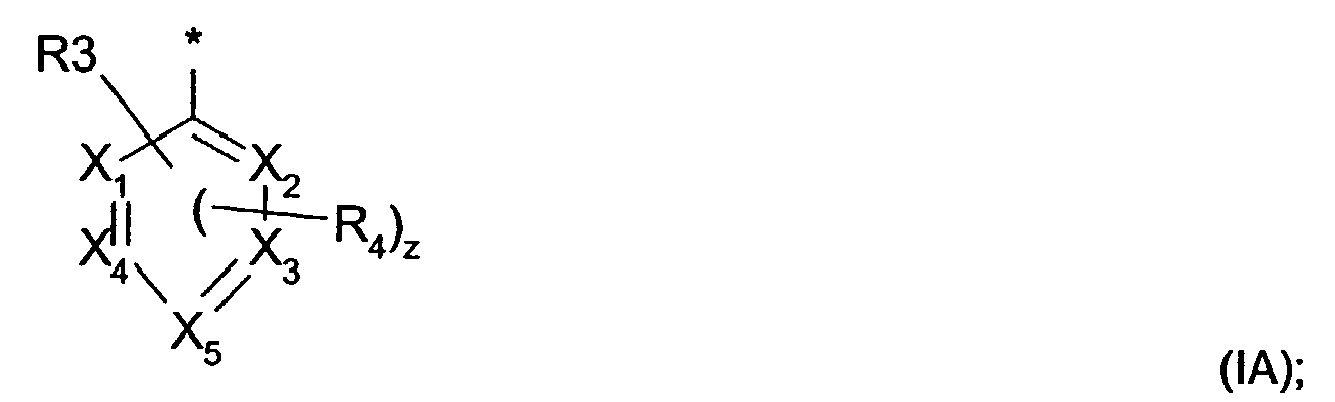
- In a second embodiment W is preferably a moiety of the formula IC,

- wherein the asterisk (*) denotes the position where the moiety W is bound to the 4-carbon in the piperidine ring in formula I, and wherein
- X1 is CH2, NH, S or O and one of X2, X3 and X4 is N, while the others are CH, with the proviso that at least one ring nitrogen (N or in the case or X1 NH) is present, preferably X1 is O, X2 is CH or N, more preferably N, X3 is CH and X4 is CH or N, more preferably CH, with the proviso that not more than one of X2 and X4 is N; and with the proviso that R3 is bound to X2 or preferably to X3 or X4.
- When W is a moiety of formula (IC), R3 is preferably aryl as defined herein, more preferably unsubstituted or substituted phenyl as described below for R3, most preferably unsubstituted phenyl.
- Most preferably, W is a moiety of formula (IA) such as phenyl.
- y is 0, 1, 2 or 3, preferably 0 or 1, most preferably 0, and z is 0, 1, 2, 3 or 4, preferably 0 or 1.
- As R3, phenyl, pyridyl, hydroxyphenyl, halophenyl, mono- or di-(C1-C7-alkyloxy)-phenyl, mono- or di-(C1-C7-alkyloxy)-pyridyl, phenyl substituted by halo and C1-C7-alkyloxy, pyridyl substituted by halo and C1-C7-alkyloxy, N-mono- or N,N-di-(C1-C7-alkyl)-aminopyridyl, halophenyl-C1-C7-alkyloxy, mono- or di-(C1-C7-alkyloxy)-phenyl-C1-C7-alkyloxy, mono- or di-(C1-C7-alkyloxy)-pyridyl-C1-C7-alkyloxy, phenyl-C1-C7-alkyloxy with phenyl substituted by halo and C1-C7-alkyloxy, pyridyl-C1-C7-alkyloxy with pyridyl substituted by halo and C1-C7-alkyloxy, N-mono- or N,N-di-(C1-C7-alkyl)-aminopyridyl-C1-C7-alkyloxy, C1-C7-alkyloxy-C1-C7-alkyloxy, phenyl-C1-C7-alkyloxy, tetrahydropyranyloxy, 2H,3;-1,4-benzodioxinyl-C1-C7-alkyloxy, N-(C1-C7-alkyloxyphenyl)-aminocarbonyl or C1-C7-alkyloxybenzoyl-amino are especially preferred. Other preferred substituents are carboxyphenyl, C1-C7-alkylaminocarbonylphenyl, carboxy-C1-C7-alkyloxyphenyl, C1-C7-alkylaminocarbonyl-C1-C7alkyloxyphenyl, tetrazol-5-yl, 2-oxo-3-phenyl-tetrahydropyrazolidin-1-yl, oxetidin-3-yl-C1-C7-alkyloxy, 3-C1-C7-alkyl-oxetidin-3-yl-C1-C7-alkyloxy, 2-oxo-tetrahydrofuran-4-yl-C1-C7-alkyloxy or C1-C7-alkyoxyphenylaminocarbonyl. Most preferably, these moieties are bound to X3 or to X4. More generally, R3 is hydrogen or more preferably a moiety different from hydrogen given at the definitions for R3 herein.
- In a first embodiment, R3 is preferably substituted or unsubstituted aryl.
- Preferred examples of aryl include phenyl or naphthyl, more preferably phenyl. In one embodiment, R3 is preferably unsubstituted phenyl. In another embodiment, R3 is substituted phenyl. When the aryl moiety is substituted, it is preferably mono- di- or tri-substituted, more preferably mono- or di-substituted. Most preferably aryl is mono-substituted. Suitable substituents are as defined herein, preferably C1-C7-alkyl, hydroxy, C1-C7-alkoxy, halo-C1-C7-alkyl, carboxy-C1-C7-alkyl, carboxy-C1-C7-alkenyl, halo-C1-C7-alkyloxy, phenyl-C1-C7-alkoxy wherein phenyl is unsubstituted or substituted by C1-C7-alkoxy and/or halo, carboxy-C1-C7-alkyloxy, C1-C7-alkyloxy-carbonyl-C1-C7-alkyloxy, hydroxy-C1-C7-alkyloxy, amino-C1-C7-alkyloxy, carboxy-hydroxy-C1-C7-alkyloxy, aminocarbonyl-C1-C7-alkyloxy, N-mono- or N,N-di-(C1-C7-alkyl)-aminocarbonyl-C1-C7-alkyloxy, N-mono- or N,N-di-(hydroxyl-C1-C7-alkyl)-aminocarbonyl-C1-C7-alkyloxy, alkylsulfonylamino-C1-C7-alkyloxy, alkylsulfonylaminocarbonyl-C1-C7-alkyloxy, halo, amino, N-mono- or N,N-di-(C1-C7-alkyl)amino, C1-C7-alkanoylamino, amino-C1-C7-alkanoylamino, N-mono- or N,N-di-(C1-C7-alkyl)-aminocarbonyl-amino, alkylsulfonylamino, carboxy-C1-C7-alkylamino, C1-C7-alkanoyloxy, amino-C1-C7-alkyloxy, N-mono- or N,N-di-(C1-C7-alkyl)amino-C1-C7-alkyloxy, C1-C7-alkanoyl, carboxyl, heterocyclyl, such as monocyclic heterocyclyl, preferably containing at least one nitrogen atom, preferably 5 or 6-membered monocyclic heterocyclyl, in particular pyrazolyl, 4-C1-C7-alkylpiperidin-1-yl, 2-oxo-3-phenyl-tetrahydropyrazolidin-1-yl or tetrazolyl; N-mono- or N,N-di-(C1-C7-alkylamino)-carbonyl, carboxy-C1-C7-alkyl-aminocarbonyl, alkylsulfonyl-C1-C7-alkanoyl, N-mono- or N,N-di-(C1-C7-alkyloxy-C1-C7-alkyl)-amino-C1-C7-alkyl cyano; heterocyclyl-C1-C7-alkyloxy, where the heterocyclyl moiety is preferably monocyclic heterocyclyl, preferably containing at least one nitrogen atom, preferably 5 or 6-membered monocyclic heterocyclyl, preferably saturated or aromatic heterocyclyl, in particular piperidyl-C1-C7-alkoxy, pyrrolidinyl-C1-C7-alkoxy, piperazinyl-C1-C7-alkoxy, morpholino-C1-C7-alkoxy, thiomorpholino-C1-C7-alkoxy, pyridyl-C1-C7-alkoxy, oxetidin-3-yl-C1-C7-alkyloxy, 3-C1-C7-alkyl-oxetidin-3-yl-C1-C7-alkyloxy or 2-oxo-tetrahydrofuran-4-yl-C1-C7-alkyloxy or tetrazolyl-C1-C7-alkoxy, whereby the heterocyclyl is unsubstituted or substituted by C1-C7-alkyl, hydroxyl, carboxyl, amino and/or N-mono- or N,N-di-(C1-C7-alkyl)amino;heterocyclyl-C1-C7-alkyl, where the heterocyclyl moiety is preferably monocyclic heterocyclyl, preferably containing at least one nitrogen atom, preferably 5 or 6-membered monocyclic heterocyclyl, preferably saturated heterocyclyl, in particular morpholino-C1-C7-alkyl or piperazinyl-C1-C7-alkyl, whereby the heterocyclyl is unsubstituted or substituted by C1-C7-alkyl, hydroxyl, carboxyl, amino and/or N-mono- or N,N-di-(C1-C7-alkyl)amino; heterocyclyl-carbonyl, where the heterocyclyl moiety is preferably monocyclic heterocyclyl, preferably containing at least one nitrogen atom, preferably 4, 5 or 6-membered monocyclic heterocyclyl, preferably saturated heterocyclyl, in particular azetidinyl-carbonyl, whereby the heterocyclyl is unsubstituted or substituted by C1-C7-alkyl, hydroxyl, carboxyl, amino and/or N-mono- or N,N-di-(C1-C7-alkyl)amino; heterocyclyl-carbonyl- C1-C7-alkyloxy, where the heterocyclyl moiety is preferably monocyclic heterocyclyl, preferably containing at least one nitrogen atom, preferably 4, 5 or 6-membered monocyclic heterocyclyl, preferably saturated heterocyclyl, in particular azetidinyl-carbonyl- C1-C7-alkyloxy or piperidinyl-carbonyl- C1-C7-alkyloxy, whereby the heterocyclyl is unsubstituted or substituted by C1-C7-alkyl, hydroxyl, carboxyl, amino and/or N-mono- or N,N-di-(C1-C7-alkyl)amino; and heterocyclyl-carbonyl- C1-C7-alkyl, where the heterocyclyl moiety is preferably monocyclic heterocyclyl, preferably containing at least one nitrogen atom, preferably 5 or 6-membered monocyclic heterocyclyl, preferably saturated heterocyclyl, in particular piperazinyl-carbonyl- C1-C7-alkyl, whereby the heterocyclyl is unsubstituted or substituted by C1-C7-alkyl, hydroxyl, carboxyl, amino and/or N-mono- or N,N-di-(C1-C7-alkyl)amino;
- More preferably the substituent is selected from C1-C7-alkyl, hydroxy, C1-C7-alkoxy, halo-C1-C7-alkyl, carboxy-C1-C7-alkyl, carboxy-C1-C7-alkenyl, halo-C1-C7-alkyloxy, carboxy-C1-C7-alkyloxy, C1-C7-alkyloxy-carbonyl-C1-C7-alkyloxy, hydroxy-C1-C7-alkyloxy, amino-C1-C7-alkyloxy, carboxy-hydroxy-C1-C7-alkyloxy, aminocarbonyl-C1-C7-alkyloxy, N-mono- or N,N-di-(C1-C7-alkyl)-aminocarbonyl-C1-C7-alkyloxy, N-mono- or N,N-di-(hydroxyl-C1-C7-alkyl)-aminocarbonyl-C1-C7-alkyloxy, alkylsulfonylamino-C1-C7-alkyloxy, alkylsulfonylaminocarbonyl-C1-C7-alkyloxy, halo, C1-C7-alkanoylamino, amino-C1-C7-alkanoylamino, N-mono- or N,N-di-(C1-C7-alkyl)-aminocarbonyl-amino, alkylsulfonylamino, carboxy-C1-C7-alkylamino, C1-C7-alkanoyloxy, amino-C1-C7-alkyloxy, N-mono- or N,N-di-(C1-C7-alkyl)amino-C1-C7-alkyloxy, C1-C7-alkanoyl, carboxyl, heterocyclyl, such as tetrazolyl; N-mono- or N,N-di-(C1-C7-alkylamino)-carbonyl, carboxy-C1-C7-alkyl-aminocarbonyl, alkylsulfonyl-C1-C7-alkanoyl, N-mono- or N,N-di-(C1-C7-alkyloxy-C1-C7-alkyl)-amino-C1-C7-alkyl cyano; heterocyclyl-C1-C7-alkyloxy, in particular piperidyl-C1-C7-alkoxy, pyrrolidinyl-C1-C7-alkoxy, piperazinyl-C1-C7-alkoxy, pyridyl-C1-C7-alkoxy, heterocyclyl-C1-C7-alkyl, in particular morpholino-C1-C7-alkyl or piperazinyl-C1-C7-alkyl, heterocyclyl-carbonyl, in particular azetidinyl-carbonyl, heterocyclyl-carbonyl- C1-C7-alkyloxy, in particular azetidinyl-carbonyl- C1-C7-alkyloxy or piperidinyl-carbonyl- C1-C7-alkyloxy, and heterocyclyl-carbonyl-C1-C7-alkyl, in particular piperazinyl-carbonyl- C1-C7-alkyl, whereby the heterocyclyl moiety is in each case unsubstituted or substituted by C1-C7-alkyl, hydroxyl, carboxyl, amino and/or N-mono- or N,N-di-(C1-C7-alkyl)amino.
- Yet more preferred substituents are halo such as F, hydroxyl, cyano, C1-C7-alkyloxy such as methoxy, heterocyclyl-C1-C7-alkyloxy, in particular piperidyl-C1-C7-alkoxy such as piperidylethoxy, C1-C7-alkanoylamino such as acetylamino, C1-C7-alkanoyloxy such as acetyloxy, hydroxy-C1-C7-alkyloxy such as hydroxy-ethoxy, C1-C7-alkanoyl such as acetyl, N,N-di-(C1-C7-alkyl)-amino-C1-C7-alkyloxy such as N-di-(methyl)-amino-propyloxy, heterocyclyl such as tetrazolyl, carboxy-C1-C7-alkyloxy such as carboxymethoxy, heterocyclyl-C1-C7-alkoxy in particular piperazinyl-C1-C7-alkoxy such as piperazinyl-ethoxy, heterocyclyl-carbonyl- C1-C7-alkyloxy, in particular azetidinyl-carbonyl- C1-C7-alkyloxy or piperidinyl-carbonyl- C1-C7-alkyloxy such as azetidinyl-carbonyl- methoxy and piperidinyl-carbonyl- methoxy.
- In a second embodiment, R3 is preferably substituted or unsubstituted heterocyclyl.
- The heterocyclyl moiety is preferably mono- or bicyclic, more preferably bicyclic. Preferred are aromatic ring systems, saturated or partially saturated ring systems, in particular whereby one of the rings is aromatic and the other is saturated or partially saturated, most preferred are partially saturated. The heterocyclyl moiety has preferably 1, 2 or 3, more preferably 1 or 2, most preferably 1, heteroatom selected from O, N or S, more preferably O or N. The ring system contains preferably an oxo moiety. Particularly preferred examples include monocyclic 4, 5 or 6-membered rings preferably containing a nitrogen atom, in particular, pyridyl, thiophenyl, pyrazolyl, pyridazinyl, piperidyl, azetidinyl, tetrazolyl, triazolyl, 1,2,3,6-tetrahydropyridyl, and pyrrolyl; or bicyclic 9-membered ring systems preferably containing a N atom, in particular indolyl, benzoisoxazolyl, 1H-indazolyl, 2,3-dihydro-isoindol-1-onyl, 2,3-dihydro-indol-1-onyl, 1,3-dihydro-benzimidazol-2-onyl, dihydrobenzofuranyl, 2-oxo-3-phenyl-tetrahydropyrazolidin-1-yl, benzo[1,3]dioxolyl or is 2,3-dihydrobenzo[1,4]dioxine. Each heterocyclyl is unsubstituted or substituted by one or more, e.g. up to three, preferably 1, substituents independently selected from the group consisting of C1-C7-alkyl, hydroxy-C1-C7-alkyl, C1-C7-alkoxy-C1-C7-alkyl, C1-C7-alkanoyloxy-C1-C7-alkyl, amino-C1-C7-alkyl, C1-C7-alkoxy, C1-C7-alkanoylamino-C1-C7-alkyl, carboxy-C1-C7-alkyl, C1-C7-alkoxycarbonyl-C1-C7-alkyl, halo, hydroxy, C1-C7-alkoxy-C1-C7-alkoxy, carboxy-C1-C7-alkoxy, amino-C1-C7-alkoxy, N-C1-C7-alkanoylamino-C1-C7-alkoxy, carbamoyl-C1-C7-alkyl, carbamoyl-C1-C7-alkoxy, C1-C7-alkanoyl, C1-C7-alkyloxy-C1-C7-alkanoyl, C1-C7-alkoxy-C1-C7-alkanoyl, carboxyl, carbamoyl, N-mono- or N,N-di-(C1-C7-alkyl)amino and amino, more preferably of C1-C7-alkyl, amino-C1-C7-alkyl, C1-C7-alkoxy, carboxy-C1-C7-alkyl, carboxy-C1-C7-alkoxy, carboxyl, N-mono- or N,N-di-(C1-C7-alkyl)amino and amino, in particular methyl, amino, dimethylamino, carboxy, carboxymethyl, aminomethyl, methoxy, and carboxymethoxy.
- When R3 is heterocyclyl, R2 is preferably also heterocyclyl as explained above, in particular

- In a third embodiment R3 is preferably hydrogen.
- In this embodiment R4 is preferably absent. In this embodiment R2 is preferably heterocyclyl as explained above, in particular

- In a fourth embodiment R3 is preferably hydroxyl.
- In this embodiment R4 is preferably absent. In this embodiment R2 is preferably heterocyclyl as explained above, in particular

- In a fifth embodiment R3 is preferably cyano.
- In this embodiment R4 is preferably absent. In this embodiment R2 is preferably heterocyclyl as explained above, in particular

- In a sixth embodiment R3 is preferably unsubstituted or substituted alkyl.
- Preferred examples for alkyl are branched or straight chain C1-C7-alkyl which may be substituted or unsubstituted. Preferred examples include methyl, ethyl, isopropyl, n-propyl, n-butyl, sec-butyl or tert-butyl, more preferably methyl, ethyl or isopropyl, most preferably ethyl. In one embodiment the alkyl moiety is preferably unsubstituted. In another embodiment the alkyl moiety is preferably substituted as defined herein, e.g. by aryloxy such as phenyloxy. Aryloxy may be substituted by one to three, preferably two substituents as defined herein, e.g. C1-C7-alkyloxy such as methoxy.
- In this embodiment R4 is preferably absent. In this embodiment R2 is preferably heterocyclyl as explained above, in particular

- In a seventh embodiment R3 is preferably unsubstituted or substituted cycloalkyl.
- Preferred examples for cycloalkyl are C3-C8-alkyl which may be substituted or unsubstituted. Preferred examples include cyclopropyl, cyclypentyl and cyclohexyl, more preferably cyclopropyl. The alkyl moiety is preferably unsubstituted.
- In this embodiment R4 is preferably absent. In this embodiment R2 is preferably heterocyclyl as explained above, in particular

- In an eighth embodiment R3 is preferably etherified hydroxyl.
- Etherified hydroxyl is as defined herein, preferably the H of the OH group has been replaced by a substituted or unsubstituted alkyl. Preferred examples for alkyl are branched or straight chain C1-C7-alkyl which may be substituted or unsubstituted. Preferred examples include methyl, ethyl, isopropyl, n-propyl, n-butyl, sec-butyl or tert-butyl, more preferably methyl, ethyl or isopropyl, most preferably methyl. In one embodiment the alkyl moiety is preferably substituted such as mono-substituted. Examples of suitable substituents are as defined herein, preferably C1-C7-alkyloxy such as methoxy; aryl, such as phenyl, which may be substituted by one to three, preferably two substituents as defined herein, e.g. C1-C7-alkyloxy such as methoxy; and heterocyclyl such as mono- or bicyclic, more preferably monocyclic, preferably aromatic or saturated ring systems, having preferably 1, 2 or 3, more preferably 1, heteroatom selected from O, N or S, more preferably O or N, in particular 5-or 6-membered ringssuch as pyridyl or tetrahydrofuranyl, which may be substituted by one to three, preferably one substituent as defined herein, e.g. amino, -mono- or N,N-di-(C1-C7-alkyl)amino.
- In this embodiment R4 is preferably absent or is hydroxyl. In this embodiment R2 is preferably heterocyclyl as explained above, in particular
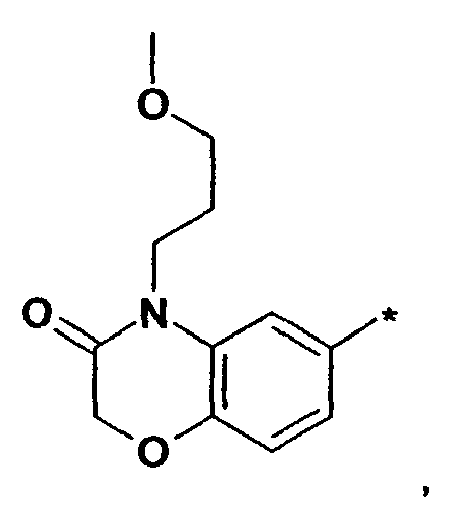
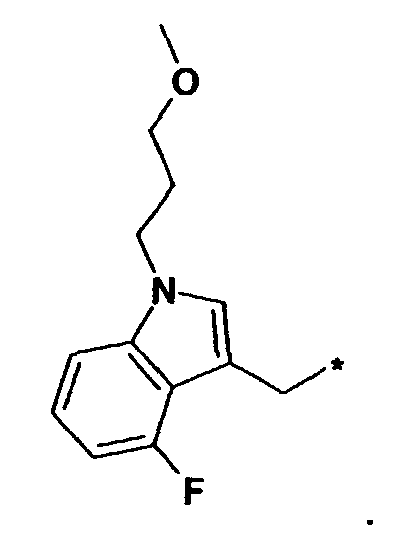
- In a ninth embodiment R3 is preferably unsubstituted or substituted alkynyl.
- Preferred examples for alkynyl are branched or straight chain C1-C7-alkynyl which may be substituted or unsubstituted. Preferred examples include ethyl, n-propyl, n-butyl or n-pentyl moieties containing a triple bond, more preferably ethyl, n-butyl or n-pentyl moieties, most preferably ethyne. In one embodiment the alkynyl moiety is preferably substituted as defined herein, e.g. by amino, N-mono- or N,N-di-(C1-C7-alkyl)amino, carboxyl, heterocyclyl such as mono- or bicyclic, more preferably monocyclic, preferably aromatic or saturated ring systems, having preferably 1, 2 or 3, more preferably 1, heteroatom selected from O, N or S, more preferably O or N, in particular 5-or 6-membered rings such as pyridyl, which may be substituted by one to three, preferably one substituent as defined herein, e.g. amino, N-mono- or N,N-di-(C1-C7-alkyl)amino; or aryl, such as phenyl, which may be unsubstituted or substituted by one to three, preferably one substituents as defined herein, e.g. carboxy or alkoxycarbonyl such as methoxycarbonyl.
- In this embodiment R4 is preferably absent. In this embodiment R2 is preferably heterocyclyl as explained above, in particular

- Particularly preferred examples for W-R3 are


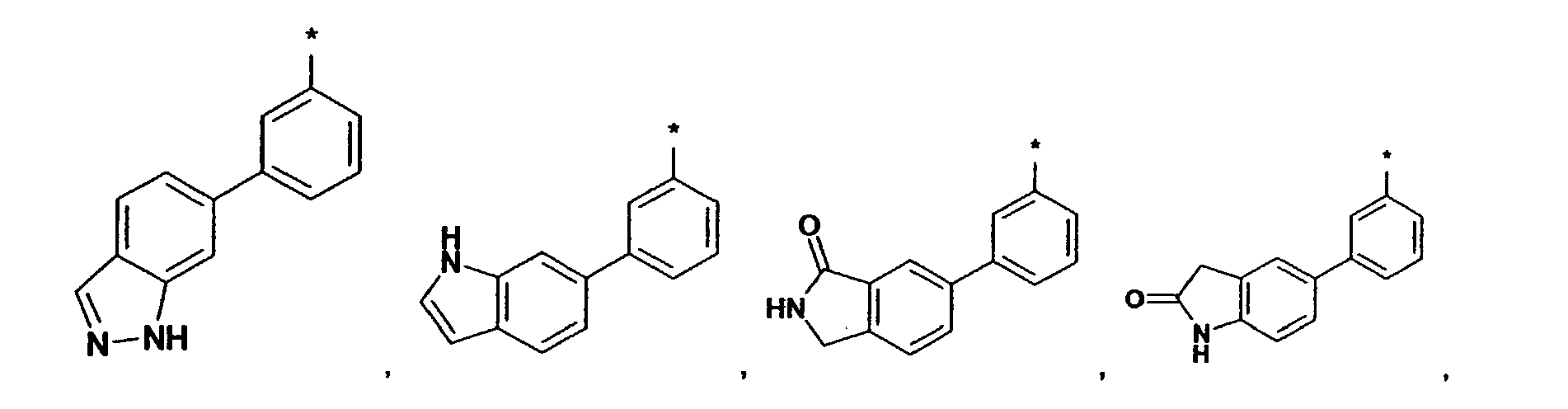


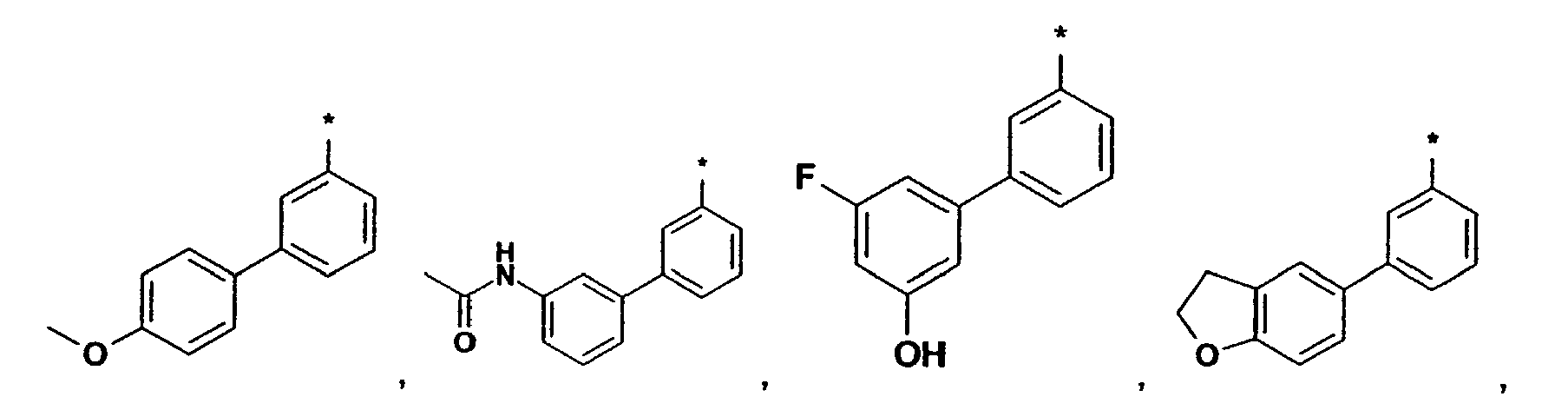


- More preferred are


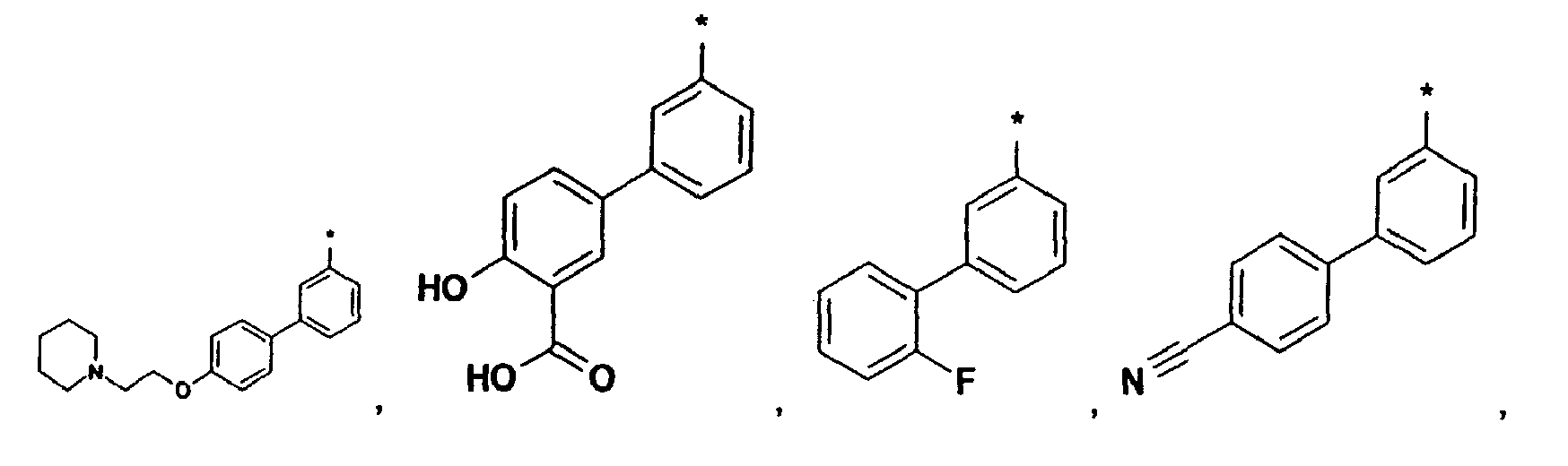


- As R4, hydroxy, halo or C1-C7-alkoxy are especially preferred or R4 is absent. Most preferably R4 is absent.
- T is preferably either methylene (-CH2-) or carbonyl (-C(=O)-), more preferably carbonyl.
- R11 is hydrogen, hydroxy, halo, C1-C7-alkyl, halo-C1-C7-alkyl, cycloalkyl, halo-substituted cycloalkyl, C1-C7-alkoxy, halo-C1-C7-alkyl or cyano, but preferably hydrogen.
- The respective definitions of preferred embodiments of the invention for each substituent as mentioned above can be combined with any definition of preferred embodiments of the invention for any one or more other substituent as defined above without any limitation.
- In all definitions above the person having skill in the art will, without undue experimentation or considerations, be able to recognize which are relevant (e.g. those that are sufficiently stable for the manufacture of pharmaceuticals, e.g. having a half-life of more than 30 seconds) and thus are preferably encompassed by the present claims and that only chemically feasible bonds and substitutions (e.g. in the case of double or triple bonds, hydrogen carrying amino or hydroxy groups and the like) are encompassed, as well as tautomeric forms where present.
- Salts are especially the pharmaceutically acceptable salts of compounds of formula I. They can be formed where salt forming groups, such as basic or acidic groups, are present that can exist in dissociated form at least partially, e.g. in a pH range from 4 to 10 in aqueous solutions, or can be isolated especially in solid form.
- Such salts are formed, for example, as acid addition salts, preferably with organic or inorganic acids, from compounds of formula I with a basic nitrogen atom (e.g. imino or amino), especially the pharmaceutically acceptable salts. Suitable inorganic acids are, for example, halogen acids, such as hydrochloric acid, sulfuric acid, or phosphoric acid. Suitable organic acids are, for example, carboxylic, phosphonic, sulfonic or sulfamic acids, for example acetic acid, propionic acid, lactic acid, fumaric acid, succinic acid, citric acid, amino acids, such as glutamic acid or aspartic acid, maleic acid, hydroxymaleic acid, methylmaleic acid, benzoic acid, methane- or ethane-sulfonic acid, ethane-1,2-disulfonic acid, benzenesulfonic acid, 2-naphthalenesulfonic acid, 1,5-naphthalene-disulfonic acid, N-cyclohexylsulfamic acid, N-methyl-, N-ethyl- or N-propyl-sulfamic acid, or other organic protonic acids, such as ascorbic acid. I
- In the presence of negatively charged radicals, such as carboxy or sulfo, salts may also be formed with bases, e.g. metal or ammonium salts, such as alkali metal or alkaline earth metal salts, for example sodium, potassium, magnesium or calcium salts, or ammonium salts with ammonia or suitable organic amines, such as tertiary monoamines, for example triethylamine or tri(2-hydroxyethyl)amine, or heterocyclic bases, for example N-ethyl-piperidine or N,N'-dimethylpiperazine.
- When a basic group and an acid group are present in the same molecule, a compound of formula I may also form internal salts.
- For isolation or purification purposes it is also possible to use pharmaceutically unacceptable salts, for example picrates or perchlorates. For therapeutic use, only pharmaceutically acceptable salts or free compounds are employed (where applicable comprised in pharmaceutical preparations), and these are therefore preferred.
- In view of the close relationship between the compounds in free form and in the form of their salts, including those salts that can be used as intermediates, for example in the purification or identification of the compounds or salts thereof, any reference to "compounds" and "intermediates" hereinbefore and hereinafter, especially to the compound(s) of the formula I, is to be understood as referring also to one or more salts thereof or a mixture of a free compound and one or more salts thereof, each of which is intended to include also any solvate, metabolic precursor such as ester or amide of the compound of formula I, or salt of any one or more of these, as appropriate and expedient and if not explicitly mentioned otherwise. Different crystal forms may be obtainable and then are also included.
- Where the plural form is used for compounds, salts, pharmaceutical preparations, diseases, disorders and the like, this is intended to mean one (preferred) or more single compound(s), salt(s), pharmaceutical preparation(s), disease(s), disorder(s) or the like, where the singular or the indefinite article ("a", "an") is used, this is intended to include the plural or preferably the singular.
- The compounds of the present invention possess two or more asymmetric centers depending on the choice of the substituents. The preferred absolute configuration at the C-3 and C-4 asymmetric centers in the central piperidine moiety is as indicated specifically within the present disclosure. However, any possible isolated or pure diastereoisomers, enantiomers and geometric isomers, and mixtures thereof, e.g., racemates, are encompassed by the present invention. A very preferred embodiment of the invention relates to the 3,4-trans-compounds of the present invention (wherein W- and R1 R2N-T- are in trans position to each other).
- As described herein above, the present invention provides 3,4-disubstituted piperidine derivatives of formula I, these compounds for use in the (prophylactic and/or therapeutic) treatment of a disease (= condition, disorder) in a warm-blooded animal, especially a human, preferably of a disease dependent on (especially inappropriate) renin activity, a pharmaceutical composition comprising a compound of the formula I, methods for preparing said compound or pharmaceutical preparation, and methods of treating conditions dependent on (especially inappropriate) renin activity by administration of a therapeutically effective amount of a compound of the formula I, or a pharmaceutical composition thereof.
- "Inappropriate" renin activity preferably relates to a state of a warm-blooded animal, especially a human, where renin shows a renin activity that is too high in the given situation (e.g. due to one or more of misregulation, overexpression e.g. due to gene amplification or chromosome rearrangement or infection by microorganisms such as virus that express an aberrant gene, abnormal activity e.g. leading to an erroneous substrate specificity or a hyperactive renin e.g. produced in normal amounts, too low activity of renin activity product removing pathways, high substrate concentration, other circumstances that make the activity of renin relatively too high, such as other mechanisms leading to blood pressure increase, and/or the like) and/or leads to or supports a renin dependent disease or disorder as mentioned above and below, e.g. by renin activity the reduction of which has beneficial effects in the given disease. Such inappropriate renin activity may, for example, comprise a higher than normal activity, or further an activity in the normal or even below the normal range which, however, due to preceding, parallel and or subsequent processes, e.g. signaling, regulatory effect on other processes, higher substrate or product concentration and the like, leads to direct or indirect support or maintenance of a disease or disorder, and/or an activity that supports the outbreak and/ or presence of a disease or disorder in any other way. The inappropriate activity of renin may or may not be dependent on parallel other mechanisms supporting the disorder or disease, and/or the prophylactic or therapeutic effect may or may include other mechanisms in addition to inhibition of renin. Therefore "dependent" has to be read as "dependent inter alia", (especially in cases where a disease or disorder is really exclusively dependent only on renin) preferably as "dependent mainly", more preferably as "dependent essentially only". "Inappropriate" does not necessarily mean that renin is the cause of a disease or disorder but that modulation, especially inhibition, of renin activity may be of beneficial effect in a disease or disorder even if it is due to other causes.
- Where a disease or disorder dependent on inappropriate activity of a renin is mentioned (such in the definition of "use" in the following paragraph and also especially where a compound of the formula I is mentioned for use in the diagnostic or therapeutic treatment which is preferably the treatment of a disease or disorder dependent on inappropriate renin activity, this refers preferably to any one or more diseases or disorders that depend on inappropriate activity of natural renin and/or one or more altered or mutated forms thereof.
- Where subsequently or above the term "use" is mentioned (as verb or noun) (relating to the use of a compound of the formula I or of a pharmaceutically acceptable salt thereof, or a method of use thereof), this (if not indicated differently or to be read differently in the context) includes any one or more of the following embodiments of the invention, respectively (if not stated otherwise): the use in the treatment of a disease or disorder that depends on (especially inappropriate) activity of renin, the use for the manufacture of pharmaceutical compositions for use in the treatment of a disease or disorder that depends on (especially inappropriate) activity of renin; a method of use of one or more compounds of the formula I in the treatment of a disease or disorder that depends on (especially inappropriate) activity of renin; a pharmaceutical preparation comprising one or more compounds of the formula I for the treatment of a disease or disorder that depends on (especially inappropriate) activity of renin; and one or more compounds of the formula I for use in the treatment of a disease or disorder in a warm-blooded animal, especially a human, preferably a disease that depends on (especially inappropriate) activity of renin; as appropriate and expedient, if not stated otherwise.
- The terms "treat", "treatment" or "therapy" refer to the prophylactic (e.g. delaying or preventing the onset of a disease or disorder) or preferably therapeutic (including but not limited to preventive, delay of onset and/or progression, palliative, curing, symptom-alleviating, symptom-reducing, patient condition ameliorating, renin-modulating and/or renin-inhibiting) treatment of said disease(s) or disorder(s), especially of the one or more disease or disorder mentioned above or below.
- The groups of preferred embodiments of the invention mentioned below are not to be regarded as exclusive, rather, e.g., in order to replace general expressions or symbols with more specific definitions, parts of those groups of compounds can be interchanged or exchanged using the definitions given above, or omitted, as appropriate.
- A highly preferred embodiment of the invention relates to a compound of the formula I with the following configuration

- Preferred is also a compound of the formula I with the following configuration

- A different group of preferred compounds relates to any one of a compound of the formula I with the following configuration


- Preferred is a compound of the formula I (especially in configuration A, given above) wherein
R1 is hydrogen or preferably C1-C7-alkyl, di-(phenyl)-C1-C7-alkyl, C3-C8-cydoalkyl or halo-C1-C7-alkyl;
R2 is phenyl-C1-C7-alkyl, di-(phenyl)-C1-C7-alkyl, naphthyl-C1-C7-alkyl, phenyl, naphthyl, pyridyl-C1-C7-alkyl, indolyi-C1-C7-alkyl, 1H-indazolyl-C1-C7-alkyl, quinolyl-C1-C7-alkyl, isoquinolyl-C1-C7-alkyl, 1,2,3,4-tetrahydro-1,4-benzoxazinyl-C1-C7-alkyl, 2H-1,4-benzoxazin-3(4H)-onyl-C1-C7-alkyl, 9-xanthenyl-C1-C7-alkyl, 1-benzothiophenyl-C1-C7-alkyl, pyridyl, indolyl, 1H-indazolyl, quinolyl, isoquinolyl, 1,2,3,4-tetrahydro-1,4-benzoxazinyl, 2H-1,4-benzoxazin-3(4H)-onyl, 9-xanthenyl or 1-benzothiophenyl, where each phenyl, naphthyl, pyridyl, indolyl, 1H-indazolyl, quinolyl, isoquinolyl, 1,2,3,4-tetrahydro-1,4-benzoxazinyl, 2H-1,4-benzoxazin-3(4H)-only or 1-benzothiophenyl is unsubstituted or substituted by one or more, e.g. up to three, substituents independently selected from the group consisting of C1-C7-alkyl, hydroxy-C1-C7-alkyl, C1-C7-alkoxy-C1-C7-alkyl, C1-C7-alkoxy-C1-C7-alkoxy-C1-C7-alkyl, C1-C7-alkanoyloxy-C1-C7-alkyl, amino-C1-C7-alkyl, C1-C7-alkoxy-C1-C7-alkylamino-C1-C7-alkyl, C1-C7-alkanoylamino-C1-C7-alkyl, C1-C7-alkylsulfonylamino-C1-C7-alkyl, carboxy-C1-C7-alkyl, C1-C7-alkoxycarbonyl-C1-C7-alkyl, halo, hydroxy, C1-C7-alkoxy, C1-C7-alkoxy-C1-C7-alkoxy, amino-C1-C7-alkoxy, N-C1-C7-alkanoylamino-C1-C7-alkoxy, carbamoyl-C1-C7-alkoxy, N-C1-C7-alkylcarbamoyl-C1-C7-alkoxy, C1-C7-alkanoyl, C1-C7-alkyloxy-C1-C7-alkanoyl, C1-C7-alkoxy-C1-C7-alkanoyl, carboxyl, carbamoyl and N-C1-C7-alkoxy-C1-C7-alkylcarbamoyl;
W is either a moiety of the formula IA,

or a moiety of the formula IC,
X1 is CH2, NH, S or O and one of X2, X3 and X4 is N, while the others are CH, with the proviso that at least one ring nitrogen (N or in the case or X1 NH) is present; preferably, X1 is S or O, X2 is CH or N, X3 is CH or N, and X4 is CH or N, with the proviso that not more than one of X2, X3 and X4 is N; and preferably with the proviso that R3 is bound to X2 or preferably to X3 or X4;
where in each case where R3 is bond to a moiety of the formula IA, IB or IC, instead of a hydrogen atom at a ring member NH, CH2 or CH mentioned so far where R3 is bound a moiety R3 is present;
y is 0 or 1, preferably 0, and z is 0, 1 or 2, preferably 0 or 1;
R3 is hydrogen or preferably C1-C7-alkyloxy-C1-C7-alkyloxy, phenyloxy-C1-C7-alkyl, phenyl, pyridyl, phenyl-C1-C7-alkoxy, phenyloxy, phenyloxy-C1-C7-alkoxy, pyridyl-C1-C7-alkoxy, tetrahydropyranyloxy, 2H,3H-1,4-benzodioxinyl-C1-C7-alkoxy, phenylaminocarbonyl or phenylcarbonylamino, wherein each phenyl or pyridyl is unsubstituted or substituted by one or more, preferably up to three, e.g. 1 or two substituents independently selected from C1-C7-alkyl, hydroxy, C1-C7-alkoxy, phenyl-C1-C7-alkoxy wherein phenyl is unsubstituted or substituted by C1-C7-alkoxy and/or halo, carboxy-C1-C7-alkyloxy, N-mono- or N,N-di-(C1-C7-alkyl)-aminocarbonyl-C1-C7-alkyloxy, halo, amino, N-mono- or N,N-di-(C1-C7-alkyl)amino, C1-C7-alkanoylamino, morpholino-C1-C7-alkoxy, thiomorpholino-C1-C7-alkoxy, pyridyl-C1-C7-alkoxy, pyrazolyl, 4-C1-C7-alkylpiperidin-1-yl, tetrazolyl, carboxyl, N-mono- or N,N-di-(C1-C7-alkylamino)-carbonyl and cyano; or is 2-oxo-3-phenyl-tetrahydropyrazolidin-1-yl, oxetidin-3-yl-C1-C7-alkyloxy, 3-C1-C7-alkyl-oxetidin-3-yl-C1-C7-alkyloxy or 2-oxo-tetrahydrofuran-4-yL-C1-C7-alkyloxy; with the proviso that if R3 is hydrogen y and z are 0 (zero);
R4 if present (which is the case if y or z is other than zero) is hydroxy, halo or C1-C7-alkoxy;
T is methylene or carbonyl, and
R11 is hydrogen,
or a pharmaceutically acceptable salt thereof; or the use thereof. - Especially preferred is a compound of the formula I wherein R1, R2, T, W, R11, X1-X5, y and z are as defined in the preceding paragraph and R3 is hydrogen, or a pharmaceutically acceptable salt thereof; or the use thereof, with the proviso that y and z are zero.
- More preferably, the invention relates to a compound of the formula I (especially in the configurations A given above), wherein
R1 is hydrogen or preferably C1-C4-alkyl or C3-C8-cycloalkyl;
R2 is phenyl-C1-C7-alkyl, di-(phenyl)-C1-C7-alkyl, phenyl, indolyl-C1-C7-alkyl, 1H-indazolyl-C1-C7-alkyl, 9-xanthenyl-C1-C7-alkyl, 1,2,3,4-tetrahydro-1,4-benzoxazinyl or 2H-1,4-benzoxazin-3(4H)-onyl, where each phenyl, indolyl, 1H-indazolyl, 1,2,3,4-tetrahydro-1,4-benzoxazinyl, 2H-1,4-benzoxazin-3(4H)-only or 9-xanthenyl is unsubstituted or substituted by up to three substituents independently selected from the group consisting of C1-C7-alkyl, C1-C7-Alkoxy-C1-C7-alkyl, C1-C7-alkoxy-C1-C7-alkoxy-C1-C7-alkyl, C1-C7-alkanoylamino-C1-C7-alkyl, C1-C7-alkylsulfonylamino-C1-C7-alkyl, carboxy-C1-C7-alkyl, C1-C7-alkoxycarbonyl-C1-C7-alkyl, halo, C1-C7-alkoxy, C1-C7-alkoxy-C1-C7-alkoxy and C1-C7-alkyloxy-C1-C7-alkanoyl;
W is either a moiety of the formula IA,

X1 is O, X2 is CH or N, X3 is CH and X4 is CH or N, with the proviso that not more than one of X2 and X4 is N; and with the proviso that R3 is bound to X2 or preferably to X3 or X4;
where in each case where R3 is bond to a moiety of the formula IA or IC, instead of a hydrogen atom at a ring member NH or CH mentioned so far where R3 is bound a moiety R3 is present;
y is 0 or 1, preferably 0, and z is 0, 1 or 2, preferably 0 or 1;
R3 is hydrogen or preferably C1-C7-alkyloxy-C1-C7-alkyloxy, phenyl, pyridyl, phenyl-C1-C7-alkoxy, phenyloxy, phenyloxy-C1-C7-alkoxy, pyridyl-C1-C7-alkoxy, tetrahydropyranyloxy, 2H,3H-1,4-benzodioxinyl-C1-C7-alkoxy, phenylaminocarbonyl or phenylcarbonylamino, wherein each phenyl or pyridyl is unsubstituted or substituted by up to three, e.g. 1 or two, substituents independently selected from hydroxy, C1-C7-alkoxy, halo, amino and N-mono- or N,N-di-(C1-C7-alkyl)amino, with the proviso that if R3 is hydrogen then y and z are 0 (zero);
R4 if present (y or z other than 0) is hydroxy, halo or C1-C7-alkoxy;
T is carbonyl or preferably methylene, and
R11 is hydrogen,
or a pharmaceutically acceptable salt thereof; or the use thereof. - Particular embodiments of the invention, especially of compounds of the formula I and/or salts thereof, are provided in the Examples - the invention thus, in a very preferred embodiment, relates to a compound of the formula I, or a salt thereof, selected from the compounds given in the Examples, as well as the use thereof.
- A compound of formula I, or a salt thereof, is prepared analogously to methods that, for other compounds, are in principle known in the art, so that for the novel compounds of the formula I the process is novel at least as analogy process, especially as described or in analogy to methods described herein in the illustrative Examples, or modifications thereof, preferably in general by
- (a) for the synthesis of a compound of the formula I wherein T is carbonyl and the other moieties are as defined for a compound of the formula I, reacting a carbonic acid compound of the formula II


- (b) for the preparation of a compound of the formula I wherein R3 is unsubstituted or substituted aryl, unsubstituted or substituted heterocyclyl, etherified or esterified hydroxy, unsubstituted or substituted mercapto or unsubstituted or substituted amino, and W is a moiety of the formula IA given above, by reacting a compound of the formula IV,

R3-Q (V)
wherein R3 is as just defined and Q is -B(OH)2 or a leaving group, and removing protecting groups to give the corresponding compound of the formula I, or - (c) for the preparation of a compound of the formula I wherein T is -CH2-, reacting an aldehyde compound of the formula VI,

R2*-D (VII)
wherein R2* is defined as R2 in a compound of the formula I other than hydrogen and D is a leaving group, and removing protecting groups to give the corresponding compound of the formula I, - The preferred reaction conditions for the reactions mentioned above, as well as for the transformations and conversions, are as follows (or analogous to methods used in the Examples or as described there):
- The reaction under (a) between an acid of the formula II, or a reactive derivative thereof, and an amino compound of the formula III preferably takes place under customary condensation conditions, where among the possible reactive derivatives of an acid of the formula II reactive esters (such as the hydroxybenzotriazole (HOBT), pentafluorophenyl, 4-nitrophenyl or N-hydroxysuccinimide ester), acid halogenides (such as the acid chloride or bromide) or reactive anhydrides (such as mixed anhydrides with lower alkanoic acids or symmetric anhydrides) are preferred. Reactive carbonic acid derivatives can also be formed in situ. The reaction is carried out by dissolving the compounds of formulae II and III in a suitable solvent, for example a halogenated hydrocarbon, such as methylene chloride, N,N-dimethylformamide, N,N-dimethylacetamide, N-methyl-2-pyrrolidone, methylene chloride, or a mixture of two or more such solvents, and by the addition of a suitable base, for example triethylamine, diisopropylethylamine (DIEA) or N-methylmorpholine and, if the reactive derivative of the acid of the formula II is formed in situ, a suitable coupling agent that forms a preferred reactive derivative of the carbonic acid of formula III in situ, for example dicyclohexylcarbodiimide/1-hydroxybenzotriazole (DCC/ HOBT); bis(2-oxo-3-oxazolidinyl)phosphinic chloride (BOPCl); O-(1,2-dihydro-2-oxo-1-pyridyl)-N,N,N',N'-tetramethyluronium tetrafluoroborate (TPTU); O-(benzotriazol-1-yl)-N,N,N',N'-tetramethyluronium tetrafluoroborate (TBTU); (benzotriazol-1-yloxy)-tripyrrolidinophosphonium-hexafluorophosphate (PyBOP), 1-(3-dimethylaminopropyf)-3-ethylcarbodiimide hydrochloride/hydroxybenzotriazole or/1-hydroxy-7-azabenzotriazole (EDC/HOBT or EDC/HOAt) or HOAt alone, or with (1-chloro-2-methyl-propenyl)-dimethylamine. For review of some other possible coupling agents, see e.g. Klauser; Bodansky, Synthesis 1972, 453-463. The reaction mixture is preferably stirred at a temperature of between approximately - 20 and 50 °C, especially between 0 °C and 30 °C, e.g. at room temperature. The reaction is preferably carried out under an inert gas, e.g. nitrogen or argon.
- The subsequent removal of a protecting group, e.g. PG, such as tert-butoxycarbonyl, benzyl or 2-(trimethylsilyl)-ethoxycarbonyl, takes place under standard conditions, see also the literature mentioned below under General Process Conditions. For example, tert-butoxycarbonyl is removed in the presence of an acid, e.g. a hydrohalic acid, such as HCl, in an appropriate solvent, e.g. an ether, such as dioxane, or an alcohol, e.g. isopropanol, at customary temperatures, e.g. at room temperature, the removal of benzyl can be achieved e.g. by reaction with ethylchloroformate in an appropriate solvent, e.g. toluene, at elevated temperatures, e.g. from 80 to 110 °C, and subsequent removal of the resulting ethoxycarbonyl group by hydrolysis in the presence of a base, e.g. an alkali metal hydroxide, such as potassium hydroxide, in an appropriate solvent, e.g. in an alcohol, such as ethanol, at elevated temperatures, e.g. from 80 to 120 °C, or by removal by means of trimethylsilyl trifluoroacetate in a tertiary nitrogen base, such as 2,6-lutidine, in the presence of an appropriate solvent, such as a halogenated hydrocarbon, e.g. methylene chloride, and the removal of 2-(trimethylsilyl)-ethoxycarbonyl can be achieved, for example, by reaction with a tetra-lower alkylammonium fluoride, such as tetraethylammoniumfluoride, in an appropriate solvent or solvent mixture, e.g. a halogenated hydrocarbon, such as methylene chloride, and/or a nitrile, such as acetonitrile, preferably at elevated temperatures, e.g. under reflux conditions.
- Where the reaction under (b) takes place with a compound of the formula IV wherein L is a leaving group and with a compound of the formula V wherein Q is -B(OH)2, L is preferably halo, such as bromo or iodo, or trifluoromethylsulfonyloxy, and the reaction preferably takes place in an appropriate solvent, such as dioxane in the presence or absence of water, a basic buffering substance, e.g. potassium phosphate or potassium carbonate, and catalyst, e.g. Pd(PPh3)4, at preferably elevated temperatures, e.g. between 60 °C and the reflux temperature of the mixture. Where the reaction under (b) takes place with a compound of the formula IV wherein L is hydroxy and with a compound of the formula V wherein Q is a leaving group, the leaving group is preferably halo, e.g. bromo or iodo, and the coupling reaction preferably takes place in the presence of a base, such as potassium carbonate, in an appropriate solvent, e.g. N,N-dimethylformamide, at preferably elevated temperatures, e.g. from 30 to 80 °C. Removal of protecting groups can take place as described above under (a) and below in the general process conditions.
- The reductive amination in reaction (c) preferably takes place under customary conditions for reductive amination, e.g. in the presence of an appropriate hydrogenation agent, such as hydrogen in the presence of a catalyst or a complex hydride, e.g. sodium triacetoxyborohydride or sodium cyanoborhydride, in an appropriate solvent, such as a halogenated hydrocarbon, e.g. methylene chloride or 1,2,-dichloroethane, and optionally a carbonic acid, e.g. acetic acid, at preferred temperatures between -10 °C and 50 °C, e.g. from 0 °C to room temperature.
- Where desired, R2 other than hydrogen can subsequently be introduced by reaction with a compound of the formula VII wherein preferably D is - the reaction preferably takes place under customary substitution conditions, e.g. in the case where an aryl moiety R2 is to be coupled and Z is halo, e.g. iodo, in the presence of copper (e.g. Venus copper), sodium iodide and a base, such as potassium carbonate, in the presence or preferably absence of an appropriate solvent, e.g. at elevated temperatures in the range from, for example, 150 to 250 °C, or (especially if Z in formula VIII is bromo) in the presence of a strong base, such as an alkali metal alcoholate, e.g. sodium tert-butylate, in the presence of an appropriate catalyst, such as [Pd(µ-Br)(t-Bu3P)]2, and of an appropriate solvent, e.g. an aromatic solvent, such as toluene, at preferred temperatures between room temperature and the reflux temperature of the mixture, or (e.g. where the moiety R2 is unsubstituted or substituted alkyl) in the presence of a base, such as an alkali metal carbonate, such as potassium carbonate, if useful in the presence of an alkali metal halogenide, e.g. sodium iodide, in an appropriate solvent, such as dimethyl formamide, at preferably elevated temperatures, e.g. between 50 ° C and the reflux temperature of the mixture, or in presence of NaN(TMS)2 in an appropriate solvent such as tetrahydrofurane at preferred temperatures from -20 to 30 °C, e.g. at about 0 °C, or, where R1 is to be bound via a carbonyl or sulfonyl group, under condensation conditions e.g. as described above for reaction (a). The removal of protecting groups, both with or without preceding reaction with a compound of the formula VII, takes place e.g. as described above under the preferred conditions for reaction (a).
- These and other appropriate reaction conditions can be found in the examples.
- Compounds of the formula I, or protected forms thereof directly obtained according to any one of the preceding procedures or after introducing protecting groups anew, which are included subsequently as starting materials for conversions as well even if not mentioned specifically, can be converted into different compounds of the formula I according to known procedures, where required after removal of protecting groups.
- Where R2 is hydrogen in a compound of the formula I, this can be converted into the corresponding compound wherein R2 has a meaning other than hydrogen given for compounds of the formula I by reaction with a compound of the formula VII as described above, e.g. under reaction conditions as given above in the corresponding reaction under (c).
- In a compound of the formula I wherein T is carbonyl, this carbonyl can be reduced to a corresponding methylene by treatment with an appropriate complex hydride of the required specificity, especially borane dimethylsulfide complex, in an appropriate solvent, such as an ether, e.g. tetrahydrofurane, at preferred temperatures between room temperature and the reflux temperature of the reaction mixture or at 140-150 °C; the subsequent removal of protecting group can be achieved as above for reaction (a) and below under "General Process Conditions", yielding a corresponding compound of the formula I.
- Other conversion can be made in analogy to or as described for conversions given in the Examples.
- Salts of compounds of formula I having at least one salt-forming group may be prepared in a manner known per se. For example, salts of compounds of formula I having acid groups may be formed, for example, by treating the compounds with metal compounds, such as alkali metal salts of suitable organic carboxylic acids, e.g. the sodium salt of 2-ethylhexanoic acid, with organic alkali metal or alkaline earth metal compounds, such as the corresponding hydroxides, carbonates or hydrogen carbonates, such as sodium or potassium hydroxide, carbonate or hydrogen carbonate, with corresponding calcium compounds or with ammonia or a suitable organic amine, stoichiometric amounts or only a small excess of the salt-forming agent preferably being used. Acid addition salts of compounds of formula I are obtained in customary manner, e.g. by treating the compounds with an acid or a suitable anion exchange reagent. Internal salts of compounds of formula I containing acid and basic salt-forming groups, e.g. a free carboxy group and a free amino group, may be formed, e.g. by the neutralisation of salts, such as acid addition salts, to the isoelectric point, e.g. with weak bases, or by treatment with ion exchangers.
- A salt of a compound of the formula I can be converted in customary manner into the free compound; metal and ammonium salts can be converted, for example, by treatment with suitable acids, and acid addition salts, for example, by treatment with a suitable basic agent. In both cases, suitable ion exchangers may be used.
- Stereoisomeric mixtures, e.g. mixtures of diastereomers, can be separated into their corresponding isomers in a manner known per se by means of appropriate separation methods. Diastereomeric mixtures for example may be separated into their individual diastereomers by means of fractionated crystallization, chromatography, solvent distribution, and similar procedures. This separation may take place either at the level of one of the starting compounds or in a compound of formula I itself. Enantiomers may be separated through the formation of diastereomeric salts, for example by salt formation with an enantiomer-pure chiral acid, or by means of chromatography, for example by HPLC, using chromatographic substrates with chiral ligands.
- Intermediates and final products can be worked up and/or purified according to standard methods, e.g. using chromatographic methods, distribution methods, (re-) crystallization, and the like.
- Starting Materials, including intermediates, for compounds of the formula I, such as the compounds of the formulae II, III, IV, V, VI and VII, can be prepared, for example, according to methods that are known in the art, according to methods described in the examples or methods analogous to those described in the examples, and/or they are known or commercially available.
- In the subsequent description of starting materials and intermediates and their synthesis, R1, R2, R3, R4, y, z, T, W, X1-X5, and PG have the meanings given above or in the Examples for the respective starting materials or intermediates, if not indicated otherwise directly or by the context. Protecting groups, if not specifically mentioned, can be introduced and removed at appropriate steps in order to prevent functional groups, the reaction of which is not desired in the corresponding reaction step or steps, employing protecting groups, methods for their introduction and their removal are as described above or below, e.g. in the references mentioned under "General Process Conditions". The person skilled in the art will readily be able to decide whether and which protecting groups are useful or required.
- A compound of the formula II wherein R11 is hydrogen can, for example, be prepared by reducing a tetrahydropyridine compound of the formula VIII,


- A tetrahydropyridine compound of the formula VIII can, for example, be prepared by reacting a compound of the formula X,

W-Q (XI)
wherein W is as described for a compound of the formula I and Q is -B(OH)2 or a leaving group as defined for a compound of the formula V, under reaction conditions analogous to those described under reaction (b) above. Where W is a ring of the formula IC wherein X1 is oxygen, X2 is N, and each of X3 and X4 is CH and R3 is bound instead of the hydrogen at X4 can be prepared by reaction of 4-R3-substituted phenyloxazole with a compound of the formula X given by first reacting the 4-R3-substituted phenyloxazole in the presence of a strong base, such as butyllithium, followed by treatment with zinc chloride, both in an appropriate solvent, such as tetrahydrofurane, at low temperatures e.g. from -90 to -50 °C, followed by the addition of the compound of the formula XII and a catalyst, especially Pd(PPh3)4 in the same solvent and at appropriate temperatures, e.g. from -30 to 30 °C, thus obtaining the corresponding compound of the formula VIII. The latter then can be reduced and epimerized by reaction first with magnesium in an appropriate solvent such as methanol and at appropriate temperatures e.g. from -30 to 30 °C, then reaction with sodium alocoholate in the corresponding alcohol, such as methanol, at appropriate temperatures, e.g. from 40 to 80 °C, and then with (trimethylsilyl)diazomethane in an appropriate solvent or solvent mixture, e.g. toluene and/or methanol, e.g. at temperatures from 0 to 50 °C. - A compound of the formula VIII wherein W is a moiety of the formula IC wherein X1 is O, X2 is CH, X3 is CH and X4 is N and R3 is bound instead of the H at position X3 can be prepared from a compound of the formula X given above by reaction with trimethylsilyl-acetylene (Me3-Si-C≡CH) in the presence e.g. of Cul and a tertiary nitrogen base, such as triethylamine, and a catalyst, e.g. Pd(PPh3)4, in an appropriate solvent, such as dimethylformamide, and at appropriate temperatures, e.g. from 30 to 70 °C, to give the corresponding compound of the formula XA,

R3-C(=NH-OH)-Hal (VA)
wherein Hal is halogen, especially chloro, in the presence of a nitrogen base, e.g. triethylamine, in an appropriate solvent, e.g. methylene chloride, and at appropriate temperatures, e.g. from 0 to 50 °C; thus obtaining the corresponding compound of the formula VIII with the ring IC as described. - In a compound of the formula VIII wherein W carries a nitro substituent at a position of R3, the nitro and the double bond in the tetrahydropyridine ring can be reduced to give an amino group and a piperidine ring, respectively, and then the amino can be converted into substituted amino e.g. by reaction with a complementary acid chloride under customary conditions, e.g. in the presence of a nitrogen base, such as triethylamine, in an appropriate solvent, e.g. methylene chloride, and at customary temperatures, e.g. from 0 to 50 °C, thus yielding a corresponding compound of the formula IX.
- Aldehydes of the formula VI can, for example, be obtained from the acids of the formula II by reduction, e.g. by first reducing the carboxy function in the presence of an appropriate complex hydride, e.g. borane dimethylsulfide, in an appropriate solvent, e.g. tetrahydrofurane, at preferred temperatures between -20 and 40 °C, to the corresponding hydroxymethylene group which is then oxidized to the aldehyde group, for example in the presence of Dess Martin periodinane e.g. in methylene chloride and/or water or of 2,2,6,6,-tetramethyl-1-piperidinyloxy free radical e.g. in toluene and/or ethyl acetate in the presence of potassium bromide, water and potassium hydrogencarbonate, at preferred temperatures in the range from 0 to 50 °C.
- A compound of the formula IV can, for example, be prepared analogously to a compound of the formula I but using starting materials (e.g. corresponding to those of the formula II or VI) wherein instead of W the moiety
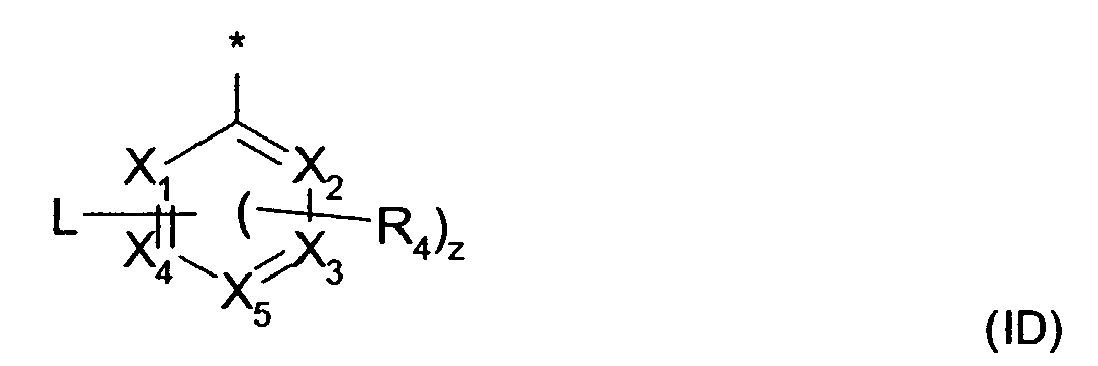
- Starting materials of the formula IV wherein L is hydroxy and the other symbols have the meanings given under formula IV can, for example, be prepared from the precursors wherein instead of hydroxy L a protected hydroxy is present by removal of the protecting group, e.g. in case of methoxymethyl by reaction with an acid, such as TFA, in an appropriate solvent, e.g. dichloromethane, for example at temperatures between 0 and 50 °C. These precursors can be prepared in analogy to an analogue of a compound of the formula VIII and II or I wherein instead of the group W the moiety of the formula IC with protected hydroxy instead of L is present, e.g. from analogues of compounds of the formula IX wherein instead of W the moiety of the formula IC with protected hydroxy instead of L is present, in each case under conditions analogous to those for the corresponding compounds as given above.
- Compounds of the formula III, wherein R2 is bound via methylene (as part of R2), can, for example, be prepared by reacting a compound of the formula XII,
R2a-CHO (XII)
(obtainable e.g. from the corresponding acids or their esters by reduction to a hydroxymethyl group and then oxidation to the -CHO group, e.g. under comparable conditions as described for the synthesis of aldehydes of the formula VI above) wherein R2a is a moiety that together with -CH2- by which it is bound in formula III forms a corresponding moiety R2 in a compound of the formula I, under conditions of reductive amination, e.g. analogous to those described for reaction (c) above, with an amine of the formula XIII,
R1-NH2 (XIII)
wherein R1 is as defined for a compound of the formula I. - Alternatively, compounds of the formula III as described under reaction (b) above can be prepared by reaction of a compound of the formula XIV,
R2-LG (XIV)
wherein R2 is as defined for compounds of the formula I and LG is a leaving group, e.g. halo, under customary substitution reaction conditions with a compound of the formula XIII as described above. Compounds of the formula XIV can be obtained from precursors wherein instead of LG hydroxy is present by introducing LG, e.g. by halogenation with halosuccinimides. - Compounds of the formula V or XI wherein Q is -B(OH)2 can, for example, be obtained from the corresponding precursors wherein instead of Q halo, e.g. bromo or chloro Analogues of the starting materials of the formula VIII wherein instead of W the moiety of the formula IC is present can be prepared by reacting a compound of the formula X as described above with an analogue of a compound of the formula XI given above wherein instead of W the group of the formula IC is present, under conditions as given above, is present, for example by reaction with an alkyl alkali metal, such as butyllithium, in an appropriate solvent, e.g. tetrahydrofurane and/or hydrocarbons, such as hexane, at low temperatures, e.g. from -100 to -50 °C.
- Other starting materials, their synthesis or analogous methods for their synthesis are known in the art, commercially available, and/or they can be found in or derived from the Examples.
- The following applies in general to all processes mentioned hereinbefore and hereinafter, while reaction conditions specifically mentioned above or below are preferred:
- In any of the reactions mentioned hereinbefore and hereinafter, protecting groups may be used where appropriate or desired, even if this is not mentioned specifically, to protect functional groups that are not intended to take part in a given reaction, and they can be introduced and/or removed at appropriate or desired stages. Reactions comprising the use of protecting groups are therefore included as possible wherever reactions without specific mentioning of protection and/or deprotection are described in this specification.
- Within the scope of this disclosure only a readily removable group that is not a constituent of the particular desired end product of formula I is designated a "protecting group", unless the context indicates otherwise. The protection of functional groups by such protecting groups, the protectting groups themselves, and the reactions appropriate for their introduction and removal are described for example in standard reference works, such as J. F. W. McOmie, "Protective Groups in Organic Chemistry", Plenum Press, London and New York 1973, in T. W. Greene and P. G. M. Wuts, "Protective Groups in Organic Synthesis", Third edition, Wiley, New York 1999, in "The Peptides"; Volume 3 (editors: E. Gross and J. Meienhofer), Academic Press, London and New York 1981, in "Methoden der organischen Chemie" (Methods of Organic Chemistry), Houben Weyl, 4th edition, Volume 15/I, Georg Thieme Verlag, Stuttgart 1974, in H.-D. Jakubke and H. Jeschkeit, "Aminosäuren, Peptide, Proteine" (Amino acids, Peptides, Proteins), Verlag Chemie, Weinheim, Deerfield Beach, and Basel 1982, and in Jochen Lehmann, "Chemie der Kohlenhydrate: Monosaccharide und Derivate" (Chemistry of Carbohydrates: Monosaccharides and Derivatives), Georg Thieme Verlag, Stuttgart 1974. A characteristic of protecting groups is that they can be removed readily (i.e. without the occurrence of undesired secondary reactions) for example by solvolysis, reduction, photolysis or alternatively under physiological conditions (e.g. by enzymatic cleavage).
- All the above-mentioned process steps can be carried out under reaction conditions that are known per se, preferably those mentioned specifically, in the absence or, customarily, in the presence of solvents or diluents, preferably solvents or diluents that are inert towards the reagents used and dissolve them, in the absence or presence of catalysts, condensation or neutralizing agents, for example ion exchangers, such as cation exchangers, e.g. in the H+ form, depending on the nature of the reaction and/or of the reactants at reduced, normal or elevated temperature, for example in a temperature range of from about -100 °C to about 190°C, preferably from approximately -80°C to approximately 150°C, for example at from -80 to -60°C, at room temperature, at from -20 to 40 °C or at reflux temperature, under atmospheric pressure or in a closed vessel, where appropriate under pressure, and/or in an inert atmosphere, for example under an argon or nitrogen atmosphere.
- The solvents from which those solvents that are suitable for any particular reaction may be selected include those mentioned specifically or, for example, water, esters, such as lower alkyl-lower alkanoates, for example ethyl acetate, ethers, such as aliphatic ethers, for example diethyl ether, or cyclic ethers, for example tetrahydrofurane or dioxane, liquid aromatic hydrocarbons, such as benzene or toluene, alcohols, such as methanol, ethanol or 1- or 2-propanol, nitriles, such as acetonitrile, halogenated hydrocarbons, e.g. as methylene chloride or chloroform, acid amides, such as dimethylformamide or dimethyl acetamide, bases, such as heterocyclic nitrogen bases, for example pyridine or N-methylpyrrolidin-2-one, carboxylic acid anhydrides, such as lower alkanoic acid anhydrides, for example acetic anhydride, cyclic, linear or branched hydrocarbons, such as cyclohexane, hexane or isopentane, or mixtures of these, for example aqueous solutions, unless otherwise indicated in the description of the processes. Such solvent mixtures may also be used in working up, for example by chromatography or partitioning.
- The invention relates also to those forms of the process in which a compound obtainable as intermediate at any stage of the process is used as starting material and the remaining process steps are carried out, or in which a starting material is formed under the reaction conditions or is used in the form of a derivative, for example in protected form or in the form of a salt, or a compound obtainable by the process according to the invention is produced under the process conditions and processed further in situ. In the process of the present invention those starting materials are preferably used which result in compounds of formula I described as being preferred. Special preference is given to reaction conditions that are identical or analogous to those mentioned in the Examples.
- As described above, the compounds of the present invention are inhibitors of renin activity and, thus, may be employed for the treatment of hypertension, atherosclerosis, unstable coronary syndrome, congestive heart failure, cardiac hypertrophy, cardiac fibrosis, cardiomyopathy postinfarction, unstable coronary syndrome, diastolic dysfunction, chronic kidney disease, hepatic fibrosis, complications resulting from diabetes, such as nephropathy, vasculopathy and neuropathy, diseases of the coronary vessels, restenosis following angioplasty, raised intra-ocular pressure, glaucoma, abnormal vascular growth and/or hyperaldosteronism, and/or further cognitive impairment, Alzheimer's disease, dementia, anxiety states and cognitive disorders, and the like.
- The present invention further provides pharmaceutical compositions comprising a therapeutically effective amount of a pharmacologically active compound of the instant invention, alone or in combination with one or more pharmaceutically acceptable carriers.
- The pharmaceutical compositions according to the present invention are those suitable for enteral, such as oral or rectal, transdermal and parenteral administration to mammals, including man, to inhibit renin activity, and for the treatment of conditions associated with (especially inappropriate) renin activity. Such conditions include hypertension, atherosclerosis, unstable coronary syndrome, congestive heart failure, cardiac hypertrophy, cardiac fibrosis, cardiomyopathy postinfarction, unstable coronary syndrome, diastolic dysfunction, chronic kidney disease, hepatic fibrosis, complications resulting from diabetes, such as nephropathy, vasculopathy and neuropathy, diseases of the coronary vessels, restenosis following angioplasty, raised intra-ocular pressure, glaucoma, abnormal vascular growth and/or hyperaldosteronism, and/or further cognitive impairment, alzheimers, dementia, anxiety states and cognitive disorders and the like.
- Thus, the pharmacologically active compounds of the invention may be employed in the manufacture of pharmaceutical compositions comprising an effective amount thereof in conjunction or admixture with excipients or carriers suitable for either enteral or parenteral application. Preferred are tablets and gelatin capsules comprising the active ingredient together with:
- a) diluents, e.g., lactose, dextrose, sucrose, mannitol, sorbitol, cellulose and/or glycine;
- b) lubricants, e.g., silica, talcum, stearic acid, its magnesium or calcium salt and/or polyethyleneglycol; for tablets also
- c) binders, e.g., magnesium aluminum silicate, starch paste, gelatin, tragacanth, methylcellulose, sodium carboxymethylcellulose and or polyvinylpyrrolidone; if desired
- d) disintegrants, e.g., starches, agar, alginic acid or its sodium salt, or effervescent mixtures; and/or
- e) absorbants, colorants, flavors and sweeteners.
- Injectable compositions are preferably aqueous isotonic solutions or suspensions, and suppositories are advantageously prepared from fatty emulsions or suspensions.
- Said compositions may be sterilized and/or contain adjuvants, such as preserving, stabilizing, wetting or emulsifying agents, solution promoters, salts for regulating the osmotic pressure and/or buffers. In addition, they may also contain other therapeutically valuable substances. Said compositions are prepared according to conventional mixing, granulating or coating methods, respectively, and contain about 0.1-75%, preferably about 1-50%, of the active ingredient.
- Suitable formulations for transdermal application include a therapeutically effective amount of a compound of the invention with carrier. Advantageous carriers include absorbable pharmacologically acceptable solvents to assist passage through the skin of the host. Characteristically, transdermal devices are in the form of a bandage comprising a backing member, a reservoir containing the compound optionally with carriers, optionally a rate controlling barrier to deliver the compound of the skin of the host at a controlled and pre-determined rate over a prolonged period of time, and means to secure the device to the skin.
- Accordingly, the present invention provides pharmaceutical compositions as described above for the treatment of conditions mediated by renin activity, preferably, hypertension, atherosclerosis, unstable coronary syndrome, congestive heart failure, cardiac hypertrophy, cardiac fibrosis, cardiomyopathy postinfarction, unstable coronary syndrome, diastolic dysfunction, chronic kidney disease, hepatic fibrosis, complications resulting from diabetes, such as nephropathy, vasculopathy and neuropathy, diseases of the coronary vessels, restenosis following angioplasty, raised intra-ocular pressure, glaucoma, abnormal vascular growth and/or hyperaldosteronism, and/or further cognitive impairment, Alzheimer's disease, dementia, anxiety states and cognitive disorders, as well as methods of their use.
- The pharmaceutical compositions may contain a therapeutically effective amount of a compound of the formula I as defined herein, either alone or in a combination with another therapeutic agent, e.g., each at an effective therapeutic dose as reported in the art. Such therapeutic agents include:
- a) antidiabetic agents such as insulin, insulin derivatives and mimetics; insulin secretagogues such as the sulfonylureas, e.g., Glipizide, glyburide and Amaryl; insulinotropic sulfonyl-urea receptor ligands such as meglitinides, e.g., nateglinide and repaglinide; peroxisome proliferator-activated receptor (PPAR) ligands; protein tyrosine phosphatase-1B (PTP-1B) inhibitors such as PTP-112; GSK3 (glycogen synthase kinase-3) inhibitors such as SB-517955, SB-4195052, SB-216763, NN-57-05441 and NN-57-05445; RXR ligands such as GW-0791 and AGN-194204; sodium-dependent glucose cotransporter inhibitors such as T-1095; glycogen phosphorylase A inhibitors such as BAY R3401; biguanides such as metformin; alpha-glucosidase inhibitors such as acarbose; GLP-1 (glucagon like peptide-1), GLP-1 analogs such as Exendin-4 and GLP-1 mimetics; and DPPIV (dipeptidyl peptidase IV) inhibitors such as LAF237;
- b) hypolipidemic agents such as 3-hydroxy-3-methyl-glutaryl coenzyme A (HMG-CoA) reductase inhibitors, e.g., lovastatin, pitavastatin, simvastatin, pravastatin, cerivastatin, mevastatin, velostatin, fluvastatin, dalvastatin, atorvastatin, rosuvastatin and rivastatin; squalene synthase inhibitors; FXR (farnesoid X receptor) and LXR (liver X receptor) ligands; cholestyramine; fibrates; nicotinic acid and aspirin;
- c) anti-obesity agents such as orlistat; and
- d) anti-hypertensive agents, e.g., loop diuretics such as ethacrynic acid, furosemide and torsemide; angiotensin converting enzyme (ACE) inhibitors such as benazepril, captopril, enalapril, fosinopril, lisinopril, moexipril, perinodopril, quinapril, ramipril and trandolapril; inhibitors of the Na-K-ATPase membrane pump such as digoxin; neutralendopeptidase (NEP) inhibittors; ACE/NEP inhibitors such as omapatrilat, sampatrilat and fasidotril; angiotensin II antagonists such as candesartan, eprosartan, irbesartan, losartan, telmisartan and valsartan, in particular valsartan; β-adrenergic receptor blockers such as acebutolol, atenolol, betaxolol, bisoprolol, metoprolol, nadolol, propranolol, sotalol and timolol; inotropic agents such as digoxin, dobutamine and milrinone; calcium channel blockers such as amlodipine, bepridil, diltiazem, felodipine, nicardipine, nimodipine, nifedipine, nisoldipine and verapamil; aldosterone receptor antagonists; and aldosterone synthase inhibitors.
- Other specific anti-diabetic compounds are described by Patel Mona in Expert Opin Investig Drugs, 2003, 12(4), 623-633, in the figures 1 to 7, which are herein incorporated by reference. A compound of the present invention may be administered either simultaneously, before or after the other active ingredient, either separately by the same or different route of administration or together in the same pharmaceutical formulation.
- The structure of the therapeutic agents identified by code numbers, generic or trade names may be taken from the actual edition of the standard compendium "The Merck Index" or from databases, e.g., Patents International (e.g. IMS World Publications). The corresponding content thereof is hereby incorporated by reference.
- Accordingly, the present invention provides pharmaceutical compositions comprising a therapeutically effective amount of a compound of the invention alone or in combination with a therapeutically effective amount of another therapeutic agent, preferably selected from antidiabetics, hypolipidemic agents, anti-obesity agents or anti-hypertensive agents, most preferably from antidiabetics, anti-hypertensive agents or hypolipidemic agents as described above.
- The present invention further relates to pharmaceutical compositions as described above for use as a medicament.
- The present invention further relates to use of pharmaceutical compositions or combinations as described above for the preparation of a medicament for the treatment of conditions mediated by (especially inappropriate) renin activity, preferably, hypertension, atherosclerosis, unstable coronary syndrome, congestive heart failure, cardiac hypertrophy, cardiac fibrosis, cardiomyopathy postinfarction, unstable coronary syndrome, diastolic dysfunction, chronic kidney disease, hepatic fibrosis, complications resulting from diabetes, such as nephropathy, vasculopathy and neuropathy, diseases of the coronary vessels, restenosis following angioplasty, raised intra-ocular pressure, glaucoma, abnormal vascular growth and/or hyperaldosteronism, and/or further cognitive impairment, Alzheimer' s disease, dementia, anxiety states and cognitive disorders, and the like.
- Thus, the present invention also relates to a compound of formula I for use as a medicament, to the use of a compound of formula I for the preparation of a pharmaceutical composition for the prevention and/or treatment of conditions mediated by (especially inappropriate) renin activity, and to a pharmaceutical composition for use in conditions mediated by (especially inappropriate) renin activity comprising a compound of formula I, or a pharmaceutically acceptable salt thereof, in association with a pharmaceutically acceptable diluent or carrier material therefore.
- The present invention further provides a method for the prevention and/or treatment of conditions mediated by (especially inappropriate) renin activity, which comprises administering a therapeutically effective amount of a compound of the present invention to a warm-blooded animal, especially a human, in need of such treatment.
- A unit dosage for a mammal of about 50-70 kg may contain between about 1 mg and 1000 mg, advantageously between about 5-600 mg of the active ingredient. The therapeutically effective dosage of active compound is dependent on the species of warm-blooded animal (especially mammal, more especially human), the body weight, age and individual condition, on the form of administration, and on the compound involved.
- In accordance with the foregoing the present invention also provides a therapeutic combination, e.g., a kit, kit of parts, e.g., for use in any method as defined herein, comprising a compound of formula I, or a pharmaceutically acceptable salt thereof, to be used concomitantly or in sequence with at least one pharmaceutical composition comprising at least another therapeutic agent, preferably selected from anti-diabetic agents, hypolipidemic agents, anti-obesity agents or anti-hypertensive agents. The kit may comprise instructions for its administration.
- Similarly, the present invention provides a kit of parts comprising: (i) a pharmaceutical composition comprising a compound of the formula I according to the invention; and (ii) a pharmaceutical composition comprising a compound selected from an anti-diabetic, a hypolipidemic agent, an anti-obesity agent, an anti-hypertensive agent, or a pharmaceutically acceptable salt thereof, in the form of two separate units of the components (i) to (ii).
- Likewise, the present invention provides a method as defined above comprising co-administration, e.g., concomitantly or in sequence, of a therapeutically effective amount of a compound of formula I, or a pharmaceutically acceptable salt thereof, and at least a second drug substance, said second drug substance preferably being an anti-diabetic, a hypolipidemic agent, an anti-obesity agent or an anti-hypertensive agent, e.g., as indicated above.
- Preferably, a compound of the invention is administered to a mammal in need thereof.
- Preferably, a compound of the invention is used for the treatment of a disease which responds to a modulation of (especially inappropriate) renin activity.
- Preferably, the condition associated with (especially inappropriate) renin activity is selected from hypertension, atherosclerosis, unstable coronary syndrome, congestive heart failure, cardiac hypertrophy, cardiac fibrosis, cardiomyopathy postinfarction, unstable coronary syndrome, diastolic dysfunction, chronic kidney disease, hepatic fibrosis, complications resulting from diabetes, such as nephropathy, vasculopathy and neuropathy, diseases of the coronary vessels, restenosis following angioplasty, raised intra-ocular pressure, glaucoma, abnormal vascular growth and/or hyperaldosteronism, and/or further cognitive impairment, Alzheimer's disease, dementia, anxiety states and cognitive disorders.
- Finally, the present invention provides a method or use which comprises administering a compound of formula I in combination with a therapeutically effective amount of an anti-diabetic agent, a hypolipidemic agent, an anti-obesity agent or an anti-hypertensive agent.
- Ultimately, the present invention provides a method or use which comprises administering a compound of formula I in the form of a pharmaceutical composition as described herein.
- The above-cited properties are demonstrable in vitro and in vivo tests using advantageously mammals, e.g., mice, rats, rabbits, dogs, monkeys or isolated organs, tissues and preparations thereof. Said compounds can be applied in vitro in the form of solutions, e.g., preferably aqueous solutions, and in vivo either enterally, parenterally, advantageously intravenously, e.g., as a suspension or in aqueous solution. The concentration level in vitro may range between about 10-3 molar and 10-10 molar concentrations. A therapeutically effective amount in vivo may range depending on the route of administration, between about 0.001 and 500 mg/kg, preferably between about 0.1 and 100 mg/kg.
- As described above, the compounds of the present invention have enzyme-inhibiting properties. In particular, they inhibit the action of the natural enzyme renin. Renin passes from the kidneys into the blood where it effects the cleavage of angiotensinogen, releasing the decapeptide angiotensin I which is then cleaved in the lungs, the kidneys and other organs to form the octapeptide angiotensin II. The octapeptide increases blood pressure both directly by arterial vasoconstriction and indirectly by liberating from the adrenal glands the sodium-ion-retaining hormone aldosterone, accompanied by an increase in extracellular fluid volume which increase can be attributed to the action of angiotensin II. lnhibitors of the enzymatic activity of renin lead to a reduction in the formation of angiotensin I, and consequently a smaller amount of angiotensin II is produced. The reduced concentration of that active peptide hormone is a direct cause of the hypotensive effect of renin inhibitors.
- The action of renin inhibitors may be demonstrated inter alia experimentally by means of in vitro tests, the reduction in the formation of angiotensin I being measured in various systems (human plasma, purified human renin together with synthetic or natural renin substrate).
- Inter alia the following in vitro tests may be used:
- Recombinant human renin (expressed in Chinese Hamster Ovary cells and purified using standard methods) at 7.5 nM concentration is incubated with test compound at various concentrations for 1 h at RT in 0.1 M Tris-HCl buffer, pH 7.4, containing 0.05 M NaCl, 0.5 mM EDTA and 0.05 % CHAPS. Synthetic peptide substrate Arg-Glu(EDANS)-Ile-His-Pro-Phe-His-Leu-Val-Ile-His-Thr-Lys(DABCYL)-Arg9 is added to a final concentration of 2 µM and increase in fluorescence is recorded at an excitation wave-length of 350 nm and at an emission wave-length of 500 nm in a microplate spectro-fluorimeter. IC50 values are calculated from percentage of inhibition of renin activity as a function of test compound concentration (Fluorescence Resonance Energy Transfer, FRET, assay). Compounds of the formula I, in this assay, preferably can show IC50 values in the range from 1 nM to 5 µM
- Alternatively, recombinant human renin (expressed in Chinese Hamster Ovary cells and purified using standard methods) at 0.5 nM concentration is incubated with test compound at various concentrations for 2 h at 37°C in 0.1 M Tris-HCl buffer, pH 7.4, containing 0.05 M NaCl, 0.5 mM EDTA and 0.05 % CHAPS. Synthetic peptide substrate Arg-Glu(EDANS)-Ile-His-Pro-Phe-His-Leu-Val-Ile_His_Thr-Lys(DABCYL)-Arg9 is added to a final concentration of 4 µM and increase in fluorescence is recorded at an excitation wave-length of 340 nm and at an emission wave-length of 485 nm in a microplate spectro-fluorimeter. IC50 values are calculated from percentage of inhibition of renin activity as a function of test compound concentration (Fluorescence Resonance Energy Transfer, FRET, assay). Compounds of the formula I, in this assay, preferably can show IC50 values in the range from 1 nM to 5 µM.
- In another assay, human plasma spiked with recombinant human renin (expressed in Chinese Hamster Ovary cells and purified using standard methods) at 0.8 nM concentration is incubated with test compound at various concentrations for 2 h at 37°C in 0.1 M Tris/HCl pH 7.4 containing 0.05 M NaCl, 0.5 mM EDTA and 0.025% (w/v) CHAPS. Synthetic peptide substrate Ac-Ile-His-Pro-Phe-His-Leu-Val-Ile-His-Asn-Lys-[DY-505-X5] is added to a final concentration of 2.5 µM. The enzyme reaction is stopped by adding an excess of a blocking inhibitor. The product of the reaction is separated by capillary electrophoresis and quantified by spectrophotometric measurement at 505 nM wave-length. IC50 values are calculated from percentage of inhibition of renin activity as a function of test compound concentration. Compounds of the formula I, in this assay, preferably can show IC50 values in the range from 1 nM to 5 µM.
- In another assay, recombinant human renin (expressed in Chinese Hamster Ovary cells and purified using standard methods) at 0.8 nM concentration is incubated with test compound at various concentrations for 2 h at 37°C in 0.1 M Tris/HCl pH 7.4 containing 0.05 M NaCl, 0.5 mM EDTA and 0.025% (w/v) CHAPS. Synthetic peptide substrate Ac-Ile-His-Pro-Phe-His-Leu-Val-Ile-His-Asn-Lys-[DY-505-X5] is added to a final concentration of 2.5 µM. The enzyme reaction is stopped by adding an excess of a blocking inhibitor. The product of the reaction is separated by capillary electrophoresis and quantified by spectrophotometric measurement at 505 nM wave-length. IC50 values are calculated from percentage of inhibition of renin activity as a function of test compound concentration. Compounds of the formula I, in this assay, preferably show IC50 values in the range from 1 nM to 5 µM.
- In animals deficient in salt, renin inhibitors bring about a reduction in blood pressure. Human renin may differ from the renin of other species. In order to test inhibitors of human renin, primates, e.g.,marmosets (Callithrix jacchus) may be used, because human renin and primate renin are substantially homologous in the enzymatically active region. Inter alia the following in vivo tests may be used:
- Compounds can be tested in vivo in primates as described in the literature (see for example by Schnell CR et al. Measurement of blood pressure and heart rate by telemetry in conscious, unrestrained marmosets. Am J Physiol 264 (Heart Circ Physiol 33). 1993: 1509-1516; or Schnell CR et al. Measurement of blood pressure, heart rate, body temperature, ECG and activity by telemetry in conscious, unrestrained marmosets. Proceedings of the fifth FELASA symposium: Welfare and Science. Eds BRIGHTON. 1993.
- The following examples serve to illustrate the invention without limiting the scope thereof:
-
- Ac
- acetyl
- aq.
- aqueous
- Boc
- tert-butoxycarbonyl
- Brine
- saturated sodium chloride solution
- Celite
- trademark of Celite Corp. for filtering aid based on kieselguhr
- conc.
- concentrated
- DCM
- dichloromethane
- DEAD
- diethyl azodicarboxylate
- DIBAL
- diisobutylaluminum hydride
- dppf
- 1,1'-Bis(diphenylphosphino)ferrocene
- DIEA
- N,N-diisopropylethylamine
- DMF
- N,N-dimethylformamide
- DMSO
- dimethylsulfoxide
- DMT-MM
- 4-(4,6-dimethoxy-1,3,5-triazin-2-yl)-4-methylmorpholinium chloride
- EDC
- 1-(3-Dimethylaminopropyl)-3-ethylcarbodiimide hydrochloride
- ES-MS
- electrospray mass spectrometry
- Et
- ethyl
- EtOAc
- ethyl acetate
- h
- hour(s)
- HMPA
- hexamethylphosphoramide
- HOAt
- 1-hydroxy-7-azabenzotriazole
- HPLC
- high-pressure liquid chromatography
- HyFlo
- diatomaceous earth based filtering aid
- IPr
- isopropyl
- LAH
- lithium aluminium hydride
- LDA
- lithium diisopropylamide
- mCPBA
- 3-chloroperbenzoic acid
- Me
- methyl
- min
- minute(s)
- mL
- milliliter(s)
- MOMCl
- methoxymethyl chloride
- MS
- Mass Spectrometry
- MsCl
- Methylsulfonylchlorid
- nBuLi
- n-butyllithium
- n-Hex
- n-hexyl
- NaOMe
- sodium methoxylate
- NMP
- 1-methyl-2-pyrrolidinone
- NMR
- nuclear magnetic resonance
- Ph
- phenyl
- RT
- room temperature
- TBTU
- O-(benzotriazol-1-yl)-N,N,N',N'-tetramethylammonium tetrafluoroborate
- TFA
- trifluoroacetic acid
- Tf2O
- trifluoromethanesulfonic anhydride
- THF
- tetrahydrofurane
- TMS
- trimethylsilyl
- TMSOTf
- trifluoromethanesulfonic acid trimethylsilyl ester
- WSCD
- = EDC
- A t Ret
- HPLC retention time in min determined by HPLC condition-A
- Bt Ret
- HPLC retention time in min determined by HPLC condition-B
- Flash chromatography is performed by using silica gel (Merck; 40 - 63 µm). For thin layer chromatography, pre-coated silica gel (Merck 60 F254; Merck KgaA, Darmstadt, Germany)) plates are used. 1NMR measurements are performed on a Varian Gemini 400 or a Bruker DRX 500 or a Bruker DXR 400 spectrometer using tetramethylsilane as internal standard. Chemical shifts (δ) are expressed in ppm downfield from tetramethylsilane. Electrospray mass spectra are obtained with a Fisons Instruments VG Platform II. Commercially available solvents and chemicals are used for syntheses.
-
- Column: CombiScreen ODS-AM, 50 x 4.6 mm.
- Flow rate: 2.0 ml/min
- Mobile phase: A) TFA/water (0.1/100, v/v), B) TFA/acetonitrile (0.1/100,v/v)
- Gradient: linear gradient from 5% B to 100% B in 5 min then 100%B in 2 min
- Detection: UV at 254nm
-
- Column: Prontosil 120-3-C18-H 3.0 µm, 53 x 4.0 mm.
- Flow rate: 1.5 ml/min
- Mobile phase: A) TFA/water (0.1/100, v/v), B) TFA/acetonitrile (0.1/100,v/v)
- Gradient: linear gradient from 5% B to 100% B in 10 min
- Detection: UV at 214nm
-
- Column: ACQUITY UPLC™ BEH C18 1.7 µm, 50 x 2.1 mm.
- Flow rate: 0.5 ml/min
- Mobile phase: A) TFA/water (0.1/100, v/v), B) TFA/acetonitrile (0.1/100,v/v)
- Gradient: linear gradient from 5% B to 100% B in 2 min then 100%B in 1 min
- Detection: UV at 254nm
-
- Column: ACQUITY UPLC™ BEH C18 1.7 µm, 50 x 2.1 mm.
- Flow rate: 0.5 ml/min
- Mobile phase: A) TFA/water (0.1/100, v/v), B) TFA/acetonitrile (0.1/100,v/v)
- Gradient: linear gradient from 5% B to 100% B in 5.5 min then 100%B in 1.5 min
- Detection: UV at 254nm
- The HPLC conditions A, B, C, and D can be identified by the subscript prefixes of the TRet values given in the examples. For instance, B in Bt Ret = .... Min means condition-B in the case of HPLC.
- In the following reaction schemes, moieties such as Rz preferably have the meanings corresponding to the Examples.


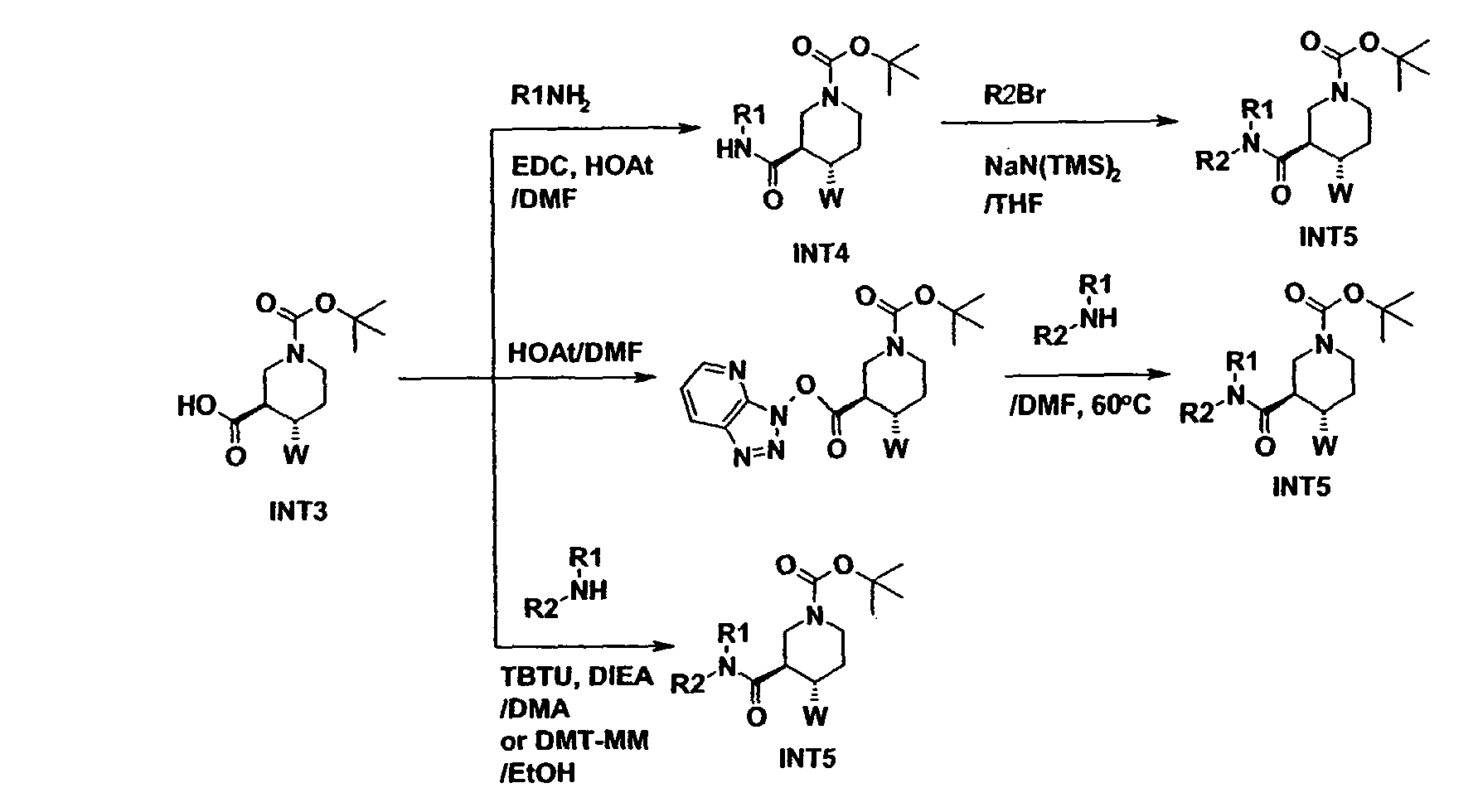

- Intermediates INT1, INT2, INT3, INT4, INT5 are obtained as a racemic mixture, or optical resolution of INT3 using an appropriate chiral amine (such as cinchonidine, cinchonine, quinine or quinidine) affords corresponding enantiomeric pure INT3. And the final product INT6 can be separated into the pure enantiomers by common techniques like chiral chromatography.
-

- A mixture of Intermediate 1.1 (54 mg, 0.108 mmol) and 5-6M 2-propanol solution of HCl (2 mL) is stirred at RT for 2 h. The reaction mixture is concentrated under reduced pressure and the residue is lyophilized from dioxane to give a white solid; ES-MS: M = 399; HPLC: Bt Ret = 5.21 min.
-

- Intermediate 1.2 (50 mg, 131 µmol) and TBTU (51 mg, 159 µmol) are dissolved in DMA (1 mL), DIEA (54 µL, 316 µmol) is added and the mixture is shaken for 30 min at room temperature. N-methylphenethylamine (25 µL, 169 µmol) is added and shaking is continued for 50 min. EtOAc is added and the organic layer is washed with aqueous 5 % NaHCO3, aqueous 0.5 M HCl and brine, dried over Na2SO4 and evaporated in vacuo. Flash chromatography of the residue (SiO2, hexane/ethyl acetate) affords Intermediate 1.1 as an oil; ES-MS: M+H = 499; HPLC: Bt Ret = 7.69 min.
-

- A solution of Intermediate 1.3 (540 mg, 1.32 mmol) and -20 % NaOEt in EtOH (2.5 mL, 6.47 mmol) in THF/EtOH (1:1, 50 mL) is stirred at 60 °C for 3.5 h. H2O (0.470 mL) is added and stirring at 60 °C is continued for 15 h. The solvent is removed in vacuo and the residue is suspended in EtOAc. The organic layer is washed with 0.5 M HCl and brine, dried over Na2SO4 and the solvent is removed in vacuo to give Intermediate 1.2 as a light brown oil; ES-MS: M+H = 382; HPLC: Bt Ret = 6.49 min.
-

- A mixture of Intermediate 1.4 (900 mg, 2.21 mmol) and Pd(OAc)2 (75 mg, 0.334 mmol) in NMP/EtOH (4:1, 50 mL) is shaken under a H2-atmosphere (1 bar). More Pd(OAc)2 (150 mg, 0.668 mmol) is added portionwise during the reaction. After 161 h, the reaction mixture is filtered through HyFlo and the solvent is removed in vacuo. Flash chromatography of the residue (SiO2, hexane/ethyl acetate) affords Intermediate 1.3 as a yellow oil; ES-MS: M+H = 410; HPLC: Bt Ret = 7.65 min.
-

- A mixture of 4-trifluoromethanesulfonyloxy-5,6-dihydro-2H-pyridine-1,3-dicarboxylic acid 1-tert-butyl ester 3-methyl ester (2.12 g, 4.46 mmol) (see e.g.
WO 2004/002957 orUS 2003/216441 ), 3-biphenylboronic acid (0.9 g, 4.54 mmol), K2CO3 (1.11 g, 8.03 mmol) and Pd(PPh3)4 (258 mg, 0.223 mmol) in dioxane (30 mL) is stirred under N2 at 80°C for 15 h. After adding H2O, the reaction mixture is extracted with EtOAc. The combined organic phases are washed with H2O, brine and dried (Na2SO4)- Concentration under reduced pressure and silica gel flash chromatography give Intermediate 1.4 as yellow oil; ES-MS: M+H = 408; HPLC: Bt Ret = 7.77 min. -

- Example 2 is synthesized by deprotection of Intermediate 2.1 (64 mg, 0.11 mmol) analogously to the preparation of Example 1. White solid; ES-MS: M+H = 480; HPLC: At Ret = 2.54 min.
-

- A mixture of Intermediate 2.2 (404 mg, 0.69 mmol), 3-pyridylboronic acid (85 mg, 0.69 mmol), K3PO4 (221 mg, 1.04 mmol) and Pd(PPh3)4 (80 mg, 0.07 mmol), H2O (0.2mL) in dioxane (7 mL) is refluxed under N2 for 3 h. After adding H2O, the reaction mixture is extracted with EtOAc. The combined organic phases are washed with H2O, brine and dried (MgSO4). Concentration under reduced pressure and silica gel flash chromatography give Intermediate 2.1 as white amorphous material; ES-MS: M+H = 580: At Ret = 3.82 min.
-

- To a mixture of Intermediate 2.3 (454 mg, 1.07 mmol) and 1-bromomethyl-2,3-dichlorobenzene (585 mg, 2.44 mmol) in THF (4 mL), 1 M THF solution of NaN(TMS)2 (2.20 mL, 2.20 mmol) is added under N2 at 0°C. After stirring at RT for 5 h and adding H2O, the reaction mixture is extracted with EtOAc . The combined organic phases are washed with H2O, brine and dried (MgSO4). Concentration under reduced pressure and silica gel flash chromatography give Intermediate 2.2 as white amorphous material; ES-MS: M+H = 583; HPLC: At Ret = 5.77 min.
-

- A mixture of Intermediate 2.4 (845 mg, 2.20 mmol), cyclopropylamine (0.38 mL, 5.48 mmol), EDC (632 mg, 3.30 mmol) and HOAt (299 mg, 2.20 mmol) in DMF (11 mL) is stirred under N2 at RT for 5 h. After adding H2O, the reaction mixture is extracted with EtOAc. The combined organic phases are washed with H2O, brine and dried (MgSO4). Concentration under reduced pressure and silica gel flash chromatography give Intermediate 2.3 as white amorphous material; ES-MS: M+H = 423; HPLC: A t Ret = 3.98 min.
-

- To a solution of Intermediate 2.5 (1.33 g, 3.35 mmol) and NiCl2·6H2O (954 mg, 4.01 mmol) in MeOH (18mL), NaBH4 (506 mg, 13.4 mmol) is added at -10°C under N2. After stirring for 2h, H2O is added and the reaction mixture is extracted with Et2O. The combined organic phases are washed with brine, and dried (MgSO4). Concentration under reduced pressure. A solution of the resulting residue (1.32 g, 3.31 mmol) and NaOMe (0.77mL, 25wt% MeOH solution, 3.31 mmo!) in MeOH (18 mL) is refluxed under N2 for 3 h. After cooling down to RT, H2O is added and the reaction mixture is extracted with EtOAc. The combined organic phases are washed with brine and dried (MgSO4). Concentration under reduced pressure yields an oil which is then dissolved in dioxane (4mL) and 8N KOH (2mL), and refluxed under N2 for 14 h. After cooling down to RT, the reaction mixture is adjusted to weakly acidic pH by slowly adding 1 N KHSO4, and mixture mixture is extracted with EtOAc. The combined organic phases are washed with H2O, brine and dried (MgSO4). Concentration under reduced pressure gives Intermediate 2.4 as white amorphous material; ES-MS: M+H = 384; HPLC: At Ret = 4.05 min.
-

- A mixture of 4-trifluoromethanesulfonyloxy-5,6-dihydro-2H-pyridine-1,3-dicarboxylic acid 1-tert-butyl ester 3-methyl ester (20.5 g, 52.7 mmol) (see e.g.
WO 2004/002957 orUS 2003/216441 ), 3-bromophenylboronic acid (12.7 g, 63.2 mmol), K3PO4 (13.4 g, 63.2 mmol) and Pd(PPh3)4 (3.0 g, 2.60 mmol) in dioxane (270 mL) is stirred under N2 at 50°C for 4 h. After adding H2O, the reaction mixture is extracted with EtOAc. The combined organic phases are washed with H2O, brine and dried (MgSO4). Concentration under reduced pressure and silica gel flash chromatography give Intermediate 2.5 as white amorphous material; ES-MS: M = 396; HPLC: At Ret = 4.82 min. -

- Example 3 is synthesized by deprotection of Intermediate 3.1 (212 mg, 0.32 mmol) analogously to the preparation of Example 1. White solid; ES-MS: M+H = 569; HPLC: At Ret = 3.73 min.
-

- A mixture of Intermediate 3.2 (175 mg, 0.34 mmol), 1-bromomethyl-3,5-dimethoxybenzene (93 mg, 0.40 mmol) and K2CO3 (112 mg, 0.81 mmol) in DMF (2 mL) is stirred under N2 at 60°C for 3 h. After adding H2O, the reaction mixture is extracted with Et2O. The combined organic phases are washed with H2O, brine and dried (MgSO4). Concentration under reduced pressure and silica gel flash chromatography give Intermediate 3.1 as white solid; ES-MS: M+H = 669; HPLC: At Ret = 5.79 min.
-

- A mixture of Intermediate 3.3 (634 mg, 1.13 mmol) and TFA (2 mL) in DCM (4mL) is stirred under N2 at RT. After stirring for 2 h, the reaction mixture are concentrated under reduced pressure to give crude product. Then a mixture of crude product, Et3N (0.47 mL, 3.39 mmol) and (Boc)2O (295 mg, 1.35 mmol) in DCM (4 mL) is stirred under N2 at RT for 1 h. After adding aqueous KHSO4, the reaction mixture is extracted with EtOAc. The combined organic phases are washed with H2O, brine and dried (MgSO4). Concentration under reduced pressure and silica gel flash chromatography give Intermediate 3.2 as white amorphous material; ES-MS: M+H = 519; HPLC: At Ret = 4.74 min.
-

- Intermediate 3.3 is synthesized by condensation of Intermediate 3.4 (2.17 g, 5.36 mmol) analogously to the preparation of Intermediate 2.2. White amorphous material; ES-MS: M+H = 563; HPLC: At Ret = 5.40 min.
-

- Intermediate 3.4 is synthesized by condensation of Intermediate 3.5 (2.20 g, 5.97 mmol) analogously to the preparation of Intermediate 2.3. White amorphous material; ES-MS: M+H = 405; HPLC: At Ret = 3.62 min.
-

- Intermediate 3.5 is synthesized by 1,4-reduction, epimerization and hydrolysis of Intermediate 3.6 (2.56 g, 6.78 mmol) analogously to the preparation of Intermediate 2.4. White amorphous material; ES-MS: M+H = 366; HPLC: At Ret = 3.73 min.
-

- Intermediate 3.6 is synthesized by condensation of 4-trifluoromethanesulfonyloxy-5,6-dihydro-2H-pyridine-1,3-dicarboxylic acid 1-tert-butyl ester 3-methyl ester (5.35 g, 13.7 mmol) and 3-Methoxymethoxyphenylboronic acid (3.75 g, 20.6 mmol) analogously to the preparation of Intermediate 2.5. Colorless oil; ES-MS: M+H = 378; HPLC: At Ret = 4.37 min.
-

- Example 4 is synthesized by deprotection of Intermediate 4.1 (110 mg, 0.29 mmol) analogously to the preparation of Example 1. White solid; ES-MS: M+H = 523; HPLC: At Ret = 3.32 min.
-

- Intermediate 4.2 (110 mg, 0.29 mmol), EDC (83 mg, 0.44 mmol) and HOAt (47 mg, 0.35 mmol) are dissolved in DMF (1 mL) under N2. After stirring at RT for 1h, Intermediate 4.5 (90 mg, 0.35 mmol) is added and stirred at 50°C for 14h. After adding H2O, the reaction mixture is extracted with EtOAc. The combined organic phases are washed with H2O, brine and dried (MgSO4). Concentration under reduced pressure gives Intermediate 4.1 as white amorphous material; ES-MS: M+H = 623; HPLC: At Ret = 5.37 min.
-

- To a solution of Intermediate 4.3 (1.06 g, 2.68 mmol) in dioxane (4 mL), 8N KOH (2 mL) is added. After refluxing for 14h, the reaction mixture is cooled down to RT, adjusted to weakly acidic pH by slowly adding 1N KHSO4 and extracted with EtOAc. The combined organic phases are washed with brine and dried (MgSO4). Concentration under reduced pressure and purified by silica gel flash chromatography give Intermediate 4.2 as white amorphous material; ES-MS: M+H = 382; HPLC: At Ret = 4.40 min.
-

- To a solution of Intermediate 4.4 (209.0 mg, 0.53 mmol) in MeOH (5.3 mL), Mg (103.3 mg, 4.24 mmol) is added at 0°C under N2. After stirring at RT for 2h, the reaction mixture is filtered through Celite pad and diluted with EtOAc. The reaction mixture is washed with saturated aqueous NH4Cl and brine, and dried (MgSO4). Concentration under reduced pressure follows. The residue and NaOMe (0.25 mL, 25wt% MeOH solution, 1.16 mmol) are dissolved in MeOH. After adding H2O, the reaction mixture is extracted with EtOAc. The combined organic phases are washed with brine and dried (MgSO4). Concentration under reduced pressure gives Intermediate 4.3 as white amorphous material; ES-MS: M+H = 396; HPLC: At Ret = 5.07 min.
-

- Intermediate 4.4 is synthesized by condensation of 4-trifluoromethanesulfonyloxy-5,6-dihydro-2H-pyridine-1,3-dicarboxylic acid 1-tert-butyl ester 3-methyl ester (14.0 g, 36.0 mmol) and 3-Biphenylboronic acid (11.9 g, 43.0 mmol) analogously to the preparation of Intermediate 2.5. Colorless oil; ES-MS: M+H = 394; HPLC: At Ret = 5.12 min.
-

- A mixture of Intermediate 4.6 (500 mg, 2.3 mmol), cyclopropylamine (157 mg, 2.75 mmol) and NaBH(OAc)3 (731 mg, 3.45 mmol) in DCM (10 mL) and MeOH (5 mL) is stirred under N2 at 0°C. After stirring at RT for 9 hour, the reaction mixture is quenched with saturated aqueous NaHCO3 and extracted with DCM. The combined organic phases are washed with H2O, brine and dried (Na2SO4). Concentration under reduced pressure and silica gel flash chromatography give Intermediate 4.5 as brown oil; ES-MS: M+H = 260; HPLC: At Ret = 2.38 min.
-

- A mixture of Intermediate 4.7 (700 mg, 3.18 mmol) and MnO2 (7 g, excess) in toluene (30 mL) is stirred under N2 at RT for 12 h. After filtration removing MnO2, the filtrate is concentrated under reduced pressure and silica gel flash chromatography to give Intermediate 4.6 as colorless oil; ES-MS: M+H = 219; HPLC: At Ret = 3.52 min
-

- To a solution of LAH (190 mg, 5.0 mmol) in THF (10 mL) is added a solution of Intermediate 4.8 (1.05g, 3.4 mmol) in THF (5 mL) under N2 at 0°C, then the mixture is stirred at 0°C for 2 h. After stirring additional 2 h at RT, the mixture is cooled down to 0°C and diluted with THF, and Na2SO4 10H2O is added. The THF phase is concentrated under reduced pressure after filtration through Celite pad to give Intermediate 4.7 as colorless oil; ES-MS: M+H = 221; HPLC: At Ret = 2.73 min.
-

- To a mixture of indazole-3-carboxylic acid (2 g, 13.7 mmol), toluene-4-sulfonic acid 3-methoxy-propyl ester (5 g, 20.6 mmol) in DMF (15 mL), NaH (1.12 g, 28 mmol) is added under N2 at 0°C. After stirring at 50°C for 12 h, H2O is added to the reaction mixture as well as concentrated HCl aq., and the mixture is extracted with EtOAc. The combined organic phases are washed with H2O, brine and dried (Na2SO4). Concentration under reduced pressure and silica gel flash chromatography give Intermediate 4.8 as colorless oil; ES-MS: M+H = 307; HPLC: At Ret = 3.65 min
- The following Examples enlisted on Table 1 are synthesized analogously to the preparation of Example 1-4. As far as not being commercially available, the synthesis of intermediates for the preparation of compounds of Examples 5-74 is described below the Table 1.

Table 1 Example R1 R2 W* Analytical data 5 


MS: [M+1]+ = 447;
HPLC: Bt Ret = 5.60 min6 


MS: [M+1]+ = 461.5
HPLC Bt Ret = 5.63 min and 5.78 min.7 


MS: [M+1]+ = 481.4
HPLC Bt Ret = 5.95 min.8 


MS: [M+1]+ = 439.6
HPLC Bt Ret = 5.68 min.9 


MS: [M+1]+ = 455.5
HPLC Bt Ret = 5.40 min.10 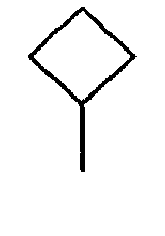


MS: [M+1]+ = 461.5
HPLC Bt Ret = 5.89 min.11 H 

MS: [M+1]+ = 461.6
HPLC Bt Ret = 5.61 min.12 H 

MS: [M+1]+ = 427.6
HPLC Bt Ret = 5.66 min.13 


MS: [M+1]+ = 529
HPLC At Ret = 3.67 min.14 
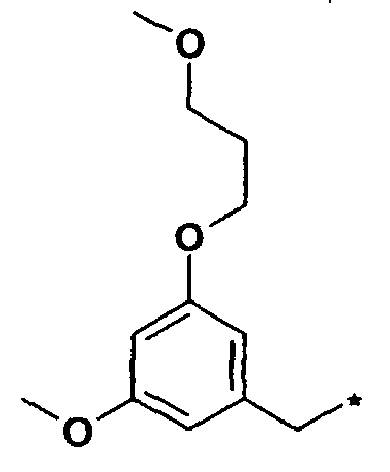

MS: [M+1]+ = 619
HPLC At Ret = 3.55 min.15 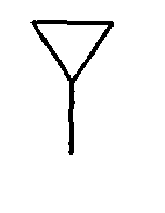
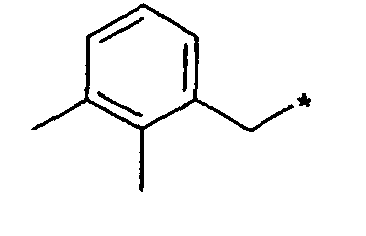

MS: [M+1]+ = 440
HPLC At Ret = 2.48 min.16 


MS: [M+1]+ = 440
HPLC At Ret = 2.75 min.17 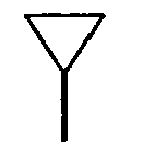


MS: [M+1]+ = 455
HPLC A4 Ret = 3.35 min.18 


MS: [M+1]+ = 455
HPLC At Ret = 3.26 min.19 


MS: [M+1]+ = 529
HPLC At Ret = 3.60 min.20 


MS: [M+1]+ = 529
HPLC At Ret = 3.55 min.21 


MS: [M+1]+ = 513
HPLC At Ret = 3.75 min.22 


MS: [M+1]+ = 522
HPLC At Ret = 3.73 min.23 


MS: [M+1]+ = 529
HPLC At Ret = 3.62 min.24 

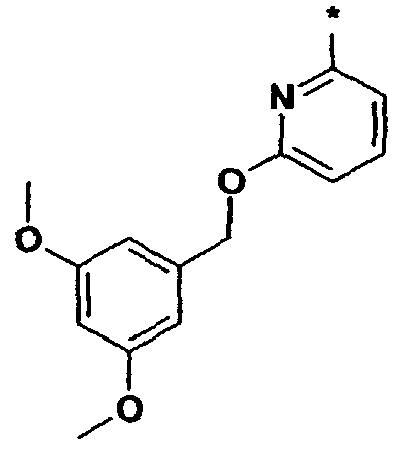
MS: [M+1]+ = 530
HPLC At Ret = 3.84 min.25 

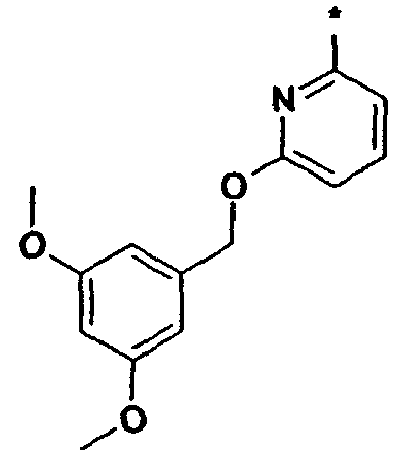
MS: [M+1]+ = 620
HPLC At Ret = 3.40 min.26 


MS: [M+1]+ = 530
HPLC At Ret = 3.63 min.27 


MS: [M+1]+ = 558
HPLC At Ret = 4.03 min.28 


MS: [M+]+ = 534
HPLC At Ret = 3.73 min.29 


MS: [M+1]+ = 469
HPLC At Ret = 3.67 min.30 H 

MS: [M]+ = 439
HPLC At Ret = 3.37 min.31 


MS: [M+1]+ = 500
HPLC At Ret = 3.22 min.32 


MS: [M+1]+ = 500
HPLC At Ret = 3.07 min.33 


MS: [M+1]+ = 536
HPLC At Ret = 3.43 min.34 


MS:[M+1]+ = 550
HPLC At Ret = 3.60 min.35 


MS: [M+1]+ = 540
HPLC At Ret = 3.62 min.36 


MS: [M+1]+ = 513
HPLC At Ret = 2.57 min.37 H 

MS: [M+1]+ = 514
HPLC At Ret = 3.07 min.38 H 

MS: [M+1]+ = 500
HPLC At Ret = 2.98 min.39 


MS: [M+1]+ = 528
HPLC At Ret = 3.27 min.40 


MS: [M+1]+ = 536
HPLC At Ret = 3.54 min.41 

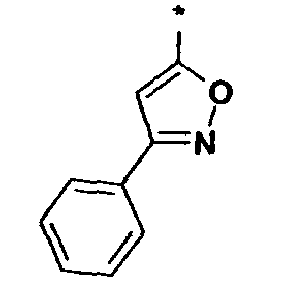
MS: [M+1]+ = 430
HPLC At Ret = 3.24 min.42 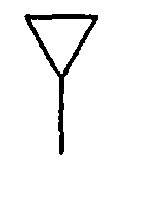


MS: [M+1]+ = 538
HPLC At Ret = 3.17 min.43 


MS: [M+1]+ = 612
HPLC At Ret = 3.68 min.44 


MS: [M+1]+ = 540
HPLC At Ret = 3.62 min.45 


MS: [M+1]+ = 535
HPLC At Ret = 3.07 min.46 


MS: [M+1]+ = 540
HPLC At Ret = 3.68 min.47 


MS: [M+1]+ = 552
HPLC At Ret = 3.57 min.48 


MS: [M+1]+ = 538
HPLC At Ret = 3.25 min.49 
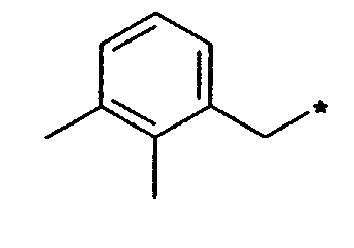

MS: [M+1]+ = 455
HPLC At Ret = 3.25 min.50 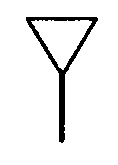


MS: [M+1]+ = 513
HPLC At Ret = 3.68 min.51 


MS: [M+1]+ = 513
HPLC At Ret = 2.60 min.52 


MS: [M+1]+ = 612
HPLC At Ret = 3.65 min.53 

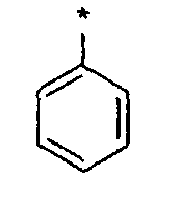
MS: [M+1]+ = 446
HPLC At Ret = 3.15 min.54 


MS: [M+1]+ = 540
HPLC At Ret = 3.67 min.55 


MS: [M+1]+ = 540
HPLC At Ret = 3.63 min.56 


MS: [M+1]+ = 540
HPLC At Ret = 3.62 min.57 


MS: [M+1]+ = 540
HPLC At Ret = 3.73 min.58 


MS: [M+1]+ = 545
HPLC At Ret = 3.09 min.59 

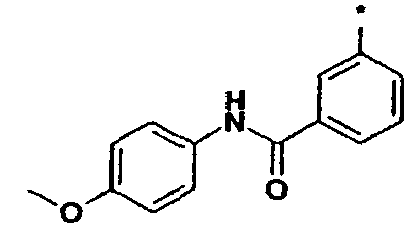
MS: [M+1]+ = 512
HPLC At Ret = 3.24 min.60 


MS: [M+1]+ = 541
HPLC At Ret = 3.93 min.61 
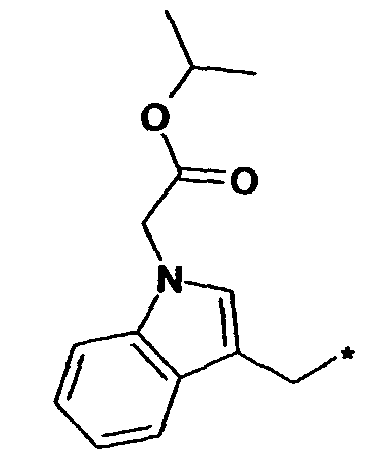

MS: [M+1]+ = 550
HPLC At Ret = 3.73 min.62 


MS: [M+1]+ = 463
HPLC At Ret = 3.18 min.63 
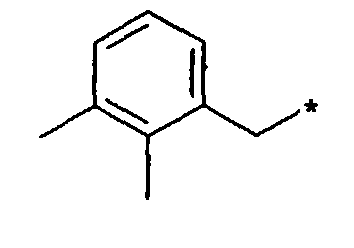

MS: [M+1]+ = 437
HPLC At Ret = 3.12 min.64 


MS: [M+1]+ = 512
HPLC At Ret = 3.40 min.65 


MS: [M+1]+ = 468
HPLC At Ret = 3.37 min.66 


MS: [M+1]+ = 554
HPLC At Ret = 3.65 min.67 


MS: [M+1]+ = 499
HPLC At Ret = 3.79 min.68 


MS: [M+1]+ = 527
HPLC At Ret = 3.85 min.69 


MS: [M+1]+ = 531
HPLC At Ret = 3.50 min.70 


MS: [M+1]+ = 514
HPLC At Ret = 3.70 min.71 


MS: [M+1]+ = 513
HPLC At Ret = 3.54 min.72 


MS: [M+1]+ = 612
HPLC At Ret = 3.65 min.73 


MS: [M+1]+ = 529
HPLC At Ret = 3.77 min.74 


MS: [M+1]+ = 571
HPLC At Ret = 3.38 min.75 


MS: [M+1]+ = 439;
HPLC: At Ret = 3.70 min76 


MS: [M+1]+ = 542
HPLC At Ret = 3.38 min77 


MS: [M+1]+ = 544
HPLC At Ret = 3.13 min.78 


MS: [M+1]+ = 552
HPLC At Ret = 3.56 min.79 


MS: [M+1]+ = 552
HPLC At Ret = 3.60 min.80 


MS: [M+1]+ = 596
HPLC At Ret = 3.14 min.81 


MS: [M+1]+ = 547
HPLC At Ret = 3.48 min.82 


MS: [M+1]+ = 528;
HPLC At Ret = 3.18 min.83 


MS: [M+1]+ = 496
HPLC At Ret = 3.67min.84 


MS: [M+1]+ = 463
HPLC At Ret = 3.35 min.85 


MS: [M+1]+ = 467
HPLC: At Ret = 5.68 min86 


MS: [M+1]+ = 566
HPLC At Ret = 3.17 min.87 


MS: [M+1]+ = 566
HPLC At Ret = 3.29 min.88 


MS: [M+1]+ = 596
HPLC At Ret = 3.32 min.89 


MS: [M+1]+ = 547
HPLC At Ret = 3.54 min.90 


MS: [M+1]+ = 623
HPLC At Ret = 3.38 min.91 


MS: [M+1]+ = 590
HPLC At Ret = 3.22 min.92 


MS: [M+1]+ = 593
HPLC At Ret = 3.32 min.93 

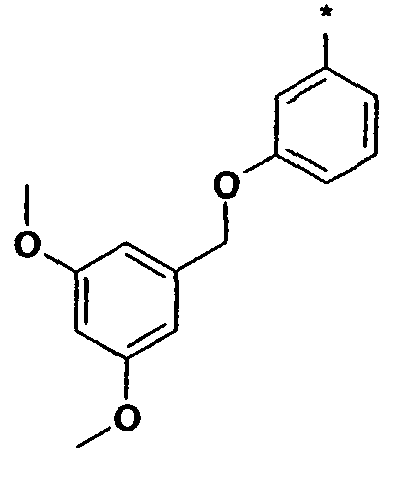
MS: [M+1]+ = 618
HPLC At Ret = 3.52 min.94 


MS: [M+1]+ = 618
HPLC At Ret = 3.57 min.95 


MS: [M+1]+ = 464
HPLC At Ret = 3.70 min.96 


MS: [M+1]+ = 593
HPLC At Ret = 3.29 min.97 

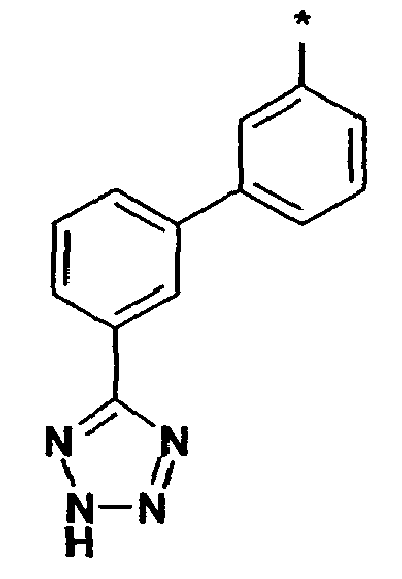
MS: M+ = 590
HPLC At Ret = 3.34 min.98 


MS: [M+1]+ = 623
HPLC At Ret = 3.42 min.99 


MS: [M+1]+ = 531;
HPLC: At Ret = 3.40 min99 

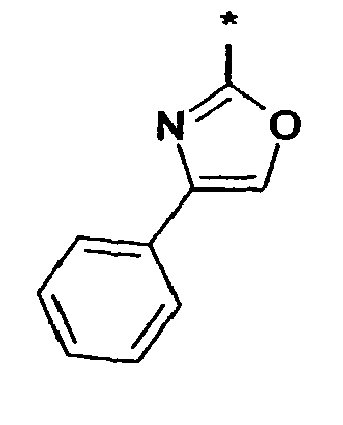
MS: [M+1]+ = 519
HPLC At Ret = 3.18 min.100 


MS: [M+1]+ = 499
HPLC At Ret = 2.77 min.101 
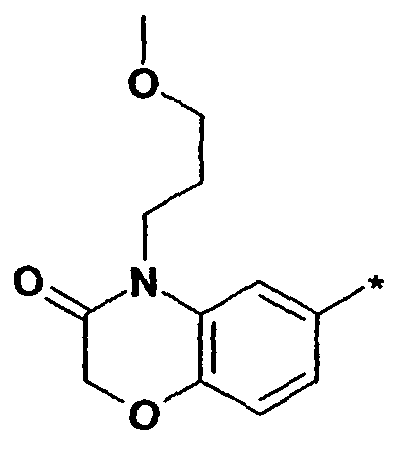

MS: [M+1]+ =
HPLC At Ret = min.102 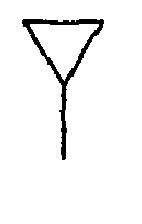


MS: [M+1]+ = 614
HPLC At Ret = 2.98 min.103 


MS: [M+1]+ = 556
HPLC At Ret = 3.72 min.104 


MS: [M+1]+ = 664
HPLC At Ret = 2.48 min.105 

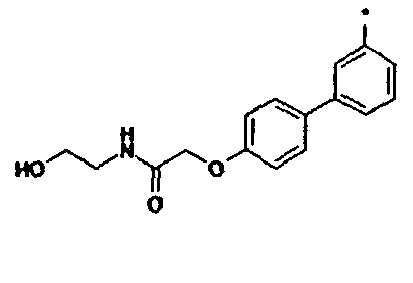
MS: [M+1]+ = 639
HPLC At Ret = 2.84 min.106 


MS: [M+1]+ = 544
HPLC At Ret = 2.85min.107 


MS: [M+1]+ = 614
HPLC At Ret 2.62 min.108 


MS: [M+1]+ = 572
HPLC At Ret = 2.98 min.109 


MS: [M+1]+ =470
HPLC At Ret =3.15 min.110 
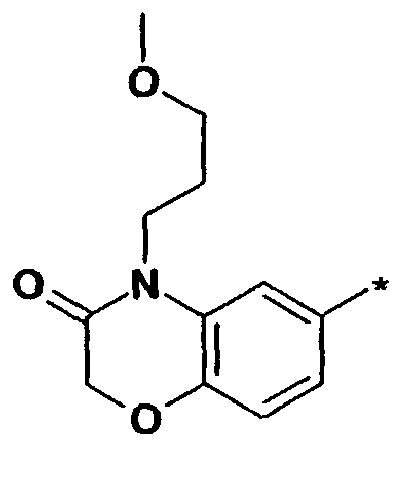

MS: [M+1]+ = 544
HPLC At Ret = 2.73min.111 

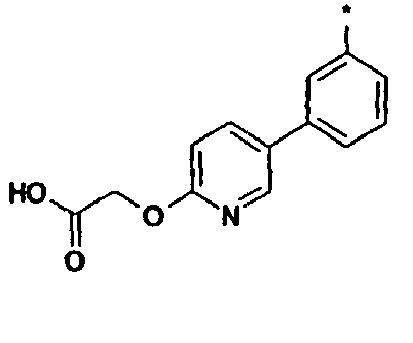
MS: [M+1]+ = 597
HPLC At Ret = 2.97 min.112 


MS: [M+1]+ = 602
HPLC At Ret = 2.77 min.113 
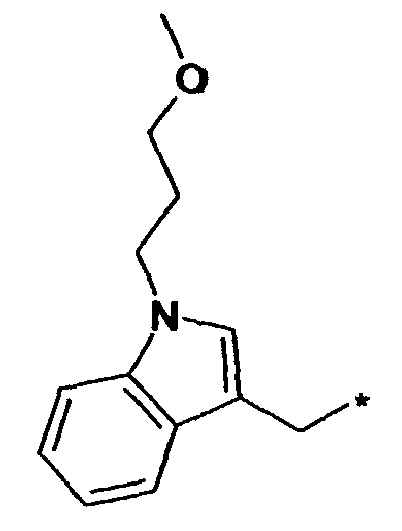

MS: [M+1]+ = 615
HPLC At Ret = 3.06 min.114 


MS: [M+1]+ = 630
HPLC At Ret = 3.20 min.115 


MS: [M+1]+ = 546
HPLC At Ret = 3.68 min.116 


MS: [M+1]+ = 528
HPLC At Ret = 2.95 min.117 
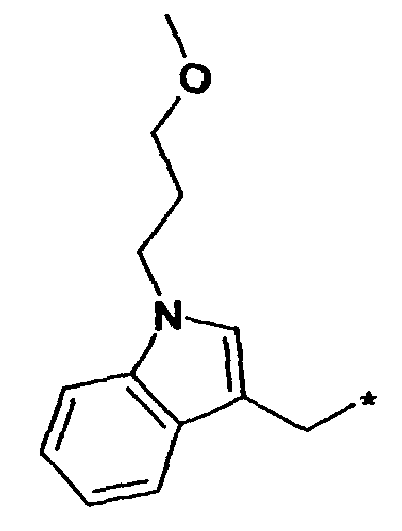

MS: [M+1]+ = 556
HPLC At Ret = 3.29 min.118 


MS: [M+1]+ = 592
HPLC At Ret = 3.11 min.119 


MS: [M+1]+ = 579
HPLC At Ret = 2.99 min.120 


MS: [M+1]+ = 556
HPLC At Ret = 3.22min.121 


MS: [M+1]+ = 512
HPLC At Ret = 2.65 min.122 


MS: [M+1]+ = 556
HPLC At Ret = 3.29min.123 


MS: [M+1]+ = 595
HPLC AtRet = 2.90 min.124 


MS: [M+1]+ = 581
HPLC At Ret = 2.59 min.125 


MS: [M+1]+ = 672
HPLC At Ret = 2.87 min.126 


MS: [M+1]+ = 648
HPLC At Ret = 3.10 min.127 

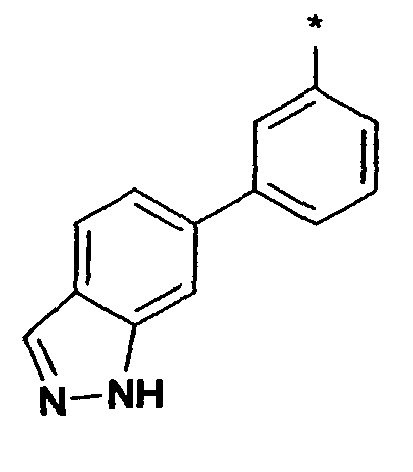
MS: [M+1]+ = 562
HPLC At Ret = 3.09 min.128 


MS: [M+1]+ = 624
HPLC At Ret = 3.22 min.129 


MS: [M+1]+ = 535
HPLC At Ret = 3.02 min.130 


MS: [M+1]+ = 508
HPLC At Ret = 3.13 min.131 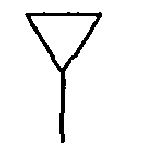

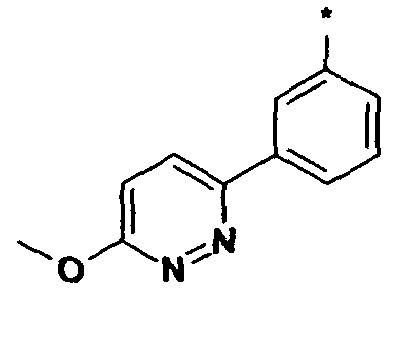
MS: [M+1]+ =554
HPLC At Ret = 3.00 min.132 


MS: [M+1]+ = 566
HPLC At Ret = 3.41 min.133 


MS: [M+1]+ = 542
HPLC At Ret = 2.97 min.134 


MS: [M+1]+ = 537
HPLC At Ret = 2.57 min.135 


MS: [M+1]+ = 522
HPLC At Ret = 3.20 min.136 


MS: [M+1]+ = 519
HPLC At Ret = 3.18 min.137 


MS: [M+1]+ = 667
HPLC At Ret = 2.78min.138 


MS: [M+1]+ = 527
HPLC At Ret = 2.60 min.139 


MS: [M+1]+ = 598
HPLC At Ret = 2.88 min.140 
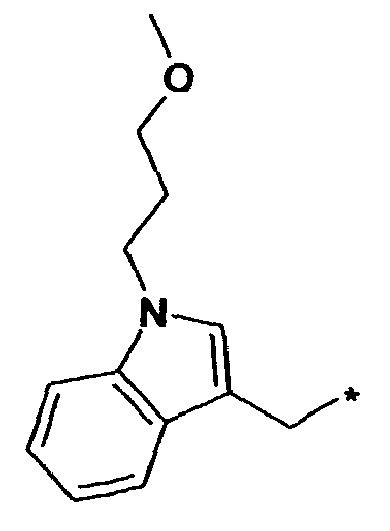

MS: [M+1]+ = 582
HPLC At Ret = 3.05 min.141 


MS: [M+1]+ = 624
HPLC At Ret = 3.55 min.142 


MS: [M+1]+ = 609
HPLC At Ret = 2.67 min.143 


MS: [M+1]+ = 471
HPLC At Ret = 3.07 min.144 


MS: [M+1]+ = 474
HPLC At Ret = 3.42 min.145 


MS: [M+1]+ = 614
HPLC At Ret = 2.81 min.146 


MS: [M+1]+ = 621
HPLC At Ret = 2.69 min.147 


MS: [M+1]+ = 657
HPLC At Ret = 3.63 min.148 


MS: [M+1]+ = 540
HPLC At Ret = 3.15 min.149 


MS: [M+1]+ = 576
HPLC At Ret = 3.52min.150 


MS: [M+1]+ = 468
HPLC At Ret = 2.93min.151 


MS: [M+1]+ = 526
HPLC At Ret = 3.15min.152 


MS: [M]+ = 624
HPLC At Ret = 3.94 min.153 

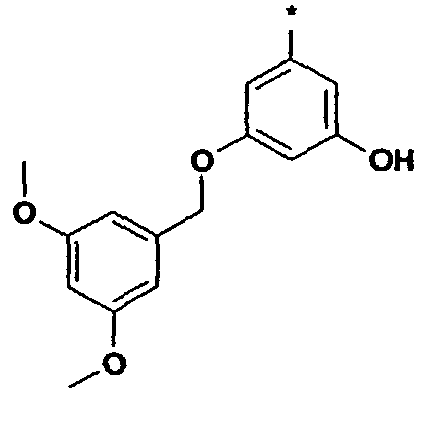
MS: [M+1]+ = 646
HPLC At Ret = 3.35min.154 


MS: [M+1]+ = 621
HPLC At Ret = 2.62 min.155 


MS: [M+1]+ = 667
HPLC At Ret = 2.74 min.156 


MS: [M+1]+ = 604
HPLC At Ret = 3.67 min.157 


MS: [M+1]+ = 646
HPLC At Ret = 2.93min.158 
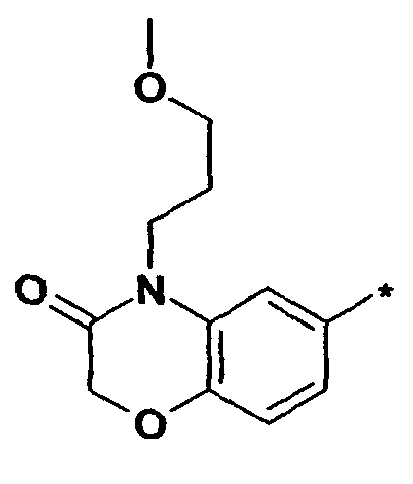

MS: [M+1]+ = 630
HPLC At Ret = 3.20min.159 
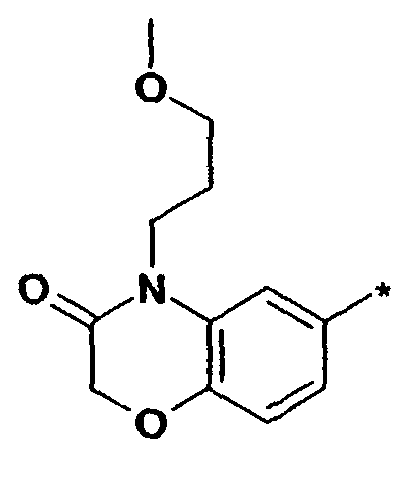

MS: [M+1]+ = 660
HPLC At Ret = 3.23min.160 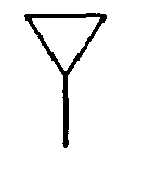


MS: [M+1]+ = 590
HPLC At Ret = 3.15 min.161 


MS: [M+1]+ =
HPLC At Ret = min.162 


MS: [M+1]+ = 529
HPLC At Ret = 2.47 min.163 


MS: [M+1]+ = 501
HPLC At Ret = 2.57 min.164 


MS: [M+1]+ = 634
HPLC At Ret = 2.43 min.165 


MS: [M+1]+ = 594
HPLC At Ret = 2.54 min.166 


MS: [M+1]+ = 608
HPLC At Ret = 3.05 min.167 


MS: [M+1]+ = 461
HPLC At Ret = 3.48 min.168 


MS: [M+1]+ = 659
HPLC At Ret = 3.12 min.169 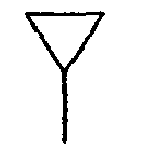


MS: [M+1]+ = 519
HPLC At Ret = 3.62 min.170 


MS: [M+1]+ =590
HPLC At Ret = 2.68 min.171 


MS: [M+1]+ = 596
HPLC At Ret = 2.97 min.172 


MS: [M+1]+ = 518
HPLC At Ret = 5.59 min.172 
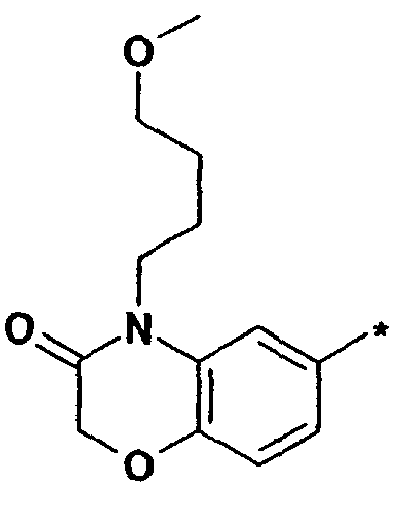

MS: [M+1]+ = 554
HPLC At Ret = 3.18min.173 


MS: [M+1]+ = 707
HPLC At Ret = 2.98 min.174 
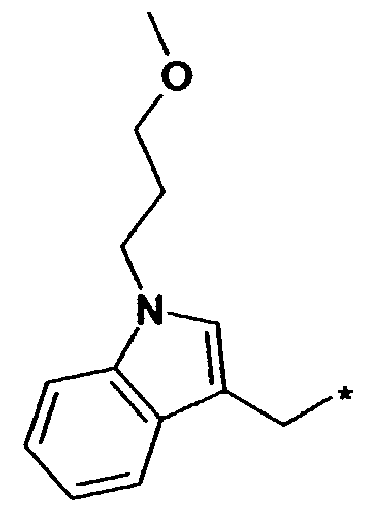

MS: [M+1]+ = 679
HPLC At Ret = 2.88 min.175 


MS: [M+1]+ = 662
HPLC At Ret = 2.62 min.176 


MS: [M+1]+ = 603
HPLC At Ret = 2.92 min.177 
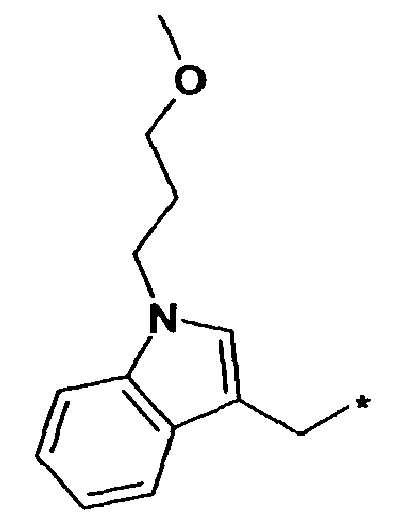

MS: [M+1]+ =
HPLC At Ret = min.178 

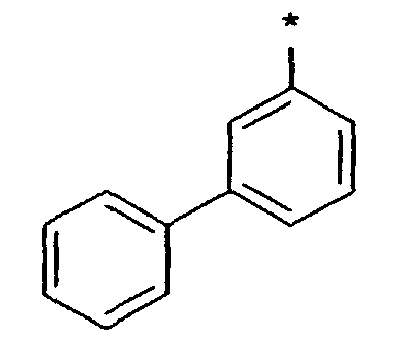
MS: [M+1]+ = 488
HPLC At Ret = 3.10 min.179 


MS: [M+1]+ = 560
HPLC At Ret = 3.22 min.180 

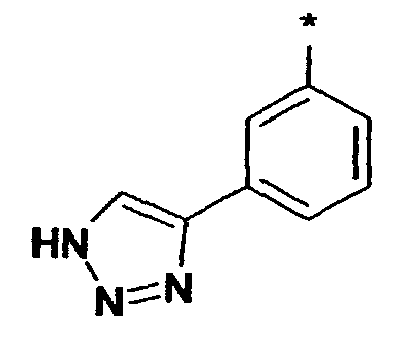
MS: [M+1]+ = 513
HPLC At Ret = 2.72 min.181 


MS: [M+1]+ = 614
HPLC At Ret = 2.74 min.182 


MS: [M+1]+ = 673
HPLC At Ret = 3.09 min.183 


MS: [M+1]+ = 527
HPLC At Ret = 2.63 min.184 


MS: [M+1]+ = 637
HPLC At Ret = 2.98 min.185 


MS: [M+1]+ = 584
HPLC At Ret = 2.92 min.186 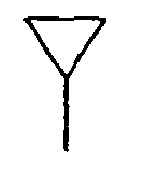


MS: [M+1]+ = 594
HPLC At Ret = 3.34 min.187 


MS: [M+1]+ = 541
HPLC At Ret = 2.23 min.188 

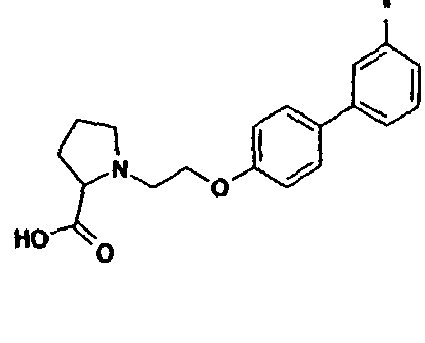
MS: [M+1]+ = 679
HPLC At Ret = 2.65 min.189 


MS: [M+1]+ = 587
HPLC At Ret = 2.40 min.190 

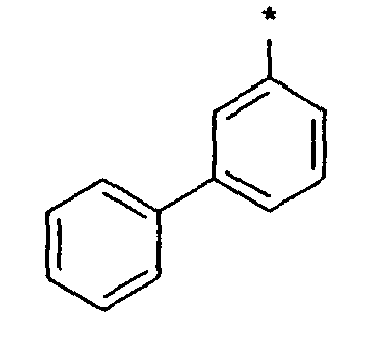
MS: [M+1]+ = 553
HPLC At Ret = 2.88min.191 


MS: [M+1]+ = 540
HPLC At Ret = 2.93min.192 

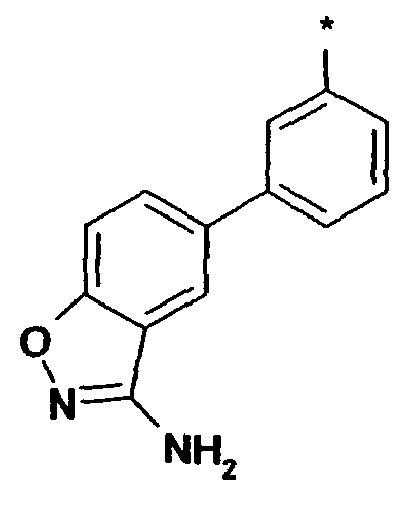
MS: [M+1]+ = 578
HPLC At Ret = 3.02 min.193 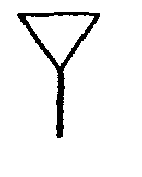


MS: [M+1]+ = 573
HPLC At Ret = 2.42 min.194 


MS: [M+1]+ = 598
HPLC At Ret = 2.77 min.195 


MS: [M+1]+ = 600
HPLC At Ret = 2.84min.196 

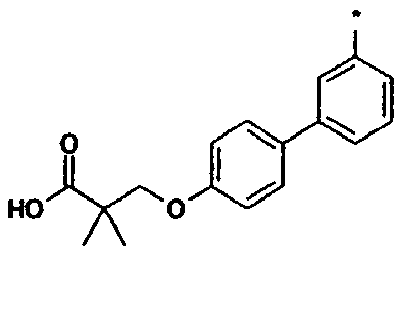
MS: [M+1]+ = 656
HPLC At Ret = 3.09 min.197 


MS: [M+1]+ = 649
HPLC At Ret = 2.79 min.198 


MS: [M+1]+ = 576
HPLC At Ret = 3.47min.199 


MS: [M+1]+ = 612
HPLC At Ret = 2.82 min.200 
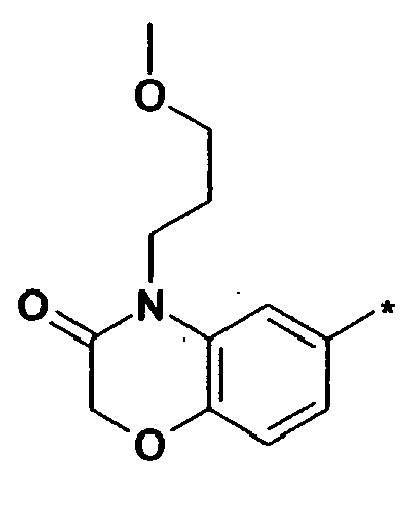

MS: [M+1]+ = 492
HPLC At Ret = 2.93 min.201 


MS: [M+1]+ = 711
HPLC At Ret = 2.45 min.202 


MS: [M+1]+ = 500
HPLC At Ret = 2.62 min.203 


MS: [M+1]+ = 514
HPLC At Ret = 2.77 min.204 


MS: [M+1]+ = 545
HPLC At Ret = 2.29 min.205 


MS: [M+1]+ = 642
HPLC At Ret = 2.92 min.206 


MS: [M+1]+ = 658
HPLC At Ret = 2.60 min.207 

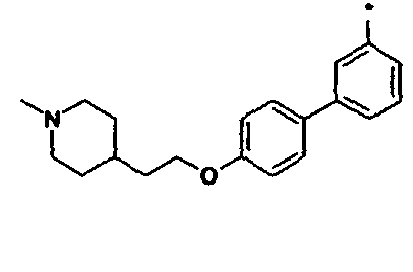
MS: [M+1]+ = 663
HPLC At Ret = 2.80 min.208 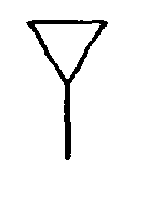
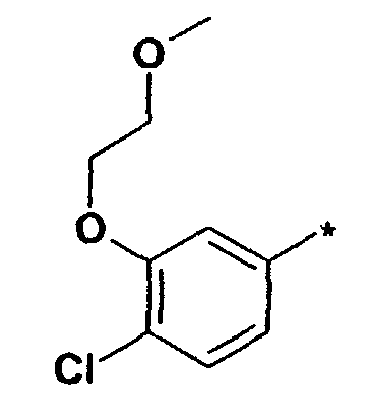

MS: [M+1]+ = 505
HPLC At Ret = 3.45 min.209 

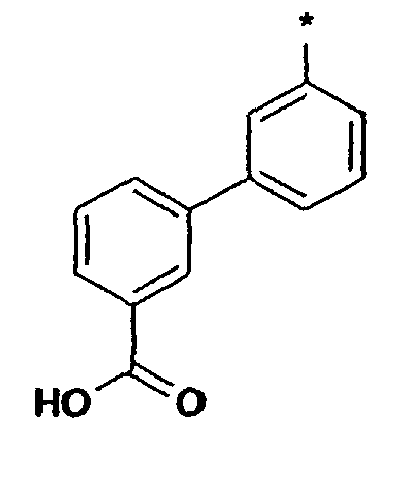
MS: [M+1]+ = 584
HPLC At Ret = 2.75min.210 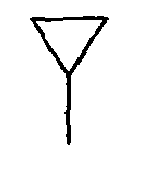


MS: [M+1]+ = 558
HPLC At Ret = 3.13min.211 


MS: [M+1]+ = 510
HPLC At Ret = 3.65 min.212 


MS: [M+1]+ = 532
HPLC At Ret = 3.35 min.213 


MS: [M+1]+ = 555
HPLC At Ret = 2.87 min.214 


MS: [M+1]+ = 565
HPLC At Ret = 3.09 min.215 


MS: [M+1]+ = 565
HPLC At Ret = 3.09 min.216 


MS: [M+1]+ = 499
HPLC At Ret = 3.48 min.217 


MS: [M+1]+ = 556
HPLC At Ret = 2.95 min.218 


MS: [M+1]+ = 556
HPLC At Ret = 2.92 min.219 

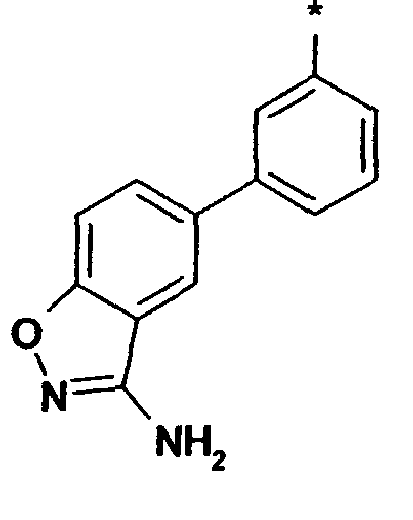
MS: [M+1]+ = 578
HPLC At Ret = 3.02 min.220 
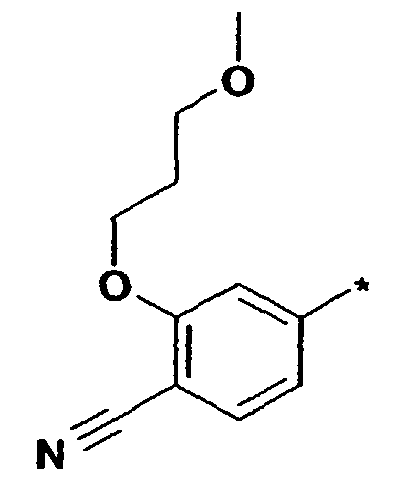

MS: [M+1]+ = 510
HPLC At Ret = 3.25 min.221 


MS: [M+1]+ =558;
HPLC: At Ret = 3.12min222 


MS: [M+1]+ =558
HPLC At Ret = 3.10min223 


MS: [M+1]+ =667
HPLC At Ret = 2.55min.224 


MS: [M+1]+ = 532
HPLC At Ret = 3.00 min.225 


MS: [M+1]+ = 578
HPLC At Ret = 2.97 min.226 


MS: [M+1]+ = 546
HPLC At Ret = 2.84 min.227 


MS: [M+1]+ = 518
HPLC At Ret = 3.32min.228 


MS: [M+1]+ = 556
HPLC At Ret = 2.98min.229 


MS: [M+1]+ = 596
HPLC At Ret = 2.47 min.230 


MS: [M+1]+ = 707
HPLC At Ret = 2.42 min.231 


MS: [M+1]+ = 561
HPLC At Ret = 3.20 min.232 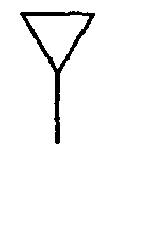


MS: [M+1]+ =; 595
HPLC: At Ret = 2.37 min233 

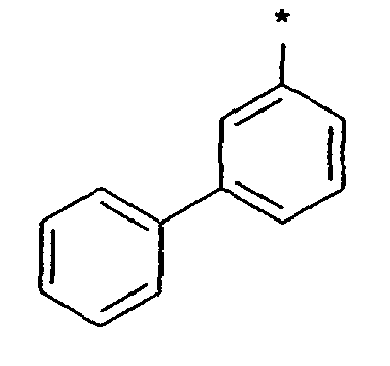
MS: [M+1]+ = 533
HPLC At Ret = 3.38 min.234 


MS: [M+1]+ = 464
HPLC At Ret = 2.42 min.235 


MS: [M+1]+ = 553
HPLC At Ret = 3.48 min.236 
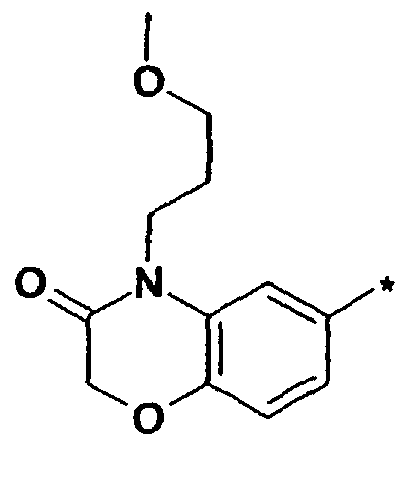

MS: [M+1]+ = 581
HPLC At Ret = 2.50 min.237 
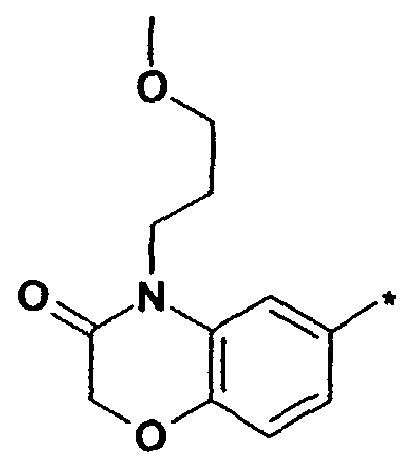

MS: [M+1]+ = 570
HPLC At Ret = 2.87 min.238 


MS: [M+1]+ = 574
HPLC At Ret = 2.54 min.239 


MS: [M+1]+ = 579
HPLC At Ret = 2.88 min.240 


MS: [M+1]+ = 581
HPLC At Ret = 2.59 min.241 


MS: [M+1]+ = 450
HPLC At Ret = 2.98 min.242 


MS: [M+1]+ = 556
HPLC At Ret = 2.62 min.243 

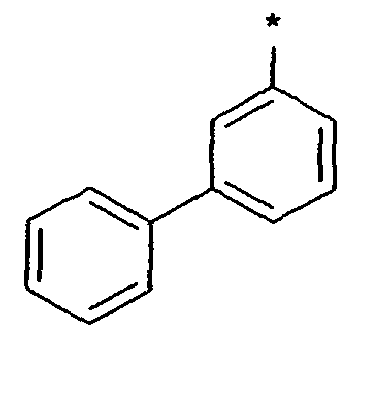
MS: [M+1]+ = 553
HPLC At Ret = 2.68min.244 


MS: [M+]+ = 569
HPLC At Ret = 2.30min.245 


MS: [M+1]+ = 536
HPLC At Ret = 3.23min.246 

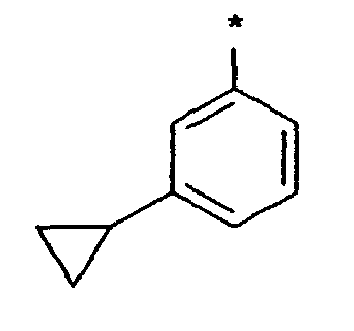
MS: [M]+ = 504
HPLC At Ret = 2.73 min.247 


MS: [M+1]+ = 567
HPLC At Ret = 3.50 min.248 


MS: [M+1]+ = 583
HPLC At Ret = 2.82 min.249 

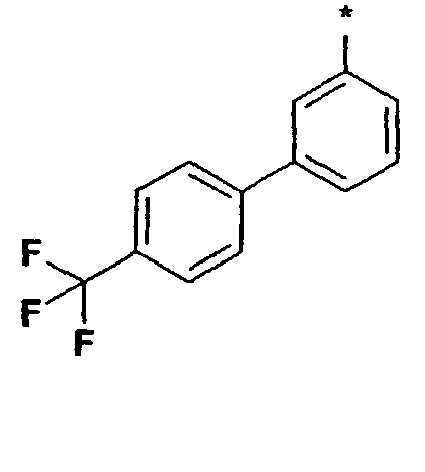
MS: [M+1]+ = 608
HPLC At Ret = 3.17 min.250 


MS: [M+1]+ = 592
HPLC At Ret = 2.80 min.251 


MS: [M+1]+ = 576
HPLC At Ret = 2.95 min.252 


MS: [M+1]+ = 556
HPLC At Ret = 2.59 min.253 


MS: [M+1]+ = 577
HPLC At Ret = 2.35 min.254 


MS: [M+1]+ = 667
HPLC At Ret = 2.29 min.255 


MS: [M+1]+ = 621
HPLC At Ret = 2.30 min.256 


MS: [M+1]+ = 574
HPLC At Ret = 2.60 min.257 


MS: [M+1]+ = 595
HPLC At Ret = 2.35 min.258 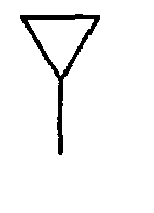


MS: [M+1]+ = 624
HPLC At Ret = 3.29 min.259 


MS: [M+1]+ = 588
HPLC At Ret = 2.88 min.260 


MS: [M+1]+ = 480
HPLC At Ret = 2.17 min.261 


MS: [M+1]+ = 556
HPLC At Ret = 2.32min.262 


MS: [M+1]+ = 538
HPLC At Ret = 2.88min.263 


MS: [M+1]+ = 574
HPLC At Ret = 3.12min.264 


MS: [M+1]+ = 589
HPLC At Ret = 3.02min.265 


MS: [M+1]+ = 540
HPLC At Ret = 2.97 min.266 


MS: [M+1]+ = 594
HPLC At Ret = 3.29 min.267 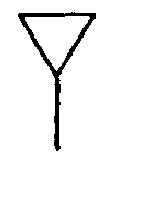


MS: [M+1]+ = 574
HPLC At Ret = 3.02 min.268 


MS: [M+1]+ = 580
HPLC At Ret = 2.54 min.269 

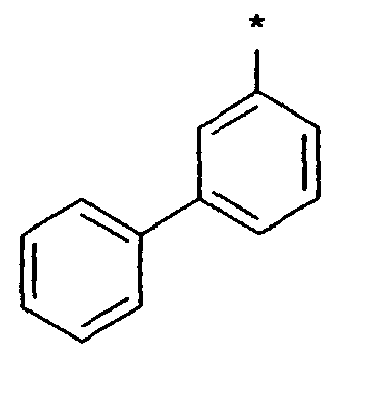
MS: [M+1]+ = 538.04
HPLC ct Ret = 1.89 min.270 


MS: [M+1]+ = 574
HPLC At Ret = 2.65 min.271 


MS: [M+1]+ = 569
HPLC At Ret = 2.82min.272 


MS: [M+1]+ = 569
HPLC At Ret = 2.88min.273 


MS: [M+1]+ = 623
HPLC At Ret = 3.04min.274 


MS: [M+1]+ = 588
HPLC At Ret = 2.92 min.275 


MS: [M+1]+ = 574
HPLC At Ret = 2.65 min.276 


MS: [M+1]+ = 574
HPLC At Ret = 2.63 min.277 


MS: [M+1]+ = 574
HPLC At Ret = 2.60 min.278 


MS: [M+1]+ = 570
HPLC At Ret = 2.92 min.279 


MS: [M+1]+ = 595
HPLC At Ret = 2.35 min.280 


MS: [M+1]+ = 588
HPLC At Ret = 2.95 min.281 


MS: [M+1]+ = 572
HPLC At Ret = 2.63 min.282 

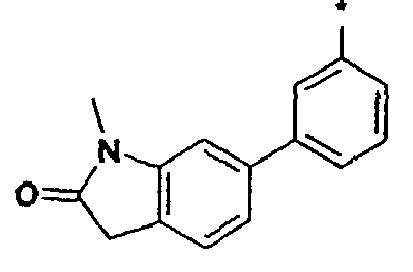
MS: [M+1]+ = 609
HPLC At Ret = 2.54 min.283 


MS: [M+1]+ = 592
HPLC At Ret = 2.90 min.284 


MS: [M+1]+ = 606
HPLC At Ret = 3.20 min.285 


MS: [M+1]+ = 597
HPLC At Ret = 2.48 min.286 


MS: [M+1]+ = 531
HPLC At Ret = 3.34 min.287 


MS: [M+1]+ = 574
HPLC Ct Ret = 1.59 min.288 


MS: [M+1]+ = 574
HPLC At Ret = 3.13min.289 


MS: [M+1]+ = 547
HPLC At Ret = 3.18 min.290 


MS: [M+1]+ 606
HPLC At Ret = 3.27 min.291 


MS: [M+1]+ = 606
HPLC At Ret = 3.02 min.292 


MS: [M+1]+ = 520
HPLC At Ret = 2.59 min.293 


MS: [M+1]+ = 649
HPLC At Ret = 2.59 min.294 


MS: [M+1]+ = 590
HPLC At Ret = 2.70 min.295 


MS: [M+1]+ 594
HPLC At Ret = 2.98 min.296 


MS: [M+1]+ = 590
HPLC At Ret = 2.65 min.297 


MS: [M+1]+ = 586
HPLC At Ret = 2.84 min.298 


MS: [M+1]+ = 582
HPLC At Ret = 2.87 min.299 


MS: [M+1]+ = 584
HPLC At Ret = 3.05 min.300 


MS: [M+1]+ = 554
HPLC At Ret = 2.52min.301 


MS: [M+1]+ = 410
HPLC At Ret = 2.93 min.302 


MS: [M+1]+ = 606
HPLC At Ret = 2.98 min.303 


MS: [M+1]+ = 515
HPLC At Ret = 1.64 min.304 


MS: [M+1]+ = 596
HPLC At Ret = 2.23 min.305 


MS: [M+1]+ = 558
HPLC At Ret = 1.55 min.306 


MS: [M+1]+ = 598
HPLC At Ret = 2.84 min.307 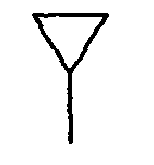


MS: [M+1]+ = 600
HPLC At Ret = 2.55 min.308 


MS: [M+1]+ = 604
HPLC At Ret = 2.98 min.309 


MS: [M+1]+ = 588
HPLC At Ret = 2.97 min.310 


MS: [M+1]+ = 598
HPLC At Ret = 3.30 min.311 


MS: [M+1]+ = 605
HPLC ct Ret = 1.72 min.312 


MS: [M+1]+ = 582
HPLC ct Ret = 1.61 min.313 


MS: [M+1]+ = 597
HPLC ct Ret = 1.66 min.314 


MS: [M+1]+ = 667
HPLC At Ret = 2.34 min.315 


MS: [M+1]+ = 627
HPLC At Ret = 2.20 min.316 


MS: [M+1]+ = 641
HPLC At Ret = 2.30 min.317 
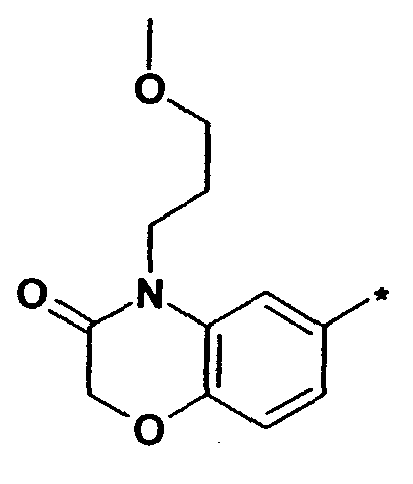

MS: [M+1]+ = 627
HPLC At Ret = 2.15 min.318 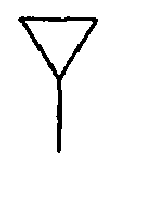


MS: [M+1]+ = 641
HPLC At Ret = 2.22 min.319 


MS: [M+1]+ = 653
HPLC At Ret = 2.22 min.320 


MS: [M+1]+ = 600
HPLC At Ret = 2.47 min.321 


MS: [M+1]+ = 607
HPLC At Ret = 1.53 min.322 


MS: [M+1]+ = 631
HPLC At Ret = 2.76 min.323 


MS: [M+1]+ = 581
HPLC ct Ret = 1.61 min.324 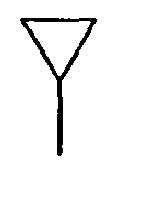


MS: [M+1]+ = 598
HPLC At Ret = 2.80 min.325 


MS: [M+1]+ = 530
HPLC At Ret = 2.78 min.326 


MS: [M+1]+ = 570
HPLC ct Ret = 1.50 min.327 


MS: [M+1]+ = 598
HPLC At Ret = 2.87 min.328 


MS: [M+1]+ = 583
HPLC ct Ret = 1.96 min.329 


MS: [M+1]+ = 451
HPLC At Ret = 2.02 min.330 


MS: [M+1]+ = 683
HPLC At Ret = 2.30 min.331 


MS: [M+1]+ = 697
HPLC At Ret = 2.29 min.332 


MS: [M+1]+ = 683
HPLC At Ret = 2.20 min.333 


MS: [M+1]+ = 697
HPLC At Ret = 2.20 min.334 


MS: [M+1]+ = 545
HPLC At Ret = 2.60 min.335 


MS: [M+1]+ = 636
HPLC At Ret = 2.93 min.336 


MS: [M+1]+ = 554
HPLC At Ret = 3.18min. -

- Intermediate 5.1 is synthesized by condensation of Intermediate 1.2 (50.4 mg, 0.132 mmol) and (2-chloro-benzyl)-cyclopropyl-amine (31.3 mg, 0.172 mmol) analogously to the preparation of Intermediate 1.1. Colorless oil; HPLC: Bt Ret = 8.28 min
-

- Intermediate 6.1 is synthesized by condensation of Intermediate 1.2 (51.7 mg, 0.136 mmol) and Intermediate 6.2 (52.8 mg, 0.27 mmol) analogously to the preparation of Intermediate 1.1. Colourless resin; HPLC: Bt Ret = 8.26 min and 8.42 min (diastereomers); MS (LC/MS): [M+H]+.= 559.5/561.5
-

- Intermediate 6.2 is synthesized by the reaction of 2-chloroacetophenone (5.00 g, 32.3 mmol) and cyclopropylamine (2.22 g, 38.8 mmol) in methanol (25 mL) and acetic acid (0.5 mL) at room temperature overnight, followed by portionwise addition of sodium borohydride (1.46 g, 38.8 mmol) at 0 °C and subsequent stirring of the mixture at room temperature for 3 hrs. Usual aqueous work-up and flash-purification on silica gel (5:1 hexane/ethyl acetate as eluent) gives the title compound. Colorless liquid. MS (LC/MS): [M]+.= 196.0/198.0
-

- Intermediate 7.1 is synthesized by condensation of Intermediate 1.2 (53.2 mg, 0.139 mmol) and cyclopropyl-(2,3-dichlorobenzyl)-amine (37.2 mg, 0.172 mmol) analogously to the preparation of Intermediate 1.1. Colorless resin; HPLC: Bt Ret = 8.60 min
-

- Intermediate 8.1 is synthesized by condensation of Intermediate 1.2 (51.0 mg, 0.134 mmol) and cyclopropyl-(2,3-dimethylbenzyl)-amine (30 mg, 0.171 mmol) analogously to the preparation of Intermediate 1.1. Colourless resin; (LC/MS): [M+H]+ = 539.6; HPLC: Bt Ret = 8.19 min
-

- Intermediate 9.1 is synthesized by condensation of Intermediate 1.2 (50.8 mg, 0.133 mmol) and Intermediate 9.2 (33.3 mg, 0.174 mmol) analogously to the preparation of Intermediate 1.1. Colourless resin; MS (LC/MS): [M+H]+ = 555.6; HPLC: Bt Ret = 7.84 min
-

- Intermediate 9.2 is prepared by reduction of Intermediate 9.3 (470 mg, 2.29 mmol), dissolved in THF (5.0 mL), with borane-dimethylsulfide complex (6.87 mL (13.7 mmol) of a 2M solution in THF) at reflux temperature overnight. The reaction mixture is concentrated, followed by addition of methanol (10 mL) and concentrated aqueous HCl (10 mL) and heating to reflux for 4 hrs. The reaction mixture is neutralized by addition of aqueous 4M NaOH solution, concentrated and subsequently extracted with methylenechloride. The crude product is purified by flash chromatography on silica gel (95:5 methylenechloride/methanol as eluent). Colorless oil. MS (LC/MS): [M+H]+ = 192.2.
-
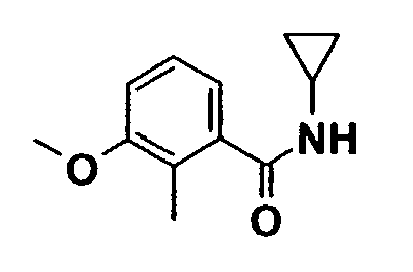
- Intermediate 9.3 is prepared by condensation of 3-methoxy-2-methylbenzoic acid (500 mg, 3.01 mmol) and cyclopropylamine (172 mg, 3.01 mmol), dissolved in THF (10.0 mL), in the presence of 1-hydroxybenzotriazole (462 mg, 3.01 mmol) and dicyclohexylcarbodiimide (652 mg, 3.16 mmol) for 1 h at 0 °C and 1 h at room temperature, followed by usual extractive work-up. White solid; MS (LC/MS): [M+H]+.= 206.2.
-

- Intermediate 10.1 is synthesized by condensation of Intermediate 1.2 (52.3 mg, 0.137 mmol) and Intermediate 10.2 (33.6 mg, 0.172 mmol) analogously to the preparation of Intermediate 1.1. Colourless resin; MS (LC/MS): [M+H]+ = 559.6/561.7; HPLC: Bt Ret = 8.48 min
-

- Intermediate 10.2 is prepared by reductive amination of 2-chlorobenzaldehyde (5.00 g, 35.6 mmol), dissolved in methanol (25 mL), in the presence of cyclobutylamine (3.04 g, 42.7 mmol) and sodium borohydride (1.61 g, 42.7 mmol) similarly to the method described for Intermediate 6.2. The crude product is purified by flash chromatography on silica gel (5:1 hexane/ethyl acetate as eluent). Colorless liquid. (LC/MS): [M+H]+ =196.1/198.1
-

- Intermediate 11.1 is synthesized by condensation of Intermediate 1.2 (52.2 mg, 0.137 mmol) and 2,2-diphenyl-ethylamine (32.8 mg, 0.166 mmol) analogously to the preparation of Intermediate 1.1. Colorless resin; MS (LC/MS): [M+H]+ = 561.6; HPLC: Bt Ret = 7.70 min
-

- Intermediate 12.1 is synthesized by condensation of Intermediate 1.2 (51.0 mg, 0.134 mmol) and 3-methyl-2-phenyl-butylamine (31.9 mg, 0.195 mmol) analogously to the preparation of Intermediate 1.1. Colourless resin; MS (LC/MS): [M+H]+ = 527.6; HPLC: Bt Ret = 7.84 min
-

- Intermediate 13.1 is synthesized by condensation of Intermediate 13.2 (165 mg, 0.32 mmol) analogously to the preparation of Intermediate 2.2. White amorphous material; ES-MS: M+H = 629; HPLC: At Ret = 5.57 min.
-

- Intermediate 13.2 is synthesized by condensation of Intermediate 13.3 (940 mg, 1.99 mmol) analogously to the preparation of Intermediate 2.3. White amorphous material; ES-MS: M+H = 511; HPLC: At Ret = 4.30 min.
-

- Intermediate 13.3 is synthesized by 1,4-reduction, epimerization and hydrolysis of Intermediate 13.4 (1.54 g, 3.18 mmol) analogously to the preparation of Intermediate 2.4. White amorphous material; ES-MS: M+H = 472; HPLC: At Ret = 4.37 min.
-
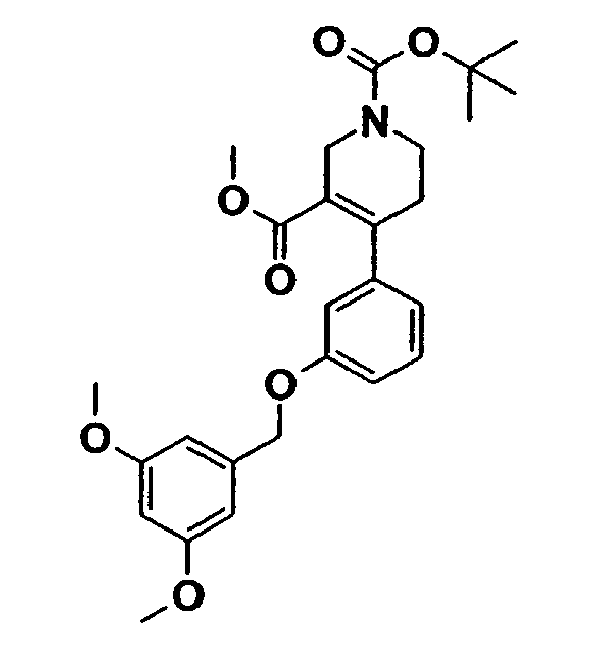
- Intermediate 13.4 is synthesized by condensation of 4-trifluoromethanesulfonyloxy-5,6-dihydro-2H-pyridine-1,3-dicarboxylic acid 1-tert-butyl ester 3-methyl ester (5.84 g, 15 mmol) and 3-(3,5-dimethoxybenzyloxy)phenylboronic acid (6.5 g, 22 mmol) analogously to the preparation of Intermediate 2.5. Colorless oil; ES-MS: M- t Bu = 428; HPLC: At Ret = 4.95 min.
-

- Intermediate 14.1 is synthesized by condensation of Intermediate 13.2 (161 mg, 0.32 mmol) and Intermediate 14.2 (122 mg, 0.42 mmol) analogously to the preparation of Intermediate 2.2. White amorphous material; ES-MS: M+H = 719; HPLC: At Ret = 5.32 min.
-

- A mixture of Intermediate 14.3 (11.1 g, 49.0 mmol), PPh3(21.9 g, 83.5 mmol) and NBS (13.2 g, 74.2 mmol) in DCM (170 mL) is stirred under N2 at RT. After stirring 14 h, the reaction mixture is concentrated under reduced pressure and purified by silica gel flash chromatography to give Intermediate 14.2 as colorless oil; ES-MS: M+ = 291; HPLC: At Ret = 4.09 min.
-

- A mixture of Intermediate 14.4 (5 g, 19.7 mmol) and LAH (528 mg, 20 mmol) in THF (110 mL) is stirred under N2 at 0°C for 3 h. After adding H2O, the reaction mixture is extracted with EtOAc. The combined organic phases are washed with H2O, brine and dried (Na2SO4). Concentration under reduced pressure and silica gel flash chromatography give Intermediate 14.3 as colorless oil; ES-MS: M+H = 227; HPLC: At Ret = 2.85 min.
-

- To a mixture of 3-methoxy-5-hydroxybenzoic acid methyl ester (23.2 g, 127 mmol toluene-4-sulfonic acid 3-methoxy-propyl ester (40.7 g, 167 mmol) and KI (2.23 g, 13.4 mmol) in DMF (350 mL), K2CO3 (53.1 g, 384 mmol) is added under N2. After stirring at 60°C for 17 h, the reaction mixture is supplemented with H2O and extracted with Et2O. The combined organic phases are washed with H2O and dried (Na2SO4). Concentration under reduced pressure and silica gel flash chromatography give Intermediate 14.4 as colorless oil; ES-MS: M+H = 255, HPLC: At Ret = 3.80 min.
-

- Intermediate 15.1 is synthesized by coupling of Intermediate 15.2 (205.3 mg, 0.38 mmol) analogously to the preparation of Intermediate 2.1. White amorphous material; ES-MS: M+H = 540; HPLC: At Ret = 3.70 min.
-

- Intermediate 15.2 is synthesized by condensation of Intermediate 2.3 (403.0 mg, 0.95 mmol) analogously to the preparation of Intermediate 2.2. White amorphous material; ES-MS: M+ = 541; HPLC: At Ret = 5.52 min.
-

- Intermediate 16.1 is synthesized by coupling of Intermediate 15.2 (498.4mg, 0.92 mmol) analogously to the preparation of Intermediate 2.1. White amorphous material; ES-MS: M+H = 540; HPLC: At Ret = 3.67 min.
-

- Intermediate 17.1 is synthesized by coupling of Intermediate 15.2 (113.0 mg, 0. 21 mmol) analogously to the preparation of 2.1. White amorphous material; ES-MS: M+H = 555; HPLC: At Ret = 4.97 min.
-

- Intermediate 18.1 is synthesized by coupling of Intermediate 15.2 (112.9 mg, 0.21mmol) analogously to the preparation of Intermediate 2.1. White amorphous material; ES-MS: M+H = 555; HPLC: At Ret = 4.90 min.
-

- Intermediate 19.1 is synthesized by condensation of Intermediate 19.2 (185 mg, 0.44 mmol) and Intermediate 19.3 (191 mg, 0.66 mmol) analogously to the preparation of Intermediate 2.2. White amorphous material; ES-MS: M+H = 629; HPLC: At Ret = 5.30 min.
-

- Intermediate 19.2 is synthesized by condensation of Intermediate 1.2 (350 mg, 0.52 mmol) analogously to the preparation of Intermediate 2.2. White amorphous material; ES-MS: M+H = 421; HPLC: At Ret = 4.40 min.
-

- Intermediate 20.1 is synthesized by condensation of Intermediate 19.2 (138.6 mg, 0.33 mmol) and Intermediate 20.2 (114.5 mg, 0.40 mmol) analogously to the preparation of Intermediate 2.2. White amorphous material; ES-MS: M+H = 629; HPLC: At Ret = 5.17 min.
-

- Intermediate 20.2 is synthesized by bromination of Intermediate 20.3 (740 mg, 3.27 mmol) analogously to the preparation of Intermediate 14.2. White powder; ES-MS: M+H = 288; HPLC: At Ret = 3.79 min
-

- Intermediate 20.3 is synthesized by reduction of Intermediate 20.4 (824 mg, 3.3 mmol) analogously to the preparation of Intermediate 14.3. White powder; HPLC: At Ret = 2.52 min; Rf = 0.21 (EtOAc:n-Hex=1:1)
-

- Intermediate 20.4 is synthesized by alkylation of 3-(hydroxymethyl)-5-methoxy-benzoic acid methylester (1.85 g, 9.4 mmol) (see e.g. Synthetic Communications, 2001, 31, 1921-1926) analogously to the preparation of Intermediate 14.4. White amorphous material; ES-MS: M+H = 255; HPLC: At Ret = 3.44 min
-

- Intermediate 21.1 is synthesized by condensation of Intermediate 19.2 (203.0 mg, 0.48 mmol) and Intermediate 21.2 (158.5 mg, 0.58 mmol) analogously to the preparation of Intermediate 2.2. Colorless amorphous material; ES-MS: M+H = 613; HPLC: At Ret = 5.68 min.
-

- Intermediate 21.2 is synthesized by bromination of Intermediate 21.3 (2.1 g, 10.0 mmol) analogously to the preparation of Intermediate 14.2. Colorless oil; ES-MS: M+H = 273; HPLC: At Ret = 4.43 min
-

- To a mixture of Intermediate 21.4 (5.18 g, 20.4 mmol), trimethylammonium chloride (50 mg) and Et3N (3.4 mL, 24.4 mmol) in DCM (100 mL), p-toluenesulfonyl chloride (4.27 g, 22.4 mmol) is added at 0°C. After stirring for 50 min, the reaction mixture is supplemented with H2O and extracted with EtOAc. The combined organic phases are washed with H2O, brine and dried (Na2SO4). Concentration under reduced pressure gives crude product. Then a solution of this crude product in THF (100 mL) is treated with LAH (2.27 g, 59.8) at 0°C for 2 h. After adding H2O, the reaction mixture is extracted with EtOAc. The combined organic phases are washed with H2O, brine and dried (Na2SO4). Concentration under reduced pressure and silica gel flash chromatography give Intermediate 21.3 as white amorphous material; ES-MS: M = 211; HPLC: At Ret = 3.04 min.
-

- To a mixture of Intermediate 21.5 (5.75 g, 20.4 mmol) and Et3N (3.7 mL, 26.5 mmol) in THF (100 mL), chloroformic acid ethylester (2.5 mL, 26.5 mmol) is added at 0°C. After stirring for 20 min, the reaction mixture is filtered for removing inorganic salt, and the filtrate is concentrated under reduced pressure. A solution of this crude product in MeOH (50 mL) was treated with NaBH4 (excess) at 0°C for 20 min. After adding H2O, the reaction mixture is extracted with EtOAc. The combined organic phases are washed with H2O, brine and dried (Na2SO4). Concentration under reduced pressure and silica gel flash chromatography give Intermediate 21.4 as white amorphous material; ES-MS: M+Na = 283; HPLC: At Ret = 3.92 min.
-

- A mixture of Intermediate 21.6 (9.0 g, 31.9 mmol) and KOH (1.61 g, 28.7 mmol) in THF (100 mL) and MeOH (30 mL) is refluxed under N2 for 3.5 h. After cooling down to RT, the reaction mixture is adjusted to weakly acidic pH by slowly adding conc.HCl, and the mixture is extracted with Et2O. The combined organic phases are washed with H2O, brine and dried (Na2SO4). Concentration under reduced pressure and silica gel flash chromatography give Intermediate 21.5 as white amorphous material; ES-MS: M+H = 269; HPLC: At Ret = 3.15 min.
-

- A mixture of 5-hydroxy-isophthalic acid dimethyl ester (7.02 g, 33.4 mmol), toluene-4-sulfonic acid 3-methoxy-propyl ester (8.16 g, 33.4 mmol), KI (6.1 g, 36.7 mmol) and K2CO3 (5.1 g, 36.7 mmol) in DMF (100 mL) is stirred under N2 at 70°C for 5 h. After adding H2O, the reaction mixture is extracted with EtOAc. The combined organic phases are washed with H2O, brine and dried (Na2SO4). Concentration under reduced pressure and silica gel flash chromatography give Intermediate 21.6 as white solid; ES-MS: M+H = 283; HPLC: At Ret = 3.90 min
-

- Intermediate 22.1 is synthesized by condensation of Intermediate 1.2 (330 mg, 0.49 mmol) and Intermediate 22.2 (252 mg, 0.98 mmol) analogously to the preparation of Intermediate 1.1. White amorphous material; ES-MS: M+H = 622; HPLC: At Ret = 5.64 min.
-

- A mixture of Intermediate 22.3 (780 mg, 3.6 mmol), cyclopropylamine (410 mg, 7.2 mmol), AcOH (0.5 mL) and NaBH(OAc)3 (1.1 g, 5.4 mmol) in DCM (3 mL) and MeOH (1 mL) is stirred under N2 at 0°C. After stirring at RT for 1 hour, the reaction mixture is quenched with saturated aqueous NaHCO3 and extracted with DCM. The combined organic phases are washed with H2O, brine and dried (Na2SO4). Concentration under reduced pressure and silica gel flash chromatography give Intermediate 22.2 as yellow oil; ES-MS: M+H = 202; HPLC: At Ret = 2.67 min
-

- To a mixture of indole-3-carboxaldehyde (1.0 g, 6.9 mmol), toluene-4-sulfonic acid 3-methoxy-propyl ester (2.1 g, 9.0 mmol) and KI (1.1 g, 7.0 mmol) in DMF (15 mL), NaH (320 mg, 7.5 mmol) is added under N2 at 0°C. After stirring at 50°C for 4 h, the reaction mixture is supplemented with H2O and extracted with EtOAc. The combined organic phases are washed with H2O, brine and dried (Na2SO4). Concentration under reduced pressure and silica gel flash chromatography give Intermediate 22.3 as colorless oil; ES-MS: M+H = 218, HPLC: At Ret = 3.18 min.
-

- Intermediate 23.1 is synthesized by condensation of Intermediate 23.2 (193 mg, 0.41 mmol) analogously to the preparation of Intermediate 4.1. White amorphous material; ES-MS: M+H = 629; HPLC: At Ret = 5.57 min.
-

- Intermediate 23.2 is synthesized by 1,4-reduction, epimerization and hydrolysis of Intermediate 23.3 (830 mg, 1.71 mmol) analogously to the preparation of Intermediate 4.4/4.3. White amorphous material; ES-MS: M+H = 472; HPLC: At Ret = 4.47 min.
-

- Intermediate 23.3 is synthesized by coupling of 4-trifluoromethanesulfonyloxy-5,6-dihydro-2H-pyridine-1,3-dicarboxylic acid 1-tert-butyl ester 3-methyl ester (3.89 g, 10 mmol) analogously to the preparation of Intermediate 4.4. Colorless oil; Rf = 0.30 (AcOEt:n-Hex = 1:4); 1H NMR (CDCl3) δ 1.52 (s, 9H), 2.53 (brs, 2H), 3.49 (s, 2H), 3.61-3.64 (m, 2H), 3.78 (s, 6H), 4.27 (brs, 2H), ), 5.02 (s, 2H), 6.12 (t, 1H), 6.18 (d, 2H), 7.10-7.12 (m, 1H), 7.22 (brs, 1H), 7.37 (d, 2H).
-

- Intermediate 24.1 is synthesized by condensation of Intermediate 24.2 (203.1 mg, 0.43 mmol) analogously to the preparation of Intermediate 4.1. White amorphous material; ES-MS: M+H = 630; HPLC: At Ret = 5.50 min.
-

- Intermediate 24.2 is synthesized by 1,4-reduction, epimerization and hydrolysis of Intermediate 24.3 (1.40 g, 2.89 mmol) analogously to the preparation of Intermediate 4.4/4.3. White amorphous material; ES-MS: M+H = 473; HPLC: At Ret = 4.32 min.
-

- Intermediate 24.3 is synthesized by condensation of 4-trifluoromethanesulfonyloxy-5,6-dihydro-2H-pyridine-1,3-dicarboxylic acid 1-tert-butyl ester 3-methyl ester (238 mg, 0.61 mmol) and Intermediate 24.4 (177 mg, 0.61 mmol) analogously to the preparation of Intermediate 4.4. Colorless oil; ES-MS: M+H = 485; HPLC: At Ret = 4.85 min.
-

- A mixture of Intermediate 24.5 (1.04 g, 3.2 mmol) and 1.6M hexane solution of nBuLi (2.4 mL, 3.85 mmol) in THF (16 mL) is stirred under N2 at -78°C. After stirring at -78°C for 1 h, (iPrO)3B (0.9 mL, 3.85 mmol) is added, and the reaction mixture is stirred at RT for 3 h. The reaction mixture is adjusted to weakly acidic pH by slowly adding 2N HCl, and the mixture is then extracted with EtOAc. The combined organic phases are washed with H2O, brine and dried (Na2SO4). Concentration under reduced pressure and silica gel flash chromatography give Intermediate 24.4 as white amorphous material; ES-MS: M+H = 290; HPLC: At Ret = 2.75 min.
-

- A mixture of 2,6-dibromopyridine (2.06 g, 8.7 mmol), 3,5-dimethoxybenzyl alcohol (1.39 g, 8.26 mmol) and NaH (383 mg, 9.57 mmol) in DMF (35 mL) is stirred under N2 at 0°C for 2.5 h. After adding H2O, the reaction mixture is extracted with EtOAc. The combined organic phases are washed with H2O, brine and dried (Na2SO4). Concentration under reduced pressure and silica gel flash chromatography give Intermediate 24.5 as white amorphous material; ES-MS: M+H = 326; HPLC: At Ret = 4.65 min.
-

- Intermediate 25.1 is synthesized by condensation of Intermediate 25.2 (332.5 mg, 0.65mmol) analogously to the preparation of Intermediate 2.2. White amorphous material; ES-MS: M+H = 721; HPLC: At Ret = 5.30 min.
-

- Intermediate 25.2 is synthesized by condensation of Intermediate 24.2 (307.6 mg, 0.65 mmol) analogously to the preparation of Intermediate 2.3. White amorphous material; ES-MS: M+H = 512; HPLC: At Ret = 4.40 min.
-

- Intermediate 26.1 is synthesized by condensation of Intermediate 26.2 (262 mg, 0.55 mmol) and 2,6-dimethoxy-4-pyridinemethanol (111 mg, 0.66 mmol) (see e.g. Journal of Heterocyclic Chemistry 1974, 11, 251-3.) analogously to the preparation of Intermediate 3.1. White amorphous material; ES-MS: M+H = 630; HPLC: At Ret = 5.62 min.
-

- Intermediate 26.2 is synthesized by condensation of Intermediate 26.3 (3.0 g, 9.33 mmol) analogously to the preparation of Intermediate 4.1. White amorphous material; ES-MS: M+H = 479; HPLC: At Ret = 4.49 min.
-

- Intermediate 26.3 is synthesized by hydrogenation, epimerization and hydrolysis of Intermediate 26.4 (9.64 g, 28.9 mmol) analogously to the preparation of Intermediate 4.3/4.4. White amorphous material; ES-MS: M+H = 322; HPLC: At Ret = 3.38 min.
-

- Intermediate 26.4 is synthesized by condensation of 4-trifluoromethanesulfonyloxy-5,6-dihydro-2H-pyridine-1,3-dicarboxyfic acid 1-tert-butyl ester 3-methyl ester (14.1 g, 36.3 mmol) and 3-hydroxyphenylboronic acid (6.0 g, 43.5 mmol) analogously to the preparation of Intermediate 2.5. Colorless oil; ES-MS: M+H- t Bu = 278; HPLC: At Ret = 3.76 min.
-

- Intermediate 27.1 is synthesized by condensation of Intermediate 26.2 (200 mg, 0.42 mmol) and 2,6-diethoxy-4-pyridinemethanol (130 mg, 0.63 mmol) made analogously to a known method (see e.g. Journal of Heterocyclic Chemistry 1974, 11, 251-3.) analogously to the preparation of Intermediate 3.1. White amorphous material; ES-MS: M+H = 658; HPLC: At Ret = 5.99 min.
-

- Intermediate 28.1 is synthesized by condensation of Intermediate 26.2 (100 mg, 0.21 mmol) and 2-chloro-6-methoxy-4-pyridinemethanol (54 mg, 0.31 mmol) (see e.g. Org. Lett. 2000, 2, 3421-3423.) analogously to the preparation of Intermediate 3.1. White amorphous material; ES-MS: M+ = 634; HPLC: At Ret = 5.70 min.
-

- Intermediate 29.1 is synthesized by condensation of Intermediate 29.2 (180 mg, 0.44 mmol) analogously to the preparation of Intermediate 4.1. White amorphous material; ES-MS: M+H = 569; HPLC: At Ret = 5.57 min.
-

- Intermediate 29.2 is synthesized by 1,4-reduction, epimerization and hydrolysis of Intermediate 29.3 (1.15 mg, 2.71 mmol) analogously to the preparation of Intermediate 4.4/4.3. White amorphous material; ES-MS: M+H = 412; HPLC: At Ret = 4.50 min.
-

- Intermediate 29.3 is synthesized by condensation of 4-trifluoromethanesulfonyloxy-5,6-dihydro-2H-pyridine-1,3-dicarboxylic acid 1-tert-butyl ester 3-methyl ester (1.15 g, 2.89 mmol) and boronate (980 mg, 3.16 mmol) produced from Intermediate 29.4 analogously to the preparation of Intermediate 2.5. Colorless oil; ES-MS: M-87 = 336; HPLC: At Ret = 4.43 min.
-

- A mixture of 3-methoxy-5-phenyl-phenol (848 mg, 4.23 mmol) (see e.g. Tetrahedron Lett 1991, 32, 3441-3444), Tf2O (0.76 mL, 4.65 mmol) and DIEA (0.87 mL, 5.08 mmol) in DCM (20 mL) is stirred at 0°C for 3.5 h. After adding saturated NaHCO3 solution, the reaction mixture is extracted with DCM The combined organic phases are washed with H2O, brine and dried (MgSO4). Concentration under reduced pressure and silica gel flash chromatography give Intermediate 29.4 as colorless amorphous material; ES-MS: M+H = 333; HPLC: At Ret = 5.12 min.
-
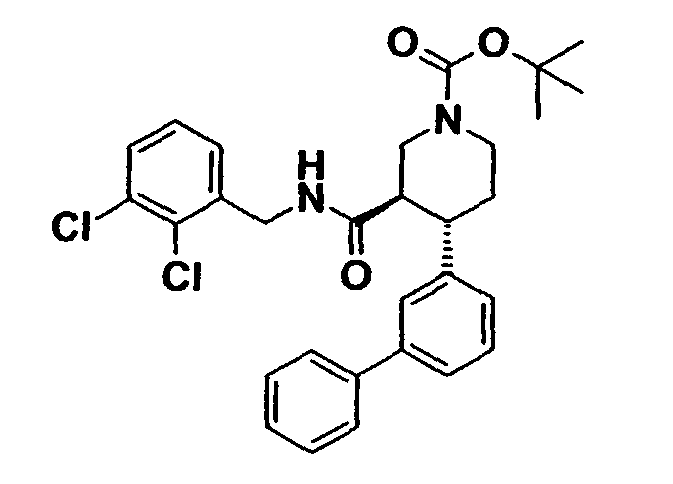
- Intermediate 30.1 is synthesized by condensation of Intermediate 1.2 (104 mg, 0.27 mmol) analogously to the preparation of Intermediate 4.1. White amorphous material; ES-MS: M+ = 539; HPLC: At Ret = 5.07 min.
-

- Intermediate 31.1 is synthesized by condensation of Intermediate 26.2 (202 mg, 0.42 mmol) and 2-methoxy-5-pyridinemethanol (88.0 mg, 0.50 mmol) (see e.g. Tetrahedron. 1992, 48, 1457-1464.) analogously to the preparation of Intermediate 3.1. White amorphous material; ES-MS: M+H = 600; HPLC: At Ret = 4.97 min.
-

- Intermediate 32.1 is synthesized by condensation of Intermediate 26.2 (215 mg, 0.45 mmol) and 2-methoxy-4-pyridinemethanol (94.0 mg, 0.54 mmol) (see e.g. J. Org. Chem. 1989, 54, 5580-5585.) analogously to the preparation of Intermediate 3.1. White amorphous material; ES-MS: M+H = 600; HPLC: At Ret = 4.72 min.
-

- Intermediate 33.1 is synthesized by condensation of Intermediate 1.2 (224 mg, 0.59 mmol) and Intermediate 33.2 (198 mg, 0.77 mmol) analogously to the preparation of Intermediate 4.1. White amorphous material; ES-MS: M+H = 636; HPLC: At Ret = 5.24 min.
-

- Intermediate 33.2 is synthesized by condensation of Intermediate 33.3 (1.00 g, 4.30 mmol) and cyclopropylamine (370 mg, 6.50 mmol) analogously to the preparation of Intermediate 4.5. Colorless oil; ES-MS: M+H = 273; HPLC: At Ret = 2.77 min.
-

- A mixture of Indole-3-carbaidehyde (1.00 g, 7.00 mmol), Et3N (3.10 mL, 20.0 mmol) and 3-Meyhoxypropionyl chloride (1.00 g, 8.00 mmol) in THF (10 mL) and DCM (3 mL) is stirred at 0°C for 2 h. After adding saturated NaHCO3 solution, the reaction mixture is extracted with EtOAc. The combined organic phases are washed with H2O, brine and dried (MgSO4). Concentration under reduced pressure and silica gel flash chromatography give Intermediate 33.3 as white solid; ES-MS: M+H = 232; HPLC: At Ret = 3.51 min.
-

- Intermediate 34.1 is synthesized by condensation of Intermediate 1.2 (144 mg, 0.38 mmol) and Intermediate 34.2 (110 mg, 0.38 mmol) analogously to the preparation of Intermediate 4.1. White amorphous material; ES-MS: M+H = 650; HPLC: At Ret = 5.39 min.
-

- Intermediate 34.2 is synthesized by condensation of Intermediate 34.3 (820 mg, 3.34 mmol) and cyclopropylamine (387 mg, 6.80 mmol) analogously to the preparation of Intermediate 4.5. Colorless oil; ES-MS: M+H = 246; HPLC: At Ret = 2.42 min.
-

- Intermediate 34.3 is synthesized by condensation of indole-3-carbaldehyde (650 mg, 4.5 mmol) and 4-Methoxybutanoyl chloride ( 929 mg, 6.80 mmol) (see e.g. Canadian Journal of Chemistry 1982, 60, 2295-312. or
US 4559337 .) analogously to the preparation of Intermediate 33.3. Colorless oil; Rf = 0.30 (EtOAc:n-Hex = 1:1), 1H NMR (CDCl3), δ: 2.10-2.18 (2H, m), 3.13 (2 H, t), 3.36 (3H, s), 3.53 (2H, t), 7.39-7.47 (2H, m), 8.12 (1H, t), 8.28 (1H, d), 8.44 (1H, d), 10.13 (1H, s). -

- Intermediate 35.1 is synthesized by condensation of Intermediate 1.2 (200 mg, 0.52 mmol) and Intermediate 35.2 (184 mg, 0.67 mmol) analogously to the preparation of Intermediate 4.2. White amorphous material; ES-MS: M+H = 640; HPLC: At Ret = 5.43 min.
-

- Intermediate 35.2 is synthesized by condensation of Intermediate 35.3 (640 mg, 2.70 mmol) and cyclopropylamine (308 mg, 5.40 mmol) analogously to the preparation of Intermediate 4.5. Colorless oil; ES-MS: M+H = 277; HPLC: At Ret = 2.57 min.
-

- Intermediate 35.3 is synthesized by condensation of 5-fluoro-indole-3-carbaldehyde (500 mg, 3.10 mmol) and toluene-4-sulfonic acid 3-methoxy-propyl ester (973 mg, 3.90 mmol) analogously to the preparation of Intermediate 4.8. Yellow oil; ES-MS: M+H = 236; HPLC: At Ret = 3.22 min.
-

- Intermediate 36.1 is synthesized by condensation of Intermediate 26.2 (184 mg, 0.38 mmol) and 2-dimethylamino-5-pyridinemethanol (117 mg, 0.76 mmol) (see e.g.
WO2003053912 .) analogously to the preparation of Intermediate 3.1. White amorphous material; ES-MS: M+H = 613; HPLC: At Ret = 3.84 min. -

- A mixture of Intermediate 1.2 (244 mg, 0.64 mmol), Intermediate 37.2 (240 mg, 0.96 mmol) and DMT-MM (213 mg, 0.77 mmol) in EtOH (5 mL) was stirred under N2 at 60°C for 2 h. After adding H2O, the reaction mixture is extracted with EtOAc. The combined organic phases are washed with H2O, brine and dried (MgSO4). Concentration under reduced pressure and silica gel flash chromatography give Intermediate 37.1 as yellow powder; ES-MS: M+H = 614; HPLC: At Ret = 4.65 min.
-

- A mixture of Intermediate 37.3 (630 mg, 2.25 mmol) and Tin(II) chloride 2-hydrate (1.53 g, 6.8 mmol) in EtOH (10 mL) was stirred under N2 at reflux for 3.5 h. After adding 8N KOH solution, the reaction mixture is extracted with EtOAc. The combined organic phases are washed with H2O, brine and dried (MgSO4). Concentration under reduced pressure and silica gel flash chromatography give Intermediate 37.2 as yellow oil; ES-MS: M+H = 251; HPLC: At Ret = 1.82 min.
-

- Intermediate 37.3 is synthesized by alkylation of 6-nitro-2H-1,4-benzoxazin-3(4H)-one (388 mg, 2.00 mmol) and Ethyl chloroacetate (234 µL, 2.2 mmol) made analogously to a known method (see e.g. European Journal of Medicinal Chemistry 1998, 33, 957-967. or
EP 432893 -

- Intermediate 38.1 is synthesized by condensation of Intermediate 1.2 (257 mg, 0.68 mmol) and Intermediate 38.2 (251 mg, 0.95 mmol) analogously to the preparation of Intermediate 37.1. White amorphous material; ES-MS: M+H = 600; HPLC: At Ret = 4.57 min.
-

- Intermediate 38.2 is synthesized by reduction of Intermediate 38.3 (266 mg, 1.00 mmol) analogously to the preparation of Intermediate 37.2. Brown oil; ES-MS: M+H = 237; HPLC: At Ret = 1.78 min.
-

- Intermediate 38.3 is synthesized by alkylation of 6-nitro-2H-1,4-benzoxazin-3(4H)-one (582 mg, 3.00 mmol) and toluene-4-sulfonic acid 3-methoxy-propyl ester (1.1 g, 4.50 mmol) analogously to the preparation of Intermediate 4.7. Brown oil; ES-MS: M+H = 267; HPLC: At Ret = 3.18 min.
-

- Intermediate 39.1 is synthesized by alkylation of intermediate 38.1 (200 mg, 0.33 mmol) and Etl (35.6 µL, 0.45 mmol) analogously to the preparation of Intermediate 4.8. White powder; ES-MS: M+H = 628; HPLC: At Ret = 4.90 min.
-

- Intermediate 40.1 is synthesized by condensation of Intermediate 1.2 (136 mg, 0.36 mmol) and Intermediate 40.2 (118 mg, 0.43 mmol) analogously to the preparation of Intermediate 4.1. White amorphous material; ES-MS: M+H = 636; HPLC: At Ret = 5.25 min.
-

- Intermediate 40.2 is synthesized by condensation of Intermediate 40.3 (500 mg, 2.16 mmol) and cyclopropylamine (232 µL, 3.24 mmol) analogously to the preparation of Intermediate 4.5. Colorless oil; ES-MS: M+H = 273; HPLC: At Ret = 2.45 min.
-

- Intermediate 40.3 is synthesized by condensation of Indole-3-carbaldehyde (1.00 g, 6.90 mmol) and Ethyl bromoacetate (920 µL, 8.30 mmol) analogously to the preparation of Intermediate 37.3. Colorless oil; ES-MS: M+H = 232; HPLC: At Ret = 3.09 min.
-

- Intermediate 41.1 is synthesized by condensation of Intermediate 41.2 (80 mg, 0.22 mmol) analogously to the preparation of Intermediate 4.1. Colorless oil; Rf = 0.54 (EtOAc:n-Hex = 2:3), 1H NMR (CDCl3), δ: 0.65-0.92 (4H, m), 1.50 (9 H, s), 1.93-2.01 (2H, m), 2.06 (3H, s), 2.15 (3H, s), 2.60-2.67 (1H, m), 2.80-3.07 (2H, m), 3.60-3.69 (1H, m), 3.80 (1H, dt), 4.17-4.51 (3H, m), 4.53-4.89 (1H, m), 6.34 (1H, s), 6.47 (1H, d), 6.65 (1H, t), 6.36 (1H, s), 7.42-7.47 (3H, m). 7.74-7.80 (2H, m).
-

- Intermediate 41.2 is synthesized by 1,4-reduction, epimerization and hydrolysis of Intermediate 41.3 (150 mg, 0.39 mmol) analogously to the preparation of Intermediate 4.4/4.3, Colorless amorphous material; Rf = 0.13 (EtOAc:n-Hex = 2:3), 1H NMR (CDCl3), δ: 1.49 (9 H, s), 1.74 (1H, dq), 2.08 (1H, dq), 2.87-3.20 (2H, m), 3.48 (1H, dt), 4.09-4.20 (2H, m), 4.25-4.45 (1H, drs), 6.38 (1H, s), 7.39-7.45 (3H, m). 7.72-7.30 (2H, m).
-

- A mixture of Intermediate 41.4 (300 mg, 1.13 mmol), phenylcarboximidoyl chloride (211 mg, 1.36 mmol) and NEt3 (0.24 mL, 1.70 mmol) in dichloromethane (15 mL) are stirred under N2 at RT for 10 hours. After adding H2O, the reaction mixture is extracted with DCM. The combined organic phases are washed with H2O, brine and dried (MgSO4), concentrated under reduced pressure and silica gel flash chromatography to give Intermediate 41.3 as yellow solid; ES-MS: M+H = 385; HPLC: At Ret = 4.67 minutes.
-

- A mixture of Intermediate 41.5 (400 mg, 1.19 mmol) and CsF (432 mg, 2.84 mmol) in MeOH (10 mL) and H2O (2 mL) are stirred under N2 at RT for 10 hours. After evaporating, the residue is added H2O and DCM. The mixture is extracted with DCM. The combined organic phases are washed with H2O, brine and dried (MgSO4), concentrated under reduced pressure and silica gel flash chromatography to give Intermediate 41.4 as white solid; ES-MS: M+H-tBu = 210; HPLC: At Ret = 4.00 minutes.
-

- A mixture of 4-trifluoromethanesulfonyloxy-5,6-dihydro-2H-pyridine-1,3-dicarboxylic acid 1-tert-butyl ester 3-methyl ester (600 mg, 1.54 mmol), (Trimethylsilyl)acethylene (0.66 mL, 4.62 mmol), Cul (30.0 mg, 0.15 mmol), NEt3 (1.08 mL, 7.72mmol) and Pd(PPh3)4 (54.0 mg, 0.08 mmol) in DMF (10 mL) are stirred under N2 at 60°C for 2.5 hours. After adding H2O, the reaction mixture is extracted with Et2O. The combined organic phases are washed with H2O, brine and dried (MgSO4), concentrated under reduced pressure and silica gel flash chromatography to give Intermediate 41.5 as white amorphous material; Rf = 0.65 (EtOAc:n-Hex = 1:4), 1H NMR (CDCl3), δ:0.22 (9 H, s), 1.03 (9H, s), 1.96-2.01 (2H, m), 3.02 (2H, t), 3.34 (3H, s), 3.78 (2H, brs).
-

- Intermediate 42.1 is synthesized by coupling of Intermediate 42.2 (206 mg, 0.29 mmol) and 4-Hydroxybenzeneboronic acid (60.0 mg, 0.44 mmol) analogously to the preparation of Intermediate 2.1. White amorphous material; ES-MS: M+H = 638; HPLC: At Ret = 4.67 min.
-

- Intermediate 42.2 is synthesized by condensation of Intermediate 42.3 (164 mg, 0.29 mmol) analogously to the preparation of Intermediate 29.4. White amorphous material; ES-MS: M+H = 694; HPLC: At Ret = 5.34 min.
-

- Intermediate 42.3 is synthesized by condensation of Intermediate 26.3 (508 mg, 1.58 mmol) and Intermediate 22.2 (490 mg, 1.90 mmol) analogously to the preparation of Intermediate 4.1. White amorphous material; ES-MS: M+H = 562; HPLC: At Ret = 4.35 min.
-

- Intermediate 43.1 is synthesized by condensation of Intermediate 23.2 (64.5 mg, 0.14 mmol) and Intermediate 22.2 (42.4 mg, 0.16 mmol) analogously to the preparation of Intermediate 4.1. White amorphous material; ES-MS: M+H = 712; HPLC: At Ret = 5.34 min.
-

- Intermediate 44.1 is synthesized by condensation of Intermediate 1.2 (200 mg, 0.52 mmol) and Intermediate 44.2 (184 mg, 0.67 mmol) analogously to the preparation of Intermediate 1.1. White amorphous material; ES-MS: M+H = 640; HPLC: At Ret = 5.47 min.
-

- Intermediate 44.2 is synthesized by condensation of Intermediate 44.3 (1.20 g, 5.10 mmol) and cyclopropylamine (581 mg, 10.2 mmol) analogously to the preparation of Intermediate 4.5. Yellow oil; ES-MS: M-H = 275; HPLC: At Ret = 2.57 min.
-

- Intermediate 44.3 is synthesized by condensation of 6-fluoro-indole-3-carbaldehyde (1.00 g, 7.40 mmol) and toluene-4-sulfonic acid 3-methoxy-propyl ester (2.30 g, 9.60 mmol) analogously to the preparation of Intermediate 4.8. Yellow oil; ES-MS: M+H = 236; HPLC: At Ret = 3.27 min.
-

- To a solution of Intermediate 45.2 (207 mg, 0.35 mmol) and pyridine (118mg, 1.5 mmol) in DCM (3 mL) was added Acetic anhydride (102 mg, 1.00 mmol) under N2. After stirring at RT for 2 h, the reaction mixture is quenched by the addition of iced H2O. The resulting mixture is extracted with DCM, and the organic extracts are washed with brine. The organic layer is dried (MgSO4), filtered, and concentrated in vacuo. After concentration, the residue is purified by silica gel flash chromatography to give Intermediate 45.1 as colorless oil; ES-MS: M+H = 635; HPLC: At Ret = 4.54 min.
-

- To a solution of Intermediate 45.3 (275 mg, 0.38 mmol) in EtOH (5 mL) was added Hydrazine hydrate (95 mg, 1.90 mmol) under N2. After stirring at 60 °C for 1 h, the reaction mixture is quenched by the addition of iced H2O. The resulting mixture is extracted with EtOAc, and the organic extracts are washed with brine. The organic layer is dried (MgSO4), filtered, and concentrated in vacuo. After concentration, the residue is purified by silica gel flash chromatography to give Intermediate 45.2 as colorless oil; ES-MS: M+H = 593; HPLC: At Ret = 3.90 min.
-

- Intermediate 45.3 is synthesized by condensation of Intermediate 1.2 (457 mg, 1.20 mmol) and Intermediate 45.4 (540 mg, 1.50 mmol) analogously to the preparation of Intermediate 4.1. Yellow oil; ES-MS: M+H = 723; HPLC: At Ret = 5.37 min.
-

- Intermediate 45.4 is synthesized by condensation of Intermediate 45.5 (0.80 g, 2.50 mmol) and cyclopropylamine (716 mg, 12.5 mmol) analogously to the preparation of Intermediate 4.5. Yellow oil; ES-MS: M+H = 360; HPLC: At Ret = 2.75 min.
-

- To a solution of Intermediate 45.6 (1.70 g, 6.70 mmol) in DMF (5 mL) was added Potassium phthalimide (1.40 g, 7.40 mmol) under N2 at 0 °C. After stirring at 60 °C for 16 h, the reaction mixture is quenched by the addition of iced H2O. The resulting mixture is extracted with EtOAc, and the organic extracts are washed with brine. The organic layer is dried (MgSO4), filtered, and concentrated in vacuo. After concentration, the residue is purified by silica gel flash chromatography to give Intermediate 45.5 as white solid; ES-MS: M+H = 319; HPLC: At Ret = 3.32 min.
-

- Intermediate 45.6 is synthesized by condensation of Indole-3-carbaldehyde (2.00 g, 13.8 mmol) and 1,2-Dibromoethane (12.9 g, 69.0 mmol) analogously to the preparation of Intermediate 4.8. Red oil; ES-MS: M+ = 252; HPLC: At Ret = 3.22 min.
-

- Intermediate 46.1 is synthesized by condensation of Intermediate 1.2 (200 mg, 0.52 mmol) and Intermediate 46.2 (184 mg, 0.67 mmol) analogously to the preparation of Intermediate 4.1. White amorphous material; ES-MS: M+H = 640; HPLC: At Ret = 5.57 min.
-

- Intermediate 46.2 is synthesized by condensation of Intermediate 46.3 (1.50 g, 6.40 mmol) and cyclopropylamine (730 mg, 12.8 mmol) analogously to the preparation of Intermediate 4.5. Yellow oil; ES-MS: M+H = 277; HPLC: At Ret = 2.57 min.
-

- Intermediate 46.3 is synthesized by condensation of Intermediate 46.4 (1.20 g, 7.4 mmol) and toluene-4-sulfonic acid 3-methoxy-propyl ester (2.30 g, 9.60 mmol) analogously to the preparation of Intermediate 4.8. Yellow oil; ES-MS: M+H = 236; HPLC: At Ret = 3.17 min.
-

- To a solution of 4-fluoro-indole (1.00 g, 7.40 mmol) in DMF (3 mL) was added POCl3 (1.0 mL, 11.0 mmol) under N2 at 0 °C. After stirring at room temperature for 30min, the reaction mixture is quenched by the addition of iced H2O and neutralized by 1N NaOH solution. The resulting mixture is extracted with EtOAc, and the organic extracts are washed with brine. The organic layer is dried (MgSO4), filtered, and concentrated in vacuo. After concentration, the residue is purified by silica gel flash chromatography to give Intermediate 46.4 as colorless oil; ES-MS: M+H = 164; HPLC: At Ret = 2.57 min.
-

- Intermediate 47.1 is synthesized by condensation of Intermediate 29.2 (177 mg, 0.43 mmol) and Intermediate 22.2 (222 mg, 0.86 mmol) analogously to the preparation of Intermediate 4.1. White amorphous material; ES-MS: M+H = 652; HPLC: At Ret = 5.37 min.
-

- Intermediate 48.1 is synthesized by condensation of Intermediate 48.2 (105 mg, 0.26 mmol) and Intermediate 22.2 (123 mg, 0.47 mmol) analogously to the preparation of Intermediate 4.1. White amorphous material; ES-MS: M+H = 638; HPLC: At Ret = 5.02 min.
-

- Intermediate 48.2 is synthesized by hydrolysis of Intermediate 48.3 (197 mg, 0.48 mmol) analogously to the preparation of Intermediate 4.2. White amorphous material; ES-MS: M+H-tBu = 342; HPLC: At Ret = 3.80 min.
-

- Intermediate 48.3 is synthesized by deprotection and protection of Intermediate 48.4 (203 mg, 0.45 mmol) analogously to the preparation of Intermediate 3.2. White amorphous material; ES-MS: M-tBu = 356; HPLC: At Ret = 4.25 min.
-

- Intermediate 48.4 is synthesized by 1,4-reduction, epimerization and hydrolysis of Intermediate 48.5 (412 mg, 0.90 mmol) analogously to the preparation of Intermediate 4.3. White amorphous material; ES-MS: M+H-tBu = 400; HPLC: At Ret = 5.07 min.
-

- Intermediate 48.5 is synthesized by condensation of 4-trifluoromethanesulfonyloxy-5,6-dihydro-2H-pyridine-1,3-dicarboxylic acid 1-tert-butyl ester 3-methyl ester (1.62 g, 4.2 mmol) and Intermediate 48.6 (1.69 g, 5.0 mmol) analogously to the preparation of Intermediate 2.5. Colorless oil; 1H NMR (CDCl3) δ 1.51(s, 9H), 2.55(br s, 2H), 3.50(s, 3H), 3.52(s, 3H), 3.62(t, 2H), 4.26(br s, 2H), 5.21(s, 2H), 6.82(m, 1H), 7.02(m, 1H), 7.19-7.20(m, 1H), 7.32-7.36(m, 1H), 7.42(t, 2H), 7.55-7.57(m, 2H). Rf = 0.16 (EtOAc:n-Hex = 1:5).
-

- A mixture of 5-phenylresorcinol (3.57 g, 19.1 mmol) (see e.g. Journal of the Chemical Society, Chemical Communications (1978), (3),118), MOMCI (1.22 mL, 21.1 mmol) and DIEA (3.61 mL, 21.1 mmol) in DCM (100 mL) is stirred at 0°C for 30 min. After adding saturated NaHCO3 solution, the reaction mixture is extracted with DCM. The combined organic phases are washed with H2O, brine and dried (MgSO4). Concentration under reduced pressure and silica gel flash chromatography give mono-MOM ether as a yellow oil. A mixture of the mono-ether (1.73 g, 7.5 mmol), Tf2O (1.35 mL, 8.25 mmol) and DIEA (1.67 mL, 9.75 mmol) in DCM (30 mL) is stirred at 0°C for 30 min. After adding saturated NaHCO3 solution, the reaction mixture is extracted with EtOAc The combined organic phases are washed with H2O, brine and dried (MgSO4). Concentration under reduced pressure gives crude mono-triflate as a yellow oil. This crude product is used without purification. A mixture of this crude, bis(pinacolato)diboron (2.87 g, 11.3 mmol), KOAc (2.94 g, 30 mmol) and Pd(PPh3)4 (866 mg, 0.75 mmol) in DMF (30 mL) is stirred under N2 at 110°C. After stirring for 8 h, the reaction mixture is quenched by slowly adding H2O, and the mixture is extracted with EtOAc. The combined organic phases are washed with H2O, brine and dried (Na2SO4). Concentration under reduced pressure and silica gel flash chromatography give Intermediate 48.6 as yellow oil; ES-MS: M+H = 341; HPLC: t Ret = 4.09 min.
-

- Intermediate 49.1 is synthesized by condensation of Intermediate 48.2 (72.0 mg, 0.18 mmol) analogously to the preparation of Intermediate 4.1. White amorphous material; ES-MS: M+H = 555; HPLC: At Ret = 4.77 min.
-

- Intermediate 50.1 is synthesized by condensation of Intermediate 1.2 (100 mg, 0.26 mmol) and Intermediate 50.2 (78.0 mg, 0.31 mmol) analogously to the preparation of Intermediate 4.1. White amorphous material; ES-MS: M+H = 613; HPLC: At Ret = 5.57 min.
-

- To a solution of Intermediate 50.3 (500 mg, 2.55 mmol) in DCM (10 mL) and EtOAc (5 mL) is added PDC (1.90 g, 5.10 mmol). After stirred at RT for 8 h, the reaction mixture is diluted with EtOAc and filtered though silica gel pad. The resulting mixture is extracted with EtOAc, and the organic extracts are washed with brine. The organic layer is dried (MgSO4), filtered, and concentrated in vacuo. After concentration, crude aldehyde is used without purification. Intermediate 50.2 is synthesized by condensation of crude aldehyde analogously to the preparation of Intermediate 4.5. White amorphous material; ES-MS: M+H = 250; HPLC: At Ret = 2.43 min.
-

- Intermediate 50.3 is synthesized by reduction of Intermediate 50.4 (2.20 g, 7.40 mmol) analogously to the preparation of Intermediate 4.7. Colorless oil; ES-MS: M+H = 211;
- HPLC: At Ret = 2.90 min.
-

- Intermediate 50.4 is synthesized by alkylation of 2-hydroxyphenyl acetic acid (2.00 g, 13.0 mmol) analogously to the preparation of Intermediate 4.8. Colorless oil; ES-MS: M+H = 297; HPLC: At Ret = 3.63 min.
-

- Intermediate 51.1 is synthesized by condensation of Intermediate 26.2 (100 mg, 0.21 mmol) and 2-dimethylamino-4-pyridinemethanol (38 mg, 0.25 mmol) (see e.g.
WO9722596 -

- Intermediate 52.1 is synthesized by condensation of Intermediate 13.3 (188 mg, 0.40 mmol) and Intermediate 22.2 (155 mg, 0.60 mmol) analogously to the preparation of Intermediate 4.1. White amorphous material; ES-MS: M+H = 712; HPLC: At Ret = 5.45 min.
-

- Intermediate 53.1 is synthesized by condensation of 1,3-Piperidinedicarboxylic acid, 4-phenyl-, 1-(1,1-dimethylethyl) ester (267 mg, 0.87 mmol) which is made by known method (see e.g. Bioorganic & Medicinal Chemistry Letters (2003), 13(24), 4431-4435) and Intermediate 22.2 (271 mg, 1.05 mmol) analogously to the preparation of Intermediate 4.1. White amorphous material; ES-MS: M+H = 546; HPLC: At Ret = 4.99 min.
-

- Intermediate 54.1 is synthesized by coupling of Intermediate 42.2 (230 mg, 0.33 mmol) and 4-Fluorobenzeneboronic acid (93 mg, 0.66 mmol) analogously to the preparation of Intermediate 2.1. White amorphous material; ES-MS: M+H = 640; HPLC: At Ret = 5.45 min.
-

- Intermediate 55.1 is synthesized by coupling of Intermediate 42.2 (233 mg, 0.34 mmol) and 3-Fluorobenzeneboronic acid (94 mg, 0.67 mmol) analogously to the preparation of Intermediate 2.1. White amorphous material; ES-MS: M+H = 640; HPLC: At Ret = 5.47 min.
-

- Intermediate 56.1 is synthesized by coupling of Intermediate 42.2 (255 mg, 0.37 mmol) and 2-Fluorobenzeneboronic acid (103 mg, 0.74 mmol) analogously to the preparation of Intermediate 2.1. White amorphous material; ES-MS: M+H = 640; HPLC: At Ret = 5.45 min.
-

- Intermediate 57.1 is synthesized by condensation of Intermediate 1.2 (224 mg, 0.59 mmol) and Intermediate 57.2 (211 mg, 0.78 mmol) analogously to the preparation of Intermediate 4.1. White amorphous material; ES-MS: M+H = 640; HPLC: At Ret = 5.60 min.
-

- Intermediate 57.2 is synthesized by condensation of Intermediate 57.3 (900 mg, 3.80 mmol) and cyclopropylamine (433 mg, 7.60 mmol) analogously to the preparation of Intermediate 4.5. Yellow oil; ES-MS: M-H = 275; HPLC: At Ret = 2.67 min.
-

- Intermediate 57.3 is synthesized by condensation of Intermediate 57.4 (1.2 g, 7.40 mmol) and toluene-4-sulfonic acid 3-methoxy-propyl ester (2.30 g, 9.60 mmol) analogously to the preparation of Intermediate 4.8. Yellow oil; ES-MS: M+H = 236; HPLC: At Ret = 3.37 min.
-

- Intermediate 57.4 is synthesized by formylation of 7-Fluoroindole (1.00 g, 7.40 mmol) analogously to the preparation of Intermediate 46.4. Yellow oil; ES-MS: M+H = 164; HPLC: At Ret = 2.62 min.
-

- Intermediate 58.1 is synthesized by coupling of Intermediate 58.2 (204 mg, 0.29 mmol) and 4-Hydroxybenzeneboronic acid (60.0 mg, 0.44 mmol) analogously to the preparation of Intermediate 2.1. White amorphous material; ES-MS: M+H = 645; HPLC: At Ret = 4.53 min.
-

- Intermediate 58.2 is synthesized by condensation of Intermediate 58.3 (480 mg, 0.84 mmol) analogously to the preparation of Intermediate 29.4. White amorphous material; ES-MS: M+H = 701; HPLC: At Ret = 5.15 min.
-

- Intermediate 58.3 is synthesized by condensation of Intermediate 26.3 (521 mg, 1.62 mmol) and Intermediate 58.4 (559 mg, 2.11 mmol) analogously to the preparation of Intermediate 4.1. White amorphous material; ES-MS: M+H = 569; HPLC: At Ret = 4.20 min.
-

- Intermediate 58.4 is synthesized by condensation of Intermediate 58.5 (2.50 g, 11.1 mmol) and cyclopropylamine (855 mg, 15.0 mmol) analogously to the preparation of Intermediate 4.5. Yellow oil; ES-MS: M+H = 266; HPLC: At Ret = 2.48 min.
-

- Intermediate 58.5 is synthesized by oxidation of Intermediate 14.3 (4.20 g, 18.6 mmol) analogously to the preparation of Intermediate 4.6. Yellow oil; ES-MS: M+H = 225; HPLC: At Ret = 3.59 min.
-

- A mixture of compound of Intermediate 59.2 (15 mg, 0.03 mmol), p-anisidine (5 mg, 0.04 mmol), DMT-MM (13 mg, 0.045 mmol) and Et3N (0.006 mL, 0.045 mmol) in THF (2 mL) are stirred under N2 at 70°C for 1 hours. After added H2O, the reaction mixture is extracted with EtOAc. The combined organic phases are washed with H2O, brine and dried (Na2SO4), concentrated under reduced pressure and silica gel flash chromatography to give Intermediate 59.1 as white amorphous material; ES-MS: M+H = 612; HPLC: t Ret = 4.75 minutes.
-

- A mixture of Intermediate 59.3 (88 mg, 0.14 mmol), KOAc (57 mg, 0.56 mmol), palladium acetate ( 3 mg, 0.01 mmol), and dppf (16 mg, 0.03 mmol) in DMSO is stirred under a CO balloon at 65°C for 3h. The reaction mixture is diluted with brine, extracted with EtOAc, washed with brine, dried (MgSO4). Concentration under reduced pressure and silica gel flash chromatography give Intermediate 59.2 as white amorphous material; ES-MS: M+H = 507; HPLC: At Ret = 4.22 min.
-

- Intermediate 59.3 is synthesized by condensation of Intermediate 26.2 (350 mg, 0.73 mmol) analogously to the preparation of Intermediate 29.4. White amorphous material; ES-MS: M+H = 611; HPLC: At Ret = 5.36 min.
-

- Intermediate 60.1 is synthesized by condensation of Intermediate 1.2 (100 mg, 0.26 mmol) and Intermediate 60.2 (87 mg, 0.32 mmol) analogously to the preparation of Intermediate 4.1. White amorphous material; ES-MS: M+H = 641; HPLC: At Ret = 5.82 min.
-

- Intermediate 60.2 is synthesized by condensation of Intermediate 60.3 (450 mg, 1.90 mmol) and cyclopropylamine (197 µL, 2.85 mmol) analogously to the preparation of Intermediate 4.5. Yellow oil; ES-MS: M-H = 278; HPLC: At Ret = 2.72 min.
-

- To a solution of Intermediate 60.4 (500 mg, 2.14 mmol) in DCM (20 mL) is added DIBAL (2.93 mL, 0.95 M, 2.79 mmol) under N2 at -78 °C. After stirred at -78 °C for 2 h, the reaction mixture is quenched by the addition of aqueous KHSO4. The resulting mixture is extracted with Et2O, and the organic extracts are washed with brine. The organic layer is dried (MgSO4), filtered, and concentrated in vacuo. After concentration, the residue is purified by silica gel flash chromatography to give Intermediate 60.3 as colorless oil; ES-MS: M+H = 237; HPLC: At Ret = 3.85 min.
-

- Intermediate 60.4 is synthesized by alkylation of Intermediate 60.5 (1.00 g, 5.43 mmol), Isobutyronitrile (2.2 mL, 25.0 mmol) made analogously to a known method (see e. g. Journal of the American Chemical Society 2000, 122, 712-713.). Yellow oil; ES-MS: M+H = 234; HPLC: At Ret = 3.79 min.
-

- To a mixture of 2-Fluorophenol (2.00 g, 17.8 mmol), toluene-4-sulfonic acid 3-methoxy-propyl ester (4.34 g, 17.8 mmol) and KI (1.50 g, 10.0 mmol) in DMF (40 mL) is added NaH (854 mg, 21.3 mmol). After stirred at 90 °C for 3 h, the reaction mixture is quenched by the addition of aqueous H2O. The resulting mixture is extracted with Et2O, and the organic extracts are washed with brine. The organic layer is dried (MgSO4), filtered, and concentrated in vacuo. After concentration, the residue is purified by silica gel flash chromatography to give Intermediate 60.5 as colorless oil; ES-MS: M+H = 185; HPLC: At Ret = 3.59 min.
-

- Intermediate 61.1 is synthesized by condensation of Intermediate 1.2 (100 mg, 0.26 mmol) and Intermediate 61.2 (90 mg, 0.31 mmol) analogously to the preparation of Intermediate 4.1. White amorphous material; ES-MS: M+H = 650; HPLC: At Ret = 5.42 min.
-

- Intermediate 61.2 is synthesized by condensation of Intermediate 61.3 (300 mg, 1.22 mmol) and cyclopropylamine (102 µL, 1.47 mmol) analogously to the preparation of Intermediate 4.5. Yellow oil; ES-MS: M-H = 285; HPLC: At Ret = 2.72 min.
-

- Intermediate 61.3 is synthesized by condensation of Indole-3-carbaldehyde (1.00 g, 6.90 mmol) and iso-propyl bromoacetate (1.00 mL, 8.30 mmol) analogously to the preparation of Intermediate 37.3. Colorless oil; ES-MS: M+H = 246; HPLC: At Ret = 3.37 min.
-

- Intermediate 62.1 is synthesized by condensation of Intermediate 26.2 (150 mg, 0.31 mmol) and Tetrahydro-pyran-4-ol (48 mg, 0.47 mmol) analogously to the preparation of Intermediate 3.1. White amorphous material; ES-MS: M+H = 563; HPLC: At Ret = 4.99 min.
-

- Intermediate 63.1 is synthesized by condensation of Intermediate 26.2 (149 mg, 0.31 mmol) and 2-Methoxyethanol (49 µL, 0.62 mmol) analogously to the preparation of Intermediate 3.1. White amorphous material; ES-MS: M+H = 537; HPLC: At Ret = 4.87 min.
-

- Intermediate 64.1 is synthesized by condensation of Intermediate 64.2 (190 mg, 0.42 mmol) analogously to the preparation of Intermediate 4.1. White amorphous material; ES-MS: M+H = 612; HPLC: At Ret = 4.84 min.
-

- Intermediate 64.2 is synthesized by hydrolysis of Intermediate 64.3 (220 mg, 0.50 mmol) analogously to the preparation of Intermediate 4.2. White amorphous material; ES-MS: M+H = 455; HPLC: At Ret = 3.79 min.
-
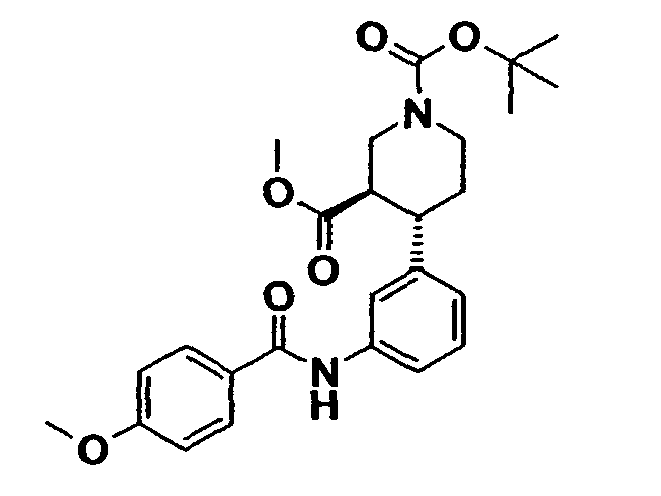
- A mixture of Intermediate 64.4 (300 mg, 0.90 mmol), Et3N (251 µL, 1.76 mmol) and 4-Methoxybenzoyl chloride (230 mg, 1.35 mmol) in DCM (3 mL) was stirred at RT for 1.5 h. After adding saturated NaHCO3 solution, the reaction mixture is extracted with DCM. The combined organic phases are washed with H2O, brine and dried (MgSO4). Concentration under reduced pressure and silica gel flash chromatography give Intermediate 64.3 as white amorphous material; ES-MS: M+H = 469; HPLC: At Ret = 4.20 min.
-

- Intermediate 64.4 is synthesized by 1,4-reduction, reduction and epimerization of Intermediate 64.5 (4.45 g, 12.3 mmol) analogously to the preparation of Intermediate 4.3. White amorphous material; ES-MS: M+H = 335; HPLC: At Ret = 2.77 min.
-

- Intermediate 64.5 is synthesized by condensation of 4-trifluoromethanesulfonyloxy-5,6-dihydro-2H-pyridine-1,3-dicarboxylic acid 1-tert-butyl ester 3-methyl ester (5.0 g, 12.8 mmol) and 3-Nitrophenylboronic acid (2.79 g, 16.7 mmol) analogously to the preparation of Intermediate 2.5. Colorless oil; ; ES-MS: M+H = 363; HPLC: At Ret = 4.22 min.
-
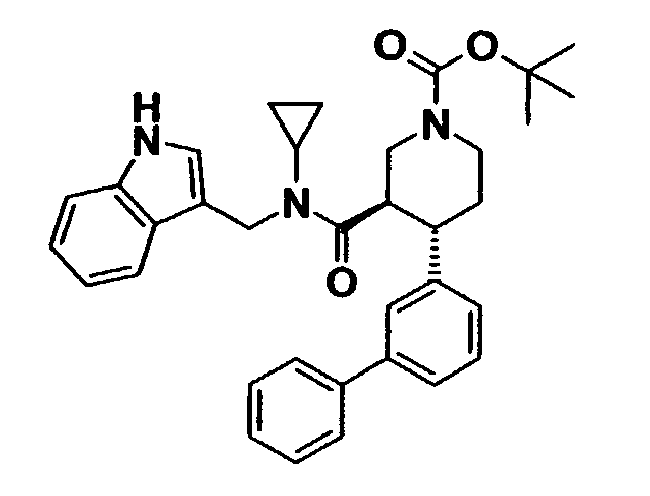
- Intermediate 65.1 is synthesized by condensation of Intermediate 1.2 (334 mg, 0.88 mmol) analogously to the preparation of Intermediate 1.1. White amorphous material; ES-MS: M+H = 568; HPLC: At Ret = 4.95 min.
-
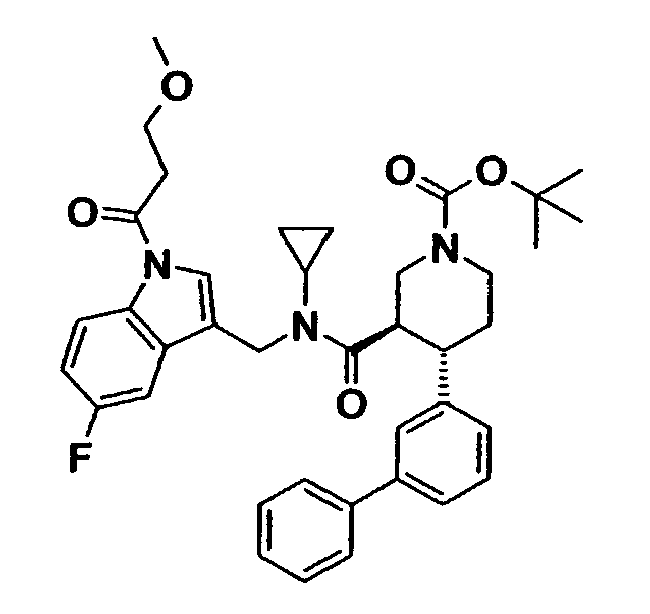
- Intermediate 66.1 is synthesized by condensation of Intermediate 1.2 (224 mg, 0.59 mmol) and Intermediate 66.2 (226 mg, 0.78 mmol) analogously to the preparation of Intermediate 4.1. White amorphous material; ES-MS: M+H = 654; HPLC: At Ret = 5.34 min.
-

- Intermediate 66.2 is synthesized by condensation of Intermediate 66.3 (810 mg, 3.30 mmol) and cyclopropylamine (225 mg, 4.00 mmol) analogously to the preparation of Intermediate 4.5. White solid; ES-MS: M-H = 291; HPLC: At Ret = 2.59 min.
-

- Intermediate 66.3 is synthesized by condensation of 5-Fluoro-indole-3-carbaldehyde (1.00 g, 6.10 mmol) analogously to the preparation of Intermediate 33.3. White solid; ES-MS: M-H = 250; HPLC: At Ret = 3.45 min.
-

- Intermediate 67.1 is synthesized by condensation of Intermediate 26.2 (169 mg, 0.35 mmol) and 2-Phenoxyethanol (88 µL, 0.70 mmol) analogously to the preparation of Intermediate 3.1. White amorphous material; ES-MS: M+H = 599; HPLC: At Ret = 5.49 min.
-

- Intermediate 68.1 is synthesized by condensation of Intermediate 26.2 (171 mg, 0.36 mmol) and (2,3-Dihydro-benzo[1,4]dioxin-2-yl) methanol (119 mg, 0.72 mmol) analogously to the preparation of Intermediate 3.1. White amorphous material; ES-MS: M+H = 627; HPLC: At Ret = 5.53 min.
-

- Intermediate 69.1 is synthesized by condensation of Intermediate 69.2 (71 mg, 0.19 mmol) and Intermediate 46.2 (58 mg, 0.21 mmol) analogously to the preparation of Intermediate 1.1. White amorphous material; ES-MS: M+H = 631; HPLC: At Ret = 5.36 min.
-

- To a solution of Intermediate 69.3 (424 mg, 1.1 mmol) in THF (1 mL) and MeOH (2 mL) is added aqueous NaOH (1.5 mL, 5N, 7.5 mmol). After stirred at 70 °C for 1.5 h, the reaction mixture is quenched by the addition of aqueous KHSO4. The resulting mixture is extracted with Et2O/EtOAc, and the organic extracts are washed with brine. The organic layer is dried (MgSO4), filtered, and concentrated in vacuo. After concentration, the residue is purified by silica gel flash chromatography to give Intermediate 69.2 as colorless oil; ES-MS: M+H = 373; HPLC: At Ret = 4.01 min.
-

- To a solution of Intermediate 69.4 (592 mg, 1.54 mmol) in MeOH (5 mL), Mg (280 mg, 11.5 mmol) is added at 0°C under N2. After stirring at 0°C to RT for 12h, the reaction mixture is quenched by the addition of aqueous KHSO4. The resulting mixture is extracted with EtOAc, and the organic extracts are washed with water and brine. The organic layer is dried (Na2SO4), filtered, and concentrated in vacuo. A solution of the residue in MeOH (2.5 mL) is added to a stirred solution of NaOMe (from 80 mg of Na) in MeOH (1.5 mL). After heated at 70 °C for 4 h, a solution of NaOMe (from 90 mg of Na) in MeOH (1 mL) is added. After 2h at 70 °C, the reaction mixture is quenched by the addition of aqueous KHSO4. The resulting mixture is extracted with Et2O, and the organic extracts are washed with water and brine. The organic layer is dried (MgSO4), filtered, and concentrated in vacuo. The residue is treated with TMSCHN2 (1 mL, 0.6 mol/L in n-hexane, 0.6 mmol) in toluene/MeOH (4:1, 2 mL) at RT for 30 min. After concentration, the residue is purified by silica gel flash chromatography to give Intermediate 69.3 as colorless oil; ES-MS: M+H = 387; HPLC: At Ret = 4.41 min.
-

- To a stirred solution of 4-phenyloxazole (345 mg, 2.38 mmol) (see Tetrahedron Lett. 1972, 2369.) in THF (10 mL) at -78 °C is added n-BuLi (1.63 mL, 1.60 mol/L in n-hexane, 2.61 mmol). After 30 min, ZnCl2 (7.1 mL, 1.0 mol/L in Et2O, 7.1 mmol) is added. The reaction mixture is warmed up to 0 °C for 1 h, after which period a solution of 4-trifluoromethanesulfonyloxy-5,6-dihydro-2H-pyridine-1,3-dicarboxylic acid 1-tert-butyl ester 3-methyl ester (925 mg, 2.38 mmol) (see e.g.
WO 2004/002957 orUS 2003/216441 ) in THF (2 mL +1 mL rinse) is added via cannula. The palladium catalyst, Pd(PPh3)4 (302 mg, 0.26 mmol) is added and the resulting mixture is heated to reflux for 1 h. The final reaction mixture is diluted with EtOAc and washed with water, aqueous KHSO4, and brine. The organic layer is dried (Na2SO4), filtered, and concentrated in vacuo. The residue is purified by silica gel flash chromatography to give Intermediate 69.4 as colorless oil; ES-MS: M+H = 385; HPLC: At Ret = 4.54 min. -

- Intermediate 70.1 is synthesized by alkylation of intermediate 70.2 (200 mg, 0.35 mmol) and Etl (41.6 µL, 0.53 mmol) analogously to the preparation of Intermediate 4.8. White powder; ES-MS: M+H = 614; HPLC: At Ret = 5.35 min.
-

- Intermediate 70.2 is synthesized by condensation of Intermediate 1.2 (237 mg, 0.62 mmol) and Intermediate 70.3 (143 mg, 0.62 mmol) analogously to the preparation of Intermediate 37.1. White powder; ES-MS: M+H = 586; HPLC: At Ret = 4.78 min.
-

- Intermediate 70.3 is synthesized by reduction of Intermediate 70.4 (190 mg, 0.75 mmol) analogously to the preparation of Intermediate 37.2. Brown oil; ES-MS: M+H = 223; HPLC: At Ret = 2.05 min.
-

- A mixture of Intermediate 38.3 (712 mg, 2.60 mmol) and BH3 dimethylsulfide complex (493 µL, 5.2 mmol) in THF (10 mL) was stirred at reflux for 2 h. After adding saturated NaHCO3 solution, the reaction mixture is extracted with EtOAc. The combined organic phases are washed with H2O, brine and dried (MgSO4). Concentration under reduced pressure and silica gel flash chromatography give Intermediate 70.4 as orange oil; ES-MS: M+H = 253; HPLC: At Ret = 3.79 min.
-

- Intermediate 71.1 is synthesized by condensation of Intermediate 41.2 (100 mg, 0.27 mmol) analogously to the preparation of Intermediate 4.1. Colorless oil; Rf = 0.36 (EtOAc:n-Hex = 1:1), 1H NMR (CDCl3), δ: 0.65-0.99 (4H, m), 1.50 (9 H, s), 1.45-1.63 (1H, m), 1.69-1.98 (3H, m), 2.01-2.10 (1H, m), 2.40-2.49 (1H, m), 2.78-2.97 (2H, m), 3.03-3.17 (1H, m), 3.25 (3H, s), 3.52-3.69 (2H, m), 3.86-3.97 (2H, m), 4.17-4.41 (3H, m), 4.53-4.99 (1H, m), 6.06 (1H, s), 6.82 (1H, s), 6.98-7.51 (7H, m). 7.59-7.68 (2H, m).
-

- Intermediate 72.1 is synthesized by condensation of Intermediate 72.2 (179 mg, 0.38 mmol) analogously to the preparation of Intermediate 4.1. White amorphous material; ES-MS: M+H =712; HPLC: At Ret = 5.43 min.
-

- Intermediate 72.2 is synthesized by 1,4-reduction, epimerization and hydrolysis of Intermediate 72.3 (3.80 g, 7.81 mmol) analogously to the preparation of Intermediate 4.3. Colorless oil; ES-MS: M- t Bu = 416; HPLC: At Ret = 4.32 min.
-

- Intermediate 72.3 is synthesized by condensation of 4-trifluoromethanesulfonyloxy-5,6-dihydro-2H-pyridine-1,3-dicarboxylic acid 1-tert-butyl ester 3-methyl ester (5.59 g, 14.3 mmol) and Intermediate 72.4 (4.97 g, 17.2 mmol) analogously to the preparation of Intermediate 2.5. Colorless oil; Rf = 0.18 (EtOAc:n-Hex = 1:4), 1H NMR (CDCl3), δ: 1.49 (9H, s), 2.45-2.55 (2 H, m), 3.46 (3H, s), 3.50-3.62 (2H, m), 3.78 (6H, s), 4.20-4.30 (2H, m), 5.00 (2H, s), 6.37-6.38 (1H, m), 6.50 (2H, bs), 6.89-7.00 (3H, m), 7.20-7.24 (1H, m).
-

- Intermediate 72.4 is synthesized by transformation to boronic acid from 5-[(2-Bromophenoxy)methyl]-1,3-dimethoxybenzene (5.56 g, 17.2 mmol) (see e.g.
WO 9806691 -

- Intermediate 73.1 is synthesized by condensation of Intermediate 72.2 (213 mg, 0.45 mmol) analogously to the preparation of Intermediate 4.1. White amorphous material; ES-MS: M+H =629; HPLC: At Ret = 5.52 min.
-

- Intermediate 74.1 is synthesized by acylation of Intermediate 45.2 (166 mg, 0.28 mmol) analogously to the preparation of Intermediate 45.1. White amorphous material; ES-MS: M+H =671; HPLC: At Ret = 4.92 min.
-

- Intermediate 75.1 (144 mg, 0.27 mmol) is treated with 4N HCl in dioxane (2 mL). After stirring for 0.5 h, the resulting mixture is concentrated to give Example 75 as white amorphous; ES-MS: M+H = 439; HPLC: At Ret = 3.70 minutes. Example 75 show the same inhibitory activity to an active enantiomer of Example 8 which is separated by chiral column technicque in the several assay system as described above.
-

- To a solution of Intermediate 75.2 (165 mg, 0.39 mmol) and 2,3-dimethylbenzyl bromide (117 mg, 0.59 mmol) in THF (1.5 mL) is added NaHMDS (1.0 M in THF, 0.59 mL, 0.59 mmol) at 0°C. After stirring at RT for 2h, H2O is added. The mixture is extracted with Et2O, washed with brine and dried over MgSO4. The organic layer is concentrated and purified by flash silica gel chromatography to give Intermediate 75.1 as colorless oil; ES-MS: M+H = 539; HPLC: At Ret = 5.72 minutes.
-
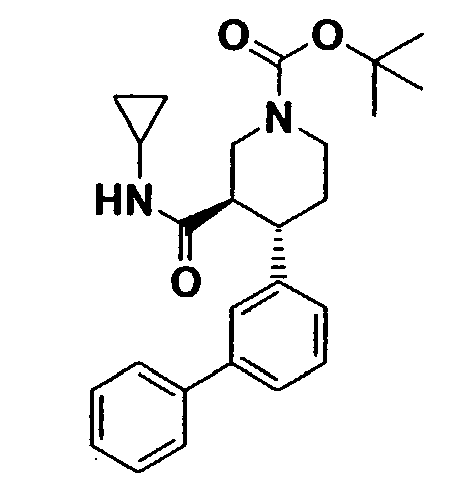
- To a solution of Intermediate 75.3 (357 mg, 0.53 mmol) and cyclopropylamine (0.073 mL, 1.05 mmol) in DMF (2 mL) are added EDC (203 mg, 1.05 mmol) and HOAt (93 mg, 0.69 mmol). After stirring at RT for 3h, the resulting mixture is diluted with Et2O, washed with H2O and brine, and dried over MgSO4. The organic layer is concentrated and purified by flash silica gel chromatography to give Intermediate 75.2 as white amorphous material; ES-MS: M+H = 421; HPLC: At Ret = 4.32 minutes.
-

- Intermediate 1.2 (5.54 g, 14.5 mmol) and cinchonidine (4.06 g, 13.8 mmol) are dissolved in MeOH (50 mL). After stirring at 50 °C for 1.5 h, the resulting mixture is concentrated under reduced pressure. The resulting residue is dissolved in Et2O (250 mL) and stirred vigorously at room temperature for 18 h. The resulting white crystals are collected by filtration, washed with Et2O. 3 or 4 recrystallization with same procedure above give diastereomeric pure salt Intermediate 75.3 as white solid (94%ee); ES-MS: M+H = 382; HPLC: At Ret = 4.28 minutes. Enantiomeric excess is determined by chiral column HPLC, and an absolute configuration is confirmed by X-ray structural analysis.
-

- To a solution of Intermediate 76.2 (168 mg, 0.27 mmol) in THF (3 mL) is added 1 M solution of NHMDS in THF (410 µL, 0.41 mmol) under N2 at 0°C. After stirring at 0°C for 0.5 h, Etl (33 µL, 0.41 mmol) is added and stirred at 60°C for 21 h. H2O is added to the reaction mixture and the mixture is extracted with EtOAc. The combined organic phases are washed with H2O, brine and dried over Na2SO4. Concentration under reduced pressure and silica gel flash chromatography give Intermediate 76.1 as white powder; ES-MS: M+H = 642; HPLC: At Ret = 5.14 min.
-

- To a solution of Intermediate 76.3 (220 mg, 0.88 mmol) and Intermediate 1.2 (300 mg, 0.80 mmol) in DMF (1 mL), EDCl-HCl (184 mg, 0.96 mmol) and HOAt (131 mg, 0.96 mmol) are added under N2. After stirring at 0°C and RT for 6 h, the reaction mixture is quenched with H2O and extracted with EtOAc. The combined organic phases are washed with H2O, brine and dried (Na2SO4). Concentration under reduced pressure gives Intermediate 76.2 as white powder; ES-MS: M+H = 614; HPLC: At Ret = 4.85 min.
-

- To a solution of Intermediate 76.4 (480 mg, 1.70 mmol) in EtOH (5 mL), Fe (475 mg, 8.5 mmol) and 5N HCl solution (3 mL, 15 mmol) are added at RT under N2. After refluxing for 7h, the reaction mixture is neutralized by 5N NaOH solution, and filtered through Celite pad. The mixture is extracted with EtOAc. The combined organic phases are washed with brine and dried over Na2SO4. Concentration under reduced pressure and silica gel flash chromatography give Intermediate 76.3 as yellow oil; ES-MS: M+H = 251; HPLC: At Ret = 2.20 min
-

- Intermediate 76.4 is synthesized by alkylation of 6-nitro-2H-1,4-benzoxazin-3(4H)-one (582 mg, 3.00 mmol) and toluene-4-sulfonic acid 4-methoxy-propyl ester (1.16 g, 4.50 mmol) analogously to a known method (see e.g. European Journal of Medicinal Chemistry 1998, 33, 957-967. or
EP 432893 -

- To a solution of Intermediate 26.2 and Intermediate 77.2 in THF are added DEAD and PPh3 at room temperature. After stirring for 3h, the resulting mixture is concentrated and purified by silicagel column chromatography to give Intermediate 77.1 as white amorphous; ES-MS: M+H = 644; HPLC: At Ret = 4.91 min.
-

- To a solution of 2-(2-Hydroxyethoxy)-4-pyridinecarboxylic acid (1.7 g, 8.62 mmol) in THF (40 mL) are added Et3N (0.99 mL, 10.34 mmol) and Ethyl chloroformate (1.44 mL, 10.34 mmol). After stirring for 0.5 h, the resulting precipitate is filtered off and the filtrate is concentrated. The residue is dissolved in EtOH (20 mL) and then NaBH4 (424 mg, 11.2 mmol) is added at room temperature. After stirring for 2h, the reaction is quenched with H2O and 1 N aqueous HCl. The resulting mixture is diluted and extracted with AcOEt, washed with brine, dried (Na2SO4), and concentrated. Purification by silica gel column chromatograrphy give Intermediate 77.2; M+H = 184; HPLC: At Ret = 1.72 min.
- They (chiral isomers) have same chemical structure as Example 47.
- 78 would be a eutomer and 79 would be a distomer, according to the result of the enzyme assay. (not confirmed by X-ray)

-

- To a solution of Intermediate 80.2 (140 mg, 0.20 mmol) in EtOH (4 mL) is added 6N aqueous NaOH (2 mL) and stirred at 3h. After cooling to room temperature, the resulting mixture is acidified with 1 N KHSO4 solution and extracted with AcOEt. The organic layer is washed with brine, dried over Na2SO4, and concentrated. Silica gel flash chromatography give Intermediate 80.1 as white amorphous; ES-MS: M+H = 696; HPLC: At Ret = 4.67 min.
-

- To a solution of Intermediate 42.1 (201 mg, 0.32 mmol) and iodoethyl acetate (0.075 mL, 0.63 mmol) in DMF is added K2CO3 (87 mg, 0.63 mmol) and stirred at 75°C for 2h. After cooling to room temperature, the reaction mixture is diluted with AcOEt and washed with H2O and brine. The organic layer is dried over Na2SO4, concentrated and purified by silica gel flash chromatography to give Intermediate 80.2 as white amorphous; ES-MS: M+H = 724; HPLC: At Ret = 4.85 min.
-

- Intermediate 81.1 is synthesized by coupling of Intermediate 42.2 (405 mg, 0.58 mmol) and 4-Cyanophenylboronic acid (129 mg, 0.88 mmol) analogously to the preparation of Intermediate 2.1. White amorphous material; ES-MS: M+H = 647; HPLC: At Ret = 5.32 min.
-
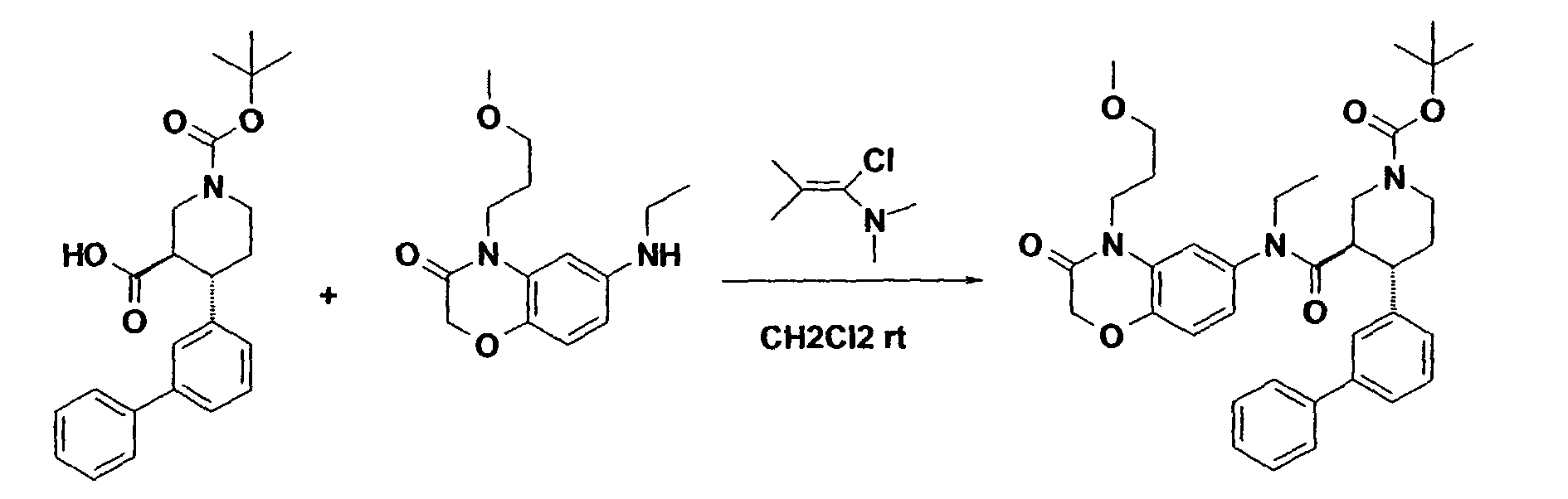
- To a solution of Intermediate 75.3 (196 mg, 0.51 mmol) in DCM (3 mL), 1-chloro-N,N-2-trimethylpropaneamine (102 µL, 0.77 mmol) is added under N2 at RT. After stirring at RT for 1 h, the solution is concentrated under reduced pressure to give acid chloride. To a solution of acid chloride in DCM (3 mL) are added Et3N (170 mL, 1.2 mmol) and Intermediate 82.2 (169 mg, 0.56 mmol) under N2 at 0°C. After stirring at RT over night, saturated NaHCO3 solution is added. The mixture is extracted with DCM and dried over Na2SO4. The organic layer is concentrated and purified by flash silica gel chromatography to give Intermediate 82.1. ; ES-MS: M+H = 628; HPLC: At Ret = 5.09 min.
-

- Intermediate 82.3 (1.08 g, 2.96 mmol) is treated with 4N HCl solution in 1,4-dioxane (10 mL) at RT for 2h. the reaction mixture are concentrated under reduced pressure to give Intermediate 82.2. White powder; ES-MS: M+H = 265; HPLC: At Ret = 2.05 min.
-

- To a solution of Intermediate 82.4 (1.59 g, 4.72 mmol) in THF (20 mL), NaH (208 mg, 5.19 mmol) is added under N2 at 0°C. After stirring at 50°C for 0.5 h, Etl (411 µL, 5.19 mmol) is added to the mixture and stirred at 50°C for 12 h. The reaction mixture was quenched with H2O and extracted with EtOAc. The combined organic phases are washed with H2O and dried over Na2SO4. Concentration under reduced pressure and silica gel flash chromatography give Intermediate 82.3 as colorless oil; ES-MS: M+H = 309; HPLC: At Ret = 4.03 min
-

- A mixture of Intermediate 38.2 (1.36 g, 5.74 mmol), Boc2O (2.9 g, 12.6 mmol), and Et3N (1.92 mL, 7.8 mmol) in THF (20 mL) is stirred under N2 at RT for 2 h. After adding H2O, the reaction mixture is extracted with EtOAc. The combined organic phases are washed with H2O and dried (Na2SO4). Concentration under reduced pressure and silica gel flash chromatography give Intermediate 82.4 as colorless amorphous; ES-MS: M+H = 337; HPLC: At Ret = 3.67 min.
-

- Intermediate 83.1 is synthesized by alkylation of Intermediate 83.2 (303 mg, 0.53 mmol) and Etl (63 µL, 0.8 mmol) analogously to the preparation of Intermediate 82.3. Colorless oil; ES-MS: M+H = 596; HPLC: At Ret = 5.60 min.
-

- A mixture of Intermediate 83.3 (163 mg, 0.80 mmol), Intermediate 1.2 (254 mg, 0.67 mmol) and DMT-MM (240 mg, 0.87 mmol) in EtOH (5 mL) is stirred under N2 at 60°C for 5 h. After adding H2O, the reaction mixture is extracted with EtOAc. The combined organic phases are washed with H2O, brine and dried (Na2SO4). Concentration under reduced pressure and silica gel flash chromatography give Intermediate 83.2 as yellow oil; ES-MS: M+H = 568; HPLC: At Ret = 5.09 min.
-

- Intermediate 83.3 is synthesized by reduction of Intermediate 83.4 (1.2 g, 5.00 mmol) analogously to the preparation of Intermediate 76.3. Red oil; ES-MS: M+H = 205; HPLC: At Ret = 2.23 min
-

- Intermediate 83.3 is synthesized by alkylation of 6-nitroindole (810 mg, 5.00 mmol) and toluene-4-sulfonic acid 3-methoxy-propyl ester (1.34 g, 5.50 mmol) analogously to the known method (see e.g. European Journal of Medicinal Chemistry 1998, 33, 957-967. or
EP 432893 -

- Intermediate 84.1 is synthesized by Mitsunobu reaction of Intermediate 26.2 (150 mg, 0.314 mmol) and (Tetrahydro-furan-2-yl)-methanol (48.1 mg, 0.471 mmol) analogously to the preparation of Intermediate 77.2. White amorphous material; ES-MS: M = 563; HPLC: At Ret = 5.20 min.
-

- Intermediate 85.1 is synthesized by condensation of Intermediate 1.2 (200 mg, 0.52 mmol) and Intermediate 85.2 (136 mg, 0.67 mmol) analogously to the preparation of Intermediate 4.1. White amorphous material; ES-MS: M+H = 567; HPLC: At Ret = 5.70 min.
-

- Intermediate 85.2 is synthesized by condensation of benzothiophene-3-carbaldehyde (1.00 g, 6.20 mmol) and cyclopropylamine (530 mg, 9.30 mmol) analogously to the preparation ofIntermediate 4.5. Yellow oil; ES-MS: M+H = 204; HPLC: At Ret = 2.32 min.
-

- To a solution of Intermediate 86.2 (241 mg, 0.35 mmol) in EtOH (1.5 mL) and THF (1.5 mL) is added 5N NaOH aqueous solution (1.5 mL). After stirring at 75°C for 3h, the reaction mixture is cooled to room temperature and acidified with 1 N KHSO4 solution. The resulting mixture is extracted with AcOEt and washed with brine. The organic layer is dried over Na2SO4 and concentrated to give Intermediate 86.1 as crude product; ES-MS: M+H = 666; HPLC: At Ret = 4.74 min.
-

- Intermediate 86.2 is synthesized by coupling of Intermediate 42.2 (396 mg, 0.57 mmol) and 4-Methoxycarbonylphenylboronic acid (154 mg, 0.86 mmol) analogously to the preparation of Intermediate 2.1. White amorphous material; ES-MS: M+H = 680; HPLC: At Ret = 5.50 min.
-

- To a solution of Intermediate 87.2 (370mg, 0.35 mmol) in EtOH (3.0 mL) and THF (1.5 mL) is added 5N NaOH aqueous solution (1.5 mL). After stirring at 80°C for 3h, the reaction mixture is cooled to room temperature and acidified with 1 N KHSO4 solution. The resulting mixture is extracted with AcOEt and washed with brine. The organic layer is dried over Na2SO4 and concentrated to give Intermediate 87.1 as crude product; ES-MS: M+H = 666; HPLC: At Ret = 4.77 min.
-

- Intermediate 87.2 is synthesized by coupling of Intermediate 42.2 (400 mg, 0.58 mmol) and 3-Methoxycarbonylphenylboronic acid (156 mg, 0.87 mmol) analogously to the preparation of intermediate 2.1. White amorphous material; ES-MS: M+H = 680; HPLC: At Ret = 5.52 min.
-

- Intermediate 88.1 is synthesized by hydrolysis of Intermediate 88.2 (740 mg, 1.02 mmol) analogously to the preparation of Intermediate 80.1. White amorphous material; ES-MS: M+H = 696; HPLC: At Ret = 4.72 min.
-

- Intermediate 88.2 is synthesized by reaction of Intermediate 88.3 and iodoethyl acetate analogously to the preparation of Intermediate 80.2. White amorphous material; ES-MS: M+H = 724; HPLC: At Ret = 5.42 min.
-

- Intermediate 88.3 is synthesized by coupling of Intermediate 42.2 (841 mg, 1.21 mmol) and 3-Hydroxyphenylboronic acid (251 mg, 1.82 mmol) analogously to the preparation of Intermediate 2.1. White amorphous material; ES-MS: M+H = 638; HPLC: At Ret = 4.90 min.
-

- Intermediate 89.1 is synthesized by coupling of Intermediate 42.2 (412 mg, 0.59 mmol) and 3-Cyanophenylboronic acid (131 mg, 0.89 mmol) analogously to the preparation of Intermediate 2.1. White amorphous material; ES-MS: M+H = 647; HPLC: At Ret = 5.34 min.
-

- To a solution of Intermediate 88.1 (256 mg, 0.37 mmol) and ethylamine (0.28 mL, 0.55 mmol, 2M in THF) in DMF (2 mL) are added EDCI (85 mg, 0.44 mmol) and HOAt (10 mg, 0.074 mmol). After stirring at room temperature for overnight, the reaction is quenched with H2O. The resulting mixture is extracted with Et2O and washed with brine. The organic layer is dried (N2SO4) and concentrated. Silica gel column chromatography give Intermediate 90.1 as white amorphous; ES-MS: M+H = 723; HPLC: At Ret = 4.95 min.
-

- To a solution of Intermediate 81.1 (142 mg, 0.22 mmol) in toluene (1 mL) are added NaN3 (43 mg, 0.66 mmol) and Triethylammonium chloride (90 mg, 0.66 mmol). After stirring at 120°C for 4days, the reaction mixture is cooled to room temperature and 1 N KHSO4 solution is added. The resulting mixture is extracted with AcOEt, dried (Na2SO4) and concentrated. Purification by silica gel column chromatography give by Intermediate 91.1 as white amorphous; ES-MS: M+H = 690; HPLC: At Ret = 4.65 min.
-

- Intermediate 92.1 is synthesized by condensation of Intermediate 87.1 (229 mg, 0.34 mmol) and Ethylamine (0.28 mL, 0.56 mmol, 2M in THF) analogously to the preparation of Intermediate 90.1. White amorphous material; ES-MS: M+H = 693; HPLC: At Ret = 4.92 min.
-

- Intermediate 93.1 is synthesized by alkylation of Intermediate 93.2 (109 mg, 0.16 mmol) and Etl (19 µL, 0.24 mmol) analogously to the preparation of Intermediate 76.1. Colorless oil; ES-MS: M+H = 718; HPLC: At Ret = 5.02 min.
-

- Intermediate 93.2 is synthesized by condensation of Intermediate 38.2 (71 mg, 0.3 mmol) and Intermediate 13.3 (141 mg, 0.3 mmol) analogously to the preparation of Intermediate 83.2. Colorless oil; ES-MS: M+H = 690; HPLC: At Ret = 4.75 min.
-

- Intermediate 94.1 is synthesized by alkylation of Intermediate 94.2 (114 mg, 0.16 mmol) and Etl (20 µL, 0.25 mmol) analogously to the preparation of Intermediate 76.1. Colorless oil; ES-MS: M+H = 718; HPLC: At Ret = 5.03 min.
-

- Intermediate 94.2 is synthesized by condensation of Intermediate 38.2 (71 mg, 0.3 mmol) and Intermediate 23.2 (141 mg, 0.3 mmol) analogously to the preparation of Intermediate 83.2. Colorless oil; ES-MS: M+H = 690; HPLC: At Ret = 4.74 min.
-

- Intermediate 95.1 is synthesized by condensation of Intermediate 1.2 (200 mg, 0.52 mmol) and cyclopropyl(1-methyl-1H-indol-3-yl-methyl)amine (136 mg, 0.67 mmol) analogously to the preparation of Intermediate 4.1. White amorphous material; ES-MS: M+H = 564; HPLC: At Ret = 5.50 min.
-

- Intermediate 96.1 is synthesized by condensation of Intermediate 86.1 (111 mg, 0.17 mmol) and ethylamine (0.13 mL, 0.26 mmol, 2M in THF) analogously to the preparation of Intermediate 90.1. White amorphous material; ES-MS: M+H = 693; HPLC: At Ret = 4.85 min.
-

- Intermediate 97.1 is synthesized by the reaction of Intermediate 89.1 (200 mg, 0.31 mmol) and NaN3 (60 mg, 0.92 mmol) analogously to the preparation of Intermediate 91.1. White amorphous material; ES-MS: M+H = 690; HPLC: At Ret = 4.82 min.
-

- Intermediate 98.1 is synthesized by condensation of Intermediate 80.1 (200 mg, 0.29 mmol) and ethylamine (0.20 mL, 0.4 mmol, 2M in THF) analogously to the preparation of Intermediate 90.1. White amorphous material; ES-MS: M+H = 723; HPLC: At Ret = 4.90 min.
-

- Intermediate 99.1 is synthesized by condensation of Intermediate 99.2 (78 mg, 0.21 mmol) and Intermediate 46.2 (64 mg, 0.23 mmol) analogously to the preparation of Intermediate 4.1. White amorphous material; ES-MS: M+H = 631; HPLC: At Ret = 5.52 min.
-

- Intermediate 99.2 is synthesized by hydrolysis of Intermediate 99.3 (619 mg, 1.60 mmol) analogously to the preparation of Intermediate 4.2. White amorphous material; ES-MS: M+H = 373; HPLC: At Ret = 3.90 min.
-
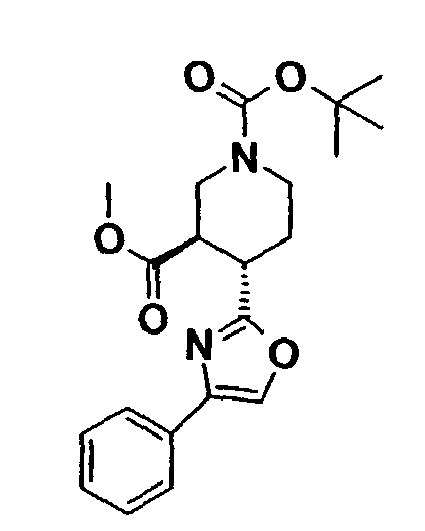
- Intermediate 99.3 is synthesized by 1,4-reduction and epimerization of Intermediate 99.4 (835 mg, 2.17 mmol) analogously to the preparation of Intermediate 4.3. White amorphous material; ES-MS: M+H = 387; HPLC: At Ret = 4.53 min.
-

- Intermediate 99.4 is synthesized by cross coupling of 5-phenyloxazole (421 mg, 2.90 mmol) (see e.g. J. Org. Chem. 1990, 55, 929.) and 4-trifluoromethanesulfonyloxy-5,6-dihydro-2H-pyridine-1,3-dicarboxylic acid 1-tert-butyl ester 3-methyl ester (1.1 g, 2.83 mmol) (see e.g.
WO 2004/002957 orUS 2003/216441 ) analogously to the preparation of Intermediate 69.4. colorless oil; ES-MS: M+H = 385; HPLC: At Ret = 4.67 min. -
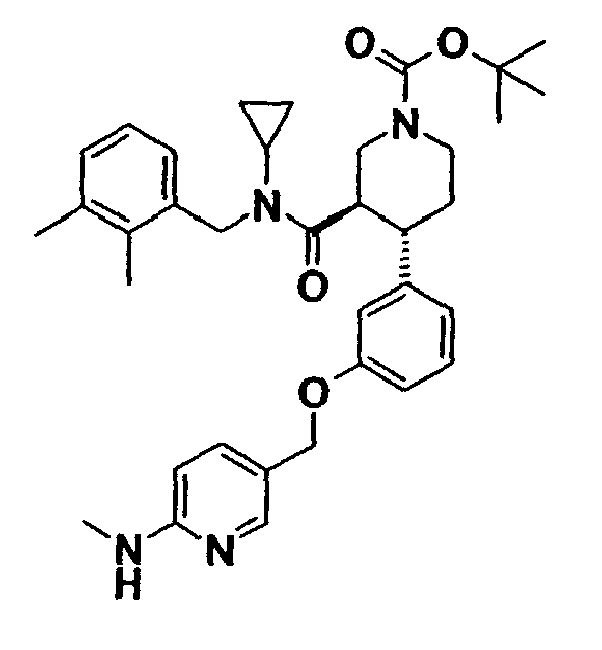
- Intermediate 100.1 is synthesized by Mitsunobu reaction of Intermediate 42.1 (220 mg, 0.34 mmol) and Intermediate 100.2 (0.107 mL, 0.68 mmol) analogously to the preparation of Intermediate 77.1. White amorphous material; ES-MS: M = 599; HPLC: At Ret = 4.00 min.
-

- To a solution of 6-(Methylamino)-3-pyridinecarboxylic acid (1.13 g, 7.42 mmol) in THF (10 mL) is added LAH (423 mg, 11.1 mmol) at 0°C. After stirring at 50°C for 20h, Na2SO4·10H2O is added at 0°C. The resulting mixture is filtered and the filtrate is concentrated. The residue is purified by silica gel column chromatography to give Intermediate 100.2; ES-MS: M = 139; HPLC: At Ret = 1.69 min.
-

- Intermediate 101.1 is synthesized by condensation of Intermediate 1.2 (300 mg, 0.44 mmol) and Intermediate 101.2 (121 mg, 0.44 mmol) analogously to the preparation of Intermediate 99.1. White amorphous material; ES-MS: M+H = 640; HPLC: At Ret = 5.02 min.
-

- At 0°C, after adding Ki (0.50 g, 3.01 mmol), a solution of Intermediate 101.3 (2.79 g, 13.7 mmol) and 1-methoxy-3-(p-toluenesulfonyloxy)propane (4.10 g, 16.8 mmol) in DMF (70 ml) is treated with 60% NaH (0.67 g, 16.8 mmol) over 5 min, stirred for 10 min, heated to 60°C, stirred for 3h, and treated with H2O (500 ml). After the extraction of the mixture with EtOAc (3 x 50 ml) and Et2O (3 x 50 ml), the combined org. layer is washed with H2O (80 ml), dried (Na2SO4), and evaporated. A SiO2 flash chromatography (120 g, CH2Cl2/EtOAc 1:1) gives Intermediate 101.2 (2.81 g, 74%) as orange oil.
-

- At room temperature, an ethanolic solution (830 ml) of Intermediate 101.4 (41.6 g, 0.16 mol) is treated with 6N HCl (78 ml, .47 mol of HCl) and powdered Fe (26.4 g, 0.47 mol), heated to 70°C, stirred for 5h, filtered via celite pad, and the cake is washed with EtOH for several times. The combined filtrate is cooled, and stood at room temperature for 30 min to generate precipitates. The resulting solid is collected by a filtration followed by washing with EtOH and Et2O in successive to give Intermediate 101.3 (22.2 g, 70%) as yellow solid.
-

- At 0°C, a suspension of NaBH4 (15.1 g, 0.40 mol) in THF (600 ml) is treated dropwise with BF3·Et2O (51 ml, 0.40 mol) over 15 min, and stirred at the same temperature for 30 min. To this mixture is add dropwise a solution of Intermediate 101.5 (78.9 g, 0.27 mol) in THF (600 ml) over 40 min, keeping the internal temperature below 5°C cooling with an ice-water bath. After stirring for 2h, the reaction mixture is slowly poured into ice-water (1500 ml), and extracted with EtOAc (3 x 500 ml). The combined org. layer is washed with brine (350 ml), dried (Na2SO4), and evaporated. A SiO2 flash chromatography (2000 g, hexane/EtOAc 1:1) gives Intermediate 101.4 (41.6 g, 60%) as yellow crystalline.
-

- At room temperature, a solution of Intermediate 101.6 (55.8 g, 0.28 mol) in CH3CN (670 ml) is treated with K2CO3 (58.3 g, 0.42 mol) and methyl bromoacetate (35 ml, 0.37 mol), stirred for 19 h, and treated furthermore K2CO3 (30.2 g, 0.22 mol) and methyl bromoacetate (35 ml, 0.37 mol). After additional stirring for 9 h at room temperature, the reaction mixture is filtered, and the filtrate is diluted with EtOAc (1000 ml), and washed with H2O (500 ml). After the aqueous layer is extracted with EtOAc (3 x 200 ml), the combined org. layer is washed with brine (250 ml), dried (Na2SO4), and evaporated. A SiO2 flash chromatography (2000 g, hexane/EtOAc 1:1) gives Intermediate 101.5 (74.2 g, 100%) as orange oil.
-

- At room temperature, a methanolic solution (320 ml) of 4-amino-2-nitrophenol (39.7 g, 0.26 mol) is treated with AcOH (80 ml) and [(1-ethoxycyclopropyl)oxy]trimethyl-silane (57 ml, 0.28 mol), stirred at 75°C for 3 h, and evaporated. After co-evaporation with PhMe for several times until the smell of AcOH disappeared, the residue is dissolved in EtOAc (2000 ml), and the solution is washed with 10% aqueous solution of K2CO3 (600 ml). After the aqueous layer is extracted with EtOAc (3 x 600 ml), the combined org. layer is washed with brine (300 ml), dried (Na2SO4), and evaporated to obtain Intermediate 101.6 (55.8 g, 97%) as dark red crystalline.
-

- Intermediate 102.1 is synthesized by hydrolysis of intermediate 102.2 (310 mg, 0.42 mmol) analogously to the preparation of intermediate 80.2. White amorphous material; ES-MS: M+H = 714; HPLC: At Ret = 4.37 min.
-

- Intermediate 102.2 is synthesized by Alkylation of intermediate 102.3 (300 mg, 0.46 mmol) analogously to the preparation of intermediate 80.3. White amorphous material; ES-MS: M+H = 742; HPLC: At Ret = 5.01 min.
-
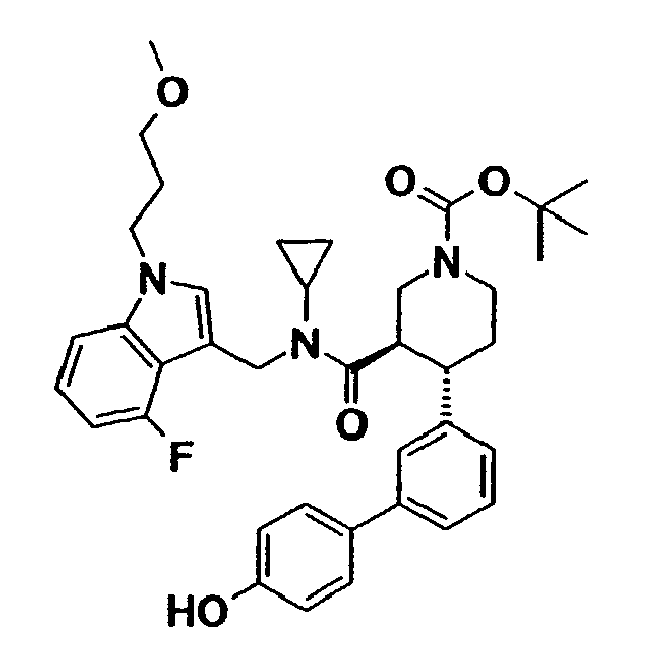
- Intermediate 102.3 is synthesized by condensation of Intermediate 46.2 (600 mg, 2.26 mmol) and Intermediate 58.2 (600 mg, 1.51 mmol ) analogously to the preparation of Intermediate 4.1. White amorphous material; ES-MS: M+H = 656; HPLC: At Ret = 4..55 min.
-

- Intermediate 103.1 is synthesized by condensation of Intermediate 1.2 (200 mg, 0.52 mmol) and Intermediate 103.2 (292 mg, 1.04 mmol) analogously to the preparation of Intermediate 4.1. White amorphous material; ES-MS: M+H = 656; HPLC: At Ret = 5.77 min.
-

- Intermediate 103.2 is synthesized by condensation of Intermediate 103.3 (1.00 g, 4.00 mmol) and cyclopropylamine (342 mg, 6.00 mmol) analogously to the preparation of Intermediate 4.5, which is directly used for the next step without further purification.
-

- Intermediate 103.3 is synthesized by condensation of 5-chloro-1H-indole-3-carbaldehyde (1.00 g, 5.50 mmol) and toluene-4-sulfonic acid 3-methoxy-propyl ester (1.70 g, 7.20 mmol) analogously to the preparation of Intermediate 4.8. Yellow oil; ES-MS: M+H = 252; HPLC: At Ret = 3.63 min.
-

- To a solution of Intermediate 42.1 (217 mg, 0.34 mmol), piperazine ethanol (74 mg, 0.51 mmol) and PPh3 (178 mg, 0.68 mmol) in THF is added DEAD (0.27 mL, 0.68 mmol, 40% toluene solution). After stirring at 60°C for 18h, the reaction mixture is concentrated and purified by silica gel chromatography to give Intermediate 104.1 as white amorphous; ES-MS: M+ = 764; HPLC: At Ret = 3.52 min.
-

- Intermediate 105.1 is synthesized by condensation of Intermediate 80.1 (201 mg, 0.29 mmol) and Aminoethanol (0.035 mL, 0.58 mmol) analogously to the preparation of Intermediate 90.1. White amorphous material; ES-MS: M+H = 739; HPLC: At Ret = 4.28 min.
-

- A mixture of Intermediate 106.2 (200 mg, 0.45 mmol) and 1-chloro-N,N-2-trimethyl-l-propenylamine (65 µL, 0.5 mmol) in dichloromethane (5 mL) is stirred at RT. After stirring for 1 h, a mixture of Intermediate 82.2 (130.7 mg, 0.49 mmol) and pyridine (98 µL, 1.2 mmol) is added to the reaction mixture, and stirred for 1.5 at rt. After adding H2O at RT, the reaction mixture is extracted with EtOAc. The combined organic phases are washed with 0.5 N HCl, brine and dried (Na2SO4). Concentration under reduced pressure and silica gel flash chromatography of the residue (hexane/ethyl acetate) affords Intermediate 106.1 as a white solid; ES-MS: M+H =688 ; HPLC: At Ret =4.95 min.
-

- Intermediate 106.2 is synthesized by hydrolysis of Intermediate 48.3 (197 mg, 0.48 mmol) analogously to the preparation of Intermediate 4.2.
-

- Intermediate 107.1 is synthesized by Mitsunobu reaction of Intermediate 107.2 (300 mg, 0.52 mmol) and 2-(dimethylamino)-4-pyridinemethanol (118 mg, 0.78 mmol) analogously to the preparation of Intermediate 77.1. White amorphous material; ES-MS: M+1 = 714; HPLC: At Ret = 3.85 min.
-

- Intermediate 107.2 is synthesized by condensation of Intermediate 26.3 (2.92 g, 9.09 mmol) and Intermediate 46.2 (3.0 g, 10.9 mmol) analogously to the preparation of Intermediate 4.1. White amorphous material; ES-MS: M+H = 580; HPLC: At Ret = 4.82 min.
-

- To a solution of Intermediate 108.1 (165 mg, 0.24 mmol) in MeOH (2 mL) - THF (1 mL) is added 2N aq. NaOH (1 mL). After sirred at room temperature for 2.5 h, the reaction mixture is washed with ether. The aqueous layer is acidified with aq. KHSO4, and extracted with EtOAc. The combined organic extracts are dried (Na2SO4), filtered, and concentrated in vacuo. The residue is treated with TMSOTf (0.070 mL, 0.39 mmol) and 2,6-lutidine (0.090 mL, 0.77 mmol) in CH2Cl2 (2 mL) at 0°C for 2 h. The reaction is quenched by the addition of sat. aq. NaHCO3 and MeOH. The mixture is purified by RP-HPLC to give 108 as pale purple solid.
-

- Intermediate 108.1 is synthesized by cross coupling of Intermediate 42.2 (178 mg, 0.26 mmol) and Intermediate 108.2 (83 mg, 0.31 mmol) analogously to the preparation of Intermediate 2.1. Pale yellow oil; ES-MS: M+H = 686; HPLC: At Ret = 5.34 min.
-

- A mixture of methyl 4-bromo-2-thiophenecarboxylate (1.8 g, 8.14 mmol) (see e.g. Bioorg. Med. Chem. Lett. 2002, 12, 491.), bis(pinacolate)diboron (2.3 g, 9.06 mmol), KOAc (2.4 g, 24.5 mmol) and Pd(dppf)Cl2 (250 mg, 0.31 mmol) in DMSO (25 mL) is stirred under N2 at 90 °C. After stirred for 9 h, the reaction quenched by the addition of H2O, and the resulting mixture is extracted with EtOAc. The combined organic extracts are washed with H2O and brine, and dried (Na2SO4). Concentration under reduced pressure and silica gel column chromatography give Intermediate 108.2. White solid; ES-MS: M+H = 269; HPLC: At Ret = 4.25 min.
-

- A mixture of Intermediate 109.2 (112.4 mg, 0.17mmol) and K2CO3 (72.1 mg, 0.52 mmol) in MeOH (5 mL) is stirred at RT. After stirring for 2 h, adding H2O at RT, the reaction mixture is extracted with 1,2-dichloroethane. The combined organic phases are dried (Na2SO4). Concentration under reduced pressure affords Intermediate 109.1 as amorphous; ES-MS: M+H = 470 ; HPLC: At Ret = 3.15 min.
-

- A mixture of Intermediate 42.2 (204.6 mg, 0.30 mmol), (trimethylsliy)acethylene (62 µL, 0.44 mmol), TBAI (326.9 mg, 0.89 mmol), PdCl2(PPh3)2 (20.7 mg, 0.03 mmol) and Cul (16.8 mg, 0.089 mmol) in DMF (5 mL) and Et3N (1 mL) is stirred at 80°C. After stirring for 3.5 h, adding H2O at RT, the reaction mixture is extracted with EtOAc. The combined organic phases are washed with H2O and dried (Na2SO4). Concentration under reduced pressure and silica gel flash chromatography of the residue (hexane/ethyl acetate) affords Intermediate 109.2 as a white solid; ES-MS: M+H = 642 ; HPLC: At Ret = 6.02 min.
-

- To a solution of intermediate 110.2 (90 mg, 0.13 mmol) in EtOH (2.0 mL) and H2O (2.0 mL) is added 2N NaOH aqueous solution (1.0 mL, 0.5 mmol). After stirring at 60°C for 1h, the reaction mixture is cooled to room temperature and acidified with 1N KHSO4 solution. The resulting mixture is extracted with AcOEt and washed with brine. The organic layer is dried over Na2SO4 and concentrated to give intermediate 110.1; ES-MS: M+H = 644; HPLC: At Ret = 4.20 min.
-

- To a solution of intermediate 110.3 (300 mg, 0.76 mmol ) in THF (5.0 mL), Et3N (0.40 mL, 2.27 mmol) and Ethyl chloroformate (0.16 mL, 1.65 mmol) are added at 0 °C. After stirring for 0.5 h at same temperature, the resulting precipitate is filtered off and the filtrate is concentrated. The residue is dissolved in THF-DMF (1 ml), intermediate 82.2 (502 mg1.9 mmol) and pyridine (0.32mL, 3.03 mmol) are added at room temperature. After stirring for 1.5 h, the reaction is quenched with H2O. The resulting mixture is extracted with AcOEt, washed with brine, dried (MgSO4), and concentrated. Purification by silica gel column chromatograrphy give intermediate 110.2; M+H = 716; HPLC: At Ret = 4..99 min.
-

- Intermediate 110.3 is synthesized by hydrogenation, epimerization and hydrolysis of Intermediate 110.4 (9.56 g, 23.4 mmol) analogously to the preparation of Intermediate 4.2/4.3. White amorphous material; ES-MS: M- t Bu = 342; HPLC: At Ret = 3.94 min.
-

- Intermediate 110.4 is synthesized by coupling of Intermediate 2.5 (10.0 g, 25.3 mmol) analogously to the preparation of Intermediate 2.1. ; ES-MS: M- t Bu = 354; HPLC: At Ret = 4.38 min.
-

- Intermediate 111.1 is synthesized by hydrolysis of intermediate 111.2 (160 mg, 0.42 mmol) analogously to the preparation of intermediate 80.2. White amorphous material; ES-MS: M+H = 697; HPLC: At Ret = 4.52 min.
-

- Intermediate 111.2 is synthesized by coupling of Intermediate 42.2 (300 mg, 0.43 mmol) and intermediate 111.3 (190 mg, 0.65 mmol) analogously to the preparation of Intermediate 42.1 White amorphous material; ES-MS: M+H = 711; HPLC: At Ret = 5.11 min.
-

- To a solution of (5-Bromo-pyridin-2-yloxy)-acetic acid methyl (1.0 g, 4.08 mmol ) ester (see e.g.
WO 2005/016870 ) in DMSO (20.0 mL) is added Bis(pinacolato)diboron (1.55 g, 6.12 mmol), PdCl2(dppf) (0.38 g, 0.41 mmol) and KOAc (1.23 g, 12.54 mmol). After stirring at 80°C for 2 h under N2, the reaction mixture is diluted with AcOEt and washed with brine. The organic layer is dried (MgSO4), concentrated and purified by silica gel column chromatography to afforded intermediate 111.3 as an oil. ES-MS: M-82 = 212; HPLC: At Ret = 1.93 min as a boronic acid. -

- Intermediate 112.1 is synthesized by hydrolysis of intermediate 112.2 (120 mg, 0.17 mmol) analogously to the preparation of intermediate 80.1. White amorphous material; ES-MS: M+H = 702; HPLC: At Ret = 4.10 min.
-

- Intermediate 112.2 is synthesized by alkylation of intermediate 110.1 (145 mg, 0.23 mmol) analogously to the preparation of intermediate 80.2. White amorphous material; ES-MS: M+H = 742; HPLC: At Ret = 5.01 min.
-

- Intermediate 113.1 is synthesized by coupling of Intermediate 42.2 (300 mg, 0.43 mmol) and N-[4-(4,4,5,5-Tetramethyl-[1,3,2]dioxaborolan-2-yl)-phenyl]- methanesul fonamide (170 mg, 0.65 mmol) analogously to the preparation of Intermediate 2.1. White amorphous material; ES-MS: M+H = 715; HPLC: At Ret = 4.71 min.
-

- Intermediate 114.1 is synthesized by condensation of Intermediate 13.3 (200 mg, 0.42 mmol) and Intermediate 101.2 (116 mg, 0.42 mmol) analogously to the preparation of Intermediate 106.1. White amorphous material; ES-MS: M+H = 730; HPLC: At Ret = 4.90 min.
-

- Intermediate 115.1 is synthesized by coupling of Intermediate 42.2 (222 mg, 0.32 mmol) and phenyl acetylene (52.7 µL, 0.48 mmol) analogously to the preparation of Intermediate 109.2. White amorphous material; ES-MS: M+H = 646; HPLC: At Ret = 5.84 min.
-

- Intermediate 116.1 is synthesized by coupling of Intermediate 42.2 (221.0mg, 0.31 mmol) and 4-pentyn-1-ol (38 µL, 0.42 mmol) analogously to the preparation of Intermediate 109.2. White amorphous material; ES-MS: M+H = 628; HPLC: At Ret = 4.67 min.
-

- Intermediate 117.1 is synthesized by coupling of Intermediate 42.2 (200.0 mg, 0.28 mmol) and Pent-4-ynoic acid methyl ester (31.3 mg, 0.28 mmol) analogously to the preparation of Intermediate 109.2. White amorphous material; ES-MS: M+H = 656; HPLC: At Ret = 5.18 min.
-

- Intermediate 118.1 is synthesized by coupling of Intermediate 42.2 (400 mg, 0.58 mmol) and [4-(E-2-Carboxyvinyl)phenyl]boronic acid (166 mg, 0.87 mmol) analogously to the preparation of Intermediate 42.1 White amorphous material; ES-MS: M+H = 692; HPLC: At Ret = 4.78 min.
-

- Intermediate 119.1 is synthesized by coupling of Intermediate 42.2 (300 mg, 0.43 mmol) and N-[4-(4,4,5,5-Tetramethyl-[1,3,2]dioxaborolan-2-yl)-phenyl]-acetamide (170 mg, 0.65 mmol) analogously to the preparation of Intermediate 42.1. White amorphous material; ES-MS: M+H = 679; HPLC: At Ret = 4.61 min.
-

- Intermediate 120.1 is synthesized by condensation of Intermediate 1.2 (222 mg, 0.58 mmol) and Intermediate 120.2 (155 mg, 0.53 mmol) analogously to the preparation of Intermediate 82.1. Yellow powder; ES-MS: M+H = 656; HPLC: At Ret = 5.17 min.
-

- Intermediate 120.2 is synthesized by alkylation of Intermediate 120.3 (228 mg, 1.0 mmol) made analogously to the known method (see e.g. European Journal of Medicinal Chemistry 1998, 33, 957-967. or
EP 432893 -

- Intermediate 120.3 is synthesized by reduction of Intermediate 120.4 (143 g, 0.5 mmol) analogously to the preparation of Intermediate 76.3. Brown solid; ES-MS: M+H = 221; HPLC: At Ret = 2.87 min.
-

- A mixture of Intermediate 120.5 (4.73 g, 2.4 mmol), methylthioglycolate (237 µL, 2.65 mmol), and NaH (115 mg, 2.88 mmol) in DMF (10 mL) is stirred under N2 at 0°C for 1 h. After adding H2O, the reaction mixture is extracted with EtOAc. The combined organic phases are washed with H2O and dried (Na2SO4). Concentration under reduced pressure and silica gel flash chromatography give Intermediate 120.4 as orange oil; ES-MS: M+H = 283; HPLC: At Ret = 3.84 min.
-

- Intermediate 120.5 is synthesized by cyclopropanation of 4-fluoro-3-nitroaniline (3.25 g, 40.0 mmol) analogously to the preparation of Intermediate 101.4. Orange oil; ES-MS: M+H = 197; HPLC: At Ret = 3.82 min.
-

- Intermediate 122.1 is synthesized by condensation of Intermediate 46.2 (143 mg, 0.52 mmol) and Intermediate 48.2 (187 mg, 0.47 mmol) analogously to the preparation of Intermediate 76.2. Colorless oil; ES-MS: M+H = 656; HPLC: At Ret = 5.09 min.
-

- Intermediate 123.1 is synthesized by condensation of Intermediate 80.1 (200 mg, 0.29 mmol) and NH4Cl (31 mg, 0.58 mmol) analogously to the preparation of Intermediate 90.1. White amorphous material; ES-MS: M+H = 695; HPLC: At Ret = 4.45 min.
-

- Intermediate 124.1 is synthesized by Mitsunobu reaction of Intermediate 42.1 (220 mg, 0.34 mmol) and N-Boc aminoethanol (0.107 mL, 0.68 mmol) analogously to the preparation of Intermediate 104.1. White amorphous material; ES-MS: M = 781; HPLC: At Ret = 5.59 min.
-

- Intermediate 125.1 is synthesized by Mitsunobu reaction of Intermediate 42.3 (208 mg, 0.33 mmol) and 2-(Dimethylamino)-4-pyridinemethanol (99 mg, 0.65 mmol) analogously to the preparation of Intermediate 77.1. White amorphous material; ES-MS: M = 772; HPLC: At Ret = 4.12 min.
-
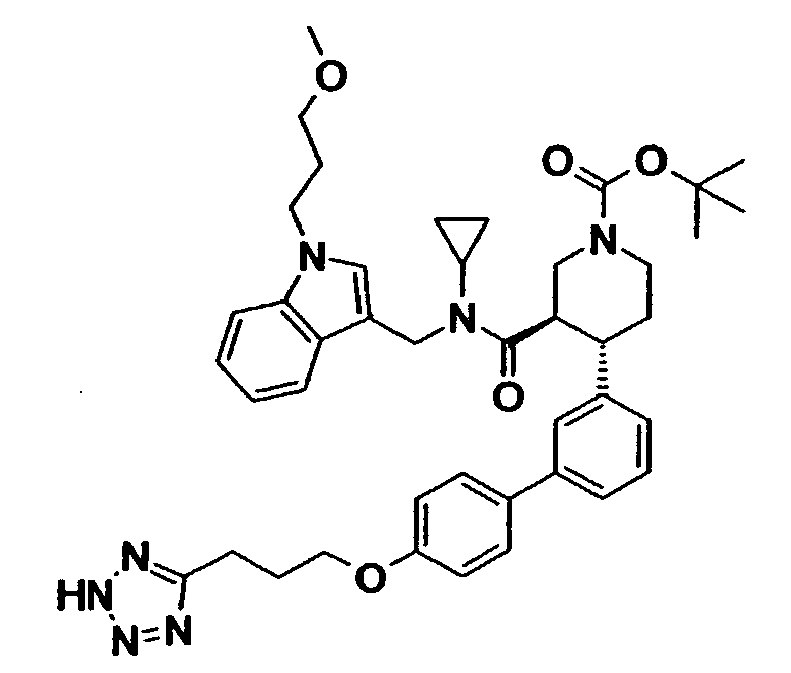
- Intermediate 126.1 is synthesized by the reaction of Intermediate 126.2 (200 mg, 0.28 mmol) and NaN3 (55 mg, 0.85 mmol) analogously to the preparation of Intermediate 91.1. White amorphous material; ES-MS: M+1 = 748; HPLC: ct Ret = 2.14 min.
-

- Intermediate 42.1 (250 mg, 0.39 mmol), 4-Bromo-butyronitrile (0.097 mL, 0.98 mmol) and K2CO3 (135 mg, 0.98 mmol) in DMF (3 mL) is stirred at 90°C for 6h. After cooling to room temperature, the reaction mixture is diluted with Et2O and washed with H2O and brine. The organic layer is dried (Na2SO4), concentrated and purified by silica gel column chromatography to give Intermediate 126.2 as white amorphous; ES-MS: M+1 = 705; HPLC: At Ret = 5.27 min.
-

- Intermediate 127.1 is synthesized by coupling of Intermediate 127.2 (150 mg, 0.22 mmol) and Intermediate 127.3 (80 mg, 0.27 mmol) analogously to the preparation of Intermediate 2.1. White amorphous material; ES-MS: M-Boc = 662; HPLC: At Ret = 5.69 min.
-
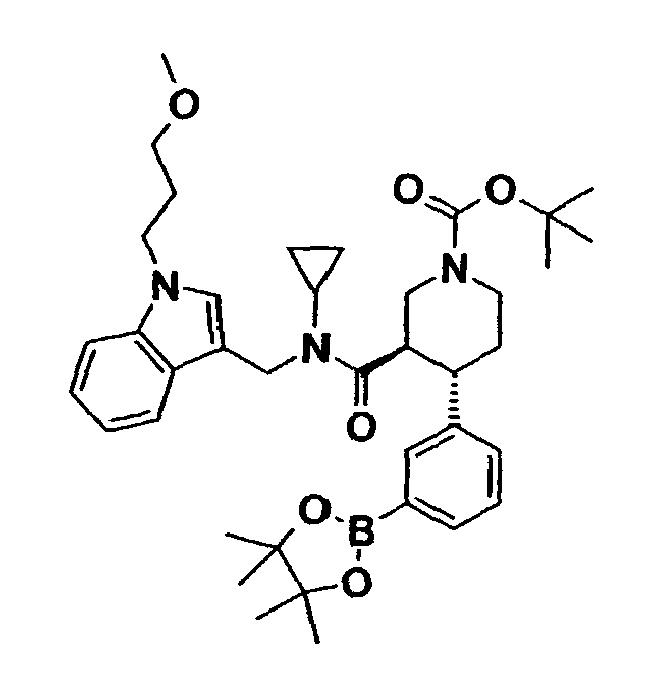
- Intermediate 42.2 (500 mg, 0.72 mmol), Bis(pinacolato)diboron (366 mg, 1.44 mmol), PdCl2(dppf) (59 mg, 0.07 mmol) and KOAc (283 mg, 2.88 mmol) in DMSO (3.5 mL) are stirred at 80°C for 3h under N2. After cooling to room temperature, the reaction mixture is diluted with AcOEt and washed with brine. The organic layer is dried (Na2SO4), concentrated and purified by silica gel column chromatography to give Intermediate 127.2. White amorphous material; ES-MS: M+H = 672; HPLC: At Ret = 5.67 min.
-

- To a solution of 6-Bromo-1H-indazole (700mg, 3.55 mmol) in DCM (15 mL), Et3N (1.4 mL, 10.7 mmol), BOC2O (0.93 g, 4.26 mmol) and DMAP (615 mg, 5.70 mmol) are added. After stirred at RT for 0.5 h, the reaction mixture is quenched with H2O and extracted with DCM. The combined organic phases are washed with H2O and dried (MgSO4) to give 127.3 as an oil; ES-MS: M-BOC = 197: At Ret = 4.52 min.
-

- Intermediate 128.1 is synthesized by hydrolysis of Intermediate 128.2 (207 mg, 0.28 mmol) analogously to the preparation of Intermediate 87.1. White amorphous material; ES-MS: M+1 = 724; HPLC: At Ret = 4.89 min.
-

- To a solution of Intermediate 42.1 (257 mg, 0.40 mmol) and 4-Bromo-butyric acid ethyl ester (0.146 mL, 1.00 mmol) in DMF is added K2CO3 (139 mg, 1.00 mmol). After stirring at 60°C for 3h, the reaction mixture is cooled to room temperature and H2O is added. The resulting mixture is diluted with Et2O and washed with brine. The organic layer is dried (Na2SO4), concentrated and purified by silica gel column chromatography to give Intermediate 128.2 as white amorphous; ES-MS: M+1 = 752; HPLC: At Ret = 5.70 min.
-

- Intermediate 129.1 is synthesized by condensation of Intermediate 1.2 (200 mg, 0.52 mmol) and Intermediate 129.2 (211 mg, 0.78 mmol) analogously to the preparation of Intermediate 4.1. White amorphous material; ES-MS: M+H = 635; HPLC: At Ret = 4.57 min.
-

- Intermediate 129.2 is synthesized by condensation of Intermediate 129.3 (700 mg, 3.00 mmol) and cyclopropylamine (260 mg, 4.50 mmol) analogously to the preparation of Intermediate 4.5. Yellow oil; ES-MS: M+H = 272; HPLC: At Ret = 2.02 min.
-

- A mixture of Intermediate 129.4 (1.02 g, 5.20 mmol), Et3N (675 mg, 6.20 mmol), ethyl chloroformate (615 mg, 5.70 mmol) in THF (6 mL) is stirred at RT for 0.5 h. To the reaction mixture, 28% NH3 aqueous solution (1.5 mL, 26 mmol) is added. After adding H2O, the reaction mixture is extracted with EtOAc. The combined organic phases are washed with H2O and dried (MgSO4) to give Intermediate 129.3 as white amorphous material; ES-MS: M+H = 231: At Ret = 2.27 min.
-
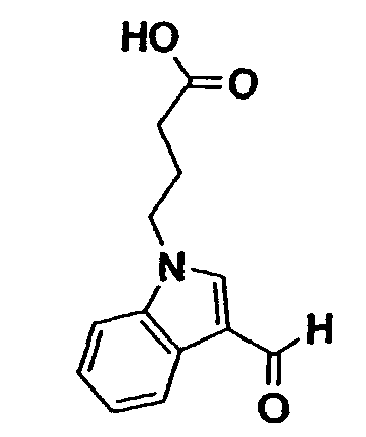
- A mixture of Intermediate 129.5 (2.70 g, 11.0 mmol) is hydrolyzed with LiOH in THF/MeOH/H2O (1:1:1, 48 mL) at RT for 4.0 h. After adding H2O, the reaction mixture is extracted with EtOAc. H2O layer is acidified by 1 M HCl. Thre reaction mixrue is extracted with EtOAc. The organic layer is washed with H2O and dried (MgSO4) to give Intermediate 129.4 as green solids; ES-MS: M+H = 232: At Ret = 2.60 min.
-

- Intermediate 129.5 is synthesized by condensation of indole-3-carbaldehyde (2.00 g, 13.7 mmol) and 4-chlorobutyricacid methylester (2.20 g, 16.6 mmol) analogously to the preparation of Intermediate 4.8. Yellow oil; ES-MS: M+H = 246; HPLC: At Ret = 3.12 min
-

- Intermediate 130.1 is synthesized by condensation of Intermediate 1.2 (200 mg, 0.52 mmol) and Intermediate 130.2 (255 mg, 0.78 mmol) analogously to the preparation of Intermediate 4.1. White amorphous material; ES-MS: M+H = 692; HPLC: At Ret = 5.92 min.
-

- Intermediate 130.2 is synthesized by condensation of Intermediate 130.3 (4.20 g, 14.6 mmol) and cyclopropylamine (1.20 g, 20.6 mmol) analogously to the preparation of Intermediate 4.5. Yellow oil; ES-MS: M+H = 329; HPLC: At Ret = 2.79 min.
-

- Intermediate 130.3 is synthesized by condensation of indole-3-carbaldehyde (2.00 g, 13.7 mmol) and 2-(3-bromopropoxy)tetrahydro pyran (3.6 g, 16.4 mmol) analogously to the preparation of Intermediate 4.8. Yellow oil; ES-MS: M+H = 288; HPLC: At Ret = 3.65 min
-

- A mixture of Intermediate 127.2 (118.2 mg, 0.18 mmol), 3-Chloro-6-methoxy-pyridazine (96.8 mg, 0.64 mmol), 1 N Na2CO3 aq (1.34 mL, 1.34 mmol) and Pd(PPh3)4 (51.4 mg, 0.12 mmol) in touene (10 mL) is stirred at 115°C. After stirring overnight, adding H2O at RT, the reaction mixture is extracted with EtOAc. The combined organic phases are washed with H2O and dried (Na2SO4). Concentration under reduced pressure and silica gel flash chromatography of the residue (hexane/ethyl acetate) affords Intermediate 131.1 as amorphous; ES-MS: M+H = 654 ; HPLC: At Ret = 4.60 min.
-

- Intermediate 132.1 is synthesized by coupling of Intermediate 42.2 (254 mg, 0.37 mmol) and 3,4-methylenedioxyphenylboronic acid (67 mg, 0.40 mmol) analogously to the preparation of Intermediate 2.1. White amorphous material; ES-MS: M+H = 666; HPLC: AtRet = 5.40 min.
-
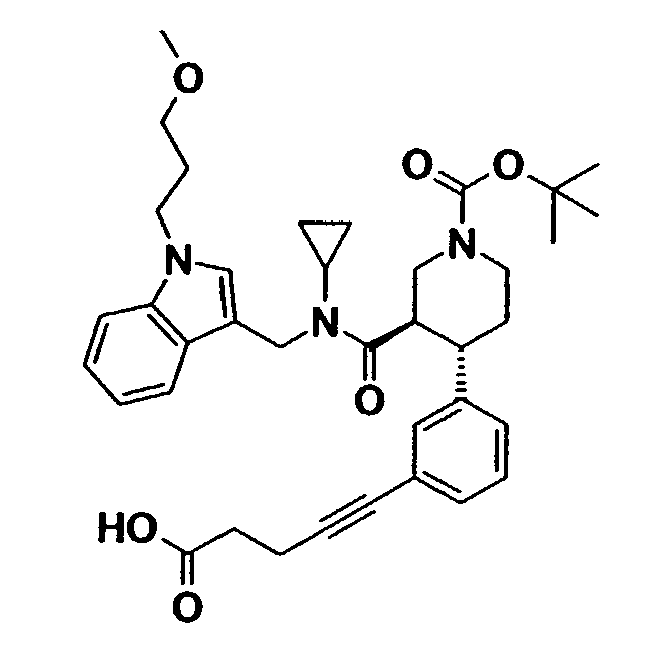
- Intermediate 133.1 is synthesized by hydrolysis of Intermediate 117.1 analogously to the preparation of Intermediate 80.2. White amorphous; ES-MS: M+H = 642 ; HPLC: At Ret = 4.57 min.
-

- A mixture of intermediate 134.2 (450 mg, 0.68 mmol) and Zn powder (221 mg, 3.38 mmol) in EtOH-sat. NH4Cl(aq.) (7 mL) are stirred at 70°C for 1 hr. After cooling to room temperature, the reaction mixture is extracted with AcOEt, washed with brine, dried (MgSO4), and concentrated. Purification by silica gel column chromatograrphy give intermediate 134.1 as white amorphous; ES-MS: M+H = 637; HPLC: At Ret = 3.67 min.
-

- Intermediate 134.2 is synthesized by coupling of Intermediate 42.2 (1.0 g, 1.44 mmol) and 4-Nitrophenylboronic acid, pinacol ester (539 mg, 2.16 mmol) analogously to the preparation of Intermediate 42.1. red amorphous material; ES-MS: M+H = 667; HPLC: At Ret = 5.45 min.
-

- Intermediate 135.1 is synthesized by condensation of Intermediate 1.2 (200 mg, 0.52 mmol) and Intermediate 135.2 (266 mg, 0.78 mmol) analogously to the preparation of Intermediate 4.1. White amorphous material; ES-MS: M+H-THP = 622; HPLC: At Ret = 5.92 min.
-

- Intermediate 135.2 is synthesized by condensation of Intermediate 135.3 (4.10 g, 13.6 mmol) and cyclopropylamine (1.20 g, 20.6 mmol) analogously to the preparation of Intermediate 4.5. Yellow oil; ES-MS: M+H = 343; HPLC: At Ret = 2.87 min.
-

- Intermediate 135.3 is synthesized by condensation of indole-3-carbaldehyde (2.00 g, 13.7 mmol) and 2-(4-chlorobutoxy)tetrahydropyran (3.1 g, 16.4 mmol) analogously to the preparation of Intermediate 4.8. Yellow oil; ES-MS: M+H = 302; HPLC: At Ret = 3.79 min
-

- A mixture of Intermediate 99.2 (205 mg, 0.55 mmol) and 1-chloro-N,N-2-trimethyl-1-propenylamine (109 µL, 0.83 mmol) in 1,2-dichloroethane (5 mL) is stirred at RT. After stirring for 1 h, a mixture of Intermediate 82.2 (182 mg, 0.61 mmol) and pyridine (111 µL, 1.38 mmol) is added to the reaction mixture, and stirred for 6 h at 60°C. After adding H2O at RT, the reaction mixture is extracted with EtOAc. The combined organic phases are washed with H2O, brine and dried (Na2SO4). Concentration under reduced pressure and silica gel flash chromatography of the residue (hexane/ethyl acetate) affords Intermediate 136.1 as a pale yellow solid; ES-MS: M+H = 619; HPLC: t Ret = 4.68 min.
-

- Intermediate 137.1 is synthesized by coupling of Intermediate 42.2 (200 mg, 0.29 mmol) and intermediate 137.2 (116 mg, 0.43 mmol) analogously to the preparation of Intermediate 42.1 as an oil; ES-MS: M+H = 767; HPLC: At Ret = 4.02 min.
-

- A mixture of 4-formylphenyl- boronic acid (300 mg, 2.0 mmol) and Bis-(2-methoxy-ethyl)-amine (270 mg, 2.0 mmol) and CH3CO2H in MeOH (10 mL) is stirred at RT for 0.5 h. 1.0 M NaBH3CN solution (250 ul, 2.5 mmol) was then added to the reaction mixture and further stirring at RT for 1 hour. The reaction is directly condensed to give Intermediate 137.2 as white solid; ES-MS: M+H = 268; HPLC: At Ret = 1.74 min.
-

- A mixture of Intermediate 138.2 (113.1 mg, 0.15mmol) and hydrazine monohydrate (36 µL, 074 mmol) in EtOH (5 mL) is stirred at reflux. After stirring for 2 h, Concentration under reduced pressure affords Intermediate 138.1 as amorphous; ES-MS: M+H = 627 ; HPLC: At Ret = 3.72 min.
-

- Intermediate138.2 is synthesized by coupling of Intermediate 42.2 (194 mg, 0.28 mmol) and 2-Pent-4-ynyl-isoindole-1,3-dione (178 mg, 0.83 mmol) analogously to the preparation of Intermediate 109.2. White amorphous material; ES-MS: M+H = 757; HPLC: At Ret = 5.49 min.
-

- A mixture of Intermediate 127.2 (52.7 mg, 0.078 mmol) , (6-Chloro-pyridazine-3-yloxy)-acetic acid methyl ester (94.8 mg, 0.47 mmol), 1 N Na2CO3 aq (0.6 mL, 0.6 mmol) and Pd(PPh3)4 (18 mg, 0.016 mmol) in dioxane (5 mL) is stirred at 100°C. After stirring overnight, adding H2O at RT, the reaction mixture is extracted with EtOAc. The combined organic phases are dried (Na2SO4). Concentration under reduced pressure and silica gel flash chromatography of the residue (hexane/ethyl acetate) affords Intermediate 139.1 as amorphous; ES-MS: M+H =698 ; HPLC: At Ret = 4.22 min.
-

- Intermediate 42.1 (293 mg, 0.46 mmol), ethylene carbamate (81 mg, 0.92 mmol) and K2CO3 (127 mg, 0.92 mmol) in DMF (2 mL) is stirred at 90°C for 15h. After cooling to room temperature, the reaction mixture is diluted with AcOEt and washed with H2O and brine. The organic layer is dried (Na2SO4), concentrated and purified by silica gel column chromatography to give Intermediate 140.1 as white amorphous; ES-MS: M+1 = 682; HPLC: At Ret = 4.74 min.
-

- To a solution of Intermediate 42.1 (201 mg, 0.32 mmol) and iodoethyl acetate (0.075 mL, 0.63 mmol) in DMF is added K2CO3 (87 mg, 0.63 mmol) and stirred at 75°C for 2h. After cooling to room temperature, the reaction mixture is diluted with AcOEt and washed with H2O and brine. The organic layer is dried over Na2SO4, concentrated and purified by silica gel flash chromatography to give Intermediate 141.1 (80.2) as white amorphous; ES-MS: M+H = 724; HPLC: At Ret = 4.85 min.
-

- Intermediate 142.1 is synthesized by Mitsunobu reaction of Intermediate 42.1 (344 mg, 0.54 mmol) and dimethylaminoethanol (0.108 mL, 1.08 mmol) analogously to the preparation of Intermediate 104.1. White amorphous material; ES-MS: M = 709; HPLC: At Ret = 3.79 min.
-

- A mixture of Intermediate 42.2 (158.7 mg, 0.23 mmol), ZnCN2 (133.8 mg, 1.14 mmol) and Pd(PPh3)4 (79.3 mg, 0.00.069 mmol) in DMF (5 mL) is stirred at 200°C under microwave condition. After stirring for 30 min., adding H2O at RT, the reaction mixture is extracted with EtOAc. The combined organic phases are washed with H2O, dried (Na2SO4). Concentration under reduced pressure and reverse phase chromatography of the residue affords 143 as amorphous; ES-MS: M+H =471 ; HPLC: At Ret = 3.07 min.
-

- A mixture of Intermediate 42.2 (181.6 mg, 0.26 mmol), 0.97 M EtMgBr (0.85 ml in THF, 0.83 mmol) and PdCl2(dppf).CH2Cl2 (13.5 mg, 0.017 mmol) in THF (5 mL) is stirred at 80°C. After stirring for 2.5 h, adding H2O at RT, the reaction mixture is extracted with EtOAc. The combined organic phases are washed with brine and dried (Na2SO4). Concentration under reduced pressure and silica gel flash chromatography of the residue (hexane/ethyl acetate) affords Intermediate 144.1 as amorphous; ES-MS: M+H = 574 ; HPLC: At Ret = 5.47min.
-

- Intermediate 145.1 is synthesized by hydrolysis of intermediate 145.2 (40 mg, 0.05 mmol) analogously to the preparation of intermediate 80.2. White amorphous material; ES-MS: M+H = 714; HPLC: At Ret = 4.15 min.
-

- Intermediate 145.2 is synthesized by alkylation of intermediate 145.3 (53.4 mg, 0.082 mmol) analogously to the preparation of intermediate 80.3. White amorphous material; ES-MS: M+H = 742; HPLC: At Ret = 4.85 min.
-

- To a solution of intermediate 145.4 (75 mg, 0.10 mmol) in EtOH (2.0 mL) and H2O (1.0 mL) is added 8N KOH aqueous solution (0.03 mL, 0.26 mmol). After stirring at RT for 10h, the reaction mixture is acidified with 1 N HCl solution. The resulting mixture is extracted with AcOEt and washed with brine. The organic layer is dried over MgSO4 and concentrated to give intermediate 145.3 as white solid; ES-MS: M+H = 656; HPLC: At Ret = 4.24 min.
-

- To a solution of intermediate 110.3 (400 mg, 1.01 mmol) in THF (5.0 mL), Et3N (0.40 mL, 3.03 mmol) and Ethyl chloroformate (0.21 mL, 2.11 mmol) are added at 0 °C. After stirring for 0.5 h at same temperature, the resulting precipitate is filtered off and the filtrate is concentrated. Part of the residue (95 mg, 0.18 mmiol) is dissolved in THF (3 ml), intermediate 101.2 (50 mg, 0.18 mmol) and MgBr2 (51 mg, 0.2 mmol) are added at room temperature. After stirring for 12 h, the reaction is quenched with H2O and resulting mixture is extracted with AcOEt, washed with 1N HCl solution and brine., The organic layer is dried (MgSO4), concentrated and purified by silica gel column chromatography to afforded intermediate 145.4 as an oil; M+H = 728; HPLC: At Ret = 4. 94 min.
-

- Intermediate 146.1 is synthesized by coupling of Intermediate 42.2 (210 mg, 0.30 mmol) and [4-(4-morpholinylmethyl)phenyl]- boronic acid (100 mg, 0.45 mmol) analogously to the preparation of Intermediate 42.1 as an oil; ES-MS: M+H = 721; HPLC: At Ret = 3.87 min.
-

- To a solution of Intermediate 147.1 (97 mg, 0.15 mmol) in toluene (0.6 mL) are added DPPA (0.038 mL, 0.18 mmol) and DBU (0.026 mL, 0.17 mmol) at room temperature. After stirred for 6.5 h, the mixture is diluted with EtOAc, and washed with aq. KHSO4, H2O, and brine. The organic layer is dried (Na2SO4), filtered, and concentrated in vacuo. The residue is treated with polymer-supported Ph3P in THF (2 mL)-H2O (0.2 mL) at 40°C for 12 h. The mixture is filtered through celite, and the filtrate is dried (Na2SO4), filtered, and concentrated in vacuo. The residue is treated with TMSOTf (0.080 mL, 0.44 mmol) and 2,6-lutidine (0.070 mL, 0.60 mmol) in CH2Cl2 (2 mL) at 0 °C for 30 min. The reaction is quenched by the addition of sat. aq. NaHCO3 and MeOH. The mixture is purified by RP-HPLC to give 147 as white amorphous solid.
-

- To a solution of Intermediate 108.2 (214 mg, 0.80 mmol) in THF (3 mL) is added LiBH4 (20 mg, 0.92 mmol) at 0 °C. After stirred at room temperature for 1 h, an additional LiBH4 (30 mg, 1.38 mmol) is added. After stirrd for 1 h, the reaction mixture is heated to 60 °C for 3 h. The reaction is quenched by the addition of aq. KHSO4, and the mixture is extracted with EtOAc. The organic extracts are washed with water and brine, and dried (Na2SO4), filtered, and concentrated in vacuo.
- Intermediate 147.1 is synthesized by condensation of Intermediate 42.1 (259 mg, 0.37 mmol) and the above crude residue analogously to the preparation of Intermediate 2.1. Pale yellow oil; ES-MS: M+H = 658; HPLC: At Ret = 4.67 min.
-

- Intermediate 148.1 is synthesized by condensation of Intermediate 75.3 (300 mg, 0.44 mmol) and Intermediate 101.2 (121 mg, 0.44 mmol) analogously to the preparation of Intermediate 145.4. White amorphous material; ES-MS: M+H = 640; HPLC: At Ret = 5.02 min.
-

- Intermediate 149.1 is synthesized by condensation of Intermediate 1.2 (147 mg, 0.39 mmol) and Intermediate 149.2 (120 mg, 0.39 mmol) analogously to the preparation of Intermediate 145.4. White powder; ES-MS: M+H = 676; HPLC: At Ret = 5.42 min.
-

- Intermediate 149.2 is synthesized by N-alkylation of intermediate 149.3 (2.38 g, 9.9 mmol) analogously to the preparation of intermediate 101.2. White crystal; ES-MS: M+H = 313; HPLC: ct Ret = 1.94 min.
-

- Intermediate 149.4 (140 mg, 0.42 mmol) and potassium carbonate (210 mg, 2.1 mmol) in MeOH (1.4 mL) is stirred at r.t. for 1.5 h. After adding water, the reaction mixture is extracted with EtOAc. The combined organic phases are washed with H2O and dried (MgSO4). Concentration under reduced pressure and recrystallization give Intermediate 149.3. white crystal; ES-MS: M+H = 241: ct Ret = 1.73 min.
-

- Intermediate 149.5 (1.7 g, 4.08 mmol) and potassium carbonate (843 mg, 6.11 mmol) in DMF (25 mL) is stirred at 70°C for 5 h. The reaction mixture is concentrated under reduced pressure. The evaporated residue is diluted with EtOAc, washed with H2O and dried (MgSO4). Concentration under reduced pressure and recrytallization give Intermediate 149.4. white powder; ES-MS: M+H = 337: ct Ret = 1.81 min.
-

- Intermediate 149.6 (1.25 g, 4.8 mmol), potassium carbonate (1.66 g, 12 mmol) and bromo difluoroacetyl chloride (1.02 g, 5.28 mmol) in THF (15 mL) is stirred at 0°C for 30 min. After adding KHSO4aq., the reaction mixture is extracted with EtOAc. The combined organic phases are washed with sat.NaHCO3aq. and dried (MgSO4). Concentration under reduced pressure and silica gel flash chromatography give Intermediate 149.5. yellow crystal; ES-MS: M+H = 417: ct Ret = 1.82 min.
-
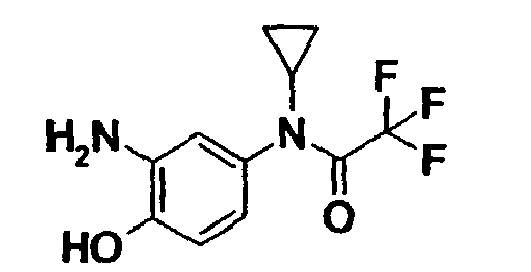
- To a solution of Intermediate 149.7 (13 g, 44.8 mmol) in EtOH (60 mL) is added NH4Cl (4.8 g, 89.6 mmol), water (60 mL) and Zn (14.6 g, 224 mmol). The resulting mixture is stirred at 80°C for 1 h. The reaction mixture is filtered via celite pad and the celite cake is washed with EtOH and EtOAc. Concentration under reduced pressure and silica gel flash chromatography gives Intermediate 149.6. red crystal; ES-MS: M+H = 261: ct Ret = 1.31 min.
-

- To a solution of Intermediate 149.8 (19 g, 82.4 mmol) and pyridine (32.6 g, 412 mmol) in dichloromethane (200 mL) is added trifluoroacetic anhydride (25 g, 247 mmol) at 0°C and stirred for 30 min. After adding 2M HClaq (83 mL), the reaction mixture is extracted with dichloromethane. The combined organic phases are washed with water, sat.NaHCO3aq. and dried (MgSO4). Concentration under reduced pressure and recrystallization gives Intermediate 149.7. yellow crystal; ES-MS: M+H = 291: ct Ret = 1.82 min.
-

- Intermediate 149.9 (23 g, 92 mmol) in EtOAc (50 mL) is added to 4M HCl in EtOAc with small amount of water at r.t. The resulting mixture is stirred for 15 min. The resulting yellow precipitate is collected by filtration and the solid is washed with EtOAc to give Intermediate 149.8. yellow powder; ES-MS: M+H -HCl= 195: Ct Ret = 1.78 min.
-

- Intermediate 149.9 is synthesized by reduction of intermediate 149.10 (29 g, 130 mmol) analogously to the preparation of 101.4. Red oil; ES-MS: M+H = 239; HPLC: Ct Ret = 1.83 min.
-

- To a solution of Intermediate 101.6 (29.1 g, 130 mmol) in dichloromethane (300 mL) is added N,N-ethyldiisopropylamine (67 g, 520 mmol) and MOMCI (10.5 g, 130 mmol) at 0°C. The reaction mixture is stirred for overnight. After being neutralized by 1M HClaq., the reaction mixture is extracted with dichlomethane. The combined organic phases are washed with sat.NaHCO3aq. and dried (MgSO4). Concentration under reduced pressure gives Intermediate 149.10: red oil; ES-MS: M+H = : Ct Ret = 1.82 min.
-

- Intermediate 150.1 is synthesized by condensation of Intermediate 1.2 (147 mg, 0.39 mmol) and Intermediate 150.2 (130 mg, 0.43 mmol) analogously to the preparation of Intermediate 82.1. White powder; ES-MS: M+H = 668; HPLC: At Ret = 5.35 min.
-

- To a solution of Intermediate 101.3 (200 mg, 1.0 mmol) and in THF (5 mL), Boc2O (240 mg, 1.10 mmol) and DMAP (134 mg, 1.10 mmol) are added under N2 at 0°C. After stirring RT for 16 h, H2O is added and the reaction mixture is extracted with EtOAc. The combined organic phases are washed with H2O, and dried (Na2SO4). Concentration under reduced pressure and silica gel flash chromatography give Intermediate 150.2 as colorless amorphous; ES-MS: M+H = 305; HPLC: At Ret = 3.77 min.
-

- Intermediate of 151.1 is synthesized by condensation of Intermediate 1.2 (71 mg, 0.19 mmol) and Intermediate 151.2 (44 mg, 0.17 mmol) analogously to the preparation of Intermediate 145.4. White powder; ES-MS: M+H = 626; HPLC: At Ret = 4.97 min.
-

- Intermediate 151.3 (252 mg, 0.88 mmol) is treated by toluene-4-sulfonic acid 3-methoxy-propyl ester (210 µL, 0.97 mmol) analogously to the known method (see e.g. European Journal of Medicinal Chemistry 1998, 33, 957-967. or
EP 432893 -

- A mixture of Intermediate 149.6 (182 mg, 0.7 mmol) and 1,1'-carbonyldiimidazole (136 mg, 0.84 mmol) in DMF (2 mL) is stirred under N2 at 70°C for 7 h. After adding H2O, the reaction mixture is extracted with EtOAc. The combined organic phases are washed with H2O and dried (Na2SO4). Concentration under reduced pressure and silica gel flash chromatography give Intermediate 151.3; ES-MS: M+H = 287; HPLC: At Ret = 3.13 min.
-

- Intermediate 152.1 is synthesized by coupling of Intermediate 42.2 (205 mg, 0.30 mmol) and 4-chloro-3-(trifluoromethyl)benzeneboronic acid (73 mg, 0.33 mmol) analogously to the preparation of Intermediate 2.1. White amorphous material; ES-MS: M+ H = 724; HPLC: At Ret = 5.90 min.
-

- A mixture of Intermediate 153.2 (295 mg, 0.34 mmol) and TBAF (890 mg, 3.40 mmol) in THF (2 mL) are stirred under N2 at 50°C for 10 h. After adding H2O, the reaction mixture is extracted with EtOAc. The combined organic phases are washed with H2O, dried (Na2SO4), concentrated under reduced pressure, and silica gel flash chromatography to give Intermediate 153.1; ES-MS: M+H = 746; HPLC: At Ret = 5.10 min.
-

- Intermediate 153.2 is synthesized by condensation of Intermediate 153.3 (309 mg, 0.5 mmol) and Intermediate 46.2 (152 mg, 0.55 mmol) analogously to the preparation of Intermediate 76.2. Colorless oil; ES-MS: M+H = 618; HPLC: At Ret = 6.18 min.
-

- A solution of Intermediate 153.4 (1.23 g, 2.0 mmol) and 25 % NaOMe in MeOH (1.65 mL, 3.60 mmol) in MeOH (10 mL) is refluxed for 14 h. H2O (0.50 mL) is added at RT and refluxing is continued for 3 h. After cooling down to RT, the reaction mixture is diluted with EtOAc and aqueous NH4Cl. The organic layer is dried over Na2SO4 and the solvent is removed in vacuo to give Intermediate 153.3 as amorphous; ES-MS: M+H = 618; HPLC: Bt Ret = 5.43 min.
-

- A mixture of Intermediate 153.5 (1.0 g, 2.10 mmol), 1-bromomethyl-3,5-dimethoxybenzene (580 mg, 2.5 mmol) and K2CO3 (440 mg, 3.20 mmol) in DMF (10 mL) is stirred under N2 at 50°C for 6 h. After adding H2O, the reaction mixture is extracted with EtOAc. The combined organic phases are washed with H2O and dried (Na2SO4). Concentration under reduced pressure and silica gel flash chromatography give Intermediate 153.4 as colorless amorphous; ES-MS: M+H = 632; HPLC: At Ret = 5.85 min.
-

- Intermediate 153.6 is synthesized by condensation of 4-trifluoromethanesulfonyloxy-5,6-dihydro-2H-pyridine-1,3-dicarboxylic acid 1-tert-butyl ester 3-methyl ester (1.90 g, 4.9 mmol) (see e.g.
WO 2004/002957 orUS 2003/216441 ) and Intermediate 153.7 (1.49 g, 4.07 mmol) analogously to the preparation of Intermediate 2.1. Yellow amorphous; Rf = 0.28 (EtOAc:n-Hex = 1:2); HPLC: At Ret = 4.93 min. - Intermediate 153.5 is synthesized by 1,4-reduction and epimerization of Intermediate 153.6 (1.57 g, 3.3 mmol) analogously to the preparation of Intermediate 4.3. White powder; ES-MS: M+H = 482; HPLC: At Ret = 4.90 min.
-

- A mixture of Intermediate 153.8 (4.0 g, 12.5 mmol), bis(pinacolato)diboron (4.77 g, 18.8 mmol), KOAc (4.9 g, 50 mmol) and Pd(PPh3)4 (1.44 g, 1.25 mmol) in DMF (50 mL) is stirred under N2 at 80°C. After stirring for 20 h, the reaction mixture is quenched by H2O, and the mixture is extracted with Et2O. The combined organic phases are washed with H2O and dried (Na2SO4). Concentration under reduced pressure and silica gel flash chromatography give Intermediate 153.7 as yellow oil; ES-MS: M+H =367; HPLC: At Ret = 4.99 min.
-

- To a mixture of 5-bromoresorcinol (740 mg, 3.90 mmol) (see e.g. European Journal of Organic Chemistry (1998), (2), 359-364) and DIEA (820 µL, 4.7 mmol) in DCM (20 mL) THF (2 mL) is added SEMCI (760 µL, 4.3 mmol) at RT. After stirring for 3 h, the reaction mixture is quenched with H2O, and the mixture is extracted with EtOAc. The combined organic phases are washed with H2O and dried (Na2SO4). Concentration under reduced pressure and silica gel flash chromatography give Intermediate 153.8 as colorless oil; Rf = 0.34 (EtOAc:n-Hex = 1:4) ;1H NMR (CDCl3), δ: 0.01 (9H, s), 0.94-0.98 (2H, m), 3.71-3.76 (2H, m), 4.99 (3H, s), 5.17 (2H, s), 6.47-6.48 (1H, m), 6.65-6.66 (1H, m), 6.79-6.80 (1H, m).
-

- Intermediate 154.1 is synthesized by coupling of Intermediate 42.2 (210 mg, 0.30 mmol) and [4-(4-morpholinylmethyl)phenyl]- boronic acid (200 mg, 0.9 mmol) analogously to the preparation of Intermediate 42.1 as an oil; ES-MS: M+H = 721; HPLC: At Ret = 3.85 min.
-

- Intermediate 155.1 is synthesized by coupling of Intermediate 42.2 (130, 0.19mmol) and Intermediate 155.2 (150 mg, 0.56 mmol) analogously to the preparation of Intermediate 2.1 as an oil; ES-MS: M+H = 767; HPLC: At Ret = 4.05 min.
-

- Intermediate 155.2 is synthesized by condensation of 3-formylphenyl- boronic acid (300 mg, 2.0 mmol) and and Bis-(2-methoxy-ethyl)-amine (270 mg, 2.0 mmol) analogously to the preparation of Intermediate 137.2 white solid; ES-MS: M+H = 268; HPLC: At Ret = 1.75 min.
-

- Intermediate 156.1 is synthesized by coupling of Intermediate 42.2 (201.6 mg, 0.29 mmol) and 4-Ethynyl-benzoic acid methyl ester (286.2 mg, 1.78 mmol) analogously to the preparation of Intermediate 109.2. White amorphous material; ES-MS: M+H = 704; HPLC: At Ret = 5.70 min.
-

- A mixture of Intermediate 157.2 (104 mg, 0.12 mmol) and 1M solution of TBAF in THF (5 mL) are stirred under N2 at 50°C for 5 h. After adding H2O, the reaction mixture is extracted with EtOAc. The combined organic phases are washed with H2O, dried (Na2SO4), concentrated under reduced pressure, and silica gel flash chromatography to give Intermediate 157.1; ES-MS: M+H = 746; HPLC: At Ret = 4.30 min.
-

- Intermediate 157.2 is synthesized by condensation of Intermediate 153.3 (463 mg, 0.75 mmol) and Intermediate 101.2 (217 mg, 0.79 mmol) analogously to the preparation of Intermediate 145.4. Colorless oil; ES-MS: M+H = 876; HPLC: At Ret = 5.78 min.
-

- Intermediate 158.1 is synthesized by condensation of Intermediate 158.2 (460 mg, 0.8 mmol) and 1-bromomethyl-3,5-dimethoxybenzene (222 mg, 0.96 mmol) analogously to the preparation of Intermediate 153.4. White powder; ES-MS: M+ = 630; HPLC: At Ret = 3.20 min.
-

- Intermediate 158.2 is synthesized by hydrolysis of Intermediate 158.3 (610 mg, 0.94 mmol) analogously to the preparation of Intermediate 145.3. White amorphous material; ES-MS: M+H = 580; HPLC: At Ret = 3.74 min.
-

- Intermediate 158.3 is synthesized by condensation of Intermediate 158.4 (642 mg, 2.0 mmol) and Intermediate 101.2 (580 mg, 2.10 mmol) analogously to the preparation of Intermediate 145.4. amorphous material; ES-MS: M+H = 652; HPLC: At Ret = 4.38 min.
-

- To a suspension of intermediate 158.5 (2.18 g, 3.38 mmol) in Et2O (80 mL), 1 N HCl aqueous solution (74 mL, 7.44 mmol) are added at 0°C. The organic phases are washed with H2O and dried (MgSO4) to give Intermediate 158.4 as white solid; ES-MS: M-56(tBu) = 266: At Ret = 3.17 min.
-

- A mixture of intermediate 26.3 (47.92 g) in acetone (600 mL) and quinine (48.37 g) in acetone (600 mL) was stirred at room temperature overnight. The resulting crystals were filtered, and their re-crystallization from acetone was repeated two times to give intermediate 158.5 (38.06 g, 39.5 %, >98 % ee).
-

- Intermediate 159.1 is synthesized by alkylation of Intermediate 157.1 (100 mg, 0.13 mmol) and Mel (10 µL, 0.16 mmol) analogously to the preparation of Intermediate 153.4. White powder; ES-MS: M+ = 760; HPLC: At Ret = 4.82 min.
-

- Intermediate 160.1 is synthesized by hydrolysis of Intermediate 156.1 analogously to the preparation of Intermediate 80.2. White amorphous material; ES-MS: M+H = 690; HPLC: At Ret = 4.95 min.
-

- Intermediate 161.1 (chiral) is synthesized by Mitsunobu reaction analogously of intermediate 161.2 to the preparation of intermediate 104.1 (racemic) white amorphous; ES-MS: M+ = 764; HPLC: At Ret = 3.52 min.
-

- Intermediate 161.2 (chiral) is synthesized from Intermediate 161.3 analogously to the preparation of Intermediate 42.1 (racemic). White amorphous material; ES-MS: M+H = 638; HPLC: At Ret = 4.67 min.
-

- Intermediate 161.3 (chiral) is synthesized from Intermediate 161.4 analogously to the preparation of Intermediate 42.2 (racemic). White amorphous material; ES-MS: M+H = 694; HPLC: At Ret = 5.34 min.
-

- Intermediate 161.4 is synthesized by condensation of Intermediate 158.4 (508 mg, 1.58 mmol) and Intermediate 22.2 (490 mg, 1.90 mmol) analogously to the preparation of Intermediate 4.1. White amorphous material; ES-MS: M+H = 562; HPLC: At Ret = 4.35 min.
-

- Intermediate 42.2 (380 mg, 0.55 mmol), piperidine (0.081 mL, 0.82 mmol), Pd2(dba)3 (50 mg, 0.055 mmol), Di-t-butylphosphinobiphenyl ( 16 mg, 0.055 mmol) and Cs2CO3 (268 mg, 0.82 mmol) is stirred at 80°C for 12h. After cooling to room temperature, the reaction mixture is diluted with AcOEt and washed with brine. The organic layer is dried (Na2SO4), concentrated and purified by silica gel column chromatography to give Intermediate 162.1 as white amorphous; ES-MS: M = 629; HPLC: At Ret = 3.57 min.
-

- Intermediate 163.1 is synthesized by coupling of Intermediate 42.2 (353 mg, 0.51 mmol) and azetidine hydrochloride (71 mg, 0.76 mmol) analogously to the preparation of Intermediate 162.1. White amorphous material; ES-MS: M+H = 601; HPLC: At Ret = 3.80 min.
-

- A mixture of intermediate 164.2 (250 mg, 0.39 mmol), 1-Methyl-piperazine (0.10 mL, 0.92 mmol), AcOH (0.4 mL) and NaBH3CN (30 mg, 0.45 mmol) in DCM (1.2 mL) and MeOH (0.4 mL) is stirred under N2 at 0°C. After stirring at RT for 1 hour, the reaction mixture is quenched with saturated aqueous NaHCO3 and extracted with DCM. The combined organic phases are washed with H2O, brine and dried (MgSO4). Concentration under reduced pressure and silica gel flash chromatography give Intermediate 164.1 as yellow oil; ES-MS: M+H = 734; HPLC: At Ret = 3.42 min
-

- Intermediate 164.2 is synthesized by coupling of Intermediate 42.2 (1.0 g, 1.44 mmol) and 4-formylphenylboronic acid (431 mg, 2.88 mmol) analogously to the preparation of Intermediate 42.1. red amorphous material; ES-MS: M+H = 650; HPLC: At Ret = 5.15 min.
-

- Intermediate 165.1 is synthesized by condensation of intermediate 134.1 (100 mg, 0.16 mmol) and tert-Butoxycarbonylamino-acetic acid (56 mg, 0.32 mmol) analogously to the preparation of Intermediate 83.2. Colorless oil; ES-MS: M+H = 794; HPLC: At Ret = 4.97 min.
-

- A mixture of intermediate 134.1(100 mg, 0.16 mmol), ethyl isocyanato (0.02 mL, 0.17 mmol), and Et3N (0.05 mL, 0.35 mmol) in THF (3 mL) is stirred under N2 at RT for 12 h. After adding H2O, the reaction mixture is extracted with EtOAc. The combined organic phases are washed with H2O and dried (MgSO4). Concentration under reduced pressure and silica gel flash chromatography give intermediate 166.1 as colorless amorphous; ES-MS: M+H = 708; HPLC: At Ret = 4.64 min.
-

- Intermediate 167.1 is synthesized by condensation of Intermediate 1.2 (150 mg, 0.40 mmol) and Intermediate 167.2 (87 mg, 0.44 mmol) analogously to the preparation of Intermediate 145.4 White amorphous material; ES-MS: M+H = 561; HPLC: At Ret = 5.50 min.
-

- A mixture of 4-bromo-1-chloro-2-methoxybenzene (500 mg, 2.30 mmol), cyclopropylamine (387 mg, 6.80 mmol), Pd2(dba)3 (183 mg, 0.20 mmol), NaOtBu (331 mg, 3.50 mmol) and racemic BINAP (373 mg, 0.60 mmol) in toluene (3 mL) is heated under N2 at 90°C for 6 h. After adding H2O at RT, the reaction mixture is extracted with EtOAc. The combined organic phases are washed with H2O and dried (MgSO4). Concentration under reduced pressure and silica gel flash chromatography give Intermediate 167.2: Yellow oil; ES-MS: M+H = 198: At Ret = 3.82 min.
-

- To a solution of Intermediate 168.2 (132 mg, 0.19 mmol) and Et3N (0.04 mL, 0.29 mmol) in CH2Cl2 (3 mL) is added MsCI (0.018 mL, 0.23 mmol). After stirring at room temperature for 0.5h, the reaction is quenched with saturated aqoueous NaHCO3. The organic layer is separated and concentrated. The residue is purified by silica gel column chromatography to give Intermediate 168.1 as white amorphous; ES-MS: M+1 = 759; HPLC: At Ret = 4.77 min.
-

- A crude material of Intermediate 168.3 and H2NNH2-H2O (55 mg, 1.10 mmol) are dissolved in EtOH (3 mL) and stirred at 50°C for 2h. After adding H2O, the resulting mixture is extracted with AcOEt. The organic layer is washed with brine, dried (Na2SO4) and concentrated. Silica gel column chromatography give Intermediate 168.2 as white amorphous; ES-MS: M+1 = 681; HPLC: At Ret = 3.73 min.
-

- Intermediate 168.3 is synthesized by Mitsunobu reaction of Intermediate 42.1 (351 mg, 0.55 mmol) and N-(2-hydroxyethyl)phtalimide (210 mg, 1.10 mmol) analogously to the preparation of Intermediate 104.1 (including triphenylphosphine oxide as byproduct)l; ES-MS: M = 811; HPLC: At Ret = 5.52 min.
-

- Intermediate 169.1 is synthesized by condensation of Intermediate 1.2 (150 mg, 0.40 mmol) and Intermediate 169.2 (100 mg, 0.39 mmol) analogously to the preparation of Intermediate 145.4 White amorphous material; ES-MS: M+H = 619; HPLC: At Ret = 5.70 min.
-

- Intermediate 169.2 is synthesized by condensation of Intermediate 169.3 (500 mg, 1.79 mmol) and cyclopropylamine (305 mg, 5.30 mmol) analogously to the preparation of Intermediate 167.2. White amorphous material; ES-MS: M+H = 256; HPLC: At Ret = 4.07 min.
-

- Intermediate 169.3 is synthesized by condensation of 5-bromo-2-chlorophenol (1.50 g, 7.20 mmol) and toluene-4-sulfonicacid 3-methoxypropyl ester (1.95 g, 8.00 mmol) analogously to the preparation of Intermediate 4.8. Colorless oil; ES-MS: M+H = 280; HPLC: At Ret = 4.59 min.
-

- Intermediate 170.1 is synthesized by coupling of Intermediate 42.2 (157.3mg, 0.23 mmol) and (5-Ethynyl-pyridin-2-yl)-dimethyl-amine (78 mg, 0.53 mmol) analogously to the preparation of Intermediate 109.2. White amorphous material; ES-MS: M+H = 690; HPLC: At Ret = 3.90 min.
-

- Intermediate 171.1 is synthesized by hydrolysis of intermediate 171.2 (81.2 mg, 0.11 mmol) analogously to the preparation of Intermediate 80.2. White amorphous material; ES-MS: M+H = 695; HPLC: At Ret = 4.46 min.
-

- Intermediate 171.2 is synthesized by alkylation of intermediate 134.1 (100 mg, 0.16 mmol) analogously to the preparation of intermediate 80.2. White amorphous material; ES-MS: M+H = 723; HPLC: At Ret = 5.19 min.
-

- Intermediate 172.1 is synthesized by condensation of Intermediate 1.2 (97 mg, 0.25 mmol) and Intermediate 172.2 (110 mg, 0.28 mmol) analogously to the preparation of Intermediate 145.4. White amorphous material; ES-MS: M+H = 718; HPLC: At Ret = 5.83 min.
-

- Intermediate 172.2 is synthesized by condensation of Intermediate 172.3 (300 mg, 1.06 mmol) and toluene-4-sulfonic acid 3-methoxy-propyl ester (336 mg, 1.30 mmol) analogously to the preparation of Intermediate 4.8. Yellow oil; ES-MS: M+H-BOC = 255; HPLC: At Ret = 4.57 min.
-

- A mixture of Intermediate 172.4 (900 mg, 4.94 mmol), (BOC)2O (1.30 g, 6.10 mmol), Et3N (763 mg, 7.0 mmol) and DMAP (catalytic amount) in THF (10 mL) is stirred at RT for 8 h. After adding H2O, the reaction mixture is extracted with EtOAc. The combined organic phases are washed twice with H2O, and dried (MgSO4). Concentration under reduced pressure and silica gel flash chromatography give Intermediate 172.3. Yellow solids; ES-MS: M+H-tBuO2 = 196; HPLC: At Ret = 5.59 min.
-

- Intermediate 172.4 is synthesized by reduction of Intermediate 172.5 (1.00 g, 4.70 mmol) analogously to the preparation of Intermediate 149.6. Yellow oil; ES-MS: M+H = 183; HPLC: At Ret = 2.40 min.
-

- Intermediate 172.5 is synthesized by cyclopropanation of 4-chloro-3-nitrophenylamine (5.00 g, 29 mmol) analogously to the preparation of Intermediate 101.4. Yellow oil; ES-MS: M+H = 213; HPLC: At Ret = 4.07 min.
-

- To a solution of Intermediate 80.1 (141 mg, 0.20 mmol), EDCI (58 mg, 0.30 mmol) and HOAt (28 mg, 0.20 mmol) in DMF (2 mL) is added isonipecotic acid (39 mg, 0.30 mmol). After stirring at room temperature for 2h, H2O is added. The resulting mixture is extracted with AcOEt and washed with brine. The organic layer is dried (Na2SO4) and concentrated. Purification by silica gel column chromatography give Intermediate 173.1 as white amorphous; ES-MS: M = 807; HPLC: At Ret = 4.42 min.
-

- Intermediate 174.1 is synthesized by condensation of Intermediate 80.1 (141 mg, 0.20 mmol) and 3-Azetidinecarboxylic acid (31 mg, 0.30 mmol) analogously to the preparation of Intermediate 173.1; ES-MS: M+1 = 779; HPLC: At Ret = 4.28 min.
-

- A mixture of Intermediate 127.2 (50 mg, 0.07 mmol) ,1-[(4-bromophenyl)acetyl]-4-methyl-Piperazine (24 mg, 2.88 mmol), Pd(OAc)2 (1.7 mg, 0.007 mmol), 2-(Dicyclohexylphosphino)-2', 6'-dimethoxy-1,1'-biphenyl (6.0 mg, 0.015 mmol) and K3PO4 (31.4 mg, 0.15 mmol) in toluene (2 mL) and H2O (0.2 mL) is stirred at 100°C. After stirring for 12 h, adding H2O at RT, the reaction mixture is extracted with EtOAc. The combined organic phases are washed with brine, dried (Na2SO4). Concentration under reduced pressure and silica gel flash chromatography of the residue (hexane/ethyl acetate) affords Intermediate 175.1 as amorphous; ES-MS: M+H =762; HPLC: At Ret = 3.72 min.
-

- Intermediate 176.1 is synthesized by hydrolysis of Intermediate 176.2 (140 mg, 0.19 mmol) analogously to the preparation of Intermediate 80.1. White amorphous material; ES-MS: M+H = 703; HPLC: At Ret = 4.47 min.
-

- Intermediate 176.2 is synthesized by reaction of Intermediate 58.1 (164 mg, 0.25 mmol) and iodoethyl acetate (0.06 mL, 0.51 mmol) analogously to the preparation of Intermediate 80.2. White amorphous material; ES-MS: M+H = 732; HPLC: At Ret = 5.17 min.
-

- Intermediate 177.1 is synthesized by coupling of Intermediate 42.2 (340, 0.49 mmol) and Intermediate 177.2 (130 mg, 0.54 mmol) analogously to the preparation of Intermediate 2.1 as an White amorphous material; ES-MS: M+H = 742; HPLC: At Ret = 4.67 min.
-

- To a solution of 4-Ethoxycarbonylphenylboronic acid, pinacol ester (276 mg, 1.00 mmol) in DMSO (5 mL), 1-Methanesulfonyl-propan-2-one (990 mg, 10.0 mmol) and NaH are added. After stirred at RT for 2 h, the reaction mixture is quenched with H2O and extracted with AcOEt. The combined organic phases are washed with H2O and dried (MgSO4) to give Intermediate 177.2 as white solid; ES-MS: M-48 = 195: At Ret = 2.68 min.
-

- Intermediate 178.1 is synthesized by condensation of Intermediate 1.2 (150 mg, 0.40 mmol) and Intermediate 178.2 (98.0 mg, 0.44 mmol) analogously to the preparation of Intermediate 145.4. White amorphous material; ES-MS: M+H = 588; HPLC: At Ret = 4.68 min.
-

- Intermediate 178.2 is synthesized by cyclopropanation of N-(5-amino-2-chlorophenyl)acetamide (2.40 g, 13.0 mmol) analogously to the preparation of Intermediate 101.4. Yellow oil; ES-MS: M+H = 225; HPLC: At Ret = 2.88 min.
-
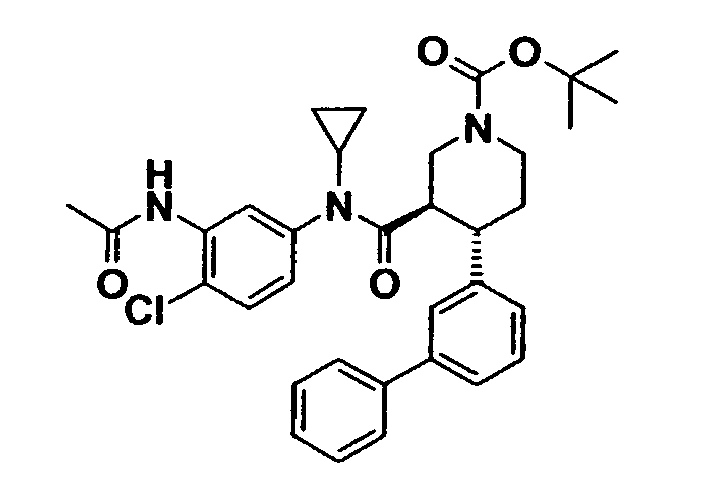
- Intermediate 179.1 is synthesized by condensation of Intermediate 1.2 (150 mg, 0.40 mmol) and Intermediate 179.2 (130 mg, 0.48 mmol) analogously to the preparation of Intermediate 145.4. White amorphous material; ES-MS: M+H = 660; HPLC: At Ret = 5.02 min.
-

- Intermediate 179.2 is synthesized by condensation of Intermediate 178.2 (250 mg, 1.11 mmol) and toluene-4-sulfonic acid 3-methoxypropyl ester (350 mg, 1.45 mmol) analogously to the preparation of Intermediate 4.8. Yellow oil; ES-MS: M+H = 297; HPLC: At Ret = 3.50 min.
-

- A mixture of Intermediate 109.1 (136.7 mg, 0.11 mmol) and NaN3 (301 mg, 2.2 mmol) in DMF (5 mL) is stirred at 150°C under microwave condition. After stirring for 1.5 hr, adding H2O at RT, the reaction mixture is extracted with EtOAc. The combined organic phases are washed with H2O, dried (Na2SO4). Concentration under reduced pressure and reverse phase chromatography of the residue affords 180 as amorphous; ES-MS: M+H =513; HPLC: At Ret = 2.72 min.
-

- Intermediate 181.1 is synthesized by hydrolysis of Intermediate 181.2 (281 mg, 0.38 mmol) analogously to the preparation of Intermediate 80.2. White amorphous material; ES-MS: M+H = 714; HPLC: At Ret = 4.06 min.
-

- Intermediate 181.2 is synthesized by coupling of Intermediate 181.3 (100 m g, 0.14 mmol) and Ethylphenoxyacetate-4-boronc acid pinacol ester (56 mg, 0.18 mmol) analogously to the preparation of Intermediate 175.1. Amorphous material; ES-MS: M+H = 743; HPLC: At Ret = 4.76 min.
-

- Intermediate 181.3 is synthesized by condensation of Intermediate 158.2 (455 mg, 0.79 mmol) analogously to the preparation of Intermediate 29.4. White amorphous material; ES-MS: M+H = 712; HPLC: At Ret = 4.77 min.
-

- Intermediate 80.1 (169 mg, 0.24 mmol), methanesulfonamide (35 mg, 0.36 mmol), EDCI (70 mg, 0.36 mmol) and 4-DMAP (9 mg, 0.07 mmol) in CH2Cl2 (3 mL) are stirred at room temperature for 12h. After adding H2O, the organic layer is separated and concentrated. Purification by silica gel chromatography give Intermediate 182.1 as white amorphous; ES-MS: M+1 = 773; HPLC: At Ret = 4.65 min.
-

- Intermediate 183.1 is synthesized by coupling of Intermediate 42.2 (241 mg, 0.35 mmol) and 1,2,3,6-tetrahydropyridine (0.048 mL, 0.52 mmol) analogously to the preparation of Intermediate 162.1. White amorphous material; ES-MS: M+H = 627; HPLC: At Ret = 3.70 min.
-

- Intermediate 184.1 is synthesized by hydrolysis of Intermediate 184.2 analogously to the preparation of Intermediate 80.2 White amorphous material; ES-MS: ES-MS: M+H = 737 ; HPLC: At Ret = 4.28 min.
-

- A mixture of Intermediate 86.1(87.9mg, 0.13 mmol), WSCD.HCl (36 mg, 0.16 mmol), HOAt (21.5 mg, 0.16 mmol), triethylamine (55 µL , 0.40 mmol) in DMF(5 mL) is stirred at 80°C. After stirring for 3 h, adding H2O at RT, the reaction mixture is extracted with 1,2-dichloroethane. The combined organic phases are dried (Na2SO4). Concentration under reduced pressure affords Intermediate 184.2 as amorphous; ES-MS: M+H = 751 ; HPLC: At Ret = 4.68 min.
-

- Intermediate 185.1 is synthesized by hydrolysis of Intermediate 185.2 analogously to the preparation of Intermediate 80.2 White amorphous material; ES-MS: M+H = 684; HPLC: At Ret = 4.25 min.
-

- Intermediate 185.2 is synthesized by coupling of Intermediate 181.3 (60.3 mg, 0.084 mmol) and 4-methoxycarbonylphenyl boronic acid (22.6 mg, 0.13mmol) analogously to the preparation of Intermediate 2.1. White amorphous material; ES-MS: M+H = 698 ; HPLC: At Ret = 4.93 min.
-

- Intermediate 186.1 is synthesized by coupling of Intermediate 42.2 (200 m g, 0.3 mmol) and 3-(4-bromophenyl)-propionic acid ( 82 mg, 0.36 mmol) analogously to the preparation of intermediate 42.1. Amorphous material; ES-MS: M+H = 694; HPLC: At Ret = 4.89 min.
-
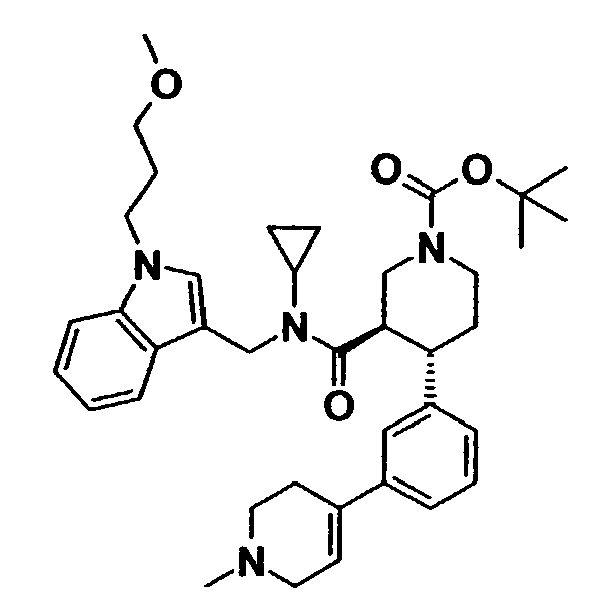
- Intermediate 187.2 (138 mg, 0.21 mmol), 1,2,3,6-tetrahydro-1-methyl-4-pyridinyl ester (76 mg, 0.31 mmol) (see e.g. Tetrahedron 2003, 59, 5507-5514.), Pd(PPh3)4 (24 mg, 0.021 mmol) and TBAF (0.62 mL, 0.62 mmol, 1.0 M in THF) in THF (2 mL) are stirred under N2 at 75°C for 12 h. After cooling to room temperature, the reaction mixture is diluted with AcOEt and washed with H2O and brine. The organic layer is dried (Na2SO4), concentrated and purified by silica gel column chromatography to give Intermediate 187.1 as white amorphous; ES-MS: M+H = 641; HPLC: At Ret = 3.72 min.
-

- Intermediate 42.2 (1.58 g, 2.28 mmol), Bis(pinacolato)diboron (1.16 g, 4.56 mmol), PdCl2(dppf)2 (0.19 g, 0.228mmol) and KOAc (0.89 g, 9.12 mmol) in DMSO (8 mL) are stirred at 80°C for 3h under N2. After cooling to room temperature, the reaction mixture is diluted with AcOEt and washed with brine. The organic layer is dried (Na2SO4), concentrated and purified by silica gel column chromatography to give Intermediate 187.2. White amorphous material; ES-MS: M+H = 672; HPLC: At Ret = 5.64 min.
-

- To a solution of Intermediate 188.2 (90 mg, 0.115 mmol) in MeOH (1 mL) is added 1N aqueous NaOH (1 mL) and stirred for 1.5h at 60°C. After cooling to room temperature, the resulting mixture is acidified with 5% KHSO4 solution and extracted with CH2Cl2. The organic layer is washed with brine, dried over Na2SO4, and concentrated. Silica gel flash chromatography gives Intermediate 188.1 as white amorphous; ES-MS: M+H = 779; HPLC: At Ret = 3.87 min.
-

- A mixture of Intermediate 42.1 (200 mg, 0.31 mmol), Intermediate 188.3 (229.11 mg, 0.63 mmol) and Cs2CO3 (205 mg, 0.63 mmol) in DMF ( 1 mL) is stirred at room temperature. After stirring for 11 h, the reaction mixture is diluted with CH2Cl2 and washed with H2O and brine. The organic layer is dried (Na2SO4), concentrated and purified by RP-HPLC to give Intermediate 188.2 as white amorphous; ES-MS: M = 793; HPLC: At Ret = 3.97 min.
-

- A mixture of Methyl proline hydrochloride (720 mg, 4.3 mmol), 2-Bromochloroethane ( 0.72 mL, 8.6 mmol) and Cs2CO3 (1.68 g, 5.16 mmol) in DMF ( 10 mL) is stirred at 60°C. After stirring for 3h, the reaction mixture is diluted with Et2O at room temperature and washed with H2O and brine and dried over Na2SO4. The Na2SO4 is filtered off, then the filtrate is added HCl in MeOH, then concentrated to give Intermediate 188.3 as white amorphous; ES-MS: M = 192; HPLC: At Ret = 1.03 min.
-

- To a solution of Intermediate 189.2 (230 mg, 0.32 mmol) in MeOH (2 mL) is added 2N aqueous NaOH (1 mL) and stirred for 1.5h at 50°C. After cooling to room temperature, the resulting mixture is acidified with 5% KHSO4 solution and extracted with AcOEt. The organic layer is washed with brine, dried over Na2SO4, and concentrated. Silica gel flash chromatography gives Intermediate 189.1 as white amorphous; ES-MS: M+H = 687; HPLC: At Ret = 3.38 min.
-

- A mixture of Intermediate 42.2 (280 mg, 0.40 mmol), piperidine (103 mg, 0.60 mmol), Pd2(dba)3 (36.7 mg, 0.04 mmol), Di-t-butylphosphinobiphenyl ( 24 mg, 0.08 mmol) and Cs2CO3 (260 mg, 0.8 mmol) is stirred at 80°C for 11 h. After cooling to room temperature, the reaction mixture is diluted with AcOEt and washed with brine. The organic layer is dried (Na2SO4), concentrated and purified by silica gel column chromatography to give Intermediate 189.2 as white amorphous; ES-MS: M = 715; HPLC: At Ret = 3.79 min.
-

- To a solution of Intermediate 190.2 (110 mg, 0.15 mmol) and Et3N (26 µL, 0.18 mmol) in THF (2 mL), chloroformic acid ethylester (16 µL, 0.17 mmol) is added at 0°C. After stirring for 0.5 h, the reaction mixture is filtered for removing inorganic salt, and the filtrate is concentrated under reduced pressure. A solution of this crude product in EtOAc (2 mL) was treated with NH4OH (1 mL) at 0°C for 2 h. After adding H2O, the reaction mixture is extracted with EtOAc. The combined organic phases are washed with H2O and dried (Na2SO4). Concentration under reduced pressure and silica gel flash chromatography give Intermediate 190.1 as white powder; ES-MS: M+H =653; HPLC: At Ret = 4.28 min.
-

- A mixture of Intermediate 190.3 (330 mg, 0.48 mmol) and 5N NaOH (1.5 mL) in THF (1 mL) and MeOH (1 mL) is stirred under N2 for 2.5 h. The reaction mixture is adjusted to weakly acidic pH by slowly adding 1 N HCl, and the mixture is extracted with EtOAc. The combined organic phases are washed with H2O and dried (Na2SO4). Concentration under reduced pressure and silica gel flash chromatography give Intermediate 190.2 as white powder; ES-MS: M+H = 654; HPLC: At Ret = 4.50 min.
-

- Intermediate 190.3 is synthesized by condensation of Intermediate 2.1 (300 mg, 0.79 mmol) and Intermediate 190.4 (250 mg, 0.79 mmol) analogously to the preparation of Intermediate 145.4. White powder; ES-MS: M+H =682; HPLC: At Ret = 5.18 min.
-

- Intermediate 190.4 is synthesized by alkylation of Intermediate 101.3 (300 mg, 1.47 mmol) and ethyl 4-bromobutyrate (232 µL, 1.62 mmol) analogously to a known method (see e.g. European Journal of Medicinal Chemistry 1998, 33, 957-967. or
EP 432893 -

- To a solution of Intermediate 190.2 (110 mg, 0.15 mmol) and Et3N (26 µl, 0.18 mmol) in THF (2 mL), chloroformic acid ethylester (16 µL, 0.17 mmol) is added at 0°C. After stirring for 30 min, the reaction mixture is filtered for removing inorganic salt, and the filtrate is concentrated under reduced pressure. A solution of this crude product in MeOH (2 mL) was treated with NaBH4 (11.0 mg, 0.3 mmol) at 0°C for 2 h. After adding H2O, the reaction mixture is extracted with EtOAc. The combined organic phases are washed with H2O and dried (Na2SO4). Concentration under reduced pressure and silica gel flash chromatography give Intermediate 191.1 as white powder; ES-MS: M+H = 640; HPLC: At Ret = 4.53 min.
-

- Intermediate 192.1 is synthesized by coupling of Intermediate 127.2 (100 m g, 0.15 mmol) and Intermediate 192.2 (80 mg, 0.19 mmol) analogously to the preparation of Intermediate 175.1. Amorphous material; ES-MS: M+H = 878; HPLC: At Ret = 5.78 min.
-

- Intermediate 192.2 is synthesized by protection of 5-bromo-1,2-Benzisoxazol-3-amine (500 mg, 2.35 mmol) (see e.g.
WO 2002/067939 ) analogously to the preparation of Intermediate 127.3. Amorphous material; ES-MS: M-(Boc) = 313; HPLC: At Ret = 5.03 min. -

- Intermediate 193.1 is synthesized by hydrolysis of Intermediate 193.2 (230 mg, 0.33 mmol) analogously to the preparation of Intermediate 87.1. White amorphous material; ES-MS: M+1 = 673; HPLC: At Ret = 3.40 min.
-

- Intermediate 193.2 is synthesized by coupling of Intermediate 42.2 (292 mg, 0.43 mmol) and Ethyl isonipecotate (99 mg, 0.63 mmol) analogously to the preparation of Intermediate 162.1. White amorphous material; ES-MS: M+H = 701; HPLC: At Ret = 3.75 min.
-

- Intermediate 194.1 is synthesized by coupling of Intermediate 181.3 (150 m g, 0.22 mmol) and 4-bromophenylacetic acid ( 94 mg, 0.44 mmol) analogously to the preparation of intermediate 175.1. Amorphous material; ES-MS: M+H = 698; HPLC: At Ret = 4.07 min.
-

- A mixture of Intermediate 195.2 (110 mg, 0.14 mmol) and LiOH (34 mg, 1.4 mmol) in THF (1 mL) and MeOH (1 mL) is stirred under N2 for 2 h. The reaction mixture is adjusted to weakly acidic pH by adding saturated NH4Cl solution, and the mixture is extracted with EtOAc. The combined organic phases are washed with H2O and dried (Na2SO4). Concentration under reduced pressure and silica gel flash chromatography give Intermediate 195.1 as white powder; ES-MS: M+H = 744; HPLC: At Ret = 4.09 min.
-

- Intermediate 195.2 is synthesized by condensation of Intermediate 181.3 (142 mg, 0.2 mmol) and Intermediate 195.3 (100 mg, 0.3 mmol) analogously to the preparation of Intermediate 2.1. White powder; ES-MS: M+H = 758; HPLC: At Ret = 4.57 min.
-

- A mixture of Intermediate 195.4 (690 mg, 4.2 mmol), MOMCI (273 µL, 3.6 mmol), and DIEA (770 µL, 4.5 mmol) in DMF (10 mL) is stirred at 0°C for 12 h. After adding saturated NaHCO3 solution, the reaction mixture is extracted with Et2O. The combined organic phases are washed with H2O and dried (Na2SO4). Concentration under reduced pressure give crude mono-MOM ether. This crude product is used without purification. A mixture of this crude, bis(pinacolato)diboron (1.14 mg, 4.5 mmol), KOAc (1.18 g, 12 mmol) and PdCl2(dppf) (250 mg, 0.3 mmol) in 1,4-dioxane (15 mL) is stirred under N2 at 80°C. After stirring for 5 h, the reaction mixture is quenched with H2O, and the mixture is extracted with EtOAc. The combined organic phases are washed with H2O and dried (Na2SO4). Concentration under reduced pressure and silica gel flash chromatography give Intermediate 195.3 as yellow oil; Rf = 0.43 (EtOAc:n-Hex = 1:2) ;1H NMR (CDCl3), δ: 1.34 (12H, s), 3.51 (3H, s), 3.89 (3H, s), 5.29 (3H, s), 7.18 (1H,d), 7.86-7.88 (1H, m), 8.21 (1H,d).
-

- A mixture of 5-bromosalicylic acid (3.04 g, 14 mmol) and conc. H2SO4 (0.7 mL) in MeOH (30 mL) is refluxed under N2 for 20 h. The mixture is extracted with Et2O. The combined organic phases are washed with H2O and dried (Na2SO4). Concentration under reduced pressure and silica gel flash chromatography give Intermediate 195.4 as white solid; ES-MS: M = 231; HPLC: At Ret = 4.25 min.
-

- To a solution of Intermediate 196.2 (170 mg, 0.22 mmol) in MeOH (2 mL) and THF (2 mL) is added 5N aqueous NaOH (1.5 mL). After stirring at 75°C for 3h, the reaction mixture is cooled to room temperature, and acidified with 1 N aqueous KHSO4. The resulting mixture is extracted with AcOEt, washed with brine, dried (Na2SO4) and concentrated. Purification by silica gel column chromatography give Intermediate 196.1 as white amorphous; ES-MS: M+H = 756; HPLC: At Ret = 4.57 min.
-

- Intermediate 187.2 (250 mg, 0.36 mmol), Intermediate 196.3 (135 mg, 0.47 mmol), Pd(OAc)2 (8.1 mg, 0.036 mmol), 2-(Dicyclohexyiphosphino)-2',6'-dimethoxy-1,1'-biphenyl (29 mg, 0.072 mmol) and K3PO4 (192 mg, 0.90 mmol) in toluene (3 mL) and H2O (0.3 mL) are stirred under N2 at 100°C for 15h. After cooling to room temperature, the reaction mixture is diluted with AcOEt. The resulting mixture is washed with H2O and brine. The organic layer is dried (Na2SO4), concentrated and purified by silica gel column chromatography to give Intermediate 196.2 as white amorphous; ES-MS: M+H = 770; HPLC: At Ret = 5.17 min.
-

- To a solution of Methyl 2,2-dimethyl-3-hydroxypropionate (1.31 g, 9.91 mmol), 4-bromophenol (1.72 g, 9.91 mmol) and PPh3 (3.12 g, 11.9 mmol) in THF (20 mL) is added DEAD (4.70 mL, 11.9 mmol, 40% in toluene solution). After stirring at 65°C for 3h, the reaction mixture is concentrated and purified by silica gel column chromatography to give Intermediate 196.3 as colerless oil; ES-MS: M+H = 288; HPLC: At Ret = 4.53 min.
-

- To a solution of Intermediate 42.1 ( 200 mg, 0.31 mmol ) and 1-piperidineethanol ( 80 mg, 0.62 mmol ) in THF are added DEAD and PPh3 at room temperature. After stirring for 15h, the resulting mixture is concentrated and purified by silicagel column chromatography to give Intermediate 197.1 as white amorphous; ES-MS: M+H = 749; HPLC: At Ret = 4.02 min.
-

- Intermediate 198.1 is synthesized by condensation of Intermediate 75.3 (84 mg, 0.26 mmol) and Intermediate 149.2 (78 mg, 0.25 mmol) analogously to the preparation of Intermediate 145.4. White powder; ES-MS: M+H = 676; HPLC: At Ret = 5.32 min.
-

- Intermediate 199.1 is synthesized by coupling of Intermediate 181.3 (90 m g, 0.13 mmol) and 3-(4-bromophenyl)-propionic acid (42 mg, 0.2 mmol) analogously to the preparation of intermediate 175.1. Amorphous material; ES-MS: M+H = 712; HPLC: At Ret = 4.22 min.
-

- A mixture of Intermediate 181.3 (154.7 mg, 0.21 mmol), ethylboronic acid (77.8 mg, 1.05 mmol), Pd(OAc)2 (4.7 mg, 0.021 mmol), 2-(Dicyclohexylphosphino)-2', 6'-dimethoxy-1,1'-biphenyl (17.2 mg, 0.042 mmol) and K3PO4 (445.7 mg, 2.1 mmol) in dioxane (10 mL) and H2O (1 mL) is stirred at 100°C. After stirring for ca. 8 hr, adding H2O at RT, the reaction mixture is extracted with EtOAc. The combined organic phases are washed with brine, dried (Na2SO4). Concentration under reduced pressure and silica gel flash chromatography of the residue (hexane/ethyl acetate) affords intermediate 200.1 as amorphous; ES-MS: M+H =592 ; HPLC: At Ret = 4.72 min.
-

- To a solution of Intermediate 201.2 (260mg, 0.32 mmol) in MeOH (4 mL) is added 2N aqueous NaOH (2 mL) and stirred for 17h at room temperature. The resulting mixture is acidified with 1 N KHSO4 solution and extracted with CH2Cl2. The organic layer is washed with brine, dried over Na2SO4, and concentrated. RP-HPLC purification give Intermediate 201.1 as white amorphous; ES-MS: M+H = 811; HPLC: At Ret = 3.50 min.
-

- A mixture of Intermediate 181.3 (250 mg, 0.36 mmol), Intermediate 201.3 ( 185 mg, 0.54 mmol), PdCl(dppf)2 dichloromethane complex (1:1) (15 mg, 0.018 mmol) and 2M Na2CO3 (0.55 mL, 1.1 mmol) in DMF (6 mL) is stirred under N2 at 80°C for 10h. After cooling to room temperature, the reaction mixture is diluted with EtOAc and washed with brine. The organic layer is dried (Na2SO4), concentrated and purified by silica gel column chromatography to give Intermediate 201.2; ES-MS: M+1 = 825; HPLC: At Ret = 3.65 min.
-

- To a solution of 1-bromo-4-(3-chloro-propoxy)-benzene (674 mg, 2.7 mmol) and methyl prolinate (500 mg, 3 mmol) in DMF (10 mL) are added K2CO3 (830 mg, 6 mmol) and Nal (81mg, 0.54mmol ), then the mixture is stirred for 14h at 80°C. After cooling to room temperature, the reaction mixture is diluted with EtOAc and washed with brine. The organic layer is dried (Na2SO4), concentrated and purified by silica gel column chromatography to give Intermediate 201.3; ES-MS: M+1 =343; HPLC: At Ret = 2.77 min.
-

- To a solution of Intermediate 202.2 (262 mg, 0.37 mmol) in THF (2 mL) is added TBAF (0.8 mL, 1 M solution in THF) at room temperature. After stirred for 40 min, the mixture is diluted by EtOAc, washed with H2O and brine, dried (Na2SO4), filtered, and concentrated in vacuo. The residue is purified by silica gel column chromatography to give Intermediate 202.1. Colorless oil; ES-MS: M+H = 600; HPLC: At Ret = 4.20 min.
-

- Intermediate 202.2 is synthesized by condensation of Intermediate 4.2 (156 mg, 0.41 mmol) and {2-[3-tert-Butyldimethylsilanyloxy]propoxy}-3-methylpyridin-4-ylmethyl}-cyclopropylamine (143 mg, 0.41 mmol) (see e. g.
WO 2005/054244 ) analogously to the preparation of Intermediate 4.1. Colorless oil; ES-MS: M+H = 714; HPLC: At Ret = 5.92 min. -
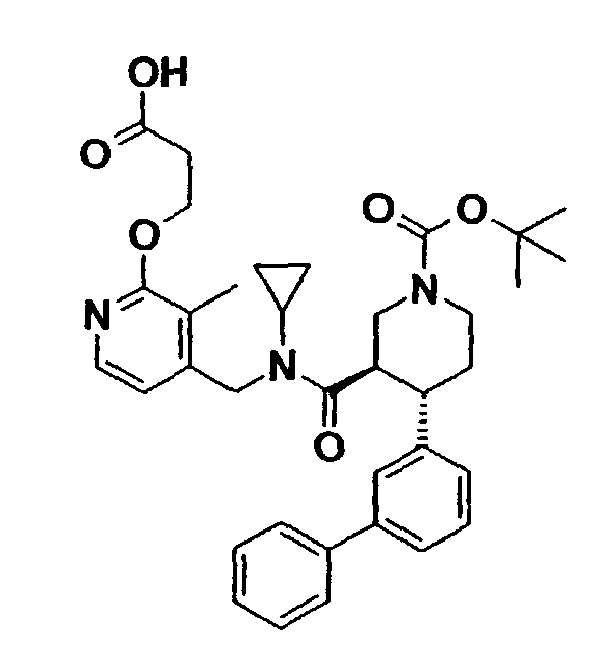
- To a solution of Intermediate 202.1 (50 mg, 0.083 mmol) in CH2Cl2 (1 mL) is added Dess-Martin periodinate (50 mg, 0.12 mmol) at room temperature. After stirred for 40 min, the mixture is diluted with EtOAc, washed with aq. Na2SO3, H2O and brine. The organic layer is dried (Na2SO4), filtered, and concentrated in vacuo. The residue is dissolved in t-BuOH (0.8 mL)-H2O (0.3 mL). To this solution are added 2-methyl-2-butene (0.05 mL, 0.47 mmol), NaH2PO4 (10 mg, 0.083 mmol), and NaClO2 (26 mg, 0.29 mmol) at room temperature. After stirred for 30 min, the mixture is diluted with EtOAc, washed with aq. KHSO4, H2O, and brine. The organic layer is dried (Na2SO4), filtered, and concentrated in vacuo. The residue is purified by silica gel column chromatography to give Intermediate 203.1. Colorless oil; ES-MS: M+H = 614; HPLC: At Ret = 4.34 min.
-

- Intermediate 204.1 is synthesized by coupling of Intermediate 181.3 (170 mg, 0.24 mmol) and 1,2,3,6-tetrahydropyridine (0.033 mL, 0.36 mmol) analogously to the preparation of Intermediate 162.1. White amorphous material; ES-MS: M+H = 645; HPLC: At Ret = 3.20 min.
-

- Intermediate 205.1 is synthesized by hydrolysis of Intermediate 205.2 (84 mg, 0.11 mmol) analogously to the preparation of Intermediate 80.2. White amorphous material; ES-MS: M+H = 742; HPLC: At Ret = 4.39 min.
-

- Intermediate 205.2 is synthesized by coupling of Intermediate 181.3 (100 m g, 0.15 mmol) and 2-(4-bromophenoxy)-2-methyl-Propanoic acid (54 mg, 0.19 mmol) analogously to the preparation of intermediate 175.1. Amorphous material; ES-MS: M+H = 770; HPLC: At Ret = 5.13 min.
-

- Intermediate 181.3 (340 mg, 0.48 mmol), Bis(pinacolato)diboron (242 mg, 0.95 mmol), PdCl2(dppf) (39 mg, 0.07 mmol) and KOAc (187 mg, 2.80 mmol) in DMSO (3.5 mL) are stirred at 80°C for 3h under N2. After cooling to room temperature, the reaction mixture is diluted with AcOEt and washed with brine. The organic layer is dried (Na2SO4), concentrated and purified by silica gel column chromatography to give Intermediate 205.3. White amorphous material; ES-MS: M+H = 690; HPLC: At Ret = 4.99 min.
-

- Intermediate 206.1 is synthesized by hydrolysis of Intermediate 206.2 (130 mg, 0.16 mmol) analogously to the preparation of Intermediate 87.1. White amorphous material; ES-MS: M+1 = 758; HPLC: At Ret = 3.87 min.
-

- Intermediate 181.3 (203 mg, 0.29 mmol), Ethyl 4-(4-bromophenoxy)-3-hydroxybutanoate (see e.g.
U.S. Pat. Appl. Publ. 2002, 2002019539 ), PdCl2(dppf)2 (24 mg, 0.029 mmol) and Na2CO3 (94 mg, 0.89 mmol) in DMF (3 mL) and H2O (0.3 mL) are stirred under N2 at 80°C for 15h. After cooling to room temperature, the reaction mixture is diluted with AcOEt and washed with brine. The organic layer is dried (Na2SO4), concentrated and purified by silica gel column chromatography to give Intermediate 206.2; ES-MS: M+1 = 786; HPLC: At Ret = 4.45 min. -

- Intermediate 207.1 is synthesized by Mitsunobu reaction of Intermediate 42.1 (211 mg, 0.33 mmol) and 2-(1-Methyl-piperidin-4-yl)-ethanol (95 mg, 0.66 mmol) analogously to the preparation of Intermediate 104.1; ES-MS: M = 763; HPLC: At Ret = 4.05 min.
-

- Intermediate 208.1 is synthesized by condensation of Intermediate 1.2 (150 mg, 0.39 mmol) and Intermediate 208.2 (90.5 mg, 0.374 mmol) analogously to the preparation of Intermediate 145.4. White amorphous material; ES-MS: M+H = 605; HPLC: At Ret = 5.35 min.
-

- Intermediate 208.2 is synthesized by amination of intermediate 208.3 (500 mg, 1.88 mmol) and cyclopropylamine (322 mg, 5.64 mmol) analogously to the preparation of Intermediate 167.2: Yellow oil; ES-MS: M+H = 242: At Ret = 3.77 min.
-

- Intermediate 208.3 is synthesized by condensation of 5-bromo-2-chlorophenol (2.0 g, 9.6 mmol) and 1-Bromo-2-methoxyethane (1.6 g, 11.6 mmol) analogously to the preparation of Intermediate 4.8. Colorless oil; ES-MS: M+H = 266; HPLC: AtRet = 4.14 min.
-

- Intermediate 209.1 is synthesized by hydrolysis of Intermediate 209.2 (111 mg, 0.16 mmol) analogously to the preparation of Intermediate 195.1. White powder; ES-MS: M+H = 684; HPLC: At Ret = 4.12 min.
-
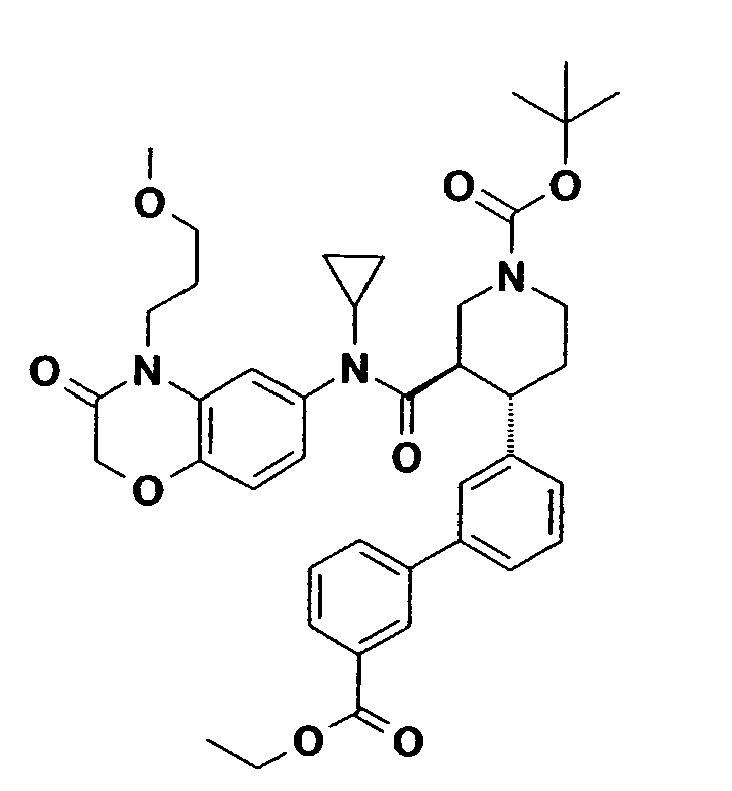
- Intermediate 209.2 is synthesized by condensation of Intermediate 181.3 (142 mg, 0.2 mmol) and 3-ethoxycarbonylphenylboronic acid (58 mg, 0.3 mmol) analogously to the preparation of Intermediate 2.1.; ES-MS: M+H = 712; HPLC: At Ret = 5.03 min.
-

- Intermediate 210.1 is synthesized by condensation of Intermediate 181.3 (142 mg, 0.2 mmol) and 2-fluorophenylboronic acid (42 mg, 0.3 mmol) analogously to the preparation of Intermediate 2.1; ES-MS: M+H = 658; HPLC: At Ret = 4.87 min.
-

- Intermediate 211.1 is synthesized by condensation of Intermediate 1.2 (100 mg, 0.26 mmol) and Intermediate 211.2 (64 mg, 0.26 mmol) analogously to the preparation of Intermediate 145.4. White amorphous material; ES-MS: M+H = 610; HPLC: At Ret = 5.74 min.
-

- Intermediate 211. 2 is synthesized by cyclopropanation of 3-bromo-4-chlorophenylamine (3.60 g, 17.5 mmol) analogously to the preparation of Intermediate 101.4. Yellow oil; ES-MS: M+H = 247; HPLC: At Ret = 4.62 min.
-

- Intermediate 212.1 is synthesized by condensation of Intermediate 1.2 (133 mg, 0.35 mmol) and Intermediate 212.2 (100 mg, 0.37 mmol) analogously to the preparation of Intermediate 145.4. White amorphous material; ES-MS: M+H = 632; HPLC: At Ret = 5.20 min.
-

- Intermediate 212.2 is synthesized by condensation of Intermediate 211.2 (1.00 g, 4.10 mmol) and (3-methoxypropyl)methylamine hydrochloride (667 mg, 4.8 mmol) analogously to the preparation of Intermediate 167.2. White amorphous material; ES-MS: M+H = 269; HPLC: At Ret = 2.80 min.
-

- Intermediate 213.1 is synthesized by hydrolysis of Intermediate 213.2 analogously to the preparation of Intermediate 80.2 White amorphous; ES-MS: M+H =655 ; HPLC: At Ret = 4.22 min.
-

- Intermediate 213.2 is synthesized under coupling condition of Intermediate 127.2 (100 mg, 0.15 mmol) and 4-Bromo-1H-pyrrole-2-carboxylic acid ethyl ester (84 mg, 0.38 mmol) analogously to the preparation of Intermediate 175.1 White amorphous material; ES-MS: M+H =683 ; HPLC: At Ret = 4.89 min.
-

- Intermediate 181.3 (170 mg, 0.24 mmol), 4-cyanobenzeneboronic acid (41 mg, 0.28 mmol), Pd(PPh3)4 (22 mg, 0.024 mmol) and K3PO4 (99 mg, 0.47 mmol) are stirred under N2 at 90°C for 3h. After cooling to room temperature, the reaction mixture is diluted with AcOEt and washed with brine. The organic layer is dried (Na2SO4), concentrated and purified by silica gel column chromatography to give Intermediate 214.1 as white amorphous.; ES-MS: M+H = 665; HPLC: At Ret = 4.59 min.
-

- Intermediate 215.1 is synthesized by coupling of Intermediate 181.3 (129 mg, 0.18 mmol) and 3-cyanobenzeneboronic acid (40 mg, 0.27 mmol) analogously to the preparation of Intermediate 214.1. White amorphous material; ES-MS: M+H = 665; HPLC: At Ret = 4.59 min.
-

- Intermediate 216.1 is synthesized by condensation of Intermediate 1.2 (159 mg, 0.42 mmol) and Intermediate 216.2 (90 mg, 0.42 mmol) analogously to the preparation of Intermediate 145.4. White amorphous material; ES-MS: M+H = 599; HPLC: At Ret = 5.65 min.
-

- Intermediate 216.2 is synthesized by cyclopropanation of intermediate 216.3 (800 mg, 4.1 mmol) analogously to the preparation of Intermediate 101.4. Yellow oil; ES-MS: M+H = 236; HPLC: At Ret = 2.98 min.
-

- Intermediate 216.3 is synthesized by reduction of Intermediate 216.4 (266 mg, 1.00 mmol) analogously to the preparation of Intermediate 37.2. Brown solid; ES-MS: M+H = 197; HPLC: At Ret = 2.19 min.
-

- Intermediate 216.4 is synthesized by alkylation of 5-methyl-2-nitro-phenol (5.0 g, 32.6 mmol) analogously to the preparation of Intermediate 14.4. red solid; ES-MS: M+H = 226; HPLC: At Ret = 4.06 min.
-

- Intermediate 217.1 is synthesized by coupling of Intermediate 181.3 (130 mg, 0.18 mmol) and 3-hydroxybenzeneboronic acid (38 mg, 0.27 mmol) analogously to the preparation of Intermediate 214.1. White amorphous material; ES-MS: M+H = 656; HPLC: At Ret = 4.27 min.
-
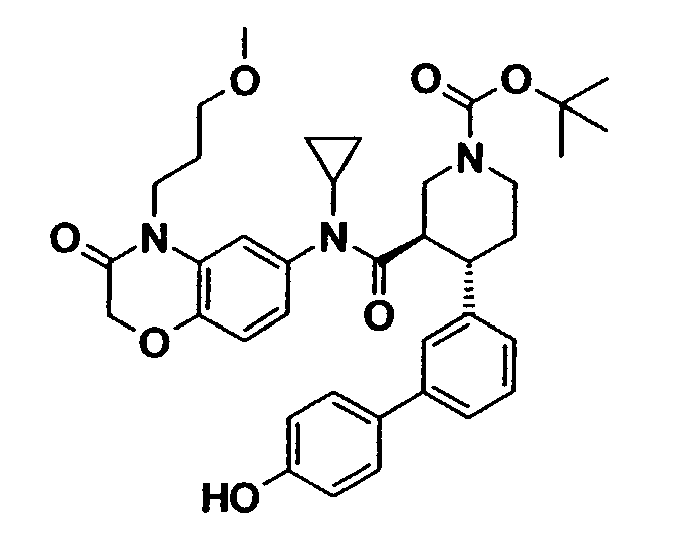
- Intermediate 218.1 is synthesized by coupling of Intermediate 181.3 (167 mg, 0.23 mmol) and 4-hydroxybenzeneboronic acid (49 mg, 0.36 mmol) analogously to the preparation of Intermediate 214.1. White amorphous material; ES-MS: M+H = 656; HPLC: At Ret = 4.20 min.
-

- Intermediate 219.1 is synthesized by coupling of Intermediate 181.3 (300 m g, 0.54 mmol) and Intermediate 192.2 (290 mg, 0.70 mmol) analogously to the preparation of Intermediate 175.1. Amorphous material; ES-MS: M+H = 878; HPLC: At Ret = 5.81 min.
-

- Intermediate 220.1 is synthesized by condensation of Intermediate 1.2 (150 mg, 0.39 mmol) and Intermediate 220.2 (96 mg, 0.39 mmol) analogously to the preparation of Intermediate 145.4. White amorphous material; ES-MS: M+H = 610; HPLC: At Ret = 5.09 min.
-

- Intermediate 220.2 is synthesized by condensation of Intermediate 220.3 (4.20 g, 15.5 mmol) and cyclopropylamine (639 mg, 11.1 mmol) analogously to the preparation of Intermediate 167.2. White amorphous material; ES-MS: M+H = 247; HPLC: At Ret = 3.57 min.
-

- A mixture of 4-bromo-2-fluorobenzonitrile (5.00 g, 25.0 mmol), 3-methoxypropan-1-ol (3.30 g, 38.0 mmol) and K2CO3 (3.50 g, 38 mmol) in DMF (30 mL) is heated at 80°C for 24 h. After adding H2O at RT, the reaction mixture is extracted with EtOAc. The combined organic phases are washed twice with H2O, and dried (MgSO4). Concentration under reduced pressure and silica gel flash chromatography give Intermediate 220.3. White solids; ES-MS: M+H = 270; HPLC: At Ret = 2.40 min.
-

- Intermediate 221.1 is synthesized by condensation of Intermediate 181.3 (142 mg, 0.2 mmol) and 4-fluorophenylboronic acid (34 mg, 0.24 mmol) analogously to the preparation of Intermediate 2.1.; ES-MS: M+H = 658; HPLC: At Ret = 4.82 min.
-

- Intermediate 222.1 is synthesized by condensation of Intermediate 181.3 (142 mg, 0.2 mmol) and 3-fluorophenylboronic acid (34 mg, 0.24 mmol) analogously to the preparation of Intermediate 2.1.; ES-MS: M+H = 658; HPLC: At Ret = 4.84 min.
-

- Intermediate 223.1 is synthesized by condensation of intermediate 185.1 (68 mg, 0.1 mmol) and 3-azetidinecarboxylic acid (11 mg, 0.11 mmol) analogously to the preparation of Intermediate 82.1. Amorphous; ES-MS: M+H = 767; HPLC: At Ret = 3.67 min.
-

- To a solution of Intermediate 4.2 (100 mg, 0.0.26 mmol) in CH2Cl2 (1 mL), 1-chloro-N,N-2-trimethylpropaneamine (133 µL, 1 mmol) is added at 0°C. After stirring at 0°C for 1 h, to the solution are added Intermediate 224.2 (70 mg, 0.26 mmol ) and pyridine ( 0.2 mL ), then stirred for 3h at room temperature. The resulting mixture is diluted with H2O and extracted with EtOAc. The organic layer is washed with brine, dried over Na2SO4, and concentrated. RP-HPLC purification give Intermediate 224.1 as white amorphous; ES-MS: M+H = 632; HPLC: At Ret = 4.60 min.
-

- Intermediate 224.2 is synthesized by condensation of Intermediate 224.3 ( 550 mg, 2.6 mmol) and 2-methoxyethylamine ( 233 mg, 3.1 mmol ) analogously to the preparation of Intermediate 2.3. white solid; ES-MS: M+H = 282; HPLC: At Ret = 2.95 min.
-

- Intermediate 224.3 is synthesized by hydrolysis of Intermediate 224.4 ( 1.5g, 6.6 mmol ) analogously to the preparation of Intermediate 201.2. White solid; ES-MS: M+H = 211; HPLC: At Ret = 3.05 min.
-

- Intermediate 224.4 is synthesized by cyclopropanation of 5-amino-2-chlorobenzoic acid methyl ester ( 2 g, 10.8 mmol ) analogously to the preparation of Intermediate 101.4. White solid; ES-MS: M+H = 225; HPLC: At Ret = 3.84 min.
-

- Intermediate 225.1 is synthesized by coupling of Intermediate 127.2 (150 m g, 0.22 mmol) and Intermediate 225.2 (118 mg, 0.29 mmol) analogously to the preparation of Intermediate 175.1. Amorphous material; ES-MS: M+H = 878; HPLC: At Ret = 5.70 min.
-
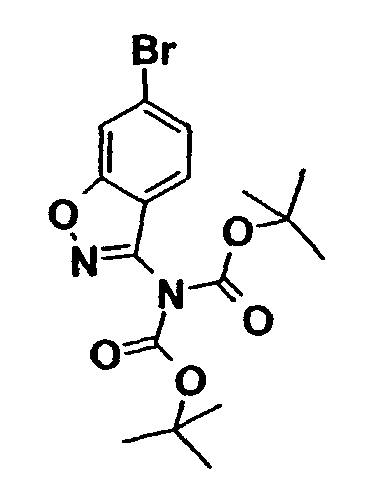
- Intermediate 225.2 is synthesized by protection of 3-Amino-6-bromo-1,2-benzisoxazole (1.0 g, 4.69 mmol) (see e.g.
WO 2000/027199 ) analogously to the preparation of Intermediate 127.3. Amorphous material; ES-MS: M-(Boc) = 314; HPLC: At Ret = 4.93 min. -

- Intermediate 226.1 is synthesized by condensation of Intermediate 4.2 (100 mg, 0.26 mmol) and Intermediate 226.2 (75 mg, 2.6 mmol) analogously to the preparation of Intermediate 2.3. white solid; ES-MS: M+H = 646; HPLC: At Ret = 4.55 min.
-
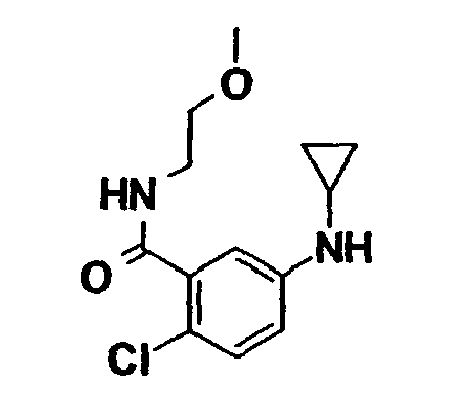
- Intermediate 226.2 is synthesized by condensation of Intermediate 224.3 (550 mg, 2.6 mmol) and 3-methoxypropylamine (278 mg, 3.1 mmol) analogously to the preparation of Intermediate 2.3. white solid; ES-MS: M+H = 282; HPLC: At Ret = 2.72 min.
-

- Intermediate 227.1 is synthesized by condensation of Intermediate 1.2 (420 mg, 1.1 mmol) and Intermediate 172.2 (355 mg, 1.0 mmol) analogously to the preparation of Intermediate 145.4. White amorphous material; ES-MS: M+H = 718; HPLC: At Ret = 5.49 min.
-

- Intermediate 228.1 is synthesized by condensation of Intermediate 75.3 (95 mg, 0.30 mmol) and Intermediate of 120.2 (80 mg, 0.27 mmol) analogously to the preparation of Intermediate 145.4. White powder; ES-MS: M+H = 656; HPLC: At Ret = 4.89 min.
-

- Intermediate 229.1 is synthesized by coupling of Intermediate 205.3 (244 m g, 0.35 mmol) and Intermediate 192.2 (190 mg, 0.46 mmol) analogously to the preparation of Intermediate 175.1. Amorphous material; ES-MS: M-(Boc) = 796; HPLC: At Ret = 5.14 min.
-

- Intermediate 230.1 is synthesized by hydrolysis of Intermediate 230.2 (80 mg, 0.096 mmol) analogously to the preparation of Intermediate 87.1. White amorphous material; ES-MS: M+1 = 758; HPLC: At Ret = 3.87 min.
-

- Intermediate 230.2 is synthesized by coupling of Intermediate 187.2 (220 mg, 0.33 mmol) and Intermediate 230.3 (182 mg, 0.49 mmol) analogously to the preparation of Intermediate 187.2. White amorphous material; ES-MS: M+H = 835; HPLC: At Ret = 4.00 min.
-

- To a solution of 1-Bromo-4-(3-chloropropoxy)benzene (373 mg, 1.49 mmol) (see e.g. Bioorganic & Medicinal Chemistry Letters 2002, 12(21), 3077-3079) and Ethyl isonipecotate (352 mg, 2.24 mmol) in DMF (8 mL) is added K2CO3 (516 mg, 3.73 mmol). After stirring at 100°C for 3h, the reaction mixture is cooled to room temperature and diluted with AcOEt. The resulting mixture is washed with H2O and brine, dried (Na2SO4) and concentrated. Purification by silica gel column chromatography to give Intermediate 230.3 as colorless oil; ES-MS: M = 369; HPLC: At Ret = 2.88 min.
-

- Intermediate 231.1 is synthesized by coupling of Intermediate 187.2 (106 mg, 0.18 mmol) and 6-Bromoindole (46 mg, 0.24 mmol) analogously to the preparation of Intermediate 187.2. White amorphous material; ES-MS: M+H = 661; HPLC: At Ret = 4.92 min.
-
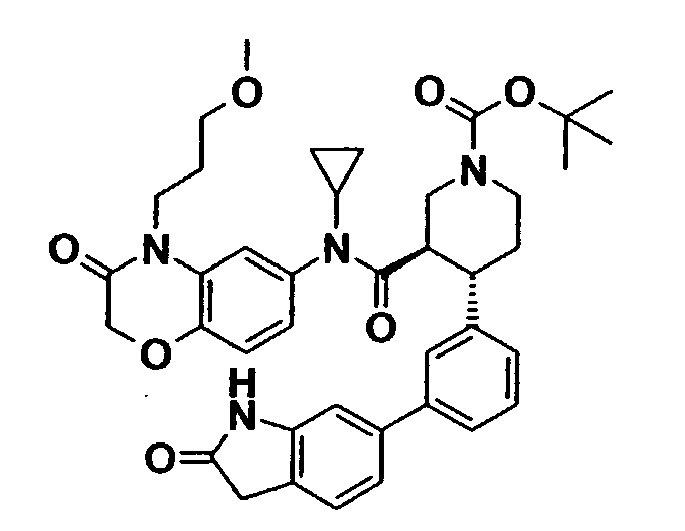
- Intermediate 232.1 is synthesized by coupling of Intermediate 205.3 (129 mg, 0.19 mmol) and 6-Bromooxindole (59 mg, 0.28 mmol) analogously to the preparation of Intermediate 187.2; ES-MS: M+H = 695; HPLC: At Ret = 3.73 min.
-

- Intermediate 233.1 is synthesized by condensation of Intermediate 233.2 (40 mg, 0.15 mmol) and Intermediate 4.2 (62 mg, 0.16 mmol) analogously to the preparation of Intermediate 2.3. white amorphous; ES-MS: M+H = 633; HPLC: At Ret = 5.35 min.
-

- Intermediate 233.2 is synthesized by condensation of Intermediate 233.3 (70 mg, 0.31 mmol) and cyclopropylamine (35 mg, 0.6 mmol) analogously to the preparation of Intermediate 4.5. Yellow oil; ES-MS: M+H = 270; HPLC: At Ret = 2.29 min.
-

- Intermediate 233.3 is synthesized by alkylation of 3-chloro-5-hydroxybenzaldehyde (120 mg, 0.77 mmol) analogously to the preparation of Intermediate 14.4. White solid; ES-MS: M+H = 228; HPLC: At Ret = 3.63 min.
-

- Intermediate 234.1 is synthesized under coupling condition of Intermediate 181.3 (192.6 mg, 0.27 mmol) analogously to the preparation of Intermediate 175.1 White amorphous material; ES-MS: M+H = 564; HPLC: At Ret = 4.07 min.
-

- Intermediate 235.1 is synthesized by condensation of Intermediate 1.2 (210 mg, 0.55 mmol) and Intermediate 235.2 (145 mg, 0.5 mmol) analogously to the preparation of Intermediate 145.4. White amorphous material; ES-MS: M+H = 653; HPLC: At Ret = 5.35 min.
-

- Intermediate 235.2 is synthesized by condensation of Intermediate 235.3 (626 mg, 2.00 mmol) and cyclopropylamine (343 mg, 6.00 mmol) analogously to the preparation of Intermediate 208.2. Yellow oil; ES-MS: M+H = 290; HPLC: At Ret = 4.12 min.
-

- A mixture of 3-fluoro-4-(trifluoromethyl)bromobenzene(3.00 g, 12.35 mmol), 60% NaH (1.48 g, 37.05 mmol) and 3-methoxy-1-propanol (1.67 g, 18.5 mmol) in DMF (80 mL) is stirred at 0°C for 30 min. The reaction mixture is stirred at 60°C for 30 min. After adding H2O, the reaction mixture is extracted with EtOAc. The combined organic phases are washed with brine and dried (MgSO4). Concentration under reduced pressure and silica gel flash chromatography gives Intermediate 235.3: Yellow oil; ES-MS: M+H = 292: At Ret = 4.39 min.
-

- Intermediate 236.1 is synthesized by coupling of Intermediate 205.3 (158 mg, 0.23 mmol) and 2-Hydroxy-5-bromobenzonitrile (68 mg, 0.34 mmol) analogously to the preparation of Intermediate 187.2. White amorphous material; ES-MS: M+H = 681; HPLC: At Ret = 3.87 min.
-

- Intermediate 237.1 is synthesized by coupling of Intermediate 181.3 (146 mg, 0.21 mmol) and 4-Methoxybenzeneboronic acid (47 mg, 0.31 mmol) analogously to the preparation of Intermediate 214.1. White amorphous material; ES-MS: M+H = 670; HPLC: At Ret = 4.55 min.
-

- Intermediate 238.1 is synthesized by coupling of Intermediate 205.3 (161 mg, 0.23 mmol) and 2-Fluoro-4-bromophenol (67 mg, 0.35 mmol) analogously to the preparation of Intermediate 187.2. White amorphous material; ES-MS: M+H = 674; HPLC: At Ret = 3.98 min.
-

- Intermediate 239.1 is synthesized by coupling of Intermediate 205.3 (166 mg, 0.24 mmol) and 6-bromoindole (71 mg, 0.36 mmol) analogously to the preparation of Intermediate 187.2. White amorphous material; ES-MS: M+H = 679; HPLC: At Ret = 4.39 min.
-

- Intermediate 240.1 is synthesized by coupling of Intermediate 205.3 (164 mg, 0.24 mmol) and 2-Hydroxy-4-bromobenzonitrile (71 mg, 0.36 mmol) (see e.g. Synthetic Communications 2004, 34(5), 751-758) analogously to the preparation of Intermediate 187.2. White amorphous material; ES-MS: M+H = 681; HPLC: At Ret = 4.00 min.
-

- Intermediate 242.1 is synthesized by coupling of Intermediate 205.3 (165 mg, 0.24 mmol) and 2-bromophenol (42 mg, 0.24 mmol) analogously to the preparation of Intermediate 187.2. White amorphous material; ES-MS: M+H = 656; HPLC: At Ret = 4.07 min.
-

- Intermediate 241.1 is synthesized by condensation of Intermediate 241.2 ( 100 mg, 0.54 mmol) and Intermediate 4.2 ( 204mg, 0.54 mmol ) analogously to the preparation of Intermediate 2.3. white amorphous; ES-MS: M+H = 550; HPLC: At Ret = 4.70 min.
-

- Intermediate 241.2 is synthesized by condensation of indole-3-carbaldehyde ( 1 g, 6.9 mmol) and cyclopropylamine (1.2 mg, 20 mmol) analogously to the preparation of Intermediate 4.5. brown solid; ES-MS: M+H = 185; HPLC: At Ret = 1.78 min.
-

- Intermediate 243.1 is synthesized by condensation of Intermediate 75.3 (110 mg, 0.35 mmol) and Intermediate 243.2 (100 mg, 0.35 mmol) analogously to the preparation of Intermediate 145.4. ; ES-MS: M+H = 653; HPLC: At Ret = 4.02 min.
-

- A mixture of Intermediate 243.3 (600 mg, 2.5 mmol), Ac2O (470 µL, 5.0 mmol), and NiCl2-6H2O (650 mg, 2.75 mmol) in MeOH (20 mL) is cooled to 0°C, and NaBH4 (660 mg, 17.5 mmol) is added portionwise. After stirred at 0°C for 1 h, then ice is added. The reaction mixture is filtered through Celite pad and extracted with EtOAc. The combined organic phases are washed with brine and dried over Na2SO4. Concentration under reduced pressure and silica gel flash chromatography give Intermediate 243.2 as brown powder; ES-MS: M+H =290; HPLC: At Ret = 1.77 min.
-

- Intermediate 243.3 is synthesized by alkylation of Intermediate 101.3 (610 mg, 3.00 mmol) and chloroacetonitril (210 µL, 3.3 mmol) made analogously to the known method (see e.g. European Journal of Medicinal Chemistry 1998, 33, 957-967. or
EP 432893 -

- Intermediate 244.1 is synthesized by amidation of Intermediate 244.2 (160 mg, 0.21 mmol) analogously to the preparation of Intermediate 190.1. White powder; ES-MS: M+H = 753; HPLC: At Ret = 4.32 min.
-

- Intermediate 244.2 is synthesized by hydrolysis of Intermediate 244.3 (560 mg, 0.72 mmol) analogously to the preparation of Intermediate 195.1. White powder; ES-MS: M = 753; HPLC: At Ret = 4.34 min.
-

- Intermediate 244.3 is synthesized by condensation of Intermediate 244.4 (300 mg, 1.00 mmol) and Intermediate 244.5 (500 mg, 0.66 mmol) analogously to the preparation of Intermediate 175.1. ; ES-MS: M+H = 782; HPLC: At Ret = 5.14 min.
-

- To a mixture of 4-(4,4,5,5-Tetramethyl-1,3,2-dioxaborolan-2-yl)phenol (660 mg, 3.00 mmol) and PPTS (75 mg, 0.3 mmol) in DCM (15 mL) is added 3,4-dihydropyran (820 µl, 9.0 mmol). After refluxed for 2.5 h, the reaction is quenched by the addition of H2O. The resulting mixture is extracted with DCM and EtOAc, and the organic extracts are washed with H2O. The organic layer is dried (Na2SO4) and filtered through Celite pad. After concentration, the residue is purified by silica gel flash chromatography to give Intermediate 244.4 as brown oil; ES-MS: M+H = 305; HPLC: At Ret = 4.64 min.
-

- A mixture of Intermediate 244.6 (440 mg, 0.70 mmol), Tf2O (170 µL, 1.10 mmol) and DIEA (300 µL, 1.80 mmol) in DCM (5 mL) is stirred at -78°C for 0.5 h. After adding H2O, the reaction mixture is extracted with DCM and EtOAc, and the combined organic phases are washed with H2O. The organic layer is dried over Na2SO4 and filtered through Celite and silica pad. Concentration under reduced pressure gives Intermediate 244.5 as colorless amorphous ; ES-MS: M+H = 754; HPLC: At Ret = 4.65 min.
-

- Intermediate 244.6 is synthesized by condensation of intermediate 158.4 (600 mg, 1.90 mmol) and Intermediate 190.4 (600 mg, 1.90 mmol), followed by hydrolysis analogously to the preparation of Intermediate 145.3 & 4. White powder; ES-MS: M+H = 622; HPLC: At Ret = 3.72 min.
-

- Intermediate of 245.1 is synthesized by condensation of Intermediate 75.3 (130 mg, 0.40 mmol) and Intermediate 245.2 (110 mg, 0.40 mmol) analogously to the preparation of Intermediate 145.4. White powder; ES-MS: M+H = 636; HPLC: At Ret = 5.14 min.
-

- Intermediate 245.2 is synthesized by alkylation of Intermediate 245.3 (750 mg, 3.40 mmol) and toluene-4-sulfonic acid 3-methoxy-propyl ester (810 µL, 3.74 mmol) analogously to the known method (see e.g. European Journal of Medicinal Chemistry 1998, 33, 957-967. or
EP 432893 -

- To a solution of Intermediate 245.4 in EtOH (15 mL) and aqueous NH4Cl (5 mL), zinc powder (1.12 g, 17.2 mmol) is added at RT under N2. After stirring at 80°C for 6 h, the reaction mixture is filtered through Celite pad. The mixture is extracted with EtOAc. The combined organic phases are washed with H2O and dried over Na2SO4. Concentration under reduced pressure gives Intermediate 245.3 as orange powder; ES-MS: M+H = 201; HPLC: At Ret = 2.27 min.
-

- A mixture of Intermediate 245.5 (880 mg, 3.44 mmol), methyl acrylate (470 mL, 5.20 mmol), Pd(OAc)2 (46 mg, 0.20 mmol), (o-Tol)3P (104 mg, 0.34 mmol), and Et3N (1.44 mL, 10.3 mmol) in toluene (15 mL) is stirred at 70°C under N2 for 3 h. After adding H2O, the reaction mixture is extracted with Et2O. The combined organic phases are washed with H2O and dried over Na2SO4. The organic layer is filtered through Celite and silica pad to give Intermediate 245.4 as orange oil; ES-MS: M+H = 263; HPLC: At Ret = 3.63 min.
-

- Intermediate 245.5 is synthesized by cyclopropanation of 4-bromo-3-nitroaniline (3.04 g, 14.0 mmol) analogously to the preparation of intermediate 101.4. Orange oil; ES-MS: M+H = 258; HPLC: At Ret = 3.82 min.
-

- Intermediate 246.1 is synthesized under coupling condition of Intermediate 181.3 (100 mg, 0.14 mmol) and cyclopropylboronic acid (60.3 mg, 0.7 mmol) analogously to the preparation of Intermediate 175.1 White amorphous material;ES-MS: M+H =604 ; HPLC: At Ret = 4.45 min.
-

- Intermediate 247.1 is synthesized by condensation of Intermediate 1.2 (20 mg, 0.05 mmol) and Intermediate 247.2 (16 mg, 0.05 mmol) analogously to the preparation of Intermediate 2.3. White amorphous material; ES-MS: M+H = 667; HPLC: At Ret = 5.39 min.
-

- A mixture of 3-fluoro-5-(trifluoromethyl)benzylbromide (1.00 g, 3.9 mmol), potassium carbonate (1.62 g, 11.7 mmol), cyclopropylamine (223 mg, 39 mmol) in DMF (15 mL) is stirred at 60°C for 1 h. The mixture is filtered, and the filtrate is added to a suspension of 60% NaH (312 mg, 7.8 mmol) and 3-methoxy-1-propanol (417 mg, 4.68 mmol) in DMF (30 ml) at 0°C over 10 min. The reaction mixture is stirred for 5 h at 60°C. After adding H2O, the reaction mixture is extracted with EtOAc. The combined organic phases are washed with water and brine and dried (MgSO4). Concentration under reduced pressure and silica gel flash chromatography give Intermediate 247.2: Yellow oil; ES-MS: M+H = 304: At Ret = 2.47 min.
-

- Intermediate 248.1 is synthesized by coupling of Intermediate 205.3 (205 mg, 0.30 mmol) and 2-Fluoro-4-bromobenzonitrile (89 mg, 0.45 mmol) analogously to the preparation of Intermediate 187.2. White amorphous material; ES-MS: M+H = 683; HPLC: At Ret = 4.42 min.
-

- Intermediate 249.1 is synthesized by coupling of Intermediate 181.3 (214 mg, 0.30 mmol) and 4-Trifluoromthylbenzeneboronic acid (87 mg, 0.45 mmol) analogously to the preparation of Intermediate 214.1. White amorphous material; ES-MS: M+H = 708; HPLC: At Ret = 4.92 min.
-

- Intermediate 250.1 is synthesized by coupling of Intermediate 250.2 (197 mg, 0.26 mmol) and 4-hydroxybenzeneboronic acid (55 mg, 0.40 mmol) analogously to the preparation of Intermediate 214.1. White amorphous material; ES-MS: M+H = 692; HPLC: At Ret = 4.32 min.
-

- Intermediate 250.2 is synthesized by Intermediate 250.3 (1.5 g, 2.44 mmol) and trifluoromethanesulfonic anhydride (824 mg, 2.92 mmol) analogously to the preparation of 181.3. White amorphous material; ES-MS: M+H = 748; HPLC: At Ret = 4.85 min.
-

- Intermediate 250.3 is synthesized by condensation of Intermediate 149.2 (1.6 g, 5.12 mmol) and intermediate 158.4 (1.8 g, 5.63 mmol) analogously to the preparation of Intermediate 145.4. White amorphous material; ES-MS: M+H = 616; HPLC: Ct Ret = 2.04 min.
-

- Intermediate 251.1 is synthesized by coupling of Intermediate 181.3 (171 mg, 0.24 mmol) and 2,5-Difluorobenzeneboronic acid (57 mg, 0.36 mmol) analogously to the preparation of Intermediate 214.1. White amorphous material; ES-MS: M+H = 676; HPLC: At Ret = 4.64 min.
-

- Intermediate 252.1 is synthesized by coupling of Intermediate 252.2 (265 mg, 0.31 mmol) and Phenylboronic acid (56 mg, 0.50 mmol) analogously to the preparation of Intermediate 214.1. White amorphous material; ES-MS: M+H = 786; HPLC: At Ret = 5.57 min.
-

- Intermediate 252.2 is synthesized by reaction of Intermediate 252.3 (360 mg, 0.50 mmol) analogously to the preparation of Intermediate 181.3; ES-MS: M+H = 859; HPLC: At Ret = 5.50 min.
-

- Intermediate 252.3 is synthesized by reaction of Intermediate 252.4 (459 mg, 0.98 mmol) and Intermediate 101.2 (285 mg, 1.03mmol) analogously to the preparation of Intermediate 145.4; ES-MS: M+H = 726; HPLC: At Ret = 4.57 min.
-

- Intermediate 252.4 is synthesized by epimerization and hydrolysis of Intermediate 153.5 (340 mg, 0.71 mmol) analogously to the preparation of Intermediate 4.2. White powder; ES-MS: M+H = 468; HPLC: AtRet = 4.39 min.
-

- Intermediate 253.1. is synthesized by Mitsunobu reaction of Intermediate 253.2 (200 mg, 0.353 mmol) and 1-piperidineethanol (0.59 mg, 0.46 mmol) analogously to the preparation of Intermediate 77.1 White amorphous; ES-MS: M = 677; HPLC: At Ret = 3.52 min.
-

- Intermediate 253.2 is synthesized by condensation of Intermediate 145.5 (250 mg, 1.35 mmol) and Intermediate 1.2 (535mg, 1.35 mmol) analogously to the preparation of Intermediate 2.3. white amorphous; ES-MS: M+H = 566; HPLC: At Ret = 4.05 min.
-

- Intermediate 254.1 is synthesized by Mitsunobu reaction of Intermediate 145.3 (231 mg, 0.353 mmol) and 1-piperidineethanol (0.59 mg, 0.46 mmol) analogously to the preparation of Intermediate 77.1. White amorphous; ES-MS: M = 767; HPLC: At Ret = 3.38 min.
-

- Intermediate 255.1 is synthesized by hydrolysis of Intermediate 255.2 (100 mg, 0.136 mmol) analogously to the preparation of Intermediate 201.1. White amorphous; ES-MS: M = 721; HPLC: At Ret = 3.43 min.
-

- To a solution of Intermediate 255.3 ( 170 mg, 0.26 mmol) and methyl prolinate ( 90 mg, 0.54 mmol) in DMF ( 1 mL) are added K2CO3 ( 150 mg, 1.08 mmol) and KI ( 20 mg, 0.12mmol ), then the mixture is stirred for 21 h at 80°C. After cooling to room temperature, the reaction mixture is diluted with EtOAc and washed with brine. The organic layer is dried (Na2SO4), concentrated and purified by RP-HPLC to give Intermediate TA169.2; ES-MS: M+1 =735; HPLC: At Ret = 3.57 min.
-

- To a solution of Intermediate 253.2 ( 150 mg, 0.27 mmol) and 3-iodo-1-chloropropane ( 83.6 mg, 0.41 mmol) in DMF ( 1 mL) are added K2CO3 ( 44 mg, 0.32 mmol), then the mixture is stirred for 13h at room temperature. The reaction mixture is diluted with EtOAc and washed with brine. The organic layer is dried (Na2SO4), concentrated and purified by silica gel column chromatography to give Intermediate 255.3; ES-MS: M+1 =642; HPLC: At Ret = 4.97 min.
-

- Intermediate 256.1 is synthesized by coupling of Intermediate 205.3 (210 mg, 0.30 mmol) and 4-Bromo-3-fluorophenol (87 mg, 0.46 mmol) analogously to the preparation of Intermediate 187.2. White amorphous material; ES-MS: M+H = 674; HPLC: At Ret = 3.98 min.
-

- Intermediate 257.1 is synthesized by coupling of Intermediate 205.3 (147 mg, 0.21 mmol) and 6-Bromo-2,3-dihydroisoindol-1-one (83 mg, 0.32 mmol) (see e.g.
WO2005073205 ) analogously to the preparation of Intermediate 187.2.; ES-MS: M+H = 695; HPLC: At Ret = 3.57 min. -

- Intermediate 258.1 is synthesized by coupling of Intermediate 181.3 (219 mg, 0.31 mmol) and 4-Trifluoromethoxybenzeneboronic acid (95 mg, 0.46 mmol) analogously to the preparation of Intermediate 214.1. White amorphous material; ES-MS: M+H = 724; HPLC: At Ret = 5.00 min.
-

- Intermediate 259.1 is synthesized by coupling of Intermediate 181.3 (197 mg, 0.28 mmol) and 3-Fluoro-4-methoxybenzeneboronic acid (71 mg, 0.42 mmol) analogously to the preparation of Intermediate 214.1. White amorphous material; ES-MS: M+H = 688; HPLC: At Ret = 4.50 min.
-

-

- Intermediate 261.1 is synthesized by reduction of Intermediate 244.2 (160 mg, 0.21 mmol) analogously to the preparation of Intermediate 191.1. White powder; ES-MS: M+H = 740; HPLC: At Ret = 4.53 min.
-

- Intermediate 262.1 is synthesized by condensation of Intermediate 75.3 (47 mg, 0.15 mmol) and Intermediate 262.2 (40 mg, 0.15 mmol) analogously to the preparation of Intermediate 145.4. ; ES-MS: M+H = 638; HPLC: At Ret = 4.53 min.
-

- Intermediate 262.2 is synthesized by alkylation of Intermediate 262.3 (85 mg, 0.42 mmol) and toluene-4-sulfonic acid 3-methoxy-propyl ester (100 µL, 0.46 mmol) analogously to the known method (see e.g. European Journal of Medicinal Chemistry 1998, 33, 957-967. or
EP 432893 -

- A mixture of Intermediate 245.4 (130 mg, 0.50 mmol) and NiCl2-6H2O (120 mg, 0.50 mmol) in MeOH (5 mL) is cooled to 0°C and NaBH4 (113 mg, 3.0 mmol) is added portionwise. The resulting solution is stirred at 0°C for 2 h, then at 60°C for 21 h. The reaction mixture is diluted with H2O and extracted with EtOAc. The combined organic phases are washed with H2O and dried over Na2SO4. Concentration under reduced pressure and silica gel flash chromatography give Intermediate 262.3 as brown powder; Rf = 0.2 (EtOAc:n-Hex = 1:1) ;1H NMR (CDCl3), δ: 0.48-0.52 (2H, m), 0.71-0.75 (2H, m), 2.37-2.42 (1H, m), 2.60 (1H, t), 2.86 (2H, t), 4.15 (1H, s), 6.18 (1H, d), 6.38-6.41 (1H, m), 6.95 (1H, d), 7.31 (1H, s).
-

- Intermediate 263.1 is synthesized by condensation of Intermediate 181.3 (151 mg, 0.2 mmol) and 3-chlorophenylboronic acid (47 mg, 0.30 mmol) analogously to the preparation of Intermediate 2.1.; ES-MS: M+H = 674; HPLC: At Ret = 4.89 min.
-

- Intermediate 264.1 is synthesized by condensation of Intermediate 75.3 (66 mg, 0.17 mmol) and Intermediate 264.2 (51 mg, 0.16 mmol) analogously to the preparation of Intermediate 145.4. ; ES-MS: M+H = 689; HPLC: At Ret = 5.68 min.
-

- Intermediate 264.2 is prepared by the same methodology described for Intermediate 243.2. Colorless amorphous; ES-MS: M+H = 326; HPLC: At Ret = 2.87 min.
-

- Intermediate 264.3 is synthesized by alkylation of Intermediate 149.3 (610 mg, 3.00 mmol) and chloroacetonitril (210 µL, 3.3 mmol) analogously to the known method (see e.g. European Journal of Medicinal Chemistry 1998, 33, 957-967. or
EP 432893
ES-MS: M+H = 280; HPLC: At Ret = 3.52 min. -

- Intermediate 265.1 is synthesized by condensation of Intermediate 75.3 (153 mg, 0.40 mmol) and Intermediate 265.2 (110 mg, 0.40 mmol) analogously to the preparation of Intermediate 145.4. ; ES-MS: M+H = 640; HPLC: At Ret = 4.70 min.
-

- Intermediate 265.2 is synthesized by alkylation of Intermediate 101.3 (204 mg, 1.00 mmol) and bromoethyl ethyl ether (124 µL, 1.1 mmol) analogously to a known method (see e.g. European Journal of Medicinal Chemistry 1998, 33, 957-967. or
EP 432893 -

- Intermediate 266.1 is synthesized by the Suzuki coupling of 250.2 (175 mg, 0.27 mmol) and 2-fluorophenylboronic acid (57.6 mg, 0.41 mmol) analogously to the preparation of Intermediate 2.1: White amorphous material; ES-MS: M+H = 694; HPLC: At Ret = 5.03 min.
-

- Intermediate 267.1 is synthesized by the Suzuki coupling of 267.2 (200 mg, 0.27 mmol) and 2-fluorophenylboronic acid (57.6 mg, 0.41 mmol) analogously to the preparation of Intermediate 2.1. White amorphous material; ES-MS: M+H = 674; HPLC: At Ret = 4.75 min.
-

- Intermediate 267.2 is synthesized by condensation of Intermediate 267.3 (2.0 g, 3.34 mmol) analogously to the preparation of Intermediate 29.4. White amorphous material; ES-MS: M+H = 728; HPLC: At Ret = 4.56 min.
-

- Intermediate 267.3 is synthesized by condensation of Intermediate 158.4 (1.76 g, 5.48 mmol) and Intermediate 120.2 (1.68 g, 5.75 mmol) analogously to the preparation of Intermediate 145.4. Amorphous material; ES-MS: M+H = 596; HPLC: At Ret = 3.59 min.
-

- Intermediate 268.1 is synthesized by coupling of Intermediate 205.3 (200 m g, 0.35 mmol) and Intermediate 127.2 (112 mg, 0.38 mmol) analogously to the preparation of Intermediate 175.1. Amorphous material; ES-MS: M-(Boc) = 780; HPLC: At Ret = 4.67 min.
-

- Intermediate 269.1 is synthesized by condensation of Intermediate 75.3 (252 mg, 0.660 mmol) and intermediate 269.2 (181 mg, 0.660 mmol) analogously to the preparation of Intermediate 2-1. White amorphous material; (LC/MS): [M+H]+ = 638; HPLC: ct Ret = 2.42 min
-

- Intermediate 269.2 is synthesized by alkylation of intermediate 101.3 (300 mg, 1.47 mmol) and 1-bromo-pentane (333 mg, 2.21 mmol) analogously to the known method (see e.g. European Journal of Medicinal Chemistry 1998, 33, 957-967. or
EP 432893 -

- A mixture of Intermediate 270.2 (113.9 mg, 0.14 mmol) and 1N TBAF (0.21 mL in THF, 2.1 mmol) in THF (1 mL) is stirred at 80 °C. After stirring overnight, adding MeOH, Concentration under reduced pressure and silica gel flash chromatography of the residue (hexane/ethyl acetate) affords intermediate 270.1 as amorphous; ES-MS: M+H =674 ; HPLC: At Ret = 4.00min.
-

- Intermediate 270.2 is synthesized by couplimg of Intermediate 270.3 (284.6 mg, 0.33 mmol) and 2-Fluorophenylboronic acid (22.6 mg, 0.13mmol) analogously to the preparation of Intermediate 2.1 White amorphous material; ES-MS: M+H = 804; HPLC: At Ret = 5.53min.
-

- Intermediate 270.3 is synthesized by sulfonylation of Intermediate 270.4 (341 mg, 0.46 mmol) analogously to the preparation of Intermediate 29.4 White amorphous material; ES-MS: M+H = 858; HPLC: At Ret = 5.49 min.
-

- Intermediate 270.4 is synthesized by hydrolysis of Intermediate 270.5 analogously to the preparation of Intermediate 80.2 White amorphous material; ES-MS: M+H = 726; HPLC: At Ret = 4.57 min.
-

- Intermediate 270.5 is synthesized by condensation of Intermediate 252.4 (506.5 mg, 1.08 mmol) analogously to the preparation of 145.4 as amorphous; ES-MS: M+H =826 ; HPLC: At Ret = 5.50 min.
-

- Intermediate 271.1 is synthesized by condensation of Intermediate 75.3 (95 mg, 0.25 mmol) and Intermediate 271.2 (75 mg, 0.25 mmol) analogously to the preparation of Intermediate 145.4. ; ES-MS: M+H = 669; HPLC: At Ret = 4.17 min.
-

- Intermediate 271.2 is prepared by the same methodology described for Intermediate 243.2 ES-MS: M+H = 306; HPLC: At Ret = 2.45 min.
-
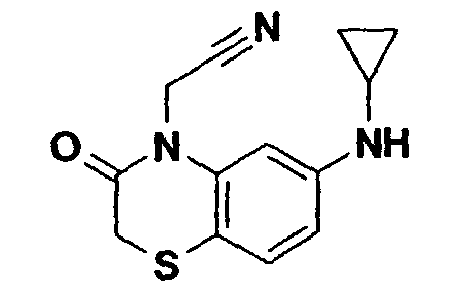
- Intermediate 271.3 is synthesized by alkylation of Intermediate 120.3 (330 mg, 1.50 mmol) and chloroacetonitril (114 µL, 1.8 mmol) analogously to the known method (see e.g.European Journal of Medicinal Chemistry 1998, 33, 957-967. or
EP 432893 -

- Intermediate 272.1 is synthesized by condensation of Intermediate 272.2 (72 mg, 0.11 mmol) and 2M solution of ethylamine in THF (112 µL, 0.22 mmol) analogously to the preparation of Intermediate 82.1. Amorphous; ES-MS: M+H = 669; HPLC: At Ret = 4.39 min.
-

- Intermediate 272.2 is synthesized by intramolecular condensation analogously to the preparation of Intermediate 82.1. Amorphous; ES-MS: M+H = 642; HPLC: At Ret = 4.22 min.
-

- Intermediate 272.3 is synthesized by hydrolysis of Intermediate 272.4 (350 mg, 0.52 mmol) analogously to the preparation of Intermediate 195.1. Yellow powder; ES-MS: M = 660; HPLC: At Ret = 3.84 min.
-

- Intermediate 272.4 is synthesized by condensation of Intermediate 75.3 (350 mg, 0.91 mmol) and Intermediate 272.5 (320 mg, 1.00 mmol) analogously to the preparation of Intermediate 145.4. ; ES-MS: M+H = 670; HPLC: At Ret = 4.75 min.
-

- Intermediate 272.4 is synthesized by alkylation of Intermediate 120.3 (330 mg, 1.50 mmol) and ethyl chloroacetate (193 µL, 1.8 mmol) analogously to the known method (see e.g.European Journal of Medicinal Chemistry 1998, 33, 957-967. or
EP 432893 -

- Intermediate 273.1 is synthesized by condensation of Intermediate 272.2 (80 mg, 0.13 mmol) and 2,2,2-trifluoromethylamine (20 µl, 0.25 mmol) analogously to the preparation of Intermediate 82.1. Amorphous; ES-MS: M+H = 667; HPLC: At Ret = 4.64 min.
-
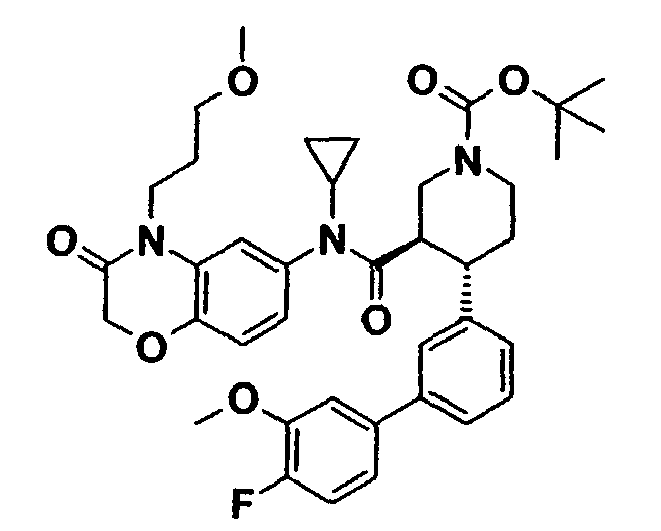
- To a solution of Intermediate 274.2 (40 mg, 0.059 mmol) and iodomethane (17 mg, 0.118 mmol) in DMF (1 mL) are added K2CO3 (16 mg, 0.118 mmol), then the mixture is stirred for 19h at 50°C. The reaction mixture is diluted with EtOAc and washed with brine. The organic layer is dried (Na2SO4), concentrated and purified by silica gel column chromatography to give Intermediate 274.1; ES-MS: M+1 =688; HPLC: At Ret = 4.53 min.
-

- Intermediate 274.2 is synthesized by coupling of Intermediate 181.3 (150 m g, 0.22 mmol) and 5-bromo-2-fluorophenol ( 81 mg, 0.0.42 mmol) analogously to the preparation of Intermediate 201.2. Amorphous material; ES-MS: M+1 = 674; HPLC: At Ret = 4.03 min.
-

-

- Intermediate 276.1 is synthesized by coupling of Intermediate 181.3 (150 m g, 0.22 mmol) and intermediate 276.2 ( 72 mg, 0.3 mmol ) analogously to the preparation of intermediate 201.2. White amorphous; ES-MS: M = 674; HPLC: At Ret = 3.98 min.
-

- To a solution of tert-Butyl-(4-fluorophenoxy)dimethylsilane (700 mg, 3.09 mmol) and TMEDA (534 mg, 4.6 mmol ) are added n-butyllithium (1.6M in THF, 4.6 mmol) at -78°C. After stirring for 2h at -78°C, I2 ( 3.8 g, 15 mmol) in THF (7.5 mL) is added dropwise, then the mixture is warm up to room temperature. After stirring for 1h, the resulting mixture is added aqueous KHSO4, then diluted with Et2O and washed with H2O and brine. The organic layer is dried (Na2SO4), concentrated under reduced pressure. The residue is treated with TBAF (1.0M in THF, 5 mmol) and stirred for 2h at room temperature. Concentration under reduced pressure and RP-HPLC purification give Intermediate 276.2 as a colorless oil; 1H NMR (CDCl3), δ: 6.74-6.78 (1H, m), 7.05 (1H, dd), 7.16 (1H, dd), 9.65 (1H, s); HPLC: At Ret = 3.02 min.
-

- Intermediate 277.1 is synthesized by coupling of Intermediate 181.3 (150 m g, 0.22 mmol) and 277.2 ( 72 mg, 0.3 mmol ) analogously to the preparation of Intermediate 201.2. White amorphous; ES-MS: M = 674; HPLC: At Ret = 3.95 min.
-


- Intermediate 277.2 is synthesized by iodation of tert-Butyl-(2-fluorophenoxy)dimethylsilane ( 1.9 g, 8.4 mmol ) analogously to the preparation of Intermediate 276.2. colorless oil; 1H NMR (CDCl3), δ: 6.83 (1H, dt), 6.98 (1H, dt), 7.22-7.25 (1H, m), 10.18 (1H, s); HPLC: At Ret = 3.00 min.
-

- Intermediate 278.1 is synthesized by coupling reaction of Intermediate 181.3 (100 mg, 0.14 mmol) and 3-methoxybenzeneboronic acid (42 mg, 0.28 mmol) analogously to the preparation of Intermediate 2.1. White amorphous; ES-MS: M+H = 670; HPLC: At Ret = 4.53 min.
-

- Intermediate 279.1 is synthesized by coupling of Intermediate 205.3 (115 mg, 0.17 mmol) and 5-Bromo-oxindole (53 mg, 0.25 mmol) analogously to the preparation of Intermediate 187.2.; ES-MS: M+H = 695; HPLC: At Ret = 3.63 min.
-

- A mixture of Intermediate 280.2 (71.6 mg, 0.11 mmol), K2CO3 (110 mg, 0.80 mmol) and Mel (15.8 µL, 0.25 mmol) in DMF (3 mL) is stirred at RT. After stirring for a few minutes, adding H2O at RT, the reaction mixture is extracted with EtOAc. The combined organic phases are washed with H2O, dried (Na2SO4). Concentration under reduced pressure and silica gel flash chromatography of the residue (hexane/ethyl acetate) affords intermediate 279.1 as amorphous; ES-MS: M+H =688 ; HPLC: At Ret = 4.55 min.
-
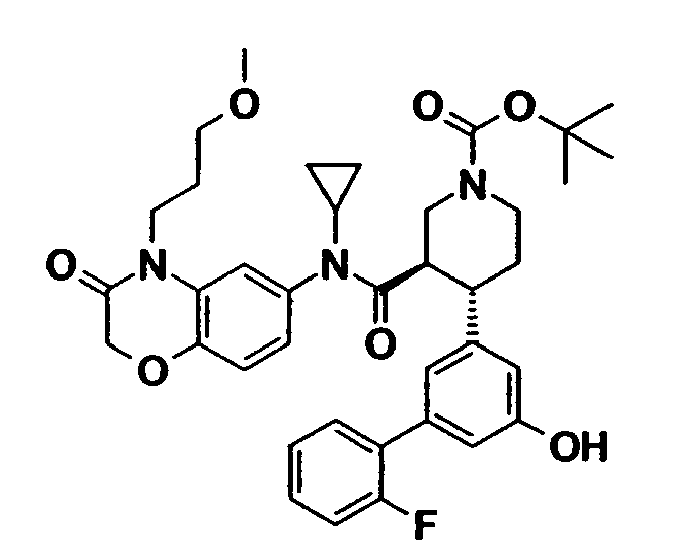
- A mixture of Intermediate 280.3 (113.9 mg, 0.14 mmol) and 1N TBAF (0.21 mL in THF, 2.1 mmol) in THF (1 mL) is stirred at 80 °C. After stirring overnight, MeOH is added. Concentration under reduced pressure and silica gel flash chromatography of the residue (hexane/ethyl acetate) affords intermediate 280.2 as amorphous; ES-MS: M+H =674 ; HPLC: At Ret = 4.00min.
-

- Intermediate 280.3 is synthesized by coupling of Intermediate 252.2 (284.6 mg, 0.33 mmol) and 2-Fluorophenylboronic acid (22.6 mg, 0.13mmol) analogously to the preparation of Intermediate 2.1 White amorphous material; ES-MS: M+H = 804; HPLC: At Ret = 5.53min.
-

- Intermediate 281.1 is synthesized by the Suzuki coupling of intermediate 267.2 (200 mg, 0.27 mmol) and 3-hydroxyphenylboronic acid (56.0 mg, 0.41 mmol) analogously to the preparation of Intermediate 2.1. White amorphous material; ES-MS: M+H = 672; HPLC: At Ret = 4.09 min.
-

- Intermediate 282.1 is synthesized by coupling of Intermediate 205.3 (140 mg, 0.20 mmol) and Intermediate 282.2 (69 mg, 0.31 mmol) analogously to the preparation of Intermediate 187.2; ES-MS: M+H = 709; HPLC: At Ret = 3.93 min.
-

- To a solution of 6-Bromooxindole (202 mg, 0.95 mmol) and K2CO3 (395 mg, 2.86 mmol) in acetone (3 mL) is added lodomethane (0.12 mL, 1.90 mmol). After stirring at room temperature for 13h, the reaction mixture is diluted with CH2Cl2 and washed with H2O. The organic layer is concentrated and purified by silica gel column chromatography to give Intermediate 282.2; ES-MS: M+H = 227; HPLC: At Ret = 2.88 min.
-

- Intermediate 283.1 is synthesized by Suzuki coupling of intermediate 250.2 (175 mg, 0.27 mmol) and 3-hydroxyphenylboronic acid (56.0 mg, 0.41 mmol) analogously to the preparation of Intermediate 2.1. White amorphous material; ES-MS: M+H = 692; HPLC: At Ret = 4.37 min.
-

- Intermediate 284.1 is synthesized by coupling of Intermediate 250.2 (159 mg, 0.21 mmol) and 4-Methoxybenzeneboronic acid (48 mg, 0.32 mmol) analogously to the preparation of Intermediate 214.1. White amorphous material; ES-MS: M+H = 706; HPLC: At Ret = 4.93 min.
-

- Intermediate 285.1 is synthesized by coupling of Intermediate 181.3 (198mg, 0.28 mmol) and 3-Acetamidobenzeneboronic acid (75 mg, 0.42 mmol) analogously to the preparation of Intermediate 214.1. White amorphous material; ES-MS: M+H = 697; HPLC: At Ret = 3.85 min.
-

- Intermediate 286.1 is synthesized by condensation of Intermediate 1.2 (57 mg, 0.15 mmol) and Intermediate 286.2 (40 mg, 0.15 mmol) analogously to the preparation of Intermediate 2.3. White amorphous material; ES-MS: M+H = 631; HPLC: At Ret = 5.30 min.
-

- A mixture of Intermediate 286.3 (100 mg), 3-(p-toluenesulfonyloxy)propylmethyl ether (150 mg, 0.61 mmol), 60% NaH (22.4 mg, 0.56 mmol) and KI (5 mg, 0.05 mmol) in DMF is stirred at 0°C for 20 min. The resulting mixture is warmed up to r.t. and is stirred for 2 h. After adding water, the reaction mixture is extracted with EtOAc. The combined organic phases are washed with water and dried (MgSO4). Concentration under reduced pressure and preparative TLC purification gives Intermediate 286.2 yellow oil; ES-MS: M+H = 268; HPLC: At Ret = 2.22 min.
-

- To a solution of Intermediate 286.4 (500 mg, 2.08 mmol) in THF (10 ml) is added sec-BuLi (1.0M in cyclohexane, 4.16 mmol) at -78°C. The reaction mixture is stirred for 2h. After adding DMF (0.79 ml, 8.32 mmol), the resulting mixture is warmed up to r.t. and is stirred for 30 min. The reaction mixture is poured into sat. NH4Claq and is extracted with EtOAc. washed with water and brine and dried (MgSO4). Concentration under reduced pressure and the evaporated residue is dissolved in dichloromethane (8 ml), MeOH (2 ml) and AcOH (2 ml) then stirred at r.t. for 2.5 h. After neutralized with 1 M KOHaq , the reaction mixture is extracted with EtOAc. The combined organic phases are washed with sat. NaHCO3 aq., brine and dried (MgSO4). The evaporated residue is treated with TBAF (1.0M in THF, 4 mmol). Concentration under reduced pressure and silica gel flash chromatography gives Intermediate 286.3 colorless crystals; ES-MS: M+H = 310; HPLC: At Ret = 3.29 min.
-

- A mixture of 4-fluoro-3-methylphenol (2.0 g, 15.9 mmol), TBDMSCI (2.27g, 15.1 mmol) and imidazole (1.1 g, 15.9 mmol) in DMF (8 mL) is stirred at RT for 30 min. The reaction mixture is extracted with ether. The combined organic phases are washed three times with H2O, brine and dried (MgSO4). Concentration under reduced pressure and silica gel flash chromatography gives Intermediate 286.4. Colorless oil; HPLC: At Ret = 5.45 min, TLC: Rf = 0.6 (hexane).
-

- Intermediate 288.1 is synthesized by condensation of Intermediate 181.3 (178 mg, 0.25 mmol) and 4-chlorophenylboronic acid (59 mg, 0.38 mmol) analogously to the preparation of Intermediate 2.1. ; ES-MS: M+H = 674; HPLC: At Ret = 4.90 min.
-

- Intermediate 287.1 is synthesized by condensation of Intermediate 205.3 (150 mg, 0.22 mmol) and 3-bromo-5-fluorophenol (62 mg, 0.32 mmol) analogously to the preparation of Intermediate 145.4. White amorphous material; ES-MS: M+H = 674; HPLC: Ct Ret = 2.03 min.
-

- Intermediate 289.1 is synthesized by condensation of Intermediate 289.2 (58 mg, 0.21 mmol) and Intermediate 4.2 (80 mg, 0.21 mmol) analogously to the preparation of Intermediate 2.3. white amorphous; ES-MS: M+H = 647; HPLC: At Ret = 5.00 min.
-
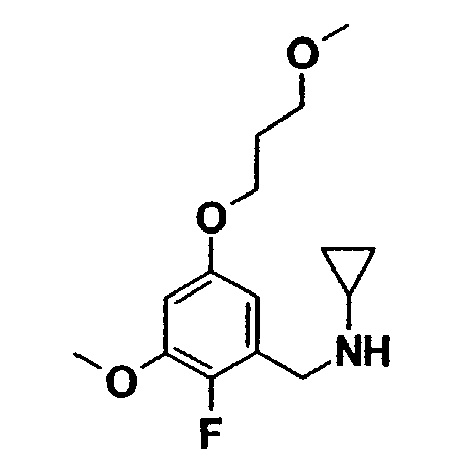
- To a mixture of Intermediate 289.3 ( 500 mg, 2.9 mmol ), toluene-4-sulfonic acid 3-methoxy-propyl ester (1.4 g, 6 mmol) and KI (166 mg, 1 mmol) in DMF (10 mL) are added K2CO3 ( 830 mg, 6 mmol ). After stirring at 80°C for 4h, the reaction mixture is cool down at room temperature, then supplemented with H2O and extracted with Et2O. The combined organic phases are washed with H2O and brine, dried (Na2SO4), and concentrated under reduced pressure.
- To a solution of the resulting residue in CH2Cl2 / MeOH (4 / 1, 10 mL) are added cyclopropylamine ( 660 mg, 11.6 mmol ) and acetic acid (1.2 mL, 20.3 mmol). After stirring for 1h at room temperature, sodium borohydride ( 380 mg, 10 mmol ) are added. After stirring for 19h, the resulting mixture is added H2O, extracted with CH2Cl2and washed with H2O and brine. The organic layer is dried (Na2SO4) and silica gel flash chromatography give Intermediate 289.2 as a yellow oil; ES-MS: M+H = 284; HPLC: At Ret = 2.05 min.
-
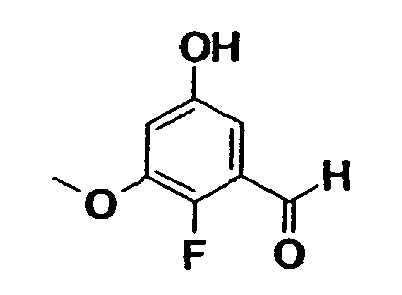
- To a solution of Intermediate 289.4 ( 900 mg, 3.5 mmol) and TMEDA (1.2 mL, 8 mmol ) in THF ( 210 mL ) are added n-butyllithium ( 1.6M in THF, 8 mmol) at -78°C. After stirring for 2h at -78°C, DMF ( 5mL) is added dropwise, then the mixture is warm up to room temperature. After stirring for 2.5h, the resulting mixture is added aqueous KHSO4, then diluted with Et2O and washed with H2O and brine. The organic layer is dried (Na2SO4), concentrated under reduced pressure. The residue is treated with TBAF (1.0M in THF, 8 mmol) and stirred for 2h at room temperature. Concentration under reduced pressure and silica gel flash chromatography give Intermediate 289.3 as a colorless oil; ES-MS: M+H = 171; HPLC: At Ret = 2.27 min.
-

- Intermediate 289.4 is synthesized by alkylation of tert-butyl-(4-fluoro-3-methoxyphenoxy)dimethylsilane ( 1 mg, 4.1 mmol ) analogously to the preparation of Intermediate 274.1. colorless oil; ES-MS: M+H = 257; HPLC: At Ret = 5.03 min.
-

- Intermediate 283.1 (44 mg, 0.064 mmol), K2CO3 (18 mg, 0.128 mmol) and Mel (18 mg, 0.128 mmol) in DMF (1 mL) is stirred at r.t. for 3.5 h. RP-HPLC purification give Intermediate 290.1. White amorphous material; ES-MS: M+H = 706, TLC: Rf = 0.4 (hexane:EtOAc = 1:1).
-

- Intermediate 291.1 is synthesized by coupling of Intermediate 205.3 (205 mg, 0.30 mmol) and 4-Difluoromethoxybromobenzene (0.061 mL, 0.45 mmol) analogously to the preparation of Intermediate 187.2; ES-MS: M+H = 706; HPLC: At Ret = 4.59 min.
-

- To a solution of Intermediate 292.2 (140 mg, 2.0 mmol) in CH3CN (2 mL) is added 0.2% TFA in H2O (1 mL). After stirring for 3h, aqueous NaHCO3 is added and extracted with CH2Cl2. The organic layer is washed with brine, dried (Na2SO4), then concentrated. Purification by silica gel column chromatography give intermediate 292.1 as a brown solid; ES-MS: M+H = 620; HPLC: At Ret = 3.92 min.
-

- Intermediate 292.2 is synthesized by coupling of Intermediate 292.3 ( 140 mg, 0.21 mmol ) and 4-tetrahydropiranyloxybenzeneboronic acid ( 69 mg, 0.31 mmol ) analogously to the preparation of Intermediate 2.1; ES-MS: M+H = 704; HPLC: At Ret = 4.97 min.
-

- To a solution of Intermediate 292.4 and pyridine (0.2 mL) is added trifluoro methanesulfonyl anhydride (75.5 mg, 0.26mmol) at -40°C, then the mixture is warmed up to room temperature. After stirring for 1 h, H2O is added and extracted with EtOAc. The organic layer is washed with brine, dried (Na2SO4), then concentrated. Purification by silica gel column chromatography give Intermediate 292.3 as a brown amorphous: M+H = 676; HPLC: At Ret = 4.45 min.
-

- Intermediate 292.4 is synthesized by hydrolysis of the crude material of Intermediate 292.5 analogously to the preparation of Intermediate 145.3. White amorphous material; ES-MS: M+H = 544; HPLC: At Ret = 3.57 min.
-

- Intermediate 292.5 is synthesized by condensation of Intermediate 158.4 (170 mg, 0.55 mmol) and Intermediate 149.3 (180 mg, 0.55 mmol) analogously to the preparation of Intermediate 145.4. amorphous material; ES-MS: M+H =644; HPLC: At Ret = 4.60 min.
-
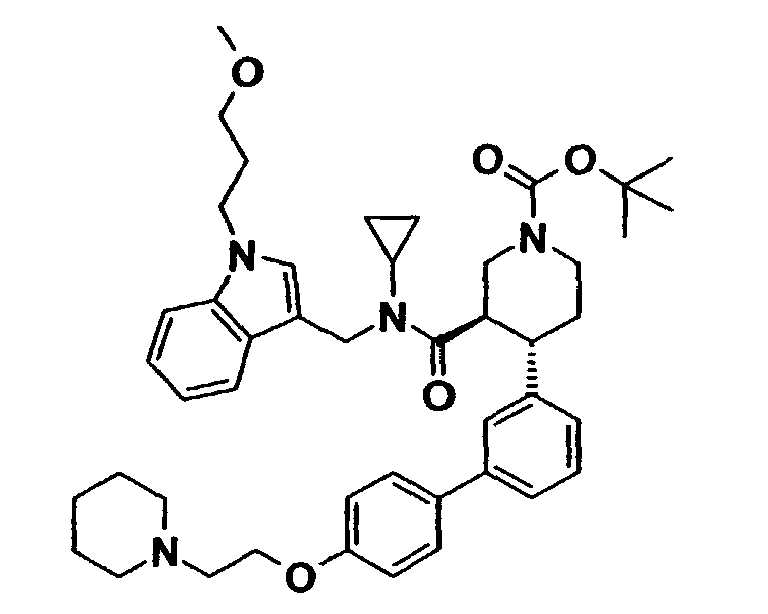
- Intermediate 293.1 is synthesized by Mitsunobu reaction of Intermediate 161.2 ( 200 mg, 0.353 mmol) and 1-piperidineethanol (0.59 mg, 0.46 mmol) analogously to the preparation of Intermediate 77.1 white amorphous; ES-MS: M+H = 749; HPLC: At Ret = 4.02 min.
-

- A solution of Intermediate 294.2 (180 mg, 0.25 mmol), 5-bromo-2-fluorophenol (97 mg, 0.51 mmol), Pd(dppf)2Cl2-CH2Cl2(10.4mg, 0.013 mmol) and 2M Na2CO3 aq (0.51 mL, 1.02 mmol) in DMF (1 mL) is stirred at 85°C for 1 h. After cool to r.t., the reaction mixture is extracted with EtOAc and the combined organic phases are washed with brine, dried (MgSO4). Concentration under reduced pressure and RP-HPLC purification gives Intermediate 294.1. White amorphous material; ES-MS: M+H = 690; HPLC: At Ret = 4.15 min.
-

- A solution of intermediate 267.2 (600 mg, 0.824 mmol), Bis(pinacolato)diboron (418 mg, 1.65 mmol), Pd(dppf)2Cl2-CH2Cl2 (67 mg, 0.082 mmol) and AcOK (243 mg, 2.47 mmol) in DMSO (3 mL) is stirred at 80°C for 5 h. After cool to r.t., the reaction mixture is extracted with EtOAc and the combined organic phases are washed with water, brine and dried (MgSO4). Concentration under reduced pressure and Silicagel column chromatography gives Intermediate 294.2. White amorphous material; ES-MS: M+H = 706; HPLC: At Ret = 4.89 min.
-

- Intermediate 295.1 is synthesized by condensation of intermediate 205.3 (160 mg, 0.232 mmol) and Intermediate 295.2 (130 mg, 0.46 mmol) analogously to the preparation of Intermediate 294.1. White amorphous material; ES-MS: M+H = 694; HPLC: At Ret = 4.57 min.
-

- A solution of 2,3,6-trifluorophenol (300 mg, 2.03 mmol), trifluoromethanesulfonyl anhydride (1.14 g, 4.05 mmol) and Pyridine (807 mg, 10.2 mmol) in CH2Cl2 (3 mL) is stirred at -10°C for 1 h. The reaction mixture is extracted with CH2Cl2 and the combined organic phases are washed with 1 M HCl aq, brine and dried (MgSO4). Concentration under reduced pressure and Silica gel column chromatography gives Intermediate 295.2.Colorless oil; HPLC: At Ret = 4.07 min, TLC: Rf = 0.7 (hexane:EtOAc = 2:1).
-

- Intermediate 296.1 is synthesized by condensation of intermediate 294.2 (200 mg, 0.28 mmol) and intermediate 277.2 (135 mg, 0.57 mmol) analogously to the preparation of Intermediate 294.1. White amorphous material; ES-MS: M+H = 690; HPLC: At Ret = 4.07 min.
-

- Intermediate 297.1 is synthesized by the Suzuki coupling of Intermediate 297.2 (200 mg, 0.28 mmol) and 3-fluoro-4-methoxyphenylboronic acid (72 mg, 0.42 mmol) analogously to the preparation of Intermediate 266.1. White amorphous material; ES-MS: M+H = 686; HPLC: At Ret = 4.40 min.
-

- To a solution of Intermediate 297.3 (450 mg, 0.78 mmol) in dichloromethane (4 ml) is added N,N-diisopropylethylamine (252 mg, 1.95 mmol) and trifluoromethanesulfonyl anhydride (262 mg, 0.93 mmol) at -78°C then stirred for 1 h. After adding water, the reaction mixture is extracted with dichloromethane. The combined organic phases are washed with brine and dried (MgSO4). Concentration under reduced pressure and silica gel flash chromatography gives Intermediate 297.2: White amorphous material; ES-MS: M+H = 710: At Ret = 4.37 min.
-

- Intermediate 297.3 is synthesized by condensation of intermediate 158.4 (446 mg, 1.39 mmol) and Intermediate 262.2 (400 mg, 1.46 mmol) analogously to the preparation of Intermediate 145.4. White amorphous material; ES-MS: M+H = 578; HPLC: At Ret = 3.40 min.
-

- Intermediate 298.1 is synthesized by coupling of Intermediate 181.3 (197mg, 0.28 mmol) and 2,3-Dihydro-1-benzofuran-5-ylboronic acid (68 mg, 0.41 mmol) analogously to the preparation of Intermediate 214.1. White amorphous material; ES-MS: M+H = 682; HPLC: At Ret = 4.52 min.
-

- Intermediate 299.1 is synthesized by coupling of Intermediate 181.3 (206mg, 0.29 mmol) and 4-Ethoxybenzeneboronic acid (72 mg, 0.43 mmol) analogously to the preparation of Intermediate 214.1. White amorphous material; ES-MS: M+H = 684; HPLC: At Ret = 4.77 min.
-

- Intermediate 300.1 is synthesized by Suzuki coupling of Intermediate 297.2 (220 mg, 0.31 mmol) and 3-hydroxyphenylboronic acid (64 mg, 0.46 mmol) analogously to the preparation of Intermediate 2.1. White amorphous material; ES-MS: M+H = 654; HPLC: At Ret = 3.87 min.
-

- Intermediate 301.1 is synthesized by by coupling of Intermediate 301.2 (95 mg, 0.13 mmol) and 5-bromo-2-fluorophenol (38 mg, 0.20 mmol) analogously to the preparation of Intermediate 187.2; ES-MS: M+H = 710; HPLC: At Ret = 4.42 min.
-

- Intermediate 301.2 is synthesized by by coupling of Intermediate 250.2 (141 mg, 0.19 mmol) and Bis(pinacolato)diboron (96 mg, 0.38 mmol) analogously to the preparation of Intermediate 187.2; ES-MS: M+H = 726; HPLC: At Ret = 5.14 min.
-
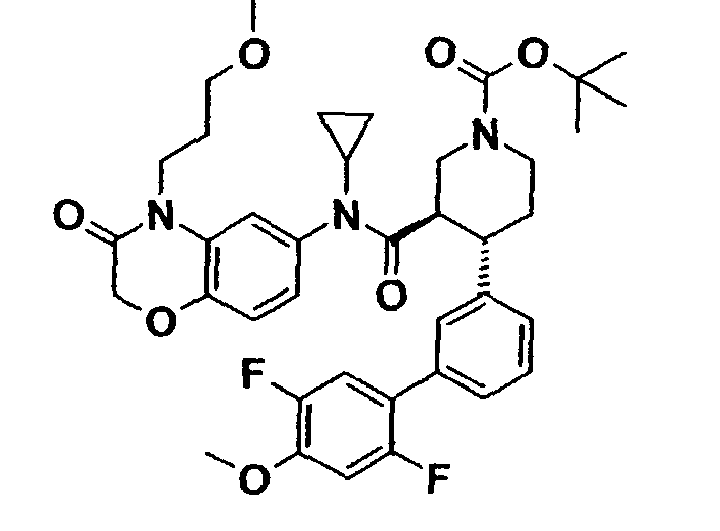
- Intermediate 302.1 is synthesized by coupling of Intermediate 205.3 (206 mg, 0.30 mmol) and 2,5-Difluoro-4-methoxybenzeneboronic acid (100 mg, 0.45 mmol) analogously to the preparation of Intermediate 187.2; ES-MS: M+H = 706; HPLC: At Ret = 4.57 min.
-
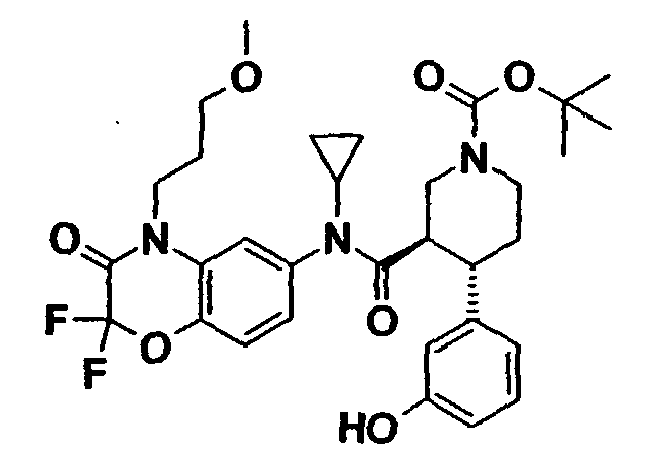
- Intermediate 250.3 is synthesized by condensation of Intermediate 149.2 (1.6 g, 5.12 mmol) and intermediate 158.4 (1.8 g, 5.63 mmol) analogously to the preparation of Intermediate 145.4. White amorphous material; ES-MS: M+H = 616; HPLC: Ct Ret = 2.04 min.
-

- A solution of Intermediate 304.2 in AcOH (2 mL) are stirred at 155 °C for 5 h. then, the reaction is quenched with saturated aqueous NaHCO3 and extracted with AcOEt. The combined organic phases are washed with H2O and dried (MgSO4) to give Intermediate 304.1 as a solid; ES-MS: M+ = 696: At Ret = 3.38 min.
-

- Intermediate 304.2 is synthesized by reduction of Intermediate 304.3 (80 mg, 0.10 mmol) analogously to the preparation of Intermediate 134.1. Led amorphous material; ES-MS: M+ = 742; HPLC: At Ret = 3.45 min.
-

- Intermediate 304.3 is synthesized by coupling of Intermediate 205.3 (80 m g, 0.12 mmol) and (4-bromo-2-nitrophenyl)- arbamic acid ethyl ester (50 mg, 0.174 mmol)( see e.g. Zhurnal Analiticheskoi Khimii 1987, 42, 2043-2047.) analogously to the preparation of Intermediate 175.1. amorphous material; ES-MS: M+H = 772; HPLC: At Ret = 4.74 min.
-

- Intermediate 305.1 is synthesized by cross coupling of Intermediate 181.3 (57 mg, 0.08 mmol) and 2-fluoropyridine-4-boronic acid (23 mg, 0.16 mmol) analogously to the preparation of Intermediate 2.1. Pale yellow oil; ES-MS: M+H = 659; HPLC: At Ret = 2.23 min.
-

- To a solution of Intermediate 217.1 ( 100 mg, 0.15 mmol ) are added pyridine ( 500 mg), and acetic anhydride ( 100 mg ) at 0°C. After stirring for 16h at room temperature, H2O is added and the mixture is extracted with EtOAc. The organic layer is washed with H2O and brine, dried (Na2SO4), then concentrated. Purification by silica gel column chromatography gives Intermediate 306.1 as a white amorphous; ES-MS: M+H = 698; HPLC: At Ret = 4.32 min.
-

- Intermediate 307.1 is synthesized by hydrolysis of Intermediate 307.2 ( 140 mg, 0.18 mmol ) analogously to the preparation of Intermediate 292.1; ES-MS: M+H = 700; HPLC: At Ret = 3.87 min.
-

- To a solution of Intermediate 217.1 (120 mg, 0.18 mmol ) in DMF ( 2 mL ) are added 2-(2-bromoethoxy) tetrahydropyran ( 76 mg, 0.36 mmol ) and K2CO3 ( 50 mg, 0.36 mmol ). After stirring for 16h at 50°C, H2O is added and extracted with EtOAc. The organic layer is washed with H2O and brine, dried (Na2SO4), then concentrated. Purification by silica gel column chromatography give Intermediate 307.2 as a white amorphous; ES-MS: M+H = 784; HPLC: At Ret =4.87 min.
-

- Intermediate 308.1 is synthesized by coupling of intermediate 267.2 (150 mg, 0.21 mmol) and 3-fluoro-4-methoxybenzeneboronic acid (53 mg, 0.32 mmol) analogously to the preparation of Intermediate 2.1; ES-MS: M+H = 704; HPLC: At Ret = 4.62 min.
-
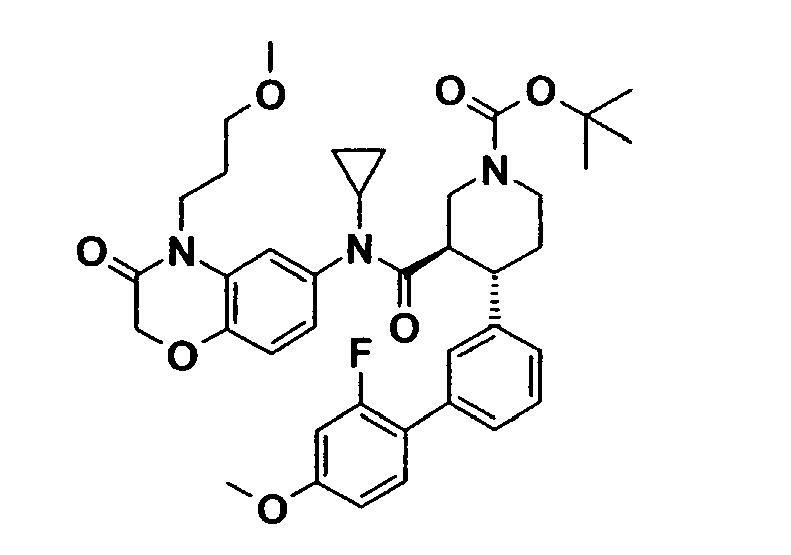
- Intermediate 309.1 is synthesized by coupling reaction of Intermediate 205.3 (120 m g, 0.17 mmol) and 3-fluoro-4-bromoanisole (54 mg, 0.26 mmol) analogously to the preparation of Intermediate 2.1. White amorphous; ES-MS: M+H = 688; HPLC: At Ret = 4.60 min.
-
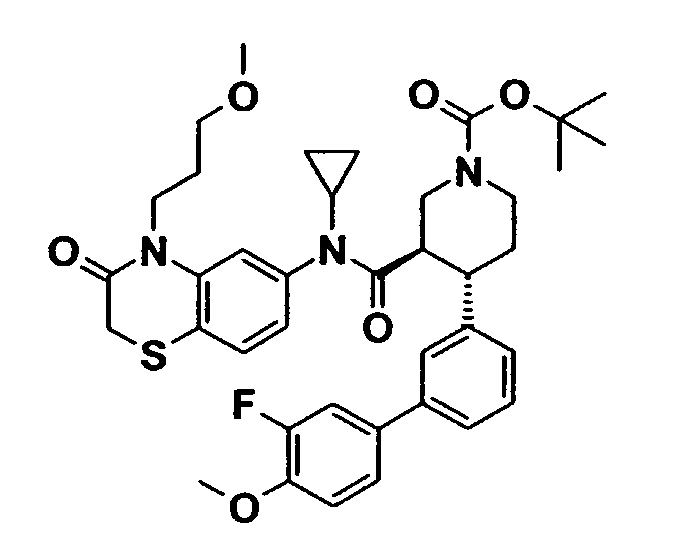
- Intermediate 310.1 is synthesized by coupling reaction of Intermediate 267.2 (150 mg, 0.21 mmol) and 4-propoxybenzeneboronic acid (57 mg, 0.32 mmol) analogously to the preparation of Intermediate 2.1. White amorphous; ES-MS: M+H = 698; HPLC: At Ret = 5.07 min
-

- Intermediate 311.1 is synthesized by coupling of Intermediate 205.3 (196 mg, 0.28 mmol) and 2,6-Difluoro-4-methoxybenzeneboronic acid (95 mg, 0.43 mmol) analogously to the preparation of Intermediate 187.2; ES-MS: M+H = 706; HPLC: Ct Ret = 2.27 min.
-

- Intermediate 312.1 is synthesized by coupling of Intermediate 181.3 (158mg, 0.22 mmol) and 4-Acetylbenzeneboronic acid (55 mg, 0.34 mmol) analogously to the preparation of Intermediate 214.1. White amorphous material; ES-MS: M+H = 682; HPLC: At Ret = 4.24 min.
-

- Intermediate 313.1 is synthesized by coupling of Intermediate 205.3 (210 mg, 0.30 mmol) and 5-Bromo-2-hydroxyacetophenone (98 mg, 0.46 mmol) analogously to the preparation of Intermediate 187.2; ES-MS: M+H = 698; HPLC: Ct Ret = 2.18 min.
-

- Intermediate 314.1 is synthesized by Mitsunobu reaction of Intermediate 217.1 ( 60 mg, 0.09 mmol) and 1-piperidineethanol ( 18 mg, 0.14 mmol) analogously to the preparation of Intermediate 77.1 white amorphous; ES-MS: M+H = 767; HPLC: At Ret = 3.40 min.
-

- Intermediate 315.1 is synthesized by Mitsunobu reaction of Intermediate 217.1 (60 mg, 0.09 mmol) and 2-dimethylaminoethanol (13 mg, 0.14 mmol) analogously to the preparation of Intermediate 77.1 white amorphous; ES-MS: M+H = 727; HPLC: At Ret = 3.23 min.
-

- Intermediate 316.1 is synthesized by Mitsunobu reaction of Intermediate 217.1 (60 mg, 0.09 mmol) and 3-dimethylaminopropanol (14 mg, 0.14 mmol) analogously to the preparation of Intermediate 77.1 white amorphous; ES-MS: M+H = 741; HPLC: At Ret = 3.29 min.
-

- Intermediate 317.1 is synthesized by Mitsunobu reaction of Intermediate 218.1 (60 mg, 0.09 mmol) and 2-dimethylaminoethanol (13 mg, 0.14 mmol) analogously to the preparation of Intermediate 77.1 white amorphous; ES-MS: M+H = 727; HPLC: At Ret = 3.20 min.
-

- Intermediate 318.1 is synthesized by Mitsunobu reaction of Intermediate 218.1 (60 mg, 0.09 mmol) and 3-dimethylaminopropanol (14 mg, 0.14 mmol) analogously to the preparation of Intermediate 77.1 white amorphous; ES-MS: M+H = 741; HPLC: At Ret = 3.30 min.
-

- Intermediate 319.1 is synthesized by Mitsunobu reaction of Intermediate 218.1 (30 mg, 0.045 mmol) and N-methylprolinol (9 mg, 0.068 mmol) analogously to the preparation of Intermediate 77.1 white amorphous; ES-MS: M+H = 753; HPLC: At Ret = 3.32 min.
-
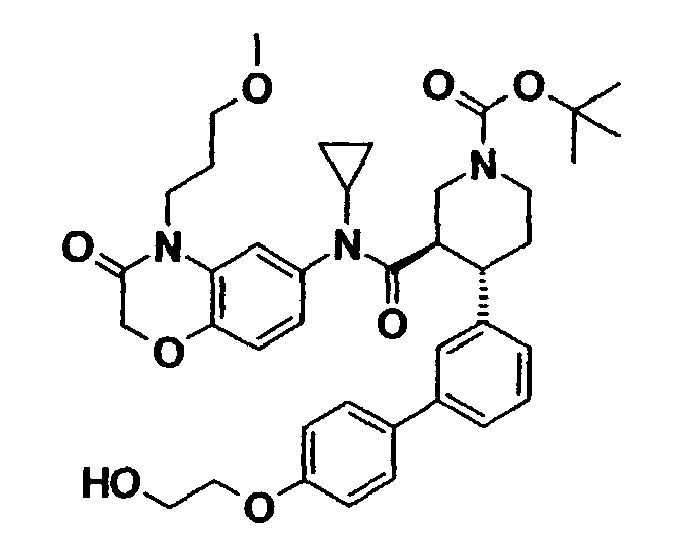
- Intermediate 320.1 is synthesized by hydrolysis of Intermediate 320.2 ( 80 mg, 0.11 mmol) analogously to the preparation of Intermediate 292.1; ES-MS: M+H = 700; HPLC: At Ret = 3.82 min.
-

- To a solution of Intermediate 218.1 (120 mg, 0.18 mmol) in DMF (2 mL) are added 2-(2-bromoethoxy) tetrahydropyran (76 mg, 0.36 mmol) and K2CO3 (50 mg, 0.36 mmol). After stirring for 16h at 50°C, H2O is added and the mixture is extracted with EtOAc. The organic layer is washed with H2O and brine, dried (Na2SO4), then concentrated. Purification by silica gel column chromatography gives Intermediate 320.2 as a white amorphous; ES-MS: M+H = 784; HPLC: At Ret =4.84 min.
-

- To a solution of Intermediate 215.1 (51 mg, 0.077 mmol) in toluene (1 mL) are added NaN3 (30 mg, 0.46 mmol) and triethylamine hydrochloride (64 mg, 0.47 mmol). After stirred at 120 °C for 63 h, additional NaN3 (40 mg, 0.62 mmol) and triethylamine hydrochloride (70 mg, 0.51 mmol) are added. The reaction mixture is stirred at the same temperature for 12 h, and diluted with EtOAc. The mixture is washed with aq. KHSO4 and brine, dried (Na2SO4), filtered, and concentrated in vacuo. The residue is purified by silica gel column chromatography to give Intermediate 321.1. Colorless oil; ES-MS: M+H = 708; HPLC: At Ret = 3.88 min.
-

- Intermediate 322.1 is synthesized by coupling of Intermediate 250.2 (250 m g, 0.34 mmol) and 5-lodo-2,3-dihydro-isoindol-1-one (134 mg, 0.52 mmol) (see e.g.
US 2004/058970 ) analogously to the preparation of Intermediate 187.3. White solid; ES-MS: M+1 = 731; HPLC: At Ret = 3.96 min. -

- Intermediate 323.1 is synthesized by coupling of Intermediate 181.3 (173mg, 0.24 mmol) and 3-Acetylbenzeneboronic acid (60 mg, 0.37 mmol) analogously to the preparation of Intermediate 214.1. White amorphous material; ES-MS: M+H = 682; HPLC: Ct Ret = 2.16 min.
-

- Intermediate 324.1 is synthesized by coupling of Intermediate 205.3 (100 mg, 0.14 mmol) and 4-Bromo-2-hydroxyacetophenone (78 mg, 0.36 mmol) analogously to the preparation of Intermediate 187.2; ES-MS: M+H = 698; HPLC: Ct Ret = 2.18 min.
-

- Intermediate 325.1 is synthesized by alkylation of Intermediate 250.3 (120 mg, 0.20 mmol) and Mel (55 mg, 0.39 mmol) analogously to the preparation of Intermediate 126.2. White amorphous material; ES-MS: M+H = 630; HPLC: At Ret = 4.45 min.
-

- Intermediate 326.2 (74 mg, 0.11 mmol) and NaOMe (0.05 mL, 25wt% in MeOH) in DMF (2 ML) are stirred at 100°C for 4h. After cooling to room temperature, H2O is added and the resulting solution is extracted with AcOEt. The organic layer is washed with brine, dried (Na2SO4) and concentrated. Purification by silica gel column chromatography give Intermediate 326.1 as white amorphous; ES-MS: M+H = 671; HPLC: At Ret = 3.84 min.
-

- Intermediate 326.2 is synthesized by coupling of Intermediate 205.3 (100 mg, 0.36 mmol) and 2-Chloro-4-iodopyridine (52 mg, 0.22 mmol) analogously to the preparation of Intermediate 187.2; ES-MS: M+H = 675; HPLC: ct Ret = 2.11 min.
-

- Intermediate 327.1 is synthesized by coupling of Intermediate 205.3 (60 mg, 0.087 mmol) and 6-bromo-1,4-benzodioxane (28 mg, 0.13 mmol) analogously to the preparation of Intermediate 187.2; ES-MS: M+H = 698; HPLC: Ct Ret = 2.18 min.
-

- Intermediate 328.1 is synthesized by condensation of Intermediate 75.3 (72 mg, 0.19 mmol) and Intermediate 328.2 (60 mg, 0.19 mmol) analogously to the preparation of Intermediate 4.1. White amorphous material; ES-MS: M+H = 683; HPLC: ct Ret = 2.47 min.
-

- Intermediate 328.2 is synthesized by condensation of Intermediate 328.3 (340 g, 1.22 mmol) and cyclopropylamine (140 mg, 2.4 mmol) analogously to the preparation of Intermediate 4.5. Colorless oil; ES-MS: M+H = 320; HPLC: ct Ret = 1.56 min.
-

- To a solution of Intermediate 328.4 (550 mg, 1.7 mmol) in Et2O (3 mL) are added n-BuLi (1.3 mL, 1.6 M hexane solution) and DMF (190 mg, 2.6 mmol) at -78°C under N2 atmosphere. After stirring at -78°C for 1h, the reaction is quenched with sat. aqueous NH4Cl. The resulting mixture is allowed to warm to room temperature and extracted with AcOEt. The organic layer is washed with H2O and brine, dried (Na2SO4) and concentrated. The residue is purified by silica gel column chromatography to give Intermediate 328.3 as colorless oil; ES-MS: M+H = 279; HPLC: ct Ret = 1.97 min.
-

- To a solution of 1,3-Dibromo-5-trifluoromethoxybenzene (200 mg, 0.63 mmol) in Et2O (3 mL) is added n-BuLi (0.75 mL, 1.6M hexane solution) at -78°C under N2 atmosphere. After stirring for 10min., (MeO)3B (98 mg, 0.95 mmol) is added at -78°C. The reaction mixture is allowed to warm to room temperature and stirred for 4h. The reaction was quenched with 1N HCl, and the resulting mixture is extracted with AcOEt. The organic layer is washed with H2O, dried (Na2SO4) and concentrated. The residue is dissolved in EtOH (3 mL) and H2O2 solution (3 mL). After stirring at room temperature for 14h, Na2S2O3 is added, and the resulting mixture is extracted with AcOEt. The organic layer is washed with H2O, dried (Na2SO4) and concentrated. To a solution of the resulting residue (600 mg, 2.3 mmol) in DMF (5 mL) are added Toluene-4-sulfonic acid 3-methoxypropyl ester (852 mg, 3.5 mmol), K2CO3 (480 mg, 3.5 mmol) and a small portion of KI. After stirring at 60 °C for 7h, the reaction mixture is cooled to room temperature and diluted with H2O and AcOEt. The organic layer is separated, dried (Na2SO4) and concentrated. The residue is purified by silica gel column chromatography to give Intermediate 328.4 as colorless oil; ES-MS: M+ = 329; HPLC: ct Ret = 2.34 min.
-

- Intermediate 329.1 is synthesized by condensation of Intermediate 75.3 (60 mg, 0.16 mmol) and Intermediate 329.2 (30 mg, 0.16 mmol) analogously to the preparation of Intermediate 2.3. White amorphous; ES-MS: M+H = 551; HPLC: At Ret = 3.27 min.
-

- Intermediate 329.2 is synthesized by condensation of imidazo[1,2-a]pyridine-3-carbaldehyde (1 g, 6.9 mmol) and cyclopropylamine ( 1.2 mg, 20 mmol) analogously to the preparation of Intermediate 4.5. brown solid; ES-MS: M+H = 188; HPLC: At Ret = 0.48 min.
-

- To a solution of Intermediate 330.2 (80 mg, 0.11 mmol) in DMF (1 mL) are added 3-hydroxypyrrolidine (27 mg, 0.22 mmol), K2CO3 (61 mg, 0.44 mmol) and KI (20 mg, 0.12 mmol), then the mixture is stirred for 3h at 80°C. After cooling to room temperature, the reaction mixture is diluted with EtOAc and washed with brine. The organic layer is dried (Na2SO4), concentrated and purified by RP-HPLC to give Intermediate 330.1. White amorphous; ES-MS: M+1 =783; HPLC: At Ret = 3.29 min.
-

- To a solution of Intermediate 217.1 (200mg, 0.28 mmol) in DMF (1 mL) are added 3-iodo-1-chloropropane (112 mg, 0.55 mmol) and K2CO3 (76 mg, 0.55 mmol), then the mixture is stirred at room temperature. After stirring for 15h, the reaction mixture is diluted with EtOAc and washed with brine. The organic layer is dried (Na2SO4), concentrated and purified by silica gel column chromatography to give Intermediate 330.2. White amorphous; ES-MS: M+1 =732; HPLC: At Ret = 4.95 min.
-

- Intermediate 331.1 is synthesized by alkylation of Intermediate 330.2 (80 mg, 0.11 mmol) analogously to the preparation of Intermediate 330.1. White amorphous; ES-MS: M+H = 797; HPLC: At Ret = 3.25 min.
-

- Intermediate 332.1 is synthesized by alkylation of Intermediate 332.2 (80 mg, 0.11 mmol) analogously to the preparation of Intermediate 330.1. White amorphous; ES-MS: M+H = 783; HPLC: At Ret = 3.25 min.
-

- Intermediate 332.2 is synthesized by alkylation of Intermediate 218.1 (200 mg, 0.28 mmol) analogously to the preparation of Intermediate 330.2. White amorphous; ES-MS: M+H = 732; HPLC: At Ret = 4.93 min.
-

- Intermediate 333.1 is synthesized by alkylation of Intermediate 332.2 (80 mg, 0.11 mmol) analogously to the preparation of Intermediate 330.1. White amorphous; ES-MS: M+H = 797; HPLC: At Ret = 3.23 min.
-

- Intermediate 334.1 is synthesized by coupling of Intermediate 334.2 (600 mg, 0.86 mmol) and 4-hydroxyphenylboronic acid (236 mg, 1.71 mmol) analogously to the preparation of Intermediate 2.1. White amorphous; ES-MS: M+H = 645; HPLC: At Ret = 4.05 min.
-

- Intermediate 334.2 is synthesized by sulfonylation of Intermediate 334.3 (1.3 g, 2.3 mmol) analogously to the preparation of Intermediate 292.3. White amorphous; ES-MS: M+H = 701; HPLC: At Ret = 4.65 min.
-

- Intermediate 334.3 is synthesized by condensation of Intermediate 158.4 (2 g, 3.1 mmol) and Intermediate 334.4 (822 mg, 3.1 mmol) analogously to the preparation of Intermediate 4.1; ES-MS: M+H = 569; HPLC: At Ret = 3.72 min.
-

- At 0°C, a solution of intermediate 334.5 (10.3 g, 45.9 mmol) and cyclopropylamine (6.4 ml, 91.8 mmol) in CH2Cl2 (150 ml) is treated with NaBH(OAc)3 (14.8 g, 69.8 mmol) over 10 min, treated with AcOH (10 ml) over 5 min, stirred for 30 min, warmed to room temperature, stirred for 13h, and treated CH2Cl2 (200 ml) and 5N NaOH (100 ml). After the layers are separated, the aqueous layer is extracted with CH2Cl2 (3 x 60 ml), and the combined organic layer is washed with brine (100 ml), dried (Na2SO4), and evaporated to obtain intermediate 334.4 (12.7 g, 98%) as yellow oil.
-

- At room temperature, a solution of intermediate 334.6 (12.9 g, 57.0 mmol) in EtOAc (200 ml) is treated with 85% activated MnO2 (18.1 g, 0.18 mol), heated to 60°C, stirred for 4 h under reflux, filtered via celite pad, and the cake is washed with EtOAc for several times. The combined filtrate is evaporated, and the residue is applied to a SiO2 flash chromatography (400 g, hexane/EtOAc 4:5) to give intermediate 334.5 (10.3 g, 80%) as light yellow oil.
-

- At room temperature, a methanolic solution (420 ml) of intermediate 334.7 (30.6 g, 98.7 mmol) is treated with DL-10-camphorsulfonic acid (2.1 g, 9.4 mmol) stirred for 14 h, treated with Et3N (1.5 ml), and evaporated. A SiO2 flash chromatography (700 g, hexane/EtOAc 2:5) gives intermediate 334.6 (22.0 g, 99%) as light yellow oil.
-

- At 0°C, a solution of intermediate 334.8 (31.1 g, 98.7 mmol) and 2-methoxyethanol (12 ml, 0.15 mol) in DMF (460 ml) is treated with 60% NaH (5.89 g, 0.15 mol) over 5 min, stirred for 45 min, warmed to room temperature, stirred for 3h, and treated with H2O (1200 ml). After the extraction of the mixture with EtOAc (2 x 250 ml) and Et2O (2 x 250 ml), the combined org. layer is washed with H2O (2 x 200 ml), dried (Na2SO4), and evaporated to obtain intermediate 334.7 (33.8 g, 100%) as yellow oil.
-

- At 0°C, a solution of intermediate 334.9 (74.5 g, 0.30 mol) and Ph3P (124.7 g, 0.48 mol) in CH2Cl2 (750 ml) is treated with NBS (79.0 g, 0.44 mol) over 20 min, stirred for 2 h at the same temperature, and warmed to room temperature. After stirring for 16 h, the reaction mixture is diluteed with CH2Cl2 (1200 ml), washed with 0.5N NaOH (300 ml) and brine (300 ml), dried (Na2SO4), and evaporated. A SiO2 flash chromatography (2700 g, hexane/EtOAc 6:1) gives intermediate 334.8 (31.1 g, 33%) as colorless oil.
-

- At 0°C, a solution of intermediate 334.10 (82.3 g, 0.29 mol) in THF (820 ml) is treated portionwise with LiAIH4 (8.90 g, 0.23 mol) over 15 min, stirred at the same temperature for 40 min, and warmed to room temperature. After stirring for 6 h, the reaction mixture is treated with Na2SO4·10 H2O, filtered, and evaporated to obtain intermediate 334.9 (74.5 g, 100%) as light yellow oil.
-

- At room temperature, a solution of methyl 3-hydroxymethyl-5-methoxybenzoate (56.4 g, 0.29 mol, Synth. Commn. 2001, 31, 1921.) in CH2Cl2 (680 ml) is treated with DL-10-camphorsulfonic acid (6.6 g, 28.4 mmol) and 3,4-dihydro-2H-pyran (40 ml, 0.43 mol), stirred for 5.5 h, treated with Et3N (40 ml), and evaporated. A SiO2 flash chromatography (2000 g, hexane/EtOAc 2:1) gives intermediate 334.10 (82.3 g, 100%) as light yellow oil.
-

- To a solution of Intermediate 335.2 (190 mg, 0.24 mmol) in EtOH (3 mL) is added 8N aqueous KOH (2 mL). After stirring at 70°C, the reaction mixture is cooled to room temperature, and acidified with 1 N aqueous KHSO4. The resulting mixture is extracted with AcOEt. The organic layer is washed with brine, dried (Na2SO4), and purified by silica gel column chromatography to give Intermediate 335.1 as white amorphous; ES-MS: M+H = 736; HPLC: Ct Ret = 2.13 min.
-

- Intermediate 335.2 is synthesized by coupling of Intermediate 301.2 (202 mg, 0.27mmol) and 6-Bromo-2,2-dimethyl-3-benzodioxin-4-one (CAS 82944-17-0) (164 mg, 0.54 mmol) analogously to the preparation of Intermediate 187.2; ES-MS: M+H = 776; HPLC: Ct Ret = 2.29 min.
-

- Intermediate 336.1 is synthesized by condensation of Intermediate 2.1 (160 mg, 0.42 mmol) and Intermediate 336.2 (110 mg, 0.38 mmol) analogously to the preparation of Intermediate 145.4. White powder; ES-MS: M+H = 654; HPLC: At Ret = 5.02 min.
-

- Intermediate 336.2 is synthesized by alkylation of Intermediate 101.3 (400 mg, 1.96 mmol) and toluene-4-sulfonic acid 4-methoxy-propyl ester (560 mg, 2.15 mmol) analogously to a known method (see e.g. European Journal of Medicinal Chemistry 1998, 33, 957-967. or
EP 432893 - 5000 soft gelatin capsules, each comprising as active ingredient 0.05 g of any one of the compounds of formula I mentioned in any one of the preceding Examples, are prepared as follows:
1. Composition Active ingredient 250 g Lauroglycol 2 liters - Preparation process: The pulverized active ingredient is suspended in Lauroglykol® (propylene glycol laurate, Gattefossé S.A., Saint Priest, France) and ground in a wet pulverizer to produce a particle size of about 1 to 3 µm. 0.419 g portions of the mixture are then introduced into soft gelatin capsules using a capsule-filling machine.
- Tablets, comprising, as active ingredient, 100 mg of any one of the compounds of formula I in any one of the preceding Examples are prepared with the following composition, following standard procedures:
Composition Active Ingredient 100 mg crystalline lactose 240 mg Avicel 80 mg PVPPXL 20 mg Aerosil 2 mg magnesium stearate 5 mg 447 mg - Manufacture: The active ingredient is mixed with the carrier materials and compressed by means of a tabletting machine (Korsch EKO, stamp diameter 10 mm).
- Avicel® is microcrystalline cellulose (FMC, Philadelphia, USA). PVPPXL is polyvinylpolypyrrolidone, cross-linked (BASF, Germany). Aerosil® is silicon dioxide (Degussa, Germany).
where in any of the starting materials (especially of the formulae II to VII), in addition to specific protecting groups mentioned, further protecting groups may be present, and any protecting groups are removed at an appropriate stage in order to obtain the corresponding compound of the formula I, or a salt thereof.
Claims (30)


R1 is hydrogen, unsubstituted or substituted alkyl, unsubstituted or substituted alkenyl, unsubstituted or substituted alkynyl, unsubstituted or substituted aryl, unsubstituted or substituted heterocyclyl or unsubstituted or substituted cycloalkyl;
R2 is unsubstituted or substituted alkyl, unsubstituted or substituted alkenyl, unsubstituted or substituted alkynyl, unsubstituted or substituted aryl, unsubstituted or substituted heterocyclyl, unsubstituted or substituted cycloalkyl, or acyl;
W is a moiety selected from those of the formulae IA, IB and IC shown in claim 1,
wherein the asterisk (*) denotes the position where the moiety W is bound to the 4-carbon in the piperidine ring in formula I, and wherein
X1, X2, X3, X4 and X5 are independently selected from carbon and nitrogen, where X4 in formula IB and X1 in formula IC may have one of these meanings or further be selected from S and O, where carbon and nitrogen ring atoms can carry the required number of hydrogen or substituents R3 or - if present within the limitations given below - R4 to complete the number of bonds emerging from a ring carbon to four, from a ring nitrogen to three; with the proviso that in formula IA at least 2, preferably at least 3 of X1 to X5 are carbon and in formulae IB and IC at least one of X1 to X4 is carbon, preferably two of X1 to X4 are carbon; y is 0, 1, 2 or 3;
z is 0, 1, 2, 3 or 4
R3 which can only be bound to any one of X1, X2, X3 and X4 is hydrogen or preferably unsubstituted or substituted C1-C7-alkyl, unsubstituted or substituted C2-C7-alkenyl, unsubstituted or substituted C2-C7-alkynyl, unsubstituted or substituted aryl, unsubstituted or substituted heterocyclyl, unsubstituted or substituted cycloalkyl, halo, hydroxy, etherified or esterified hydroxy, unsubstituted or substituted mercapto, unsubstituted or substituted sulfinyl, unsubstituted or substituted sulfonyl, amino, mono- or di-substituted amino, carboxy, esterified or amidated carboxy, unsubstituted or substituted sulfamoyl, nitro or cyano,
with the proviso that if R3 is hydrogen y and z are 0;
R4 is - if y or z is 2 or more, independently - selected from a group of substituents consisting of unsubstituted or substituted C1-C7-alkyl, unsubstituted or substituted C2-C7-alkenyl, unsubstituted or substituted C2-C7-alkynyl, halo, hydroxy, etherified or esterified hydroxy, unsubstituted or substituted mercapto, unsubstituted or substituted sulfonyl, unsubstituted or substituted sulfonyl, amino, mono- or di-substituted amino, carboxy, esterified or amidated carboxy, unsubstituted or substituted sulfamoyl, nitro and cyano;
T is methylene (-CH2-) or carbonyl (-C(=O)-);
and
R11 is hydrogen, hydroxy, halo, C1-C7-alkyl, halo-C1-C7-alkyl, cycloalkyl, halo-substituted cycloalkyl, C1-C7-alkoxy, halo-C1-C7-alkoxy or cyano,
or a pharmaceutically acceptable salt thereof,
where in each case of occurrence above in this claim
halo or halogen is fluoro, chloro, bromo or iodo, most preferably fluoro, chloro or bromo, if not indicated otherwise;
unsubstituted or substituted alkyl is C1-C20-alkyl, more preferably C1-C7-alkyl, that is straight-chained or branched one or, if desired and possible, more times, which is unsubstituted or substituted by one or more, e.g. up to three moieties selected from unsubstituted or substituted aryl as described below, especially phenyl or naphthyl each of which is unsubstituted or substituted as described below for unsubstituted or substituted aryl; unsubstituted or substituted heterocycyclyl as described below, especially pyrrolyl, furanyl, thienyl, pyrimidinyl, pyrazolyl, triazolyl, tetrazolyl, oxetidinyl, 3-(C1-C7-alkyl)-oxetidinyl, pyridyl, pyrimidinyl, morpholino, piperidinyl, piperazinyl, tetrahydrofuranone-yl, tetrahydro-pyranyl, indolyl, indazolyl, 1H-indazanyl, benzofuranyl, benzothiophenyl, quinolinyl, isoquinolinyl, 1,2,3,4-tetrahydro-1,4-benzoxazinyl, 2H-1,4-benzoxazin-3(4H)-onyl, 2H,3H-1,4-benzodioxinyl, benzo[1,2,5]oxadiazolyl or 9H-xanthenyl each of which is unsubstituted or substituted as described below for unsubstituted or substituted heterocyclyl; unsubstituted or substituted cycloalkyl as described below, especially cyclopropyl, cyclobutyl, cyclopentyl or cyclohexyl, each of which is unsubstituted or substituted as described below for unsubstituted or substituted cycloalkyl; halo, hydroxy, C1-C7-alkoxy, halo-C1-C7-alkoxy, such as trifluoromethoxy, hydroxy-C1-C7-alkoxy, C1-C7-alkoxy-C1-C7-alkoxy, phenyl- or naphthyloxy, phenyl- or naphthyl-C1-C7-alkyloxy, C1-C7-alkanoyloxy, benzoyl- or naphthoyloxy, C1-C7-alkylthio, halo-C1-C7-alkthio, such as trifluoromethylthio, C1-C7-alkoxy-C1-C7-alkylthio, phenyl- or naphthylthio, phenyl- or naphthyl-C1-C7-alkylthio, C1-C7-alkanoylthio, benzoyl- or naphthoylthio, nitro, amino, mono- or di-(C1-C7-alkyl and/or C1-C7-alkoxy-C1-C7alkyl)-amino, mono- or di-(naphthyl- or phenyl-C1-C7-alkyl)-amino, C1-C7-alkanoylamino, benzoyl- or naphthoylamino, C1-C7-alkylsulfonylamino, phenyl- or naphthylsulfonylamino wherein phenyl or naphthyl is unsubstituted or substituted by one or more, especially one to three, C1-C7-alkyl moieties, phenyl- or naphthyl-C1-C7-alkylsulfonylamino, carboxyl, C1-C7-alkyl-carbonyl, C1-C7-alkoxy-carbonyl, phenyl- or naphthyloxycarbonyl, phenyl- or naphthyl-C1-C7-alkoxycarbonyl, carbamoyl, N- mono- or N,N-di-(C1-C7-alkyl)-aminocarbonyl, N-mono- or N,N-di-(naphthyl- or phenyl-C1-C7-alkyl)-aminocarbonyl, cyano, C1-C7-alkylene, C1-C7-alkenylene or -alkynylene, C1-C7-alkylenedioxy, sulfonyl (-S-OH), sulfonyl (-S(=O)-OH), C1-C7-alkylsulfinyl (C1-C7-alkyl-S(=O)-), phenyl- or naphthylsulfinyl wherein phenyl or naphthyl is unsubstituted or substituted by one or more, especially one to three, C1-C7-alkyl moieties, phenyl- or naphthyl-C1-C7-alkylsulfinyl, sulfonyl (-S(O)2OH), C1-C7-alkylsulfonyl (C1-C7-alkyl-SO2-), phenyl- or naphthylsulfonyl wherein phenyl or naphthyl is unsubstituted or substituted by one or more, especially one to three, C1-C7-alkoxy-C1-C7-alkyl or C1-C7-alkyl moieties, phenyl- or naphthyl-C1-C7-alkylsulfonyl, sulfamoyl and N-mono or N,N-di-(C1-C7-alkyl, phenyl-, naphthyl, phenyl-C1-C7-alkyl or naphthyl-C1-C7-alkyl)-aminosulfonyl.
unsubstituted or substituted alkenyl has 2 to 20 carbon atoms and includes one or more double bonds, and is more preferably C2-C7-alkenyl that is unsubstituted or substituted as described above for unsubstituted or substituted alkyl;
unsubstituted or substituted alkynyl has 2 to 20 carbon atoms and includes one or more triple bonds, and is more preferably C2-C7-alkynyl that is unsubstituted or substituted as described above for unsubstituted or substituted alkyl;
unsubstituted or substituted aryl is a mono- or polycyclic, especially monocyclic, bicyclic or tricyclic aryl moiety with 6 to 22 carbon atoms, especially phenyl, naphthyl, indenyl, fluorenyl, acenapthylenyl, phenylenyl or phenanthryl, and is unsubstituted or substituted by one or more, especially one to three, moieties, preferably independently selected from the group consisting of
a substituent of the formula -(C0-C7-alkylene)-(X)r(C1-C7-alkykene)-(Y)s-(C0-C7-alkykene)-H where C0-alkylene means that a bond is present instead of bound alkylene, r and s, each independently of the other, are 0 or 1 and each of X and Y, if present and independently of the others, is -O-, -NV-, -S-, -C(=O)-, -C(=S), -O-CO-, -CO-O-, -NV-CO-; -CO-NV-; -NV-SO2-, -SO2-NV; -NV-CO-NV-, -NV-CO-O-, -O-CO-NV-, -NV-SO2-NV- wherein V is hydrogen or unsubstituted or substituted alkyl as defined below, especially selected from C1-C7-alkyl, phenyl, naphthyl, phenyl- or naphthyl-C1-C7-alkyl and halo-C1-C7-alkyl; e.g. C1-C7-alkyl, such as methyl, ethyl, n-propyl, isopropyl, n-butyl, isobutyl, sec-butyl or tert-butyl, hydroxy-C1-C7-alkyl, C1-C7-alkoxy-C1-C7-alkyl, such as 3-methoxypropyl or 2-methoxyethyl, C1-C7-alkoxy-C1-C7-alkoxy-C1-C7-alkyl, C1-C7-alkanoyloxy-C1-C7-alkyl, C1-C7-alkyloxycarbonyl-C1-C7-alkyl, amino-C1-C7-alkyl, such as aminomethyl, (N-) mono- or (N,N-) di-(C1-C7-alkyl)-amino-C1-C7-alkyl, C1-C7-alkoxy-C1-C7-alkylamino-C1-C7-alkyl, mono-(naphthyl- or phenyl)-amino-C1-C7-alkyl, mono-(naphthyl- or phenyl-C1-C7-alkyl)-amino-C1-C7-alkyl, C1-C7-alkanoylamino-C1-C7-alkyl, C1-C7-alkyl-O-CO-NH-C1-C7-alkyl, C1-C7-alkylsulfonylamino-C1-C7-alkyl, C1-C7-alkyl-NH-CO-NH-C1-C7-alkyl, C1-C7-alkyl-NH-SO2-NH-C1-C7-alkyl, C1-C7-alkoxy, hydroxy-C1-C7-alkoxy, C1-C7-alkoxy-C1-C7-alkoxy, carboxy-C1-C7-alkyloxy, C1-C7-alkyloxycarbonyl-C1-C7-alkoxy, mono- or di-(C1-C7-alkyl)-aminocarbonyl-C1-C7-alkyloxy, C1-C7-alkanoyloxy, mono- or di-(C1-C7-alkyl)-amino, mono- di-(naphthyl- or phenyl-C1-C7-alkyl)-amino, N-mono-C1-C7-alkoxy-C1-C7-alkylamino, C1-C7-alkanoylamino, C1-C7-alkylsulfonylamino, C1-C7-alkylcarbonyl, halo-C1-C7-alkylcarbonyl, hydroxy-C1-C7-alkylcarbonyl, C1-C7-alkoxy-C1-C7-alkylcarbonyl, amino-C1-C7-alkylcarbonyl, (N-) mono- or (N,N-) di-(C1-C7-alkyl)-amino-C1-C7-alkylcarbonyl, C1-C7-alkanoylamino-C1-C7-alkylcarbonyl, C1-C7-alkoxy-carbonyl, hydroxy-C1-C7-alkoxycarbonyl, C1-C7-alkoxy-C1-C7-alkoxycarbonyl, amino-C1-C7-alkoxycarbonyl, (N-) mono-(C1-C7-alkyl)-amino-C1-C7-alkoxycarbonyl, C1-C7-alkanoylamino-C1-C7-alkoxycarbonyl, N- mono- or N,N-di-(C1-C7-alkyl)-aminocarbonyl, N-C1-C7-alkoxy-C1-C7-alkylcarbamoyl or N-mono- or N,N-di-(C1-C7-alkyl)-aminosulfonyl;
from C2-C7-alkenyl, C2-C7-alkinyl, phenyl, naphtyl, heterocyclyl, especially as defined below for heterocyclyl, preferably selected from pyrrolyl, furanyl, thienyl, pyrimidinyl, pyrazolyl, pyrazolidinonyl, N-(C1-C7-alkyl, phenyl, naphthyl, phenyl-C1-C7-alkyl or naphthyl-C1-C7-alkyl)-pyrazolidinonyl, triazolyl, tetrazolyl, oxetidinyl, 3-C1-C7-alkyl-oxetidinyl, pyridyl, pyrimidinyl, morpholino, piperidinyl, piperazinyl, tetrahydrofuranone-yl, indolyl, indazolyl, 1H-indazolyl, benzofuranyl, benzothiophenyl, quinolinyl, isoquinolinyl, 1,2,3,4-tetrahydro-1,4-benzoxazinyl, 2H-1,4-benzoxazin-3(4H)-onyl, benzo[1,2,5]oxadiazolyl or 9H-xanthenyl, phenyl- or naphthyl- or heterocyclyl-C1-C7-alkyl or -C1-C7-alkyloxy wherein heterocyclyl is as defined below, preferably selected from pyrrolyl, furanyl, thienyl, pyrimidinyl, pyrazolyl, pyrazolidinonyl, N-(C1-C7-alkyl, phenyl, naphthyl, phenyl-C1-C7-alkyl or naphthyl-C1-C7-alkyl)-pyrazolidinonyl, triazolyl, tetrazolyl, oxetidinyl, pyridyl, pyrimidinyl, morpholino, piperidinyl, piperazinyl, tetrahydrofuran-onyl, indolyl, indazolyl, 1H-indazanyl, benzofuranyl, benzothiophenyl, quinolinyl, isoquinolinyl, 1,2,3,4-tetrahydro-1,4-benzoxazinyl, 2H-1,4-benzoxazin-3(4H)-onyl-, benzo[1,2,5]-oxadiazolyl or 9H-xanthenyl; such as benzyl or naphthylmethyl, halo-C1-C7-alkyl, such as trifluoromethyl, phenyloxy- or naphthyloxy-C1-C7-alkyl, phenyl-C1-C7-alkoxy- or naphthyl-C1-C7-alkoxy-C1-C7-alkyl, di-(naphthyl- or phenyl)-amino-C1-C7-alkyl, di-(naphthyl- or phenyl-C1-C7-alkyl)-amino-C1-C7-alkyl, benzoyl- or naphthoylamino-C1-C7-alkyl, phenyl- or naphthylsulfonylamino-C1-C7-alkyl wherein phenyl or naphthyl is unsubstituted or substituted by one or more, especially one to three, C1-C7-alkyl moieties, phenyl- or naphthyl-C1-C7-alkylsulfonylamino-C1-C7-alkyl, carboxy-C1-C7-alkyl, halo, especially fluoro or chloro, hydroxy, phenyl-C1-C7-alkoxy wherein phenyl is unsubstituted or substituted by C1-C7-alkoxy and/or halo, halo-C1-C7-alkoxy, such as trifluoromethoxy, phenyl- or naphthyloxy, phenyl- or naphthyl-C1-C7-alkyloxy, phenyl- or naphthyl-oxy-C1-C7-alkyloxy, benzoyl- or naphthoyloxy, halo-C1-C7-alkylthio, such as trifluoromethylthio, phenyl- or naphthylthio, phenyl- or naphthyl-C1-C7-alkylthio, benzoyl- or naphthoylthio, nitro, amino, di-(naphthyl- or phenyl-C1-C7-alkyl)-amino, benzoyl- or naphthoylamino, phenyl- or naphthylsulfonylamino wherein phenyl or naphthyl is unsubstituted or substituted by one or more, especially one to three, C1-C7-alkoxy-C1-C7-alkyl or C1-C7-alkyl moieties, phenyl- or naphthyl-C1-C7-alkylsulfonylamino, carboxyl, (N,N-) di-(C1-C7-alkyl)-amino-C1-C7-alkoxycarbonyl, halo-C1-C7-alkoxycarbonyl, phenyl- or naphthyloxycarbonyl, phenyl- or naphthyl-C1-C7-alkoxycarbonyl, (N,N-) di-(C1-C7-alkyl)-amino-C1-C7-alkoxycarbonyl, carbamoyl, N-mono or N,N-di-(naphthyl-, phenyl-, C1-C7-alkyloxyphenyl and/ or C1-C7-alkyloxynapthtyl-)aminocarbonyl, N-mono- or N,N-di-(naphthyl- or phenyl-C1-C7-alkyl)-aminocarbonyl, cyano, C1-C7-alkylene which is unsubstituted or substituted by up to four C1-C7-alkyl substituents and bound to two adjacent ring atoms of the aryl moiety, C2-C7-alkenylene or -alkinylene which are bound to two adjacent ring atoms of the aryl moiety, sulfenyl, sulfinyl, C1-C7-alkylsulfinyl, phenyl- or naphthylsulfinyl wherein phenyl or naphthyl is unsubstituted or substituted by one or more, especially one to three, C1-C7-alkoxy-C1-C7-alkyl or C1-C7-alkyl moieties, phenyl- or naphthyl-C1-C7-alkylsulfinyl, sulfonyl, C1-C7-alkylsulfonyl, halo-C1-C7-alkylsulfonyl, hydroxy-C1-C7-alkylsulfonyl, C1-C7-alkoxy-C1-C7-alkylsulfonyl, amino-C1-C7-alkylsulfonyl, (N,N-) di-(C1-C7-alkyl)-amino-C1-C7-alkylsulfonyl, C1-C7-alkanoylamino-C1-C7-alkylsulfonyl, phenyl- or naphthylsulfonyl wherein phenyl or naphthyl is unsubstituted or substituted by one or more, especially one to three, C1-C7-alkoxy-C1-C7-alkyl or C1-C7-alkyl moieties, phenyl- or naphthyl-C1-C7-alkylsulfonyl, sulfamoyl and N-mono or N,N-di-(C1-C7-alkyl, phenyl-, naphthyl, phenyl-C1-C7-alkyl and/or naphthyl-C1-C7-alkyl)-aminosulfonyl;
unsubstituted or substituted heterocyclyl is a mono- or polycyclic, preferably a mono-, bi- or tricyclic, unsaturated, partially saturated or saturated ring system with preferably 3 to 22, more preferably 3 to 14 ring atoms and with one or more, preferably one to four, heteroatoms independently selected from nitrogen, oxygen and sulfur, and is unsubstituted or substituted by one or more, e.g. up to three, substitutents preferably independently selected from the substitutents mentioned above for aryl; preferably, heterocyclyl which is unsubstituted or substituted as just mentioned is selected from the following moieties where the asterisk marks the point of binding to the rest of the molecule of formula I:















unsubstituted or substituted cycloalkyl is mono- or polycyclic, more preferably monocyclic, C3-C10-cycloalkyl which may include one or more double and/or triple bonds, and is unsubstituted or substituted by one or more, e.g. one to three substitutents preferably independently selected from those mentioned above as substituents for aryl; preferred is cyclopropyl, cyclobutyl, cyclopentyl, cyclohexyl or cycloheptyl;
acyl is unsubstituted or substituted aryl-carbonyl or -sulfonyl, unsubstituted or substituted heterocyclylcarbonyl or -sulfonyl, unsubstituted or substituted cycloalkylcarbonyl or -sulfonyl, formyl or unsubstituted or substituted alkylcarbonyl or -sulfonyl, wherein unsubstituted or substituted aryl, unsubstituted or substituted heterocyclyl, unsubstituted or substituted cycloalkyl and unsubstituted or substituted alkyl are as described above; preferred is C1-C7-alkanoyl;
etherified or esterified hydroxy is hydroxy that is esterified with acyl as defined above, especially in lower alkanoyloxy; or preferably etherified with alkyl, alkenyl, alkynyl, aryl, heterocyclyl or cycloalkyl each of which is unsubstituted or substituted and is preferably as described above for the corresponding unsubstituted or substituted moieties; especially preferred is
unsubstituted or especially substituted C1-C7-alkyloxy, especially with a substituent selected from C1-C7-alkoxy; phenyl, tetrazolyl, tetrahydrofuran-onyl, oxetidinyl, 3-(C1-C7-alkyl)-oxetidinyl, pyridyl or 2H,3H-1,4-benzodioxinyl, each of which is unsubstituted or substituted by one or more, preferably up to three, e.g. 1 or two substituents independently selected from C1-C7-alkyl, hydroxy, C1-C7-alkoxy, phenyloxy wherein phenyl is unsubstituted or substituted by C1-C7-alkoxy and/or halo, phenyl-C1-C7-alkoxy wherein phenyl is unsubstituted or substituted by C1-C7-alkoxy and/or halo, halo, amino, N-mono- or N,N-di(C1-C7-alkyl, phenyl, naphthyl, phenyl-C1-C7-alkyl or naphthyl-C1-C7-alkyl)amino, C1-C7-alkanoylamino, carboxy, N-mono- or N,N-di(C1-C7-alkyl, phenyl, naphthyl, phenyl-C1-C7-alkyl or naphthyl-C1-C7-alkyl)-aminocarbonyl, morpholino, morpholino-C1-C7-alkoxy, pyridyl-C1-C7-alkoxy, pyrazolyl, 4-C1-C7-alkylpiperidin-1-yl and cyano;
unsubstituted or substituted aryloxy with unsubstituted or substituted aryl as described above, especially phenyloxy with phenyl that is unsubstituted or substituted as just described; or
unsubstituted or substituted heterocyclyloxy with unsubstituted or substituted heterocyclyl as described above, preferably tetrahydropyranyloxy;
substituted mercapto is mercapto that is thioesterified with acyl as defined above, especially with lower alkanoyloxy; or preferably thioetherified with alkyl, alkenyl, alkynyl, aryl, heterocyclyl or cycloalkyl each of which is unsubstituted or substituted and is preferably as described above for the corresponding unsubstituted or substituted moieties; especially preferred is unsubstituted or especially substituted C1-C7-alkylthio or unsubstituted or substituted arylthio with unsubstituted or substituted C1-C7-alkyl or aryl as just described for the corresponding moieties under etherified hydroxy;
substituted sulfinyl or sulfonyl is substituted with alkyl, alkenyl, alkynyl, aryl, heterocyclyl or cycloalkyl each of which is unsubstituted or substituted and is preferably as described above for the corresponding unsubstituted or substituted moieties; especially preferred is unsubstituted or especially substituted C1-C7-alkylsulfinyl or -sulfonyl or unsubstituted or substituted arylsulfinyl or -sulfonyl with unsubstituted or substituted C1-C7-alkyl or aryl as just described for the corresponding moieties under etherified hydroxy;
in mono- or di-substituted amino, amino is substituted by one or more substituents selected from one acyl, especially C1-C7-alkanoyl, phenylcarbony, C1-C7-alkylsulfonyl or phenylsulfonyl wherein phenyl is unsubstituted or substituted by one to 3 C1-C7-alkyl groups, and one or two moieties selected from alkyl, alkenyl, alkynyl, aryl, heterocyclyl and cycloalkyl each of which is unsubstituted or substituted and is preferably as described above for the corresponding unsubstituted or substituted moieties; preferred is C1-C7-alkanoylamino, mono- or di-(phenyl, naphthyl, C1-C7-alkoxy-phenyl, C1-C7-alkoxynaphthyl, naphthyl-C1-C7-alkyl or phenyl-C1-C7-alkyl)-carbonylamino (e.g. 4-methoxybenzoylamino), mono- or di-(C1-C7-alkyl and/or C1-C7-alkoxy-C1-C7-alkyl)-amino or mono- or di-(phenyl, naphthyl, C1-C7-alkoxyphenyl, C1-C7-alkoxynaphthyl, phenyl-C1-C7-alkyl, naphthyl-C1-C7-alkyl, C1-C7-alkoxynaphthyl-C1-C7-alkyl or C1-C7-alkoxy-phenyl-C1-C7-alkyl)-amino;
esterified carboxy is alkyloxycarbonyl, aryloxycarbonyl, heterocyclyloxycarbonyl or cycloalkyloxycarbonyl, wherein alkyl, aryl, heterocyclyl and cycloalkyl are unsubstituted or substituted and the corresponding moieties and their substituents are preferably as described above; preferred is C1-C7-alkoxycarbonyl, phenyl-C1-C7-alkoxycarbonyl, naphthyl-C1-C7-alkoxycarbonyl, phenoxycarbonyl or naphthoxycarbonyl;
i amidated carboxy, the amino part bound to the carbonyl in the amido function is unsubtituted or substituted as described for substituted amino, but preferably without acyl as amino substituent; preferred is mono- or di-(C1-C7-alkyl and/or C1-C7-alkoxy-C1-C7-alkyl)-aminocarbonyl or mono- or di-(C1-C7-alkyloxyphenyl, C1-C7-alkyloxynaphthyl, naphthyl-C1-C7alkyl or phenyl-C1-C7-alkyl)-aminocarbonyl;
in substituted sulfamoyl, the amino part bound to the sulfonyl in the sulfamoyl function is unsubstituted or substituted as described for substituted amino, but preferably without acyl as amino substituent; preferred is mono- or di-(C1-C7-alkyl and/or C1-C7-alkoxy-C1-C7-alkyl)-aminosulfonyl or mono- or di-(C1-C7-alkyloxyphenyl, C1-C7-alkyloxynaphthyl, naphthyl-C1-C7alkyl or phenyl-C1-C7-alkyl)-aminosulfonyl; and
unsubstituted or substituted C1-C7-alkyl, unsubstituted or substituted C2-C7-alkenyl and unsubstituted or substituted C2-C7-alkynyl and their substituents are defined as above under the corresponding (un)substituted alkyl, (un)substituted alkinyl and (un)substituted alkinyl moieties but with the given number of carbon atoms in the alkyl, alkenyl or alkynyl moieties.
R1 is hydrogen or preferably C1-C7-alkyl, di-(phenyl)-C,-C7-alkyl, C3-C8-cycloalkyl or halo-C1-C7-alkyl;
R2 is phenyl-C1-C7-alkyl, di-(phenyl)-C1-C7-alkyl, naphthyl-C1-C7-alkyl, phenyl, naphthyl, pyridyl-C1-C7-alkyl, indolyl-C1-C7-alkyl, 1H-indazolyl-C1-C7-alkyl, quinolyl-C1-C7-alkyl, isoquinolyl-C1-C7-alkyl, 1,2,3,4-tetrahydro-1,4-benzoxazinyl-C1-C7-alkyl, 2H-1,4-benzoxazin-3(4H)-onyl-C1-C7-alkyl, 9-xanthenyl-C1-C7-alkyl, 1-benzothiophenyl-C1-C7-alkyl, pyridyl, indolyl, 1H-indazolyl, quinolyl, isoquinolyl, 1,2,3,4-tetrahydro-1,4-benzoxazinyl, 2H-1,4-benzoxazin-3(4H)-onyl, 9-xanthenyl or 1-benzothiophenyl, where each phenyl, naphthyl, pyridyl, indolyl, 1H-indazolyl, quinolyl, isoquinolyl, 1,2,3,4-tetrahydro-1,4-benzoxazinyl, 2H-1,4-benzoxazin-3(4H)-only or 1-benzothiophenyl is unsubstituted or substituted by one or more, e.g. up to three, substituents independently selected from the group consisting of C1-C7-alkyl, hydroxy-C1-C7-alkyl, C1-C7-alkoxy-C1-C7-alkyl, C1-C7-alkoxy-C1-C7-alkoxy-C1-C7-alkyl, C1-C7-alkanoyloxy-C1-C7-alkyl, amino-C1-C7-alkyl, C1-C7-alkoxy-C1-C7-alkylamino-C1-C7-alkyl, C1-C7-alkanoylamino-C1-C7-alkyl, C1-C7-alkylsulfonylamino-C1-C7-alkyl, carboxy-C1-C7-alkyl, C1-C7-alkoxycarbonyl-C1-C7-alkyl, halo, hydroxy, C1-C7-alkoxy, C1-C7-alkoxy-C1-C7-alkoxy, amino-C1-C7-alkoxy, N-C1-C7-alkanoylamino-C1-C7-alkoxy, carbamoyl-C1-C7-alkoxy, N-C1-C7-alkylcarbamoyl-C1-C7-alkoxy, C1-C7-alkanoyl, C1-C7-alkyloxy-C1-C7-alkanoyl, C1-C7-alkoxy-C1-C7-alkanoyl, carboxyl, carbamoyl and N-C1-C7-alkoxy-C1-C7-alkylcarbamoyl;
W is either a moiety of the formula IA,


or a moiety of the formula IC,

R1 is hydrogen or preferably C1-C4-alkyl or C3-C8-cycloalkyl;
R2 is phenyl-C1-C7-alkyl, di-(phenyl)-C1-C7-alkyl, phenyl, indolyl-C1-C7-alkyl, 1H-indazolyl-C1-C7-alkyl, 9-xanthenyl-C1-C7-alkyl, 1,2,3,4-tetrahydro-1,4-benzoxazinyl or 2H-1,4-benzoxazin-3(4H)-onyl, where each phenyl, indolyl, 1H-indazolyl, 1,2,3,4-tetrahydro-1,4-benzoxazinyl or 2H-1,4-benzoxazin-3(4H)-only is unsubstituted or substituted by up to three substituents independently selected from the group consisting of C1-C7-alkyl, C1-C7-alkoxy-C1-C7-alkyl, C1-C7-alkoxy-C1-C7-alkoxy-C1-C7-alkyl, C1-C7-alkanoylamino-C1-C7-alkyl, C1-C7-Calkylsulfonylamino-C1-C7-alkyl, carboxy-C1-C7-alkyl, C1-C7-alkoxycarbonyl-C1-C7-alkyl, halo, C1-C7-alkoxy, C1-C7-alkoxy-C1-C7-alkoxy and C1-C7-alkyloxy-C1-C7-alkanoyl;
W is either a moiety of the formula IA,


y is 0 or 1, preferably 0, and z is 0, 1 or 2, preferably 0 or 1;
R3 is hydrogen or preferably C1-C7-alkyloxy-C1-C7-alkyloxy, phenyl, pyridyl, phenyl-C1-C7-alkoxy, phenyloxy, phenyloxy-C1-C7-alkoxy, pyridyl-C1-C7-alkoxy, tetrahydropyranyloxy, 2H,3H-1,4-benzodioxinyl-C1-C7-alkoxy, phenylaminocarbonyl or phenylcarbonylamino, wherein each phenyl or pyridyl is unsubstituted or substituted by up to three, e.g. 1 or two, substituents independently selected from hydroxy, C1-C7-akoxy, halo, amino and N-mono- or N,N-di-(C1-C7-alkyl)amino, with the proviso that if R3 is hydrogen then y and z are 0;
R4 if present (z=1) is hydroxy, halo or C1-C7-alkoxy;
T is carbonyl or preferably methylene, and
R11 is hydrogen,
or a pharmaceutically acceptable salt thereof.
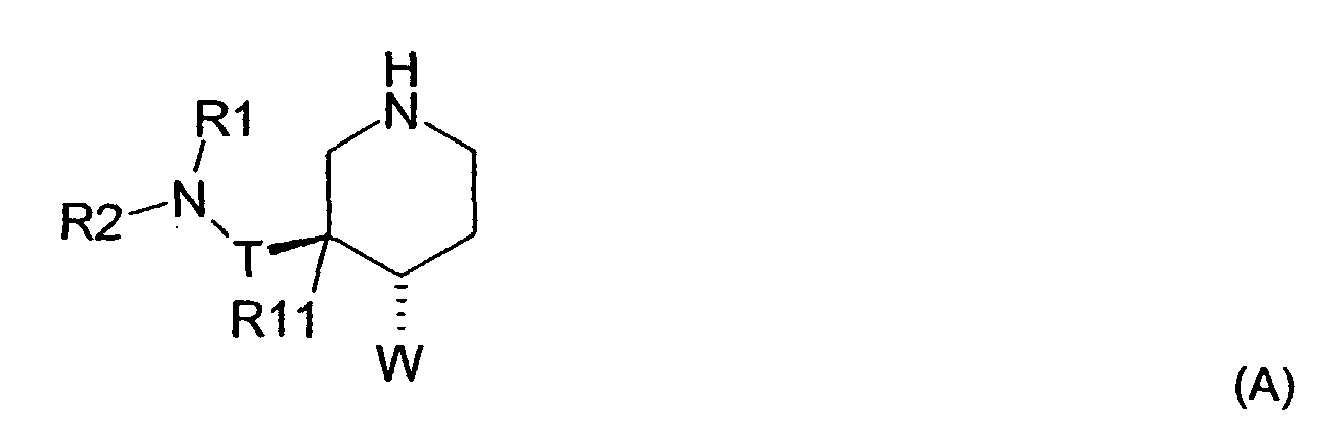


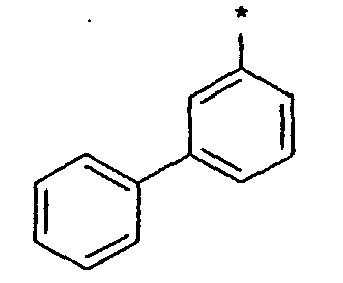


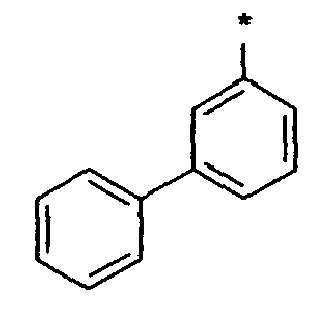


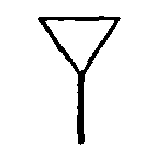


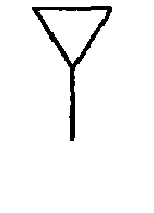


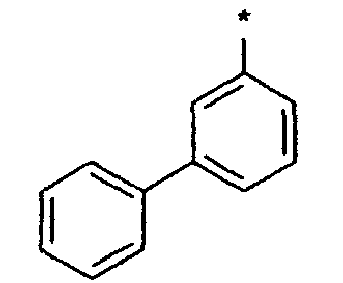


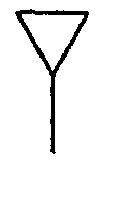


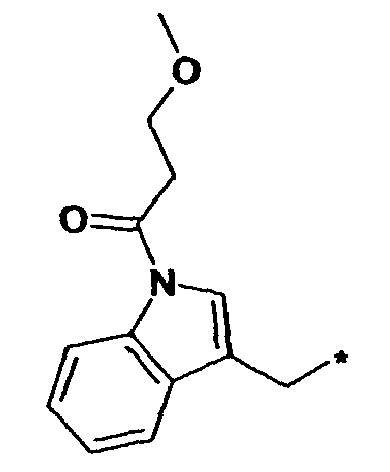


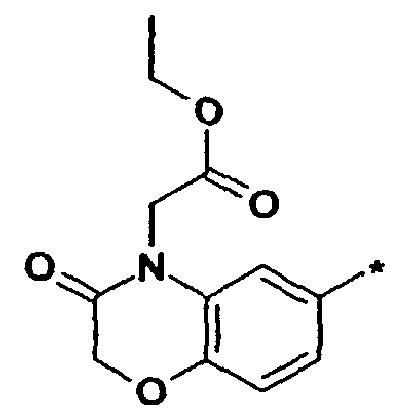


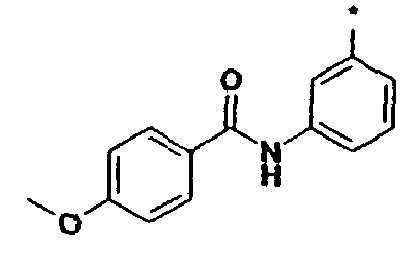


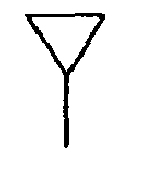

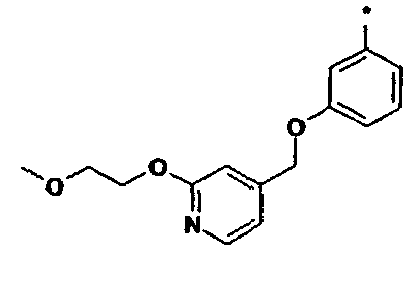


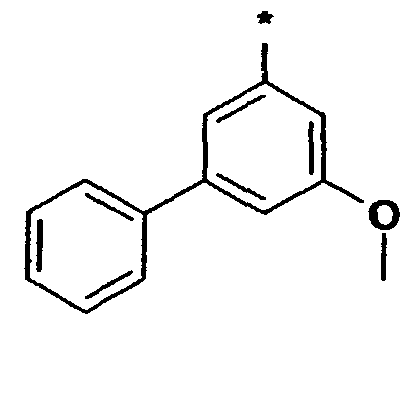


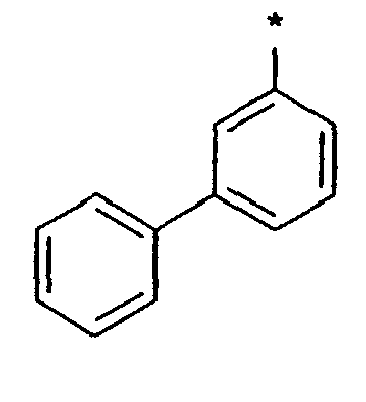


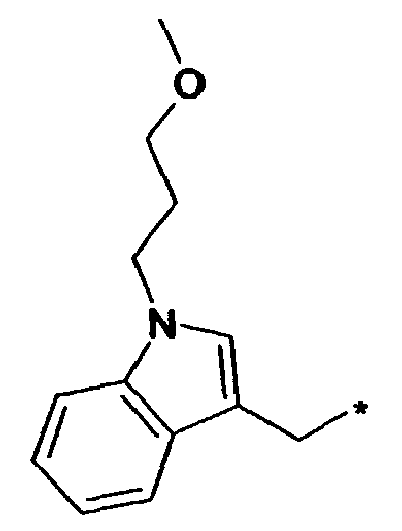


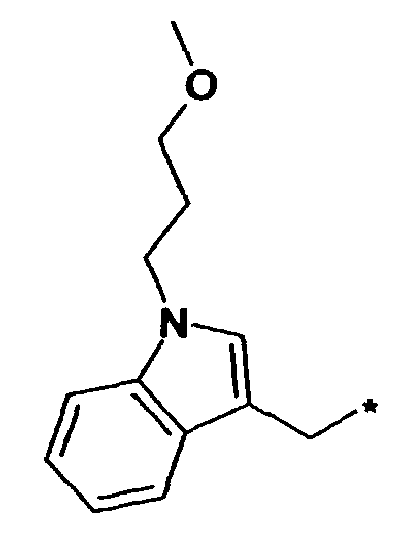


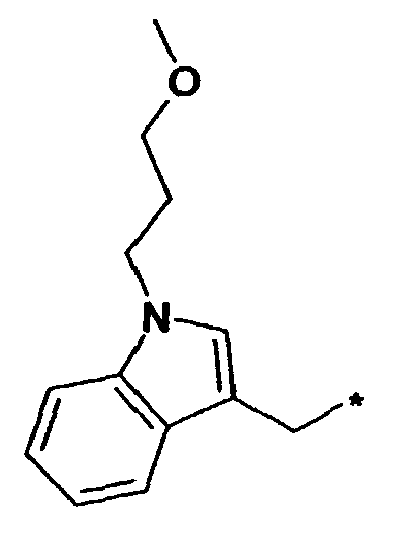


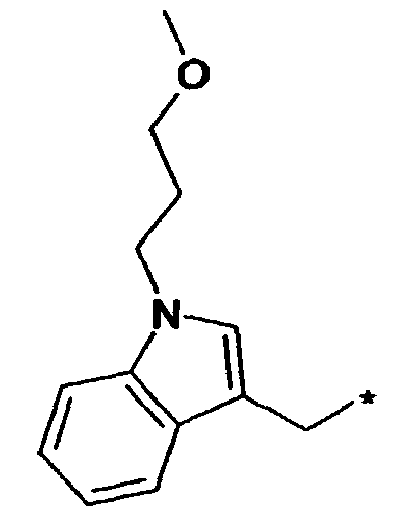
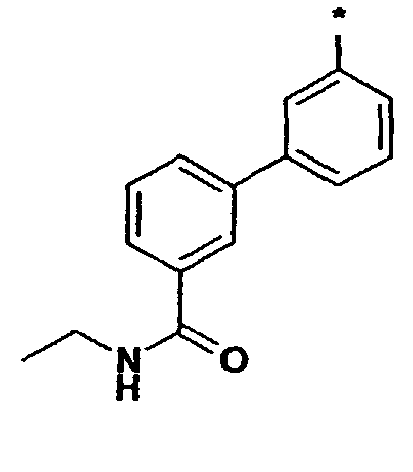


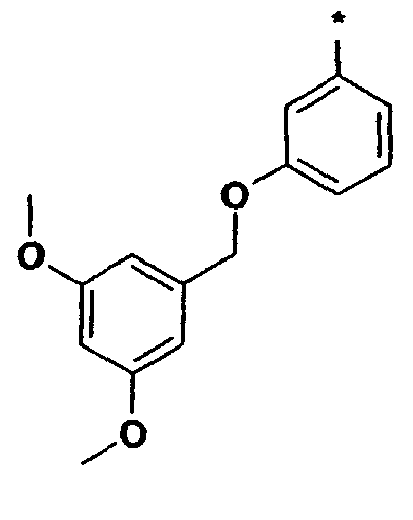


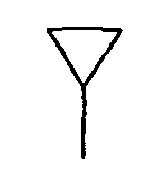


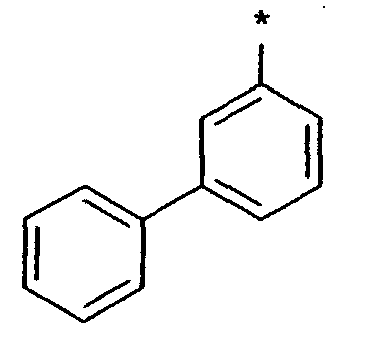


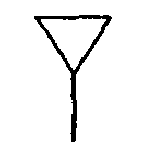


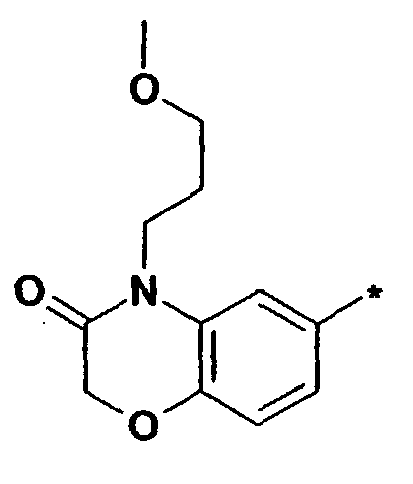


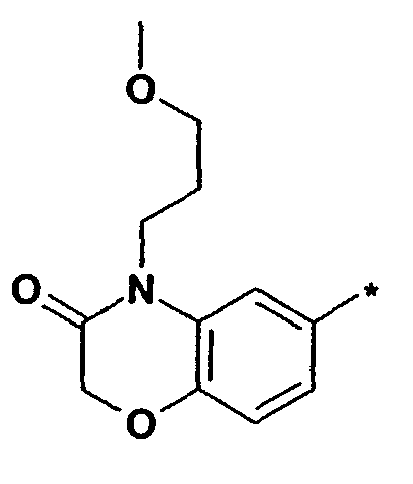


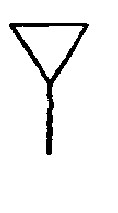


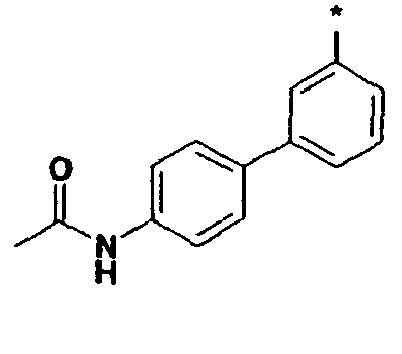
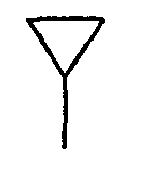


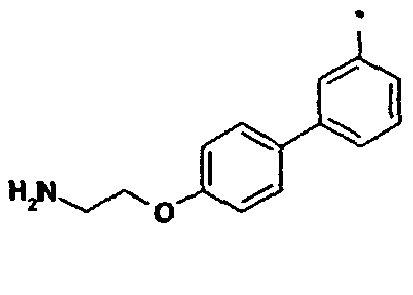


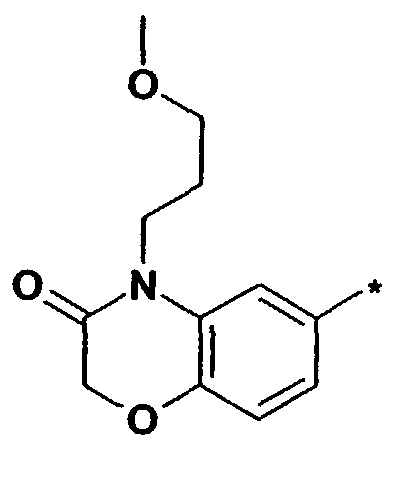


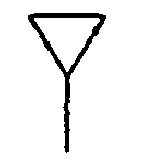


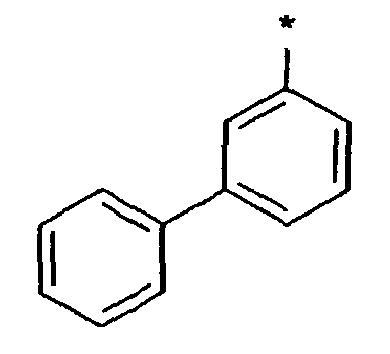


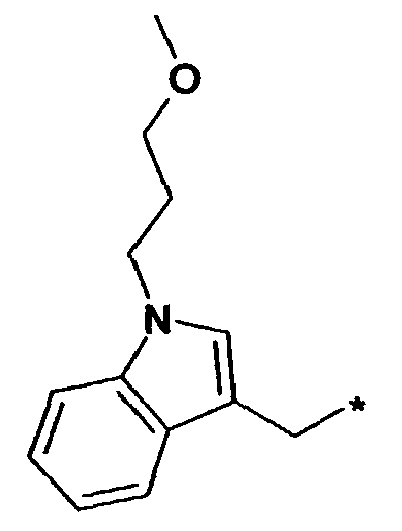



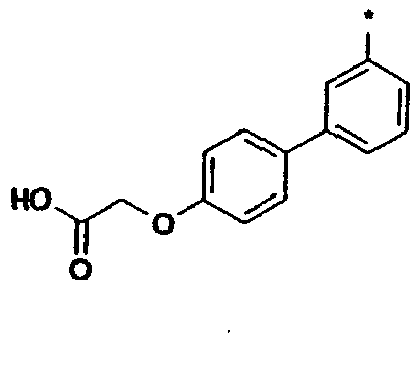




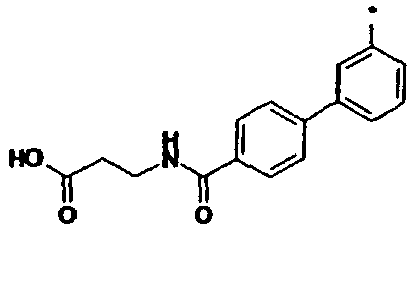


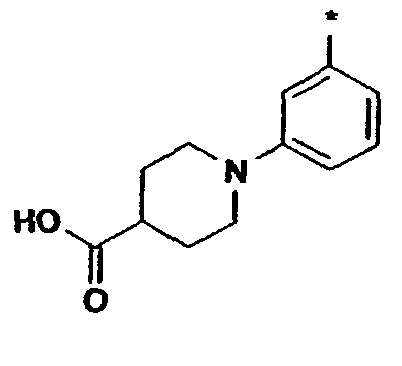


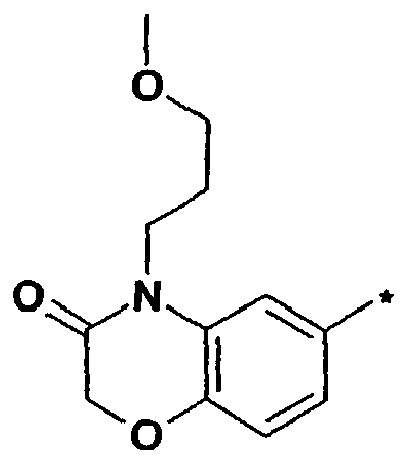


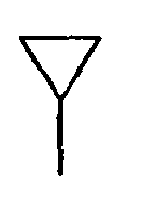


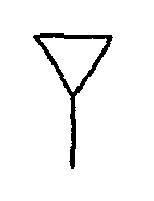


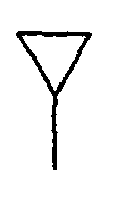


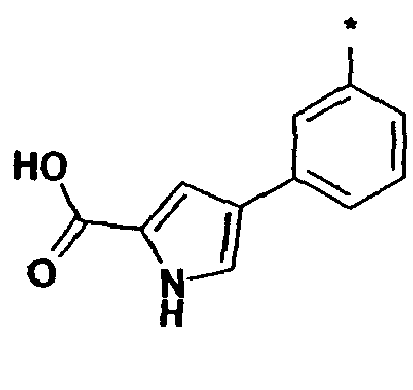


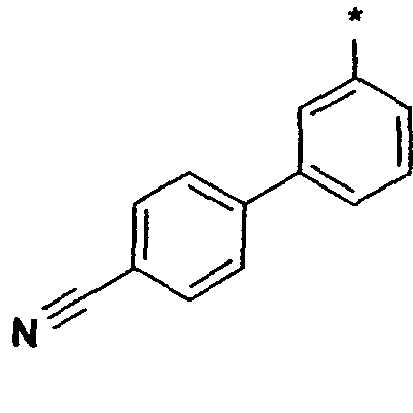










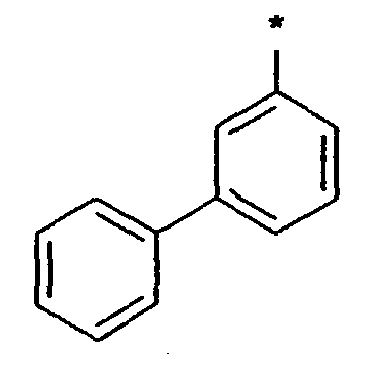


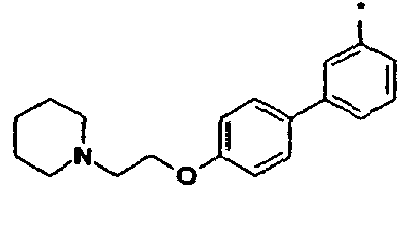


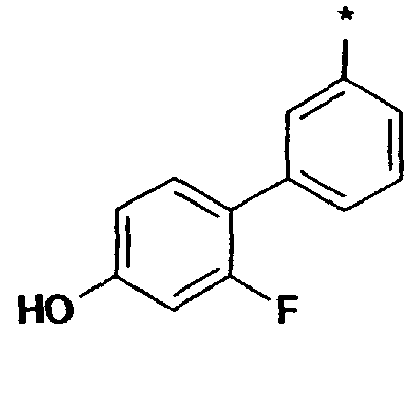


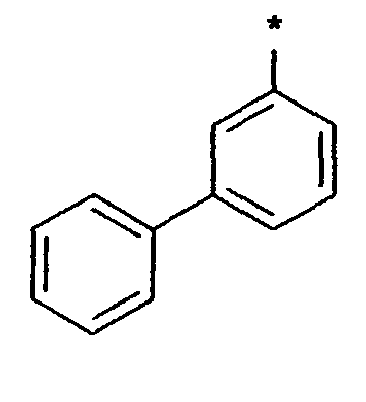


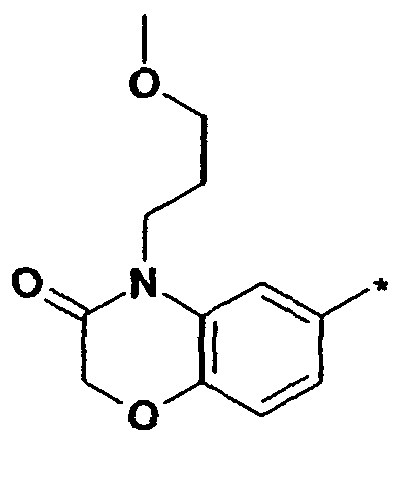


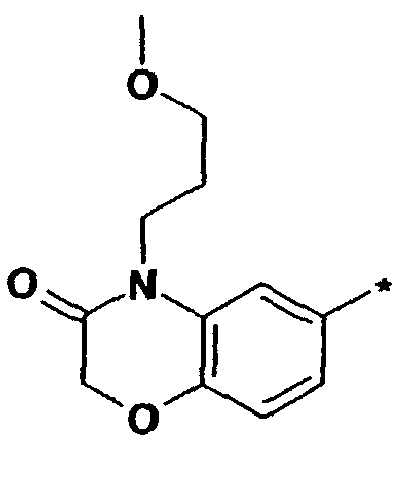


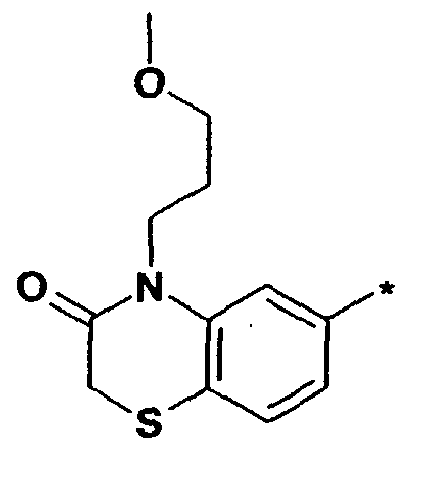

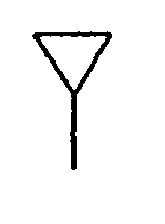

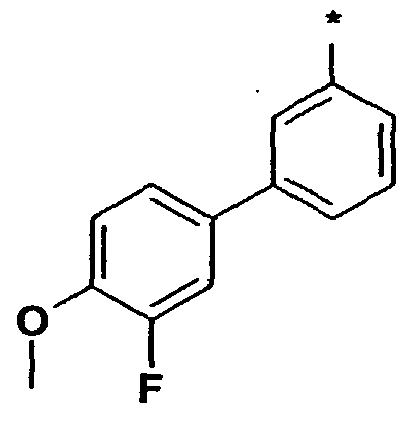


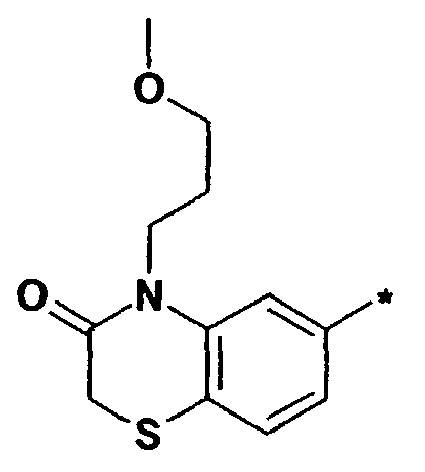







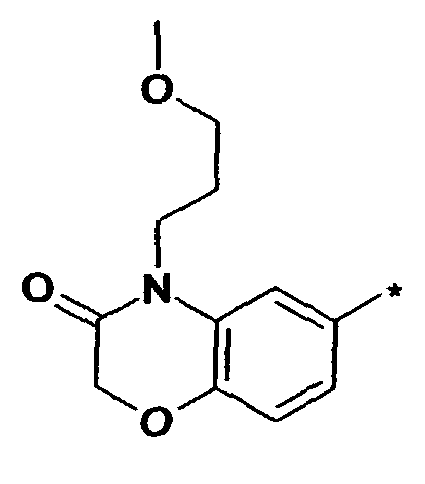


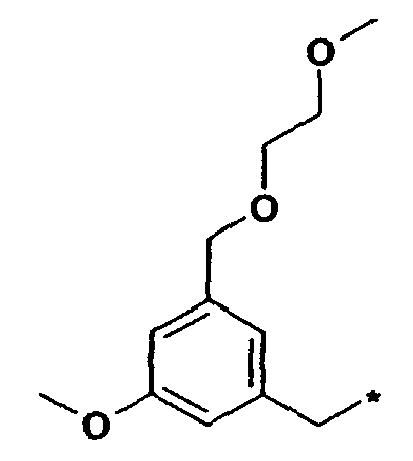


R3-Q (V)
wherein R3 is as just defined and Q is -B(OH)2 or a leaving group, and removing protecting groups to give the corresponding compound of the formula I, or

R2*-D (VII)


R1 is unsubstituted or substituted cycloalkyl;
R2 is unsubstituted or substituted alkyl, unsubstituted or substituted alkenyl, unsubstituted or substituted alkynyl, unsubstituted or substituted aryl, unsubstituted or substituted heterocyclyl, unsubstituted or substituted cycloalkyl, or acyl;
W is a moiety selected from those of the formulae IA, IB and IC shown in claim 1,
wherein the asterisk (*) denotes the position where the moiety W is bound to the 4-carbon in the piperidine ring in formula I, and wherein
X1, X2, X3, X4 and X5 are independently selecled from carbon and nitrogen, where X4 in formula IB and X1 in formula IC may have one of these meanings or further be selected from S and O, where carbon and nitrogen ring atoms can carry the required number of hydrogen or substituents R3 or - if present within the limitations given below - R4 to complete the number of bonds emerging from a ring carbon to four, from a ring nitrogen to three; with the proviso that in formula IA at least 2, preferably at least 3 of X1 to X5 are carbon and in formulae IB and IC at least one of X1 to X4 is carbon, preferably two of X1 to X4 are carbon;
y is 0, 1,2 or 3;
z is 0, 1,2, 3 or 4
R3 which can only be bound to any one of X1, X2, X3 and X4 is hydrogen or preferably unsubstituted or substituted C1-C7-alkyl, unsubstituted or substituted C2-C7-alkenyl, unsubstituted or substituted C2-C7-alkynyl, unsubstituted or substituted aryl, unsubstituted or substituted heterocyclyl, unsubstituted or substituted cycloalkyl, halo, hydroxy, etherified or esterified hydroxy, unsubstituted or substituted mercapto, unsubstituted or substituted sulfinyl, unsubstituted or substituted sulfonyl, amino, mono- or di-substituted amino, carboxy, esterified or amidated carboxy, unsubstituted or substituted sulfamoyl, nitro or cyano,
with the proviso that if R3 is hydrogen y and z are 0;
R4 is - if y or z is 2 or more, independently - selected from a group of substituents consisting of unsubstituted or substituted C1-C7-alkyl, unsubstituted or substituted C2-C7-alkenyl, unsubstituted or substituted C2-C7-alkynyl, halo, hydroxy, etherified or esterified hydroxy, unsubstituted or substituted mercapto, unsubstituted or substituted sulfonyl, unsubstituted or substituted sulfonyl, amino, mono- or di-substituted amino, carboxy, esterified or amidated carboxy, unsubstituted or substituted sulfamoyl, nitro and cyano;
T is methylene (-CH2-) or carbonyl (-C(=O)-);
and
R11 is hydrogen, hydroxy, halo, C1-C7-alkyl, halo-C1-C7-alkyl, cycloalkyl, halo-substituted cycloalkyl, C1-C7-alkoxy, halo-C1-C7-alkoxy or cyano,
or a pharmaceutically acceptable salt thereof,
where in each case of occurrence above in this claim
halo or halogen is fluoro, chloro, bromo or iodo, most preferably fluoro, chloro or bromo, if not indicated otherwise;
unsubstituted or substituted alkyl is C1-C20-alkyl, more preferably C1-C7-alkyl, that is straight-chained or branched one or, if desired and possible, more times, which is unsubstituted or substituted by one or more, e.g, up to three moieties selected from unsubstituted or substituted aryl as described below, especially phenyl or naphthyl each of which is unsubstituted or substituted as described below for unsubstituted or substituted aryl; unsubstituted or substituted heterocycyclyl as described below, especially pyrrolyl, furanyl, thienyl, pyrimidinyl, pyrazolyl, triazolyl, tetrazolyl, oxetidinyl, 3-(C1-C7-alkyl)-oxetidinyl, pyridyl, pyrimidinyl, morpholino, piperidinyl, piperazinyl, tetrahydrofuranone-yl, tetrahydro-pyranyl, indolyl, indazolyl, 1H-indazanyl, benzofuranyl, benzothiophenyl, quinolinyl, isoquinolinyl, 1,2,3,4-tetrahydro-1,4-benzoxazinyl, 2H-1,4-benzoxazin-3(4H)-onyl, 2H,3H-1,4-benzodioxinyl, benzo[1,2,5]oxadiazolyl or 9H-xanthenyl each of which is unsubstituted or substituted as described below for unsubstituted or substituted heterocyclyl; unsubstituted or substituted cycloalkyl as described below, especially cyclopropyl, cyclobutyl, cyclopentyl or cyclohexyl, each of which is unsubstituted or substituted as described below for unsubstituted or substituted cycloalkyl; halo, hydroxy, C1-C7-alkoxy, halo-C1-C7-alkoxy, such as trifluoromethoxy, hydroxy-C1-C7-alkoxy, C1-C7-alkoxy-C1-C7-alkoxy, phenyl- or naphthyloxy, phenyl- or naphthyl-C1-C7-alkyloxy, C1-C7-alkanoyloxy, benzoyl- or naphthoyloxy, C1-C7-alkylthio, halo-C1-C7-alkthio, such as trifluoromethylthio, C1-C7-alkoxy-C1-C7-alkylthio, phenyl- or naphthylthio, phenyl- or naphthyl-C1-C7-alkylthio, C1-C7-alkanoylthio, benzoyl- or naphthoylthio, nitro, amino, mono- or di-C1-C7-alkyl and/or C1-C7-alkoxy-C1-C7alkyl)-amino, mono- or di-(naphthyl- or phenyl-C1-C7-alkyl)-amino, C1-C7-alkanoylamino, benzoyl- or naphthoylamino, C1-C7-alkylsulfonylamino, phenyl- or naphthylsulfonylamino wherein phenyl or naphthyl is unsubstituted or substituted by one or more, especially one to three, C1-C7-alkyl moieties, phenyl- or naphthyl-C1-C7-alkylsulfonylamino, carboxyl, C1-C7-alkyl-carbonyl, C1-C7-alkoxy-carbonyl, phenyl- or naphthyloxycarbonyl, phenyl- or naphthyl-C1-C7-alkoxycarbonyl, carbamoyl, N- mono- or N,N-di-(C1-C7-alkyl)-aminocarbonyl, N-mono- or N,N-di-(naphthyl- or phenyl-C1-C7-alkyl)-aminocarbonyl, cyano, C1-C7-alkylene, C1-C7-alkenylene or -alkynylene, C1-C7-alkylenedioxy, sulfonyl (-S-OH), sulfonyl (-S(=O)-OH), C1-C7-alkylsulfinyl (C1-C7-alkyl-S(=O)-), phenyl- or naphthylsulfinyl wherein phenyl or naphthyl is unsubstituted or substituted by one or more, especially one to three, C1-C7-alkyl moieties, phenyl- or naphthyl-C1-C7-alksulfinyl, sulfonyl (-S(O)2OH), C1-C7-alkylsulfonyl (C1-C7-alkyl-SO2-), phenyl- or naphthylsulfonyl wherein phenyl or naphthyl is unsubstituted or substituted by one or more, especially one to three, C1-C7-alkoxy-C1-C7-alkyl or C1-C7-alkyl moieties, phenyl- or naphthyl-C1-C7-alkylsulfonyl, sulfamoyl and N-mono or N,N-di-(C1-C7-alkyl, phenyl-, naphthyl, phenyl-C1-C7-alkyl or naphthyl-C1-C7-alkyl)-aminosulfonyl.
unsubstituted or substituted alkenyl has 2 to 20 carbon atoms and includes one or more double bonds, and is more preferably C2-C7-alkenyl that is unsubstituted or substituted as described above for unsubstituted or substituted alkyl;
unsubstituted or substituted alkynyl has 2 to 20 carbon atoms and includes one or more triple bonds, and is more preferably C2-C7-alkynyl that is unsubstituted or substituted as described above for unsubstituted or substituted alkyl;
unsubstituted or substituted aryl is a mono- or polycyclic, especially monocyclic, bicyclic or tricyclic aryl moiety with 6 to 22 carbon atoms, especially phenyl, naphthyl, indenyl, fluorenyl, acenapthylenyl, phenylenyl or phenanthryl, and is unsubstituted or substituted by one or more, especially one to three, moieties, preferably independently selected from the group consisting of
a substituent of the formula -(C0-C7-alkylene)-(X)r-(C1-C7-alkylene)-(Y)s-(C0-C7-alkylene)-H where C0-alkylene means that a bond is present instead of bound alkylene, r and s, each independently of the other, are 0 or 1 and each of X and Y, if present and independently of the others, is -O-, -NV-, -S-, -C(=O)-, -C(=S), -O-CO-, -CO-O-, -MV-CO-; -CO-NV-; -NV-SO2-, -SO2-NV; -NV-CO-NV-, -NV-CO-O-, -O-CO-NV-, -NV-SO2-NV- wherein V is hydrogen or unsubstituted or substituted alkyl as defined below, especially selected from C1-C7-alkyl, phenyl, naphthyl, phenyl- or naphthyl-C1-C7-alkyl and halo-C1-C7-alkyl; e.g. C1-C7-alkyl, such as methyl, ethyl, n-propyl, isopropyl, n-butyl, isobutyl, sec-butyl or tert-butyl, hydroxy-C1-C7-alkyl, C1-C7-alkoxy-C1-C7-alkyl, such as 3-methoxypropyl or 2-methoxyethyl, C1-C7-alkoxy-C1-C7-alkoxy-C1-C7-alkyl, C1-C7-alkanoyloxy-C1-C7-alkyl, C1-C7-alkyloxycarbonyl-C1-C7-alkyl, amino-C1-C7-alkyl, such as aminomethyl, (N-) mono- or (N,N-) di-(C1-C7-alkyl)-amino-C1-C7-alkyl, C1-C7-alkoxy-C1-C7-alkylamino-C1-C7-alkyl, mono-(naphthyl- or pheno)-amino-C1-C7-alkyl, mono-(naphthyl- or phenyl-C1-C7-alkyl)-amino-C1-C7-alkyl, C1-C7-alkanoylamino-C1-C7-alkyl, C1-C7-alkyl-O-CO-NH-C1-C7-alkyl, C1-C7-alkylsulfonylamino-C1-C7-alkyl, C1-C7-alkyl-NH-CO-NH-C1-C7-alkyl, C1-C7-alkyl-NH-SO2-NH-C1-C7-alkyl, C1-C7-alkoxy, hydroxy-C1-C7-alkoxy, C1-C7-alkoxy-C1-C7-alkoxy, carboxy-C1-C7-alkyloxy, C1-C7-alkyloxycarbonyl-C1-C7-alkoxy, mono- or di-(C1-C7-alkyl)-aminocarbonyl-C1-C7-alkyloxy, C1-C7-alkanoyloxy, mono- or di-(C1-C7-alkyl)-amino, mono- di-(naphthyl- or phenyl-C1-C7-alkyl)-amino, N-mono-C1-C7-alkoxy-C1-C7-alkylamino, C1-C7-alkanoylamino, C1-C7-alkylsulfonylamino, C1-C7-alkylcarbonyl, halo-C1-C7-alkylcarbonyl, hydroxy-C1-C7-alkylcarbonyl, C1-C7alkoxy-C1-C7-alkylcarbonyl, amino-C1-C7-alkylcarbonyl, (N-) mono- or (N,N-) di-(C1-C7-alkyl)-amino-C1-C7-alkylcarbonyl, C1-C7-alkanoylamino-C1-C7-alkylcarbonyl, C1-C7-alkoxy-carbonyl, hydroxy-C1 C7-alkoxycarbonyl, C1-C7-alkoxy-C1-C7-alkoxycarbonyl, amino-C1-C7-alkoxycarbonyl, (N-) mono-(C1-C7-alkyl)-amino-C1-C7-alkoxycarbonyl, C1-C7-alkanoylamino-C1-C7-alkoxycarbonyl, N- mono- or N,N-di-(C1-C7-alkyl)-aminocarbonyl, N-C1-C7-alkoxy-C1-C7-alkylcarbamoyl or N-mono- or N,N-di-(C1-C7-alkyl)-aminosulfonyl;
from C2-C7-alkenyl, C2-C7-alkinyl, phenyl, naphtyl, heterocyclyl, especially as defined below for heterocyclyl, preferably selected from pyrrolyl, furanyl, thienyl, pyrimidinyl, pyrazolyl, pyrazolidinonyl, N-(C1-C7-alkyl, phenyl, naphthyl, phenyl-C1-C7-alkyl or naphthyl-C1-C7-alkyl)-pyrazolidinonyl, triazolyl, tetrazolyl, oxetidinyl, 3-C1-C7-alkyl-oxetidinyl, pyridyl, pyrimidinyl, morpholino, piperidinyl, piperazinyl, tetrahydrofuranone-yl, indolyl, indazolyl, 1H-indazolyl, benzofuranyl, benzothiophenyl, quinolinyl, isoquinolinyl, 1,2,3,4-tetrahydro-1,4-benzoxazinyl, 2H-1,4-benzoxazin-3(4H)-onyl, benzo[1,2,5]oxadiazolyl or 9H-xanthenyl, phenyl- or naphthyl- or hoterocyclyl-C1-C7-alkyl or -C1-C7-alkyloxy wherein heterocyclyl is as defined below, preferably selected from pyrrolyl, furanyl, thienyl, pyrimidinyl, pyrazolyl, pyrazolidinonyl, N-(C1-C7-alkyl, phenyl, naphthyl, phenyl-C1-C7-alkyl or naphthyl-C1-C7-alkyl)-pyrazolidinonyl, triazolyl, tetrazolyl, oxetidinyl, pyridyl, pyrimidinyl, morpholino, piperidinyl, piperazinyl, tetrahydrofuran-onyl, indolyl, indazolyl, 1H-indazanyl, benzofuranyl, benzothiophenyl, quinolinyl, isoquinolinyl, 1,2,3,4-tetrahydro-1,4-benzoxazinyl, 2H-1,4-benzoxazin-3(4H)-onyl-, benzo[1,2,5]-oxadiazolyl or 9H-xanthenyl; such as benzyl or naphthylmethyl, halo-C1-C7-alkyl, such as trifluoromethyl, phenyloxy- or naphthyloxy-C1-C7-alkyl, phenyl-C1-C7-alkoxy- or naphthyl-C1-C7-alkoxy-C1-C7-alkyl, di-(naphthyl- or phenyl)-amino-C1-C7-alkyl, di-(naphthyl- or phenyl-C1-C7-alkyl)-amino-C1-C7-alkyl, benzoyl- or naphthoylamino-C1-C7-alkyl, phenyl- or naphthylsulfonylamino-C1-C7-alkyl wherein phenyl or naphthyl is unsubstituted or substituted by one or more, especially one to three, C1-C7-alkyl moieties, phenyl- or naphthyl-C1-C7-alkylsulfonylamino-C1-C7-alkyl, carboxy-C1-C7-alkyl, halo, especially fluoro or chloro, hydroxy, phenyl-C1-C7-alkoxy wherein phenyl is unsubstituted or substituted by C1-C7-alkoxy and/or halo, halo-C1-C7-alkoxy, such as trifluoromethoxy, phenyl- or naphthyloxy, phenyl- or naphthyl-C1-C7-alkyloxy, phenyl- or naphthyl-oxy-C1-C7-alkyloxy, benzoyl- or naphthoyloxy, halo-C1-C7-alkyl-thio, such as trifluoromethylthio, phenyl- or naphthylthio, phenyl- or naphthyl-C1-C7-alkylthio, benzoyl- or naphthoylthio, nitro, amino, di-(naphthyl- or phonyl-C1-C7-alkyl)-amino, benzoyl- or naphthoylamino, phenyl- or naphthylsulfonylamino wherein phenyl or naphthyl is unsubstituted or substituted by one or more, especially one to three, C1-C7-alkoxy-C1-C7-alkyl or C1-C7-alkyl moieties, phenyl- or naphthyl-C1-C7-alkylsulfonylamino, carboxyl, (N,N-) di-(C1-C7-alkyl)-amino-C1-C7-alkoxycarbonyl, halo-C1-C7-alkoxycarbonyl, phenyl- or naphthyloxycarbonyl, phenyl- or naphthyl-C1-C7-alkoxycarbonyl, (N,N-) di-(C1-C7-alkyl)-amino-C1-C7-alkoxycarbonyl, carbamoyl, N-mono or N,N-di-(naphthyl-, phenyl-, C1-C7-alkyloxyphenyl and/ or C1-C7-alkyloxynapthtyl-)aminocarbonyl, N-mono- or N,N-di-(naphthyl- or phenyl-C1-C7-alkyl)-aminocarbonyl, cyano, C1-C7-alkylene which is unsubstituted or substituted by up to four C1-C7-alkyl substituents and bound to two adjacent ring atoms of the aryl moiety, C2-C7-alkenylene or -alkinylene which are bound to two adjacent ring atoms of the aryl moiety, sulfenyl, sulfinyl, C1-C7-alkylsulfinyl, phenyl- or naphthylsulfinyl wherein phenyl or naphthyl is unsubstituted or substituted by one or more, especially one to three, C1-C7-alkoxy-C1-C7-alkyl or C1-C7-alkyl moieties, phenyl-or naphthyl-C1-C7-alkylsulfinyl, sulfonyl, C1-C7-alkylsulfonyl, halo-C1-C7-alkylsulfonyl, hydroxy-C1-C7-alkylsulfonyl, C1-C7-alkoxy-C1-C7-alkylsulfonyl, amino-C1-C7-alkylsulfonyl, (N,N-) di-(C1-C7-alkyl)-amino-C1-C7-alkylsulfonyl, C1-C7-alkanoylamino-C1-C7-alkylsulfonyl, phenyl- or naphthylsulfonyl wherein phenyl or naphthyl is unsubstituted or substituted by one or more, especially one to three, C1-C7-alkoxy-C1-C7-alkyl or C1-C7-alkyl moieties, phenyl- or naphthyl-C1-C7-alkylsulfonyl, sulfamoyl and N-mono or N,N-di-(C1-C7-alkyl, phenyl-, naphthyl, phenyl-C1-C7-alkyl and/or naphthyl-C1-C7-alkyl)-aminosulfonyl;
unsubstituted or substituted heterocyclyl is a mono- or polycyclic, preferably a mono-, bi- or tricyclic, unsaturated, partially saturated or saturated ring system with preferably 3 to 22, more preferably 3 to 14 ring atoms and with one or more, preferably one to four, heteroatoms independently selected from nitrogen, oxygen and sulfur, and is unsubstituted or substituted by one or more, e.g. up to three, substitutents preferably independently selected from the substitutents mentioned above for aryl; preferably, heterocyclyl which is unsubstituted or substituted as just mentioned is selected from the following moieties where the asterisk marks the point of binding to the rest of the molecule of formula I:














unsubstituted or substituted cycloalkyl is mono- or polycyclic, more preferably monocyclic, C3-C10-cycloalkyl which may include one or more double and/or triple bonds, and is unsubstituted or substituted by one or more, e.g. one to three substitutents preferably independently selected from those mentioned above as substituents for aryl; preferred is cyclopropyl, cyclobutyl, cyclopentyl, cyclohexyl or cycloheptyl;
acyl is unsubstituted or substituted aryl-carbonyl or -sulfonyl, unsubstituted or substituted heterocyclylcarbonyl or -sulfonyl, unsubstituted or substituted cycloalkylcarbonyl or -sulfonyl, formyl or unsubstituted or substituted alkylcarbonyl or -sulfonyl, wherein unsubstituted or substituted aryl, unsubstituted or substituted heterocyclyl, unsubstituted or substituted cycloalkyl and unsubstituted or substituted alkyl are as described above; preferred is C1-C7-alkanoyl;
etherified or esterified hydroxy is hydroxy that is esterified with acyl as defined above, especially in lower alkanoyloxy; or preferably etherified with alkyl, alkenyl, alkynyl, aryl, heterocyclyl or cycloalkyl each of which is unsubstituted or substituted and is preferably as described above for the corresponding unsubstituted or substituted moieties; especially preferred is
unsubstituted or especially substituted C1-C7-alkyloxy, especially with a substituent selected from C1-C7-alkoxy; phenyl, tetrazolyl, tetrahydrofuran-onyl, oxetidinyl, 3-(C1-C7-alkyl)-oxetidinyl, pyridyl or 2H,3H-1,4-benzodioxinyl, each of which is unsubstituted or substituted by one or more, preferably up to three, e.g. 1 or two substituents independently selected from C1-C7-alkyl, hydroxy, C1-C7-alkoxy, phenyloxy wherein phenyl is unsubstituted or substituted by C1-C7-alkoxy and/or halo, phenyl-C1-C7-alkoxy wherein phenyl is unsubstituted or substituted by C1-C7-alkoxy and/or halo, halo, amino, N-mono- or N,N-di(C1-C7-alkyl, phenyl, naphthyl, phenyl-C1-C7-alkyl or naphthyl-C1-C7-alkyl)amino, C1-C7-alkanoylamino, carboxy, N-mono- or N,N-di(C1-C7-alkyl, phenyl, naphthyl, phenyl-C1-C7-alkyl or naphthyl-C1-C7-alkyl)-aminocarbonyl, morpholino, morpholino-C1-C7-alkoxy, pyridyl-C1-C7-alkoxy, pyrazolyl, 4-C1-C7-alkylpiperidin-1-yl and cyano;
unsubstituted or substituted aryloxy with unsubstituted or substituted aryl as described above, especially phenyloxy with phenyl that is unsubstituted or substituted as just described; or
unsubstituted or substituted heterocyclyloxy with unsubstituted or substituted heterocyclyl as described above, preferably tetrahydropyranyloxy;
substituted mercapto is mercapto that is thioesterified with acyl as defined above, especially with lower alkanoyloxy; or preferably thioetherified with alkyl, alkenyl, alkynyl, aryl, heterocyclyl or cycloalkyl each of which is unsubstituted or substituted and is preferably as described above for the corresponding unsubstituted or substituted moieties; especially preferred is unsubstituted or especially substituted C1-C7-alkylthio or unsubstituted or substituted arylthio with unsubstituted or substituted C1-C7-alkyl or aryl as just described for the corresponding moieties under etherified hydroxy;
substituted sulfinyl or sulfonyl is substituted with alkyl, alkenyl, alkynyl, aryl, heterocyclyl or cycloalkyl each of which is unsubstituted or substituted and is preferably as described above for the corresponding unsubstituted or substituted moieties; especially preferred is unsubstituted or especially substituted C1-C7-alkylsulfinyl or -sulfonyl or unsubstituted or substituted arylsulfinyl or -sulfonyl with unsubstituted or substituted C1-C7-alkyl or aryl as just described for the corresponding moieties under etherified hydroxy;
In mono- or di-substituted amino, amino is substituted by one or more substituents selected from one acyl, especially C1-C7-alkanoyl, phenylcarbony, C1-C7-alkylsulfonyl or phenylsulfonyl wherein phenyl is unsubstituted or substituted by one to 3 C1-C7-alkyl groups, and one or two moieties selected from alkyl, alkenyl, alkynyl, aryl, heterocyclyl and cycloalkyl each of which is unsubstituted or substituted and is preferably as described above for the corresponding unsubstituted or substituted moieties; preferred is C1-C7-alkanoylamino, mono- or di-(phenyl, naphthyl, C1-C7-alkoxy-phenyl, C1-C7-alkoxynaphthyl, naphthyl-C1-C7-alkyl or phenyl-C1-C7-alkyl)-carbonylamino (e.g. 4-methoxybenzoylamino), mono- or di-(C1-C7-alkyl and/or C1-C7-alkoxy-C1-C7-alkyl)-amino or mono- or di-(phenyl, naphthyl, C1-C7-alkoxyphenyl, C1-C7-alkoxynaphthyl, phenyl-C1-C7-alkyl, naphthyl-C1-C7-alkyl, C1-C7-alkoxynaphthyl-C1-C7-alkyl or C1-C7-alkoxy-phenyl-C1-C7-alkyl)-amino;
esterified carboxy is alkyloxycarbonyl, aryloxycarbonyl, heterocyclyloxycarbonyl or cycloalkyloxycarbonyl, wherein alkyl, aryl, heterocyclyl and cycloalkyl are unsubstituted or substituted and the corresponding moieties and their substituents are preferably as described above; preferred is C1-C7-alkoxycarbonyl, phenyl-C1-C7-alkoxycarbonyl, naphthyl-C1-C7-alkoxycarbonyl, phenoxycarbonyl or naphthoxycarbonyl;
i amidated carboxy, the amino part bound to the carbonyl in the amido function is unsubtituted or substituted as described for substituted amino, but preferably without acyl as amino substituent; preferred is mono- or di-(C1-C7-alkyl and/or C1-C7-alkoxy-C1-C7-alkyl)-aminocarbonyl or mono- or di-(C1-C7-alkyloxyphenyl, C1-C7-alkyloxynaphthyl, naphthyl-C1-C7alkyl or phenyl-C1-C7-alkyl)-aminocarbonyl;
in substituted sulfamoyl, the amino part bound to the sulfonyl in the sulfamoyl function is unsubstituted or substituted as described for substituted amino, but preferably without acyl as amino substituent; preferred is mono- or di-(C1-C7-alkyl and/or C1-C7-alkoxy-C1-C7-alkyl)-aminosulfonyl or mono- or di-(C1-C7-alkyloxyphenyl, C1-C7-alkyloxynaphthyl, naphthyl-C1-C7alkyl or phenyl-C1-C7-alkyl)-aminosulfony; and
unsubstituted or substituted C1-C7-alkyl, unsubstituted or substituted C2-C7-alkenyl and unsubstituted or substituted C2-C7-alkynyl and their substituents are defined as above under the corresponding (un)substituted alkyl, (un)substituted alkinyl and (un)substituted alkinyl moieties but with the given number of carbon atoms in the alkyl, alkenyl or alkynyl moieties.
R1 is C3-C8-cycloalkyl;
R2 is phenyl-C1-C7-alkyl, di-(phenyl)-C1-C7-alkyl, naphthyl-C1-C7-alkyl, phenyl, naphthyl, pyridyl-C1-C7-alkyl, indolyl-C1-C7-alkyl, 1H-indazoly-C1-C7-alkyl, quinolyl-C1-C7-alkyl, isoquinolyl-C1-C7-alkyl, 1,2,3,4-tetrahydro-1,4-benzoxazinyl-C1-C7-alkyl, 2H-1,4-benzoxazin-3(4H)-onyl-C1-C7-alkyl 9-xanthenyl-C1-C7-alkyl, 1-benzothiophonyl-C1-C7-alkyl, pyridyl, indolyl, 1H-indazolyl, quinolyl , isoquinolyl, 1,2,3,4-tetrahydro-1,4-benzoxazinyl, 2H-1,4-benzoxazin-3(4H)-onyl, 9-xanthenyl or 1-benzothiophenyl, where each phenyl, naphthyl, pyridyl, indolyl, 1H-indazolyl, quinolyl, isoquinolyl, 1,2,3,4-tetrahydro-1,4-benzoxazinyl, 2H-1,4-benzoxazin-3(4H)-only or 1-benzothiophenyl is unsubstituted or substituted by one or more, e.g. up to three, substituents independently selected from the group consisting of C1-C7-alkyl, hydroxy-C1-C7-alkyl, C1-C7-alkoxy-C1-C7-alkyl, C1-C7-alkoxy-C1-C7-alkoxy-C1-C7-alkyl, C1-C7-alkanoyloxy-C1-C7-alkyl, amino-C1-C7-alkyl, C1-C7-alkoxy-C1-C7-alkylamino-C1-C7-alkyl, C1-C7-alkanoylamino-C1-C7-alkyl, C1-C7-alkylsulfonylemino-C1-C7-alkyl, carboxy-C1-C7-alkyl, C1-C7-alkoxycarbonyl-C1-C7-alkyl, halo, hydroxy, C1-C7-alkoxy, C1-C7-alkoxy-C1-C7-alkoxy, amino-C1-C7-alkoxy, N-C1-C7-alkanoylamino-C1-C7-alkoxy, carbamoyl-C1-C7-alkoxy, N-C1-C7-alkylcarbamoyl-C1-C7-alkoxy, C1-C7-alkanoyl, C1-C7-alkyloxy-C1-C7-alkanoyl, C1-C7-alkoxy-C1-C7-alkanoyl, carboxyl, carbamoyl and N-C1-C7-alkoxy-C1-C7-alkylcarbamoyl;
W is either a moiety of the formula IA,


R1 is C3-C8-cycloalkyl;
R2 is phenyl-C1-C7-alkyl, di-(phenyl)-C1-C7-alkyl, phenyl, indolyl-C1-C7-alkyl, 1H-indazolyl-C1-C7-alkyl, 9-xanthenyl-C1-C7-alkyl, 1,2,3,4-tetrahydro-1,4-benzoxazinyl or 2H-1,4-benzoxazin-3(4H)-onyl, where each phenyl, indolyl, 1H-indazolyl, 1,2,3,4-tetrahydro-1,4-benzoxazinyl or 2H-1,4-benzoxazin-3(4H)-only is unsubstituted or substituted by up to three substituents independently selected from the group consisting of C1-C7-alkyl, C1-C7-alkoxy-C1-C7-alkyl, C1-C7-alkoxy-C1-C7-alkoxy-C1-C7-alkyl, C1-C7-alkanoylamino-C1-C7-alkyl, C1-C7-alkylsulfonylamino-C1-C7-alkyl, carboxy-C1-C7-alkyl, C1-C7-alkoxycarbonyl-C1-C7-alkyl, halo, C1-C7-alkoxy, C1-C7-alkoxy-C1-C7-alkoxy and C1-C7-alkyloxy-C1-C7-alkanoyl;
W is either a moiety of the formula IA,
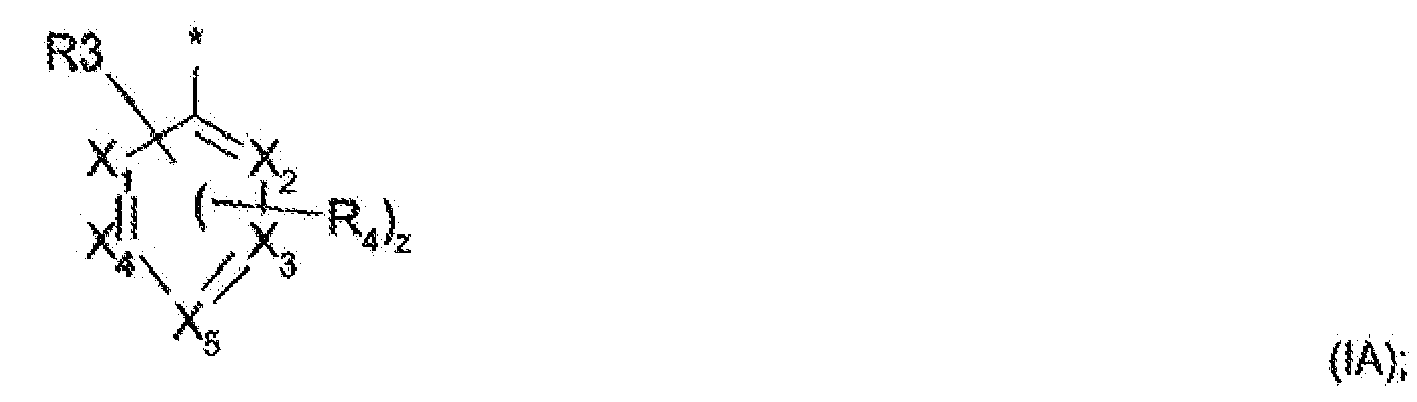

X1 is 0, X2 is CH or N, X3 is CH and X4 is CH or N, with the proviso that not more than one of X2 and X4 is N; and with the proviso that R3 is bound to X2 or preferably to X3 or X4:
where in each case where R3 is bond to a moiety of the formula IA or IC, instead of a hydrogen atom at a ring member NH or CH mentioned so far where R3 is bound a moiety R3 is present;
y is 0 or 1, preferably 0, and z is 0, 1 or 2, preferably 0 or 1;
R3 is hydrogen or preferably C1-C7-alkyloxy-C1-C7-alkyloxy, phenyl, pyridyl, phenyl-C1-C7-alkoxy, phenyloxy, phenyloxy-C1-C7-alkoxy, pyridyl-C1-C7-alkoxy, tetrahydropyranyloxy, 2H,3H~1,4-benzodioxinyl-C1-C7-alkoxy, phenylaminocarbonyl or phenylcarbonylamino, wherein each phenyl or pyridyl is unsubstituted or substituted by up to three, e.g. 1 or two, substituents independently selected from hydroxy, C1-C7-alkoxy, halo, amino and N-mono- or N.N-di-(C1-C7-alkyl)amino, with the proviso that if R3 is hydrogen then y and z are 0;
R4 if present (z=1) is hydroxy, halo or C1-C7-alkoxy;
T is carbonyl or preferably methylene, and
R11 is hydrogen,
or a pharmaceutically acceptable salt thereof.


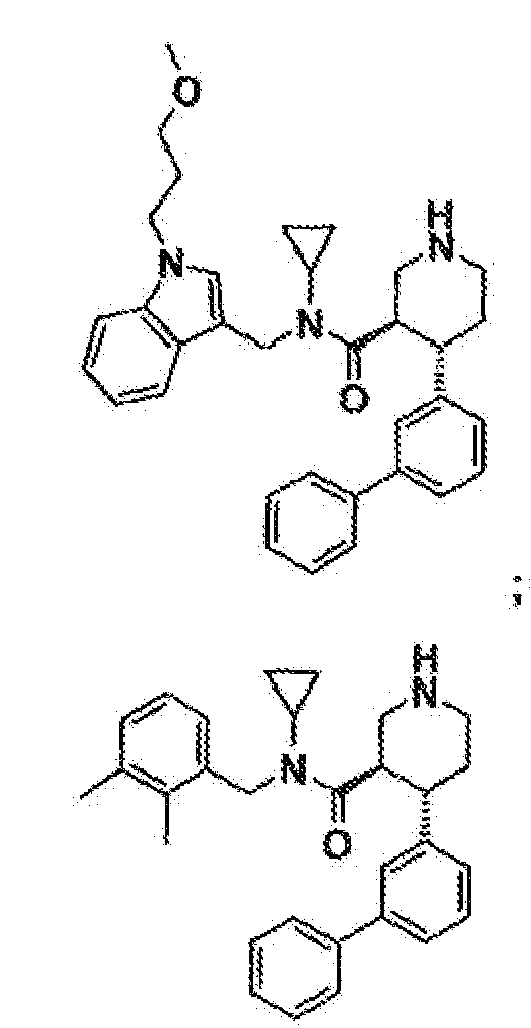
or in each case a pharmaceutically acceptable salt thereof.


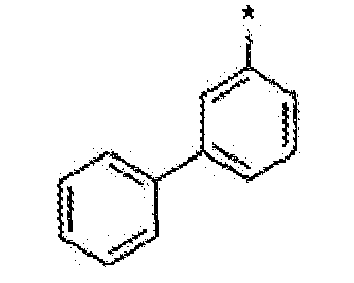




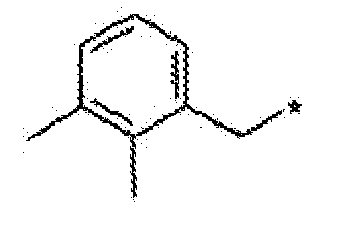


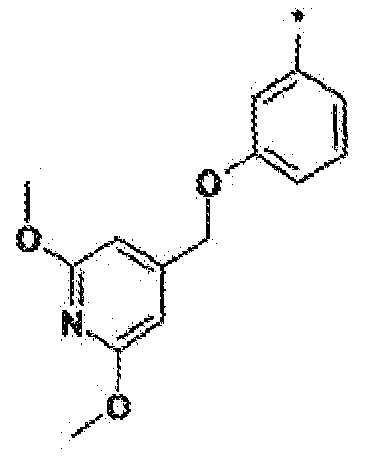


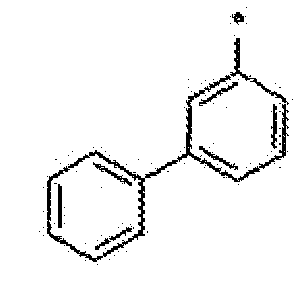




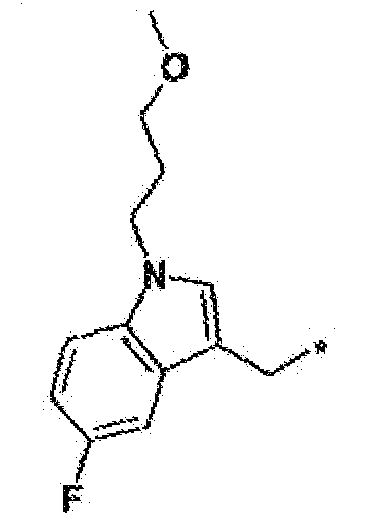


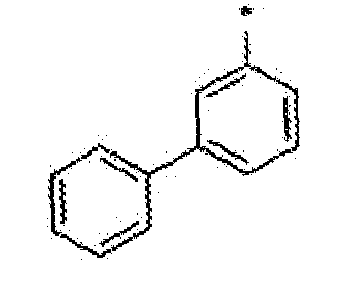




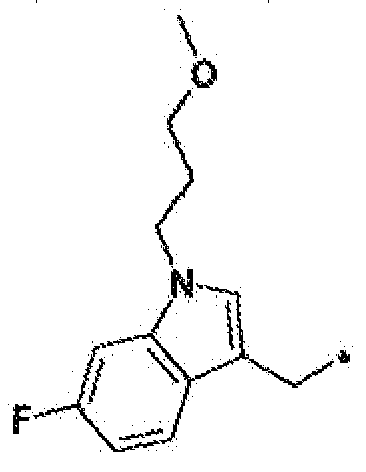


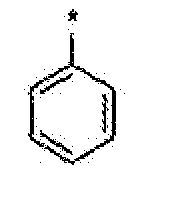


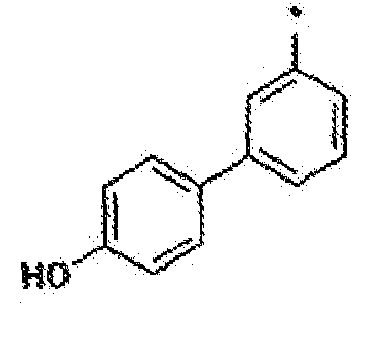


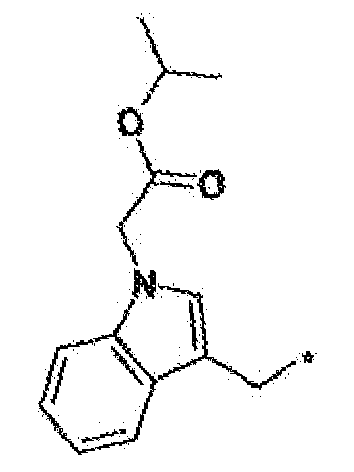


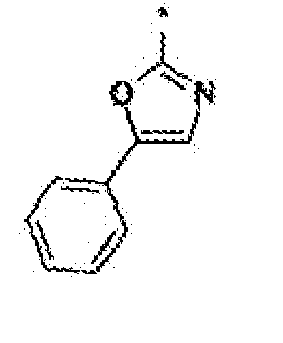


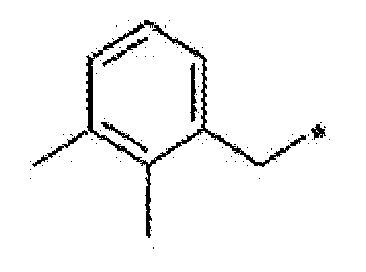
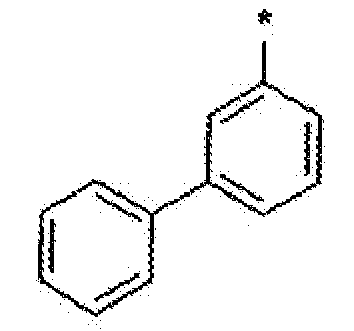


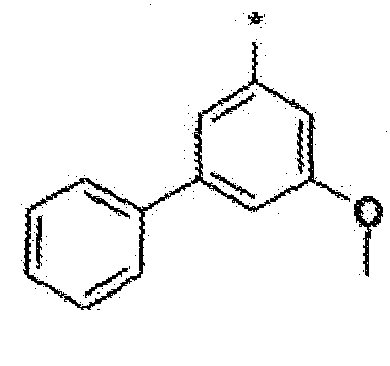

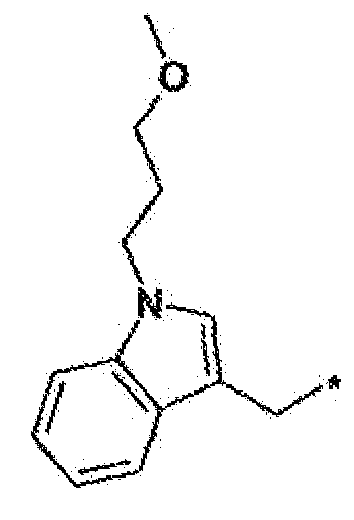






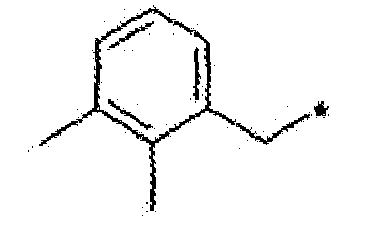



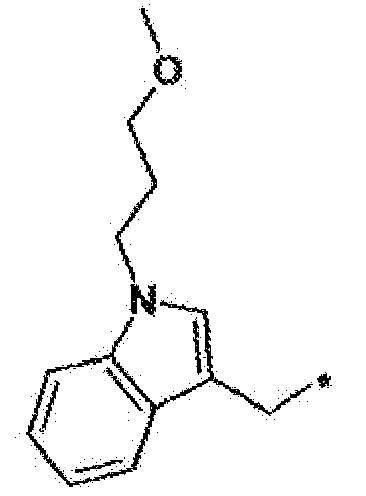



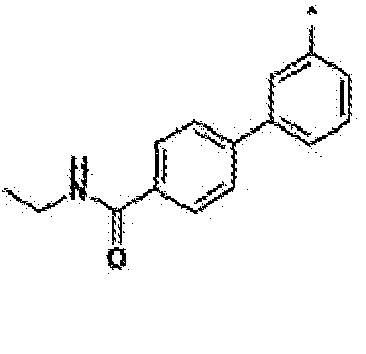


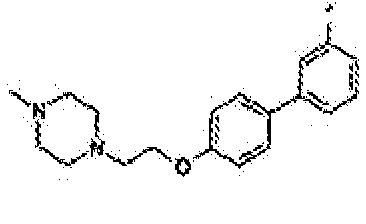


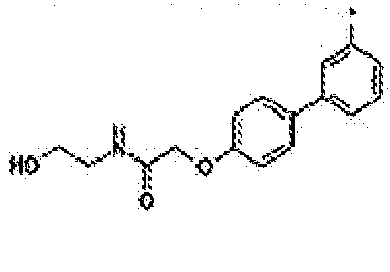


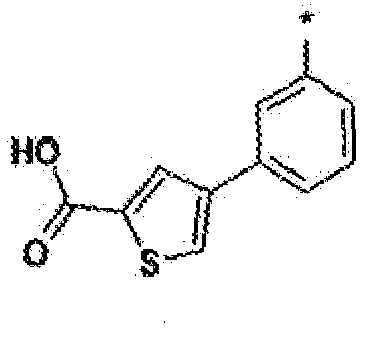


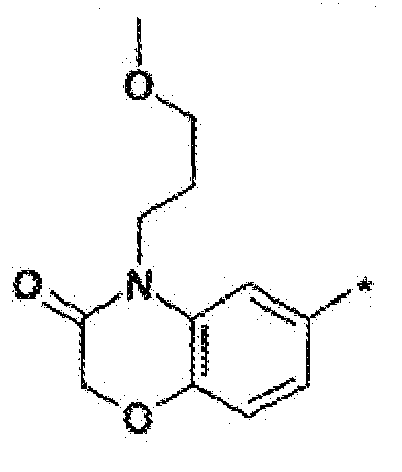




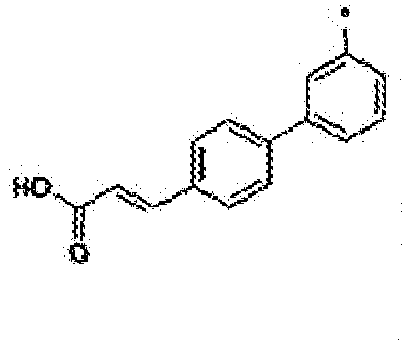



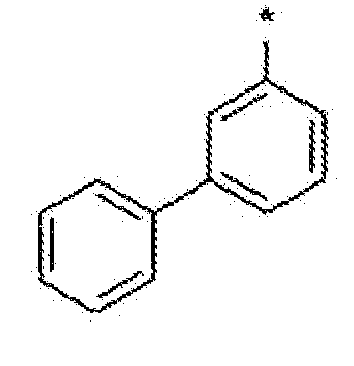


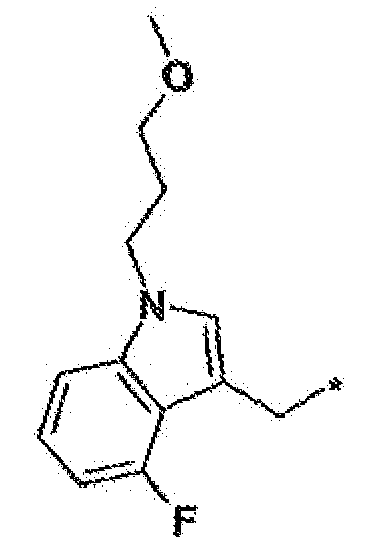


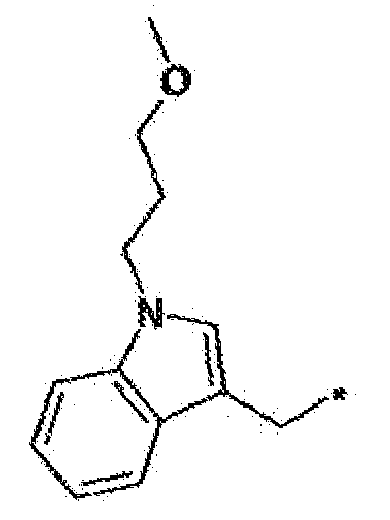



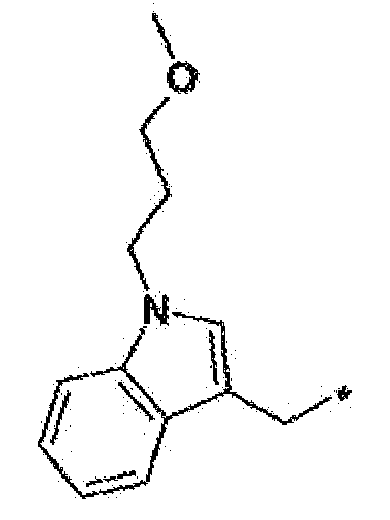






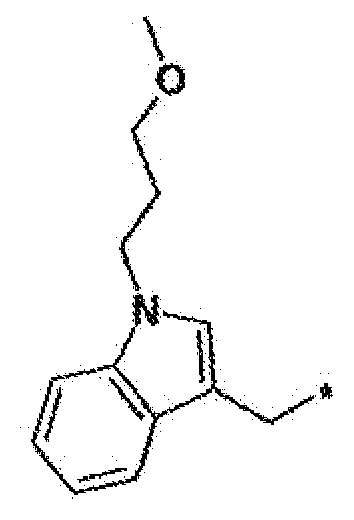


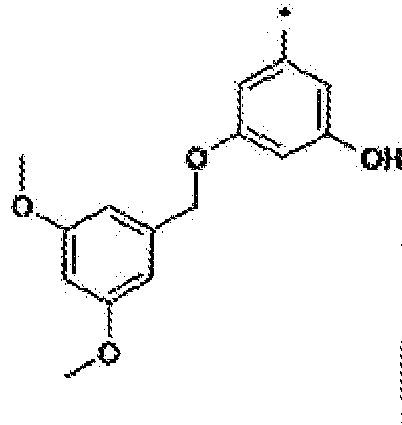

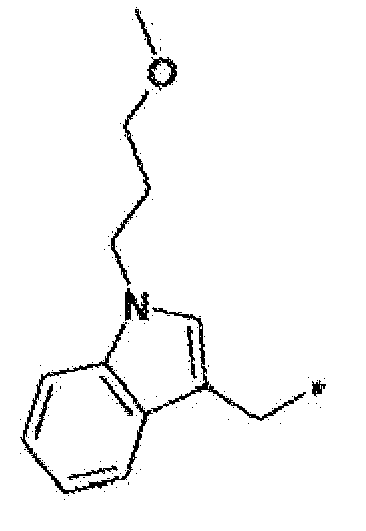


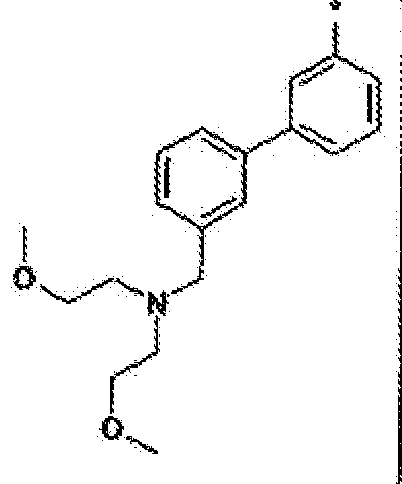




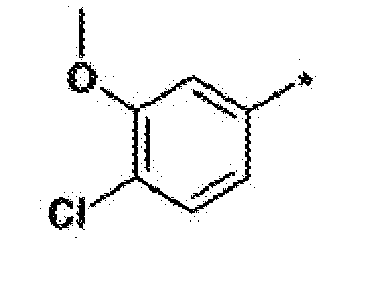


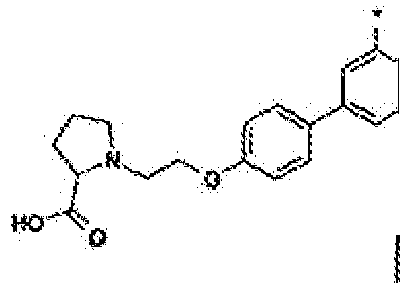


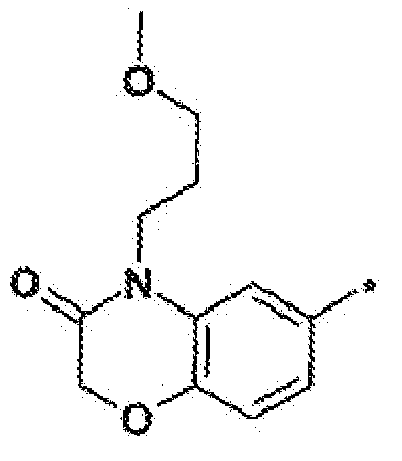


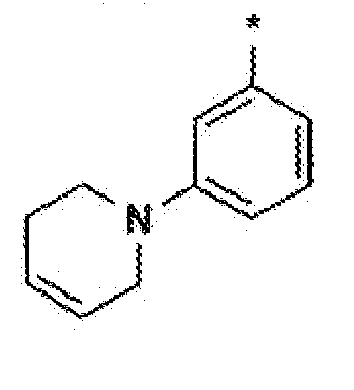








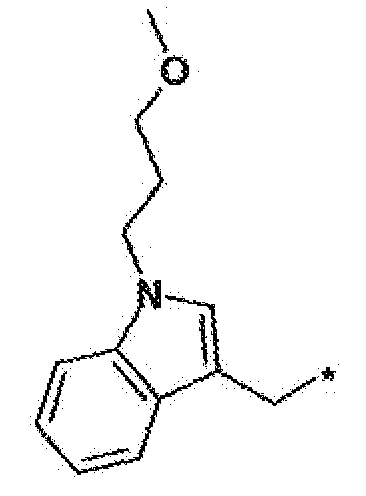


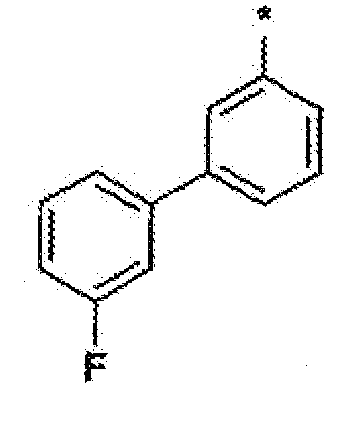


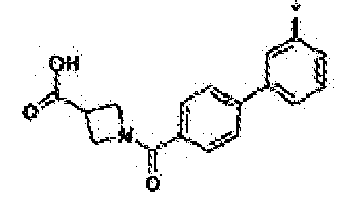





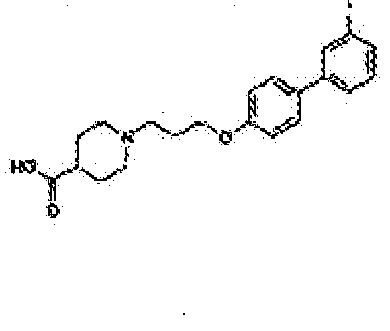


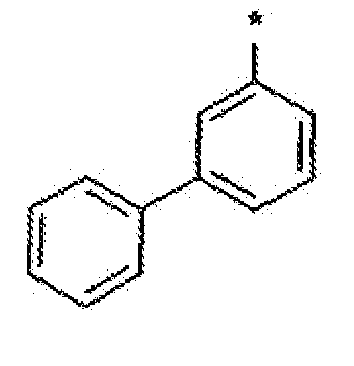


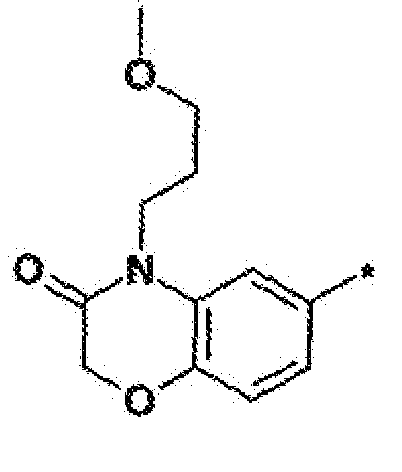


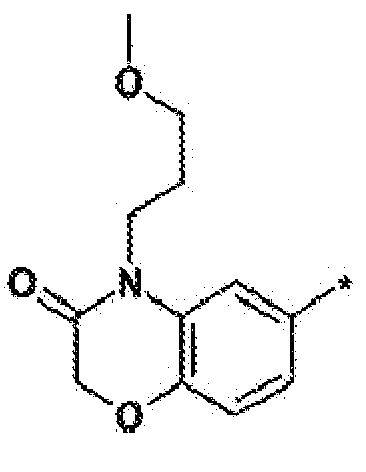


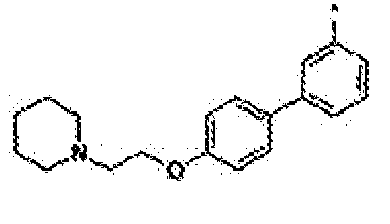



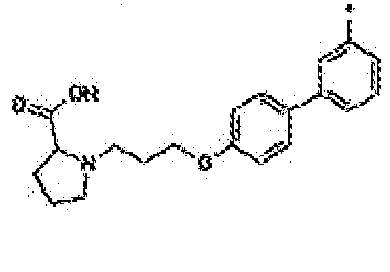


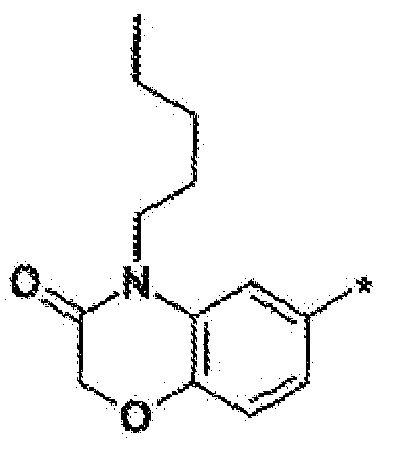


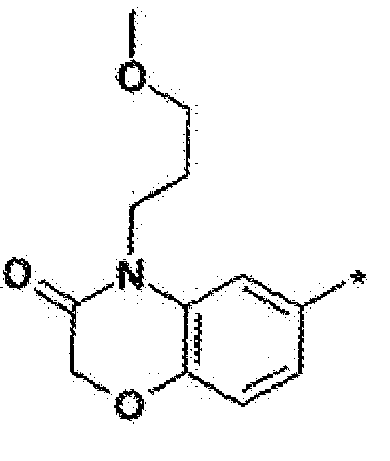


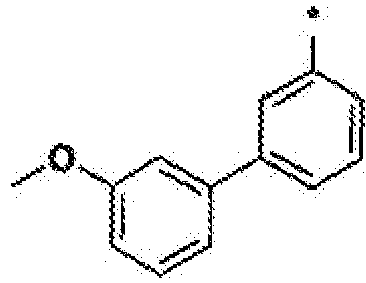








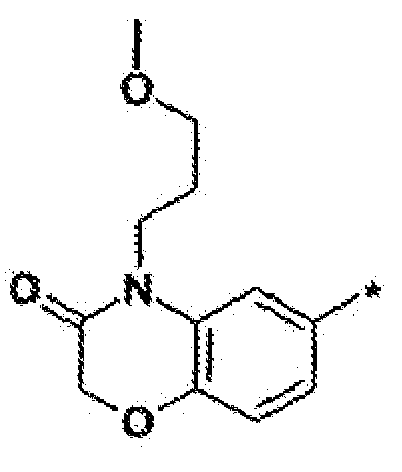


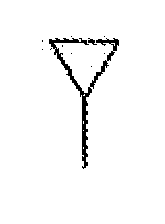


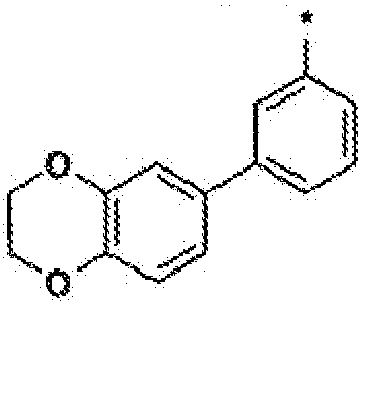


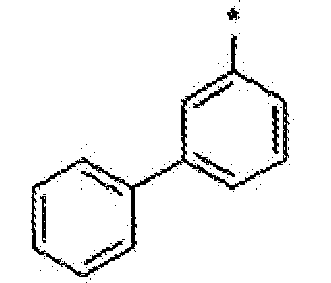


R3-Q (V)
wherein R3 is as just defined and Q is -B(OH)2 or a leaving group, and removing protecting groups to give the corresponding compound of the formula I, or

R2*-D (VII)
and, if desired, subsequent to any one or more of the processes mentioned above converting an obtainable compound of the formula I or a protected form thereof into a different compound of the formula I, converting a salt of an obtainable compound of formula I into the free compound or a different salt, converting an obtainable free compound of formula I into a salt thereof, and/or separating an obtainable mixture of isomers of a compound of formula I into individual isomers;
where in any of the starting materials (especially of the formulae II to VII), in addition to specific protecting groups mentioned, further protecting groups may be present, and any protecting groups are removed at an appropriate stage in order to obtain the corresponding compound of the formula I, or a salt thereof.
Applications Claiming Priority (2)
| Application Number | Priority Date | Filing Date | Title |
|---|---|---|---|
| GBGB0428526.8A GB0428526D0 (en) | 2004-12-30 | 2004-12-30 | Organic compounds |
| EP05820552A EP1833816B1 (en) | 2004-12-30 | 2005-12-28 | Substituted piperidines as renin inhibitors |
Related Parent Applications (1)
| Application Number | Title | Priority Date | Filing Date |
|---|---|---|---|
| EP05820552.7 Division | 2005-12-28 |
Publications (1)
| Publication Number | Publication Date |
|---|---|
| EP2177518A1 true EP2177518A1 (en) | 2010-04-21 |
Family
ID=34179049
Family Applications (2)
| Application Number | Title | Priority Date | Filing Date |
|---|---|---|---|
| EP09175034A Withdrawn EP2177518A1 (en) | 2004-12-30 | 2005-12-28 | Organic compounds |
| EP05820552A Expired - Lifetime EP1833816B1 (en) | 2004-12-30 | 2005-12-28 | Substituted piperidines as renin inhibitors |
Family Applications After (1)
| Application Number | Title | Priority Date | Filing Date |
|---|---|---|---|
| EP05820552A Expired - Lifetime EP1833816B1 (en) | 2004-12-30 | 2005-12-28 | Substituted piperidines as renin inhibitors |
Country Status (21)
| Country | Link |
|---|---|
| US (2) | US8084450B2 (en) |
| EP (2) | EP2177518A1 (en) |
| JP (1) | JP5188814B2 (en) |
| KR (1) | KR20070091174A (en) |
| CN (1) | CN101094848B (en) |
| AR (1) | AR052446A1 (en) |
| AT (1) | ATE448217T1 (en) |
| AU (1) | AU2005321475B2 (en) |
| BR (1) | BRPI0519769A2 (en) |
| CA (1) | CA2587348A1 (en) |
| DE (1) | DE602005017665D1 (en) |
| ES (1) | ES2336470T3 (en) |
| GB (1) | GB0428526D0 (en) |
| GT (1) | GT200500359A (en) |
| MX (1) | MX2007008078A (en) |
| PE (1) | PE20061332A1 (en) |
| PL (1) | PL1833816T3 (en) |
| PT (1) | PT1833816E (en) |
| RU (1) | RU2411239C2 (en) |
| TW (1) | TW200635915A (en) |
| WO (1) | WO2006069788A1 (en) |
Families Citing this family (34)
| Publication number | Priority date | Publication date | Assignee | Title |
|---|---|---|---|---|
| GB0428526D0 (en) | 2004-12-30 | 2005-02-09 | Novartis Ag | Organic compounds |
| GB0505969D0 (en) * | 2005-03-23 | 2005-04-27 | Novartis Ag | Organic compounds |
| GB0510810D0 (en) * | 2005-05-26 | 2005-06-29 | Novartis Ag | Organic compounds |
| US7799805B2 (en) * | 2005-05-27 | 2010-09-21 | Actelion Pharmaceuticals Ltd. | Piperidine carboxylic acid amide derivatives |
| GB0514203D0 (en) | 2005-07-11 | 2005-08-17 | Novartis Ag | Organic compounds |
| NZ569135A (en) | 2005-12-30 | 2011-08-26 | Novartis Ag | 3,5-Substituted piperidine compounds as renin inhibitors |
| KR20080091273A (en) | 2006-02-02 | 2008-10-09 | 액테리온 파마슈티칼 리미티드 | Secondary amines as renin inhibitors |
| US7638541B2 (en) | 2006-12-28 | 2009-12-29 | Metabolex Inc. | 5-ethyl-2-{4-[4-(4-tetrazol-1-yl-phenoxymethyl)-thiazol-2-yl]-piperidin-1-yl}-pyrimidine |
| US20100056497A1 (en) | 2007-01-31 | 2010-03-04 | Dainippon Sumitomo Pharma Co., Ltd | Amide derivative |
| WO2008128832A1 (en) * | 2007-04-18 | 2008-10-30 | Nicox S.A. | Nitroderivatives of non-peptidic renin inhibitors for the treatment of cardiovascular, renal and chronic liver disease, inflammations and metabolic syndrome |
| CA2688057A1 (en) * | 2007-05-24 | 2008-11-27 | Merck Frosst Canada Ltd. | Novel case of renin inhibitors |
| TWI452044B (en) * | 2007-06-15 | 2014-09-11 | Mitsubishi Tanabe Pharma Corp | Morpholine derivative |
| WO2009000811A1 (en) | 2007-06-25 | 2008-12-31 | Novartis Ag | N5-(2-ethoxyethyl)-n3-(2-pyridinyl)-3,5-piperidinedicarboxamide derivatives for use as renin inhibitors |
| JP5489997B2 (en) | 2007-07-19 | 2014-05-14 | シマベイ セラピューティクス, インコーポレーテッド | N-aza cyclic substituted pyrrole, pyrazole, imidazole, triazole and tetrazole derivatives as agonists of RUP3 or GPRl 19 receptors for the treatment of diabetes and metabolic diseases |
| CN101842349B (en) * | 2007-11-01 | 2013-07-17 | 宇部兴产株式会社 | Phenyl sulfonate compound, nonaqueous electrolyte solution using the same, and lithium battery |
| AU2008339351B2 (en) * | 2007-12-19 | 2013-02-28 | Sumitomo Dainippon Pharma Co., Ltd. | Bicyclic heterocyclic derivative |
| JP2011518146A (en) * | 2008-04-17 | 2011-06-23 | ファイザー・インク | 4- [3- (Aryloxy) benzylidene] -3-methylpiperidine arylcarboxamide compounds useful as FAAH inhibitors |
| NZ589019A (en) | 2008-05-05 | 2012-10-26 | Merck Frosst Canada Ltd | 3, 4 - substituted piperidine derivatives as renin inhibitors |
| JO3465B1 (en) | 2008-06-19 | 2020-07-05 | Takeda Pharmaceuticals Co | Heterocyclic compound and use thereof |
| CN102203074A (en) * | 2008-06-20 | 2011-09-28 | 麦它波莱克斯股份有限公司 | Aryl GPR119 agonists and uses thereof |
| AU2009326797B2 (en) * | 2008-12-10 | 2012-12-13 | Merck Canada Inc. | 3,4 - substituted piperidine derivatives as renin inhibitors |
| DK2443102T3 (en) * | 2009-06-19 | 2013-07-08 | Basf Se | HERBICIDAL BENZOXAZINONES |
| JP5331883B2 (en) * | 2009-06-24 | 2013-10-30 | 大日本住友製薬株式会社 | N-substituted cyclic amino derivatives |
| TWI472524B (en) * | 2009-09-28 | 2015-02-11 | Actelion Pharmaceuticals Ltd | Renin inhibitors |
| WO2011041154A1 (en) | 2009-10-01 | 2011-04-07 | Metabolex, Inc. | Substituted tetrazol-1-yl-phenoxymethyl-thiazol-2-yl-piperidinyl-pyrimidine salts |
| EP2585048B1 (en) | 2010-06-23 | 2018-04-11 | CymaBay Therapeutics, Inc. | Compositions of 5-ethyl-2-{4-[4-(4-tetrazol-1-yl-phenoxymethyl)-thiazol-2-yl]-piperidin-1-yl}-pyrimidine |
| JP5760078B2 (en) | 2011-03-16 | 2015-08-05 | 田辺三菱製薬株式会社 | Nitrogen-containing saturated heterocyclic compounds |
| US9783513B2 (en) | 2012-08-16 | 2017-10-10 | Ohio State Innovation Foundation | STAT3 inhibitors and their anticancer use |
| CN104640847B (en) * | 2012-09-14 | 2019-10-15 | 上海医药集团股份有限公司 | Novel Renin Inhibitors |
| US20160137639A1 (en) * | 2012-10-26 | 2016-05-19 | Japan Tobacco Inc. | Triazole-isoxazole compound and medical use thereof |
| FR3002736B1 (en) * | 2013-03-04 | 2015-06-26 | Virbac | ORAL NUTRITIONAL COMPOSITION AND MEDICAMENT FOR VETERINARY USE |
| CN103524511A (en) * | 2013-10-21 | 2014-01-22 | 南京邮电大学 | Preparation method of 2,7,12-tribromo-5,10,15-trialkyltricarbazole |
| EP3493807A1 (en) | 2016-08-03 | 2019-06-12 | CymaBay Therapeutics, Inc. | Oxymethylene aryl compounds for treating inflammatory gastrointestinal diseases or gastrointestinal conditions |
| CN111423411B (en) * | 2020-04-02 | 2021-04-16 | 南京生命源医药科技有限公司 | Novel renin inhibitor |
Citations (9)
| Publication number | Priority date | Publication date | Assignee | Title |
|---|---|---|---|---|
| US4559337A (en) | 1985-02-25 | 1985-12-17 | G.D. Searle & Co. | 8-Chlorodibenz[b,f][1,4]oxazepine-10(11H)-carboxylic acid, 2-(alkoxy-containing acyl)hydrazides |
| EP0432893A2 (en) | 1989-11-08 | 1991-06-19 | Yamanouchi Pharmaceutical Co. Ltd. | Benzoxazine derivatives, their preparation and pharmaceutical compositions containing them |
| WO1997022596A1 (en) | 1995-12-18 | 1997-06-26 | Zeneca Limited | Quinazoline derivatives |
| WO1998006691A2 (en) | 1996-08-14 | 1998-02-19 | Warner-Lambert Company | Low molecular weight dendritic compounds as pharmaceutical agents |
| WO2003053912A1 (en) | 2001-12-20 | 2003-07-03 | Bristol-Myers Squibb Company | α-(N-SULPHONAMIDO)ACETAMIDE DERIVATIVES AS β-AMYLOID INHIBITORS |
| US20030216441A1 (en) | 2002-05-10 | 2003-11-20 | Gwaltney Stephen L. | Farnesyltransferase inhibitors |
| WO2004002957A1 (en) | 2002-06-27 | 2004-01-08 | Actelion Pharmaceuticals Ltd | Novel tetrahydropyridine derivatives as renin inhibitors |
| WO2004089903A1 (en) * | 2003-04-10 | 2004-10-21 | Warner-Lambert Company Llc | Piperidine derivatives as renin inhibitors for the treatment of hypertension |
| WO2005016870A1 (en) | 2003-08-14 | 2005-02-24 | Smithkline Beecham Corporation | 2-substituted benzoic acid derivatives as hm74a receptor agonists |
Family Cites Families (26)
| Publication number | Priority date | Publication date | Assignee | Title |
|---|---|---|---|---|
| US3278541A (en) * | 1966-10-11 | Di-substituted-n-alkyl piperidines | ||
| CN1174504A (en) * | 1993-11-09 | 1998-02-25 | 麦克公司 | Piperidine, pyrrolidine, and hexahydro-1H-azepine that promote growth hormone release |
| US5721251A (en) * | 1993-12-10 | 1998-02-24 | Merck & Co., Inc. | Piperidine, pyrrolidine and hexahydro-1H-azepines promote release of growth hormone |
| JP3314938B2 (en) * | 1995-06-06 | 2002-08-19 | ファイザー・インコーポレーテッド | Substituted N- (indole-2-carbonyl) -glycinamides and derivatives as glycogen phosphorylase inhibitors |
| PL193686B1 (en) * | 1995-09-07 | 2007-03-30 | Hoffmann La Roche | Novel 4-(oxyalkoxyphenyl)-3-oxy piperisiden for treating cardiac and recal insufficiency |
| JP4066004B2 (en) * | 1997-10-13 | 2008-03-26 | 忠弘 大見 | Fixing method and fixing jig for a plurality of lower members having a hole serving as a reference for upper member attachment |
| JP2002526528A (en) * | 1998-10-07 | 2002-08-20 | ジョージタウン ユニヴァーシティー | Monomeric and dimeric heterocycles, and therapeutic uses thereof |
| AU3818900A (en) | 1999-04-14 | 2000-11-02 | F. Hoffmann-La Roche Ag | Process for the preparation of substituted piperidines |
| US6197959B1 (en) | 1999-04-27 | 2001-03-06 | Hoffmann-La Roche Inc. | Piperidine derivatives |
| US6376672B1 (en) | 1999-04-27 | 2002-04-23 | Hoffmann-La Roche Inc. | Naphthalenylmethoxypiperidines as renin inhibitors |
| US20060079533A1 (en) | 2001-03-23 | 2006-04-13 | Nieman James A | Methods of treating alzheimer's disease |
| AU2002256418A1 (en) * | 2001-04-27 | 2002-11-11 | Vertex Pharmaceuticals Incorporated | Inhibitors of bace |
| CA2483241C (en) | 2002-04-29 | 2011-05-31 | Actelion Pharmaceuticals Ltd | Novel diazabicyclononene derivatives |
| WO2004058727A1 (en) | 2002-12-20 | 2004-07-15 | Bayer Pharmaceuticals Corporation | Substituted 3,5-dihydro-4h-imidazol-4-ones for the treatment of obesity |
| US20040214832A1 (en) | 2003-04-10 | 2004-10-28 | Cuiman Cai | Piperazine derivative renin inhibitors |
| US20060217371A1 (en) | 2003-04-28 | 2006-09-28 | Olivier Bezencon | Diazabicyclononene and tetrahydropyriddine derivatives as renin inhibitors |
| CN1972912A (en) | 2003-04-29 | 2007-05-30 | 埃科特莱茵药品有限公司 | Novel 3,4-disubstituted 1,2,3,6-tetrahydropyridine derivatives |
| CN1780663A (en) | 2003-04-30 | 2006-05-31 | 埃科特莱茵药品有限公司 | Novel 9-azabicyclononene derivatives with a heteroatom at the 3-position as renin inhibitors |
| BRPI0409818A (en) | 2003-04-30 | 2006-05-09 | Actelion Pharmaceuticals Ltd | compounds, pharmaceutical compositions, method for the treatment or prophylaxis of diseases, and uses of compounds and one or more compounds in combination with other pharmacologically active compounds |
| US20060205768A1 (en) | 2003-04-30 | 2006-09-14 | Olivier Bezencon | Tropane derivatives and their use as ace inhibitors |
| MXPA05011711A (en) | 2003-05-02 | 2006-01-23 | Actelion Pharmaceuticals Ltd | Diazabicyclononene derivatives. |
| TW200513461A (en) | 2003-10-01 | 2005-04-16 | Speedel Experimenta Ag | Organische verbindungen |
| BRPI0416976A (en) | 2003-11-26 | 2007-02-21 | Novartis Ag | 4-phenylpiperidine derivatives as renin inhibitors |
| AR053406A1 (en) | 2004-07-09 | 2007-05-09 | Speedel Experimenta Ag | PIPERIDINE DERIVATIVES AS RENINE INHIBITORS. PHARMACEUTICAL COMPOSITIONS |
| GB0428250D0 (en) | 2004-12-23 | 2005-01-26 | Novartis Ag | Organic compounds |
| GB0428526D0 (en) | 2004-12-30 | 2005-02-09 | Novartis Ag | Organic compounds |
-
2004
- 2004-12-30 GB GBGB0428526.8A patent/GB0428526D0/en not_active Ceased
-
2005
- 2005-12-07 GT GT200500359A patent/GT200500359A/en unknown
- 2005-12-16 PE PE2005001496A patent/PE20061332A1/en not_active Application Discontinuation
- 2005-12-28 EP EP09175034A patent/EP2177518A1/en not_active Withdrawn
- 2005-12-28 AT AT05820552T patent/ATE448217T1/en not_active IP Right Cessation
- 2005-12-28 PL PL05820552T patent/PL1833816T3/en unknown
- 2005-12-28 CN CN2005800450286A patent/CN101094848B/en not_active Expired - Fee Related
- 2005-12-28 JP JP2007548756A patent/JP5188814B2/en not_active Expired - Fee Related
- 2005-12-28 ES ES05820552T patent/ES2336470T3/en not_active Expired - Lifetime
- 2005-12-28 DE DE602005017665T patent/DE602005017665D1/en not_active Expired - Lifetime
- 2005-12-28 AU AU2005321475A patent/AU2005321475B2/en not_active Ceased
- 2005-12-28 MX MX2007008078A patent/MX2007008078A/en active IP Right Grant
- 2005-12-28 WO PCT/EP2005/014102 patent/WO2006069788A1/en not_active Ceased
- 2005-12-28 RU RU2007129090/04A patent/RU2411239C2/en not_active IP Right Cessation
- 2005-12-28 PT PT05820552T patent/PT1833816E/en unknown
- 2005-12-28 EP EP05820552A patent/EP1833816B1/en not_active Expired - Lifetime
- 2005-12-28 KR KR1020077015024A patent/KR20070091174A/en not_active Ceased
- 2005-12-28 CA CA002587348A patent/CA2587348A1/en not_active Abandoned
- 2005-12-28 BR BRPI0519769-4A patent/BRPI0519769A2/en not_active IP Right Cessation
- 2005-12-28 AR ARP050105578A patent/AR052446A1/en not_active Application Discontinuation
- 2005-12-28 US US11/719,762 patent/US8084450B2/en not_active Expired - Fee Related
- 2005-12-29 TW TW094147340A patent/TW200635915A/en unknown
-
2011
- 2011-07-06 US US13/176,930 patent/US8178559B2/en not_active Expired - Fee Related
Patent Citations (9)
| Publication number | Priority date | Publication date | Assignee | Title |
|---|---|---|---|---|
| US4559337A (en) | 1985-02-25 | 1985-12-17 | G.D. Searle & Co. | 8-Chlorodibenz[b,f][1,4]oxazepine-10(11H)-carboxylic acid, 2-(alkoxy-containing acyl)hydrazides |
| EP0432893A2 (en) | 1989-11-08 | 1991-06-19 | Yamanouchi Pharmaceutical Co. Ltd. | Benzoxazine derivatives, their preparation and pharmaceutical compositions containing them |
| WO1997022596A1 (en) | 1995-12-18 | 1997-06-26 | Zeneca Limited | Quinazoline derivatives |
| WO1998006691A2 (en) | 1996-08-14 | 1998-02-19 | Warner-Lambert Company | Low molecular weight dendritic compounds as pharmaceutical agents |
| WO2003053912A1 (en) | 2001-12-20 | 2003-07-03 | Bristol-Myers Squibb Company | α-(N-SULPHONAMIDO)ACETAMIDE DERIVATIVES AS β-AMYLOID INHIBITORS |
| US20030216441A1 (en) | 2002-05-10 | 2003-11-20 | Gwaltney Stephen L. | Farnesyltransferase inhibitors |
| WO2004002957A1 (en) | 2002-06-27 | 2004-01-08 | Actelion Pharmaceuticals Ltd | Novel tetrahydropyridine derivatives as renin inhibitors |
| WO2004089903A1 (en) * | 2003-04-10 | 2004-10-21 | Warner-Lambert Company Llc | Piperidine derivatives as renin inhibitors for the treatment of hypertension |
| WO2005016870A1 (en) | 2003-08-14 | 2005-02-24 | Smithkline Beecham Corporation | 2-substituted benzoic acid derivatives as hm74a receptor agonists |
Non-Patent Citations (25)
| Title |
|---|
| "The Peptides", vol. 3, 1981, ACADEMIC PRESS |
| BIOORG. MED. CHEM. LETT., vol. 12, 2002, pages 491 |
| BIOORGANIC & MEDICINAL CHEMISTRY LETTERS, vol. 13, no. 24, 2003, pages 4431 - 4435 |
| CANADIAN JOURNAL OF CHEMISTRY, vol. 60, 1982, pages 2295 - 312 |
| EUROPEAN JOURNAL OF MEDICINAL CHEMISTRY, vol. 33, 1998, pages 957 - 967 |
| H.-D. JAKUBKE; H. JESCHKEIT: "Aminosduren, Peptide, Proteine", 1982, VERLAG CHEMIE |
| HOUBEN WEYL: "Methoden der organischen Chemie" (Methods of Organic Chemistry)", vol. 15/1, 1974, GEORG THIEME VERLAG |
| J. F. W. MCOMIE: "Protective Groups in Organic Chemistry", 1973, PLENUM PRESS |
| J. ORG. CHEM., vol. 54, 1989, pages 5580 - 5585 |
| J. ORG. CHEM., vol. 55, no. 929, 1990 |
| JOCHEN LEHMANN: "Chemie der Kohlenhydrate: Monosaccharide und Derivate", 1974, GEORG THIEME VERLAG |
| JOURNAL OF HETEROCYCLIC CHEMISTRY, vol. 11, 1974, pages 251 - 3 |
| JOURNAL OF MEDICINAL CHEMISTRY, vol. 33, 1998, pages 957 - 967 |
| JOURNAL OF THE AMERICAN CHEMICAL SOCIETY, vol. 122, 2000, pages 712 - 713 |
| JOURNAL OF THE CHEMICAL SOCIETY, CHEMICAL COMMUNICATIONS, 1978 |
| KLAUSER; BODANSKY, SYNTHESIS, 1972, pages 453 - 463 |
| ORG. LETT., vol. 2, 2000, pages 3421 - 3423 |
| PATEL MONA, EXPERT OPIN INVESTIG DRUGS, vol. 12, no. 4, 2003, pages 623 - 633 |
| SCHNELL CR ET AL.: "Measurement of blood pressure and heart rate by telemetry in conscious, unrestrained marmosets", AM J PHYSIOL, vol. 264, 1993, pages 1509 - 1516 |
| SCHNELL CR ET AL.: "Proceedings of the fifth FELASA symposium: Welfare and Science", 1993, article "Measurement of blood pressure, heart rate, body temperature, ECG and activity by telemetry in conscious, unrestrained marmosets" |
| SYNTHETIC COMMUNICATIONS, vol. 31, 2001, pages 1921 - 1926 |
| T. W. GREENE; P. G. M. WUTS: "Protective Groups in Organic Synthesis", 1999, WILEY |
| TETRAHEDRON LETT, vol. 32, 1991, pages 3441 - 3444 |
| TETRAHEDRON LETT., 1972, pages 2369 |
| TETRAHEDRON, vol. 48, 1992, pages 1457 - 1464 |
Also Published As
| Publication number | Publication date |
|---|---|
| JP2008526701A (en) | 2008-07-24 |
| US20090312304A1 (en) | 2009-12-17 |
| RU2411239C2 (en) | 2011-02-10 |
| BRPI0519769A2 (en) | 2009-02-17 |
| EP1833816B1 (en) | 2009-11-11 |
| WO2006069788A1 (en) | 2006-07-06 |
| ATE448217T1 (en) | 2009-11-15 |
| ES2336470T3 (en) | 2010-04-13 |
| CN101094848B (en) | 2013-03-13 |
| PL1833816T3 (en) | 2010-04-30 |
| GB0428526D0 (en) | 2005-02-09 |
| DE602005017665D1 (en) | 2009-12-24 |
| PE20061332A1 (en) | 2006-12-27 |
| RU2007129090A (en) | 2009-02-10 |
| KR20070091174A (en) | 2007-09-07 |
| MX2007008078A (en) | 2007-07-24 |
| US8084450B2 (en) | 2011-12-27 |
| AU2005321475B2 (en) | 2009-11-12 |
| JP5188814B2 (en) | 2013-04-24 |
| CN101094848A (en) | 2007-12-26 |
| AU2005321475A1 (en) | 2006-07-06 |
| AR052446A1 (en) | 2007-03-21 |
| PT1833816E (en) | 2010-02-17 |
| CA2587348A1 (en) | 2006-07-06 |
| GT200500359A (en) | 2006-07-17 |
| EP1833816A1 (en) | 2007-09-19 |
| TW200635915A (en) | 2006-10-16 |
| US8178559B2 (en) | 2012-05-15 |
| US20110263560A1 (en) | 2011-10-27 |
Similar Documents
| Publication | Publication Date | Title |
|---|---|---|
| EP1833816B1 (en) | Substituted piperidines as renin inhibitors | |
| EP1836163B1 (en) | Pyrrolidine derivatives for the treatment of a disease depending on the activity of renin | |
| CN107849049B (en) | Urea derivatives or their pharmaceutically acceptable salts | |
| JP2019059772A (en) | Urea derivatives or pharmacologically acceptable salts thereof | |
| US20100160305A1 (en) | 3, 4, 5 - Substituted Piperidine Compounds | |
| CA2608685A1 (en) | Substituted piperidines as renin inhibitors | |
| AU2006205877B2 (en) | 3,4,(5)-substituted tetrahydropyridines | |
| EP1879882A1 (en) | 3 -m0n0- and 3 , 5-disubstituted piperidine derivatives as renin inhibitors | |
| CA2653524A1 (en) | Pyrrolidine derivatives useful against diseases that depends on activity of renin | |
| KR20100023003A (en) | N5-(2-ethoxyethyl)-n3-(2-pyridinyl)-3,5-piperidinedicarboxamide derivatives for use as renin inhibitors | |
| MX2007014786A (en) | Substituted piperidines as renin inhibitors |
Legal Events
| Date | Code | Title | Description |
|---|---|---|---|
| PUAI | Public reference made under article 153(3) epc to a published international application that has entered the european phase |
Free format text: ORIGINAL CODE: 0009012 |
|
| AC | Divisional application: reference to earlier application |
Ref document number: 1833816 Country of ref document: EP Kind code of ref document: P |
|
| AK | Designated contracting states |
Kind code of ref document: A1 Designated state(s): AT BE BG CH CY CZ DE DK EE ES FI FR GB GR HU IE IS IT LI LT LU LV MC NL PL PT RO SE SI SK TR |
|
| RTI1 | Title (correction) |
Free format text: SUBSTITUTED PIPERIDINES AS RENIN INHIBITORS |
|
| 17P | Request for examination filed |
Effective date: 20101021 |
|
| 17Q | First examination report despatched |
Effective date: 20101216 |
|
| GRAP | Despatch of communication of intention to grant a patent |
Free format text: ORIGINAL CODE: EPIDOSNIGR1 |
|
| INTG | Intention to grant announced |
Effective date: 20141118 |
|
| RIN1 | Information on inventor provided before grant (corrected) |
Inventor name: TOYAO, ATSUSHI Inventor name: NIHONYANAGI, ATSUKO Inventor name: MASUYA, KEIICHI Inventor name: SUZUKI, MASAKI Inventor name: GROSCHE, PHILIPP Inventor name: OSTERMANN, NILS Inventor name: IWAKI, YUKI Inventor name: EHARA, TAKERU Inventor name: YOKOKAWA, FUMIAKI Inventor name: BREITENSTEIN, WERNER Inventor name: EHRHARDT, CLAUS Inventor name: KONISHI, KAZUHIDE Inventor name: HITOMI, YUKO Inventor name: MAIBAUM, JUERGEN KLAUS Inventor name: KANAZAWA, TAKANORI |
|
| GRAS | Grant fee paid |
Free format text: ORIGINAL CODE: EPIDOSNIGR3 |
|
| STAA | Information on the status of an ep patent application or granted ep patent |
Free format text: STATUS: THE APPLICATION IS DEEMED TO BE WITHDRAWN |
|
| 18D | Application deemed to be withdrawn |
Effective date: 20150331 |