EP2173189B1 - Compositions pulverulentes stables et leur procédé de préparation - Google Patents
Compositions pulverulentes stables et leur procédé de préparation Download PDFInfo
- Publication number
- EP2173189B1 EP2173189B1 EP08836060.7A EP08836060A EP2173189B1 EP 2173189 B1 EP2173189 B1 EP 2173189B1 EP 08836060 A EP08836060 A EP 08836060A EP 2173189 B1 EP2173189 B1 EP 2173189B1
- Authority
- EP
- European Patent Office
- Prior art keywords
- powder
- sensitive substance
- composition
- support
- agent
- Prior art date
- Legal status (The legal status is an assumption and is not a legal conclusion. Google has not performed a legal analysis and makes no representation as to the accuracy of the status listed.)
- Not-in-force
Links
- 239000000203 mixture Substances 0.000 title claims description 211
- 239000000843 powder Substances 0.000 title claims description 155
- 238000000034 method Methods 0.000 title claims description 46
- 238000002360 preparation method Methods 0.000 title claims description 28
- 239000000126 substance Substances 0.000 claims description 148
- 239000003795 chemical substances by application Substances 0.000 claims description 122
- 229920002134 Carboxymethyl cellulose Polymers 0.000 claims description 78
- 239000002245 particle Substances 0.000 claims description 72
- 238000000576 coating method Methods 0.000 claims description 55
- 239000011248 coating agent Substances 0.000 claims description 47
- 108090000790 Enzymes Proteins 0.000 claims description 42
- 102000004190 Enzymes Human genes 0.000 claims description 42
- 238000001035 drying Methods 0.000 claims description 42
- 229940088598 enzyme Drugs 0.000 claims description 42
- 150000001875 compounds Chemical class 0.000 claims description 40
- 239000007787 solid Substances 0.000 claims description 29
- 238000005469 granulation Methods 0.000 claims description 27
- 230000003179 granulation Effects 0.000 claims description 27
- 235000013312 flour Nutrition 0.000 claims description 25
- 230000008569 process Effects 0.000 claims description 25
- 239000008187 granular material Substances 0.000 claims description 20
- 241000209140 Triticum Species 0.000 claims description 19
- 235000021307 Triticum Nutrition 0.000 claims description 19
- 238000005259 measurement Methods 0.000 claims description 19
- 235000013305 food Nutrition 0.000 claims description 16
- VTYYLEPIZMXCLO-UHFFFAOYSA-L Calcium carbonate Chemical compound [Ca+2].[O-]C([O-])=O VTYYLEPIZMXCLO-UHFFFAOYSA-L 0.000 claims description 14
- 239000007788 liquid Substances 0.000 claims description 14
- 230000015556 catabolic process Effects 0.000 claims description 12
- 238000006731 degradation reaction Methods 0.000 claims description 12
- 239000000341 volatile oil Substances 0.000 claims description 12
- 241000894006 Bacteria Species 0.000 claims description 11
- 238000004519 manufacturing process Methods 0.000 claims description 11
- 240000008042 Zea mays Species 0.000 claims description 10
- 235000021466 carotenoid Nutrition 0.000 claims description 10
- 150000001747 carotenoids Chemical class 0.000 claims description 10
- 101710121765 Endo-1,4-beta-xylanase Proteins 0.000 claims description 9
- 235000002017 Zea mays subsp mays Nutrition 0.000 claims description 9
- 229920002472 Starch Polymers 0.000 claims description 8
- 239000013543 active substance Substances 0.000 claims description 8
- 239000003242 anti bacterial agent Substances 0.000 claims description 8
- 239000007864 aqueous solution Substances 0.000 claims description 8
- 239000008107 starch Substances 0.000 claims description 8
- 235000019698 starch Nutrition 0.000 claims description 8
- 240000004808 Saccharomyces cerevisiae Species 0.000 claims description 7
- 229910000019 calcium carbonate Inorganic materials 0.000 claims description 7
- 229920002774 Maltodextrin Polymers 0.000 claims description 6
- 239000005913 Maltodextrin Substances 0.000 claims description 6
- 235000005824 Zea mays ssp. parviglumis Nutrition 0.000 claims description 6
- 229940088710 antibiotic agent Drugs 0.000 claims description 6
- 239000003963 antioxidant agent Substances 0.000 claims description 6
- 235000005822 corn Nutrition 0.000 claims description 6
- 229940035034 maltodextrin Drugs 0.000 claims description 6
- 229930003231 vitamin Natural products 0.000 claims description 6
- 239000011782 vitamin Substances 0.000 claims description 6
- 229940088594 vitamin Drugs 0.000 claims description 6
- 235000013343 vitamin Nutrition 0.000 claims description 6
- 101710130006 Beta-glucanase Proteins 0.000 claims description 5
- 102000004169 proteins and genes Human genes 0.000 claims description 5
- 108090000623 proteins and genes Proteins 0.000 claims description 5
- 150000003839 salts Chemical class 0.000 claims description 5
- 235000016068 Berberis vulgaris Nutrition 0.000 claims description 4
- 241000335053 Beta vulgaris Species 0.000 claims description 4
- 108010059892 Cellulase Proteins 0.000 claims description 4
- 240000003183 Manihot esculenta Species 0.000 claims description 4
- 235000016735 Manihot esculenta subsp esculenta Nutrition 0.000 claims description 4
- 240000007594 Oryza sativa Species 0.000 claims description 4
- 235000007164 Oryza sativa Nutrition 0.000 claims description 4
- 229940106157 cellulase Drugs 0.000 claims description 4
- 230000000977 initiatory effect Effects 0.000 claims description 4
- 239000008188 pellet Substances 0.000 claims description 4
- 235000009566 rice Nutrition 0.000 claims description 4
- 239000000454 talc Substances 0.000 claims description 4
- 235000012222 talc Nutrition 0.000 claims description 4
- 229910052623 talc Inorganic materials 0.000 claims description 4
- 235000013339 cereals Nutrition 0.000 claims description 3
- 239000008194 pharmaceutical composition Substances 0.000 claims description 3
- 238000007873 sieving Methods 0.000 claims description 3
- 230000000717 retained effect Effects 0.000 claims 1
- 239000001768 carboxy methyl cellulose Substances 0.000 description 64
- 235000010948 carboxy methyl cellulose Nutrition 0.000 description 64
- 239000008112 carboxymethyl-cellulose Substances 0.000 description 64
- XLYOFNOQVPJJNP-UHFFFAOYSA-N water Chemical compound O XLYOFNOQVPJJNP-UHFFFAOYSA-N 0.000 description 56
- 239000000047 product Substances 0.000 description 42
- 239000003570 air Substances 0.000 description 41
- 239000000243 solution Substances 0.000 description 28
- 238000005470 impregnation Methods 0.000 description 27
- 238000012360 testing method Methods 0.000 description 26
- 239000011162 core material Substances 0.000 description 24
- 230000002255 enzymatic effect Effects 0.000 description 17
- 230000000694 effects Effects 0.000 description 16
- LWFUFLREGJMOIZ-UHFFFAOYSA-N 3,5-dinitrosalicylic acid Chemical compound OC(=O)C1=CC([N+]([O-])=O)=CC([N+]([O-])=O)=C1O LWFUFLREGJMOIZ-UHFFFAOYSA-N 0.000 description 15
- 238000002156 mixing Methods 0.000 description 14
- 241001465754 Metazoa Species 0.000 description 12
- SRBFZHDQGSBBOR-IOVATXLUSA-N D-xylopyranose Chemical compound O[C@@H]1COC(O)[C@H](O)[C@H]1O SRBFZHDQGSBBOR-IOVATXLUSA-N 0.000 description 11
- 239000011230 binding agent Substances 0.000 description 10
- 101100536354 Drosophila melanogaster tant gene Proteins 0.000 description 9
- PYMYPHUHKUWMLA-UHFFFAOYSA-N arabinose Natural products OCC(O)C(O)C(O)C=O PYMYPHUHKUWMLA-UHFFFAOYSA-N 0.000 description 8
- SRBFZHDQGSBBOR-UHFFFAOYSA-N beta-D-Pyranose-Lyxose Natural products OC1COC(O)C(O)C1O SRBFZHDQGSBBOR-UHFFFAOYSA-N 0.000 description 8
- 239000012467 final product Substances 0.000 description 7
- 239000004615 ingredient Substances 0.000 description 7
- 239000000463 material Substances 0.000 description 7
- 235000014680 Saccharomyces cerevisiae Nutrition 0.000 description 6
- HEMHJVSKTPXQMS-UHFFFAOYSA-M Sodium hydroxide Chemical compound [OH-].[Na+] HEMHJVSKTPXQMS-UHFFFAOYSA-M 0.000 description 6
- 238000002835 absorbance Methods 0.000 description 6
- 238000013019 agitation Methods 0.000 description 6
- 230000003115 biocidal effect Effects 0.000 description 6
- 238000009826 distribution Methods 0.000 description 6
- 238000000855 fermentation Methods 0.000 description 6
- 230000004151 fermentation Effects 0.000 description 6
- 235000011837 pasties Nutrition 0.000 description 6
- 238000003756 stirring Methods 0.000 description 6
- 235000006708 antioxidants Nutrition 0.000 description 5
- 235000021183 entrée Nutrition 0.000 description 5
- 230000007071 enzymatic hydrolysis Effects 0.000 description 5
- 238000006047 enzymatic hydrolysis reaction Methods 0.000 description 5
- 244000144977 poultry Species 0.000 description 5
- 230000001681 protective effect Effects 0.000 description 5
- 238000005507 spraying Methods 0.000 description 5
- 240000002234 Allium sativum Species 0.000 description 4
- 108010001817 Endo-1,4-beta Xylanases Proteins 0.000 description 4
- WQZGKKKJIJFFOK-GASJEMHNSA-N Glucose Natural products OC[C@H]1OC(O)[C@H](O)[C@@H](O)[C@@H]1O WQZGKKKJIJFFOK-GASJEMHNSA-N 0.000 description 4
- 239000000443 aerosol Substances 0.000 description 4
- YERABYSOHUZTPQ-UHFFFAOYSA-P endo-1,4-beta-Xylanase Chemical compound C=1C=CC=CC=1C[N+](CC)(CC)CCCNC(C(C=1)=O)=CC(=O)C=1NCCC[N+](CC)(CC)CC1=CC=CC=C1 YERABYSOHUZTPQ-UHFFFAOYSA-P 0.000 description 4
- 239000012530 fluid Substances 0.000 description 4
- 235000004611 garlic Nutrition 0.000 description 4
- 239000008103 glucose Substances 0.000 description 4
- 239000007921 spray Substances 0.000 description 4
- 230000003068 static effect Effects 0.000 description 4
- 229920001221 xylan Polymers 0.000 description 4
- JEBFVOLFMLUKLF-IFPLVEIFSA-N Astaxanthin Natural products CC(=C/C=C/C(=C/C=C/C1=C(C)C(=O)C(O)CC1(C)C)/C)C=CC=C(/C)C=CC=C(/C)C=CC2=C(C)C(=O)C(O)CC2(C)C JEBFVOLFMLUKLF-IFPLVEIFSA-N 0.000 description 3
- 241001136494 Talaromyces funiculosus Species 0.000 description 3
- 229930194936 Tylosin Natural products 0.000 description 3
- 239000004182 Tylosin Substances 0.000 description 3
- 235000016383 Zea mays subsp huehuetenangensis Nutrition 0.000 description 3
- 235000013793 astaxanthin Nutrition 0.000 description 3
- 229940022405 astaxanthin Drugs 0.000 description 3
- 239000001168 astaxanthin Substances 0.000 description 3
- MQZIGYBFDRPAKN-ZWAPEEGVSA-N astaxanthin Chemical compound C([C@H](O)C(=O)C=1C)C(C)(C)C=1/C=C/C(/C)=C/C=C/C(/C)=C/C=C/C=C(C)C=CC=C(C)C=CC1=C(C)C(=O)[C@@H](O)CC1(C)C MQZIGYBFDRPAKN-ZWAPEEGVSA-N 0.000 description 3
- 238000004090 dissolution Methods 0.000 description 3
- 238000009472 formulation Methods 0.000 description 3
- 235000009973 maize Nutrition 0.000 description 3
- 238000012545 processing Methods 0.000 description 3
- 238000003860 storage Methods 0.000 description 3
- WBPYTXDJUQJLPQ-VMXQISHHSA-N tylosin Chemical compound O([C@@H]1[C@@H](C)O[C@H]([C@@H]([C@H]1N(C)C)O)O[C@@H]1[C@@H](C)[C@H](O)CC(=O)O[C@@H]([C@H](/C=C(\C)/C=C/C(=O)[C@H](C)C[C@@H]1CC=O)CO[C@H]1[C@@H]([C@H](OC)[C@H](O)[C@@H](C)O1)OC)CC)[C@H]1C[C@@](C)(O)[C@@H](O)[C@H](C)O1 WBPYTXDJUQJLPQ-VMXQISHHSA-N 0.000 description 3
- 229960004059 tylosin Drugs 0.000 description 3
- 235000019375 tylosin Nutrition 0.000 description 3
- 150000004823 xylans Chemical class 0.000 description 3
- FYGDTMLNYKFZSV-URKRLVJHSA-N (2s,3r,4s,5s,6r)-2-[(2r,4r,5r,6s)-4,5-dihydroxy-2-(hydroxymethyl)-6-[(2r,4r,5r,6s)-4,5,6-trihydroxy-2-(hydroxymethyl)oxan-3-yl]oxyoxan-3-yl]oxy-6-(hydroxymethyl)oxane-3,4,5-triol Chemical compound O[C@@H]1[C@@H](O)[C@H](O)[C@@H](CO)O[C@H]1OC1[C@@H](CO)O[C@@H](OC2[C@H](O[C@H](O)[C@H](O)[C@H]2O)CO)[C@H](O)[C@H]1O FYGDTMLNYKFZSV-URKRLVJHSA-N 0.000 description 2
- GVJHHUAWPYXKBD-UHFFFAOYSA-N (±)-α-Tocopherol Chemical compound OC1=C(C)C(C)=C2OC(CCCC(C)CCCC(C)CCCC(C)C)(C)CCC2=C1C GVJHHUAWPYXKBD-UHFFFAOYSA-N 0.000 description 2
- CIWBSHSKHKDKBQ-JLAZNSOCSA-N Ascorbic acid Chemical compound OC[C@H](O)[C@H]1OC(=O)C(O)=C1O CIWBSHSKHKDKBQ-JLAZNSOCSA-N 0.000 description 2
- 229920002498 Beta-glucan Polymers 0.000 description 2
- 235000018185 Betula X alpestris Nutrition 0.000 description 2
- 235000018212 Betula X uliginosa Nutrition 0.000 description 2
- DGAQECJNVWCQMB-PUAWFVPOSA-M Ilexoside XXIX Chemical compound C[C@@H]1CC[C@@]2(CC[C@@]3(C(=CC[C@H]4[C@]3(CC[C@@H]5[C@@]4(CC[C@@H](C5(C)C)OS(=O)(=O)[O-])C)C)[C@@H]2[C@]1(C)O)C)C(=O)O[C@H]6[C@@H]([C@H]([C@@H]([C@H](O6)CO)O)O)O.[Na+] DGAQECJNVWCQMB-PUAWFVPOSA-M 0.000 description 2
- 241000186660 Lactobacillus Species 0.000 description 2
- AUNGANRZJHBGPY-SCRDCRAPSA-N Riboflavin Chemical compound OC[C@@H](O)[C@@H](O)[C@@H](O)CN1C=2C=C(C)C(C)=CC=2N=C2C1=NC(=O)NC2=O AUNGANRZJHBGPY-SCRDCRAPSA-N 0.000 description 2
- 239000004480 active ingredient Substances 0.000 description 2
- 239000000654 additive Substances 0.000 description 2
- 238000004458 analytical method Methods 0.000 description 2
- PYMYPHUHKUWMLA-WDCZJNDASA-N arabinose Chemical compound OC[C@@H](O)[C@@H](O)[C@H](O)C=O PYMYPHUHKUWMLA-WDCZJNDASA-N 0.000 description 2
- 238000009835 boiling Methods 0.000 description 2
- 229920002678 cellulose Polymers 0.000 description 2
- 239000001913 cellulose Substances 0.000 description 2
- 230000008859 change Effects 0.000 description 2
- 238000012512 characterization method Methods 0.000 description 2
- 238000006243 chemical reaction Methods 0.000 description 2
- 239000008199 coating composition Substances 0.000 description 2
- 238000007906 compression Methods 0.000 description 2
- 230000006835 compression Effects 0.000 description 2
- 239000012141 concentrate Substances 0.000 description 2
- 230000003750 conditioning effect Effects 0.000 description 2
- 238000004320 controlled atmosphere Methods 0.000 description 2
- 230000006378 damage Effects 0.000 description 2
- 238000000280 densification Methods 0.000 description 2
- 238000000151 deposition Methods 0.000 description 2
- 239000003599 detergent Substances 0.000 description 2
- 239000006185 dispersion Substances 0.000 description 2
- 239000012153 distilled water Substances 0.000 description 2
- 238000006911 enzymatic reaction Methods 0.000 description 2
- 239000011521 glass Substances 0.000 description 2
- 229920000591 gum Polymers 0.000 description 2
- 230000002209 hydrophobic effect Effects 0.000 description 2
- 238000010348 incorporation Methods 0.000 description 2
- KBPHJBAIARWVSC-RGZFRNHPSA-N lutein Chemical compound C([C@H](O)CC=1C)C(C)(C)C=1\C=C\C(\C)=C\C=C\C(\C)=C\C=C\C=C(/C)\C=C\C=C(/C)\C=C\[C@H]1C(C)=C[C@H](O)CC1(C)C KBPHJBAIARWVSC-RGZFRNHPSA-N 0.000 description 2
- 229960005375 lutein Drugs 0.000 description 2
- 230000014759 maintenance of location Effects 0.000 description 2
- 230000003287 optical effect Effects 0.000 description 2
- 230000036961 partial effect Effects 0.000 description 2
- 229920000642 polymer Polymers 0.000 description 2
- AVTYONGGKAJVTE-OLXYHTOASA-L potassium L-tartrate Chemical compound [K+].[K+].[O-]C(=O)[C@H](O)[C@@H](O)C([O-])=O AVTYONGGKAJVTE-OLXYHTOASA-L 0.000 description 2
- 239000001472 potassium tartrate Substances 0.000 description 2
- 229940111695 potassium tartrate Drugs 0.000 description 2
- 235000011005 potassium tartrates Nutrition 0.000 description 2
- 238000003825 pressing Methods 0.000 description 2
- 239000002994 raw material Substances 0.000 description 2
- 230000002829 reductive effect Effects 0.000 description 2
- 239000012088 reference solution Substances 0.000 description 2
- 239000011734 sodium Substances 0.000 description 2
- 229910052708 sodium Inorganic materials 0.000 description 2
- 239000007974 sodium acetate buffer Substances 0.000 description 2
- 239000012086 standard solution Substances 0.000 description 2
- KBPHJBAIARWVSC-XQIHNALSSA-N trans-lutein Natural products CC(=C/C=C/C=C(C)/C=C/C=C(C)/C=C/C1=C(C)CC(O)CC1(C)C)C=CC=C(/C)C=CC2C(=CC(O)CC2(C)C)C KBPHJBAIARWVSC-XQIHNALSSA-N 0.000 description 2
- 230000009466 transformation Effects 0.000 description 2
- 229910021642 ultra pure water Inorganic materials 0.000 description 2
- 239000012498 ultrapure water Substances 0.000 description 2
- 238000000196 viscometry Methods 0.000 description 2
- 238000005303 weighing Methods 0.000 description 2
- FJHBOVDFOQMZRV-XQIHNALSSA-N xanthophyll Natural products CC(=C/C=C/C=C(C)/C=C/C=C(C)/C=C/C1=C(C)CC(O)CC1(C)C)C=CC=C(/C)C=CC2C=C(C)C(O)CC2(C)C FJHBOVDFOQMZRV-XQIHNALSSA-N 0.000 description 2
- HDTRYLNUVZCQOY-UHFFFAOYSA-N α-D-glucopyranosyl-α-D-glucopyranoside Natural products OC1C(O)C(O)C(CO)OC1OC1C(O)C(O)C(O)C(CO)O1 HDTRYLNUVZCQOY-UHFFFAOYSA-N 0.000 description 1
- LNAZSHAWQACDHT-XIYTZBAFSA-N (2r,3r,4s,5r,6s)-4,5-dimethoxy-2-(methoxymethyl)-3-[(2s,3r,4s,5r,6r)-3,4,5-trimethoxy-6-(methoxymethyl)oxan-2-yl]oxy-6-[(2r,3r,4s,5r,6r)-4,5,6-trimethoxy-2-(methoxymethyl)oxan-3-yl]oxyoxane Chemical compound CO[C@@H]1[C@@H](OC)[C@H](OC)[C@@H](COC)O[C@H]1O[C@H]1[C@H](OC)[C@@H](OC)[C@H](O[C@H]2[C@@H]([C@@H](OC)[C@H](OC)O[C@@H]2COC)OC)O[C@@H]1COC LNAZSHAWQACDHT-XIYTZBAFSA-N 0.000 description 1
- SATHPVQTSSUFFW-UHFFFAOYSA-N 4-[6-[(3,5-dihydroxy-4-methoxyoxan-2-yl)oxymethyl]-3,5-dihydroxy-4-methoxyoxan-2-yl]oxy-2-(hydroxymethyl)-6-methyloxane-3,5-diol Chemical compound OC1C(OC)C(O)COC1OCC1C(O)C(OC)C(O)C(OC2C(C(CO)OC(C)C2O)O)O1 SATHPVQTSSUFFW-UHFFFAOYSA-N 0.000 description 1
- FHVDTGUDJYJELY-UHFFFAOYSA-N 6-{[2-carboxy-4,5-dihydroxy-6-(phosphanyloxy)oxan-3-yl]oxy}-4,5-dihydroxy-3-phosphanyloxane-2-carboxylic acid Chemical compound O1C(C(O)=O)C(P)C(O)C(O)C1OC1C(C(O)=O)OC(OP)C(O)C1O FHVDTGUDJYJELY-UHFFFAOYSA-N 0.000 description 1
- 229920001817 Agar Polymers 0.000 description 1
- 244000106483 Anogeissus latifolia Species 0.000 description 1
- 235000011514 Anogeissus latifolia Nutrition 0.000 description 1
- 239000001904 Arabinogalactan Substances 0.000 description 1
- 229920000189 Arabinogalactan Polymers 0.000 description 1
- 241000416162 Astragalus gummifer Species 0.000 description 1
- 239000004604 Blowing Agent Substances 0.000 description 1
- OYPRJOBELJOOCE-UHFFFAOYSA-N Calcium Chemical compound [Ca] OYPRJOBELJOOCE-UHFFFAOYSA-N 0.000 description 1
- AUNGANRZJHBGPY-UHFFFAOYSA-N D-Lyxoflavin Natural products OCC(O)C(O)C(O)CN1C=2C=C(C)C(C)=CC=2N=C2C1=NC(=O)NC2=O AUNGANRZJHBGPY-UHFFFAOYSA-N 0.000 description 1
- 108010087427 Endo-1,3(4)-beta-Glucanase Proteins 0.000 description 1
- 239000001856 Ethyl cellulose Substances 0.000 description 1
- ZZSNKZQZMQGXPY-UHFFFAOYSA-N Ethyl cellulose Chemical compound CCOCC1OC(OC)C(OCC)C(OCC)C1OC1C(O)C(O)C(OC)C(CO)O1 ZZSNKZQZMQGXPY-UHFFFAOYSA-N 0.000 description 1
- SNVFDPHQAOXWJZ-UHFFFAOYSA-N Furcelleran Chemical compound CCOC(=O)C1=C(C)NC(C=2C=CC=CC=2)=C(C(=O)OCC=2C=CC=CC=2)C1C#CC1=CC=CC=C1 SNVFDPHQAOXWJZ-UHFFFAOYSA-N 0.000 description 1
- 241000272496 Galliformes Species 0.000 description 1
- 241000206672 Gelidium Species 0.000 description 1
- 229920001503 Glucan Polymers 0.000 description 1
- 239000001922 Gum ghatti Substances 0.000 description 1
- 240000005979 Hordeum vulgare Species 0.000 description 1
- 235000007340 Hordeum vulgare Nutrition 0.000 description 1
- 229920000161 Locust bean gum Polymers 0.000 description 1
- UPYKUZBSLRQECL-UKMVMLAPSA-N Lycopene Natural products CC(=C/C=C/C=C(C)/C=C/C=C(C)/C=C/C1C(=C)CCCC1(C)C)C=CC=C(/C)C=CC2C(=C)CCCC2(C)C UPYKUZBSLRQECL-UKMVMLAPSA-N 0.000 description 1
- JEVVKJMRZMXFBT-XWDZUXABSA-N Lycophyll Natural products OC/C(=C/CC/C(=C\C=C\C(=C/C=C/C(=C\C=C\C=C(/C=C/C=C(\C=C\C=C(/CC/C=C(/CO)\C)\C)/C)\C)/C)\C)/C)/C JEVVKJMRZMXFBT-XWDZUXABSA-N 0.000 description 1
- 102000045595 Phosphoprotein Phosphatases Human genes 0.000 description 1
- 108700019535 Phosphoprotein Phosphatases Proteins 0.000 description 1
- 239000002202 Polyethylene glycol Substances 0.000 description 1
- 244000178231 Rosmarinus officinalis Species 0.000 description 1
- 240000004584 Tamarindus indica Species 0.000 description 1
- 235000004298 Tamarindus indica Nutrition 0.000 description 1
- 240000002657 Thymus vulgaris Species 0.000 description 1
- 235000007303 Thymus vulgaris Nutrition 0.000 description 1
- 229920001615 Tragacanth Polymers 0.000 description 1
- HDTRYLNUVZCQOY-WSWWMNSNSA-N Trehalose Natural products O[C@@H]1[C@@H](O)[C@@H](O)[C@@H](CO)O[C@@H]1O[C@@H]1[C@H](O)[C@@H](O)[C@@H](O)[C@@H](CO)O1 HDTRYLNUVZCQOY-WSWWMNSNSA-N 0.000 description 1
- 229930003427 Vitamin E Natural products 0.000 description 1
- UGXQOOQUZRUVSS-ZZXKWVIFSA-N [5-[3,5-dihydroxy-2-(1,3,4-trihydroxy-5-oxopentan-2-yl)oxyoxan-4-yl]oxy-3,4-dihydroxyoxolan-2-yl]methyl (e)-3-(4-hydroxyphenyl)prop-2-enoate Chemical compound OC1C(OC(CO)C(O)C(O)C=O)OCC(O)C1OC1C(O)C(O)C(COC(=O)\C=C\C=2C=CC(O)=CC=2)O1 UGXQOOQUZRUVSS-ZZXKWVIFSA-N 0.000 description 1
- 230000002745 absorbent Effects 0.000 description 1
- 239000002250 absorbent Substances 0.000 description 1
- 235000010419 agar Nutrition 0.000 description 1
- 230000004931 aggregating effect Effects 0.000 description 1
- 238000004220 aggregation Methods 0.000 description 1
- 230000002776 aggregation Effects 0.000 description 1
- 229940072056 alginate Drugs 0.000 description 1
- 235000010443 alginic acid Nutrition 0.000 description 1
- 229920000615 alginic acid Polymers 0.000 description 1
- HDTRYLNUVZCQOY-LIZSDCNHSA-N alpha,alpha-trehalose Chemical compound O[C@@H]1[C@@H](O)[C@H](O)[C@@H](CO)O[C@@H]1O[C@@H]1[C@H](O)[C@@H](O)[C@H](O)[C@@H](CO)O1 HDTRYLNUVZCQOY-LIZSDCNHSA-N 0.000 description 1
- 239000012080 ambient air Substances 0.000 description 1
- 235000019728 animal nutrition Nutrition 0.000 description 1
- 235000019312 arabinogalactan Nutrition 0.000 description 1
- 229920000617 arabinoxylan Polymers 0.000 description 1
- 229960005070 ascorbic acid Drugs 0.000 description 1
- 239000011668 ascorbic acid Substances 0.000 description 1
- 235000010323 ascorbic acid Nutrition 0.000 description 1
- 238000003556 assay Methods 0.000 description 1
- 230000008901 benefit Effects 0.000 description 1
- 239000013060 biological fluid Substances 0.000 description 1
- 230000033228 biological regulation Effects 0.000 description 1
- 230000015572 biosynthetic process Effects 0.000 description 1
- 239000007767 bonding agent Substances 0.000 description 1
- 239000011575 calcium Substances 0.000 description 1
- 229910052791 calcium Inorganic materials 0.000 description 1
- 238000004364 calculation method Methods 0.000 description 1
- 150000001746 carotenes Chemical class 0.000 description 1
- 235000005473 carotenes Nutrition 0.000 description 1
- 235000010418 carrageenan Nutrition 0.000 description 1
- 239000000679 carrageenan Substances 0.000 description 1
- 229920001525 carrageenan Polymers 0.000 description 1
- 229940113118 carrageenan Drugs 0.000 description 1
- 229920002301 cellulose acetate Polymers 0.000 description 1
- 238000004140 cleaning Methods 0.000 description 1
- 239000013065 commercial product Substances 0.000 description 1
- 238000005056 compaction Methods 0.000 description 1
- 239000000470 constituent Substances 0.000 description 1
- 238000001816 cooling Methods 0.000 description 1
- 238000005520 cutting process Methods 0.000 description 1
- 238000001804 debridement Methods 0.000 description 1
- 230000007423 decrease Effects 0.000 description 1
- 230000003247 decreasing effect Effects 0.000 description 1
- 230000008021 deposition Effects 0.000 description 1
- 238000011161 development Methods 0.000 description 1
- 239000010432 diamond Substances 0.000 description 1
- 238000010790 dilution Methods 0.000 description 1
- 239000012895 dilution Substances 0.000 description 1
- 239000003937 drug carrier Substances 0.000 description 1
- 238000005516 engineering process Methods 0.000 description 1
- 235000019325 ethyl cellulose Nutrition 0.000 description 1
- 229920001249 ethyl cellulose Polymers 0.000 description 1
- WIGCFUFOHFEKBI-UHFFFAOYSA-N gamma-tocopherol Natural products CC(C)CCCC(C)CCCC(C)CCCC1CCC2C(C)C(O)C(C)C(C)C2O1 WIGCFUFOHFEKBI-UHFFFAOYSA-N 0.000 description 1
- 210000001035 gastrointestinal tract Anatomy 0.000 description 1
- 235000019314 gum ghatti Nutrition 0.000 description 1
- 238000010438 heat treatment Methods 0.000 description 1
- 239000008240 homogeneous mixture Substances 0.000 description 1
- 238000002347 injection Methods 0.000 description 1
- 239000007924 injection Substances 0.000 description 1
- 229940039696 lactobacillus Drugs 0.000 description 1
- 235000010420 locust bean gum Nutrition 0.000 description 1
- 239000000711 locust bean gum Substances 0.000 description 1
- 235000012680 lutein Nutrition 0.000 description 1
- 239000001656 lutein Substances 0.000 description 1
- ORAKUVXRZWMARG-WZLJTJAWSA-N lutein Natural products CC(=C/C=C/C=C(C)/C=C/C=C(C)/C=C/C1=C(C)CCCC1(C)C)C=CC=C(/C)C=CC2C(=CC(O)CC2(C)C)C ORAKUVXRZWMARG-WZLJTJAWSA-N 0.000 description 1
- 235000012661 lycopene Nutrition 0.000 description 1
- 239000001751 lycopene Substances 0.000 description 1
- OAIJSZIZWZSQBC-GYZMGTAESA-N lycopene Chemical compound CC(C)=CCC\C(C)=C\C=C\C(\C)=C\C=C\C(\C)=C\C=C\C=C(/C)\C=C\C=C(/C)\C=C\C=C(/C)CCC=C(C)C OAIJSZIZWZSQBC-GYZMGTAESA-N 0.000 description 1
- 229960004999 lycopene Drugs 0.000 description 1
- 235000012054 meals Nutrition 0.000 description 1
- 238000002844 melting Methods 0.000 description 1
- 230000008018 melting Effects 0.000 description 1
- 229920000609 methyl cellulose Polymers 0.000 description 1
- 239000001923 methylcellulose Substances 0.000 description 1
- 244000005700 microbiome Species 0.000 description 1
- 238000012544 monitoring process Methods 0.000 description 1
- 235000016709 nutrition Nutrition 0.000 description 1
- 230000035764 nutrition Effects 0.000 description 1
- 238000000643 oven drying Methods 0.000 description 1
- 239000001133 paullinia cupana hbk gum Substances 0.000 description 1
- 238000005453 pelletization Methods 0.000 description 1
- 229920001223 polyethylene glycol Polymers 0.000 description 1
- 229920000098 polyolefin Polymers 0.000 description 1
- 150000008442 polyphenolic compounds Chemical class 0.000 description 1
- 235000013824 polyphenols Nutrition 0.000 description 1
- 229920001282 polysaccharide Polymers 0.000 description 1
- 239000005017 polysaccharide Substances 0.000 description 1
- 238000011084 recovery Methods 0.000 description 1
- 230000009467 reduction Effects 0.000 description 1
- 239000002151 riboflavin Substances 0.000 description 1
- 235000019192 riboflavin Nutrition 0.000 description 1
- 229960002477 riboflavin Drugs 0.000 description 1
- 238000010008 shearing Methods 0.000 description 1
- 238000001694 spray drying Methods 0.000 description 1
- 239000003381 stabilizer Substances 0.000 description 1
- 230000000087 stabilizing effect Effects 0.000 description 1
- 239000000758 substrate Substances 0.000 description 1
- 239000013589 supplement Substances 0.000 description 1
- 239000001585 thymus vulgaris Substances 0.000 description 1
- ZCIHMQAPACOQHT-ZGMPDRQDSA-N trans-isorenieratene Natural products CC(=C/C=C/C=C(C)/C=C/C=C(C)/C=C/c1c(C)ccc(C)c1C)C=CC=C(/C)C=Cc2c(C)ccc(C)c2C ZCIHMQAPACOQHT-ZGMPDRQDSA-N 0.000 description 1
- 238000011179 visual inspection Methods 0.000 description 1
- 235000019165 vitamin E Nutrition 0.000 description 1
- 229940046009 vitamin E Drugs 0.000 description 1
- 239000011709 vitamin E Substances 0.000 description 1
- 238000005406 washing Methods 0.000 description 1
- 238000009736 wetting Methods 0.000 description 1
- 229920001285 xanthan gum Polymers 0.000 description 1
- 235000010493 xanthan gum Nutrition 0.000 description 1
- 239000000230 xanthan gum Substances 0.000 description 1
- 229940082509 xanthan gum Drugs 0.000 description 1
- 235000008210 xanthophylls Nutrition 0.000 description 1
- UHVMMEOXYDMDKI-JKYCWFKZSA-L zinc;1-(5-cyanopyridin-2-yl)-3-[(1s,2s)-2-(6-fluoro-2-hydroxy-3-propanoylphenyl)cyclopropyl]urea;diacetate Chemical compound [Zn+2].CC([O-])=O.CC([O-])=O.CCC(=O)C1=CC=C(F)C([C@H]2[C@H](C2)NC(=O)NC=2N=CC(=CC=2)C#N)=C1O UHVMMEOXYDMDKI-JKYCWFKZSA-L 0.000 description 1
Images




Classifications
-
- A—HUMAN NECESSITIES
- A61—MEDICAL OR VETERINARY SCIENCE; HYGIENE
- A61K—PREPARATIONS FOR MEDICAL, DENTAL OR TOILETRY PURPOSES
- A61K9/00—Medicinal preparations characterised by special physical form
- A61K9/14—Particulate form, e.g. powders, Processes for size reducing of pure drugs or the resulting products, Pure drug nanoparticles
- A61K9/16—Agglomerates; Granulates; Microbeadlets ; Microspheres; Pellets; Solid products obtained by spray drying, spray freeze drying, spray congealing,(multiple) emulsion solvent evaporation or extraction
- A61K9/1605—Excipients; Inactive ingredients
- A61K9/1629—Organic macromolecular compounds
- A61K9/1652—Polysaccharides, e.g. alginate, cellulose derivatives; Cyclodextrin
-
- A—HUMAN NECESSITIES
- A23—FOODS OR FOODSTUFFS; TREATMENT THEREOF, NOT COVERED BY OTHER CLASSES
- A23K—FODDER
- A23K20/00—Accessory food factors for animal feeding-stuffs
- A23K20/10—Organic substances
- A23K20/179—Colouring agents, e.g. pigmenting or dyeing agents
-
- A—HUMAN NECESSITIES
- A23—FOODS OR FOODSTUFFS; TREATMENT THEREOF, NOT COVERED BY OTHER CLASSES
- A23K—FODDER
- A23K40/00—Shaping or working-up of animal feeding-stuffs
- A23K40/10—Shaping or working-up of animal feeding-stuffs by agglomeration; by granulation, e.g. making powders
-
- A—HUMAN NECESSITIES
- A23—FOODS OR FOODSTUFFS; TREATMENT THEREOF, NOT COVERED BY OTHER CLASSES
- A23K—FODDER
- A23K40/00—Shaping or working-up of animal feeding-stuffs
- A23K40/30—Shaping or working-up of animal feeding-stuffs by encapsulating; by coating
-
- A—HUMAN NECESSITIES
- A61—MEDICAL OR VETERINARY SCIENCE; HYGIENE
- A61K—PREPARATIONS FOR MEDICAL, DENTAL OR TOILETRY PURPOSES
- A61K9/00—Medicinal preparations characterised by special physical form
- A61K9/14—Particulate form, e.g. powders, Processes for size reducing of pure drugs or the resulting products, Pure drug nanoparticles
- A61K9/16—Agglomerates; Granulates; Microbeadlets ; Microspheres; Pellets; Solid products obtained by spray drying, spray freeze drying, spray congealing,(multiple) emulsion solvent evaporation or extraction
- A61K9/1682—Processes
- A61K9/1694—Processes resulting in granules or microspheres of the matrix type containing more than 5% of excipient
-
- A—HUMAN NECESSITIES
- A61—MEDICAL OR VETERINARY SCIENCE; HYGIENE
- A61P—SPECIFIC THERAPEUTIC ACTIVITY OF CHEMICAL COMPOUNDS OR MEDICINAL PREPARATIONS
- A61P43/00—Drugs for specific purposes, not provided for in groups A61P1/00-A61P41/00
-
- A—HUMAN NECESSITIES
- A23—FOODS OR FOODSTUFFS; TREATMENT THEREOF, NOT COVERED BY OTHER CLASSES
- A23K—FODDER
- A23K10/00—Animal feeding-stuffs
- A23K10/10—Animal feeding-stuffs obtained by microbiological or biochemical processes
- A23K10/16—Addition of microorganisms or extracts thereof, e.g. single-cell proteins, to feeding-stuff compositions
- A23K10/18—Addition of microorganisms or extracts thereof, e.g. single-cell proteins, to feeding-stuff compositions of live microorganisms
-
- A—HUMAN NECESSITIES
- A23—FOODS OR FOODSTUFFS; TREATMENT THEREOF, NOT COVERED BY OTHER CLASSES
- A23K—FODDER
- A23K20/00—Accessory food factors for animal feeding-stuffs
- A23K20/10—Organic substances
- A23K20/163—Sugars; Polysaccharides
-
- A—HUMAN NECESSITIES
- A23—FOODS OR FOODSTUFFS; TREATMENT THEREOF, NOT COVERED BY OTHER CLASSES
- A23K—FODDER
- A23K20/00—Accessory food factors for animal feeding-stuffs
- A23K20/10—Organic substances
- A23K20/189—Enzymes
-
- A—HUMAN NECESSITIES
- A23—FOODS OR FOODSTUFFS; TREATMENT THEREOF, NOT COVERED BY OTHER CLASSES
- A23K—FODDER
- A23K20/00—Accessory food factors for animal feeding-stuffs
- A23K20/10—Organic substances
- A23K20/195—Antibiotics
Definitions
- the invention relates to a new process for the preparation of stable powdery compositions.
- the invention relates to a new process for preparing powdery compositions comprising a sensitive substance, especially at temperature and / or pressure and / or relative humidity.
- Sensitive substances are frequently active substances used in pharmacology or in compositions used in different fields such as food or feed, detergents, etc.
- proteins in particular enzymes, vitamins, bacteria, yeasts, antioxidants, carotenoids, essential oils or even pharmacologically active substances such as antibiotics.
- the patent EP 0 569 468 proposes a method for preparing granules containing an enzyme (s) intended for animal feed and which are coated with a fat or a wax having a high melting point, in order to increase the resistance to the granulation conditions.
- a coating has the disadvantage of causing a long dissolution time of the granules, which decreases the bioavailability of the enzymes for the animal.
- the demand WO 00/47060 describes a process for the preparation of granules containing an enzyme (s) coated with polyethylene glycol.
- This coating then makes it possible to increase the stability of the enzymes during a granulation step but only in the presence of additives such as water-soluble inorganic salts (for example ZnSO 4 ) or else trehalose.
- additives such as water-soluble inorganic salts (for example ZnSO 4 ) or else trehalose.
- a method for preparing granules containing one or more enzymes coated with a polyolefin has also been developed in the application WO 03/059087 , especially for use in the field of animal nutrition.
- the coating used then makes it possible to increase the stability of the enzyme (s) during the granulation steps in particular.
- this requires the use of polymeric derivatives which are not necessary for feeding the animal and which increase the cost of manufacturing the granules.
- the demand WO2005 / 074707 describes stabilized formulations of phosphatase, the stabilizing agent being chosen exclusively from agar-agar, alginate, carrageenan, furcelleran, gum ghatti, gum tragacanth, gum karya, guarana gum, locust bean gum, tamarind gum, arabinogalactan and xanthan gum.
- These formulations may be coated with polymers chosen in particular from cellulose derivatives having a molecular weight of between 6000 and 80000. This demand remains silent on the viscosity of the products used.
- the demand EP0600775 describes active ingredients stabilized by coating.
- the coating composition comprising a film-forming agent which may in particular be a cellulose derivative such as cellulose acetate, ethylcellulose or methylcellulose and a blowing agent which allows rapid destruction of said coating composition by constituting dots. preferential access to biological fluids.
- the viscous compound is carboxymethylcellulose (CMC).
- CMC carboxymethylcellulose
- Sensitive substance means any substance that is likely to lose some or all of its activity when subjected to high temperatures and / or pressures and / or relative humidity. These constraints may be encountered especially during the preparation of compositions containing said substance, and more particularly during the granulation steps. This substance may be in particular a mixture of sensitive substances.
- Degradation means any transformation of the said sensitive substance which causes a loss of activity, partial or total, whether by denaturing the said substance or by changing the proportions in a composition comprising several substances, some of which are especially volatile (for example in the case of an essential oil).
- the sensitive substance may be chosen in particular from proteins, in particular enzymes, vitamins, bacteria, yeasts, antioxidants, carotenoids, essential oils or pharmacologically active substances such as antibiotics.
- enzymes superoxydismutase, for vitamins, riboflavin or ascorbic acid, for bacteria, lactobacillus, for yeasts, saccharomyces cerevisiae, for antioxidants, polyphenols or vitamin E, for carotenoids, lutein, astaxanthin, lycopene, xanthophyll or carotenes, for natural essential oils, those derived from garlic, thyme or rosemary and for antibiotics, amoxycicline or tylosin.
- This sensitive substance may be used in particular in the field of animal or human nutrition, in the pharmaceutical or veterinary field, in the field of detergents, cleaning and washing products, especially clothing.
- pulverulent composition denotes powders comprising particles having an average particle size of 30 to 3,000 ⁇ m on average.
- the particles of the powder composition comprise two distinct parts: a core and a coating of this core which forms a protective film.
- the core consists of the sensitive substance and at least one viscous compound which serves as an impregnating agent.
- the coating contains at least one viscous compound which serves as a sticking agent. The viscous compound therefore intervenes at two levels since it is present both in the core and the coating. It is possible to use two different viscous compounds, one contained in the heart and the other in the coating.
- the viscous compound used as an impregnating agent ensures a homogeneous mixture without demixing the constituent elements of the composition while binding all the grains together.
- the viscous compound used as a sticking agent makes it possible to achieve the final protection.
- it provides, on the one hand, protection against the high humidity and temperature conditions encountered during the heating of the composition with water vapor during the mixing with the feed, and on the other hand, protection against the high pressure and shear conditions encountered during the die run.
- the core of the particles of said powdery composition contains at least one support of said sensitive substance.
- the support by its absorbent nature is a material chosen to be already in the dry state. It protects the sensitive substance by stabilizing the activity of the water when the support is in contact with the sensitive substance in liquid form, sprayed during drying phases.
- This support may be in particular starch, flours, especially wheat, maize, cassava or rice, talc, beet pulp, maltodextrin, salts such as calcium carbonate or corn curd.
- the impregnating agent and the sticking agent are identical.
- the viscous compound however, has very different functions if it is used as an impregnating agent or as a sticking agent, as already stated above, even if it is the same compound.
- the impregnating agent and the sticking agent consist of carboxymethylcellulose (CMC).
- the sensitive substance represents from 5 to 40%, preferably from 10 to 30% of dry extract of the pulverulent composition
- the support represents from 10 to 60%, preferably from 20 to 50% of extract.
- the impregnating agent represents from 5 to 40%, preferably from 10 to 30% of solids content of the pulverulent composition
- the sticking agent represents from 5 to 30%, preferably from 10 to 30% by weight. at 20% of dry extract of the powdery composition.
- the sensitive substance consists of a mixture of enzymes consisting mainly of ⁇ -glucanase, xylanase and cellulase
- the support consists of wheat flour
- the impregnating agent and the sticking agent consists of carboxymethylcellulose (CMC).
- “Stable powdery composition” means compositions in which the sensitive substance undergoes less than 20% degradation when said powdery composition is subjected to temperatures of from 60 ° C. to 100 ° C. and / or to pressures of from 2.10.degree. 6 to 10 7 Pa and / or at a relative humidity of 60% to 100%.
- the sensitive substance may be chosen in particular from proteins, vitamins, bacteria, yeasts, antioxidants, carotenoids, essential oils or pharmacologically active substances such as antibiotics.
- the heart contains at least one carrier of the sensitive substance.
- This support may be chosen in particular from starch, flours, in particular wheat, maize, cassava or rice, talc, beet pulp, maltodextrin, salts such as calcium carbonate or dried grains. of corn.
- the pulverulent composition consists of: 5 to 40%, preferably 10 to 30% solids content of a sensitive substance, 10 to 60%, preferably 20 to 50% solids content of a carrier From 5 to 40%, preferably from 10 to 30% by solids content of an impregnating agent and from 5 to 30%, preferably from 10 to 20%, by solids content of a masticating agent.
- the core of the particles of this pulverulent composition is obtained from a mixture of three ingredients, the sensitive substance, a support and the impregnating agent, by a step of microgranulation.
- the core of the particles is then coated with the masticating agent to form a protective film around the particle and thus protect the sensitive substance from future stresses that it will have to undergo, in particular during the formation of granules in the pelletizing presses. . This also helps preserve it during transport or storage.
- the stable pulverulent composition obtained consists of particles embedded in a protective film giving it new properties.
- the pulverulent composition has hydrophobic properties and the sensitive substance contained in said composition becomes resistant to temperature and pressure and remains stable during transport or storage. However, the pulverulent composition is rehydrated again and therefore becomes bioavailable when it is redissolved.
- the microgranulation step may be carried out from a mixture of said sensitive substance and said previously co-dried support and all of the impregnating agent.
- the sensitive substance and the support previously co-dried is in the form of a totally homogeneous product, with a controlled particle size and dispersion, suitable for mixing with the impregnating agent.
- the microgranulation step may also be carried out from a mixture of said sensitive substance, said support and all of the impregnating agent co-dried beforehand.
- This method advantageously allows to have a live product perfectly homogeneous while reducing an expensive step of mixing.
- the microgranulation step may also be carried out from a mixture of said sensitive substance, said support and a part of the impregnating agent co-dried and the remainder of the impregnating agent.
- This method gives an intermediate powder, whose particle sizes are controlled with reduced dispersion. Most of the impregnating agent is already present, it is then sufficient to supplement with the rest of the impregnating agent to start the next phase.
- said method comprises a step of co-drying, before the microgranulation step, a mixture containing the sensitive substance, the support of the sensitive substance and optionally all or part of the agent of impregnation, co-drying being carried out at an outlet air temperature below 60 ° C and at a powder temperature below 45 ° C.
- the sensitive substance will be used in liquid form and the support in dry form.
- the sensitive substance will be used in liquid form, the carrier in dry form and the impregnating agent in solid form.
- the co-drying step is carried out at low temperature, which allows a retention of more than 95% of the sensitive substance and leads to the production of a homogeneous powder whose average particle size measured by D (v, o, 5) can be adjusted from 50 to 250 ⁇ m.
- the homogeneous intermediate powder then contains from 10 to 100%, in particular from 40 to 65%, in particular 55% of sensitive substance in dry extract.
- the final moisture of the intermediate homogeneous powder varies from 0% to especially from 5 to 12% and the water activity is less than 0.6 to prevent any development of microorganisms.
- the microgranulation stage is generally carried out at a maximum temperature of 45 ° C. so as not to damage the sensitive substance and at a given water content, ie from approximately 5 to 20% of water added per total dry extract used and preferably 10%, so that the impregnation and consistency of the product is achieved, and this by controlling the particle homogeneity and by monitoring the moisture content and by a visual inspection using a binocular loupe or by analysis image.
- the densified powder is characterized in that a change in the state of the product, initially in the form of a powder, is observed owing to the aggregation of the particles with each other, and this just before obtaining the consistency a pasty product, which is monitored either by the temperature which increases very rapidly, or by the intake of amperage of the main engine of the microgranulator.
- the densified powder obtained then has a mean particle size measured by D (v, o, 5) of 100 to 200 microns and a water content of 5 to 10%.
- This densified powder consists of from 5 to 50%, preferably from 10 to 35%, of sensitive substance in dry extract, from 10 to 70%, preferably from 20 to 60%, of support in dry extract and from 5 to 50%. %, preferably from 10 to 30%, of impregnating agent.
- the sensitive substance will be used in liquid form, the support in dry form, the impregnating agent in solid form and the sludge-forming agent in liquid form, especially in solution in the water.
- the rate of deposition of sticking agent around the core of the particles depends on the desired final particle size of the stable powdery composition. It varies in particular from 5 to 30%, preferably from 10 to 20% of dry extract of the powdery composition.
- the binder is deposited in particular in liquid form, from a solution of 4 to 10% solids in water.
- the solution containing the masticating agent is such that it has a viscosity compatible with a spray for coating the densified grain-to-grain powder, without aggregating the particles together.
- the coated powder obtained has a mean particle size measured by D (v, o, 5) of 300 to 400 ⁇ m and a water content of 5 to 12%.
- This coated powder consists of 5 to 40%, preferably 10 to 30%, of sensitive substance in dry extract, of 10 to 60%, preferably of 20 to 50%, of support in dry extract, of 5 to 40%. %, preferably from 10 to 30%, impregnating agent in dry extract and from 5 to 30%, preferably from 10 to 20%, of tacking agent in dry extract.
- low temperature drying is meant a drying step where the temperature does not exceed 45 ° C.
- This drying step is carried out after the microgranulation step if the densified powder obtained after this microgranulation step has a water content greater than 10% and in order to obtain a water content of less than 9%, and preferably less than 10%. 7%.
- the sieving step is carried out after the microgranulation step in order to have particles of equivalent size before coating.
- the densified microgranulated powder optionally dried and optionally sieved obtained before the coating step then has a mean particle size measured by D (v, o, 5) of 100 to 200 microns and a water content of 10% maximum.
- the particle size of the stable powdery composition is mainly in the range of 100 to 500 ⁇ m.
- the stable powdery composition thus obtained can be directly marketed as a raw material to be introduced in particular into pellets for purposes including animal feed, because this particle size is one that avoids any disbanding in the formulated products intended for animal feed.
- the viscous compound is carboxymethylcellulose (CMC).
- the sensitive substance may be chosen in particular from proteins, in particular enzymes, vitamins, bacteria, yeasts, antioxidants, carotenoids, essential oils or pharmacologically active substances such as antibiotics.
- the support of the sensitive substance may in particular be chosen from starch, flour, in particular wheat, maize, cassava or rice flour, talc, beet pulp, maltodextrin, salts such as calcium, corn curds.
- the impregnating agent and the sticking agent are identical and consist of carboxymethylcellulose (CMC).
- the sensitive substance represents from 5 to 40%, preferably from 10 to 30% of dry extract of the pulverulent composition
- the support represents from 10 to 60%, preferably from 20 to 50% of extract.
- the impregnating agent represents from 5 to 40%, preferably from 10 to 30% of solids content of the pulverulent composition
- the sticking agent represents from 5 to 30%, preferably from 10 to 30% by weight. % to 20% dry extract of the powdery composition.
- the present invention also relates to a pulverulent composition obtained by a method of the invention as defined above.
- This pharmaceutical composition may in particular be intended for the animal.
- the present invention also relates to a food composition
- a food composition comprising a stable powdery composition as defined in the present invention, wherein the sensitive substance has at least 80%, in particular at least 90% of its initial activity, and is not an enzyme intended feeding non-human animals, and at least one food product.
- This food composition may especially be intended for the animal.
- This food composition may further be characterized in that it is in the form of pellets or granules.
- the present invention also relates to a process for the preparation of food compositions comprising a stable powdery composition as defined in the present invention, and at least one food product, said process comprising a wet compression stage, in particular at 14% humidity, with an applied pressure of 2.10 6 to 10 7 Pa, a mixture of the stable powdery composition with the food product.
- the co-drying step mentioned above is carried out continuously, in particular on a spray drying tower and / or fluidized bed.
- the sensitive substance is introduced, during this step, by nozzles arranged around the arrival of the dry support or by a central injection nozzle, or a dynamic mixer type Shugi® or Bepex® (marketed by the company HOSOKAWA) on industrial towers.
- the co-drying step may be carried out in particular continuously by spraying the sensitive substance in the form of a mono-dispersed aerosol, directly onto the support powder by an appropriate device thus making it possible to obtain a better efficiency and obtain perfectly homogeneous particles.
- the microgranulation step mentioned above is carried out by wet microgranulation and shearing, in particular on a fluidized bed.
- This step consists in particular of an impregnation of the homogeneous intermediate powder with the impregnating agent and a discontinuous densification in a static or continuous mixer, for example in a SHUGI® dynamic mixer (marketed by HOSOKAWA) by a rotary device as a quick mixer for wet and pasty products (cutter) or a wet granulator used in pharmacy DIOSNA®, TURBOSPHERE® or GLATT® (marketed by the companies DIOSNA, Pierre GUERIN and GLATT, respectively) equipped with a suitable spraying system.
- a SHUGI® dynamic mixer marketed by HOSOKAWA
- a rotary device as a quick mixer for wet and pasty products (cutter) or a wet granulator used in pharmacy DIOSNA®, TURBOSPHERE® or GLATT® (marketed by the companies DIOSNA, Pierre GUERIN and GLATT, respectively) equipped with a suitable spraying system.
- the microgranulation step mentioned above is carried out continuously by wetting with a monodispersed aerosol, thereby allowing better efficiency and obtaining homogeneous particles.
- the low-temperature drying step mentioned above is carried out either in a discontinuous fluidized bed, or directly if the impregnation step was carried out continuously or on a drying tower using co-drying devices by tube or shugi.
- the coating step mentioned above consists in depositing a sufficient film of masticating agent and then drying the product obtained.
- the film is usually deposited by suitable spray nozzles on fluidized air bed dryers.
- the step of coating by spraying a film is carried out continuously with a mono-dispersed aerosol, thereby allowing better efficiency and obtaining homogeneous particles in order to to improve the density of the particles and to limit the amount of deposited debris.
- innovative impregnating powder containment systems developed on INNOJET® equipment (marketed by INNOJET) with ROTOJET® nozzles (marketed by INNOJET) can be used to to improve the density of the particles and to limit the amount of deposited debris.
- This system allows homogeneity of the passage of the particles in front of the nozzle with a high flow rate.
- the coated powder is then dried in successive batches on a conventional GLATT or AEROMATIC bottom spray fluidized bed (marketed by GLATT and GEA, respectively), INNOJET®, top spray or tangential, or continuously with a continuous fluidized bed with a ramp. of nozzles or with a SHUGI agglomerator or batch (batch), the purpose being to reduce the water content of the coated powder to a value of less than 10% and preferably less than 8%.
- the experimental protocol below describes a process for the preparation of a stable powdery composition in which the sensitive substance is a mixture of enzymes, the support is flour and the impregnating and sticking agents are constituted by the CMC. .
- the distribution of the dry extract is therefore as follows: 55% of a mixture of enzymes and 45% of wheat flour used as a support.
- the enzyme mixture is a concentrated filtered fermentation mash obtained from the fermentation of Penicillium funiculosum (IMI 378536) which contains 19 enzymatic activities, the main ones being cellulase, xylanase and ⁇ -glucanase.
- Penicillium funiculosum used is protected by the patent EP 1 007 743 and was filed on March 24, 1998 by the company ADISSEO under number IMI 378536 at IMI (International Mycological Institute, Bakeham Lane, Englefield Green, Egham, Surrey, TW20 9TY, UK), recognized international depositary authority according to the Budapest Treaty.
- the homogeneous powder obtained at this stage has a fineness-free powder character of less than 63 ⁇ m, which makes it a product that can be handled in a second impregnation phase of said powder with an impregnating agent.
- the average particle size in D (v, 0.5) is 117 ⁇ m and the humidity is 7.5%.
- This step makes it possible to obtain a pre-stabilized dry intermediate homogeneous powder.
- the object at this stage is to obtain particles of the order of 150 to 200 ⁇ m on average, with a humidity of 14%, while maintaining the product at a temperature below 45 ° C so as not to degrade the sensitive substance.
- the product is thus dried on a fluid bed dryer with an inlet temperature of 55 ° C and an outlet temperature of 25 ° C.
- the densified microgranulated powder obtained has 7 to 8% moisture.
- An aqueous solution of 7 to 7.5% CMC is heated to a temperature of 60 ° C to 70 ° C, before being sprayed on the densified microgranulated powder.
- the amount of CMC deposited is 0.25 kg dry extract of CMC per kilogram of dry extract of densified micro granulated powder to be coated.
- the powder obtained at this stage has an average particle size of 300 to 400 ⁇ m and has a humidity of 10 to 11%.
- the coated product is then dried continuously on a fluidized bed or in batches (batch), the purpose being to reduce the product to a water content of less than 10% and preferably less than 8%.
- the stable powdery composition obtained as final product then has the following composition: 25% dry extract of enzymes, 20% of dry extract of support, 55% of solids of CMC (35% being used for the impregnation stage and 20% being used for the coating step).
- the experimental protocol below describes a process for the preparation of a stable powdery composition in which the sensitive substance is a superoxydismutase enzyme, the support is wheat maltodextrin and the impregnating and sticking agents are constituted by the CMC. .
- the distribution of the dry extract is thus the following: 50% of pure enzyme and 50% of maltodextrin support of wheat.
- the average particle size of the powder obtained in D (v, 0.5) is 95 ⁇ m and the moisture is 4.5%.
- This step makes it possible to obtain a pre-stabilized dry intermediate homogeneous powder.
- the product is dried on a fluid bed dryer with an inlet temperature of 60 ° C and an outlet temperature of 40 ° C.
- the densified microgranulated powder obtained has 8% moisture.
- An aqueous solution of 7% CMC is heated to a temperature of 60 ° C to 70 ° C.
- the amount of CMC deposited is 0.5 kg dry extract of CMC per kilogram of dry extract of densified microgranulated powder to be coated.
- the powder obtained at this stage has an average particle size of 300 ⁇ m and has a moisture content of 9%.
- the stable powdery composition obtained as final product then has the following composition: 20% dry extract of enzyme, 20% of dry extract of support, 60% of solids of CMC (10% being used for the impregnation stage and 50% being used for the coating step).
- the experimental protocol below describes a process for the preparation of a stable powdery composition in which the sensitive substance is a lactobacillus bacteria, the support and the impregnating agent are Perfectamyl® starch and the agent 'engluage is constituted by the CMC.
- the distribution of the dry extract is therefore as follows: 20% dry extract of pure bacterium and 80% of starch support.
- the average particle size of the powder obtained in D (v, 0.5) is 45 ⁇ m and the humidity is 4%.
- This step makes it possible to obtain a pre-stabilized dry intermediate homogeneous powder.
- the product is dried on a fluidized bed dryer with inlet air at less than 2 g of water per kilogram of air, an inlet temperature of 50 ° C and an outlet temperature of 40 ° C maximum.
- the densified microgranulated powder obtained has 7% moisture.
- An aqueous solution of 7% CMC is heated to a temperature of 60 ° C to 70 ° C.
- the amount of CMC deposited is 0.66 kg of CMC solids per kilogram of dry extract of densified microgranulated powder to be coated.
- the powder obtained at this stage has an average particle size of 350 ⁇ m and has a humidity of 7% and a water activity of less than 0.2 in order to stabilize the bacteria in the core.
- the stable powdery composition obtained as final product then has the following composition: 10% dry extract of the pure bacteria fermentation medium, 50% dry solids of starch (40% being used as a support and 10% as an impregnating agent ) and finally 40% dry extract of CMC used as a binder.
- the pulverulent composition also has a water content of 7% and a density of 450 g / l.
- the experimental protocol below describes a process for preparing a stable powdery composition in which the sensitive substance is an antibiotic, which is tylosin, already in powder form, the support is flour and the impregnating agent and the sticking agent consist of CMC.
- the distribution of the dry extract is therefore as follows: 44% dry extract of pure antibiotic and 56% of flour.
- the average particle size of the powder obtained in D (v, 0.5) is 40 ⁇ m and the moisture is 4.7%.
- This step makes it possible to obtain a pre-stabilized dry intermediate homogeneous powder in water activity.
- the product is dried on a fluidized bed dryer with inlet air at less than 2 g of water per kilogram of air, an inlet temperature of 60 ° C and an outlet temperature of up to 50 ° C.
- the densified microgranulated powder obtained has 7% moisture
- An aqueous solution of 7% CMC is heated to a temperature of 60 ° C to 70 ° C.
- the quantity of CMC deposited is 0.14 kg of CMC solids per kilogram of dry extract of densified microgranulated powder to be coated.
- the powder obtained at this stage has an average particle size of 500 ⁇ m and has a humidity of 5.6% and a water activity of less than 0.2 in order to stabilize the antibiotic in the mixtures during application.
- the stable powdery composition obtained as final product then has the following composition: 27.5% dry extract of antibiotic, 35% dry extract of support, 37.5% dry extract of CMC (25% being used for the impregnation step and 12.5% being used for the coating step).
- the stable powdery composition also has a density of 450 g / l.
- the experimental protocol below describes a process for the preparation of a stable powdery composition in which the sensitive substance is a mixture of carotenoids containing in particular 55% of astaxanthin, the support is calcium carbonate and the impregnating and sticking agents are constituted by the CMC.
- the distribution of the dry extract is therefore as follows: 75% dry matter of the solution of carotenoids and 25% of calcium carbonate support.
- the average particle size of the powder obtained in D (v, 0.5) is 105 ⁇ m and the humidity is 5%.
- This step makes it possible to obtain a pre-stabilized dry intermediate homogeneous powder.
- the product is dried on a fluid bed dryer with an inlet temperature of 70 ° C and an outlet temperature of 50 ° C.
- the densified microgranulated powder obtained has 8% moisture.
- An aqueous solution of 7% CMC is heated to a temperature of 60 ° C to 70 ° C.
- the amount of CMC deposited is 0.25 kg dry extract of CMC per kilogram of dry extract of densified microgranulated powder to be coated.
- the powder obtained at this stage has a mean particle size of 300 ⁇ m and has a humidity of 8%.
- the stable powdery composition obtained as final product then has the following composition: 40% solids content of the carotenoid solution, 13% solids content of calcium carbonate as carrier, 47% solids content of CMC (27% being used for the impregnation stage and 20% being used for the coating step).
- the stable powdery composition also has a water content of 8% and a density of 510 g / l.
- the experimental protocol below describes a process for preparing a stable powdery composition in which the sensitive substance is an essential oil, the support is wheat flour, the impregnating agent and the sticking agent are constituted by the CMC.
- the distribution of the dry extract is therefore as follows: 50% dry matter of the essential oil of garlic and 50% of wheat flour support.
- the average particle size of the powder obtained in D (v, 0.5) is 50 ⁇ m and the moisture is 7%.
- This step makes it possible to obtain a pre-stabilized intermediate homogeneous powder.
- the product is dried on a fluid bed dryer with an inlet temperature of 50 ° C and an outlet temperature of 40 ° C.
- the densified microgranulated powder obtained has 7% moisture.
- An aqueous solution of 7% CMC is heated to a temperature of 60 ° C to 70 ° C.
- the quantity of CMC deposited is 0.18 kg of CMC solids per kilogram of densified microgranulated powder solids to be coated.
- the powder obtained at this stage has an average particle size of 450 ⁇ m and has a humidity of 8%.
- the stable powdery composition obtained as final product then has the following composition: 37.5% dry extract of garlic essential oil, 37.5% dry extract of wheat flour as a support, 25% dry extract of CMC (10% being used for the impregnation stage and 15% being used for the coating stage).
- the stable powdery composition also has a water content of 8% and a density of 550 g / l.
- the conventional coating method consists of covering a solid support with a layer of product by suspending the material to be coated in a stream of air and spraying the coating liquid in the fluidized bed formed.
- the coating method using innovative systems consists, in turn, in spraying the masticating agent, to form a protective film, continuously with a mono dispersed aerosol, thus allowing better efficiency and obtaining homogeneous particles to improve the density of the particles and to limit the amount of deposited binder.
- This system allows homogeneity of the passage of the particles in front of the nozzle with a high flow rate.
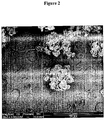
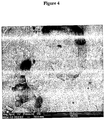
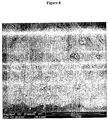
- the protective film (or coating) covering the core of the particles is visible under a scanning electron microscope.
- Example 8 Resistance to temperature and pressure of the enzymes contained in the stable powdery composition
- the objective is to test the enzymatic activity of preparations consisting of powder compositions containing enzymes added to a poultry flour food base growth after a granulation step.
- Three conditioning conditioner treatment temperatures (80, 85 and 90 ° C) are applied for each mixture according to a protocol described below.
- Test 1 A mixture of 60 kg made with 59.998 kg of poultry meal flour food and 3 g of a powdery composition is prepared using a horizontal-axis blade mixer rotating at 60 rpm. The mixing time is 2 minutes.
- Test 2 A premix of 500 g is made with 2 g of a pulverulent composition and 498 g of feed flour poultry growth.
- a mixture of 40 kg made with 39,500 kg of poultry flour feed and the previous premix is prepared using a mixer with horizontal axis blades rotating at 60 rpm.
- the mixing time is 2 minutes.
- compositions were produced from the same batch of sensitive substance, namely a concentrated filtered fermentation mash obtained from Penicillium funiculosum (IMI 378536), containing 19 enzymatic activities, the main ones being xylanase, ⁇ -glucanase and cellulase, which is behind the commercial product ROVABIO EXCEL AP.
- IMI 378536 Penicillium funiculosum
- test 1 The previous mixture (test 1 or 2) is drained into a rectangular tank before bagging.
- a representative sample of the mixture of about 1 kg is taken by grouping 20 samples obtained by quartering in the rectangular tray.
- the granulation tests are carried out on a flat-die laboratory press (KAHL 14-175 press of 3 kW).
- the press die used has channels 4 mm in diameter and 24 mm thick (compression ratio: 6).
- a laboratory chiller dryer is used to dry and cool hot pellet samples collected at the die outlet.
- the cooling drying time is at least 5 minutes for a charge in hot granules of about 3.5 kg per cooler.
- Measurements of humidity and die residence time are made from samples taken during the stabilized phase of each test.
- the characterizations and parameters of the pressing process are recorded and recorded during the tests (see appendices the Granulation dashboards).
- the opening of the steam control valve is manually raised on the control unit.
- the temperatures are recorded every second by acquisition software.
- the temperature of the die corresponds to the temperature of the granules.
- Moisture measurements are performed after oven drying of a 5 g sample at 103 ° C for 4 hours. All measurements are done in duplicate.
- the flow rate of the press is measured by weighing a sample of 30 seconds at the outlet of the die.
- This measurement calculated by a power converter is recorded every second by acquisition software.
- this parameter allows us to calculate net specific production (kg / kWh) and net specific consumption (kWh / T).
- This measurement is calculated in relation to the flow of the press.
- the calculation takes into account the weighing of 20 cm of granules.
- the test is based on the enzymatic hydrolysis of ⁇ -glucan in barley, a ⁇ -1,3 (4) -glucan.
- the products of the reaction are colorimetrically determined by measuring the increase of reducing groups with 3,5-dinitrosalicylic acid (DNS).
- DNS 3,5-dinitrosalicylic acid
- the reducing sugar concentration available after enzymatic hydrolysis is determined using a standard glucose curve whose absorbance is measured at 540 nm. The enzymatic activity calculated is then expressed in glucose equivalents.
- DNS 1% (w / v) 3,5-dinitrosalicylic acid, 1.6% (w / v) NaOH, 30% ( m /
- the absorbance is corrected with that obtained for a reference solution to which the DNS is added before the enzymatic solution.
- the results are converted into ⁇ moles of reducing sugar compared to a range of standard solutions ranging from 0.00 to 0.04% (m / V) glucose treated in the DNS as in the case of tests.
- a unit of endo-1,3 (4) - ⁇ -glucanase activity is defined as the amount of enzyme that produces 1 ⁇ mol glucose equivalent per minute per gram of product, under the conditions of the test (pH 5.0 and 50 ° C).
- the test is based on the enzymatic hydrolysis of birch xylan, a xylose polymer containing ⁇ -D-1,4 bridges.
- the products of the reaction are colorimetrically determined by measuring the increase of the reducing groups with 3,5-dinitrosalicylic acid.
- the reducing sugar concentration available after enzymatic hydrolysis is determined using a standard xylose curve whose absorbance is measured at 540 nm. The calculated enzymatic activity is then expressed in xylose equivalents.
- a solution containing 1 ml of 1% (w / v) birch xylan solution in 0.1 M sodium acetate buffer at pH 5.0 and 1 ml of the appropriate dilution solution of the enzyme is incubated at 50 ° C for 10 minutes.
- the enzymatic reaction is stopped by the addition of 2 ml of a solution of DNS (1% (w / v) 3,5-dinitrosalicylic acid, 1.6% (w / v) NaOH, 30% ( m / V) of potassium tartrate and sodium (+) in distilled water).
- DNS 1% (w / v) 3,5-dinitrosalicylic acid, 1.6% (w / v) NaOH, 30% ( m / V) of potassium tartrate and sodium (+) in distilled water.
- the solution is homogenized and then placed in a water bath boiling at 95 ° C minimum and then cooled in a bath at room temperature (for 5 minutes).
- Ten milliliters of ultrapure water are added to the
- the absorbance is corrected with that obtained for a reference solution to which the DNS is added before the enzymatic solution.
- results are converted into ⁇ moles of reducing sugar by comparison with a range of standard solutions ranging from 0.00 to 0.04% (m / V) of xylose, treated with DNS as in the case of the tests.
- a unit of endo-1,4- ⁇ -xylanase activity is defined as the amount of enzyme that produces 1 ⁇ mol of xylose equivalent per minute per gram of product, under the conditions of the test (pH 5). 0 and 50 ° C).
- Endo-1,4- ⁇ -xylanase hydrolyzes the xyloside bridges of xylan.
- the assay is based on the enzymatic hydrolysis of xylose bridges of a wheat arabinose solution, substituted ⁇ -1,4-xylan polysaccharide with arabinose.
- the enzymatic activity is proportional to the viscosity reduction of a wheat arabinoxylan solution in the presence of the enzyme to be assayed.
- a unit of endo-1,4- ⁇ -xylanase activity is defined as the amount of enzyme that will hydrolyze the substrate, reducing the viscosity of the solution, to give a change in the relative fluidity of 1 unit without dimensions. minute under the conditions of the analysis: pH 5.5 and 30 ° C.
- Table 5 Control of the enzymatic activities of the pulverulent compositions (before passage in the press) Concentrated Bruxel SD Standard product Pulverulent compositions of the invention Present in the preparation - A and C B D E Enzymatic activity (units / g) Xylanase DNS 6507 3810 4027 5344 5304 Xylanase visco. 39065 31053 30293 32273 31153 ⁇ -glutanase DNS 7626 4676 5265 6300 6081
- the enzyme retains 100% of its activity, while the unprotected enzyme has lost 1/4 of its activity (test 1). At temperatures above 85 ° C, the enzyme retains more than 80% of its activity.
- test 1 or 2 correspond to powder compositions containing 55% and 35% CMC, respectively.
- the greater compaction and densification of the particles obtained with 35% CMC thus makes it possible to maintain the stability of the enzyme even with a lesser amount of CMC.
Landscapes
- Life Sciences & Earth Sciences (AREA)
- Chemical & Material Sciences (AREA)
- Polymers & Plastics (AREA)
- Engineering & Computer Science (AREA)
- Health & Medical Sciences (AREA)
- Food Science & Technology (AREA)
- Zoology (AREA)
- Bioinformatics & Cheminformatics (AREA)
- Animal Husbandry (AREA)
- Medicinal Chemistry (AREA)
- Microbiology (AREA)
- Pharmacology & Pharmacy (AREA)
- Animal Behavior & Ethology (AREA)
- General Health & Medical Sciences (AREA)
- Public Health (AREA)
- Veterinary Medicine (AREA)
- Epidemiology (AREA)
- Molecular Biology (AREA)
- Biomedical Technology (AREA)
- Physiology (AREA)
- Biotechnology (AREA)
- Biochemistry (AREA)
- Chemical Kinetics & Catalysis (AREA)
- General Chemical & Material Sciences (AREA)
- Organic Chemistry (AREA)
- Nuclear Medicine, Radiotherapy & Molecular Imaging (AREA)
- Medicinal Preparation (AREA)
- Medicines That Contain Protein Lipid Enzymes And Other Medicines (AREA)
- Developing Agents For Electrophotography (AREA)
- Pigments, Carbon Blacks, Or Wood Stains (AREA)
- Fodder In General (AREA)
- Manufacturing Of Micro-Capsules (AREA)
Applications Claiming Priority (2)
| Application Number | Priority Date | Filing Date | Title |
|---|---|---|---|
| FR0705307A FR2918990B1 (fr) | 2007-07-20 | 2007-07-20 | Procede de preparation de compositions pulverulentes stables |
| PCT/FR2008/001069 WO2009043988A2 (fr) | 2007-07-20 | 2008-07-18 | Procede de preparation de compositions pulverulentes stables |
Publications (2)
| Publication Number | Publication Date |
|---|---|
| EP2173189A2 EP2173189A2 (fr) | 2010-04-14 |
| EP2173189B1 true EP2173189B1 (fr) | 2019-03-06 |
Family
ID=39327148
Family Applications (1)
| Application Number | Title | Priority Date | Filing Date |
|---|---|---|---|
| EP08836060.7A Not-in-force EP2173189B1 (fr) | 2007-07-20 | 2008-07-18 | Compositions pulverulentes stables et leur procédé de préparation |
Country Status (11)
| Country | Link |
|---|---|
| US (1) | US20100196493A1 (https=) |
| EP (1) | EP2173189B1 (https=) |
| JP (1) | JP5645660B2 (https=) |
| KR (1) | KR101616132B1 (https=) |
| CN (1) | CN101801211B (https=) |
| BR (1) | BRPI0814531B1 (https=) |
| CA (1) | CA2708316C (https=) |
| ES (1) | ES2733873T3 (https=) |
| FR (1) | FR2918990B1 (https=) |
| MX (1) | MX2010000798A (https=) |
| WO (1) | WO2009043988A2 (https=) |
Families Citing this family (18)
| Publication number | Priority date | Publication date | Assignee | Title |
|---|---|---|---|---|
| ATE31254T1 (de) | 1984-05-08 | 1987-12-15 | Buehler Ag Geb | Vorrichtung und verfahren zum trennen von koernigem gut. |
| JPH0734899B2 (ja) | 1993-03-31 | 1995-04-19 | 豊田通商株式会社 | 非鉄材料選別装置 |
| FR2918844B1 (fr) * | 2007-07-20 | 2012-11-02 | Adisseo France Sas | Composition thermoresistante pour animaux comprenant un melange enzymatique |
| US8939388B1 (en) | 2010-09-27 | 2015-01-27 | ZoomEssence, Inc. | Methods and apparatus for low heat spray drying |
| US9332776B1 (en) | 2010-09-27 | 2016-05-10 | ZoomEssence, Inc. | Methods and apparatus for low heat spray drying |
| CN103012855B (zh) * | 2012-12-14 | 2015-10-21 | 湖北中烟工业有限责任公司 | 烟用香精微丸的薄膜包衣剂及其制备方法 |
| US9585841B2 (en) | 2013-10-22 | 2017-03-07 | Tyme, Inc. | Tyrosine derivatives and compositions comprising them |
| FR3042387B1 (fr) * | 2015-10-20 | 2019-05-24 | Ynsect | Preservation de vitamines hydrosolubles |
| KR101876505B1 (ko) * | 2016-11-04 | 2018-07-09 | 한국과학기술연구원 | 베타 사이클로덱스트린 기반의 푸코잔틴 미세분말 및 이의 제조방법 |
| US10486173B2 (en) | 2017-08-04 | 2019-11-26 | ZoomEssence, Inc. | Ultrahigh efficiency spray drying apparatus and process |
| US9861945B1 (en) | 2017-08-04 | 2018-01-09 | ZoomEssence, Inc. | Ultrahigh efficiency spray drying apparatus and process |
| US9993787B1 (en) | 2017-08-04 | 2018-06-12 | ZoomEssence, Inc. | Ultrahigh efficiency spray drying apparatus and process |
| CA3071115C (en) | 2017-08-04 | 2022-06-21 | ZoomEssence, Inc. | Ultrahigh efficiency spray drying apparatus and process |
| US10155234B1 (en) | 2017-08-04 | 2018-12-18 | ZoomEssence, Inc. | Ultrahigh efficiency spray drying apparatus and process |
| US10569244B2 (en) | 2018-04-28 | 2020-02-25 | ZoomEssence, Inc. | Low temperature spray drying of carrier-free compositions |
| KR102172273B1 (ko) * | 2019-10-31 | 2020-10-30 | 주식회사 삼양사 | 점성 저감화 환 제조용 조성물 |
| KR102751679B1 (ko) * | 2020-11-20 | 2025-01-10 | 안산농산물(주) | 양파껍질 가공품 제조방법 및 양파껍질 가공품 |
| CN114748436B (zh) * | 2022-05-30 | 2023-05-16 | 迪沙药业集团有限公司 | 一种硝苯地平组合物及其制备方法 |
Family Cites Families (9)
| Publication number | Priority date | Publication date | Assignee | Title |
|---|---|---|---|---|
| DE69111287T2 (de) * | 1990-04-18 | 1995-12-21 | Asahi Chemical Ind | Kugelförmige Keimkerne, kugelförmige Granulate sowie Verfahren zu deren Herstellung. |
| FR2698560B1 (fr) * | 1992-11-30 | 1995-02-03 | Virbac Laboratoires | Principes actifs pulvérulents stabilisés, compositions les contenant, leur procédé d'obtention et leurs applications. |
| US6156340A (en) * | 1996-03-29 | 2000-12-05 | Duquesne University Of The Holy Ghost | Orally administrable time release drug containing products |
| TW409035B (en) * | 1997-06-04 | 2000-10-21 | Gist Brocades Bv | Starch-based enzyme granulates |
| US6667050B1 (en) * | 1999-04-06 | 2003-12-23 | Galen (Chemicals) Limited | Chewable oral contraceptive |
| CN1125638C (zh) * | 1999-05-20 | 2003-10-29 | 杭州阳光文化用品有限公司 | 稳定型缓释维生素c制剂及其生产方法 |
| EP1467629B1 (en) * | 2002-01-15 | 2009-07-15 | Basf Se | Granulates containing feed-enzymes |
| DE602005007182D1 (de) * | 2004-01-30 | 2008-07-10 | Basf Se | Stabilisierte phytase enthaltende granulate |
| BRPI0617342A2 (pt) * | 2005-10-12 | 2011-07-26 | Genencor Int | grÂnulos estÁveis, durÁveis com agentes ativos |
-
2007
- 2007-07-20 FR FR0705307A patent/FR2918990B1/fr not_active Expired - Fee Related
-
2008
- 2008-07-18 US US12/669,868 patent/US20100196493A1/en not_active Abandoned
- 2008-07-18 MX MX2010000798A patent/MX2010000798A/es active IP Right Grant
- 2008-07-18 BR BRPI0814531-8A patent/BRPI0814531B1/pt not_active IP Right Cessation
- 2008-07-18 ES ES08836060T patent/ES2733873T3/es active Active
- 2008-07-18 EP EP08836060.7A patent/EP2173189B1/fr not_active Not-in-force
- 2008-07-18 KR KR1020107003710A patent/KR101616132B1/ko not_active Expired - Fee Related
- 2008-07-18 JP JP2010517443A patent/JP5645660B2/ja not_active Expired - Fee Related
- 2008-07-18 CN CN200880107868.4A patent/CN101801211B/zh not_active Expired - Fee Related
- 2008-07-18 CA CA2708316A patent/CA2708316C/fr not_active Expired - Fee Related
- 2008-07-18 WO PCT/FR2008/001069 patent/WO2009043988A2/fr not_active Ceased
Non-Patent Citations (1)
| Title |
|---|
| XIAO HONG YANG ET AL: "Viscosity properties of sodium carboxymethylcellulose solutions", CELLULOSE, KLUWER ACADEMIC PUBLISHERS (DORDRECHT), NL, vol. 14, no. 5, 29 June 2007 (2007-06-29), pages 409 - 417, XP019524883, ISSN: 1572-882X, DOI: 10.1007/S10570-007-9110-7 * |
Also Published As
| Publication number | Publication date |
|---|---|
| CN101801211A (zh) | 2010-08-11 |
| ES2733873T3 (es) | 2019-12-03 |
| CA2708316C (fr) | 2016-05-03 |
| MX2010000798A (es) | 2010-05-17 |
| EP2173189A2 (fr) | 2010-04-14 |
| CA2708316A1 (fr) | 2009-04-09 |
| WO2009043988A3 (fr) | 2009-07-23 |
| BRPI0814531A2 (pt) | 2015-08-04 |
| JP2010534226A (ja) | 2010-11-04 |
| JP5645660B2 (ja) | 2014-12-24 |
| FR2918990B1 (fr) | 2012-12-21 |
| CN101801211B (zh) | 2015-04-15 |
| WO2009043988A2 (fr) | 2009-04-09 |
| KR20100047267A (ko) | 2010-05-07 |
| KR101616132B1 (ko) | 2016-05-12 |
| BRPI0814531B1 (pt) | 2018-06-05 |
| FR2918990A1 (fr) | 2009-01-23 |
| US20100196493A1 (en) | 2010-08-05 |
Similar Documents
| Publication | Publication Date | Title |
|---|---|---|
| EP2173189B1 (fr) | Compositions pulverulentes stables et leur procédé de préparation | |
| KR100906838B1 (ko) | 사료-효소를 함유하는 과립화물 | |
| EP0133827B1 (fr) | Compositions filmogènes pour enrobage des formes solides de produits pharmaceutiques ou alimentaires et produits obtenus revêtus desdites compositions | |
| KR100905146B1 (ko) | 사료-효소를 함유하는 과립화물 | |
| EP1926393B1 (de) | Phytasehaltiges enzymgranulat i | |
| EP1713348B1 (en) | Granules containing stabilized phytase formulations | |
| EP1928260B1 (de) | Phytasehaltiges enzymgranulat ii | |
| US20070178199A1 (en) | Granulate containing a functional food ingredient and method for the manufacture thereof | |
| FR2918844A1 (fr) | Composition thermoresistante pour animaux comprenant un melange enzymatique | |
| US20230404130A1 (en) | Coated granules produced by in-situ crosslinking process | |
| EP2296488B1 (fr) | Pellets de gluten de ble | |
| FR2714575A1 (fr) | Nouveaux granulés contenant des organismes vivant pour l'alimentation animale. | |
| JP3345984B2 (ja) | 二重被覆粒子および製造方法 | |
| EP1919299B1 (fr) | Produit pour la preparation d'aliments supplementes pour animaux | |
| US20200359656A1 (en) | Thermally-resistant wax matrix particles for enzyme encapsulation | |
| WO2025074065A1 (fr) | Particules contenant un agent actif et leur procédé de fabrication |
Legal Events
| Date | Code | Title | Description |
|---|---|---|---|
| PUAI | Public reference made under article 153(3) epc to a published international application that has entered the european phase |
Free format text: ORIGINAL CODE: 0009012 |
|
| 17P | Request for examination filed |
Effective date: 20100119 |
|
| AK | Designated contracting states |
Kind code of ref document: A2 Designated state(s): AT BE BG CH CY CZ DE DK EE ES FI FR GB GR HR HU IE IS IT LI LT LU LV MC MT NL NO PL PT RO SE SI SK TR |
|
| AX | Request for extension of the european patent |
Extension state: AL BA MK RS |
|
| 17Q | First examination report despatched |
Effective date: 20110210 |
|
| DAX | Request for extension of the european patent (deleted) | ||
| STAA | Information on the status of an ep patent application or granted ep patent |
Free format text: STATUS: EXAMINATION IS IN PROGRESS |
|
| REG | Reference to a national code |
Ref country code: DE Ref legal event code: R079 Ref document number: 602008059264 Country of ref document: DE Free format text: PREVIOUS MAIN CLASS: A23K0001160000 Ipc: A61K0009160000 |
|
| RIC1 | Information provided on ipc code assigned before grant |
Ipc: A23K 40/10 20160101ALI20180711BHEP Ipc: A23K 10/18 20160101ALI20180711BHEP Ipc: A23K 20/195 20160101ALI20180711BHEP Ipc: A23K 20/179 20160101ALI20180711BHEP Ipc: A61K 9/16 20060101AFI20180711BHEP Ipc: A61K 47/38 20060101ALI20180711BHEP Ipc: A61K 9/50 20060101ALI20180711BHEP Ipc: A61K 47/36 20060101ALI20180711BHEP Ipc: A23K 20/163 20160101ALI20180711BHEP Ipc: A23K 40/30 20160101ALI20180711BHEP Ipc: A23K 20/189 20160101ALI20180711BHEP |
|
| GRAP | Despatch of communication of intention to grant a patent |
Free format text: ORIGINAL CODE: EPIDOSNIGR1 |
|
| STAA | Information on the status of an ep patent application or granted ep patent |
Free format text: STATUS: GRANT OF PATENT IS INTENDED |
|
| INTG | Intention to grant announced |
Effective date: 20180926 |
|
| GRAS | Grant fee paid |
Free format text: ORIGINAL CODE: EPIDOSNIGR3 |
|
| GRAA | (expected) grant |
Free format text: ORIGINAL CODE: 0009210 |
|
| STAA | Information on the status of an ep patent application or granted ep patent |
Free format text: STATUS: THE PATENT HAS BEEN GRANTED |
|
| AK | Designated contracting states |
Kind code of ref document: B1 Designated state(s): AT BE BG CH CY CZ DE DK EE ES FI FR GB GR HR HU IE IS IT LI LT LU LV MC MT NL NO PL PT RO SE SI SK TR |
|
| REG | Reference to a national code |
Ref country code: GB Ref legal event code: FG4D Free format text: NOT ENGLISH |
|
| REG | Reference to a national code |
Ref country code: CH Ref legal event code: EP Ref country code: AT Ref legal event code: REF Ref document number: 1103590 Country of ref document: AT Kind code of ref document: T Effective date: 20190315 |
|
| REG | Reference to a national code |
Ref country code: DE Ref legal event code: R096 Ref document number: 602008059264 Country of ref document: DE |
|
| REG | Reference to a national code |
Ref country code: IE Ref legal event code: FG4D Free format text: LANGUAGE OF EP DOCUMENT: FRENCH |
|
| REG | Reference to a national code |
Ref country code: NL Ref legal event code: FP |
|
| REG | Reference to a national code |
Ref country code: LT Ref legal event code: MG4D |
|
| PG25 | Lapsed in a contracting state [announced via postgrant information from national office to epo] |
Ref country code: NO Free format text: LAPSE BECAUSE OF FAILURE TO SUBMIT A TRANSLATION OF THE DESCRIPTION OR TO PAY THE FEE WITHIN THE PRESCRIBED TIME-LIMIT Effective date: 20190606 Ref country code: LT Free format text: LAPSE BECAUSE OF FAILURE TO SUBMIT A TRANSLATION OF THE DESCRIPTION OR TO PAY THE FEE WITHIN THE PRESCRIBED TIME-LIMIT Effective date: 20190306 Ref country code: SE Free format text: LAPSE BECAUSE OF FAILURE TO SUBMIT A TRANSLATION OF THE DESCRIPTION OR TO PAY THE FEE WITHIN THE PRESCRIBED TIME-LIMIT Effective date: 20190306 |
|
| PG25 | Lapsed in a contracting state [announced via postgrant information from national office to epo] |
Ref country code: LV Free format text: LAPSE BECAUSE OF FAILURE TO SUBMIT A TRANSLATION OF THE DESCRIPTION OR TO PAY THE FEE WITHIN THE PRESCRIBED TIME-LIMIT Effective date: 20190306 Ref country code: HR Free format text: LAPSE BECAUSE OF FAILURE TO SUBMIT A TRANSLATION OF THE DESCRIPTION OR TO PAY THE FEE WITHIN THE PRESCRIBED TIME-LIMIT Effective date: 20190306 Ref country code: BG Free format text: LAPSE BECAUSE OF FAILURE TO SUBMIT A TRANSLATION OF THE DESCRIPTION OR TO PAY THE FEE WITHIN THE PRESCRIBED TIME-LIMIT Effective date: 20190606 Ref country code: GR Free format text: LAPSE BECAUSE OF FAILURE TO SUBMIT A TRANSLATION OF THE DESCRIPTION OR TO PAY THE FEE WITHIN THE PRESCRIBED TIME-LIMIT Effective date: 20190607 |
|
| REG | Reference to a national code |
Ref country code: AT Ref legal event code: MK05 Ref document number: 1103590 Country of ref document: AT Kind code of ref document: T Effective date: 20190306 |
|
| PG25 | Lapsed in a contracting state [announced via postgrant information from national office to epo] |
Ref country code: EE Free format text: LAPSE BECAUSE OF FAILURE TO SUBMIT A TRANSLATION OF THE DESCRIPTION OR TO PAY THE FEE WITHIN THE PRESCRIBED TIME-LIMIT Effective date: 20190306 Ref country code: PT Free format text: LAPSE BECAUSE OF FAILURE TO SUBMIT A TRANSLATION OF THE DESCRIPTION OR TO PAY THE FEE WITHIN THE PRESCRIBED TIME-LIMIT Effective date: 20190706 Ref country code: SK Free format text: LAPSE BECAUSE OF FAILURE TO SUBMIT A TRANSLATION OF THE DESCRIPTION OR TO PAY THE FEE WITHIN THE PRESCRIBED TIME-LIMIT Effective date: 20190306 Ref country code: CZ Free format text: LAPSE BECAUSE OF FAILURE TO SUBMIT A TRANSLATION OF THE DESCRIPTION OR TO PAY THE FEE WITHIN THE PRESCRIBED TIME-LIMIT Effective date: 20190306 Ref country code: RO Free format text: LAPSE BECAUSE OF FAILURE TO SUBMIT A TRANSLATION OF THE DESCRIPTION OR TO PAY THE FEE WITHIN THE PRESCRIBED TIME-LIMIT Effective date: 20190306 |
|
| PG25 | Lapsed in a contracting state [announced via postgrant information from national office to epo] |
Ref country code: PL Free format text: LAPSE BECAUSE OF FAILURE TO SUBMIT A TRANSLATION OF THE DESCRIPTION OR TO PAY THE FEE WITHIN THE PRESCRIBED TIME-LIMIT Effective date: 20190306 |
|
| REG | Reference to a national code |
Ref country code: ES Ref legal event code: FG2A Ref document number: 2733873 Country of ref document: ES Kind code of ref document: T3 Effective date: 20191203 |
|
| REG | Reference to a national code |
Ref country code: DE Ref legal event code: R097 Ref document number: 602008059264 Country of ref document: DE |
|
| PG25 | Lapsed in a contracting state [announced via postgrant information from national office to epo] |
Ref country code: IS Free format text: LAPSE BECAUSE OF FAILURE TO SUBMIT A TRANSLATION OF THE DESCRIPTION OR TO PAY THE FEE WITHIN THE PRESCRIBED TIME-LIMIT Effective date: 20190706 Ref country code: AT Free format text: LAPSE BECAUSE OF FAILURE TO SUBMIT A TRANSLATION OF THE DESCRIPTION OR TO PAY THE FEE WITHIN THE PRESCRIBED TIME-LIMIT Effective date: 20190306 |
|
| PLBE | No opposition filed within time limit |
Free format text: ORIGINAL CODE: 0009261 |
|
| STAA | Information on the status of an ep patent application or granted ep patent |
Free format text: STATUS: NO OPPOSITION FILED WITHIN TIME LIMIT |
|
| PG25 | Lapsed in a contracting state [announced via postgrant information from national office to epo] |
Ref country code: DK Free format text: LAPSE BECAUSE OF FAILURE TO SUBMIT A TRANSLATION OF THE DESCRIPTION OR TO PAY THE FEE WITHIN THE PRESCRIBED TIME-LIMIT Effective date: 20190306 |
|
| 26N | No opposition filed |
Effective date: 20191209 |
|
| PG25 | Lapsed in a contracting state [announced via postgrant information from national office to epo] |
Ref country code: MC Free format text: LAPSE BECAUSE OF FAILURE TO SUBMIT A TRANSLATION OF THE DESCRIPTION OR TO PAY THE FEE WITHIN THE PRESCRIBED TIME-LIMIT Effective date: 20190306 Ref country code: SI Free format text: LAPSE BECAUSE OF FAILURE TO SUBMIT A TRANSLATION OF THE DESCRIPTION OR TO PAY THE FEE WITHIN THE PRESCRIBED TIME-LIMIT Effective date: 20190306 |
|
| REG | Reference to a national code |
Ref country code: CH Ref legal event code: PL |
|
| GBPC | Gb: european patent ceased through non-payment of renewal fee |
Effective date: 20190718 |
|
| PG25 | Lapsed in a contracting state [announced via postgrant information from national office to epo] |
Ref country code: TR Free format text: LAPSE BECAUSE OF FAILURE TO SUBMIT A TRANSLATION OF THE DESCRIPTION OR TO PAY THE FEE WITHIN THE PRESCRIBED TIME-LIMIT Effective date: 20190306 |
|
| PG25 | Lapsed in a contracting state [announced via postgrant information from national office to epo] |
Ref country code: GB Free format text: LAPSE BECAUSE OF NON-PAYMENT OF DUE FEES Effective date: 20190718 |
|
| PG25 | Lapsed in a contracting state [announced via postgrant information from national office to epo] |
Ref country code: LI Free format text: LAPSE BECAUSE OF NON-PAYMENT OF DUE FEES Effective date: 20190731 Ref country code: CH Free format text: LAPSE BECAUSE OF NON-PAYMENT OF DUE FEES Effective date: 20190731 Ref country code: LU Free format text: LAPSE BECAUSE OF NON-PAYMENT OF DUE FEES Effective date: 20190718 |
|
| PG25 | Lapsed in a contracting state [announced via postgrant information from national office to epo] |
Ref country code: IE Free format text: LAPSE BECAUSE OF NON-PAYMENT OF DUE FEES Effective date: 20190718 |
|
| PGFP | Annual fee paid to national office [announced via postgrant information from national office to epo] |
Ref country code: NL Payment date: 20200727 Year of fee payment: 13 |
|
| PGFP | Annual fee paid to national office [announced via postgrant information from national office to epo] |
Ref country code: FR Payment date: 20200723 Year of fee payment: 13 Ref country code: FI Payment date: 20200721 Year of fee payment: 13 Ref country code: ES Payment date: 20200805 Year of fee payment: 13 Ref country code: DE Payment date: 20200804 Year of fee payment: 13 |
|
| PGFP | Annual fee paid to national office [announced via postgrant information from national office to epo] |
Ref country code: IT Payment date: 20200727 Year of fee payment: 13 Ref country code: BE Payment date: 20200727 Year of fee payment: 13 |
|
| PG25 | Lapsed in a contracting state [announced via postgrant information from national office to epo] |
Ref country code: CY Free format text: LAPSE BECAUSE OF FAILURE TO SUBMIT A TRANSLATION OF THE DESCRIPTION OR TO PAY THE FEE WITHIN THE PRESCRIBED TIME-LIMIT Effective date: 20190306 |
|
| PG25 | Lapsed in a contracting state [announced via postgrant information from national office to epo] |
Ref country code: MT Free format text: LAPSE BECAUSE OF FAILURE TO SUBMIT A TRANSLATION OF THE DESCRIPTION OR TO PAY THE FEE WITHIN THE PRESCRIBED TIME-LIMIT Effective date: 20190306 Ref country code: HU Free format text: LAPSE BECAUSE OF FAILURE TO SUBMIT A TRANSLATION OF THE DESCRIPTION OR TO PAY THE FEE WITHIN THE PRESCRIBED TIME-LIMIT; INVALID AB INITIO Effective date: 20080718 |
|
| REG | Reference to a national code |
Ref country code: DE Ref legal event code: R119 Ref document number: 602008059264 Country of ref document: DE |
|
| REG | Reference to a national code |
Ref country code: FI Ref legal event code: MAE |
|
| REG | Reference to a national code |
Ref country code: NL Ref legal event code: MM Effective date: 20210801 |
|
| REG | Reference to a national code |
Ref country code: BE Ref legal event code: MM Effective date: 20210731 |
|
| PG25 | Lapsed in a contracting state [announced via postgrant information from national office to epo] |
Ref country code: FI Free format text: LAPSE BECAUSE OF NON-PAYMENT OF DUE FEES Effective date: 20210718 Ref country code: DE Free format text: LAPSE BECAUSE OF NON-PAYMENT OF DUE FEES Effective date: 20220201 |
|
| PG25 | Lapsed in a contracting state [announced via postgrant information from national office to epo] |
Ref country code: NL Free format text: LAPSE BECAUSE OF NON-PAYMENT OF DUE FEES Effective date: 20210801 Ref country code: FR Free format text: LAPSE BECAUSE OF NON-PAYMENT OF DUE FEES Effective date: 20210731 |
|
| PG25 | Lapsed in a contracting state [announced via postgrant information from national office to epo] |
Ref country code: IT Free format text: LAPSE BECAUSE OF NON-PAYMENT OF DUE FEES Effective date: 20210718 Ref country code: BE Free format text: LAPSE BECAUSE OF NON-PAYMENT OF DUE FEES Effective date: 20210731 |
|
| REG | Reference to a national code |
Ref country code: ES Ref legal event code: FD2A Effective date: 20220927 |
|
| PG25 | Lapsed in a contracting state [announced via postgrant information from national office to epo] |
Ref country code: ES Free format text: LAPSE BECAUSE OF NON-PAYMENT OF DUE FEES Effective date: 20210719 |