EP2172899A1 - Information propagation analyzing system, information propagation analyzing apparatus, method of information propagation analysis and program therefor - Google Patents
Information propagation analyzing system, information propagation analyzing apparatus, method of information propagation analysis and program therefor Download PDFInfo
- Publication number
- EP2172899A1 EP2172899A1 EP07791053A EP07791053A EP2172899A1 EP 2172899 A1 EP2172899 A1 EP 2172899A1 EP 07791053 A EP07791053 A EP 07791053A EP 07791053 A EP07791053 A EP 07791053A EP 2172899 A1 EP2172899 A1 EP 2172899A1
- Authority
- EP
- European Patent Office
- Prior art keywords
- information
- message
- influence
- pieces
- relation
- Prior art date
- Legal status (The legal status is an assumption and is not a legal conclusion. Google has not performed a legal analysis and makes no representation as to the accuracy of the status listed.)
- Withdrawn
Links
Images











Classifications
-
- G—PHYSICS
- G06—COMPUTING OR CALCULATING; COUNTING
- G06Q—INFORMATION AND COMMUNICATION TECHNOLOGY [ICT] SPECIALLY ADAPTED FOR ADMINISTRATIVE, COMMERCIAL, FINANCIAL, MANAGERIAL OR SUPERVISORY PURPOSES; SYSTEMS OR METHODS SPECIALLY ADAPTED FOR ADMINISTRATIVE, COMMERCIAL, FINANCIAL, MANAGERIAL OR SUPERVISORY PURPOSES, NOT OTHERWISE PROVIDED FOR
- G06Q10/00—Administration; Management
-
- G—PHYSICS
- G06—COMPUTING OR CALCULATING; COUNTING
- G06Q—INFORMATION AND COMMUNICATION TECHNOLOGY [ICT] SPECIALLY ADAPTED FOR ADMINISTRATIVE, COMMERCIAL, FINANCIAL, MANAGERIAL OR SUPERVISORY PURPOSES; SYSTEMS OR METHODS SPECIALLY ADAPTED FOR ADMINISTRATIVE, COMMERCIAL, FINANCIAL, MANAGERIAL OR SUPERVISORY PURPOSES, NOT OTHERWISE PROVIDED FOR
- G06Q50/00—Information and communication technology [ICT] specially adapted for implementation of business processes of specific business sectors, e.g. utilities or tourism
Definitions
- the present invention relates to an information diffusion analysis system, an information diffusion analysis server, an information diffusion analysis method, and a program therefor.
- Non-patent Document 1 has disclosed a method of extracting an interpersonal relation, in which a search engine is used to find a person's name from a web page or the like.
- Patent Document 4 discloses a method of analyzing a distribution channel of advertising contents by extracting an opinion leader through calculation of an introduction score, which indicates a scale of introduction of the advertising contents made to other users along the distribution channel of the advertising contents.
- the present invention has been made in view of the background described above, and it is therefore an object of the present invention to provide an information diffusion analysis system, an information diffusion analysis server, and an information diffusion analysis method with which information influence is calculated.
- the present invention provides an information diffusion analysis system, including: a plurality of user clients; an information providing device for storing a plurality of pieces of message information received from the plurality of user clients and providing the plurality of pieces of message information to a network; and an information diffusion analysis server, the plurality of user clients, the information providing device, and the information diffusion analysis server being interconnected via the network, in which the information diffusion analysis server includes: information relation analyzing means for acquiring the plurality of pieces of message information from the information providing device and analyzing a relation among the plurality of pieces of message information; message influence calculating means for calculating, based on the relation among the plurality of pieces of message information, for each of the plurality of pieces of message information, an information influence with respect to another piece of the plurality of pieces of message information; inter-user influence degree calculating means for calculating, based on the calculated influence, an information influence degree among users of the plurality of user clients that have sent the plurality of pieces of message information; user relation selecting means for checking
- the present invention also provides an information diffusion analysis server interconnected via a network with a plurality of user clients and an information providing device for storing a plurality of pieces of message information received from the plurality of user clients and providing the plurality of pieces of message information to the network, including: information relation analyzing means for acquiring the plurality of pieces of message information from the information providing device and analyzing a relation among the plurality of pieces of message information; message influence calculating means for calculating, based on the relation among the plurality of pieces of message information, for each of the plurality of pieces of message information, an information influence with respect to another piece of the plurality of pieces of message information; inter-user influence degree calculating means for calculating, based on the calculated influence, an information influence degree among users of the plurality of user clients that have sent the plurality of pieces of message information; user relation selecting means for checking a plurality of the calculated information influence degrees among the users to select at least one user pair that has an information influence degree among the users larger than a predetermined value; and group constructing means for constructing a pre
- the present invention also provides an information diffusion analysis method performed among a plurality of user clients, an information providing device for storing a plurality of pieces of message information received from the plurality of user clients and providing the plurality of pieces of message information to a network, and an information diffusion analysis server, the plurality of user clients, the information providing device, and the information diffusion analysis server being interconnected via the network, the information diffusion analysis method including: an information relation analyzing step of acquiring the plurality of pieces of message information from the information providing device and analyzing a relation among the plurality of pieces of message information; a message influence calculating step of calculating, based on the relation among the plurality of pieces of message information, for each of the plurality of pieces of message information, an information influence with respect to another piece of the plurality of pieces of message information; an inter-user influence degree calculating step of calculating, based on the calculated influence, an information influence degree among users of the plurality of user clients that have sent the plurality of pieces of message information; a user relation selecting step of checking a plurality of the calculated information influence
- the present invention also provides an information diffusion analysis program executed among a plurality of user clients, an information providing device for storing a plurality of pieces of message information received from the plurality of user clients and providing the plurality of pieces of message information to a network, and an information diffusion analysis server, the plurality of user clients, the information providing device, and the information diffusion analysis server being interconnected via the network, the information diffusion analysis program causing a computer to execute: an information relation analyzing step of acquiring the plurality of pieces of message information from the information providing device and analyzing a relation among the plurality of pieces of message information; a message influence calculating step of calculating, based on the relation among the plurality of pieces of message information, for each of the plurality of pieces of message information, an information influence with respect to another piece of the plurality of pieces of message information; an inter-user influence degree calculating step of calculating, based on the calculated influence, an information influence degree among users of the plurality of user clients that have sent the plurality of pieces of message information; a user relation selecting step of checking a pluralit
- the present invention it is possible to provide the information diffusion analysis system, the information diffusion analysis server, and the information diffusion analysis method with which information influence is calculated.
- Social networks are constantly formed from everyday life and are ever changing.
- large-scale community spots such as a social networking service (SNS) have been provided on the Internet.
- Participants of the large-scale community spots on the Internet use electronic mail, bulletin board systems (BBSs), blogs, or the like to talk about matters of their interest and transmit information related to those matters, and the information is made public on the Internet.
- BSSs bulletin board systems
- Hundreds and thousands of people may access the information and express sympathy or an opinion to the transmitter. If those people introduce the information to their acquaintances, the circle of connected people may be increased more and more, with the result that a social network wider in extent than the conventional face-to-face relation is readily formed.
- techniques of finding a community that already exists on the Internet and a structure of a social network in the community have lately been proposed.
- Techniques of constructing a social network from the flow of information within an information community have also been proposed.
- the methods of analyzing the flow of information take into consideration the flow of information from person to person through communications. However, an implicit information flow which occurs when a third party refers to information made open in a public communication spot such as a bulletin board is not reflected. Also, while the flow of information through reference may be analyzed from the appearance timing of the URL, the methods may not handle the flow of information in cases where a URL hardly appears, as in comments on a bulletin board.
- An information diffusion analysis system 1 described below is configured to solve the problems stated above.
- Figure 1 is a diagram exemplifying a configuration of the information diffusion analysis system 1 according to the embodiment of the present invention.
- the information diffusion analysis system 1 is constituted by connecting user clients 20-1 to 20-N (N is an integer equal to or larger than 2. N may not always be the same number.), which are PCs or the like, a web server 24, and an information diffusion analysis server 3 via a network 100.
- an abbreviation such as "user client 20" may be used to refer to any one of a plurality of components without specifying one of the user clients 20-1 to 20-N.
- devices in the information diffusion analysis system 1 that may take an active role in information processing and communication such as the information diffusion analysis server 3, may be referred collectively to as nodes in the following description.
- Arbitrary two of the devices or more that constitute the information diffusion analysis system 1 illustrated in Figure 1 may appropriately be configured integrally.
- the user client 20 creates electronic mail to send the electronic mail to the network 100 and also receives electronic mail from the network 100.
- the user client 20 sends to the web server 24 message information that a user wishes to be made public on an electronic bulletin board or the like via the network 100.
- the user client 20, which is a PC in this embodiment, may instead be a cellular phone or a personal digital assistant (PDA), for example.
- the web server 24, as is described later with reference to Figure 5 stores message information from the user client 20.
- the web server 24 provides the stored message information to nodes connected to the network 100, thereby making information such as a web page public.
- the web server 24 also manages a virtual spot where a plurality of users of the user clients 20 have a discussion or interact with one another through an exchange of messages among the users or other measures.
- Virtual spots are, for example, social networking services (SNSs), blogs, bulletin board systems (BBSs), mailing lists, or the like. These are herein collectively referred to as community spaces. Virtual communities formed via the community spaces are herein referred to as communities or information communities. Participants of a community (i.e., users constituting a community) are herein referred to as community members, or simply referred to as members.
- the information diffusion analysis server 3 analyzes the relation among a plurality of pieces of message information exchanged within a community space that is managed by the web server 24, and creates information about a message chain structure exemplified in Figure 2 . Based on the message chain structure, the information diffusion analysis server 3 calculates for each piece of message information the information influence (message influence) with respect to another piece of message information. Based on the message influence, the information diffusion analysis server 3 calculates the information influence degree between members who belong to a community. Based on the inter-member information diffusion influence degree, the information diffusion analysis server 3 constructs a social network from a group throughout which information tends to diffuse.
- the information diffusion analysis server 3 also calculates the influence of each member over other members, and selects a member who has the greatest influence as an influencer.
- An influencer is a person who has a strong influence on topics and opinions in a social network, and is also referred to as an opinion leader or an opinion maker.
- the information diffusion analysis server 3 provides information such as advertisements to, for example, the user client 20 of the influencer.
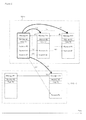
- Figure 2 is a diagram exemplifying the message chain structure and a mode of information diffusion.
- the assumption of the example of Figure 2 is that, in a community space such as an electronic bulletin board, messages #i, #i+1, #i+2, #i+3, and #i-1 are open to public via the network 100.
- the message #i is created by a member #A at a time T1, and contains keywords #X, #Y, and #Z.
- the message #i+1 is created by a member #B at a time T2, and contains keywords #Y and #Z.
- the message #i+2 is created by a member #E at a time T3, and contains keyword #Z.
- the message #i+3 is created by a member #C at a time T4, and contains keywords #X and #Y.
- the message #i-1 is created by a member #D at a time T0.
- the message #i+1 is a reply message to the message #i as indicated by an arrow (A).
- the message #i+3 is a reply message to the message #i+1 as indicated by an arrow (B).
- the message #i+2 is a reply message to the message #i-1 as indicated by an arrow (C).
- a message on the right side is created later than a message on the left side, and T0 ⁇ T1 ⁇ T2 ⁇ T3 ⁇ T4 is satisfied.
- the messages #i, #i+1, and #i+3 are in a reply relation with one another, and the reply relation connects the messages from #i to #i+3 via #i+1.
- a reply relation is a relation indicating which message information is a reply to which message information or, conversely, from which message a message receives a reply.
- the messages #i-1 and #i+2 are also in a reply relation with one another, and the reply relation connects the messages from #i-1 to #i+2.
- a connection between messages linked by a reply relation as this is referred to as a message chain structure.
- the messages #i, #i+1, and #i+3 constitute a message chain structure 102-1
- the messages #i-1 and #i+2 constitute a message chain structure 102-2.
- a mode in which information diffuses from the message #i to other messages is described next with reference to Figure 2 .
- the keyword #Y contained in the message #i is also contained in the message #i+1, which is a reply message to the message #i. It may therefore be said that the keyword #Y has been diffused from the message #i to the message #i+1 as indicated by an arrow (a).
- the keyword #Y is further contained in the message #i+3, which is a reply message to the message #i+1. It may therefore be said that the keyword #Y has been diffused from the message #i+1 to the message #i+3 as indicated by an arrow (b). It may also be said that the keyword #Y, which has been diffused from the message #i via the message #i+1 to the message #i+3, has been diffused from the message #i to the message #i+3.
- the keyword #X contained in the message #i is also contained in the message #i+3.
- the message #i+3 is not a reply message to the message #i, but the message #i+3 and the message #i are contained in the same message chain structure 102-1. It may therefore be estimated that the member #C who has created the message #3 has been inspired by the message #i to create the message #i+3.
- the keyword #X may be said to have been diffused from the message #i to the message #i+3 skipping the message #i+1 as indicated by an arrow (c).
- the keyword #Z contained in the message #i is also contained in the message #i+1, which is a reply message to the message #i. It may therefore be said that the keyword #Z has been diffused from the message #i to the message #i+1 as indicated by an arrow (d).
- the keyword #Z is further contained in the message #i+2.
- the message #i+2 is not contained in the same message chain structure as that of the message #i which is the message chain structure 102-1. However, because the message #i+2 has been created later than the message #i, if the time difference between the time T1 and the time T3 is small, it may be estimated that the member #E who has created the message #i+2 has been inspired by the message #i to create the message #i+2. The keyword #Z may therefore be said to have been diffused from the message #i to the message #i+2 as indicated by an arrow (e).
- Figure 3 is a diagram exemplifying a hardware configuration of the user client 20, the web server 24, and the information diffusion analysis server 3 illustrated in Figure 1 .
- the user client 20, the web server 24, and the information diffusion analysis server 3 each include a main body 120, which contains among others a CPU 122 and a memory 124, an I/O device 126, which includes among others a keyboard and a display, a communication device 128, which communicates with other nodes, and a storage device 130 such as a CD device and an HDD device which records and reproduces data on a storage medium 132.
- the user client 20, the web server 24, and the information diffusion analysis server 3 each include hardware components as a computer capable of information processing and communication with other nodes.
- FIG 4 is a diagram illustrating a configuration of a user client program 200, which is executed in the user client 20 illustrated in Figure 1 .
- the user client program 200 includes a communication process part 202, a user interface (UI) 204, a mail creation part 210, a mail sending part 212, a mail receiving part 214, a web page viewing process part 216, and a message information creation part 218.
- the user client program 200 is supplied to the user client 20 via the network 100 or via the storage medium 132, loaded onto the memory 124, installed in the user client 20, and then executed on an OS to be executed (not shown) with the use of specific hardware resources of the user client 20 (the same applies to each program described later).
- the communication process part 202 performs control for communication with other processing nodes.
- the UI 204 accepts manipulations of the I/O device 126 by a user and outputs data that indicates the accepted manipulations to the mail creation part 210 and the message information creation part 218.
- the UI 204 controls processes of other components of the user client program 200 in response to manipulations by the user.
- the mail creation part 210 accepts the data that indicates the user's manipulations from the UI 204 to create electronic mail, and outputs the created electronic mail information to the mail sending part 212.
- the mail sending part 212 sends the electronic mail created in response to the user's manipulations via the communication process part 202 and the network 100 to a node that is indicated by a destination address contained in the electronic mail.
- the mail receiving part 214 receives the electronic mail via the network 100 and the communication process part 202, and outputs this electronic mail to the UI 204.
- the UI 204 displays the electronic mail information received from the mail receiving part 214 on the I/O device 126.
- the web page viewing process part 216 which is, for example, a web browser, performs a process for viewing a web page or other information that has been made public by the web server 24 or others, and outputs the processed information to the UI 204.
- the web page viewing process part 216 sends a URL of a web page to the corresponding web server 24, and receives information such as web data corresponding to this URL from this web server 24.
- the UI 204 displays the information from the web page viewing process part 216 on the I/O device 126.
- the message information creation part 218 creates message information which is made public by the web server 24 or others, and outputs the created message information to the web page viewing process part 216.
- the web page viewing process part 216 sends the message information from the message information creation part 218 via the communication process part 202 and the network 100 to a node that is indicated by a destination address contained in the message information.
- FIG. 5 is a diagram illustrating a configuration of a web server program 240, which is executed in the web server 24 illustrated in Figure 1 .
- the web server program 240 includes a communication process part 242, a user ID receiving part 244, a message information receiving part 248, a mail receiving part 250, a mail sending part 252, a URL receiving part 254, a web data sending part 256, a community space management part 260, and a community space database (DB) 270.
- the communication process part 242 performs control for communication with other processing nodes.
- the user ID receiving part 244 receives an identifier (user ID) such as an electronic mail address or an IP address from this user client 20.
- the user ID receiving part 244 outputs the received user ID to the community space management part 260.
- the community space management part 260 performs a process for providing, as web data, a service that uses a community space such as an electronic bulletin board to nodes connected to the network 100.
- the community space management part 260 manages information relevant to a community space, such as message information.
- the community space management part 260 performs user authentication and other processes based on a user ID from the user ID receiving part 244.
- the community space management part 260 may provide a service that uses a community space only to the user client 20 of a user who has successfully been authenticated by this authentication process.
- the message information receiving part 248 receives the message information from the user client 20, via the network 100 and the communication process part 242.
- the message information receiving part 248 outputs the received message information to the community space management part 260.
- the community space management part 260 stores the message information from the message information receiving part 248 in the community space DB 270, and manages I/O and the like of the information.
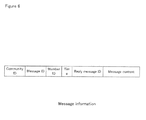
- Figure 6 is a diagram exemplifying a structure of message information.
- message information contains an identifier of a community (community ID), an identifier of the message (message ID), an identifier of a member who has created the message information (member ID), time information indicating the time of creation of the message information, an identifier of message information to which this message information is a reply (original message ID), and message content information.
- the community ID may be associated with, for example, a URL.
- message information to which this message information is a reply is, when a message A is a reply to a message B, for example, message information of the message B.
- the original message ID contained in message information about the message A is the message ID of the message B.
- message information about the message #i+1 contains the identifier of the message #i as the original message ID, whereas message information about the message #i does not contain the original message ID.
- the message content information contains, for example, data posted to an electronic bulletin board or data constituting a blog or the like, and may be text data or may contain image data or the like.
- the mail receiving part 250 receives electronic mail from the user client 20 via the network 100 and the communication process part 242.
- the mail receiving part 250 outputs the received electronic mail to the community space management part 260.
- the community space management part 260 Based on the electronic mail from the mail receiving part 250, the community space management part 260 performs a predetermined process for managing a community space.
- the community space management part 260 automatically creates, or an administrator thereof manually creates, electronic mail to be sent to the user client 20 of a member, and outputs the created electronic mail to the mail sending part 252.
- the mail sending part 252 sends the electronic mail that is created by the community space management part 260 and addressed to one user client 20 to this user client 20 via the communication process part 242 and the network 100.
- the URL receiving part 254 receives a URL via the communication process part 242 from a node connected to the network 100, and outputs the URL to the community space management part 260.
- the community space management part 260 outputs to the web data sending part 256 web data corresponding to the URL from the URL receiving part 254.
- the web data sending part 256 sends the web data from the community space management part 260 via the communication process part 242 and the network 100 to the node that has sent the URL.
- Message information may be created from electronic mail.
- the message information receiving part 248 and the mail receiving part 250 may be the same component.
- the mail sending part 252 in this case may perform a process of forwarding electronic mail received by the mail receiving part 250 to the user client 20 of every member who belongs to a community managed by the community space management part 260.
- the original message ID contained in the message information that is illustrated in Figure 6 may be attached to the message information by a component in the user client program 200 (for example, the message information creation part 218), or may be attached to the message information by a component in the web server program 240 (for example, the community space management part 260).
- FIG. 7 is a diagram illustrating a configuration of an information diffusion analysis program 30, which is executed in the information diffusion analysis server 3 illustrated in Figure 1 .
- the information diffusion analysis program 30 includes communication process parts 300 and 302, an administrator interface (admin IF) 304, a message chain structure analysis part 32, a message influence analysis part 34, a member relation analysis part 36, an influencer analysis part 38, a group relation display part 310, an influencer display part 312, a provided information receiving part 314, and a provided information sending part 316.
- the communication process part 300 performs control for communication with the web server 24 connected to the network 100.
- the communication process part 302 performs control for communication with the user client 20 connected to the network 100.
- the admin IF 304 responds to the manipulation of the I/O device 126 by a system administrator by outputting the identifier of an analysis target community (community ID) to the message chain structure analysis part 32.
- the message chain structure analysis part 32 analyzes a plurality of pieces of information exchanged within a community space that is indicated by the community ID from the admin IF 304, and the relation between the pieces of message information. Through the analysis, the message chain structure analysis part 32 deduces a reply relation between messages and, based on the reply relation, creates chain structure information, which is described later with reference to Figure 11 .
- the message influence analysis part 34 uses the chain structure information to calculate for each piece of message information information influence (message influence) with respect to another piece of message information.
- the member relation analysis part 36 uses the calculated message influence to calculate the information influence degree between members who belong to a community (inter-member influence degree).
- the member relation analysis part 36 uses the inter-member influence degree to construct a group throughout which information tends to be diffused, and outputs information of the group to the group relation display part 310.
- the influencer analysis part 38 calculates the influence of each member over other members.
- the influencer analysis part 38 selects a member who has the greatest influence as an influencer, and outputs information of the influencer to the influencer display part 312.
- the group relation display part 310 receives the group information from the member relation analysis part 36, performs a process for displaying the group information, and outputs the information to the admin IF 304.
- the influencer display part 312 receives the influencer information from the influencer analysis part 38, performs a process for displaying the influencer information, and outputs the information to the admin IF 304.
- the admin IF 304 displays the group information from the group relation display part 310 and the influencer information from the influencer display part 312 on the I/O device 126.
- the admin IF 304 outputs advertisements or other provided information created through the manipulation of the I/O device 126 by the system administrator to the provided information receiving part 314.
- the provided information receiving part 314 receives the provided information from the admin IF 304 and outputs the information to the provided information sending part 316.
- the provided information sending part 316 receives the provided information from the provided information receiving part 314.
- the provided information sending part 316 receives information of a group from the member relation analysis part 36 and information of an influencer from the influencer analysis part 38. From the received group information, the provided information sending part 316 selects a group in which the received provided information is to be propagated.
- the provided information sending part 316 extracts information of an influencer who is relevant to the selected group, and sends the provided information to the user client 20 that is associated with the identifier of this influencer.
- the provided information sending part 316 may send the provided information to the web server 24, so that the provided information is sent to the user client 20 of the influencer from the web server 24.
- the provided information sending part 316 may send the provided information to the user client 20 of every member who belong to the group based on the received group information, or may send the provided information to the user client 20 of every influencer associated with the received influencer information.
- the provided information sending part 316 may not depend on the group information and the influencer information in sending the provided information.
- the administrator may check on the I/O device 126 what is displayed through the processes by the group relation display part 310 and the influencer display part 312, so that the administrator himself/herself determine to which influencer the provided information is to be sent, and sends the provided information to the user client 20 of this influencer.
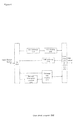
- FIG 8 is a diagram illustrating a configuration of the message chain structure analysis part 32 illustrated in Figure 7 .
- the message chain structure analysis part 32 includes a community ID receiving part 320, a message information acquisition part 322, a message information management part 324, a message information DB 326, a message information analysis part 328, a chain structure information management part 330, and a chain structure information DB 332.
- the community ID receiving part 320 receives a community ID from the I/O device 126 via the admin IF 304, and outputs the community ID to the message information acquisition part 322.
- the message information acquisition part 322 receives the community ID from the community ID receiving part 320.
- the message information acquisition part 322 request the web server 24 that is associated with a community space indicated by the community ID to send information of a web page that contains message information.
- Receiving the information of the web page from the web server 24, the message information acquisition part 322 extracts from the web page a plurality of pieces of message information as the one illustrated in Figure 6 , and outputs the message information to the message information management part 324.
- the message information management part 324 stores the pieces of message information from the message information acquisition part 322 in the message information DB 326, and manages I/O and the like of the information.
- the message information analysis part 328 acquires message information from the message information management part 324, and performs a process that is described later with reference to Figures 9 and 10 to create chain structure information.
- the message information analysis part 328 outputs the created chain structure information to the chain structure information management part 330.
- the chain structure information management part 330 stores the chain structure information created by the message information analysis part 328 in the chain structure information DB 332, and manages I/O of the information.
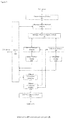
- Figures 9 and 10 are flow charts illustrating the process (S10) of the message information analysis part 328.
- the message information analysis part 328 determines whether or not every piece of message information #i has been analyzed, and proceeds to S110 illustrated in Figure 10 if it has been and otherwise proceeds to S102.
- Step 102 the message information analysis part 328 sets the message information #i that is an analysis target as unanalyzed message information.
- Step 104 the message information analysis part 328 acquires the message information #i from the message information management part 324.
- Step 106 the message information analysis part 328 extracts the member ID and the time information that are contained in the message information, and extracts keyword information from the message content information.
- the extracted keyword information is text data in most cases, but may be image data.
- Step 108 the message information analysis part 328 determines whether or not the message information contains the identifier of a message to which this message is a reply (original message ID), and proceeds to S110 when the original message ID is contained and otherwise proceeds to S112.
- Step 110 the message information analysis part 328 extracts the original message ID from the message information.
- Step 112 the message information analysis part 328 stores the extracted information and returns to S100.
- Step 120 the message information analysis part 328 determines whether or not every piece of message information without original message ID has been extracted from the information stored in S112, and ends the process when every piece of message information without original message ID has been extracted and otherwise returns to S122.
- Step 122 the message information analysis part 328 extracts from the information stored in S112 message information #I without no original message ID.
- Step 124 the message information analysis part 328 determines whether or not there is message information among the acquired message information that is a reply to the message information #I, and proceeds to S126 when there is any and otherwise proceeds to S132.
- Step 126 the message information analysis part 328 extracts the message information that is a reply to the message information #I.
- Step 128 the message information analysis part 328 determines whether or not there is message information that is a reply to the message information extracted in S126 or S130, and proceeds to S130 when there is any and otherwise proceeds to S132.
- Step 130 the message information analysis part 328 extracts from the information stored in S112 message information that is a reply to the message in question, and returns to S128.
- Step 132 the message information analysis part 328 uses the message information extracted in S122 to S130 to create chain structure information illustrated in Figure 11 , and returns to S120.
- Figure 11 is a diagram exemplifying a structure of chain structure information.
- chain structure information contains the identifier of a message chain structure (message chain structure ID), an identifier #1, which is the identifier of a message created first in this message chain structure, an identifier #2, which is the identifier of a message that is a reply to the message #1, an identifier #3, which is the identifier of a message that is a reply to the message #2, ..., an identifier #M (M is an integer equal to or larger than 2), which is the identifier of a message that is a reply to a message #M-1, the identifiers of members who have respectively created the messages, time information indicating the time of creation of each message, and keyword information contained in each piece of message information.
- messages chain structure ID messages chain structure ID
- identifier #1 which is the identifier of a message created first in this message chain structure
- an identifier #2 which is the identifier of a message that is a
- a message chain structure may be constructed based on the chain structure information.
- Figure 12 is a diagram illustrating a configuration of the message influence analysis part 34 illustrated in Figure 7 .
- the message influence analysis part 34 includes a message influence calculation part 340, an influence information management part 352, and a message influence information DB 356.
- the message influence calculation part 340 contains an information-influence-within-chain-structure calculation part 342 and an information-influence-outside-chain-structure calculation part 350.
- the information-influence-within-chain-structure calculation part 342 contains an explicit relation-based information influence calculation part 344 and an implicit relation-based information influence calculation part 346
- the message influence calculation part 340 acquires chain structure information from the message chain structure analysis part 32.
- the message influence calculation part 340 uses the information-influence-within-chain-structure calculation part 342 and the information-influence-outside-chain-structure calculation part 350 to perform a process that is described later with reference to Figure 13 .
- the message influence calculation part 340 calculates the message influence of each piece of message information with respect to every other piece of message information.
- the message influence calculation part 340 creates message influence information, which is described later with reference to Figure 14 , and outputs the message influence information to the influence information management part 352.
- the influence information management part 352 stores the received message influence information in the message influence information DB 356, and manages I/O of the information.
- the information- influence-within-chain-structure calculation part 342 uses the explicit relation-based information influence calculation part 344 and the implicit relation-based information influence calculation part 346 to calculate for a piece of message information the information influence with respect to another piece of message information that is within the same message chain structure.
- the explicit relation-based information influence calculation part 344 calculates the influence in information diffusion that occurs via other messages. In the example of Figure 2 , the explicit relation-based information influence calculation part 344 calculates the influence in information diffusion from the message #i to the message #i+3 via the message #i+1 along the routes indicated by the arrow (a) and the arrow (b).
- the implicit relation-based information influence calculation part 346 calculates the influence in information diffusion that occurs without passing through any other message. In the example of Figure 2 , the implicit relation-based information influence calculation part 346 calculates the influence in direct information diffusion from the message #i to the message #i+3 along the route indicated by the arrow (c) which does not run through the message #i+1.
- the information - influence-outside-chain-structure calculation part 350 calculates for a piece of message information the information influence with respect to another piece of message information that is not within the same message chain structure. In the example of Figure 2 , the information- influence-outside-chain-structure calculation part 350 calculates the influence in information diffusion from the message #i to the message #i+3 along the route indicated by the arrow (e).
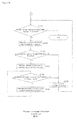
- FIG 13 is a flow charts illustrating the process (S20) of the message influence calculation part 340.
- the message influence calculation part 340 determines whether or not every piece of message information #i has been analyzed, and ends the process if it has been and otherwise proceeds to S202.
- the message influence calculation part 340 sets the message information #i that is an analysis target as unanalyzed message information.
- the message influence calculation part 340 acquires the message information #i from the message chain structure analysis part 32.
- Step 206 the message influence calculation part 340 determines whether or not every piece of message information #j that has been posted after the message information #i has been analyzed, and proceeds to S200 if it has been and otherwise proceeds to S208.
- Step 208 the message influence calculation part 340 sets the message information #j that is an analysis target as unanalyzed message information.
- Step 210 the message influence calculation part 340 acquires the message information #j from the message chain structure analysis part 32.
- Step 212 the message influence calculation part 340 determines whether or not the message information #j is in the same message chain structure as the message information #i, and proceeds to S214 when it is and otherwise proceeds to S216.
- Step 214 the message influence calculation part 340 uses the information-influence-within-chain-structure calculation part 342 to calculate by the following mathematical expression the information influence with respect to message information that is in the same chain structure:
- I i , j I i , j - 1 ⁇ I ⁇ i , j + 1 d i , j ⁇ I ⁇ i , j
- I i, j represents the message influence of the message #i with respect to the message #j.
- w i represents the set of keywords contained in the message #i.
- I" i,j is calculated based on other keywords than those diffused from the message #i to the message #j-1 through in-between messages and keywords contained in the message #j.
- a parameter that indicates the interval between the message #i and the message #j in the message chain structure is represented by d i, j .
- d i, j is the number of messages between the message #i and the message #j.
- d i, j 2.
- Step 216 the message influence calculation part 340 determines whether or not the message information #j has been posted after a specified period of time elapses since the message information #i has been posted, and proceeds to S218 if it has been and otherwise proceeds to S206.
- a parameter that indicates the interval between the message #i and the message #j in the message chain structure is represented by D i, j .
- D i, j is the number of messages between the message #i and the message #j.
- D i, j 3.
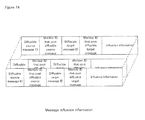
- Figure 14 is a diagram exemplifying a structure of message influence information which is created by the message influence analysis part 34.
- message influence information contains an identifier of message information from which information is diffused (diffusion source message ID), an identifier of a member who has posted the diffusion source message (diffusion-source-message-posted-member ID), an identifier of message information to which the information is diffused (diffusion target message ID), an identifier of a member who has posted the diffusion target message (diffusion-target-message-posted-member ID), and influence information.
- the message influence information is created for the information diffusion source message and the information diffusion target message each.
- message influence information about the information diffusion from the message #i to the message #i+3 indicated by the arrow (2) has the identifier of the message #i as the diffusion source message ID, the identifier of the member #A as the diffusion-source-message-posted-member ID, the identifier of the message #i+3 as the diffusion target message ID, and the identifier of the member #C as the diffusion-target-message-posted-member ID.
- Figure 15 is a diagram illustrating a configuration of the member relation analysis part 36 illustrated in Figure 7 .
- the member relation analysis part 36 includes an inter-member influence degree calculation part 360, an inter-member influence degree information management part 362, an inter-member influence degree information DB 364, a member relation selection part 366, a member relation information management part 368, a member relation information DB 370, a group construction part 372, a group relation information management part 374, and a group relation information DB 376.
- the inter-member influence degree calculation part 360 performs a process illustrated in Figure 16 to calculate the degree of influence between members, and creates inter-member influence degree information, which is described later with reference to Figure 17 .
- the inter-member influence degree calculation part 360 outputs the created inter-member influence degree information to the inter-member influence degree information management part 362.
- Figure 16 is a flow chart illustrating the process (S30) of the inter-member influence degree calculation part 360.
- Step 300 the inter-member influence degree calculation part 360 determines whether or not all members #m (m represents a plurality of integers. Not all of "m"s may be the same number) have been analyzed, and ends the process when all members have been analyzed and otherwise proceeds to S302.
- Step 302 the inter-member influence degree calculation part 360 sets the member #m who has created the diffusion source message information and is an analysis target (diffusion source member) as an unanalyzed member.
- Step 304 the inter-member influence degree calculation part 360 determines whether or not all members #n (n represents a plurality of integers. Not all of "n"s may be the same number) have been analyzed, and returns to S300 when all members have been analyzed and otherwise proceeds to S306.
- Step 306 the inter-member influence degree calculation part 360 sets the member #n who has created the diffusion target message information and is an analysis target (diffusion target member) as an unanalyzed member.
- Step 308 the inter-member influence degree calculation part 360 extracts from the message influence analysis part every piece of message influence information that has the message posted by the member #m as the information diffusion source and the message posted by the member #n as the information diffusion target.
- Step 310 the inter-member influence degree calculation part 360 calculates the sum of influence of the extracted message influence information, and returns to S304.
- P ij represents the information influence degree of the member #i with respect to the member #j
- S i represents the set of messages posted by the member #i
- S j represents the set of messages posted by the member #j.
- FIG 17 is a diagram exemplifying a structure of inter-member influence degree information which is created by the message influence degree calculation part 360.
- inter-member influence degree information contains an identifier of a member who is the source of information diffusion (diffusion-source-message-posted-member ID), an identifier of a member who is the target of information diffusion (diffusion-target-message-posted-member ID), and influence degree information.
- the message influence information is created for the information diffusion source member and the information diffusion target member each.
- the inter-member influence degree information management part 362 ( Figure 15 ) receives the inter-member influence degree information created by the message influence degree calculation part 360, and stores the information in the inter-member influence degree information DB 364.
- the inter-member influence degree information management part 362 manages I/O of the information stored in the inter-member influence degree information DB 364.
- the member relation selection part 366 acquires inter-member influence degree information from the inter-member influence degree information management part 362, and extracts inter-member influence degree information that has an influence degree equal to or larger than a predetermined value (for example, 0.5).
- the member relation selection part 366 selects a pair of a diffusion source member and a diffusion target member of the extracted inter-member influence degree information, and outputs information that indicates the pair to the member relation information management part 368.
- the member relation information management part 368 receives the information that indicates the member pair selected by the member relation selection part 366 (member relation information), and stores the information in the member relation information DB 370.
- the member relation information management part 368 manages I/O of the information stored in the member relation information DB 370.
- Figure 18 is a diagram exemplifying a member relation.
- information is diffused from a member who has a member ID #A (member #A) to a member who has a member ID #B (member #B).
- information is diffused from the member #A to a member who has a member ID #C (member #C), and information is diffused from the member #B to a member who has a member ID #D (member #D).
- the member relation information management part 368 manages member relation information which indicates pairs of member IDs as those illustrated in Figure 18 .
- the group construction part 372 ( Figure 15 ) extracts member relation information from the member relation information management part 368 and, based on the extracted member relation information, constructs a group throughout which information tends to be diffused.
- the group construction part 372 creates information about this group (group relation information) in association with the identifier of the group, and outputs the information to the group relation information management part 374.
- Figure 19 is a diagram illustrating a group relation constructed from the member relation exemplified in Figure 18 .
- a group denoted as a group #1 is constituted of members denoted by the member IDs #A, #B, #C, and #D, and information tends to be diffused from the member #A to the member #B and from the member #B to the member #D. Information tends to be diffused also from the member #A to the member #C and from the member #C to the member #D.
- the group relation information management part 374 ( Figure 15 ) receives group relation information from the group construction part 372, and stores the information in the group relation information DB 376.
- the group relation information management part 374 manages I/O of the information stored in the group relation information DB 376.
- the group relation information management part 374 outputs group relation information to the group relation information display part 310 and the provided information sending part 316.
- Figure 20 is a diagram illustrating a configuration of the influencer analysis part 38 illustrated in Figure 7 .
- the influencer analysis part 38 includes a member influence calculation part 380, a member influence information management part 382, a member influence information DB 384, an influencer selection/management part 386, and an influencer information DB 388.
- the member influence calculation part 380 performs a process illustrated in Figure 21 to calculate the influence of each member over other members, and creates member influence information, which is described later with reference to Figure 22 .
- the member influence calculation part 380 outputs the created member influence information to the member influence information management part 382.
- Figure 21 is a flow chart illustrating the process (S40) of the member influence calculation part 380.
- the member influence calculation part 380 determines whether or not all members #m have been analyzed, and ends the process when all members have been analyzed and otherwise proceeds to S402.
- Step 402 the member influence calculation part 380 sets the diffusion source member #m who is an analysis target as an unanalyzed member.
- Step 404 the member influence calculation part 380 extracts from the message influence analysis part 34 every piece of message influence information that has a message posted by the member #m as the diffusion source.
- Step 406 the member influence calculation part 380 calculates the sum of influence of all the extracted pieces of message influence information, and returns to S400.
- I i ⁇ j I ij
- Figure 22 is a diagram exemplifying a structure of member influence information which is created by the member influence calculation part 380.
- member influence information contains a member ID and influence information of the member. The member influence information is created for each member.
- the member influence information management part 382 ( Figure 20 ) receives the member influence information created by the member influence calculation part 380, and stores the information in the member influence information DB 384.
- the member influence information management part 382 manages I/O of the information stored in the member influence information DB 384.
- the influencer selection/management part 386 selects a member who is associated with this member influence information as an influencer.
- the influencer selection/management part 386 stores the identifier of each selected influencer in the influencer information DB 388.
- the influencer selection/management part 386 manages I/O of the information stored in the influencer information DB 388.
- the influencer selection/management part 386 outputs influencer information to the influencer display part 312 and the provided information sending part 316.
- Influencer information may be associated with the group ID described above. Specifically, influencer information or group relation information may be structured such that a member who has the greatest influence within a group is selected as an influencer (in the example of Figure 19 , the member #A is selected as the influencer of the group #1).
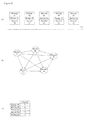
- Figures 23 are diagrams exemplifying the message chain structure and analysis results in this embodiment.
- Figure 23(A) is a diagram illustrating a first example of the message chain structure
- Figure 23(B) is a diagram exemplifying a group relation in the first example
- Figure 23(C) is a diagram exemplifying an influence of each member in the first example.
- there is no reply relation between messages and each message contains the keyword #X.
- a group relation as the one illustrated in Figure 23(B) is constructed through the processes in the message chain structure analysis part 32, the message influence analysis part 34, and the member relation analysis part 36.
- the influence of each member is calculated as illustrated in Figure 23(C) through the process in the influencer analysis part 38.
- the member #A who has the greatest influence may be selected as an influencer.
- a group relation and the influence of each member are deduced properly by taking into consideration the fact that, while the messages do not have a reply relation with one another, the keyword #X is contained in all the messages.
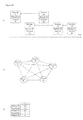
- Figures 24 are diagrams exemplifying the message chain structure and analysis results in this embodiment.
- Figure 24(A) is a diagram illustrating a second example of the message chain structure
- Figure 24(B) is a diagram exemplifying a group relation in the second example
- Figure 24(C) is a diagram exemplifying an influence of each member in the second example.
- each message is a reply to a message posted immediately before the message, and the messages #1, #2, and #5 contain the keyword #X, and the messages #3 and #4 contain the keyword #Y.
- a group relation as the one illustrated in Figure 24(B) is constructed through the processes in the message chain structure analysis part 32, the message influence analysis part 34, and the member relation analysis part 36.
- the influence of each member is calculated as illustrated in Figure 24(C) through the process in the influencer analysis part 38.
- the member #A who has the greatest influence may be selected as an influencer.
- the interval between the message #1 and the message #5 and the interval between the message #2 and the message #5 are wide because other messages are interposed.
- this embodiment takes into consideration the fact that each message contains the same keyword, #X, to properly deduce the influence in information diffusion from the message #1 to the message #5 and the influence in information diffusion from the message #2 to the message #5. Consequently, in this embodiment, the information influence degree of the member #A with respect to the member #E and the information influence degree of the member #B with respect to the member #E are deduced properly. According to this embodiment, a group relation and the influence of each member are thus properly derived in the second example as well.
- Figures 25 are diagrams exemplifying the message chain structure and analysis results in this embodiment.
- Figure 25(A) is a diagram illustrating a third example of the message chain structure
- Figure 25(B) is a diagram exemplifying a group relation in the third example
- Figure 25(C) is a diagram exemplifying an influence of each member in the third example.
- each message contains the keyword #X
- the message #3 is a reply to the message #1
- the message #4 is a reply to the message #2
- the message #5 is a reply to the message #4.
- a group relation as the one illustrated in Figure 25(B) is constructed through the processes in the message chain structure analysis part 32, the message influence analysis part 34, and the member relation analysis part 36.
- the influence of each member is calculated as illustrated in Figure 25(C) through the process in the influencer analysis part 38.
- the member #A who has the greatest influence may be selected as an influencer.
- two message chain structures are formed, which are a message chain structure constituted of the messages #1 and #3 and a message chain structure constituted of the messages #2, #4, and #5.
- this embodiment takes into consideration the fact that each message contains the same keyword, #X, to properly deduce for each message the message influence with respect to another message across different message chain structures. Consequently, in this embodiment, the information influence degree of the member #A with respect to the members #B, #D, and #E, the information influence degree of the member #B with respect to the member #C, and the information influence degree of the member #C with respect to the members #D and #E are deduced properly. According to this embodiment, a group relation and the influence of each member are thus properly derived in the third example as well.
- FIG. 26 is a communication sequence diagram illustrating the overall operation (S50) of the information diffusion analysis system 1 illustrated in Figure 1 .
- the user clients 20-1 to 20-N send message information containing user IDs to the web server 24.
- the information diffusion analysis server 3 acquires the message information from the web server 24.
- Step 504 the information diffusion analysis server 3 calculates message influence.
- Step 506 the information diffusion analysis server 3 performs a member relation analysis to select a member relation and construct a group.
- Step 508 the information diffusion analysis server 3 performs an influencer analysis to select an influencer.
- Step 510 the information diffusion analysis server 3 provides certain information to the user client 20-1 of the influencer. Wishing to have other members transmit the provided information as well, the influencer provides the information to the user client 20 of another member, and the member to which the information is provided provides the information to the user 20 of still another member. Information may thus be diffused.
- the present invention is applicable to an information diffusion analysis system and the like.
Landscapes
- Business, Economics & Management (AREA)
- Engineering & Computer Science (AREA)
- Human Resources & Organizations (AREA)
- General Physics & Mathematics (AREA)
- Economics (AREA)
- Marketing (AREA)
- Theoretical Computer Science (AREA)
- Strategic Management (AREA)
- Tourism & Hospitality (AREA)
- Physics & Mathematics (AREA)
- General Business, Economics & Management (AREA)
- General Health & Medical Sciences (AREA)
- Health & Medical Sciences (AREA)
- Primary Health Care (AREA)
- Entrepreneurship & Innovation (AREA)
- Operations Research (AREA)
- Quality & Reliability (AREA)
- Information Transfer Between Computers (AREA)
- Management, Administration, Business Operations System, And Electronic Commerce (AREA)
Abstract
An information propagation analyzing system and method of information propagation analysis. Information propagation analyzing apparatus (3) analyzes the relationship among multiple message informations exchanged within a community space monitored by web server (24) and creates information on inter-message chain structure. The information propagation analyzing apparatus (3) computes the message propagation capacity for each of the message informations on the basis of the inter-message chain structure. The information propagation analyzing apparatus (3) computes the degree of information propagation between members belonging to the community on the basis of the message propagation capacity. The information propagation analyzing apparatus (3) constructs a social network consisting of a group wherein information is likely to easily propagate on the basis of the degree of information propagation between members.
Description
- The present invention relates to an information diffusion analysis system, an information diffusion analysis server, an information diffusion analysis method, and a program therefor.
- In recent years, many services and studies are centered around social networks, which are formed from social connections.
A social network is a network built from reciprocal relations which are formed between people and through which influence is exerted consciously or unconsciously.
Research on finding a structure of a social network has also been made.
For instance, Non-patentDocument 1 has disclosed a method of extracting an interpersonal relation, in which a search engine is used to find a person's name from a web page or the like. -
Patent Document 1 discloses an information sharing setting method for enabling an authority user who has authority to set a right to access shared information contents, such as a creator of the shared information contents, to set the right to access the shared information contents in a distribution server which distributes over a computer network shared information contents, including information that is wished to be shared among a plurality of users. -
Patent Document 2 discloses a method of generating an information transmission network using individuals' positional relations with a biased net model as the basic structure. -
Patent Document 3 discloses a reciprocal relation displaying device for creating and displaying a network graph which expresses a network structure based on a "core-satellite" relation. - Non-patent
Document 2 discloses a method of extracting a structure of a community from, for example, an amount of communications via electronic mail. - On the other hand, methods of constructing a social network from a flow of information in an electronic bulletin board, electronic mail, a blog (weblog), or the like have been proposed.
For instance,Patent Document 4 discloses a method of analyzing a distribution channel of advertising contents by extracting an opinion leader through calculation of an introduction score, which indicates a scale of introduction of the advertising contents made to other users along the distribution channel of the advertising contents. - Non-patent
Document 3 discloses a method of extracting a person's information influence from a comment reply relation (comment chain) on an electronic bulletin board. - Non-patent
Document 4 discloses a method of analyzing a flow of information from an appearance timing of a uniform resource locator (URL) on a blog (weblog). - Patent Document 1:
JP 2007-052557 A - Patent Document 2:
JP 2001-273455 A - Patent Document 3:
JP 11-265369 A - Patent Document 4:
JP 2004-171042 A - Non-patent Document 1: Matsuo, Hamasaki, "Social Network Mining and Artificial Intelligence", The 20th Annual Conference of the Japanese Society for Artificial Intelligence, 2006
- Non-patent Document 2: Tyler, Wilkinson, Huberman, "Email as spectroscopy: Automated discovery of community structure within organization", Proceedings of the International conference on communities and technologies
- Non-patent Document 3: Matsumura, Osawa, Ishizuka, "A Model of Influence Propagation in Text Communication", Journal of the Japanese Society for Artificial Intelligence, vol. 17, no. 3, 2002
- Non-patent Document 4: Adar, Adamic, "Implicit structure and the dynamics of blogspace", the 13th International World Wide Web Conference
- The present invention has been made in view of the background described above, and it is therefore an object of the present invention to provide an information diffusion analysis system, an information diffusion analysis server, and an information diffusion analysis method with which information influence is calculated.
- In order to achieve the above-mentioned object, the present invention provides an information diffusion analysis system, including: a plurality of user clients; an information providing device for storing a plurality of pieces of message information received from the plurality of user clients and providing the plurality of pieces of message information to a network; and an information diffusion analysis server, the plurality of user clients, the information providing device, and the information diffusion analysis server being interconnected via the network, in which the information diffusion analysis server includes: information relation analyzing means for acquiring the plurality of pieces of message information from the information providing device and analyzing a relation among the plurality of pieces of message information; message influence calculating means for calculating, based on the relation among the plurality of pieces of message information, for each of the plurality of pieces of message information, an information influence with respect to another piece of the plurality of pieces of message information; inter-user influence degree calculating means for calculating, based on the calculated influence, an information influence degree among users of the plurality of user clients that have sent the plurality of pieces of message information; user relation selecting means for checking a plurality of the calculated information influence degrees among the users to select at least one user pair that has an information influence degree among the users larger than a predetermined value; and group constructing means for constructing a predetermined group based on the at least one selected user pair.
- The present invention also provides an information diffusion analysis server interconnected via a network with a plurality of user clients and an information providing device for storing a plurality of pieces of message information received from the plurality of user clients and providing the plurality of pieces of message information to the network, including: information relation analyzing means for acquiring the plurality of pieces of message information from the information providing device and analyzing a relation among the plurality of pieces of message information; message influence calculating means for calculating, based on the relation among the plurality of pieces of message information, for each of the plurality of pieces of message information, an information influence with respect to another piece of the plurality of pieces of message information; inter-user influence degree calculating means for calculating, based on the calculated influence, an information influence degree among users of the plurality of user clients that have sent the plurality of pieces of message information; user relation selecting means for checking a plurality of the calculated information influence degrees among the users to select at least one user pair that has an information influence degree among the users larger than a predetermined value; and group constructing means for constructing a predetermined group based on the at least one selected user pair.
- The present invention also provides an information diffusion analysis method performed among a plurality of user clients, an information providing device for storing a plurality of pieces of message information received from the plurality of user clients and providing the plurality of pieces of message information to a network, and an information diffusion analysis server, the plurality of user clients, the information providing device, and the information diffusion analysis server being interconnected via the network, the information diffusion analysis method including: an information relation analyzing step of acquiring the plurality of pieces of message information from the information providing device and analyzing a relation among the plurality of pieces of message information; a message influence calculating step of calculating, based on the relation among the plurality of pieces of message information, for each of the plurality of pieces of message information, an information influence with respect to another piece of the plurality of pieces of message information; an inter-user influence degree calculating step of calculating, based on the calculated influence, an information influence degree among users of the plurality of user clients that have sent the plurality of pieces of message information; a user relation selecting step of checking a plurality of the calculated information influence degrees among the users to select at least one user pair that has an information influence degree among the users larger than a predetermined value; and a group constructing step of constructing a predetermined group based on the at least one selected user pair.
- The present invention also provides an information diffusion analysis program executed among a plurality of user clients, an information providing device for storing a plurality of pieces of message information received from the plurality of user clients and providing the plurality of pieces of message information to a network, and an information diffusion analysis server, the plurality of user clients, the information providing device, and the information diffusion analysis server being interconnected via the network, the information diffusion analysis program causing a computer to execute: an information relation analyzing step of acquiring the plurality of pieces of message information from the information providing device and analyzing a relation among the plurality of pieces of message information; a message influence calculating step of calculating, based on the relation among the plurality of pieces of message information, for each of the plurality of pieces of message information, an information influence with respect to another piece of the plurality of pieces of message information; an inter-user influence degree calculating step of calculating, based on the calculated influence, an information influence degree among users of the plurality of user clients that have sent the plurality of pieces of message information; a user relation selecting step of checking a plurality of the calculated information influence degrees among the users to select at least one user pair that has an information influence degree among the users larger than a predetermined value; and a group constructing step of constructing a predetermined group based on the at least one selected user pair.
- According to the present invention, it is possible to provide the information diffusion analysis system, the information diffusion analysis server, and the information diffusion analysis method with which information influence is calculated.
-
- [
Figure 1 ] A diagram exemplifying a configuration of an information diffusion analysis system according to an embodiment of the present invention. - [
Figure 2 ] A diagram exemplifying a message chain structure and a mode of information diffusion. - [
Figure 3 ] A diagram exemplifying a hardware configuration of user clients, a web server, and an information diffusion analysis server which are illustrated inFigure 1 . - [
Figure 4 ] A diagram illustrating a configuration of a user client program which is executed in the user clients illustrated inFigure 1 . - [
Figure 5 ] A diagram illustrating a configuration of a web server program which is executed in the web server illustrated inFigure 1 . - [
Figure 6 ] A diagram exemplifying a structure of message information. - [
Figure 7 ] A diagram illustrating a configuration of an information diffusion analysis program which is executed in the information diffusion analysis server illustrated inFigure 1 . - [
Figure 8 ] A diagram illustrating a configuration of a message chain structure analysis part which is illustrated inFigure 7 . - [
Figure 9 ] A flow chart illustrating a process of a message information analysis part. - [
Figure 10 ] A flow chart illustrating the process of the message information analysis part. - [
Figure 11 ] A diagram exemplifying a structure of chain structure information. - [
Figure 12 ] A diagram illustrating a configuration of a message influence analysis part which is illustrated inFigure 7 . - [
Figure 13 ] A flow chart illustrating a process of a message influence calculation part. - [
Figure 14 ] A diagram exemplifying a structure of message influence information which is created by the message influence analysis part. - [
Figure 15 ] A diagram illustrating a configuration of a member relation analysis part which is illustrated inFigure 7 . - [
Figure 16 ] A flow chart illustrating a process of an inter-member influence degree calculation part. - [
Figure 17 ] A diagram exemplifying a structure of inter-member influence degree information which is created by a message influence degree calculation part. - [
Figure 18 ] A diagram exemplifying a member relation. - [
Figure 19 ] A diagram illustrating a group relation built from the member relation exemplified inFigure 18 . - [
Figure 20 ] A diagram illustrating a configuration of an influencer analysis part which is illustrated inFigure 7 . - [
Figure 21 ] A flow chart illustrating a process of a member influence calculation part. - [
Figure 22 ] A diagram exemplifying a structure of member influence information which is created by the member influence calculation part. - [
Figures 23 ] Diagrams exemplifying a message chain structure and analysis results in this embodiment. - [
Figures 24 ] Diagrams exemplifying the message chain structure and the analysis results in this embodiment. - [
Figures 25 ] Diagrams exemplifying the message chain structure and the analysis results in this embodiment. - [
Figure 26 ] A communication sequence diagram illustrating the overall operation of the information diffusion analysis system illustrated inFigure 1 . - To aid the understanding of the present invention, the background leading to the making of the present invention is described first.
Social networks are constantly formed from everyday life and are ever changing. In recent years, large-scale community spots such as a social networking service (SNS) have been provided on the Internet.
Participants of the large-scale community spots on the Internet use electronic mail, bulletin board systems (BBSs), blogs, or the like to talk about matters of their interest and transmit information related to those matters, and the information is made public on the Internet.
Hundreds and thousands of people may access the information and express sympathy or an opinion to the transmitter.
If those people introduce the information to their acquaintances, the circle of connected people may be increased more and more, with the result that a social network wider in extent than the conventional face-to-face relation is readily formed.
With regard to the social networks and communities described above, techniques of finding a community that already exists on the Internet and a structure of a social network in the community have lately been proposed.
Techniques of constructing a social network from the flow of information within an information community have also been proposed. - Problems of the techniques mentioned above are described below.
The aforementioned methods of finding a social network are not for a model that takes information diffusion into consideration.
For instance, while the technique mentioned above assumes that there is an interpersonal relation between persons whose names appear on a content and between the owners of contents where the same person's name appears, it is not always the case that information flows between these persons. Accordingly, an interpersonal relation that involves information sharing is not reflected accurately and no relation may be extracted when a common name does not appear.
The technique for a social network that is built from organization relations or positional relations within a company is not capable of extracting a relation that is not expressed in the form of organization.
With the technique related to analyzing a mail network, a relation between persons who exchange information firsthand through electronic mail is reflected, but the technique falls short of taking into consideration secondhand information diffusion, such as the further traveling of the information to another person, as well. - The methods of analyzing the flow of information take into consideration the flow of information from person to person through communications. However, an implicit information flow which occurs when a third party refers to information made open in a public communication spot such as a bulletin board is not reflected.
Also, while the flow of information through reference may be analyzed from the appearance timing of the URL, the methods may not handle the flow of information in cases where a URL hardly appears, as in comments on a bulletin board.
An informationdiffusion analysis system 1 described below is configured to solve the problems stated above. - An embodiment of the present invention is described below.
Figure 1 is a diagram exemplifying a configuration of the informationdiffusion analysis system 1 according to the embodiment of the present invention.
As illustrated inFigure 1 , the informationdiffusion analysis system 1 is constituted by connecting user clients 20-1 to 20-N (N is an integer equal to or larger than 2. N may not always be the same number.), which are PCs or the like, aweb server 24, and an informationdiffusion analysis server 3 via anetwork 100. - In the following description, an abbreviation such as "
user client 20" may be used to refer to any one of a plurality of components without specifying one of the user clients 20-1 to 20-N.
Also, devices in the informationdiffusion analysis system 1 that may take an active role in information processing and communication, such as the informationdiffusion analysis server 3, may be referred collectively to as nodes in the following description.
Arbitrary two of the devices or more that constitute the informationdiffusion analysis system 1 illustrated inFigure 1 may appropriately be configured integrally.
There may be a plurality of informationdiffusion analysis servers 3 and a plurality ofweb servers 24.
Throughout the drawings referred to below, practically identical components and processes are denoted by the same numbers. - The
user client 20, as is described later with reference toFigure 4 , creates electronic mail to send the electronic mail to thenetwork 100 and also receives electronic mail from thenetwork 100.
Theuser client 20 sends to theweb server 24 message information that a user wishes to be made public on an electronic bulletin board or the like via thenetwork 100.
Theuser client 20, which is a PC in this embodiment, may instead be a cellular phone or a personal digital assistant (PDA), for example.
Theweb server 24, as is described later with reference toFigure 5 , stores message information from theuser client 20.
Theweb server 24 provides the stored message information to nodes connected to thenetwork 100, thereby making information such as a web page public.
Theweb server 24 also manages a virtual spot where a plurality of users of theuser clients 20 have a discussion or interact with one another through an exchange of messages among the users or other measures. - "Virtual spots" are, for example, social networking services (SNSs), blogs, bulletin board systems (BBSs), mailing lists, or the like. These are herein collectively referred to as community spaces.
Virtual communities formed via the community spaces are herein referred to as communities or information communities.
Participants of a community (i.e., users constituting a community) are herein referred to as community members, or simply referred to as members. - The information
diffusion analysis server 3, as is described later with reference toFigure 7 and other drawings, analyzes the relation among a plurality of pieces of message information exchanged within a community space that is managed by theweb server 24, and creates information about a message chain structure exemplified inFigure 2 .
Based on the message chain structure, the informationdiffusion analysis server 3 calculates for each piece of message information the information influence (message influence) with respect to another piece of message information.
Based on the message influence, the informationdiffusion analysis server 3 calculates the information influence degree between members who belong to a community.
Based on the inter-member information diffusion influence degree, the informationdiffusion analysis server 3 constructs a social network from a group throughout which information tends to diffuse. - The information
diffusion analysis server 3 also calculates the influence of each member over other members, and selects a member who has the greatest influence as an influencer.
An influencer is a person who has a strong influence on topics and opinions in a social network, and is also referred to as an opinion leader or an opinion maker.
The informationdiffusion analysis server 3 provides information such as advertisements to, for example, theuser client 20 of the influencer. - The message chain structure and information diffusion are described.
Figure 2 is a diagram exemplifying the message chain structure and a mode of information diffusion.
The assumption of the example ofFigure 2 is that, in a community space such as an electronic bulletin board, messages #i, #i+1, #i+2, #i+3, and #i-1 are open to public via thenetwork 100. - The message #i is created by a member #A at a time T1, and contains keywords #X, #Y, and #Z.
The message #i+1 is created by a member #B at a time T2, and contains keywords #Y and #Z.
The message #i+2 is created by a member #E at a time T3, and contains keyword #Z.
The message #i+3 is created by a member #C at a time T4, and contains keywords #X and #Y.
The message #i-1 is created by a member #D at a time T0. - The message #i+1 is a reply message to the message #i as indicated by an arrow (A).
The message #i+3 is a reply message to the message #i+1 as indicated by an arrow (B).
The message #i+2 is a reply message to the message #i-1 as indicated by an arrow (C).
InFigure 2 , a message on the right side is created later than a message on the left side, and T0 < T1 < T2 < T3 < T4 is satisfied. - The messages #i, #i+1, and #i+3 are in a reply relation with one another, and the reply relation connects the messages from #i to #i+3 via #i+1.
A reply relation is a relation indicating which message information is a reply to which message information or, conversely, from which message a message receives a reply.
The messages #i-1 and #i+2 are also in a reply relation with one another, and the reply relation connects the messages from #i-1 to #i+2.
A connection between messages linked by a reply relation as this is referred to as a message chain structure.
For example, in the example ofFigure 2 , the messages #i, #i+1, and #i+3 constitute a message chain structure 102-1, and the messages #i-1 and #i+2 constitute a message chain structure 102-2. - A mode in which information diffuses from the message #i to other messages is described next with reference to
Figure 2 .
The keyword #Y contained in the message #i is also contained in the message #i+1, which is a reply message to the message #i.
It may therefore be said that the keyword #Y has been diffused from the message #i to the message #i+1 as indicated by an arrow (a).
The keyword #Y is further contained in the message #i+3, which is a reply message to the message #i+1.
It may therefore be said that the keyword #Y has been diffused from the message #i+1 to the message #i+3 as indicated by an arrow (b).
It may also be said that the keyword #Y, which has been diffused from the message #i via the message #i+1 to the message #i+3, has been diffused from the message #i to the message #i+3. - The keyword #X contained in the message #i is also contained in the message #i+3.
The message #i+3 is not a reply message to the message #i, but the message #i+3 and the message #i are contained in the same message chain structure 102-1.
It may therefore be estimated that the member #C who has created themessage # 3 has been inspired by the message #i to create the message #i+3.
In other words, the keyword #X may be said to have been diffused from the message #i to the message #i+3 skipping the message #i+1 as indicated by an arrow (c).
The keyword #Z contained in the message #i is also contained in the message #i+1, which is a reply message to the message #i.
It may therefore be said that the keyword #Z has been diffused from the message #i to the message #i+1 as indicated by an arrow (d). - The keyword #Z is further contained in the message #i+2.
The message #i+2 is not contained in the same message chain structure as that of the message #i which is the message chain structure 102-1.
However, because the message #i+2 has been created later than the message #i, if the time difference between the time T1 and the time T3 is small, it may be estimated that the member #E who has created the message #i+2 has been inspired by the message #i to create the message #i+2.
The keyword #Z may therefore be said to have been diffused from the message #i to the message #i+2 as indicated by an arrow (e). - From the above, it may be said that information (the keywords #X, #Y, and #Z in this example) has been diffused from the message #i to the messages #i+1, #i+3, and #i+2 as indicated by arrows (1), (2), and (3).
The information influence which varies among information diffusion routes indicated by the arrows (1), (2), and (3) is calculated by a method described later with reference toFigure 12 and other drawings. -
Figure 3 is a diagram exemplifying a hardware configuration of theuser client 20, theweb server 24, and the informationdiffusion analysis server 3 illustrated inFigure 1 .
As illustrated inFigure 3 , theuser client 20, theweb server 24, and the informationdiffusion analysis server 3 each include amain body 120, which contains among others aCPU 122 and amemory 124, an I/O device 126, which includes among others a keyboard and a display, acommunication device 128, which communicates with other nodes, and astorage device 130 such as a CD device and an HDD device which records and reproduces data on astorage medium 132.
In short, theuser client 20, theweb server 24, and the informationdiffusion analysis server 3 each include hardware components as a computer capable of information processing and communication with other nodes. -
Figure 4 is a diagram illustrating a configuration of auser client program 200, which is executed in theuser client 20 illustrated inFigure 1 .
As illustrated inFigure 4 , theuser client program 200 includes acommunication process part 202, a user interface (UI) 204, amail creation part 210, amail sending part 212, amail receiving part 214, a web pageviewing process part 216, and a messageinformation creation part 218.
For example, theuser client program 200 is supplied to theuser client 20 via thenetwork 100 or via thestorage medium 132, loaded onto thememory 124, installed in theuser client 20, and then executed on an OS to be executed (not shown) with the use of specific hardware resources of the user client 20 (the same applies to each program described later). - In the
user client program 200, thecommunication process part 202 performs control for communication with other processing nodes.
TheUI 204 accepts manipulations of the I/O device 126 by a user and outputs data that indicates the accepted manipulations to themail creation part 210 and the messageinformation creation part 218.
TheUI 204 controls processes of other components of theuser client program 200 in response to manipulations by the user. - The
mail creation part 210 accepts the data that indicates the user's manipulations from theUI 204 to create electronic mail, and outputs the created electronic mail information to themail sending part 212.
Themail sending part 212 sends the electronic mail created in response to the user's manipulations via thecommunication process part 202 and thenetwork 100 to a node that is indicated by a destination address contained in the electronic mail.
Themail receiving part 214 receives the electronic mail via thenetwork 100 and thecommunication process part 202, and outputs this electronic mail to theUI 204.
TheUI 204 displays the electronic mail information received from themail receiving part 214 on the I/O device 126. - The web page
viewing process part 216, which is, for example, a web browser, performs a process for viewing a web page or other information that has been made public by theweb server 24 or others, and outputs the processed information to theUI 204.
The web pageviewing process part 216 sends a URL of a web page to thecorresponding web server 24, and receives information such as web data corresponding to this URL from thisweb server 24.
TheUI 204 displays the information from the web pageviewing process part 216 on the I/O device 126.
Upon input of data that indicates manipulations by a user from theUI 204, the messageinformation creation part 218 creates message information which is made public by theweb server 24 or others, and outputs the created message information to the web pageviewing process part 216.
The web pageviewing process part 216 sends the message information from the messageinformation creation part 218 via thecommunication process part 202 and thenetwork 100 to a node that is indicated by a destination address contained in the message information. -
Figure 5 is a diagram illustrating a configuration of aweb server program 240, which is executed in theweb server 24 illustrated inFigure 1 .
As illustrated inFigure 5 , theweb server program 240 includes a communication process part 242, a user ID receiving part 244, a message information receiving part 248, a mail receiving part 250, amail sending part 252, a URL receiving part 254, a web data sending part 256, a community space management part 260, and a community space database (DB) 270.
In theweb server program 240, the communication process part 242 performs control for communication with other processing nodes.
When electronic mail and message information are received from theuser client 20 via thenetwork 100 and the communication process part 242, or on other occasions, the user ID receiving part 244 receives an identifier (user ID) such as an electronic mail address or an IP address from thisuser client 20.
The user ID receiving part 244 outputs the received user ID to the community space management part 260. - The community space management part 260 performs a process for providing, as web data, a service that uses a community space such as an electronic bulletin board to nodes connected to the
network 100.
The community space management part 260 manages information relevant to a community space, such as message information.
The community space management part 260 performs user authentication and other processes based on a user ID from the user ID receiving part 244.
The community space management part 260 may provide a service that uses a community space only to theuser client 20 of a user who has successfully been authenticated by this authentication process. - The message information receiving part 248 receives the message information from the
user client 20, via thenetwork 100 and the communication process part 242.
The message information receiving part 248 outputs the received message information to the community space management part 260.
The community space management part 260 stores the message information from the message information receiving part 248 in the community space DB 270, and manages I/O and the like of the information. -
Figure 6 is a diagram exemplifying a structure of message information.
As illustrated inFigure 6 , message information contains an identifier of a community (community ID), an identifier of the message (message ID), an identifier of a member who has created the message information (member ID), time information indicating the time of creation of the message information, an identifier of message information to which this message information is a reply (original message ID), and message content information.
The community ID may be associated with, for example, a URL. - "Message information to which this message information is a reply" is, when a message A is a reply to a message B, for example, message information of the message B.
In this case, the original message ID contained in message information about the message A is the message ID of the message B.
When a message in question is not a reply message to any messages, the original message ID is not contained in its message information.
In the example ofFigure 2 , message information about the message #i+1 contains the identifier of the message #i as the original message ID, whereas message information about the message #i does not contain the original message ID.
The message content information contains, for example, data posted to an electronic bulletin board or data constituting a blog or the like, and may be text data or may contain image data or the like. - The mail receiving part 250 (
Figure 5 ) receives electronic mail from theuser client 20 via thenetwork 100 and the communication process part 242.
The mail receiving part 250 outputs the received electronic mail to the community space management part 260.
Based on the electronic mail from the mail receiving part 250, the community space management part 260 performs a predetermined process for managing a community space.
When necessary, the community space management part 260 automatically creates, or an administrator thereof manually creates, electronic mail to be sent to theuser client 20 of a member, and outputs the created electronic mail to themail sending part 252.
Themail sending part 252 sends the electronic mail that is created by the community space management part 260 and addressed to oneuser client 20 to thisuser client 20 via the communication process part 242 and thenetwork 100. - The URL receiving part 254 receives a URL via the communication process part 242 from a node connected to the
network 100, and outputs the URL to the community space management part 260.
The community space management part 260 outputs to the web data sending part 256 web data corresponding to the URL from the URL receiving part 254.
The web data sending part 256 sends the web data from the community space management part 260 via the communication process part 242 and thenetwork 100 to the node that has sent the URL. - Message information may be created from electronic mail.
In this case, the message information receiving part 248 and the mail receiving part 250 may be the same component.
Also, themail sending part 252 in this case may perform a process of forwarding electronic mail received by the mail receiving part 250 to theuser client 20 of every member who belongs to a community managed by the community space management part 260.
The original message ID contained in the message information that is illustrated inFigure 6 may be attached to the message information by a component in the user client program 200 (for example, the message information creation part 218), or may be attached to the message information by a component in the web server program 240 (for example, the community space management part 260). -
Figure 7 is a diagram illustrating a configuration of an informationdiffusion analysis program 30, which is executed in the informationdiffusion analysis server 3 illustrated inFigure 1 .
As illustrated inFigure 7 , the informationdiffusion analysis program 30 includescommunication process parts structure analysis part 32, a messageinfluence analysis part 34, a memberrelation analysis part 36, aninfluencer analysis part 38, a grouprelation display part 310, an influencer display part 312, a provided information receiving part 314, and a provided information sending part 316.
In the informationdiffusion analysis program 30, thecommunication process part 300 performs control for communication with theweb server 24 connected to thenetwork 100.
Thecommunication process part 302 performs control for communication with theuser client 20 connected to thenetwork 100. - The admin IF 304 responds to the manipulation of the I/
O device 126 by a system administrator by outputting the identifier of an analysis target community (community ID) to the message chainstructure analysis part 32.
The message chainstructure analysis part 32, as is described later with reference toFigure 8 and other drawings, analyzes a plurality of pieces of information exchanged within a community space that is indicated by the community ID from the admin IF 304, and the relation between the pieces of message information.
Through the analysis, the message chainstructure analysis part 32 deduces a reply relation between messages and, based on the reply relation, creates chain structure information, which is described later with reference toFigure 11 . - The message
influence analysis part 34, as is described later with reference toFigure 12 and other drawings, uses the chain structure information to calculate for each piece of message information information influence (message influence) with respect to another piece of message information.
The memberrelation analysis part 36, as is described later with reference toFigure 15 and other drawings, uses the calculated message influence to calculate the information influence degree between members who belong to a community (inter-member influence degree).
The memberrelation analysis part 36 uses the inter-member influence degree to construct a group throughout which information tends to be diffused, and outputs information of the group to the grouprelation display part 310.
Theinfluencer analysis part 38, as is described later with reference toFigure 20 and other drawings, calculates the influence of each member over other members.
Theinfluencer analysis part 38 selects a member who has the greatest influence as an influencer, and outputs information of the influencer to the influencer display part 312. - The group
relation display part 310 receives the group information from the memberrelation analysis part 36, performs a process for displaying the group information, and outputs the information to the admin IF 304.
The influencer display part 312 receives the influencer information from theinfluencer analysis part 38, performs a process for displaying the influencer information, and outputs the information to the admin IF 304.
The admin IF 304 displays the group information from the grouprelation display part 310 and the influencer information from the influencer display part 312 on the I/O device 126.
The admin IF 304 outputs advertisements or other provided information created through the manipulation of the I/O device 126 by the system administrator to the provided information receiving part 314.
The provided information receiving part 314 receives the provided information from the admin IF 304 and outputs the information to the provided information sending part 316. - The provided information sending part 316 receives the provided information from the provided information receiving part 314.
The provided information sending part 316 receives information of a group from the memberrelation analysis part 36 and information of an influencer from theinfluencer analysis part 38.
From the received group information, the provided information sending part 316 selects a group in which the received provided information is to be propagated.
The provided information sending part 316 extracts information of an influencer who is relevant to the selected group, and sends the provided information to theuser client 20 that is associated with the identifier of this influencer.
Instead of sending the provided information to theuser client 20 directly from the provided information sending part 316, the provided information sending part 316 may send the provided information to theweb server 24, so that the provided information is sent to theuser client 20 of the influencer from theweb server 24. - Alternatively, the provided information sending part 316 may send the provided information to the
user client 20 of every member who belong to the group based on the received group information, or may send the provided information to theuser client 20 of every influencer associated with the received influencer information.
The provided information sending part 316 may not depend on the group information and the influencer information in sending the provided information.
Specifically, the administrator may check on the I/O device 126 what is displayed through the processes by the grouprelation display part 310 and the influencer display part 312, so that the administrator himself/herself determine to which influencer the provided information is to be sent, and sends the provided information to theuser client 20 of this influencer. -
Figure 8 is a diagram illustrating a configuration of the message chainstructure analysis part 32 illustrated inFigure 7 .
As illustrated inFigure 8 , the message chainstructure analysis part 32 includes a community ID receiving part 320, a message information acquisition part 322, a message information management part 324, amessage information DB 326, a message information analysis part 328, a chain structureinformation management part 330, and a chainstructure information DB 332.
In the message chainstructure analysis part 32, the community ID receiving part 320 receives a community ID from the I/O device 126 via the admin IF 304, and outputs the community ID to the message information acquisition part 322. - The message information acquisition part 322 receives the community ID from the community ID receiving part 320.
The message information acquisition part 322 request theweb server 24 that is associated with a community space indicated by the community ID to send information of a web page that contains message information.
Receiving the information of the web page from theweb server 24, the message information acquisition part 322 extracts from the web page a plurality of pieces of message information as the one illustrated inFigure 6 , and outputs the message information to the message information management part 324. - The message information management part 324 stores the pieces of message information from the message information acquisition part 322 in the
message information DB 326, and manages I/O and the like of the information.
The message information analysis part 328 acquires message information from the message information management part 324, and performs a process that is described later with reference toFigures 9 and10 to create chain structure information.
The message information analysis part 328 outputs the created chain structure information to the chain structureinformation management part 330.
The chain structureinformation management part 330 stores the chain structure information created by the message information analysis part 328 in the chainstructure information DB 332, and manages I/O of the information. -
Figures 9 and10 are flow charts illustrating the process (S10) of the message information analysis part 328.
As illustrated inFigure 9 , in Step 100 (S100), the message information analysis part 328 determines whether or not every piece of message information #i has been analyzed, and proceeds to S110 illustrated inFigure 10 if it has been and otherwise proceeds to S102.
In Step 102 (S102), the message information analysis part 328 sets the message information #i that is an analysis target as unanalyzed message information. - In Step 104 (S104), the message information analysis part 328 acquires the message information #i from the message information management part 324.
In Step 106 (S106), the message information analysis part 328 extracts the member ID and the time information that are contained in the message information, and extracts keyword information from the message content information.
The extracted keyword information is text data in most cases, but may be image data. - In Step 108 (S108), the message information analysis part 328 determines whether or not the message information contains the identifier of a message to which this message is a reply (original message ID), and proceeds to S110 when the original message ID is contained and otherwise proceeds to S112.
In Step 110 (S110), the message information analysis part 328 extracts the original message ID from the message information.
In Step 112 (S112), the message information analysis part 328 stores the extracted information and returns to S100. - In Step 120 (S120) (
Figure 10 ), the message information analysis part 328 determines whether or not every piece of message information without original message ID has been extracted from the information stored in S112, and ends the process when every piece of message information without original message ID has been extracted and otherwise returns to S122.
In Step 122 (S122), the message information analysis part 328 extracts from the information stored in S112 message information #I without no original message ID.
In Step 124 (S124), the message information analysis part 328 determines whether or not there is message information among the acquired message information that is a reply to the message information #I, and proceeds to S126 when there is any and otherwise proceeds to S132. - In Step 126 (S126), the message information analysis part 328 extracts the message information that is a reply to the message information #I.
In Step 128 (S128), the message information analysis part 328 determines whether or not there is message information that is a reply to the message information extracted in S126 or S130, and proceeds to S130 when there is any and otherwise proceeds to S132.
In Step 130 (S130), the message information analysis part 328 extracts from the information stored in S112 message information that is a reply to the message in question, and returns to S128.
In Step 132 (S132), the message information analysis part 328 uses the message information extracted in S122 to S130 to create chain structure information illustrated inFigure 11 , and returns to S120. - The order of process steps illustrated in
Figures 9 and10 may be changed as seen fit.
The same applies to flow charts, sequences, and the like referred to below. -
Figure 11 is a diagram exemplifying a structure of chain structure information.
As illustrated inFigure 11 , chain structure information contains the identifier of a message chain structure (message chain structure ID), anidentifier # 1, which is the identifier of a message created first in this message chain structure, anidentifier # 2, which is the identifier of a message that is a reply to themessage # 1, anidentifier # 3, which is the identifier of a message that is a reply to themessage # 2, ..., an identifier #M (M is an integer equal to or larger than 2), which is the identifier of a message that is a reply to a message #M-1, the identifiers of members who have respectively created the messages, time information indicating the time of creation of each message, and keyword information contained in each piece of message information.
For example, in the message chain structure 102-1 ofFigure 2 , M is 3, the first createdmessage ID # 1 is #i, themessage ID # 2 is #i+1, and themessage ID # 3 is #i+3.
In other words, a message chain structure may be constructed based on the chain structure information. -
Figure 12 is a diagram illustrating a configuration of the messageinfluence analysis part 34 illustrated inFigure 7 .
As illustrated inFigure 12 , the messageinfluence analysis part 34 includes a messageinfluence calculation part 340, an influenceinformation management part 352, and a message influence information DB 356.
The messageinfluence calculation part 340 contains an information-influence-within-chain-structure calculation part 342 and an information-influence-outside-chain-structure calculation part 350.
The information-influence-within-chain-structure calculation part 342 contains an explicit relation-based information influence calculation part 344 and an implicit relation-based information influence calculation part 346 - The message
influence calculation part 340 acquires chain structure information from the message chainstructure analysis part 32.
The messageinfluence calculation part 340 uses the information-influence-within-chain-structure calculation part 342 and the information-influence-outside-chain-structure calculation part 350 to perform a process that is described later with reference toFigure 13 .
As a result of this process, the messageinfluence calculation part 340 calculates the message influence of each piece of message information with respect to every other piece of message information.
Based on the calculated message influence, the messageinfluence calculation part 340 creates message influence information, which is described later with reference toFigure 14 , and outputs the message influence information to the influenceinformation management part 352.
The influenceinformation management part 352 stores the received message influence information in the message influence information DB 356, and manages I/O of the information. - The information-influence-within-chain-structure calculation part 342 uses the explicit relation-based information influence calculation part 344 and the implicit relation-based information influence calculation part 346 to calculate for a piece of message information the information influence with respect to another piece of message information that is within the same message chain structure.
Of different types of information influence a piece of message information has with respect to another piece of message information that is in the same message chain structure, the explicit relation-based information influence calculation part 344 calculates the influence in information diffusion that occurs via other messages.
In the example ofFigure 2 , the explicit relation-based information influence calculation part 344 calculates the influence in information diffusion from the message #i to the message #i+3 via the message #i+1 along the routes indicated by the arrow (a) and the arrow (b). - Of different types of information influence a piece of message information has with respect to another piece of message information that is in the same message chain structure, the implicit relation-based information influence calculation part 346 calculates the influence in information diffusion that occurs without passing through any other message.
In the example ofFigure 2 , the implicit relation-based information influence calculation part 346 calculates the influence in direct information diffusion from the message #i to the message #i+3 along the route indicated by the arrow (c) which does not run through the message #i+1.
The information-influence-outside-chain-structure calculation part 350 calculates for a piece of message information the information influence with respect to another piece of message information that is not within the same message chain structure.
In the example ofFigure 2 , the information-influence-outside-chain-structure calculation part 350 calculates the influence in information diffusion from the message #i to the message #i+3 along the route indicated by the arrow (e). -
Figure 13 is a flow charts illustrating the process (S20) of the messageinfluence calculation part 340.
As illustrated inFigure 13 , in Step 200 (S200), the messageinfluence calculation part 340 determines whether or not every piece of message information #i has been analyzed, and ends the process if it has been and otherwise proceeds to S202.
In Step 202 (S202), the messageinfluence calculation part 340 sets the message information #i that is an analysis target as unanalyzed message information.
In Step 204 (S204), the messageinfluence calculation part 340 acquires the message information #i from the message chainstructure analysis part 32. - In Step 206 (S206), the message
influence calculation part 340 determines whether or not every piece of message information #j that has been posted after the message information #i has been analyzed, and proceeds to S200 if it has been and otherwise proceeds to S208.
In Step 208 (S208), the messageinfluence calculation part 340 sets the message information #j that is an analysis target as unanalyzed message information.
In Step 210 (S210), the messageinfluence calculation part 340 acquires the message information #j from the message chainstructure analysis part 32. - In Step 212 (S212), the message
influence calculation part 340 determines whether or not the message information #j is in the same message chain structure as the message information #i, and proceeds to S214 when it is and otherwise proceeds to S216.
In Step 214 (S214), the messageinfluence calculation part 340 uses the information-influence-within-chain-structure calculation part 342 to calculate by the following mathematical expression the information influence with respect to message information that is in the same chain structure: -

- In this expression, Ii, j represents the message influence of the message #i with respect to the message #j.
I'i, j is calculated based on keywords that are diffused from the message #i to the message #j-1 via every message in the message chain structure and keywords that are contained in the message #j, and is expressed by the following expression:
- In this expression, wi represents the set of keywords contained in the message #i.
The set of keywords contained in every message in the message chain structure from the message #i to the message #j-1 is represented by wi, j-1, and wi, j-1 is expressed by the following expression:
- In the example of
Figure 2 , when the explicit relation-based message influence of the message #i with respect to the message #i+3 is calculated (i.e., when j=i+3), the following are satisfied:


- Also, the following are true:


Accordingly, I'i, j=1/(2×2)=1/4 is established in the above-mentioned example. - I"i,j is calculated based on other keywords than those diffused from the message #i to the message #j-1 through in-between messages and keywords contained in the message #j.
In other words, I"i,j is calculated based on keywords that are not diffused from the message #i to the message #j-1 through in-between messages and that are diffused from the message #i to the message #j, and is expressed by the following expression:
- In this expression,
w i, j-1 is as follows:
- In the example of
Figure 2 , when the implicit relation-based information influence of the message #i with respect to the message #i+3 is calculated (i.e., when j=i+3), the following is satisfied:
The following are therefore satisfied:

- Accordingly, I"i, j=1/(1×2)=1/2 is established in the above-mentioned example.
- A parameter that indicates the interval between the message #i and the message #j in the message chain structure is represented by di, j. For example, di, j is the number of messages between the message #i and the message #j.
In the example ofFigure 2 , when the message influence of the message #i with respect to the message #i+3 is calculated, di, j=2. - Also, because Ii, j-1=2/(3×2)=1/3, the message influence of the message #i with respect to the message #i+3 in the example of
Figure 2 is as follows:
- In Step 216 (S216), the message
influence calculation part 340 determines whether or not the message information #j has been posted after a specified period of time elapses since the message information #i has been posted, and proceeds to S218 if it has been and otherwise proceeds to S206.
In Step 218 (S218), the messageinfluence calculation part 340 uses the information-influence-outside-chain-structure calculation part 350 to calculate by the following mathematical expression the message influence with respect to a message that is in another chain structure:
- A parameter that indicates the interval between the message #i and the message #j in the message chain structure is represented by Di, j. For example, Di, j is the number of messages between the message #i and the message #j.
In the example ofFigure 2 , when the message influence of the message #i with respect to the message #i+2 is calculated, Di, j=3. - Also, the following are satisfied:

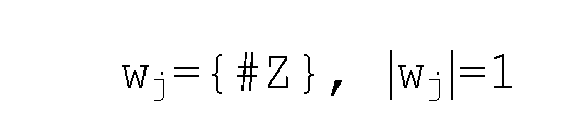

Accordingly, I'i, j=1/(3×1)=1/3 is established in the above-mentioned example.
The message influence of the message #i with respect to the message #i+2 in the example ofFigure 2 is expressed as Ii, j=1/3×1/3=1/9. -
Figure 14 is a diagram exemplifying a structure of message influence information which is created by the messageinfluence analysis part 34.
As illustrated inFigure 14 , message influence information contains an identifier of message information from which information is diffused (diffusion source message ID), an identifier of a member who has posted the diffusion source message (diffusion-source-message-posted-member ID), an identifier of message information to which the information is diffused (diffusion target message ID), an identifier of a member who has posted the diffusion target message (diffusion-target-message-posted-member ID), and influence information.
The message influence information is created for the information diffusion source message and the information diffusion target message each.
In the example ofFigure 2 , message influence information about the information diffusion from the message #i to the message #i+3 indicated by the arrow (2) has the identifier of the message #i as the diffusion source message ID, the identifier of the member #A as the diffusion-source-message-posted-member ID, the identifier of the message #i+3 as the diffusion target message ID, and the identifier of the member #C as the diffusion-target-message-posted-member ID. -
Figure 15 is a diagram illustrating a configuration of the memberrelation analysis part 36 illustrated inFigure 7 .
As illustrated inFigure 15 , the memberrelation analysis part 36 includes an inter-member influence degree calculation part 360, an inter-member influence degree information management part 362, an inter-member influence degree information DB 364, a member relation selection part 366, a member relation information management part 368, a member relation information DB 370, agroup construction part 372, a group relation information management part 374, and a group relation information DB 376.
In the memberrelation analysis part 36, the inter-member influence degree calculation part 360 performs a process illustrated inFigure 16 to calculate the degree of influence between members, and creates inter-member influence degree information, which is described later with reference toFigure 17 .
The inter-member influence degree calculation part 360 outputs the created inter-member influence degree information to the inter-member influence degree information management part 362. -
Figure 16 is a flow chart illustrating the process (S30) of the inter-member influence degree calculation part 360.
As illustrated inFigure 16 , in Step 300 (S300), the inter-member influence degree calculation part 360 determines whether or not all members #m (m represents a plurality of integers. Not all of "m"s may be the same number) have been analyzed, and ends the process when all members have been analyzed and otherwise proceeds to S302.
In Step 302 (S302), the inter-member influence degree calculation part 360 sets the member #m who has created the diffusion source message information and is an analysis target (diffusion source member) as an unanalyzed member. - In Step 304 (S304), the inter-member influence degree calculation part 360 determines whether or not all members #n (n represents a plurality of integers. Not all of "n"s may be the same number) have been analyzed, and returns to S300 when all members have been analyzed and otherwise proceeds to S306.
In Step 306 (S306), the inter-member influence degree calculation part 360 sets the member #n who has created the diffusion target message information and is an analysis target (diffusion target member) as an unanalyzed member.
In Step 308 (S308), the inter-member influence degree calculation part 360 extracts from the message influence analysis part every piece of message influence information that has the message posted by the member #m as the information diffusion source and the message posted by the member #n as the information diffusion target.
In Step 310 (S310), the inter-member influence degree calculation part 360 calculates the sum of influence of the extracted message influence information, and returns to S304.
The process in S310 is expressed in the form of mathematical expression as follows:
- In this expression, Pij represents the information influence degree of the member #i with respect to the member #j, Si represents the set of messages posted by the member #i, and Sj represents the set of messages posted by the member #j.
-
Figure 17 is a diagram exemplifying a structure of inter-member influence degree information which is created by the message influence degree calculation part 360.
As illustrated inFigure 17 , inter-member influence degree information contains an identifier of a member who is the source of information diffusion (diffusion-source-message-posted-member ID), an identifier of a member who is the target of information diffusion (diffusion-target-message-posted-member ID), and influence degree information.
The message influence information is created for the information diffusion source member and the information diffusion target member each. - The inter-member influence degree information management part 362 (
Figure 15 ) receives the inter-member influence degree information created by the message influence degree calculation part 360, and stores the information in the inter-member influence degree information DB 364.
The inter-member influence degree information management part 362 manages I/O of the information stored in the inter-member influence degree information DB 364. - The member relation selection part 366 acquires inter-member influence degree information from the inter-member influence degree information management part 362, and extracts inter-member influence degree information that has an influence degree equal to or larger than a predetermined value (for example, 0.5).
The member relation selection part 366 selects a pair of a diffusion source member and a diffusion target member of the extracted inter-member influence degree information, and outputs information that indicates the pair to the member relation information management part 368.
The member relation information management part 368 receives the information that indicates the member pair selected by the member relation selection part 366 (member relation information), and stores the information in the member relation information DB 370.
The member relation information management part 368 manages I/O of the information stored in the member relation information DB 370. -
Figure 18 is a diagram exemplifying a member relation.
In the example ofFigure 18 , information is diffused from a member who has a member ID #A (member #A) to a member who has a member ID #B (member #B).
Also, information is diffused from the member #A to a member who has a member ID #C (member #C), and information is diffused from the member #B to a member who has a member ID #D (member #D).
There is also information diffusion from the member #C to the member #D.
The member relation information management part 368 manages member relation information which indicates pairs of member IDs as those illustrated inFigure 18 . - The group construction part 372 (
Figure 15 ) extracts member relation information from the member relation information management part 368 and, based on the extracted member relation information, constructs a group throughout which information tends to be diffused.
Thegroup construction part 372 creates information about this group (group relation information) in association with the identifier of the group, and outputs the information to the group relation information management part 374. -
Figure 19 is a diagram illustrating a group relation constructed from the member relation exemplified inFigure 18 .
As illustrated inFigure 19 , a group denoted as agroup # 1 is constituted of members denoted by the member IDs #A, #B, #C, and #D, and information tends to be diffused from the member #A to the member #B and from the member #B to the member #D.
Information tends to be diffused also from the member #A to the member #C and from the member #C to the member #D. - The group relation information management part 374 (
Figure 15 ) receives group relation information from thegroup construction part 372, and stores the information in the group relation information DB 376.
The group relation information management part 374 manages I/O of the information stored in the group relation information DB 376.
When necessary, the group relation information management part 374 outputs group relation information to the group relationinformation display part 310 and the provided information sending part 316. -
Figure 20 is a diagram illustrating a configuration of theinfluencer analysis part 38 illustrated inFigure 7 .
As illustrated inFigure 20 , theinfluencer analysis part 38 includes a memberinfluence calculation part 380, a member influence information management part 382, a member influence information DB 384, an influencer selection/management part 386, and an influencer information DB 388.
In theinfluencer analysis part 38, the memberinfluence calculation part 380 performs a process illustrated inFigure 21 to calculate the influence of each member over other members, and creates member influence information, which is described later with reference toFigure 22 .
The memberinfluence calculation part 380 outputs the created member influence information to the member influence information management part 382. -
Figure 21 is a flow chart illustrating the process (S40) of the memberinfluence calculation part 380.
As illustrated inFigure 21 , in Step 400 (S400), the memberinfluence calculation part 380 determines whether or not all members #m have been analyzed, and ends the process when all members have been analyzed and otherwise proceeds to S402.
In Step 402 (S402), the memberinfluence calculation part 380 sets the diffusion source member #m who is an analysis target as an unanalyzed member. - In Step 404 (S404), the member
influence calculation part 380 extracts from the messageinfluence analysis part 34 every piece of message influence information that has a message posted by the member #m as the diffusion source.
In Step 406 (S406), the memberinfluence calculation part 380 calculates the sum of influence of all the extracted pieces of message influence information, and returns to S400.
The process in S406 is expressed in the form of mathematical expression as follows:
- Pi represents the influence of the member #i.
Ii is expressed by the following expression:
-
Figure 22 is a diagram exemplifying a structure of member influence information which is created by the memberinfluence calculation part 380.
As illustrated inFigure 22 , member influence information contains a member ID and influence information of the member.
The member influence information is created for each member. - The member influence information management part 382 (
Figure 20 ) receives the member influence information created by the memberinfluence calculation part 380, and stores the information in the member influence information DB 384.
The member influence information management part 382 manages I/O of the information stored in the member influence information DB 384. - When member influence information stored in the member influence information DB 384 indicates an influence equal to or larger than a predetermined value, the influencer selection/
management part 386 selects a member who is associated with this member influence information as an influencer.
The influencer selection/management part 386 stores the identifier of each selected influencer in the influencer information DB 388.
The influencer selection/management part 386 manages I/O of the information stored in the influencer information DB 388.
When necessary, the influencer selection/management part 386 outputs influencer information to the influencer display part 312 and the provided information sending part 316. - Influencer information may be associated with the group ID described above.
Specifically, influencer information or group relation information may be structured such that a member who has the greatest influence within a group is selected as an influencer (in the example ofFigure 19 , the member #A is selected as the influencer of the group #1). -
Figures 23 are diagrams exemplifying the message chain structure and analysis results in this embodiment.
Figure 23(A) is a diagram illustrating a first example of the message chain structure,Figure 23(B) is a diagram exemplifying a group relation in the first example, andFigure 23(C) is a diagram exemplifying an influence of each member in the first example.
As illustrated inFigure 23(A) , in the first example, there is no reply relation between messages and each message contains the keyword #X. - In this example, a group relation as the one illustrated in
Figure 23(B) is constructed through the processes in the message chainstructure analysis part 32, the messageinfluence analysis part 34, and the memberrelation analysis part 36.
The influence of each member is calculated as illustrated inFigure 23(C) through the process in theinfluencer analysis part 38.
Here, the member #A who has the greatest influence may be selected as an influencer.
In this embodiment, a group relation and the influence of each member are deduced properly by taking into consideration the fact that, while the messages do not have a reply relation with one another, the keyword #X is contained in all the messages. -
Figures 24 are diagrams exemplifying the message chain structure and analysis results in this embodiment.
Figure 24(A) is a diagram illustrating a second example of the message chain structure,Figure 24(B) is a diagram exemplifying a group relation in the second example, andFigure 24(C) is a diagram exemplifying an influence of each member in the second example.
As illustrated inFigure 24(A) , in the second example, each message is a reply to a message posted immediately before the message, and themessages # 1, #2, and #5 contain the keyword #X, and themessages # 3 and #4 contain the keyword #Y. - In the second example, a group relation as the one illustrated in
Figure 24(B) is constructed through the processes in the message chainstructure analysis part 32, the messageinfluence analysis part 34, and the memberrelation analysis part 36.
The influence of each member is calculated as illustrated inFigure 24(C) through the process in theinfluencer analysis part 38.
Here, the member #A who has the greatest influence may be selected as an influencer. - In the second example, the interval between the
message # 1 and themessage # 5 and the interval between themessage # 2 and themessage # 5 are wide because other messages are interposed.
On the other hand, this embodiment takes into consideration the fact that each message contains the same keyword, #X, to properly deduce the influence in information diffusion from themessage # 1 to themessage # 5 and the influence in information diffusion from themessage # 2 to themessage # 5.
Consequently, in this embodiment, the information influence degree of the member #A with respect to the member #E and the information influence degree of the member #B with respect to the member #E are deduced properly.
According to this embodiment, a group relation and the influence of each member are thus properly derived in the second example as well. -
Figures 25 are diagrams exemplifying the message chain structure and analysis results in this embodiment.
Figure 25(A) is a diagram illustrating a third example of the message chain structure,Figure 25(B) is a diagram exemplifying a group relation in the third example, andFigure 25(C) is a diagram exemplifying an influence of each member in the third example.
As illustrated inFigure 25(A) , in the third example, each message contains the keyword #X, themessage # 3 is a reply to themessage # 1, themessage # 4 is a reply to themessage # 2, and themessage # 5 is a reply to themessage # 4. - In the third example, a group relation as the one illustrated in
Figure 25(B) is constructed through the processes in the message chainstructure analysis part 32, the messageinfluence analysis part 34, and the memberrelation analysis part 36.
The influence of each member is calculated as illustrated inFigure 25(C) through the process in theinfluencer analysis part 38.
Here, the member #A who has the greatest influence may be selected as an influencer. - In the third example, two message chain structures are formed, which are a message chain structure constituted of the
messages # 1 and #3 and a message chain structure constituted of themessages # 2, #4, and #5.
On the other hand, this embodiment takes into consideration the fact that each message contains the same keyword, #X, to properly deduce for each message the message influence with respect to another message across different message chain structures.
Consequently, in this embodiment, the information influence degree of the member #A with respect to the members #B, #D, and #E, the information influence degree of the member #B with respect to the member #C, and the information influence degree of the member #C with respect to the members #D and #E are deduced properly.
According to this embodiment, a group relation and the influence of each member are thus properly derived in the third example as well. - An overall operation of the information
diffusion analysis system 1 is described below.
Figure 26 is a communication sequence diagram illustrating the overall operation (S50) of the informationdiffusion analysis system 1 illustrated inFigure 1 .
As illustrated inFigure 26 , in Steps 500-1 to 500-N (S500-1 to 500-N), the user clients 20-1 to 20-N send message information containing user IDs to theweb server 24.
In Step 502 (S502), the informationdiffusion analysis server 3 acquires the message information from theweb server 24. - In Step 504 (S504), the information
diffusion analysis server 3 calculates message influence.
In Step 506 (S506), the informationdiffusion analysis server 3 performs a member relation analysis to select a member relation and construct a group.
In Step 508 (S508), the informationdiffusion analysis server 3 performs an influencer analysis to select an influencer.
In Step 510 (S510), the informationdiffusion analysis server 3 provides certain information to the user client 20-1 of the influencer.
Wishing to have other members transmit the provided information as well, the influencer provides the information to theuser client 20 of another member, and the member to which the information is provided provides the information to theuser 20 of still another member. Information may thus be diffused. Industrial Applicability - The present invention is applicable to an information diffusion analysis system and the like.
-
- 1
- information diffusion analysis system
- 100
- network
- 20
- user client
- 120
- main body
- 122
- CPU
- 124
- memory
- 126
- I/O device
- 128
- communication device
- 130
- storage device
- 132
- storage medium
- 200
- user client program
- 202
- communication process part
- 204
- UI
- 210
- mail creation part
- 212
- mail sending part
- 214
- mail receiving part
- 216
- web page viewing process part
- 218
- message information creation part
- 24
- web server
- 240
- web server program
- 242
- communication process part
- 244
- user ID receiving part
- 248
- message information receiving part
- 250
- mail receiving part
- 252
- mail sending part
- 254
- URL receiving part
- 256
- web data sending part
- 260
- community space management part
- 270
- community space DB
- 3
- information diffusion analysis server
- 30
- information diffusion analysis program
- 300, 302
- communication process part
- 304
- admin IF
- 32
- message chain structure analysis part
- 320
- community ID receiving part
- 322
- message information acquisition part
- 324
- message information management part
- 326
- message information DB
- 328
- message information analysis part
- 330
- chain structure information management part
- 332
- chain structure information DB
- 34
- message influence analysis part
- 340
- message influence calculation part
- 342
- information-influence-within-chain-structure calculation part
- 344
- explicit relation-based information influence calculation part
- 346
- implicit relation-based information influence calculation part
- 350
- information-influence-outside-chain-structure calculation part
- 352
- influence information management part
- 356
- message influence information DB
- 36
- member relation analysis part
- 360
- inter-member influence degree calculation part
- 362
- inter-member influence degree information management part
- 364
- inter-member influence degree information DB
- 366
- member relation selection part
- 368
- member relation information management part
- 370
- member relation information DB
- 372
- group construction part
- 374
- group relation information management part
- 376
- group relation information DB
- 38
- influencer analysis part
- 380
- member influence calculation part
- 382
- member influence information management part
- 384
- member influence information DB
- 386
- influencer selection/management part
- 388
- influencer information DB
- 310
- group relation display part
- 312
- influencer display part
- 314
- provided information receiving part
- 316
- provided information sending part
Claims (11)
- An information diffusion analysis system, comprising:a plurality of user clients;an information providing device for storing a plurality of pieces of message information received from the plurality of user clients and providing the plurality of pieces of message information to a network; andan information diffusion analysis server,wherein the information diffusion analysis server comprises:
the plurality of user clients, the information providing device, and the information diffusion analysis server being interconnected via the network,information relation analyzing means for acquiring the plurality of pieces of message information from the information providing device and analyzing a relation among the plurality of pieces of message information;message influence calculating means for calculating, based on the relation among the plurality of pieces of message information, for each of the plurality of pieces of message information, an information influence with respect to another piece of the plurality of pieces of message information;inter-user influence degree calculating means for calculating, based on the calculated influence, an information influence degree among users of the plurality of user clients that have sent the plurality of pieces of message information;user relation selecting means for checking a plurality of the calculated information influence degrees among the users to select at least one user pair that has an information influence degree among the users larger than a predetermined value; andgroup constructing means for constructing a predetermined group based on the at least one selected user pair. - An information diffusion analysis system according to claim 1, wherein the information diffusion analysis server further comprises:user influence calculating means for calculating, based on the calculated influence, for each of the users of the plurality of user clients that have sent the plurality of pieces of message information, an influence over another one of the users; andmost influential user selecting means for selecting one of the users who has the greatest influence based on the calculated influence of the each of the users.
- An information diffusion analysis system according to claim 1 or 2, further comprising information sending means for sending predetermined information to the plurality of user clients based on at least one of information about the predetermined group constructed by the group constructing means and information about the one of the users selected by the most influential user selecting means.
- An information diffusion analysis system according to any one of claims 1 to 3,
wherein the information relation analyzing means comprises:original message ID extracting means for extracting from the each of the plurality of pieces of message information an identifier of a message as a reply destination of a message of the each of the plurality of pieces of message information;keyword information extracting means for extracting at least one piece of keyword information from the each of the plurality of pieces of message information; andreply relation structure information creating means for analyzing, based on the extracted identifier of the message as the reply destination, whether or not the each of the plurality of pieces of message information is in a reply relation with the another piece of the plurality of pieces of message information, and creating information about a reply relation structure where the plurality of pieces of message information that are in the reply relation are connected, andwherein the message influence calculating means comprises at least two of:explicit relation-based information influence calculating means for calculating an influence in diffusion of the at least one piece of keyword information from first message information among the plurality of pieces of message information to second message information that is in the same reply relation structure as the first message information, via message information that is interposed between the first message information and the second message information in the reply relation structure;implicit relation-based information influence calculating means for calculating an influence in diffusion of the at least one piece of keyword information from the first message information to the second message information, which occurs without passing through at least one piece of the message information between the first message information and the second message information in the reply relation structure; andinformation-influence-outside-reply-relation-structure calculating means for calculating an influence in diffusion of the at least one piece of keyword information from the first message information to third message information which is in the reply relation structure different from the reply relation structure of the first message information. - An information diffusion analysis system according to claim 4, wherein the third message information is created within a predetermined period of time since creation of the first message information.
- An information diffusion analysis system according to any one of claims 1 to 5, wherein at least two of the plurality of user clients, the information providing device, and the information diffusion analysis server physically reside in the same node.
- An information diffusion analysis server interconnected via a network with a plurality of user clients and an information providing device for storing a plurality of pieces of message information received from the plurality of user clients and providing the plurality of pieces of message information to the network, comprising:information relation analyzing means for acquiring the plurality of pieces of message information from the information providing device and analyzing a relation among the plurality of pieces of message information;message influence calculating means for calculating, based on the relation among the plurality of pieces of message information, for each of the plurality of pieces of message information, an information influence with respect to another piece of the plurality of pieces of message information;inter-user influence degree calculating means for calculating, based on the calculated influence, an information influence degree among users of the plurality of user clients that have sent the plurality of pieces of message information;user relation selecting means for checking a plurality of the calculated information influence degrees among the users to select at least one user pair that has an information influence degree among the users larger than a predetermined value; andgroup constructing means for constructing a predetermined group based on the at least one selected user pair.
- An information diffusion analysis server according to claim 7, further comprising:user influence calculating means for calculating, based on the calculated influence, for each of the users of the plurality of user clients that have sent the plurality of pieces of message information, an influence over another one of the users; andmost influential user selecting means for selecting one of the users who has the greatest influence based on the calculated influence of the each of the users.
- An information diffusion analysis method performed among a plurality of user clients, an information providing device for storing a plurality of pieces of message information received from the plurality of user clients and providing the plurality of pieces of message information to a network, and an information diffusion analysis server,
the plurality of user clients, the information providing device, and the information diffusion analysis server being interconnected via the network,
the information diffusion analysis method comprising:an information relation analyzing step of acquiring the plurality of pieces of message information from the information providing device and analyzing a relation among the plurality of pieces of message information;a message influence calculating step of calculating, based on the relation among the plurality of pieces of message information, for each of the plurality of pieces of message information, an information influence with respect to another piece of the plurality of pieces of message information;an inter-user influence degree calculating step of calculating, based on the calculated influence, an information influence degree among users of the plurality of user clients that have sent the plurality of pieces of message information;a user relation selecting step of checking a plurality of the calculated information influence degrees among the users to select at least one user pair that has an information influence degree among the users larger than a predetermined value; anda group constructing step of constructing a predetermined group based on the at least one selected user pair. - An information diffusion analysis method according to claim 8, further comprising:a user influence calculating step of calculating, based on the calculated influence, for each of the users of the plurality of user clients that have sent the plurality of pieces of message information, an influence over another one of the users; anda most influential user selecting step of selecting one of the users who has the greatest influence based on the calculated influence of the each of the users.
- An information diffusion analysis program executed among a plurality of user clients, an information providing device for storing a plurality of pieces of message information received from the plurality of user clients and providing the plurality of pieces of message information to a network, and an information diffusion analysis server,
the plurality of user clients, the information providing device, and the information diffusion analysis server being interconnected via the network,
the information diffusion analysis program causing a computer to execute:an information relation analyzing step of acquiring the plurality of pieces of message information from the information providing device and analyzing a relation among the plurality of pieces of message information;a message influence calculating step of calculating, based on the relation among the plurality of pieces of message information, for each of the plurality of pieces of message information, an information influence with respect to another piece of the plurality of pieces of message information;an inter-user influence degree calculating step of calculating, based on the calculated influence, an information influence degree among users of the plurality of user clients that have sent the plurality of pieces of message information;a user relation selecting step of checking a plurality of the calculated information influence degrees among the users to select at least one user pair that has an information influence degree among the users larger than a predetermined value; anda group constructing step of constructing a predetermined group based on the at least one selected user pair.
Applications Claiming Priority (1)
| Application Number | Priority Date | Filing Date | Title |
|---|---|---|---|
| PCT/JP2007/064315 WO2009013788A1 (en) | 2007-07-20 | 2007-07-20 | Information propagation analyzing system, information propagation analyzing apparatus, method of information propagation analysis and program therefor |
Publications (1)
| Publication Number | Publication Date |
|---|---|
| EP2172899A1 true EP2172899A1 (en) | 2010-04-07 |
Family
ID=40281052
Family Applications (1)
| Application Number | Title | Priority Date | Filing Date |
|---|---|---|---|
| EP07791053A Withdrawn EP2172899A1 (en) | 2007-07-20 | 2007-07-20 | Information propagation analyzing system, information propagation analyzing apparatus, method of information propagation analysis and program therefor |
Country Status (5)
| Country | Link |
|---|---|
| US (1) | US20100241713A1 (en) |
| EP (1) | EP2172899A1 (en) |
| JP (1) | JPWO2009013788A1 (en) |
| CN (1) | CN101802864A (en) |
| WO (1) | WO2009013788A1 (en) |
Cited By (2)
| Publication number | Priority date | Publication date | Assignee | Title |
|---|---|---|---|---|
| CN103248639A (en) * | 2012-02-06 | 2013-08-14 | 阿里巴巴集团控股有限公司 | Method and system used for determining information dissemination ability |
| US10157371B2 (en) | 2012-07-09 | 2018-12-18 | Facebook, Inc. | Recommending additional users for an event using a social networking system |
Families Citing this family (30)
| Publication number | Priority date | Publication date | Assignee | Title |
|---|---|---|---|---|
| US9419819B2 (en) * | 2007-12-20 | 2016-08-16 | At&T Intellectual Property I, L.P., Via Transfer From At&T Delaware Intellectual Property, Inc. | Methods and computer program products for creating preset instant message responses for instant messages received at an IPTV |
| JP4677486B2 (en) * | 2008-12-26 | 2011-04-27 | インターナショナル・ビジネス・マシーンズ・コーポレーション | Device, method and computer program for supporting creation of reply mail |
| CN101505311B (en) * | 2009-03-18 | 2012-06-13 | 腾讯科技(深圳)有限公司 | Information transmission method and system based on socialized network |
| EP2271036B1 (en) * | 2009-06-22 | 2013-01-09 | Semiocast | Method, system and architecture for delivering messages in a network to automatically increase a signal-to-noise ratio of user interests |
| JP5005741B2 (en) * | 2009-08-12 | 2012-08-22 | ヤフー株式会社 | Propagation situation evaluation device, propagation situation assessment method, and program |
| JP5489924B2 (en) * | 2010-08-30 | 2014-05-14 | 株式会社Nttドコモ | Apparatus and method for discovering influencers |
| JP5588292B2 (en) * | 2010-09-30 | 2014-09-10 | Kddi株式会社 | Influencer extraction apparatus, influencer extraction method and program |
| JP5525470B2 (en) * | 2011-03-24 | 2014-06-18 | Kddi株式会社 | Influence calculation device, influence calculation method, and program |
| US8682895B1 (en) * | 2011-03-31 | 2014-03-25 | Twitter, Inc. | Content resonance |
| US8312056B1 (en) | 2011-09-13 | 2012-11-13 | Xerox Corporation | Method and system for identifying a key influencer in social media utilizing topic modeling and social diffusion analysis |
| WO2013081513A1 (en) * | 2011-11-30 | 2013-06-06 | Telefonaktiebolaget L M Ericsson (Publ) | A method and an apparatus in a communication node for identifying receivers of a message |
| CN103200073B (en) * | 2012-01-04 | 2016-08-10 | 微梦创科网络科技(中国)有限公司 | A kind of information processing method and device |
| US9088620B2 (en) * | 2012-06-28 | 2015-07-21 | Fujitsu Limited | System and method of recommending actions based on social capital of users in a social network |
| CN103198103B (en) * | 2013-03-20 | 2016-06-29 | 微梦创科网络科技(中国)有限公司 | The microblogging method for pushing of a kind of density based term clustering and device |
| CN103179025B (en) * | 2013-03-20 | 2016-05-11 | 微梦创科网络科技(中国)有限公司 | A kind of microblogging method for pushing and device based on user's transmissibility |
| JP5996466B2 (en) * | 2013-03-22 | 2016-09-21 | 株式会社Nttドコモ | Advertisement distribution apparatus and advertisement distribution method |
| US20150134402A1 (en) * | 2013-11-11 | 2015-05-14 | Yahoo! Inc. | System and method for network-oblivious community detection |
| US9634978B2 (en) | 2014-01-14 | 2017-04-25 | University Of Washington Through Its Center For Commercialization | Systems and methods for improving efficiency of electronic transmission of messages |
| US9547433B1 (en) * | 2014-05-07 | 2017-01-17 | Google Inc. | Systems and methods for changing control functions during an input gesture |
| US9537811B2 (en) | 2014-10-02 | 2017-01-03 | Snap Inc. | Ephemeral gallery of ephemeral messages |
| US9396354B1 (en) | 2014-05-28 | 2016-07-19 | Snapchat, Inc. | Apparatus and method for automated privacy protection in distributed images |
| WO2016018111A1 (en) * | 2014-07-31 | 2016-02-04 | Samsung Electronics Co., Ltd. | Message service providing device and method of providing content via the same |
| CN104408659B (en) * | 2014-10-29 | 2017-12-19 | 国家计算机网络与信息安全管理中心 | Appraisal procedure and system based on social networking application information disclosure model |
| US9385983B1 (en) | 2014-12-19 | 2016-07-05 | Snapchat, Inc. | Gallery of messages from individuals with a shared interest |
| US10182029B2 (en) * | 2015-02-20 | 2019-01-15 | International Business Machines Corporation | Estimation of information diffusion route on computer mediated communication network |
| KR102662169B1 (en) | 2015-03-18 | 2024-05-03 | 스냅 인코포레이티드 | Geo-fence authorization provisioning |
| CN104866561B (en) * | 2015-05-19 | 2018-09-07 | 国家计算机网络与信息安全管理中心 | A method of excavating microblog topic trend promoter |
| CN106611339B (en) * | 2015-10-21 | 2020-12-29 | 创新先进技术有限公司 | Seed user screening method, product user influence evaluation method and device |
| CN107222632A (en) * | 2017-06-23 | 2017-09-29 | 北京金山安全软件有限公司 | Instant messaging method and device |
| US11238123B1 (en) * | 2020-11-20 | 2022-02-01 | Amplified Media Logic LLC | Influencer scoring model |
Family Cites Families (8)
| Publication number | Priority date | Publication date | Assignee | Title |
|---|---|---|---|---|
| JPH11265369A (en) | 1998-03-18 | 1999-09-28 | Nippon Telegr & Teleph Corp <Ntt> | Interaction display |
| JP2001273455A (en) | 2000-03-24 | 2001-10-05 | Toshitaka Katada | Method and apparatus for generating information transmission network |
| US7577834B1 (en) * | 2000-05-09 | 2009-08-18 | Sun Microsystems, Inc. | Message authentication using message gates in a distributed computing environment |
| KR100472202B1 (en) * | 2001-12-05 | 2005-03-08 | 한국전자통신연구원 | Web collaborative browsing system and method with using IRC protocol |
| JP4369104B2 (en) * | 2002-10-07 | 2009-11-18 | みずほ情報総研株式会社 | Community formation support system, its terminal, server and program |
| JP2004171042A (en) | 2002-11-15 | 2004-06-17 | Hitachi Ltd | Advertisement distribution channel analysis method, its implementation system, and its processing program |
| US7603472B2 (en) * | 2003-02-19 | 2009-10-13 | Google Inc. | Zero-minute virus and spam detection |
| JP4732831B2 (en) | 2005-08-16 | 2011-07-27 | 純一郎 森 | Information sharing setting method and information sharing setting program |
-
2007
- 2007-07-20 JP JP2009524316A patent/JPWO2009013788A1/en not_active Withdrawn
- 2007-07-20 CN CN200780100748A patent/CN101802864A/en active Pending
- 2007-07-20 US US12/669,904 patent/US20100241713A1/en not_active Abandoned
- 2007-07-20 EP EP07791053A patent/EP2172899A1/en not_active Withdrawn
- 2007-07-20 WO PCT/JP2007/064315 patent/WO2009013788A1/en not_active Ceased
Non-Patent Citations (1)
| Title |
|---|
| See references of WO2009013788A1 * |
Cited By (4)
| Publication number | Priority date | Publication date | Assignee | Title |
|---|---|---|---|---|
| CN103248639A (en) * | 2012-02-06 | 2013-08-14 | 阿里巴巴集团控股有限公司 | Method and system used for determining information dissemination ability |
| CN103248639B (en) * | 2012-02-06 | 2016-11-23 | 阿里巴巴集团控股有限公司 | A kind of method and system for determining information propagation capabilities |
| US10157371B2 (en) | 2012-07-09 | 2018-12-18 | Facebook, Inc. | Recommending additional users for an event using a social networking system |
| US10586215B2 (en) | 2012-07-09 | 2020-03-10 | Facebook, Inc. | Recommending additional users for an event using a social networking system |
Also Published As
| Publication number | Publication date |
|---|---|
| US20100241713A1 (en) | 2010-09-23 |
| WO2009013788A1 (en) | 2009-01-29 |
| CN101802864A (en) | 2010-08-11 |
| JPWO2009013788A1 (en) | 2010-09-24 |
Similar Documents
| Publication | Publication Date | Title |
|---|---|---|
| EP2172899A1 (en) | Information propagation analyzing system, information propagation analyzing apparatus, method of information propagation analysis and program therefor | |
| US9934286B2 (en) | Generating contact suggestions | |
| Tyler et al. | E-mail as spectroscopy: Automated discovery of community structure within organizations | |
| US9542503B2 (en) | Estimation of closeness of topics based on graph analytics | |
| US20140317126A1 (en) | Determining measures of influence of users of a social network | |
| US20090037414A1 (en) | Hosted suggestion board system for public customer feedback | |
| US8139495B2 (en) | Determining quality of communication | |
| US20130159096A1 (en) | Ranked user graph for social advertisement targeting | |
| JP4344922B2 (en) | Evaluation apparatus and method | |
| Rocha et al. | Respondent-driven sampling bias induced by community structure and response rates in social networks | |
| US8407311B1 (en) | System and method for creating relationships among users of an instant messaging service | |
| US20140365584A1 (en) | Personalized low latency communication | |
| US20040215502A1 (en) | Evaluation apparatus and evaluation method | |
| US7509295B2 (en) | Computer implemented method for analyzing a collaborative space | |
| Wang et al. | Dynamic trust evaluation model based on bidding and multi-attributes for social networks | |
| Asghari et al. | A reliable path between target users and clients in social networks using an inverted ant colony optimization algorithm | |
| Khadangi et al. | Empirical analysis of structural properties, macroscopic and microscopic evolution of various Facebook activity networks | |
| Kukla et al. | Soclake: social latent knowledge explorator | |
| KR20090002182A (en) | Survey Method | |
| Gentile et al. | Extracting semantic user networks from informal communication exchanges | |
| Ali et al. | Optimal question answering routing in dynamic online social networks | |
| He et al. | A social reputation management for web communities | |
| KR20090054081A (en) | Messenger service method | |
| Escobido et al. | Can personality type be predicted by social media network structures? | |
| Barley et al. | Networks and technology |
Legal Events
| Date | Code | Title | Description |
|---|---|---|---|
| PUAI | Public reference made under article 153(3) epc to a published international application that has entered the european phase |
Free format text: ORIGINAL CODE: 0009012 |
|
| 17P | Request for examination filed |
Effective date: 20100120 |
|
| AK | Designated contracting states |
Kind code of ref document: A1 Designated state(s): AT BE BG CH CY CZ DE DK EE ES FI FR GB GR HU IE IS IT LI LT LU LV MC MT NL PL PT RO SE SI SK TR |
|
| AX | Request for extension of the european patent |
Extension state: AL BA HR MK RS |
|
| DAX | Request for extension of the european patent (deleted) | ||
| STAA | Information on the status of an ep patent application or granted ep patent |
Free format text: STATUS: THE APPLICATION IS DEEMED TO BE WITHDRAWN |
|
| 18D | Application deemed to be withdrawn |
Effective date: 20110201 |