EP2170008A1 - Method and apparatus for improving interaction between scheduling request procedure and random access procedure - Google Patents
Method and apparatus for improving interaction between scheduling request procedure and random access procedure Download PDFInfo
- Publication number
- EP2170008A1 EP2170008A1 EP09012044A EP09012044A EP2170008A1 EP 2170008 A1 EP2170008 A1 EP 2170008A1 EP 09012044 A EP09012044 A EP 09012044A EP 09012044 A EP09012044 A EP 09012044A EP 2170008 A1 EP2170008 A1 EP 2170008A1
- Authority
- EP
- European Patent Office
- Prior art keywords
- scheduling request
- procedure
- random access
- access procedure
- pucch
- Prior art date
- Legal status (The legal status is an assumption and is not a legal conclusion. Google has not performed a legal analysis and makes no representation as to the accuracy of the status listed.)
- Granted
Links
Images




Classifications
-
- H—ELECTRICITY
- H04—ELECTRIC COMMUNICATION TECHNIQUE
- H04W—WIRELESS COMMUNICATION NETWORKS
- H04W74/00—Wireless channel access
- H04W74/08—Non-scheduled access, e.g. ALOHA
-
- H—ELECTRICITY
- H04—ELECTRIC COMMUNICATION TECHNIQUE
- H04L—TRANSMISSION OF DIGITAL INFORMATION, e.g. TELEGRAPHIC COMMUNICATION
- H04L1/00—Arrangements for detecting or preventing errors in the information received
- H04L1/08—Arrangements for detecting or preventing errors in the information received by repeating transmission, e.g. Verdan system
-
- H—ELECTRICITY
- H04—ELECTRIC COMMUNICATION TECHNIQUE
- H04L—TRANSMISSION OF DIGITAL INFORMATION, e.g. TELEGRAPHIC COMMUNICATION
- H04L1/00—Arrangements for detecting or preventing errors in the information received
- H04L1/12—Arrangements for detecting or preventing errors in the information received by using return channel
- H04L1/16—Arrangements for detecting or preventing errors in the information received by using return channel in which the return channel carries supervisory signals, e.g. repetition request signals
- H04L1/18—Automatic repetition systems, e.g. Van Duuren systems
- H04L1/1829—Arrangements specially adapted for the receiver end
- H04L1/1835—Buffer management
-
- H—ELECTRICITY
- H04—ELECTRIC COMMUNICATION TECHNIQUE
- H04L—TRANSMISSION OF DIGITAL INFORMATION, e.g. TELEGRAPHIC COMMUNICATION
- H04L1/00—Arrangements for detecting or preventing errors in the information received
- H04L1/12—Arrangements for detecting or preventing errors in the information received by using return channel
- H04L1/16—Arrangements for detecting or preventing errors in the information received by using return channel in which the return channel carries supervisory signals, e.g. repetition request signals
- H04L1/18—Automatic repetition systems, e.g. Van Duuren systems
- H04L1/1829—Arrangements specially adapted for the receiver end
- H04L1/1854—Scheduling and prioritising arrangements
-
- H—ELECTRICITY
- H04—ELECTRIC COMMUNICATION TECHNIQUE
- H04W—WIRELESS COMMUNICATION NETWORKS
- H04W48/00—Access restriction; Network selection; Access point selection
- H04W48/08—Access restriction or access information delivery, e.g. discovery data delivery
-
- H—ELECTRICITY
- H04—ELECTRIC COMMUNICATION TECHNIQUE
- H04W—WIRELESS COMMUNICATION NETWORKS
- H04W72/00—Local resource management
- H04W72/50—Allocation or scheduling criteria for wireless resources
- H04W72/54—Allocation or scheduling criteria for wireless resources based on quality criteria
-
- H—ELECTRICITY
- H04—ELECTRIC COMMUNICATION TECHNIQUE
- H04W—WIRELESS COMMUNICATION NETWORKS
- H04W74/00—Wireless channel access
- H04W74/08—Non-scheduled access, e.g. ALOHA
- H04W74/0833—Random access procedures, e.g. with 4-step access
-
- H—ELECTRICITY
- H04—ELECTRIC COMMUNICATION TECHNIQUE
- H04W—WIRELESS COMMUNICATION NETWORKS
- H04W88/00—Devices specially adapted for wireless communication networks, e.g. terminals, base stations or access point devices
- H04W88/02—Terminal devices
-
- H—ELECTRICITY
- H04—ELECTRIC COMMUNICATION TECHNIQUE
- H04W—WIRELESS COMMUNICATION NETWORKS
- H04W72/00—Local resource management
- H04W72/20—Control channels or signalling for resource management
- H04W72/21—Control channels or signalling for resource management in the uplink direction of a wireless link, i.e. towards the network
Definitions
- the present invention relates to a method and apparatus for improving interaction between a Scheduling Request procedure and a Random Access procedure, and more particularly, to a method and apparatus for improving interaction between a Scheduling Request procedure and a Random Access procedure in a user equipment (UE) of a wireless communication system, so as to avoid uplink transmission error or failure of the Random Access procedure when the Random Access procedure is triggered by the Scheduling Request procedure.
- UE user equipment
- LTE system Long Term Evolution wireless communication system
- MAC Medium Access Control
- RLC Radio Link Control
- the network such as an evolved Node B (eNB) performs radio resource allocation to provide user equipments (UEs) with resources for uplink or downlink data transfer.
- UEs user equipments
- resource allocations There are two kinds of resource allocations: dynamic resource allocation and pre-configured resource allocation.
- the network allocates resource to the UEs by Radio Resource Control (RRC) signaling, and allows the UEs periodically transmitting a certain amount of data, for example, voice data. That means, at periodic time intervals, the UEs can utilize the pre-configured radio resources for data transmission or reception, to achieve data exchange with the network.
- RRC Radio Resource Control
- the network dynamically allocates radio resources to the UEs depending on UE number of the cell area, traffic volume and quality of service (QoS) requirements of each UE, and the UE has to monitor a physical downlink control channel (PDCCH) to find possible allocation of dynamic resources for both downlink and uplink transmission.
- PDCCH physical downlink control channel
- the UE when the UE has new uplink data to transmit and there is no Uplink Shared Channel (UL-SCH) resource available, the UE shall trigger a Scheduling Request (SR) procedure to request the network to allocate uplink transmission resources.
- SR Scheduling Request
- the UE if the UE has configured Physical Uplink Control Channel (PUCCH) resources, the SR procedure is performed via PUCCH signaling. Otherwise, such as the UE has no configured PUCCH resources or the configured PUCCH resources are invalid, for example, the SR procedure is then performed via a Random Access Procedure.
- PUCCH Physical Uplink Control Channel
- D-SR Dedicated Scheduling Request
- RA-SR Random Access Scheduling Request
- the UE shall periodically transmit a D-SR message on PUCCH until an uplink transmission resource for a new transmission is received or the number of D-SR transmissions reaches to a pre-defined parameter DSR_TRANS_MAX.
- the pre-defined parameter DSR_TRANS_MAX is configured by RRC signaling.
- the UE already has pre-configured transmission resources, such as Semi-Persistent Scheduling (SPS) resources, when the number of D-SR transmissions reaches to the pre-defined parameter DSR_TRANS_MAX, since some problem may already occur on uplink transmission of the UE, continuing using the pre-configured resources to perform uplink transmission may cause transmission failure or interference to other UE's transmission.
- the pre-configured resources may collide with UL-SCH resources carried by Message 2 (Msg 2) of the Random Access procedure.
- Msg 3 of the RA procedure may misuse the pre-configured resource for transmission, and cause failure of the Random Access procedure which makes the UE unable to obtain the uplink transmission resources.
- UE user equipment
- a method for improving interaction between a Scheduling Request procedure and a Random Access procedure in a user equipment (UE) of a wireless communication system includes steps of triggering a Scheduling Request procedure; sending a Dedicated Scheduling Request (D-SR) message on a Physical Uplink Control Channel (PUCCH) repeatedly until an uplink transmission resource for a new transmission is received or the number of D-SR transmissions reaches to a specific value when the UE has a configured PUCCH resource; and deactivating all pre-configured transmission resources allocated to the UE before performing a Random Access procedure corresponding to the Scheduling Request procedure when the number of D-SR transmissions reaches to the specific value.
- D-SR Dedicated Scheduling Request
- PUCCH Physical Uplink Control Channel
- a communications device for improving interaction between a Scheduling Request procedure and a Random Access procedure in a user equipment (UE) of a wireless communication system.
- the communications device includes a processor for executing a program, and a memory, coupled to the processor, for storing the program.
- the program includes steps of triggering a Scheduling Request procedure; sending a Dedicated Scheduling Request (D-SR) message on a Physical Uplink Control Channel (PUCCH) repeatedly until an uplink transmission resource for a new transmission is received or the number of D-SR transmissions reaches to a specific value when the UE has a configured PUCCH resource; and deactivating all pre-configured transmission resources allocated to the UE before performing a Random Access procedure corresponding to the Scheduling Request procedure when the number of D-SR transmissions reaches to the specific value.
- D-SR Dedicated Scheduling Request
- PUCCH Physical Uplink Control Channel
- a method for improving interaction between a Scheduling Request procedure and a Random Access procedure in a user equipment (UE) of a wireless communication system includes steps of triggering a Scheduling Request procedure; sending a Dedicated Scheduling Request (D-SR) message on a Physical Uplink Control Channel (PUCCH) repeatedly until an uplink transmission resource for a new transmission is received or the number of D-SR transmissions reaches to a specific value when the UE has a configured PUCCH resource; and flushing all Hybrid Automatic Repeat request (HARQ) buffers of the UE before performing a Random Access procedure corresponding to the Scheduling Request procedure when the number of D-SR transmissions reaches to the specific value.
- D-SR Dedicated Scheduling Request
- PUCCH Physical Uplink Control Channel
- a communications device for improving interaction between a Scheduling Request procedure and a Random Access procedure in a user equipment (UE) of a wireless communication system.
- the communications device includes a processor for executing a program, and a memory, coupled to the processor, for storing the program.
- the program includes steps of triggering a Scheduling Request procedure; sending a Dedicated Scheduling Request (D-SR) message on a Physical Uplink Control Channel (PUCCH) repeatedly until an uplink transmission resource for a new transmission is received or the number of D-SR transmissions reaches to a specific value when the UE has a configured PUCCH resource; and flushing all Hybrid Automatic Repeat request (HARQ) buffers of the UE before performing a Random Access procedure corresponding to the Scheduling Request procedure when the number of D-SR transmissions reaches to the specific value.
- D-SR Dedicated Scheduling Request
- PUCCH Physical Uplink Control Channel
- a method for improving interaction between a Scheduling Request procedure and a Random Access procedure in a user equipment (UE) of a wireless communication system includes steps of triggering a Random Access procedure; and deactivating all pre-configured transmission resources allocated to the UE before performing the Random Access procedure.
- a communications device for improving interaction between a Scheduling Request procedure and a Random Access procedure in a user equipment (UE) of a wireless communication system.
- the communications device includes a processor for executing a program, and a memory, coupled to the processor, for storing the program.
- the program includes steps of triggering a Random Access procedure; and deactivating all pre-configured transmission resources allocated to the UE before performing the Random Access procedure.
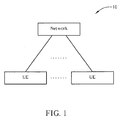
- FIG.1 illustrates a schematic diagram of a wireless communications system 10.
- the wireless communications system 10 is preferred to be a Long Term Evolution (LTE) system, and is briefly composed of a network and a plurality of user equipments (UEs).
- LTE Long Term Evolution
- UEs user equipments
- the network and the UEs are simply utilized for illustrating the structure of the wireless communications system 10.
- the network may comprise a plurality of base stations (Node Bs), radio network controllers and so on according to actual demands, and the UEs can be devices such as mobile phones, computer systems, etc.
- FIG.2 is a functional block diagram of a communications device 100 in a wireless communications system.
- the communications device 100 can be utilized for realizing the UEs in FIG.1 , and the wireless communications system is preferably the LTE system.
- FIG.2 only shows an input device 102, an output device 104, a control circuit 106, a central processing unit (CPU) 108 (or processor), a memory 110, a program 112, and a transceiver 114 of the communications device 100.
- the control circuit 106 executes the program 112 in the memory 110 through the CPU 108, thereby controlling an operation of the communications device 100.
- the communications device 100 can receive signals input by a user through the input device 102, such as a keyboard, and can output images and sounds through the output device 104, such as a monitor or speakers.
- the transceiver 114 is used to receive and transmit wireless signals, delivering received signals to the control circuit 106, and outputting signals generated by the control circuit 106 wirelessly. From a perspective of a communications protocol framework, the transceiver 114 can be seen as a portion of Layer 1, and the control circuit 106 can be utilized to realize functions of Layer 2 and Layer 3.
- FIG.3 is a schematic diagram of the program 112 shown in FIG.2 .
- the program 112 includes an application layer 200, a Layer 3 202, and a Layer 2 206, and is coupled to a Layer 1 218.
- the Layer 3 202 is used for performing resource control.
- the Layer 2 includes a Radio Link Control (RLC) layer and a Medium Access Control (MAC) layer, and is used for performing link control.
- the Layer 1 218 is used for performing physical connection.
- RLC Radio Link Control
- MAC Medium Access Control
- the MAC layer shall trigger a Scheduling Request (SR) procedure to request the network to allocate uplink transmission resources.
- SR Scheduling Request
- the SR procedure is performed via PUCCH signaling; otherwise, such as the UE has no configured PUCCH resources or the configured PUCCH resources are invalid, for example, the SR procedure is then performed via a Random Access (RA) procedure.
- PUCCH Physical Uplink Control Channel
- the embodiment of the present invention provides an SR and RA procedure interaction program 220 in the program 112 for avoiding uplink transmission error or failure of the Random Access procedure.
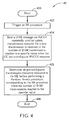
- FIG.4 illustrates a schematic diagram of a process 40 according to an embodiment of the present invention.
- the process 40 is utilized for improving interaction between an SR procedure and a RA procedure in a UE of a wireless communication system, and can be compiled into the SR and RA procedure interaction program 220.
- the process 40 includes the following steps:
- the UE shall periodically transmit the D-SR message on PUCCH until the uplink transmission resource for new transmission is received or the number of D-SR transmissions reaches to the specific value, such as to a pre-defined parameter DSR_TRANS_MAX configured by a Radio Resource Control (RRC) layer.
- RRC Radio Resource Control
- the embodiment of the present invention deactivates all pre-configured transmission resources allocated to the UE, such as Semi-Persistent Scheduling (SPS) resources, before performing the RA procedure corresponding to the SR procedure, to prevent the UE from continuing using the pre-configured resources to perform uplink transmission, such that transmission failure can be avoided.
- SPS Semi-Persistent Scheduling
- the embodiment of the present invention can further prevent Message 3 (Msg3) of the RA procedure from misusing the pre-configured resources, to improve the RA procedure failure problem.
- Msg3 Message 3
- the embodiment of the present invention further deactivates all pre-configured resources allocated to the UE to avoid uplink transmission error or failure of the RA procedure.
- the deactivated pre-configured resources can be resumed for use after completion of the RA procedure.
- Such variation also belongs to the scope of the present invention.
- FIG.5 illustrates a schematic diagram of a process 50 according to an embodiment of the present invention.
- the process 50 is utilized for improving interaction between an SR procedure and a RA procedure in a UE of a wireless communication system, and can be compiled into the SR and RA procedure interaction program 220.
- the process 50 includes the following steps:
- the embodiment of the present invention flushes all HARQ buffers of the UE to avoid any uplink transmission of the UE, such as non-adaptive retransmission of data in the HARQ buffers or acknowledgement (ACK)/non-acknowledgement (NACK) feedback of received downlink data, such that uplink transmission failure can be prevented.
- the process 40 and 50 can be combined together in another embodiment, and are not limited herein.
- FIG.6 illustrates a schematic diagram of a process 60 according to an embodiment of the present invention.
- the process 60 is utilized for improving interaction between an SR procedure and a RA procedure in a UE of a wireless communication system, and can be compiled into the SR and RA procedure interaction program 220.
- the process 60 includes the following steps:
- the UE deactivates all pre-configured resources allocated to the UE before performing the RA procedure, to avoid uplink transmission error or failure of the RA procedure.
- the embodiment of the present invention provides the method for improving interaction between an SR procedure and a RA procedure in a UE of a wireless communication system, to avoid uplink transmission error or failure of the RA procedure when the RA procedure is triggered by the SR procedure.
Landscapes
- Engineering & Computer Science (AREA)
- Computer Networks & Wireless Communication (AREA)
- Signal Processing (AREA)
- Quality & Reliability (AREA)
- Computer Security & Cryptography (AREA)
- Mobile Radio Communication Systems (AREA)
Abstract
Description
- This application claims the benefit of
U.S. Provisional Application No. 61/101,153, filed on September 30, 2008 - The present invention relates to a method and apparatus for improving interaction between a Scheduling Request procedure and a Random Access procedure, and more particularly, to a method and apparatus for improving interaction between a Scheduling Request procedure and a Random Access procedure in a user equipment (UE) of a wireless communication system, so as to avoid uplink transmission error or failure of the Random Access procedure when the Random Access procedure is triggered by the Scheduling Request procedure.
- Long Term Evolution wireless communication system (LTE system), an advanced high-speed wireless communication system established upon the 3G mobile telecommunication system, supports only packet-switched transmission, and tends to implement both Medium Access Control (MAC) layer and Radio Link Control (RLC) layer in one single communication site, such as in Node B (NB) alone rather than in NB and RNC (Radio Network Controller) respectively, so that the system structure becomes simple.
- In LTE system, the network, such as an evolved Node B (eNB), performs radio resource allocation to provide user equipments (UEs) with resources for uplink or downlink data transfer. There are two kinds of resource allocations: dynamic resource allocation and pre-configured resource allocation. For the pre-configured resource allocation, the network allocates resource to the UEs by Radio Resource Control (RRC) signaling, and allows the UEs periodically transmitting a certain amount of data, for example, voice data. That means, at periodic time intervals, the UEs can utilize the pre-configured radio resources for data transmission or reception, to achieve data exchange with the network. On the other hand, for the dynamic resource allocation, the network dynamically allocates radio resources to the UEs depending on UE number of the cell area, traffic volume and quality of service (QoS) requirements of each UE, and the UE has to monitor a physical downlink control channel (PDCCH) to find possible allocation of dynamic resources for both downlink and uplink transmission.
- Besides, for the dynamic resource allocation, when the UE has new uplink data to transmit and there is no Uplink Shared Channel (UL-SCH) resource available, the UE shall trigger a Scheduling Request (SR) procedure to request the network to allocate uplink transmission resources. In such a situation, if the UE has configured Physical Uplink Control Channel (PUCCH) resources, the SR procedure is performed via PUCCH signaling. Otherwise, such as the UE has no configured PUCCH resources or the configured PUCCH resources are invalid, for example, the SR procedure is then performed via a Random Access Procedure. Since the PUCCH resources are dedicated transmission resources, the SR message transmitted on PUCCH is referred to as a Dedicated Scheduling Request (D-SR) message, while the SR message transmitted via the Random Access procedure is referred to as an Random Access Scheduling Request (RA-SR) message.
- According to current specifications, if the UE has a configured PUCCH resource after the SR procedure is triggered, the UE shall periodically transmit a D-SR message on PUCCH until an uplink transmission resource for a new transmission is received or the number of D-SR transmissions reaches to a pre-defined parameter DSR_TRANS_MAX. When the number of D-SR transmissions reaches to the pre-defined parameter DSR_TRANS_MAX, it indicates uplink transmission of the UE may have some problem, such as the PUCCH resources become invalid or the UE loses synchronization on uplink timing, and thus the D-SR messages sent by the UE cannot be successfully received by the network. In this case, the UE shall stop the D-SR transmission, release all configured PUCCH resources, and trigger a Random Access procedure to transmit the SR message instead. Note that the pre-defined parameter DSR_TRANS_MAX is configured by RRC signaling.
- However, if the UE already has pre-configured transmission resources, such as Semi-Persistent Scheduling (SPS) resources, when the number of D-SR transmissions reaches to the pre-defined parameter DSR_TRANS_MAX, since some problem may already occur on uplink transmission of the UE, continuing using the pre-configured resources to perform uplink transmission may cause transmission failure or interference to other UE's transmission. Moreover, when the UE switches to use the Random Access procedure to transmit the SR message, the pre-configured resources may collide with UL-SCH resources carried by Message 2 (Msg 2) of the Random Access procedure. As a result, Message 3 (Msg 3) of the RA procedure may misuse the pre-configured resource for transmission, and cause failure of the Random Access procedure which makes the UE unable to obtain the uplink transmission resources.
- It is therefore an objective of the present invention to provide a method and apparatus for improving interaction between a Scheduling Request procedure and a Random Access procedure in a user equipment (UE) of a wireless communication system.
- According to the present invention, a method for improving interaction between a Scheduling Request procedure and a Random Access procedure in a user equipment (UE) of a wireless communication system is disclosed. The method includes steps of triggering a Scheduling Request procedure; sending a Dedicated Scheduling Request (D-SR) message on a Physical Uplink Control Channel (PUCCH) repeatedly until an uplink transmission resource for a new transmission is received or the number of D-SR transmissions reaches to a specific value when the UE has a configured PUCCH resource; and deactivating all pre-configured transmission resources allocated to the UE before performing a Random Access procedure corresponding to the Scheduling Request procedure when the number of D-SR transmissions reaches to the specific value.
- According to the present invention, a communications device for improving interaction between a Scheduling Request procedure and a Random Access procedure in a user equipment (UE) of a wireless communication system is disclosed. The communications device includes a processor for executing a program, and a memory, coupled to the processor, for storing the program. The program includes steps of triggering a Scheduling Request procedure; sending a Dedicated Scheduling Request (D-SR) message on a Physical Uplink Control Channel (PUCCH) repeatedly until an uplink transmission resource for a new transmission is received or the number of D-SR transmissions reaches to a specific value when the UE has a configured PUCCH resource; and deactivating all pre-configured transmission resources allocated to the UE before performing a Random Access procedure corresponding to the Scheduling Request procedure when the number of D-SR transmissions reaches to the specific value.
- According to the present invention, a method for improving interaction between a Scheduling Request procedure and a Random Access procedure in a user equipment (UE) of a wireless communication system is disclosed. The method includes steps of triggering a Scheduling Request procedure; sending a Dedicated Scheduling Request (D-SR) message on a Physical Uplink Control Channel (PUCCH) repeatedly until an uplink transmission resource for a new transmission is received or the number of D-SR transmissions reaches to a specific value when the UE has a configured PUCCH resource; and flushing all Hybrid Automatic Repeat request (HARQ) buffers of the UE before performing a Random Access procedure corresponding to the Scheduling Request procedure when the number of D-SR transmissions reaches to the specific value.
- According to the present invention, a communications device for improving interaction between a Scheduling Request procedure and a Random Access procedure in a user equipment (UE) of a wireless communication system is disclosed. The communications device includes a processor for executing a program, and a memory, coupled to the processor, for storing the program. The program includes steps of triggering a Scheduling Request procedure; sending a Dedicated Scheduling Request (D-SR) message on a Physical Uplink Control Channel (PUCCH) repeatedly until an uplink transmission resource for a new transmission is received or the number of D-SR transmissions reaches to a specific value when the UE has a configured PUCCH resource; and flushing all Hybrid Automatic Repeat request (HARQ) buffers of the UE before performing a Random Access procedure corresponding to the Scheduling Request procedure when the number of D-SR transmissions reaches to the specific value.
- According to the present invention, a method for improving interaction between a Scheduling Request procedure and a Random Access procedure in a user equipment (UE) of a wireless communication system is disclosed. The method includes steps of triggering a Random Access procedure; and deactivating all pre-configured transmission resources allocated to the UE before performing the Random Access procedure.
- According to the present invention, a communications device for improving interaction between a Scheduling Request procedure and a Random Access procedure in a user equipment (UE) of a wireless communication system is disclosed. The communications device includes a processor for executing a program, and a memory, coupled to the processor, for storing the program. The program includes steps of triggering a Random Access procedure; and deactivating all pre-configured transmission resources allocated to the UE before performing the Random Access procedure.
- These and other objectives of the present invention will no doubt become obvious to those of ordinary skill in the art after reading the following detailed description of the preferred embodiment that is illustrated in the various figures and drawings.
-
-
FIG.1 is a schematic diagram of a wireless communications system. -
FIG.2 is a function block diagram of a wireless communications device. -
FIG.3 is a diagram of program ofFIG.2 . -
FIG.4 is a flowchart of a process according to an embodiment of the present invention. -
FIG.5 is also a flowchart of a process according to an embodiment of the present invention. -
FIG.6 is also a flowchart of a process according to an embodiment of the present invention. - Please refer to
FIG.1 , which illustrates a schematic diagram of awireless communications system 10. Thewireless communications system 10 is preferred to be a Long Term Evolution (LTE) system, and is briefly composed of a network and a plurality of user equipments (UEs). InFIG.1 , the network and the UEs are simply utilized for illustrating the structure of thewireless communications system 10. Practically, the network may comprise a plurality of base stations (Node Bs), radio network controllers and so on according to actual demands, and the UEs can be devices such as mobile phones, computer systems, etc. - Please refer to
FIG.2 , which is a functional block diagram of acommunications device 100 in a wireless communications system. Thecommunications device 100 can be utilized for realizing the UEs inFIG.1 , and the wireless communications system is preferably the LTE system. For the sake of brevity,FIG.2 only shows aninput device 102, anoutput device 104, acontrol circuit 106, a central processing unit (CPU) 108 (or processor), amemory 110, aprogram 112, and atransceiver 114 of thecommunications device 100. In thecommunications device 100, thecontrol circuit 106 executes theprogram 112 in thememory 110 through theCPU 108, thereby controlling an operation of thecommunications device 100. Thecommunications device 100 can receive signals input by a user through theinput device 102, such as a keyboard, and can output images and sounds through theoutput device 104, such as a monitor or speakers. Thetransceiver 114 is used to receive and transmit wireless signals, delivering received signals to thecontrol circuit 106, and outputting signals generated by thecontrol circuit 106 wirelessly. From a perspective of a communications protocol framework, thetransceiver 114 can be seen as a portion ofLayer 1, and thecontrol circuit 106 can be utilized to realize functions ofLayer 2 andLayer 3. - Please continue to refer to
FIG.3. FIG.3 is a schematic diagram of theprogram 112 shown inFIG.2 . Theprogram 112 includes anapplication layer 200, aLayer 3 202, and aLayer 2 206, and is coupled to aLayer 1 218. TheLayer 3 202 is used for performing resource control. TheLayer 2 includes a Radio Link Control (RLC) layer and a Medium Access Control (MAC) layer, and is used for performing link control. TheLayer 1 218 is used for performing physical connection. - In LTE system, when the UE has new uplink data to transmit and there is no Uplink Shared Channel (UL-SCH) resource available, the MAC layer shall trigger a Scheduling Request (SR) procedure to request the network to allocate uplink transmission resources. After the SR procedure is triggered, if the UE has configured Physical Uplink Control Channel (PUCCH) resources, the SR procedure is performed via PUCCH signaling; otherwise, such as the UE has no configured PUCCH resources or the configured PUCCH resources are invalid, for example, the SR procedure is then performed via a Random Access (RA) procedure.
- Under such a situation, the embodiment of the present invention provides an SR and RA
procedure interaction program 220 in theprogram 112 for avoiding uplink transmission error or failure of the Random Access procedure. Please refer toFIG.4 , which illustrates a schematic diagram of aprocess 40 according to an embodiment of the present invention. Theprocess 40 is utilized for improving interaction between an SR procedure and a RA procedure in a UE of a wireless communication system, and can be compiled into the SR and RAprocedure interaction program 220. Theprocess 40 includes the following steps: - Step 400:
- Start.
- Step 402:
- Trigger an SR procedure.
- Step 404:
- Send a Dedicated Scheduling Request (D-SR) message on PUCCH repeatedly until an uplink transmission resource for a new transmission is received or the number of D-SR transmissions reaches to a specific value when the UE has a configured PUCCH resource.
- Step 406:
- Deactivate all pre-configured transmission resources allocated to the UE before performing a Random Access procedure corresponding to the SR procedure when the number of D-SR transmissions reaches to the specific value.
- Step 408:
- End.
- According to the
process 40, if the UE has the configured PUCCH resource after the SR procedure is triggered, the UE shall periodically transmit the D-SR message on PUCCH until the uplink transmission resource for new transmission is received or the number of D-SR transmissions reaches to the specific value, such as to a pre-defined parameter DSR_TRANS_MAX configured by a Radio Resource Control (RRC) layer. When the number of D-SR transmissions reaches to the specific value, the UE according to the embedment of the present invention deactivates all pre-configured transmission resources allocated to the UE before performing the RA procedure corresponding to the SR procedure. - When the number of D-SR transmissions reaches to the pre-defined parameter DSR_TRANS_MAX, it indicates uplink transmission of the UE may have some problem, such as the PUCCH resources become invalid or the UE is not synchronized on uplink timing, and thus the D-SR messages sent by the UE cannot be successfully received by the network. In this case, the embodiment of the present invention deactivates all pre-configured transmission resources allocated to the UE, such as Semi-Persistent Scheduling (SPS) resources, before performing the RA procedure corresponding to the SR procedure, to prevent the UE from continuing using the pre-configured resources to perform uplink transmission, such that transmission failure can be avoided. Besides, the embodiment of the present invention can further prevent Message 3 (Msg3) of the RA procedure from misusing the pre-configured resources, to improve the RA procedure failure problem.
- Therefore, when the number of D-SR transmissions reaches to the pre-defined parameter DSR_TRANS_MAX and the UE switches to use the RA procedure to transmits a Random Access Scheduling Request (RA-SR) message, except for releasing all configured PUCCH resources, the embodiment of the present invention further deactivates all pre-configured resources allocated to the UE to avoid uplink transmission error or failure of the RA procedure.
- Please not that, based on practical demands, the deactivated pre-configured resources can be resumed for use after completion of the RA procedure. Such variation also belongs to the scope of the present invention.
- On the other hand, please refer to
FIG.5 , which illustrates a schematic diagram of aprocess 50 according to an embodiment of the present invention. Theprocess 50 is utilized for improving interaction between an SR procedure and a RA procedure in a UE of a wireless communication system, and can be compiled into the SR and RAprocedure interaction program 220. Theprocess 50 includes the following steps: - Step 500:
- Start.
- Step 502:
- Trigger an SR procedure.
- Step 504:
- Send a D-SR message on PUCCH repeatedly until an uplink transmission resource for a new transmission is received or the number of D-SR transmissions reaches to a specific value when the UE has a configured PUCCH resource.
- Step 506:
- Flush all Hybrid Automatic Repeat request (HARQ) buffers of the UE before performing a Random Access procedure corresponding to the SR procedure when the number of D-SR transmissions reaches to the specific value.
- Step 508:
- End.
- Compared to the
process 40, when the number of D-SR transmissions reaches to the specific value, it indicates uplink transmission of the UE may have some problem, such as the PUCCH resources become invalid or the UE loses synchronization on uplink timing, and thus the D-SR messages sent by the UE cannot be successfully received by the network. In this case, the embodiment of the present invention flushes all HARQ buffers of the UE to avoid any uplink transmission of the UE, such as non-adaptive retransmission of data in the HARQ buffers or acknowledgement (ACK)/non-acknowledgement (NACK) feedback of received downlink data, such that uplink transmission failure can be prevented. Certainly, theprocess - Please note that the above embodiments are merely exemplary illustrations of the present invention, and that any operations which release or deactivate the pre-configured resources before performing the RA procedure to avoid resource collision with the UL-SCH resources carried by Message 2 (Msg2) of the RA procedure all belong to the scope of the present invention.
- For example, please refer to
FIG.6 , which illustrates a schematic diagram of aprocess 60 according to an embodiment of the present invention. Theprocess 60 is utilized for improving interaction between an SR procedure and a RA procedure in a UE of a wireless communication system, and can be compiled into the SR and RAprocedure interaction program 220. Theprocess 60 includes the following steps: - Step 600:
- Start.
- Step 602:
- Trigger an RA procedure.
- Step 604:
- Deactivate all pre-configured transmission resources allocated to the UE before performing the RA procedure.
- Step 606:
- End.
- According to the
process 60, after the RA procedure is triggered, such as triggered by an SR procedure when the UE has no configured PUCCH resources, the UE according to the embodiment of the present invention deactivates all pre-configured resources allocated to the UE before performing the RA procedure, to avoid uplink transmission error or failure of the RA procedure. - In summary, the embodiment of the present invention provides the method for improving interaction between an SR procedure and a RA procedure in a UE of a wireless communication system, to avoid uplink transmission error or failure of the RA procedure when the RA procedure is triggered by the SR procedure.
- Those skilled in the art will readily observe that numerous modifications and alterations of the device and method may be made while retaining the teachings of the invention. Accordingly, the above disclosure should be construed as limited only by the metes and bounds of the appended claims.
Claims (16)
- A method for improving interaction between a Scheduling Request procedure and a Random Access procedure in a user equipment (UE) of a wireless communication system, the method comprising:triggering a Scheduling Request procedure (402);sending a Dedicated Scheduling Request (D-SR) message on a Physical Uplink Control Channel (PUCCH) repeatedly until an uplink transmission resource for a new transmission is received or the number of D-SR transmissions reaches to a specific value when the UE has a configured PUCCH resource (404); andcharacterized by deactivating all pre-configured transmission resources allocated to the UE before performing a Random Access procedure corresponding to the Scheduling Request procedure when the number of D-SR transmissions reaches to the specific value(406).
- The method of claim 1, characterized in that the uplink transmission resource is an Uplink Shared Channel (UL-SCH) resource.
- The method of claim 1 further characterized by comprising:releasing all configured PUCCH resources before performing the Random Access procedure corresponding to the Scheduling Request procedure.
- The method of claim 1, characterized in that the specific value is a pre-defined parameter DSR_TRANS_MAX configured by a Radio Resource Control (RRC) layer.
- The method of claim 1, characterized in that the pre-configured transmission resources comprise Semi-Persistent Scheduling (SPS) resources.
- A communication device for improving interaction between a Scheduling Request procedure and a Random Access procedure in a user equipment (UE) of a wireless communication system, the communication device comprising:a processor (108) for executing a program (112); anda memory (110) coupled to the processor (108) for storing the program (112); wherein the program (112) comprises:characterized by deactivating all pre-configured transmission resources allocated to the UE before performing a Random Access procedure corresponding to the Scheduling Request procedure when the number of D-SR transmissions reaches to the specific value(406).triggering a Scheduling Request procedure (402);sending a Dedicated Scheduling Request (D-SR) message on a Physical Uplink Control Channel (PUCCH) repeatedly until an uplink transmission resource for a new transmission is received or the number of D-SR transmissions reaches to a specific value when the UE has a configured PUCCH resource (404); and
- The communication device of claim 6, characterized in that the uplink transmission resource is an Uplink Shared Channel (UL-SCH) resource.
- The communication device of claim 6, characterized in that the program (112) further comprises:releasing all configured PUCCH resources before performing the Random Access procedure corresponding to the Scheduling Request procedure.
- The communication device of claim 6, characterized in that the specific value is a pre-defined parameter DSR_TRANS_MAX configured by a Radio Resource Control (RRC) layer.
- The communication device of claim 6, characterized in that the pre-configured transmission resources comprise Semi-Persistent Scheduling (SPS) resources.
- A method for improving interaction between a Scheduling Request procedure and a Random Access procedure in a user equipment (UE) of a wireless communication system, the method comprising:triggering a Scheduling Request procedure (502);sending a Dedicated Scheduling Request (D-SR) message on a Physical Uplink Control Channel (PUCCH) repeatedly until an uplink transmission resource for a new transmission is received or the number of D-SR transmissions reaches to a specific value when the UE has a configured PUCCH resource (504); andcharacterized by flushing all Hybrid Automatic Repeat request (HARQ) buffers of the UE before performing a Random Access procedure corresponding to the Scheduling Request procedure when the number of D-SR transmissions reaches to the specific value (506).
- A communication device for improving interaction between a Scheduling Request procedure and a Random Access procedure in a user equipment (UE) of a wireless communication system, the communication device comprising:a processor (108) for executing a program (112); anda memory (110) coupled to the processor (108) for storing the program (112); wherein the program (112) comprises:characterized by flushing all Hybrid Automatic Repeat request (HARQ) buffers of the UE before performing a Random Access procedure corresponding to the Scheduling Request procedure when the number of D-SR transmissions reaches to the specific value (506).triggering a Scheduling Request procedure (502);sending a Dedicated Scheduling Request (D-SR) message on a Physical Uplink Control Channel (PUCCH) repeatedly until an uplink transmission resource for a new transmission is received or the number of D-SR transmissions reaches to a specific value when the UE has a configured PUCCH resource (504); and
- A method for improving interaction between a Scheduling Request procedure and a Random Access procedure in a user equipment (UE) of a wireless communication system, the method comprising:triggering a Random Access procedure (602); andcharacterized by deactivating all pre-configured transmission resources allocated to the UE before performing the Random Access procedure (604).
- The method of claim 13, characterized in that the Random Access procedure is triggered by a Scheduling Request procedure when the UE has no configured Physical Uplink Control Channel (PUCCH) resources.
- A communication device for improving interaction between a Scheduling Request procedure and a Random Access procedure in a user equipment (UE) of a wireless communication system, the communication device comprising:a processor (108) for executing a program (112); anda memory (110) coupled to the processor (108) for storing the program (112);characterized in that the program (112) comprises:triggering a Random Access procedure (602); andcharacterized by deactivating all pre-configured transmission resources allocated to the UE before performing the Random Access procedure (604).
- The communication device of claim 15, characterized in that the Random Access procedure is triggered by a Scheduling Request procedure when the UE has no configured Physical Uplink Control Channel (PUCCH) resources.
Applications Claiming Priority (1)
| Application Number | Priority Date | Filing Date | Title |
|---|---|---|---|
| US10115308P | 2008-09-30 | 2008-09-30 |
Publications (2)
| Publication Number | Publication Date |
|---|---|
| EP2170008A1 true EP2170008A1 (en) | 2010-03-31 |
| EP2170008B1 EP2170008B1 (en) | 2017-03-29 |
Family
ID=41478682
Family Applications (1)
| Application Number | Title | Priority Date | Filing Date |
|---|---|---|---|
| EP09012044.5A Active EP2170008B1 (en) | 2008-09-30 | 2009-09-22 | Method and apparatus for improving interaction between scheduling request procedure and random access procedure |
Country Status (6)
| Country | Link |
|---|---|
| US (1) | US8804756B2 (en) |
| EP (1) | EP2170008B1 (en) |
| JP (1) | JP5171765B2 (en) |
| KR (1) | KR101085179B1 (en) |
| CN (1) | CN101715215B (en) |
| TW (1) | TWI414196B (en) |
Cited By (5)
| Publication number | Priority date | Publication date | Assignee | Title |
|---|---|---|---|---|
| CN101980575A (en) * | 2010-10-14 | 2011-02-23 | 华为技术有限公司 | Method and terminal for processing random access |
| GB2479820A (en) * | 2010-04-19 | 2011-10-26 | Motorola Solutions Inc | Automatic switching of base stations when a terminal failure of a base station serving a subscriber occurs |
| WO2013045745A1 (en) * | 2011-09-26 | 2013-04-04 | Nokia Corporation | Preconfigured short scheduling request cycle |
| WO2015130574A1 (en) * | 2014-02-26 | 2015-09-03 | Qualcomm Incorporated | High speed inter-radio access technology handover |
| US9462580B2 (en) | 2011-08-11 | 2016-10-04 | Interdigital Patent Holdings, Inc. | Channel selection for uplink access |
Families Citing this family (27)
| Publication number | Priority date | Publication date | Assignee | Title |
|---|---|---|---|---|
| JP5171765B2 (en) | 2008-09-30 | 2013-03-27 | 創新音▲速▼股▲ふん▼有限公司 | Method and apparatus for improving interaction between scheduling request procedure and random access procedure |
| US8923271B2 (en) * | 2010-01-13 | 2014-12-30 | Telefonaktiebolaget L M Ericsson (Publ) | Methods and arrangements in a wireless communication system |
| EP4539565A3 (en) * | 2010-03-12 | 2025-06-18 | Malikie Innovations Limited | Timing advance enhancements for cellular communications |
| US9363059B2 (en) * | 2010-04-02 | 2016-06-07 | Acer Incorporated | Method of handling component carrier activation and deactivation and communication device thereof |
| CN102215595A (en) | 2010-04-07 | 2011-10-12 | 北京三星通信技术研究有限公司 | Method for transmitting ascending scheduling requirement |
| KR101881891B1 (en) * | 2010-08-10 | 2018-08-24 | 삼성전자 주식회사 | Method and apparatus for reporting power headroom information in mobile communication for carrier aggregation |
| US9344977B2 (en) | 2010-08-10 | 2016-05-17 | Samsung Electronics Co., Ltd. | Method and apparatus for reporting power headroom information in mobile communication system supporting carrier aggregation |
| US9526077B2 (en) | 2010-08-10 | 2016-12-20 | Samsung Electronics Co., Ltd. | Method and apparatus for reporting power headroom information in mobile communication system supporting carrier aggregation |
| KR101832175B1 (en) * | 2010-10-12 | 2018-02-27 | 삼성전자주식회사 | Method and apparatus for determining maximum transmission power in mobile communication system for carrier aggregation |
| US10728859B2 (en) | 2010-10-12 | 2020-07-28 | Samsung Electronics Co., Ltd. | Method and apparatus for determining maximum transmission power per carrier in mobile communication system supporting carrier aggregation |
| KR101763751B1 (en) | 2011-01-11 | 2017-08-02 | 삼성전자 주식회사 | Method and appratus of activating/deactivating secondary carriers in mobile communication system using carrier aggregation |
| US8830908B2 (en) * | 2011-02-18 | 2014-09-09 | Qualcomm Incorporated | Apparatus and method for facilitating fallback access schemes |
| CN102595556B (en) * | 2012-02-29 | 2015-01-14 | 电信科学技术研究院 | Method and device for transmission control on session management request message |
| US9526091B2 (en) * | 2012-03-16 | 2016-12-20 | Intel Corporation | Method and apparatus for coordination of self-optimization functions in a wireless network |
| WO2014198059A1 (en) * | 2013-06-14 | 2014-12-18 | 华为技术有限公司 | Communication method, device and system |
| WO2015050392A1 (en) * | 2013-10-03 | 2015-04-09 | Lg Electronics Inc. | Method and apparatus for limiting resources for device-to-device operation in wireless communication system |
| EP3562077B1 (en) | 2014-01-31 | 2021-07-07 | Panasonic Intellectual Property Corporation of America | Terminal and transmission method |
| EP3376814A4 (en) * | 2015-11-12 | 2018-10-31 | Fujitsu Limited | Terminal device, base station device, wireless communication system, and wireless communication method |
| US10764917B2 (en) * | 2016-06-02 | 2020-09-01 | Lg Electronics Inc. | Method and apparatus for transmitting scheduling request in wireless communication system |
| US11540311B2 (en) * | 2017-01-04 | 2022-12-27 | Lg Electronics Inc. | Method and apparatus for transmitting grant-free based uplink data in wireless communication system |
| CN107066417A (en) * | 2017-02-28 | 2017-08-18 | 郑州云海信息技术有限公司 | A kind of method and apparatus of link parameter on-line tuning |
| WO2019024022A1 (en) * | 2017-08-02 | 2019-02-07 | Oppo广东移动通信有限公司 | Uplink transmission method, and terminal device |
| KR20190086664A (en) * | 2018-01-12 | 2019-07-23 | 엘지전자 주식회사 | A method for performing physical uplink control channel transmission in a wireless communication system and a terminal using the method |
| CN112470546B (en) | 2018-09-28 | 2023-08-29 | Lg 电子株式会社 | Method and apparatus for determining whether to perform transmission on random access or configured grant in wireless communication system |
| BR112021015927A2 (en) * | 2019-02-15 | 2021-11-03 | Ericsson Telefon Ab L M | Methods performed by a wireless device and a base station, wireless device and base station |
| CN114698109B (en) * | 2020-12-31 | 2025-07-29 | 大唐移动通信设备有限公司 | Uplink scheduling method, device and storage medium |
| EP4408096A4 (en) * | 2021-09-26 | 2024-11-20 | Beijing Xiaomi Mobile Software Co., Ltd. | DIRECT ACCESS METHOD, DIRECT ACCESS DEVICE AND STORAGE MEDIUM |
Family Cites Families (10)
| Publication number | Priority date | Publication date | Assignee | Title |
|---|---|---|---|---|
| CN1905754B (en) * | 2005-07-19 | 2010-09-08 | 三星电子株式会社 | System and method for scheduling uplink in a communication system |
| CN101132599B (en) * | 2006-08-20 | 2010-06-16 | 中兴通讯股份有限公司 | Code Channel Resource Allocation Method for High Speed Uplink Packet Access in Time Division Code Division Multiple Access System |
| CN101578802A (en) * | 2007-02-09 | 2009-11-11 | 诺基亚公司 | Method and apparatus for acknowledgement signaling |
| KR101387537B1 (en) * | 2007-09-20 | 2014-04-21 | 엘지전자 주식회사 | A method for handling correctly received but header compression failed packets |
| KR101603332B1 (en) | 2008-01-28 | 2016-03-14 | 아마존 테크놀로지스, 인크. | Method for transmitting scheduling request effectively in wireless communication system |
| US8483146B2 (en) * | 2008-02-01 | 2013-07-09 | Lg Electronics Inc. | Method for performing efficient BSR procedure using SPS resource |
| KR101468742B1 (en) | 2008-05-06 | 2014-12-04 | 엘지전자 주식회사 | A method for transmitting data in a wireless communication system |
| US8265640B2 (en) * | 2008-05-07 | 2012-09-11 | Qualcomm Incorporated | BSR prohibit timer |
| US20100040028A1 (en) * | 2008-08-13 | 2010-02-18 | Qualcomm Incorporated | Method and apparatus for mitigation of procedures in a wireless communication system |
| JP5171765B2 (en) | 2008-09-30 | 2013-03-27 | 創新音▲速▼股▲ふん▼有限公司 | Method and apparatus for improving interaction between scheduling request procedure and random access procedure |
-
2009
- 2009-09-07 JP JP2009206300A patent/JP5171765B2/en active Active
- 2009-09-09 US US12/556,553 patent/US8804756B2/en active Active
- 2009-09-22 EP EP09012044.5A patent/EP2170008B1/en active Active
- 2009-09-22 KR KR1020090089568A patent/KR101085179B1/en active Active
- 2009-09-30 TW TW098133139A patent/TWI414196B/en active
- 2009-09-30 CN CN200910204035.6A patent/CN101715215B/en active Active
Non-Patent Citations (6)
| Title |
|---|
| 3GPP DRAFT; R2-083436 LIMIT ENDLESS SR TRANSMISSION_R1, 3RD GENERATION PARTNERSHIP PROJECT (3GPP), MOBILE COMPETENCE CENTRE ; 650, ROUTE DES LUCIOLES ; F-06921 SOPHIA-ANTIPOLIS CEDEX ; FRANCE, vol. RAN WG2, no. Warsaw, Poland; 20080624, 24 June 2008 (2008-06-24), XP050140825 * |
| ASUSTEK: "Handling of UL transmission on D-SR failure", 3GPP DRAFT; R2-092294 HANDLING OF UL TRANSMISSION ON D-SR FAILURE, 3RD GENERATION PARTNERSHIP PROJECT (3GPP), MOBILE COMPETENCE CENTRE ; 650, ROUTE DES LUCIOLES ; F-06921 SOPHIA-ANTIPOLIS CEDEX ; FRANCE, no. Seoul, Korea; 20090317, 17 March 2009 (2009-03-17), XP050340061 * |
| ERICSSON ET AL: "D-SR failure handling", 3GPP DRAFT; R2-085388 (HANDLING OF D-SR REPETITIONS), 3RD GENERATION PARTNERSHIP PROJECT (3GPP), MOBILE COMPETENCE CENTRE ; 650, ROUTE DES LUCIOLES ; F-06921 SOPHIA-ANTIPOLIS CEDEX ; FRANCE, no. Prague, Czech Republic; 20080923, 23 September 2008 (2008-09-23), XP050320232 * |
| ERICSSON ET AL: "D-SR failure handling", 3GPP DRAFT; R2-085389 (CR HANDLING OF D-SR REPETITIONS), 3RD GENERATION PARTNERSHIP PROJECT (3GPP), MOBILE COMPETENCE CENTRE ; 650, ROUTE DES LUCIOLES ; F-06921 SOPHIA-ANTIPOLIS CEDEX ; FRANCE, no. Prague, Czech Republic; 20080923, 23 September 2008 (2008-09-23), XP050320233 * |
| MAC RAPPORTEURS (QUALCOMM EUROPE ET AL: "E-UTRA MAC protocol specification update", 3GPP DRAFT; R2-081389 CR0001 TO 36321-800, 3RD GENERATION PARTNERSHIP PROJECT (3GPP), MOBILE COMPETENCE CENTRE ; 650, ROUTE DES LUCIOLES ; F-06921 SOPHIA-ANTIPOLIS CEDEX ; FRANCE, vol. RAN WG2, no. Sorrento, Italy; 20080223, 23 February 2008 (2008-02-23), XP050139110 * |
| NOKIA CORPORATION ET AL: "Missing details of semi-persistent scheduling for UL", 3GPP DRAFT; R2-085070, 3RD GENERATION PARTNERSHIP PROJECT (3GPP), MOBILE COMPETENCE CENTRE ; 650, ROUTE DES LUCIOLES ; F-06921 SOPHIA-ANTIPOLIS CEDEX ; FRANCE, no. Prague, Czech Republic; 20080922, 22 September 2008 (2008-09-22), XP050320014 * |
Cited By (10)
| Publication number | Priority date | Publication date | Assignee | Title |
|---|---|---|---|---|
| GB2479820A (en) * | 2010-04-19 | 2011-10-26 | Motorola Solutions Inc | Automatic switching of base stations when a terminal failure of a base station serving a subscriber occurs |
| GB2479820B (en) * | 2010-04-19 | 2012-09-12 | Motorola Solutions Inc | Mobility influenced by radio uplink failure |
| CN101980575A (en) * | 2010-10-14 | 2011-02-23 | 华为技术有限公司 | Method and terminal for processing random access |
| CN101980575B (en) * | 2010-10-14 | 2013-04-24 | 华为技术有限公司 | Method and terminal for processing random access |
| US8750225B2 (en) | 2010-10-14 | 2014-06-10 | Huawei Technologies Co., Ltd. | Processing method and terminal for random access |
| US9462580B2 (en) | 2011-08-11 | 2016-10-04 | Interdigital Patent Holdings, Inc. | Channel selection for uplink access |
| TWI583157B (en) * | 2011-08-11 | 2017-05-11 | 內數位專利控股公司 | Method and device for transmitting uplink information |
| WO2013045745A1 (en) * | 2011-09-26 | 2013-04-04 | Nokia Corporation | Preconfigured short scheduling request cycle |
| US8750224B2 (en) | 2011-09-26 | 2014-06-10 | Nokia Corporation | Preconfigured short scheduling request cycle |
| WO2015130574A1 (en) * | 2014-02-26 | 2015-09-03 | Qualcomm Incorporated | High speed inter-radio access technology handover |
Also Published As
| Publication number | Publication date |
|---|---|
| TWI414196B (en) | 2013-11-01 |
| CN101715215A (en) | 2010-05-26 |
| US20100080184A1 (en) | 2010-04-01 |
| JP2010088114A (en) | 2010-04-15 |
| JP5171765B2 (en) | 2013-03-27 |
| KR20100036953A (en) | 2010-04-08 |
| KR101085179B1 (en) | 2011-11-18 |
| TW201014424A (en) | 2010-04-01 |
| CN101715215B (en) | 2017-04-05 |
| US8804756B2 (en) | 2014-08-12 |
| EP2170008B1 (en) | 2017-03-29 |
Similar Documents
| Publication | Publication Date | Title |
|---|---|---|
| EP2170008B1 (en) | Method and apparatus for improving interaction between scheduling request procedure and random access procedure | |
| EP2169871B1 (en) | Method and apparatus of handling a timer for triggering buffer status report | |
| EP2131624A1 (en) | Method and apparatus for handling semi-persistent transmission resource | |
| US8428066B2 (en) | Method and apparatus for reporting carrier status | |
| US8199730B2 (en) | Method and apparatus for handling uplink grant | |
| US8321740B2 (en) | Method and apparatus of handling TTI bundling | |
| EP2166809B1 (en) | Method and related device of scheduling request behavior in a wireless communication system | |
| EP2282597B1 (en) | Method and device for scheduling request | |
| EP2068485B1 (en) | Method for improving discontinuous reception for a wireless communication system and related communication device | |
| US20110003555A1 (en) | Method and Apparatus for PDCCH Monitoring | |
| US9979514B2 (en) | Method and apparatus for handling HARQ process of semi-persistent scheduling | |
| US8559962B2 (en) | Method and apparatus for improving reconfiguration procedure for scheduling request | |
| US20100098010A1 (en) | Method and Apparatus for Handling UL-SCH Transmission | |
| US20100329204A1 (en) | Method and Apparatus for Handling Scheduling Information Report in Wireless Communication System | |
| US20170135101A1 (en) | Method and Apparatus for Determining Data Transmission | |
| KR20170054218A (en) | Method and apparatus for fast access in communication system | |
| WO2022029711A1 (en) | COLLISION AVOIDANCE AND/OR HANDLING OF INVALID SYMBOLS WHEN UTILIZING UPLINK CHANNEL REPETITION TOWARDS MULTIPLE TRPs |
Legal Events
| Date | Code | Title | Description |
|---|---|---|---|
| PUAI | Public reference made under article 153(3) epc to a published international application that has entered the european phase |
Free format text: ORIGINAL CODE: 0009012 |
|
| 17P | Request for examination filed |
Effective date: 20090922 |
|
| AK | Designated contracting states |
Kind code of ref document: A1 Designated state(s): AT BE BG CH CY CZ DE DK EE ES FI FR GB GR HR HU IE IS IT LI LT LU LV MC MK MT NL NO PL PT RO SE SI SK SM TR |
|
| AX | Request for extension of the european patent |
Extension state: AL BA RS |
|
| RAP1 | Party data changed (applicant data changed or rights of an application transferred) |
Owner name: INNOVATIVE SONIC LIMITED |
|
| 17Q | First examination report despatched |
Effective date: 20141029 |
|
| GRAP | Despatch of communication of intention to grant a patent |
Free format text: ORIGINAL CODE: EPIDOSNIGR1 |
|
| INTG | Intention to grant announced |
Effective date: 20161108 |
|
| GRAS | Grant fee paid |
Free format text: ORIGINAL CODE: EPIDOSNIGR3 |
|
| GRAA | (expected) grant |
Free format text: ORIGINAL CODE: 0009210 |
|
| AK | Designated contracting states |
Kind code of ref document: B1 Designated state(s): AT BE BG CH CY CZ DE DK EE ES FI FR GB GR HR HU IE IS IT LI LT LU LV MC MK MT NL NO PL PT RO SE SI SK SM TR |
|
| REG | Reference to a national code |
Ref country code: GB Ref legal event code: FG4D |
|
| REG | Reference to a national code |
Ref country code: CH Ref legal event code: EP |
|
| REG | Reference to a national code |
Ref country code: AT Ref legal event code: REF Ref document number: 880831 Country of ref document: AT Kind code of ref document: T Effective date: 20170415 |
|
| REG | Reference to a national code |
Ref country code: IE Ref legal event code: FG4D |
|
| REG | Reference to a national code |
Ref country code: DE Ref legal event code: R096 Ref document number: 602009045037 Country of ref document: DE |
|
| PG25 | Lapsed in a contracting state [announced via postgrant information from national office to epo] |
Ref country code: HR Free format text: LAPSE BECAUSE OF FAILURE TO SUBMIT A TRANSLATION OF THE DESCRIPTION OR TO PAY THE FEE WITHIN THE PRESCRIBED TIME-LIMIT Effective date: 20170329 Ref country code: GR Free format text: LAPSE BECAUSE OF FAILURE TO SUBMIT A TRANSLATION OF THE DESCRIPTION OR TO PAY THE FEE WITHIN THE PRESCRIBED TIME-LIMIT Effective date: 20170630 Ref country code: LT Free format text: LAPSE BECAUSE OF FAILURE TO SUBMIT A TRANSLATION OF THE DESCRIPTION OR TO PAY THE FEE WITHIN THE PRESCRIBED TIME-LIMIT Effective date: 20170329 Ref country code: NO Free format text: LAPSE BECAUSE OF FAILURE TO SUBMIT A TRANSLATION OF THE DESCRIPTION OR TO PAY THE FEE WITHIN THE PRESCRIBED TIME-LIMIT Effective date: 20170629 Ref country code: FI Free format text: LAPSE BECAUSE OF FAILURE TO SUBMIT A TRANSLATION OF THE DESCRIPTION OR TO PAY THE FEE WITHIN THE PRESCRIBED TIME-LIMIT Effective date: 20170329 |
|
| REG | Reference to a national code |
Ref country code: NL Ref legal event code: MP Effective date: 20170329 |
|
| REG | Reference to a national code |
Ref country code: AT Ref legal event code: MK05 Ref document number: 880831 Country of ref document: AT Kind code of ref document: T Effective date: 20170329 |
|
| PG25 | Lapsed in a contracting state [announced via postgrant information from national office to epo] |
Ref country code: SE Free format text: LAPSE BECAUSE OF FAILURE TO SUBMIT A TRANSLATION OF THE DESCRIPTION OR TO PAY THE FEE WITHIN THE PRESCRIBED TIME-LIMIT Effective date: 20170329 Ref country code: BG Free format text: LAPSE BECAUSE OF FAILURE TO SUBMIT A TRANSLATION OF THE DESCRIPTION OR TO PAY THE FEE WITHIN THE PRESCRIBED TIME-LIMIT Effective date: 20170629 Ref country code: LV Free format text: LAPSE BECAUSE OF FAILURE TO SUBMIT A TRANSLATION OF THE DESCRIPTION OR TO PAY THE FEE WITHIN THE PRESCRIBED TIME-LIMIT Effective date: 20170329 |
|
| PG25 | Lapsed in a contracting state [announced via postgrant information from national office to epo] |
Ref country code: NL Free format text: LAPSE BECAUSE OF FAILURE TO SUBMIT A TRANSLATION OF THE DESCRIPTION OR TO PAY THE FEE WITHIN THE PRESCRIBED TIME-LIMIT Effective date: 20170329 |
|
| REG | Reference to a national code |
Ref country code: FR Ref legal event code: PLFP Year of fee payment: 9 |
|
| PG25 | Lapsed in a contracting state [announced via postgrant information from national office to epo] |
Ref country code: IT Free format text: LAPSE BECAUSE OF FAILURE TO SUBMIT A TRANSLATION OF THE DESCRIPTION OR TO PAY THE FEE WITHIN THE PRESCRIBED TIME-LIMIT Effective date: 20170329 Ref country code: RO Free format text: LAPSE BECAUSE OF FAILURE TO SUBMIT A TRANSLATION OF THE DESCRIPTION OR TO PAY THE FEE WITHIN THE PRESCRIBED TIME-LIMIT Effective date: 20170329 Ref country code: ES Free format text: LAPSE BECAUSE OF FAILURE TO SUBMIT A TRANSLATION OF THE DESCRIPTION OR TO PAY THE FEE WITHIN THE PRESCRIBED TIME-LIMIT Effective date: 20170329 Ref country code: SK Free format text: LAPSE BECAUSE OF FAILURE TO SUBMIT A TRANSLATION OF THE DESCRIPTION OR TO PAY THE FEE WITHIN THE PRESCRIBED TIME-LIMIT Effective date: 20170329 Ref country code: AT Free format text: LAPSE BECAUSE OF FAILURE TO SUBMIT A TRANSLATION OF THE DESCRIPTION OR TO PAY THE FEE WITHIN THE PRESCRIBED TIME-LIMIT Effective date: 20170329 Ref country code: EE Free format text: LAPSE BECAUSE OF FAILURE TO SUBMIT A TRANSLATION OF THE DESCRIPTION OR TO PAY THE FEE WITHIN THE PRESCRIBED TIME-LIMIT Effective date: 20170329 Ref country code: CZ Free format text: LAPSE BECAUSE OF FAILURE TO SUBMIT A TRANSLATION OF THE DESCRIPTION OR TO PAY THE FEE WITHIN THE PRESCRIBED TIME-LIMIT Effective date: 20170329 |
|
| PG25 | Lapsed in a contracting state [announced via postgrant information from national office to epo] |
Ref country code: IS Free format text: LAPSE BECAUSE OF FAILURE TO SUBMIT A TRANSLATION OF THE DESCRIPTION OR TO PAY THE FEE WITHIN THE PRESCRIBED TIME-LIMIT Effective date: 20170729 Ref country code: PT Free format text: LAPSE BECAUSE OF FAILURE TO SUBMIT A TRANSLATION OF THE DESCRIPTION OR TO PAY THE FEE WITHIN THE PRESCRIBED TIME-LIMIT Effective date: 20170731 Ref country code: SM Free format text: LAPSE BECAUSE OF FAILURE TO SUBMIT A TRANSLATION OF THE DESCRIPTION OR TO PAY THE FEE WITHIN THE PRESCRIBED TIME-LIMIT Effective date: 20170329 Ref country code: PL Free format text: LAPSE BECAUSE OF FAILURE TO SUBMIT A TRANSLATION OF THE DESCRIPTION OR TO PAY THE FEE WITHIN THE PRESCRIBED TIME-LIMIT Effective date: 20170329 |
|
| REG | Reference to a national code |
Ref country code: DE Ref legal event code: R097 Ref document number: 602009045037 Country of ref document: DE |
|
| PG25 | Lapsed in a contracting state [announced via postgrant information from national office to epo] |
Ref country code: DK Free format text: LAPSE BECAUSE OF FAILURE TO SUBMIT A TRANSLATION OF THE DESCRIPTION OR TO PAY THE FEE WITHIN THE PRESCRIBED TIME-LIMIT Effective date: 20170329 |
|
| PLBE | No opposition filed within time limit |
Free format text: ORIGINAL CODE: 0009261 |
|
| STAA | Information on the status of an ep patent application or granted ep patent |
Free format text: STATUS: NO OPPOSITION FILED WITHIN TIME LIMIT |
|
| 26N | No opposition filed |
Effective date: 20180103 |
|
| REG | Reference to a national code |
Ref country code: CH Ref legal event code: PL |
|
| PG25 | Lapsed in a contracting state [announced via postgrant information from national office to epo] |
Ref country code: MC Free format text: LAPSE BECAUSE OF FAILURE TO SUBMIT A TRANSLATION OF THE DESCRIPTION OR TO PAY THE FEE WITHIN THE PRESCRIBED TIME-LIMIT Effective date: 20170329 Ref country code: SI Free format text: LAPSE BECAUSE OF FAILURE TO SUBMIT A TRANSLATION OF THE DESCRIPTION OR TO PAY THE FEE WITHIN THE PRESCRIBED TIME-LIMIT Effective date: 20170329 |
|
| REG | Reference to a national code |
Ref country code: IE Ref legal event code: MM4A |
|
| REG | Reference to a national code |
Ref country code: BE Ref legal event code: MM Effective date: 20170930 |
|
| PG25 | Lapsed in a contracting state [announced via postgrant information from national office to epo] |
Ref country code: LU Free format text: LAPSE BECAUSE OF NON-PAYMENT OF DUE FEES Effective date: 20170922 |
|
| PG25 | Lapsed in a contracting state [announced via postgrant information from national office to epo] |
Ref country code: LI Free format text: LAPSE BECAUSE OF NON-PAYMENT OF DUE FEES Effective date: 20170930 Ref country code: CH Free format text: LAPSE BECAUSE OF NON-PAYMENT OF DUE FEES Effective date: 20170930 Ref country code: IE Free format text: LAPSE BECAUSE OF NON-PAYMENT OF DUE FEES Effective date: 20170922 |
|
| PG25 | Lapsed in a contracting state [announced via postgrant information from national office to epo] |
Ref country code: BE Free format text: LAPSE BECAUSE OF NON-PAYMENT OF DUE FEES Effective date: 20170930 |
|
| PG25 | Lapsed in a contracting state [announced via postgrant information from national office to epo] |
Ref country code: MT Free format text: LAPSE BECAUSE OF NON-PAYMENT OF DUE FEES Effective date: 20170922 |
|
| REG | Reference to a national code |
Ref country code: FR Ref legal event code: PLFP Year of fee payment: 10 |
|
| PG25 | Lapsed in a contracting state [announced via postgrant information from national office to epo] |
Ref country code: HU Free format text: LAPSE BECAUSE OF FAILURE TO SUBMIT A TRANSLATION OF THE DESCRIPTION OR TO PAY THE FEE WITHIN THE PRESCRIBED TIME-LIMIT; INVALID AB INITIO Effective date: 20090922 |
|
| PG25 | Lapsed in a contracting state [announced via postgrant information from national office to epo] |
Ref country code: CY Free format text: LAPSE BECAUSE OF NON-PAYMENT OF DUE FEES Effective date: 20170329 |
|
| PG25 | Lapsed in a contracting state [announced via postgrant information from national office to epo] |
Ref country code: MK Free format text: LAPSE BECAUSE OF FAILURE TO SUBMIT A TRANSLATION OF THE DESCRIPTION OR TO PAY THE FEE WITHIN THE PRESCRIBED TIME-LIMIT Effective date: 20170329 |
|
| PG25 | Lapsed in a contracting state [announced via postgrant information from national office to epo] |
Ref country code: TR Free format text: LAPSE BECAUSE OF FAILURE TO SUBMIT A TRANSLATION OF THE DESCRIPTION OR TO PAY THE FEE WITHIN THE PRESCRIBED TIME-LIMIT Effective date: 20170329 |
|
| P01 | Opt-out of the competence of the unified patent court (upc) registered |
Effective date: 20230508 |
|
| PGFP | Annual fee paid to national office [announced via postgrant information from national office to epo] |
Ref country code: DE Payment date: 20250814 Year of fee payment: 17 |
|
| PGFP | Annual fee paid to national office [announced via postgrant information from national office to epo] |
Ref country code: GB Payment date: 20250821 Year of fee payment: 17 |
|
| PGFP | Annual fee paid to national office [announced via postgrant information from national office to epo] |
Ref country code: FR Payment date: 20250821 Year of fee payment: 17 |