EP2169582A1 - Method and apparatus for determining software trustworthiness - Google Patents
Method and apparatus for determining software trustworthiness Download PDFInfo
- Publication number
- EP2169582A1 EP2169582A1 EP09171072A EP09171072A EP2169582A1 EP 2169582 A1 EP2169582 A1 EP 2169582A1 EP 09171072 A EP09171072 A EP 09171072A EP 09171072 A EP09171072 A EP 09171072A EP 2169582 A1 EP2169582 A1 EP 2169582A1
- Authority
- EP
- European Patent Office
- Prior art keywords
- files
- software
- trustworthiness
- catalog
- package
- Prior art date
- Legal status (The legal status is an assumption and is not a legal conclusion. Google has not performed a legal analysis and makes no representation as to the accuracy of the status listed.)
- Granted
Links
Images


Classifications
-
- G—PHYSICS
- G06—COMPUTING OR CALCULATING; COUNTING
- G06F—ELECTRIC DIGITAL DATA PROCESSING
- G06F21/00—Security arrangements for protecting computers, components thereof, programs or data against unauthorised activity
- G06F21/50—Monitoring users, programs or devices to maintain the integrity of platforms, e.g. of processors, firmware or operating systems
- G06F21/57—Certifying or maintaining trusted computer platforms, e.g. secure boots or power-downs, version controls, system software checks, secure updates or assessing vulnerabilities
- G06F21/577—Assessing vulnerabilities and evaluating computer system security
-
- G—PHYSICS
- G06—COMPUTING OR CALCULATING; COUNTING
- G06F—ELECTRIC DIGITAL DATA PROCESSING
- G06F21/00—Security arrangements for protecting computers, components thereof, programs or data against unauthorised activity
- G06F21/50—Monitoring users, programs or devices to maintain the integrity of platforms, e.g. of processors, firmware or operating systems
- G06F21/55—Detecting local intrusion or implementing counter-measures
- G06F21/56—Computer malware detection or handling, e.g. anti-virus arrangements
Definitions
- the present invention relates generally to computer systems. More particularly, the present invention relates to a method and apparatus for determining software trustworthiness.
- malware malicious programmers
- Such malicious programmers continue to create viruses, Trojan horses, worms, and like type programs meant to compromise computer systems and sensitive data belonging to others. These malicious programs are often generally referred to as "malware”.
- anti-malware products impact client computer performance, as they are configured to monitor and analyze files and other sub-systems upon every access using various assessment rules. While some anti-malware products may cache results of the analysis for accessed files and sub-systems, such results are invalidated when assessment rules are changed. For example, in some anti-virus products, when the anti-virus signatures change, the previous assessment results are invalidated. This results in decreased client computer performance as each file/sub-system access is again analyzed. The problem is further compounded by the fact that anti-malware products look for known bad files on computers that typically do not have malware. Thus, anti-malware programs may decrease computer performance, while providing very little benefit for most computer systems and users.
- aspects of the invention relate to a method, apparatus, and computer readable medium for determining software trustworthiness.
- a software package identified as including at least one file of unknown trustworthiness is installed on a clean machine.
- a report package including a catalog of files that have been installed or modified on the clean machine by the software package is generated. Identification attributes for each of the files in the catalog is determined.
- Each of the files in the catalog is processed to assign a level of trustworthiness thereto.
- the report package is provided as output.
- FIG. 1 is a block diagram depicting an exemplary embodiment of a computer system in accordance with one or more aspects of the invention
- FIG. 2 is a block diagram depicting a server computer according to some embodiments of the invention.
- FIG. 3 is a block diagram depicting a test computer according to some embodiments of the invention.
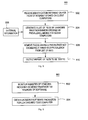
- FIG. 4 is a flow diagram depicting a method for determining software trustworthiness in accordance with one or more aspects of the invention
- FIG. 5 is a flow diagram depicting a method for identifying a software package to be tested according to some embodiments of the invention.
- FIG. 6 is a flow diagram depicting a method of identifying a software package to be tested according to some embodiments of the invention.
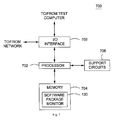
- FIG. 7 is a block diagram depicting the monitoring computer according to some embodiments of the invention.
- FIG. 1 is a block diagram depicting an exemplary embodiment of a computer system 100 in accordance with one or more aspects of the invention.
- the system 100 includes client computers 102, a network 104, a server computer 106, a test computer 108, and a database 110.
- the system 100 may also include a monitoring computer 109.
- the network 104 comprises a communication system that connects computer systems by wire, cable, fiber optic, and/or wireless links facilitated by various types of well-known network elements, such as hubs, switches, routers, and the like.
- the network 104 connects the client computers 102 and the server computer 106.
- the network 104 may employ various well-known protocols to communicate information.
- the network 104 may employ internet protocol (IP), transmission control protocol (TCP), and the like for the transmission of packets.
- IP internet protocol
- TCP transmission control protocol
- the network 104 may comprise part of a wide area network (WAN), such as the Internet, and/or all or part of a local area network (LAN).
- WAN wide area network
- LAN local area network
- Each of the client computers 102 includes software 112 and an agent 113.
- the computers 102 may comprise any type of computing devices capable of executing the software 112 and implementing the agent 113.
- the software 112 includes one or more operating systems, and may further include one or more application programs.
- the agent 113 may comprise software executable by the respective computer 102 to monitor the software 112 to detect malware.
- the agent 113 is configured to employ a "white list" to improve client computer performance.
- the agent 113 cooperates with a backend 124 implemented by the server computer 106 to determine whether files of interest in the software 112 are deemed trustworthy.
- the agent 113 includes files that can be trusted on the white list. Unless a given file on the white list is changed, the agent 113 does not monitor such file.
- the server computer 106 is configured to implement the backend 124.
- FIG. 2 is a block diagram depicting the server computer 106 according to some embodiments of the invention.
- the server computer 106 illustratively includes a processor 202, a memory 204, various support circuits 206, an I/O interface 208.
- the processor 202 may include one or more microprocessors known in the art.
- the support circuits 206 for the processor 202 include conventional cache, power supplies, clock circuits, data registers, I/O interfaces, and the like.
- the I/O interface 208 may be configured for communication with the network 104 and the database 110.
- the memory 204 may include one or more of the following random access memory, read only memory, magneto-resistive read/write memory, optical read/write memory, cache memory, magnetic read/write memory, and the like.
- the backend 124 may be implemented using software stored in the memory 204 and executed by the processor 202 to perform the functions described herein. It is to be understood, however, that the backend 124 may be implemented using specifically configured hardware, such as an application specific integrated circuit (ASIC) or the like. In other embodiments, the backend 124 may be implemented using a combination of specifically configured hardware and software.
- ASIC application specific integrated circuit
- the backend 124 is configured to cooperate with the agent 113 in each of the client computers 102 to determine whether files of interest are trustworthy and thus may be white listed.
- the backend 124 is configured to service queries by the agents 113 for a trustworthiness level of particular files of interest.
- the queries may include identification information associated with the files of interest.
- the identification information includes a digest for each file of interest.
- a digest may be a file identifier, such as a hash.
- a hash may be a value, code, sum, or other data calculated using a hash function (e.g., a function that takes an input of a data stream of any length and produces an output with a value of a certain fixed size).
- the hash function may be a cyclic redundancy check (CRC) hash function, a cryptographic hash function (e.g., a message digest algorithm 5 (MD5) hash function), a secure hash algorithm (SHA) hash function, or the like.
- CRC cyclic redundancy check
- MD5 message digest algorithm 5
- SHA secure hash algorithm
- Exemplary SHA hash functions include SHA-0, SHA-1, SHA-2, SHA-256, and SHA-512 has functions. It is to be understood that other public or proprietary hash algorithms may also be employed to determine a digest of a file.
- the identification information may also include other file attributes, such as filename, a normalized file path, file size, and the like.
- the database 110 is configured to store trustworthiness information for various files.
- the database 110 may comprise a relational database or the like that relates file identification information with a level of trustworthiness.
- the database 110 may store relations between file digests and respective levels of trustworthiness.
- each level of trustworthiness is selected from a plurality of levels.
- files may be assigned a trustworthiness level selected from provider trusted, community trusted, not trusted, or unknown.
- Provider trusted indicates that the provider of the backend 124 trusts the file.
- “Community trusted” indicates that a community of users trusts the file.
- Unknown indicates that the file may or may not be trustworthy.
- “Not trusted” indicates that the file should not be trusted and may be malware.
- the backend 124 uses the received identification information for the files to query the database 110 and obtain respective trustworthiness levels for the files.
- the database 110 may be implemented using resources of the server computer 106 (e.g., the memory 204 in FIG. 2 ). Alternatively, the database 110 may be implemented using one or more separate storage devices and/or server computers.
- the test computer 108 is used to test software packages and assign levels of trustworthiness to files.
- the test computer 108 is configured to implement a tester 114.
- FIG. 3 is a block diagram depicting the test computer 108 according to some embodiments of the invention.
- the test computer 108 illustratively includes a processor 302, a memory 304, various support circuits 306, an I/O interface 308.
- the processor 302 may include one or more microprocessors known in the art.
- the support circuits 306 for the processor 302 include conventional cache, power supplies, clock circuits, data registers, I/O interfaces, and the like.
- the memory 304 may include one or more of the following random access memory, read only memory, magneto-resistive read/write memory, optical read/write memory, cache memory, magnetic read/write memory, and the like.
- the tester 114 may be implemented using software stored in the memory 304 and executed by the processor 302 to perform the functions described herein. It is to be understood, however, that the tester 114 may be implemented using specifically configured hardware, such as an application specific integrated circuit (ASIC) or the like. In other embodiments, the tester 114 may be implemented using a combination of specifically configured hardware and software.
- ASIC application specific integrated circuit
- FIG. 4 is a flow diagram depicting a method 400 for determining software trustworthiness in accordance with one or more aspects of the invention. Embodiments of the method 400 may be understood with reference to the computer system 100 shown in FIG. 1 .
- the method 400 begins at step 402, where the tester 114 installs a software package 116 identified as including one or more files of unknown trustworthiness on a clean machine 118.
- the clean machine 118 comprises a virtual machine executing on the test computer 108, such as a VMWARE virtual machine.
- the clean machine 118 is "clean" in that no other software packages other than an operating system are installed thereon.
- the clean machine 118 may be implemented using hardware (e.g., hardware in the test computer 108 or another computer coupled to the test computer 108).
- FIG. 5 is a flow diagram depicting a method 500 for identifying a software package to be tested according to some embodiments of the invention. Embodiments of the method 500 may be understood with reference to FIG. 1 .
- the method 500 begins at step 502, where the backend 124 receives identification information for files of interest stored on the client computers 102. Embodiments of the identification information are described above.
- the backend 124 generates a list of files of unknown trustworthiness ordered by prevalence among the client computers 102.
- the backend 124 determines the prevalence of the files using the identification information received at step 502.
- the identification information indicates the number of the client computers 102 that have requested a trustworthiness level for a given file. Files for which a level of trustworthiness is requested by more client computers 102 are assigned a higher prevalence. Files for which a level of trustworthiness is requested by less client computers 102 are assigned a lower prevalence.
- the backend 124 may use other external information 506 instead of, or in combination with, the identification information from step 502 to determine prevalence.
- the external information 506 may include, for example, information from software publishers related to the prevalence of their software packages.
- the backend 124 removes from the list those files having a prevalence not exceeding a threshold prevalence (if any). For example, there may be a number of files for which a trust level has been requested by only a few client computers 102.
- the threshold prevalence may be set such that a particular number of client computer requests are required before testing of a file is triggered.
- the backend 124 outputs a report 120 of files to be tested.
- the report 120 may be used by an administrator or user to identify one or more software packages that include the files to be tested. The administrator or user may obtain the software package(s) and store them or otherwise provide them to the test computer 108 (e.g., the software package 116).
- FIG. 6 is a flow diagram depicting a method 600 of identifying a software package to be tested according to some embodiments of the invention. Embodiments of the method 600 may be understood with reference to FIG. 1 .
- the system 100 may include a monitoring computer 109 configured to a software package monitor 130.
- the software package monitor 130 may perform the method 600 to automatically identify software packages to be tested.
- FIG. 7 is a block diagram depicting the monitoring computer 109 according to some embodiments of the invention.
- the monitoring computer 109 illustratively includes a processor 702, a memory 704, various support circuits 706, an I/O interface 708.
- the processor 702 may include one or more microprocessors known in the art.
- the support circuits 706 for the processor 702 include conventional cache, power supplies, clock circuits, data registers, I/O interfaces, and the like.
- the I/O interface 708 may be configured for communication with the network 104.
- the I/O interface 708 may also be configured for communication with the test computer 108.
- the memory 704 may include one or more of the following random access memory, read only memory, magneto-resistive read/write memory, optical read/write memory, cache memory, magnetic read/write memory, and the like.
- the software package monitor 130 may be implemented using software stored in the memory 704 and executed by the processor 702 to perform the functions described herein. It is to be understood, however, that the software package monitor 130 may be implemented using specifically configured hardware, such as an application specific integrated circuit (ASIC) or the like. In other embodiments, the software package monitor 130 may be implemented using a combination of specifically configured hardware and software.
- ASIC application specific integrated circuit
- the method 600 begins at step 602, where the software package monitor 130 monitors websites of vendors indicated as being trustworthy sources of software.
- vendors of operating systems and other well known and popular software packages may be deemed as trustworthy sources of software.
- Such vendors may release new software packages and/or updates to current software packages at particular publishing points on the Internet (note that an update is considered to be a software packages for purposes of the present description).
- a vendor of an operating system or other application may maintain a website that provides periodic updates for the operating system or application.
- the software package monitor 130 may be configured to monitor such websites to detect software packages that have not been tested.
- the software package monitor 130 obtains the untested software package(s) for loading into the test computer 108.
- the software package monitor 130 may download the untested software package(s) via the network 104.
- the software package monitor 130 may send the untested software package(s) directly to the test computer 109 (if the monitoring computer 109 is coupled to the test computer 108).
- an administrator or user may retrieve the downloaded software package(s) from the monitoring computer 109 and load them to the test computer 108.
- installation of the software package 116 proceeds as follows: At step 404, the tester 114 obtains a first snapshot of the software state of the clean machine 118 prior to installing the software package 116. For example, if the software package 116 is an application, then the software state in the first snapshot may be the state of the operating system prior to the application being installed. If the software package 116 is an operating system, then the software state may be empty (i.e., there is no software state). At step 406, the tester 114 obtains a second snapshot of the software state of the clean machine 118 subsequent to installing the software package 116. The second snapshot will differ from the first snapshot due to the files installed and/or modified by installation of the software package 116.
- the tester 114 generates a report package 135 based on installation the software package 116.
- the report package 135 includes a catalog of files that have been installed and/or modified on the clean machine 118 by the software package 116.
- the tester 114 may generate the catalog of installed/modified files by comparing the first and second snapshots (e.g., before and after snapshots) generated in steps 404 and 406 (step 410).
- the report package 135 may include other information associated with the software package 116, such as version information, product vendor, and the like.
- the report package 135 may also include the binaries of the files installed/modified by the software package 116.
- the tester 114 determines identification attributes of each file in the catalog of the report package 135.
- the identification attributes may be the same or similar to the file identification data received from the client computers 102, namely, a digest (e.g., SHA-2 hash), filename, a normalized file path, file size, related software package, version information, digital signature, and the like.
- the tester 114 processes each of the files in the catalog of the report package 135 to assign a level of trustworthiness thereto.
- the trustworthiness level may be assigned to a given file using various methods and information.
- the tester 114 scans each of the files in the catalog for malware (step 416). Techniques of scanning files for malware are known in the art. Files indicated as being malware are assigned a level of "not trusted”.
- the tester 114 analyzes a digital signature for one or more files in the catalog of the report package 135 (step 418). Some files installed by the software package 116 may be digitally signed by the vendor. In cases where the digital signature can be verified, the respective file can be assigned a level of "provider trusted" or "community trusted”.
- the tester 114 determines an origin of the files in the catalog and obtains a measure of trustworthiness of such origin (step 420). For example, the tester 114 may identify the vendor of the files and cross-reference the vendor against of list of known vendors and corresponding levels of trust. Vendors may be assigned different levels of trust, e.g., between "provider trusted", “community trusted”, “not trusted”, or "unknown”. In some embodiments, the tester 114 may perform a statistical analysis of the files in the catalog (step 422). For example, the test computer 108 may be configured for communication with the database 110, which as described above may store identification information files reported by the client computers 102.
- the database 110 also maintains statistics for the client computers 102, including a "hygiene rating" or the like that indicates whether a particular client computer 102 is more or less likely to be affected by malware.
- the tester 114 may perform a statistical analysis of the files in the catalog with respect to existence of the files on the client computers 102 and hygiene ratings for the client computers 102. For example, if a file of unknown trustworthiness is known to be stored on client computers 102 with poor hygiene ratings (e.g., on average), the file may be deemed more likely to be malware and assigned a lower trust rating.
- the tester 114 performs a combination of steps 416 through 422 to determine an overall level of trustworthiness for each of the files in the catalog of the report package 135.
- the level of trust determined in step 414 may be included as an attribute for each of the files in the catalog of the report package 135.
- the tester 114 provides the report package 135 as output.
- the report package 135 may then be used to update the database 110 vis-à-vis the files in the catalog and their respective levels of trustworthiness.
- the report package 135 may be automatically provided to the server computer 106 and processed by the backend 124 to update the database 110.
- an administrator or other user can initiate an update of the database 110 based on the report package 135 (e.g., via cooperation with the server computer 106 or another computer).
- a server computer 106 In the embodiments of the invention described above, an exemplary structure of a server computer 106, a test computer 108, and a monitoring computer 109 is described. It is to be understood that other structures may be employed. In general, the functions of the backend 124, the tester 114, and the software package monitor 130 may be performed by one or more computers/servers. In some embodiments, the test computer 109 is isolated from the network 104 and/or other computers to obviate the possibility that the installation of the software package 116 will be corrupted by some external influence.
- Program(s) of the program product defines functions of embodiments and can be contained on a variety of computer readable media, which include, but are not limited to: (i) information permanently stored on non-writable storage media (e.g., read-only memory devices within a computer such as CD-ROM or DVD-ROM disks readable by a CD-ROM drive or a DVD drive); and (ii) alterable information stored on writable storage media (e.g., floppy disks within a diskette drive or hard-disk drive or read/writable CD or read/writable DVD).
- Such computer readable media when carrying computer-readable instructions that direct functions of the invention, represent embodiments of the invention.
Landscapes
- Engineering & Computer Science (AREA)
- Computer Security & Cryptography (AREA)
- Computer Hardware Design (AREA)
- General Engineering & Computer Science (AREA)
- Theoretical Computer Science (AREA)
- Software Systems (AREA)
- Physics & Mathematics (AREA)
- General Physics & Mathematics (AREA)
- Computing Systems (AREA)
- Health & Medical Sciences (AREA)
- General Health & Medical Sciences (AREA)
- Virology (AREA)
- Debugging And Monitoring (AREA)
Abstract
Description
- The present invention relates generally to computer systems. More particularly, the present invention relates to a method and apparatus for determining software trustworthiness.
- Consumers and businesses increasingly rely on computers to store sensitive data. Consequently, malicious programmers seem to continually increase their efforts to gain illegitimate control and access to others' computers and sensitive data. Such malicious programmers continue to create viruses, Trojan horses, worms, and like type programs meant to compromise computer systems and sensitive data belonging to others. These malicious programs are often generally referred to as "malware".
- Security software companies are combating the growing tide of malware by developing various client security products, such as anti-virus, anti-spyware, or other types of anti-malware products. Some anti-malware products, however, impact client computer performance, as they are configured to monitor and analyze files and other sub-systems upon every access using various assessment rules. While some anti-malware products may cache results of the analysis for accessed files and sub-systems, such results are invalidated when assessment rules are changed. For example, in some anti-virus products, when the anti-virus signatures change, the previous assessment results are invalidated. This results in decreased client computer performance as each file/sub-system access is again analyzed. The problem is further compounded by the fact that anti-malware products look for known bad files on computers that typically do not have malware. Thus, anti-malware programs may decrease computer performance, while providing very little benefit for most computer systems and users.
- Accordingly, there exists a need in the art for ascertaining the trustworthiness of software, while mitigating the performance impact on the client computer.
- Aspects of the invention relate to a method, apparatus, and computer readable medium for determining software trustworthiness. In some embodiments, a software package identified as including at least one file of unknown trustworthiness is installed on a clean machine. A report package including a catalog of files that have been installed or modified on the clean machine by the software package is generated. Identification attributes for each of the files in the catalog is determined. Each of the files in the catalog is processed to assign a level of trustworthiness thereto. The report package is provided as output.
- So that the manner in which the above recited features of the present invention can be understood in detail, a more particular description of the invention, briefly summarized above, may be had by reference to embodiments, some of which are illustrated in the appended drawings. It is to be noted, however, that the appended drawings illustrate only typical embodiments of this invention and are therefore not to be considered limiting of its scope, for the invention may admit to other equally effective embodiments.
-
FIG. 1 is a block diagram depicting an exemplary embodiment of a computer system in accordance with one or more aspects of the invention; -
FIG. 2 is a block diagram depicting a server computer according to some embodiments of the invention; -
FIG. 3 is a block diagram depicting a test computer according to some embodiments of the invention; -
FIG. 4 is a flow diagram depicting a method for determining software trustworthiness in accordance with one or more aspects of the invention; -
FIG. 5 is a flow diagram depicting a method for identifying a software package to be tested according to some embodiments of the invention; -
FIG. 6 is a flow diagram depicting a method of identifying a software package to be tested according to some embodiments of the invention; and -
FIG. 7 is a block diagram depicting the monitoring computer according to some embodiments of the invention. -
FIG. 1 is a block diagram depicting an exemplary embodiment of acomputer system 100 in accordance with one or more aspects of the invention. Thesystem 100 includesclient computers 102, anetwork 104, aserver computer 106, atest computer 108, and adatabase 110. In some embodiments, thesystem 100 may also include amonitoring computer 109. Thenetwork 104 comprises a communication system that connects computer systems by wire, cable, fiber optic, and/or wireless links facilitated by various types of well-known network elements, such as hubs, switches, routers, and the like. In particular, thenetwork 104 connects theclient computers 102 and theserver computer 106. Thenetwork 104 may employ various well-known protocols to communicate information. For example, thenetwork 104 may employ internet protocol (IP), transmission control protocol (TCP), and the like for the transmission of packets. Thenetwork 104 may comprise part of a wide area network (WAN), such as the Internet, and/or all or part of a local area network (LAN). - Each of the
client computers 102 includessoftware 112 and anagent 113. Thecomputers 102 may comprise any type of computing devices capable of executing thesoftware 112 and implementing theagent 113. Thesoftware 112 includes one or more operating systems, and may further include one or more application programs. Theagent 113 may comprise software executable by therespective computer 102 to monitor thesoftware 112 to detect malware. Theagent 113 is configured to employ a "white list" to improve client computer performance. Theagent 113 cooperates with abackend 124 implemented by theserver computer 106 to determine whether files of interest in thesoftware 112 are deemed trustworthy. Theagent 113 includes files that can be trusted on the white list. Unless a given file on the white list is changed, theagent 113 does not monitor such file. Typically, a large number of files in thesoftware 112 are legitimate and will be deemed trusted by thebackend 124. Further, such files will not change often. As such, the number of files in thesoftware 112 being monitored by theagent 113 is reduced, thereby improving client computer performance. Embodiments for determining software trustworthiness are described below. - The
server computer 106 is configured to implement thebackend 124.FIG. 2 is a block diagram depicting theserver computer 106 according to some embodiments of the invention. Theserver computer 106 illustratively includes aprocessor 202, amemory 204,various support circuits 206, an I/O interface 208. Theprocessor 202 may include one or more microprocessors known in the art. Thesupport circuits 206 for theprocessor 202 include conventional cache, power supplies, clock circuits, data registers, I/O interfaces, and the like. The I/O interface 208 may be configured for communication with thenetwork 104 and thedatabase 110. Thememory 204 may include one or more of the following random access memory, read only memory, magneto-resistive read/write memory, optical read/write memory, cache memory, magnetic read/write memory, and the like. - In some embodiments, the
backend 124 may be implemented using software stored in thememory 204 and executed by theprocessor 202 to perform the functions described herein. It is to be understood, however, that thebackend 124 may be implemented using specifically configured hardware, such as an application specific integrated circuit (ASIC) or the like. In other embodiments, thebackend 124 may be implemented using a combination of specifically configured hardware and software. - Returning to
FIG. 1 , thebackend 124 is configured to cooperate with theagent 113 in each of theclient computers 102 to determine whether files of interest are trustworthy and thus may be white listed. In particular, thebackend 124 is configured to service queries by theagents 113 for a trustworthiness level of particular files of interest. The queries may include identification information associated with the files of interest. In some embodiments, the identification information includes a digest for each file of interest. A digest may be a file identifier, such as a hash. A hash may be a value, code, sum, or other data calculated using a hash function (e.g., a function that takes an input of a data stream of any length and produces an output with a value of a certain fixed size). The hash function may be a cyclic redundancy check (CRC) hash function, a cryptographic hash function (e.g., a message digest algorithm 5 (MD5) hash function), a secure hash algorithm (SHA) hash function, or the like. Exemplary SHA hash functions include SHA-0, SHA-1, SHA-2, SHA-256, and SHA-512 has functions. It is to be understood that other public or proprietary hash algorithms may also be employed to determine a digest of a file. In some embodiments, the identification information may also include other file attributes, such as filename, a normalized file path, file size, and the like. - The
database 110 is configured to store trustworthiness information for various files. Thedatabase 110 may comprise a relational database or the like that relates file identification information with a level of trustworthiness. For example, thedatabase 110 may store relations between file digests and respective levels of trustworthiness. In some embodiments, each level of trustworthiness is selected from a plurality of levels. For example, files may be assigned a trustworthiness level selected from provider trusted, community trusted, not trusted, or unknown. "Provider trusted" indicates that the provider of thebackend 124 trusts the file. "Community trusted" indicates that a community of users trusts the file. "Unknown" indicates that the file may or may not be trustworthy. "Not trusted" indicates that the file should not be trusted and may be malware. Thebackend 124 uses the received identification information for the files to query thedatabase 110 and obtain respective trustworthiness levels for the files. Thedatabase 110 may be implemented using resources of the server computer 106 (e.g., thememory 204 inFIG. 2 ). Alternatively, thedatabase 110 may be implemented using one or more separate storage devices and/or server computers. - The
test computer 108 is used to test software packages and assign levels of trustworthiness to files. Thetest computer 108 is configured to implement atester 114.FIG. 3 is a block diagram depicting thetest computer 108 according to some embodiments of the invention. Thetest computer 108 illustratively includes aprocessor 302, amemory 304,various support circuits 306, an I/O interface 308. Theprocessor 302 may include one or more microprocessors known in the art. Thesupport circuits 306 for theprocessor 302 include conventional cache, power supplies, clock circuits, data registers, I/O interfaces, and the like. Thememory 304 may include one or more of the following random access memory, read only memory, magneto-resistive read/write memory, optical read/write memory, cache memory, magnetic read/write memory, and the like. - In some embodiments, the
tester 114 may be implemented using software stored in thememory 304 and executed by theprocessor 302 to perform the functions described herein. It is to be understood, however, that thetester 114 may be implemented using specifically configured hardware, such as an application specific integrated circuit (ASIC) or the like. In other embodiments, thetester 114 may be implemented using a combination of specifically configured hardware and software. - Returning to
FIG. 1 , thetester 114 is configured to determine levels of trustworthiness for files in software packages.FIG. 4 is a flow diagram depicting amethod 400 for determining software trustworthiness in accordance with one or more aspects of the invention. Embodiments of themethod 400 may be understood with reference to thecomputer system 100 shown inFIG. 1 . Themethod 400 begins atstep 402, where thetester 114 installs asoftware package 116 identified as including one or more files of unknown trustworthiness on aclean machine 118. In some embodiments, theclean machine 118 comprises a virtual machine executing on thetest computer 108, such as a VMWARE virtual machine. Theclean machine 118 is "clean" in that no other software packages other than an operating system are installed thereon. In cases where thesoftware package 116 is an operating system, no software exists on the clean machine 118 (e.g., if the clean machine is a virtual machine in thetest computer 108, a virtual machine image may be generated having the operating system being tested). It is to be understood that, rather than a virtual machine, theclean machine 118 may be implemented using hardware (e.g., hardware in thetest computer 108 or another computer coupled to the test computer 108). - In some embodiments, the
software package 116 is identified using output from theserver computer 106.FIG. 5 is a flow diagram depicting amethod 500 for identifying a software package to be tested according to some embodiments of the invention. Embodiments of themethod 500 may be understood with reference toFIG. 1 . Themethod 500 begins atstep 502, where thebackend 124 receives identification information for files of interest stored on theclient computers 102. Embodiments of the identification information are described above. Atstep 504, thebackend 124 generates a list of files of unknown trustworthiness ordered by prevalence among theclient computers 102. In some embodiments, thebackend 124 determines the prevalence of the files using the identification information received atstep 502. For example, the identification information indicates the number of theclient computers 102 that have requested a trustworthiness level for a given file. Files for which a level of trustworthiness is requested bymore client computers 102 are assigned a higher prevalence. Files for which a level of trustworthiness is requested byless client computers 102 are assigned a lower prevalence. In some embodiments, thebackend 124 may use otherexternal information 506 instead of, or in combination with, the identification information fromstep 502 to determine prevalence. Theexternal information 506 may include, for example, information from software publishers related to the prevalence of their software packages. - At
step 508, thebackend 124 removes from the list those files having a prevalence not exceeding a threshold prevalence (if any). For example, there may be a number of files for which a trust level has been requested by only afew client computers 102. The threshold prevalence may be set such that a particular number of client computer requests are required before testing of a file is triggered. Atstep 510, thebackend 124 outputs areport 120 of files to be tested. Thereport 120 may be used by an administrator or user to identify one or more software packages that include the files to be tested. The administrator or user may obtain the software package(s) and store them or otherwise provide them to the test computer 108 (e.g., the software package 116). - Returning to step 402 of
FIG. 4 , in some embodiments, thesoftware package 116 is identified automatically.FIG. 6 is a flow diagram depicting amethod 600 of identifying a software package to be tested according to some embodiments of the invention. Embodiments of themethod 600 may be understood with reference toFIG. 1 . As shown inFIG. 1 , thesystem 100 may include amonitoring computer 109 configured to asoftware package monitor 130. The software package monitor 130 may perform themethod 600 to automatically identify software packages to be tested. -
FIG. 7 is a block diagram depicting themonitoring computer 109 according to some embodiments of the invention. Themonitoring computer 109 illustratively includes aprocessor 702, amemory 704,various support circuits 706, an I/O interface 708. Theprocessor 702 may include one or more microprocessors known in the art. Thesupport circuits 706 for theprocessor 702 include conventional cache, power supplies, clock circuits, data registers, I/O interfaces, and the like. The I/O interface 708 may be configured for communication with thenetwork 104. The I/O interface 708 may also be configured for communication with thetest computer 108. Thememory 704 may include one or more of the following random access memory, read only memory, magneto-resistive read/write memory, optical read/write memory, cache memory, magnetic read/write memory, and the like. - In some embodiments, the software package monitor 130 may be implemented using software stored in the
memory 704 and executed by theprocessor 702 to perform the functions described herein. It is to be understood, however, that the software package monitor 130 may be implemented using specifically configured hardware, such as an application specific integrated circuit (ASIC) or the like. In other embodiments, the software package monitor 130 may be implemented using a combination of specifically configured hardware and software. - Returning to
FIGs. 1 and6 , themethod 600 begins atstep 602, where the software package monitor 130 monitors websites of vendors indicated as being trustworthy sources of software. For example, vendors of operating systems and other well known and popular software packages may be deemed as trustworthy sources of software. Such vendors may release new software packages and/or updates to current software packages at particular publishing points on the Internet (note that an update is considered to be a software packages for purposes of the present description). For example, a vendor of an operating system or other application may maintain a website that provides periodic updates for the operating system or application. The software package monitor 130 may be configured to monitor such websites to detect software packages that have not been tested. Atstep 604, the software package monitor 130 obtains the untested software package(s) for loading into thetest computer 108. For example, the software package monitor 130 may download the untested software package(s) via thenetwork 104. The software package monitor 130 may send the untested software package(s) directly to the test computer 109 (if themonitoring computer 109 is coupled to the test computer 108). Alternatively, an administrator or user may retrieve the downloaded software package(s) from themonitoring computer 109 and load them to thetest computer 108. - Returning to step 402 of
FIG. 1 , in one embodiment, installation of thesoftware package 116 proceeds as follows: Atstep 404, thetester 114 obtains a first snapshot of the software state of theclean machine 118 prior to installing thesoftware package 116. For example, if thesoftware package 116 is an application, then the software state in the first snapshot may be the state of the operating system prior to the application being installed. If thesoftware package 116 is an operating system, then the software state may be empty (i.e., there is no software state). Atstep 406, thetester 114 obtains a second snapshot of the software state of theclean machine 118 subsequent to installing thesoftware package 116. The second snapshot will differ from the first snapshot due to the files installed and/or modified by installation of thesoftware package 116. - At
step 408, thetester 114 generates areport package 135 based on installation thesoftware package 116. Thereport package 135 includes a catalog of files that have been installed and/or modified on theclean machine 118 by thesoftware package 116. In some embodiments, thetester 114 may generate the catalog of installed/modified files by comparing the first and second snapshots (e.g., before and after snapshots) generated insteps 404 and 406 (step 410). Thereport package 135 may include other information associated with thesoftware package 116, such as version information, product vendor, and the like. Thereport package 135 may also include the binaries of the files installed/modified by thesoftware package 116. - At
step 412, thetester 114 determines identification attributes of each file in the catalog of thereport package 135. The identification attributes may be the same or similar to the file identification data received from theclient computers 102, namely, a digest (e.g., SHA-2 hash), filename, a normalized file path, file size, related software package, version information, digital signature, and the like. - At
step 414, thetester 114 processes each of the files in the catalog of thereport package 135 to assign a level of trustworthiness thereto. The trustworthiness level may be assigned to a given file using various methods and information. In some embodiments, thetester 114 scans each of the files in the catalog for malware (step 416). Techniques of scanning files for malware are known in the art. Files indicated as being malware are assigned a level of "not trusted". In some embodiments, thetester 114 analyzes a digital signature for one or more files in the catalog of the report package 135 (step 418). Some files installed by thesoftware package 116 may be digitally signed by the vendor. In cases where the digital signature can be verified, the respective file can be assigned a level of "provider trusted" or "community trusted". In some embodiments, thetester 114 determines an origin of the files in the catalog and obtains a measure of trustworthiness of such origin (step 420). For example, thetester 114 may identify the vendor of the files and cross-reference the vendor against of list of known vendors and corresponding levels of trust. Vendors may be assigned different levels of trust, e.g., between "provider trusted", "community trusted", "not trusted", or "unknown". In some embodiments, thetester 114 may perform a statistical analysis of the files in the catalog (step 422). For example, thetest computer 108 may be configured for communication with thedatabase 110, which as described above may store identification information files reported by theclient computers 102. In some embodiments, thedatabase 110 also maintains statistics for theclient computers 102, including a "hygiene rating" or the like that indicates whether aparticular client computer 102 is more or less likely to be affected by malware. Thetester 114 may perform a statistical analysis of the files in the catalog with respect to existence of the files on theclient computers 102 and hygiene ratings for theclient computers 102. For example, if a file of unknown trustworthiness is known to be stored onclient computers 102 with poor hygiene ratings (e.g., on average), the file may be deemed more likely to be malware and assigned a lower trust rating. Conversely, if a file of unknown trustworthiness is known to be stored onclient computers 102 with good hygiene ratings (e.g., on average), the file may be deemed more likely to not be malware and assigned a higher trust rating. In some embodiments, thetester 114 performs a combination ofsteps 416 through 422 to determine an overall level of trustworthiness for each of the files in the catalog of thereport package 135. In general, the level of trust determined instep 414 may be included as an attribute for each of the files in the catalog of thereport package 135. - At
step 424, thetester 114 provides thereport package 135 as output. Thereport package 135 may then be used to update thedatabase 110 vis-à-vis the files in the catalog and their respective levels of trustworthiness. In some embodiments, thereport package 135 may be automatically provided to theserver computer 106 and processed by thebackend 124 to update thedatabase 110. Alternatively, an administrator or other user can initiate an update of thedatabase 110 based on the report package 135 (e.g., via cooperation with theserver computer 106 or another computer). - In the embodiments of the invention described above, an exemplary structure of a
server computer 106, atest computer 108, and amonitoring computer 109 is described. It is to be understood that other structures may be employed. In general, the functions of thebackend 124, thetester 114, and the software package monitor 130 may be performed by one or more computers/servers. In some embodiments, thetest computer 109 is isolated from thenetwork 104 and/or other computers to obviate the possibility that the installation of thesoftware package 116 will be corrupted by some external influence. - Aspects of the methods described above may be implemented as a program product for use with a computer system. Program(s) of the program product defines functions of embodiments and can be contained on a variety of computer readable media, which include, but are not limited to: (i) information permanently stored on non-writable storage media (e.g., read-only memory devices within a computer such as CD-ROM or DVD-ROM disks readable by a CD-ROM drive or a DVD drive); and (ii) alterable information stored on writable storage media (e.g., floppy disks within a diskette drive or hard-disk drive or read/writable CD or read/writable DVD). Such computer readable media, when carrying computer-readable instructions that direct functions of the invention, represent embodiments of the invention.
- While various embodiments have been described above, it should be understood that they have been presented by way of example only, and not limitation. Thus, the breadth and scope of a preferred embodiment should not be limited by any of the above-described exemplary embodiments, but should be defined only in accordance with the following claims and their equivalents.
Claims (15)
- A method of determining software trustworthiness, comprising: installing on a clean machine a software package identified as including at least one file of unknown trustworthiness; generating a report package including a catalog of files that have been installed or modified on the clean machine by the software package; determining identification attributes for each of the files in the catalog; processing each of the files in the catalog to assign a level of trustworthiness thereto; and providing the report package as output.
- The method of claim 1, further comprising: monitoring websites of vendors indicated as being trustworthy sources of software; and identifying the software package from at least one of the websites.
- The method of claims 1 or 2, further comprising: receiving information associated with files stored on client computers; determining prevalence of the at least one file among the client computers in response to the information; and generating a request to identify the software package having the at least one file in response to the prevalence thereof exceeding a threshold prevalence.
- The method of any of claims 1-3, wherein the step of installing comprises: capturing a first snapshot of software state of the clean machine prior to installing the software package; and capturing a second snapshot of the software state of the clean machine subsequent to installing the software package.
- The method of claim 4, wherein the step of generating the report package comprises: comparing the first snapshot with the second snapshot to identify the files that have been installed or modified.
- The method of any of claims 1-5, wherein clean machine comprises a virtual machine executing on a server.
- The method of any of claims 1-6, wherein the identification attributes for each of the files in the catalog includes a digest thereof.
- The method of any of claims 1-7, wherein the step of processing comprises: determining the level of trustworthiness for each of the files responsive to at least one of: (i) scanning each of the files in the catalog for malware; (ii) analyzing a digital signature for at least one of the files in the catalog; (iii) determining an origin of the files in the catalog and obtaining a measure of trustworthiness of such origin; or (iv) performing a statistical analysis of the files in the catalog with respect to existence of the files on client computers and hygiene ratings for the client computers.
- The method of any of claims 1-8, wherein the level of trustworthiness for each of the files in the catalog is selected from a plurality of levels of trustworthiness.
- The method of any of claims 1-9, further comprising: processing the report package to store in a database, for each of the files in the catalog, at least one of the identification attributes thereof in relation with the level of trustworthiness thereof.
- A computer readable medium having stored thereon instructions that when executed by a processor cause the processor to perform the method of any of claims 1-10.
- An apparatus for determining software trustworthiness, comprising: means for installing on a clean machine a software package identified as including at least one file of unknown trustworthiness; means for generating a report package including a catalog of files that have been installed or modified on the clean machine by the software package; means for determining identification attributes for each of the files in the catalog; means for processing each of the files in the catalog to assign a level of trustworthiness thereto; and means for providing the report package as output.
- The apparatus of claim 12, further comprising: means for monitoring websites of vendors indicated as being trustworthy sources of software; and means for identifying the software package from at least one of the websites.
- The apparatus of claims 12 or 13, further comprising: means for receiving information associated with files stored on client computers; means for determining prevalence of the at least one file among the client computers in response to the information; and means for generating a request to identify the software package having the at least one file in response to the prevalence thereof exceeding a threshold prevalence.
- The apparatus of any of claims 12-14, wherein the means for installing comprises: means for capturing a first snapshot of software state of the clean machine prior to installing the software package; and means for capturing a second snapshot of the software state of the clean machine subsequent to installing the software package.
Applications Claiming Priority (1)
| Application Number | Priority Date | Filing Date | Title |
|---|---|---|---|
| US12/237,416 US8196203B2 (en) | 2008-09-25 | 2008-09-25 | Method and apparatus for determining software trustworthiness |
Publications (2)
| Publication Number | Publication Date |
|---|---|
| EP2169582A1 true EP2169582A1 (en) | 2010-03-31 |
| EP2169582B1 EP2169582B1 (en) | 2018-06-06 |
Family
ID=41320079
Family Applications (1)
| Application Number | Title | Priority Date | Filing Date |
|---|---|---|---|
| EP09171072.3A Active EP2169582B1 (en) | 2008-09-25 | 2009-09-23 | Method and apparatus for determining software trustworthiness |
Country Status (3)
| Country | Link |
|---|---|
| US (2) | US8196203B2 (en) |
| EP (1) | EP2169582B1 (en) |
| JP (2) | JP5507176B2 (en) |
Cited By (3)
| Publication number | Priority date | Publication date | Assignee | Title |
|---|---|---|---|---|
| EP2584488A1 (en) * | 2011-09-20 | 2013-04-24 | Kaspersky Lab Zao | System and method for detecting computer security threats based on verdicts of computer users |
| CN103065088A (en) * | 2011-09-20 | 2013-04-24 | 卡巴斯基实验室封闭式股份公司 | System and method for detecting computer security threat based on decision of computer use |
| CN104732142A (en) * | 2011-06-27 | 2015-06-24 | 北京奇虎科技有限公司 | Method and device for unlocking file |
Families Citing this family (30)
| Publication number | Priority date | Publication date | Assignee | Title |
|---|---|---|---|---|
| US8201244B2 (en) * | 2006-09-19 | 2012-06-12 | Microsoft Corporation | Automated malware signature generation |
| US8196203B2 (en) * | 2008-09-25 | 2012-06-05 | Symantec Corporation | Method and apparatus for determining software trustworthiness |
| US20100199350A1 (en) * | 2009-02-04 | 2010-08-05 | Mark David Lilibridge | Federated Scanning of Multiple Computers |
| US8392379B2 (en) * | 2009-03-17 | 2013-03-05 | Sophos Plc | Method and system for preemptive scanning of computer files |
| US8001606B1 (en) * | 2009-06-30 | 2011-08-16 | Symantec Corporation | Malware detection using a white list |
| US8352484B1 (en) * | 2010-07-02 | 2013-01-08 | Symantec Corporation | Systems and methods for hashing executable files |
| US8549003B1 (en) | 2010-09-12 | 2013-10-01 | Mcafee, Inc. | System and method for clustering host inventories |
| US9075993B2 (en) * | 2011-01-24 | 2015-07-07 | Mcafee, Inc. | System and method for selectively grouping and managing program files |
| JP2012175552A (en) * | 2011-02-23 | 2012-09-10 | Seiko Instruments Inc | Information processing device and information processing program |
| US8943595B2 (en) | 2011-07-15 | 2015-01-27 | International Business Machines Corporation | Granular virus detection |
| US8683598B1 (en) * | 2012-02-02 | 2014-03-25 | Symantec Corporation | Mechanism to evaluate the security posture of a computer system |
| US9043920B2 (en) | 2012-06-27 | 2015-05-26 | Tenable Network Security, Inc. | System and method for identifying exploitable weak points in a network |
| US9088606B2 (en) | 2012-07-05 | 2015-07-21 | Tenable Network Security, Inc. | System and method for strategic anti-malware monitoring |
| US11126720B2 (en) | 2012-09-26 | 2021-09-21 | Bluvector, Inc. | System and method for automated machine-learning, zero-day malware detection |
| US9292688B2 (en) * | 2012-09-26 | 2016-03-22 | Northrop Grumman Systems Corporation | System and method for automated machine-learning, zero-day malware detection |
| US9467464B2 (en) | 2013-03-15 | 2016-10-11 | Tenable Network Security, Inc. | System and method for correlating log data to discover network vulnerabilities and assets |
| US8966471B2 (en) * | 2013-03-28 | 2015-02-24 | International Business Machines Corporation | Software signature discovery |
| US9065849B1 (en) * | 2013-09-18 | 2015-06-23 | Symantec Corporation | Systems and methods for determining trustworthiness of software programs |
| JP6000465B2 (en) * | 2013-09-25 | 2016-09-28 | 三菱電機株式会社 | Process inspection apparatus, process inspection program, and process inspection method |
| US10831895B2 (en) * | 2013-12-13 | 2020-11-10 | International Business Machines Corporation | Running local virtual disks containing applications with limited licenses |
| US9916171B2 (en) | 2014-07-10 | 2018-03-13 | International Business Machines Corporation | Application discovery in virtual machines using temporal clustering of installation files |
| US9313218B1 (en) * | 2014-07-23 | 2016-04-12 | Symantec Corporation | Systems and methods for providing information identifying the trustworthiness of applications on application distribution platforms |
| US9372992B1 (en) * | 2014-09-10 | 2016-06-21 | The Boeing Company | Ensuring integrity of a software package installer |
| JP6916112B2 (en) | 2014-11-21 | 2021-08-11 | ブルヴェクター, インコーポレーテッドBluvector, Inc. | Network data characterization system and method |
| US20170177863A1 (en) * | 2015-12-16 | 2017-06-22 | Wind River Systems, Inc. | Device, System, and Method for Detecting Malicious Software in Unallocated Memory |
| KR101937933B1 (en) * | 2016-11-08 | 2019-01-14 | 한국전자통신연구원 | Apparatus for quantifying security of open source software package, apparatus and method for optimization of open source software package |
| JP7056514B2 (en) * | 2018-10-30 | 2022-04-19 | 日本電信電話株式会社 | Management system, acquisition device and management method |
| RU2750628C2 (en) * | 2019-06-28 | 2021-06-30 | Акционерное общество "Лаборатория Касперского" | System and method for determining the file trust level |
| US11175907B2 (en) | 2019-07-18 | 2021-11-16 | International Business Machines Corporation | Intelligent application management and decommissioning in a computing environment |
| WO2022182829A1 (en) * | 2021-02-24 | 2022-09-01 | Visa International Service Association | Modular security evaluation of software on devices |
Citations (4)
| Publication number | Priority date | Publication date | Assignee | Title |
|---|---|---|---|---|
| US20040153644A1 (en) * | 2003-02-05 | 2004-08-05 | Mccorkendale Bruce | Preventing execution of potentially malicious software |
| US20070079377A1 (en) * | 2005-09-30 | 2007-04-05 | International Business Machines Corporation | Virus scanning in a computer system |
| US20070150948A1 (en) | 2003-12-24 | 2007-06-28 | Kristof De Spiegeleer | Method and system for identifying the content of files in a network |
| US20070174915A1 (en) | 2006-01-23 | 2007-07-26 | University Of Washington | Detection of spyware threats within virtual machine |
Family Cites Families (13)
| Publication number | Priority date | Publication date | Assignee | Title |
|---|---|---|---|---|
| JP2002182942A (en) * | 2000-12-18 | 2002-06-28 | Yokogawa Electric Corp | Content authentication system |
| US20020147659A1 (en) * | 2001-04-10 | 2002-10-10 | Hong Se June | Certified web site business |
| JP4145582B2 (en) * | 2002-06-28 | 2008-09-03 | Kddi株式会社 | Computer virus inspection device and mail gateway system |
| US20050050115A1 (en) * | 2003-08-29 | 2005-03-03 | Kekre Anand A. | Method and system of providing cascaded replication |
| US20050066015A1 (en) * | 2003-09-09 | 2005-03-24 | Dandekar Shree A. | Method and system for automated validation, scripting, dissemination and installation of software |
| US20050172284A1 (en) * | 2004-01-30 | 2005-08-04 | Dandekar Shree A. | Method and system for automated generation of customized factory installable software |
| EP1757063B1 (en) * | 2004-05-19 | 2017-02-15 | CA, Inc. | Methods and systems for computer security |
| US20050278395A1 (en) * | 2004-05-28 | 2005-12-15 | Lucent Technologies, Inc. | Remotely identifying software on remote network nodes by discovering attributes of software files and comparing software file attributes to a unique signature from an audit table |
| US10043008B2 (en) * | 2004-10-29 | 2018-08-07 | Microsoft Technology Licensing, Llc | Efficient white listing of user-modifiable files |
| US20060136374A1 (en) * | 2004-12-17 | 2006-06-22 | Microsoft Corporation | System and method for utilizing a search engine to prevent contamination |
| JP4745858B2 (en) * | 2006-02-20 | 2011-08-10 | 富士通株式会社 | Security management program and security management method |
| US7702953B2 (en) * | 2007-01-04 | 2010-04-20 | International Business Machines Corporation | Storage management in cascaded replication of data |
| US8196203B2 (en) | 2008-09-25 | 2012-06-05 | Symantec Corporation | Method and apparatus for determining software trustworthiness |
-
2008
- 2008-09-25 US US12/237,416 patent/US8196203B2/en active Active
-
2009
- 2009-09-23 EP EP09171072.3A patent/EP2169582B1/en active Active
- 2009-09-25 JP JP2009220613A patent/JP5507176B2/en active Active
-
2012
- 2012-06-04 US US13/488,137 patent/US8595833B2/en active Active
-
2014
- 2014-03-19 JP JP2014056740A patent/JP5639725B2/en active Active
Patent Citations (4)
| Publication number | Priority date | Publication date | Assignee | Title |
|---|---|---|---|---|
| US20040153644A1 (en) * | 2003-02-05 | 2004-08-05 | Mccorkendale Bruce | Preventing execution of potentially malicious software |
| US20070150948A1 (en) | 2003-12-24 | 2007-06-28 | Kristof De Spiegeleer | Method and system for identifying the content of files in a network |
| US20070079377A1 (en) * | 2005-09-30 | 2007-04-05 | International Business Machines Corporation | Virus scanning in a computer system |
| US20070174915A1 (en) | 2006-01-23 | 2007-07-26 | University Of Washington | Detection of spyware threats within virtual machine |
Cited By (5)
| Publication number | Priority date | Publication date | Assignee | Title |
|---|---|---|---|---|
| CN104732142A (en) * | 2011-06-27 | 2015-06-24 | 北京奇虎科技有限公司 | Method and device for unlocking file |
| CN104732142B (en) * | 2011-06-27 | 2017-12-12 | 北京奇虎科技有限公司 | A kind of method and device of file unblock |
| EP2584488A1 (en) * | 2011-09-20 | 2013-04-24 | Kaspersky Lab Zao | System and method for detecting computer security threats based on verdicts of computer users |
| CN103065088A (en) * | 2011-09-20 | 2013-04-24 | 卡巴斯基实验室封闭式股份公司 | System and method for detecting computer security threat based on decision of computer use |
| CN103065088B (en) * | 2011-09-20 | 2016-03-30 | 卡巴斯基实验室封闭式股份公司 | Based on the system and method for the ruling detection computations machine security threat of computer user |
Also Published As
| Publication number | Publication date |
|---|---|
| JP2010092469A (en) | 2010-04-22 |
| JP5507176B2 (en) | 2014-05-28 |
| US20120246721A1 (en) | 2012-09-27 |
| EP2169582B1 (en) | 2018-06-06 |
| US20100077479A1 (en) | 2010-03-25 |
| JP2014149844A (en) | 2014-08-21 |
| JP5639725B2 (en) | 2014-12-10 |
| US8196203B2 (en) | 2012-06-05 |
| US8595833B2 (en) | 2013-11-26 |
Similar Documents
| Publication | Publication Date | Title |
|---|---|---|
| US8196203B2 (en) | Method and apparatus for determining software trustworthiness | |
| US8931086B2 (en) | Method and apparatus for reducing false positive detection of malware | |
| US8819835B2 (en) | Silent-mode signature testing in anti-malware processing | |
| CN102483780B (en) | antivirus scan | |
| US8087086B1 (en) | Method for mitigating false positive generation in antivirus software | |
| US9147071B2 (en) | System and method for proactive detection of malware device drivers via kernel forensic behavioral monitoring and a back-end reputation system | |
| US11714910B2 (en) | Measuring integrity of computing system | |
| US8713686B2 (en) | System and method for reducing antivirus false positives | |
| US8239944B1 (en) | Reducing malware signature set size through server-side processing | |
| US8499063B1 (en) | Uninstall and system performance based software application reputation | |
| US7337471B2 (en) | Selective detection of malicious computer code | |
| CN101213555B (en) | Method and apparatus for handling malware | |
| US9134996B2 (en) | Updating anti-virus software | |
| US8266691B2 (en) | Renewable integrity rooted system | |
| US20120005755A1 (en) | Infection inspection system, infection inspection method, storage medium, and program | |
| CN102893289B (en) | Malware protection | |
| US8078909B1 (en) | Detecting file system layout discrepancies | |
| EP2663944B1 (en) | Malware detection | |
| JP2011523748A (en) | Intelligent hash for centrally detecting malware | |
| KR101588542B1 (en) | Malware risk scanner | |
| WO2014082599A1 (en) | Scanning device, cloud management device, method and system for checking and killing malicious programs | |
| CN104798080A (en) | Dynamic selection and loading of anti-malware signatures | |
| CN105791250A (en) | App detection method and device | |
| US8490195B1 (en) | Method and apparatus for behavioral detection of malware in a computer system | |
| JP2025504756A (en) | SYSTEM AND METHOD FOR GENERATING TRUSTED BINARIES - Patent application |
Legal Events
| Date | Code | Title | Description |
|---|---|---|---|
| PUAI | Public reference made under article 153(3) epc to a published international application that has entered the european phase |
Free format text: ORIGINAL CODE: 0009012 |
|
| AK | Designated contracting states |
Kind code of ref document: A1 Designated state(s): AT BE BG CH CY CZ DE DK EE ES FI FR GB GR HR HU IE IS IT LI LT LU LV MC MK MT NL NO PL PT RO SE SI SK SM TR |
|
| AX | Request for extension of the european patent |
Extension state: AL BA RS |
|
| 17P | Request for examination filed |
Effective date: 20100901 |
|
| 17Q | First examination report despatched |
Effective date: 20101004 |
|
| REG | Reference to a national code |
Ref country code: DE Ref legal event code: R079 Ref document number: 602009052644 Country of ref document: DE Free format text: PREVIOUS MAIN CLASS: G06F0021000000 Ipc: G06F0021560000 |
|
| GRAP | Despatch of communication of intention to grant a patent |
Free format text: ORIGINAL CODE: EPIDOSNIGR1 |
|
| STAA | Information on the status of an ep patent application or granted ep patent |
Free format text: STATUS: GRANT OF PATENT IS INTENDED |
|
| RIC1 | Information provided on ipc code assigned before grant |
Ipc: G06F 21/56 20130101AFI20171207BHEP Ipc: G06F 21/57 20130101ALI20171207BHEP |
|
| INTG | Intention to grant announced |
Effective date: 20171218 |
|
| GRAJ | Information related to disapproval of communication of intention to grant by the applicant or resumption of examination proceedings by the epo deleted |
Free format text: ORIGINAL CODE: EPIDOSDIGR1 |
|
| STAA | Information on the status of an ep patent application or granted ep patent |
Free format text: STATUS: EXAMINATION IS IN PROGRESS |
|
| GRAR | Information related to intention to grant a patent recorded |
Free format text: ORIGINAL CODE: EPIDOSNIGR71 |
|
| GRAS | Grant fee paid |
Free format text: ORIGINAL CODE: EPIDOSNIGR3 |
|
| STAA | Information on the status of an ep patent application or granted ep patent |
Free format text: STATUS: GRANT OF PATENT IS INTENDED |
|
| GRAA | (expected) grant |
Free format text: ORIGINAL CODE: 0009210 |
|
| STAA | Information on the status of an ep patent application or granted ep patent |
Free format text: STATUS: THE PATENT HAS BEEN GRANTED |
|
| INTC | Intention to grant announced (deleted) | ||
| INTG | Intention to grant announced |
Effective date: 20180425 |
|
| AK | Designated contracting states |
Kind code of ref document: B1 Designated state(s): AT BE BG CH CY CZ DE DK EE ES FI FR GB GR HR HU IE IS IT LI LT LU LV MC MK MT NL NO PL PT RO SE SI SK SM TR |
|
| REG | Reference to a national code |
Ref country code: GB Ref legal event code: FG4D |
|
| REG | Reference to a national code |
Ref country code: CH Ref legal event code: EP Ref country code: AT Ref legal event code: REF Ref document number: 1006871 Country of ref document: AT Kind code of ref document: T Effective date: 20180615 |
|
| REG | Reference to a national code |
Ref country code: IE Ref legal event code: FG4D |
|
| REG | Reference to a national code |
Ref country code: DE Ref legal event code: R096 Ref document number: 602009052644 Country of ref document: DE |
|
| REG | Reference to a national code |
Ref country code: FR Ref legal event code: PLFP Year of fee payment: 10 |
|
| REG | Reference to a national code |
Ref country code: NL Ref legal event code: MP Effective date: 20180606 |
|
| REG | Reference to a national code |
Ref country code: LT Ref legal event code: MG4D |
|
| PG25 | Lapsed in a contracting state [announced via postgrant information from national office to epo] |
Ref country code: ES Free format text: LAPSE BECAUSE OF FAILURE TO SUBMIT A TRANSLATION OF THE DESCRIPTION OR TO PAY THE FEE WITHIN THE PRESCRIBED TIME-LIMIT Effective date: 20180606 Ref country code: SE Free format text: LAPSE BECAUSE OF FAILURE TO SUBMIT A TRANSLATION OF THE DESCRIPTION OR TO PAY THE FEE WITHIN THE PRESCRIBED TIME-LIMIT Effective date: 20180606 Ref country code: NO Free format text: LAPSE BECAUSE OF FAILURE TO SUBMIT A TRANSLATION OF THE DESCRIPTION OR TO PAY THE FEE WITHIN THE PRESCRIBED TIME-LIMIT Effective date: 20180906 Ref country code: BG Free format text: LAPSE BECAUSE OF FAILURE TO SUBMIT A TRANSLATION OF THE DESCRIPTION OR TO PAY THE FEE WITHIN THE PRESCRIBED TIME-LIMIT Effective date: 20180906 Ref country code: FI Free format text: LAPSE BECAUSE OF FAILURE TO SUBMIT A TRANSLATION OF THE DESCRIPTION OR TO PAY THE FEE WITHIN THE PRESCRIBED TIME-LIMIT Effective date: 20180606 Ref country code: LT Free format text: LAPSE BECAUSE OF FAILURE TO SUBMIT A TRANSLATION OF THE DESCRIPTION OR TO PAY THE FEE WITHIN THE PRESCRIBED TIME-LIMIT Effective date: 20180606 Ref country code: CY Free format text: LAPSE BECAUSE OF FAILURE TO SUBMIT A TRANSLATION OF THE DESCRIPTION OR TO PAY THE FEE WITHIN THE PRESCRIBED TIME-LIMIT Effective date: 20180606 |
|
| PG25 | Lapsed in a contracting state [announced via postgrant information from national office to epo] |
Ref country code: HR Free format text: LAPSE BECAUSE OF FAILURE TO SUBMIT A TRANSLATION OF THE DESCRIPTION OR TO PAY THE FEE WITHIN THE PRESCRIBED TIME-LIMIT Effective date: 20180606 Ref country code: LV Free format text: LAPSE BECAUSE OF FAILURE TO SUBMIT A TRANSLATION OF THE DESCRIPTION OR TO PAY THE FEE WITHIN THE PRESCRIBED TIME-LIMIT Effective date: 20180606 Ref country code: GR Free format text: LAPSE BECAUSE OF FAILURE TO SUBMIT A TRANSLATION OF THE DESCRIPTION OR TO PAY THE FEE WITHIN THE PRESCRIBED TIME-LIMIT Effective date: 20180907 |
|
| REG | Reference to a national code |
Ref country code: AT Ref legal event code: MK05 Ref document number: 1006871 Country of ref document: AT Kind code of ref document: T Effective date: 20180606 |
|
| PG25 | Lapsed in a contracting state [announced via postgrant information from national office to epo] |
Ref country code: NL Free format text: LAPSE BECAUSE OF FAILURE TO SUBMIT A TRANSLATION OF THE DESCRIPTION OR TO PAY THE FEE WITHIN THE PRESCRIBED TIME-LIMIT Effective date: 20180606 |
|
| PG25 | Lapsed in a contracting state [announced via postgrant information from national office to epo] |
Ref country code: CZ Free format text: LAPSE BECAUSE OF FAILURE TO SUBMIT A TRANSLATION OF THE DESCRIPTION OR TO PAY THE FEE WITHIN THE PRESCRIBED TIME-LIMIT Effective date: 20180606 Ref country code: RO Free format text: LAPSE BECAUSE OF FAILURE TO SUBMIT A TRANSLATION OF THE DESCRIPTION OR TO PAY THE FEE WITHIN THE PRESCRIBED TIME-LIMIT Effective date: 20180606 Ref country code: SK Free format text: LAPSE BECAUSE OF FAILURE TO SUBMIT A TRANSLATION OF THE DESCRIPTION OR TO PAY THE FEE WITHIN THE PRESCRIBED TIME-LIMIT Effective date: 20180606 Ref country code: IS Free format text: LAPSE BECAUSE OF FAILURE TO SUBMIT A TRANSLATION OF THE DESCRIPTION OR TO PAY THE FEE WITHIN THE PRESCRIBED TIME-LIMIT Effective date: 20181006 Ref country code: AT Free format text: LAPSE BECAUSE OF FAILURE TO SUBMIT A TRANSLATION OF THE DESCRIPTION OR TO PAY THE FEE WITHIN THE PRESCRIBED TIME-LIMIT Effective date: 20180606 Ref country code: PL Free format text: LAPSE BECAUSE OF FAILURE TO SUBMIT A TRANSLATION OF THE DESCRIPTION OR TO PAY THE FEE WITHIN THE PRESCRIBED TIME-LIMIT Effective date: 20180606 Ref country code: EE Free format text: LAPSE BECAUSE OF FAILURE TO SUBMIT A TRANSLATION OF THE DESCRIPTION OR TO PAY THE FEE WITHIN THE PRESCRIBED TIME-LIMIT Effective date: 20180606 |
|
| REG | Reference to a national code |
Ref country code: CH Ref legal event code: PK Free format text: BERICHTIGUNGEN |
|
| RIC2 | Information provided on ipc code assigned after grant |
Ipc: G06F 21/57 20130101ALI20171207BHEP Ipc: G06F 21/56 20130101AFI20171207BHEP |
|
| PG25 | Lapsed in a contracting state [announced via postgrant information from national office to epo] |
Ref country code: IT Free format text: LAPSE BECAUSE OF FAILURE TO SUBMIT A TRANSLATION OF THE DESCRIPTION OR TO PAY THE FEE WITHIN THE PRESCRIBED TIME-LIMIT Effective date: 20180606 Ref country code: SM Free format text: LAPSE BECAUSE OF FAILURE TO SUBMIT A TRANSLATION OF THE DESCRIPTION OR TO PAY THE FEE WITHIN THE PRESCRIBED TIME-LIMIT Effective date: 20180606 |
|
| REG | Reference to a national code |
Ref country code: DE Ref legal event code: R097 Ref document number: 602009052644 Country of ref document: DE |
|
| PLBE | No opposition filed within time limit |
Free format text: ORIGINAL CODE: 0009261 |
|
| STAA | Information on the status of an ep patent application or granted ep patent |
Free format text: STATUS: NO OPPOSITION FILED WITHIN TIME LIMIT |
|
| PG25 | Lapsed in a contracting state [announced via postgrant information from national office to epo] |
Ref country code: MC Free format text: LAPSE BECAUSE OF FAILURE TO SUBMIT A TRANSLATION OF THE DESCRIPTION OR TO PAY THE FEE WITHIN THE PRESCRIBED TIME-LIMIT Effective date: 20180606 |
|
| REG | Reference to a national code |
Ref country code: CH Ref legal event code: PL |
|
| 26N | No opposition filed |
Effective date: 20190307 |
|
| PG25 | Lapsed in a contracting state [announced via postgrant information from national office to epo] |
Ref country code: DK Free format text: LAPSE BECAUSE OF FAILURE TO SUBMIT A TRANSLATION OF THE DESCRIPTION OR TO PAY THE FEE WITHIN THE PRESCRIBED TIME-LIMIT Effective date: 20180606 Ref country code: SI Free format text: LAPSE BECAUSE OF FAILURE TO SUBMIT A TRANSLATION OF THE DESCRIPTION OR TO PAY THE FEE WITHIN THE PRESCRIBED TIME-LIMIT Effective date: 20180606 |
|
| REG | Reference to a national code |
Ref country code: BE Ref legal event code: MM Effective date: 20180930 |
|
| REG | Reference to a national code |
Ref country code: IE Ref legal event code: MM4A |
|
| PG25 | Lapsed in a contracting state [announced via postgrant information from national office to epo] |
Ref country code: LU Free format text: LAPSE BECAUSE OF NON-PAYMENT OF DUE FEES Effective date: 20180923 |
|
| PG25 | Lapsed in a contracting state [announced via postgrant information from national office to epo] |
Ref country code: IE Free format text: LAPSE BECAUSE OF NON-PAYMENT OF DUE FEES Effective date: 20180923 |
|
| PG25 | Lapsed in a contracting state [announced via postgrant information from national office to epo] |
Ref country code: CH Free format text: LAPSE BECAUSE OF NON-PAYMENT OF DUE FEES Effective date: 20180930 Ref country code: LI Free format text: LAPSE BECAUSE OF NON-PAYMENT OF DUE FEES Effective date: 20180930 Ref country code: BE Free format text: LAPSE BECAUSE OF NON-PAYMENT OF DUE FEES Effective date: 20180930 |
|
| PG25 | Lapsed in a contracting state [announced via postgrant information from national office to epo] |
Ref country code: MT Free format text: LAPSE BECAUSE OF NON-PAYMENT OF DUE FEES Effective date: 20180923 |
|
| PG25 | Lapsed in a contracting state [announced via postgrant information from national office to epo] |
Ref country code: TR Free format text: LAPSE BECAUSE OF FAILURE TO SUBMIT A TRANSLATION OF THE DESCRIPTION OR TO PAY THE FEE WITHIN THE PRESCRIBED TIME-LIMIT Effective date: 20180606 |
|
| PG25 | Lapsed in a contracting state [announced via postgrant information from national office to epo] |
Ref country code: PT Free format text: LAPSE BECAUSE OF FAILURE TO SUBMIT A TRANSLATION OF THE DESCRIPTION OR TO PAY THE FEE WITHIN THE PRESCRIBED TIME-LIMIT Effective date: 20180606 Ref country code: HU Free format text: LAPSE BECAUSE OF FAILURE TO SUBMIT A TRANSLATION OF THE DESCRIPTION OR TO PAY THE FEE WITHIN THE PRESCRIBED TIME-LIMIT; INVALID AB INITIO Effective date: 20090923 |
|
| PG25 | Lapsed in a contracting state [announced via postgrant information from national office to epo] |
Ref country code: MK Free format text: LAPSE BECAUSE OF NON-PAYMENT OF DUE FEES Effective date: 20180606 |
|
| PGFP | Annual fee paid to national office [announced via postgrant information from national office to epo] |
Ref country code: DE Payment date: 20250820 Year of fee payment: 17 |
|
| PGFP | Annual fee paid to national office [announced via postgrant information from national office to epo] |
Ref country code: GB Payment date: 20250820 Year of fee payment: 17 |
|
| PGFP | Annual fee paid to national office [announced via postgrant information from national office to epo] |
Ref country code: FR Payment date: 20250820 Year of fee payment: 17 |
|
| REG | Reference to a national code |
Ref country code: DE Ref legal event code: R081 Ref document number: 602009052644 Country of ref document: DE Owner name: GEN DIGITAL INC., TEMPE, US Free format text: FORMER OWNER: SYMANTEC CORP., CUPERTINO, CALIF., US Ref country code: DE Ref legal event code: R081 Ref document number: 602009052644 Country of ref document: DE Owner name: GEN DIGITAL INC., TEMPE, US Free format text: FORMER OWNER: NORTONLIFELOCK INC., TEMPE, AZ, US Ref country code: DE Ref legal event code: R081 Ref document number: 602009052644 Country of ref document: DE Owner name: GEN DIGITAL INC., TEMPE, US Free format text: FORMER OWNER: NORTONLIFELOCK INC., MOUNTAIN VIEW, CA, US Ref country code: DE Ref legal event code: R081 Ref document number: 602009052644 Country of ref document: DE Owner name: GEN DIGITAL INC., TEMPE, US Free format text: FORMER OWNER: SYMANTEC CORP., MOUNTAIN VIEW, CA, US |