EP2168576A2 - New utilities of tricyclic compounds - Google Patents
New utilities of tricyclic compounds Download PDFInfo
- Publication number
- EP2168576A2 EP2168576A2 EP09009879A EP09009879A EP2168576A2 EP 2168576 A2 EP2168576 A2 EP 2168576A2 EP 09009879 A EP09009879 A EP 09009879A EP 09009879 A EP09009879 A EP 09009879A EP 2168576 A2 EP2168576 A2 EP 2168576A2
- Authority
- EP
- European Patent Office
- Prior art keywords
- optionally substituted
- ring
- compound
- hydroxy
- lower alkyl
- Prior art date
- Legal status (The legal status is an assumption and is not a legal conclusion. Google has not performed a legal analysis and makes no representation as to the accuracy of the status listed.)
- Withdrawn
Links
- 150000001875 compounds Chemical class 0.000 title claims abstract description 104
- 125000000217 alkyl group Chemical group 0.000 claims abstract description 72
- 125000003545 alkoxy group Chemical group 0.000 claims abstract description 54
- 229910052736 halogen Inorganic materials 0.000 claims abstract description 45
- 150000002367 halogens Chemical class 0.000 claims abstract description 45
- 125000002887 hydroxy group Chemical group [H]O* 0.000 claims abstract description 45
- 125000003118 aryl group Chemical group 0.000 claims abstract description 36
- 101100379247 Salmo trutta apoa1 gene Proteins 0.000 claims abstract description 29
- 125000003342 alkenyl group Chemical group 0.000 claims abstract description 27
- 125000001072 heteroaryl group Chemical group 0.000 claims abstract description 27
- 229910052739 hydrogen Inorganic materials 0.000 claims abstract description 25
- 239000001257 hydrogen Substances 0.000 claims abstract description 25
- 125000002252 acyl group Chemical group 0.000 claims abstract description 24
- 125000002924 primary amino group Chemical group [H]N([H])* 0.000 claims abstract description 24
- 150000003839 salts Chemical class 0.000 claims abstract description 24
- 239000000651 prodrug Substances 0.000 claims abstract description 23
- 229940002612 prodrug Drugs 0.000 claims abstract description 23
- 239000008194 pharmaceutical composition Substances 0.000 claims abstract description 22
- 230000014509 gene expression Effects 0.000 claims abstract description 21
- 125000003178 carboxy group Chemical group [H]OC(*)=O 0.000 claims abstract description 17
- 125000004453 alkoxycarbonyl group Chemical group 0.000 claims abstract description 16
- 239000012453 solvate Substances 0.000 claims abstract description 16
- 230000002708 enhancing effect Effects 0.000 claims abstract description 14
- 125000003302 alkenyloxy group Chemical group 0.000 claims abstract description 12
- 125000003917 carbamoyl group Chemical group [H]N([H])C(*)=O 0.000 claims abstract description 10
- JUJWROOIHBZHMG-UHFFFAOYSA-N Pyridine Chemical group C1=CC=NC=C1 JUJWROOIHBZHMG-UHFFFAOYSA-N 0.000 claims abstract description 9
- JYEUMXHLPRZUAT-UHFFFAOYSA-N 1,2,3-triazine Chemical group C1=CN=NN=C1 JYEUMXHLPRZUAT-UHFFFAOYSA-N 0.000 claims abstract description 8
- LFSXCDWNBUNEEM-UHFFFAOYSA-N phthalazine Chemical group C1=NN=CC2=CC=CC=C21 LFSXCDWNBUNEEM-UHFFFAOYSA-N 0.000 claims abstract description 8
- 125000003373 pyrazinyl group Chemical group 0.000 claims abstract description 8
- PBMFSQRYOILNGV-UHFFFAOYSA-N pyridazine Chemical group C1=CC=NN=C1 PBMFSQRYOILNGV-UHFFFAOYSA-N 0.000 claims abstract description 8
- 125000000714 pyrimidinyl group Chemical group 0.000 claims abstract description 8
- 125000000753 cycloalkyl group Chemical group 0.000 claims abstract description 7
- 125000004104 aryloxy group Chemical group 0.000 claims abstract description 6
- 125000005553 heteroaryloxy group Chemical group 0.000 claims abstract description 6
- 125000005110 aryl thio group Chemical group 0.000 claims abstract description 5
- 125000005368 heteroarylthio group Chemical group 0.000 claims abstract description 5
- 125000001567 quinoxalinyl group Chemical group N1=C(C=NC2=CC=CC=C12)* 0.000 claims abstract description 5
- 125000002943 quinolinyl group Chemical group N1=C(C=CC2=CC=CC=C12)* 0.000 claims abstract description 4
- 150000002431 hydrogen Chemical class 0.000 claims abstract 5
- 125000001997 phenyl group Chemical group [H]C1=C([H])C([H])=C(*)C([H])=C1[H] 0.000 claims description 40
- 238000000034 method Methods 0.000 claims description 19
- 201000010099 disease Diseases 0.000 claims description 14
- 208000037265 diseases, disorders, signs and symptoms Diseases 0.000 claims description 14
- 208000032928 Dyslipidaemia Diseases 0.000 claims description 10
- 208000017170 Lipid metabolism disease Diseases 0.000 claims description 10
- 239000003814 drug Substances 0.000 claims description 8
- 238000004519 manufacturing process Methods 0.000 claims description 6
- 125000005133 alkynyloxy group Chemical group 0.000 claims description 5
- 230000002265 prevention Effects 0.000 claims description 5
- 125000001424 substituent group Chemical group 0.000 description 37
- -1 methylenedioxy Chemical group 0.000 description 29
- 239000000203 mixture Substances 0.000 description 24
- 108010010234 HDL Lipoproteins Proteins 0.000 description 20
- 102000015779 HDL Lipoproteins Human genes 0.000 description 20
- 125000004435 hydrogen atom Chemical class [H]* 0.000 description 19
- XEKOWRVHYACXOJ-UHFFFAOYSA-N Ethyl acetate Chemical compound CCOC(C)=O XEKOWRVHYACXOJ-UHFFFAOYSA-N 0.000 description 15
- HVYWMOMLDIMFJA-DPAQBDIFSA-N cholesterol Chemical compound C1C=C2C[C@@H](O)CC[C@]2(C)[C@@H]2[C@@H]1[C@@H]1CC[C@H]([C@H](C)CCCC(C)C)[C@@]1(C)CC2 HVYWMOMLDIMFJA-DPAQBDIFSA-N 0.000 description 14
- 125000006615 aromatic heterocyclic group Chemical group 0.000 description 13
- 208000029078 coronary artery disease Diseases 0.000 description 13
- XSCHRSMBECNVNS-UHFFFAOYSA-N quinoxaline Chemical compound N1=CC=NC2=CC=CC=C21 XSCHRSMBECNVNS-UHFFFAOYSA-N 0.000 description 12
- 125000004423 acyloxy group Chemical group 0.000 description 10
- 125000000304 alkynyl group Chemical group 0.000 description 10
- 125000004432 carbon atom Chemical group C* 0.000 description 9
- 125000004433 nitrogen atom Chemical group N* 0.000 description 9
- SMWDFEZZVXVKRB-UHFFFAOYSA-N Quinoline Chemical compound N1=CC=CC2=CC=CC=C21 SMWDFEZZVXVKRB-UHFFFAOYSA-N 0.000 description 8
- 125000004442 acylamino group Chemical group 0.000 description 8
- 125000003282 alkyl amino group Chemical group 0.000 description 8
- 235000012000 cholesterol Nutrition 0.000 description 8
- 230000000694 effects Effects 0.000 description 8
- 239000000243 solution Substances 0.000 description 8
- 125000002541 furyl group Chemical group 0.000 description 7
- 125000001544 thienyl group Chemical group 0.000 description 7
- IAZDPXIOMUYVGZ-UHFFFAOYSA-N Dimethylsulphoxide Chemical compound CS(C)=O IAZDPXIOMUYVGZ-UHFFFAOYSA-N 0.000 description 6
- 108010028554 LDL Cholesterol Proteins 0.000 description 6
- 238000008214 LDL Cholesterol Methods 0.000 description 6
- CSNNHWWHGAXBCP-UHFFFAOYSA-L Magnesium sulfate Chemical compound [Mg+2].[O-][S+2]([O-])([O-])[O-] CSNNHWWHGAXBCP-UHFFFAOYSA-L 0.000 description 6
- KDLHZDBZIXYQEI-UHFFFAOYSA-N Palladium Chemical compound [Pd] KDLHZDBZIXYQEI-UHFFFAOYSA-N 0.000 description 6
- CDBYLPFSWZWCQE-UHFFFAOYSA-L Sodium Carbonate Chemical compound [Na+].[Na+].[O-]C([O-])=O CDBYLPFSWZWCQE-UHFFFAOYSA-L 0.000 description 6
- WYURNTSHIVDZCO-UHFFFAOYSA-N Tetrahydrofuran Chemical compound C1CCOC1 WYURNTSHIVDZCO-UHFFFAOYSA-N 0.000 description 6
- 125000000707 boryl group Chemical group B* 0.000 description 6
- 239000003795 chemical substances by application Substances 0.000 description 6
- HQKMJHAJHXVSDF-UHFFFAOYSA-L magnesium stearate Chemical compound [Mg+2].CCCCCCCCCCCCCCCCCC([O-])=O.CCCCCCCCCCCCCCCCCC([O-])=O HQKMJHAJHXVSDF-UHFFFAOYSA-L 0.000 description 6
- 239000002904 solvent Substances 0.000 description 6
- 206010003210 Arteriosclerosis Diseases 0.000 description 5
- NFHFRUOZVGFOOS-UHFFFAOYSA-N Pd(PPh3)4 Substances [Pd].C1=CC=CC=C1P(C=1C=CC=CC=1)C1=CC=CC=C1.C1=CC=CC=C1P(C=1C=CC=CC=1)C1=CC=CC=C1.C1=CC=CC=C1P(C=1C=CC=CC=1)C1=CC=CC=C1.C1=CC=CC=C1P(C=1C=CC=CC=1)C1=CC=CC=C1 NFHFRUOZVGFOOS-UHFFFAOYSA-N 0.000 description 5
- 238000006069 Suzuki reaction reaction Methods 0.000 description 5
- 125000005530 alkylenedioxy group Chemical group 0.000 description 5
- 208000011775 arteriosclerosis disease Diseases 0.000 description 5
- 238000006243 chemical reaction Methods 0.000 description 5
- 238000009472 formulation Methods 0.000 description 5
- 125000000623 heterocyclic group Chemical group 0.000 description 5
- 230000008569 process Effects 0.000 description 5
- 108090000623 proteins and genes Proteins 0.000 description 5
- XLYOFNOQVPJJNP-UHFFFAOYSA-N water Substances O XLYOFNOQVPJJNP-UHFFFAOYSA-N 0.000 description 5
- 102000005666 Apolipoprotein A-I Human genes 0.000 description 4
- 108010059886 Apolipoprotein A-I Proteins 0.000 description 4
- 201000001320 Atherosclerosis Diseases 0.000 description 4
- LFQSCWFLJHTTHZ-UHFFFAOYSA-N Ethanol Chemical compound CCO LFQSCWFLJHTTHZ-UHFFFAOYSA-N 0.000 description 4
- GUBGYTABKSRVRQ-QKKXKWKRSA-N Lactose Natural products OC[C@H]1O[C@@H](O[C@H]2[C@H](O)[C@@H](O)C(O)O[C@@H]2CO)[C@H](O)[C@@H](O)[C@H]1O GUBGYTABKSRVRQ-QKKXKWKRSA-N 0.000 description 4
- IOJUPLGTWVMSFF-UHFFFAOYSA-N benzothiazole Chemical compound C1=CC=C2SC=NC2=C1 IOJUPLGTWVMSFF-UHFFFAOYSA-N 0.000 description 4
- 238000002474 experimental method Methods 0.000 description 4
- 239000008187 granular material Substances 0.000 description 4
- 125000005842 heteroatom Chemical group 0.000 description 4
- 230000001965 increasing effect Effects 0.000 description 4
- 239000004615 ingredient Substances 0.000 description 4
- AWJUIBRHMBBTKR-UHFFFAOYSA-N isoquinoline Chemical compound C1=NC=CC2=CC=CC=C21 AWJUIBRHMBBTKR-UHFFFAOYSA-N 0.000 description 4
- 239000008101 lactose Substances 0.000 description 4
- 239000000843 powder Substances 0.000 description 4
- 230000004141 reverse cholesterol transport Effects 0.000 description 4
- 210000002966 serum Anatomy 0.000 description 4
- UHOVQNZJYSORNB-UHFFFAOYSA-N Benzene Chemical compound C1=CC=CC=C1 UHOVQNZJYSORNB-UHFFFAOYSA-N 0.000 description 3
- 208000024172 Cardiovascular disease Diseases 0.000 description 3
- XTHFKEDIFFGKHM-UHFFFAOYSA-N Dimethoxyethane Chemical compound COCCOC XTHFKEDIFFGKHM-UHFFFAOYSA-N 0.000 description 3
- YLQBMQCUIZJEEH-UHFFFAOYSA-N Furan Chemical compound C=1C=COC=1 YLQBMQCUIZJEEH-UHFFFAOYSA-N 0.000 description 3
- SIKJAQJRHWYJAI-UHFFFAOYSA-N Indole Chemical compound C1=CC=C2NC=CC2=C1 SIKJAQJRHWYJAI-UHFFFAOYSA-N 0.000 description 3
- 108010007622 LDL Lipoproteins Proteins 0.000 description 3
- 102000007330 LDL Lipoproteins Human genes 0.000 description 3
- 102000004895 Lipoproteins Human genes 0.000 description 3
- 108090001030 Lipoproteins Proteins 0.000 description 3
- OKKJLVBELUTLKV-UHFFFAOYSA-N Methanol Chemical compound OC OKKJLVBELUTLKV-UHFFFAOYSA-N 0.000 description 3
- ZMXDDKWLCZADIW-UHFFFAOYSA-N N,N-Dimethylformamide Chemical compound CN(C)C=O ZMXDDKWLCZADIW-UHFFFAOYSA-N 0.000 description 3
- 241000283973 Oryctolagus cuniculus Species 0.000 description 3
- MUBZPKHOEPUJKR-UHFFFAOYSA-N Oxalic acid Chemical compound OC(=O)C(O)=O MUBZPKHOEPUJKR-UHFFFAOYSA-N 0.000 description 3
- HEMHJVSKTPXQMS-UHFFFAOYSA-M Sodium hydroxide Chemical compound [OH-].[Na+] HEMHJVSKTPXQMS-UHFFFAOYSA-M 0.000 description 3
- 229920002472 Starch Polymers 0.000 description 3
- YXFVVABEGXRONW-UHFFFAOYSA-N Toluene Chemical compound CC1=CC=CC=C1 YXFVVABEGXRONW-UHFFFAOYSA-N 0.000 description 3
- 125000003435 aroyl group Chemical group 0.000 description 3
- 125000004429 atom Chemical group 0.000 description 3
- CJZGTCYPCWQAJB-UHFFFAOYSA-L calcium stearate Chemical compound [Ca+2].CCCCCCCCCCCCCCCCCC([O-])=O.CCCCCCCCCCCCCCCCCC([O-])=O CJZGTCYPCWQAJB-UHFFFAOYSA-L 0.000 description 3
- 239000008116 calcium stearate Substances 0.000 description 3
- 235000013539 calcium stearate Nutrition 0.000 description 3
- 239000002775 capsule Substances 0.000 description 3
- 239000001768 carboxy methyl cellulose Substances 0.000 description 3
- 239000003054 catalyst Substances 0.000 description 3
- KRKNYBCHXYNGOX-UHFFFAOYSA-N citric acid Chemical compound OC(=O)CC(O)(C(O)=O)CC(O)=O KRKNYBCHXYNGOX-UHFFFAOYSA-N 0.000 description 3
- 230000008878 coupling Effects 0.000 description 3
- 238000010168 coupling process Methods 0.000 description 3
- 238000005859 coupling reaction Methods 0.000 description 3
- 230000003247 decreasing effect Effects 0.000 description 3
- RAXXELZNTBOGNW-UHFFFAOYSA-N imidazole Natural products C1=CNC=N1 RAXXELZNTBOGNW-UHFFFAOYSA-N 0.000 description 3
- 238000002347 injection Methods 0.000 description 3
- 239000007924 injection Substances 0.000 description 3
- 210000004185 liver Anatomy 0.000 description 3
- 235000019359 magnesium stearate Nutrition 0.000 description 3
- 229910052943 magnesium sulfate Inorganic materials 0.000 description 3
- 235000019341 magnesium sulphate Nutrition 0.000 description 3
- 229910052760 oxygen Inorganic materials 0.000 description 3
- 229910052763 palladium Inorganic materials 0.000 description 3
- 239000000546 pharmaceutical excipient Substances 0.000 description 3
- 239000013612 plasmid Substances 0.000 description 3
- 238000002360 preparation method Methods 0.000 description 3
- 238000010992 reflux Methods 0.000 description 3
- 229910000029 sodium carbonate Inorganic materials 0.000 description 3
- 239000008107 starch Substances 0.000 description 3
- 235000019698 starch Nutrition 0.000 description 3
- 229910052717 sulfur Inorganic materials 0.000 description 3
- 239000003826 tablet Substances 0.000 description 3
- FCEHBMOGCRZNNI-UHFFFAOYSA-N 1-benzothiophene Chemical compound C1=CC=C2SC=CC2=C1 FCEHBMOGCRZNNI-UHFFFAOYSA-N 0.000 description 2
- BAXOFTOLAUCFNW-UHFFFAOYSA-N 1H-indazole Chemical compound C1=CC=C2C=NNC2=C1 BAXOFTOLAUCFNW-UHFFFAOYSA-N 0.000 description 2
- UWVQOVPKNIPJCA-UHFFFAOYSA-N 2-(2-methylphenyl)-1h-phenanthro[9,10-d]imidazole Chemical compound CC1=CC=CC=C1C1=NC(C2=CC=CC=C2C2=CC=CC=C22)=C2N1 UWVQOVPKNIPJCA-UHFFFAOYSA-N 0.000 description 2
- FBQFCXDBCPREBP-UHFFFAOYSA-N 2-(4-bromophenyl)pyridine Chemical compound C1=CC(Br)=CC=C1C1=CC=CC=N1 FBQFCXDBCPREBP-UHFFFAOYSA-N 0.000 description 2
- DEOBCDZYORUYAG-UHFFFAOYSA-N 2-(4-thiophen-3-ylphenyl)pyridine Chemical compound S1C=CC(C=2C=CC(=CC=2)C=2N=CC=CC=2)=C1 DEOBCDZYORUYAG-UHFFFAOYSA-N 0.000 description 2
- BUYDHKSWMQVBJU-PKNBQFBNSA-N 2-[(e)-2-(3-methylphenyl)ethenyl]quinoline Chemical compound CC1=CC=CC(\C=C\C=2N=C3C=CC=CC3=CC=2)=C1 BUYDHKSWMQVBJU-PKNBQFBNSA-N 0.000 description 2
- NSFSAHIOBUAWGP-UHFFFAOYSA-N 2-n,2-n-diphenylbenzene-1,2-diamine Chemical compound NC1=CC=CC=C1N(C=1C=CC=CC=1)C1=CC=CC=C1 NSFSAHIOBUAWGP-UHFFFAOYSA-N 0.000 description 2
- ZCYVEMRRCGMTRW-UHFFFAOYSA-N 7553-56-2 Chemical compound [I] ZCYVEMRRCGMTRW-UHFFFAOYSA-N 0.000 description 2
- KDCGOANMDULRCW-UHFFFAOYSA-N 7H-purine Chemical compound N1=CNC2=NC=NC2=C1 KDCGOANMDULRCW-UHFFFAOYSA-N 0.000 description 2
- 102000006410 Apoproteins Human genes 0.000 description 2
- 108010083590 Apoproteins Proteins 0.000 description 2
- IJGRMHOSHXDMSA-UHFFFAOYSA-N Atomic nitrogen Chemical compound N#N IJGRMHOSHXDMSA-UHFFFAOYSA-N 0.000 description 2
- ZOXJGFHDIHLPTG-UHFFFAOYSA-N Boron Chemical compound [B] ZOXJGFHDIHLPTG-UHFFFAOYSA-N 0.000 description 2
- WKBOTKDWSSQWDR-UHFFFAOYSA-N Bromine atom Chemical compound [Br] WKBOTKDWSSQWDR-UHFFFAOYSA-N 0.000 description 2
- VTYYLEPIZMXCLO-UHFFFAOYSA-L Calcium carbonate Chemical compound [Ca+2].[O-]C([O-])=O VTYYLEPIZMXCLO-UHFFFAOYSA-L 0.000 description 2
- CURLTUGMZLYLDI-UHFFFAOYSA-N Carbon dioxide Chemical compound O=C=O CURLTUGMZLYLDI-UHFFFAOYSA-N 0.000 description 2
- 229920002134 Carboxymethyl cellulose Polymers 0.000 description 2
- HEDRZPFGACZZDS-UHFFFAOYSA-N Chloroform Chemical compound ClC(Cl)Cl HEDRZPFGACZZDS-UHFFFAOYSA-N 0.000 description 2
- OKKJLVBELUTLKV-MZCSYVLQSA-N Deuterated methanol Chemical compound [2H]OC([2H])([2H])[2H] OKKJLVBELUTLKV-MZCSYVLQSA-N 0.000 description 2
- RTZKZFJDLAIYFH-UHFFFAOYSA-N Diethyl ether Chemical compound CCOCC RTZKZFJDLAIYFH-UHFFFAOYSA-N 0.000 description 2
- IAZDPXIOMUYVGZ-WFGJKAKNSA-N Dimethyl sulfoxide Chemical compound [2H]C([2H])([2H])S(=O)C([2H])([2H])[2H] IAZDPXIOMUYVGZ-WFGJKAKNSA-N 0.000 description 2
- LYCAIKOWRPUZTN-UHFFFAOYSA-N Ethylene glycol Chemical compound OCCO LYCAIKOWRPUZTN-UHFFFAOYSA-N 0.000 description 2
- VEXZGXHMUGYJMC-UHFFFAOYSA-N Hydrochloric acid Chemical compound Cl VEXZGXHMUGYJMC-UHFFFAOYSA-N 0.000 description 2
- 208000035150 Hypercholesterolemia Diseases 0.000 description 2
- 108060001084 Luciferase Proteins 0.000 description 2
- 239000005089 Luciferase Substances 0.000 description 2
- AFVFQIVMOAPDHO-UHFFFAOYSA-N Methanesulfonic acid Chemical compound CS(O)(=O)=O AFVFQIVMOAPDHO-UHFFFAOYSA-N 0.000 description 2
- 241000699666 Mus <mouse, genus> Species 0.000 description 2
- UFWIBTONFRDIAS-UHFFFAOYSA-N Naphthalene Chemical compound C1=CC=CC2=CC=CC=C21 UFWIBTONFRDIAS-UHFFFAOYSA-N 0.000 description 2
- OFBQJSOFQDEBGM-UHFFFAOYSA-N Pentane Chemical compound CCCCC OFBQJSOFQDEBGM-UHFFFAOYSA-N 0.000 description 2
- NBIIXXVUZAFLBC-UHFFFAOYSA-N Phosphoric acid Chemical compound OP(O)(O)=O NBIIXXVUZAFLBC-UHFFFAOYSA-N 0.000 description 2
- KYQCOXFCLRTKLS-UHFFFAOYSA-N Pyrazine Chemical compound C1=CN=CC=N1 KYQCOXFCLRTKLS-UHFFFAOYSA-N 0.000 description 2
- KAESVJOAVNADME-UHFFFAOYSA-N Pyrrole Chemical compound C=1C=CNC=1 KAESVJOAVNADME-UHFFFAOYSA-N 0.000 description 2
- UIIMBOGNXHQVGW-UHFFFAOYSA-M Sodium bicarbonate Chemical compound [Na+].OC([O-])=O UIIMBOGNXHQVGW-UHFFFAOYSA-M 0.000 description 2
- QAOWNCQODCNURD-UHFFFAOYSA-N Sulfuric acid Chemical compound OS(O)(=O)=O QAOWNCQODCNURD-UHFFFAOYSA-N 0.000 description 2
- YTPLMLYBLZKORZ-UHFFFAOYSA-N Thiophene Chemical compound C=1C=CSC=1 YTPLMLYBLZKORZ-UHFFFAOYSA-N 0.000 description 2
- HEDRZPFGACZZDS-MICDWDOJSA-N Trichloro(2H)methane Chemical compound [2H]C(Cl)(Cl)Cl HEDRZPFGACZZDS-MICDWDOJSA-N 0.000 description 2
- 108010062497 VLDL Lipoproteins Proteins 0.000 description 2
- 125000002777 acetyl group Chemical group [H]C([H])([H])C(*)=O 0.000 description 2
- 125000005092 alkenyloxycarbonyl group Chemical group 0.000 description 2
- 125000004414 alkyl thio group Chemical group 0.000 description 2
- 150000001408 amides Chemical class 0.000 description 2
- 125000003277 amino group Chemical group 0.000 description 2
- 238000013459 approach Methods 0.000 description 2
- 125000003236 benzoyl group Chemical group [H]C1=C([H])C([H])=C(C([H])=C1[H])C(*)=O 0.000 description 2
- 239000011230 binding agent Substances 0.000 description 2
- 229910052796 boron Inorganic materials 0.000 description 2
- 125000001626 borono group Chemical group [H]OB([*])O[H] 0.000 description 2
- GDTBXPJZTBHREO-UHFFFAOYSA-N bromine Substances BrBr GDTBXPJZTBHREO-UHFFFAOYSA-N 0.000 description 2
- 229910052794 bromium Inorganic materials 0.000 description 2
- FJDQFPXHSGXQBY-UHFFFAOYSA-L caesium carbonate Chemical compound [Cs+].[Cs+].[O-]C([O-])=O FJDQFPXHSGXQBY-UHFFFAOYSA-L 0.000 description 2
- XJHCXCQVJFPJIK-UHFFFAOYSA-M caesium fluoride Inorganic materials [F-].[Cs+] XJHCXCQVJFPJIK-UHFFFAOYSA-M 0.000 description 2
- 235000010948 carboxy methyl cellulose Nutrition 0.000 description 2
- 239000008112 carboxymethyl-cellulose Substances 0.000 description 2
- 239000001913 cellulose Substances 0.000 description 2
- 229920002678 cellulose Polymers 0.000 description 2
- 239000003153 chemical reaction reagent Substances 0.000 description 2
- 150000001841 cholesterols Chemical class 0.000 description 2
- WCZVZNOTHYJIEI-UHFFFAOYSA-N cinnoline Chemical compound N1=NC=CC2=CC=CC=C21 WCZVZNOTHYJIEI-UHFFFAOYSA-N 0.000 description 2
- 238000001816 cooling Methods 0.000 description 2
- 150000001923 cyclic compounds Chemical class 0.000 description 2
- 125000004122 cyclic group Chemical group 0.000 description 2
- 239000002552 dosage form Substances 0.000 description 2
- 238000000921 elemental analysis Methods 0.000 description 2
- OAYLNYINCPYISS-UHFFFAOYSA-N ethyl acetate;hexane Chemical compound CCCCCC.CCOC(C)=O OAYLNYINCPYISS-UHFFFAOYSA-N 0.000 description 2
- 206010073071 hepatocellular carcinoma Diseases 0.000 description 2
- 125000001841 imino group Chemical group [H]N=* 0.000 description 2
- 238000010253 intravenous injection Methods 0.000 description 2
- 239000011630 iodine Substances 0.000 description 2
- 229910052740 iodine Inorganic materials 0.000 description 2
- 150000002632 lipids Chemical class 0.000 description 2
- 239000000314 lubricant Substances 0.000 description 2
- 229960003511 macrogol Drugs 0.000 description 2
- 239000000463 material Substances 0.000 description 2
- 239000002609 medium Substances 0.000 description 2
- 229910052751 metal Inorganic materials 0.000 description 2
- 239000002184 metal Substances 0.000 description 2
- 229920000609 methyl cellulose Polymers 0.000 description 2
- 125000002496 methyl group Chemical group [H]C([H])([H])* 0.000 description 2
- 239000001923 methylcellulose Substances 0.000 description 2
- 235000010981 methylcellulose Nutrition 0.000 description 2
- 125000002950 monocyclic group Chemical group 0.000 description 2
- 125000001624 naphthyl group Chemical group 0.000 description 2
- 125000000449 nitro group Chemical group [O-][N+](*)=O 0.000 description 2
- 239000012044 organic layer Substances 0.000 description 2
- XSXHWVKGUXMUQE-UHFFFAOYSA-N osmium dioxide Inorganic materials O=[Os]=O XSXHWVKGUXMUQE-UHFFFAOYSA-N 0.000 description 2
- 238000007911 parenteral administration Methods 0.000 description 2
- 239000002245 particle Substances 0.000 description 2
- 230000002093 peripheral effect Effects 0.000 description 2
- 125000006239 protecting group Chemical group 0.000 description 2
- 102000004169 proteins and genes Human genes 0.000 description 2
- JWVCLYRUEFBMGU-UHFFFAOYSA-N quinazoline Chemical compound N1=CN=CC2=CC=CC=C21 JWVCLYRUEFBMGU-UHFFFAOYSA-N 0.000 description 2
- 238000010898 silica gel chromatography Methods 0.000 description 2
- 239000000126 substance Substances 0.000 description 2
- 239000000829 suppository Substances 0.000 description 2
- 125000001412 tetrahydropyranyl group Chemical group 0.000 description 2
- JOXIMZWYDAKGHI-UHFFFAOYSA-N toluene-4-sulfonic acid Chemical compound CC1=CC=C(S(O)(=O)=O)C=C1 JOXIMZWYDAKGHI-UHFFFAOYSA-N 0.000 description 2
- 238000011830 transgenic mouse model Methods 0.000 description 2
- JIAARYAFYJHUJI-UHFFFAOYSA-L zinc dichloride Chemical compound [Cl-].[Cl-].[Zn+2] JIAARYAFYJHUJI-UHFFFAOYSA-L 0.000 description 2
- SLLFVLKNXABYGI-UHFFFAOYSA-N 1,2,3-benzoxadiazole Chemical compound C1=CC=C2ON=NC2=C1 SLLFVLKNXABYGI-UHFFFAOYSA-N 0.000 description 1
- CSNIZNHTOVFARY-UHFFFAOYSA-N 1,2-benzothiazole Chemical compound C1=CC=C2C=NSC2=C1 CSNIZNHTOVFARY-UHFFFAOYSA-N 0.000 description 1
- KTZQTRPPVKQPFO-UHFFFAOYSA-N 1,2-benzoxazole Chemical compound C1=CC=C2C=NOC2=C1 KTZQTRPPVKQPFO-UHFFFAOYSA-N 0.000 description 1
- BCMCBBGGLRIHSE-UHFFFAOYSA-N 1,3-benzoxazole Chemical compound C1=CC=C2OC=NC2=C1 BCMCBBGGLRIHSE-UHFFFAOYSA-N 0.000 description 1
- RYHBNJHYFVUHQT-UHFFFAOYSA-N 1,4-Dioxane Chemical compound C1COCCO1 RYHBNJHYFVUHQT-UHFFFAOYSA-N 0.000 description 1
- FLBAYUMRQUHISI-UHFFFAOYSA-N 1,8-naphthyridine Chemical compound N1=CC=CC2=CC=CN=C21 FLBAYUMRQUHISI-UHFFFAOYSA-N 0.000 description 1
- UCCUXODGPMAHRL-UHFFFAOYSA-N 1-bromo-4-iodobenzene Chemical compound BrC1=CC=C(I)C=C1 UCCUXODGPMAHRL-UHFFFAOYSA-N 0.000 description 1
- IXPNQXFRVYWDDI-UHFFFAOYSA-N 1-methyl-2,4-dioxo-1,3-diazinane-5-carboximidamide Chemical compound CN1CC(C(N)=N)C(=O)NC1=O IXPNQXFRVYWDDI-UHFFFAOYSA-N 0.000 description 1
- IIZPXYDJLKNOIY-JXPKJXOSSA-N 1-palmitoyl-2-arachidonoyl-sn-glycero-3-phosphocholine Chemical compound CCCCCCCCCCCCCCCC(=O)OC[C@H](COP([O-])(=O)OCC[N+](C)(C)C)OC(=O)CCC\C=C/C\C=C/C\C=C/C\C=C/CCCCC IIZPXYDJLKNOIY-JXPKJXOSSA-N 0.000 description 1
- 125000006017 1-propenyl group Chemical group 0.000 description 1
- HYZJCKYKOHLVJF-UHFFFAOYSA-N 1H-benzimidazole Chemical compound C1=CC=C2NC=NC2=C1 HYZJCKYKOHLVJF-UHFFFAOYSA-N 0.000 description 1
- YBYIRNPNPLQARY-UHFFFAOYSA-N 1H-indene Natural products C1=CC=C2CC=CC2=C1 YBYIRNPNPLQARY-UHFFFAOYSA-N 0.000 description 1
- YQTCQNIPQMJNTI-UHFFFAOYSA-N 2,2-dimethylpropan-1-one Chemical group CC(C)(C)[C]=O YQTCQNIPQMJNTI-UHFFFAOYSA-N 0.000 description 1
- WBUVFDFTUTYHCU-MDZDMXLPSA-N 2-[(e)-2-(furan-2-yl)ethenyl]quinoline Chemical compound C=1C=C2C=CC=CC2=NC=1\C=C\C1=CC=CO1 WBUVFDFTUTYHCU-MDZDMXLPSA-N 0.000 description 1
- UXGVMFHEKMGWMA-UHFFFAOYSA-N 2-benzofuran Chemical compound C1=CC=CC2=COC=C21 UXGVMFHEKMGWMA-UHFFFAOYSA-N 0.000 description 1
- IMRWILPUOVGIMU-UHFFFAOYSA-N 2-bromopyridine Chemical compound BrC1=CC=CC=N1 IMRWILPUOVGIMU-UHFFFAOYSA-N 0.000 description 1
- 125000003903 2-propenyl group Chemical group [H]C([*])([H])C([H])=C([H])[H] 0.000 description 1
- VHMICKWLTGFITH-UHFFFAOYSA-N 2H-isoindole Chemical compound C1=CC=CC2=CNC=C21 VHMICKWLTGFITH-UHFFFAOYSA-N 0.000 description 1
- XBJLKXOOHLLTPG-UHFFFAOYSA-N 3-chloro-6-methoxypyridazine Chemical compound COC1=CC=C(Cl)N=N1 XBJLKXOOHLLTPG-UHFFFAOYSA-N 0.000 description 1
- HBAQYPYDRFILMT-UHFFFAOYSA-N 8-[3-(1-cyclopropylpyrazol-4-yl)-1H-pyrazolo[4,3-d]pyrimidin-5-yl]-3-methyl-3,8-diazabicyclo[3.2.1]octan-2-one Chemical class C1(CC1)N1N=CC(=C1)C1=NNC2=C1N=C(N=C2)N1C2C(N(CC1CC2)C)=O HBAQYPYDRFILMT-UHFFFAOYSA-N 0.000 description 1
- GUBGYTABKSRVRQ-XLOQQCSPSA-N Alpha-Lactose Chemical compound O[C@@H]1[C@@H](O)[C@@H](O)[C@@H](CO)O[C@H]1O[C@@H]1[C@@H](CO)O[C@H](O)[C@H](O)[C@H]1O GUBGYTABKSRVRQ-XLOQQCSPSA-N 0.000 description 1
- QGZKDVFQNNGYKY-UHFFFAOYSA-O Ammonium Chemical compound [NH4+] QGZKDVFQNNGYKY-UHFFFAOYSA-O 0.000 description 1
- VHUUQVKOLVNVRT-UHFFFAOYSA-N Ammonium hydroxide Chemical compound [NH4+].[OH-] VHUUQVKOLVNVRT-UHFFFAOYSA-N 0.000 description 1
- 102100029470 Apolipoprotein E Human genes 0.000 description 1
- 101710095339 Apolipoprotein E Proteins 0.000 description 1
- LSNNMFCWUKXFEE-UHFFFAOYSA-M Bisulfite Chemical compound OS([O-])=O LSNNMFCWUKXFEE-UHFFFAOYSA-M 0.000 description 1
- 108091003079 Bovine Serum Albumin Proteins 0.000 description 1
- OYPRJOBELJOOCE-UHFFFAOYSA-N Calcium Chemical compound [Ca] OYPRJOBELJOOCE-UHFFFAOYSA-N 0.000 description 1
- OKTJSMMVPCPJKN-UHFFFAOYSA-N Carbon Chemical group [C] OKTJSMMVPCPJKN-UHFFFAOYSA-N 0.000 description 1
- ZAMOUSCENKQFHK-UHFFFAOYSA-N Chlorine atom Chemical compound [Cl] ZAMOUSCENKQFHK-UHFFFAOYSA-N 0.000 description 1
- 108090000943 Cholesterol 7-alpha-monooxygenases Proteins 0.000 description 1
- 102000004410 Cholesterol 7-alpha-monooxygenases Human genes 0.000 description 1
- 208000006069 Corneal Opacity Diseases 0.000 description 1
- 241000195493 Cryptophyta Species 0.000 description 1
- 239000006144 Dulbecco’s modified Eagle's medium Substances 0.000 description 1
- 108090000331 Firefly luciferases Proteins 0.000 description 1
- 208000016169 Fish-eye disease Diseases 0.000 description 1
- PXGOKWXKJXAPGV-UHFFFAOYSA-N Fluorine Chemical compound FF PXGOKWXKJXAPGV-UHFFFAOYSA-N 0.000 description 1
- 239000001828 Gelatine Substances 0.000 description 1
- 108700039691 Genetic Promoter Regions Proteins 0.000 description 1
- WQZGKKKJIJFFOK-GASJEMHNSA-N Glucose Natural products OC[C@H]1OC(O)[C@H](O)[C@@H](O)[C@@H]1O WQZGKKKJIJFFOK-GASJEMHNSA-N 0.000 description 1
- 229940121710 HMGCoA reductase inhibitor Drugs 0.000 description 1
- 101000733802 Homo sapiens Apolipoprotein A-I Proteins 0.000 description 1
- UFHFLCQGNIYNRP-UHFFFAOYSA-N Hydrogen Chemical compound [H][H] UFHFLCQGNIYNRP-UHFFFAOYSA-N 0.000 description 1
- 229920002153 Hydroxypropyl cellulose Polymers 0.000 description 1
- 201000001431 Hyperuricemia Diseases 0.000 description 1
- DGAQECJNVWCQMB-PUAWFVPOSA-M Ilexoside XXIX Chemical compound C[C@@H]1CC[C@@]2(CC[C@@]3(C(=CC[C@H]4[C@]3(CC[C@@H]5[C@@]4(CC[C@@H](C5(C)C)OS(=O)(=O)[O-])C)C)[C@@H]2[C@]1(C)O)C)C(=O)O[C@H]6[C@@H]([C@H]([C@@H]([C@H](O6)CO)O)O)O.[Na+] DGAQECJNVWCQMB-PUAWFVPOSA-M 0.000 description 1
- 208000003465 Lecithin Cholesterol Acyltransferase Deficiency Diseases 0.000 description 1
- FYYHWMGAXLPEAU-UHFFFAOYSA-N Magnesium Chemical compound [Mg] FYYHWMGAXLPEAU-UHFFFAOYSA-N 0.000 description 1
- 241000699660 Mus musculus Species 0.000 description 1
- 229930193140 Neomycin Natural products 0.000 description 1
- GRYLNZFGIOXLOG-UHFFFAOYSA-N Nitric acid Chemical compound O[N+]([O-])=O GRYLNZFGIOXLOG-UHFFFAOYSA-N 0.000 description 1
- ZCQWOFVYLHDMMC-UHFFFAOYSA-N Oxazole Chemical compound C1=COC=N1 ZCQWOFVYLHDMMC-UHFFFAOYSA-N 0.000 description 1
- YNHIGQDRGKUECZ-UHFFFAOYSA-L PdCl2(PPh3)2 Substances [Cl-].[Cl-].[Pd+2].C1=CC=CC=C1P(C=1C=CC=CC=1)C1=CC=CC=C1.C1=CC=CC=C1P(C=1C=CC=CC=1)C1=CC=CC=C1 YNHIGQDRGKUECZ-UHFFFAOYSA-L 0.000 description 1
- PCNDJXKNXGMECE-UHFFFAOYSA-N Phenazine Natural products C1=CC=CC2=NC3=CC=CC=C3N=C21 PCNDJXKNXGMECE-UHFFFAOYSA-N 0.000 description 1
- 239000004372 Polyvinyl alcohol Substances 0.000 description 1
- ZLMJMSJWJFRBEC-UHFFFAOYSA-N Potassium Chemical compound [K] ZLMJMSJWJFRBEC-UHFFFAOYSA-N 0.000 description 1
- WTKZEGDFNFYCGP-UHFFFAOYSA-N Pyrazole Chemical compound C=1C=NNC=1 WTKZEGDFNFYCGP-UHFFFAOYSA-N 0.000 description 1
- CZPWVGJYEJSRLH-UHFFFAOYSA-N Pyrimidine Chemical compound C1=CN=CN=C1 CZPWVGJYEJSRLH-UHFFFAOYSA-N 0.000 description 1
- VYPSYNLAJGMNEJ-UHFFFAOYSA-N Silicium dioxide Chemical compound O=[Si]=O VYPSYNLAJGMNEJ-UHFFFAOYSA-N 0.000 description 1
- DBMJMQXJHONAFJ-UHFFFAOYSA-M Sodium laurylsulphate Chemical compound [Na+].CCCCCCCCCCCCOS([O-])(=O)=O DBMJMQXJHONAFJ-UHFFFAOYSA-M 0.000 description 1
- 102000001494 Sterol O-Acyltransferase Human genes 0.000 description 1
- 108010054082 Sterol O-acyltransferase Proteins 0.000 description 1
- CZMRCDWAGMRECN-UGDNZRGBSA-N Sucrose Chemical compound O[C@H]1[C@H](O)[C@@H](CO)O[C@@]1(CO)O[C@@H]1[C@H](O)[C@@H](O)[C@H](O)[C@@H](CO)O1 CZMRCDWAGMRECN-UGDNZRGBSA-N 0.000 description 1
- 229930006000 Sucrose Natural products 0.000 description 1
- 208000001163 Tangier disease Diseases 0.000 description 1
- 244000299461 Theobroma cacao Species 0.000 description 1
- 235000005764 Theobroma cacao ssp. cacao Nutrition 0.000 description 1
- 235000005767 Theobroma cacao ssp. sphaerocarpum Nutrition 0.000 description 1
- FZWLAAWBMGSTSO-UHFFFAOYSA-N Thiazole Chemical compound C1=CSC=N1 FZWLAAWBMGSTSO-UHFFFAOYSA-N 0.000 description 1
- ATJFFYVFTNAWJD-UHFFFAOYSA-N Tin Chemical class [Sn] ATJFFYVFTNAWJD-UHFFFAOYSA-N 0.000 description 1
- DPXJVFZANSGRMM-UHFFFAOYSA-N acetic acid;2,3,4,5,6-pentahydroxyhexanal;sodium Chemical compound [Na].CC(O)=O.OCC(O)C(O)C(O)C(O)C=O DPXJVFZANSGRMM-UHFFFAOYSA-N 0.000 description 1
- RBYGDVHOECIAFC-UHFFFAOYSA-L acetonitrile;palladium(2+);dichloride Chemical compound [Cl-].[Cl-].[Pd+2].CC#N.CC#N RBYGDVHOECIAFC-UHFFFAOYSA-L 0.000 description 1
- 239000002253 acid Substances 0.000 description 1
- 150000008065 acid anhydrides Chemical class 0.000 description 1
- 125000003647 acryloyl group Chemical group O=C([*])C([H])=C([H])[H] 0.000 description 1
- 230000004913 activation Effects 0.000 description 1
- 150000001266 acyl halides Chemical class 0.000 description 1
- 229910052784 alkaline earth metal Inorganic materials 0.000 description 1
- 150000001342 alkaline earth metals Chemical class 0.000 description 1
- 125000005115 alkyl carbamoyl group Chemical group 0.000 description 1
- 150000001350 alkyl halides Chemical class 0.000 description 1
- HSFWRNGVRCDJHI-UHFFFAOYSA-N alpha-acetylene Natural products C#C HSFWRNGVRCDJHI-UHFFFAOYSA-N 0.000 description 1
- 229910000147 aluminium phosphate Inorganic materials 0.000 description 1
- 150000001412 amines Chemical class 0.000 description 1
- QGZKDVFQNNGYKY-UHFFFAOYSA-N ammonia Natural products N QGZKDVFQNNGYKY-UHFFFAOYSA-N 0.000 description 1
- 125000002490 anilino group Chemical group [H]N(*)C1=C([H])C([H])=C([H])C([H])=C1[H] 0.000 description 1
- 125000005428 anthryl group Chemical group [H]C1=C([H])C([H])=C2C([H])=C3C(*)=C([H])C([H])=C([H])C3=C([H])C2=C1[H] 0.000 description 1
- 230000003110 anti-inflammatory effect Effects 0.000 description 1
- 239000007864 aqueous solution Substances 0.000 description 1
- 230000036523 atherogenesis Effects 0.000 description 1
- 239000012298 atmosphere Substances 0.000 description 1
- 125000002393 azetidinyl group Chemical group 0.000 description 1
- RQPZNWPYLFFXCP-UHFFFAOYSA-L barium dihydroxide Chemical compound [OH-].[OH-].[Ba+2] RQPZNWPYLFFXCP-UHFFFAOYSA-L 0.000 description 1
- RFRXIWQYSOIBDI-UHFFFAOYSA-N benzarone Chemical compound CCC=1OC2=CC=CC=C2C=1C(=O)C1=CC=C(O)C=C1 RFRXIWQYSOIBDI-UHFFFAOYSA-N 0.000 description 1
- 125000003785 benzimidazolyl group Chemical group N1=C(NC2=C1C=CC=C2)* 0.000 description 1
- 125000004604 benzisothiazolyl group Chemical group S1N=C(C2=C1C=CC=C2)* 0.000 description 1
- 125000004603 benzisoxazolyl group Chemical group O1N=C(C2=C1C=CC=C2)* 0.000 description 1
- 125000004618 benzofuryl group Chemical group O1C(=CC2=C1C=CC=C2)* 0.000 description 1
- 125000005874 benzothiadiazolyl group Chemical group 0.000 description 1
- 125000001164 benzothiazolyl group Chemical group S1C(=NC2=C1C=CC=C2)* 0.000 description 1
- 125000004196 benzothienyl group Chemical group S1C(=CC2=C1C=CC=C2)* 0.000 description 1
- QRUDEWIWKLJBPS-UHFFFAOYSA-N benzotriazole Chemical compound C1=CC=C2N[N][N]C2=C1 QRUDEWIWKLJBPS-UHFFFAOYSA-N 0.000 description 1
- 239000012964 benzotriazole Substances 0.000 description 1
- 125000003354 benzotriazolyl group Chemical group N1N=NC2=C1C=CC=C2* 0.000 description 1
- 125000004541 benzoxazolyl group Chemical group O1C(=NC2=C1C=CC=C2)* 0.000 description 1
- 125000001797 benzyl group Chemical group [H]C1=C([H])C([H])=C(C([H])=C1[H])C([H])([H])* 0.000 description 1
- WQZGKKKJIJFFOK-VFUOTHLCSA-N beta-D-glucose Chemical compound OC[C@H]1O[C@@H](O)[C@H](O)[C@@H](O)[C@@H]1O WQZGKKKJIJFFOK-VFUOTHLCSA-N 0.000 description 1
- 125000002619 bicyclic group Chemical group 0.000 description 1
- 230000007321 biological mechanism Effects 0.000 description 1
- 210000004369 blood Anatomy 0.000 description 1
- 239000008280 blood Substances 0.000 description 1
- 230000037396 body weight Effects 0.000 description 1
- 125000004369 butenyl group Chemical group C(=CCC)* 0.000 description 1
- 235000014121 butter Nutrition 0.000 description 1
- 125000000480 butynyl group Chemical group [*]C#CC([H])([H])C([H])([H])[H] 0.000 description 1
- 125000004063 butyryl group Chemical group O=C([*])C([H])([H])C([H])([H])C([H])([H])[H] 0.000 description 1
- 235000001046 cacaotero Nutrition 0.000 description 1
- 229910000024 caesium carbonate Inorganic materials 0.000 description 1
- 229910052791 calcium Inorganic materials 0.000 description 1
- 239000011575 calcium Substances 0.000 description 1
- 229910000019 calcium carbonate Inorganic materials 0.000 description 1
- 239000007963 capsule composition Substances 0.000 description 1
- 150000001721 carbon Chemical group 0.000 description 1
- 229910052799 carbon Inorganic materials 0.000 description 1
- 239000001569 carbon dioxide Substances 0.000 description 1
- 229910002092 carbon dioxide Inorganic materials 0.000 description 1
- WIKQEUJFZPCFNJ-UHFFFAOYSA-N carbonic acid;silver Chemical compound [Ag].[Ag].OC(O)=O WIKQEUJFZPCFNJ-UHFFFAOYSA-N 0.000 description 1
- 125000002915 carbonyl group Chemical group [*:2]C([*:1])=O 0.000 description 1
- 230000000747 cardiac effect Effects 0.000 description 1
- 208000026106 cerebrovascular disease Diseases 0.000 description 1
- 239000000460 chlorine Substances 0.000 description 1
- 229910052801 chlorine Inorganic materials 0.000 description 1
- 125000000259 cinnolinyl group Chemical group N1=NC(=CC2=CC=CC=C12)* 0.000 description 1
- 238000004891 communication Methods 0.000 description 1
- 238000010276 construction Methods 0.000 description 1
- 238000007796 conventional method Methods 0.000 description 1
- 231100000269 corneal opacity Toxicity 0.000 description 1
- 125000004093 cyano group Chemical group *C#N 0.000 description 1
- 125000001995 cyclobutyl group Chemical group [H]C1([H])C([H])([H])C([H])(*)C1([H])[H] 0.000 description 1
- 125000000582 cycloheptyl group Chemical group [H]C1([H])C([H])([H])C([H])([H])C([H])([H])C([H])(*)C([H])([H])C1([H])[H] 0.000 description 1
- 125000000113 cyclohexyl group Chemical group [H]C1([H])C([H])([H])C([H])([H])C([H])(*)C([H])([H])C1([H])[H] 0.000 description 1
- 125000006547 cyclononyl group Chemical group [H]C1([H])C([H])([H])C([H])([H])C([H])([H])C([H])([H])C([H])(*)C([H])([H])C([H])([H])C1([H])[H] 0.000 description 1
- 125000000640 cyclooctyl group Chemical group [H]C1([H])C([H])([H])C([H])([H])C([H])([H])C([H])(*)C([H])([H])C([H])([H])C1([H])[H] 0.000 description 1
- 125000001511 cyclopentyl group Chemical group [H]C1([H])C([H])([H])C([H])([H])C([H])(*)C1([H])[H] 0.000 description 1
- 125000001559 cyclopropyl group Chemical group [H]C1([H])C([H])([H])C1([H])* 0.000 description 1
- 125000005070 decynyl group Chemical group [H]C([H])([H])C([H])([H])C([H])([H])C([H])([H])C([H])([H])C([H])([H])C([H])([H])C([H])([H])C#C* 0.000 description 1
- 230000007812 deficiency Effects 0.000 description 1
- 230000002950 deficient Effects 0.000 description 1
- 238000013461 design Methods 0.000 description 1
- ZHXTWWCDMUWMDI-UHFFFAOYSA-N dihydroxyboron Chemical compound O[B]O ZHXTWWCDMUWMDI-UHFFFAOYSA-N 0.000 description 1
- 239000003085 diluting agent Substances 0.000 description 1
- 239000012153 distilled water Substances 0.000 description 1
- 229940079593 drug Drugs 0.000 description 1
- 239000003995 emulsifying agent Substances 0.000 description 1
- 239000000839 emulsion Substances 0.000 description 1
- 150000002148 esters Chemical class 0.000 description 1
- 125000001495 ethyl group Chemical group [H]C([H])([H])C([H])([H])* 0.000 description 1
- 125000002534 ethynyl group Chemical group [H]C#C* 0.000 description 1
- 238000001704 evaporation Methods 0.000 description 1
- 239000012894 fetal calf serum Substances 0.000 description 1
- 239000010419 fine particle Substances 0.000 description 1
- 239000000796 flavoring agent Substances 0.000 description 1
- 229910052731 fluorine Inorganic materials 0.000 description 1
- 239000011737 fluorine Substances 0.000 description 1
- 235000013355 food flavoring agent Nutrition 0.000 description 1
- 125000002485 formyl group Chemical group [H]C(*)=O 0.000 description 1
- 229920000159 gelatin Polymers 0.000 description 1
- 235000019322 gelatine Nutrition 0.000 description 1
- 239000008103 glucose Substances 0.000 description 1
- 150000004820 halides Chemical class 0.000 description 1
- 208000019622 heart disease Diseases 0.000 description 1
- 230000002440 hepatic effect Effects 0.000 description 1
- 125000003104 hexanoyl group Chemical group O=C([*])C([H])([H])C([H])([H])C([H])([H])C([H])([H])C([H])([H])[H] 0.000 description 1
- 125000006038 hexenyl group Chemical group 0.000 description 1
- 125000004051 hexyl group Chemical group [H]C([H])([H])C([H])([H])C([H])([H])C([H])([H])C([H])([H])C([H])([H])* 0.000 description 1
- 125000005980 hexynyl group Chemical group 0.000 description 1
- 102000051062 human APOA1 Human genes 0.000 description 1
- 150000004677 hydrates Chemical class 0.000 description 1
- 125000000717 hydrazino group Chemical group [H]N([*])N([H])[H] 0.000 description 1
- 239000002471 hydroxymethylglutaryl coenzyme A reductase inhibitor Substances 0.000 description 1
- 239000001863 hydroxypropyl cellulose Substances 0.000 description 1
- 235000010977 hydroxypropyl cellulose Nutrition 0.000 description 1
- 208000006575 hypertriglyceridemia Diseases 0.000 description 1
- 125000002632 imidazolidinyl group Chemical group 0.000 description 1
- 125000002636 imidazolinyl group Chemical group 0.000 description 1
- 125000002883 imidazolyl group Chemical group 0.000 description 1
- 125000005945 imidazopyridyl group Chemical group 0.000 description 1
- 230000006872 improvement Effects 0.000 description 1
- 238000011534 incubation Methods 0.000 description 1
- 125000003392 indanyl group Chemical group C1(CCC2=CC=CC=C12)* 0.000 description 1
- 125000003453 indazolyl group Chemical group N1N=C(C2=C1C=CC=C2)* 0.000 description 1
- 125000003454 indenyl group Chemical group C1(C=CC2=CC=CC=C12)* 0.000 description 1
- PZOUSPYUWWUPPK-UHFFFAOYSA-N indole Natural products CC1=CC=CC2=C1C=CN2 PZOUSPYUWWUPPK-UHFFFAOYSA-N 0.000 description 1
- RKJUIXBNRJVNHR-UHFFFAOYSA-N indolenine Natural products C1=CC=C2CC=NC2=C1 RKJUIXBNRJVNHR-UHFFFAOYSA-N 0.000 description 1
- 125000003406 indolizinyl group Chemical group C=1(C=CN2C=CC=CC12)* 0.000 description 1
- 125000001041 indolyl group Chemical group 0.000 description 1
- 230000005764 inhibitory process Effects 0.000 description 1
- 230000002452 interceptive effect Effects 0.000 description 1
- 238000010255 intramuscular injection Methods 0.000 description 1
- HVTICUPFWKNHNG-UHFFFAOYSA-N iodoethane Chemical compound CCI HVTICUPFWKNHNG-UHFFFAOYSA-N 0.000 description 1
- INQOMBQAUSQDDS-UHFFFAOYSA-N iodomethane Chemical compound IC INQOMBQAUSQDDS-UHFFFAOYSA-N 0.000 description 1
- 125000000959 isobutyl group Chemical group [H]C([H])([H])C([H])(C([H])([H])[H])C([H])([H])* 0.000 description 1
- 125000004491 isohexyl group Chemical group C(CCC(C)C)* 0.000 description 1
- GWVMLCQWXVFZCN-UHFFFAOYSA-N isoindoline Chemical compound C1=CC=C2CNCC2=C1 GWVMLCQWXVFZCN-UHFFFAOYSA-N 0.000 description 1
- 125000000904 isoindolyl group Chemical group C=1(NC=C2C=CC=CC12)* 0.000 description 1
- 125000001972 isopentyl group Chemical group [H]C([H])([H])C([H])(C([H])([H])[H])C([H])([H])C([H])([H])* 0.000 description 1
- 125000000555 isopropenyl group Chemical group [H]\C([H])=C(\*)C([H])([H])[H] 0.000 description 1
- 125000001449 isopropyl group Chemical group [H]C([H])([H])C([H])(*)C([H])([H])[H] 0.000 description 1
- 125000005956 isoquinolyl group Chemical group 0.000 description 1
- ZLTPDFXIESTBQG-UHFFFAOYSA-N isothiazole Chemical compound C=1C=NSC=1 ZLTPDFXIESTBQG-UHFFFAOYSA-N 0.000 description 1
- 125000001786 isothiazolyl group Chemical group 0.000 description 1
- 239000007951 isotonicity adjuster Substances 0.000 description 1
- CTAPFRYPJLPFDF-UHFFFAOYSA-N isoxazole Chemical compound C=1C=NOC=1 CTAPFRYPJLPFDF-UHFFFAOYSA-N 0.000 description 1
- 125000000842 isoxazolyl group Chemical group 0.000 description 1
- 235000010445 lecithin Nutrition 0.000 description 1
- 239000000787 lecithin Substances 0.000 description 1
- 229940067606 lecithin Drugs 0.000 description 1
- UBJFKNSINUCEAL-UHFFFAOYSA-N lithium;2-methylpropane Chemical compound [Li+].C[C-](C)C UBJFKNSINUCEAL-UHFFFAOYSA-N 0.000 description 1
- 238000003670 luciferase enzyme activity assay Methods 0.000 description 1
- 229910052749 magnesium Inorganic materials 0.000 description 1
- 239000011777 magnesium Substances 0.000 description 1
- 239000003550 marker Substances 0.000 description 1
- 108020004999 messenger RNA Proteins 0.000 description 1
- 230000004060 metabolic process Effects 0.000 description 1
- 229940098779 methanesulfonic acid Drugs 0.000 description 1
- 125000004184 methoxymethyl group Chemical group [H]C([H])([H])OC([H])([H])* 0.000 description 1
- 125000004170 methylsulfonyl group Chemical group [H]C([H])([H])S(*)(=O)=O 0.000 description 1
- 150000007522 mineralic acids Chemical class 0.000 description 1
- 238000012986 modification Methods 0.000 description 1
- 230000004048 modification Effects 0.000 description 1
- 125000002757 morpholinyl group Chemical group 0.000 description 1
- 208000010125 myocardial infarction Diseases 0.000 description 1
- 208000031225 myocardial ischemia Diseases 0.000 description 1
- 125000004108 n-butyl group Chemical group [H]C([H])([H])C([H])([H])C([H])([H])C([H])([H])* 0.000 description 1
- 125000000740 n-pentyl group Chemical group [H]C([H])([H])C([H])([H])C([H])([H])C([H])([H])C([H])([H])* 0.000 description 1
- 125000004123 n-propyl group Chemical group [H]C([H])([H])C([H])([H])C([H])([H])* 0.000 description 1
- 230000014508 negative regulation of coagulation Effects 0.000 description 1
- 229960004927 neomycin Drugs 0.000 description 1
- 125000001971 neopentyl group Chemical group [H]C([*])([H])C(C([H])([H])[H])(C([H])([H])[H])C([H])([H])[H] 0.000 description 1
- 229910017604 nitric acid Inorganic materials 0.000 description 1
- 229910052757 nitrogen Inorganic materials 0.000 description 1
- 239000012299 nitrogen atmosphere Substances 0.000 description 1
- QJGQUHMNIGDVPM-UHFFFAOYSA-N nitrogen group Chemical group [N] QJGQUHMNIGDVPM-UHFFFAOYSA-N 0.000 description 1
- 125000005071 nonynyl group Chemical group C(#CCCCCCCC)* 0.000 description 1
- 125000005069 octynyl group Chemical group [H]C([H])([H])C([H])([H])C([H])([H])C([H])([H])C([H])([H])C([H])([H])C#C* 0.000 description 1
- 150000007524 organic acids Chemical class 0.000 description 1
- 150000007530 organic bases Chemical class 0.000 description 1
- 239000003960 organic solvent Substances 0.000 description 1
- WCPAKWJPBJAGKN-UHFFFAOYSA-N oxadiazole Chemical compound C1=CON=N1 WCPAKWJPBJAGKN-UHFFFAOYSA-N 0.000 description 1
- 125000001715 oxadiazolyl group Chemical group 0.000 description 1
- 235000006408 oxalic acid Nutrition 0.000 description 1
- 125000005880 oxathiolanyl group Chemical group 0.000 description 1
- 125000002971 oxazolyl group Chemical group 0.000 description 1
- 125000000466 oxiranyl group Chemical group 0.000 description 1
- 230000001575 pathological effect Effects 0.000 description 1
- 125000002255 pentenyl group Chemical group C(=CCCC)* 0.000 description 1
- 125000005981 pentynyl group Chemical group 0.000 description 1
- 230000000144 pharmacologic effect Effects 0.000 description 1
- 150000003904 phospholipids Chemical class 0.000 description 1
- 125000004592 phthalazinyl group Chemical group C1(=NN=CC2=CC=CC=C12)* 0.000 description 1
- 239000006187 pill Substances 0.000 description 1
- 125000004193 piperazinyl group Chemical group 0.000 description 1
- 125000005936 piperidyl group Chemical group 0.000 description 1
- 229920002451 polyvinyl alcohol Polymers 0.000 description 1
- 239000001267 polyvinylpyrrolidone Substances 0.000 description 1
- 229920000036 polyvinylpyrrolidone Polymers 0.000 description 1
- 235000013855 polyvinylpyrrolidone Nutrition 0.000 description 1
- 239000011591 potassium Substances 0.000 description 1
- 229910052700 potassium Inorganic materials 0.000 description 1
- 239000003755 preservative agent Substances 0.000 description 1
- 125000001501 propionyl group Chemical group O=C([*])C([H])([H])C([H])([H])[H] 0.000 description 1
- 125000002568 propynyl group Chemical group [*]C#CC([H])([H])[H] 0.000 description 1
- CPNGPNLZQNNVQM-UHFFFAOYSA-N pteridine Chemical compound N1=CN=CC2=NC=CN=C21 CPNGPNLZQNNVQM-UHFFFAOYSA-N 0.000 description 1
- 125000001042 pteridinyl group Chemical group N1=C(N=CC2=NC=CN=C12)* 0.000 description 1
- 125000000561 purinyl group Chemical group N1=C(N=C2N=CNC2=C1)* 0.000 description 1
- OUFHXMSGJIYFPW-UHFFFAOYSA-N pyrazino[2,3-c]pyridazine Chemical compound N1=NC=CC2=NC=CN=C21 OUFHXMSGJIYFPW-UHFFFAOYSA-N 0.000 description 1
- 125000003072 pyrazolidinyl group Chemical group 0.000 description 1
- 125000002755 pyrazolinyl group Chemical group 0.000 description 1
- 125000003226 pyrazolyl group Chemical group 0.000 description 1
- 125000002098 pyridazinyl group Chemical group 0.000 description 1
- UMJSCPRVCHMLSP-UHFFFAOYSA-N pyridine Natural products COC1=CC=CN=C1 UMJSCPRVCHMLSP-UHFFFAOYSA-N 0.000 description 1
- 125000004076 pyridyl group Chemical group 0.000 description 1
- 125000000719 pyrrolidinyl group Chemical group 0.000 description 1
- 125000001422 pyrrolinyl group Chemical group 0.000 description 1
- 125000000168 pyrrolyl group Chemical group 0.000 description 1
- 125000002294 quinazolinyl group Chemical group N1=C(N=CC2=CC=CC=C12)* 0.000 description 1
- 125000005493 quinolyl group Chemical group 0.000 description 1
- 230000008929 regeneration Effects 0.000 description 1
- 238000011069 regeneration method Methods 0.000 description 1
- 125000002914 sec-butyl group Chemical group [H]C([H])([H])C([H])([H])C([H])(*)C([H])([H])[H] 0.000 description 1
- 239000000741 silica gel Substances 0.000 description 1
- 229910002027 silica gel Inorganic materials 0.000 description 1
- LKZMBDSASOBTPN-UHFFFAOYSA-L silver carbonate Substances [Ag].[O-]C([O-])=O LKZMBDSASOBTPN-UHFFFAOYSA-L 0.000 description 1
- KQTXIZHBFFWWFW-UHFFFAOYSA-L silver(I) carbonate Inorganic materials [Ag]OC(=O)O[Ag] KQTXIZHBFFWWFW-UHFFFAOYSA-L 0.000 description 1
- 239000011734 sodium Substances 0.000 description 1
- 229910052708 sodium Inorganic materials 0.000 description 1
- 235000010413 sodium alginate Nutrition 0.000 description 1
- 239000000661 sodium alginate Substances 0.000 description 1
- 229940005550 sodium alginate Drugs 0.000 description 1
- 229910000030 sodium bicarbonate Inorganic materials 0.000 description 1
- 235000019812 sodium carboxymethyl cellulose Nutrition 0.000 description 1
- 229920001027 sodium carboxymethylcellulose Polymers 0.000 description 1
- QDRKDTQENPPHOJ-UHFFFAOYSA-N sodium ethoxide Chemical compound [Na+].CC[O-] QDRKDTQENPPHOJ-UHFFFAOYSA-N 0.000 description 1
- 235000019333 sodium laurylsulphate Nutrition 0.000 description 1
- HPALAKNZSZLMCH-UHFFFAOYSA-M sodium;chloride;hydrate Chemical class O.[Na+].[Cl-] HPALAKNZSZLMCH-UHFFFAOYSA-M 0.000 description 1
- 241000894007 species Species 0.000 description 1
- 239000003381 stabilizer Substances 0.000 description 1
- 239000007858 starting material Substances 0.000 description 1
- 239000005720 sucrose Substances 0.000 description 1
- PXQLVRUNWNTZOS-UHFFFAOYSA-N sulfanyl Chemical class [SH] PXQLVRUNWNTZOS-UHFFFAOYSA-N 0.000 description 1
- BDHFUVZGWQCTTF-UHFFFAOYSA-M sulfonate Chemical compound [O-]S(=O)=O BDHFUVZGWQCTTF-UHFFFAOYSA-M 0.000 description 1
- 230000004083 survival effect Effects 0.000 description 1
- 239000000375 suspending agent Substances 0.000 description 1
- 239000000725 suspension Substances 0.000 description 1
- 238000003786 synthesis reaction Methods 0.000 description 1
- 239000006188 syrup Substances 0.000 description 1
- 235000020357 syrup Nutrition 0.000 description 1
- 239000007916 tablet composition Substances 0.000 description 1
- 239000000454 talc Substances 0.000 description 1
- 229910052623 talc Inorganic materials 0.000 description 1
- 125000000999 tert-butyl group Chemical group [H]C([H])([H])C(*)(C([H])([H])[H])C([H])([H])[H] 0.000 description 1
- ILMRJRBKQSSXGY-UHFFFAOYSA-N tert-butyl(dimethyl)silicon Chemical group C[Si](C)C(C)(C)C ILMRJRBKQSSXGY-UHFFFAOYSA-N 0.000 description 1
- YMBCJWGVCUEGHA-UHFFFAOYSA-M tetraethylammonium chloride Chemical compound [Cl-].CC[N+](CC)(CC)CC YMBCJWGVCUEGHA-UHFFFAOYSA-M 0.000 description 1
- 150000003536 tetrazoles Chemical class 0.000 description 1
- 125000003831 tetrazolyl group Chemical group 0.000 description 1
- VLLMWSRANPNYQX-UHFFFAOYSA-N thiadiazole Chemical compound C1=CSN=N1.C1=CSN=N1 VLLMWSRANPNYQX-UHFFFAOYSA-N 0.000 description 1
- 125000001113 thiadiazolyl group Chemical group 0.000 description 1
- 125000005458 thianyl group Chemical group 0.000 description 1
- 125000000335 thiazolyl group Chemical group 0.000 description 1
- 125000001730 thiiranyl group Chemical group 0.000 description 1
- QNMBSXGYAQZCTN-UHFFFAOYSA-N thiophen-3-ylboronic acid Chemical compound OB(O)C=1C=CSC=1 QNMBSXGYAQZCTN-UHFFFAOYSA-N 0.000 description 1
- 229930192474 thiophene Natural products 0.000 description 1
- 238000012546 transfer Methods 0.000 description 1
- 125000004306 triazinyl group Chemical group 0.000 description 1
- 150000003852 triazoles Chemical class 0.000 description 1
- 125000001425 triazolyl group Chemical group 0.000 description 1
- ZMANZCXQSJIPKH-UHFFFAOYSA-O triethylammonium ion Chemical compound CC[NH+](CC)CC ZMANZCXQSJIPKH-UHFFFAOYSA-O 0.000 description 1
- 125000002827 triflate group Chemical group FC(S(=O)(=O)O*)(F)F 0.000 description 1
- 125000005951 trifluoromethanesulfonyloxy group Chemical group 0.000 description 1
- UFTFJSFQGQCHQW-UHFFFAOYSA-N triformin Chemical compound O=COCC(OC=O)COC=O UFTFJSFQGQCHQW-UHFFFAOYSA-N 0.000 description 1
- GETQZCLCWQTVFV-UHFFFAOYSA-N trimethylamine Chemical compound CN(C)C GETQZCLCWQTVFV-UHFFFAOYSA-N 0.000 description 1
- LWIHDJKSTIGBAC-UHFFFAOYSA-K tripotassium phosphate Chemical compound [K+].[K+].[K+].[O-]P([O-])([O-])=O LWIHDJKSTIGBAC-UHFFFAOYSA-K 0.000 description 1
- 229910000404 tripotassium phosphate Inorganic materials 0.000 description 1
- 238000011144 upstream manufacturing Methods 0.000 description 1
- 125000000391 vinyl group Chemical group [H]C([*])=C([H])[H] 0.000 description 1
- 229920002554 vinyl polymer Polymers 0.000 description 1
- 239000000080 wetting agent Substances 0.000 description 1
- 150000003751 zinc Chemical class 0.000 description 1
- 239000011592 zinc chloride Substances 0.000 description 1
- 235000005074 zinc chloride Nutrition 0.000 description 1
Classifications
-
- C—CHEMISTRY; METALLURGY
- C07—ORGANIC CHEMISTRY
- C07D—HETEROCYCLIC COMPOUNDS
- C07D213/00—Heterocyclic compounds containing six-membered rings, not condensed with other rings, with one nitrogen atom as the only ring hetero atom and three or more double bonds between ring members or between ring members and non-ring members
- C07D213/02—Heterocyclic compounds containing six-membered rings, not condensed with other rings, with one nitrogen atom as the only ring hetero atom and three or more double bonds between ring members or between ring members and non-ring members having three double bonds between ring members or between ring members and non-ring members
- C07D213/04—Heterocyclic compounds containing six-membered rings, not condensed with other rings, with one nitrogen atom as the only ring hetero atom and three or more double bonds between ring members or between ring members and non-ring members having three double bonds between ring members or between ring members and non-ring members having no bond between the ring nitrogen atom and a non-ring member or having only hydrogen or carbon atoms directly attached to the ring nitrogen atom
- C07D213/06—Heterocyclic compounds containing six-membered rings, not condensed with other rings, with one nitrogen atom as the only ring hetero atom and three or more double bonds between ring members or between ring members and non-ring members having three double bonds between ring members or between ring members and non-ring members having no bond between the ring nitrogen atom and a non-ring member or having only hydrogen or carbon atoms directly attached to the ring nitrogen atom containing only hydrogen and carbon atoms in addition to the ring nitrogen atom
-
- A—HUMAN NECESSITIES
- A61—MEDICAL OR VETERINARY SCIENCE; HYGIENE
- A61K—PREPARATIONS FOR MEDICAL, DENTAL OR TOILETRY PURPOSES
- A61K31/00—Medicinal preparations containing organic active ingredients
- A61K31/13—Amines
- A61K31/15—Oximes (>C=N—O—); Hydrazines (>N—N<); Hydrazones (>N—N=) ; Imines (C—N=C)
-
- A—HUMAN NECESSITIES
- A61—MEDICAL OR VETERINARY SCIENCE; HYGIENE
- A61K—PREPARATIONS FOR MEDICAL, DENTAL OR TOILETRY PURPOSES
- A61K31/00—Medicinal preparations containing organic active ingredients
- A61K31/13—Amines
- A61K31/155—Amidines (), e.g. guanidine (H2N—C(=NH)—NH2), isourea (N=C(OH)—NH2), isothiourea (—N=C(SH)—NH2)
-
- A—HUMAN NECESSITIES
- A61—MEDICAL OR VETERINARY SCIENCE; HYGIENE
- A61K—PREPARATIONS FOR MEDICAL, DENTAL OR TOILETRY PURPOSES
- A61K31/00—Medicinal preparations containing organic active ingredients
- A61K31/33—Heterocyclic compounds
- A61K31/335—Heterocyclic compounds having oxygen as the only ring hetero atom, e.g. fungichromin
- A61K31/357—Heterocyclic compounds having oxygen as the only ring hetero atom, e.g. fungichromin having two or more oxygen atoms in the same ring, e.g. crown ethers, guanadrel
-
- A—HUMAN NECESSITIES
- A61—MEDICAL OR VETERINARY SCIENCE; HYGIENE
- A61K—PREPARATIONS FOR MEDICAL, DENTAL OR TOILETRY PURPOSES
- A61K31/00—Medicinal preparations containing organic active ingredients
- A61K31/33—Heterocyclic compounds
- A61K31/395—Heterocyclic compounds having nitrogen as a ring hetero atom, e.g. guanethidine or rifamycins
- A61K31/40—Heterocyclic compounds having nitrogen as a ring hetero atom, e.g. guanethidine or rifamycins having five-membered rings with one nitrogen as the only ring hetero atom, e.g. sulpiride, succinimide, tolmetin, buflomedil
-
- A—HUMAN NECESSITIES
- A61—MEDICAL OR VETERINARY SCIENCE; HYGIENE
- A61K—PREPARATIONS FOR MEDICAL, DENTAL OR TOILETRY PURPOSES
- A61K31/00—Medicinal preparations containing organic active ingredients
- A61K31/33—Heterocyclic compounds
- A61K31/395—Heterocyclic compounds having nitrogen as a ring hetero atom, e.g. guanethidine or rifamycins
- A61K31/41—Heterocyclic compounds having nitrogen as a ring hetero atom, e.g. guanethidine or rifamycins having five-membered rings with two or more ring hetero atoms, at least one of which being nitrogen, e.g. tetrazole
- A61K31/425—Thiazoles
- A61K31/426—1,3-Thiazoles
-
- A—HUMAN NECESSITIES
- A61—MEDICAL OR VETERINARY SCIENCE; HYGIENE
- A61K—PREPARATIONS FOR MEDICAL, DENTAL OR TOILETRY PURPOSES
- A61K31/00—Medicinal preparations containing organic active ingredients
- A61K31/33—Heterocyclic compounds
- A61K31/395—Heterocyclic compounds having nitrogen as a ring hetero atom, e.g. guanethidine or rifamycins
- A61K31/435—Heterocyclic compounds having nitrogen as a ring hetero atom, e.g. guanethidine or rifamycins having six-membered rings with one nitrogen as the only ring hetero atom
- A61K31/44—Non condensed pyridines; Hydrogenated derivatives thereof
-
- A—HUMAN NECESSITIES
- A61—MEDICAL OR VETERINARY SCIENCE; HYGIENE
- A61K—PREPARATIONS FOR MEDICAL, DENTAL OR TOILETRY PURPOSES
- A61K31/00—Medicinal preparations containing organic active ingredients
- A61K31/33—Heterocyclic compounds
- A61K31/395—Heterocyclic compounds having nitrogen as a ring hetero atom, e.g. guanethidine or rifamycins
- A61K31/435—Heterocyclic compounds having nitrogen as a ring hetero atom, e.g. guanethidine or rifamycins having six-membered rings with one nitrogen as the only ring hetero atom
- A61K31/44—Non condensed pyridines; Hydrogenated derivatives thereof
- A61K31/4402—Non condensed pyridines; Hydrogenated derivatives thereof only substituted in position 2, e.g. pheniramine, bisacodyl
-
- A—HUMAN NECESSITIES
- A61—MEDICAL OR VETERINARY SCIENCE; HYGIENE
- A61K—PREPARATIONS FOR MEDICAL, DENTAL OR TOILETRY PURPOSES
- A61K31/00—Medicinal preparations containing organic active ingredients
- A61K31/33—Heterocyclic compounds
- A61K31/395—Heterocyclic compounds having nitrogen as a ring hetero atom, e.g. guanethidine or rifamycins
- A61K31/435—Heterocyclic compounds having nitrogen as a ring hetero atom, e.g. guanethidine or rifamycins having six-membered rings with one nitrogen as the only ring hetero atom
- A61K31/44—Non condensed pyridines; Hydrogenated derivatives thereof
- A61K31/4427—Non condensed pyridines; Hydrogenated derivatives thereof containing further heterocyclic ring systems
- A61K31/4433—Non condensed pyridines; Hydrogenated derivatives thereof containing further heterocyclic ring systems containing a six-membered ring with oxygen as a ring hetero atom
-
- A—HUMAN NECESSITIES
- A61—MEDICAL OR VETERINARY SCIENCE; HYGIENE
- A61K—PREPARATIONS FOR MEDICAL, DENTAL OR TOILETRY PURPOSES
- A61K31/00—Medicinal preparations containing organic active ingredients
- A61K31/33—Heterocyclic compounds
- A61K31/395—Heterocyclic compounds having nitrogen as a ring hetero atom, e.g. guanethidine or rifamycins
- A61K31/435—Heterocyclic compounds having nitrogen as a ring hetero atom, e.g. guanethidine or rifamycins having six-membered rings with one nitrogen as the only ring hetero atom
- A61K31/44—Non condensed pyridines; Hydrogenated derivatives thereof
- A61K31/4427—Non condensed pyridines; Hydrogenated derivatives thereof containing further heterocyclic ring systems
- A61K31/4436—Non condensed pyridines; Hydrogenated derivatives thereof containing further heterocyclic ring systems containing a heterocyclic ring having sulfur as a ring hetero atom
-
- A—HUMAN NECESSITIES
- A61—MEDICAL OR VETERINARY SCIENCE; HYGIENE
- A61K—PREPARATIONS FOR MEDICAL, DENTAL OR TOILETRY PURPOSES
- A61K31/00—Medicinal preparations containing organic active ingredients
- A61K31/33—Heterocyclic compounds
- A61K31/395—Heterocyclic compounds having nitrogen as a ring hetero atom, e.g. guanethidine or rifamycins
- A61K31/435—Heterocyclic compounds having nitrogen as a ring hetero atom, e.g. guanethidine or rifamycins having six-membered rings with one nitrogen as the only ring hetero atom
- A61K31/44—Non condensed pyridines; Hydrogenated derivatives thereof
- A61K31/4427—Non condensed pyridines; Hydrogenated derivatives thereof containing further heterocyclic ring systems
- A61K31/4439—Non condensed pyridines; Hydrogenated derivatives thereof containing further heterocyclic ring systems containing a five-membered ring with nitrogen as a ring hetero atom, e.g. omeprazole
-
- A—HUMAN NECESSITIES
- A61—MEDICAL OR VETERINARY SCIENCE; HYGIENE
- A61K—PREPARATIONS FOR MEDICAL, DENTAL OR TOILETRY PURPOSES
- A61K31/00—Medicinal preparations containing organic active ingredients
- A61K31/33—Heterocyclic compounds
- A61K31/395—Heterocyclic compounds having nitrogen as a ring hetero atom, e.g. guanethidine or rifamycins
- A61K31/435—Heterocyclic compounds having nitrogen as a ring hetero atom, e.g. guanethidine or rifamycins having six-membered rings with one nitrogen as the only ring hetero atom
- A61K31/47—Quinolines; Isoquinolines
-
- A—HUMAN NECESSITIES
- A61—MEDICAL OR VETERINARY SCIENCE; HYGIENE
- A61K—PREPARATIONS FOR MEDICAL, DENTAL OR TOILETRY PURPOSES
- A61K31/00—Medicinal preparations containing organic active ingredients
- A61K31/33—Heterocyclic compounds
- A61K31/395—Heterocyclic compounds having nitrogen as a ring hetero atom, e.g. guanethidine or rifamycins
- A61K31/495—Heterocyclic compounds having nitrogen as a ring hetero atom, e.g. guanethidine or rifamycins having six-membered rings with two or more nitrogen atoms as the only ring heteroatoms, e.g. piperazine or tetrazines
-
- A—HUMAN NECESSITIES
- A61—MEDICAL OR VETERINARY SCIENCE; HYGIENE
- A61K—PREPARATIONS FOR MEDICAL, DENTAL OR TOILETRY PURPOSES
- A61K31/00—Medicinal preparations containing organic active ingredients
- A61K31/33—Heterocyclic compounds
- A61K31/395—Heterocyclic compounds having nitrogen as a ring hetero atom, e.g. guanethidine or rifamycins
- A61K31/495—Heterocyclic compounds having nitrogen as a ring hetero atom, e.g. guanethidine or rifamycins having six-membered rings with two or more nitrogen atoms as the only ring heteroatoms, e.g. piperazine or tetrazines
- A61K31/4965—Non-condensed pyrazines
-
- A—HUMAN NECESSITIES
- A61—MEDICAL OR VETERINARY SCIENCE; HYGIENE
- A61K—PREPARATIONS FOR MEDICAL, DENTAL OR TOILETRY PURPOSES
- A61K31/00—Medicinal preparations containing organic active ingredients
- A61K31/33—Heterocyclic compounds
- A61K31/395—Heterocyclic compounds having nitrogen as a ring hetero atom, e.g. guanethidine or rifamycins
- A61K31/495—Heterocyclic compounds having nitrogen as a ring hetero atom, e.g. guanethidine or rifamycins having six-membered rings with two or more nitrogen atoms as the only ring heteroatoms, e.g. piperazine or tetrazines
- A61K31/498—Pyrazines or piperazines ortho- and peri-condensed with carbocyclic ring systems, e.g. quinoxaline, phenazine
-
- A—HUMAN NECESSITIES
- A61—MEDICAL OR VETERINARY SCIENCE; HYGIENE
- A61K—PREPARATIONS FOR MEDICAL, DENTAL OR TOILETRY PURPOSES
- A61K31/00—Medicinal preparations containing organic active ingredients
- A61K31/33—Heterocyclic compounds
- A61K31/395—Heterocyclic compounds having nitrogen as a ring hetero atom, e.g. guanethidine or rifamycins
- A61K31/495—Heterocyclic compounds having nitrogen as a ring hetero atom, e.g. guanethidine or rifamycins having six-membered rings with two or more nitrogen atoms as the only ring heteroatoms, e.g. piperazine or tetrazines
- A61K31/50—Pyridazines; Hydrogenated pyridazines
-
- A—HUMAN NECESSITIES
- A61—MEDICAL OR VETERINARY SCIENCE; HYGIENE
- A61K—PREPARATIONS FOR MEDICAL, DENTAL OR TOILETRY PURPOSES
- A61K31/00—Medicinal preparations containing organic active ingredients
- A61K31/33—Heterocyclic compounds
- A61K31/395—Heterocyclic compounds having nitrogen as a ring hetero atom, e.g. guanethidine or rifamycins
- A61K31/495—Heterocyclic compounds having nitrogen as a ring hetero atom, e.g. guanethidine or rifamycins having six-membered rings with two or more nitrogen atoms as the only ring heteroatoms, e.g. piperazine or tetrazines
- A61K31/50—Pyridazines; Hydrogenated pyridazines
- A61K31/502—Pyridazines; Hydrogenated pyridazines ortho- or peri-condensed with carbocyclic ring systems, e.g. cinnoline, phthalazine
-
- A—HUMAN NECESSITIES
- A61—MEDICAL OR VETERINARY SCIENCE; HYGIENE
- A61K—PREPARATIONS FOR MEDICAL, DENTAL OR TOILETRY PURPOSES
- A61K31/00—Medicinal preparations containing organic active ingredients
- A61K31/33—Heterocyclic compounds
- A61K31/395—Heterocyclic compounds having nitrogen as a ring hetero atom, e.g. guanethidine or rifamycins
- A61K31/495—Heterocyclic compounds having nitrogen as a ring hetero atom, e.g. guanethidine or rifamycins having six-membered rings with two or more nitrogen atoms as the only ring heteroatoms, e.g. piperazine or tetrazines
- A61K31/505—Pyrimidines; Hydrogenated pyrimidines, e.g. trimethoprim
-
- A—HUMAN NECESSITIES
- A61—MEDICAL OR VETERINARY SCIENCE; HYGIENE
- A61K—PREPARATIONS FOR MEDICAL, DENTAL OR TOILETRY PURPOSES
- A61K31/00—Medicinal preparations containing organic active ingredients
- A61K31/33—Heterocyclic compounds
- A61K31/395—Heterocyclic compounds having nitrogen as a ring hetero atom, e.g. guanethidine or rifamycins
- A61K31/53—Heterocyclic compounds having nitrogen as a ring hetero atom, e.g. guanethidine or rifamycins having six-membered rings with three nitrogens as the only ring hetero atoms, e.g. chlorazanil, melamine
-
- A—HUMAN NECESSITIES
- A61—MEDICAL OR VETERINARY SCIENCE; HYGIENE
- A61P—SPECIFIC THERAPEUTIC ACTIVITY OF CHEMICAL COMPOUNDS OR MEDICINAL PREPARATIONS
- A61P3/00—Drugs for disorders of the metabolism
- A61P3/06—Antihyperlipidemics
-
- A—HUMAN NECESSITIES
- A61—MEDICAL OR VETERINARY SCIENCE; HYGIENE
- A61P—SPECIFIC THERAPEUTIC ACTIVITY OF CHEMICAL COMPOUNDS OR MEDICINAL PREPARATIONS
- A61P9/00—Drugs for disorders of the cardiovascular system
-
- A—HUMAN NECESSITIES
- A61—MEDICAL OR VETERINARY SCIENCE; HYGIENE
- A61P—SPECIFIC THERAPEUTIC ACTIVITY OF CHEMICAL COMPOUNDS OR MEDICINAL PREPARATIONS
- A61P9/00—Drugs for disorders of the cardiovascular system
- A61P9/10—Drugs for disorders of the cardiovascular system for treating ischaemic or atherosclerotic diseases, e.g. antianginal drugs, coronary vasodilators, drugs for myocardial infarction, retinopathy, cerebrovascula insufficiency, renal arteriosclerosis
-
- C—CHEMISTRY; METALLURGY
- C07—ORGANIC CHEMISTRY
- C07D—HETEROCYCLIC COMPOUNDS
- C07D213/00—Heterocyclic compounds containing six-membered rings, not condensed with other rings, with one nitrogen atom as the only ring hetero atom and three or more double bonds between ring members or between ring members and non-ring members
- C07D213/02—Heterocyclic compounds containing six-membered rings, not condensed with other rings, with one nitrogen atom as the only ring hetero atom and three or more double bonds between ring members or between ring members and non-ring members having three double bonds between ring members or between ring members and non-ring members
- C07D213/04—Heterocyclic compounds containing six-membered rings, not condensed with other rings, with one nitrogen atom as the only ring hetero atom and three or more double bonds between ring members or between ring members and non-ring members having three double bonds between ring members or between ring members and non-ring members having no bond between the ring nitrogen atom and a non-ring member or having only hydrogen or carbon atoms directly attached to the ring nitrogen atom
- C07D213/06—Heterocyclic compounds containing six-membered rings, not condensed with other rings, with one nitrogen atom as the only ring hetero atom and three or more double bonds between ring members or between ring members and non-ring members having three double bonds between ring members or between ring members and non-ring members having no bond between the ring nitrogen atom and a non-ring member or having only hydrogen or carbon atoms directly attached to the ring nitrogen atom containing only hydrogen and carbon atoms in addition to the ring nitrogen atom
- C07D213/16—Heterocyclic compounds containing six-membered rings, not condensed with other rings, with one nitrogen atom as the only ring hetero atom and three or more double bonds between ring members or between ring members and non-ring members having three double bonds between ring members or between ring members and non-ring members having no bond between the ring nitrogen atom and a non-ring member or having only hydrogen or carbon atoms directly attached to the ring nitrogen atom containing only hydrogen and carbon atoms in addition to the ring nitrogen atom containing only one pyridine ring
-
- C—CHEMISTRY; METALLURGY
- C07—ORGANIC CHEMISTRY
- C07D—HETEROCYCLIC COMPOUNDS
- C07D213/00—Heterocyclic compounds containing six-membered rings, not condensed with other rings, with one nitrogen atom as the only ring hetero atom and three or more double bonds between ring members or between ring members and non-ring members
- C07D213/02—Heterocyclic compounds containing six-membered rings, not condensed with other rings, with one nitrogen atom as the only ring hetero atom and three or more double bonds between ring members or between ring members and non-ring members having three double bonds between ring members or between ring members and non-ring members
- C07D213/04—Heterocyclic compounds containing six-membered rings, not condensed with other rings, with one nitrogen atom as the only ring hetero atom and three or more double bonds between ring members or between ring members and non-ring members having three double bonds between ring members or between ring members and non-ring members having no bond between the ring nitrogen atom and a non-ring member or having only hydrogen or carbon atoms directly attached to the ring nitrogen atom
- C07D213/24—Heterocyclic compounds containing six-membered rings, not condensed with other rings, with one nitrogen atom as the only ring hetero atom and three or more double bonds between ring members or between ring members and non-ring members having three double bonds between ring members or between ring members and non-ring members having no bond between the ring nitrogen atom and a non-ring member or having only hydrogen or carbon atoms directly attached to the ring nitrogen atom with substituted hydrocarbon radicals attached to ring carbon atoms
- C07D213/28—Radicals substituted by singly-bound oxygen or sulphur atoms
- C07D213/30—Oxygen atoms
-
- C—CHEMISTRY; METALLURGY
- C07—ORGANIC CHEMISTRY
- C07D—HETEROCYCLIC COMPOUNDS
- C07D213/00—Heterocyclic compounds containing six-membered rings, not condensed with other rings, with one nitrogen atom as the only ring hetero atom and three or more double bonds between ring members or between ring members and non-ring members
- C07D213/02—Heterocyclic compounds containing six-membered rings, not condensed with other rings, with one nitrogen atom as the only ring hetero atom and three or more double bonds between ring members or between ring members and non-ring members having three double bonds between ring members or between ring members and non-ring members
- C07D213/04—Heterocyclic compounds containing six-membered rings, not condensed with other rings, with one nitrogen atom as the only ring hetero atom and three or more double bonds between ring members or between ring members and non-ring members having three double bonds between ring members or between ring members and non-ring members having no bond between the ring nitrogen atom and a non-ring member or having only hydrogen or carbon atoms directly attached to the ring nitrogen atom
- C07D213/24—Heterocyclic compounds containing six-membered rings, not condensed with other rings, with one nitrogen atom as the only ring hetero atom and three or more double bonds between ring members or between ring members and non-ring members having three double bonds between ring members or between ring members and non-ring members having no bond between the ring nitrogen atom and a non-ring member or having only hydrogen or carbon atoms directly attached to the ring nitrogen atom with substituted hydrocarbon radicals attached to ring carbon atoms
- C07D213/36—Radicals substituted by singly-bound nitrogen atoms
- C07D213/40—Acylated substituent nitrogen atom
-
- C—CHEMISTRY; METALLURGY
- C07—ORGANIC CHEMISTRY
- C07D—HETEROCYCLIC COMPOUNDS
- C07D213/00—Heterocyclic compounds containing six-membered rings, not condensed with other rings, with one nitrogen atom as the only ring hetero atom and three or more double bonds between ring members or between ring members and non-ring members
- C07D213/02—Heterocyclic compounds containing six-membered rings, not condensed with other rings, with one nitrogen atom as the only ring hetero atom and three or more double bonds between ring members or between ring members and non-ring members having three double bonds between ring members or between ring members and non-ring members
- C07D213/04—Heterocyclic compounds containing six-membered rings, not condensed with other rings, with one nitrogen atom as the only ring hetero atom and three or more double bonds between ring members or between ring members and non-ring members having three double bonds between ring members or between ring members and non-ring members having no bond between the ring nitrogen atom and a non-ring member or having only hydrogen or carbon atoms directly attached to the ring nitrogen atom
- C07D213/60—Heterocyclic compounds containing six-membered rings, not condensed with other rings, with one nitrogen atom as the only ring hetero atom and three or more double bonds between ring members or between ring members and non-ring members having three double bonds between ring members or between ring members and non-ring members having no bond between the ring nitrogen atom and a non-ring member or having only hydrogen or carbon atoms directly attached to the ring nitrogen atom with hetero atoms or with carbon atoms having three bonds to hetero atoms with at the most one bond to halogen, e.g. ester or nitrile radicals, directly attached to ring carbon atoms
- C07D213/62—Oxygen or sulfur atoms
- C07D213/63—One oxygen atom
- C07D213/64—One oxygen atom attached in position 2 or 6
-
- C—CHEMISTRY; METALLURGY
- C07—ORGANIC CHEMISTRY
- C07D—HETEROCYCLIC COMPOUNDS
- C07D215/00—Heterocyclic compounds containing quinoline or hydrogenated quinoline ring systems
- C07D215/02—Heterocyclic compounds containing quinoline or hydrogenated quinoline ring systems having no bond between the ring nitrogen atom and a non-ring member or having only hydrogen atoms or carbon atoms directly attached to the ring nitrogen atom
- C07D215/04—Heterocyclic compounds containing quinoline or hydrogenated quinoline ring systems having no bond between the ring nitrogen atom and a non-ring member or having only hydrogen atoms or carbon atoms directly attached to the ring nitrogen atom with only hydrogen atoms or radicals containing only hydrogen and carbon atoms, directly attached to the ring carbon atoms
-
- C—CHEMISTRY; METALLURGY
- C07—ORGANIC CHEMISTRY
- C07D—HETEROCYCLIC COMPOUNDS
- C07D237/00—Heterocyclic compounds containing 1,2-diazine or hydrogenated 1,2-diazine rings
- C07D237/02—Heterocyclic compounds containing 1,2-diazine or hydrogenated 1,2-diazine rings not condensed with other rings
- C07D237/06—Heterocyclic compounds containing 1,2-diazine or hydrogenated 1,2-diazine rings not condensed with other rings having three double bonds between ring members or between ring members and non-ring members
- C07D237/08—Heterocyclic compounds containing 1,2-diazine or hydrogenated 1,2-diazine rings not condensed with other rings having three double bonds between ring members or between ring members and non-ring members with only hydrogen atoms, hydrocarbon or substituted hydrocarbon radicals, directly attached to ring carbon atoms
-
- C—CHEMISTRY; METALLURGY
- C07—ORGANIC CHEMISTRY
- C07D—HETEROCYCLIC COMPOUNDS
- C07D237/00—Heterocyclic compounds containing 1,2-diazine or hydrogenated 1,2-diazine rings
- C07D237/02—Heterocyclic compounds containing 1,2-diazine or hydrogenated 1,2-diazine rings not condensed with other rings
- C07D237/06—Heterocyclic compounds containing 1,2-diazine or hydrogenated 1,2-diazine rings not condensed with other rings having three double bonds between ring members or between ring members and non-ring members
- C07D237/10—Heterocyclic compounds containing 1,2-diazine or hydrogenated 1,2-diazine rings not condensed with other rings having three double bonds between ring members or between ring members and non-ring members with hetero atoms or with carbon atoms having three bonds to hetero atoms with at the most one bond to halogen, e.g. ester or nitrile radicals, directly attached to ring carbon atoms
- C07D237/12—Halogen atoms or nitro radicals
-
- C—CHEMISTRY; METALLURGY
- C07—ORGANIC CHEMISTRY
- C07D—HETEROCYCLIC COMPOUNDS
- C07D237/00—Heterocyclic compounds containing 1,2-diazine or hydrogenated 1,2-diazine rings
- C07D237/02—Heterocyclic compounds containing 1,2-diazine or hydrogenated 1,2-diazine rings not condensed with other rings
- C07D237/06—Heterocyclic compounds containing 1,2-diazine or hydrogenated 1,2-diazine rings not condensed with other rings having three double bonds between ring members or between ring members and non-ring members
- C07D237/10—Heterocyclic compounds containing 1,2-diazine or hydrogenated 1,2-diazine rings not condensed with other rings having three double bonds between ring members or between ring members and non-ring members with hetero atoms or with carbon atoms having three bonds to hetero atoms with at the most one bond to halogen, e.g. ester or nitrile radicals, directly attached to ring carbon atoms
- C07D237/14—Oxygen atoms
-
- C—CHEMISTRY; METALLURGY
- C07—ORGANIC CHEMISTRY
- C07D—HETEROCYCLIC COMPOUNDS
- C07D239/00—Heterocyclic compounds containing 1,3-diazine or hydrogenated 1,3-diazine rings
- C07D239/02—Heterocyclic compounds containing 1,3-diazine or hydrogenated 1,3-diazine rings not condensed with other rings
- C07D239/24—Heterocyclic compounds containing 1,3-diazine or hydrogenated 1,3-diazine rings not condensed with other rings having three or more double bonds between ring members or between ring members and non-ring members
- C07D239/26—Heterocyclic compounds containing 1,3-diazine or hydrogenated 1,3-diazine rings not condensed with other rings having three or more double bonds between ring members or between ring members and non-ring members with only hydrogen atoms, hydrocarbon or substituted hydrocarbon radicals, directly attached to ring carbon atoms
-
- C—CHEMISTRY; METALLURGY
- C07—ORGANIC CHEMISTRY
- C07D—HETEROCYCLIC COMPOUNDS
- C07D239/00—Heterocyclic compounds containing 1,3-diazine or hydrogenated 1,3-diazine rings
- C07D239/02—Heterocyclic compounds containing 1,3-diazine or hydrogenated 1,3-diazine rings not condensed with other rings
- C07D239/24—Heterocyclic compounds containing 1,3-diazine or hydrogenated 1,3-diazine rings not condensed with other rings having three or more double bonds between ring members or between ring members and non-ring members
- C07D239/28—Heterocyclic compounds containing 1,3-diazine or hydrogenated 1,3-diazine rings not condensed with other rings having three or more double bonds between ring members or between ring members and non-ring members with hetero atoms or with carbon atoms having three bonds to hetero atoms with at the most one bond to halogen, directly attached to ring carbon atoms
- C07D239/46—Two or more oxygen, sulphur or nitrogen atoms
- C07D239/52—Two oxygen atoms
-
- C—CHEMISTRY; METALLURGY
- C07—ORGANIC CHEMISTRY
- C07D—HETEROCYCLIC COMPOUNDS
- C07D241/00—Heterocyclic compounds containing 1,4-diazine or hydrogenated 1,4-diazine rings
- C07D241/02—Heterocyclic compounds containing 1,4-diazine or hydrogenated 1,4-diazine rings not condensed with other rings
- C07D241/10—Heterocyclic compounds containing 1,4-diazine or hydrogenated 1,4-diazine rings not condensed with other rings having three double bonds between ring members or between ring members and non-ring members
- C07D241/12—Heterocyclic compounds containing 1,4-diazine or hydrogenated 1,4-diazine rings not condensed with other rings having three double bonds between ring members or between ring members and non-ring members with only hydrogen atoms, hydrocarbon or substituted hydrocarbon radicals, directly attached to ring carbon atoms
-
- C—CHEMISTRY; METALLURGY
- C07—ORGANIC CHEMISTRY
- C07D—HETEROCYCLIC COMPOUNDS
- C07D241/00—Heterocyclic compounds containing 1,4-diazine or hydrogenated 1,4-diazine rings
- C07D241/36—Heterocyclic compounds containing 1,4-diazine or hydrogenated 1,4-diazine rings condensed with carbocyclic rings or ring systems
- C07D241/38—Heterocyclic compounds containing 1,4-diazine or hydrogenated 1,4-diazine rings condensed with carbocyclic rings or ring systems with only hydrogen or carbon atoms directly attached to the ring nitrogen atoms
- C07D241/40—Benzopyrazines
- C07D241/42—Benzopyrazines with only hydrogen atoms, hydrocarbon or substituted hydrocarbon radicals, directly attached to carbon atoms of the hetero ring
-
- C—CHEMISTRY; METALLURGY
- C07—ORGANIC CHEMISTRY
- C07D—HETEROCYCLIC COMPOUNDS
- C07D251/00—Heterocyclic compounds containing 1,3,5-triazine rings
- C07D251/02—Heterocyclic compounds containing 1,3,5-triazine rings not condensed with other rings
- C07D251/12—Heterocyclic compounds containing 1,3,5-triazine rings not condensed with other rings having three double bonds between ring members or between ring members and non-ring members
- C07D251/26—Heterocyclic compounds containing 1,3,5-triazine rings not condensed with other rings having three double bonds between ring members or between ring members and non-ring members with only hetero atoms directly attached to ring carbon atoms
- C07D251/30—Only oxygen atoms
-
- C—CHEMISTRY; METALLURGY
- C07—ORGANIC CHEMISTRY
- C07D—HETEROCYCLIC COMPOUNDS
- C07D257/00—Heterocyclic compounds containing rings having four nitrogen atoms as the only ring hetero atoms
- C07D257/02—Heterocyclic compounds containing rings having four nitrogen atoms as the only ring hetero atoms not condensed with other rings
- C07D257/04—Five-membered rings
-
- C—CHEMISTRY; METALLURGY
- C07—ORGANIC CHEMISTRY
- C07D—HETEROCYCLIC COMPOUNDS
- C07D277/00—Heterocyclic compounds containing 1,3-thiazole or hydrogenated 1,3-thiazole rings
- C07D277/02—Heterocyclic compounds containing 1,3-thiazole or hydrogenated 1,3-thiazole rings not condensed with other rings
- C07D277/20—Heterocyclic compounds containing 1,3-thiazole or hydrogenated 1,3-thiazole rings not condensed with other rings having two or three double bonds between ring members or between ring members and non-ring members
- C07D277/22—Heterocyclic compounds containing 1,3-thiazole or hydrogenated 1,3-thiazole rings not condensed with other rings having two or three double bonds between ring members or between ring members and non-ring members with only hydrogen atoms, hydrocarbon or substituted hydrocarbon radicals, directly attached to ring carbon atoms
-
- C—CHEMISTRY; METALLURGY
- C07—ORGANIC CHEMISTRY
- C07D—HETEROCYCLIC COMPOUNDS
- C07D277/00—Heterocyclic compounds containing 1,3-thiazole or hydrogenated 1,3-thiazole rings
- C07D277/02—Heterocyclic compounds containing 1,3-thiazole or hydrogenated 1,3-thiazole rings not condensed with other rings
- C07D277/20—Heterocyclic compounds containing 1,3-thiazole or hydrogenated 1,3-thiazole rings not condensed with other rings having two or three double bonds between ring members or between ring members and non-ring members
- C07D277/22—Heterocyclic compounds containing 1,3-thiazole or hydrogenated 1,3-thiazole rings not condensed with other rings having two or three double bonds between ring members or between ring members and non-ring members with only hydrogen atoms, hydrocarbon or substituted hydrocarbon radicals, directly attached to ring carbon atoms
- C07D277/24—Radicals substituted by oxygen atoms
-
- C—CHEMISTRY; METALLURGY
- C07—ORGANIC CHEMISTRY
- C07D—HETEROCYCLIC COMPOUNDS
- C07D319/00—Heterocyclic compounds containing six-membered rings having two oxygen atoms as the only ring hetero atoms
- C07D319/10—1,4-Dioxanes; Hydrogenated 1,4-dioxanes
- C07D319/14—1,4-Dioxanes; Hydrogenated 1,4-dioxanes condensed with carbocyclic rings or ring systems
- C07D319/16—1,4-Dioxanes; Hydrogenated 1,4-dioxanes condensed with carbocyclic rings or ring systems condensed with one six-membered ring
- C07D319/20—1,4-Dioxanes; Hydrogenated 1,4-dioxanes condensed with carbocyclic rings or ring systems condensed with one six-membered ring with substituents attached to the hetero ring
-
- C—CHEMISTRY; METALLURGY
- C07—ORGANIC CHEMISTRY
- C07D—HETEROCYCLIC COMPOUNDS
- C07D401/00—Heterocyclic compounds containing two or more hetero rings, having nitrogen atoms as the only ring hetero atoms, at least one ring being a six-membered ring with only one nitrogen atom
- C07D401/02—Heterocyclic compounds containing two or more hetero rings, having nitrogen atoms as the only ring hetero atoms, at least one ring being a six-membered ring with only one nitrogen atom containing two hetero rings
- C07D401/10—Heterocyclic compounds containing two or more hetero rings, having nitrogen atoms as the only ring hetero atoms, at least one ring being a six-membered ring with only one nitrogen atom containing two hetero rings linked by a carbon chain containing aromatic rings
-
- C—CHEMISTRY; METALLURGY
- C07—ORGANIC CHEMISTRY
- C07D—HETEROCYCLIC COMPOUNDS
- C07D405/00—Heterocyclic compounds containing both one or more hetero rings having oxygen atoms as the only ring hetero atoms, and one or more rings having nitrogen as the only ring hetero atom
- C07D405/02—Heterocyclic compounds containing both one or more hetero rings having oxygen atoms as the only ring hetero atoms, and one or more rings having nitrogen as the only ring hetero atom containing two hetero rings
- C07D405/10—Heterocyclic compounds containing both one or more hetero rings having oxygen atoms as the only ring hetero atoms, and one or more rings having nitrogen as the only ring hetero atom containing two hetero rings linked by a carbon chain containing aromatic rings
-
- C—CHEMISTRY; METALLURGY
- C07—ORGANIC CHEMISTRY
- C07D—HETEROCYCLIC COMPOUNDS
- C07D409/00—Heterocyclic compounds containing two or more hetero rings, at least one ring having sulfur atoms as the only ring hetero atoms
- C07D409/02—Heterocyclic compounds containing two or more hetero rings, at least one ring having sulfur atoms as the only ring hetero atoms containing two hetero rings
- C07D409/04—Heterocyclic compounds containing two or more hetero rings, at least one ring having sulfur atoms as the only ring hetero atoms containing two hetero rings directly linked by a ring-member-to-ring-member bond
-
- C—CHEMISTRY; METALLURGY
- C07—ORGANIC CHEMISTRY
- C07D—HETEROCYCLIC COMPOUNDS
- C07D409/00—Heterocyclic compounds containing two or more hetero rings, at least one ring having sulfur atoms as the only ring hetero atoms
- C07D409/02—Heterocyclic compounds containing two or more hetero rings, at least one ring having sulfur atoms as the only ring hetero atoms containing two hetero rings
- C07D409/10—Heterocyclic compounds containing two or more hetero rings, at least one ring having sulfur atoms as the only ring hetero atoms containing two hetero rings linked by a carbon chain containing aromatic rings
Definitions
- This invention relates to a pharmaceutical composition for enhancing the expression of apolipoprotein AI.
- Cholesterol is well known as a main etiologic factor for arteriosclerosis that causes severe heart diseases. Especially, increased levels of serum low density lipoprotein (LDL) are believed to be a definite risk factor for coronary heart diseases (CHDs). Remedies for decreasing the level of LDL-cholesterol (LDL-C) in plasma by use of statins have been shown to be clinically effective in preventing the onset of CHDs and improving the conditions of CHDs and survivals in patients suffering from hypercholesterolemia. However, about 40 % of CHDs patients have a normal level of LDL-C, and are not always cured effectively by remedies for decreasing the level of LDL-C. On the other hand, it has been known that a half of CHDs patients having a normal level of LDL-C shows a lower level of high density lipoprotein (HDL) cholesterol (HDL-C).
- HDL high density lipoprotein
- HDL plays an important role in reverse cholesterol transport system that is known as a biological mechanism to transfer an excess cholesterol in cells back to liver so as to maintain the level of cholesterol in living bodies normally.
- Lipoproteins such as HDL is mainly comprised of lipids and proteins called apoprotein, and HDL comprises an apoprotein as referred to apolipoprotein AI (hereinafter, made up by apoAI) as a main component.
- apoprotein AI apolipoprotein AI
- FCs cholesteryl esters
- LCAT cholesterol acyl transferase
- CEs very low density lipoprotein
- CETP cholesteryl ester-transporter protein
- HDL plays a central role in reverse cholesterol transport system and is a defensive factor of arteriosclerosis. It is expected that agents that promote the HDL functions could be clinically effective as medicaments for treating arteriosclerotic diseases. Accordingly, studies to develop agents that enhance the level of HDL in plasma have been conducted via various approaches.
- apoAI a main component of HDL.
- the mRNA level of apoAI in liver correlates closely with the levels of apoAI and HDL-C in blood ( Dueland S., France D., Wang SL., Trawick JD., and Davis RA., J.
- the present invention is directed to pharmaceutical compositions for enhancing the expression of apoAI used as medicaments for treatment of cardiovascular diseases on the basis of improvement in the functions of HDL.
- the invention provides
- halogen as used herein includes fluorine, chlorine, bromine and iodine.
- lower alkyl refers to a straight or branched chain alkyl comprising 1 to 6 carbon atoms, preferably 1 to 3 carbon atoms.
- Examples of the lower alkyl include methyl, ethyl, n-propyl, isopropyl, n-butyl, isobutyl, sec-butyl, tert-butyl, n-pentyl, isopentyl, neopentyl, hexyl, isohexyl, and the like.
- lower alkyl that may be optionally substituted includes a lower alkyl, of which any position may be substituted by one or more substituents.
- the substituent includes a halogen, a hydroxy, a lower alkoxy, an acyl, an acyloxy, a carboxy, a lower alkoxycarbonyl, an amino, a lower alkylamino, an imino that may be optionally substituted wherein the substituent is a heterocyclic ring that may be optionally substituted by hydroxy or a lower alkyl; a nitro, an aryl, a heteroaryl, and the like.
- Alkyl moiety of "lower alkoxy”, “lower alkylthio” or “lower alkylamino” is similar to the “lower alkyl" as described above.
- lower alkylenedioxy specifically includes methylenedioxy and ethylenedioxy.
- Substituent in "lower alkylenedioxy that may be optionally substituted” includes the substituent of "lower alkyl” as described above, and a lower alkenyl and a lower alkynyl.
- Lower alkyl moiety of "lower alkoxycarbonyl” is similar to the “lower alkyl” as described above, and substituent of “lower alkoxycarbonyl that may be optionally substituted” is similar to the substituent of "lower alkyl that may be optionally substituted” as described above.
- lower alkenyl refers to a straight or branched alkenyl comprising 2 to 6 carbon atoms, preferably 2 to 4 carbon atoms. Specific examples include vinyl, 1-propenyl, allyl, isopropenyl, butenyl, isobutenyl, butadienyl, pentenyl, isopentenyl, pentadienyl, hexenyl, and isohexenyl, all of which contain one or more double bonds at arbitrary position.
- Substituent of "lower alkenyl that may be optionally substituted” includes a hydroxy, a halogen, a lower alkoxy, a carboxy, an acyl, an acyloxy, a cycloalkyl, a lower alkoxycarbonyl, an aryl, and a heteroaryl, and may be substituted at one or more arbitrary positions.
- Lower alkenyl moiety of "lower alkenyloxy” and “lower alkenyloxycarbonyl", and substituent of “lower alkenyloxy that may be optionally substituted” are similar to those of "lower alkenyl” and “lower alkenyl that may be optionally substituted” as described above.
- lower alkynyl refers to a straight or branched alkynyl comprising 2 to 6 carbon atoms, preferably 2 to 4 carbon atoms, and specific examples include ethynyl, propynyl, butynyl, pentynyl, hexynyl, heptynyl, octynyl, nonynyl, and decynyl. Those contain one or more triple bonds, and further may contain a double bond.
- Lower alkynyl moiety and substituent of "lower alkynyloxy” and “lower alkynyloxy that may be optionally substituted” are similar to those of “lower alkynyl” and “lower alkynyl that may be optionally substituted” as described above, respectively.
- acyl includes an aroyl and an aliphatic acyl containing 1 to 7 carbon atoms.
- aroyl refers to a group wherein a carbonyl group is bonded to an aryl or a heteroaryl group.
- examples of the acyl include formyl, acetyl, propionyl, butyryl, isobutyryl, valery, pivaloyl, hexanoyl, acryloyl, propiolyl, methacryloyl, crotonoyl, and benzoyl.
- acetyl and benzoyl are exemplified.
- Substituent of "acyl that may be optionally substituted” is similar to the substituent of the "lower alkyl that may be optionally substituted” as described above.
- the aromatic moiety of aroyl may be substituted by a lower alkyl.
- Acyl may be substituted at one or more positions by such a substituent.
- amino that may be optionally substituted includes an amino that may be optionally substituted by one to three substituent(s).
- substituents include the substituents of the "lower alkyl that may be optionally substituted” as described above, and a lower alkyl.
- Amino substituted by three substituents refers to a quaternary salt.
- Substituent of "carbamonyl that may be optionally substituted” is similar to the substituent of the "lower alkyl that may be optionally substituted” as described above.
- an unsubstituted carbamoyl and a di-lower alkylcarbamoyl are exemplified.
- cycloalkyl refers to an aliphatic cyclic carbon ring group containing 3 to 10 carbon atoms, preferably 3 to 6 carbon atoms. Examples includes cyclopropyl, cyclobutyl, cyclopentyl, cyclohexyl, cycloheptyl, cyclooctyl, cyclononyl, and cyclodecyl.
- aryl includes, for example, phenyl, naphthyl, and anthryl.
- Aryl also includes a phenyl condensed with a non-aromatic carbon ring such as indanyl and indenyl. Phenyl and naphthyl are preferable, and phenyl is most preferable.
- heteroaryl refers to a monocyclic and bicyclic aromatic heterocyclic ring group containing one or more hetero atoms selected from the group consisting of N, S and O within its ring.
- heteroaryl include a monocyclic heteroaryl, e.g., pyrrolyl, imidazolyl, pyrazolyl, pyridyl, pyridazinyl, pyrimidyl, pyrazinyl, triazolyl, triazinyl, tetrazolyl, isoxazolyl, oxazolyl, oxadiazolyl, isothiazolyl, thiazolyl, thiadiazolyl, furyl, and thienyl; as well as a bicyclic heteroaryl, e.g., indolyl, isoindolyl, indolizinyl, benzimidazolyl, indazolyl, cinnolinyl
- substituents of "aryl that may be optionally substituted", "phenyl that may be optionally substituted”, “heteroaryl that may be optionally substituted”, "furyl that may be optionally substituted” and “thienyl that may be optionally substituted” include a halogen; a hydroxy; a lower alkyl optionally substituted by a halogen, a hydroxy or a lower alkoxy; a lower alkoxy optionally substituted by a substituent such as a halogen, a hydroxy, an amino, an imino, a hydroxyimino, phenyl, or a heterocyclic imino that may be substituted by a lower alkyl; a lower alkenyl optionally substituted by a halogen, a hydroxy, a lower alkoxy; a lower alkenyloxy optionally substituted by a halogen, a hydroxy or a lower alkoxy; a lower alkynyl optionally substituted by
- a halogen a hydroxy; a lower alkyl; a lower alkoxy; an acyl; an acyloxy; an amino; an acylamino; a phenyl optionally substituted by a lower alkyl or a lower alkoxy; or a heteroaryl are exemplified.
- Aryl moiety of "aryloxy” and “arylthio” is similar to “aryl” as described above.
- Heteroaryl moiety of "heteroaryloxy” and “heteroarylthio” is similar to “heteroaryl” as described above, and substituent of "heteroaryloxy that may be optionally substituted” and “heteroarylthio that may be optionally substituted” are similar to those of "heteroaryl that may be optionally substituted” as described above.
- 6-membered aromatic heterocyclic ring containing 1 to 3 N atoms include a pyridine ring, a pyrimidine ring, a pyridazine ring, a pyrazine ring, and a triazine ring.
- benzene ring that may be optionally condensed with another aromatic ring and "6-membered aromatic heterocyclic ring containing 1 to 3 N atoms that may be optionally condensed with another aromatic ring” include a benzene ring and 6-membered aromatic heterocyclic ring containing 1 to 3 N atoms, both of which may be optionally condensed with a benzene ring or monocyclic aromatic heterocyclic ring.
- monocyclic aromatic heterocyclic ring includes a monocyclic aromatic heterocyclic ring group containing one or more hetero atoms selected from the group consisting of N, S and O within its ring.
- Examples include pyrrole, imidazole, pyrazole, pyridine, pyridazine, pyrimidine, pyrazine, triazole, triazine, tetrazole, isoxazole, oxazole, oxadiazole, isothiazole, thiazole, thiadiazole, furan, and thiophene.
- benzene ring that may be optionally condensed with another aromatic ring examples include naphthalene, benzofuran, benzimidazole, benzothiazole, benzisothiazole, benzoxazole, benzisoxazole, benzotriazole, benzoxadiazole, benzopyrazole, benzothiophene, benzothiazole, cinnoline, indazole, indole, indoline, isobenzofurane, isoindole, isoindoline, quinoline, isoquinoline, quinoxaline, quinazoline, and phthalazine.
- quinoline, quinoxaline, and phthalazine are exemplified.
- Examples of "6-membered aromatic heterocyclic ring containing 1 to 3 N atoms that may be optionally condensed with another aromatic ring” include quinoline, isoquinoline, quinoxaline, quinazoline, phthalazine, cinnoline, naphthyridine, pteridine, purine, and pyrazinopyridazine.
- quinoline, quinoxaline, and phthalazine are exemplified.
- heterocyclic ring includes the “heteroaryl” as described above, and a non-aromatic heterocyclic ring group.
- non-aromatic heterocyclic ring group include a monocyclic and bicyclic non-aromatic heterocyclic ring group containing one or more hetero atoms selected from the group consisting of N, S and O within its ring.
- the non-aromatic heterocyclic ring include oxanyl, thiiranyl, oxiranyl, oxathiolanyl, azetidinyl, thianyl, pyrrolidinyl, pyrrolinyl, imidazolidinyl, imidazolinyl, pyrazolidinyl, pyrazolinyl, piperidyl, piperazinyl, and morpholinyl.
- the compounds according to the invention include pharmaceutically acceptable, producible salts.
- pharmaceutically acceptable salts include a salt with an inorganic acid e.g. those with hydrochloric acid, sulfuric acid, nitric acid, phosphoric acid, or the like; a salt with an organic acid e.g. those with p-toluenesulfonic acid, methanesulfonic acid, oxalic acid, citric acid, or the like; a salt with an organic base e.g. ammonium, trimethylammonium, triethylammonium, or the like; a salt with an alkaline metal e.g.
- alkyl halide e.g., methyl iodide, ethyl iodide or the like
- salt with an alkaline earth metal e.g., calcium or magnesium, or the like.
- the compounds according to the invention may form solvates as coordinated with a suitable organic solvent and/or water. Hydrates are exemplified.
- the compounds according to the invention also include prodrugs.
- a “prodrug” is a derivative of a compound according to the invention comprising a chemically or metabolically cleavable group. In the course of metabolism in the body, a prodrug shows a pharmacological activity as a result of conversion to the compounds according to the invention. Method for selecting and producing suitable prodrug derivatives are described in, e.g. " Design of Prodrugs, Elsevier, Amsterdam (1985 )".
- Prodrugs of a compound according to the invention having a carboxy are exemplified by an ester derivative prepared by condensing the carboxy group with a suitable alcohol, e.g., COOR A wherein R A is a lower alkyl, a lower alkenyl or an aryl, each of which may be optionally substituted in which the substituent may be a hydroxy, an acyloxy, a carboxy, a sulfonic acid, an amino, a lower alkylamino, or the like; or alternatively by an amide derivative prepared by reacting the carboxy and a suitable amine, e.g., CONR B R C wherein R B is a hydrogen, a lower alkyl, or the like; and R C is a hydrogen, a lower alkyl, an amino, a hydroxy, or the like.
- a suitable alcohol e.g., COOR A
- R A is a lower alkyl, a lower alkenyl or an aryl,
- Prodrugs of a compound according to the invention having a hydroxy are exemplified by an acyloxy derivative prepared by reacting the hydroxy group and a suitable acyl halide or a suitable acid anhydride, e.g., -OCOR A wherein R A is as defined above.
- Prodrugs of a compound according to the invention having an amino are exemplified by an amide derivative prepared by reacting the amino group and a suitable acid halide or a suitable mixed anhydride compound, e.g., NHCOR A , and NHCOOR A wherein R A is as defined above.
- compound (I) according to the invention When compound (I) according to the invention has asymmetric carbon atom(s), then the invention encompasses a racemic mixture, both of enantiomers, and all of diastereomers.
- compound (I) according to the invention When compound (I) according to the invention has a double bond, the invention may include both of geometric isomers resulting from possible arrangements of its substituents.
- Compounds (I) may be readily synthesized by direct coupling of aryls in the presence of a palladium catalyst.
- a compound of formula (II) (hereinafter referred to compound (II)) and a compound of formula (III) (hereinafter referred to compound (III)) may be directly connected in the presence of palladium catalyst to give a compound (I) (hereinafter referred to compound (I)).
- the conditions may be modified depending on the selection of Z (or L). In case of Suzuki reaction ( Chemical Communication 1979, 866 , Journal of Synthetic Organic Chemistry, Japan, 1993, Vol. 51, No. 11, pp91-100 ), boron is used as Z (or L).
- L and Z is dihydroxyboryl (B(OH) 2 ), a di-(lower alkyl)boryl (BR 2 ), or a di-(lower alkoxy)boryl (B(OR) 2 ) wherein R is a lower alkyl, the other is a halogen, or -OSO 2 (CqF 2q+1 ) wherein q is an integer of 0 to 4, and the remaining symbols are as defined above.
- a palladium catalyst e.g. Pd(PPh 3 ) 4 , PdCl 2 (PPh 3 ) 2 , PdC 2 (OAc) 2 or PdCl 2 (CH 3 CN) 2 , preferably Pd(PPh 3 ) 4
- a suitable solvent e.g., benzene, toluene, N,N-dimethylformamide, dimethoxyethane, tetrahydrofuran, dioxane, ethanol and methanol, or a mixture of them and water
- K 3 PO 4 NaHCO 3 , NaOEt, Na 2 CO 3 , Et 4 NCl, Ba(OH) 2 , Cs 2 CO 3 , CsF, NaOH or Ag 2 CO 3 is used as a base
- K 3 PO 4 NaHCO 3 , NaOEt, Na 2 CO 3 , Et 4 NCl
- Ba(OH) 2 , Cs 2 CO 3 , CsF, NaOH or Ag 2 CO 3 is
- Either one of the substituents, L or Z is a boryl group such as dihydroxyboryl, a di-(lower alkyl)boryl, and a di-(lower alkoxy)boryl, and the other is a leaving group such as a halogen or -OSO 2 (CqF 2q+1 ) wherein q is an integer of 0 to 4.
- a halogen or -OSO 2 CqF 2q+1
- q is an integer of 0 to 4.
- Halogens and trifluoromethane-sulfonyloxy hereinafter referred to as OTf
- OTf trifluoromethane-sulfonyloxy
- X 1 , X 2 , and R 1 to R 5 on compounds (II) and (III) are groups that do not interfere with Suzuki reaction. Undesired products may be formed when an irrelevant leaving group such as halogen or sulfonate coexists. As far as the substituent L or Z is more reactive than other groups, the reaction proceeds normally.
- the group When an interfering group exists in a molecule, the group may be protected with a suitable protecting group in advance if necessary. They are removed conventionally at a suitable following step. Specifically, the method described in Protective Group in Organic Synthesis 3rd. Ed. , John Wiley & Sons, NY (1999 ) may be used.
- any of X 1 , X 2 , and R 1 to R 5 is a hydroxy
- the group may be protected with methyl, methoxymethyl, methanesulfonyl, benzyl, tetrahydropyranyl, t-butyldimethylsilyl, or the like, and then removed at a suitable following step.
- the process is an example to prepare intended compounds (I) by direct coupling of various cyclic compounds sequentially, which have been prepared.
- the process for preparing the nucleus can be used to prepare almost all of compounds (I), and is the most preferable one.
- compositions of the invention enhance the expression of apoAI directly to effect increasing the level of HDL-C, which activate a reverse cholesterol transport activity of HDL, an anti-inflammatory activity and an anti-coagulant activity, or the like.
- the compositions of the invention are useful for preventing and/or treating dyslipidemia, arteriosclerotic diseases and various cardiovascular diseases associated with them, which are caused by decreased level of HDL in plasma.
- Diaslipidemia specifically include conditions of lowered level of serum HDL, hypercholesteremia and hypertriglyceridemia;
- arteriosclerotic diseases specifically include arteriosclerosis, myocardial infarction, and cardiac incompetence.
- Various cardiovascular diseases associated with the above diseases include hyperuricemia, coronary artery diseases, ischaemic heart diseases, corneal opacity, cerebrovascular disease, and hereditary HDL deficiencies (Tangier disease, fish-eye disease).
- compositions When a compound according to the invention is administered as the pharmaceutical compositions, such compositions may be administered either orally or parenterally.
- oral routes the compositions may be formulated conventionally into usual dosage forms such as tablets, tablets, granules, powders, capsules, pills, solutions, syrups, buccals, sublinguals, or the like before administration.
- parenteral administration the compositions may be conventionally formulated into usual dosage forms such as injections, e.g., intramuscular or intravenous injections, suppositories; transdermal patches, inhalation, or the like.
- An effective amount of a compound according to the invention may be admixed with various suitable pharmaceutical additives such as excipient, binding agent, wetting agent, disintegrating agent, lubricant, diluent, or the like to give pharmaceutical compositions, if necessary.
- suitable pharmaceutical additives such as excipient, binding agent, wetting agent, disintegrating agent, lubricant, diluent, or the like.
- the ingredients are sterilized together with a suitable carrier to formulate the composition.
- the excipients include lactose, sucrose, glucose, starch, calcium carbonate, crystalline cellulose, or the like;
- the binding agents include methyl cellulose, carboxymethylcellulose, hydroxypropylcellulose, gelatine, polyvinyl pyrrolidone, or the like;
- the disintegrating agents include carboxymethylcellulose, sodium carboxymethyl cellulose, starch, sodium alginate, algae powder, sodium lauryl sulfate, or the like;
- the lubricants include talc, magnesium stearate or Macrogol, or the like.
- Base materials of the suppository may be for example cacao butter, Macrogol, methylcellulose, or the like.
- Solutions, emulsions or suspensions for injection may comprise a solubilizing agent, a suspending agent, an emulsifying agent, a stabilizing agent, a preserving agent, an isotonic agent, or the like as usually used.
- Compositions for oral administration may comprise a flavoring agent, an aromatic agent, or the like.
- Dose or therapeutically effective amount of the compounds according to the invention for enhancing the expression of apoAI is preferably determined considering age and body weight of patients, sort and severity of diseases to be treated, route of administration, or the like.
- the dose range is usually 1 to 100 mg/kg/day, preferably 5 to 30 mg/kg/day.
- the dose range is usually 0.1 to 10 mg/kg/day, preferably 1 to 5 mg/kg/day.
- the dosage unit may be administered to a subject once or several times per day.
- the promoter region of the gene encoding human apoAI was isolated, and ligated upstream the structure gene of firefly luciferase to construct a reporter plasmid.
- the reporter plasmid and a marker plasmid conferring the neomycin resistance were co-infected to cell lines derived from human hepatoma, HepG2 cells, and the cell lines were incubated in a selection medium comprising DMEM medium containing 10 % fetal calf serum supplemented with G418 (Final concentration: 0.7 mg/mL, Gibco) to give established strains that stably expressed the reporter molecule.
- the strains were seeded to a 96-well culture plates at a density of 50,000 cells per well, and incubated for 48 hours at 37°C under an atmosphere of 5% carbon dioxide. Then, a solution of the compounds according to the invention in DMSO was added to the wells at final concentrations of 0 to 10 ⁇ g/mL. After further incubation for 24 hours, the cells were added with a luciferase assay reagent (Piccagene LT 7.5 registered trade mark, Toyo Ink, KK), and the luciferase activity was determined using a luminometer (MicroBeta TM TRILUX, 1 sec/well, Wallac).
- the ingredients were mixed thoroughly, and the mixture was compressed, powdered, granulated and sieved to give a granule formulation.
- the compounds according to the invention have an activity for enhancing the expression of apoAI.
- the compounds according to the invention are useful as pharmaceutical compositions for preventing and/or treating dyslipidemia or arteriosclerotic diseases, a method and use therefor.
Landscapes
- Chemical & Material Sciences (AREA)
- Organic Chemistry (AREA)
- Health & Medical Sciences (AREA)
- Medicinal Chemistry (AREA)
- Pharmacology & Pharmacy (AREA)
- Life Sciences & Earth Sciences (AREA)
- Animal Behavior & Ethology (AREA)
- General Health & Medical Sciences (AREA)
- Public Health (AREA)
- Veterinary Medicine (AREA)
- Epidemiology (AREA)
- Bioinformatics & Cheminformatics (AREA)
- Engineering & Computer Science (AREA)
- Chemical Kinetics & Catalysis (AREA)
- General Chemical & Material Sciences (AREA)
- Nuclear Medicine, Radiotherapy & Molecular Imaging (AREA)
- Cardiology (AREA)
- Heart & Thoracic Surgery (AREA)
- Urology & Nephrology (AREA)
- Vascular Medicine (AREA)
- Diabetes (AREA)
- Hematology (AREA)
- Obesity (AREA)
- Pharmaceuticals Containing Other Organic And Inorganic Compounds (AREA)
Abstract

X1 and X2 are independently an aryl that may be optionally substituted, a heteroaryl that may be optionally substituted, a cycloalkyl that may be optionally substituted, an aryloxy that may be optionally substituted, a heteroaryloxy that may be optionally substituted, an arylthio that may be optionally substituted, a heteroarylthio that may be optionally substituted, a hydrogen, a halogen, a hydroxy, a lower alkyl that may be optionally substituted, a lower alkenyl that may be optionally substituted, a lower alkoxy that may be optionally substituted, a lower alkenyloxy that may be optionally substituted, a carboxy, a lower alkoxycarbonyl that may be optionally substituted, an acyl that may be optionally substituted, an amino that may be optionally substituted, or a carbamoyl that may be optionally substituted, provided that at least one of X1 and X2 is an aryl that may be optionally substituted, or a heteroaryl that may be optionally substituted;
ring A is a pyridine ring, a pyrimidine ring, a pyrazine ring, a pyridazine ring, a triazine ring, a quinoline ring, a quinoxaline ring, or a phthalazine ring;
R1, R2, R3, R4 and R5 are independently a hydrogen, a halogen, a hydroxy, a lower alkyl that may be optionally substituted, a lower alkenyl that may be optionally substituted, a lower alkoxy that may be optionally substituted, a lower alkenyloxy that may be optionally substituted, a carboxy, a lower alkoxycarbonyl that may be optionally substituted, an acyl that may be optionally substituted, an amino that may be optionally substituted, or a carbamoyl that may be optionally substituted; a prodrug thereof, a pharmaceutically acceptable salt or solvate of them.
Description
- This invention relates to a pharmaceutical composition for enhancing the expression of apolipoprotein AI.
- Cholesterol is well known as a main etiologic factor for arteriosclerosis that causes severe heart diseases. Especially, increased levels of serum low density lipoprotein (LDL) are believed to be a definite risk factor for coronary heart diseases (CHDs). Remedies for decreasing the level of LDL-cholesterol (LDL-C) in plasma by use of statins have been shown to be clinically effective in preventing the onset of CHDs and improving the conditions of CHDs and survivals in patients suffering from hypercholesterolemia. However, about 40 % of CHDs patients have a normal level of LDL-C, and are not always cured effectively by remedies for decreasing the level of LDL-C. On the other hand, it has been known that a half of CHDs patients having a normal level of LDL-C shows a lower level of high density lipoprotein (HDL) cholesterol (HDL-C).
- Epidemiological trials in Europe and the U.S. such as Framingham studies and MRFIT (Multiple Risk Factor Intervention Trial) have reported that incidence of coronary heart diseases is higher when the level of HDL-C is lower. Other reports show that patients having only a lower level of HDL-C with normal levels of total cholesterol and triglyceride increased in a risk of arteriosclerosis. Those suggest that a low level of serum HDL-C (less than 35 to 40mg/dl) should be an independent risk factor of CHD, and the risk of complications in coronary artery diseases rapidly increases.
- HDL plays an important role in reverse cholesterol transport system that is known as a biological mechanism to transfer an excess cholesterol in cells back to liver so as to maintain the level of cholesterol in living bodies normally.
- Lipoproteins such as HDL is mainly comprised of lipids and proteins called apoprotein, and HDL comprises an apoprotein as referred to apolipoprotein AI (hereinafter, made up by apoAI) as a main component.
- Excess free cholesterols (FCs) and phospholipids in peripheral cells are extracted by free apoAI to form lipoproteins called preβ-HDL(s). The excess FCs integrated in the preβ-HDLs are transformed into cholesteryl esters (CEs) by lecithin : cholesterol acyl transferase (LCAT), while the preβ-HDLs increase in their particle size to mature into spherical HDLs (HDL3s). The matured HDLs are classified into diverse subfractions based on the density, and these particles further grow up to form HDL2(s). CEs are continuously transferred into very low density lipoprotein (VLDL) and LDL by means of cholesteryl ester-transporter protein (CETP). Those lipoproteins that integrate CEs are finally taken into the liver via receptors. During the course, apoAI is regenerated, and again interacts with peripheral cells to repeat the extracting of cholesterols and the regeneration of preβ-HDLs.
- It has been well understood that HDL plays a central role in reverse cholesterol transport system and is a defensive factor of arteriosclerosis. It is expected that agents that promote the HDL functions could be clinically effective as medicaments for treating arteriosclerotic diseases. Accordingly, studies to develop agents that enhance the level of HDL in plasma have been conducted via various approaches.
- Among them, one of the most promising approachs is to enhance the serum level of apoAI, a main component of HDL. It is understood that apoAI production increased by enhancing the expression of apoAI gene leads to directly the elevation of HDL-C level in plasma, resulting in the activation of reverse cholesterol transport system. In fact, it has been demonstrated that the mRNA level of apoAI in liver correlates closely with the levels of apoAI and HDL-C in blood (Dueland S., France D., Wang SL., Trawick JD., and Davis RA., J. Lipid Res., 38:1445-53 (1997), "Cholesterol 7alpha-hydroxylase influences the expression of hepatic apoA-I in two inbred mouse strains displaying different susceptibilities to atherosclerosis and in hepatoma cells."). In addition, it has been shown that apoAI-transgenic mice and rabbit pathologic models administered with apoAI exhibit anti-arteriosclerosis activities (Rubin E.M., Krauss R.M., Spangler E. A., Verstuyft J. G., and Clift S. M., Nature 353, 265-267 (1991), "Inhibition of early atherogenesis in transgenic mice by human apolipoprotein AI."; Plump A.S., Scott C.J., Breslow J.L., Proc. Natl. Acad. Sci. USA., 91, 9607-9611 (1994), "Human apolipoprotein A-I gene expression increases high density lipoprotein and suppress atherosclerosis in the apolipoprotein E-deficient mouse. "; Miyazaki A., Sakuma S., Morikawa W., Takiue T., Miake F., Terano T., Sakai M., Hakamata H., Sakamoto Y., et al., Arterioscler. Thromb. Vasc. Biol., 15, 1882-1888 (1995), "Intravenous injection of rabbit apolipoprotein A-I inhibits the progression of atherosclerosis in cholesterol-fed rabbits.").
- All those facts clearly suggest that agents that enhance the expression of apoAI would be candidates for medicaments of dyslipidemia, arteriosclerotic diseases, and other diverse diseases involving HDL.
- Compounds that elevate HDL are described in
WO97/ 19931 WO97/19932 US5599829 ,EP796874 255574/1997 221959/1993 291094/1996 WO97/09048 - The present invention is directed to pharmaceutical compositions for enhancing the expression of apoAI used as medicaments for treatment of cardiovascular diseases on the basis of improvement in the functions of HDL.
- Specifically, the invention provides
- 1) A pharmaceutical composition for enhancing the expression of apoAI, which comprises a compound of formula (I):
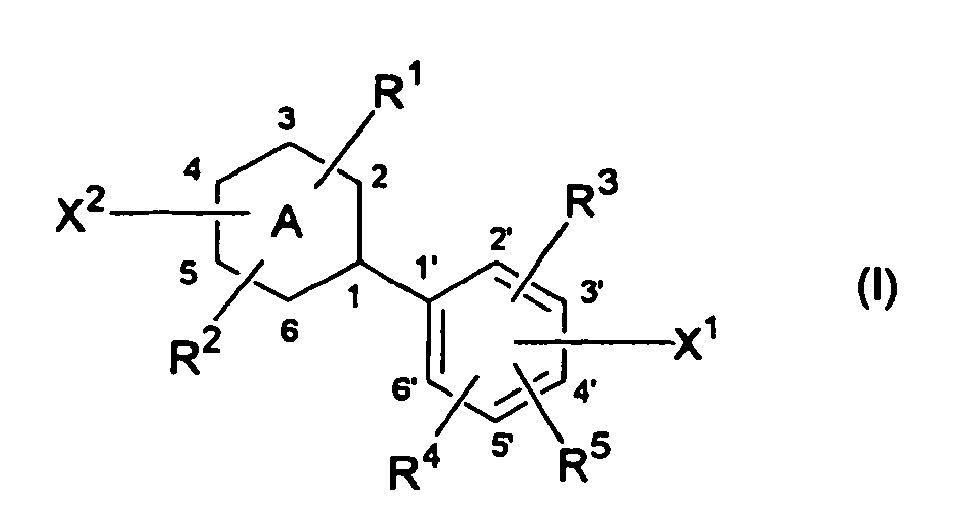
X1 and X2 are independently an aryl that may be optionally substituted, a heteroaryl that may be optionally substituted, a cycloalkyl that may be optionally substituted, an aryloxy that may be optionally substituted, a heteroaryloxy that may be optionally substituted, an arylthio that may be optionally substituted, a heteroarylthio that may be optionally substituted, a hydrogen, a halogen, a hydroxy, a lower alkyl that may be optionally substituted, a lower alkenyl that may be optionally substituted, a lower alkoxy that may be optionally substituted, a lower alkenyloxy that may be optionally substituted, a carboy, a lower alkoxycarbonyl that may be optionally substituted, an acyl that may be optionally substituted, an amino that may be optionally substituted, or a carbamoyl that may be optionally substituted,
provided that at least one of X1 and X2 is an aryl that may be optionally substituted, or a heteroaryl that may be optionally substituted;
ring A is a benzene ring that may be optionally condensed with another aromatic ring, or a 6-membered aromatic heterocyclic ring containing 1 to 3 N atoms that may be optionally condensed with another aromatic ring;
R1, R2, R3, R4 and R5 are independently a hydrogen, a halogen, a hydroxy, a lower alkyl that may be optionally substituted, a lower alkenyl that may be optionally substituted, a lower alkoxy that may be optionally substituted, a lower alkenyloxy that may be optionally substituted, a carboxy, a lower alkoxycarbonyl that may be optionally substituted, an acyl that may be optionally substituted, an amino that may be optionally substituted, or a carbamoyl that may be optionally substituted (herein after as referred to compound (I)); a prodrug thereof, a pharmaceutically acceptable salt or solvate of them; - 2) The pharmaceutical composition according to above 1), in which ring A in formula (I) is a benzene ring, a pyridine ring, a pyrimidine ring, a pyrazine ring, a pyridazine ring, a triazine ring, a quinoline ring, a quinoxaline ring, or a phthalazine ring; X1 is a phenyl that may be optionally substituted, or a heteroaryl that may be optionally substituted; and X2 is a hydrogen, a halogen, a hydroxy, a lower alkyl, a lower alkenyl, a lower alkoxy, or a phenyl;
- 3) The pharmaceutical composition according to above 1) or 2), in which X1 in formula (I) is bonded at position 4';
- 4) The pharmaceutical composition according to any one of above 1) to 3), in which X1 in formula (I) is a phenyl that may be optionally substituted, a furyl that may be optionally substituted, or a thienyl that may be optionally substituted;
- 5) The pharmaceutical composition according to any one of above 1) to 4), in which at least one of the atoms within ring A in formula (I) at positions 2 and 6 is N;
- 6) The pharmaceutical composition according to any one of above 1) to 5), in which R1, R2, R3, R4 and R5 are independently a hydrogen, a hydroxy, a lower alkyl, or a lower alkoxy;
- 7) The pharmaceutical composition according to above 1), in which ring A in formula (I) is a benzene ring, a pyridine ring, a pyrimidine ring, a pyrazine ring, a pyridazine ring, or a triazine ring; X1 is a hydrogen, a halogen, a hydroxy, a lower alkyl, a lower alkenyl, a lower alkoxy, or a phenyl; and X2 is a phenyl that may be optionally substituted, or a heteroaryl that may be optionally substituted;
- 8) The pharmaceutical composition according to any one of above 1) to 7), in which X2 in formula (I) is bonded at position 4 on ring A;
- 9) The pharmaceutical composition according to any one of above 1), 7) and 8, in which X2 in formula (I) is a phenyl that may be optionally substituted;
- 10) The pharmaceutical composition according to any one of claims 7 to 9, in which all of R1, R2, R3, R4 and R5 are a hydrogen;
- 11) The pharmaceutical composition according to any one of above 1) to 10), which is used for prevention and/or treatment of dyslipidemia or arteriosclerotic diseases;
- 12) A method of enhancing the expression of apoAI, which comprises administrating a therapeutically effective amount of a compound of formula (I) as defined in above (1), a prodrug thereof, a pharmaceutically acceptable salt or solvate of them to a patient expected to enhance the expression of apoAI; preferably, the method which comprises administrating a therapeutically effective amount of a compound of formula (I) as defined in above (2) to (10), a prodrug thereof, a pharmaceutically acceptable salt or solvate of them;
- 13) A method of treatment and/or prevention of dyslipidemia, arteriosclerotic diseases or coronary artery diseases, which comprises administrating a therapeutically effective amount of a compound of formula (I) as defined in above (1), a prodrug thereof, a pharmaceutically acceptable salt or solvate of them to a patient suspected to have dyslipidemia, arteriosclerotic diseases or coronary artery diseases; preferably, the method which comprises administrating a therapeutically effective amount of a compound of formula (I) as defined in above (2) to (10), a prodrug thereof, a pharmaceutically acceptable salt or solvate of them;
- 14) Use of a compound of formula (I) as defined in above (1), a prodrug thereof, a pharmaceutically acceptable salt or solvate of them for the manufacturing a medicament of enhancing the expression of apoAI; preferably, the use of a compound of formula (I) as defined in above (2) to (10), a prodrug thereof, a pharmaceutically acceptable salt or solvate of them;
- 15) Use of a compound of formula (I) as defined in above (1), a prodrug thereof, a pharmaceutically acceptable salt or solvate of them for the manufacturing a medicament of treatment and/or prevention of dyslipidemia, arteriosclerotic diseases or coronary artery diseases; preferably, the use of a compound of formula (I) as defined in above (2) to (10), a prodrug thereof, a pharmaceutically acceptable salt or solvate of them.
- The term "halogen" as used herein includes fluorine, chlorine, bromine and iodine.
- The term "lower alkyl" as used herein refers to a straight or branched chain alkyl comprising 1 to 6 carbon atoms, preferably 1 to 3 carbon atoms. Examples of the lower alkyl include methyl, ethyl, n-propyl, isopropyl, n-butyl, isobutyl, sec-butyl, tert-butyl, n-pentyl, isopentyl, neopentyl, hexyl, isohexyl, and the like.
- The term "lower alkyl that may be optionally substituted" as used herein includes a lower alkyl, of which any position may be substituted by one or more substituents. The substituent includes a halogen, a hydroxy, a lower alkoxy, an acyl, an acyloxy, a carboxy, a lower alkoxycarbonyl, an amino, a lower alkylamino, an imino that may be optionally substituted wherein the substituent is a heterocyclic ring that may be optionally substituted by hydroxy or a lower alkyl; a nitro, an aryl, a heteroaryl, and the like.
- Alkyl moiety of "lower alkoxy", "lower alkylthio" or "lower alkylamino" is similar to the "lower alkyl" as described above.
- Substituent in "lower alkoxy that may be optionally substituted" is similar to the substituent of "lower alkyl that may be optionally substituted" as described above.
- The term "lower alkylenedioxy" specifically includes methylenedioxy and ethylenedioxy.
- Substituent in "lower alkylenedioxy that may be optionally substituted" includes the substituent of "lower alkyl" as described above, and a lower alkenyl and a lower alkynyl.
- Lower alkyl moiety of "lower alkoxycarbonyl" is similar to the "lower alkyl" as described above, and substituent of "lower alkoxycarbonyl that may be optionally substituted" is similar to the substituent of "lower alkyl that may be optionally substituted" as described above.
- The term "lower alkenyl" refers to a straight or branched alkenyl comprising 2 to 6 carbon atoms, preferably 2 to 4 carbon atoms. Specific examples include vinyl, 1-propenyl, allyl, isopropenyl, butenyl, isobutenyl, butadienyl, pentenyl, isopentenyl, pentadienyl, hexenyl, and isohexenyl, all of which contain one or more double bonds at arbitrary position.
- Substituent of "lower alkenyl that may be optionally substituted" includes a hydroxy, a halogen, a lower alkoxy, a carboxy, an acyl, an acyloxy, a cycloalkyl, a lower alkoxycarbonyl, an aryl, and a heteroaryl, and may be substituted at one or more arbitrary positions.
- Lower alkenyl moiety of "lower alkenyloxy" and "lower alkenyloxycarbonyl", and substituent of "lower alkenyloxy that may be optionally substituted" are similar to those of "lower alkenyl" and "lower alkenyl that may be optionally substituted" as described above.
- The term "lower alkynyl" refers to a straight or branched alkynyl comprising 2 to 6 carbon atoms, preferably 2 to 4 carbon atoms, and specific examples include ethynyl, propynyl, butynyl, pentynyl, hexynyl, heptynyl, octynyl, nonynyl, and decynyl. Those contain one or more triple bonds, and further may contain a double bond.
- Substituent of "lower alkynyl that may be optionally substituted" are similar to the substituent of "lower alkyl that may be optionally substituted" as described above.
- Lower alkynyl moiety and substituent of "lower alkynyloxy" and "lower alkynyloxy that may be optionally substituted" are similar to those of "lower alkynyl" and "lower alkynyl that may be optionally substituted" as described above, respectively.
- The term "acyl" includes an aroyl and an aliphatic acyl containing 1 to 7 carbon atoms. Here, "aroyl" refers to a group wherein a carbonyl group is bonded to an aryl or a heteroaryl group. Examples of the acyl include formyl, acetyl, propionyl, butyryl, isobutyryl, valery, pivaloyl, hexanoyl, acryloyl, propiolyl, methacryloyl, crotonoyl, and benzoyl. Preferably, acetyl and benzoyl are exemplified.
- Substituent of "acyl that may be optionally substituted" is similar to the substituent of the "lower alkyl that may be optionally substituted" as described above. The aromatic moiety of aroyl may be substituted by a lower alkyl. Acyl may be substituted at one or more positions by such a substituent.
- Acyl moiety of "acyloxy" and "halogenoacyl" is similar to the "acyl" as described above.
- The term "amino that may be optionally substituted" includes an amino that may be optionally substituted by one to three substituent(s). Examples of the substituents include the substituents of the "lower alkyl that may be optionally substituted" as described above, and a lower alkyl. Amino substituted by three substituents refers to a quaternary salt. Preferably, an unsubstituted amino, and an amino that is substituted by one or two alkyl(s) and/or acyl(s).
- Substituent of "carbamonyl that may be optionally substituted" is similar to the substituent of the "lower alkyl that may be optionally substituted" as described above. Preferably, an unsubstituted carbamoyl and a di-lower alkylcarbamoyl are exemplified.
- The term "cycloalkyl" refers to an aliphatic cyclic carbon ring group containing 3 to 10 carbon atoms, preferably 3 to 6 carbon atoms. Examples includes cyclopropyl, cyclobutyl, cyclopentyl, cyclohexyl, cycloheptyl, cyclooctyl, cyclononyl, and cyclodecyl.
- Substituent of "cycloalkyl that may be optionally substituted" is similar to the substituent of the "lower alkyl that may be optionally substituted" as described above.
- The term "aryl" includes, for example, phenyl, naphthyl, and anthryl. Aryl also includes a phenyl condensed with a non-aromatic carbon ring such as indanyl and indenyl. Phenyl and naphthyl are preferable, and phenyl is most preferable.
- The term "heteroaryl" refers to a monocyclic and bicyclic aromatic heterocyclic ring group containing one or more hetero atoms selected from the group consisting of N, S and O within its ring. Examples of the heteroaryl include a monocyclic heteroaryl, e.g., pyrrolyl, imidazolyl, pyrazolyl, pyridyl, pyridazinyl, pyrimidyl, pyrazinyl, triazolyl, triazinyl, tetrazolyl, isoxazolyl, oxazolyl, oxadiazolyl, isothiazolyl, thiazolyl, thiadiazolyl, furyl, and thienyl; as well as a bicyclic heteroaryl, e.g., indolyl, isoindolyl, indolizinyl, benzimidazolyl, indazolyl, cinnolinyl, phthalazinyl, benzoxazolyl, benzisoxazolyl, benzoxadiazolyl, benzothiazolyl, benzisothiazolyl, benzothiadiazolyl, benzofuryl, isobenzofuryl, benzothienyl, benzotriazolyl, imidazopyridyl, triazolopyridyl, imidazothiazolyl, pyrazinopiridazinyl, quinazolinyl, quinolyl, isoquinolyl, quinoxalinyl, purinyl, pteridinyl, naphthylidinyl, pyrazinopyridazinyl, and the like.
- Examples of substituents of "aryl that may be optionally substituted", "phenyl that may be optionally substituted", "heteroaryl that may be optionally substituted", "furyl that may be optionally substituted" and "thienyl that may be optionally substituted" include a halogen; a hydroxy; a lower alkyl optionally substituted by a halogen, a hydroxy or a lower alkoxy; a lower alkoxy optionally substituted by a substituent such as a halogen, a hydroxy, an amino, an imino, a hydroxyimino, phenyl, or a heterocyclic imino that may be substituted by a lower alkyl; a lower alkenyl optionally substituted by a halogen, a hydroxy, a lower alkoxy; a lower alkenyloxy optionally substituted by a halogen, a hydroxy or a lower alkoxy; a lower alkynyl optionally substituted by a halogen, a hydroxy or a lower alkoxy; a lower alkynyloxy optionally substituted by a halogen, a hydroxy or a lower alkoxy; a cycloalkyl optionally substituted by a halogen, a hydroxy, a lower alkyl or a lower alkoxy; an acyl; an acyloxy; a carboxy; a lower alkoxycarbonyl; a lower alkenyloxycarbonyl; an amino optionally substituted by a lower alkyl, an acyl or halogenoacyl; a hydrazino; a carbamoyl optionally substituted by a lower alkyl; a nitro; a cyano; a lower alkenyloxy optionally substituted by a halogen, a hydroxy or a lower alkoxy; a mercapto; a lower alkylthio; an aryl optionally substituted by a halogen, a hydroxy, a lower alkyl or a lower alkoxy; a heteroaryl optionally substituted by a halogen, a hydroxy, a lower alkyl or a lower alkoxy; an aryloxy optionally substituted by a halogen, a hydroxy, a lower alkyl or a lower alkoxy; a heteroaryloxy optionally substituted by a halogen, a hydroxy, a lower alkyl or a lower alkoxy; a phenylamino optionally substituted by a halogen, a hydroxy, a lower alkyl or a lower alkoxy; and a lower alkylenedioxy optionally substituted by a halogen, a hydroxy, a lower alkyl, a lower alkenyl, a lower alkynyl, a lower alkoxy, and the like, which may be substituted at one or more arbitrary position. Preferably, a halogen; a hydroxy; a lower alkyl; a lower alkoxy; an acyl; an acyloxy; an amino; an acylamino; a phenyl optionally substituted by a lower alkyl or a lower alkoxy; or a heteroaryl are exemplified.
- Aryl moiety of "aryloxy" and "arylthio" is similar to "aryl" as described above.
- Substituent of "aryloxy that may be optionally substituted" and "arylthio that may be optionally substituted" are similar to the substituent of "aryl that may be optionally substituted" as described above.
- Heteroaryl moiety of "heteroaryloxy" and "heteroarylthio" is similar to "heteroaryl" as described above, and substituent of "heteroaryloxy that may be optionally substituted" and "heteroarylthio that may be optionally substituted" are similar to those of "heteroaryl that may be optionally substituted" as described above.
- Specific examples of "6-membered aromatic heterocyclic ring containing 1 to 3 N atoms" include a pyridine ring, a pyrimidine ring, a pyridazine ring, a pyrazine ring, and a triazine ring.
- The terms "benzene ring that may be optionally condensed with another aromatic ring" and "6-membered aromatic heterocyclic ring containing 1 to 3 N atoms that may be optionally condensed with another aromatic ring" include a benzene ring and 6-membered aromatic heterocyclic ring containing 1 to 3 N atoms, both of which may be optionally condensed with a benzene ring or monocyclic aromatic heterocyclic ring.
- The term "monocyclic aromatic heterocyclic ring" includes a monocyclic aromatic heterocyclic ring group containing one or more hetero atoms selected from the group consisting of N, S and O within its ring.
- Examples include pyrrole, imidazole, pyrazole, pyridine, pyridazine, pyrimidine, pyrazine, triazole, triazine, tetrazole, isoxazole, oxazole, oxadiazole, isothiazole, thiazole, thiadiazole, furan, and thiophene.
- Examples of "benzene ring that may be optionally condensed with another aromatic ring" include naphthalene, benzofuran, benzimidazole, benzothiazole, benzisothiazole, benzoxazole, benzisoxazole, benzotriazole, benzoxadiazole, benzopyrazole, benzothiophene, benzothiazole, cinnoline, indazole, indole, indoline, isobenzofurane, isoindole, isoindoline, quinoline, isoquinoline, quinoxaline, quinazoline, and phthalazine. Preferably, quinoline, quinoxaline, and phthalazine are exemplified.
- Examples of "6-membered aromatic heterocyclic ring containing 1 to 3 N atoms that may be optionally condensed with another aromatic ring" include quinoline, isoquinoline, quinoxaline, quinazoline, phthalazine, cinnoline, naphthyridine, pteridine, purine, and pyrazinopyridazine. Preferably; quinoline, quinoxaline, and phthalazine are exemplified.
- The phrase "at least one of the atoms within ring A at positions 2 and 6 is N" means specifically ring A of the followings:


- The term "heterocyclic ring" includes the "heteroaryl" as described above, and a non-aromatic heterocyclic ring group.
- The term "non-aromatic heterocyclic ring group" include a monocyclic and bicyclic non-aromatic heterocyclic ring group containing one or more hetero atoms selected from the group consisting of N, S and O within its ring. Examples of the non-aromatic heterocyclic ring include oxanyl, thiiranyl, oxiranyl, oxathiolanyl, azetidinyl, thianyl, pyrrolidinyl, pyrrolinyl, imidazolidinyl, imidazolinyl, pyrazolidinyl, pyrazolinyl, piperidyl, piperazinyl, and morpholinyl.
- The compounds according to the invention include pharmaceutically acceptable, producible salts. Examples of the "pharmaceutically acceptable salts" include a salt with an inorganic acid e.g. those with hydrochloric acid, sulfuric acid, nitric acid, phosphoric acid, or the like; a salt with an organic acid e.g. those with p-toluenesulfonic acid, methanesulfonic acid, oxalic acid, citric acid, or the like; a salt with an organic base e.g. ammonium, trimethylammonium, triethylammonium, or the like; a salt with an alkaline metal e.g. sodium or potassium, or the like; a quaternary salt with alkyl halide e.g., methyl iodide, ethyl iodide or the like; and a salt with an alkaline earth metal e.g., calcium or magnesium, or the like.
- The compounds according to the invention may form solvates as coordinated with a suitable organic solvent and/or water. Hydrates are exemplified.
- The compounds according to the invention also include prodrugs. In the context of the invention, a "prodrug" is a derivative of a compound according to the invention comprising a chemically or metabolically cleavable group. In the course of metabolism in the body, a prodrug shows a pharmacological activity as a result of conversion to the compounds according to the invention. Method for selecting and producing suitable prodrug derivatives are described in, e.g. "Design of Prodrugs, Elsevier, Amsterdam (1985)".
- Prodrugs of a compound according to the invention having a carboxy are exemplified by an ester derivative prepared by condensing the carboxy group with a suitable alcohol, e.g., COORA wherein RA is a lower alkyl, a lower alkenyl or an aryl, each of which may be optionally substituted in which the substituent may be a hydroxy, an acyloxy, a carboxy, a sulfonic acid, an amino, a lower alkylamino, or the like; or alternatively by an amide derivative prepared by reacting the carboxy and a suitable amine, e.g., CONRBRC wherein RB is a hydrogen, a lower alkyl, or the like; and RC is a hydrogen, a lower alkyl, an amino, a hydroxy, or the like.
- Prodrugs of a compound according to the invention having a hydroxy are exemplified by an acyloxy derivative prepared by reacting the hydroxy group and a suitable acyl halide or a suitable acid anhydride, e.g., -OCORA wherein RA is as defined above.
- Prodrugs of a compound according to the invention having an amino, are exemplified by an amide derivative prepared by reacting the amino group and a suitable acid halide or a suitable mixed anhydride compound, e.g., NHCORA, and NHCOORA wherein RA is as defined above.
- When compound (I) according to the invention has asymmetric carbon atom(s), then the invention encompasses a racemic mixture, both of enantiomers, and all of diastereomers. When compound (I) according to the invention has a double bond, the invention may include both of geometric isomers resulting from possible arrangements of its substituents.
- Although all of the compounds according to the invention have an activity for enhancing the expression of apoAI, the following compounds can be listed as preferable compounds.
- (a) in case that X1 is an aryl that may be optionally substituted or a heteroaryl that may be optionally substituted:
- a-1) a compound wherein X1 is an aryl that may be optionally substituted or a heteroaryl that may be optionally substituted, which is bonded at position 4' (hereinafter, X1 is regarded as X1-1);
a compound wherein X1 is a phenyl that may be optionally substituted or a monocyclic heteroaryl that may be optionally substituted, which is bonded at position 4' (hereinafter, X1 is regarded as X1-2);
a compound wherein X1 is a phenyl that may be optionally substituted, a furyl that may be optionally substituted, or a thienyl that may be optionally substituted, which is bonded at position 4' (hereinafter, X1 is regarded as X1-3);
a compound wherein X1 is a phenyl that may be optionally substituted wherein the substituent is a halogen; a hydroxy; a lower alkyl; a lower alkoxy that may be optionally substituted by an amino, a hydroxyimino, a lower alkylpiperazinylimino, or a phenyl; a lower alkylenedioxy that may be optionally substituted by a halogen, a hydroxy, a lower alkyl, a lower alkenyl, a lower alkynyl or a lower alkoxy; an acyloxy, and an acylamino; an unsubstituted furyl; or an unsubstituted thienyl, which is bonded at position 4' (hereinafter, X1 is regarded as X1-4);
a compound wherein X1 is a phenyl that may be optionally substituted wherein the substituent is a halogen, a lower alkyl, a lower alkoxy, a lower alkylenedioxy, an acyloxy, and an acylamino, which is bonded at position 4' (hereinafter, X1 is regarded as X1-5); - a-2) a compound wherein X2 is a phenyl, a hydrogen, a halogen, a hydroxy, a lower alkyl that may be optionally substituted, a lower alkenyl that may be optionally substituted, a lower alkoxy that may be optionally substituted, a lower alkenyloxy that may be optionally substituted, a carboxy, a lower alkoxycarbonyl that may be optionally substituted, an acyl that may be optionally substituted, an amino that may be optionally substituted, or a carbamoyl that may be optionally substituted (hereinafter, X2 is regarded as X2-1);
a compound wherein X2 is a phenyl, a hydrogen, a halogen, a hydroxy, a lower alkyl, a halogeno-lower alkyl, a hydroxy-lower alkyl, a lower alkoxy-lower alkyl, an acyl-lower alkyl, a lower alkenyl, a lower alkoxy, a halogeno-lower alkoxy, a hydroxy-lower alkoxy, a lower alkoxy-lower alkoxy, an acyl-lower alkoxy, a carboxy, a lower alkoxycarbonyl, an acyl, an amino, a lower alkylamino or an acylamino (hereinafter, X2 is regarded as X2-2);
a compound wherein X2 is a hydrogen, a halogen, a hydroxy, a lower alkyl, a lower alkenyl, or a lower alkoxy (hereinafter, X2 is regarded as X2-3);
a compound wherein X2 is a hydrogen, a halogen, a lower alkyl, or a lower alkoxy (hereinafter, X2 is regarded as X2-4); - a-3) a compound wherein ring A is a benzene ring that may be optionally condensed with another aromatic ring, or a 6-membered aromatic heterocyclic ring containing 1 to 3 N atoms that may be optionally condensed with another aromatic ring (hereinafter, ring A is regarded as A-1);
a compound wherein ring A is a benzene ring, or a 6-membered aromatic heterocyclic ring containing 1 to 3 N atoms wherein at least one of the atoms at positions 2 and 6 is N, which may be optionally condensed with a benzene ring (hereinafter, ring A is regarded as A-2);
a compound wherein ring A is a benzene ring, a pyridine ring, a pyrimidine ring, a pyrazine ring, a pyridazine ring, a triazine ring, a quinoline ring, a quinoxaline ring, or a phthalazine ring (hereinafter, ring A is regarded as A-3);
a compound wherein ring A is

- a-4) a compound wherein R1, R2, R3, R4 and R5 are independently a hydrogen, a halogen, a hydroxy, a lower alkyl that may be optionally substituted, a lower alkenyl, a lower alkoxy, a carboxy, a lower alkoxycarbonyl, an acyl, an amino, a lower alkylamino, or an acylamino (hereinafter, R1 to R5 are regarded as R-1);
a compound wherein R1, R2, R3, R4 and R5 are independently a hydrogen, a halogen, a hydroxy, a lower alkyl, a lower alkoxy, an acyl, an amino, a lower alkylamino, or an acylamino (hereinafter, R1 to R5 are regarded as R-2);
a compound wherein R1, R2, R3, R4 and R5 are independently a hydrogen, a halogen, a lower alkyl, or a lower alkoxy (hereinafter, R1 to R5 are regarded as R-3);
a compound wherein R1, R2, R3, R4 and R5 are all a hydrogen (hereinafter, R1 to R5 are regarded as R-4);
- a-1) a compound wherein X1 is an aryl that may be optionally substituted or a heteroaryl that may be optionally substituted, which is bonded at position 4' (hereinafter, X1 is regarded as X1-1);
- (b) in case that X2 is an aryl that may be optionally substituted or a heteroaryl that may be optionally substituted:
- b-1) a compound wherein X1 is a phenyl, a hydrogen, a halogen, a hydroxy, a lower alkyl that may be optionally substituted, a lower alkenyl that may be optionally substituted, a lower alkoxy that may be optionally substituted, a lower alkenyloxy that may be optionally substituted, a lower alkynyloxy that may be optionally substituted, a carboxy, a lower alkoxycarbonyl that may be optionally substituted, an acyl that may be optionally substituted, an amino that may be optionally substituted, or a carbamoyl that may be optionally substituted (hereinafter, X1 is regarded as X1-6);
a compound wherein X1 is a phenyl, a hydrogen, a halogen, a hydroxy, a lower alkyl, a halogeno-lower alkyl, a hydroxy-lower alkyl, a lower alkoxy-lower alkyl, an acyl-lower alkyl, a lower alkenyl, a lower alkoxy, a halogeno-lower alkoxy, a hydroxy-lower alkoxy, a lower alkoxy-lower alkoxy, an acyl-lower alkoxy, a lower alkenyloxy, a carboxy, a lower alkoxycarbonyl, an acyl, an amino, a lower alkylamino or an acylamino (hereinafter, X1 is regarded as X 1-7);
a compound wherein X1 is a hydrogen, a halogen, a hydroxy, a lower alkyl, a lower alkenyl, or a lower alkoxy (hereinafter, X1 is regarded as X1-8);
a compound wherein X1 is a hydrogen (hereinafter, X1 is regarded as X1-9); - b-2) a compound wherein X2 is an aryl that may be optionally substituted or a heteroaryl that may be optionally substituted, which is bonded at position 4' (hereinafter, X2 is regarded as X2-5);
a compound wherein X2 is a phenyl that may be optionally substituted or a monocyclic heteroaryl that may be optionally substituted, which is bonded at position 4' (hereinafter, X2 is regarded as X2-6);
a compound wherein X1 is a phenyl that may be optionally substituted, a furyl that may be optionally substituted, or a thienyl that may be optionally substituted, which is bonded at position 4' (hereinafter, X2 is regarded as X2-7);
a compound wherein X2 is a phenyl that may be optionally substituted wherein the substituent is a hydroxy, a lower alkyl, a lower alkoxy, an acyloxy, a lower alkylamino, or an acylamino; an unsubstituted furyl; or an unsubstituted thienyl, which is bonded at position 4' (hereinafter, X2 is regarded as X2-8);
a compound wherein X2 is an unsubstituted phenyl which is bonded at position 4' (hereinafter, X2 is regarded as X2-9); - b-3) a compound wherein ring A is a benzene ring or a 6-membered aromatic heterocyclic ring containing 1 to 3 N atoms (hereinafter, ring A is regarded as A-5);
a compound wherein ring A is a 6-membered aromatic heterocyclic ring containing 1 to 3 N atoms (hereinafter, ring A is regarded as A-6);
a compound wherein ring A is a benzene ring, a pyridine ring, a pyrimidine ring, a pyrazine ring, a pyridazine ring, or a triazine ring (hereinafter, ring A is regarded as A-7); - b-4) a compound wherein R1, R2, R3, R4 and R5 are R-1;
a compound wherein R1, R2, R3, R4 and R5 are R-2;
a compound wherein R1, R2, R3, R4 and R5 are R-3;
a compound wherein R1, R2, R3, R4 and R5 are R-4;
a compound wherein a combination of X1, X2, A and R, (X1, X2, A, R) is as follows:- (X1, X2, A, R) = (X1-1, X2-1, A-1, R-1), (X1-1, X2-1, A-1, R-2), (X1-1, X2-1, A-1, R-3), (X1-1, X2-1, A-1, R-4), (X1-1, X2-1, A-2, R-1), (X1-1, X2-1,
- A-2, R-2), (X1-1, X2-1, A-2, R-3), (X1-1, X2-1, A-2, R-4), (X1-1, X2-1, A-3, R-1), (X1-1, X2-1, A-3, R-2), (X1-1, X2-1, A-3, R-3), (X1-1, X2-1, A-3,
- R-4), (X1-1, X2-1, A-4, R-1), (X1-1, X2-1, A-4, R-2), (X1-1, X2-1, A-4, R-3), (X1-1, X2-1, A-4, R-4), (X1-1, X2-2, A-1, R-1), (X1-1, X2-2, A-1, R-2),
- (X1-1, X2-2, A-1, R-3), (X1-1, X2-2, A-1, R-4), (X1-1, X2-2, A-2, R-1),
- (X1-1, X2-2, A-2, R-2), (X1-1, X2-2, A-2, R-3), (X1-1, X2-2, A-2, R-4),
- (X1-1, X2-2, A-3, R-1), (X1-1, X2-2, A-3, R-2), (X1-1, X2-2, A-3, R-3),
- (X1-1, X2-2, A-3, R-4), (X1-1, X2-2, A-4, R-1), (X1-1, X2-2, A-4, R-2),
- (X1-1, X2-2, A-4, R-3), (X1-1, X2-2, A-4, R-4), (X1-1, X2-3, A-1, R-1),
- (X1-1, X2-3, A-1, R-2), (X1-1, X2-3, A-1, R-3), (X1-1, X2-3, A-1, R-4),
- (X1-1, X2-3, A-2, R-1), (X1-1, X2-3, A-2, R-2), (X1-1, X2-3, A-2, R-3),
- (X1-1, X2-3, A-2, R-4), (X1-1, X2-3, A-3, R-1), (X1-1, X2-3, A-3, R-2),
- (X1-1, X2-3, A-3, R-3), (X1-1, X2-3, A-3, R-4), (X1-1, X2-3, A-4, R-1),
- (X1-1, X2-3, A-4, R-2), (X1-1, X2-3, A-4, R-3), (X1-1, X2-3, A-4, R-4),
- (X1-1, X2-4, A-1, R-1), (X1-1, X2-4, A-1, R-2), (X1-1, X2-4, A-1, R-3),
- (X1-1, X2-4, A-1, R-4), (X1-1, X2-4, A-2, R-1), (X1-1, X2-4, A-2, R-2),
- (X1-1, X2-4, A-2, R-3), (X1-1, X2-4, A-2, R-4), (X1-1, X2-4, A-3, R-1),
- (X1-1, X2-4, A-3, R-2), (X1-1, X2-4, A-3, R-3), (X1-1, X2-4, A-3, R-4),
- (X1-1, X2-4, A-4, R-1), (X1-1, X2-4, A-4, R-2), (X1-1, X2-4, A-4, R-3),
- (X1-1, X2-4, A-4, R-4),
- (X1-2, X2-1, A-1, R-1), (X1-2, X2-1, A-1, R-2), (X1-2, X2-1, A-1,
- R-3), (X1-2, X2-1, A-1, R-4), (X1-2, X2-1, A-2, R-1), (X1-2, X2-1, A-2, R-2), (X1-2, X2-1, A-2, R-3), (X1-2, X2-1, A-2, R-4), (X1-2, X2-1, A-3, R-1),
- (X1-2, X2-1, A-3, R-2), (X1-2, X2-1, A-3, R-3), (X1-2, X2-1, A-3, R-4),
- (X1-2, X2-1, A-4, R-1), (X1-2, X2-1, A-4, R-2), (X1-2, X2-1, A-4, R-3),
- (X1-2, X2-1, A-4, R-4), (X1-2, X2-2, A-1, R-1), (X1-2, X2-2, A-1, R-2),
- (X1-2, X2-2, A-1, R-3), (X1-2, X2-2, A-1, R-4), (X1-2, X2-2, A-2, R-1),
- (X1-2, X2-2, A-2, R-2), (X1-2, X2-2, A-2, R-3), (X1-2, X2-2, A-2, R-4),
- (X1-2, X2-2, A-3, R-1), (X1-2, X2-2, A-3, R-2), (X1-2, X2-2, A-3, R-3),
- (X1-2, X2-2, A-3, R-4), (X1-2, X2-2, A-4, R-1), (X1-2, X2-2, A-4, R-2),
- (X1-2, X2-2, A-4, R-3), (X1-2, X2-2, A-4, R-4), (X1-2, X2-3, A-1, R-1),
- (X1-2, X2-3, A-1, R-2), (X1-2, X2-3, A-1, R-3), (X1-2, X2-3, A-1, R-4),
- (X1-2, X2-3, A-2, R-1), (X1-2, X2-3, A-2, R-2), (X1-2, X2-3, A-2, R-3),
- (X1-2, X2-3, A-2, R-4), (X1-2, X2-3, A-3, R-1), (X1-2, X2-3, A-3, R-2),
- (X1-2, X2-3, A-3, R-3), (X1-2, X2-3, A-3, R-4), (X1-2, X2-3, A-4, R-1),
- (X1-2, X2-3, A-4, R-2), (X1-2, X2-3, A-4, R-3), (X1-2, X2-3, A-4, R-4),
- (X1-2, X2-4, A-1, R-1), (X1-2, X2-4, A-1, R-2), (X1-2, X2-4, A-1, R-3),
- (X1-2, X2-4, A-1, R-4), (X1-2, X2-4, A-2, R-1), (X1-2, X2-4, A-2, R-2),
- (X1-2, X2-4, A-2, R-3), (X1-2, X2-4, A-2, R-4), (X1-2, X2-4, A-3, R-1),
- (X1-2, X2-4, A-3, R-2), (X1-2, X2-4, A-3, R-3), (X1-2, X2-4, A-3, R-4),
- (X1-2, X2-4, A-4, R-1), (X1-2, X2-4, A-4, R-2), (X1-2, X2-4, A-4, R-3),
- (X1-2, X2-4, A-4, R-4),
- (X1-3, X2-1, A-1, R-1), (X1-3, X2-1, A-1, R-2), (X1-3, X2-1, A-1,
- R-3), (X1-3, X2-1, A-1, R-4), (X1-3, X2-1, A-2, R-1), (X1-3, X2-1, A-2, R-2), (X1-3, X2-1, A-2, R-3), (X1-3, X2-1, A-2, R-4), (X1-3, X2-1, A-3, R-1),
- (X1-3, X2-1, A-3, R-2), (X1-3, X2-1, A-3, R-3), (X1-3, X2-1, A-3, R-4),
- (X1-3, X2-1, A-4, R-1), (X1-3, X2-1, A-4, R-2), (X1-3, X2-1, A-4, R-3),
- (X1-3, X2-1, A-4, R-4), (X1-3, X2-2, A-1, R-1), (X1-3, X2-2, A-1, R-2),
- (X1-3, X2-2, A-1, R-3), (X1-3, X2-2, A-1, R-4), (X1-3, X2-2, A-2, R-1),
- (X1-3, X2-2, A-2, R-2), (X1-3, X2-2, A-2, R-3), (X1-3, X2-2, A-2, R-4),
- (X1-3, X2-2, A-3, R-1), (X1-3, X2-2, A-3, R-2), (X1-3, X2-2, A-3, R-3),
- (X1-3, X2-2, A-3, R-4), (X1-3, X2-2, A-4, R-1), (X1-3, X2-2, A-4, R-2),
- (X1-3, X2-2, A-4, R-3), (X1-3, X2-2, A-4, R-4), (X1-3, X2-3, A-1, R-1),
- (X1-3, X2-3, A-1, R-2), (X1-3, X2-3, A-1, R-3), (X1-3, X2-3, A-1, R-4),
- (X1-3, X2-3, A-2, R-1), (X1-3, X2-3, A-2, R-2), (X1-3, X2-3, A-2, R-3),
- (X1-3, X2-3, A-2, R-4), (X1-3, X2-3, A-3, R-1), (X1-3, X2-3, A-3, R-2),
- (X1-3, X2-3, A-3, R-3), (X1-3, X2-3, A-3, R-4), (X1-3, X2-3, A-4, R-1),
- (X1-3, X2-3, A-4, R-2), (X1-3, X2-3, A-4, R-3), (X1-3, X2-3, A-4, R-4),
- (X1-3, X2-4, A-1, R-1), (X1-3, X2-4, A-1, R-2), (X1-3, X2-4, A-1, R-3),
- (X1-3, X2-4, A-1, R-4), (X1-3, X2-4, A-2, R-1), (X1-3, X2-4, A-2, R-2),
- (X1-3, X2-4, A-2, R-3), (X1-3, X2-4, A-2, R-4), (X1-3, X2-4, A-3, R-1),
- (X1-3, X2-4, A-3, R-2), (X1-3, X2-4, A-3, R-3), (X1-3, X2-4, A-3, R-4),
- (X1-3, X2-4, A-4, R=1), (X1-3, X2-4, A-4, R-2), (X1-3, X2-4, A-4, R-3),
- (X1-3, X2-4, A-4, R-4),
- (X1-4, X2-1, A-1, R-1), (X1-4, X2-1, A-1, R-2), (X1-4, X2-1, A-1,
- R-3), (X1-4, X2-1, A-1, R-4), (X1-4, X2-1, A-2, R-1), (X1-4, X2-1, A-2, R-2), (X1-4, X2-1, A-2, R-3), (X1-4, X2-1, A-2, R-4), (X1-4, X2-1, A-3, R-1),
- (X1-4, X2-1, A-3, R-2), (X1-4, X2-1, A-3, R-3), (X1-4, X2-1, A-3, R-4),
- (X1-4, X2-1, A-4, R-1), (X1-4, X2-1, A-4, R-2), (X1-4, X2-1, A-4, R-3),
- (X1-4, X2-1, A-4, R-4), (X1-4, X2-2, A-1, R-1), (X1-4, X2-2, A-1, R-2),
- (X1-4, X2-2, A-1, R-3), (X1-4, X2-2, A-1, R-4), (X1-4, X2-2, A-2, R-1),
- (X1-4, X2-2, A-2, R-2), (X1-4, X2-2, A-2, R-3), (X1-4, X2-2, A-2, R-4),
- (X1-4, X2-2, A-3, R-1), (X1-4, X2-2, A-3, R-2), (X1-4, X2-2, A-3, R-3),
- (X1-4, X2-2, A-3, R-4), (X1-4, X2-2, A-4, R-1), (X1-4, X2-2, A-4, R-2),
- (X1-4, X2-2, A-4, R-3), (X1-4, X2-2, A-4, R-4), (X1-4, X2-3, A-1, R-1),
- (X1-4, X2-3, A-1, R-2), (X1-4, X2-3, A-1, R-3), (X1-4, X2-3, A-1, R-4),
- (X1-4, X2-3, A-2, R-1), (X1-4, X2-3, A-2, R-2), (X1-4, X2-3, A-2, R-3),
- (X1-4, X2-3, A-2, R-4), (X1-4, X2-3, A-3, R-1), (X1-4, X2-3, A-3, R-2),
- (X1-4, X2-3, A-3, R-3), (X1-4, X2-3, A-3, R-4), (X1-4, X2-3, A-4, R-1),
- (X1-4, X2-3, A-4, R-2), (X1-4, X2-3, A-4, R-3), (X1-4, X2-3, A-4, R-4),
- (X1-4, X2-4, A-1, R-1), (X1-4, X2-4, A-1, R-2), (X1-4, X2-4, A-1, R-3),
- (X1-4, X2-4, A-1, R-4), (X1-4, X2-4, A-2, R-1), (X1-4, X2-4, A-2, R-2),
- (X1-4, X2-4, A-2, R-3), (X1-4, X2-4, A-2, R-4), (X1-4, X2-4, A-3, R-1),
- (X1-4, X2-4, A-3, R-2), (X1-4, X2-4, A-3, R-3), (X1-4, X2-4, A-3, R-4),
- (X1-4, X2-4, A-4, R-1), (X1-4, X2-4, A-4, R-2), (X1-4, X2-4, A-4, R-3),
- (X1-4, X2-4, A-4, R-4)
- (X1-6, X2-5, A-5, X-6), (X1-6, X2-5, A-5, X-7), (X1-6, X2-5, A-5,
- X-8), (X1-6, X2-5, A-5, X-9), (X1-6, X2-5, A-6, X-6), (X1-6, X2-5, A-6, X-7), (X1-6, X2-5, A-6, X-8), (X1-6, X2-5, A-6, X-9), (X1-6, X2-5, A-7, X-6),
- (X1-6, X2-5, A-7, X-7), (X1-6, X2-5, A-7, X-8), (X1-6, X2-5, A-7, X-9),
- (X1-6, X2-6, A-5, X-6), (X1-6, X2-6, A-5, X-7), (X1-6, X2-6, A-5, X-8),
- (X1-6, X2-6, A-5, X-9), (X1-6, X2-6, A-6, X-6), (X1-6, X2-6, A-6, X-7),
- (X1-6, X2-6, A-6, X-8), (X1-6, X2-6, A-6, X-9), (X1-6, X2-6, A-7, X-6),
- (X1-6, X2-6, A-7, X-7), (X1-6, X2-6, A-7, X-8), (X1-6, X2-6, A-7, X-9),
- (X1-6, X2-7, A-5, X-6), (X1-6, X2-7, A-5, X-7), (X1-6, X2-7, A-5, X-8),
- (X1-6, X2-7, A-5, X-9), (X1-6, X2-7, A-6, X-6), (X1-6, X2-7, A-6, X-7),
- (X1-6, X2-7, A-6, X-8), (X1-6, X2-7, A-6, X-9), (X1-6, X2-7, A-7, X-6),
- (X1-6, X2-7, A-7, X-7), (X1-6, X2-7, A-7, X-8), (X1-6, X2-7, A-7, X-9),
- (X1-6, X2-8, A-5, X-6), (Xl-6, X2-8, A-5, X-7), (X1-6, X2-8, A-5, X-8),
- (X1-6, X2-8, A-5, X-9), (X1-6, X2-8, A-6, X-6), (X1-6, X2-8, A-6, X-7),
- (X1-6, X2-8, A-6, X-8), (X1-6, X2-8, A-6, X-9), (X1-6, X2-8, A-7, X-6),
- (X1-6, X2-8, A-7, X-7), (X1-6, X2-8, A-7, X-8), (X1-6, X2-8, A-7, X-9),
- (X1-6, X2-9, A-5, X-6), (X1-6, X2-9, A-5, X-7), (X1-6, X2-9, A-5, X-8),
- (X1-6, X2-9, A-5, X-9), (X1-6, X2-9, A-6, X-6), (X1-6, X2-9, A-6, X-7),
- (X1-6, X2-9, A-6, X-8), (X1-6, X2-9, A-6, X-9), (X1-6, X2-9, A-7, X-6),
- (X1-6, X2-9, A-7, X-7), (X1-6, X2-9, A-7, X-8), (X1-6, X2-9, A-7, X-9),
- (X1-7, X2-5, A-5, X-6), (X1-7, X2-5, A-5, X-7), (X1-7, X2-5, A-5,
- X-8), (X1-7, X2-5, A-5, X-9), (X1-7, X2-5, A-6, X-6), (X1-7, X2-5, A-6, X-7), (X1-7, X2-5, A-6, X-8), (X1-7, X2-5, A-6, X-9), (X1-7, X2-5, A-7, X-6),
- (X1-7, X2-5, A-7, X-7), (X1-7, X2-5, A-7, X-8), (X1-7, X2-5, A-7, X-9),
- (X1-7, X2-6, A-5, X-6), (X1-7, X2-6, A-5, X-7), (X1-7, X2-6, A-5, X-8),
- (X1-7, X2-6, A-5, X-9), (X1-7, X2-6, A-6, X-6), (X1-7, X2-6, A-6, X-7),
- (X1-7, X2-6, A-6, X-8), (X1-7, X2-6, A-6, X-9), (X1-7, X2-6, A-7, X-6),
- (X1-7, X2-6, A-7, X-7), (X1-7, X2-6, A-7, X-8), (X1-7, X2-6, A-7, X-9),
- (X1-7, X2-7, A-5, X-6), (X1-7, X2-7, A-5, X-7), (X1-7, X2-7, A-5, X-8),
- (X1-7, X2-7, A-5, X-9), (X1-7, X2-7, A-6, X-6), (X1-7, X2-7, A-6, X-7),
- (X1-7, X2-7, A-6, X-8), (X1-7, X2-7, A-6, X-9), (X1-7, X2-7, A-7, X-6),
- (X1-7, X2-7, A-7, X-7), (X1-7, X2-7, A-7, X-8), (X1-7, X2-7, A-7, X-9),
- (X1-7, X2-8, A-5, X-6), (X1-7, X2-8, A-5, X-7), (X1-7, X2-8, A-5, X-8),
- (X1-7, X2-8, A-5, X-9), (X1-7, X2-8, A-6, X-6), (X1-7, X2-8, A-6, X-7),
- (X1-7, X2-8, A-6, X-8), (X1-7, X2-8, A-6, X-9), (X1-7, X2-8, A-7, X-6),
- (X1-7, X2-8, A-7, X-7), (X1-7, X2-8, A-7, X-8), (X1-7, X2-8, A-7, X-9),
- (X1-7, X2-9, A-5, X-6), (X1-7, X2-9, A-5, X-7), (X1-7, X2-9, A-5, X-8),
- (X1-7, X2-9, A-5, X-9), (X1-7, X2-9, A-6, X-6), (X1-7, X2-9, A-6, X-7),
- (X1-7, X2-9, A-6, X-8), (X1-7, X2-9, A-6, X-9), (X1-7, X2-9, A-7, X-6),
- (X1-7, X2-9, A-7, X-7), (X1-7, X2-9, A-7, X-8), (X1-7, X2-9, A-7, X-9),
- (X1-8, X2-5, A-5, X-6), (X1-8, X2-5, A-5, X-7), (X1-8, X2-5, A-5,
- X-8), (X1-8, X2-5, A-5, X-9), (X1-8, X2-5, A-6, X-6), (X1-8, X2-5, A-6, X-7), (X1-8, X2-5, A-6, X-8), (X1-8, X2-5, A-6, X-9), (X1-8, X2-5, A-7, X-6),
- (X1-8, X2-5, A-7, X-7), (X1-8, X2-5, A-7, X-8), (X1-8, X2-5, A-7, X-9),
- (X1-8, X2-6, A-5, X-6), (X1-8, X2-6, A-5, X-7), (X1-8, X2-6, A-5, X-8),
- (X1-8, X2-6, A-5, X-9), (X1-8, X2-6, A-6, X-6), (X1-8, X2-6, A-6, X-7),
- (X1-8, X2-6, A-6, X-8), (X1-8, X2-6, A-6, X-9), (X1-8, X2-6, A-7, X-6),
- (X1-8, X2-6, A-7, X-7), (X1-8, X2-6, A-7, X-8), (X1-8, X2-6, A-7, X-9),
- (X1-8, X2-7, A-5, X-6), (X1-8, X2-7, A-5, X-7), (X1-8, X2-7, A-5, X-8),
- (X1-8, X2-7, A-5, X-9), (X1-8, X2-7, A-6, X-6), (X1-8, X2-7, A-6, X-7),
- (X1-8, X2-7, A-6, X-8), (X1-8, X2-7, A-6, X-9) (X1-8, X2-7, A-7, X-6),
- (X1-8, X2-7, A-7, X-7), (X1-8, X2-7, A-7, X-8), (X1-8, X2-7, A-7, X-9),
- (X1-8, X2-8, A-5, X-6), (X1-8, X2-8, A-5, X-7), (X1-8, X2-8, A-5, X-8),
- (X1-8, X2-8, A-5, X-9), (X1-8, X2-8, A-6, X-6), (X1-8, X2-8, A-6, X-7),
- (X1-8, X2-8, A-6, X-8), (X1-8, X2-8, A-6, X-9), (X1-8, X2-8, A-7, X-6),
- (X1-8, X2-8, A-7, X-7), (X1-8, X2-8, A-7, X-8), (X1-8, X2-8, A-7, X-9),
- (X1-8, X2-9, A-5, X-6), (X1-8, X2-9, A-5, X-7), (X1-8, X2-9, A-5, X-8),
- (X1-8, X2-9, A-5, X-9), (X1-8, X2-9, A-6, X-6), (X1-8, X2-9, A-6, X-7),
- (X1-8, X2-9, A-6, X-8), (X1-8, X2-9, A-6, X-9), (X1-8, X2-9, A-7, X-6),
- (X1-8, X2-9, A-7, X-7), (X1-8, X2-9, A-7, X-8), (X1-8, X2-9, A-7, X-9),
- (X1-9, X2-5, A-5, X-6), (X1-9, X2-5, A-5, X-7), (X1-9, X2-5, A-5,
- X-8), (X1-9, X2-5, A-5, X-9), (X1-9, X2-5, A-6, X-6), (X1-9, X2-5, A-6, X-7), (X1-9, X2-5, A-6, X-8), (X1-9, X2-5, A-6, X-9), (X1-9, X2-5, A-7, X-6),
- (X1-9, X2-5, A-7, X-7), (X1-9, X2-5, A-7, X-8), (X1-9, X2-5, A-7, X-9),
- (X1-9, X2-6, A-5, X-6), (X1-9, X2-6, A-5, X-7), (X1-9, X2-6, A-5, X-8),
- (X1-9, X2-6, A-5, X-9), (X1-9, X2-6, A-6, X-6), (X1-9, X2-6, A-6, X-7),
- (X1-9, X2-6, A-6, X-8), (X1-9, X2-6, A-6, X-9), (X1-9, X2-6, A-7, X-6),
- (X1-9, X2-6, A-7, X-7), (X1-9, X2-6, A-7, X-8), (X1-9, X2-6, A-7, X-9),
- (X1-9, X2-7, A-5, X-6), (X1-9, X2-7, A-5, X-7), (X1-9, X2-7, A-5, X-8),
- (X1-9, X2-7, A-5, X-9), (X1-9, X2-7, A-6, X-6), (X1-9, X2-7, A-6, X-7),
- (X1-9, X2-7, A-6, X-8), (X1-9, X2-7, A-6, X-9), (X1-9, X2-7, A-7, X-6),
- (X1-9, X2-7, A-7, X-7), (X1-9, X2-7, A-7, X-8), (X1-9, X2-7, A-7, X-9),
- (X1-9, X2-8, A-5, X-6), (X1-9, X2-8, A-5, X-7), (X1-9, X2-8, A-5, X-8),
- (X1-9, X2-8, A-5, X-9), (X1-9, X2-8, A-6, X-6), (X1-9, X2-8, A-6, X-7),
- (X1-9, X2-8, A-6, X-8), (X1-9, X2-8, A-6, X-9), (X1-9, X2-8, A-7, X-6),
- (X1-9, X2-8, A-7, X-7), (X1-9, X2-8, A-7, X-8), (X1-9, X2-8, A-7, X-9),
- (X1-9, X2-9, A-5, X-6), (X1-9, X2-9, A-5, X-7), (X1-9, X2-9, A-5, X-8),
- (X1-9, X2-9, A-5, X-9), (X1-9, X2-9, A-6, X-6), (X1-9, X2-9, A-6, X-7),
- (X1-9, X2-9, A-6, X-8), (X1-9, X2-9, A-6, X-9), (X1-9, X2-9, A-7, X-6),
- (X1-9, X2-9, A-7, X-7), (X1-9, X2-9, A-7, X-8), (X1-9, X2-9, A-7, X-9);
- b-1) a compound wherein X1 is a phenyl, a hydrogen, a halogen, a hydroxy, a lower alkyl that may be optionally substituted, a lower alkenyl that may be optionally substituted, a lower alkoxy that may be optionally substituted, a lower alkenyloxy that may be optionally substituted, a lower alkynyloxy that may be optionally substituted, a carboxy, a lower alkoxycarbonyl that may be optionally substituted, an acyl that may be optionally substituted, an amino that may be optionally substituted, or a carbamoyl that may be optionally substituted (hereinafter, X1 is regarded as X1-6);
- The method of preparation of compound (I) are described below.
- Compounds (I) may be readily synthesized by direct coupling of aryls in the presence of a palladium catalyst. For example, a compound of formula (II) (hereinafter referred to compound (II)) and a compound of formula (III) (hereinafter referred to compound (III)) may be directly connected in the presence of palladium catalyst to give a compound (I) (hereinafter referred to compound (I)). The conditions may be modified depending on the selection of Z (or L). In case of Suzuki reaction (Chemical Communication 1979, 866, Journal of Synthetic Organic Chemistry, Japan, 1993, Vol. 51, No. 11, pp91-100), boron is used as Z (or L). Modifications of Suzuki reaction wherein an alkylsilan, a halogenated zinc, or an alkylated tin is used instead of boron may be conducted in a similar manner (Still reaction: Chem. Int. Ed., 1986, 25, 508). Appropriate metal reagents may be selected depending on structures of intended compounds and starting materials. Such modified procedures are basically conducted in a similar manner to Suzuki reaction, and Suzuki reaction is exemplified to illustrate specific preparation of compounds (I).

- Compound (II) and compound (III) are reacted in the presence of a palladium catalyst (e.g. Pd(PPh3)4, PdCl2(PPh3)2, PdC2(OAc)2 or PdCl2(CH3CN)2, preferably Pd(PPh3)4) in a suitable solvent (e.g., benzene, toluene, N,N-dimethylformamide, dimethoxyethane, tetrahydrofuran, dioxane, ethanol and methanol, or a mixture of them and water) under a basic condition (K3PO4, NaHCO3, NaOEt, Na2CO3, Et4NCl, Ba(OH)2, Cs2CO3, CsF, NaOH or Ag2CO3 is used as a base) at a temperature between room temperature and reflux temperature for a period of time from several ten minutes to several ten hours, to form compound (I) wherein the two rings are connected via a C-C bond.
- Either one of the substituents, L or Z, is a boryl group such as dihydroxyboryl, a di-(lower alkyl)boryl, and a di-(lower alkoxy)boryl, and the other is a leaving group such as a halogen or -OSO2(CqF2q+1) wherein q is an integer of 0 to 4. Halogens and trifluoromethane-sulfonyloxy (hereinafter referred to as OTf) are favored, and bromine, iodine and OTf are most preferable.
- Preferably, X1, X2, and R1 to R5 on compounds (II) and (III) are groups that do not interfere with Suzuki reaction. Undesired products may be formed when an irrelevant leaving group such as halogen or sulfonate coexists. As far as the substituent L or Z is more reactive than other groups, the reaction proceeds normally.
- When an interfering group exists in a molecule, the group may be protected with a suitable protecting group in advance if necessary. They are removed conventionally at a suitable following step. Specifically, the method described in Protective Group in Organic Synthesis 3rd. Ed. , John Wiley & Sons, NY (1999) may be used.
- For example, when any of X1, X2, and R1 to R5 is a hydroxy, then the group may be protected with methyl, methoxymethyl, methanesulfonyl, benzyl, tetrahydropyranyl, t-butyldimethylsilyl, or the like, and then removed at a suitable following step.
- The above description illustrates the method of preparation of cyclic compound (I) from two discrete cyclic components (II) and (III). The process may be repeated in a similar manner using compound (I) and an additional aromatic cyclic compound, leading to various number of the aromatic rings at any arbitrary position. Further, when X1 and X2 are an aryl that may be optionally substituted or a heteroaryl that may be optionally substituted, then compounds (VI) and (V) may be reacted with compounds (IV) and (VII), respectively to obtain compound (I), as shown below.

- The process is an example to prepare intended compounds (I) by direct coupling of various cyclic compounds sequentially, which have been prepared. The process for preparing the nucleus can be used to prepare almost all of compounds (I), and is the most preferable one.
- Alternative methods other than the above process may be used to prepare compounds (I). When, for example, X1 in formula (I) is an aryl that may be optionally substituted or a heteroaryl that may be optionally substituted, and ring A is a 6-membered ring containing a nitrogen, then ring A may be constructed by conventional method of preparing a nitrogen-containing 6-membered ring to give compounds (I). Alternatively, when X1 and X2 comprise a heteroatom, then known reactions for preparing cyclic rings may be used to construct an intended cyclic ring compound.
- Those methods are reviewed in many articles such as Comprehensive Heterocyclic Chemistry, O. M-Cohen, Ed. , Pergamon Oxford (1984) and Comprehensive Heterocyclic Chemistry II, A. R. Katri z ky, et al. , Ed. , Pergmon Oxford (1996).
- It should be noted that the applicability of the processes based on the construction of heterocyclic ring would be less significant compared to the methods based on the coupling of rings since the number of the species of compounds (I) that can be prepared by the former process is significantly limited.
- Contrary to the fact that many of conventional drugs help to increase in level of HDL-C relative to the decrease in level of LDL-C, pharmaceutical compositions of the invention enhance the expression of apoAI directly to effect increasing the level of HDL-C, which activate a reverse cholesterol transport activity of HDL, an anti-inflammatory activity and an anti-coagulant activity, or the like. As a result, the compositions of the invention are useful for preventing and/or treating dyslipidemia, arteriosclerotic diseases and various cardiovascular diseases associated with them, which are caused by decreased level of HDL in plasma. "Dyslipidemia" specifically include conditions of lowered level of serum HDL, hypercholesteremia and hypertriglyceridemia; "arteriosclerotic diseases" specifically include arteriosclerosis, myocardial infarction, and cardiac incompetence. "Various cardiovascular diseases associated with the above diseases" include hyperuricemia, coronary artery diseases, ischaemic heart diseases, corneal opacity, cerebrovascular disease, and hereditary HDL deficiencies (Tangier disease, fish-eye disease).
- When a compound according to the invention is administered as the pharmaceutical compositions, such compositions may be administered either orally or parenterally. For oral routes, the compositions may be formulated conventionally into usual dosage forms such as tablets, tablets, granules, powders, capsules, pills, solutions, syrups, buccals, sublinguals, or the like before administration. For parenteral administration, the compositions may be conventionally formulated into usual dosage forms such as injections, e.g., intramuscular or intravenous injections, suppositories; transdermal patches, inhalation, or the like.
- An effective amount of a compound according to the invention may be admixed with various suitable pharmaceutical additives such as excipient, binding agent, wetting agent, disintegrating agent, lubricant, diluent, or the like to give pharmaceutical compositions, if necessary. In the case of injections, the ingredients are sterilized together with a suitable carrier to formulate the composition.
- More specifically, the excipients include lactose, sucrose, glucose, starch, calcium carbonate, crystalline cellulose, or the like; the binding agents include methyl cellulose, carboxymethylcellulose, hydroxypropylcellulose, gelatine, polyvinyl pyrrolidone, or the like; the disintegrating agents include carboxymethylcellulose, sodium carboxymethyl cellulose, starch, sodium alginate, algae powder, sodium lauryl sulfate, or the like; the lubricants include talc, magnesium stearate or Macrogol, or the like. Base materials of the suppository may be for example cacao butter, Macrogol, methylcellulose, or the like. Solutions, emulsions or suspensions for injection may comprise a solubilizing agent, a suspending agent, an emulsifying agent, a stabilizing agent, a preserving agent, an isotonic agent, or the like as usually used. Compositions for oral administration may comprise a flavoring agent, an aromatic agent, or the like.
- Dose or therapeutically effective amount of the compounds according to the invention for enhancing the expression of apoAI is preferably determined considering age and body weight of patients, sort and severity of diseases to be treated, route of administration, or the like. In the case of oral administration to an adult, the dose range is usually 1 to 100 mg/kg/day, preferably 5 to 30 mg/kg/day. In the case of parenteral administration, the dose differs largely depending on the route of administration, but the dose range is usually 0.1 to 10 mg/kg/day, preferably 1 to 5 mg/kg/day. The dosage unit may be administered to a subject once or several times per day.
- Following examples and experiment are presented for purpose of further illustration of the invention, and they are not intended to limit the scope of the invention in any respect.
- To 3-chloro-6-methoxypyridazine (2.02g), 4-biphenyl borate (3.32g), and Pd(PPh3)4 (485mg), were added an aqueous solution of sodium carbonate(2M, 16.8ml) and dimethoxyethane (28ml), and the mixture was heated at reflux for 2 hours. After cooling, water was added, and the mixture was extracted with chloroform. The organic layer was dried over magnesium sulfate, and the solvent was evaporated. The residue was purified by silica gel (150 g), and recrystallized from ethyl acetate to give 2.98 g of the intended compound (81.3%).
- A solution of 2-bromopyridine (2.0 g) in anhydrous THF (50 ml) was cooled at -78°C in a nitrogen atmosphere, and a solution of tert-butyl lithium in pentane (1.64M, 15.0 ml) was added dropwise. The mixture was stirred for 10 minutes, and a 1M solution of zinc chloride in ether was dropwise added over 10 minutes. After the mixture was allowed to worm to room temperature over 2 hours, a solution of Pd(PPh3)4 (71 mg) and 1-bromo-4-iodobenzene (3.56 g) in anhydrous THF (20 ml) was added, and the mixture was stirred at room temperature for 3 days. To the reaction was added a 10% aqueous ammonia, and the mixture was extracted with ethyl acetate. The ethyl acetate solution was washed with saturated brine, and dried over magnesium sulfate, followed by evaporating the solvent. The residue was purified by silica gel chromatography (70 g, hexane-ethyl acetate = 4: 1) to give 2.37 g of 2-(4-bromophenyl]pyridine (79.9%).
- To the aliquot of 2-(4-bromophenyl]pyridine (702 mg) were added 3-thiopheneboronic acid (460 mg), Pd(PPh3)4 (104 mg), sodium carbonate (2M, 3.6 ml), and DME (6ml), and the mixture was heated at reflux for 2 hours. After cooling, water was added, and the mixture was extracted with ethyl acetate. The organic layer was dried over magnesium sulfate. The solvent was evaporated, and the residue was purified by silica gel chromatography (40 g, hexane-ethyl acetate = 4: 1) to give crude materials, which were recrystallized from ethyl acetate giving 457 mg of the intended compound (64.3%).
- In a similar manner, other compounds (I) were prepared, of which chemical structures and physiological constants are tabulated in the following tables
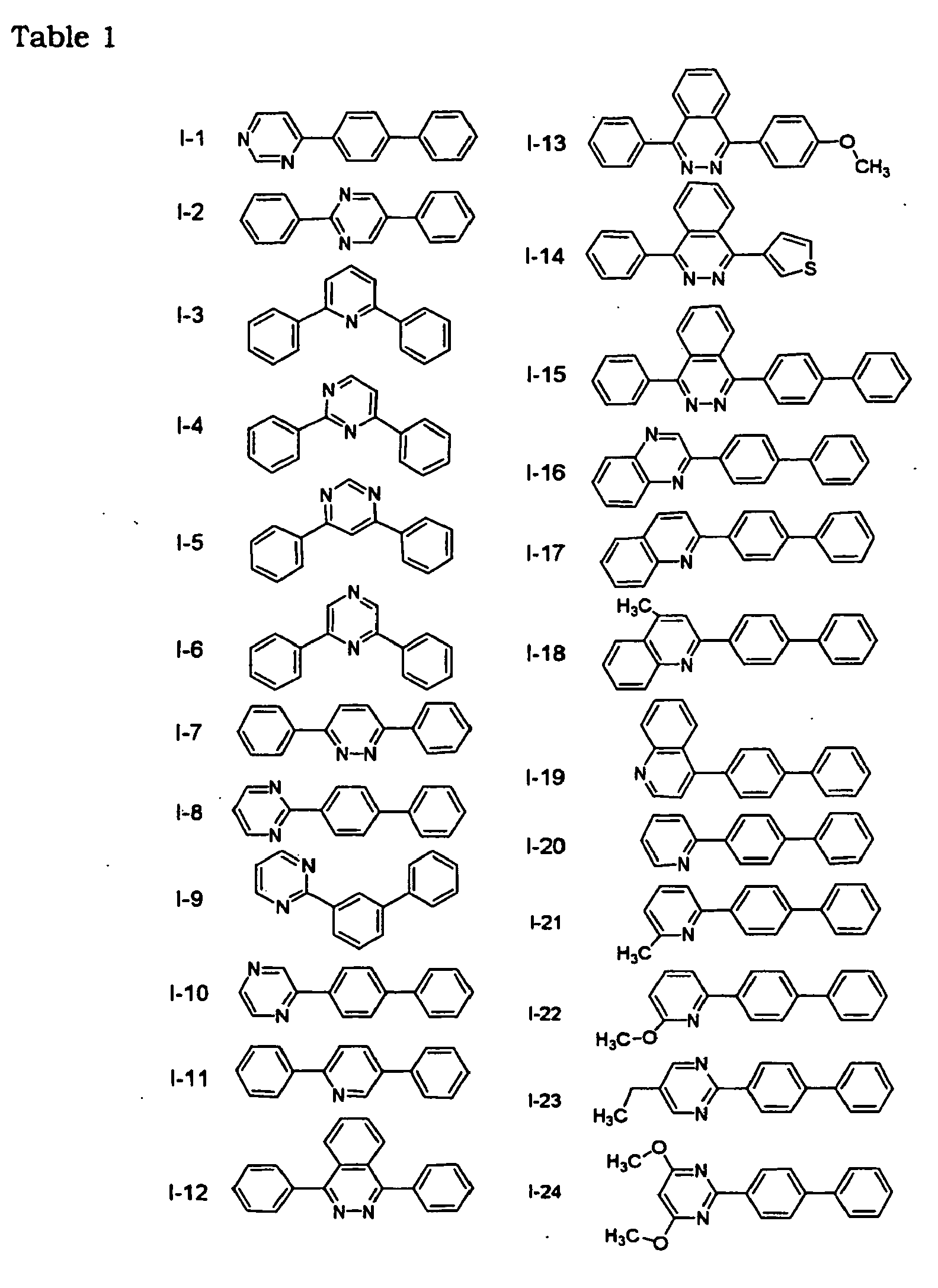

Table 3 m.p. (°C) Molecular formula Elemental analysis
(Calculated)Elemental analysis
(Found)NMR*2 I-1 Specs I-2 185-186 C16H12N2 C, 82.73; H, 6.21; N, 12.06 C, 82.60; H, 5.07; N, 12.08 7.43-7.67(8H, m), 8.46-8.63(2H, m), 9.03(2H, s) I-3 75-77 C17H13N C, 88.28; H, 5.67; N, 6.06 C, 88.28; H, 5.72; N, 6.26 7.39-7.65(6H, m), 7.67.7.73(2H, m), 7.78.7.86(1H, m) , 8.12-8.20(4H, m) I-4 66-69 C16H12N2 C, 82.73; H, 5.21; N, 12.06 C, 82.81; H, 5.20; N, 12.07 7.49.7.59(6H, m), 7.61(1H, d, J=5.2), 8.20-8.28(2H, m), 8.56-8.64(2H, m), 8.84(1H, d, J=5.2) I-5 91-92 C16H12N2 C, 82.73; H, 5.21; N, 12.06 C, 82.66; H, 5.21; N, 11.97 7.50-7.60(6H, m), 8.10.8.22(5H, m), 9.33(1H, s) I-6 88.6-90 C16H12N2 C, 82.73; H, 5.21; N, 12.06 C, 82.59; H, 5.28; N, 12.01 7.44-7.60(6H, m), 8.10.8.22(4H, m), 8.97(2H, s) I-7 218-220 C16H12N2 C, 82.73; H, 5.21; N, 12.06 C, 82.57; H, 5.18; N, 12.47 7.45-7.60(6H, m), 7.94(2H, s), 8.18-8.21(4H, m) I-8 112-113 C16H12N2 C, 82.73; H, 5.21; N, 12.06 C, 82.69; H, 5.19; N, 12.01 7.20(1H, t, J=4.8), 7.32-7.52(3H, m), 7.64-7.78(4H, m), 8.48-8.56(2H, m), 8.83(2H, d, J=4.8). I-9 46-48 C16H12N2 C, 82.73; H, 5.21; N, 12.06 C, 82.92; H, 5.24; N, 12.15 7.21(1H, d, J=4.8), 7.32-7.52(3H, m), 7.57(1H, t, J=8 .0), 7.67-7.77(3H, m), 8.44(1H, m), 8.72(1H, t. J=1.5 8.84(2H, d, J=4.8) I-10 177-178 C16H12N2 C, 82.73; H, 6.21; N, 12.06 C, 82.89; H, 5.23, 7.35-7.54(3H, N, 11.89 m), 7.63-7.70(2H, m), 7.76(2H, d, J=8. 4), 8.11(2H, d, J=8.4), 8.52(1H, d, J=2.4), 8.66(1H, d d, J=1.8 and 2.4), 9.09(1H, d, J=1.8) I-11 176-77 C17H13N C, 88.28; H, 5.67; N, 6.06 C, 88.57; H, 5.66; N. 6.10 7.38-7.56(6H, m), 7.61-7.69(2H, m), 7.81(1H, d, J=8. 1), 7.96(1H, dd, J=2.4 and 8.1), 8.11-8.19(2H, m), 8. 94(1H, d, J=2.4) I-12 203-205 C20H14N2 0.6CHl3 C, 69.90; H, 4.16; N, 7.91; Cl, 18.03 C, 69.51; H, 3.99; N, 8.04; Cl, 14.26 8.16-8.13(2H, m), 7.87-7.80(6H, m), 7.62-7.57(6H, m) I-13 175-7 C21H16N2O FW 312.37 C, 80.75; H, 6.16; N, 8.97 C, 79.41; H, 5.14; N, 8.76 8.20-8.11(2H, m), 7.87-7.80(4H, m), 7.79(2H, d, J=8. 7), 7.61-7.56(3H, m), 7.12(2H, d, J=9.0), 3.92(3H, s) I-14 186-8 C18H12N2S 0.3CHCl3 C, 67.80; H, 3.82; N, 8.64; S, 9.89 C, 68.02; H, 3.82; 8.34(1H, N, 8.75; S, 10.02 dd, J=1.8, 7.2), 8.14(1H, dd, J=2.1, 7.2), 7. 93-7.85(3H, m), 7.83-7.78(2H, m), 7.68(1H, dd, J=1.2 5.1), 7.61-7.54(4H, m) Table 4 I-15 240-243 C26H18N2-0. 6CHCl3 C, 74.29; H, 4.36; N, 6.51 C, 74.66; H, 4.18; N, 6.55 37-7.45(1H, m), 7.47-7.64(5H, m), 7.68-7.75(2H, m), 7.79-7.95(4H, m), 7.83(2H, d, J=8.4), 7.92(2H, d, J= 8.4), 8.12-8.27(2H, m) I-16 126-127 C20H14N2 C, 85.08; H, 5.00; N, 9.92 C, 85.33; H, 4.75; N, 9.87 7.38-7.52(1H, m), 7.46-7.52(2H,m), 7.67-7.70(2H, m), 7.73-7.78(2H, m), 7.81(2H, d, J=8.4), 8.12-8.19(2H, m), 8.30(2H, d, J=8.4), 9.38(1H, s) I-17 180-182 C21H15N C, 89.65; H, 5.37; N, 4.98 C, 89.87; H, 5.38; N, 6.06 7.35-7.40(1H, m), 7.47(2H, t. J=7.8), 7.53(1H, dt, J=1.2 and 7.5), 7.66-7.76(3H, m), 7.76(2H, d, J=8.1), 7.83 (1H, d, J=8.4), 7.93(1H, d, J=8.4), 8.18(1H, d, J= 8.4), 8.23(1H, d, J=7.2), 8.26(2H, d, J=8.4) I-18 153-156 C22H17N C, 89.46; H, 5.80; N, 4.74 C, 89.43; H, 5.80; N, 4.79 2.79(3H, s), 7.36-7.40(1H, m), 7.47(2H, t, J=7.6), 7.5 5(1H, dt, J=1.6 and 7.6), 7.68(2H, dd, J=2.1 and 7. 5), 7.72-7.77(2H, m), 7.75(2H, d, J=8.1), 8.01(1H, dd , J=1.5 and 8.4), 8.19(1H, dd, J=0.6 and 9.0), 8.24(2 H, d, J=8.4) I-19 154-155 C21H15N C, 89.66; H, 5.37; N, 4.98 C, 89.47, H, 6.29; N, 4.93 7.37-7.44(2H, m), 7.46-7.57(3H, m), 7.60(2H, d, J=8. 4), 7.66-7.80(3H, m), 7.70(2H, d, J=8.4), 8.01(1H, d, J=8.1), 8.20(1H, d, J=8.1), 8.97(1H, d, J=4.5) I-20 144-145 C17H13N C, 88.28; H, 6.67; N, 6.06 C, 87.99; H, 5.59; N, 6.24 7.20-7.28(1H, m), 7.41-7.52(3H, m), 7.61-7.82(4H, m) , 7.72(2H, d, J=8.4), 8.08(2H, d, J=8.4), 8.68-8.75(1 H, m) I-21 119-120 C18H15N C, 88.13; H, 6.16; N, 5.71 C, 88.35; H, 6.14; N, 5.68 2.64(3H, s), 7.10(1H, d, J=7.8), 7.32-7.50(3H, m), 7. 56(1H, d, J=7.8), 7.61-7.68(3H, m), 7.70(2H, d, J=9. 0), 8.07(2H, d, J=9.0) I-22 134-136 C18H15NO C, 82.73; H, 5.79; N, 5.36 C, 82.67; H, 5.77; N, 5.49 4.06(3H, s), 6.70(1H, d, J=8.4), 7.33-7.51(4H, m), 7. 60-7.68(3H, m), 7.69(2H, d, J=8.4), 8.13(2H, d, J=8. 4) I-23 92-94 C18H16N2 C, 83.04; H, 6.19; N, 10.76 C, 82.91; H, 6.21; N, 10.81 1.33(3H, t, J=7.5), 2.70(2H, q, J=7.5), 7.33-7.41(1H, m), 7.42-7.51(2H, m), 7.64-7.71(2H, m), 7.73(2H, d, J=8.7), 8.49(2H, d, J=8.7), 8.67(1H, s) I-24 137-139 C18H16N202 C, 73.96; H, 5.52; N, 9.58 C, 74.18; H, 5.70; N, 9.44 4.07(6H, s), 5.98(1H, s), 7.32-7.41(1H, m), 7.42-7.51( 2H, m), 7.62-7.69(2H, m), 7.70(2H, d, J=8.4), 8.53(2 H, d, J=8.4) Table 5 I-25 190-191 C16H12N2 C, 82.73; H, 5.21; N, 12.06 C, 82.60; H, 5.02; N, 12.28 7.35-7.43(1H, m), 7.44-7.52(2H, m), 7.56(1H, dd, J=4 .5 and 8.7), 7.63-7.70(2H, m), 7.77(2H, d, J=8.7), 7. 92(1H, dd, J=1.5 and 8.7), 8.18(2H, d, J=8.7), 9.18( 1H, d, J=4.5) I-26 249-260 C16H11N2Cl C, 72.05; H, 4.16; N, 10.50; Cl, 13. 29 C, 72.52; H, 4.18; N, 10.80; Cl, 12. 0), 86 7.36-7.43(1H, m), 7.44-7.53(2H, m), 7.69(1H, d, J=9. 7.62-7.70(2H, m), 7.77(2H, d, J=8.7), 7.88(1H, d, J=9.0), 8.14(2H, d, J=8.7) I-27 222-223 C17H14N20 C, 77.84; H, 6.38; N, 10.68 C, 77.88; H, 5.41; N, 10.68 4.21(3H, s), 7.07(1H, d, J=9.3), 7.34-7.42(1H, m), 7. 43-7.51(2H, m), 7.63-7.7.70(2H, m), 7.74(2H, d, J=8. 7), 7.83(1H, d, J=9.3), 8.10(2H, d, J=8.7) I-28 260-261 C22H16N2 C, 85.69; H, 5.23; N, 9.08 C, 85.77; H, 5.42; N, 9.15 7.35-7.43(1H, m), 7.44-7.61(5H, m), 7.62-7.73(2H, m) , 7.80(2H, d, J=8.7), 7.93-8.02(2H, m), 8.14-8.21(2H, m), 8.27(2H, d, J=8.7) I-29 117-119 C17H16N3O2 C, 69.61; H, 5.15; N, 14.33 C, 69.73; H, 5.03; N, 14.44 4.15(6H, s), 7.36-7.43(1H, m), 7.44-7.52(2H, m), 7.63 -7.70(2H, m), 7.72(2H, d, J=8.7), 8.57(2H, d, J=8.7) I-30 249-250(d) C13H10N4 C, 70.26; H. 4.54; N, 26.21 C, 70.27; H, 4.51; N, 25.17 8.12(2H, d, J=8.7), 7.76(2H, d, J=8.7), 7.65(2H, d, J =8.1), 7.51-7.46(2H, m), 7.43-7.40(1H, m), 3.21(1H, b I-31 71-75 C18H16N2 C, 83.04; H, 6.19; N, 10.76 C, 82.79; H, 6.01; N, 10.85 2.60(3H, s), 2.64(3H, s), 7.35-7.42(1H, m), 7.44-7.51( 2H, m), 7.62-7.68(2H, m), 7.65(2H, d, J=8.4), 7.71(2 H, d, J=8.4), 8.34(1H, s) I-32 101-102 C15H11NS C, 75.92; H, 4.67; N, 5.90; S, 13.51 C, 76.93; H, 4.67; N, 5.78; S, 13.45 7.35(1H, d, J=3.3), 7.36-7.42(1H, m), 7.43-7.51(2H, m), 7.61-7.68(2H, m), 7.69(2H, d, J=8.4), 7.89(1H, d, J=3.3), 8.05(2H, d, J=8.4) I-33 200-201 C22H17NOS C, 76.94; H, 4.99; N, 4.08; S, 9.34 C, 76.92; H. 4.88; N, 4.17; S, 9.25 3.88(3H, s), 6.98(2H, d, J=8.7), 7.32-7.40(1H, m), 7. 42-7.50(2H, m), 7.44(1H, s), 7.63-7.73(4H, m), 8.00(2 H, d, J=8.7), 8.06(2H, d, J=8.7) I-34 224-227 C18H16N202 C, 73.96; H, 5.52; N, 9.58 C, 74.28; H, 5.45; N, 9.40 2) 3.84(6H, s), 7.10(4H, d, J=9.0), 8.14(4H, d, J=9.0) 9.20(2H, s) I-35 171-173 C18H16N202 C, 73.96; H, 5.52; N, 9.58 C, 74.16; H, 5.51; N, 9.67 2) 3.87(6H, s), 7.05-7.13(2H, m), 7.48(2H, t, J=8.1), 7.72-7.82(4H, m), 9.34(2H, s) I-36 173-175 C15H11NS C, 75.92; H, 4.67; N, 5.90; S, 13.51 C. 75.93; H, 4.50; N, 5.95; S, 13.52. 4 7.19-7.25(1H, m), 7.38-7.49(2H, m), 7.54(1H, dd, J=1 and 2.6), 7.72(2H, d, J=8.4), 7.76(2H, dd, J=1.0 a nd 4.8), 8.05(2H, d, J=8.4), 8.71(1H, d, J=4.8) Table 6 I-37 140-141 C15H11NO C, 81.43; H, 5.01; N, 6.33 C, 81.55; H, 4.97; N, 6.41 6), 6.73-6.78(1H, m), 7.18-7.25(1H, m), 7.50(1H, t, J=1. 7.60(2H, d, J=8.4), 7.71-7.83(3H, m), 8.02(2H, d, J=8.4), 8.70(1H, d, J=4.8) I-38 274-275 C22H16N2 C, 85.69; H, 5.23; N, 9.08 C, 85.51; H, 5.13; N, 9.16 7.20-7.30(2H, m), 7.72-7.84(4H, m), 7.79(4H, d, J=8. 4), 8.11(4H, d, J=8.4), 8.73(2H, d, J=4.8) I-39 254-255 C12H9N5 C, 64.56; H, 4.06; N, 31.37 C, 64.42; H, 4.01; N, 31.08 2) 7.38-7.48(1H, m), 7.89-8.00(1H, m), 8.09(1H, d, J =8.0), 8.17(2H, d, J=8.8), 8.34(2H, d, J=8.8), 8.73(1 H, d, J=4.8) 1-40 178-179 C18H15NO C, 82.73; H, 5.79; N, 5.36 C, 82.76; H, 5.67; N, 6.43 3.87(3H, s), 7.00(2H, d, J=8.6), 7.18-7.26(1H, m), 7. 60(2H, d, J=8.6), 7.67(2H, d, J=8.6), 7.73-7.83(2H, m), 8.06(2H, d, J=8.6), 8.71(1H, d, J=4.8) I-41 222-224 C19H15NO C, 83.49; H, 5.53; N, 6. 12 C, 83.56; H, 5.41; N, 6. 27 265(3H, s), 7.22-7.32(1H, m), 7.76(4H, d, J=8,4), 7.77-7.82(2H, m), 8.00(2H d, J=8.4), 8.12(2H, d, J=8.4), 8.73(1H, d, J=4.8) I-42 137-138 C18H15N C, 88.13; H, 6.16; N, 5. 71 C, 87.66; H, 6.13; N, 68 5.241(3H, s), 7.20-7.26(1H, m), 7.27(2H, d, J=8.7), 7.56(2H, d, J=8.4) , 7.70(2H, d, J=8.4), 7.74-7.80(2H, m), 8.07(2H, d, J=8.7), 8.69-8.74 1H, m) I-43 251-252 C19H16N2O C, 79.14; H, 5.69;N, 9. 71 C, 79.06; H, 5.53;N, 78 9(3H, s) 9. 8.66(1H, d, J=4.8), 8.00(2H, d, J=8.4), 7.84-7.51(2H, m), 7.69(2H, d J=8.4), 7.64(2H, d, J=8.7), 7.61(2H, d, J=8.7), 7.29-7.25(1H, m), 2.8 NMR solvent 1) CDCl3+CD3OD 2)NMR DMSO-d6 3)D2O - The promoter region of the gene encoding human apoAI was isolated, and ligated upstream the structure gene of firefly luciferase to construct a reporter plasmid. The reporter plasmid and a marker plasmid conferring the neomycin resistance were co-infected to cell lines derived from human hepatoma, HepG2 cells, and the cell lines were incubated in a selection medium comprising DMEM medium containing 10 % fetal calf serum supplemented with G418 (Final concentration: 0.7 mg/mL, Gibco) to give established strains that stably expressed the reporter molecule. The strains were seeded to a 96-well culture plates at a density of 50,000 cells per well, and incubated for 48 hours at 37°C under an atmosphere of 5% carbon dioxide. Then, a solution of the compounds according to the invention in DMSO was added to the wells at final concentrations of 0 to 10 µg/mL. After further incubation for 24 hours, the cells were added with a luciferase assay reagent (Piccagene LT 7.5 registered trade mark, Toyo Ink, KK), and the luciferase activity was determined using a luminometer (MicroBeta™ TRILUX, 1 sec/well, Wallac). The concentration of the compounds, which intensified the luciferase activity twice compared to that of control (DMSO without any compound of the invention added) was set as the minimal effective dose (MED). The results are shown in Table 7.
Table 7 Compounds MED (µM) I-1 0.63 I-2 0.2 I-6 3.11 I-7 0.04 I-8 0.09 I-10 0.71 I-11 0.21 I-16 0.1 I-17 0.33 I-18 1.1 I-20 0.23 I-21 2.3 I-22 0.84 I-23 0.27 I-24 2.2 I-25 0.29 I-26 0.27 I-27 0.06 I-28 2.5 I-29 2.5 I-35 0.29 I-36 1.3 I-37 4.4 I-40 0.16 I-41 0.1 I-42 0.09 I-43 0.3 I-44 0.6 I-45 2.4 I-48 1.6 - The result of Experiment 1 shows that the compounds according to the invention can promote the function of the gene encoding human apoAI, thereby enhancing the expression of apoAI.
Formulation 1 Tablets compound (I) 15 mg starch 15 mg lactose 15 mg crystalline cellulose 19 mg polyvinyl alcohol 3 mg distilled water 30 mL calcium stearate 3 mg - The ingredients other than calcium stearate were mixed uniformly, and the mixture was powdered, granulated, and dried to give granules having a suitable size. Then, the calcium stearate was added and the mixture was compressed to give a tablet formulation.
Formulation 2 Capsules compound (I) 10 mg magnesium stearate 10 mg lactose 80 mg - The ingredients were homogeneously mixed to give powders or fine particles, which were formed into a powder formulation. This was filled in capsules to give a capsule formulation.
Formulation 3 Granules compound (I) 30 g lactose 265 g magnesium stearate 5 g - The ingredients were mixed thoroughly, and the mixture was compressed, powdered, granulated and sieved to give a granule formulation.
- As is apparent from the experiment as described above, the compounds according to the invention have an activity for enhancing the expression of apoAI. Thus, the compounds according to the invention are useful as pharmaceutical compositions for preventing and/or treating dyslipidemia or arteriosclerotic diseases, a method and use therefor.
Claims (7)
- A pharmaceutical composition for enhancing the expression of apoAI, which comprises a compound of formula (I):

X1 and X2 are independently an aryl that may be optionally substituted, a heteroaryl that may be optionally substituted, a cycloalkyl that may be optionally substituted, an aryloxy that may be optionally substituted, a heteroaryloxy that may be optionally substituted, an arylthio that may be optionally substituted, a heteroarylthio that may be optionally substituted, a hydrogen, a halogen, a hydroxy, a lower alkyl that may be optionally substituted, a lower alkenyl that may be optionally substituted, a lower alkoxy that may be optionally substituted, a lower alkynyloxy that may be optionally substituted, a carboxy, a lower alkoxycarbonyl that may be optionally substituted, an acyl that may be optionally substituted, an amino that may be optionally substituted, or a carbamoyl that may be optionally substituted,
provided that at least one of X1 and X2 is an aryl that may be optionally substituted, or a heteroaryl that may be optionally substituted;
ring A is a pyridine ring, a pyrimidine ring, a pyrazine ring, a pyridazine ring, a triazine ring, a quinoline ring, a quinoxaline ring, or a phthalazine ring;
R1, R2, R3, R4 and R5 are independently a hydrogen, a halogen, a hydroxy, a lower alkyl that may be optionally substituted, a lower alkenyl that may be optionally substituted, a lower alkoxy that may be optionally substituted, a lower alkenyloxy that may be optionally substituted, a carboxy, a lower alkoxycarbonyl that may be optionally substituted, an acyl that may be optionally substituted, an amino that may be optionally substituted, or a carbamoyl that may be optionally substituted; a prodrug thereof, a pharmaceutically acceptable salt or solvate of them. - The pharmaceutical composition according to claim 1, in which X2 is a phenyl that may be optionally substituted, or a heteroaryl that may be optionally substituted.
- The pharmaceutical composition according to claim 1 or 2, in which X1 is a hydrogen, a halogen, a hydroxy, a lower alkyl, a lower alkenyl, a lower alkoxy, or a phenyl.
- The pharmaceutical composition according to any one of claims 1 to 3, which is used for prevention and/or treatment of dyslipidemia or arteriosclerotic diseases.
- A method of enhancing the expression of apoAI, which comprises administrating a therapeutically effective amount of a compound of formula (I) as defined in claim 1, a prodrug thereof, a pharmaceutically acceptable salt or solvate of them to a patient expected to enhance the expression of apoAI.
- Use of a compound of formula (I) as defined in claim 1, a prodrug thereof, a pharmaceutically acceptable salt or solvate of them for the manufacturing a medicament of enhancing the expression of apoAI.
- Use of a compound of formula (I) as defined in claim 1, a prodrug thereof, a pharmaceutically acceptable salt or solvate of them for the manufacturing a medicament of treatment and/or prevention of dyslipidemia or arteriosclerotic diseases.
Applications Claiming Priority (2)
| Application Number | Priority Date | Filing Date | Title |
|---|---|---|---|
| EP01967683A EP1426046A4 (en) | 2001-09-14 | 2001-09-14 | Novel use of tricyclic compound |
| PCT/JP2001/007979 WO2003024441A1 (en) | 2001-09-14 | 2001-09-14 | Novel use of tricyclic compound |
Related Parent Applications (1)
| Application Number | Title | Priority Date | Filing Date |
|---|---|---|---|
| EP01967683.2 Division | 2001-09-14 |
Publications (2)
| Publication Number | Publication Date |
|---|---|
| EP2168576A2 true EP2168576A2 (en) | 2010-03-31 |
| EP2168576A3 EP2168576A3 (en) | 2010-05-26 |
Family
ID=11737720
Family Applications (2)
| Application Number | Title | Priority Date | Filing Date |
|---|---|---|---|
| EP09009879A Withdrawn EP2168576A3 (en) | 2001-09-14 | 2001-09-14 | Tricyclic compounds for treating dyslipidemia and arteriosclerotic diseases |
| EP01967683A Withdrawn EP1426046A4 (en) | 2001-09-14 | 2001-09-14 | Novel use of tricyclic compound |
Family Applications After (1)
| Application Number | Title | Priority Date | Filing Date |
|---|---|---|---|
| EP01967683A Withdrawn EP1426046A4 (en) | 2001-09-14 | 2001-09-14 | Novel use of tricyclic compound |
Country Status (3)
| Country | Link |
|---|---|
| US (2) | US20040235877A1 (en) |
| EP (2) | EP2168576A3 (en) |
| WO (1) | WO2003024441A1 (en) |
Cited By (1)
| Publication number | Priority date | Publication date | Assignee | Title |
|---|---|---|---|---|
| EP4257585A4 (en) * | 2020-12-02 | 2024-12-25 | Hodogaya Chemical Co., Ltd. | Heterocyclic compound, organic electroluminescent element, and electronic device |
Families Citing this family (29)
| Publication number | Priority date | Publication date | Assignee | Title |
|---|---|---|---|---|
| JP2005502143A (en) * | 2001-08-29 | 2005-01-20 | 東京エレクトロン株式会社 | Facility monitor |
| US8124625B2 (en) * | 2001-09-14 | 2012-02-28 | Shionogi & Co., Ltd. | Method of enhancing the expression of apolipoprotein AI using olefin derivatives |
| PE20050676A1 (en) * | 2003-12-12 | 2005-11-02 | Wyeth Corp | QUINOLINES REFERRED TO CARDIOVASCULAR DISEASES |
| CA2584485C (en) | 2004-10-20 | 2013-12-31 | Resverlogix Corp. | Stilbenes and chalcones for the prevention and treatment of cardiovascular diseases |
| JP5368792B2 (en) | 2005-07-29 | 2013-12-18 | レスバーロジックス コーポレイション | Pharmaceutical compositions for the prevention and treatment of complex diseases and their delivery by insertable medical devices |
| DK2118074T3 (en) | 2007-02-01 | 2014-03-10 | Resverlogix Corp | Compounds for the prevention and treatment of cardiovascular diseases |
| CA2963784A1 (en) | 2007-06-08 | 2008-12-18 | Mannkind Corporation | Ire-1.alpha. inhibitors |
| KR101629356B1 (en) | 2008-06-26 | 2016-06-13 | 리스버로직스 코퍼레이션 | Methods of preparing quinazolinone derivatives |
| NZ594332A (en) | 2009-01-08 | 2013-09-27 | Resverlogix Corp | Compounds for the prevention and treatment of cardiovascular disease |
| KR101709492B1 (en) | 2009-03-18 | 2017-02-23 | 리스버로직스 코퍼레이션 | Novel anti-inflammatory agents |
| US9757368B2 (en) | 2009-04-22 | 2017-09-12 | Resverlogix Corp. | Anti-inflammatory agents |
| RU2640115C2 (en) | 2011-11-01 | 2017-12-26 | Ресверлоджикс Корп. | Pharmaceutical compositions of substituted quinazolinones |
| EP2882726A4 (en) * | 2012-08-09 | 2016-04-06 | Neuropore Therapies Inc | Aryl-and heteroaryl-substituted benzene derivatives as modulators of pi3-kinase signalling pathways |
| WO2014080291A2 (en) | 2012-11-21 | 2014-05-30 | Rvx Therapeutics Inc. | Biaryl derivatives as bromodomain inhibitors |
| US9073878B2 (en) | 2012-11-21 | 2015-07-07 | Zenith Epigenetics Corp. | Cyclic amines as bromodomain inhibitors |
| US9271978B2 (en) | 2012-12-21 | 2016-03-01 | Zenith Epigenetics Corp. | Heterocyclic compounds as bromodomain inhibitors |
| US10111885B2 (en) | 2015-03-13 | 2018-10-30 | Resverlogix Corp. | Compositions and therapeutic methods for the treatment of complement-associated diseases |
| BR102018007822A2 (en) | 2017-04-20 | 2018-11-06 | Gilead Sciences, Inc. | compound, methods for inhibiting pd-1, pd-11 and / or interaction of pd-1 / pd-11 and for cancer treatment, pharmaceutical composition, and kit for treating or preventing cancer or a disease or condition |
| FI3612030T3 (en) | 2017-04-21 | 2026-03-20 | Pahr Therapeutics Inc | AHR INDOLES AND THEIR USES |
| SG11202001310SA (en) | 2017-08-17 | 2020-03-30 | Ikena Oncology Inc | Ahr inhibitors and uses thereof |
| EP3703675A4 (en) | 2017-10-30 | 2021-06-16 | Neuropore Therapies, Inc. | SUBSTITUTED PHENYLSULFONYLPHENYLTRIAZOLTHIONES AND USES THEREOF |
| KR102708681B1 (en) | 2018-02-13 | 2024-09-26 | 길리애드 사이언시즈, 인코포레이티드 | Pd-1/pd-l1 inhibitors |
| MD3762368T2 (en) | 2018-03-08 | 2022-07-31 | Incyte Corp | Aminopyrazine diol compounds as pi3k-y inhibitors |
| EP4600247A3 (en) | 2018-04-19 | 2025-11-19 | Gilead Sciences, Inc. | Pd-1/pd-l1 inhibitors |
| US11046658B2 (en) | 2018-07-02 | 2021-06-29 | Incyte Corporation | Aminopyrazine derivatives as PI3K-γ inhibitors |
| UA126421C2 (en) | 2018-07-13 | 2022-09-28 | Гіліад Сайєнсіз, Інк. | PD-1/PD-L1 INHIBITORS |
| US11236085B2 (en) | 2018-10-24 | 2022-02-01 | Gilead Sciences, Inc. | PD-1/PD-L1 inhibitors |
| MX2022006308A (en) | 2019-11-26 | 2022-06-22 | Ikena Oncology Inc | Polymorphic carbazole derivatives and uses thereof. |
| CN112047882A (en) * | 2020-10-15 | 2020-12-08 | 天津科技大学 | New application of isoquinoline and quinoline derivatives in preparation of blood fat reducing drugs |
Citations (8)
| Publication number | Priority date | Publication date | Assignee | Title |
|---|---|---|---|---|
| JPH05221959A (en) | 1991-07-01 | 1993-08-31 | Sandoz Ag | N-phenylthiourea derivatives and their pharmaceutical use |
| JPH08291094A (en) | 1994-12-19 | 1996-11-05 | American Cyanamid Co | Limited 9-cis-retinoids |
| US5599829A (en) | 1995-11-28 | 1997-02-04 | American Home Products Corporation | 2-(substituted sulfanyl)-3,5-dihydro-imidazol-4-one derivatives for increasing HDL cholesterol levels |
| WO1997009048A1 (en) | 1995-09-09 | 1997-03-13 | F. Hoffmann-La Roche Ag | Use of a thienotriazolodiazepine to increase apolipoprotein a-i levels |
| WO1997019932A1 (en) | 1995-11-28 | 1997-06-05 | American Home Products Corporation | 2-thioxo-imidazolidin-4-one derivatives and their use for increasing hdl cholesterol concentration |
| WO1997019931A1 (en) | 1995-11-28 | 1997-06-05 | American Home Products Corporation | 2-(substituted sulfanyl)-3,5-dihydro-imidazol-4-one derivatives |
| EP0796874A2 (en) | 1996-03-19 | 1997-09-24 | Basf Aktiengesellschaft | Process for the preparation of polymers containing peroxycarboxylic groups |
| JPH09255574A (en) | 1996-03-20 | 1997-09-30 | Bayer Ag | 2-aryl-substituted pyridine compounds |
Family Cites Families (15)
| Publication number | Priority date | Publication date | Assignee | Title |
|---|---|---|---|---|
| DE3826814A1 (en) * | 1988-08-06 | 1990-02-08 | Hoechst Ag | NEW 6-FLUORO-3,5-DIHYDROXYCARBONSAEURES AND THEIR DERIVATIVES, METHOD FOR THE PRODUCTION THEREOF, THEIR USE AS MEDICAMENTS, PHARMACEUTICAL PREPARATES AND INTERMEDIATE PRODUCTS |
| AU6807994A (en) * | 1993-05-28 | 1994-12-20 | Taisho Pharmaceutical Co., Ltd. | Medicinal use of pyridine derivative |
| JP3498853B2 (en) * | 1993-09-27 | 2004-02-23 | 小野薬品工業株式会社 | Biphenyl derivative |
| JPH1029979A (en) * | 1996-04-12 | 1998-02-03 | Ajinomoto Co Inc | New pyridine derivative |
| PT933346E (en) * | 1996-07-31 | 2004-03-31 | Shionogi & Co | NEW P-TERPHENYL COMPOUNDS |
| DE19704244A1 (en) * | 1997-02-05 | 1998-08-06 | Bayer Ag | 5-hydroxy-alkyl substituted phenyls |
| US6420427B1 (en) * | 1997-10-09 | 2002-07-16 | Ono Pharmaceutical Co., Ltd. | Aminobutyric acid derivatives |
| JP2000204091A (en) * | 1999-01-13 | 2000-07-25 | Nippon Suisan Kaisha Ltd | New benzodioxole derivatives |
| JP2000281654A (en) * | 1999-03-26 | 2000-10-10 | Tanabe Seiyaku Co Ltd | Isoquinoline derivatives |
| JP4618845B2 (en) * | 1999-06-09 | 2011-01-26 | 杏林製薬株式会社 | Substituted phenylpropionic acid derivatives as human peroxisome proliferator-activated receptor (PPAR) alpha agonists |
| JP2001089452A (en) * | 1999-09-22 | 2001-04-03 | Sankyo Co Ltd | Pyrimidine derivative |
| JP2001131151A (en) * | 1999-11-02 | 2001-05-15 | Shionogi & Co Ltd | New use of olefin derivative |
| JP2001233767A (en) * | 2000-02-25 | 2001-08-28 | Shionogi & Co Ltd | Apo AI expression enhancer |
| JP2001335476A (en) * | 2000-05-29 | 2001-12-04 | Shionogi & Co Ltd | New uses for tricyclic compounds |
| US8124625B2 (en) * | 2001-09-14 | 2012-02-28 | Shionogi & Co., Ltd. | Method of enhancing the expression of apolipoprotein AI using olefin derivatives |
-
2001
- 2001-09-14 US US10/489,358 patent/US20040235877A1/en not_active Abandoned
- 2001-09-14 EP EP09009879A patent/EP2168576A3/en not_active Withdrawn
- 2001-09-14 WO PCT/JP2001/007979 patent/WO2003024441A1/en not_active Ceased
- 2001-09-14 EP EP01967683A patent/EP1426046A4/en not_active Withdrawn
-
2008
- 2008-08-15 US US12/222,773 patent/US20080318958A1/en not_active Abandoned
Patent Citations (8)
| Publication number | Priority date | Publication date | Assignee | Title |
|---|---|---|---|---|
| JPH05221959A (en) | 1991-07-01 | 1993-08-31 | Sandoz Ag | N-phenylthiourea derivatives and their pharmaceutical use |
| JPH08291094A (en) | 1994-12-19 | 1996-11-05 | American Cyanamid Co | Limited 9-cis-retinoids |
| WO1997009048A1 (en) | 1995-09-09 | 1997-03-13 | F. Hoffmann-La Roche Ag | Use of a thienotriazolodiazepine to increase apolipoprotein a-i levels |
| US5599829A (en) | 1995-11-28 | 1997-02-04 | American Home Products Corporation | 2-(substituted sulfanyl)-3,5-dihydro-imidazol-4-one derivatives for increasing HDL cholesterol levels |
| WO1997019932A1 (en) | 1995-11-28 | 1997-06-05 | American Home Products Corporation | 2-thioxo-imidazolidin-4-one derivatives and their use for increasing hdl cholesterol concentration |
| WO1997019931A1 (en) | 1995-11-28 | 1997-06-05 | American Home Products Corporation | 2-(substituted sulfanyl)-3,5-dihydro-imidazol-4-one derivatives |
| EP0796874A2 (en) | 1996-03-19 | 1997-09-24 | Basf Aktiengesellschaft | Process for the preparation of polymers containing peroxycarboxylic groups |
| JPH09255574A (en) | 1996-03-20 | 1997-09-30 | Bayer Ag | 2-aryl-substituted pyridine compounds |
Non-Patent Citations (9)
| Title |
|---|
| "Comprehensive Heterocyclic Chemistry", 1984, PERGAMON OXFORD |
| "Design of Prodrugs", 1985, ELSEVIER |
| A. R. KATRI Z KY ET AL.: "Comprehensive Heterocyclic Chemistry II", 1996, PERGMON OXFORD |
| CHEMICAL COMMUNICATION, vol. 866, 1979 |
| DUELAND S. ET AL., J. LIPID RES., vol. 38, 1997, pages 1445 - 53 |
| JOURNAL OF SYNTHETIC ORGANIC CHEMISTRY, JAPAN, vol. 51, no. 11, 1993, pages 91 - 100 |
| MIYAZAKI A. ET AL., ARTERIOSCLER. THROMB. VASC. BIOL., vol. 15, 1995, pages 1882 - 1888 |
| PLUMP A.S.; SCOTT C.J.; BRESLOW J.L., PROC. NATL. ACAD. SCI. USA., vol. 91, 1994, pages 9607 - 9611 |
| RUBIN E.M. ET AL.: "Inhibition of early atherogenesis in transgenic mice by human apolipoprotein AI", NATURE, vol. 353, 1991, pages 265 - 267 |
Cited By (1)
| Publication number | Priority date | Publication date | Assignee | Title |
|---|---|---|---|---|
| EP4257585A4 (en) * | 2020-12-02 | 2024-12-25 | Hodogaya Chemical Co., Ltd. | Heterocyclic compound, organic electroluminescent element, and electronic device |
Also Published As
| Publication number | Publication date |
|---|---|
| US20080318958A1 (en) | 2008-12-25 |
| EP1426046A1 (en) | 2004-06-09 |
| EP1426046A4 (en) | 2005-11-02 |
| WO2003024441A1 (en) | 2003-03-27 |
| US20040235877A1 (en) | 2004-11-25 |
| EP2168576A3 (en) | 2010-05-26 |
Similar Documents
| Publication | Publication Date | Title |
|---|---|---|
| US20080318958A1 (en) | New utilities of tricyclic compounds | |
| AU2013366898B2 (en) | Halogen-substituted heterocyclic compound | |
| EP2455370A1 (en) | Pharmaceutical product containing lactam or benzene sulfonamide compound | |
| EP3162801B1 (en) | Salt of halogen-substituted heterocyclic compound | |
| CN100508975C (en) | Use of pyrazolopyridine compound | |
| JP6387361B2 (en) | Pyridin-4-yl derivative | |
| JP2001139550A (en) | New uses of amide compounds | |
| WO2003074525A1 (en) | Nitrogen-containing heterocyclic compound | |
| JP2001335476A (en) | New uses for tricyclic compounds | |
| EP3814331B9 (en) | Novel lxr modulators with bicyclic core moiety | |
| CN113727972B (en) | New hydrazone derivatives with terminal amine groups substituted by aryl or heteroaryl groups and uses thereof | |
| CN115768761A (en) | Novel Benzimidazole Derivatives | |
| TW200812989A (en) | Novel heterocyclic diphenyl ethers | |
| KR20100135266A (en) | Compounds with NPP Y5 Receptor Antagonism | |
| KR20240006641A (en) | Heteroaryl compounds as TYK2 inhibitors, compositions and uses thereof | |
| JP2001131151A (en) | New use of olefin derivative | |
| JPH11508920A (en) | 2,7-substituted octahydro-pyrrolo [1,2-a] pyrazine derivatives | |
| JP2005527518A (en) | Novel chalcone derivatives and their use | |
| CN111825667A (en) | FXR small molecule agonist and preparation method and use thereof | |
| US20260083704A1 (en) | Lxr modulators with bicyclic core moiety for treating dyslipidemias | |
| JP6921118B2 (en) | Compounds for regulating aquaporins | |
| TW202535389A (en) | Ptpn2/ptp1b degrader and therapeutic method thereof | |
| TWI591064B (en) | 2-pyridone compound | |
| CN103435562B (en) | 6-replaces Benzodiazepine-2,4-cyclohexadione compounds and uses thereof | |
| WO2020233716A1 (en) | Imidazopyridazine mnk1/mnk2 kinase inhibitors, preparation method therefor and use thereof |
Legal Events
| Date | Code | Title | Description |
|---|---|---|---|
| PUAI | Public reference made under article 153(3) epc to a published international application that has entered the european phase |
Free format text: ORIGINAL CODE: 0009012 |
|
| 17P | Request for examination filed |
Effective date: 20090730 |
|
| AC | Divisional application: reference to earlier application |
Ref document number: 1426046 Country of ref document: EP Kind code of ref document: P |
|
| AK | Designated contracting states |
Kind code of ref document: A2 Designated state(s): AT BE CH CY DE DK ES FI FR GB GR IE IT LI LU MC NL PT SE TR |
|
| AX | Request for extension of the european patent |
Extension state: AL LT LV MK RO SI |
|
| RTI1 | Title (correction) |
Free format text: TRICYCLIC COMPOUNDS FOR TREATING DYSLIPIDEMIA AND ARTERIOSCLEROTIC DISEASES |
|
| PUAL | Search report despatched |
Free format text: ORIGINAL CODE: 0009013 |
|
| AK | Designated contracting states |
Kind code of ref document: A3 Designated state(s): AT BE CH CY DE DK ES FI FR GB GR IE IT LI LU MC NL PT SE TR |
|
| AX | Request for extension of the european patent |
Extension state: AL LT LV MK RO SI |
|
| RIC1 | Information provided on ipc code assigned before grant |
Ipc: A61P 9/10 20060101ALI20100416BHEP Ipc: A61P 3/06 20060101ALI20100416BHEP Ipc: A61K 31/53 20060101ALI20100416BHEP Ipc: A61K 31/47 20060101ALI20100416BHEP Ipc: A61K 31/498 20060101ALI20100416BHEP Ipc: A61K 31/502 20060101ALI20100416BHEP Ipc: A61K 31/4402 20060101ALI20100416BHEP Ipc: A61K 31/44 20060101ALI20100416BHEP Ipc: A61K 31/505 20060101ALI20100416BHEP Ipc: A61K 31/50 20060101ALI20100416BHEP Ipc: A61K 31/155 20060101ALI20100416BHEP Ipc: A61K 31/15 20060101ALI20100416BHEP Ipc: A61K 31/4965 20060101AFI20100416BHEP |
|
| STAA | Information on the status of an ep patent application or granted ep patent |
Free format text: STATUS: THE APPLICATION IS DEEMED TO BE WITHDRAWN |
|
| 18D | Application deemed to be withdrawn |
Effective date: 20101127 |