EP2168573A1 - Formulations comprising ezetimibe - Google Patents
Formulations comprising ezetimibe Download PDFInfo
- Publication number
- EP2168573A1 EP2168573A1 EP08165462A EP08165462A EP2168573A1 EP 2168573 A1 EP2168573 A1 EP 2168573A1 EP 08165462 A EP08165462 A EP 08165462A EP 08165462 A EP08165462 A EP 08165462A EP 2168573 A1 EP2168573 A1 EP 2168573A1
- Authority
- EP
- European Patent Office
- Prior art keywords
- ezetimibe
- liquid
- formulation
- excipient
- granulation
- Prior art date
- Legal status (The legal status is an assumption and is not a legal conclusion. Google has not performed a legal analysis and makes no representation as to the accuracy of the status listed.)
- Ceased
Links
- OLNTVTPDXPETLC-XPWALMASSA-N ezetimibe Chemical compound N1([C@@H]([C@H](C1=O)CC[C@H](O)C=1C=CC(F)=CC=1)C=1C=CC(O)=CC=1)C1=CC=C(F)C=C1 OLNTVTPDXPETLC-XPWALMASSA-N 0.000 title claims abstract description 224
- 229960000815 ezetimibe Drugs 0.000 title claims abstract description 223
- 239000000203 mixture Substances 0.000 title claims abstract description 106
- 238000009472 formulation Methods 0.000 title claims abstract description 66
- 239000000546 pharmaceutical excipient Substances 0.000 claims abstract description 139
- 239000002245 particle Substances 0.000 claims abstract description 70
- 239000011164 primary particle Substances 0.000 claims abstract description 16
- 239000007788 liquid Substances 0.000 claims description 78
- GUBGYTABKSRVRQ-QKKXKWKRSA-N lactose group Chemical group OC1[C@H](O)[C@@H](O)[C@H](O[C@H]2[C@H](O)[C@@H](O)[C@@H](O)[C@H](O2)CO)[C@H](O1)CO GUBGYTABKSRVRQ-QKKXKWKRSA-N 0.000 claims description 56
- 239000006104 solid solution Substances 0.000 claims description 56
- 239000008101 lactose Substances 0.000 claims description 55
- GUBGYTABKSRVRQ-XLOQQCSPSA-N Alpha-Lactose Chemical compound O[C@@H]1[C@@H](O)[C@@H](O)[C@@H](CO)O[C@H]1O[C@@H]1[C@@H](CO)O[C@H](O)[C@H](O)[C@H]1O GUBGYTABKSRVRQ-XLOQQCSPSA-N 0.000 claims description 54
- 229920002472 Starch Polymers 0.000 claims description 53
- 239000008107 starch Substances 0.000 claims description 53
- 235000019698 starch Nutrition 0.000 claims description 53
- 238000004090 dissolution Methods 0.000 claims description 51
- SERLAGPUMNYUCK-DCUALPFSSA-N 1-O-alpha-D-glucopyranosyl-D-mannitol Chemical compound OC[C@@H](O)[C@@H](O)[C@H](O)[C@H](O)CO[C@H]1O[C@H](CO)[C@@H](O)[C@H](O)[C@H]1O SERLAGPUMNYUCK-DCUALPFSSA-N 0.000 claims description 45
- 235000010439 isomalt Nutrition 0.000 claims description 45
- 239000000905 isomalt Substances 0.000 claims description 45
- HPIGCVXMBGOWTF-UHFFFAOYSA-N isomaltol Natural products CC(=O)C=1OC=CC=1O HPIGCVXMBGOWTF-UHFFFAOYSA-N 0.000 claims description 45
- XLYOFNOQVPJJNP-UHFFFAOYSA-N water Substances O XLYOFNOQVPJJNP-UHFFFAOYSA-N 0.000 claims description 42
- 229920000136 polysorbate Polymers 0.000 claims description 37
- 238000005469 granulation Methods 0.000 claims description 36
- 230000003179 granulation Effects 0.000 claims description 36
- 229920001223 polyethylene glycol Polymers 0.000 claims description 35
- 229920000036 polyvinylpyrrolidone Polymers 0.000 claims description 33
- 239000004094 surface-active agent Substances 0.000 claims description 33
- 239000002202 Polyethylene glycol Substances 0.000 claims description 31
- 235000013855 polyvinylpyrrolidone Nutrition 0.000 claims description 31
- 238000007908 dry granulation Methods 0.000 claims description 30
- 239000003795 chemical substances by application Substances 0.000 claims description 28
- 238000000034 method Methods 0.000 claims description 27
- 239000001267 polyvinylpyrrolidone Substances 0.000 claims description 24
- 239000000126 substance Substances 0.000 claims description 24
- 150000001720 carbohydrates Chemical group 0.000 claims description 23
- VYPSYNLAJGMNEJ-UHFFFAOYSA-N Silicium dioxide Chemical compound O=[Si]=O VYPSYNLAJGMNEJ-UHFFFAOYSA-N 0.000 claims description 22
- DPXJVFZANSGRMM-UHFFFAOYSA-N acetic acid;2,3,4,5,6-pentahydroxyhexanal;sodium Chemical compound [Na].CC(O)=O.OCC(O)C(O)C(O)C(O)C=O DPXJVFZANSGRMM-UHFFFAOYSA-N 0.000 claims description 20
- 235000019813 microcrystalline cellulose Nutrition 0.000 claims description 20
- 239000008108 microcrystalline cellulose Substances 0.000 claims description 20
- 229940016286 microcrystalline cellulose Drugs 0.000 claims description 20
- 229920002785 Croscarmellose sodium Polymers 0.000 claims description 18
- DNIAPMSPPWPWGF-UHFFFAOYSA-N Propylene glycol Chemical compound CC(O)CO DNIAPMSPPWPWGF-UHFFFAOYSA-N 0.000 claims description 18
- 229960001681 croscarmellose sodium Drugs 0.000 claims description 18
- 235000010947 crosslinked sodium carboxy methyl cellulose Nutrition 0.000 claims description 18
- 239000008194 pharmaceutical composition Substances 0.000 claims description 16
- PEDCQBHIVMGVHV-UHFFFAOYSA-N Glycerol Natural products OCC(O)CO PEDCQBHIVMGVHV-UHFFFAOYSA-N 0.000 claims description 15
- 230000008569 process Effects 0.000 claims description 15
- 229950008882 polysorbate Drugs 0.000 claims description 14
- 229920002153 Hydroxypropyl cellulose Polymers 0.000 claims description 13
- 239000001913 cellulose Substances 0.000 claims description 13
- 235000010980 cellulose Nutrition 0.000 claims description 13
- 229920002678 cellulose Polymers 0.000 claims description 13
- 239000001863 hydroxypropyl cellulose Substances 0.000 claims description 13
- 235000010977 hydroxypropyl cellulose Nutrition 0.000 claims description 13
- GUBGYTABKSRVRQ-UHFFFAOYSA-N 2-(hydroxymethyl)-6-[4,5,6-trihydroxy-2-(hydroxymethyl)oxan-3-yl]oxyoxane-3,4,5-triol Chemical compound OCC1OC(OC2C(O)C(O)C(O)OC2CO)C(O)C(O)C1O GUBGYTABKSRVRQ-UHFFFAOYSA-N 0.000 claims description 12
- FBPFZTCFMRRESA-KVTDHHQDSA-N D-Mannitol Chemical compound OC[C@@H](O)[C@@H](O)[C@H](O)[C@H](O)CO FBPFZTCFMRRESA-KVTDHHQDSA-N 0.000 claims description 10
- 229930195725 Mannitol Natural products 0.000 claims description 10
- 230000015572 biosynthetic process Effects 0.000 claims description 10
- HVYWMOMLDIMFJA-DPAQBDIFSA-N cholesterol Chemical compound C1C=C2C[C@@H](O)CC[C@]2(C)[C@@H]2[C@@H]1[C@@H]1CC[C@H]([C@H](C)CCCC(C)C)[C@@]1(C)CC2 HVYWMOMLDIMFJA-DPAQBDIFSA-N 0.000 claims description 10
- 239000001866 hydroxypropyl methyl cellulose Substances 0.000 claims description 10
- 235000010979 hydroxypropyl methyl cellulose Nutrition 0.000 claims description 10
- 229920003088 hydroxypropyl methyl cellulose Polymers 0.000 claims description 10
- 239000000594 mannitol Substances 0.000 claims description 10
- 235000010355 mannitol Nutrition 0.000 claims description 10
- 239000007787 solid Substances 0.000 claims description 10
- 229940075614 colloidal silicon dioxide Drugs 0.000 claims description 8
- 235000014113 dietary fatty acids Nutrition 0.000 claims description 8
- 239000000194 fatty acid Substances 0.000 claims description 8
- 229930195729 fatty acid Natural products 0.000 claims description 8
- 229920000168 Microcrystalline cellulose Polymers 0.000 claims description 7
- -1 glycerol fatty acid esters Chemical class 0.000 claims description 7
- VEXZGXHMUGYJMC-UHFFFAOYSA-N Hydrochloric acid Chemical compound Cl VEXZGXHMUGYJMC-UHFFFAOYSA-N 0.000 claims description 6
- DLRVVLDZNNYCBX-UHFFFAOYSA-N Polydextrose Polymers OC1C(O)C(O)C(CO)OC1OCC1C(O)C(O)C(O)C(O)O1 DLRVVLDZNNYCBX-UHFFFAOYSA-N 0.000 claims description 6
- 229940057995 liquid paraffin Drugs 0.000 claims description 6
- WQZGKKKJIJFFOK-GASJEMHNSA-N Glucose Natural products OC[C@H]1OC(O)[C@H](O)[C@@H](O)[C@@H]1O WQZGKKKJIJFFOK-GASJEMHNSA-N 0.000 claims description 5
- WQZGKKKJIJFFOK-VFUOTHLCSA-N beta-D-glucose Chemical compound OC[C@H]1O[C@@H](O)[C@H](O)[C@@H](O)[C@@H]1O WQZGKKKJIJFFOK-VFUOTHLCSA-N 0.000 claims description 5
- 239000000378 calcium silicate Substances 0.000 claims description 5
- 229910052918 calcium silicate Inorganic materials 0.000 claims description 5
- OYACROKNLOSFPA-UHFFFAOYSA-N calcium;dioxido(oxo)silane Chemical compound [Ca+2].[O-][Si]([O-])=O OYACROKNLOSFPA-UHFFFAOYSA-N 0.000 claims description 5
- 239000001768 carboxy methyl cellulose Substances 0.000 claims description 5
- 235000012000 cholesterol Nutrition 0.000 claims description 5
- 150000002016 disaccharides Chemical class 0.000 claims description 5
- 229960003943 hypromellose Drugs 0.000 claims description 5
- 229920000609 methyl cellulose Polymers 0.000 claims description 5
- 239000001923 methylcellulose Substances 0.000 claims description 5
- 235000010981 methylcellulose Nutrition 0.000 claims description 5
- 150000002772 monosaccharides Chemical class 0.000 claims description 5
- 150000003626 triacylglycerols Chemical class 0.000 claims description 5
- OWEGMIWEEQEYGQ-UHFFFAOYSA-N 100676-05-9 Natural products OC1C(O)C(O)C(CO)OC1OCC1C(O)C(O)C(O)C(OC2C(OC(O)C(O)C2O)CO)O1 OWEGMIWEEQEYGQ-UHFFFAOYSA-N 0.000 claims description 4
- FBPFZTCFMRRESA-FSIIMWSLSA-N D-Glucitol Natural products OC[C@H](O)[C@H](O)[C@@H](O)[C@H](O)CO FBPFZTCFMRRESA-FSIIMWSLSA-N 0.000 claims description 4
- FBPFZTCFMRRESA-JGWLITMVSA-N D-glucitol Chemical compound OC[C@H](O)[C@@H](O)[C@H](O)[C@H](O)CO FBPFZTCFMRRESA-JGWLITMVSA-N 0.000 claims description 4
- 239000001856 Ethyl cellulose Substances 0.000 claims description 4
- ZZSNKZQZMQGXPY-UHFFFAOYSA-N Ethyl cellulose Chemical compound CCOCC1OC(OC)C(OCC)C(OCC)C1OC1C(O)C(O)C(OC)C(CO)O1 ZZSNKZQZMQGXPY-UHFFFAOYSA-N 0.000 claims description 4
- 239000005715 Fructose Substances 0.000 claims description 4
- 229930091371 Fructose Natural products 0.000 claims description 4
- RFSUNEUAIZKAJO-ARQDHWQXSA-N Fructose Chemical compound OC[C@H]1O[C@](O)(CO)[C@@H](O)[C@@H]1O RFSUNEUAIZKAJO-ARQDHWQXSA-N 0.000 claims description 4
- 239000004354 Hydroxyethyl cellulose Substances 0.000 claims description 4
- 229920000663 Hydroxyethyl cellulose Polymers 0.000 claims description 4
- GUBGYTABKSRVRQ-PICCSMPSSA-N Maltose Natural products O[C@@H]1[C@@H](O)[C@H](O)[C@@H](CO)O[C@@H]1O[C@@H]1[C@@H](CO)OC(O)[C@H](O)[C@H]1O GUBGYTABKSRVRQ-PICCSMPSSA-N 0.000 claims description 4
- GUBGYTABKSRVRQ-QUYVBRFLSA-N beta-maltose Chemical compound OC[C@H]1O[C@H](O[C@H]2[C@H](O)[C@@H](O)[C@H](O)O[C@@H]2CO)[C@H](O)[C@@H](O)[C@@H]1O GUBGYTABKSRVRQ-QUYVBRFLSA-N 0.000 claims description 4
- 235000019325 ethyl cellulose Nutrition 0.000 claims description 4
- 229920001249 ethyl cellulose Polymers 0.000 claims description 4
- 150000004665 fatty acids Chemical class 0.000 claims description 4
- 239000008103 glucose Substances 0.000 claims description 4
- 235000019447 hydroxyethyl cellulose Nutrition 0.000 claims description 4
- 239000000832 lactitol Substances 0.000 claims description 4
- 235000010448 lactitol Nutrition 0.000 claims description 4
- VQHSOMBJVWLPSR-JVCRWLNRSA-N lactitol Chemical compound OC[C@H](O)[C@@H](O)[C@@H]([C@H](O)CO)O[C@@H]1O[C@H](CO)[C@H](O)[C@H](O)[C@H]1O VQHSOMBJVWLPSR-JVCRWLNRSA-N 0.000 claims description 4
- 229960003451 lactitol Drugs 0.000 claims description 4
- 239000003921 oil Substances 0.000 claims description 4
- 239000012439 solid excipient Substances 0.000 claims description 4
- 235000010356 sorbitol Nutrition 0.000 claims description 4
- 239000000600 sorbitol Substances 0.000 claims description 4
- 238000011282 treatment Methods 0.000 claims description 4
- LNAZSHAWQACDHT-XIYTZBAFSA-N (2r,3r,4s,5r,6s)-4,5-dimethoxy-2-(methoxymethyl)-3-[(2s,3r,4s,5r,6r)-3,4,5-trimethoxy-6-(methoxymethyl)oxan-2-yl]oxy-6-[(2r,3r,4s,5r,6r)-4,5,6-trimethoxy-2-(methoxymethyl)oxan-3-yl]oxyoxane Chemical compound CO[C@@H]1[C@@H](OC)[C@H](OC)[C@@H](COC)O[C@H]1O[C@H]1[C@H](OC)[C@@H](OC)[C@H](O[C@H]2[C@@H]([C@@H](OC)[C@H](OC)O[C@@H]2COC)OC)O[C@@H]1COC LNAZSHAWQACDHT-XIYTZBAFSA-N 0.000 claims description 3
- OYPRJOBELJOOCE-UHFFFAOYSA-N Calcium Chemical compound [Ca] OYPRJOBELJOOCE-UHFFFAOYSA-N 0.000 claims description 3
- 229920002307 Dextran Polymers 0.000 claims description 3
- 229920001353 Dextrin Polymers 0.000 claims description 3
- 239000004375 Dextrin Substances 0.000 claims description 3
- 229920002774 Maltodextrin Polymers 0.000 claims description 3
- 239000005913 Maltodextrin Substances 0.000 claims description 3
- 229920000881 Modified starch Polymers 0.000 claims description 3
- 229920001100 Polydextrose Polymers 0.000 claims description 3
- 229920002494 Zein Polymers 0.000 claims description 3
- 229940081735 acetylcellulose Drugs 0.000 claims description 3
- 125000005233 alkylalcohol group Chemical group 0.000 claims description 3
- 239000011575 calcium Substances 0.000 claims description 3
- 229910052791 calcium Inorganic materials 0.000 claims description 3
- 125000004432 carbon atom Chemical group C* 0.000 claims description 3
- 229920002301 cellulose acetate Polymers 0.000 claims description 3
- 235000019425 dextrin Nutrition 0.000 claims description 3
- 150000002170 ethers Chemical class 0.000 claims description 3
- 150000002191 fatty alcohols Chemical class 0.000 claims description 3
- 235000001727 glucose Nutrition 0.000 claims description 3
- 229940035034 maltodextrin Drugs 0.000 claims description 3
- 239000001259 polydextrose Substances 0.000 claims description 3
- 235000013856 polydextrose Nutrition 0.000 claims description 3
- 229940035035 polydextrose Drugs 0.000 claims description 3
- 239000001993 wax Substances 0.000 claims description 3
- 239000005019 zein Substances 0.000 claims description 3
- 229940093612 zein Drugs 0.000 claims description 3
- 239000002080 C09CA02 - Eprosartan Substances 0.000 claims description 2
- 229920001479 Hydroxyethyl methyl cellulose Polymers 0.000 claims description 2
- 235000001465 calcium Nutrition 0.000 claims description 2
- 239000001506 calcium phosphate Substances 0.000 claims description 2
- 235000011010 calcium phosphates Nutrition 0.000 claims description 2
- 201000010099 disease Diseases 0.000 claims description 2
- 208000037265 diseases, disorders, signs and symptoms Diseases 0.000 claims description 2
- OROAFUQRIXKEMV-LDADJPATSA-N eprosartan Chemical compound C=1C=C(C(O)=O)C=CC=1CN1C(CCCC)=NC=C1\C=C(C(O)=O)/CC1=CC=CS1 OROAFUQRIXKEMV-LDADJPATSA-N 0.000 claims description 2
- 229960004563 eprosartan Drugs 0.000 claims description 2
- 229940071676 hydroxypropylcellulose Drugs 0.000 claims description 2
- ZLNQQNXFFQJAID-UHFFFAOYSA-L magnesium carbonate Chemical compound [Mg+2].[O-]C([O-])=O ZLNQQNXFFQJAID-UHFFFAOYSA-L 0.000 claims description 2
- 239000001095 magnesium carbonate Substances 0.000 claims description 2
- 229910000021 magnesium carbonate Inorganic materials 0.000 claims description 2
- 229960002900 methylcellulose Drugs 0.000 claims description 2
- 238000011321 prophylaxis Methods 0.000 claims description 2
- 235000019812 sodium carboxymethyl cellulose Nutrition 0.000 claims description 2
- 229920001027 sodium carboxymethylcellulose Polymers 0.000 claims description 2
- QORWJWZARLRLPR-UHFFFAOYSA-H tricalcium bis(phosphate) Chemical class [Ca+2].[Ca+2].[Ca+2].[O-]P([O-])([O-])=O.[O-]P([O-])([O-])=O QORWJWZARLRLPR-UHFFFAOYSA-H 0.000 claims description 2
- 229960001708 magnesium carbonate Drugs 0.000 claims 1
- 235000014380 magnesium carbonate Nutrition 0.000 claims 1
- 229960002160 maltose Drugs 0.000 claims 1
- LFQSCWFLJHTTHZ-UHFFFAOYSA-N Ethanol Chemical compound CCO LFQSCWFLJHTTHZ-UHFFFAOYSA-N 0.000 description 57
- 229960001375 lactose Drugs 0.000 description 51
- 229940032147 starch Drugs 0.000 description 50
- 239000003826 tablet Substances 0.000 description 47
- 239000007884 disintegrant Substances 0.000 description 43
- 239000011230 binding agent Substances 0.000 description 42
- 239000000945 filler Substances 0.000 description 38
- HQKMJHAJHXVSDF-UHFFFAOYSA-L magnesium stearate Chemical compound [Mg+2].CCCCCCCCCCCCCCCCCC([O-])=O.CCCCCCCCCCCCCCCCCC([O-])=O HQKMJHAJHXVSDF-UHFFFAOYSA-L 0.000 description 38
- 238000005550 wet granulation Methods 0.000 description 30
- 238000005516 engineering process Methods 0.000 description 29
- 238000002156 mixing Methods 0.000 description 29
- 238000009480 moisture-activated dry granulation Methods 0.000 description 27
- WHNWPMSKXPGLAX-UHFFFAOYSA-N N-Vinyl-2-pyrrolidone Chemical compound C=CN1CCCC1=O WHNWPMSKXPGLAX-UHFFFAOYSA-N 0.000 description 21
- 239000004372 Polyvinyl alcohol Substances 0.000 description 20
- 239000012530 fluid Substances 0.000 description 20
- 229920002451 polyvinyl alcohol Polymers 0.000 description 20
- 235000019422 polyvinyl alcohol Nutrition 0.000 description 20
- 235000010482 polyoxyethylene sorbitan monooleate Nutrition 0.000 description 19
- 229920000053 polysorbate 80 Polymers 0.000 description 19
- 239000000314 lubricant Substances 0.000 description 17
- UFHFLCQGNIYNRP-UHFFFAOYSA-N Hydrogen Chemical compound [H][H] UFHFLCQGNIYNRP-UHFFFAOYSA-N 0.000 description 14
- 239000000470 constituent Substances 0.000 description 14
- 238000009477 fluid bed granulation Methods 0.000 description 14
- 235000019359 magnesium stearate Nutrition 0.000 description 14
- 230000009286 beneficial effect Effects 0.000 description 13
- 239000004615 ingredient Substances 0.000 description 12
- 229940029140 ezetimibe 10 mg Drugs 0.000 description 11
- 239000008213 purified water Substances 0.000 description 11
- 229920002261 Corn starch Polymers 0.000 description 10
- 235000019759 Maize starch Nutrition 0.000 description 10
- 229960000913 crospovidone Drugs 0.000 description 10
- 235000013809 polyvinylpolypyrrolidone Nutrition 0.000 description 10
- 229920000523 polyvinylpolypyrrolidone Polymers 0.000 description 10
- 238000012545 processing Methods 0.000 description 10
- 239000007921 spray Substances 0.000 description 10
- 229910002016 Aerosil® 200 Inorganic materials 0.000 description 9
- LYCAIKOWRPUZTN-UHFFFAOYSA-N Ethylene glycol Chemical compound OCCO LYCAIKOWRPUZTN-UHFFFAOYSA-N 0.000 description 9
- DBMJMQXJHONAFJ-UHFFFAOYSA-M Sodium laurylsulphate Chemical compound [Na+].CCCCCCCCCCCCOS([O-])(=O)=O DBMJMQXJHONAFJ-UHFFFAOYSA-M 0.000 description 9
- 239000008187 granular material Substances 0.000 description 9
- 238000011835 investigation Methods 0.000 description 9
- 239000000843 powder Substances 0.000 description 9
- 235000019333 sodium laurylsulphate Nutrition 0.000 description 9
- 239000000243 solution Substances 0.000 description 9
- 230000008901 benefit Effects 0.000 description 8
- 239000000306 component Substances 0.000 description 8
- 238000007906 compression Methods 0.000 description 8
- 230000006835 compression Effects 0.000 description 8
- 239000002552 dosage form Substances 0.000 description 8
- 150000004676 glycans Chemical class 0.000 description 8
- 229920001282 polysaccharide Polymers 0.000 description 8
- 239000005017 polysaccharide Substances 0.000 description 8
- 229920001030 Polyethylene Glycol 4000 Polymers 0.000 description 7
- 238000005054 agglomeration Methods 0.000 description 7
- 230000002776 aggregation Effects 0.000 description 7
- 238000007907 direct compression Methods 0.000 description 7
- 230000000694 effects Effects 0.000 description 7
- 229920001983 poloxamer Polymers 0.000 description 7
- 238000004626 scanning electron microscopy Methods 0.000 description 7
- OKKJLVBELUTLKV-UHFFFAOYSA-N Methanol Chemical compound OC OKKJLVBELUTLKV-UHFFFAOYSA-N 0.000 description 6
- SPCMQFLNOVTUBM-UHFFFAOYSA-N [7-(dimethylazaniumyl)-10h-phenothiazin-3-yl]-dimethylazanium;methanesulfonate Chemical compound CS([O-])(=O)=O.CS([O-])(=O)=O.C1=C([NH+](C)C)C=C2SC3=CC([NH+](C)C)=CC=C3NC2=C1 SPCMQFLNOVTUBM-UHFFFAOYSA-N 0.000 description 6
- 239000003085 diluting agent Substances 0.000 description 6
- 229940069328 povidone Drugs 0.000 description 6
- 239000004480 active ingredient Substances 0.000 description 5
- 239000008186 active pharmaceutical agent Substances 0.000 description 5
- 238000001035 drying Methods 0.000 description 5
- UFVKGYZPFZQRLF-UHFFFAOYSA-N hydroxypropyl methyl cellulose Chemical compound OC1C(O)C(OC)OC(CO)C1OC1C(O)C(O)C(OC2C(C(O)C(OC3C(C(O)C(O)C(CO)O3)O)C(CO)O2)O)C(CO)O1 UFVKGYZPFZQRLF-UHFFFAOYSA-N 0.000 description 5
- 238000001179 sorption measurement Methods 0.000 description 5
- KBPLFHHGFOOTCA-UHFFFAOYSA-N 1-Octanol Chemical compound CCCCCCCCO KBPLFHHGFOOTCA-UHFFFAOYSA-N 0.000 description 4
- BBMCTIGTTCKYKF-UHFFFAOYSA-N 1-heptanol Chemical compound CCCCCCCO BBMCTIGTTCKYKF-UHFFFAOYSA-N 0.000 description 4
- 229910002012 Aerosil® Inorganic materials 0.000 description 4
- KFZMGEQAYNKOFK-UHFFFAOYSA-N Isopropanol Chemical compound CC(C)O KFZMGEQAYNKOFK-UHFFFAOYSA-N 0.000 description 4
- LRHPLDYGYMQRHN-UHFFFAOYSA-N N-Butanol Chemical compound CCCCO LRHPLDYGYMQRHN-UHFFFAOYSA-N 0.000 description 4
- AMQJEAYHLZJPGS-UHFFFAOYSA-N N-Pentanol Chemical compound CCCCCO AMQJEAYHLZJPGS-UHFFFAOYSA-N 0.000 description 4
- 239000008118 PEG 6000 Substances 0.000 description 4
- 229920002584 Polyethylene Glycol 6000 Polymers 0.000 description 4
- 239000012190 activator Substances 0.000 description 4
- 229940079593 drug Drugs 0.000 description 4
- 239000003814 drug Substances 0.000 description 4
- 238000001704 evaporation Methods 0.000 description 4
- 230000008020 evaporation Effects 0.000 description 4
- ZSIAUFGUXNUGDI-UHFFFAOYSA-N hexan-1-ol Chemical compound CCCCCCO ZSIAUFGUXNUGDI-UHFFFAOYSA-N 0.000 description 4
- 238000003801 milling Methods 0.000 description 4
- 230000004048 modification Effects 0.000 description 4
- 238000012986 modification Methods 0.000 description 4
- BDERNNFJNOPAEC-UHFFFAOYSA-N n-propyl alcohol Natural products CCCO BDERNNFJNOPAEC-UHFFFAOYSA-N 0.000 description 4
- 229940083575 sodium dodecyl sulfate Drugs 0.000 description 4
- 238000012360 testing method Methods 0.000 description 4
- WSVLPVUVIUVCRA-KPKNDVKVSA-N Alpha-lactose monohydrate Chemical compound O.O[C@@H]1[C@@H](O)[C@@H](O)[C@@H](CO)O[C@H]1O[C@@H]1[C@@H](CO)O[C@H](O)[C@H](O)[C@H]1O WSVLPVUVIUVCRA-KPKNDVKVSA-N 0.000 description 3
- 229920002134 Carboxymethyl cellulose Polymers 0.000 description 3
- RVGRUAULSDPKGF-UHFFFAOYSA-N Poloxamer Chemical compound C1CO1.CC1CO1 RVGRUAULSDPKGF-UHFFFAOYSA-N 0.000 description 3
- 230000004913 activation Effects 0.000 description 3
- 235000010948 carboxy methyl cellulose Nutrition 0.000 description 3
- 239000008112 carboxymethyl-cellulose Substances 0.000 description 3
- 238000007922 dissolution test Methods 0.000 description 3
- 229960001021 lactose monohydrate Drugs 0.000 description 3
- 238000004519 manufacturing process Methods 0.000 description 3
- 239000011159 matrix material Substances 0.000 description 3
- TZBAVQKIEKDGFH-UHFFFAOYSA-N n-[2-(diethylamino)ethyl]-1-benzothiophene-2-carboxamide;hydrochloride Chemical compound [Cl-].C1=CC=C2SC(C(=O)NCC[NH+](CC)CC)=CC2=C1 TZBAVQKIEKDGFH-UHFFFAOYSA-N 0.000 description 3
- 239000003960 organic solvent Substances 0.000 description 3
- 235000015927 pasta Nutrition 0.000 description 3
- 229960000502 poloxamer Drugs 0.000 description 3
- 230000008092 positive effect Effects 0.000 description 3
- 239000002904 solvent Substances 0.000 description 3
- 238000005507 spraying Methods 0.000 description 3
- 108010023302 HDL Cholesterol Proteins 0.000 description 2
- 108010028554 LDL Cholesterol Proteins 0.000 description 2
- 239000013543 active substance Substances 0.000 description 2
- 239000000654 additive Substances 0.000 description 2
- 150000001298 alcohols Chemical class 0.000 description 2
- OSGAYBCDTDRGGQ-UHFFFAOYSA-L calcium sulfate Chemical compound [Ca+2].[O-]S([O-])(=O)=O OSGAYBCDTDRGGQ-UHFFFAOYSA-L 0.000 description 2
- 230000008859 change Effects 0.000 description 2
- 239000003086 colorant Substances 0.000 description 2
- 239000013020 final formulation Substances 0.000 description 2
- 230000006872 improvement Effects 0.000 description 2
- 229960004592 isopropanol Drugs 0.000 description 2
- 229960003511 macrogol Drugs 0.000 description 2
- 229940057838 polyethylene glycol 4000 Drugs 0.000 description 2
- 238000005204 segregation Methods 0.000 description 2
- 238000007873 sieving Methods 0.000 description 2
- 239000000377 silicon dioxide Substances 0.000 description 2
- 238000009491 slugging Methods 0.000 description 2
- 239000007909 solid dosage form Substances 0.000 description 2
- 238000009736 wetting Methods 0.000 description 2
- 101710095342 Apolipoprotein B Proteins 0.000 description 1
- 102100040202 Apolipoprotein B-100 Human genes 0.000 description 1
- 201000001320 Atherosclerosis Diseases 0.000 description 1
- 239000005444 Avicel HFE Substances 0.000 description 1
- 229920003084 Avicel® PH-102 Polymers 0.000 description 1
- 239000004135 Bone phosphate Substances 0.000 description 1
- 229920000858 Cyclodextrin Polymers 0.000 description 1
- CTKXFMQHOOWWEB-UHFFFAOYSA-N Ethylene oxide/propylene oxide copolymer Chemical compound CCCOC(C)COCCO CTKXFMQHOOWWEB-UHFFFAOYSA-N 0.000 description 1
- 241000237858 Gastropoda Species 0.000 description 1
- 239000001828 Gelatine Substances 0.000 description 1
- 208000035150 Hypercholesterolemia Diseases 0.000 description 1
- DGAQECJNVWCQMB-PUAWFVPOSA-M Ilexoside XXIX Chemical compound C[C@@H]1CC[C@@]2(CC[C@@]3(C(=CC[C@H]4[C@]3(CC[C@@H]5[C@@]4(CC[C@@H](C5(C)C)OS(=O)(=O)[O-])C)C)[C@@H]2[C@]1(C)O)C)C(=O)O[C@H]6[C@@H]([C@H]([C@@H]([C@H](O6)CO)O)O)O.[Na+] DGAQECJNVWCQMB-PUAWFVPOSA-M 0.000 description 1
- QACUPNAKIPYZAW-RMQWDSPGSA-N O[C@@H]1[C@@H](O)[C@@H](O)[C@@H](CO)O[C@H]1O[C@@H]1[C@@H](CO)OC(O)[C@H](O)[C@H]1O.O[C@@H]1[C@@H](O)[C@@H](O)[C@@H](CO)O[C@H]1O[C@@H]1[C@@H](CO)OC(O)[C@H](O)[C@H]1O Chemical compound O[C@@H]1[C@@H](O)[C@@H](O)[C@@H](CO)O[C@H]1O[C@@H]1[C@@H](CO)OC(O)[C@H](O)[C@H]1O.O[C@@H]1[C@@H](O)[C@@H](O)[C@@H](CO)O[C@H]1O[C@@H]1[C@@H](CO)OC(O)[C@H](O)[C@H]1O QACUPNAKIPYZAW-RMQWDSPGSA-N 0.000 description 1
- 229910019142 PO4 Inorganic materials 0.000 description 1
- 229920001213 Polysorbate 20 Polymers 0.000 description 1
- 229920001214 Polysorbate 60 Polymers 0.000 description 1
- BCKXLBQYZLBQEK-KVVVOXFISA-M Sodium oleate Chemical compound [Na+].CCCCCCCC\C=C/CCCCCCCC([O-])=O BCKXLBQYZLBQEK-KVVVOXFISA-M 0.000 description 1
- 229920002125 Sokalan® Polymers 0.000 description 1
- 230000003213 activating effect Effects 0.000 description 1
- 230000001464 adherent effect Effects 0.000 description 1
- 150000005215 alkyl ethers Chemical class 0.000 description 1
- 125000000129 anionic group Chemical group 0.000 description 1
- 239000003945 anionic surfactant Substances 0.000 description 1
- 230000000181 anti-adherent effect Effects 0.000 description 1
- 239000003963 antioxidant agent Substances 0.000 description 1
- 235000006708 antioxidants Nutrition 0.000 description 1
- 238000013459 approach Methods 0.000 description 1
- 239000000872 buffer Substances 0.000 description 1
- 239000000337 buffer salt Substances 0.000 description 1
- 229960005069 calcium Drugs 0.000 description 1
- 229910000389 calcium phosphate Inorganic materials 0.000 description 1
- 125000002091 cationic group Chemical group 0.000 description 1
- 239000003093 cationic surfactant Substances 0.000 description 1
- 150000001875 compounds Chemical class 0.000 description 1
- 239000007891 compressed tablet Substances 0.000 description 1
- 239000013039 cover film Substances 0.000 description 1
- 229940097362 cyclodextrins Drugs 0.000 description 1
- 230000001419 dependent effect Effects 0.000 description 1
- 230000001627 detrimental effect Effects 0.000 description 1
- 239000008121 dextrose Substances 0.000 description 1
- 238000009506 drug dissolution testing Methods 0.000 description 1
- 239000013583 drug formulation Substances 0.000 description 1
- 239000003995 emulsifying agent Substances 0.000 description 1
- 230000002708 enhancing effect Effects 0.000 description 1
- 150000002148 esters Chemical class 0.000 description 1
- 238000002474 experimental method Methods 0.000 description 1
- 239000000796 flavoring agent Substances 0.000 description 1
- 238000005243 fluidization Methods 0.000 description 1
- 235000013355 food flavoring agent Nutrition 0.000 description 1
- 235000011389 fruit/vegetable juice Nutrition 0.000 description 1
- 229910021485 fumed silica Inorganic materials 0.000 description 1
- 229920000159 gelatin Polymers 0.000 description 1
- 235000019322 gelatine Nutrition 0.000 description 1
- 239000003292 glue Substances 0.000 description 1
- 125000005456 glyceride group Chemical group 0.000 description 1
- 238000000227 grinding Methods 0.000 description 1
- 238000010438 heat treatment Methods 0.000 description 1
- 150000002433 hydrophilic molecules Chemical class 0.000 description 1
- 229910052500 inorganic mineral Inorganic materials 0.000 description 1
- 230000031891 intestinal absorption Effects 0.000 description 1
- 150000002597 lactoses Chemical class 0.000 description 1
- DNHVXYDGZKWYNU-UHFFFAOYSA-N lead;hydrate Chemical compound O.[Pb] DNHVXYDGZKWYNU-UHFFFAOYSA-N 0.000 description 1
- 239000000463 material Substances 0.000 description 1
- 239000012533 medium component Substances 0.000 description 1
- 239000011707 mineral Substances 0.000 description 1
- 239000002736 nonionic surfactant Substances 0.000 description 1
- NBIIXXVUZAFLBC-UHFFFAOYSA-K phosphate Chemical compound [O-]P([O-])([O-])=O NBIIXXVUZAFLBC-UHFFFAOYSA-K 0.000 description 1
- 239000010452 phosphate Substances 0.000 description 1
- XNGIFLGASWRNHJ-UHFFFAOYSA-L phthalate(2-) Chemical compound [O-]C(=O)C1=CC=CC=C1C([O-])=O XNGIFLGASWRNHJ-UHFFFAOYSA-L 0.000 description 1
- 229940068065 phytosterols Drugs 0.000 description 1
- 239000004014 plasticizer Substances 0.000 description 1
- 229920001993 poloxamer 188 Polymers 0.000 description 1
- 229940044519 poloxamer 188 Drugs 0.000 description 1
- 239000000256 polyoxyethylene sorbitan monolaurate Substances 0.000 description 1
- 235000010486 polyoxyethylene sorbitan monolaurate Nutrition 0.000 description 1
- 229920001184 polypeptide Polymers 0.000 description 1
- 230000003389 potentiating effect Effects 0.000 description 1
- 235000019814 powdered cellulose Nutrition 0.000 description 1
- 229920003124 powdered cellulose Polymers 0.000 description 1
- 239000003755 preservative agent Substances 0.000 description 1
- 230000002265 prevention Effects 0.000 description 1
- 102000004196 processed proteins & peptides Human genes 0.000 description 1
- 108090000765 processed proteins & peptides Proteins 0.000 description 1
- 150000003254 radicals Chemical class 0.000 description 1
- 230000009467 reduction Effects 0.000 description 1
- 230000009863 secondary prevention Effects 0.000 description 1
- 235000012239 silicon dioxide Nutrition 0.000 description 1
- 239000011734 sodium Substances 0.000 description 1
- 229910052708 sodium Inorganic materials 0.000 description 1
- 229920003109 sodium starch glycolate Polymers 0.000 description 1
- 239000008109 sodium starch glycolate Substances 0.000 description 1
- 229940079832 sodium starch glycolate Drugs 0.000 description 1
- 239000003381 stabilizer Substances 0.000 description 1
- 239000000454 talc Substances 0.000 description 1
- 229910052623 talc Inorganic materials 0.000 description 1
- 230000006441 vascular event Effects 0.000 description 1
- 239000002888 zwitterionic surfactant Substances 0.000 description 1
Images



Classifications
-
- A—HUMAN NECESSITIES
- A61—MEDICAL OR VETERINARY SCIENCE; HYGIENE
- A61K—PREPARATIONS FOR MEDICAL, DENTAL OR TOILETRY PURPOSES
- A61K9/00—Medicinal preparations characterised by special physical form
- A61K9/20—Pills, tablets, discs, rods
- A61K9/2004—Excipients; Inactive ingredients
- A61K9/2013—Organic compounds, e.g. phospholipids, fats
- A61K9/2018—Sugars, or sugar alcohols, e.g. lactose, mannitol; Derivatives thereof, e.g. polysorbates
-
- A—HUMAN NECESSITIES
- A61—MEDICAL OR VETERINARY SCIENCE; HYGIENE
- A61K—PREPARATIONS FOR MEDICAL, DENTAL OR TOILETRY PURPOSES
- A61K9/00—Medicinal preparations characterised by special physical form
- A61K9/14—Particulate form, e.g. powders, Processes for size reducing of pure drugs or the resulting products, Pure drug nanoparticles
- A61K9/141—Intimate drug-carrier mixtures characterised by the carrier, e.g. ordered mixtures, adsorbates, solid solutions, eutectica, co-dried, co-solubilised, co-kneaded, co-milled, co-ground products, co-precipitates, co-evaporates, co-extrudates, co-melts; Drug nanoparticles with adsorbed surface modifiers
- A61K9/146—Intimate drug-carrier mixtures characterised by the carrier, e.g. ordered mixtures, adsorbates, solid solutions, eutectica, co-dried, co-solubilised, co-kneaded, co-milled, co-ground products, co-precipitates, co-evaporates, co-extrudates, co-melts; Drug nanoparticles with adsorbed surface modifiers with organic macromolecular compounds
-
- A—HUMAN NECESSITIES
- A61—MEDICAL OR VETERINARY SCIENCE; HYGIENE
- A61K—PREPARATIONS FOR MEDICAL, DENTAL OR TOILETRY PURPOSES
- A61K9/00—Medicinal preparations characterised by special physical form
- A61K9/20—Pills, tablets, discs, rods
- A61K9/2004—Excipients; Inactive ingredients
- A61K9/2022—Organic macromolecular compounds
- A61K9/205—Polysaccharides, e.g. alginate, gums; Cyclodextrin
- A61K9/2054—Cellulose; Cellulose derivatives, e.g. hydroxypropyl methylcellulose
-
- A—HUMAN NECESSITIES
- A61—MEDICAL OR VETERINARY SCIENCE; HYGIENE
- A61K—PREPARATIONS FOR MEDICAL, DENTAL OR TOILETRY PURPOSES
- A61K9/00—Medicinal preparations characterised by special physical form
- A61K9/20—Pills, tablets, discs, rods
- A61K9/2004—Excipients; Inactive ingredients
- A61K9/2022—Organic macromolecular compounds
- A61K9/205—Polysaccharides, e.g. alginate, gums; Cyclodextrin
- A61K9/2059—Starch, including chemically or physically modified derivatives; Amylose; Amylopectin; Dextrin
-
- A—HUMAN NECESSITIES
- A61—MEDICAL OR VETERINARY SCIENCE; HYGIENE
- A61P—SPECIFIC THERAPEUTIC ACTIVITY OF CHEMICAL COMPOUNDS OR MEDICINAL PREPARATIONS
- A61P3/00—Drugs for disorders of the metabolism
- A61P3/06—Antihyperlipidemics
-
- A—HUMAN NECESSITIES
- A61—MEDICAL OR VETERINARY SCIENCE; HYGIENE
- A61K—PREPARATIONS FOR MEDICAL, DENTAL OR TOILETRY PURPOSES
- A61K9/00—Medicinal preparations characterised by special physical form
- A61K9/14—Particulate form, e.g. powders, Processes for size reducing of pure drugs or the resulting products, Pure drug nanoparticles
- A61K9/16—Agglomerates; Granulates; Microbeadlets ; Microspheres; Pellets; Solid products obtained by spray drying, spray freeze drying, spray congealing,(multiple) emulsion solvent evaporation or extraction
- A61K9/1682—Processes
- A61K9/1694—Processes resulting in granules or microspheres of the matrix type containing more than 5% of excipient
Definitions
- the present invention relates to new formulations of ezetimibe, as well as a pharmaceutical formulation containing the same.
- Ezetimibe chemically 1-(4-fluorophenyl)-3(R)-[3-(4fluorophenyl)-3(S)-hydroxypropyl]-4(S)-(4-hydroxyphenyl)-2-azetidinone, belongs to a class of lipid-lowering compounds that selectively inhibits the intestinal absorption of cholesterol and related phytosterols.
- the drug is a well tolerated and effective total-C (total cholesterol), LDL-C (low density lipoprotein cholesterol), Apo B (apolipoprotein B) and TG (triglycerides) reduction agent with benefit in the secondary prevention of vascular events, such as atherosclerosis.
- ezetimibe increases HDL-C (high density lipoprotein cholesterol) or "good cholesterol" in patient with hypercholesterolemia.
- US Patent 7,030,106 B2 claims a pharmaceutical composition consisting of ezetimibe, and, as excipients, lactose monohydrate (filler), microcrystalline cellulose (filler), povidone (binder), croscarmellose sodium (disintegrant), sodium lauryl sulfate (surfactant) and magnesium stearate (lubricant).
- EP 1 849 459 A1 describes a composition comprising ezetimibe co-milled with at least one hydrophilic excipient.
- Co-milling is carried out with saccharides or polysaccharides, typically starch, to obtain ezetimibe particle size of d(0.9) of less than or equal to about 25 ⁇ m, preferably less than or equal to 10 ⁇ m, and more preferably less than or equal to about 5 ⁇ m.
- the present invention provides a formulation of ezetimibe, comprising ezetimibe combined with at least two types of hydrophilic excipients, wherein one type of hydrophilic excipient is starch and the other type of hydrophilic excipient is selected from saccharides including mono-saccharides, disaccharides and cellulose substances.
- the present invention provides a formulation of ezetimibe comprising ezetimibe, granulated in admixture with up to 8 wt.-%, preferably up to 6 wt.-% and more preferably up to 4 wt.-% ), for example 0.5 to 4 wt.-% of water or an aqueous liquid, or with up to 10 wt.%, preferably with 1 to below 10 wt.% of nonaqueous excipient selected from liquid substances.
- the present invention provides a formulation of ezetimibe comprising ezetimibe, admixed in solid solution with a solid solution agent.
- a process for producing a formulation of ezetimibe uses dry granulation in the absence of granulation liquid or in the presence of limited amount of water or aqueous liquid of up to 8 wt.-%, or in the presence of limited amount of non-aqueous liquid of up to 10 wt.-%, or uses solid solution formation of ezetimibe.
- the present invention provides a pharmaceutical formulation comprising a formulation of ezetimibe according to anyone of the above aspects, or comprising a formulation of ezetimibe obtained by the aforementioned particular production process.
- a further aspect of the invention is the use of any formulation according to the above aspects or the above pharmaceutical formulation for the prophylaxis or treatment of cholesterol-associated diseases, or a method of treatment by administering a cholesterol-decreasing amount of the formulation or the ezetimibe present as the active agent therein.
- the aspects, advantageous features and preferred embodiments of the present invention contribute to provide improved ezetimibe formulations with a view of a good balance between free-flowing, cohesive powder and compression characteristics combined with yielding formulations of ezetimibe, and finally pharmaceutical formulations containing the same, enabling good chemical and physical stability of ezetimibe as well as good dissolution properties and acceptable levels of hardness when formulated in single unit dosage forms like tablets.
- the ezetimibe substance is low water-soluble, low permeable, incompatible with most of the excipients usually used in drug formulation, presents stability problems, and is not inherently compressible. Consequently, there is a need to provide a free-flowing and cohesive ezetimibe composition capable of being formulated into dosage forms, especially when formulated at low strengths such as e.g. 10 mg doses or even only 5 mg doses of ezetimibe per unit dosage form, with an acceptable dissolution profile.
- formulations of ezetimibe can be provided in a more robust and economical way and can display a good balance of properties including chemical and physical stability, free-flowing characteristics and compressibility as well as acceptable degrees of hardness and particularly acceptable to good dissolution profiles, when attention is paid, alternatively or optionally in combination, to (i) the existence of ezetimibe in the form of primary particles, which when merely blended, without co-milling, with a suitable hydrophilic excipient in particulate form are allowed, at a satisfactory percentage of primary particle status, to be adsorbed on the surface of particles of the hydrophilic excipient; (ii) a selection of specific types of excipients; and/or (iii) a careful control of how the formulation of ezetimibe is obtained.
- the aforementioned beneficial effects are more enhanced, if two or all of the afore-mentioned features (i), (ii) and (iii) are observed in combination.
- the ezetimibe for the purpose of blending and mixing with excipients is provided in the form of primary particles in the ezetimibe formulation, preferably having a particle size d(0.9) of ⁇ about 40 ⁇ m, more preferably ⁇ about 25 ⁇ m, more preferably ⁇ about 18 ⁇ m, and particularly at about 10 ⁇ m of, e.g., in a range of between 8.5 ⁇ m and 12.5 ⁇ m.
- a particle size d(0.9) of ⁇ about 40 ⁇ m more preferably ⁇ about 25 ⁇ m, more preferably ⁇ about 18 ⁇ m, and particularly at about 10 ⁇ m of, e.g., in a range of between 8.5 ⁇ m and 12.5 ⁇ m.
- particulate ezetimibe with a suitable hydrophilic excipient in particulate form allowed them adsorb onto the surface of the particulate hydrophilic excipient, thereby controlling and preferably minimizing the generation of ezetimibe agglomeration during processing and in both the formulation and the pharmaceutical formulation yielded thereby.
- agglomerated particles typically means ezetimibe particles having a mean particle size of 20 ⁇ m or larger.
- ezetimibe in association with the particulate hydrophilic excipient by adsorption enables a better compatibility with further optional excipients, which then can be added at a higher proportion to further assist in achieving overall characteristics. Further, a tendency of chemical and/or physical changing of ezetimibe is reduced.
- Suitable particle sizes of the hydrophilic excipient, onto which surface the ezetimibe particles are adsorbed to, is a range of from 10 to 400 ⁇ m (determined as mean particle size).
- the appropriate status of the ezetimibe particles being adsorbed to the hydrophilic particulate excipient can be observed by suitable means, for example by means of scanning electron microscopy (SEM). Accordingly, the status of a surface of the particulate hydrophilic excipient being covered by small particles, preferably at a high ratio of primary particles of ezetimibe, is readily visible. The proportion of agglomerated particles relative to the total of particle forms can be determined by such suitable means also.
- SEM scanning electron microscopy
- the hydrophilic excipient is suitably selected from the group consisting of saccharides, including polysaccharides and in particular mono- or disaccharides.
- the preferable selection among a saccharide for the hydrophilic excipient is to enhancing the adsorption state, and to maintainwe a high proportion of primary particles on the excipient particle surface.
- the particulate hydrophilic excipient having said ezetimibe particles adsorbed thereto is intermixed with a binder.
- Binder as a matrix is able to further stabilize and enhance the adsorption status between particles of ezetimibe and hydrophilic excipient.
- Suitable binders include, but are not limited to microcrystalline cellulose, starch, calcium or sodium carboxymethylcellulose, cellulose, silicified microcrystalline cellulose, cellulose acetate, colloidal silicon dioxide, dextranes, dextrin, ethylcellulose, hydroxyethyl cellulose, hydroxyethylmethyl cellulose, hydroxypropyl cellulose, hypromellose, maltodextrin, methylcellulose, polydextrose, pregelatinized starch, zein, polyethylene glycol, polyvinylpyrrolidone, preferably starch, polyethylene glycol, preferably solid PEG such as PEG-4000 or PEG-6000, polyvinylalcohol (PVA) and polyvinylpyrrolidone (PVP).
- microcrystalline cellulose starch, calcium or sodium carboxymethylcellulose, cellulose, silicified microcrystalline cellulose, cellulose acetate, colloidal silicon dioxide, dextranes, dextrin, ethylcellulose, hydroxyeth
- the formulation with the ezetimibe particles - preferably in the form of primary particles as the main proportion with respect to all present ezetimibe particle forms - being adsorbed to the surface of the hydrophilic particulate excipient can be suitable obtained by blending both components, optionally concurrently together with further excipients.
- further excipients partly or completely, may be mixed after blending the ezetimibe and hydrophilic excipient particles.
- a good equipment for blending is a high shear mixer, assisting in a proper status of the ezetimibe particles being adsorbed to the particulate hydrophilic excipient, and allowing further excipients to form a matrix or network structure, preferably when a polysaccharide substance is used as a further excipient.
- the formulation of ezetimibe according to another embodiment of the present invention can be improved by selection of certain types of hydrophilic excipients. It is however noted that the present embodiment can be combined with the aforementioned preferred embodiment, which will particularly enhance desirable characteristics such as solubility, dissolution rate and profile. According to the present preferred embodiment, ezetimibe is combined with at least two types of hydrophilic excipients, wherein one type of hydrophilic excipient is starch and the other type of hydrophilic excipient is a saccharide selected from mono-saccharides, di-saccharides and cellulose substances.
- the two types of hydrophilic excipients are suitably present in the form of particles. It has been surprisingly found that when ezetimibe as such, i.e. preferably without being co-milled with other components and without other active ingredients, is combined with both starch and suitably selected further saccharide, and especially combining with starch and mono- and/or di-saccharides, compatibility among the excipients and especially with the optional inclusion of further excipients is enhanced even at relatively low dosage percentages (corresponding to a high proportion of total excipients), tendency of chemical and/or physical changing of ezetimibe is reduced, and at the same time an excellent balance of characteristics including tablet hardness and good dissolution properties can be achieved.
- the combination of ezetimibe with both starch and further saccharide not only favours compatibility of such excipients with ezetimibe and significantly further assists in limiting the generation of agglomerated ezetimibe particles, but additionally allows to add further excipients, which alone would have compatibility problems with ezetimibe but which on the other hand can additionally contribute to further beneficial effects.
- binders such as polyethylene glycol, preferably solid polyethylene glycol, such as PEG-4000 or PG-6000, polyvinylpyrrolidone (Povidone; PVP) and/or polyvinyl alcohol (PVA).
- the mono- and/or di-saccharid is preferably selected from the group consisting of lactose, isomalt, mannitol, sorbitol, glucose, fructose, lactitol, maltose, preferably lactose and isomalt.
- Starch can also be suitably combined with cellulose-type polysaccharide substances, including especially microcrystalline cellulose, ethylcellulose, methylcellulose, hydroxypropyl cellulose, carboxymethyl cellulose and hydroxypropyl methyl cellulose, and crosslinked forms as well as combinations thereof.
- a preferred embodiment of the present invention relates to the choice of appropriate processing technology.
- Combination with the abovementioned preferred embodiments provides for the advantage of freedom to choose among the various known formulation technologies, including for example wet granulation, dry granulation and others known to the person skilled in the art.
- An advantage resides that the formulations of ezetimibe disclosed herein even enables the use of economically preferably dry granulation, although it is more challenging than wet granulation due to inherent difficulties involved by features attributable to the ezetimibe active ingredient as described above.
- the present invention provides further beneficial embodiments by carefully controlling how the formulation of ezetimibe is obtained.
- One particularly developed technology is the granulation in admixture with a limited amount of liquid.
- water can be mixed with water-miscible organic solvents, such as lower alcohols, alkyl ethers, and the like, for example methanol, ethanol, n- or iso-propanol, butanol, pentanol, hexanol, heptanol, or octanol.
- water-miscible organic solvents such as lower alcohols, alkyl ethers, and the like, for example methanol, ethanol, n- or iso-propanol, butanol, pentanol, hexanol, heptanol, or octanol.
- the non-aqueous excipient when using non-aqueous liquid substances for dry granulation assistance, can be selected from liquid surfactants, preferably of non-ionic type; liquid polyethylene glycol; liquid paraffin; propylene glycol; liquid fatty alcohols with at least 8 carbon atoms; liquid triglycerides or oils; liquid wax; liquid polyethoxylated fatty acids; liquid PEG glycerol fatty acid esters; and liquid ethers of polyethylene glycol and alkyl alcohols; preferably selected from the group consisting of polysorbate, glycerol, liquid polyethylene glycol, liquid paraffin and propylene glycol.
- liquid surfactants preferably of non-ionic type
- liquid polyethylene glycol liquid paraffin
- propylene glycol liquid fatty alcohols with at least 8 carbon atoms
- liquid triglycerides or oils liquid wax
- liquid polyethoxylated fatty acids liquid PEG glycerol fatty acid esters
- the preferred non-aqueous excipient is a liquid surfactant, preferably of non-ionic type, more preferably selected from the group of Tweens, sodium dodecylsulfate and poloxamers, more preferably selected from Tweens and particularly choosing Tween 80.
- solid solution is a single phase existing in an admixture with ezetimibe.
- the solid solution may be limited to only the ezetimibe and the solid solution agent and optional further excipients solubilized in the solid solution, or it may be combined with one or more separate, unsolubilized or particulate, further optional excipient.
- the solid solution component can typically be ascribed as a single phase existing over a range of chemical compositions in which ezetimibe is dissolved or dispersed.
- solid solution agent which is suitable selected from appropriate excipient forms that are solid per se, and liquid media are used for preparing solid solution in liquid.
- a suitable solid excipient to be used as solid solution agent can be selected from binder substances, preferably from the group consisting of colloidal silicon dioxide, polyvinylpyrrolidone, polyethylene glycol, and polyvinylalcohol (PVA).
- PEG solid polyethylene glycol
- PVP polyvinylpyrrolidone
- PVA polyvinylalcohol
- Two or more of the aforementioned solid solution agents, especially when using PEG and PVP, optionally further including PVA, can be used in combination to further enhance effects.
- Suitable liquid media for preparing the solid solution include organic solvents such as lower alcohols, for example methanol, ethanol, n- or iso-propanol, butanol, pentanol, hexanol, heptanol, or octanol, and mixtures of organic solvents with water.
- organic solvents such as lower alcohols, for example methanol, ethanol, n- or iso-propanol, butanol, pentanol, hexanol, heptanol, or octanol, and mixtures of organic solvents with water.
- ethanol and aqueous ethanol solutions are used.
- the liquid medium component used for preparing solid solution in liquid is evaporated. Evaporation is performed more effectively at elevated temperature, for example at range of 40 to 50°C. This is moist efficiently done during a fluid bed top spray granulation procedure.
- Solid solution agents which concurrently act as binders will also improve compatibility with additionally included, optionally particulate excipients.
- Optional additional excipients may be included by solid solution formation as well, or they are included after solid solution formation of ezetimibe by suitable methods, such as fluid bed granulation techniques.
- ezetimibe When processing ezetimibe by a technology as described above, ezetimibe can suitably be present in particulate form, although not being necessarily limited thereto. In certain embodiments, other forms such as a dissolved state is more suitable, for example when choosing solid solution formulations of ezetimibe.
- excipient ingredients may be used to improve mechanic characteristics, such as bulk, improved flow, better compressibility, improved disintegration characteristics, hardness, taste, and tablet performance, flavoring, or enhanced appearance.
- excipients can be used to accomplish such functionalities, including but not limited to binders, fillers, lubricants, disintegrants, surfactants, coloring agents, diluents, antiadhesives, glidants, alone or in combination.
- Further useful additives may include, alone or in combination, buffer agents, anti-oxidants, colorants, stabilizers, fillers, plasticizers, emulsifiers, preservatives, viscosity-modifying agents, or passifiers, flavouring agents, without being limited thereto.
- the balance of properties especially including dissolution properties and chemical and physical stability of the ezetimibe active component is at good levels when the excipient is selected from specially adapted solid excipients, including for example those selected from the group consisting of solid polyethyleneglycol (PEG; Macrogol), preferably PEGs having molecular weights in the range of 4000 to 20000; polyvinyl pyrrolidone (PVP) or its crosslinked form crospovidone; silicon dioxide, preferably fumed silica or colloidal silicon dioxide; moni-/di-/polysaccharides including sugar esters and polyhydroxy-sugars, preferably mannitol; lactose, isomalt, lactitol; sorbitol, glucose, fructose, maltose, preferred polysaccharides of dextranes, dextrin, maltodextrin, and dextrose, more preferably starch and celluloses, methylcellulose, cellulose acetate, hydroxyeth
- a single dosage pharmaceutical formulation as an embodiment of the present invention may further comprise a cover film or shell, which according to a preferred embodiment is non-hygroscopic as well.
- bi- or multifunctional excipients can be used, for example, colloidal silicon dioxide (CSD) admixed with micro-crystalline cellulose (MCC), for example ProsolvTM.
- Excipients used preferably include at least one or more of the group consisting of polyethylene glycol, isomalt, microcristalline cellulose, mannitol and lactose, preferably comprising at least starch, lactose, isomalt, PEG, PVP and Tween, optionally also croscarmellose sodium.
- the present invention allows to take advantage of a low weight percentage, or low absolute dose per dosage unit, of active principle of ezetimibe, especially where ezetimibe is the sole active ingredient.
- This concept in turn means a high weight percentage or high absolute amount of appropriate excipients, with the possibility of selecting useful and effective amounts of excipient depending on the desired magnitude of the attributable effect, including especially free-flowing, cohesive and compressibility characteristics during processing, dissolution property despite of very low solubility of ezetimibe alone (typically being below 0.01 mg/ml in water), and physical and/or chemical stability in spite of ezetimibe being prone to stability challenges.
- the balance of the ezetimibe formulation may formed, besides ezetimibe, only by excipients of appropriate choice, only optionally further including a second or third, different active ingredient.
- Percentage level of ezetimibe in the final pharmaceutical formulation can be suitably selected as desired, for example at the proportion below 50 wt.-%, more suitably below 25 wt.-%, notably at a level of around 10 wt.-% or below, or at a level of around 5 wt.-%, respectively relative to the total weight of the pharmaceutical formulation.
- the pharmaceutical formulation finally used for medical purposes comprises any one of the formulations of ezetimibe described in the various aspects, preferred embodiments and particular features described above.
- various technologies can be used and selected depending on the magnitude of finally desired predominant effect.
- technologies can be preferably selected from the group consisting of wet granulation, dry granulation either in the absence of granulation liquid or in the limited presence of aqueous or non-aqueous excipients suitable for dry granulation, fluid bed granulation or direct compression.
- Processing may suitably include one or more steps of briquetting or slugging, sieving, milling, blending, tabletting and compression. It may also include direct compression.
- formulations disclosed herein enable advantageous and particularly preferred technologies, including classical dry granulation without using granulation liquid, or modified dry granulation working with a limited amount of aqueous (up to 8 wt.-%) or non-aqueous liquid (up to 10 wt.-%) as a kind of moisture-activation; and solid solution formation and/or fluid bed granulation, which respectively makes the process of forming single unit dosage forms such as tablets containing ezetimibe more robust and economical, while enabling suitable dissolution profiles.
- wet granulation is in general and widely used in the industry to prepare solid dosage forms.
- Wet granulation is often preferred over dry granulation and direct compression because wet granulation has a greater chance of overcoming any problems associated with the physical characteristics of various ingredients - active or as excipient - in the formulation, with a view of providing material which has the required flow and cohesive properties necessary to obtain an acceptable solid dosage form.
- segregation could be a potential problem with direct compression and dry granulation
- sizes and shapes of particles comprising granulate to be compressed are more easy controlled through wet granulation process.
- the binder glues" particles together, so that they agglomerated into spherical granules.
- the pharmaceutical formulation according to the present invention allows to achieve a beneficial dissolution profile by releasing ezetimibe at a rate of higher than 30 %, preferably higher than 40 %, and even as high as at least 60 %, within 30 minutes, relative to the original amount of eprosartan in the formulation, tested using USP apparatus 2, placing the formulations in 1000 ml 0.1 M hydrochloric acid at 37 ⁇ 0.5°C with paddle speed of 50 rpm.
- the powder particles are associated under high pressure.
- the components of the formulation are compressed in the dry stage. If the sufficient bonding strength can not be achieved by compression alone, a binder is added, also in the dry state.
- the initial compression stage can take place by one of two methods. The first uses a conventional tablet press, a process often referred to as slugging or briquetting. Since the components of the formulation will not have the necessary attributes for producing tablets with acceptable characteristics (hardness, friability, weight, shape, disintegration, dissolution), the tablets produced at this stage (the slugs or briquettes) will not be of acceptable quality, especially as regards to appearance and weight uniformity.
- Moisture Activated Dry Granulation MADG
- NAMADG Non-Aqueous Moisture Activated Dry Granulation
- both limited amount of water and limited amount of non-aqueous liquid excipient such as surfactant are useful, named here Double Moisture Activated Dry Granulation (DMADG).
- DMADG Double Moisture Activated Dry Granulation
- ratio of water to non-aqueous liquid excipient is preferably from 1:4 to 4:1.
- Such particularly developed modifications of dry granulation turned out to be very suitable for ezetimibe having poor flowability and insufficient compression properties (especially if higher drug doses are desired), and having poor solubility (still relevant for low dose formulations).
- An adjustable amount of binder capable of absorbing the limited amount of liquid excipient can be added.
- the ingredients can be mixed, optionally in a high speed mixer, within a suitable wet massing time, which means the time of mixing after the liquid excipient has been added.
- the preferred wet massing time is up to 10 minutes, more preferably 2 to 5 minutes.
- Traditional drying step can be beneficially omitted.
- the fluid bed granulation process involves suspending particulates in an air stream and spraying a liquid from the top down onto the fluidized bed. Particles in the path of the spray get slightly wetted and become tacky. The tacky particles collide with other particles and adhere to them to form a granule.
- the granulating solution is applied at a rate higher than the evaporation rate until the particles build up enough moisture to granulate.
- the characteristics of the particles when wet and the type of granulating solution being used will determine which mode of granulating is most appropriate. While Dry stage is more common, Wet stage granulating allows for denser products. Fluid bed granulation is commonly used to develop porosity and effective surface area, which consequently gives higher solubility of active principle.
- ezetimibe significantly affects the dissolution profile of ezetimibe.
- a combination of ezetimibe in particulate form with starch and saccharide lactose or isomalt remarkably enhances dissolution rate, compared to other combinations defined by lower compatibility.
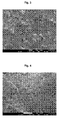
- Fig. 2 shows the particulate structure and nature of ezetimibe as such, i.e. absent from other active ingredients and without being co-milled with excipients for reference, whereas Figs. 3 to 6 show the significance of forms of ezetimibe particles being adsorbed to various selected hydrophilic excipients being present themselves in a particulate form.
- blending of ezetimibe with starch results in some agglomeration of ezetimibe.
- the surface of isomalt is substantially covered with small particles of ezetimibe thus favoring the existence of primary particles and controlling and preferably minimizing the tendency of formation of agglomerated particles, as shown in Fig. 4 .
- a substantially higher amount of ezetimibe particles are present on the surface of starch.
- Fig. 5 shows the result of blending ezetimibe with lactose, wherein the surface of lactose is again covered substantially by small particles of ezetimibe.
- Fig. 6 shows the result of a beneficial combination of ezetimibe with starch and saccharide, presently illustrated by the specific choice of lactose or isomalt as preferred disaccharide.
- lactose and/or isomalt respectively combined with starch as excipient components are especially beneficial by contributing to the effects of covering the surface of lactose by small particles of ezetimibe, while isomalt is covered by starch with ezetimibe and by ezetimibe alone.
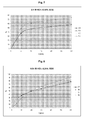
- Fig. 7 shows the influence and significance of various technologies on dissolution profiles of ezetimibe formulations.
- surfactant in particular Tween
- Tween limited amount of surfactant
- Fig. 8 shows further results of the influence and significance of technologies and selection of relevant excipients, again with a view of circumventing wet granulation. It shows that acceptable results can be obtained by technologies like fluid bed granulation and dry granulation in the presence of limited amount of liquid excipient such as surfactant and/or water. Data to elucidate effects of various technologies and excipients can be further depicted from Table 7 below.
- Fig. 9 shows suitable physical status of ezetimibe when present in solid solution with suitable solid solution agents, illustrated here with a selection of the excipients polyethylene glycol 4000 ( Fig. 9a ) and polyvinylpyrrolidon (PVP K-25; Fig. 9b ).
- PEG and PVP display positive influence on an increasing solubility of ezetimibe present in solid solution. Therefore, solid solution provides a useful alternative to wet granulation and other technologies.
- suitable binders can enhance binding properties between particles; for example, polyvinyl alcohol (PVA) has been found to act as a suitable binder to be preferably combined with ezetimibe.
- PVA polyvinyl alcohol
- Fig. 10 shows excellent results on dissolution profile of ezetimibe tablets which have been obtained by dry granulation technology with limited amount of non-aqueous liquid excipient (Tween 80).
- non-aqueous liquid excipient should be in a content range of up to 10wt.-%, for example 1 to 10 wt.-% of the whole amount of formulation subjected to granulation.
- Fig. 11 shows excellent results on dissolution profile of ezetimibe tablets which have been obtained by dry granulation technology with limited amount water, with or without limited amount of non-aqueous liquid excipient (Tween 80). Further, positive effect of various excipients in blending with ezetimibe become apparent, especially when blended with particulate saccharide including lactose, which is preferably a spray dried one (SD type), or isomalt, especially since blending is respectively used with starch.
- particulate saccharide including lactose which is preferably a spray dried one (SD type), or isomalt
- Particuar examples also demonstrated higher solubility of solid solution formulations of ezetimibe with different amount of suitable binder substances, using as preferred examples PVP (povidone), PEG-4000 or PEG-6000 (polyethylene glycol), and PVA (polyvinyl alcohol) respectively in liquid medium such as ethanol which is subsequently evaporated.
- PVP povidone
- PEG-4000 or PEG-6000 polyethylene glycol
- PVA polyvinyl alcohol
- mixture of powders was used for compressing into briquettes using a rotary tablet press in a controlled environment.
- briquettes were grinding twice through 2.0 mm and then 1.2 mm sieve.
- external excipient magnesium stearate
- the resulting final blend was compressed into tablets using a rotary tablet press in a controlled environment. Tablets were compressed at a compression weight of 100 mg using capsule-shaped punches.
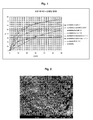
- Dissolution profiles from the different combination of ezetimibe and excipients after blending in high shear mixture are shown as in Fig. 1 .
- Legends are as follows: lactose - lactose 70-100 mesh; starch - maize starch; isomalt - galenlQ721; MCC - Avicel PH 102.
- a combination of ezetimibe in particulate form with appropriate saccharide notably with both starch and another saccharide, affects and partly remarkably enhances dissolution rate, compared to other combinations defined by lower compatibility.
- Starch combined with lactose, isomalt or microcristalline cellulose as the other saccharide is useful in terms of dissolution enhancement.
- Blending of ezetimibe with starch alone results in some agglomeration of ezetimibe ( Fig. 3 ).
- Situation is improved when an ezetimibe is adsorbed onto and covers the surface of other blended hydrophilic saccharide excipient in particulate form, shown here with isomalt.
- Substantial amounts of ezetimibe particles mainly in the form of small (and even primary particles) are present on the surface of particulate isomalt, and the tendency of ezetimibe particle agglomeration is limited (see e.g. Fig. 4 ).
- a combination of ezetimibe with starch and other saccharide illustrated in Fig. 6 after blending of ezetimibe with a) lactose/starch and b) isomalt/starch.
- Surface of lactose is covered by small particles of ezetimibe while isomalt is covered by starch with ezetimibe.
- level of ezetimibe's agglomeration in final formulation a significant affecting parameter.
- High percentage of agglomerates in tablets is detrimental to reach good dissolution profile.
- Blending of ezetimibe with appropriate amount of hydrophilic excipients such as saccharides, in particular isomalt and/or lactose assists in covering ezetimibe in adherence to surfaces to thereby maintain a high ratio of small and especially primary particles.
- suitable binders in particular in combination with starch, is assumed to assist in braking down possible agglomerates to small ezetimibe particles.
- Ezetimibe 10 mg tablets (wet granulation): Constituent Examples Function 3A 3B Ezetimibe 10.00 mg 10.00 mg Active Cellulose microcrystalline (Avicel PH 101 TM ) 12.00 mg 12.00 mg Filler, binder Lactose 200 mesh 72.00 mg 72.00 mg Filler Texapon K 12 TM (sodium dodecyl sulfate) Crospovidone (Polyplasdon XL TM ) 1.50 mg 1.50 mg 1.50 mg 1.50 mg 1.50 mg Surfactant Disintegrant Hypromellose (Pharmacoat 606 TM ) 2.50 mg 2.50 mg Binder Purified water q.s. / Granulation fluid Ethanol (96%) / q.s. Granulation fluid Magnesium stearat 0.50 mg 0.50 mg Lubricant
- Ezetimibe 10 mg tablets Constituent Examples Function 5A 5B Ezetimibe (17 ⁇ m) 10.00 mg 10.00 mg Active Cellulose microcrystalline (Avicel PH200 LM TM ) 10.50 mg 24.00 mg Filler, binder Lactose spray dried 55.25 mg 45.00 mg Filler Maize starch 9.75 mg 7.50 mg Filler, disintegrant Crospovidone (Polyplasdon XL TM ) 1.50 mg / Disintegrant Croscarmellose sodium 6.00 mg 6.00 mg Disintegrant Tween 80 (polysorbate) 1.50 mg 1.50 mg Surfactant Macrogol 4000 (PEG-4000) / 1.50 mg Binder Purified water 4.00 mg 3.00 mg Granulation fluid Aerosil 200 TM (silica, colloidal anhydrous) 0.50 mg 0.75 mg Glidant Magnesium stearat 1.00 mg 0.75 mg Lubricant Table 6.
- Ezetimibe 10 mg tablets (A, C, D - MADG; B - wet granulation)
- Function 6A 6B 6C 6D Ezetimibe (10 ⁇ m) 10.00 mg 10.00 mg 10.00 mg 10.00 mg Active Cellulose 25.25 mg 27.75 mg 27.00 mg 30.00 mg
- Disintegrant Klucel EXF TM 3.00 mg 3.00 mg 3.00 mg 3.00 mg 3.00 mg / Binder, (Hydroxypropylcellulose) disintegrant Tween 80 (polysorbate) 1.75 mg 1.75 mg / / Surfactant Purified water 2.50 mg q.s. 2.50 mg 2.50 mg Granulation fluid Aerosil 200
- the binder was blended with the drug plus filler, a small amount of water (up to 4%) and Tween (up to 5%) were added, and then the mixture was blended thoroughly.
- Microcrystalline cellulose (MCC) where used, and/or similar ingredient capable of absorbing moisture, was subsequently added to sorb the small amount of moisture present. No traditional drying step was involved. Additionally disintegrants were added and blended. These samples were sieved twice (0.7 mm) and were then mixed with laboratory blender for one min with mixture of magnesium stearate (0.3 mm) and aerosil.
- Example 6 According to Example 6 (Table 6), influence of different technologies (MADG and wet granulation), as well as influence of Tween 80 and Klucel EXF on dissolution profiles were further investigated. Tween and wet granulation have significant influence on dissolution profile of ezetimibe (see Figure 7 ). Detailed conditions of tests illustrated in Figure 7 are: 6A - MADG (2.5 % of water) with Tween; 5B - same formulation as 5A but wet granulation; 5C - MADG without Tween; 5D - MADG without Tween and Klucel EXF.
- Ezetimibe 10 mg tablets (A, B - fluid bed granulation; C - MADG; D - MADG* + fluid bed granulation**) Constituent Examples Function 7A 7B 7C 7D Ezetimibe (10 ⁇ m) 10.00 mg 10.00 mg 10.00 mg 10.00 mg Active Cellulose microcrystalline 27.75 28.00 23.50 15.00 mg Filler, binder (Avicel PH200 LM TM ) mg mg mg mg Lactose 70-100 mesh 42.00 mg / 42.00 mg / Filler Isomalt (galenlQ721 TM ) / 45.00 mg / 42.00 mg Filler Maize starch 10.00 mg 10.00 mg 10.00 mg 10.00 mg Filler Pluronic F-68 TM (Poloxamer) / / / 5.00 mg Disintegrant Croscarmellose sodium 4.00 mg 4.00 mg 4.00 mg 5.00 mg Disintegrant Klucel EXF TM (Hydroxypropylcellulose) 3.00 mg / / / Bin
- Ezetimibe, MCC, lactose or isomalt, starch, croscarmellose sodium, poloxamer and klucel were mixed in high share mixer or fluid bed granulator and water with tween were added throughout nozzle (MADG) or spray nozzle (fluid bed).
- MADG nozzle
- spray nozzle fluid bed
- aerosil and magnesium stearate were added after granulation part, sieved (0.7 mm) and then mixture was pressed into tablet form.
- mass was dried below 2 % of moisture and sieved twice (1 mm and 0.7 mm).
- Magnesium stearate was added and blended at the end. The resulting final blend was compressed into tablets using a rotary tablet press in a controlled environment.
- Ezetimibe 10 mg tablets A - MADG + fluid bed granulation; B - wet granulation (pasta); C - wet granulation) Constituent Examples Function Internals 8A 8B 8C Ezetimibe (10 ⁇ m) 10.00 mg 10.00 mg 10.00 mg Active Ethanol (96%) 40.00 mg / 35.00 mg Granulation fluid Calcium silicate / / 10.00 mg Disintegrant, porosity agent Texapon K 12 TM / / 10.00 mg Surfactant galenlQ721 TM (isomalt) 40.00 mg 40.00 mg 40.50 mg Filler Maize starch 10.00 mg 10.00 mg 5.00 mg Filler Avicel PH 200 LM TM (MCC) 15.00 mg / / Filler Prosolv TM (Silicified MCC) / / 15.00 mg Filler Crospovidone (Polyplasdon XL TM ) 1.
- ezetimibe was dissolved in ethanol (250 mg/mL in ethanol) and thereafter sprayed through nozzle on the surface of excipients.
- the ingredients were weighted and blended in laboratory blender purpose for 5 min. Subsequently, mixture of powders (internals) was sprayed with solution made of ezetimibe / ethanol or ezetimibe / SDS / Ca-silicate / ethanol. Afterwards the mixtures were dried; sieved (0.7 mm, twice) and external excipients were added. The resulting final blend was compressed into tablets using a rotary tablet press in a controlled environment.
- Use or calcium silicate, sodium dodecyl sulfate and ethanol provided for enhanced prevention of agglomeration of ezetimibe during granulation process, and made the final tablet to have more porosity.
- Ezetimibe and solid solution agent were simply dissolved in ethanol and then solvent was evaporated at elevated temperature (45-50°C). After evaporation of ethanol we got solid solution of ezetimibe in PEG and PVP. PVA made strong binding character between particles.
- solid solution agents illustrated here with a selection of the excipients polyethylene glycol 4000 ( Fig. 9a ) and polyvinylpyrrolidon (PVP K-25; Fig. 9b ), physical status of ezetimibe in solid solution was confirmed. Therefore, solid solution provides a useful alternative to wet granulation and other technologies. Moreover, further tests have shown that suitable binders can enhance binding properties between ezetimibe particles; for example, polyvinyl alcohol (PVA) has been found to act as a suitable binder to be preferably combined with ezetimibe.
- PVA polyvinyl alcohol
- Dissolution profile was similar to results for solid solution (Example 9), but could be improved by Nonaqueos Moisture Activated Dry Granulation (NAMAGD) with Tween 80 as a surfactant and granulation agent, as will be described in Example 11 below.
- NAMAGD Nonaqueos Moisture Activated Dry Granulation
- Tween 80 content 1.0 to 10.0 % (w/w). The selection of these Tween contents was based on former experiments for MADG model in which water contents of 2.0 to 4.0 % were used. The best quality of tablets as well as disintegration properties ( ⁇ 5 min) was achieved with 2.5 % of Tween 80. Table 11.
- Ezetimibe 10 mg tablets (NAMADG) Constituent Example 11 Function Ezetimibe (10 ⁇ m) 10.00 mg Active Lactose spray dried 70.50 mg Filler Maize starch 5.00 mg Filler, disintegrant Crospovidone (Polyplasdon XL TM ) 1.00 mg Disintegrant Croscarmellose sodium 6.00 mg Disintegrant Tween 80 (polysorbate) 2.50 mg Surfactant Klucel EXF TM (Hydroxypropylcellulose) 3.50 mg Binder, Disintegrant Aerosil 200 TM (silica, colloidal anhydrous) 0.75 mg Glidant Magnesium stearat 0.75 mg Lubricant
- Lactose SD and starch were blended firstly alone and then with ezetimibe. Mixture was sieved throughout sieve 0.7 mm, and disintegrants were added and mixed. Tween was sprayed on excipients with active principle. Granulation was done with high share mixing and chopping. Granulate was sieved twice (0.7 mm). After added of Vietnamese, economical, and robust sample was good ( Figure 10 ). Positive influence of lactose, starch, and tween was confirmed to reach very good dissolution profile of ezetimibe.
- DMADG limited amount of water and limited amount of non-aqueous liquid excipient (tested with Tween 80 as surfactant), named DMADG. Table 12. Composition of Ezetimibe 10 mg tablets (DMADG).
- Example 12 Function Ezetimibe (10 ⁇ m) 10.00 mg Active Lactose spray dried 69.00 mg Filler Maize starch 5.00 mg Filler, disintegrant Crospovidone (Polyplasdon XL) 1.50 mg Disintegrant Croscarmellose sodium 6.00 mg Disintegrant Tween 80 (polysorbate) 2.50 mg Surfactant and moisture activator Purified water 2.00 mg Moisture activator Klucel EXF TM (Hydroxypropylcellulose) 3.00 mg Binder, Disintegrant Aerosil 200 TM (silica, colloidal anhydrous) 0.60 mg Glidant Magnesium stearat 0.40 mg Lubricant
- Lactose SD and starch were blended firstly alone and then with ezetimibe, and after the 3 minutes disintegrants were added and mixed for another 1 minute.
- water was sprayed on excipients with active principle to potent binders between hydrophilic compound and API.
- the second activation was done by spraying of Tween on water activated mixture of excipients and active principle.
- Granulation was done with high share mixing and chopping (200-250 rpm for 3 minutes). Granulate was sieved (0.7 mm). After added of klucel, aerosil and magnesium stearate, mass was prepared for tableting. Dissolution profile of this very simple, economical, and robust sample was acceptable and even better in first point (5 minute) then results shown in Figure 10 .
- Ezetimibe 10 mg tablets (DMADG and influence of different hydrophilic excipients).
Landscapes
- Health & Medical Sciences (AREA)
- Life Sciences & Earth Sciences (AREA)
- Chemical & Material Sciences (AREA)
- Medicinal Chemistry (AREA)
- Pharmacology & Pharmacy (AREA)
- Animal Behavior & Ethology (AREA)
- General Health & Medical Sciences (AREA)
- Public Health (AREA)
- Veterinary Medicine (AREA)
- Epidemiology (AREA)
- Engineering & Computer Science (AREA)
- Bioinformatics & Cheminformatics (AREA)
- Biophysics (AREA)
- Molecular Biology (AREA)
- Diabetes (AREA)
- Hematology (AREA)
- Obesity (AREA)
- Chemical Kinetics & Catalysis (AREA)
- General Chemical & Material Sciences (AREA)
- Nuclear Medicine, Radiotherapy & Molecular Imaging (AREA)
- Organic Chemistry (AREA)
- Medicinal Preparation (AREA)
- Solid-Sorbent Or Filter-Aiding Compositions (AREA)
- Pharmaceuticals Containing Other Organic And Inorganic Compounds (AREA)
Abstract
Formulations of ezetimibe are described, wherein attention is paid, alternatively or optionally in combination, to (i) the existence of ezetimibe in the form of primary particles, which when blended with a suitable hydrophilic excipient in particulate form are allowed adsorb on the surface of particles of the hydrophilic excipient; (ii) a selection of specific types of excipients; and/or (iii) a careful control of how the formulation of ezetimibe is obtained.
Description
- The present invention relates to new formulations of ezetimibe, as well as a pharmaceutical formulation containing the same.
- Ezetimibe, chemically 1-(4-fluorophenyl)-3(R)-[3-(4fluorophenyl)-3(S)-hydroxypropyl]-4(S)-(4-hydroxyphenyl)-2-azetidinone, belongs to a class of lipid-lowering compounds that selectively inhibits the intestinal absorption of cholesterol and related phytosterols.
- The drug is a well tolerated and effective total-C (total cholesterol), LDL-C (low density lipoprotein cholesterol), Apo B (apolipoprotein B) and TG (triglycerides) reduction agent with benefit in the secondary prevention of vascular events, such as atherosclerosis. On the other hand, ezetimibe increases HDL-C (high density lipoprotein cholesterol) or "good cholesterol" in patient with hypercholesterolemia.
-
US Patent 7,030,106 B2 claims a pharmaceutical composition consisting of ezetimibe, and, as excipients, lactose monohydrate (filler), microcrystalline cellulose (filler), povidone (binder), croscarmellose sodium (disintegrant), sodium lauryl sulfate (surfactant) and magnesium stearate (lubricant).EP 1 849 459 A1 describes a composition comprising ezetimibe co-milled with at least one hydrophilic excipient. Co-milling is carried out with saccharides or polysaccharides, typically starch, to obtain ezetimibe particle size of d(0.9) of less than or equal to about 25 µm, preferably less than or equal to 10 µm, and more preferably less than or equal to about 5 µm. - Further background technology is described in Kosoglou T. et al., Clin Pharmacokinet 44 (2005) 467-494; Christensen L. H. et al., Drug Dev Ind Pharm 20 (1994) 2195-2213; Inghelbrecht S. et al., Int J Pharm 171 (1998) 195-206 ; Physicians' Desk Reference, 61 st edition, Thomson PDR, NJ, USA, 2007, pp. 2120-2125; and Sharma S. et al., Pharm Sci Tech 6 (2005) 618-625.
- The object of the present invention was to provide an approach to improved ezetimibe formulations.
- In one aspect, the present invention provides a formulation of ezetimibe, comprising ezetimibe in the form of primary particles and a hydrophilic excipient in particulate form having ezetimibe particles adsorbed to.
- According to another aspect, the present invention provides a formulation of ezetimibe, comprising ezetimibe combined with at least two types of hydrophilic excipients, wherein one type of hydrophilic excipient is starch and the other type of hydrophilic excipient is selected from saccharides including mono-saccharides, disaccharides and cellulose substances.
- According to still another aspect, the present invention provides a formulation of ezetimibe comprising ezetimibe, granulated in admixture with up to 8 wt.-%, preferably up to 6 wt.-% and more preferably up to 4 wt.-% ), for example 0.5 to 4 wt.-% of water or an aqueous liquid, or with up to 10 wt.%, preferably with 1 to below 10 wt.% of nonaqueous excipient selected from liquid substances.
- According to yet another aspect, the present invention provides a formulation of ezetimibe comprising ezetimibe, admixed in solid solution with a solid solution agent.
- According to a particular embodiment of the present invention, a process for producing a formulation of ezetimibe uses dry granulation in the absence of granulation liquid or in the presence of limited amount of water or aqueous liquid of up to 8 wt.-%, or in the presence of limited amount of non-aqueous liquid of up to 10 wt.-%, or uses solid solution formation of ezetimibe.
- According to a further aspect, the present invention provides a pharmaceutical formulation comprising a formulation of ezetimibe according to anyone of the above aspects, or comprising a formulation of ezetimibe obtained by the aforementioned particular production process.
- A further aspect of the invention is the use of any formulation according to the above aspects or the above pharmaceutical formulation for the prophylaxis or treatment of cholesterol-associated diseases, or a method of treatment by administering a cholesterol-decreasing amount of the formulation or the ezetimibe present as the active agent therein.
- The aspects, advantageous features and preferred embodiments of the present invention, respectively alone or in combination, contribute to provide improved ezetimibe formulations with a view of a good balance between free-flowing, cohesive powder and compression characteristics combined with yielding formulations of ezetimibe, and finally pharmaceutical formulations containing the same, enabling good chemical and physical stability of ezetimibe as well as good dissolution properties and acceptable levels of hardness when formulated in single unit dosage forms like tablets.
- Further description is set forth in the following, referring to preferred embodiments and advantageous features, characteristics and effects, which are provided for illustrated purposes without an intention to limit the scope of the invention.
- The ezetimibe substance is low water-soluble, low permeable, incompatible with most of the excipients usually used in drug formulation, presents stability problems, and is not inherently compressible. Consequently, there is a need to provide a free-flowing and cohesive ezetimibe composition capable of being formulated into dosage forms, especially when formulated at low strengths such as e.g. 10 mg doses or even only 5 mg doses of ezetimibe per unit dosage form, with an acceptable dissolution profile.
- Despite of such constraints, it has been surprisingly found according to the invention that formulations of ezetimibe can be provided in a more robust and economical way and can display a good balance of properties including chemical and physical stability, free-flowing characteristics and compressibility as well as acceptable degrees of hardness and particularly acceptable to good dissolution profiles, when attention is paid, alternatively or optionally in combination, to (i) the existence of ezetimibe in the form of primary particles, which when merely blended, without co-milling, with a suitable hydrophilic excipient in particulate form are allowed, at a satisfactory percentage of primary particle status, to be adsorbed on the surface of particles of the hydrophilic excipient; (ii) a selection of specific types of excipients; and/or (iii) a careful control of how the formulation of ezetimibe is obtained. The aforementioned beneficial effects are more enhanced, if two or all of the afore-mentioned features (i), (ii) and (iii) are observed in combination.
- According to a preferred embodiment, the ezetimibe for the purpose of blending and mixing with excipients, is provided in the form of primary particles in the ezetimibe formulation, preferably having a particle size d(0.9) of ≤ about 40 µm, more preferably ≤ about 25 µm, more preferably ≤ about 18 µm, and particularly at about 10 µm of, e.g., in a range of between 8.5 µm and 12.5 µm. Especially with a view to high dissolution rates, it has been found significant to ensure a physically stable form of primary particles of ezetimibe, and to reduce or preferably minimize the tendency towards formation of agglomerates. Combining particulate ezetimibe with a suitable hydrophilic excipient in particulate form allowed them adsorb onto the surface of the particulate hydrophilic excipient, thereby controlling and preferably minimizing the generation of ezetimibe agglomeration during processing and in both the formulation and the pharmaceutical formulation yielded thereby. In accordance with a preferred embodiment, it is possible according to the present invention to limit the proportion of agglomerated particles relative to the total of primary and agglomerated particles of ezetimibe to be below 20 %, preferably 10% or below and more preferably 5% or below (% indications denote number-%). The term "agglomerated particles" used herein typically means ezetimibe particles having a mean particle size of 20 µm or larger.
In order to achieve the significant advantages and effects, it is not only unnecessary but preferred to omit co-milling with other components or excipients of the formulation, rather to provide ezetimibe in the form of primary particles by being powdered, milled, peg-milled or micronized separately to have per se the desired particle size as such. This allows a control of adsorbing ezetimibe particles, preferably in the form of primary particles at relatively high rate, to the surface of the particulate hydrophilic excipient by blending. In particular, it allows a proper control and ratio between particle sizes of both ezetimibe and hydrophilic excipient, on whose surface the ezetimibe primary particles shall be covered by adsorption. It appears that ezetimibe in association with the particulate hydrophilic excipient by adsorption enables a better compatibility with further optional excipients, which then can be added at a higher proportion to further assist in achieving overall characteristics. Further, a tendency of chemical and/or physical changing of ezetimibe is reduced. - Preferably, it has been found beneficial to use the aforementioned relatively small primary ezetimibe particles - with possible limitation of agglomerated particles - for covering a relatively larger excipient particle by adsorption thereon. Suitable particle sizes of the hydrophilic excipient, onto which surface the ezetimibe particles are adsorbed to, is a range of from 10 to 400 µm (determined as mean particle size).
- The appropriate status of the ezetimibe particles being adsorbed to the hydrophilic particulate excipient can be observed by suitable means, for example by means of scanning electron microscopy (SEM). Accordingly, the status of a surface of the particulate hydrophilic excipient being covered by small particles, preferably at a high ratio of primary particles of ezetimibe, is readily visible. The proportion of agglomerated particles relative to the total of particle forms can be determined by such suitable means also.
- The hydrophilic excipient is suitably selected from the group consisting of saccharides, including polysaccharides and in particular mono- or disaccharides. The preferable selection among a saccharide for the hydrophilic excipient is to enhancing the adsorption state, and to maintainwe a high proportion of primary particles on the excipient particle surface. Preferred examples of hydrophilic excipients of saccharide type include particulate mono- or di-saccharides, including but not limited to lactose, isomalt, mannitol, sorbitol, glucose, fructose, lactitol, maltose, preferably mannitol, lactose and isomalt, and more preferably lactose and isomalt, respectively alone or in combination. Preferred polysaccharides include starch and cellulose substances, wherein preferred cellulose substances include microcrystalline cellulose, ethylcellulose, methylcellulose, hydroxypropyl cellulose, carboxymethyl cellulose and hydroxypropyl methyl cellulose, and crosslinked forms as well as combinations thereof.
- According to a further preferred embodiment, the particulate hydrophilic excipient having said ezetimibe particles adsorbed thereto is intermixed with a binder. Binder as a matrix is able to further stabilize and enhance the adsorption status between particles of ezetimibe and hydrophilic excipient. Some of the aforementioned polysaccharides, onto whose surface ezetimibe particles can be adsorbed, can act at the same time as binders. Suitable binders include, but are not limited to microcrystalline cellulose, starch, calcium or sodium carboxymethylcellulose, cellulose, silicified microcrystalline cellulose, cellulose acetate, colloidal silicon dioxide, dextranes, dextrin, ethylcellulose, hydroxyethyl cellulose, hydroxyethylmethyl cellulose, hydroxypropyl cellulose, hypromellose, maltodextrin, methylcellulose, polydextrose, pregelatinized starch, zein, polyethylene glycol, polyvinylpyrrolidone, preferably starch, polyethylene glycol, preferably solid PEG such as PEG-4000 or PEG-6000, polyvinylalcohol (PVA) and polyvinylpyrrolidone (PVP).
- The formulation with the ezetimibe particles - preferably in the form of primary particles as the main proportion with respect to all present ezetimibe particle forms - being adsorbed to the surface of the hydrophilic particulate excipient can be suitable obtained by blending both components, optionally concurrently together with further excipients. As a further option, further excipients, partly or completely, may be mixed after blending the ezetimibe and hydrophilic excipient particles. A good equipment for blending is a high shear mixer, assisting in a proper status of the ezetimibe particles being adsorbed to the particulate hydrophilic excipient, and allowing further excipients to form a matrix or network structure, preferably when a polysaccharide substance is used as a further excipient.
- Independent to the aforementioned preferred embodiment of achieving a beneficial status of ezetimibe particles being adsorbed to the surface of a particulate hydrophilic excipient, the formulation of ezetimibe according to another embodiment of the present invention can be improved by selection of certain types of hydrophilic excipients. It is however noted that the present embodiment can be combined with the aforementioned preferred embodiment, which will particularly enhance desirable characteristics such as solubility, dissolution rate and profile. According to the present preferred embodiment, ezetimibe is combined with at least two types of hydrophilic excipients, wherein one type of hydrophilic excipient is starch and the other type of hydrophilic excipient is a saccharide selected from mono-saccharides, di-saccharides and cellulose substances. Although not necessarily, the two types of hydrophilic excipients are suitably present in the form of particles.
It has been surprisingly found that when ezetimibe as such, i.e. preferably without being co-milled with other components and without other active ingredients, is combined with both starch and suitably selected further saccharide, and especially combining with starch and mono- and/or di-saccharides, compatibility among the excipients and especially with the optional inclusion of further excipients is enhanced even at relatively low dosage percentages (corresponding to a high proportion of total excipients), tendency of chemical and/or physical changing of ezetimibe is reduced, and at the same time an excellent balance of characteristics including tablet hardness and good dissolution properties can be achieved. Thus, the combination of ezetimibe with both starch and further saccharide (in particular mono- or di-saccharide) not only favours compatibility of such excipients with ezetimibe and significantly further assists in limiting the generation of agglomerated ezetimibe particles, but additionally allows to add further excipients, which alone would have compatibility problems with ezetimibe but which on the other hand can additionally contribute to further beneficial effects. It is for example possible to add preferred choices of surfactants such as Tween, and to add preferred choices of binders such as polyethylene glycol, preferably solid polyethylene glycol, such as PEG-4000 or PG-6000, polyvinylpyrrolidone (Povidone; PVP) and/or polyvinyl alcohol (PVA). - Combined with a matrix or network formed by starch, the mono- and/or di-saccharid is preferably selected from the group consisting of lactose, isomalt, mannitol, sorbitol, glucose, fructose, lactitol, maltose, preferably lactose and isomalt. Starch can also be suitably combined with cellulose-type polysaccharide substances, including especially microcrystalline cellulose, ethylcellulose, methylcellulose, hydroxypropyl cellulose, carboxymethyl cellulose and hydroxypropyl methyl cellulose, and crosslinked forms as well as combinations thereof.
- Independently from the preferred embodiments described above, but optionally alternatively thereto or in combination therewith, a preferred embodiment of the present invention relates to the choice of appropriate processing technology. Combination with the abovementioned preferred embodiments provides for the advantage of freedom to choose among the various known formulation technologies, including for example wet granulation, dry granulation and others known to the person skilled in the art. An advantage resides that the formulations of ezetimibe disclosed herein even enables the use of economically preferably dry granulation, although it is more challenging than wet granulation due to inherent difficulties involved by features attributable to the ezetimibe active ingredient as described above.
- On the other hand, if improvements of ezetimibe formulation shall be accomplished independently from the abovementioned preferred embodiments, the present invention provides further beneficial embodiments by carefully controlling how the formulation of ezetimibe is obtained. One particularly developed technology is the granulation in admixture with a limited amount of liquid. It has been surprisingly found that granulation in admixture with a limited amount of water or an aqueous liquid of up to 8 wt.-%, preferably up to 6 wt.-% and more preferably up to 4 wt.-%, for example 0.5-4 wt.-%, more specifically 1 to 4 wt.-% and particularly 2 to 3 wt.-%, or granulation in admixture with a limited amount of an non-aqueous excipient selected from liquid substances up to 10 wt.-%, for example from 1 to below 10 wt.-%, respectively relative to the total amount of formulation of ezetimibe subjected to granulation, and subsequently subjecting the blend to granulation without further granulation fluid, an ezetimibe formulation can be obtained where free-flow characteristics, cohesive characteristics and compressibility of the ezetimibe formulation is enhanced, and in addition good dissolution properties are displayed. Since, besides the limited amount of liquid excipient, otherwise dry conditions are set, a drying step becomes superfluous. This can be further assisted by addition of a binder capable of absorbing the limited amount of liquid excipient. Selection of solid excipients from solid polyethylene glycol, isomalt, microcristalline cellulose (e.g. Avicel), mannitol and lactose have been found to be particularly suited for dry granulation with limited amount of liquid.
- In the present embodiment of adding limited amount of liquid excipient during granulation, either water alone or an aqueous liquid can be used. In the aqueous liquid, water can be mixed with water-miscible organic solvents, such as lower alcohols, alkyl ethers, and the like, for example methanol, ethanol, n- or iso-propanol, butanol, pentanol, hexanol, heptanol, or octanol. Alternatively or in combination with aqueous liquid, when using non-aqueous liquid substances for dry granulation assistance, the non-aqueous excipient can be selected from liquid surfactants, preferably of non-ionic type; liquid polyethylene glycol; liquid paraffin; propylene glycol; liquid fatty alcohols with at least 8 carbon atoms; liquid triglycerides or oils; liquid wax; liquid polyethoxylated fatty acids; liquid PEG glycerol fatty acid esters; and liquid ethers of polyethylene glycol and alkyl alcohols; preferably selected from the group consisting of polysorbate, glycerol, liquid polyethylene glycol, liquid paraffin and propylene glycol. The preferred non-aqueous excipient is a liquid surfactant, preferably of non-ionic type, more preferably selected from the group of Tweens, sodium dodecylsulfate and poloxamers, more preferably selected from Tweens and particularly choosing
Tween 80. - Another processing technology found to be particularly suited is by admixing ezetimibe in solid solution with a solid solution agent. This particular processing technology contributes to good dissolution properties, especially with respect to dissolution rate. The term "solid solution" used herein is a single phase existing in an admixture with ezetimibe. The solid solution may be limited to only the ezetimibe and the solid solution agent and optional further excipients solubilized in the solid solution, or it may be combined with one or more separate, unsolubilized or particulate, further optional excipient. The solid solution component can typically be ascribed as a single phase existing over a range of chemical compositions in which ezetimibe is dissolved or dispersed. Some minerals are able to tolerate a wide and varied chemistry, whereas others permit only limited chemical deviation from their ideal chemical formulae. In many cases, the extent of solid solution is a function of temperature, with solid solution being favoured at high temperatures, whereas unmixing and/or ordering being favoured at low temperatures.
- In the embodiment for preparing solid solution of ezetimibe, solid solution agent, which is suitable selected from appropriate excipient forms that are solid per se, and liquid media are used for preparing solid solution in liquid. A suitable solid excipient to be used as solid solution agent can be selected from binder substances, preferably from the group consisting of colloidal silicon dioxide, polyvinylpyrrolidone, polyethylene glycol, and polyvinylalcohol (PVA). Most preferred is use of solid polyethylene glycol (PEG), in particular one falling in the molecular weight in the range of 4000 to 20000 such as PEG-4000 or PEG-6000, and polyvinylpyrrolidone (PVP), optionally also polyvinylalcohol (PVA). Two or more of the aforementioned solid solution agents, especially when using PEG and PVP, optionally further including PVA, can be used in combination to further enhance effects.
- Suitable liquid media for preparing the solid solution include organic solvents such as lower alcohols, for example methanol, ethanol, n- or iso-propanol, butanol, pentanol, hexanol, heptanol, or octanol, and mixtures of organic solvents with water. Preferably ethanol and aqueous ethanol solutions are used. After a solution of ezetimibe and the solid solution agent has been prepared, optionally including a heating treatment for making homogenous or evenly distributed solution, the liquid medium component used for preparing solid solution in liquid is evaporated. Evaporation is performed more effectively at elevated temperature, for example at range of 40 to 50°C. This is moist efficiently done during a fluid bed top spray granulation procedure.
- Solid solution agents which concurrently act as binders will also improve compatibility with additionally included, optionally particulate excipients. Optional additional excipients may be included by solid solution formation as well, or they are included after solid solution formation of ezetimibe by suitable methods, such as fluid bed granulation techniques.
- For the aspects and preferred embodiments described above, the following features are of further particular significance.
- When processing ezetimibe by a technology as described above, ezetimibe can suitably be present in particulate form, although not being necessarily limited thereto. In certain embodiments, other forms such as a dissolved state is more suitable, for example when choosing solid solution formulations of ezetimibe.
- Since each of the aforementioned aspects and preferred embodiments, either alternatively or in combination, contribute to an improved compatibility between excipients, there is a beneficial freedom of choice among a larger variability of excipients to be used depending of the desired functionality to be achieved, and thus enabling beneficial effects attributable to the selected excipient. Thus, intended for the final pharmaceutical formulation, e.g. existing as single dosage form such as tablet, several ingredients can be used besides ezetimibe and optionally further active pharmaceutical ingredients. For example, excipient ingredients may be used to improve mechanic characteristics, such as bulk, improved flow, better compressibility, improved disintegration characteristics, hardness, taste, and tablet performance, flavoring, or enhanced appearance. Many types and examples of excipients can be used to accomplish such functionalities, including but not limited to binders, fillers, lubricants, disintegrants, surfactants, coloring agents, diluents, antiadhesives, glidants, alone or in combination. Further useful additives may include, alone or in combination, buffer agents, anti-oxidants, colorants, stabilizers, fillers, plasticizers, emulsifiers, preservatives, viscosity-modifying agents, or passifiers, flavouring agents, without being limited thereto.
- The balance of properties especially including dissolution properties and chemical and physical stability of the ezetimibe active component is at good levels when the excipient is selected from specially adapted solid excipients, including for example those selected from the group consisting of solid polyethyleneglycol (PEG; Macrogol), preferably PEGs having molecular weights in the range of 4000 to 20000; polyvinyl pyrrolidone (PVP) or its crosslinked form crospovidone; silicon dioxide, preferably fumed silica or colloidal silicon dioxide; moni-/di-/polysaccharides including sugar esters and polyhydroxy-sugars, preferably mannitol; lactose, isomalt, lactitol; sorbitol, glucose, fructose, maltose, preferred polysaccharides of dextranes, dextrin, maltodextrin, and dextrose, more preferably starch and celluloses, methylcellulose, cellulose acetate, hydroxyethylcellulose (HEC), hydroxypropylcellulose (HPC), hydroxypropyl methylcellulose (HPMC), HPMC phthalate, polydextrose, cyclodextrins and carbomers, microcrystalline cellulose (MCC), silicified microcrystalline cellulose, powdered cellulose, carboxymethylcellulose (calcium or sodium), hypromellose, pregelatinized starch, zein; buffer salts, preferably anhydrous mono-, di- or tribasic phosphate, more preferably calcium phosphate, calcium sulfate and calcium silicate, magnesium carbonate; hydrophilic, anionic, cationic, zwitterionic and non-ionic surfactants and lipohilic additives such as mono-, di- or triglycerides, polyethoxylated fatty acids, fatty acid esters and oils, e.g. sodium oleate, sodium lauryl sulfate and magnesium stearate and polyglycolized glycerides; talc; polypeptides such as gelatine; and mixtures thereof; without being limited thereto. A single dosage pharmaceutical formulation as an embodiment of the present invention may further comprise a cover film or shell, which according to a preferred embodiment is non-hygroscopic as well. In further preferred embodiments, bi- or multifunctional excipients can be used, for example, colloidal silicon dioxide (CSD) admixed with micro-crystalline cellulose (MCC), for example Prosolv™. Excipients used preferably include at least one or more of the group consisting of polyethylene glycol, isomalt, microcristalline cellulose, mannitol and lactose, preferably comprising at least starch, lactose, isomalt, PEG, PVP and Tween, optionally also croscarmellose sodium.
- When desired, the present invention allows to take advantage of a low weight percentage, or low absolute dose per dosage unit, of active principle of ezetimibe, especially where ezetimibe is the sole active ingredient. This concept in turn means a high weight percentage or high absolute amount of appropriate excipients, with the possibility of selecting useful and effective amounts of excipient depending on the desired magnitude of the attributable effect, including especially free-flowing, cohesive and compressibility characteristics during processing, dissolution property despite of very low solubility of ezetimibe alone (typically being below 0.01 mg/ml in water), and physical and/or chemical stability in spite of ezetimibe being prone to stability challenges. Thus, in certain beneficial embodiments, the balance of the ezetimibe formulation may formed, besides ezetimibe, only by excipients of appropriate choice, only optionally further including a second or third, different active ingredient. This applies for example to cases wherein the content of ezetimibe is at a dose of up to 25 mg, or up to 20 mg per dosage form, including e.g. a standard level of about 10 mg or about 5 mg. Percentage level of ezetimibe in the final pharmaceutical formulation can be suitably selected as desired, for example at the proportion below 50 wt.-%, more suitably below 25 wt.-%, notably at a level of around 10 wt.-% or below, or at a level of around 5 wt.-%, respectively relative to the total weight of the pharmaceutical formulation.
- The pharmaceutical formulation finally used for medical purposes comprises any one of the formulations of ezetimibe described in the various aspects, preferred embodiments and particular features described above. In this connection, it is noted that various technologies can be used and selected depending on the magnitude of finally desired predominant effect. In particular, technologies can be preferably selected from the group consisting of wet granulation, dry granulation either in the absence of granulation liquid or in the limited presence of aqueous or non-aqueous excipients suitable for dry granulation, fluid bed granulation or direct compression. Processing may suitably include one or more steps of briquetting or slugging, sieving, milling, blending, tabletting and compression. It may also include direct compression. As described above, formulations disclosed herein enable advantageous and particularly preferred technologies, including classical dry granulation without using granulation liquid, or modified dry granulation working with a limited amount of aqueous (up to 8 wt.-%) or non-aqueous liquid (up to 10 wt.-%) as a kind of moisture-activation; and solid solution formation and/or fluid bed granulation, which respectively makes the process of forming single unit dosage forms such as tablets containing ezetimibe more robust and economical, while enabling suitable dissolution profiles.
- Despite the advantages of the dry granulation, such as reduced processing time and cost, wet granulation is in general and widely used in the industry to prepare solid dosage forms. Wet granulation is often preferred over dry granulation and direct compression because wet granulation has a greater chance of overcoming any problems associated with the physical characteristics of various ingredients - active or as excipient - in the formulation, with a view of providing material which has the required flow and cohesive properties necessary to obtain an acceptable solid dosage form. In general, while segregation could be a potential problem with direct compression and dry granulation, sizes and shapes of particles comprising granulate to be compressed are more easy controlled through wet granulation process. In addition, when a dry solid is wet granulated the binder "glues" particles together, so that they agglomerated into spherical granules.
- In spite of the apparent ease of processing afforded by wet granulation, many manufacturers would welcome the opportunity to dry granulation tablets, especially in cases when low dose of ezetimibe is desired. It is a benefit of the present invention to meet this need in the industry for techniques and pharmaceutical formulations which will allow manufacturers to prepare low dose ezetimibe tablets by dry granulation, which will avoid the time and expense of wet granulation, as well as higher solubility of active principle in final formulation.
- The pharmaceutical formulation according to the present invention allows to achieve a beneficial dissolution profile by releasing ezetimibe at a rate of higher than 30 %, preferably higher than 40 %, and even as high as at least 60 %, within 30 minutes, relative to the original amount of eprosartan in the formulation, tested using USP apparatus 2, placing the formulations in 1000 ml 0.1 M hydrochloric acid at 37 ± 0.5°C with paddle speed of 50 rpm.
- In dry granulation methods, the powder particles are associated under high pressure. The components of the formulation are compressed in the dry stage. If the sufficient bonding strength can not be achieved by compression alone, a binder is added, also in the dry state. The initial compression stage can take place by one of two methods. The first uses a conventional tablet press, a process often referred to as slugging or briquetting. Since the components of the formulation will not have the necessary attributes for producing tablets with acceptable characteristics (hardness, friability, weight, shape, disintegration, dissolution), the tablets produced at this stage (the slugs or briquettes) will not be of acceptable quality, especially as regards to appearance and weight uniformity. Therefore, the briquettes are then broken down to form a granular product, which after sieving can then be compressed again to give satisfactory tablets. It was proved that the ease of compressibility of the formulation at the second compression was inversely proportional to the pressure used at the briquetting stage, implying that briquetting at high pressure should be avoided.
- A unique modification of dry granulation process was found to be particularly suited for ezetimibe formulations. Accordingly, in our work we developed granulation of ezetimibe powder with limited amount of water, aqueous liquid or non-aqueous liquid and further optional excipients. This modification is denoted Moisture Activated Dry Granulation (MADG) in case of using limited amount of water, or Non-Aqueous Moisture Activated Dry Granulation (NAMADG) in case of using limited amount of non-aqueous liquid excipient such as surfactant. As a further, alternative effective for achieving good dissolution profiles of ezetimibe, both limited amount of water and limited amount of non-aqueous liquid excipient such as surfactant are useful, named here Double Moisture Activated Dry Granulation (DMADG). In case of DMADG, ratio of water to non-aqueous liquid excipient is preferably from 1:4 to 4:1. Such particularly developed modifications of dry granulation turned out to be very suitable for ezetimibe having poor flowability and insufficient compression properties (especially if higher drug doses are desired), and having poor solubility (still relevant for low dose formulations). An adjustable amount of binder capable of absorbing the limited amount of liquid excipient can be added. The ingredients can be mixed, optionally in a high speed mixer, within a suitable wet massing time, which means the time of mixing after the liquid excipient has been added. The preferred wet massing time is up to 10 minutes, more preferably 2 to 5 minutes. Traditional drying step can be beneficially omitted.
- The fluid bed granulation process involves suspending particulates in an air stream and spraying a liquid from the top down onto the fluidized bed. Particles in the path of the spray get slightly wetted and become tacky. The tacky particles collide with other particles and adhere to them to form a granule. There are two different modes of fluid bed granulating: Dry stage and Wet stage. In Dry stage granulation, the particles only require a slight wetting to become tacky and stick to each other. The granulating solution is applied at a rate less than or equal to the evaporation rate. Thus the particles remain "dry" through the entire process. In Wet stage granulation, the particles require significant wetting before they become tacky enough to stick to each other. The granulating solution is applied at a rate higher than the evaporation rate until the particles build up enough moisture to granulate. The characteristics of the particles when wet and the type of granulating solution being used will determine which mode of granulating is most appropriate. While Dry stage is more common, Wet stage granulating allows for denser products. Fluid bed granulation is commonly used to develop porosity and effective surface area, which consequently gives higher solubility of active principle.
- The following examples are merely illustrative of the present invention and they should not be considered as limiting the scope of the invention in any way, as these examples and modifications as well as equivalents thereof will become apparent to those versed in the art in the light of the present disclosure and the accompanying claims. In the drawings:
- Fig. 1
- shows dissolution profiles of different combinations of ezetimibe and excipients after blending, using USP dissolution test apparatus 2 at 0.01 M HCl and 0.25% SDS (900 ml);
- Fig. 2
- shows a SEM of ezetimibe as such, having a d (0.9) of about 10 µm;
- Fig. 3
- shows a SEM of ezetimibe and starch after blending;
- Fig. 4
- shows a SEM of ezetimibe and isomalt after blending;
- Fig. 5
- shows a SEM of ezetimibe and lactose after blending;
- Fig. 6
- shows a SEM of ezetimibe with lactose and starch (
Fig. 6a ) and isomalt and starch (Fig. 6b ) respectively after blending; - Fig. 7
- shows the influence of various technologies for processing ezetimibe, and the use of various functional excipients (900 ml);
- Fig. 8
- shows further influence factors of technologies as well as the use of specific functional excipients (500 ml);
- Fig. 9
- shows a SEM of ezetimibe in solid solution with polyethylene glycol (
Fig. 9a ) and with polyvinylpyrrolidone (Fig. 9b ), respectively; - Fig. 10
- shows the dissolution profile of ezetimibe tablets produced in Example 10 (500 ml); and
- Fig. 11
- shows dissolution profiles of different combinations of ezetimibe and excipients after blending, activating, and tableting, using USP dissolution test apparatus 2 at 0.01 M HCl and 0.25% SDS (500 ml);
- As shown as in
Fig. 1 , the selection of excipient to be combined with ezetimibe significantly affects the dissolution profile of ezetimibe. A combination of ezetimibe in particulate form with starch and saccharide lactose or isomalt remarkably enhances dissolution rate, compared to other combinations defined by lower compatibility. -
Fig. 2 shows the particulate structure and nature of ezetimibe as such, i.e. absent from other active ingredients and without being co-milled with excipients for reference, whereasFigs. 3 to 6 show the significance of forms of ezetimibe particles being adsorbed to various selected hydrophilic excipients being present themselves in a particulate form. - As shown in
Fig. 3 , blending of ezetimibe with starch results in some agglomeration of ezetimibe. However, when ezetimibe is blended with isomalt, the surface of isomalt is substantially covered with small particles of ezetimibe thus favoring the existence of primary particles and controlling and preferably minimizing the tendency of formation of agglomerated particles, as shown inFig. 4 . Compared with the situation of starch shown inFig. 3 , a substantially higher amount of ezetimibe particles are present on the surface of starch. - Likewise,
Fig. 5 shows the result of blending ezetimibe with lactose, wherein the surface of lactose is again covered substantially by small particles of ezetimibe. -
Fig. 6 shows the result of a beneficial combination of ezetimibe with starch and saccharide, presently illustrated by the specific choice of lactose or isomalt as preferred disaccharide. As shown, lactose and/or isomalt respectively combined with starch as excipient components are especially beneficial by contributing to the effects of covering the surface of lactose by small particles of ezetimibe, while isomalt is covered by starch with ezetimibe and by ezetimibe alone. -
Fig. 7 shows the influence and significance of various technologies on dissolution profiles of ezetimibe formulations. As shown, the inclusion of surfactant, in particular Tween, enhances dissolution rate, especially in combination with the proper choice of techniques using either wet granulation, or dry granulation performed in the presence of limited amount of liquid excipient, i.e. limited amount of surfactant (Tween) and/or water. With a view of avoiding more expensive and economically inferior wet granulation, it becomes apparent that conditions of dry granulation with a limited amount of liquid excipient establishes a robust and economically beneficial technology combined with acceptable dissolution properties. -
Fig. 8 shows further results of the influence and significance of technologies and selection of relevant excipients, again with a view of circumventing wet granulation. It shows that acceptable results can be obtained by technologies like fluid bed granulation and dry granulation in the presence of limited amount of liquid excipient such as surfactant and/or water. Data to elucidate effects of various technologies and excipients can be further depicted from Table 7 below. -
Fig. 9 shows suitable physical status of ezetimibe when present in solid solution with suitable solid solution agents, illustrated here with a selection of the excipients polyethylene glycol 4000 (Fig. 9a ) and polyvinylpyrrolidon (PVP K-25;Fig. 9b ). As has been shown in dissolution tests, PEG and PVP display positive influence on an increasing solubility of ezetimibe present in solid solution. Therefore, solid solution provides a useful alternative to wet granulation and other technologies. Furthermore, further tests have shown that suitable binders can enhance binding properties between particles; for example, polyvinyl alcohol (PVA) has been found to act as a suitable binder to be preferably combined with ezetimibe. -
Fig. 10 shows excellent results on dissolution profile of ezetimibe tablets which have been obtained by dry granulation technology with limited amount of non-aqueous liquid excipient (Tween 80). In further investigations with this type of technology, it was found that non-aqueous liquid excipient should be in a content range of up to 10wt.-%, for example 1 to 10 wt.-% of the whole amount of formulation subjected to granulation. Excellent results of tablets comprising Tween as the selected liquid excipient for activated dry granulation, with excellent dissolution properties and disintegration properties (≤ 5 min) was achieved with 2.5 wt.-% ofTween 80. -
Fig. 11 shows excellent results on dissolution profile of ezetimibe tablets which have been obtained by dry granulation technology with limited amount water, with or without limited amount of non-aqueous liquid excipient (Tween 80). Further, positive effect of various excipients in blending with ezetimibe become apparent, especially when blended with particulate saccharide including lactose, which is preferably a spray dried one (SD type), or isomalt, especially since blending is respectively used with starch. - Observations which can be inferred from the results conducted with variations of formulation samples described in different examples include:
- Preferred embodiments of the invention can provide an ezetimibe formulation in the form of a free-flowing, cohesive powder and tabletting granulate, capable of being compressed into a tablet of small amount (e.g. tablet size of 20 to 250 mg, preferably 50 to 150 mg, notably a standard size of 100 mg).
- Ezetimibe formulations disclosed herein enables to provide a compressed ezetimibe tablet in unit dosage form having an acceptable dissolution profiles as well as acceptable degrees of hardness (50-100 N) and resistance to chipping, during a short disintegration time.
- Ezetimibe formulations disclosed herein further promotes to provide a process for preparing a compressed ezetimibe tablet by dry granulation, moisture activated dry granulation (MADG), non-aqueous moisture activated dry granulation (NAMADG), double moisture activated dry granulation (DMADG), wet granulation, or fluid bed granulation in unit dosage form, without physical or chemical change of active principle.
- Positive influence of mixing ezetimibe with different combinations of starch and saccharides, in particular starch+lactose and/or starch+isomalt, on dissolution profile was confirmed.
- Surfactants like Tweens and poloxamers showed significant changes in dissolution profile of ezetimibe dependent on used percentage and technology.
- Particuar examples also demonstrated higher solubility of solid solution formulations of ezetimibe with different amount of suitable binder substances, using as preferred examples PVP (povidone), PEG-4000 or PEG-6000 (polyethylene glycol), and PVA (polyvinyl alcohol) respectively in liquid medium such as ethanol which is subsequently evaporated.
- Based on the use of micronized active principle, firstly direct compression as the manufacturing process was investigated. Mixture of active substance and all other excipients shown in Table 1 below, except magnesium stearate, was homogenized and sieved (0.7 mm). Then, magnesium stearate was added and homogeneously mixed and tried to compress into tablets (
mass 100 mg). Owing to very low solubility of ezetimibe (below 0.01 mg/mL in water) and low percentage of active principle (10%) in comparison to excipients, direct compression with most commonly used excipients in different combinations did not bring acceptable dissolution profiles (in 30 min less then 80% of API released in all investigated dissolution juices).Table 1. Composition of Ezetimibe 10 mg tablets (direct compression).Constituent Examples Function 1A 1B 1C 1D 1E Ezetimibe 10.00 mg
(43 µm)10.00 mg
(43 µm)10.00 mg
(17 µm)10.00 mg
(17 µm)*10.00 mg
(17 µm)Active Ludipress™ 89.50 mg / 89.50 mg 89.50 mg / Filler, binder Prosolv™ (Silicified MCC) / 89.50 mg / / / Filler Lactose spray dried / / / / 87.00 mg Filler Croscarmellose sodium / / / / 2.50 Disintegrant Magnesium stearate *anhydrous form of ezetimibe particle size of ezetimibe in Table 1 and Tables below, where indicated, is d(0.9) 0.50 mg 0.50 mg 0.50 mg 0.50 mg 0.50 mg Lubricant - Further investigation was done by dry granulation process including briquetting step, with ezetimibe and excipients generally listed in Table 2, namely specifically 89.0% of lactose (70-100 mesh or SD), isomalt, avicel PH 101 (MCC), lactose / starch (79/10), isomalt / starch (79/10), avicel PH101/starch (79/10), lactose / starch / avicel PH 101 (55/10/24), and isomalt / starch / avicel PH 101 (55/10/24). In all cases, 1% of magnesium stearate was added. The ingredients (API and excipients) were weighted and blended in laboratory blender purpose for 5 min. Subsequently, mixture of powders was used for compressing into briquettes using a rotary tablet press in a controlled environment. After that, briquettes were grinding twice through 2.0 mm and then 1.2 mm sieve. Afterwards, external excipient (magnesium stearate) was screened through a 0.3 mm screen, added to granulate, and mixed for 1 minute. The resulting final blend was compressed into tablets using a rotary tablet press in a controlled environment. Tablets were compressed at a compression weight of 100 mg using capsule-shaped punches.
- Ingredients selected for further ezetimibe tablets investigation are shown in Table 2.
Table 2. Function and approximate amount of chosen excipients. Excipient Approximate amount Function (%) Lactose monohydrate 70-100 mesh Up to 89.50 Diluent Lactose DCL 14™ Up to 89.50 Diluent Lactose DCL 21™ Up to 89.50 Diluent Maize starch Up to 10.00 Disintegrant StarLac™ Up to 75.00 Diluent, Disintegrant Crospovidone (Polyplasdon XL™) Up to 2.00 Disintegrant Croscarmellose sodium Up to 8.00 Disintegrant Cellulose microcrystalline Up to 89.50 Filler, Binder (Avicel PH 101™) Cellulose microcrystalline Up to 89.50 Filler, Binder (Avicel PH 102™) Cellulose microcrystalline / mannitol Up to 75.00 Filler, Binder (Avicel HFE 102™) Cellulose microcrystalline Up to 25.00 Filler, Binder (Avicel PH 200 LM™) Prosolv™ (Silicified MCC) Up to 89.50 Filler, Binder Macrogol 4000 (PEG-4000) Up to 20.00 Binder, Solid solution agent Macrogol 6000 (PEG-6000) Up to 20.00 Binder, Solid solution agent Isomalt (GalenlQ721™) Up to 89.50 Binder, Diluent Colloidal silicon dioxide (Aerosil 200™) Up to 1.50 Glidant Magnesium stearate 0.25 - 2.00 Lubricant Texapon K 12™ (sodium dodecyl sulfate) Up to 10.00 Surfactant Tween 80 (polysorbate) Up to 5.00 Surfactant Tween 60 (polysorbate) Up to 5.00 Surfactant Tween 20 (polysorbate) Up to 5.00 Surfactant Pluronic F-68™ (poloxamer 188) Up to 5.00 Surfactant Hypromellose (Pharmacoat 606) Up to 2.50 Binder Klucel EXF™ (Hydroxypropylcellulose) Up to 3.00 Binder, Disintegrant PVP K-25 (povidone) Up to 20.00 Binder, Solid solution agent PVA (Polyvinyl alcohol) Up to 20.00 Solid solution agent Calcium silicate Up to 10.00 Disintegrant, Porosity agent - Dissolution profiles from the different combination of ezetimibe and excipients after blending in high shear mixture (Mi-PRO; 500 rpm) are shown as in
Fig. 1 . Legends are as follows: lactose - lactose 70-100 mesh; starch - maize starch; isomalt - galenlQ721; MCC - Avicel PH 102. As shown as inFig. 1 , a combination of ezetimibe in particulate form with appropriate saccharide, notably with both starch and another saccharide, affects and partly remarkably enhances dissolution rate, compared to other combinations defined by lower compatibility. Starch combined with lactose, isomalt or microcristalline cellulose as the other saccharide is useful in terms of dissolution enhancement. - While in
Fig. 2 the particulate structure and nature of ezetimibe alone is shown for reference,Figs. 3 to 6 show the significance of forms of ezetimibe particles being adsorbed to various selected hydrophilic excipients being present themselves in a particulate form. - Blending of ezetimibe with starch alone results in some agglomeration of ezetimibe (
Fig. 3 ). Situation is improved when an ezetimibe is adsorbed onto and covers the surface of other blended hydrophilic saccharide excipient in particulate form, shown here with isomalt. Substantial amounts of ezetimibe particles, mainly in the form of small (and even primary particles) are present on the surface of particulate isomalt, and the tendency of ezetimibe particle agglomeration is limited (see e.g.Fig. 4 ). - Similar results on beneficial adherent association of a high number of small particles of ezetimibe are obtained when blending ezetimibe with another saccharide, lactose (cf.
Fig. 5 ). - Further improvement is achieved by a combination of ezetimibe with starch and other saccharide, illustrated in
Fig. 6 after blending of ezetimibe with a) lactose/starch and b) isomalt/starch. Surface of lactose is covered by small particles of ezetimibe while isomalt is covered by starch with ezetimibe. - Further in terms of dissolution testing results, level of ezetimibe's agglomeration in final formulation a significant affecting parameter. High percentage of agglomerates in tablets is detrimental to reach good dissolution profile. Blending of ezetimibe with appropriate amount of hydrophilic excipients such as saccharides, in particular isomalt and/or lactose, assists in covering ezetimibe in adherence to surfaces to thereby maintain a high ratio of small and especially primary particles. Further combination with network structure of suitable binders, in particular in combination with starch, is assumed to assist in braking down possible agglomerates to small ezetimibe particles.
- The next step was wet granulation with water or ethanol as granulation fluid in combination with some of the most promising excipients in previous Examples, which are depicted in Table 3.
Table 3. Composition of Ezetimibe 10 mg tablets (wet granulation):Constituent Examples Function 3A 3B Ezetimibe 10.00 mg 10.00 mg Active Cellulose microcrystalline (Avicel PH 101™) 12.00 mg 12.00 mg Filler, binder Lactose 200 mesh 72.00 mg 72.00 mg Filler Texapon K 12™ (sodium dodecyl sulfate) Crospovidone (Polyplasdon XL™) 1.50 mg 1.50 mg 1.50 mg 1.50 mg Surfactant Disintegrant Hypromellose (Pharmacoat 606™) 2.50 mg 2.50 mg Binder Purified water q.s. / Granulation fluid Ethanol (96%) / q.s. Granulation fluid Magnesium stearat 0.50 mg 0.50 mg Lubricant - Using either purified water or ethanol as granulation fluid in wet granulation brings significant problems with uniformity of mass (RSD ≥ 2%) as well as agglomeration and segregation of ezetimibe.
- Therefore, limitation of granulation liquid in a concept of moisture activated dry granulation (MADG) was used in next step of testing. Ingredients for MADG and variations are shown in Tables 4 to 6 for Examples 4 to 6, respectively.
Table 4. Composition of Ezetimibe 10 mg tablets (MADG)Constituent Examples Function 4A 4B 4C Ezetimibe (17 µm) 10.00 mg 10.00 mg 10.00 mg Active StarLac™ (lactose, starch) 74.50 mg / / Filler, disintegrant galenlQ721™ (isomalt) / 74.50 mg / Filler Avicel HFE-102™ (MCC, mannitol) / / 74.50 mg Filler Crospovidone (Polyplasdon XL™) 1.00 mg 1.00 mg 1.00 mg Disintegrant Croscarmellose sodium 6.00 mg 6.00 mg 6.00 mg Disintegrant Klucel EXF™ 3.00 mg 3.00 mg 3.00 mg Binder, disintegrant (Hydroxypropylcellulose) Tween 80 (polysorbate) 2.50 mg 2.50 mg 2.50 mg Surfactant Purified water 2.50 mg 2.50 mg 2.50 mg Granulation fluid Magnesium stearat 0.50 mg 0.50 mg 0.50 mg Lubricant Table 5. Composition of Ezetimibe 10 mg tablets (MADG)Constituent Examples Function 5A 5B Ezetimibe (17 µm) 10.00 mg 10.00 mg Active Cellulose microcrystalline (Avicel PH200 LM™) 10.50 mg 24.00 mg Filler, binder Lactose spray dried 55.25 mg 45.00 mg Filler Maize starch 9.75 mg 7.50 mg Filler, disintegrant Crospovidone (Polyplasdon XL™) 1.50 mg / Disintegrant Croscarmellose sodium 6.00 mg 6.00 mg Disintegrant Tween 80 (polysorbate) 1.50 mg 1.50 mg Surfactant Macrogol 4000 (PEG-4000) / 1.50 mg Binder Purified water 4.00 mg 3.00 mg Granulation fluid Aerosil 200™ (silica, colloidal anhydrous) 0.50 mg 0.75 mg Glidant Magnesium stearat 1.00 mg 0.75 mg Lubricant Table 6. Composition of Ezetimibe 10 mg tablets (A, C, D - MADG; B - wet granulation)Constituent Examples Function 6A 6B 6C 6D Ezetimibe (10 µm) 10.00 mg 10.00 mg 10.00 mg 10.00 mg Active Cellulose 25.25 mg 27.75 mg 27.00 mg 30.00 mg Filler, binder microcrystalline (Avicel PH200 LM™) Lactose 70-100 mesh 42.00 mg 42.00 mg 42.00 mg 42.00 mg Filler Maize starch 10.00 mg 10.00 mg 10.00 mg 10.00 mg Filler Croscarmellose sodium 4.00 mg 4.00 mg 4.00 mg 4.00 mg Disintegrant Klucel EXF™ 3.00 mg 3.00 mg 3.00 mg / Binder, (Hydroxypropylcellulose) disintegrant Tween 80 (polysorbate) 1.75 mg 1.75 mg / / Surfactant Purified water 2.50 mg q.s. 2.50 mg 2.50 mg Granulation fluid Aerosil 200™ (silica, 0.75 mg 0.75 mg 0.75 mg 0.75 mg Glidant colloidal anhydrous) Magnesium stearat 0.75 mg 0.75 mg 0.75 mg 0.75 mg Lubricant - In MADG procedure, the binder was blended with the drug plus filler, a small amount of water (up to 4%) and Tween (up to 5%) were added, and then the mixture was blended thoroughly. Microcrystalline cellulose (MCC), where used, and/or similar ingredient capable of absorbing moisture, was subsequently added to sorb the small amount of moisture present. No traditional drying step was involved. Additionally disintegrants were added and blended. These samples were sieved twice (0.7 mm) and were then mixed with laboratory blender for one min with mixture of magnesium stearate (0.3 mm) and aerosil.
- The combination of cellulose microcrystalline (not PH 200 LM), lactose, starch, tween and isomalt with other excipients in small amount during MADG process significantly improved dissolution profile, compared to mixtures for directly compression, dry granulation and wet granulation. On the other hand, mixture of different glidant and lubricant such as colloidal silicon dioxide, and magnesium stearate, did not show positive effect on dissolution of ezetimibe. Also the lactoses with different characteristics (particle size, flowability, compressibility, solubility, porosity) showed radical change in flowabillity and compressibility of powder during tabletting process as well as changes in affinity of ezetimibe to cover and bind mixture on surface of lactose. The spherical nature and particle size assist in the compressibility of the tablet mix. This results in a mix with greatly reduced inter-particle friction, leading to efficient blending and exceptional flow. Good flowability reduces the variation in the tablet weight and hardness. The best results from technological and dissolution point of view was with lactose monohydrate 70-100 mesh and spray dried lactose.
- Lactose and/or isomalt combined with starch have a remarkable influence on compressibility (10-20 %) of tablets. Further, dissolution profiles are significantly improved with these two excipients. As further observed, combination of glidants and lubricants with isomalt (GalenlQ721™) or lactose during tabletting process significantly improves flowability (≥ 1.5 g/s; angle of repose 30-40°) of powder with starch and cohesive powder such as ezetimibe.
- According to Example 6 (Table 6), influence of different technologies (MADG and wet granulation), as well as influence of
Tween 80 and Klucel EXF on dissolution profiles were further investigated. Tween and wet granulation have significant influence on dissolution profile of ezetimibe (seeFigure 7 ). Detailed conditions of tests illustrated inFigure 7 are: 6A - MADG (2.5 % of water) with Tween; 5B - same formulation as 5A but wet granulation; 5C - MADG without Tween; 5D - MADG without Tween and Klucel EXF. - Based on the results of previous Examples, further variations were investigated with a view for improving dissolution profile and stimulators of ezetimibe solubility. Wet granulation and fluid bed granulation were used in these additional investigations alone or in combination with MADG or solid solution formation. Ingredients and technologies are summarized in Table 7.
Table 7. Composition of Ezetimibe 10 mg tablets (A, B - fluid bed granulation; C - MADG; D - MADG* + fluid bed granulation**)Constituent Examples Function 7A 7B 7C 7D Ezetimibe (10 µm) 10.00 mg 10.00 mg 10.00 mg 10.00 mg Active Cellulose microcrystalline 27.75 28.00 23.50 15.00 mg Filler, binder (Avicel PH200 LM™) mg mg mg Lactose 70-100 mesh 42.00 mg / 42.00 mg / Filler Isomalt (galenlQ721™) / 45.00 mg / 42.00 mg Filler Maize starch 10.00 mg 10.00 mg 10.00 mg 10.00 mg Filler Pluronic F-68™ (Poloxamer) / / / 5.00 mg Disintegrant Croscarmellose sodium 4.00 mg 4.00 mg 4.00 mg 5.00 mg Disintegrant Klucel EXF™ (Hydroxypropylcellulose) 3.00 mg / / / Binder, disintegrant Tween 80 (polysorbate) 1.75 mg 1.50 mg 3.00 mg 1.50 mg Surfactant Purified water 36.67 mg 40.00 mg 6.00 mg 4* + 40** mg Granulation fluid Cellulose microcrystalline (Avicel PH 102™) / / / 10.00 mg Filler, binder Aerosil 200™ (silica, colloidal anhydrous) 0.75 mg 0.75 mg 0.75 mg 0.75 mg Glidant Magnesium stearat 0.75 mg 0.75 mg 0.75 mg 0.75 mg Lubricant - Ezetimibe, MCC, lactose or isomalt, starch, croscarmellose sodium, poloxamer and klucel were mixed in high share mixer or fluid bed granulator and water with tween were added throughout nozzle (MADG) or spray nozzle (fluid bed). In MADG avicel, aerosil and magnesium stearate were added after granulation part, sieved (0.7 mm) and then mixture was pressed into tablet form. In fluid bed granulation after ending of spraying water / tween, mass was dried below 2 % of moisture and sieved twice (1 mm and 0.7 mm). Magnesium stearate was added and blended at the end. The resulting final blend was compressed into tablets using a rotary tablet press in a controlled environment.
- Influence of variations of technologies and special ingredients and amounts thereof such as Tween, poloxamer, and avicel PH 200 LM, on dissolution profile are shown in
Fig. 8 . - According to results, technologies like fluid bed granulation and dry granulation in the presence of limited amount of liquid excipient such as surfactant and/or water lead to acceptable dissolution profiles. Avicel PH 200 LM was found to be better used for MADG procedure or "hard pasta" granulation (40-50% of water during wet granulation step).
- Use of different process technologies and variations in excipients were further investigated as summarized in Table 8.
Table 8. Composition of Ezetimibe 10 mg tablets (A - MADG + fluid bed granulation; B - wet granulation (pasta); C - wet granulation)Constituent Examples Function Internals 8A 8B 8C Ezetimibe (10 µm) 10.00 mg 10.00 mg 10.00 mg Active Ethanol (96%) 40.00 mg / 35.00 mg Granulation fluid Calcium silicate / / 10.00 mg Disintegrant, porosity agent Texapon K 12™ / / 10.00 mg Surfactant galenlQ721™ (isomalt) 40.00 mg 40.00 mg 40.50 mg Filler Maize starch 10.00 mg 10.00 mg 5.00 mg Filler Avicel PH 200 LM™ (MCC) 15.00 mg / / Filler Prosolv™ (Silicified MCC) / / 15.00 mg Filler Crospovidone (Polyplasdon XL™) 1.50 mg 1.50 mg 2.00 mg Disintegrant Croscarmellose sodium 5.00 mg 5.00 mg 4.00 mg Disintegrant Tween 80 (polysorbate) 2.50 mg 2.50 mg / Surfactant Purified water 5.00 mg 30.00 mg / Granulation fluid Constituent Externals galenlQ721™ (isomalt) 13.50 mg 13.50 mg / Filler Avicel PH 200 LM™ (MCC) / 15.00 mg / Filler Croscarmellose sodium 1.00 mg 1.00 mg 2.00 mg Disintegrant Aerosil 200™ 0.75 mg 0.75 mg 0.75 mg Glidant Magnesium stearat 0.75 mg 0.75 mg 0.75 mg Lubricant - In examples 8A and 8C ezetimibe was dissolved in ethanol (250 mg/mL in ethanol) and thereafter sprayed through nozzle on the surface of excipients. The ingredients were weighted and blended in laboratory blender purpose for 5 min. Subsequently, mixture of powders (internals) was sprayed with solution made of ezetimibe / ethanol or ezetimibe / SDS / Ca-silicate / ethanol. Afterwards the mixtures were dried; sieved (0.7 mm, twice) and external excipients were added. The resulting final blend was compressed into tablets using a rotary tablet press in a controlled environment.
- Use or calcium silicate, sodium dodecyl sulfate and ethanol provided for enhanced prevention of agglomeration of ezetimibe during granulation process, and made the final tablet to have more porosity.
- During the procedure described in example 8B, internal excipients and ezetimibe were first of all blended in high share mixture, and then tween was added as well as purified water. After adding of approximately 40-45% of water calculating on dry mass, we got pasta of ezetimibe. Avicel PH 200 LM and isomalt have been added to take excessively amount of water and mixture was ready for drying step in fluid bed till 3% of moisture. Afterward, mixtures were dried; sieved (0.7 mm, twice) and lubricant and gliant were added.
- With a view to positive effects on dissolution profiles, further investigations were made.
- Solid solutions were investigated in the next stage.
Table 9. Composition of Ezetimibe solid solution Constituent Examples Function 9A 9B 9C Ezetimibe (10 µm) 10.00 mg 10.00 mg 10.00 mg Active Macrogol 4000 (PEG-4000) 20.00 mg / / Solid solution agent PVP K-25 (povidone) / 20.00 mg / Solid solution agent PVA (Polyvinyl alcohol) / / 20.00 mg Solid solution agent Ethanol (96%) 40.00 mg 40.00 mg 40.00 mg Solvent - Ezetimibe and solid solution agent were simply dissolved in ethanol and then solvent was evaporated at elevated temperature (45-50°C). After evaporation of ethanol we got solid solution of ezetimibe in PEG and PVP. PVA made strong binding character between particles.
- With suitable solid solution agents, illustrated here with a selection of the excipients polyethylene glycol 4000 (
Fig. 9a ) and polyvinylpyrrolidon (PVP K-25;Fig. 9b ), physical status of ezetimibe in solid solution was confirmed. Therefore, solid solution provides a useful alternative to wet granulation and other technologies. Moreover, further tests have shown that suitable binders can enhance binding properties between ezetimibe particles; for example, polyvinyl alcohol (PVA) has been found to act as a suitable binder to be preferably combined with ezetimibe. - Formation of solid solution with appropriate solid solid agent, here PEG and PVP, have shown positive influence on increasing solubility of ezetimibe.
- Formation of solid solution was used in further investigation and compared with wet granulation. Experimental setup is summarized in Table 10 below.
Table 10. Composition of Ezetimibe 10 mg tablets (A - wet granulation; B - solid solution + fluid bed granulation)Constituent Examples Function Internals 10A 10B Ezetimibe (10 µm) 10.00 mg 10.00 mg Active Ethanol (96%) / 60.00 mg Granulation fluid/Solvent Texapon K 12™ 5.00 mg 4.00 mg Surfactant Lactose 70-100 mesh 64.75 mg 64.75 mg Filler Maize starch 5.00 mg 5.00 mg Filler Crospovidone (Polyplasdon XL™) / 1.00 mg Disintegrant Croscarmellose sodium 8.00 mg 6.00 mg Disintegrant PVP K-25 (povidone) 6.00 mg 6.00 mg Binder/ Solid solution agent Purified water 30.00 mg 10.00 mg Granulation fluid Constituent Externals Croscarmellose sodium / 2.00 mg Disintegrant Aerosil 200™ 0.50 mg 0.50 mg Glidant Magnesium stearat 0.75 mg 0.75 mg Lubricant - Wet granulation was performed on the same way as it was described for the other samples with the same technology. Solid solution fluidization is interesting according to this part of investigation. Texapone was dissolved in water and ezetimibe / PVP in ethanol. After blending of starch, lactose, croscarmellose sodium, and crospovidone solution of texapone was sprayed on excipients. Next step was drying in fluid bad and after active solution was sprayed on excipients in fluid bed granulator. Attention was paid that moisture of granulates was below 1.5 %. Mass was then sieved twice through 0.7 mm sieve. Final mixture was blended with external ingredients and prepared for tableting.
- Dissolution profile was similar to results for solid solution (Example 9), but could be improved by Nonaqueos Moisture Activated Dry Granulation (NAMAGD) with
Tween 80 as a surfactant and granulation agent, as will be described in Example 11 below. - Investigations were carried out with
Tween 80 content of 1.0 to 10.0 % (w/w). The selection of these Tween contents was based on former experiments for MADG model in which water contents of 2.0 to 4.0 % were used. The best quality of tablets as well as disintegration properties (≤ 5 min) was achieved with 2.5 % ofTween 80.Table 11. Composition of Ezetimibe 10 mg tablets (NAMADG)Constituent Example 11 Function Ezetimibe (10 µm) 10.00 mg Active Lactose spray dried 70.50 mg Filler Maize starch 5.00 mg Filler, disintegrant Crospovidone (Polyplasdon XL™) 1.00 mg Disintegrant Croscarmellose sodium 6.00 mg Disintegrant Tween 80 (polysorbate) 2.50 mg Surfactant Klucel EXF™ (Hydroxypropylcellulose) 3.50 mg Binder, Disintegrant Aerosil 200™ (silica, colloidal anhydrous) 0.75 mg Glidant Magnesium stearat 0.75 mg Lubricant - Lactose SD and starch were blended firstly alone and then with ezetimibe. Mixture was sieved throughout sieve 0.7 mm, and disintegrants were added and mixed. Tween was sprayed on excipients with active principle. Granulation was done with high share mixing and chopping. Granulate was sieved twice (0.7 mm). After added of klucel, aerosil and magnesium stearate, mass was prepared for tableting. Dissolution profile of this very simple, economical, and robust sample was good (
Figure 10 ). Positive influence of lactose, starch, and tween was confirmed to reach very good dissolution profile of ezetimibe. - Based on experiences with MADG and NAMADG, alternative investigations were carried out with a combination of limited amount of water and limited amount of non-aqueous liquid excipient (tested with
Tween 80 as surfactant), named DMADG.Table 12. Composition of Ezetimibe 10 mg tablets (DMADG).Constituent Example 12 Function Ezetimibe (10 µm) 10.00 mg Active Lactose spray dried 69.00 mg Filler Maize starch 5.00 mg Filler, disintegrant Crospovidone (Polyplasdon XL) 1.50 mg Disintegrant Croscarmellose sodium 6.00 mg Disintegrant Tween 80 (polysorbate) 2.50 mg Surfactant and moisture activator Purified water 2.00 mg Moisture activator Klucel EXF™ (Hydroxypropylcellulose) 3.00 mg Binder, Disintegrant Aerosil 200™ (silica, colloidal anhydrous) 0.60 mg Glidant Magnesium stearat 0.40 mg Lubricant - Lactose SD and starch were blended firstly alone and then with ezetimibe, and after the 3 minutes disintegrants were added and mixed for another 1 minute. Firstly, water was sprayed on excipients with active principle to potent binders between hydrophilic compound and API. The second activation was done by spraying of Tween on water activated mixture of excipients and active principle. Granulation was done with high share mixing and chopping (200-250 rpm for 3 minutes). Granulate was sieved (0.7 mm). After added of klucel, aerosil and magnesium stearate, mass was prepared for tableting. Dissolution profile of this very simple, economical, and robust sample was acceptable and even better in first point (5 minute) then results shown in
Figure 10 . - In this Example, positive influence of hydrophilic excipients after blending with API was tested and confirmed also in the final compressed tablets. Spray dried lactose or isomalt was used as particulate saccharide excipients. Further, limited amount of water for moisture activation of dry granulation, with or without further activation by limited amount of non-aqueous liquid excipient (
Tween 80 as surfactant) was tested. - Granulation procedure is the similar to those used for examples 11 and 12.
Table 13. Composition of Ezetimibe 10 mg tablets (DMADG and influence of different hydrophilic excipients).Constituent Examples Function 13A 13B 13C 13D Ezetimibe (10 µm) 10.00 mg 10.00 mg 10.00 mg 10.00 mg Active Lactose SD* 70.35 mg 75.35 mg 81.00 mg 81.00 mg Filler Maize starch 5.00 mg / / / Filler Croscarmellose sodium 6.00 mg 6.00 mg 6.00 mg / Disintegrant Primojel™ (Sodium starch glycolate) / / / 6.00 mg Disintegrant Klucel EXF™ (Hydroxypropylcellulose) 3.00 mg 3.00 mg / / Binder, disintegrant Tween 80 (polysorbate) 2.50 mg 2.50 mg / / Surfactant - activator Purified water 2.00 mg 2.00 mg 2.00 mg 2.00 mg Activator Aerosil 200™ (silica, colloidal anhydrous) 0.75 mg 0.75 mg 0.60 mg 0.60 mg Glidant Magnesium stearat 0.40 mg 0.40 mg 0.40 mg 0.40 mg Lubricant *Examples 13E-13H are the same as 13A-13D but isomalt was used instead of lactose - All Examples 13A to 13H provided very simple, economical, and robust samples. Good results on dissolution profiles were achieved as shown in
Figure 11 .
Claims (15)
- A formulation of ezetimibe, comprising ezetimibe in the form of primary particles and a hydrophilic excipient in particulate form having said ezetimibe particles adsorbed to.
- The formulation of ezetimibe according to claim 1, wherein the hydrophilic excipient is saccharide, preferably mono- or disaccharide.
- A formulation of ezetimibe, comprising ezetimibe combined with at least two types of hydrophilic excipients, wherein one type of hydrophilic excipient is a starch and the other type of hydrophilic excipient is a saccharide selected from mono-saccharides, disaccharides and cellulose substances.
- The formulation of ezetimibe according to claim 2 or 3, wherein the saccharide is selected from lactose and isomalt.
- A formulation of ezetimibe comprising ezetimibe, granulated in admixture with up to 8 wt.-%, preferably up to 6 wt.-% and more preferably up to 4 wt.-% of water or an aqueous liquid, and/or with up to 10 wt.%, preferably 1 to below 10 wt.% of nonaqueous excipient selected from liquid substances.
- The formulation according to claim 5, wherein the nonaqueous excipient is selected from liquid surfactants, preferably of non-ionic type; liquid polyethylene glycol; liquid paraffin; propylene glycol; liquid fatty alcohols with at least 8 carbon atoms; liquid triglycerides or oils; liquid wax; liquid polyethoxylated fatty acids; liquid PEG glycerol fatty acid esters; and liquid ethers of polyethylene glycol and alkyl alcohols; preferably selected from the group consisting of polysorbate, glycerol, liquid polyethylene glycol, liquid paraffin and propylene glycol.
- A formulation of ezetimibe comprising ezetimibe, admixed in solid solution with a solid solution agent.
- The formulation according to claim 7, wherein the solid solution agent is selected from polyethylene glycol and polyvinylpyrrolidone.
- The formulation according to any one of the preceding claims, further comprising a solid excipient selected from microcrystalline cellulose, lactose, isomalt, mannitol, sorbitol, starch, calcium phosphates, calcium or sodium carboxymethylcellulose, cellulose, silicified microcrystalline cellulose, cellulose acetate, colloidal silicon dioxide, dextranes, dextrin, glucose, ethylcellulose, fructose, hydroxyethyl cellulose, hydroxyethylmethyl cellulose, hydroxypropyl cellulose, hypromellose, lactitol, magnesium carbonate, maltodextrin, maltose, methylcellulose, polydextrose, pregelatinized starch, zein, and calcium silicate, preferably selected from solid polyethylene glycol, isomalt, microcristalline cellulose, mannitol and lactose, preferably comprising at least starch, lactose, isomalt, PEG, PVP and Tween, optinally also croscarmellose sodium.
- The formulation of ezetimibe according to any one of the preceding claims, wherein the ezetimibe particles have a particle size d(0.9) of 40µm or lower, preferably d(0.9) of 25µm or lower, and/or wherein said particulate hydrophilic excipient has a mean particle size relatively larger than that of ezetimibe particles, preferably wherein said particulate hydrophilic excipient has a mean particle size from 10 to 400 µm.
- A process for producing a formulation of ezetimibe using dry granulation in the absence of granulation liquid or in the presence of limited amount of water or aqueous liquid of up to 8 wt.-%, and/or in the presence of limited amount of non-aqueous liquid of up to 10 wt.-%, or using solid solution formation of ezetimibe.
- The process according to claim 11, wherein dry granulation is carried out in the presence of limited amount of non-aqueous liquid which is selected from liquid surfactants, preferably of non-ionic type; liquid polyethylene glycol; liquid paraffin; propylene glycol; liquid fatty alcohols with at least 8 carbon atoms; liquid triglycerides or oils; liquid wax; liquid polyethoxylated fatty acids; liquid PEG glycerol fatty acid esters; and liquid ethers of polyethylene glycol and alkyl alcohols; preferably selected from the group consisting of polysorbate, glycerol, liquid polyethylene glycol, liquid paraffin and propylene glycol.
- A pharmaceutical formulation, comprising a formulation of ezetimibe according to any one of claims 1 to 10, or comprising a formulation of ezetimibe obtained by a process according to claim 11 or 12.
- The pharmaceutical formulation according to claim 13, which has a dissolution profile by releasing ezetimibe at a rate of higher than 30 %, preferably higher than 40 %, and more preferably at least 60 %, preferably at least 60 %, within 30 minutes, relative to the original amount of eprosartan in the formulation, tested using USP apparatus 2, placing the formulations in 1000 ml 0.1 M hydrochloric acid at 37 ± 0.5°C with paddle speed of 50 rpm.
- The formulation according to any of claims 1 to 10, or pharmaceutical formulation according to claim 13 or 14 for use in the prophylaxis or treatment of cholesterol-associated diseases.
Priority Applications (9)
| Application Number | Priority Date | Filing Date | Title |
|---|---|---|---|
| EP08165462A EP2168573A1 (en) | 2008-09-30 | 2008-09-30 | Formulations comprising ezetimibe |
| CA2738449A CA2738449C (en) | 2008-09-30 | 2009-09-29 | Novel ezetimibe formulations |
| CN200980147518.5A CN102227212B (en) | 2008-09-30 | 2009-09-29 | New ezetimibe formulations |
| US13/121,612 US20110262497A1 (en) | 2008-09-30 | 2009-09-29 | Novel ezetimibe formulations |
| JP2011529529A JP2012504155A (en) | 2008-09-30 | 2009-09-29 | Formulation containing ezetimibe |
| SI200932050T SI2349211T1 (en) | 2008-09-30 | 2009-09-29 | Formulations comprising ezetimibe |
| PCT/EP2009/062575 WO2010037728A2 (en) | 2008-09-30 | 2009-09-29 | Novel ezetimibe formulations |
| EP09783518.5A EP2349211B1 (en) | 2008-09-30 | 2009-09-29 | Formulations comprising ezetimibe |
| AU2009299855A AU2009299855B2 (en) | 2008-09-30 | 2009-09-29 | Formulations comprising ezetimibe |
Applications Claiming Priority (1)
| Application Number | Priority Date | Filing Date | Title |
|---|---|---|---|
| EP08165462A EP2168573A1 (en) | 2008-09-30 | 2008-09-30 | Formulations comprising ezetimibe |
Publications (1)
| Publication Number | Publication Date |
|---|---|
| EP2168573A1 true EP2168573A1 (en) | 2010-03-31 |
Family
ID=40351955
Family Applications (2)
| Application Number | Title | Priority Date | Filing Date |
|---|---|---|---|
| EP08165462A Ceased EP2168573A1 (en) | 2008-09-30 | 2008-09-30 | Formulations comprising ezetimibe |
| EP09783518.5A Active EP2349211B1 (en) | 2008-09-30 | 2009-09-29 | Formulations comprising ezetimibe |
Family Applications After (1)
| Application Number | Title | Priority Date | Filing Date |
|---|---|---|---|
| EP09783518.5A Active EP2349211B1 (en) | 2008-09-30 | 2009-09-29 | Formulations comprising ezetimibe |
Country Status (8)
| Country | Link |
|---|---|
| US (1) | US20110262497A1 (en) |
| EP (2) | EP2168573A1 (en) |
| JP (1) | JP2012504155A (en) |
| CN (1) | CN102227212B (en) |
| AU (1) | AU2009299855B2 (en) |
| CA (1) | CA2738449C (en) |
| SI (1) | SI2349211T1 (en) |
| WO (1) | WO2010037728A2 (en) |
Cited By (7)
| Publication number | Priority date | Publication date | Assignee | Title |
|---|---|---|---|---|
| WO2013066279A1 (en) * | 2011-10-13 | 2013-05-10 | Mahmut Bilgic | Solid dosage forms comprising ezetimibe |
| EP3437636A1 (en) * | 2017-08-02 | 2019-02-06 | Adamed sp. z o.o. | Pharmaceutical composition comprising ezetimibe |
| WO2024042061A1 (en) | 2022-08-22 | 2024-02-29 | Newamsterdam Pharma B.V. | Obicetrapib and ezetimibe combination treatment and fixed dose pharmaceutical compositions |
| WO2024041746A1 (en) | 2022-08-22 | 2024-02-29 | Newamsterdam Pharma B.V. | Fixed dose combination composition of obicetrapib and ezetimibe |
| WO2024165395A1 (en) | 2023-02-07 | 2024-08-15 | Newamsterdam Pharma B.V. | Obicetrapib and ezetimibe combination treatment and fixed dose pharmaceutical compositions |
| WO2025146445A1 (en) | 2024-01-03 | 2025-07-10 | Newamsterdam Pharma B.V. | Pharmaceutical compositions of obicetrapib and ezetimibe |
| WO2025147235A1 (en) | 2024-01-03 | 2025-07-10 | Newamsterdam Pharma B.V. | Fixed dose combination composition of obicetrapib and ezetimibe |
Families Citing this family (16)
| Publication number | Priority date | Publication date | Assignee | Title |
|---|---|---|---|---|
| EP2216016A1 (en) * | 2009-02-06 | 2010-08-11 | LEK Pharmaceuticals d.d. | Process for the preparation of a pharmaceutical composition comprising ezetimibe |
| WO2013166114A1 (en) * | 2012-05-01 | 2013-11-07 | Althera Life Sciences, Llc | Oral tablet formulation consisting of fixed combination of atorvastatin and ezetimibe |
| US10376470B2 (en) | 2012-05-01 | 2019-08-13 | Althera Life Sciences, Llc | Oral tablet formulation consisting of fixed combination of rosuvastatin and ezetimibe for treatment of hyperlipidemia and cardiovascular diseases |
| EP2844233B1 (en) * | 2012-05-01 | 2020-05-06 | Althera Life Sciences, LLC | Oral tablet formulation consisting of fixed combination of rosuvastatin and ezetimibe for treatment of hyperlipidemia and cardiovascular diseases |
| US11058642B2 (en) | 2013-04-22 | 2021-07-13 | Tower Laboratories Ltd | Tablets with improved friability |
| CN103263394B (en) * | 2013-05-27 | 2016-01-06 | 深圳国源国药有限公司 | A kind of Cetirizine hydrochloride Tablets and related substance method of quality control thereof |
| CN103877051B (en) * | 2014-04-19 | 2015-09-30 | 青岛科技大学 | A kind of preparation method of Ezetimibe sheet |
| CN107530307A (en) | 2015-03-13 | 2018-01-02 | 艾斯柏伦治疗公司 | Fixed dose combinations and formulations comprising ETC1002 and ezetimibe and methods of treating cardiovascular disease or reducing the risk of cardiovascular disease |
| MA41793A (en) | 2015-03-16 | 2018-01-23 | Esperion Therapeutics Inc | FIXED DOSE ASSOCIATIONS INCLUDING ETC1002 AND ONE OR MORE STATINS TO TREAT OR REDUCE A CARDIOVASCULAR RISK |
| JP6816972B2 (en) * | 2016-05-13 | 2021-01-20 | エルメッド株式会社 | Ezetimibe-containing pharmaceutical composition and its production method, ezetimibe-containing pharmaceutical composition hardness reduction inhibitor and hardness reduction suppression method, and ezetimibe-containing pharmaceutical composition moisture absorption inhibitor and moisture absorption suppression method |
| JP2017210455A (en) * | 2016-05-27 | 2017-11-30 | ニプロ株式会社 | Ezetimibe-containing pharmaceutical composition |
| CZ2016539A3 (en) * | 2016-09-05 | 2018-03-14 | Zentiva, K.S. | A pharmaceutical composition comprising two different active substances and a method of its preparation |
| CN106420646A (en) * | 2016-11-29 | 2017-02-22 | 无锡福祈制药有限公司 | Preparation method of ezetimibe tablets |
| US20180338922A1 (en) * | 2017-05-26 | 2018-11-29 | Esperion Therapeutics, Inc. | Fixed dose formulations |
| CN108938588B (en) * | 2018-08-16 | 2021-06-22 | 广州维奥康药业科技有限公司 | Ezetimibe tablet |
| US20230181532A1 (en) * | 2020-05-18 | 2023-06-15 | Board Of Regents, The University Of Texas System | Granules for 3d printing technology |
Citations (6)
| Publication number | Priority date | Publication date | Assignee | Title |
|---|---|---|---|---|
| WO2004010993A1 (en) * | 2002-07-26 | 2004-02-05 | Merck Sharp & Dohme Limited | Composition comprising a cholesterol absorption inhibitor, an hmg-coa reductase inhibitor and a stabilizing agent |
| US7030106B2 (en) | 2001-01-26 | 2006-04-18 | Schering Corporation | Sterol absorption inhibitor compositions |
| WO2006134604A1 (en) * | 2005-06-15 | 2006-12-21 | Hetero Drugs Limited | Combination composition of cholesterol absorption inhibitor and 3-hydroxy-3-methylglutaryl-coenzyme a (hmg-coa) reductase inhibitor |
| WO2007054975A1 (en) * | 2005-11-08 | 2007-05-18 | Panacea Biotec Ltd | Pharmaceutical compositions for the treatment of cardiovascular and other associated disorders |
| EP1849459A1 (en) | 2006-03-06 | 2007-10-31 | Teva Pharmaceutical Industries Ltd. | Ezetimibe compositions |
| US20070275052A1 (en) * | 2006-05-24 | 2007-11-29 | Glenmark Pharmaceuticals Limited | Pharmaceutical compositions containing sterol inhibitors |
Family Cites Families (8)
| Publication number | Priority date | Publication date | Assignee | Title |
|---|---|---|---|---|
| JP2642486B2 (en) * | 1989-08-04 | 1997-08-20 | 田辺製薬株式会社 | Ultrafine particle method for poorly soluble drugs |
| IS1796B (en) * | 1993-06-24 | 2001-12-31 | Ab Astra | Inhaled polypeptide formulation composition which also contains an enhancer compound |
| CA2512559A1 (en) * | 2003-01-31 | 2004-08-12 | Orexo Ab | A rapid-acting pharmaceutical composition |
| JP4521654B2 (en) * | 2003-04-24 | 2010-08-11 | 株式会社ダルトン | Granulated product and granulation method |
| RS20060009A (en) * | 2003-07-11 | 2008-06-05 | F.Hoffmann-La Roche Ag., | Saquinavir mesylate oral dosage form |
| JP4754211B2 (en) * | 2004-12-28 | 2011-08-24 | ライオン株式会社 | Granular pharmaceutical composition and method for producing the same |
| JP2007314529A (en) * | 2006-04-28 | 2007-12-06 | Lion Corp | Granulated particles, tablets, and method for producing granulated particles |
| EP2076249A2 (en) * | 2006-10-27 | 2009-07-08 | FMC Corporation | Dry granulation binders, products, and use thereof |
-
2008
- 2008-09-30 EP EP08165462A patent/EP2168573A1/en not_active Ceased
-
2009
- 2009-09-29 US US13/121,612 patent/US20110262497A1/en not_active Abandoned
- 2009-09-29 CN CN200980147518.5A patent/CN102227212B/en not_active Expired - Fee Related
- 2009-09-29 AU AU2009299855A patent/AU2009299855B2/en not_active Ceased
- 2009-09-29 EP EP09783518.5A patent/EP2349211B1/en active Active
- 2009-09-29 WO PCT/EP2009/062575 patent/WO2010037728A2/en not_active Ceased
- 2009-09-29 CA CA2738449A patent/CA2738449C/en not_active Expired - Fee Related
- 2009-09-29 SI SI200932050T patent/SI2349211T1/en unknown
- 2009-09-29 JP JP2011529529A patent/JP2012504155A/en active Pending
Patent Citations (6)
| Publication number | Priority date | Publication date | Assignee | Title |
|---|---|---|---|---|
| US7030106B2 (en) | 2001-01-26 | 2006-04-18 | Schering Corporation | Sterol absorption inhibitor compositions |
| WO2004010993A1 (en) * | 2002-07-26 | 2004-02-05 | Merck Sharp & Dohme Limited | Composition comprising a cholesterol absorption inhibitor, an hmg-coa reductase inhibitor and a stabilizing agent |
| WO2006134604A1 (en) * | 2005-06-15 | 2006-12-21 | Hetero Drugs Limited | Combination composition of cholesterol absorption inhibitor and 3-hydroxy-3-methylglutaryl-coenzyme a (hmg-coa) reductase inhibitor |
| WO2007054975A1 (en) * | 2005-11-08 | 2007-05-18 | Panacea Biotec Ltd | Pharmaceutical compositions for the treatment of cardiovascular and other associated disorders |
| EP1849459A1 (en) | 2006-03-06 | 2007-10-31 | Teva Pharmaceutical Industries Ltd. | Ezetimibe compositions |
| US20070275052A1 (en) * | 2006-05-24 | 2007-11-29 | Glenmark Pharmaceuticals Limited | Pharmaceutical compositions containing sterol inhibitors |
Non-Patent Citations (5)
| Title |
|---|
| CHRISTENSEN L. H. ET AL., DRUG DEV IND PHARM, vol. 20, 1994, pages 2195 - 2213 |
| INGHELBRECHT S. ET AL., INT J PHARM, vol. 171, 1998, pages 195 - 206 |
| KOSOGLOU T. ET AL., CLIN PHARMACOKINET, vol. 44, 2005, pages 467 - 494 |
| SHARMA S. ET AL., PHARM SCI TECH, vol. 6, 2005, pages 618 - 625 |
| THOMSON PDR: "Physicians' Desk Reference", 2007, pages: 2120 - 2125 |
Cited By (8)
| Publication number | Priority date | Publication date | Assignee | Title |
|---|---|---|---|---|
| WO2013066279A1 (en) * | 2011-10-13 | 2013-05-10 | Mahmut Bilgic | Solid dosage forms comprising ezetimibe |
| EP3437636A1 (en) * | 2017-08-02 | 2019-02-06 | Adamed sp. z o.o. | Pharmaceutical composition comprising ezetimibe |
| WO2019025512A1 (en) * | 2017-08-02 | 2019-02-07 | Adamed Pharma S.A. | Tablet comprising ezetimibe |
| WO2024042061A1 (en) | 2022-08-22 | 2024-02-29 | Newamsterdam Pharma B.V. | Obicetrapib and ezetimibe combination treatment and fixed dose pharmaceutical compositions |
| WO2024041746A1 (en) | 2022-08-22 | 2024-02-29 | Newamsterdam Pharma B.V. | Fixed dose combination composition of obicetrapib and ezetimibe |
| WO2024165395A1 (en) | 2023-02-07 | 2024-08-15 | Newamsterdam Pharma B.V. | Obicetrapib and ezetimibe combination treatment and fixed dose pharmaceutical compositions |
| WO2025146445A1 (en) | 2024-01-03 | 2025-07-10 | Newamsterdam Pharma B.V. | Pharmaceutical compositions of obicetrapib and ezetimibe |
| WO2025147235A1 (en) | 2024-01-03 | 2025-07-10 | Newamsterdam Pharma B.V. | Fixed dose combination composition of obicetrapib and ezetimibe |
Also Published As
| Publication number | Publication date |
|---|---|
| AU2009299855A1 (en) | 2010-04-08 |
| CN102227212A (en) | 2011-10-26 |
| CA2738449C (en) | 2020-07-14 |
| CA2738449A1 (en) | 2010-04-08 |
| EP2349211B1 (en) | 2019-12-18 |
| CN102227212B (en) | 2015-10-21 |
| WO2010037728A3 (en) | 2010-06-10 |
| AU2009299855B2 (en) | 2016-05-19 |
| JP2012504155A (en) | 2012-02-16 |
| WO2010037728A2 (en) | 2010-04-08 |
| SI2349211T1 (en) | 2020-11-30 |
| US20110262497A1 (en) | 2011-10-27 |
| EP2349211A2 (en) | 2011-08-03 |
Similar Documents
| Publication | Publication Date | Title |
|---|---|---|
| EP2349211B1 (en) | Formulations comprising ezetimibe | |
| CA2824077C (en) | Oral preparations with favorable disintegration characteristics | |
| KR101524164B1 (en) | Controlled release pharmaceutical composition | |
| ES2377572T5 (en) | Formulation comprising metformin and vildagliptin | |
| JP4505859B2 (en) | Nateglinide-containing preparation | |
| JP5714600B2 (en) | Co-processed tablet excipient mixture, its preparation and use | |
| CN1635894A (en) | Therapeutic agent for diabetes | |
| KR20130122019A (en) | Pharmaceutical composition | |
| WO2007103453A1 (en) | Ezetimibe compositions | |
| JP2004067606A (en) | Orally administrable itraconazole preparation | |
| JP2007308480A (en) | Solid preparation containing enteric solid dispersion | |
| CN100434069C (en) | Stable atorvastatin composition prepared by wet granulation | |
| CN109875972B (en) | Olmesartan medoxomil and amlodipine pharmaceutical composition | |
| US20020028248A1 (en) | Rapid-release microdispersible ecadotril preparation | |
| JP2013533881A (en) | Pharmaceutical composition containing vanoxerin | |
| CN104666262A (en) | Rivaroxaban tablet | |
| WO2004110448A1 (en) | Medicinal composition containing benidipine hydrochloride | |
| JP4606258B2 (en) | Pharmaceutical composition containing benidipine hydrochloride | |
| EP3697392B1 (en) | Tablets comprising tamsulosin and solifenacin | |
| JP5576922B2 (en) | Solid formulation comprising an enteric solid dispersion | |
| CN106620715B (en) | A Chinese medicinal composition for treating diabetes, and its preparation method | |
| CN118416004A (en) | A brivaracetam dual-release three-layer tablet and preparation method thereof | |
| EP2153822A1 (en) | Granulation of active pharmaceutical ingredients | |
| CN101427992B (en) | Clopidogrel hydrobromate preparation and method of producing the same | |
| JP4249847B2 (en) | Orally disintegrating tablets containing vitamin K |
Legal Events
| Date | Code | Title | Description |
|---|---|---|---|
| PUAI | Public reference made under article 153(3) epc to a published international application that has entered the european phase |
Free format text: ORIGINAL CODE: 0009012 |
|
| AK | Designated contracting states |
Kind code of ref document: A1 Designated state(s): AT BE BG CH CY CZ DE DK EE ES FI FR GB GR HR HU IE IS IT LI LT LU LV MC MT NL NO PL PT RO SE SI SK TR |
|
| AX | Request for extension of the european patent |
Extension state: AL BA MK RS |
|
| STAA | Information on the status of an ep patent application or granted ep patent |
Free format text: STATUS: THE APPLICATION HAS BEEN REFUSED |
|
| 18R | Application refused |
Effective date: 20100509 |