EP2164980B1 - Biomarker and method for determining an oxidative stress level - Google Patents
Biomarker and method for determining an oxidative stress level Download PDFInfo
- Publication number
- EP2164980B1 EP2164980B1 EP08758895.0A EP08758895A EP2164980B1 EP 2164980 B1 EP2164980 B1 EP 2164980B1 EP 08758895 A EP08758895 A EP 08758895A EP 2164980 B1 EP2164980 B1 EP 2164980B1
- Authority
- EP
- European Patent Office
- Prior art keywords
- oxidative stress
- activity
- phenylalanine
- stress level
- maldi
- Prior art date
- Legal status (The legal status is an assumption and is not a legal conclusion. Google has not performed a legal analysis and makes no representation as to the accuracy of the status listed.)
- Not-in-force
Links
Images


Classifications
-
- G—PHYSICS
- G01—MEASURING; TESTING
- G01N—INVESTIGATING OR ANALYSING MATERIALS BY DETERMINING THEIR CHEMICAL OR PHYSICAL PROPERTIES
- G01N33/00—Investigating or analysing materials by specific methods not covered by groups G01N1/00 - G01N31/00
- G01N33/48—Biological material, e.g. blood, urine; Haemocytometers
- G01N33/50—Chemical analysis of biological material, e.g. blood, urine; Testing involving biospecific ligand binding methods; Immunological testing
- G01N33/53—Immunoassay; Biospecific binding assay; Materials therefor
- G01N33/573—Immunoassay; Biospecific binding assay; Materials therefor for enzymes or isoenzymes
- G01N33/5735—Immunoassay; Biospecific binding assay; Materials therefor for enzymes or isoenzymes co-enzymes or co-factors, e.g. NAD or ATP
-
- C—CHEMISTRY; METALLURGY
- C07—ORGANIC CHEMISTRY
- C07C—ACYCLIC OR CARBOCYCLIC COMPOUNDS
- C07C229/00—Compounds containing amino and carboxyl groups bound to the same carbon skeleton
- C07C229/02—Compounds containing amino and carboxyl groups bound to the same carbon skeleton having amino and carboxyl groups bound to acyclic carbon atoms of the same carbon skeleton
- C07C229/34—Compounds containing amino and carboxyl groups bound to the same carbon skeleton having amino and carboxyl groups bound to acyclic carbon atoms of the same carbon skeleton the carbon skeleton containing six-membered aromatic rings
- C07C229/36—Compounds containing amino and carboxyl groups bound to the same carbon skeleton having amino and carboxyl groups bound to acyclic carbon atoms of the same carbon skeleton the carbon skeleton containing six-membered aromatic rings with at least one amino group and one carboxyl group bound to the same carbon atom of the carbon skeleton
-
- C—CHEMISTRY; METALLURGY
- C07—ORGANIC CHEMISTRY
- C07C—ACYCLIC OR CARBOCYCLIC COMPOUNDS
- C07C317/00—Sulfones; Sulfoxides
- C07C317/44—Sulfones; Sulfoxides having sulfone or sulfoxide groups and carboxyl groups bound to the same carbon skeleton
- C07C317/48—Sulfones; Sulfoxides having sulfone or sulfoxide groups and carboxyl groups bound to the same carbon skeleton the carbon skeleton being further substituted by singly-bound nitrogen atoms, not being part of nitro or nitroso groups
-
- C—CHEMISTRY; METALLURGY
- C07—ORGANIC CHEMISTRY
- C07D—HETEROCYCLIC COMPOUNDS
- C07D209/00—Heterocyclic compounds containing five-membered rings, condensed with other rings, with one nitrogen atom as the only ring hetero atom
- C07D209/02—Heterocyclic compounds containing five-membered rings, condensed with other rings, with one nitrogen atom as the only ring hetero atom condensed with one carbocyclic ring
- C07D209/04—Indoles; Hydrogenated indoles
- C07D209/10—Indoles; Hydrogenated indoles with substituted hydrocarbon radicals attached to carbon atoms of the hetero ring
- C07D209/14—Radicals substituted by nitrogen atoms, not forming part of a nitro radical
- C07D209/16—Tryptamines
-
- C—CHEMISTRY; METALLURGY
- C07—ORGANIC CHEMISTRY
- C07D—HETEROCYCLIC COMPOUNDS
- C07D209/00—Heterocyclic compounds containing five-membered rings, condensed with other rings, with one nitrogen atom as the only ring hetero atom
- C07D209/02—Heterocyclic compounds containing five-membered rings, condensed with other rings, with one nitrogen atom as the only ring hetero atom condensed with one carbocyclic ring
- C07D209/04—Indoles; Hydrogenated indoles
- C07D209/10—Indoles; Hydrogenated indoles with substituted hydrocarbon radicals attached to carbon atoms of the hetero ring
- C07D209/18—Radicals substituted by carbon atoms having three bonds to hetero atoms with at the most one bond to halogen, e.g. ester or nitrile radicals
- C07D209/20—Radicals substituted by carbon atoms having three bonds to hetero atoms with at the most one bond to halogen, e.g. ester or nitrile radicals substituted additionally by nitrogen atoms, e.g. tryptophane
-
- C—CHEMISTRY; METALLURGY
- C12—BIOCHEMISTRY; BEER; SPIRITS; WINE; VINEGAR; MICROBIOLOGY; ENZYMOLOGY; MUTATION OR GENETIC ENGINEERING
- C12Q—MEASURING OR TESTING PROCESSES INVOLVING ENZYMES, NUCLEIC ACIDS OR MICROORGANISMS; COMPOSITIONS OR TEST PAPERS THEREFOR; PROCESSES OF PREPARING SUCH COMPOSITIONS; CONDITION-RESPONSIVE CONTROL IN MICROBIOLOGICAL OR ENZYMOLOGICAL PROCESSES
- C12Q1/00—Measuring or testing processes involving enzymes, nucleic acids or microorganisms; Compositions therefor; Processes of preparing such compositions
- C12Q1/26—Measuring or testing processes involving enzymes, nucleic acids or microorganisms; Compositions therefor; Processes of preparing such compositions involving oxidoreductase
-
- G—PHYSICS
- G01—MEASURING; TESTING
- G01N—INVESTIGATING OR ANALYSING MATERIALS BY DETERMINING THEIR CHEMICAL OR PHYSICAL PROPERTIES
- G01N2333/00—Assays involving biological materials from specific organisms or of a specific nature
- G01N2333/90—Enzymes; Proenzymes
- G01N2333/902—Oxidoreductases (1.)
- G01N2333/90245—Oxidoreductases (1.) acting on paired donors with incorporation of molecular oxygen (1.14)
-
- G—PHYSICS
- G01—MEASURING; TESTING
- G01N—INVESTIGATING OR ANALYSING MATERIALS BY DETERMINING THEIR CHEMICAL OR PHYSICAL PROPERTIES
- G01N2800/00—Detection or diagnosis of diseases
- G01N2800/04—Endocrine or metabolic disorders
- G01N2800/042—Disorders of carbohydrate metabolism, e.g. diabetes, glucose metabolism
-
- G—PHYSICS
- G01—MEASURING; TESTING
- G01N—INVESTIGATING OR ANALYSING MATERIALS BY DETERMINING THEIR CHEMICAL OR PHYSICAL PROPERTIES
- G01N2800/00—Detection or diagnosis of diseases
- G01N2800/70—Mechanisms involved in disease identification
- G01N2800/7004—Stress
- G01N2800/7009—Oxidative stress
Definitions
- This invention relates to a method for determining an oxidative stress level in a biological sample, which employs co-factor-dependent oxidative stress parameters.
- the co-factor is tetrahydrobiopterin.
- Oxidative stress measurement devices and methods have been described, for example, in WO 2006/90228 , WO 2002/04029 , WO 1999/63341 , and EP 0 845 732 .
- Oxidative stress has been defined as "a disturbance in the pro-oxidant/antioxidant balance in favor of the former, leading to possible [tissue] damage" [ Sies, H., Oxidative Stress. Oxidants and Antioxidants. 1991, New York: Elsevier. 507 ]. This balance can be related to one or more biochemical component of the biological fluid. Oxidative stress has been implicated as a key common pathway for cellular dysfunction and death and a potential therapeutic target in a broad spectrum of human medical conditions including cancer, diabetes, obstructive lung disease, inflammatory bowel disease, cardiac ischemia. glomerulonephritis, macular degeneration and various neurodegenerative disorders [ Halliwell, B. and J.M.C. Gutteridge, Free Radicals in Biology and Medicine. 3 ed. 1999, Oxford: Oxford University Press Inc. 736 ].
- Some of the end products of the cell/tissue damage such as 3-nitrotyrosine for the nitration of proteins, 4-hydroxynonenal for the lipid peroxidation, or 8-hydroxyguanosine for nucleic acid damage, are already known, however, the detection processes are complicated and not sufficiently sensitive in order to detect gradual changes of the oxidative stress (for example, by therapeutic effects).
- an enzyme activity is measured in order to determine the oxidative stress level in a biological sample.
- the enzyme activity is a biomarker for the oxidative stress. It is an essential feature according to the invention that the activity of the enzymes under consideration depends on the presence of at least one anti-oxidative compound. Such a compound is also referred to as a reducing co-factor.
- the invention is based on the finding that an elevated level of oxidative stress, i.e. the presence of more free radicals, causes increased oxidation of certain anti-oxidative compounds which are essential co-factors for several enzymes.
- the lack of sufficient quantities of these co-factors then causes a reduced enzymatic activity which is determined by measuring enzyme-dependent metabolite concentrations.
- the ratio of substrate/product of the enzyme is determined.
- An increase of said ratio corresponds to an increased oxidative stress level and is, thus, a parameter potentially indicative for several diseases caused by an increased oxidative stress level.
- BH4 tetrahydrobiopterin
- the biochemical function of BH4 as a member of the biopteridin redox system involved in the oxidation of aromatic rings is known in the art. It plays an essential role in the biosynthesis of biologically/biochemically important compounds, such as certain amino acids (e.g. tyrosine), catecholamins and serotonin.
- the enzyme to be employed according to the invention is phenylalanine hydroxylase.
- the main biochemical functions of the enzyme mentioned above are also known in the art. It should be noted that the activity of this enzyme depends on the presence of the reducing co-factor BH4.
- metabolite concentrations are determined in order to express the enzymes activities:
- the biological sample usually is obtained from a mammal, preferably from a mouse, a rat, a guinea pig, a dog, a mini-pig, or a human.
- the method according to the invention is an in vitro method.
- a quantitative analytical method such as chromatography, spectroscopy, and mass spectrometry is employed, while mass spectrometry is particularly preferred.
- the chromatography may comprise GC, LC, HPLC, and UPLC; spectroscopy may comprise UV/Vis, IR, and NMR; and mass spectrometry may comprise ESI-QqQ, ESI-QqTOF, MALDI-QqQ, MALDI-QqTOF, and MALDI-TOF-TOF.
- One of the most important pathomechanisms in diabetes mellitus type II is a pronounced oxidative stress which immediately causes damage to important classes of biomolecules such as proteins, lipids and nucleic acids (see above).
- plasma samples derived from a well-established mouse model for diabetes mellitus type II were analyzed, the db/db mouse with a homozygous genetic defect in the leptin receptor pathway leading to vastly increased food uptake, obesity, and the development of insulin resistance.
- the second example is chosen from an oncological indication.
- Prostate cancer ranges among the most frequent causes of death in males, in males over 75 years of age it is the most frequent cancer cause of death in the US. Although the actual causal mechanisms of prostate cancer are not well understood, at least some tumors are hormone-dependent (high testosterone levels increase tumor growth in these cases), and high-fat diet is described as an additional risk factor.
- Oxidative stress has often been described to play an important role in prostate cancer, either as a causative agent ( Kumar et al., Cancer Res 2008;68(6):1777-85 ) or as a mechanistic link between dietary factors and prostate cancer susceptibility ( Fleshner & Klotz, Cancer Metastasis Rev. 1998-1999; 17(4):325-30 ).
- oxidative stress is thought to occur in the hypoxic-ischemic core of solid tumors ( Novotny et al., J Pediatr Surg. 2008 Feb;43(2):330-4 ). This seems paradoxal at first but other conditions which involve ischemia and hypoxia (e.g. coronary infarction, stroke etc.) also induce a marked oxidative stress in the affected tissue.
- Potential therapeutic targets to be screened according to the method of the invention include a broad spectrum of human medical conditions such as various types of cancers, diabetes, obstructive lung disease, inflammatory bowel disease, cardiac ischemia, glomerulonephritis, macular degeneration and various neurodegenerative disorders.
- the method of the invention is also useful in detecting the gradual change of oxidative stress e.g. due to therapeutic effects.
- the method and the kit for carrying out the method are highly efficient in a lot of medical fields, both in diagnosis and therapy.
Landscapes
- Chemical & Material Sciences (AREA)
- Organic Chemistry (AREA)
- Health & Medical Sciences (AREA)
- Life Sciences & Earth Sciences (AREA)
- Engineering & Computer Science (AREA)
- Immunology (AREA)
- Molecular Biology (AREA)
- Urology & Nephrology (AREA)
- Biomedical Technology (AREA)
- Hematology (AREA)
- Physics & Mathematics (AREA)
- Biotechnology (AREA)
- Microbiology (AREA)
- General Health & Medical Sciences (AREA)
- Biochemistry (AREA)
- Analytical Chemistry (AREA)
- Zoology (AREA)
- Proteomics, Peptides & Aminoacids (AREA)
- Wood Science & Technology (AREA)
- Cell Biology (AREA)
- Medicinal Chemistry (AREA)
- General Physics & Mathematics (AREA)
- Pathology (AREA)
- Food Science & Technology (AREA)
- Biophysics (AREA)
- Bioinformatics & Cheminformatics (AREA)
- General Engineering & Computer Science (AREA)
- Genetics & Genomics (AREA)
- Measuring Or Testing Involving Enzymes Or Micro-Organisms (AREA)
- Other Investigation Or Analysis Of Materials By Electrical Means (AREA)
- Investigating Or Analysing Biological Materials (AREA)
Description
- This invention relates to a method for determining an oxidative stress level in a biological sample, which employs co-factor-dependent oxidative stress parameters. The co-factor is tetrahydrobiopterin.
- Oxidative stress measurement devices and methods have been described, for example, in
WO 2006/90228 WO 2002/04029 WO 1999/63341 EP 0 845 732 - Free radicals are atoms or molecules containing unpaired electrons. It is commonly known that these free radicals are highly reactive with membrane lipids, proteins, nucleic acids and other cellular substrates. It is also known that free radicals may be derived from environmental sources or may be generated in mammalian tissues. In order to protect these tissues as well as biological fluids from damages through free radicals, antioxidant enzymes are existing the activity of which is influenced by several co-factors.
- Oxidative stress has been defined as "a disturbance in the pro-oxidant/antioxidant balance in favor of the former, leading to possible [tissue] damage" [Sies, H., Oxidative Stress. Oxidants and Antioxidants. 1991, New York: Elsevier. 507]. This balance can be related to one or more biochemical component of the biological fluid. Oxidative stress has been implicated as a key common pathway for cellular dysfunction and death and a potential therapeutic target in a broad spectrum of human medical conditions including cancer, diabetes, obstructive lung disease, inflammatory bowel disease, cardiac ischemia. glomerulonephritis, macular degeneration and various neurodegenerative disorders [Halliwell, B. and J.M.C. Gutteridge, Free Radicals in Biology and Medicine. 3 ed. 1999, Oxford: Oxford University Press Inc. 736].
- Some of the end products of the cell/tissue damage, such as 3-nitrotyrosine for the nitration of proteins, 4-hydroxynonenal for the lipid peroxidation, or 8-hydroxyguanosine for nucleic acid damage, are already known, however, the detection processes are complicated and not sufficiently sensitive in order to detect gradual changes of the oxidative stress (for example, by therapeutic effects).
- Therefore, it is an object underlying the present invention to provide for an improved method for determining an oxidative stress level in a biological sample which method is highly sensitive and allows for the detection of only slight changes in the oxidative stress level.
- The present invention provides a method for determining an oxidative stress level in a biological sample as defined in claim 1 which comprises measuring the activity of one ore more enzymes which enzymes depend on one or more reducing co-factors, wherein the co-factor is tetrahydrobiopterin (BH4). Moreover, the activity of the enzymes is determined by measuring metabolite concentrations employing a quantitative analytical method such as chromatography, spectroscopy, and mass spectrometry. Particularly preferable is the use of the methods and devices as described in
WO 2007/003344 andWO 2007/003343 . -
-
Figure 1 describes plasma phenylalanine concentrations of diabetic mice and healthy controls (Example 1); -
Figure 2 describes plasma tyrosine concentrations of diabetic mice and healthy controls (Example 1); -
Figure 3 describes plasma phenylalanine/tyrosine ratios of diabetic mice and healthy controls (Example 1); -
Figure 4 describes increased methionine sulfoxide concentrations in high-grade (Gleason score > 8) compared to low-grade (Gleason score 6) prostate tumors indicating increased oxidative stress (Example 2); -
Figure 5 describes increased tryptophan concentrations in high-grade (Gleason score > 8) compared to low-grade (Gleason score 6) prostate tumors indicating impaired activity of tryptophan hydroxylase due to oxidative stress (Example 2); -
Figure 6 describes decreased serotonin concentrations in high-grade (Gleason score > 8) compared to low-grade (Gleason score 6) prostate tumors indicating impaired activity of tryptophan hydroxylase due to oxidative stress (Example 2); -
Figure 7 describes increased tryptophan/serotonin ratio in high-grade (Gleason score > 8) compared to low-grade (Gleason score 6) prostate tumors indicating impaired activity of tryptophan hydroxylase due to oxidative stress (Example 2); -
Figure 8 describes increasing methionine sulfoxide /methionine ratios indicating increasing oxidative stress during adaptation to high altitudes (Example 3); and -
Figure 9 describes increasing phenylalanine / tyrosine ratios under increasing oxidative stress during adaptation to high altitudes indicating impaired activity of phenylalanine hydroxylase (Example 3). - According to the method of the present invention an enzyme activity is measured in order to determine the oxidative stress level in a biological sample. Thus, the enzyme activity is a biomarker for the oxidative stress. It is an essential feature according to the invention that the activity of the enzymes under consideration depends on the presence of at least one anti-oxidative compound. Such a compound is also referred to as a reducing co-factor.
- The invention is based on the finding that an elevated level of oxidative stress, i.e. the presence of more free radicals, causes increased oxidation of certain anti-oxidative compounds which are essential co-factors for several enzymes. The lack of sufficient quantities of these co-factors then causes a reduced enzymatic activity which is determined by measuring enzyme-dependent metabolite concentrations. In particular, the ratio of substrate/product of the enzyme is determined. An increase of said ratio (decreased enzyme activity) corresponds to an increased oxidative stress level and is, thus, a parameter potentially indicative for several diseases caused by an increased oxidative stress level.
- The reducing co-factor is tetrahydrobiopterin (BH4). The biochemical function of BH4 as a member of the biopteridin redox system involved in the oxidation of aromatic rings is known in the art. It plays an essential role in the biosynthesis of biologically/biochemically important compounds, such as certain amino acids (e.g. tyrosine), catecholamins and serotonin.
- The enzyme to be employed according to the invention is phenylalanine hydroxylase. The main biochemical functions of the enzyme mentioned above are also known in the art. It should be noted that the activity of this enzyme depends on the presence of the reducing co-factor BH4.
- Specifically, the following metabolite concentrations (as the relevant substrate/product ratios) are determined in order to express the enzymes activities:
- the activity of phenylalanine hydroxylase is determined by measuring the phenylalanine/tyrosine ratio,
- The biological sample usually is obtained from a mammal, preferably from a mouse, a rat, a guinea pig, a dog, a mini-pig, or a human. Thus, the method according to the invention is an in vitro method. For the measurement of the metabolite concentrations in the biological sample a quantitative analytical method such as chromatography, spectroscopy, and mass spectrometry is employed, while mass spectrometry is particularly preferred. The chromatography may comprise GC, LC, HPLC, and UPLC; spectroscopy may comprise UV/Vis, IR, and NMR; and mass spectrometry may comprise ESI-QqQ, ESI-QqTOF, MALDI-QqQ, MALDI-QqTOF, and MALDI-TOF-TOF. These analytical methods are generally known to the skilled person.
- Potential therapeutic targets to be screened according to the method of the invention include a broad spectrum of human medical conditions such as various types of cancers, diabetes, obstructive lung disease, inflammatory bowel disease, cardiac ischemia, glomerulonephritis, macular degeneration and various neurodegenerative disorders. The method of the invention is also useful in detecting the gradual change of oxidative stress e.g. due to therapeutic effects.
- Moreover the method of the invention may be used with a kit adapted for carrying out the method wherein the kit comprises a device which device contains one or more wells and one or more inserts impregnated with at least one internal standard. Such a device is in detail described in
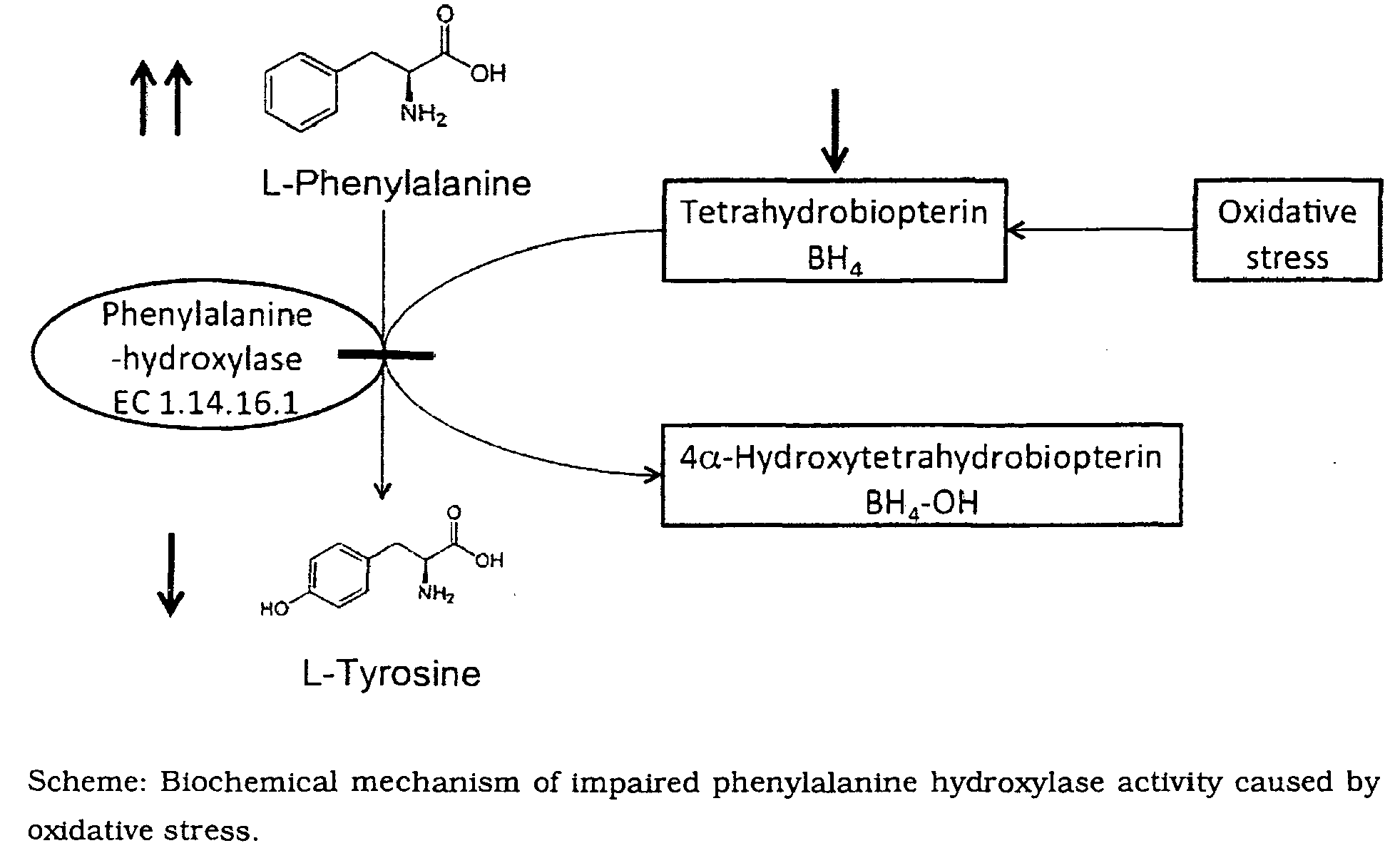
WO 2007/003344 andWO 2007/003343 . - The invention will be described with respect to phenylalanine hydroxylase as follows. The underlying biochemical mechanism is described in more detail in the following Scheme. Phenylalanine hydroxylase converts phenylalanine into tyrosine in the presence of tetrahydrobiopterin (BH4). Under increased oxidative stress, i.e. the presence of more free radicals, tetrahydrobiopterin being a potent anti-oxidant itself is oxidized and thus depleted and, as a consequence thereof, is no longer present as the essential co-factor in a sufficient amount. The lack of sufficient quantities of this co-factor then causes a reduced enzymatic activity of the phenylalanine hydroxylase. Such a decreased enzymatic activity is indicated by an increased phenylalanine/tyrosine ratio and the observed accumulation of phenylalanine (in absolute terms and relative to tyrosine).
- Even if the above mechanism is descrided herein for phenylalanine hydroxylase the present invention is not limited to measuring only the activity of phenylalanine hydroxylase. Quite in contrast, similar considerations also apply with respect to other enzymes which depend on BH4 or other reducing co-factors. This will become apparent from the following examples and reference examples.
- Diabetes mellitus type II is a severe metabolic disease characterized by insulin-resistance of the liver and other tissues like skeletal muscle and adipose tissue. The primary symptom is an elevated glucose concentration in peripheral blood but accompanying findings include (non-enzymatic) glycation of proteins - frequently measured as glycated hemoglobin - and increasing dysregulation of many other metabolic pathways. Due to this wide range of pathophysiological alterations, the sequelae of diabetes mellitus type II range from cardiovascular problems with end-points like myocardial infarction or stroke to nephrological and neurological diseases and represent a huge socio-economic burden which is mainly caused by the continously increasing obesity of the population in the industrial countries.
- One of the most important pathomechanisms in diabetes mellitus type II is a pronounced oxidative stress which immediately causes damage to important classes of biomolecules such as proteins, lipids and nucleic acids (see above). In this example plasma samples derived from a well-established mouse model for diabetes mellitus type II were analyzed, the db/db mouse with a homozygous genetic defect in the leptin receptor pathway leading to vastly increased food uptake, obesity, and the development of insulin resistance.
- The plasma samples of the diabetic animals contained significantly elevated concentrations of the amino acid phenylalanine (82.2 ± 8.0 µM vs. 58.9 ± 9.7 µM;
figure 1 ) while the concentrations of the amino acid tyrosine were slightly reduced (56.0 ± 7.1 µM vs. 51.5 ± 25.1 µM) (figure 2 ). - The critical ratio of phenylalanine to tyrosine concentrations indicative of the enzymatic activity of phenylalanine hydroxylase was, thus, significantly elevated in the diabetic cohort (1.48 ± 0.19 vs. 0.86 ± 0.14;
figure 3 ). - The second example is chosen from an oncological indication. Prostate cancer ranges among the most frequent causes of death in males, in males over 75 years of age it is the most frequent cancer cause of death in the US. Although the actual causal mechanisms of prostate cancer are not well understood, at least some tumors are hormone-dependent (high testosterone levels increase tumor growth in these cases), and high-fat diet is described as an additional risk factor.
- Oxidative stress has often been described to play an important role in prostate cancer, either as a causative agent (Kumar et al., Cancer Res 2008;68(6):1777-85) or as a mechanistic link between dietary factors and prostate cancer susceptibility (Fleshner & Klotz, Cancer Metastasis Rev. 1998-1999; 17(4):325-30).
- In any case, oxidative stress is thought to occur in the hypoxic-ischemic core of solid tumors (Novotny et al., J Pediatr Surg. 2008 Feb;43(2):330-4). This seems paradoxal at first but other conditions which involve ischemia and hypoxia (e.g. coronary infarction, stroke etc.) also induce a marked oxidative stress in the affected tissue.
- In this example, metabolic biomarkers for prostate cancer in clinical samples were studied; more specifically, tissue concentrations of various classes of metabolites were compared in patients with low-grade (
Gleason score 6, n= 120) and high-grade (Gleason score >8, n = 85) prostate cancer which significantly influences the individual prognosis after radical prostatectomy. - One of the main findings in this study was an elevated oxidative stress level in higher Gleason scores as demonstrated by increased concentrations of methionine sulfoxide (mean, 3.43 µM vs. 2.03 µM,
figure 4 ). In the same comparison, an increase in tryptophan (mean, 119.0 µM vs. 101.3 µM,figure 5 ) and a decrease in serotonin (mean, 0.28 µM vs. 0.15 µM,figure 6 ) was identified. Moreover, the ratio of tryptophan to serotonin increased correspondingly (mean, 1169 vs. 999,figure 7 ) indicating an impaired enzymatic activity of tryptophan hydroxylase caused by depletion of tetrahydrobiopterin as an essential co-factor for this reaction. - As a third example, the adaptation of 33 healthy adult human volunteers to high altitudes during an expedition on the Muztagh Ata mountain in the Pamir region and the corresponding hypoxia-related metabolic alterations was analyzed. This hypoxia is again accompanied by increasing oxidative stress as demonstrated by drastically increasing ratios of methionine sulfoxide to methionine (
figure 8 ). - In analogy to the animal model used as the first example, an impaired activity of phenylalanine hydroxylase as measured by significantly increasing phenylalanine/ tyrosine ratios in this human study could also be demonstrated (
figure 9 ). - The present invention provides for an Improved method for determining an oxidative stress level in a biological sample which method is highly sensitive and allows for the detection of only slight changes in the oxidative stress level. The method comprises the measurement of the activity of enzymes depending on at least one reducing co-factor (preferably BH4) as defined in claim 1. Namely, an elevated level of oxidative stress, i.e. the presence of more free radicals, causes increased oxidation of certain anti-oxidative compounds which are essential co-factors for several enzymes. The lack of sufficient quantities of these co-factors then causes a reduced enzymatic activity which is measured. Thus, the decreased enzyme activity is a biomarker for an increased oxidative stress level which allows the detection of several diseases and dysfunctions in mammals.
- Potential therapeutic targets to be screened according to the method of the invention include a broad spectrum of human medical conditions such as various types of cancers, diabetes, obstructive lung disease, inflammatory bowel disease, cardiac ischemia, glomerulonephritis, macular degeneration and various neurodegenerative disorders. The method of the invention is also useful in detecting the gradual change of oxidative stress e.g. due to therapeutic effects. Thus, the method and the kit for carrying out the method are highly efficient in a lot of medical fields, both in diagnosis and therapy.
Claims (6)
- A method for determining an oxidative stress level in a biological sample which comprises measuring the activity of one or more enzymes which depend on one or more reducing co-factors, wherein the co-factor is tetrahydrobiopterin and wherein the enzyme is phenylalanine hydroxylase.
- The method according to claim 1, wherein the activity of phenylalanine hydroxylase is determined by measuring one or more metabolite concentrations.
- The method according to claim 1, wherein the activity of phenylalanine hydroxylase is determined by measuring the phenylalanine/tyrosine ratio.
- The method according to any one of claims 1 to 3, wherein the biological sample is obtained from a mammal, preferably from a mouse, a rat, a guinea pig, a dog, a mini-pig, or a human.
- The method according to any one of claims 1 to 4, wherein the measurement is based on a quantitative analytical method, preferably chromatography, spectroscopy, and mass spectrometry.
- The method according to claim 5, wherein chromatography comprises GC, LC, HPLC, and UPLC; spectroscopy comprises UV/Vis, IR, and NMR; and mass spectrometry comprises ESI-QqQ, ESI-QqTOF, MALDI-QqQ, MALDI-QqTOF, and MALDI-TOF-TOF.
Applications Claiming Priority (2)
| Application Number | Priority Date | Filing Date | Title |
|---|---|---|---|
| US92482107P | 2007-05-31 | 2007-05-31 | |
| PCT/EP2008/004324 WO2008145385A1 (en) | 2007-05-31 | 2008-05-30 | Biomarker and method for determining an oxidative stress level |
Related Child Applications (2)
| Application Number | Title | Priority Date | Filing Date |
|---|---|---|---|
| EP12185290.9 Division-Into | 2012-09-20 | ||
| EP12185288.3 Division-Into | 2012-09-20 |
Publications (2)
| Publication Number | Publication Date |
|---|---|
| EP2164980A1 EP2164980A1 (en) | 2010-03-24 |
| EP2164980B1 true EP2164980B1 (en) | 2013-07-17 |
Family
ID=39684259
Family Applications (1)
| Application Number | Title | Priority Date | Filing Date |
|---|---|---|---|
| EP08758895.0A Not-in-force EP2164980B1 (en) | 2007-05-31 | 2008-05-30 | Biomarker and method for determining an oxidative stress level |
Country Status (7)
| Country | Link |
|---|---|
| US (3) | US20100173342A1 (en) |
| EP (1) | EP2164980B1 (en) |
| JP (1) | JP2010527624A (en) |
| AU (1) | AU2008256445B2 (en) |
| CA (1) | CA2688511A1 (en) |
| DK (1) | DK2164980T3 (en) |
| WO (1) | WO2008145385A1 (en) |
Families Citing this family (2)
| Publication number | Priority date | Publication date | Assignee | Title |
|---|---|---|---|---|
| KR101821551B1 (en) | 2008-06-20 | 2018-01-25 | 아지노모토 가부시키가이샤 | Prostatic disease evaluation method |
| MY204224A (en) * | 2018-04-20 | 2024-08-16 | Lanzatech Inc | Intermittent electrolysis streams |
Family Cites Families (5)
| Publication number | Priority date | Publication date | Assignee | Title |
|---|---|---|---|---|
| US5891622A (en) * | 1996-09-30 | 1999-04-06 | Oxford Biomedical Research, Inc. | Assessment of oxidative stress in vivo |
| US6096556A (en) * | 1998-02-09 | 2000-08-01 | Washington University | Method for the determination of oxidative stress |
| US6620800B1 (en) * | 1998-06-29 | 2003-09-16 | Vanderbilt University | Methods and compositions to assess oxidative brain injury |
| WO2005052575A1 (en) * | 2003-11-28 | 2005-06-09 | Pfizer Limited | Molecular markers of oxidative stress |
| CA2608965C (en) * | 2005-06-30 | 2014-08-19 | Biocrates Life Sciences Ag | Device for quantitative analysis of a metabolite profile |
-
2008
- 2008-05-30 DK DK08758895.0T patent/DK2164980T3/en active
- 2008-05-30 CA CA002688511A patent/CA2688511A1/en not_active Abandoned
- 2008-05-30 WO PCT/EP2008/004324 patent/WO2008145385A1/en not_active Ceased
- 2008-05-30 AU AU2008256445A patent/AU2008256445B2/en not_active Ceased
- 2008-05-30 US US12/602,472 patent/US20100173342A1/en not_active Abandoned
- 2008-05-30 EP EP08758895.0A patent/EP2164980B1/en not_active Not-in-force
- 2008-05-30 JP JP2010509738A patent/JP2010527624A/en active Pending
-
2012
- 2012-03-07 US US13/414,581 patent/US20130065265A1/en not_active Abandoned
-
2015
- 2015-08-12 US US14/824,984 patent/US20160187339A1/en not_active Abandoned
Non-Patent Citations (1)
| Title |
|---|
| A BANAN ET AL: "Ethanol-Induced Barrier Dysfunction and Its Prevention by Growth Factors in Human Intestinal Monolayers: Evidence for Oxidative and Cytoskeletal Mechanisms", THE JOURNAL OF PHARMACOLOGY AND EXPERIMENTAL THERAPEUTICS, 1 December 1999 (1999-12-01), pages 1075 - 1085, XP055016410, Retrieved from the Internet <URL:http://jpet.aspetjournals.org/content/291/3/1075.full.pdf> [retrieved on 20120112] * |
Also Published As
| Publication number | Publication date |
|---|---|
| US20160187339A1 (en) | 2016-06-30 |
| AU2008256445A1 (en) | 2008-12-04 |
| WO2008145385A1 (en) | 2008-12-04 |
| AU2008256445B2 (en) | 2015-02-26 |
| DK2164980T3 (en) | 2013-10-21 |
| US20100173342A1 (en) | 2010-07-08 |
| US20130065265A1 (en) | 2013-03-14 |
| CA2688511A1 (en) | 2008-12-04 |
| JP2010527624A (en) | 2010-08-19 |
| EP2164980A1 (en) | 2010-03-24 |
Similar Documents
| Publication | Publication Date | Title |
|---|---|---|
| de Jong et al. | Plasma tryptophan, kynurenine and 3-hydroxykynurenine measurement using automated on-line solid-phase extraction HPLC–tandem mass spectrometry | |
| Tohmola et al. | Analytical and preanalytical validation of a new mass spectrometric serum 5-hydroxyindoleacetic acid assay as neuroendocrine tumor marker | |
| Zhang et al. | A concise review of quantification methods for determination of vitamin K in various biological matrices | |
| Romanello et al. | Comprehensive evaluation of plasma 7-ketocholesterol and cholestan-3β, 5α, 6β-triol in an Italian cohort of patients affected by Niemann-Pick disease due to NPC1 and SMPD1 mutations | |
| Synold et al. | Advanced glycation end products of DNA: quantification of N 2-(1-carboxyethyl)-2′-deoxyguanosine in biological samples by liquid chromatography electrospray ionization tandem mass spectrometry | |
| Kim et al. | A sensitive and specific liquid chromatography–tandem mass spectrometry method for the determination of intracellular and extracellular uric acid | |
| JP2015509722A (en) | Means and method for measuring (D) -2-hydroxyglutaric acid (D2HG) or (D) -2-hydroxyadipic acid | |
| Wan et al. | A new sensitive LC/MS/MS analysis of vitamin D metabolites using a click derivatization reagent, 2-nitrosopyridine | |
| Heintz et al. | Quantification of phenylalanine hydroxylase activity by isotope-dilution liquid chromatography–electrospray ionization tandem mass spectrometry | |
| JP2016533735A (en) | Specific fluorescent probe based on pseudoesterase hydrolysis reaction of albumin and its application | |
| Li et al. | BODIPY-based azamacrocyclic ensemble for selective fluorescence detection and quantification of homocysteine in biological applications | |
| Lutz et al. | Quantification of cortisol and 6 beta-hydroxycortisol in human urine by LC-MS/MS, and gender-specific evaluation of the metabolic ratio as biomarker of CYP3A activity | |
| Tohmola et al. | Preanalytical validation and reference values for a mass spectrometric assay of serum vanillylmandelic acid for screening of catecholamine secreting neuroendocrine tumors | |
| Yang et al. | A sensitive and simple HPLC-FLD-based method for the measurement of intracellular glucose uptake | |
| Hu et al. | Correlation between concentrations of 8-oxo-7, 8-dihydro-2′-deoxyguanosine in urine, plasma and saliva measured by on-line solid-phase extraction LC-MS/MS | |
| US20160187339A1 (en) | Biomarker and Method for Determining an Oxidative Stress Level | |
| Li et al. | Coordinated regulation of dimethylarginine dimethylaminohydrolase-1 and cationic amino acid transporter-1 by farnesoid X receptor in mouse liver and kidney and its implication in the control of blood levels of asymmetric dimethylarginine | |
| Shalaby et al. | Impact of sodium-glucose cotransporter-2 inhibitors on aging biomarkers and plasma ceramide levels in type 2 diabetes: beyond glycemic control | |
| Simon et al. | Quantitation of plasma and urine 3-hydroxyglutaric acid, after separation from 2-hydroxyglutaric acid and other compounds of similar ion transition, by liquid chromatography-tandem mass spectrometry for the confirmation of glutaric aciduria type 1 | |
| Lan-Gan et al. | More rapid and sensitive method for simultaneous determination of tryptophan and kynurenic acid by HPLC | |
| Civallero et al. | Biochemical diagnosis of aromatic-L-amino acid decarboxylase deficiency (AADCD) by assay of AADC activity in plasma using liquid chromatography/tandem mass spectrometry | |
| SG191589A1 (en) | Cancer detection methods and techniques | |
| US20120071559A1 (en) | METHODS OF QUANTIFYING N2-(1-CARBOXYETHYL)-2'-DEOXY-GUANOSINE (CEdG) AND SYNTHESIS OF OLIGONUCLEOTIDES CONTAINING CEdG | |
| Ombrone et al. | Quantitative liquid chromatography coupled with tandem mass spectrometry analysis of urinary acylglycines: Application to the diagnosis of inborn errors of metabolism | |
| WO2012007531A2 (en) | Methods and compositions for diagnosing medical conditions |
Legal Events
| Date | Code | Title | Description |
|---|---|---|---|
| PUAI | Public reference made under article 153(3) epc to a published international application that has entered the european phase |
Free format text: ORIGINAL CODE: 0009012 |
|
| 17P | Request for examination filed |
Effective date: 20091230 |
|
| AK | Designated contracting states |
Kind code of ref document: A1 Designated state(s): AT BE BG CH CY CZ DE DK EE ES FI FR GB GR HR HU IE IS IT LI LT LU LV MC MT NL NO PL PT RO SE SI SK TR |
|
| AX | Request for extension of the european patent |
Extension state: AL BA MK RS |
|
| DAX | Request for extension of the european patent (deleted) | ||
| 17Q | First examination report despatched |
Effective date: 20100920 |
|
| GRAP | Despatch of communication of intention to grant a patent |
Free format text: ORIGINAL CODE: EPIDOSNIGR1 |
|
| RIC1 | Information provided on ipc code assigned before grant |
Ipc: G01N 33/573 20060101ALI20130115BHEP Ipc: C12Q 1/26 20060101AFI20130115BHEP |
|
| GRAS | Grant fee paid |
Free format text: ORIGINAL CODE: EPIDOSNIGR3 |
|
| GRAA | (expected) grant |
Free format text: ORIGINAL CODE: 0009210 |
|
| AK | Designated contracting states |
Kind code of ref document: B1 Designated state(s): AT BE BG CH CY CZ DE DK EE ES FI FR GB GR HR HU IE IS IT LI LT LU LV MC MT NL NO PL PT RO SE SI SK TR |
|
| REG | Reference to a national code |
Ref country code: GB Ref legal event code: FG4D |
|
| REG | Reference to a national code |
Ref country code: CH Ref legal event code: EP |
|
| REG | Reference to a national code |
Ref country code: IE Ref legal event code: FG4D |
|
| REG | Reference to a national code |
Ref country code: AT Ref legal event code: REF Ref document number: 622278 Country of ref document: AT Kind code of ref document: T Effective date: 20130815 |
|
| REG | Reference to a national code |
Ref country code: DE Ref legal event code: R096 Ref document number: 602008026093 Country of ref document: DE Effective date: 20130912 |
|
| REG | Reference to a national code |
Effective date: 20131014 Ref country code: DK Ref legal event code: T3 |
|
| REG | Reference to a national code |
Ref country code: CH Ref legal event code: NV Representative=s name: BOHEST AG, CH |
|
| REG | Reference to a national code |
Ref country code: SE Ref legal event code: TRGR |
|
| REG | Reference to a national code |
Ref country code: AT Ref legal event code: MK05 Ref document number: 622278 Country of ref document: AT Kind code of ref document: T Effective date: 20130717 |
|
| REG | Reference to a national code |
Ref country code: NL Ref legal event code: VDEP Effective date: 20130717 |
|
| REG | Reference to a national code |
Ref country code: LT Ref legal event code: MG4D |
|
| PG25 | Lapsed in a contracting state [announced via postgrant information from national office to epo] |
Ref country code: PT Free format text: LAPSE BECAUSE OF FAILURE TO SUBMIT A TRANSLATION OF THE DESCRIPTION OR TO PAY THE FEE WITHIN THE PRESCRIBED TIME-LIMIT Effective date: 20131118 Ref country code: IS Free format text: LAPSE BECAUSE OF FAILURE TO SUBMIT A TRANSLATION OF THE DESCRIPTION OR TO PAY THE FEE WITHIN THE PRESCRIBED TIME-LIMIT Effective date: 20131117 Ref country code: BE Free format text: LAPSE BECAUSE OF FAILURE TO SUBMIT A TRANSLATION OF THE DESCRIPTION OR TO PAY THE FEE WITHIN THE PRESCRIBED TIME-LIMIT Effective date: 20130717 Ref country code: NO Free format text: LAPSE BECAUSE OF FAILURE TO SUBMIT A TRANSLATION OF THE DESCRIPTION OR TO PAY THE FEE WITHIN THE PRESCRIBED TIME-LIMIT Effective date: 20131017 Ref country code: CY Free format text: LAPSE BECAUSE OF FAILURE TO SUBMIT A TRANSLATION OF THE DESCRIPTION OR TO PAY THE FEE WITHIN THE PRESCRIBED TIME-LIMIT Effective date: 20130821 Ref country code: LT Free format text: LAPSE BECAUSE OF FAILURE TO SUBMIT A TRANSLATION OF THE DESCRIPTION OR TO PAY THE FEE WITHIN THE PRESCRIBED TIME-LIMIT Effective date: 20130717 Ref country code: AT Free format text: LAPSE BECAUSE OF FAILURE TO SUBMIT A TRANSLATION OF THE DESCRIPTION OR TO PAY THE FEE WITHIN THE PRESCRIBED TIME-LIMIT Effective date: 20130717 Ref country code: HR Free format text: LAPSE BECAUSE OF FAILURE TO SUBMIT A TRANSLATION OF THE DESCRIPTION OR TO PAY THE FEE WITHIN THE PRESCRIBED TIME-LIMIT Effective date: 20130717 |
|
| PG25 | Lapsed in a contracting state [announced via postgrant information from national office to epo] |
Ref country code: PL Free format text: LAPSE BECAUSE OF FAILURE TO SUBMIT A TRANSLATION OF THE DESCRIPTION OR TO PAY THE FEE WITHIN THE PRESCRIBED TIME-LIMIT Effective date: 20130717 Ref country code: ES Free format text: LAPSE BECAUSE OF FAILURE TO SUBMIT A TRANSLATION OF THE DESCRIPTION OR TO PAY THE FEE WITHIN THE PRESCRIBED TIME-LIMIT Effective date: 20131028 Ref country code: GR Free format text: LAPSE BECAUSE OF FAILURE TO SUBMIT A TRANSLATION OF THE DESCRIPTION OR TO PAY THE FEE WITHIN THE PRESCRIBED TIME-LIMIT Effective date: 20131018 Ref country code: SI Free format text: LAPSE BECAUSE OF FAILURE TO SUBMIT A TRANSLATION OF THE DESCRIPTION OR TO PAY THE FEE WITHIN THE PRESCRIBED TIME-LIMIT Effective date: 20130717 Ref country code: LV Free format text: LAPSE BECAUSE OF FAILURE TO SUBMIT A TRANSLATION OF THE DESCRIPTION OR TO PAY THE FEE WITHIN THE PRESCRIBED TIME-LIMIT Effective date: 20130717 Ref country code: FI Free format text: LAPSE BECAUSE OF FAILURE TO SUBMIT A TRANSLATION OF THE DESCRIPTION OR TO PAY THE FEE WITHIN THE PRESCRIBED TIME-LIMIT Effective date: 20130717 Ref country code: NL Free format text: LAPSE BECAUSE OF FAILURE TO SUBMIT A TRANSLATION OF THE DESCRIPTION OR TO PAY THE FEE WITHIN THE PRESCRIBED TIME-LIMIT Effective date: 20130717 |
|
| PG25 | Lapsed in a contracting state [announced via postgrant information from national office to epo] |
Ref country code: CY Free format text: LAPSE BECAUSE OF FAILURE TO SUBMIT A TRANSLATION OF THE DESCRIPTION OR TO PAY THE FEE WITHIN THE PRESCRIBED TIME-LIMIT Effective date: 20130717 |
|
| PG25 | Lapsed in a contracting state [announced via postgrant information from national office to epo] |
Ref country code: RO Free format text: LAPSE BECAUSE OF FAILURE TO SUBMIT A TRANSLATION OF THE DESCRIPTION OR TO PAY THE FEE WITHIN THE PRESCRIBED TIME-LIMIT Effective date: 20130717 Ref country code: SK Free format text: LAPSE BECAUSE OF FAILURE TO SUBMIT A TRANSLATION OF THE DESCRIPTION OR TO PAY THE FEE WITHIN THE PRESCRIBED TIME-LIMIT Effective date: 20130717 Ref country code: EE Free format text: LAPSE BECAUSE OF FAILURE TO SUBMIT A TRANSLATION OF THE DESCRIPTION OR TO PAY THE FEE WITHIN THE PRESCRIBED TIME-LIMIT Effective date: 20130717 Ref country code: CZ Free format text: LAPSE BECAUSE OF FAILURE TO SUBMIT A TRANSLATION OF THE DESCRIPTION OR TO PAY THE FEE WITHIN THE PRESCRIBED TIME-LIMIT Effective date: 20130717 |
|
| PLBE | No opposition filed within time limit |
Free format text: ORIGINAL CODE: 0009261 |
|
| STAA | Information on the status of an ep patent application or granted ep patent |
Free format text: STATUS: NO OPPOSITION FILED WITHIN TIME LIMIT |
|
| PG25 | Lapsed in a contracting state [announced via postgrant information from national office to epo] |
Ref country code: IT Free format text: LAPSE BECAUSE OF FAILURE TO SUBMIT A TRANSLATION OF THE DESCRIPTION OR TO PAY THE FEE WITHIN THE PRESCRIBED TIME-LIMIT Effective date: 20130717 |
|
| 26N | No opposition filed |
Effective date: 20140422 |
|
| REG | Reference to a national code |
Ref country code: DE Ref legal event code: R097 Ref document number: 602008026093 Country of ref document: DE Effective date: 20140422 Ref country code: CH Ref legal event code: PCAR Free format text: NEW ADDRESS: HOLBEINSTRASSE 36-38, 4051 BASEL (CH) |
|
| PG25 | Lapsed in a contracting state [announced via postgrant information from national office to epo] |
Ref country code: LU Free format text: LAPSE BECAUSE OF FAILURE TO SUBMIT A TRANSLATION OF THE DESCRIPTION OR TO PAY THE FEE WITHIN THE PRESCRIBED TIME-LIMIT Effective date: 20140530 |
|
| PG25 | Lapsed in a contracting state [announced via postgrant information from national office to epo] |
Ref country code: MC Free format text: LAPSE BECAUSE OF FAILURE TO SUBMIT A TRANSLATION OF THE DESCRIPTION OR TO PAY THE FEE WITHIN THE PRESCRIBED TIME-LIMIT Effective date: 20130717 |
|
| REG | Reference to a national code |
Ref country code: IE Ref legal event code: MM4A |
|
| PG25 | Lapsed in a contracting state [announced via postgrant information from national office to epo] |
Ref country code: IE Free format text: LAPSE BECAUSE OF NON-PAYMENT OF DUE FEES Effective date: 20140530 |
|
| PG25 | Lapsed in a contracting state [announced via postgrant information from national office to epo] |
Ref country code: MT Free format text: LAPSE BECAUSE OF FAILURE TO SUBMIT A TRANSLATION OF THE DESCRIPTION OR TO PAY THE FEE WITHIN THE PRESCRIBED TIME-LIMIT Effective date: 20130717 |
|
| REG | Reference to a national code |
Ref country code: FR Ref legal event code: PLFP Year of fee payment: 9 |
|
| PG25 | Lapsed in a contracting state [announced via postgrant information from national office to epo] |
Ref country code: BG Free format text: LAPSE BECAUSE OF FAILURE TO SUBMIT A TRANSLATION OF THE DESCRIPTION OR TO PAY THE FEE WITHIN THE PRESCRIBED TIME-LIMIT Effective date: 20130717 |
|
| PG25 | Lapsed in a contracting state [announced via postgrant information from national office to epo] |
Ref country code: HU Free format text: LAPSE BECAUSE OF FAILURE TO SUBMIT A TRANSLATION OF THE DESCRIPTION OR TO PAY THE FEE WITHIN THE PRESCRIBED TIME-LIMIT; INVALID AB INITIO Effective date: 20080530 Ref country code: TR Free format text: LAPSE BECAUSE OF FAILURE TO SUBMIT A TRANSLATION OF THE DESCRIPTION OR TO PAY THE FEE WITHIN THE PRESCRIBED TIME-LIMIT Effective date: 20130717 |
|
| PGFP | Annual fee paid to national office [announced via postgrant information from national office to epo] |
Ref country code: GB Payment date: 20160523 Year of fee payment: 9 Ref country code: DE Payment date: 20160524 Year of fee payment: 9 Ref country code: CH Payment date: 20160526 Year of fee payment: 9 |
|
| PGFP | Annual fee paid to national office [announced via postgrant information from national office to epo] |
Ref country code: DK Payment date: 20160523 Year of fee payment: 9 Ref country code: SE Payment date: 20160523 Year of fee payment: 9 Ref country code: FR Payment date: 20160523 Year of fee payment: 9 |
|
| REG | Reference to a national code |
Ref country code: DE Ref legal event code: R119 Ref document number: 602008026093 Country of ref document: DE |
|
| REG | Reference to a national code |
Ref country code: CH Ref legal event code: PL |
|
| REG | Reference to a national code |
Ref country code: SE Ref legal event code: EUG Ref country code: DK Ref legal event code: EBP Effective date: 20170531 |
|
| GBPC | Gb: european patent ceased through non-payment of renewal fee |
Effective date: 20170530 |
|
| PG25 | Lapsed in a contracting state [announced via postgrant information from national office to epo] |
Ref country code: CH Free format text: LAPSE BECAUSE OF NON-PAYMENT OF DUE FEES Effective date: 20170531 Ref country code: LI Free format text: LAPSE BECAUSE OF NON-PAYMENT OF DUE FEES Effective date: 20170531 Ref country code: SE Free format text: LAPSE BECAUSE OF NON-PAYMENT OF DUE FEES Effective date: 20170531 |
|
| REG | Reference to a national code |
Ref country code: FR Ref legal event code: ST Effective date: 20180131 |
|
| PG25 | Lapsed in a contracting state [announced via postgrant information from national office to epo] |
Ref country code: DE Free format text: LAPSE BECAUSE OF NON-PAYMENT OF DUE FEES Effective date: 20171201 Ref country code: DK Free format text: LAPSE BECAUSE OF NON-PAYMENT OF DUE FEES Effective date: 20170531 Ref country code: GB Free format text: LAPSE BECAUSE OF NON-PAYMENT OF DUE FEES Effective date: 20170530 |
|
| PG25 | Lapsed in a contracting state [announced via postgrant information from national office to epo] |
Ref country code: FR Free format text: LAPSE BECAUSE OF NON-PAYMENT OF DUE FEES Effective date: 20170531 |