EP2164226A1 - Secure composition of web services - Google Patents
Secure composition of web services Download PDFInfo
- Publication number
- EP2164226A1 EP2164226A1 EP08290859A EP08290859A EP2164226A1 EP 2164226 A1 EP2164226 A1 EP 2164226A1 EP 08290859 A EP08290859 A EP 08290859A EP 08290859 A EP08290859 A EP 08290859A EP 2164226 A1 EP2164226 A1 EP 2164226A1
- Authority
- EP
- European Patent Office
- Prior art keywords
- workflow
- security features
- sets
- web services
- asf
- Prior art date
- Legal status (The legal status is an assumption and is not a legal conclusion. Google has not performed a legal analysis and makes no representation as to the accuracy of the status listed.)
- Granted
Links
Images
Classifications
-
- H—ELECTRICITY
- H04—ELECTRIC COMMUNICATION TECHNIQUE
- H04L—TRANSMISSION OF DIGITAL INFORMATION, e.g. TELEGRAPHIC COMMUNICATION
- H04L63/00—Network architectures or network communication protocols for network security
- H04L63/10—Network architectures or network communication protocols for network security for controlling access to devices or network resources
- H04L63/105—Multiple levels of security
-
- G—PHYSICS
- G06—COMPUTING OR CALCULATING; COUNTING
- G06F—ELECTRIC DIGITAL DATA PROCESSING
- G06F21/00—Security arrangements for protecting computers, components thereof, programs or data against unauthorised activity
- G06F21/60—Protecting data
- G06F21/62—Protecting access to data via a platform, e.g. using keys or access control rules
- G06F21/6218—Protecting access to data via a platform, e.g. using keys or access control rules to a system of files or objects, e.g. local or distributed file system or database
-
- G—PHYSICS
- G06—COMPUTING OR CALCULATING; COUNTING
- G06F—ELECTRIC DIGITAL DATA PROCESSING
- G06F9/00—Arrangements for program control, e.g. control units
- G06F9/06—Arrangements for program control, e.g. control units using stored programs, i.e. using an internal store of processing equipment to receive or retain programs
- G06F9/46—Multiprogramming arrangements
- G06F9/50—Allocation of resources, e.g. of the central processing unit [CPU]
- G06F9/5005—Allocation of resources, e.g. of the central processing unit [CPU] to service a request
- G06F9/5027—Allocation of resources, e.g. of the central processing unit [CPU] to service a request the resource being a machine, e.g. CPUs, Servers, Terminals
- G06F9/5038—Allocation of resources, e.g. of the central processing unit [CPU] to service a request the resource being a machine, e.g. CPUs, Servers, Terminals considering the execution order of a plurality of tasks, e.g. taking priority or time dependency constraints into consideration
-
- H—ELECTRICITY
- H04—ELECTRIC COMMUNICATION TECHNIQUE
- H04L—TRANSMISSION OF DIGITAL INFORMATION, e.g. TELEGRAPHIC COMMUNICATION
- H04L63/00—Network architectures or network communication protocols for network security
- H04L63/20—Network architectures or network communication protocols for network security for managing network security; network security policies in general
Definitions
- the present disclosure refers to a method and a system for automating an integration of security features as part of a composition procedure of web services.
- None of the cited prior art does actually integrate security requirements expressed in terms of security mechanisms or security features as part of a composition procedure for generating a composite web service based on a plurality of candidate component web services.
- a variety of services may be available to be used for a generation of a composite web service. It may be desired to compose web services of a variety of web services so that the composition of the web services is performed not only according to functional attributes but also to security ones. It may be desired to consider security features non-functional attributes during an automatic composition of web services.
- an aspect of the present disclosure includes a method for automating an integration of security features as part of a composition procedure of web services.
- the method includes providing a model which allows to define acceptable sets of security features associated with a particular workflow representing a composite web service and to enable to advertise security features which are supported by available candidate web services.
- the method further includes defining, generating and performing, based on the model, an assignment procedure which allows to build, based on the available candidate web services, a secure compliant composite web service which satisfies at least one of the acceptable sets of security features of the workflow, wherein the assignment procedure is an iterative process in that web services are assigned to workflow tasks one after the other such that after each iteration a subset of the at least one acceptable set of security features which is supported by the web services already assigned is analyzed in view of the next succeeding workflow task of the workflow model so as to be successively completed to the at least one acceptable set of security features by compliant candidate web services.
- the acceptable sets of security features designated as (sf j (W) ) j ⁇ [1,l] and associated with a particular workflow model W which represents a composite web service C, and the advertised security features designated as SMS(s i ) which are supported by available candidate web services (s i ) can be described using WSDL (Web Service Definition Language).
- an operator security features associates with each task of the workflow W a set of security mechanisms (sf k (W) ) k ⁇ [1,n] •
- the sets of security mechanisms, each being associated with a respective task, and the acceptable sets of security features (sf j (W) ) j ⁇ [1,l] associated with the workflow W are represented in form of a matrix or table, thus indicating existing overlapping between the sets of security mechanisms, each being associated with a respective task, and the acceptable sets of security features (sf j (W) ) j ⁇ [1,l] associated with the workflow W.
- the secure compliant composite web service W s (s i ) i ⁇ [1,n] can be described in that it satisfies the following proposition: ⁇ ⁇ ⁇ 1 ⁇ l such that ⁇ i ⁇ 1 ⁇ n ⁇ sf ⁇ i W ⁇ SMS s i wherein SMS(s i ) corresponds to a set of security mechanisms of a respective component web service s i .
- a further aspect of the present disclosure includes a system for automating an integration of security features as part of a composition procedure of web services.
- the system has a modeling unit and an assignment unit.
- the modeling unit is configured to provide a model which allows to define acceptable sets of security features associated with a particular workflow model representing a composite web service, and to enable to advertise security features which are supported by available candidate web services.
- the assignment unit is configured to define, generate and perform, based on the model, an assignment procedure which allows to build, based on the available candidate web services, a secure compliant composite web service which satisfies at least one of the acceptable sets of security features of the workflow model, wherein the assignment procedure is an iterative process in that web services are assigned to workflow tasks one after the other such that after each iteration a subset of the at least one acceptable set of security features which is supported by the web services already assigned is analyzed in view of the next succeeding workflow task of the workflow model so as to be successively completed to the at least one acceptable set of security features by compliant candidate web services.
- the assignment unit is configured to match acceptable sets of security features associated with the particular workflow model representing the composite web service against the advertised security features which are supported by available candidate web services.
- the modeling unit may be configured to provide, for the particular workflow W an operator security features that associates with each task of the workflow W a set of security mechanisms ((sf k (W)) k ⁇ [1,n] ).
- the modeling unit may be configured to represent the set of security mechanisms, each being associated with a respective task and the acceptable sets of security features associated with the workflow W in form of a matrix or table, thus indicating existing overlapping between the sets of security mechanisms, each being associated with a respective task, and the acceptable sets of security features ( (sf j (W) ) j ⁇ [1,l] ) associated with the workflow W.
- a further aspect includes a computer program product with instructions for a computer system.
- the instructions are configured to cause the computer system to perform the disclosed method, or to realize the proposed system, respectively.
- the purpose of the proposed method and system is to consider security features non-functional attributes during an automatic composition of web services.
- an appropriate model is firstly defined so that on the one hand workflow designers can define security requirements associated with a particular workflow model and on the other hand to enable service providers to advertise security features offered by available candidate web services.
- an assignment procedure is defined and generated that takes as input the defined security requirements as part of a composition procedure for a composite web service.
- the model allows to specify some security requirements that should be satisfied by a composite application. Those security requirements are then integrated automatically in a subsequent assignment procedure.
- the model makes it possible to match what is required as security features against what can be offered by available candidate web services in the same fashion as an usual match-making procedure for functional attributes.
- the proposed method Given a workflow W consisting of n tasks (t i ) i ⁇ [1,n] the proposed method outputs a workflow instance or composite web service W s composed of a set of n component web services that have been assigned to the tasks of the workflow W.
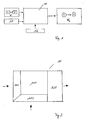
- Figure 1 shows a very schematic view of a system as proposed by the present disclosure.
- the system is designated with reference number 10.
- a workflow W which is designed by a workflow designer is pregiven as an input to the proposed system 10.
- workflow W consists of two tasks 1, and 2.
- the workflow designer can specify some security requirements 11 for the workflow W which is also given as an input to the system 10.
- the proposed system 10 uses those inputs for an automatic generation of a composite web service, whereby the generated composite web service satisfies not only the functional attributes, namely by fulfilling the respective workflow tasks 1, and 2, but also the required security features 11 which were given as a further input by a respective workflow designer.
- the system 10 uses for the secure composition of the composite web service the candidate web services which are available and which are also given as an input to the system 10.
- FIG. 2 shows a second embodiment of a system according to the present disclosure.
- the system 10 comprises a modeling unit 110 and an assignment unit 120.
- the system 10 further comprises an interface 111 via which a workflow W comprising a plurality of workflow tasks and security requirements defined for a respective workflow W can be provided as input to the modeling unit 110.
- the system 10 further comprises a second interface 112 which can be used to input available web services as potential candidate web services for a composition of a composite web service according to the inputted workflow model W.
- the web services can be provided together with respective sets of security mechanisms which are satisfied by the respective web services.
- the modeling unit 110 is configured to provide a model which allows to define, via the respective interface 111, acceptable sets of security features associated with an inputted particular workflow model representing a composite web service and to enable, via the second interface 112, to advertise security features which are supported by available candidate web services.
- the modeling unit 110 interfaces with the assignment unit 120. Via the interface 112 a service provider may advertise available web services and security mechanisms the web services support, e.g. an encryption or signature schemes, in a WSDL specification.
- the modeling unit 110 allows to receive acceptable sets of security features associated with the particular workflow model representing the composite web service which is to be composed and security features which are supported by available candidate web services which are to be used to compose the respective composite web service.
- the modeling unit 110 cooperates with the assignment unit 120 in that the assignment unit 120 allows to define, generate and perform, based on the model which is provided by the modeling unit 110, an assignment procedure which allows to build, based on the available candidate web services, a secure compliant composite web service which satisfies at least one of the acceptable pregiven sets of security features of the workflow model.
- the assignment procedure performed by the assignment unit 120 is an iterative process in that web services of a plurality of available web services are assigned to workflow tasks of the respective workflow model one after the other such that after each iteration a subset of the at least one acceptable set of security features which is supported by the web services already assigned is analyzed in view of the next succeeding workflow task of the workflow model so as to be successively completed to the at least one acceptable set of security features by compliant candidate web services.
- the composite web service is then outputted by the assignment unit 120 as a result of the secure composition of web services.
- a definition of an ontology used by partners, i.e. service providers and workflow designers to specify security mechanisms is out of the scope of the present disclosure. It is assumed that all involved parties share a common ontology to advertise respective security mechanisms which are supported by the respective web services and which are required for a secure composition of web services.
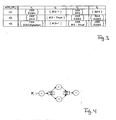
- Figure 3 shows an exemplary presentation of acceptable sets of security features associated with a particular workflow model representing a composite web service. Those acceptable sets of security features can be pregiven by a workflow designer.
- the table represents acceptable sets of security features for a workflow model W 1 .
- the workflow model W 1 comprises four workflow tasks t 1 , t 2 , t 3 , and t 4 . Those tasks are assigned, respectively, to different columns.
- For the whole workflow model W 1 there are defined three different sets of security features which are acceptable. Those sets of security features are assigned, respectively, to different rows.
- the different sets of security features are denoted as sf i .
- a basic idea of the proposed dynamic web service composition is to select from a pool of available component web services those that satisfy pregiven security requirements which can be presented, as indicated in figure 3 , in an appropriate table.
- workflow designers do not know in advance what functionalities will be offered by candidate component web services at the composition stage, it is desired to be as flexible as possible so that a composition process can find a suitable set of component web services to execute a pregiven particular workflow.
- ASF C (W) (sf k (W)) k ⁇ [1,l] .
- This group ASF C (W) defines the acceptable sets of security features sf k (W) of workflow W, each set being deemed sufficient in order to execute the composite web service C which is to be generated.
- Figure 3 shows a table which represents the group ASF C for the composite service C represented by a workflow W 1 .
- the table basically represents a number of alternative sets of security features sf k , each set of security features comprising sets of security mechanisms SMT k i associated with respective tasks t i of the workflow W 1 , wherein the security mechanisms are considered compliant with predefined requirements of the composite web service C.
- Figure 4 shows a workflow example W 1 , the workflow comprising four tasks t 1 , t 2 , t 3 , and t 4 .
- the workflow tasks are combined, thus representing a specific composite web service.
- Task t 1 is combined with the subsequent tasks t 2 , and t 3 , by an "AND-Split"-operator.
- Tasks t 2 and t 3 are combined with the final task t 4 by an "AND-Join"-operator.
- a composite web service that satisfied at least one of the acceptable sets of security features sf j of the workflow W representing the composite service C is to be generated.
- an assignment procedure is defined as follows.
- the proposed assignment procedure is an iterative procedure, in that component web services are assigned to respective workflow tasks one after the other.
- a partial workflow instance W s i is created.
- the generation process relies in that security properties offered by W s i given the security mechanisms supported by the i web services already assigned matches at least one of the acceptable sets of security features for any step i of the assignment process.
- An aspect behind the proposed assignment procedure is the following.
- the security requirements basically depend on two aspects, namely what is directly required by the respective workflow task and what security mechanisms are offered by the web services assigned so far to the partial workflow instance W s i - 1 .
- the former namely the security requirements of the respective workflow task can be easily derived from a respective ASF C (W) table as indicated in figure 3 for workflow W 1 .
- W ASF C
- These security requirements are direct requirements.
- the security requirements which are to be derived from the security mechanisms which are offered by the component web services which are already assigned are to be derived from the fact that the assignment of particular component web services impacts an assignment of further component web services.
- An assignment of a particular component web service to a task of a workflow representing a composite web service which is to be generated at a step i implies that a subset of the acceptable set of security features that is satisfied by the partial instance W s i - 1 is no longer satisfied by the further partial workflow instance W s i . .
- This subset can be empty provided that the further assigned component web service supports the adequate security mechanisms to meet all requirements associated with the considered task.
- (2) is equivalent to: ⁇ i ⁇ 1 ⁇ n ⁇ ASF C W s i ⁇ ASF C ⁇ W s i - 1 ⁇ ASF C W
- a set Min sm s a ⁇ t a ⁇ W s i is computed that defines the minimum set of security mechanisms that should be supported by a component service s a in order to be assigned to a task t a at a step i of the assignment procedure.
- Computation of the set Min sm s a ⁇ t a ⁇ W s i is derived from the above cited expression (3).
- a component web service is to be assigned to a task t a at the step i such that at least one element part of ASF C ⁇ W s i - 1 is satisfied by the new generated partial workflow instance W s i so that the following proposition holds.
- a service s is an adequate candidate service to be assigned to task t a at step i of the assignment procedure if: ⁇ T ⁇ Min sm s a ⁇ t a ⁇ W s i such that T ⁇ SMS s
- component web services which are available as candidate web services for composition of a composite web service, are assigned to each task of a workflow representing the composite web service to be generated, based on an iterative process.
- different scenarios can occur when trying to assign task t a at step i:
- an acceptable set of security features sf(W) is to be determined such that: for each n-i s +1 task t k that are still to be assigned: ⁇ s k ⁇ available for t k ⁇ such that sf k W ⁇ SMS s k
- Determining the previously formulated expression it can be achieved with an iterative procedure that takes as input the group ASF C ⁇ W s i s - 1 and determines the set of elements that satisfy (6).
- the assignment procedure reaches a solution if the set of those elements is not empty. In this case, there might be several web services available for the same task and the choice can be made based for instance on additional non-functional attributes including for instance trust.
- the table ASF C (W 1 ) as depicted in figure 3 is defined as acceptable sets of security features for the considered workflow W 1 .
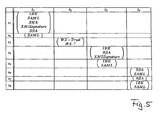
- the set of component web services which are available for each task of the workflow W 1 is depicted in figure 5 .
- An embodiment of the proposed assigning procedure starts by assigning services to tasks for which there is no flexibility.
- a final decision can be made as already mentioned above, based on other non-functional attributes such as trust.
Landscapes
- Engineering & Computer Science (AREA)
- Computer Security & Cryptography (AREA)
- General Engineering & Computer Science (AREA)
- Theoretical Computer Science (AREA)
- Computer Hardware Design (AREA)
- Software Systems (AREA)
- Computing Systems (AREA)
- General Physics & Mathematics (AREA)
- Physics & Mathematics (AREA)
- Computer Networks & Wireless Communication (AREA)
- Signal Processing (AREA)
- Health & Medical Sciences (AREA)
- Bioethics (AREA)
- General Health & Medical Sciences (AREA)
- Databases & Information Systems (AREA)
- Management, Administration, Business Operations System, And Electronic Commerce (AREA)
- Treatments For Attaching Organic Compounds To Fibrous Goods (AREA)
Abstract
Description
- The present disclosure refers to a method and a system for automating an integration of security features as part of a composition procedure of web services.
- Current approaches in web services composition do not take into account security requirements defined by workflow designers. It, however, becomes critical to consider the security requirements non-functional attributes within an automatic composition of web services. Composite application designers may indeed specify some security requirements in addition to functional ones which should be satisfied by candidate web services in order to be assigned to respective tasks of a workflow which represents a composite web service which is to be designed.
- There are several prior art documents which deal with security and trust of a composite web service, the composite service also being designated as a composite application.
- In "S. J. H. Yang, J. S. F. Hsieh, B. C. W. Lan, and J.-Y. Chung. Composition and evaluation of trustworthy web services. In BSN '05: Proceedings of the IEEE EEE05 international workshop on Business services networks, pages 5-5, Piscataway, NJ, USA, 2005. IEEE Press.", an approach is proposed in order to compute the trust of a composite application given the trust of the respective component web services. However, this document does not introduce any composition procedure integrating security mechanisms when generating a composite web service on the basis of a plurality of component web services.
- In "B. Carminati, E. Ferrari, and P. C. K. Hung. Web service composition: A security perspective. In WIRI'05: Proceedings of the International Workshop on Challenges in Web Information Retrieval and Integration, pages 248-253, Washington, DC, USA, 2005. IEEE Computer Society.", a solution is proposed for the composition of web services based on security compatibility between respective component web services. This document does not focus on security requirements that may be specified by designers at a workflow design phase but rather on whether the respective candidate component web services will accept to communicate with each other. Therefore, this document does not provide a tool enabling designers to specify security requirements in terms of security mechanisms and also no procedure relying on the latter.
- In "L. Singaravelu and C. Pu. Fine-grain, end-to-end security for web service compositions. In IEEE SCC, pages 212-219, IEEE Computer Society, 2007.", a solution is proposed to manage security during the runtime of composite applications to assure for instance end-to-end confidentiality but no composition algorithm is proposed.
- In "H. Song, Y. Sun, Y. Yin, and S. Zheng. Dynamic weaving of security aspects in service composition. In SOSE'06: Proceedings of the Second IEEE International Symposium on Service-Oriented System Engineering, pages 189-196, Washington, DC, USA, 2006. IEEE Computer Society.", a framework is proposed to adapt component web services as part of a composite application in order to meet some security requirements but no approach towards integrating these security requirements as part of the composition process is proposed.
- In "D.-H. Xua, Y. Qi, D. Hou, Y. Chen, and L. Liu. A formal model for security-aware dynamic web services composition. In Computational Science and its Applications, 2007. ICCSA 2007. International Conference on, pages 139-143, 2007.", a formal model is proposed to secure composite applications but no procedure towards actually building the latter based on security mechanisms.
- In "F. Montagut and R. Molva. Augmenting Web services composition with transactional requirements. In ICWS 2006, IEEE International Conference on Web Services, September 18-22, 2006, Chicago, USA, Sep 2006.", an approach is proposed for an integration of transactional requirements into the composition of web services.
- A lot of further research has been performed on a composition of web services based on functional attributes as described, e.g., in "L. A. G. da Costa, P. F. Pires, and M. Mattoso. Automatic composition of web services with contingency plans. In ICWS '04: Proceedings of the IEEE International Conference on Web Services (ICWS '04), page 454, Washington, DC, USA, 2004. IEEE Computer Society.", "S. V. Hashemian and F. Mavaddat. A graph-based approach to web services composition. In SAINT '05: Proceedings of the The 2005 Symposium on Applications and the Internet (SAINT '05), pages 183-189, Washington, DC, USA, 2005. IEEE Computer Society.", "M. Laukkanen and H. Helin. Composing workflows of semantic web services. In Proceedings of the Workshop on Web-Services and Agent-based Engineering, 2003.", and "V. Agarwal, K. Dasgupta, N. Karnik, A. Kumar, A. Kundu, S. Mittal, and B. Srivastava. A service creation environment based on end to end composition of web services. In WWW '05: Proceedings of the 14th international conference on World Wide Web, pages 128-137, New York, NY, USA, 2005. ACM Press".
- None of the cited prior art does actually integrate security requirements expressed in terms of security mechanisms or security features as part of a composition procedure for generating a composite web service based on a plurality of candidate component web services.
- Hereinafter, "composite application", and "composite web service" are used synonymously. The terms "web service" and "service" are also used synonymously. The terms "workflow" and "workflow model" are also interchangeable one with another. The same applies to the expressions "advertised security features and "advertised security mechanisms".
- As described before, the cited prior art does not take into account security requirements defined by workflow designers in a composition of web services. Therefore, there is a need for a process to automate a secure composition of web services.
- A variety of services may be available to be used for a generation of a composite web service. It may be desired to compose web services of a variety of web services so that the composition of the web services is performed not only according to functional attributes but also to security ones. It may be desired to consider security features non-functional attributes during an automatic composition of web services.
- Therefore, an aspect of the present disclosure, includes a method for automating an integration of security features as part of a composition procedure of web services. The method includes providing a model which allows to define acceptable sets of security features associated with a particular workflow representing a composite web service and to enable to advertise security features which are supported by available candidate web services. The method further includes defining, generating and performing, based on the model, an assignment procedure which allows to build, based on the available candidate web services, a secure compliant composite web service which satisfies at least one of the acceptable sets of security features of the workflow, wherein the assignment procedure is an iterative process in that web services are assigned to workflow tasks one after the other such that after each iteration a subset of the at least one acceptable set of security features which is supported by the web services already assigned is analyzed in view of the next succeeding workflow task of the workflow model so as to be successively completed to the at least one acceptable set of security features by compliant candidate web services.
- The method is disclosed in
independent claim 1 and a method with further optional features is disclosed in following claims dependent onindependent claim 1. - Thereby, it is possible that the acceptable sets of security features which are associated with the particular workflow model representing a composite web service are matched against the advertised security features which are supported by available candidate web services.
- Furthermore, according to a further implementation, it is possible that, given the particular workflow W consisting of n tasks (ti) i ∈ [1,n], the assignment procedure outputs a compliant composite web service Ws=(si)i ∈ [l,n] composed of a set of n component services si that have been assigned to the tasks (ti)i∈[i,n] of the particular workflow W.
- The acceptable sets of security features designated as (sfj(W) ) j ∈ [1,l] and associated with a particular workflow model W which represents a composite web service C, and the advertised security features designated as SMS(si) which are supported by available candidate web services (si) can be described using WSDL (Web Service Definition Language).
- According to another possible implementation, for the particular workflow W an operator security features is provided that associates with each task of the workflow W a set of security mechanisms (sfk(W) ) k∈ [1,n] •
- Thereby, it is possible that the sets of security mechanisms, each being associated with a respective task, and the acceptable sets of security features (sfj (W) ) j∈ [1,l] associated with the workflow W are represented in form of a matrix or table, thus indicating existing overlapping between the sets of security mechanisms, each being associated with a respective task, and the acceptable sets of security features (sfj (W) ) j∈ [1,l] associated with the workflow W.
- The secure compliant composite web service Ws (si) i ∈ [1,n] can be described in that it satisfies the following proposition:

wherein SMS(si) corresponds to a set of security mechanisms of a respective component web service si. - It is possible that after each iteration i a partial workflow instance Ws i is created and a group of sets of security features ASFC(Ws i)=sfh(Ws i)h ∈ [1,m] associated with the partial workflow instance Ws i and whose elements are satisfied by the partial workflow instance Ws i are determined. Thereby, the group of sets of security features associated with the partial workflow instance Ws i is a subset of the group of sets of security features ASFC(W)=(sfj(W))j ∈ [1,l] associated with the particular workflow W. Based on the group of sets of security features ASFC (Ws i) = (sfh (Ws i) ) h∈ [1,m] associated with the partial workflow instance Ws i, security requirements that are to be satisfied by candidate component services in order to be assigned to subsequent workflow tasks of the particular workflow are computed.
- According to another implementation the candidate component services are computed by using the following conditions:

- Thereby it is possible that a service sa is classified as an adequate candidate component service to be assigned to task ta of the assignment procedure if:

- A further aspect of the present disclosure includes a system for automating an integration of security features as part of a composition procedure of web services. The system has a modeling unit and an assignment unit. The modeling unit is configured to provide a model which allows to define acceptable sets of security features associated with a particular workflow model representing a composite web service, and to enable to advertise security features which are supported by available candidate web services. The assignment unit is configured to define, generate and perform, based on the model, an assignment procedure which allows to build, based on the available candidate web services, a secure compliant composite web service which satisfies at least one of the acceptable sets of security features of the workflow model, wherein the assignment procedure is an iterative process in that web services are assigned to workflow tasks one after the other such that after each iteration a subset of the at least one acceptable set of security features which is supported by the web services already assigned is analyzed in view of the next succeeding workflow task of the workflow model so as to be successively completed to the at least one acceptable set of security features by compliant candidate web services.
- The system is disclosed in independent claim 11 and a system with further optional features is disclosed in following claims dependent on claim 11.
- According to a possible implementation, the assignment unit is configured to match acceptable sets of security features associated with the particular workflow model representing the composite web service against the advertised security features which are supported by available candidate web services.
- Given the particular workflow W consisting of n tasks (ti)i∈[1,n], the assignment unit may be configured to output a compliant composite web service Ws=(si)i∈[1,n] composed of a set of n component services si that have been assigned to the tasks (ti)i∈[1,n] of the particular workflow W.
- The modeling unit may be configured to provide, for the particular workflow W an operator security features that associates with each task of the workflow W a set of security mechanisms ((sfk(W))k∈[1,n]).
- Furthermore, the modeling unit may be configured to represent the set of security mechanisms, each being associated with a respective task and the acceptable sets of security features associated with the workflow W in form of a matrix or table, thus indicating existing overlapping between the sets of security mechanisms, each being associated with a respective task, and the acceptable sets of security features ( (sfj (W) ) j∈ [1,l]) associated with the workflow W.
- The assignment unit may be configured to create after each iteration i a partial workflow instance Ws i and to determine a group of sets of security features ASFC(Ws i) = (sfh (Ws i) ) h ∈ [1,m] associated with the partial workflow instance Ws i and whose elements are satisfied by the partial workflow instance Ws i, the group of sets of security features associated with the partial workflow instance Ws i being a subset of the set of security features ASFC(W)=(sfj(W))j ∈ [1,l] associated with the particular workflow (W), and to compute, based on the group of sets of security features ASFC(Ws i) = (sfh(Ws i))h ∈ [1,m] associated with the partial workflow instance Ws i, security requirements that are to be satisfied by candidate component services in order to be assigned to subsequent workflow tasks of the particular workflow.
- The assignment unit may be configured to compute the candidate component services by using the following conditions:

- The assignment unit may classify a service sa as an adequate candidate component service to be assigned to task ta of the assignment procedure if:

- A further aspect includes a computer program product with instructions for a computer system. The instructions are configured to cause the computer system to perform the disclosed method, or to realize the proposed system, respectively.
- The computer program product is disclosed in independent claim 21.
- The purpose of the proposed method and system is to consider security features non-functional attributes during an automatic composition of web services. In order to achieve the latter an appropriate model is firstly defined so that on the one hand workflow designers can define security requirements associated with a particular workflow model and on the other hand to enable service providers to advertise security features offered by available candidate web services. Based on the latter, an assignment procedure is defined and generated that takes as input the defined security requirements as part of a composition procedure for a composite web service. The model allows to specify some security requirements that should be satisfied by a composite application. Those security requirements are then integrated automatically in a subsequent assignment procedure. The model makes it possible to match what is required as security features against what can be offered by available candidate web services in the same fashion as an usual match-making procedure for functional attributes.
- The following description of examples includes details for illustrating embodiments and is not intended to limit the scope of the embodiments or to be exhaustive. For purposes of explanation, specific details are set forward in order to provide a thorough understanding of examples and embodiments. A person skilled in the art may appreciate that further embodiments may be practiced with details that differ from specific details.
- Further features and embodiments will become apparent from the description and the accompanied drawings.
- It will be understood that the features mentioned above and those described hereinafter can be used not only in the combination specified but also in other combinations or on their own, without departing from the scope of the present disclosure.
- Various implementations are schematically illustrated in the drawings and are hereinafter explained in detail with reference to the drawings. It is understood that both the foregoing general description and the following description of various embodiments are exemplarily and explanatory only and are not meant to be restrictive or to be read into the claims. The accompanying drawings which are incorporated in a constitutive part of this specification, illustrate some embodiments, and together with the description serve to explain the principles of the embodiments described herein.
- In the drawings,
-
Figure 1 shows a schematic view of an embodiment of a system according to the present disclosure. -
Figure 2 shows a further embodiment of a system according to the present disclosure. -
Figure 3 shows a table as used as an input for the proposed assignment procedure, the table comprising defined security requirements as part of a composition procedure of a composite web service represented by a workflow model. -
Figure 4 shows an example of a workflow model as used by an embodiment of the proposed method. -
Figure 5 shows a table of web services available as candidate web services for a composition of a composite web service, the table indicating security features offered by the respective candidate web services and being used as an input for the proposed assignment procedure. - Given a workflow W consisting of n tasks (ti)i∈[1,n] the proposed method outputs a workflow instance or composite web service Ws composed of a set of n component web services that have been assigned to the tasks of the workflow W. The composite web service or the workflow instance can be described by Ws = (si)i∈[1,n].
- Reference will now be made in detail to some embodiments, examples of which are illustrated in the accompanying drawings. Wherever possible, the same reference numbers are used throughout the drawings to refer to the same of like parts.
-
Figure 1 shows a very schematic view of a system as proposed by the present disclosure. The system is designated withreference number 10. A workflow W which is designed by a workflow designer is pregiven as an input to the proposedsystem 10. In the case, shown here, workflow W consists of twotasks system 10. Besides the workflow W with its security requirements 11, it is possible to input availablecandidate web services 12 which can be composed to a composed web service. All availablecandidate web services 12 can be advertised together with security mechanisms which are satisfied by the respective web services. The proposedsystem 10 uses those inputs for an automatic generation of a composite web service, whereby the generated composite web service satisfies not only the functional attributes, namely by fulfilling therespective workflow tasks system 10 uses for the secure composition of the composite web service the candidate web services which are available and which are also given as an input to thesystem 10. Given the workflow W consisting of several tasks thesystem 10 outputs a workflow instance Ws which fulfills therespective workflow tasks -
Figure 2 shows a second embodiment of a system according to the present disclosure. In the second embodiment, thesystem 10 is shown in further detail. Thesystem 10 comprises amodeling unit 110 and anassignment unit 120. Thesystem 10 further comprises an interface 111 via which a workflow W comprising a plurality of workflow tasks and security requirements defined for a respective workflow W can be provided as input to themodeling unit 110. Thesystem 10 further comprises asecond interface 112 which can be used to input available web services as potential candidate web services for a composition of a composite web service according to the inputted workflow model W. The web services can be provided together with respective sets of security mechanisms which are satisfied by the respective web services. Themodeling unit 110 is configured to provide a model which allows to define, via the respective interface 111, acceptable sets of security features associated with an inputted particular workflow model representing a composite web service and to enable, via thesecond interface 112, to advertise security features which are supported by available candidate web services. Themodeling unit 110 interfaces with theassignment unit 120. Via the interface 112 a service provider may advertise available web services and security mechanisms the web services support, e.g. an encryption or signature schemes, in a WSDL specification. Themodeling unit 110 allows to receive acceptable sets of security features associated with the particular workflow model representing the composite web service which is to be composed and security features which are supported by available candidate web services which are to be used to compose the respective composite web service. - The
modeling unit 110 cooperates with theassignment unit 120 in that theassignment unit 120 allows to define, generate and perform, based on the model which is provided by themodeling unit 110, an assignment procedure which allows to build, based on the available candidate web services, a secure compliant composite web service which satisfies at least one of the acceptable pregiven sets of security features of the workflow model. - The assignment procedure performed by the
assignment unit 120 is an iterative process in that web services of a plurality of available web services are assigned to workflow tasks of the respective workflow model one after the other such that after each iteration a subset of the at least one acceptable set of security features which is supported by the web services already assigned is analyzed in view of the next succeeding workflow task of the workflow model so as to be successively completed to the at least one acceptable set of security features by compliant candidate web services. The composite web service is then outputted by theassignment unit 120 as a result of the secure composition of web services. It is to be noted that a definition of an ontology used by partners, i.e. service providers and workflow designers to specify security mechanisms is out of the scope of the present disclosure. It is assumed that all involved parties share a common ontology to advertise respective security mechanisms which are supported by the respective web services and which are required for a secure composition of web services. -
Figure 3 shows an exemplary presentation of acceptable sets of security features associated with a particular workflow model representing a composite web service. Those acceptable sets of security features can be pregiven by a workflow designer. The table represents acceptable sets of security features for a workflow model W1. The workflow model W1 comprises four workflow tasks t1, t2, t3, and t4. Those tasks are assigned, respectively, to different columns. For the whole workflow model W1 there are defined three different sets of security features which are acceptable. Those sets of security features are assigned, respectively, to different rows. The different sets of security features are denoted as sfi. A row which is assigned to a particular set of security features sfi indicates for each task tj an acceptable subset of security features
- For the further acceptable sets of security features sf2 and sf3, there are different subsets of security features, respectively, which are allowable for the different single workflow tasks t1 to t4 as indicated in the respective rows of the table of
figure 3 . - A basic idea of the proposed dynamic web service composition is to select from a pool of available component web services those that satisfy pregiven security requirements which can be presented, as indicated in
figure 3 , in an appropriate table. As workflow designers do not know in advance what functionalities will be offered by candidate component web services at the composition stage, it is desired to be as flexible as possible so that a composition process can find a suitable set of component web services to execute a pregiven particular workflow. - In order to achieve this required flexibility it is proposed to provide a model which allows to define multiple acceptable sets of security features in order to specify security requirements associated with a composite web service which is to be generated. Therefore, acceptable sets of security features sfk(W) associated with a particular workflow model representing a composite web service are defined, each of which associates with each task ti of the workflow W a set of security mechanisms SMTk i so that each acceptable set of security features sfk(W) can be given as sfk(W) = (SMTk 1, ..., SMTk n) = {sfk i(W)i ∈ [1,n]} wherein k ∈ [1,l] , i.e. there are 1 alternative acceptable sets of security features which are deemed to be sufficient in order to execute the composite web service. It is to be noted that each task ti is, thus, associated with a set of security mechanisms SMTi = SMTi 1 ∪ SMTi 2 ∪ . . . ∪ SMTi 1 in case that there exist 1 alternative acceptable sets of security features sfk(W).
- In the following a group of acceptable sets of security features defined for a particular composite web service C which is represented by a workflow W is denoted as ASFC(W)=(sfk(W))k ∈ [1,l]. This group ASFC(W) defines the acceptable sets of security features sfk(W) of workflow W, each set being deemed sufficient in order to execute the composite web service C which is to be generated.
-
Figure 3 shows a table which represents the group ASFC for the composite service C represented by a workflow W1. The table basically represents a number of alternative sets of security features sfk, each set of security features comprising sets of security mechanisms SMTk i associated with respective tasks ti of the workflow W1, wherein the security mechanisms are considered compliant with predefined requirements of the composite web service C. -
Figure 4 shows a workflow example W1, the workflow comprising four tasks t1, t2, t3, and t4. The workflow tasks are combined, thus representing a specific composite web service. Task t1 is combined with the subsequent tasks t2, and t3, by an "AND-Split"-operator. Tasks t2 and t3 are combined with the final task t4 by an "AND-Join"-operator. - In the following an exemplary actual assignment procedure that takes as input security requirements defined for a specific composite web service C based on a workflow W and a pool of available component services in order to build a secure composite application Ws that meets the predefined security requirements ASFC(W) is specified. In the following such a composite web service Ws is called a compliant composite web service or a compliant composite application and satisfies the following proposition:

- In other words, a composite web service that satisfied at least one of the acceptable sets of security features sfj of the workflow W representing the composite service C is to be generated. In order to achieve this ultimate goal an assignment procedure is defined as follows. As already outlined before, the proposed assignment procedure is an iterative procedure, in that component web services are assigned to respective workflow tasks one after the other. Thus, after each iteration i a partial workflow instance


- An aspect behind the proposed assignment procedure is the following. At each step i the security requirements that should be satisfied by a candidate web service in order to be assigned to a respective considered workflow task is computed. The security requirements basically depend on two aspects, namely what is directly required by the respective workflow task and what security mechanisms are offered by the web services assigned so far to the partial workflow instance

figure 3 for workflow W1. These security requirements are direct requirements. The security requirements which are to be derived from the security mechanisms which are offered by the component web services which are already assigned are to be derived from the fact that the assignment of particular component web services impacts an assignment of further component web services. An assignment of a particular component web service to a task of a workflow representing a composite web service which is to be generated at a step i implies that a subset of the acceptable set of security features that is satisfied by the partial instance


- Using the workflow instance acceptability condition, (2) is equivalent to:

- From those two aspects that yield the expression (3), a set




- In this case, a service s is an adequate candidate service to be assigned to task ta at step i of the assignment procedure if:

- As already mentioned above component web services which are available as candidate web services for composition of a composite web service, are assigned to each task of a workflow representing the composite web service to be generated, based on an iterative process. Depending on the single task requirements and the security mechanisms supported by the available web services which can be chosen for each task, different scenarios can occur when trying to assign task ta at step i:
- (i) It exists a service s such that


- (ii) A single service is available for the task.
- (iii) A set of services (sk)k∈[1,p
i ] is available that verifies:

- With view to the different scenarios, an idea is therefore to assign first web services to the tasks verifying (i) and (ii) since there is no flexibility in the choice of the web service. Tasks verifying (iii) for which it is not possible to make any decision are finally analyzed. Based on the security requirements raised by the remaining tasks, first, services are assigned to tasks for which there is no more flexibility as a result of previous assignments and this process is then iterated till it is no longer possible to assign any web service. At this point, only tasks remain that verify (iii) but for which no decision can be made. This particular iteration in the assignment procedure for which it is no longer possible to make direct assignment is denoted in the following as is. The goal here is to reach a solution to the problem if one exists that is find an element sfC(W) satisfied by at least one of the component web services available for each task that are still to be assigned. Thus, an acceptable set of security features sf(W) is to be determined such that: for each n-is+1 task tk that are still to be assigned:

- Determining the previously formulated expression it can be achieved with an iterative procedure that takes as input the group

- Considering the workflow example depicted in
figure 4 , the following example can be described. The table ASFC(W1) as depicted infigure 3 is defined as acceptable sets of security features for the considered workflow W1. The set of component web services which are available for each task of the workflow W1 is depicted infigure 5 . - An embodiment of the proposed assigning procedure starts by assigning services to tasks for which there is no flexibility.
- This is the case for task t1 for which service s1 matches all security requirements associated with the task t1. Indeed, it is true that


- This is also the case for task t2 for which a single service is available. Here it is true that sf1 2(W1) = {WS -*}, sf2 2(W1) = {WS - Trust}, sf3 2(W1) = {WS -*} and SMS(s3) = {WS - Trust, WS -*}. Thus, it is true that sf1 2(W1) ∪ sf2 2(W1) ∪ sf3 2(W1) ⊆ SMS(s3) thus

- With respect to task t3 both available services, namely s4, and ss, match the security requirements since it is true that sf1 3(W1) = {IBE, RSA}, sf2 3(W1) = {IBE, SAML}, sf3 3(W1) = {IBE, WS - Trust}, and SMS(s4) = {IBE, RSA, XMLSignature}, and SMS (s5) = {IBE, SAML}. Before choosing one of the two available component web services task t4 is to be considered. There are three different services s6, s7, and s8 which can be chosen in order to fulfil task t4. With respect to task t4 it holds that sf1 4(W1) = {RSA}, sf2 4(W1) = {RSA, SAML}, sf3 4(W1) = {IBE, SAML} and thus sf1 4(W1) ∪ sf2 4(W1) ⊆ SMS(s6), sf1 4(W1) ⊆ SMS(s7) and sf3 4(W1) ⊆ SMS(s8).
- No more web service can be directly assigned to any task and, therefore, is as defined above, is to be denoted as is=3 and

- If s4 is assigned to t3, either s6 or s7 can be assigned to task t4. The set of security features which is then satisfied would be sf1(W).
- On the other hand if s5 is assigned to t3, s6 should be assigned to task t4. The set of security features satisfied would be in this case sf2(W).
- A final decision can be made as already mentioned above, based on other non-functional attributes such as trust.
Claims (21)
- A computer-implemented method for automating an integration of security features as part of a composition procedure of web services, the method comprising
providing a model which allows to define acceptable sets of security features ((sfk(W))k∈[1,l]) associated with a particular workflow model (W) representing a composite web service (C), and to enable to advertise security features (SMS(si)) which are supported by available candidate web services (si), and
defining, generating and performing, based on the model, an assignment procedure which allows to build, based on the available candidate web services, a secure compliant composite web service which satisfies at least one of the acceptable sets of security features ((sfj(W))j ∈ [1,l]) of the workflow model, wherein the assignment procedure is an iterative process in that web services are assigned to workflow tasks one after the other such that after each iteration a subset of the at least one acceptable set of security features which is supported by the web services already assigned is analyzed in view of the next succeeding workflow task of the workflow model so as to be successively completed to the at least one acceptable set of security features by compliant candidate web services. - The method according to claim 1 wherein acceptable sets of security features ((sfj(W))j ∈ [1,l]) associated with a particular workflow model (W) representing a composite web service (C) are matched against the advertised security features (SMS(si)) which are supported by available candidate web services (si).
- The method according to claim 1 or 2 wherein given the particular workflow W consisting of n tasks (ti)i ∈ [1,n], the assignment procedure outputs a compliant composite web service Ws=(sj)i∈[1,n] composed of a set of n component services si that have been assigned to the tasks (ti)i∈[1,n] of the particular workflow W.
- The method according to claim 1, 2, or 3, wherein the acceptable sets of security features ((sfj(W))j ∈ [1,l]) associated with a particular workflow model (W) representing a composite web service (C), and the advertised security features (SMS(si)) which are supported by available candidate web services (si) are described using WSDL.
- The method according to any one of claims 1 to 4 wherein for the particular workflow W an operator security features is provided that associates with each task of the workflow W a set of security mechanisms ((sfk(W))k∈[1,n]).
- The method according to claim 5 wherein the sets of security mechanisms, each being associated with a respective task, and the acceptable sets of security features ((sfj(W))j ∈ [1,l]) associated with the workflow W are represented in form of a matrix or table, thus indicating existing overlapping between the sets of security mechanisms, each being associated with a respective task, and the acceptable sets of security features ((sfj(W))j∈[1,l]) associated with the workflow W.
- The method according to claim 5 or 6 wherein the secure compliant composite web service (Ws(si)i ∈ [1,n]) satisfies the following proposition:

- The method according to any one of the preceding claims wherein after each iteration (i) a partial workflow instance (Ws i) is created and a group of sets of security features (ASFC(Ws i) = (sfh(Ws i))h ∈ [1,m]) associated with the partial workflow instance (Ws i) and whose elements are satisfied by the partial workflow instance (Ws i) are determined, the group of sets of security features associated with the partial workflow instance (Ws i) being a subset of the group of sets of security features (ASFC(W) = (sfj(W))j ∈ [1,l]) associated with the particular workflow (W), and, based on the group of sets of security features (ASFC(Ws i) = (sfh(Ws i))h∈[1,m]) associated with the partial workflow instance (Ws i), security requirements that are to be satisfied by candidate component services in order to be assigned to subsequent workflow tasks of the particular workflow are computed.
- The method according to claim 8 wherein the candidate component services are computed by using the following conditions:

wherein
- The method according to claim 9 wherein a service sa is classified as an adequate candidate component service to be assigned to task ta of the assignment procedure if:

- A system comprising:a modeling unit (110) configured to provide a model which allows to define acceptable sets of security features ((sfk(W))k ∈ [1,l]) associated with a particular workflow model (W) representing a composite web service (C), and to enable to advertise security features (SMS(si)) which are supported by available candidate web services (si), andan assignment unit (120) configured to define, generate, and perform, based on the model, an assignment procedure which allows to build, based on the available candidate web services, a secure compliant composite web service which satisfies at least one of the acceptable sets of security features ((sfj(W))j∈[1,l]) of the workflow model, wherein the assignment procedure is an iterative process in that web services are assigned to workflow tasks one after the other such that after each iteration a subset of the at least one acceptable set of security features which is supported by the web services already assigned is analyzed in view of the next succeeding workflow task of the workflow model so as to be successively completed to the at least one acceptable set of security features by compliant candidate web services.
- The system according to claim 11 wherein the assignment unit (120) is configured to match acceptable sets of security features ((sfj(W))j∈[1,l]) associated with the particular workflow model (W) representing the composite web service (C) against the advertised security features (SMS(si)) which are supported by available candidate web services (si).
- The system according to claim 11 or 12 wherein given the particular workflow W consisting of n tasks (ti)i∈[1,n], the assignment unit is configured to output a compliant composite web service Ws=(si)i∈[1,n] composed of a set of n component services si that have been assigned to the tasks (ti)i∈[1,n] of the particular workflow W.
- The system according to claim 11, 12, or 13, wherein the acceptable sets of security features ((sfj(W))j ∈ [1,l]) associated with a particular workflow model (W) representing a composite web service (C), and the advertised security features (SMS(si)) which are supported by available candidate web services (si) are described using WSDL.
- The system according to any one of claims 11 to 14 wherein the modeling unit is configured to provide, for the particular workflow W an operator security features that associates with each task of the workflow W a set of security mechanisms ((sfk(W))k∈[1,n]).
- The system according to claim 15 wherein the modeling unit is configured to represent the set of security mechanisms, each being associated with a respective task and the acceptable sets of security features associated with the workflow W in form of a matrix or table, thus indicating existing overlapping between the sets of security mechanisms, each being associated with a respective task, and the acceptable sets of security features ((sfj(W))j∈[1,l]) associated with the workflow W.
- The system according to claim 15 or 16 wherein the secure compliant composite web service (Ws(si)i ∈ [1,n]) satisfies the following proposition:

- The system according to any one of claims 11 to 17 wherein the assignment unit is configured to create after each iteration (i) a partial workflow instance (Ws i) and to determine a group of sets of security features (ASFC(Ws i) = (sfh(Ws i))h ∈ [1,m]) associated with the partial workflow instance (Ws i) and whose elements are satisfied by the partial workflow instance (Ws i), the group of sets of security features associated with the partial workflow instance (Ws i) being a subset of the set of security features (ASFC(W) = (sfj(W))j ∈ [1,l]) associated with the particular workflow (W), and to compute, based on the group of sets of security features (ASFC(Ws i) = (sfh(Ws i))h ∈ [1,m]) associated with the partial workflow instance (Ws i), security requirements that are to be satisfied by candidate component services in order to be assigned to subsequent workflow tasks of the particular workflow.
- The system according to claim 18 wherein the assignment unit computes the candidate component services by using the following conditions:


- The system according to claim 19 wherein the assignment unit classifies a service sa as an adequate candidate component service to be assigned to task ta of the assignment procedure if:

- A computer program product having instructions that are executable by a computer, the computer program product comprising instructions of:a modeling unit (110) to provide a model which allows to define acceptable sets of security features ((sfk(W))k ∈ [1,l]) associated with a particular workflow model (W) representing a composite web service (C), and to enable to advertise security features (SMS(si)) which are supported by available candidate web services (si), andan assignment unit (120) to define, generate and perform, based on the model, an assignment procedure which allows to build, based on the available candidate web services, a secure compliant composite web service which satisfies at least one of the acceptable sets of security features ((sfj(W))j∈[1,l]) of the workflow model, wherein the assignment procedure is an iterative process in that web services are assigned to workflow tasks one after the other such that after each iteration a subset of the at least one acceptable set of security features which is supported by the web services already assigned is analyzed in view of the next succeeding workflow task of the workflow model so as to be successively completed to the at least one acceptable set of security features by compliant candidate web services.
Priority Applications (4)
| Application Number | Priority Date | Filing Date | Title |
|---|---|---|---|
| EP08290859A EP2164226B1 (en) | 2008-09-10 | 2008-09-10 | Secure composition of web services |
| AT08290859T ATE468697T1 (en) | 2008-09-10 | 2008-09-10 | SECURE COMPOSITION OF WEB SERVICES |
| DE602008001314T DE602008001314D1 (en) | 2008-09-10 | 2008-09-10 | Secure composition of web services |
| US12/637,298 US20100132014A1 (en) | 2008-09-10 | 2009-12-14 | Secure composition of web services |
Applications Claiming Priority (1)
| Application Number | Priority Date | Filing Date | Title |
|---|---|---|---|
| EP08290859A EP2164226B1 (en) | 2008-09-10 | 2008-09-10 | Secure composition of web services |
Publications (2)
| Publication Number | Publication Date |
|---|---|
| EP2164226A1 true EP2164226A1 (en) | 2010-03-17 |
| EP2164226B1 EP2164226B1 (en) | 2010-05-19 |
Family
ID=40340764
Family Applications (1)
| Application Number | Title | Priority Date | Filing Date |
|---|---|---|---|
| EP08290859A Active EP2164226B1 (en) | 2008-09-10 | 2008-09-10 | Secure composition of web services |
Country Status (4)
| Country | Link |
|---|---|
| US (1) | US20100132014A1 (en) |
| EP (1) | EP2164226B1 (en) |
| AT (1) | ATE468697T1 (en) |
| DE (1) | DE602008001314D1 (en) |
Cited By (1)
| Publication number | Priority date | Publication date | Assignee | Title |
|---|---|---|---|---|
| WO2012153000A2 (en) | 2011-05-12 | 2012-11-15 | Nokia Corporation | Method and apparatus for secure signing and utilization of distributed computations |
Families Citing this family (3)
| Publication number | Priority date | Publication date | Assignee | Title |
|---|---|---|---|---|
| US9553728B2 (en) * | 2011-02-25 | 2017-01-24 | Nokia Technologies Oy | Method and apparatus for providing end-to-end security for distributed computations |
| US9009281B2 (en) * | 2011-07-01 | 2015-04-14 | Hewlett-Packard Development Company, L.P. | Composition of services |
| US9811390B1 (en) * | 2015-03-30 | 2017-11-07 | EMC IP Holding Company LLC | Consolidating tasks into a composite request |
Citations (2)
| Publication number | Priority date | Publication date | Assignee | Title |
|---|---|---|---|---|
| US20070162976A1 (en) * | 2006-01-10 | 2007-07-12 | International Business Machines Corporation | Method of managing and mitigating security risks through planning |
| WO2008015417A1 (en) * | 2006-07-31 | 2008-02-07 | British Telecommunications Public Limited Company | Automatic composition of web services based on syntactiv and semantic rules |
Family Cites Families (7)
| Publication number | Priority date | Publication date | Assignee | Title |
|---|---|---|---|---|
| US6560633B1 (en) * | 1999-06-10 | 2003-05-06 | Bow Street Software, Inc. | Method for creating network services by transforming an XML runtime model in response to an iterative input process |
| US7207057B1 (en) * | 2000-11-16 | 2007-04-17 | Rowe Lynn T | System and method for collaborative, peer-to-peer creation, management & synchronous, multi-platform distribution of profile-specified media objects |
| US8050935B2 (en) * | 2003-11-03 | 2011-11-01 | Sony Corporation | Dynamic web service composition to service a user request |
| US20050125738A1 (en) * | 2003-12-04 | 2005-06-09 | Biplav Srivastava | Composite network-accesible services |
| US20060242101A1 (en) * | 2005-04-21 | 2006-10-26 | Rama Akkiraju | Method and system for semantic matching of Web Service policies |
| US7728712B2 (en) * | 2006-03-21 | 2010-06-01 | Onestop Media Group | Digital communication system with security features |
| EP1993051A1 (en) * | 2007-05-18 | 2008-11-19 | France Telecom | Automated composition of web services |
-
2008
- 2008-09-10 AT AT08290859T patent/ATE468697T1/en not_active IP Right Cessation
- 2008-09-10 DE DE602008001314T patent/DE602008001314D1/en active Active
- 2008-09-10 EP EP08290859A patent/EP2164226B1/en active Active
-
2009
- 2009-12-14 US US12/637,298 patent/US20100132014A1/en not_active Abandoned
Patent Citations (2)
| Publication number | Priority date | Publication date | Assignee | Title |
|---|---|---|---|---|
| US20070162976A1 (en) * | 2006-01-10 | 2007-07-12 | International Business Machines Corporation | Method of managing and mitigating security risks through planning |
| WO2008015417A1 (en) * | 2006-07-31 | 2008-02-07 | British Telecommunications Public Limited Company | Automatic composition of web services based on syntactiv and semantic rules |
Non-Patent Citations (11)
Cited By (4)
| Publication number | Priority date | Publication date | Assignee | Title |
|---|---|---|---|---|
| WO2012153000A2 (en) | 2011-05-12 | 2012-11-15 | Nokia Corporation | Method and apparatus for secure signing and utilization of distributed computations |
| WO2012153000A3 (en) * | 2011-05-12 | 2013-01-03 | Nokia Corporation | Method and apparatus for secure signing and utilization of distributed computations |
| EP2707832A4 (en) * | 2011-05-12 | 2015-04-01 | Nokia Corp | METHOD AND APPARATUS FOR SECURE SIGNATURE AND USE OF DISTRIBUTED CALCULATIONS |
| US10068108B2 (en) | 2011-05-12 | 2018-09-04 | Nokia Technologies Oy | Method and apparatus for secure signing and utilization of distributed computations |
Also Published As
| Publication number | Publication date |
|---|---|
| ATE468697T1 (en) | 2010-06-15 |
| DE602008001314D1 (en) | 2010-07-01 |
| US20100132014A1 (en) | 2010-05-27 |
| EP2164226B1 (en) | 2010-05-19 |
Similar Documents
| Publication | Publication Date | Title |
|---|---|---|
| Zdun et al. | Sustainable architectural design decisions | |
| EP2164226B1 (en) | Secure composition of web services | |
| Berli et al. | Terravis-large scale business process integration between public and private partners | |
| US20220417050A1 (en) | Video communication application automated features | |
| US20260019462A1 (en) | Webtier as a service | |
| de Sousa et al. | MDE4BBIS: a framework to incorporate model-driven engineering in the development of blockchain-based information systems | |
| Jain et al. | Optimal control of (N, F) policy for unreliable server queue with multi-optional phase repair and start-up | |
| Pavlidis et al. | Trustworthy selection of cloud providers based on security and privacy requirements: Justifying trust assumptions | |
| US11544218B2 (en) | JSON to BPMN conversion system | |
| Castillo et al. | Trusted compute units: a framework for chained verifiable computations | |
| Fischer et al. | On the challenges of bringing cryptography from papers to products: Results from an interview study with experts | |
| Netjes et al. | On the formal generation of process redesigns | |
| US10496402B1 (en) | System, method, and computer program for defining and utilizing minimal testable values for software project development and operations | |
| CN115187223A (en) | Flowable workflow engine-based integration method and system | |
| JP2007334627A (en) | Service-based software design support method and apparatus therefor | |
| Rekik et al. | On the fly reconfiguration of BPaaS based on SaaS services federation and sat solving techniques | |
| Kahtan et al. | Awareness of Embedding Security Features into Component-based Software Development Model: a Survey. | |
| Chen et al. | A formal method to model and analyse QoS-aware fault tolerant service composition | |
| Lima et al. | Accelerating the software development process through the application of MVP and monolithic architecture | |
| Frimanslund et al. | Enhancing Entrepreneurial Processes Through Artificial Intelligence: A Triangulating Study of Ecosystems in Norway and South Africa | |
| Bartsch et al. | Simulation environment for IT service support processes: Supporting service providers in estimating service levels for incident management | |
| Salado | Tradespace Exploration for Better Verification Strategies | |
| Tan et al. | Using aspect-oriented approach for software product line development | |
| Vinay et al. | Integrating TOPSIS and AHP into GORE decision support system | |
| Lane et al. | Process evolution to support system of systems engineering |
Legal Events
| Date | Code | Title | Description |
|---|---|---|---|
| GRAP | Despatch of communication of intention to grant a patent |
Free format text: ORIGINAL CODE: EPIDOSNIGR1 |
|
| PUAI | Public reference made under article 153(3) epc to a published international application that has entered the european phase |
Free format text: ORIGINAL CODE: 0009012 |
|
| GRAS | Grant fee paid |
Free format text: ORIGINAL CODE: EPIDOSNIGR3 |
|
| 17P | Request for examination filed |
Effective date: 20090428 |
|
| AK | Designated contracting states |
Kind code of ref document: A1 Designated state(s): AT BE BG CH CY CZ DE DK EE ES FI FR GB GR HR HU IE IS IT LI LT LU LV MC MT NL NO PL PT RO SE SI SK TR |
|
| AX | Request for extension of the european patent |
Extension state: AL BA MK RS |
|
| GRAA | (expected) grant |
Free format text: ORIGINAL CODE: 0009210 |
|
| AK | Designated contracting states |
Kind code of ref document: B1 Designated state(s): AT BE BG CH CY CZ DE DK EE ES FI FR GB GR HR HU IE IS IT LI LT LU LV MC MT NL NO PL PT RO SE SI SK TR |
|
| REG | Reference to a national code |
Ref country code: GB Ref legal event code: FG4D |
|
| REG | Reference to a national code |
Ref country code: CH Ref legal event code: EP |
|
| REG | Reference to a national code |
Ref country code: IE Ref legal event code: FG4D |
|
| REF | Corresponds to: |
Ref document number: 602008001314 Country of ref document: DE Date of ref document: 20100701 Kind code of ref document: P |
|
| REG | Reference to a national code |
Ref country code: CH Ref legal event code: NV Representative=s name: E. BLUM & CO. AG PATENT- UND MARKENANWAELTE VSP |
|
| REG | Reference to a national code |
Ref country code: NL Ref legal event code: VDEP Effective date: 20100519 |
|
| LTIE | Lt: invalidation of european patent or patent extension |
Effective date: 20100519 |
|
| PG25 | Lapsed in a contracting state [announced via postgrant information from national office to epo] |
Ref country code: NO Free format text: LAPSE BECAUSE OF FAILURE TO SUBMIT A TRANSLATION OF THE DESCRIPTION OR TO PAY THE FEE WITHIN THE PRESCRIBED TIME-LIMIT Effective date: 20100819 Ref country code: LT Free format text: LAPSE BECAUSE OF FAILURE TO SUBMIT A TRANSLATION OF THE DESCRIPTION OR TO PAY THE FEE WITHIN THE PRESCRIBED TIME-LIMIT Effective date: 20100519 Ref country code: SE Free format text: LAPSE BECAUSE OF FAILURE TO SUBMIT A TRANSLATION OF THE DESCRIPTION OR TO PAY THE FEE WITHIN THE PRESCRIBED TIME-LIMIT Effective date: 20100519 Ref country code: ES Free format text: LAPSE BECAUSE OF FAILURE TO SUBMIT A TRANSLATION OF THE DESCRIPTION OR TO PAY THE FEE WITHIN THE PRESCRIBED TIME-LIMIT Effective date: 20100830 |
|
| AKX | Designation fees paid |
Designated state(s): AT BE BG CH CY CZ DE DK EE ES FI FR GB GR HR HU IE IS IT LI LT LU LV MC MT NL NO PL PT RO SE SI SK TR |
|
| PG25 | Lapsed in a contracting state [announced via postgrant information from national office to epo] |
Ref country code: LV Free format text: LAPSE BECAUSE OF FAILURE TO SUBMIT A TRANSLATION OF THE DESCRIPTION OR TO PAY THE FEE WITHIN THE PRESCRIBED TIME-LIMIT Effective date: 20100519 Ref country code: SI Free format text: LAPSE BECAUSE OF FAILURE TO SUBMIT A TRANSLATION OF THE DESCRIPTION OR TO PAY THE FEE WITHIN THE PRESCRIBED TIME-LIMIT Effective date: 20100519 Ref country code: AT Free format text: LAPSE BECAUSE OF FAILURE TO SUBMIT A TRANSLATION OF THE DESCRIPTION OR TO PAY THE FEE WITHIN THE PRESCRIBED TIME-LIMIT Effective date: 20100519 Ref country code: FI Free format text: LAPSE BECAUSE OF FAILURE TO SUBMIT A TRANSLATION OF THE DESCRIPTION OR TO PAY THE FEE WITHIN THE PRESCRIBED TIME-LIMIT Effective date: 20100519 Ref country code: HR Free format text: LAPSE BECAUSE OF FAILURE TO SUBMIT A TRANSLATION OF THE DESCRIPTION OR TO PAY THE FEE WITHIN THE PRESCRIBED TIME-LIMIT Effective date: 20100519 Ref country code: IS Free format text: LAPSE BECAUSE OF FAILURE TO SUBMIT A TRANSLATION OF THE DESCRIPTION OR TO PAY THE FEE WITHIN THE PRESCRIBED TIME-LIMIT Effective date: 20100919 |
|
| PG25 | Lapsed in a contracting state [announced via postgrant information from national office to epo] |
Ref country code: PL Free format text: LAPSE BECAUSE OF FAILURE TO SUBMIT A TRANSLATION OF THE DESCRIPTION OR TO PAY THE FEE WITHIN THE PRESCRIBED TIME-LIMIT Effective date: 20100519 Ref country code: CY Free format text: LAPSE BECAUSE OF FAILURE TO SUBMIT A TRANSLATION OF THE DESCRIPTION OR TO PAY THE FEE WITHIN THE PRESCRIBED TIME-LIMIT Effective date: 20100616 |
|
| PG25 | Lapsed in a contracting state [announced via postgrant information from national office to epo] |
Ref country code: EE Free format text: LAPSE BECAUSE OF FAILURE TO SUBMIT A TRANSLATION OF THE DESCRIPTION OR TO PAY THE FEE WITHIN THE PRESCRIBED TIME-LIMIT Effective date: 20100519 Ref country code: DK Free format text: LAPSE BECAUSE OF FAILURE TO SUBMIT A TRANSLATION OF THE DESCRIPTION OR TO PAY THE FEE WITHIN THE PRESCRIBED TIME-LIMIT Effective date: 20100519 Ref country code: NL Free format text: LAPSE BECAUSE OF FAILURE TO SUBMIT A TRANSLATION OF THE DESCRIPTION OR TO PAY THE FEE WITHIN THE PRESCRIBED TIME-LIMIT Effective date: 20100519 |
|
| PG25 | Lapsed in a contracting state [announced via postgrant information from national office to epo] |
Ref country code: BE Free format text: LAPSE BECAUSE OF FAILURE TO SUBMIT A TRANSLATION OF THE DESCRIPTION OR TO PAY THE FEE WITHIN THE PRESCRIBED TIME-LIMIT Effective date: 20100519 Ref country code: SK Free format text: LAPSE BECAUSE OF FAILURE TO SUBMIT A TRANSLATION OF THE DESCRIPTION OR TO PAY THE FEE WITHIN THE PRESCRIBED TIME-LIMIT Effective date: 20100519 Ref country code: CZ Free format text: LAPSE BECAUSE OF FAILURE TO SUBMIT A TRANSLATION OF THE DESCRIPTION OR TO PAY THE FEE WITHIN THE PRESCRIBED TIME-LIMIT Effective date: 20100519 |
|
| PLBE | No opposition filed within time limit |
Free format text: ORIGINAL CODE: 0009261 |
|
| STAA | Information on the status of an ep patent application or granted ep patent |
Free format text: STATUS: NO OPPOSITION FILED WITHIN TIME LIMIT |
|
| PG25 | Lapsed in a contracting state [announced via postgrant information from national office to epo] |
Ref country code: IT Free format text: LAPSE BECAUSE OF FAILURE TO SUBMIT A TRANSLATION OF THE DESCRIPTION OR TO PAY THE FEE WITHIN THE PRESCRIBED TIME-LIMIT Effective date: 20100519 |
|
| 26N | No opposition filed |
Effective date: 20110222 |
|
| PG25 | Lapsed in a contracting state [announced via postgrant information from national office to epo] |
Ref country code: MC Free format text: LAPSE BECAUSE OF NON-PAYMENT OF DUE FEES Effective date: 20100930 |
|
| PG25 | Lapsed in a contracting state [announced via postgrant information from national office to epo] |
Ref country code: GR Free format text: LAPSE BECAUSE OF FAILURE TO SUBMIT A TRANSLATION OF THE DESCRIPTION OR TO PAY THE FEE WITHIN THE PRESCRIBED TIME-LIMIT Effective date: 20100820 |
|
| REG | Reference to a national code |
Ref country code: DE Ref legal event code: R097 Ref document number: 602008001314 Country of ref document: DE Effective date: 20110221 |
|
| PG25 | Lapsed in a contracting state [announced via postgrant information from national office to epo] |
Ref country code: IE Free format text: LAPSE BECAUSE OF NON-PAYMENT OF DUE FEES Effective date: 20100910 |
|
| PG25 | Lapsed in a contracting state [announced via postgrant information from national office to epo] |
Ref country code: MT Free format text: LAPSE BECAUSE OF FAILURE TO SUBMIT A TRANSLATION OF THE DESCRIPTION OR TO PAY THE FEE WITHIN THE PRESCRIBED TIME-LIMIT Effective date: 20100519 |
|
| PG25 | Lapsed in a contracting state [announced via postgrant information from national office to epo] |
Ref country code: LU Free format text: LAPSE BECAUSE OF NON-PAYMENT OF DUE FEES Effective date: 20100910 Ref country code: HU Free format text: LAPSE BECAUSE OF FAILURE TO SUBMIT A TRANSLATION OF THE DESCRIPTION OR TO PAY THE FEE WITHIN THE PRESCRIBED TIME-LIMIT Effective date: 20101120 Ref country code: BG Free format text: LAPSE BECAUSE OF FAILURE TO SUBMIT A TRANSLATION OF THE DESCRIPTION OR TO PAY THE FEE WITHIN THE PRESCRIBED TIME-LIMIT Effective date: 20100519 |
|
| PG25 | Lapsed in a contracting state [announced via postgrant information from national office to epo] |
Ref country code: TR Free format text: LAPSE BECAUSE OF FAILURE TO SUBMIT A TRANSLATION OF THE DESCRIPTION OR TO PAY THE FEE WITHIN THE PRESCRIBED TIME-LIMIT Effective date: 20100519 |
|
| PG25 | Lapsed in a contracting state [announced via postgrant information from national office to epo] |
Ref country code: PT Free format text: LAPSE BECAUSE OF NON-PAYMENT OF DUE FEES Effective date: 20100519 |
|
| PG25 | Lapsed in a contracting state [announced via postgrant information from national office to epo] |
Ref country code: BG Free format text: LAPSE BECAUSE OF FAILURE TO SUBMIT A TRANSLATION OF THE DESCRIPTION OR TO PAY THE FEE WITHIN THE PRESCRIBED TIME-LIMIT Effective date: 20100819 |
|
| PG25 | Lapsed in a contracting state [announced via postgrant information from national office to epo] |
Ref country code: RO Free format text: LAPSE BECAUSE OF FAILURE TO SUBMIT A TRANSLATION OF THE DESCRIPTION OR TO PAY THE FEE WITHIN THE PRESCRIBED TIME-LIMIT Effective date: 20100519 |
|
| REG | Reference to a national code |
Ref country code: DE Ref legal event code: R082 Ref document number: 602008001314 Country of ref document: DE Representative=s name: HOESSLE PATENTANWAELTE PARTNERSCHAFT, DE |
|
| REG | Reference to a national code |
Ref country code: DE Ref legal event code: R082 Ref document number: 602008001314 Country of ref document: DE Representative=s name: RAIBLE, DEISSLER, LEHMANN PATENTANWAELTE PARTG, DE Effective date: 20141210 Ref country code: DE Ref legal event code: R082 Ref document number: 602008001314 Country of ref document: DE Representative=s name: HOESSLE PATENTANWAELTE PARTNERSCHAFT, DE Effective date: 20141210 Ref country code: DE Ref legal event code: R081 Ref document number: 602008001314 Country of ref document: DE Owner name: SAP SE, DE Free format text: FORMER OWNER: SAP AG, 69190 WALLDORF, DE Effective date: 20141210 Ref country code: DE Ref legal event code: R082 Ref document number: 602008001314 Country of ref document: DE Representative=s name: GLAWE DELFS MOLL PARTNERSCHAFT MBB VON PATENT-, DE Effective date: 20141210 |
|
| REG | Reference to a national code |
Ref country code: FR Ref legal event code: PLFP Year of fee payment: 8 |
|
| REG | Reference to a national code |
Ref country code: FR Ref legal event code: PLFP Year of fee payment: 9 |
|
| REG | Reference to a national code |
Ref country code: DE Ref legal event code: R082 Ref document number: 602008001314 Country of ref document: DE Representative=s name: RAIBLE, DEISSLER, LEHMANN PATENTANWAELTE PARTG, DE Ref country code: DE Ref legal event code: R082 Ref document number: 602008001314 Country of ref document: DE Representative=s name: GLAWE DELFS MOLL PARTNERSCHAFT MBB VON PATENT-, DE |
|
| REG | Reference to a national code |
Ref country code: DE Ref legal event code: R082 Ref document number: 602008001314 Country of ref document: DE Representative=s name: RAIBLE, DEISSLER, LEHMANN PATENTANWAELTE PARTG, DE |
|
| REG | Reference to a national code |
Ref country code: FR Ref legal event code: PLFP Year of fee payment: 10 |
|
| REG | Reference to a national code |
Ref country code: FR Ref legal event code: PLFP Year of fee payment: 11 |
|
| REG | Reference to a national code |
Ref country code: DE Ref legal event code: R079 Ref document number: 602008001314 Country of ref document: DE Free format text: PREVIOUS MAIN CLASS: H04L0029060000 Ipc: H04L0065000000 |
|
| REG | Reference to a national code |
Ref country code: CH Ref legal event code: U11 Free format text: ST27 STATUS EVENT CODE: U-0-0-U10-U11 (AS PROVIDED BY THE NATIONAL OFFICE) Effective date: 20251001 |
|
| PGFP | Annual fee paid to national office [announced via postgrant information from national office to epo] |
Ref country code: DE Payment date: 20250919 Year of fee payment: 18 |
|
| PGFP | Annual fee paid to national office [announced via postgrant information from national office to epo] |
Ref country code: GB Payment date: 20250918 Year of fee payment: 18 |
|
| PGFP | Annual fee paid to national office [announced via postgrant information from national office to epo] |
Ref country code: FR Payment date: 20250919 Year of fee payment: 18 |
|
| PGFP | Annual fee paid to national office [announced via postgrant information from national office to epo] |
Ref country code: CH Payment date: 20251001 Year of fee payment: 18 |