EP2163124B1 - Fully learning classification system and method for hearing aids - Google Patents
Fully learning classification system and method for hearing aids Download PDFInfo
- Publication number
- EP2163124B1 EP2163124B1 EP08761291.7A EP08761291A EP2163124B1 EP 2163124 B1 EP2163124 B1 EP 2163124B1 EP 08761291 A EP08761291 A EP 08761291A EP 2163124 B1 EP2163124 B1 EP 2163124B1
- Authority
- EP
- European Patent Office
- Prior art keywords
- classes
- hearing aid
- class
- user
- new
- Prior art date
- Legal status (The legal status is an assumption and is not a legal conclusion. Google has not performed a legal analysis and makes no representation as to the accuracy of the status listed.)
- Active
Links
Images


Classifications
-
- H—ELECTRICITY
- H04—ELECTRIC COMMUNICATION TECHNIQUE
- H04R—LOUDSPEAKERS, MICROPHONES, GRAMOPHONE PICK-UPS OR LIKE ACOUSTIC ELECTROMECHANICAL TRANSDUCERS; ELECTRIC HEARING AIDS; PUBLIC ADDRESS SYSTEMS
- H04R25/00—Electric hearing aids
- H04R25/70—Adaptation of deaf aid to hearing loss, e.g. initial electronic fitting
-
- H—ELECTRICITY
- H04—ELECTRIC COMMUNICATION TECHNIQUE
- H04R—LOUDSPEAKERS, MICROPHONES, GRAMOPHONE PICK-UPS OR LIKE ACOUSTIC ELECTROMECHANICAL TRANSDUCERS; ELECTRIC HEARING AIDS; PUBLIC ADDRESS SYSTEMS
- H04R2225/00—Details of deaf aids covered by H04R25/00, not provided for in any of its subgroups
- H04R2225/41—Detection or adaptation of hearing aid parameters or programs to listening situation, e.g. pub, forest
Definitions
- Hearing aids are customized for the user's specific type of hearing loss and are typically programmed to optimize each user's audible range and speech intelligibility.
- prescription models There are many different types of prescription models that may be used for this purpose ( H. Dillon, Hearing Aids, Sydney: Boomerang Press 2001 ), the most common ones being based on hearing thresholds and discomfort levels.
- Each prescription method is based on a different set of assumptions and operates differently to find the optimum gain-frequency response of the device for a given user's hearing profile. In practice, the optimum gain response depends on many other factors such as the type of environment, the listening situation and the personal preferences of the user.
- the optimum adjustment of other components of the hearing aid such as noise reduction algorithms and directional microphones, also depend on the environment, specific listening situation and user preferences.
- classification systems and methods for hearing aids are based on a set of fixed acoustical situations ("classes") that are described by the values of some features and detected by a classification unit.
- the detected classes 10, 11, and 12 are mapped to respective parameter settings 13, 14, and 15 in the hearing aid that may be also fixed ( Fig. 1 ) or may be changed (“trained”) ( Fig. 2 as shown at 16, 17, and 18 respectively) by the hearing aid user, ("trainable hearing aid").
- New hearing aids are now being developed with automatic environmental classification systems which are designed to automatically detect the current environment and adjust their parameters accordingly.
- This type of classification typically uses supervised learning with predefined classes that are used to guide the learning process. This is because -environments can often be classified according to their nature (speech, noise, music, etc.).
- a drawback is that the classes must be specified a priori and may or may not be relevant to the particular user. Also there is little scope for adapting the system or class set after training or for different individuals.
- EP-A-1 395 080 discloses a method for setting filters for audio processing (beam forming) wherein a clustering algorithm is used to distinguish acoustic scenarios (different noise situations).
- the acoustic scenario clustering unit monitors the acoustic scenario. As soon as they change and the acoustic scenario is detected, a learning phase is initiated and a new scenario is determined with the help of a clustering training (Fig. 8, reference numeral 57). The end result is a new scenario wherein the corresponding class replaces the previous one, i.e. deletion of a class.
- EP-A-1 670 285 shows a method to adjust parameters of a transfer function of a hearing aid having a feature extractor and a classifier.
- EP-A-1 404 152 discloses a hearing aid device that adapts itself to the hearing aid user by means of a continuous weighting function that passes through various data points which respectively represent individual weightings of predetermined acoustic situations. New classes are added but ones not used are not deleted.
- a sound environment classification system is provided for tracking and defining sound environment classes relevant to the user. In an ongoing learning process, the classes are redefined based on new environments to which the hearing aid is subjected by the user.
- An adaptive environmental classification system in which classes can be split and merged based on changes in the environment that the hearing aid encounters. This results in the creation of classes specifically relevant to the user. This process continues to develop during the use of the hearing aid and therefore adapts to evolving needs of the user.
- FIG. 3 shows a block diagram at 19 for the adaptive classification system.
- the sound signal 20 received by the hearing aid is sampled and converted into a feature vector via feature extraction 21.
- This step is a very crucial stage of classification since the features contain the information that will distinguish the different types of environments (M. Büchler, "Algorithms for Sound Classification in Hearing Instruments," PhD Thesis at Swiss Federal Institute of Technology, Zurich, 2002, no 14498).
- the resulting classification accuracy highly depends on the selection of features.
- the feature vector is then passed on to the adaptive classifier 22 to be assigned into a class, which in turn will determine the hearing aid setting.
- the system also stores the features in a buffer 23 which is periodically processed at buffer processing stage 23A to provide a single representative feature vector for the adaptive learning process.
- the post processing step 24 acts as a filter, to remove spurious jumps in classifications to yield a smooth class transition.
- the buffer 23 and adaptive classifier 22 are described in more detail below.
- the buffer 23 comprises an array that stores past feature vectors. Typically, the buffer 23 can be 15-60 seconds long depending on the rate at which the adaptive classifier 22 needs to be updated. This allows the adaptation of the classifier 22 to run at a much slower rate than the ongoing classification of input feature vectors.
- the buffer processing stage 23A calculates a single feature vector to represent all of the unbuffered data, allowing a more accurate assessment of the acoustical characteristics of the current environment for the purpose of adapting the classifier 22.
- the adaptive classification system is divided into two phases.
- the first phase the initial classification system, is the starting point for the adaptive classification system when the hearing aid is first used.
- the initial classification system organizes the environments into four classes: speech, speech in noise, noise, and music. This will allow the user to take home a working automatic classification hearing aid. Since the system is being trained to recognize specific initial classes, a supervised learning algorithm is appropriate.
- the second phase is the adaptive learning phase which begins as soon as the user turns the hearing aid on following the fitting process, and modifies the initial classification system to adapt to the user-specific environments.
- the algorithm continuously monitors changes in the feature vectors. As the user enters new and different environments the algorithm continuously checks to determine if a class should split and/or if two classes should merge together. In the case where a new cluster of feature vectors is detected and the algorithm decides to split, an unsupervised learning algorithm is used since there is no a priori knowledge about the new class.
- the following example illustrates the general behavior of the adaptive classifier and the process of splitting and merging environment classes.
- the initial classifier is trained with two ideal classes, meaning the classes have very defined clusters in the feature space as seen in Figure 4 (graph (a)). These two classes represent the initial classification system.
- Figure 4 (graph (b)) shows the test data that will be used for testing the adaptive learning phase. As the figure shows, there are four clusters present, two of which are very different than the initial two in the feature space. The task for the algorithm is to detect these two new clusters as being new classes. To demonstrate the merging process, the maximum number of classes is set to three. Therefore two of the classes must merge once the fourth class is detected.
- a system that does not have pre-defined fixed classes but is able - by using a common clustering algorithm that is running in the background - to find classes for itself and is also able to modify, delete and merge existing ones dependent on the acoustical environment the hearing aid user is in.
- All features used for classification are forming a n-dimensional feature space; all parameters that are used to configure the hearing aid are forming a m-dimensional feature space; n and m are not necessarily equal.
- the system and method continuously analyzes the distribution of feature values in the feature space (using common clustering algorithms, known from literature) and modifies the borders of the classes accordingly, so that preferably always one cluster will represent one class. If two distinct clusters are detected within one existing class, the class will be split into two new classes. If one cluster is covering two existing classes, the two classes will be merged to one new class. There may be an upper limit fo the total number of classes, so that whenever a new class is built, two old ones have to be merged.
- the parameter settings representing possible user input, are clustered and a mapping to the current clusters in feature space is calculated, according to which parameter setting is used in which acoustical surround:
- One cluster in parameter space can belong to one or more clusters in feature space for the case that the same setting is chosen for different environments.
- a new adaptive classification system is provided for hearing aids which allows the device to track and define environmental classes relevant to each user. Once this is accomplished the hearing aid may then learn the user preferences (volume control, directional microphone, noise reduction, etc.) for each individual class.
Landscapes
- Health & Medical Sciences (AREA)
- General Health & Medical Sciences (AREA)
- Neurosurgery (AREA)
- Otolaryngology (AREA)
- Physics & Mathematics (AREA)
- Engineering & Computer Science (AREA)
- Acoustics & Sound (AREA)
- Signal Processing (AREA)
- Soundproofing, Sound Blocking, And Sound Damping (AREA)
- Information Retrieval, Db Structures And Fs Structures Therefor (AREA)
- Electrically Operated Instructional Devices (AREA)
Description
- Hearing aids are customized for the user's specific type of hearing loss and are typically programmed to optimize each user's audible range and speech intelligibility. There are many different types of prescription models that may be used for this purpose (H. Dillon, Hearing Aids, Sydney: Boomerang Press 2001), the most common ones being based on hearing thresholds and discomfort levels. Each prescription method is based on a different set of assumptions and operates differently to find the optimum gain-frequency response of the device for a given user's hearing profile. In practice, the optimum gain response depends on many other factors such as the type of environment, the listening situation and the personal preferences of the user. The optimum adjustment of other components of the hearing aid, such as noise reduction algorithms and directional microphones, also depend on the environment, specific listening situation and user preferences. It is therefore not possible to optimize the listening experience for all environments using a fixed set of parameters for the hearing aid. It is widely agreed that a hearing aid that changes its algorithm or features for different environments would significantly increase the user's satisfaction (D. Fabry, and P. Stypulkowski, Evaluation of Fitting Procedures for Multiple-memory Programmable Hearing Aids. - paper presented at the annual meeting of the American Academy of Audiology, 1992). Currently this adaptability typically requires the user's interaction through the switching of listening modes.
- It is presently known that classification systems and methods for hearing aids are based on a set of fixed acoustical situations ("classes") that are described by the values of some features and detected by a classification unit. The detected
classes respective parameter settings Fig. 1 ) or may be changed ("trained") (Fig. 2 as shown at 16, 17, and 18 respectively) by the hearing aid user, ("trainable hearing aid"). - New hearing aids are now being developed with automatic environmental classification systems which are designed to automatically detect the current environment and adjust their parameters accordingly. This type of classification typically uses supervised learning with predefined classes that are used to guide the learning process. This is because -environments can often be classified according to their nature (speech, noise, music, etc.). A drawback is that the classes must be specified a priori and may or may not be relevant to the particular user. Also there is little scope for adapting the system or class set after training or for different individuals.
-
EP-A-1 395 080 discloses a method for setting filters for audio processing (beam forming) wherein a clustering algorithm is used to distinguish acoustic scenarios (different noise situations). The acoustic scenario clustering unit monitors the acoustic scenario. As soon as they change and the acoustic scenario is detected, a learning phase is initiated and a new scenario is determined with the help of a clustering training (Fig. 8, reference numeral 57). The end result is a new scenario wherein the corresponding class replaces the previous one, i.e. deletion of a class. -
EP-A-1 670 285 shows a method to adjust parameters of a transfer function of a hearing aid having a feature extractor and a classifier. -
EP-A-1 404 152 discloses a hearing aid device that adapts itself to the hearing aid user by means of a continuous weighting function that passes through various data points which respectively represent individual weightings of predetermined acoustic situations. New classes are added but ones not used are not deleted. - it is an object to provide a hearing aid system and method which does not have unchanging fixed classes and is learnable as to a specific user.
- The invention is defined in the independent claims. A method for operating a hearing aid in a hearing aid system where the hearing aid is continuously learnable for the particular user. A sound environment classification system is provided for tracking and defining sound environment classes relevant to the user. In an ongoing learning process, the classes are redefined based on new environments to which the hearing aid is subjected by the user.
-
-
Fig. 1 illustrates a fixed mapping with a feature space and a parameter space according to the prior art; -
Fig. 2 illustrates a trainable classification with a feature space and a parameter space according to the prior art; -
Fig. 3 illustrates an adaptive classification system employed with the system and method of the preferred embodiment; -
Fig. 4 are a compilation of graphs illustrating training data for initial classification, test data for adaptive learning algorithm, an illustration after splitting two times, and an illustration after merging of two classes; and -
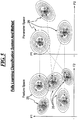
Fig. 5 illustrates a fully learning classification system and method with a feature space and a parameter space. - For the purposes of promoting an understanding of the invention, reference will now be made to the preferred embodiment/best mode illustrated in the drawings and specific language will be used to describe the same. It will nevertheless be understood that no limitation of the scope of the invention is thereby intended, and such alterations and further modifications in the illustrated device as would normally occur to one skilled in the art to which the invention relates are included.
- An adaptive environmental classification system is provided in which classes can be split and merged based on changes in the environment that the hearing aid encounters. This results in the creation of classes specifically relevant to the user. This process continues to develop during the use of the hearing aid and therefore adapts to evolving needs of the user.
-
Figure 3 shows a block diagram at 19 for the adaptive classification system. First, thesound signal 20 received by the hearing aid is sampled and converted into a feature vector viafeature extraction 21. This step is a very crucial stage of classification since the features contain the information that will distinguish the different types of environments (M. Büchler, "Algorithms for Sound Classification in Hearing Instruments," PhD Thesis at Swiss Federal Institute of Technology, Zurich, 2002, no 14498). The resulting classification accuracy highly depends on the selection of features. The feature vector is then passed on to theadaptive classifier 22 to be assigned into a class, which in turn will determine the hearing aid setting. However, the system also stores the features in abuffer 23 which is periodically processed atbuffer processing stage 23A to provide a single representative feature vector for the adaptive learning process. Finally, thepost processing step 24 acts as a filter, to remove spurious jumps in classifications to yield a smooth class transition. Thebuffer 23 andadaptive classifier 22 are described in more detail below. - The
buffer 23 comprises an array that stores past feature vectors. Typically, thebuffer 23 can be 15-60 seconds long depending on the rate at which theadaptive classifier 22 needs to be updated. This allows the adaptation of theclassifier 22 to run at a much slower rate than the ongoing classification of input feature vectors. Thebuffer processing stage 23A calculates a single feature vector to represent all of the unbuffered data, allowing a more accurate assessment of the acoustical characteristics of the current environment for the purpose of adapting theclassifier 22. - The adaptive classification system is divided into two phases. The first phase, the initial classification system, is the starting point for the adaptive classification system when the hearing aid is first used. The initial classification system organizes the environments into four classes: speech, speech in noise, noise, and music. This will allow the user to take home a working automatic classification hearing aid. Since the system is being trained to recognize specific initial classes, a supervised learning algorithm is appropriate.
- The second phase is the adaptive learning phase which begins as soon as the user turns the hearing aid on following the fitting process, and modifies the initial classification system to adapt to the user-specific environments. The algorithm continuously monitors changes in the feature vectors. As the user enters new and different environments the algorithm continuously checks to determine if a class should split and/or if two classes should merge together. In the case where a new cluster of feature vectors is detected and the algorithm decides to split, an unsupervised learning algorithm is used since there is no a priori knowledge about the new class.
- The following example illustrates the general behavior of the adaptive classifier and the process of splitting and merging environment classes. The initial classifier is trained with two ideal classes, meaning the classes have very defined clusters in the feature space as seen in
Figure 4 (graph (a)). These two classes represent the initial classification system.Figure 4 (graph (b)) shows the test data that will be used for testing the adaptive learning phase. As the figure shows, there are four clusters present, two of which are very different than the initial two in the feature space. The task for the algorithm is to detect these two new clusters as being new classes. To demonstrate the merging process, the maximum number of classes is set to three. Therefore two of the classes must merge once the fourth class is detected. - While introducing the test data, a split criterion is continuously monitored and checked until enough data lies outside of the cluster area. This sets a flag that then triggers the algorithm to split the
class 27 or 28 (Figure 4 (graph (a)) into twoclasses Figure 4 (graph (c)) shows the data after the algorithm has split and detected the twonew classes - Once the fourth cluster is detected and the splitting process occurs, as shown in
Figure 4 (graph (c)), the merging process begins where twoclasses class 33.Figure 4 (graph (d)) shows the two closest clusters merging into one, thus resulting with three classes, the maximum set in this example. - According to the preferred embodiment, a system is provided that does not have pre-defined fixed classes but is able - by using a common clustering algorithm that is running in the background - to find classes for itself and is also able to modify, delete and merge existing ones dependent on the acoustical environment the hearing aid user is in.
- All features used for classification are forming a n-dimensional feature space; all parameters that are used to configure the hearing aid are forming a m-dimensional feature space; n and m are not necessarily equal.
- Starting with one or more pre-defined classes and one or more corresponding parameter sets that are activated according to the occurrence of the classes, the system and method continuously analyzes the distribution of feature values in the feature space (using common clustering algorithms, known from literature) and modifies the borders of the classes accordingly, so that preferably always one cluster will represent one class. If two distinct clusters are detected within one existing class, the class will be split into two new classes. If one cluster is covering two existing classes, the two classes will be merged to one new class. There may be an upper limit fo the total number of classes, so that whenever a new class is built, two old ones have to be merged.
- At the same time the parameter settings, representing possible user input, are clustered and a mapping to the current clusters in feature space is calculated, according to which parameter setting is used in which acoustical surround: One cluster in parameter space can belong to one or more clusters in feature space for the case that the same setting is chosen for different environments.
- The result is a dynamic mapping between dynamically changing
clusters 25 in feature space (depending on individual acoustic surroundings) andcorresponding clusters 26 in parameter space (depending on the individual users' preferences) is the result of this system and method. This is illustrated inFig. 5 . - A new adaptive classification system is provided for hearing aids which allows the device to track and define environmental classes relevant to each user. Once this is accomplished the hearing aid may then learn the user preferences (volume control, directional microphone, noise reduction, etc.) for each individual class.
- While a preferred embodiment has been illustrated and described in detail in the drawings and foregoing description, the same is to be considered as illustrative and not restrictive in character, it being understood that only the preferred embodiment has been shown and described and that all changes and modifications that come within the scope of the invention as claimed are desired to be protected.
Claims (4)
- A method for operating a hearing aid, comprising the steps of:using a clustering algorithm to find hearing environment classes (10, 11, 12) based on feature values in a feature space describing sound situations to which the hearing aid is subjected;activating corresponding parameter sets (13, 14, 15) in a parameter space for said hearing aid according to occurrence of the found classes (10, 11, 12);in an ongoing learning process, redefining at least one or more of the found classes by at least one of modifying, deleting or merging the one or more found classes dependent on an acoustical environment of a user of the hearing aid, and including continuously analyzing a distribution of said feature values in said feature space and modifying borders of the classes so that one cluster will represent one class; andperforming at least one of the following steps selected from the group consisting ofif two distinct clusters are detected within one existing class (27), the class (27) is split into two new classes (29, 30), andif one cluster is covering two existing classes (30, 32), the two classes (30, 32) are merged to one new class (33).
- A method of claim 1 wherein a dynamic mapping occurs between dynamically changing clusters in the feature space depending on individual acoustic surroundings and corresponding clusters in the parameter space depending on individual user preferences.
- A hearing aid system, comprising:a sound environment classification system for tracking and defining sound environment classes relevant to a user of the hearing aid and which uses a clustering algorithm to find hearing environment classes (10, 11, 12) based on feature values in a feature space describing sound situations to which the hearing aid is subjected, and activating corresponding parameter sets (13, 14, 15) in a parameter space for said hearing aid according to occurrence of the found classes (10, 11, 12); andan ongoing learning system in which the hearing aid redefines the classes based on new environments to which the hearing aid is subjected by the user, said ongoing learning system modifying, deleting or merging the classes dependent on an acoustical environment of a user of the hearing aid, and including continuously analyzing a distribution of said feature values in said feature space and modifying borders of the classes so that one cluster will represent one class, and performing at least one of the following steps selected from the group consisting ofif two distinct clusters are detected within one existing class (27), the class (27) is split into two new classes (29, 30), andif one cluster is covering two existing classes (30, 32), the two classes (30, 32) are merged to one new class (33).
- A computer-readable medium comprising a computer program for a hearing aid that performs the steps of:using clustering algorithm to find hearing environment classes (10, 11, 12) based on feature values in a feature space describing sound Situations to which the hearing aid is subjected;activating corresponding parameter sets (13, 14, 15) in a parameter space for said hearing aid according to occurrence of the found classes (10, 11,12};in an ongoing learning process, redefining the classes by modifying, deleting or merging the classes dependent on an acoustical environment of a user of the hearing aid, and including continuously analyzing a distribution of said feature values in said feature space and modifying borders of the classes so that one cluster will represent one class; andperforming at least one of the following steps selected from the group consisting ofif two distinct clusters are detected within one existing class (27), the class (27) is split into two new classes (29, 30), andif one cluster is covering two existing classes (30, 32), the two classes (30, 32) are merged to one new class (33).
Applications Claiming Priority (2)
| Application Number | Priority Date | Filing Date | Title |
|---|---|---|---|
| US93661607P | 2007-06-21 | 2007-06-21 | |
| PCT/EP2008/057919 WO2008155427A2 (en) | 2007-06-21 | 2008-06-23 | Fully learning classification system and method for hearing aids |
Publications (2)
| Publication Number | Publication Date |
|---|---|
| EP2163124A2 EP2163124A2 (en) | 2010-03-17 |
| EP2163124B1 true EP2163124B1 (en) | 2017-08-23 |
Family
ID=39766916
Family Applications (1)
| Application Number | Title | Priority Date | Filing Date |
|---|---|---|---|
| EP08761291.7A Active EP2163124B1 (en) | 2007-06-21 | 2008-06-23 | Fully learning classification system and method for hearing aids |
Country Status (4)
| Country | Link |
|---|---|
| US (1) | US8335332B2 (en) |
| EP (1) | EP2163124B1 (en) |
| AU (1) | AU2008265110B2 (en) |
| WO (1) | WO2008155427A2 (en) |
Families Citing this family (6)
| Publication number | Priority date | Publication date | Assignee | Title |
|---|---|---|---|---|
| KR102052153B1 (en) | 2013-02-15 | 2019-12-17 | 삼성전자주식회사 | Mobile terminal for controlling a hearing aid and method therefor |
| DE102013205357B4 (en) * | 2013-03-26 | 2019-08-29 | Siemens Aktiengesellschaft | Method for automatically adjusting a device and classifier and hearing device |
| US10631101B2 (en) | 2016-06-09 | 2020-04-21 | Cochlear Limited | Advanced scene classification for prosthesis |
| EP3818728B1 (en) | 2018-07-05 | 2022-09-07 | Sonova AG | Supplementary sound classes for adjusting a hearing device |
| US10916245B2 (en) * | 2018-08-21 | 2021-02-09 | International Business Machines Corporation | Intelligent hearing aid |
| EP3863850B1 (en) | 2018-10-11 | 2023-06-28 | SABIC Global Technologies B.V. | Polyolefin based multilayer film with a hybrid barrier layer |
Family Cites Families (8)
| Publication number | Priority date | Publication date | Assignee | Title |
|---|---|---|---|---|
| US5701398A (en) * | 1994-07-01 | 1997-12-23 | Nestor, Inc. | Adaptive classifier having multiple subnetworks |
| DE59609754D1 (en) * | 1996-06-21 | 2002-11-07 | Siemens Audiologische Technik | Programmable hearing aid system and method for determining optimal parameter sets in a hearing aid |
| US6922482B1 (en) * | 1999-06-15 | 2005-07-26 | Applied Materials, Inc. | Hybrid invariant adaptive automatic defect classification |
| SG93868A1 (en) * | 2000-06-07 | 2003-01-21 | Kent Ridge Digital Labs | Method and system for user-configurable clustering of information |
| EP1395080A1 (en) | 2002-08-30 | 2004-03-03 | STMicroelectronics S.r.l. | Device and method for filtering electrical signals, in particular acoustic signals |
| DE10245567B3 (en) * | 2002-09-30 | 2004-04-01 | Siemens Audiologische Technik Gmbh | Device and method for fitting a hearing aid |
| US7319769B2 (en) * | 2004-12-09 | 2008-01-15 | Phonak Ag | Method to adjust parameters of a transfer function of a hearing device as well as hearing device |
| US8249284B2 (en) * | 2006-05-16 | 2012-08-21 | Phonak Ag | Hearing system and method for deriving information on an acoustic scene |
-
2008
- 2008-06-23 AU AU2008265110A patent/AU2008265110B2/en not_active Ceased
- 2008-06-23 EP EP08761291.7A patent/EP2163124B1/en active Active
- 2008-06-23 US US12/665,793 patent/US8335332B2/en active Active
- 2008-06-23 WO PCT/EP2008/057919 patent/WO2008155427A2/en not_active Ceased
Non-Patent Citations (1)
| Title |
|---|
| None * |
Also Published As
| Publication number | Publication date |
|---|---|
| EP2163124A2 (en) | 2010-03-17 |
| US8335332B2 (en) | 2012-12-18 |
| WO2008155427A2 (en) | 2008-12-24 |
| AU2008265110A1 (en) | 2008-12-24 |
| WO2008155427A3 (en) | 2009-02-26 |
| AU2008265110B2 (en) | 2011-03-24 |
| US20110123056A1 (en) | 2011-05-26 |
Similar Documents
| Publication | Publication Date | Title |
|---|---|---|
| EP3120578B1 (en) | Crowd sourced recommendations for hearing assistance devices | |
| EP1658754B1 (en) | A binaural hearing aid system with coordinated sound processing | |
| EP3301675B1 (en) | Parameter prediction device and parameter prediction method for acoustic signal processing | |
| JP3987429B2 (en) | Method and apparatus for determining acoustic environmental conditions, use of the method, and listening device | |
| US8335332B2 (en) | Fully learning classification system and method for hearing aids | |
| EP3386215B1 (en) | Hearing aid and method for operating a hearing aid | |
| JP2004500750A (en) | Hearing aid adjustment method and hearing aid to which this method is applied | |
| JP6843701B2 (en) | Parameter prediction device and parameter prediction method for acoustic signal processing | |
| US11457320B2 (en) | Selectively collecting and storing sensor data of a hearing system | |
| JP6731802B2 (en) | Detecting device, detecting method, and detecting program | |
| US11558702B2 (en) | Restricting hearing device adjustments based on modifier effectiveness | |
| US9191754B2 (en) | Method for automatically setting a piece of equipment and classifier | |
| Heintz et al. | Probabilistic gain control in a multi-speaker setting using EEG-based auditory attention decoding | |
| CN118866006A (en) | Display device and forged audio detection method | |
| EP4178228B1 (en) | Method and computer program for operating a hearing system, hearing system, and computer-readable medium | |
| WO2020217359A1 (en) | Fitting assistance device, fitting assistance method, and computer-readable recording medium | |
| EP3996390A1 (en) | Method for selecting a hearing program of a hearing device based on own voice detection | |
| EP3818728B1 (en) | Supplementary sound classes for adjusting a hearing device | |
| Lamarche et al. | School of Information Technology and Engineering, University of Ottawa, 800 King Edward Ave., Ottawa ON, K1N 6N5 llamal 01@ site. uottawa. ca | |
| US12549909B1 (en) | Open ear system using artificial intelligence (AI) driven audio signal processing | |
| US12627937B1 (en) | Open ear system using artificial intelligence (AI) driven audio signal processing | |
| US8401199B1 (en) | Automatic performance optimization for perceptual devices | |
| EP4068805A1 (en) | Method, computer program, and computer-readable medium for configuring a hearing device, controller for operating a hearing device, and hearing system | |
| JP2004500592A (en) | Method for determining instantaneous acoustic environment condition, method for adjusting hearing aid and language recognition method using the same, and hearing aid to which the method is applied | |
| CN121442241A (en) | A method, apparatus and intelligent cockpit system for adjusting the sound of a vehicle cabin. |
Legal Events
| Date | Code | Title | Description |
|---|---|---|---|
| PUAI | Public reference made under article 153(3) epc to a published international application that has entered the european phase |
Free format text: ORIGINAL CODE: 0009012 |
|
| 17P | Request for examination filed |
Effective date: 20091214 |
|
| AK | Designated contracting states |
Kind code of ref document: A2 Designated state(s): AT BE BG CH CY CZ DE DK EE ES FI FR GB GR HR HU IE IS IT LI LT LU LV MC MT NL NO PL PT RO SE SI SK TR |
|
| AX | Request for extension of the european patent |
Extension state: AL BA MK RS |
|
| RIN1 | Information on inventor provided before grant (corrected) |
Inventor name: GIGUERE, CHRISTIAN Inventor name: GUEAIEB, WAIL Inventor name: LAMARCHE, LUC Inventor name: ABOULNASR, TYSEER Inventor name: HAMACHER, VOLKMAR Inventor name: FISCHER, EGHART |
|
| DAX | Request for extension of the european patent (deleted) | ||
| 17Q | First examination report despatched |
Effective date: 20160620 |
|
| STAA | Information on the status of an ep patent application or granted ep patent |
Free format text: STATUS: EXAMINATION IS IN PROGRESS |
|
| GRAP | Despatch of communication of intention to grant a patent |
Free format text: ORIGINAL CODE: EPIDOSNIGR1 |
|
| STAA | Information on the status of an ep patent application or granted ep patent |
Free format text: STATUS: GRANT OF PATENT IS INTENDED |
|
| INTG | Intention to grant announced |
Effective date: 20170404 |
|
| GRAS | Grant fee paid |
Free format text: ORIGINAL CODE: EPIDOSNIGR3 |
|
| GRAA | (expected) grant |
Free format text: ORIGINAL CODE: 0009210 |
|
| STAA | Information on the status of an ep patent application or granted ep patent |
Free format text: STATUS: THE PATENT HAS BEEN GRANTED |
|
| AK | Designated contracting states |
Kind code of ref document: B1 Designated state(s): AT BE BG CH CY CZ DE DK EE ES FI FR GB GR HR HU IE IS IT LI LT LU LV MC MT NL NO PL PT RO SE SI SK TR |
|
| REG | Reference to a national code |
Ref country code: GB Ref legal event code: FG4D |
|
| REG | Reference to a national code |
Ref country code: CH Ref legal event code: EP |
|
| REG | Reference to a national code |
Ref country code: AT Ref legal event code: REF Ref document number: 922506 Country of ref document: AT Kind code of ref document: T Effective date: 20170915 |
|
| REG | Reference to a national code |
Ref country code: IE Ref legal event code: FG4D |
|
| REG | Reference to a national code |
Ref country code: DE Ref legal event code: R096 Ref document number: 602008051762 Country of ref document: DE |
|
| REG | Reference to a national code |
Ref country code: DE Ref legal event code: R082 Ref document number: 602008051762 Country of ref document: DE Representative=s name: FDST PATENTANWAELTE FREIER DOERR STAMMLER TSCH, DE |
|
| REG | Reference to a national code |
Ref country code: NL Ref legal event code: MP Effective date: 20170823 |
|
| REG | Reference to a national code |
Ref country code: LT Ref legal event code: MG4D |
|
| REG | Reference to a national code |
Ref country code: AT Ref legal event code: MK05 Ref document number: 922506 Country of ref document: AT Kind code of ref document: T Effective date: 20170823 |
|
| PG25 | Lapsed in a contracting state [announced via postgrant information from national office to epo] |
Ref country code: HR Free format text: LAPSE BECAUSE OF FAILURE TO SUBMIT A TRANSLATION OF THE DESCRIPTION OR TO PAY THE FEE WITHIN THE PRESCRIBED TIME-LIMIT Effective date: 20170823 Ref country code: AT Free format text: LAPSE BECAUSE OF FAILURE TO SUBMIT A TRANSLATION OF THE DESCRIPTION OR TO PAY THE FEE WITHIN THE PRESCRIBED TIME-LIMIT Effective date: 20170823 Ref country code: NO Free format text: LAPSE BECAUSE OF FAILURE TO SUBMIT A TRANSLATION OF THE DESCRIPTION OR TO PAY THE FEE WITHIN THE PRESCRIBED TIME-LIMIT Effective date: 20171123 Ref country code: SE Free format text: LAPSE BECAUSE OF FAILURE TO SUBMIT A TRANSLATION OF THE DESCRIPTION OR TO PAY THE FEE WITHIN THE PRESCRIBED TIME-LIMIT Effective date: 20170823 Ref country code: FI Free format text: LAPSE BECAUSE OF FAILURE TO SUBMIT A TRANSLATION OF THE DESCRIPTION OR TO PAY THE FEE WITHIN THE PRESCRIBED TIME-LIMIT Effective date: 20170823 Ref country code: NL Free format text: LAPSE BECAUSE OF FAILURE TO SUBMIT A TRANSLATION OF THE DESCRIPTION OR TO PAY THE FEE WITHIN THE PRESCRIBED TIME-LIMIT Effective date: 20170823 Ref country code: LT Free format text: LAPSE BECAUSE OF FAILURE TO SUBMIT A TRANSLATION OF THE DESCRIPTION OR TO PAY THE FEE WITHIN THE PRESCRIBED TIME-LIMIT Effective date: 20170823 |
|
| PG25 | Lapsed in a contracting state [announced via postgrant information from national office to epo] |
Ref country code: BG Free format text: LAPSE BECAUSE OF FAILURE TO SUBMIT A TRANSLATION OF THE DESCRIPTION OR TO PAY THE FEE WITHIN THE PRESCRIBED TIME-LIMIT Effective date: 20171123 Ref country code: IS Free format text: LAPSE BECAUSE OF FAILURE TO SUBMIT A TRANSLATION OF THE DESCRIPTION OR TO PAY THE FEE WITHIN THE PRESCRIBED TIME-LIMIT Effective date: 20171223 Ref country code: LV Free format text: LAPSE BECAUSE OF FAILURE TO SUBMIT A TRANSLATION OF THE DESCRIPTION OR TO PAY THE FEE WITHIN THE PRESCRIBED TIME-LIMIT Effective date: 20170823 Ref country code: GR Free format text: LAPSE BECAUSE OF FAILURE TO SUBMIT A TRANSLATION OF THE DESCRIPTION OR TO PAY THE FEE WITHIN THE PRESCRIBED TIME-LIMIT Effective date: 20171124 Ref country code: PL Free format text: LAPSE BECAUSE OF FAILURE TO SUBMIT A TRANSLATION OF THE DESCRIPTION OR TO PAY THE FEE WITHIN THE PRESCRIBED TIME-LIMIT Effective date: 20170823 Ref country code: ES Free format text: LAPSE BECAUSE OF FAILURE TO SUBMIT A TRANSLATION OF THE DESCRIPTION OR TO PAY THE FEE WITHIN THE PRESCRIBED TIME-LIMIT Effective date: 20170823 |
|
| PG25 | Lapsed in a contracting state [announced via postgrant information from national office to epo] |
Ref country code: CZ Free format text: LAPSE BECAUSE OF FAILURE TO SUBMIT A TRANSLATION OF THE DESCRIPTION OR TO PAY THE FEE WITHIN THE PRESCRIBED TIME-LIMIT Effective date: 20170823 Ref country code: RO Free format text: LAPSE BECAUSE OF FAILURE TO SUBMIT A TRANSLATION OF THE DESCRIPTION OR TO PAY THE FEE WITHIN THE PRESCRIBED TIME-LIMIT Effective date: 20170823 Ref country code: DK Free format text: LAPSE BECAUSE OF FAILURE TO SUBMIT A TRANSLATION OF THE DESCRIPTION OR TO PAY THE FEE WITHIN THE PRESCRIBED TIME-LIMIT Effective date: 20170823 |
|
| REG | Reference to a national code |
Ref country code: DE Ref legal event code: R097 Ref document number: 602008051762 Country of ref document: DE |
|
| PG25 | Lapsed in a contracting state [announced via postgrant information from national office to epo] |
Ref country code: EE Free format text: LAPSE BECAUSE OF FAILURE TO SUBMIT A TRANSLATION OF THE DESCRIPTION OR TO PAY THE FEE WITHIN THE PRESCRIBED TIME-LIMIT Effective date: 20170823 Ref country code: SK Free format text: LAPSE BECAUSE OF FAILURE TO SUBMIT A TRANSLATION OF THE DESCRIPTION OR TO PAY THE FEE WITHIN THE PRESCRIBED TIME-LIMIT Effective date: 20170823 Ref country code: IT Free format text: LAPSE BECAUSE OF FAILURE TO SUBMIT A TRANSLATION OF THE DESCRIPTION OR TO PAY THE FEE WITHIN THE PRESCRIBED TIME-LIMIT Effective date: 20170823 |
|
| REG | Reference to a national code |
Ref country code: FR Ref legal event code: PLFP Year of fee payment: 11 |
|
| PLBE | No opposition filed within time limit |
Free format text: ORIGINAL CODE: 0009261 |
|
| STAA | Information on the status of an ep patent application or granted ep patent |
Free format text: STATUS: NO OPPOSITION FILED WITHIN TIME LIMIT |
|
| 26N | No opposition filed |
Effective date: 20180524 |
|
| PG25 | Lapsed in a contracting state [announced via postgrant information from national office to epo] |
Ref country code: SI Free format text: LAPSE BECAUSE OF FAILURE TO SUBMIT A TRANSLATION OF THE DESCRIPTION OR TO PAY THE FEE WITHIN THE PRESCRIBED TIME-LIMIT Effective date: 20170823 |
|
| REG | Reference to a national code |
Ref country code: CH Ref legal event code: PL |
|
| REG | Reference to a national code |
Ref country code: BE Ref legal event code: MM Effective date: 20180630 |
|
| REG | Reference to a national code |
Ref country code: IE Ref legal event code: MM4A |
|
| PG25 | Lapsed in a contracting state [announced via postgrant information from national office to epo] |
Ref country code: LU Free format text: LAPSE BECAUSE OF NON-PAYMENT OF DUE FEES Effective date: 20180623 Ref country code: MC Free format text: LAPSE BECAUSE OF FAILURE TO SUBMIT A TRANSLATION OF THE DESCRIPTION OR TO PAY THE FEE WITHIN THE PRESCRIBED TIME-LIMIT Effective date: 20170823 |
|
| PG25 | Lapsed in a contracting state [announced via postgrant information from national office to epo] |
Ref country code: CH Free format text: LAPSE BECAUSE OF NON-PAYMENT OF DUE FEES Effective date: 20180630 Ref country code: LI Free format text: LAPSE BECAUSE OF NON-PAYMENT OF DUE FEES Effective date: 20180630 Ref country code: IE Free format text: LAPSE BECAUSE OF NON-PAYMENT OF DUE FEES Effective date: 20180623 |
|
| PG25 | Lapsed in a contracting state [announced via postgrant information from national office to epo] |
Ref country code: BE Free format text: LAPSE BECAUSE OF NON-PAYMENT OF DUE FEES Effective date: 20180630 |
|
| PG25 | Lapsed in a contracting state [announced via postgrant information from national office to epo] |
Ref country code: MT Free format text: LAPSE BECAUSE OF NON-PAYMENT OF DUE FEES Effective date: 20180623 |
|
| PG25 | Lapsed in a contracting state [announced via postgrant information from national office to epo] |
Ref country code: TR Free format text: LAPSE BECAUSE OF FAILURE TO SUBMIT A TRANSLATION OF THE DESCRIPTION OR TO PAY THE FEE WITHIN THE PRESCRIBED TIME-LIMIT Effective date: 20170823 |
|
| PG25 | Lapsed in a contracting state [announced via postgrant information from national office to epo] |
Ref country code: HU Free format text: LAPSE BECAUSE OF FAILURE TO SUBMIT A TRANSLATION OF THE DESCRIPTION OR TO PAY THE FEE WITHIN THE PRESCRIBED TIME-LIMIT; INVALID AB INITIO Effective date: 20080623 Ref country code: PT Free format text: LAPSE BECAUSE OF FAILURE TO SUBMIT A TRANSLATION OF THE DESCRIPTION OR TO PAY THE FEE WITHIN THE PRESCRIBED TIME-LIMIT Effective date: 20170823 |
|
| PG25 | Lapsed in a contracting state [announced via postgrant information from national office to epo] |
Ref country code: CY Free format text: LAPSE BECAUSE OF FAILURE TO SUBMIT A TRANSLATION OF THE DESCRIPTION OR TO PAY THE FEE WITHIN THE PRESCRIBED TIME-LIMIT Effective date: 20170823 |
|
| PGFP | Annual fee paid to national office [announced via postgrant information from national office to epo] |
Ref country code: DE Payment date: 20250520 Year of fee payment: 18 |
|
| PGFP | Annual fee paid to national office [announced via postgrant information from national office to epo] |
Ref country code: GB Payment date: 20250520 Year of fee payment: 18 |
|
| PGFP | Annual fee paid to national office [announced via postgrant information from national office to epo] |
Ref country code: FR Payment date: 20250520 Year of fee payment: 18 |