EP2161932A1 - Digital broadcast receiver apparatus - Google Patents
Digital broadcast receiver apparatus Download PDFInfo
- Publication number
- EP2161932A1 EP2161932A1 EP08777075A EP08777075A EP2161932A1 EP 2161932 A1 EP2161932 A1 EP 2161932A1 EP 08777075 A EP08777075 A EP 08777075A EP 08777075 A EP08777075 A EP 08777075A EP 2161932 A1 EP2161932 A1 EP 2161932A1
- Authority
- EP
- European Patent Office
- Prior art keywords
- display
- channel
- width
- digital broadcasting
- area
- Prior art date
- Legal status (The legal status is an assumption and is not a legal conclusion. Google has not performed a legal analysis and makes no representation as to the accuracy of the status listed.)
- Granted
Links
Images












Classifications
-
- H—ELECTRICITY
- H04—ELECTRIC COMMUNICATION TECHNIQUE
- H04N—PICTORIAL COMMUNICATION, e.g. TELEVISION
- H04N21/00—Selective content distribution, e.g. interactive television or video on demand [VOD]
- H04N21/20—Servers specifically adapted for the distribution of content, e.g. VOD servers; Operations thereof
- H04N21/23—Processing of content or additional data; Elementary server operations; Server middleware
- H04N21/236—Assembling of a multiplex stream, e.g. transport stream, by combining a video stream with other content or additional data, e.g. inserting a URL [Uniform Resource Locator] into a video stream, multiplexing software data into a video stream; Remultiplexing of multiplex streams; Insertion of stuffing bits into the multiplex stream, e.g. to obtain a constant bit-rate; Assembling of a packetised elementary stream
- H04N21/2365—Multiplexing of several video streams
-
- H—ELECTRICITY
- H04—ELECTRIC COMMUNICATION TECHNIQUE
- H04N—PICTORIAL COMMUNICATION, e.g. TELEVISION
- H04N21/00—Selective content distribution, e.g. interactive television or video on demand [VOD]
- H04N21/40—Client devices specifically adapted for the reception of or interaction with content, e.g. set-top-box [STB]; Operations thereof
- H04N21/43—Processing of content or additional data, e.g. demultiplexing additional data from a digital video stream; Elementary client operations, e.g. monitoring of home network or synchronising decoder's clock; Client middleware
- H04N21/434—Disassembling of a multiplex stream, e.g. demultiplexing audio and video streams, extraction of additional data from a video stream; Remultiplexing of multiplex streams; Extraction or processing of SI; Disassembling of packetised elementary stream
- H04N21/4347—Demultiplexing of several video streams
-
- H—ELECTRICITY
- H04—ELECTRIC COMMUNICATION TECHNIQUE
- H04N—PICTORIAL COMMUNICATION, e.g. TELEVISION
- H04N21/00—Selective content distribution, e.g. interactive television or video on demand [VOD]
- H04N21/40—Client devices specifically adapted for the reception of or interaction with content, e.g. set-top-box [STB]; Operations thereof
- H04N21/47—End-user applications
-
- H—ELECTRICITY
- H04—ELECTRIC COMMUNICATION TECHNIQUE
- H04N—PICTORIAL COMMUNICATION, e.g. TELEVISION
- H04N21/00—Selective content distribution, e.g. interactive television or video on demand [VOD]
- H04N21/40—Client devices specifically adapted for the reception of or interaction with content, e.g. set-top-box [STB]; Operations thereof
- H04N21/47—End-user applications
- H04N21/482—End-user interface for programme selection
-
- H—ELECTRICITY
- H04—ELECTRIC COMMUNICATION TECHNIQUE
- H04N—PICTORIAL COMMUNICATION, e.g. TELEVISION
- H04N21/00—Selective content distribution, e.g. interactive television or video on demand [VOD]
- H04N21/40—Client devices specifically adapted for the reception of or interaction with content, e.g. set-top-box [STB]; Operations thereof
- H04N21/47—End-user applications
- H04N21/482—End-user interface for programme selection
- H04N21/4821—End-user interface for programme selection using a grid, e.g. sorted out by channel and broadcast time
Definitions
- the present invention relates to a digital broadcasting receiving apparatus and particularly to a technique of displaying an electronic program table in the digital broadcasting receiving apparatus.
- an electronic program table is created based on EPG (electronic program guide) information acquired from a broadcast signal and is displayed as an image on a screen. Then, a user can select a desired program from an electronic program table displayed as an image to view the program and reserve the recording thereof.
- EPG electronic program guide
- Figure 12 is a display of an electronic program table of transition origin.
- an electronic program table 171 is configured to have a matrix display structure of a time axis indication 173 and a broadcasting station axis (a channel axis) 175 along which, for example, broadcasting stations when they are provided by the same program provider are placed side by side, and program information (a program name in this case) of a corresponding time and broadcasting station is displayed in a program area (for example, 177-1 to 5) which is a crossing point of the aforementioned two axes.
- a program area for example, 177-1 to 5
- indications such as XA-n etc. refer to areas and indications such as 177-m etc. refer to program names etc.
- a detailed display area is provided, in which as well, information on the focused program may be displayed in large characters.
- Configuration is made such that all the programs are displayed with the service ID and the time zone as minimum display units, in such a way that in the area of a broadcasting station B on which focus is not placed, for example, a program "Spring Travel” which is integrated as shown by a symbol 177-0 is displayed in the areas of service IDs 021, 022 and 023, or different programs, for example, "Summer Travel” 177-1, "English Conversation” 177-3, and “French Language” 177-4 are displayed in each service ID; further, in the next time zone, for example, "Autumn Travel” 177-2, “English Conversation” 177-3, and “Spanish Language” 177-5 are displayed; and further in the next time zone, for example, a program “Winter Travel” which is integrated as shown by a symbol 177-6 is displayed in the areas of service IDs 021, 022, and 023.
- EPG information includes so many programs provided by digital broadcasting that creating an electronic program table based on the EPG information will cause the program display fields to be accordingly subdivided, thereby causing the problem that it is difficult to display all of the electronic program table information so as to be browsable.
- One broadcasting station is sectioned by the same supplier, the same TS, and a combination thereof etc.
- An example thereof includes television channels of one TS and of the same broadcast ID, etc.
- NHK General and NHK Education etc. are respectively considered to be one broadcasting station.
- the present invention is characterized in that , in a program table including representative channels predetermined in each TS and channels other than those, the following display control is performed.
- the display width of a representative channel is arranged to be explicitly larger than (not less than 1.5 times of) those of channels other than the representative channel.
- channels other than the representative channel are configured to have a width within the limits of which even one character, which is of the size of the characters entered in program cells, cannot be displayed.
- the display area for channels other than the representative channel is disposed at the side (left or right side) of the representative channel such that each broadcasting station, which includes a representative channel and channels other than the representative channel, has an approximately uniform display width.
- the width of a representative channel is set as follows.
- cells other than that of the representative channel have a width which allows to determine whether or not a cursor is put thereon, and when the cursor is not put on the representative channel, color arrangement of the cells is performed by the same algorithm as that of the representative channel, and when the cursor is put thereon as well, color arrangement of the cells is performed with the same color as when the cursor is put on the representative channel.
- the present invention compared with a conventional program table, it is possible to display many broadcasting stations in a browsable form within a limited display area on a display screen. Further, it is possible to dispose one service in each broadcasting station with a large area of program cell so as to have a channel width in which program information such as a title can be displayed.
- Fixing a selected channel will make it possible to move a cursor with the same feeling as before in the cursor movement while effecting a transition of the cursor from a spotted formation to a shared event.
- TS is the abbreviation of Transport Stream, which is specified in the MPEG system standard (ISO/IEC 13818-1).
- a TS ID is an identifier allocated to each TS and is unique in a network. The same TS means that TS IDs are the same.
- a channel of which first digit to discriminate programs is "1" is referred to as a representative channel.
- a representative channel is defined by, for example, a TS information descriptor included in NIT (network information table) in the terrestrial digital broadcasting. It refers to a primary service which may be determined by manufacturers in the case of BS and CS.
- the display technique of an electronic program table relating to the present invention is characterized in that frames are created and disposed such that the areas defined by display frames of channels other than a representative channel are smaller compared with a display area defined by a display frame of the representative channel (which basically refers to any one channel in one broadcasting station or a channel having the smallest or largest service ID in one broadcasting station).
- Figures 1 and 2 show respectively an outline of a digital broadcasting receiving apparatus according to the present embodiment.
- the digital broadcasting receiving apparatus A includes an antenna 1, a digital broadcasting receiving unit 3 including a tuner of digital broadcasting, an electronic program table creating unit 5, a decoder 11, a remote controller photo-reception unit 15, a voice signal processing unit 25 for performing the processing of voice signals, a speaker 21 for outputting voices based on the voice signal after the processing, an image signal processing unit 27 for processing image signals, a display 23 for outputting images based on the image signals after the processing, a control unit (CPU) 7 for controlling each function block through a bus line BL1, and storage units (ROM and RAM) 18 and 19 for storing programs for performing the below described processing and other information.
- the control unit 7 includes, for example, an electronic program table editing unit 7a which is processed based on a program.
- the DVD (HDD) recorder (recording/reproducing apparatus) B includes an antenna 41, a digital tuner 43, a control unit 47, a remote controller photo-reception unit 51, a storage unit (HDD) 53, an HDMI interface unit 55, an electronic program table acquisition unit 57, an optical disk driving unit 63 such as a DVD, and an operation unit 67.
- the control unit 47 is provided with an electronic program table editing unit 47a which is operated by a program. Each of them can be operated by a corresponding remote control apparatus.
- the electronic program table is usable in any equipment, for example, if the equipment is compatible with the HDMI standard, the electronic program table can be displayed on the display 23 by connecting the both via an HDMI and using any remote control apparatus.
- the program information for creating an electronic program table may be extracted from the broadcast wave received by the above described digital broadcasting receiving unit, or may be separately acquired from the Internet etc.
- FIG. 4 shows a display example of an electronic program table which is edited based on the editing process of electronic program table of the present embodiment and is displayed on a display.
- step S1 a request for EPG display is made by a user using an operation button of a remote control apparatus, etc.
- step S2 determination is made on whether the display request is made in a mode to display only the program frame of a representative channel in a large size when there is a representative channel, or in a mode to display program frames in the same size regardless of whether or not the channel is a representative channel.
- step S3 A display example based on the processing of the conventional display mode of step S3 has been described above with reference to Figures 12 to 19 .
- step S4 the information of all the services to be displayed for each broadcasting station, which is sectioned by the same supplier, the same TS, and a combination thereof, is acquired from the electronic program table information, and in step S5, a computation processing for allocating cells is performed.
- step S6 display frames to be allocated are created based on the computation.
- step S7 determination is made on whether or not there is any event sharing, and when there is any event sharing (Yes), in step S8, programs to be shared are integrated and displayed without changing the width. When there is no event sharing (No), in step S9, programs are displayed as they are without integrating them.
- Television channels which are within one TS and have the same broadcast ID are basically configured to have the same width regardless of the number of services within the TS.
- the width in the channel axis direction for all the services displayed for each broadcasting station, which is in the same TS and of the same supplier, is fixed.
- the width of a representative channel is configured to be explicitly larger than those of other channels.
- the width is such that the former is a level of width in which displaying program names etc. can be satisfactorily achieved and the latter is a level of width in which displaying program names is difficult. This point will be described with reference to Figure 4 .
- a display X of electronic program table includes, for example, a matrix-form arrangement 71 with a time axis 73 as a longitudinal axis and with a channel axis (axis sectioned for each broadcasting station) 75 as a lateral axis.
- the channel 021 which is a representative channel, is allocated with a width of 8 (77-3 and 77-4) with respect to the entire width of 10 of the broadcasting station B, and channels 022 (77-6) and 023 (77-7) are respectively allocated with a width of 1 with respect to the entire width 10.
- the frames for sectioning each channel are fixed. It is preferable that the program information to be displayed within a frame (within a cell) is displayed only for a representative channel which has a sufficient area, and is not displayed for other areas.
- narrow areas in order to making their presence conspicuous, it is possible to improve the ease of visual recognition while being identified, by coloring only narrow areas with a primary color etc., using color-coding, adding a hatch pattern thereon, adding a unique mark thereon and so on.
- the color arrangement of the cells for a narrow area is performed by the same algorithm as that for a representative channel, and even when the cursor is put thereon as well, the color arrangement of the cells for a narrow area may be performed by the same color as that when the cursor is put on a representative channel.
- fixing the allocation width in the channel axis direction for each broadcasting station will enable to predetermine the allocation width in the channel axis direction for each broadcasting station so that the frames for sectioning channels will not be displaced every time the cursor is moved in horizontal direction and therefore are easy to be seen, and next performing the above described computation based on the number of channels will enable to predetermine the allocation of the program display frames for programs in the same broadcasting station. Since when there is any event sharing, programs may be integrated to be displayed based on subsequent judgment, rapid displaying can be achieved. Moreover, displaying an electronic program table by predetermining a program table frame will enable a viewer to quickly recognize the possibility that a plurality of different programs are present in the same time zone regarding respective broadcasting station.
- predetermining the arrangement of the program display frame in the same broadcasting station be performed in the ascending order from smaller number in the channel axis direction will be advantageous in that since the display is made in a fixed arrangement, it is easy for a user to recognize it. Moreover, compared with the configuration shown in Figure 12 , the width in the channel axis direction can be decreased, and information relating to more broadcasting stations can be displayed on a display, the browsability of the electronic program table will be advantageously improved.
- step S10 determination is made on whether or not focus is placed on any of the program display fields.
- the process proceeds to step S11, and the details of the program on which focus is placed will be displayed on a large scale in a detailed display field 81 provided in the margin of the program display field in a large size.
- step S12 the editing/display processing of electronic program table is finished.
- configuration is made such that focus is placed on the 021 channel, which is between 7 and 8 p.m., that is, in the same time zone as in Figure 5 , and is the lowest channel number within the programs of the broadcasting station B on the right side of the broadcasting station A (and is also a representative channel in this case).
- configuration is made such that focus is placed on "Autumn travel" in the area A2 which is a program area of which starting time is close to 7:00 of "Drama".
- this program is "English conversation" of the 022 channel of the broadcasting station B, which is to be broadcast from 6:30 p.m. to 7:30 p.m.
- this program is displayed in the detailed display area 81 and therefore is readily understandable for users. Since there are few switching of display, there is an advantage that it is rather easy to see.
- configuration is made such that the display area of a broadcasting station, which includes a representative channel and channels other than the representative channel, has the same width, and a channel with event sharing and a channel without event sharing, which is of a type of one service in one broadcasting station, have the same width.
- a display mode shown in the display example described in the present embodiment and a conventional separate display mode are switched by a menu and key manipulation, etc.
- a display mode shown in the display example described in the present embodiment and a conventional separate display mode are switched by a menu and key manipulation, etc.
- any of the above described display modes are selected by a menu manipulation, etc. independently (individually) for only a specific broadcasting station designated by the user, or for all broadcasting stations as a whole.
- the display mode as described above may be configured independently for each network (such as a terrestrial digital, CS digital, and BS digital networks), and as a whole for each network.
- configuration may be such that only the terrestrial digital broadcasting adopts the display mode according to the present embodiment.
- it may be configured such that a network as a whole adopts the above described display mode, or each broadcasting station independently sets the above described display mode individually by using a menu.
- the above described configuration may be taken as a whole for each medium (a television service, radio service, and data service).
- a television service a radio service, and data service
- only the television service may take on the above described configuration.
- channels other than the representative channel may be displayed as needed within a browsable range.
- broadcasting stations which conduct multi-channel broadcasting such as a formation without event sharing are preferentially displayed in a browsable form.
- the service number on which the cursor is put on is displayed or displayed in a highlight in the area where a broadcasting station logo is to be displayed, so that the selected channel in the broadcasting station is emphasized to be easily seen.
- the display of a one-touch button, or a one-touch key for the emphasized service is not allocated, the display of an icon button indicating a one-touch key may be deactivated or grayed down so as not to be emphasized.
- the EPG display may be one in which the time axis and the channel axis are replaced with each other.
- the digital broadcasting receiving apparatus includes a television receiving apparatus, a recording/reproducing apparatus, a personal computer, etc.
- the name and form of the product will not limit the invention.
- the present invention is applicable to digital broadcasting receiving apparatuses.
Landscapes
- Engineering & Computer Science (AREA)
- Multimedia (AREA)
- Signal Processing (AREA)
- Human Computer Interaction (AREA)
- Two-Way Televisions, Distribution Of Moving Picture Or The Like (AREA)
- Circuits Of Receivers In General (AREA)
Abstract
Description
- The present invention relates to a digital broadcasting receiving apparatus and particularly to a technique of displaying an electronic program table in the digital broadcasting receiving apparatus.
- In a digital broadcasting receiving apparatus for receiving digital television broadcasting, an electronic program table is created based on EPG (electronic program guide) information acquired from a broadcast signal and is displayed as an image on a screen. Then, a user can select a desired program from an electronic program table displayed as an image to view the program and reserve the recording thereof.
- For example, a typical electronic program table is displayed as shown in
Figures 12 to 19 .Figure 12 is a display of an electronic program table of transition origin. InFigure 12 , an electronic program table 171 is configured to have a matrix display structure of atime axis indication 173 and a broadcasting station axis (a channel axis) 175 along which, for example, broadcasting stations when they are provided by the same program provider are placed side by side, and program information (a program name in this case) of a corresponding time and broadcasting station is displayed in a program area (for example, 177-1 to 5) which is a crossing point of the aforementioned two axes. From the screen ofFigure 12 , in a program area of a service ID 011 (XA-2) in a broadcasting station A (XA-1) (in the figure, it is shown by adding shadow that focus is placed on a program area XA-3), for example, program information (not shown) of a drama between 7 and 8 p.m. is displayed as shown inFigure 13 . - It is noted that in the figure, indications such as XA-n etc. refer to areas and indications such as 177-m etc. refer to program names etc.
- In the margin of the electronic program table, a detailed display area is provided, in which as well, information on the focused program may be displayed in large characters. Configuration is made such that all the programs are displayed with the service ID and the time zone as minimum display units, in such a way that in the area of a broadcasting station B on which focus is not placed, for example, a program "Spring Travel" which is integrated as shown by a symbol 177-0 is displayed in the areas of
service IDs service IDs - In this occasion, when focus is moved by right cursor, as shown in
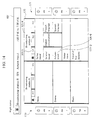
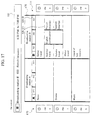
Figure 14 , focus is placed on the broadcasting station B, within which an area XA-6 of "Autumn Travel" 177-2 between 7 and 8 p.m. of thefirst service ID 021 is focused. Further, when focus is moved by right cursor, as shown inFigure 15 , focus remains to be placed on the broadcasting station B, within which a program area XA-8 of "English Conversation" between 7 and 8 p.m. of thesecond service ID 022 is focused. Further, when focus is moved by right cursor, as shown inFigure 16 , focus remains to be placed on the broadcasting station B, within which a program area XA-10 of "Spanish Language" between 7 and 8 p.m. of thethird service ID 023 is focused. Further, when focus is moved by up cursor, as shown inFigure 17 , focus remains to be placed on the broadcasting station B, within which a program area XA-11 of "French Language" above "Spanish Language" between 7 and 8 p.m. of thethird service ID 023 is focused. Further, when focus is moved by up cursor, as shown inFigure 18 , focus remains to be placed on the broadcasting station B, within which a program area XA-10 of "Spring Travel" above "Summer Travel" between 6 and 7 p.m. of thefirst service ID 021 is focused. Further, when focus is moved by down cursor, as shown inFigure 19 , focus remains to be placed on the broadcasting station B, within which a program area XA-11 of "Summer Travel" below "Spring Travel" between 6 and 7 p.m. of thefirst service ID 021 is focused. In this way, in general, configuration is made such that when the cursor is moved on, focus is placed on the program which is present in that direction. - Patent Document 1:
JP Patent Publication (Kokai) No. 2002-10162A - By the way, EPG information includes so many programs provided by digital broadcasting that creating an electronic program table based on the EPG information will cause the program display fields to be accordingly subdivided, thereby causing the problem that it is difficult to display all of the electronic program table information so as to be browsable.
- It is an object of the present invention to improve the operability to reserve and select any one channel such as a representative channel and to increase the number of stations to be displayed on one screen of an electronic program table without sacrificing browsability. Further, it is also an object to maintain the operability of cursor and the compatibility of display between when all the channels are displayed and when they are summarized and displayed.
- One broadcasting station is sectioned by the same supplier, the same TS, and a combination thereof etc. An example thereof includes television channels of one TS and of the same broadcast ID, etc. For example, NHK General and NHK Education etc. are respectively considered to be one broadcasting station.
- The present invention is characterized in that, in a program table including representative channels predetermined in each TS and channels other than those, the following display control is performed.
- 1) The display width of a representative channel is arranged to be explicitly larger than (not less than 1.5 times of) those of channels other than the representative channel. In particular, channels other than the representative channel are configured to have a width within the limits of which even one character, which is of the size of the characters entered in program cells, cannot be displayed.
- 2) The display area for channels other than the representative channel is disposed at the side (left or right side) of the representative channel such that each broadcasting station, which includes a representative channel and channels other than the representative channel, has an approximately uniform display width.
- 3) In the above description, the width of a representative channel is set as follows.
- In the above description, cells other than that of the representative channel have a width which allows to determine whether or not a cursor is put thereon, and when the cursor is not put on the representative channel, color arrangement of the cells is performed by the same algorithm as that of the representative channel, and when the cursor is put thereon as well, color arrangement of the cells is performed with the same color as when the cursor is put on the representative channel.
- According to the present invention, compared with a conventional program table, it is possible to display many broadcasting stations in a browsable form within a limited display area on a display screen. Further, it is possible to dispose one service in each broadcasting station with a large area of program cell so as to have a channel width in which program information such as a title can be displayed.
- Since only a selected channel is disposed in a large size so that the positional relationship between areas in the cursor movement within one broadcasting station is fixed, it is possible to make the operation feeling while moving a cursor compatible with that of a conventional display scheme in which a representative channel and channels other than the representative channel have a uniform display width, thus providing consistency in user's operation feeling.
- Fixing a selected channel will make it possible to move a cursor with the same feeling as before in the cursor movement while effecting a transition of the cursor from a spotted formation to a shared event.
-
-
Figure 1 is a function block diagram to show a configuration example of a digital broadcasting receiving apparatus according to an embodiment of the present invention. -
Figure 2 is a function block diagram to show a configuration example of a recording/reproducing apparatus according to an embodiment of the present invention. -
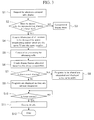
Figure 3 is a flowchart to show an editing process of an electronic program table according to the present embodiment. -
Figure 4 shows a display example of an electronic program table which is edited based on an editing process of electronic program table according to the present embodiment and is displayed on a display. -
Figure 5 shows a display example of an electronic program table according to the present embodiment. -
Figure 6 shows a transition example of an electronic program table display according to the present embodiment. -
Figure 7 shows a transition example of an electronic program table display according to the present embodiment. -
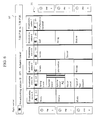
Figure 8 shows a transition example of an electronic program table display according to the present embodiment. -
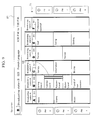
Figure 9 shows a transition example of an electronic program table display according to the present embodiment. -
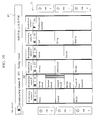
Figure 10 shows a transition example of an electronic program table display according to the present embodiment. -
Figure 11 shows a transition example of an electronic program table display according to the present embodiment. -
Figure 12 shows a transition example of an electronic program table display according to a mode in which program frames are uniformly allocated. -
Figure 13 shows a transition example of an electronic program table display according to a mode in which program frames are uniformly allocated. -
Figure 14 shows a transition example of an electronic program table display according to a mode in which program frames are uniformly allocated. -
Figure 15 shows a transition example of an electronic program table display according to a mode in which program frames are uniformly allocated. -
Figure 16 shows a transition example of an electronic program table display according to a mode in which program frames are uniformly allocated. -
Figure 17 shows a transition example of an electronic program table display according to a mode in which program frames are uniformly allocated. -
Figure 18 shows a transition example of an electronic program table display according to a mode in which program frames are uniformly allocated. -
Figure 19 shows a transition example of an electronic program table display according to a mode in which program frames are uniformly allocated. -
- A
- DIGITAL BROADCASTING RECEIVING APPARATUS
- 1
- ANTENNA
- 3
- DIGITAL BROADCASTING RECEIVING UNIT
- 5
- HDMI INTERFACE UNIT
- 7
- HDMI SIGNAL PROCESSING UNIT
- 11
- DECODER
- 15
- REMOTE CONTROLLER PHOTO-RECEPTION UNIT
- 17
- CONTROL UNIT (CPU)
- 18
- STORAGE UNIT
- 23
- DISPLAY
- 25
- VOICE SIGNAL PROCESSING UNIT
- 27
- IMAGE SIGNAL PROCESSING UNIT
- In the present description, "TS" is the abbreviation of Transport Stream, which is specified in the MPEG system standard (ISO/IEC 13818-1). A TS ID is an identifier allocated to each TS and is unique in a network. The same TS means that TS IDs are the same. Moreover, a channel of which first digit to discriminate programs is "1" is referred to as a representative channel.
- A representative channel is defined by, for example, a TS information descriptor included in NIT (network information table) in the terrestrial digital broadcasting. It refers to a primary service which may be determined by manufacturers in the case of BS and CS. The display technique of an electronic program table relating to the present invention is characterized in that frames are created and disposed such that the areas defined by display frames of channels other than a representative channel are smaller compared with a display area defined by a display frame of the representative channel (which basically refers to any one channel in one broadcasting station or a channel having the smallest or largest service ID in one broadcasting station).
- Hereafter, a digital broadcasting receiving apparatus according to an embodiment of the present invention will be described with reference to the drawings.
Figures 1 and2 show respectively an outline of a digital broadcasting receiving apparatus according to the present embodiment. - As shown in
Figure 1 , the digital broadcasting receiving apparatus A includes anantenna 1, a digitalbroadcasting receiving unit 3 including a tuner of digital broadcasting, an electronic programtable creating unit 5, adecoder 11, a remote controller photo-reception unit 15, a voicesignal processing unit 25 for performing the processing of voice signals, aspeaker 21 for outputting voices based on the voice signal after the processing, an imagesignal processing unit 27 for processing image signals, adisplay 23 for outputting images based on the image signals after the processing, a control unit (CPU) 7 for controlling each function block through a bus line BL1, and storage units (ROM and RAM) 18 and 19 for storing programs for performing the below described processing and other information. Thecontrol unit 7 includes, for example, an electronic programtable editing unit 7a which is processed based on a program. - As shown in
Figure 2 , the DVD (HDD) recorder (recording/reproducing apparatus) B includes anantenna 41, adigital tuner 43, acontrol unit 47, a remote controller photo-reception unit 51, a storage unit (HDD) 53, anHDMI interface unit 55, an electronic programtable acquisition unit 57, an opticaldisk driving unit 63 such as a DVD, and anoperation unit 67. Thecontrol unit 47 is provided with an electronic programtable editing unit 47a which is operated by a program. Each of them can be operated by a corresponding remote control apparatus. - While the electronic program table is usable in any equipment, for example, if the equipment is compatible with the HDMI standard, the electronic program table can be displayed on the
display 23 by connecting the both via an HDMI and using any remote control apparatus. The program information for creating an electronic program table may be extracted from the broadcast wave received by the above described digital broadcasting receiving unit, or may be separately acquired from the Internet etc. - Next, the editing process of an electronic program table will be described based on the flowchart shown in
Figure 3 .Figure 4 shows a display example of an electronic program table which is edited based on the editing process of electronic program table of the present embodiment and is displayed on a display. First, in step S1, a request for EPG display is made by a user using an operation button of a remote control apparatus, etc. Next, in step S2, determination is made on whether the display request is made in a mode to display only the program frame of a representative channel in a large size when there is a representative channel, or in a mode to display program frames in the same size regardless of whether or not the channel is a representative channel. When it is not the mode to display only the program frame of a representative channel in a large size (No), the process proceeds to step S3. A display example based on the processing of the conventional display mode of step S3 has been described above with reference toFigures 12 to 19 . When it is the mode to display only the program frame of a representative channel in a large size (Yes), the process proceeds to step S4 and the information of all the services to be displayed for each broadcasting station, which is sectioned by the same supplier, the same TS, and a combination thereof, is acquired from the electronic program table information, and in step S5, a computation processing for allocating cells is performed. Next, in step S6, display frames to be allocated are created based on the computation. From the processing in step S6, in step S7, determination is made on whether or not there is any event sharing, and when there is any event sharing (Yes), in step S8, programs to be shared are integrated and displayed without changing the width. When there is no event sharing (No), in step S9, programs are displayed as they are without integrating them. Television channels which are within one TS and have the same broadcast ID are basically configured to have the same width regardless of the number of services within the TS. - In the following, one example of the computation processing by a computing unit in step S5 will be described.
- Basic computation equation:

- When the number of channels of one broadcasting station including a representative channel is 3, the display width of one broadcasting station is 10 (arbitrary unit), and the channel width of channels other than the representative channels is 1 (the same unit), the width of the representative channel is determined as follows:

- When the number of channels of one broadcasting station including a representative channel is 2, the display width of one broadcasting station is 10 (arbitrary unit), and the channel width of channels other than the representative channel is 1 (the same unit), the width of the representative channel can be determined as follows:

- As seen from those equations, the width in the channel axis direction for all the services displayed for each broadcasting station, which is in the same TS and of the same supplier, is fixed. The width of a representative channel is configured to be explicitly larger than those of other channels. The width is such that the former is a level of width in which displaying program names etc. can be satisfactorily achieved and the latter is a level of width in which displaying program names is difficult. This point will be described with reference to
Figure 4 . As shown inFigure 4 , a display X of electronic program table according to the present embodiment includes, for example, a matrix-form arrangement 71 with atime axis 73 as a longitudinal axis and with a channel axis (axis sectioned for each broadcasting station) 75 as a lateral axis. - Putting
Figure 4 in contrast withFigure 12 for the comparison with a conventional arrangement, in the display example shown inFigure 12 , in the two hours from the period between 6 and 7 p.m. to the period between 7 and 8 p.m. of the same broadcasting station B, when three different programs are broadcast at service channels of 021, 022 and 023 in the broadcasting station B, information on three different programs of 021, 022 and 023 are respectively displayed using uniform display frames for three services in the program display frame of one broadcasting station B as shown in 177-1 to 177-5. In this case, the width of one broadcasting station is proportional to the number of services. - In contrast to this, in the display example shown in
Figure 4 , among three different programs between 6 and 7 p.m. and between 7 and 8 p.m. of the broadcasting station B, thechannel 021, which is a representative channel, is allocated with a width of 8 (77-3 and 77-4) with respect to the entire width of 10 of the broadcasting station B, and channels 022 (77-6) and 023 (77-7) are respectively allocated with a width of 1 with respect to theentire width 10. The frames for sectioning each channel are fixed. It is preferable that the program information to be displayed within a frame (within a cell) is displayed only for a representative channel which has a sufficient area, and is not displayed for other areas. - Moreover, regarding narrow areas, in order to making their presence conspicuous, it is possible to improve the ease of visual recognition while being identified, by coloring only narrow areas with a primary color etc., using color-coding, adding a hatch pattern thereon, adding a unique mark thereon and so on. In the case of a representative channel, and when the cursor is not put on a narrow area, the color arrangement of the cells for a narrow area is performed by the same algorithm as that for a representative channel, and even when the cursor is put thereon as well, the color arrangement of the cells for a narrow area may be performed by the same color as that when the cursor is put on a representative channel.
- In this way, fixing the allocation width in the channel axis direction for each broadcasting station will enable to predetermine the allocation width in the channel axis direction for each broadcasting station so that the frames for sectioning channels will not be displaced every time the cursor is moved in horizontal direction and therefore are easy to be seen, and next performing the above described computation based on the number of channels will enable to predetermine the allocation of the program display frames for programs in the same broadcasting station. Since when there is any event sharing, programs may be integrated to be displayed based on subsequent judgment, rapid displaying can be achieved. Moreover, displaying an electronic program table by predetermining a program table frame will enable a viewer to quickly recognize the possibility that a plurality of different programs are present in the same time zone regarding respective broadcasting station. It is noted that predetermining the arrangement of the program display frame in the same broadcasting station be performed in the ascending order from smaller number in the channel axis direction will be advantageous in that since the display is made in a fixed arrangement, it is easy for a user to recognize it. Moreover, compared with the configuration shown in
Figure 12 , the width in the channel axis direction can be decreased, and information relating to more broadcasting stations can be displayed on a display, the browsability of the electronic program table will be advantageously improved. - Returning to
Figure 3 , in step S10, determination is made on whether or not focus is placed on any of the program display fields. When it is determined that focus is placed (Yes), the process proceeds to step S11, and the details of the program on which focus is placed will be displayed on a large scale in adetailed display field 81 provided in the margin of the program display field in a large size. Finally, the editing/display processing of electronic program table is finished (step S12). - Hereinafter, description will be made on a display example when an area on which focus is placed is moved. As shown in
Figure 5 , when focus is placed on a program display area A1 corresponding to between 7 and 8 p.m. of the broadcasting station A in the electronic program table 71 shown inFigure 4 , a display of "broadcasting station A", the channel "011", "Drama" and "7:00 p.m. to 8:00 p.m." is performed in thedetailed display field 81, and it becomes possible to proceed to operation of viewing, or starting or reserving image recording by the user. - Next, upon performing the operation of moving focus by right cursor, configuration is made such that focus is placed on the 021 channel, which is between 7 and 8 p.m., that is, in the same time zone as in
Figure 5 , and is the lowest channel number within the programs of the broadcasting station B on the right side of the broadcasting station A (and is also a representative channel in this case). When the time zone is divided, configuration is made such that focus is placed on "Autumn travel" in the area A2 which is a program area of which starting time is close to 7:00 of "Drama". In this case as well, there are advantages in that since the frame itself of the broadcasting station B is not changed, visual recognition thereof is easy for the user and eye fatigue will be reduced, and moreover since the movement of the focused area in the horizontal cursor movement is in the same direction as that of cursor operation, there is no alienation between the user operation and the direction of cursor movement, and cognitive burden on the user is low. Of course, in thedetailed display area 81, detailed information on "Autumn travel" is displayed. Next, when operation by right cursor is performed from the display ofFigure 6 , focus is placed on the area A3 on the right side of the area A2 as shown inFigure 7 . By viewing thedetailed area 81, it is seen that this program is "English conversation" of the 022 channel of the broadcasting station B, which is to be broadcast from 6:30 p.m. to 7:30 p.m. In this case, even if the same information is not displayed in the area A3 within the program display area, it is displayed in thedetailed display area 81 and therefore is readily understandable for users. Since there are few switching of display, there is an advantage that it is rather easy to see. - When right cursor is further used from the display of
Figure 7 , a program from 7 p.m. is displayed in an area A4 as shown inFigure 8 . In this occasion, the reason why focus is not placed on the program from 6:30, but on the program from 7:00 is that focus has been placed on the program from 7:00 two steps earlier inFigure 6 . In this way, when an area spanning times is selected, determination is made on which area focus is to be placed with reference to the previous display state. That is, when right cursor is successively operated, the time zone on which focused is previously placed is stored so that the focused time zone during a series of operations is kept the same. The same processing may be performed for the case of left cursor. - As shown in
Figure 9 , when operation by up cursor is performed fromFigure 8 , focus is placed on an area A5 of the immediately preceding program in thesame program 023. Further, when operation by up cursor is performed, as shown inFigure 10 , focus is placed on "Spring travel" which is aprogram 021 in the immediately preceding time zone of the same broadcasting station B over the entire width of the channel axis of the broadcasting station B as shown in an area A6. Next, when operation of down cursor is performed, as shown inFigure 11 , focus is placed on the area A7 of the program immediately after theprogram 021. In this case, it is configured such that focus is placed on a program corresponding to the program of the immediately preceding channel. - As described so far, in the present embodiment, configuration is made such that the display area of a broadcasting station, which includes a representative channel and channels other than the representative channel, has the same width, and a channel with event sharing and a channel without event sharing, which is of a type of one service in one broadcasting station, have the same width.
- It may also be configured such that a display mode shown in the display example described in the present embodiment and a conventional separate display mode (such as a scheme in which a representative channel and channels other than the representative channel are displayed in the same width, and a scheme in which only the representative channel is displayed) are switched by a menu and key manipulation, etc. In this occasion, it may be configured such that any of the above described display modes are selected by a menu manipulation, etc. independently (individually) for only a specific broadcasting station designated by the user, or for all broadcasting stations as a whole.
- Moreover, the display mode as described above may be configured independently for each network (such as a terrestrial digital, CS digital, and BS digital networks), and as a whole for each network. For example, configuration may be such that only the terrestrial digital broadcasting adopts the display mode according to the present embodiment. Moreover, it may be configured such that a network as a whole adopts the above described display mode, or each broadcasting station independently sets the above described display mode individually by using a menu.
- Moreover, the above described configuration may be taken as a whole for each medium (a television service, radio service, and data service). For example, only the television service may take on the above described configuration.
- It is noted that when the number of display stations in a region is small such as in the terrestrial digital broadcasting, channels other than the representative channel may be displayed as needed within a browsable range. In that occasion, it is preferable that broadcasting stations which conduct multi-channel broadcasting such as a formation without event sharing are preferentially displayed in a browsable form. When a spotted formation is performed, it is preferable that the service number on which the cursor is put on is displayed or displayed in a highlight in the area where a broadcasting station logo is to be displayed, so that the selected channel in the broadcasting station is emphasized to be easily seen. It is noted that when the display of a one-touch button, or a one-touch key for the emphasized service is not allocated, the display of an icon button indicating a one-touch key may be deactivated or grayed down so as not to be emphasized.
- It is noted that although, in the above described examples, description has been made on the case in which the representative channel is displayed in a larger size, the case in which an arbitrary channel is selected and the display frame for the arbitrary channel is made larger will not be excluded. Any channel designated by a user may be a representative channel. Therefore, such cases are included in the scope of the present invention. Moreover, the EPG display may be one in which the time axis and the channel axis are replaced with each other.
- Moreover, since the digital broadcasting receiving apparatus includes a television receiving apparatus, a recording/reproducing apparatus, a personal computer, etc., the name and form of the product will not limit the invention.
- The present invention is applicable to digital broadcasting receiving apparatuses.
Claims (10)
- A digital broadcasting receiving apparatus, characterized by comprising:a program information acquisition unit for acquiring program information; andan electronic program table editing unit for editing an electronic program table based on the program information acquired by said program acquisition unit, wherein even when one and the same program provider has a plurality of channels to provide programs, the width of every one broadcasting station in a channel axis direction is kept the same independent of the number of services within a TS, and a first display width of program information display area in said channel axis direction of a channel arbitrarily selected from said plurality of channels is larger than a second display width of program information display area of a channel other than said selected channel.
- The digital broadcasting receiving apparatus according to claim 1, characterized in that said selected channel is a representative channel in the services within the TS.
- The digital broadcasting receiving apparatus according to claim 1 or 2, characterized by comprising:a computing unit for computing said first display width and said second display width.
- The digital broadcasting receiving apparatus according to claim 3, characterized in that
said computing unit computes the channel width based on the following computing equation:
- The digital broadcasting receiving apparatus according to any of claims 1 to 4, characterized in that
said display width in said channel axis direction of said non-selected channel is only a width within the limits of which even one character cannot be displayed. - The digital broadcasting receiving apparatus according to any of claims 1 to 5, characterized in that
the area of said second display width is displayed in a visually recognizable form. - The digital broadcasting receiving apparatus according to any of claims 1 to 5, characterized in that
when a cursor is not put on said selected channel, coloring of the area is performed by the same algorithm as that of said selected channel, and when the cursor is put thereon, coloring of the area is performed with the same color as that of the case in which the cursor is put on said representative channel. - The digital broadcasting receiving apparatus according to any of claims 1 to 7, characterized in that
when focus is placed on the area of said second display width, said editing unit creates a detailed display area for displaying detailed program information of said area in a separate field. - The digital broadcasting receiving apparatus according to any of claims 1 to 8, characterized in that
said first display width and said second display width are fixed independently of the focus movement in said program information display area. - The digital broadcasting receiving apparatus according to any of claims 1 to 9, characterized by comprising:a mode to display only said selected channel in a large width, anda mode to display all the channels in the same width.
Applications Claiming Priority (2)
| Application Number | Priority Date | Filing Date | Title |
|---|---|---|---|
| JP2007172758A JP4257372B2 (en) | 2007-06-29 | 2007-06-29 | Digital broadcast receiver |
| PCT/JP2008/060124 WO2009004881A1 (en) | 2007-06-29 | 2008-06-02 | Digital broadcast receiver apparatus |
Publications (3)
| Publication Number | Publication Date |
|---|---|
| EP2161932A1 true EP2161932A1 (en) | 2010-03-10 |
| EP2161932A4 EP2161932A4 (en) | 2010-07-14 |
| EP2161932B1 EP2161932B1 (en) | 2012-06-13 |
Family
ID=40225937
Family Applications (1)
| Application Number | Title | Priority Date | Filing Date |
|---|---|---|---|
| EP08777075A Not-in-force EP2161932B1 (en) | 2007-06-29 | 2008-06-02 | Digital broadcast receiver apparatus |
Country Status (7)
| Country | Link |
|---|---|
| US (1) | US20100180303A1 (en) |
| EP (1) | EP2161932B1 (en) |
| JP (1) | JP4257372B2 (en) |
| CN (1) | CN101720555A (en) |
| BR (1) | BRPI0813007A2 (en) |
| ES (1) | ES2386664T3 (en) |
| WO (1) | WO2009004881A1 (en) |
Families Citing this family (4)
| Publication number | Priority date | Publication date | Assignee | Title |
|---|---|---|---|---|
| JP5156861B2 (en) * | 2010-12-28 | 2013-03-06 | シャープ株式会社 | Display control apparatus, television receiver, display control method, display control program, and recording medium |
| JP5377704B2 (en) * | 2012-04-20 | 2013-12-25 | 株式会社東芝 | Tuner apparatus and method |
| WO2016006217A1 (en) * | 2014-07-08 | 2016-01-14 | ダイキン工業株式会社 | Propeller fan and blower unit |
| CN109660845B (en) * | 2018-11-26 | 2022-02-18 | 海信视像科技股份有限公司 | Method for displaying EPG (electronic program guide) user interface during program playing and smart television |
Family Cites Families (9)
| Publication number | Priority date | Publication date | Assignee | Title |
|---|---|---|---|---|
| US6111611A (en) * | 1997-07-10 | 2000-08-29 | Thomson Consumer Electronics | System for forming and processing program specific information suitable for terrestrial, cable or satellite broadcast |
| GB0108355D0 (en) * | 2001-04-03 | 2001-05-23 | Gemstar Dev Ltd | Retrospective electronic program guide |
| JP3960788B2 (en) * | 2001-12-03 | 2007-08-15 | パイオニア株式会社 | Program guide display device and program guide display method |
| KR20040099628A (en) * | 2003-05-19 | 2004-12-02 | 삼성전자주식회사 | Method for managing electronic program guide, and multimedia device using the same |
| JP4575070B2 (en) * | 2004-07-30 | 2010-11-04 | 株式会社東芝 | Broadcast receiver |
| JP4615319B2 (en) * | 2005-01-24 | 2011-01-19 | シャープ株式会社 | Electronic program guide display device, electronic program guide display method, program, and recording medium storing the program |
| JP2007013562A (en) * | 2005-06-30 | 2007-01-18 | Toshiba Corp | Receiving apparatus and receiving method |
| JP4597005B2 (en) * | 2005-08-16 | 2010-12-15 | シャープ株式会社 | Electronic program guide display device |
| JP4334519B2 (en) | 2005-09-08 | 2009-09-30 | 株式会社東芝 | Electronic program guide output device and electronic program guide output method |
-
2007
- 2007-06-29 JP JP2007172758A patent/JP4257372B2/en not_active Expired - Fee Related
-
2008
- 2008-06-02 EP EP08777075A patent/EP2161932B1/en not_active Not-in-force
- 2008-06-02 CN CN200880022361A patent/CN101720555A/en active Pending
- 2008-06-02 BR BRPI0813007-8A2A patent/BRPI0813007A2/en not_active IP Right Cessation
- 2008-06-02 US US12/602,729 patent/US20100180303A1/en not_active Abandoned
- 2008-06-02 ES ES08777075T patent/ES2386664T3/en active Active
- 2008-06-02 WO PCT/JP2008/060124 patent/WO2009004881A1/en not_active Ceased
Also Published As
| Publication number | Publication date |
|---|---|
| ES2386664T3 (en) | 2012-08-24 |
| BRPI0813007A2 (en) | 2014-12-23 |
| WO2009004881A1 (en) | 2009-01-08 |
| US20100180303A1 (en) | 2010-07-15 |
| JP4257372B2 (en) | 2009-04-22 |
| CN101720555A (en) | 2010-06-02 |
| EP2161932B1 (en) | 2012-06-13 |
| EP2161932A4 (en) | 2010-07-14 |
| JP2009010892A (en) | 2009-01-15 |
Similar Documents
| Publication | Publication Date | Title |
|---|---|---|
| US9641901B2 (en) | Method for displaying electronic program guide optimized for user convenience | |
| EP1699236A1 (en) | Recommended program notification method and recommended program notification device | |
| CN102054014B (en) | Information processing apparatus, tuner, and information processing method | |
| KR100900949B1 (en) | Epg generation apparatus, and epg generation method | |
| JP3965239B2 (en) | Receiver | |
| US20100017822A1 (en) | Method of displaying electronic program guide and apparatus using the same | |
| EP2161932B1 (en) | Digital broadcast receiver apparatus | |
| JPH1028244A (en) | Information display device | |
| EP1947845A1 (en) | Programmable recording apparatus for TV programs | |
| EP2627016A1 (en) | Electronic apparatus able to scan broadcast waves and to receive programme information from a server, and method for controlling the electronic apparatus | |
| US8381247B2 (en) | Schedule-table presenting apparatus and schedule-table presenting method | |
| JP4257371B2 (en) | Digital broadcast receiver | |
| EP2186327B1 (en) | User interface for recording program, apparatus and method for displaying image | |
| EP1781028A2 (en) | Method for changing and managing channels and broadcasting receiver therefore | |
| EP1986437B1 (en) | Apparatus and method for upconverting content data | |
| EP2448263A1 (en) | Program information display device, display method, and program | |
| KR100304884B1 (en) | Apparatus for screen expressing of program guide information and method for the same | |
| JP2008118523A (en) | Reservation reception apparatus and reservation reception method | |
| HK1140887A (en) | Digital broadcast receiver apparatus | |
| JP4987348B2 (en) | Program guide display device | |
| EP3780639A1 (en) | System and method for displaying electronic program guide data | |
| JP4804523B2 (en) | Program guide generating apparatus and method, and computer program | |
| JP4804522B2 (en) | Program guide generating apparatus and method, and computer program | |
| JP2009038837A (en) | Program guide generating apparatus and method, and computer program | |
| WO2008029289A2 (en) | User interface for recording program, apparatus and method for displaying image |
Legal Events
| Date | Code | Title | Description |
|---|---|---|---|
| PUAI | Public reference made under article 153(3) epc to a published international application that has entered the european phase |
Free format text: ORIGINAL CODE: 0009012 |
|
| 17P | Request for examination filed |
Effective date: 20091216 |
|
| AK | Designated contracting states |
Kind code of ref document: A1 Designated state(s): AT BE BG CH CY CZ DE DK EE ES FI FR GB GR HR HU IE IS IT LI LT LU LV MC MT NL NO PL PT RO SE SI SK TR |
|
| AX | Request for extension of the european patent |
Extension state: AL BA MK RS |
|
| A4 | Supplementary search report drawn up and despatched |
Effective date: 20100614 |
|
| DAX | Request for extension of the european patent (deleted) | ||
| RIC1 | Information provided on ipc code assigned before grant |
Ipc: H04N 7/173 20110101AFI20110413BHEP Ipc: H04N 5/445 20110101ALI20110413BHEP |
|
| GRAP | Despatch of communication of intention to grant a patent |
Free format text: ORIGINAL CODE: EPIDOSNIGR1 |
|
| GRAS | Grant fee paid |
Free format text: ORIGINAL CODE: EPIDOSNIGR3 |
|
| GRAA | (expected) grant |
Free format text: ORIGINAL CODE: 0009210 |
|
| AK | Designated contracting states |
Kind code of ref document: B1 Designated state(s): AT BE BG CH CY CZ DE DK EE ES FI FR GB GR HR HU IE IS IT LI LT LU LV MC MT NL NO PL PT RO SE SI SK TR |
|
| REG | Reference to a national code |
Ref country code: GB Ref legal event code: FG4D |
|
| REG | Reference to a national code |
Ref country code: AT Ref legal event code: REF Ref document number: 562437 Country of ref document: AT Kind code of ref document: T Effective date: 20120615 Ref country code: CH Ref legal event code: EP |
|
| REG | Reference to a national code |
Ref country code: IE Ref legal event code: FG4D |
|
| REG | Reference to a national code |
Ref country code: DE Ref legal event code: R096 Ref document number: 602008016311 Country of ref document: DE Effective date: 20120809 |
|
| REG | Reference to a national code |
Ref country code: ES Ref legal event code: FG2A Ref document number: 2386664 Country of ref document: ES Kind code of ref document: T3 Effective date: 20120824 |
|
| REG | Reference to a national code |
Ref country code: NL Ref legal event code: VDEP Effective date: 20120613 |
|
| PG25 | Lapsed in a contracting state [announced via postgrant information from national office to epo] |
Ref country code: NO Free format text: LAPSE BECAUSE OF FAILURE TO SUBMIT A TRANSLATION OF THE DESCRIPTION OR TO PAY THE FEE WITHIN THE PRESCRIBED TIME-LIMIT Effective date: 20120913 Ref country code: LT Free format text: LAPSE BECAUSE OF FAILURE TO SUBMIT A TRANSLATION OF THE DESCRIPTION OR TO PAY THE FEE WITHIN THE PRESCRIBED TIME-LIMIT Effective date: 20120613 Ref country code: SE Free format text: LAPSE BECAUSE OF FAILURE TO SUBMIT A TRANSLATION OF THE DESCRIPTION OR TO PAY THE FEE WITHIN THE PRESCRIBED TIME-LIMIT Effective date: 20120613 Ref country code: CY Free format text: LAPSE BECAUSE OF FAILURE TO SUBMIT A TRANSLATION OF THE DESCRIPTION OR TO PAY THE FEE WITHIN THE PRESCRIBED TIME-LIMIT Effective date: 20120613 Ref country code: FI Free format text: LAPSE BECAUSE OF FAILURE TO SUBMIT A TRANSLATION OF THE DESCRIPTION OR TO PAY THE FEE WITHIN THE PRESCRIBED TIME-LIMIT Effective date: 20120613 |
|
| REG | Reference to a national code |
Ref country code: AT Ref legal event code: MK05 Ref document number: 562437 Country of ref document: AT Kind code of ref document: T Effective date: 20120613 |
|
| REG | Reference to a national code |
Ref country code: LT Ref legal event code: MG4D Effective date: 20120613 |
|
| PG25 | Lapsed in a contracting state [announced via postgrant information from national office to epo] |
Ref country code: GR Free format text: LAPSE BECAUSE OF FAILURE TO SUBMIT A TRANSLATION OF THE DESCRIPTION OR TO PAY THE FEE WITHIN THE PRESCRIBED TIME-LIMIT Effective date: 20120914 Ref country code: SI Free format text: LAPSE BECAUSE OF FAILURE TO SUBMIT A TRANSLATION OF THE DESCRIPTION OR TO PAY THE FEE WITHIN THE PRESCRIBED TIME-LIMIT Effective date: 20120613 Ref country code: HR Free format text: LAPSE BECAUSE OF FAILURE TO SUBMIT A TRANSLATION OF THE DESCRIPTION OR TO PAY THE FEE WITHIN THE PRESCRIBED TIME-LIMIT Effective date: 20120613 Ref country code: LV Free format text: LAPSE BECAUSE OF FAILURE TO SUBMIT A TRANSLATION OF THE DESCRIPTION OR TO PAY THE FEE WITHIN THE PRESCRIBED TIME-LIMIT Effective date: 20120613 |
|
| PG25 | Lapsed in a contracting state [announced via postgrant information from national office to epo] |
Ref country code: BE Free format text: LAPSE BECAUSE OF FAILURE TO SUBMIT A TRANSLATION OF THE DESCRIPTION OR TO PAY THE FEE WITHIN THE PRESCRIBED TIME-LIMIT Effective date: 20120613 Ref country code: AT Free format text: LAPSE BECAUSE OF FAILURE TO SUBMIT A TRANSLATION OF THE DESCRIPTION OR TO PAY THE FEE WITHIN THE PRESCRIBED TIME-LIMIT Effective date: 20120613 Ref country code: CZ Free format text: LAPSE BECAUSE OF FAILURE TO SUBMIT A TRANSLATION OF THE DESCRIPTION OR TO PAY THE FEE WITHIN THE PRESCRIBED TIME-LIMIT Effective date: 20120613 Ref country code: SK Free format text: LAPSE BECAUSE OF FAILURE TO SUBMIT A TRANSLATION OF THE DESCRIPTION OR TO PAY THE FEE WITHIN THE PRESCRIBED TIME-LIMIT Effective date: 20120613 Ref country code: EE Free format text: LAPSE BECAUSE OF FAILURE TO SUBMIT A TRANSLATION OF THE DESCRIPTION OR TO PAY THE FEE WITHIN THE PRESCRIBED TIME-LIMIT Effective date: 20120613 Ref country code: IS Free format text: LAPSE BECAUSE OF FAILURE TO SUBMIT A TRANSLATION OF THE DESCRIPTION OR TO PAY THE FEE WITHIN THE PRESCRIBED TIME-LIMIT Effective date: 20121013 Ref country code: RO Free format text: LAPSE BECAUSE OF FAILURE TO SUBMIT A TRANSLATION OF THE DESCRIPTION OR TO PAY THE FEE WITHIN THE PRESCRIBED TIME-LIMIT Effective date: 20120613 |
|
| PG25 | Lapsed in a contracting state [announced via postgrant information from national office to epo] |
Ref country code: IT Free format text: LAPSE BECAUSE OF FAILURE TO SUBMIT A TRANSLATION OF THE DESCRIPTION OR TO PAY THE FEE WITHIN THE PRESCRIBED TIME-LIMIT Effective date: 20120613 Ref country code: PT Free format text: LAPSE BECAUSE OF FAILURE TO SUBMIT A TRANSLATION OF THE DESCRIPTION OR TO PAY THE FEE WITHIN THE PRESCRIBED TIME-LIMIT Effective date: 20121015 Ref country code: PL Free format text: LAPSE BECAUSE OF FAILURE TO SUBMIT A TRANSLATION OF THE DESCRIPTION OR TO PAY THE FEE WITHIN THE PRESCRIBED TIME-LIMIT Effective date: 20120613 |
|
| PG25 | Lapsed in a contracting state [announced via postgrant information from national office to epo] |
Ref country code: NL Free format text: LAPSE BECAUSE OF FAILURE TO SUBMIT A TRANSLATION OF THE DESCRIPTION OR TO PAY THE FEE WITHIN THE PRESCRIBED TIME-LIMIT Effective date: 20120613 |
|
| PLBE | No opposition filed within time limit |
Free format text: ORIGINAL CODE: 0009261 |
|
| STAA | Information on the status of an ep patent application or granted ep patent |
Free format text: STATUS: NO OPPOSITION FILED WITHIN TIME LIMIT |
|
| PG25 | Lapsed in a contracting state [announced via postgrant information from national office to epo] |
Ref country code: DK Free format text: LAPSE BECAUSE OF FAILURE TO SUBMIT A TRANSLATION OF THE DESCRIPTION OR TO PAY THE FEE WITHIN THE PRESCRIBED TIME-LIMIT Effective date: 20120613 |
|
| 26N | No opposition filed |
Effective date: 20130314 |
|
| REG | Reference to a national code |
Ref country code: DE Ref legal event code: R097 Ref document number: 602008016311 Country of ref document: DE Effective date: 20130314 |
|
| PG25 | Lapsed in a contracting state [announced via postgrant information from national office to epo] |
Ref country code: BG Free format text: LAPSE BECAUSE OF FAILURE TO SUBMIT A TRANSLATION OF THE DESCRIPTION OR TO PAY THE FEE WITHIN THE PRESCRIBED TIME-LIMIT Effective date: 20120913 |
|
| PG25 | Lapsed in a contracting state [announced via postgrant information from national office to epo] |
Ref country code: MC Free format text: LAPSE BECAUSE OF FAILURE TO SUBMIT A TRANSLATION OF THE DESCRIPTION OR TO PAY THE FEE WITHIN THE PRESCRIBED TIME-LIMIT Effective date: 20120613 |
|
| REG | Reference to a national code |
Ref country code: CH Ref legal event code: PL |
|
| REG | Reference to a national code |
Ref country code: IE Ref legal event code: MM4A |
|
| PG25 | Lapsed in a contracting state [announced via postgrant information from national office to epo] |
Ref country code: CH Free format text: LAPSE BECAUSE OF NON-PAYMENT OF DUE FEES Effective date: 20130630 Ref country code: LI Free format text: LAPSE BECAUSE OF NON-PAYMENT OF DUE FEES Effective date: 20130630 Ref country code: IE Free format text: LAPSE BECAUSE OF NON-PAYMENT OF DUE FEES Effective date: 20130602 |
|
| PG25 | Lapsed in a contracting state [announced via postgrant information from national office to epo] |
Ref country code: MT Free format text: LAPSE BECAUSE OF FAILURE TO SUBMIT A TRANSLATION OF THE DESCRIPTION OR TO PAY THE FEE WITHIN THE PRESCRIBED TIME-LIMIT Effective date: 20120613 |
|
| REG | Reference to a national code |
Ref country code: FR Ref legal event code: PLFP Year of fee payment: 8 |
|
| PG25 | Lapsed in a contracting state [announced via postgrant information from national office to epo] |
Ref country code: TR Free format text: LAPSE BECAUSE OF FAILURE TO SUBMIT A TRANSLATION OF THE DESCRIPTION OR TO PAY THE FEE WITHIN THE PRESCRIBED TIME-LIMIT Effective date: 20120613 |
|
| PG25 | Lapsed in a contracting state [announced via postgrant information from national office to epo] |
Ref country code: LU Free format text: LAPSE BECAUSE OF NON-PAYMENT OF DUE FEES Effective date: 20130602 Ref country code: HU Free format text: LAPSE BECAUSE OF FAILURE TO SUBMIT A TRANSLATION OF THE DESCRIPTION OR TO PAY THE FEE WITHIN THE PRESCRIBED TIME-LIMIT; INVALID AB INITIO Effective date: 20080602 |
|
| PGFP | Annual fee paid to national office [announced via postgrant information from national office to epo] |
Ref country code: ES Payment date: 20150626 Year of fee payment: 8 Ref country code: DE Payment date: 20150619 Year of fee payment: 8 Ref country code: GB Payment date: 20150618 Year of fee payment: 8 |
|
| PGFP | Annual fee paid to national office [announced via postgrant information from national office to epo] |
Ref country code: FR Payment date: 20150619 Year of fee payment: 8 |
|
| REG | Reference to a national code |
Ref country code: DE Ref legal event code: R119 Ref document number: 602008016311 Country of ref document: DE |
|
| GBPC | Gb: european patent ceased through non-payment of renewal fee |
Effective date: 20160602 |
|
| REG | Reference to a national code |
Ref country code: FR Ref legal event code: ST Effective date: 20170228 |
|
| PG25 | Lapsed in a contracting state [announced via postgrant information from national office to epo] |
Ref country code: DE Free format text: LAPSE BECAUSE OF NON-PAYMENT OF DUE FEES Effective date: 20170103 Ref country code: FR Free format text: LAPSE BECAUSE OF NON-PAYMENT OF DUE FEES Effective date: 20160630 |
|
| PG25 | Lapsed in a contracting state [announced via postgrant information from national office to epo] |
Ref country code: GB Free format text: LAPSE BECAUSE OF NON-PAYMENT OF DUE FEES Effective date: 20160602 |
|
| PG25 | Lapsed in a contracting state [announced via postgrant information from national office to epo] |
Ref country code: ES Free format text: LAPSE BECAUSE OF NON-PAYMENT OF DUE FEES Effective date: 20160603 |
|
| REG | Reference to a national code |
Ref country code: ES Ref legal event code: FD2A Effective date: 20181204 |