EP2159707A1 - Arithmetic processing unit, entry control program, and entry control method - Google Patents
Arithmetic processing unit, entry control program, and entry control method Download PDFInfo
- Publication number
- EP2159707A1 EP2159707A1 EP07767303A EP07767303A EP2159707A1 EP 2159707 A1 EP2159707 A1 EP 2159707A1 EP 07767303 A EP07767303 A EP 07767303A EP 07767303 A EP07767303 A EP 07767303A EP 2159707 A1 EP2159707 A1 EP 2159707A1
- Authority
- EP
- European Patent Office
- Prior art keywords
- entry
- registered
- tlb
- entries
- relocation
- Prior art date
- Legal status (The legal status is an assumption and is not a legal conclusion. Google has not performed a legal analysis and makes no representation as to the accuracy of the status listed.)
- Withdrawn
Links
Images




Classifications
-
- G—PHYSICS
- G06—COMPUTING OR CALCULATING; COUNTING
- G06F—ELECTRIC DIGITAL DATA PROCESSING
- G06F12/00—Accessing, addressing or allocating within memory systems or architectures
- G06F12/02—Addressing or allocation; Relocation
- G06F12/08—Addressing or allocation; Relocation in hierarchically structured memory systems, e.g. virtual memory systems
- G06F12/12—Replacement control
- G06F12/121—Replacement control using replacement algorithms
- G06F12/123—Replacement control using replacement algorithms with age lists, e.g. queue, most recently used [MRU] list or least recently used [LRU] list
-
- G—PHYSICS
- G06—COMPUTING OR CALCULATING; COUNTING
- G06F—ELECTRIC DIGITAL DATA PROCESSING
- G06F12/00—Accessing, addressing or allocating within memory systems or architectures
- G06F12/02—Addressing or allocation; Relocation
- G06F12/08—Addressing or allocation; Relocation in hierarchically structured memory systems, e.g. virtual memory systems
- G06F12/10—Address translation
- G06F12/1027—Address translation using associative or pseudo-associative address translation means, e.g. translation look-aside buffer [TLB]
-
- G—PHYSICS
- G06—COMPUTING OR CALCULATING; COUNTING
- G06F—ELECTRIC DIGITAL DATA PROCESSING
- G06F12/00—Accessing, addressing or allocating within memory systems or architectures
- G06F12/02—Addressing or allocation; Relocation
- G06F12/08—Addressing or allocation; Relocation in hierarchically structured memory systems, e.g. virtual memory systems
- G06F12/12—Replacement control
- G06F12/121—Replacement control using replacement algorithms
- G06F12/128—Replacement control using replacement algorithms adapted to multidimensional cache systems, e.g. set-associative, multicache, multiset or multilevel
-
- G—PHYSICS
- G06—COMPUTING OR CALCULATING; COUNTING
- G06F—ELECTRIC DIGITAL DATA PROCESSING
- G06F2212/00—Indexing scheme relating to accessing, addressing or allocation within memory systems or architectures
- G06F2212/10—Providing a specific technical effect
- G06F2212/1016—Performance improvement
- G06F2212/1021—Hit rate improvement
-
- G—PHYSICS
- G06—COMPUTING OR CALCULATING; COUNTING
- G06F—ELECTRIC DIGITAL DATA PROCESSING
- G06F2212/00—Indexing scheme relating to accessing, addressing or allocation within memory systems or architectures
- G06F2212/68—Details of translation look-aside buffer [TLB]
- G06F2212/681—Multi-level TLB, e.g. microTLB and main TLB
Definitions
- the present invention relates to an arithmetic processing unit that includes a plurality of TLBs holding as entries a portion of a conversion table for conversion of virtual addresses into physical addresses that has been placed in a main memory unit, and relates to an entry control program and an entry control method.
- a conversion table for conversion of virtual addresses into physical addresses is placed in a main memory unit. Then, while executing a program that has been loaded in the main memory unit, a CPU converts virtual addresses into physical addresses and uses the converted physical addresses for referring to instructions and data in the program that has been loaded in the main memory unit.
- the operating speed of a main memory unit is slower as compared to the operating speed of a CPU.
- a CPU and a main memory unit are spaced apart by a large distance.
- an access to a main memory unit from a CPU consumes a substantial processing time.
- the conversion table for conversion of virtual addresses to physical addresses is placed in a main memory unit, it takes time if the conversion table is referred every time an instruction or data is to be retrieved from a program.
- an information processing apparatus is in use in which a cache memory that is referred to as a TLB (Translation Look-aside Buffer) and controlled by an LRU (Least Recently Used) is used to register a portion of a conversion table that has been placed in a main memory unit. Then, to convert a virtual address into a physical address, a CPU in that information processing apparatus first refers to the TLB and, only when the intended entry is not found in the TLB, refers to the conversion table stored in the main memory unit.
- a full associative TLB and a 2-way set associative TLB are placed on the same hierarchy (e.g., see Patent Document 1).
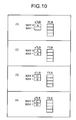
- FIG. 10 is a schematic diagram of a conventional information processing apparatus in which a full associative TLB and a 2-way set associative TLB are placed on the same hierarchy.
- a full associative TLB and a 2-way set associative TLB are placed on the same hierarchy.
- TLB registration For the first time of TLB registration, an entry is registered in a way 0 of the sTLB as well as the fTLB according to an LRU.
- TLB registration it is assumed that all entries are registered in a set associative TLB.
- a CPU When a program is executed in such a configuration, a CPU refers to both the full associative TLB and the 2-way set associative TLB to perform conversion of a virtual address into a physical address (entry A). If a conversion table for conversion of virtual addresses is not registered in either of the two TLBs, then the CPU accesses a main memory unit for referring to a conversion table placed therein, reads the conversion table (entry A) corresponding to the target virtual address for conversion from the main memory unit, and registers it in the 2-way set associative TLB (see (1) in FIG. 10 ).
- a TLB miss occurs when the CPU subsequently refers to the TLBs for a virtual address in the same cache line of the set associative TLB, then the CPU performs an operation identical to (1) in FIG. 10 and registers the intended entry as an entry D in the way 1 of the set associative TLB according to an LRU. However, in that case, the entry B that has already been registered is evicted from the set associative TLB (see (4) in FIG. 10 ).
- Patent Document 1 Japanese Laid-open Patent Publication No. 2005-346358
- a set associative TLB generally employs a set associative system of a number of ways. For example, consider a case when a plurality of processes is concurrently executed and the virtual addresses that compete for a cache line accessing a cache locally exceed the number of ways of a set associative TLB. In that case, TLB rewriting or, in other words, thrashing occurs. That forces the CPU to access the conversion table placed in the main memory unit. As a result, there is degradation in the processing performance.
- the present invention has been made to solve the above problems in the conventional technology and it is an object of the present invention to provide an arithmetic processing unit, an entry control program, and an entry control method that prevents thrashing from occurring and enables achieving enhancement in the processing performance.
- an invention according to claim 1 is an arithmetic processing apparatus that includes a plurality of TLBs holding as entries a portion of a conversion table for conversion of virtual addresses into physical addresses that has been placed in a main memory unit.
- the arithmetic processing apparatus includes: an entry registration determining unit that, while registering an entry output from the main memory unit in any one of a plurality of TLBs, determines whether an entry has already been registered in an area of a TLB as registration destination; and a relocation control unit that, when the entry registration determining unit determines that an entry has already been registered in the area of the TLB as registration destination, evicts the entry that has already been registered and registers evicted entry in other TLB.
- the relocation control unit evicts the entry that has already been registered; determines whether the evicted entry has an error; and, in case of an error, discards the evicted entry without registering in other TLB and, in case of no error, registers the evicted entry in other TLB.
- the relocation control unit evicts the entry that has already been registered, appends an identifier to evicted entry indicating that the evicted entry is not directly output from the main memory unit but output from a TLB, and registers the evicted entry in other TLB.
- the arithmetic processing apparatus further includes an entry removing unit that, when same-page entries including an entry evicted from a TLB are registered in plurality resulting in detection of multiple hits in a plurality of TLBs in which entries have been registered by the relocation control unit, removes the entry.
- the plurality of TLBs include, for each entry registered therein, a valid bit that indicates whether the entry is valid, a lock bit that indicates whether the entry is locked so as to prevent eviction from a TLB, a used bit that indicates whether the entry is used, and a relocation bit that indicates whether the entry has been output from another TLB, and when the entry registration determining unit determines that an entry has already been registered in an area of a TLB as registration destination for registering an entry output from the main memory unit, the relocation control unit evicts the entry that has already been registered and registers evicted entry with corresponding relocation bit validated over an entry having smallest entry number from among entries that are already registered in the other TLB and that have respective valid bit set to OFF; and, if the valid bit for all entries that have been registered is ON, registers the evicted entry with corresponding relocation bit validated over an entry having smallest entry number from among entries that have respective lock bit and respective used bit set to
- the relocation control unit suppresses/prevents eviction of the entry that has already been registered and registration of evicted entry in other TLB.
- the relocation control unit resumes evicting the entry that has already been registered in an area of a TLB as registration destination for registering an entry output from the main memory unit and registering the evicted entry in other TLB.
- the plurality of TLBs are divided into a direct registration area used to register an entry that has been output directly from the main memory unit and a relocation registration area used to register an entry that has been subjected to relocation control from other TLB, and include, for each entry registered therein, a valid bit that indicates whether the entry is valid, a lock bit that indicates whether the entry is locked so as to prevent eviction from a TLB, a used bit that indicates whether the entry is used, and a relocation bit that indicates whether the entry has been subjected to relocation control before being registered, and when the entry registration determining unit determines that an entry has already been registered in an area of a TLB as registration destination for registering an entry output from the main memory unit, the relocation control unit evicts the entry that has already been registered and registers the evicted entry over an entry having smallest entry number from among entries that have been registered in the relocation area of the other TLB and that have respective valid bit set to OFF, and,
- the relocation control unit suppresses/prevents eviction of the entry that has already been registered and registration of the evicted entry in the relocation area of other TLB; and, during present state, an entry to be directly registered is registered in the relocation area of other TLB.
- the relocation control unit resumes evicting the entry that has already been registered in an area of a TLB as registration destination for registering an entry output from the main memory unit and registering the evicted entry in the relocation registration area of other TLB.
- an invention according to claim 11 is an entry control program that causes a computer as an information processing apparatus, which includes a plurality of TLBs holding as entries a portion of a conversion table for conversion of virtual addresses into physical addresses that has been placed in a main memory unit, to execute: an entry registration determining procedure that includes determining, while registering an entry output from the main memory unit in any one of a plurality of TLBs, whether an entry has already been registered in an area of a TLB as registration destination; and a relocation controlling procedure that includes, when it is determined at the entry registration determining procedure that an entry has already been registered in the area of the TLB as registration destination, evicting the entry that has already been registered and registering the evicted entry in other TLB.
- an invention according to claim 12 is an entry control method that is suitable to an information processing apparatus including a plurality of TLBs holding as entries a portion of a conversion table for conversion of virtual addresses into physical addresses that has been placed in a main memory unit.
- the entry control method includes: an entry registration determining step that includes determining, while registering an entry output from the main memory unit in any one of a plurality of TLBs, whether an entry has already been registered in an area of a TLB as registration destination; and a relocation controlling step that includes, when it is determined at the entry registration determining step that an entry has already been registered in the area of the TLB as registration destination, evicting the entry that has already been registered and registering the evicted entry in other TLB.
- the present invention while registering an entry output from a main memory unit in any one of a plurality of TLBs; it is determined whether an entry has already been registered in an area of a TLB as the registration destination. If it is determined that an entry has already been registered in the area of the TLB as the registration destination, the already-registered entry is evicted and registered in another TLB. That prevents thrashing from occurring and enables achieving enhancement in the processing performance.
- the present invention if it is determined that an entry has already been registered in the area of the TLB as the registration destination; then it is further determined whether an error has occurred in that entry. If an error has occurred, then that entry is discarded without being registered in another TLB. If no error has occurred, then that entry is registered in another TLB. That enables avoiding unnecessary area usage.
- the already-registered entry is evicted and an identifier is appended thereto indicating that the entry is not read from the main memory unit but evicted from a TLB before registering it in another TLB. Because of that, it becomes possible to easily determine whether a registered entry has been read from the main memory unit or relocated from another TLB.
- the already-registered entry is evicted and registered with the relocation bit validated over an entry having the smallest entry number from among entries that are already registered in the other TLB and that have the respective valid bit set to OFF. If the valid bit for all of the registered entries is set to ON, then the evicted entry is registered with the relocation bit validated over an entry having the smallest entry number from among the entries that have the respective lock bit and the respective used bit set to OFF.
- the lock bit for all entries registered in the other TLB becomes ON; then, even if an entry is determined to have been already registered in the area of the TLB as the registration destination for registering an entry read from the main memory unit, evicting that already-registered entry and registering it in the other TLB is suppressed/prevented. As a result, a situation in which the entry registration processing is performed with respect to an entry that cannot be registered is prevented from occurring.
- the lock-type entries can be protected in a reliable manner.
- the already-registered entry is evicted and registered in the other TLB.
- the evicted entry is registered over an entry having the smallest entry number from among entries that are registered in the relocation areas of the other TLB and that have the respective valid bit set to OFF. If the valid bit for all entries registered in the relocation areas is set to ON, then the evicted entry is registered over an entry having the smallest entry number from among the entries that are registered in the relocation areas and that have the respective lock bit and the respective used bit set to OFF.
- each of the entries registered in the relocation areas has the corresponding valid bit set to ON and has either one of the corresponding lock bit and the corresponding used bit set to ON
- the used bit for all entries in the relocation areas is set to OFF and then the evicted entry is registered over an entry having the smallest entry number from among the entries that are registered in the relocation areas and that have the respective lock bit and the respective used bit set to OFF. Because of that, even when the other TLB is divided into the direct registration areas and the relocation registration areas, it is possible to register three different types of entries, namely, lock-type entries that cannot be evicted from a TLB, unlock-type entries that have been registered directly from the main memory unit, and relocation-type entries that have been relocated from another TLB. That prevents thrashing from occurring and thus enables achieving enhancement in the processing performance.
- the lock bit for all entries registered in the relocation registration areas of the other TLB becomes ON; then, even if an entry is determined to have been already been registered in the area of the TLB as the registration destination for registering an entry read from the main memory unit; evicting the already-registered entry and registering it in the relocation areas of the other TLB is suppressed/prevented.
- the other TLB is divided into the direct registration areas and the relocation registration areas, a situation in which the entry registration processing is performed with respect to an entry that cannot be registered is prevented from occurring.
- the lock-type entries can be protected in a reliable manner.
- the other TLB when the other TLB is released from the condition that the lock bit for all entries registered in the direct registration areas is set to ON; the process of evicting the entry that has already been registered in the area of the TLB as the registration destination for registering an entry read from the main memory unit and registering the evicted entry in a relocation area of the other TLB is resumed.
- the entry registration processing resumes automatically when the other TLB is released from the condition that the lock bit for all entries registered in the direct registration areas is set to ON. That enables achieving speedy resumption of the entry relocation processing with respect to a TLB.
- a present embodiment of an arithmetic processing unit, an entry control program, and an entry control method according to the present invention will be described below in detail with reference to the accompanying drawings.
- the following description includes an outline and features of an arithmetic processing apparatus according to the present embodiment, a configuration of the arithmetic processing apparatus, and a sequence of operations performed in the arithmetic processing apparatus, followed by various modifications of the present embodiment.
- FIG. 1 is a schematic diagram for explaining an outline and features of the arithmetic processing apparatus according to the first embodiment.
- the arithmetic processing apparatus includes a 2-way sTLB (set associative TLB) and an fTLB (full associative TLB) that are placed on the same hierarchy controlled by an LRU.
- sTLB set associative TLB
- fTLB full associative TLB
- an sTLB is allocated to areas used for programs written by the user of an arithmetic processing apparatus; while an fTLB is allocated to areas used for control programs of an OS (Operating System) or the like.
- a CPU e.g., a processing unit or an instruction control unit of the arithmetic processing unit stores a portion of a conversion table for conversion of virtual addresses into physical addresses that has been placed in a main memory unit as entries into the TLBs. Then, while converting a virtual address corresponding to data that has been referred to by a program into a physical address, the CPU first refers to the TLBs and, only if the intended entry is not found in the TLBs, refers to the conversion table stored in the main memory unit. Subsequently, the CPU reads the intended entry, which was not found in the TLBs, from the main memory unit and registers it in a TLB. Herein, at the start, no entry is registered in any of the two TLBs. Then, for the first time of TLB registration, an entry is registered in the way 0 according to an LRU. Meanwhile, regarding TLB registration according to the present embodiment, it is assumed that all entries are registered in the sTLB.
- the arithmetic processing apparatus includes the sTLB and the fTLB that hold as entries a portion of the conversion table for conversion of virtual addresses into physical addresses that has been placed in the main memory unit. Moreover, the arithmetic processing apparatus is characterized by preventing thrashing from occurring and enabling achieving enhancement in the processing performance.
- the arithmetic processing apparatus While registering an entry that has been output from the main memory unit in any one of a plurality of TLBs, the arithmetic processing apparatus determines whether an entry has already been registered in an area of a TLB as the registration destination. If no entry is registered in the area of the TLB as the registration destination, the arithmetic processing apparatus registers the entry output from the main memory unit in the TLB (see (1) in FIG. 1 ). More particularly, the arithmetic processing unit refers to both the fTLB and the sTLB for performing conversion of a virtual address into a physical address (entry A).
- the arithmetic processing apparatus Since the entry A has not been registered in either of the two TLBs, the arithmetic processing apparatus reads the entry A from the main memory unit. Then, the arithmetic processing apparatus determines whether an entry has already been registered in a way 0 of the sTLB as the registration destination for registering the entry A read from the main memory unit. Since no entry has been registered in the way 0 of the sTLB, the arithmetic processing apparatus registers the entry A, which is read from the main memory unit, in the way 0 of the sTLB.
- the arithmetic processing apparatus refers to both the fTLB and the sTLB for performing conversion of a virtual address into a physical address (entry B). Since the entry B has not been registered in either of the two TLBs, the arithmetic processing apparatus reads the entry B from the main memory unit. Then, the arithmetic processing apparatus determines whether an entry has already been registered in a way 1 of the sTLB as the registration destination for registering the entry B read from the main memory unit (see (2) in FIG. 1 ). Since no entry has been registered in the way 1 of the sTLB, the arithmetic processing apparatus registers the entry B, which is read from the main memory unit, in the way 1 of the sTLB.
- the arithmetic processing apparatus refers to both the fTLB and the sTLB for performing conversion of a virtual address into a physical address (entry C). Since the entry C has not been registered in any of the two TLBs, the arithmetic processing apparatus reads the entry C from the main memory unit. Then, the arithmetic processing apparatus determines whether an entry has already been registered in the way 0 of the sTLB as the registration destination for registering the entry C. If it is determined that an entry has already been registered in the way 0 of the sTLB, then the arithmetic processing apparatus evicts that already-registered entry and registers it in the other TLB (see (3) in FIG. 1 ).
- the arithmetic processing apparatus refers to both the fTLB and the sTLB for performing conversion of a virtual address into a physical address (entry C). Since the entry C has not been registered in any of the two TLBs, the arithmetic processing apparatus reads the entry C from the main memory unit. Then, the arithmetic processing apparatus determines, using an LRU, whether an entry has already been registered in the area that, from among the areas corresponding to the entry A and the entry B, has been least referred to. That is, the arithmetic processing apparatus determines whether an entry has already been registered in the way 0 of the sTLB in which the entry A was registered most previously.
- the arithmetic processing apparatus since the entry A has already been registered in the way 0, the arithmetic processing apparatus evicts the entry A and registers it in the way 0 of the fTLB having the smallest area number from among the empty areas of the fTLB. Then, the arithmetic processing apparatus registers the entry C, which is read from the main memory unit, in the way 0 of the sTLB from which the entry A was evicted.
- the arithmetic processing apparatus refers to both the fTLB and the sTLB for performing conversion of a virtual address into a physical address (entry D). Since the entry D has not been registered in any of the two TLBs, the arithmetic processing apparatus reads the entry D from the main memory unit. Then, the arithmetic processing apparatus determines whether an entry has already been registered in the way 1 of the sTLB as the registration destination for registering the entry D. If it is determined that an entry has already been registered in the way 1 of the sTLB, then the arithmetic processing apparatus evicts that already-registered entry and registers it in the other TLB (see (4) in FIG. 1 ).
- the arithmetic processing apparatus refers to both the fTLB and the sTLB for performing conversion of a virtual address into a physical address (entry D). Since the entry D has not been registered in any of the two TLBs, the arithmetic processing apparatus reads the entry D from the main memory unit. Then, the arithmetic processing apparatus determines, using an LRU, whether an entry has already been registered in the area that, from among the areas corresponding to the entry A and the entry B, has been least referred to. That is, the arithmetic processing apparatus determines whether an entry has already been registered in the way 1 of the sTLB in which the entry B was registered most previously.
- the arithmetic processing apparatus since the entry B has already been registered in the way 1, the arithmetic processing apparatus evicts the entry B and registers it in the way 1 of the fTLB.
- the way 1 of the fTLB has the smallest area number from among the empty areas of the fTLB. Then, the arithmetic processing apparatus registers the entry D, which is read from the main memory unit, in the way 1 of the sTLB from which the entry B was evicted.
- the arithmetic processing apparatus is able to evict entries registered in the sTLB and register them in the fTLB. That, as described above in the main features, prevents thrashing from occurring and enables achieving enhancement in the processing performance.
- FIG. 2 is a block diagram of a configuration of the arithmetic processing apparatus according to the first embodiment.
- an arithmetic processing apparatus 10 includes a CPU 11, an L1 cache control unit 20, an L2 cache control unit 30, and a main memory unit 40.
- the CPU 11 is a processing unit that executes various programs stored in the main memory unit 40. Regarding the aspects of close association with the present embodiment, the CPU 11 includes an operating unit/instruction control unit 11a and the L1 cache control unit 20.
- the operating unit/instruction control unit 11a outputs instructions regarding data writing or data reading according to the arithmetic processing performed by the CPU 11. Moreover, the operating unit/instruction control unit 11a obtains necessary data from a micro TLB 23, a main TLB 22, an L1 cache RAM 21, an L2 cache RAM 31, or the main memory unit 40 described later, and performs arithmetic processing on the obtained data.
- the L1 cache control unit 20 is a processing unit that, when a virtual address is received from the operating unit/instruction control unit 11a, obtains corresponding data from the L1 cache RAM 21 and outputs it to the operating unit/instruction control unit 11a. If the corresponding data is not found in the L1 cache RAM 21, the L1 cache control unit 20 outputs an L2 cache address access to the L2 cache control unit 30.
- the L1 cache control unit 20 includes the L1 cache RAM 21, the main TLB 22, the micro TLB 23, an entry registration determining unit 24, and a relocation control unit 25.
- the L1 cache RAM 21 is a high-speed low-capacity memory integrated with or mounted on the same module as that of the CPU 11 and is used to store frequently-used data. That is, the L1 cache RAM 21 is used to temporarily store instructions and data processed by the CPU 11. Thus, until new data is supplied by the main memory unit 40, the L1 cache RAM 21 can supply a certain volume of data to the CPU 11. That enables the CPU 11 to carry on the processing.
- the main TLB 22 holds as entries a portion of a conversion table for conversion of virtual addresses into physical addresses that has been placed in the main memory unit.
- the main TLB 22 includes an sTLB 22b and an fTLB 22a.
- sTLB 22b no entry is registered in any of the two TLBs.
- an entry is registered in the way 0 of the sTLB 22b according to an LRU.
- subsequent TLB registration all entries are registered in the sTLB 22b.
- the fTLB 22a stores therein, by employing a full associative system in which there is no sorting according to entry addresses and all lines are considered as search targets, a portion of the conversion table for conversion of virtual addresses into physical addresses that has been placed in the main memory unit as entries.
- the sTLB 22b stores therein, by employing an N-way set associative system in which a single entry can be used to store different frame addresses in plurality, frequently-used entries from among the entries registered in the fTLB 22a.
- the sTLB 22b is illustrated as a TLB of a 2-way set associative system.
- the micro TLB 23 is used to store a portion of the conversion table for converting virtual addresses into physical addresses corresponding to the data most recently used by the operating unit/instruction control unit 11a.
- the entries stored in the micro TLB 23 are those stored in the main TLB 22.
- the entry registration determining unit 24 determines whether an entry has already been registered in an area of a TLB as the registration destination.
- the operating unit/instruction control unit 11a refers to both the fTLB 22a and the sTLB 22b for performing conversion of a virtual address into a physical address (entry A).
- the operating unit/instruction control unit 11a reads the entry A from the main memory unit 40.
- the entry registration determining unit 24 determines whether an entry has already been registered in the way 0 of the sTLB 22b as the registration destination for registering the entry A read from the main memory unit 40.
- the entry registration determining unit 24 informs the relocation control unit 25 described later to that effect.
- the relocation control unit 25 evicts that already-registered entry from and registers it another TLB.
- the entry A is stored in the way 0 of the sTLB 22b
- an entry B is stored in the way 1 of the sTLB 22b
- subsequent TLB registration is performed with respect to the sTLB 22b.
- the fTLB 22a does not have any entry registered therein and the first entry to be registered therein is registered in the way 0 according to an LRU.
- the operating unit/instruction control unit 11a refers to both the fTLB 22a and the sTLB 22b for performing conversion of a virtual address into a physical address (entry C).
- the operating unit/instruction control unit 11a reads the entry C from the main memory unit 40.
- the entry registration determining unit 24 determines whether an entry has already been registered in the way 0 of the sTLB 22b as the registration destination for registering the entry C. Since it is determined that the entry A is already registered in the way 0 of the sTLB 22b as the registration destination for registering the entry C, the entry registration determining unit 24 informs the relocation control unit 25 to that effect.
- the relocation control unit 25 evicts the already-registered entry A and registers it in the way 0 of the fTLB 22a as the other TLB.
- the way 0 of the fTLB 22a has the smallest area number from among the empty areas of the fTLB 22a.
- the relocation control unit 25 performs relocation control of entries.
- the relocation control unit 25 registers the entry C, which is read from the main memory unit 40, in the way 0 of the sTLB 22b.
- the L2 cache control unit 30 includes the L2 cache RAM 31. Upon obtaining the L2 cache access address from the L1 cache control unit 20, the L2 cache control unit 30 reads the data corresponding to the obtained L2 cache access address from the L2 cache RAM 31 and outputs the data to the L1 cache control unit 20.
- the L2 cache RAM 31 is a low-speed memory as compared to the L1 cache RAM 21 but a high-speed memory as compared to the main memory unit 40. Moreover, the L2 cache RAM 31 has higher memory capacity than the L1 cache RAM 21 but lower memory capacity than the main memory unit 40.
- the L2 cache RAM 31 is used to store the frequently-used data.
- the main memory unit 40 is a high-capacity main memory used to store data, instructions, and the conversion table (page table) for conversion of virtual addresses into physical addresses used by the CPU 11.
- the main memory unit 40 sends corresponding data to the source of the request.
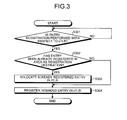
- FIG. 3 is a flowchart for explaining a sequence of operations in the arithmetic processing apparatus according to the first embodiment.
- the entry registration determining unit 24 determines whether an entry has already been registered in an area (e.g., way 0) of the sTLB 22b as the registration destination (Step S302).
- the entry registration determining unit 24 informs the relocation control unit 25 to that effect. Then, the relocation control unit 25 evicts the entry that has already been registered in the area of the sTLB 22b as the registration destination and registers the entry in an area of the fTLB 22a having the smallest area number (e.g., way 0) from among the empty areas of the fTLB 22a. That is, the relocation control unit 25 performs entry relocation (Step S303).
- the relocation control unit 25 registers the entry read from the main memory unit 40 in the area of the sTLB 22b as the registration destination with respect to which entry relocation is performed (Step S304).
- the relocation control unit 25 registers the entry read from the main memory unit 40 in the area of the sTLB 22b.
- the first embodiment while registering an entry that has been output from the main memory unit 40 in the sTLB 22b, it is first determined whether an entry has already been registered in an area of the sTLB 22b as the registration destination. If it is determined that an entry has already been registered in the area of the sTLB 22b as the registration destination, then that already-registered entry is evicted therefrom and registered in the fTLB 22a. That prevents thrashing from occurring and enables achieving enhancement in the processing performance.
- the operating unit/instruction control unit 11a reads the entries C, B, and A. In that case, since the entry C is not registered in either of the sTLB 22b and the fTLB 22a, the operating unit/instruction control unit 11a reads the entry C from the main memory unit 40 and, while performing corresponding processing, registers the entry C in the way 0 of the sTLB 22b.
- the operating unit/instruction control unit 11a reads the entry B from the way 1 of the sTLB 22b and performs corresponding processing. Subsequently, since the entry A has been evicted from the sTLB 22b for the registration of the entry C, the operating unit/instruction control unit 11a reads the entry A from the main memory unit 40, performs corresponding processing, and registers the entry C in the way 0 of the sTLB 22b.
- the operating unit/instruction control unit 11a reads the entry C from the main memory unit 40, performs corresponding processing, relocates the entry A from the way 0 of the sTLB 22b as the registration destination for registering the entry C, to the fTLB 22a, and then registers the entry C in the way 0 of the sTLB 22b.
- the operating unit/instruction control unit 11a need not refer to the main memory unit 40 but can read the entry A from the fTLB 22a. That prevents thrashing from occurring and enables achieving enhancement in the processing performance.
- the areas (number of ways) of the sTLB 22b or the fTLB 22a can also be increased.
- such a measure leads to an increase in the physical dimension that in turn increases the power consumption.
- a second embodiment is not limited to that case. That is, from among the entries evicted from an sTLB, only those entries for which no error is detected can be registered in an fTLB.
- FIG. 4 is a schematic diagram of a circuit configuration of the arithmetic processing apparatus according to the second embodiment.
- an sTLB and an fTLB are controlled by an LRU.
- the LRU determines an area for registration.
- an entry is already registered in the determined area, then that entry is output to a selector and then input to the fTLB as relocation data. Moreover, the entry output from the sTLB is input to a parity check circuit in which parity checking is performed to determine whether an error has occurred in that entry.
- error information indicating whether or not an error has occurred is input to an AND circuit of the fTLB.
- the entry that has been input to the fTLB, and entry information on entries that have already been registered in the fTLB an area of the fTLB is determined for registration and the entry that has been input to the fTLB is registered in that area.
- the AND circuit discards the entry output from the sTLB.
- the entry output from the sTLB is registered in the fTLB.
- a third embodiment is not limited to that case. That is, while registering an entry that has been evicted from an sTLB in an fTLB, an identifier can be appended to the entry indicating that the entry is not read from a main memory unit but evicted from a TLB.
- FIG. 5 is a schematic diagram for explaining a sequence of entry registration with respect to an sTLB and an fTLB in the arithmetic processing apparatus according to the third embodiment. Regarding each bit illustrated in FIG. 5 , “ 1 " indicates a valid state and "0" indicates an invalid state.
- an sTLB illustrated in FIG. 5 is a 2-way set associative TLB in which entries of 8K page size can be registered.
- entries of 64K page size can be registered in an fTLB.
- the fTLB includes, for each entry registered therein, a valid bit indicating whether the corresponding entry is valid and a relocation bit indicating whether the corresponding entry has been output from another TLB.
- a valid bit indicating whether the corresponding entry is valid
- a relocation bit indicating whether the corresponding entry has been output from another TLB.
- the arithmetic processing apparatus evicts the already-registered entry X and registers it in the way 1 of the fTLB with the corresponding relocation bit set to "1" and the corresponding valid bit set to "0" as identifiers indicating that the entry X is not directly output from the main memory unit but evicted from a TLB (see (3) in FIG. 5 ).
- the arithmetic processing apparatus detects multiple hits for the entry X. If same-page entries including the entry X, which has been evicted from the sTLB, are registered in plurality in the fTLB leading to detection of multiple hits, then the entry X is removed from the fTLB. That is, the valid bit corresponding to the entry X is set to "0" in the fTLB (see (4) and (5) in FIG. 5 ).
- the already-registered entry is evicted therefrom and registered in the fTLB along with identifiers indicating that the entry is not directly output from the main memory unit but evicted from the sTLB. Because of that, it becomes possible to easily determine whether an entry registered in the fTLB has been registered from the main memory unit or relocated from another TLB.
- a fourth embodiment is not limited to that case. That is, an entry evicted from an sTLB can be registered in an fTLB having no free area.
- FIG. 6 is a schematic diagram for explaining a sequence of entry registration with respect to an sfTLB in the arithmetic processing apparatus according to the fourth embodiment.
- “ 1 " indicates a valid state and "0" indicates an invalid state.
- the fTLB illustrated in FIG. 6 has eight areas and includes, for an entry registered in each area, a valid bit indicating whether the corresponding entry is valid (considered as "valid" when read by another TLB), a lock bit indicating whether the corresponding entry is locked so as to prevent its eviction from a TLB, a used bit indicating whether the corresponding entry is used (considered as "used” when read by another TLB), and a relocation bit indicating whether the corresponding entry has been output from another TLB.
- the fTLB holds in each area an entry having an entry name, a valid bit, a lock bit, a used bit, and a relocation bit in that order.
- the entries held by the fTLB are: "entry 0, 1, 1, 0, 0"; “entry 1, 0, 0, 0”; “entry 2, 1, 1, 1, 0”; “entry 3, 1, 0, 1, 0”; “entry 4, 1, 1, 0, 0”; “entry 5, 0, 0, 0, 0”; “entry 6, 1, 1, 1, 1, 0”; and "entry 7, 1, 0, 0, 0".
- the arithmetic processing apparatus registers the evicted entry with the relocation bit validated over the entry having the smallest entry number from among the entries that are already registered in the fTLB and that have the respective valid bit set to OFF. If the valid bit for all of the registered entries is set to ON, then the arithmetic processing apparatus registers the evicted entry with the relocation bit validated over the entry having the smallest entry number from among the entries that have the respective lock bit and the respective used bit set to OFF.
- the arithmetic processing apparatus sets the used bit for all entries to OFF and then registers the evicted entry with the relocation bit validated over the entry having the smallest entry number from among the entries that have the respective lock bit and the respective used bit set to OFF.
- the arithmetic processing apparatus registers "entry 8, 1, 0, 1, 1" over the area in which the entry 1 was registered as having the smallest entry number from among the entries that have the respective valid bit set to OFF (see (2) in FIG. 6 ).
- the arithmetic processing unit registers "entry 9, 1, 0, 1, 1" over the area in which the entry 5 was registered as having the smallest entry number from among the entries having the respective valid bit set to OFF (see (3) in FIG. 6 ).
- the arithmetic processing apparatus registers "entry 10, 1, 0, 1, 1" over the area in which the entry 7 was registered as having the smallest entry number from among the entries that have the respective lock bit and the respective used bit set to OFF (see (4) in FIG. 6 ).
- the arithmetic processing apparatus changes "entry 0, 1, 1, 0, 0"; "entry 8, 1, 0, 1, 1”; “entry 2, 1, 1, 1, 0”; “entry 3, 1, 0, 1, 0”; “entry 4, 1, 1, 0, 0”; “entry 9, 1, 0, 1, 1”; “entry 6, 1, 1, 1, 0”; and “entry 10, 1, 0, 1, 1” held by the fTLB to "entry 0, 1, 1, 0, 0”; "entry 8, 1, 0, 0, 1”; "entry 2, 1, 1, 0, 0”; “entry 3, 1, 0, 0, 0”; “entry 4, 1, 1, 0, 0”; “entry 9, 1, 0, 0, 1”; “entry 6, 1, 1, 0, 0”; and “entry 10, 1, 0, 0, 1", respectively.
- the arithmetic processing apparatus registers "entry 11, 1, 0, 1, 1" over the area in which the entry 8 was registered as having the smallest entry number from among the entries that have the respective lock bit and the respective used bit set to OFF (see (6) in FIG. 6 ).
- the arithmetic processing apparatus For each entry subsequently evicted from the sTLB, the arithmetic processing apparatus registers, in an identical manner to (4) in FIG. 6 , the evicted entry over that area in the fTLB in which an entry was registered as having the smallest entry number from among the entries that have the respective lock bit and the respective used bit set to OFF, because all of the already-registered entries in the fTLB have the respective valid bit set to ON (see (6) to (9) in FIG. 6 ).
- the arithmetic processing apparatus sets the used bit for all entries to OFF and then registers an evicted entry over the entry having the smallest entry number from among the entries that have the respective lock bit and the respective used bit set to OFF.
- the fTLB includes, for each entry registered therein, a valid bit that indicates whether the corresponding entry is valid; a lock bit that indicates whether the corresponding entry is locked so as to prevent its eviction from a TLB; a used bit that indicates whether the corresponding entry is used; and a relocation bit that indicates whether the corresponding entry has been output from another TLB. If it is determined that an entry has already been registered in an area of the sTLB as the registration destination for registering an entry read from the main memory unit, then the already-registered entry in the sTLB is evicted therefrom and registered in the fTLB.
- the evicted entry is registered with the corresponding relocation bit validated over the entry having the smallest entry number from among the entries that are already registered in the fTLB and that have the respective valid bit set to OFF. If the valid bit for all of the registered entries is set to ON, then the evicted entry is registered over the entry having the smallest entry number from among the entries that have the respective lock bit and the respective used bit set to OFF.
- the used bit for all entries is set to OFF and then the evicted entry is registered over the entry having the smallest entry number from among the entries that have the respective lock bit and the respective used bit set to OFF. Because of that, even when the fTLB holds three different types of entries, namely, lock-type entries that cannot be evicted from the fTLB, unlock-type entries that have been registered directly from the main memory unit, and relocation-type entries that have been output from the sTLB, it is still possible to prevent thrashing from occurring and thus enhance the processing performance.
- a fifth embodiment is not limited to that case. That is, an entry evicted from an sTLB can be registered (relocated) only in a specified area of the areas of an fTLB.
- FIG. 7 is a schematic diagram for explaining a sequence of entry registration with respect to an fTLB having divided areas in the arithmetic processing apparatus according to the fifth embodiment. Regarding each bit illustrated in FIG. 7 , “ 1 " indicates a valid state and "0" indicates an invalid state.
- the fTLB illustrated in FIG. 7 has eight areas and includes, for an entry registered in each area, a valid bit indicating whether the corresponding entry is valid, a lock bit indicating whether the corresponding entry is locked so as to prevent its eviction from a TLB, a used bit indicating whether the corresponding entry is used, and a relocation bit indicating whether the corresponding entry has been output from another TLB.
- the fTLB holds in each area an entry having an entry name, a valid bit, a lock bit, a used bit, and a relocation bit in that order.
- the entries held by the fTLB are: "entry 0, 1, 1, 0, 0"; “entry 1, 0, 0, 0”; “entry 2, 1, 1, 1, 0”; “entry 3, 1, 0, 1, 0”; “entry 4, 1, 1, 0, 0”; “entry 5, 0, 0, 0, 0”; “entry 6, 1, 1, 1, 0”; and "entry 7, 1, 0, 0, 0".
- the four areas corresponding to the entries 0 to 3 are specified as direct registration areas and used to register entries that have been read directly from the main memory unit; while the four areas corresponding to the entries 4 to 7 are specified as relocation registration areas and used to register entries that have been relocated from another TLB.
- the used bit for all of the entries 4 to 7 are treated as set to ON (in practice, the used bit may not be ON); while when a signal that identifies relocation registration is ON, the used bit for all of the entries 0 to 3 are treated as set to ON (in practice, the used bit may not be ON).
- the arithmetic processing apparatus registers the evicted entry with the relocation bit validated over the entry having the smallest entry number from among the entries that are registered in the relocation areas of the fTLB and that have the respective valid bit set to OFF. If the valid bit for all of the registered entries is set to ON, then the arithmetic processing apparatus registers the evicted entry over the entry having the smallest entry number from among the entries that have the respective lock bit and the respective used bit set to OFF.
- the arithmetic processing apparatus sets the used bit for all entries to OFF and then registers the evicted entry over the entry having the smallest entry number from among the entries that have the respective lock bit and the respective used bit set to OFF.
- the arithmetic processing apparatus registers "entry 8, 1, 0, 1, 1" over the area in which the entry 5 was registered as having the smallest entry number from among the entries that are registered in the relocation areas of the fTLB and that have the respective valid bit set to OFF (see (2) in FIG. 7 ). Subsequently, consider a case of registering an entry 9 that has been evicted from the sTLB in the fTLB.
- the arithmetic processing unit registers "entry 9, 1, 0, 1, 1" over the area in which the entry 7 was registered as having the smallest entry number from among the entries that have the respective lock bit and the respective used bit set to OFF (see (3) in FIG. 6 ).
- the arithmetic processing apparatus changes "entry 4, 1, 1, 0, 0”; “entry 8, 1, 0, 1, 1”; “entry 6, 1, 1, 1, 0”; and “entry 9, 1, 0, 1, 1” held by the fTLB to "entry 4, 1, 1, 0, 0”; “entry 8, 1, 0, 0, 1”; “entry 6, 1, 1, 0, 0”; and “entry 9, 1, 0, 0, 1", respectively. Then, the arithmetic processing apparatus registers "entry 10, 1, 0, 1, 1" over the area in which the entry 8 was registered as having the smallest entry number from among the entries that have the respective lock bit and the respective used bit set to OFF (see (5) in FIG. 7 ).
- the arithmetic processing apparatus For each entry subsequently evicted from the sTLB, the arithmetic processing apparatus registers, in an identical manner to (4) in FIG. 7 , the evicted entry over that area in the fTLB in which an entry was registered as having the smallest entry number from among the entries in the relocation areas that have the respective lock bit and the respective used bit set to OFF, because each of the entries registered in the relocation areas of the fTLB has the corresponding valid bit set to ON (see (1) to (3) in FIG. 7 ).
- the arithmetic processing apparatus sets the used bit for all entries registered in the relocation areas to OFF and then registers an evicted entry over the entry having the smallest entry number from among the entries that have the respective lock bit and the respective used bit set to OFF.
- the fTLB is divided into direct registration areas used to register entries that have been read directly from the main memory unit and relocation registration areas used to register entries that have been relocated from another TLB.
- the fTLB includes, for each entry registered therein, a valid bit that indicates whether the corresponding entry is valid; a lock bit that indicates whether the corresponding entry is locked so as to prevent its eviction from a TLB; a used bit that indicates whether the corresponding entry is used; and a relocation bit that indicates whether the corresponding entry has been registered upon being relocated from another TLB.
- the already-registered entry in the sTLB is evicted therefrom and registered in the fTLB.
- the evicted entry is registered with the corresponding relocation bit validated over the entry having the smallest entry number from among the entries that are registered in the relocation areas of the fTLB and that have the respective valid bit set to OFF. If the valid bit for all entries registered in the relocation areas is set to ON, then the evicted entry is registered over the entry having the smallest entry number from among the entries that are registered in the relocation areas and that have the respective lock bit and the respective used bit set to OFF.
- the used bit for all entries in the relocation areas is set to OFF and then the evicted entry is registered over the entry having the smallest entry number from among the entries that are registered in the relocation areas and that have the respective lock bit and the respective used bit set to OFF.
- the lock bit for all entries registered in an fTLB becomes ON; then, even if an entry is determined to have been already registered in an area of an sTLB as the registration destination for registering an entry read from a main memory unit, evicting the already-registered entry from the sTLB and registering it in the fTLB can be suppressed/prevented. Subsequently, only when the fTLB, which is the relocation destination, is released from the condition that the lock bit for all entries registered therein is set to ON, then the entry that has already been registered in the area of the sTLB as the registration destination can be evicted and registered in the fTLB.
- FIG. 8 is a schematic diagram for explaining a sequence of relocation suppression/prevention/resumption with respect to an fTLB having undivided areas in the arithmetic processing apparatus according to the sixth embodiment.
- FIGS. 8 and 9 are schematic diagrams for explaining a sequence of relocation suppression/prevention/resumption with respect to an fTLB having divided areas in the arithmetic processing apparatus according to the sixth embodiment. Meanwhile, regarding each bit illustrated in FIGS. 8 and 9 , "1" indicates a valid state and "0" indicates an invalid state.
- the fTLB illustrated in FIG. 8 holds in each area an entry having an entry name, a valid bit, and a lock bit in that order.
- the entries held by the fTLB are: "entry 0, 1, 1”; "entry 1, 1, 1”; “entry 2, 0, 0”; "entry 3, 1, 1”; “entry 4, 1, 1”; “entry 5, 1, 1”; “entry 6, 1, 1”; and "entry 7, 1, 1” (see (1) in FIG. 8 ).
- the arithmetic processing apparatus switches OFF a write enable signal for the fTLB and suppresses/prevents eviction of an entry that has already been registered in the sTLB and registration of that entry in the fTLB. Subsequently, assuming that the lock bit in "entry 1, 1, 1" is set to "0" and "entry 1, 1, 1” is invalidated to "entry 1, 0, 0" (see (3) in FIG. 8 ), the arithmetic processing apparatus switches ON the write enable signal for the fTLB and resumes the process of evicting an entry that has already been registered in the sTLB and registering that entry in the fTLB.
- the subsequent entry relocation processing is identical to that described in the first five embodiments. Hence, that description is not repeated.
- the fTLB illustrated in FIG. 9 holds in each area an entry having an entry name, a valid bit, and a lock bit in that order.
- the entries held by the fTLB are: "entry 0, 1, 1”; “entry 1, 1, 1”; “entry 2, 0, 0”; “entry 3, 1, 1”; “entry 4, 1, 0”; “entry 5, 0, 1”; “entry 6, 1, 1”; and “entry 7, 0, 0” (see (1) in FIG. 9 ).
- the four areas corresponding to the entries 0 to 3 are specified as direct registration areas and used to register entries that have been read directly from the main memory unit; while the four areas corresponding to the entries 4 to 7 are specified as relocation registration areas and used to register entries that have been relocated from another TLB.
- the arithmetic processing apparatus switches OFF the write enable signal for the fTLB and suppresses/prevents eviction of an entry that has already been registered in the sTLB and registration of that entry in the fTLB. Subsequently, assuming that the lock bit in "entry 1, 1, 1" is set to OFF and "entry 1, 1, 1" is invalidated to "entry 1, 0, 0" (see (3) in FIG. 9 ), the arithmetic processing apparatus switches ON the write enable signal for the fTLB and resumes the process of evicting an entry that has already been registered in the sTLB and registering that entry in a relocation registration area of the fTLB. The subsequent entry relocation processing is identical to that described in the first five embodiments. Hence, that description is not repeated.
- the lock bit for all entries registered in the fTLB becomes ON; then, even if an entry is determined to have been already registered in the area of the sTLB as the registration destination for registering an entry read from the main memory unit, evicting the already-registered entry from the sTLB and registering it in the fTLB is suppressed/prevented. As a result, a situation in which the entry registration processing is performed with respect to an entry that cannot be registered is prevented from occurring. In addition, the lock-type entries can be protected in a reliable manner.
- the entry registration processing resumes automatically when the fTLB is released from the condition that the lock bit for all entries registered therein is set to ON. That enables achieving speedy resumption of the entry relocation processing with respect to the fTLB.
- the fTLB is released from the condition that the lock bit for all entries registered in the direct registration areas is set to ON; then, even if an entry is determined to have been already registered in the area of the sTLB as the registration destination for registering an entry read from the main memory unit, evicting the already-registered entry from the sTLB and registering it in the relocation registration areas of the fTLB is suppressed/prevented.
- the lock-type entries can be protected in a reliable manner.
- the process of evicting an entry that has already been registered in the sTLB as the registration destination for registering an entry read from the main memory unit and registering the evicted entry in a relocation area of the fTLB is resumed.
- the entry registration processing resumes automatically when the fTLB is released from the condition that the lock bit for all entries registered in the direct registration areas is set to ON. That enables achieving speedy resumption of the entry relocation processing with respect to a TLB.
- the number of ways in an sTLB is assumed to be two. However, the number of ways is not limited and the abovementioned processing can also be implemented for three ways, five ways, or the like. Moreover, regarding the fTLB, the number of areas is not limited to the number illustrated in drawings.
- each device illustrated in the drawings is merely conceptual, and need not be physically configured as illustrated.
- the constituent elements, as a whole or in part, can be separated or integrated either functionally or physically (e.g., integrating the entry registration determining unit and the relocation control unit) based on various types of loads or use conditions.
- the arithmetic processing apparatus, the engine control program, and the engine control method according to the present invention is suitable when a plurality of TLBs is disposed that hold as entries a portion of a conversion table for conversion of virtual addresses into physical addresses that has been placed in a main memory unit, and particularly suitable in preventing thrashing from occurring and enabling achieving enhancement in the processing performance.
Landscapes
- Engineering & Computer Science (AREA)
- Theoretical Computer Science (AREA)
- Physics & Mathematics (AREA)
- General Engineering & Computer Science (AREA)
- General Physics & Mathematics (AREA)
- Memory System Of A Hierarchy Structure (AREA)
Abstract
An arithmetic processing apparatus includes an fTLB and a 2-way sTLB that hold therein as entries a portion of a conversion table for conversion of virtual addresses into physical addresses that has been placed in a main memory unit. The sTLB and the fTLB are placed on the same hierarchy controlled by an LRU. While registering an entry output from the main memory unit in the sTLB, the arithmetic processing apparatus determines whether an entry has already been registered in an area of the sTLB as the registration destination. If it is determined that an entry has already been registered in the area of the sTLB as the registration destination, the arithmetic processing apparatus evicts that already-registered entry and registers it in the fTLB.
Description
- The present invention relates to an arithmetic processing unit that includes a plurality of TLBs holding as entries a portion of a conversion table for conversion of virtual addresses into physical addresses that has been placed in a main memory unit, and relates to an entry control program and an entry control method.
- Typically, in an information processing apparatus employing a virtual storage system, a conversion table (page table) for conversion of virtual addresses into physical addresses is placed in a main memory unit. Then, while executing a program that has been loaded in the main memory unit, a CPU converts virtual addresses into physical addresses and uses the converted physical addresses for referring to instructions and data in the program that has been loaded in the main memory unit.
- At present, the operating speed of a main memory unit is slower as compared to the operating speed of a CPU. Moreover, a CPU and a main memory unit are spaced apart by a large distance. Thus, an access to a main memory unit from a CPU consumes a substantial processing time. Furthermore, since the conversion table for conversion of virtual addresses to physical addresses is placed in a main memory unit, it takes time if the conversion table is referred every time an instruction or data is to be retrieved from a program.
- Given that factor, an information processing apparatus is in use in which a cache memory that is referred to as a TLB (Translation Look-aside Buffer) and controlled by an LRU (Least Recently Used) is used to register a portion of a conversion table that has been placed in a main memory unit. Then, to convert a virtual address into a physical address, a CPU in that information processing apparatus first refers to the TLB and, only when the intended entry is not found in the TLB, refers to the conversion table stored in the main memory unit. In recent years, an information processing apparatus is being used in which a full associative TLB and a 2-way set associative TLB are placed on the same hierarchy (e.g., see Patent Document 1).
- Given below is the description of an information processing apparatus in which a full associative TLB and a 2-way set associative TLB are placed on the same hierarchy.
FIG. 10 is a schematic diagram of a conventional information processing apparatus in which a full associative TLB and a 2-way set associative TLB are placed on the same hierarchy. Consider an architecture, as illustrated inFIG. 10 , in which a full associative TLB and a 2-way set associative TLB are placed on the same hierarchy and that can process a plurality of page sizes. In that architecture, no entry is registered at the start in any of the two TLBs. Then, for the first time of TLB registration, an entry is registered in away 0 of the sTLB as well as the fTLB according to an LRU. Regarding TLB registration according to the present invention, it is assumed that all entries are registered in a set associative TLB. - When a program is executed in such a configuration, a CPU refers to both the full associative TLB and the 2-way set associative TLB to perform conversion of a virtual address into a physical address (entry A). If a conversion table for conversion of virtual addresses is not registered in either of the two TLBs, then the CPU accesses a main memory unit for referring to a conversion table placed therein, reads the conversion table (entry A) corresponding to the target virtual address for conversion from the main memory unit, and registers it in the 2-way set associative TLB (see (1) in
FIG. 10 ). - Subsequently, if a TLB miss occurs when the CPU refers to the TLBs for a virtual address in the same cache line of the set associative TLB, then the CPU performs an operation identical to (1) in
FIG. 10 and registers the intended entry as an entry B in away 1 of the set associative TLB (see (2) inFIG. 10 ). Moreover, if a TLB miss occurs when the CPU subsequently refers to the TLBs for a virtual address in the same cache line of the set associative TLB, then the CPU performs an operation identical to (1) inFIG. 10 and registers the intended entry as an entry C in theway 0 of the set associative TLB according to an LRU. However, in that case, the entry A that has already been registered is evicted from the set associative TLB (see (3) inFIG. 10 ). - Furthermore, if a TLB miss occurs when the CPU subsequently refers to the TLBs for a virtual address in the same cache line of the set associative TLB, then the CPU performs an operation identical to (1) in
FIG. 10 and registers the intended entry as an entry D in theway 1 of the set associative TLB according to an LRU. However, in that case, the entry B that has already been registered is evicted from the set associative TLB (see (4) inFIG. 10 ). - Patent Document 1: Japanese Laid-open Patent Publication No.
2005-346358 - However, in the abovementioned conventional technology, thrashing occurs thereby causing degradation in the processing performance. More particularly, a set associative TLB generally employs a set associative system of a number of ways. For example, consider a case when a plurality of processes is concurrently executed and the virtual addresses that compete for a cache line accessing a cache locally exceed the number of ways of a set associative TLB. In that case, TLB rewriting or, in other words, thrashing occurs. That forces the CPU to access the conversion table placed in the main memory unit. As a result, there is degradation in the processing performance.
- The present invention has been made to solve the above problems in the conventional technology and it is an object of the present invention to provide an arithmetic processing unit, an entry control program, and an entry control method that prevents thrashing from occurring and enables achieving enhancement in the processing performance.
- To solve the problems as described above and to achieve an object, an invention according to
claim 1 is an arithmetic processing apparatus that includes a plurality of TLBs holding as entries a portion of a conversion table for conversion of virtual addresses into physical addresses that has been placed in a main memory unit. The arithmetic processing apparatus includes: an entry registration determining unit that, while registering an entry output from the main memory unit in any one of a plurality of TLBs, determines whether an entry has already been registered in an area of a TLB as registration destination; and a relocation control unit that, when the entry registration determining unit determines that an entry has already been registered in the area of the TLB as registration destination, evicts the entry that has already been registered and registers evicted entry in other TLB. - Further, in an invention according to
claim 2, in the above-described invention, when the entry registration determining unit determines that an entry has already been registered in the area of the TLB as registration destination, the relocation control unit evicts the entry that has already been registered; determines whether the evicted entry has an error; and, in case of an error, discards the evicted entry without registering in other TLB and, in case of no error, registers the evicted entry in other TLB. - Further, in an invention according to
claim 3, in the above-described invention, when the entry registration determining unit determines that an entry has already been registered in the area of the TLB as registration destination, the relocation control unit evicts the entry that has already been registered, appends an identifier to evicted entry indicating that the evicted entry is not directly output from the main memory unit but output from a TLB, and registers the evicted entry in other TLB. - Further, in an invention according to
claim 4, in the above-described invention, the arithmetic processing apparatus further includes an entry removing unit that, when same-page entries including an entry evicted from a TLB are registered in plurality resulting in detection of multiple hits in a plurality of TLBs in which entries have been registered by the relocation control unit, removes the entry. - Further, in an invention according to
claim 5, in the above-described invention, the plurality of TLBs include, for each entry registered therein, a valid bit that indicates whether the entry is valid, a lock bit that indicates whether the entry is locked so as to prevent eviction from a TLB, a used bit that indicates whether the entry is used, and a relocation bit that indicates whether the entry has been output from another TLB, and when the entry registration determining unit determines that an entry has already been registered in an area of a TLB as registration destination for registering an entry output from the main memory unit, the relocation control unit evicts the entry that has already been registered and registers evicted entry with corresponding relocation bit validated over an entry having smallest entry number from among entries that are already registered in the other TLB and that have respective valid bit set to OFF; and, if the valid bit for all entries that have been registered is ON, registers the evicted entry with corresponding relocation bit validated over an entry having smallest entry number from among entries that have respective lock bit and respective used bit set to OFF; and, if all entries that have been registered have respective valid bit set to ON and have either one of respective lock bit and respective used bit set to ON, sets the used bit for all entries to OFF and registers the evicted entry with corresponding relocation bit validated over an entry having smallest entry number from among entries that have respective lock bit and respective used bit set to OFF. - Further, in an invention according to
claim 6, in the above-described invention, if the lock bit for all entries registered in the other TLB becomes ON; then, even if the entry registration determining unit determines that an entry has already been registered in an area of a TLB as registration destination for registering an entry output from the main memory unit, the relocation control unit suppresses/prevents eviction of the entry that has already been registered and registration of evicted entry in other TLB. - Further, in an invention according to
claim 7, in the above-described invention, when the lock bit for any one of entries registered in the other TLB is released from an ON state, the relocation control unit resumes evicting the entry that has already been registered in an area of a TLB as registration destination for registering an entry output from the main memory unit and registering the evicted entry in other TLB. - Further, in an invention according to
claim 8, in the above-described invention, the plurality of TLBs are divided into a direct registration area used to register an entry that has been output directly from the main memory unit and a relocation registration area used to register an entry that has been subjected to relocation control from other TLB, and include, for each entry registered therein, a valid bit that indicates whether the entry is valid, a lock bit that indicates whether the entry is locked so as to prevent eviction from a TLB, a used bit that indicates whether the entry is used, and a relocation bit that indicates whether the entry has been subjected to relocation control before being registered, and when the entry registration determining unit determines that an entry has already been registered in an area of a TLB as registration destination for registering an entry output from the main memory unit, the relocation control unit evicts the entry that has already been registered and registers the evicted entry over an entry having smallest entry number from among entries that have been registered in the relocation area of the other TLB and that have respective valid bit set to OFF, and, if the valid bit is ON for all entries that have been registered in the relocation area, registers the evicted entry at an entry having smallest entry number from among entries that have been registered in the relocation area and that have respective lock bit and respective used bit set to OFF, and, if all entries that have been registered in the relocation area have respective valid bit set to ON and have either one of respective lock bit and respective used bit set to ON, sets the used bit for all entries to OFF and registers the evicted entry at an entry having smallest entry number from among entries that have been registered in the relocation area and that have respective lock bit and respective used bit set to OFF. - Further, in an invention according to
claim 9, in the above-described invention, if the lock bit for all entries registered in the direct registration area of the other TLB becomes ON; then, even if the entry registration determining unit determines that an entry has already been registered in an area of a TLB as registration destination for registering an entry output from the main memory unit, the relocation control unit suppresses/prevents eviction of the entry that has already been registered and registration of the evicted entry in the relocation area of other TLB; and, during present state, an entry to be directly registered is registered in the relocation area of other TLB. - Further, in an invention according to
claim 10, in the above-described invention, when the lock bit for any one of entries registered in the direct registration area of the other TLB is released from an ON state, the relocation control unit resumes evicting the entry that has already been registered in an area of a TLB as registration destination for registering an entry output from the main memory unit and registering the evicted entry in the relocation registration area of other TLB. - Further, an invention according to
claim 11 is an entry control program that causes a computer as an information processing apparatus, which includes a plurality of TLBs holding as entries a portion of a conversion table for conversion of virtual addresses into physical addresses that has been placed in a main memory unit, to execute: an entry registration determining procedure that includes determining, while registering an entry output from the main memory unit in any one of a plurality of TLBs, whether an entry has already been registered in an area of a TLB as registration destination; and a relocation controlling procedure that includes, when it is determined at the entry registration determining procedure that an entry has already been registered in the area of the TLB as registration destination, evicting the entry that has already been registered and registering the evicted entry in other TLB. - Further, an invention according to
claim 12 is an entry control method that is suitable to an information processing apparatus including a plurality of TLBs holding as entries a portion of a conversion table for conversion of virtual addresses into physical addresses that has been placed in a main memory unit. The entry control method includes: an entry registration determining step that includes determining, while registering an entry output from the main memory unit in any one of a plurality of TLBs, whether an entry has already been registered in an area of a TLB as registration destination; and a relocation controlling step that includes, when it is determined at the entry registration determining step that an entry has already been registered in the area of the TLB as registration destination, evicting the entry that has already been registered and registering the evicted entry in other TLB. - According to an aspect of the present invention, while registering an entry output from a main memory unit in any one of a plurality of TLBs; it is determined whether an entry has already been registered in an area of a TLB as the registration destination. If it is determined that an entry has already been registered in the area of the TLB as the registration destination, the already-registered entry is evicted and registered in another TLB. That prevents thrashing from occurring and enables achieving enhancement in the processing performance.
- Moreover, according to another aspect of the present invention, if it is determined that an entry has already been registered in the area of the TLB as the registration destination; then it is further determined whether an error has occurred in that entry. If an error has occurred, then that entry is discarded without being registered in another TLB. If no error has occurred, then that entry is registered in another TLB. That enables avoiding unnecessary area usage.
- Furthermore, according to still another aspect of the present invention, if it is determined that an entry has already been registered in the area of the TLB as the registration destination; then the already-registered entry is evicted and an identifier is appended thereto indicating that the entry is not read from the main memory unit but evicted from a TLB before registering it in another TLB. Because of that, it becomes possible to easily determine whether a registered entry has been read from the main memory unit or relocated from another TLB.
- Moreover, according to still another aspect of the present invention, if same-page entries including an entry that has been evicted from the sTLB are registered in plurality leading to detection of multiple hits; then the evicted entry is removed. As a result, any mismatch attributed to multiple hits can be prevented.
- Furthermore, according to still another aspect of the present invention, if it is determined that an entry has already been registered in the area of the TLB as the registration destination for registering an entry read from the main memory unit; then the already-registered entry is evicted and registered with the relocation bit validated over an entry having the smallest entry number from among entries that are already registered in the other TLB and that have the respective valid bit set to OFF. If the valid bit for all of the registered entries is set to ON, then the evicted entry is registered with the relocation bit validated over an entry having the smallest entry number from among the entries that have the respective lock bit and the respective used bit set to OFF. Moreover, if all of the registered entries have the respective valid bit set to ON and have either one of the respective lock bit and the respective used bit set to ON, then the used bit for all entries is set to OFF and then the evicted entry is registered with the relocation bit validated over an entry having the smallest entry number from among the entries that have the respective lock bit and the respective used bit set to OFF. Because of that, even when three different types of entries, namely, lock-type entries that cannot be evicted from a TLB, unlock-type entries that have been registered directly from the main memory unit, and relocation-type entries that have been output from a TLB are present, it is possible to prevent thrashing from occurring and thus enhance the processing performance.
- Moreover, according to still another aspect of the present invention, if the lock bit for all entries registered in the other TLB becomes ON; then, even if an entry is determined to have been already registered in the area of the TLB as the registration destination for registering an entry read from the main memory unit, evicting that already-registered entry and registering it in the other TLB is suppressed/prevented. As a result, a situation in which the entry registration processing is performed with respect to an entry that cannot be registered is prevented from occurring. In addition, the lock-type entries can be protected in a reliable manner.
- Furthermore, according to still another aspect of the present invention, only when the other TLB is released from the condition that the lock bit for all entries registered therein is set to ON; the process of evicting the entry that has already been registered in the area of the TLB as the registration destination for registering an entry read from the main memory unit and registering the evicted entry in the other TLB is resumed. That is, the entry registration processing resumes automatically when the other TLB is released from the condition that the lock bit for all entries registered therein is set to ON. That enables achieving speedy resumption of the entry relocation processing with respect to a TLB.
- Moreover, according to still another aspect of the present invention, if it is determined that an entry has already been registered in the area of the TLB as the registration destination for registering an entry read from the main memory unit; then the already-registered entry is evicted and registered in the other TLB. At that time, the evicted entry is registered over an entry having the smallest entry number from among entries that are registered in the relocation areas of the other TLB and that have the respective valid bit set to OFF. If the valid bit for all entries registered in the relocation areas is set to ON, then the evicted entry is registered over an entry having the smallest entry number from among the entries that are registered in the relocation areas and that have the respective lock bit and the respective used bit set to OFF. Moreover, if each of the entries registered in the relocation areas has the corresponding valid bit set to ON and has either one of the corresponding lock bit and the corresponding used bit set to ON, the used bit for all entries in the relocation areas is set to OFF and then the evicted entry is registered over an entry having the smallest entry number from among the entries that are registered in the relocation areas and that have the respective lock bit and the respective used bit set to OFF. Because of that, even when the other TLB is divided into the direct registration areas and the relocation registration areas, it is possible to register three different types of entries, namely, lock-type entries that cannot be evicted from a TLB, unlock-type entries that have been registered directly from the main memory unit, and relocation-type entries that have been relocated from another TLB. That prevents thrashing from occurring and thus enables achieving enhancement in the processing performance.
- Furthermore, according to still another aspect of the present invention, if the lock bit for all entries registered in the relocation registration areas of the other TLB becomes ON; then, even if an entry is determined to have been already been registered in the area of the TLB as the registration destination for registering an entry read from the main memory unit; evicting the already-registered entry and registering it in the relocation areas of the other TLB is suppressed/prevented. As a result, even when the other TLB is divided into the direct registration areas and the relocation registration areas, a situation in which the entry registration processing is performed with respect to an entry that cannot be registered is prevented from occurring. In addition, the lock-type entries can be protected in a reliable manner.
- Moreover, according to still another aspect of the present invention, when the other TLB is released from the condition that the lock bit for all entries registered in the direct registration areas is set to ON; the process of evicting the entry that has already been registered in the area of the TLB as the registration destination for registering an entry read from the main memory unit and registering the evicted entry in a relocation area of the other TLB is resumed. As a result, even when the other TLB is divided into the direct registration areas and the relocation registration areas; the entry registration processing resumes automatically when the other TLB is released from the condition that the lock bit for all entries registered in the direct registration areas is set to ON. That enables achieving speedy resumption of the entry relocation processing with respect to a TLB.
-
- [
FIG. 1] FIG. 1 is a schematic diagram for explaining an outline and features of an arithmetic processing apparatus according to a first embodiment. - [
FIG. 2] FIG. 2 is a block diagram of a configuration of the arithmetic processing apparatus according to the first embodiment. - [
FIG. 3] FIG. 3 is a flowchart for explaining a sequence of operations in the arithmetic processing apparatus according to the first embodiment. - [
FIG. 4] FIG. 4 is a schematic diagram of a circuit configuration of the arithmetic processing apparatus according to a second embodiment. - [
FIG. 5] FIG. 5 is a schematic diagram for explaining a sequence of entry registration with respect to an sTLB and an fTLB in the arithmetic processing apparatus according to a third embodiment. - [
FIG. 6] FIG. 6 is a schematic diagram for explaining a sequence of entry registration with respect to an sfTLB in the arithmetic processing apparatus according to a fourth embodiment. - [
FIG. 7] FIG. 7 is a schematic diagram for explaining a sequence of entry registration with respect to an fTLB having divided areas in the arithmetic processing apparatus according to a fifth embodiment. - [
FIG. 8] FIG. 8 is a schematic diagram for explaining a sequence of relocation suppression/prevention/resumption with respect to an fTLB having undivided areas in the arithmetic processing apparatus according to a sixth embodiment. - [
FIG. 9] FIG. 9 is a schematic diagram for explaining a sequence of relocation suppression/prevention/resumption with respect to an fTLB having divided areas in the arithmetic processing apparatus according to the sixth embodiment. - [
FIG. 10] FIG. 10 is a schematic diagram of an information processing apparatus as conventional technology in which a full associative TLB and a 2-way set associative TLB are placed on the same hierarchy. -
- 10
- arithmetic processing unit
- 11
- CPU
- 11a
- operating unit/instruction control unit
- 20
- L1 cache control unit
- 21
- L1 cache RAM
- 22
- main TLB
- 22a
- fTLB
- 22b
- sTLB
- 23
- micro TLB
- 24
- entry registration determining unit
- 25
- relocation control unit
- 30
- L2 cache control unit
- 31
- L2 cache RAM
- 40
- main memory unit (memory)
- A present embodiment of an arithmetic processing unit, an entry control program, and an entry control method according to the present invention will be described below in detail with reference to the accompanying drawings. The following description includes an outline and features of an arithmetic processing apparatus according to the present embodiment, a configuration of the arithmetic processing apparatus, and a sequence of operations performed in the arithmetic processing apparatus, followed by various modifications of the present embodiment.
- Firstly, an outline and features of an arithmetic processing apparatus according to a first embodiment are explained with reference to
FIG. 1. FIG. 1 is a schematic diagram for explaining an outline and features of the arithmetic processing apparatus according to the first embodiment. - As illustrated in
FIG. 1 , the arithmetic processing apparatus includes a 2-way sTLB (set associative TLB) and an fTLB (full associative TLB) that are placed on the same hierarchy controlled by an LRU. Generally, an sTLB is allocated to areas used for programs written by the user of an arithmetic processing apparatus; while an fTLB is allocated to areas used for control programs of an OS (Operating System) or the like. - A CPU (e.g., a processing unit or an instruction control unit) of the arithmetic processing unit stores a portion of a conversion table for conversion of virtual addresses into physical addresses that has been placed in a main memory unit as entries into the TLBs. Then, while converting a virtual address corresponding to data that has been referred to by a program into a physical address, the CPU first refers to the TLBs and, only if the intended entry is not found in the TLBs, refers to the conversion table stored in the main memory unit. Subsequently, the CPU reads the intended entry, which was not found in the TLBs, from the main memory unit and registers it in a TLB. Herein, at the start, no entry is registered in any of the two TLBs. Then, for the first time of TLB registration, an entry is registered in the
way 0 according to an LRU. Meanwhile, regarding TLB registration according to the present embodiment, it is assumed that all entries are registered in the sTLB. - Thus, as an outline, the arithmetic processing apparatus includes the sTLB and the fTLB that hold as entries a portion of the conversion table for conversion of virtual addresses into physical addresses that has been placed in the main memory unit. Moreover, the arithmetic processing apparatus is characterized by preventing thrashing from occurring and enabling achieving enhancement in the processing performance.
- Given below is the detailed description regarding the main features of the arithmetic processing apparatus. While registering an entry that has been output from the main memory unit in any one of a plurality of TLBs, the arithmetic processing apparatus determines whether an entry has already been registered in an area of a TLB as the registration destination. If no entry is registered in the area of the TLB as the registration destination, the arithmetic processing apparatus registers the entry output from the main memory unit in the TLB (see (1) in
FIG. 1 ). More particularly, the arithmetic processing unit refers to both the fTLB and the sTLB for performing conversion of a virtual address into a physical address (entry A). Since the entry A has not been registered in either of the two TLBs, the arithmetic processing apparatus reads the entry A from the main memory unit. Then, the arithmetic processing apparatus determines whether an entry has already been registered in away 0 of the sTLB as the registration destination for registering the entry A read from the main memory unit. Since no entry has been registered in theway 0 of the sTLB, the arithmetic processing apparatus registers the entry A, which is read from the main memory unit, in theway 0 of the sTLB. - Subsequently, in an identical manner, the arithmetic processing apparatus refers to both the fTLB and the sTLB for performing conversion of a virtual address into a physical address (entry B). Since the entry B has not been registered in either of the two TLBs, the arithmetic processing apparatus reads the entry B from the main memory unit. Then, the arithmetic processing apparatus determines whether an entry has already been registered in a
way 1 of the sTLB as the registration destination for registering the entry B read from the main memory unit (see (2) inFIG. 1 ). Since no entry has been registered in theway 1 of the sTLB, the arithmetic processing apparatus registers the entry B, which is read from the main memory unit, in theway 1 of the sTLB. - Subsequently, in an identical manner, the arithmetic processing apparatus refers to both the fTLB and the sTLB for performing conversion of a virtual address into a physical address (entry C). Since the entry C has not been registered in any of the two TLBs, the arithmetic processing apparatus reads the entry C from the main memory unit. Then, the arithmetic processing apparatus determines whether an entry has already been registered in the
way 0 of the sTLB as the registration destination for registering the entry C. If it is determined that an entry has already been registered in theway 0 of the sTLB, then the arithmetic processing apparatus evicts that already-registered entry and registers it in the other TLB (see (3) inFIG. 1 ). - More particularly, in the abovementioned example, the arithmetic processing apparatus refers to both the fTLB and the sTLB for performing conversion of a virtual address into a physical address (entry C). Since the entry C has not been registered in any of the two TLBs, the arithmetic processing apparatus reads the entry C from the main memory unit. Then, the arithmetic processing apparatus determines, using an LRU, whether an entry has already been registered in the area that, from among the areas corresponding to the entry A and the entry B, has been least referred to. That is, the arithmetic processing apparatus determines whether an entry has already been registered in the
way 0 of the sTLB in which the entry A was registered most previously. Herein, since the entry A has already been registered in theway 0, the arithmetic processing apparatus evicts the entry A and registers it in theway 0 of the fTLB having the smallest area number from among the empty areas of the fTLB. Then, the arithmetic processing apparatus registers the entry C, which is read from the main memory unit, in theway 0 of the sTLB from which the entry A was evicted. - Subsequently, in an identical manner, the arithmetic processing apparatus refers to both the fTLB and the sTLB for performing conversion of a virtual address into a physical address (entry D). Since the entry D has not been registered in any of the two TLBs, the arithmetic processing apparatus reads the entry D from the main memory unit. Then, the arithmetic processing apparatus determines whether an entry has already been registered in the
way 1 of the sTLB as the registration destination for registering the entry D. If it is determined that an entry has already been registered in theway 1 of the sTLB, then the arithmetic processing apparatus evicts that already-registered entry and registers it in the other TLB (see (4) inFIG. 1 ). - More particularly, in the abovementioned example, the arithmetic processing apparatus refers to both the fTLB and the sTLB for performing conversion of a virtual address into a physical address (entry D). Since the entry D has not been registered in any of the two TLBs, the arithmetic processing apparatus reads the entry D from the main memory unit. Then, the arithmetic processing apparatus determines, using an LRU, whether an entry has already been registered in the area that, from among the areas corresponding to the entry A and the entry B, has been least referred to. That is, the arithmetic processing apparatus determines whether an entry has already been registered in the
way 1 of the sTLB in which the entry B was registered most previously. Herein, since the entry B has already been registered in theway 1, the arithmetic processing apparatus evicts the entry B and registers it in theway 1 of the fTLB. Theway 1 of the fTLB has the smallest area number from among the empty areas of the fTLB. Then, the arithmetic processing apparatus registers the entry D, which is read from the main memory unit, in theway 1 of the sTLB from which the entry B was evicted. - In this way, the arithmetic processing apparatus according to the first embodiment is able to evict entries registered in the sTLB and register them in the fTLB. That, as described above in the main features, prevents thrashing from occurring and enables achieving enhancement in the processing performance.
- Given below is the description with reference to
FIG. 2 of a configuration of the arithmetic processing apparatus illustrated inFIG. 1 .FIG. 2 is a block diagram of a configuration of the arithmetic processing apparatus according to the first embodiment. As illustrated inFIG. 2 , anarithmetic processing apparatus 10 includes aCPU 11, an L1cache control unit 20, an L2cache control unit 30, and amain memory unit 40. - The
CPU 11 is a processing unit that executes various programs stored in themain memory unit 40. Regarding the aspects of close association with the present embodiment, theCPU 11 includes an operating unit/instruction control unit 11a and the L1cache control unit 20. - The operating unit/
instruction control unit 11a outputs instructions regarding data writing or data reading according to the arithmetic processing performed by theCPU 11. Moreover, the operating unit/instruction control unit 11a obtains necessary data from amicro TLB 23, amain TLB 22, anL1 cache RAM 21, anL2 cache RAM 31, or themain memory unit 40 described later, and performs arithmetic processing on the obtained data. - The L1
cache control unit 20 is a processing unit that, when a virtual address is received from the operating unit/instruction control unit 11a, obtains corresponding data from theL1 cache RAM 21 and outputs it to the operating unit/instruction control unit 11a. If the corresponding data is not found in theL1 cache RAM 21, the L1cache control unit 20 outputs an L2 cache address access to the L2cache control unit 30. Regarding the aspects of close association with the present embodiment, the L1cache control unit 20 includes theL1 cache RAM 21, themain TLB 22, themicro TLB 23, an entryregistration determining unit 24, and arelocation control unit 25. - The
L1 cache RAM 21 is a high-speed low-capacity memory integrated with or mounted on the same module as that of theCPU 11 and is used to store frequently-used data. That is, theL1 cache RAM 21 is used to temporarily store instructions and data processed by theCPU 11. Thus, until new data is supplied by themain memory unit 40, theL1 cache RAM 21 can supply a certain volume of data to theCPU 11. That enables theCPU 11 to carry on the processing. - The
main TLB 22 holds as entries a portion of a conversion table for conversion of virtual addresses into physical addresses that has been placed in the main memory unit. Regarding the aspects of close association with the present embodiment, themain TLB 22 includes ansTLB 22b and anfTLB 22a. Herein, at the start, no entry is registered in any of the two TLBs. Then, for the first time of TLB registration, an entry is registered in theway 0 of thesTLB 22b according to an LRU. Regarding subsequent TLB registration, all entries are registered in thesTLB 22b. - The
fTLB 22a stores therein, by employing a full associative system in which there is no sorting according to entry addresses and all lines are considered as search targets, a portion of the conversion table for conversion of virtual addresses into physical addresses that has been placed in the main memory unit as entries. - The
sTLB 22b stores therein, by employing an N-way set associative system in which a single entry can be used to store different frame addresses in plurality, frequently-used entries from among the entries registered in thefTLB 22a. ThesTLB 22b is illustrated as a TLB of a 2-way set associative system. - The
micro TLB 23 is used to store a portion of the conversion table for converting virtual addresses into physical addresses corresponding to the data most recently used by the operating unit/instruction control unit 11a. The entries stored in themicro TLB 23 are those stored in themain TLB 22. By using themicro TLB 23 to store entries most recently used by the operating unit/instruction control unit 11a, it becomes possible to speed up the processing when the operating unit/instruction control unit 11a reuses the same entries. - When an entry output from the
main memory unit 40 is to be registered in any one of the plurality of TLBs, the entryregistration determining unit 24 determines whether an entry has already been registered in an area of a TLB as the registration destination. As a specific example, consider a case when the operating unit/instruction control unit 11a refers to both thefTLB 22a and thesTLB 22b for performing conversion of a virtual address into a physical address (entry A). In that case, since the entry A has not been registered in either of the two TLBs, the operating unit/instruction control unit 11a reads the entry A from themain memory unit 40. Then, the entryregistration determining unit 24 determines whether an entry has already been registered in theway 0 of thesTLB 22b as the registration destination for registering the entry A read from themain memory unit 40. - If it is determined that another entry has already been registered in the
way 0 of thesTLB 22b as the registration destination for registering the entry A read from themain memory unit 40, then the entryregistration determining unit 24 informs therelocation control unit 25 described later to that effect. - When the entry
registration determining unit 24 determines that an entry has already been registered in the area of the TLB as the registration destination, therelocation control unit 25 evicts that already-registered entry from and registers it another TLB. As a specific example, consider a case when the entry A is stored in theway 0 of thesTLB 22b, an entry B is stored in theway 1 of thesTLB 22b, and subsequent TLB registration is performed with respect to thesTLB 22b. Moreover, it is assumed that thefTLB 22a does not have any entry registered therein and the first entry to be registered therein is registered in theway 0 according to an LRU. - Then, further assume that the operating unit/
instruction control unit 11a refers to both thefTLB 22a and thesTLB 22b for performing conversion of a virtual address into a physical address (entry C). In that case, since the entry C is not registered in either of the two TLBs, the operating unit/instruction control unit 11a reads the entry C from themain memory unit 40. Then, the entryregistration determining unit 24 determines whether an entry has already been registered in theway 0 of thesTLB 22b as the registration destination for registering the entry C. Since it is determined that the entry A is already registered in theway 0 of thesTLB 22b as the registration destination for registering the entry C, the entryregistration determining unit 24 informs therelocation control unit 25 to that effect. - Subsequently, the
relocation control unit 25 evicts the already-registered entry A and registers it in theway 0 of thefTLB 22a as the other TLB. Theway 0 of thefTLB 22a has the smallest area number from among the empty areas of thefTLB 22a. Thus, therelocation control unit 25 performs relocation control of entries. At the same time, therelocation control unit 25 registers the entry C, which is read from themain memory unit 40, in theway 0 of thesTLB 22b. - The L2
cache control unit 30 includes theL2 cache RAM 31. Upon obtaining the L2 cache access address from the L1cache control unit 20, the L2cache control unit 30 reads the data corresponding to the obtained L2 cache access address from theL2 cache RAM 31 and outputs the data to the L1cache control unit 20. TheL2 cache RAM 31 is a low-speed memory as compared to theL1 cache RAM 21 but a high-speed memory as compared to themain memory unit 40. Moreover, theL2 cache RAM 31 has higher memory capacity than theL1 cache RAM 21 but lower memory capacity than themain memory unit 40. TheL2 cache RAM 31 is used to store the frequently-used data. - The
main memory unit 40 is a high-capacity main memory used to store data, instructions, and the conversion table (page table) for conversion of virtual addresses into physical addresses used by theCPU 11. In response to a request from the operating unit/instruction control unit 11a or the L1cache control unit 20 in theCPU 11 or from the L2cache control unit 30, themain memory unit 40 sends corresponding data to the source of the request. - Given below is the description with reference to
FIG. 3 of operations performed in the arithmetic processing apparatus.FIG. 3 is a flowchart for explaining a sequence of operations in the arithmetic processing apparatus according to the first embodiment. - As illustrated in
FIG. 3 , when an entry registration request is issued with respect to thesTLB 22b (Yes at Step S301), the entryregistration determining unit 24 determines whether an entry has already been registered in an area (e.g., way 0) of thesTLB 22b as the registration destination (Step S302). - If it is determined that an entry has already been registered in the area of the
sTLB 22b as the registration destination (Yes at Step S302), then the entryregistration determining unit 24 informs therelocation control unit 25 to that effect. Then, therelocation control unit 25 evicts the entry that has already been registered in the area of thesTLB 22b as the registration destination and registers the entry in an area of thefTLB 22a having the smallest area number (e.g., way 0) from among the empty areas of thefTLB 22a. That is, therelocation control unit 25 performs entry relocation (Step S303). - At the same time, the
relocation control unit 25 registers the entry read from themain memory unit 40 in the area of thesTLB 22b as the registration destination with respect to which entry relocation is performed (Step S304). - Meanwhile, if it is determined that no entry has been registered in the area of the
sTLB 22b as the registration destination (No at Step S302), then therelocation control unit 25 registers the entry read from themain memory unit 40 in the area of thesTLB 22b. - In this way, according to the first embodiment, while registering an entry that has been output from the
main memory unit 40 in thesTLB 22b, it is first determined whether an entry has already been registered in an area of thesTLB 22b as the registration destination. If it is determined that an entry has already been registered in the area of thesTLB 22b as the registration destination, then that already-registered entry is evicted therefrom and registered in thefTLB 22a. That prevents thrashing from occurring and enables achieving enhancement in the processing performance. - For example, consider a case when the entry A and the entry B are respectively registered in the
way 0 and theway 1 of thesTLB 22b, while no entry is registered in thefTLB 22a. Moreover, assume that the operating unit/instruction control unit 11a reads the entries C, B, and A. In that case, since the entry C is not registered in either of thesTLB 22b and thefTLB 22a, the operating unit/instruction control unit 11a reads the entry C from themain memory unit 40 and, while performing corresponding processing, registers the entry C in theway 0 of thesTLB 22b. Then, since the entry B is registered in theway 1 of thesTLB 22b, the operating unit/instruction control unit 11a reads the entry B from theway 1 of thesTLB 22b and performs corresponding processing. Subsequently, since the entry A has been evicted from thesTLB 22b for the registration of the entry C, the operating unit/instruction control unit 11a reads the entry A from themain memory unit 40, performs corresponding processing, and registers the entry C in theway 0 of thesTLB 22b. - In this way, to process a particular entry that was registered at the start in the
sTLB 22b but has been evicted therefrom, it becomes necessary to read that entry from themain memory unit 40 for processing. That causes thrashing. However, by implementing the present embodiment, since the entry C is not registered in either of thesTLB 22b and thefTLB 22a, the operating unit/instruction control unit 11a reads the entry C from themain memory unit 40, performs corresponding processing, relocates the entry A from theway 0 of thesTLB 22b as the registration destination for registering the entry C, to thefTLB 22a, and then registers the entry C in theway 0 of thesTLB 22b. Thus, while subsequently reading the entry A, the operating unit/instruction control unit 11a need not refer to themain memory unit 40 but can read the entry A from thefTLB 22a. That prevents thrashing from occurring and enables achieving enhancement in the processing performance. - Meanwhile, to prevent thrashing from occurring, the areas (number of ways) of the
sTLB 22b or thefTLB 22a can also be increased. However, such a measure leads to an increase in the physical dimension that in turn increases the power consumption. However, by implementing the present embodiment, there is no need to increase the areas (number of ways) of thesTLB 22b or thefTLB 22a, or dispose an additional TLB. That contributes in reducing the physical dimension as well as the power consumption. - In the first embodiment, the description is given for a case when all entries evicted from an sTLB are registered in an fTLB. However, a second embodiment is not limited to that case. That is, from among the entries evicted from an sTLB, only those entries for which no error is detected can be registered in an fTLB.
- Thus, in the second embodiment, the description is given with reference to
FIG. 4 for a case when, from among the entries evicted from an sTLB, only those entries for which no error is detected are registered in an fTLB.FIG. 4 is a schematic diagram of a circuit configuration of the arithmetic processing apparatus according to the second embodiment. - As illustrated in
FIG. 4 , an sTLB and an fTLB are controlled by an LRU. When sTLB-write-enable is input to an AND circuit of the sTLB, the LRU determines an area for registration. - If an entry is already registered in the determined area, then that entry is output to a selector and then input to the fTLB as relocation data. Moreover, the entry output from the sTLB is input to a parity check circuit in which parity checking is performed to determine whether an error has occurred in that entry.
- Subsequently, error information indicating whether or not an error has occurred is input to an AND circuit of the fTLB. Depending on the error information, the entry that has been input to the fTLB, and entry information on entries that have already been registered in the fTLB; an area of the fTLB is determined for registration and the entry that has been input to the fTLB is registered in that area. However, if the error information input to the fTLB indicates that an error has occurred, then the AND circuit discards the entry output from the sTLB. Thus, only if the error information input to the fTLB indicates that no error has occurred, then the entry output from the sTLB is registered in the fTLB.
- In this way, according to the second embodiment, If it is determined that an entry has already been registered in an area of a TLB as the registration destination, then it is further determined whether an error has occurred in that entry. If an error has occurred, then that entry is discarded without being registered in another TLB. If no error has occurred, then that entry is registered in another TLB. That enables avoiding unnecessary area usage.
- For example, assume that an entry having an error is registered and it is necessary to read the entry upon being registered. In that case, an error of incorrect read value may occur while reading the entry or the entry may not be readable in the first place. Thus, eventually the entry needs to be read from the main memory unit. That causes extra processing load. Thus, in light of the possibility that there may be entries that are not readable or that cause an error upon being read, it is determined whether an entry evicted from the sTLB has an error and only such entries that do not have any error are registered in the fTLB. That enables avoiding unnecessary area usage.
- In the first embodiment, the description is given for a case when an entry evicted from an sTLB is registered as it is in an fTLB. However, a third embodiment is not limited to that case. That is, while registering an entry that has been evicted from an sTLB in an fTLB, an identifier can be appended to the entry indicating that the entry is not read from a main memory unit but evicted from a TLB.
- Thus, in the third embodiment, the description is given for a case in which, while registering an entry that has been evicted from an sTLB in an fTLB, an identifier is appended to the entry indicating that the entry is not read from a main memory unit but evicted from a TLB.
FIG. 5 is a schematic diagram for explaining a sequence of entry registration with respect to an sTLB and an fTLB in the arithmetic processing apparatus according to the third embodiment. Regarding each bit illustrated inFIG. 5 , "1 " indicates a valid state and "0" indicates an invalid state. - Herein, it is assumed that an sTLB illustrated in
FIG. 5 is a 2-way set associative TLB in which entries of 8K page size can be registered. Similarly, it is assumed that entries of 64K page size can be registered in an fTLB. Moreover, the fTLB includes, for each entry registered therein, a valid bit indicating whether the corresponding entry is valid and a relocation bit indicating whether the corresponding entry has been output from another TLB. In theway 0 of the sTLB is registered an entry X of 8K page size and in theway 1 of the sTLB is registered an entry Y of 8K page size (see (1) inFIG. 5 ). Meanwhile, in each of the valid bit and the relocation bit, "1" is set for a valid state and "0" is set for an invalid state. - In that situation, consider a case when an operating unit/instruction control unit in a CPU has to access an entry X1 that includes the address X as part thereof. In that case, since the entry X1 is not registered in either of the sTLB and the fTLB, the arithmetic processing apparatus reads the address X1 (page size=64K) from a main memory unit and sends it to the operating unit/instruction control unit. Subsequently, since the address X1 is read from the main memory unit as the most recently used address, the arithmetic processing apparatus registers the read address X1 in the
way 0 of the fTLB with the corresponding valid bit set to "1" and the corresponding relocation bit set to "0" (see (2) inFIG. 5 ). - Subsequently, assume that the operating unit/instruction control unit in the CPU has to access an address Z. In that case, since the entry Z is not registered in either of the sTLB and the fTLB, the arithmetic processing apparatus reads the address Z (page size=8K) from the main memory unit and sends it to the operating unit/instruction control unit. Subsequently, to register the address Z in the
way 0 of the sTLB, the arithmetic processing apparatus determines whether another entry has already been registered in theway 0 of the sTLB. - Herein, since the entry X has already been registered in the
way 0 of the sTLB, the arithmetic processing apparatus evicts the already-registered entry X and registers it in theway 1 of the fTLB with the corresponding relocation bit set to "1" and the corresponding valid bit set to "0" as identifiers indicating that the entry X is not directly output from the main memory unit but evicted from a TLB (see (3) inFIG. 5 ). - In that situation, assume that the operating unit/instruction control unit in the CPU accesses the address X. Then, since the entry X1 including the address X is registered along with the entry X in the fTLB, the arithmetic processing apparatus detects multiple hits for the entry X. If same-page entries including the entry X, which has been evicted from the sTLB, are registered in plurality in the fTLB leading to detection of multiple hits, then the entry X is removed from the fTLB. That is, the valid bit corresponding to the entry X is set to "0" in the fTLB (see (4) and (5) in
FIG. 5 ). - In this way, according to the third embodiment, if it is determined that an entry has been already registered in an area of the sTLB as the registration destination, then the already-registered entry is evicted therefrom and registered in the fTLB along with identifiers indicating that the entry is not directly output from the main memory unit but evicted from the sTLB. Because of that, it becomes possible to easily determine whether an entry registered in the fTLB has been registered from the main memory unit or relocated from another TLB.
- Moreover, according to the third embodiment, if same-page entries including an entry that has been evicted from the sTLB are registered in plurality leading to detection of multiple hits in a plurality of TLBs having a plurality of entries registered therein, then the entry that has been evicted from the sTLB is removed. As a result, any mismatch attributed to multiple hits can be prevented.
- In the first three embodiments, the description is given for a case when an entry evicted from an sTLB is registered in an fTLB having a free area. However, a fourth embodiment is not limited to that case. That is, an entry evicted from an sTLB can be registered in an fTLB having no free area.
- Thus, in the fourth embodiment, the description is given with reference to
FIG. 6 for a case when an entry evicted from an sTLB is registered in an fTLB having no free area.FIG. 6 is a schematic diagram for explaining a sequence of entry registration with respect to an sfTLB in the arithmetic processing apparatus according to the fourth embodiment. Regarding each bit illustrated inFIG. 6 , "1 " indicates a valid state and "0" indicates an invalid state. - The fTLB illustrated in
FIG. 6 has eight areas and includes, for an entry registered in each area, a valid bit indicating whether the corresponding entry is valid (considered as "valid" when read by another TLB), a lock bit indicating whether the corresponding entry is locked so as to prevent its eviction from a TLB, a used bit indicating whether the corresponding entry is used (considered as "used" when read by another TLB), and a relocation bit indicating whether the corresponding entry has been output from another TLB. - As illustrated in (1) in
FIG. 6 , the fTLB holds in each area an entry having an entry name, a valid bit, a lock bit, a used bit, and a relocation bit in that order. The entries held by the fTLB are: "entry entry entry entry entry entry entry entry - In that situation, consider a case of registering an entry that has been evicted from the sTLB in the fTLB. In that case, the arithmetic processing apparatus registers the evicted entry with the relocation bit validated over the entry having the smallest entry number from among the entries that are already registered in the fTLB and that have the respective valid bit set to OFF. If the valid bit for all of the registered entries is set to ON, then the arithmetic processing apparatus registers the evicted entry with the relocation bit validated over the entry having the smallest entry number from among the entries that have the respective lock bit and the respective used bit set to OFF. Moreover, if all of the registered entries have the respective valid bit set to ON and have either one of the respective lock bit and the respective used bit set to ON, then the arithmetic processing apparatus sets the used bit for all entries to OFF and then registers the evicted entry with the relocation bit validated over the entry having the smallest entry number from among the entries that have the respective lock bit and the respective used bit set to OFF.
- As a specific example, consider a case of registering an
entry 8 that has been evicted from the sTLB in the fTLB. In that case, the arithmetic processing apparatus registers "entry entry 1 was registered as having the smallest entry number from among the entries that have the respective valid bit set to OFF (see (2) inFIG. 6 ). Subsequently, to register anentry 9 that has been evicted from the sTLB in the fTLB, the arithmetic processing unit registers "entry entry 5 was registered as having the smallest entry number from among the entries having the respective valid bit set to OFF (see (3) inFIG. 6 ). - Subsequently, consider a case of registering an
entry 10 that has been evicted from the sTLB in the fTLB. In that case, since all of the already-registered entries in the fTLB have the respective valid bit set to ON, the arithmetic processing apparatus registers "entry entry 7 was registered as having the smallest entry number from among the entries that have the respective lock bit and the respective used bit set to OFF (see (4) inFIG. 6 ). - Subsequently, consider a case of registering an
entry 11 that has been evicted from the sTLB in the fTLB. In that case, since all of the already-registered entries in the fTLB have the respective valid bit set to ON and have either one of the respective lock bit and the respective used bit set to ON, the arithmetic processing apparatus sets the used bit for all entries to OFF (see (5) inFIG. 6 ). That is, the arithmetic processing apparatus changes "entry entry entry entry entry entry entry entry entry entry entry entry entry entry entry entry entry entry 8 was registered as having the smallest entry number from among the entries that have the respective lock bit and the respective used bit set to OFF (see (6) inFIG. 6 ). - For each entry subsequently evicted from the sTLB, the arithmetic processing apparatus registers, in an identical manner to (4) in
FIG. 6 , the evicted entry over that area in the fTLB in which an entry was registered as having the smallest entry number from among the entries that have the respective lock bit and the respective used bit set to OFF, because all of the already-registered entries in the fTLB have the respective valid bit set to ON (see (6) to (9) inFIG. 6 ). Subsequently, when the valid bit for each of the already-registered entries becomes ON as well as when either one of the lock bit and the used bit for each of the already-registered entries becomes ON, the arithmetic processing apparatus sets the used bit for all entries to OFF and then registers an evicted entry over the entry having the smallest entry number from among the entries that have the respective lock bit and the respective used bit set to OFF. - In this way, according to the fourth embodiment, the fTLB includes, for each entry registered therein, a valid bit that indicates whether the corresponding entry is valid; a lock bit that indicates whether the corresponding entry is locked so as to prevent its eviction from a TLB; a used bit that indicates whether the corresponding entry is used; and a relocation bit that indicates whether the corresponding entry has been output from another TLB. If it is determined that an entry has already been registered in an area of the sTLB as the registration destination for registering an entry read from the main memory unit, then the already-registered entry in the sTLB is evicted therefrom and registered in the fTLB. At that time, the evicted entry is registered with the corresponding relocation bit validated over the entry having the smallest entry number from among the entries that are already registered in the fTLB and that have the respective valid bit set to OFF. If the valid bit for all of the registered entries is set to ON, then the evicted entry is registered over the entry having the smallest entry number from among the entries that have the respective lock bit and the respective used bit set to OFF. Moreover, if all of the registered entries have the respective valid bit set to ON and have either one of the respective lock bit and the respective used bit set to ON, the used bit for all entries is set to OFF and then the evicted entry is registered over the entry having the smallest entry number from among the entries that have the respective lock bit and the respective used bit set to OFF. Because of that, even when the fTLB holds three different types of entries, namely, lock-type entries that cannot be evicted from the fTLB, unlock-type entries that have been registered directly from the main memory unit, and relocation-type entries that have been output from the sTLB, it is still possible to prevent thrashing from occurring and thus enhance the processing performance.
- In the first four embodiments, the description is given for a case in which registration (relocation) of an entry that has been evicted from an sTLB is performed with respect to all areas of an fTLB. However, a fifth embodiment is not limited to that case. That is, an entry evicted from an sTLB can be registered (relocated) only in a specified area of the areas of an fTLB.
- Thus, in the fifth embodiment, the description is given with reference to
FIG. 7 for a case in which an entry that has been evicted from an sTLB is registered (relocated) in an fTLB that is divided into direct registration areas used to register entries that have been read directly from a main memory unit and relocation registration areas used to register entries that have been relocated from another TLB.FIG. 7 is a schematic diagram for explaining a sequence of entry registration with respect to an fTLB having divided areas in the arithmetic processing apparatus according to the fifth embodiment. Regarding each bit illustrated inFIG. 7 , "1 " indicates a valid state and "0" indicates an invalid state. - Identical to the fourth embodiment, The fTLB illustrated in
FIG. 7 has eight areas and includes, for an entry registered in each area, a valid bit indicating whether the corresponding entry is valid, a lock bit indicating whether the corresponding entry is locked so as to prevent its eviction from a TLB, a used bit indicating whether the corresponding entry is used, and a relocation bit indicating whether the corresponding entry has been output from another TLB. - More particularly, as illustrated in (1) in
FIG. 7 , the fTLB holds in each area an entry having an entry name, a valid bit, a lock bit, a used bit, and a relocation bit in that order. The entries held by the fTLB are: "entry entry entry entry entry entry entry entry - However, unlike in the fourth embodiment, the four areas corresponding to the
entries 0 to 3 are specified as direct registration areas and used to register entries that have been read directly from the main memory unit; while the four areas corresponding to theentries 4 to 7 are specified as relocation registration areas and used to register entries that have been relocated from another TLB. When a signal that identifies direct registration is ON, the used bit for all of theentries 4 to 7 are treated as set to ON (in practice, the used bit may not be ON); while when a signal that identifies relocation registration is ON, the used bit for all of theentries 0 to 3 are treated as set to ON (in practice, the used bit may not be ON). - In that situation, consider a case of registering an entry that has been evicted from the sTLB in the fTLB. In that case, the arithmetic processing apparatus registers the evicted entry with the relocation bit validated over the entry having the smallest entry number from among the entries that are registered in the relocation areas of the fTLB and that have the respective valid bit set to OFF. If the valid bit for all of the registered entries is set to ON, then the arithmetic processing apparatus registers the evicted entry over the entry having the smallest entry number from among the entries that have the respective lock bit and the respective used bit set to OFF. Moreover, if all of the registered entries have the respective valid bit set to ON and have either one of the respective lock bit and the respective used bit set to ON, the arithmetic processing apparatus sets the used bit for all entries to OFF and then registers the evicted entry over the entry having the smallest entry number from among the entries that have the respective lock bit and the respective used bit set to OFF.
- As a specific example, consider a case of registering an
entry 8 that has been evicted from the sTLB in the fTLB. In that case, the arithmetic processing apparatus registers "entry entry 5 was registered as having the smallest entry number from among the entries that are registered in the relocation areas of the fTLB and that have the respective valid bit set to OFF (see (2) inFIG. 7 ). Subsequently, consider a case of registering anentry 9 that has been evicted from the sTLB in the fTLB. In that case, since all of the registered entries have the respective valid bit set to ON, the arithmetic processing unit registers "entry entry 7 was registered as having the smallest entry number from among the entries that have the respective lock bit and the respective used bit set to OFF (see (3) inFIG. 6 ). - Subsequently, consider a case of registering an
entry 10 that has been evicted from the sTLB in the fTLB. In that case, if all of the entries registered in the relocation registration areas of the fTLB have the respective valid bit set to ON and have either one of the respective lock bit and the respective used bit set to OFF, then the arithmetic processing apparatus sets the used bit for all entries registered in the relocation areas to OFF (see (4) inFIG. 7 ). That is, the arithmetic processing apparatus changes "entry entry entry entry entry entry entry entry entry entry 8 was registered as having the smallest entry number from among the entries that have the respective lock bit and the respective used bit set to OFF (see (5) inFIG. 7 ). - For each entry subsequently evicted from the sTLB, the arithmetic processing apparatus registers, in an identical manner to (4) in
FIG. 7 , the evicted entry over that area in the fTLB in which an entry was registered as having the smallest entry number from among the entries in the relocation areas that have the respective lock bit and the respective used bit set to OFF, because each of the entries registered in the relocation areas of the fTLB has the corresponding valid bit set to ON (see (1) to (3) inFIG. 7 ). Subsequently, when the valid bit for each of the entries registered in the relocation areas becomes ON as well as either one of the lock bit and the used bit for each of the entries registered in the relocation registration areas becomes ON, the arithmetic processing apparatus sets the used bit for all entries registered in the relocation areas to OFF and then registers an evicted entry over the entry having the smallest entry number from among the entries that have the respective lock bit and the respective used bit set to OFF. - In this way, according to the fifth embodiment, the fTLB is divided into direct registration areas used to register entries that have been read directly from the main memory unit and relocation registration areas used to register entries that have been relocated from another TLB. The fTLB includes, for each entry registered therein, a valid bit that indicates whether the corresponding entry is valid; a lock bit that indicates whether the corresponding entry is locked so as to prevent its eviction from a TLB; a used bit that indicates whether the corresponding entry is used; and a relocation bit that indicates whether the corresponding entry has been registered upon being relocated from another TLB. If it is determined that an entry has already been registered in an area of the sTLB as the registration destination for registering an entry read from the main memory unit, then the already-registered entry in the sTLB is evicted therefrom and registered in the fTLB. At that time, the evicted entry is registered with the corresponding relocation bit validated over the entry having the smallest entry number from among the entries that are registered in the relocation areas of the fTLB and that have the respective valid bit set to OFF. If the valid bit for all entries registered in the relocation areas is set to ON, then the evicted entry is registered over the entry having the smallest entry number from among the entries that are registered in the relocation areas and that have the respective lock bit and the respective used bit set to OFF. Moreover, if each of the entries registered in the relocation areas has the corresponding valid bit set to ON and has either one of the corresponding lock bit and the corresponding used bit set to ON, the used bit for all entries in the relocation areas is set to OFF and then the evicted entry is registered over the entry having the smallest entry number from among the entries that are registered in the relocation areas and that have the respective lock bit and the respective used bit set to OFF. Because of that, even when the fTLB, which is used to register an entry evicted from the sTLB, is divided into the direct registration areas and the relocation registration areas, it is possible to register three different types of entries, namely, lock-type entries that cannot be evicted from the fTLB, unlock-type entries that have been registered directly from the main memory unit, and relocation-type entries that have been relocated from the sTLB in the fTLB. That prevents thrashing from occurring and thus enables achieving enhancement in the processing performance.
- In the present embodiment, if the lock bit for all entries registered in an fTLB becomes ON; then, even if an entry is determined to have been already registered in an area of an sTLB as the registration destination for registering an entry read from a main memory unit, evicting the already-registered entry from the sTLB and registering it in the fTLB can be suppressed/prevented. Subsequently, only when the fTLB, which is the relocation destination, is released from the condition that the lock bit for all entries registered therein is set to ON, then the entry that has already been registered in the area of the sTLB as the registration destination can be evicted and registered in the fTLB.
- Thus, in the sixth embodiment, the description is given with reference to
FIGS. 8 and9 for exemplary cases when, if the lock bit for all entries registered in a TLB as the registration destination becomes ON, entry relocation is suppressed/prevented. Subsequently, only when the TLB as the registration destination is released from the condition that the lock bit for all entries registered therein is set to ON, entry relocation is resumed.FIG. 8 is a schematic diagram for explaining a sequence of relocation suppression/prevention/resumption with respect to an fTLB having undivided areas in the arithmetic processing apparatus according to the sixth embodiment.FIG. 9 is a schematic diagram for explaining a sequence of relocation suppression/prevention/resumption with respect to an fTLB having divided areas in the arithmetic processing apparatus according to the sixth embodiment. Meanwhile, regarding each bit illustrated inFIGS. 8 and9 , "1" indicates a valid state and "0" indicates an invalid state. - Firstly, given below is the description with reference to
FIG. 8 of a sequence of relocation suppression/prevention/resumption with respect to an fTLB having undivided areas. The fTLB illustrated inFIG. 8 holds in each area an entry having an entry name, a valid bit, and a lock bit in that order. The entries held by the fTLB are: "entry entry entry entry entry entry entry entry FIG. 8 ). - In that situation, consider a case of registering an
entry 8 that has been read from the main memory unit in the fTLB. In that case, the arithmetic processing apparatus registers "entry entry 2 having the corresponding valid bit and the corresponding lock bit set to OFF (see (2) inFIG. 8 ). By registering "entry entry entry entry entry entry entry entry entry - Then, the arithmetic processing apparatus switches OFF a write enable signal for the fTLB and suppresses/prevents eviction of an entry that has already been registered in the sTLB and registration of that entry in the fTLB. Subsequently, assuming that the lock bit in "
entry entry entry FIG. 8 ), the arithmetic processing apparatus switches ON the write enable signal for the fTLB and resumes the process of evicting an entry that has already been registered in the sTLB and registering that entry in the fTLB. The subsequent entry relocation processing is identical to that described in the first five embodiments. Hence, that description is not repeated. - Given below is the description with reference to
FIG. 9 of a sequence of relocation suppression/prevention/resumption with respect to an fTLB having divided areas. The fTLB illustrated inFIG. 9 holds in each area an entry having an entry name, a valid bit, and a lock bit in that order. The entries held by the fTLB are: "entry entry entry entry entry entry entry entry FIG. 9 ). - Herein, unlike in the case described with reference to
FIG. 8 , the four areas corresponding to theentries 0 to 3 are specified as direct registration areas and used to register entries that have been read directly from the main memory unit; while the four areas corresponding to theentries 4 to 7 are specified as relocation registration areas and used to register entries that have been relocated from another TLB. - In that situation, consider a case of registering an
entry 8 that has been read from the main memory unit in the fTLB. In that case, the arithmetic processing apparatus registers "entry entry 2 having the corresponding valid bit and the corresponding lock bit set to OFF (see (2) inFIG. 9 ). By registering "entry entry entry entry entry - Then, the arithmetic processing apparatus switches OFF the write enable signal for the fTLB and suppresses/prevents eviction of an entry that has already been registered in the sTLB and registration of that entry in the fTLB. Subsequently, assuming that the lock bit in "
entry entry entry FIG. 9 ), the arithmetic processing apparatus switches ON the write enable signal for the fTLB and resumes the process of evicting an entry that has already been registered in the sTLB and registering that entry in a relocation registration area of the fTLB. The subsequent entry relocation processing is identical to that described in the first five embodiments. Hence, that description is not repeated. - In this way, according to the fifth embodiment, if the lock bit for all entries registered in the fTLB becomes ON; then, even if an entry is determined to have been already registered in the area of the sTLB as the registration destination for registering an entry read from the main memory unit, evicting the already-registered entry from the sTLB and registering it in the fTLB is suppressed/prevented. As a result, a situation in which the entry registration processing is performed with respect to an entry that cannot be registered is prevented from occurring. In addition, the lock-type entries can be protected in a reliable manner.
- Moreover, according to the fifth embodiment, only when the fTLB is released from the condition that the lock bit for all entries registered therein is set to ON; the process of evicting an entry that has already been registered in the sTLB as the registration destination for registering an entry read from the main memory unit and registering the evicted entry in the fTLB is resumed. That is, the entry registration processing resumes automatically when the fTLB is released from the condition that the lock bit for all entries registered therein is set to ON. That enables achieving speedy resumption of the entry relocation processing with respect to the fTLB.
- Furthermore, according to the fifth embodiment, if the fTLB is released from the condition that the lock bit for all entries registered in the direct registration areas is set to ON; then, even if an entry is determined to have been already registered in the area of the sTLB as the registration destination for registering an entry read from the main memory unit, evicting the already-registered entry from the sTLB and registering it in the relocation registration areas of the fTLB is suppressed/prevented. As a result, even when the fTLB is divided into the direct registration areas and the relocation registration areas, a situation in which the entry registration processing is performed with respect to an entry that cannot be registered is prevented from occurring. In addition, the lock-type entries can be protected in a reliable manner.
- Moreover, according to the fifth embodiment, only when the fTLB is released from the condition that the lock bit for all entries registered in the direct registration areas is set to ON; the process of evicting an entry that has already been registered in the sTLB as the registration destination for registering an entry read from the main memory unit and registering the evicted entry in a relocation area of the fTLB is resumed. As a result, even when the fTLB is divided into the direct registration areas and the relocation registration areas; the entry registration processing resumes automatically when the fTLB is released from the condition that the lock bit for all entries registered in the direct registration areas is set to ON. That enables achieving speedy resumption of the entry relocation processing with respect to a TLB.
- Apart from the embodiments described above for the present embodiment, it is also possible to implement various other embodiments. Given below is the description of different embodiments with emphasis on (1) number of ways in an sTLB and (2) system configuration.
- In the first six embodiments, the number of ways in an sTLB is assumed to be two. However, the number of ways is not limited and the abovementioned processing can also be implemented for three ways, five ways, or the like. Moreover, regarding the fTLB, the number of areas is not limited to the number illustrated in drawings.
- Of the processes described in the embodiments, all or part of the processes (e.g., outputting an entry including a physical address from a main memory unit) explained as being performed automatically can be performed manually. Moreover, the processing procedures, the control procedures, specific names, various data, and information including parameters described in the embodiments or illustrated in the drawings can be changed as required unless otherwise specified.
- Furthermore, The constituent elements of each device illustrated in the drawings are merely conceptual, and need not be physically configured as illustrated. The constituent elements, as a whole or in part, can be separated or integrated either functionally or physically (e.g., integrating the entry registration determining unit and the relocation control unit) based on various types of loads or use conditions.
- In this way, the arithmetic processing apparatus, the engine control program, and the engine control method according to the present invention is suitable when a plurality of TLBs is disposed that hold as entries a portion of a conversion table for conversion of virtual addresses into physical addresses that has been placed in a main memory unit, and particularly suitable in preventing thrashing from occurring and enabling achieving enhancement in the processing performance.
Claims (12)
- An arithmetic processing apparatus that includes a plurality of TLBs holding as entries a portion of a conversion table for conversion of virtual addresses into physical addresses that has been placed in a main memory unit, the arithmetic processing apparatus comprising:an entry registration determining unit that, while registering an entry output from the main memory unit in any one of a plurality of TLBs, determines whether an entry has already been registered in an area of a TLB as registration destination; anda relocation control unit that, when the entry registration determining unit determines that an entry has already been registered in the area of the TLB as registration destination, evicts the entry that has already been registered and registers evicted entry in other TLB.
- The arithmetic processing apparatus according to claim 1, wherein, when the entry registration determining unit determines that an entry has already been registered in the area of the TLB as registration destination, the relocation control unit evicts the entry that has already been registered; determines whether the evicted entry has an error; and, in case of an error, discards the evicted entry without registering in other TLB and, in case of no error, registers the evicted entry in other TLB.
- The arithmetic processing apparatus according to claim 1, wherein, when the entry registration determining unit determines that an entry has already been registered in the area of the TLB as registration destination, the relocation control unit evicts the entry that has already been registered, appends an identifier to evicted entry indicating that the evicted entry is not directly output from the main memory unit but output from a TLB, and registers the evicted entry in other TLB.
- The arithmetic processing apparatus according to claim 1 further comprising an entry removing unit that, when same-page entries including an entry evicted from a TLB are registered in plurality resulting in detection of multiple hits in a plurality of TLBs in which entries have been registered by the relocation control unit, removes the entry.
- The arithmetic processing apparatus according to any one of claims 1 to 4, wherein
the plurality of TLBs include, for each entry registered therein, a valid bit that indicates whether the entry is valid, a lock bit that indicates whether the entry is locked so as to prevent eviction from a TLB, a used bit that indicates whether the entry is used, and a relocation bit that indicates whether the entry has been output from another TLB, and
when the entry registration determining unit determines that an entry has already been registered in an area of a TLB as registration destination for registering an entry output from the main memory unit, the relocation control unit evicts the entry that has already been registered and registers evicted entry with corresponding relocation bit validated over an entry having smallest entry number from among entries that are already registered in the other TLB and that have respective valid bit set to OFF; and, if the valid bit for all entries that have been registered is ON, registers the evicted entry with corresponding relocation bit validated over an entry having smallest entry number from among entries that have respective lock bit and respective used bit set to OFF; and, if all entries that have been registered have respective valid bit set to ON and have either one of respective lock bit and respective used bit set to ON, sets the used bit for all entries to OFF and registers the evicted entry with corresponding relocation bit validated over an entry having smallest entry number from among entries that have respective lock bit and respective used bit set to OFF. - The arithmetic processing apparatus according to claim 5, wherein, if the lock bit for all entries registered in the other TLB becomes ON; then, even if the entry registration determining unit determines that an entry has already been registered in an area of a TLB as registration destination for registering an entry output from the main memory unit, the relocation control unit suppresses/prevent eviction of the entry that has already been registered and registration of evicted entry in other TLB.
- The arithmetic processing apparatus according to claim 6, wherein, when the lock bit for any one of entries registered in the other TLB is released from an ON state, the relocation control unit resumes evicting the entry that has already been registered in an area of a TLB as registration destination for registering an entry output from the main memory unit and registering the evicted entry in other TLB.
- The arithmetic processing apparatus according to any one of claims 1 to 4, wherein
the plurality of TLBs are divided into a direct registration area used to register an entry that has been output directly from the main memory unit and a relocation registration area used to register an entry that has been subjected to relocation control from other TLB, and include, for each entry registered therein, a valid bit that indicates whether the entry is valid, a lock bit that indicates whether the entry is locked so as to prevent eviction from a TLB, a used bit that indicates whether the entry is used, and a relocation bit that indicates whether the entry has been subjected to relocation control before being registered, and
when the entry registration determining unit determines that an entry has already been registered in an area of a TLB as registration destination for registering an entry output from the main memory unit, the relocation control unit evicts the entry that has already been registered and registers the evicted entry over an entry having smallest entry number from among entries that have been registered in the relocation area of the other TLB and that have respective valid bit set to OFF, and, if the valid bit is ON for all entries that have been registered in the relocation area, registers the evicted entry at an entry having smallest entry number from among entries that have been registered in the relocation area and that have respective lock bit and respective used bit set to OFF, and, if all entries that have been registered in the relocation area have respective valid bit set to ON and have either one of respective lock bit and respective used bit set to ON, sets the used bit for all entries to OFF and registers the evicted entry at an entry having smallest entry number from among entries that have been registered in the relocation area and that have respective lock bit and respective used bit set to OFF. - The arithmetic processing apparatus according to claim 8, wherein, if the lock bit for all entries registered in the direct registration area of the other TLB becomes ON; then, even if the entry registration determining unit determines that an entry has already been registered in an area of a TLB as registration destination for registering an entry output from the main memory unit, the relocation control unit suppresses/prevents eviction of the entry that has already been registered and registration of the evicted entry in the relocation area of other TLB; and, during present state, an entry to be directly registered is registered in the relocation area of other TLB.
- The arithmetic processing apparatus according to claim 9, wherein, when the lock bit for any one of entries registered in the direct registration area of the other TLB is released from an ON state, the relocation control unit resumes evicting the entry that has already been registered in an area of a TLB as registration destination for registering an entry output from the main memory unit and registering the evicted entry in the relocation registration area of other TLB.
- An entry control program that causes a computer as an information processing apparatus, which includes a plurality of TLBs holding as entries a portion of a conversion table for conversion of virtual addresses into physical addresses that has been placed in a main memory unit, to execute:an entry registration determining procedure that includes determining, while registering an entry output from the main memory unit in any one of a plurality of TLBs, whether the entry has already been registered in an area of a TLB as registration destination; anda relocation controlling procedure that includes, when it is determined at the entry registration determining procedure that the entry has already been registered in the area of the TLB as registration destination, evicting the entry that has already been registered and registering the evicted entry in other TLB.
- An entry control method that is suitable to an information processing apparatus including a plurality of TLBs holding as entries a portion of a conversion table for conversion of virtual addresses into physical addresses that has been placed in a main memory unit, the entry control method comprising:an entry registration determining step that includes determining, while registering an entry output from the main memory unit in any one of a plurality of TLBs, whether the entry has already been registered in an area of a TLB as registration destination; anda relocation controlling step that includes, when it is determined at the entry registration determining step that the entry has already been registered in the area of the TLB as registration destination, evicting the entry that has already been registered and registering the evicted entry in other TLB.
Applications Claiming Priority (1)
| Application Number | Priority Date | Filing Date | Title |
|---|---|---|---|
| PCT/JP2007/062465 WO2008155851A1 (en) | 2007-06-20 | 2007-06-20 | Arithmetic processing unit, entry control program, and entry control method |
Publications (2)
| Publication Number | Publication Date |
|---|---|
| EP2159707A1 true EP2159707A1 (en) | 2010-03-03 |
| EP2159707A4 EP2159707A4 (en) | 2010-11-24 |
Family
ID=40156017
Family Applications (1)
| Application Number | Title | Priority Date | Filing Date |
|---|---|---|---|
| EP07767303A Withdrawn EP2159707A4 (en) | 2007-06-20 | 2007-06-20 | ARITHMETIC PROCESSING UNIT, INPUT CONTROL PROGRAM, AND INPUT CONTROL METHOD |
Country Status (4)
| Country | Link |
|---|---|
| US (1) | US8688952B2 (en) |
| EP (1) | EP2159707A4 (en) |
| JP (1) | JP4812876B2 (en) |
| WO (1) | WO2008155851A1 (en) |
Families Citing this family (7)
| Publication number | Priority date | Publication date | Assignee | Title |
|---|---|---|---|---|
| JP5526626B2 (en) * | 2009-06-30 | 2014-06-18 | 富士通株式会社 | Arithmetic processing device and address conversion method |
| US20130166846A1 (en) * | 2011-12-26 | 2013-06-27 | Jayesh Gaur | Hierarchy-aware Replacement Policy |
| US9396113B2 (en) | 2013-08-06 | 2016-07-19 | Oracle International Corporation | Flexible configuration hardware streaming unit |
| US9830275B2 (en) * | 2015-05-18 | 2017-11-28 | Imagination Technologies Limited | Translation lookaside buffer |
| US20220206955A1 (en) * | 2020-12-26 | 2022-06-30 | Intel Corporation | Automated translation lookaside buffer set rebalancing |
| US12182037B2 (en) * | 2023-02-23 | 2024-12-31 | Apple Inc. | Cache control to preserve register data |
| US20250094355A1 (en) * | 2023-09-18 | 2025-03-20 | Apple Inc. | Translation Lookaside Buffer Entry Locking |
Family Cites Families (22)
| Publication number | Priority date | Publication date | Assignee | Title |
|---|---|---|---|---|
| JPS51140521A (en) * | 1975-05-30 | 1976-12-03 | Nec Corp | Address exchange device |
| JPS5998367A (en) * | 1982-11-26 | 1984-06-06 | Nec Corp | Address converting buffer memory |
| JPH01226056A (en) * | 1988-03-04 | 1989-09-08 | Nec Corp | Address converter |
| JPH03164845A (en) * | 1989-11-22 | 1991-07-16 | Hitachi Ltd | Address conversion buffer system |
| JP3164845B2 (en) | 1991-08-30 | 2001-05-14 | 松下電器産業株式会社 | Recording method of rewritable recording medium |
| JPH05324477A (en) * | 1992-05-21 | 1993-12-07 | Toshiba Corp | Address translation buffer mechanism |
| JP3229045B2 (en) * | 1992-12-22 | 2001-11-12 | 株式会社東芝 | Address translation buffer mechanism |
| DE19526960A1 (en) * | 1994-09-27 | 1996-03-28 | Hewlett Packard Co | A translation cross-allocation buffer organization with variable page size mapping and victim cache |
| US5752274A (en) * | 1994-11-08 | 1998-05-12 | Cyrix Corporation | Address translation unit employing a victim TLB |
| US5680566A (en) | 1995-03-03 | 1997-10-21 | Hal Computer Systems, Inc. | Lookaside buffer for inputting multiple address translations in a computer system |
| US5928352A (en) * | 1996-09-16 | 1999-07-27 | Intel Corporation | Method and apparatus for implementing a fully-associative translation look-aside buffer having a variable numbers of bits representing a virtual address entry |
| US6418521B1 (en) * | 1998-12-23 | 2002-07-09 | Intel Corporation | Hierarchical fully-associative-translation lookaside buffer structure |
| US6397296B1 (en) * | 1999-02-19 | 2002-05-28 | Hitachi Ltd. | Two-level instruction cache for embedded processors |
| US6941442B2 (en) * | 2002-08-02 | 2005-09-06 | Arm Limited | Entry lockdown within a translation lookaside buffer mechanism |
| JP3936672B2 (en) * | 2003-04-30 | 2007-06-27 | 富士通株式会社 | Microprocessor |
| US6931504B2 (en) * | 2003-05-06 | 2005-08-16 | Sun Microsystems, Inc. | Method and apparatus for relocating objects within an object-addressed memory hierarchy |
| JP4233492B2 (en) * | 2004-06-02 | 2009-03-04 | 富士通マイクロエレクトロニクス株式会社 | Address translation device |
| JP4297846B2 (en) * | 2004-07-27 | 2009-07-15 | 富士通株式会社 | Address translation buffer control device and address translation buffer control method |
| US7343455B2 (en) * | 2005-02-09 | 2008-03-11 | International Business Machines Corporation | Cache mechanism and method for avoiding cast out on bad victim select and recycling victim select operation |
| US20060224857A1 (en) * | 2005-03-29 | 2006-10-05 | O'connor Dennis M | Locking entries into translation lookaside buffers |
| US7490214B2 (en) * | 2006-06-12 | 2009-02-10 | Sun Microsystems, Inc. | Relocating data from a source page to a target page by marking transaction table entries valid or invalid based on mappings to virtual pages in kernel virtual memory address space |
| JP5324477B2 (en) | 2008-01-31 | 2013-10-23 | アルプス電気株式会社 | Pressure sensor |
-
2007
- 2007-06-20 WO PCT/JP2007/062465 patent/WO2008155851A1/en not_active Ceased
- 2007-06-20 JP JP2009520205A patent/JP4812876B2/en not_active Expired - Fee Related
- 2007-06-20 EP EP07767303A patent/EP2159707A4/en not_active Withdrawn
-
2009
- 2009-12-16 US US12/654,309 patent/US8688952B2/en not_active Expired - Fee Related
Also Published As
| Publication number | Publication date |
|---|---|
| JP4812876B2 (en) | 2011-11-09 |
| JPWO2008155851A1 (en) | 2010-08-26 |
| US20100106938A1 (en) | 2010-04-29 |
| US8688952B2 (en) | 2014-04-01 |
| EP2159707A4 (en) | 2010-11-24 |
| WO2008155851A1 (en) | 2008-12-24 |
Similar Documents
| Publication | Publication Date | Title |
|---|---|---|
| US6920531B2 (en) | Method and apparatus for updating and invalidating store data | |
| EP0797149B1 (en) | Architecture and method for sharing tlb entries | |
| CN1248118C (en) | Method and system for making buffer-store line in cache fail using guss means | |
| EP0851357B1 (en) | Method and apparatus for preloading different default address translation attributes | |
| KR100349792B1 (en) | Data processing device | |
| US7899972B2 (en) | Maintaining processor resources during architectural events | |
| US6622211B2 (en) | Virtual set cache that redirects store data to correct virtual set to avoid virtual set store miss penalty | |
| EP1471421A1 (en) | Speculative load instruction control | |
| JP7340326B2 (en) | Perform maintenance operations | |
| US10083126B2 (en) | Apparatus and method for avoiding conflicting entries in a storage structure | |
| JPH08235072A (en) | Method and apparatus for dynamic fractionation of set associative memory | |
| US8688952B2 (en) | Arithmetic processing unit and control method for evicting an entry from a TLB to another TLB | |
| JPH09190382A (en) | Contention cache for computer memory system | |
| JP2001195303A (en) | Translation lookaside buffer whose function is parallelly distributed | |
| US20100011165A1 (en) | Cache management systems and methods | |
| US6766434B2 (en) | Method for sharing a translation lookaside buffer between CPUs | |
| US20020116581A1 (en) | Memory aliasing in a processor system | |
| US6434670B1 (en) | Method and apparatus for efficiently managing caches with non-power-of-two congruence classes | |
| EP2169557A1 (en) | Processor, tlb control method, tlb control program, and information processor | |
| US20050182903A1 (en) | Apparatus and method for preventing duplicate matching entries in a translation lookaside buffer | |
| US5619673A (en) | Virtual access cache protection bits handling method and apparatus | |
| US6766435B1 (en) | Processor with a general register set that includes address translation registers | |
| KR20060120242A (en) | A memory management unit, a system including the memory management unit and the address conversion method | |
| EP3330848B1 (en) | Detection of stack overflow in a multithreaded processor | |
| US7076635B1 (en) | Method and apparatus for reducing instruction TLB accesses |
Legal Events
| Date | Code | Title | Description |
|---|---|---|---|
| PUAI | Public reference made under article 153(3) epc to a published international application that has entered the european phase |
Free format text: ORIGINAL CODE: 0009012 |
|
| 17P | Request for examination filed |
Effective date: 20091216 |
|
| AK | Designated contracting states |
Kind code of ref document: A1 Designated state(s): AT BE BG CH CY CZ DE DK EE ES FI FR GB GR HU IE IS IT LI LT LU LV MC MT NL PL PT RO SE SI SK TR |
|
| AX | Request for extension of the european patent |
Extension state: AL BA HR MK RS |
|
| DAX | Request for extension of the european patent (deleted) | ||
| A4 | Supplementary search report drawn up and despatched |
Effective date: 20101021 |
|
| STAA | Information on the status of an ep patent application or granted ep patent |
Free format text: STATUS: THE APPLICATION IS DEEMED TO BE WITHDRAWN |
|
| 18D | Application deemed to be withdrawn |
Effective date: 20160105 |