EP2157734B1 - Method and apparatus for identifying components of a network having high importance for network integrity - Google Patents
Method and apparatus for identifying components of a network having high importance for network integrity Download PDFInfo
- Publication number
- EP2157734B1 EP2157734B1 EP09172247A EP09172247A EP2157734B1 EP 2157734 B1 EP2157734 B1 EP 2157734B1 EP 09172247 A EP09172247 A EP 09172247A EP 09172247 A EP09172247 A EP 09172247A EP 2157734 B1 EP2157734 B1 EP 2157734B1
- Authority
- EP
- European Patent Office
- Prior art keywords
- nodes
- proteins
- data
- network
- identifying
- Prior art date
- Legal status (The legal status is an assumption and is not a legal conclusion. Google has not performed a legal analysis and makes no representation as to the accuracy of the status listed.)
- Expired - Lifetime
Links
Images




Classifications
-
- H—ELECTRICITY
- H04—ELECTRIC COMMUNICATION TECHNIQUE
- H04Q—SELECTING
- H04Q3/00—Selecting arrangements
- H04Q3/0016—Arrangements providing connection between exchanges
- H04Q3/0062—Provisions for network management
- H04Q3/0083—Network planning or design; Modelling of planned or existing networks
-
- G—PHYSICS
- G16—INFORMATION AND COMMUNICATION TECHNOLOGY [ICT] SPECIALLY ADAPTED FOR SPECIFIC APPLICATION FIELDS
- G16B—BIOINFORMATICS, i.e. INFORMATION AND COMMUNICATION TECHNOLOGY [ICT] SPECIALLY ADAPTED FOR GENETIC OR PROTEIN-RELATED DATA PROCESSING IN COMPUTATIONAL MOLECULAR BIOLOGY
- G16B5/00—ICT specially adapted for modelling or simulations in systems biology, e.g. gene-regulatory networks, protein interaction networks or metabolic networks
-
- H—ELECTRICITY
- H04—ELECTRIC COMMUNICATION TECHNIQUE
- H04L—TRANSMISSION OF DIGITAL INFORMATION, e.g. TELEGRAPHIC COMMUNICATION
- H04L41/00—Arrangements for maintenance, administration or management of data switching networks, e.g. of packet switching networks
- H04L41/12—Discovery or management of network topologies
-
- H—ELECTRICITY
- H04—ELECTRIC COMMUNICATION TECHNIQUE
- H04L—TRANSMISSION OF DIGITAL INFORMATION, e.g. TELEGRAPHIC COMMUNICATION
- H04L45/00—Routing or path finding of packets in data switching networks
- H04L45/02—Topology update or discovery
- H04L45/04—Interdomain routing, e.g. hierarchical routing
-
- H—ELECTRICITY
- H04—ELECTRIC COMMUNICATION TECHNIQUE
- H04L—TRANSMISSION OF DIGITAL INFORMATION, e.g. TELEGRAPHIC COMMUNICATION
- H04L45/00—Routing or path finding of packets in data switching networks
- H04L45/12—Shortest path evaluation
-
- H—ELECTRICITY
- H04—ELECTRIC COMMUNICATION TECHNIQUE
- H04L—TRANSMISSION OF DIGITAL INFORMATION, e.g. TELEGRAPHIC COMMUNICATION
- H04L45/00—Routing or path finding of packets in data switching networks
- H04L45/46—Cluster building
-
- H—ELECTRICITY
- H04—ELECTRIC COMMUNICATION TECHNIQUE
- H04L—TRANSMISSION OF DIGITAL INFORMATION, e.g. TELEGRAPHIC COMMUNICATION
- H04L43/00—Arrangements for monitoring or testing data switching networks
- H04L43/16—Threshold monitoring
Definitions
- the present invention relates to methods of analysing networks of interconnected components to identify components of a network which are of high importance for maintaining the network's integrity.
- the invention also relates to apparatus for carrying out such methods.
- networks comprising nodes interconnected by links.
- networks are social interactions where the nodes might be individuals and the links interactions between those individuals, the Internet where nodes are computers and the links are communication links between computers, and proteome data where nodes indicate proteins and links indicate exchanges of metabolites or interactions between the proteins.
- a computer implemented method of identifying target proteins for targeting by drug therapies comprising: obtaining proteome data for an organism to be targeted; storing said proteome data as network data within a computer said network data comprising data defining a plurality of nodes and a plurality of links between said nodes, wherein said nodes are associated with proteins and said links are indicative of protein interactions; processing the stored network data utilizing the computer to determine for each node in the network defined by the stored network data the number of links associated with each node; ordering the nodes in the network defined by stored network data on the basis of the number of links associated with a node; identifying as hub nodes, a set of nodes in the ordered list associated with the greatest numbers of links; and identifying as proteins for targeting by drug therapies, proteins associated with the identified hub nodes.
- an information processing apparatus for identifying target proteins for targeting by drug therapies comprising: a data store configured to store proteome data for an organism to be targeted as network data defining a plurality of nodes and a plurality of links between said nodes wherein said nodes are associated with proteins and said links are indicative of protein interactions; a processing unit operable to process network data stored in said data store to determine for each of the nodes of the network defined by the stored network data, the number of links associated with each node; order the nodes in the network defined by stored network data on the basis of the number of links associated with each node; and identify as hub nodes, a set of nodes in the ordered list associated with the greatest numbers of links; and an output unit operable to output data identifying one or more target proteins for targeting by drug therapies proteins corresponding to the identified hub nodes.
- Figure 1 is a schematic illustration of an embodiment of the present invention.
- data representing a network 1 in the form of nodes (shown as dots in Figure 1 ) interconnected by links (shown as lines in Figure 1 ) is input into a computer 2.
- the data defining a network 1 in this embodiment is taken to be data defining a proteome. That is to say in this embodiment the nodes are indicative of proteins within an organism and the links identify which proteins interact with one another.
- the computer 2 processes the data representing the network to identify within the network a series of nodes and links which are of particular importance for the structural integrity of the network.
- processed data is illustrated by network 3 where the identified nodes of importance for structural integrity of the network are illustrated by circles highlighting some of the nodes.
- a link in the network is highlighted as a critical link by a wavy line in the output data 3.
- the nodes and links identified as being of importance to the structural integrity of the network 1 by the processing of the computer 2 are established in a number of different ways.
- the computer 2 can then output a report 4 identifying the critical nodes and links.
- this report will identify potential drug targets for disrupting the functioning of the organism the proteome 1 represents.
- the computer 2 store data identifying the critical proteins which are utilised and conserved in a host organism, as will be described the potential targets identified by the computer can be filtered so that the report 4 suggests target proteins of the organism represented by the proteome 1 which are not conserved or utilised by a host organism and hence are more likely not to cause side effects in a host. Additionally, the computer 2 can be arranged to include in the report 4 details of agents which are known to attack the functions of the identified critical proteins.
- proteome data 1 for a target organism is acquired utilising conventional techniques.
- This proteome data 1 will identify the proteins present within an organism and also the interactions between those proteins. Identification of the proteins can be achieved using conventional techniques such as mass spectrometry and chromatography etc. Whether different proteins interact can then be established using laboratory techniques such as by manipulating proteins so as to be represented in yeast and seeing whether generated proteins interact.
- data for the proteome has been acquired it is then entered into the computer 2 and stored.
- the computer 2 then (S2-2) processes the input data in the manner described above so as to generate target data which is output in the form of a report 4.
- This report will identify lists of potential targets which by virtue of the analysis of the network topology of the stored proteome data 1 will highlight potential targets for intervention.
- An initial target identified by the report 4 is then selected (S2-3) and checking the report 4 it is determined (S2-4) whether or not any agents are known to react with the identified protein.
- affinity tests can then be run (S2-5) against an expression of the identified protein or proteins to attempt to identify (S2-6) possible compounds that interact with the target. If it is determined that a compound suitable for interacting with the identified target can be found, this data is then added (S2-7) to a compound affinity database for future reference. Alternatively if no such compounds can be found, the next target (S2-8) from the report 4 can be selected for analysis.
- Figure 3 is a schematic block diagram of the memory of the computer of Figure 1
- the computer 2 is programmed to operate in accordance with programming instructions input for example as data stored in a data storage medium such as a disc 5 and/or as a signal 6 input into the computer 2 for example from a remote database by transmission over a communications network (not shown) such as the Internet.
- a communications network not shown
- the programming instructions comprise instructions to cause the memory of the computer 2 to become configured to process input data defining nodes and links in a network.
- the input data is then processed to generate data identifying critical nodes and links within the network.
- the identified critical nodes and links will then provide information about potential drug targets.
- the memory of the computer 2 When programmed by the programming instructions, the memory of the computer 2 effectively becomes configured into a number of functional units for performing processing operations. Examples of such functional units are shown in Figure 3 .
- the units illustrated in Figure 3 are however, notional and are shown for illustration purposes only to assist understanding; they do not necessarily represent exact units and connections into which the processor, memory etc of the computer 2 become configured.
- an input store 10 is provided for storing data defining network data.
- this network data comprises data identifying proteins in an organism and known interactions between those proteins.
- a target identifier 12 is provided which is arranged to process the network data stored within the input store 10 to identify critical proteins and protein interactions having high importance for the integrity of the proteome. Data identifying the critical proteins is then stored within a target store 14. When the target identifier 12 has stored within the target store 14 data identifying critical proteins, the data within the target store 14 is then filtered utilising a filtration module 16 to identify critical proteins and proteins which are conserved within a host organism.
- an output module 18 utilises the filtered data within the target store 14 and a compound affinity database 20 containing data identifying compounds known to react with proteins to generate and output a report 4 which could be displayed on a screen (not shown) or printed on a printer (not shown) listing the identified critical proteins together with suggested compounds for therapies based on drug targets identified by the target identifier 12.
- the target identifier 12 comprises six sub modules 22-29 each arranged to identify a different type of structure within network data which is indicative of particular components in the network being of high importance for the structural integrity of the network.
- the sub modules comprise a hub identification module 22 which is arranged to identify proteins which interact with large numbers of other proteins; a sub network identification module 24 for identifying connections between sub networks; a bottleneck identification module 26 and a critical path identification module 27 for identifying nodes and links within the network data in the input store 10 which cannot be easily bypassed and hence are of importance for the integrity of the network; a second order node identification module 28 for identifying nodes representing proteins directly interacting with nodes identified by the hub identification module 22, sub network identification module 24 and bottleneck identification module 26; and a structural integrity analysis module 29 for identifying groups of nodes which together significantly affect the structural integrity of the network represented by the data within the input store 10.
- a hub identification module 22 which is arranged to identify proteins which interact with large numbers of other proteins
- a sub network identification module 24 for identifying connections between sub networks
- a bottleneck identification module 26 and a critical path identification module 27 for identifying nodes and links within the network data in the input store 10 which cannot be easily bypassed and hence are of importance for the integrity of
- the targets are filtered by a filtration module 16.
- the filtration module 16 comprises a conservation database 30 and a critical protein store 32.
- the conservation database 30 is arranged to store data identifying similar proteins which are conserved between different organisms.
- data is stored identifying that a particular protein in an organism is substantially a homolog of another protein in a host such as a human.
- the critical protein store 32 is a database storing data identifying critical proteins for the activity of a host.
- the stored targets are likely to be proteins and metabolites which will disrupt the activity of the organism identified by the proteome data and the input store 10 by virtue of the manner of the processing by the target identifier 12.
- targets may be useful for enabling general disinfectants to be identified, if a suitable drug is to be developed it must not only be effective against a target organism, but also must not have excessive side effects.
- the filtration module 16 stores in the conservation database 30 data for identifying which proteins have similar proteins in the host organism. Where a potential target protein is identified which is not present in any form in a host organism it is more likely that a therapy disrupting that particular protein will have limited side effects. If it is not possible to identify a protein which is not conserved as a potential target, at the very least it is desirable to ensure that the targets chosen for further research are unlikely to disrupt the critical systems of a host. By storing data in a critical protein store 32 identifying the critical proteins for a host the list of potential targets can be appropriately filtered to highlight the most promising potential therapies.
- Figure 5 is a schematic illustration of data stored within the input store 10.
- the data stored within the input store 10 is stored in the form of a number of node records 40 each comprising a node number 41, a protein identifier 42 and a list of connections 43.
- One of these records 40 is stored for each of the proteins within the proteome being analysed.
- the list of connections 43 is a list of node numbers 41 of the node records 40 of the proteins with which the protein identified by the protein identifier 42 for the record 40 is known to interact with.
- Such data can be obtained for a proteome for a particular organism or cell utilising conventional laboratory techniques.
- the protein identifier 42 will be replaced with a different identifier of a network component and the list of connections 42 would be a list of node numbers 41 of components within the network an identified component interacts with.
- the.target identifier 12 invokes the hub identification module 22 to identify (S4-2) hub nodes within the network.
- Figure 6 is a schematic illustration of a portion of a network.
- nodes are represented by circles and links between nodes are indicated by lines connecting the circles.
- some nodes such as the node highlighted by a larger circle interact with significantly more nodes than average.
- nodes represent proteins
- proteins such well connected nodes are often indicative of proteins critical to the functioning of an organism. By identifying such nodes, potential drug targets can therefore be found.
- the hub identification module 22 when the hub identification module 22 is invoked, the hub identification module 22 initially determines for each of the node records 40 within the input store 10 the number of entries in the list of connections 43 for each record 40. A list of node numbers is then ordered according to the number of entries in the list of connections 43 in the records 40 identified by the node numbers 41.
- node numbers 41 of nodes which have the greatest numbers of connections and hence are indicative of hubs within the network can be identified.
- Data identifying the node numbers of nodes with the greatest number of connections is then stored in the target store 14.
- the hub identification module 22 in this embodiment is arranged to store within the target store 14 the node numbers identifying the twenty nodes having the greatest number of entries in their list of connections 43.
- the target identifier proceeds to identify potential drug targets in a number of other ways which will now be described in outline.
- the target identifier 12 then (S4-3) invokes the bottleneck identification module 26 to identify within the network represented by data stored within the input store 10 further portions of a network which are important for the structural integrity of that network.
- the bottleneck identification module 26 is arranged to identify nodes in the network which cannot be easily bypassed.
- An example of such a node within a network is illustrated in the exemplary network of Figure 7 where all the paths from the nodes shown as dots in the network of Figure 7 pass through a single node highlighted by a circle. If communication through the node highlighted by the circle is disrupted this then has a significant impact on the integrity of the rest of the network as many nodes will no longer be able to communicate with one another.
- the critical path identification module 27 is then invoked and attempts to identify (S4-4) individual links within the network which are difficult to bypass.
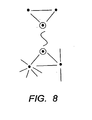
- Figure 8 is a schematic illustration of a portion of a network where a critical link between two nodes is highlighted.
- the highlighted nodes are surrounded by larger circles and the highlighted link is illustrated by a wavy line.
- the sub network identification module 24 is then invoked which then proceeds to identify (S4-5) nodes and links involved in connecting sub networks.
- Figure 9 is a schematic illustration of a network divided into two sub networks.
- the term sub network is taken to mean portions of a network comprising nodes that are more connected to one another than other nodes in the rest of the network.
- the left and right hand sections of the illustrated network 35,36 are examples of sub networks whereas the nodes in the centre of the illustrations 37 are an illustrative example of a bridge between two sub networks. That is to say the nodes shown as highlighted provide a connection between the two sub networks 35,36.
- sub networks When network data is representative of for example a proteome, the existence of sub networks normally identify a series of proteins and protein interactions responsible for different functions within the organism. Thus for example one sub network might involve proteins responsible for controlling cell division, whereas another sub network might identify proteins responsible for controlling energy generation.
- the target store 14 stores data identifying hub nodes, nodes that are difficult to route around and nodes involved in links between sub networks.
- Each of the sets of nodes will have been identified utilising the node and link data defining a network topology stored in the input store 10.
- nodes that are important for network integrity are those nodes that are connected to these identified hubs, nodes that are difficult to avoid and links between sub networks. This is because these nodes interact with nodes of importance and hence if the functioning of these connected nodes is disrupted, the functioning of the other identified nodes of importance may also be effected.
- node 53 is shown as being connected to nodes 50, 51 and 52, all of which can be identified as being of potential importance by virtue of analysis of the network topology. Given the large number of links node 53 has to nodes identifiable as important, enables node 53 to be identified as a potential target for effecting the structural integrity of the network.
- the target identifier 12 invokes the second order node identification module 28.
- the second order node identification module 28 determines for each of the nodes in the network the number of nodes for which identifying data has been stored in the target store 14 which are contained in the list of connections 43 in each of the node records 40. This data is stored for each of the nodes and the second order node identification module 28 then identifies the top twenty nodes connected to the greatest number of other nodes of importance. Thus in this way the second order node identification module 28 is able to identify those nodes which are directly linked to a number of other nodes of importance.
- the target store 14 will have stored within it data identifying the node numbers of all of the nodes identified by the hub identification module 22, sub network identification module 24, bottleneck identification 26, critical path identification module 27 and second order node identification module 28.
- this data identifies individual nodes of importance for maintaining the structural integrity of the network identified by data stored within the input store 10
- the target store 14 will have stored data identifying hub nodes, nodes involved in connections between sub networks, nodes which are difficult to route around, links that are difficult to route around or are involved in connections between sub networks and groups of nodes which together significantly effect the structural integrity of the network defined by the network data stored within the input store 10.
- the output module 18 is invoked (S4-8) which processes the data stored within the target store 14 utilising the filtration module 16 and the compound affinity database 20 to generate a report 4 as will now be described.
- each of the nodes identified by data within the target store 14 is checked against the conservation database 30 and the critical protein store 32 to determine whether the node number identified by data stored within the target store corresponds to the node number 41 of a node record 40 identifying a protein 42 corresponding to a protein stored within the conservation database 30 or the critical protein store 32.
- the output module 28 is able to classify each of the items of data stored within the target store 14 as either relating to critical proteins identified by data within the critical protein store 32, proteins corresponding to proteins identified by the conservation database 30 or neither of these.
- the output module 18 then generates and outputs a report 4 which identifies the proteins corresponding to the node numbers stored within the target store 14 where the proteins which are determined not to appear in either of the conservation database 30 or the critical protein store 32 are listed separately from those which are determined to appear in the conservation database 30 or the critical protein store 32.
- Figure 11 is a schematic illustration of a report 100 generated by the output module 18.
- the report 100 comprises three lists 102, 104, 105 where the first list 102 identifies proteins identified by data stored in the target store 14 for which no corresponding entries are stored within the conservation database 30 or critical protein store 32; a second list 104 which identifies proteins identified by data stored within the target store 14 where any of the nodes or nodes within the groups of nodes are identified by data within the conservation database 30 but not the critical protein store 32; and a third list 105 which identifies the remaining proteins identified by data in the target store 14.
- each of these lists identify for the corresponding list within the report 100 any compounds known to react with proteins identified in the list as identified by data within the compound affinity database 20.
- the output module 18 is able to generate a report where possible target proteins are identified based on an analysis of the topology of network data input into the input store 10.
- a filtration module 16 is described as including a critical protein store 32 identifying critical proteins for the functioning of a host organism.
- the data entered into the critical protein store could be obtained through conventional sources. Alternatively the system described could be utilised to identify critical proteins.
- proteome data for the host organism could be entered into the input store.
- the target identifier 12 would then proceed to identify hubs, nodes and links involved in connection between sub networks, nodes and links that are difficult to route around and second order nodes and groups of nodes which effect the structure integrity of the network represented in the host organism proteome.
- proteome data corresponding to a proteome could be input into the input store 10.
- the computer 2 would then be able to identify additional targets to complement the activity of the known compound or compounds.
- complementary targets for therapy could then be identified.
- the embodiments of the invention described with reference to the drawings comprise computer apparatus and processes performed in computer apparatus, the invention also extends to computer programs, particularly computer programs on or in a carrier, adapted for putting the invention into practice.
- the program may be in the form of source or object code or in any other form suitable for use in the implementation of the processes according to the invention.
- the carrier be any entity or device capable of carrying the program.
- the carrier may comprise a storage medium, such as a ROM, for example a CD ROM or a semiconductor ROM, or a magnetic recording medium, for example a floppy disc or hard disk.
- a storage medium such as a ROM, for example a CD ROM or a semiconductor ROM, or a magnetic recording medium, for example a floppy disc or hard disk.
- the carrier may be a transmissible carrier such as an electrical or optical signal which may be conveyed via electrical or optical cable or by radio or other means.
- the carrier When a program is embodied in a signal which may be conveyed directly by a cable or other device or means, the carrier may be constituted by such cable or other device or means.
- the carrier may be an integrated circuit in which the program is embedded, the integrated circuit being adapted for performing, or for use in the performance of, the relevant processes.
Landscapes
- Engineering & Computer Science (AREA)
- Computer Networks & Wireless Communication (AREA)
- Signal Processing (AREA)
- Physics & Mathematics (AREA)
- Health & Medical Sciences (AREA)
- Life Sciences & Earth Sciences (AREA)
- Bioinformatics & Cheminformatics (AREA)
- Bioinformatics & Computational Biology (AREA)
- Medical Informatics (AREA)
- Physiology (AREA)
- Biophysics (AREA)
- Biotechnology (AREA)
- Evolutionary Biology (AREA)
- General Health & Medical Sciences (AREA)
- Molecular Biology (AREA)
- Spectroscopy & Molecular Physics (AREA)
- Theoretical Computer Science (AREA)
- Management, Administration, Business Operations System, And Electronic Commerce (AREA)
- Data Exchanges In Wide-Area Networks (AREA)
- Computer And Data Communications (AREA)
- Information Retrieval, Db Structures And Fs Structures Therefor (AREA)
- Automatic Analysis And Handling Materials Therefor (AREA)
- Investigating Or Analysing Biological Materials (AREA)
Abstract
Description
- The present invention relates to methods of analysing networks of interconnected components to identify components of a network which are of high importance for maintaining the network's integrity. The invention also relates to apparatus for carrying out such methods.
- Many sorts of systems can be represented in the form of networks comprising nodes interconnected by links. Examples of such networks are social interactions where the nodes might be individuals and the links interactions between those individuals, the Internet where nodes are computers and the links are communication links between computers, and proteome data where nodes indicate proteins and links indicate exchanges of metabolites or interactions between the proteins.
- It has been found that in complex systems often a relatively small proportion of the components in a complex system are vital to its function. Thus for example most single protein species in an intra cellular metabolic network can be removed without affecting the function of the system, as can individual exchanges in a telecommunications network. The reason for this is that there are frequently many alternative routes around any removed or dysfunctional element in a complex system, which alternative routes can yield the same metabolic, physical or informational result.
- It is therefore desirable to provide a computer system which can analyse data representative of a network to identify those components which are of high importance for network integrity. In the case of a communications network, if such components can be identified, additional backup can be built to protect the functioning of the vital nodes. In the case of network data representing the proteome of a living organism, the identification of important elements in a network representing the proteome enables potential targets for drug intervention to be identified.
- Helden Van J et al : "Representing and Analysing Molecular and Cellular Functions using the computer" Biological Chemistry, Walter de Gruyter GmbH & Co. Berlin, vol. 381, no. 9/10, 1 September 2000 pages 921-935 discusses available databases of proteome data and the manner in which such proteome data can be visualised and processed.
- In accordance with one aspect of the present invention there is provided a computer implemented method of identifying target proteins for targeting by drug therapies comprising: obtaining proteome data for an organism to be targeted; storing said proteome data as network data within a computer said network data comprising data defining a plurality of nodes and a plurality of links between said nodes, wherein said nodes are associated with proteins and said links are indicative of protein interactions; processing the stored network data utilizing the computer to determine for each node in the network defined by the stored network data the number of links associated with each node; ordering the nodes in the network defined by stored network data on the basis of the number of links associated with a node; identifying as hub nodes, a set of nodes in the ordered list associated with the greatest numbers of links; and identifying as proteins for targeting by drug therapies, proteins associated with the identified hub nodes.
- In accordance with another aspect of the present invention there is provided an information processing apparatus for identifying target proteins for targeting by drug therapies comprising: a data store configured to store proteome data for an organism to be targeted as network data defining a plurality of nodes and a plurality of links between said nodes wherein said nodes are associated with proteins and said links are indicative of protein interactions; a processing unit operable to process network data stored in said data store to determine for each of the nodes of the network defined by the stored network data, the number of links associated with each node; order the nodes in the network defined by stored network data on the basis of the number of links associated with each node; and identify as hub nodes, a set of nodes in the ordered list associated with the greatest numbers of links; and an output unit operable to output data identifying one or more target proteins for targeting by drug therapies proteins corresponding to the identified hub nodes.
- Further aspects and embodiments of the present invention will become apparent with reference to the accompanying drawings in which:
-
Figure 1 is a schematic diagram of the processing of data representing nodes interconnected by links by a computer to identify network components of high importance for the integrity of a network; -
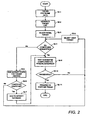
Figure 2 is a flow diagram of a method of utilising the computer ofFigure 1 as part of a system for identifying pharmaceutical compounds and screening those compounds to identify effective drug treatments; -
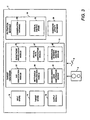
Figure 3 is a schematic block diagram of the computer modules stored within the memory of the computer ofFigure 1 ; -
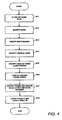
Figure 4 is a flow diagram of the processing of the computer ofFigure 1 ; -
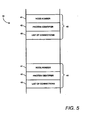
Figure 5 is a schematic block diagram of network data stored within the memory of the computer ofFigure 1 ; -
Figure 6 is a schematic illustration of a portion of a network identifying a "hub" node; -
Figure 7 is a schematic illustration of a portion of a network identifying a low redundancy node in a network; -
Figure 8 is a schematic illustration of a portion of network identifying a low redundancy link in a network; -
Figure 9 is a schematic illustration of a portion of a network connecting two sub networks; -
Figure 10 is a schematic illustration of a portion of a network identifying a second order node; and -
Figure 11 is a schematic illustration of a report identifying possible cellular targets for pharmaceutical compounds. -
Figure 1 is a schematic illustration of an embodiment of the present invention. In this embodiment data representing a network 1 in the form of nodes (shown as dots inFigure 1 ) interconnected by links (shown as lines inFigure 1 ) is input into a computer 2. For illustrative purposes, the data defining a network 1 in this embodiment is taken to be data defining a proteome. That is to say in this embodiment the nodes are indicative of proteins within an organism and the links identify which proteins interact with one another. - Once data representing a network (proteome) has been input into the computer 2, the computer 2 processes the data representing the network to identify within the network a series of nodes and links which are of particular importance for the structural integrity of the network. In
Figure 1 , processed data is illustrated by network 3 where the identified nodes of importance for structural integrity of the network are illustrated by circles highlighting some of the nodes. In addition, inFigure 1 a link in the network is highlighted as a critical link by a wavy line in the output data 3. - The nodes and links identified as being of importance to the structural integrity of the network 1 by the processing of the computer 2 are established in a number of different ways. Once the critical nodes and links have been identified by the processing of the computer 2, the computer 2 can then output a report 4 identifying the critical nodes and links. In the case of a network 1 representing a proteome of an organism, this report will identify potential drug targets for disrupting the functioning of the organism the proteome 1 represents.
- The pharmaceutical industry faces the difficult task of identifying cellular targets for drug intervention. Ordinarily, in a particular cell type, there may be proteome data which identifies between 4000 and 6000 potential proteins which could be possible targets. Checking the effect of disrupting the operation of each protein is therefore very time consuming and expensive, particularly as normally organisms are able to compensate for the disruption of individual proteins.
- Previously, heuristic approach and serendipity have been the only means of focussing on potential targets for intervention which are likely to yield biological effects when intervened upon by pharmaceutical chemicals. Targeting multiple proteins in a drug treatment can be more successful. However, the number of potential combinations which could be tested is enormous. Given the costs involved, a more focussed approach is desirable.
- The applicants have appreciated that certain topological features of a network enable certain nodes and links to be identified as likely suitable targets since these nodes and links can be identified as being of importance to the structural integrity of a network represented by node and link data. Further, the applicants have determined methods by which groups of target nodes of importance for structural integrity can be identified.
- Further, by having the computer 2 store data identifying the critical proteins which are utilised and conserved in a host organism, as will be described the potential targets identified by the computer can be filtered so that the report 4 suggests target proteins of the organism represented by the proteome 1 which are not conserved or utilised by a host organism and hence are more likely not to cause side effects in a host. Additionally, the computer 2 can be arranged to include in the report 4 details of agents which are known to attack the functions of the identified critical proteins.
- Before describing the structure and functionality of the above computer system 2 in detail, the use of the above system in identifying potential compounds for treating infections will now be described in with reference to
Figure 2 . - Initially (S2-1) proteome data 1 for a target organism is acquired utilising conventional techniques. This proteome data 1 will identify the proteins present within an organism and also the interactions between those proteins. Identification of the proteins can be achieved using conventional techniques such as mass spectrometry and chromatography etc. Whether different proteins interact can then be established using laboratory techniques such as by manipulating proteins so as to be represented in yeast and seeing whether generated proteins interact. When data for the proteome has been acquired it is then entered into the computer 2 and stored.
- The computer 2 then (S2-2) processes the input data in the manner described above so as to generate target data which is output in the form of a report 4. This report will identify lists of potential targets which by virtue of the analysis of the network topology of the stored proteome data 1 will highlight potential targets for intervention.
- An initial target identified by the report 4 is then selected (S2-3) and checking the report 4 it is determined (S2-4) whether or not any agents are known to react with the identified protein.
- If this is not the case affinity tests can then be run (S2-5) against an expression of the identified protein or proteins to attempt to identify (S2-6) possible compounds that interact with the target. If it is determined that a compound suitable for interacting with the identified target can be found, this data is then added (S2-7) to a compound affinity database for future reference. Alternatively if no such compounds can be found, the next target (S2-8) from the report 4 can be selected for analysis.
- Either when one or more compounds for attacking specific targets are suggested by the report 4 or alternatively when suitable compounds have been identified through affinity tests the compound or groups of compounds for targeting the identified protein or proteins can then be tested (S2-9) for toxicology and effect to see whether the combination of compounds does indeed disrupt the activity of the organism represented by the proteome data. If the tests (S2-10) are not successful another set of potential targets from the report 4 can be selected (S2-8) and further potential compounds for therapies can be identified.
- If the selected compounds have a desired effect on the organism and are not excessively toxic further trials (S2-11) for the identified compounds can be undertaken to establish whether indeed the identified set of compounds is an effective treatment.
- The structure of the computer system of
Figure 1 will now be described in detail. Referring toFigure 3 which is a schematic block diagram of the memory of the computer ofFigure 1 , the computer 2 is programmed to operate in accordance with programming instructions input for example as data stored in a data storage medium such as a disc 5 and/or as a signal 6 input into the computer 2 for example from a remote database by transmission over a communications network (not shown) such as the Internet. - As will be described in more detail below, the programming instructions comprise instructions to cause the memory of the computer 2 to become configured to process input data defining nodes and links in a network. The input data is then processed to generate data identifying critical nodes and links within the network. In the case of input network data defining a proteome where the nodes represent proteins and link interactions between proteins, the identified critical nodes and links will then provide information about potential drug targets.
- When programmed by the programming instructions, the memory of the computer 2 effectively becomes configured into a number of functional units for performing processing operations. Examples of such functional units are shown in
Figure 3 . The units illustrated inFigure 3 , are however, notional and are shown for illustration purposes only to assist understanding; they do not necessarily represent exact units and connections into which the processor, memory etc of the computer 2 become configured. - Referring to the functional units shown in
Figure 3 , aninput store 10 is provided for storing data defining network data. In this embodiment which is arranged to process proteome data, this network data comprises data identifying proteins in an organism and known interactions between those proteins. - A
target identifier 12 is provided which is arranged to process the network data stored within theinput store 10 to identify critical proteins and protein interactions having high importance for the integrity of the proteome. Data identifying the critical proteins is then stored within atarget store 14. When thetarget identifier 12 has stored within thetarget store 14 data identifying critical proteins, the data within thetarget store 14 is then filtered utilising a filtration module 16 to identify critical proteins and proteins which are conserved within a host organism. - Finally, an
output module 18 utilises the filtered data within thetarget store 14 and acompound affinity database 20 containing data identifying compounds known to react with proteins to generate and output a report 4 which could be displayed on a screen (not shown) or printed on a printer (not shown) listing the identified critical proteins together with suggested compounds for therapies based on drug targets identified by thetarget identifier 12. - In this embodiment, the
target identifier 12 comprises six sub modules 22-29 each arranged to identify a different type of structure within network data which is indicative of particular components in the network being of high importance for the structural integrity of the network. - The sub modules comprise a
hub identification module 22 which is arranged to identify proteins which interact with large numbers of other proteins; a subnetwork identification module 24 for identifying connections between sub networks; a bottleneck identification module 26 and a criticalpath identification module 27 for identifying nodes and links within the network data in theinput store 10 which cannot be easily bypassed and hence are of importance for the integrity of the network; a second ordernode identification module 28 for identifying nodes representing proteins directly interacting with nodes identified by thehub identification module 22, subnetwork identification module 24 and bottleneck identification module 26; and a structural integrity analysis module 29 for identifying groups of nodes which together significantly affect the structural integrity of the network represented by the data within theinput store 10. - As will be described after targets and proteins have been identified by the
target identifier 12 and stored within thetarget store 14, the targets are filtered by a filtration module 16. In this embodiment, the filtration module 16 comprises aconservation database 30 and a critical protein store 32. - The
conservation database 30 is arranged to store data identifying similar proteins which are conserved between different organisms. Thus for example data is stored identifying that a particular protein in an organism is substantially a homolog of another protein in a host such as a human. The critical protein store 32 is a database storing data identifying critical proteins for the activity of a host. When data identifying a number of target proteins has been generated and stored within thetarget store 14, the stored targets are likely to be proteins and metabolites which will disrupt the activity of the organism identified by the proteome data and theinput store 10 by virtue of the manner of the processing by thetarget identifier 12. However, although such targets may be useful for enabling general disinfectants to be identified, if a suitable drug is to be developed it must not only be effective against a target organism, but also must not have excessive side effects. - In order to aid with the identification of more promising drug targets, the filtration module 16 stores in the
conservation database 30 data for identifying which proteins have similar proteins in the host organism. Where a potential target protein is identified which is not present in any form in a host organism it is more likely that a therapy disrupting that particular protein will have limited side effects. If it is not possible to identify a protein which is not conserved as a potential target, at the very least it is desirable to ensure that the targets chosen for further research are unlikely to disrupt the critical systems of a host. By storing data in a critical protein store 32 identifying the critical proteins for a host the list of potential targets can be appropriately filtered to highlight the most promising potential therapies. - The processing of the computer 2 will now be described in greater detail with reference to
Figure 4 which is a flow diagram illustrating the processing of the computer 2. - Initially (S4-1) data representing the network to be analysed is stored within the
input store 10. -
Figure 5 is a schematic illustration of data stored within theinput store 10. In this embodiment the data stored within theinput store 10 is stored in the form of a number ofnode records 40 each comprising anode number 41, aprotein identifier 42 and a list ofconnections 43. One of theserecords 40 is stored for each of the proteins within the proteome being analysed. In each record 40 the list ofconnections 43 is a list ofnode numbers 41 of the node records 40 of the proteins with which the protein identified by theprotein identifier 42 for therecord 40 is known to interact with. Such data can be obtained for a proteome for a particular organism or cell utilising conventional laboratory techniques. - In other embodiments where the network data stored within the
input store 10 is representative of a network other than a proteome, theprotein identifier 42 will be replaced with a different identifier of a network component and the list ofconnections 42 would be a list ofnode numbers 41 of components within the network an identified component interacts with. - Once data for the proteome has been stored within the
input store 10,the.target identifier 12 then invokes thehub identification module 22 to identify (S4-2) hub nodes within the network. -
Figure 6 is a schematic illustration of a portion of a network. InFigure 6 nodes are represented by circles and links between nodes are indicated by lines connecting the circles. As shown inFigure 6 some nodes such as the node highlighted by a larger circle interact with significantly more nodes than average. Where nodes represent proteins such well connected nodes are often indicative of proteins critical to the functioning of an organism. By identifying such nodes, potential drug targets can therefore be found. - Thus, in this embodiment, when the
hub identification module 22 is invoked, thehub identification module 22 initially determines for each of the node records 40 within theinput store 10 the number of entries in the list ofconnections 43 for each record 40. A list of node numbers is then ordered according to the number of entries in the list ofconnections 43 in therecords 40 identified by the node numbers 41. - Thus in this way the
node numbers 41 of nodes which have the greatest numbers of connections and hence are indicative of hubs within the network can be identified. Data identifying the node numbers of nodes with the greatest number of connections is then stored in thetarget store 14. - In this embodiment which is arranged to process proteome data where normally approximately around about 4000-6000 proteins are included in a proteome and hence 4000-6000
node records 40 will ordinarily be stored in theinput store 10. When this number of nodes is stored thehub identification module 22 in this embodiment is arranged to store within thetarget store 14 the node numbers identifying the twenty nodes having the greatest number of entries in their list ofconnections 43. - Returning to
Figure 4 , after storing data indicative of the hub nodes in thetarget store 14, in this embodiment the target identifier then (s4-3-s4-7) proceeds to identify potential drug targets in a number of other ways which will now be described in outline. - Having stored data indicative of the hub nodes in the
target store 14, thetarget identifier 12 then (S4-3) invokes the bottleneck identification module 26 to identify within the network represented by data stored within theinput store 10 further portions of a network which are important for the structural integrity of that network. - Specifically, the bottleneck identification module 26 is arranged to identify nodes in the network which cannot be easily bypassed. An example of such a node within a network is illustrated in the exemplary network of
Figure 7 where all the paths from the nodes shown as dots in the network ofFigure 7 pass through a single node highlighted by a circle. If communication through the node highlighted by the circle is disrupted this then has a significant impact on the integrity of the rest of the network as many nodes will no longer be able to communicate with one another. - After the bottleneck identification module 26 has identified and stored data identifying any nodes which are difficult to bypass in the network, the critical
path identification module 27 is then invoked and attempts to identify (S4-4) individual links within the network which are difficult to bypass. -
Figure 8 is a schematic illustration of a portion of a network where a critical link between two nodes is highlighted. In the case ofFigure 10 the highlighted nodes are surrounded by larger circles and the highlighted link is illustrated by a wavy line. - When processing data to identify nodes that are difficult to bypass such as that illustrated in
Figure 8 , often these critical nodes will be connected to one another. In such circumstance in addition to identifying the nodes as of importance for the structural integrity of the network, the individual link between two nodes can also be identified as a potential weakness within the network. - After the critical
path identification module 27 has identified links within the network which cannot easily be bypassed, the subnetwork identification module 24 is then invoked which then proceeds to identify (S4-5) nodes and links involved in connecting sub networks. -
Figure 9 is a schematic illustration of a network divided into two sub networks. In this application the term sub network is taken to mean portions of a network comprising nodes that are more connected to one another than other nodes in the rest of the network. Thus in the case ofFigure 9 the left and right hand sections of the illustratednetwork illustrations 37 are an illustrative example of a bridge between two sub networks. That is to say the nodes shown as highlighted provide a connection between the twosub networks - When network data is representative of for example a proteome, the existence of sub networks normally identify a series of proteins and protein interactions responsible for different functions within the organism. Thus for example one sub network might involve proteins responsible for controlling cell division, whereas another sub network might identify proteins responsible for controlling energy generation.
- By identifying nodes responsible for linking the activities of two sub networks, it is possible to identify targets which disturb communications between the sub networks. In the case of an organism, this could for example cause the functions responsible for cell division to no longer be co-ordinated with the energy generation network and hence cause the organism to no longer reproduce properly.
- At this stage stored within the
target store 14 is data identifying hub nodes, nodes that are difficult to route around and nodes involved in links between sub networks. Each of the sets of nodes will have been identified utilising the node and link data defining a network topology stored in theinput store 10. - In addition to these nodes, the applicants have appreciated that a further set of nodes that are important for network integrity are those nodes that are connected to these identified hubs, nodes that are difficult to avoid and links between sub networks. This is because these nodes interact with nodes of importance and hence if the functioning of these connected nodes is disrupted, the functioning of the other identified nodes of importance may also be effected.
- In the case of proteome data identifying proteins and protein interactions, frequently, certain proteins corresponding to hubs or other critical nodes are in practice unsuitable for targets as disrupting the activity of such protein can cause unwanted side effects in a host. The secondary proteins which interact with these critical proteins may, however, differ between a target organism and a host. By interfering with the manner in which these proteins interact with the identified critical nodes, the activities of these critical nodes can be effected in a way does not cause a corresponding disruption of the activity of a host.
- Thus for example in
Figure 10 there are four nodes, two of these nodes labelled 50 and 51 are examples of hub nodes having many connections.Node 52 is shown as an example of a node which is difficult to route around. In the exemplary network of Figure 16,node 53 is shown as being connected tonodes links node 53 has to nodes identifiable as important, enablesnode 53 to be identified as a potential target for effecting the structural integrity of the network. - Thus returning to
Figure 4 , in this embodiment once the hub nodes, nodes linking sub networks and nodes which are difficult to route around have been identified, thetarget identifier 12 invokes the second ordernode identification module 28. The second ordernode identification module 28 then (S4-6) determines for each of the nodes in the network the number of nodes for which identifying data has been stored in thetarget store 14 which are contained in the list ofconnections 43 in each of the node records 40. This data is stored for each of the nodes and the second ordernode identification module 28 then identifies the top twenty nodes connected to the greatest number of other nodes of importance.
Thus in this way the second ordernode identification module 28 is able to identify those nodes which are directly linked to a number of other nodes of importance. - At this stage, the
target store 14 will have stored within it data identifying the node numbers of all of the nodes identified by thehub identification module 22, subnetwork identification module 24, bottleneck identification 26, criticalpath identification module 27 and second ordernode identification module 28. Although this data identifies individual nodes of importance for maintaining the structural integrity of the network identified by data stored within theinput store 10, it is desirable for thetarget identifier 14 to additionally generate data identifying groups of nodes which together effect the structural integrity of the network. In this embodiment this is achieved by the structural integrity analysis module 29 which proceeds to identify (S4-7) nodes and groups of nodes which effect network integrity. - At this stage as a result of the processing of the
target identifier 12, thetarget store 14 will have stored data identifying hub nodes, nodes involved in connections between sub networks, nodes which are difficult to route around, links that are difficult to route around or are involved in connections between sub networks and groups of nodes which together significantly effect the structural integrity of the network defined by the network data stored within theinput store 10. - After the processing of the structural integrity analysis module 29 has been completed, the
output module 18 is invoked (S4-8) which processes the data stored within thetarget store 14 utilising the filtration module 16 and thecompound affinity database 20 to generate a report 4 as will now be described. - Specifically in this embodiment each of the nodes identified by data within the
target store 14 is checked against theconservation database 30 and the critical protein store 32 to determine whether the node number identified by data stored within the target store corresponds to thenode number 41 of anode record 40 identifying aprotein 42 corresponding to a protein stored within theconservation database 30 or the critical protein store 32. - In this way the
output module 28 is able to classify each of the items of data stored within thetarget store 14 as either relating to critical proteins identified by data within the critical protein store 32, proteins corresponding to proteins identified by theconservation database 30 or neither of these. - The
output module 18 then generates and outputs a report 4 which identifies the proteins corresponding to the node numbers stored within thetarget store 14 where the proteins which are determined not to appear in either of theconservation database 30 or the critical protein store 32 are listed separately from those which are determined to appear in theconservation database 30 or the critical protein store 32. -
Figure 11 is a schematic illustration of areport 100 generated by theoutput module 18. - In this embodiment the
report 100 comprises threelists first list 102 identifies proteins identified by data stored in thetarget store 14 for which no corresponding entries are stored within theconservation database 30 or critical protein store 32; asecond list 104 which identifies proteins identified by data stored within thetarget store 14 where any of the nodes or nodes within the groups of nodes are identified by data within theconservation database 30 but not the critical protein store 32; and athird list 105 which identifies the remaining proteins identified by data in thetarget store 14. - In this embodiment adjacent to each of these lists is a further list 106,108,110. Each of these lists identify for the corresponding list within the
report 100 any compounds known to react with proteins identified in the list as identified by data within thecompound affinity database 20. Thus in this way theoutput module 18 is able to generate a report where possible target proteins are identified based on an analysis of the topology of network data input into theinput store 10. - In the above described embodiment, a filtration module 16 is described as including a critical protein store 32 identifying critical proteins for the functioning of a host organism. The data entered into the critical protein store could be obtained through conventional sources. Alternatively the system described could be utilised to identify critical proteins.
- Specifically instead of entering proteome data into the
input store 10 representative of the proteome of an organism to be attacked, proteome data for the host organism could be entered into the input store. When this host organism proteome data was processed, thetarget identifier 12 would then proceed to identify hubs, nodes and links involved in connection between sub networks, nodes and links that are difficult to route around and second order nodes and groups of nodes which effect the structure integrity of the network represented in the host organism proteome. - Just as in the case of processing proteome data representative of an organism to be attacked, this processing will identify nodes, links and groups of nodes which are important for the structural integrity of the host organism proteome. By generating data in this way identification of critical proteins, links and groups of protein for a hosting organism could then be achieved.
- More generally whenever two networks interact with one another by processing data representative of a first network and storing data identifying critical elements in that first network and then processing data for the second network, it is possible to identify critical elements in the second network, interference with which is less likely to effect the functioning of the first network.
- Although in the above described embodiment, the input of data corresponding to a proteome has been described, it will be appreciated that where compounds effecting the interactions of specific proteins have already been identified, proteome data excluding the interactions of a specific protein or group of proteins could be input into the
input store 10. The computer 2 would then be able to identify additional targets to complement the activity of the known compound or compounds. Thus in this way when a potential compound has been found to have some activity, complementary targets for therapy could then be identified. - Although the embodiments of the invention described with reference to the drawings comprise computer apparatus and processes performed in computer apparatus, the invention also extends to computer programs, particularly computer programs on or in a carrier, adapted for putting the invention into practice. The program may be in the form of source or object code or in any other form suitable for use in the implementation of the processes according to the invention. The carrier be any entity or device capable of carrying the program.
- For example, the carrier may comprise a storage medium, such as a ROM, for example a CD ROM or a semiconductor ROM, or a magnetic recording medium, for example a floppy disc or hard disk. Further, the carrier may be a transmissible carrier such as an electrical or optical signal which may be conveyed via electrical or optical cable or by radio or other means.
- When a program is embodied in a signal which may be conveyed directly by a cable or other device or means, the carrier may be constituted by such cable or other device or means.
- Alternatively, the carrier may be an integrated circuit in which the program is embedded, the integrated circuit being adapted for performing, or for use in the performance of, the relevant processes.
Claims (9)
- A computer implemented method of identifying target proteins for targeting by drug therapies comprising:obtaining (s2-1) proteome data for an organism to be targeted;storing (s4-1) said proteome data as network data (40) within a computer (2), said network data (40) comprising data defining a plurality of nodes and a plurality of links between said nodes, wherein said nodes are associated with proteins and said links are indicative of protein interactions;processing (s4-3) the stored network data (40) utilizing the computer (2) to determine for each node in the network defined by the stored network data (40) the number of links associated with each node;ordering the nodes in the network defined by stored network data (40) on the basis of the number of links associated with a node;identifying as hub nodes, a set of nodes in the ordered list associated with the greatest numbers of links; andidentifying as proteins for targeting by drug therapies, proteins associated with the identified hub nodes.
- A method in accordance with claim 1, further comprising:providing a database (32) identifying critical proteins for the activity of a host organism; andidentifying as proteins for targeting by drug therapies proteins associated with the identified hub nodes which do not correspond to proteins identified by data in the database (32) identifying critical proteins for the activity of a host organism.
- A method in accordance with claim 1 or claim 2, further comprising:providing a conservation database (30) identifying proteins in a host organism which are homologs of proteins in an organism to be targeted; andidentifying, as proteins for targeting by drug therapies, proteins associated with the identified hub nodes other than proteins identified by data in the conservation database (30).
- A method in accordance with any of claims 1-3 further comprising:obtaining (s2-1) proteome data for a host organism;storing (s4-1) said proteome data as network data (40) within a computer (2), said network data (40) comprising data defining a plurality of nodes and a plurality of links between said nodes, wherein said nodes are associated with proteins and said links are indicative of protein interactions;processing (s4-3) the stored network data for the host organism (40) utilizing the computer (2) to determine for each node in the network defined by the stored network data (40) the number of links associated with each node;ordering the nodes in the network defined by stored network data for the host organism (40) on the basis of the number of links associated with a node;identifying as hub nodes for the host organism, a set of nodes in the ordered list associated with the greatest numbers of link;identifying as proteins for targeting by drug therapies, proteins associated with the identified hub nodes in the proteome of an organism to be targeted which are not proteins associated with the identified hub nodes in the proteome of the host organism.
- A method of manufacturing a therapeutic drug comprising:identifying one or more target proteins for targeting by drug therapies by performing a method (s2-2) in accordance with any preceding claim;identifying (s2-6) one or more compounds which react with the indentified one or more target proteins; andmanufacturing a therapeutic drug containing compounds identified as reacting with the identified target proteins.
- A computer readable medium storing computer interpretable instructions which when interpreted by a programmable computer cause the computer to perform a method in accordance with any of claims 1-4.
- An information processing apparatus (2) for identifying target proteins for targeting by drug therapies comprising:a data store (10) configured to store proteome data for an organism to be targeted as network data (40) defining a plurality of nodes and a plurality of links between said nodes wherein said nodes are associated with proteins and said links are indicative of protein interactions;a processing unit (22) operable to process network data (40) stored in said data store (10) to determine for each of the nodes of the network defined by the stored network data (40), the number of links associated with each node; order the nodes in the network defined by stored network data (40) on the basis of the number of links associated with each node; and identify as hub nodes, a set of nodes in the ordered list associated with the greatest numbers of links; andan output unit operable to output data identifying one or more target proteins for targeting by drug therapies proteins corresponding to the identified hub nodes.
- An information processing apparatus (2) in accordance with claim 7, further comprising:a database (32) storing data identifying critical proteins for the activity of a host;wherein the output unit is operable to output as data identifying one or more target proteins, proteins associated with hub nodes identified by the processing unit (22) which do not correspond to proteins identified by data in the database (32).
- An information processing apparatus (2) in accordance with claim 7, further comprising:a conservation database (30) identifying proteins of a host organism which are homologs of proteins in an organism to be targeted;wherein the output unit is operable to output as data identifying one or more target proteins, proteins associated with hub nodes identified by the processing unit (22) which are not proteins identified by data in the conservation database (30).
Priority Applications (1)
| Application Number | Priority Date | Filing Date | Title |
|---|---|---|---|
| EP10164987.9A EP2363980B1 (en) | 2002-10-29 | 2003-10-29 | Method and apparatus for identifying components of a network having high importance for network integrity |
Applications Claiming Priority (4)
| Application Number | Priority Date | Filing Date | Title |
|---|---|---|---|
| GBGB0225109.8A GB0225109D0 (en) | 2002-10-29 | 2002-10-29 | Method of and apparatus for identifying components of a network having high importance for network integrity |
| EP08157898A EP1968237B1 (en) | 2002-10-29 | 2003-10-29 | Method and apparatus for identifying components of a network having high importance for network integrity |
| EP03769681A EP1556819B1 (en) | 2002-10-29 | 2003-10-29 | Method and apparatus for identifying components of a network having high importance for network integrity |
| EP08167881A EP2028792B1 (en) | 2002-10-29 | 2003-10-29 | Method and apparatus for identifying components of a network having high importance for network integrity |
Related Parent Applications (4)
| Application Number | Title | Priority Date | Filing Date |
|---|---|---|---|
| EP08167881 Previously-Filed-Application | 2003-10-29 | ||
| EP03769681.2 Division | 2003-10-29 | ||
| EP08157898.1 Division | 2008-06-09 | ||
| EP08167881.5 Division | 2008-10-29 |
Related Child Applications (1)
| Application Number | Title | Priority Date | Filing Date |
|---|---|---|---|
| EP10164987.9 Division-Into | 2010-06-04 |
Publications (3)
| Publication Number | Publication Date |
|---|---|
| EP2157734A2 EP2157734A2 (en) | 2010-02-24 |
| EP2157734A3 EP2157734A3 (en) | 2010-05-05 |
| EP2157734B1 true EP2157734B1 (en) | 2011-12-28 |
Family
ID=9946756
Family Applications (6)
| Application Number | Title | Priority Date | Filing Date |
|---|---|---|---|
| EP09172247A Expired - Lifetime EP2157734B1 (en) | 2002-10-29 | 2003-10-29 | Method and apparatus for identifying components of a network having high importance for network integrity |
| EP03769681A Expired - Lifetime EP1556819B1 (en) | 2002-10-29 | 2003-10-29 | Method and apparatus for identifying components of a network having high importance for network integrity |
| EP09172242A Expired - Lifetime EP2154824B1 (en) | 2002-10-29 | 2003-10-29 | Method and apparatus for identifying components of a network having high importance for network integrity |
| EP08157898A Expired - Lifetime EP1968237B1 (en) | 2002-10-29 | 2003-10-29 | Method and apparatus for identifying components of a network having high importance for network integrity |
| EP10164987.9A Expired - Lifetime EP2363980B1 (en) | 2002-10-29 | 2003-10-29 | Method and apparatus for identifying components of a network having high importance for network integrity |
| EP08167881A Expired - Lifetime EP2028792B1 (en) | 2002-10-29 | 2003-10-29 | Method and apparatus for identifying components of a network having high importance for network integrity |
Family Applications After (5)
| Application Number | Title | Priority Date | Filing Date |
|---|---|---|---|
| EP03769681A Expired - Lifetime EP1556819B1 (en) | 2002-10-29 | 2003-10-29 | Method and apparatus for identifying components of a network having high importance for network integrity |
| EP09172242A Expired - Lifetime EP2154824B1 (en) | 2002-10-29 | 2003-10-29 | Method and apparatus for identifying components of a network having high importance for network integrity |
| EP08157898A Expired - Lifetime EP1968237B1 (en) | 2002-10-29 | 2003-10-29 | Method and apparatus for identifying components of a network having high importance for network integrity |
| EP10164987.9A Expired - Lifetime EP2363980B1 (en) | 2002-10-29 | 2003-10-29 | Method and apparatus for identifying components of a network having high importance for network integrity |
| EP08167881A Expired - Lifetime EP2028792B1 (en) | 2002-10-29 | 2003-10-29 | Method and apparatus for identifying components of a network having high importance for network integrity |
Country Status (6)
| Country | Link |
|---|---|
| EP (6) | EP2157734B1 (en) |
| AT (4) | ATE551798T1 (en) |
| AU (1) | AU2003278374A1 (en) |
| DE (1) | DE60324956D1 (en) |
| GB (3) | GB0225109D0 (en) |
| WO (1) | WO2004040497A2 (en) |
Families Citing this family (3)
| Publication number | Priority date | Publication date | Assignee | Title |
|---|---|---|---|---|
| EP2169568A1 (en) | 2008-09-17 | 2010-03-31 | OGS Search Limited | Method and apparatus for generating a ranked index of web pages |
| US8363570B2 (en) | 2010-01-30 | 2013-01-29 | International Business Machines Corporation | Systems and methods for finding star structures as communities in networks |
| WO2017091822A1 (en) | 2015-11-25 | 2017-06-01 | Fliri Anton Franz Joseph | Method and descriptors for comparing object-induced information flows in a plurality of interaction networks |
Family Cites Families (21)
| Publication number | Priority date | Publication date | Assignee | Title |
|---|---|---|---|---|
| US5276789A (en) * | 1990-05-14 | 1994-01-04 | Hewlett-Packard Co. | Graphic display of network topology |
| US5307484A (en) * | 1991-03-06 | 1994-04-26 | Chrysler Corporation | Relational data base repository system for managing functional and physical data structures of nodes and links of multiple computer networks |
| ATE208109T1 (en) * | 1993-07-30 | 2001-11-15 | Ibm | METHOD AND DEVICE FOR AUTOMATICALLY DISTRIBUTING A NETWORK TOPOLOGY INTO MAIN AND SUBJECT TOPOLOGY |
| US5596703A (en) * | 1993-10-22 | 1997-01-21 | Lucent Technologies Inc. | Graphical display of relationships |
| US5748844A (en) * | 1994-11-03 | 1998-05-05 | Mitsubishi Electric Information Technology Center America, Inc. | Graph partitioning system |
| EP0887749B1 (en) * | 1997-06-26 | 2008-05-14 | Fraunhofer-Gesellschaft zur Förderung der angewandten Forschung e.V. | Method for discovering groups of objects having a selectable property from a population of objects |
| US6774899B1 (en) * | 1997-09-18 | 2004-08-10 | Mitsubishi Electric Research Laboratories, Inc. | Drawing graphs using user selectable visual oragnization features and/or other user controlled constraints |
| US6038390A (en) * | 1997-10-21 | 2000-03-14 | Mci Communications Corporation | Method of selecting spans for fiber cut simulations |
| US6437804B1 (en) * | 1997-10-23 | 2002-08-20 | Aprisma Management Technologies, Inc | Method for automatic partitioning of node-weighted, edge-constrained graphs |
| US6065063A (en) | 1998-01-29 | 2000-05-16 | International Business Machines Corp. | Deadlock avoidance method in a computer network |
| US6132969A (en) * | 1998-06-19 | 2000-10-17 | Rosetta Inpharmatics, Inc. | Methods for testing biological network models |
| US6229791B1 (en) | 1998-07-06 | 2001-05-08 | International Business Machines Corporation | Method and system for providing partitioning of partially switched networks |
| US6453241B1 (en) * | 1998-12-23 | 2002-09-17 | Rosetta Inpharmatics, Inc. | Method and system for analyzing biological response signal data |
| AU3482200A (en) * | 1999-02-02 | 2000-08-25 | Bernhard Palsson | Methods for identifying drug targets based on genomic sequence data |
| EP1085693B1 (en) * | 1999-09-13 | 2009-07-29 | International Business Machines Corporation | Network visualization tool |
| EP1158447A1 (en) * | 2000-05-26 | 2001-11-28 | GMD- Forschungszentrum Informationstechnik GmbH | Method for evaluating states of biological systems |
| US20030167131A1 (en) * | 2000-04-14 | 2003-09-04 | Yvan Chemama | Method for constructing, representing or displaying protein interaction maps and data processing tool using this method |
| FI20001314L (en) * | 2000-05-31 | 2001-12-01 | Nokia Networks Oy | Telecommunications network breakdown |
| US6452903B1 (en) | 2000-05-31 | 2002-09-17 | Fujitsu Network Communications, Inc. | Network switch supporting rate-based and credit-based flow control mechanisms on a link-by-link basis |
| FI20001415L (en) | 2000-06-14 | 2001-12-15 | Nokia Corp | Routing in a telecommunications network |
| US20020087275A1 (en) * | 2000-07-31 | 2002-07-04 | Junhyong Kim | Visualization and manipulation of biomolecular relationships using graph operators |
-
2002
- 2002-10-29 GB GBGB0225109.8A patent/GB0225109D0/en not_active Ceased
-
2003
- 2003-10-29 WO PCT/GB2003/004678 patent/WO2004040497A2/en not_active Ceased
- 2003-10-29 AT AT08157898T patent/ATE551798T1/en active
- 2003-10-29 AU AU2003278374A patent/AU2003278374A1/en not_active Abandoned
- 2003-10-29 AT AT03769681T patent/ATE415666T1/en not_active IP Right Cessation
- 2003-10-29 AT AT09172247T patent/ATE539516T1/en active
- 2003-10-29 EP EP09172247A patent/EP2157734B1/en not_active Expired - Lifetime
- 2003-10-29 EP EP03769681A patent/EP1556819B1/en not_active Expired - Lifetime
- 2003-10-29 GB GB0508596A patent/GB2411268B/en not_active Expired - Fee Related
- 2003-10-29 EP EP09172242A patent/EP2154824B1/en not_active Expired - Lifetime
- 2003-10-29 GB GB0622273A patent/GB2429314A/en not_active Withdrawn
- 2003-10-29 EP EP08157898A patent/EP1968237B1/en not_active Expired - Lifetime
- 2003-10-29 EP EP10164987.9A patent/EP2363980B1/en not_active Expired - Lifetime
- 2003-10-29 AT AT09172242T patent/ATE545238T1/en active
- 2003-10-29 DE DE60324956T patent/DE60324956D1/en not_active Expired - Lifetime
- 2003-10-29 EP EP08167881A patent/EP2028792B1/en not_active Expired - Lifetime
Also Published As
| Publication number | Publication date |
|---|---|
| GB2429314A (en) | 2007-02-21 |
| EP1968237B1 (en) | 2012-03-28 |
| GB0622273D0 (en) | 2006-12-20 |
| EP2154824A1 (en) | 2010-02-17 |
| ATE551798T1 (en) | 2012-04-15 |
| ATE545238T1 (en) | 2012-02-15 |
| GB0225109D0 (en) | 2002-12-11 |
| EP1968237A2 (en) | 2008-09-10 |
| EP2157734A3 (en) | 2010-05-05 |
| EP1556819B1 (en) | 2008-11-26 |
| AU2003278374A8 (en) | 2004-05-25 |
| EP2028792A1 (en) | 2009-02-25 |
| EP2363980A1 (en) | 2011-09-07 |
| EP2363980B1 (en) | 2013-06-12 |
| GB2411268A (en) | 2005-08-24 |
| EP2157734A2 (en) | 2010-02-24 |
| ATE415666T1 (en) | 2008-12-15 |
| AU2003278374A1 (en) | 2004-05-25 |
| DE60324956D1 (en) | 2009-01-08 |
| EP1968237A3 (en) | 2008-12-24 |
| EP1556819A2 (en) | 2005-07-27 |
| GB0508596D0 (en) | 2005-06-01 |
| WO2004040497A3 (en) | 2004-07-29 |
| EP2028792B1 (en) | 2012-08-08 |
| EP2154824B1 (en) | 2012-02-08 |
| WO2004040497A2 (en) | 2004-05-13 |
| GB2411268B (en) | 2008-04-16 |
| ATE539516T1 (en) | 2012-01-15 |
Similar Documents
| Publication | Publication Date | Title |
|---|---|---|
| US7466663B2 (en) | Method and apparatus for identifying components of a network having high importance for network integrity | |
| Zhang et al. | The number of subtrees of trees with given degree sequence | |
| CN109376142A (en) | Data migration method and terminal device | |
| Sarirah Husin et al. | Process mining approach to analyze user navigation behavior of a news website | |
| Kruger et al. | State matching and multiple references in adaptive active automata learning | |
| EP2154824B1 (en) | Method and apparatus for identifying components of a network having high importance for network integrity | |
| Zhou et al. | Toward intelligent and secure cloud: Large language model empowered proactive defense | |
| WO2008078293A1 (en) | Computer-implemented method, computer program and system for analyzing data records | |
| Tapolcai et al. | Link fault localization using bi-directional M-trails in all-optical mesh networks | |
| EP3493063A1 (en) | A monitoring system and method | |
| Khoumsi et al. | A formal approach to verify completeness and detect anomalies in firewall security policies | |
| Zahra et al. | A machine learning-based framework for enhancing data security in Cloud of Things | |
| Trifonov et al. | Applying the experience of artificial intelligence methods for information systems cyber protection at industrial control systems | |
| Markowsky et al. | Distributed Malware Detection System Based on Decentralized Architecture in Local Area Networks | |
| Tapolcai et al. | Signaling free localization of node failures in all-optical networks | |
| Chevreux et al. | Automatic assembly and editing of genomic data | |
| Karafili et al. | Automatic firewalls’ configuration using argumentation reasoning | |
| Bourcerie et al. | Algebraically structured colored Petri nets to model sequential processes | |
| Kobayashi et al. | Product-form loss networks | |
| Thomas et al. | Applying quasi-separability to Markovian process algebra | |
| Janardhanan et al. | Leveraging Minimal Path Sets for Reliability Block Diagram Evaluation | |
| CN118474015B (en) | A gateway architecture method, apparatus, and storage medium that supports custom routing rules. | |
| Xiang et al. | Modeling and verifying basic modules of floodlight | |
| Ecarot et al. | Learning health systems: An anonymous network routing protocol | |
| Servi | Traversing a Network of Physical Nodes to Attack Functional Components of a Mission Dependency Network |
Legal Events
| Date | Code | Title | Description |
|---|---|---|---|
| PUAI | Public reference made under article 153(3) epc to a published international application that has entered the european phase |
Free format text: ORIGINAL CODE: 0009012 |
|
| 17P | Request for examination filed |
Effective date: 20091005 |
|
| AC | Divisional application: reference to earlier application |
Ref document number: 1556819 Country of ref document: EP Kind code of ref document: P Ref document number: 1968237 Country of ref document: EP Kind code of ref document: P Ref document number: 2028792 Country of ref document: EP Kind code of ref document: P |
|
| AK | Designated contracting states |
Kind code of ref document: A2 Designated state(s): AT BE BG CH CY CZ DE DK EE ES FI FR GB GR HU IE IT LI LU MC NL PT RO SE SI SK TR |
|
| PUAL | Search report despatched |
Free format text: ORIGINAL CODE: 0009013 |
|
| AK | Designated contracting states |
Kind code of ref document: A3 Designated state(s): AT BE BG CH CY CZ DE DK EE ES FI FR GB GR HU IE IT LI LU MC NL PT RO SE SI SK TR |
|
| RAP1 | Party data changed (applicant data changed or rights of an application transferred) |
Owner name: E-THERAPEUTICS PLC |
|
| 17Q | First examination report despatched |
Effective date: 20100708 |
|
| GRAP | Despatch of communication of intention to grant a patent |
Free format text: ORIGINAL CODE: EPIDOSNIGR1 |
|
| RIC1 | Information provided on ipc code assigned before grant |
Ipc: H04L 12/24 20060101AFI20110511BHEP Ipc: G06F 17/50 20060101ALI20110511BHEP |
|
| GRAS | Grant fee paid |
Free format text: ORIGINAL CODE: EPIDOSNIGR3 |
|
| GRAA | (expected) grant |
Free format text: ORIGINAL CODE: 0009210 |
|
| AC | Divisional application: reference to earlier application |
Ref document number: 2028792 Country of ref document: EP Kind code of ref document: P Ref document number: 1556819 Country of ref document: EP Kind code of ref document: P Ref document number: 1968237 Country of ref document: EP Kind code of ref document: P |
|
| AK | Designated contracting states |
Kind code of ref document: B1 Designated state(s): AT BE BG CH CY CZ DE DK EE ES FI FR GB GR HU IE IT LI LU MC NL PT RO SE SI SK TR |
|
| REG | Reference to a national code |
Ref country code: GB Ref legal event code: FG4D |
|
| REG | Reference to a national code |
Ref country code: CH Ref legal event code: EP |
|
| REG | Reference to a national code |
Ref country code: AT Ref legal event code: REF Ref document number: 539516 Country of ref document: AT Kind code of ref document: T Effective date: 20120115 |
|
| REG | Reference to a national code |
Ref country code: IE Ref legal event code: FG4D |
|
| REG | Reference to a national code |
Ref country code: DE Ref legal event code: R096 Ref document number: 60339580 Country of ref document: DE Effective date: 20120308 |
|
| REG | Reference to a national code |
Ref country code: NL Ref legal event code: VDEP Effective date: 20111228 |
|
| PG25 | Lapsed in a contracting state [announced via postgrant information from national office to epo] |
Ref country code: SI Free format text: LAPSE BECAUSE OF FAILURE TO SUBMIT A TRANSLATION OF THE DESCRIPTION OR TO PAY THE FEE WITHIN THE PRESCRIBED TIME-LIMIT Effective date: 20111228 Ref country code: SE Free format text: LAPSE BECAUSE OF FAILURE TO SUBMIT A TRANSLATION OF THE DESCRIPTION OR TO PAY THE FEE WITHIN THE PRESCRIBED TIME-LIMIT Effective date: 20111228 Ref country code: GR Free format text: LAPSE BECAUSE OF FAILURE TO SUBMIT A TRANSLATION OF THE DESCRIPTION OR TO PAY THE FEE WITHIN THE PRESCRIBED TIME-LIMIT Effective date: 20120329 |
|
| PG25 | Lapsed in a contracting state [announced via postgrant information from national office to epo] |
Ref country code: BE Free format text: LAPSE BECAUSE OF FAILURE TO SUBMIT A TRANSLATION OF THE DESCRIPTION OR TO PAY THE FEE WITHIN THE PRESCRIBED TIME-LIMIT Effective date: 20111228 Ref country code: CY Free format text: LAPSE BECAUSE OF FAILURE TO SUBMIT A TRANSLATION OF THE DESCRIPTION OR TO PAY THE FEE WITHIN THE PRESCRIBED TIME-LIMIT Effective date: 20111228 |
|
| PG25 | Lapsed in a contracting state [announced via postgrant information from national office to epo] |
Ref country code: CZ Free format text: LAPSE BECAUSE OF FAILURE TO SUBMIT A TRANSLATION OF THE DESCRIPTION OR TO PAY THE FEE WITHIN THE PRESCRIBED TIME-LIMIT Effective date: 20111228 Ref country code: SK Free format text: LAPSE BECAUSE OF FAILURE TO SUBMIT A TRANSLATION OF THE DESCRIPTION OR TO PAY THE FEE WITHIN THE PRESCRIBED TIME-LIMIT Effective date: 20111228 Ref country code: EE Free format text: LAPSE BECAUSE OF FAILURE TO SUBMIT A TRANSLATION OF THE DESCRIPTION OR TO PAY THE FEE WITHIN THE PRESCRIBED TIME-LIMIT Effective date: 20111228 Ref country code: NL Free format text: LAPSE BECAUSE OF FAILURE TO SUBMIT A TRANSLATION OF THE DESCRIPTION OR TO PAY THE FEE WITHIN THE PRESCRIBED TIME-LIMIT Effective date: 20111228 Ref country code: BG Free format text: LAPSE BECAUSE OF FAILURE TO SUBMIT A TRANSLATION OF THE DESCRIPTION OR TO PAY THE FEE WITHIN THE PRESCRIBED TIME-LIMIT Effective date: 20120328 |
|
| PG25 | Lapsed in a contracting state [announced via postgrant information from national office to epo] |
Ref country code: RO Free format text: LAPSE BECAUSE OF FAILURE TO SUBMIT A TRANSLATION OF THE DESCRIPTION OR TO PAY THE FEE WITHIN THE PRESCRIBED TIME-LIMIT Effective date: 20111228 Ref country code: PT Free format text: LAPSE BECAUSE OF FAILURE TO SUBMIT A TRANSLATION OF THE DESCRIPTION OR TO PAY THE FEE WITHIN THE PRESCRIBED TIME-LIMIT Effective date: 20120430 |
|
| RAP2 | Party data changed (patent owner data changed or rights of a patent transferred) |
Owner name: E-THERAPEUTICS PLC |
|
| REG | Reference to a national code |
Ref country code: AT Ref legal event code: MK05 Ref document number: 539516 Country of ref document: AT Kind code of ref document: T Effective date: 20111228 |
|
| REG | Reference to a national code |
Ref country code: DE Ref legal event code: R082 Ref document number: 60339580 Country of ref document: DE Representative=s name: DF-MP, DE |
|
| REG | Reference to a national code |
Ref country code: FR Ref legal event code: CA Effective date: 20120918 |
|
| PG25 | Lapsed in a contracting state [announced via postgrant information from national office to epo] |
Ref country code: DK Free format text: LAPSE BECAUSE OF FAILURE TO SUBMIT A TRANSLATION OF THE DESCRIPTION OR TO PAY THE FEE WITHIN THE PRESCRIBED TIME-LIMIT Effective date: 20111228 |
|
| PLBE | No opposition filed within time limit |
Free format text: ORIGINAL CODE: 0009261 |
|
| STAA | Information on the status of an ep patent application or granted ep patent |
Free format text: STATUS: NO OPPOSITION FILED WITHIN TIME LIMIT |
|
| REG | Reference to a national code |
Ref country code: DE Ref legal event code: R081 Ref document number: 60339580 Country of ref document: DE Owner name: E-THERAPEUTICS PLC, GB Free format text: FORMER OWNER: E-THERAPEUTICS PLC, NEWCASTLE UPON TYNE, GB Effective date: 20121008 Ref country code: DE Ref legal event code: R082 Ref document number: 60339580 Country of ref document: DE Representative=s name: DF-MP, DE Effective date: 20121008 Ref country code: DE Ref legal event code: R081 Ref document number: 60339580 Country of ref document: DE Owner name: E-THERAPEUTICS PLC, LONG HANBOROUGH, GB Free format text: FORMER OWNER: E-THERAPEUTICS PLC, NEWCASTLE UPON TYNE, GB Effective date: 20121008 Ref country code: DE Ref legal event code: R082 Ref document number: 60339580 Country of ref document: DE Representative=s name: DF-MP DOERRIES FRANK-MOLNIA & POHLMAN PATENTAN, DE Effective date: 20121008 |
|
| PG25 | Lapsed in a contracting state [announced via postgrant information from national office to epo] |
Ref country code: IT Free format text: LAPSE BECAUSE OF FAILURE TO SUBMIT A TRANSLATION OF THE DESCRIPTION OR TO PAY THE FEE WITHIN THE PRESCRIBED TIME-LIMIT Effective date: 20111228 |
|
| 26N | No opposition filed |
Effective date: 20121001 |
|
| REG | Reference to a national code |
Ref country code: DE Ref legal event code: R097 Ref document number: 60339580 Country of ref document: DE Effective date: 20121001 |
|
| PG25 | Lapsed in a contracting state [announced via postgrant information from national office to epo] |
Ref country code: AT Free format text: LAPSE BECAUSE OF FAILURE TO SUBMIT A TRANSLATION OF THE DESCRIPTION OR TO PAY THE FEE WITHIN THE PRESCRIBED TIME-LIMIT Effective date: 20111228 |
|
| PG25 | Lapsed in a contracting state [announced via postgrant information from national office to epo] |
Ref country code: ES Free format text: LAPSE BECAUSE OF FAILURE TO SUBMIT A TRANSLATION OF THE DESCRIPTION OR TO PAY THE FEE WITHIN THE PRESCRIBED TIME-LIMIT Effective date: 20120408 |
|
| PG25 | Lapsed in a contracting state [announced via postgrant information from national office to epo] |
Ref country code: MC Free format text: LAPSE BECAUSE OF NON-PAYMENT OF DUE FEES Effective date: 20121031 |
|
| REG | Reference to a national code |
Ref country code: CH Ref legal event code: PL |
|
| PG25 | Lapsed in a contracting state [announced via postgrant information from national office to epo] |
Ref country code: FI Free format text: LAPSE BECAUSE OF FAILURE TO SUBMIT A TRANSLATION OF THE DESCRIPTION OR TO PAY THE FEE WITHIN THE PRESCRIBED TIME-LIMIT Effective date: 20111228 |
|
| PG25 | Lapsed in a contracting state [announced via postgrant information from national office to epo] |
Ref country code: CH Free format text: LAPSE BECAUSE OF NON-PAYMENT OF DUE FEES Effective date: 20121031 Ref country code: LI Free format text: LAPSE BECAUSE OF NON-PAYMENT OF DUE FEES Effective date: 20121031 |
|
| REG | Reference to a national code |
Ref country code: IE Ref legal event code: MM4A |
|
| PG25 | Lapsed in a contracting state [announced via postgrant information from national office to epo] |
Ref country code: IE Free format text: LAPSE BECAUSE OF NON-PAYMENT OF DUE FEES Effective date: 20121029 |
|
| PG25 | Lapsed in a contracting state [announced via postgrant information from national office to epo] |
Ref country code: TR Free format text: LAPSE BECAUSE OF FAILURE TO SUBMIT A TRANSLATION OF THE DESCRIPTION OR TO PAY THE FEE WITHIN THE PRESCRIBED TIME-LIMIT Effective date: 20111228 |
|
| PG25 | Lapsed in a contracting state [announced via postgrant information from national office to epo] |
Ref country code: LU Free format text: LAPSE BECAUSE OF NON-PAYMENT OF DUE FEES Effective date: 20121029 |
|
| PG25 | Lapsed in a contracting state [announced via postgrant information from national office to epo] |
Ref country code: HU Free format text: LAPSE BECAUSE OF FAILURE TO SUBMIT A TRANSLATION OF THE DESCRIPTION OR TO PAY THE FEE WITHIN THE PRESCRIBED TIME-LIMIT Effective date: 20031029 |
|
| REG | Reference to a national code |
Ref country code: FR Ref legal event code: PLFP Year of fee payment: 13 |
|
| REG | Reference to a national code |
Ref country code: FR Ref legal event code: PLFP Year of fee payment: 14 |
|
| REG | Reference to a national code |
Ref country code: FR Ref legal event code: PLFP Year of fee payment: 15 |
|
| REG | Reference to a national code |
Ref country code: FR Ref legal event code: PLFP Year of fee payment: 16 |
|
| PGFP | Annual fee paid to national office [announced via postgrant information from national office to epo] |
Ref country code: DE Payment date: 20201029 Year of fee payment: 18 Ref country code: FR Payment date: 20201027 Year of fee payment: 18 Ref country code: GB Payment date: 20201028 Year of fee payment: 18 |
|
| REG | Reference to a national code |
Ref country code: DE Ref legal event code: R079 Ref document number: 60339580 Country of ref document: DE Free format text: PREVIOUS MAIN CLASS: H04L0012240000 Ipc: H04L0041000000 |
|
| REG | Reference to a national code |
Ref country code: DE Ref legal event code: R119 Ref document number: 60339580 Country of ref document: DE |
|
| GBPC | Gb: european patent ceased through non-payment of renewal fee |
Effective date: 20211029 |
|
| PG25 | Lapsed in a contracting state [announced via postgrant information from national office to epo] |
Ref country code: GB Free format text: LAPSE BECAUSE OF NON-PAYMENT OF DUE FEES Effective date: 20211029 Ref country code: DE Free format text: LAPSE BECAUSE OF NON-PAYMENT OF DUE FEES Effective date: 20220503 |
|
| PG25 | Lapsed in a contracting state [announced via postgrant information from national office to epo] |
Ref country code: FR Free format text: LAPSE BECAUSE OF NON-PAYMENT OF DUE FEES Effective date: 20211031 |