EP2157434A1 - Preparation of biological samples for compound-specific carbon isotope analysis - Google Patents
Preparation of biological samples for compound-specific carbon isotope analysis Download PDFInfo
- Publication number
- EP2157434A1 EP2157434A1 EP08252710A EP08252710A EP2157434A1 EP 2157434 A1 EP2157434 A1 EP 2157434A1 EP 08252710 A EP08252710 A EP 08252710A EP 08252710 A EP08252710 A EP 08252710A EP 2157434 A1 EP2157434 A1 EP 2157434A1
- Authority
- EP
- European Patent Office
- Prior art keywords
- compound
- hydropyrolysis
- catalyst
- carbon dioxide
- steroid
- Prior art date
- Legal status (The legal status is an assumption and is not a legal conclusion. Google has not performed a legal analysis and makes no representation as to the accuracy of the status listed.)
- Withdrawn
Links
- 150000001875 compounds Chemical class 0.000 title claims abstract description 42
- OKTJSMMVPCPJKN-UHFFFAOYSA-N Carbon Chemical compound [C] OKTJSMMVPCPJKN-UHFFFAOYSA-N 0.000 title claims abstract description 35
- 229910052799 carbon Inorganic materials 0.000 title claims abstract description 20
- 238000004458 analytical method Methods 0.000 title claims abstract description 17
- 239000012472 biological sample Substances 0.000 title description 7
- 150000003431 steroids Chemical class 0.000 claims abstract description 47
- 238000000034 method Methods 0.000 claims abstract description 45
- CURLTUGMZLYLDI-UHFFFAOYSA-N Carbon dioxide Chemical compound O=C=O CURLTUGMZLYLDI-UHFFFAOYSA-N 0.000 claims abstract description 19
- 239000003054 catalyst Substances 0.000 claims abstract description 16
- 150000008134 glucuronides Chemical group 0.000 claims abstract description 16
- BASFCYQUMIYNBI-UHFFFAOYSA-N platinum Chemical compound [Pt] BASFCYQUMIYNBI-UHFFFAOYSA-N 0.000 claims abstract description 16
- 238000004817 gas chromatography Methods 0.000 claims abstract description 15
- QAOWNCQODCNURD-UHFFFAOYSA-L Sulfate Chemical compound [O-]S([O-])(=O)=O QAOWNCQODCNURD-UHFFFAOYSA-L 0.000 claims abstract description 13
- 150000002430 hydrocarbons Chemical class 0.000 claims abstract description 10
- 229910002092 carbon dioxide Inorganic materials 0.000 claims abstract description 9
- 239000001569 carbon dioxide Substances 0.000 claims abstract description 9
- 239000000523 sample Substances 0.000 claims abstract description 9
- 210000002700 urine Anatomy 0.000 claims abstract description 9
- UFHFLCQGNIYNRP-UHFFFAOYSA-N Hydrogen Chemical compound [H][H] UFHFLCQGNIYNRP-UHFFFAOYSA-N 0.000 claims abstract description 8
- KDLHZDBZIXYQEI-UHFFFAOYSA-N Palladium Chemical compound [Pd] KDLHZDBZIXYQEI-UHFFFAOYSA-N 0.000 claims abstract description 8
- 239000001257 hydrogen Substances 0.000 claims abstract description 8
- 229910052739 hydrogen Inorganic materials 0.000 claims abstract description 8
- 229910052697 platinum Inorganic materials 0.000 claims abstract description 8
- 229910052723 transition metal Inorganic materials 0.000 claims abstract description 5
- 150000003624 transition metals Chemical class 0.000 claims abstract description 5
- 229910052741 iridium Inorganic materials 0.000 claims abstract description 4
- GKOZUEZYRPOHIO-UHFFFAOYSA-N iridium atom Chemical compound [Ir] GKOZUEZYRPOHIO-UHFFFAOYSA-N 0.000 claims abstract description 4
- 238000004949 mass spectrometry Methods 0.000 claims abstract description 4
- 229910052763 palladium Inorganic materials 0.000 claims abstract description 4
- 229910052703 rhodium Inorganic materials 0.000 claims abstract description 4
- 239000010948 rhodium Substances 0.000 claims abstract description 4
- MHOVAHRLVXNVSD-UHFFFAOYSA-N rhodium atom Chemical compound [Rh] MHOVAHRLVXNVSD-UHFFFAOYSA-N 0.000 claims abstract description 4
- 229930195733 hydrocarbon Natural products 0.000 claims abstract description 3
- 239000004215 Carbon black (E152) Substances 0.000 claims abstract 2
- 150000002894 organic compounds Chemical class 0.000 claims abstract 2
- 239000012521 purified sample Substances 0.000 claims abstract 2
- VYPSYNLAJGMNEJ-UHFFFAOYSA-N Silicium dioxide Chemical compound O=[Si]=O VYPSYNLAJGMNEJ-UHFFFAOYSA-N 0.000 claims description 10
- 235000014113 dietary fatty acids Nutrition 0.000 claims description 9
- 239000000194 fatty acid Substances 0.000 claims description 9
- 229930195729 fatty acid Natural products 0.000 claims description 9
- 239000000203 mixture Substances 0.000 claims description 9
- 150000004665 fatty acids Chemical class 0.000 claims description 8
- 125000000524 functional group Chemical group 0.000 claims description 8
- 238000006243 chemical reaction Methods 0.000 claims description 5
- 239000000377 silicon dioxide Substances 0.000 claims description 5
- MCMNRKCIXSYSNV-UHFFFAOYSA-N Zirconium dioxide Chemical compound O=[Zr]=O MCMNRKCIXSYSNV-UHFFFAOYSA-N 0.000 claims description 4
- 239000000463 material Substances 0.000 claims description 4
- 239000003463 adsorbent Substances 0.000 claims description 3
- 239000002253 acid Substances 0.000 claims description 2
- 150000007513 acids Chemical class 0.000 claims description 2
- 150000001298 alcohols Chemical class 0.000 claims description 2
- PNEYBMLMFCGWSK-UHFFFAOYSA-N aluminium oxide Inorganic materials [O-2].[O-2].[O-2].[Al+3].[Al+3] PNEYBMLMFCGWSK-UHFFFAOYSA-N 0.000 claims description 2
- 230000003190 augmentative effect Effects 0.000 claims description 2
- 125000005842 heteroatom Chemical group 0.000 claims description 2
- 150000002576 ketones Chemical class 0.000 claims description 2
- 150000002632 lipids Chemical class 0.000 claims description 2
- 229910052751 metal Inorganic materials 0.000 claims description 2
- 239000002184 metal Substances 0.000 claims description 2
- 125000005575 polycyclic aromatic hydrocarbon group Chemical group 0.000 claims description 2
- GWEVSGVZZGPLCZ-UHFFFAOYSA-N Titan oxide Chemical compound O=[Ti]=O GWEVSGVZZGPLCZ-UHFFFAOYSA-N 0.000 claims 2
- MUMGGOZAMZWBJJ-DYKIIFRCSA-N Testostosterone Chemical compound O=C1CC[C@]2(C)[C@H]3CC[C@](C)([C@H](CC4)O)[C@@H]4[C@@H]3CCC2=C1 MUMGGOZAMZWBJJ-DYKIIFRCSA-N 0.000 abstract description 15
- 229960003604 testosterone Drugs 0.000 abstract description 7
- 229910021653 sulphate ion Inorganic materials 0.000 abstract 1
- 239000000047 product Substances 0.000 description 17
- 229930182480 glucuronide Natural products 0.000 description 14
- 230000000155 isotopic effect Effects 0.000 description 11
- 238000000926 separation method Methods 0.000 description 7
- 238000012360 testing method Methods 0.000 description 7
- HVYWMOMLDIMFJA-DPAQBDIFSA-N cholesterol Chemical compound C1C=C2C[C@@H](O)CC[C@]2(C)[C@@H]2[C@@H]1[C@@H]1CC[C@H]([C@H](C)CCCC(C)C)[C@@]1(C)CC2 HVYWMOMLDIMFJA-DPAQBDIFSA-N 0.000 description 6
- 238000002307 isotope ratio mass spectrometry Methods 0.000 description 6
- 150000002009 diols Chemical class 0.000 description 5
- 229940079593 drug Drugs 0.000 description 5
- 239000003814 drug Substances 0.000 description 5
- 238000005259 measurement Methods 0.000 description 5
- 238000001212 derivatisation Methods 0.000 description 4
- 238000005194 fractionation Methods 0.000 description 4
- YMWUJEATGCHHMB-UHFFFAOYSA-N Dichloromethane Chemical compound ClCCl YMWUJEATGCHHMB-UHFFFAOYSA-N 0.000 description 3
- OKKJLVBELUTLKV-UHFFFAOYSA-N Methanol Chemical compound OC OKKJLVBELUTLKV-UHFFFAOYSA-N 0.000 description 3
- ZOKXTWBITQBERF-UHFFFAOYSA-N Molybdenum Chemical compound [Mo] ZOKXTWBITQBERF-UHFFFAOYSA-N 0.000 description 3
- 230000010933 acylation Effects 0.000 description 3
- 238000005917 acylation reaction Methods 0.000 description 3
- 239000012491 analyte Substances 0.000 description 3
- 125000004432 carbon atom Chemical group C* 0.000 description 3
- 235000012000 cholesterol Nutrition 0.000 description 3
- 238000002485 combustion reaction Methods 0.000 description 3
- 239000007789 gas Substances 0.000 description 3
- 229910052750 molybdenum Inorganic materials 0.000 description 3
- 239000011733 molybdenum Substances 0.000 description 3
- 230000008707 rearrangement Effects 0.000 description 3
- -1 steroid compounds Chemical class 0.000 description 3
- WAQBISPOEAOCOG-DYKIIFRCSA-N testosterone sulfate Chemical compound O=C1CC[C@]2(C)[C@H]3CC[C@](C)([C@H](CC4)OS(O)(=O)=O)[C@@H]4[C@@H]3CCC2=C1 WAQBISPOEAOCOG-DYKIIFRCSA-N 0.000 description 3
- RPKLZQLYODPWTM-LVVAJZGHSA-N 5beta-cholanic acid Chemical compound C([C@H]1CC2)CCC[C@]1(C)[C@@H]1[C@@H]2[C@@H]2CC[C@H]([C@@H](CCC(O)=O)C)[C@@]2(C)CC1 RPKLZQLYODPWTM-LVVAJZGHSA-N 0.000 description 2
- QGXBDMJGAMFCBF-UHFFFAOYSA-N Etiocholanolone Natural products C1C(O)CCC2(C)C3CCC(C)(C(CC4)=O)C4C3CCC21 QGXBDMJGAMFCBF-UHFFFAOYSA-N 0.000 description 2
- 230000007073 chemical hydrolysis Effects 0.000 description 2
- FMGSKLZLMKYGDP-USOAJAOKSA-N dehydroepiandrosterone Chemical compound C1[C@@H](O)CC[C@]2(C)[C@H]3CC[C@](C)(C(CC4)=O)[C@@H]4[C@@H]3CC=C21 FMGSKLZLMKYGDP-USOAJAOKSA-N 0.000 description 2
- 238000001514 detection method Methods 0.000 description 2
- 238000010438 heat treatment Methods 0.000 description 2
- 238000004128 high performance liquid chromatography Methods 0.000 description 2
- 238000006460 hydrolysis reaction Methods 0.000 description 2
- 238000002955 isolation Methods 0.000 description 2
- 238000002414 normal-phase solid-phase extraction Methods 0.000 description 2
- 230000001766 physiological effect Effects 0.000 description 2
- 238000000197 pyrolysis Methods 0.000 description 2
- 239000007790 solid phase Substances 0.000 description 2
- QYIXCDOBOSTCEI-QCYZZNICSA-N (5alpha)-cholestan-3beta-ol Chemical compound C([C@@H]1CC2)[C@@H](O)CC[C@]1(C)[C@@H]1[C@@H]2[C@@H]2CC[C@H]([C@H](C)CCCC(C)C)[C@@]2(C)CC1 QYIXCDOBOSTCEI-QCYZZNICSA-N 0.000 description 1
- QGXBDMJGAMFCBF-BNSUEQOYSA-N 3alpha-hydroxy-5beta-androstan-17-one Chemical compound C1[C@H](O)CC[C@]2(C)[C@H]3CC[C@](C)(C(CC4)=O)[C@@H]4[C@@H]3CC[C@@H]21 QGXBDMJGAMFCBF-BNSUEQOYSA-N 0.000 description 1
- SJZRECIVHVDYJC-UHFFFAOYSA-N 4-hydroxybutyric acid Chemical compound OCCCC(O)=O SJZRECIVHVDYJC-UHFFFAOYSA-N 0.000 description 1
- QGXBDMJGAMFCBF-HLUDHZFRSA-N 5α-Androsterone Chemical compound C1[C@H](O)CC[C@]2(C)[C@H]3CC[C@](C)(C(CC4)=O)[C@@H]4[C@@H]3CC[C@H]21 QGXBDMJGAMFCBF-HLUDHZFRSA-N 0.000 description 1
- QSHQKIURKJITMZ-OBUPQJQESA-N 5β-cholane Chemical compound C([C@H]1CC2)CCC[C@]1(C)[C@@H]1[C@@H]2[C@@H]2CC[C@H]([C@H](C)CCC)[C@@]2(C)CC1 QSHQKIURKJITMZ-OBUPQJQESA-N 0.000 description 1
- 241000196324 Embryophyta Species 0.000 description 1
- 241000736254 Makaira Species 0.000 description 1
- 229940061641 androsterone Drugs 0.000 description 1
- QVGXLLKOCUKJST-UHFFFAOYSA-N atomic oxygen Chemical compound [O] QVGXLLKOCUKJST-UHFFFAOYSA-N 0.000 description 1
- 239000011230 binding agent Substances 0.000 description 1
- 239000008280 blood Substances 0.000 description 1
- 210000004369 blood Anatomy 0.000 description 1
- 238000004364 calculation method Methods 0.000 description 1
- 235000014633 carbohydrates Nutrition 0.000 description 1
- 150000001720 carbohydrates Chemical class 0.000 description 1
- 235000011089 carbon dioxide Nutrition 0.000 description 1
- 239000012159 carrier gas Substances 0.000 description 1
- 230000015556 catabolic process Effects 0.000 description 1
- 239000012018 catalyst precursor Substances 0.000 description 1
- 230000003197 catalytic effect Effects 0.000 description 1
- 239000007795 chemical reaction product Substances 0.000 description 1
- 239000003795 chemical substances by application Substances 0.000 description 1
- 150000001838 cholestanes Chemical class 0.000 description 1
- 150000001839 cholestenes Chemical class 0.000 description 1
- 238000003776 cleavage reaction Methods 0.000 description 1
- 238000011109 contamination Methods 0.000 description 1
- 125000006841 cyclic skeleton Chemical group 0.000 description 1
- 238000006731 degradation reaction Methods 0.000 description 1
- 230000008021 deposition Effects 0.000 description 1
- 230000001627 detrimental effect Effects 0.000 description 1
- 238000011161 development Methods 0.000 description 1
- 238000003745 diagnosis Methods 0.000 description 1
- 238000010828 elution Methods 0.000 description 1
- 239000000598 endocrine disruptor Substances 0.000 description 1
- 230000007613 environmental effect Effects 0.000 description 1
- 230000007071 enzymatic hydrolysis Effects 0.000 description 1
- 238000006047 enzymatic hydrolysis reaction Methods 0.000 description 1
- 238000000605 extraction Methods 0.000 description 1
- 235000013305 food Nutrition 0.000 description 1
- 230000014509 gene expression Effects 0.000 description 1
- 239000001307 helium Substances 0.000 description 1
- 229910052734 helium Inorganic materials 0.000 description 1
- SWQJXJOGLNCZEY-UHFFFAOYSA-N helium atom Chemical compound [He] SWQJXJOGLNCZEY-UHFFFAOYSA-N 0.000 description 1
- 238000011065 in-situ storage Methods 0.000 description 1
- 230000005445 isotope effect Effects 0.000 description 1
- 238000002372 labelling Methods 0.000 description 1
- 238000004519 manufacturing process Methods 0.000 description 1
- 235000013372 meat Nutrition 0.000 description 1
- 239000005078 molybdenum compound Substances 0.000 description 1
- 150000002752 molybdenum compounds Chemical class 0.000 description 1
- CWQXQMHSOZUFJS-UHFFFAOYSA-N molybdenum disulfide Chemical compound S=[Mo]=S CWQXQMHSOZUFJS-UHFFFAOYSA-N 0.000 description 1
- QXYJCZRRLLQGCR-UHFFFAOYSA-N molybdenum(IV) oxide Inorganic materials O=[Mo]=O QXYJCZRRLLQGCR-UHFFFAOYSA-N 0.000 description 1
- 239000004006 olive oil Substances 0.000 description 1
- 239000011368 organic material Substances 0.000 description 1
- 239000001301 oxygen Substances 0.000 description 1
- 229910052760 oxygen Inorganic materials 0.000 description 1
- 239000012071 phase Substances 0.000 description 1
- 239000002243 precursor Substances 0.000 description 1
- 230000002285 radioactive effect Effects 0.000 description 1
- 238000011160 research Methods 0.000 description 1
- 238000012552 review Methods 0.000 description 1
- 230000007017 scission Effects 0.000 description 1
- 229910052710 silicon Inorganic materials 0.000 description 1
- 239000010703 silicon Substances 0.000 description 1
- 238000004611 spectroscopical analysis Methods 0.000 description 1
- 239000007858 starting material Substances 0.000 description 1
- 239000000126 substance Substances 0.000 description 1
- 239000013589 supplement Substances 0.000 description 1
- 150000003515 testosterones Chemical class 0.000 description 1
Images

Classifications
-
- G—PHYSICS
- G01—MEASURING; TESTING
- G01N—INVESTIGATING OR ANALYSING MATERIALS BY DETERMINING THEIR CHEMICAL OR PHYSICAL PROPERTIES
- G01N33/00—Investigating or analysing materials by specific methods not covered by groups G01N1/00 - G01N31/00
- G01N33/48—Biological material, e.g. blood, urine; Haemocytometers
- G01N33/50—Chemical analysis of biological material, e.g. blood, urine; Testing involving biospecific ligand binding methods; Immunological testing
- G01N33/74—Chemical analysis of biological material, e.g. blood, urine; Testing involving biospecific ligand binding methods; Immunological testing involving hormones or other non-cytokine intercellular protein regulatory factors such as growth factors, including receptors to hormones and growth factors
- G01N33/743—Steroid hormones
-
- G—PHYSICS
- G01—MEASURING; TESTING
- G01N—INVESTIGATING OR ANALYSING MATERIALS BY DETERMINING THEIR CHEMICAL OR PHYSICAL PROPERTIES
- G01N33/00—Investigating or analysing materials by specific methods not covered by groups G01N1/00 - G01N31/00
- G01N33/48—Biological material, e.g. blood, urine; Haemocytometers
- G01N33/50—Chemical analysis of biological material, e.g. blood, urine; Testing involving biospecific ligand binding methods; Immunological testing
- G01N33/92—Chemical analysis of biological material, e.g. blood, urine; Testing involving biospecific ligand binding methods; Immunological testing involving lipids, e.g. cholesterol, lipoproteins, or their receptors
Definitions
- the present invention relates to a method of preparing a biological sample for compound-specific carbon isotope analysis.
- physiological compounds for example steroids
- physiological compounds may be conjugated with glucuronide or sulfate groups, which are added by the body to render them more soluble in urine so that they can be excreted; this is particularly the case with poorly-soluble compounds such as steroids.
- One particularly prominent area where such testing techniques are used is to detect the presence of drugs that enhance performance or productivity and one category of such drugs is formed by those that occur naturally in the body but are artificially supplemented.
- examples of such drugs include testosterone, epitestosterone, androsterone, etiocholanolone and DHEA (dehydroepiandosterone). These materials are excreted from the body in urine in a form that is conjugated with a glucuronide or a sulfate group.
- 13 C and 12 C are naturally occurring stable isotope of carbon.
- Steroids destined for pharmaceutical applications are produced by modifying steroid compounds from plants and the ratio of 13 C to 12 C in these sources is lower than in humans, which provides a useful route to ascertain whether a steroid found in a urine sample is naturally occurring or whether it is the result of artificial administration.
- This may be achieved by compound-specific carbon isotope analysis, which involves combusting the steroid of interest and measuring the 13 C / 12 C ratio in the resulting carbon dioxide using mass spectrometry and comparing the measured ratio for the compound of interest with the corresponding ratio of a naturally occurring steroid from the same test subject that does not enhance performance and is unaffected by the administration, e.g. cholesterol. If the ratios are not similar that is indicative of the test subject having received artificial steroid supplements. However, it is necessary to isolate the steroids of interest before they can be tested.
- Derivatization using silyation or acylation has disadvantages. Acylation introduces carbon atoms into the test compound and accordingly gives rise to uncertainty in the test measurement of the 13 C/ 12 C isotope ratio of the compound. Silyation does not introduce any carbon atoms but the measurement of the isotope ratios involve combusting the steroid to form carbon dioxide and the silyation causes deposition of silicon on the metal wires used in the combustion chamber, which can lead to incomplete combustion and therefore inaccurate measurement. There is a need for a procedure to prepare samples for the gas chromatography step in compound-specific carbon isotope analysis that is simpler and more reliable than the deconjugation and derivitization steps discussed above.
- the sample is adsorbed onto silica before adding a dispersed molybdenum catalyst precursor ((NH 4 ) 2 MoO 2 S 2 ) from solution using standard incipient wetness procedures.
- a dispersed molybdenum catalyst precursor (NH 4 ) 2 MoO 2 S 2 ) from solution using standard incipient wetness procedures.
- the molybdenum compound decomposes in situ above 250°C to form a catalytically-active molybdenum sulfide phase (see Analytical Chemistry Insights, 2007; 2, 37-42 ).
- the hydropyrolysis itself typically takes place by heating the sample bed in the reactor resistively from ambient to 250°C at a rate of 250°C min -1 , and then from 250°C up to 520°C at 8°C min -1 under a hydrogen pressure of 15 MPa.
- the present invention provides a method of preparing samples for compound-specific carbon isotope analysis.
- the present invention provides a method of preparing biological samples for compound-specific carbon isotope analysis. It has been found that, by using a platinum, or other suitable Group VIII transition metals including palladium, rhodium and iridium, it is possible to provide complete hydropyrolysis of biological samples at much lower temperatures than have previously been achieved, thereby reducing the extent of rearrangement that can occur during the defunctionalization of the hydrocarbon skeletons.
- the transition metal catalyst may form from below 1 to over 20% of the total content of the supported catalyst.
- the hydropyrolysis protocol in accordance with the present invention avoids the need to derivatize the biological sample for separation using gas chromatography since hydropyrolysis defunctionalizes the biological sample, i.e. removes the functional groups from the compound leaving the original hydrocarbon chain or the original cyclic skeleton of the parent compound, thereby removing any functional groups that could interfere with the gas chromatography separation step.
- the procedure also removes glucuronide and sulfate conjugate moieties.
- the catalyst e.g. platinum
- the catalyst is preferably supported on activated carbon but other supports can be used, including silica, alumina, titiania and zirconia.
- the lower temperature employed allows the reaction product to remain adsorbed on the adsorbent in the reactor, from where they can subsequently be recovered for analysis.
- the temperature of the hydropyrolysis is preferably maintained at not greater than 400°C, for example, not greater than 350°C, e.g. 325°C or below.
- the hydropyrolysis at a temperature of 300°C leads to the complete cleavage of conjugate groups attached to steroid compounds in addition to the loss of all other functional groups.
- the products of hydropyrolysis are shown to have the same ratio of 13 C / 12 C as the parent steroid, thereby indicating that there is no fractionation of the carbon isotopes by the hydropyrolysis step.
- the same techniques can be used for other physiological compounds, especially compounds with a hydrocarbon skeleton augmented by heteroatom-containing functional groups e.g. various acids, alcohols and ketones.
- the hydrocarbon skeletons include those in lipids, fatty acids, steroids and metabolised polycyclic aromatic hydrocarbons.
- the physiological compounds can be obtained from a variety of sources, for example, urine, swab samples, blood samples and other biological samples.
- the techniques find application not only in detecting excess steroid levels in sports men and women but also in research and diagnosis to track the progress through the body of various compounds by enriching them or a precursor with 13 C.
- the use of 13 C has substantial advantages over the labelling of compounds with the non-stable, or radioactive, isotope 14 C. Owing to its radioactivity, 14 C can lead to detrimental physiological effects, which are particularly unacceptable when dealing with paediatric patients. In contrast, compounds enriched with the stable isotope 13 C have no negative physiological effect.
- Steroids can be isolated from a urine samples using known techniques, which essentially involves a two-step isolation procedure, the first step comprising a solid phase extraction step using a solid phase binder that selectively binds to the steroid. Following elution from the solid phase, the steroid is subject to the second separation step using high performance liquid chromatography (HPLC), which provides either the individual steroid or a simple mixture comprising the steroid.
- HPLC high performance liquid chromatography
- the steroid obtained from the extraction and separation steps is subject to hydropyrolysis, as more fully described in Example 2, and then to gas chromatography (GC) to separate the hydropyrolysis products.
- GC gas chromatography
- the isolated product of interest is combusted (C) in the presence of oxygen to form carbon dioxide, which is analysed using an isotope ratio mass spectrometer (IRMS), which is a specialised mass spectrometer in which mass spectrometric methods are used to measure the relative abundance of isotopes in a given sample.
- IRMS isotope ratio mass spectrometer
- the low temperatures employed ensured that the defunctionalized products, together with any unreacted material, remained adsorbed on the activated carbon in the reactor rather than being swept by the hydrogen flow into a dry ice cool silica trap.
- the products and the unreacted material were then recovered from the activated carbon with dichloromethane and methanol for subsequent analysis.
- a GC-C-IRMS (gas chromatography-combustion-isotope ratio mass spectrometry) unit (Delta+XP), (Thermo Finnigan) was used for the determination of compound-specific 13 C/ 12 C isotope ratios of the hydropyrolysis products of the free and conjugated steroids (the tests were performed in triplicate). Separation of the pyrolysis products via gas chromatography was performed on a silica capillary column (DB5, 30 m x 0.25 ⁇ m) with helium as the carrier gas and a temperature program of 180°C (hold for 2 minutes) to 300°C (hold for 5 minutes) at 8°C per minute.
- DB5 silica capillary column
- the carbon isotopic composition of 5a-androstane-3a,17 ⁇ diol and testosterone are set out in Table 1, both compounds being measured both as free steroids and as conjugates using combustion (C)-IRMS (the measurements were taken from the samples supplied from the source specified above and did not involve hydropyrolysis). They were also subjected to hydropyrolysis to enable isotopic measurements using GC-C-IRMS. The errors marked in Table 1 are given at 1 s. Table 1.
- the sulfated testosterone conjugate provides an opportunity to assess any carbon isotopic fractionation brought about by the deconjugation step.
- the sulfate moiety contains no carbon, its isotopic composition can be measured directly by C-IRMS (as supplied without pyrolysis) and compared to the corresponding hydropyrolysis product by GC-C-IRMS. Any difference in the isotopic ratios observed following hydropyrolysis must be result of kinetic isotope effects associated with the hydropyrolysis step. From Table 1, it is evident that the hydropyrolysis products of testosterone sulfate are faithful expressions of the starting testosterone sulfate with no isotopic conversion resulting from the conversion of the conjugated steroids to the deconjugated hydrocarbon skeleton.
- the 5a-androstane-3a, 17 ⁇ diol glucuronide conjugate has additional carbon atoms in the glucuronide moiety. It has therefore different isotope ratio values for the conjugate and deconjugated forms. In biological systems, carbohydrates often exhibit 13 C enrichment relative to other components and it is therefore no surprise that the glucuronide conjugate appears isotopically heavier than the deconjugated steroid following loss of the glucuronide sugar group.
- Figure 2 shows that the hydropyrolysis products for the two conjugates appear to be structurally representative of their respective parent free steroid. This reveals that the hydropyrolysis procedure effectively removes the conjugate moiety and any functional groups attached to the steroid skeleton to leave the carbon skeleton (including the carbon chain derived from any functional groups attached to the skeleton).
- the defunctionalization of the conjugate occurs irrespective of whether it is a glucuronide or a sulfate moiety.
Landscapes
- Life Sciences & Earth Sciences (AREA)
- Health & Medical Sciences (AREA)
- Molecular Biology (AREA)
- Engineering & Computer Science (AREA)
- Immunology (AREA)
- Chemical & Material Sciences (AREA)
- Biomedical Technology (AREA)
- Urology & Nephrology (AREA)
- Hematology (AREA)
- Medicinal Chemistry (AREA)
- Pathology (AREA)
- Microbiology (AREA)
- Biotechnology (AREA)
- Endocrinology (AREA)
- Food Science & Technology (AREA)
- Analytical Chemistry (AREA)
- Cell Biology (AREA)
- Physics & Mathematics (AREA)
- Biochemistry (AREA)
- General Health & Medical Sciences (AREA)
- General Physics & Mathematics (AREA)
- Biophysics (AREA)
- Steroid Compounds (AREA)
Abstract
The present invention provides a method of measuring the relative ratios of 13C to 12C in an organic compound, e.g. a steroid or a conjugated steroid such as the sulphate conjugate of testosterone, using compound-specific carbon isotope analysis. The method comprises:
subjecting a sample of the compound to hydropyrolysis in the presence of a transition metal catalyst, preferably platinum but also including palladium, rhodium and iridium, under a hydrogen atmosphere at a temperature below 350°C,
subjecting the hydrocarbon product released via hydropyrolysis to gas chromatography to provide a purified sample of the hydropyrolysed product,
combusting the hydropyrolysed product to form carbon dioxide and submitting the resulting carbon dioxide to mass spectrometry to obtain the relative ratios of 13C to 12C in the carbon dioxide.
subjecting a sample of the compound to hydropyrolysis in the presence of a transition metal catalyst, preferably platinum but also including palladium, rhodium and iridium, under a hydrogen atmosphere at a temperature below 350°C,
subjecting the hydrocarbon product released via hydropyrolysis to gas chromatography to provide a purified sample of the hydropyrolysed product,
combusting the hydropyrolysed product to form carbon dioxide and submitting the resulting carbon dioxide to mass spectrometry to obtain the relative ratios of 13C to 12C in the carbon dioxide.
The method deconjugates the compound from both sulfate or glucuronide moieties when the compound is derived from urine samples and avoids the need to derivatise the compound prior to the gas chromatography step.
Description
- The present invention relates to a method of preparing a biological sample for compound-specific carbon isotope analysis.
- The testing of urine samples for the presence of physiological compounds, for example steroids, is well-established. Such physiological compounds may be conjugated with glucuronide or sulfate groups, which are added by the body to render them more soluble in urine so that they can be excreted; this is particularly the case with poorly-soluble compounds such as steroids.
- One particularly prominent area where such testing techniques are used is to detect the presence of drugs that enhance performance or productivity and one category of such drugs is formed by those that occur naturally in the body but are artificially supplemented. Examples of such drugs include testosterone, epitestosterone, androsterone, etiocholanolone and DHEA (dehydroepiandosterone). These materials are excreted from the body in urine in a form that is conjugated with a glucuronide or a sulfate group.
- 13C and 12C are naturally occurring stable isotope of carbon. Steroids destined for pharmaceutical applications are produced by modifying steroid compounds from plants and the ratio of 13C to 12C in these sources is lower than in humans, which provides a useful route to ascertain whether a steroid found in a urine sample is naturally occurring or whether it is the result of artificial administration. This may be achieved by compound-specific carbon isotope analysis, which involves combusting the steroid of interest and measuring the 13C / 12C ratio in the resulting carbon dioxide using mass spectrometry and comparing the measured ratio for the compound of interest with the corresponding ratio of a naturally occurring steroid from the same test subject that does not enhance performance and is unaffected by the administration, e.g. cholesterol. If the ratios are not similar that is indicative of the test subject having received artificial steroid supplements. However, it is necessary to isolate the steroids of interest before they can be tested.
- There are obviously established methods of isolating organic materials from mixtures. One of these used for compound-specific carbon isotope analysis is to isolate a crude sample using, for example, solid phase extraction followed by high performance liquid chromatography (HPLC). The compound of interest may then be separated out by gas chromatography. However, in the case of compounds that are conjugated with glucuronide and/or sulfate groups, the glucuronide and sulfate groups prevent the separation of the steroid via gas chromatography since they pass inefficiently through the gas chromatography column. Therefore, in order to render them suitable for isolation by gas chromatography, the analyte compounds must be deconjugated, e.g. enzymatically or by chemical hydrolysis, to remove the glucuronide and sulfate groups. They then have to be derivatized by the addition of a small group, e.g. by silyation or acylation, to improve their volatility, thermostability and peak shape and so make them suitable for separation by gas chromatography.
- Both deconjugation and derivatization give rise to further problems. Enzymatic hydrolysis can only be used to cleave the glucuronide conjugate but is highly inefficient against sulfated conjugates, while chemical hydrolysis can cleave both groups but can cause analyte degradation.
- Derivatization using silyation or acylation has disadvantages. Acylation introduces carbon atoms into the test compound and accordingly gives rise to uncertainty in the test measurement of the 13C/12C isotope ratio of the compound. Silyation does not introduce any carbon atoms but the measurement of the isotope ratios involve combusting the steroid to form carbon dioxide and the silyation causes deposition of silicon on the metal wires used in the combustion chamber, which can lead to incomplete combustion and therefore inaccurate measurement. There is a need for a procedure to prepare samples for the gas chromatography step in compound-specific carbon isotope analysis that is simpler and more reliable than the deconjugation and derivitization steps discussed above.
- In an article by Sephton et al, Rapid Commun. Mass. Spectrom. 2005; 19:323-325, there is reported a method for preparing samples for the compound-specific carbon isotope analysis of fatty acids, which involves hydropyrolysing the sample prior to gas chromatography, which defunctionalises the fatty acids of the fatty acid carboxyl moieties but retains their carbon skeleton intact in the form of the corresponding n-alkanes. As reported, the hydropyrolysis involves the catalytic addition of hydrogen to the carbon skeleton in the presence of a molybdenum catalyst. In particular, the sample is adsorbed onto silica before adding a dispersed molybdenum catalyst precursor ((NH4)2MoO2S2) from solution using standard incipient wetness procedures. During hydropyrolysis, the molybdenum compound decomposes in situ above 250°C to form a catalytically-active molybdenum sulfide phase (see Analytical Chemistry Insights, 2007; 2, 37-42). The hydropyrolysis itself typically takes place by heating the sample bed in the reactor resistively from ambient to 250°C at a rate of 250°C min-1, and then from 250°C up to 520°C at 8°C min-1 under a hydrogen pressure of 15 MPa. This additional hydropyrolysis step was found to provide much sharper peaks in the subsequent carbon isotope analysis than the corresponding fatty acid, which provides better resolution when analysing a complex mixture. It is also reported that the hydropyrolysis can be achieved with a very high yield (95%) and the article in Analytical Chemistry Insights, 2007; 2, 37-42 suggests that this technique provides effective determination of the carbon isotopic composition of individual fatty acids without the use of derivatizing agents.
- In a further article by Sephton et al in Rapid Communications in Mass. Spectrometry 19; 3339-3342, it is reported that the same hydropyrolysis technique can be applied to steroids, in particular 5β-cholanic acid, 5a-cholestanol and cholesterol and that the hydropyrolysis delicately strips the functional groups from fatty acids and steroids, retaining the carbon skeleton and stereochemistry and that hydropyrolysis has the potential to eliminate the current derivatization steps and enable gas chromatography-combustion-isotope ratio mass spectrometry (GC-C-IRMS) analysis of any steroid. Unfortunately it was found that the cholesterol rearranged during the hydropyrolysis procedure to yield after defunctionalization the two expected cholestane isomers, four diasteranes, and an unresolved complex mixture comprising other diasteranes, cholestenes and diasterenes. Multiple products are less suitable for effective carbon isotope analysis because one cannot be sure that the 13C will not preferentially report to the rearranged (or the unrearranged) hydrocarbons and so the isotope ratios measured for the individual rearranged and the unrearranged by compound-specific carbon isotope analysis may be different and thus reduce the overall reliability of the procedure.
- The above article by Sephton et al in Analytical Chemistry Insights, which is a review article, concludes:
- "a catalyst system and a temperature regime that minimises such rearrangement should be a high priority for future development".
- An additional objective is to solve the problems surrounding the necessary steroid deconjugation step prior to their analysis by GC-C-IRMS. No current universal (glucuronide and sulfate) deconjugation technique exists. There is no published work on the use of the hydropyrolysis technique as a deconjugation procedure.
- The present invention provides a method of preparing samples for compound-specific carbon isotope analysis.
- The process of the present invention is defined in the accompanying claims.
- Broadly stated, the present invention provides a method of preparing biological samples for compound-specific carbon isotope analysis. It has been found that, by using a platinum, or other suitable Group VIII transition metals including palladium, rhodium and iridium, it is possible to provide complete hydropyrolysis of biological samples at much lower temperatures than have previously been achieved, thereby reducing the extent of rearrangement that can occur during the defunctionalization of the hydrocarbon skeletons. The transition metal catalyst may form from below 1 to over 20% of the total content of the supported catalyst.
- The hydropyrolysis protocol in accordance with the present invention avoids the need to derivatize the biological sample for separation using gas chromatography since hydropyrolysis defunctionalizes the biological sample, i.e. removes the functional groups from the compound leaving the original hydrocarbon chain or the original cyclic skeleton of the parent compound, thereby removing any functional groups that could interfere with the gas chromatography separation step. In the case of conjugated compounds derived from urine, the procedure also removes glucuronide and sulfate conjugate moieties.
- The catalyst, e.g. platinum, is preferably supported on activated carbon but other supports can be used, including silica, alumina, titiania and zirconia. The lower temperature employed allows the reaction product to remain adsorbed on the adsorbent in the reactor, from where they can subsequently be recovered for analysis. The temperature of the hydropyrolysis is preferably maintained at not greater than 400°C, for example, not greater than 350°C, e.g. 325°C or below. In an example described in detail below, the hydropyrolysis at a temperature of 300°C leads to the complete cleavage of conjugate groups attached to steroid compounds in addition to the loss of all other functional groups. In addition, the products of hydropyrolysis are shown to have the same ratio of 13C /12C as the parent steroid, thereby indicating that there is no fractionation of the carbon isotopes by the hydropyrolysis step.
- In addition to detecting the carbon isotopic ratio in steroids, the same techniques can be used for other physiological compounds, especially compounds with a hydrocarbon skeleton augmented by heteroatom-containing functional groups e.g. various acids, alcohols and ketones. The hydrocarbon skeletons include those in lipids, fatty acids, steroids and metabolised polycyclic aromatic hydrocarbons. The physiological compounds can be obtained from a variety of sources, for example, urine, swab samples, blood samples and other biological samples.
- The techniques find application not only in detecting excess steroid levels in sports men and women but also in research and diagnosis to track the progress through the body of various compounds by enriching them or a precursor with 13C. The use of 13C has substantial advantages over the labelling of compounds with the non-stable, or radioactive, isotope 14C. Owing to its radioactivity, 14C can lead to detrimental physiological effects, which are particularly unacceptable when dealing with paediatric patients. In contrast, compounds enriched with the stable isotope 13C have no negative physiological effect.
- Other applications are found in the forensic field where post-mortem detection of externally and involuntarily administered drugs, such as gamma-hydroxybutyric acid, can be distinguished from naturally occurring counterparts. Sources and transport/distribution networks of drugs (geographical origin and tracking of individual batches) can also be ascertained using this method.
- Moreover, authentication and adulteration of foodstuffs (e.g. fatty acids in olive oils and the detection of illegal steroid use in meat production) enables protection of the food chain. Environmental contamination from industrial or social practices (e.g. the release of endocrine disrupters) is also another application.
- There will now be described, by way of example only, a method in accordance with the present invention, which will be described by reference to the accompanying drawings in which:
-
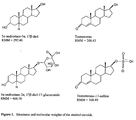
Figure 1 shows the chemical structures of (a) 5a androstane-3a,17β diol and (b) its glucuronide conjugate and (c) testosterone and (d) its sulfate conjugate; and -
Figure 2 shows the mass spectrometer traces of the hydropyrolysis products of the steroids and their conjugates shown inFigure 1 . - Steroids can be isolated from a urine samples using known techniques, which essentially involves a two-step isolation procedure, the first step comprising a solid phase extraction step using a solid phase binder that selectively binds to the steroid. Following elution from the solid phase, the steroid is subject to the second separation step using high performance liquid chromatography (HPLC), which provides either the individual steroid or a simple mixture comprising the steroid.
- The steroid obtained from the extraction and separation steps is subject to hydropyrolysis, as more fully described in Example 2, and then to gas chromatography (GC) to separate the hydropyrolysis products. The isolated product of interest is combusted (C) in the presence of oxygen to form carbon dioxide, which is analysed using an isotope ratio mass spectrometer (IRMS), which is a specialised mass spectrometer in which mass spectrometric methods are used to measure the relative abundance of isotopes in a given sample. The ratio of 13C relative to 12C is measured relative to a standard and the results are expressed in the form:

- The free steroids 5a- androstane-3a,17β diol and testosterone and their conjugates 5a- androstane-3a, 17β diol-17 glucuronide and testosterone- 17 sulfate shown in
Figure 1 were obtained from Makaira Limited (London, UK). The standard used in the calculation of d 13C was 5β cholane, which was obtained from the hydropyrolysis of 5β cholanic acid as described in a paper by Meredith et al, Org. Geochem. 2006; 37;1705 . - For each analyte, aliquots of the steroids were adsorbed on a bed formed of 200 mg of activated carbon on which was supported 5 wt % platinum. The steroids were subjected to hydropyrolysis at 300°C and 15 MPa of hydrogen as described in the paper by Sephton et al in Rapid Commun. Mass. Spectrom. 2005; 19:323 . Briefly, this procedure involves heating the samples resistively from 50°C to 100°C at 300°C per minute and then from 100°C to 300°C at 4°C per minute, under a hydrogen pressure of 15 MPa. To enable complete defunctionalization, an additional step of holding the reaction at 300°C for 8 minutes was included. A hydrogen sweep gas flow of 5 litres per minute, measured at ambient temperature and pressure, ensured that gaseous products were quickly removed from the reactor vessel. In contrast to the procedure described in the above article, the low temperatures employed ensured that the defunctionalized products, together with any unreacted material, remained adsorbed on the activated carbon in the reactor rather than being swept by the hydrogen flow into a dry ice cool silica trap. The products and the unreacted material were then recovered from the activated carbon with dichloromethane and methanol for subsequent analysis.
- A GC-C-IRMS (gas chromatography-combustion-isotope ratio mass spectrometry) unit (Delta+XP), (Thermo Finnigan) was used for the determination of compound-specific 13C/12C isotope ratios of the hydropyrolysis products of the free and conjugated steroids (the tests were performed in triplicate). Separation of the pyrolysis products via gas chromatography was performed on a silica capillary column (DB5, 30 m x 0.25 µm) with helium as the carrier gas and a temperature program of 180°C (hold for 2 minutes) to 300°C (hold for 5 minutes) at 8°C per minute.
- The carbon isotopic composition of 5a-androstane-3a,17β diol and testosterone are set out in Table 1, both compounds being measured both as free steroids and as conjugates using combustion (C)-IRMS (the measurements were taken from the samples supplied from the source specified above and did not involve hydropyrolysis). They were also subjected to hydropyrolysis to enable isotopic measurements using GC-C-IRMS. The errors marked in Table 1 are given at 1 s.
Table 1. Compound Type d13 (‰) Technique Testosterone 5a-androstane-3a,17β diol Free steroid -28.2 (±0.0) -30.6 (±0.1) C-IRMS Hydropyrolysis product of free steroid -28.4 (±0.3) -30.7(±0.2) GC-C-IRMS Conjugated steroid -28.1 (±0.0) -26.2 (±0.3) C-IRMS Hydropyrolysis product of conjugated steroid -28.2 (±0.3) -31.4 (±0.2) GC-C-IRMS - For hydropyrolysis to be used as a preparative technique in place of the current deconjugation and derivatization steps of conjugated steroids, it is necessary to show that the structures of both the conjugate and the free parent steroids are similar following hydropyrolysis and that there is no associated isotopic fractionation i.e. preferential reporting of one or other isotope as a result of hydropyrolysis.
- The results in Table 1 for free steroids 5a- androstane-3a,17β diol and testosterone and the hydropyrolysis products of the free steroids illustrate that the isotopic composition of the hydropyrolysis product is consistent with the starting material. No isotopic fractionation is evident for unconjugated steroids that pass through the hydropyrolysis procedure.
- The sulfated testosterone conjugate provides an opportunity to assess any carbon isotopic fractionation brought about by the deconjugation step. As the sulfate moiety contains no carbon, its isotopic composition can be measured directly by C-IRMS (as supplied without pyrolysis) and compared to the corresponding hydropyrolysis product by GC-C-IRMS. Any difference in the isotopic ratios observed following hydropyrolysis must be result of kinetic isotope effects associated with the hydropyrolysis step. From Table 1, it is evident that the hydropyrolysis products of testosterone sulfate are faithful expressions of the starting testosterone sulfate with no isotopic conversion resulting from the conversion of the conjugated steroids to the deconjugated hydrocarbon skeleton.
- In contrast to the sulfated conjugate, the 5a-androstane-3a, 17β diol glucuronide conjugate has additional carbon atoms in the glucuronide moiety. It has therefore different isotope ratio values for the conjugate and deconjugated forms. In biological systems, carbohydrates often exhibit 13C enrichment relative to other components and it is therefore no surprise that the glucuronide conjugate appears isotopically heavier than the deconjugated steroid following loss of the glucuronide sugar group.
-
Figure 2 shows that the hydropyrolysis products for the two conjugates appear to be structurally representative of their respective parent free steroid. This reveals that the hydropyrolysis procedure effectively removes the conjugate moiety and any functional groups attached to the steroid skeleton to leave the carbon skeleton (including the carbon chain derived from any functional groups attached to the skeleton). The defunctionalization of the conjugate occurs irrespective of whether it is a glucuronide or a sulfate moiety. - The use of the supported platinum catalyst in place of the molybdenum catalyst used in the article by Sephton et al Rapid Commun. Mass. Spectrom. 2005; 19:3339 results in less rearrangement and superior peak shapes.
Claims (12)
1. A method of measuring the relative ratios of 13C to 12C in an organic compound using compound-specific carbon isotope analysis, which method comprises:
subjecting a sample of the compound to hydropyrolysis in the presence of a transition metal catalyst, preferably platinum but also including palladium, rhodium and iridium, under a hydrogen atmosphere at a temperature below 350°C,
subjecting the hydrocarbon product released via hydropyrolysis to gas chromatography to provide a purified sample of the hydropyrolysed product,
combusting the hydropyrolysed product to form carbon dioxide and
submitting the resulting carbon dioxide to mass spectrometry to obtain the relative ratios of 13C to 12C in the carbon dioxide.
2. A method as claimed in claim 1, wherein the compound that is submitted to hydropyrolysis is part of a mixture of compounds.
3. A method as claimed in claims 1 or 2, wherein the compound has a hydrocarbon skeleton augmented by heteroatom-containing functional groups including acids, alcohols and ketones.
4. A method as claimed in claims 3, wherein the hydrocarbon skeleton is one present in lipids, fatty acids, steroids and metabolised polycyclic aromatic hydrocarbons.
5. A method as claimed in any preceding claim, wherein the compound is conjugated with a sulfate or glucuronide moiety.
6. A method as claimed in claim 5, which includes the step of isolating the conjugated compound from urine.
7. A method as claimed in any preceding claim, wherein the hydropyrolysis reaction is conducted in the presence of a material that adsorbs the hydropyrolysis products at the reaction temperature and the method further comprises desorbing the hydropyrolysis products following the completion of the hydropyrolysis step.
7. A method as claimed in claim 6, wherein the adsorbent is selected from one of the following classes: activated carbon, silica, titania, alumina and zirconia.
8. A method as claimed in claim 6, wherein the transitional metal catalyst, preferably platinum, is supported on the adsorbent.
9. A method as claimed in any preceding claims wherein the catalyst is a supported catalyst and the total content of the catalyst in the supported catalyst is from 1 to 20% by weight.
10. A method as claimed in any preceding claim, wherein the catalyst is a Group VIII transition metal, preferably platinum but also including palladium, rhodium and iridium.
11. A method as claimed in any preceding claim, wherein the catalyst is in elemental (metallic) form.
Priority Applications (2)
| Application Number | Priority Date | Filing Date | Title |
|---|---|---|---|
| EP08252710A EP2157434A1 (en) | 2008-08-15 | 2008-08-15 | Preparation of biological samples for compound-specific carbon isotope analysis |
| PCT/GB2009/001980 WO2010018375A1 (en) | 2008-08-15 | 2009-08-12 | Preparation of biological samples for compound-specific carbon isotope analysis |
Applications Claiming Priority (1)
| Application Number | Priority Date | Filing Date | Title |
|---|---|---|---|
| EP08252710A EP2157434A1 (en) | 2008-08-15 | 2008-08-15 | Preparation of biological samples for compound-specific carbon isotope analysis |
Publications (1)
| Publication Number | Publication Date |
|---|---|
| EP2157434A1 true EP2157434A1 (en) | 2010-02-24 |
Family
ID=40219999
Family Applications (1)
| Application Number | Title | Priority Date | Filing Date |
|---|---|---|---|
| EP08252710A Withdrawn EP2157434A1 (en) | 2008-08-15 | 2008-08-15 | Preparation of biological samples for compound-specific carbon isotope analysis |
Country Status (2)
| Country | Link |
|---|---|
| EP (1) | EP2157434A1 (en) |
| WO (1) | WO2010018375A1 (en) |
Families Citing this family (1)
| Publication number | Priority date | Publication date | Assignee | Title |
|---|---|---|---|---|
| CN105606750A (en) * | 2016-01-06 | 2016-05-25 | 大连海事大学 | Aquatic product producing area tracing method based on fatty acid carbon stable isotopes |
-
2008
- 2008-08-15 EP EP08252710A patent/EP2157434A1/en not_active Withdrawn
-
2009
- 2009-08-12 WO PCT/GB2009/001980 patent/WO2010018375A1/en not_active Ceased
Non-Patent Citations (9)
| Title |
|---|
| ANALYTICAL CHEMISTRY INSIGHTS, vol. 2, 2007, pages 37 - 42 |
| MEREDITH ET AL., ORG. GEOCHEM., vol. 37, 2006, pages 1705 |
| MEREDITH ET AL: "The use of model compounds to investigate the release of covalently bound biomarkers via hydropyrolysis", ORG GEOCHEM, vol. 37, no. 12, 8 December 2006 (2006-12-08), pages 1705 - 1714, XP005797200 * |
| SEPHTON ET AL., ANALYTICAL CHEMISTRY INSIGHTS |
| SEPHTON ET AL., RAPID COMMUN. MASS. SPECTROM., vol. 19, 2005, pages 323 |
| SEPHTON ET AL., RAPID COMMUN. MASS. SPECTROM., vol. 19, 2005, pages 323 - 325 |
| SEPHTON ET AL., RAPID COMMUN. MASS. SPECTROM., vol. 19, 2005, pages 3339 |
| SEPHTON ET AL., RAPID COMMUNICATIONS IN MASS. SPECTROMETRY, vol. 19, pages 3339 - 3342 |
| SEPHTON M A ET AL: "Biomedical and forensic applications of combined catalytic hydrogenation-stable isotope ratio analysis", ANAL CHEM INSIGHTS, vol. 2, 2007, pages 37 - 42, XP002510341 * |
Also Published As
| Publication number | Publication date |
|---|---|
| WO2010018375A1 (en) | 2010-02-18 |
Similar Documents
| Publication | Publication Date | Title |
|---|---|---|
| JP6276435B2 (en) | Mass spectrometry of steroidal compounds in complex samples | |
| De la Torre et al. | 13C/12C isotope ratio MS analysis of testosterone, in chemicals and pharmaceutical preparations | |
| Adaway et al. | Liquid chromatography tandem mass spectrometry in the clinical laboratory | |
| Rose-Sallin et al. | Quantification of cholesterol oxidation products in milk powders using [2H7] cholesterol to monitor cholesterol autoxidation artifacts | |
| US9921231B2 (en) | Mass spectrometry assay for congenital adrenal hyperplasia | |
| US20120270327A1 (en) | Methods and Systems for Determining the Presence or Amount of Delta 5 Steroid Compounds in a Sample | |
| US9851368B2 (en) | Kit and method for quantitative detection of steroids | |
| JP2005512061A (en) | Sphingolipid internal standard | |
| Zaikin et al. | Derivatization in mass spectrometry—6. Formation of mixed derivatives of polyfunctional compounds | |
| Matabosch et al. | Detection and characterization of triamcinolone acetonide metabolites in human urine by liquid chromatography/tandem mass spectrometry after intramuscular administration | |
| Bleau et al. | Desmosteryl sulfate and desmosterol in hamster epididymal spermatozoa | |
| Morin et al. | Rapid microanalysis of cholesterol in bile and serum by gas chromatography | |
| Miyakoda et al. | Comparison of conjugative activity, conversion of bisphenol A to bisphenol A glucuronide, in fetal and mature male rat | |
| WO2010018375A1 (en) | Preparation of biological samples for compound-specific carbon isotope analysis | |
| de la Torre et al. | Detection of formestane abuse by mass spectrometric techniques | |
| CN102445510A (en) | LC-MC method used for determining NNK metabolites in liver microsomes | |
| Jim et al. | Effects of hydrolysis on the δ13C values of individual amino acids derived from polypeptides and proteins | |
| Gaskell et al. | Gas chromatography mass spectrometry of trimethylsilyl ethers of sidechain hydroxylated Δ4‐3‐ketosteroids. Long range trimethylsilyl group migration under electron impact | |
| Shackleton et al. | Midgestational maternal urine steroid markers of fetal Smith–Lemli–Opitz (SLO) syndrome (7-dehydrocholesterol 7-reductase deficiency) | |
| Caboni et al. | High performance liquid chromatographic separation of cholesterol oxidation products | |
| Homoki et al. | Characterization of the major steroids present in amniotic fluid obtained between the 15th and 17th weeks of gestation | |
| Stellaard et al. | Measurement of isotope ratios in organic compounds at picomole quantities by capillary gas chromatography/quadrupole electron impact mass spectrometry | |
| Houghton et al. | Development of a gas chromatographic—mass spectrometric method using multiple analytes for the confirmatory analysis of anabolic steroid residues in horse urine: II. Detection of administration of 19-nortestosterone phenylpropionate to equine male castrates and fillies | |
| CN118980768B (en) | Glyceride and analysis method of isomer thereof | |
| Podolskiy et al. | Determination of the Origin of 19-Norandrosterone in Urine by Gas Chromatography–Isotope-Ratio Mass Spectrometry for Doping Control |
Legal Events
| Date | Code | Title | Description |
|---|---|---|---|
| PUAI | Public reference made under article 153(3) epc to a published international application that has entered the european phase |
Free format text: ORIGINAL CODE: 0009012 |
|
| AK | Designated contracting states |
Kind code of ref document: A1 Designated state(s): AT BE BG CH CY CZ DE DK EE ES FI FR GB GR HR HU IE IS IT LI LT LU LV MC MT NL NO PL PT RO SE SI SK TR |
|
| AX | Request for extension of the european patent |
Extension state: AL BA MK RS |
|
| AKY | No designation fees paid | ||
| REG | Reference to a national code |
Ref country code: DE Ref legal event code: 8566 |
|
| STAA | Information on the status of an ep patent application or granted ep patent |
Free format text: STATUS: THE APPLICATION IS DEEMED TO BE WITHDRAWN |
|
| 18D | Application deemed to be withdrawn |
Effective date: 20100825 |