EP2151820A1 - Method for bias compensation for cepstro-temporal smoothing of spectral filter gains - Google Patents
Method for bias compensation for cepstro-temporal smoothing of spectral filter gains Download PDFInfo
- Publication number
- EP2151820A1 EP2151820A1 EP08013121A EP08013121A EP2151820A1 EP 2151820 A1 EP2151820 A1 EP 2151820A1 EP 08013121 A EP08013121 A EP 08013121A EP 08013121 A EP08013121 A EP 08013121A EP 2151820 A1 EP2151820 A1 EP 2151820A1
- Authority
- EP
- European Patent Office
- Prior art keywords
- gain function
- spectral
- speech
- bias
- cepstro
- Prior art date
- Legal status (The legal status is an assumption and is not a legal conclusion. Google has not performed a legal analysis and makes no representation as to the accuracy of the status listed.)
- Granted
Links
Images


Classifications
-
- H—ELECTRICITY
- H04—ELECTRIC COMMUNICATION TECHNIQUE
- H04R—LOUDSPEAKERS, MICROPHONES, GRAMOPHONE PICK-UPS OR LIKE ACOUSTIC ELECTROMECHANICAL TRANSDUCERS; ELECTRIC HEARING AIDS; PUBLIC ADDRESS SYSTEMS
- H04R25/00—Electric hearing aids
- H04R25/50—Customised settings for obtaining desired overall acoustical characteristics
- H04R25/505—Customised settings for obtaining desired overall acoustical characteristics using digital signal processing
-
- G—PHYSICS
- G10—MUSICAL INSTRUMENTS; ACOUSTICS
- G10L—SPEECH ANALYSIS TECHNIQUES OR SPEECH SYNTHESIS; SPEECH RECOGNITION; SPEECH OR VOICE PROCESSING TECHNIQUES; SPEECH OR AUDIO CODING OR DECODING
- G10L21/00—Speech or voice signal processing techniques to produce another audible or non-audible signal, e.g. visual or tactile, in order to modify its quality or its intelligibility
- G10L21/02—Speech enhancement, e.g. noise reduction or echo cancellation
- G10L21/0208—Noise filtering
-
- H—ELECTRICITY
- H04—ELECTRIC COMMUNICATION TECHNIQUE
- H04R—LOUDSPEAKERS, MICROPHONES, GRAMOPHONE PICK-UPS OR LIKE ACOUSTIC ELECTROMECHANICAL TRANSDUCERS; ELECTRIC HEARING AIDS; PUBLIC ADDRESS SYSTEMS
- H04R2225/00—Details of deaf aids covered by H04R25/00, not provided for in any of its subgroups
- H04R2225/43—Signal processing in hearing aids to enhance the speech intelligibility
Definitions
- the present invention relates to a method for compensating the bias for cepstro-temporal smoothing of filter gain functions. Specifically, the bias compensation is only dependent on the lower limit of the spectral filter gain function. Moreover, the present invention relates to speech enhancement algorithms and hearing aids.
- DFT short-time discrete Fourier transform
- a drawback of DFT based speech enhancement algorithms is that they yield unnatural sounding structured residual noise, often referred to as musical noise.
- Music noise occurs, e.g. if in a noise-only signal frame single Fourier coefficients are not attenuated due to estimation errors, while all other coefficients are attenuated.
- the residual isolated spectral peaks in the processed spectrum correspond to sinusoids in the time domain and are perceived as tonal artifacts of one frame duration.
- speech enhancement algorithms operate in non-stationary noise environments unnatural sounding residual noise remains a challenge.
- CTS is applied to a maximum likelihood estimate of the speech power to replace the well-known decision-directed a-priori signal-to-noise ratio (SNR) estimator [4]. It is shown that a CTS of the speech power may yield consistent improvements in terms of segmental SNR, noise reduction and speech distortion if a bias correction is applied.
- SNR signal-to-noise ratio
- a method for speech enhancement comprises a method according to the invention.
- a computer program product with a computer program which comprises software means for executing a method according to one of the preceding claims, if the computer program is executed in a control unit.
- the speech power estimation based on CTS yields consistent improvements in terms of segmental SNR, noise reduction, and speech distortion. This can be attributed to the fact that in the cepstral domain speech specific properties can be taken into account.
- Hearing aids are wearable hearing devices used for supplying hearing impaired persons.
- different types of hearing aids like behind-the-ear hearing aids and in-the-ear hearing aids, e.g. concha hearing aids or hearing aids completely in the canal.
- the hearing aids listed above as examples are worn at or behind the external ear or within the auditory canal.
- the market also provides bone conduction hearing aids, implantable or vibrotactile hearing aids. In these cases the affected hearing is stimulated either mechanically or electrically.
- hearing aids have an input transducer, an amplifier and an output transducer as essential component.
- the input transducer usually is an acoustic receiver, e.g. a microphone, and/or an electromagnetic receiver, e.g. an induction coil.
- the output transducer normally is an electroacoustic transducer like a miniature speaker or an electromechanical transducer like a bone conduction transducer.
- the amplifier usually is integrated into a signal processing unit.
- FIG. 1 Such principle structure is shown in figure 1 for the example of a behind-the-ear hearing aid.
- One or more microphones 2 for receiving sound from the surroundings are installed in a hearing aid housing 1 for wearing behind the ear.
- a signal processing unit 3 being also installed in the hearing aid housing 1 processes and amplifies the signals from the microphone.
- the output signal of the signal processing unit 3 is transmitted to a receiver 4 for outputting an acoustical signal.
- the sound will be transmitted to the ear drum of the hearing aid user via a sound tube fixed with an otoplasty in the auditory canal.
- the hearing aid and specifically the signal processing unit 3 are supplied with electrical power by a battery 5 also installed in the hearing aid housing 1.
- a noisy time domain speech signal is segmented into short frames, e.g. of length 32 ms. Each signal segment is windowed, e.g. with a Hann window, and transformed into the Fourier domain.
- the resulting complex spectral representation Y k (l) is a function of the spectral frequency index k ⁇ [0,K] and the segment index 1.
- the noise signal, N k (l) may be environmental noise as well as competing talkers as in the case of speaker separation.
- the aim of speech enhancement algorithms is to estimate the clean speech signal S k (l) given the noisy observation Y k (l). This is often achieved via a multiplicative gain function G k (l).
- Cepstro-temporal smoothing is based on the idea that in the cepstral domain, speech is represented by few coefficients, which can be robustly estimated.
- the lower cepstral coefficients q ⁇ [0, q low ] with, preferably, q low ⁇ K /2 represent the spectral envelope of ⁇ k ( l ).
- the spectral envelope is determined by the transfer function of the vocal tract.
- the higher cepstral coefficients q low ⁇ q ⁇ K /2 represent the fine-structure of ⁇ k ( l ).
- the fine-structure is caused by the excitation of the vocal tract.
- CTS allows for a reduction of spectral outliers due to estimation errors, while the speech characteristics are preserved.
- cepstro-temporally smoothed parameters are marked by a bar, e.g. G for the cepstro-temporally smoothed spectral filter gain.
- G max ⁇ G',G min ⁇ .
- G max ⁇ G',G min ⁇ .
- the choice of G min is a trade-off between speech distortion, musical noise and noise reduction.
- a large G min masks musical noise and reduces speech distortions at the cost of less noise reduction.
- the aim of the invention is to derive a general bias correction for CTS of arbitrary gain functions. We thus assume a uniform distribution of G' between 0 and 1, independent of its derivation and the underlying distribution of the speech and noise spectral coefficients.
Landscapes
- Engineering & Computer Science (AREA)
- Acoustics & Sound (AREA)
- Physics & Mathematics (AREA)
- Signal Processing (AREA)
- Health & Medical Sciences (AREA)
- Human Computer Interaction (AREA)
- Audiology, Speech & Language Pathology (AREA)
- Quality & Reliability (AREA)
- Computational Linguistics (AREA)
- Multimedia (AREA)
- General Health & Medical Sciences (AREA)
- Neurosurgery (AREA)
- Otolaryngology (AREA)
- Circuit For Audible Band Transducer (AREA)
Abstract
Description
- The present invention relates to a method for compensating the bias for cepstro-temporal smoothing of filter gain functions. Specifically, the bias compensation is only dependent on the lower limit of the spectral filter gain function. Moreover, the present invention relates to speech enhancement algorithms and hearing aids.
- In the present document reference will be made to the following documents:
- [1] C. Breithaupt, T. Gerkmann, and R. Martin, "Cepstral smoothing of spectral filter gains for speech enhancement without musical noise," IEEE Signal Processing Letters, vol. 14, no. 12, pp. 1036-1039, Dec. 2007.
- [2] C. Breithaupt, T. Gerkmann, and R. Martin, "A novel a priori SNR estimation approach based on selective cepstro-temporal smoothing," IEEE ICASSP, pp. 4897-4900, Apr. 2008.
- [3] N. Madhu, C. Breithaupt, and R. Martin, "Temporal smoothing of spectral masks in the cepstral domain for speech separation," IEEE ICASSP, pp. 45-48, Apr. 2008.
- [4] Y. Ephraim and D.Malah, "Speech enhancement using a minimum mean-square error short-time spectral amplitude estimator," IEEE Trans. on Acoustics, Speech and Signal Proc., vol. 32, no. 6, pp. 1109-1121, Dec. 1984.
- [5] A. M. Noll, "Cepstrum pitch estimation," Journal of the Acoustical Society of America, vol. 41, pp. 293-309, Feb. 1967.
- [6] D. Malah, R. Cox, and A. Accardi, "Tracking speech-presence uncertainty to improve speech enhancement in non-stationary noise environments," IEEE ICASSP, vol. 2, pp. 789-792, 1999.
- [7] P. C. Loizou, Speech Enhancement - Theory and Practice. CRC Press, 2007.
- [8] T. Lotter and P. Vary, "Speech enhancement by MAP spectral amplitude estimation using a super-gaussian speech model," EURASIP Journal of Applied Signal Processing, vol. 2005, no. 7, pp. 1110-1126, 2005.
- [9] J. S. Garofolo, "DARPA TIMIT acoustic-phonetic speech database," National Institute of Standards and Technology (NIST), 1988.
- Many successful speech enhancement algorithms work in the short-time discrete Fourier transform (DFT) domain. A drawback of DFT based speech enhancement algorithms is that they yield unnatural sounding structured residual noise, often referred to as musical noise. Musical noise occurs, e.g. if in a noise-only signal frame single Fourier coefficients are not attenuated due to estimation errors, while all other coefficients are attenuated. The residual isolated spectral peaks in the processed spectrum correspond to sinusoids in the time domain and are perceived as tonal artifacts of one frame duration. Especially when speech enhancement algorithms operate in non-stationary noise environments unnatural sounding residual noise remains a challenge.
- Recently, a selective temporal smoothing of parameters of speech enhancement algorithms in the cepstral domain has been proposed [1, 2, 3] that reduces residual spectral peaks without affecting the speech signal. In [1, 3] the algorithms based on cepstro-temporal smoothing (CTS) are compared to state-of-the-art speech enhancement algorithms in terms of listening experiments. In [1] it is shown that CTS yields an output signal of higher quality especially in babble noise, and that the number of spectral outliers in the processed noise is less than with state-of-the-art algorithms. In [3] it is shown that CTS yields an output signal of increased quality when applied as a post processor in a speaker separation task. However; due to the non-linear log-transform inherent in the cepstral transform, a temporal smoothing yields a certain bias as compared to a smoothing in the linear domain. This bias results in an output signal with reduced power. While the reduced signal power has only a minor influence on the results of listening experiments, instrumental measures are often sensitive to a change in signal power. Thus, instrumental measures may indicate a reduced signal quality if CTS is applied, while listening experiments indicate a clear increase in quality.
- In [2] CTS is applied to a maximum likelihood estimate of the speech power to replace the well-known decision-directed a-priori signal-to-noise ratio (SNR) estimator [4]. It is shown that a CTS of the speech power may yield consistent improvements in terms of segmental SNR, noise reduction and speech distortion if a bias correction is applied.
- It is the object of the present invention to provide a method avoiding instrumental measures indicating a reduced signal quality if CTS is applied while listening experiments indicate a clear increase in quality.
- According to the present invention the above object is solved by a method for modification of a cepstro-temporally smoothed gain function (
G k (l)) of a gain function (G) resulting in a bias compensated spectral gain function (G̃k (l)) by multiplying said cepstro-temporally smoothed gain function (G k (l)) with the exponent of a bias correction value (κ G ),
whereas said bias correction value (κ G ) is calculated as the difference of the natural logarithm of the expected value (mathematical expectation E{}) of said gain function (G) and the expected value (E{}) of the natural logarithm of said gain function (G),
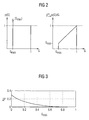
- According to a further preferred embodiment said gain function may have a probability distribution (p(G)) according to
figure 2 and whereas the bias correction value (κ G ) can be dependent on a smallest value (Gmin) of said gain function (G) and may be calculated as:
- Preferably, a method for speech enhancement comprises a method according to the invention.
- Furthermore, there is provided a computer program product with a computer program which comprises software means for executing a method according to one of the preceding claims, if the computer program is executed in a control unit.
- Finally, there is provided a hearing aid with a digital signal processor for carrying out a method according to the present invention
- If a bias correction according to the invention is applied, the speech power estimation based on CTS yields consistent improvements in terms of segmental SNR, noise reduction, and speech distortion. This can be attributed to the fact that in the cepstral domain speech specific properties can be taken into account.
- The above described methods are preferably employed for the speech enhancement of hearing aids. However, the present application is not limited to such use only. The described methods can rather be utilized in connection with other audio devices.
- More specialties and benefits of the present invention are explained in more detail by means of schematic drawings showing in:
- Figure 1:
- the principle structure of a hearing aid,
- Figure 2:
- the assumed PDF of the gain function and its cumulative distribution,
- Figure 3:
- the bias correction for a CTS of the filter gain, as function of the lower limit of the gain function and
- Figure 4:
- averages of segmental frequency weighted SNR, Itakura-Saito distance and noise reduction for 320 TIMIT sentences and white stationary Gaussian noise, speech shaped noise and babble noise.
- Since the present application is preferably applicable to hearing aids, such devices shall be briefly introduced in the next two paragraphs together with
figure 1 . - Hearing aids are wearable hearing devices used for supplying hearing impaired persons. In order to comply with the numerous individual needs, different types of hearing aids, like behind-the-ear hearing aids and in-the-ear hearing aids, e.g. concha hearing aids or hearing aids completely in the canal, are provided. The hearing aids listed above as examples are worn at or behind the external ear or within the auditory canal. Furthermore, the market also provides bone conduction hearing aids, implantable or vibrotactile hearing aids. In these cases the affected hearing is stimulated either mechanically or electrically.
- In principle, hearing aids have an input transducer, an amplifier and an output transducer as essential component. The input transducer usually is an acoustic receiver, e.g. a microphone, and/or an electromagnetic receiver, e.g. an induction coil. The output transducer normally is an electroacoustic transducer like a miniature speaker or an electromechanical transducer like a bone conduction transducer. The amplifier usually is integrated into a signal processing unit. Such principle structure is shown in
figure 1 for the example of a behind-the-ear hearing aid. One ormore microphones 2 for receiving sound from the surroundings are installed in ahearing aid housing 1 for wearing behind the ear. Asignal processing unit 3 being also installed in thehearing aid housing 1 processes and amplifies the signals from the microphone. The output signal of thesignal processing unit 3 is transmitted to areceiver 4 for outputting an acoustical signal. Optionally, the sound will be transmitted to the ear drum of the hearing aid user via a sound tube fixed with an otoplasty in the auditory canal. The hearing aid and specifically thesignal processing unit 3 are supplied with electrical power by abattery 5 also installed in thehearing aid housing 1. - For speech enhancement in the short-time DFT-domain, a noisy time domain speech signal is segmented into short frames, e.g. of length 32 ms. Each signal segment is windowed, e.g. with a Hann window, and transformed into the Fourier domain. The resulting complex spectral representation Yk(l) is a function of the spectral frequency index k ∈ [0,K] and the
segment index 1. The spectral coefficients of the noise signal Nk(l) are assumed additive to the speech spectral coefficients Sk(l), i.e. Yk(l)=Sk(l)+Nk(l). Note that the noise signal, Nk(l), may be environmental noise as well as competing talkers as in the case of speaker separation. The aim of speech enhancement algorithms is to estimate the clean speech signal Sk(l) given the noisy observation Yk(l). This is often achieved via a multiplicative gain function Gk(l). An estimate Ŝk (l) of the clean speech spectral coefficients is thus computed as
- Cepstro-temporal smoothing (CTS) is based on the idea that in the cepstral domain, speech is represented by few coefficients, which can be robustly estimated. A cepstral transform φq (l) of some positive, real valued spectral parameter Φ k (l) of the speech enhancement algorithm (like the estimated speech periodogram or the gain function) is given by

where q ∈ [0,K] is the cepstral quefrency index, and IDFT{· } the inverse DFT. Note that as Φ k (l) is real-valued φq(l) is symmetric with respect to q = K/2. Therefore, in the following only the part q ∈ [0,K/2] is discussed. - The lower cepstral coefficients q ∈ [0, q low] with, preferably, q low ∈ K/2 represent the spectral envelope of Φ k (l). For speech signals, the spectral envelope is determined by the transfer function of the vocal tract. The higher cepstral coefficients q low < q < K/2 represent the fine-structure of Φ k (l). For speech signals, the fine-structure is caused by the excitation of the vocal tract. For voiced speech, the excitation is mainly represented by a dominant peak at q 0 = fs /f 0, with f 0 the fundamental frequency. This fundamental frequency f 0 can be found by a maximum search in q ∈ [q low, K/2] as proposed in [5]. Thus, in the cepstral domain voiced speech can be represented by the set

- If Φ k (l) is an estimated parameter, like the estimated speech periodogram, or the spectral gain function, its fine-structure is also influenced by spectral outliers caused by estimation errors. Therefore, a recursive temporal smoothing is now applied on φq(l) such that only little smoothing is applied to those cepstral coefficients, q ∈ Q that are dominated by speech and strong smoothing to all other coefficients:

with smoothing parameters α q
- After the recursive smoothing
φ q (l) is transformed to the spectral domain to achieve the cepstro-temporally smoothed spectral parameterΦ k (l), as
- CTS allows for a reduction of spectral outliers due to estimation errors, while the speech characteristics are preserved. In the following cepstro-temporally smoothed parameters are marked by a bar, e.g.
G for the cepstro-temporally smoothed spectral filter gain. - In [1] and [3] CTS of the spectral gain function is proposed (i.e. Φ k (l) = Gk(l) in equation (2)) to reduce spectral outliers that do not correspond to speech but to estimation errors. Smoothing the gain function for reducing spectral outliers is a very flexible technique. It can be applied to any speech enhancement algorithm where the output signal is gained via a multiplicative gain function as in equation (1). This includes noise reduction [1] and source separation [3].
- In speech enhancement algorithms the gain function is usually bound to be larger than a certain value Gmin [6]. Therefore, after the derivation of a gain function G', a constrained gain G is computed as G = max{G',Gmin}. The choice of Gmin is a trade-off between speech distortion, musical noise and noise reduction. A large Gmin masks musical noise and reduces speech distortions at the cost of less noise reduction. The aim of the invention is to derive a general bias correction for CTS of arbitrary gain functions. We thus assume a uniform distribution of G' between 0 and 1, independent of its derivation and the underlying distribution of the speech and noise spectral coefficients. To construct the Probability Density Function PDF of the constrained G we map

figure 2 this assumed PDF p(G) of the gain function G is shown on the left and its cumulative distribution is shown on the right hand side. - Since the values of the gain function are limited in their dynamic range (Gmin ≤ G ≤ 1), the non-linear compression via the log-function in equation (2) is not mandatory, i.e. the principle behavior of the cepstral coefficients stays the same with or without the log-function. However, in [1] it is noted, that incorporating the log-function may help reducing noise shaping effects that may arise due to the temporal smoothing. We argue that the recursive smoothing in equation (4) can be interpreted as an approximation of the expected value operator E(). However, if the log-function is applied in equation (2) the averaging corresponds to a geometric mean rather than an arithmetic mean. Therefore, CTS changes the mean of the gain function, as in general E{G} ≠ exp(E{log(G)}). If the distribution of G is known the bias correction κ G can be determined and accounted as

- For the distribution given in
figure 2 the expected value E{G} of the gain function G can be determined as:
and the expected value of the log-gain function results in
- With (7) the bias correction κ G thus results in:

- We can now apply a bias correction κ G to a cepstro-temporally smoothed gain function
G k (l) as
- In
Figure 3 the bias correction κ G is plotted as a function of G min. Note that, as small values of G have a strong influence on the difference between geometric and arithmetic mean, the bias correction κ G is larger the smaller G min. The cepstro-temporally smoothed and bias compensated spectral gain G̃k (l) can now be applied to the noisy speech spectrum as in equation (1). - As in [1] we compare CTS now to the softgain method of [6]. We use the same smoothing constants for the softgain method and CTS as used for the listening tests in [1]. There, the smoothing constants were chosen so that both methods do not produce musical noise in stationary noise. As in [1] we set the lower limit on the gain function to 20 log10(G min) = -15 dB. In [1] listening tests indicated a clear preference for CTS. In the following we evaluate the algorithms in terms of instrumental measures. We measure the SNR in terms of the frequency weighted segmental SNR (FW-SNR) [7], speech distortion in terms of the Itakura-Saito distance [7], and noise reduction according to [8]. We process 320 speech samples of [9, dialect region 6] that sum up to approximately 15 minutes of fluent, phonetically balanced conversational speech of both male and female speakers. The speech samples are disturbed by several noise types.
- The results are presented in
figure 4 for input segmental SNRs between -5 and 15 dB. For CTS we present results without a bias-correction (CTSnoCorr), with the bias correction (CTS-corr), and when the cepstrum is computed without the log function in equitation (2) (CTS-noLog). As for CTS-noLog the temporal smoothing is done in the linear domain, a bias-correction is not necessary. The results are given infigure 4 . The FW-SNR and the Itakura-Saito distance indicate a decreased performance when comparing CTS-noCorr to the softgain method. This decrease of performance can be attributed to the bias that occurs due to the temporal smoothing in the log-domain. - We see that the decrease in performance is compensated with the proposed bias correction of equation (10), as CTS-noLog, CTS-corr, and the softgain method yield similar results in terms of FW-SNR, Itakura-Saito measure, and, for stationary noise, noise reduction. Further it can be seen that CTS is very effective in non-stationary noise. For babble noise CTS-corr and CTS-noLog achieve a higher noise reduction than the softgain method while the SNR and the speech distortion are virtually the same. This can be attributed to a successful elimination of spectral outliers caused by babble noise. Thus, even in babble noise, CTS yields an output signal without musical noise. In [1] the successful elimination of spectral outliers has been shown via statistical analyses, and listening tests indicated a residual noise of higher perceived quality.
Claims (6)
- Method for modification of a cepstro-temporally smoothed gain function (
G k (l)) of a gain function (G) resulting in a bias compensated spectral gain function (G̃k (l)) by:- calculating the exponent of a bias correction value (κ G ),- multiplying said cepstro-temporally smoothed gain function (whereas said bias correction value (κ G ) is calculated as the difference of the natural logarithm of the expected value (mathematical expectation E{}) of said gain function (G) and the expected value (E{}) of the natural logarithm of said gain function (G), using the equationG k (l)) with said exponent of the bias correction value (κ G ), using the equation

- Method according to claim 1, whereas said gain function has a probability distribution (p(G)) according to figure 2 and whereas the bias correction value (κ G ) is dependent on a smallest value (Gmin) of said gain function (G), using the equation

- Method for estimation of clean speech spectral coefficients of a noisy signal (Yk(l)) according to claim 1 or 2, using the equation

with Ŝk (l) as an estimate of the clean speech spectral coefficients, G̃k (l) the bias compensated gain function and Yk(l) the noisy observation of a signal. - Method for speech enhancement with a method according to one of the previous claims.
- Computer program product with a computer program which comprises software means for executing a method according to one of the preceding claims, if the computer program is executed in a control unit.
- Hearing aid with a digital signal processer for carrying out a method according to one of the previous claims.
Priority Applications (3)
| Application Number | Priority Date | Filing Date | Title |
|---|---|---|---|
| EP08013121A EP2151820B1 (en) | 2008-07-21 | 2008-07-21 | Method for bias compensation for cepstro-temporal smoothing of spectral filter gains |
| DK08013121.2T DK2151820T3 (en) | 2008-07-21 | 2008-07-21 | Method of bias compensation for cepstro-temporal smoothing of spectral filter gain |
| US12/504,887 US8271271B2 (en) | 2008-07-21 | 2009-07-17 | Method for bias compensation for cepstro-temporal smoothing of spectral filter gains |
Applications Claiming Priority (1)
| Application Number | Priority Date | Filing Date | Title |
|---|---|---|---|
| EP08013121A EP2151820B1 (en) | 2008-07-21 | 2008-07-21 | Method for bias compensation for cepstro-temporal smoothing of spectral filter gains |
Publications (2)
| Publication Number | Publication Date |
|---|---|
| EP2151820A1 true EP2151820A1 (en) | 2010-02-10 |
| EP2151820B1 EP2151820B1 (en) | 2011-10-19 |
Family
ID=39947361
Family Applications (1)
| Application Number | Title | Priority Date | Filing Date |
|---|---|---|---|
| EP08013121A Not-in-force EP2151820B1 (en) | 2008-07-21 | 2008-07-21 | Method for bias compensation for cepstro-temporal smoothing of spectral filter gains |
Country Status (3)
| Country | Link |
|---|---|
| US (1) | US8271271B2 (en) |
| EP (1) | EP2151820B1 (en) |
| DK (1) | DK2151820T3 (en) |
Families Citing this family (7)
| Publication number | Priority date | Publication date | Assignee | Title |
|---|---|---|---|---|
| DK2463856T3 (en) | 2010-12-09 | 2014-09-22 | Oticon As | Method of reducing artifacts in algorithms with rapidly varying amplification |
| US9173025B2 (en) | 2012-02-08 | 2015-10-27 | Dolby Laboratories Licensing Corporation | Combined suppression of noise, echo, and out-of-location signals |
| US8712076B2 (en) | 2012-02-08 | 2014-04-29 | Dolby Laboratories Licensing Corporation | Post-processing including median filtering of noise suppression gains |
| CN103325380B (en) | 2012-03-23 | 2017-09-12 | 杜比实验室特许公司 | Gain for signal enhancing is post-processed |
| CN108962275B (en) * | 2018-08-01 | 2021-06-15 | 电信科学技术研究院有限公司 | Music noise suppression method and device |
| CN113241089B (en) * | 2021-04-16 | 2024-02-23 | 维沃移动通信有限公司 | Speech signal enhancement method, device and electronic equipment |
| CN114495961B (en) * | 2021-12-28 | 2025-08-08 | 浙江大华技术股份有限公司 | Speech noise reduction method, device, electronic device, and computer-readable storage medium |
Family Cites Families (5)
| Publication number | Priority date | Publication date | Assignee | Title |
|---|---|---|---|---|
| US20020002455A1 (en) * | 1998-01-09 | 2002-01-03 | At&T Corporation | Core estimator and adaptive gains from signal to noise ratio in a hybrid speech enhancement system |
| EP1760696B1 (en) * | 2005-09-03 | 2016-02-03 | GN ReSound A/S | Method and apparatus for improved estimation of non-stationary noise for speech enhancement |
| US7774396B2 (en) * | 2005-11-18 | 2010-08-10 | Dynamic Hearing Pty Ltd | Method and device for low delay processing |
| FR2898209B1 (en) * | 2006-03-01 | 2008-12-12 | Parrot Sa | METHOD FOR DEBRUCTING AN AUDIO SIGNAL |
| US8005666B2 (en) * | 2006-10-24 | 2011-08-23 | National Institute Of Advanced Industrial Science And Technology | Automatic system for temporal alignment of music audio signal with lyrics |
-
2008
- 2008-07-21 DK DK08013121.2T patent/DK2151820T3/en active
- 2008-07-21 EP EP08013121A patent/EP2151820B1/en not_active Not-in-force
-
2009
- 2009-07-17 US US12/504,887 patent/US8271271B2/en not_active Expired - Fee Related
Non-Patent Citations (11)
| Title |
|---|
| A. M. NOLL: "Cepstrum pitch estimation", JOURNAL OF THE ACOUSTICAL SOCIETY OF AMERICA, vol. 41, February 1967 (1967-02-01), pages 293 - 309 |
| BREITHAUPT C ET AL: "Cepstral Smoothing of Spectral Filter Gains for Speech Enhancement Without Musical Noise", IEEE SIGNAL PROCESSING LETTERS, IEEE SERVICE CENTER, PISCATAWAY, NJ, US, vol. 14, no. 12, 1 December 2007 (2007-12-01), pages 1036 - 1039, XP011194896, ISSN: 1070-9908 * |
| C. BREITHAUPT; T. GERKMANN; R. MARTIN: "A novel a priori SNR estimation approach based on selective cepstro-temporal smoothing", IEEE ICASSP, April 2008 (2008-04-01), pages 4897 - 4900 |
| C. BREITHAUPT; T. GERKMANN; R. MARTIN: "Cepstral smoothing of spectral filter gains for speech enhancement without musical noise", IEEE SIGNAL PROCESSING LETTERS, vol. 14, no. 12, December 2007 (2007-12-01), pages 1036 - 1039 |
| COLIN BREITHAUPT ET AL: "A novel a priori SNR estimation approach based on selective cepstro-temporal smoothing", ACOUSTICS, SPEECH AND SIGNAL PROCESSING, 2008. ICASSP 2008. IEEE INTERNATIONAL CONFERENCE ON, IEEE, PISCATAWAY, NJ, USA, 31 March 2008 (2008-03-31), pages 4897 - 4900, XP031251697, ISBN: 978-1-4244-1483-3 * |
| D. MALAH; R. COX; A. ACCARDI: "Tracking speech- presence uncertainty to improve speech enhancement in non-stationary noise environments", IEEE ICASSP, vol. 2, 1999, pages 789 - 792 |
| J. S. GAROFOLO: "DARPA TIMIT acoustic-phonetic speech database", NATIONAL INSTITUTE OF STANDARDS AND TECHNOLOGY, 1988 |
| N. MADHU; C. BREITHAUPT; R. MARTIN: "Temporal smoothing of spectral masks in the cepstral domain for speech separation", IEEE ICASSP, April 2008 (2008-04-01), pages 45 - 48 |
| P. C. LOIZOU: "Speech Enhancement - Theory and Practice", 2007, CRC PRESS |
| T. LOTTER; P. VARY: "Speech enhancement by MAP spectral amplitude estimation using a super-gaussian speech model", EURASIP JOURNAL OF APPLIED SIGNAL PROCESSING, vol. 2005, no. 7, 2005, pages 1110 - 1126 |
| Y. EPHRAIM; D.MALAH: "Speech enhancement using a minimum mean-square error short-time spectral amplitude estimator", IEEE TRANS. ON ACOUSTICS, SPEECH AND SIGNAL PROC., vol. 32, no. 6, December 1984 (1984-12-01), pages 1109 - 1121 |
Also Published As
| Publication number | Publication date |
|---|---|
| DK2151820T3 (en) | 2012-02-06 |
| EP2151820B1 (en) | 2011-10-19 |
| US8271271B2 (en) | 2012-09-18 |
| US20100014695A1 (en) | 2010-01-21 |
Similar Documents
| Publication | Publication Date | Title |
|---|---|---|
| Ma et al. | Objective measures for predicting speech intelligibility in noisy conditions based on new band-importance functions | |
| Hendriks et al. | DFT-domain Based Single-microphone Noise Reduction for Speech Enhancement: A Survey of the State-of-the-art | |
| US8712074B2 (en) | Noise spectrum tracking in noisy acoustical signals | |
| JP6169849B2 (en) | Sound processor | |
| Brown et al. | A computer model of auditory efferent suppression: implications for the recognition of speech in noise | |
| US8655656B2 (en) | Method and system for assessing intelligibility of speech represented by a speech signal | |
| EP2372700A1 (en) | A speech intelligibility predictor and applications thereof | |
| CN103874002A (en) | Audio processing device comprising reduced artifacts | |
| EP2151820B1 (en) | Method for bias compensation for cepstro-temporal smoothing of spectral filter gains | |
| US20090257609A1 (en) | Method for Noise Reduction and Associated Hearing Device | |
| US12225351B2 (en) | Hearing device with minimum processing beamformer | |
| Monaghan et al. | Auditory inspired machine learning techniques can improve speech intelligibility and quality for hearing-impaired listeners | |
| Hendriks et al. | Optimal near-end speech intelligibility improvement incorporating additive noise and late reverberation under an approximation of the short-time SII | |
| Inoue et al. | Theoretical analysis of musical noise in generalized spectral subtraction based on higher order statistics | |
| Rao et al. | Smartphone-based real-time speech enhancement for improving hearing aids speech perception | |
| Verteletskaya et al. | Noise reduction based on modified spectral subtraction method | |
| Premananda et al. | Speech enhancement algorithm to reduce the effect of background noise in mobile phones | |
| Subramanya et al. | A graphical model for multi-sensory speech processing in air-and-bone conductive microphones | |
| WO2006114101A1 (en) | Detection of speech present in a noisy signal and speech enhancement making use thereof | |
| Graetzer et al. | Comparison of ideal mask-based speech enhancement algorithms for speech mixed with white noise at low mixture signal-to-noise ratios | |
| Saleem | Single channel noise reduction system in low SNR | |
| Shankar et al. | Smartphone-based single-channel speech enhancement application for hearing aids | |
| Rahmani et al. | An iterative noise cross-PSD estimation for two-microphone speech enhancement | |
| Jo et al. | Psychoacoustically constrained and distortion minimized speech enhancement | |
| EP2063420A1 (en) | Method and assembly to enhance the intelligibility of speech |
Legal Events
| Date | Code | Title | Description |
|---|---|---|---|
| GRAP | Despatch of communication of intention to grant a patent |
Free format text: ORIGINAL CODE: EPIDOSNIGR1 |
|
| PUAI | Public reference made under article 153(3) epc to a published international application that has entered the european phase |
Free format text: ORIGINAL CODE: 0009012 |
|
| 17P | Request for examination filed |
Effective date: 20090120 |
|
| AK | Designated contracting states |
Kind code of ref document: A1 Designated state(s): AT BE BG CH CY CZ DE DK EE ES FI FR GB GR HR HU IE IS IT LI LT LU LV MC MT NL NO PL PT RO SE SI SK TR |
|
| GRAS | Grant fee paid |
Free format text: ORIGINAL CODE: EPIDOSNIGR3 |
|
| AKX | Designation fees paid |
Designated state(s): CH DE DK FR GB LI |
|
| 17Q | First examination report despatched |
Effective date: 20100720 |
|
| 17Q | First examination report despatched |
Effective date: 20110404 |
|
| GRAA | (expected) grant |
Free format text: ORIGINAL CODE: 0009210 |
|
| AK | Designated contracting states |
Kind code of ref document: B1 Designated state(s): CH DE DK FR GB LI |
|
| REG | Reference to a national code |
Ref country code: GB Ref legal event code: FG4D |
|
| REG | Reference to a national code |
Ref country code: CH Ref legal event code: NV Representative=s name: SIEMENS SCHWEIZ AG Ref country code: CH Ref legal event code: EP |
|
| REG | Reference to a national code |
Ref country code: DE Ref legal event code: R096 Ref document number: 602008010532 Country of ref document: DE Effective date: 20120105 |
|
| REG | Reference to a national code |
Ref country code: DK Ref legal event code: T3 |
|
| PLBE | No opposition filed within time limit |
Free format text: ORIGINAL CODE: 0009261 |
|
| STAA | Information on the status of an ep patent application or granted ep patent |
Free format text: STATUS: NO OPPOSITION FILED WITHIN TIME LIMIT |
|
| 26N | No opposition filed |
Effective date: 20120720 |
|
| PGFP | Annual fee paid to national office [announced via postgrant information from national office to epo] |
Ref country code: GB Payment date: 20120709 Year of fee payment: 5 |
|
| REG | Reference to a national code |
Ref country code: DE Ref legal event code: R097 Ref document number: 602008010532 Country of ref document: DE Effective date: 20120720 |
|
| PGFP | Annual fee paid to national office [announced via postgrant information from national office to epo] |
Ref country code: FR Payment date: 20120802 Year of fee payment: 5 Ref country code: DE Payment date: 20120906 Year of fee payment: 5 |
|
| PGFP | Annual fee paid to national office [announced via postgrant information from national office to epo] |
Ref country code: CH Payment date: 20121011 Year of fee payment: 5 |
|
| REG | Reference to a national code |
Ref country code: DK Ref legal event code: EBP Effective date: 20130731 |
|
| REG | Reference to a national code |
Ref country code: CH Ref legal event code: PL |
|
| GBPC | Gb: european patent ceased through non-payment of renewal fee |
Effective date: 20130721 |
|
| REG | Reference to a national code |
Ref country code: DE Ref legal event code: R119 Ref document number: 602008010532 Country of ref document: DE Effective date: 20140201 |
|
| REG | Reference to a national code |
Ref country code: FR Ref legal event code: ST Effective date: 20140331 |
|
| PG25 | Lapsed in a contracting state [announced via postgrant information from national office to epo] |
Ref country code: CH Free format text: LAPSE BECAUSE OF NON-PAYMENT OF DUE FEES Effective date: 20130731 Ref country code: DE Free format text: LAPSE BECAUSE OF NON-PAYMENT OF DUE FEES Effective date: 20140201 Ref country code: LI Free format text: LAPSE BECAUSE OF NON-PAYMENT OF DUE FEES Effective date: 20130731 Ref country code: GB Free format text: LAPSE BECAUSE OF NON-PAYMENT OF DUE FEES Effective date: 20130721 |
|
| PG25 | Lapsed in a contracting state [announced via postgrant information from national office to epo] |
Ref country code: FR Free format text: LAPSE BECAUSE OF NON-PAYMENT OF DUE FEES Effective date: 20130731 |
|
| PG25 | Lapsed in a contracting state [announced via postgrant information from national office to epo] |
Ref country code: DK Free format text: LAPSE BECAUSE OF NON-PAYMENT OF DUE FEES Effective date: 20130731 |