EP2151238B1 - Diazoxide for the treatment of Friedreich's ataxia - Google Patents
Diazoxide for the treatment of Friedreich's ataxia Download PDFInfo
- Publication number
- EP2151238B1 EP2151238B1 EP09009154A EP09009154A EP2151238B1 EP 2151238 B1 EP2151238 B1 EP 2151238B1 EP 09009154 A EP09009154 A EP 09009154A EP 09009154 A EP09009154 A EP 09009154A EP 2151238 B1 EP2151238 B1 EP 2151238B1
- Authority
- EP
- European Patent Office
- Prior art keywords
- diazoxide
- frataxin
- glucose
- leucine
- frda
- Prior art date
- Legal status (The legal status is an assumption and is not a legal conclusion. Google has not performed a legal analysis and makes no representation as to the accuracy of the status listed.)
- Not-in-force
Links
- 229960004042 diazoxide Drugs 0.000 title claims abstract description 75
- 208000024412 Friedreich ataxia Diseases 0.000 title claims abstract description 47
- 238000011282 treatment Methods 0.000 title claims abstract description 27
- JWZZKOKVBUJMES-UHFFFAOYSA-N (+-)-Isoprenaline Chemical compound CC(C)NCC(O)C1=CC=C(O)C(O)=C1 JWZZKOKVBUJMES-UHFFFAOYSA-N 0.000 title 1
- GDLBFKVLRPITMI-UHFFFAOYSA-N diazoxide Chemical compound ClC1=CC=C2NC(C)=NS(=O)(=O)C2=C1 GDLBFKVLRPITMI-UHFFFAOYSA-N 0.000 claims abstract description 83
- WQZGKKKJIJFFOK-GASJEMHNSA-N Glucose Natural products OC[C@H]1OC(O)[C@H](O)[C@@H](O)[C@@H]1O WQZGKKKJIJFFOK-GASJEMHNSA-N 0.000 claims abstract description 46
- 239000008103 glucose Substances 0.000 claims abstract description 46
- ROHFNLRQFUQHCH-YFKPBYRVSA-N L-leucine Chemical compound CC(C)C[C@H](N)C(O)=O ROHFNLRQFUQHCH-YFKPBYRVSA-N 0.000 claims abstract description 33
- ROHFNLRQFUQHCH-UHFFFAOYSA-N Leucine Natural products CC(C)CC(N)C(O)=O ROHFNLRQFUQHCH-UHFFFAOYSA-N 0.000 claims abstract description 33
- 108090000217 Frataxin Proteins 0.000 claims description 64
- 102000003869 Frataxin Human genes 0.000 claims description 51
- 230000014509 gene expression Effects 0.000 claims description 37
- 238000000034 method Methods 0.000 claims description 14
- 239000003814 drug Substances 0.000 claims description 11
- 230000008569 process Effects 0.000 claims description 9
- 239000012472 biological sample Substances 0.000 claims description 8
- 238000004113 cell culture Methods 0.000 claims description 4
- 238000012545 processing Methods 0.000 claims description 4
- 206010003591 Ataxia Diseases 0.000 claims description 3
- 239000008194 pharmaceutical composition Substances 0.000 claims description 3
- 238000004458 analytical method Methods 0.000 claims description 2
- 230000007170 pathology Effects 0.000 abstract description 8
- 239000000825 pharmaceutical preparation Substances 0.000 abstract description 4
- 230000002265 prevention Effects 0.000 abstract 2
- 210000004027 cell Anatomy 0.000 description 48
- 239000000523 sample Substances 0.000 description 21
- 108090000623 proteins and genes Proteins 0.000 description 17
- 108091032973 (ribonucleotides)n+m Proteins 0.000 description 13
- WQZGKKKJIJFFOK-VFUOTHLCSA-N beta-D-glucose Chemical compound OC[C@H]1O[C@@H](O)[C@H](O)[C@@H](O)[C@@H]1O WQZGKKKJIJFFOK-VFUOTHLCSA-N 0.000 description 10
- 208000037265 diseases, disorders, signs and symptoms Diseases 0.000 description 8
- 230000000694 effects Effects 0.000 description 8
- 102000007469 Actins Human genes 0.000 description 7
- 108010085238 Actins Proteins 0.000 description 7
- 102000004169 proteins and genes Human genes 0.000 description 7
- XEEYBQQBJWHFJM-UHFFFAOYSA-N Iron Chemical compound [Fe] XEEYBQQBJWHFJM-UHFFFAOYSA-N 0.000 description 6
- 229940079593 drug Drugs 0.000 description 6
- 238000011156 evaluation Methods 0.000 description 6
- 238000002474 experimental method Methods 0.000 description 6
- 238000012360 testing method Methods 0.000 description 6
- 230000003321 amplification Effects 0.000 description 5
- 201000010099 disease Diseases 0.000 description 5
- 238000003199 nucleic acid amplification method Methods 0.000 description 5
- 208000024891 symptom Diseases 0.000 description 5
- 238000013459 approach Methods 0.000 description 4
- 238000000605 extraction Methods 0.000 description 4
- 239000000203 mixture Substances 0.000 description 4
- 238000011002 quantification Methods 0.000 description 4
- 239000003963 antioxidant agent Substances 0.000 description 3
- 235000006708 antioxidants Nutrition 0.000 description 3
- 238000006243 chemical reaction Methods 0.000 description 3
- 239000013068 control sample Substances 0.000 description 3
- 238000001990 intravenous administration Methods 0.000 description 3
- 229910052742 iron Inorganic materials 0.000 description 3
- 108020004999 messenger RNA Proteins 0.000 description 3
- 210000003470 mitochondria Anatomy 0.000 description 3
- 230000000750 progressive effect Effects 0.000 description 3
- 238000010839 reverse transcription Methods 0.000 description 3
- 230000002195 synergetic effect Effects 0.000 description 3
- 230000001225 therapeutic effect Effects 0.000 description 3
- 108091006146 Channels Proteins 0.000 description 2
- 239000006144 Dulbecco’s modified Eagle's medium Substances 0.000 description 2
- LFQSCWFLJHTTHZ-UHFFFAOYSA-N Ethanol Chemical compound CCO LFQSCWFLJHTTHZ-UHFFFAOYSA-N 0.000 description 2
- 206010020772 Hypertension Diseases 0.000 description 2
- 241000283973 Oryctolagus cuniculus Species 0.000 description 2
- FAPWRFPIFSIZLT-UHFFFAOYSA-M Sodium chloride Chemical compound [Na+].[Cl-] FAPWRFPIFSIZLT-UHFFFAOYSA-M 0.000 description 2
- DBMJMQXJHONAFJ-UHFFFAOYSA-M Sodium laurylsulphate Chemical compound [Na+].CCCCCCCCCCCCOS([O-])(=O)=O DBMJMQXJHONAFJ-UHFFFAOYSA-M 0.000 description 2
- 230000004075 alteration Effects 0.000 description 2
- 230000003078 antioxidant effect Effects 0.000 description 2
- 238000004364 calculation method Methods 0.000 description 2
- 206010012601 diabetes mellitus Diseases 0.000 description 2
- 208000035475 disorder Diseases 0.000 description 2
- 238000005516 engineering process Methods 0.000 description 2
- 239000007850 fluorescent dye Substances 0.000 description 2
- 239000012909 foetal bovine serum Substances 0.000 description 2
- 239000001963 growth medium Substances 0.000 description 2
- 238000000338 in vitro Methods 0.000 description 2
- 238000011221 initial treatment Methods 0.000 description 2
- 238000007918 intramuscular administration Methods 0.000 description 2
- 210000003734 kidney Anatomy 0.000 description 2
- 239000012528 membrane Substances 0.000 description 2
- 230000004973 motor coordination Effects 0.000 description 2
- 230000000926 neurological effect Effects 0.000 description 2
- 239000002831 pharmacologic agent Substances 0.000 description 2
- 230000004202 respiratory function Effects 0.000 description 2
- 206010039722 scoliosis Diseases 0.000 description 2
- 235000019333 sodium laurylsulphate Nutrition 0.000 description 2
- UCSJYZPVAKXKNQ-HZYVHMACSA-N streptomycin Chemical compound CN[C@H]1[C@H](O)[C@@H](O)[C@H](CO)O[C@H]1O[C@@H]1[C@](C=O)(O)[C@H](C)O[C@H]1O[C@@H]1[C@@H](NC(N)=N)[C@H](O)[C@@H](NC(N)=N)[C@H](O)[C@H]1O UCSJYZPVAKXKNQ-HZYVHMACSA-N 0.000 description 2
- 239000003826 tablet Substances 0.000 description 2
- 238000001262 western blot Methods 0.000 description 2
- UOTMYNBWXDUBNX-UHFFFAOYSA-N 1-[(3,4-dimethoxyphenyl)methyl]-6,7-dimethoxyisoquinolin-2-ium;chloride Chemical compound Cl.C1=C(OC)C(OC)=CC=C1CC1=NC=CC2=CC(OC)=C(OC)C=C12 UOTMYNBWXDUBNX-UHFFFAOYSA-N 0.000 description 1
- KZDCMKVLEYCGQX-UDPGNSCCSA-N 2-(diethylamino)ethyl 4-aminobenzoate;(2s,5r,6r)-3,3-dimethyl-7-oxo-6-[(2-phenylacetyl)amino]-4-thia-1-azabicyclo[3.2.0]heptane-2-carboxylic acid;hydrate Chemical group O.CCN(CC)CCOC(=O)C1=CC=C(N)C=C1.N([C@H]1[C@H]2SC([C@@H](N2C1=O)C(O)=O)(C)C)C(=O)CC1=CC=CC=C1 KZDCMKVLEYCGQX-UDPGNSCCSA-N 0.000 description 1
- UJVBZCCNLAAMOV-UHFFFAOYSA-N 2h-1,2-benzothiazine Chemical compound C1=CC=C2C=CNSC2=C1 UJVBZCCNLAAMOV-UHFFFAOYSA-N 0.000 description 1
- 229940122072 Carbonic anhydrase inhibitor Drugs 0.000 description 1
- KCXVZYZYPLLWCC-UHFFFAOYSA-N EDTA Chemical compound OC(=O)CN(CC(O)=O)CCN(CC(O)=O)CC(O)=O KCXVZYZYPLLWCC-UHFFFAOYSA-N 0.000 description 1
- TZXKOCQBRNJULO-UHFFFAOYSA-N Ferriprox Chemical compound CC1=C(O)C(=O)C=CN1C TZXKOCQBRNJULO-UHFFFAOYSA-N 0.000 description 1
- 206010061159 Foot deformity Diseases 0.000 description 1
- 206010064571 Gene mutation Diseases 0.000 description 1
- 102000006404 Mitochondrial Proteins Human genes 0.000 description 1
- 108010058682 Mitochondrial Proteins Proteins 0.000 description 1
- 208000012902 Nervous system disease Diseases 0.000 description 1
- 208000025966 Neurological disease Diseases 0.000 description 1
- 239000000020 Nitrocellulose Substances 0.000 description 1
- 102000004257 Potassium Channel Human genes 0.000 description 1
- 238000011529 RT qPCR Methods 0.000 description 1
- 102000006382 Ribonucleases Human genes 0.000 description 1
- 108010083644 Ribonucleases Proteins 0.000 description 1
- 240000004808 Saccharomyces cerevisiae Species 0.000 description 1
- VYPSYNLAJGMNEJ-UHFFFAOYSA-N Silicium dioxide Chemical compound O=[Si]=O VYPSYNLAJGMNEJ-UHFFFAOYSA-N 0.000 description 1
- 238000000692 Student's t-test Methods 0.000 description 1
- 208000008206 Talipes Cavus Diseases 0.000 description 1
- 229920004890 Triton X-100 Polymers 0.000 description 1
- 230000009471 action Effects 0.000 description 1
- 239000012190 activator Substances 0.000 description 1
- 239000004480 active ingredient Substances 0.000 description 1
- 230000001154 acute effect Effects 0.000 description 1
- 229940030600 antihypertensive agent Drugs 0.000 description 1
- 239000002220 antihypertensive agent Substances 0.000 description 1
- 210000002565 arteriole Anatomy 0.000 description 1
- 235000004251 balanced diet Nutrition 0.000 description 1
- 239000008280 blood Substances 0.000 description 1
- 210000004369 blood Anatomy 0.000 description 1
- 239000002775 capsule Substances 0.000 description 1
- 239000003489 carbonate dehydratase inhibitor Substances 0.000 description 1
- 230000000747 cardiac effect Effects 0.000 description 1
- 210000000170 cell membrane Anatomy 0.000 description 1
- 239000006285 cell suspension Substances 0.000 description 1
- 230000001413 cellular effect Effects 0.000 description 1
- 210000003169 central nervous system Anatomy 0.000 description 1
- 210000000349 chromosome Anatomy 0.000 description 1
- 239000000356 contaminant Substances 0.000 description 1
- 210000004748 cultured cell Anatomy 0.000 description 1
- 230000006378 damage Effects 0.000 description 1
- 229960003266 deferiprone Drugs 0.000 description 1
- 230000006735 deficit Effects 0.000 description 1
- 230000003412 degenerative effect Effects 0.000 description 1
- 239000002552 dosage form Substances 0.000 description 1
- 239000003937 drug carrier Substances 0.000 description 1
- 238000001962 electrophoresis Methods 0.000 description 1
- 238000006911 enzymatic reaction Methods 0.000 description 1
- 229960001031 glucose Drugs 0.000 description 1
- ZDXPYRJPNDTMRX-UHFFFAOYSA-N glutamine Natural products OC(=O)C(N)CCC(N)=O ZDXPYRJPNDTMRX-UHFFFAOYSA-N 0.000 description 1
- 230000036541 health Effects 0.000 description 1
- 230000013632 homeostatic process Effects 0.000 description 1
- 210000005260 human cell Anatomy 0.000 description 1
- 230000001631 hypertensive effect Effects 0.000 description 1
- JGPMMRGNQUBGND-UHFFFAOYSA-N idebenone Chemical compound COC1=C(OC)C(=O)C(CCCCCCCCCCO)=C(C)C1=O JGPMMRGNQUBGND-UHFFFAOYSA-N 0.000 description 1
- 229960004135 idebenone Drugs 0.000 description 1
- 239000007943 implant Substances 0.000 description 1
- 230000006872 improvement Effects 0.000 description 1
- 238000011534 incubation Methods 0.000 description 1
- 230000001524 infective effect Effects 0.000 description 1
- 230000002757 inflammatory effect Effects 0.000 description 1
- 238000001802 infusion Methods 0.000 description 1
- 238000007917 intracranial administration Methods 0.000 description 1
- 238000011835 investigation Methods 0.000 description 1
- 229960003136 leucine Drugs 0.000 description 1
- 210000004185 liver Anatomy 0.000 description 1
- 210000003141 lower extremity Anatomy 0.000 description 1
- 239000012139 lysis buffer Substances 0.000 description 1
- 230000002503 metabolic effect Effects 0.000 description 1
- 244000005700 microbiome Species 0.000 description 1
- 230000004898 mitochondrial function Effects 0.000 description 1
- 239000003158 myorelaxant agent Substances 0.000 description 1
- 239000002105 nanoparticle Substances 0.000 description 1
- 239000007922 nasal spray Substances 0.000 description 1
- 229920001220 nitrocellulos Polymers 0.000 description 1
- 231100000252 nontoxic Toxicity 0.000 description 1
- 230000003000 nontoxic effect Effects 0.000 description 1
- 238000010606 normalization Methods 0.000 description 1
- 239000002773 nucleotide Substances 0.000 description 1
- 125000003729 nucleotide group Chemical group 0.000 description 1
- 230000036542 oxidative stress Effects 0.000 description 1
- 230000008506 pathogenesis Effects 0.000 description 1
- 239000000546 pharmaceutical excipient Substances 0.000 description 1
- 230000003285 pharmacodynamic effect Effects 0.000 description 1
- 238000011422 pharmacological therapy Methods 0.000 description 1
- 108020001213 potassium channel Proteins 0.000 description 1
- 238000012797 qualification Methods 0.000 description 1
- 238000003753 real-time PCR Methods 0.000 description 1
- 230000009467 reduction Effects 0.000 description 1
- 238000011160 research Methods 0.000 description 1
- 230000035945 sensitivity Effects 0.000 description 1
- 239000000741 silica gel Substances 0.000 description 1
- 229910002027 silica gel Inorganic materials 0.000 description 1
- 229960001866 silicon dioxide Drugs 0.000 description 1
- 210000002460 smooth muscle Anatomy 0.000 description 1
- 239000011780 sodium chloride Substances 0.000 description 1
- 238000002798 spectrophotometry method Methods 0.000 description 1
- 229960005322 streptomycin Drugs 0.000 description 1
- 238000007920 subcutaneous administration Methods 0.000 description 1
- 238000002636 symptomatic treatment Methods 0.000 description 1
- 238000002560 therapeutic procedure Methods 0.000 description 1
- 230000008719 thickening Effects 0.000 description 1
- 238000011200 topical administration Methods 0.000 description 1
- 231100000331 toxic Toxicity 0.000 description 1
- 230000002588 toxic effect Effects 0.000 description 1
- 210000000596 ventricular septum Anatomy 0.000 description 1
Images





Classifications
-
- A—HUMAN NECESSITIES
- A61—MEDICAL OR VETERINARY SCIENCE; HYGIENE
- A61K—PREPARATIONS FOR MEDICAL, DENTAL OR TOILETRY PURPOSES
- A61K31/00—Medicinal preparations containing organic active ingredients
- A61K31/33—Heterocyclic compounds
- A61K31/395—Heterocyclic compounds having nitrogen as a ring hetero atom, e.g. guanethidine or rifamycins
- A61K31/54—Heterocyclic compounds having nitrogen as a ring hetero atom, e.g. guanethidine or rifamycins having six-membered rings with at least one nitrogen and one sulfur as the ring hetero atoms, e.g. sulthiame
- A61K31/549—Heterocyclic compounds having nitrogen as a ring hetero atom, e.g. guanethidine or rifamycins having six-membered rings with at least one nitrogen and one sulfur as the ring hetero atoms, e.g. sulthiame having two or more nitrogen atoms in the same ring, e.g. hydrochlorothiazide
-
- A—HUMAN NECESSITIES
- A61—MEDICAL OR VETERINARY SCIENCE; HYGIENE
- A61K—PREPARATIONS FOR MEDICAL, DENTAL OR TOILETRY PURPOSES
- A61K31/00—Medicinal preparations containing organic active ingredients
- A61K31/185—Acids; Anhydrides, halides or salts thereof, e.g. sulfur acids, imidic, hydrazonic or hydroximic acids
- A61K31/19—Carboxylic acids, e.g. valproic acid
- A61K31/195—Carboxylic acids, e.g. valproic acid having an amino group
- A61K31/197—Carboxylic acids, e.g. valproic acid having an amino group the amino and the carboxyl groups being attached to the same acyclic carbon chain, e.g. gamma-aminobutyric acid [GABA], beta-alanine, epsilon-aminocaproic acid or pantothenic acid
- A61K31/198—Alpha-amino acids, e.g. alanine or edetic acid [EDTA]
-
- A—HUMAN NECESSITIES
- A61—MEDICAL OR VETERINARY SCIENCE; HYGIENE
- A61K—PREPARATIONS FOR MEDICAL, DENTAL OR TOILETRY PURPOSES
- A61K31/00—Medicinal preparations containing organic active ingredients
- A61K31/70—Carbohydrates; Sugars; Derivatives thereof
- A61K31/7004—Monosaccharides having only carbon, hydrogen and oxygen atoms
-
- A—HUMAN NECESSITIES
- A61—MEDICAL OR VETERINARY SCIENCE; HYGIENE
- A61P—SPECIFIC THERAPEUTIC ACTIVITY OF CHEMICAL COMPOUNDS OR MEDICINAL PREPARATIONS
- A61P25/00—Drugs for disorders of the nervous system
-
- G—PHYSICS
- G01—MEASURING; TESTING
- G01N—INVESTIGATING OR ANALYSING MATERIALS BY DETERMINING THEIR CHEMICAL OR PHYSICAL PROPERTIES
- G01N33/00—Investigating or analysing materials by specific methods not covered by groups G01N1/00 - G01N31/00
- G01N33/48—Biological material, e.g. blood, urine; Haemocytometers
- G01N33/50—Chemical analysis of biological material, e.g. blood, urine; Testing involving biospecific ligand binding methods; Immunological testing
- G01N33/5005—Chemical analysis of biological material, e.g. blood, urine; Testing involving biospecific ligand binding methods; Immunological testing involving human or animal cells
- G01N33/5008—Chemical analysis of biological material, e.g. blood, urine; Testing involving biospecific ligand binding methods; Immunological testing involving human or animal cells for testing or evaluating the effect of chemical or biological compounds, e.g. drugs, cosmetics
- G01N33/502—Chemical analysis of biological material, e.g. blood, urine; Testing involving biospecific ligand binding methods; Immunological testing involving human or animal cells for testing or evaluating the effect of chemical or biological compounds, e.g. drugs, cosmetics for testing non-proliferative effects
-
- G—PHYSICS
- G01—MEASURING; TESTING
- G01N—INVESTIGATING OR ANALYSING MATERIALS BY DETERMINING THEIR CHEMICAL OR PHYSICAL PROPERTIES
- G01N2800/00—Detection or diagnosis of diseases
- G01N2800/28—Neurological disorders
- G01N2800/2835—Movement disorders, e.g. Parkinson, Huntington, Tourette
Definitions
- the present invention concerns a pharmaceutical preparation comprising diazoxide for use in the treatment of Friedreich's ataxia.
- ataxia is used in medicine to identify a lack of motor coordination. In fact, a person affected by ataxia loses his/her harmony of movement. Said term also refers to a group of rare, progressive and seriously invalidating diseases of the central nervous system. Said pathologies can stem from inflammatory, infective, metabolic and tumoural causes, but the degenerative and hereditary forms are the most frequent. Of these, the most common form is Friedreich's ataxia (FRDA) which affects one in 50,000 people; it is the dominant autosomal-recessive form in terms of frequency.
- FRDA Friedreich's ataxia
- the pathology is caused by expansion of the GAA triplet in the gene codifying for a protein called frataxin (chromosome 9q13).
- frataxin chromosome 9q13
- the most common gene mutation is the repetition of the GAA triplet located in the first intron of the gene.
- the sequence of these nucleotide bases which usually has a maximum of 40 triplets in normal individuals, expands to a few hundred in patients affected by the pathology.
- the effect is a marked reduction in the RNA level of the frataxin and in the quantity of frataxin expressed, even though a very small quantity continues to be produced.
- Frataxin is a mitochondrial protein involved in the homeostasis of iron inside the mitochondria. It has been observed that there is a correlation between the disease and the size of expansion of the GAA triplet.
- the quantity of frataxin produced is inversely proportional to the dimensions of the expansion. From the clinical point of view, the age at which the diseases occur depends on the residual quantity of normal protein produced. Experimental studies on micro organisms, such as yeast, have shown that destruction of the frataxin gene causes:
- the antioxidant drugs constitute a very broad and diverse family of medicaments and it could be extremely difficult to determine the most appropriate drug for this disease.
- FRDA usually occurs in infancy or adolescence, and less frequently in adults. Characterised by a progressive loss of motor coordination, the first symptoms are difficulty in running and in sports activities in general. The lower limbs are generally the first to be affected, causing instability during walking. Subsequently problems with coordination of the hands and with speech occur. Although the disorders are progressive, the course of the illness is variable. Many patients nevertheless become confined to a wheelchair.
- FRDA FRDA
- pes cavus i.e. feet with very high arches, which usually does not require any particular treatment
- scoliosis i.e. curvature of the spine, which must be kept under control as it can worsen during adolescence.
- Failing cure symptomatic treatment must be provided aimed at preventing complications. It is essential to combat scoliosis in order to maintain the seated position and respiratory function.
- diabetes mellitus develop diabetes mellitus and periodically checks on glycaemia in the blood are therefore recommended.
- This disorder can initially be controlled simply via a balanced diet or tablets. Diabetes can sometimes be the first symptom of FRDA.
- Voncken Max et al "Friedreich ataxia-update on pathogenesis and possible therapies.” (Neurogenetics 1 February 2004; Vol. 5 No. (1): pp. 1-8 ) discloses possible therapeutic strategies for FRDA.
- active ingredients useful for treatment of FRDA are listed i.a. Idebenone, deferiprone, etc.
- a known pharmacological agent derived from benzothiazine is diazoxide (7-chloro-3-methyl - 4H -1,2,4 benzothiadiazine 1,1-dioxide).
- the molecule has the following structural formula and is an activator of the K + channels, causing the opening of said channels.
- said pharmacological agent is used for example in the treatment of acute hypertension.
- diazoxide As an antihypertensive agent, diazoxide is administered intravenously and its effect has a very variable duration (from a few hours to several days). It performs a muscle relaxant action on the hypertensive arterioles by opening the potassium channels, resulting in hyperpolarisation of the cell membranes of the vasal smooth muscles. Diazoxide binds the plasmatic proteins and is eliminated partly via the kidneys after metabolization in the liver, but due to its non-optimal pharmacodynamic characteristics, it is used as an emergency drug.
- the present invention concerns diazoxide (7-chloro-3-methyl-4H-1,2,4 benzothiadiazine 1,1-dioxide) for use in the treatment of Friedreich's ataxia (FRDA).
- FRDA Friedreich's ataxia
- the object of the present invention is therefore of diazoxide for use in the treatment of Friedreich's ataxia (FRDA).
- FRDA Friedreich's ataxia
- a further object of the present invention is a pharmaceutical composition comprising diazoxide in combination with glucose and/or leucine for use in the treatment of Friedreich's ataxia.
- Another object of the present invention is diazoxide for use to combat the neurological effects of FRDA.
- An object of the invention is also a process for determining and/or evaluating the expression levels of the frataxin gene and frataxin itself.
- the invention also concerns a process for evaluating the expression levels of the frataxin gene and frataxin itself in cell samples.
- the invention also concerns a process for evaluating the expression levels of the frataxin gene and frataxin itself in a biological sample isolated from patients affected by FRDA.
- Optimisation of the frataxin expression according to the present invention is possible via the use of diazoxide in combination with glucose and/or leucine, in doses suitable for increasing the frataxin levels.
- Diazoxide is used in the known art for therapeutic indications different from those of the present invention and is furthermore associated with non-optimal pharmacokinetic characteristics limiting use thereof, despite its potential use.
- said diazoxide is surprisingly advantageously used for the treatment of a "complex" pathology like FRDA and even more surprisingly its therapeutic potential is particularly effective due to the combination of said diazoxide with glucose and/or leucine.
- Diazoxide, glucose and/or leucine in fact show a particularly surprising synergic effect when used in combination.
- the cells of patients affected by FRDA in particular lymphoblastoid cell lines of patients, subsequently immortalized, were treated with different concentrations of diazoxide in combination with glucose and/or leucine.
- said concentrations of diazoxide are between 20 nM and 350 ⁇ M, preferably between 25 nM and 250 ⁇ M, and even more preferably between 25 ⁇ M and 100 ⁇ M.
- the concentration of glucose is between 4 mM and 35 mM, preferably between 10 mM and 30 mM, even more preferably between 15 mM and 20 mM.
- the concentration of leucine is between 4 mM and 20 mM, preferably between 7 mM and 15 mM, and even more preferably is equal to 10 mM.
- the diazoxide is to be used at a concentration of 100 ⁇ M in combination with glucose 20 mM and/or leucine 10 mM.
- the pharmaceutical preparations according to the present invention which are used to increase the frataxin expression in FRDA patients, comprise diazoxide in combination with glucose and/or leucine, administered in any acceptable pharmaceutical form.
- the suitable forms can be single dosage forms, like tablets, capsules and similar, or injectable solutions (for example intravenous or intramuscular) or by infusion, or nasal sprays, nanoparticles or implants.
- the suitable pharmaceutical forms can also be freeze-dried products which can be administered, for example, by the intravenous, intramuscular, intracranial or intranasal route.
- the invention also concerns the use of a pharmaceutical preparation which comprises diazoxide in combination with glucose and/or leucine, to increase the expression levels of the frataxin protein.
- the diazoxide if necessary in a mixture with the other components, is preferably administered in one single dose, in a mixture with the traditional pharmaceutically acceptable excipients or carriers.
- the used dose can vary according to the age, weight and state of health of the patient, or according to the severity of the pathology and the chosen administration route.
- the invention concerns a process for determining and/or evaluating the expression levels of the frataxin gene and frataxin itself which comprises:
- cell culture indicates a population of cells suitable for evaluating the expression levels of the frataxin gene and relative frataxin protein.
- isolated biological sample indicates a biological sample taken and isolated from an FRDA patient.
- sample indicates a sample taken from the cell line treated with diazoxide, in combination with glucose and/or leucine.
- target indicates the frataxin gene, transcript or protein.
- the invention concerns a process for determining and/or evaluating the expression levels of the frataxin gene and protein which comprises:
- step (a') the cell line or the isolated biological sample are treated with diazoxide, preferably in the presence of glucose.
- step (b') all the RNA present in the cells is extracted.
- RNA The extraction of the RNA can be performed according to the known techniques. Some details of preferred embodiments of the invention are nevertheless provided in the experimental section of the present description.
- the extraction can be performed using the QIAconnect Gene Expression Kit (Qiagen) or according to other known methods suitable for said operation and the relative dosage can be performed using spectrophotometric instruments known to a person skilled in the art.
- step (c') After reverse-transcription of the RNA extracted, advantageously performed, for example, with GeneAmp RNA PCR core kit (Applied Biosystems), the amplification and qualification of step (c') can be performed according to the techniques known to a person skilled in the art, for example according to Real Time RT - PCR technology.
- quantification of the reverse-transcribed product is carried out using fluorescent probes capable of hybridizing (and therefore specifically pairing) regions of the DNA of interest.
- the probes used are Probe Hs 00175940_ml and Probe Hs 99999903_ml (Applied Biosystems).
- the probe defined Hs 00175940_ml represents the specific probe capable of recognising and hybridizing the human frataxin gene, while the probe Hs 99999903_ml recognises the human actin and represents the reference gene for normalisation of the values obtained.
- threshold cycle indicates the amplification reaction cycle, specific for each sample, in which the fluorescence signal of the sample intersects the threshold line.
- threshold line indicates the reference line chosen by the operator in order to intersect the curves in the exponential phase.
- Target indicates that the target of the investigation and analysis is the frataxin, whose levels of mRNA are evaluated in the cell samples with or without (“control”) diazoxide.
- Control indicates the cell sample not treated with diazoxide.
- the results can be analysed by means of appropriate software, after setting the baseline and threshold cycle values.
- the result of the calculation 2 - ⁇ Ct represents the relative quantification value. Said value permits determination of the quantity of frataxin (which represents the target) in the sample treated with diazoxide with respect to the quantity of frataxin in the sample not treated with diazoxide (which represents the control) normalized for the quantity of actin (which represents the reference or internal standard) in said sample.
- the present invention is better illustrated by means of the examples, given below, which in no way constitute a limitation.
- EXAMPLE 1 Process for treating the cell lines in vitro with diazoxide (7-chloro-3-methyl-4H -1,2,4 benzothiadiazine 1,1-dioxide)
- the human cell line HEK 293 Human Embryonic Kidney grown in Dulbecco's modified Eagle's medium (DMEM, Sigma) with the addition of 10% foetal bovine serum (FBS) (v/v), glutamine 2 mM, penicillin 100 unit/ml and streptomycin 100 ⁇ g/ml is kept in an incubator at a temperature of 37°C and 5% CO 2 .
- DMEM Dulbecco's modified Eagle's medium
- FBS foetal bovine serum
- streptomycin 100 ⁇ g/ml is kept in an incubator at a temperature of 37°C and 5% CO 2 .
- the HEK 293 cells cultured on 60 mm plates at a concentration of 0.5 ⁇ 10 6 , after at least 14 hours of growth have a 70 - 80% confluence.
- Diazoxide is added to the culture medium of said cells at a concentration of 100 ⁇ M with glucose 20 mM and the cells are kept in an incubator for 24 hours at a temperature of 37°C and 5% CO 2 ; the culture medium is not replaced during the incubation period.
- RNA from the cells is performed according to the indications contained in the QIAconnect Gene Expression (Qiagen) kit. Particularly the samples are lysed and homogenated. Ethanol is then added to the treated samples to provide ideal conditions for the bond with the silica-gel RNase membrane. In this way the RNA binds and the contaminants are washed; the pure RNA is concentrated and eluted.
- Qiagen QIAconnect Gene Expression
- the concentration of the extracted RNA is determined by UV spectrophotometric method under suitable reading conditions.
- the reverse transcription reaction is performed with the GeneAmp RNA PCR core (Applied Biosystems) kit according to the indications provided by the manufacturer.
- Probe Hs 00175940_ml and Probe Hs 99999903_ml are Probe Hs 00175940_ml and Probe Hs 99999903_ml (Applied Biosystems). Particularly the probe defined Hs 00175940_ml represents the specific probe able to recognise and hybridize the human frataxin gene, while the probe Hs 99999903_ml recognises the human actin and is useful for normalising the mRNA values of the target.
- the results can be analysed by means of appropriate software, after setting the baseline and threshold cycle values.
- the result of the calculation 2 - ⁇ Ct represents the relative quantification value. Said value permits determination of the quantity of frataxin (which represents the target) in the sample treated with diazoxide with respect to the quantity of frataxin in the sample not treated with diazoxide (which represents the control) normalised for the quantity of actin (which represents the reference or internal standard) in the same sample.
- a value of 1 is attributed to the control samples, i.e. HEK 293 cells not treated with diazoxide chosen as references.
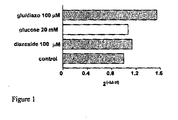
- the cells treated with diazoxide 100 mM with glucose 20 mM have an increased quantity of frataxin with respect to the non-treated control and with respect to the same cells treated alternatively with diazoxide or glucose.
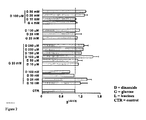
- the cells were treated testing the diazoxide and the glucose at different concentrations and in different combinations. Particularly the broken vertical line represents the threshold value above which the increase in frataxin expression can be seen.
- the experiment was conducted as follows, testing the cells with:
- the experiment demonstrates that the frataxin expression levels in the case of samples treated with diazoxide only or with glucose only show a minimum deviation from the threshold line, or coinciding with the non-treated control, whereas the optimal concentration to obtain a significant deviation from the threshold line, and therefore an increase in the frataxin expression, is a concentration of diazoxide 100 ⁇ M combined with a concentration of glucose 20 mM.
- the expression level and therefore the quantity of frataxin of cells deriving from HEK 293 cell lines, treated as described in examples 1, 2 and 3 was compared 24 hours after the treatment.
- the cells were treated testing the diazoxide and the leucine with respect to a non-treated control sample ( Fig. 3 ).
- the experiment demonstrates that the frataxin expression levels in the case of samples treated with leucine only at a concentration of 10 mM show a minimum deviation with respect to the non-treated control, whereas the optimal concentration of diazoxide 100 ⁇ M and leucine to obtain a significant deviation from the threshold line, and therefore increase in the frataxin expression, is a diazoxide concentration of 100 ⁇ M combined with a leucine concentration of 10 mM.
- Fig. 4 shows that in the cells treated with diazoxide 100 ⁇ M together with glucose 20 mM, the increase in the quantity of frataxin with respect to the non-treated control remains constant even 48 and 72 hours after the treatment.
- the cells treated as described in example 1 are lysed with a lysis buffer (0.15 M NaCl, 5 mM EDTA, pH 8, 1% Triton X100, 10 mM Tris-Cl, pH 7.4) and transferred to microcentrifuge tubes. A quantity of approximately 50 ⁇ g of cell suspension is separated by electrophoresis in the presence of SDS (sodium dodecyl sulphate) at 17% (denaturing conditions). The resulting product is transferred onto nitrocellulose membranes. Identification of the presence of the target protein, i.e. the frataxin, is performed with a rabbit polyclonal primary antibody directed against said protein (Santa Cruz Biotechnology), and a goat-anti rabbit HRP secondary antibody (Pierce). The reaction was identified with enzymatic method by means of ECL plus system (Amersham).
- a lysis buffer (0.15 M NaCl, 5 mM EDTA, pH 8, 1% Triton X100, 10 mM Tris-Cl,
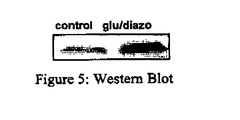
- Fig. 5 shows that the frataxin quantity in the treated cells is greater than that of the control cells, as can be easily seen from comparison of the band intensity.
- Figure 6 shows that the cells treated with diazoxide in combination with glucose or leucine maintain the increase in expression even 4 or 5 days after the initial treatment. The results are even more surprising and significant if compared with the three internal controls, i.e. non-treated cells, cells treated with diazoxide only and cells treated with leucine only.
- the results were processed as a histogram ( Fig. 7 ).
- the histograms indicated by the asterisk represent the samples on which the Student t- test was performed; the difference is significant for p ⁇ 0.05.
- the histogram ( Fig. 8 ) shows the treated cells testing with the diazoxide at different concentrations in combination with a fixed concentration of glucose. Particularly the broken vertical line represents the threshold value above which the increase in frataxin expression can be seen.
- the experiment was conducted testing the cells with concentrations of diazoxide varying from 25 nM to 100 ⁇ M in combination with fixed concentrations of glucose 20 mM.
- the experiment demonstrates that the frataxin expression levels in the case of samples treated with diazoxide at various concentrations and in combination with glucose show a minimum deviation from the threshold line for some particular concentrations of diazoxide, while the optimal concentration to obtain a significant deviation from the threshold line, and therefore an increase in frataxin expression, is diazoxide 100 ⁇ M combined with glucose 20 mM.
- Fig. 9 demonstrates and provides further proof of the synergic effect of the diazoxide used in combination with glucose or leucine.
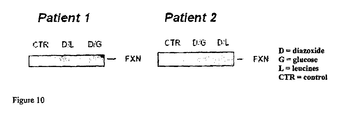
- Fig. 10 shows that the cells treated with diazoxide in combination with glucose or leucine maintain the increase in expression even 24 hours after the initial treatment. It can be seen that the cells of the patients treated according to the invention present an evident band as expression of the quantity of frataxin present with respect to the non-treated control.
Landscapes
- Health & Medical Sciences (AREA)
- Life Sciences & Earth Sciences (AREA)
- Chemical & Material Sciences (AREA)
- Engineering & Computer Science (AREA)
- General Health & Medical Sciences (AREA)
- Medicinal Chemistry (AREA)
- Pharmacology & Pharmacy (AREA)
- Biomedical Technology (AREA)
- Veterinary Medicine (AREA)
- Public Health (AREA)
- Animal Behavior & Ethology (AREA)
- Epidemiology (AREA)
- Immunology (AREA)
- Molecular Biology (AREA)
- Urology & Nephrology (AREA)
- Hematology (AREA)
- Bioinformatics & Cheminformatics (AREA)
- General Physics & Mathematics (AREA)
- Food Science & Technology (AREA)
- Toxicology (AREA)
- Pathology (AREA)
- Tropical Medicine & Parasitology (AREA)
- Biotechnology (AREA)
- Cell Biology (AREA)
- Biochemistry (AREA)
- Microbiology (AREA)
- Physics & Mathematics (AREA)
- Analytical Chemistry (AREA)
- Nuclear Medicine, Radiotherapy & Molecular Imaging (AREA)
- General Chemical & Material Sciences (AREA)
- Organic Chemistry (AREA)
- Chemical Kinetics & Catalysis (AREA)
- Neurology (AREA)
- Neurosurgery (AREA)
- Pharmaceuticals Containing Other Organic And Inorganic Compounds (AREA)
- Dowels (AREA)
- Photoreceptors In Electrophotography (AREA)
- Developing Agents For Electrophotography (AREA)
- Medicines That Contain Protein Lipid Enzymes And Other Medicines (AREA)
Abstract
Description
- The present invention concerns a pharmaceutical preparation comprising diazoxide for use in the treatment of Friedreich's ataxia. The term ataxia is used in medicine to identify a lack of motor coordination. In fact, a person affected by ataxia loses his/her harmony of movement. Said term also refers to a group of rare, progressive and seriously invalidating diseases of the central nervous system. Said pathologies can stem from inflammatory, infective, metabolic and tumoural causes, but the degenerative and hereditary forms are the most frequent. Of these, the most common form is Friedreich's ataxia (FRDA) which affects one in 50,000 people; it is the dominant autosomal-recessive form in terms of frequency.
- The pathology is caused by expansion of the GAA triplet in the gene codifying for a protein called frataxin (chromosome 9q13). The most common gene mutation is the repetition of the GAA triplet located in the first intron of the gene. The sequence of these nucleotide bases, which usually has a maximum of 40 triplets in normal individuals, expands to a few hundred in patients affected by the pathology. The effect is a marked reduction in the RNA level of the frataxin and in the quantity of frataxin expressed, even though a very small quantity continues to be produced. Frataxin is a mitochondrial protein involved in the homeostasis of iron inside the mitochondria. It has been observed that there is a correlation between the disease and the size of expansion of the GAA triplet. From the biological point of view, the quantity of frataxin produced is inversely proportional to the dimensions of the expansion. From the clinical point of view, the age at which the diseases occur depends on the residual quantity of normal protein produced. Experimental studies on micro organisms, such as yeast, have shown that destruction of the frataxin gene causes:
- a marked increase in the concentration of iron in the mitochondria;
- an increase in sensitivity to oxidising factors;
- loss of the mitochondrial function, or a deficit in the cell respiratory function.
- There is evidence that in the human disease there is increased oxidative stress and the two possible treatments, at the moment at least, are:
- removal of the excess iron from the mitochondria, an approach requiring suitable non-toxic drugs which are not yet available;
- the use of anti-oxidant drugs which, although generally well tolerated, are nevertheless toxic for the organism, albeit at a low level.
- The antioxidant drugs constitute a very broad and diverse family of medicaments and it could be extremely difficult to determine the most appropriate drug for this disease.
- From the clinical point of view, FRDA usually occurs in infancy or adolescence, and less frequently in adults. Characterised by a progressive loss of motor coordination, the first symptoms are difficulty in running and in sports activities in general. The lower limbs are generally the first to be affected, causing instability during walking. Subsequently problems with coordination of the hands and with speech occur. Although the disorders are progressive, the course of the illness is variable. Many patients nevertheless become confined to a wheelchair.
- Other common symptoms of FRDA are pes cavus, i.e. feet with very high arches, which usually does not require any particular treatment, and scoliosis, i.e. curvature of the spine, which must be kept under control as it can worsen during adolescence. Failing cure, symptomatic treatment must be provided aimed at preventing complications. It is essential to combat scoliosis in order to maintain the seated position and respiratory function.
- 90% of people affected by FRDA have heart problems, such as:
- increased cardiac frequency;
- thickening of the walls of the ventricular septum;
- electrocardiogram alterations (ECG).
- It is therefore important for patients to have an electrocardiogram and an echocardiogram once a year. These alterations can be controlled, if necessary, by specific drugs such as ibedenone, which belongs to the category of the anti-oxidants. Although 85% of children treated with ibedenone presented an improvement in some of the symptoms, its benefits at neurological level were practically nil.
- 20% of patients develop diabetes mellitus and periodically checks on glycaemia in the blood are therefore recommended. This disorder can initially be controlled simply via a balanced diet or tablets. Diabetes can sometimes be the first symptom of FRDA.
- Currently there is no evidence of an effective pharmacological therapy. Despite the numerous research studies carried out, no treatment is available at present to cure FRDA or slow down its progress.
- Voncken Max et al: "Friedreich ataxia-update on pathogenesis and possible therapies." (Neurogenetics 1 February 2004; Vol. 5 No. (1): pp. 1-8) discloses possible therapeutic strategies for FRDA. Among active ingredients useful for treatment of FRDA are listed i.a. Idebenone, deferiprone, etc.
- Hebert et al: "Gene-based approaches toward Friedreich ataxia therapeutics" (Cellular and Molecular Life Sciences, vol. 64, December 2007, pp 3034-3043) discloses the gene-based approaches which can be effective for treating FRDA. In particular potential FRDA therapeutics approaches and ideal gene-based treatments are disclosed in order to increase frataxin expression.
WO2008/064296 discloses the use of a carbonic anhydrase inhibitor, for the treatment of a long and complex list of various neurological disorders i.a. FRDA. - A known pharmacological agent derived from benzothiazine is diazoxide (7-chloro-3-methyl - 4H -1,2,4
benzothiadiazine 1,1-dioxide). The molecule has the following structural formula
- In medical practice said pharmacological agent is used for example in the treatment of acute hypertension.
- As an antihypertensive agent, diazoxide is administered intravenously and its effect has a very variable duration (from a few hours to several days). It performs a muscle relaxant action on the hypertensive arterioles by opening the potassium channels, resulting in hyperpolarisation of the cell membranes of the vasal smooth muscles. Diazoxide binds the plasmatic proteins and is eliminated partly via the kidneys after metabolization in the liver, but due to its non-optimal pharmacodynamic characteristics, it is used as an emergency drug.
- The present invention concerns diazoxide (7-chloro-3-methyl-4H-1,2,4
benzothiadiazine 1,1-dioxide) for use in the treatment of Friedreich's ataxia (FRDA). - The object of the present invention is therefore of diazoxide for use in the treatment of Friedreich's ataxia (FRDA).
- A further object of the present invention is a pharmaceutical composition comprising diazoxide in combination with glucose and/or leucine for use in the treatment of Friedreich's ataxia.
- Also disclosed is the ability of diazoxide to induce expression of the frataxin gene and frataxin itself.
- Another object of the present invention is diazoxide for use to combat the neurological effects of FRDA.
- An object of the invention is also a process for determining and/or evaluating the expression levels of the frataxin gene and frataxin itself.
- Thus, according to another of its aspects, the invention also concerns a process for evaluating the expression levels of the frataxin gene and frataxin itself in cell samples.
- According to yet another of its aspects, the invention also concerns a process for evaluating the expression levels of the frataxin gene and frataxin itself in a biological sample isolated from patients affected by FRDA.
- With the present invention it is therefore possible to increase the frataxin expression level.
- Optimisation of the frataxin expression according to the present invention is possible via the use of diazoxide in combination with glucose and/or leucine, in doses suitable for increasing the frataxin levels.
- In fact, it has been seen that in FRDA patients, the expression level of the frataxin protein is very low; particularly, the more serious and invalidating the level of the pathology in progress, the lower the expression level of the frataxin protein. Therefore low frataxin levels, in terms of quantity of frataxin being present in the cells and therefore in the organism of persons affected by FRDA, correlate in a directly proportional manner with a complex and particularly severe clinical situation. Surprisingly, the use of diazoxide in combination with glucose and/or leucine, according to the invention, raises the frataxin levels, thus obtaining a regression in the symptoms connected with Friedreich's ataxia disease.
- Diazoxide is used in the known art for therapeutic indications different from those of the present invention and is furthermore associated with non-optimal pharmacokinetic characteristics limiting use thereof, despite its potential use. According to the present invention, on the other hand, said diazoxide is surprisingly advantageously used for the treatment of a "complex" pathology like FRDA and even more surprisingly its therapeutic potential is particularly effective due to the combination of said diazoxide with glucose and/or leucine.
- The combination of diazoxide with glucose and/or leucine is therefore completely unexpected and able to achieve surprising results.
- Diazoxide, glucose and/or leucine in fact show a particularly surprising synergic effect when used in combination.
- Proofs of the surprising synergic effect, due to the combination of said diazoxide with glucose and/or leucine, are provided by tests in vitro perfomed on samples of cells of patients affected by FRDA.
- The cells of patients affected by FRDA, in particular lymphoblastoid cell lines of patients, subsequently immortalized, were treated with different concentrations of diazoxide in combination with glucose and/or leucine.
- According to a preferred aspect of the present invention, said concentrations of diazoxide are between 20 nM and 350 µM, preferably between 25 nM and 250 µM, and even more preferably between 25 µM and 100 µM.
- Again according to a preferred aspect of the invention, the concentration of glucose is between 4 mM and 35 mM, preferably between 10 mM and 30 mM, even more preferably between 15 mM and 20 mM.
- Again according to another preferred aspect of the invention, the concentration of leucine is between 4 mM and 20 mM, preferably between 7 mM and 15 mM, and even more preferably is equal to 10 mM.
- According to a particularly preferred aspect of the present invention, the diazoxide is to be used at a concentration of 100 µM in combination with
glucose 20 mM and/orleucine 10 mM. - The pharmaceutical preparations according to the present invention, which are used to increase the frataxin expression in FRDA patients, comprise diazoxide in combination with glucose and/or leucine, administered in any acceptable pharmaceutical form. The suitable forms can be single dosage forms, like tablets, capsules and similar, or injectable solutions (for example intravenous or intramuscular) or by infusion, or nasal sprays, nanoparticles or implants. The suitable pharmaceutical forms can also be freeze-dried products which can be administered, for example, by the intravenous, intramuscular, intracranial or intranasal route.
- The invention also concerns the use of a pharmaceutical preparation which comprises diazoxide in combination with glucose and/or leucine, to increase the expression levels of the frataxin protein.
- In the pharmaceutical compositions of the present invention for oral, subcutaneous, intravenous, transdermal or topical administration, the diazoxide, if necessary in a mixture with the other components, is preferably administered in one single dose, in a mixture with the traditional pharmaceutically acceptable excipients or carriers. The used dose can vary according to the age, weight and state of health of the patient, or according to the severity of the pathology and the chosen administration route. According to one embodiment, the invention concerns a process for determining and/or evaluating the expression levels of the frataxin gene and frataxin itself which comprises:
- a) treating a cell culture or a biological sample isolated from a patient affected by FRDA with diazoxide, if necessary in a mixture with glucose and/or leucine;
- b) extracting and reverse-transcribing the total RNA;
- c) amplifying and quantifying the frataxin transcripts;
- d) analysing and processing the results.
- Again according to the present invention, "cell culture" or "cell line" indicates a population of cells suitable for evaluating the expression levels of the frataxin gene and relative frataxin protein.
- According to the present invention, "isolated biological sample" indicates a biological sample taken and isolated from an FRDA patient.
- According to the present invention, "sample" indicates a sample taken from the cell line treated with diazoxide, in combination with glucose and/or leucine.
- According to the present invention, "target" indicates the frataxin gene, transcript or protein.
- According to a particularly preferred embodiment, the invention concerns a process for determining and/or evaluating the expression levels of the frataxin gene and protein which comprises:
- a') treating a cell culture or a biological sample isolated from an FRDA patient with diazoxide, if necessary in a mixture with glucose and/or leucine;
- b') extracting and reverse-transcribing the total RNA;
- c') amplifying and quantifying the frataxin and control transcripts;
- d') analysing and processing the results by evaluating amplification of the frataxin gene mRNA by means of ΔΔCt method corrected for efficiency of amplification of the target gene (frataxin) and the reference gene (actin).
- In step (a') the cell line or the isolated biological sample are treated with diazoxide, preferably in the presence of glucose.
- In step (b') all the RNA present in the cells is extracted.
- The extraction of the RNA can be performed according to the known techniques. Some details of preferred embodiments of the invention are nevertheless provided in the experimental section of the present description.
- By way of example, the extraction can be performed using the QIAconnect Gene Expression Kit (Qiagen) or according to other known methods suitable for said operation and the relative dosage can be performed using spectrophotometric instruments known to a person skilled in the art.
- After reverse-transcription of the RNA extracted, advantageously performed, for example, with GeneAmp RNA PCR core kit (Applied Biosystems), the amplification and qualification of step (c') can be performed according to the techniques known to a person skilled in the art, for example according to Real Time RT - PCR technology.
- With said technology, in fact, it is possible to follow in real time the amplification phases, during the exponential phase, and simultaneously quantify the amplificate by evaluation of the fluorescence value emitted.
- According to a preferred embodiment of the present invention, quantification of the reverse-transcribed product is carried out using fluorescent probes capable of hybridizing (and therefore specifically pairing) regions of the DNA of interest. By way of example and according to an advantageous embodiment of the invention, the probes used are Probe Hs 00175940_ml and Probe Hs 99999903_ml (Applied Biosystems). Particularly the probe defined Hs 00175940_ml represents the specific probe capable of recognising and hybridizing the human frataxin gene, while the probe Hs 99999903_ml recognises the human actin and represents the reference gene for normalisation of the values obtained.
- The expression "threshold cycle" indicates the amplification reaction cycle, specific for each sample, in which the fluorescence signal of the sample intersects the threshold line.
- The expression "threshold line" indicates the reference line chosen by the operator in order to intersect the curves in the exponential phase.
- "Target" indicates that the target of the investigation and analysis is the frataxin, whose levels of mRNA are evaluated in the cell samples with or without ("control") diazoxide.
- "Control" indicates the cell sample not treated with diazoxide.
- According to this preferred embodiment of the invention, step (d') is performed by substituting the
mathematical formula 2-ΔΔCt with the values of the difference between the threshold cycle of the target in the samples treated and not treated (control) with diazoxide, normalized with the threshold cycle value of the reference gene (actin), in the case in question

- The results can be analysed by means of appropriate software, after setting the baseline and threshold cycle values.
- The result of the
calculation 2-ΔΔCt represents the relative quantification value. Said value permits determination of the quantity of frataxin (which represents the target) in the sample treated with diazoxide with respect to the quantity of frataxin in the sample not treated with diazoxide (which represents the control) normalized for the quantity of actin (which represents the reference or internal standard) in said sample. The present invention is better illustrated by means of the examples, given below, which in no way constitute a limitation. - The human cell line HEK 293 (Human Embryonic Kidney) grown in Dulbecco's modified Eagle's medium (DMEM, Sigma) with the addition of 10% foetal bovine serum (FBS) (v/v),
glutamine 2 mM,penicillin 100 unit/ml andstreptomycin 100 µg/ml is kept in an incubator at a temperature of 37°C and 5% CO2. - Preferably the HEK 293 cells, cultured on 60 mm plates at a concentration of 0.5 × 10⁶, after at least 14 hours of growth have a 70 - 80% confluence. Diazoxide is added to the culture medium of said cells at a concentration of 100 µM with
glucose 20 mM and the cells are kept in an incubator for 24 hours at a temperature of 37°C and 5% CO2; the culture medium is not replaced during the incubation period. - Extraction of the RNA from the cells is performed according to the indications contained in the QIAconnect Gene Expression (Qiagen) kit. Particularly the samples are lysed and homogenated. Ethanol is then added to the treated samples to provide ideal conditions for the bond with the silica-gel RNase membrane. In this way the RNA binds and the contaminants are washed; the pure RNA is concentrated and eluted.
- The concentration of the extracted RNA is determined by UV spectrophotometric method under suitable reading conditions.
- The reverse transcription reaction is performed with the GeneAmp RNA PCR core (Applied Biosystems) kit according to the indications provided by the manufacturer.
- Quantification of the reverse-transcribed product is performed using fluorescent probes capable of hybridizing and specifically pairing DNA regions of interest. The probes used according to the invention are Probe Hs 00175940_ml and Probe Hs 99999903_ml (Applied Biosystems). Particularly the probe defined Hs 00175940_ml represents the specific probe able to recognise and hybridize the human frataxin gene, while the probe Hs 99999903_ml recognises the human actin and is useful for normalising the mRNA values of the target.
- The analyzing step of the results is performed by substituting the
mathematical formula 2-ΔΔCt with the difference between the target threshold cycle in the samples treated and not treated (control) with diazoxide, normalised with the threshold cycle value of the reference gene (actin), in the case in question

- The results can be analysed by means of appropriate software, after setting the baseline and threshold cycle values.
- The result of the
calculation 2-ΔΔCt represents the relative quantification value. Said value permits determination of the quantity of frataxin (which represents the target) in the sample treated with diazoxide with respect to the quantity of frataxin in the sample not treated with diazoxide (which represents the control) normalised for the quantity of actin (which represents the reference or internal standard) in the same sample. - For example a value of 1 is attributed to the control samples, i.e. HEK 293 cells not treated with diazoxide chosen as references.
- As shown in
Figure 1 , the cells treated withdiazoxide 100 mM withglucose 20 mM have an increased quantity of frataxin with respect to the non-treated control and with respect to the same cells treated alternatively with diazoxide or glucose. - The expression level and therefore the quantity of frataxin of cells deriving from HEK 293 cell lines, treated as described in examples 1, 2 and 3 was compared 24 hours after the treatment.
- As shown in
Fig. 2 , the cells were treated testing the diazoxide and the glucose at different concentrations and in different combinations. Particularly the broken vertical line represents the threshold value above which the increase in frataxin expression can be seen. The experiment was conducted as follows, testing the cells with: - fixed concentration of
diazoxide 100 µM and variable concentrations ofglucose - fixed concentration of
glucose 20 mM and concentrations of diazoxide varying between 10 nM and 250 µM; - fixed concentration of diazoxide 25 nM or 100 µM without glucose;
- fixed concentration of
glucose 20 mM without diazoxide. - The experiment demonstrates that the frataxin expression levels in the case of samples treated with diazoxide only or with glucose only show a minimum deviation from the threshold line, or coinciding with the non-treated control, whereas the optimal concentration to obtain a significant deviation from the threshold line, and therefore an increase in the frataxin expression, is a concentration of
diazoxide 100 µM combined with a concentration ofglucose 20 mM. - The expression level and therefore the quantity of frataxin of cells deriving from HEK 293 cell lines, treated as described in examples 1, 2 and 3 was compared 24 hours after the treatment. The cells were treated testing the diazoxide and the leucine with respect to a non-treated control sample (
Fig. 3 ). - The experiment demonstrates that the frataxin expression levels in the case of samples treated with leucine only at a concentration of 10 mM show a minimum deviation with respect to the non-treated control, whereas the optimal concentration of
diazoxide 100 µM and leucine to obtain a significant deviation from the threshold line, and therefore increase in the frataxin expression, is a diazoxide concentration of 100 µM combined with a leucine concentration of 10 mM. - The expression level and therefore the quantity of frataxin of cells deriving from HEK 293 cell lines treated as described in examples 1, 2 and 3 was compared 24, 48 and 72 hours after treatment.
-
Fig. 4 shows that in the cells treated withdiazoxide 100 µM together withglucose 20 mM, the increase in the quantity of frataxin with respect to the non-treated control remains constant even 48 and 72 hours after the treatment. - The cells treated as described in example 1 are lysed with a lysis buffer (0.15 M NaCl, 5 mM EDTA,
pH 8, 1% Triton X100, 10 mM Tris-Cl, pH 7.4) and transferred to microcentrifuge tubes. A quantity of approximately 50 µg of cell suspension is separated by electrophoresis in the presence of SDS (sodium dodecyl sulphate) at 17% (denaturing conditions). The resulting product is transferred onto nitrocellulose membranes. Identification of the presence of the target protein, i.e. the frataxin, is performed with a rabbit polyclonal primary antibody directed against said protein (Santa Cruz Biotechnology), and a goat-anti rabbit HRP secondary antibody (Pierce). The reaction was identified with enzymatic method by means of ECL plus system (Amersham). -
Fig. 5 , reported below, shows that the frataxin quantity in the treated cells is greater than that of the control cells, as can be easily seen from comparison of the band intensity. -
Figure 6 shows that the cells treated with diazoxide in combination with glucose or leucine maintain the increase in expression even 4 or 5 days after the initial treatment. The results are even more surprising and significant if compared with the three internal controls, i.e. non-treated cells, cells treated with diazoxide only and cells treated with leucine only. - In order to highlight the effectiveness of the treatment combining the diazoxide with glucose or leucine, the results were processed as a histogram (
Fig. 7 ). The histograms indicated by the asterisk represent the samples on which the Student t- test was performed; the difference is significant for p<0.05. - The expression level and therefore the quantity of frataxin of cells deriving from immortalized lymphoblastoid cell lines of FRDA patients treated as described in examples 2 and 3 was compared 24 hours after the treatment.
- The histogram (
Fig. 8 ) shows the treated cells testing with the diazoxide at different concentrations in combination with a fixed concentration of glucose. Particularly the broken vertical line represents the threshold value above which the increase in frataxin expression can be seen. The experiment was conducted testing the cells with concentrations of diazoxide varying from 25 nM to 100 µM in combination with fixed concentrations ofglucose 20 mM. - The experiment demonstrates that the frataxin expression levels in the case of samples treated with diazoxide at various concentrations and in combination with glucose show a minimum deviation from the threshold line for some particular concentrations of diazoxide, while the optimal concentration to obtain a significant deviation from the threshold line, and therefore an increase in frataxin expression, is diazoxide 100 µM combined with
glucose 20 mM. - The expression and therefore the quantity of frataxin in cells deriving from immortalized lymphoblastoid cell lines of FRDA patients was compared.
-
Fig. 9 demonstrates and provides further proof of the synergic effect of the diazoxide used in combination with glucose or leucine. -
Fig. 10 shows that the cells treated with diazoxide in combination with glucose or leucine maintain the increase in expression even 24 hours after the initial treatment. It can be seen that the cells of the patients treated according to the invention present an evident band as expression of the quantity of frataxin present with respect to the non-treated control. - The results of the experiment were processed also in the form of a histogram (
Fig. 11 ), shown below, where the increase in expression of the treated cells with respect to the control can be clearly seen.
Claims (8)
- Diazoxide (7-chloro-3-methyl- 4H -1,2,4 benzothiadiazine 1,1-dioxide) in combination with glucose and/or leucine, for use in the treatment of Friedreich's ataxia (FRDA).
- Use of diazoxide (7-chloro-3-methyl- 4H -1,2,4 benzothiadiazine 1,1-dioxide) in combination with glucose and/or leucine, for the preparation of a medicament for the treatment of Friedreich's ataxia (FRDA).
- Process for determining the expression levels of frataxin gene, comprising the following steps:a) treating a cell culture or an isolated biological sample taken from subjects affected by FRDA with diazoxide (7-chloro-3-methyl- 4H -1,2,4 benzothiadiazine 1,1-dioxide) in combination with glucose and/or leucine;b) extracting and reverse-transcribing total RNA;c) amplifying and quantifying frataxin transcripts;d) analyzing and processing the obtained results.
- Process according to claim 3, characterized in that said analysis and processing of the obtained results is carried out by evaluating the parameters by means of ΔΔCt method.
- Use of the process according to claim 3 to determine the increase in the expression levels of frataxin protein.
- 100 µM diazoxide in combination with 20 mM glucose and/or 10 mM leucine for use in the treatment of Friedreioh's ataxia (FRDA).
- Pharmaceutical compositions comprising diazoxide (7-chloro-3-methyl- 4H -1,2,4 benzothiadiazine 1,1-dioxide) in combination with glucose and/or leucine, for use in the treatment of Friedreich's ataxia (FRDA).
- Kit for the determination of the levels of frataxin in an isolated biological sample, comprising diazoxide (7-chloro-3-methyl- 4H -1,2,4 benzothiadiazine 1,1-dioxide) in combination with glucose and/or leucine.
Applications Claiming Priority (1)
| Application Number | Priority Date | Filing Date | Title |
|---|---|---|---|
| ITMI2008A001409A IT1392905B1 (en) | 2008-07-30 | 2008-07-30 | diazoxide for the treatment of friedreich ataxia |
Publications (2)
| Publication Number | Publication Date |
|---|---|
| EP2151238A1 EP2151238A1 (en) | 2010-02-10 |
| EP2151238B1 true EP2151238B1 (en) | 2011-11-30 |
Family
ID=40674173
Family Applications (1)
| Application Number | Title | Priority Date | Filing Date |
|---|---|---|---|
| EP09009154A Not-in-force EP2151238B1 (en) | 2008-07-30 | 2009-07-14 | Diazoxide for the treatment of Friedreich's ataxia |
Country Status (4)
| Country | Link |
|---|---|
| US (1) | US8716250B2 (en) |
| EP (1) | EP2151238B1 (en) |
| AT (1) | ATE535238T1 (en) |
| IT (1) | IT1392905B1 (en) |
Family Cites Families (3)
| Publication number | Priority date | Publication date | Assignee | Title |
|---|---|---|---|---|
| US20040241256A1 (en) * | 2002-12-05 | 2004-12-02 | Seymour Ehrenpreis | Medicinal compositions & therapeutic methods |
| AUPS312602A0 (en) * | 2002-06-21 | 2002-07-18 | James Cook University | Organ arrest, protection, preservation and recovery |
| WO2008064296A1 (en) * | 2006-11-22 | 2008-05-29 | Envivo Pharmaceuticals, Inc. | Method of treating neurological disorders with carbonic anhydrase inhibitors |
-
2008
- 2008-07-30 IT ITMI2008A001409A patent/IT1392905B1/en active
-
2009
- 2009-07-14 EP EP09009154A patent/EP2151238B1/en not_active Not-in-force
- 2009-07-14 AT AT09009154T patent/ATE535238T1/en active
- 2009-07-29 US US12/511,460 patent/US8716250B2/en not_active Expired - Fee Related
Also Published As
| Publication number | Publication date |
|---|---|
| EP2151238A1 (en) | 2010-02-10 |
| ITMI20081409A1 (en) | 2010-01-31 |
| US20100029576A1 (en) | 2010-02-04 |
| IT1392905B1 (en) | 2012-04-02 |
| ATE535238T1 (en) | 2011-12-15 |
| US8716250B2 (en) | 2014-05-06 |
Similar Documents
| Publication | Publication Date | Title |
|---|---|---|
| Strazzulla et al. | Alopecia areata: disease characteristics, clinical evaluation, and new perspectives on pathogenesis | |
| Myint et al. | Tryptophan breakdown pathway in bipolar mania | |
| Zhang et al. | Multiple mitochondrial DNA deletions in an elderly human individual | |
| KR20160037169A (en) | R e t t syndrome and treatments therefore | |
| US20170007578A1 (en) | Genotype Specific Methods for Treating Human Subjects Using 4-Methylpyrazole | |
| Naom et al. | Laminin α2-chain gene mutations in two siblings presenting with limb-girdle muscular dystrophy | |
| CN118319935A (en) | A kind of pharmaceutical use of reduced β-nicotinamide mononucleotide | |
| KR20210065971A (en) | Uses of chiglitazar and its related compounds | |
| Kelty et al. | Cognitive impairment caused by compromised hepatic ketogenesis is prevented by endurance exercise | |
| Zhang et al. | GPBAR1 preserves neurite and synapse of dopaminergic neurons via RAD21-OPCML signaling: Role in preventing Parkinson's disease in mouse model and human patients | |
| Kawakami et al. | A novel mutation in glycyl-tRNA synthetase caused Charcot-Marie-Tooth disease type 2D with facial and respiratory muscle involvement | |
| US8716250B2 (en) | Diazoxide for the treatment of Friedreich's ataxia | |
| EP3245215B1 (en) | Methods of treating neurological inflammatory disorders | |
| WO2020052629A1 (en) | Application of p300 activator ctpb and derivative thereof in improving collagen col17a1 expression | |
| CN118001407B (en) | Application of PAD2 in the preparation of drugs for treating ischemic hypoxic malignant arrhythmias | |
| TWI851326B (en) | Methods for extending lifespan and/or delaying aging | |
| DE MERCANTI | EPIGENETIC THERAPY FOR FRIEDREICH’S ATAXIA: A PHASE 1, FIRST IN MAN, ASCENDING DOSE CROSSOVER STUDY TO INVESTIGATE THE SAFETY, PHARMACOKINETICS AND PHARMACODYNAMICS OF RG2833 (A HISTONE DEACETYLASE INHIBITOR) IN ADULTS WITH FRIEDREICH’S ATAXIA | |
| JP2010200670A (en) | Method for genotyping | |
| Shustval et al. | Clinical course of myocarditis in infectious mononucleosis in adults | |
| WO2026021591A1 (en) | Novel micropeptide mp29 for regulating energy metabolism and use thereof | |
| CN121466304A (en) | Application of microsomal glutathione S-transferase 3 in the preparation of drugs for the treatment of diseases caused by excessive neuronal neurite growth | |
| CN120505407A (en) | LncRNA marker for ischemic cerebral apoplexy and application thereof | |
| KR20220036358A (en) | Composition for diagnosis and treatment of Parkinson's disease containing intestinal neuropeptide and neurotrophin | |
| CN113336809A (en) | Specific inhibitor of cytochrome P45046A 1 enzyme and application thereof | |
| CN114262705A (en) | MiRNA for preventing and treating sugar ester metabolic diseases, pharmaceutical composition and application thereof |
Legal Events
| Date | Code | Title | Description |
|---|---|---|---|
| PUAI | Public reference made under article 153(3) epc to a published international application that has entered the european phase |
Free format text: ORIGINAL CODE: 0009012 |
|
| AK | Designated contracting states |
Kind code of ref document: A1 Designated state(s): AT BE BG CH CY CZ DE DK EE ES FI FR GB GR HR HU IE IS IT LI LT LU LV MC MK MT NL NO PL PT RO SE SI SK SM TR |
|
| AX | Request for extension of the european patent |
Extension state: AL BA RS |
|
| 17P | Request for examination filed |
Effective date: 20100712 |
|
| 17Q | First examination report despatched |
Effective date: 20101014 |
|
| GRAP | Despatch of communication of intention to grant a patent |
Free format text: ORIGINAL CODE: EPIDOSNIGR1 |
|
| GRAS | Grant fee paid |
Free format text: ORIGINAL CODE: EPIDOSNIGR3 |
|
| GRAA | (expected) grant |
Free format text: ORIGINAL CODE: 0009210 |
|
| AK | Designated contracting states |
Kind code of ref document: B1 Designated state(s): AT BE BG CH CY CZ DE DK EE ES FI FR GB GR HR HU IE IS IT LI LT LU LV MC MK MT NL NO PL PT RO SE SI SK SM TR |
|
| REG | Reference to a national code |
Ref country code: CH Ref legal event code: EP Ref country code: GB Ref legal event code: FG4D |
|
| REG | Reference to a national code |
Ref country code: IE Ref legal event code: FG4D |
|
| REG | Reference to a national code |
Ref country code: DE Ref legal event code: R096 Ref document number: 602009003872 Country of ref document: DE Effective date: 20120216 |
|
| REG | Reference to a national code |
Ref country code: NL Ref legal event code: VDEP Effective date: 20111130 |
|
| LTIE | Lt: invalidation of european patent or patent extension |
Effective date: 20111130 |
|
| PG25 | Lapsed in a contracting state [announced via postgrant information from national office to epo] |
Ref country code: LT Free format text: LAPSE BECAUSE OF FAILURE TO SUBMIT A TRANSLATION OF THE DESCRIPTION OR TO PAY THE FEE WITHIN THE PRESCRIBED TIME-LIMIT Effective date: 20111130 Ref country code: IS Free format text: LAPSE BECAUSE OF FAILURE TO SUBMIT A TRANSLATION OF THE DESCRIPTION OR TO PAY THE FEE WITHIN THE PRESCRIBED TIME-LIMIT Effective date: 20120330 Ref country code: NO Free format text: LAPSE BECAUSE OF FAILURE TO SUBMIT A TRANSLATION OF THE DESCRIPTION OR TO PAY THE FEE WITHIN THE PRESCRIBED TIME-LIMIT Effective date: 20120229 |
|
| PG25 | Lapsed in a contracting state [announced via postgrant information from national office to epo] |
Ref country code: BE Free format text: LAPSE BECAUSE OF FAILURE TO SUBMIT A TRANSLATION OF THE DESCRIPTION OR TO PAY THE FEE WITHIN THE PRESCRIBED TIME-LIMIT Effective date: 20111130 Ref country code: SI Free format text: LAPSE BECAUSE OF FAILURE TO SUBMIT A TRANSLATION OF THE DESCRIPTION OR TO PAY THE FEE WITHIN THE PRESCRIBED TIME-LIMIT Effective date: 20111130 Ref country code: NL Free format text: LAPSE BECAUSE OF FAILURE TO SUBMIT A TRANSLATION OF THE DESCRIPTION OR TO PAY THE FEE WITHIN THE PRESCRIBED TIME-LIMIT Effective date: 20111130 Ref country code: PT Free format text: LAPSE BECAUSE OF FAILURE TO SUBMIT A TRANSLATION OF THE DESCRIPTION OR TO PAY THE FEE WITHIN THE PRESCRIBED TIME-LIMIT Effective date: 20120330 Ref country code: LV Free format text: LAPSE BECAUSE OF FAILURE TO SUBMIT A TRANSLATION OF THE DESCRIPTION OR TO PAY THE FEE WITHIN THE PRESCRIBED TIME-LIMIT Effective date: 20111130 Ref country code: HR Free format text: LAPSE BECAUSE OF FAILURE TO SUBMIT A TRANSLATION OF THE DESCRIPTION OR TO PAY THE FEE WITHIN THE PRESCRIBED TIME-LIMIT Effective date: 20111130 Ref country code: SE Free format text: LAPSE BECAUSE OF FAILURE TO SUBMIT A TRANSLATION OF THE DESCRIPTION OR TO PAY THE FEE WITHIN THE PRESCRIBED TIME-LIMIT Effective date: 20111130 |
|
| PG25 | Lapsed in a contracting state [announced via postgrant information from national office to epo] |
Ref country code: CY Free format text: LAPSE BECAUSE OF FAILURE TO SUBMIT A TRANSLATION OF THE DESCRIPTION OR TO PAY THE FEE WITHIN THE PRESCRIBED TIME-LIMIT Effective date: 20111130 |
|
| PG25 | Lapsed in a contracting state [announced via postgrant information from national office to epo] |
Ref country code: DK Free format text: LAPSE BECAUSE OF FAILURE TO SUBMIT A TRANSLATION OF THE DESCRIPTION OR TO PAY THE FEE WITHIN THE PRESCRIBED TIME-LIMIT Effective date: 20111130 Ref country code: CZ Free format text: LAPSE BECAUSE OF FAILURE TO SUBMIT A TRANSLATION OF THE DESCRIPTION OR TO PAY THE FEE WITHIN THE PRESCRIBED TIME-LIMIT Effective date: 20111130 Ref country code: SK Free format text: LAPSE BECAUSE OF FAILURE TO SUBMIT A TRANSLATION OF THE DESCRIPTION OR TO PAY THE FEE WITHIN THE PRESCRIBED TIME-LIMIT Effective date: 20111130 Ref country code: BG Free format text: LAPSE BECAUSE OF FAILURE TO SUBMIT A TRANSLATION OF THE DESCRIPTION OR TO PAY THE FEE WITHIN THE PRESCRIBED TIME-LIMIT Effective date: 20120229 Ref country code: EE Free format text: LAPSE BECAUSE OF FAILURE TO SUBMIT A TRANSLATION OF THE DESCRIPTION OR TO PAY THE FEE WITHIN THE PRESCRIBED TIME-LIMIT Effective date: 20111130 |
|
| PG25 | Lapsed in a contracting state [announced via postgrant information from national office to epo] |
Ref country code: IT Free format text: LAPSE BECAUSE OF FAILURE TO SUBMIT A TRANSLATION OF THE DESCRIPTION OR TO PAY THE FEE WITHIN THE PRESCRIBED TIME-LIMIT Effective date: 20111130 Ref country code: RO Free format text: LAPSE BECAUSE OF FAILURE TO SUBMIT A TRANSLATION OF THE DESCRIPTION OR TO PAY THE FEE WITHIN THE PRESCRIBED TIME-LIMIT Effective date: 20111130 Ref country code: PL Free format text: LAPSE BECAUSE OF FAILURE TO SUBMIT A TRANSLATION OF THE DESCRIPTION OR TO PAY THE FEE WITHIN THE PRESCRIBED TIME-LIMIT Effective date: 20111130 |
|
| REG | Reference to a national code |
Ref country code: AT Ref legal event code: MK05 Ref document number: 535238 Country of ref document: AT Kind code of ref document: T Effective date: 20111130 |
|
| PLBE | No opposition filed within time limit |
Free format text: ORIGINAL CODE: 0009261 |
|
| STAA | Information on the status of an ep patent application or granted ep patent |
Free format text: STATUS: NO OPPOSITION FILED WITHIN TIME LIMIT |
|
| 26N | No opposition filed |
Effective date: 20120831 |
|
| REG | Reference to a national code |
Ref country code: DE Ref legal event code: R097 Ref document number: 602009003872 Country of ref document: DE Effective date: 20120831 |
|
| PG25 | Lapsed in a contracting state [announced via postgrant information from national office to epo] |
Ref country code: AT Free format text: LAPSE BECAUSE OF FAILURE TO SUBMIT A TRANSLATION OF THE DESCRIPTION OR TO PAY THE FEE WITHIN THE PRESCRIBED TIME-LIMIT Effective date: 20111130 |
|
| PG25 | Lapsed in a contracting state [announced via postgrant information from national office to epo] |
Ref country code: MC Free format text: LAPSE BECAUSE OF NON-PAYMENT OF DUE FEES Effective date: 20120731 Ref country code: MK Free format text: LAPSE BECAUSE OF FAILURE TO SUBMIT A TRANSLATION OF THE DESCRIPTION OR TO PAY THE FEE WITHIN THE PRESCRIBED TIME-LIMIT Effective date: 20111130 |
|
| PG25 | Lapsed in a contracting state [announced via postgrant information from national office to epo] |
Ref country code: ES Free format text: LAPSE BECAUSE OF FAILURE TO SUBMIT A TRANSLATION OF THE DESCRIPTION OR TO PAY THE FEE WITHIN THE PRESCRIBED TIME-LIMIT Effective date: 20120311 |
|
| REG | Reference to a national code |
Ref country code: IE Ref legal event code: MM4A |
|
| PG25 | Lapsed in a contracting state [announced via postgrant information from national office to epo] |
Ref country code: FI Free format text: LAPSE BECAUSE OF FAILURE TO SUBMIT A TRANSLATION OF THE DESCRIPTION OR TO PAY THE FEE WITHIN THE PRESCRIBED TIME-LIMIT Effective date: 20111130 |
|
| PG25 | Lapsed in a contracting state [announced via postgrant information from national office to epo] |
Ref country code: MT Free format text: LAPSE BECAUSE OF FAILURE TO SUBMIT A TRANSLATION OF THE DESCRIPTION OR TO PAY THE FEE WITHIN THE PRESCRIBED TIME-LIMIT Effective date: 20111130 Ref country code: IE Free format text: LAPSE BECAUSE OF NON-PAYMENT OF DUE FEES Effective date: 20120714 |
|
| REG | Reference to a national code |
Ref country code: CH Ref legal event code: PL |
|
| REG | Reference to a national code |
Ref country code: DE Ref legal event code: R082 Ref document number: 602009003872 Country of ref document: DE Representative=s name: GODEMEYER BLUM LENZE PARTNERSCHAFT, PATENTANWA, DE Ref country code: DE Ref legal event code: R082 Ref document number: 602009003872 Country of ref document: DE Representative=s name: GODEMEYER BLUM LENZE PATENTANWAELTE, PARTNERSC, DE |
|
| PG25 | Lapsed in a contracting state [announced via postgrant information from national office to epo] |
Ref country code: LI Free format text: LAPSE BECAUSE OF NON-PAYMENT OF DUE FEES Effective date: 20130731 Ref country code: CH Free format text: LAPSE BECAUSE OF NON-PAYMENT OF DUE FEES Effective date: 20130731 Ref country code: TR Free format text: LAPSE BECAUSE OF FAILURE TO SUBMIT A TRANSLATION OF THE DESCRIPTION OR TO PAY THE FEE WITHIN THE PRESCRIBED TIME-LIMIT Effective date: 20111130 |
|
| PG25 | Lapsed in a contracting state [announced via postgrant information from national office to epo] |
Ref country code: SM Free format text: LAPSE BECAUSE OF FAILURE TO SUBMIT A TRANSLATION OF THE DESCRIPTION OR TO PAY THE FEE WITHIN THE PRESCRIBED TIME-LIMIT Effective date: 20111130 Ref country code: LU Free format text: LAPSE BECAUSE OF NON-PAYMENT OF DUE FEES Effective date: 20120714 |
|
| PG25 | Lapsed in a contracting state [announced via postgrant information from national office to epo] |
Ref country code: HU Free format text: LAPSE BECAUSE OF FAILURE TO SUBMIT A TRANSLATION OF THE DESCRIPTION OR TO PAY THE FEE WITHIN THE PRESCRIBED TIME-LIMIT Effective date: 20090714 |
|
| PG25 | Lapsed in a contracting state [announced via postgrant information from national office to epo] |
Ref country code: GR Free format text: LAPSE BECAUSE OF FAILURE TO SUBMIT A TRANSLATION OF THE DESCRIPTION OR TO PAY THE FEE WITHIN THE PRESCRIBED TIME-LIMIT Effective date: 20111130 |
|
| REG | Reference to a national code |
Ref country code: FR Ref legal event code: PLFP Year of fee payment: 7 |
|
| REG | Reference to a national code |
Ref country code: FR Ref legal event code: PLFP Year of fee payment: 8 |
|
| PGFP | Annual fee paid to national office [announced via postgrant information from national office to epo] |
Ref country code: DE Payment date: 20160727 Year of fee payment: 8 |
|
| PGFP | Annual fee paid to national office [announced via postgrant information from national office to epo] |
Ref country code: FR Payment date: 20160818 Year of fee payment: 8 |
|
| REG | Reference to a national code |
Ref country code: DE Ref legal event code: R119 Ref document number: 602009003872 Country of ref document: DE |
|
| REG | Reference to a national code |
Ref country code: FR Ref legal event code: ST Effective date: 20180330 |
|
| PG25 | Lapsed in a contracting state [announced via postgrant information from national office to epo] |
Ref country code: DE Free format text: LAPSE BECAUSE OF NON-PAYMENT OF DUE FEES Effective date: 20180201 |
|
| PG25 | Lapsed in a contracting state [announced via postgrant information from national office to epo] |
Ref country code: FR Free format text: LAPSE BECAUSE OF NON-PAYMENT OF DUE FEES Effective date: 20170731 |
|
| PGFP | Annual fee paid to national office [announced via postgrant information from national office to epo] |
Ref country code: GB Payment date: 20190725 Year of fee payment: 11 |
|
| GBPC | Gb: european patent ceased through non-payment of renewal fee |
Effective date: 20200714 |
|
| PG25 | Lapsed in a contracting state [announced via postgrant information from national office to epo] |
Ref country code: GB Free format text: LAPSE BECAUSE OF NON-PAYMENT OF DUE FEES Effective date: 20200714 |