EP2148148A1 - Boiler comprising a heat exchanger - Google Patents
Boiler comprising a heat exchanger Download PDFInfo
- Publication number
- EP2148148A1 EP2148148A1 EP08305416A EP08305416A EP2148148A1 EP 2148148 A1 EP2148148 A1 EP 2148148A1 EP 08305416 A EP08305416 A EP 08305416A EP 08305416 A EP08305416 A EP 08305416A EP 2148148 A1 EP2148148 A1 EP 2148148A1
- Authority
- EP
- European Patent Office
- Prior art keywords
- flue gases
- heat exchanger
- burning chamber
- boiler
- water
- Prior art date
- Legal status (The legal status is an assumption and is not a legal conclusion. Google has not performed a legal analysis and makes no representation as to the accuracy of the status listed.)
- Withdrawn
Links
- 239000003546 flue gas Substances 0.000 claims abstract description 71
- XLYOFNOQVPJJNP-UHFFFAOYSA-N water Substances O XLYOFNOQVPJJNP-UHFFFAOYSA-N 0.000 claims abstract description 34
- 239000013529 heat transfer fluid Substances 0.000 claims abstract description 7
- 229910000831 Steel Inorganic materials 0.000 description 9
- 239000010959 steel Substances 0.000 description 9
- 238000009833 condensation Methods 0.000 description 7
- 230000005494 condensation Effects 0.000 description 7
- UGFAIRIUMAVXCW-UHFFFAOYSA-N Carbon monoxide Chemical compound [O+]#[C-] UGFAIRIUMAVXCW-UHFFFAOYSA-N 0.000 description 6
- 238000005260 corrosion Methods 0.000 description 5
- 230000007797 corrosion Effects 0.000 description 5
- 238000009826 distribution Methods 0.000 description 4
- 238000004519 manufacturing process Methods 0.000 description 4
- 239000000463 material Substances 0.000 description 4
- 238000010276 construction Methods 0.000 description 3
- 239000007789 gas Substances 0.000 description 3
- 238000000034 method Methods 0.000 description 3
- 239000002245 particle Substances 0.000 description 3
- 230000003247 decreasing effect Effects 0.000 description 2
- 230000002093 peripheral effect Effects 0.000 description 2
- 230000005855 radiation Effects 0.000 description 2
- 229910001220 stainless steel Inorganic materials 0.000 description 2
- 239000010935 stainless steel Substances 0.000 description 2
- 229910001018 Cast iron Inorganic materials 0.000 description 1
- 235000019738 Limestone Nutrition 0.000 description 1
- 239000002253 acid Substances 0.000 description 1
- 150000007513 acids Chemical class 0.000 description 1
- 238000002485 combustion reaction Methods 0.000 description 1
- 238000001816 cooling Methods 0.000 description 1
- 238000005520 cutting process Methods 0.000 description 1
- 239000000446 fuel Substances 0.000 description 1
- 238000009413 insulation Methods 0.000 description 1
- 239000006028 limestone Substances 0.000 description 1
- 238000002156 mixing Methods 0.000 description 1
- 239000000203 mixture Substances 0.000 description 1
- 238000013021 overheating Methods 0.000 description 1
- 238000007789 sealing Methods 0.000 description 1
- 238000003466 welding Methods 0.000 description 1
Images



Classifications
-
- F—MECHANICAL ENGINEERING; LIGHTING; HEATING; WEAPONS; BLASTING
- F24—HEATING; RANGES; VENTILATING
- F24H—FLUID HEATERS, e.g. WATER OR AIR HEATERS, HAVING HEAT-GENERATING MEANS, e.g. HEAT PUMPS, IN GENERAL
- F24H1/00—Water heaters, e.g. boilers, continuous-flow heaters or water-storage heaters
- F24H1/22—Water heaters other than continuous-flow or water-storage heaters, e.g. water heaters for central heating
- F24H1/24—Water heaters other than continuous-flow or water-storage heaters, e.g. water heaters for central heating with water mantle surrounding the combustion chamber or chambers
- F24H1/26—Water heaters other than continuous-flow or water-storage heaters, e.g. water heaters for central heating with water mantle surrounding the combustion chamber or chambers the water mantle forming an integral body
- F24H1/263—Water heaters other than continuous-flow or water-storage heaters, e.g. water heaters for central heating with water mantle surrounding the combustion chamber or chambers the water mantle forming an integral body with a dry-wall combustion chamber
-
- F—MECHANICAL ENGINEERING; LIGHTING; HEATING; WEAPONS; BLASTING
- F24—HEATING; RANGES; VENTILATING
- F24H—FLUID HEATERS, e.g. WATER OR AIR HEATERS, HAVING HEAT-GENERATING MEANS, e.g. HEAT PUMPS, IN GENERAL
- F24H9/00—Details
- F24H9/0005—Details for water heaters
- F24H9/001—Guiding means
- F24H9/0026—Guiding means in combustion gas channels
Definitions
- the boiler comprises a burning chamber 1 which is at least partially surrounded by a volume 2 for water.
- the convective heat transfer surface 50 is arranged as the external wall of an annular volume (namely the heat exchanger 5) located inside the burning chamber 1.
Landscapes
- Engineering & Computer Science (AREA)
- Physics & Mathematics (AREA)
- Thermal Sciences (AREA)
- Chemical & Material Sciences (AREA)
- Combustion & Propulsion (AREA)
- Mechanical Engineering (AREA)
- General Engineering & Computer Science (AREA)
- Heat-Exchange Devices With Radiators And Conduit Assemblies (AREA)
Abstract
- a burning chamber (1) at least partially surrounded by a volume (2) of water,
- a burner arranged inside the burning chamber (1), wherein the burner burns a combustible, thus producing flue gases (4),
- a heat exchanger (5) in a fluidic relation with the burning chamber (1), said heat exchanger (5) being separated from the volume (2) of heat transfer fluid by a heat transfer surface (50) for transferring heat from the flue gases to the water, wherein the heat exchanger (5) comprises means for controlling the flow of flue gases,
wherein said controlling means comprise means (53, 54) for creating a turbulent flow of the flue gases (4) within the heat exchanger (5).
Description
- The invention relates to a boiler comprising a burning chamber at least partially surrounded by a volume of water, a burner arranged inside the burning chamber, wherein the burner burns a combustible, thus producing flue gases, and a heat exchanger in a fluidic relation with the burning chamber, said heat exchanger having a heat transfer surface for transferring heat from the flue gases to the heat transfer fluid, wherein the heat exchanger comprises means for controlling the flow of flue gases.
- In a boiler, water is heated via the flue gases resulting from burning a combustible.
- Usually, a boiler comprises a burning chamber at least partially surrounded by a volume of heat transfer fluid.
- A burner is arranged inside the burning chamber, for burning a combustible, thus producing flue gases.
- A heat exchanger has a heat transfer surface for transferring heat from the flue gases to the heat transfer fluid.
- The output of the boiler depends on the ratio of the heat of the flue gases that is transferred to the water. It is thus desirable that the temperature of the flue gases that are evacuated from the boiler is the lowest as possible.
- To that end, different systems have been developed.
- One system is a condensing boiler.
- Such a boiler can comprise primary and secondary heat exchangers, whose function is to offer a wide surface of contact between the flue gas on the one side, and the heat transfer fluid on the other side. The widest the surface of the exchangers, the most important heat transfer is achieved.
- The primary heat exchanger, which is larger than the secondary one, is made out of normal (i.e. not corrosion resistant) steel, and aims at cooling the flue gases from a temperature of about 1000°C to a temperature of about 200°C, whereas the temperature of the water increases accordingly.
- However, below 200°C, there is a risk of condensing of the flue gases, thus forming aggressive acids that corrode the steel of the primary heat exchanger.
- The use of stainless steel or other corrosion resistant material for the primary heat exchanger is not always contemplated because of the large surface of the primary heat exchanger and of the cost of this material, which would dramatically increase the cost of the boiler.
- In order to increase the calorific output of the boiler, a secondary heat exchanger may be then installed downstream the primary heat exchanger.
- This secondary heat exchanger aims at transferring more heat to the water. To that end, the flue gases are cooled from 200°C to a temperature below due point of the specific flue gas mixture (typically about 30°C to 50°C) and condensation of the flue gases occurs.
- The water thus picks up the latent heat of condensation of the water contained in the flue gases.
- In order to avoid corrosion by the condensates, the secondary heat exchanger is made of stainless steel or other corrosion resistant materials.
- To reduce the cost of such a boiler, it would be interesting to limit the surface of the secondary heat exchanger, which is made of an expensive material.
- To that end, it would be desirable to have a lower safe temperature of the flue gases leaving the primary heat exchanger.
- However, due to the risk of corrosion by the condensates that was mentioned above, the skilled person can hardly contemplate the reduction of the temperature of the flue gases at the exit of the primary heat exchanger.
- Indeed, boilers usually have an unequal distribution of the temperature of the water which leads to unequal surface temperatures on the gas side. Colder spots are thus possible, which lead to local condensation of the flue gases.
- Flue gases are as well not perfectly equally distributed so that even if the average flue gas temperature at the exit of the primary heat exchanger is far away from the critical limits of condensation, the surface of the heat exchanger may locally reach condensation conditions.
- There are different solutions in the market by internal maintaining of the water temperature above a critical level.
- For example, a system proposes a recirculation of the water already heated to the return flow.
- Others are based on specific internal mixing of cold return water with the hot water inside of the boiler.
- However, the systems may be complicated and expensive since it requires a second loop for water recirculation.
- Other measures exist in designing the flow pattern of the flue gases, such that by an equal heat distribution the effective heat transfer surface stay above the critical limits.
- In particular, the Applicant has already developed a boiler wherein the flue gases are forced to pass through a slot located in the lower part of the burning chamber and enter the heat exchanger which comprise a plurality of radial walls defining parallel channels, and leave the primary heat exchanger in the upper part of the burning chamber. This rather simple construction allows manufacturing the burning chamber and the heat exchanger in cast iron.
- In the channels, an equal flow of the flue gases is created, in order to ensure that the flue gases are equally distributed on the surface of the primary heat exchanger. This results in increasing the heat transfer and avoiding zones with minimal heat transfer which would be likely to create local cold spots.
- Although this heat exchanger provides good results, while allowing a simple and economical construction of the heat exchanger, improved calorific output of the heat exchanger and lower cost of the boiler are expected.
- Furthermore, the solutions described above must be well balanced not to have on the other side hot spots which may create new problems due to local overheating and limestone deposit in the water pipes.
- One goal of the invention is thus to provide a simple construction of the heat exchanger, which allows decreasing the cost of the boiler.
- Another goal of the invention is to enable an increased heat transfer between the flue gases and the water with reasonable flow resistance and in a limited surface area.
- The invention provides a boiler comprising:
- a burning chamber at least partially surrounded by a volume of water,
- a burner arranged inside the burning chamber, wherein the burner burns a combustible, thus producing flue gases,
- a heat exchanger in a fluidic relation with the burning chamber, said heat exchanger being separated from the volume of heat transfer fluid by a heat transfer surface for transferring heat from the flue gases to the water, wherein the heat exchanger comprises means for controlling the flow of flue gases,
- The heat exchanger advantageously comprises two hemi-annular portions surrounding at least a part of the burning chamber, wherein each portion comprises an inlet for the flue gases, located in the lower part of the burning chamber.
- Said means for creating a turbulent flow of the flue gases within the heat exchanger comprise a plurality of longitudinal walls extending substantially perpendicular to the general direction of the flow of flue gases, wherein each longitudinal wall comprises orifices for the passage of the flue gases.
- According to advantageous embodiments, the orifices of two adjacent walls are arranged in staggered or aligned rows.
- Other characteristics, objects, and advantages of the invention will appear clearer in reading the description below, which is illustrated by the following figures:
-
Figure 1 is a perspective view of the boiler; -
Figure 2 shows a sectional view of the boiler; -
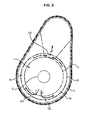
Figure 3 is another sectional view of the boiler; -
Figure 4 illustrates a detail ofFigure 1 ; -
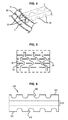
Figure 5 is a schematic view of a possible arrangement of the longitudinal walls of the boiler; -
Figures 6 to 8 illustrate the successive steps for manufacturing the heat exchanger. - Referring to
Fig. 1 , the boiler comprises a burningchamber 1 which is at least partially surrounded by avolume 2 for water. - In the embodiment shown on
Fig. 1 , theburning chamber 1 has a cylindrical shape whoseaxis 10 is substantially horizontal. - In this text, "longitudinal" refers to the direction of the
axis 10 of the burning chamber. - As can be seen on
Fig. 2 , theburning chamber 1 is closed by two vertical walls: afront wall 11 comprises anorifice 12 for introducing a burner (not shown), while the opposite wall orrear wall 13 is plain or formed as a dome to resist water operation pressure. - In order to maximise the heat transfer surface between the flue gases and the water, the
volume 2 of water has a substantially annular shape and surrounds theburning chamber 1 on itsperipheral wall 14 and on therear wall 13. - The burner is known in the art and is fed by a combustible - either gas or fuel.
- The combustion of the combustible creates
flue gases 4 at a high temperature - typically of above 1000°C. The direction of the flow of flue gases is indicated by the arrows. - A
convective heat exchanger 5 is arranged in the boiler for providing aheat transfer surface 50 between the flue gases and the water. - To that end, the convective
heat transfer surface 50 is arranged as the external wall of an annular volume (namely the heat exchanger 5) located inside the burningchamber 1. - This annular volume is defined by an
external wall 50 which is a part of theperipheral wall 14 of the burningchamber 1, and by aninternal wall 51. - The
convective heat exchanger 5 is preferably located in the region of the burning chamber which surrounds the burner. - In the region of the burning
chamber 1 opposite to the burner, the flame energy is emitted in the direction of therear wall 13 and the internal cylinder inlay takes a part of radiation energy from the flame and there is thus a good heat transfer between the flue gases and the water through therear wall 13. - The
convective heat exchanger 5 is needed around the burner in order to force the flow of the flue gases around the burner and enhance the heat transfer between the flue gases and the water in this region. - The heat exchanger is in a fluidic relation with the burning
chamber 1 by at least an inlet and comprises anoutlet 52c from which the flue gases are collected and guided to the exhaust pipe or through a secondary heat exchanger (not shown). - Preferably, the
heat exchanger 5 is divided into two hemi-annular volumes Fig. 3 ) which are substantially symmetrical with respect to a plane comprising thelongitudinal axis 10 of the burningchamber 1. - Each hemi-
annular portion inlet 52a, respectively 52b which consists in a longitudinal slot arranged between the internal and external walls of the heat exchanger. - The inlet is preferably located in the bottom portion of the burning
chamber 1, whereas the outlet is located on top of the boiler. - The flow of the flue gases within the
heat exchanger 5 is advantageously controlled by means oflongitudinal walls 53. -
Figure 4 is a detailed view of thelongitudinal walls 53, which are pierced byorifices 54 for the passage of the flue gases. - The flow of flue gases passes through the orifices of the
longitudinal walls 53 in a direction substantially perpendicular to the walls. - The pattern (i.e. shapes, dimensions and arrangement of the orifices 54) is determined by the man skilled in the art in order to obtain the best distribution of the flue gases.
- It is indeed possible to selectively adjust the pattern according to the region of the heat exchanger, in order to increase the heat transfer in the coldest areas, and to reduce it in the hottest ones.
- This pattern provides an almost perfect Tichelmann flow, wherein two particles of the flue gases travel according two different ways of the same length, and with the same pressure loss, which ensures a very equal distribution of the flow.
- Indeed, the travel of the flue gases in the heat exchanger comprising walls perpendicular to the general direction of the flow generates turbulences of the flow.
- Hence, each particle of the flue gases travels a longer distance, as compared to a particle in a straight flow.
- Furthermore, the turbulences allow a greater heat transfer between the flue gases and the water. The flow pattern does not allow badly ventilated zones or significantly less loaded flue gas flow which could cause the local cold spots responsible for local condensation.
- Since the hottest gases enter the heat exchanger in the most critical zone - namely, the lower portion of the boiler, where the water is colder -, the risk of condensing is avoided.
- Furthermore, the most critical areas where the temperature of the flue gases is the lowest are positioned in the upper region of the boiler, where the temperature of the water is higher, so that condensing of the flue gases is also avoided.
- This pattern results in decreasing the temperature of the flue gases at the outlet of the heat exchanger, as compared to the boilers known in the art.
- The main objective of condensing boiler, with primary and secondary heat exchanger, is to prevent condensing with all realistic return water temperatures.
- Water temperatures with reasonable high exit temperature of the primary heat exchanger can be achieved by minimal means with this design.
- According to a preferred embodiment, illustrated on
Fig. 5 , theorifices 54 of twoadjacent walls 53 are arranged in staggered rows, i.e. the orifices are disposed longitudinally such that an orifice of a wall faces a plain surface of the adjacent wall. - This arrangement with an alternation of the orifices lengthens the distance travelled by the flue gases.
- Furthermore, it increases the turbulence in the flow of flue gases.
- In hot zones the orifices may be aligned to reduce heat transfer, which is typically needed just after the burning chamber.
- The
internal wall 51 functions as well as a hot chamber surface contributing to the heat transfer by taking the radiation energy of the flame. - This energy is transferred through the
longitudinal walls 53, giving them already an average temperature above the water temperature, which, combined with the above described convective heat transfer, results in increasing the wall temperature above the condensing point of the flue gas. - Finally,
Fig. 1 shows thesealing line 100 which completes the performance of the primary heat exchanger of this boiler concept by avoiding gaps between cold boiler parts and a door insulation which done in other ways would lead to local condensation when flue gas even smallest quantities would go through these gaps. - A process for manufacturing the heat exchanger that has been disclosed above will now be described.
- As can be understood, this process is advantageously simple and cheap.
- In a first step,
steel sheets 530 having appropriate dimensions are provided. - The
sheets 530 have a rectangular shape, whose length is identical to the longitudinal dimension of the heat exchanger, and whose width is adapted for forming a U by folding the sheet. The width of the steel sheet shall thus be twice the height of thelongitudinal walls 54 plus the distance between two adjacent walls. - A second step, shown on
Fig. 6 , comprises cutting thesheet steel 530 in order to createnotches 540 on both lengths of the sheet. The shape and size of thenotches 540 are adapted to the required dimensions of theorifices 54 for the passage of the flue gases. - In a third step, the
sheet steel 530 is folded according twofolding lines 532, thus forming a substantially U shape, as illustrated onFig. 7 . - Referring to
Fig. 8 , both lengths of the foldedsheet steel 530 are then longitudinally welded on theheat transfer surface 50 of the boiler (i.e. theinside wall 14 of the burning chamber 1), which is preferably made as well out of sheet steel. The areas defined by thenotches 540 and theheat transfer surface 50 correspond to theorifices 54 for the passage of the flue gases. - The U-shape steel parts are welded on the
heat transfer surface 50 between thenotches 540 either only by dots or preferably according to a continuous welding line which ensures a better control of the heat transfer and wall temperature.
Claims (4)
- Boiler comprising:- a burning chamber (1) at least partially surrounded by a volume (2) of water,- a burner arranged inside the burning chamber (1), wherein the burner burns a combustible, thus producing flue gases (4),- a heat exchanger (5) in a fluidic relation with the burning chamber (1), said heat exchanger (5) being separated from the volume (2) of heat transfer fluid by a heat transfer surface (50) for transferring heat from the flue gases to the water, wherein the heat exchanger (5) comprises means for controlling the flow of flue gases,characterized in that said controlling means comprise means (53, 54) for creating a turbulent flow of the flue gases (4) within the heat exchanger (5).
- Boiler according to claim 1, characterized in that the heat exchanger (5) comprises two hemi-annular portions (5a, 5b) surrounding at least a part of the burning chamber (1), wherein each portion (5a, 5b) comprises an inlet (52a, 52b) for the flue gases (4) located in the lower part of the burning chamber (1).
- Boiler according to claim 1 or claim 2, characterized in that said means for creating a turbulent flow of the flue gases within the heat exchanger (5) comprise a plurality of longitudinal walls (53) extending substantially perpendicular to the general direction of the flow of flue gases (4), wherein each longitudinal wall (53) comprises orifices (54) for the passage of the flue gases (4).
- Boiler according to the preceding claim, characterized in that the orifices (54) of two adjacent walls (53) are arranged in staggered or aligned rows.
Priority Applications (1)
| Application Number | Priority Date | Filing Date | Title |
|---|---|---|---|
| EP08305416A EP2148148A1 (en) | 2008-07-23 | 2008-07-23 | Boiler comprising a heat exchanger |
Applications Claiming Priority (1)
| Application Number | Priority Date | Filing Date | Title |
|---|---|---|---|
| EP08305416A EP2148148A1 (en) | 2008-07-23 | 2008-07-23 | Boiler comprising a heat exchanger |
Publications (1)
| Publication Number | Publication Date |
|---|---|
| EP2148148A1 true EP2148148A1 (en) | 2010-01-27 |
Family
ID=40251804
Family Applications (1)
| Application Number | Title | Priority Date | Filing Date |
|---|---|---|---|
| EP08305416A Withdrawn EP2148148A1 (en) | 2008-07-23 | 2008-07-23 | Boiler comprising a heat exchanger |
Country Status (1)
| Country | Link |
|---|---|
| EP (1) | EP2148148A1 (en) |
Citations (3)
| Publication number | Priority date | Publication date | Assignee | Title |
|---|---|---|---|---|
| DE2462595B1 (en) * | 1974-03-16 | 1979-04-26 | Haas & Sohn Ernst W | Oil or gas-fired heating boiler |
| DE3403225A1 (en) * | 1984-01-31 | 1985-08-08 | Viessmann Werke Kg, 3559 Allendorf | Heating boiler |
| FR2774459A1 (en) * | 1998-02-03 | 1999-08-06 | Cie Int Du Chauffage | BOILER FOR AN OIL OR GAS BOILER AND MODULES FOR MAKING SUCH A BOILER |
-
2008
- 2008-07-23 EP EP08305416A patent/EP2148148A1/en not_active Withdrawn
Patent Citations (3)
| Publication number | Priority date | Publication date | Assignee | Title |
|---|---|---|---|---|
| DE2462595B1 (en) * | 1974-03-16 | 1979-04-26 | Haas & Sohn Ernst W | Oil or gas-fired heating boiler |
| DE3403225A1 (en) * | 1984-01-31 | 1985-08-08 | Viessmann Werke Kg, 3559 Allendorf | Heating boiler |
| FR2774459A1 (en) * | 1998-02-03 | 1999-08-06 | Cie Int Du Chauffage | BOILER FOR AN OIL OR GAS BOILER AND MODULES FOR MAKING SUCH A BOILER |
Similar Documents
| Publication | Publication Date | Title |
|---|---|---|
| KR102702412B1 (en) | Heat exchanger unit | |
| KR102365697B1 (en) | Heat exchanger unit | |
| KR100332568B1 (en) | High temperature regenerator for absorption water heater/chiller | |
| KR20090063438A (en) | Condensing boiler | |
| US20100162967A1 (en) | Heat exchanger | |
| US20190226719A1 (en) | Heat exchange device and heat source machine | |
| JPH0313482B2 (en) | ||
| KR102399606B1 (en) | Heat exchanger unit | |
| CN112503498B (en) | A heat transfer enhanced vertical pipe water-cooled gas steam generator | |
| CA2912555C (en) | Corrosion resistant air preheater with lined tubes | |
| US4499859A (en) | Vapor generator | |
| KR101287693B1 (en) | Hybrid Boiler | |
| CA2469438C (en) | Finned tube water heater | |
| EP2148148A1 (en) | Boiler comprising a heat exchanger | |
| US10760820B2 (en) | Condensing boiler | |
| KR100308890B1 (en) | Unit Heater and Heat Exchanger | |
| JP2023124137A (en) | Heat exchanger and water heater equipped with same | |
| CN222925753U (en) | Waste heat recovery device and gas water heater | |
| KR102583907B1 (en) | Heat exchange pipe and boiler including the same | |
| CN102147196A (en) | Copper pipe band heat exchanger and application thereof | |
| KR840000206Y1 (en) | Boiler | |
| IE980157A1 (en) | Boiler intended to be mounted on a combustion fumes flue¹pipe | |
| KR20090017174A (en) | Heat exchanger with rectangular conduit | |
| JP3007822B2 (en) | Can body structure of multi-tube once-through boiler | |
| KR20220132512A (en) | Heat exchange pipe, heat exchanger unit using the same and condensing boiler using the same |
Legal Events
| Date | Code | Title | Description |
|---|---|---|---|
| PUAI | Public reference made under article 153(3) epc to a published international application that has entered the european phase |
Free format text: ORIGINAL CODE: 0009012 |
|
| AK | Designated contracting states |
Kind code of ref document: A1 Designated state(s): AT BE BG CH CY CZ DE DK EE ES FI FR GB GR HR HU IE IS IT LI LT LU LV MC MT NL NO PL PT RO SE SI SK TR |
|
| AX | Request for extension of the european patent |
Extension state: AL BA MK RS |
|
| 17P | Request for examination filed |
Effective date: 20100702 |
|
| AKX | Designation fees paid |
Designated state(s): AT BE BG CH CY CZ DE DK EE ES FI FR GB GR HR HU IE IS IT LI LT LU LV MC MT NL NO PL PT RO SE SI SK TR |
|
| AXX | Extension fees paid |
Extension state: RS Payment date: 20100702 Extension state: MK Payment date: 20100702 Extension state: BA Payment date: 20100702 Extension state: AL Payment date: 20100702 |
|
| GRAP | Despatch of communication of intention to grant a patent |
Free format text: ORIGINAL CODE: EPIDOSNIGR1 |
|
| INTG | Intention to grant announced |
Effective date: 20131126 |
|
| GRAP | Despatch of communication of intention to grant a patent |
Free format text: ORIGINAL CODE: EPIDOSNIGR1 |
|
| INTG | Intention to grant announced |
Effective date: 20140416 |
|
| STAA | Information on the status of an ep patent application or granted ep patent |
Free format text: STATUS: THE APPLICATION IS DEEMED TO BE WITHDRAWN |
|
| 18D | Application deemed to be withdrawn |
Effective date: 20140827 |