EP2146451A2 - Digital radio receiver and time display method - Google Patents
Digital radio receiver and time display method Download PDFInfo
- Publication number
- EP2146451A2 EP2146451A2 EP09251532A EP09251532A EP2146451A2 EP 2146451 A2 EP2146451 A2 EP 2146451A2 EP 09251532 A EP09251532 A EP 09251532A EP 09251532 A EP09251532 A EP 09251532A EP 2146451 A2 EP2146451 A2 EP 2146451A2
- Authority
- EP
- European Patent Office
- Prior art keywords
- section
- radio receiver
- broadcast
- digital radio
- time information
- Prior art date
- Legal status (The legal status is an assumption and is not a legal conclusion. Google has not performed a legal analysis and makes no representation as to the accuracy of the status listed.)
- Withdrawn
Links
Images

Classifications
-
- H—ELECTRICITY
- H04—ELECTRIC COMMUNICATION TECHNIQUE
- H04H—BROADCAST COMMUNICATION
- H04H40/00—Arrangements specially adapted for receiving broadcast information
- H04H40/18—Arrangements characterised by circuits or components specially adapted for receiving
- H04H40/27—Arrangements characterised by circuits or components specially adapted for receiving specially adapted for broadcast systems covered by groups H04H20/53 - H04H20/95
-
- H—ELECTRICITY
- H04—ELECTRIC COMMUNICATION TECHNIQUE
- H04H—BROADCAST COMMUNICATION
- H04H60/00—Arrangements for broadcast applications with a direct linking to broadcast information or broadcast space-time; Broadcast-related systems
- H04H60/25—Arrangements for updating broadcast information or broadcast-related information
Definitions
- the present invention relates to a digital radio receiver and a time display method.
- Japanese Unexamined Patent Application Publication No. Hei 10-290171 discloses a digital radio receiver that enables reception of a Digital Audio Broadcast (DAB) which has been in practical use according to the European Standard and which contains time information and that enables reservation of a program.
- DAB Digital Audio Broadcast
- Such a digital radio receiver extracts time information contained in a DAB and displays the extracted time information.
- the present inventor studied digital radio receivers with time displays, and found that in order to display time information at all times with 2-band digital radio receivers capable of receiving not only DABs containing time information but also FM broadcasts containing no time information, the following procedure may be performed: turn on the digital radio receiver, select the DAB mode to temporarily receive a DAB and acquire time information, and display the acquired time information.
- time information may not be displayed.
- listeners who mainly listen to FM broadcasts may feel uncomfortable with such a two-band digital radio receiver, because in order to display time information, it is necessary to select not the FM broadcast mode which they desire but the DAB mode.
- Embodiments of the present invention aim to reduce discomfort for listeners who mainly listen to FM broadcasts, by "receiving a DAB when a band change section is switched to receive an FM broadcast in response to an operation input with a battery attached to a digital radio receiver and with the digital radio receiver turned on, extracting time information contained in the DAB, and causing the extracted time information to be displayed on a display section for displaying the time information".
- a digital radio receiver and a time display method allow time information to be displayed on a display screen when a frequency modulation (FM) broadcast is received with a battery attached to the digital radio receiver.
- FM frequency modulation
- a digital radio receiver including: a power switch for turning on the digital radio receiver; a first reception section for receiving a frequency modulation broadcast; a second reception section for receiving a Digital Audio Broadcast; a band change section for changing a reception band between the frequency modulation broadcast received by the first reception section and the Digital Audio Broadcast received by the second reception section in response to an operation input; a battery removably attached to the digital radio receiver to supply electricity to the first reception section and the second reception section with the battery attached to the digital radio receiver; a display control section for causing the second reception section to receive the Digital Audio Broadcast when the band change section is switched to receive the frequency modulation broadcast in response to an operation input with the battery attached to the digital radio receiver and with the digital radio receiver turned on, extracting time information contained in the Digital Audio Broadcast, and causing the extracted time information to be displayed on a display section for displaying the time information; and an output section for receiving the frequency modulation broadcast received by the first reception section to output data of the received frequency modul
- the second reception section receives a DAB when the band change section is switched to receive an FM broadcast in response to an operation input with the battery attached to the digital radio receiver and with the digital radio receiver turned on, time information contained in the DAB is extracted, and the display control section causes the extracted time information to be displayed on the display section for displaying the time information. Therefore, listeners do not take the trouble to operate a switch to receive a DAB in order to have the time information displayed when they are to listen to an FM broadcast.
- a time display method including the steps of: receiving a Digital Audio Broadcast when a reception band has been changed to receive a frequency modulation broadcast in response to an operation input with a battery attached to a digital radio receiver and with the digital radio receiver turned on; extracting time information contained in the Digital Audio Broadcast received in the Digital Audio Broadcast reception step; causing the time information extracted in the time extraction step to be displayed on a display section for displaying the time information; and receiving the frequency modulation broadcast to output data of the received frequency modulation broadcast.
- a DAB is received when the reception band has been changed to receive an FM broadcast in response to an operation input with the battery attached to the digital radio receiver and with the digital radio receiver turned on, time information contained in the DAB is extracted, and the extracted time information is displayed on the display section for displaying the time information. Therefore, listeners do not take the trouble to operate a switch to receive a DAB in order to have the time information displayed when they are to listen to an FM broadcast.
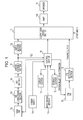
- Fig. 1 is a schematic diagram showing an exemplary general configuration of a digital radio receiver 1 according to an embodiment of the present invention.
- the digital radio receiver 1 enables selective switching between a Digital Audio Broadcast (DAB) which has been in practical use according to the European Standard and which contains time information, and a frequency modulation (FM) broadcast which does not utilize the Radio Data System (RDS) and contains no time information, in response to an operation input by an operator.
- DAB Digital Audio Broadcast
- FM frequency modulation
- RDS Radio Data System
- the digital radio receiver 1 receives a DAB containing time information when a band change switch section 1b is switched to receive an FM broadcast containing no time information in response to an operation input with a battery (not shown) attached to the digital radio receiver 1 and with the digital radio receiver 1 turned on, extracts the time information contained in the DAB, causes the extracted time information to be displayed on a display screen (not shown) of a display section 1o for displaying the time information, and then receives the FM broadcast containing no time information to output data of the received FM broadcast to the outside.
- the digital radio receiver 1 includes a power switch section 1a, the band change switch section 1b, a DAB front end section 1c, an A/D conversion section 1d, a fast Fourier transform section 1e, a Viterbi decoding section 1f, an audio decoder section 1g, an FM front end section 1h, an FM detection section 1i, a storage section 1j, a control section 1k, an output data change section 11, an amplifier section 1m, a speaker section 1n, and the display section 1o.
- the power switch section 1a is a switch for turning on the digital radio receiver 1.
- a power input signal indicating that the digital radio receiver 1 is turned on is output to the control section 1k.
- the band change switch section 1b is a switch for changing which of a DAB and an FM broadcast is to be received in response to an operation input by the operator.
- a DAB reception request indicating that the operator is requesting reception of a DAB is output to the control section 1k.
- an FM broadcast reception request indicating that the operator is requesting reception of an FM broadcast is output to the control section 1k.
- the DAB front end section 1c performs tuning control to a DAB station, receives a DAB wave transmitted from the DAB station, and outputs an analog signal representing the received DAB wave to the A/D conversion section 1d.
- the A/D conversion section 1d converts the analog signal output from the DAB front end section 1c into a digital signal, and outputs the obtained digital signal to the fast Fourier transform section 1e.
- the fast Fourier transform section 1e demodulates an orthogonal frequency division multiplexing (OFDM) wave contained in the digital signal output from the A/D conversion section 1d, and outputs the obtained signal to the Viterbi decoding section 1f.
- OFDM orthogonal frequency division multiplexing
- the Viterbi decoding section 1f receives the signal output from the fast Fourier transform section 1e, corrects errors in the received signal, then extracts Fast Information Channel (FIC) data and Main Service Channel (MSC) data from the obtained signal, and outputs the FIC data to the control section 1k and the MSC data to the audio decoder section 1g.
- FIC Fast Information Channel
- MSC Main Service Channel
- the audio decoder section 1g decompresses the MSC data output from the Viterbi decoding section 1f, restores original audio data from the obtained signal, and outputs the obtained audio data to the output data change section 11.
- the FM front end section 1h performs tuning control to an FM station, receives an FM signal transmitted from the FM station, and outputs the received FM signal to the FM detection section 1i.
- the FM detection section 1i amplifies an intermediate-frequency signal contained in the signal output from the FM front end section 1h, detects a composite signal from the obtained signal, and outputs the obtained audio signal to the output data change section 11.
- the storage section 1j stores information such as information about available services contained in the DAB, information about links between the services, components and sub-channels, information about FM stations, information indicating whether or not a specific program is supported, information for determining the start of a specific program, and information about the band, broadcast station, program, etc., selected by the operator immediately before turning off the power.
- the control section 1k controls the DAB front end section 1c, the A/D conversion section 1d, the fast Fourier transform section 1e, the Viterbi decoding section 1f, the audio decoder section 1g, the FM front end section 1h, the FM detection section 1i, the storage section 1j, the output data change section 11, the amplifier section 1m, the speaker section 1n, and the display section 1o in response to an operation input by the operator to perform various functions for receiving a DAB containing time information when the band change switch section 1b is switched to receive an FM broadcast containing no time information in response to an operation input with a battery (not shown) attached to the digital radio receiver 1 and with the digital radio receiver 1 turned on, extracting the time information contained in the DAB, causing the extracted time information to be displayed on a display screen (not shown) of the display section 1o for displaying the time information, and receiving the FM broadcast containing no time information to output data of the received FM broadcast to the outside.
- control section 1k Of the various functions of the control section 1k, the following functions are specifically associated with the present invention.
- a first power on/off determination function is a function for determining whether or not the digital radio receiver 1 is turned on when a battery (not shown) is attached to a battery box (not shown) provided in the digital radio receiver 1.
- a first power supply control function is a function for controlling the battery (not shown) so as to supply electricity to the DAB front end section 1c, the A/D conversion section 1d, the fast Fourier transform section 1e, the Viterbi decoding section 1f, and the audio decoder section 1g when the first power on/off determination function determines that the digital radio receiver 1 is turned on.
- a first DAB reception control function is a function for causing the DAB front end section 1c to receive a DAB by scanning DAB radio waves transmitted from a broadcast station when the first power on/off determination function determines that the digital radio receiver 1 is turned on.
- a first time extraction function is a function for acquiring time information from DAB data by receiving DAB data corrected by the Viterbi decoding section 1f and extracting time information contained in the received DAB data.
- a first time information display control function is a function for causing the time information extracted from the DAB data by the first time extraction function to be displayed on a display screen (not shown) of the display section 1o.
- a first FM broadcast reception determination function is a function for determining whether or not the reception band selected by an operation input to the band change switch section 1b has been changed to an FM broadcast.
- a first FM broadcast reception control function is a function for causing the FM front end section 1h to receive an FM broadcast when the first FM broadcast reception determination function determines that the reception band selected by an operation input to the band change switch section 1b has been changed to an FM broadcast.
- a first power off process execution function is a function for executing a process for turning off the digital radio receiver 1 when it is determined that the power switch section 1a is turned off.
- a second power on/off determination function is a function for determining whether or not the digital radio receiver 1 is turned on after the first power off process execution function executes the process for turning off the digital radio receiver 1.
- a preceding reception band determination function is a function for determining whether or not the preceding reception band was an FM broadcast when the second power on/off determination function determines that the digital radio receiver 1 is turned on.
- a time display preparation indication display control function is a function for causing an indication "Clock setting", which indicates that preparation is being made to display the time, to be displayed on the display screen of the display section 1o when the preceding reception band determination function determines that the preceding reception band was an FM broadcast.
- a second time extraction function is a function for acquiring time information by receiving a DAB and extracting time information from DAB data received from the Viterbi decoding section 1f when the preceding reception band determination function determines that the preceding reception band was a DAB.
- a second time information display control function is a function for causing the time information acquired by the second time extraction function to be displayed on the display screen of the display section 1o.
- a third time extraction function is a function for acquiring time information by causing the DAB front end section 1c to receive a DAB and extracting time information from DAB data received from the Viterbi decoding section 1f while the time display preparation indication display control function is causing an indication "Clock setting", which indicates that preparation is being made to display the time, to be displayed on the display screen of the display section 1o.
- a third time information display control function is a function for causing the time information acquired by the third time extraction function to be displayed on the display screen of the display section 1o.
- An FM reception process control function is a function for causing the FM front end section 1h to execute a process for receiving an FM broadcast.
- a second DAB reception control function is a function for causing the DAB front end section 1c to receive a DAB by scanning DAB radio waves transmitted from a broadcast station when an external power source (not shown) such as an AC adapter is connected to the digital radio receiver 1.
- a fourth time extraction function is a function for acquiring time information from DAB data by receiving DAB data corrected by the Viterbi decoding section 1f and extracting time information contained in the received DAB data.
- a fourth time information display control function is a function for causing the time information extracted from the DAB data by the fourth time extraction function to be displayed on the display screen of the display section 1o.
- a second power on/off determination function is a function for determining whether or not the digital radio receiver 1 is turned on after the fourth time information display control function causes the time information to be displayed on the display screen of the display section 1o.
- a third DAB reception control function is a function for causing the DAB front end section 1c to receive a DAB by scanning DAB radio waves transmitted from a broadcast station when the second power on/off determination function determines that the digital radio receiver 1 is turned on.
- a fifth time information display control function is a function for causing the time information acquired by extraction from DAB data to be displayed on the display screen of the display section 1o.
- the time information has been acquired from DAB data by receiving DAB data received by the third DAB reception control function and corrected by the Viterbi decoding section 1f and extracting time information contained in the received DAB data.
- a second FM broadcast reception determination function is a function for determining whether or not the reception band selected by an operation input to the band change switch section 1b has been changed to an FM broadcast after the fifth time information display control function causes the time information to be displayed on the display screen of the display section 1o.
- a second FM broadcast reception control function is a function for causing the FM front end section 1h to execute a process for receiving an FM broadcast when the second FM broadcast reception determination function determines that the reception band selected by an operation input to the band change switch section 1b has been changed to an FM broadcast.
- a sixth time information display control function is a function for causing the time information to be displayed on the display screen of the display section 1o after the second FM broadcast reception control function receives an FM broadcast.
- a power off determination function is a function for determining whether or not the power switch section 1a is turned off after the sixth time information display control function causes the time information to be displayed on the display screen of the display section 1o.
- a second power off process execution function is a function for executing a process for turning off the digital radio receiver 1 when it is determined that the power switch section 1a is turned off.
- the output data change section 11 enables selective switching between data from a DAB or an FM broadcast and audio data read from other media externally connected, such as a CD or cassette tape, in accordance with the order of priority for outputting the selected data.
- the amplifier section 1m amplifies the audio data output from the output data change section 11 to output the amplified audio data to the speaker section 1n.
- the speaker section 1n outputs the audio data output from the amplifier section 1m to the outside as sound.
- the display section 1o includes a display screen for displaying time information.
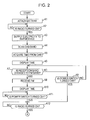
- Figs. 2 and 3 are each a flowchart illustrating an execution process performed by the digital radio receiver 1 in the case where the digital radio receiver 1 according to the embodiment of the present invention is energized by a battery.
- the control section 1k determines whether or not the digital radio receiver 1 is turned on (A2).
- step A2 If it is determined in step A2 that the digital radio receiver 1 is turned on (A2: Yes), the control section 1k supplies electricity to the DAB front end section 1c, the A/D conversion section 1d, the fast Fourier transform section 1e, the Viterbi decoding section 1f, and the audio decoder section 1g (A3).
- step A2 if it is determined in step A2 that the digital radio receiver 1 is not turned on (A2: No), the control section 1k repeats the process for determining whether or not the digital radio receiver 1 is turned on.
- step A4 the control section 1k causes the DAB front end section 1c to receive a DAB by scanning DAB radio waves transmitted from a broadcast station.
- step A5 the control section 1k acquires time information from DAB data by receiving DAB data corrected by the Viterbi decoding section 1f and extracting time information contained in the received DAB data.
- step A6 the control section 1k causes the time information extracted from the DAB data to be displayed on the display screen of the display section 1o.
- step A7 the control section 1k determines whether or not the reception band selected by an operation input to the band change switch section 1b has been changed to an FM broadcast.
- step A7 If it is determined in step A7 that the reception band selected by an operation input to the band change switch section 1b has been changed to an FM broadcast (A7: Yes), the control section 1k causes the FM front end section 1h to receive an FM broadcast (A8).
- step A7 determines whether or not the reception band selected by an operation input to the band change switch section 1b has not been changed to an FM broadcast (A7: No).
- control section 1k causes the time information acquired from the DAB data to be displayed on the display screen of the display section 1o.
- step A9 If it is determined in step A9 that the power switch section 1a is turned off (A9: Yes), the control section 1k executes a process for turning off the digital radio receiver 1.
- step A9 determines whether or not the power switch section 1a is not turned off (A9: No)
- the control section 1k executes the process for determining whether or not the reception band selected by an operation input to the band change switch section 1b has been changed to an FM broadcast.
- step A11 the control section 1k determines whether or not the power switch section 1a is turned off.
- step A11 If it is determined in step A11 that the power switch section 1a is turned off (A11: Yes), the control section 1k executes a process for turning off the digital radio receiver 1.
- step A11 if it is determined in step A11 that the power switch section 1a is not turned off (A11: No), the control section 1k repeats the process for determining whether or not the power switch section 1a is turned off.
- step A12 the control section 1k determines whether or not the digital radio receiver 1 is turned on.
- step A12 If it is determined in step A12 that the digital radio receiver 1 is turned on (A12: Yes), the control section 1k determines whether or not the preceding reception band was an FM broadcast (A13).
- step A12 if it is determined in step A12 that the digital radio receiver 1 is not turned on (A12: No), the control section 1k repeats the process for determining whether or not the digital radio receiver 1 is turned on.
- step A13 If it is determined in step A13 that the preceding reception band was an FM broadcast (A13: Yes), the control section 1k causes an indication "Clock setting", which indicates that preparation is being made to display the time, to be displayed on the display screen of the display section 1o (A14).
- step A13 it is determined in step A13 that the preceding reception band was a DAB (A13: No), the control section 1k acquires time information by receiving the DAB and extracting time information from DAB data received from the Viterbi decoding section 1f (A15).
- step A16 the control section 1k causes the DAB front end section 1c to receive a DAB.
- step A17 the control section 1k causes the time information acquired in step A15 to be displayed on the display screen of the display section 1o.
- control section 1k acquires time information by extracting time information from DAB data received from the Viterbi decoding section 1f.
- step A19 the control section 1k determines whether or not the power switch section 1a is turned off.
- step A19 If it is determined in step A19 that the power switch section 1a is turned off (A19: Yes), the control section 1k executes a process for turning off the digital radio receiver 1 to terminate the execution process.
- step A19 If it is determined in step A19 that the power switch section 1a is not turned off (A19: No), the control section 1k continues the process for causing the DAB front end section 1c to receive the DAB.
- step A20 the control section 1k causes the time information acquired in step A18 to be displayed on the display screen of the display section 1o.
- step A21 the control section 1k causes the FM front end section 1h to execute a process for receiving the FM broadcast.
- step A22 the control section 1k determines whether or not the power switch section 1a is turned off.
- step A22 If it is determined in step A22 that the power switch section 1a is turned off (A22: Yes), the control section 1k executes a process for turning off the digital radio receiver 1.
- step A22 if it is determined in step A22 that the power switch section 1a is not turned off (A22: No), the control section 1k continues the process for causing the FM front end section 1h to receive the FM broadcast.
- the execution process performed by the digital radio receiver 1 in the case where the digital radio receiver 1 according to the embodiment of the present invention is energized by a battery is terminated by the sequence of processes described above.
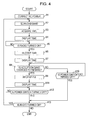
- Fig. 4 is a flowchart illustrating an execution process performed by the digital radio receiver 1 in the case where the digital radio receiver 1 according to the embodiment of the present invention is energized by an external power source such as an AC adapter.
- control section 1k causes the DAB front end section 1c to receive a DAB by scanning DAB radio waves transmitted from a broadcast station (B2).
- step B3 the control section 1k acquires time information from DAB data by receiving DAB data corrected by the Viterbi decoding section 1f and extracting time information contained in the received DAB data.
- step B4 the control section 1k causes the time information extracted from the DAB data to be displayed on the display screen of the display section 1o.
- step B5 the control section 1k determines whether or not the digital radio receiver 1 is turned on.
- step B5 If it is determined in step B5 that the digital radio receiver 1 is turned on (B5: Yes), the control section 1k causes the DAB front end section 1c to receive a DAB by scanning DAB radio waves transmitted from a broadcast station (B6).
- step B5 if it is determined in step B5 that the digital radio receiver 1 is not turned on (B5: No), the control section 1k repeats the process for determining whether or not the digital radio receiver 1 is turned on.
- control section 1k causes the time information acquired by extraction from DAB data to be displayed on the display screen of the display section 1o.
- the time information has been acquired from DAB data by receiving DAB data corrected by the Viterbi decoding section 1f and extracting time information contained in the received DAB data.
- step B8 the control section 1k determines whether or not the reception band selected by an operation input to the band change switch section 1b has been changed to an FM broadcast.
- step B8 If it is determined in step B8 that the reception band selected by an operation input to the band change switch section 1b has been changed to an FM broadcast (B8: Yes), the control section 1k causes the FM front end section 1h to perform a process for receiving an FM broadcast (B9).
- step B8 determines whether or not the reception band selected by an operation input to the band change switch section 1b has not been changed to an FM broadcast (B8: No).
- step B10 If it is determined in step B10 that the power switch section 1a is turned off (B10: Yes), the control section 1k executes a process for turning off the digital radio receiver 1.
- step B10 determines whether or not the power switch section 1a is not turned off (B10: No)
- the control section 1k executes the process for determining whether or not the reception band selected by an operation input to the band change switch section 1b has been changed to an FM broadcast.
- step B11 the control section 1k causes the time information to be displayed on the display screen of the display section 1o.
- step B12 the control section 1k determines whether or not the power switch section 1a is turned off.
- step B12 If it is determined in step B12 that the power switch section 1a is turned off (B12: Yes), the control section 1k executes a process for turning off the digital radio receiver 1.
- step B12 if it is determined in step B12 that the power switch section 1a is not turned off (B12: No), the control section 1k repeats the process for determining whether or not the power switch section 1a is turned off.
- step B13 the control section 1k determines whether or not the digital radio receiver 1 is turned on.
- step B13 If it is determined in step B13 that the digital radio receiver 1 is turned on (B13: Yes), the control section 1k causes the DAB front end section 1c to execute the process for receiving a DAB by scanning DAB radio waves transmitted from a broadcast station as in step B2.
- step B13 if it is determined in step B13 that the digital radio receiver 1 is not turned on (B13: No), the control section 1k terminates the execution process.
- the execution process performed by the digital radio receiver 1 in the case where the digital radio receiver 1 according to the embodiment of the present invention is energized by an external power source such as an AC adapter is terminated by the sequence of processes described above.
- the digital radio receiver 1 receives a DAB when the reception band has been changed to receive an FM broadcast in response to an operation input with a battery attached to the digital radio receiver 1 and with the digital radio receiver 1 turned on, extracts time information contained in the DAB, and causes the extracted time information to be displayed on the display screen of the display section 1o for displaying the time information. Therefore, listeners do not take the trouble to operate a switch to receive a DAB in order to have the time information displayed when they are to listen to an FM broadcast.
- the present invention is not limited to the embodiment described above, and may be modified in various ways in the implementation phase without departing from the scope of the present invention.
- the embodiment described above includes various forms of the present invention, and a plurality of the disclosed constituent elements may be combined appropriately to generate various forms of the present invention.
- the omitted elements may be replaced by their counterparts employed in the related art in the implementation phase for the generated form of the present invention.
Landscapes
- Engineering & Computer Science (AREA)
- Signal Processing (AREA)
- Circuits Of Receivers In General (AREA)
Abstract
Description
- The present invention relates to a digital radio receiver and a time display method.
- Japanese Unexamined Patent Application Publication No.
Hei 10-290171 - Such a digital radio receiver extracts time information contained in a DAB and displays the extracted time information.
- The present inventor studied digital radio receivers with time displays, and found that in order to display time information at all times with 2-band digital radio receivers capable of receiving not only DABs containing time information but also FM broadcasts containing no time information, the following procedure may be performed: turn on the digital radio receiver, select the DAB mode to temporarily receive a DAB and acquire time information, and display the acquired time information.
- That is, if the FM broadcast mode is selected to receive a FM broadcast containing no time information when the 2-band digital radio receiver is turned on, time information may not be displayed.
- Thus, listeners who mainly listen to FM broadcasts may feel uncomfortable with such a two-band digital radio receiver, because in order to display time information, it is necessary to select not the FM broadcast mode which they desire but the DAB mode.
- According to a further study on digital radio receivers carried out by the present inventor, there has been an increasing demand in industry for digital radio receivers that reduce discomfort for listeners who mainly listen to FM broadcasts.
- Therefore, it is desirable to provide a digital radio receiver and a time display method that reduce discomfort for listeners who mainly listen to FM broadcasts.
- Embodiments of the present invention aim to reduce discomfort for listeners who mainly listen to FM broadcasts, by "receiving a DAB when a band change section is switched to receive an FM broadcast in response to an operation input with a battery attached to a digital radio receiver and with the digital radio receiver turned on, extracting time information contained in the DAB, and causing the extracted time information to be displayed on a display section for displaying the time information".
- In other words, a digital radio receiver and a time display method allow time information to be displayed on a display screen when a frequency modulation (FM) broadcast is received with a battery attached to the digital radio receiver.
- In so far as the embodiments of the invention described above are implemented, at least in part, using software-controlled data processing apparatus, it will be appreciated that a computer program providing such software control and a transmission, storage or other medium by which such a computer program is provided are envisaged as aspects of the present invention. According to a first embodiment of the present invention, there is provided a digital radio receiver including: a power switch for turning on the digital radio receiver; a first reception section for receiving a frequency modulation broadcast; a second reception section for receiving a Digital Audio Broadcast; a band change section for changing a reception band between the frequency modulation broadcast received by the first reception section and the Digital Audio Broadcast received by the second reception section in response to an operation input; a battery removably attached to the digital radio receiver to supply electricity to the first reception section and the second reception section with the battery attached to the digital radio receiver; a display control section for causing the second reception section to receive the Digital Audio Broadcast when the band change section is switched to receive the frequency modulation broadcast in response to an operation input with the battery attached to the digital radio receiver and with the digital radio receiver turned on, extracting time information contained in the Digital Audio Broadcast, and causing the extracted time information to be displayed on a display section for displaying the time information; and an output section for receiving the frequency modulation broadcast received by the first reception section to output data of the received frequency modulation broadcast.
- According to this configuration, the second reception section receives a DAB when the band change section is switched to receive an FM broadcast in response to an operation input with the battery attached to the digital radio receiver and with the digital radio receiver turned on, time information contained in the DAB is extracted, and the display control section causes the extracted time information to be displayed on the display section for displaying the time information. Therefore, listeners do not take the trouble to operate a switch to receive a DAB in order to have the time information displayed when they are to listen to an FM broadcast.
- Consequently, it is possible to reduce discomfort for listeners who mainly listen to FM broadcasts.
- According to a second embodiment of the present invention, there is provided a time display method including the steps of: receiving a Digital Audio Broadcast when a reception band has been changed to receive a frequency modulation broadcast in response to an operation input with a battery attached to a digital radio receiver and with the digital radio receiver turned on; extracting time information contained in the Digital Audio Broadcast received in the Digital Audio Broadcast reception step; causing the time information extracted in the time extraction step to be displayed on a display section for displaying the time information; and receiving the frequency modulation broadcast to output data of the received frequency modulation broadcast.
- According to this configuration, a DAB is received when the reception band has been changed to receive an FM broadcast in response to an operation input with the battery attached to the digital radio receiver and with the digital radio receiver turned on, time information contained in the DAB is extracted, and the extracted time information is displayed on the display section for displaying the time information. Therefore, listeners do not take the trouble to operate a switch to receive a DAB in order to have the time information displayed when they are to listen to an FM broadcast.
- Consequently, it is possible to reduce discomfort for listeners who mainly listen to FM broadcasts.
- It should be understood that although aspects of the present invention are expressed as a "device" and a "method" herein for simplicity of the description, the aspects are not limited thereto and may be expressed as a subject in any category, such as a "program" and a "storage medium", without departing from the scope of the present invention.
- Embodiments of the invention will now be described with reference to the accompanying drawings, throughout which like parts are referred to by like references, and in which:
-
Fig. 1 is a schematic diagram showing an exemplary general configuration of a digital radio receiver 1 according to an embodiment of the present invention; -
Fig. 2 is a flowchart illustrating an execution process performed by the digital radio receiver 1 in the case where the digital radio receiver 1 according to the embodiment of the present invention is energized by a battery; -
Fig. 3 is a flowchart illustrating the execution process performed by the digital radio receiver 1 in the case where the digital radio receiver 1 according to the embodiment of the present invention is energized by the battery; and -
Fig. 4 is a flowchart illustrating an execution process performed by the digital radio receiver 1 in the case where the digital radio receiver 1 according to the embodiment of the present invention is energized by an external power source such as an AC adapter. - A preferred embodiment of the present invention will be described below with reference to the drawings.
-
Fig. 1 is a schematic diagram showing an exemplary general configuration of a digital radio receiver 1 according to an embodiment of the present invention. - The digital radio receiver 1 according to this embodiment enables selective switching between a Digital Audio Broadcast (DAB) which has been in practical use according to the European Standard and which contains time information, and a frequency modulation (FM) broadcast which does not utilize the Radio Data System (RDS) and contains no time information, in response to an operation input by an operator.
- The digital radio receiver 1 according to this embodiment receives a DAB containing time information when a band
change switch section 1b is switched to receive an FM broadcast containing no time information in response to an operation input with a battery (not shown) attached to the digital radio receiver 1 and with the digital radio receiver 1 turned on, extracts the time information contained in the DAB, causes the extracted time information to be displayed on a display screen (not shown) of a display section 1o for displaying the time information, and then receives the FM broadcast containing no time information to output data of the received FM broadcast to the outside. - The digital radio receiver 1 according to this embodiment includes a
power switch section 1a, the bandchange switch section 1b, a DABfront end section 1c, an A/D conversion section 1d, a fastFourier transform section 1e, a Viterbidecoding section 1f, an audio decoder section 1g, an FMfront end section 1h, an FM detection section 1i, astorage section 1j, acontrol section 1k, an outputdata change section 11, anamplifier section 1m, aspeaker section 1n, and the display section 1o. - The
power switch section 1a is a switch for turning on the digital radio receiver 1. When thepower switch section 1a is turned on by the operator, a power input signal indicating that the digital radio receiver 1 is turned on is output to thecontrol section 1k. - The band
change switch section 1b is a switch for changing which of a DAB and an FM broadcast is to be received in response to an operation input by the operator. When the bandchange switch section 1b is switched to receive a DAB, a DAB reception request indicating that the operator is requesting reception of a DAB is output to thecontrol section 1k. When the bandchange switch section 1b is switched to receive an FM broadcast, an FM broadcast reception request indicating that the operator is requesting reception of an FM broadcast is output to thecontrol section 1k. - The DAB
front end section 1c performs tuning control to a DAB station, receives a DAB wave transmitted from the DAB station, and outputs an analog signal representing the received DAB wave to the A/D conversion section 1d. - The A/
D conversion section 1d converts the analog signal output from the DABfront end section 1c into a digital signal, and outputs the obtained digital signal to the fastFourier transform section 1e. - The fast Fourier
transform section 1e demodulates an orthogonal frequency division multiplexing (OFDM) wave contained in the digital signal output from the A/D conversion section 1d, and outputs the obtained signal to the Viterbidecoding section 1f. - The Viterbi
decoding section 1f receives the signal output from the fastFourier transform section 1e, corrects errors in the received signal, then extracts Fast Information Channel (FIC) data and Main Service Channel (MSC) data from the obtained signal, and outputs the FIC data to thecontrol section 1k and the MSC data to the audio decoder section 1g. - The audio decoder section 1g decompresses the MSC data output from the Viterbi
decoding section 1f, restores original audio data from the obtained signal, and outputs the obtained audio data to the outputdata change section 11. - The FM
front end section 1h performs tuning control to an FM station, receives an FM signal transmitted from the FM station, and outputs the received FM signal to the FM detection section 1i. - The FM detection section 1i amplifies an intermediate-frequency signal contained in the signal output from the FM
front end section 1h, detects a composite signal from the obtained signal, and outputs the obtained audio signal to the outputdata change section 11. - The
storage section 1j stores information such as information about available services contained in the DAB, information about links between the services, components and sub-channels, information about FM stations, information indicating whether or not a specific program is supported, information for determining the start of a specific program, and information about the band, broadcast station, program, etc., selected by the operator immediately before turning off the power. - The
control section 1k controls the DABfront end section 1c, the A/D conversion section 1d, the fastFourier transform section 1e, the Viterbidecoding section 1f, the audio decoder section 1g, the FMfront end section 1h, the FM detection section 1i, thestorage section 1j, the outputdata change section 11, theamplifier section 1m, thespeaker section 1n, and the display section 1o in response to an operation input by the operator to perform various functions for receiving a DAB containing time information when the bandchange switch section 1b is switched to receive an FM broadcast containing no time information in response to an operation input with a battery (not shown) attached to the digital radio receiver 1 and with the digital radio receiver 1 turned on, extracting the time information contained in the DAB, causing the extracted time information to be displayed on a display screen (not shown) of the display section 1o for displaying the time information, and receiving the FM broadcast containing no time information to output data of the received FM broadcast to the outside. - Of the various functions of the
control section 1k, the following functions are specifically associated with the present invention. - A first power on/off determination function is a function for determining whether or not the digital radio receiver 1 is turned on when a battery (not shown) is attached to a battery box (not shown) provided in the digital radio receiver 1.
- A first power supply control function is a function for controlling the battery (not shown) so as to supply electricity to the DAB
front end section 1c, the A/D conversion section 1d, the fastFourier transform section 1e, the Viterbidecoding section 1f, and the audio decoder section 1g when the first power on/off determination function determines that the digital radio receiver 1 is turned on. - A first DAB reception control function is a function for causing the DAB
front end section 1c to receive a DAB by scanning DAB radio waves transmitted from a broadcast station when the first power on/off determination function determines that the digital radio receiver 1 is turned on. - A first time extraction function is a function for acquiring time information from DAB data by receiving DAB data corrected by the Viterbi
decoding section 1f and extracting time information contained in the received DAB data. - A first time information display control function is a function for causing the time information extracted from the DAB data by the first time extraction function to be displayed on a display screen (not shown) of the display section 1o.
- A first FM broadcast reception determination function is a function for determining whether or not the reception band selected by an operation input to the band
change switch section 1b has been changed to an FM broadcast. - A first FM broadcast reception control function is a function for causing the FM
front end section 1h to receive an FM broadcast when the first FM broadcast reception determination function determines that the reception band selected by an operation input to the bandchange switch section 1b has been changed to an FM broadcast. - A first power off process execution function is a function for executing a process for turning off the digital radio receiver 1 when it is determined that the
power switch section 1a is turned off. - A second power on/off determination function is a function for determining whether or not the digital radio receiver 1 is turned on after the first power off process execution function executes the process for turning off the digital radio receiver 1.
- A preceding reception band determination function is a function for determining whether or not the preceding reception band was an FM broadcast when the second power on/off determination function determines that the digital radio receiver 1 is turned on.
- A time display preparation indication display control function is a function for causing an indication "Clock setting", which indicates that preparation is being made to display the time, to be displayed on the display screen of the display section 1o when the preceding reception band determination function determines that the preceding reception band was an FM broadcast.
- A second time extraction function is a function for acquiring time information by receiving a DAB and extracting time information from DAB data received from the Viterbi
decoding section 1f when the preceding reception band determination function determines that the preceding reception band was a DAB. - A second time information display control function is a function for causing the time information acquired by the second time extraction function to be displayed on the display screen of the display section 1o.
- A third time extraction function is a function for acquiring time information by causing the DAB
front end section 1c to receive a DAB and extracting time information from DAB data received from the Viterbidecoding section 1f while the time display preparation indication display control function is causing an indication "Clock setting", which indicates that preparation is being made to display the time, to be displayed on the display screen of the display section 1o. - A third time information display control function is a function for causing the time information acquired by the third time extraction function to be displayed on the display screen of the display section 1o.
- An FM reception process control function is a function for causing the FM
front end section 1h to execute a process for receiving an FM broadcast. - A second DAB reception control function is a function for causing the DAB
front end section 1c to receive a DAB by scanning DAB radio waves transmitted from a broadcast station when an external power source (not shown) such as an AC adapter is connected to the digital radio receiver 1. - A fourth time extraction function is a function for acquiring time information from DAB data by receiving DAB data corrected by the Viterbi
decoding section 1f and extracting time information contained in the received DAB data. - A fourth time information display control function is a function for causing the time information extracted from the DAB data by the fourth time extraction function to be displayed on the display screen of the display section 1o.
- A second power on/off determination function is a function for determining whether or not the digital radio receiver 1 is turned on after the fourth time information display control function causes the time information to be displayed on the display screen of the display section 1o.
- A third DAB reception control function is a function for causing the DAB
front end section 1c to receive a DAB by scanning DAB radio waves transmitted from a broadcast station when the second power on/off determination function determines that the digital radio receiver 1 is turned on. - A fifth time information display control function is a function for causing the time information acquired by extraction from DAB data to be displayed on the display screen of the display section 1o. The time information has been acquired from DAB data by receiving DAB data received by the third DAB reception control function and corrected by the
Viterbi decoding section 1f and extracting time information contained in the received DAB data. - A second FM broadcast reception determination function is a function for determining whether or not the reception band selected by an operation input to the band
change switch section 1b has been changed to an FM broadcast after the fifth time information display control function causes the time information to be displayed on the display screen of the display section 1o. - A second FM broadcast reception control function is a function for causing the FM
front end section 1h to execute a process for receiving an FM broadcast when the second FM broadcast reception determination function determines that the reception band selected by an operation input to the bandchange switch section 1b has been changed to an FM broadcast. - A sixth time information display control function is a function for causing the time information to be displayed on the display screen of the display section 1o after the second FM broadcast reception control function receives an FM broadcast.
- A power off determination function is a function for determining whether or not the
power switch section 1a is turned off after the sixth time information display control function causes the time information to be displayed on the display screen of the display section 1o. - A second power off process execution function is a function for executing a process for turning off the digital radio receiver 1 when it is determined that the
power switch section 1a is turned off. - The output data change
section 11 enables selective switching between data from a DAB or an FM broadcast and audio data read from other media externally connected, such as a CD or cassette tape, in accordance with the order of priority for outputting the selected data. - The
amplifier section 1m amplifies the audio data output from the output data changesection 11 to output the amplified audio data to thespeaker section 1n. - The
speaker section 1n outputs the audio data output from theamplifier section 1m to the outside as sound. - The display section 1o includes a display screen for displaying time information.
- Now, a description is made of an execution process performed by the digital radio receiver 1 configured as described above with reference to the drawings.
-
Figs. 2 and3 are each a flowchart illustrating an execution process performed by the digital radio receiver 1 in the case where the digital radio receiver 1 according to the embodiment of the present invention is energized by a battery. - A description is first made of an execution process performed by the digital radio receiver 1 in the case where the digital radio receiver 1 according to the embodiment of the present invention is energized by a battery.
- When a battery (not shown) is attached to a battery box (not shown) provided in the digital radio receiver 1 according to this embodiment (A1), the
control section 1k determines whether or not the digital radio receiver 1 is turned on (A2). - If it is determined in step A2 that the digital radio receiver 1 is turned on (A2: Yes), the
control section 1k supplies electricity to the DABfront end section 1c, the A/D conversion section 1d, the fastFourier transform section 1e, theViterbi decoding section 1f, and the audio decoder section 1g (A3). - On the other hand, if it is determined in step A2 that the digital radio receiver 1 is not turned on (A2: No), the
control section 1k repeats the process for determining whether or not the digital radio receiver 1 is turned on. - In step A4, the
control section 1k causes the DABfront end section 1c to receive a DAB by scanning DAB radio waves transmitted from a broadcast station. - In step A5, the
control section 1k acquires time information from DAB data by receiving DAB data corrected by theViterbi decoding section 1f and extracting time information contained in the received DAB data. - In step A6, the
control section 1k causes the time information extracted from the DAB data to be displayed on the display screen of the display section 1o. - In step A7, the
control section 1k determines whether or not the reception band selected by an operation input to the bandchange switch section 1b has been changed to an FM broadcast. - If it is determined in step A7 that the reception band selected by an operation input to the band
change switch section 1b has been changed to an FM broadcast (A7: Yes), thecontrol section 1k causes the FMfront end section 1h to receive an FM broadcast (A8). - On the other hand, if it is determined in step A7 that the reception band selected by an operation input to the band
change switch section 1b has not been changed to an FM broadcast (A7: No), thecontrol section 1k determines whether or not thepower switch section 1a is turned off (A9). - In step A10, the
control section 1k causes the time information acquired from the DAB data to be displayed on the display screen of the display section 1o. - If it is determined in step A9 that the
power switch section 1a is turned off (A9: Yes), thecontrol section 1k executes a process for turning off the digital radio receiver 1. - On the other hand, if it is determined in step A9 that the
power switch section 1a is not turned off (A9: No), thecontrol section 1k executes the process for determining whether or not the reception band selected by an operation input to the bandchange switch section 1b has been changed to an FM broadcast. - In step A11, the
control section 1k determines whether or not thepower switch section 1a is turned off. - If it is determined in step A11 that the
power switch section 1a is turned off (A11: Yes), thecontrol section 1k executes a process for turning off the digital radio receiver 1. - On the other hand, if it is determined in step A11 that the
power switch section 1a is not turned off (A11: No), thecontrol section 1k repeats the process for determining whether or not thepower switch section 1a is turned off. - In step A12, the
control section 1k determines whether or not the digital radio receiver 1 is turned on. - If it is determined in step A12 that the digital radio receiver 1 is turned on (A12: Yes), the
control section 1k determines whether or not the preceding reception band was an FM broadcast (A13). - On the other hand, if it is determined in step A12 that the digital radio receiver 1 is not turned on (A12: No), the
control section 1k repeats the process for determining whether or not the digital radio receiver 1 is turned on. - If it is determined in step A13 that the preceding reception band was an FM broadcast (A13: Yes), the
control section 1k causes an indication "Clock setting", which indicates that preparation is being made to display the time, to be displayed on the display screen of the display section 1o (A14). - On the other hand, it is determined in step A13 that the preceding reception band was a DAB (A13: No), the
control section 1k acquires time information by receiving the DAB and extracting time information from DAB data received from theViterbi decoding section 1f (A15). - In step A16, the
control section 1k causes the DABfront end section 1c to receive a DAB. - In step A17, the
control section 1k causes the time information acquired in step A15 to be displayed on the display screen of the display section 1o. - In step A18, the
control section 1k acquires time information by extracting time information from DAB data received from theViterbi decoding section 1f. - In step A19, the
control section 1k determines whether or not thepower switch section 1a is turned off. - If it is determined in step A19 that the
power switch section 1a is turned off (A19: Yes), thecontrol section 1k executes a process for turning off the digital radio receiver 1 to terminate the execution process. - If it is determined in step A19 that the
power switch section 1a is not turned off (A19: No), thecontrol section 1k continues the process for causing the DABfront end section 1c to receive the DAB. - In step A20, the
control section 1k causes the time information acquired in step A18 to be displayed on the display screen of the display section 1o. - In step A21, the
control section 1k causes the FMfront end section 1h to execute a process for receiving the FM broadcast. - In step A22, the
control section 1k determines whether or not thepower switch section 1a is turned off. - If it is determined in step A22 that the
power switch section 1a is turned off (A22: Yes), thecontrol section 1k executes a process for turning off the digital radio receiver 1. - On the other hand, if it is determined in step A22 that the
power switch section 1a is not turned off (A22: No), thecontrol section 1k continues the process for causing the FMfront end section 1h to receive the FM broadcast. - The execution process performed by the digital radio receiver 1 in the case where the digital radio receiver 1 according to the embodiment of the present invention is energized by a battery is terminated by the sequence of processes described above.
- A description is then made of an execution process performed by the digital radio receiver 1 in the case where the digital radio receiver 1 according to the embodiment of the present invention is energized by an external power source (not shown) such as an AC adapter.
-
Fig. 4 is a flowchart illustrating an execution process performed by the digital radio receiver 1 in the case where the digital radio receiver 1 according to the embodiment of the present invention is energized by an external power source such as an AC adapter. - First, when an external power source (not shown) such as an AC adapter is connected to the digital radio receiver 1 according to this embodiment (B1), the
control section 1k causes the DABfront end section 1c to receive a DAB by scanning DAB radio waves transmitted from a broadcast station (B2). - In step B3, the
control section 1k acquires time information from DAB data by receiving DAB data corrected by theViterbi decoding section 1f and extracting time information contained in the received DAB data. - In step B4, the
control section 1k causes the time information extracted from the DAB data to be displayed on the display screen of the display section 1o. - In step B5, the
control section 1k determines whether or not the digital radio receiver 1 is turned on. - If it is determined in step B5 that the digital radio receiver 1 is turned on (B5: Yes), the
control section 1k causes the DABfront end section 1c to receive a DAB by scanning DAB radio waves transmitted from a broadcast station (B6). - On the other hand, if it is determined in step B5 that the digital radio receiver 1 is not turned on (B5: No), the
control section 1k repeats the process for determining whether or not the digital radio receiver 1 is turned on. - In step B7, the
control section 1k causes the time information acquired by extraction from DAB data to be displayed on the display screen of the display section 1o. The time information has been acquired from DAB data by receiving DAB data corrected by theViterbi decoding section 1f and extracting time information contained in the received DAB data. - In step B8, the
control section 1k determines whether or not the reception band selected by an operation input to the bandchange switch section 1b has been changed to an FM broadcast. - If it is determined in step B8 that the reception band selected by an operation input to the band
change switch section 1b has been changed to an FM broadcast (B8: Yes), thecontrol section 1k causes the FMfront end section 1h to perform a process for receiving an FM broadcast (B9). - On the other hand, if it is determined in step B8 that the reception band selected by an operation input to the band
change switch section 1b has not been changed to an FM broadcast (B8: No), thecontrol section 1k determines whether or not thepower switch section 1a is turned off (B10). - If it is determined in step B10 that the
power switch section 1a is turned off (B10: Yes), thecontrol section 1k executes a process for turning off the digital radio receiver 1. - On the other hand, if it is determined in step B10 that the
power switch section 1a is not turned off (B10: No), thecontrol section 1k executes the process for determining whether or not the reception band selected by an operation input to the bandchange switch section 1b has been changed to an FM broadcast. - In step B11, the
control section 1k causes the time information to be displayed on the display screen of the display section 1o. - In step B12, the
control section 1k determines whether or not thepower switch section 1a is turned off. - If it is determined in step B12 that the
power switch section 1a is turned off (B12: Yes), thecontrol section 1k executes a process for turning off the digital radio receiver 1. - On the other hand, if it is determined in step B12 that the
power switch section 1a is not turned off (B12: No), thecontrol section 1k repeats the process for determining whether or not thepower switch section 1a is turned off. - In step B13, the
control section 1k determines whether or not the digital radio receiver 1 is turned on. - If it is determined in step B13 that the digital radio receiver 1 is turned on (B13: Yes), the
control section 1k causes the DABfront end section 1c to execute the process for receiving a DAB by scanning DAB radio waves transmitted from a broadcast station as in step B2. - On the other hand, if it is determined in step B13 that the digital radio receiver 1 is not turned on (B13: No), the
control section 1k terminates the execution process. - The execution process performed by the digital radio receiver 1 in the case where the digital radio receiver 1 according to the embodiment of the present invention is energized by an external power source such as an AC adapter is terminated by the sequence of processes described above.
- As discussed above, the digital radio receiver 1 according to this embodiment receives a DAB when the reception band has been changed to receive an FM broadcast in response to an operation input with a battery attached to the digital radio receiver 1 and with the digital radio receiver 1 turned on, extracts time information contained in the DAB, and causes the extracted time information to be displayed on the display screen of the display section 1o for displaying the time information. Therefore, listeners do not take the trouble to operate a switch to receive a DAB in order to have the time information displayed when they are to listen to an FM broadcast.
- Consequently, it is possible to reduce discomfort for listeners who mainly listen to FM broadcasts.
- The present application contains subject matter related to that disclosed in Japanese Priority Patent Application
JP 2008-186575 - The present invention is not limited to the embodiment described above, and may be modified in various ways in the implementation phase without departing from the scope of the present invention. The embodiment described above includes various forms of the present invention, and a plurality of the disclosed constituent elements may be combined appropriately to generate various forms of the present invention. For example, when some of all the constituent elements of the illustrated embodiment are omitted to generate a form of the present invention, the omitted elements may be replaced by their counterparts employed in the related art in the implementation phase for the generated form of the present invention.
- Besides, the present invention may be modified and implemented in various other ways without departing from the scope of the present invention.
- In so far as the embodiments of the invention described above are implemented, at least in part, using software-controlled data processing apparatus, it will be appreciated that a computer program providing such software control and a transmission, storage or other medium or similar computer program product or object of manufacture by which such a computer program is provided are envisaged as aspects of the present invention.
Claims (4)
- A digital radio receiver comprising:a power switch for turning on the digital radio receiver;first reception means for receiving a frequency modulation broadcast;second reception means for receiving a Digital Audio Broadcast;band change means for changing a reception band between the frequency modulation broadcast received by the first reception means and the Digital Audio Broadcast received by the second reception means in response to an operation input;a battery removably attached to the digital radio receiver to supply electricity to the first reception means and the second reception means with the battery attached to the digital radio receiver;display control means for causing the second reception means to receive the Digital Audio Broadcast when the band change means is switched to receive the frequency modulation broadcast in response to an operation input with the battery attached to the digital radio receiver and with the digital radio receiver turned on, extracting time information contained in the Digital Audio Broadcast, and causing the extracted time information to be displayed on display means for displaying the time information; andoutput means for receiving the frequency modulation broadcast received by the first reception means to output data of the received frequency modulation broadcast.
- A time display method comprising the steps of:receiving a Digital Audio Broadcast when a reception band has been changed to receive a frequency modulation broadcast in response to an operation input with a battery attached to a digital radio receiver and with the digital radio receiver turned on;extracting time information contained in the Digital Audio Broadcast received in the Digital Audio Broadcast reception step;causing the time information extracted in the time extraction step to be displayed on display means for displaying the time information; andreceiving the frequency modulation broadcast to output data of the received frequency modulation broadcast.
- A digital radio receiver comprising:a power switch for turning on the digital radio receiver;a first reception section for receiving a frequency modulation broadcast;a second reception section for receiving a Digital Audio Broadcast;a band change section for changing a reception band between the frequency modulation broadcast received by the first reception section and the Digital Audio Broadcast received by the second reception section in response to an operation input;a battery removably attached to the digital radio receiver to supply electricity to the first reception section and the second reception section with the battery attached to the digital radio receiver;a display control section for causing the second reception section to receive the Digital Audio Broadcast when the band change section is switched to receive the frequency modulation broadcast in response to an operation input with the battery attached to the digital radio receiver and with the digital radio receiver turned on, extracting time information contained in the Digital Audio Broadcast, and causing the extracted time information to be displayed on a display section for displaying the time information; andan output section for receiving the frequency modulation broadcast received by the first reception section to output data of the received frequency modulation broadcast.
- A time display method comprising the steps of:receiving a Digital Audio Broadcast when a reception band has been changed to receive a frequency modulation broadcast in response to an operation input with a battery attached to a digital radio receiver and with the digital radio receiver turned on;extracting time information contained in the Digital Audio Broadcast received in the Digital Audio Broadcast reception step;causing the time information extracted in the time extraction step to be displayed on a display section for displaying the time information; andreceiving the frequency modulation broadcast to output data of the received frequency modulation broadcast.
Applications Claiming Priority (1)
| Application Number | Priority Date | Filing Date | Title |
|---|---|---|---|
| JP2008186575A JP4553039B2 (en) | 2008-07-17 | 2008-07-17 | Digital radio receiver and time display method |
Publications (2)
| Publication Number | Publication Date |
|---|---|
| EP2146451A2 true EP2146451A2 (en) | 2010-01-20 |
| EP2146451A3 EP2146451A3 (en) | 2010-07-07 |
Family
ID=41120142
Family Applications (1)
| Application Number | Title | Priority Date | Filing Date |
|---|---|---|---|
| EP09251532A Withdrawn EP2146451A3 (en) | 2008-07-17 | 2009-06-11 | Digital radio receiver and time display method |
Country Status (2)
| Country | Link |
|---|---|
| EP (1) | EP2146451A3 (en) |
| JP (1) | JP4553039B2 (en) |
Citations (2)
| Publication number | Priority date | Publication date | Assignee | Title |
|---|---|---|---|---|
| JPH10290171A (en) | 1997-04-11 | 1998-10-27 | Fujitsu Ten Ltd | Dab reception system |
| JP2008186575A (en) | 2007-01-30 | 2008-08-14 | Samsung Electronics Co Ltd | Actuator latch device for hard disk drive |
Family Cites Families (6)
| Publication number | Priority date | Publication date | Assignee | Title |
|---|---|---|---|---|
| EP1122622A1 (en) * | 2000-02-01 | 2001-08-08 | Matsushita Electric Industrial Co., Ltd. | Electronic device and method for adjusting an internal clock |
| JP2004056618A (en) * | 2002-07-23 | 2004-02-19 | Kenwood Corp | Receiver |
| JP2004349758A (en) * | 2003-05-20 | 2004-12-09 | Sony Corp | Digital broadcast receiver |
| JP2006094357A (en) * | 2004-09-27 | 2006-04-06 | Toshiba Corp | Broadcast receiving apparatus and clock display method |
| JP2007208701A (en) * | 2006-02-02 | 2007-08-16 | Toshiba Corp | Digital broadcast receiver |
| US7827580B2 (en) * | 2006-12-22 | 2010-11-02 | Nokia Corporation | Dynamically adjustable electronic service guide |
-
2008
- 2008-07-17 JP JP2008186575A patent/JP4553039B2/en not_active Expired - Fee Related
-
2009
- 2009-06-11 EP EP09251532A patent/EP2146451A3/en not_active Withdrawn
Patent Citations (2)
| Publication number | Priority date | Publication date | Assignee | Title |
|---|---|---|---|---|
| JPH10290171A (en) | 1997-04-11 | 1998-10-27 | Fujitsu Ten Ltd | Dab reception system |
| JP2008186575A (en) | 2007-01-30 | 2008-08-14 | Samsung Electronics Co Ltd | Actuator latch device for hard disk drive |
Also Published As
| Publication number | Publication date |
|---|---|
| JP4553039B2 (en) | 2010-09-29 |
| EP2146451A3 (en) | 2010-07-07 |
| JP2010028400A (en) | 2010-02-04 |
Similar Documents
| Publication | Publication Date | Title |
|---|---|---|
| EP1901455B1 (en) | Digital video broadcasting system, digital video broadcasting terminal, and method for providing file information in file download service | |
| TW201220724A (en) | Apparatus and method for automatic wireless link replacement | |
| US7373123B2 (en) | Multiple tuners in a single radio receiver | |
| EP3001587B1 (en) | Radio broadcasting reception device and method for switching reception broadcasting services | |
| EP2146451A2 (en) | Digital radio receiver and time display method | |
| EP2360860B1 (en) | Digital audio broadcasting reception apparatus and digital audio broadcasting reception method | |
| KR100770890B1 (en) | File type detection device and method in digital video broadcasting terminal | |
| KR20140145039A (en) | Apparatus for providing radio broadcasting of vehicles and the method therof | |
| US20110124288A1 (en) | Apparatus and method for automatic wireless link replacement | |
| JP5653793B2 (en) | Radio broadcast receiver | |
| JP5781458B2 (en) | Digital broadcast receiver | |
| JP5158750B2 (en) | Portable receiver, television receiver, and television system | |
| KR100724359B1 (en) | Digital TV broadcasting combined digital TV apparatus and audio signal processing method thereof | |
| EP3975454A1 (en) | Broadcast receiver, broadcast receiving method, and broadcast receiving program | |
| JP2012249277A (en) | Radio broadcasting receiver and radio broadcasting reception method | |
| JP2004146948A (en) | Data broadcast receiver, data broadcast reception method, and program | |
| JP2008245000A (en) | Broadcast wave receiving method and apparatus | |
| JP2006005461A (en) | In-vehicle terrestrial digital broadcast receiving system | |
| JP2010011147A (en) | Radio broadcast receiver | |
| JP2007282147A (en) | Receiving machine | |
| KR20160053206A (en) | Digital radio broadcasting control method and apparatus | |
| JP2004282422A (en) | Capture processor and capture processing method of analog/digital mixture broadcasting receiver | |
| JP2017017525A (en) | Radio broadcast receiving apparatus and reception broadcast service setting method | |
| KR101863936B1 (en) | Radio Receiving Method and Device Providing Automatic Transformation Function to Image Radio Broadcast | |
| CN105874731A (en) | Device and method for reproducing digital receiver signals |
Legal Events
| Date | Code | Title | Description |
|---|---|---|---|
| PUAI | Public reference made under article 153(3) epc to a published international application that has entered the european phase |
Free format text: ORIGINAL CODE: 0009012 |
|
| 17P | Request for examination filed |
Effective date: 20090630 |
|
| AK | Designated contracting states |
Kind code of ref document: A2 Designated state(s): AT BE BG CH CY CZ DE DK EE ES FI FR GB GR HR HU IE IS IT LI LT LU LV MC MK MT NL NO PL PT RO SE SI SK TR |
|
| AX | Request for extension of the european patent |
Extension state: AL BA RS |
|
| PUAL | Search report despatched |
Free format text: ORIGINAL CODE: 0009013 |
|
| AK | Designated contracting states |
Kind code of ref document: A3 Designated state(s): AT BE BG CH CY CZ DE DK EE ES FI FR GB GR HR HU IE IS IT LI LT LU LV MC MK MT NL NO PL PT RO SE SI SK TR |
|
| AX | Request for extension of the european patent |
Extension state: AL BA RS |
|
| 17Q | First examination report despatched |
Effective date: 20100616 |
|
| STAA | Information on the status of an ep patent application or granted ep patent |
Free format text: STATUS: THE APPLICATION IS DEEMED TO BE WITHDRAWN |
|
| 18D | Application deemed to be withdrawn |
Effective date: 20160105 |