EP2146280A2 - Resource migration system and resource migration method - Google Patents
Resource migration system and resource migration method Download PDFInfo
- Publication number
- EP2146280A2 EP2146280A2 EP09163610A EP09163610A EP2146280A2 EP 2146280 A2 EP2146280 A2 EP 2146280A2 EP 09163610 A EP09163610 A EP 09163610A EP 09163610 A EP09163610 A EP 09163610A EP 2146280 A2 EP2146280 A2 EP 2146280A2
- Authority
- EP
- European Patent Office
- Prior art keywords
- server
- memory
- data
- data segments
- segments
- Prior art date
- Legal status (The legal status is an assumption and is not a legal conclusion. Google has not performed a legal analysis and makes no representation as to the accuracy of the status listed.)
- Withdrawn
Links
Images






Classifications
-
- G—PHYSICS
- G06—COMPUTING OR CALCULATING; COUNTING
- G06F—ELECTRIC DIGITAL DATA PROCESSING
- G06F9/00—Arrangements for program control, e.g. control units
- G06F9/06—Arrangements for program control, e.g. control units using stored programs, i.e. using an internal store of processing equipment to receive or retain programs
- G06F9/46—Multiprogramming arrangements
- G06F9/50—Allocation of resources, e.g. of the central processing unit [CPU]
- G06F9/5061—Partitioning or combining of resources
- G06F9/5077—Logical partitioning of resources; Management or configuration of virtualized resources
-
- G—PHYSICS
- G06—COMPUTING OR CALCULATING; COUNTING
- G06F—ELECTRIC DIGITAL DATA PROCESSING
- G06F9/00—Arrangements for program control, e.g. control units
- G06F9/06—Arrangements for program control, e.g. control units using stored programs, i.e. using an internal store of processing equipment to receive or retain programs
- G06F9/44—Arrangements for executing specific programs
- G06F9/455—Emulation; Interpretation; Software simulation, e.g. virtualisation or emulation of application or operating system execution engines
- G06F9/45533—Hypervisors; Virtual machine monitors
- G06F9/45558—Hypervisor-specific management and integration aspects
-
- G—PHYSICS
- G06—COMPUTING OR CALCULATING; COUNTING
- G06F—ELECTRIC DIGITAL DATA PROCESSING
- G06F9/00—Arrangements for program control, e.g. control units
- G06F9/06—Arrangements for program control, e.g. control units using stored programs, i.e. using an internal store of processing equipment to receive or retain programs
- G06F9/46—Multiprogramming arrangements
- G06F9/50—Allocation of resources, e.g. of the central processing unit [CPU]
- G06F9/5083—Techniques for rebalancing the load in a distributed system
- G06F9/5088—Techniques for rebalancing the load in a distributed system involving task migration
-
- G—PHYSICS
- G06—COMPUTING OR CALCULATING; COUNTING
- G06F—ELECTRIC DIGITAL DATA PROCESSING
- G06F9/00—Arrangements for program control, e.g. control units
- G06F9/06—Arrangements for program control, e.g. control units using stored programs, i.e. using an internal store of processing equipment to receive or retain programs
- G06F9/44—Arrangements for executing specific programs
- G06F9/455—Emulation; Interpretation; Software simulation, e.g. virtualisation or emulation of application or operating system execution engines
- G06F9/45533—Hypervisors; Virtual machine monitors
- G06F9/45558—Hypervisor-specific management and integration aspects
- G06F2009/4557—Distribution of virtual machine instances; Migration and load balancing
-
- G—PHYSICS
- G06—COMPUTING OR CALCULATING; COUNTING
- G06F—ELECTRIC DIGITAL DATA PROCESSING
- G06F9/00—Arrangements for program control, e.g. control units
- G06F9/06—Arrangements for program control, e.g. control units using stored programs, i.e. using an internal store of processing equipment to receive or retain programs
- G06F9/44—Arrangements for executing specific programs
- G06F9/455—Emulation; Interpretation; Software simulation, e.g. virtualisation or emulation of application or operating system execution engines
- G06F9/45533—Hypervisors; Virtual machine monitors
- G06F9/45558—Hypervisor-specific management and integration aspects
- G06F2009/45583—Memory management, e.g. access or allocation
-
- G—PHYSICS
- G06—COMPUTING OR CALCULATING; COUNTING
- G06F—ELECTRIC DIGITAL DATA PROCESSING
- G06F2209/00—Indexing scheme relating to G06F9/00
- G06F2209/50—Indexing scheme relating to G06F9/50
- G06F2209/5022—Workload threshold
Definitions
- the embodiments discussed herein are related to a resource migration system in which resources in one information processing apparatus is migrated to another information processing apparatus.
- the information processing apparatus may run a plurality of virtual machines on a real machine of the information processing apparatus.
- the information processing apparatus may manage hardware resources and use application software for each virtual machine.
- the information processing apparatus may migrate resources of one virtual machine to another virtual machine or another information processing apparatus so as to prevent centralization of load to the one virtual machine (refer to, e.g., Japanese Laid-open Patent Publication No. 2004-5113 , Japanese Laid-open Patent Publication No. 9-26911 , and C. Clark, et al., "Live Migration of Virtual Machines", 2nd USENIX Symposium on Networked Systems Design & Implementation (NSDI '05), pages 273 - 286, May 2005 ).
- FIG. 24 is a diagram illustrating a conventional migration of resources.
- a migration source all memory contents stored in a main memory of an information processing apparatus (referred to as a migration source) 4 is migrated to an information processing apparatus (referred to as a migration destination) 5, thereby reconstructing data regarding management and usage of the main memory of the migration source on the migration destination.
- a resource migration system that includes a plurality of servers communicably connected to each other.
- a first server which is one of the plurality of servers includes a first main memory, a first storage, and a first memory data manager.
- the first main memory stores first memory data which is divided into a plurality of segments each of which has a predefined size.
- the first storage stores a set of first data segments. Each of the first data segments is formed by copying each of the plurality of segments of the first memory data stored in the first main memory.
- the first memory data manager manages the first data segments stored in the first storage.
- a second server which is another of the plurality of servers includes a second main memory, a second storage, and a second memory data manager.
- the second main memory stores second memory data which is divided into a plurality of segments each of which has the predefined size.
- the second storage stores a set of second data segments. Each of the second data segments is formed by copying each of the plurality of segments of the second memory data stored in the second main memory.
- the second memory data manager manages the second data segments stored in the second storage.
- the second memory data manager receives resource data regarding the first data segments from the first server, determines whether each of the first data segments is able to be replaced by any of the second data segments, receives from the first server some of the first data segments which have been determined to be unable to be replaced by any of the second data segments, and reconstructs the set of first data segments with received first data segments and some of the second data segments which some of the first data segments have been determined to be able to be replaced by.
- FIG. 1 is a block diagram illustrating a configuration of a resource migration system according to a first embodiment of the present invention.
- an information processing apparatus is also referred to as a server.
- a resource migration system includes a server 1 as a migration source, a server 2 as a migration destination, and a server supervisor 3 that manages the server 1 and the server 2.
- the apparatuses are connected to each other via a communication network 4.
- the server 1 as the migration source and the server 2 as the migration destination run a plurality of virtual machines on a real machine of each server and, as discussed later, store data generated by running the virtual machines in a main memory.
- the server 1 as the migration source and the server 2 as the migration destination properly consolidate information regarding memory contents of each main memory.
- the server supervisor 3 selects a server for the server 2 as the migration destination in resource migration, and allows the server 1 as the migration source to migrate resources to the server 2 as the migration destination.
- the server 1 as the migration source includes, as a real machine, a CPU 10, a main memory 11, an auxiliary storage 12, a communication interface 13, an input interface 14, and an output interface 15.
- the devices are mutually connected to each other via a communication line 16.
- the main memory 11 stores data generated by performing predefined processes.
- the auxiliary storage 12 stores programs 130, a memory data database (DB) 120, and a data segment DB 121.
- the programs 130 allow the CPU 10 to perform the predefined processes.
- the memory data DB 120 includes information regarding data (referred to as memory contents) stored in the main memory 11.
- the data segment DB 121 includes copied data of the memory contents.
- the memory data DB 120 and the data segment DB 121 may be stored in the main memory 11.
- the communication interface 13 is for connection to the communication network 4.
- the input interface 14 is for connection to an input device (not shown, similar hereinafter).
- the output interface 15 is for connection to an output device (not shown, similar hereinafter).
- the programs 130 stored in the auxiliary storage 12 include virtualization software that allows the CPU 10 to perform predefined processes for virtualization.
- the CPU 10 runs a plurality of virtual machines on the real machine in accordance with the virtualization software.
- the programs 130 stored in the auxiliary storage 12 also include a plurality of basic software and application software.
- the CPU 10 executes, for each virtual machine, the basic software so as to manage hardware resources and also uses the application software.
- the CPU 10 performs functions of a virtual machine (VM) controller 101 and a memory data manager 102 in accordance with the above-mentioned programs.
- the CPU 10 controls, as the VM controller 101, start/stop of the virtual machines and the migration of resources (referred to as resource migration).
- resource migration Upon starting a virtual machine, the CPU 10 transmits, to the server supervisor 3, an identifier of the server 1, an identifier of the virtual machine, and a notice of start.
- the CPU 10 Upon stopping the virtual machine, the CPU 10 transmits, to the server supervisor 3, a request (referred to as a deletion request) for deleting information regarding the virtual machine.
- a deletion request for deleting information regarding the virtual machine. The control of the resource migration will be discussed later.
- the CPU 10 manages, as the memory data manager 102, the space of the main memory 11 by dividing the space into segments of a predefined size, and sequentially storing data generated by running the virtual machines in the divided space.
- the CPU 10 assigns a memory identifier (ID) to a logical division of the memory contents to identify the logical division.
- the CPU 10 stores, in the memory data DB 120, the memory ID in association with other data.
- the CPU 10 also stores, in the data segment DB 121, copied data of the memory contents in association with other data.
- the memory data DB 120 includes a plurality of memory data tables T1.
- FIG. 2 is a diagram illustrating an example of a data format of a memory data table included in a memory data DB of a resource migration system according to a first embodiment of the present invention.
- the memory data table T1 contains a memory ID 402, a hash value 404, an update time 406, a VM ID 408, a memory address 410, and a memory size 412.
- the hash value 404 is derived from the memory contents and used for searching and verifying the memory contents.
- the update time 406 is the date and time of updating the memory contents.
- the VM ID 408 is an identifier of the virtual machine for which the memory contents are generated.
- the memory address 410 is an address of the main memory 11 where the memory contents are stored.
- the memory size 412 is the predefined size of the segments of the main memory 11.
- the data segment DB 121 includes a plurality of segments (hereinafter, referred to as data segments D) of copied data of the memory contents.
- FIG. 3 is a diagram illustrating an example of a data format of a data segment included in a data segment DB of a resource migration system according to a first embodiment of the present invention.
- the data segment D contains the memory ID 402, the memory address 410, the memory size 412, the memory contents 414, and a reference count 416.
- the reference count 416 is a counted number of virtual machines that refer to the memory contents 414.
- the CPU 10 behaves as the memory data manager 102 each time when memory contents generated by the virtual machine are added or updated.
- the CPU 10 adds or updates, as the memory data manager 102, the memory data table T1 and the data segment D, and sequentially transmits the memory data table T1 and the data segment D to the server supervisor 3.
- the server supervisor 3 performs consolidation of information (referred to as memory information) regarding the memory contents, which will be discussed later, and transmits a result (referred to as a consolidation result) of consolidation to the server 1 as the migration source.
- the CPU 10 receives the consolidation result transmitted from the server supervisor 3, and consolidates memory information in accordance with the received consolidation result.
- the server 2 as the migration destination includes, as a real machine, a CPU 20, a main memory 21, an auxiliary storage 22, a communication interface 23, an input interface 24, and an output interface 25.
- the devices are mutually connected to each other via a communication line 26.
- the main memory 21 stores data generated by performing predefined processes.
- the auxiliary storage 22 stores programs 230, a memory data DB 220, and a data segment DB 221.
- the programs 230 allow the CPU 20 to perform the predefined processes.
- the memory data DB 220 includes information regarding the memory contents of the main memory 21.
- the data segment DB 221 includes copied data of the memory contents.
- the memory data DB 220 and the data segment DB 221 may be stored in the main memory 21.
- the communication interface 23 is for connection to a communication network 4.
- the input interface 24 is for connection to an input device (not shown, similar hereinafter).
- the output interface 25 is for connection to an output device (not shown, similar hereinafter).
- the programs 230 stored in the auxiliary storage 22 include virtualization software that allows the CPU 20 to perform predefined processes for virtualization.
- the CPU 20 runs a plurality of virtual machines on the real machine in accordance with the virtualization software.
- the programs 230 stored in the auxiliary storage 22 also include a plurality of basic software and application software.
- the CPU 20 executes, for each virtual machine, the basic software so as to manage hardware resources and also uses the application software.
- the CPU 20 performs functions of a VM controller 201 and a memory data manager 202 in accordance with the above-mentioned programs.
- the CPU 20 controls, as the VM controller 201, start/stop of the virtual machines and the migration of resources.
- the CPU 20 Upon starting the virtual machine, the CPU 20 transmits, to the server supervisor 3, an identifier of the server 2, an identifier of the virtual machine, and a notice of start.
- the CPU 20 Upon stopping the virtual machine, the CPU 20 transmits, to the server supervisor 3, a deletion request. The control of the resource migration will be discussed later.
- the CPU 20 manages, as the memory data manager 202, the space of the main memory 21 by dividing the space into segments of the predefined size, and sequentially storing data generated by running the virtual machines in the divided space.
- the CPU 20 assigns a memory ID to a logical division of the memory contents to identify the logical division.
- the CPU 20 stores, in the memory data DB 220, the memory ID in association with other data.
- the CPU 20 also stores, in the data segment DB 221, copied data of the memory contents in association with other data.
- the memory data DB 220 includes a plurality of memory data tables T1.
- the data format of the memory data table T1 is similar to that of the memory data table T1 included in the memory data DB 120, and a description thereof is thus omitted here.
- the data segment DB 221 includes a plurality of data segments D.
- the data format of the data segment D is similar to that of the data segment D included in the data segment DB 121, and a description thereof is thus omitted here.
- the CPU 20 behaves as the memory data manager 202 each time when memory contents generated by the virtual machine are added or updated.
- the CPU 20 adds or updates, as the memory data manager 202, the memory data table T1 and the data segment D, and sequentially transmits the memory data table T1 and the data segment D to the server supervisor 3.
- the server supervisor 3 performs consolidation of memory information, which will be discussed later, and transmits the consolidation result to the server 2 as the migration destination.
- the CPU 20 receives the consolidation result transmitted from the server supervisor 3, and consolidates memory information in accordance with the received consolidation result.
- the server supervisor 3 includes a CPU 30, a main memory 31, an auxiliary storage 32, a communication interface 33, an input interface 34, and an output interface 35.
- the devices are mutually connected via a communication line 36.
- the main memory 31 stores data generated by performing predefined processes.
- the auxiliary storage 32 stores programs 330 that allow the CPU 30 to perform predefined processes.
- the communication interface 33 is for connection to a communication network 4.
- the input interface 34 is for connection to an input device.
- the output interface 35 is for connection to an output device.
- the auxiliary storage 32 also stores a server management DB 320, a VM management DB 321, and a memory management DB 322.
- the server management DB 320 includes data for controlling virtual machines running on each server.
- the VM management DB 321 includes data for caring a main memory assigned to each virtual machine.
- the memory management DB 322 includes data for maintaining memory contents of a main memory assigned to each virtual machine.
- FIG. 4 is a diagram illustrating an example of a data format of a server management table included in a server management DB of a resource migration system according to a first embodiment of the present invention.
- the server management DB 320 includes a plurality of server management tables T2 for controlling virtual machines running on each server.
- the server management table T2 contains a server ID 418 and the VM ID 408.
- the server ID 418 is an identifier for identifying a server.
- FIG. 5 is a diagram illustrating an example of a data format of a VM management table included in a VM management DB of a resource migration system according to a first embodiment of the present invention.
- the VM management table T3 contains the VM ID 408 and the memory ID 402.
- the VM management DB 321 also includes one or more memory data tables T1 received from each server.
- the data format of the memory data table T1 is similar to that of the memory data table T1 included in the memory data DB 120 and a description thereof is thus omitted here.
- FIGs. 6A and 6B are diagrams illustrating examples of data formats of an ID management table included in a memory management DB of a resource migration system according to a first embodiment of the present invention.
- the ID management table T4 contains the VM ID 408, the memory ID 402, the update time 406, the hash value 404, and a copy pointer 422.
- the copy pointer 422 is a pointer indicating the data segment included in the memory management DB 322.
- the ID management table T4 may also contain the server ID 418.
- the memory management DB 322 includes one or more data segments D received from each server.
- the data format of the data segment D is similar to that of the data segment D included in the data segment DB 121, and a description thereof is thus omitted here.
- the CPU 30 performs functions of a memory data exchanger 301, a memory data manager 302, a server manager 303, and a server controller 304 in accordance with the above-mentioned programs.
- the CPU 30 receives, as the memory data exchanger 301, one or more memory data tables T1 and data segments D transmitted from each server and stores the received data in the auxiliary storage 32.
- the CPU 30 properly reads data from the auxiliary storage 32 and sends the read data to the memory data manager 302.
- the CPU 30 also transmits, to each server, a consolidation result of the consolidation process, which will be discussed later, performed by the memory data manager 302.
- the CPU 30 receives, as the memory data manager 302, one or more memory data tables T1 and data segments D from the memory data exchanger 301.
- the CPU 30 performs consolidation process to consolidate data in the auxiliary storage 32. A flow of the consolidation process will be discussed later.
- the CPU 30 generates, as the server manager 303, a server management table T2 upon receiving a notice of start of a virtual machine. Upon receiving a deletion request, the CPU 30 deletes the server management table T2. The CPU 30 performs a process for determining a server 2 as the migration destination. A flow of the process for determining the migration destination will be discussed later.
- the CPU 30 transmits, as the server controller 304, a request for allocating resources, an instruction for starting a virtual machine, an instruction for resource migration, and an instruction for stopping the virtual machine to the server 2 as the migration destination determined by the server manager 303.
- the CPU 30 also transmits an instruction for resource migration to the server 1 as the migration source.
- FIG. 7 is a flowchart illustrating a flow of a consolidation process performed by a resource migration system according to a first embodiment of the present invention.
- the CPU 30 in the server supervisor 3 receives one or more data segments D and memory data tables T1 transmitted from each server. The following operations are performed for each data segment D and each memory data table T1.
- the CPU 30 stores received data segment D in the memory management DB 322.
- the CPU 30 also stores received memory data table T1 in the VM management DB 321. If the VM management DB 321 already includes a memory data table T1 containing the same VM ID 408 as the VM ID 408 contained in the received memory data table T1, the existing memory data table T1 is to be updated.
- the CPU 30 generates a VM management table T3 on the basis of the memory ID 402 and the VM ID 408 contained in the received memory data table T1.
- the CPU 30 generates an ID management table T4 on the basis of the VM ID 408, the memory ID 402, the update time 406, and the hash value 404 contained in the received memory data table T1, as well as a pointer to the data segment D included in the memory management DB 322.
- the CPU 30 transmits, to the server on the transmitting source, a notice (referred to as a notice of storage) indicating the received data has been stored.
- the server on the transmitting source receives the notice of storage, and performs the next process smoothly, without waiting for the consolidation result transmitted from the server supervisor 3.
- Operation S104 the CPU 30 deletes, from the VM management DB 321, the memory data table T1 before updating.
- Operation S105 the CPU 30 determines whether the data segment D before updating is not referred to by any virtual machine, that is, whether the reference count 416 is 0. When it is determined that the reference count is not 0 ("No" in Operation S105), the data segment D before updating is not deleted and the process proceeds to Operation S107.
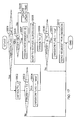
- FIG. 8 is a flowchart illustrating a flow of a consolidation determination process performed by a resource migration system according to a first embodiment of the present invention.
- the CPU 30 in the server supervisor 3 determines whether the memory management DB 322 includes a registered ID management table T4 containing the same hash value 404 as the hash value 404 in the generated ID management table T4. When it is determined that the memory management DB 322 does not include any registered ID management table T4 containing the same hash value 404 ("No" in Operation S201), the process proceeds to Operation S206.
- Operation S202 when it is determined that the memory management DB 322 includes a registered ID management table T4 containing the same hash value 404 ("Yes" in Operation S201), the CPU 30 determines whether the registered data segment D indicated by the copy pointer 420 contained in the registered ID management table T4 is the same as the received data segment D. When it is determined that the registered data segment D indicated by the copy pointer 420 contained in the registered ID management table T4 is not the same as the received data segment D ("No" in Operation S202), the process proceeds to Operation S206.
- Operation S203 when it is determined that the registered data segment D indicated by the copy pointer 420 contained in the registered ID management table T4 is the same as the received data segment D ("Yes" in Operation S202), the CPU 30 updates the memory ID 402, hash value 404, update time 406, and copy pointer 420 contained in the generated ID management table T4 to corresponding value contained in the registered ID management table T4.
- the CPU 30 preserves the registered data segment D, and deletes the received data segment D from the memory management DB 322.
- Operation S205 the CPU 30 increments the reference count 416 contained in the registered data segment D by one. The process proceeds to Operation S206.
- Each of the server 1 as the migration source and the server 2 as the migration destination receives the consolidation result transmitted from the server supervisor 3, and consolidates the memory information in accordance with the consolidation result.
- the memory ID 402, the hash value 404, and the update time 406 contained in the added or updated memory data table T1 are updated to the contents of the ID management table T4 stored in the server supervisor 3.
- Each of the server 1 as the migration source and the server 2 as the migration destination transmits updated memory data table T1 to the server supervisor 3.
- the CPU 30 in the server supervisor 3 Upon receiving the memory data table T1 from each server, the CPU 30 in the server supervisor 3 updates the memory data table T1 included in the VM management DB 321 to the received memory data table T1.
- the memory information is consolidated commonly on the server 1 as the migration source and on the server 2 as the migration destination.
- the resource migration system according to the first embodiment may select the server 2 as the migration destination on the basis of the consolidated information.
- FIG. 9 is a flowchart illustrating a flow of a process for determining a migration destination performed by a resource migration system according to a first embodiment of the present invention.
- the server 1 as the migration source transmits, to the server supervisor 3, a VM ID of a virtual machine whose resources are to be migrated.
- the CPU 30 of the server supervisor 3 extracts a memory data table T1 containing the received VM ID from the VM management DB 321.
- the extracted memory data table T1 indicates the consolidated state of memory information stored in the server 1 as the migration source.
- the CPU 30 extracts, one by one from server management tables T2, server IDs of candidate servers for a migration destination.
- the CPU 30 determines whether there is a next candidate server for a migration destination. When it is determined that there is no candidate server left for a migration destination ("No" in Operation S303), the process proceeds to Operation S309.
- Operation S304 when it is determined that there is a next candidate server for a migration destination ("Yes" in Operation S303), the CPU 30 extracts, one by one from the server management tables T2, VM IDs of virtual machines on the next candidate server for a migration destination.
- Operation S305 the CPU 30 determines whether there is a next virtual machine. When it is determined that there is no virtual machine left to be processed ("No" in Operation S305), the process proceeds to Operation S308.
- Operation S306 when it is determined that there is a next virtual machine ("Yes" in Operation S305), the CPU 30 extracts a memory data table T1 containing the VM ID from the VM management DB 321.
- the CPU 30 increments a match count for the candidate server by one if the memory data table T1 extracted in Operation S301 matches the memory data table T1 extracted in Operation S306.
- two memory data tables T1 may be assumed to match when both the memory ID and the update time are the same between the two memory data tables T1, for example.
- the process returns to Operation S304 whereupon the CPU 30 repeats the process for the next virtual machine on the candidate server for a migration destination.
- Operation S308 when it is determined that the CPU 30 has performed the process for all the virtual machines on the candidate server for a migration destination and there is no virtual machine left to be processed ("No" in Operation S305), the CPU 30 stores the match count in the main memory 31. The process returns to Operation S302 whereupon the CPU 30 repeats the process for the next candidate server for a migration destination.
- the CPU 30 transmits, to the determined server 2 as the migration destination identified by the extracted server ID, a request for allocating resources for running the virtual machines to be migrated.
- the CPU 20 in the server 2 as the migration destination determines whether the resources for running the virtual machines to be migrated may be allocated. When it is determined that the resources for running the virtual machines may not be allocated, the CPU 20 transmits, to the server supervisor 3, a notice indicating that the resources for running the virtual machines to be migrated may not be allocated. When it is determined that the resources for running the virtual machines to be migrated may be allocated, the CPU 20 transmits, to the server supervisor 3, a notice indicating that the resources for running the virtual machines to be migrated are allocated.
- a server having the largest number of data segments D to be migrated is selected as the best migration destination.
- the resources in the server 1 as the migration source may be smoothly migrated to the selected server 2 as the migration destination and the data regarding management and usage of the main memory of the migration source may be quickly reconstructed on the migration destination.
- FIG. 10 is a flowchart illustrating a flow of a resource migration process performed by a resource migration system according to a first embodiment of the present invention.
- the server supervisor 3 transmits, to the server 1 as the migration source, an instruction for resource migration.
- the instruction for resource migration includes a server ID of the server 2 as the migration destination determined through the process for determining the migration destination.
- the server 1 as the migration source transmits one or more memory data tables T1 to be migrated to the server 2 as the migration destination, in accordance with the instruction for resource migration received from the server supervisor 3.
- the CPU 20 of the server 2 as the migration destination receives the one or more memory data tables T1 transmitted from the server 1 as the migration source.
- the CPU 20 reads memory data tables T1 included in the memory data DB 220.
- the CPU 20 determines, one by one for the received memory data tables T1, whether there is a memory data table T1 included in the memory data DB 220 of the server 2 that matches the received memory data table T1, that is, whether any of the memory data tables T1 included in the memory data DB 220 may be used in place of the received memory data table T1.
- two memory data tables T1 may be assumed to match when both the memory ID and the update time are the same between the two memory data tables T1, for example.
- Operation S407 upon extracting the data segment D from the data segment DB 221 of the server 2 (Operation S404), or upon receiving the data segment D transmitted from the server 1 as the migration source (Operation S406), the CPU 20 determines whether the process has been performed for all the memory data tables T1 received from the server 1 as the migration source. When it is determined that the process has not yet been performed for all the memory data tables T1 received from the server 1 ("No" in Operation S407), the process returns to Operation S403 whereupon the CPU 20 repeats the process for the next memory data table T1 received from the server 1 as the migration source.
- the resource migration system tries to reconstruct the data regarding management and usage of the main memory of the migration source with the data segments D stored in the migration destination, and migrates, from the migration source to the migration destination, only the data segments D that are not stored in the migration destination.
- the resource migration may be performed more smoothly and quickly as compared with the case in which all the data segments D necessary for reconstructing the data regarding management and usage of the main memory are migrated from the migration source to the migration destination.
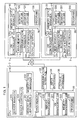
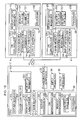
- FIG. 11 is a diagram illustrating consolidation and migration of information regarding memory contents performed by a resource migration system according to a first embodiment of the present invention.
- the server 1 as the migration source stores data 502 of management and usage of the main memory for a first virtual machine, including memory contents "0000", “0001", “0010”, and “0011", each assigned with memory ID "0", "1", “2", and "3", respectively.
- the server 2 as the migration destination starts a third virtual machine and stores data 504 of management and usage of the main memory for the third virtual machine, including memory contents "0000", “0001", “0100”, and “0011", each assigned with memory ID “0", "1", "4", and "5", respectively.
- the server supervisor 3 consolidates the memory ID of the memory contents "0011” from “5" to "3".
- the server 1 as the migration source starts a second virtual machine and stores data 506 of management and usage of the main memory for the second virtual machine, including memory contents "0000", “0001", “0010”, and “0100", each assigned with memory ID “0", "1", “2”, and “6", respectively.
- the server supervisor 3 consolidates the memory ID of the memory contents "0100” from “6” to "4".
- the server 2 When the server 2 as the migration destination reconstructs the data 508 of management and usage of the main memory for the first virtual machine, the server 2 does not request the server 1 for memory contents corresponding to the memory ID "0", “1", and “3", which the server 2 already stores. The server 2 requests the server 1 for memory contents corresponding to only the memory ID "2", which the server 2 does not store.
- a server supervisor is controlled not to manage frequently updated memory contents.
- FIG. 12 is a block diagram illustrating a configuration of a resource migration system according to a second embodiment of the present invention.
- a resource migration system according to the second embodiment of the present invention includes a server 1 as the migration source, a server 2 as the migration destination, and a server supervisor 3 that manages the server 1 and the server 2.
- the apparatuses are connected to each other via a communication network 4.
- the configurations and operations of the server 1 as the migration source, the server 2 as the migration destination, and the server supervisor 3, and the flow of the processes are similar to those according to the first embodiment.
- Like reference numeral denotes like component or like operations, and a description thereof is omitted.
- the server 1 as the migration source and the server 2 as the migration destination run a plurality of virtual machines on a real machine of each server and store data generated by running the virtual machines to a main memory.
- the server 1 as the migration source and the server 2 as the migration destination properly consolidate information regarding memory contents of each main memory.
- the server supervisor 3 selects a server for the server 2 as the migration destination in resource migration, and allows the server 1 as the migration source to migrate resources to the server 2 as the migration destination. Further, the server 1 as the migration source and the server 2 as the migration destination increment an update count each time upon updating the memory contents. When the update count exceeds a predefined threshold, a request for omitting information regarding the frequently updated memory contents from among management targets is requested to the server supervisor 3.
- the server 1 as the migration source has a real machine similar to that of the server 1 as the migration source according to the first embodiment. Further, the auxiliary storage 12 of the server 1 as the migration source stores an update count DB 122 that includes information regarding the updating frequency.
- the update count DB 122 includes a plurality of update count tables.
- FIG. 13 is a diagram illustrating an example of a data format of an update count table included in an update count DB of a resource migration system according to a second embodiment of the present invention.
- the update count table T5 contains the memory ID 402, an update count 422, and an omission flag 424.
- the update count 422 is a counted number of updating frequency of the memory contents.
- the omission flag 424 is a flag indicative of whether the memory information is to be managed by the server supervisor 3 or not.
- the CPU 10 as one of the devices in the real machine performs functions similar to that of the CPU 10 of the server 1 as the migration source according to the first embodiment. Further, the CPU 10 increments, as the memory data manager 102, the update count included in the update count DB 122 each time upon updating the memory contents. When it is determined that the update count exceeds a predefined threshold, the CPU 10 transmits, to the server supervisor 3, a request for omitting corresponding memory information of the server 1 from among management targets.
- the server 2 as the migration destination has a real machine similar to that of the server 2 as the migration destination according to the first embodiment. Further, the auxiliary storage 22 of the server 2 as the migration destination stores an update count DB 222 that includes information regarding the updating frequency.
- the update count DB 222 includes a plurality of update count tables T5.
- the data format of the update count table T5 included in the update count DB 222 is similar to that of the update count table T5 included in the update count DB 122, and a description thereof is thus omitted here.
- the CPU 20 as one of the devices in the real machine performs functions similar to that of the CPU 20 of the server 2 as the migration destination according to the first embodiment. Further, the CPU 20 increments, as the memory data manager 202, the update count included in the update count DB 222 each time upon updating the memory contents. When it is determined that the update count exceeds a predefined threshold, the CPU 20 transmits, to the server supervisor 3, a request for omitting corresponding memory information of the server 2 from among management targets.
- the server supervisor 3 has a real machine similar to that of the server supervisor 3 according to the first embodiment.
- the CPU 30 as one of the devices in the real machine performs functions similar to that of the CPU 30 of the server supervisor 3 according to the first embodiment. Further, upon receiving omission requests from each server, the CPU 30 deletes the specified memory information of the requesting server.
- FIG. 14 is a flowchart illustrating a flow of an omission determination process performed by a resource migration system according to a second embodiment of the present invention.
- a discussion will be given on the omission determination process performed by the server 1 as the migration source, for example.
- the CPU 10 of the server 1 as the migration source accesses the update count tables T5 included in the update count DB 122 to determine whether the omission flag 424 corresponding to the memory ID 402 of the updated memory contents is "true".
- the CPU 10 determines that the information is already omitted, and then the omission determination process ends.
- the CPU 10 transmits the updated update time 406 or the newly-assigned memory ID to the server supervisor 3.
- the CPU 30 of the server supervisor 3 updates the memory data table T1, the data segment D, the VM management table T3, and the ID management table T4 in accordance with the received update time or memory ID.
- the CPU 10 increments the update count 422.
- the update count is, for example, a counted number of updating frequency of the memory contents identified by the same memory ID 402.
- the CPU 10 determines whether the incremented update count 422 exceeds a predefined first threshold (denoted by TH_1 in FIG. 14 ). When it is determined that the incremented update count 422 does not exceed the first threshold ("No" in Operation S507), the omission determination process ends.
- the CPU 10 transmits the updated memory data table T1 and the updated data segment D to the server supervisor 3.
- the server supervisor 3 does not manage information regarding frequently updated memory contents in any of the servers. Thus, the load on the server supervisor 3 and the increase in information transmitted through the communication network 4 may be suppressed.
- the server supervisor 3 may not manage the memory contents.
- load on each server, a server supervisor, and the communication network is detected, and, in accordance with the detected load, the server supervisor is controlled not to manage information regarding memory contents which caused a large load.
- FIG. 15 is a block diagram illustrating a configuration of a resource migration system according to a third embodiment of the present invention.
- a resource migration system according to the third embodiment of the present invention includes a server 1 as the migration source, a server 2 as the migration destination, and a server supervisor 3 that manages the server 1 and the server 2.
- the apparatuses are connected to each other via a communication network 4.
- the configurations and operations of the server 1 as the migration source, the server 2 as the migration destination, and the server supervisor 3, and the flow of the processes are similar to those according to the first embodiment.
- Like reference numeral denotes like component or like operations, and a description thereof is omitted.
- the server 1 as the migration source and the server 2 as the migration destination run a plurality of virtual machines on a real machine of each server and store data generated by running the virtual machines to a main memory. Under management of the server supervisor 3, the server 1 as the migration source and the server 2 as the migration destination properly consolidate information regarding memory contents of each main memory.
- the server supervisor 3 selects a server for the server 2 as the migration destination in resource migration, and allows the server 1 as the migration source to migrate resources to the server 2 as the migration destination.
- Each of the server 1 as the migration source and the server 2 as the migration destination measures load on its own machine and the communication network 4. When the measured load exceeds a predefined threshold, a request for omitting information regarding the memory contents which caused the load from among management targets is requested to the server supervisor 3.
- the server 1 as the migration source has a real machine similar to that of the server 1 as the migration source according to the first embodiment. Further, the server 1 as the migration source has a priority data DB 123 stored in the auxiliary storage 12. The priority data DB 123 includes priority data indicating priority of memory information to be omitted from among the management targets of the server supervisor 3. The server 1 also includes a load measurer 17 that measures the load on the server 1 and the communication network 4.
- the priority data DB 123 includes a plurality of priority data tables.
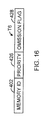
- FIG. 16 is a diagram illustrating an example of a data format of a priority data table included in a priority data DB of a resource migration system according to a third embodiment of the present invention.
- the priority data table T6 contains the memory ID 402, a priority 426, and an omission flag 428.
- a value of the priority 426 is predefined.
- the omission flag 428 is a flag indicative of whether the memory information is to be managed by the server supervisor 3 or not.
- the load measurer 17 measures load on the CPU 10 of the server 1 and the communication interface 13, and determines a second threshold on the basis of a degree of the measured load and a load comparison table (not shown) stored in the auxiliary storage 12.
- the load comparison table defines a higher second threshold for larger load and a lower second threshold for smaller load. For example, the second threshold is the highest upon the load 100% and the lowest upon the load 0%.
- the CPU 10 as one of the devices in the real machine performs functions similar to that of the CPU 10 of the server 1 as the migration source according to the first embodiment. Further, the CPU 10 sets, as the memory data manager 102, the priority 426 contained in the priority data table T6. For example, the CPU 10 accesses the memory data table T1, and counts, for each memory ID, the number of corresponding virtual machines. The CPU 10 sets the priority for each memory ID on the basis of the counted number of the virtual machines and the priority comparison table (not shown) stored in the auxiliary storage 12.
- the priority comparison table defines higher priority for a memory ID with a greater number of virtual machines and lower priority for a memory ID with a smaller number of virtual machines.
- the server 2 as the migration destination has a real machine similar to that of the server 2 as the migration destination according to the first embodiment. Further, the server 2 as the migration destination has a priority data DB 223 stored in the auxiliary storage 22.
- the priority data DB 223 includes priority data indicating priority of memory information to be omitted from among the management targets of the server supervisor 3.
- the server 2 also includes a load measurer 27 that measures the load on the server 2 and the communication network 4.
- the priority data DB 223 includes a plurality of priority data tables T6.
- the data format of the priority data table T6 included in the priority data DB 223 is similar to that of the priority data table T6 included in the priority data DB 123, and a description thereof is thus omitted here.
- the load measurer 27 measures load on the CPU 20 of the server 2 and the communication interface 23, and determines a second threshold on the basis of a degree of the measured load and a load comparison table (not shown) stored in the auxiliary storage 22.
- the load comparison table defines a higher second threshold for larger load and a lower second threshold for smaller load. For example, the second threshold is the highest upon the load 100% and the lowest upon the load 0%.
- the CPU 20 as one of the devices in the real machine performs functions similar to that of the CPU 20 of the server 2 as the migration destination according to the first embodiment. Further, the CPU 20 sets, as the memory data manager 202, the priority 426 contained in the priority data table T6. For example, the CPU 20 accesses the memory data table T1, and counts, for each memory ID, the number of corresponding virtual machines. The CPU 20 sets the priority for each memory ID on the basis of the counted number of the virtual machines and the priority comparison table (not shown) stored in the auxiliary storage 22.
- the priority comparison table defines higher priority for a memory ID with a greater number of virtual machines and lower priority for a memory ID with a smaller number of virtual machines.
- the server supervisor 3 has a real machine similar to that of the server supervisor 3 according to the first embodiment.
- the CPU 30 as one of the devices in the real machine performs functions similar to that of the CPU 30 of the server supervisor 3 according to the first embodiment. Further, upon receiving omission requests from each server, the CPU 30 deletes the specified memory information of the requesting server.
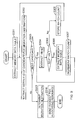
- FIG. 17 is a flowchart illustrating a flow of an omission determination process performed by a resource migration system according to a third embodiment of the present invention.
- a discussion will be given on the omission determination process performed by the server 1 as the migration source, for example.
- Operation S601 the CPU 10 in the server 1 as the migration source accesses the priority data tables T6 included in the priority data DB 123 to determine whether the omission flag 428 corresponding to the memory ID 402 of the updated memory contents is "true". When it is determined that the omission flag 428 is not "true” ("No” in Operation S601), the process proceeds to Operation S605. In Operation S602, when it is determined that the omission flag 428 is "true” ("Yes” in Operation S601), the CPU 10 obtains the second threshold (denoted by TH_2 in FIG. 17 ) from the load measurer 17.
- the CPU 10 determines whether the priority 426 corresponding to the "true" omission flag 428 exceeds the second threshold. When it is determined that the priority 426 does not exceed the second threshold ("No" in Operation S603), the CPU 10 determines that the memory information is already omitted, and then the omission determination process ends.
- the CPU 10 transmits the updated update time 406 or the newly-assigned memory ID to the server supervisor 3.
- the CPU 30 of the server supervisor 3 updates the memory data table T1, the data segment D, the VM management table T3, and the ID management table T4 in accordance with the received update time or memory ID.
- the CPU 10 obtains the second threshold from the load measurer 17, In Operation S610, the CPU 10 determines whether the priority 426 corresponding to the omission flag 428 determined to be other than "true" in Operation S601 exceeds the second threshold. When it is determined that the priority 426 exceeds the second threshold ("No" in Operation S610), the omission determination process ends. The CPU 10 transmits the updated memory data table T1 and the updated data segment D to the server supervisor 3.
- the server supervisor 3 does not manage information regarding memory contents that apply a large load on any server and the communication network 4. Thus, the load on the servers and the increase in information transmitted through the communication network 4 may be suppressed.
- the server supervisor 3 consolidates the memory information.
- the server supervisor 3 consolidates the memory information and further collects consolidation results to generate conversion tables.
- FIG. 18 is a block diagram illustrating a configuration of a resource migration system according to a fourth embodiment of the present invention.
- a resource migration system according to the fourth embodiment of the present invention includes a server 1 as the migration source, a server 2 as the migration destination, and a server supervisor 3 that manages the server 1 and the server 2.
- the apparatuses are connected to each other via a communication network 4.
- the configurations and operations of the server 1 as the migration source, the server 2 as the migration destination, and the server supervisor 3, and the flow of the processes are similar to those according to the first embodiment.
- Like reference numeral denotes like component or like operations, and a description thereof is omitted.
- the server 1 as the migration source and the server 2 as the migration destination run a plurality of virtual machines on a real machine of each server, and stores data generated by running the virtual machines to a main memory.
- the server supervisor 3 consolidates memory information stored in the server 1 as the migration source and the server 2 as the migration destination, thereby collecting consolidation results to generate conversion tables.
- the server supervisor 3 selects a server for the server 2 as the migration destination in resource migration on the basis of the generated conversion tables.
- the server 1 as the migration source and the server 2 as the migration destination perform the migration the resources in accordance with the conversion tables generated by the server supervisor 3.
- the server 1 as the migration source has a real machine similar to that of the server 1 as the migration source according to the first embodiment.
- the CPU 10 as one of the devices in the real machine performs functions similar to that of the CPU 10 in the server 1 as the migration source according to the first embodiment.
- the server 2 as the migration destination has a real machine similar to that of the server 2 as the migration destination according to the first embodiment.
- the CPU 20 as one of the devices in the real machine performs functions similar to that of the CPU 20 of the server 2 as the migration destination according to the first embodiment.
- the server supervisor 3 has a real machine similar to that of the server supervisor 3 according to the first embodiment. Further, the auxiliary storage 32 of the server supervisor 3 stores a conversion table DB 323 that includes conversion tables.
- the conversion table DB 323 includes a plurality of conversion tables
- FIG. 19 is a diagram illustrating an example of a data format of a conversion table included in a conversion table DB of a resource migration system according to a fourth embodiment of the present invention.
- the server supervisor 3 generates a conversion table T7 for each server.
- the conversion table T7 indicates a correspondence between memory information 430 of the server and memory information 440 of other servers.
- the memory information 430 of the server includes a memory ID 434 and an update time 436.
- the memory information 440 of other servers includes a server ID 442, a memory ID 444, and an update time 446.
- the CPU 30 as one of the devices in the real machine performs functions similar to that of the CPU 30 of the server supervisor 3 according to the first embodiment. Further, the CPU 30 performs, as the memory data manager 302, the consolidation process and collects consolidation results to generate conversion tables T7. The CPU 30 stores the generated conversion tables T7 in the conversion table DB 323.
- FIG. 20 is a flowchart illustrating a flow of a consolidation process performed by a resource migration system according to a fourth embodiment of the present invention.
- the CPU 30 in the server supervisor 3 receives one or more data segments D and memory data tables T1 transmitted from each server. The following operations are performed for each data segment D and each memory data table T1.
- the CPU 30 stores received data segment D in the memory management DB 322.
- the CPU 30 also stores received memory data table T1 in the VM management DB 321. If the VM management DB 321 already includes a memory data table T1 containing the same VM ID 408 as the VM ID 408 contained in the received memory data table T1, the existing memory data table T1 is to be updated.
- the CPU 30 generates a VM management table T3 on the basis of the memory ID 402 and the VM ID 408 contained in the received memory data table T1.
- the CPU 30 generates an ID management table T4 on the basis of the VM ID 408, the memory ID 402, the update time 406, and the hash value 404 contained in the received memory data table T1, as well as a pointer to the data segment D included in the memory management DB 322.
- the CPU 30 transmits a notice of storage to the server on the transmitting source.
- the server on the transmitting source receives the notice of storage, and performs the next process smoothly, without waiting for the consolidation result transmitted from the server supervisor 3.
- the CPU 30 deletes, from the VM management DB 321, the memory data table T1 before updating.
- the CPU 30 determines whether the data segment D before updating is not referred to by any virtual machine, that is, whether the reference count 416 is 0. When it is determined that the reference count is not 0 ("No" in Operation S705), the data segment D before updating is not deleted and the process proceeds to Operation S707.
- FIG. 21 is a flowchart illustrating a flow of a conversion table generation process performed by a resource migration system according to a fourth embodiment of the present invention.
- the CPU 30 in the server supervisor 3 determines whether the memory management DB 322 includes a registered ID management table T4 containing the same hash value 404 as the hash value 404 in the generated ID management table T4. When it is determined that the memory management DB 322 does not include any registered ID management table T4 containing the same hash value 404 ("No" in Operation S801), the process proceeds to Operation S806.
- Operation S804 the CPU 30 preserves the registered data segment D, and deletes the received data segment D from the memory management DB 322.
- the CPU 30 updates the copy pointer 420 contained in the generated ID management table T4 to share the registered data segment D.
- the CPU 30 increments the reference count 416 contained in the registered data segment D by one. Then, the process proceeds to Operation S806.
- the memory information is consolidated commonly on the server 1 as the migration source and on the server 2 as the migration destination, and consolidation results are collected to generate conversion tables T7.
- the resource migration system according to the fourth embodiment may select the server 2 as the migration destination on the basis of the conversion tables T7.
- FIG. 22 is a flowchart illustrating a flow of a process for determining a migration destination performed by a resource migration system according to a fourth embodiment of the present invention.
- the server 1 as the migration source transmits, to the server supervisor 3, a VM ID of a virtual machine whose resources are to be migrated.
- the CPU 30 of the server supervisor 3 extracts a memory data table T1 containing the received VM ID from the VM management DB 321.
- the CPU 30 extracts, one by one from server management tables T2, server IDs of candidate servers for a migration destination.
- the CPU 30 determines whether there is a next candidate server for a migration destination. When it is determined that there is no candidate server left for a migration destination ("No" in Operation S903), the process proceeds to Operation S909.
- Operation S904 when it is determined that there is a next candidate server for a migration destination ("Yes" in Operation S903), the CPU 30 extracts, one by one from the conversion tables T7 for the next candidate server, a memory ID 434 of the server. In Operation S905, the CPU 30 determines whether there is a memory ID 434 for a next virtual machine. When it is determined that there is no memory ID 434 left to be processed ("No" in Operation S905), the process proceeds to Operation S908.
- Operation S906 when it is determined that there is a memory ID 434 for a next virtual machine ("Yes" in Operation S905), the CPU 30 extracts a memory data table T1 containing the memory ID 434 from the VM management DB 321, In Operation S907, the CPU 30 increments a match count for the candidate server by one if the server ID of the server 1 as the migration source and the memory ID 402 contained in the memory data table T1 extracted in Operation S901 is contained in the extracted conversion table T7 as the server ID 442 and the memory ID 444 corresponding to the memory ID 434 for the next virtual machine, and also if the memory data table T1 extracted in Operation S901 matches the memory data table T1 extracted in Operation S906.
- two memory data tables T1 may be assumed to match when the hash value 404 is the same between the two memory data tables T1, for example.
- the process returns to Operation S904 whereupon the CPU 30 repeats the process for the next virtual machine on the candidate server for a migration destination.
- Operation S908 when it is determined that the CPU 30 has performed the process for all the virtual machines on the candidate server for a migration destination and there is no virtual machine left to be processed ("No" in Operation S905), the CPU 30 stores the match count in the main memory 31. The CPU 30 returns the process to Operation S902 whereupon the CPU 30 repeats the process for the next candidate server for a migration destination.
- the CPU 30 transmits, to the determined server 2 as the migration destination identified by the extracted server ID, a request for allocating resources for running the virtual machines to be migrated.
- the CPU 20 in the server 2 as the migration destination determines whether the resources for running the virtual machines to be migrated may be allocated. When it is determined that the resources for running the virtual machines may not be allocated, the CPU 20 transmits, to the server supervisor 3, a notice indicating that the resources for running the virtual machines to be migrated may not be allocated. When it is determined that the resources for running the virtual machines to be migrated may be allocated, the CPU 20 transmits, to the server supervisor 3, a notice indicating that the resources for running the virtual machines to be migrated are allocated.
- a server having the largest number of data segments D to be migrated is selected as the best migration destination.
- the resources in the server 1 as the migration source may be smoothly migrated to the selected server 2 as the migration destination and the data regarding management and usage of the main memory of the migration source may be quickly reconstructed on the migration destination.
- FIG. 23 is a flowchart illustrating a flow of a resource migration process performed by a resource migration system according to a fourth embodiment of the present invention.
- the server supervisor 3 transmits, to the server 1 as the migration source, an instruction for resource migration.
- the instruction for resource migration includes a server ID of the server 2 as the migration destination determined through the process for determining the migration destination.
- the server 1 as the migration source transmits one or more memory data tables T1 to be migrated to the server 2 as the migration destination, in accordance with the instruction for resource migration received from the server supervisor 3.
- the CPU 20 of the server 2 as the migration destination receives the one or more memory data tables T1 transmitted from the server 1 as the migration source.
- the CPU 20 reads memory data tables T1 included in the memory data DB 220.
- the CPU 20 receives the conversion table T7 for the server 2 from the server supervisor 3.
- the CPU 20 determines, one by one for the received memory data tables T1, whether any of the memory data tables T1 for the server 2 corresponds to the received memory data table T1 by comparing the memory information 430 of the server with the memory information 440 of other servers contained in the received conversion table T7.
- the CPU 20 extracts a data segment D corresponding to the one of the memory data tables T1 for the server 2 from the data segment DB 221. Then, the process proceeds to Operation S1008.
- Operation S1008 upon extracting the data segment D corresponding to one of the memory data tables T1 for the server 2 (Operation S1005), or upon receiving the data segment D transmitted from the server 1 as the migration source (Operation S1007), the CPU 20 determines whether the process has been performed for all the memory data tables T1 received from the server 1 as the migration source. When it is determined that the process has not yet been performed for all the memory data tables T1 received from the server 1 ("No" in Operation S1008), the process returns to Operation S1004 whereupon the CPU 20 repeats the process for the next memory data table T1 received from the server 1 as the migration source.
- the resource migration system tries to reconstruct the data regarding management and usage of the main memory of the migration source with the data segments D stored in the migration destination, and migrates, from the migration source to the migration destination, only the data segments D that are not stored in the migration destination.
- the resource migration may be performed more smoothly and quickly as compared with the case in which all the data segments D necessary for reconstructing the data regarding management and usage of the main memory are migrated from the migration source to the migration destination.
- the server supervisor 3 performs the process for determining the migration destination when the server 1 as the migration source begins to prepare for resource migration at an arbitrary timing.
- the server supervisor 3 may perform the process for determining the migration destination when a virtual machine on the server 1 as the migration source wakes up from a suspending state.
- a determined migration destination may reconstruct, to resume, the data regarding management and usage of the main memory of the migration source in the suspending state.
- the server supervisor 3 determines memory information that is not managed by the server supervisor 3 on the basis of the update count or the priority.
- the server supervisor 3 may not manage memory contents assigned a predefined memory ID.
- the servers may separately list the memory IDs identifying the memory contents that are not managed by the server supervisor 3.
- the server supervisor 3 may not manage memory contents stored in a predefined space of the main memory.
- the main memory is divided into two spaces: a read-only space for storing the basic software and the application software; and a read/write space for storing the data.
- each server may update the omission flag for memory contents stored in the read/write space to "true".
- Resource migration may be performed not only between the server 1 as the migration source and the server 2 as the migration destination, but also inside a server.
- the resources may be migrated between the first core and the second core.
- the virtual machine on the server 1 as the migration source and the virtual machine on the server 2 as the migration destination may be replaced with a virtual machine on the first core and a virtual machine on the second core, respectively, in the first to fifth embodiments of the present invention.
Landscapes
- Engineering & Computer Science (AREA)
- Software Systems (AREA)
- Theoretical Computer Science (AREA)
- Physics & Mathematics (AREA)
- General Engineering & Computer Science (AREA)
- General Physics & Mathematics (AREA)
- Information Retrieval, Db Structures And Fs Structures Therefor (AREA)
- Hardware Redundancy (AREA)
Abstract
Description
- The embodiments discussed herein are related to a resource migration system in which resources in one information processing apparatus is migrated to another information processing apparatus.
- Conventionally, the information processing apparatus may run a plurality of virtual machines on a real machine of the information processing apparatus. The information processing apparatus may manage hardware resources and use application software for each virtual machine.
- The information processing apparatus may migrate resources of one virtual machine to another virtual machine or another information processing apparatus so as to prevent centralization of load to the one virtual machine (refer to, e.g., Japanese Laid-open Patent Publication No.
2004-5113 9-26911 FIG. 24 is a diagram illustrating a conventional migration of resources. In a conventional resource migration method, all memory contents stored in a main memory of an information processing apparatus (referred to as a migration source) 4 is migrated to an information processing apparatus (referred to as a migration destination) 5, thereby reconstructing data regarding management and usage of the main memory of the migration source on the migration destination. - With conventional resource migration methods, migration time for the resources including the main memory becomes longer as amount of memory contents of the migration source becomes larger.
- It is preferable to provide a resource migration system in which the data regarding management and usage of the main memory of the migration source is quickly reconstructed on the migration destination.
- According to an aspect of the present invention, provided is a resource migration system that includes a plurality of servers communicably connected to each other.
A first server which is one of the plurality of servers includes a first main memory, a first storage, and a first memory data manager. The first main memory stores first memory data which is divided into a plurality of segments each of which has a predefined size. The first storage stores a set of first data segments. Each of the first data segments is formed by copying each of the plurality of segments of the first memory data stored in the first main memory. The first memory data manager manages the first data segments stored in the first storage.
A second server which is another of the plurality of servers includes a second main memory, a second storage, and a second memory data manager. The second main memory stores second memory data which is divided into a plurality of segments each of which has the predefined size. The second storage stores a set of second data segments. Each of the second data segments is formed by copying each of the plurality of segments of the second memory data stored in the second main memory. The second memory data manager manages the second data segments stored in the second storage. The second memory data manager receives resource data regarding the first data segments from the first server, determines whether each of the first data segments is able to be replaced by any of the second data segments, receives from the first server some of the first data segments which have been determined to be unable to be replaced by any of the second data segments, and reconstructs the set of first data segments with received first data segments and some of the second data segments which some of the first data segments have been determined to be able to be replaced by. -
-
FIG. 1 is a block diagram illustrating a configuration of a resource migration system according to a first embodiment of the present invention; -
FIG. 2 is a diagram illustrating an example of a data format of a memory data table included in a memory data DB of a resource migration system according to a first embodiment of the present invention; -
FIG. 3 is a diagram illustrating an example of a data format of a data segment included in a data segment DB of a resource migration system according to a first embodiment of the present invention; -
FIG. 4 is a diagram illustrating an example of a data format of a server management table included in a server management DB of a resource migration system according to a first embodiment of the present invention; -
FIG. 5 is a diagram illustrating an example of a data format of a VM management table included in a VM management DB of a resource migration system according to a first embodiment of the present invention; -
FIGs. 6A and 6B are diagrams illustrating examples of data formats of an ID management table included in a memory management DB of a resource migration system according to a first embodiment of the present invention; -
FIG. 7 is a flowchart illustrating a flow of a consolidation process performed by a resource migration system according to a first embodiment of the present invention; -
FIG. 8 is a flowchart illustrating a flow of a consolidation determination process performed by a resource migration system according to a first embodiment of the present invention; -
FIG. 9 is a flowchart illustrating a flow of a process for determining a migration destination performed by a resource migration system according to a first embodiment of the present invention; -
FIG. 10 is a flowchart illustrating a flow of a resource migration process performed by a resource migration system according to a first embodiment of the present invention; -
FIG. 11 is a diagram illustrating consolidation and migration of information regarding memory contents performed by a resource migration system according to a first embodiment of the present invention; -
FIG. 12 is a block diagram illustrating a configuration of a resource migration system according to a second embodiment of the present invention; -
FIG. 13 is a diagram illustrating an example of a data format of an update count table included in an update count DB of a resource migration system according to a second embodiment of the present invention; -
FIG. 14 is a flowchart illustrating a flow of an omission determination process performed by a resource migration system according to a second embodiment of the present invention; -
FIG. 15 is a block diagram illustrating a configuration of a resource migration system according to a third embodiment of the present invention; -
FIG. 16 is a diagram illustrating an example of a data format of a priority data table included in a priority data DB of a resource migration system according to a third embodiment of the present invention; -
FIG. 17 is a flowchart illustrating a flow of an omission determination process performed by a resource migration system according to a third embodiment of the present invention; -
FIG. 18 is a block diagram illustrating a configuration of a resource migration system according to a fourth embodiment of the present invention; -
FIG. 19 is a diagram illustrating an example of a data format of a conversion table included in a conversion table DB of a resource migration system according to a fourth embodiment of the present invention; -
FIG. 20 is a flowchart illustrating a flow of a consolidation process performed by a resource migration system according to a fourth embodiment of the present invention; -
FIG. 21 is a flowchart illustrating a flow of a conversion table generation process performed by a resource migration system according to a fourth embodiment of the present invention; -
FIG. 22 is a flowchart illustrating a flow of a process for determining a migration destination performed by a resource migration system according to a fourth embodiment of the present invention; -
FIG. 23 is a flowchart illustrating a flow of a resource migration process performed by a resource migration system according to a fourth embodiment of the present invention; and -
FIG. 24 is a diagram illustrating a conventional migration of resources. - A discussion will be given on a resource migration system and a resource migration method according to a first embodiment of the present invention with reference to the drawings.
FIG. 1 is a block diagram illustrating a configuration of a resource migration system according to a first embodiment of the present invention. Hereinafter, an information processing apparatus is also referred to as a server. - As illustrated in
FIG. 1 , a resource migration system according to the first embodiment of the present invention includes aserver 1 as a migration source, aserver 2 as a migration destination, and aserver supervisor 3 that manages theserver 1 and theserver 2. The apparatuses are connected to each other via acommunication network 4. - The
server 1 as the migration source and theserver 2 as the migration destination run a plurality of virtual machines on a real machine of each server and, as discussed later, store data generated by running the virtual machines in a main memory. Under management of theserver supervisor 3, theserver 1 as the migration source and theserver 2 as the migration destination properly consolidate information regarding memory contents of each main memory. Theserver supervisor 3 selects a server for theserver 2 as the migration destination in resource migration, and allows theserver 1 as the migration source to migrate resources to theserver 2 as the migration destination. - The
server 1 as the migration source includes, as a real machine, aCPU 10, amain memory 11, anauxiliary storage 12, acommunication interface 13, aninput interface 14, and anoutput interface 15. The devices are mutually connected to each other via acommunication line 16.
Themain memory 11 stores data generated by performing predefined processes.
Theauxiliary storage 12stores programs 130, a memory data database (DB) 120, and adata segment DB 121. Theprograms 130 allow theCPU 10 to perform the predefined processes. Thememory data DB 120 includes information regarding data (referred to as memory contents) stored in themain memory 11. The data segment DB 121 includes copied data of the memory contents. Thememory data DB 120 and thedata segment DB 121 may be stored in themain memory 11.
Thecommunication interface 13 is for connection to thecommunication network 4.
Theinput interface 14 is for connection to an input device (not shown, similar hereinafter).
Theoutput interface 15 is for connection to an output device (not shown, similar hereinafter). - The
programs 130 stored in theauxiliary storage 12 include virtualization software that allows theCPU 10 to perform predefined processes for virtualization. TheCPU 10 runs a plurality of virtual machines on the real machine in accordance with the virtualization software. Theprograms 130 stored in theauxiliary storage 12 also include a plurality of basic software and application software. TheCPU 10 executes, for each virtual machine, the basic software so as to manage hardware resources and also uses the application software. - The
CPU 10 performs functions of a virtual machine (VM)controller 101 and amemory data manager 102 in accordance with the above-mentioned programs. TheCPU 10 controls, as theVM controller 101, start/stop of the virtual machines and the migration of resources (referred to as resource migration). Upon starting a virtual machine, theCPU 10 transmits, to theserver supervisor 3, an identifier of theserver 1, an identifier of the virtual machine, and a notice of start. Upon stopping the virtual machine, theCPU 10 transmits, to theserver supervisor 3, a request (referred to as a deletion request) for deleting information regarding the virtual machine. The control of the resource migration will be discussed later. - The
CPU 10 manages, as thememory data manager 102, the space of themain memory 11 by dividing the space into segments of a predefined size, and sequentially storing data generated by running the virtual machines in the divided space. TheCPU 10 assigns a memory identifier (ID) to a logical division of the memory contents to identify the logical division. TheCPU 10 stores, in thememory data DB 120, the memory ID in association with other data. TheCPU 10 also stores, in thedata segment DB 121, copied data of the memory contents in association with other data. - The
memory data DB 120 includes a plurality of memory data tables T1.FIG. 2 is a diagram illustrating an example of a data format of a memory data table included in a memory data DB of a resource migration system according to a first embodiment of the present invention. As illustrated inFIG. 2 , the memory data table T1 contains amemory ID 402, ahash value 404, anupdate time 406, aVM ID 408, amemory address 410, and amemory size 412.
Thehash value 404 is derived from the memory contents and used for searching and verifying the memory contents.
Theupdate time 406 is the date and time of updating the memory contents.
TheVM ID 408 is an identifier of the virtual machine for which the memory contents are generated.
Thememory address 410 is an address of themain memory 11 where the memory contents are stored.
Thememory size 412 is the predefined size of the segments of themain memory 11. - The
data segment DB 121 includes a plurality of segments (hereinafter, referred to as data segments D) of copied data of the memory contents.FIG. 3 is a diagram illustrating an example of a data format of a data segment included in a data segment DB of a resource migration system according to a first embodiment of the present invention. As illustrated inFIG. 3 , the data segment D contains thememory ID 402, thememory address 410, thememory size 412, thememory contents 414, and areference count 416.
Thereference count 416 is a counted number of virtual machines that refer to thememory contents 414. - The
CPU 10 behaves as thememory data manager 102 each time when memory contents generated by the virtual machine are added or updated. TheCPU 10 adds or updates, as thememory data manager 102, the memory data table T1 and the data segment D, and sequentially transmits the memory data table T1 and the data segment D to theserver supervisor 3. Theserver supervisor 3 performs consolidation of information (referred to as memory information) regarding the memory contents, which will be discussed later, and transmits a result (referred to as a consolidation result) of consolidation to theserver 1 as the migration source. TheCPU 10 receives the consolidation result transmitted from theserver supervisor 3, and consolidates memory information in accordance with the received consolidation result. - The
server 2 as the migration destination includes, as a real machine, aCPU 20, amain memory 21, anauxiliary storage 22, acommunication interface 23, aninput interface 24, and anoutput interface 25. The devices are mutually connected to each other via acommunication line 26.
Themain memory 21 stores data generated by performing predefined processes.
Theauxiliary storage 22stores programs 230, amemory data DB 220, and adata segment DB 221. Theprograms 230 allow theCPU 20 to perform the predefined processes. Thememory data DB 220 includes information regarding the memory contents of themain memory 21. Thedata segment DB 221 includes copied data of the memory contents. Thememory data DB 220 and thedata segment DB 221 may be stored in themain memory 21.
Thecommunication interface 23 is for connection to acommunication network 4.
Theinput interface 24 is for connection to an input device (not shown, similar hereinafter).
Theoutput interface 25 is for connection to an output device (not shown, similar hereinafter). - The
programs 230 stored in theauxiliary storage 22 include virtualization software that allows theCPU 20 to perform predefined processes for virtualization. TheCPU 20 runs a plurality of virtual machines on the real machine in accordance with the virtualization software. Theprograms 230 stored in theauxiliary storage 22 also include a plurality of basic software and application software. TheCPU 20 executes, for each virtual machine, the basic software so as to manage hardware resources and also uses the application software. - The
CPU 20 performs functions of aVM controller 201 and amemory data manager 202 in accordance with the above-mentioned programs. TheCPU 20 controls, as theVM controller 201, start/stop of the virtual machines and the migration of resources. Upon starting the virtual machine, theCPU 20 transmits, to theserver supervisor 3, an identifier of theserver 2, an identifier of the virtual machine, and a notice of start. Upon stopping the virtual machine, theCPU 20 transmits, to theserver supervisor 3, a deletion request. The control of the resource migration will be discussed later. - The
CPU 20 manages, as thememory data manager 202, the space of themain memory 21 by dividing the space into segments of the predefined size, and sequentially storing data generated by running the virtual machines in the divided space. TheCPU 20 assigns a memory ID to a logical division of the memory contents to identify the logical division. TheCPU 20 stores, in thememory data DB 220, the memory ID in association with other data. TheCPU 20 also stores, in thedata segment DB 221, copied data of the memory contents in association with other data. - The
memory data DB 220 includes a plurality of memory data tables T1. The data format of the memory data table T1 is similar to that of the memory data table T1 included in thememory data DB 120, and a description thereof is thus omitted here. - The
data segment DB 221 includes a plurality of data segments D. The data format of the data segment D is similar to that of the data segment D included in thedata segment DB 121, and a description thereof is thus omitted here. - The
CPU 20 behaves as thememory data manager 202 each time when memory contents generated by the virtual machine are added or updated. TheCPU 20 adds or updates, as thememory data manager 202, the memory data table T1 and the data segment D, and sequentially transmits the memory data table T1 and the data segment D to theserver supervisor 3. Theserver supervisor 3 performs consolidation of memory information, which will be discussed later, and transmits the consolidation result to theserver 2 as the migration destination. TheCPU 20 receives the consolidation result transmitted from theserver supervisor 3, and consolidates memory information in accordance with the received consolidation result. - The
server supervisor 3 includes aCPU 30, amain memory 31, anauxiliary storage 32, acommunication interface 33, aninput interface 34, and anoutput interface 35. The devices are mutually connected via acommunication line 36.
Themain memory 31 stores data generated by performing predefined processes.
Theauxiliary storage 32stores programs 330 that allow theCPU 30 to perform predefined processes.
Thecommunication interface 33 is for connection to acommunication network 4.
Theinput interface 34 is for connection to an input device.
Theoutput interface 35 is for connection to an output device. - The
auxiliary storage 32 also stores aserver management DB 320, aVM management DB 321, and amemory management DB 322.
Theserver management DB 320 includes data for controlling virtual machines running on each server.
TheVM management DB 321 includes data for caring a main memory assigned to each virtual machine.
Thememory management DB 322 includes data for maintaining memory contents of a main memory assigned to each virtual machine. -
FIG. 4 is a diagram illustrating an example of a data format of a server management table included in a server management DB of a resource migration system according to a first embodiment of the present invention. As illustrated inFIG. 4 , theserver management DB 320 includes a plurality of server management tables T2 for controlling virtual machines running on each server. The server management table T2 contains aserver ID 418 and theVM ID 408.
Theserver ID 418 is an identifier for identifying a server. -
FIG. 5 is a diagram illustrating an example of a data format of a VM management table included in a VM management DB of a resource migration system according to a first embodiment of the present invention. As illustrated inFIG. 5 , the VM management table T3 contains theVM ID 408 and thememory ID 402. - The
VM management DB 321 also includes one or more memory data tables T1 received from each server. The data format of the memory data table T1 is similar to that of the memory data table T1 included in thememory data DB 120 and a description thereof is thus omitted here. -
FIGs. 6A and 6B are diagrams illustrating examples of data formats of an ID management table included in a memory management DB of a resource migration system according to a first embodiment of the present invention. As illustrated inFIG. 6A , the ID management table T4 contains theVM ID 408, thememory ID 402, theupdate time 406, thehash value 404, and acopy pointer 422. Thecopy pointer 422 is a pointer indicating the data segment included in thememory management DB 322. As illustrated inFIG. 6B , the ID management table T4 may also contain theserver ID 418. - The
memory management DB 322 includes one or more data segments D received from each server. The data format of the data segment D is similar to that of the data segment D included in thedata segment DB 121, and a description thereof is thus omitted here. - The
CPU 30 performs functions of amemory data exchanger 301, amemory data manager 302, aserver manager 303, and aserver controller 304 in accordance with the above-mentioned programs. - The
CPU 30 receives, as thememory data exchanger 301, one or more memory data tables T1 and data segments D transmitted from each server and stores the received data in theauxiliary storage 32. TheCPU 30 properly reads data from theauxiliary storage 32 and sends the read data to thememory data manager 302. TheCPU 30 also transmits, to each server, a consolidation result of the consolidation process, which will be discussed later, performed by thememory data manager 302. - The
CPU 30 receives, as thememory data manager 302, one or more memory data tables T1 and data segments D from thememory data exchanger 301. TheCPU 30 performs consolidation process to consolidate data in theauxiliary storage 32. A flow of the consolidation process will be discussed later. - The
CPU 30 generates, as theserver manager 303, a server management table T2 upon receiving a notice of start of a virtual machine. Upon receiving a deletion request, theCPU 30 deletes the server management table T2. TheCPU 30 performs a process for determining aserver 2 as the migration destination. A flow of the process for determining the migration destination will be discussed later. - The
CPU 30 transmits, as theserver controller 304, a request for allocating resources, an instruction for starting a virtual machine, an instruction for resource migration, and an instruction for stopping the virtual machine to theserver 2 as the migration destination determined by theserver manager 303. TheCPU 30 also transmits an instruction for resource migration to theserver 1 as the migration source. - The flow of the consolidation process performed by the
CPU 30 will be discussed.FIG. 7 is a flowchart illustrating a flow of a consolidation process performed by a resource migration system according to a first embodiment of the present invention.
In Operation S101, theCPU 30 in theserver supervisor 3 receives one or more data segments D and memory data tables T1 transmitted from each server. The following operations are performed for each data segment D and each memory data table T1. - In Operation S102, the
CPU 30 stores received data segment D in thememory management DB 322. TheCPU 30 also stores received memory data table T1 in theVM management DB 321. If theVM management DB 321 already includes a memory data table T1 containing thesame VM ID 408 as theVM ID 408 contained in the received memory data table T1, the existing memory data table T1 is to be updated. TheCPU 30 generates a VM management table T3 on the basis of thememory ID 402 and theVM ID 408 contained in the received memory data table T1. TheCPU 30 generates an ID management table T4 on the basis of theVM ID 408, thememory ID 402, theupdate time 406, and thehash value 404 contained in the received memory data table T1, as well as a pointer to the data segment D included in thememory management DB 322. - In Operation S103, the
CPU 30 transmits, to the server on the transmitting source, a notice (referred to as a notice of storage) indicating the received data has been stored. The server on the transmitting source receives the notice of storage, and performs the next process smoothly, without waiting for the consolidation result transmitted from theserver supervisor 3. - In Operation S104, the
CPU 30 deletes, from theVM management DB 321, the memory data table T1 before updating.
In Operation S105, theCPU 30 determines whether the data segment D before updating is not referred to by any virtual machine, that is, whether thereference count 416 is 0. When it is determined that the reference count is not 0 ("No" in Operation S105), the data segment D before updating is not deleted and the process proceeds to Operation S107. - In Operation S106, when it is determined that the
reference count 416 is 0 ("Yes" in Operation S105), theCPU 30 determines that the data segment D before updating is not referred to by any virtual machine and deletes the data segment D before updating from thememory management DB 322. - In Operation S107, when it is determined that the
reference count 416 is not 0 ("No" in Operation S105), or upon deleting the data segment D before updating (Operation S106), theCPU 30 performs a consolidation determination process.
In Operation S108, theCPU 30 transmits a consolidation result to each server. Then, theCPU 30 waits until a request of the next processing is issued. - A discussion will be given on a flow of the consolidation determination process of Operation S107.
FIG. 8 is a flowchart illustrating a flow of a consolidation determination process performed by a resource migration system according to a first embodiment of the present invention.
In Operation S201, theCPU 30 in theserver supervisor 3 determines whether thememory management DB 322 includes a registered ID management table T4 containing thesame hash value 404 as thehash value 404 in the generated ID management table T4. When it is determined that thememory management DB 322 does not include any registered ID management table T4 containing the same hash value 404 ("No" in Operation S201), the process proceeds to Operation S206. - In Operation S202, when it is determined that the
memory management DB 322 includes a registered ID management table T4 containing the same hash value 404 ("Yes" in Operation S201), theCPU 30 determines whether the registered data segment D indicated by thecopy pointer 420 contained in the registered ID management table T4 is the same as the received data segment D. When it is determined that the registered data segment D indicated by thecopy pointer 420 contained in the registered ID management table T4 is not the same as the received data segment D ("No" in Operation S202), the process proceeds to Operation S206. - In Operation S203, when it is determined that the registered data segment D indicated by the
copy pointer 420 contained in the registered ID management table T4 is the same as the received data segment D ("Yes" in Operation S202), theCPU 30 updates thememory ID 402,hash value 404,update time 406, andcopy pointer 420 contained in the generated ID management table T4 to corresponding value contained in the registered ID management table T4.
In Operation S204, theCPU 30 preserves the registered data segment D, and deletes the received data segment D from thememory management DB 322.
In Operation S205, theCPU 30 increments thereference count 416 contained in the registered data segment D by one. The process proceeds to Operation S206. - In Operation S206, when it is determined that the
memory management DB 322 does not include any registered ID management table T4 containing the same hash value ("No" in Operation S201), when it is determined that the registered data segment D indicated by thecopy pointer 420 contained in the registered ID management table T4 is not the same as the received data segment D ("No" in Operation S202), or upon theCPU 30 incrementing thereference count 416 contained in the registered data segment D by one (Operation S205), theCPU 30 determines whether the process has been performed for all the generated ID management tables T4. When it is determined that the process has not yet been performed for all the generated ID management tables T4 ("No" in Operation S206), the process returns to Operation S201 whereupon the process is repeated for a generated ID management table T4 that has not yet been processed. - In Operation S207, when it is determined that the process has been performed for all data in the generated ID management table T4 ("Yes" in Operation S206), the
CPU 30 generates the consolidation result. This consolidation result is transmitted to each server in Operation S108. Then, the consolidation determination process ends. - Each of the
server 1 as the migration source and theserver 2 as the migration destination receives the consolidation result transmitted from theserver supervisor 3, and consolidates the memory information in accordance with the consolidation result. In the consolidation of the memory information, thememory ID 402, thehash value 404, and theupdate time 406 contained in the added or updated memory data table T1 are updated to the contents of the ID management table T4 stored in theserver supervisor 3. Each of theserver 1 as the migration source and theserver 2 as the migration destination transmits updated memory data table T1 to theserver supervisor 3. - Upon receiving the memory data table T1 from each server, the
CPU 30 in theserver supervisor 3 updates the memory data table T1 included in theVM management DB 321 to the received memory data table T1. - As discussed above, in the resource migration system according to the first embodiment of the present invention, the memory information is consolidated commonly on the
server 1 as the migration source and on theserver 2 as the migration destination. Thus, it may be prevented that the same data segment D is handled as different contents between the servers. This allows the resources to be smoothly migrated between the servers. Further, the resource migration system according to the first embodiment may select theserver 2 as the migration destination on the basis of the consolidated information. -
FIG. 9 is a flowchart illustrating a flow of a process for determining a migration destination performed by a resource migration system according to a first embodiment of the present invention.
In Operation S301, for preparing the resource migration, theserver 1 as the migration source transmits, to theserver supervisor 3, a VM ID of a virtual machine whose resources are to be migrated. TheCPU 30 of theserver supervisor 3 extracts a memory data table T1 containing the received VM ID from theVM management DB 321. The extracted memory data table T1 indicates the consolidated state of memory information stored in theserver 1 as the migration source. - In Operation S302, the
CPU 30 extracts, one by one from server management tables T2, server IDs of candidate servers for a migration destination.
In Operation S303, theCPU 30 determines whether there is a next candidate server for a migration destination. When it is determined that there is no candidate server left for a migration destination ("No" in Operation S303), the process proceeds to Operation S309. - In Operation S304, when it is determined that there is a next candidate server for a migration destination ("Yes" in Operation S303), the
CPU 30 extracts, one by one from the server management tables T2, VM IDs of virtual machines on the next candidate server for a migration destination.
In Operation S305, theCPU 30 determines whether there is a next virtual machine. When it is determined that there is no virtual machine left to be processed ("No" in Operation S305), the process proceeds to Operation S308. - In Operation S306, when it is determined that there is a next virtual machine ("Yes" in Operation S305), the
CPU 30 extracts a memory data table T1 containing the VM ID from theVM management DB 321.
In Operation S307, theCPU 30 increments a match count for the candidate server by one if the memory data table T1 extracted in Operation S301 matches the memory data table T1 extracted in Operation S306. Herein, two memory data tables T1 may be assumed to match when both the memory ID and the update time are the same between the two memory data tables T1, for example. The process returns to Operation S304 whereupon theCPU 30 repeats the process for the next virtual machine on the candidate server for a migration destination. - In Operation S308, when it is determined that the
CPU 30 has performed the process for all the virtual machines on the candidate server for a migration destination and there is no virtual machine left to be processed ("No" in Operation S305), theCPU 30 stores the match count in themain memory 31. The process returns to Operation S302 whereupon theCPU 30 repeats the process for the next candidate server for a migration destination. - In Operation S309, when it is determined that there is no candidate server for a migration destination ("No" in Operation S303), the
CPU 30 determines a candidate server having the largest match count stored in themain memory 31 as the migration destination. TheCPU 30 extracts a server ID of the determined server from the server management table T2. - In Operation S310, the
CPU 30 transmits, to thedetermined server 2 as the migration destination identified by the extracted server ID, a request for allocating resources for running the virtual machines to be migrated. - Upon receiving the request for allocating resources transmitted from the
server supervisor 3, theCPU 20 in theserver 2 as the migration destination determines whether the resources for running the virtual machines to be migrated may be allocated. When it is determined that the resources for running the virtual machines may not be allocated, theCPU 20 transmits, to theserver supervisor 3, a notice indicating that the resources for running the virtual machines to be migrated may not be allocated. When it is determined that the resources for running the virtual machines to be migrated may be allocated, theCPU 20 transmits, to theserver supervisor 3, a notice indicating that the resources for running the virtual machines to be migrated are allocated. - In the resource migration system according to the first embodiment of the present invention, a server having the largest number of data segments D to be migrated is selected as the best migration destination. Thus, the resources in the
server 1 as the migration source may be smoothly migrated to the selectedserver 2 as the migration destination and the data regarding management and usage of the main memory of the migration source may be quickly reconstructed on the migration destination. -
FIG. 10 is a flowchart illustrating a flow of a resource migration process performed by a resource migration system according to a first embodiment of the present invention. Theserver supervisor 3 transmits, to theserver 1 as the migration source, an instruction for resource migration. The instruction for resource migration includes a server ID of theserver 2 as the migration destination determined through the process for determining the migration destination. Theserver 1 as the migration source transmits one or more memory data tables T1 to be migrated to theserver 2 as the migration destination, in accordance with the instruction for resource migration received from theserver supervisor 3. - In Operation S401, the
CPU 20 of theserver 2 as the migration destination receives the one or more memory data tables T1 transmitted from theserver 1 as the migration source.
In Operation S402, theCPU 20 reads memory data tables T1 included in thememory data DB 220. - In Operation S403, the
CPU 20 determines, one by one for the received memory data tables T1, whether there is a memory data table T1 included in thememory data DB 220 of theserver 2 that matches the received memory data table T1, that is, whether any of the memory data tables T1 included in thememory data DB 220 may be used in place of the received memory data table T1. Herein, two memory data tables T1 may be assumed to match when both the memory ID and the update time are the same between the two memory data tables T1, for example.
In Operation S404, when it is determined that there is a memory data table T1 included in thememory data DB 220 that matches the received memory data table T1 ("Yes" in Operation S403), theCPU 20 extracts, from thedata segment DB 221, a data segment D corresponding to the matched memory data table T1. The process proceeds to Operation S407. - In Operation S405, when it is determined that there is no memory data table T1 included in the
memory data DB 220 of theserver 2 that matches the one of the received memory data tables T1 ("No" in Operation S403), theCPU 20 transmits the unmatched received memory data table T1 to theserver 1 as the migration source. Upon receiving the unmatched received memory data table T1, theCPU 10 of theserver 1 as the migration source extracts a corresponding data segment D from thedata segment DB 121 of theserver 2. TheCPU 10 transmits the extracted data segment D to theserver 2 as the migration destination.
In Operation S406, theCPU 20 of theserver 2 as the migration destination receives the corresponding data segment D. The process proceeds to Operation S407. - In Operation S407, upon extracting the data segment D from the
data segment DB 221 of the server 2 (Operation S404), or upon receiving the data segment D transmitted from theserver 1 as the migration source (Operation S406), theCPU 20 determines whether the process has been performed for all the memory data tables T1 received from theserver 1 as the migration source. When it is determined that the process has not yet been performed for all the memory data tables T1 received from the server 1 ("No" in Operation S407), the process returns to Operation S403 whereupon theCPU 20 repeats the process for the next memory data table T1 received from theserver 1 as the migration source. - In Operation S408, when it is determined that the process has been performed for all the memory data tables T1 received from the server 1 ("Yes" in Operation S407), the
CPU 20 receives other resources transmitted from theserver 1 as the migration source.
In Operation S409, theCPU 20 reconstructs the data regarding management and usage of the main memory of the migration source.
In Operation S410, theCPU 20 implements the reconstructed data regarding management and usage of the main memory for the virtual machine to be newly started. Then, the resource migration process ends. - The resource migration system according to the first embodiment of the present invention tries to reconstruct the data regarding management and usage of the main memory of the migration source with the data segments D stored in the migration destination, and migrates, from the migration source to the migration destination, only the data segments D that are not stored in the migration destination. Thus, the resource migration may be performed more smoothly and quickly as compared with the case in which all the data segments D necessary for reconstructing the data regarding management and usage of the main memory are migrated from the migration source to the migration destination.
- An example of a method for consolidation of the memory information and resource migration will be given.
FIG. 11 is a diagram illustrating consolidation and migration of information regarding memory contents performed by a resource migration system according to a first embodiment of the present invention. As illustrated inFIG. 11 , theserver 1 as the migrationsource stores data 502 of management and usage of the main memory for a first virtual machine, including memory contents "0000", "0001", "0010", and "0011", each assigned with memory ID "0", "1", "2", and "3", respectively. - The
server 2 as the migration destination starts a third virtual machine andstores data 504 of management and usage of the main memory for the third virtual machine, including memory contents "0000", "0001", "0100", and "0011", each assigned with memory ID "0", "1", "4", and "5", respectively. Theserver supervisor 3 consolidates the memory ID of the memory contents "0011" from "5" to "3". - The
server 1 as the migration source starts a second virtual machine andstores data 506 of management and usage of the main memory for the second virtual machine, including memory contents "0000", "0001", "0010", and "0100", each assigned with memory ID "0", "1", "2", and "6", respectively. Theserver supervisor 3 consolidates the memory ID of the memory contents "0100" from "6" to "4". - When the
server 2 as the migration destination reconstructs thedata 508 of management and usage of the main memory for the first virtual machine, theserver 2 does not request theserver 1 for memory contents corresponding to the memory ID "0", "1", and "3", which theserver 2 already stores. Theserver 2 requests theserver 1 for memory contents corresponding to only the memory ID "2", which theserver 2 does not store. - According to the first embodiment, when some memory contents are frequently updated, a frequency of connection from each server to the
server supervisor 3 increases, and also a frequency of execution of the consolidation process in theserver supervisor 3 increases. To cope with this problem, in a resource migration system according to a second embodiment of the present invention, a server supervisor is controlled not to manage frequently updated memory contents. -
FIG. 12 is a block diagram illustrating a configuration of a resource migration system according to a second embodiment of the present invention. As illustrated inFIG. 12 , a resource migration system according to the second embodiment of the present invention includes aserver 1 as the migration source, aserver 2 as the migration destination, and aserver supervisor 3 that manages theserver 1 and theserver 2. The apparatuses are connected to each other via acommunication network 4. - The configurations and operations of the
server 1 as the migration source, theserver 2 as the migration destination, and theserver supervisor 3, and the flow of the processes are similar to those according to the first embodiment. Like reference numeral denotes like component or like operations, and a description thereof is omitted. - The
server 1 as the migration source and theserver 2 as the migration destination run a plurality of virtual machines on a real machine of each server and store data generated by running the virtual machines to a main memory. Under management of theserver supervisor 3, theserver 1 as the migration source and theserver 2 as the migration destination properly consolidate information regarding memory contents of each main memory. Theserver supervisor 3 selects a server for theserver 2 as the migration destination in resource migration, and allows theserver 1 as the migration source to migrate resources to theserver 2 as the migration destination.
Further, theserver 1 as the migration source and theserver 2 as the migration destination increment an update count each time upon updating the memory contents. When the update count exceeds a predefined threshold, a request for omitting information regarding the frequently updated memory contents from among management targets is requested to theserver supervisor 3. - The
server 1 as the migration source has a real machine similar to that of theserver 1 as the migration source according to the first embodiment. Further, theauxiliary storage 12 of theserver 1 as the migration source stores anupdate count DB 122 that includes information regarding the updating frequency. - The
update count DB 122 includes a plurality of update count tables.FIG. 13 is a diagram illustrating an example of a data format of an update count table included in an update count DB of a resource migration system according to a second embodiment of the present invention. The update count table T5 contains thememory ID 402, anupdate count 422, and anomission flag 424.
Theupdate count 422 is a counted number of updating frequency of the memory contents.
Theomission flag 424 is a flag indicative of whether the memory information is to be managed by theserver supervisor 3 or not. - The
CPU 10 as one of the devices in the real machine performs functions similar to that of theCPU 10 of theserver 1 as the migration source according to the first embodiment. Further, theCPU 10 increments, as thememory data manager 102, the update count included in theupdate count DB 122 each time upon updating the memory contents. When it is determined that the update count exceeds a predefined threshold, theCPU 10 transmits, to theserver supervisor 3, a request for omitting corresponding memory information of theserver 1 from among management targets. - The
server 2 as the migration destination has a real machine similar to that of theserver 2 as the migration destination according to the first embodiment. Further, theauxiliary storage 22 of theserver 2 as the migration destination stores anupdate count DB 222 that includes information regarding the updating frequency. - The
update count DB 222 includes a plurality of update count tables T5. The data format of the update count table T5 included in theupdate count DB 222 is similar to that of the update count table T5 included in theupdate count DB 122, and a description thereof is thus omitted here. - The
CPU 20 as one of the devices in the real machine performs functions similar to that of theCPU 20 of theserver 2 as the migration destination according to the first embodiment. Further, theCPU 20 increments, as thememory data manager 202, the update count included in theupdate count DB 222 each time upon updating the memory contents. When it is determined that the update count exceeds a predefined threshold, theCPU 20 transmits, to theserver supervisor 3, a request for omitting corresponding memory information of theserver 2 from among management targets. - The
server supervisor 3 has a real machine similar to that of theserver supervisor 3 according to the first embodiment. TheCPU 30 as one of the devices in the real machine performs functions similar to that of theCPU 30 of theserver supervisor 3 according to the first embodiment. Further, upon receiving omission requests from each server, theCPU 30 deletes the specified memory information of the requesting server. - As mentioned above, upon updating the memory contents generated in the virtual machine, the
server 1 as the migration source (or theserver 2 as the migration destination) performs, before transmitting the memory data table T1 and the data segment D to theserver supervisor 3, a process for determining, on the basis of the update count of the memory contents, whether to omit the memory information from among management targets of theserver supervisor 3.FIG. 14 is a flowchart illustrating a flow of an omission determination process performed by a resource migration system according to a second embodiment of the present invention. Hereinafter, a discussion will be given on the omission determination process performed by theserver 1 as the migration source, for example. - In Operation S501, the
CPU 10 of theserver 1 as the migration source accesses the update count tables T5 included in theupdate count DB 122 to determine whether theomission flag 424 corresponding to thememory ID 402 of the updated memory contents is "true". When it is determined that theomission flag 424 is "true" ("Yes" in Operation S501), theCPU 10 determines that the information is already omitted, and then the omission determination process ends. - In Operation S502, when it is determined that the
omission flag 424 is not "true" ("No" in Operation S501), theCPU 10 determines whether the memory data table T1 contains aVM ID 408 of another virtual machine corresponding to thememory ID 402 of the updated memory contents.
In Operation 5503, when it is determined that the memory data table T1 does not contain aVM ID 408 of another virtual machine ("No" in Operation S502), theCPU 10 updates theupdate time 406 contained in the updated memory data table T1. Then the process proceeds to Operation S505. - In Operation S504, when it is determined that the memory data table T1 contains a
VM ID 408 of another virtual machine ("Yes" in Operation S502), theCPU 10 assigns a new memory ID to the updated memory contents. Then the process proceeds to Operation S505. - In Operation S505, upon updating the update time 406 (Operation S503) or upon assigning the new memory ID (Operation S504), the
CPU 10 transmits the updatedupdate time 406 or the newly-assigned memory ID to theserver supervisor 3. TheCPU 30 of theserver supervisor 3 updates the memory data table T1, the data segment D, the VM management table T3, and the ID management table T4 in accordance with the received update time or memory ID. - In Operation S506, the
CPU 10 increments theupdate count 422. Herein, the update count is, for example, a counted number of updating frequency of the memory contents identified by thesame memory ID 402.
In Operation S507, theCPU 10 determines whether the incrementedupdate count 422 exceeds a predefined first threshold (denoted by TH_1 inFIG. 14 ). When it is determined that the incrementedupdate count 422 does not exceed the first threshold ("No" in Operation S507), the omission determination process ends. TheCPU 10 transmits the updated memory data table T1 and the updated data segment D to theserver supervisor 3. - In Operation S508, when it is determined that the incremented
update count 422 exceeds the first threshold ("Yes" in Operation S507), theCPU 10 updates theomission flag 424 contained in the update count table T5 to "true".
In Operation S509, theCPU 10 transmits a deletion request to theserver supervisor 3 to delete the memory data table T1, the data segment D, the server management table T2, the VM management table T3, and the ID management table T4. Then, the omission determination process ends. TheCPU 10 does not transmit the memory data table T1 and the data segment D to theserver supervisor 3. - In the resource migration system according to the second embodiment, the
server supervisor 3 does not manage information regarding frequently updated memory contents in any of the servers. Thus, the load on theserver supervisor 3 and the increase in information transmitted through thecommunication network 4 may be suppressed. - According to the example of the second embodiment, when the update count of some memory contents exceeds a predefined threshold, the
server supervisor 3 may not manage the memory contents. In a resource migration system according to a third embodiment of the present invention, load on each server, a server supervisor, and the communication network is detected, and, in accordance with the detected load, the server supervisor is controlled not to manage information regarding memory contents which caused a large load. -
FIG. 15 is a block diagram illustrating a configuration of a resource migration system according to a third embodiment of the present invention. As illustrated inFIG. 15 , a resource migration system according to the third embodiment of the present invention includes aserver 1 as the migration source, aserver 2 as the migration destination, and aserver supervisor 3 that manages theserver 1 and theserver 2. The apparatuses are connected to each other via acommunication network 4. - The configurations and operations of the
server 1 as the migration source, theserver 2 as the migration destination, and theserver supervisor 3, and the flow of the processes are similar to those according to the first embodiment. Like reference numeral denotes like component or like operations, and a description thereof is omitted. - The
server 1 as the migration source and theserver 2 as the migration destination run a plurality of virtual machines on a real machine of each server and store data generated by running the virtual machines to a main memory. Under management of theserver supervisor 3, theserver 1 as the migration source and theserver 2 as the migration destination properly consolidate information regarding memory contents of each main memory. Theserver supervisor 3 selects a server for theserver 2 as the migration destination in resource migration, and allows theserver 1 as the migration source to migrate resources to theserver 2 as the migration destination.
Each of theserver 1 as the migration source and theserver 2 as the migration destination measures load on its own machine and thecommunication network 4. When the measured load exceeds a predefined threshold, a request for omitting information regarding the memory contents which caused the load from among management targets is requested to theserver supervisor 3. - The
server 1 as the migration source has a real machine similar to that of theserver 1 as the migration source according to the first embodiment. Further, theserver 1 as the migration source has apriority data DB 123 stored in theauxiliary storage 12. Thepriority data DB 123 includes priority data indicating priority of memory information to be omitted from among the management targets of theserver supervisor 3. Theserver 1 also includes aload measurer 17 that measures the load on theserver 1 and thecommunication network 4. - The
priority data DB 123 includes a plurality of priority data tables.FIG. 16 is a diagram illustrating an example of a data format of a priority data table included in a priority data DB of a resource migration system according to a third embodiment of the present invention. The priority data table T6 contains thememory ID 402, apriority 426, and anomission flag 428. A value of thepriority 426 is predefined. Theomission flag 428 is a flag indicative of whether the memory information is to be managed by theserver supervisor 3 or not. - The
load measurer 17 measures load on theCPU 10 of theserver 1 and thecommunication interface 13, and determines a second threshold on the basis of a degree of the measured load and a load comparison table (not shown) stored in theauxiliary storage 12. The load comparison table defines a higher second threshold for larger load and a lower second threshold for smaller load. For example, the second threshold is the highest upon the load 100% and the lowest upon theload 0%. - The
CPU 10 as one of the devices in the real machine performs functions similar to that of theCPU 10 of theserver 1 as the migration source according to the first embodiment. Further, theCPU 10 sets, as thememory data manager 102, thepriority 426 contained in the priority data table T6. For example, theCPU 10 accesses the memory data table T1, and counts, for each memory ID, the number of corresponding virtual machines. TheCPU 10 sets the priority for each memory ID on the basis of the counted number of the virtual machines and the priority comparison table (not shown) stored in theauxiliary storage 12. The priority comparison table defines higher priority for a memory ID with a greater number of virtual machines and lower priority for a memory ID with a smaller number of virtual machines. - The
server 2 as the migration destination has a real machine similar to that of theserver 2 as the migration destination according to the first embodiment. Further, theserver 2 as the migration destination has apriority data DB 223 stored in theauxiliary storage 22. Thepriority data DB 223 includes priority data indicating priority of memory information to be omitted from among the management targets of theserver supervisor 3. Theserver 2 also includes aload measurer 27 that measures the load on theserver 2 and thecommunication network 4. - The
priority data DB 223 includes a plurality of priority data tables T6. The data format of the priority data table T6 included in thepriority data DB 223 is similar to that of the priority data table T6 included in thepriority data DB 123, and a description thereof is thus omitted here. - The
load measurer 27 measures load on theCPU 20 of theserver 2 and thecommunication interface 23, and determines a second threshold on the basis of a degree of the measured load and a load comparison table (not shown) stored in theauxiliary storage 22. The load comparison table defines a higher second threshold for larger load and a lower second threshold for smaller load. For example, the second threshold is the highest upon the load 100% and the lowest upon theload 0%. - The
CPU 20 as one of the devices in the real machine performs functions similar to that of theCPU 20 of theserver 2 as the migration destination according to the first embodiment. Further, theCPU 20 sets, as thememory data manager 202, thepriority 426 contained in the priority data table T6. For example, theCPU 20 accesses the memory data table T1, and counts, for each memory ID, the number of corresponding virtual machines. TheCPU 20 sets the priority for each memory ID on the basis of the counted number of the virtual machines and the priority comparison table (not shown) stored in theauxiliary storage 22. The priority comparison table defines higher priority for a memory ID with a greater number of virtual machines and lower priority for a memory ID with a smaller number of virtual machines. - The
server supervisor 3 has a real machine similar to that of theserver supervisor 3 according to the first embodiment. TheCPU 30 as one of the devices in the real machine performs functions similar to that of theCPU 30 of theserver supervisor 3 according to the first embodiment. Further, upon receiving omission requests from each server, theCPU 30 deletes the specified memory information of the requesting server. - As mentioned above, upon updating the memory contents generated in the virtual machine, the
server 1 as the migration source (or theserver 2 as the migration destination) measures the load on its own machine and thecommunication network 4, performs, before transmitting the memory data table T1 and the data segment D to theserver supervisor 3, a process for determining, on the basis of the degree of the load, whether to omit the information regarding the memory contents that caused the load from among management targets of theserver supervisor 3.FIG. 17 is a flowchart illustrating a flow of an omission determination process performed by a resource migration system according to a third embodiment of the present invention. Hereinafter, a discussion will be given on the omission determination process performed by theserver 1 as the migration source, for example. - In Operation S601, the
CPU 10 in theserver 1 as the migration source accesses the priority data tables T6 included in thepriority data DB 123 to determine whether theomission flag 428 corresponding to thememory ID 402 of the updated memory contents is "true". When it is determined that theomission flag 428 is not "true" ("No" in Operation S601), the process proceeds to Operation S605.
In Operation S602, when it is determined that theomission flag 428 is "true" ("Yes" in Operation S601), theCPU 10 obtains the second threshold (denoted by TH_2 inFIG. 17 ) from theload measurer 17.
In Operation S603, theCPU 10 determines whether thepriority 426 corresponding to the "true"omission flag 428 exceeds the second threshold. When it is determined that thepriority 426 does not exceed the second threshold ("No" in Operation S603), theCPU 10 determines that the memory information is already omitted, and then the omission determination process ends. - In Operation S604, when it is determined that the
priority 426 exceeds the second threshold ("Yes" in Operation S603), theCPU 10 determines that the load on theserver 1 and thecommunication network 4 are reduced and updates the "true"omission flag 428 to "false". Then, the process proceeds to Operation S605. - In Operation S605, upon updating the
omission flag 428 to "false" (Operation S604) or when it is determined that theomission flag 428 is not "true" ("No" in Operation S601), theCPU 10 determines whether the memory data table T1 contains aVM ID 408 of another virtual machine corresponding to thememory ID 402 of the updated memory contents.
In Operation S606, when it is determined that the memory data table T1 does not contain aVM ID 408 of another virtual machine ("No" in Operation S605), theCPU 10 updates theupdate time 406 contained in the updated memory data table T1. Then, the process proceeds to Operation S608. - In Operation S607, when it is determined that the memory data table T1 contains a
VM ID 408 of another virtual machine ("Yes" in Operation S605), theCPU 10 assigns a new memory ID to the updated memory contents. Then, the process proceeds to Operation S608. - In Operation S608, upon updating the update time 406 (Operation S606) or upon assigning the new memory ID (Operation S607), the
CPU 10 transmits the updatedupdate time 406 or the newly-assigned memory ID to theserver supervisor 3. TheCPU 30 of theserver supervisor 3 updates the memory data table T1, the data segment D, the VM management table T3, and the ID management table T4 in accordance with the received update time or memory ID. - In Operation S609, the
CPU 10 obtains the second threshold from theload measurer 17,
In Operation S610, theCPU 10 determines whether thepriority 426 corresponding to theomission flag 428 determined to be other than "true" in Operation S601 exceeds the second threshold. When it is determined that thepriority 426 exceeds the second threshold ("No" in Operation S610), the omission determination process ends. TheCPU 10 transmits the updated memory data table T1 and the updated data segment D to theserver supervisor 3. - In Operation S611, when it is determined that the
priority 426 does not exceed the second threshold ("Yes" in Operation S610), theCPU 10 updates theomission flag 428 determined to be other than "true" in Operation S601 to "true".
In Operation S612, theCPU 10 transmits a deletion request to theserver supervisor 3 to delete the memory data table T1, the data segment D, the server management table T2, the VM management table T3, and the ID management table T4. Then, the omission determination process ends. TheCPU 10 does not transmit the memory data table T1 and the data segment D to theserver supervisor 3. - In the resource migration system according to the third embodiment of the present invention, the
server supervisor 3 does not manage information regarding memory contents that apply a large load on any server and thecommunication network 4. Thus, the load on the servers and the increase in information transmitted through thecommunication network 4 may be suppressed. - According to the examples of the first to third embodiments, the
server supervisor 3 consolidates the memory information. In a resource migration system according to a fourth embodiment of the present invention, theserver supervisor 3 consolidates the memory information and further collects consolidation results to generate conversion tables. -
FIG. 18 is a block diagram illustrating a configuration of a resource migration system according to a fourth embodiment of the present invention. As illustrated inFIG. 18 , a resource migration system according to the fourth embodiment of the present invention includes aserver 1 as the migration source, aserver 2 as the migration destination, and aserver supervisor 3 that manages theserver 1 and theserver 2. The apparatuses are connected to each other via acommunication network 4. - The configurations and operations of the
server 1 as the migration source, theserver 2 as the migration destination, and theserver supervisor 3, and the flow of the processes are similar to those according to the first embodiment. Like reference numeral denotes like component or like operations, and a description thereof is omitted. - The
server 1 as the migration source and theserver 2 as the migration destination run a plurality of virtual machines on a real machine of each server, and stores data generated by running the virtual machines to a main memory. Theserver supervisor 3 consolidates memory information stored in theserver 1 as the migration source and theserver 2 as the migration destination, thereby collecting consolidation results to generate conversion tables. Theserver supervisor 3 selects a server for theserver 2 as the migration destination in resource migration on the basis of the generated conversion tables. Theserver 1 as the migration source and theserver 2 as the migration destination perform the migration the resources in accordance with the conversion tables generated by theserver supervisor 3. - The
server 1 as the migration source has a real machine similar to that of theserver 1 as the migration source according to the first embodiment. TheCPU 10 as one of the devices in the real machine performs functions similar to that of theCPU 10 in theserver 1 as the migration source according to the first embodiment. - The
server 2 as the migration destination has a real machine similar to that of theserver 2 as the migration destination according to the first embodiment. TheCPU 20 as one of the devices in the real machine performs functions similar to that of theCPU 20 of theserver 2 as the migration destination according to the first embodiment. - The
server supervisor 3 has a real machine similar to that of theserver supervisor 3 according to the first embodiment. Further, theauxiliary storage 32 of theserver supervisor 3 stores aconversion table DB 323 that includes conversion tables. - The
conversion table DB 323 includes a plurality of conversion tablesFIG. 19 is a diagram illustrating an example of a data format of a conversion table included in a conversion table DB of a resource migration system according to a fourth embodiment of the present invention. Theserver supervisor 3 generates a conversion table T7 for each server. The conversion table T7 indicates a correspondence betweenmemory information 430 of the server andmemory information 440 of other servers. Thememory information 430 of the server includes amemory ID 434 and anupdate time 436. Thememory information 440 of other servers includes aserver ID 442, a memory ID 444, and anupdate time 446. - The
CPU 30 as one of the devices in the real machine performs functions similar to that of theCPU 30 of theserver supervisor 3 according to the first embodiment. Further, theCPU 30 performs, as thememory data manager 302, the consolidation process and collects consolidation results to generate conversion tables T7. TheCPU 30 stores the generated conversion tables T7 in theconversion table DB 323. - The flow of the consolidation process performed by the
CPU 30 will be discussed.FIG. 20 is a flowchart illustrating a flow of a consolidation process performed by a resource migration system according to a fourth embodiment of the present invention.
In Operation S701, theCPU 30 in theserver supervisor 3 receives one or more data segments D and memory data tables T1 transmitted from each server. The following operations are performed for each data segment D and each memory data table T1. - In Operation S702, the
CPU 30 stores received data segment D in thememory management DB 322. TheCPU 30 also stores received memory data table T1 in theVM management DB 321. If theVM management DB 321 already includes a memory data table T1 containing thesame VM ID 408 as theVM ID 408 contained in the received memory data table T1, the existing memory data table T1 is to be updated. TheCPU 30 generates a VM management table T3 on the basis of thememory ID 402 and theVM ID 408 contained in the received memory data table T1. TheCPU 30 generates an ID management table T4 on the basis of theVM ID 408, thememory ID 402, theupdate time 406, and thehash value 404 contained in the received memory data table T1, as well as a pointer to the data segment D included in thememory management DB 322. - In Operation S703, the
CPU 30 transmits a notice of storage to the server on the transmitting source. The server on the transmitting source receives the notice of storage, and performs the next process smoothly, without waiting for the consolidation result transmitted from theserver supervisor 3. - In Operation S704, the
CPU 30 deletes, from theVM management DB 321, the memory data table T1 before updating.
In Operation S705, theCPU 30 determines whether the data segment D before updating is not referred to by any virtual machine, that is, whether thereference count 416 is 0. When it is determined that the reference count is not 0 ("No" in Operation S705), the data segment D before updating is not deleted and the process proceeds to Operation S707. - In Operation S706, when it is determined that the
reference count 416 is 0 ("Yes" in Operation S705), theCPU 30 determines that the data segment D before updating is not referred to by any virtual machine and deletes the data segment D before updating from thememory management DB 322. - In Operation S707, when it is determined that the
reference count 416 is not 0 ("No" in Operation S705), or upon deleting the data segment D before updating (Operation S706), theCPU 30 performs a conversion table generation process. Then, theCPU 30 waits until a request of the next processing is issued. - A discussion will be given on a flow of the conversion table generation process of Operation S707.
FIG. 21 is a flowchart illustrating a flow of a conversion table generation process performed by a resource migration system according to a fourth embodiment of the present invention.
In Operation S801, theCPU 30 in theserver supervisor 3 determines whether thememory management DB 322 includes a registered ID management table T4 containing thesame hash value 404 as thehash value 404 in the generated ID management table T4. When it is determined that thememory management DB 322 does not include any registered ID management table T4 containing the same hash value 404 ("No" in Operation S801), the process proceeds to Operation S806. - In Operation S802, when it is determined that the
memory management DB 322 includes a registered ID management table T4 containing the same hash value 404 ("Yes" in Operation S801), theCPU 30 determines whether the registered data segment D indicated by thecopy pointer 420 contained in the registered ID management table T4 is the same as the received data segment D. When it is determined that the registered data segment D indicated by thecopy pointer 420 contained in the registered ID management table T4 is not the same as the received data segment D ("No" in Operation S802), the process proceeds to Operation S806. - In Operation S803, when it is determined that the registered data segment D indicated by the
copy pointer 420 contained in the registered ID management table T4 is the same as the received data segment D ("Yes" in Operation S802), theCPU 30 updates thememory information 430 of the server contained in the conversion table T7 for the server to thememory ID 402 and updatetime 406 contained in the generated ID management table T4. TheCPU 30 also updates thememory information 440 for other servers contained in the conversion tables T7 for other servers to theserver ID 418,memory ID 402, and updatetime 406 contained in the generated ID management table T4. - In Operation S804, the
CPU 30 preserves the registered data segment D, and deletes the received data segment D from thememory management DB 322.
In Operation S805, theCPU 30 updates thecopy pointer 420 contained in the generated ID management table T4 to share the registered data segment D. TheCPU 30 increments thereference count 416 contained in the registered data segment D by one. Then, the process proceeds to Operation S806. - In Operation S806, when it is determined that the
memory management DB 322 does not include any registered ID management table T4 containing the same hash value ("No" in Operation S801), when it is determined that the registered data segment D indicated by thecopy pointer 420 contained in the registered ID management table T4 is not the same as the received data segment D ("No" in Operation S802), or upon theCPU 30 incrementing thereference count 416 contained in the registered data segment D by one (Operation S805), theCPU 30 determines whether the process has been performed for all the generated ID management tables T4. When it is determined that the process has not yet been performed for all the generated ID management tables T4 ("No" in Operation S806), the process returns to Operation S801 whereupon the process is repeated for a generated ID management table T4 that has not yet been processed. - When it is determined that the process has been performed for all data in the generated ID management table T4 ("Yes" in Operation S806), the conversion table generation process ends.
- In the resource migration system according to the fourth embodiment of the present invention, the memory information is consolidated commonly on the
server 1 as the migration source and on theserver 2 as the migration destination, and consolidation results are collected to generate conversion tables T7. Thus, it may be prevented that the same data segment D is handled as different contents between the servers. Further, the resource migration system according to the fourth embodiment may select theserver 2 as the migration destination on the basis of the conversion tables T7. -
FIG. 22 is a flowchart illustrating a flow of a process for determining a migration destination performed by a resource migration system according to a fourth embodiment of the present invention.
In Operation S901, for preparing the resource migration, theserver 1 as the migration source transmits, to theserver supervisor 3, a VM ID of a virtual machine whose resources are to be migrated. TheCPU 30 of theserver supervisor 3 extracts a memory data table T1 containing the received VM ID from theVM management DB 321. - In Operation S902, the
CPU 30 extracts, one by one from server management tables T2, server IDs of candidate servers for a migration destination.
In Operation S903, theCPU 30 determines whether there is a next candidate server for a migration destination. When it is determined that there is no candidate server left for a migration destination ("No" in Operation S903), the process proceeds to Operation S909. - In Operation S904, when it is determined that there is a next candidate server for a migration destination ("Yes" in Operation S903), the
CPU 30 extracts, one by one from the conversion tables T7 for the next candidate server, amemory ID 434 of the server.
In Operation S905, theCPU 30 determines whether there is amemory ID 434 for a next virtual machine. When it is determined that there is nomemory ID 434 left to be processed ("No" in Operation S905), the process proceeds to Operation S908. - In Operation S906, when it is determined that there is a
memory ID 434 for a next virtual machine ("Yes" in Operation S905), theCPU 30 extracts a memory data table T1 containing thememory ID 434 from theVM management DB 321,
In Operation S907, theCPU 30 increments a match count for the candidate server by one if the server ID of theserver 1 as the migration source and thememory ID 402 contained in the memory data table T1 extracted in Operation S901 is contained in the extracted conversion table T7 as theserver ID 442 and the memory ID 444 corresponding to thememory ID 434 for the next virtual machine, and also if the memory data table T1 extracted in Operation S901 matches the memory data table T1 extracted in Operation S906. Herein, two memory data tables T1 may be assumed to match when thehash value 404 is the same between the two memory data tables T1, for example. The process returns to Operation S904 whereupon theCPU 30 repeats the process for the next virtual machine on the candidate server for a migration destination. - In Operation S908, when it is determined that the
CPU 30 has performed the process for all the virtual machines on the candidate server for a migration destination and there is no virtual machine left to be processed ("No" in Operation S905), theCPU 30 stores the match count in themain memory 31. TheCPU 30 returns the process to Operation S902 whereupon theCPU 30 repeats the process for the next candidate server for a migration destination. - In Operation S909, when it is determined that there is no candidate server for a migration destination ("No" in Operation S903), the
CPU 30 determines a candidate server having the largest match count stored in themain memory 31 as the migration destination. TheCPU 30 extracts a server ID of the determined server from the server management table T2. - In Operation S910, the
CPU 30 transmits, to thedetermined server 2 as the migration destination identified by the extracted server ID, a request for allocating resources for running the virtual machines to be migrated. - Upon receiving the request for allocating resources transmitted from the
server supervisor 3, theCPU 20 in theserver 2 as the migration destination determines whether the resources for running the virtual machines to be migrated may be allocated. When it is determined that the resources for running the virtual machines may not be allocated, theCPU 20 transmits, to theserver supervisor 3, a notice indicating that the resources for running the virtual machines to be migrated may not be allocated. When it is determined that the resources for running the virtual machines to be migrated may be allocated, theCPU 20 transmits, to theserver supervisor 3, a notice indicating that the resources for running the virtual machines to be migrated are allocated. - In the resource migration system according to the fourth embodiment of the present invention, a server having the largest number of data segments D to be migrated is selected as the best migration destination. Thus, the resources in the
server 1 as the migration source may be smoothly migrated to the selectedserver 2 as the migration destination and the data regarding management and usage of the main memory of the migration source may be quickly reconstructed on the migration destination. -
FIG. 23 is a flowchart illustrating a flow of a resource migration process performed by a resource migration system according to a fourth embodiment of the present invention. Theserver supervisor 3 transmits, to theserver 1 as the migration source, an instruction for resource migration. The instruction for resource migration includes a server ID of theserver 2 as the migration destination determined through the process for determining the migration destination. Theserver 1 as the migration source transmits one or more memory data tables T1 to be migrated to theserver 2 as the migration destination, in accordance with the instruction for resource migration received from theserver supervisor 3. - In Operation S1001, the
CPU 20 of theserver 2 as the migration destination receives the one or more memory data tables T1 transmitted from theserver 1 as the migration source.
In Operation S1002, theCPU 20 reads memory data tables T1 included in thememory data DB 220. - In Operation S1003, the
CPU 20 receives the conversion table T7 for theserver 2 from theserver supervisor 3.
In Operation S1004, theCPU 20 determines, one by one for the received memory data tables T1, whether any of the memory data tables T1 for theserver 2 corresponds to the received memory data table T1 by comparing thememory information 430 of the server with thememory information 440 of other servers contained in the received conversion table T7.
In Operation S1005, when it is determined that one of the memory data tables T1 for theserver 2 corresponds to the received memory data table T1 ("Yes" in Operation S1004), theCPU 20 extracts a data segment D corresponding to the one of the memory data tables T1 for theserver 2 from thedata segment DB 221. Then, the process proceeds to Operation S1008. - In Operation S1006, when it is determined that none of the memory data tables T1 for the
server 2 corresponds to the received memory data table T1 ("No" in Operation S1004), theCPU 20 transmits, to theserver 1 as the migration source, the received memory data table T1 having no corresponding memory data table T1 for theserver 2. Upon receiving the memory data table T1 having no corresponding memory data table T1 for theserver 2, theCPU 10 of theserver 1 as the migration source extracts a corresponding data segment D from thedata segment DB 121. TheCPU 10 transmits the extracted data segment D to theserver 2 as the migration destination.
In Operation S1007, theCPU 20 in theserver 2 as the migration destination receives the corresponding data segment D. Then, the process proceeds to Operation S1008. - In Operation S1008, upon extracting the data segment D corresponding to one of the memory data tables T1 for the server 2 (Operation S1005), or upon receiving the data segment D transmitted from the
server 1 as the migration source (Operation S1007), theCPU 20 determines whether the process has been performed for all the memory data tables T1 received from theserver 1 as the migration source. When it is determined that the process has not yet been performed for all the memory data tables T1 received from the server 1 ("No" in Operation S1008), the process returns to Operation S1004 whereupon theCPU 20 repeats the process for the next memory data table T1 received from theserver 1 as the migration source. - In Operation S1009, when it is determined that the process has been performed for all the memory data tables T1 received from the server 1 ("Yes" in Operation S1008), the
CPU 20 receives other resources transmitted from theserver 1 as the migration source.
In Operation S1010, theCPU 20 reconstructs the data regarding management and usage of the main memory of the migration source.
In Operation S1011, theCPU 20 implements the reconstructed data regarding management and usage of the main memory for the virtual machine to be newly started. Then, the resource migration process ends. - The resource migration system according to the fourth embodiment of the present invention tries to reconstruct the data regarding management and usage of the main memory of the migration source with the data segments D stored in the migration destination, and migrates, from the migration source to the migration destination, only the data segments D that are not stored in the migration destination. Thus, the resource migration may be performed more smoothly and quickly as compared with the case in which all the data segments D necessary for reconstructing the data regarding management and usage of the main memory are migrated from the migration source to the migration destination.
- According to the examples of the first to fourth embodiments of the present invention, the
server supervisor 3 performs the process for determining the migration destination when theserver 1 as the migration source begins to prepare for resource migration at an arbitrary timing. Theserver supervisor 3, however, may perform the process for determining the migration destination when a virtual machine on theserver 1 as the migration source wakes up from a suspending state. In a resource migration system according to a fifth embodiment of the present invention, a determined migration destination may reconstruct, to resume, the data regarding management and usage of the main memory of the migration source in the suspending state. - According to the examples of the second or third embodiment of the present invention, the
server supervisor 3 determines memory information that is not managed by theserver supervisor 3 on the basis of the update count or the priority. Theserver supervisor 3, however, may not manage memory contents assigned a predefined memory ID. In this case, the servers may separately list the memory IDs identifying the memory contents that are not managed by theserver supervisor 3. - The
server supervisor 3 may not manage memory contents stored in a predefined space of the main memory. In a conventional management technology for main memory, the main memory is divided into two spaces: a read-only space for storing the basic software and the application software; and a read/write space for storing the data. In this case, each server may update the omission flag for memory contents stored in the read/write space to "true". - Resource migration may be performed not only between the
server 1 as the migration source and theserver 2 as the migration destination, but also inside a server. When the CPU of the server consists of first and second cores and the spaces of the main memory for the cores are different, the resources may be migrated between the first core and the second core. In this case, the virtual machine on theserver 1 as the migration source and the virtual machine on theserver 2 as the migration destination may be replaced with a virtual machine on the first core and a virtual machine on the second core, respectively, in the first to fifth embodiments of the present invention. - All examples and conditional language recited herein are intended for pedagogical purposes to aid the reader in understanding the invention and the concepts contributed by the inventor to furthering the art, and are to be construed as being without limitation to such specifically recited examples and conditions, nor does the organization of such examples in the specification relate to a showing of the superiority and inferiority of the invention. Although the embodiments of the present invention have been described in detail, it should be understood that the various changes, substitutions, and alterations could be made hereto without departing from the spirit and scope of the invention.
Claims (15)
- A resource migration system, comprising:a plurality of servers communicably connected to each other,
whereina first server which is one of the plurality of servers includes:a first main memory for storing first memory data divided into a plurality of segments each having a predefined size,a first storage for storing a set of first data segments, each of said first data segments being formed by copying each of the plurality of segments of the first memory data stored in the first main memory, anda first memory data manager for managing the first data segments stored in the first storage,whereina second server which is another of the plurality of servers includes:a second main memory for storing second memory data divided into a plurality of segments each having the predefined size,a second storage for storing a set of second data segments, each of said second data segments being formed by copying each of the plurality of segments of the second memory data stored in the second main memory, anda second memory data manager for managing the second data segments stored in the second storage, said second memory data manager
receiving resource data regarding the first data segments from the first server,
determining whether each of the first data segments is able to be replaced by any of the second data segments,
receiving from the first server some of the first data segments which have been determined to be unable to be replaced by any of the second data segments, and
reconstructing the set of first data segments with received first data segments and some of the second data segments which some of the first data segments have been determined to be able to be replaced by. - The resource migration system of claim 1, wherein
said first memory data manager
assigns first memory identifiers to the first data segments to identify each of the first data segments,
consolidates the first data segments by reassigning the first memory identifiers so that first data segments having identical contents data are assigned with an identical first memory identifier, and
transmits to the second server the first memory identifiers assigned to the first data segments to be migrated, and
said second memory data manager
assigns second memory identifiers to the second data segments to identify each of the second data segments,
consolidates the second data segments by reassigning the second memory identifiers so that second data segments having identical contents data are assigned with an identical second memory identifier,
receives the first memory identifiers transmitted from the first server,
determines whether each of the first data segments is able to be replaced by any of the second data segments, by comparing received first memory identifiers with the second memory identifiers, and
receives from the first server the some of the first data segments which have been determined to be unable to be replaced by any of the second data segments, in response to transmitting first memory identifiers of the some of the first data segments. - The resource migration system of claim 2, further comprising:a server supervisor for supervising the first memory data and the second memory data, said server supervisor being communicably connected to the plurality of servers, said server supervisorwherein
receiving the first data segments and the first memory identifiers from the first server,
receiving the second data segments and the second memory identifiers from the second server,
consolidating the first data segments and the second data segments by reassigning memory identifiers so that data segments having identical contents data are assigned with an identical memory identifier, and
transmitting consolidated data segments and reassigned memory identifiers to the first server and the second server,
the first server
transmits the first data segments and the first memory identifiers to the server supervisor,
receives the consolidated data segments and the reassigned memory identifiers from the server supervisor, and
consolidates the first data segments by reassigning the first memory identifiers in accordance with the consolidated data segments and the reassigned memory identifiers, and
the second server
transmits the second data segments and the second memory identifiers to the server supervisor,
receives the consolidated data segments and the reassigned memory identifiers from the server supervisor, and
consolidates the second data segments by reassigning the second memory identifiers in accordance with the consolidated data segments and the reassigned memory identifiers. - The resource migration system of claim 2, further comprising:a server supervisor for supervising the first memory data and the second memory data, said server supervisor being communicably connected to the first server and the second server, said server supervisorwherein
receiving the first data segments and the first memory identifiers from the first server,
receiving the second data segments and the second memory identifiers from the second server,
generating a conversion table in which memory identifiers assigned to data segments having identical contents data are related each other, and
transmitting a generated conversion table to the first server and the second server,
the first server
transmits the first data segments and the first memory identifiers to the server supervisor, and
receives the conversion table from the server supervisor, and
the second server
transmits the second data segments and the second memory identifiers to the server supervisor, and
receives the conversion table from the server supervisor. - The resource migration system of claim 4, wherein
said second memory data manager
determines whether each of the first data segments is able to be replaced by any of the second data segments, by comparing received first memory identifiers with the second memory identifiers in accordance with the conversion table. - The resource migration system of claim 4 or 5, wherein
said first memory data manager
determines whether two data segments have identical contents data in accordance with the conversion table. - The resource migration system of any of claims 2 - 5, wherein
said first memory data manager
assigns, to new first data segments to be newly stored, new first memory identifiers different from the first memory identifiers assigned to the first data segments previously stored in the first storage. - The resource migration system of any of claims 3 - 7, wherein
said first memory data manager
increments, each time the first memory data is updated, an update count indicating frequency of updating the first memory data,
determines whether the update count exceeds a predefined first threshold, and
ceases, when it is determined that the update count exceeds the predefined first threshold, to transmit the first data segments and the first memory identifiers to the server supervisor. - The resource migration system of any of claims 3 - 7, wherein
said first memory data manager
assigns a priority to the first memory data stored in the first main memory,
determines whether the priority exceeds a predefined second threshold, and
ceases, when it is determined that the priority exceeds the predefined second threshold, to transmit the first data segments and the first memory identifiers to the server supervisor. - The resource migration system of any of claims 3 - 9, wherein
said server supervisor selects, as the second server, a candidate server storing a data segment having contents data identical to contents data of one of the first data segments, said candidate server being selected from among the plurality of servers. - The resource migration system of claim 1, wherein
said first memory data manager transmits to the second server the resource data regarding the first data segments upon waking up from a suspending state. - The resource migration system of claim 2, wherein
said first memory data manager transmits to the second server the first memory identifiers assigned to the first data segments to be migrated upon waking up from a suspending state. - A resource migration method executed by a resource migration system including a plurality of servers communicably connected to each other, said resource migration method comprising:storing, by a first server which is one of the plurality of servers, in a first main memory first memory data divided into a plurality of segments each having a predefined size, said first memory data being generated as a result of executing any operation of the first server;storing, by the first server, a set of first data segments in a first storage, each of said first data segments being formed by copying each of the plurality of segments of the first memory data stored in the first main memory;transmitting, by the first server, resource data regarding the first data segments to a second server which is another of the plurality of servers;storing, by the second server, in a second main memory second memory data divided into a plurality of segments each having the predefined size, said second memory data being generated as a result of executing any operation of the second server;storing, by the second server, a set of second data segments in a second storage, each of said second data segments being formed by copying each of the plurality of segments of the second memory data stored in the second main memory;receiving, by the second server, the resource data regarding the first data segments from the first server;determining, by the second server, whether each of the first data segments is able to be replaced by any of the second data segments;receiving, by the second server, from the first server some of the first data segments which have been determined to be unable to be replaced by any of the second data segments; andreconstructing, by the second server, the set of first data segments with received first data segments and some of the second data segments which some of the first data segments have been determined to be able to be replaced by.
- The resource migration method of claim 13, further comprising:assigning, by the first server, first memory identifiers to the first data segments to identify each of the first data segments;consolidating, by the first server, the first data segments by reassigning the first memory identifiers so that first data segments having identical contents data are assigned with an identical first memory identifier;transmitting, by the first server, to the second server the first memory identifiers assigned to the first data segments to be migrated;assigning, by the second server, second memory identifiers to the second data segments to identify each of the second data segments;consolidating, by the second server, the second data segments by reassigning the second memory identifiers so that second data segments having identical contents data are assigned with an identical second memory identifier;receiving, by the second server, the first memory identifiers transmitted from the first server;determining, by the second server, whether each of the first data segments is able to be replaced by any of the second data segments, by comparing received first memory identifiers with the second memory identifiers; andreceiving, by the second server, from the first server some of the first data segments which have been determined to be unable to be replaced by any of the second data segments, in response to transmitting first memory identifiers of the some of the first data segments.
- A computer program comprising computer-executable instructions enabling a computer to execute a resource migration method, said computer being communicably connected to a plurality of servers, said resource migration method including:storing, in a main memory, memory data divided into a plurality of segments each having a predefined size, said memory data being generated as a result of executing any operation of the computer;storing a set of first data segments in a storage, each of said first data segments being formed by copying each of the plurality of segments of the memory data stored in the main memory;assigning first memory identifiers to the first data segments to identify each of the first data segments;consolidating the first data segments by reassigning the first memory identifiers so that first data segments having identical contents data are assigned with an identical first memory identifier;transmitting to a first server which is one of the plurality of servers the first memory identifiers assigned to the first data segments to be migrated;receiving second memory identifiers of second data segments from a second server which is another of the plurality of servers;determines whether each of the second data segments is able to be replaced by any of the first data segments, by comparing received second memory identifiers with the first memory identifiers;transmitting to the second server second memory identifiers of second data segments which have been determined to be unable to be replaced by any of the first data segments;receiving from the second server some of the second data segments; andreconstructing a set of second data segments stored in the second server with received second data segments and some of the first data segments which some of the second data segments have been determined to be able to be replaced by.
Applications Claiming Priority (1)
| Application Number | Priority Date | Filing Date | Title |
|---|---|---|---|
| JP2008187785A JP5391601B2 (en) | 2008-07-18 | 2008-07-18 | Resource transfer system, resource transfer method, information processing apparatus, and computer program |
Publications (2)
| Publication Number | Publication Date |
|---|---|
| EP2146280A2 true EP2146280A2 (en) | 2010-01-20 |
| EP2146280A3 EP2146280A3 (en) | 2011-12-21 |
Family
ID=41256001
Family Applications (1)
| Application Number | Title | Priority Date | Filing Date |
|---|---|---|---|
| EP09163610A Withdrawn EP2146280A3 (en) | 2008-07-18 | 2009-06-24 | Resource migration system and resource migration method |
Country Status (3)
| Country | Link |
|---|---|
| US (1) | US8782235B2 (en) |
| EP (1) | EP2146280A3 (en) |
| JP (1) | JP5391601B2 (en) |
Cited By (1)
| Publication number | Priority date | Publication date | Assignee | Title |
|---|---|---|---|---|
| EP2309387A1 (en) * | 2009-10-06 | 2011-04-13 | Alcatel Lucent | A method of migrating a virtual machine, corresponding computer program product, and data storage device therefor |
Families Citing this family (18)
| Publication number | Priority date | Publication date | Assignee | Title |
|---|---|---|---|---|
| US20100318759A1 (en) * | 2009-06-15 | 2010-12-16 | Microsoft Corporation | Distributed rdc chunk store |
| US9852011B1 (en) * | 2009-06-26 | 2017-12-26 | Turbonomic, Inc. | Managing resources in virtualization systems |
| US9229793B2 (en) * | 2010-04-22 | 2016-01-05 | Salesforce.Com, Inc. | System, method and computer program product for routing messages to a server |
| JP5675234B2 (en) * | 2010-09-10 | 2015-02-25 | 任天堂株式会社 | Information processing system, information processing program, and information processing method |
| US8490092B2 (en) | 2011-07-06 | 2013-07-16 | Microsoft Corporation | Combined live migration and storage migration using file shares and mirroring |
| US9223607B2 (en) * | 2012-01-17 | 2015-12-29 | Microsoft Technology Licensing, Llc | System for replicating or migrating virtual machine operations log by throttling guest write iOS based on destination throughput |
| US9292319B2 (en) * | 2012-03-28 | 2016-03-22 | Google Inc. | Global computing interface |
| CN102724277B (en) * | 2012-05-04 | 2016-01-06 | 华为技术有限公司 | The method of live migration of virtual machine and deployment, server and group system |
| US9600206B2 (en) | 2012-08-01 | 2017-03-21 | Microsoft Technology Licensing, Llc | Request ordering support when switching virtual disk replication logs |
| CN104951855B (en) * | 2014-03-28 | 2022-08-02 | 伊姆西Ip控股有限责任公司 | Apparatus and method for facilitating management of resources |
| US10375161B1 (en) * | 2014-04-09 | 2019-08-06 | VCE IP Holding Company LLC | Distributed computing task management system and method |
| CN103885830B (en) * | 2014-04-16 | 2017-02-15 | 中国科学院软件研究所 | Data processing method used in cross-data-center live migration process of virtual machine |
| US9723065B2 (en) * | 2014-10-13 | 2017-08-01 | Vmware, Inc. | Cross-cloud object mapping for hybrid clouds |
| US9684562B2 (en) | 2015-07-21 | 2017-06-20 | International Business Machines Corporation | Automatic serial starting of resource groups on failover based on the prediction of aggregate resource usage |
| US10320895B2 (en) * | 2016-11-15 | 2019-06-11 | Microsoft Technology Licensing, Llc | Live migration of load balanced virtual machines via traffic bypass |
| WO2024151764A1 (en) * | 2023-01-12 | 2024-07-18 | University Of Washington | Systems and methods for mapping, migrating, and/or processing data over a network |
| US20240370379A1 (en) * | 2023-05-05 | 2024-11-07 | Mediatek Inc. | Memory-based system-level cache management method and associated electronic device |
| CN119783174B (en) * | 2025-03-11 | 2025-06-20 | 清华海峡研究院(厦门) | Medical data safety monitoring method and system based on Internet |
Citations (2)
| Publication number | Priority date | Publication date | Assignee | Title |
|---|---|---|---|---|
| JPH0926911A (en) | 1995-07-12 | 1997-01-28 | Fujitsu Ltd | Page information transfer processor |
| JP2004005113A (en) | 2002-05-31 | 2004-01-08 | Nec System Technologies Ltd | Virtual computer system operated on a plurality of actual computers, and control method thereof |
Family Cites Families (24)
| Publication number | Priority date | Publication date | Assignee | Title |
|---|---|---|---|---|
| JPH02257340A (en) * | 1989-03-30 | 1990-10-18 | Sharp Corp | Virtual copy file system |
| JPH06110759A (en) * | 1992-09-30 | 1994-04-22 | Toshiba Corp | File system |
| JP3653159B2 (en) * | 1997-04-01 | 2005-05-25 | 株式会社日立製作所 | Virtual computer migration control method between virtual computer systems |
| JP2000207278A (en) * | 1999-01-14 | 2000-07-28 | Hitachi Ltd | Information processing apparatus having distributed shared main memory |
| JP2001188690A (en) * | 1999-12-28 | 2001-07-10 | Toshiba Corp | Computer system and checkpoint information storage method |
| JP2002024198A (en) * | 2000-07-06 | 2002-01-25 | Fujitsu Ltd | Distributed shared memory parallel computer |
| US7185017B1 (en) * | 2002-04-10 | 2007-02-27 | Compuware Corporation | System and method for selectively processing data sub-segments using a data mask |
| US7484208B1 (en) * | 2002-12-12 | 2009-01-27 | Michael Nelson | Virtual machine migration |
| JP2005100007A (en) * | 2003-09-24 | 2005-04-14 | Matsushita Electric Ind Co Ltd | Data file storage system and allocation method |
| US7257811B2 (en) * | 2004-05-11 | 2007-08-14 | International Business Machines Corporation | System, method and program to migrate a virtual machine |
| JP2007066265A (en) | 2005-09-02 | 2007-03-15 | Hitachi Ltd | Computer apparatus and virtual machine providing method |
| US7761573B2 (en) * | 2005-12-07 | 2010-07-20 | Avaya Inc. | Seamless live migration of virtual machines across optical networks |
| US7434013B2 (en) * | 2006-01-30 | 2008-10-07 | Microsoft Corporation | Assigning disks during system recovery |
| DK2013974T3 (en) * | 2006-04-07 | 2018-10-29 | Data Storage Group Inc | DATA COMPRESSION AND DATA STORAGE TECHNOLOGY |
| US20080059556A1 (en) * | 2006-08-31 | 2008-03-06 | Egenera, Inc. | Providing virtual machine technology as an embedded layer within a processing platform |
| US7882326B2 (en) * | 2007-03-23 | 2011-02-01 | International Business Machines Corporation | Live migration of a logical partition |
| US20100088699A1 (en) * | 2007-03-27 | 2010-04-08 | Takayuki Sasaki | Virtual machine operation system, virtual machine operation method and program |
| US20080276041A1 (en) * | 2007-05-01 | 2008-11-06 | International Business Machines Corporation | Data storage array scaling method and system with minimal data movement |
| US8191063B2 (en) * | 2007-09-30 | 2012-05-29 | Symantex Corporation | Method for migrating a plurality of virtual machines by associating files and state information with a single logical container |
| JP4871850B2 (en) * | 2007-12-04 | 2012-02-08 | 株式会社日立製作所 | Virtual computer system and virtual computer migration control method |
| US20090204718A1 (en) * | 2008-02-08 | 2009-08-13 | Lawton Kevin P | Using memory equivalency across compute clouds for accelerated virtual memory migration and memory de-duplication |
| US8359593B2 (en) * | 2008-04-21 | 2013-01-22 | Vmware, Inc. | Computer machine migration of file system images using a redo-log file |
| US8458284B2 (en) * | 2009-06-12 | 2013-06-04 | International Business Machines Corporation | Systems and methods for efficient live application migration within bandwidth constrained networks |
| US9130912B2 (en) * | 2010-03-05 | 2015-09-08 | International Business Machines Corporation | System and method for assisting virtual machine instantiation and migration |
-
2008
- 2008-07-18 JP JP2008187785A patent/JP5391601B2/en not_active Expired - Fee Related
-
2009
- 2009-06-12 US US12/483,366 patent/US8782235B2/en not_active Expired - Fee Related
- 2009-06-24 EP EP09163610A patent/EP2146280A3/en not_active Withdrawn
Patent Citations (2)
| Publication number | Priority date | Publication date | Assignee | Title |
|---|---|---|---|---|
| JPH0926911A (en) | 1995-07-12 | 1997-01-28 | Fujitsu Ltd | Page information transfer processor |
| JP2004005113A (en) | 2002-05-31 | 2004-01-08 | Nec System Technologies Ltd | Virtual computer system operated on a plurality of actual computers, and control method thereof |
Non-Patent Citations (1)
| Title |
|---|
| C. CLARK ET AL.: "Live Migration of Virtual Machines", 2ND USENIX SYMPOSIUM ON NETWORKED SYSTEMS DESIGN & IMPLEMENTATION (NSDI '05), May 2005 (2005-05-01), pages 273 - 286 |
Cited By (1)
| Publication number | Priority date | Publication date | Assignee | Title |
|---|---|---|---|---|
| EP2309387A1 (en) * | 2009-10-06 | 2011-04-13 | Alcatel Lucent | A method of migrating a virtual machine, corresponding computer program product, and data storage device therefor |
Also Published As
| Publication number | Publication date |
|---|---|
| US8782235B2 (en) | 2014-07-15 |
| JP2010026814A (en) | 2010-02-04 |
| EP2146280A3 (en) | 2011-12-21 |
| JP5391601B2 (en) | 2014-01-15 |
| US20100017515A1 (en) | 2010-01-21 |
Similar Documents
| Publication | Publication Date | Title |
|---|---|---|
| EP2146280A2 (en) | Resource migration system and resource migration method | |
| US10896102B2 (en) | Implementing secure communication in a distributed computing system | |
| JP2015001828A (en) | Allocation program, allocation device, and allocation method | |
| CN109656889B (en) | File system implementation method, device, equipment and storage medium based on block chain | |
| JP5229486B2 (en) | Management computer and processing management method | |
| WO2014007249A1 (en) | I/o node and control method of cache memory provided in plurality of calculation nodes | |
| EP2998862A1 (en) | Method, device, and system for memory management | |
| JP6293683B2 (en) | Computer system and coping method for performance failure of computer system | |
| US20150154042A1 (en) | Computer system and control method for virtual machine | |
| JPWO2004055675A1 (en) | File management apparatus, file management program, file management method, and file system | |
| US12561243B2 (en) | Multi-ring shared, traversable, and dynamic advanced database | |
| JP2012242975A (en) | Distributed parallel processing cache device and method, resource management node and program | |
| CN112631994A (en) | Data migration method and system | |
| CN112199188A (en) | Non-transitory computer readable recording medium, information processing method and apparatus | |
| KR101980320B1 (en) | Parallel distributed processing method for big data query based on gpu | |
| CN107832097B (en) | Data loading method and device | |
| JP5792325B2 (en) | Computer system, data management method and program | |
| JP2012079245A (en) | Volume assignment method of virtual machine and computer system using method thereof | |
| US11748203B2 (en) | Multi-role application orchestration in a distributed storage system | |
| KR102157591B1 (en) | Apparatus for Spatial Query in Big Data Environment and Computer-Readable Recording Medium with Program therefor | |
| CN110472167B (en) | Data management method, device and computer readable storage medium | |
| CN114936031B (en) | Component calling method and electronic equipment | |
| CN114721799B (en) | Data processing method, device, equipment and storage medium | |
| US12086411B2 (en) | Storage control apparatus and method for a database storing data in pages | |
| KR102024846B1 (en) | File system program and method for controlling data cener using it |
Legal Events
| Date | Code | Title | Description |
|---|---|---|---|
| PUAI | Public reference made under article 153(3) epc to a published international application that has entered the european phase |
Free format text: ORIGINAL CODE: 0009012 |
|
| AK | Designated contracting states |
Kind code of ref document: A2 Designated state(s): AT BE BG CH CY CZ DE DK EE ES FI FR GB GR HR HU IE IS IT LI LT LU LV MC MK MT NL NO PL PT RO SE SI SK TR |
|
| AX | Request for extension of the european patent |
Extension state: AL BA RS |
|
| PUAL | Search report despatched |
Free format text: ORIGINAL CODE: 0009013 |
|
| AK | Designated contracting states |
Kind code of ref document: A3 Designated state(s): AT BE BG CH CY CZ DE DK EE ES FI FR GB GR HR HU IE IS IT LI LT LU LV MC MK MT NL NO PL PT RO SE SI SK TR |
|
| AX | Request for extension of the european patent |
Extension state: AL BA RS |
|
| RIC1 | Information provided on ipc code assigned before grant |
Ipc: G06F 9/50 20060101AFI20111111BHEP |
|
| 17P | Request for examination filed |
Effective date: 20120618 |
|
| 17Q | First examination report despatched |
Effective date: 20160701 |
|
| RIC1 | Information provided on ipc code assigned before grant |
Ipc: G06F 9/455 20060101AFI20180228BHEP Ipc: G06F 9/50 20060101ALI20180228BHEP |
|
| GRAP | Despatch of communication of intention to grant a patent |
Free format text: ORIGINAL CODE: EPIDOSNIGR1 |
|
| INTG | Intention to grant announced |
Effective date: 20180509 |
|
| STAA | Information on the status of an ep patent application or granted ep patent |
Free format text: STATUS: THE APPLICATION IS DEEMED TO BE WITHDRAWN |
|
| 18D | Application deemed to be withdrawn |
Effective date: 20180920 |