EP2144498B1 - Acoustic deterrence - Google Patents
Acoustic deterrence Download PDFInfo
- Publication number
- EP2144498B1 EP2144498B1 EP08719090.6A EP08719090A EP2144498B1 EP 2144498 B1 EP2144498 B1 EP 2144498B1 EP 08719090 A EP08719090 A EP 08719090A EP 2144498 B1 EP2144498 B1 EP 2144498B1
- Authority
- EP
- European Patent Office
- Prior art keywords
- mammals
- sound
- acoustic signal
- acoustic
- frequency
- Prior art date
- Legal status (The legal status is an assumption and is not a legal conclusion. Google has not performed a legal analysis and makes no representation as to the accuracy of the status listed.)
- Active
Links
Images


Classifications
-
- A—HUMAN NECESSITIES
- A01—AGRICULTURE; FORESTRY; ANIMAL HUSBANDRY; HUNTING; TRAPPING; FISHING
- A01M—CATCHING, TRAPPING OR SCARING OF ANIMALS; APPARATUS FOR THE DESTRUCTION OF NOXIOUS ANIMALS OR NOXIOUS PLANTS
- A01M29/00—Scaring or repelling devices, e.g. bird-scaring apparatus
- A01M29/16—Scaring or repelling devices, e.g. bird-scaring apparatus using sound waves
-
- G—PHYSICS
- G10—MUSICAL INSTRUMENTS; ACOUSTICS
- G10K—SOUND-PRODUCING DEVICES; METHODS OR DEVICES FOR PROTECTING AGAINST, OR FOR DAMPING, NOISE OR OTHER ACOUSTIC WAVES IN GENERAL; ACOUSTICS NOT OTHERWISE PROVIDED FOR
- G10K11/00—Methods or devices for transmitting, conducting or directing sound in general; Methods or devices for protecting against, or for damping, noise or other acoustic waves in general
-
- B—PERFORMING OPERATIONS; TRANSPORTING
- B06—GENERATING OR TRANSMITTING MECHANICAL VIBRATIONS IN GENERAL
- B06B—METHODS OR APPARATUS FOR GENERATING OR TRANSMITTING MECHANICAL VIBRATIONS OF INFRASONIC, SONIC, OR ULTRASONIC FREQUENCY, e.g. FOR PERFORMING MECHANICAL WORK IN GENERAL
- B06B3/00—Methods or apparatus specially adapted for transmitting mechanical vibrations of infrasonic, sonic, or ultrasonic frequency
Definitions
- the present invention relates to acoustic deterrence, and in particular to an acoustic deterrent device and method for deterring sea mammals.
- the addition of a second net can cause tangling of predators and non-predatory species; and lethal removals as well as population control may have an impact on populations and raise ethical concerns over the treatment of the animals. Culling of higher order predators can also have negative impact on predation rates by other predators, for example, pinnipeds forage on predatory fish species around the net pen which in turn potentially feed on aquaculturally important species. Also, emetic aversion conditioning requires that individuals learn to associate treated fish with sickness, and this can be hard to achieve when predator numbers are high.
- ADDs acoustic deterrent devices
- the acoustic power, also referred to as source level, of the ADDs can cause temporary or permanent hearing damage both to the targeted species and to other wildlife, and the noise pollution is in general an environmental hazard. Further, both targeted and non-targeted species can be excluded from their natural habitat within a wide radius of the fish farms. These concerns have led some governments to restrict or even ban the use of ADDs.
- a further problem is the habituation of the target species to the sound.
- the sound which is intended to be aversive acts as a "dinner bell" and actually serves to attract predators, rather than deter them.
- predator sounds are used as an aversive noise, habituation is dangerous for the target species once they had returned to their normal habitat.
- US4922468 discloses a method for controlling the population of marine and aquatic species in an area of water includes the development of data concerning the response of various species to stimuli in different environmental conditions, and the generation of stimuli in the control area to affect the species in that area and thus control the population.
- US5559759 discloses a method of alerting marine mammals and other mammals underwater to the danger of approaching motor vessels includes generating a pulsed acoustical signal at a predetermined source frequency and at a fixed or variable (with boat speed) sound pressure level and projecting the generated signal underwater in a highly directional manner from a motor vessel and in a direction corresponding with the direction of travel of the motor vessel or from fixed hazards which present a danger to mammals underwater.
- WO 95/00016 discloses an acoustic system and a method for repelling marine mammals.
- the power of the acoustic signals starts at a low level and is gradually or incrementally increased to a high level which produces a signal beyond the threshold of pain of the mammals to be repelled.
- the mammals are therefore gradually repelled from the area without suffering permanent hearing loss.
- acoustic deterrent device that is highly effective, but does not damage the environment is species specific and avoids habituation.
- a method of deterring sea mammals as described in claim 1 of the appended claims.
- “Deterring” is taken to mean discouraging or preventing a mammal from entering into or staying in a particular area.
- the startle response is a physiological reflex in mammals to sound levels which often initiates flight from the sound.
- the predetermined level is between 90 and 125 dB re 1 ⁇ Pa above the representative hearing threshold at each frequency.
- the acoustic signal has a duration about as long as the acoustic integration time specific to the targeted mammals auditory system
- the acoustic signal has a duration of less than 200 ms.
- the acoustic signal is as broadband as possible within the designated frequency range.
- the acoustic signal comprises frequency components at which the aural sensitivity of the targeted mammals is greater than that of selected other animals.
- the acoustic signal uses a frequency band between 500Hz and 2kHz for the deterrence of seals or other pinnipeds.
- the acoustic signal is preferably as broadband as possible within this frequency range.
- the mammals to be deterred comprise sea mammals preferably including pinnipeds, most preferably seals; or cetaceans.
- a secondary conditioning sound is made to condition the mammals to avoid the main stimulus.
- the conditioning sound is played between 500ms and 5s before the main acoustic signals on selected occasions.
- Also disclosed is a method of deterring marine mammals comprising transmitting an acoustic signal which comprises an aversive sound whose characteristics are chosen based on characteristics that are unpleasant to humans.
- the aversive sound is selected to have one or more of the following psychophysical features: high roughness; low tonality; high loudness; high sharpness.
- a frequency modulation is applied to the carrier signal, most preferably with a modulation frequency of about 70Hz.
- This frequency modulation is applied in order to achieve high roughness.
- the frequency modulation has a modulation depth of between 10 and 150%, preferably 50% of the centre frequency of the carrier signal.
- the aversive sound has a sound pressure level of at least 70 dB above the hearing threshold of the targeted mammals, most preferably at least 80 dB above the hearing threshold of the targeted mammals.
- an aversive sound is of a complex form and comprises partials that fall within 25% of the critical bandwidth of the hearing system of the targeted mammals.
- the acoustic signals could be close to the upper frequency edge of the hearing range in order to increase sharpness.
- the acoustic signal is as broadband as possible within the selected frequency band in order to increase loudness without increasing the actual sound pressure level.
- the aversive sound comprises frequency components at which the aural sensitivity of the targeted mammals is greater than that of selected other animals.
- the acoustic signal comprises one or more frequency components between 500Hz and 2kHz for the deterrence of seals or other pinnipeds.
- sound exposure time is determined based on a sound exposure level below that which causes a temporary threshold shift in the target and non-target species, for example an energy flux density of 120 dB re 1 ⁇ Pa 2 s -1 above the hearing threshold of the targeted mammals.
- the present invention also provides an acoustic deterrent system comprising a control unit, a power source, amplifier and underwater transducer means, configured to perform the method.
- control software executable on a computer so that the computer is operable as the control unit of the acoustic deterrent system.
- the control software can be provided recorded on a computer readable medium, or made available for download.
- ADDs Acoustic Deterrent Devices
- These include for example the Ferranti-Thomson Mk2, Mk3 and 4X Seal scrammers, the Ace-Aquatec “silent scrammer”, the Airmar Technology Corporation dB Plus II, the Terecos Limited type DSMS-4 and the Lofitech "universal scarer” or "seal scarer”.
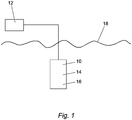
- an ADD comprises a power source 10 (usually marine batteries), a control unit 12, an amplifier 14 and an underwater transducer (speaker) 16.
- the embodiment shown in Fig. 1 shows all of the power source, amplifier and transducer being below the water surface 18, but it will be appreciated that any suitable arrangement of these components can be used, for example one or more of the power source and amplifier may be situated remote from the transducer 16 and as such could be above the surface 18, or as a further example, all the components could be underwater, not just the transducer.
- the control unit 12 typically includes a computer that has a number of sound files stored on it which generate signals to be relayed through the amplifier 14 and broadcasted into the water.
- the control unit 12 also controls the timing of the sounds which are played.
- Sound being played is characterised by its source levels, rise time, frequency composition and duration. Additionally, the inter-sound interval determines how quickly sounds follow each other.
- the "source level” is a measurement of the acoustic output of the device at 1m distance.
- source levels and received levels in general will be denoted in units of decibels (dB) measured with reference to 1 ⁇ Pa, unless a specific statement or context implies otherwise.
- the "rise time” is a measure of how long it takes for an acoustic signal or pulse to reach its maximum amplitude.
- sensation levels refers to the sound pressure level by which a stimulus exceeds the species' auditory threshold (received level minus hearing threshold).
- Received level refers to the sound pressure level that reaches the animal's ears (source level minus transmission loss).
- the Ferranti-Thomson 4X ADD has a power of over 200 dB re 1 ⁇ Pa at 25KHz and the signals from this device can be audible to a harbour porpoise ( Phocoena phocoena ) for up to 10km.
- the zone of potential audibility for a harbour seal for a 175 dB re 1 ⁇ Pa source is thought to lie between approximately 1.4km and 2.9km.
- ADDs could cause hearing damage to target species and to non-target species, which leads to adverse effects on individual animals and the population in general. Hearing damage would also reduce the potential efficiency of the ADD as it would become less audible to the affected predators.
- Hearing damage first occurs as a temporary shift of the hearing threshold (TTS) that is fully recoverable after a few hours or days.
- TTS hearing threshold
- PTS permanent threshold shift
- this permanent hearing damage only affects the outer hair cells of the auditory system. This leads to a very subtle rise of the hearing threshold, but also destroys the cochlea amplifier causing a diminishing of the dynamic range and a loss of the ability to discriminate between frequencies.
- Hearing damage in any form is a function of sound pressure level (SPL) and exposure time.
- SPL sound pressure level
- a sound with a short duration can be safely presented at a higher SPL than a longer one.
- stimuli of equal acoustic energy cause similar damage.
- TTS Temporary threshold shift
- TTS zones widen markedly for longer exposure times. Exposure to 10 seconds of a sound at a level of 194 dB re 1 ⁇ Pa (which is equivalent to the energy of a 20 second scram produced by an Ace-Aquatec or Ferranti-Thomson Mk 2 type device) is thought to result in TTS zones of 150m for harbour porpoises, 285m for bottlenose dolphins and 577m for killer whales, while a harbour seal TTS zone would be around 11m at a conservative estimate.
- DRC Human damage risk criteria
- Extrapolation of thresholds or PTS from TTS data is problematic, but due to a lack of direct measurements in marine mammals and the difficulties of extrapolation from human DRC such an attempt is justified.
- Data on humans suggests that exposure levels causing TTS of 40 dB or more carry some risk of causing a PTS.
- a temporary threshold shift that exceeds 40 dB carries some risk to become permanent and correlates with an increase of the sound exposure pressure level by 20 dB beyond the sound pressure level that causes onset TTS). Based on these considerations the damage zones within which PTS could occur would be 16m, 31m and 69m for the bottlenose dolphin, harbour porpoise and killer whale respectively.
- PTS damage threshold 110 dB above the hearing threshold for exposures of up to 1.5 minutes yields PTS ranges between 69m and 562m for a high powered device (200 dB re 1 ⁇ Pa at 1m) and values between 40m and 281m for a 194 dB re 1 ⁇ Pa ADD depending on the species' hearing thresholds.
- masking effects are attenuated if the masker and the signal come from different directions. In harbour seals minimum distinguishable audible angles for clicks are 4.5 degrees, and in bottlenose dolphins they are less than 3 degrees. Therefore, it seems that cetaceans and pinnipeds may successfully avoid masking effects, but the potential to affect other marine mammal communication networks is high.
- ADDs for seals have been shown to exclude non-target marine mammals (i.e. cetaceans) from their habitat. This has been confirmed by several studies.
- Duty cycles range from 3% in a Ferranti-Thomson model up to 50% in other designs.
- Devices can include additional predator detectors so that the ADD is only triggered when a predator is present. This can be via direct detection of a predator, or from the analysis of the motion patterns of fish in the pens of the fish farm. Such systems are desirable and can be incorporated in combination with the invention.
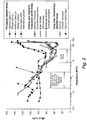
- Figure 2 shows the hearing thresholds for a spectrum of marine wildlife measured in dB with respect to 1 ⁇ Pa plotted on the Y axis, against frequency in KHz on the logarithmic X axis.
- Some ADDs operate at frequencies close to the most sensitive hearing of pinnipeds, that is between 20 and 30 KHz. However, these frequencies are not suitable because hearing thresholds in odontocetes are even lower in this band. Furthermore, most odontocetes have their most sensitive hearing in the ultrasonic range between 30 and 50 KHz. It would therefore be desirable that no ADD should produce substantial energy above 20KHz. However, this is the case for the majority of available ADDs.
- the frequency components for an ADD can be chosen to lie at values at which the aural sensitivity of the targeted mammals is greater than that of selected other animals, even at the expense of using the frequencies corresponding to the lowest hearing thresholds of the targeted mammals.
- the lower frequencies may have effects on fish with specialised hearing (such as clupeids) and baleen whales and further research may need to be carried out to quantify this.
- fish species with specialised hearing and most baleen whales do not usually occur around fish farm locations and so this is not anticipated to be a problem when the invention is used in a fish farm environment.
- Figure 3 shows a qualitative representation of Steven's Law where the magnitude of sensation is plotted against a magnitude of physical stimulus for a sound. Two curves are shown, one shows the loudness of a sound while the other shows the pain perception.
- ⁇ k ⁇ ⁇ ⁇ 0 m k is a constant, and ⁇ 0 is the lowest perceivable physical stimulus (threshold) and m is a modality specific coefficient determining the essential shape of the function.
- m is equal to 0.6 (this value is illustrated in Fig. 3 ).
- the perceived loudness of a sound is generally measured on the sone scale, a doubling of which reflects a doubling of perceived loudness.
- One sone is defined as a sound that is perceived as equally loud as a 40 dB re 20 ⁇ Pa tone at 1kHz in air for humans.
- Figure 4 shows the calculated loudness perception of a 2.5KHz tone in a harbour seal.
- a doubling of the loudness in sones reflects a doubling in perceived loudness.
- the discomfort threshold for the harbour seal is taken to lie at about 6 sone, which is slightly lower than that for humans. Pain thresholds are much higher and usually close to SPLs that cause immediate hearing damage. Thus, current ADDs will not cause pain in most cases, but where pain is caused there is also likely to be hearing damage.
- the inventors recommend that no attempt should be made to increase the source levels of current ADDs or to use devices that emit sound continuously at source levels at the upper end of the dynamic range close to the suspected pain threshold. Additionally, the critical level of 135 dB above the threshold should not be exceeded at reasonable distances from the sound source as the risk of damage originating from single short term exposures is substantially increased above this level.
- a safe exposure level for seals would be a perceived sound exposure level of about 126 Pa 2 s -1 above the threshold, which equals a SEL of 183 dB re 1 ⁇ Pa 2 s -1 . This was calculated for a 2.5KHz tone played to a harbour seal.
- Recovery times in sound exposure scenarios that do not cause a TTS should be at least ten seconds to avoid accumulation of acoustic trauma. However, acceptable exposure levels should be calculated for the species with the most sensitive hearing in the frequency range used by the ADD.
- Killer whale sounds have been shown to be aversive to seals. However, they equally affect cetaceans, making them an unattractive choice. Use of predator sounds also brings the risk that mammals habituate to the predator sounds and become more vulnerable to real predation.
- the first version uses the mammalian startle response to elicit a flight.
- Startle sounds have to have a short rise time, have a sensation level of at least 90 dB above the hearing threshold, and be relatively short (i.e. less than 200 ms). Additionally, sound should be broadband. These kinds of sounds elicit a startle and flight response.
- the startle response is a physiological reflex to sound levels and has been shown to occur at specific source levels above and hearing threshold of a particular species. It is elicited through a relatively simple reflex and the underlying mechanisms are likely to be shared by mammals. The startle response is usually followed by a flee response in a direction away from the source of the sound. The startle response has been well documented in rats, but mostly for experimental purposes to study the neuronal basis of simple learning behaviours (e.g. sensitisation and habituation). It has not been used in practice for a mammal deterrent device, and has furthermore never been applied to the deterrence of marine mammals in a fish farm or any other practical environment.
- the second version uses aversive sounds that were designed on the basis of a model describing what makes sound pleasant or unpleasant for humans, see Zwicker, E. & Fastl, H. (1990), Psychoacoustics - Facts and Models, Springer-Verlag, New York .
- the four parameters that are mentioned in the model that predicts what makes sounds unpleasant in humans are high sharpness, high roughness, low tonality and high loudness.
- specific frequency differences within complex sounds have been found to be unpleasant (e.g. frequency differences/ratios that constitute unpleasant musical intervals).
- Low tonality can be achieved using square-wave sounds as carrier signals that do not have very tonal characteristics (for example when compared with a pure sine wave tone).
- the carrier signal should be frequency-modulated.
- a frequency modulation of between 5Hz and 200Hz would be suitable for ADDs, with a potential optimum of about 70 Hz (corresponding to the frequency modulation most effective in humans to cause an unpleasant stimulus).
- Modulation depth of the signal can be narrowband or wideband, ranging typically between 10% and 150%. As a particular example, a 50% modulation depth of the centre frequency of the carrier signal may be useful.
- the frequency composition of complex sounds is also a contributing factor to the aversiveness of a sound.
- Complex sounds that consist of partials (individual sine wave components) having frequency differences falling within 25% of a critical bandwidth are perceived as dissonant in humans.
- the critical bandwidth reflects the bandwidth of each individual filter.
- broadband signals are perceived to be louder than narrowband signals when played at the same source level, and this can be used to increase the perceived loudness without actually increasing the source level.
- a signal is intentionally constructed to be as broadband as possible within the designated frequency band.
- Habituation could be avoided or at least delayed by a triggering method which only plays sounds when seals approach. This can be triggered by the detection of a seal itself or by the analysis of changing patterns of motion in the swimming of the fish indicating that a predator is present. Using highly variable sound types should also prevent habituation, but no empirical data for animals in the feeding context are available to support this.
- the acoustical stimulus is repeatedly negatively reinforced by an aversive stimulus.
- Classical conditioning paradigms could be used here.
- An unconditioned stimulus e.g. startle sound
- an unconditioned response e.g. startle response
- a conditioning stimulus e.g. an artificial acoustic signal with no biological meaning
- Aversive behaviour was quantified by an index of aversiveness which was a cumulative index of occurrence of a series of aversive behaviours. Depending on whether all or none of the following behaviours occurred the index ranged from 0 (not aversive) to 4 (highly aversive):
- An ADD was used comprising of a Lubell® 9162 loudspeaker, a Cadence® Z9000 stereo high-power car amplifier, a Panasonic® SL-S120 CD player and a car battery installed in a waterproof aluminium box.
- the speaker was deployed at 17m depth, which was about 2m below the deepest part of a cage in order to avoid sound shadow effects by the fish in the near field.
- a startle stimulus comprising of a 200ms long noise pulse with a rise time of 5ms and peak frequency of 950Hz, was used.
- the -20dB bandwidth spanned approximately two to three octaves with the average minus 20dB power points being at 450Hz and 1.9kHz.
- the startle pulse was paired with a substantially weaker pre-sound comprising of a 3Hz frequency modulated 1.2s long sine wave pure tone.
- the sweeps caused by the frequency modulation covered a frequency range from 700Hz to 1.3kHz and the pre-sound ended 2s before presentation of the startle pulse.
- the noise pulses were played at varying intervals ranging from 2s to 40s with an average of 2.4 pulses per minute.
- the signals were arranged digitally into 4 different playback tracks each of which was 1.5 hours long. These playback tracks were assigned to different playback days and played in loop mode from the CD player.
- the effective duty cycle of the ADD was 0.08 %.
- the source level of the ADD was adjusted to 180 dB re 1 ⁇ Pa.
- Experiments were carried out in sea states less than 3 (slight, 0.5 to 1.25 m wave heights). Good weather days were chosen to use as either a control day with the equipment in place but no playbacks or an exposure day in which the stimulus was played as described above.
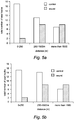
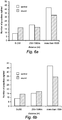
- Fig. 5 and Fig. 6 are graphs showing a comparison of seal ( Fig. 5A and Fig. 5B ) and porpoise ( Fig. 6A and Fig. 6B ) sightings on "control" days, on which no sounds were played, and "sound" days, on which the sounds described above were played for (A) closest approaches and (B) average distance from the ADD.
- seals clearly showed an avoidance response up to 250 m in their closest approaches ( Fig. 5A ) and in the average distance to the device ( Fig. 5B ) while porpoises showed no significant differences in either response variable.
- Porpoise groups were regularly seen swimming between the cages of the fish farm and one porpoise group approached the ADD as close as 7m during sound exposure. The closest ever observed approach of a seal was approx 50m during sound exposure.
- the field trial showed that an ADD incorporating "startle" sounds did not have a negative effect on harbour porpoise distribution but was effective in reducing the number of seals in the vicinity of the fish farm.
- This fish farm was unusual in that minke whales used the sea loch with the farm occasionally. The startle sound did not have any effects on minke whales. In the experiments, they were exposed to received level of up to 125 dB re 1 ⁇ Pa. In fact, considerably more minke whales were spotted on sound exposure days, as oppose to days in which no sound was played as a control level, confirming that the animals do not show a strong avoidance response to the ADD sounds as disclosed herein.
Landscapes
- Life Sciences & Earth Sciences (AREA)
- Engineering & Computer Science (AREA)
- Birds (AREA)
- Insects & Arthropods (AREA)
- Pest Control & Pesticides (AREA)
- Wood Science & Technology (AREA)
- Zoology (AREA)
- Environmental Sciences (AREA)
- Physics & Mathematics (AREA)
- Acoustics & Sound (AREA)
- Multimedia (AREA)
- Catching Or Destruction (AREA)
Description
- The present invention relates to acoustic deterrence, and in particular to an acoustic deterrent device and method for deterring sea mammals.
- Worldwide, farming of marine and diadromous finfish species has experienced tremendous growth rates, showing a ten fold increase over the last three decades. This increase in potential food resources presented in a marine environment has brought about increased interactions with predatory species. One common group of predators is marine mammals who exploit food resources depending on their profitability and potential costs, which include dive depths as a major factor. The shallow depth of fish farms thus makes them particularly attractive to predators.
In particular, predatory behaviour of pinnipeds is a major concern, causing a variety of economical and market related risks for the fish farm owner. Accordingly, there is much interest in developing anti-predator control methods.
These methods include net modifications, lethal or non-lethal removals, population control and aversive conditioning. However, each of these methods has their own drawbacks. For example, the addition of a second net can cause tangling of predators and non-predatory species; and lethal removals as well as population control may have an impact on populations and raise ethical concerns over the treatment of the animals. Culling of higher order predators can also have negative impact on predation rates by other predators, for example, pinnipeds forage on predatory fish species around the net pen which in turn potentially feed on aquaculturally important species. Also, emetic aversion conditioning requires that individuals learn to associate treated fish with sickness, and this can be hard to achieve when predator numbers are high. - One anti-predator control method that avoids these pitfalls is the use of acoustic deterrent devices (ADDs). These have traditionally been considered to be a benign solution. However, they do present certain problems with respect to the effects they have on other marine wildlife and with habituation, where a target species motivated by a food source ceases to be deterred by the acoustic signals.
- The acoustic power, also referred to as source level, of the ADDs can cause temporary or permanent hearing damage both to the targeted species and to other wildlife, and the noise pollution is in general an environmental hazard. Further, both targeted and non-targeted species can be excluded from their natural habitat within a wide radius of the fish farms. These concerns have led some governments to restrict or even ban the use of ADDs.
- A further problem is the habituation of the target species to the sound. In extreme cases, the sound which is intended to be aversive acts as a "dinner bell" and actually serves to attract predators, rather than deter them. Also, if predator sounds are used as an aversive noise, habituation is dangerous for the target species once they had returned to their normal habitat.
- Also, existing power levels and signal cycles impose heavy duty cycles on the batteries used as power sources in the transducer units.
-
US4922468 discloses a method for controlling the population of marine and aquatic species in an area of water includes the development of data concerning the response of various species to stimuli in different environmental conditions, and the generation of stimuli in the control area to affect the species in that area and thus control the population.
US5559759 discloses a method of alerting marine mammals and other mammals underwater to the danger of approaching motor vessels includes generating a pulsed acoustical signal at a predetermined source frequency and at a fixed or variable (with boat speed) sound pressure level and projecting the generated signal underwater in a highly directional manner from a motor vessel and in a direction corresponding with the direction of travel of the motor vessel or from fixed hazards which present a danger to mammals underwater.WO 95/00016 - Accordingly, it would be desirable to provide an acoustic deterrent device that is highly effective, but does not damage the environment is species specific and avoids habituation.
According to a first aspect of the present invention there is provided a method of deterring sea mammals as described inclaim 1 of the appended claims.
"Deterring" is taken to mean discouraging or preventing a mammal from entering into or staying in a particular area. The startle response is a physiological reflex in mammals to sound levels which often initiates flight from the sound. - The predetermined level is between 90 and 125 dB re 1µPa above the representative hearing threshold at each frequency.
- The acoustic signal has a duration about as long as the acoustic integration time specific to the targeted mammals auditory system Preferably, the acoustic signal has a duration of less than 200 ms. Preferably, the acoustic signal is as broadband as possible within the designated frequency range.
Preferably, the acoustic signal comprises frequency components at which the aural sensitivity of the targeted mammals is greater than that of selected other animals.
Preferably, the acoustic signal uses a frequency band between 500Hz and 2kHz for the deterrence of seals or other pinnipeds. The acoustic signal is preferably as broadband as possible within this frequency range. - The mammals to be deterred comprise sea mammals preferably including pinnipeds, most preferably seals; or cetaceans.
- Preferably, a secondary conditioning sound is made to condition the mammals to avoid the main stimulus. This could be a sound of centre frequency 1KHz, modulation rate 250 Hz and duration 1.2 seconds with two modulation cycles.
Preferably, the conditioning sound is played between 500ms and 5s before the main acoustic signals on selected occasions. - Also disclosed is a method of deterring marine mammals comprising transmitting an acoustic signal which comprises an aversive sound whose characteristics are chosen based on characteristics that are unpleasant to humans.
- Preferably, the aversive sound is selected to have one or more of the following psychophysical features: high roughness; low tonality; high loudness; high sharpness.
- Preferably a frequency modulation is applied to the carrier signal, most preferably with a modulation frequency of about 70Hz.
- This frequency modulation is applied in order to achieve high roughness.
- Preferably, the frequency modulation has a modulation depth of between 10 and 150%, preferably 50% of the centre frequency of the carrier signal.
- Preferably, the aversive sound has a sound pressure level of at least 70 dB above the hearing threshold of the targeted mammals, most preferably at least 80 dB above the hearing threshold of the targeted mammals.
- Preferably, an aversive sound is of a complex form and comprises partials that fall within 25% of the critical bandwidth of the hearing system of the targeted mammals.
- Preferably, when cetaceans are to be deterred the acoustic signals could be close to the upper frequency edge of the hearing range in order to increase sharpness.
- Preferably, the acoustic signal is as broadband as possible within the selected frequency band in order to increase loudness without increasing the actual sound pressure level.
Preferably, the aversive sound comprises frequency components at which the aural sensitivity of the targeted mammals is greater than that of selected other animals.
Preferably, the acoustic signal comprises one or more frequency components between 500Hz and 2kHz for the deterrence of seals or other pinnipeds.
Preferably, sound exposure time is determined based on a sound exposure level below that which causes a temporary threshold shift in the target and non-target species, for example an energy flux density of 120 dB re 1µPa2s-1 above the hearing threshold of the targeted mammals. - The present invention also provides an acoustic deterrent system comprising a control unit, a power source, amplifier and underwater transducer means, configured to perform the method.
- Preferably, there is provided control software executable on a computer so that the computer is operable as the control unit of the acoustic deterrent system.
- The control software can be provided recorded on a computer readable medium, or made available for download.
- The present invention will now be described, by way of example only, with reference to the accompanying figures in which:
-
Fig. 1 shows an acoustic deterrent system; -
Fig. 2 shows the graph of hearing thresholds for selected animals; -
Fig. 3 shows a representation of Stevens Law; -
Fig. 4 shows the calculated loudness perception of a 2.5 KHz tone in a harbour seal; -
Fig. 5 shows a comparison of seal sightings during field trials on both control days and sound days for (a) closest approaches and (b) average distance from an Acoustic Deterrent Device; -
Fig. 6 shows a comparison of porpoise sightings during field trials on both control days and sound days for (a) closest approaches and (b) average distance from an Acoustic Deterrent Device; -
Fig 7 : shows a graph of results from experiments with captive seals showing the seals exhibited a startle response and sensitised to a transmitted sound meaning that aversive responses increased over time. - A variety of Acoustic Deterrent Devices (ADDs) are available to reduce or stop predation of pinnipeds on finfish farms. These include for example the Ferranti-Thomson Mk2, Mk3 and 4X Seal scrammers, the Ace-Aquatec "silent scrammer", the Airmar Technology Corporation dB Plus II, the Terecos Limited type DSMS-4 and the Lofitech "universal scarer" or "seal scarer".
- As seen in
Fig. 1 , an ADD comprises a power source 10 (usually marine batteries), acontrol unit 12, anamplifier 14 and an underwater transducer (speaker) 16. The embodiment shown inFig. 1 shows all of the power source, amplifier and transducer being below thewater surface 18, but it will be appreciated that any suitable arrangement of these components can be used, for example one or more of the power source and amplifier may be situated remote from thetransducer 16 and as such could be above thesurface 18, or as a further example, all the components could be underwater, not just the transducer. - The
control unit 12 typically includes a computer that has a number of sound files stored on it which generate signals to be relayed through theamplifier 14 and broadcasted into the water. Thecontrol unit 12 also controls the timing of the sounds which are played. - Sound being played is characterised by its source levels, rise time, frequency composition and duration. Additionally, the inter-sound interval determines how quickly sounds follow each other.
- The "source level" (SL) is a measurement of the acoustic output of the device at 1m distance. In the following text, source levels and received levels in general will be denoted in units of decibels (dB) measured with reference to 1µPa, unless a specific statement or context implies otherwise. The "rise time" is a measure of how long it takes for an acoustic signal or pulse to reach its maximum amplitude. The term sensation levels refers to the sound pressure level by which a stimulus exceeds the species' auditory threshold (received level minus hearing threshold). Received level refers to the sound pressure level that reaches the animal's ears (source level minus transmission loss). The term sound exposure level (SEL) refers to the energy flux density (being a function of sound pressure level and exposure time) and is given by SEL = SPL + 10 log10 (exposure time) where SPL is the sound pressure level of a received sound.
- When designing an acoustic deterrent device there are various factors that must be taken into account, including ecological impacts (on both target and non-target species), and problems and potential solutions.
- Any animal that can perceive acoustic sounds can be potentially adversely affected by them. These affects can be wide ranging. For example, the Ferranti-Thomson 4X ADD has a power of over 200 dB re 1µPa at 25KHz and the signals from this device can be audible to a harbour porpoise (Phocoena phocoena) for up to 10km. The zone of potential audibility for a harbour seal for a 175 dB re 1µPa source is thought to lie between approximately 1.4km and 2.9km.
- ADDs could cause hearing damage to target species and to non-target species, which leads to adverse effects on individual animals and the population in general. Hearing damage would also reduce the potential efficiency of the ADD as it would become less audible to the affected predators.
- Hearing damage first occurs as a temporary shift of the hearing threshold (TTS) that is fully recoverable after a few hours or days. However, exposure to higher intensity or longer duration acoustic stimuli can cause chronic damage and lead to a permanent threshold shift (PTS). In its mildest form this permanent hearing damage only affects the outer hair cells of the auditory system. This leads to a very subtle rise of the hearing threshold, but also destroys the cochlea amplifier causing a diminishing of the dynamic range and a loss of the ability to discriminate between frequencies.
- Hearing damage in any form is a function of sound pressure level (SPL) and exposure time. A sound with a short duration can be safely presented at a higher SPL than a longer one. It has been suggested that stimuli of equal acoustic energy cause similar damage. The sound exposure level (SEL) or energy flux density has been suggested as a measure for defining safe exposure levels, where SEL = SPL + 10 log10 (exposure time). However, data on terrestrial mammals seems to suggest that the equal energy criterion underestimates the risk of hearing damage, at least for sound pressures close to a critical level of about 135 dB above the hearing threshold.
- No direct measurements of PTS are available for marine mammals, so conclusions have to be drawn based on extrapolation from TTS data or human damage risk criteria (DRC).
- Studies on odontocetes have found that sound exposure levels between 193 and 213 dB re 1µPa2s-1 can cause mild to moderate, but fully recoverable TTS. These values are about 116-132 dB re 1µPa above the hearing threshold of the tested individuals. It has also been suggested that a sound exposure level can be expressed in terms of energy flux density levels in some situations.
- Studies on odontocetes have been used to estimate TTS ranges of ADDs for single transmissions (i.e. short pulses) based on equal energy assumptions. Given these assumptions an Airmar dB Plus II device (having a source level of 192 dB re 1µPa) would only cause TTS in bottlenose dolphins at distances closer than 1m while a high power (200 dB re 1µPa) Ferranti-Thomson 4X device would have a TTS zone of about 2-3 meters. TTS zones for the harbour porpoise would be 2-3 and 14-25 meters respectively.
- These TTS zones widen markedly for longer exposure times. Exposure to 10 seconds of a sound at a level of 194 dB re 1µPa (which is equivalent to the energy of a 20 second scram produced by an Ace-Aquatec or Ferranti-
Thomson Mk 2 type device) is thought to result in TTS zones of 150m for harbour porpoises, 285m for bottlenose dolphins and 577m for killer whales, while a harbour seal TTS zone would be around 11m at a conservative estimate. - Human damage risk criteria (DRC) states that PTS will be caused at or after a critical value of 130 dB above the hearing threshold. Studies of terrestrial mammals have confirmed that such hearing damage occurs quickly when exposed to sound pulses at 130-140 dB above the hearing threshold. Available data on harbour porpoises suggests that a PTS damage zone for harbour porpoises would be 30m, with a similar result for killer whales (Orcinus orca).
- Extrapolation of thresholds or PTS from TTS data is problematic, but due to a lack of direct measurements in marine mammals and the difficulties of extrapolation from human DRC such an attempt is justified. Data on humans suggests that exposure levels causing TTS of 40 dB or more carry some risk of causing a PTS. A temporary threshold shift that exceeds 40 dB carries some risk to become permanent and correlates with an increase of the sound exposure pressure level by 20 dB beyond the sound pressure level that causes onset TTS). Based on these considerations the damage zones within which PTS could occur would be 16m, 31m and 69m for the bottlenose dolphin, harbour porpoise and killer whale respectively.
- Longer term exposure (meaning anything at or above 1.5 minutes per day) requires different calculations to be made. Using a PTS damage threshold of 110 dB above the hearing threshold for exposures of up to 1.5 minutes yields PTS ranges between 69m and 562m for a high powered device (200 dB re 1µPa at 1m) and values between 40m and 281m for a 194 dB re 1µPa ADD depending on the species' hearing thresholds.
- Long term exposure over months or years requires even more conservative criteria. Accepted noise levels at human industrial workplaces are 85 dB above the hearing threshold zone. An even more conservative 80 dB threshold would be exceeded within a zone of over a kilometre radius for the Airmar dB Plus II device which has a source level of 192 dB re 1µPa. In areas with dense fish farming activity, animals could be exposed to these levels for extensive amount of time. As studies on humans have shown, initially harmless TTS can turn into PTS if recovery periods are insufficient or non-existent.
- Hearing in fish is less well studied in general. However, fish are sensitive to lower frequencies than pinnipeds or cetaceans and studies on fish have been carried out using signals with frequencies of 500Hz or less, which is within the most sensitive hearing range of fish. This makes it difficult to draw conclusions about the effects of higher frequency signals. However, increasing TTS with increasing exposure levels and weak temporary shifts have been demonstrated in some studies.
- It is important that the sounds produced by ADDs do not overlap with communication or echolocation sounds used by target or non-target mammals.
- For a signal to be masked the detection of the signal must be influenced by a second sound - the masker, which will usually be centred at the frequency of the signal. It has been well established that the masking effect is dependent on the bandwidth of the masker until it reaches a so-called critical bandwidth. Therefore, noise only masks a signal if it contains similar frequencies to the signal of interest. Critical bandwidths in marine mammals are generally below 10% of the signal centre frequency.
- Additionally, masking effects are attenuated if the masker and the signal come from different directions. In harbour seals minimum distinguishable audible angles for clicks are 4.5 degrees, and in bottlenose dolphins they are less than 3 degrees. Therefore, it seems that cetaceans and pinnipeds may successfully avoid masking effects, but the potential to affect other marine mammal communication networks is high.
- Little is known about the impacts of masking on fish. However, their hearing abilities are generally less sophisticated than those of mammals which could make them more prone to masking effects.
- As mentioned above, ADDs for seals have been shown to exclude non-target marine mammals (i.e. cetaceans) from their habitat. This has been confirmed by several studies.
- If an existing ADD is used continuously, noise pollution is substantial. Duty cycles range from 3% in a Ferranti-Thomson model up to 50% in other designs.
- Devices can include additional predator detectors so that the ADD is only triggered when a predator is present. This can be via direct detection of a predator, or from the analysis of the motion patterns of fish in the pens of the fish farm. Such systems are desirable and can be incorporated in combination with the invention.
-
Figure 2 shows the hearing thresholds for a spectrum of marine wildlife measured in dB with respect to 1µPa plotted on the Y axis, against frequency in KHz on the logarithmic X axis. - Existing ADDs use frequencies above 4KHz, at which odontocetes' hearing is generally more sensitive than pinnipeds' hearing. Thus odontocetes perceive a sound of a given SPL as louder than seals do.
- Discomfort levels for a captive harbour seals and harbour porpoises have been investigated and it has been found that for a frequency of 12KHz, harbour porpoises avoid sound that is approximately 5 dB quieter than that avoided by harbour seals. This corresponds to the difference between the hearing thresholds of both species at the relevant frequency.
- Some ADDs operate at frequencies close to the most sensitive hearing of pinnipeds, that is between 20 and 30 KHz. However, these frequencies are not suitable because hearing thresholds in odontocetes are even lower in this band. Furthermore, most odontocetes have their most sensitive hearing in the ultrasonic range between 30 and 50 KHz. It would therefore be desirable that no ADD should produce substantial energy above 20KHz. However, this is the case for the majority of available ADDs.
- In a frequency band between 200Hz and 2KHz pinnipeds' hearing is more sensitive than odontocetes' hearing and thus appears to be an ideal frequency band for ADDs. This frequency band has not been previously used for pinniped ADDs because it is below the frequencies at which their hearing is most sensitive. However, the inventors have realised that the use of this apparently non-optimal frequency band enables an ADD to have an effect on pinnipeds without adversely affecting cetaceans and odontocetes.
- This is a specific example of the inventors' more general realisation that the frequency components for an ADD can be chosen to lie at values at which the aural sensitivity of the targeted mammals is greater than that of selected other animals, even at the expense of using the frequencies corresponding to the lowest hearing thresholds of the targeted mammals.
- The lower frequencies (i.e. 500Hz to 2kHz in the seal example) may have effects on fish with specialised hearing (such as clupeids) and baleen whales and further research may need to be carried out to quantify this. However, fish species with specialised hearing and most baleen whales do not usually occur around fish farm locations and so this is not anticipated to be a problem when the invention is used in a fish farm environment.
- The general paradigm applied in current ADDs is that a high source level is expected to cause physical discomfort or pain and therefore results in an animal leaving an area. However, there are several problems involved when operating at the upper end of the dynamic range of an animal.
-
Figure 3 shows a qualitative representation of Steven's Law where the magnitude of sensation is plotted against a magnitude of physical stimulus for a sound. Two curves are shown, one shows the loudness of a sound while the other shows the pain perception. - Steven's Law gives an approximate model for the general relationship for the magnitude of sensation, ψ, and the magnitude of a physical parameter, ϕ, as follows:

Fig. 3 ). - It can be seen that, as a generalisation, adding a defined sound pressure value (in Pascals) to the high sound pressure stimulus leads only to a small increase of the perceived loudness while adding the same sound pressure value to a low sound pressure stimulus would lead to a stronger increase in perceived loudness. Thus, an increase in sound pressure in the upper range of the curve in
figure 3 disproportionately increases the risk of damaging the auditory system without yielding a much stronger aversive effect. - The perceived loudness of a sound is generally measured on the sone scale, a doubling of which reflects a doubling of perceived loudness. One sone is defined as a sound that is perceived as equally loud as a 40 dB re 20 µPa tone at 1kHz in air for humans. The perceived loudness in sone (L) can be calculated by the equation: L = 0.01 (p-p0)-0.6, where p is the sound pressure in µPa and p0 is the effective threshold.
-
Figure 4 shows the calculated loudness perception of a 2.5KHz tone in a harbour seal. A doubling of the loudness in sones reflects a doubling in perceived loudness. The discomfort threshold for the harbour seal is taken to lie at about 6 sone, which is slightly lower than that for humans. Pain thresholds are much higher and usually close to SPLs that cause immediate hearing damage. Thus, current ADDs will not cause pain in most cases, but where pain is caused there is also likely to be hearing damage. - In light of the potential hearing damage caused by the ADDs, the inventors recommend that no attempt should be made to increase the source levels of current ADDs or to use devices that emit sound continuously at source levels at the upper end of the dynamic range close to the suspected pain threshold. Additionally, the critical level of 135 dB above the threshold should not be exceeded at reasonable distances from the sound source as the risk of damage originating from single short term exposures is substantially increased above this level.
- A safe exposure level for seals would be a perceived sound exposure level of about 126 Pa2s-1 above the threshold, which equals a SEL of 183 dB re 1 µPa2s-1. This was calculated for a 2.5KHz tone played to a harbour seal.
- Recovery times in sound exposure scenarios that do not cause a TTS should be at least ten seconds to avoid accumulation of acoustic trauma. However, acceptable exposure levels should be calculated for the species with the most sensitive hearing in the frequency range used by the ADD.
- For the currently available ADDs this would usually be an odontocete rather than a pinniped.
- Killer whale sounds have been shown to be aversive to seals. However, they equally affect cetaceans, making them an unattractive choice. Use of predator sounds also brings the risk that mammals habituate to the predator sounds and become more vulnerable to real predation.
- No data is available on aversiveness perception in marine mammals. However, the hearing system is generally similar among all mammals, in particular the basic functioning of the cochlea and peripheral auditory processing in the brain. The inventors propose that data based on human sound perception would be a good starting point for the investigation of aversiveness perception in marine mammals.
- Two different versions of ADDs are proposed. The first version uses the mammalian startle response to elicit a flight. Startle sounds have to have a short rise time, have a sensation level of at least 90 dB above the hearing threshold, and be relatively short (i.e. less than 200 ms). Additionally, sound should be broadband. These kinds of sounds elicit a startle and flight response.
- The startle response is a physiological reflex to sound levels and has been shown to occur at specific source levels above and hearing threshold of a particular species. It is elicited through a relatively simple reflex and the underlying mechanisms are likely to be shared by mammals. The startle response is usually followed by a flee response in a direction away from the source of the sound. The startle response has been well documented in rats, but mostly for experimental purposes to study the neuronal basis of simple learning behaviours (e.g. sensitisation and habituation). It has not been used in practice for a mammal deterrent device, and has furthermore never been applied to the deterrence of marine mammals in a fish farm or any other practical environment.
- The second version uses aversive sounds that were designed on the basis of a model describing what makes sound pleasant or unpleasant for humans, see Zwicker, E. & Fastl, H. (1990), Psychoacoustics - Facts and Models, Springer-Verlag, New York. The four parameters that are mentioned in the model that predicts what makes sounds unpleasant in humans are high sharpness, high roughness, low tonality and high loudness. In addition, specific frequency differences within complex sounds have been found to be unpleasant (e.g. frequency differences/ratios that constitute unpleasant musical intervals).
- To maximise the effects caused by sharpness, higher-frequency signals have to be used, and so sharpness is discarded as a parameter for seal-specific ADDs. However it could be used as a parameter in an ADD for deterring cetaceans; in particular odontocetes (toothed whales) with good high frequency hearing.
- Low tonality can be achieved using square-wave sounds as carrier signals that do not have very tonal characteristics (for example when compared with a pure sine wave tone).
- In order to maximise roughness the carrier signal should be frequency-modulated. A frequency modulation of between 5Hz and 200Hz would be suitable for ADDs, with a potential optimum of about 70 Hz (corresponding to the frequency modulation most effective in humans to cause an unpleasant stimulus).
- Modulation depth of the signal can be narrowband or wideband, ranging typically between 10% and 150%. As a particular example, a 50% modulation depth of the centre frequency of the carrier signal may be useful.
- As mentioned above, the frequency composition of complex sounds is also a contributing factor to the aversiveness of a sound. Complex sounds that consist of partials (individual sine wave components) having frequency differences falling within 25% of a critical bandwidth are perceived as dissonant in humans. When modelling the hearing system as a series of band-pass filters, the critical bandwidth reflects the bandwidth of each individual filter.
- Some examples of suitable sounds that can be synthesised are as follows:
- 1. 70-Hz frequency modulated square-wave signals with a carrier frequency of 500 and 527 Hz. Both tones are mixed (presented at the same time) resembling the musical interval of a minor second. Modulation depth was 50 %.
- 2. 70-Hz frequency-modulated square-wave tones with carrier frequencies of 500 and 507 Hz. Both tones are mixed (presented at the same time) resembling a frequency distance of 25 % of the critical band for a harbour seal (Phoca vitulina). Modulation depth was 50 %.
- 3. 70-Hz frequency modulated square-wave tones with a carrier frequency of 500 Hz.
- 4. A combination of the first three sounds: This sound would consist of elements of variable length (100 ms to a few seconds). Some of these elements are presented as FM sweeps covering a frequency range from 200 Hz to 4 kHz.
- It is to be appreciated that these four examples are for illustration purposes only.
- It has also been observed that broadband signals are perceived to be louder than narrowband signals when played at the same source level, and this can be used to increase the perceived loudness without actually increasing the source level. Thus, for both startle and aversive sounds, a signal is intentionally constructed to be as broadband as possible within the designated frequency band.
- Motivational factors clearly influence responses to sound exposure. An acoustic deterrent tested on well fed captive seals gives better performance results than one tested on foraging seals around real fish farms, as food motivation would give seals a higher tolerance for loud sounds.
- Habituation could be avoided or at least delayed by a triggering method which only plays sounds when seals approach. This can be triggered by the detection of a seal itself or by the analysis of changing patterns of motion in the swimming of the fish indicating that a predator is present. Using highly variable sound types should also prevent habituation, but no empirical data for animals in the feeding context are available to support this.
- Studies in the startle response of rats have indicated that habituation is not caused by an increase of the perceptional threshold eliciting the startle response, but by a change of the slope of the function of the difference between an input signal (SPL) and an output signal (magnitude of response).
- This supports the dual process theory of habituation meaning that the response to a repeated stimulus is influenced by a decreasing (sensitisation) and increasing (habituation) component. For ADDs this would mean that the source levels would have to be increased beyond the initial levels to yield the same response as before habituation occurred. Given the abovementioned problems associated with high SPL noise, this is not a good solution.
- Ideally, one would aim to replace habituation by sensitization to a sound stimulus. This could be achieved by using high intensity sound intermittently to sensitize a low intensity stimulus. Sensitization through electric stimulation is not feasible since the seal would have to be very close to yield an effect.
- It is preferable however that the acoustical stimulus is repeatedly negatively reinforced by an aversive stimulus. Classical conditioning paradigms could be used here. An unconditioned stimulus (e.g. startle sound) causing an unconditioned response (e.g. startle response) is associated with a conditioning stimulus (e.g. an artificial acoustic signal with no biological meaning) which is then able to cause the conditioned response consisting of the same behavioural pattern as the unconditioned response (e.g. startle and flee).
- To confirm the theoretical improvements in acoustic deterrence introduced above, the inventors carried out a number of experiments. To begin with these experiments were conducted in a controlled environment with captive seals building up to a field trial of the invention at a fish farm in which an Acoustic Deterrent Device (ADD) of any type had never been used.
- Experiments with captive seals were carried out under strong food motivation elicited by the presence of an underwater feeding station. The majority of the seals showed a clear startle response as indicated by neck twitches in response to the chosen stimulus (filtered noise pulse 450Hz and 1.9kHz ;
peak frequency 1 khz, received level 170 db re 1µPa). The startle response was followed by a flight response. After several exposures seals also started to haulout (leave the water) in response to the sound. These flight responses and the time the animal spent on land built up over time with all animals being very reluctant to enter the pool or come close to the feeding station by the end of the experiments. Aversive behaviour was quantified by an index of aversiveness which was a cumulative index of occurrence of a series of aversive behaviours. Depending on whether all or none of the following behaviours occurred the index ranged from 0 (not aversive) to 4 (highly aversive): - Fish catch prevented.
- Seal suddenly turns away from speaker.
- Escape/Flight response: seal increases distance to speaker at speeds of more than 3m/s.
- Hauling-out for at least 30s after flight response
- As shown in
figure 7 aversive responses increased over time meaning that animals did not habituate but sensitised to the sound. This confirms the theory and is a highly desirable outcome for an acoustic deterrence method. No previous study on acoustic deterrence devices has demonstrated any kind of sensitisation to an acoustic stimulus. - An ADD was used comprising of a Lubell® 9162 loudspeaker, a Cadence® Z9000 stereo high-power car amplifier, a Panasonic® SL-S120 CD player and a car battery installed in a waterproof aluminium box. The speaker was deployed at 17m depth, which was about 2m below the deepest part of a cage in order to avoid sound shadow effects by the fish in the near field. A startle stimulus comprising of a 200ms long noise pulse with a rise time of 5ms and peak frequency of 950Hz, was used. The -20dB bandwidth spanned approximately two to three octaves with the average minus 20dB power points being at 450Hz and 1.9kHz. The startle pulse was paired with a substantially weaker pre-sound comprising of a 3Hz frequency modulated 1.2s long sine wave pure tone. The sweeps caused by the frequency modulation covered a frequency range from 700Hz to 1.3kHz and the pre-sound ended 2s before presentation of the startle pulse.
- The noise pulses were played at varying intervals ranging from 2s to 40s with an average of 2.4 pulses per minute. In order to make the sound pattern less predictable the signals were arranged digitally into 4 different playback tracks each of which was 1.5 hours long. These playback tracks were assigned to different playback days and played in loop mode from the CD player. Given the signal length of 200ms, the effective duty cycle of the ADD was 0.08 %. The source level of the ADD was adjusted to 180 dB re 1µPa. Experiments were carried out in sea states less than 3 (slight, 0.5 to 1.25 m wave heights). Good weather days were chosen to use as either a control day with the equipment in place but no playbacks or an exposure day in which the stimulus was played as described above. Average observation periods were 3.5 hours (SD=0.96) on control days and 3.4 hours (SD=0.94) on days with sound exposure. The longest observation period was 5 hours, the shortest 1.5 hours. This protocol resulted in a total of 113 hours of observation with 58h during sound exposure and 55h during control periods. Observations were balanced so that tidal state, sea state and time of day were the same for control and sound exposure observation periods.
- During observation periods, visual scans were conducted by two observers. One observer was scanning by eye while the other observer was using binoculars. If one of the observers detected a porpoise or seal, bearings and surface positions for each surfacing bout were logged. A group was tracked until no resurfacing occurred 15 min after the last surfacing had been logged. Group and track ID was therefore defined as a consecutive line of surfacings that were not separated by more than 15min. If another group or species was spotted by the observers while tracking a group, surfacings were logged for both groups.
-
Fig. 5 andFig. 6 are graphs showing a comparison of seal (Fig. 5A and Fig. 5B ) and porpoise (Fig. 6A and Fig. 6B ) sightings on "control" days, on which no sounds were played, and "sound" days, on which the sounds described above were played for (A) closest approaches and (B) average distance from the ADD. The results show that seals clearly showed an avoidance response up to 250 m in their closest approaches (Fig. 5A ) and in the average distance to the device (Fig. 5B ) while porpoises showed no significant differences in either response variable. Porpoise groups were regularly seen swimming between the cages of the fish farm and one porpoise group approached the ADD as close as 7m during sound exposure. The closest ever observed approach of a seal was approx 50m during sound exposure.
The field trial showed that an ADD incorporating "startle" sounds did not have a negative effect on harbour porpoise distribution but was effective in reducing the number of seals in the vicinity of the fish farm. This fish farm was unusual in that minke whales used the sea loch with the farm occasionally. The startle sound did not have any effects on minke whales. In the experiments, they were exposed to received level of up to 125 dB re 1µPa. In fact, considerably more minke whales were spotted on sound exposure days, as oppose to days in which no sound was played as a control level, confirming that the animals do not show a strong avoidance response to the ADD sounds as disclosed herein. - Various improvement and modifications may be made to the above without departing from the scope of the invention. limited by the appended claims.
Claims (14)
- A method of deterring sea mammals comprising:selecting a target family, genus or species of mammals to be deterred;selecting a received level at a predetermined level between 90 and 125 dB at each frequency above a representative hearing threshold of the target mammals; andtransmitting an acoustic signal from a transmission point at a source level required, taking into account transmission loss, to create the selected received level at a predetermined distance from the transmission point;wherein the acoustic signal is a pulse which has a duration as long as the acoustic integration time specific to the target mammals' auditory system and a rise time of less than 20ms; andwherein the acoustic signal incurs in said target mammals, an acoustic startle response.
- A method as claimed in any preceding claim, wherein the acoustic signal has a duration of up to 200 milliseconds.
- A method as claimed in any preceding claim, wherein the acoustic signal comprises frequency components at which an aural sensitivity of the targeted mammals is greater than that of selected other mammals.
- A method as claimed in any preceding claim, wherein the acoustic signal uses a frequency band between 500Hz and 2kHz for the deterrence of seals or other pinnipeds.
- A method as claimed in any preceding claim, wherein the mammals to be deterred comprise sea mammals including pinnipeds, most preferably seals; or cetaceans.
- A method as claimed in any preceding claim, wherein a secondary conditioning sound is made to condition the mammals to avoid a main stimulus of the acoustic signal.
- A method as claimed in claim 6, wherein the secondary conditioning sound comprises a sound of centre frequency 1 KHz, modulation rate 250 Hz and duration 1.2 seconds with two modulation cycles.
- A method as claimed in claim 6 or 7, wherein the conditioning sound is played between 500ms and 5s before the main stimulus on selected occasions.
- A method as claimed in any preceding claim, wherein the acoustic signal comprises a startle stimulus having a 200ms long noise pulse having a rise time of 5ms and peak frequency of 950Hz.
- A method as claimed in any preceding claim wherein the acoustic signal is played at varying intervals ranging from 2s to 40s.
- A method as claimed in claim 10 wherein the acoustic signal is played at an average of 2.4 pulses per minute.
- An acoustic deterrent system comprising a control unit (12), a power source (10), amplifier (14) and underwater transducer means (16), configured to perform the method of any of claims 1 to 11.
- A control software executable on a computer so that the computer is operable as the control unit of claim 12.
- A computer readable medium comprising the control software as claimed in claim 13.
Applications Claiming Priority (2)
| Application Number | Priority Date | Filing Date | Title |
|---|---|---|---|
| GBGB0707640.9A GB0707640D0 (en) | 2007-04-20 | 2007-04-20 | Acoustic deterrence |
| PCT/GB2008/050245 WO2008129313A1 (en) | 2007-04-20 | 2008-04-07 | Acoustic deterrence |
Publications (2)
| Publication Number | Publication Date |
|---|---|
| EP2144498A1 EP2144498A1 (en) | 2010-01-20 |
| EP2144498B1 true EP2144498B1 (en) | 2020-03-18 |
Family
ID=38135129
Family Applications (1)
| Application Number | Title | Priority Date | Filing Date |
|---|---|---|---|
| EP08719090.6A Active EP2144498B1 (en) | 2007-04-20 | 2008-04-07 | Acoustic deterrence |
Country Status (9)
| Country | Link |
|---|---|
| US (2) | US8289812B2 (en) |
| EP (1) | EP2144498B1 (en) |
| JP (1) | JP5621981B2 (en) |
| CA (1) | CA2684573C (en) |
| DK (1) | DK2144498T3 (en) |
| ES (1) | ES2793314T3 (en) |
| GB (1) | GB0707640D0 (en) |
| PT (1) | PT2144498T (en) |
| WO (1) | WO2008129313A1 (en) |
Families Citing this family (20)
| Publication number | Priority date | Publication date | Assignee | Title |
|---|---|---|---|---|
| GB0707640D0 (en) * | 2007-04-20 | 2007-05-30 | Strathclyde | Acoustic deterrence |
| FR2929713B1 (en) * | 2008-04-02 | 2011-01-28 | Sercel Rech Const Elect | SYSTEM FOR ACQUIRING SEISMIC DATA IN THE MARINE ENVIRONMENT, USING SEISMIC FLUTES COUPLED WITH MEANS FOR DETECTION AND / OR LOCATION OF MARINE MAMMALS. |
| GB2472035A (en) * | 2009-07-22 | 2011-01-26 | Questor Group Ltd C | Open ocean fish farm |
| GB2472037A (en) * | 2009-07-22 | 2011-01-26 | Questor Group Ltd C | Open ocean fish farm |
| US20110176391A1 (en) * | 2010-01-19 | 2011-07-21 | Hydroacoustics Inc. | Low frequency acoustic deterrent system and method |
| EP2542258A4 (en) | 2010-03-04 | 2013-08-21 | Vet Therapeutics Inc | MONOCLONAL ANTIBODIES DIRECTED AGAINST CD52 |
| JP5911813B2 (en) | 2010-03-04 | 2016-04-27 | ベット・セラピューティクス・インコーポレイテッドVet Therapeutics Inc. | Monoclonal antibody against CD20 |
| US9107400B1 (en) | 2010-03-10 | 2015-08-18 | SealStop, Inc. | Marine animal deterrent apparatus and related methods |
| RU2615470C2 (en) * | 2012-03-26 | 2017-04-04 | Волаком Ад | System to avoid collision with animals |
| JP5670968B2 (en) * | 2012-07-23 | 2015-02-18 | Necネットワーク・センサ株式会社 | Sonar device |
| US9204622B2 (en) | 2013-03-29 | 2015-12-08 | Sunbeam Products, Inc. | Animal deterrent device |
| WO2015127292A1 (en) * | 2014-02-20 | 2015-08-27 | Turtle Beach Corporation | Ultrasonic intrusion deterrence apparatus and methods |
| US9526228B2 (en) * | 2014-03-07 | 2016-12-27 | Amirix Systems Inc. | Predation detection fish tracking tag |
| CA2903243C (en) | 2014-11-19 | 2021-06-01 | Amirix Systems Inc. | Predation detection animal tracking tag |
| JP6356590B2 (en) * | 2014-12-12 | 2018-07-11 | 公益財団法人函館地域産業振興財団 | Aquatic animal repelling method and aquatic animal repelling apparatus |
| US10334841B2 (en) | 2015-05-06 | 2019-07-02 | Smith-Root, Inc. | Electrical deterrent system for repelling pinnipeds |
| US20180263237A1 (en) * | 2017-03-15 | 2018-09-20 | Jackie Bouler | Aquatic mammal deterrent system and method |
| CN108007560B (en) * | 2017-11-28 | 2020-04-03 | 自然资源部第三海洋研究所 | A kind of dolphin acoustic protection device and protection method based on medium and high frequency signal |
| NO20181156A1 (en) * | 2018-09-05 | 2020-03-06 | Seasel Solutions As | System and method for reducing sea lice exposure in marine fish farming |
| US11493629B1 (en) | 2021-05-20 | 2022-11-08 | Minnowtech LLC | Cloud-based measurement of shrimp biomass in aquaculture ponds |
Family Cites Families (46)
| Publication number | Priority date | Publication date | Assignee | Title |
|---|---|---|---|---|
| US3885338A (en) | 1971-11-15 | 1975-05-27 | New Zealand Inventions Dev | Method of controlling the movement of pelagic fish and/or signaling apparatus use therefor |
| JPS5814167B2 (en) * | 1979-03-13 | 1983-03-17 | 島田理化工業株式会社 | Method of intimidating and expelling dolphins |
| JPS57170125A (en) * | 1981-04-09 | 1982-10-20 | Ryokuseisha Kk | Sound generator for expeling dolphin |
| US4546459A (en) | 1982-12-02 | 1985-10-08 | Magnavox Government And Industrial Electronics Company | Method and apparatus for a phased array transducer |
| JPS59154931A (en) * | 1983-02-22 | 1984-09-04 | 能登 正太郎 | Buzzing machine for ocean |
| US4488271A (en) | 1983-06-20 | 1984-12-11 | The United States Of America As Represented By The Secretary Of The Navy | Deep ocean wide band acoustic baffle |
| US4646276A (en) | 1986-04-07 | 1987-02-24 | Kowalewski Janusz J | Acoustic fish behavioral control device |
| US4932007A (en) | 1988-10-07 | 1990-06-05 | Underwater Acoustics Systems, Inc. | Fish behavior control system |
| JPH02234630A (en) * | 1989-03-07 | 1990-09-17 | Hideo Hayakawa | Menacing device to harmful animal |
| US4922468A (en) | 1989-06-02 | 1990-05-01 | Sonalysts, Inc. | Method and apparatus for controlling aquatic population in defined areas |
| US4965552A (en) | 1989-07-17 | 1990-10-23 | Price Charles S | Electronic animal repellant apparatus |
| JPH0357970A (en) | 1989-07-27 | 1991-03-13 | Toshiba Corp | Pulse input apparatus |
| US4945520A (en) | 1989-09-27 | 1990-07-31 | Ford Thomas J | Hydro-acoustic device for warning sea mammals |
| JPH04187042A (en) * | 1990-11-20 | 1992-07-03 | Res Dev Corp Of Japan | Method for capturing blight insect and apparatus therefor |
| US5117572A (en) | 1991-03-20 | 1992-06-02 | Parra Jorge M | Method and apparatus for separating dolphin from tuna and steering dolphin to a safe area |
| US5291682A (en) | 1991-09-30 | 1994-03-08 | Zaccheo Nicole L | Species selective fishing net system |
| JPH06217666A (en) * | 1993-01-25 | 1994-08-09 | Midori Inoue | Fishing method |
| CA2091043A1 (en) | 1993-03-04 | 1994-09-05 | John Guzzwell | Acoustic net alarm |
| WO1995000016A1 (en) * | 1993-06-22 | 1995-01-05 | Airmar Technology Corporation | Acoustic deterrent system and method |
| JP3057970B2 (en) | 1993-08-10 | 2000-07-04 | 凸版印刷株式会社 | Laminated decorative sheet |
| US5559759A (en) | 1994-12-09 | 1996-09-24 | Gerstein; Laura A. | Method of alerting marine mammals and other mammals underwater of the danger of approaching motor vessels |
| US5570322A (en) * | 1995-02-23 | 1996-10-29 | Miller; Michael T. | Barracuda-repelling sound generation device |
| US5627801A (en) * | 1995-07-20 | 1997-05-06 | Saunders; David N. | Underwater pinger acoustic resonance chamber |
| US5883858A (en) * | 1996-03-15 | 1999-03-16 | Holt; Steven P. | Method and apparatus for influencing behavior of aquatic animals by broadcasting predefined signals under water |
| AU3629097A (en) * | 1996-07-19 | 1998-02-10 | Loughborough University Innovations Limited | By-catch reduction acoustic device |
| JP3045047U (en) * | 1997-07-03 | 1998-01-23 | 敏昭 黄 | Birding equipment |
| ES2352340T3 (en) * | 1997-07-05 | 2011-02-17 | Hudson-Sharp Machine Company | APPLIANCE FOR THE APPLICATION OF RESELLABLE CLOSURES ON A FILM BAND. |
| WO2000007440A2 (en) * | 1998-08-06 | 2000-02-17 | Virginia Commonwealth University | Methods and apparatus for alerting and/or repelling birds and other animals |
| JP3057970U (en) * | 1998-09-24 | 1999-06-08 | 厚祉 福田 | Sea animal protection device such as shark |
| JP2001000094A (en) * | 1999-06-23 | 2001-01-09 | Seiji Nakada | Apparatus for repulsing harmful bird and animal |
| JP2001120158A (en) * | 1999-11-01 | 2001-05-08 | Hiroshi Iikawa | Device for generating sound for repelling animal |
| JP2001190211A (en) * | 2000-01-14 | 2001-07-17 | Matsushita Electric Works Ltd | Device for preventing animal intrusion |
| US20030058740A1 (en) * | 2000-02-10 | 2003-03-27 | Jincks Danny Charles | Pest deterrent device utilizing instinctive reactions |
| JP2003274840A (en) * | 2002-03-20 | 2003-09-30 | Bosupuresuto:Kk | Small animal-repelling system, and small animal- repelling program |
| US6999379B2 (en) * | 2002-06-28 | 2006-02-14 | Nadeau Justin P | Personal protective device and method of using the same |
| JP4269867B2 (en) * | 2002-09-30 | 2009-05-27 | パナソニック電工株式会社 | lighting equipment |
| WO2004036236A2 (en) * | 2002-10-14 | 2004-04-29 | University Of Florida | Manatee warning system |
| ITTO20020894A1 (en) * | 2002-10-15 | 2004-04-16 | Fiat Ricerche | SYSTEM TO AVOID THE COLLISION OF A VEHICLE WITH ANIMALS |
| WO2004052720A1 (en) * | 2002-12-11 | 2004-06-24 | Seiko Epson Corporation | Information processing equipment for diver, information processing equipment control method, information processing equipment control program, recording medium, diving equipment, diving equipment control method |
| WO2004064038A2 (en) * | 2003-01-08 | 2004-07-29 | Lawrence Borsina | Method and device for affecting the behavior of lobsters |
| EP1453355B1 (en) * | 2003-02-26 | 2012-10-24 | Bernafon AG | Signal processing in a hearing aid |
| US20040196998A1 (en) * | 2003-04-04 | 2004-10-07 | Paul Noble | Extra-ear hearing |
| US7061385B2 (en) * | 2003-09-06 | 2006-06-13 | Fong Gordon D | Method and apparatus for a wireless tether system |
| US7254092B2 (en) * | 2004-04-16 | 2007-08-07 | Raytheon Company | Method and system for swimmer denial |
| GB2434070A (en) * | 2006-01-12 | 2007-07-18 | Raymond Charles Kitching | An accoustic animal deterrent device |
| GB0707640D0 (en) * | 2007-04-20 | 2007-05-30 | Strathclyde | Acoustic deterrence |
-
2007
- 2007-04-20 GB GBGB0707640.9A patent/GB0707640D0/en not_active Ceased
-
2008
- 2008-04-07 PT PT87190906T patent/PT2144498T/en unknown
- 2008-04-07 EP EP08719090.6A patent/EP2144498B1/en active Active
- 2008-04-07 CA CA2684573A patent/CA2684573C/en active Active
- 2008-04-07 JP JP2010503596A patent/JP5621981B2/en active Active
- 2008-04-07 ES ES08719090T patent/ES2793314T3/en active Active
- 2008-04-07 US US12/596,337 patent/US8289812B2/en active Active
- 2008-04-07 WO PCT/GB2008/050245 patent/WO2008129313A1/en not_active Ceased
- 2008-04-07 DK DK08719090.6T patent/DK2144498T3/en active
-
2012
- 2012-09-14 US US13/619,903 patent/US8665670B2/en active Active - Reinstated
Non-Patent Citations (6)
| Title |
|---|
| "Marine Mammals and Low-frequency Sound: Progress Since 1994", vol. 3, 1 June 2000, ISBN: 978-0-309-06886-4, article OCEAN STUDIES BOARD ET AL: "Marine Mammals and Low-frequency Sound: Progress Since 1994", pages: 77, XP055295327, DOI: 10.17226/9756 * |
| "Methodological Factors in the Behavioral Analysis of Startle", 1 January 1984, SPRINGER US, ISBN: 978-1-4899-2286-1, article HOWARD S HOFFMAN: "Methodological Factors in the Behavioral Analysis of Startle", pages: 267 - 285, XP055295338, DOI: 10.1007 * |
| DR ROBERT DE ET AL: "PREVENTING DAMAGE TO FISH BY SEALS AND SEA LIONS Providing Specialized, Innovative Products To A Wide Range Of Industries", 15 June 2010 (2010-06-15), XP055295340, Retrieved from the Internet <URL:http://www.hydroacousticsinc.com/documents/APPS-Whitepaper.pdf> [retrieved on 20160812] * |
| HYDROACUSTICS INC: "Aquaculture Predator Protection System", 10 July 2010 (2010-07-10), XP055295334, Retrieved from the Internet <URL:http://www.hydroacousticsinc.com/documents/HAIAPPSSellSheet.pdf> [retrieved on 20160812] * |
| MORTON FLESHLER: "Adequate acoustic stimulus for startle reaction in the rat", JOURNAL OF COMPARATIVE AND PHYSIOLOGICAL PSYCHOLOGY, vol. 60, 1 January 1965 (1965-01-01), pages 200 - 207, XP055295331 * |
| RANDALL R REEVES ET AL: "Acoustic Deterrence of harmful marine mammal-fishery interactions", PROCEEDINGS OF A WORKSHOP HELD SEATTLE, WASHINGTON, 1 December 1996 (1996-12-01), pages 1 - 70, XP055626780 * |
Also Published As
| Publication number | Publication date |
|---|---|
| CA2684573A1 (en) | 2008-10-30 |
| CA2684573C (en) | 2018-09-18 |
| PT2144498T (en) | 2020-05-28 |
| JP5621981B2 (en) | 2014-11-12 |
| US8665670B2 (en) | 2014-03-04 |
| WO2008129313A1 (en) | 2008-10-30 |
| US20130021877A1 (en) | 2013-01-24 |
| GB0707640D0 (en) | 2007-05-30 |
| US8289812B2 (en) | 2012-10-16 |
| EP2144498A1 (en) | 2010-01-20 |
| DK2144498T3 (en) | 2020-06-15 |
| ES2793314T3 (en) | 2020-11-13 |
| JP2010524451A (en) | 2010-07-22 |
| US20100110838A1 (en) | 2010-05-06 |
Similar Documents
| Publication | Publication Date | Title |
|---|---|---|
| CA2684573C (en) | Acoustic deterrence | |
| Götz et al. | Acoustic deterrent devices to prevent pinniped depredation: efficiency, conservation concerns and possible solutions | |
| Götz et al. | Aversiveness of sounds in phocid seals: psycho-physiological factors, learning processes and motivation | |
| Jacobs et al. | The effectiveness of acoustic harassment devices in the Bay of Fundy, Canada: seal reactions and a noise exposure model | |
| US6388949B1 (en) | Marine turtle acoustic repellent/alerting apparatus and method | |
| Schaffeld et al. | The use of seal scarers as a protective mitigation measure can induce hearing impairment in harbour porpoises | |
| US5778591A (en) | Method and apparatus for temporarily debilitating tuna and other fish to facilitate capture | |
| Kastelein et al. | Hearing thresholds, for underwater sounds, of harbor seals (Phoca vitulina) at the water surface | |
| Cunningham et al. | Auditory detection of ultrasonic coded transmitters by seals and sea lions | |
| Kastelein et al. | Temporary Hearing Threshold Shift in Harbor Porpoises (Phocoena phocoena) Due to One-Sixth Octave Noise Band at 16 kHz. | |
| Kastelein et al. | Hearing thresholds of harbor seals (Phoca vitulina) for playbacks of seal scarer signals, and effects of the signals on behavior | |
| Kastelein et al. | Deterring effects of 8–45 kHz tone pulses on harbour seals (Phoca vitulina) in a large pool | |
| Kastelein et al. | The influence of underwater data transmission sounds on the displacement behaviour of captive harbour seals (Phoca vitulina) | |
| AU2013204487B2 (en) | Acoustic Deterrence Of Mammals, And Particularly Sea Lions | |
| Kastelein et al. | Hearing thresholds of a harbor porpoise (Phocoena phocoena) for playbacks of seal scarer signals, and effects of the signals on behavior | |
| JP6356590B2 (en) | Aquatic animal repelling method and aquatic animal repelling apparatus | |
| Russ et al. | Responses of soprano pipistrelles, Pipistrellus pygmaeus, to their experimentally modified distress calls | |
| US20040008581A1 (en) | Personal protective device and method of using the same | |
| Kastelein et al. | Brief Behavioral Response Threshold Levels of a Harbor Porpoise (Phocoena phocoena) to Five Helicopter Dipping Sonar Signals (1.33 to 1.43 kHz). | |
| Gordon et al. | Assessment of the potential for acoustic deterrents to mitigate the impact on marine mammals of underwater noise arising from the construction of offshore windfarms | |
| JP2025132966A (en) | Antenna-based feeding damage prevention device and feeding damage prevention method | |
| McPherson et al. | Acoustic alarms to reduce marine mammal bycatch from gillnets in Queensland waters: optimising the alarm type and spacing | |
| JP6071992B2 (en) | Biological exclusion device | |
| Götz | Aversiveness of sound in marine mammals: psycho-physiological basis, behavioural correlates and potential applications | |
| Mueller et al. | Evaluation of Low and High Frequency Sound for Enhancing Fish Screening Facilities to Protect Outmigrating Salmonids. |
Legal Events
| Date | Code | Title | Description |
|---|---|---|---|
| PUAI | Public reference made under article 153(3) epc to a published international application that has entered the european phase |
Free format text: ORIGINAL CODE: 0009012 |
|
| 17P | Request for examination filed |
Effective date: 20091118 |
|
| AK | Designated contracting states |
Kind code of ref document: A1 Designated state(s): AT BE BG CH CY CZ DE DK EE ES FI FR GB GR HR HU IE IS IT LI LT LU LV MC MT NL NO PL PT RO SE SI SK TR |
|
| AX | Request for extension of the european patent |
Extension state: AL BA MK RS |
|
| DAX | Request for extension of the european patent (deleted) | ||
| 17Q | First examination report despatched |
Effective date: 20120709 |
|
| TPAC | Observations filed by third parties |
Free format text: ORIGINAL CODE: EPIDOSNTIPA |
|
| STAA | Information on the status of an ep patent application or granted ep patent |
Free format text: STATUS: EXAMINATION IS IN PROGRESS |
|
| TPAC | Observations filed by third parties |
Free format text: ORIGINAL CODE: EPIDOSNTIPA |
|
| TPAC | Observations filed by third parties |
Free format text: ORIGINAL CODE: EPIDOSNTIPA |
|
| RAP1 | Party data changed (applicant data changed or rights of an application transferred) |
Owner name: THE UNIVERSITY COURT OF THE UNIVERSITY OF ST ANDRE |
|
| TPAC | Observations filed by third parties |
Free format text: ORIGINAL CODE: EPIDOSNTIPA |
|
| TPAC | Observations filed by third parties |
Free format text: ORIGINAL CODE: EPIDOSNTIPA |
|
| REG | Reference to a national code |
Ref country code: DE Ref legal event code: R079 Ref document number: 602008062323 Country of ref document: DE Free format text: PREVIOUS MAIN CLASS: A01M0029020000 Ipc: A01M0029160000 |
|
| GRAP | Despatch of communication of intention to grant a patent |
Free format text: ORIGINAL CODE: EPIDOSNIGR1 |
|
| STAA | Information on the status of an ep patent application or granted ep patent |
Free format text: STATUS: GRANT OF PATENT IS INTENDED |
|
| RIC1 | Information provided on ipc code assigned before grant |
Ipc: A01M 29/16 20110101AFI20190927BHEP |
|
| INTG | Intention to grant announced |
Effective date: 20191018 |
|
| GRAS | Grant fee paid |
Free format text: ORIGINAL CODE: EPIDOSNIGR3 |
|
| GRAA | (expected) grant |
Free format text: ORIGINAL CODE: 0009210 |
|
| STAA | Information on the status of an ep patent application or granted ep patent |
Free format text: STATUS: THE PATENT HAS BEEN GRANTED |
|
| AK | Designated contracting states |
Kind code of ref document: B1 Designated state(s): AT BE BG CH CY CZ DE DK EE ES FI FR GB GR HR HU IE IS IT LI LT LU LV MC MT NL NO PL PT RO SE SI SK TR |
|
| REG | Reference to a national code |
Ref country code: GB Ref legal event code: FG4D |
|
| REG | Reference to a national code |
Ref country code: DE Ref legal event code: R096 Ref document number: 602008062323 Country of ref document: DE |
|
| REG | Reference to a national code |
Ref country code: AT Ref legal event code: REF Ref document number: 1244844 Country of ref document: AT Kind code of ref document: T Effective date: 20200415 Ref country code: IE Ref legal event code: FG4D |
|
| REG | Reference to a national code |
Ref country code: PT Ref legal event code: SC4A Ref document number: 2144498 Country of ref document: PT Date of ref document: 20200528 Kind code of ref document: T Free format text: AVAILABILITY OF NATIONAL TRANSLATION Effective date: 20200520 |
|
| REG | Reference to a national code |
Ref country code: FI Ref legal event code: FGE |
|
| REG | Reference to a national code |
Ref country code: DK Ref legal event code: T3 Effective date: 20200609 |
|
| REG | Reference to a national code |
Ref country code: NL Ref legal event code: FP |
|
| REG | Reference to a national code |
Ref country code: NO Ref legal event code: T2 Effective date: 20200318 |
|
| PG25 | Lapsed in a contracting state [announced via postgrant information from national office to epo] |
Ref country code: BG Free format text: LAPSE BECAUSE OF FAILURE TO SUBMIT A TRANSLATION OF THE DESCRIPTION OR TO PAY THE FEE WITHIN THE PRESCRIBED TIME-LIMIT Effective date: 20200618 Ref country code: SE Free format text: LAPSE BECAUSE OF FAILURE TO SUBMIT A TRANSLATION OF THE DESCRIPTION OR TO PAY THE FEE WITHIN THE PRESCRIBED TIME-LIMIT Effective date: 20200318 Ref country code: LV Free format text: LAPSE BECAUSE OF FAILURE TO SUBMIT A TRANSLATION OF THE DESCRIPTION OR TO PAY THE FEE WITHIN THE PRESCRIBED TIME-LIMIT Effective date: 20200318 Ref country code: GR Free format text: LAPSE BECAUSE OF FAILURE TO SUBMIT A TRANSLATION OF THE DESCRIPTION OR TO PAY THE FEE WITHIN THE PRESCRIBED TIME-LIMIT Effective date: 20200619 Ref country code: HR Free format text: LAPSE BECAUSE OF FAILURE TO SUBMIT A TRANSLATION OF THE DESCRIPTION OR TO PAY THE FEE WITHIN THE PRESCRIBED TIME-LIMIT Effective date: 20200318 |
|
| REG | Reference to a national code |
Ref country code: LT Ref legal event code: MG4D |
|
| PG25 | Lapsed in a contracting state [announced via postgrant information from national office to epo] |
Ref country code: SK Free format text: LAPSE BECAUSE OF FAILURE TO SUBMIT A TRANSLATION OF THE DESCRIPTION OR TO PAY THE FEE WITHIN THE PRESCRIBED TIME-LIMIT Effective date: 20200318 Ref country code: CZ Free format text: LAPSE BECAUSE OF FAILURE TO SUBMIT A TRANSLATION OF THE DESCRIPTION OR TO PAY THE FEE WITHIN THE PRESCRIBED TIME-LIMIT Effective date: 20200318 Ref country code: RO Free format text: LAPSE BECAUSE OF FAILURE TO SUBMIT A TRANSLATION OF THE DESCRIPTION OR TO PAY THE FEE WITHIN THE PRESCRIBED TIME-LIMIT Effective date: 20200318 Ref country code: LT Free format text: LAPSE BECAUSE OF FAILURE TO SUBMIT A TRANSLATION OF THE DESCRIPTION OR TO PAY THE FEE WITHIN THE PRESCRIBED TIME-LIMIT Effective date: 20200318 Ref country code: EE Free format text: LAPSE BECAUSE OF FAILURE TO SUBMIT A TRANSLATION OF THE DESCRIPTION OR TO PAY THE FEE WITHIN THE PRESCRIBED TIME-LIMIT Effective date: 20200318 |
|
| REG | Reference to a national code |
Ref country code: ES Ref legal event code: FG2A Ref document number: 2793314 Country of ref document: ES Kind code of ref document: T3 Effective date: 20201113 |
|
| REG | Reference to a national code |
Ref country code: AT Ref legal event code: MK05 Ref document number: 1244844 Country of ref document: AT Kind code of ref document: T Effective date: 20200318 |
|
| REG | Reference to a national code |
Ref country code: CH Ref legal event code: PL |
|
| REG | Reference to a national code |
Ref country code: DE Ref legal event code: R097 Ref document number: 602008062323 Country of ref document: DE |
|
| PG25 | Lapsed in a contracting state [announced via postgrant information from national office to epo] |
Ref country code: MC Free format text: LAPSE BECAUSE OF FAILURE TO SUBMIT A TRANSLATION OF THE DESCRIPTION OR TO PAY THE FEE WITHIN THE PRESCRIBED TIME-LIMIT Effective date: 20200318 |
|
| PLBE | No opposition filed within time limit |
Free format text: ORIGINAL CODE: 0009261 |
|
| STAA | Information on the status of an ep patent application or granted ep patent |
Free format text: STATUS: NO OPPOSITION FILED WITHIN TIME LIMIT |
|
| PG25 | Lapsed in a contracting state [announced via postgrant information from national office to epo] |
Ref country code: LU Free format text: LAPSE BECAUSE OF NON-PAYMENT OF DUE FEES Effective date: 20200407 Ref country code: AT Free format text: LAPSE BECAUSE OF FAILURE TO SUBMIT A TRANSLATION OF THE DESCRIPTION OR TO PAY THE FEE WITHIN THE PRESCRIBED TIME-LIMIT Effective date: 20200318 Ref country code: CH Free format text: LAPSE BECAUSE OF NON-PAYMENT OF DUE FEES Effective date: 20200430 Ref country code: IT Free format text: LAPSE BECAUSE OF FAILURE TO SUBMIT A TRANSLATION OF THE DESCRIPTION OR TO PAY THE FEE WITHIN THE PRESCRIBED TIME-LIMIT Effective date: 20200318 Ref country code: LI Free format text: LAPSE BECAUSE OF NON-PAYMENT OF DUE FEES Effective date: 20200430 |
|
| REG | Reference to a national code |
Ref country code: SE Ref legal event code: TRGR Ref country code: SE Ref legal event code: RE72 Effective date: 20210201 |
|
| 26N | No opposition filed |
Effective date: 20201221 |
|
| PG25 | Lapsed in a contracting state [announced via postgrant information from national office to epo] |
Ref country code: PL Free format text: LAPSE BECAUSE OF FAILURE TO SUBMIT A TRANSLATION OF THE DESCRIPTION OR TO PAY THE FEE WITHIN THE PRESCRIBED TIME-LIMIT Effective date: 20200318 |
|
| PG25 | Lapsed in a contracting state [announced via postgrant information from national office to epo] |
Ref country code: SI Free format text: LAPSE BECAUSE OF FAILURE TO SUBMIT A TRANSLATION OF THE DESCRIPTION OR TO PAY THE FEE WITHIN THE PRESCRIBED TIME-LIMIT Effective date: 20200318 |
|
| PG25 | Lapsed in a contracting state [announced via postgrant information from national office to epo] |
Ref country code: TR Free format text: LAPSE BECAUSE OF FAILURE TO SUBMIT A TRANSLATION OF THE DESCRIPTION OR TO PAY THE FEE WITHIN THE PRESCRIBED TIME-LIMIT Effective date: 20200318 Ref country code: MT Free format text: LAPSE BECAUSE OF FAILURE TO SUBMIT A TRANSLATION OF THE DESCRIPTION OR TO PAY THE FEE WITHIN THE PRESCRIBED TIME-LIMIT Effective date: 20200318 Ref country code: CY Free format text: LAPSE BECAUSE OF FAILURE TO SUBMIT A TRANSLATION OF THE DESCRIPTION OR TO PAY THE FEE WITHIN THE PRESCRIBED TIME-LIMIT Effective date: 20200318 |
|
| PG25 | Lapsed in a contracting state [announced via postgrant information from national office to epo] |
Ref country code: SE Free format text: LAPSE BECAUSE OF FAILURE TO SUBMIT A TRANSLATION OF THE DESCRIPTION OR TO PAY THE FEE WITHIN THE PRESCRIBED TIME-LIMIT Effective date: 20200318 |
|
| PGRI | Patent reinstated in contracting state [announced from national office to epo] |
Ref country code: SE Effective date: 20210201 |
|
| PGFP | Annual fee paid to national office [announced via postgrant information from national office to epo] |
Ref country code: NL Payment date: 20250422 Year of fee payment: 18 |
|
| PGFP | Annual fee paid to national office [announced via postgrant information from national office to epo] |
Ref country code: FI Payment date: 20250417 Year of fee payment: 18 |
|
| PGFP | Annual fee paid to national office [announced via postgrant information from national office to epo] |
Ref country code: DE Payment date: 20250417 Year of fee payment: 18 |
|
| PGFP | Annual fee paid to national office [announced via postgrant information from national office to epo] |
Ref country code: DK Payment date: 20250423 Year of fee payment: 18 Ref country code: ES Payment date: 20250519 Year of fee payment: 18 |
|
| PGFP | Annual fee paid to national office [announced via postgrant information from national office to epo] |
Ref country code: IS Payment date: 20250416 Year of fee payment: 18 Ref country code: NO Payment date: 20250422 Year of fee payment: 18 |
|
| PGFP | Annual fee paid to national office [announced via postgrant information from national office to epo] |
Ref country code: BE Payment date: 20250422 Year of fee payment: 18 |
|
| PGFP | Annual fee paid to national office [announced via postgrant information from national office to epo] |
Ref country code: FR Payment date: 20250422 Year of fee payment: 18 |
|
| PGFP | Annual fee paid to national office [announced via postgrant information from national office to epo] |
Ref country code: IE Payment date: 20250428 Year of fee payment: 18 |
|
| PGFP | Annual fee paid to national office [announced via postgrant information from national office to epo] |
Ref country code: SE Payment date: 20250423 Year of fee payment: 18 |
|
| PGFP | Annual fee paid to national office [announced via postgrant information from national office to epo] |
Ref country code: GB Payment date: 20260318 Year of fee payment: 19 |
|
| PGFP | Annual fee paid to national office [announced via postgrant information from national office to epo] |
Ref country code: PT Payment date: 20260326 Year of fee payment: 19 |