EP2143116B1 - Heat resistant polypropylene film - Google Patents
Heat resistant polypropylene film Download PDFInfo
- Publication number
- EP2143116B1 EP2143116B1 EP20080755155 EP08755155A EP2143116B1 EP 2143116 B1 EP2143116 B1 EP 2143116B1 EP 20080755155 EP20080755155 EP 20080755155 EP 08755155 A EP08755155 A EP 08755155A EP 2143116 B1 EP2143116 B1 EP 2143116B1
- Authority
- EP
- European Patent Office
- Prior art keywords
- film
- layer
- groups
- melting point
- polymer
- Prior art date
- Legal status (The legal status is an assumption and is not a legal conclusion. Google has not performed a legal analysis and makes no representation as to the accuracy of the status listed.)
- Revoked
Links
- -1 polypropylene Polymers 0.000 title claims description 80
- 229920001155 polypropylene Polymers 0.000 title claims description 49
- 239000004743 Polypropylene Substances 0.000 title claims description 34
- 239000010410 layer Substances 0.000 claims description 27
- 238000002844 melting Methods 0.000 claims description 20
- 230000008018 melting Effects 0.000 claims description 20
- 239000000463 material Substances 0.000 claims description 13
- CTQNGGLPUBDAKN-UHFFFAOYSA-N O-Xylene Chemical compound CC1=CC=CC=C1C CTQNGGLPUBDAKN-UHFFFAOYSA-N 0.000 claims description 12
- 239000008096 xylene Substances 0.000 claims description 12
- 239000000155 melt Substances 0.000 claims description 11
- 229920005604 random copolymer Polymers 0.000 claims description 11
- 239000000203 mixture Substances 0.000 claims description 10
- IMNFDUFMRHMDMM-UHFFFAOYSA-N N-Heptane Chemical compound CCCCCCC IMNFDUFMRHMDMM-UHFFFAOYSA-N 0.000 claims description 8
- 239000012792 core layer Substances 0.000 claims description 6
- 238000002441 X-ray diffraction Methods 0.000 claims description 5
- 238000004519 manufacturing process Methods 0.000 claims description 5
- 238000005259 measurement Methods 0.000 claims description 5
- 238000010276 construction Methods 0.000 claims description 2
- 230000004927 fusion Effects 0.000 claims description 2
- 229920000642 polymer Polymers 0.000 description 28
- 239000003054 catalyst Substances 0.000 description 27
- 238000000034 method Methods 0.000 description 25
- 150000001875 compounds Chemical class 0.000 description 19
- 239000012190 activator Substances 0.000 description 18
- 125000004429 atom Chemical group 0.000 description 14
- 229920001577 copolymer Polymers 0.000 description 14
- 238000006116 polymerization reaction Methods 0.000 description 13
- 125000004432 carbon atom Chemical group C* 0.000 description 11
- 239000000178 monomer Substances 0.000 description 11
- 125000000217 alkyl group Chemical group 0.000 description 10
- 239000012968 metallocene catalyst Substances 0.000 description 9
- IJGRMHOSHXDMSA-UHFFFAOYSA-N Atomic nitrogen Chemical compound N#N IJGRMHOSHXDMSA-UHFFFAOYSA-N 0.000 description 8
- 125000003118 aryl group Chemical group 0.000 description 8
- 229910052736 halogen Inorganic materials 0.000 description 8
- 239000002002 slurry Substances 0.000 description 8
- 239000010936 titanium Substances 0.000 description 8
- 239000011954 Ziegler–Natta catalyst Substances 0.000 description 7
- 239000012018 catalyst precursor Substances 0.000 description 7
- 239000003446 ligand Substances 0.000 description 7
- 229910052751 metal Inorganic materials 0.000 description 7
- 229920000098 polyolefin Polymers 0.000 description 7
- 125000001424 substituent group Chemical group 0.000 description 7
- 229910052723 transition metal Inorganic materials 0.000 description 7
- 150000003624 transition metals Chemical class 0.000 description 7
- OKTJSMMVPCPJKN-UHFFFAOYSA-N Carbon Chemical compound [C] OKTJSMMVPCPJKN-UHFFFAOYSA-N 0.000 description 6
- 150000001336 alkenes Chemical class 0.000 description 6
- 229910052782 aluminium Inorganic materials 0.000 description 6
- 239000000460 chlorine Substances 0.000 description 6
- 229920001903 high density polyethylene Polymers 0.000 description 6
- 239000004700 high-density polyethylene Substances 0.000 description 6
- 239000002184 metal Substances 0.000 description 6
- VLKZOEOYAKHREP-UHFFFAOYSA-N n-Hexane Chemical compound CCCCCC VLKZOEOYAKHREP-UHFFFAOYSA-N 0.000 description 6
- 125000001997 phenyl group Chemical group [H]C1=C([H])C([H])=C(*)C([H])=C1[H] 0.000 description 6
- 150000003254 radicals Chemical class 0.000 description 6
- 239000000126 substance Substances 0.000 description 6
- 239000000654 additive Substances 0.000 description 5
- 125000003545 alkoxy group Chemical group 0.000 description 5
- XAGFODPZIPBFFR-UHFFFAOYSA-N aluminium Chemical compound [Al] XAGFODPZIPBFFR-UHFFFAOYSA-N 0.000 description 5
- 229910052796 boron Inorganic materials 0.000 description 5
- 125000004122 cyclic group Chemical group 0.000 description 5
- 239000003085 diluting agent Substances 0.000 description 5
- 239000007789 gas Substances 0.000 description 5
- 150000004678 hydrides Chemical class 0.000 description 5
- 125000001183 hydrocarbyl group Chemical group 0.000 description 5
- 230000007935 neutral effect Effects 0.000 description 5
- JRZJOMJEPLMPRA-UHFFFAOYSA-N olefin Natural products CCCCCCCC=C JRZJOMJEPLMPRA-UHFFFAOYSA-N 0.000 description 5
- ZOXJGFHDIHLPTG-UHFFFAOYSA-N Boron Chemical compound [B] ZOXJGFHDIHLPTG-UHFFFAOYSA-N 0.000 description 4
- 125000006539 C12 alkyl group Chemical group [H]C([H])([H])C([H])([H])C([H])([H])C([H])([H])C([H])([H])C([H])([H])C([H])([H])C([H])([H])C([H])([H])C([H])([H])C([H])([H])C([H])([H])* 0.000 description 4
- KRHYYFGTRYWZRS-UHFFFAOYSA-M Fluoride anion Chemical compound [F-] KRHYYFGTRYWZRS-UHFFFAOYSA-M 0.000 description 4
- 125000003342 alkenyl group Chemical group 0.000 description 4
- QVGXLLKOCUKJST-UHFFFAOYSA-N atomic oxygen Chemical compound [O] QVGXLLKOCUKJST-UHFFFAOYSA-N 0.000 description 4
- 229910052799 carbon Inorganic materials 0.000 description 4
- 125000000058 cyclopentadienyl group Chemical group C1(=CC=CC1)* 0.000 description 4
- 238000009826 distribution Methods 0.000 description 4
- 229930195733 hydrocarbon Natural products 0.000 description 4
- 125000002496 methyl group Chemical group [H]C([H])([H])* 0.000 description 4
- 229910052757 nitrogen Inorganic materials 0.000 description 4
- 229910052760 oxygen Inorganic materials 0.000 description 4
- 239000001301 oxygen Substances 0.000 description 4
- QQONPFPTGQHPMA-UHFFFAOYSA-N propylene Natural products CC=C QQONPFPTGQHPMA-UHFFFAOYSA-N 0.000 description 4
- 125000004805 propylene group Chemical group [H]C([H])([H])C([H])([*:1])C([H])([H])[*:2] 0.000 description 4
- 229920001384 propylene homopolymer Polymers 0.000 description 4
- YBYIRNPNPLQARY-UHFFFAOYSA-N 1H-indene Natural products C1=CC=C2CC=CC2=C1 YBYIRNPNPLQARY-UHFFFAOYSA-N 0.000 description 3
- 239000004215 Carbon black (E152) Substances 0.000 description 3
- VQTUBCCKSQIDNK-UHFFFAOYSA-N Isobutene Chemical group CC(C)=C VQTUBCCKSQIDNK-UHFFFAOYSA-N 0.000 description 3
- 239000004698 Polyethylene Substances 0.000 description 3
- VYPSYNLAJGMNEJ-UHFFFAOYSA-N Silicium dioxide Chemical class O=[Si]=O VYPSYNLAJGMNEJ-UHFFFAOYSA-N 0.000 description 3
- XUIMIQQOPSSXEZ-UHFFFAOYSA-N Silicon Chemical compound [Si] XUIMIQQOPSSXEZ-UHFFFAOYSA-N 0.000 description 3
- 125000002877 alkyl aryl group Chemical group 0.000 description 3
- 125000005599 alkyl carboxylate group Chemical group 0.000 description 3
- 150000001412 amines Chemical class 0.000 description 3
- 229910052801 chlorine Inorganic materials 0.000 description 3
- 150000001993 dienes Chemical group 0.000 description 3
- 150000002170 ethers Chemical class 0.000 description 3
- 125000004216 fluoromethyl group Chemical group [H]C([H])(F)* 0.000 description 3
- 229910052732 germanium Inorganic materials 0.000 description 3
- GNPVGFCGXDBREM-UHFFFAOYSA-N germanium atom Chemical compound [Ge] GNPVGFCGXDBREM-UHFFFAOYSA-N 0.000 description 3
- 150000002367 halogens Chemical group 0.000 description 3
- 125000004051 hexyl group Chemical group [H]C([H])([H])C([H])([H])C([H])([H])C([H])([H])C([H])([H])C([H])([H])* 0.000 description 3
- 239000001257 hydrogen Substances 0.000 description 3
- 229910052739 hydrogen Inorganic materials 0.000 description 3
- 125000004435 hydrogen atom Chemical group [H]* 0.000 description 3
- 125000003454 indenyl group Chemical group C1(C=CC2=CC=CC=C12)* 0.000 description 3
- 229910052809 inorganic oxide Inorganic materials 0.000 description 3
- XEEYBQQBJWHFJM-UHFFFAOYSA-N iron Substances [Fe] XEEYBQQBJWHFJM-UHFFFAOYSA-N 0.000 description 3
- 125000001624 naphthyl group Chemical group 0.000 description 3
- 229920000573 polyethylene Polymers 0.000 description 3
- 229910052710 silicon Inorganic materials 0.000 description 3
- 239000010703 silicon Substances 0.000 description 3
- 239000000243 solution Substances 0.000 description 3
- 229910052719 titanium Inorganic materials 0.000 description 3
- 125000003944 tolyl group Chemical group 0.000 description 3
- VOITXYVAKOUIBA-UHFFFAOYSA-N triethylaluminium Chemical compound CC[Al](CC)CC VOITXYVAKOUIBA-UHFFFAOYSA-N 0.000 description 3
- MCULRUJILOGHCJ-UHFFFAOYSA-N triisobutylaluminium Chemical compound CC(C)C[Al](CC(C)C)CC(C)C MCULRUJILOGHCJ-UHFFFAOYSA-N 0.000 description 3
- JLTRXTDYQLMHGR-UHFFFAOYSA-N trimethylaluminium Chemical compound C[Al](C)C JLTRXTDYQLMHGR-UHFFFAOYSA-N 0.000 description 3
- WKBOTKDWSSQWDR-UHFFFAOYSA-N Bromine atom Chemical compound [Br] WKBOTKDWSSQWDR-UHFFFAOYSA-N 0.000 description 2
- 125000000882 C2-C6 alkenyl group Chemical group 0.000 description 2
- VEXZGXHMUGYJMC-UHFFFAOYSA-M Chloride anion Chemical compound [Cl-] VEXZGXHMUGYJMC-UHFFFAOYSA-M 0.000 description 2
- ZAMOUSCENKQFHK-UHFFFAOYSA-N Chlorine atom Chemical compound [Cl] ZAMOUSCENKQFHK-UHFFFAOYSA-N 0.000 description 2
- ROSDSFDQCJNGOL-UHFFFAOYSA-N Dimethylamine Chemical compound CNC ROSDSFDQCJNGOL-UHFFFAOYSA-N 0.000 description 2
- RRHGJUQNOFWUDK-UHFFFAOYSA-N Isoprene Chemical group CC(=C)C=C RRHGJUQNOFWUDK-UHFFFAOYSA-N 0.000 description 2
- 239000002841 Lewis acid Substances 0.000 description 2
- TWRXJAOTZQYOKJ-UHFFFAOYSA-L Magnesium chloride Chemical compound [Mg+2].[Cl-].[Cl-] TWRXJAOTZQYOKJ-UHFFFAOYSA-L 0.000 description 2
- CPLXHLVBOLITMK-UHFFFAOYSA-N Magnesium oxide Chemical compound [Mg]=O CPLXHLVBOLITMK-UHFFFAOYSA-N 0.000 description 2
- NINIDFKCEFEMDL-UHFFFAOYSA-N Sulfur Chemical compound [S] NINIDFKCEFEMDL-UHFFFAOYSA-N 0.000 description 2
- GWEVSGVZZGPLCZ-UHFFFAOYSA-N Titan oxide Chemical compound O=[Ti]=O GWEVSGVZZGPLCZ-UHFFFAOYSA-N 0.000 description 2
- MCMNRKCIXSYSNV-UHFFFAOYSA-N Zirconium dioxide Chemical compound O=[Zr]=O MCMNRKCIXSYSNV-UHFFFAOYSA-N 0.000 description 2
- 238000001994 activation Methods 0.000 description 2
- 150000001335 aliphatic alkanes Chemical class 0.000 description 2
- 125000002947 alkylene group Chemical group 0.000 description 2
- 125000004104 aryloxy group Chemical group 0.000 description 2
- GDTBXPJZTBHREO-UHFFFAOYSA-N bromine Substances BrBr GDTBXPJZTBHREO-UHFFFAOYSA-N 0.000 description 2
- 229910052794 bromium Inorganic materials 0.000 description 2
- 230000015556 catabolic process Effects 0.000 description 2
- 238000006243 chemical reaction Methods 0.000 description 2
- 125000000113 cyclohexyl group Chemical group [H]C1([H])C([H])([H])C([H])([H])C([H])(*)C([H])([H])C1([H])[H] 0.000 description 2
- LPIQUOYDBNQMRZ-UHFFFAOYSA-N cyclopentene Chemical class C1CC=CC1 LPIQUOYDBNQMRZ-UHFFFAOYSA-N 0.000 description 2
- 238000006731 degradation reaction Methods 0.000 description 2
- 238000001739 density measurement Methods 0.000 description 2
- 238000004455 differential thermal analysis Methods 0.000 description 2
- AHUXYBVKTIBBJW-UHFFFAOYSA-N dimethoxy(diphenyl)silane Chemical compound C=1C=CC=CC=1[Si](OC)(OC)C1=CC=CC=C1 AHUXYBVKTIBBJW-UHFFFAOYSA-N 0.000 description 2
- DMBHHRLKUKUOEG-UHFFFAOYSA-N diphenylamine Chemical compound C=1C=CC=CC=1NC1=CC=CC=C1 DMBHHRLKUKUOEG-UHFFFAOYSA-N 0.000 description 2
- ZSWFCLXCOIISFI-UHFFFAOYSA-N endo-cyclopentadiene Natural products C1C=CC=C1 ZSWFCLXCOIISFI-UHFFFAOYSA-N 0.000 description 2
- 150000002148 esters Chemical class 0.000 description 2
- 125000001495 ethyl group Chemical group [H]C([H])([H])C([H])([H])* 0.000 description 2
- 125000003983 fluorenyl group Chemical group C1(=CC=CC=2C3=CC=CC=C3CC12)* 0.000 description 2
- 125000001207 fluorophenyl group Chemical group 0.000 description 2
- 238000012685 gas phase polymerization Methods 0.000 description 2
- 229910052735 hafnium Inorganic materials 0.000 description 2
- 125000005843 halogen group Chemical group 0.000 description 2
- BHEPBYXIRTUNPN-UHFFFAOYSA-N hydridophosphorus(.) (triplet) Chemical compound [PH] BHEPBYXIRTUNPN-UHFFFAOYSA-N 0.000 description 2
- 150000002430 hydrocarbons Chemical class 0.000 description 2
- 229910052742 iron Inorganic materials 0.000 description 2
- 150000002576 ketones Chemical class 0.000 description 2
- 150000007517 lewis acids Chemical class 0.000 description 2
- 239000007788 liquid Substances 0.000 description 2
- 229920001684 low density polyethylene Polymers 0.000 description 2
- 239000004702 low-density polyethylene Substances 0.000 description 2
- 239000011159 matrix material Substances 0.000 description 2
- 239000002245 particle Substances 0.000 description 2
- 125000000538 pentafluorophenyl group Chemical group FC1=C(F)C(F)=C(*)C(F)=C1F 0.000 description 2
- 150000003003 phosphines Chemical class 0.000 description 2
- 239000000843 powder Substances 0.000 description 2
- 125000001436 propyl group Chemical group [H]C([*])([H])C([H])([H])C([H])([H])[H] 0.000 description 2
- 229920005989 resin Polymers 0.000 description 2
- 239000011347 resin Substances 0.000 description 2
- 125000000547 substituted alkyl group Chemical group 0.000 description 2
- 238000006467 substitution reaction Methods 0.000 description 2
- 239000011593 sulfur Substances 0.000 description 2
- 229910052717 sulfur Inorganic materials 0.000 description 2
- 239000000725 suspension Substances 0.000 description 2
- 229920001897 terpolymer Polymers 0.000 description 2
- 125000002023 trifluoromethyl group Chemical group FC(F)(F)* 0.000 description 2
- 229910052720 vanadium Inorganic materials 0.000 description 2
- 229910052726 zirconium Inorganic materials 0.000 description 2
- OJOWICOBYCXEKR-KRXBUXKQSA-N (5e)-5-ethylidenebicyclo[2.2.1]hept-2-ene Chemical class C1C2C(=C/C)/CC1C=C2 OJOWICOBYCXEKR-KRXBUXKQSA-N 0.000 description 1
- YBCVSZCMASDRCS-UHFFFAOYSA-N 1-[ethoxy-[ethoxy-(2-methoxyphenoxy)-propoxymethyl]sulfanyl-propoxymethoxy]-2-methoxybenzene Chemical compound C=1C=CC=C(OC)C=1OC(OCC)(OCCC)SC(OCC)(OCCC)OC1=CC=CC=C1OC YBCVSZCMASDRCS-UHFFFAOYSA-N 0.000 description 1
- HECLRDQVFMWTQS-RGOKHQFPSA-N 1755-01-7 Chemical class C1[C@H]2[C@@H]3CC=C[C@@H]3[C@@H]1C=C2 HECLRDQVFMWTQS-RGOKHQFPSA-N 0.000 description 1
- CORHDXNAYKUXRI-UHFFFAOYSA-N 1h-cyclopenta[12]annulene Chemical compound C1=CC=CC=CC=CC=CC2=C1CC=C2 CORHDXNAYKUXRI-UHFFFAOYSA-N 0.000 description 1
- WSNDAYQNZRJGMJ-UHFFFAOYSA-N 2,2,2-trifluoroethanone Chemical compound FC(F)(F)[C]=O WSNDAYQNZRJGMJ-UHFFFAOYSA-N 0.000 description 1
- JMMZCWZIJXAGKW-UHFFFAOYSA-N 2-methylpent-2-ene Chemical compound CCC=C(C)C JMMZCWZIJXAGKW-UHFFFAOYSA-N 0.000 description 1
- 125000003903 2-propenyl group Chemical group [H]C([*])([H])C([H])=C([H])[H] 0.000 description 1
- 125000004975 3-butenyl group Chemical group C(CC=C)* 0.000 description 1
- ACZGCWSMSTYWDQ-UHFFFAOYSA-N 3h-1-benzofuran-2-one Chemical compound C1=CC=C2OC(=O)CC2=C1 ACZGCWSMSTYWDQ-UHFFFAOYSA-N 0.000 description 1
- 125000006043 5-hexenyl group Chemical group 0.000 description 1
- OOVQLEHBRDIXDZ-UHFFFAOYSA-N 7-ethenylbicyclo[4.2.0]octa-1,3,5-triene Chemical group C1=CC=C2C(C=C)CC2=C1 OOVQLEHBRDIXDZ-UHFFFAOYSA-N 0.000 description 1
- BVKZGUZCCUSVTD-UHFFFAOYSA-L Carbonate Chemical compound [O-]C([O-])=O BVKZGUZCCUSVTD-UHFFFAOYSA-L 0.000 description 1
- VYZAMTAEIAYCRO-UHFFFAOYSA-N Chromium Chemical compound [Cr] VYZAMTAEIAYCRO-UHFFFAOYSA-N 0.000 description 1
- VGGSQFUCUMXWEO-UHFFFAOYSA-N Ethene Chemical compound C=C VGGSQFUCUMXWEO-UHFFFAOYSA-N 0.000 description 1
- 239000005977 Ethylene Substances 0.000 description 1
- 229920000219 Ethylene vinyl alcohol Polymers 0.000 description 1
- PXGOKWXKJXAPGV-UHFFFAOYSA-N Fluorine Chemical compound FF PXGOKWXKJXAPGV-UHFFFAOYSA-N 0.000 description 1
- GYHNNYVSQQEPJS-UHFFFAOYSA-N Gallium Chemical compound [Ga] GYHNNYVSQQEPJS-UHFFFAOYSA-N 0.000 description 1
- FYYHWMGAXLPEAU-UHFFFAOYSA-N Magnesium Chemical compound [Mg] FYYHWMGAXLPEAU-UHFFFAOYSA-N 0.000 description 1
- 239000006057 Non-nutritive feed additive Substances 0.000 description 1
- PPBRXRYQALVLMV-UHFFFAOYSA-N Styrene Natural products C=CC1=CC=CC=C1 PPBRXRYQALVLMV-UHFFFAOYSA-N 0.000 description 1
- 229910003074 TiCl4 Inorganic materials 0.000 description 1
- ATJFFYVFTNAWJD-UHFFFAOYSA-N Tin Chemical compound [Sn] ATJFFYVFTNAWJD-UHFFFAOYSA-N 0.000 description 1
- RTAQQCXQSZGOHL-UHFFFAOYSA-N Titanium Chemical compound [Ti] RTAQQCXQSZGOHL-UHFFFAOYSA-N 0.000 description 1
- 125000004054 acenaphthylenyl group Chemical group C1(=CC2=CC=CC3=CC=CC1=C23)* 0.000 description 1
- 230000004913 activation Effects 0.000 description 1
- 125000002252 acyl group Chemical group 0.000 description 1
- 125000004442 acylamino group Chemical group 0.000 description 1
- 125000004423 acyloxy group Chemical group 0.000 description 1
- 150000001298 alcohols Chemical class 0.000 description 1
- 125000004453 alkoxycarbonyl group Chemical group 0.000 description 1
- 125000005234 alkyl aluminium group Chemical group 0.000 description 1
- 125000005248 alkyl aryloxy group Chemical group 0.000 description 1
- 125000005115 alkyl carbamoyl group Chemical group 0.000 description 1
- 150000001356 alkyl thiols Chemical class 0.000 description 1
- 125000000304 alkynyl group Chemical group 0.000 description 1
- PNEYBMLMFCGWSK-UHFFFAOYSA-N aluminium oxide Inorganic materials [O-2].[O-2].[O-2].[Al+3].[Al+3] PNEYBMLMFCGWSK-UHFFFAOYSA-N 0.000 description 1
- 150000001408 amides Chemical class 0.000 description 1
- 238000004458 analytical method Methods 0.000 description 1
- 125000000129 anionic group Chemical group 0.000 description 1
- 239000002216 antistatic agent Substances 0.000 description 1
- 238000013459 approach Methods 0.000 description 1
- 125000003435 aroyl group Chemical group 0.000 description 1
- 125000005239 aroylamino group Chemical group 0.000 description 1
- 150000001502 aryl halides Chemical class 0.000 description 1
- 125000005161 aryl oxy carbonyl group Chemical group 0.000 description 1
- 229920001585 atactic polymer Polymers 0.000 description 1
- 239000012298 atmosphere Substances 0.000 description 1
- 125000003828 azulenyl group Chemical group 0.000 description 1
- 125000001797 benzyl group Chemical group [H]C1=C([H])C([H])=C(C([H])=C1[H])C([H])([H])* 0.000 description 1
- 239000011127 biaxially oriented polypropylene Substances 0.000 description 1
- 230000015572 biosynthetic process Effects 0.000 description 1
- 150000001638 boron Chemical class 0.000 description 1
- 125000000484 butyl group Chemical group [H]C([*])([H])C([H])([H])C([H])([H])C([H])([H])[H] 0.000 description 1
- 150000007942 carboxylates Chemical group 0.000 description 1
- 150000001244 carboxylic acid anhydrides Chemical class 0.000 description 1
- 150000001733 carboxylic acid esters Chemical class 0.000 description 1
- 150000001735 carboxylic acids Chemical class 0.000 description 1
- 150000001768 cations Chemical class 0.000 description 1
- 125000004803 chlorobenzyl group Chemical group 0.000 description 1
- 229910052804 chromium Inorganic materials 0.000 description 1
- 239000011651 chromium Substances 0.000 description 1
- 239000002734 clay mineral Substances 0.000 description 1
- 239000003086 colorant Substances 0.000 description 1
- 238000001816 cooling Methods 0.000 description 1
- 239000002178 crystalline material Substances 0.000 description 1
- 230000001351 cycling effect Effects 0.000 description 1
- 125000000753 cycloalkyl group Chemical group 0.000 description 1
- 125000001995 cyclobutyl group Chemical group [H]C1([H])C([H])([H])C([H])(*)C1([H])[H] 0.000 description 1
- 125000001511 cyclopentyl group Chemical group [H]C1([H])C([H])([H])C([H])([H])C([H])(*)C1([H])[H] 0.000 description 1
- DIOQZVSQGTUSAI-NJFSPNSNSA-N decane Chemical compound CCCCCCCCC[14CH3] DIOQZVSQGTUSAI-NJFSPNSNSA-N 0.000 description 1
- 230000003247 decreasing effect Effects 0.000 description 1
- 230000007547 defect Effects 0.000 description 1
- 125000005265 dialkylamine group Chemical group 0.000 description 1
- 125000005117 dialkylcarbamoyl group Chemical group 0.000 description 1
- JWCYDYZLEAQGJJ-UHFFFAOYSA-N dicyclopentyl(dimethoxy)silane Chemical compound C1CCCC1[Si](OC)(OC)C1CCCC1 JWCYDYZLEAQGJJ-UHFFFAOYSA-N 0.000 description 1
- LJSQFQKUNVCTIA-UHFFFAOYSA-N diethyl sulfide Chemical compound CCSCC LJSQFQKUNVCTIA-UHFFFAOYSA-N 0.000 description 1
- VHPUZTHRFWIGAW-UHFFFAOYSA-N dimethoxy-di(propan-2-yl)silane Chemical compound CO[Si](OC)(C(C)C)C(C)C VHPUZTHRFWIGAW-UHFFFAOYSA-N 0.000 description 1
- QKIUAMUSENSFQQ-UHFFFAOYSA-N dimethylazanide Chemical compound C[N-]C QKIUAMUSENSFQQ-UHFFFAOYSA-N 0.000 description 1
- ZTJBELXDHFJJEU-UHFFFAOYSA-N dimethylboron Chemical compound C[B]C ZTJBELXDHFJJEU-UHFFFAOYSA-N 0.000 description 1
- YOTZYFSGUCFUKA-UHFFFAOYSA-N dimethylphosphine Chemical compound CPC YOTZYFSGUCFUKA-UHFFFAOYSA-N 0.000 description 1
- 238000004821 distillation Methods 0.000 description 1
- 238000001125 extrusion Methods 0.000 description 1
- 238000004401 flow injection analysis Methods 0.000 description 1
- 239000011737 fluorine Substances 0.000 description 1
- 229910052731 fluorine Inorganic materials 0.000 description 1
- 125000004991 fluoroalkenyl group Chemical group 0.000 description 1
- 125000003709 fluoroalkyl group Chemical group 0.000 description 1
- KGPPDNUWZNWPSI-UHFFFAOYSA-N flurotyl Chemical group FC(F)(F)COCC(F)(F)F KGPPDNUWZNWPSI-UHFFFAOYSA-N 0.000 description 1
- 229950000929 flurotyl Drugs 0.000 description 1
- 229910052733 gallium Inorganic materials 0.000 description 1
- 238000005227 gel permeation chromatography Methods 0.000 description 1
- 150000004820 halides Chemical class 0.000 description 1
- 125000003187 heptyl group Chemical group [H]C([*])([H])C([H])([H])C([H])([H])C([H])([H])C([H])([H])C([H])([H])C([H])([H])[H] 0.000 description 1
- 125000005842 heteroatom Chemical group 0.000 description 1
- 125000000623 heterocyclic group Chemical group 0.000 description 1
- 239000002815 homogeneous catalyst Substances 0.000 description 1
- 229920001519 homopolymer Polymers 0.000 description 1
- 125000002312 hydrocarbylidene group Chemical group 0.000 description 1
- 150000002472 indium compounds Chemical class 0.000 description 1
- JYGFTBXVXVMTGB-UHFFFAOYSA-N indolin-2-one Chemical compound C1=CC=C2NC(=O)CC2=C1 JYGFTBXVXVMTGB-UHFFFAOYSA-N 0.000 description 1
- 229910052741 iridium Inorganic materials 0.000 description 1
- 125000001449 isopropyl group Chemical group [H]C([H])([H])C([H])(*)C([H])([H])[H] 0.000 description 1
- 238000002372 labelling Methods 0.000 description 1
- 150000002596 lactones Chemical class 0.000 description 1
- 229920000092 linear low density polyethylene Polymers 0.000 description 1
- 239000004707 linear low-density polyethylene Substances 0.000 description 1
- 239000011777 magnesium Substances 0.000 description 1
- 229910052749 magnesium Inorganic materials 0.000 description 1
- OTCKOJUMXQWKQG-UHFFFAOYSA-L magnesium bromide Chemical compound [Mg+2].[Br-].[Br-] OTCKOJUMXQWKQG-UHFFFAOYSA-L 0.000 description 1
- 235000011147 magnesium chloride Nutrition 0.000 description 1
- 239000000395 magnesium oxide Substances 0.000 description 1
- 229920001179 medium density polyethylene Polymers 0.000 description 1
- 239000004701 medium-density polyethylene Substances 0.000 description 1
- 229910052752 metalloid Inorganic materials 0.000 description 1
- MHERPFVRWOTBSF-UHFFFAOYSA-N methyl(phenyl)phosphane Chemical compound CPC1=CC=CC=C1 MHERPFVRWOTBSF-UHFFFAOYSA-N 0.000 description 1
- 239000003607 modifier Substances 0.000 description 1
- DIOQZVSQGTUSAI-UHFFFAOYSA-N n-butylhexane Natural products CCCCCCCCCC DIOQZVSQGTUSAI-UHFFFAOYSA-N 0.000 description 1
- 229910052759 nickel Inorganic materials 0.000 description 1
- 229910052758 niobium Inorganic materials 0.000 description 1
- 150000002825 nitriles Chemical class 0.000 description 1
- JFNLZVQOOSMTJK-KNVOCYPGSA-N norbornene Chemical compound C1[C@@H]2CC[C@H]1C=C2 JFNLZVQOOSMTJK-KNVOCYPGSA-N 0.000 description 1
- 229920001778 nylon Polymers 0.000 description 1
- TVMXDCGIABBOFY-UHFFFAOYSA-N octane Chemical compound CCCCCCCC TVMXDCGIABBOFY-UHFFFAOYSA-N 0.000 description 1
- 150000002903 organophosphorus compounds Chemical class 0.000 description 1
- 150000003961 organosilicon compounds Chemical class 0.000 description 1
- 229910052762 osmium Inorganic materials 0.000 description 1
- 230000003647 oxidation Effects 0.000 description 1
- 238000007254 oxidation reaction Methods 0.000 description 1
- 238000010525 oxidative degradation reaction Methods 0.000 description 1
- 238000004806 packaging method and process Methods 0.000 description 1
- NFHFRUOZVGFOOS-UHFFFAOYSA-N palladium;triphenylphosphane Chemical compound [Pd].C1=CC=CC=C1P(C=1C=CC=CC=1)C1=CC=CC=C1.C1=CC=CC=C1P(C=1C=CC=CC=1)C1=CC=CC=C1.C1=CC=CC=C1P(C=1C=CC=CC=1)C1=CC=CC=C1.C1=CC=CC=C1P(C=1C=CC=CC=1)C1=CC=CC=C1 NFHFRUOZVGFOOS-UHFFFAOYSA-N 0.000 description 1
- 239000008188 pellet Substances 0.000 description 1
- RGSFGYAAUTVSQA-UHFFFAOYSA-N pentamethylene Chemical class C1CCCC1 RGSFGYAAUTVSQA-UHFFFAOYSA-N 0.000 description 1
- YWAKXRMUMFPDSH-UHFFFAOYSA-N pentene Chemical compound CCCC=C YWAKXRMUMFPDSH-UHFFFAOYSA-N 0.000 description 1
- 125000001147 pentyl group Chemical group C(CCCC)* 0.000 description 1
- 230000000704 physical effect Effects 0.000 description 1
- 229920001200 poly(ethylene-vinyl acetate) Polymers 0.000 description 1
- 150000004291 polyenes Chemical class 0.000 description 1
- 239000002861 polymer material Substances 0.000 description 1
- 239000002685 polymerization catalyst Substances 0.000 description 1
- 229920005606 polypropylene copolymer Polymers 0.000 description 1
- 239000011148 porous material Substances 0.000 description 1
- 239000002243 precursor Substances 0.000 description 1
- 238000012545 processing Methods 0.000 description 1
- 230000001737 promoting effect Effects 0.000 description 1
- 238000010926 purge Methods 0.000 description 1
- 239000000376 reactant Substances 0.000 description 1
- 229910052702 rhenium Inorganic materials 0.000 description 1
- 229910052703 rhodium Inorganic materials 0.000 description 1
- 229910052707 ruthenium Inorganic materials 0.000 description 1
- 229910052706 scandium Inorganic materials 0.000 description 1
- 229920006126 semicrystalline polymer Polymers 0.000 description 1
- 239000000377 silicon dioxide Substances 0.000 description 1
- 239000002356 single layer Substances 0.000 description 1
- 239000007787 solid Substances 0.000 description 1
- 239000003381 stabilizer Substances 0.000 description 1
- 238000005556 structure-activity relationship Methods 0.000 description 1
- 125000003011 styrenyl group Chemical class [H]\C(*)=C(/[H])C1=C([H])C([H])=C([H])C([H])=C1[H] 0.000 description 1
- 125000003107 substituted aryl group Chemical group 0.000 description 1
- 150000003900 succinic acid esters Chemical class 0.000 description 1
- 150000005846 sugar alcohols Polymers 0.000 description 1
- 239000000454 talc Substances 0.000 description 1
- 229910052623 talc Inorganic materials 0.000 description 1
- 229910052714 tellurium Inorganic materials 0.000 description 1
- PORWMNRCUJJQNO-UHFFFAOYSA-N tellurium atom Chemical compound [Te] PORWMNRCUJJQNO-UHFFFAOYSA-N 0.000 description 1
- 150000003512 tertiary amines Chemical class 0.000 description 1
- 229910052718 tin Inorganic materials 0.000 description 1
- UBZYKBZMAMTNKW-UHFFFAOYSA-J titanium tetrabromide Chemical compound Br[Ti](Br)(Br)Br UBZYKBZMAMTNKW-UHFFFAOYSA-J 0.000 description 1
- XJDNKRIXUMDJCW-UHFFFAOYSA-J titanium tetrachloride Chemical compound Cl[Ti](Cl)(Cl)Cl XJDNKRIXUMDJCW-UHFFFAOYSA-J 0.000 description 1
- 238000012546 transfer Methods 0.000 description 1
- IMFACGCPASFAPR-UHFFFAOYSA-N tributylamine Chemical compound CCCCN(CCCC)CCCC IMFACGCPASFAPR-UHFFFAOYSA-N 0.000 description 1
- ORYGRKHDLWYTKX-UHFFFAOYSA-N trihexylalumane Chemical compound CCCCCC[Al](CCCCCC)CCCCCC ORYGRKHDLWYTKX-UHFFFAOYSA-N 0.000 description 1
- 125000000026 trimethylsilyl group Chemical group [H]C([H])([H])[Si]([*])(C([H])([H])[H])C([H])([H])[H] 0.000 description 1
- LFXVBWRMVZPLFK-UHFFFAOYSA-N trioctylalumane Chemical compound CCCCCCCC[Al](CCCCCCCC)CCCCCCCC LFXVBWRMVZPLFK-UHFFFAOYSA-N 0.000 description 1
- GPPXJZIENCGNKB-UHFFFAOYSA-N vanadium Chemical compound [V]#[V] GPPXJZIENCGNKB-UHFFFAOYSA-N 0.000 description 1
- 125000000391 vinyl group Chemical group [H]C([*])=C([H])[H] 0.000 description 1
- 229920002554 vinyl polymer Polymers 0.000 description 1
- XLYOFNOQVPJJNP-UHFFFAOYSA-N water Substances O XLYOFNOQVPJJNP-UHFFFAOYSA-N 0.000 description 1
- 238000004260 weight control Methods 0.000 description 1
- 239000010457 zeolite Substances 0.000 description 1
Images

Classifications
-
- B—PERFORMING OPERATIONS; TRANSPORTING
- B32—LAYERED PRODUCTS
- B32B—LAYERED PRODUCTS, i.e. PRODUCTS BUILT-UP OF STRATA OF FLAT OR NON-FLAT, e.g. CELLULAR OR HONEYCOMB, FORM
- B32B27/00—Layered products comprising a layer of synthetic resin
- B32B27/32—Layered products comprising a layer of synthetic resin comprising polyolefins
-
- C—CHEMISTRY; METALLURGY
- C08—ORGANIC MACROMOLECULAR COMPOUNDS; THEIR PREPARATION OR CHEMICAL WORKING-UP; COMPOSITIONS BASED THEREON
- C08J—WORKING-UP; GENERAL PROCESSES OF COMPOUNDING; AFTER-TREATMENT NOT COVERED BY SUBCLASSES C08B, C08C, C08F, C08G or C08H
- C08J5/00—Manufacture of articles or shaped materials containing macromolecular substances
- C08J5/18—Manufacture of films or sheets
-
- B—PERFORMING OPERATIONS; TRANSPORTING
- B29—WORKING OF PLASTICS; WORKING OF SUBSTANCES IN A PLASTIC STATE IN GENERAL
- B29D—PRODUCING PARTICULAR ARTICLES FROM PLASTICS OR FROM SUBSTANCES IN A PLASTIC STATE
- B29D7/00—Producing flat articles, e.g. films or sheets
- B29D7/01—Films or sheets
-
- B—PERFORMING OPERATIONS; TRANSPORTING
- B32—LAYERED PRODUCTS
- B32B—LAYERED PRODUCTS, i.e. PRODUCTS BUILT-UP OF STRATA OF FLAT OR NON-FLAT, e.g. CELLULAR OR HONEYCOMB, FORM
- B32B27/00—Layered products comprising a layer of synthetic resin
- B32B27/06—Layered products comprising a layer of synthetic resin as the main or only constituent of a layer, which is next to another layer of the same or of a different material
- B32B27/08—Layered products comprising a layer of synthetic resin as the main or only constituent of a layer, which is next to another layer of the same or of a different material of synthetic resin
-
- C—CHEMISTRY; METALLURGY
- C08—ORGANIC MACROMOLECULAR COMPOUNDS; THEIR PREPARATION OR CHEMICAL WORKING-UP; COMPOSITIONS BASED THEREON
- C08L—COMPOSITIONS OF MACROMOLECULAR COMPOUNDS
- C08L23/00—Compositions of homopolymers or copolymers of unsaturated aliphatic hydrocarbons having only one carbon-to-carbon double bond; Compositions of derivatives of such polymers
- C08L23/02—Compositions of homopolymers or copolymers of unsaturated aliphatic hydrocarbons having only one carbon-to-carbon double bond; Compositions of derivatives of such polymers not modified by chemical after-treatment
- C08L23/10—Homopolymers or copolymers of propene
-
- B—PERFORMING OPERATIONS; TRANSPORTING
- B32—LAYERED PRODUCTS
- B32B—LAYERED PRODUCTS, i.e. PRODUCTS BUILT-UP OF STRATA OF FLAT OR NON-FLAT, e.g. CELLULAR OR HONEYCOMB, FORM
- B32B2250/00—Layers arrangement
- B32B2250/03—3 layers
-
- B—PERFORMING OPERATIONS; TRANSPORTING
- B32—LAYERED PRODUCTS
- B32B—LAYERED PRODUCTS, i.e. PRODUCTS BUILT-UP OF STRATA OF FLAT OR NON-FLAT, e.g. CELLULAR OR HONEYCOMB, FORM
- B32B2250/00—Layers arrangement
- B32B2250/24—All layers being polymeric
- B32B2250/242—All polymers belonging to those covered by group B32B27/32
-
- B—PERFORMING OPERATIONS; TRANSPORTING
- B32—LAYERED PRODUCTS
- B32B—LAYERED PRODUCTS, i.e. PRODUCTS BUILT-UP OF STRATA OF FLAT OR NON-FLAT, e.g. CELLULAR OR HONEYCOMB, FORM
- B32B2307/00—Properties of the layers or laminate
- B32B2307/30—Properties of the layers or laminate having particular thermal properties
- B32B2307/306—Resistant to heat
-
- B—PERFORMING OPERATIONS; TRANSPORTING
- B32—LAYERED PRODUCTS
- B32B—LAYERED PRODUCTS, i.e. PRODUCTS BUILT-UP OF STRATA OF FLAT OR NON-FLAT, e.g. CELLULAR OR HONEYCOMB, FORM
- B32B2307/00—Properties of the layers or laminate
- B32B2307/50—Properties of the layers or laminate having particular mechanical properties
- B32B2307/558—Impact strength, toughness
-
- B—PERFORMING OPERATIONS; TRANSPORTING
- B32—LAYERED PRODUCTS
- B32B—LAYERED PRODUCTS, i.e. PRODUCTS BUILT-UP OF STRATA OF FLAT OR NON-FLAT, e.g. CELLULAR OR HONEYCOMB, FORM
- B32B2307/00—Properties of the layers or laminate
- B32B2307/50—Properties of the layers or laminate having particular mechanical properties
- B32B2307/58—Cuttability
- B32B2307/581—Resistant to cut
-
- B—PERFORMING OPERATIONS; TRANSPORTING
- B32—LAYERED PRODUCTS
- B32B—LAYERED PRODUCTS, i.e. PRODUCTS BUILT-UP OF STRATA OF FLAT OR NON-FLAT, e.g. CELLULAR OR HONEYCOMB, FORM
- B32B2307/00—Properties of the layers or laminate
- B32B2307/50—Properties of the layers or laminate having particular mechanical properties
- B32B2307/582—Tearability
- B32B2307/5825—Tear resistant
-
- B—PERFORMING OPERATIONS; TRANSPORTING
- B32—LAYERED PRODUCTS
- B32B—LAYERED PRODUCTS, i.e. PRODUCTS BUILT-UP OF STRATA OF FLAT OR NON-FLAT, e.g. CELLULAR OR HONEYCOMB, FORM
- B32B2307/00—Properties of the layers or laminate
- B32B2307/70—Other properties
- B32B2307/704—Crystalline
-
- B—PERFORMING OPERATIONS; TRANSPORTING
- B32—LAYERED PRODUCTS
- B32B—LAYERED PRODUCTS, i.e. PRODUCTS BUILT-UP OF STRATA OF FLAT OR NON-FLAT, e.g. CELLULAR OR HONEYCOMB, FORM
- B32B2439/00—Containers; Receptacles
-
- B—PERFORMING OPERATIONS; TRANSPORTING
- B32—LAYERED PRODUCTS
- B32B—LAYERED PRODUCTS, i.e. PRODUCTS BUILT-UP OF STRATA OF FLAT OR NON-FLAT, e.g. CELLULAR OR HONEYCOMB, FORM
- B32B2553/00—Packaging equipment or accessories not otherwise provided for
-
- C—CHEMISTRY; METALLURGY
- C08—ORGANIC MACROMOLECULAR COMPOUNDS; THEIR PREPARATION OR CHEMICAL WORKING-UP; COMPOSITIONS BASED THEREON
- C08J—WORKING-UP; GENERAL PROCESSES OF COMPOUNDING; AFTER-TREATMENT NOT COVERED BY SUBCLASSES C08B, C08C, C08F, C08G or C08H
- C08J2323/00—Characterised by the use of homopolymers or copolymers of unsaturated aliphatic hydrocarbons having only one carbon-to-carbon double bond; Derivatives of such polymers
- C08J2323/02—Characterised by the use of homopolymers or copolymers of unsaturated aliphatic hydrocarbons having only one carbon-to-carbon double bond; Derivatives of such polymers not modified by chemical after treatment
- C08J2323/10—Homopolymers or copolymers of propene
- C08J2323/12—Polypropene
-
- Y—GENERAL TAGGING OF NEW TECHNOLOGICAL DEVELOPMENTS; GENERAL TAGGING OF CROSS-SECTIONAL TECHNOLOGIES SPANNING OVER SEVERAL SECTIONS OF THE IPC; TECHNICAL SUBJECTS COVERED BY FORMER USPC CROSS-REFERENCE ART COLLECTIONS [XRACs] AND DIGESTS
- Y10—TECHNICAL SUBJECTS COVERED BY FORMER USPC
- Y10T—TECHNICAL SUBJECTS COVERED BY FORMER US CLASSIFICATION
- Y10T428/00—Stock material or miscellaneous articles
- Y10T428/31504—Composite [nonstructural laminate]
- Y10T428/31855—Of addition polymer from unsaturated monomers
- Y10T428/31909—Next to second addition polymer from unsaturated monomers
Definitions
- This invention relates to polypropylene and more particularly to polypropylene that is predominantly useful for high temperature applications.
- the film market demands polypropylene resins that can produce a special combination of film properties. For applications involving thermal cycles, films with good heat resistance and good mechanical properties are required.
- the features of polyethylene and polypropylene semi-crystalline polymers are such that they cover a wide range of properties and potential applications.
- the density of polyethylene is from 0.92 g/cc to 0.97 g/cc with a melting temperature between 110°C for low density polyethylene to 135°C for high density polyethylene.
- the density of isotactic polypropylene is 0.89 to 0.91 g/cc with a melting temperature of 163°C.
- the physical properties of isotactic polypropylene can be determined by its degree of tacticity (or crystallinity) and by its molecular weight distribution. Because of the relatively high melting temperature of the crystalline phase, polypropylene retains its mechanical strength up to rather high temperatures.
- WO2005/040270 discloses a high stiffness multilayered propylene cast film for in mould labeling application. Tear and puncture resistance for heat resistant films are not addressed.
- EP0757069 discloses films prepared from a broad molecular weight distribution propylene polymer material to produce blown film with a stable film bubble and the capability for tight film gauge control. Heat resistance in combination with properties such as tear and puncture resistance are not addressed.
- Achieving a heat resistant propylene polymer film for applications involving thermal cycles is desirable.
- Producing a heat resistant film that has the necessary tear, impact, and puncture resistance is also desirable.
- the present invention includes a heat resistant film comprising at least one layer that comprises a high crystallinity propylene polymer having a melt flow rate of from 0.5 g/10 min. to 15 g/10 min. and a xylene solubles of less than 3.5%; wherein high cristallinity refers to a composition having a degree of crystallinity between 0.5 and 0.85 by X-ray diffraction, density or calometric measurements, and, for an isotactic polypropylene, a xylene soluble of less than 3.5% or by NMR of the xylène insoluble/heptanes insoluble portion of the material of greater than 94%; wherein said film further comprises at least a second layer; said second layer comprises a heterophasic random copolymer (impact copolymer); wherein said heterophasic random copolymer has a melt flow rate of from 0.5 g/10 min to 15.0 g/10 min and a melting point of from 120°C to 170
- the present invention includes an article of manufacture comprising a heat resistant film.
- the present invention includes a blown film comprising at least one layer that comprises a high crystallinity propylene polymer having a melt flow rate of from 0.5 g/10 min. to 5 g/10 min., a xylene solubles of less than 1 %, and a melting point of from 160 °C to 170 °C.
- the blown film may further comprise a second layer that comprises a heterophasic random copolymer.
- the present invention includes a process of producing a heat resistant film comprising co-extruding a first polyolefin polymer having a melt flow rate of form 0.5 g/10 min. to 15 g/10 min. and a melting point of from 160 °C to 170 °C and a second polyolefin polymer have a melt flow rate of 0.5 g/10 min. to 15 g/10 min. and a melting point of from 120 °C to 170 °C.
- high crystallinity refers to a composition having a degree of crystallinity between 0.5 and 0.85 by X-ray diffraction, density, or calorimetric measurements, and, for an isotactic polypropylene, a xylene solubles of less than 3.5% or by NMR of the xylene insoluble/heptane insoluble portion of the material of greater than 94%.
- the degree of crystallinity, the fraction of crystalline material may be determined by X-ray diffraction, density measurements, and differential thermal analysis (DTA).
- heat resistance or " heat resistant” refers to a materials' ability to withstand a specific thermal condition (such as heat transfer or temperature cycles) without significant physical or chemical change.
- heterophasic copolymer impact copolymer or ICP
- ICP impact copolymer
- Certain polymerization processes disclosed herein involve contacting polyolefin monomers with one or more catalyst systems to form a polymer.
- the catalyst systems used herein may be characterized as supported catalyst systems or as unsupported catalyst systems, sometimes referred to as homogeneous catalysts.
- the catalyst systems may be metallocene catalyst systems, Ziegler-Natta catalyst systems or other catalyst systems known to one skilled in the art for the production of polyolefins, for example. A brief discussion of such catalyst systems is included below, but is in no way intended to limit the scope of the invention to such catalysts.
- Ziegler-Natta catalyst systems are generally formed from the combination of a metal component (e.g. , a catalyst precursor) with one or more additional components, such as a catalyst support, a cocatalyst and/or one or more electron donors.
- a metal component e.g. , a catalyst precursor
- additional components such as a catalyst support, a cocatalyst and/or one or more electron donors.
- a specific example of a catalyst precursor is a metal component generally represented by the formula: MR x ; where M is a transition metal, R is a halogen, an alkoxy, or a hydrocarboxyl group and x is the valence of the transition metal.
- x may be from 1 to 4.
- the transition metal of the Ziegler-Natta catalyst compound as described throughout the specification and claims, may be selected from Groups IV through VIB in one embodiment and selected from titanium, chromium, or vanadium in a more particular embodiment.
- R may be selected from chlorine, bromine, carbonate, ester, or an alkoxy group in one embodiment.
- catalyst precursors include, but are not limited to, TiCl 4 , TiBr 4 , Ti(OC 2 H 5 ) 3 Cl, Ti(OC 3 H 7 ) 2 Cl 2 , Ti(OC 6 H 13 ) 2 Cl 2 , Ti(OC 2 H 5 ) 2 Br 2 and Ti(OC) 2 H 25 )Cl 3 .
- a catalyst precursor is "activated” in some way before it is useful for promoting polymerization catalyst.
- activation may be accomplished by combining the catalyst precursor with an activator, which is also referred to in some instances as a "cocatalyst.”
- Z-N activator refers to any compound or combination of compounds, supported or unsupported, which may activate a Z-N catalyst precursor.
- activators include, but are not limited to, organoaluminum compounds, such as trimethyl aluminum (TMA), triethyl aluminum (TEA1) and triisobutyl aluminum (TiBAl), for example.
- the Ziegler-Natta catalyst system may further include one or more electron donors to enhance stereoselectivity, such as internal electron donors and/or external electron donors. Internal electron donors may be used to reduce the atactic form of the resulting polymer, thus decreasing the amount of xylene solubles in the polymer.
- a polymer is "atactic” when its pendant groups are arranged in a random fashion on both sides of the chain of the polymer (low stereoselectivity).
- a polymer is "isotactic” when all of its pendant groups are arranged on the same side of the chain and “syndiotactic” when its pendant groups alternate on opposite sides of the chain (both are examples of high stereoselectivity).
- the internal electron donors may include amines, amides, esters, ketones, nitriles, ethers and phosphines in one embodiment.
- the internal electron donors include, but are not limited to, diethers, succinates and thalates, such as those described in U.S. Patent No. 5,945,366 , in a more particular embodiment.
- the internal electron donors include dialkoxybenzenes, such as those described in U.S. Patent No. 6,399,837 in another embodiment.
- External electron donors may be used to further control the amount of atactic polymer produced.
- the external electron donors may include monofunctional or polyfunctional carboxylic acids, carboxylic anhydrides, carboxylic esters, ketones, ethers, alcohols, lactones, organophosphorus compounds and/or organosilicon compounds.
- the external donor may include diphenyldimethoxysilane (DPMS), cyclohexymethyldimethoxysilane (CDMS), diisopropyldimethoxysilane and/or dicyclopentyldimethoxysilane (CPDS).
- DPMS diphenyldimethoxysilane
- CDMS cyclohexymethyldimethoxysilane
- CPDS dicyclopentyldimethoxysilane
- the external donor may be the same or different from the internal electron donor used.
- the components of the Ziegler-Natta catalyst system may or may not be associated with a support, either in combination with each other or separate from one another.
- Typical support materials may include a magnesium dihalide, such as magnesium dichloride or magnesium dibromide, for example.
- Metallocene catalysts may be characterized generally as coordination compounds incorporating one or more cyclopentadienyl (Cp) groups (which may be substituted or unsubstituted, each substitution being the same or different) coordinated with a transition metal through ⁇ bonding.
- Cp cyclopentadienyl
- the Cp substituent groups may be linear, branched or cyclic hydrocarbyl radicals.
- the cyclic hydrocarbyl radicals may further form other contiguous ring structures, including, for example indenyl, azulenyl and fluorenyl groups. These additional ring structures may also be substituted or unsubstituted by hydrocarbyl radicals, such as C 1 to C 20 hydrocarbyl radicals.
- a specific example of a metallocene catalyst is a bulky ligand metallocene compound generally represented by the formula: [L] m M[A] n ; where L is a bulky ligand, A is a leaving group, M is a transition metal and m and n are such that the total ligand valency corresponds to the transition metal valency.
- L is a bulky ligand
- A is a leaving group
- M is a transition metal
- m and n are such that the total ligand valency corresponds to the transition metal valency.
- m may be from 1 to 3 and n may be from 1 to 3.
- the metal atom "M" of the metallocene catalyst compound may be selected from Groups 3 through 12 atoms and lanthanide Group atoms in one embodiment, selected from Groups 3 through 10 atoms in a more particular embodiment, selected from Sc, Ti, Zr, Hf, V, Nb, Ta, Mn, Re, Fe, Ru, Os, Co, Rh, Ir, and Ni in yet a more particular embodiment, selected from Groups 4, 5 and 6 atoms in yet a more particular embodiment, Ti, Zr, Hf atoms in yet a more particular embodiment and Zr in yet a more particular embodiment.
- the oxidation state of the metal atom "M” may range from 0 to +7 in one embodiment, in a more particular embodiment, is +1, +2, +3, +4 or +5 and in yet a more particular embodiment is +2, +3 or +4.
- the groups bound the metal atom "M” are such that the compounds described below in the formulas and structures are electrically neutral, unless otherwise indicated.
- the bulky ligand generally includes a cyclopentadienyl group (Cp) or a derivative thereof
- the Cp ligand(s) form at least one chemical bond with the metal atom M to form the "metallocene catalyst compound".
- the Cp ligands are distinct from the leaving groups bound to the catalyst compound in that they are not highly susceptible to substitution/abstraction reactions.
- Cp typically includes fused ring(s) or ring systems.
- the ring(s) or ring system(s) typically include atoms selected from group 13 to 16 atoms, for example, carbon, nitrogen, oxygen, silicon, sulfur, phosphorous, germanium, boron, aluminum and combinations thereof, wherein carbon makes up at least 50% of the ring members.
- Non-limiting examples include 2-methyl, 4phenyl indenyl; cyclopentadienyl; cyclopentaphenanthreneyl; indenyl; benzindenyl; fluorenyl; tetrahydroindenyl; octahydrofluorenyl; cyclooctatetraenyl; cyclopentacyclododecene; phenanthrindenyl; 3,4-benzofluorenyl; 9-phenylfluorenyl; 8-H-cyclopent[a]acenaphthylenyl;, 7-H-dibenzofluorenyl; indeno[1,2-9]anthrene; thiophenoindenyl; thiophenofluorenyl; hydrogenated versions thereof ( e.g. , 4,5,6,7-tetrahydroindenyl or H 4 Ind); substituted versions thereof and heterocyclic versions thereof.
- Cp substituent groups may include hydrogen radicals, alkyls, alkenyls, alkynyls, cycloalkyls, aryls, acyls, aroyls, alkoxy, aryloxys, alkylthiols, dialkylamines, alkylamidos, alkoxycarbonyls, aryloxycarbonyls, carbomoyls, alkyl- and dialkyl-carbamoyls, acyloxys, acylaminos, aroylaminos and combinations thereof.
- alkyl substituents include methyl, ethyl, propyl, butyl, pentyl, hexyl, cyclopentyl, cyclohexyl, benzyl, phenyl, methylphenyl, and tert-butylphenyl groups and the like, including all their isomers, for example tertiary-butyl, isopropyl and the like.
- radicals include substituted alkyls and aryls such as, for example, fluoromethyl, fluroethyl, difluroethyl, iodopropyl, bromohexyl, chlorobenzyl and hydrocarbyl substituted organometalloid radicals including trimethylsilyl, trimethylgermyl, methyldiethylsilyl and the like, halocarbyl-substituted organometalloid radicals including tris(trifluoromethyl)silyl, methylbis(difluoromethyl)silyl, bromomethyldimethylgermyl and the like, disubstituted boron radicals including dimethylboron for example, disubstituted Group 15 radicals including dimethylamine, dimethylphosphine, diphenylamine, methylphenylphosphine and Group 16 radicals including methoxy, ethoxy, propoxy, phenoxy, methylsulfide and ethyl
- substituents R include olefins, such as but not limited to, olefinically unsaturated substituents including vinyl-terminated ligands, for example 3-butenyl, 2-propenyl, 5-hexenyl and the like.
- at least two R groups, two adjacent R groups in one embodiment are joined to form a ring structure having from 3 to 30 atoms selected from carbon, nitrogen, oxygen, phosphorous, silicon, germanium, aluminum, boron and combinations thereof
- a substituent group R group such as 1-butanyl, may form a bonding association to the element M.
- Each anionic leaving group is independently selected and may include any leaving group, such as halogen ions, hydrides, C 1 to C 12 alkyls, C 2 to C 12 alkenyls, C 6 to C 12 aryls, C 7 to C 20 alkylaryls, C 1 to C 12 alkoxys, C 6 to C 16 aryloxys, C 7 to C 18 alkylaryloxys, C 1 to C 12 fluoroalkyls, C 6 to C 12 fluoroaryls, C 1 to C 12 heteroatom-containing hydrocarbons and substituted derivatives thereof, hydride, halogen ions, C 1 to C 6 alkylcarboxylates, C 1 to C 6 fluorinated alkylcarboxylates, C 6 to C 12 arylcarboxylates, C 7 to C 18 alkylarylcarboxylates, C 1 to C 6 fluoroalkyls, C 2 to C 6 fluoroalkenyls and C 7 to C 18 fluoroalky
- leaving groups include amines, phosphines, ethers, carboxylates, dienes, hydrocarbon radicals having from 1 to 20 carbon atoms, fluorinated hydrocarbon radicals (e.g. , -C 6 F 5 (pentafluorophenyl)), fluorinated alkylcarboxylates ( e.g. , CF 3 C(O)O - ), hydrides, halogen ions and combinations thereof.
- fluorinated hydrocarbon radicals e.g. , -C 6 F 5 (pentafluorophenyl)
- fluorinated alkylcarboxylates e.g. , CF 3 C(O)O -
- hydrides halogen ions and combinations thereof.
- leaving groups include alkyl groups such as cyclobutyl, cyclohexyl, methyl, heptyl, tolyl, trifluoromethyl, tetramethylene, pentamethylene, methylidene, methyoxy, ethyoxy, propoxy, phenoxy, bis(N-methylanilide), dimethylamide, dimethylphosphide radicals and the like.
- two or more leaving groups form a part of a fused ring or ring system.
- a bridged metallocene for example may, be described by the general formula: XCp A Cp B MA n ; wherein X is a structural bridge, Cp A and Cp B each denote a cyclopentadienyl group, each being the same or different and which may be either substituted or unsubstituted, M is a transition metal and A is an alkyl, hydrocarbyl or halogen group and n is an integer between 0 and 4, and either 1 or 2 in a particular embodiment.
- Non-limiting examples of bridging groups (X) include divalent hydrocarbon groups containing at least one Group 13 to 16 atom, such as but not limited to, at least one of a carbon, oxygen, nitrogen, silicon, aluminum, boron, germanium, tin and combinations thereof; wherein the heteroatom may also be C 1 to C 12 alkyl or aryl substituted to satisfy neutral valency.
- the bridging group may also contain substituent groups as defined above including halogen radicals and iron.
- the bridged metallocene catalyst component has two or more bridging groups (X).
- metallocene activator is defined to be any compound or combination of compounds, supported or unsupported, which may activate a single-site catalyst compound (e.g. , metallocenes, Group 15 containing catalysts, etc.) Typically, this involves the abstraction of at least one leaving group (A group in the formulas/structures above, for example) from the metal center of the catalyst component.
- the catalyst components of the present invention are thus activated towards olefin polymerization using such activators.
- Embodiments of such activators include Lewis acids such as cyclic or oligomeric polyhydrocarbylaluminum oxides and so called non-coordinating ionic activators ("NCA"), alternately, “ionizing activators” or “stoichiometric activators”, or any other compound that may convert a neutral metallocene catalyst component to a metallocene cation that is active with respect to olefin polymerization.
- NCA non-coordinating ionic activators
- Lewis acids such as alumoxane (e.g. , "MAO"), modified alumoxane (e.g. , "TIBAO”) and alkylaluminum compounds as activators, to activate desirable metallocenes described herein.
- MAO and other aluminum-based activators are well known in the art.
- Non-limiting examples of aluminum alkyl compounds which may be utilized as activators for the catalysts described herein include trimethylaluminum, triethylaluminum, triisobutylaluminum, tri-n-hexylaluminum, tri-n-octylaluminum and the like.
- Ionizine activators are well known in the art and are described by, for example, Eugene You-Xian Chen & Tobin J. Marks, Cocatalysts for Metal-Catalyzed Olefin Polymerization: Activators, Activation Processes, and Structure-Activity Relationships 100(4) CHEMICAL REVIEWS 1391-1434 (2000 ).
- neutral ionizing activators include Group 13 tri-substituted compounds, in particular, tri-substituted boron, tellurium, aluminum, gallium and indium compounds and mixtures thereof (e.g., tri(n-butyl)ammonium tetrakis(pentafluorophenyl)boron and/or trisperfluorophenyl boron metalloid precursors).
- the three substituent groups are each independently selected from alkyls, alkenyls, halogen, substituted alkyls, aryls, arylhalides, alkoxy and halides.
- the three groups are independently selected from the group of halogen, mono or multicyclic (including halosubstituted) aryls, alkyls, alkenyl compounds and mixtures thereof.
- the three groups are selected from the group alkenyl groups having 1 to 20 carbon atoms, alkyl groups having 1 to 20 carbon atoms, alkoxy groups having 1 to 20 carbon atoms, aryl groups having 3 to 20 carbon atoms (including substituted aryls) and combinations thereof.
- the three groups are selected from the group alkyls having 1 to 4 carbon groups, phenyl, naphthyl and mixtures thereof.
- the three groups are selected from the group highly halogenated alkyls having 1 to 4 carbon groups, highly halogenated phenyls, highly halogenated naphthyls and mixtures thereof.
- highly halogenated it is meant that at least 50% of the hydrogens are replaced by a halogen group selected from fluorine, chlorine and bromine.
- the neutral stoichiometric activator is a tri-substituted Group 13 compound comprising highly fluorided aryl groups, the groups being highly fluorided phenyl and highly fluorided naphthyl groups.
- the activators may or may not be associated with or bound to a support, either in association with the catalyst component (e.g. , metallocene) or separate from the catalyst component, such as described by Gregory G. Hlatky, Heterogeneous Single-Site Catalysts for Olefin Polymerization 100(4) CHEMICAL REVIEWS 1347-1374 (2000 ).
- Metallocene Catalysts may be supported or unsupported.
- Typical support materials may include talc, inorganic oxides, clays and clay minerals, ion-exchanged layered compounds, diatomaceous earth compounds, zeolites or a resinous support material, such as a polyolefin.
- Specific inorganic oxides include, but are not limited to, silica, alumina, magnesia, titania and zirconia, for example.
- the inorganic oxides used as support materials may have an average particle size of from 30 microns to 600 microns or from 30 microns to 100 microns, a surface area of from 50 m 2 /g to 1,000 m 2 /g or from 100 m 2 /g to 400 m 2 /g and a pore volume of from 0.5cc/g to 3.5 cc/g or from 0.5 cc/g to 2 cc/g. Desirable methods for supporting metallocene ionic catalysts are described in U.S. Patent Nos. 5,643,847 ; 09184358 and 09184389 .
- catalyst systems are used to make polyolefin compositions. Once the catalyst system is prepared, as described above and/or as known to one skilled in the art, a variety of processes can be carried out using that composition. Among the varying approaches that can be used include procedures set forth in U.S. Patent No. 5,525,678 . The equipment, process conditions, reactants, additives and other materials will of course vary in a given process, depending on the desired composition and properties of the polymer being formed. For example, the processes of U.S. Patent No. 6,420,580 , U.S. Patent No. 6,380,328 , U.S. Patent No. 6,359,072 , U.S. Patent No. 6,346,586 , U.S. Patent No.
- the catalyst systems described above can be used in a variety of polymerization processes, over a wide range of temperatures and pressures.
- the temperatures may be in the range of from -60°C to 280°C, or from 50°C to 200°C and the pressures employed may be in the range of from 1 atmosphere to 500 atmospheres or higher.
- Polymerization processes may include solution, gas phase, slurry phase, high pressure processes or a combination thereof.
- the process of the invention is directed toward a solution, high pressure, slurry or gas phase polymerization process of one or more olefin monomers having from 2 to 30 carbon atoms, or from 2 to 12 carbon atoms or from 2 to 8 carbon atoms, such as ethylene, propylene, butane, pentene, methylpentene, hexane, octane and decane.
- olefin monomers having from 2 to 30 carbon atoms, or from 2 to 12 carbon atoms or from 2 to 8 carbon atoms, such as ethylene, propylene, butane, pentene, methylpentene, hexane, octane and decane.
- Other monomers include ethylenically unsaturated monomers, diolefins having from 4 to 18 carbon atoms, conjugated or nonconjugated dienes, polyenes, vinyl monomers and cyclic olefins.
- Non-limiting monomers may include norbornene, nobornadiene, isobutylene, isoprene, vinylbenzocyclobutane, sytrnes, alkyl substituted styrene, ethylidene norbornene, dicyclopentadiene, and cyclopentene.
- a copolymer is produced, such as propylene/ethylene, or a terpolymer is produced. Examples of solution processes are described in U.S. Patent No. 4,271,060 , U.S. Patent No. 5,001,205 , U.S. Patent No. 5,236,998 and U.S. Patent No. 5,589,555 .
- One example of a gas phase polymerization process generally employs a continuous cycle, wherein a cycling gas stream (otherwise known as a recycle stream or fluidizing medium) is heated in a reactor by heat of polymerization. The heat is removed from the recycle stream in another part of the cycle by a cooling system external to the reactor.
- the gaseous stream containing one or more monomers may be continuously cycled through a fluidized bed in the presence of a catalyst under reactive conditions. The gaseous stream is withdrawn from the fluidized bed and recycled back into the reactor. Simultaneously, polymer product is withdrawn from the reactor and fresh monomer is added to replace the polymerized monomer.
- the reactor pressure in a gas phase process may vary from 6.9 bar (100 psig) to 34.5 bar (500 psig), or from 13.8 bar (200 psig) to 27.6 bar (400 psig) or from 17.2 bar (250 psig) to 24.1 bar (350 psig), for example.
- the reactor temperature in a gas phase process may vary from 30°C to 120°C, or from 60°C to 115°C, or from 70°C to 110°C or from 70°C to 95°C.
- Other gas phase processes contemplated by the process includes those described in U.S. Patent No. 5,627,242 , U.S. Patent No. 5,665,818 and U.S. Patent No. 5,677,375 .
- Slurry processes generally include forming a suspension of solid, particulate polymer in a liquid polymerization medium, to which monomers and optionally hydrogen, along with catalyst, are added.
- the suspension (which may include diluents) can be intermittently or continuously removed from the reactor where the volatile components can be separated from the polymer and recycled, optionally after a distillation, to the reactor.
- the liquefied diluent employed in the polymerization medium is typically an alkane having from 3 to 7 carbon atoms, such as a branched alkane.
- the medium employed is generally liquid under the conditions of polymerization and relatively inert. Such as hexane or isobutene.
- a slurry process or a bulk process may be carried out continuously in one or more loop reactors.
- the catalyst as a slurry or as a dry free flowing powder, can be injected regularly to the reactor loop, which can itself be filled with circulating slurry of growing polymer particles in a diluent.
- Hydrogen optionally, may be added as a molecular weight control.
- the reactor may be maintained at a pressure of from 27 bar to 45 bar and a temperature of from 38°C to 121°C, for example. Reaction heat can be removed through the loop wall since much of the reactor is in the form of a double-jacketed pipe.
- the slurry may exit the reactor at regular intervals or continuously to a heated low pressure flash vessel, rotary dryer and a nitrogen purge column in sequence form removal of the diluent and all unreacted monomer and comonomers.
- the resulting hydrocarbon free powder can then be compounded for use in various applications.
- stirred reactors is series, parallel or combinations thereof.
- the polymers produced by the processes described herein can be used in a wide variety of products and end-use applications.
- the polymers may include polypropylene and polypropylene copolymers.
- propylene based polymers can be produced using the processes described herein. These polymers include atactic polypropylene, isotactic polypropylene, semi-isotactic and syndiotactic polypropylene. Other propylene polymers include propylene block or impact copolymers.
- Such propylene polymers may have a molecular weight distribution, i.e., a weight average molecular weight to number average molecular weight (Mw/Mn), of from 2 to 20, or from 2 to 12, for example, measured by gel permeation chromatography.
- Mw/Mn weight average molecular weight to number average molecular weight
- the propylene polymers may have a melt flow rate (MFR) measured by ASTM-D-1238-Condition L of from 0.5 g/10 min to 20.0 g/10 min or from 0.5 gl10min to 15.0 g/10 min, or from 0.5 g/10 min to 5.0 g/10 min, for example.
- MFR melt flow rate measured by ASTM-D-1238-Condition L of from 0.5 g/10 min to 20.0 g/10 min or from 0.5 gl10min to 15.0 g/10 min, or from 0.5 g/10 min to 5.0 g/10 min, for example.
- the MFR may be from 5.0 g/10 min to 15.0 g/10 min.
- the heterophasic random copolymers may have a melt flow rate (MFR) measured by ASTM-D-1238-Condition L of from 0.5 g/10 min to 20 g/10 min or from 0.5 g/10min to 15 g/10 min, or from 0.15 g/10 min to 5.0 g/10 min, for example.
- MFR melt flow rate
- the propylene polymers may further have a melting point of from 158°C to 180°C (under annealed conditions), or from 163°C to 169°C or from 165°C to 168°C for example, or at least 160°C, measured by DSC.
- the heterophasic random copolymers may further have a melting point of from 158°C to 180°C, or from 163°C to 169°C, or from 165°C to 168°C for example, or at least 160°C, measured by DSC.
- the propylene polymer may have a density, measured by ASTM D1505, of from 0.89 g/cc, or from 0.91 g/cc.
- the heterophasic random copolymers may have a density, measured by ASTM D1505, of from 0.89 g/cc, or from 0.91 g/cc.
- the propylene polymers may further have a heat of fusion (or melt heat) of from 40 cal/g to 140 cal/g, or from about 60 cal/g to 120 cal/g or from 70 cal/g to 100 cal/g for example, or at least 90 cal/g measured by internal calorimetric measurements using ASTM D3417.
- a heat of fusion or melt heat
- the propylene polymers may further have a xylene solubles at 25 °C of less than about 3.5%, or less than 3%, or less than 2% or less than 1% for example, measured using Flow Injection Polymer Analysis (FIPA), available from Viscotek.
- FIPA Flow Injection Polymer Analysis
- the propylene polymers may further have a xylene insoluble/heptane insoluble portion of the material of greater than 94%, or greater than 95%, or greater than 97%, for example, measured by NMR.
- the propylene polymers may further have an mmmm pentad > 98%, % meso > 99%, or a defect frequency of less than 1 per 1000 carbon atoms, measured by NMR.
- the propylene polymers may further have a degree of crystallinity between 0.4 to 0.85, or between 0.5 to 0.7 for example, measured by X-ray diffraction, density measurements, or calorimetric measurements.
- the polymers produced are useful in a variety of end-use applications, such as film production.
- the polymer is used to form a blown film.
- the blown film may be produced using any method known to those of ordinary skill in the art, such as a Davis Standard 5-layer mini coextrusion blown film line.
- the polymer may be used to form a cast film, an oriented film, such as biaxially oriented polypropylene (BOPP), a double bubble film, a water quenched blown film, or an air quenched blown film.
- BOPP biaxially oriented polypropylene
- the process may include coextruding additional layers to form a multilayer film.
- the additional layers may be any coextrudable film known in the art, such as syndiotactic polypropylene, low density polyethylene, linear low density polyethylene, medium density polyethylene, high density polyethylene, ethylene-propylene copolymers, butylene-propylene compolymers, ethylene-butylene copolymers, ethylene-propylene-butylene terpolymers, ethylene-vinyl acetate copolymers, ethylene-vinyl alcohol copolymers, nylons, heterophasic random copolymer, etc.
- the coextruded film, or coextrudate has at least an outer layer and a core (or second) layer.
- the outer layer may comprise the polypropylene, while the core layer may comprise an impact copolymer.
- the core layer may comprise 15 wt% or less impact copolymer, or 10 wt% impact copolymer, or 5 wt% impact copolymer.
- the core layer comprising the impact copolymer may be blended with polyethylene or another polypropylene in any amount less than 15 wt% of impact copolymer based on the total amount of polymer in the core.
- the polypropylene may be a metallocene catalyzed polymer or a Ziegler-Natta catalyzed polymer.
- the first layer of film may be 1.6 ⁇ m (0.0625 mil). to 63.5 ⁇ m (2.5 mil.), or 3.2 ⁇ m (0.125 mil.) to 32 ⁇ m (1.25 mil.), or 6.3 ⁇ m (0.25 mil.) to 12.7 ⁇ m (0.5 mil.) in thickness.
- the optional second (or core) layer may be 3.2 ⁇ m (0.125 mil.) to 127 ⁇ m (5 mil.), or 6.3 ⁇ m (0.25 mil.) to 63.5 ⁇ m (2.5 mil.), or 12.7 ⁇ m (0.5 mil.) to 25.4 ⁇ m (1.0 mil.) in thickness.
- the total thickness of the film may be 6.3 ⁇ m (0.25 mil.) to 254 ⁇ m (10.0 mil.), or 12.7 ⁇ m (0.5 mil.) to 127 ⁇ m (5.0 mil.), or 25.4 ⁇ m (1.0 mil.) to 50.8 ⁇ m (2.0 mil.) in thickness.
- one or more of the layers may contain appropriate additives in effective amounts.
- the additives may be employed either in the application phase (formation of blown film) or may be combined with the polymer during the processing phase (pellet extrusion), for example.
- Such additives may include stabilizers (e.g. , hindered amines, benzofuranon, indolinone) to protect against UV degradation, thermal or oxidative degradation and/or actinic degradation, antistatic agents (e.g. , medium to high molecular weight polyhydric alcohols and tertiary amines), anti-blocks, coefficient of friction modifiers, processing aids, colorants, clarifiers, nucleators, and other additives known to those skilled in the art.
- stabilizers e.g. , hindered amines, benzofuranon, indolinone
- antistatic agents e.g. , medium to high molecular weight polyhydric alcohols and tertiary amines
- anti-blocks coefficient of friction modifier
- the polymer-based films are blown for use in, for example, heat resistant films, construction films, retort packaging, and laminated films or articles.
- Such films generally exhibit resistance to thermal cycles and impart mechanical properties such as toughness, impact resistance, puncture resistance, and tear resistance.
- the film may have a tear resistance (machine direction), as determined by ASTM D1922, of from 3 g to 300 g or from 6 g to 150 g, or from 9 g to 25 g.
- the film may also have a tear resistance (transverse direction), as determined by ASTMD1922, of from 100 g to 1000 g, or from 200 g to 900 g, or from 300 g to 800 g.
- the film may have a puncture resistance (machine direction), as determined by ASTM F1306-90 at 30.5 meters/hour (20 inches/minute), of from 0.23 Joules (2 lbf) to 0. 56 Joules (5 lbf).
- the film may also have a 1% secant modulus (machine direction), as determined by ASTM D882, of from 3.45 kbar (50 kpsi) to 34.5 kbar (500 kpsi), or from 3.9 kbar (100 kpsi) to 20.7 kbar (300 kpsi), or from 10.3 kbar (150 kpsi) to 17.24 kbar (250 kpsi).
- a 1% secant modulus (machine direction), as determined by ASTM D882, of from 3.45 kbar (50 kpsi) to 34.5 kbar (500 kpsi), or from 3.9 kbar (100 kpsi) to 20.7 kbar (300 kpsi), or from 10.3 kbar (150 kpsi) to 17.24 kbar (250 kpsi).
- the film may also have a 1% secant modulus (transverse direction), as determined by ASTM D882, of from 3.45 kbar (50 kpsi) to 34.5 kbar (500 kpsi), or from 3.9 kbar (100 kpsi) to 20.7 kbar (300 kpsi), or from 10.3 kbar (150 kpsi) to 17.24 kbar (250 kpsi).
- a 1% secant modulus transverse direction
- ASTM D882 of from 3.45 kbar (50 kpsi) to 34.5 kbar (500 kpsi), or from 3.9 kbar (100 kpsi) to 20.7 kbar (300 kpsi), or from 10.3 kbar (150 kpsi) to 17.24 kbar (250 kpsi).
- the film has good heat resistance, wherein the film is exposed to temperatures of from 15°C to 20°C below the melting point up to the melting point of the polymer for 1 to 10 seconds or longer without significant physical or chemical changes.
- Coextruded blown films were produced on a David Standard 5-layer mini coextrusion line.
- the extruders are grooved feed with 1 inch diameter screw and 24 L/D (screw length to screw diameter ratio).
- the line was characterized by having a conic spiral mandrel with a 60 mm diameter die and a 1.2 mm die gap.
- the films produced were 30.5 ⁇ m (1.2 mils) in thickness, 9.375 inch layflat (2.5 BUR (blow up ratio)), no neck height, with A / B / A structure having a layer distribution of 25% / 50% / 25%. The same throughput was used in every run for comparison purposes.
- Total Polypropylene 3270 (hereinafter referred to as 3270) is a high crystallinity, low soluble content propylene homopolymer with a melting point of 165 °C and vicat temperature of 158 °C.
- Total Polypropylene 3271 and Total Polypropylene 3276 (hereinafter referred to as 3271 and 3276, respectively) are high soluble content propylene homopolymers and
- Total Polypropylene M3282MZ (hereinafter referred to as M3282MZ or M3282) is a clarified metallocene propylene homopolymer.
- Total HDPE 6410 (hereinafter referred to as 6410) is a narrow molecular weight homopolymer high density polyethylene.
- Total Polypropylene 4170 (hereinafter referred to as 4170), which was used as the core layer material in the film structures produced, is an impact copolymer having 0.75 melt flow rate and 163 °C melting point. Table 1. Clarity polypropylene grades used as skin layer material. RESIN 3270 PP 3271 PP 3276 PP M3282MZ PP 6410 HDPE Target MFR 2.0 1.5 2.0 2.2 1.2 Melting Point 165 °C 163 °C 163 °C 153 °C 135 °C Vicat Temp 158 °C 150 °C 151 °C 141 °C 130 °C
- TabLe 2 presents the film structures that were produced in this project. Table 2.
- A/B/A film structures produced for this project #1 3270/4170/3270 film #2 3271/4170/3271 film #3 3276/4170/3276 film #4 M3282MZ/4170/M3282MZ film #5 6410/4170/6410 film
- Table 3 presents the melting peak and latent heat obtained by DSC for the film structures produced.
- Film structure #1 with 3270 has the highest melting point and absorbs the most energy as compared to the other polypropylene film structures.
- Structure #5 using 6410 HDPE absorbs a greater amount of heat, but it melts at a much lower temperature than polypropylene. Table 3.
- Figure 1 and Table 4 presents the MD and TD secant modulus (stiffness) data of the films. All of the structures are very well balanced (MD vs TD) in terms of stiffness, but there are important differences in stiffness among them:
- MD vs TD secant modulus
- the film using 3270 as skin layers has the highest secant modulus followed by 3271 and 3276 while the film with M3282MZ in the skins produced a lower secant modulus and comparable in magnitude to the secant modulus that is obtained with 6410.
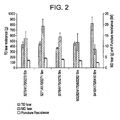
- Figure 2 and Table 5 presents the tear and puncture resistance obtained for the films.
- the polypropylene films have a better transverse direction tear as compared to the 6410 film structure.
- the puncture resistance of the films is relatively good considering the stiffness of the films.
- a high crystallinity, low soluble content propylene homopolymer can be used as a skin layer of a coextruded blown film or as a monolayer film to produce a film with improved heat resistance for applications that involve thermal cycles.
- a heterophasic random copolymer can be used as the core layer to improve the tear and puncture resistance of the film.
Landscapes
- Chemical & Material Sciences (AREA)
- Engineering & Computer Science (AREA)
- Manufacturing & Machinery (AREA)
- Polymers & Plastics (AREA)
- Health & Medical Sciences (AREA)
- Organic Chemistry (AREA)
- Medicinal Chemistry (AREA)
- Chemical Kinetics & Catalysis (AREA)
- Materials Engineering (AREA)
- Mechanical Engineering (AREA)
- Laminated Bodies (AREA)
- Addition Polymer Or Copolymer, Post-Treatments, Or Chemical Modifications (AREA)
- Transition And Organic Metals Composition Catalysts For Addition Polymerization (AREA)
- Extrusion Moulding Of Plastics Or The Like (AREA)
- Shaping By String And By Release Of Stress In Plastics And The Like (AREA)
- Manufacture Of Macromolecular Shaped Articles (AREA)
Description
- This invention relates to polypropylene and more particularly to polypropylene that is predominantly useful for high temperature applications.
- The film market demands polypropylene resins that can produce a special combination of film properties. For applications involving thermal cycles, films with good heat resistance and good mechanical properties are required. The features of polyethylene and polypropylene semi-crystalline polymers are such that they cover a wide range of properties and potential applications. The density of polyethylene is from 0.92 g/cc to 0.97 g/cc with a melting temperature between 110°C for low density polyethylene to 135°C for high density polyethylene. On the other hand, the density of isotactic polypropylene is 0.89 to 0.91 g/cc with a melting temperature of 163°C. The physical properties of isotactic polypropylene can be determined by its degree of tacticity (or crystallinity) and by its molecular weight distribution. Because of the relatively high melting temperature of the crystalline phase, polypropylene retains its mechanical strength up to rather high temperatures.
WO2005/040270 discloses a high stiffness multilayered propylene cast film for in mould labeling application. Tear and puncture resistance for heat resistant films are not addressed.EP0757069 discloses films prepared from a broad molecular weight distribution propylene polymer material to produce blown film with a stable film bubble and the capability for tight film gauge control. Heat resistance in combination with properties such as tear and puncture resistance are not addressed. - Achieving a heat resistant propylene polymer film for applications involving thermal cycles is desirable. Producing a heat resistant film that has the necessary tear, impact, and puncture resistance is also desirable.
- In one embodiment, the present invention includes a heat resistant film comprising at least one layer that comprises a high crystallinity propylene polymer having a melt flow rate of from 0.5 g/10 min. to 15 g/10 min. and a xylene solubles of less than 3.5%; wherein high cristallinity refers to a composition having a degree of crystallinity between 0.5 and 0.85 by X-ray diffraction, density or calometric measurements, and, for an isotactic polypropylene, a xylene soluble of less than 3.5% or by NMR of the xylène insoluble/heptanes insoluble portion of the material of greater than 94%; wherein said film further comprises at least a second layer; said second layer comprises a heterophasic random copolymer (impact copolymer); wherein said heterophasic random copolymer has a melt flow rate of from 0.5 g/10 min to 15.0 g/10 min and a melting point of from 120°C to 170°C. The propylene polymer may have a melting point above 158 °C.
- In one embodiment, the present invention includes an article of manufacture comprising a heat resistant film.
- In one embodiment, the present invention includes a blown film comprising at least one layer that comprises a high crystallinity propylene polymer having a melt flow rate of from 0.5 g/10 min. to 5 g/10 min., a xylene solubles of less than 1 %, and a melting point of from 160 °C to 170 °C. The blown film may further comprise a second layer that comprises a heterophasic random copolymer.
- In one embodiment, the present invention includes a process of producing a heat resistant film comprising co-extruding a first polyolefin polymer having a melt flow rate of form 0.5 g/10 min. to 15 g/10 min. and a melting point of from 160 °C to 170 °C and a second polyolefin polymer have a melt flow rate of 0.5 g/10 min. to 15 g/10 min. and a melting point of from 120 °C to 170 °C.
-
-
Figure 1 illustrates the secant modulus of the films produced. -
Figure 2 illustrates the tear and puncture resistance of the films produced. - A detailed description will now be provided.
- Various terms as used herein are shown below. To the extent a term used in a claim is not defined below, it should be given the broadest definition persons in the pertinent art have given that term as reflected in printed publications and issued patents. Further, unless otherwise specified, all compounds described herein may be substituted or unsubstituted and the listing of compounds includes derivatives thereof.
- As used herein, the term " high crystallinity " refers to a composition having a degree of crystallinity between 0.5 and 0.85 by X-ray diffraction, density, or calorimetric measurements, and, for an isotactic polypropylene, a xylene solubles of less than 3.5% or by NMR of the xylene insoluble/heptane insoluble portion of the material of greater than 94%. The degree of crystallinity, the fraction of crystalline material, may be determined by X-ray diffraction, density measurements, and differential thermal analysis (DTA).
- As used herein, the term " heat resistance " or " heat resistant " refers to a materials' ability to withstand a specific thermal condition (such as heat transfer or temperature cycles) without significant physical or chemical change.
- As used herein, the term " heterophasic copolymer (impact copolymer or ICP )" refers to a material having an heterophasic morphology. Specificallly a polypropylene matrix where a rubber phase is dispersed in the matrix. The rubber phase is a polyolefin copolymer.
- Certain polymerization processes disclosed herein involve contacting polyolefin monomers with one or more catalyst systems to form a polymer.
- The catalyst systems used herein may be characterized as supported catalyst systems or as unsupported catalyst systems, sometimes referred to as homogeneous catalysts. The catalyst systems may be metallocene catalyst systems, Ziegler-Natta catalyst systems or other catalyst systems known to one skilled in the art for the production of polyolefins, for example. A brief discussion of such catalyst systems is included below, but is in no way intended to limit the scope of the invention to such catalysts.
- Ziegler-Natta catalyst systems are generally formed from the combination of a metal component (e.g., a catalyst precursor) with one or more additional components, such as a catalyst support, a cocatalyst and/or one or more electron donors.
- A specific example of a catalyst precursor is a metal component generally represented by the formula:
MRx;
where M is a transition metal, R is a halogen, an alkoxy, or a hydrocarboxyl group and x is the valence of the transition metal. For example, x may be from 1 to 4. The transition metal of the Ziegler-Natta catalyst compound, as described throughout the specification and claims, may be selected from Groups IV through VIB in one embodiment and selected from titanium, chromium, or vanadium in a more particular embodiment. R may be selected from chlorine, bromine, carbonate, ester, or an alkoxy group in one embodiment. Examples of catalyst precursors include, but are not limited to, TiCl4, TiBr4, Ti(OC2H5)3Cl, Ti(OC3H7)2Cl2, Ti(OC6H13)2Cl2, Ti(OC2H5)2Br2 and Ti(OC)2H25)Cl3. - Those skilled in the art will recognize that a catalyst precursor is "activated" in some way before it is useful for promoting polymerization catalyst. As discussed further below, activation may be accomplished by combining the catalyst precursor with an activator, which is also referred to in some instances as a "cocatalyst." As used herein, the term "Z-N activator" refers to any compound or combination of compounds, supported or unsupported, which may activate a Z-N catalyst precursor. Embodiments of such activators include, but are not limited to, organoaluminum compounds, such as trimethyl aluminum (TMA), triethyl aluminum (TEA1) and triisobutyl aluminum (TiBAl), for example.
- The Ziegler-Natta catalyst system may further include one or more electron donors to enhance stereoselectivity, such as internal electron donors and/or external electron donors. Internal electron donors may be used to reduce the atactic form of the resulting polymer, thus decreasing the amount of xylene solubles in the polymer. A polymer is "atactic" when its pendant groups are arranged in a random fashion on both sides of the chain of the polymer (low stereoselectivity). In contrast, a polymer is "isotactic" when all of its pendant groups are arranged on the same side of the chain and "syndiotactic" when its pendant groups alternate on opposite sides of the chain (both are examples of high stereoselectivity). The internal electron donors may include amines, amides, esters, ketones, nitriles, ethers and phosphines in one embodiment. The internal electron donors include, but are not limited to, diethers, succinates and thalates, such as those described in
U.S. Patent No. 5,945,366 , in a more particular embodiment. The internal electron donors include dialkoxybenzenes, such as those described inU.S. Patent No. 6,399,837 in another embodiment. - External electron donors may be used to further control the amount of atactic polymer produced. The external electron donors may include monofunctional or polyfunctional carboxylic acids, carboxylic anhydrides, carboxylic esters, ketones, ethers, alcohols, lactones, organophosphorus compounds and/or organosilicon compounds. In one embodiment, the external donor may include diphenyldimethoxysilane (DPMS), cyclohexymethyldimethoxysilane (CDMS), diisopropyldimethoxysilane and/or dicyclopentyldimethoxysilane (CPDS). The external donor may be the same or different from the internal electron donor used.
- The components of the Ziegler-Natta catalyst system (e.g., catalyst precursor, activator and/or electron donors) may or may not be associated with a support, either in combination with each other or separate from one another. Typical support materials may include a magnesium dihalide, such as magnesium dichloride or magnesium dibromide, for example.
- Ziegler-Natta catalyst systems and processes for forming such catalyst systems are described in at least
U.S. Patent No. 4,298,718 ,U.S. Patent No. 4,544,717 andU.S. Patent No. 4,767,735 . - Metallocene catalysts may be characterized generally as coordination compounds incorporating one or more cyclopentadienyl (Cp) groups (which may be substituted or unsubstituted, each substitution being the same or different) coordinated with a transition metal through π bonding.
- The Cp substituent groups may be linear, branched or cyclic hydrocarbyl radicals. The cyclic hydrocarbyl radicals may further form other contiguous ring structures, including, for example indenyl, azulenyl and fluorenyl groups. These additional ring structures may also be substituted or unsubstituted by hydrocarbyl radicals, such as C1 to C20 hydrocarbyl radicals.
- A specific example of a metallocene catalyst is a bulky ligand metallocene compound generally represented by the formula:
[L]mM[A]n;
where L is a bulky ligand, A is a leaving group, M is a transition metal and m and n are such that the total ligand valency corresponds to the transition metal valency. For example m may be from 1 to 3 and n may be from 1 to 3. - The metal atom "M" of the metallocene catalyst compound, as described throughout the specification and claims, may be selected from Groups 3 through 12 atoms and lanthanide Group atoms in one embodiment, selected from Groups 3 through 10 atoms in a more particular embodiment, selected from Sc, Ti, Zr, Hf, V, Nb, Ta, Mn, Re, Fe, Ru, Os, Co, Rh, Ir, and Ni in yet a more particular embodiment, selected from Groups 4, 5 and 6 atoms in yet a more particular embodiment, Ti, Zr, Hf atoms in yet a more particular embodiment and Zr in yet a more particular embodiment. The oxidation state of the metal atom "M" may range from 0 to +7 in one embodiment, in a more particular embodiment, is +1, +2, +3, +4 or +5 and in yet a more particular embodiment is +2, +3 or +4. The groups bound the metal atom "M" are such that the compounds described below in the formulas and structures are electrically neutral, unless otherwise indicated.
- The bulky ligand generally includes a cyclopentadienyl group (Cp) or a derivative thereof The Cp ligand(s) form at least one chemical bond with the metal atom M to form the "metallocene catalyst compound". The Cp ligands are distinct from the leaving groups bound to the catalyst compound in that they are not highly susceptible to substitution/abstraction reactions.
- Cp typically includes fused ring(s) or ring systems. The ring(s) or ring system(s) typically include atoms selected from group 13 to 16 atoms, for example, carbon, nitrogen, oxygen, silicon, sulfur, phosphorous, germanium, boron, aluminum and combinations thereof, wherein carbon makes up at least 50% of the ring members. Non-limiting examples include 2-methyl, 4phenyl indenyl; cyclopentadienyl; cyclopentaphenanthreneyl; indenyl; benzindenyl; fluorenyl; tetrahydroindenyl; octahydrofluorenyl; cyclooctatetraenyl; cyclopentacyclododecene; phenanthrindenyl; 3,4-benzofluorenyl; 9-phenylfluorenyl; 8-H-cyclopent[a]acenaphthylenyl;, 7-H-dibenzofluorenyl; indeno[1,2-9]anthrene; thiophenoindenyl; thiophenofluorenyl; hydrogenated versions thereof (e.g., 4,5,6,7-tetrahydroindenyl or H4Ind); substituted versions thereof and heterocyclic versions thereof.
- Cp substituent groups may include hydrogen radicals, alkyls, alkenyls, alkynyls, cycloalkyls, aryls, acyls, aroyls, alkoxy, aryloxys, alkylthiols, dialkylamines, alkylamidos, alkoxycarbonyls, aryloxycarbonyls, carbomoyls, alkyl- and dialkyl-carbamoyls, acyloxys, acylaminos, aroylaminos and combinations thereof. More particular non-limiting examples of alkyl substituents include methyl, ethyl, propyl, butyl, pentyl, hexyl, cyclopentyl, cyclohexyl, benzyl, phenyl, methylphenyl, and tert-butylphenyl groups and the like, including all their isomers, for example tertiary-butyl, isopropyl and the like. Other possible radicals include substituted alkyls and aryls such as, for example, fluoromethyl, fluroethyl, difluroethyl, iodopropyl, bromohexyl, chlorobenzyl and hydrocarbyl substituted organometalloid radicals including trimethylsilyl, trimethylgermyl, methyldiethylsilyl and the like, halocarbyl-substituted organometalloid radicals including tris(trifluoromethyl)silyl, methylbis(difluoromethyl)silyl, bromomethyldimethylgermyl and the like, disubstituted boron radicals including dimethylboron for example, disubstituted Group 15 radicals including dimethylamine, dimethylphosphine, diphenylamine, methylphenylphosphine and Group 16 radicals including methoxy, ethoxy, propoxy, phenoxy, methylsulfide and ethylsulfide. Other substituents R include olefins, such as but not limited to, olefinically unsaturated substituents including vinyl-terminated ligands, for example 3-butenyl, 2-propenyl, 5-hexenyl and the like. In one embodiment, at least two R groups, two adjacent R groups in one embodiment, are joined to form a ring structure having from 3 to 30 atoms selected from carbon, nitrogen, oxygen, phosphorous, silicon, germanium, aluminum, boron and combinations thereof Also, a substituent group R group such as 1-butanyl, may form a bonding association to the element M.
- Each anionic leaving group is independently selected and may include any leaving group, such as halogen ions, hydrides, C1 to C12 alkyls, C2 to C12 alkenyls, C6 to C12 aryls, C7 to C20 alkylaryls, C1 to C12 alkoxys, C6 to C16 aryloxys, C7 to C18 alkylaryloxys, C1 to C12 fluoroalkyls, C6 to C12 fluoroaryls, C1 to C12 heteroatom-containing hydrocarbons and substituted derivatives thereof, hydride, halogen ions, C1 to C6 alkylcarboxylates, C1 to C6 fluorinated alkylcarboxylates, C6 to C12 arylcarboxylates, C7 to C18 alkylarylcarboxylates, C1 to C6 fluoroalkyls, C2 to C6 fluoroalkenyls and C7 to C18 fluoroalkylaryls in yet a more particular embodiment, hydride, chloride, fluoride, methyl, phenyl, phenoxy, benzoxy, tosyl, fluoromethyls and fluorophenyls in yet a more particular embodiment, C1 to C12 alkyls, C2 to C12 alkenyls, C6 to C12 aryls, C7 to C20 alkylaryls, substituted C1 to C12 alkyls, substituted C6 to C12 aryls, substituted C7 to C20 alkylaryls, C1 to C12 heteroatom-containing alkyls, C1 to C12 heteroatom-containing aryls and C1 to C12 heteroatom-containing alkylaryls in yet a more particular embodiment, chloride, fluoride, C1 to C6 alkyls, C2 to C6 alkenyls, C7 to C18 alkylaryls, halogenated C1 to C6 alkyls, halogenated C2 to C6 alkenyls and halogenated C7 to C18 alkylaryls in yet a more particular embodiment, fluoride, methyl, ethyl, propyl, phenyl, methylphenyl, dimethylphenyl, trimethylphenyl, fluoromethyls (mono-, di- and trifluoromethyls) and fluorophenyls (mono-, di-, tri-, tetra- and pentafluorophenyls) in yet a more particular embodiment and fluoride in yet a more particular embodiment.
- Other non-limiting examples of leaving groups include amines, phosphines, ethers, carboxylates, dienes, hydrocarbon radicals having from 1 to 20 carbon atoms, fluorinated hydrocarbon radicals (e.g., -C6F5 (pentafluorophenyl)), fluorinated alkylcarboxylates (e.g., CF3C(O)O-), hydrides, halogen ions and combinations thereof. Other examples of leaving groups include alkyl groups such as cyclobutyl, cyclohexyl, methyl, heptyl, tolyl, trifluoromethyl, tetramethylene, pentamethylene, methylidene, methyoxy, ethyoxy, propoxy, phenoxy, bis(N-methylanilide), dimethylamide, dimethylphosphide radicals and the like. In one embodiment, two or more leaving groups form a part of a fused ring or ring system.
- L and A may be bridged to one another. A bridged metallocene, for example may, be described by the general formula:
XCpACpBMAn;
wherein X is a structural bridge, CpA and CpB each denote a cyclopentadienyl group, each being the same or different and which may be either substituted or unsubstituted, M is a transition metal and A is an alkyl, hydrocarbyl or halogen group and n is an integer between 0 and 4, and either 1 or 2 in a particular embodiment. - Non-limiting examples of bridging groups (X) include divalent hydrocarbon groups containing at least one Group 13 to 16 atom, such as but not limited to, at least one of a carbon, oxygen, nitrogen, silicon, aluminum, boron, germanium, tin and combinations thereof; wherein the heteroatom may also be C1 to C12 alkyl or aryl substituted to satisfy neutral valency. The bridging group may also contain substituent groups as defined above including halogen radicals and iron. More particular non-limiting examples of bridging groups are represented by C1 to C6 alkylenes, substituted C1 to C6 alkylenes, oxygen, sulfur, R2C=, R2Si=, --Si(R)2Si(R2)--and R2Ge=, RP= (wherein "=" represents two chemical bonds), where R is independently selected from the group hydride, hydrocarbyl, substituted hydrocarbyl, halocarbyl, substituted halocarbyl, hydrocarbyl-substituted organometalloid, halocarbyl-substituted organometalloid, disubstituted boron, disubstituted Group 15 atoms, substituted Group 16 atoms and halogen radicals and wherein two or more Rs may be joined to form a ring or ring system. In one embodiment, the bridged metallocene catalyst component has two or more bridging groups (X).
- As used herein, the term "metallocene activator" is defined to be any compound or combination of compounds, supported or unsupported, which may activate a single-site catalyst compound (e.g., metallocenes, Group 15 containing catalysts, etc.) Typically, this involves the abstraction of at least one leaving group (A group in the formulas/structures above, for example) from the metal center of the catalyst component. The catalyst components of the present invention are thus activated towards olefin polymerization using such activators. Embodiments of such activators include Lewis acids such as cyclic or oligomeric polyhydrocarbylaluminum oxides and so called non-coordinating ionic activators ("NCA"), alternately, "ionizing activators" or "stoichiometric activators", or any other compound that may convert a neutral metallocene catalyst component to a metallocene cation that is active with respect to olefin polymerization.
- More particularly, it is within the scope of this invention to use Lewis acids such as alumoxane (e.g., "MAO"), modified alumoxane (e.g., "TIBAO") and alkylaluminum compounds as activators, to activate desirable metallocenes described herein. MAO and other aluminum-based activators are well known in the art. Non-limiting examples of aluminum alkyl compounds which may be utilized as activators for the catalysts described herein include trimethylaluminum, triethylaluminum, triisobutylaluminum, tri-n-hexylaluminum, tri-n-octylaluminum and the like.
- Ionizine activators are well known in the art and are described by, for example, Eugene You-Xian Chen & Tobin J. Marks, Cocatalysts for Metal-Catalyzed Olefin Polymerization: Activators, Activation Processes, and Structure-Activity Relationships 100(4) CHEMICAL REVIEWS 1391-1434 (2000 ). Examples of neutral ionizing activators include Group 13 tri-substituted compounds, in particular, tri-substituted boron, tellurium, aluminum, gallium and indium compounds and mixtures thereof (e.g., tri(n-butyl)ammonium tetrakis(pentafluorophenyl)boron and/or trisperfluorophenyl boron metalloid precursors). The three substituent groups are each independently selected from alkyls, alkenyls, halogen, substituted alkyls, aryls, arylhalides, alkoxy and halides. In one embodiment, the three groups are independently selected from the group of halogen, mono or multicyclic (including halosubstituted) aryls, alkyls, alkenyl compounds and mixtures thereof. In another embodiment, the three groups are selected from the group alkenyl groups having 1 to 20 carbon atoms, alkyl groups having 1 to 20 carbon atoms, alkoxy groups having 1 to 20 carbon atoms, aryl groups having 3 to 20 carbon atoms (including substituted aryls) and combinations thereof. In yet another embodiment, the three groups are selected from the group alkyls having 1 to 4 carbon groups, phenyl, naphthyl and mixtures thereof. In yet another embodiment, the three groups are selected from the group highly halogenated alkyls having 1 to 4 carbon groups, highly halogenated phenyls, highly halogenated naphthyls and mixtures thereof. By "highly halogenated", it is meant that at least 50% of the hydrogens are replaced by a halogen group selected from fluorine, chlorine and bromine. In yet another embodiment, the neutral stoichiometric activator is a tri-substituted Group 13 compound comprising highly fluorided aryl groups, the groups being highly fluorided phenyl and highly fluorided naphthyl groups.
- The activators may or may not be associated with or bound to a support, either in association with the catalyst component (e.g., metallocene) or separate from the catalyst component, such as described by Gregory G. Hlatky, Heterogeneous Single-Site Catalysts for Olefin Polymerization 100(4) CHEMICAL REVIEWS 1347-1374 (2000 ).
- Metallocene Catalysts may be supported or unsupported. Typical support materials may include talc, inorganic oxides, clays and clay minerals, ion-exchanged layered compounds, diatomaceous earth compounds, zeolites or a resinous support material, such as a polyolefin.
- Specific inorganic oxides include, but are not limited to, silica, alumina, magnesia, titania and zirconia, for example. The inorganic oxides used as support materials may have an average particle size of from 30 microns to 600 microns or from 30 microns to 100 microns, a surface area of from 50 m2/g to 1,000 m2/g or from 100 m2/g to 400 m2/g and a pore volume of from 0.5cc/g to 3.5 cc/g or from 0.5 cc/g to 2 cc/g. Desirable methods for supporting metallocene ionic catalysts are described in
U.S. Patent Nos. 5,643,847 ;09184358 09184389 - As indicated elsewhere herein, catalyst systems are used to make polyolefin compositions. Once the catalyst system is prepared, as described above and/or as known to one skilled in the art, a variety of processes can be carried out using that composition. Among the varying approaches that can be used include procedures set forth in
U.S. Patent No. 5,525,678 . The equipment, process conditions, reactants, additives and other materials will of course vary in a given process, depending on the desired composition and properties of the polymer being formed. For example, the processes ofU.S. Patent No. 6,420,580 ,U.S. Patent No. 6,380,328 ,U.S. Patent No. 6,359,072 ,U.S. Patent No. 6,346,586 ,U.S. Patent No. 6,340,730 ,U.S. Patent No. 6,339,134 ,U.S. Patent No. 6,300,436 ,U.S. Patent No. 6,274,684 ,U.S. Patent No. 6,271,323 ,U.S. Patent No. 6,248,845 ,U.S. Patent No. 6,245,868 ,U.S. Patent No. 6,245,705 ,U.S. Patent No. 6,242,545 ,U.S. Patent No. 6,211,105 ,U.S. Patent No. 6,207,606 ,U.S. Patent No. 6,180,735 andU.S. Patent No. 6,147,173 may be used. - The catalyst systems described above can be used in a variety of polymerization processes, over a wide range of temperatures and pressures. The temperatures may be in the range of from -60°C to 280°C, or from 50°C to 200°C and the pressures employed may be in the range of from 1 atmosphere to 500 atmospheres or higher.
- Polymerization processes may include solution, gas phase, slurry phase, high pressure processes or a combination thereof.
- In certain embodiments, the process of the invention is directed toward a solution, high pressure, slurry or gas phase polymerization process of one or more olefin monomers having from 2 to 30 carbon atoms, or from 2 to 12 carbon atoms or from 2 to 8 carbon atoms, such as ethylene, propylene, butane, pentene, methylpentene, hexane, octane and decane. Other monomers include ethylenically unsaturated monomers, diolefins having from 4 to 18 carbon atoms, conjugated or nonconjugated dienes, polyenes, vinyl monomers and cyclic olefins. Non-limiting monomers may include norbornene, nobornadiene, isobutylene, isoprene, vinylbenzocyclobutane, sytrnes, alkyl substituted styrene, ethylidene norbornene, dicyclopentadiene, and cyclopentene. In one embodiment, a copolymer is produced, such as propylene/ethylene, or a terpolymer is produced. Examples of solution processes are described in
U.S. Patent No. 4,271,060 ,U.S. Patent No. 5,001,205 ,U.S. Patent No. 5,236,998 andU.S. Patent No. 5,589,555 . - One example of a gas phase polymerization process generally employs a continuous cycle, wherein a cycling gas stream (otherwise known as a recycle stream or fluidizing medium) is heated in a reactor by heat of polymerization. The heat is removed from the recycle stream in another part of the cycle by a cooling system external to the reactor. The gaseous stream containing one or more monomers may be continuously cycled through a fluidized bed in the presence of a catalyst under reactive conditions. The gaseous stream is withdrawn from the fluidized bed and recycled back into the reactor. Simultaneously, polymer product is withdrawn from the reactor and fresh monomer is added to replace the polymerized monomer. (See, for example,
U.S. Patent No. 4,543,399 ,U.S. Patent No. 4,588,790 ,U.S. Patent No. 5,028,670 ,U.S. Patent No. 5,317,036 ,U.S. Patent No. 5,352,749 ,U.S. Patent No. 5,405,922 ,U.S. Patent No. 5,436,304 ,U.S. Patent No. 5,456,471 ,U.S. Patent No. 5,462,999 ,U.S. Patent No. 5,616,661 andU.S. Patent No. 5,668,228 .) - The reactor pressure in a gas phase process may vary from 6.9 bar (100 psig) to 34.5 bar (500 psig), or from 13.8 bar (200 psig) to 27.6 bar (400 psig) or from 17.2 bar (250 psig) to 24.1 bar (350 psig), for example. The reactor temperature in a gas phase process may vary from 30°C to 120°C, or from 60°C to 115°C, or from 70°C to 110°C or from 70°C to 95°C. Other gas phase processes contemplated by the process includes those described in
U.S. Patent No. 5,627,242 ,U.S. Patent No. 5,665,818 andU.S. Patent No. 5,677,375 . - Slurry processes generally include forming a suspension of solid, particulate polymer in a liquid polymerization medium, to which monomers and optionally hydrogen, along with catalyst, are added. The suspension (which may include diluents) can be intermittently or continuously removed from the reactor where the volatile components can be separated from the polymer and recycled, optionally after a distillation, to the reactor. The liquefied diluent employed in the polymerization medium is typically an alkane having from 3 to 7 carbon atoms, such as a branched alkane. The medium employed is generally liquid under the conditions of polymerization and relatively inert. Such as hexane or isobutene.
- A slurry process or a bulk process (e.g., a process without a diluent) may be carried out continuously in one or more loop reactors. The catalyst, as a slurry or as a dry free flowing powder, can be injected regularly to the reactor loop, which can itself be filled with circulating slurry of growing polymer particles in a diluent. Hydrogen, optionally, may be added as a molecular weight control. The reactor may be maintained at a pressure of from 27 bar to 45 bar and a temperature of from 38°C to 121°C, for example. Reaction heat can be removed through the loop wall since much of the reactor is in the form of a double-jacketed pipe. The slurry may exit the reactor at regular intervals or continuously to a heated low pressure flash vessel, rotary dryer and a nitrogen purge column in sequence form removal of the diluent and all unreacted monomer and comonomers. The resulting hydrocarbon free powder can then be compounded for use in various applications. Alternatively, other types of slurry polymerization processes can be used, such stirred reactors is series, parallel or combinations thereof.
- The polymers produced by the processes described herein can be used in a wide variety of products and end-use applications. The polymers may include polypropylene and polypropylene copolymers.
- In certain embodiments, propylene based polymers can be produced using the processes described herein. These polymers include atactic polypropylene, isotactic polypropylene, semi-isotactic and syndiotactic polypropylene. Other propylene polymers include propylene block or impact copolymers.
- Such propylene polymers may have a molecular weight distribution, i.e., a weight average molecular weight to number average molecular weight (Mw/Mn), of from 2 to 20, or from 2 to 12, for example, measured by gel permeation chromatography.
- In addition, the propylene polymers may have a melt flow rate (MFR) measured by ASTM-D-1238-Condition L of from 0.5 g/10 min to 20.0 g/10 min or from 0.5 gl10min to 15.0 g/10 min, or from 0.5 g/10 min to 5.0 g/10 min, for example. Alternatively, the MFR may be from 5.0 g/10 min to 15.0 g/10 min.
- In addition, the heterophasic random copolymers may have a melt flow rate (MFR) measured by ASTM-D-1238-Condition L of from 0.5 g/10 min to 20 g/10 min or from 0.5 g/10min to 15 g/10 min, or from 0.15 g/10 min to 5.0 g/10 min, for example.
- The propylene polymers may further have a melting point of from 158°C to 180°C (under annealed conditions), or from 163°C to 169°C or from 165°C to 168°C for example, or at least 160°C, measured by DSC.
- The heterophasic random copolymers may further have a melting point of from 158°C to 180°C, or from 163°C to 169°C, or from 165°C to 168°C for example, or at least 160°C, measured by DSC.
- The propylene polymer may have a density, measured by ASTM D1505, of from 0.89 g/cc, or from 0.91 g/cc. The heterophasic random copolymers may have a density, measured by ASTM D1505, of from 0.89 g/cc, or from 0.91 g/cc.
- The propylene polymers may further have a heat of fusion (or melt heat) of from 40 cal/g to 140 cal/g, or from about 60 cal/g to 120 cal/g or from 70 cal/g to 100 cal/g for example, or at least 90 cal/g measured by internal calorimetric measurements using ASTM D3417.
- The propylene polymers may further have a xylene solubles at 25 °C of less than about 3.5%, or less than 3%, or less than 2% or less than 1% for example, measured using Flow Injection Polymer Analysis (FIPA), available from Viscotek. The propylene polymers may further have a xylene insoluble/heptane insoluble portion of the material of greater than 94%, or greater than 95%, or greater than 97%, for example, measured by NMR.
- The propylene polymers may further have an mmmm pentad > 98%, % meso > 99%, or a defect frequency of less than 1 per 1000 carbon atoms, measured by NMR.
- The propylene polymers may further have a degree of crystallinity between 0.4 to 0.85, or between 0.5 to 0.7 for example, measured by X-ray diffraction, density measurements, or calorimetric measurements.
- The polymers produced are useful in a variety of end-use applications, such as film production.
- In one embodiment, the polymer is used to form a blown film. The blown film may be produced using any method known to those of ordinary skill in the art, such as a Davis Standard 5-layer mini coextrusion blown film line. In another embodiment, the polymer may be used to form a cast film, an oriented film, such as biaxially oriented polypropylene (BOPP), a double bubble film, a water quenched blown film, or an air quenched blown film.
- Further, the process may include coextruding additional layers to form a multilayer film. The additional layers may be any coextrudable film known in the art, such as syndiotactic polypropylene, low density polyethylene, linear low density polyethylene, medium density polyethylene, high density polyethylene, ethylene-propylene copolymers, butylene-propylene compolymers, ethylene-butylene copolymers, ethylene-propylene-butylene terpolymers, ethylene-vinyl acetate copolymers, ethylene-vinyl alcohol copolymers, nylons, heterophasic random copolymer, etc.
- The coextruded film, or coextrudate, has at least an outer layer and a core (or second) layer. The outer layer may comprise the polypropylene, while the core layer may comprise an impact copolymer. The core layer may comprise 15 wt% or less impact copolymer, or 10 wt% impact copolymer, or 5 wt% impact copolymer. The core layer comprising the impact copolymer may be blended with polyethylene or another polypropylene in any amount less than 15 wt% of impact copolymer based on the total amount of polymer in the core. The polypropylene may be a metallocene catalyzed polymer or a Ziegler-Natta catalyzed polymer.
- The first layer of film may be 1.6 µm (0.0625 mil). to 63.5 µm (2.5 mil.), or 3.2 µm (0.125 mil.) to 32 µm (1.25 mil.), or 6.3 µm (0.25 mil.) to 12.7 µm (0.5 mil.) in thickness. The optional second (or core) layer may be 3.2 µm (0.125 mil.) to 127 µm (5 mil.), or 6.3 µm (0.25 mil.) to 63.5 µm (2.5 mil.), or 12.7 µm (0.5 mil.) to 25.4 µm (1.0 mil.) in thickness. The total thickness of the film (whether a single or multi-layer) may be 6.3 µm (0.25 mil.) to 254 µm (10.0 mil.), or 12.7 µm (0.5 mil.) to 127 µm (5.0 mil.), or 25.4 µm (1.0 mil.) to 50.8 µm (2.0 mil.) in thickness.
- In order to modify or enhance certain properties of the films for specific end-uses, it is possible for one or more of the layers to contain appropriate additives in effective amounts. The additives may be employed either in the application phase (formation of blown film) or may be combined with the polymer during the processing phase (pellet extrusion), for example. Such additives may include stabilizers (e.g., hindered amines, benzofuranon, indolinone) to protect against UV degradation, thermal or oxidative degradation and/or actinic degradation, antistatic agents (e.g., medium to high molecular weight polyhydric alcohols and tertiary amines), anti-blocks, coefficient of friction modifiers, processing aids, colorants, clarifiers, nucleators, and other additives known to those skilled in the art.
- In one embodiment, the polymer-based films are blown for use in, for example, heat resistant films, construction films, retort packaging, and laminated films or articles. Such films generally exhibit resistance to thermal cycles and impart mechanical properties such as toughness, impact resistance, puncture resistance, and tear resistance.
- The film may have a tear resistance (machine direction), as determined by ASTM D1922, of from 3 g to 300 g or from 6 g to 150 g, or from 9 g to 25 g. The film may also have a tear resistance (transverse direction), as determined by ASTMD1922, of from 100 g to 1000 g, or from 200 g to 900 g, or from 300 g to 800 g.
- The film may have a puncture resistance (machine direction), as determined by ASTM F1306-90 at 30.5 meters/hour (20 inches/minute), of from 0.23 Joules (2 lbf) to 0. 56 Joules (5 lbf).
- The film may also have a 1% secant modulus (machine direction), as determined by ASTM D882, of from 3.45 kbar (50 kpsi) to 34.5 kbar (500 kpsi), or from 3.9 kbar (100 kpsi) to 20.7 kbar (300 kpsi), or from 10.3 kbar (150 kpsi) to 17.24 kbar (250 kpsi). The film may also have a 1% secant modulus (transverse direction), as determined by ASTM D882, of from 3.45 kbar (50 kpsi) to 34.5 kbar (500 kpsi), or from 3.9 kbar (100 kpsi) to 20.7 kbar (300 kpsi), or from 10.3 kbar (150 kpsi) to 17.24 kbar (250 kpsi).
- The film has good heat resistance, wherein the film is exposed to temperatures of from 15°C to 20°C below the melting point up to the melting point of the polymer for 1 to 10 seconds or longer without significant physical or chemical changes.
- Coextruded blown films were produced on a David Standard 5-layer mini coextrusion line. The extruders are grooved feed with 1 inch diameter screw and 24 L/D (screw length to screw diameter ratio). The line was characterized by having a conic spiral mandrel with a 60 mm diameter die and a 1.2 mm die gap. The films produced were 30.5 µm (1.2 mils) in thickness, 9.375 inch layflat (2.5 BUR (blow up ratio)), no neck height, with A / B / A structure having a layer distribution of 25% / 50% / 25%. The same throughput was used in every run for comparison purposes.
- Table 1 presents the polypropylene grades used as the skin layers of the structures produced. Total Polypropylene 3270 (hereinafter referred to as 3270) is a high crystallinity, low soluble content propylene homopolymer with a melting point of 165 °C and vicat temperature of 158 °C. Total Polypropylene 3271 and Total Polypropylene 3276 (hereinafter referred to as 3271 and 3276, respectively) are high soluble content propylene homopolymers and Total Polypropylene M3282MZ (hereinafter referred to as M3282MZ or M3282) is a clarified metallocene propylene homopolymer. Total HDPE 6410 (hereinafter referred to as 6410) is a narrow molecular weight homopolymer high density polyethylene. Total Polypropylene 4170 (hereinafter referred to as 4170), which was used as the core layer material in the film structures produced, is an impact copolymer having 0.75 melt flow rate and 163 °C melting point.
Table 1. Clarity polypropylene grades used as skin layer material. RESIN 3270 PP 3271 PP 3276 PP M3282MZ PP 6410 HDPE Target MFR 2.0 1.5 2.0 2.2 1.2 Melting Point 165 °C 163 °C 163 °C 153 °C 135 °C Vicat Temp 158 °C 150 °C 151 °C 141 °C 130 °C - TabLe 2 presents the film structures that were produced in this project.
Table 2. A/B/A film structures produced for this project #1 3270/4170/3270 film #2 3271/4170/3271 film #3 3276/4170/3276 film #4 M3282MZ/4170/M3282MZ film #5 6410/4170/6410 film - Table 3 presents the melting peak and latent heat obtained by DSC for the film structures produced. Film structure #1 with 3270 has the highest melting point and absorbs the most energy as compared to the other polypropylene film structures. Structure #5 using 6410 HDPE absorbs a greater amount of heat, but it melts at a much lower temperature than polypropylene.
Table 3. 2nd Melt peak and latent heat obtained by DSC for the film structures Film Structure 2nd Melt Peak °C 2nd Melt Heat J/g #1 3270/4170/3270 film 164.9 88.4 #2 3271/4170/3271 film 161.4 75.6 #3 3276/4170/3276 film 160.7 77.2 #4 M3282MZ/4170/M3282MZ film 162.2 72.5 #5 6410/4170/6410 film 134.7 118.8 -
Figure 1 and Table 4 presents the MD and TD secant modulus (stiffness) data of the films. All of the structures are very well balanced (MD vs TD) in terms of stiffness, but there are important differences in stiffness among them: The film using 3270 as skin layers has the highest secant modulus followed by 3271 and 3276 while the film with M3282MZ in the skins produced a lower secant modulus and comparable in magnitude to the secant modulus that is obtained with 6410. -
Figure 2 and Table 5 presents the tear and puncture resistance obtained for the films. The polypropylene films have a better transverse direction tear as compared to the 6410 film structure. The puncture resistance of the films is relatively good considering the stiffness of the films.Table 4. Secant modulus (stiffness) of the 30.5 µm (1.2 mils) films produced. #1 (3270/4170/3270) #2 (3271/4170/3271) #3 (3276/4170/3276) #4 (M3282/4170/M3282) #5 (6410/4170/6410) 1% Secant Modulus MD bar (psi) 14925 12186 11908 10532 10638 (216467) (176737) (172704) (152753) (154298) 1% Secant Modulus TD bar (psi) 13032 11628 11230 10549 10793 (189020) (168649) (162882) (153001) (156536) Table 5. Tear and puncture resistance of the 30.5 µm (1.2 mils) film produced. #1 (3270/4170/3270) #2 (3271/4170/3271) #3 (3276/4170/3276) #4 (M3282/4170/M3282) #5 (6410/4170/6410) TD Tear (g) 548 773.3 576.8 472.5 340.8 MD Tear (g) 10.7 11.2 9.2 11.2 20.5 Puncture Resistance Joules (lbf) 0.40 0.50 0.44 0.37 0.27 (3.54) 4.39 3.89 3.3 2.43 - A high crystallinity, low soluble content propylene homopolymer can be used as a skin layer of a coextruded blown film or as a monolayer film to produce a film with improved heat resistance for applications that involve thermal cycles. A heterophasic random copolymer can be used as the core layer to improve the tear and puncture resistance of the film.
- While the foregoing is directed to embodiments of the present invention, other and further embodiments of the invention may be devised without departing from the basic scope thereof and the scope thereof is determined by the claims that follow.
Claims (9)
- A heat resistant film comprising at least one layer, said at least one layer comprising a high crystallinity propylene polymer having a melt flow rate of from 0.5 g/10 min. to 15 g/10 min. and a xylene solubles of less than 3.5%; wherein high crystallinity refers to a composition having a degree of crystallinity between 0.5 and 0.85 by X-ray diffraction, density, or calorimetric measurements, and, for an isotactic polypropylene, a xylene solubles of less than 3.5% or by NMR of the xylene insoluble/heptane insoluble portion of the material of greater than 94%;
wherein said film further comprises at least a second layer;
said second layer comprises a heterophasic random copolymer; characterized in that said heterophasic random copolymer has a melt flow rate of from 0.5 g/10 min. to 15.0 g/10 min. and a melting point of from 120 °C to 170 °C. - The film of claim 1 wherein said propylene polymer has a melting point above 158 °C.
- The film of claim 1 wherein said heterophasic random copolymer is the core layer of said film;
or the film of claim 1 having a tear resistance in the transverse draw direction of greater than 500 grams;
or the film of claim 1 having a tear resistance in the machine draw direction of greater than 10 grams;
or the film of claim 1 having a puncture resistance of greater than 0.40 Joules (3.5 lbf);
or the film of claim 1 having a secant modulus in the transverse draw direction of greater than 13 kbar (185 kpsi);
or the film of claim 1 having a secant modulus in the machine draw direction of greater than 14 kbar (200 kpsi). - The film of claim 1 having a heat of fusion above 90 cal/g.
- The film of claim 1 wherein said propylene polymer is isotactic.
- The film of claim 1 wherein said film is blown, cast, or oriented.
- An article of manufacture comprising the film of claim 1.
- The article of manufacture of claim 7 wherein said article is a construction film, a retort package, or laminated article.
- A blown film of claim 1 comprising at least one layer, said at least one layer comprising a high crystallinity propylene polymer having a melt flow rate of from 0.5 g/10 min. to 5 g/10 min., a xylene solubles of less than 1 %, and a melting point of from 160 °C to 170°C.
Applications Claiming Priority (2)
| Application Number | Priority Date | Filing Date | Title |
|---|---|---|---|
| US11/801,536 US8440319B2 (en) | 2007-05-10 | 2007-05-10 | Heat resistant polypropylene film |
| PCT/US2008/063017 WO2008141070A1 (en) | 2007-05-10 | 2008-05-08 | Heat resistant polypropylene film |
Publications (3)
| Publication Number | Publication Date |
|---|---|
| EP2143116A1 EP2143116A1 (en) | 2010-01-13 |
| EP2143116A4 EP2143116A4 (en) | 2012-12-26 |
| EP2143116B1 true EP2143116B1 (en) | 2015-01-07 |
Family
ID=39970116
Family Applications (1)
| Application Number | Title | Priority Date | Filing Date |
|---|---|---|---|
| EP20080755155 Revoked EP2143116B1 (en) | 2007-05-10 | 2008-05-08 | Heat resistant polypropylene film |
Country Status (8)
| Country | Link |
|---|---|
| US (1) | US8440319B2 (en) |
| EP (1) | EP2143116B1 (en) |
| JP (1) | JP2010526915A (en) |
| KR (1) | KR20100016348A (en) |
| CN (1) | CN101568981A (en) |
| CA (1) | CA2669341A1 (en) |
| MX (1) | MX2009005472A (en) |
| WO (1) | WO2008141070A1 (en) |
Families Citing this family (4)
| Publication number | Priority date | Publication date | Assignee | Title |
|---|---|---|---|---|
| WO2014204625A1 (en) * | 2013-06-20 | 2014-12-24 | Exxonmobil Chemical Patents Inc. | Salenol catalyst |
| CN108790004A (en) * | 2018-05-28 | 2018-11-13 | 永新股份(黄山)包装有限公司 | A kind of resistance to boiling suction nozzle and its production method |
| MX388979B (en) * | 2018-10-13 | 2025-03-20 | Constantia Pirk Gmbh & Co Kg | Recyclable pe packaging film with improved stiffness |
| US12397534B2 (en) | 2020-06-08 | 2025-08-26 | Amcor Flexibles North America, Inc. | Heat resistant recycle-ready retort packaging |
Family Cites Families (14)
| Publication number | Priority date | Publication date | Assignee | Title |
|---|---|---|---|---|
| JPH075668B2 (en) * | 1987-02-04 | 1995-01-25 | チッソ株式会社 | Highly crystalline polypropylene |
| US4933193A (en) * | 1987-12-11 | 1990-06-12 | E. I. Du Pont De Nemours And Company | Microwave cooking package |
| CN1017682B (en) * | 1990-11-13 | 1992-08-05 | 中国科学院化学研究所 | Highly permeable polypropylene microporous membrane and its preparation method |
| JP3289447B2 (en) * | 1993-12-03 | 2002-06-04 | 東ソー株式会社 | Multilayer film |
| JPH08198979A (en) * | 1995-01-23 | 1996-08-06 | Showa Denko Kk | Stretched polypropylene film |
| US5641848A (en) * | 1995-07-24 | 1997-06-24 | Montell North America Inc. | Polypropylene blown film |
| US6639038B2 (en) | 1998-05-22 | 2003-10-28 | Idemitsu Petrochemical Co., Ltd. | Crystalline polypropylene and its moldings and films |
| US6245857B1 (en) * | 1999-02-22 | 2001-06-12 | Fina Technology, Inc. | Compositions useful for tough, high crystallinity films |
| ATE336525T1 (en) * | 2002-10-07 | 2006-09-15 | Dow Global Technologies Inc | HIGH CRYSTALLINE POLYPROPYLENE WITH LOW XYLENE SOLUBLE CONTENT |
| CA2540887C (en) * | 2003-10-07 | 2012-07-10 | Dow Global Technologies Inc. | Polypropylene composition for air quenched blown films |
| ITMI20032009A1 (en) * | 2003-10-16 | 2005-04-17 | Moplefan Spa | TRANSPARENT AND COLORED FLAT FILM FOR APPLICATION IN MOLDING LABELING |
| US20060147663A1 (en) * | 2004-12-30 | 2006-07-06 | Fina Technology, Inc. | Co-extruded film structures of polypropylene impact copolymer with other polymers |
| ES2313133T3 (en) * | 2005-01-14 | 2009-03-01 | Borealis Polymers Oy | COMPOSITION OF HETEROPHASIC POLYMER AND PROCESS FOR PREPARATION. |
| JP4894340B2 (en) | 2005-04-28 | 2012-03-14 | 東洋紡績株式会社 | Heat-sealable laminated polypropylene resin film and package |
-
2007
- 2007-05-10 US US11/801,536 patent/US8440319B2/en not_active Expired - Fee Related
-
2008
- 2008-05-08 MX MX2009005472A patent/MX2009005472A/en unknown
- 2008-05-08 WO PCT/US2008/063017 patent/WO2008141070A1/en not_active Ceased
- 2008-05-08 JP JP2010507644A patent/JP2010526915A/en active Pending
- 2008-05-08 CN CNA2008800011795A patent/CN101568981A/en active Pending
- 2008-05-08 CA CA 2669341 patent/CA2669341A1/en not_active Abandoned
- 2008-05-08 KR KR20097023334A patent/KR20100016348A/en not_active Withdrawn
- 2008-05-08 EP EP20080755155 patent/EP2143116B1/en not_active Revoked
Also Published As
| Publication number | Publication date |
|---|---|
| CN101568981A (en) | 2009-10-28 |
| MX2009005472A (en) | 2009-06-02 |
| WO2008141070A1 (en) | 2008-11-20 |
| US8440319B2 (en) | 2013-05-14 |
| CA2669341A1 (en) | 2008-11-20 |
| EP2143116A1 (en) | 2010-01-13 |
| KR20100016348A (en) | 2010-02-12 |
| EP2143116A4 (en) | 2012-12-26 |
| US20080281048A1 (en) | 2008-11-13 |
| JP2010526915A (en) | 2010-08-05 |
Similar Documents
| Publication | Publication Date | Title |
|---|---|---|
| US7825196B2 (en) | Color reduction in polyethylene modified by radical initiation | |
| US8075830B2 (en) | Polypropylene blown film | |
| EP2237953B1 (en) | Modifiers for oriented polypropylene | |
| JP7275360B2 (en) | Use of Metallocene-Based Polypropylene Random Copolymers in Blown Films | |
| US20060211801A1 (en) | Polyolefin film and production thereof | |
| CN104755511B (en) | Propylene copolymer composition and its preparation method | |
| US20070007680A1 (en) | Methods for controlling polyethylene rheology | |
| US8440319B2 (en) | Heat resistant polypropylene film | |
| US20070007681A1 (en) | Method for optimizing film properties of polyethylene blown film | |
| EA045006B1 (en) | USE OF STATISTICAL COPOLYMERS OF POLYPROPYLENE OBTAINED BASED ON A METALLOCENE CATALYST IN FILMS OBTAINED BY EXTRUSION BLOWN METHOD |
Legal Events
| Date | Code | Title | Description |
|---|---|---|---|
| PUAI | Public reference made under article 153(3) epc to a published international application that has entered the european phase |
Free format text: ORIGINAL CODE: 0009012 |
|
| 17P | Request for examination filed |
Effective date: 20091029 |
|
| AK | Designated contracting states |
Kind code of ref document: A1 Designated state(s): AT BE BG CH CY CZ DE DK EE ES FI FR GB GR HR HU IE IS IT LI LT LU LV MC MT NL NO PL PT RO SE SI SK TR |
|
| DAX | Request for extension of the european patent (deleted) | ||
| REG | Reference to a national code |
Ref country code: DE Ref legal event code: R079 Ref document number: 602008036241 Country of ref document: DE Free format text: PREVIOUS MAIN CLASS: H01G0004060000 Ipc: B32B0027320000 |
|
| A4 | Supplementary search report drawn up and despatched |
Effective date: 20121123 |
|
| RIC1 | Information provided on ipc code assigned before grant |
Ipc: B32B 27/08 20060101ALI20121119BHEP Ipc: B32B 27/32 20060101AFI20121119BHEP Ipc: C08J 5/18 20060101ALI20121119BHEP |
|
| 17Q | First examination report despatched |
Effective date: 20140102 |
|
| GRAP | Despatch of communication of intention to grant a patent |
Free format text: ORIGINAL CODE: EPIDOSNIGR1 |
|
| INTG | Intention to grant announced |
Effective date: 20140526 |
|
| GRAJ | Information related to disapproval of communication of intention to grant by the applicant or resumption of examination proceedings by the epo deleted |
Free format text: ORIGINAL CODE: EPIDOSDIGR1 |
|
| GRAP | Despatch of communication of intention to grant a patent |
Free format text: ORIGINAL CODE: EPIDOSNIGR1 |
|
| INTG | Intention to grant announced |
Effective date: 20140729 |
|
| GRAS | Grant fee paid |
Free format text: ORIGINAL CODE: EPIDOSNIGR3 |
|
| GRAA | (expected) grant |
Free format text: ORIGINAL CODE: 0009210 |
|
| AK | Designated contracting states |
Kind code of ref document: B1 Designated state(s): AT BE BG CH CY CZ DE DK EE ES FI FR GB GR HR HU IE IS IT LI LT LU LV MC MT NL NO PL PT RO SE SI SK TR |
|
| REG | Reference to a national code |
Ref country code: GB Ref legal event code: FG4D |
|
| REG | Reference to a national code |
Ref country code: CH Ref legal event code: EP |
|
| REG | Reference to a national code |
Ref country code: IE Ref legal event code: FG4D |
|
| REG | Reference to a national code |
Ref country code: AT Ref legal event code: REF Ref document number: 705389 Country of ref document: AT Kind code of ref document: T Effective date: 20150215 |
|
| REG | Reference to a national code |
Ref country code: DE Ref legal event code: R096 Ref document number: 602008036241 Country of ref document: DE Effective date: 20150226 |
|
| REG | Reference to a national code |
Ref country code: NL Ref legal event code: T3 |
|
| REG | Reference to a national code |
Ref country code: FR Ref legal event code: PLFP Year of fee payment: 8 |
|
| REG | Reference to a national code |
Ref country code: AT Ref legal event code: MK05 Ref document number: 705389 Country of ref document: AT Kind code of ref document: T Effective date: 20150107 |
|
| REG | Reference to a national code |
Ref country code: LT Ref legal event code: MG4D |
|
| PG25 | Lapsed in a contracting state [announced via postgrant information from national office to epo] |
Ref country code: SE Free format text: LAPSE BECAUSE OF FAILURE TO SUBMIT A TRANSLATION OF THE DESCRIPTION OR TO PAY THE FEE WITHIN THE PRESCRIBED TIME-LIMIT Effective date: 20150107 Ref country code: BG Free format text: LAPSE BECAUSE OF FAILURE TO SUBMIT A TRANSLATION OF THE DESCRIPTION OR TO PAY THE FEE WITHIN THE PRESCRIBED TIME-LIMIT Effective date: 20150407 Ref country code: LT Free format text: LAPSE BECAUSE OF FAILURE TO SUBMIT A TRANSLATION OF THE DESCRIPTION OR TO PAY THE FEE WITHIN THE PRESCRIBED TIME-LIMIT Effective date: 20150107 Ref country code: ES Free format text: LAPSE BECAUSE OF FAILURE TO SUBMIT A TRANSLATION OF THE DESCRIPTION OR TO PAY THE FEE WITHIN THE PRESCRIBED TIME-LIMIT Effective date: 20150107 Ref country code: FI Free format text: LAPSE BECAUSE OF FAILURE TO SUBMIT A TRANSLATION OF THE DESCRIPTION OR TO PAY THE FEE WITHIN THE PRESCRIBED TIME-LIMIT Effective date: 20150107 Ref country code: NO Free format text: LAPSE BECAUSE OF FAILURE TO SUBMIT A TRANSLATION OF THE DESCRIPTION OR TO PAY THE FEE WITHIN THE PRESCRIBED TIME-LIMIT Effective date: 20150407 Ref country code: HR Free format text: LAPSE BECAUSE OF FAILURE TO SUBMIT A TRANSLATION OF THE DESCRIPTION OR TO PAY THE FEE WITHIN THE PRESCRIBED TIME-LIMIT Effective date: 20150107 |
|
| PG25 | Lapsed in a contracting state [announced via postgrant information from national office to epo] |
Ref country code: GR Free format text: LAPSE BECAUSE OF FAILURE TO SUBMIT A TRANSLATION OF THE DESCRIPTION OR TO PAY THE FEE WITHIN THE PRESCRIBED TIME-LIMIT Effective date: 20150408 Ref country code: LV Free format text: LAPSE BECAUSE OF FAILURE TO SUBMIT A TRANSLATION OF THE DESCRIPTION OR TO PAY THE FEE WITHIN THE PRESCRIBED TIME-LIMIT Effective date: 20150107 Ref country code: PL Free format text: LAPSE BECAUSE OF FAILURE TO SUBMIT A TRANSLATION OF THE DESCRIPTION OR TO PAY THE FEE WITHIN THE PRESCRIBED TIME-LIMIT Effective date: 20150107 Ref country code: IS Free format text: LAPSE BECAUSE OF FAILURE TO SUBMIT A TRANSLATION OF THE DESCRIPTION OR TO PAY THE FEE WITHIN THE PRESCRIBED TIME-LIMIT Effective date: 20150507 Ref country code: AT Free format text: LAPSE BECAUSE OF FAILURE TO SUBMIT A TRANSLATION OF THE DESCRIPTION OR TO PAY THE FEE WITHIN THE PRESCRIBED TIME-LIMIT Effective date: 20150107 |
|
| REG | Reference to a national code |
Ref country code: DE Ref legal event code: R026 Ref document number: 602008036241 Country of ref document: DE |
|
| PLBI | Opposition filed |
Free format text: ORIGINAL CODE: 0009260 |
|
| PG25 | Lapsed in a contracting state [announced via postgrant information from national office to epo] |
Ref country code: EE Free format text: LAPSE BECAUSE OF FAILURE TO SUBMIT A TRANSLATION OF THE DESCRIPTION OR TO PAY THE FEE WITHIN THE PRESCRIBED TIME-LIMIT Effective date: 20150107 Ref country code: CZ Free format text: LAPSE BECAUSE OF FAILURE TO SUBMIT A TRANSLATION OF THE DESCRIPTION OR TO PAY THE FEE WITHIN THE PRESCRIBED TIME-LIMIT Effective date: 20150107 Ref country code: DK Free format text: LAPSE BECAUSE OF FAILURE TO SUBMIT A TRANSLATION OF THE DESCRIPTION OR TO PAY THE FEE WITHIN THE PRESCRIBED TIME-LIMIT Effective date: 20150107 Ref country code: RO Free format text: LAPSE BECAUSE OF FAILURE TO SUBMIT A TRANSLATION OF THE DESCRIPTION OR TO PAY THE FEE WITHIN THE PRESCRIBED TIME-LIMIT Effective date: 20150107 Ref country code: SK Free format text: LAPSE BECAUSE OF FAILURE TO SUBMIT A TRANSLATION OF THE DESCRIPTION OR TO PAY THE FEE WITHIN THE PRESCRIBED TIME-LIMIT Effective date: 20150107 |
|
| PLAF | Information modified related to communication of a notice of opposition and request to file observations + time limit |
Free format text: ORIGINAL CODE: EPIDOSCOBS2 |
|
| 26 | Opposition filed |
Opponent name: BASELL POLIOLEFINE ITALIA S.R.L. Effective date: 20151007 |
|
| PLAX | Notice of opposition and request to file observation + time limit sent |
Free format text: ORIGINAL CODE: EPIDOSNOBS2 |
|
| REG | Reference to a national code |
Ref country code: CH Ref legal event code: PL |
|
| GBPC | Gb: european patent ceased through non-payment of renewal fee |
Effective date: 20150508 |
|
| PG25 | Lapsed in a contracting state [announced via postgrant information from national office to epo] |
Ref country code: LI Free format text: LAPSE BECAUSE OF NON-PAYMENT OF DUE FEES Effective date: 20150531 Ref country code: MC Free format text: LAPSE BECAUSE OF FAILURE TO SUBMIT A TRANSLATION OF THE DESCRIPTION OR TO PAY THE FEE WITHIN THE PRESCRIBED TIME-LIMIT Effective date: 20150107 Ref country code: CH Free format text: LAPSE BECAUSE OF NON-PAYMENT OF DUE FEES Effective date: 20150531 |
|
| REG | Reference to a national code |
Ref country code: IE Ref legal event code: MM4A |
|
| PG25 | Lapsed in a contracting state [announced via postgrant information from national office to epo] |
Ref country code: SI Free format text: LAPSE BECAUSE OF FAILURE TO SUBMIT A TRANSLATION OF THE DESCRIPTION OR TO PAY THE FEE WITHIN THE PRESCRIBED TIME-LIMIT Effective date: 20150107 |
|
| PLAN | Information deleted related to communication of a notice of opposition and request to file observations + time limit |
Free format text: ORIGINAL CODE: EPIDOSDOBS2 |
|
| PLAX | Notice of opposition and request to file observation + time limit sent |
Free format text: ORIGINAL CODE: EPIDOSNOBS2 |
|
| PG25 | Lapsed in a contracting state [announced via postgrant information from national office to epo] |
Ref country code: GB Free format text: LAPSE BECAUSE OF NON-PAYMENT OF DUE FEES Effective date: 20150508 Ref country code: IE Free format text: LAPSE BECAUSE OF NON-PAYMENT OF DUE FEES Effective date: 20150508 |
|
| PLAF | Information modified related to communication of a notice of opposition and request to file observations + time limit |
Free format text: ORIGINAL CODE: EPIDOSCOBS2 |
|
| REG | Reference to a national code |
Ref country code: FR Ref legal event code: PLFP Year of fee payment: 9 |
|
| PLBB | Reply of patent proprietor to notice(s) of opposition received |
Free format text: ORIGINAL CODE: EPIDOSNOBS3 |
|
| PG25 | Lapsed in a contracting state [announced via postgrant information from national office to epo] |
Ref country code: MT Free format text: LAPSE BECAUSE OF FAILURE TO SUBMIT A TRANSLATION OF THE DESCRIPTION OR TO PAY THE FEE WITHIN THE PRESCRIBED TIME-LIMIT Effective date: 20150107 |
|
| REG | Reference to a national code |
Ref country code: FR Ref legal event code: PLFP Year of fee payment: 10 |
|
| PG25 | Lapsed in a contracting state [announced via postgrant information from national office to epo] |
Ref country code: HU Free format text: LAPSE BECAUSE OF FAILURE TO SUBMIT A TRANSLATION OF THE DESCRIPTION OR TO PAY THE FEE WITHIN THE PRESCRIBED TIME-LIMIT; INVALID AB INITIO Effective date: 20080508 |
|
| PG25 | Lapsed in a contracting state [announced via postgrant information from national office to epo] |
Ref country code: CY Free format text: LAPSE BECAUSE OF FAILURE TO SUBMIT A TRANSLATION OF THE DESCRIPTION OR TO PAY THE FEE WITHIN THE PRESCRIBED TIME-LIMIT Effective date: 20150107 |
|
| PG25 | Lapsed in a contracting state [announced via postgrant information from national office to epo] |
Ref country code: PT Free format text: LAPSE BECAUSE OF FAILURE TO SUBMIT A TRANSLATION OF THE DESCRIPTION OR TO PAY THE FEE WITHIN THE PRESCRIBED TIME-LIMIT Effective date: 20150507 |
|
| PG25 | Lapsed in a contracting state [announced via postgrant information from national office to epo] |
Ref country code: TR Free format text: LAPSE BECAUSE OF FAILURE TO SUBMIT A TRANSLATION OF THE DESCRIPTION OR TO PAY THE FEE WITHIN THE PRESCRIBED TIME-LIMIT Effective date: 20150107 |
|
| RDAF | Communication despatched that patent is revoked |
Free format text: ORIGINAL CODE: EPIDOSNREV1 |
|
| APAH | Appeal reference modified |
Free format text: ORIGINAL CODE: EPIDOSCREFNO |
|
| APBM | Appeal reference recorded |
Free format text: ORIGINAL CODE: EPIDOSNREFNO |
|
| APBP | Date of receipt of notice of appeal recorded |
Free format text: ORIGINAL CODE: EPIDOSNNOA2O |
|
| REG | Reference to a national code |
Ref country code: FR Ref legal event code: PLFP Year of fee payment: 11 |
|
| APBQ | Date of receipt of statement of grounds of appeal recorded |
Free format text: ORIGINAL CODE: EPIDOSNNOA3O |
|
| PGFP | Annual fee paid to national office [announced via postgrant information from national office to epo] |
Ref country code: BE Payment date: 20180314 Year of fee payment: 11 |
|
| PGFP | Annual fee paid to national office [announced via postgrant information from national office to epo] |
Ref country code: LU Payment date: 20180424 Year of fee payment: 11 |
|
| PGFP | Annual fee paid to national office [announced via postgrant information from national office to epo] |
Ref country code: DE Payment date: 20180424 Year of fee payment: 11 |
|
| PGFP | Annual fee paid to national office [announced via postgrant information from national office to epo] |
Ref country code: NL Payment date: 20180514 Year of fee payment: 11 Ref country code: FR Payment date: 20180411 Year of fee payment: 11 Ref country code: IT Payment date: 20180522 Year of fee payment: 11 |
|
| PLAB | Opposition data, opponent's data or that of the opponent's representative modified |
Free format text: ORIGINAL CODE: 0009299OPPO |
|
| R26 | Opposition filed (corrected) |
Opponent name: BASELL POLIOLEFINE ITALIA S.R.L. Effective date: 20151007 |
|
| REG | Reference to a national code |
Ref country code: DE Ref legal event code: R119 Ref document number: 602008036241 Country of ref document: DE |
|
| REG | Reference to a national code |
Ref country code: NL Ref legal event code: MM Effective date: 20190601 |
|
| APAH | Appeal reference modified |
Free format text: ORIGINAL CODE: EPIDOSCREFNO |
|
| REG | Reference to a national code |
Ref country code: BE Ref legal event code: MM Effective date: 20190531 |
|
| PLAB | Opposition data, opponent's data or that of the opponent's representative modified |
Free format text: ORIGINAL CODE: 0009299OPPO |
|
| PLAB | Opposition data, opponent's data or that of the opponent's representative modified |
Free format text: ORIGINAL CODE: 0009299OPPO |
|
| PG25 | Lapsed in a contracting state [announced via postgrant information from national office to epo] |
Ref country code: LU Free format text: LAPSE BECAUSE OF NON-PAYMENT OF DUE FEES Effective date: 20190508 |
|
| R26 | Opposition filed (corrected) |
Opponent name: BASELL POLIOLEFINE ITALIA S.R.L. Effective date: 20151007 |
|
| R26 | Opposition filed (corrected) |
Opponent name: BASELL POLIOLEFINE ITALIA S.R.L. Effective date: 20151007 |
|
| PG25 | Lapsed in a contracting state [announced via postgrant information from national office to epo] |
Ref country code: IT Free format text: LAPSE BECAUSE OF NON-PAYMENT OF DUE FEES Effective date: 20190508 Ref country code: NL Free format text: LAPSE BECAUSE OF NON-PAYMENT OF DUE FEES Effective date: 20190601 Ref country code: DE Free format text: LAPSE BECAUSE OF NON-PAYMENT OF DUE FEES Effective date: 20191203 |
|
| PG25 | Lapsed in a contracting state [announced via postgrant information from national office to epo] |
Ref country code: BE Free format text: LAPSE BECAUSE OF NON-PAYMENT OF DUE FEES Effective date: 20190531 |
|
| APBY | Invitation to file observations in appeal sent |
Free format text: ORIGINAL CODE: EPIDOSNOBA2O |
|
| PG25 | Lapsed in a contracting state [announced via postgrant information from national office to epo] |
Ref country code: FR Free format text: LAPSE BECAUSE OF NON-PAYMENT OF DUE FEES Effective date: 20190531 |
|
| REG | Reference to a national code |
Ref country code: DE Ref legal event code: R064 Ref document number: 602008036241 Country of ref document: DE Ref country code: DE Ref legal event code: R103 Ref document number: 602008036241 Country of ref document: DE |
|
| APBU | Appeal procedure closed |
Free format text: ORIGINAL CODE: EPIDOSNNOA9O |
|
| RDAG | Patent revoked |
Free format text: ORIGINAL CODE: 0009271 |
|
| STAA | Information on the status of an ep patent application or granted ep patent |
Free format text: STATUS: PATENT REVOKED |
|
| REG | Reference to a national code |
Ref country code: FI Ref legal event code: MGE |
|
| 27W | Patent revoked |
Effective date: 20200702 |