EP2142660B1 - Methods and systems for o-glycosylating proteins - Google Patents
Methods and systems for o-glycosylating proteins Download PDFInfo
- Publication number
- EP2142660B1 EP2142660B1 EP07872469.7A EP07872469A EP2142660B1 EP 2142660 B1 EP2142660 B1 EP 2142660B1 EP 07872469 A EP07872469 A EP 07872469A EP 2142660 B1 EP2142660 B1 EP 2142660B1
- Authority
- EP
- European Patent Office
- Prior art keywords
- glycan
- protein
- pgll
- glycosylated
- oligosaccharyltransferase
- Prior art date
- Legal status (The legal status is an assumption and is not a legal conclusion. Google has not performed a legal analysis and makes no representation as to the accuracy of the status listed.)
- Active
Links
Images



Classifications
-
- C—CHEMISTRY; METALLURGY
- C12—BIOCHEMISTRY; BEER; SPIRITS; WINE; VINEGAR; MICROBIOLOGY; ENZYMOLOGY; MUTATION OR GENETIC ENGINEERING
- C12P—FERMENTATION OR ENZYME-USING PROCESSES TO SYNTHESISE A DESIRED CHEMICAL COMPOUND OR COMPOSITION OR TO SEPARATE OPTICAL ISOMERS FROM A RACEMIC MIXTURE
- C12P21/00—Preparation of peptides or proteins
- C12P21/005—Glycopeptides, glycoproteins
-
- A—HUMAN NECESSITIES
- A61—MEDICAL OR VETERINARY SCIENCE; HYGIENE
- A61P—SPECIFIC THERAPEUTIC ACTIVITY OF CHEMICAL COMPOUNDS OR MEDICINAL PREPARATIONS
- A61P31/00—Antiinfectives, i.e. antibiotics, antiseptics, chemotherapeutics
- A61P31/04—Antibacterial agents
-
- A—HUMAN NECESSITIES
- A61—MEDICAL OR VETERINARY SCIENCE; HYGIENE
- A61P—SPECIFIC THERAPEUTIC ACTIVITY OF CHEMICAL COMPOUNDS OR MEDICINAL PREPARATIONS
- A61P31/00—Antiinfectives, i.e. antibiotics, antiseptics, chemotherapeutics
- A61P31/04—Antibacterial agents
- A61P31/06—Antibacterial agents for tuberculosis
-
- A—HUMAN NECESSITIES
- A61—MEDICAL OR VETERINARY SCIENCE; HYGIENE
- A61P—SPECIFIC THERAPEUTIC ACTIVITY OF CHEMICAL COMPOUNDS OR MEDICINAL PREPARATIONS
- A61P31/00—Antiinfectives, i.e. antibiotics, antiseptics, chemotherapeutics
- A61P31/12—Antivirals
- A61P31/14—Antivirals for RNA viruses
-
- A—HUMAN NECESSITIES
- A61—MEDICAL OR VETERINARY SCIENCE; HYGIENE
- A61P—SPECIFIC THERAPEUTIC ACTIVITY OF CHEMICAL COMPOUNDS OR MEDICINAL PREPARATIONS
- A61P31/00—Antiinfectives, i.e. antibiotics, antiseptics, chemotherapeutics
- A61P31/12—Antivirals
- A61P31/14—Antivirals for RNA viruses
- A61P31/18—Antivirals for RNA viruses for HIV
-
- A—HUMAN NECESSITIES
- A61—MEDICAL OR VETERINARY SCIENCE; HYGIENE
- A61P—SPECIFIC THERAPEUTIC ACTIVITY OF CHEMICAL COMPOUNDS OR MEDICINAL PREPARATIONS
- A61P33/00—Antiparasitic agents
- A61P33/02—Antiprotozoals, e.g. for leishmaniasis, trichomoniasis, toxoplasmosis
-
- A—HUMAN NECESSITIES
- A61—MEDICAL OR VETERINARY SCIENCE; HYGIENE
- A61P—SPECIFIC THERAPEUTIC ACTIVITY OF CHEMICAL COMPOUNDS OR MEDICINAL PREPARATIONS
- A61P37/00—Drugs for immunological or allergic disorders
- A61P37/02—Immunomodulators
- A61P37/04—Immunostimulants
-
- A—HUMAN NECESSITIES
- A61—MEDICAL OR VETERINARY SCIENCE; HYGIENE
- A61P—SPECIFIC THERAPEUTIC ACTIVITY OF CHEMICAL COMPOUNDS OR MEDICINAL PREPARATIONS
- A61P37/00—Drugs for immunological or allergic disorders
- A61P37/02—Immunomodulators
- A61P37/06—Immunosuppressants, e.g. drugs for graft rejection
-
- C—CHEMISTRY; METALLURGY
- C07—ORGANIC CHEMISTRY
- C07K—PEPTIDES
- C07K14/00—Peptides having more than 20 amino acids; Gastrins; Somatostatins; Melanotropins; Derivatives thereof
- C07K14/195—Peptides having more than 20 amino acids; Gastrins; Somatostatins; Melanotropins; Derivatives thereof from bacteria
- C07K14/22—Peptides having more than 20 amino acids; Gastrins; Somatostatins; Melanotropins; Derivatives thereof from bacteria from Neisseriaceae (F)
Definitions
- the present invention relates to the field of protein glycosylation, and more specifically, to methods and systems for O -glycosylating proteins in Gram-negative bacteria.
- Protein glycosylation is a fundamental process in living organisms. Analysis of the frequency of glycosylation has predicted that more than half of all proteins in nature will eventually be identified as glycoproteins. Without these added carbohydrates, the function of many proteins is aberrant. Complex carbohydrates are involved in cellular communication via cell/cell contact, metastasis (the spread of cancer cells through the body), viral and bacterial adhesion, and binding of toxins to cells. Understanding the roles of carbohydrate biology is crucial to basic health research and to the pharmaceutical industry.
- Recombinant glycoproteins represent a major fraction of the active compounds in today's biotech drugs.
- therapeutic glycoproteins are recombinant human Erythropoietin (rHuEPO), beta-Interferon, and Follicle stimulating hormone (FSH).
- rHuEPO Erythropoietin
- FSH Follicle stimulating hormone
- carbohydrates can affect many properties of the protein, which can include, but are not limited to, molecular stability, serum half-life, solubility, in vivo activity, and immunogenicity.
- hHuEPO which can be produced in Chinese hamster ovary cells, is used clinically to treat numerous anemias including, but not limited to, those associated with chronic renal failure, HIV infection and some types of cancers.
- rHuEPO contains several oligosaccharide chains containing sialic acid as the terminal sugar. Removal of the sialic acid residues from rHuEPO results in virtually inactive rHuEPO in vivo due to its rapid clearance. This example shows the importance of a defined carbohydrate structure and pattern for the biological activity of recombinant glycoproteins.
- mammalian, insect, and yeast cells have been used to express recombinant glycoproteins. These cells all have the capability to glycosylate proteins, but they exhibit different patterns of glycosylation than human cells. Because protein glycosylation is an essential process in eukaryotic cells and very complex sugar modifications occur in the different cellular compartments, the manipulation of protein glycosylation in higher organisms is very difficult. Consequently, the use of these types of cells often results in the production of glycoproteins having different carbohydrate structures and patterns, which may lead to serious changes in properties, as described above. These different carbohydrate structures and patterns may in fact lead to the production of recombinant glycoproteins that are completely inactive and useless for the production of therapeutic agents. Consequently, there is a need for methods and systems that can be used to produce recombinant glycoproteins having specific carbohydrate structures and patterns both in vivo and in vitro.
- glycoproteins were thought to be an exclusive feature of eukaryotic cells. Although protein glycosylation does not take place naturally in Escherichia coli, it is a common phenomenon in other bacteria. Bacteria can tolerate the manipulation of their glycosylation systems and therefore constitute perfect toolboxes for glycoengineering.
- Protein glycosylation consists of two main steps: (i) the assembly of a glycan and (ii) the attachment of the glycan to the protein.
- the glycans are sequentially assembled onto a lipid carrier by different glycosyltransferases.
- This lipid carrier will vary depending on the organism.
- the lipid carrier can be dolichol-pyrophosphate in the membrane of the endoplasmic reticulum of eukaryotic cells and can be undecaprenol-pyrophosphate (Und-PP) in the inner membrane of bacteria.
- oligosaccharyltransferases enzymes named oligosaccharyltransferases
- glycoproteins are used as vaccines to help elicit an immune response and provide protection against various pathogens and other ailments.
- the attachment of glycans to proteins helps increase the immunogenecity of the glycans.
- Many techniques are now available to produce such vaccines ( Jones, C. 2005 An. Acad. Bras. Cienc. 77(2): 293-324 ; Sood, R.K., and Fattom, A. 1998 Expert Opin. Investig. Drugs 7(3):333-347 ; Slovin, S.F., Keding, S.J., Ragupathi, G. 2005 Immunol. Cell Biol. 83(4):418-428 ).
- conjugate vaccines that are heterogeneous in nature, which leads to problems when trying to gain approval for use from health regulatory agencies.
- the composition of the conjugate vaccines may vary and are often hard to reproduce exactly. Consequently, there is a need for new methods and systems that can be used to attach glycans to proteins in a more controlled manner to improve the production of conjugate vaccines.
- the '398 Patent teaches the introduction into a Gram-negative bacterium, of a vector containing pilA, the pilin structural gene from Pseudomonas aeruginosa, and pilO, the gene from Pseudomonas aeruginosa coding for the protein responsible for the attachment of the O-antigen repeating unit to the pilin subunit.
- PilO can add the O-antigen repeating unit of the host Gram-negative bacterium to the pilin protein PilA.
- the O -glycosylated pilin can then be purified from a culture of the transformed bacteria.
- this method and system have many serious disadvantages and limitations.
- a method for O- glycosylating proteins with a glycan in Gram-negative bacteria comprises introducing into the prokaryotic organism, in any particular order, at least (a) DNA comprising a gene that produces a PglL-like oligosaccharyltransferase, and DNA comprising a gene that produces a protein to be O -glycosylated.
- the PglL-like oligosaccharyltransferase facilitates the covalent attachment of the glycan to the protein to produce the O -glycosylated protein.
- the glycan comprises monosaccharides, oligosaccharides, polysaccharides, or any combination thereof.
- the glycan comprises a hexose or an N-acetyl hexose derivative at the reducing end.
- galactose is present at the reducing end of the glycan.
- the lipid carrier is a polyprenol-pyrophosphate including, but not limited to, undecaprenol-pyrophosphate, dolichol-pyrophosphate, and synthetic equivalents thereof.
- a method for producing O -glycosylating proteins with a glycan in a Gram-negative bacteria comprising introducing into the prokaryotic organism, in any particular order, at least (a) DNA comprising pgl L that produces a PglL-like oligosaccharyltransferase, (b) DNA comprising pil E that produces a protein to be O -glycosylated; and (c) DNA comprising genes required for the assembly of a glycan onto a lipid carrier.
- the PglL-like oligosaccharyltransferase facilitates the covalent attachment of the glycan to the protein to produce the O -glycosylated proteins.
- the glycan comprises monosaccharides, oligosaccharides, polysaccharides or any combination thereof.
- the glycan comprises a hexose or an N-acetyl hexose derivative at the reducing end.
- galactose is present at the reducing end of the glycan.
- the lipid carrier is a polyprenol-pyrophosphate including, but not limited to, undecaprenol-pyrophosphate, dolichol-pyrophosphate, and synthetic equivalents thereof.
- a system for producing an O -glycosylated protein comprising a Gram-negative bacteria and at least the following components present within the organism: (a) DNA that produces a PglL-like oligosaccharyltransferase; (b) DNA that produces the protein to be O -glycosylated; and (c) DNA comprising genes required for the assembly of a glycan onto a lipid carrier.
- the PglL-like oligosaccharyltransferase facilitates the covalent attachment of the glycan to the protein to produce the O -glycosylated protein.
- the glycan comprises monosaccharides, oligosaccharides, polysaccharides, or any combination thereof.
- the glycan comprises a hexose or an N-acetyl hexose derivative at the reducing end.
- galactose is present at the reducing end of the glycan.
- the lipid carrier is a polyprenol-pyrophosphate including, but not limited to, undecaprenol-pyrophosphate, dolichol-pyrophosphate, and synthetic equivalents thereof.
- a system for producing an O -glycosylated protein comprising a Gram negative bacteria and at least the following components present within the organism: (a) DNA comprising pgl L that produces a PglL-like oligosaccharyltransferase; (b) DNA comprising pil E that produces the protein to be O- glycosylated; and (c) DNA comprising genes required for the assembly of a glycan onto a lipid carrier.
- the oligosaccharyltransferase facilitates the covalent attachment of the glycan to the protein to produce the O -glycosylated protein.
- the glycan comprises monosaccharides, oligosaccharides, polysaccharides, or any combination thereof.
- the glycan comprises a hexose or an N-acetyl hexose derivative at the reducing end.
- galactose is present at the reducing end of the glycan.
- the lipid carrier is a polyprenol-pyrophosphate includes, but is not limited to, undecaprenol-pyrophosphate, dolichol-pyrophosphate, and synthetic equivalents thereof.
- a method for producing an O -glycosylated protein comprising reacting: (a) the protein to be O -glycosylated, and (b) a glycan bound to a lipid carrier in the presence of a PglL-like oligosaccharyltransferase.
- the PglL-like oligosaccharyltransferase transfers the glycan from the lipid carrier to the protein.
- the glycan comprises monosaccharides, oligosaccharides, polysaccharides, or any combination thereof.
- the glycan comprises a hexose or an N-acetyl hexose derivative at the reducing end.
- galactose is present at the reducing end of the glycan.
- the lipid carrier is a polyprenol-pyrophosphate includes, but is not limited to, undecaprenol-pyrophosphate, dolichol-pyrophosphate, and synthetic equivalents thereof.
- a method for producing an O -glycosylated protein comprising reacting (a) PilE protein that is the expression product of pil E , and (b) a glycan bound to a lipid carrier in the presence of an oligosaccharyltransferase that is the expression product of pgl L .
- the oligosaccharyltransferase transfers the glycan from the lipid carrier to the protein.
- the glycan comprises monosaccharides, oligosaccharides, polysaccharides, or any combination thereof.
- the glycan comprises a hexose or an N-acetyl hexose derivative at the reducing end.
- galactose is present at the reducing end of the glycan.
- the lipid carrier is a polyprenol-pyrophosphate includes, but is not limited to, undecaprenol-pyrophosphate, dolichol-pyrophosphate, and synthetic equivalents thereof.
- an O- glycosylated protein produced by the methods and systems described herein that can be used for the production of a vaccine.
- These methods and systems are particularly advantageous since they can be used to prepare O -glycosylated proteins without introducing limitations as to the type of glycan that can be added to proteins, the length of the glycan transferred, the type of sugar located at the reducing end of the glycan, the position of the glycan on the protein or the type of Gram-negative bacteria that can be used.
- the present invention relates to the discovery of methods and systems for O- glycosylating proteins in vivo or in vitro.
- In vivo methods and systems comprise introducing into a Gram-negative bacteria in any particular order, at least: (i) DNA that produces a PglL-like oligosaccharyltransferase, and (ii) DNA that produces a protein to be O -glycosylated.
- these methods and systems rely on genes that code for proteins required for the assembly of a glycan onto a lipid carrier, which are endogenous to the prokaryotic organism and are required for glycosylation.
- these methods and systems further comprise introducing into the Gram-negative bacteria exogenous genes coding for proteins that are required for the assembly of a glycan onto a lipid carrier.
- These methods and systems are particularly advantageous since they can be used to prepare O -glycosylated proteins without introducing limitations as to the type of glycan that can be added to proteins, the length of the glycan transferred, the type of sugar located at the reducing end of the glycan, the position of the glycan on the protein or the type of Gram-negative bacteria that can be used.
- In vitro methods and systems comprise incubating a PglL-like oligosaccharyltransferase with a protein to be O -glycosylated and with a lipid-linked glycan in a suitable buffer.
- a glycan comprises any sugar that can be transferred ( e.g , covalently attached) to a protein.
- a glycan comprises monosaccharides, oligosaccharides and polysaccharides.
- an oligosaccharide is a glycan having 2 to 10 monosaccharides.
- a polysaccharide is a glycan having greater than 10 monosaccharides.
- Polysaccharides can be selected from the group comprising O-antigens, capsules, and exopolysaccharides. Of course, one of skill in the art will appreciate that other types of polysaccharides may also be used.
- Glycans useful herein include, but are not limited to, hexoses, N-acetyl derivatives of hexoses, oligosaccharides, and polysaccharides. Other examples, include glycans from C. jejuni, N. meningitidis, P. aeruginosa, S. enterica LT2, and E . coli (see FIG. 1 ).
- the monosaccharide at the reducing end of the glycan is a hexose or an N-acetyl derivative of a hexose.
- the hexose can be galactose.
- the N-acetyl derivative of hexose can be selected from the group comprising N-acetylglucosamine (GlcNAc), 2-Acetamido-2,6-dideoxyhexose (FucNAc), and DATDH (2,4-diacetamido-2,4,6-trideoxyhexose).
- GlcNAc N-acetylglucosamine
- FucNAc 2-Acetamido-2,6-dideoxyhexose
- DATDH 2,4-diacetamido-2,4,6-trideoxyhexose
- a PglL-like oligosaccharyltransferase of the present invention includes oligosaccharyltransferases comprising the following properties: (a) ability to transfer glycans to serine or threonine residues of proteins; (b) ability to transfer glycans having different lengths and different types of monosaccharides due to relaxed glycan specificity; and (c) ability to transfer polysaccharides to proteins during O -glycosylation.
- PglL-like oligosaccharyltransferase can also have the ability to transfer glycans to internal glycosylation sites in proteins to be O -glycosylated.
- PglL-like oligosaccharyltransferase can also have the ability to O -glycosylate proteins in the periplasm of prokaryotic organisms.
- the PglL-like oligosaccharyltransferase is the protein expressed by pilin-glycosylation gene L ( pglL ) or a homologue thereof.
- pglL pilin-glycosylation gene L
- homologues are proteins that may have differences in sequence, but no major difference in function.
- proteins expressed by pglL or homologues thereof in Neisseria e.g., N. meningitidis or gonorrhea
- meningitidis for the expression of PglL-like oligosaccharyltransferases useful herein include, but are not limited to, PglL from MC58 (Accession No. AAF41024) ( Tettelin, H. et al., 2000, Science 287:1809-1815 ), Z7491 ( Parkhill, J., et al., 2000, Nature 404:502-506 ), and FAM18 (http://www.sanger.ac.uk/Projects/ N meningitidis/sero.shtml )).
- PglL from N. gonorrhea has been termed PglO (Accession No. NGO0178) ( Aas, F.E. et al., 2007, Mol. Microbiol. 65:607-624 ).
- O -glycosylated proteins are prepared using in vivo methods and systems. These methods and systems can be used to produce O- glycosylated proteins in any type of prokaryotic organism.
- Gram-negative bacteria that can be used include, but are not limited to, species of bacteria from the genera Neisseria, Salmonella, E. coli, Pseudomonas and Yersinia.
- the Gram-negative bacteria used is Escherichia coli.
- the use of E. coli has many advantages. E. coli has been used in the design of vaccines and therapeutic agents, and is a good host cell for conducting in vivo O -glycosylation reactions. Of course, as will be apparent to one of skill in the art, the use of E. coli has many other advantages, which are not listed herein.
- the Gram-negative bacteria used is Salmonella.
- Salmonella also has many advantages. For example, which is not meant to be limiting, there are many applications of Salmonella, where this species is used to produce attenuated vaccines.
- Salmonella invariably produces endogenous glycans having galactose at the reducing end of the glycan. One of skill in the art will appreciate that this would then greatly facilitate the production of vaccines.
- the methods for in vivo O -glycosylationof proteins of the present invention generally involve the incorporation of at least: (i) DNA that produces a PglL-like oligosaccharyltransferase, and (ii) DNA that produces a protein to be O -glycosylated.
- these methods and systems rely on the prokaryotic organism's endogenous genes that code for proteins required for the assembly of a glycan onto a lipid carrier and are necessary for protein glycosylation.
- these methods and systems further comprise introducing into the prokaryotic organism exogenous genes coding for proteins that are required for the assembly of a glycan onto a lipid carrier.
- the DNA fragments inserted into the chosen Gram-negative bacteria are generally genes or a portion of gene(s), which can include truncations and/or mutations thereof, used to produce a PglL-like oligosaccharyltransferase, a protein to be glycosylated, and, in some embodiments, proteins required for the assembly of a glycan onto a lipid carrier.
- These DNA fragments can be produced in a wide variety of different ways. Each DNA fragment may be generated in any manner, including, for example, chemical synthesis or DNA replication or reverse transcription or transcription, which are based on the information provided by the sequence of bases in the region(s) from which the polynucleotide is derived.
- each DNA fragment can be derived from the same Gram-negative bacteria or from different Gram-negative bacteria depending on the intended use.
- each DNA fragment relates to a recombinant DNA molecule that includes a vector and the DNA fragment as described above.
- the vector can take the form of a plasmid such as any broad host range expression vector known in the art.
- plasmid such as any broad host range expression vector known in the art.
- some of the required proteins are encoded by genes endogenous to the Gram-negative bacteria.
- the DNA fragments encoding these proteins are located in the Gram-negative bacteria's genome.
- the PglL-like oligosaccharyltransferase facilitates the covalent attachment of the desired glycan to the hydroxyl group of a serine or threonine residue present in the protein to be glycosylated.
- the DNA fragment encoding the PglL-like oligosaccharyltransferase can be obtained from a wide variety of different systems and organisms. Of course, as described above, any of these sequences may be modified using any method known in the art for the intended use.
- the protein to be glycosylated can be selected from a wide range of proteins.
- the PglL-like oligosaccharyltransferase used is made from the gene pglL from N. meningitidis MC58 (Accession No. AAF41024)
- the DNA fragment that produces the protein to be glycosylated contains the gene pilE (Accession No. AAF40497) or a homologue thereof.
- the gene for pilE or a homologue thereof can be selected from a wide variety of different organisms.
- the DNA fragment for pilE is selected from Neisseria (e.g., meningitidis or gonorrhea ) .
- Neisseria e.g., meningitidis or gonorrhea
- these sequences may be modified using any method known in the art for the intended use.
- Ser63 of the mature protein is glycosylated by the PglL-like oligosacccharyltransferase expressed by the gene pglL from N. meningitidis MC58 (Accession No. AAF41024).
- the site of glycosylation may differ depending on which protein is selected.
- the protein to be glycosylated may be a modified protein such as a hybrid protein containing the determinants for glycosylation.
- determinants for glycosylation are sites recognized by PglL-like oligosaccharyltransferases as glycosylation sites.
- a hybrid protein may be made using methods known in the art, wherein the resulting protein contains the glycosylation determinants from two different proteins.
- many other hybrid proteins can be made.
- the protein to be glycosylated is not a pilin protein. Any protein comprising the determinants of glycosylation recognized by PglL-like oligosacchryltransferase is meant to be included within the methods and systems of the present invention.
- the third DNA fragment used for in vivo glycosylation comprises genes required for the assembly of a glycan onto a lipid carrier.
- glycans useful herein include, but are not limited to, hexoses, N-acetyl derivatives of hexoses, oligosaccharides, and polysaccharides.
- a PglL-like oligosaccharyltransferase it is possible to O -glycosylate proteins with polysaccharides or with glycans having hexoses or N-acetyl derivatives of hexoses at the reducing end, as described above.
- the O -glycosylation of proteins with polysaccharides or with glycans having hexoses or N-acetyl derivatives of hexoses at the reducing end is very advantageous.
- the ability to produce proteins that are O -glycosylated with such glycans is very useful for the development of vaccines and therapeutic agents, as will be discussed later.
- a DNA fragment containing the gene(s) that produces glycans from one or more organism can also be used.
- the gene(s) responsible for producing the glycans from C . jejuni, N. meningitidis, P. aeruginosa, and E. coli can be used herein (see FIG. 1 ).
- These genes can be further involved in the assembly and translocation of glycans.
- These genes can include, but are not limited to genes encoding glycosyl transferases and other enzymes required for assembly and transport of glycans.
- in vivo glycan synthesis may also involve attaching sugar units on a lipid carrier such as a polyprenol-pyrophosphate carrier or synthetic equivalent thereof.
- a lipid carrier such as a polyprenol-pyrophosphate carrier or synthetic equivalent thereof.
- undecaprenol-pyrophosphate or undecaprenol-PP
- the introduction of these genes as well as the other DNA fragments described above allows, for the first time, for the production of O -glycosylated proteins in any Gram-negative bacteria.
- Prokaryotic organisms transformed with the DNA fragments described above can be grown using various methods known in the art. For example, these Gram-negative bacteria can be grown in a broth culture to produce the O -glycosylated protein and the O -glycosylated protein can be isolated. The isolation of the O -glycosylated proteins can be performed using various methods known in the art. For example, lectin affinity chromatography may be used ( Faridmoayer, A. et al., 2007, J. Bacteriol. 189(22):8088-8098 ).
- the method comprises reacting the PilE protein that is an expression product of pilE (Accession No. AAF40497) with a glycan attached to an undecaprenol-PP carrier, in the presence of a PglL-like oligosaccharyltransferase.
- the PglL-like oligosaccharyltransferase is PglL expressed from the pglL gene from N. meningitidis MC58 (Accession No. AAF41024).
- DNA fragments encoding pilE and pglL may be modified or truncated using methods known in the art for the intended use. These DNA fragments can be expressed in an organism as discussed above and both proteins can be purified using techniques known in the art. For example, the oligosaccharyltransferase produced from pglL is purified from solubilized membrane fractions using techniques known in the art.
- the oligosaccharyltransferase can be incubated with protein and glycan that are expressed by various Gram-negative bacteria.
- protein and glycan do not have to originate from the same prokaryotic organism.
- incubation conditions can vary widely.
- the proteins and glycans may be incubated in a buffer having a pH of approximately 6 to approximately 8.
- the buffer may be phosphate buffer saline.
- the buffer may be Tris-HCl 50 mM, having a pH of 7.5.
- glycosylated protein can then be purified and characterized by techniques known in the art. For example, the techniques disclosed in Kowarik et al. (2006, Science, 314:1148-1150 ) can be adapted herein for the in vitro production of O- glycosylated proteins.
- glycosylated proteins produced herein can be used as therapeutic agents for the treatment of a number of diseases, where an effective amount of the O -glycosylated protein is administered to a subject in need of such treatment.
- diseases include, but are not limited to, autoimmune disorders, HIV and Hepatitis C infections, tuberculosis, candidiasis, leishmaniasis and various bacterial infections.
- autoimmune disorders HIV and Hepatitis C infections
- tuberculosis candidiasis
- leishmaniasis various bacterial infections.
- glycosylated proteins produced herein can also be used as a vaccine or in a pharmaceutical composition for the prevention of a disease when an effective amount of the protein is administered to a subject in need of such treatment.
- the methods described herein for producing of a number of different O -glycosylated proteins will prove very useful in drug discovery.
- E. coli and P. aeruginosa 1244 cells can be grown on LB at 37°C. Trimethoprim at 100 ⁇ g/mL, tetracycline at 20 ⁇ g/mL, spectinomycin at 80 ⁇ g/mL, chloramphenicol at 20 ⁇ g/mL, kanamycin 50 ⁇ g/mL, and ampicillin at 100 ⁇ g/mL were added in media when required.
- E. coli and P. aeruginosa strains as well as DH5 ⁇ plasmids that can be used are listed in Table 1. Of course, one of skill in the art will appreciate that other strains and plasmids not listed in Table 1 may also be used.
- Table 1 Strain Description Source/Reference Bacterial strains E. coli DH5 ⁇ F- ⁇ 80 lac Z ⁇ M15 ⁇ ( lac ZYA -arg F) Invitrogen U169 deo R rec A1 end A1 hsd R17 (r k -, m k +) gal - pho A sup E44 ⁇ - thi - 1 gyr A96 rel A1 E. coli CLM24 W3110 lacking Waal ligase Feldman, M. F. et al., 2005, Proc. Natl. Acad. Sci. U.S.A. 102:3016-21 . E.
- enterica LT2 O antigen Km R Salmonella Genetic Stock, University of Calgary (SGSC) Salmonella enterica serovar Typhimurium (SL3749), SGSC# 228 Serogroup B, O antigen ligase mutant ( ⁇ rfal ) Salmonella Genetic Stock, University of Calgary (SGSC) Salmonella enterica serovar Typhimurium (SL901), SGSC# 82 Serogroup B, O antigen polymerase mutant ( ⁇ wzy ) Salmonella Genetic Stock, University of Calgary (SGSC) Salmonella enterica Typhi O antigen polymerase mutant ( ⁇ wzy ) Hoare, A. et al., 2006, Infect. Immun.
- jejuni pgl containing mutations W458A and D459A in PglB Cm R pACYCpglKmut Encodes C. jejuni pgl containing a Km cassette in pglK, Cm R , Km R Alaimo, C. et al., supra pLPS2 Encodes the O11 antigen cluster from P. aeruginosa PA103, Tet R Goldberg, J.B. et al, 1992, Proc. Natl. Acad. Sci. U.S.A. 89(22):10716-10720 pJHCV32 Encodes the 07 antigen cluster from E. coli, Tet R Marolda, C.
- the pilE gene (Accession No. AAF40497) was amplified from the genomic DNA of N. meningitidis MC58 using pfu DNA polymerase and oligonucleotides, PilE EcoR I (AAAGAATTCATGAACACCCTTCAAAAAGGTTTTACCCTTATCGAGC) and PilE Hind III (TTTAAGCTTTTAGCTGGCATCACTTGCGTCGCGGCAGGTTGACG).
- the PCR product was cut with EcoR I and Hind III and cloned into same sites of pEXT20 and pEXT21 to construct pAMF3 and pAMF6, respectively.
- the pglL gene (Accession No. AAF41024) was amplified by PCR with oligonucleotides PglL Eco RI(AAAGAATTCATGCCCGCTGAAACGACCGTATCCGGCGCGC) and PglL Hind III-His (TTTAAGCTTTCAGTGGTGGTGGTGGTGGTGGTGGTGGTGGTGGTGGTGGTGGTGTTTGCAGGGTTTTGC TTCCGGATGACCGGGC) using Vent DNA polymerase (New England Bio Labs,) with N . meningitidis MC58 as template.
- PglL Hind III-His encodes a 10 ⁇ His at the C-terminus.
- PCR product was cut with EcoR I and Hind III and inserted into the same site of pSPORT1 to produce pAMF4.
- pAMF4 was cut with EcoR I and Hind III and the fragment containing the pglL gene was ligated into the same sites of pEXT22 to create pAMF5.
- pilE- 6His was amplified using pAMF3 as the template using Pfu DNA polymerase and oligonucleotide PilEEcoRI and PilESalI-His (AATCCAGTCGACTTAGTGGTGGTGGTGGTGGTGGCTGGCATCACTTGCGTCGCGGC AGGTTGACG).
- pAMF7 and pAMF14 The PCR product was cut with EcoR I and Sal I inserted into the same sites of pEXT20 and pEXT21 to construct pAMF7 and pAMF14.
- pAMF8 was constructed as follows: pglL was amplified with pAMF4 as the template using Pfu DNA polymerase and oligonucleotide PglLEcoRI and PglLSalI (AATCCAGTCGACTCATTTGCA GGGTTTTGCTTCCGGATGACCGGGC) The PCR product was cut with EcoR I and Sal I inserted into the same sites of pEXT20 to construct pAMF8.
- the insert of pAMF7 cut with EcoRI and HindIII and and inserted into the same site of pMLBAD to produce pAMF9, expressing His6-tagged PilE.
- Soybean agglutinin (SBA) lectin blotting was used to detect glycosylated pilin with Campylobacter glycan. Proteins were transformed onto a nitrocellulose membrane and blocked with 5% bovine serum albumin (BSA) in phosphate buffer saline containing 0.1% Tween (PBST) for 1 hr at room temperature. The blocked membrane was incubated for 1 hr at room temperature with biotin-conjugated SBA and washed prior to incubation for another hour with anti-biotin conjugated with horseradish peroxidase. The blot was developed using the ECL kit (GEAmersham).
- BSA bovine serum albumin
- PBST phosphate buffer saline containing 0.1% Tween
- LPS Lipopolysaccharide constituted of 07 antigen subunits was detected by STL3, an L-rhamnose-binding isolectin ( Tateno, H. et al., 2001, Biosci. Biotechnol. Biochem. 65(6):1328-38 ).
- E. coli S ⁇ 874 cells expressing different variants of 07 LPS were mixed with Laemmli buffer and proteins were digested by proteinase K (Roche). LPS were transformed onto nitrocellulose membrane, blocked with BSA, and incubated with STL3. The membrane was incubated with anti-STL3 polyclonal antibody and anti-rabbit for 1 hr at room temperature, respectively. The blot was developed as described before.
- aeruginosa O11 serogroup glycan specific monoclonal antibody 1:500 Rougier Bio-Tech Ltd., Montreal, Quebec, Canada ⁇ -His tag A-6xHis epitope tag 1:2,000 Rockland polyclonal antibody, peroxidise conjugate Goat ⁇ -Mouse IgG Peroxidase conjugated 1:8,000 Rockland Goat ⁇ -Mouse IgM Peroxidase conjugated 1:10,000 Calbiochem Goat ⁇ -biotin Peroxidase conjugated 1:5,000 Sigma Goat ⁇ -rabbit Peroxidase conjugated 1:8,000 Bio-Rad ⁇ -STL3 Polyclonal antibody against STL3 lectin 1:6,000 Tateno, H., et al., 1998, J.
- Pilin from the MC58 strain (encoded by the pilE gene), glycosylated with the C. jejuni glycan was produced in E. coli SCM3 transformed with pAMF5, pAMF14 (expressing C-terminal 6XHis tagged pilE, table I), and pACYC pglB mut .
- IPTG 0.5 mM was added to the cultures and cells were harvested at stationary phase. Pellets were washed with 30 mM Tris-HCl buffer (pH 8.0) containing 0.3 M NaCl (buffer 1) and resuspended in the same buffer containing Complete EDTA-free, protease inhibitor cocktail (Roche).
- the bound proteins were eluted from the column using buffer 2 containing 250 mM imidazole. The eluate was dialyzed overnight at 4°C in 50 mM Tris-HCl, pH 8.5, containing 10 mM NaCl, 1 mM DTT, and 0.8% DDM (buffer 3). Protein solutions were applied to SBA-agarose column (Vector Labs) equilibrated by buffer 3. Unbound proteins were removed by washing column with buffer 3 and proteins were eluted with buffer 3 containing 0.5 M D-galactose. Protein fractions were collected and kept at -20°C.
- An E. coli CLM24 strain producing O -glycosylated PilE was used in this experiment.
- This strain was transformed with pAMF5, pAMF6 and pACYCpglBmut.
- the whole cells were harvested and mixed with Laemmli sample buffer (4% SDS, 20% glycerol, 10% 2-mercaptoethanol, 0.004% bromophenol blue and 0.125 M Tris-HCl, pH 6.8) and heated for 10 minutes at 95°C.
- the samples were fractionated by SDS-PAGE in 10% gels. Proteins were transferred to polyvinylidene fluoride (PVDF) membrane and cut into strips.
- Membrane strips were treated with different concentrations of sodium hydroxide (0.055, 0.07, 0.09 M). The effect of alkali treatment on the deglycosylation of proteins (i.e., ⁇ -elimination) was detected after 16 hrs incubation at 40°C using the R12 glycan-specific antibody.
- O -linked glycans can be released from proteins by a ⁇ -elimination reaction under mild alkaline conditions. On the contrary, N-glycans are not detached from proteins in these conditions.
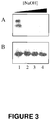
- the linkage between pilin and the C. jejuni glycan was susceptible to ⁇ -elimination (see FIG. 3 ).
- Whole cell extracts containing glycosylated pilin were transferred to PVDF membranes and treated with different concentrations of NaOH according to the protocol described by Duk et al (1997, Anal. Biochem. 253:98-102 ). The protein-linked glycan was detected with the R12 antiserum.
- PgIL can transfer a polysaccharide, whereas pilO transfers only short carbohydrates.
- FIG. 6 shows that the polysaccharide is transferred to a serine residue, since mutation of N60, N61 and T62 do not affect glycosylation, whereas mutation S63A completely abolishes transfer of the polysaccharide to PilE.
- peptidoglycan, exopolysaccharides and capsule biosynthesis, as well as in protein N-glycosylation in C . jejuni, undecaprenol-pyrophosphate (Und-PP) substrates are translocated or "flipped" into the periplasm by the action of flippases (Alaimo, C ., et al., supra ) .
- the E. coli SCM7 strain lacks all the known flippases, and it has been recently used to characterize PglK, the flippase of the C. jejuni glycosylation system (Table 1) (Alaimo, C ., et al., supra ) .
- This strain was used to identify the cell compartment where pilin glycosylation takes place.
- pPAC46 and pACYC pgl or pACYC pgl K (Table 1) were introduced in SCM7 cells. Pilin glycosylation was detected in the cells carrying the intact pgl cluster.
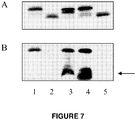
- pACYC pgl K carries a non-polar mutation in the pgl K gene. Pilin was not glycosylated in SCM7 cells carrying pACYC pgl K, where no flippase was present and therefore translocation of Und-PP-glycans into the periplasm is impeded (see lane 2, FIG. 7A and 7B ).
- PglL activity was detected only in the presence of a functional flippase in the cells.
- translocation of the Und-PP-linked oligosaccharide is required for PglL-dependent glycosylation, indicating that PglL activities are localized to the periplasm.
- PgIL can transfer glycans carrying a Hexose at the reducing end to the pilin
- Salmonella enterica O-antigen from different serovars are composed of repeating subunits with a hexose at the reducing end ( FIG. 1 ).
- PglL can transfer a glycan containing a hexose at the reducing end
- PglL and PilE were co-expressed in E . coli JM109 carrying plasmid pPR1347 (Table 1), which encodes the enzymes required for the synthesis of S. enterica serovar Typhimurium O antigen.
- Western blot analysis using anti-pilin showed this O antigen can be transferred to PilE by PglL in E. coli (see FIG.
- glycosylation of pilin can be accomplished in the original host S . enterica when both PglL and PilE are present ( Fig8B , lane 2). Replacing the plasmid encoding PglL with the corresponding empty vector resulted in unglycosylated pilin ( FIG. 8B , lane 1). PglL can also transfer a single subunit of O antigen produced in the Wzy mutants of S. enterica serovar Typhimurium ( FIG. 8B , lane 4), and in the Wzy mutants of S. enterica serovar Typhi ( FIG. 8B , lane 6). Arrows in FIG. 8B indicate the position of glycosylated pilin with a single O antigen subunit. Lanes 3 and 5 are negative controls of glycosylation, in which the plasmid expressing PglL has been replaced by the corresponding empty vector.
Landscapes
- Health & Medical Sciences (AREA)
- Chemical & Material Sciences (AREA)
- Life Sciences & Earth Sciences (AREA)
- Organic Chemistry (AREA)
- General Health & Medical Sciences (AREA)
- Chemical Kinetics & Catalysis (AREA)
- General Chemical & Material Sciences (AREA)
- Medicinal Chemistry (AREA)
- Veterinary Medicine (AREA)
- Engineering & Computer Science (AREA)
- Pharmacology & Pharmacy (AREA)
- Nuclear Medicine, Radiotherapy & Molecular Imaging (AREA)
- Animal Behavior & Ethology (AREA)
- Public Health (AREA)
- Molecular Biology (AREA)
- Immunology (AREA)
- Bioinformatics & Cheminformatics (AREA)
- Genetics & Genomics (AREA)
- Wood Science & Technology (AREA)
- Biochemistry (AREA)
- Zoology (AREA)
- Communicable Diseases (AREA)
- Oncology (AREA)
- Virology (AREA)
- Proteomics, Peptides & Aminoacids (AREA)
- Gastroenterology & Hepatology (AREA)
- Biotechnology (AREA)
- Biophysics (AREA)
- Microbiology (AREA)
- General Engineering & Computer Science (AREA)
- Tropical Medicine & Parasitology (AREA)
- Pulmonology (AREA)
- AIDS & HIV (AREA)
- Transplantation (AREA)
- Preparation Of Compounds By Using Micro-Organisms (AREA)
- Medicines Containing Antibodies Or Antigens For Use As Internal Diagnostic Agents (AREA)
- Medicines That Contain Protein Lipid Enzymes And Other Medicines (AREA)
- Enzymes And Modification Thereof (AREA)
- Medicinal Preparation (AREA)
- Medicines Containing Material From Animals Or Micro-Organisms (AREA)
Description
- The present invention relates to the field of protein glycosylation, and more specifically, to methods and systems for O-glycosylating proteins in Gram-negative bacteria.
- Protein glycosylation is a fundamental process in living organisms. Analysis of the frequency of glycosylation has predicted that more than half of all proteins in nature will eventually be identified as glycoproteins. Without these added carbohydrates, the function of many proteins is aberrant. Complex carbohydrates are involved in cellular communication via cell/cell contact, metastasis (the spread of cancer cells through the body), viral and bacterial adhesion, and binding of toxins to cells. Understanding the roles of carbohydrate biology is crucial to basic health research and to the pharmaceutical industry.
- Recombinant glycoproteins represent a major fraction of the active compounds in today's biotech drugs. Examples of therapeutic glycoproteins are recombinant human Erythropoietin (rHuEPO), beta-Interferon, and Follicle stimulating hormone (FSH). While the biological function is typically determined by the protein component, carbohydrates can affect many properties of the protein, which can include, but are not limited to, molecular stability, serum half-life, solubility, in vivo activity, and immunogenicity. For example, hHuEPO, which can be produced in Chinese hamster ovary cells, is used clinically to treat numerous anemias including, but not limited to, those associated with chronic renal failure, HIV infection and some types of cancers. rHuEPO contains several oligosaccharide chains containing sialic acid as the terminal sugar. Removal of the sialic acid residues from rHuEPO results in virtually inactive rHuEPO in vivo due to its rapid clearance. This example shows the importance of a defined carbohydrate structure and pattern for the biological activity of recombinant glycoproteins.
- In the past, mammalian, insect, and yeast cells have been used to express recombinant glycoproteins. These cells all have the capability to glycosylate proteins, but they exhibit different patterns of glycosylation than human cells. Because protein glycosylation is an essential process in eukaryotic cells and very complex sugar modifications occur in the different cellular compartments, the manipulation of protein glycosylation in higher organisms is very difficult. Consequently, the use of these types of cells often results in the production of glycoproteins having different carbohydrate structures and patterns, which may lead to serious changes in properties, as described above. These different carbohydrate structures and patterns may in fact lead to the production of recombinant glycoproteins that are completely inactive and useless for the production of therapeutic agents. Consequently, there is a need for methods and systems that can be used to produce recombinant glycoproteins having specific carbohydrate structures and patterns both in vivo and in vitro.
- Until recently, glycoproteins were thought to be an exclusive feature of eukaryotic cells. Although protein glycosylation does not take place naturally in Escherichia coli, it is a common phenomenon in other bacteria. Bacteria can tolerate the manipulation of their glycosylation systems and therefore constitute perfect toolboxes for glycoengineering.
- Protein glycosylation consists of two main steps: (i) the assembly of a glycan and (ii) the attachment of the glycan to the protein. In most cases, the glycans are sequentially assembled onto a lipid carrier by different glycosyltransferases. This lipid carrier will vary depending on the organism. For example, which is not meant to be limiting, the lipid carrier can be dolichol-pyrophosphate in the membrane of the endoplasmic reticulum of eukaryotic cells and can be undecaprenol-pyrophosphate (Und-PP) in the inner membrane of bacteria. Once the glycans are assembled onto the lipid carrier, they are transferred to target proteins. When the glycans are attached to the amido groups of selected asparagine (Asn) residues, the process is called N-glycosylation. During the process of O-glycosylation, glycans are attached to the hydroxyl group on selected serine (Ser) or threonine (Thr) residues. The transfer of the glycans from the lipid carrier to proteins is carried out by enzymes named oligosaccharyltransferases (OTases).
- In conjugate vaccine production, glycoproteins are used as vaccines to help elicit an immune response and provide protection against various pathogens and other ailments. In these vaccines, the attachment of glycans to proteins helps increase the immunogenecity of the glycans. Many techniques are now available to produce such vaccines (Jones, C. 2005 An. Acad. Bras. Cienc. 77(2): 293-324; Sood, R.K., and Fattom, A. 1998 Expert Opin. Investig. Drugs 7(3):333-347; Slovin, S.F., Keding, S.J., Ragupathi, G. 2005 Immunol. Cell Biol. 83(4):418-428). However, when using most of the currently available techniques, it is not possible to control the site(s) on the protein where the glycan will be attached. Furthermore, it can be quite difficult the control the ratio of glycan to protein. These difficulties lead to conjugate vaccines that are heterogeneous in nature, which leads to problems when trying to gain approval for use from health regulatory agencies. The composition of the conjugate vaccines may vary and are often hard to reproduce exactly. Consequently, there is a need for new methods and systems that can be used to attach glycans to proteins in a more controlled manner to improve the production of conjugate vaccines.
- The use of bacteria to produce O-glycosylated recombinant proteins has been disclosed by
Castric et al. in U.S. Patent No. 6,872,398 (the "'398 Patent"). In the '398 Patent, a multivalent vaccine against Gram-negative bacterial infections comprising heterologously glycosylated pili from Pseudomonas aeruginosa is disclosed. To produce this vaccine, the '398 Patent teaches the introduction into a Gram-negative bacterium, of a vector containing pilA, the pilin structural gene from Pseudomonas aeruginosa, and pilO, the gene from Pseudomonas aeruginosa coding for the protein responsible for the attachment of the O-antigen repeating unit to the pilin subunit. Once expressed, PilO can add the O-antigen repeating unit of the host Gram-negative bacterium to the pilin protein PilA. The O-glycosylated pilin can then be purified from a culture of the transformed bacteria. However, this method and system have many serious disadvantages and limitations. The system taught by Castric relies strictly on the use of the oligosaccharyltransferase PilO. This limitation results in several serious disadvantages. First, the use of PilO severely limits the type of O-antigen repeating units that can be transferred onto the glycoprotein. In fact, PilO can only transfer only small glycans, commonly known by one of skill in the art as oligosaccharides (i.e., glycans having 2-10 monosaccharides). Second, PilO is unable to transfer glycans to internal glycosylation sites in proteins to be glycosylated. In fact, it has been shown that PilO only transfers glycan to a serine residue that must be the C-terminal residue of the protein (Castric, P., et al. 2001, J. Biol. Chem. 276;26479-26485). This clearly imposes major limits on the proteins that can be glycosylated using the system taught by Castric. Moreover, these difficulties can prevent the production of specific vaccines or therapeutic agents due to PilO's inability to transfer larger glycan, commonly known by one of skill in the art as polysaccharides (i.e., glycans having more than 10 monosaccharides). Third, PilO is very difficult to express and purify. This can pose serious limitations when trying to use this system to produce large quantities of glycosylated product for vaccine production. - The system and method taught by Castric in
U.S. Patent No. 6,872,398 have several other limitations. The production of recombinant glycoproteins is limited to in vivo systems. Moreover, both the oligosaccharyltransferase and the protein to be glycosylated must originate from Pseudomonas aeruginosa. These disadvantages can be very problematic, mostly for the production of vaccines or other therapeutic agents. - Consequently, the need has arisen for a method and system that can be used to easily O-glycosylate proteins using a variety of Gram-negative bacteria in an in vivo or in vitro manner, while avoiding some of the problems listed above.
- In accordance with a broad aspect of the invention, there is provided a method for O-glycosylating proteins with a glycan in Gram-negative bacteria. The method comprises introducing into the prokaryotic organism, in any particular order, at least (a) DNA comprising a gene that produces a PglL-like oligosaccharyltransferase, and DNA comprising a gene that produces a protein to be O-glycosylated. The PglL-like oligosaccharyltransferase facilitates the covalent attachment of the glycan to the protein to produce the O-glycosylated protein. The glycan comprises monosaccharides, oligosaccharides, polysaccharides, or any combination thereof. In one aspect, the glycan comprises a hexose or an N-acetyl hexose derivative at the reducing end. In another aspect, galactose is present at the reducing end of the glycan. The lipid carrier is a polyprenol-pyrophosphate including, but not limited to, undecaprenol-pyrophosphate, dolichol-pyrophosphate, and synthetic equivalents thereof.
- In accordance with another broad aspect of the invention, there is provided a method for producing O-glycosylating proteins with a glycan in a Gram-negative bacteria where the method comprises introducing into the prokaryotic organism, in any particular order, at least (a) DNA comprising pglL that produces a PglL-like oligosaccharyltransferase, (b) DNA comprising pilE that produces a protein to be O-glycosylated; and (c) DNA comprising genes required for the assembly of a glycan onto a lipid carrier. The PglL-like oligosaccharyltransferase facilitates the covalent attachment of the glycan to the protein to produce the O-glycosylated proteins. The glycan comprises monosaccharides, oligosaccharides, polysaccharides or any combination thereof. In one aspect, the glycan comprises a hexose or an N-acetyl hexose derivative at the reducing end. In another aspect, galactose is present at the reducing end of the glycan. The lipid carrier is a polyprenol-pyrophosphate including, but not limited to, undecaprenol-pyrophosphate, dolichol-pyrophosphate, and synthetic equivalents thereof.
- In accordance with another broad aspect of the invention, there is provided a system for producing an O-glycosylated protein comprising a Gram-negative bacteria and at least the following components present within the organism: (a) DNA that produces a PglL-like oligosaccharyltransferase; (b) DNA that produces the protein to be O-glycosylated; and (c) DNA comprising genes required for the assembly of a glycan onto a lipid carrier. The PglL-like oligosaccharyltransferase facilitates the covalent attachment of the glycan to the protein to produce the O-glycosylated protein. The glycan comprises monosaccharides, oligosaccharides, polysaccharides, or any combination thereof. In one aspect, the glycan comprises a hexose or an N-acetyl hexose derivative at the reducing end. In another aspect, galactose is present at the reducing end of the glycan. The lipid carrier is a polyprenol-pyrophosphate including, but not limited to, undecaprenol-pyrophosphate, dolichol-pyrophosphate, and synthetic equivalents thereof.
- In accordance with another broad aspect of the invention, there is provided a system for producing an O-glycosylated protein comprising a Gram negative bacteria and at least the following components present within the organism: (a) DNA comprising pglL that produces a PglL-like oligosaccharyltransferase; (b) DNA comprising pilE that produces the protein to be O-glycosylated; and (c) DNA comprising genes required for the assembly of a glycan onto a lipid carrier. The oligosaccharyltransferase facilitates the covalent attachment of the glycan to the protein to produce the O-glycosylated protein. The glycan comprises monosaccharides, oligosaccharides, polysaccharides, or any combination thereof. In one aspect, the glycan comprises a hexose or an N-acetyl hexose derivative at the reducing end. In another aspect, galactose is present at the reducing end of the glycan. The lipid carrier is a polyprenol-pyrophosphate includes, but is not limited to, undecaprenol-pyrophosphate, dolichol-pyrophosphate, and synthetic equivalents thereof.
- In accordance with another broad aspect of the invention, there is provided a method for producing an O-glycosylated protein comprising reacting: (a) the protein to be O-glycosylated, and (b) a glycan bound to a lipid carrier in the presence of a PglL-like oligosaccharyltransferase. The PglL-like oligosaccharyltransferase transfers the glycan from the lipid carrier to the protein. The glycan comprises monosaccharides, oligosaccharides, polysaccharides, or any combination thereof. In one aspect, the glycan comprises a hexose or an N-acetyl hexose derivative at the reducing end. In another aspect, galactose is present at the reducing end of the glycan. The lipid carrier is a polyprenol-pyrophosphate includes, but is not limited to, undecaprenol-pyrophosphate, dolichol-pyrophosphate, and synthetic equivalents thereof.
- In accordance with another broad aspect of the invention, there is provided a method for producing an O-glycosylated protein comprising reacting (a) PilE protein that is the expression product of pilE, and (b) a glycan bound to a lipid carrier in the presence of an oligosaccharyltransferase that is the expression product of pglL. The oligosaccharyltransferase transfers the glycan from the lipid carrier to the protein. The glycan comprises monosaccharides, oligosaccharides, polysaccharides, or any combination thereof. In one aspect, the glycan comprises a hexose or an N-acetyl hexose derivative at the reducing end. In another aspect, galactose is present at the reducing end of the glycan. The lipid carrier is a polyprenol-pyrophosphate includes, but is not limited to, undecaprenol-pyrophosphate, dolichol-pyrophosphate, and synthetic equivalents thereof.
- In accordance with another broad aspect of the invention, there is provided an O-glycosylated protein produced by the methods and systems described herein that can be used for the production of a vaccine. These methods and systems are particularly advantageous since they can be used to prepare O-glycosylated proteins without introducing limitations as to the type of glycan that can be added to proteins, the length of the glycan transferred, the type of sugar located at the reducing end of the glycan, the position of the glycan on the protein or the type of Gram-negative bacteria that can be used.
- The present invention, both as to its organization and manner of operation, may best be understood by reference to the following description, and the accompanying drawings of various embodiments wherein like numerals are used throughout the several views, and in which:
-
FIG. 1A is a schematic diagram of the N-glycan produced by C. jejuni. -
FIG. 1B is a schematic diagram of the pilin glycan produced by N. meningitidis. -
FIG. 1C is a schematic diagram of the 07 antigen produced by E. coli. -
FIG. 1D is a schematic diagram of the pilin glycan produced by P. aeruginosa O11. - FIG. IE is a schematic diagram of glycan produced by S. enterica serovar Typhimurium.
-
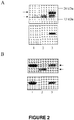
FIG. 2A is a western blot analysis of whole-cell E. coli CLM24 extracts producing unglycosylated and glycosylated N. meningitidis (MC) pilin. Pilin was detected by the SM1 anti-pilin monoclonal antibody (upper panel) or the C. jejuni glycan antiserum R12 (lower panel). R12 is an anti-serum that recognizes specifically the C. jejuni glycan (Wacker, M. et al., 2002, Science 298(5599):1790-1793).Lane 1, pAMF3 (expressing MC pilin) and pAMF5 (expressing PglL).Lane 2, pAMF3, pACYCpglB mut and pEXT22 (cloning vector).Lane 3, pAMF3 (expressing MC pilin), pACYCpglB mut, and pAMF5 (expressing PglL). The plasmid pACYCpgl carries the pgl locus, encoding all of the enzymes needed for the synthesis of the glycan normally transferred during N-glycosylation in C. jejuni (FIG. 1A ) (Wacker, M. et al., supra). Its derivative pACYCpglBmut carries a mutation inactivating the PglB oligosaccharyltransferase. The upper arrow indicates the glycosylated product, and the lower arrow indicates the unglycosylated products. -
FIG. 2B is a western blot analysis showing the effect of mutations S63A and T62A on pilin glycosylation. Pilin was detected by the SM1 anti-pilin monoclonal antibody (upper panel) or the C. jejuni glycan antiserum R12 (lower panel). All lanes correspond to cells expressing pAMF5, and pACYCpglBmut .Lane 1, pPilET62A.Lane 2, pPilES63A.Lane 3, pAMF6. The upper arrow indicates the glycosylated product, and the lower arrow indicates the unglycosylated products. -
FIG. 3 is western blot analyses showing susceptibility of N. meningitidis (MC) glycosylated pilin to beta elimination. Extracts of E. coli CLM24 cells containing pilin glycosylated with C. jejuni glycan were used in this experiment (FIG. 3A ). Extracts of the same strain containing N-glycosylated AcrA with C. jejuni glycan were used as the control (FIG 3B ). The whole cells were harvested and mixed with Laemmli sample buffer (4% SDS, 20% glycerol, 10% 2-mercaptoethanol, 0.004% bromophenol blue and 0.125 M Tris-HCl, pH 6.8) and heated for 10 min. at 95°C. The samples were fractionated by SDS-PAGE in 15% gels, transferred to polyvinylidene fluoride (PVDF) membrane and cut into strips. The effect of alkali treatment on the deglycosylation of proteins, β-elimination, was detected after 16 hrs incubation at 40°C using the R12 glycan-specific antibody. Once transferred to PVDF membranes, the samples were treated with different concentrations of sodium hydroxide (NaOH).Lane 1, no treatment with NaOH.Lane 2, treatment with 0.055 M NaOH.Lane 3, treatment with 0.07 M NaOH.Lane 4, treatment with 0.09 M NaOH. -
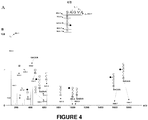
FIG. 4A is the fragmentation pattern expected from proteinase K digestion of glycosylated MC pilin. Crossed squares represent DATDH (2,4-diacetamido-2,4,6-trideoxyhexose). Open squares represent HexNAc. Filled circles represent Hexose. -
FIG. 4B is a MS/MS spectrum of a double charged glycopeptide ion at m/z 905.82+ corresponding to DATDH(HexNAc)5Hex attached to peptide 63SAGVA67, resulting from proteinase K digestion of MC pilin. The common peptide fragment ions (y3 and b4) shown in -
FIG. 4A are observed, in addition to the sugar fragments and the peptide with sugar fragments. Crossed squares represent DATDH (2,4-diacetamido-2,4,6-trideoxyhexose). Open squares represent HexNAc. Filled circles represent Hexose. -
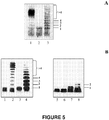
FIG. 5A is a lectin blot analysis of three different forms ofE. coli 07 LPS produced in E. coli SΦ874. A lectin specific for rhamnose, which is one of the sugars of the 07 antigen, has been used.Lane 1, wild-type.Lane 2, wzy (polymerase) mutant.Lane 3, wzz (chain length regulator) mutant. The numbers at the right indicate the number of 07 repeating units attached to the lipid A-core. -
FIG. 5B is a western blot analysis demonstrating the ability of PglL (left panel) and PilO (right panel) to transfer 07 antigen of different lengths to their respective pilins in the E. coli SCM3 strain (ligase-deficient derivative of SΦ874). N. meningitidis (MC) pilins containing the three O antigen versions shown inFIG. 5A were detected using the anti-MC pilin monoclonal antibody. PglL was able to transfer fully polymerized 07 antigen to MC pilin (lane 2). P. aeruginosa pilin containing O antigen of only up to two repeating units was detected in the wzz mutant strain (lane 8), despite the observation that O antigen containing two and more repeating units are equally abundant (seeFIG. 5A , lane 3). Lanes 1-4: pAMF5 (expressing PglL) and pAMF6 (expressing MC pilin). Additionally,lane 2 contains pJHCV32 (wild-type 07 antigen),lane 3 contains pJHCV32-134 (07 wzy mutant), andlane 4 contains pJHCV32-136 (07 wzz mutant). Lanes 5-8, pPAC46 (expressing P. aeruginosa pilin and PilO). Additionally,lane 6 contains pJHCV32,lane 7 contains pJHCV32-134, andlane 8 contains pJHCV32-136. -
FIG. 6 is a western blot analysis showing that mutation of serine 63 abolishes glycosylation. 07 antigen from the wzz mutant strain is not transferred to the S63A variant of MC pilin (lane 4). Glycosylation is not affected in the mutants N60A (lane 1), N61A (lane 2), and T62A (lane 3). Unglycosylated (lane 5) and wild-type pilin glycosylated with the 07 antigen (lane 6) are included for comparison. Lanes 1-4 contain plasmid pAMF5 and pJHCV32::Tn3HoHo1-134.Lane 1, pPilEN60A.Lane 2, pPilEN61A.Lane 3, pPilET62A.Lane 4, pPilES63A.Lane 5, pAMF6, pEXT21 and pJHCV32::Tn3HoHo1-134.Lane 6, pAMF6, pAMF5 and pJHCV32::Tn3HoHo1-134. -
FIG. 7A and 7B are western blot analyses showing that glycosylation of MC pilin only occurs in the presence of a functional flippase, either Wzx (lane 1), a pgl-encoded PglK (lane 3) or a PglK encoded in trans (lane 4). Cell extracts were analyzed by western blot using antibodies directed against MC pilin (FIG. 7A ) and the glycan-specific R12 antiserum (FIG. 7B ). Lanes: 1, CLM24 strain containing pAMF5, pAMF6 and pACYCpglBmut.Lane 2, SCM7 transformed with plasmids pAMF5, pAMF6 and pACYCpglKmut.Lane 3, SCM7 containing pAMF5, pAMF6 and pACYCpgl.Lane 4, SCM7 transformed with pAMF5, pAMF6, pACYCpglK mut, and pCW27, expressing PglK in trans.Lane 5, SCM7 transformed with pAMF5, pAMF6, pACYCpglK mut and pMLBAD (cloning vector). Details of the strains and plasmids are presented in Table 1. The arrow indicates the presence of LPS containing the C. jejuni oligosaccharide in the strains where a functional WaaL (ligase) and a flippase are present. -
FIG. 8A is a western blot analysis using anti-pilin in E. coli JM109 cells expressing Salmonella O-antigen. This blot shows that the pilin can be glycosylated with a polysaccharide having galactose at the reducing end in E. coli.Lanes 1 to 3 contain pPR1347 and pAMF8. In addition,lane 1, pPilES63A.Lane 2, pAMF9.Lane 3, pPilET62A.Lane 4, pPR1347, pAMF9, and pEXT20. -
FIG. 8B is a reconstitution of pilin glycosylation in Salmonella. Left panel, Salmonella enterica serovar Typhimurium, strain SL3749 transformed with pAMF9.Lane 1, pEXT20.Lane 2, pAMF8. This panel shows the transfer of a polysaccharide in Salmonella cells. Middle panel, Salmonella enterica Typhimurium, strain SL901 carrying a mutation in the wzy polymerase gene, transformed with pAMF9 (in bothlanes 3 and 4).Lane 3 contains pEXT20.Lane 4 contains pAMF8. Right panel, Salmonella enterica serovar Typhi, carrying a mutation in the wzy polymerase gene, transformed with pAMF9.Lane 5, pEXT20.Lane 6, pAMF8. The middle and right panels demonstrate the transfer of oligosaccharides into different Salmonella strains. - The materials, compounds, compositions, and methods described herein may be understood more readily by reference to the following detailed description of specific aspects of the disclosed subject matter and the Examples included therein and to the Figures.
- Throughout the description and claims of this specification the word "comprise" and other forms of the word, such as "comprising" and "comprises," means including but not limited to, and is not intended to exclude, for example, other additives, components, integers, or steps.
- As used in the description and the appended claims, the singular forms "a," "an," and "the" include plural referents unless the context clearly dictates otherwise. Thus, for example, reference to "an agent " includes mixtures of two or more such agents.
- The present invention relates to the discovery of methods and systems for O-glycosylating proteins in vivo or in vitro. In vivo methods and systems comprise introducing into a Gram-negative bacteria in any particular order, at least: (i) DNA that produces a PglL-like oligosaccharyltransferase, and (ii) DNA that produces a protein to be O-glycosylated. In one embodiment, these methods and systems rely on genes that code for proteins required for the assembly of a glycan onto a lipid carrier, which are endogenous to the prokaryotic organism and are required for glycosylation. In another embodiment, these methods and systems further comprise introducing into the Gram-negative bacteria exogenous genes coding for proteins that are required for the assembly of a glycan onto a lipid carrier. These methods and systems are particularly advantageous since they can be used to prepare O-glycosylated proteins without introducing limitations as to the type of glycan that can be added to proteins, the length of the glycan transferred, the type of sugar located at the reducing end of the glycan, the position of the glycan on the protein or the type of Gram-negative bacteria that can be used.
- In vitro methods and systems comprise incubating a PglL-like oligosaccharyltransferase with a protein to be O-glycosylated and with a lipid-linked glycan in a suitable buffer.
- For the purposes of this invention, a glycan comprises any sugar that can be transferred (e.g, covalently attached) to a protein. A glycan comprises monosaccharides, oligosaccharides and polysaccharides. As described above, an oligosaccharide is a glycan having 2 to 10 monosaccharides. A polysaccharide is a glycan having greater than 10 monosaccharides. Polysaccharides can be selected from the group comprising O-antigens, capsules, and exopolysaccharides. Of course, one of skill in the art will appreciate that other types of polysaccharides may also be used.
- Glycans useful herein include, but are not limited to, hexoses, N-acetyl derivatives of hexoses, oligosaccharides, and polysaccharides. Other examples, include glycans from C. jejuni, N. meningitidis, P. aeruginosa, S. enterica LT2, and E. coli (see
FIG. 1 ). In one embodiment, the monosaccharide at the reducing end of the glycan is a hexose or an N-acetyl derivative of a hexose. In one aspect, the hexose can be galactose. In one aspect, the N-acetyl derivative of hexose can be selected from the group comprising N-acetylglucosamine (GlcNAc), 2-Acetamido-2,6-dideoxyhexose (FucNAc), and DATDH (2,4-diacetamido-2,4,6-trideoxyhexose). - A PglL-like oligosaccharyltransferase of the present invention includes oligosaccharyltransferases comprising the following properties: (a) ability to transfer glycans to serine or threonine residues of proteins; (b) ability to transfer glycans having different lengths and different types of monosaccharides due to relaxed glycan specificity; and (c) ability to transfer polysaccharides to proteins during O-glycosylation. In one aspect, PglL-like oligosaccharyltransferase can also have the ability to transfer glycans to internal glycosylation sites in proteins to be O-glycosylated. In one aspect, PglL-like oligosaccharyltransferase can also have the ability to O-glycosylate proteins in the periplasm of prokaryotic organisms.
- In one embodiment, the PglL-like oligosaccharyltransferase is the protein expressed by pilin-glycosylation gene L (pglL) or a homologue thereof. Of course, one of skill in the art will understand that homologues are proteins that may have differences in sequence, but no major difference in function. In one aspect, proteins expressed by pglL or homologues thereof in Neisseria (e.g., N. meningitidis or gonorrhea) can produce oligosaccharyltransferases useful herein. Examples of genomic sequences of pglL from N. meningitidis for the expression of PglL-like oligosaccharyltransferases useful herein include, but are not limited to, PglL from MC58 (Accession No. AAF41024) (Tettelin, H. et al., 2000, Science 287:1809-1815), Z7491 (Parkhill, J., et al., 2000, Nature 404:502-506), and FAM18 (http://www.sanger.ac.uk/Projects/ N meningitidis/sero.shtml)). PglL from N. gonorrhea has been termed PglO (Accession No. NGO0178) (Aas, F.E. et al., 2007, Mol. Microbiol. 65:607-624).
- In one embodiment of the present invention, O-glycosylated proteins are prepared using in vivo methods and systems. These methods and systems can be used to produce O-glycosylated proteins in any type of prokaryotic organism. Gram-negative bacteria that can be used include, but are not limited to, species of bacteria from the genera Neisseria, Salmonella, E. coli, Pseudomonas and Yersinia.
- In a particular embodiment of the present invention, the Gram-negative bacteria used is Escherichia coli. The use of E. coli has many advantages. E. coli has been used in the design of vaccines and therapeutic agents, and is a good host cell for conducting in vivo O-glycosylation reactions. Of course, as will be apparent to one of skill in the art, the use of E. coli has many other advantages, which are not listed herein.
- In another embodiment, the Gram-negative bacteria used is Salmonella. The use of Salmonella also has many advantages. For example, which is not meant to be limiting, there are many applications of Salmonella, where this species is used to produce attenuated vaccines. Moreover, Salmonella invariably produces endogenous glycans having galactose at the reducing end of the glycan. One of skill in the art will appreciate that this would then greatly facilitate the production of vaccines.
- The methods for in vivo O-glycosylationof proteins of the present invention generally involve the incorporation of at least: (i) DNA that produces a PglL-like oligosaccharyltransferase, and (ii) DNA that produces a protein to be O-glycosylated. As discussed above, in one embodiment, these methods and systems rely on the prokaryotic organism's endogenous genes that code for proteins required for the assembly of a glycan onto a lipid carrier and are necessary for protein glycosylation. In another embodiment, these methods and systems further comprise introducing into the prokaryotic organism exogenous genes coding for proteins that are required for the assembly of a glycan onto a lipid carrier.
- The incorporation of these DNA fragments into a Gram-negative bacteria can be performed using any number of techniques known in the art. One of skill in the art will appreciate that these techniques include any method that can be used to stably transfect or transform a host cell with any recombinant DNA constructs. For example, any of the techniques listed and described in Molecular Cloning: A Laboratory Manual (Sambrook, J. and Russell, D.W., CSHL Press, Cold Spring Harbor, New York, 3rd Edition, 2001) can be readily used to introduce DNA fragments into a Gram-negative bacteria for the purposes of this invention.
- The DNA fragments inserted into the chosen Gram-negative bacteria are generally genes or a portion of gene(s), which can include truncations and/or mutations thereof, used to produce a PglL-like oligosaccharyltransferase, a protein to be glycosylated, and, in some embodiments, proteins required for the assembly of a glycan onto a lipid carrier. These DNA fragments can be produced in a wide variety of different ways. Each DNA fragment may be generated in any manner, including, for example, chemical synthesis or DNA replication or reverse transcription or transcription, which are based on the information provided by the sequence of bases in the region(s) from which the polynucleotide is derived. Moreover, combinations of different regions corresponding to that of the desired sequence may be modified in ways known in the art to be consistent with the intended use. Finally, the source of each DNA fragment can be derived from the same Gram-negative bacteria or from different Gram-negative bacteria depending on the intended use.
- In one embodiment of the present invention, each DNA fragment relates to a recombinant DNA molecule that includes a vector and the DNA fragment as described above. The vector can take the form of a plasmid such as any broad host range expression vector known in the art. Of course, one of skill in the art will appreciate that, in some cases, it may be beneficial to include more than one of the DNA fragments on a single plasmid, depending on the intended use. Moreover, as discussed above, in some embodiments, some of the required proteins are encoded by genes endogenous to the Gram-negative bacteria. In these embodiments, the DNA fragments encoding these proteins are located in the Gram-negative bacteria's genome.
- In the methods and systems of the present invention, the PglL-like oligosaccharyltransferase facilitates the covalent attachment of the desired glycan to the hydroxyl group of a serine or threonine residue present in the protein to be glycosylated. The DNA fragment encoding the PglL-like oligosaccharyltransferase can be obtained from a wide variety of different systems and organisms. Of course, as described above, any of these sequences may be modified using any method known in the art for the intended use.
- In the methods and systems of the present invention, the protein to be glycosylated can be selected from a wide range of proteins. In one embodiment of the invention, when the PglL-like oligosaccharyltransferase used is made from the gene pglL from N. meningitidis MC58 (Accession No. AAF41024), the DNA fragment that produces the protein to be glycosylated contains the gene pilE (Accession No. AAF40497) or a homologue thereof. The gene for pilE or a homologue thereof can be selected from a wide variety of different organisms. In one aspect, the DNA fragment for pilE is selected from Neisseria (e.g., meningitidis or gonorrhea). Of course, as described above, these sequences may be modified using any method known in the art for the intended use. When using the protein expressed by the gene pilE from N. meningitidis MC58 (Accession No. AAF40497), Ser63 of the mature protein is glycosylated by the PglL-like oligosacccharyltransferase expressed by the gene pglL from N. meningitidis MC58 (Accession No. AAF41024). Of course, as will be appreciated by one of skill in the art, the site of glycosylation may differ depending on which protein is selected. The protein to be glycosylated may be a modified protein such as a hybrid protein containing the determinants for glycosylation. For the purposes of this invention, while wishing not to be bound by theory, determinants for glycosylation are sites recognized by PglL-like oligosaccharyltransferases as glycosylation sites. For example, a hybrid protein may be made using methods known in the art, wherein the resulting protein contains the glycosylation determinants from two different proteins. Of course, one of skill in the art will also appreciate that many other hybrid proteins can be made.
- In a further embodiment of the invention, the protein to be glycosylated is not a pilin protein. Any protein comprising the determinants of glycosylation recognized by PglL-like oligosacchryltransferase is meant to be included within the methods and systems of the present invention.
- The third DNA fragment used for in vivo glycosylation comprises genes required for the assembly of a glycan onto a lipid carrier. As discussed above, glycans useful herein include, but are not limited to, hexoses, N-acetyl derivatives of hexoses, oligosaccharides, and polysaccharides. In one aspect, when a PglL-like oligosaccharyltransferase is used, it is possible to O-glycosylate proteins with polysaccharides or with glycans having hexoses or N-acetyl derivatives of hexoses at the reducing end, as described above. The O-glycosylation of proteins with polysaccharides or with glycans having hexoses or N-acetyl derivatives of hexoses at the reducing end is very advantageous. For example, the ability to produce proteins that are O-glycosylated with such glycans is very useful for the development of vaccines and therapeutic agents, as will be discussed later.
- In one embodiment of the invention, a DNA fragment containing the gene(s) that produces glycans from one or more organism can also be used. For example, the gene(s) responsible for producing the glycans from C. jejuni, N. meningitidis, P. aeruginosa, and E. coli can be used herein (see
FIG. 1 ). These genes can be further involved in the assembly and translocation of glycans. These genes can include, but are not limited to genes encoding glycosyl transferases and other enzymes required for assembly and transport of glycans. - In certain aspects of the invention, depending upon the selection of the Gram-negative bacteria, in vivo glycan synthesis may also involve attaching sugar units on a lipid carrier such as a polyprenol-pyrophosphate carrier or synthetic equivalent thereof. For example, undecaprenol-pyrophosphate (or undecaprenol-PP) may be selected as the polyprenol-pyrophosphate carrier. Alternatively, it is possible to introduce one or more genes that produce these enzymes. Not wishing to be bound by theory, it is believed that O-glycosylation occurs in the periplasm of the organism (e.g., E. coli). As will be appreciated by one of skill in the art, the introduction of these genes as well as the other DNA fragments described above, allows, for the first time, for the production of O-glycosylated proteins in any Gram-negative bacteria.
- Using the in vivo methods and systems described above, it is possible to produce large-scale amounts of O-glycosylated proteins. Prokaryotic organisms transformed with the DNA fragments described above can be grown using various methods known in the art. For example, these Gram-negative bacteria can be grown in a broth culture to produce the O-glycosylated protein and the O-glycosylated protein can be isolated. The isolation of the O-glycosylated proteins can be performed using various methods known in the art. For example, lectin affinity chromatography may be used (Faridmoayer, A. et al., 2007, J. Bacteriol. 189(22):8088-8098).
- Although the methods described above are useful for in vivo production of glycosylated proteins, another embodiment of the present invention provides methods and systems for the in vitro production of O-glycosylated proteins. In one embodiment, the method comprises reacting the PilE protein that is an expression product of pilE (Accession No. AAF40497) with a glycan attached to an undecaprenol-PP carrier, in the presence of a PglL-like oligosaccharyltransferase. In one aspect, the PglL-like oligosaccharyltransferase is PglL expressed from the pglL gene from N. meningitidis MC58 (Accession No. AAF41024).
- One of skill in the art will appreciate that the DNA fragments encoding pilE and pglL may be modified or truncated using methods known in the art for the intended use. These DNA fragments can be expressed in an organism as discussed above and both proteins can be purified using techniques known in the art. For example, the oligosaccharyltransferase produced from pglL is purified from solubilized membrane fractions using techniques known in the art.
- To produce O-glycosylated proteins in vitro, the oligosaccharyltransferase can be incubated with protein and glycan that are expressed by various Gram-negative bacteria. Of course, one of skill in the art will appreciate that the protein and glycan do not have to originate from the same prokaryotic organism. As will be appreciated by one of skill in the art, incubation conditions can vary widely. For example, the proteins and glycans may be incubated in a buffer having a pH of approximately 6 to approximately 8. In one aspect, the buffer may be phosphate buffer saline. In another aspect, the buffer may be Tris-HCl 50 mM, having a pH of 7.5.
- The glycosylated protein can then be purified and characterized by techniques known in the art. For example, the techniques disclosed in Kowarik et al. (2006, Science, 314:1148-1150) can be adapted herein for the in vitro production of O-glycosylated proteins.
- The glycosylated proteins produced herein can be used as therapeutic agents for the treatment of a number of diseases, where an effective amount of the O-glycosylated protein is administered to a subject in need of such treatment. Examples of these diseases include, but are not limited to, autoimmune disorders, HIV and Hepatitis C infections, tuberculosis, candidiasis, leishmaniasis and various bacterial infections. Moreover, it has been shown that some glycans have potential applications for the treatment of several autoimmune diseases that affect a portion of the human population.
- The glycosylated proteins produced herein can also be used as a vaccine or in a pharmaceutical composition for the prevention of a disease when an effective amount of the protein is administered to a subject in need of such treatment. Thus, the methods described herein for producing of a number of different O-glycosylated proteins will prove very useful in drug discovery.
- The following MATERIALS AND METHODS were used in the examples that follow. These materials and methods are for illustrative purposes
- E. coli and P. aeruginosa 1244 cells can be grown on LB at 37°C. Trimethoprim at 100 µg/mL, tetracycline at 20 µg/mL, spectinomycin at 80 µg/mL, chloramphenicol at 20 µg/mL, kanamycin 50 µg/mL, and ampicillin at 100 µg/mL were added in media when required. E. coli and P. aeruginosa strains as well as DH5α plasmids that can be used are listed in Table 1. Of course, one of skill in the art will appreciate that other strains and plasmids not listed in Table 1 may also be used.
Table 1: Strain Description Source/Reference Bacterial strains E. coli DH5α F-ϕ80lacZΔM15 Δ (lacZYA-argF) Invitrogen U169 deoR recA1 endA1 hsdR17 (rk-, mk+) gal- phoA supE44 λ-thi- 1 gyrA96 relA1 E. coli CLM24 W3110 lacking Waal ligase Feldman, M. F. et al., 2005, Proc. Natl. Acad. Sci. U.S.A. 102:3016-21. E. coli Sϕ874 LacZ trp Δ(sbcB-rfb) upp Neuhard, J., and E. rel rpsL Thomassen. 1976, J. Bacteriol. 126:999-1001. E. coli SCM3 Sϕ874, ΔwaaL Faridmoayer, A. et al., supra E. coli SCM7 Sϕ874, Δwec Alaimo, C., et al., 2006, Embo J. 25:967-76. E. coli JM109 (P4729) expressing salmonella O antigen, SGSC# 2442. E. coli JM109 transformed with pPR1347, encoding S. enterica LT2 O antigen, KmR Salmonella Genetic Stock, University of Calgary (SGSC) Salmonella enterica serovar Typhimurium (SL3749), SGSC# 228 Serogroup B, O antigen ligase mutant (Δrfal) Salmonella Genetic Stock, University of Calgary (SGSC) Salmonella enterica serovar Typhimurium (SL901), SGSC# 82 Serogroup B, O antigen polymerase mutant (Δwzy) Salmonella Genetic Stock, University of Calgary (SGSC) Salmonella enterica Typhi O antigen polymerase mutant (Δwzy) Hoare, A. et al., 2006, Infect. Immun. 74(3):1555-64 Plasmids pSPORT1 Cloning vector, AmpR Invitrogen pMLBAD Cloning vector, arabinose-inducible, TmpR Lefebre, M. D., and M. A. Valvano. 2002, Appl. Environ. Microbiol. 68:5956-64. pEXT20 Cloning vector, IPTG-inducible, AmpR Dykxhoorn, D. M., R. St Pierre, and T. Linn. 1996, Gene 177:133-6 pEXT21 Cloning vector, IPTG-inducible, SpR pEXT22 Cloning vector, IPTG-inducible, KmR pPAC46 Encodes P. aeruginosa 1244 pilA-pilO operon, AmpR Castric, P. 1995. Microbiology 141 (Pt 5):1247-54. pACYCpgl Encodes the C. jejuni pgl cluster, CmR Wacker, M., et al., supra pACYCpglBmut Encodes the C. jejuni pgl containing mutations W458A and D459A in PglB, CmR pACYCpglKmut Encodes C. jejuni pgl containing a Km cassette in pglK, CmR, KmR Alaimo, C. et al., supra pLPS2 Encodes the O11 antigen cluster from P. aeruginosa PA103, TetR Goldberg, J.B. et al, 1992, Proc. Natl. Acad. Sci. U.S.A. 89(22):10716-10720 pJHCV32 Encodes the 07 antigen cluster from E. coli, TetR Marolda, C. L., et al., 1999, Microbiology 145 (Pt 9):2485-95 pJHCV32::Tn3HoHo1-134 Encodes the 07 antigen cluster from E. coli carrying a transposon in wzz, TetR AmpR pJHCV32::Tn3HoHo1-136 Encodes the 07 antigen cluster from E. coli carrying a transposon in wzy, TetR AmpR pCW27 pglK in pMLBAD/Myc-6xHis, TpR Alaimo, C., et al., supra pWA2 Soluble periplasmic hexa-His-tagged AcrA under control of Tet promoter, in pBR322, AmpR Feldman, M. F., et al., supra pMAF10 HA-tagged PglB cloned in pMLBAD, TpR Feldman, M. F., et al., supra pPR1347 Encodes the O antigen cluster of Salmonella enterica LT2 Neal BL, Brown PK, Reeves PR. 1993, J. Bacteriol. 175(21):7115-8. pAMF3 PilE cloned in pEXT20, AmpR Faridmoayer, A. et al., supra pAMF4 His10-tagged PglL cloned in pSPORT1, KmR pAMF5 His10-tagged PglL cloned in pEXT22, KmR pAMF6 PilE cloned in pEXT21, SpR pAMF7 His6-tagged PilE cloned in pEXT20, AmpR pAMF8 PglL cloned in pEXT20, AmpR PAMF9 His6-tagged PilE cloned in pMLBAD TpR PAMF14 His6-tagged PilE cloned in pEXT21, SpR pPilES63A PilE mutated at Ser 63 to Ala, cloned in pEXT21, SpR pPilET62A PilE mutated at Thr 63 to Ala, cloned in pEXT21, SpR pPilEN61A PilE mutated at Asn 61 to Ala, cloned in pEXT21, SpR pPilEN60A PilE mutated at Asn 60 to Ala, cloned in pEXT21, SpR - The pilE gene (Accession No. AAF40497) was amplified from the genomic DNA of N. meningitidis MC58 using pfu DNA polymerase and oligonucleotides, PilEEcoRI (AAAGAATTCATGAACACCCTTCAAAAAGGTTTTACCCTTATCGAGC) and PilEHindIII (TTTAAGCTTTTAGCTGGCATCACTTGCGTCGCGGCAGGTTGACG). The PCR product was cut with EcoRI and HindIII and cloned into same sites of pEXT20 and pEXT21 to construct pAMF3 and pAMF6, respectively.
- The pglL gene (Accession No. AAF41024) was amplified by PCR with oligonucleotides PglLEcoRI(AAAGAATTCATGCCCGCTGAAACGACCGTATCCGGCGCGC) and PglLHindIII-His (TTTAAGCTTTCAGTGGTGGTGGTGGTGGTGGTGGTGGTGGTGTTTGCAGGGTTTTGC TTCCGGATGACCGGGC) using Vent DNA polymerase (New England Bio Labs,) with N. meningitidis MC58 as template. PglLHindIII-His encodes a 10×His at the C-terminus. The PCR product was cut with EcoRI and HindIII and inserted into the same site of pSPORT1 to produce pAMF4. pAMF4 was cut with EcoRI and HindIII and the fragment containing the pglL gene was ligated into the same sites of pEXT22 to create pAMF5. pilE-6His was amplified using pAMF3 as the template using Pfu DNA polymerase and oligonucleotide PilEEcoRI and PilESalI-His (AATCCAGTCGACTTAGTGGTGGTGGTGGTGGTGGCTGGCATCACTTGCGTCGCGGC AGGTTGACG). The PCR product was cut with EcoRI and SalI inserted into the same sites of pEXT20 and pEXT21 to construct pAMF7 and pAMF14. pAMF8 was constructed as follows: pglL was amplified with pAMF4 as the template using Pfu DNA polymerase and oligonucleotide PglLEcoRI and PglLSalI (AATCCAGTCGACTCATTTGCA GGGTTTTGCTTCCGGATGACCGGGC) The PCR product was cut with EcoRI and SalI inserted into the same sites of pEXT20 to construct pAMF8. The insert of pAMF7 cut with EcoRI and HindIII and and inserted into the same site of pMLBAD to produce pAMF9, expressing His6-tagged PilE.
- Western blots were carried out using techniques known in the art. The presence of proteins on nitrocellulose membranes was detected with antibodies and/or lectins. Table 2 provides information about antibodies and lectins used in this study. Of course, one of skill in the art will appreciate that different antibodies and lectins not contained within Table 2 may also be used.
- Soybean agglutinin (SBA) lectin blotting was used to detect glycosylated pilin with Campylobacter glycan. Proteins were transformed onto a nitrocellulose membrane and blocked with 5% bovine serum albumin (BSA) in phosphate buffer saline containing 0.1% Tween (PBST) for 1 hr at room temperature. The blocked membrane was incubated for 1 hr at room temperature with biotin-conjugated SBA and washed prior to incubation for another hour with anti-biotin conjugated with horseradish peroxidase. The blot was developed using the ECL kit (GEAmersham). Lipopolysaccharide (LPS) constituted of 07 antigen subunits was detected by STL3, an L-rhamnose-binding isolectin (Tateno, H. et al., 2001, Biosci. Biotechnol. Biochem. 65(6):1328-38). E. coli Sϕ874 cells expressing different variants of 07 LPS were mixed with Laemmli buffer and proteins were digested by proteinase K (Roche). LPS were transformed onto nitrocellulose membrane, blocked with BSA, and incubated with STL3. The membrane was incubated with anti-STL3 polyclonal antibody and anti-rabbit for 1 hr at room temperature, respectively. The blot was developed as described before.
Table 2 Antibodies Description Dilution Source α-pilin Polyclonal antibody against P. aeruginosa 1244 pilin (rabbit) 1:2,000 Comer, J. E. et al., 2002, Infect. Immun. 70:2837-45 α-pilin (SM1) Monoclonal antibody against Nm pilin (mouse) 1:500 Virji, M. et al., 1989, J. Gen. Microbiol. 135:3239-51 R12 Campylobacter glycan specific polyclonal antibody (rabbit) 1:1,000 Kowarik, M. et al., 2006, Embo J. 25:1957-66 α-O11 P. aeruginosa O11 serogroup glycan specific monoclonal antibody (mouse) 1:500 Rougier Bio-Tech Ltd., Montreal, Quebec, Canada α-His tag A-6xHis epitope tag 1:2,000 Rockland polyclonal antibody, peroxidise conjugate Goat α-Mouse IgG Peroxidase conjugated 1:8,000 Rockland Goat α-Mouse IgM Peroxidase conjugated 1:10,000 Calbiochem Goat α-biotin Peroxidase conjugated 1:5,000 Sigma Goat α-rabbit Peroxidase conjugated 1:8,000 Bio-Rad α-STL3 Polyclonal antibody against STL3 lectin 1:6,000 Tateno, H., et al., 1998, J. Biol. Chem., 273:19190-7 Lectins Sugar specificity Concentration STL3 Rhamnose-binding lectin 2.5 µg/ml Tateno, H., et al., supra SBA GalNAc-binding lectin, biotin conjugated 2.5 µg/ml Vector Labs - Pilin from the MC58 strain (encoded by the pilE gene), glycosylated with the C. jejuni glycan was produced in E. coli SCM3 transformed with pAMF5, pAMF14 (expressing C-terminal 6XHis tagged pilE, table I), and pACYCpglBmut. IPTG (0.5 mM) was added to the cultures and cells were harvested at stationary phase. Pellets were washed with 30 mM Tris-HCl buffer (pH 8.0) containing 0.3 M NaCl (buffer 1) and resuspended in the same buffer containing Complete EDTA-free, protease inhibitor cocktail (Roche). Cells were disrupted by French press and centrifuged at 10,000×g for 10 min to remove cell debris. Membranes were separated by ultracentrifugation (200,000×g for 2 h) and resuspended in
buffer 1 containing 2% n-dodecyl-β-D-maltoside (DDM), (buffer 2). The suspension was centrifuged (200,000xg for 1 h) and then imidazole added to the supernatant at the final concentration of 20 mM. The solution was applied to Ni-NTA agarose column (Qiagen) previously equilibrated withbuffer 2 containing 20 mM imidazole and washed with the same buffer to remove unbound proteins. The bound proteins were eluted from thecolumn using buffer 2 containing 250 mM imidazole. The eluate was dialyzed overnight at 4°C in 50 mM Tris-HCl, pH 8.5, containing 10 mM NaCl, 1 mM DTT, and 0.8% DDM (buffer 3). Protein solutions were applied to SBA-agarose column (Vector Labs) equilibrated bybuffer 3. Unbound proteins were removed by washing column withbuffer 3 and proteins were eluted withbuffer 3 containing 0.5 M D-galactose. Protein fractions were collected and kept at -20°C. - An E. coli CLM24 strain producing O-glycosylated PilE was used in this experiment. This strain was transformed with pAMF5, pAMF6 and pACYCpglBmut. The whole cells were harvested and mixed with Laemmli sample buffer (4% SDS, 20% glycerol, 10% 2-mercaptoethanol, 0.004% bromophenol blue and 0.125 M Tris-HCl, pH 6.8) and heated for 10 minutes at 95°C. The samples were fractionated by SDS-PAGE in 10% gels. Proteins were transferred to polyvinylidene fluoride (PVDF) membrane and cut into strips. Membrane strips were treated with different concentrations of sodium hydroxide (0.055, 0.07, 0.09 M). The effect of alkali treatment on the deglycosylation of proteins (i.e., β-elimination) was detected after 16 hrs incubation at 40°C using the R12 glycan-specific antibody.
- In order that the invention be more fully understood, the following examples are set forth. These examples are for illustrative purposes only and are not to be construed as limiting the scope of the invention in any way. Moreover, these examples are not intended to exclude equivalents and variations of the present invention, which are apparent to one skilled in the art.
- Mutagenesis of pglL in N. meningitidis resulted in the production of unglycosylated pilin. PglL in E. coli was expressed and analyzed with respect to the glycosylation of N. meningitidis pilin, which is encoded by the pilE gene. Plasmids pACYCpglBmut and pAMF3, expressing the N. meningitidis pilin gene pilE, were transformed into CLM24 cells. The plasmid pACYCpgl carries the pgl locus, encoding all of the enzymes needed for the synthesis of the glycan normally transferred during N-glycosylation in C. jejuni (
FIG. 1A ) (4). Its derivative pACYCpglBmut carries a mutation inactivating the PglB oligosaccharyltransferase. Two bands, presumably corresponding to pre-mature and mature pilin were detected in whole cell extracts by western blot analysis using a monoclonal antibody directed against N. meningitidis pilin (see upper panel ofFIG. 2A ). When these cells were additionally transformed with plasmid pAMF5, which encodes PglL, an extra band of slower electrophoretic mobility was detected with both a monoclonal anti-pilin antiserum and the C. jejuni glycan-specific R12 antiserum (seeFIG. 2A , lanes 3), indicating that pilin was glycosylated. As the presence of glycosylated pilin was PglL-dependent, it was concluded that PglL possesses OTase activity. The structure of the C. jejuni glycan transferred in this experiment by PglL is different than the trisaccharide found in N. meningitidis pilin (FIG. 1B ), indicating that PglL also has relaxed sugar specificity. - O-linked glycans can be released from proteins by a β-elimination reaction under mild alkaline conditions. On the contrary, N-glycans are not detached from proteins in these conditions. The linkage between pilin and the C. jejuni glycan was susceptible to β-elimination (see
FIG. 3 ). Whole cell extracts containing glycosylated pilin were transferred to PVDF membranes and treated with different concentrations of NaOH according to the protocol described by Duk et al (1997, Anal. Biochem. 253:98-102). The protein-linked glycan was detected with the R12 antiserum. The linkage between pilin and the glycan was alkali-labile, whereas N-glycosylated AcrA was resistant to the treatment (Fig 3B ), confirming that as expected, pilin was actually O-glycosylated. - This is further supported by the fact that mutation of S63 abolished glycosylation (
FIG. 2B , lanes 2). Further support of O-glycosylationis provided by the observation that the pentapeptide S63 AGVA67 was attached to a C. jejuni glycan, as identified by mass spectrometry (FIG. 4 ). - O-antigen polymerization and, as we have shown, pilin glycosylation both occur at the bacterial periplasm. The transfer of polymerized 07 antigen (
Fig. 1C ) by PilO in E. coli was tested. The SΦ874 strain (Table 1) carries a deletion encompassing the complete endogenous O-antigen cluster. To generate O-linked polysaccharides, plasmids containing the gene cluster necessary for the synthesis of theE. coli 07 antigen in the SΦ874 strain were introduced. Three different 07 antigen variants were produced using different plasmids: wild-type 07 antigen (07 WT; seelane 1 inFIG. 5A ); an O antigen polymerase (O7wzy mut) mutant that only produces a single 07 subunit (seelane 2 inFig. 5A ); and a mutant in O-chain length regulator (OT wzzmut ) gene that produces an O antigen with altered length distribution (seelane 3 inFIG. 5A ) (20). The ability of PilO to transfer the three variants of the 07 antigen in the SCM3 strain (Table 1), a derivative of the SΦ874 strain lacking the waaL gene, was observed. In the wzy mutant, a single subunit of 07 antigen was transferred to pilin (FIG. 5B , lane 7). Although transfer of 07 antigen in the wild-type 07 antigen was undetectable (FIG. 5B , lane 6), up to two O antigen subunits were transferred to pilin in the wzz mutant (FIG. 5B , lane 8). O antigen chains containing three or more repetitive subunits were not transferred to pilin, although the wzz mutant produces similar quantities of chains containing two, three and four O repeating units (FIG. 5A , lane 3). Therefore, PilO cannot transfer O antigen glycans containing more than two repetitive subunits. Glycosylated pilin was not detected in the wild-type 07 strain because the formation for the short chains that transferable by PilO are reduced by Wzz activity. On the contrary, PglL was able to transfer short and also fully polymerized 07 antigen (FIG. 5B , lanes 5-8). -
FIG. 6 shows that the polysaccharide is transferred to a serine residue, since mutation of N60, N61 and T62 do not affect glycosylation, whereas mutation S63A completely abolishes transfer of the polysaccharide to PilE. - In O-antigen, peptidoglycan, exopolysaccharides and capsule biosynthesis, as well as in protein N-glycosylation in C. jejuni, undecaprenol-pyrophosphate (Und-PP) substrates are translocated or "flipped" into the periplasm by the action of flippases (Alaimo, C., et al., supra). The E. coli SCM7 strain lacks all the known flippases, and it has been recently used to characterize PglK, the flippase of the C. jejuni glycosylation system (Table 1) (Alaimo, C., et al., supra). This strain was used to identify the cell compartment where pilin glycosylation takes place. pPAC46 and pACYCpgl or pACYCpglK (Table 1) were introduced in SCM7 cells. Pilin glycosylation was detected in the cells carrying the intact pgl cluster. pACYCpglK carries a non-polar mutation in the pglK gene. Pilin was not glycosylated in SCM7 cells carrying pACYCpglK, where no flippase was present and therefore translocation of Und-PP-glycans into the periplasm is impeded (see
lane 2,FIG. 7A and 7B ). PglL activity was detected only in the presence of a functional flippase in the cells. Thus, translocation of the Und-PP-linked oligosaccharide is required for PglL-dependent glycosylation, indicating that PglL activities are localized to the periplasm. - Salmonella enterica O-antigen from different serovars (i.e., Typhimurium and Typhi) are composed of repeating subunits with a hexose at the reducing end (
FIG. 1 ). To test if PglL can transfer a glycan containing a hexose at the reducing end, PglL and PilE were co-expressed in E. coli JM109 carrying plasmid pPR1347 (Table 1), which encodes the enzymes required for the synthesis of S. enterica serovar Typhimurium O antigen. Western blot analysis using anti-pilin showed this O antigen can be transferred to PilE by PglL in E. coli (seeFIG. 8A , lane 2). Replacing PglL with the corresponding empty vector resulted in expression of the unglycosylated pilin (Fig8A , lane 4). In addition, the pilin mutant T62A is also glycosylated with Salmonella O antigen (Fig 8A , lane 3) while pilin mutant S63A abolishes glycosylation (FIG. 8A , lane 1). This demonstrates that a glycan containing galactose at the reducing end can be attached to a serine residue in PilE. - Furthermore, glycosylation of pilin can be accomplished in the original host S. enterica when both PglL and PilE are present (
Fig8B , lane 2). Replacing the plasmid encoding PglL with the corresponding empty vector resulted in unglycosylated pilin (FIG. 8B , lane 1). PglL can also transfer a single subunit of O antigen produced in the Wzy mutants of S. enterica serovar Typhimurium (FIG. 8B , lane 4), and in the Wzy mutants of S. enterica serovar Typhi (FIG. 8B , lane 6). Arrows inFIG. 8B indicate the position of glycosylated pilin with a single O antigen subunit.Lanes
Claims (14)
- A method for O-glycosylating proteins with a glycan in a gram negative bacteria, the method comprising introducing into the gram negative bacteria, in any particular order, at least:(a) DNA comprising a gene that produces a PglL oligosaccharyltransferase from Neisseria; and(b) DNA comprising a gene that produces a protein to be O-glycosylated;wherein the PglL oligosaccharyltransferase facilitates the covalent attachment of the glycan to the protein to produce the O-glycosylated protein,
wherein the method further comprises introducing DNA comprising a gene required for the assembly of the glycan onto a lipid carrier. - The method of claim 1, wherein any one or more of the following applies:a) the lipid carrier is a polyprenol-pyrophosphate comprising undecaprenol-pyrophosphate, dolichol-pyrophosphate, or synthetic equivalent thereof;b) the gene comprises a glycosyl transferase or an enzyme required for assembly and transport of the glycan;c) the PglL oligosaccharyltransferase is derived by a protein expressed by pglL in Neisseria;d) the gene that produces a protein to be O-glycosylated comprises pilE from Neisseria;e) the gene that produces the PglL oligosaccharyltransferase is pglL and the gene that produces the protein to be O-glycosylated is pilE;f) the gram negative bacteria is Escherichia coli;g) the gram negative bacteria is Salmonella;h) the glycan is a polysaccharide;i) the glycan comprises a hexose or an N-acetyl hexose derivative at the reducing end;j) the gene comprises a glycosyl transferase or an enzyme required for assembly and transport of the glycan.
- A method for producing O-glycosylating proteins with a glycan in a gram negative bacteria, the method comprising introducing into the gram negative bacteria, in any particular order, at least:(a) DNA comprising pglL that produces a PglL oligosaccharyltransferase from Neisseria;(b) DNA comprising pilE that produces a protein to be O-glycosylated; and(c) DNA comprising a gene required for the assembly of a glycan onto a lipid carrier,wherein the PglL oligosaccharyltransferase facilitates the covalent attachment of the glycan to the protein to produce the O-glycosylated proteins.
- The method of claim 3, wherein any one or more of the following applies:a) the DNA comprising pilE is pilE from Neisseria;b) the gram negative bacteria is Escherichia coli;c) the gram negative bacteria is Salmonella;d) the glycan is a polysaccharide;e) the glycan comprises a hexose or an N-acetyl hexose derivative at the reducing end;f) the lipid carrier is a polyprenol-pyrophosphate comprising undecaprenol-pyrophosphate, dolichol-pyrophosphate, or synthetic equivalent thereof;g) the gene comprises a glycosyl transferase or an enzyme required for assembly and transport of the glycan.
- A system for producing an O-glycosylated protein comprising a gram negative bacteria and at least the following components present within the gram negative bacteria:(a) DNA that produces a PglL oligosaccharyltransferase from Neisseria;(b) DNA that produces the protein to be O-glycosylated; and(c) DNA comprising a gene required for the assembly of a glycan onto a lipid carrier,wherein the PglL oligosaccharyltransferase facilitates the covalent attachment of the glycan to the protein to produce the O-glycosylated protein.
- The system of claim 5, wherein any one or more of the following applies:a) the DNA that produces the PglL oligosaccharyltransferase is pglL and the DNA that produces the protein to be O-glycosylated is pilE;b) the gram negative bacteria is Escherichia coli;c) the gram negative bacteria is Salmonella;d) the glycan is a polysaccharide;e) the glycan comprises a hexose or an N-acetyl hexose derivative at the reducing end;f) the lipid carrier is a polyprenol-pyrophosphate comprising undecaprenol-pyrophosphate, dolichol-pyrophosphate, or synthetic equivalent thereof;g) the gene comprises a glycosyl transferase or an enzyme required for assembly and transport of the glycan.
- A system for producing an O-glycosylated protein comprising a gram negative bacteria and at least the following components present within the gram negative bacteria:(a) DNA comprising pglL that produces a PglL oligosaccharyltransferase from Neisseria;(b) DNA comprising pilE that produces the protein to be O-glycosylated; and(c) DNA comprising a gene required for the assembly of a glycan onto a lipid carrier,wherein the oligosaccharyltransferase facilitates the covalent attachment of the glycan to the protein to produce the O-glycosylated protein.
- The system of claim 7, wherein any one or more of the following applies:a) the DNA comprising pilE is pilE from Neisseria;b) the gram negative bacteria is Escherichia coli;c) the gram negative bacteria is Salmonella;d) the glycan is a polysaccharide;e) the glycan comprises a hexose or an N-acetyl hexose derivative at the reducing end;f) the lipid carrier is a polyprenol-pyrophosphate comprising undecaprenol-pyrophosphate, dolichol-pyrophosphate, or a synthetic equivalent thereof.
- A method for producing an O-glycosylated protein comprising reacting:(a) the protein to be O-glycosylated, and(b) a glycan bound to a lipid carrier in the presence of a PglL oligosaccharyltransferase from Neisseria,wherein the PglL oligosaccharyltransferase transfers the glycan from the lipid carrier to the protein.
- The method of claim 9, wherein any one or more of the following applies:a) the protein to be glycosylated is PilE and the PglL oligosaccharyltransferase is PglL;b) the lipid carrier is a polyprenol-pyrophosphate comprising undecaprenol-pyrophosphate, dolichol-pyrophosphate, or a synthetic equivalent thereof;c) both the protein to be glycosylated, the glycan bound to a lipid carrier and the oligosaccharyltransferase have been isolated from a broth culture of a prokaryote;d) the prokaryote is Escherichia coli;e) the prokaryote is Salmonella.
- A method for producing an O-glycosylated protein comprising reacting(a) PilE protein that is the expression product of pilE, and(b) a glycan bound to a lipid carrier in the presence of an oligosaccharyltransferase that is the expression product of pglL,wherein the oligosaccharyltransferase transfers the glycan from the lipid carrier to the protein.
- The method of claim 11, whereina) the lipid carrier is a polyprenol-pyrophosphate comprising undecaprenol-pyrophosphate, dolichol-pyrophosphate, or a synthetic equivalent thereof; and/orb) both the protein to be glycosylated, the glycan bound to a lipid carrier and the oligosaccharyltransferase have been isolated from a broth culture of a prokaryote.
- A method or system of any of claims 1-12 for producing an O-glycosylated protein further comprising producing a vaccine or a pharmaceutical composition.
- Use of PglL protein and PilE protein to produce O-glycosylated proteins by any of the methods and systems of claim 1-12.
Applications Claiming Priority (2)
| Application Number | Priority Date | Filing Date | Title |
|---|---|---|---|
| US87240306P | 2006-12-13 | 2006-12-13 | |
| PCT/IB2007/004486 WO2008093165A2 (en) | 2006-12-13 | 2007-12-13 | Methods and systems for o-glycosylating proteins |
Publications (3)
| Publication Number | Publication Date |
|---|---|
| EP2142660A2 EP2142660A2 (en) | 2010-01-13 |
| EP2142660A4 EP2142660A4 (en) | 2012-05-30 |
| EP2142660B1 true EP2142660B1 (en) | 2017-10-11 |
Family
ID=39674552
Family Applications (1)
| Application Number | Title | Priority Date | Filing Date |
|---|---|---|---|
| EP07872469.7A Active EP2142660B1 (en) | 2006-12-13 | 2007-12-13 | Methods and systems for o-glycosylating proteins |
Country Status (7)
| Country | Link |
|---|---|
| US (1) | US9238830B2 (en) |
| EP (1) | EP2142660B1 (en) |
| JP (2) | JP2010515430A (en) |
| AU (2) | AU2007345975B2 (en) |
| CA (1) | CA2671709C (en) |
| ES (1) | ES2652416T3 (en) |
| WO (1) | WO2008093165A2 (en) |
Families Citing this family (16)
| Publication number | Priority date | Publication date | Assignee | Title |
|---|---|---|---|---|
| EP2326662B1 (en) * | 2008-08-28 | 2016-11-23 | The University Of Queensland | Mutant bacterial glycoproteins and uses thereof |
| EP2168987A1 (en) * | 2008-09-22 | 2010-03-31 | Mucosis B.V. | Multifunctional linker protein containing an antibody against hemagglutinin, a conserved influenza antigen and an immunostimulating carrier binding domain |
| RU2604811C2 (en) | 2010-05-27 | 2016-12-10 | Мерк Шарп Энд Домэ Корп. | Method for preparing antibodies having improved properties |
| JP2014517846A (en) | 2011-05-25 | 2014-07-24 | メルク・シャープ・アンド・ドーム・コーポレーション | Process for producing Fc-containing polypeptides having improved properties |
| US9526775B2 (en) | 2012-04-27 | 2016-12-27 | Washington University | Glycoengineered outer membrane vesicles and use thereof as vaccines |
| US9616114B1 (en) | 2014-09-18 | 2017-04-11 | David Gordon Bermudes | Modified bacteria having improved pharmacokinetics and tumor colonization enhancing antitumor activity |
| CN105695497B (en) * | 2014-11-27 | 2019-09-24 | 中国人民解放军军事医学科学院生物工程研究所 | A kind of preparation method and applications of the recombination fusion protein of bacterial polysaccharides modification |
| US10265391B2 (en) * | 2015-02-26 | 2019-04-23 | Vaxnewmo Llc | Acinetobacter O-oligosaccharyltransferases and uses thereof |
| US10676723B2 (en) | 2015-05-11 | 2020-06-09 | David Gordon Bermudes | Chimeric protein toxins for expression by therapeutic bacteria |
| US11180535B1 (en) | 2016-12-07 | 2021-11-23 | David Gordon Bermudes | Saccharide binding, tumor penetration, and cytotoxic antitumor chimeric peptides from therapeutic bacteria |
| US11129906B1 (en) | 2016-12-07 | 2021-09-28 | David Gordon Bermudes | Chimeric protein toxins for expression by therapeutic bacteria |
| CA3103474A1 (en) | 2018-06-16 | 2019-12-19 | Vaxnewmo Llc | Glycosylated comp pilin variants, methods of making and uses thereof |
| US20220054632A1 (en) | 2018-12-12 | 2022-02-24 | Glaxosmithkline Biologicals Sa | Modified carrier proteins for o-linked glycosylation |
| WO2020131236A1 (en) | 2018-12-21 | 2020-06-25 | Vaxnewmo Llc | O-linked glycosylation recognition motifs |
| WO2021217037A2 (en) * | 2020-04-23 | 2021-10-28 | Cornell University | Bacterial system for producing human o-glycoproteins |
| JP2023530154A (en) | 2020-06-18 | 2023-07-13 | グラクソスミスクライン バイオロジカルズ ソシエテ アノニム | Shigella 4V bioconjugates |
Family Cites Families (1)
| Publication number | Priority date | Publication date | Assignee | Title |
|---|---|---|---|---|
| US6872398B2 (en) * | 1995-12-22 | 2005-03-29 | The United States Of America As Represented By The Secretary Of The Army | Conjugate vaccine against gram-negative bacterial infections |
-
2007
- 2007-12-13 JP JP2009540890A patent/JP2010515430A/en active Pending
- 2007-12-13 WO PCT/IB2007/004486 patent/WO2008093165A2/en not_active Ceased
- 2007-12-13 ES ES07872469.7T patent/ES2652416T3/en active Active
- 2007-12-13 CA CA2671709A patent/CA2671709C/en active Active
- 2007-12-13 AU AU2007345975A patent/AU2007345975B2/en not_active Ceased
- 2007-12-13 EP EP07872469.7A patent/EP2142660B1/en active Active
- 2007-12-13 US US12/519,085 patent/US9238830B2/en active Active
-
2014
- 2014-07-17 AU AU2014204470A patent/AU2014204470A1/en not_active Abandoned
-
2015
- 2015-06-02 JP JP2015112322A patent/JP6068558B2/en active Active
Non-Patent Citations (1)
| Title |
|---|
| None * |
Also Published As
| Publication number | Publication date |
|---|---|
| ES2652416T3 (en) | 2018-02-02 |
| AU2007345975A1 (en) | 2008-08-07 |
| EP2142660A4 (en) | 2012-05-30 |
| US9238830B2 (en) | 2016-01-19 |
| CA2671709C (en) | 2016-08-16 |
| WO2008093165A3 (en) | 2009-12-03 |
| JP2015204829A (en) | 2015-11-19 |
| EP2142660A2 (en) | 2010-01-13 |
| AU2007345975B2 (en) | 2014-04-24 |
| AU2014204470A1 (en) | 2014-07-31 |
| JP6068558B2 (en) | 2017-01-25 |
| CA2671709A1 (en) | 2008-08-07 |
| US20110243980A1 (en) | 2011-10-06 |
| JP2010515430A (en) | 2010-05-13 |
| WO2008093165A2 (en) | 2008-08-07 |
Similar Documents
| Publication | Publication Date | Title |
|---|---|---|
| US9238830B2 (en) | Methods and systems for O-glycosylating proteins | |
| US11944675B2 (en) | Bioconjugates made from recombinant N-glycosylated proteins from procaryotic cells | |
| US11497804B2 (en) | Acinetobacter O-oligosaccharyltransferases and uses thereof | |
| US20140336366A1 (en) | Bioconjugate vaccines made in prokaryotic cells | |
| JP6682451B2 (en) | Modified host cells and uses thereof | |
| JP7551618B2 (en) | Modified carrier proteins for O-linked glycosylation - Patents.com | |
| Knoot et al. | Discovery and characterization of a new class of O-linking oligosaccharyltransferases from the Moraxellaceae family | |
| AU2020293566B2 (en) | Rhamnose-polysaccharides | |
| Wang et al. | Bacterial glycoengineering enables the biosynthesis of polysaccharide-based glycoprotein against UPEC O22 infection | |
| HK1155938B (en) | Bioconjugates made from recombinant n-glycosylated proteins from procaryotic cells |
Legal Events
| Date | Code | Title | Description |
|---|---|---|---|
| PUAI | Public reference made under article 153(3) epc to a published international application that has entered the european phase |
Free format text: ORIGINAL CODE: 0009012 |
|
| 17P | Request for examination filed |
Effective date: 20090713 |
|
| AK | Designated contracting states |
Kind code of ref document: A2 Designated state(s): AT BE BG CH CY CZ DE DK EE ES FI FR GB GR HU IE IS IT LI LT LU LV MC MT NL PL PT RO SE SI SK TR |
|
| REG | Reference to a national code |
Ref country code: HK Ref legal event code: DE Ref document number: 1140231 Country of ref document: HK |
|
| DAX | Request for extension of the european patent (deleted) | ||
| A4 | Supplementary search report drawn up and despatched |
Effective date: 20120425 |
|
| RIC1 | Information provided on ipc code assigned before grant |
Ipc: A61P 37/04 20060101ALI20120420BHEP Ipc: A61K 39/02 20060101ALI20120420BHEP Ipc: A61P 31/04 20060101ALI20120420BHEP Ipc: C12N 15/00 20060101ALI20120420BHEP Ipc: A61K 39/095 20060101ALI20120420BHEP Ipc: C12N 15/63 20060101ALI20120420BHEP Ipc: C12P 21/02 20060101AFI20120420BHEP Ipc: A61K 38/16 20060101ALI20120420BHEP Ipc: C07K 9/00 20060101ALI20120420BHEP |
|
| RAP1 | Party data changed (applicant data changed or rights of an application transferred) |
Owner name: THE GOVERNORS OF THE UNIVERSITY OF ALBERTA |
|
| 17Q | First examination report despatched |
Effective date: 20160204 |
|
| GRAP | Despatch of communication of intention to grant a patent |
Free format text: ORIGINAL CODE: EPIDOSNIGR1 |
|
| INTG | Intention to grant announced |
Effective date: 20170421 |
|
| RAP1 | Party data changed (applicant data changed or rights of an application transferred) |
Owner name: THE GOVERNORS OF THE UNIVERSITY OF ALBERTA |
|
| GRAS | Grant fee paid |
Free format text: ORIGINAL CODE: EPIDOSNIGR3 |
|
| GRAA | (expected) grant |
Free format text: ORIGINAL CODE: 0009210 |
|
| AK | Designated contracting states |
Kind code of ref document: B1 Designated state(s): AT BE BG CH CY CZ DE DK EE ES FI FR GB GR HU IE IS IT LI LT LU LV MC MT NL PL PT RO SE SI SK TR |
|
| REG | Reference to a national code |
Ref country code: GB Ref legal event code: FG4D |
|
| REG | Reference to a national code |
Ref country code: CH Ref legal event code: EP |
|
| REG | Reference to a national code |
Ref country code: IE Ref legal event code: FG4D |
|
| REG | Reference to a national code |
Ref country code: AT Ref legal event code: REF Ref document number: 936057 Country of ref document: AT Kind code of ref document: T Effective date: 20171115 |
|
| REG | Reference to a national code |
Ref country code: DE Ref legal event code: R096 Ref document number: 602007052695 Country of ref document: DE |
|
| REG | Reference to a national code |
Ref country code: FR Ref legal event code: PLFP Year of fee payment: 11 |
|
| REG | Reference to a national code |
Ref country code: ES Ref legal event code: FG2A Ref document number: 2652416 Country of ref document: ES Kind code of ref document: T3 Effective date: 20180202 |
|
| REG | Reference to a national code |
Ref country code: NL Ref legal event code: MP Effective date: 20171011 |
|
| REG | Reference to a national code |
Ref country code: LT Ref legal event code: MG4D |
|
| REG | Reference to a national code |
Ref country code: AT Ref legal event code: MK05 Ref document number: 936057 Country of ref document: AT Kind code of ref document: T Effective date: 20171011 |
|
| PG25 | Lapsed in a contracting state [announced via postgrant information from national office to epo] |
Ref country code: NL Free format text: LAPSE BECAUSE OF FAILURE TO SUBMIT A TRANSLATION OF THE DESCRIPTION OR TO PAY THE FEE WITHIN THE PRESCRIBED TIME-LIMIT Effective date: 20171011 |
|
| PG25 | Lapsed in a contracting state [announced via postgrant information from national office to epo] |
Ref country code: SE Free format text: LAPSE BECAUSE OF FAILURE TO SUBMIT A TRANSLATION OF THE DESCRIPTION OR TO PAY THE FEE WITHIN THE PRESCRIBED TIME-LIMIT Effective date: 20171011 Ref country code: FI Free format text: LAPSE BECAUSE OF FAILURE TO SUBMIT A TRANSLATION OF THE DESCRIPTION OR TO PAY THE FEE WITHIN THE PRESCRIBED TIME-LIMIT Effective date: 20171011 Ref country code: LT Free format text: LAPSE BECAUSE OF FAILURE TO SUBMIT A TRANSLATION OF THE DESCRIPTION OR TO PAY THE FEE WITHIN THE PRESCRIBED TIME-LIMIT Effective date: 20171011 |
|
| PG25 | Lapsed in a contracting state [announced via postgrant information from national office to epo] |
Ref country code: AT Free format text: LAPSE BECAUSE OF FAILURE TO SUBMIT A TRANSLATION OF THE DESCRIPTION OR TO PAY THE FEE WITHIN THE PRESCRIBED TIME-LIMIT Effective date: 20171011 Ref country code: GR Free format text: LAPSE BECAUSE OF FAILURE TO SUBMIT A TRANSLATION OF THE DESCRIPTION OR TO PAY THE FEE WITHIN THE PRESCRIBED TIME-LIMIT Effective date: 20180112 Ref country code: BG Free format text: LAPSE BECAUSE OF FAILURE TO SUBMIT A TRANSLATION OF THE DESCRIPTION OR TO PAY THE FEE WITHIN THE PRESCRIBED TIME-LIMIT Effective date: 20180111 Ref country code: IS Free format text: LAPSE BECAUSE OF FAILURE TO SUBMIT A TRANSLATION OF THE DESCRIPTION OR TO PAY THE FEE WITHIN THE PRESCRIBED TIME-LIMIT Effective date: 20180211 Ref country code: LV Free format text: LAPSE BECAUSE OF FAILURE TO SUBMIT A TRANSLATION OF THE DESCRIPTION OR TO PAY THE FEE WITHIN THE PRESCRIBED TIME-LIMIT Effective date: 20171011 |
|
| REG | Reference to a national code |
Ref country code: HK Ref legal event code: WD Ref document number: 1140231 Country of ref document: HK |
|
| REG | Reference to a national code |
Ref country code: DE Ref legal event code: R097 Ref document number: 602007052695 Country of ref document: DE |
|
| PG25 | Lapsed in a contracting state [announced via postgrant information from national office to epo] |
Ref country code: SK Free format text: LAPSE BECAUSE OF FAILURE TO SUBMIT A TRANSLATION OF THE DESCRIPTION OR TO PAY THE FEE WITHIN THE PRESCRIBED TIME-LIMIT Effective date: 20171011 Ref country code: CZ Free format text: LAPSE BECAUSE OF FAILURE TO SUBMIT A TRANSLATION OF THE DESCRIPTION OR TO PAY THE FEE WITHIN THE PRESCRIBED TIME-LIMIT Effective date: 20171011 Ref country code: DK Free format text: LAPSE BECAUSE OF FAILURE TO SUBMIT A TRANSLATION OF THE DESCRIPTION OR TO PAY THE FEE WITHIN THE PRESCRIBED TIME-LIMIT Effective date: 20171011 Ref country code: EE Free format text: LAPSE BECAUSE OF FAILURE TO SUBMIT A TRANSLATION OF THE DESCRIPTION OR TO PAY THE FEE WITHIN THE PRESCRIBED TIME-LIMIT Effective date: 20171011 |
|
| PLBE | No opposition filed within time limit |
Free format text: ORIGINAL CODE: 0009261 |
|
| STAA | Information on the status of an ep patent application or granted ep patent |
Free format text: STATUS: NO OPPOSITION FILED WITHIN TIME LIMIT |
|
| PG25 | Lapsed in a contracting state [announced via postgrant information from national office to epo] |
Ref country code: PL Free format text: LAPSE BECAUSE OF FAILURE TO SUBMIT A TRANSLATION OF THE DESCRIPTION OR TO PAY THE FEE WITHIN THE PRESCRIBED TIME-LIMIT Effective date: 20171011 Ref country code: RO Free format text: LAPSE BECAUSE OF FAILURE TO SUBMIT A TRANSLATION OF THE DESCRIPTION OR TO PAY THE FEE WITHIN THE PRESCRIBED TIME-LIMIT Effective date: 20171011 |
|
| 26N | No opposition filed |
Effective date: 20180712 |
|
| PG25 | Lapsed in a contracting state [announced via postgrant information from national office to epo] |
Ref country code: LU Free format text: LAPSE BECAUSE OF NON-PAYMENT OF DUE FEES Effective date: 20171213 Ref country code: MT Free format text: LAPSE BECAUSE OF NON-PAYMENT OF DUE FEES Effective date: 20171213 |
|
| PG25 | Lapsed in a contracting state [announced via postgrant information from national office to epo] |
Ref country code: SI Free format text: LAPSE BECAUSE OF FAILURE TO SUBMIT A TRANSLATION OF THE DESCRIPTION OR TO PAY THE FEE WITHIN THE PRESCRIBED TIME-LIMIT Effective date: 20171011 |
|
| PG25 | Lapsed in a contracting state [announced via postgrant information from national office to epo] |
Ref country code: MC Free format text: LAPSE BECAUSE OF FAILURE TO SUBMIT A TRANSLATION OF THE DESCRIPTION OR TO PAY THE FEE WITHIN THE PRESCRIBED TIME-LIMIT Effective date: 20171011 Ref country code: HU Free format text: LAPSE BECAUSE OF FAILURE TO SUBMIT A TRANSLATION OF THE DESCRIPTION OR TO PAY THE FEE WITHIN THE PRESCRIBED TIME-LIMIT; INVALID AB INITIO Effective date: 20071213 |
|
| PG25 | Lapsed in a contracting state [announced via postgrant information from national office to epo] |
Ref country code: CY Free format text: LAPSE BECAUSE OF NON-PAYMENT OF DUE FEES Effective date: 20171011 |
|
| PG25 | Lapsed in a contracting state [announced via postgrant information from national office to epo] |
Ref country code: TR Free format text: LAPSE BECAUSE OF FAILURE TO SUBMIT A TRANSLATION OF THE DESCRIPTION OR TO PAY THE FEE WITHIN THE PRESCRIBED TIME-LIMIT Effective date: 20171011 |
|
| PG25 | Lapsed in a contracting state [announced via postgrant information from national office to epo] |
Ref country code: PT Free format text: LAPSE BECAUSE OF FAILURE TO SUBMIT A TRANSLATION OF THE DESCRIPTION OR TO PAY THE FEE WITHIN THE PRESCRIBED TIME-LIMIT Effective date: 20171011 |
|
| REG | Reference to a national code |
Ref country code: DE Ref legal event code: R082 Ref document number: 602007052695 Country of ref document: DE Representative=s name: WUNDERLICH & HEIM PATENTANWAELTE PARTNERSCHAFT, DE |
|
| P01 | Opt-out of the competence of the unified patent court (upc) registered |
Effective date: 20230530 |
|
| REG | Reference to a national code |
Ref country code: CH Ref legal event code: U11 Free format text: ST27 STATUS EVENT CODE: U-0-0-U10-U11 (AS PROVIDED BY THE NATIONAL OFFICE) Effective date: 20260101 |
|
| PGFP | Annual fee paid to national office [announced via postgrant information from national office to epo] |
Ref country code: GB Payment date: 20251204 Year of fee payment: 19 |
|
| PGFP | Annual fee paid to national office [announced via postgrant information from national office to epo] |
Ref country code: IT Payment date: 20251204 Year of fee payment: 19 |
|
| PGFP | Annual fee paid to national office [announced via postgrant information from national office to epo] |
Ref country code: FR Payment date: 20251204 Year of fee payment: 19 |
|
| PGFP | Annual fee paid to national office [announced via postgrant information from national office to epo] |
Ref country code: BE Payment date: 20251219 Year of fee payment: 19 |
|
| PGFP | Annual fee paid to national office [announced via postgrant information from national office to epo] |
Ref country code: IE Payment date: 20251204 Year of fee payment: 19 |
|
| PGFP | Annual fee paid to national office [announced via postgrant information from national office to epo] |
Ref country code: ES Payment date: 20260127 Year of fee payment: 19 |
|
| PGFP | Annual fee paid to national office [announced via postgrant information from national office to epo] |
Ref country code: DE Payment date: 20251217 Year of fee payment: 19 |
|
| PGFP | Annual fee paid to national office [announced via postgrant information from national office to epo] |
Ref country code: CH Payment date: 20260101 Year of fee payment: 19 |