EP2141248A1 - Methods to identify leishmania virulence factors and use of such virulence factors as therapeutic, diagnostic and vaccine targets - Google Patents
Methods to identify leishmania virulence factors and use of such virulence factors as therapeutic, diagnostic and vaccine targets Download PDFInfo
- Publication number
- EP2141248A1 EP2141248A1 EP08290656A EP08290656A EP2141248A1 EP 2141248 A1 EP2141248 A1 EP 2141248A1 EP 08290656 A EP08290656 A EP 08290656A EP 08290656 A EP08290656 A EP 08290656A EP 2141248 A1 EP2141248 A1 EP 2141248A1
- Authority
- EP
- European Patent Office
- Prior art keywords
- seq
- leishmania
- pna
- infantum
- nucleic acids
- Prior art date
- Legal status (The legal status is an assumption and is not a legal conclusion. Google has not performed a legal analysis and makes no representation as to the accuracy of the status listed.)
- Granted
Links
- 241000222722 Leishmania <genus> Species 0.000 title claims abstract description 90
- 238000000034 method Methods 0.000 title claims abstract description 77
- 229960005486 vaccine Drugs 0.000 title claims abstract description 11
- 230000007923 virulence factor Effects 0.000 title claims description 40
- 239000000304 virulence factor Substances 0.000 title claims description 40
- 230000001225 therapeutic effect Effects 0.000 title description 3
- 108090000623 proteins and genes Proteins 0.000 claims abstract description 193
- 230000001018 virulence Effects 0.000 claims abstract description 30
- 239000003814 drug Substances 0.000 claims abstract description 10
- 241000222697 Leishmania infantum Species 0.000 claims description 71
- 230000014509 gene expression Effects 0.000 claims description 71
- 244000045947 parasite Species 0.000 claims description 61
- 206010047505 Visceral leishmaniasis Diseases 0.000 claims description 52
- 210000000349 chromosome Anatomy 0.000 claims description 51
- 150000007523 nucleic acids Chemical class 0.000 claims description 48
- 108020004707 nucleic acids Proteins 0.000 claims description 46
- 102000039446 nucleic acids Human genes 0.000 claims description 46
- 230000009278 visceral effect Effects 0.000 claims description 38
- 230000000694 effects Effects 0.000 claims description 28
- 238000005259 measurement Methods 0.000 claims description 27
- 239000002299 complementary DNA Substances 0.000 claims description 25
- 239000012634 fragment Substances 0.000 claims description 20
- 239000000203 mixture Substances 0.000 claims description 19
- 108090000765 processed proteins & peptides Proteins 0.000 claims description 18
- 108091023037 Aptamer Proteins 0.000 claims description 17
- 239000000126 substance Substances 0.000 claims description 17
- 230000003321 amplification Effects 0.000 claims description 15
- 230000004069 differentiation Effects 0.000 claims description 15
- 238000003199 nucleic acid amplification method Methods 0.000 claims description 15
- 239000003153 chemical reaction reagent Substances 0.000 claims description 14
- 230000002068 genetic effect Effects 0.000 claims description 14
- 208000004554 Leishmaniasis Diseases 0.000 claims description 13
- 241000282414 Homo sapiens Species 0.000 claims description 11
- 238000001514 detection method Methods 0.000 claims description 11
- 239000000284 extract Substances 0.000 claims description 8
- 230000007918 pathogenicity Effects 0.000 claims description 7
- 239000000758 substrate Substances 0.000 claims description 6
- 108060003951 Immunoglobulin Proteins 0.000 claims description 5
- 102000018358 immunoglobulin Human genes 0.000 claims description 5
- 238000009007 Diagnostic Kit Methods 0.000 claims description 4
- 238000004519 manufacturing process Methods 0.000 claims description 4
- 230000008030 elimination Effects 0.000 claims description 3
- 238000003379 elimination reaction Methods 0.000 claims description 3
- 201000000626 mucocutaneous leishmaniasis Diseases 0.000 claims description 3
- 102000004196 processed proteins & peptides Human genes 0.000 claims description 3
- FGUUSXIOTUKUDN-IBGZPJMESA-N C1(=CC=CC=C1)N1C2=C(NC([C@H](C1)NC=1OC(=NN=1)C1=CC=CC=C1)=O)C=CC=C2 Chemical compound C1(=CC=CC=C1)N1C2=C(NC([C@H](C1)NC=1OC(=NN=1)C1=CC=CC=C1)=O)C=CC=C2 FGUUSXIOTUKUDN-IBGZPJMESA-N 0.000 claims description 2
- 241000222740 Leishmania braziliensis Species 0.000 claims description 2
- 230000036961 partial effect Effects 0.000 claims description 2
- 229920001184 polypeptide Polymers 0.000 claims description 2
- 241000215452 Lotus corniculatus Species 0.000 claims 1
- 108010046016 Peanut Agglutinin Proteins 0.000 description 89
- 102000004169 proteins and genes Human genes 0.000 description 81
- 235000018102 proteins Nutrition 0.000 description 79
- 108020004414 DNA Proteins 0.000 description 28
- 108090000704 Tubulin Proteins 0.000 description 18
- 108091032973 (ribonucleotides)n+m Proteins 0.000 description 16
- 239000000047 product Substances 0.000 description 16
- 108010034457 5'-methylthioadenosine phosphorylase Proteins 0.000 description 15
- 102000004190 Enzymes Human genes 0.000 description 15
- 108090000790 Enzymes Proteins 0.000 description 15
- 102100034187 S-methyl-5'-thioadenosine phosphorylase Human genes 0.000 description 15
- 230000027455 binding Effects 0.000 description 15
- 238000009739 binding Methods 0.000 description 15
- 238000012216 screening Methods 0.000 description 15
- 240000005528 Arctium lappa Species 0.000 description 14
- 239000000523 sample Substances 0.000 description 14
- 101000694320 Drosophila melanogaster RuvB-like helicase 2 Proteins 0.000 description 13
- 210000004027 cell Anatomy 0.000 description 13
- 238000004458 analytical method Methods 0.000 description 12
- 108020004999 messenger RNA Proteins 0.000 description 12
- 239000013612 plasmid Substances 0.000 description 12
- 108020004635 Complementary DNA Proteins 0.000 description 11
- 238000006243 chemical reaction Methods 0.000 description 11
- 238000003757 reverse transcription PCR Methods 0.000 description 11
- 102000004243 Tubulin Human genes 0.000 description 9
- 238000002474 experimental method Methods 0.000 description 9
- KDCGOANMDULRCW-UHFFFAOYSA-N 7H-purine Chemical compound N1=CNC2=NC=NC2=C1 KDCGOANMDULRCW-UHFFFAOYSA-N 0.000 description 8
- 230000001419 dependent effect Effects 0.000 description 8
- 230000006870 function Effects 0.000 description 8
- 108020001162 nitroreductase Proteins 0.000 description 8
- 230000001717 pathogenic effect Effects 0.000 description 8
- 230000005526 G1 to G0 transition Effects 0.000 description 7
- 102000004459 Nitroreductase Human genes 0.000 description 7
- 230000031018 biological processes and functions Effects 0.000 description 7
- 230000003071 parasitic effect Effects 0.000 description 7
- 244000052769 pathogen Species 0.000 description 7
- WUUGFSXJNOTRMR-IOSLPCCCSA-N 5'-S-methyl-5'-thioadenosine Chemical compound O[C@@H]1[C@H](O)[C@@H](CSC)O[C@H]1N1C2=NC=NC(N)=C2N=C1 WUUGFSXJNOTRMR-IOSLPCCCSA-N 0.000 description 6
- 101710189410 Lipoamide acyltransferase component of branched-chain alpha-keto acid dehydrogenase complex Proteins 0.000 description 6
- 101710131145 Lipoamide acyltransferase component of branched-chain alpha-keto acid dehydrogenase complex, mitochondrial Proteins 0.000 description 6
- 102100027064 Lipoamide acyltransferase component of branched-chain alpha-keto acid dehydrogenase complex, mitochondrial Human genes 0.000 description 6
- 230000000875 corresponding effect Effects 0.000 description 6
- 238000010195 expression analysis Methods 0.000 description 6
- 238000009396 hybridization Methods 0.000 description 6
- 230000001524 infective effect Effects 0.000 description 6
- 239000013598 vector Substances 0.000 description 6
- 101710152920 AdoMet-dependent rRNA methyltransferase SPB1 Proteins 0.000 description 5
- 241000282412 Homo Species 0.000 description 5
- 102000009097 Phosphorylases Human genes 0.000 description 5
- 108010073135 Phosphorylases Proteins 0.000 description 5
- 230000006378 damage Effects 0.000 description 5
- 201000010099 disease Diseases 0.000 description 5
- 208000037265 diseases, disorders, signs and symptoms Diseases 0.000 description 5
- 230000012010 growth Effects 0.000 description 5
- 238000000126 in silico method Methods 0.000 description 5
- 230000003993 interaction Effects 0.000 description 5
- 239000003446 ligand Substances 0.000 description 5
- 210000002540 macrophage Anatomy 0.000 description 5
- 230000002018 overexpression Effects 0.000 description 5
- 230000008569 process Effects 0.000 description 5
- 238000000746 purification Methods 0.000 description 5
- 238000012163 sequencing technique Methods 0.000 description 5
- 238000011144 upstream manufacturing Methods 0.000 description 5
- 108700016155 Acyl transferases Proteins 0.000 description 4
- 102000057234 Acyl transferases Human genes 0.000 description 4
- 206010028980 Neoplasm Diseases 0.000 description 4
- 239000012190 activator Substances 0.000 description 4
- 150000004716 alpha keto acids Chemical class 0.000 description 4
- 238000013459 approach Methods 0.000 description 4
- 238000003556 assay Methods 0.000 description 4
- 230000001580 bacterial effect Effects 0.000 description 4
- VLYUGYAKYZETRF-UHFFFAOYSA-N dihydrolipoamide Chemical compound NC(=O)CCCCC(S)CCS VLYUGYAKYZETRF-UHFFFAOYSA-N 0.000 description 4
- 102000013035 dynein heavy chain Human genes 0.000 description 4
- 108060002430 dynein heavy chain Proteins 0.000 description 4
- 230000002255 enzymatic effect Effects 0.000 description 4
- 239000000499 gel Substances 0.000 description 4
- 208000015181 infectious disease Diseases 0.000 description 4
- 230000007246 mechanism Effects 0.000 description 4
- 230000004060 metabolic process Effects 0.000 description 4
- 230000004879 molecular function Effects 0.000 description 4
- 239000008188 pellet Substances 0.000 description 4
- 230000002441 reversible effect Effects 0.000 description 4
- 238000000926 separation method Methods 0.000 description 4
- 241000894007 species Species 0.000 description 4
- 238000007619 statistical method Methods 0.000 description 4
- 238000013518 transcription Methods 0.000 description 4
- 230000035897 transcription Effects 0.000 description 4
- 102000040650 (ribonucleotides)n+m Human genes 0.000 description 3
- 101150084750 1 gene Proteins 0.000 description 3
- 108010046716 3-Methyl-2-Oxobutanoate Dehydrogenase (Lipoamide) Proteins 0.000 description 3
- 230000002407 ATP formation Effects 0.000 description 3
- ZSLZBFCDCINBPY-ZSJPKINUSA-N Acetyl-CoA Natural products O[C@@H]1[C@H](OP(O)(O)=O)[C@@H](COP(O)(=O)OP(O)(=O)OCC(C)(C)[C@@H](O)C(=O)NCCC(=O)NCCSC(=O)C)O[C@H]1N1C2=NC=NC(N)=C2N=C1 ZSLZBFCDCINBPY-ZSJPKINUSA-N 0.000 description 3
- 108091026890 Coding region Proteins 0.000 description 3
- 102000003915 DNA Topoisomerases Human genes 0.000 description 3
- 108090000323 DNA Topoisomerases Proteins 0.000 description 3
- 101710088194 Dehydrogenase Proteins 0.000 description 3
- 241000222727 Leishmania donovani Species 0.000 description 3
- 241000073242 Leishmania infantum JPCM5 Species 0.000 description 3
- 241000222732 Leishmania major Species 0.000 description 3
- 241000644027 Perideridia lemmonii Species 0.000 description 3
- 239000011543 agarose gel Substances 0.000 description 3
- 230000003816 axenic effect Effects 0.000 description 3
- 230000033228 biological regulation Effects 0.000 description 3
- 230000015572 biosynthetic process Effects 0.000 description 3
- 210000004556 brain Anatomy 0.000 description 3
- 230000001413 cellular effect Effects 0.000 description 3
- 238000005119 centrifugation Methods 0.000 description 3
- 230000008859 change Effects 0.000 description 3
- 238000012512 characterization method Methods 0.000 description 3
- 238000010367 cloning Methods 0.000 description 3
- 230000000052 comparative effect Effects 0.000 description 3
- 150000001875 compounds Chemical class 0.000 description 3
- 238000012217 deletion Methods 0.000 description 3
- 230000037430 deletion Effects 0.000 description 3
- 230000009274 differential gene expression Effects 0.000 description 3
- 230000005745 host immune response Effects 0.000 description 3
- 238000001727 in vivo Methods 0.000 description 3
- 239000003112 inhibitor Substances 0.000 description 3
- 230000002401 inhibitory effect Effects 0.000 description 3
- 230000003902 lesion Effects 0.000 description 3
- 238000013507 mapping Methods 0.000 description 3
- 239000002609 medium Substances 0.000 description 3
- 238000002493 microarray Methods 0.000 description 3
- 239000002773 nucleotide Substances 0.000 description 3
- 125000003729 nucleotide group Chemical group 0.000 description 3
- 230000008520 organization Effects 0.000 description 3
- -1 pentose phosphate Chemical class 0.000 description 3
- 230000001105 regulatory effect Effects 0.000 description 3
- 238000010839 reverse transcription Methods 0.000 description 3
- 239000004576 sand Substances 0.000 description 3
- 230000008685 targeting Effects 0.000 description 3
- 238000012360 testing method Methods 0.000 description 3
- 210000001519 tissue Anatomy 0.000 description 3
- 230000001052 transient effect Effects 0.000 description 3
- YBJHBAHKTGYVGT-ZKWXMUAHSA-N (+)-Biotin Chemical compound N1C(=O)N[C@@H]2[C@H](CCCCC(=O)O)SC[C@@H]21 YBJHBAHKTGYVGT-ZKWXMUAHSA-N 0.000 description 2
- SPSSULHKWOKEEL-UHFFFAOYSA-N 2,4,6-trinitrotoluene Chemical compound CC1=C([N+]([O-])=O)C=C([N+]([O-])=O)C=C1[N+]([O-])=O SPSSULHKWOKEEL-UHFFFAOYSA-N 0.000 description 2
- 108091003079 Bovine Serum Albumin Proteins 0.000 description 2
- HEDRZPFGACZZDS-UHFFFAOYSA-N Chloroform Chemical compound ClC(Cl)Cl HEDRZPFGACZZDS-UHFFFAOYSA-N 0.000 description 2
- 206010011668 Cutaneous leishmaniasis Diseases 0.000 description 2
- 238000000018 DNA microarray Methods 0.000 description 2
- 108020005199 Dehydrogenases Proteins 0.000 description 2
- 102000016911 Deoxyribonucleases Human genes 0.000 description 2
- 108010053770 Deoxyribonucleases Proteins 0.000 description 2
- 238000002965 ELISA Methods 0.000 description 2
- 101000825071 Homo sapiens Sclerostin domain-containing protein 1 Proteins 0.000 description 2
- ROHFNLRQFUQHCH-YFKPBYRVSA-N L-leucine Chemical compound CC(C)C[C@H](N)C(O)=O ROHFNLRQFUQHCH-YFKPBYRVSA-N 0.000 description 2
- 241000178949 Leishmania chagasi Species 0.000 description 2
- ROHFNLRQFUQHCH-UHFFFAOYSA-N Leucine Natural products CC(C)CC(N)C(O)=O ROHFNLRQFUQHCH-UHFFFAOYSA-N 0.000 description 2
- TWRXJAOTZQYOKJ-UHFFFAOYSA-L Magnesium chloride Chemical compound [Mg+2].[Cl-].[Cl-] TWRXJAOTZQYOKJ-UHFFFAOYSA-L 0.000 description 2
- 108060004795 Methyltransferase Proteins 0.000 description 2
- GQPLMRYTRLFLPF-UHFFFAOYSA-N Nitrous Oxide Chemical compound [O-][N+]#N GQPLMRYTRLFLPF-UHFFFAOYSA-N 0.000 description 2
- ISWSIDIOOBJBQZ-UHFFFAOYSA-N Phenol Chemical compound OC1=CC=CC=C1 ISWSIDIOOBJBQZ-UHFFFAOYSA-N 0.000 description 2
- 102000004160 Phosphoric Monoester Hydrolases Human genes 0.000 description 2
- 108090000608 Phosphoric Monoester Hydrolases Proteins 0.000 description 2
- 238000010240 RT-PCR analysis Methods 0.000 description 2
- MEFKEPWMEQBLKI-AIRLBKTGSA-N S-adenosyl-L-methioninate Chemical compound O[C@@H]1[C@H](O)[C@@H](C[S+](CC[C@H](N)C([O-])=O)C)O[C@H]1N1C2=NC=NC(N)=C2N=C1 MEFKEPWMEQBLKI-AIRLBKTGSA-N 0.000 description 2
- 102100022432 Sclerostin domain-containing protein 1 Human genes 0.000 description 2
- 108010006785 Taq Polymerase Proteins 0.000 description 2
- 102000004357 Transferases Human genes 0.000 description 2
- 108090000992 Transferases Proteins 0.000 description 2
- 230000003213 activating effect Effects 0.000 description 2
- 239000000427 antigen Substances 0.000 description 2
- 108091007433 antigens Proteins 0.000 description 2
- 102000036639 antigens Human genes 0.000 description 2
- 238000000376 autoradiography Methods 0.000 description 2
- 230000008901 benefit Effects 0.000 description 2
- 239000000872 buffer Substances 0.000 description 2
- 238000010804 cDNA synthesis Methods 0.000 description 2
- 230000015556 catabolic process Effects 0.000 description 2
- 230000003197 catalytic effect Effects 0.000 description 2
- 230000002759 chromosomal effect Effects 0.000 description 2
- 230000007547 defect Effects 0.000 description 2
- 230000001627 detrimental effect Effects 0.000 description 2
- 239000003596 drug target Substances 0.000 description 2
- 238000005516 engineering process Methods 0.000 description 2
- 239000012894 fetal calf serum Substances 0.000 description 2
- 238000001502 gel electrophoresis Methods 0.000 description 2
- 238000011331 genomic analysis Methods 0.000 description 2
- PCHJSUWPFVWCPO-UHFFFAOYSA-N gold Chemical compound [Au] PCHJSUWPFVWCPO-UHFFFAOYSA-N 0.000 description 2
- 239000010931 gold Substances 0.000 description 2
- 229910052737 gold Inorganic materials 0.000 description 2
- 230000036541 health Effects 0.000 description 2
- 238000000338 in vitro Methods 0.000 description 2
- 238000011534 incubation Methods 0.000 description 2
- 238000003780 insertion Methods 0.000 description 2
- 230000037431 insertion Effects 0.000 description 2
- 230000002452 interceptive effect Effects 0.000 description 2
- 230000003834 intracellular effect Effects 0.000 description 2
- 230000009545 invasion Effects 0.000 description 2
- 238000002955 isolation Methods 0.000 description 2
- 125000003977 lipoyl group Chemical group S1SC(C([H])([H])C(C(C(C(=O)[*])([H])[H])([H])[H])([H])[H])([H])C([H])([H])C1([H])[H] 0.000 description 2
- 210000004962 mammalian cell Anatomy 0.000 description 2
- 239000003550 marker Substances 0.000 description 2
- 230000037353 metabolic pathway Effects 0.000 description 2
- 239000002207 metabolite Substances 0.000 description 2
- 230000000813 microbial effect Effects 0.000 description 2
- 230000004274 microtubule-based process Effects 0.000 description 2
- 238000010172 mouse model Methods 0.000 description 2
- 229930027945 nicotinamide-adenine dinucleotide Natural products 0.000 description 2
- 230000017854 proteolysis Effects 0.000 description 2
- 238000003906 pulsed field gel electrophoresis Methods 0.000 description 2
- 210000003296 saliva Anatomy 0.000 description 2
- 238000002864 sequence alignment Methods 0.000 description 2
- 210000002966 serum Anatomy 0.000 description 2
- 239000000243 solution Substances 0.000 description 2
- UCSJYZPVAKXKNQ-HZYVHMACSA-N streptomycin Chemical compound CN[C@H]1[C@H](O)[C@@H](O)[C@H](CO)O[C@H]1O[C@@H]1[C@](C=O)(O)[C@H](C)O[C@H]1O[C@@H]1[C@@H](NC(N)=N)[C@H](O)[C@@H](NC(N)=N)[C@H](O)[C@H]1O UCSJYZPVAKXKNQ-HZYVHMACSA-N 0.000 description 2
- 230000004083 survival effect Effects 0.000 description 2
- 230000009897 systematic effect Effects 0.000 description 2
- 239000000015 trinitrotoluene Substances 0.000 description 2
- 231100000747 viability assay Toxicity 0.000 description 2
- 238000003026 viability measurement method Methods 0.000 description 2
- QEAXNCGKRMPLRW-IOSLPCCCSA-N (2r,3r,4r,5r)-5-(6-aminopurin-9-yl)-2-(hydroxymethyl)-5-methyl-4-sulfanyloxolan-3-ol Chemical compound C1=NC2=C(N)N=CN=C2N1[C@]1(C)O[C@H](CO)[C@@H](O)[C@H]1S QEAXNCGKRMPLRW-IOSLPCCCSA-N 0.000 description 1
- MXYRZDAGKTVQIL-IOSLPCCCSA-N (2r,3r,4s,5r)-2-(6-aminopurin-9-yl)-5-(hydroxymethyl)-2-methyloxolane-3,4-diol Chemical compound C1=NC2=C(N)N=CN=C2N1[C@]1(C)O[C@H](CO)[C@@H](O)[C@H]1O MXYRZDAGKTVQIL-IOSLPCCCSA-N 0.000 description 1
- 101150082072 14 gene Proteins 0.000 description 1
- QKNYBSVHEMOAJP-UHFFFAOYSA-N 2-amino-2-(hydroxymethyl)propane-1,3-diol;hydron;chloride Chemical compound Cl.OCC(N)(CO)CO QKNYBSVHEMOAJP-UHFFFAOYSA-N 0.000 description 1
- ATBUNPBAFFCFKY-FERBBOLQSA-N 4-[(1r)-1-hydroxy-2-[4-(4-hydroxyphenyl)butylamino]ethyl]benzene-1,2-diol;hydrochloride Chemical compound Cl.C([C@H](O)C=1C=C(O)C(O)=CC=1)NCCCCC1=CC=C(O)C=C1 ATBUNPBAFFCFKY-FERBBOLQSA-N 0.000 description 1
- 108091006112 ATPases Proteins 0.000 description 1
- 102000007469 Actins Human genes 0.000 description 1
- 108010085238 Actins Proteins 0.000 description 1
- 102000057290 Adenosine Triphosphatases Human genes 0.000 description 1
- 229920000936 Agarose Polymers 0.000 description 1
- 108020004306 Alpha-ketoglutarate dehydrogenase Proteins 0.000 description 1
- 102000006589 Alpha-ketoglutarate dehydrogenase Human genes 0.000 description 1
- 241000972773 Aulopiformes Species 0.000 description 1
- 238000011725 BALB/c mouse Methods 0.000 description 1
- 241000894006 Bacteria Species 0.000 description 1
- 108700003860 Bacterial Genes Proteins 0.000 description 1
- 239000005996 Blood meal Substances 0.000 description 1
- 208000031229 Cardiomyopathies Diseases 0.000 description 1
- 102000008186 Collagen Human genes 0.000 description 1
- 108010035532 Collagen Proteins 0.000 description 1
- 102000053602 DNA Human genes 0.000 description 1
- 108010041986 DNA Vaccines Proteins 0.000 description 1
- 229940021995 DNA vaccine Drugs 0.000 description 1
- 230000004568 DNA-binding Effects 0.000 description 1
- 108010014303 DNA-directed DNA polymerase Proteins 0.000 description 1
- 102000016928 DNA-directed DNA polymerase Human genes 0.000 description 1
- 102000028526 Dihydrolipoamide Dehydrogenase Human genes 0.000 description 1
- 108010028127 Dihydrolipoamide Dehydrogenase Proteins 0.000 description 1
- 201000010046 Dilated cardiomyopathy Diseases 0.000 description 1
- 102000016942 Elastin Human genes 0.000 description 1
- 108010014258 Elastin Proteins 0.000 description 1
- 241000196324 Embryophyta Species 0.000 description 1
- 101001095863 Enterobacteria phage T4 RNA ligase 1 Proteins 0.000 description 1
- 241000588724 Escherichia coli Species 0.000 description 1
- 241000701533 Escherichia virus T4 Species 0.000 description 1
- 241000206602 Eukaryota Species 0.000 description 1
- 108700024394 Exon Proteins 0.000 description 1
- 241000233866 Fungi Species 0.000 description 1
- 108090000288 Glycoproteins Proteins 0.000 description 1
- 102000003886 Glycoproteins Human genes 0.000 description 1
- 241000238631 Hexapoda Species 0.000 description 1
- 101000856513 Homo sapiens Inactive N-acetyllactosaminide alpha-1,3-galactosyltransferase Proteins 0.000 description 1
- 206010021143 Hypoxia Diseases 0.000 description 1
- 206010061598 Immunodeficiency Diseases 0.000 description 1
- 102100025509 Inactive N-acetyllactosaminide alpha-1,3-galactosyltransferase Human genes 0.000 description 1
- 208000026350 Inborn Genetic disease Diseases 0.000 description 1
- 102100034343 Integrase Human genes 0.000 description 1
- 241000222712 Kinetoplastida Species 0.000 description 1
- ZDXPYRJPNDTMRX-VKHMYHEASA-N L-glutamine Chemical compound OC(=O)[C@@H](N)CCC(N)=O ZDXPYRJPNDTMRX-VKHMYHEASA-N 0.000 description 1
- 229930182816 L-glutamine Natural products 0.000 description 1
- AGPKZVBTJJNPAG-WHFBIAKZSA-N L-isoleucine Chemical compound CC[C@H](C)[C@H](N)C(O)=O AGPKZVBTJJNPAG-WHFBIAKZSA-N 0.000 description 1
- FFEARJCKVFRZRR-BYPYZUCNSA-N L-methionine Chemical compound CSCC[C@H](N)C(O)=O FFEARJCKVFRZRR-BYPYZUCNSA-N 0.000 description 1
- KZSNJWFQEVHDMF-BYPYZUCNSA-N L-valine Chemical compound CC(C)[C@H](N)C(O)=O KZSNJWFQEVHDMF-BYPYZUCNSA-N 0.000 description 1
- 244000073231 Larrea tridentata Species 0.000 description 1
- 241000222724 Leishmania amazonensis Species 0.000 description 1
- 241000222734 Leishmania mexicana Species 0.000 description 1
- 241000222736 Leishmania tropica Species 0.000 description 1
- 101710180643 Leishmanolysin Proteins 0.000 description 1
- 239000006142 Luria-Bertani Agar Substances 0.000 description 1
- 241000124008 Mammalia Species 0.000 description 1
- 208000030162 Maple syrup disease Diseases 0.000 description 1
- 102000016397 Methyltransferase Human genes 0.000 description 1
- 102000029749 Microtubule Human genes 0.000 description 1
- 108091022875 Microtubule Proteins 0.000 description 1
- 102000009664 Microtubule-Associated Proteins Human genes 0.000 description 1
- 108010020004 Microtubule-Associated Proteins Proteins 0.000 description 1
- 241000187479 Mycobacterium tuberculosis Species 0.000 description 1
- ACFIXJIJDZMPPO-NNYOXOHSSA-N NADPH Chemical compound C1=CCC(C(=O)N)=CN1[C@H]1[C@H](O)[C@H](O)[C@@H](COP(O)(=O)OP(O)(=O)OC[C@@H]2[C@H]([C@@H](OP(O)(O)=O)[C@@H](O2)N2C3=NC=NC(N)=C3N=C2)O)O1 ACFIXJIJDZMPPO-NNYOXOHSSA-N 0.000 description 1
- 108091028043 Nucleic acid sequence Proteins 0.000 description 1
- 239000004677 Nylon Substances 0.000 description 1
- 108091034117 Oligonucleotide Proteins 0.000 description 1
- 241000283973 Oryctolagus cuniculus Species 0.000 description 1
- 102000004316 Oxidoreductases Human genes 0.000 description 1
- 108090000854 Oxidoreductases Proteins 0.000 description 1
- 238000012408 PCR amplification Methods 0.000 description 1
- 229910019142 PO4 Inorganic materials 0.000 description 1
- 101150107050 PSA2 gene Proteins 0.000 description 1
- 208000037273 Pathologic Processes Diseases 0.000 description 1
- 229930182555 Penicillin Natural products 0.000 description 1
- JGSARLDLIJGVTE-MBNYWOFBSA-N Penicillin G Chemical compound N([C@H]1[C@H]2SC([C@@H](N2C1=O)C(O)=O)(C)C)C(=O)CC1=CC=CC=C1 JGSARLDLIJGVTE-MBNYWOFBSA-N 0.000 description 1
- 241000255129 Phlebotominae Species 0.000 description 1
- 108010071563 Proto-Oncogene Proteins c-fos Proteins 0.000 description 1
- 102000007568 Proto-Oncogene Proteins c-fos Human genes 0.000 description 1
- 108091008103 RNA aptamers Proteins 0.000 description 1
- 238000002123 RNA extraction Methods 0.000 description 1
- 108010092799 RNA-directed DNA polymerase Proteins 0.000 description 1
- 230000010757 Reduction Activity Effects 0.000 description 1
- 206010074268 Reproductive toxicity Diseases 0.000 description 1
- 229940124639 Selective inhibitor Drugs 0.000 description 1
- 238000012300 Sequence Analysis Methods 0.000 description 1
- 206010040943 Skin Ulcer Diseases 0.000 description 1
- 101800002927 Small subunit Proteins 0.000 description 1
- 238000000692 Student's t-test Methods 0.000 description 1
- 101710135785 Subtilisin-like protease Proteins 0.000 description 1
- 108700025695 Suppressor Genes Proteins 0.000 description 1
- 241000222714 Trypanosomatidae Species 0.000 description 1
- 108010065158 Tumor Necrosis Factor Ligand Superfamily Member 14 Proteins 0.000 description 1
- 102000012883 Tumor Necrosis Factor Ligand Superfamily Member 14 Human genes 0.000 description 1
- 102000006405 Uridine phosphorylase Human genes 0.000 description 1
- 108010019092 Uridine phosphorylase Proteins 0.000 description 1
- KZSNJWFQEVHDMF-UHFFFAOYSA-N Valine Natural products CC(C)C(N)C(O)=O KZSNJWFQEVHDMF-UHFFFAOYSA-N 0.000 description 1
- 241000251539 Vertebrata <Metazoa> Species 0.000 description 1
- 241000607618 Vibrio harveyi Species 0.000 description 1
- 241000700605 Viruses Species 0.000 description 1
- 238000009825 accumulation Methods 0.000 description 1
- 239000002253 acid Substances 0.000 description 1
- 108010058516 adenosine phosphorylase Proteins 0.000 description 1
- 230000004075 alteration Effects 0.000 description 1
- 150000001412 amines Chemical class 0.000 description 1
- 235000001014 amino acid Nutrition 0.000 description 1
- 229940024606 amino acid Drugs 0.000 description 1
- 150000001413 amino acids Chemical class 0.000 description 1
- AVKUERGKIZMTKX-NJBDSQKTSA-N ampicillin Chemical compound C1([C@@H](N)C(=O)N[C@H]2[C@H]3SC([C@@H](N3C2=O)C(O)=O)(C)C)=CC=CC=C1 AVKUERGKIZMTKX-NJBDSQKTSA-N 0.000 description 1
- 229960000723 ampicillin Drugs 0.000 description 1
- 229940124650 anti-cancer therapies Drugs 0.000 description 1
- 230000001775 anti-pathogenic effect Effects 0.000 description 1
- 238000011319 anticancer therapy Methods 0.000 description 1
- 230000006907 apoptotic process Effects 0.000 description 1
- QVGXLLKOCUKJST-UHFFFAOYSA-N atomic oxygen Chemical compound [O] QVGXLLKOCUKJST-UHFFFAOYSA-N 0.000 description 1
- 230000004900 autophagic degradation Effects 0.000 description 1
- 230000004071 biological effect Effects 0.000 description 1
- 230000005540 biological transmission Effects 0.000 description 1
- 239000000090 biomarker Substances 0.000 description 1
- 229960002685 biotin Drugs 0.000 description 1
- 235000020958 biotin Nutrition 0.000 description 1
- 239000011616 biotin Substances 0.000 description 1
- 244000309464 bull Species 0.000 description 1
- 239000006227 byproduct Substances 0.000 description 1
- 201000011510 cancer Diseases 0.000 description 1
- 230000000711 cancerogenic effect Effects 0.000 description 1
- 150000001720 carbohydrates Chemical class 0.000 description 1
- 235000014633 carbohydrates Nutrition 0.000 description 1
- 229910052799 carbon Inorganic materials 0.000 description 1
- 238000006555 catalytic reaction Methods 0.000 description 1
- 238000004113 cell culture Methods 0.000 description 1
- 230000004663 cell proliferation Effects 0.000 description 1
- 230000004640 cellular pathway Effects 0.000 description 1
- 239000003795 chemical substances by application Substances 0.000 description 1
- 108010071930 chromate reductase Proteins 0.000 description 1
- ZCDOYSPFYFSLEW-UHFFFAOYSA-N chromate(2-) Chemical compound [O-][Cr]([O-])(=O)=O ZCDOYSPFYFSLEW-UHFFFAOYSA-N 0.000 description 1
- 230000014107 chromosome localization Effects 0.000 description 1
- 210000001726 chromosome structure Anatomy 0.000 description 1
- 229920001436 collagen Polymers 0.000 description 1
- 238000010276 construction Methods 0.000 description 1
- 239000000356 contaminant Substances 0.000 description 1
- 238000011109 contamination Methods 0.000 description 1
- 238000012937 correction Methods 0.000 description 1
- 230000002596 correlated effect Effects 0.000 description 1
- 230000001351 cycling effect Effects 0.000 description 1
- 230000009089 cytolysis Effects 0.000 description 1
- 210000000805 cytoplasm Anatomy 0.000 description 1
- 231100000135 cytotoxicity Toxicity 0.000 description 1
- 230000003013 cytotoxicity Effects 0.000 description 1
- RGWHQCVHVJXOKC-SHYZEUOFSA-J dCTP(4-) Chemical compound O=C1N=C(N)C=CN1[C@@H]1O[C@H](COP([O-])(=O)OP([O-])(=O)OP([O-])([O-])=O)[C@@H](O)C1 RGWHQCVHVJXOKC-SHYZEUOFSA-J 0.000 description 1
- 230000007423 decrease Effects 0.000 description 1
- 230000003247 decreasing effect Effects 0.000 description 1
- 230000002950 deficient Effects 0.000 description 1
- 238000006731 degradation reaction Methods 0.000 description 1
- 238000004925 denaturation Methods 0.000 description 1
- 230000036425 denaturation Effects 0.000 description 1
- 238000013461 design Methods 0.000 description 1
- 238000001784 detoxification Methods 0.000 description 1
- 238000003745 diagnosis Methods 0.000 description 1
- 230000029087 digestion Effects 0.000 description 1
- 108010003123 dihydrolipoamide acyltransferase Proteins 0.000 description 1
- 201000011304 dilated cardiomyopathy 1A Diseases 0.000 description 1
- LOKCTEFSRHRXRJ-UHFFFAOYSA-I dipotassium trisodium dihydrogen phosphate hydrogen phosphate dichloride Chemical compound P(=O)(O)(O)[O-].[K+].P(=O)(O)([O-])[O-].[Na+].[Na+].[Cl-].[K+].[Cl-].[Na+] LOKCTEFSRHRXRJ-UHFFFAOYSA-I 0.000 description 1
- 238000010494 dissociation reaction Methods 0.000 description 1
- 230000005593 dissociations Effects 0.000 description 1
- 238000009826 distribution Methods 0.000 description 1
- 238000009510 drug design Methods 0.000 description 1
- 229920002549 elastin Polymers 0.000 description 1
- 238000001962 electrophoresis Methods 0.000 description 1
- 239000003623 enhancer Substances 0.000 description 1
- 230000006862 enzymatic digestion Effects 0.000 description 1
- ZMMJGEGLRURXTF-UHFFFAOYSA-N ethidium bromide Chemical compound [Br-].C12=CC(N)=CC=C2C2=CC=C(N)C=C2[N+](CC)=C1C1=CC=CC=C1 ZMMJGEGLRURXTF-UHFFFAOYSA-N 0.000 description 1
- 229960005542 ethidium bromide Drugs 0.000 description 1
- 238000011156 evaluation Methods 0.000 description 1
- 230000001747 exhibiting effect Effects 0.000 description 1
- 239000013604 expression vector Substances 0.000 description 1
- 208000037912 fatal visceral disease Diseases 0.000 description 1
- FVTCRASFADXXNN-SCRDCRAPSA-N flavin mononucleotide Chemical compound OP(=O)(O)OC[C@@H](O)[C@@H](O)[C@@H](O)CN1C=2C=C(C)C(C)=CC=2N=C2C1=NC(=O)NC2=O FVTCRASFADXXNN-SCRDCRAPSA-N 0.000 description 1
- 210000001035 gastrointestinal tract Anatomy 0.000 description 1
- 208000016361 genetic disease Diseases 0.000 description 1
- 230000030414 genetic transfer Effects 0.000 description 1
- 150000004676 glycans Chemical class 0.000 description 1
- 230000034659 glycolysis Effects 0.000 description 1
- 230000035876 healing Effects 0.000 description 1
- 238000010438 heat treatment Methods 0.000 description 1
- 239000005556 hormone Substances 0.000 description 1
- 229940088597 hormone Drugs 0.000 description 1
- 230000001146 hypoxic effect Effects 0.000 description 1
- 210000000987 immune system Anatomy 0.000 description 1
- 238000010324 immunological assay Methods 0.000 description 1
- 238000000099 in vitro assay Methods 0.000 description 1
- 238000005462 in vivo assay Methods 0.000 description 1
- 230000005764 inhibitory process Effects 0.000 description 1
- 239000012194 insect media Substances 0.000 description 1
- 238000009413 insulation Methods 0.000 description 1
- 230000002427 irreversible effect Effects 0.000 description 1
- 229960000310 isoleucine Drugs 0.000 description 1
- AGPKZVBTJJNPAG-UHFFFAOYSA-N isoleucine Natural products CCC(C)C(N)C(O)=O AGPKZVBTJJNPAG-UHFFFAOYSA-N 0.000 description 1
- BPHPUYQFMNQIOC-NXRLNHOXSA-N isopropyl beta-D-thiogalactopyranoside Chemical compound CC(C)S[C@@H]1O[C@H](CO)[C@H](O)[C@H](O)[C@H]1O BPHPUYQFMNQIOC-NXRLNHOXSA-N 0.000 description 1
- 238000002372 labelling Methods 0.000 description 1
- 150000002632 lipids Chemical class 0.000 description 1
- 208000019423 liver disease Diseases 0.000 description 1
- 229910001629 magnesium chloride Inorganic materials 0.000 description 1
- 208000024393 maple syrup urine disease Diseases 0.000 description 1
- 239000000463 material Substances 0.000 description 1
- 238000002844 melting Methods 0.000 description 1
- 230000008018 melting Effects 0.000 description 1
- 230000002503 metabolic effect Effects 0.000 description 1
- 229930182817 methionine Natural products 0.000 description 1
- 229960004452 methionine Drugs 0.000 description 1
- 210000004688 microtubule Anatomy 0.000 description 1
- 210000003470 mitochondria Anatomy 0.000 description 1
- 230000002438 mitochondrial effect Effects 0.000 description 1
- 230000004048 modification Effects 0.000 description 1
- 238000012986 modification Methods 0.000 description 1
- 238000007479 molecular analysis Methods 0.000 description 1
- 230000006740 morphological transformation Effects 0.000 description 1
- 230000037023 motor activity Effects 0.000 description 1
- 101150102751 mtap gene Proteins 0.000 description 1
- 238000002703 mutagenesis Methods 0.000 description 1
- 231100000350 mutagenesis Toxicity 0.000 description 1
- 231100000219 mutagenic Toxicity 0.000 description 1
- 230000003505 mutagenic effect Effects 0.000 description 1
- 230000007886 mutagenicity Effects 0.000 description 1
- 231100000299 mutagenicity Toxicity 0.000 description 1
- 230000035772 mutation Effects 0.000 description 1
- 239000005445 natural material Substances 0.000 description 1
- 229920005615 natural polymer Polymers 0.000 description 1
- BOPGDPNILDQYTO-NNYOXOHSSA-N nicotinamide-adenine dinucleotide Chemical compound C1=CCC(C(=O)N)=CN1[C@H]1[C@H](O)[C@H](O)[C@@H](COP(O)(=O)OP(O)(=O)OC[C@@H]2[C@H]([C@@H](O)[C@@H](O2)N2C3=NC=NC(N)=C3N=C2)O)O1 BOPGDPNILDQYTO-NNYOXOHSSA-N 0.000 description 1
- 229910052757 nitrogen Inorganic materials 0.000 description 1
- QJGQUHMNIGDVPM-UHFFFAOYSA-N nitrogen group Chemical group [N] QJGQUHMNIGDVPM-UHFFFAOYSA-N 0.000 description 1
- 239000001272 nitrous oxide Substances 0.000 description 1
- 229920001778 nylon Polymers 0.000 description 1
- 244000039328 opportunistic pathogen Species 0.000 description 1
- 230000008789 oxidative DNA damage Effects 0.000 description 1
- 238000005895 oxidative decarboxylation reaction Methods 0.000 description 1
- 229910052760 oxygen Inorganic materials 0.000 description 1
- 239000001301 oxygen Substances 0.000 description 1
- 230000008506 pathogenesis Effects 0.000 description 1
- 230000009054 pathological process Effects 0.000 description 1
- 229940049954 penicillin Drugs 0.000 description 1
- 108700014228 pentosyltransferase activity proteins Proteins 0.000 description 1
- 102000045414 pentosyltransferase activity proteins Human genes 0.000 description 1
- 230000002093 peripheral effect Effects 0.000 description 1
- 210000000680 phagosome Anatomy 0.000 description 1
- 239000010452 phosphate Substances 0.000 description 1
- 239000002953 phosphate buffered saline Substances 0.000 description 1
- 229920000768 polyamine Polymers 0.000 description 1
- 102000054765 polymorphisms of proteins Human genes 0.000 description 1
- 229920001282 polysaccharide Polymers 0.000 description 1
- 239000005017 polysaccharide Substances 0.000 description 1
- 238000002360 preparation method Methods 0.000 description 1
- 125000002924 primary amino group Chemical group [H]N([H])* 0.000 description 1
- 238000012545 processing Methods 0.000 description 1
- 229940002612 prodrug Drugs 0.000 description 1
- 239000000651 prodrug Substances 0.000 description 1
- 230000035755 proliferation Effects 0.000 description 1
- 230000001681 protective effect Effects 0.000 description 1
- 238000001243 protein synthesis Methods 0.000 description 1
- 102000003084 proton-transporting ATP synthase activity, rotational mechanism Human genes 0.000 description 1
- 108040010913 proton-transporting ATP synthase activity, rotational mechanism Proteins 0.000 description 1
- 102000003092 proton-transporting ATPase activity, rotational mechanism Human genes 0.000 description 1
- 108040010947 proton-transporting ATPase activity, rotational mechanism Proteins 0.000 description 1
- 239000011541 reaction mixture Substances 0.000 description 1
- 108020003175 receptors Proteins 0.000 description 1
- 102000005962 receptors Human genes 0.000 description 1
- 230000009467 reduction Effects 0.000 description 1
- 230000002829 reductive effect Effects 0.000 description 1
- 230000014493 regulation of gene expression Effects 0.000 description 1
- 230000007696 reproductive toxicity Effects 0.000 description 1
- 231100000372 reproductive toxicity Toxicity 0.000 description 1
- 230000004044 response Effects 0.000 description 1
- 239000003161 ribonuclease inhibitor Substances 0.000 description 1
- 210000003705 ribosome Anatomy 0.000 description 1
- 235000019515 salmon Nutrition 0.000 description 1
- 238000010008 shearing Methods 0.000 description 1
- 238000002741 site-directed mutagenesis Methods 0.000 description 1
- 231100000019 skin ulcer Toxicity 0.000 description 1
- 150000003384 small molecules Chemical class 0.000 description 1
- 238000000527 sonication Methods 0.000 description 1
- 238000001228 spectrum Methods 0.000 description 1
- 229960005322 streptomycin Drugs 0.000 description 1
- 239000006228 supernatant Substances 0.000 description 1
- 229920001059 synthetic polymer Polymers 0.000 description 1
- 238000010257 thawing Methods 0.000 description 1
- 108090000721 thyroid hormone receptors Proteins 0.000 description 1
- 231100000331 toxic Toxicity 0.000 description 1
- 230000002588 toxic effect Effects 0.000 description 1
- 231100000419 toxicity Toxicity 0.000 description 1
- 230000001988 toxicity Effects 0.000 description 1
- 238000012546 transfer Methods 0.000 description 1
- 230000009261 transgenic effect Effects 0.000 description 1
- 230000007704 transition Effects 0.000 description 1
- 230000014616 translation Effects 0.000 description 1
- 230000004565 tumor cell growth Effects 0.000 description 1
- 230000003827 upregulation Effects 0.000 description 1
- 210000002700 urine Anatomy 0.000 description 1
- 239000004474 valine Substances 0.000 description 1
- 210000005166 vasculature Anatomy 0.000 description 1
- 230000035899 viability Effects 0.000 description 1
- 210000001835 viscera Anatomy 0.000 description 1
- 238000005406 washing Methods 0.000 description 1
Images















Classifications
-
- C—CHEMISTRY; METALLURGY
- C12—BIOCHEMISTRY; BEER; SPIRITS; WINE; VINEGAR; MICROBIOLOGY; ENZYMOLOGY; MUTATION OR GENETIC ENGINEERING
- C12Q—MEASURING OR TESTING PROCESSES INVOLVING ENZYMES, NUCLEIC ACIDS OR MICROORGANISMS; COMPOSITIONS OR TEST PAPERS THEREFOR; PROCESSES OF PREPARING SUCH COMPOSITIONS; CONDITION-RESPONSIVE CONTROL IN MICROBIOLOGICAL OR ENZYMOLOGICAL PROCESSES
- C12Q1/00—Measuring or testing processes involving enzymes, nucleic acids or microorganisms; Compositions therefor; Processes of preparing such compositions
- C12Q1/68—Measuring or testing processes involving enzymes, nucleic acids or microorganisms; Compositions therefor; Processes of preparing such compositions involving nucleic acids
- C12Q1/6876—Nucleic acid products used in the analysis of nucleic acids, e.g. primers or probes
- C12Q1/6888—Nucleic acid products used in the analysis of nucleic acids, e.g. primers or probes for detection or identification of organisms
- C12Q1/6893—Nucleic acid products used in the analysis of nucleic acids, e.g. primers or probes for detection or identification of organisms for protozoa
-
- C—CHEMISTRY; METALLURGY
- C12—BIOCHEMISTRY; BEER; SPIRITS; WINE; VINEGAR; MICROBIOLOGY; ENZYMOLOGY; MUTATION OR GENETIC ENGINEERING
- C12Q—MEASURING OR TESTING PROCESSES INVOLVING ENZYMES, NUCLEIC ACIDS OR MICROORGANISMS; COMPOSITIONS OR TEST PAPERS THEREFOR; PROCESSES OF PREPARING SUCH COMPOSITIONS; CONDITION-RESPONSIVE CONTROL IN MICROBIOLOGICAL OR ENZYMOLOGICAL PROCESSES
- C12Q1/00—Measuring or testing processes involving enzymes, nucleic acids or microorganisms; Compositions therefor; Processes of preparing such compositions
- C12Q1/68—Measuring or testing processes involving enzymes, nucleic acids or microorganisms; Compositions therefor; Processes of preparing such compositions involving nucleic acids
- C12Q1/6809—Methods for determination or identification of nucleic acids involving differential detection
-
- C—CHEMISTRY; METALLURGY
- C12—BIOCHEMISTRY; BEER; SPIRITS; WINE; VINEGAR; MICROBIOLOGY; ENZYMOLOGY; MUTATION OR GENETIC ENGINEERING
- C12Q—MEASURING OR TESTING PROCESSES INVOLVING ENZYMES, NUCLEIC ACIDS OR MICROORGANISMS; COMPOSITIONS OR TEST PAPERS THEREFOR; PROCESSES OF PREPARING SUCH COMPOSITIONS; CONDITION-RESPONSIVE CONTROL IN MICROBIOLOGICAL OR ENZYMOLOGICAL PROCESSES
- C12Q2600/00—Oligonucleotides characterized by their use
- C12Q2600/158—Expression markers
Definitions
- the present invention relates to new methods to identify genes which affect the virulence of Leishmania.
- the present invention also relates to methods to identify factors which can affect these virulence genes as well as to the use of such identified genes for use as therapeutics, diagnostic tools and vaccines.
- Leishmania parasites are members of the Trypanosomatidae family, responsible for a large spectrum of clinical manifestations called leishmaniasis that range from spontaneously healing skin ulcers to disfiguring muco-cutaneous lesions to fatal visceral disease.
- the two main classes of leishmaniases will be called visceral (VL) and cutaneous (CL).
- Visceral is used for any leishmaniasis pertaining to the internal organs and other internal tissues and cutaneous for any leishmaniasis pertaining to the skin.
- Leishmania parasites have a digenetic life cycle involving a flagellated extracellular promastigote stage, encountered in the midgut of the sand fly vector and in axenic cultures and an aflagellated intracellular amastigote stage, which reside in macrophage phagolysosomes of the mammalian host.
- L. infantum parasites are responsible for visceral (VL) and cutaneous (CL) leishmaniasis (Belhadj et al., 2003; Pratlong et al., 2004; Ben Said et al., 2006; Campino et al., 2006).
- VL visceral
- CL cutaneous
- a number of infections remain asymptomatic (Kallel et al., 2007).
- an objective of the present invention is to identify intrinsic differences in gene expression among Leishmania isolates which are correlated with their clinical origin, VL or CL, of these parasites or based upon other criteria, so allowing a differential selection of putative virulence factors to be made.
- the inventors have developed a new method which reduces the scope of the screen to a single chromosome or a library enriched for a specific single chromosome.
- This new methodology has a number of advantages, in particular this new method eliminates or minimises as far as possible the known problems with global screening methods, in particular the problem of the same genes products being identified in such global studies, because such gene products are intrinsically differentially expressed and/or are already known.
- the inventor's new methods allow workers with less complex equipment to identify virulence factors from Leishmania and for quicker, smaller scale experiments to be conducted.
- a genetic element is defined as any genomic DNA molecule coding for any peptide or RNA molecule or other element which has a biological effect or role in the organism being studied.
- a genetic element may be a gene coding for a protein.
- a Leishmania sample (L 1 or L 2 ) is defined as a source of RNA, such as a live or stored Leishmania strain in laboratory culture or an isolate from a patient, in both cases the sample can be at any stage in the Leishmania life cycle and the Leishmania sample can also be an extract of such a sample comprising RNA as well as potentially contaminants such as DNA, lipids, carbohydrates and/or peptides.
- first Leishmania sample (L 1 ) and second Leishmania sample (L 2 ) can be from the same isolate at different stages in the Leishmania life cycle or from different isolates.
- the reference Leishmania isolate can be the same as L 1 or L 2 or different. In any case this reference Leishmania isolate does not vary as it comprises genomic DNA.
- the first cDNA pool and second cDNA pool can be a collection of free nucleic acid molecules in solution or purified or a library of cloned cDNA molecules which can be maintained in a suitable bacterial or other host organism for iterative use.
- This new method therefore allows the screening of a Leishmania genomic DNA library comprising a portion of the total Leishmania genome, for genetic elements such as gene products which are differentially expressed between two selected Leishmania samples.
- This method is simpler to perform than prior art methods and as it is more focussed the number of clones identified is smaller but the relevance of each of these clones is higher than in prior art methods.
- the number of potential clones per chromosome identified is still high, in the experiments described herein fifty nine genes were identified of which fifteen have been investigated fully. This shows that the current methodology can identify a large number of genes which are differentially expressed between samples and which are chromosomally localised.
- said L 1 is a visceral isolate and said L 2 is a cutaneous isolate.
- said L 1 is a promastigote life stage and said L 2 is an amastigote life stage.
- said L 1 is PNA+ and said L 2 is PNA-.
- said L 1 and said L 2 are selected from the group comprising: L. infantum ; L. major ; L. braziliensis .
- nucleic acid library comprises genomic DNA enriched for the DNA of at least one specific chromosome of a Leishmania isolate.
- a nucleic acid library comprising genomic DNA enriched for the DNA of at least one specific chromosome is one in which the selection of a particular chromosome for instance by centrifugation or gel electrophoresis has been made and this DNA sample is used to create the DNA library.
- the inventors have used in the current work a fraction of a chromosome 5- enriched library generated by random mechanical shearing of a gel purified chromosome in the work described herein.
- Chromosome 5 shows size variability within L. infantum natural populations (Pages et al., 1989), includes relevant genes and markers like a protein associated with visceralization of L. tropica (Dillon et al., 1995), the trypanothione reductase (Ivens et al., 2005), L. infantum specific interspersed repeats (Ravel et al., 1995b) and polymorphic markers (Guizani et al., unpublished data).
- At least one specific chromosome is selected from the group comprising: chromosome 4, chromosome 5, chromosome 35.
- the method comprises an alternative step e1));
- amplification primers specific for the selected clone are designed based upon the sequence of the clone which can be determined using a first set of sequencing primers specific to the plasmid or vector in which the clone is present.
- two or more different life stages of two or more clinical isolates could be made for instance looking at PNA- and PNA+ phenotypes of visceral and cutaneous isolates, to compare gene expression levels of the selected clone (s) at different life stages of the same isolate and also to compare these expression levels at different life stages between isolates.
- said levels of expression of said at least one clone in said L 1 and said L 2 are also compared to a constitutively expressed endogenous gene in said L 1 and said L 2 respectively.
- alpha-tubulin as the constitutively expressed endogenous gene, but other constitutively active genes are also encompassed within the current technology, such as the various forms of actin, collagen and elastin.
- said at least one genetic element which is differentially expressed is characterised in that it affects the invasive, patho-antigenic and/or evasive characteristics; differentiation; virulence or pathogenicity of the Leishmania isolate from which it was identified.
- Leishmania virulence factors including the following genes:
- V3 refers to the version of the genome sequence of L. infantum clone JPCM5 (MCAN/98/LLM-877) and 0080 represents the number assigned to this gene in this version of the genome sequence.
- a method to determine the effect of at least one candidate Leishmania virulence factor (L f0 ) identified by a method according to the current invention comprising the steps:
- virulence is defined as the relative capacity of a pathogen to cause damage in a host.
- a pathogen is defined as a microbe capable of causing host damage; the definition can encompass classical pathogens and opportunistic pathogens; host damage can result from either direct microbial action or the host immune response.
- a virulence factor is defined as a component of a pathogen that damages the host; can include components essential for viability, invasion or evasion from the host immune system, components that interfere with or modulate the host immune response or that interfere with the progression of the disease or the cure.
- a virulence characteristic is defined as a measurable effect of the pathogen or an extract thereof that damages the host or has one of the other listed effects; and which is measured in an in vitro or in vivo assay, for instance an ELISA or other antibody titre assay or a viability assay or another type of suitable assay.
- a standard way to measure the virulence of Leishmania is to compare strains to each other or to an experimental control in an assay normally based on macrophage cell culture or infection of a mammalian model organism. In either case the Parasitic Load in the cells is observed in in vitro culture or in a sample of tissue isolated from the lesions or the body of the model and is compared to a control.
- the measurement of the virulence characteristic can be qualitative or quantitative.
- the elimination of the function of the candidate Leishmania virulence factor can be achieved via gene replacement or site directed mutagenesis, knock in and knock out techniques and iRNA, as well as any other method known in the art to affect the function of a gene.
- a method for identifying substances which modulate the effects of at least one candidate Leishmania virulence factor (L f1 ) identified by a method according to the current invention comprising the steps:
- the characteristic of the Leishmania virulence factor (L f1 ), which is measured can be any structural, biochemical, physiological or other measurable characteristic.
- the Leishmania virulence factor is an enzyme this characteristic can be a specific measurement of enzyme catalysis.
- in vivo or a cell free immunological assay could also be a measurement of the virulence characteristic of the whole Leishmania organism or an extract thereof, for instance a pfu (plaque forming units), ELISA or a viability assay.
- the method comprises the further steps of:
- this method may be performed in vitro.
- this method may be performed in vivo.
- this method comprises the further replacement steps of:
- Aptamers can be created by the combinatorial method for aptamer generation called SELEX (Systematic Evolution of Ligands by EXponential enrichment) (Tuerk and Gold, 1990, Ellington and Szostak, 1990).
- the principle of the SELEX method involves the selection, from a mixture of nucleic acids comprising random sequences, and by successive reiterations of binding, separation and amplification steps, of nucleic acid molecules (aptamers) exhibiting a defined binding affinity and a defined specificity for a given target.
- the SELEX method comprises more specifically the following steps:
- High-affinity and high specificity aptamers are selected from a vast random sequence oligonucleotide library (normally 10 14 initial molecules). Evolution is directed by the reduction of initial pool complexity during reiterative cycles of physical separation of target-binding sequences from inactive variants, followed by their reamplification. Aptamers can theoretically be developed to any target, from a pure single molecule to complex systems like a whole cell (K.N. Morris, et al 1998, M. Blank, et al, 2001, Daniels, et al, 2003, Cherchia et al, 2005). The binding of an aptamer strongly depends on the conformational state of its target (Tuerk and Gold 1990).
- Leishmania virulence factor Ln and Leishmania virulence factor L f2 can be the same or different molecules such as proteins or fragments thereof.
- said L f1 or said L f2 comprises a nucleic acid fragment encoded by a sequence selected from the group: SEQ ID NO: 25, SEQ ID NO: 27, SEQ ID NO: 29, SEQ ID NO: 31, SEQ ID NO: 33; or a portion of any one thereof or wherein said L f1 or said L f2 comprises a peptide sequence selected from the group: SEQ ID NO: 26, SEQ ID NO: 28, SEQ ID NO: 30, SEQ ID NO: 32, SEQ ID NO: 34, or of any one thereof.
- an isolated or purified nucleic acid comprising a sequence selected from the group: SEQ ID NO: 25, SEQ ID NO: 27, SEQ ID NO: 29, SEQ ID NO: 31, SEQ ID NO: 33; SEQ ID NO: 35; SEQ ID NO: 36; SEQ ID NO: 37; SEQ ID NO: 38; SEQ ID NO: 39; SEQ ID NO: 40; SEQ ID NO: 41; SEQ ID NO: 42; SEQ ID NO: 43 or a fragment thereof, for the manufacture of a medicament, diagnostic reagent or vaccine for the treatment and/or detection of Leishmania infection.
- an isolated or purified polypeptide comprising a sequence selected from the group: SEQ ID NO: 26, SEQ ID NO: 28, SEQ ID NO: 30, SEQ ID NO: 32, SEQ ID NO: 34; or a fragment thereof, for the manufacture of a medicament, diagnostic reagent or vaccine for the treatment and/or detection of Leishmania infection.
- an isolated or purified nucleic acid comprising a sequence selected from the group: SEQ ID NO: 25, SEQ ID NO: 29, or a fragment thereof; or an isolated or purified peptide comprising a sequence selected from the group: SEQ ID NO: 26, SEQ ID NO: 30, or a fragment thereof; for the detection of differentiated promastigotes of Leishmania infantum.
- an isolated or purified nucleic acid comprising a sequence selected from the group: SEQ ID NO: 27, or a fragment thereof; or an isolated or purified peptide comprising a sequence selected from the group: SEQ ID NO: 28, or a fragment thereof; for the detection of visceral parasites of Leishmania infantum and/or viscerisation of Leishmania infantum.
- an isolated or purified nucleic acid comprising a sequence selected from the group: SEQ ID NO: 31, SEQ ID NO: 33 or a fragment thereof; or an isolated or purified peptide comprising a sequence selected from the group: SEQ ID NO: 32, SEQ ID NO: 34 or a fragment thereof; for the detection of cutaneous parasites of Leishmania infantum.
- a diagnostic kit to perform a method of detecting differentiated promastigotes of Leishmania infantum, to detect visceral parasites of Leishmania infantum and/or viscerisation of Leishmania infantum or to detect cutaneous parasites of Leishmania infantum, the kit comprises:
- a diagnostic kit for use with a patient comprising a substrate coated in one of the peptide virulence factors identified by the inventors.
- the kit also comprises an anti-human immunoglobulin antibody such that following exposure of the substrate to serum antibodies or another antibodies source from the patient, any patient antibodies attached to the peptide coated substrate can be visualised using the reagents also included in this kit, allowing a diagnosis to be made.
- Example 1 Material and methods
- MHOM/TN/94/LV50 is a code issued by the World Health Organization (WHO). It indicates host/country of isolement/year of insulation/code of the isolate.
- WHO World Health Organization
- the parasites Upon thawing of the parasites, the parasites were cultivated on Coagulated Rabbit Serum (CRS) medium (Belkaid et al., 1996) at 26°C and were then transferred for mass culture to Schneider's Insect Medium (SIM) (Sigma) enriched with 10 % of Heat Inactivated Fetal Calf Serum (FCS) (GibcoBRL) supplemented with 2 mM L-Glutamine, 100 U/ml penicillin and 100 ⁇ g/ml streptomycin.
- CRS Coagulated Rabbit Serum
- SIM Schneider's Insect Medium
- FCS Heat Inactivated Fetal Calf Serum
- GibcoBRL Heat Inactivated Fetal Calf Serum
- the kinetics of growth was defined starting from the daily counting of parasitic density of the two isolates LV (LV49 and LV50) and two isolates LLC (DREP 05 and DREP 14) of L. infantum.
- the cultures were initiated with 3 x 10 6 parasites/ml from the fourth day of culture where the parasites are in stage of active division.
- a test PNA was carried out on these, during which PNA - forms were eliminated from the preparation and PNA+ forms were cultivated with the same starting density.
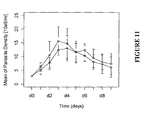
- the results of this counting made it possible to plot the curve which translates the median value of the parasitic density of the 2 categories of isolates LV and LLC ( Figure 11 ).
- the results of the counting of forms PNA- and PNA + of the two types of isolates also made it possible to plot the curves which translate the average density ( Figure 12 ) as well as the percentages ( Figure 13 ) of PNA - forms (PNA-/PNA- + PNA+) resulting from the 2 categories of isolates LV and LLC of L. infantum.
- RT-PCR reverse-transcribed and amplified total RNA extracted from PNA + and PNA - forms purified from stationary phase cultures of the isolates.
- Differentiated parasites were negatively selected by peanut agglutinin (PNA) as previously described (Louassini et al., 1998). Parasites were collected and resuspended at a density of 1- 2x10 8 /ml, with 50 ⁇ g/ml peanut agglutinin in SIM-FCS for 30 min at room temperature.
- PNA peanut agglutinin
- RNA was assessed using a gene-quant spectrophotometer (Amersham) and its quality by gel electrophoresis for the presence of the three distinct ribosomal bands (18S, 24S ⁇ and 24S ⁇ ).
- Messenger RNAs were then purified from the DNase 1-treated RNA using mRNA purification kit according to the manufacturer's instructions (Amersham, Pharmacia Biotech) and used for cDNA synthesis.
- the reaction mixture contained 1 X Reverse Transcription (RT) buffer (Invitrogen), 40 UI RNasin (Promega) as RNase inhibitor, 200 ⁇ M each dNTP, 0,5 ⁇ g/ ⁇ l of oligo (dT) 15 primer (Promega) and 200 UI/ ⁇ l of SuperScript II TM Rnase H - Reverse Transcriptase enzyme (Invitrogen) in a final volume of 20 ⁇ l. After 1 h incubation at 42°C, heating for 15 min at 70°C stopped the reactions.
- RT Reverse Transcription
- the screened library was constructed from a clone of the French isolate, LEM1317 (MHOM/FR/-82/LEM356-cl1317) (Ravel et al., 1995a; Wincker et al., 1996; Wincker et al., 1997; Britto et al., 1998; Ravel et al.; 1999; Tamar et al., 2000) considered at the time of the study as a reference for defining linkage groups and chromosomal assignment of probes.
- This parasite clone was further characterized by the relative simplicity of its karyotype and the clear separation of chromosomes, particularly chromosome 5.
- chromosome 5 was separated by PFGE on agarose gels, purified from the gels and randomly sheared by sonication into about 1 kb size fragments. The fragments were repaired and were blunt-end cloned into the EcoRV site of pBluescript II SK plasmids. The ligation products were transformed into competent XL1 Blue E.coli cells and the library was plated on LB agar medium containing 50 ⁇ g ml -1 ampicillin, 50 ⁇ g ml -1 X Gal and 100 mM IPTG for white/blue selection. 2400 recombinant clones obtained were transferred to 96 well microtiter plates to generate arrayed colonies on nylon filters in replicate, which were used for hybridization.
- the plasmid DNAs were isolated according to the alkaline lysis method (Sambrook et al., 1989). A double enzymatic digestion using PstI and XhoI that have sites flanking the cloning EcoRV site, determined size of the inserts. When internal restriction sites were observed, the size of the insert was confirmed by PCR using the vector primers. 2 ⁇ g of each recombinant plasmid DNA were then sequenced using 80 pmol of either T3 or T7 primer with the Big Dye TM Terminator Cycle Sequencing Ready Reaction kit (Perkin Elmer) on ABI prism 377 automated DNA sequencer.
- the inventors also used the Artemis Comparative Tool (ACT) (Carver et al., 2005) to compare these sequences ( L. infantum LEM1317) with those in databases of L. infantum clone JPCM5 (MCAN/98/LLM-877) and L. major Friedlin MHOM/IL/81/Friedlin (LmjF). Sequence alignment was analysed by the clustal W program. The function of the predicted proteins was extracted from genedb database. The last update of in silico sequence analysis was done in September 2007 using the version 3 of L. infantum genome data.
- ACT Artemis Comparative Tool
- RNA samples Two ⁇ g of total RNA were used for each 20 ⁇ l RT reaction. PCR reactions on cDNA were done in duplicate in 50 ⁇ l using Go Taq DNA polymerase (Promega, Biogene- Tunis). The constitutively expressed ⁇ -tubulin gene (LinJ13_V3.0330), and a gene preferentially expressed in metacyclic stage, Meta 1 (LinJ17_V3.0990) were used as controls for RT-PCR analysis. Eight genes corresponding to the first 6 tags analysed were selected to assess expression by RT-PCR in both isolates. Primers listed in Table I, were designed using the program genefisher (http://bibiserv.techfak.uni-bielefeld.de/genefisher/) based on the L.
- Table I List of forward and reverse primer sets used for RT-PCR reactions.
- Targeted gene Tag code Primers code Product size Position Forward primer sequence (5'-3') Reverse primer sequence (5'-3') TmF Tm R LinJ35_V3. 3420 15F5 3547F/R 600 1398- 1998 GCGTCGAAGATGGACGTG GA (SEQ ID NO: 1) GTCCTCMCAGCTG CAGCTT 2) (SEQ ID NO: 62 61 LinJ05_V3.
- Primer pairs (3547, LAT, 517, 542, 582, NR, LT7 and MAP) were designed to amplify sequences of a selection of 8 genes associated with expressed tags identified in this study; Primers Tub and met were designed within ⁇ -Tubulin gene that is constitutively expressed in Leishmania promastigotes, and Meta 1 gene that was shown to be preferentially expressed in metacyclic stage of different Leishmania species, respectively. Code of targeted genes was extracted from genedb Database of L. infantum. Product size was calculated according to primer positions. TmF and TmR correspond to melting temperature of forward and reverse primers, respectively.
- the 50 ⁇ l PCR reactions contained 1 ⁇ l of cDNAs obtained from PNA+ or PNA- parasites, or 50 ng of genomic DNA (as control), 200 ⁇ M of each dNTP, 5X Go Taq buffer (Promega - Tunis), 30 pmol of forward and reverse primers and 1,5 Units of Go Taq DNA polymerase (Promega - Tunis).
- the cycle conditions were: 25X [1 min at 94°C, 30 S at 60°C, 2 min at 72°C] and 2 min final elongation at 72°C for primers pairs (3547, LAT, 517, 582, MAP and LT7); and 25X [1 min at 94°C, 30 S at 58°C, 2 min at 72°C] and 5 min final elongation at 72°C for the two remaining primer pairs (NR and 542).
- ⁇ -tubulin was amplified as follows: after an initial 5 min at 94°C, 25X [1 min at 94°C, 30 S at 55°C, 1 min at 72°C] and 5 min final elongation at 72°C.
- Meta 1 primers the inventors used 2 min at 94°C, 25X [1 min at 94°C, 1 min at 50°C, 1 min at 72°C] and 5 min final elongation at 72°C.
- infantum isolates MHOM/TN/94/LV50 and MHOM/TN/96/DREP14, respectively obtained from VL and CL cases.
- a indicates the code of the plasmid colony.
- b summarizes results of the library screening with transcriptome probes of the two isolates LV50 (MHOM/TN/94/LV50) and DREP14 (MHOM/TN/96/DREP14), where (+) means positive signal and (-) means negative signal.
- c corresponds to the size of insert that was defined by double digestion and/or PCR.
- d indicates chromosome assignment by omniblast on Leishmania databases. Significance is defined as a percent of homology ranging between 80 % and 100 % and e-value ⁇ 10 -6 .
- e corresponds to position on version 3 of L. infantum genome overlapped by sequence reads of the inserts. They are here considered as expressed genomic tags and were assigned the code of the corresponding inserts. When the tag overlaps a coding sequence, the gene identifier is indicated in bold.
- the blast search analysis allowed chromosomal assignment of the inserts based on the annotation provided by the Leishmania genome projects.
- 5 inserts corresponded to unique loci.
- initial searches identified a tag on chromosome 5 but with the progress of genome projects, 5 additional significant hits were also obtained on chromosomes 36, 27, 1, 17 and 15 in order of increasing p-value (see Table III), bringing loci corresponding to the 6 inserts to a total of at least 11 on 8 chromosomes.
- Table III p-value of 14D9 Tag a Position of tag b Chromosome c Percentage identity d e-value e Score hit f 14D9 138503-138384 5 100.00 5.8e-063 238.4 14D9 1047672-1047791 36 99.17 1.4e-060 230.4 14D9 94124-94005 27 99.17 1.4e-060 230.4 14D9 60240-60359 1 98.33 3.4e-058 222.5 14D9 619727-619620 17 100.00 8.4e-056 214.6 14D9 331701-331818 15 98.32 3.3e-055 212.6 a . Tag name. b .
- c . indicates the chromosomal localization of the tag 14D9.
- d . indicates the percentage identity of the tag 14D9 with the sequences of L. infantum JPCM5 (MCAN/98/LLM-877).
- e . indicates the statistical score non-dependent upon the size of the hit which gives a measure of similarity.
- f . indicates the statistical zcore dependent on the size of the hit and giving a measure of similarity.
- tags on chromosomes 5, 4 and 35 were further characterized as regards annotation provided by the L. major and L. infantum genome projects.
- Tags 12D5, 12F8 and 15F5 were found overlapping coding sequences (CDS) encoding for a methylthioadenosine phosphorylase (LinJ05_V3.0830) and for hypothetical conserved proteins (LinJ04_V3.0080 and LinJ35_V3.3420), respectively.
- CDS coding sequences
- the remaining tags mapped within intergenic positions (19C5, 14B9 and 14D9) on chromosome 5 between an upstream and a downstream genes, all transcribed from the same strand (Tables II and IV). Table IV. List of genes associated to a selection of 6 expressed tags.
- Genomic environment of the tags was deduced from annotations on version 3 of public release of L. infantum genome. Three tags were found within coding sequences while the others were intergenic. Genes upstream and downstream the tags in the transcription units are listed on the Table IV. Of the 15 genes listed, 8 were randomly selected for RT-PCR expression analysis. Code of corresponding primers used in RT-PCR experiments appears in parenthesis.
- Table V lists GO (Gene Ontology) annotation provided by genedb for corresponding genes in L. major , as regards biological process, cellular component, molecular function and attribution to super family.
- the GO annotation linked the genes to biological processes like amino acid salvage (GO: 0043102), proteolysis (GO: 0006508), electron transport (GO: 0006118), ATP synthesis coupled proton transport (GO: 0015986), acetyl CoA biosynthetic process (GO: 0006085), microtubule- based process (GO: 007017), mRNA capping (GO: 0006370), and DNA topological change (GO: 0006265).
- gene LinJ05_V3.0180 (tag 14B9) which encodes for a dihydrolipoamide branched chain transacylase has been described as under positive selection in a three Leishmania species comparative genomic analysis (Peacock et al., 2007).
- Two genes belong to the S-adenosyl-L- methionine dependent transferases super family (SSF53335) but are likely involved in different molecular functions (LinJ04_V3.0080 and LinJ35_V3.3430).
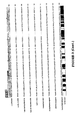
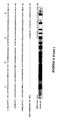
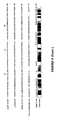
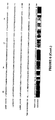
- Panels A to H correspond to amplification products of transcripts or genes LinJ05_V3.0170, LinJ05_V3.0820, LinJ05_V3.0180, LinJ35_V3.3420, LinJ05_V3.0420, LinJ05_V3.0660, LinJ04_V3.0080 and LinJ05_V3.0830 amplified by primer pairs 517, 582, LAT, 3547, 542, NR, LT7 and MAP, respectively.
- Control amplifications for constitutive expression in promastigotes ( ⁇ tubulin gene) is represented on panel I.
- Panel J corresponds to amplification of Meta 1 products described in previous studies as preferentially expressed in metacyclics. Genomic DNAs of the isolates constituted the internal controls of amplification.
- Tub is the code primer of the internal control corresponding to ⁇ -tubulin gene that is constitutively expressed in Leishmania promastigotes. Expression analysis was done as 2 sets of RT- PCR amplification, each including all genes; while expression of all genes was tested once during each set, transcripts of ⁇ -tubulin gene were amplified twice at the beginning and at the end to assess steady quality of the cDNA over the time of experiments. Two sets of measures were taken for each amplification by two different readers: (1-4 for Tub; 1-2 for the rest) for the first reader and (5-8 for Tub; 3-4 for the rest) for the second.
- b, c, d, e indicate band intensities measured by NIH image J program of target and control genes obtained by RT-PCR analysis of PNA+ (+) and PNA- (-) promastigote stages of visceral (LV 50) and cutaneous (DREP 14) L. infantum isolates.
- gene LinJ05_V3.0170 coding for a conserved hypothetical protein appears more expressed in PNA - and in PNA + forms of the VL isolate than in the CL one with comparable expression levels between stages within each isolate.
- pattern (C) 2 genes were more expressed in PNA - forms of the CL isolate than in the VL ones. Interestingly, in the VL isolate these genes have relative over- expression in the PNA + forms, while in the CL isolate they are over expressed in the PNA - forms. They encode for a dihydrolipoamide branched chain transacylase (LinJ05_V3.0660) and a nitroreductase- like protein (LinJ05_V3.0180), respectively.
- Pattern D (LinJ05_V3.0420) correspond to a gene that is constitutively expressed in the promastigote stages of both isolates.
- variable expression patterns highlighted here could reflect important intrinsic differences in biological processes like parasite differentiation, virulence, or pathogenicity.
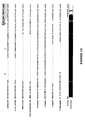
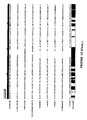
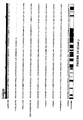
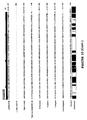
- figure 7 the hypothetical conserved protein LinJ35_V3.3420, figure 8 dynien light chain protein and figure 9 hypothetical conserved protein LinJ05_V3.820 compares these various proteins from Leishmania infantum with those the various species.
- RNAs small inhibiting or activating RNAs made using SELEX or other means of generating specific Aptamers.
- a significant advantage of this approach is that it does not require knowledge of the activity of the candidate virulence factor and so no experimental protocols need be developed or optimised for a particular candidate virulence factor. It exploits the natural affinity of some RNAs for proteins.
- Such methods involve:
- the resulting molecules/aptamers can in a further set of experiments be monitored for activity against the orthologue protein from humans and if found to have an effect thereon be discarded or subjected to modification and/or further evolution as appropriate so as to lose the ability to interact with the ortholgue whilst retaining the ability to affect the parasite protein.
- the Inventors have for the first time identified and characterized in silico , expressed genomic tags by differential screening of a L. infantum -chromosome 5 enriched library with cDNAs from late-log phase promastigotes of two Tunisian L. infantum isolates, LV50 and DREP14, isolated from VL and CL patients, respectively.
- the Leishmania virulence model classifies parasite virulence factors into invasive/ evasive, patho-antigenic and protective/cure determinants, and assumes that such molecular determinants regulate virulence, some of them acting as virulence suppressors or as enhancers (Chang and McGuire, 2002). Differences in gene expression in axenic promastigote forms would potentially relate to host-vector interactions or to the infection process of mammals during its early stages. It is also now well accepted that differentiation process is preparatory and adaptative to a change in host environment (Bates, 2006). Therefore, significant differences on stage-or isolate- expression would point to potential intrinsic intra-specific differences in gene expression, here assumed to be among the mechanisms interfering with the complex host-parasite-environment interplay. They could also reveal novel drug target candidates.
- Meta 1 gene is in discrepancy with previously described preferential expression in stationary phase promastigotes (assimilated to metacyclics) of L. major , L. donovani and L. mexicana (Uliana et al., 1999), possibly reflecting differences among Leishmania species or isolates.
- genes assessed in the course of differentiation process could be under transient or permanent up-down regulation (Saxena et al., 2007; Sirividya et al., 2007), therefore the expression of the genes here identified still need to be determined against time course in culture.
- MTAP 5' methylthioadenosine phosphorylase
- MTA methylthioadenosine
- MTA could play a regulatory role in the cell (Berasain et al., 2004).
- MTAP activity is therefore important avoiding accumulation of MTA.
- MTAP gene acts as a tumour suppressor gene (Tang et al., 2000), inhibiting cell proliferation. This is compatible with it (LinJ05_V3.0830) being a marker for differentiated stages of promastigotes, which do not multiply.
- the dihydrolipoamide branched chain transacylase or E2 subunit is a part of the mitochondrial branched-chain ⁇ -ketoacid dehydrogenase (BCKD) complex that have a central role catalyzing the irreversible oxidative decarboxylation of the branched-chain ⁇ -ketoacid deriving from leucine, isoleucine, and valine (Brosnan and Brosnan, 2006).
- BCKD mitochondrial branched-chain ⁇ -ketoacid dehydrogenase
- leucine regulates the activity of this complex and its limitation is known to induce autophagy, a mechanism recently shown associated to Leishmania differentiation (Besteiro et al., 2006).
- Nitroreductases are a group of enzymes that catalyse the conversion of aromatic nitro compounds to amines that also often exhibits toxic, mutagenic or carcinogenic activity. These proteins have recently raised enormous interest because of their central role in mediating nitroaromatic toxicity (Homma-Takeda et al., 2002; Padda et al., 2003; Sarlauskas et al., 2004), their potential use in bioremediation (Hannink et al., 2001), biocatalysis (Kaiyala et al., 2003) and their utility in activating prodrugs in directed anticancer therapies (Denny, 2002; Hu et al., 2003; Searle et al., 2004).
- Leishmania parasites In Leishmania parasites, it is interesting to note that it (LinJ05_V3.0660) is over- expressed in the PNA - parasites, as part of a process where they prepare to invade macrophages. The role of this gene in intracellular survival within macrophages or under hypoxic conditions will need to be determined.
- SEQ ID NO: 25 SEQ ID NO: 27, SEQ ID NO: 29, SEQ ID NO: 31, SEQ ID NO: 33 are all potentially useful as therapeutics for instance interference RNA, as diagnostic reagents for instance as part of a nucleic acid hybridisation based kit to detect Leishmania DNA and/or as a DNA vaccine.
- SEQ ID NO: 26 SEQ ID NO: 28, SEQ ID NO: 30, SEQ ID NO: 32, SEQ ID NO: 34 are all potentially useful as vaccines and as components in a diagnostic kit such as to determine the presence of anti-serum antibodies which would be indicative of Leishmania infection.
- kits and/or reagents for the detection of these antigens in urine or saliva samples are considered to be a very useful new diagnostic reagent.
Landscapes
- Chemical & Material Sciences (AREA)
- Life Sciences & Earth Sciences (AREA)
- Organic Chemistry (AREA)
- Health & Medical Sciences (AREA)
- Analytical Chemistry (AREA)
- Proteomics, Peptides & Aminoacids (AREA)
- Zoology (AREA)
- Wood Science & Technology (AREA)
- Engineering & Computer Science (AREA)
- Physics & Mathematics (AREA)
- Immunology (AREA)
- Microbiology (AREA)
- Molecular Biology (AREA)
- Biophysics (AREA)
- Biotechnology (AREA)
- Biochemistry (AREA)
- Bioinformatics & Cheminformatics (AREA)
- General Engineering & Computer Science (AREA)
- General Health & Medical Sciences (AREA)
- Genetics & Genomics (AREA)
- Tropical Medicine & Parasitology (AREA)
- Measuring Or Testing Involving Enzymes Or Micro-Organisms (AREA)
Abstract
Description
- The present invention relates to new methods to identify genes which affect the virulence of Leishmania. In addition the present invention also relates to methods to identify factors which can affect these virulence genes as well as to the use of such identified genes for use as therapeutics, diagnostic tools and vaccines.
- Leishmania parasites are members of the Trypanosomatidae family, responsible for a large spectrum of clinical manifestations called leishmaniasis that range from spontaneously healing skin ulcers to disfiguring muco-cutaneous lesions to fatal visceral disease. In the current Patent Application the two main classes of leishmaniases will be called visceral (VL) and cutaneous (CL). Visceral is used for any leishmaniasis pertaining to the internal organs and other internal tissues and cutaneous for any leishmaniasis pertaining to the skin.
- These insect vector-transmitted diseases have a worldwide distribution, are endemic in more than 88 countries and threaten the health of over 350 million people. Global prevalence is estimated to be more than 12 million while the annual incidence is 2 million cases (Murray et al., 2005). At least 20 Leishmania species are pathogenic to humans.
- Leishmania parasites have a digenetic life cycle involving a flagellated extracellular promastigote stage, encountered in the midgut of the sand fly vector and in axenic cultures and an aflagellated intracellular amastigote stage, which reside in macrophage phagolysosomes of the mammalian host.
- As they migrate within the sand fly digestive tract, the promastigotes undergo a number of morphological transformations leading to infective metacyclics, which are egested with the sand fly saliva during a blood meal (Kamhawi, 2006). This process is also accompanied with molecular changes reflected at different levels including the surface coat and metabolism (Louassini et al., 1998; 1999a; 1999b).
- Differences are also observed between promastigote and amastigote forms (Holzer et al., 2006; Saxena et al., 2007). In Rochette et al., 2008, genome wide expression analysis has been performed on L. major and L. infantum this work demonstrated substantial differences in gene expression patterns between these species at various developmental stages.
- Different approaches have been considered to identify life-stage specific products particularly at the infective metacyclic or amastigote stages. Such products constitute potential parasite virulence factors that could be associated with invasion, evasion, pathogenesis or parasite protection (Chang et al., 1999; Chang and McGuire, 2002; Chang et al., 2003).
- In many endemic countries, L. infantum parasites are responsible for visceral (VL) and cutaneous (CL) leishmaniasis (Belhadj et al., 2003; Pratlong et al., 2004; Ben Said et al., 2006; Campino et al., 2006). In addition, a number of infections remain asymptomatic (Kallel et al., 2007).
- This clinical variability is likely the result of a complex interplay of several inherently complex biological processes including host genetic factors, the host immune response, vectorial determinants and intrinsic parasite factors (Sulahian et al., 1997; Honoré et al., 1998). In this milieu, intrinsic differential levels of expression of genes/proteins between cutaneous and visceral L. infantum parasites are hypothesized to be among the mechanisms potentially involved in this important interplay.
- Such differentially expressed genes could constitute candidate virulence genes involved in Leishmania pathogenicity. Previous reports highlighted a correlation between gene dosage and virulence of L. major (Antoniazi et al., 2000) or clinical origin of L. infantum parasites (Guerbouj et al., 2001). Furthermore, two metabolic pathways (glycolysis and pentose phosphate) have been followed during L. infantum growth and differentiation, and significant variations in metabolism between a VL and a CL L. infantum isolate have been observed (Louassini et al., 1999a; 1999b).
- Furthermore, negative selection with peanut agglutinin (PNA) proved efficient in separating infective (PNA -) from non-infective (PNA +) L. infantum promasigotes (Louassini et al., 1998), which has opened the way to screen for and study differences in gene expression within infective and non-infective organisms from this species.
- In spite of the demonstrated validity of genomic or cDNA micro arrays in identifying genes differentially expressed in the different life stages of a Leishmania isolate of L. major, L. amazonensis or L. donovani (Saxena et al., 2003, Holzer et al., 2006, Leifso et al., 2007, Saxena et al., 2007), where in particular differential gene expression studies have been performed using microarrays comprising the complete genome of these organisms, such technologies are still restricted to a small number of researchers because of the cost and complexity of the equipment required to perform such studies. In addition these cost and complexity considerations, make it impractical to conduct a large number of small scale studies on particular isolates of interest.
- Therefore an objective of the present invention is to identify intrinsic differences in gene expression among Leishmania isolates which are correlated with their clinical origin, VL or CL, of these parasites or based upon other criteria, so allowing a differential selection of putative virulence factors to be made.
- To overcome the problems known in the prior art, the inventors have developed a new method which reduces the scope of the screen to a single chromosome or a library enriched for a specific single chromosome. This new methodology has a number of advantages, in particular this new method eliminates or minimises as far as possible the known problems with global screening methods, in particular the problem of the same genes products being identified in such global studies, because such gene products are intrinsically differentially expressed and/or are already known. In addition the inventor's new methods allow workers with less complex equipment to identify virulence factors from Leishmania and for quicker, smaller scale experiments to be conducted.
- Therefore according to a first aspect of the present invention there is provided a method to screen for at least one genetic element which is differentially expressed between a first Leishmania sample (L1) and a second Leishmania sample (L2), comprising the steps:
- a) generating a first cDNA pool and a second cDNA pool from said L1 and said L2 respectively;
- b) contacting at least a portion of a nucleic acid library comprising the partial genomic DNA content of a reference Leishmania isolate, with said first cDNA pool and said second cDNA pool;
- c) identifying at least one clone from said nucleic acid library with which said first cDNA pool and/or said second cDNA pool hybridise, so as to generate a first clone pool and a second clone pool respectively;
- d) isolating at least one clone from said first clone pool which is not present in said second clone pool;
- e) identifying said at least one genetic element which is differentially expressed between said L1 and said L2 from step d).
- In the present Patent Application, a genetic element is defined as any genomic DNA molecule coding for any peptide or RNA molecule or other element which has a biological effect or role in the organism being studied. In particular a genetic element may be a gene coding for a protein.
- In the present Patent Application, a Leishmania sample (L1 or L2) is defined as a source of RNA, such as a live or stored Leishmania strain in laboratory culture or an isolate from a patient, in both cases the sample can be at any stage in the Leishmania life cycle and the Leishmania sample can also be an extract of such a sample comprising RNA as well as potentially contaminants such as DNA, lipids, carbohydrates and/or peptides.
- In particular the first Leishmania sample (L1) and second Leishmania sample (L2) can be from the same isolate at different stages in the Leishmania life cycle or from different isolates.
- In the present Patent Application the reference Leishmania isolate can be the same as L1 or L2 or different. In any case this reference Leishmania isolate does not vary as it comprises genomic DNA.
- In the present Patent Application the first cDNA pool and second cDNA pool can be a collection of free nucleic acid molecules in solution or purified or a library of cloned cDNA molecules which can be maintained in a suitable bacterial or other host organism for iterative use.
- This new method therefore allows the screening of a Leishmania genomic DNA library comprising a portion of the total Leishmania genome, for genetic elements such as gene products which are differentially expressed between two selected Leishmania samples. This method is simpler to perform than prior art methods and as it is more focussed the number of clones identified is smaller but the relevance of each of these clones is higher than in prior art methods. However to place this in context, the number of potential clones per chromosome identified is still high, in the experiments described herein fifty nine genes were identified of which fifteen have been investigated fully. This shows that the current methodology can identify a large number of genes which are differentially expressed between samples and which are chromosomally localised.
- Preferably said L1 is a visceral isolate and said L2 is a cutaneous isolate.
- As explained previously as well as the myriad of other factors affecting Leishmania infection, it is thought that intrinsic genetic and/or biochemical differences affect the result of Leishmania infection and therefore by comparing the expression patterns between visceral and cutaneous isolates the identification of visceral specific and/or cutaneous specific virulence factors may be identified.
- Alternatively said L1 is a promastigote life stage and said L2 is an amastigote life stage.
- Specific patterns of gene expression, probably transient in nature, which result in the differentiation of the parasite provide potentially large number of therapeutic and vaccine targets. For instance the specific targeting of an essential differentiation gene or combination of genes, would target differentiating organisms specifically so lessening potential side effects and also decreasing the overall selective pressure upon the organism per se to develop resistance.
- Alternatively said L1 is PNA+ and said L2 is PNA-.
- Most preferably, said L1 and said L2 are selected from the group comprising: L. infantum; L. major; L. braziliensis.
- Preferably said nucleic acid library comprises genomic DNA enriched for the DNA of at least one specific chromosome of a Leishmania isolate.
- In the present invention a nucleic acid library comprising genomic DNA enriched for the DNA of at least one specific chromosome is one in which the selection of a particular chromosome for instance by centrifugation or gel electrophoresis has been made and this DNA sample is used to create the DNA library.
- The inventors have used in the current work a fraction of a chromosome 5- enriched library generated by random mechanical shearing of a gel purified chromosome in the work described herein.
- By focussing on one chromosome, this increases the chances of identifying novel candidate virulence genes and of avoiding picking up the classical repeated gene families (e.g. PSA2, gp63, amastins, etc..).
Chromosome 5 shows size variability within L. infantum natural populations (Pages et al., 1989), includes relevant genes and markers like a protein associated with visceralization of L. tropica (Dillon et al., 1995), the trypanothione reductase (Ivens et al., 2005), L. infantum specific interspersed repeats (Ravel et al., 1995b) and polymorphic markers (Guizani et al., unpublished data). In addition, at the time of the study, sequencing of this chromosome through the Leishmania genome project was under way with available relevant data on a physical map (Ravel et al., 1995a, Tamar et al., 2000). The screening revealed a high proportion of inserts assigned to this chromosome. The others result either from contamination of thechromosome 5 cut from the gel with the closely migrating chromosome 4 or from presence of free DNA or destroyed promastigotes with the parasites embedded in the agarose blocks loaded on the PFGE gels. - Most preferably said at least one specific chromosome is selected from the group comprising: chromosome 4,
chromosome 5, chromosome 35. - According to a further aspect of the present invention the method comprises an alternative step e1));
- e1) the quantitative amplification of said at least one clone from said L1 and from said L2 to determine the levels of expression of said at least one clone in said L1 and said L2 and comparing the ratio of these expression levels; and
- a further step f);
- f) wherein when the ratio of said expression levels differs from 1, identifying genetic elements differentially expressed between said L1 and said L2.
- This elaboration of the method, allows the identification of virulence factors which are present in the two samples but which are expressed at different levels.
- In this method, amplification primers specific for the selected clone are designed based upon the sequence of the clone which can be determined using a first set of sequencing primers specific to the plasmid or vector in which the clone is present.
- As a further elaboration to this method, it is possible that two or more different life stages of two or more clinical isolates, or any other suitable combination, could be made for instance looking at PNA- and PNA+ phenotypes of visceral and cutaneous isolates, to compare gene expression levels of the selected clone (s) at different life stages of the same isolate and also to compare these expression levels at different life stages between isolates.
- Further elaborations of these methods involving extended time courses and/or phenotypic or biochemical selection steps are also encompassed within the present invention.
- Preferably said levels of expression of said at least one clone in said L1 and said L2 are also compared to a constitutively expressed endogenous gene in said L1 and said L2 respectively.
- In the present work the inventors have used alpha-tubulin as the constitutively expressed endogenous gene, but other constitutively active genes are also encompassed within the current technology, such as the various forms of actin, collagen and elastin.
- Most preferably said at least one genetic element which is differentially expressed, is characterised in that it affects the invasive, patho-antigenic and/or evasive characteristics; differentiation; virulence or pathogenicity of the Leishmania isolate from which it was identified.
- Using this new method the inventors have identified a number of Leishmania virulence factors including the following genes:
- LinJ04_V3.0080 (SEQ ID NO: 25) which encodes a conserved protein assigned to the S-adenosyl- L-methionine dependent methyltransferase super family (LT7) (SEQ ID NO: 26).
- LinJ05_V3.0830 (SEQ ID NO: 29) which encodes the methyl adenosine phosphorylase (MAP) (SEQ ID NO: 30).
- LinJ05_V3.0170 (SEQ ID NO: 27) which encodes a conserved hypothetical protein (SEQ ID NO: 28).
- LinJ05_V3.0180 (SEQ ID NO: 31) which encodes a Dihydrolipoamide branched chain transacyclase (LAT) (SEQ ID NO: 32).
- LinJ05_V3.0660 (SEQ ID NO: 33) which encodes a Nitroreductase-like enzyme (NR) (SEQ ID NO: 34).
- The names of these genes correspond to the international nomenclature adopted by genedb; they refer, when taking LinJ04_V3.0080 as an example, to a gene from L. infantum clone JPCM5 (Denise et al. 2006) and specifically Lin J refers to L. infantum clone J PCM 5 (MCAN/98/LLM-877). 04 designates the chromosome number, in this case chromosome 4. V3 refers to the version of the genome sequence of L. infantum clone JPCM5 (MCAN/98/LLM-877) and 0080 represents the number assigned to this gene in this version of the genome sequence.
- The characterisation of further aspects of these genes are described in the present Patent Application.
- According to a second aspect of the present invention, there is provided a method to determine the effect of at least one candidate Leishmania virulence factor (Lf0) identified by a method according to the current invention, comprising the steps:
- a) a first measurement of at least one virulence characteristic of a Leishmania culture comprising at least one endogenous copy of said Lf0 or an extract thereof,
- b) the elimination of the function of said Lf0 from said Leishmania culture or an extract thereof,
- c) a second measurement of said at least one virulence characteristic of said Leishmania culture of step b),
- d) the comparison of said first measurement and said second measurement and wherein these differ identifying a Leishmania virulence factor.
- In the present Patent Application virulence is defined as the relative capacity of a pathogen to cause damage in a host.
- In the present Patent Application a pathogen is defined as a microbe capable of causing host damage; the definition can encompass classical pathogens and opportunistic pathogens; host damage can result from either direct microbial action or the host immune response.
- In the present Patent Application a virulence factor is defined as a component of a pathogen that damages the host; can include components essential for viability, invasion or evasion from the host immune system, components that interfere with or modulate the host immune response or that interfere with the progression of the disease or the cure.
- In the present Patent Application a virulence characteristic is defined as a measurable effect of the pathogen or an extract thereof that damages the host or has one of the other listed effects; and which is measured in an in vitro or in vivo assay, for instance an ELISA or other antibody titre assay or a viability assay or another type of suitable assay.
- A standard way to measure the virulence of Leishmania is to compare strains to each other or to an experimental control in an assay normally based on macrophage cell culture or infection of a mammalian model organism. In either case the Parasitic Load in the cells is observed in in vitro culture or in a sample of tissue isolated from the lesions or the body of the model and is compared to a control.
- The measurement of the virulence characteristic can be qualitative or quantitative.
- The elimination of the function of the candidate Leishmania virulence factor can be achieved via gene replacement or site directed mutagenesis, knock in and knock out techniques and iRNA, as well as any other method known in the art to affect the function of a gene.
- According to a third aspect of the present invention, there is provided a method for identifying substances which modulate the effects of at least one candidate Leishmania virulence factor (Lf1) identified by a method according to the current invention, comprising the steps:
- a) measurement of at least one characteristic of Lf1;
- b) exposure of Lf1 to at least one candidate substance and the measurement of said at least one characteristic of Lf1;
- c) comparison of the measurements of said at least one characteristic of step a) and step b), and wherein these differ identifying a substance which specifically affects said Lf1.
- In the present Patent Application the characteristic of the Leishmania virulence factor (Lf1), which is measured can be any structural, biochemical, physiological or other measurable characteristic. In particular when the Leishmania virulence factor is an enzyme this characteristic can be a specific measurement of enzyme catalysis. Alternatively, in vivo or a cell free immunological assay could also be a measurement of the virulence characteristic of the whole Leishmania organism or an extract thereof, for instance a pfu (plaque forming units), ELISA or a viability assay.
- Preferably the method comprises the further steps of:
- d) measurement of at least one characteristic of a human orthologue (Hf1) of Lf1;
- e) exposure of Hf1 to at least one candidate substance and the measurement of said at least one characteristic of Hf1;
- f) comparison of the measurements of said at least one characteristic of steps d) and f); wherein when said measurements of steps a) and b) differ and said measurements of steps c) and d) do not differ, identifying a substance which specifically modulates the effects of said Lf1.
- In this further elaboration of this method, substances which specifically affect the Leishmania virulence factor or more generally have a greater effect upon the Leishmania virulence factor than the human orthologue can be identified. Such substances would be expected to have little effect upon humans hence minimising the detrimental side effects of the selected substance whilst retaining activity against the Leishmania virulence factor.
- Preferably this method may be performed in vitro.
- Alternatively this method may be performed in vivo.
- According to a fourth aspect of the present invention, there is provided a method for identifying substances specific for at least one candidate Leishmania virulence factor (Lf2) identified by a method according to the present invention, using a mixture of nucleic acids, wherein said method comprises at least the following steps:
- (a) bringing a mixture of nucleic acids which form a combinatorial library into contact with Lf2;
- (b) recovering nucleic acids which bind to Lf2, in step (a);
- (c) amplifying said nucleic acids with high affinity for Lf2, so as to obtain a mixture of nucleic acids, enriched in nucleic acids having a high affinity for said Lf2, and
- (d) identifying aptamers specific for Lf2, from the mixture obtained in (e).
- Preferably this method comprises the further replacement steps of:
- (al) bringing a mixture of nucleic acids which form a combinatorial library into contact with the human orthologue (Hf2) of Lf2;
- (b1) recovering a first subset S1 of nucleic acids which do not bind to Hf2, in step (a);
- (c1) bringing the
first subset S 1 into contact with Lf2; - (d1) recovering the nucleic acids which exhibit a high affinity with respect to Lf2;
- (e1) amplifying said nucleic acids with high affinity for Lf2, so as to obtain a mixture of nucleic acids, enriched in nucleic acids having a high affinity for said Lf2, and
- (f1) identifying aptamers specific for Lf2, from the mixture obtained in (e).
- This further elaboration of the method allows the selection of aptamers which have affinity to the Leishmania protein but not to the human orthologue. Such aptamers would be particularly advantageous as they would be expected to have little if any detrimental effects upon humans but to be very useful as diagnostic reagents and/or therapeutics against the Leishmania virulence factor.
- Aptamers can be created by the combinatorial method for aptamer generation called SELEX (Systematic Evolution of Ligands by EXponential enrichment) (Tuerk and Gold, 1990, Ellington and Szostak, 1990).
- Briefly, the principle of the SELEX method involves the selection, from a mixture of nucleic acids comprising random sequences, and by successive reiterations of binding, separation and amplification steps, of nucleic acid molecules (aptamers) exhibiting a defined binding affinity and a defined specificity for a given target. Thus, starting from a mixture of random nucleic acids, the SELEX method comprises more specifically the following steps:
- bringing the mixture of nucleic acids into contact with the target element (natural or synthetic polymers: proteins, polysaccharides, glycoproteins, hormones, receptors, antigens, antibodies, cell surfaces; small molecules: medicament, metabolites, cofactors, substrates, transition state analogs; tissues and in particular whole cells; viruses, etc.), under conditions which promote binding,
- separating the unbound sequences,
- dissociating the nucleic acid-target element complexes,
- amplifying the dissociated nucleic acids, so as to obtain a mixture enriched in ligands (aptamers), and
- repeating the binding, separation, dissociation and amplification steps, for the desired number of times.
- High-affinity and high specificity aptamers are selected from a vast random sequence oligonucleotide library (normally 1014 initial molecules). Evolution is directed by the reduction of initial pool complexity during reiterative cycles of physical separation of target-binding sequences from inactive variants, followed by their reamplification. Aptamers can theoretically be developed to any target, from a pure single molecule to complex systems like a whole cell (K.N. Morris, et al 1998, M. Blank, et al, 2001, Daniels, et al, 2003, Cherchia et al, 2005). The binding of an aptamer strongly depends on the conformational state of its target (Tuerk and Gold 1990).
- Recently subtractive SELEX has proved to be a useful tool in finding ligands to specific biological markers that distinguish a subtype of cells from cells of homologous origin. This strategy was used for the isolation of aptamers capable of distinguishing differentiated PC 12 cells from normal PC 12 cells (Wang J et al. 2003), and tumour vasculature from those of the normal brain (Blank et al, 2001).
- In the present Patent Application Leishmania virulence factor Ln and Leishmania virulence factor Lf2 can be the same or different molecules such as proteins or fragments thereof.
- According to a further aspect of the present invention said Lf1 or said Lf2 comprises a nucleic acid fragment encoded by a sequence selected from the group: SEQ ID NO: 25, SEQ ID NO: 27, SEQ ID NO: 29, SEQ ID NO: 31, SEQ ID NO: 33; or a portion of any one thereof or wherein said Lf1 or said Lf2 comprises a peptide sequence selected from the group: SEQ ID NO: 26, SEQ ID NO: 28, SEQ ID NO: 30, SEQ ID NO: 32, SEQ ID NO: 34, or of any one thereof.
- According to a fifth aspect of the present invention there is provided the use of an isolated or purified nucleic acid comprising a sequence selected from the group: SEQ ID NO: 25, SEQ ID NO: 27, SEQ ID NO: 29, SEQ ID NO: 31, SEQ ID NO: 33; SEQ ID NO: 35; SEQ ID NO: 36; SEQ ID NO: 37; SEQ ID NO: 38; SEQ ID NO: 39; SEQ ID NO: 40; SEQ ID NO: 41; SEQ ID NO: 42; SEQ ID NO: 43 or a fragment thereof, for the manufacture of a medicament, diagnostic reagent or vaccine for the treatment and/or detection of Leishmania infection.
- According to a sixth aspect of the present invention there is provided the use of an isolated or purified polypeptide comprising a sequence selected from the group: SEQ ID NO: 26, SEQ ID NO: 28, SEQ ID NO: 30, SEQ ID NO: 32, SEQ ID NO: 34; or a fragment thereof, for the manufacture of a medicament, diagnostic reagent or vaccine for the treatment and/or detection of Leishmania infection.
- According to a seventh aspect of the present invention there is provided the use of an isolated or purified nucleic acid comprising a sequence selected from the group: SEQ ID NO: 25, SEQ ID NO: 29, or a fragment thereof; or an isolated or purified peptide comprising a sequence selected from the group: SEQ ID NO: 26, SEQ ID NO: 30, or a fragment thereof; for the detection of differentiated promastigotes of Leishmania infantum.
- According to an eighth aspect of the present invention there is provided the use of an isolated or purified nucleic acid comprising a sequence selected from the group: SEQ ID NO: 27, or a fragment thereof; or an isolated or purified peptide comprising a sequence selected from the group: SEQ ID NO: 28, or a fragment thereof; for the detection of visceral parasites of Leishmania infantum and/or viscerisation of Leishmania infantum.
- According to a ninth aspect of the present invention there is provided the use of an isolated or purified nucleic acid comprising a sequence selected from the group: SEQ ID NO: 31, SEQ ID NO: 33 or a fragment thereof; or an isolated or purified peptide comprising a sequence selected from the group: SEQ ID NO: 32, SEQ ID NO: 34 or a fragment thereof; for the detection of cutaneous parasites of Leishmania infantum.
- According to a tenth aspect of the present invention, there is provided a diagnostic kit to perform a method of detecting differentiated promastigotes of Leishmania infantum, to detect visceral parasites of Leishmania infantum and/or viscerisation of Leishmania infantum or to detect cutaneous parasites of Leishmania infantum, the kit comprises:
- a substrate coated in at least one peptide selected from the group SEQ ID NO: 26, SEQ ID NO: 28, SEQ ID NO: 30, SEQ ID NO: 32, SEQ ID NO: 34;
- at least one anti-human immunoglobulin antibody;
- reagents to detect said at least one anti-human immunoglobulin antibody;
- instructions for use.
- According to this aspect of the present invention there is provided a diagnostic kit for use with a patient, comprising a substrate coated in one of the peptide virulence factors identified by the inventors. The kit also comprises an anti-human immunoglobulin antibody such that following exposure of the substrate to serum antibodies or another antibodies source from the patient, any patient antibodies attached to the peptide coated substrate can be visualised using the reagents also included in this kit, allowing a diagnosis to be made.
- For a better understanding of the invention and to show how the same may be carried into effect, there will now be shown by way of example only, specific embodiments, methods and processes according to the present invention with reference to the accompanying drawings in which:
-
Fig. 1 . RT-PCR of gene expression in PNA + and PNA - forms of visceral (LV 50) and cutaneous (Drep 14) L. infantum isolates. -
Fig. 2 . shows an alignment of the protein sequences of E2-BCKD from various organisms. -
Fig. 3 . shows an alignment of the protein sequences of MTAP from various organisms. -
Fig. 4 . shows an alignment of the protein sequences of NR from various organisms. -
Fig. 5 . shows an alignment of the protein sequences of LT7 from various organisms. -
Fig. 6 . shows an alignment of the protein sequences of 517 from various organisms. -
Fig. 7 . shows an alignment of the protein sequences of the hypothetical conserved protein LinJ35_V3.3420 and homologues from various organisms.. -
Fig. 8 . shows an alignment of the protein sequences of Dynein light chain protein and homolgues from various organisms.. -
Fig. 9 . shows an alignment of the protein sequences of the hypothetical protein LinJ05_V3.0820 and homologues from various organisms. -
Fig. 10 . shows an alignment of the protein sequences of LAT Dihydrolipoamide branched chain transacyclase (LinJ05_V3.0180) and homologues from various organisms -
Fig. 11 . Average parasitic density of isolates LV and LLC of L. infantum according to time. -
Fig. 12 . Average densities parasitic (106) of PNA- forms resulting from isolates LV and LLC of L. infantum according to time. -
Fig. 13 . Average percentages of PNA - forms resulting from isolates LV and LLC of L. infantum according to time. - There will now be described by way of example a specific mode contemplated by the Inventors. In the following description numerous specific details are set forth in order to provide a thorough understanding. It will be apparent however, to one skilled in the art, that the present invention may be practiced without limitation to these specific details. In other instances, well known methods and structures have not been described so as not to unnecessarily obscure the description.
- Two different L. infantum isolates from Tunisian VL and CL patients, selected from a cryobank on the basis of molecular studies (Barhoumi et al., unpublished results) were used: MHOM/TN/94/LV50 from a VL patient and MHOM/TN/96/DREP14 and from a CL patients, respectively that belong to the zymodemes MON-01 and MON-24, also described in other Mediterranean countries (Gramiccia, 2003; Pratlong et al., 2004; Baptista-Fernandes et al., 2007).
- MHOM/TN/94/LV50 is a code issued by the World Health Organization (WHO). It indicates host/country of isolement/year of insulation/code of the isolate.
- Upon thawing of the parasites, the parasites were cultivated on Coagulated Rabbit Serum (CRS) medium (Belkaid et al., 1996) at 26°C and were then transferred for mass culture to Schneider's Insect Medium (SIM) (Sigma) enriched with 10 % of Heat Inactivated Fetal Calf Serum (FCS) (GibcoBRL) supplemented with 2 mM L-Glutamine, 100 U/ml penicillin and 100 µg/ml streptomycin.
- They were plated at a density of 3x10⁶ parasites/ml as PNA + parasites and collected at precise time points. The inventors focused on day 4-parasites, which correspond to the early stationary phase and where both isolates presented peaks of PNA - parasites.
- The kinetics of growth was defined starting from the daily counting of parasitic density of the two isolates LV (LV49 and LV50) and two isolates LLC (DREP 05 and DREP 14) of L. infantum. The cultures were initiated with 3 x 10⁶ parasites/ml from the fourth day of culture where the parasites are in stage of active division. With an aim of homogenizing the parasitic cultures, a test PNA was carried out on these, during which PNA - forms were eliminated from the preparation and PNA+ forms were cultivated with the same starting density.
- Thus, two sets of selection were conducted on these cultures. Initiated at 3 x 10⁶ parasites/ml of PNA+ forms, growth was followed by daily counting of the parasitic density in triplicate. In parallel, the density of PNA - forms as that of the PNA + forms was evaluated after a PNA test and daily counting.
- The results of this counting made it possible to plot the curve which translates the median value of the parasitic density of the 2 categories of isolates LV and LLC (
Figure 11 ). The results of the counting of forms PNA- and PNA + of the two types of isolates also made it possible to plot the curves which translate the average density (Figure 12 ) as well as the percentages (Figure 13 ) of PNA - forms (PNA-/PNA- + PNA+) resulting from the 2 categories of isolates LV and LLC of L. infantum. - These curves show that the maximum of PNA - forms was reached at the fourth day of growth. Other peaks appear at
days 2, 6 and 8. These peaks probably represent the sequential process of differentiation which generates the differentiated morphotypes described by Rogers et al., 2002 and Gossages et al., 2003. - To compare mRNA expression levels among the isolates at different developmental stages, the inventors reverse-transcribed and amplified (RT-PCR) total RNA extracted from PNA + and PNA - forms purified from stationary phase cultures of the isolates. Differentiated parasites were negatively selected by peanut agglutinin (PNA) as previously described (Louassini et al., 1998). Parasites were collected and resuspended at a density of 1- 2x10⁸/ml, with 50 µg/ml peanut agglutinin in SIM-FCS for 30 min at room temperature. Agglutinated PNA + forms were separated by centrifugation for 5 min at 1100 rpm in the pellet from the free, non-agglutinated PNA - cells in the supernatant. PNA - forms were recovered in the pellet after centrifugation at 3500 rpm for 10 min. Both parasite pellets were washed twice with phosphate buffered saline solution, immediately resuspended in Trizol™ reagent (Invitrogen) and stored at -80°C for further analysis.
- Total RNA was isolated using Trizol™ (Invitrogen) following the manufacturer instructions. 2x10⁸ L. infantum PNA + and PNA - promastigotes from early stationary phase were resuspended in 1 ml Trizol reagent. Extracted RNAs were treated with (40 UI) DNase I-RNase free (Boehringer Mannheim, Germany) in (6 mM MgCl2, 40 mM Tris-
HCl pH 8, and 200 mM KCl) for 1 h at 37°C. The RNA was then phenol/chloroform extracted and DNAse treatment was assessed by PCR using "α-tubulin" primers. - No amplification was observed at this stage. The quantity of RNA was assessed using a gene-quant spectrophotometer (Amersham) and its quality by gel electrophoresis for the presence of the three distinct ribosomal bands (18S, 24Sα and 24Sβ). Messenger RNAs were then purified from the DNase 1-treated RNA using mRNA purification kit according to the manufacturer's instructions (Amersham, Pharmacia Biotech) and used for cDNA synthesis. The reaction mixture contained 1 X Reverse Transcription (RT) buffer (Invitrogen), 40 UI RNasin (Promega) as RNase inhibitor, 200 µM each dNTP, 0,5 µg/µl of oligo (dT)15 primer (Promega) and 200 UI/µl of SuperScript II™ Rnase H- Reverse Transcriptase enzyme (Invitrogen) in a final volume of 20 µl. After 1 h incubation at 42°C, heating for 15 min at 70°C stopped the reactions. Quality of the synthesized cDNA was assessed using 1 µl to amplify an 800 bp fragment of the constitutively expressed α-tubulin gene in promastigotes using "α-tubulin" primers (see Table I for primer sequences). 10 µl of cDNAs were used to generate labelled expressed probes for library screening.
- The screened library was constructed from a clone of the French isolate, LEM1317 (MHOM/FR/-82/LEM356-cl1317) (Ravel et al., 1995a; Wincker et al., 1996; Wincker et al., 1997; Britto et al., 1998; Ravel et al.; 1999; Tamar et al., 2000) considered at the time of the study as a reference for defining linkage groups and chromosomal assignment of probes. This parasite clone was further characterized by the relative simplicity of its karyotype and the clear separation of chromosomes, particularly
chromosome 5. - In brief,
chromosome 5 was separated by PFGE on agarose gels, purified from the gels and randomly sheared by sonication into about 1 kb size fragments. The fragments were repaired and were blunt-end cloned into the EcoRV site of pBluescript II SK plasmids. The ligation products were transformed into competent XL1 Blue E.coli cells and the library was plated on LB agar medium containing 50 µg ml-1 ampicillin, 50 µg ml-1 X Gal and 100 mM IPTG for white/blue selection. 2400 recombinant clones obtained were transferred to 96 well microtiter plates to generate arrayed colonies on nylon filters in replicate, which were used for hybridization. - Following assumption of Akopyants et al., (2001), the inventors considered that 1/5th of the library would be enough to cover the expression of chromosome 5 (500 kb). So, the cDNAs from two L. infantum isolates taken at logarithmic phase were labelled with [α-32P] dCTP (3000 Ci/mmole, Amersham - Greece) with the Multiprime DNA labelling kit according to manufacturer's instructions (Amersham - Greece) and were used to probe 480 colonies (5 filters each). Hybridisation and washings were performed according to the manufacturer's instructions (Amersham) at 65°C.
- Specifically hybridization was performed over night at 65°C in 6X SSC, 5X Denhart, 0,5 % SDS and 50 ng of sonicated single stranded salmon sperm DNA. Five post-hybridization washes were performed at 65°C; twice with 2X SSC for 15 min, then once for 30 min with successively 2X SSC, 0,1 % SDS; 1X SSC, 0,1 % SDS and finally 0,1X SSC, 0,1 % SDS. Filters were exposed to X ray sensitive films for autoradiography (X OMAT-LS and XOMAT AR5, Kodack) at - 80 °C.
- Positive colonies were identified and grown in LB-ampicilline medium. The plasmid DNAs were isolated according to the alkaline lysis method (Sambrook et al., 1989). A double enzymatic digestion using PstI and XhoI that have sites flanking the cloning EcoRV site, determined size of the inserts. When internal restriction sites were observed, the size of the insert was confirmed by PCR using the vector primers. 2 µg of each recombinant plasmid DNA were then sequenced using 80 pmol of either T3 or T7 primer with the Big Dye TM Terminator Cycle Sequencing Ready Reaction kit (Perkin Elmer) on ABI prism 377 automated DNA sequencer.
- For nucleotide sequence homology searches, mapping and annotation of the insert sequences, the inventors used different bioinformatic programs and servers. Searches were done on BLAST at NCBI site (http://www.ncbi.nlm.nih.gov/blast/Blast.cgi) and Omniblast servers (http://www.sanger.ac.uk/projects/l.major/toolkit/blast-server.shtlm) on genedb database (http://www.genedb.org/). The inventors first predicted the location of the sequences on the L. major Friedlin chromosomes and with progress of L. infantum genome, actual positions were mapped using the artemis annotations of the chromosomes downloaded from the Sanger center website. The inventors also used the Artemis Comparative Tool (ACT) (Carver et al., 2005) to compare these sequences (L. infantum LEM1317) with those in databases of L. infantum clone JPCM5 (MCAN/98/LLM-877) and L. major Friedlin MHOM/IL/81/Friedlin (LmjF). Sequence alignment was analysed by the clustal W program. The function of the predicted proteins was extracted from genedb database. The last update of in silico sequence analysis was done in September 2007 using the version 3 of L. infantum genome data.
- Two µg of total RNA were used for each 20 µl RT reaction. PCR reactions on cDNA were done in duplicate in 50 µl using Go Taq DNA polymerase (Promega, Biogene- Tunis). The constitutively expressed α-tubulin gene (LinJ13_V3.0330), and a gene preferentially expressed in metacyclic stage, Meta 1 (LinJ17_V3.0990) were used as controls for RT-PCR analysis. Eight genes corresponding to the first 6 tags analysed were selected to assess expression by RT-PCR in both isolates. Primers listed in Table I, were designed using the program genefisher (http://bibiserv.techfak.uni-bielefeld.de/genefisher/) based on the L. major gene sequences (the only ones then available).
Table I. List of forward and reverse primer sets used for RT-PCR reactions. Targeted gene Tag code Primers code Product size Position Forward primer sequence (5'-3') Reverse primer sequence (5'-3') TmF Tm R LinJ35_V3. 3420 15F5 3547F/R 600 1398- 1998 GCGTCGAAGATGGACGTG GA (SEQ ID NO: 1) GTCCTCMCAGCTG CAGCTT 2) (SEQ ID NO: 62 61 LinJ05_V3. 0180 14B9 LAT F/R 500 313-813 CAATGAGAACCTGCATGT CGTTGG (SEQ ID NO: 3) GGAGGACGTGCTTCA ATTCATGGA (SEQ ID NO: 4) 64 64 LinJ05_V3. 0170 14B9 517 F/R 500 1292- 1792 CTTCTTCGTGTGGGTGAC GGTA (SEQ ID NO: 5) CCGGCGGCTCTTTCT CFGTC (SEQ ID NO: 6) 64 66 LlnJ05_V3. 0420 14D9 542 F/R 600 49-649 CTCGGCGAGCTCCTCTTTCGT (SEQ ID NO: 7) GTAGACGGCCCTCACTACATACCT (SEQ ID NO: 8) 64 64 LinJ05_V3. 0820 12D5 582 F/R 600 1072- 1672 ACATCCTTTAGCAGGAGG CCGAA (SEQ ID NO: 9) GCCTCCTCATCCTCG TTTCCATC (SEQ ID NO: 10) 64 64 LinJ05_V3. 0660 19C5 NR F/R 700 152-852 TCACGGCATCTTCGTCGA TGC (SEQ ID NO: 11) GCCACAGCAACACC AGCAGT (SEQ ID NO: 12) 63 63 LinJ04_V3. 0080 12F8 LT7 F/R 627 14-641 CTAGAAACGCAGAGTACA GC (SEQ ID NO: 13) CCCTGTACATGTCAC TCTCA (SEQ ID NO: 14) 60 60 LinJ05_V3. 0830 12D5 MAP 498 327-825 GACAAGACGTACATGCGCAA (SEQ ID NO: 15) ATGTGCTCCGGCTTT GTC (SEQ ID NO: 16) 60 56 LinJ13_V3. 0330 α- Tubulin TubF/R 808 1-809 ATGCGTGAGGCTATCTGC ATC (SEQ ID NO: 17) GTCAGCACGAAGTG GATGCGC (SEQ ID NO: 18) 54 60 LinJ17_V3 0990 Meta 1 MetF/R 319 16-335 TTGCTTGGCAAGCACAAG GTT (SEQ ID NO: 19) GCAGGAACGAGCTT GATGATG (SEQ ID NO: 20) 57 55 - Eight primer pairs (3547, LAT, 517, 542, 582, NR, LT7 and MAP) were designed to amplify sequences of a selection of 8 genes associated with expressed tags identified in this study; Primers Tub and met were designed within α-Tubulin gene that is constitutively expressed in Leishmania promastigotes, and
Meta 1 gene that was shown to be preferentially expressed in metacyclic stage of different Leishmania species, respectively. Code of targeted genes was extracted from genedb Database of L. infantum. Product size was calculated according to primer positions. TmF and TmR correspond to melting temperature of forward and reverse primers, respectively. - The adequacy of the primers designed to amplify the targeted genes, was confirmed by sequence alignment at the nucleotide level. Few nucleotide differences were observed. Conservation of the spacing between the primers was also confirmed. Finally, the inventors verified by ePCR on L. infantum sequence database using a local bioinformatics resource LBTx ("Leishmania Bioinformatic's ToolboX" Chakroun et al., 2007), to ensure that only the targeted genes would be amplified by the selection of primer pairs.
- Amplification of L. infantum DNA yielded products at the expected size with the respective primers. The 50 µl PCR reactions contained 1µl of cDNAs obtained from PNA+ or PNA- parasites, or 50 ng of genomic DNA (as control), 200 µM of each dNTP, 5X Go Taq buffer (Promega - Tunis), 30 pmol of forward and reverse primers and 1,5 Units of Go Taq DNA polymerase (Promega - Tunis).
- After the initial denaturation for 3 min at 94°C, the cycle conditions were: 25X [1 min at 94°C, 30 S at 60°C, 2 min at 72°C] and 2 min final elongation at 72°C for primers pairs (3547, LAT, 517, 582, MAP and LT7); and 25X [1 min at 94°C, 30 S at 58°C, 2 min at 72°C] and 5 min final elongation at 72°C for the two remaining primer pairs (NR and 542).
- α-tubulin was amplified as follows: after an initial 5 min at 94°C, 25X [1 min at 94°C, 30 S at 55°C, 1 min at 72°C] and 5 min final elongation at 72°C. For
Meta 1 primers, the inventors used 2 min at 94°C, 25X [1 min at 94°C, 1 min at 50°C, 1 min at 72°C] and 5 min final elongation at 72°C. - To be able to analyse the PCR results before endpoint, all PCR reactions were run for 25 cycles. The PCR products were analysed by electrophoresis on 1.5 % agarose gels containing ethidium bromide (0.5 µg/ml). Analysis was conducted in duplicate as 2 sets of experiments using different cDNA products from the same parasite pellets. Each set of experiments included all PCR reactions. α-tubulin amplification was done multiple times to assure steady quality of the cDNAs during a set of assays.
- Polaroids taken from the agarose gels of all experiments were scanned and signal intensity was analysed using NIH image J program (version 1.24) (http://www.rsb.info.nih.gov/iji/). The relative peak areas for targeted and control α-tubulin genes were estimated following the program instructions and were used to represent the relative product yield. Student t-test was used to compare the logarithm of the adjusted band intensity between groups. No correction for multiple testing was used.
- Five filters of the library were hybridized with radiolabelled log-phase cDNAs from the VL and CL isolates under study. The autoradiography revealed 23 colonies as follows: 8 hybridized to the CL cDNA, 14 to the VL cDNA and one reacted with both. The mean size of the inserts that ranged from 500 to 1100 bp was 800 bp. Sequences were determined entirely or partially at one or both ends using plasmid primers and were analysed using bioinformatic tools and resources after purification from vector sequences.
- Using Blast, sequence homologies were first searched for in the different public releases of L. major database and then in the L. infantum releases, as these occurred. All sequences searched generated hits. Homology percentage with sequences in databases ranged from 95 % to 100 % in case of L. infantum JPCM5 clone (LinJ) while it varied from 84 % to 96 % in case of L. major Friedlin (LmjF). The inventors decided to focus on the first six tags that were identified based on the early releases of the databases (Table II).
Table II. Features of 6 expressed tags identified by the screening of a chromosome 5-enriched plasmid library using cDNA from promastigote cultures of 2 L. infantum isolates causing VL or CL. Insert a Reacted with LV 50/DREP 14 b Insert size (bp) c Mapping Remarks f Significant hit on chromosomed Tag positiong on L. infantum e 12D5 +/- 700 5 300667-301512 LinJ05_V3.0830 Sequence overlapping a CDS 19C5 -/+ 800 5 221895-222514 Intergenic sequence 14B9 -/+ 600 5 53414-53852 Intergenic sequence 14D9 -/+ 1000 5 138503-138384 Intergenic sequence 12F8 +/- 800 4 30106-30971 LinJ04_V3.0080 Sequence overlapping a CDS 15F5 +/- 1000 35 1373311-1373894 LinJ35_V3.3420 Sequence overlapping a CDS Table II lists features relative to 6 tags identified by 6 inserts selected from the screening of a chromosome 5-enriched plasmid library with cDNAs from actively growing promastigotes of two L. infantum isolates, MHOM/TN/94/LV50 and MHOM/TN/96/DREP14, respectively obtained from VL and CL cases.
a indicates the code of the plasmid colony.
b summarizes results of the library screening with transcriptome probes of the two isolates LV50 (MHOM/TN/94/LV50) and DREP14 (MHOM/TN/96/DREP14), where (+) means positive signal and (-) means negative signal.
c corresponds to the size of insert that was defined by double digestion and/or PCR.
d indicates chromosome assignment by omniblast on Leishmania databases. Significance is defined as a percent of homology ranging between 80 % and 100 % and e-value ≤ 10-6 .
e corresponds to position on version 3 of L. infantum genome overlapped by sequence reads of the inserts. They are here considered as expressed genomic tags and were assigned the code of the corresponding inserts. When the tag overlaps a coding sequence, the gene identifier is indicated in bold.
f annotation related to the genomic site of the tag.
g the positions are defined compared to L. infantum clone JPCM5 (MCAN/98/LLM-877). - To validate this screening approach, a selection of 8 genes associated with 6 genomic expressed tags were used to analyse relative expression to α-tubulin by RT-PCR in PNA + and PNA - forms of the two isolates, which derived from early stationary phase, when PNA - counts were shown to peak for both isolates see example 1.1 above. Statistical analysis of the signal intensities observed in RT-PCR reactions at 25 cycles confirmed differences in expression in promastigote forms within and between isolates. This highlighted variability in gene expression among isolates. Polymorphic expression patterns were used to identify potential markers for differentiation, virulence or pathogenicity of L. infantum.
- Besides homology percentage, the blast search analysis allowed chromosomal assignment of the inserts based on the annotation provided by the Leishmania genome projects. Interestingly, the 6 inserts mapped to a total of 3 chromosomes; 4 were located on
chromosome 5, the remaining were on chromosomes 4 (N = 1) and 35 (N = 1) (Table II). 5 inserts corresponded to unique loci. In the case of 14D9, initial searches identified a tag onchromosome 5 but with the progress of genome projects, 5 additional significant hits were also obtained onchromosomes Table III p-value of 14D9 Taga Position of tagb Chromosomec Percentage identityd e-valuee Score hitf 14D9 138503-138384 5 100.00 5.8e-063 238.4 14D9 1047672-1047791 36 99.17 1.4e-060 230.4 14D9 94124-94005 27 99.17 1.4e-060 230.4 14D9 60240-60359 1 98.33 3.4e-058 222.5 14D9 619727-619620 17 100.00 8.4e-056 214.6 14D9 331701-331818 15 98.32 3.3e-055 212.6 a. Tag name.
b. Position of tag 14D9 on the 6 chromosomes defined by comparison to L. infantum JPCM5 (MCAN/98/LLM-877).
c. indicates the chromosomal localization of the tag 14D9.
d. indicates the percentage identity of the tag 14D9 with the sequences of L. infantum JPCM5 (MCAN/98/LLM-877).
e. indicates the statistical score non-dependent upon the size of the hit which gives a measure of similarity.
f. indicates the statistical zcore dependent on the size of the hit and giving a measure of similarity. - The tags on
chromosomes 5, 4 and 35 were further characterized as regards annotation provided by the L. major and L. infantum genome projects. Tags 12D5, 12F8 and 15F5 were found overlapping coding sequences (CDS) encoding for a methylthioadenosine phosphorylase (LinJ05_V3.0830) and for hypothetical conserved proteins (LinJ04_V3.0080 and LinJ35_V3.3420), respectively. The remaining tags mapped within intergenic positions (19C5, 14B9 and 14D9) onchromosome 5 between an upstream and a downstream genes, all transcribed from the same strand (Tables II and IV).Table IV. List of genes associated to a selection of 6 expressed tags. Tags Upstream gene CDS overlapped by the tag Downstream gene 12D5 LinJ05_V3.0820
Hypothetical conserved protein
(582)LinJ05_V3.0830
Methylthioadenosine phosphorylase
(MAP)LinJ05_V3.0840
Hypothetical protein19C5 LinJ05_V3.0650
Hypothetical conserved- LinJ05_V3.0660
Nitroreductase-like protein protein
(NR)14B9 LinJ05_V3.0170
Hypothetical conserved protein
(517)- LinJ05_V3.0180
Dihydrolipoamide branched chain transacyclase
(LAT)14D9 LinJ05_V3.0420
Dynein light chain protein
(542)- LinJ05_V3.0430
Hypothetical conserved protein12F8 LinJ04_V3.0070
DNa Topoisomerase IB-typeLinJ04_V3.0080
Hypothetical conserved protein small sub-unit
(LT7)LinJ04_V3.0090
Hypothetical conserved protein15F5 LinJ35_V3.3430
Hypothetical conserved proteinLinJ35.3420
Hypothetical conserved protein
(3547)LinJ35_V3.3410
Hypothetical conserved protein - Genomic environment of the tags was deduced from annotations on version 3 of public release of L. infantum genome. Three tags were found within coding sequences while the others were intergenic. Genes upstream and downstream the tags in the transcription units are listed on the Table IV. Of the 15 genes listed, 8 were randomly selected for RT-PCR expression analysis. Code of corresponding primers used in RT-PCR experiments appears in parenthesis.
- In total, 15 genes were associated to the 6 tags. This includes genes overlapping the tags and genes identified upstream and downstream in the transcription units. The inventors considered their gene ontology (GO) annotation as defined by L. major genedb taking into account biological process, cellular component and molecular function. Furthermore, assignment to super families based on presence of domains encoded by the genes was also considered (Table V).
Table V. Gene ontology annotations of the 15 genes associated to the 6 tags deduced from gene db. Gene product Identifier Biological process Cellular component Molecular function Super family domain Hypothetical protein, conserved LinJ05_V3.0820 Methylthioadenosine phosphorylase,
PutativeLinJ05_V3.0830 Ammo acid salvage
GO: 0043102Cytoplasm
GO: 0005737S-methyl-5-thioadenosine phosphorylase activity
GO : 0017061
transferase activity, transferring pentosyl groups
GO: 0016763Purine and uridine phosphorylases
SSF53167Hypothetical protein
Unknown functionLinJ05_V3.0840 Hypothetical protein, conserved LinJ05_V3.0650 Biological process
GO : 0008150
Proteolysis
GO: 0006508Cellular_component
GO : 0005775Protein binding
GO: 0005515
Subtilase activity
GO: 0004289RNI-like
SSF52047Nitrorcductasc-like protein hypothetical conserved protein LinJ05_V3.0660
LinJ05_V3.0170Electron transport
GO: 0006118Cellular_component
GO : 0005575Oxidoreductase activity acting on NADH or NADPH
nitrogenous group as acceptor
GO: 0016491FMN-dependent nitroreductase-like
SSF55469Dihydrolipoamide branched chain
transacylase, putativeLinJ05_V3.0180
EC 2.3.1.-acetyl-CoA biosynthetic process
GO : 0006085
Metabolic process
GO : 0008152Mitochondral alpha-ketoglutarate
dehydrogenase complex
GO: 0005947
Mitochondrion
GO : 0005739Acyltransferase activity GO: 0008415
Alpha-ketoacid dehydrogenase activity GO: 0003826
protein binding
GO: 0005515Single hybrid motif
SSF51230
Peripheral subunit-binding domain of
2-oxo acid dehydrogenase complex
SSF47005Dynein-light chain-protein, putative LinJ05_V3.0420 Microtubule-based process
GO: 0007017Microtubule associated complex
GO: 0005875Microtubule motor activity
GO: 0003777Hypothetical protein, conserved LinJ05_V3.0430 Metallo-dependent phosphatases SSF56300 DNA Topo-isomerase IB-type small
subunitLinJ04_V3.0070
EC 5.99.1.2DNA topological change
GO: 0006265Chromosome
GO: 0005694DNA binding
GO: 0003677
DNA topoisomerase type I activity
GO: 0003917DNA breaking-rejoining enzymes
SSF56349Hypothetical conserved protein LinJ04_V3.0080 S-adenosyl-L-methionine-dependent
methyltransferases
SSF53335Hypothetical conserved protein LinJ04_V3.0090 Hypothetical conserved protein LinJ35_V3.3430 mRNA capping
GO: 0006370
mRNA processing
GO: 0006397mRNA
(nucteoside-2'-o)
methyltransferase activity
GO: 0004483S-adenosyl-L-methionine-dependent
methyltransferases
SSF53335Hypothetical conserved protein LinJ35_V3.3420 ATP synthesis coupled proton
transport
GO: 0015986Proton-transporting two-sector
ATPase complex
GO: 0016469ATP binding GO: 0005524
Helicase activity GO: 0004386
Hydrogen ion transporting ATP synthase activity,
rotational mechanism GO: 0046933
Hydrogen ion transporting ATPase activity, rotational
Mechanism GO: 0046961Hypothetical conserved protein LinJ_35V3.3410 ARM repeat
SSF48371 - Table V lists GO (Gene Ontology) annotation provided by genedb for corresponding genes in L. major, as regards biological process, cellular component, molecular function and attribution to super family. In 8 cases, the GO annotation linked the genes to biological processes like amino acid salvage (GO: 0043102), proteolysis (GO: 0006508), electron transport (GO: 0006118), ATP synthesis coupled proton transport (GO: 0015986), acetyl CoA biosynthetic process (GO: 0006085), microtubule- based process (GO: 007017), mRNA capping (GO: 0006370), and DNA topological change (GO: 0006265). In addition for 3 other genes, the predicted proteins had domains assigning them to super families of metallo-dependent phosphatases (SSF56300), S-adenosyl-L- methionine dependent transferases (SSF53335) or ARM repeat (SSF48371). Finally, no annotation was provided in case of the remaining 4 genes. Of the 15 genes, 10 are identified as hypothetical proteins with or without GO annotation.
- In total, 9 genes encode for enzymes or proteins bearing enzymatic domains. Of particular interest, gene LinJ05_V3.0180 (tag 14B9) which encodes for a dihydrolipoamide branched chain transacylase has been described as under positive selection in a three Leishmania species comparative genomic analysis (Peacock et al., 2007). Two genes belong to the S-adenosyl-L- methionine dependent transferases super family (SSF53335) but are likely involved in different molecular functions (LinJ04_V3.0080 and LinJ35_V3.3430).
- Expression of 8 randomly selected genes associated with the 6 tags was assessed in duplicate experiments by RT-PCR in the two isolates DREP 14 and LV 50, in PNA + and PNA - parasites taken at the early stationary phase when PNA - counts peaked. The genes overlap tags, or correspond to upstream or downstream CDS in the transcription units (Table IV).
- They encode for proteins having unknown functions (LinJ05_V3.0170, LinJ05_V3.0820), for a dynein light protein (LinJ05_V3.0420), for enzymes like methylthioadenosine phosphorylase (LinJ05_V3.0830), a potential nitroreductase (LinJ05_V3.0660), a dihydrolipoamide branched chain transacylase (LinJ05_V3.0180), an enzyme involved in ATP synthesis coupled proton transport (LinJ35_V3.3420), or for a protein assigned to S-adenosyl- L- methionine- dependent methyltransferases super family (LinJ04_V3.0080) (Table IV and VII). The study also assessed expression of
Meta 1, a gene preferentially expressed in metacyclics of different Leishmania species (Uliana et al., 1999). As seen infigure 1 , the primers developed amplified efficiently and in a comparable way the DNAs of both isolates yielding products at the expected sizes. However, differences in intensities were observed for the different cDNAs indicating variations in gene expression levels in association with differentiation and/or according to the isolates (Figure 1 ). - In
figure 1 RT-PCR analyses were performed using comparable amounts of cDNAs synthesized from promastigotes taken at early stationary phase of promastigote cultures of isolates LV50 and DREP14. Lanes (+), (-) and (DNA) correspond to PNA + cDNA, PNA - cDNA and genomic DNA of the isolates. Panels A to H correspond to amplification products of transcripts or genes LinJ05_V3.0170, LinJ05_V3.0820, LinJ05_V3.0180, LinJ35_V3.3420, LinJ05_V3.0420, LinJ05_V3.0660, LinJ04_V3.0080 and LinJ05_V3.0830 amplified by primer pairs 517, 582, LAT, 3547, 542, NR, LT7 and MAP, respectively. Control amplifications for constitutive expression in promastigotes (α tubulin gene) is represented on panel I. Panel J corresponds to amplification ofMeta 1 products described in previous studies as preferentially expressed in metacyclics. Genomic DNAs of the isolates constituted the internal controls of amplification. - With the hypothesis that the amplification at 25 cycles did not reach end point, and as target DNA was amplified similarly in both isolates, the inventors measured and compared the signal intensities observed for the PNA - and PNA + cDNAs relative to the constitutively expressed α-tubulin gene in promastigotes (Purdy et al., 2005a; Srividya et al., 2007) (Table VI).
Table VI. Measured band intensity of targeted and control α-tubulin genes obtained by RT-PCR of mRNA of visceral (LV 50) and cutaneous (DREP 14) L. infantum PNA+ and PNA- stages. Code of target genesa LV50 (+)b LV50 (-)c drep14 (+)d drep14 (-)e 517 (1) 10,18 21,16 7,3 9,35 517 (2) 12,87 22,79 4,57 12,3 517 (3) 12,36 19,46 8,31 13,19 517 (4) 12,68 19,66 6,67 13,35 542 (1) 16,23 20,84 5,43 17,39 542 (2) 13,99 20,84 6,37 18,88 542 (3) 16,04 23,48 19,42 13,73 542 (4) 17,12 24,81 18,05 12,71 582 (1) 10,97 20,47 4,98 10,86 582 (2) 10,11 14,84 7,76 14,79 582 (3) 11,71 14,28 6,81 13,56 582 (4) 13,5 15,84 7,12 14,67 NR (1) 22,08 16,11 4,14 15,11 NR (2) 15,28 15,73 4,99 18,04 NR (3) 20,45 16,06 4,76 15,96 NR (4) 14,1 15,77 5,88 17,2 LAT (1) 17,23 17,98 6,58 16,66 LAT (2) 16,84 15,34 10,19 16,98 LAT (3) 19,03 17,96 6,59 15,82 LAT (4) 14,81 15,27 10,85 17,03 3547 (1) 3,72 36,91 3,17 7,96 3547 (2) 14,33 19,35 6,16 13,49 3547 (3) 3,99 35,75 2,89 7,66 3547 (4) 14,99 19,71 5,58 13,17 LT7 (1) 7,19 25,98 3,32 19,25 LT7 (2) 9,6 27,06 2,02 18,08 LT7 (3) 7,77 26,39 3,84 19,51 LT7 (4) 10,06 24,71 2,34 18,53 MAP (1) 6,08 26,27 2,88 20,09 MAP (2) 10,3 27,68 3,68 20,64 MAP (3) 6,67 25,47 3,01 20,25 MAP (4) 9,36 29,76 2,56 20,34 Meta (1) 14,1 20 10,72 22,84 Meta (2) 14,04 19,9 10,34 18,55 Meta(3) 12,11 20,54 10,31 23,79 Meta (4) 14,31 20,44 10,24 18,53 Tub (1) 17,91 22,08 13,65 15,2 Tub (2) 17,5 21,23 13,01 15,65 Tub (3) 11,34 17,44 15,99 18,8 Tub (4) 14,31 19,69 13,85 19,65 Tub (5) 16,47 22,17 14,25 15,55 Tub (6) 18,96 19,7 12,47 15,59 Tub (7) 12,2 18,56 14,79 18,88 Tub (8) 15,3 19,95 13,22 19,14 a517, 542, 582, NR, LAT, 3547, LT7, MAP and Meta 1 correspond to code of primers that amplified the following genes (see Table I), LinJ05_V3.0170, LinJ05_V3.0420, LinJ05_V3.0820, LinJ05_V3.0660, LinJ05_V3.0180, LinJ35.3420, LinJ04_V3.0080 and LinJ17_V3.0990, respectively. Tub is the code primer of the internal control corresponding to α-tubulin gene that is constitutively expressed in Leishmania promastigotes. Expression analysis was done as 2 sets of RT- PCR amplification, each including all genes; while expression of all genes was tested once during each set, transcripts of α-tubulin gene were amplified twice at the beginning and at the end to assess steady quality of the cDNA over the time of experiments. Two sets of measures were taken for each amplification by two different readers: (1-4 for Tub; 1-2 for the rest) for the first reader and (5-8 for Tub; 3-4 for the rest) for the second.
b, c, d, e indicate band intensities measured by NIH image J program of target and control genes obtained by RT-PCR analysis of PNA+ (+) and PNA- (-) promastigote stages of visceral (LV 50) and cutaneous (DREP 14) L. infantum isolates. - Interestingly, of the 9 genes evaluated, 8 were shown to have differential expression either between PNA + or PNA - promastigotes of the same isolate or among isolates for each form (Table VII).
Table VII. Statistical analysis of stage- and isolate- wise gene expression levels in LV 50 and DREP 14 isolates and in PNA + and PNA - promastigote stages. Primers Code LV 50 PNA (+)/PNA (-) DREP 14 PNA (+)/PNA (-) PNA (+) LV 50/DREP 14 PNA (-) LV 50/ DREP 14 Gene identifier Gene encoding for Log (relative Expression) ±Standard Error (p-value) Expression phenotype Log (relative Expression) ±Standard Error (p-value) Expression phenotype phenotype Log (relative Expression) ±Standard Error (p-value) Expression phenotype Log (relative Expression) ±Standard Error (p-value) Expression phenotype 517 LinJ05_V3. 0170 Hypothetical conserved protein 0.2801382±0.1831 1 (0.0955) -- 0.38384±0.2644 2 (0.0657) -- 0.5±0.532 (0.046) Up 0.399±0.234 (0.0058) Up 542 LinJ05_V3. 0420 Dynein light chain protein -0.081398±0.088 (0.432) -- - 0.17371±0.8736 (0.647) -- 0.31±0.6777 (0.412) -- 0.21799±0.337 (0.1337) -- 582 LinJ05_V3. 0820 Hypothetical protein -0.0727±0.25149 (0.5756) -- -0.49453±0.112 (0.0016) Down 0.45995±0.1666 9 (0.0123) Up 0.03813±0.22 (0.65) -- 3547 LinJ35_V3. 3420 Hypothetical conserved protein -0.996646±1.2276 (0.0886) -- - 0.66999±0.1495 (0.0134) Down 0.47967±0.6 (0.3732) -- 0.8±0.4776 (0.0035) Up LAT LinJ05_V3. 0180 Dihydrolipoamide branched chain transacyclase 0.2882±0.131271 (0.0044) Up -0.477±0.32268 (0.0088) Down 0.61±0.194 (0.0035) Up -0.1551±0.0832 (0.0236) Down LT7 LinJ04_V3. 0080 Hypothetical conserved protein -0.84181±0.2665 (0.0024) Down -1.696459±0.2 (0.0001) Down 1.02±0.664 (0.0051) Up 0.169936±0.226 (0.1) -- NR LinJ05_V3. 0660 Nitroreductase-like protein 0.372734±0.12233 (0.0003) Up -1.0±0.1635 (0) Down 1.1822±0.2119 (0) Up -0.1916±0.10 (0.0031) Down MAP LinJ05_V3. 0830 Methylthioadenosine phosphorylase -0.96839±0.3013 (0.0047) Down -1.6968±0.151 (0) Down 0.868±0.4422 (0.0077) Up 0.1396±0.2412 (0.1542) -- Meta 1 LinJ17_V3. 0990 Meta 1 protein -0.1270±0.172 (0.319) -- -0.4779±0.1979 (0.0107) Down 0.1698±0.2787 (0.194) -- -0.1811±0.3194 (0.218) -- - Expression of the genes relative to α-tubulin was evaluated by analysing the signal intensities using NIH image J program. The relative intensities were transformed in log values and were statistically compared between PNA + and PNA - forms for each L. infantum isolate (stage-wise comparison) and between the two isolates for PNA + or PNA - forms (isolate-wise comparison)." Up", "down" or "--" indicate over-, under-, or steady expression respectively. For instance in PNA +/PNA - column, "down" indicates that the gene is under-expressed in PNA+ as compared to PNA-.
- The comparison of PNA + and PNA - parasites of the same isolate showed significant over expression of 7 out of 9 genes in PNA - parasites of DREP 14 (CL) isolate; while in the case of the LV 50 (VL) isolate, only 4 of these showed differential expression: 2 (LinJ04_V3.0080 and LinJ05_V3.0830) being over expressed in the PNA - parasites and 2 (LinJ05_V3.0180 and LinJ05_V3.0660) over expressed in PNA + parasites (TableVII). For each isolate, no differences between expression in PNA - and PNA + parasites were observed for the two genes (LinJ05_V3.0170 and LinJ05_V3.0420). Interestingly, difference in expression of
Meta 1 gene was observed in PNA + and PNA - parasites of DREP 14, but not in case of LV 50 isolate. - The pairwise comparison of PNA + parasites showed up-regulation in 6 out of the 8 genes assessed in the VL isolate as compared to the CL. However, in case of isolate- wise comparison of PNA - parasites, 2 genes appeared up-regulated in the VL isolate (LinJ05_V3.0170 and LinJ35_V3.3420) and 2 others in the CL one (LinJ05_V3.0180 and LinJ05_V3.0660). No statistical differences were observed for the other genes in these forms. This highlights a variable gene expression not only when parasites undergo differentiation but also among isolates.
- Considering up, down or steady expression phenotypes observed by stage and isolate, 7 different expression patterns could be defined. In pattern (A), genes LinJ04_V3.0080 and LinJ05_V3.0830 (encoding for methylthioadenosine phosphorylase and a hypothetical conserved protein assigned to S-adenosyl- L-methionine dependent methyltransferase superfamily, respectively), the inventors had comparable over-expression in PNA- forms of the 2 isolates, while expression is stronger in PNA+ forms of VL isolate than in the CL ones. In another pattern (B), gene LinJ05_V3.0170 coding for a conserved hypothetical protein appears more expressed in PNA - and in PNA + forms of the VL isolate than in the CL one with comparable expression levels between stages within each isolate. In pattern (C), 2 genes were more expressed in PNA - forms of the CL isolate than in the VL ones. Interestingly, in the VL isolate these genes have relative over- expression in the PNA + forms, while in the CL isolate they are over expressed in the PNA - forms. They encode for a dihydrolipoamide branched chain transacylase (LinJ05_V3.0660) and a nitroreductase- like protein (LinJ05_V3.0180), respectively.
- In Pattern D (LinJ05_V3.0420) correspond to a gene that is constitutively expressed in the promastigote stages of both isolates.
- In pattern E (LinJ05_V3.0820) and F (LinJ35_V3.3420) differences are observed between PNA + or PNA- stages of the isolates, while in pattern G (LinJ17_V3.0990) the only difference observed relates to a difference in expression of the gene of DREP14.Finally, 4 genes (LinJ05_V3.0820 & LinJ05_V3.0830, and LinJ05_V3.170 & LinJ05_V3.180) map to the same transcription unit of
chromosome 5 and correspond to two pairs of tandem genes, the expression patterns observed did not show any physical correlation confirming previous observations (Saxena et al., 2003; 2007). - In total, there is a clear difference in expression patterns of the selection of genes under study between and within the two isolates in PNA + and PNA - forms. The variable expression patterns highlighted here could reflect important intrinsic differences in biological processes like parasite differentiation, virulence, or pathogenicity.
- Starting from the alignment of the peptide sequences of the various genes identified and resulting from parasites of the family of trypanosomatides and the vertebrate host (Homo sapiens) and while taking as a starting point the degree of homology, it is now possible to identify the insertion points and/or deletions between the various sequences.
- On this basis, a new strategy of targeting related but distinct parasite proteins identified as virulence factors which carry deletions and/or insertions has been adopted with the aim of developing new anti-pathogenic molecules.
- To validate this approach, of identifying or designing molecules of which bind selectively to protein of the parasite without affecting its human orthologue a range of techniques involving the modeling "in silico" of target proteins and the design methods using computer-assisted drug design, the inventors wish to develop selective inhibitors/activators of parasite virulence factors without affecting the endogenous orthologue.
- A comparison of the Leishmania, Trypanosome and Mammalian protein sequences for the putative virulence factors identified is shown below in Table VIII, IX and X below.

- The data and the codes of proteins in Table VIII, of each quoted organization come from the Uniprot databases and NCBI. The percentages of homology were given compared to the protein sequence of L. infantum by means of the Blast program using the UNIPROT and NCBI databases. The absence of homology was checked using Blastp on site NCBI databases NR. The absence of homology was confirmed in addition by aligning by means of the program Clustal X the sequences of the 2 proteins NR and MTAP of L. infantum to those annotated as such at the Human one.
Table IX- Code and function of the various fields present identified by Interpro, pfam and prosite. Protein Interpro pfam Prosite Methylthioadénosine phosphorylase
(MTAP)IPR010044 : methylthioadenosine phosphorylase
IPR001369 : purine phosphorylase,family 2PF00896 : phosphorylase family 2PS01240 : purine and other phosphorylase family 2 signatureDihydrolipoamide branched chain transacylase (E2-BCKD) IPR003016 2-oxo acid dehydrogenase, lipoyl binding site
IPR004167 : E3 binding
IPR000089 : biotinlipoyl attachment
IPR001078 : catalytic domain of components of various dehydrogenase complexes
IPR011057 : 2-oxo acid dehydrogenase acyltransferase component lipoyl binding sitePF02817 : e3 binding domain
PF00198 : 2-oxo acid dehydrogenases acyltransferase (catalytic domain)
PF00364 : biotin requiring enzymePS00189 : 2-oxo acid dehydrogenases acyltransferase component lipoyl binding site Nitroreductase like-protein (NR) IPR000415 : nitroreductase PF00881 : nitroreductase family - - All the data concerning the code of the various fields and the significance of each one were collected from genedb (HTTP: /www.genedb.org).

- Alignment of proteins including the structures 3D emphasizing the active and interactive sites identified are shown in
figures 2 E2-BCKD-alignment,figure 3 MTAP-alignment andfigure 4 NR-alignment,figure 5 LT7-alignmentfigure 6 517-alignment andfigure 10 . - These figures show the alignment of the protein sequences resulting from various organisms as well as the contents of the various sequences. Various alignments were carried with the program CLC.
- In
figure 7 the hypothetical conserved protein LinJ35_V3.3420,figure 8 dynien light chain protein andfigure 9 hypothetical conserved protein LinJ05_V3.820 compares these various proteins from Leishmania infantum with those the various species. - The results shown in
figures 2 to 10 , revealed the presence of sequences specific to the species Leishmania, as well as those specific to the family of trypanosomes and others which are shared between all the described organisms. These Leishmania or trypanosome specific sequences are candidates for the generation of specific inhibitors and/or activators of the relevant putative virulence factors and could form the basis for novel therapeutics, diagnostic reagents and/or vaccines. - According to a first experimental protocol, methods to identify compounds which affect the activity of the putative virulence factors involve the steps:
- 1) Cloning into a suitable expression vector such as a bacterial plasmid, the coding sequence of a putative or established virulence factor. Preferably this bacterial plasmid comprises a detectable tag, such as 6xHis, FLAG, GFP which is fused with the cloned coding sequence at the N or C terminus.
- 2) Expression of the cloned protein in soluble form or which is solubalised following expression and purification if necessary. Purification is preferably made using the detectable tag for instance using an anti-tag antibody or by other suitable means.
- 3) The enzymatic activity or another recordable characteristic of the protein is recorded. Preferably this is done in a high through put format, for example in a 96 well plate and the enzymatic activity or other characteristic is measured quantitatively.
- 4) The screening of the candidate compounds is performed by the incubation of the reactional mixtures with the candidate extracts/molecules/substances and detecting alterations in the quantitative characteristic being measured.
- According to a second experimental protocol the selection of small inhibiting or activating RNAs made using SELEX or other means of generating specific Aptamers. A significant advantage of this approach is that it does not require knowledge of the activity of the candidate virulence factor and so no experimental protocols need be developed or optimised for a particular candidate virulence factor. It exploits the natural affinity of some RNAs for proteins.
- Such methods involve:
- 1) The expression of the candidate virulence factor.
- 2) The construction or purchase of a SELEX library.
- 3) Screening of the SELEX library against the expressed candidate protein.
- 4) The collection of the interacting RNA molecules.
- 5) The random mutation of this pool of interacting RNA molecules and the screening of this first generation SELEX library against the candidate protein.
- 6) Further rounds of screening and mutagenesis as are necessary to evolve suitably specific RNA aptamers.
- In both of the above experimental protocols the resulting molecules/aptamers can in a further set of experiments be monitored for activity against the orthologue protein from humans and if found to have an effect thereon be discarded or subjected to modification and/or further evolution as appropriate so as to lose the ability to interact with the ortholgue whilst retaining the ability to affect the parasite protein.
- The Inventors have for the first time identified and characterized in silico, expressed genomic tags by differential screening of a L. infantum-
chromosome 5 enriched library with cDNAs from late-log phase promastigotes of two Tunisian L. infantum isolates, LV50 and DREP14, isolated from VL and CL patients, respectively. - The Leishmania virulence model classifies parasite virulence factors into invasive/ evasive, patho-antigenic and protective/cure determinants, and assumes that such molecular determinants regulate virulence, some of them acting as virulence suppressors or as enhancers (Chang and McGuire, 2002). Differences in gene expression in axenic promastigote forms would potentially relate to host-vector interactions or to the infection process of mammals during its early stages. It is also now well accepted that differentiation process is preparatory and adaptative to a change in host environment (Bates, 2006). Therefore, significant differences on stage-or isolate- expression would point to potential intrinsic intra-specific differences in gene expression, here assumed to be among the mechanisms interfering with the complex host-parasite-environment interplay. They could also reveal novel drug target candidates.
- Using a relative semi quantitative estimation, most of the genes analysed showed relative differential expression according to the isolate or the stages. More genes were found overexpressed in PNA - forms of the CL isolate than in the VL isolate. However, isolate-wise comparison of expression levels within PNA + or PNA - forms showed striking differences between the isolates. Comparison of PNA + forms in the 2 isolates suggests a tendency for overexpression of genes in the VL isolate. The observations emphasize on importance of gene expression at the isolate level and tend to indicate that gene expression might not be similarly regulated in the two isolates. As pointed earlier, VL parasites could have presumably a more vigorous metabolism (Guerbouj et al, 2001) and could be under more complex interaction patterns than CL parasites of the same species.
- A variable expression pattern between isolates and stages has revealed different phenotypes of which 3 were particularly interesting considering the predictions of the model of Chang and McGuire (2002).
- Pattern A supports the hypothesis that the genes (LinJ04_V3.0080 (SEQ ID NO:25) and LinJ05_V3.0830 (SEQ ID NO: 29)) could constitute markers of differentiated stages of L. infantum promastigotes.
- In pattern B, phenotypes observed suggest that gene LinJ05_V3.0170 (SEQ ID NO: 27) could constitute a marker for VL parasites or for visceralization.
- While pattern C seems to favour a potential implication of two other genes (LinJ05_V3.0180 (SEQ ID NO: 31) and LinJ05_V3.0660 (SEQ ID NO: 33)) in reduced virulence / pathogenicity of the cutaneous L. infantum parasites.
- Interestingly, pattern of
Meta 1 gene is in discrepancy with previously described preferential expression in stationary phase promastigotes (assimilated to metacyclics) of L. major, L. donovani and L. mexicana (Uliana et al., 1999), possibly reflecting differences among Leishmania species or isolates. Indeed, genes assessed in the course of differentiation process could be under transient or permanent up-down regulation (Saxena et al., 2007; Sirividya et al., 2007), therefore the expression of the genes here identified still need to be determined against time course in culture. - Of particular interest, the predicted function of 3 genes selected as candidate virulence factors on basis of expression patterns is compatible with roles suggested here, which renders some tentative conclusions about these genes very attractive and likely. More importantly such genes shown to be key players in pathologic processes or in detoxification deserve a special attention as potential drug targets against Leishmania parasites. In mammalian cells, the 5' methylthioadenosine phosphorylase (MTAP) is a key enzyme in the catabolism of methylthioadenosine (MTA), a powerful inhibitory by-product of polyamine biosynthesis (Nobori et al., 1996). MTA is known to interfere with various cell processes including regulation of gene expression, proliferation, differentiation and apoptosis. It is hypothesized that MTA could play a regulatory role in the cell (Berasain et al., 2004). MTAP activity is therefore important avoiding accumulation of MTA. MTAP gene acts as a tumour suppressor gene (Tang et al., 2000), inhibiting cell proliferation. This is compatible with it (LinJ05_V3.0830) being a marker for differentiated stages of promastigotes, which do not multiply.
- In mammalian cells, the dihydrolipoamide branched chain transacylase or E2 subunit is a part of the mitochondrial branched-chain α-ketoacid dehydrogenase (BCKD) complex that have a central role catalyzing the irreversible oxidative decarboxylation of the branched-chain α-ketoacid deriving from leucine, isoleucine, and valine (Brosnan and Brosnan, 2006). Of particular interest, leucine regulates the activity of this complex and its limitation is known to induce autophagy, a mechanism recently shown associated to Leishmania differentiation (Besteiro et al., 2006). Defect in this enzyme or in domains interacting with this enzyme in the BCKD complex are responsible for Maple Syrup Urine Disease, a genetic disorder in humans (Chuang et al., 2006). This enzyme was also shown to be involved in circulating immune complexes in cardiomyopathies or in hepatic diseases (Ansari et al., 1994; Nishioka et al., 1997). Coincidentally, in Leishmania the gene (LinJ05_V3.0180) is under positive selection possibly due to immune pressure (Peacock et al., 2007) and its role in parasite survival deserves more attention.
- Nitroreductases are a group of enzymes that catalyse the conversion of aromatic nitro compounds to amines that also often exhibits toxic, mutagenic or carcinogenic activity. These proteins have recently raised enormous interest because of their central role in mediating nitroaromatic toxicity (Homma-Takeda et al., 2002; Padda et al., 2003; Sarlauskas et al., 2004), their potential use in bioremediation (Hannink et al., 2001), biocatalysis (Kaiyala et al., 2003) and their utility in activating prodrugs in directed anticancer therapies (Denny, 2002; Hu et al., 2003; Searle et al., 2004). It has been shown also that these enzymes have chromate reduction activity (Kwak et al., 2003). In Leishmania, this gene is closer to bacterial genes than to those of fungi, other lower eukaryotes, suggesting their lateral transfer from bacteria (de Oliveira et al., 2007). In Mycobacterium tuberculosis, another intramacrophagic pathogen, nitroreductase gene is overexpressed in response to low oxygen conditions within macrophages (Purkayastha et al., 2002). In Leishmania parasites, it is interesting to note that it (LinJ05_V3.0660) is over- expressed in the PNA - parasites, as part of a process where they prepare to invade macrophages. The role of this gene in intracellular survival within macrophages or under hypoxic conditions will need to be determined.
- Based upon these findings of the inventors these the isolated nucleotide sequences SEQ ID NO: 25, SEQ ID NO: 27, SEQ ID NO: 29, SEQ ID NO: 31, SEQ ID NO: 33 are all potentially useful as therapeutics for instance interference RNA, as diagnostic reagents for instance as part of a nucleic acid hybridisation based kit to detect Leishmania DNA and/or as a DNA vaccine.
- Likewise the peptide sequences SEQ ID NO: 26, SEQ ID NO: 28, SEQ ID NO: 30, SEQ ID NO: 32, SEQ ID NO: 34 are all potentially useful as vaccines and as components in a diagnostic kit such as to determine the presence of anti-serum antibodies which would be indicative of Leishmania infection.In particular kits and/or reagents for the detection of these antigens in urine or saliva samples are considered to be a very useful new diagnostic reagent.
-


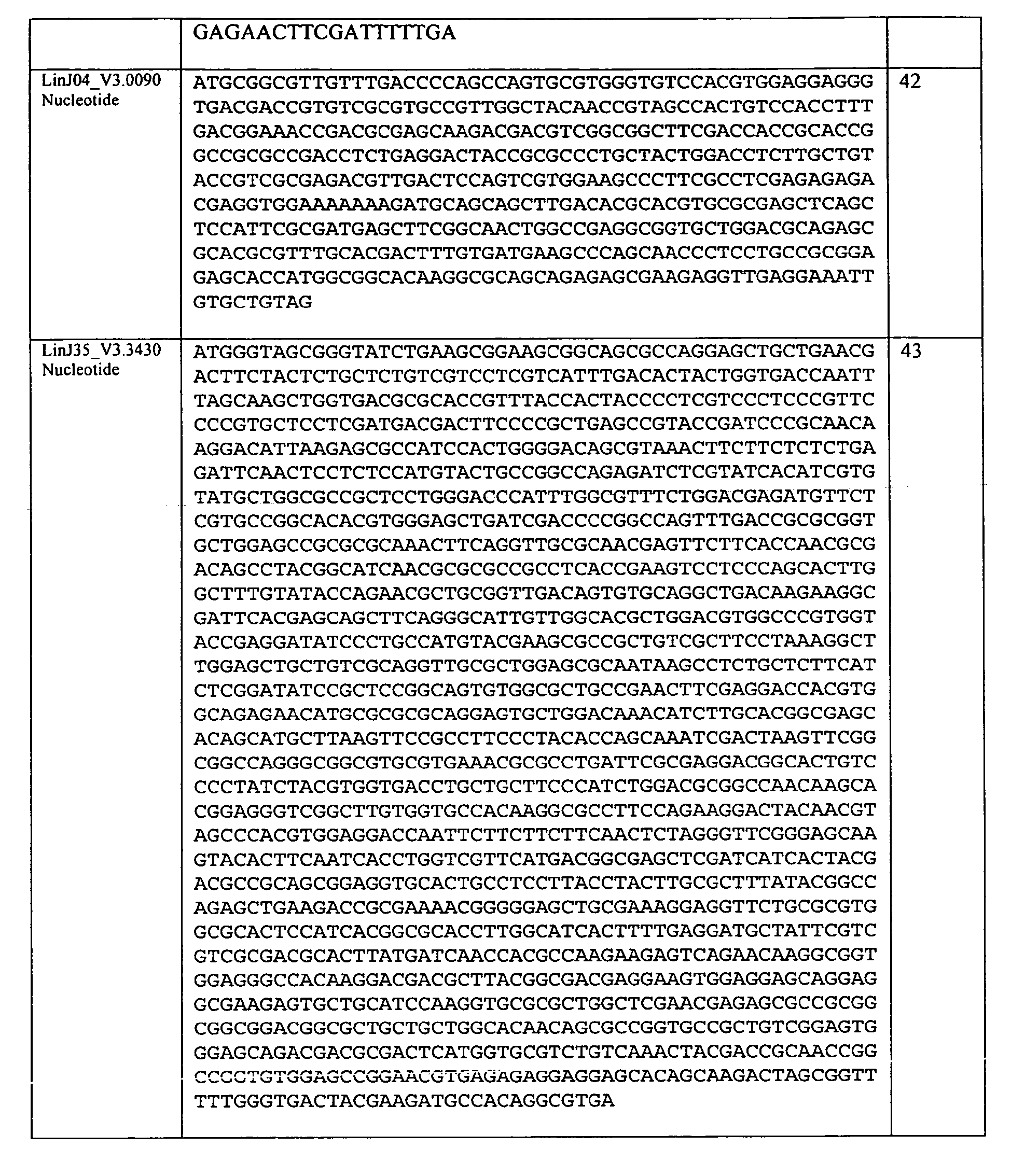
-
- Akopyants, N.S., Clifton, S.W., Martin, J., Pape, D., Wylie, T., Li, L., Kissinger, J.C., Roos, D.S., Beverley, S.M., 2001. A survey of the Leishmania major Friedlin strain V1 genome by shotgun sequencing: a resource for DNA microarrays and expression profiling. Mol. Biochem. Parasitol. 113, 337-340.
- Ansari, .A.A., Neckelmann, N., Villinger, F., Leung, P., Danner, D.J., Brar, S.S., Zhao, S., Gravanis, M.B., Mayne, A., Gershwin, M.E., 1994. Epitope mapping of the branched chain alpha-ketoacid dehydrogenase dihydrolipoyl transacylase (BCKD-E2) protein that reacts with sera from patients with idiopathic dilated cardiomyopathy. J Immunol. 153, 4754-4765.
- Antoniazi, S., Lima, H.C., Cruz, A.K., 2000. Overexpression of miniexon gene decreases virulence of Leishmania major in BALB/c mice in vivo. Mol. Biochem. Parasitol. 107, 57-69.
- Baptista-Fernandes, T., Marques, C., Roos Rodrigues, O., Santos-Gomes, G.M., 2007. Intra-specific variability of virulence in Leishmania infantum zymodeme MON-1 strains. Comp Immunol Microbiol Infect Dis. 30, 41-53.
- Bates, P.A., 2006. Housekeeping by Leishmania. Trends Parasitol. 22, 447-448.
- Bates, P.A., Rogers, M.E., 2004. New insights into the developmental biology and transmission mechanisms of Leishmania. Cur. Mol. Med. 4,601-609.
- Belhadj, S., Pratlong, F., Hammami, M., Kallel, K., Dedet, J.P., Chaker, E., 2003. Human cutaneous leishmaniasis due to Leishmania infantum in the Sidi Bourouis focus (Northern Tunisia): epidemiological study and isoenzymatic characterization of the parasites. Acta. Trop. 85, 83-86.
- Belkaid, P.M., Harrat, Z., Hamrioui, B., Thellier, M., Datry, A., Danis, M., 1996. A simple media for isolation and culture of Leishmania. Bull. Soc. Pathol. Exot. 89, 276-277.
- Ben Said, M., Guerbouj, S., Saghrouni, F., Fathallah-Mili, A., Guizani, I., 2006. Occurrence of Leishmania infantum cutaneous leishmaniasis in central Tunisia. Trans. R. Soc. Trop. Med. Hyg. 100, 521-526.
- Berasain, C., Hevia, H., Fernandez-Irigoyen, J., Larrea, E., Caballeria, J., Mato, J.M., Prieto, J., Corrales, F.J., Garcia Trevijano, E.R., Avila, M.A., 2004. Methylthioadenosine phosphorylase gene expression is impaired in human liver cirrhosis and hepatocarcinoma. Biochim. Biophys. Acta. 1690, 276-284.
- Besteiro, S., Williams, R.A., Morrison, L.S., Coombs, G.H., Mottram, J.C., 2006. Endosome sorting and autophagy are essential for differentiation and virulence of Leishmania major. J Biol Chem. 281, 11384-11396.
- M. Blank, et al., Systematic evolution of a DNA aptamer binding to rat brain tumor microvessels. Selective targeting of endothelial regulatory protein pigpen, J. Biol. Chem. 276 (19) (2001) 16464-16468.
- Britto, C., Ravel, C., Bastien, P., Blaineau, C., Pagès, M., Dedet, J.P., Wincker, P., 1998. Conserved linkage groups associated with large-scale chromosomal rearrangements between Old World and New World Leishmania genomes. Gene. 222, 107-117.
- Brosnan, J.T., Brosnan, M.E., 2006. Branched-chain amino acids: enzyme and substrate regulation. J Nutr. 136, 207-211.
- Campino, L., Pratlong, F., Abranches, P., Rioux, J.A., Santos-Gomes, G., Alves-Pires, C., Cortes, S., Ramada, J., Cristovao, J.M., Afonso, M.O., Dedet, J.P., 2006. Leishmaniasis in Portugal: enzyme polymorphism of Leishmania infantum based on the identification of 213 strains. Trop. Med. Int. Health. 11, 1708-1714.
- Carver, T.J., Rutherford, K.M., Berriman, M., Rajandream, M.A., Barrell, B.G., Parkhill, J., 2005. ACT: the Artemis Comparison Tool. Bioinformatics. 21, 3422-3423.
- Chakroun, A. S. Turki, L. Kebaier, H. Barhoumi, M. Saadi, Y. Smeti, I. Sahli, A. Guerbouj, S. Lahé madi, R. Ben Fadhel, M. Driss, M. Kaabi, B. Ajroud, K. Chemkhi, J. Ben Abderrazak, S. Guizani., I. 2007. LB Tx: A Tool Box for the Selection and Analysis of Potential Leishmania Targets for Intervention and Disease Control. International Conference on the Bioinformatics of African Pathogens and Disease Vectors» a Nairobi (Kenya) 22-01 Juin 2007, «www.lirmm.fr/france_afrique/Nairobi2007/Nairobi_program.pdf».
- Chang, K.P., Akman, L., Nielsen, J.S., 1999. Leishmania virulence and genetic heterogeneity. Clin. Dermatol. 17, 269-273.
- Chang, K.P., McGwire, B.S., 2002. Molecular determinants and regulation of Leishmania virulence. Kinetoplastid. Biol. Dis. 1, 1.
- Chang, K.P., Reed, S.G., McGwire, B.S., Soong, L., 2003. Leishmania model for microbial virulence: the relevance of parasite multiplication and pathoantigenicity. Acta. Trop. 85, 375-390.
- Cerchia L, Duconge F, Pestourie C, Boulay J, Aissouni Y, Gombert K, Tavitian B, de Franciscis V, Libri D. Neutralizing aptamers from whole-cell SELEX inhibit the RET receptor tyrosine kinase. PLoS Biol. 2005 Apr;3(4):e123. Epub 2005 Mar 22.Chuang, D.T., Chuang, J.L., Wynn, R.M., 2006. Lessons from genetic disorders of branched-chain amino acid metabolism. J. Nutr. 136, 243S-249S.
- de Oliveira, I.M., Henriques, J.A., Bonatto, D., 2007. In silico identification of a new group of specific bacterial and fungal nitroreductases-like proteins. Biochem Biophys Res Commun. 355, 919-925.
- D.A. Daniels, et al., A tenascin-C aptamer identified by tumor cell SELEX: systematic evolution of ligands by exponential enrichment, Proc. Natl. Acad. Sci. USA 100 (26) (2003) 15416-15421.
- Denny, W.A., 2002. Acridine derivatives as chemotherapeutic agents. Curr. Med. Chem. 9, 1655-1665.
- Denise H., Poot J, Jiménez M, Ambit A, Herrmann DC, Vermeulen AN, Coombs GH, Mottram JC. Studies on the CPA cysteine peptidase in the Leishmania infantum genome strain JPCM5. BMC Mol Biol. 2006 Nov 13; 7:42.
- Dillon, D.C., Day, C.H., Whittle, J.A., Magill, A.J., Reed, S.G., 1995. Characterization of a Leishmania tropica antigen that detects immune responses in Desert Storm viscerotropic leishmaniasis patients. Proc. Natl. Acad. Sci. USA. 92, 7981-7985.
- Ellington AD, Szostak JW. In vitro selection of RNA molecules that bind specific ligands. Nature. 1990 Aug 30;346(6287):818-22.
- Gramiccia, M., 2003. The identification and variability of the parasites causing leishmaniasis in HIV-positive patients in Italy. Ann Trop Med Parasitol. 97, 65-73.
- Guerbouj, S., Guizani, I., Speybroeck, N., Le Ray, D., Dujardin, J.C., 2001. Genomic polymorphism of Leishmania infantum: a relationship with clinical pleomorphism?. Infect. Genet. Evol. 1, 49-59.
- Hannink, N., Rosser, S.J., French, C.E., Basran, A., Murray, J.A., Nicklin, S., Bruce, N.C., 2001. Phytodetoxification of TNT by transgenic plants expressing a bacterial nitroreductase. Nat. Biotechnol. 19, 1168-1172.
- Holzer, T.R., McMaster, W.R., Forney, J.D., 2006. Expression profiling by whole-genome interspecies microarray hybridization reveals differential gene expression in procyclic promastigotes, lesion-derived amastigotes, and axenic amastigotes in Leishmania mexicana. Mol. Biochem. Parasitol. 146, 198-218.
- Homma-Takeda, S., Hiraku, Y., Ohkuma, Y., Oikawa, S., Murata, M., Ogawa, K., Iwamuro, T., Li, S., Sun, G.F., Kumagai, Y., Shimojo, N., Kawanishi, S., 2002. 2,4,6-trinitrotoluene-induced reproductive toxicity via oxidative DNA damage by its metabolite. Free. Radic. Res. 36, 555-566.
- Honore, S., Garin, Y.J., Sulahian, A., Gangneux, J.P., Derouin, F., 1998. Influence of the host and parasite strain in a mouse model of visceral Leishmania infantum infection. FEMS. Immunol. Med. Microbiol. 21, 231-239.
- Hu, L., Yu, C., Jiang, Y., Han, J., Li, Z., Browne, P., Race, P.R., Knox, R.J., Searle, P.F., Hyde, E.I., 2003. Nitroaryl phosphoramides as novel prodrugs for E. coli nitroreductase activation in enzyme prodrug therapy. J. Med. Chem. 46, 4818-4821.
- Ivens, A.C., Peacock, C.S., Worthey, E.A., Murphy, L., Aggarwal, G., Berriman, M., Sisk, E., Rajandream, M.A., Adlem, E., Aert, R., Anupama, A., Apostolou, Z., Attipoe, P., Bason, N., Bauser, C., Beck, A., Beverley, S.M., Bianchettin, G., Borzym, K., Bothe, G., Bruschi, C.V., Collins, M., Cadag, E., Ciarloni, L., Clayton, C., Coulson, R.M., Cronin, A., Cruz, A.K., Davies, R.M., De Gaudenzi, J., Dobson, D.E., Duesterhoeft, A., Fazelina, G., Fosker, N., Frasch, A.C., Fraser, A., Fuchs, M., Gabel, C., Goble, A., Goffeau, A., Harris, D., Hertz-Fowler, C, Hilbert, H, Horn, D, Huang, Y, Klages, S, Knights, A, Kube, M, Larke, N, Litvin, L, Lord, A., Louie, T., Marra, M., Masuy, D., Matthews, K., Michaeli, S., Mottram, J.C., Muller-Auer, S., Munden, H., Nelson, S., Norbertczak, H., Oliver, K., O'neil, S., Pentony, M., Pohl, T.M., Price, C., Purnelle, B., Quail, M.A., Rabbinowitsch, E., Reinhardt, R., Rieger, M., Rinta, J., Robben, J., Robertson, L., Ruiz, J.C., Rutter, S., Saunders, D., Schafer, M., Schein, J., Schwartz, D.C., Seeger, K., Seyler, A., Sharp, S., Shin, H., Sivam, D., Squares, R., Squares, S., Tosato, V., Vogt, C., Volckaert, G., Wambutt, R., Warren, T., Wedler, H., Woodward, J., Zhou, S., Zimmermann, W., Smith, D.F., Blackwell, J.M., Stuart, K.D., Barrell, B., Myler, P.J., 2005. The genome of the kinetoplastid parasite, Leishmania major. Science. 309, 436-442.
- Kaiyala, K.J., Thiele, T.E., Watson, C.H., Ramsay, D.S., 2003. Nitrous oxide-induced c-Fos expression in the rat brain. Brain. Res. 967, 73-80.
- Kallel, K., Ammari, L., Kaouech, E., Belhadj, S., Anane, S., Kilani, B., Chaker, E., 2007. Asymptomatic bearing of Leishmania infantum among tunisian HIV infected patients. Pathol. Biol. 19, 1-4.
- Kamhawi, S., 2006. Phlebotomine sand flies and Leishmania parasites: friends or foes? Trends. Parasitol. 22, 439-445.
- Kwak, Y.H., Lee, D.S., Kim, H.B., 2003. Vibrio harveyi nitroreductase is also a chromate reductase. Appl. Environ. Microbiol. 69, 4390-4395.
- Leifso, K., Cohen-Freue, G., Dogra, N., Murray, A., McMaster, W.R., 2007. Genomic and proteomic expression analysis of Leishmania promastigote and amastigote life stages: the Leishmania genome is constitutively expressed. Mol. Biochem. Parasitol. 152, 35-46.
- Louassini, M., Adroher, F.J., Foulquie, M.R., Benitez, R., 1998. Investigations on the in vitro metacyclogenesis of a visceral and a cutaneous human strain of Leishmania infantum. Acta. Trop. 70, 355-368.
- Louassini, M., Foulquie, M., Benitez, R., Adroher, F.J., 1999a. Citric-acid cycle key enzyme activities during in vitro growth and metacyclogenesis of Leishmania infantum promastigotes. J. Parasitol. 85, 595-602.
- Louassini, M., Foulquie, M.R., Benitez, R., Adroher, F.J., 1999b. Activity of key enzymes in glucose catabolism during the growth and metacyclogenesis of Leishmania infantum. Parasitol. Res. 85, 300-306.
- K.N. Morris, et al., High affinity ligands from in vitro selection: complex targets, Proc. Natl. Acad. Sci. USA 95 (6) (1998) 2902-2907.
- Murray, A., Fu, C., Habibi, G., McMaster, W.R., 2007. Regions in the 3' untranslated region confer stage-specific expression to the Leishmania mexicana a 600-4 gene. Mol. Biochem. Parasitol. 153, 125-132.
- Murray, H.W., Berman, J.D., Davies, C.R., Saravia, N.G., 2005. Advances in leishmaniasis. Lancet. 366, 1561-1577.
- Nishioka, M., Morshed, S.A., Parveen, S., Kono, K., Matsuoka, H., Manns, M.P., 1997. Antibodies to P450IID6, SLA, PDH-E2 and BCKD-E2 in Japanese patients with chronic hepatitis. J Gastroenterol Hepatol. 12, 862-868.
- Nobori, T., Takabayashi, K., Tran, P., Orvis, L., Batova, A., Yu, A.L., Carson, D.A., 1996. Genomic cloning of methylthioadenosine phosphorylase: a purine metabolic enzyme deficient in multiple different cancers. Proc. Natl. Acad. Sci. U.S.A. 93, 6203-6208.
- Padda, R.S., Wang, C., Hughes, J.B., Kutty, R., Bennett, G.N., 2003. Mutagenicity of nitroaromatic degradation compounds. Environ. Toxicol. Chem. 22, 2293-2297.
- Pages, M., Bastien, P., Veas, F., Rossi, V., Bellis, M., Wincker, P., Rioux, J.A., Roizes, G., 1989. Chromosome size and number polymorphisms in Leishmania infantum suggest amplification/deletion and possible genetic exchange. Mol. Biochem. Parasitol. 36, 161-168.
- Peacock, C.S., Seeger, K., Harris, D., Murphy, L., Ruiz, J.C., Quail, M.A., Peters, N., Adlem, E., Tivey, A., Aslett, M., Kerhornou, A., Ivens, A., Fraser, A., Rajandream, M.A., Carver, T., Norbertczak, H., Chillingworth, T., Hance, Z., Jagels, K., Moule, S., Ormond, D., Rutter, S., Squares, R., Whitehead, S., Rabbinowitsch, E., Arrowsmith, C., White, B., Thurston, S., Bringaud, F., Baldauf, S.L., Faulconbridge, A., Jeffares, D., Depledge, D.P., Oyola, S.O., Hilley, J.D., Brito, L.O., Tosi, L.R., Barrell, B., Cruz, A.K., Mottram, J.C., Smith, D.F., Berriman, M., 2007. Comparative genomic analysis of three Leishmania species that cause diverse human disease. Nat. Genet. 39, 839-847.
- Pratlong, F., Rioux, J.A., Marty, P., Faraut-Gambarelli, F., Dereure, J., Lanotte, G., Dedet, J.P., 2004. Isoenzymatic analysis of 712 strains of Leishmania infantum in the south of France and relationship of enzymatic polymorphism to clinical and epidemiological features. J. Clin. Microbiol. 42, 4077-4082.
- Pratlong, F., Rioux, J.A., Marty, P., Faraut-Gambarelli, F., Dereure, J., Lanotte, G., Dedet J.P., 2004. Isoenzymatic analysis of 712 strains of Leishmania infantum in the south of France and relationship of enzymatic polymorphism to clinical and epidemiological features. J Clin Microbiol. 42, 4077-4082.
- Purdy, J.E., Donelson, J.E., Wilson, M.E., 2005a. Leishmania chagasi: the alpha-tubulin intercoding region results in constant levels of mRNA abundance despite protein synthesis inhibition and growth state. Exp. Parasitol. 110, 102-107.
- Purdy, J.E., Donelson, J.E., Wilson, M.E., 2005b. Regulation of genes encoding the major surface protease of Leishmania chagasi via mRNA stability. Mol. Biochem. Parasitol. 142, 88-97.
- Purkayastha, A., McCue, L.A., McDonough, K.A., 2002. Identification of a Mycobacterium tuberculosis putative classical nitroreductase gene whose expression is coregulated with that of the acr gene within macrophages, in standing versus shaking cultures, and under low oxygen conditions. Infect. Immun. 70, 1518-1529.
- Quijada, L., Soto, M., Requena, J.M., 2005. Genomic DNA macroarrays as a tool for analysis of gene expression in Leishmania. Exp Parasitol. 111,64-70.
- Ravel C., Dubessay P., Britto C., Blaineau C., Bastien P., Pages M., 1999. High conservation of the fine-scale organisation of .
- Ravel, C., Macari, F., Bastien, P., Pages, M., Blaineau, C., 1995a. Conservation among Old World Leishmania species of six physical linkage groups defined in Leishmania infantum small chromosomes. Mol. Biochem. Parasitol. 69, 1-8.
- Ravel, C., Wincker, P., Bastien, P., Blaineau, C., Pages, M., 1995b. A polymorphic minisatellite sequence in the subtelomeric regions of chromosomes I and V in Leishmania infantum. Mol. Biochem. Parasitol. 74, 31 -41.Rochette, A., Raymond, F., Ubeda, J., Smith, M., Messier, N., Boisvert, S., Rigault, P., Corbeil, J., Ouellette M., and Papadopoulou, B., Genome-wide gene expression profiling analysis of Leishmania major and Leishmania infantum developmental stages reveals substantial differencesbetween the two speciesBMC Genomics 2008, 9:255 doi:10.1186/1471-2164-9-255
- Rogers, M.E., Chance, M.L., Bates, P.A., 2002. The role of promastigote secretory gel in the origin and transmission of the infective stage of Leishmania mexicana by the sandfly Lutzomyia longipalpis. Parasitology. 124, 495-507.
- Sambrook, J., Fritsch, E. F., Maniatis, T., (1989). Molecular cloning. A laboratory manual. Cold Spring Harbor , NY : Cold Spring Harbor Laboratory Press.
- Sarlauskas, J., Nemeikaite-Ceniene, A., Anusevicius, Z., Miseviciene, L., Julvez, M.M., Medina, M., Gomez-Moreno, C., Cenas, N., 2004. Flavoenzyme-catalyzed redox cycling of hydroxylamino- and amino metabolites of 2,4,6-trinitrotoluene: implications for their cytotoxicity. Arch. Biochem. Biophys. 425, 184-192.
- Saxena, A., Lahav, T., Holland, N., Aggarwal, G., Anupama, A., Huang, Y., Volpin, H., Myler, P.J., Zilberstein, D., 2007. Analysis of the Leishmania donovani transcriptome reveals an ordered progression of transient and permanent changes in gene expression during differentiation. Mol. Biochem. Parasitol. 152, 53-65.
- Saxena, A., Worthey, E.A., Yan, S., Leland, A., Stuart, K.D., Myler, P.J., 2003. Evaluation of differential gene expression in Leishmania major Friedlin procyclics and metacyclics using DNA microarray analysis. Mol. Biochem. Parasitol. 129, 103-114.
- Searle, P.F., Chen, M.J., Hu, L., Race, P.R., Lovering, A.L., Grove, J.I., Guise, C., Jaberipour, M., James, N.D., Mautner, V., Young, L.S., Kerr, D.J., Mountain, A., White, S.A., Hyde, E.I., 2004. Nitroreductase: a prodrug -activating enzyme for cancer gene therapy. Clin. Exp. Pharmacol. Physiol. 31, 811-816.
- Srividya, G., Duncan, R., Sharma, P., Raju, B.V., Nakhasi, H.L., Salotra, P., 2007. Transcriptome analysis during the process of in vitro differentiation of Leishmania donovani using genomic microarrays. Parasitology. 134, 527-539.
- Sulahian, A., Garin, Y.J., Pratlong, F., Dedet, J.P., Derouin, F., 1997. Experimental pathogenicity of viscerotropic and dermotropic isolates of Leishmania infantum from immunocompromised and immunocompetent patients in a murine model. FEMS. Immunol. Med. Microbiol. 17, 131-138.
- Tamar, S., Dumas, C., Papadopoulou, B., 2000. Chromosome structure and sequence organization between pathogenic and non-pathogenic Leishmania spp. Mol. Biochem. Parasitol. 111, 401-414.
- Tang, B., Li, Y.N., Kruger, W.D., 2000. Defects in methylthioadenosine phosphorylase are associated with but not responsible for methionine-dependent tumor cell growth. Cancer. Res. 60, 5543-5547.
- C Tuerk and L Gold Systematic evolution of ligands by exponential enrichment: RNA ligands to bacteriophage T4 DNA polymerase Science 3 August 1990 249: 505-510.Uliana, S.R., Goyal, N., Freymuller, E., Smith, D.F., 1999. Leishmania: overexpression and comparative structural analysis of the stage-regulated .
- Wang C, Zhang M, Yang G, Zhang D, Ding H, et al. (2003) Single-stranded DNA aptamers that bind differentiated but not parental cells: Subtractive systematic evolution of ligands by exponential enrichment. J Biotechnol 102: 15-22.
- Wincker, P., Ravel, C., Blaineau, C., Pages, M., Jauffret, Y., Dedet, J.P., Bastien, P., 1996. The Leishmania genome comprises 36 chromosomes conserved across widely divergent human pathogenic species. Nucleic. Acids. Res. 24, 688-694.
- Wincker, P., Ravel, C., Britto, C., Dubessay, P., Bastien, P., Pagès, M., Blaineau, C., 1997. A direct method for the chromosomal assignment of DNA markers in Leishmania. Gene. 194, 77-80.


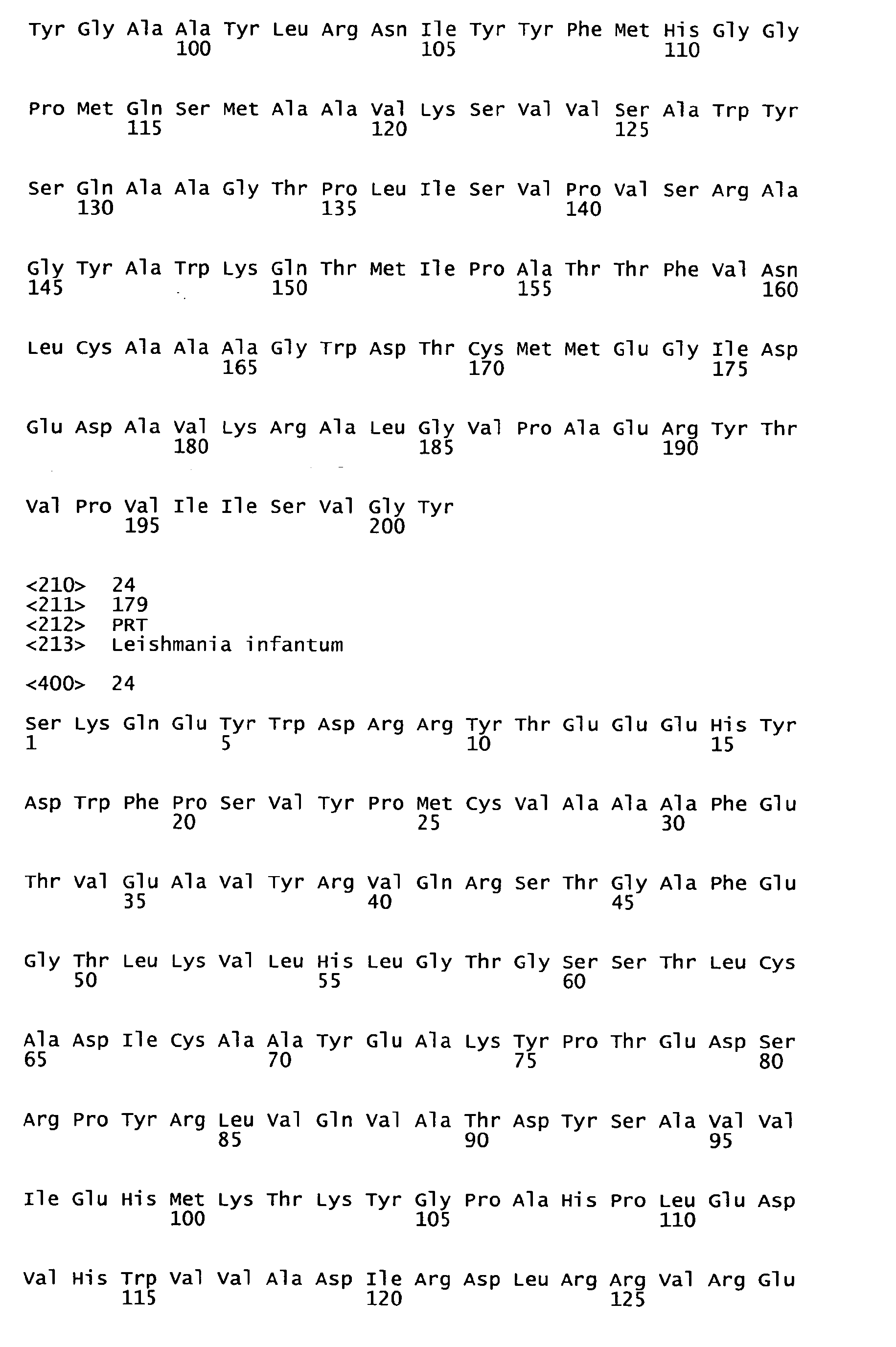


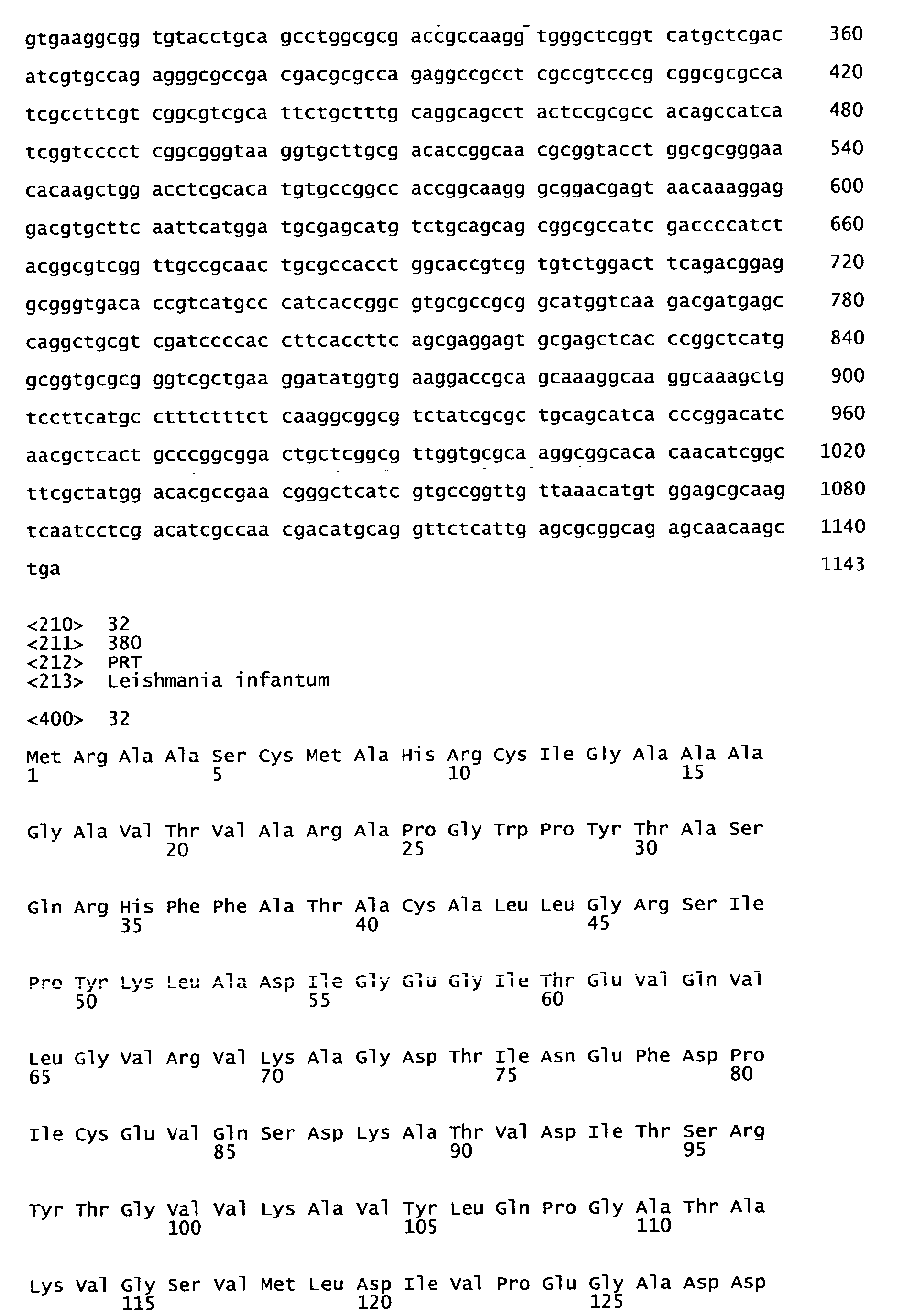


Claims (22)
- A method to screen for at least one genetic element differentially expressed between a first Leishmania sample (L1) and a second Leishmania sample (L2), comprising the steps:a) generating a first cDNA pool and a second cDNA pool from said L1 and said L2 respectively;b) contacting at least a portion of a nucleic acid library comprising the partial genomic DNA content of a reference Leishmania isolate, with said first cDNA pool and said second cDNA pool;c) identifying at least one clone from said nucleic acid library with which said first cDNA pool and/or said second cDNA pool hybridise, so as to generate a first clone pool and a second clone pool respectively;d) isolating at least one clone from said first clone pool which is not present in said second clone pool;e) identifying said at least one genetic element which is differentially expressed between said L1 and said L2 from step d).
- The method according to claim 1, wherein said L1 is a visceral isolate and said L2 is a cutaneous isolate.
- The method according to claim 1 or 2, wherein said L1 is a promastigote life stage and said L2 is a amastigote life stage.
- The method according to claim 1, 2 or 3, wherein said L1 is PNA+ and said L2 is PNA-.
- The method according to claim 1, 2, 3 or 4, wherein said L1 and said L2 are selected from the group comprising: L. infantum; L. major; L. braziliensis.
- The method according to any one of claims 1 to 5, wherein said nucleic acid library comprises genomic DNA enriched for the DNA of at least one specific chromosome of a Leishmania isolate.
- The method according to any one of claims 6, wherein said said at least one specific chromosome is selected from the group comprising: chromosome 4, chromosome 5 and chromosome 35.
- The method according to any one of claims 1 to 7, wherein said method comprises an alternative step e1));el) the quantitative amplification of said at least one clone from said L1 and from said L2 to determine the levels of expression of said at least one clone in said L1 and said L2 and comparing the ratio of these expression levels; and
a further step f);f) wherein when the ratio of said expression levels differs from 1, identifying genetic elements differentially expressed between said L1 and said L2. - The method according to claim 8, wherein said levels of expression of said at least one clone in said L1 and said L2 are also compared to a constitutively expressed endogenous gene in said L1 and said L2 respectively.
- The method according to any one of claims 1 to 9, wherein said at least one genetic element differentially expressed is characterised in that it affects the invasive, patho-antigenic and/or evasive characteristics; differentiation; virulence or pathogenicity of the Leishmania isolate from which it was identified.
- A method to determine the effect of at least one candidate Leishmania virulence factor (Lf0) identified by a method according to any one of claims 1 to 10, comprising the steps:a) a first measurement of at least one virulence characteristic of a Leishmania culture comprising at least one endogenous copy of said Lf0 or an extract thereof,b) the elimination of the function of said Lf0 from said Leishmania culture or an extract thereof,c) a second measurement of said at least one virulence characteristic of said Leishmania culture of step b),d) the comparison of said first measurement and said second measurement and wherein these differ identifying a Leishmania virulence factor.
- A method for identifying substances which modulate the effects of at least one candidate Leishmania virulence factor (Lf1) identified by a method of any one of claims 1 to 11, comprising the steps:a) measurement of at least one characteristic of Lf1;b) exposure of Lf1 to at least one candidate substance and the measurement of said at least one characteristic of Lf1;c) comparison of the measurements of said at least one characteristic of step a) and step b), and wherein these differ identifying a substance which specifically affects said Lf1.
- The method according to claim 12, wherein said method comprises the further steps:d) measurement of at least one characteristic of a human ortholgue (Hf1) of Lf1;e) exposure of Hf1 to at least one candidate substance and the measurement of said at least one characteristic of Hf1;f) comparison of the measurements of said at least one characteristic of steps d) and f); wherein when said measurements of steps a) and b) differ and said measurements of steps c) and d) do not differ, identifying a substance which specifically modulates the effects said Lf1.
- A method for identifying aptamers specific for at least one candidate Leishmania virulence factor (Lf2) identified by a method of any one of claims 1 to 11, using a mixture of nucleic acids, wherein said method comprises at least the following steps:(a) bringing a mixture of nucleic acids which form a combinatorial library into contact with Lf2;(b) recovering nucleic acids which bind to Lf2, in step (a);(c) amplifying said nucleic acids with high affinity for Lf2, so as to obtain a mixture of nucleic acids, enriched in nucleic acids having a high affinity for said Lf2, and(d) identifying aptamers specific for Lf2, from the mixture obtained in (e).
- The method according to claim 14, comprising the replacement steps:(al) bringing a mixture of nucleic acids which form a combinatorial library into contact with the human orthologue (Hf2) of Lf2;(b1) recovering a first subset S 1 of nucleic acids which do not bind to Hf2, in step (a);(c1) bringing the first subset S1 into contact with Lf2;(d1) recovering the nucleic acids which exhibit a high affinity with respect to Lf2;(e1) amplifying said nucleic acids with high affinity for Lf2, so as to obtain a mixture of nucleic acids, enriched in nucleic acids having a high affinity for said Lf2, and(f1) identifying aptamers specific for Lf2, from the mixture obtained in (e).
- A method according to any one of claims 12 or 13, wherein said Lf1 or said Lf2 comprises a nucleic acid fragment encoded by a sequence selected from the group: SEQ ID NO: 25, SEQ ID NO: 27, SEQ ID NO: 29, SEQ ID NO: 31, SEQ ID NO: 33; or a portion of anyone thereof or wherein said Lf1 or said Lf2 comprises a peptide sequence selected from the group: SEQ ID NO: 26, SEQ ID NO: 28, SEQ ID NO: 30, SEQ ID NO: 32, SEQ ID NO: 34, or a portion of anyone thereof.
- Use of an isolated or purified nucleic acid comprising a sequence selected from the group: SEQ ID NO: 25, SEQ ID NO: 27, SEQ ID NO: 29, SEQ ID NO: 31, SEQ ID NO: 33; or a fragment thereof, for the manufacture of a medicament, diagnostic reagent or vaccine for the treatment and/or detection of Leishmania infection.
- Use of an isolated or purified polypeptide comprising a sequence selected from the group: SEQ ID NO: 26, SEQ ID NO: 28, SEQ ID NO: 30, SEQ ID NO: 32, SEQ ID NO: 34; or a fragment thereof, for the manufacture of a medicament, diagnostic reagent or vaccine for the treatment and/or detection of Leishmania infection.
- Use of an isolated or purified nucleic acid comprising a sequence selected from the group: SEQ ID NO: 25, SEQ ID NO: 29, or a fragment thereof; or an isolated or purified peptide comprising a sequence selected from the group: SEQ ID NO: 26, SEQ ID NO: 30, or a fragment thereof ; for the detection of differentiated promastigotes of Leishmania infantum.
- Use of an isolated or purified nucleic acid comprising a sequence selected from the group: SEQ ID NO: 27, or a fragment thereof; or an isolated or purified peptide comprising a sequence selected from the group: SEQ ID NO: 28, or a fragment thereof; for the detection of visceral parasites of Leishmania infantum and/or viscerisation of Leishmania infantum.
- Use of an isolated or purified nucleic acid comprising a sequence selected from the group: SEQ ID NO: 31, SEQ ID NO: 33 or a fragment thereof; or an isolated or purified peptide comprising a sequence selected from the group: or a fragment thereof ; for the detection of cutaneous parasites of Leishmania infantum.
- A diagnostic kit configured to perform a method according to any one of claims 19 to 21, comprising:a substrate coated in at least one peptide selected from the group SEQ ID NO: 26, SEQ ID NO: 28, SEQ ID NO: 30, SEQ ID NO: 32, SEQ ID NO: 34at least one anti-human immunoglobulin antibody;reagents to detect said at least one anti-human immunoglobulin antibody;instructions for use.
Priority Applications (1)
| Application Number | Priority Date | Filing Date | Title |
|---|---|---|---|
| EP08290656A EP2141248B1 (en) | 2008-07-03 | 2008-07-03 | Methods to identify leishmania virulence factors |
Applications Claiming Priority (1)
| Application Number | Priority Date | Filing Date | Title |
|---|---|---|---|
| EP08290656A EP2141248B1 (en) | 2008-07-03 | 2008-07-03 | Methods to identify leishmania virulence factors |
Publications (2)
| Publication Number | Publication Date |
|---|---|
| EP2141248A1 true EP2141248A1 (en) | 2010-01-06 |
| EP2141248B1 EP2141248B1 (en) | 2012-12-12 |
Family
ID=39739750
Family Applications (1)
| Application Number | Title | Priority Date | Filing Date |
|---|---|---|---|
| EP08290656A Not-in-force EP2141248B1 (en) | 2008-07-03 | 2008-07-03 | Methods to identify leishmania virulence factors |
Country Status (1)
| Country | Link |
|---|---|
| EP (1) | EP2141248B1 (en) |
Citations (2)
| Publication number | Priority date | Publication date | Assignee | Title |
|---|---|---|---|---|
| WO2002103002A2 (en) * | 2001-06-18 | 2002-12-27 | Institut Pasteur De Tunis | Gene associated with leishmania parasite virulence |
| EP0716697B1 (en) * | 1993-09-03 | 2003-04-02 | McGILL UNIVERSITY | DIFFERENTIALLY EXPRESSED $i(LEISHMANIA) GENES AND PROTEINS |
-
2008
- 2008-07-03 EP EP08290656A patent/EP2141248B1/en not_active Not-in-force
Patent Citations (2)
| Publication number | Priority date | Publication date | Assignee | Title |
|---|---|---|---|---|
| EP0716697B1 (en) * | 1993-09-03 | 2003-04-02 | McGILL UNIVERSITY | DIFFERENTIALLY EXPRESSED $i(LEISHMANIA) GENES AND PROTEINS |
| WO2002103002A2 (en) * | 2001-06-18 | 2002-12-27 | Institut Pasteur De Tunis | Gene associated with leishmania parasite virulence |
Non-Patent Citations (83)
| Title |
|---|
| AKOPYANTS NATALIA S ET AL: "Expression profiling using random genomic DNA microarrays identifies differentially expressed genes associated with three major developmental stages of the protozoan parasite Leishmania major.", July 2004, MOLECULAR AND BIOCHEMICAL PARASITOLOGY JUL 2004, VOL. 136, NR. 1, PAGE(S) 71 - 86, ISSN: 0166-6851, XP002496774 * |
| AKOPYANTS, N.S. ET AL.: "A survey of the Leishmania major Friedlin strain V1 genome by shotgun sequencing: a resource for DNA microarrays and expression profiling", MOL. BIOCHEM. PARASITOL., vol. 113, 2001, pages 337 - 340, XP027287876 |
| ANSARI, .A.A. ET AL.: "Epitope mapping of the branched chain alpha-ketoacid dehydrogenase dihydrolipoyl transacylase (BCKD-E2) protein that reacts with sera from patients with idiopathic dilated cardiomyopathy", J IMMUNOL., vol. 153, 1994, pages 4754 - 4765 |
| ANTONIAZI, S.; LIMA, H.C.; CRUZ, A.K.: "Overexpression of miniexon gene decreases virulence of Leishmania major in BALB/c mice in vivo", MOL. BIOCHEM. PARASITOL, vol. 107, 2000, pages 57 - 69 |
| BAPTISTA-FERNANDES, T. ET AL.: "Intra-specific variability of virulence in Leishmania infantum zymodeme MON-1 strains", COMP IMMUNOL MICROBIOL INFECT DIS, vol. 30, 2007, pages 41 - 53, XP005803315, DOI: doi:10.1016/j.cimid.2006.10.001 |
| BATES, P.A.: "Housekeeping by Leishmania", TRENDS PARASITOL, vol. 22, 2006, pages 447 - 448, XP028058846, DOI: doi:10.1016/j.pt.2006.08.003 |
| BATES, P.A.; ROGERS, M.E.: "New insights into the developmental biology and transmission mechanisms of Leishmania", CUR. MOL. MED, vol. 4, 2004, pages 601 - 609 |
| BELHADJ, S. ET AL.: "Human cutaneous leishmaniasis due to Leishmania infantum in the Sidi Bourouis focus (Northern Tunisia): epidemiological study and isoenzymatic characterization of the parasites", ACTA. TROP, vol. 85, 2003, pages 83 - 86 |
| BELKAID, P.M. ET AL.: "A simple media for isolation and culture of Leishmania", BULL. SOC. PATHOL. EXOT, vol. 89, 1996, pages 276 - 277 |
| BEN SAID, M. ET AL.: "Occurrence of Leishmania infantum cutaneous leishmaniasis in central", TUNISIA. TRANS. R. SOC. TROP. MED. HYG, vol. 100, 2006, pages 521 - 526 |
| BERASAIN, C. ET AL.: "Methylthioadenosine phosphorylase gene expression is impaired in human liver cirrhosis and hepatocarcinoma", BIOCHIM. BIOPHYS. ACTA, vol. 1690, 2004, pages 276 - 284, XP004614710, DOI: doi:10.1016/j.bbadis.2004.08.002 |
| BESTEIRO, S. ET AL.: "Endosome sorting and autophagy are essential for differentiation and virulence of Leishmania major", J BIOL CHEM., vol. 281, 2006, pages 11384 - 11396 |
| BRITTO, C. ET AL.: "Conserved linkage groups associated with large-scale chromosomal rearrangements between Old World and New World Leishmania genomes", GENE, vol. 222, 1998, pages 107 - 117, XP004151169, DOI: doi:10.1016/S0378-1119(98)00472-7 |
| BROSNAN, J.T.; BROSNAN, M.E.: "Branched-chain amino acids: enzyme and substrate regulation", J NUTR., vol. 136, 2006, pages 207 - 211 |
| C TUERK; L GOLD, SYSTEMATIC EVOLUTION OF LIGANDS BY EXPONENTIAL ENRICHMENT: RNA LIGANDS TO BACTERIOPHAGE T4 DNA POLYMERASE SCIENCE, vol. 249, 3 August 1990 (1990-08-03), pages 505 - 510 |
| CAMPINO, L. ET AL.: "Leishmaniasis in Portugal: enzyme polymorphism of Leishmania infantum based on the identification of 213 strains", TROP. MED. INT. HEALTH, vol. 11, 2006, pages 1708 - 1714 |
| CARVER, T.J. ET AL.: "ACT: the Artemis Comparison Tool", BIOINFORMATICS, vol. 21, 2005, pages 3422 - 3423 |
| CERCHIA L ET AL.: "Neutralizing aptamers from whole-cell SELEX inhibit the RET receptor tyrosine kinase", PLOS BIOL., vol. 3, no. 4, April 2005 (2005-04-01), pages E123, XP002621083, DOI: doi:10.1371/journal.pbio.0030123 |
| CHAKROUN ET AL., SELECTION AND ANALYSIS OF POTENTIAL LEISHMANIA TARGETS FOR INTERVENTION AND DISEASE CONTROL. INTERNATIONAL CONFERENCE ON THE BIOINFORMATICS OF AFRICAN PATHOGENS AND DISEASE VECTORS, 22 May 2007 (2007-05-22), Retrieved from the Internet <URL:www.lirmm.fr/france_afrique/Nairobi_2007/Nairobi_program.pdfi> |
| CHANG, K.P. ET AL.: "Leishmania model for microbial virulence: the relevance of parasite multiplication and pathoantigenicity", ACTA. TROP, vol. 85, 2003, pages 375 - 390 |
| CHANG, K.P.; AKMAN, L.; NIELSEN, J.S.: "Leishmania virulence and genetic heterogeneity", CLIN. DERMATOL., vol. 17, 1999, pages 269 - 273 |
| CHANG, K.P.; MCGWIRE, B.S.: "Molecular determinants and regulation of Leishmania virulence", KINETOPLASTID. BIOL. DIS., vol. 1, 2002, pages 1, XP021018099, DOI: doi:10.1186/1475-9292-1-1 |
| CHUANG, D.T.; CHUANG, J.L.; WYNN, R.M.: "Lessons from genetic disorders of branched-chain amino acid metabolism", J. NUTR., vol. 136, 2006, pages 243S - 249S |
| D.A. DANIELS ET AL.: "A tenascin-C aptamer identified by tumor cell SELEX: systematic evolution of ligands by exponential enrichment", PROC. NATL. ACAD. SCI. USA, vol. 100, no. 26, 2003, pages 15416 - 15421, XP002341306, DOI: doi:10.1073/pnas.2136683100 |
| DE OLIVEIRA, LM.; HENRIQUES, J.A.; BONATTO, D.: "In silico identification of a new group of specific bacterial and fungal nitroreductases-like proteins", BIOCHEM BIOPHYS RES COMMUN, vol. 355, 2007, pages 919 - 925, XP005931142, DOI: doi:10.1016/j.bbrc.2007.02.049 |
| DENISE H. ET AL.: "Studies on the CPA cysteine peptidase in the Leishmania infantum genome strain JPCM5", BMC MOL BIOL., vol. 7, 13 November 2006 (2006-11-13), pages 42, XP021022496, DOI: doi:10.1186/1471-2199-7-42 |
| DENNY, W.A.: "Acridine derivatives as chemotherapeutic agents", CURR. MED. CHEM, vol. 9, 2002, pages 1655 - 1665, XP009073854 |
| DILLON, D.C. ET AL.: "Characterization of a Leishmania tropica antigen that detects immune responses in Desert Storm viscerotropic leishmaniasis patients", PROC. NATL. ACAD. SCI. USA., vol. 92, 1995, pages 7981 - 7985, XP002023860, DOI: doi:10.1073/pnas.92.17.7981 |
| ELLINGTON AD; SZOSTAK JW.: "In vitro selection of RNA molecules that bind specific ligands", NATURE, vol. 346, no. 6287, 30 August 1990 (1990-08-30), pages 818 - 22, XP002547962, DOI: doi:10.1038/346818a0 |
| GRAMICCIA, M.: "The identification and variability of the parasites causing leishmaniasis in HIV-positive patients in Italy", ANN TROP MED PARASITOL., vol. 97, 2003, pages 65 - 73 |
| GUERBOUJ, S. ET AL.: "Genomic polymorphism of Leishmania infantum: a relationship with clinical pleomorphism?", INFECT. GENET. EVOL., vol. 1, 2001, pages 49 - 59 |
| HANNINK, N. ET AL.: "Phytodetoxification of TNT by transgenic plants expressing a bacterial nitroreductase", NAT. BIOTECHNOL., vol. 19, 2001, pages 1168 - 1172, XP009110093, DOI: doi:10.1038/nbt1201-1168 |
| HOLZER, T.R.; MCMASTER, W.R.; FORNEY, J.D.: "Expression profiling by whole-genome interspecies microarray hybridization reveals differential gene expression in procyclic promastigotes, lesion-derived amastigotes, and axenic amastigotes in Leishmania mexicana", MOL. BIOCHEM. PARASITOL, vol. 146, 2006, pages 198 - 218, XP025032646, DOI: doi:10.1016/j.molbiopara.2005.12.009 |
| HOMMA-TAKEDA, S. ET AL.: "2,4,6-trinitrotoluene-induced reproductive toxicity via oxidative DNA damage by its metabolite", FREE. RADIC. RES., vol. 36, 2002, pages 555 - 566 |
| HONORE, S. ET AL.: "Influence of the host and parasite strain in a mouse model of visceral Leishmania infantum infection", FEMS. IMMUNOL. MED. MICROBIOL, vol. 21, 1998, pages 231 - 239 |
| HU, L. ET AL.: "Nitroaryl phosphoramides as novel prodrugs for E. coli nitroreductase activation in enzyme prodrug therapy", J. MED. CHEM., vol. 46, 2003, pages 4818 - 4821 |
| IVENS, A.C. ET AL.: "The genome of the kinetoplastid parasite", LEISHMANIA MAJOR. SCIENCE, vol. 309, 2005, pages 436 - 442 |
| JOSHI MANJU ET AL: "Cloning and characterization of differentially expressed genes from in vitro-grown "amastigotes" of Leishmania donovani", 1993, MOLECULAR AND BIOCHEMICAL PARASITOLOGY, VOL. 58, NR. 2, PAGE(S) 345-354, ISSN: 0166-6851, XP002496776 * |
| K.N. MORRIS ET AL.: "High affinity ligands from in vitro selection: complex targets", PROC. NATL. ACAD. SCI. USA, vol. 95, no. 6, 1998, pages 2902 - 2907, XP002207684, DOI: doi:10.1073/pnas.95.6.2902 |
| KAIYALA, K.J. ET AL.: "Nitrous oxide-induced c-Fos expression in the rat brain", BRAIN. RES., vol. 967, 2003, pages 73 - 80 |
| KALLEL, K. ET AL.: "Asymptomatic bearing of Leishmania infantum among tunisian HIV infected patients", PATHOL. BIOL., vol. 19, 2007, pages 1 - 4 |
| KAMHAWI, S.: "Phlebotomine sand flies and Leishmania parasites: friends or foes?", TRENDS. PARASITOL, vol. 22, 2006, pages 439 - 445, XP028058844, DOI: doi:10.1016/j.pt.2006.06.012 |
| KWAK, Y.H.; LEE, D.S.; KIM, H.B.: "Vibrio harveyi nitroreductase is also a chromate reductase", APPL. ENVIRON. MICROBIOL., vol. 69, 2003, pages 4390 - 4395 |
| L.ROCHETTE, K ET AL.: "Genome-wide gene expression profiling analysis of Leishmania major andLeishmania infantum developmental stages reveals substantial differencesbetween the two species", BMC GENOMICS, vol. 9, 2008, pages 255 |
| LEIFSO, K. ET AL.: "Genomic and proteomic expression analysis of Leishmania promastigote and amastigote life stages: the Leishmania genome is constitutively expressed", MOL. BIOCHEM. PARASITOL, vol. 152, 2007, pages 35 - 46, XP005834623, DOI: doi:10.1016/j.molbiopara.2006.11.009 |
| LOUASSINI, M. ET AL.: "Activity of key enzymes in glucose catabolism during the growth and metacyclogenesis of Leishmania infantum", PARASITOL. RES, vol. 85, 1999, pages 300 - 306 |
| LOUASSINI, M. ET AL.: "Citric-acid cycle key enzyme activities during in vitro growth and metacyclogenesis of Leishmania infantum promastigotes", J. PARASITOL., vol. 85, 1999, pages 595 - 602 |
| LOUASSINI, M. ET AL.: "Investigations on the in vitro metacyclogenesis of a visceral and a cutaneous human strain of Leishmania infantum", ACTA. TROP., vol. 70, 1998, pages 355 - 368, XP027199034 |
| M. BLANK ET AL.: "Systematic evolution of a DNA aptamer binding to rat brain tumor microvessels. Selective targeting of endothelial regulatory protein pigpen", J. BIOL. CHEM., vol. 276, no. 19, 2001, pages 16464 - 16468, XP002978116, DOI: doi:10.1074/jbc.M100347200 |
| MURRAY, A. ET AL.: "Regions in the 3' untranslated region confer stage-specific expression to the Leishmania mexicana a 600-4 gene", MOL. BIOCHEM. PARASITOL., vol. 153, 2007, pages 125 - 132, XP022051414, DOI: doi:10.1016/j.molbiopara.2007.02.010 |
| MURRAY, H.W. ET AL.: "Advances in leishmaniasis", LANCET, vol. 366, 2005, pages 1561 - 1577, XP025277339, DOI: doi:10.1016/S0140-6736(05)67629-5 |
| NISHIOKA, M. ET AL.: "Antibodies to P450IID6, SLA, PDH-E2 and BCKD-E2 in Japanese patients with chronic hepatitis", J GASTROENTEROL HEPATOL., vol. 12, 1997, pages 862 - 868 |
| NOBORI, T. ET AL.: "Genomic cloning of methylthioadenosine phosphorylase: a purine metabolic enzyme deficient in multiple different cancers", PROC. NATL. ACAD. SCI. U.S.A., vol. 93, 1996, pages 6203 - 6208, XP002284502, DOI: doi:10.1073/pnas.93.12.6203 |
| PADDA, R.S. ET AL.: "Mutagenicity of nitroaromatic degradation compounds. Environ", TOXICOL. CHEM., vol. 22, 2003, pages 2293 - 2297 |
| PAGES, M. ET AL.: "Chromosome size and number polymorphisms in Leishmania infantum suggest amplification/deletion and possible genetic exchange", MOL. BIOCHEM. PARASITOL, vol. 36, 1989, pages 161 - 168, XP023887871, DOI: doi:10.1016/0166-6851(89)90188-6 |
| PEACOCK, C.S. ET AL.: "Comparative genomic analysis of three Leishmania species that cause diverse human disease", NAT. GENET, vol. 39, 2007, pages 839 - 847, XP008165303, DOI: doi:10.1038/ng2053 |
| PRATLONG, F. ET AL.: "Isoenzymatic analysis of 712 strains of Leishmania infantum in the south of France and relationship of enzymatic polymorphism to clinical and epidemiological features", J CLIN MICROBIOL., vol. 42, 2004, pages 4077 - 4082 |
| PRATLONG, F. ET AL.: "Isoenzymatic analysis of 712 strains of Leishmania infantum in the south of France and relationship of enzymatic polymorphism to clinical and epidemiological features", J. CLIN. MICROBIOL, vol. 42, 2004, pages 4077 - 4082 |
| PURDY, J.E.; DONELSON, J.E.; WILSON, M.E.: "Leishmania chagasi: the alpha-tubulin intercoding region results in constant levels of mRNA abundance despite protein synthesis inhibition and growth state.", EXP. PARASITOL, vol. 110, 2005, pages 102 - 107, XP004879649, DOI: doi:10.1016/j.exppara.2005.02.008 |
| PURDY, J.E.; DONELSON, J.E.; WILSON, M.E.: "Regulation of genes encoding the major surface protease of Leishmania chagasi via mRNA stability", MOL. BIOCHEM. PARASITOL, vol. 142, 2005, pages 88 - 97, XP004944355, DOI: doi:10.1016/j.molbiopara.2005.03.010 |
| PURKAYASTHA, A.; MCCUE, L.A.; MCDONOUGH, K.A.: "Identification of a Mycobacterium tuberculosis putative classical nitroreductase gene whose expression is coregulated with that of the acr gene within macrophages, in standing versus shaking cultures, and under low oxygen conditions", INFECT. IMMUN., vol. 70, 2002, pages 1518 - 1529 |
| QUIJADA, L.; SOTO, M.; REQUENA, J.M.: "Genomic DNA macroarrays as a tool for analysis of gene expression in Leishmania", EXP PARASITOL., vol. 111, 2005, pages 64 - 70, XP004995914, DOI: doi:10.1016/j.exppara.2005.04.006 |
| RAMOS EDURNE ET AL: "A DNA aptamer population specifically detects Leishmania infantum H2A antigen.", May 2007, LABORATORY INVESTIGATION; A JOURNAL OF TECHNICAL METHODS AND PATHOLOGY MAY 2007, VOL. 87, NR. 5, PAGE(S) 409 - 416, ISSN: 0023-6837, XP002496777 * |
| RAVEL C. ET AL.: "High conservation of the fine-scale organisation of chromosome 5 between two pathogenic Leishmania species", NUCLEIC. ACIDS. RES., vol. 27, 1999, pages 2473 - 2477 |
| RAVEL, C. ET AL.: "A polymorphic minisatellite sequence in the subtelomeric regions of chromosomes I and V in Leishmania infantum", MOL. BIOCHEM. PARASITOL, vol. 74, 1995, pages 31 - 4 |
| RAVEL, C. ET AL.: "Conservation among Old World Leishmania species of six physical linkage groups defined in Leishmania infantum small chromosomes", MOL. BIOCHEM. PARASITOL, vol. 69, 1995, pages 1 - 8 |
| ROCHETTE ANNIE ET AL: "Genome-wide gene expression profiling analysis of Leishmania major and Leishmania infantum developmental stages reveals substantial differences between the two species.", 2008, BMC GENOMICS 2008, VOL. 9, PAGE(S) 255, ISSN: 1471-2164, XP002496773 * |
| ROGERS, M.E.; CHANCE, M.L.; BATES, P.A.: "The role of promastigote secretory gel in the origin and transmission of the infective stage of Leishmania mexicana by the sandfly Lutzomyia longipalpis", PARASITOLOGY, vol. 124, 2002, pages 495 - 507 |
| SAMBROOK, J.; FRITSCH, E. F.; MANIATIS, T.: "Molecular cloning. A laboratory manual", 1989, COLD SPRING HARBOR LABORATORY PRESS |
| SARLAUSKAS, J. ET AL.: "Flavoenzyme-catalyzed redox cycling of hydroxylamino- and amino metabolites of 2,4,6-trinitrotoluene: implications for their cytotoxicity", ARCH. BIOCHEM. BIOPHYS, vol. 425, 2004, pages 184 - 192, XP004504025, DOI: doi:10.1016/j.abb.2004.02.043 |
| SAXENA ALKA ET AL: "Evaluation of differential gene expression in Leishmania major Friedlin procyclics and metacyclics using DNA microarray analysis.", June 2003, MOLECULAR AND BIOCHEMICAL PARASITOLOGY, VOL. 129, NR. 1, PAGE(S) 103-114, ISSN: 0166-6851, XP002496775 * |
| SAXENA, A. ET AL.: "Analysis of the Leishmania donovani transcriptome reveals an ordered progression of transient and permanent changes in gene expression during differentiation", MOL. BIOCHEM. PARASITOL., vol. 152, 2007, pages 53 - 65, XP005834625, DOI: doi:10.1016/j.molbiopara.2006.11.011 |
| SAXENA, A. ET AL.: "Evaluation of differential gene expression in Leishmania major Friedlin procyclics and metacyclics using DNA microarray analysis", MOL. BIOCHEM. PARASITOL, vol. 129, 2003, pages 103 - 114, XP002496775, DOI: doi:10.1016/S0166-6851(03)00100-2 |
| SEARLE, P.F. ET AL.: "Nitroreductase: a prodrug -activating enzyme for cancer gene therapy", CLIN. EXP. PHARMACOL. PHYSIOL, vol. 31, 2004, pages 811 - 816, XP002399201 |
| SRIVIDYA, G. ET AL.: "Transcriptome analysis during the process of in vitro differentiation of Leishmania donovani using genomic microarrays", PARASITOLOGY, vol. 134, 2007, pages 527 - 539 |
| SULAHIAN, A. ET AL.: "Experimental pathogenicity of viscerotropic and dermotropic isolates of Leishmania infantum from immunocompromised and immunocompetent patients in a murine model", FEMS. IMMUNOL. MED. MICROBIOL., vol. 17, 1997, pages 131 - 138 |
| TAMAR, S.; DUMAS, C.; PAPADOPOULOU, B.: "Chromosome structure and sequence organization between pathogenic and non-pathogenic Leishmania spp", MOL. BIOCHEM. PARASITOL, vol. 111, 2000, pages 401 - 414 |
| TANG, B.; LI, Y.N.; KRUGER, W.D.: "Defects in methylthioadenosine phosphorylase are associated with but not responsible for methionine-dependent tumor cell growth", CANCER. RES., vol. 60, 2000, pages 5543 - 5547 |
| TURCO S J ET AL: "Is lipophosphoglycan a virulence factor? A surprising diversity between Leishmania species.", TRENDS IN PARASITOLOGY MAY 2001, vol. 17, no. 5, May 2001 (2001-05-01), pages 223 - 226, XP002496772, ISSN: 1471-4922 * |
| ULIANA, S.R. ET AL.: "Leishmania: overexpression and comparative structural analysis of the stage-regulated meta 1 gene", EXP. PARASITOL., vol. 92, 1999, pages 183 - 191 |
| WANG C ET AL.: "Single- stranded DNA aptamers that bind differentiated but not parental cells: Subtractive systematic evolution of ligands by exponential enrichment", J BIOTECHNOL, vol. 102, 2003, pages 15 - 22, XP002484057, DOI: doi:10.1016/S0168-1656(02)00360-7 |
| WINCKER, P. ET AL.: "A direct method for the chromosomal assignment of DNA markers in Leishmania", GENE, vol. 194, 1997, pages 77 - 80, XP004084662, DOI: doi:10.1016/S0378-1119(97)00162-5 |
| WINCKER, P. ET AL.: "The Leishmania genome comprises 36 chromosomes conserved across widely divergent human pathogenic species", NUCLEIC. ACIDS. RES., vol. 24, 1996, pages 688 - 694 |
Also Published As
| Publication number | Publication date |
|---|---|
| EP2141248B1 (en) | 2012-12-12 |
Similar Documents
| Publication | Publication Date | Title |
|---|---|---|
| Ehrenkaufer et al. | Identification of developmentally regulated genes in Entamoeba histolytica: insights into mechanisms of stage conversion in a protozoan parasite | |
| Hamada et al. | Metabolic co-dependence drives the evolutionarily ancient Hydra–Chlorella symbiosis | |
| Roberts et al. | Genetic analysis of spermidine synthase from Leishmania donovani | |
| Castilho et al. | New PCR assay using glucose-6-phosphate dehydrogenase for identification of Leishmania species | |
| Porcel et al. | The streamlined genome of Phytomonas spp. relative to human pathogenic kinetoplastids reveals a parasite tailored for plants | |
| Santi‐Rocca et al. | The lysine‐and glutamic acid‐rich protein KERP1 plays a role in Entamoeba histolytica liver abscess pathogenesis | |
| BAÑULS et al. | Is Leishmania (Viannia) peruviana a distinct species? A MLEE/RAPD evolutionary genetics answer | |
| Liu et al. | A random survey of the Cryptosporidium parvum genome | |
| Lohr et al. | A Daphnia parasite (Caullerya mesnili) constitutes a new member of the Ichthyosporea, a group of protists near the animal–fungi divergence | |
| Bannantine et al. | Cell wall peptidolipids of Mycobacterium avium: from genetic prediction to exact structure of a nonribosomal peptide | |
| Quaiyum et al. | Mapping the tRNA modification landscape of Bartonella henselae Houston I and Bartonella quintana Toulouse | |
| FIORE‐DONNO et al. | Invalidation of Hyperamoeba by transferring its species to other genera of Myxogastria | |
| Liu et al. | tRNA copy number and codon usage in the sea cucumber genome provide insights into adaptive translation for saponin biosynthesis | |
| EP2141248B1 (en) | Methods to identify leishmania virulence factors | |
| Hu et al. | Genomic variant in porcine TNFRSF1A gene and its effects on TNF signaling pathway in vitro | |
| Baptista et al. | DNA microarrays for comparative genomics and analysis of gene expression in Trypanosoma cruzi | |
| Zhang et al. | Introns, alternative splicing, spliced leader trans-splicing and differential expression of pcna and cyclin in Perkinsus marinus | |
| McCosker et al. | Molecular Mechanisms Underlying Response to Influenza in Grey Seals (Halichoerus grypus), a Potential Wild Reservoir | |
| Wei et al. | Differences in N6-methyladenosine (m6A) methylation among the three major clonal lineages of Toxoplasma gondii tachyzoites | |
| EP3081645A1 (en) | Non-coded rna of in-vivo infected microorganisms, parasitic microorganisms, symbiotic microorganisms and identification and application thereof | |
| CN118541481A (en) | Methods for treating decreased bone mineral density using cluster of differentiation 109 (CD109) inhibitors | |
| CN117255694A (en) | Treatment of liver disease with phosphodiesterase 3B (PDE3B) inhibitors | |
| Peloakgosi-Shikwambani | Analysis of Babesia rossi transcriptome in dogs diagnosed with canine babesiosis | |
| Wilkins et al. | Embryonic gene expression of Coregonus palaea (whitefish) under pathogen stress as analyzed by high-throughput RNA-sequencing | |
| Barth et al. | Mitochondrial gene expression and dysfunction in model Protozoa |
Legal Events
| Date | Code | Title | Description |
|---|---|---|---|
| PUAI | Public reference made under article 153(3) epc to a published international application that has entered the european phase |
Free format text: ORIGINAL CODE: 0009012 |
|
| AK | Designated contracting states |
Kind code of ref document: A1 Designated state(s): AT BE BG CH CY CZ DE DK EE ES FI FR GB GR HR HU IE IS IT LI LT LU LV MC MT NL NO PL PT RO SE SI SK TR |
|
| AX | Request for extension of the european patent |
Extension state: AL BA MK RS |
|
| 17P | Request for examination filed |
Effective date: 20100621 |
|
| 17Q | First examination report despatched |
Effective date: 20100803 |
|
| AKX | Designation fees paid |
Designated state(s): AT BE BG CH CY CZ DE DK EE ES FI FR GB GR HR HU IE IS IT LI LT LU LV MC MT NL NO PL PT RO SE SI SK TR |
|
| RIC1 | Information provided on ipc code assigned before grant |
Ipc: C12Q 1/68 20060101AFI20120228BHEP |
|
| RTI1 | Title (correction) |
Free format text: METHODS TO IDENTIFY LEISHMANIA VIRULENCE FACTORS |
|
| GRAP | Despatch of communication of intention to grant a patent |
Free format text: ORIGINAL CODE: EPIDOSNIGR1 |
|
| GRAS | Grant fee paid |
Free format text: ORIGINAL CODE: EPIDOSNIGR3 |
|
| GRAA | (expected) grant |
Free format text: ORIGINAL CODE: 0009210 |
|
| AK | Designated contracting states |
Kind code of ref document: B1 Designated state(s): AT BE BG CH CY CZ DE DK EE ES FI FR GB GR HR HU IE IS IT LI LT LU LV MC MT NL NO PL PT RO SE SI SK TR |
|
| REG | Reference to a national code |
Ref country code: GB Ref legal event code: FG4D |
|
| REG | Reference to a national code |
Ref country code: CH Ref legal event code: EP |
|
| REG | Reference to a national code |
Ref country code: AT Ref legal event code: REF Ref document number: 588374 Country of ref document: AT Kind code of ref document: T Effective date: 20121215 |
|
| REG | Reference to a national code |
Ref country code: IE Ref legal event code: FG4D |
|
| REG | Reference to a national code |
Ref country code: DE Ref legal event code: R096 Ref document number: 602008020763 Country of ref document: DE Effective date: 20130207 |
|
| PG25 | Lapsed in a contracting state [announced via postgrant information from national office to epo] |
Ref country code: ES Free format text: LAPSE BECAUSE OF FAILURE TO SUBMIT A TRANSLATION OF THE DESCRIPTION OR TO PAY THE FEE WITHIN THE PRESCRIBED TIME-LIMIT Effective date: 20130323 Ref country code: NO Free format text: LAPSE BECAUSE OF FAILURE TO SUBMIT A TRANSLATION OF THE DESCRIPTION OR TO PAY THE FEE WITHIN THE PRESCRIBED TIME-LIMIT Effective date: 20130312 Ref country code: FI Free format text: LAPSE BECAUSE OF FAILURE TO SUBMIT A TRANSLATION OF THE DESCRIPTION OR TO PAY THE FEE WITHIN THE PRESCRIBED TIME-LIMIT Effective date: 20121212 Ref country code: SE Free format text: LAPSE BECAUSE OF FAILURE TO SUBMIT A TRANSLATION OF THE DESCRIPTION OR TO PAY THE FEE WITHIN THE PRESCRIBED TIME-LIMIT Effective date: 20121212 Ref country code: LT Free format text: LAPSE BECAUSE OF FAILURE TO SUBMIT A TRANSLATION OF THE DESCRIPTION OR TO PAY THE FEE WITHIN THE PRESCRIBED TIME-LIMIT Effective date: 20121212 |
|
| REG | Reference to a national code |
Ref country code: NL Ref legal event code: VDEP Effective date: 20121212 |
|
| REG | Reference to a national code |
Ref country code: AT Ref legal event code: MK05 Ref document number: 588374 Country of ref document: AT Kind code of ref document: T Effective date: 20121212 |
|
| REG | Reference to a national code |
Ref country code: LT Ref legal event code: MG4D |
|
| PG25 | Lapsed in a contracting state [announced via postgrant information from national office to epo] |
Ref country code: SI Free format text: LAPSE BECAUSE OF FAILURE TO SUBMIT A TRANSLATION OF THE DESCRIPTION OR TO PAY THE FEE WITHIN THE PRESCRIBED TIME-LIMIT Effective date: 20121212 Ref country code: GR Free format text: LAPSE BECAUSE OF FAILURE TO SUBMIT A TRANSLATION OF THE DESCRIPTION OR TO PAY THE FEE WITHIN THE PRESCRIBED TIME-LIMIT Effective date: 20130313 Ref country code: LV Free format text: LAPSE BECAUSE OF FAILURE TO SUBMIT A TRANSLATION OF THE DESCRIPTION OR TO PAY THE FEE WITHIN THE PRESCRIBED TIME-LIMIT Effective date: 20121212 |
|
| PG25 | Lapsed in a contracting state [announced via postgrant information from national office to epo] |
Ref country code: BG Free format text: LAPSE BECAUSE OF FAILURE TO SUBMIT A TRANSLATION OF THE DESCRIPTION OR TO PAY THE FEE WITHIN THE PRESCRIBED TIME-LIMIT Effective date: 20130312 Ref country code: SK Free format text: LAPSE BECAUSE OF FAILURE TO SUBMIT A TRANSLATION OF THE DESCRIPTION OR TO PAY THE FEE WITHIN THE PRESCRIBED TIME-LIMIT Effective date: 20121212 Ref country code: IS Free format text: LAPSE BECAUSE OF FAILURE TO SUBMIT A TRANSLATION OF THE DESCRIPTION OR TO PAY THE FEE WITHIN THE PRESCRIBED TIME-LIMIT Effective date: 20130412 Ref country code: CZ Free format text: LAPSE BECAUSE OF FAILURE TO SUBMIT A TRANSLATION OF THE DESCRIPTION OR TO PAY THE FEE WITHIN THE PRESCRIBED TIME-LIMIT Effective date: 20121212 Ref country code: AT Free format text: LAPSE BECAUSE OF FAILURE TO SUBMIT A TRANSLATION OF THE DESCRIPTION OR TO PAY THE FEE WITHIN THE PRESCRIBED TIME-LIMIT Effective date: 20121212 Ref country code: BE Free format text: LAPSE BECAUSE OF FAILURE TO SUBMIT A TRANSLATION OF THE DESCRIPTION OR TO PAY THE FEE WITHIN THE PRESCRIBED TIME-LIMIT Effective date: 20121212 Ref country code: EE Free format text: LAPSE BECAUSE OF FAILURE TO SUBMIT A TRANSLATION OF THE DESCRIPTION OR TO PAY THE FEE WITHIN THE PRESCRIBED TIME-LIMIT Effective date: 20121212 |
|
| PG25 | Lapsed in a contracting state [announced via postgrant information from national office to epo] |
Ref country code: NL Free format text: LAPSE BECAUSE OF FAILURE TO SUBMIT A TRANSLATION OF THE DESCRIPTION OR TO PAY THE FEE WITHIN THE PRESCRIBED TIME-LIMIT Effective date: 20121212 Ref country code: PL Free format text: LAPSE BECAUSE OF FAILURE TO SUBMIT A TRANSLATION OF THE DESCRIPTION OR TO PAY THE FEE WITHIN THE PRESCRIBED TIME-LIMIT Effective date: 20121212 Ref country code: PT Free format text: LAPSE BECAUSE OF FAILURE TO SUBMIT A TRANSLATION OF THE DESCRIPTION OR TO PAY THE FEE WITHIN THE PRESCRIBED TIME-LIMIT Effective date: 20130412 Ref country code: RO Free format text: LAPSE BECAUSE OF FAILURE TO SUBMIT A TRANSLATION OF THE DESCRIPTION OR TO PAY THE FEE WITHIN THE PRESCRIBED TIME-LIMIT Effective date: 20121212 |
|
| PLBE | No opposition filed within time limit |
Free format text: ORIGINAL CODE: 0009261 |
|
| STAA | Information on the status of an ep patent application or granted ep patent |
Free format text: STATUS: NO OPPOSITION FILED WITHIN TIME LIMIT |
|
| PG25 | Lapsed in a contracting state [announced via postgrant information from national office to epo] |
Ref country code: DK Free format text: LAPSE BECAUSE OF FAILURE TO SUBMIT A TRANSLATION OF THE DESCRIPTION OR TO PAY THE FEE WITHIN THE PRESCRIBED TIME-LIMIT Effective date: 20121212 |
|
| 26N | No opposition filed |
Effective date: 20130913 |
|
| PG25 | Lapsed in a contracting state [announced via postgrant information from national office to epo] |
Ref country code: HR Free format text: LAPSE BECAUSE OF FAILURE TO SUBMIT A TRANSLATION OF THE DESCRIPTION OR TO PAY THE FEE WITHIN THE PRESCRIBED TIME-LIMIT Effective date: 20121212 Ref country code: CY Free format text: LAPSE BECAUSE OF FAILURE TO SUBMIT A TRANSLATION OF THE DESCRIPTION OR TO PAY THE FEE WITHIN THE PRESCRIBED TIME-LIMIT Effective date: 20121212 |
|
| PG25 | Lapsed in a contracting state [announced via postgrant information from national office to epo] |
Ref country code: IT Free format text: LAPSE BECAUSE OF FAILURE TO SUBMIT A TRANSLATION OF THE DESCRIPTION OR TO PAY THE FEE WITHIN THE PRESCRIBED TIME-LIMIT Effective date: 20121212 |
|
| REG | Reference to a national code |
Ref country code: DE Ref legal event code: R097 Ref document number: 602008020763 Country of ref document: DE Effective date: 20130913 |
|
| PG25 | Lapsed in a contracting state [announced via postgrant information from national office to epo] |
Ref country code: MC Free format text: LAPSE BECAUSE OF FAILURE TO SUBMIT A TRANSLATION OF THE DESCRIPTION OR TO PAY THE FEE WITHIN THE PRESCRIBED TIME-LIMIT Effective date: 20121212 |
|
| REG | Reference to a national code |
Ref country code: CH Ref legal event code: PL |
|
| GBPC | Gb: european patent ceased through non-payment of renewal fee |
Effective date: 20130703 |
|
| REG | Reference to a national code |
Ref country code: IE Ref legal event code: MM4A |
|
| REG | Reference to a national code |
Ref country code: DE Ref legal event code: R119 Ref document number: 602008020763 Country of ref document: DE Effective date: 20140201 |
|
| PG25 | Lapsed in a contracting state [announced via postgrant information from national office to epo] |
Ref country code: GB Free format text: LAPSE BECAUSE OF NON-PAYMENT OF DUE FEES Effective date: 20130703 Ref country code: DE Free format text: LAPSE BECAUSE OF NON-PAYMENT OF DUE FEES Effective date: 20140201 Ref country code: LI Free format text: LAPSE BECAUSE OF NON-PAYMENT OF DUE FEES Effective date: 20130731 Ref country code: CH Free format text: LAPSE BECAUSE OF NON-PAYMENT OF DUE FEES Effective date: 20130731 |
|
| PG25 | Lapsed in a contracting state [announced via postgrant information from national office to epo] |
Ref country code: IE Free format text: LAPSE BECAUSE OF NON-PAYMENT OF DUE FEES Effective date: 20130703 |
|
| PG25 | Lapsed in a contracting state [announced via postgrant information from national office to epo] |
Ref country code: TR Free format text: LAPSE BECAUSE OF FAILURE TO SUBMIT A TRANSLATION OF THE DESCRIPTION OR TO PAY THE FEE WITHIN THE PRESCRIBED TIME-LIMIT Effective date: 20121212 Ref country code: MT Free format text: LAPSE BECAUSE OF FAILURE TO SUBMIT A TRANSLATION OF THE DESCRIPTION OR TO PAY THE FEE WITHIN THE PRESCRIBED TIME-LIMIT Effective date: 20121212 |
|
| PG25 | Lapsed in a contracting state [announced via postgrant information from national office to epo] |
Ref country code: LU Free format text: LAPSE BECAUSE OF NON-PAYMENT OF DUE FEES Effective date: 20130703 Ref country code: HU Free format text: LAPSE BECAUSE OF FAILURE TO SUBMIT A TRANSLATION OF THE DESCRIPTION OR TO PAY THE FEE WITHIN THE PRESCRIBED TIME-LIMIT; INVALID AB INITIO Effective date: 20080703 |
|
| REG | Reference to a national code |
Ref country code: FR Ref legal event code: PLFP Year of fee payment: 8 |
|
| REG | Reference to a national code |
Ref country code: FR Ref legal event code: PLFP Year of fee payment: 9 |
|
| PGFP | Annual fee paid to national office [announced via postgrant information from national office to epo] |
Ref country code: FR Payment date: 20160729 Year of fee payment: 9 |
|
| REG | Reference to a national code |
Ref country code: FR Ref legal event code: ST Effective date: 20180330 |
|
| PG25 | Lapsed in a contracting state [announced via postgrant information from national office to epo] |
Ref country code: FR Free format text: LAPSE BECAUSE OF NON-PAYMENT OF DUE FEES Effective date: 20170731 |