EP2138167A1 - Pharmaceutical composition comprising N-[2-(Diethylamino)ethyl]-5-[(5-fluoro-1,2-dihydro-2-oxo-3H-indol-3-ylidene) methyl]-2,4-dimethyl-1H-pyrrole-3-carboxamide - Google Patents
Pharmaceutical composition comprising N-[2-(Diethylamino)ethyl]-5-[(5-fluoro-1,2-dihydro-2-oxo-3H-indol-3-ylidene) methyl]-2,4-dimethyl-1H-pyrrole-3-carboxamide Download PDFInfo
- Publication number
- EP2138167A1 EP2138167A1 EP08011444A EP08011444A EP2138167A1 EP 2138167 A1 EP2138167 A1 EP 2138167A1 EP 08011444 A EP08011444 A EP 08011444A EP 08011444 A EP08011444 A EP 08011444A EP 2138167 A1 EP2138167 A1 EP 2138167A1
- Authority
- EP
- European Patent Office
- Prior art keywords
- sunitinib
- pharmaceutical composition
- methyl
- ylidene
- indol
- Prior art date
- Legal status (The legal status is an assumption and is not a legal conclusion. Google has not performed a legal analysis and makes no representation as to the accuracy of the status listed.)
- Withdrawn
Links
Images




Classifications
-
- A—HUMAN NECESSITIES
- A61—MEDICAL OR VETERINARY SCIENCE; HYGIENE
- A61K—PREPARATIONS FOR MEDICAL, DENTAL OR TOILETRY PURPOSES
- A61K31/00—Medicinal preparations containing organic active ingredients
- A61K31/33—Heterocyclic compounds
- A61K31/395—Heterocyclic compounds having nitrogen as a ring hetero atom, e.g. guanethidine or rifamycins
- A61K31/40—Heterocyclic compounds having nitrogen as a ring hetero atom, e.g. guanethidine or rifamycins having five-membered rings with one nitrogen as the only ring hetero atom, e.g. sulpiride, succinimide, tolmetin, buflomedil
- A61K31/403—Heterocyclic compounds having nitrogen as a ring hetero atom, e.g. guanethidine or rifamycins having five-membered rings with one nitrogen as the only ring hetero atom, e.g. sulpiride, succinimide, tolmetin, buflomedil condensed with carbocyclic rings, e.g. carbazole
- A61K31/404—Indoles, e.g. pindolol
-
- A—HUMAN NECESSITIES
- A61—MEDICAL OR VETERINARY SCIENCE; HYGIENE
- A61K—PREPARATIONS FOR MEDICAL, DENTAL OR TOILETRY PURPOSES
- A61K9/00—Medicinal preparations characterised by special physical form
- A61K9/14—Particulate form, e.g. powders, Processes for size reducing of pure drugs or the resulting products, Pure drug nanoparticles
- A61K9/16—Agglomerates; Granulates; Microbeadlets ; Microspheres; Pellets; Solid products obtained by spray drying, spray freeze drying, spray congealing,(multiple) emulsion solvent evaporation or extraction
- A61K9/1605—Excipients; Inactive ingredients
- A61K9/1611—Inorganic compounds
-
- A—HUMAN NECESSITIES
- A61—MEDICAL OR VETERINARY SCIENCE; HYGIENE
- A61K—PREPARATIONS FOR MEDICAL, DENTAL OR TOILETRY PURPOSES
- A61K31/00—Medicinal preparations containing organic active ingredients
- A61K31/33—Heterocyclic compounds
- A61K31/395—Heterocyclic compounds having nitrogen as a ring hetero atom, e.g. guanethidine or rifamycins
- A61K31/40—Heterocyclic compounds having nitrogen as a ring hetero atom, e.g. guanethidine or rifamycins having five-membered rings with one nitrogen as the only ring hetero atom, e.g. sulpiride, succinimide, tolmetin, buflomedil
-
- A—HUMAN NECESSITIES
- A61—MEDICAL OR VETERINARY SCIENCE; HYGIENE
- A61K—PREPARATIONS FOR MEDICAL, DENTAL OR TOILETRY PURPOSES
- A61K31/00—Medicinal preparations containing organic active ingredients
- A61K31/33—Heterocyclic compounds
- A61K31/395—Heterocyclic compounds having nitrogen as a ring hetero atom, e.g. guanethidine or rifamycins
- A61K31/40—Heterocyclic compounds having nitrogen as a ring hetero atom, e.g. guanethidine or rifamycins having five-membered rings with one nitrogen as the only ring hetero atom, e.g. sulpiride, succinimide, tolmetin, buflomedil
- A61K31/403—Heterocyclic compounds having nitrogen as a ring hetero atom, e.g. guanethidine or rifamycins having five-membered rings with one nitrogen as the only ring hetero atom, e.g. sulpiride, succinimide, tolmetin, buflomedil condensed with carbocyclic rings, e.g. carbazole
-
- A—HUMAN NECESSITIES
- A61—MEDICAL OR VETERINARY SCIENCE; HYGIENE
- A61K—PREPARATIONS FOR MEDICAL, DENTAL OR TOILETRY PURPOSES
- A61K9/00—Medicinal preparations characterised by special physical form
- A61K9/14—Particulate form, e.g. powders, Processes for size reducing of pure drugs or the resulting products, Pure drug nanoparticles
- A61K9/16—Agglomerates; Granulates; Microbeadlets ; Microspheres; Pellets; Solid products obtained by spray drying, spray freeze drying, spray congealing,(multiple) emulsion solvent evaporation or extraction
-
- A—HUMAN NECESSITIES
- A61—MEDICAL OR VETERINARY SCIENCE; HYGIENE
- A61K—PREPARATIONS FOR MEDICAL, DENTAL OR TOILETRY PURPOSES
- A61K9/00—Medicinal preparations characterised by special physical form
- A61K9/14—Particulate form, e.g. powders, Processes for size reducing of pure drugs or the resulting products, Pure drug nanoparticles
- A61K9/16—Agglomerates; Granulates; Microbeadlets ; Microspheres; Pellets; Solid products obtained by spray drying, spray freeze drying, spray congealing,(multiple) emulsion solvent evaporation or extraction
- A61K9/1605—Excipients; Inactive ingredients
- A61K9/1617—Organic compounds, e.g. phospholipids, fats
- A61K9/1623—Sugars or sugar alcohols, e.g. lactose; Derivatives thereof; Homeopathic globules
-
- A—HUMAN NECESSITIES
- A61—MEDICAL OR VETERINARY SCIENCE; HYGIENE
- A61K—PREPARATIONS FOR MEDICAL, DENTAL OR TOILETRY PURPOSES
- A61K9/00—Medicinal preparations characterised by special physical form
- A61K9/14—Particulate form, e.g. powders, Processes for size reducing of pure drugs or the resulting products, Pure drug nanoparticles
- A61K9/16—Agglomerates; Granulates; Microbeadlets ; Microspheres; Pellets; Solid products obtained by spray drying, spray freeze drying, spray congealing,(multiple) emulsion solvent evaporation or extraction
- A61K9/1605—Excipients; Inactive ingredients
- A61K9/1629—Organic macromolecular compounds
- A61K9/1635—Organic macromolecular compounds obtained by reactions only involving carbon-to-carbon unsaturated bonds, e.g. polyvinyl pyrrolidone, poly(meth)acrylates
-
- A—HUMAN NECESSITIES
- A61—MEDICAL OR VETERINARY SCIENCE; HYGIENE
- A61K—PREPARATIONS FOR MEDICAL, DENTAL OR TOILETRY PURPOSES
- A61K9/00—Medicinal preparations characterised by special physical form
- A61K9/14—Particulate form, e.g. powders, Processes for size reducing of pure drugs or the resulting products, Pure drug nanoparticles
- A61K9/16—Agglomerates; Granulates; Microbeadlets ; Microspheres; Pellets; Solid products obtained by spray drying, spray freeze drying, spray congealing,(multiple) emulsion solvent evaporation or extraction
- A61K9/1605—Excipients; Inactive ingredients
- A61K9/1629—Organic macromolecular compounds
- A61K9/1652—Polysaccharides, e.g. alginate, cellulose derivatives; Cyclodextrin
-
- A—HUMAN NECESSITIES
- A61—MEDICAL OR VETERINARY SCIENCE; HYGIENE
- A61K—PREPARATIONS FOR MEDICAL, DENTAL OR TOILETRY PURPOSES
- A61K9/00—Medicinal preparations characterised by special physical form
- A61K9/14—Particulate form, e.g. powders, Processes for size reducing of pure drugs or the resulting products, Pure drug nanoparticles
- A61K9/16—Agglomerates; Granulates; Microbeadlets ; Microspheres; Pellets; Solid products obtained by spray drying, spray freeze drying, spray congealing,(multiple) emulsion solvent evaporation or extraction
- A61K9/167—Agglomerates; Granulates; Microbeadlets ; Microspheres; Pellets; Solid products obtained by spray drying, spray freeze drying, spray congealing,(multiple) emulsion solvent evaporation or extraction with an outer layer or coating comprising drug; with chemically bound drugs or non-active substances on their surface
- A61K9/1676—Agglomerates; Granulates; Microbeadlets ; Microspheres; Pellets; Solid products obtained by spray drying, spray freeze drying, spray congealing,(multiple) emulsion solvent evaporation or extraction with an outer layer or coating comprising drug; with chemically bound drugs or non-active substances on their surface having a drug-free core with discrete complete coating layer containing drug
-
- A—HUMAN NECESSITIES
- A61—MEDICAL OR VETERINARY SCIENCE; HYGIENE
- A61K—PREPARATIONS FOR MEDICAL, DENTAL OR TOILETRY PURPOSES
- A61K9/00—Medicinal preparations characterised by special physical form
- A61K9/48—Preparations in capsules, e.g. of gelatin, of chocolate
-
- A—HUMAN NECESSITIES
- A61—MEDICAL OR VETERINARY SCIENCE; HYGIENE
- A61P—SPECIFIC THERAPEUTIC ACTIVITY OF CHEMICAL COMPOUNDS OR MEDICINAL PREPARATIONS
- A61P35/00—Antineoplastic agents
-
- C—CHEMISTRY; METALLURGY
- C07—ORGANIC CHEMISTRY
- C07D—HETEROCYCLIC COMPOUNDS
- C07D403/00—Heterocyclic compounds containing two or more hetero rings, having nitrogen atoms as the only ring hetero atoms, not provided for by group C07D401/00
- C07D403/02—Heterocyclic compounds containing two or more hetero rings, having nitrogen atoms as the only ring hetero atoms, not provided for by group C07D401/00 containing two hetero rings
- C07D403/06—Heterocyclic compounds containing two or more hetero rings, having nitrogen atoms as the only ring hetero atoms, not provided for by group C07D401/00 containing two hetero rings linked by a carbon chain containing only aliphatic carbon atoms
Definitions
- the present invention relates to a pharmaceutical composition
- a pharmaceutical composition comprising N-[2-(diethylamino)ethyl]-5-[(5-fluoro-1,2-dihydro-2-oxo-3H-indol-3-ylidene)methyl]-2,4-dimethyl-1 H-pyrrole-3-carboxamide as active pharmaceutical ingredient.
- the invention relates to a pharmaceutical composition
- a pharmaceutical composition comprising N-[2-(Diethylamino)ethyl]-5-[(5-fluoro-1,2-dihydro-2-oxo-3H-indol-3-ylidene)methyl]-2,4-dimethyl-1 H-pyrrole-3-carboxamide and a process of preparing such composition.
- the compound N-[2-(diethylamino)ethyl]-5-[(5-fluoro-1,2-dihydro-2-oxo-3H-indol-3-ylidene)methyl]-2,4-dimethyl-1 H-pyrrole-3-carboxamide (herein also referred to as Sunitinib) is a receptor tyrosine kinase inhibitor which is used to treat disorders like renal cell carcinoma (RCC) and gastrointestinal stromal tumors (GIST). Its activity relies on the inhibition of cellular signaling by targeting multiple receptor tyrosine kinases including platelet-derived growth factor receptors and vascular endothelial growth factor receptors. Since both kinds of receptors are involved in tumor angiogenesis and tumor cell proliferation, the simultaneous inhibition of these targets results in both reduced tumor vascularization and cancer cell death. These effects are responsible for the finally observed shrinkage of the renal cell carcinoma and gastrointestinal stromal tumors, respectively.
- Sunitinib and its pharmaceutical effects on disorders like cancer are described in WO 01/60814 . Further medical uses of Sunitinib and its salts are inter alia known from WO 01/45689 and WO 03/035009 .
- Sunitinib is administered in a dose of 50 mg once daily, which, if necessary, has to be varied according to individual tolerance and safety.
- individual dosage forms generally contain 12.5, 25 and 50 mg Sunitinib.
- Capsules comprising the malate salt of Sunitinib are sold under the brand name Sutent® (by Pfizer Pharma).
- WO 01/60814 discloses two processes of preparing Sunitinib. According to these and other known manufacturing processes, Sunitinib is obtained as a solid. One of the forms of Sunitinib is its crystalline malic acid salt as described in WO 03/016305 .
- the solid exhibits poor solubility in water affecting its oral bioavailability. Moreover, it has been reported to cause manufacturing problems (e.g. stickiness) when being processed in higher concentrations, especially concentrations over 40 wt.% (see for example WO 04/024127 ).
- composition comprising Sunitinib which does not encounter the above problems.
- composition should possess improved properties such as solubility, homogeneity and flowability.
- the present invention relates to a pharmaceutical composition
- a pharmaceutical composition comprising crystalline N-[2-(diethylamino)ethyl]-5-[(5-fluoro-1,2-dihydro-2-oxo-3H-indol-3-ylidene)methyl]-2,4-dimethyl-1H-pyrrole-3-carboxamide as active pharmaceutical ingredient and at least one pharmaceutically acceptable excipient, wherein the active pharmaceutical ingredient is present in its free base form.
- N-[2-(diethylamino)ethyl]-5-[(5-fluoro-1,2-dihydro-2-oxo-3H-indol-3-ylidene)methyl]-2,4-dimethyl-1 H-pyrrole-3-carboxamide (Sunitinib) has the following chemical structure:
- Sunitinib can be readily synthesized using techniques well known in the art. The synthesis of Sunitinib is disclosed for example in WO 01/60814 .
- active pharmaceutical ingredient refers to crystalline Sunitinib in its free base form and to polymorphs, solvates or hydrates thereof.
- crystalline refers to any non amorphous forms of the active pharmaceutical ingredient.
- amorphous form refers to a form of active pharmaceutical ingredient which has no long-range order like crystalline structures.
- the atoms or molecules of a material present in amorphous form are arranged in a non-uniform array. It is for example possible to distinguish amorphous from crystalline forms of a compound by powder X-ray diffraction.
- the pharmaceutical composition of the present invention possesses excellent homogeneity and flowability as well as good solubility. Further, it shows convenient workability over the whole range of suitable concentrations of active pharmaceutical ingredient, i.e. about 5 to 80 % by weight based on the total weight of the composition.
- At least 60 % by weight, at least 70 % by weight or at least 80 % by weight of the active pharmaceutical ingredient are present in crystalline form, even more preferably at least 90 % by weight, most preferably at least 95 % by weight, wherein the respective amounts are being referred to the total weight of the active pharmaceutical ingredient in the composition of the present invention.
- pharmaceutical composition refers to single dosage forms, such as tablets, capsules, pellets, etc., as well as powders or granules which are used in the preparation of single dosage forms. Where it is referred to the total weight of the pharmaceutical composition and the pharmaceutical composition in a single dosage form the total weight is the weight of the single dosage form excluding, if applicable, the weight of any coating or capsule shell.
- the active pharmaceutical ingredient can be present in the pharmaceutical composition in an amount of 5 to 80 % by weight, preferably 10 to 70 % by weight, more preferably more than 40 to 60 % by weight of the total weight of the composition.
- the active pharmaceutical ingredient is preferably present in its polymorphic form I, II and/or III, more preferably in its polymorphic form II and/or III, most preferably in its polymorphic form III.
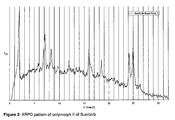
- the pharmaceutical compositon of the present invention comprises a yellow to greenish yellow solid that will in the following be referred to as polymorph I of Sunitinib. It is characterized by an XRPD pattern having a characteristic peak at 4.5 ⁇ 0.2 degrees 2-theta, in particular with peaks at 4.5 ⁇ 0.2; 9.1 ⁇ 0.2; 16.8 ⁇ 0.2 and 26.0 ⁇ 0.2 degrees 2-theta.
- polymorph I of Sunitinib can be characterized by an XRPD pattern with peaks at 4.5 ⁇ 0.2; 9.1 ⁇ 0.2; 15.2 ⁇ 0.2; 16.8 ⁇ 0.2; 18.3 ⁇ 0.2; 20.4 ⁇ 0.2; 21.8 ⁇ 0.2; 22.9 ⁇ 0.2 and 26.0 ⁇ 0.2 degrees 2-theta.
- the XRPD pattern of polymorph I of Sunitinib is shown in figure 1 .
- Polymorph I of Sunitinib shows a Raman spectrum exhibiting characteristic peaks at 2927 ⁇ 2 cm -1 , 1679 ⁇ 2 cm -1 , 1585 ⁇ 2 cm -1 , 1437 ⁇ 2 cm -1 , 1334 ⁇ 2 cm -1 , 1278 ⁇ 2 cm -1 and 670 ⁇ 2 cm -1 .
- Polymorph I of Sunitinib shows an IR spectrum exhibiting characteristic peaks at 2969 ⁇ 2 cm -1 , 1479 ⁇ 2 cm -1 , 1330 ⁇ 2 cm -1 , 1189 ⁇ 2 cm -1 , 797 ⁇ 2 cm -1 , 667 ⁇ 2 cm -1 and 609 ⁇ 2 cm -1 .
- Polymorph I of Sunitinib exhibits a low hygroscopicity.
- DMSG revealed a moisture sorption of maximum about 1 % referred to the weight of the sample.
- the pharmaceutical composition of the present invention comprises polymorph II of Sunitinib.
- This crystal form has the following characteristics:
- Polymorph II of Sunitinib is characterized by an XRPD pattern having a characteristic peak at 3.8 ⁇ 0.2 degrees of 2-theta, in particular with peaks at 3.8 ⁇ 0.2; 9.0 ⁇ 0.2; 14.0 ⁇ 0.2; 18.1 ⁇ 0.2 and 20.5 ⁇ 0.2 degrees 2-theta.
- polymorph II of Sunitinib can be characterized by an XRPD pattern with peaks at 3.8 ⁇ 0.2; 9.0 ⁇ 0.2; 14.0 ⁇ 0.2;18.1 ⁇ 0.2; 20.5 ⁇ 0.2; 26.6 ⁇ 0.5 and 27.5 ⁇ 0.6 degrees 2-theta.
- the XRPD of polymorph II of Sunitinib is shown in figure 2 .
- Polymorph II of Sunitinib shows a Raman spectrum exhibiting characteristic peaks at 2929 ⁇ 2 cm -1 , 1627 ⁇ 2 cm -1 , 1583 ⁇ 2 cm -1 , 1425 ⁇ 2 cm -1 , 1328 ⁇ 2 cm -1 , 1285 ⁇ 2 cm -1 , 1264 ⁇ 2 cm -1 and 669 ⁇ 2 cm -1 .
- Polymorph II of Sunitinib shows an IR spectrum exhibiting characteristic peaks at 1667 ⁇ 2 cm -1 , 1476 ⁇ 2 cm -1 , 1325 ⁇ 2 cm -1 , 1147 ⁇ 2 cm -1 , 794 ⁇ 2 cm -1 , 668 ⁇ 2 cm -1 and 608 ⁇ 2 cm -1 .
- Sunitinib in the polymorphic form II exhibits some hygroscopicity.
- DMSG revealed a moisture sorption of more than 6 % referred to the weight of the sample.
- Polymorph II of Sunitinib is obtainable by a process, comprising the steps of:
- the crystallization is carried out in a suitable inert solvent or in a mixture of two or more suitable inert solvents.
- suitable inert solvents are water, aliphatic and aromatic hydrocarbons (preferably hexane, benzene, toluene or xylene), aliphatic alcohols (preferably methanol, ethanol, propanol, iso-propanol), ethers (preferably diethyl ether, diisopropyl ether or dimethoxyethane), cyclic ethers (preferably tetrahydrofuran or dioxane), ketones (preferably acetone, methylisobutylketone or methylethylketone), esters (preferably ethylacetate), chlorinated hydrocharbons (preferably dichloromethane or chloroform) or nitrogen containing organic solvents (preferably N-methyl pyrollidone, dimethylformamide or acetonitrile). Acetone and toluene are especially preferred.
- An alternative process for the preparation of polymorph II of Sunitinib comprises the steps of:
- solvents the suitable inert solvents as described above can be used.
- a base preferably a Bronsted base.
- suitable Bronsted bases are metal hydroxides, metal carbonates or amines, preferably alkali metal hydroxides, alkali metal carbonates, alkali metal bicarbonates, ammonia, or organic amines, such as, for example, sodium hydroxide, potassium hydroxide, sodium carbonate, potassium carbonate, sodium bicarbonate, ammonia, diethylamine, triethylamine, diisopropylamine or pyridine.
- Sodium hydroxide is preferred.
- the base is used in an amount sufficient to obtain the free base of Sunitinib from its salt.
- the pharmaceutical composition of the present invention comprises polymorph III of Sunitinib.
- This crystal form has the following characteristics:
- Polymorph III of Sunitinib is characterized by an XRPD pattern having a characteristic peak at 6.3 ⁇ 0.2 degrees 2-theta, in particular with peaks at 6.3 ⁇ 0.2; 22.2 ⁇ 0.2 and 26.4 ⁇ 0.2 degrees 2-theta.
- polymorph III of Sunitinib can be characterized by an XRPD pattern with peaks at 6.3 ⁇ 0.2; 14.0 ⁇ 0.2; 15.4 ⁇ 0.2. 18.9 ⁇ 0.2. 19.3 ⁇ 0.2; 22.2 ⁇ 0.2; 24.2 ⁇ 0.2 and 26.4 ⁇ 0.2 degrees 2-theta.
- the XRPD pattern of polymorph III of Sunitinib is shown in figure 3 .
- Polymorph III of Sunitinib shows a Raman spectrum exhibiting characteristic peaks at 1674 t 2 cm -1 , 1569 ⁇ 2 cm -1 , 1414 ⁇ 2 cm -1 , 1327 ⁇ 2 cm -1 , 1297 ⁇ 2 cm -1 , 1259 ⁇ 2 cm -1 , 1030 ⁇ 2 cm -1 and 666 ⁇ 2 cm -1 .
- Polymorph III of Sunitinib shows an IR spectrum exhibiting characteristic peaks at 3435 ⁇ 2 cm -1 , 1670 ⁇ 2 cm -1 , 1473 ⁇ 2 cm -1 , 1294 ⁇ 2 cm -1 , 1194 ⁇ 2 cm -1 , 1146 ⁇ 2 cm -1 , 786 ⁇ 2 cm- 1 , 663 ⁇ 2 cm -1 , 617 ⁇ 2 cm -1 .
- Polymorph III exhibits a very low hygroscopicity. Under DMSG, the sample does not gain weight, even at a relative humidity of 95 %.
- Polymorph III is preferably further characterized by the absence of any solvent molecules within the crystal.
- a process for the preparation of polymorph III of Sunitinib comprises the steps of:
- the process comprises the steps of:
- suitable inert solvents or mixtures of two or more suitable inert solvents.
- suitable inert solvents are water, aliphatic and aromatic hydrocarbons (preferably hexane, benzene, toluene or xylene), aliphatic alcohols (preferably methanol, ethanol, propanol, iso-propanol), ethers (preferably diethyl ether, diisopropyl ether or dimethoxyethane), cyclic ethers (preferably tetrahydrofuran or dioxane), ketones (preferably acetone, methylisobutylketone or methylethylketone), esters (preferably ethylacetate), chlorinated hydrocharbons (preferably dichloromethane or chloroform) or nitrogen containing organic solvents (preferably N-methyl pyrollidone, dimethylformamide or acetonitrile). Acetone and toluene are especially preferred.
- the pharmaceutical composition of the present invention has a mean particle size of 1 to 400 ⁇ m, preferably 10 to 200 ⁇ m, more preferably 20 to 100 ⁇ m.
- a bulk density of the pharmaceutical composition ranging from of 0.3 to 0.85 g/ml, preferably of 0.3 to 0.6 g/ml, more preferably of 0.3 to 0.5 g/ml is advantageous.
- the pharmaceutical composition of the invention preferably possesses Hausner ratios in the range of 1.05 to 1.65, more preferably of 1.1 to 1.5.
- the Hausner factor is the ratio of bulk density to tapped density.
- the pharmaceutical composition of the present invention further comprises one or more pharmaceutically acceptable excipients, such as fillers, binding agents, lubricants, flow enhancers, antisticking agents, disintegrating agents and solubilizers.
- pharmaceutically acceptable excipients such as fillers, binding agents, lubricants, flow enhancers, antisticking agents, disintegrating agents and solubilizers.
- pharmaceutically acceptable excipients conventional excipients known to the person skilled in the art may be used. See for example " Lexikon der Hilfsscher für Pharmazie, Kosmetik und angrenzende füre", edited by H. P. Fiedler, 4th Edition, Edito Cantor, Aulendorf and earlier editions , and " Handbook of Pharmaceutical Excipients", Third Edition, edited by Arthur H. Kibbe, American Pharmaceutical Association, Washington, USA, and Pharmaceutical Press, Lond on.
- the fillers are lactose, mannitol, sorbitol or microcrystalline cellulose.
- the filler is suitably present in an amount of 0 to 90 % by weight, preferably of 30 to 80 % by weight of the total weight of the composition.
- the binding agent can for example be microcrystalline cellulose (MCC) or hydroxypropylmethyl cellulose (HPMC).
- MCC microcrystalline cellulose
- HPMC hydroxypropylmethyl cellulose
- the binding agent is present in an amount of 1 to 25 % by weight, more preferably at 2 to 10 % by weight of the total weight of the composition.
- the lubricant is preferably a stearate, more preferably an earth alkali metal stearate, such as magnesium stearate.
- the lubricant is suitably present in an amount of 0.1 to 2 % by weight, preferably about 1 % by weight of the total weight of the composition.
- Preferred disintegrating agents are croscarmellose sodium, sodium carboxymethyl starch or cross-linked polyvinylpyrrolidone (crospovidone).
- the disintegrating agent is suitably present in an amount of 0.1 to 20 % by weight, more preferably at about 0.5 to 7 % by weight of the total weight of the composition.
- the flow enhancer can for example be colloidal silicon dioxide.
- the flow enhancer is present in an amount of 0.5 to 8 % by weight, more preferably at 0.5 to 3 % by weight of the total weight of the composition.
- the antisticking agent is for example talcum and may be present in amounts of 1 to 5 % by weight, more preferably in an amount of 1.5 to 3 % by weight of the total weight of the composition.
- an improvement of the solubility of the active pharmaceutical ingredient can for example be achieved by the addition of complex forming agents/compounds (e.g. sodium benzoate, sodium salicylate or cyclodextrins), alternation of solvent properties (e.g. by adding PVP or polyethylene glycols) or the addition of solubilizers which form tenside micelles (e.g. surfactants).
- complex forming agents/compounds e.g. sodium benzoate, sodium salicylate or cyclodextrins
- alternation of solvent properties e.g. by adding PVP or polyethylene glycols
- solubilizers which form tenside micelles e.g. surfactants.
- Suitable solubilizers are for example surfactants such as polyoxyethylene alcohol ethers (e.g. Brij®), polysorbates (e.g. Tween®) or polyoxypropylene polyoxyethylene copolymers (poloxamer; e.g. Pluronic®) and may be present in amounts of 0.5 to 7 % by weight, more preferably 1 to 5 % by weight of the total weight of the composition.
- surfactants such as polyoxyethylene alcohol ethers (e.g. Brij®), polysorbates (e.g. Tween®) or polyoxypropylene polyoxyethylene copolymers (poloxamer; e.g. Pluronic®) and may be present in amounts of 0.5 to 7 % by weight, more preferably 1 to 5 % by weight of the total weight of the composition.
- pseudo-emulsifier can be used. Its mechanism of action mainly relies on an enhancement of viscosity. However, pseudo-emulsifiers also possess emulsifying properties. Preferred pseudo-emulsifiers of the present invention are for example cellulose ethers, gum Arabic or tragacanth and may be present in amounts of 1 to 10 % by weight, more preferably 3 to 7 % by weight of the total weight of the composition.
- the pharmaceutical composition of the present invention can be formulated in any known form, preferably as tablets, capsules, granules, pellets or sachets.
- a particularly preferred pharmaceutical composition is in the form of capsules.
- the pharmaceutical composition may contain dosage amounts of 12.5, 25 and 50 mg of the active pharmaceutical ingredient.
- the administered amount can be readily varied according to individual tolerance and safety warranting more flexible dosing than the standard dose of 50 mg once daily.
- the pharmaceutical composition of the present invention can be manufactured according to standard methods known in the art.
- Granulates according to the invention can be obtained by dry compaction or wet granulation. These granulates can subsequently be mixed with e.g. suitable disintegrating agents, glidants and lubricants and compressed into tablets or filled into sachets or capsules of suitable size. Tablets can also be obtained by direct compression of a suitable powder mixture, i.e. without any preceding granulation of the excipients.
- Suitable powder or granulate mixtures according to the invention are further obtainable by spray drying, lyophilization, melt extrusion, pellet layering, coating of the active pharmaceutical ingredient or any other suitable method provided that the conditions are chosen such as to prevent amorphization of the active pharmaceutical ingredient.
- the so obtained powders or granulates can be mixed with one or more suitable ingredients and the resulting mixtures can either be compressed to form tablets or filled into sachets or capsules.
- Sunitinib was obtained according to example 35 (alternative synthesis) of EP 1255752 B1 . 0.25 g of Sunitinib were mixed with 50 ml acetone and heated to reflux. Then, 5 ml toluene were added. The solvent was removed at 45 °C under reduced pressure of 250 to 300 mmHg until precipitation of the crystalline solid occurred. The product was collected by filtration, washed with 2 ml of cold toluene and dried for 24 hours at room temperature.
- Sunitinib was obtained according to example 35 (alternative synthesis) of EP 1255752 B1 .
- a suspension of Sunitinib was prepared in a mixture of acetone and toluene (1:1 v/v) at room temperature (RT). The suspension was heated to reflux for 1 hour, leading to a complete dissolution of Sunitinib. The solution was allowed to cool below boiling temperature and was then further cooled with a mixture of ice and sodium chloride as external cooling for 24 hours. The ice bath was not exchanged and the mixture was allowed to warm to RT. Further crystallization at RT for 48 hours resulted in a yellow precipitate, which was removed by filtration. The dark orange filtrate was kept at RT until dark orange needles were formed. These were isolated and dried for 24 hours at RT.
- ingredient product e.g. function amount [mg] Sunitinib API 12.5 MCC Avicel® PH-102 filler 60 PVP Kollidon® 12.5 binder 10 lactose+MCC (75:25) MicroceLac®100 filler 20 crospovidone Kollidon® CL disintegrant 10 magnesium stearate lubricant 1 colloidal silicon dioxide Aerosil® 200 flow enhancer 0.5
- Povidone is dissolved in a suitable solvent, e.g. water, and micronized Sunitinib is added to the solution.
- a suitable solvent e.g. water
- micronized Sunitinib is added to the solution.
- the resulting suspension is used to granulate MCC and Crospovidone.
- the dry granulate is pre-mixed with lactose+MCC and colloidal silicon dioxide and finally mixed with magnesium stearate. The mixture is filled into capsules.
- ingredient product e.g. function amount [mg] Sunitinib micronized API 50 MCC Avicel® PH-102 filler 20 PVP Kollidon® 90 binder 4 crospovidone Kollidon® CL disintegrant 8 magnesium stearate lubricant 1 colloidal silicon dioxide Aerosil® 200 flow enhancer 0.4
- Povidone is dissolved in a suitable solvent, e.g. water, and 40 % of the micronized Sunitinib is added.
- a suitable solvent e.g. water
- 40 % of the micronized Sunitinib is added.
- the resulting suspension is used to granulate MCC, crospovidone and the residual amount of Sunitinib.
- the dry granulate is mixed with colloidal silicon dioxide and magnesium stearate and filled into capsules.
- ingredient product e.g. function amount [mg] Sunitinib API 25 Sugar Spheres Suglets® carrier 15 HPMC Klucel® binder 9 talcum antisticking agent 1
- the sugar spheres are sprayed with an aqueous solution of API, HPMC and talcum (nozzle width 1 to 2 mm, inlet temperature 30 to 80 °C, product temperature about 35 to 40 °C).
- API aqueous solution of API, HPMC and talcum
- nozzle width 1 to 2 mm inlet temperature 30 to 80 °C, product temperature about 35 to 40 °C.
- the dry coated pellets are filled into capsules.
- ingredient product e.g. function amount [mg] Sunitinib API 12.5 anhydrous dicalcium phosphate Di-Cafos® filler 42 carageenan Gelcarin® binder 7 talcum antisticking agent 1
- Sunitinib, dicalcium phosphate and carrageenan are wet granulated, extruded and spheronized. The resulting pellets are mixed with talcum and filled into capsules.
- ingredient product e.g. function amount [mg] Sunitinib API 12.5 MCC Avicel® PH-101 filler 106 PVP Kollidon® 25 binder 10 sodium croscarmellose Ac-Di-SOL® disintegrant 9 polysorbate Tween®20 solubilizer 7.5 magnesium stearate lubricant 3 colloidal silicon dioxide Aerosil®200 flow enhancer 2
- MCC 5 g croscarmellose and 1 g colloidal silicon dioxide are mixed and fluid bed granulated with a suspension of Sunitinib, polysorbate and PVP in water.
- the granules are sieved and mixed with the residual amounts of croscarmellose and colloidal silicon dioxide and with magnesium stearate.
- the mixture is filled into capsules.
- ingredient product e.g. function amount [mg] Sunitinib, micronized API 25 lactose Granulac® filler 20 hydroxypopylcellulose Klucel® binder 3 sodium croscarmellose Ac-Di-SOL® disintegrant 5 poloxamer Pluronic® L81 solubilizer 2.5 magnesium stearate lubricant 1.5 colloidal silicon dioxide Aerosil® 200 flow enhancer 1
- Sunitinib, lactose, 3 g sodium croscarmellose and 0.5 g colloidal silicon dioxide are mixed and fluid bed granulated with an aqueous solution of poloxamer and hydroxypropylcellulose.
- the granules are sieved and mixed with the residual amounts of croscarmellose and colloidal silicon dioxide and with magnesium stearate. The mixture is filled into capsules.
Landscapes
- Health & Medical Sciences (AREA)
- Chemical & Material Sciences (AREA)
- Bioinformatics & Cheminformatics (AREA)
- Engineering & Computer Science (AREA)
- Life Sciences & Earth Sciences (AREA)
- Animal Behavior & Ethology (AREA)
- General Health & Medical Sciences (AREA)
- Medicinal Chemistry (AREA)
- Pharmacology & Pharmacy (AREA)
- Veterinary Medicine (AREA)
- Public Health (AREA)
- Epidemiology (AREA)
- Organic Chemistry (AREA)
- Biophysics (AREA)
- Molecular Biology (AREA)
- Chemical Kinetics & Catalysis (AREA)
- General Chemical & Material Sciences (AREA)
- Nuclear Medicine, Radiotherapy & Molecular Imaging (AREA)
- Inorganic Chemistry (AREA)
- Pharmaceuticals Containing Other Organic And Inorganic Compounds (AREA)
Abstract
Description
- The present invention relates to a pharmaceutical composition comprising N-[2-(diethylamino)ethyl]-5-[(5-fluoro-1,2-dihydro-2-oxo-3H-indol-3-ylidene)methyl]-2,4-dimethyl-1 H-pyrrole-3-carboxamide as active pharmaceutical ingredient.
- The invention relates to a pharmaceutical composition comprising N-[2-(Diethylamino)ethyl]-5-[(5-fluoro-1,2-dihydro-2-oxo-3H-indol-3-ylidene)methyl]-2,4-dimethyl-1 H-pyrrole-3-carboxamide and a process of preparing such composition.
- The compound N-[2-(diethylamino)ethyl]-5-[(5-fluoro-1,2-dihydro-2-oxo-3H-indol-3-ylidene)methyl]-2,4-dimethyl-1 H-pyrrole-3-carboxamide (herein also referred to as Sunitinib) is a receptor tyrosine kinase inhibitor which is used to treat disorders like renal cell carcinoma (RCC) and gastrointestinal stromal tumors (GIST). Its activity relies on the inhibition of cellular signaling by targeting multiple receptor tyrosine kinases including platelet-derived growth factor receptors and vascular endothelial growth factor receptors. Since both kinds of receptors are involved in tumor angiogenesis and tumor cell proliferation, the simultaneous inhibition of these targets results in both reduced tumor vascularization and cancer cell death. These effects are responsible for the finally observed shrinkage of the renal cell carcinoma and gastrointestinal stromal tumors, respectively.
- Sunitinib and its pharmaceutical effects on disorders like cancer are described in
WO 01/60814 WO 01/45689 WO 03/035009 - Typically, Sunitinib is administered in a dose of 50 mg once daily, which, if necessary, has to be varied according to individual tolerance and safety. Thus, in order to obtain sufficiently flexible dosing, individual dosage forms generally contain 12.5, 25 and 50 mg Sunitinib. Capsules comprising the malate salt of Sunitinib are sold under the brand name Sutent® (by Pfizer Pharma).
-
WO 01/60814
One of the forms of Sunitinib is its crystalline malic acid salt as described inWO 03/016305 - The solid exhibits poor solubility in water affecting its oral bioavailability. Moreover, it has been reported to cause manufacturing problems (e.g. stickiness) when being processed in higher concentrations, especially concentrations over 40 wt.% (see for example
WO 04/024127 - Apart from sufficient workability, good homogeneity and flowability of a pharmaceutical composition are further prerequisites for a successful manufacture of for example tablets and capsules on a production scale.
- It is therefore an object of the invention to provide a pharmaceutical composition comprising Sunitinib which does not encounter the above problems. In particular the composition should possess improved properties such as solubility, homogeneity and flowability.
- It has now been found that the above problems can be overcome by providing a pharmaceutical composition comprising crystalline Sunitinib in its free base form instead of e.g. its malate salt form or its amorphous form. This finding is particularly surprising because generally salt forms of organic pharmaceutically active compounds are more stable and exhibit a better processablity than their free base forms. Furthermore, amorphous forms of organic compounds are often better soluble than their crystalline forms. Therefore, a skilled person generally aims at providing a pharmaceutically active compound in an amorphous salt form. In contrast to this usual aim, for Sunitinib it has now been found that its crystalline free base form is more suitable for the preparation of a pharmaceutical composition.
- Thus, the present invention relates to a pharmaceutical composition comprising crystalline N-[2-(diethylamino)ethyl]-5-[(5-fluoro-1,2-dihydro-2-oxo-3H-indol-3-ylidene)methyl]-2,4-dimethyl-1H-pyrrole-3-carboxamide as active pharmaceutical ingredient and at least one pharmaceutically acceptable excipient, wherein the active pharmaceutical ingredient is present in its free base form.
-
- A
- Ångström
- DSC
- differential scanning calorimetry
- DMSG
- dynamic moisture sorption gravimetry
- IR
- infrared
- RH
- relative humidity
- RT
- room temperature
- SCXRD
- singe crystal X-ray diffraction
- XRPD
- X-ray powder diffraction
-
-
Figure 1 : XRPD pattern of Sunitinib in the polymorphic form I -
Figure 2 : XRPD pattern of Sunitinib in the polymorphic form II -
Figure 3 : XRPD pattern of Sunitinib in the polymorphic form III -
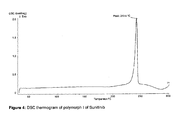
Figure 4 : DSC diagram of Sunitinib in the polymorphic form I -
Figure 5 : DSC diagram of Sunitinib in the polymorphic form II -
Figure 6 : DSC diagram of Sunitinib in the polymorphic form III - N-[2-(diethylamino)ethyl]-5-[(5-fluoro-1,2-dihydro-2-oxo-3H-indol-3-ylidene)methyl]-2,4-dimethyl-1 H-pyrrole-3-carboxamide (Sunitinib) has the following chemical structure:

- Sunitinib can be readily synthesized using techniques well known in the art. The synthesis of Sunitinib is disclosed for example in
WO 01/60814 - The term "active pharmaceutical ingredient " (API) refers to crystalline Sunitinib in its free base form and to polymorphs, solvates or hydrates thereof.
- The term "crystalline" refers to any non amorphous forms of the active pharmaceutical ingredient. The term "amorphous form" refers to a form of active pharmaceutical ingredient which has no long-range order like crystalline structures. The atoms or molecules of a material present in amorphous form are arranged in a non-uniform array. It is for example possible to distinguish amorphous from crystalline forms of a compound by powder X-ray diffraction.
- It has been found that the above mentioned problems due to e.g. stickiness can be overcome by providing Sunitinib in its crystalline salt free form, preferably in its polymorphic form I, II and/or III which will be described in detail below. Due to the advantageous properties of crystalline Sunitinib in its free base form, the pharmaceutical composition of the present invention possesses excellent homogeneity and flowability as well as good solubility. Further, it shows convenient workability over the whole range of suitable concentrations of active pharmaceutical ingredient, i.e. about 5 to 80 % by weight based on the total weight of the composition.
- Preferably, at least 60 % by weight, at least 70 % by weight or at least 80 % by weight of the active pharmaceutical ingredient are present in crystalline form, even more preferably at least 90 % by weight, most preferably at least 95 % by weight, wherein the respective amounts are being referred to the total weight of the active pharmaceutical ingredient in the composition of the present invention.
- The term "pharmaceutical composition" refers to single dosage forms, such as tablets, capsules, pellets, etc., as well as powders or granules which are used in the preparation of single dosage forms. Where it is referred to the total weight of the pharmaceutical composition and the pharmaceutical composition in a single dosage form the total weight is the weight of the single dosage form excluding, if applicable, the weight of any coating or capsule shell.
- The active pharmaceutical ingredient can be present in the pharmaceutical composition in an amount of 5 to 80 % by weight, preferably 10 to 70 % by weight, more preferably more than 40 to 60 % by weight of the total weight of the composition.
- The active pharmaceutical ingredient is preferably present in its polymorphic form I, II and/or III, more preferably in its polymorphic form II and/or III, most preferably in its polymorphic form III.
- In one embodiment the pharmaceutical compositon of the present invention comprises a yellow to greenish yellow solid that will in the following be referred to as polymorph I of Sunitinib. It is characterized by an XRPD pattern having a characteristic peak at 4.5 ± 0.2 degrees 2-theta, in particular with peaks at 4.5 ± 0.2; 9.1 ± 0.2; 16.8 ± 0.2 and 26.0 ± 0.2 degrees 2-theta.
- Furthermore, polymorph I of Sunitinib can be characterized by an XRPD pattern with peaks at 4.5 ± 0.2; 9.1 ± 0.2; 15.2 ± 0.2; 16.8 ± 0.2; 18.3 ± 0.2; 20.4 ± 0.2; 21.8 ± 0.2; 22.9 ± 0.2 and 26.0 ± 0.2 degrees 2-theta.
- The XRPD pattern of polymorph I of Sunitinib is shown in
figure 1 . - Polymorph I of Sunitinib shows a Raman spectrum exhibiting characteristic peaks at 2927 ± 2 cm-1, 1679 ± 2 cm-1, 1585 ± 2 cm-1, 1437 ± 2 cm-1, 1334 ± 2 cm-1, 1278 ± 2 cm-1 and 670 ± 2 cm-1 .
- Polymorph I of Sunitinib shows an IR spectrum exhibiting characteristic peaks at 2969 ± 2 cm-1, 1479 ± 2 cm-1, 1330 ± 2 cm-1, 1189 ± 2 cm-1, 797 ± 2 cm-1, 667 ± 2 cm-1 and 609 ± 2 cm-1.
- Polymorph I of Sunitinib exhibits a low hygroscopicity. DMSG revealed a moisture sorption of maximum about 1 % referred to the weight of the sample.
- In the second embodiment the pharmaceutical composition of the present invention comprises polymorph II of Sunitinib. This crystal form has the following characteristics:
- crystal system triclinic
- space group P-1
- cell metrics a = 13.5 ± 0.2 Å
b = 14.4 ± 0.2 Å
c = 24.3 ± 0.2 Å
α = 79 ± 1 °
β = 81 ± 1 °
γ = 89 ± 1 ° - cell volume V 4598.85 Å3
- molecules per unit cell 8
- Polymorph II of Sunitinib is characterized by an XRPD pattern having a characteristic peak at 3.8 ± 0.2 degrees of 2-theta, in particular with peaks at 3.8 ± 0.2; 9.0 ± 0.2; 14.0 ± 0.2; 18.1 ± 0.2 and 20.5 ± 0.2 degrees 2-theta.
- Furthermore, polymorph II of Sunitinib can be characterized by an XRPD pattern with peaks at 3.8 ± 0.2; 9.0 ± 0.2; 14.0 ± 0.2;18.1 ± 0.2; 20.5 ± 0.2; 26.6 ± 0.5 and 27.5 ± 0.6 degrees 2-theta.
- The XRPD of polymorph II of Sunitinib is shown in
figure 2 . - Polymorph II of Sunitinib shows a Raman spectrum exhibiting characteristic peaks at 2929 ± 2 cm-1, 1627 ± 2 cm-1, 1583 ± 2 cm-1, 1425 ± 2 cm-1, 1328 ± 2 cm-1, 1285 ± 2 cm-1, 1264 ± 2 cm-1 and 669 ± 2 cm-1.
- Polymorph II of Sunitinib shows an IR spectrum exhibiting characteristic peaks at 1667 ± 2 cm-1, 1476 ± 2 cm-1, 1325 ± 2 cm-1, 1147 ± 2 cm-1, 794 ± 2 cm-1, 668 ± 2 cm-1 and 608 ± 2 cm-1.
- Sunitinib in the polymorphic form II exhibits some hygroscopicity. DMSG revealed a moisture sorption of more than 6 % referred to the weight of the sample.
- Polymorph II of Sunitinib is obtainable by a process, comprising the steps of:
- dissolving Sunitinib present in any polymorphic or amorphous form or mixtures thereof, preferably in its polymorphic form I in a suitable inert solvent, preferably in water or an organic solvent or a mixture of two or more suitable inert solvents, preferably at a temperature between 25 °C and the reflux temperature of the solvent or the solvent mixture,
- optionally adding another solvent, preferably another organic solvent,
- concentrating the solution, preferably under reduced pressure, more preferably at a temperature between 25 °C and the reflux temperature of the solvent or the solvent mixture, most preferably under reduced pressure at 25 to 60 °C,
- collecting the resulting crystalline precipitate, preferably by filtration.
- The crystallization is carried out in a suitable inert solvent or in a mixture of two or more suitable inert solvents. Examples of such suitable inert solvents are water, aliphatic and aromatic hydrocarbons (preferably hexane, benzene, toluene or xylene), aliphatic alcohols (preferably methanol, ethanol, propanol, iso-propanol), ethers (preferably diethyl ether, diisopropyl ether or dimethoxyethane), cyclic ethers (preferably tetrahydrofuran or dioxane), ketones (preferably acetone, methylisobutylketone or methylethylketone), esters (preferably ethylacetate), chlorinated hydrocharbons (preferably dichloromethane or chloroform) or nitrogen containing organic solvents (preferably N-methyl pyrollidone, dimethylformamide or acetonitrile). Acetone and toluene are especially preferred.
- An alternative process for the preparation of polymorph II of Sunitinib comprises the steps of:
- dissolving a salt of Sunitinib, preferably a salt of Sunitinib (for example as disclosed in
WO 01/060814 - adding a base, preferably NaOH,
- collecting the resulting crystalline precipitate, preferably by filtration.
- As solvents the suitable inert solvents as described above can be used.
- The above described reaction is carried out in the presence of a base, preferably a Bronsted base. Examples of suitable Bronsted bases are metal hydroxides, metal carbonates or amines, preferably alkali metal hydroxides, alkali metal carbonates, alkali metal bicarbonates, ammonia, or organic amines, such as, for example, sodium hydroxide, potassium hydroxide, sodium carbonate, potassium carbonate, sodium bicarbonate, ammonia, diethylamine, triethylamine, diisopropylamine or pyridine. Sodium hydroxide is preferred. The base is used in an amount sufficient to obtain the free base of Sunitinib from its salt.
- In the third embodiment the pharmaceutical composition of the present invention comprises polymorph III of Sunitinib. This crystal form has the following characteristics:
- crystal system monoclinic
-
space group P 21/n - cell metrics a = 4.97560(10) Å
b = 28.1365(6) Å
c = 14.5880(3) Å
β = 93.5130(10) ° - cell volume V 2038.42(7) Å3
- molecules per unit cell 4
- Polymorph III of Sunitinib is characterized by an XRPD pattern having a characteristic peak at 6.3 ± 0.2 degrees 2-theta, in particular with peaks at 6.3 ± 0.2; 22.2 ± 0.2 and 26.4 ± 0.2 degrees 2-theta.
- Furthermore, polymorph III of Sunitinib can be characterized by an XRPD pattern with peaks at 6.3 ± 0.2; 14.0 ± 0.2; 15.4 ± 0.2. 18.9 ± 0.2. 19.3 ± 0.2; 22.2 ± 0.2; 24.2 ± 0.2 and 26.4 ± 0.2 degrees 2-theta.
- The XRPD pattern of polymorph III of Sunitinib is shown in
figure 3 . - Polymorph III of Sunitinib shows a Raman spectrum exhibiting characteristic peaks at 1674
t 2 cm-1, 1569 ± 2 cm-1, 1414 ± 2 cm-1, 1327 ± 2 cm-1, 1297 ± 2 cm-1, 1259 ± 2 cm-1, 1030 ± 2 cm-1 and 666 ± 2 cm-1. - Polymorph III of Sunitinib shows an IR spectrum exhibiting characteristic peaks at 3435 ± 2 cm-1, 1670 ± 2 cm-1, 1473 ± 2 cm-1, 1294 ± 2 cm-1, 1194 ± 2 cm-1, 1146 ± 2 cm-1, 786 ± 2 cm-1, 663 ± 2 cm-1, 617 ± 2 cm-1.
- Polymorph III exhibits a very low hygroscopicity. Under DMSG, the sample does not gain weight, even at a relative humidity of 95 %.
- Polymorph III is preferably further characterized by the absence of any solvent molecules within the crystal.
- A process for the preparation of polymorph III of Sunitinib comprises the steps of:
- preparing a clear saturated solution of Sunitinib in a suitable inert solvent,
- cooling the solution and allowing Sunitinib to crystallize,
- removing the resulting precipitate,
- keeping the filtrate at room temperature until Sunitinib crystallizes in the form of dark orange needles
- preparing a clear saturated solution of Sunitinib in a suitable inert solvent,
- cooling the solution and seeding it with crystals of polymorph III of Sunitinib,
- allowing polymorph III to crystallize from the seeded solution at room temperature in the form of dark orange needles.
- Preferably the process comprises the steps of:
- preparing a suspension of Sunitinib by suspending Sunitinib present in any polymorphic or amorphous form or mixtures thereof, preferably in its polymorphic form I or II, in a suitable inert solvent, preferably in an organic solvent or a mixture of two or more organic solvents,
- heating the suspension, preferably to the reflux temperature of the solvent or the solvent mixture, optionally by adding an additional amount of solvent, until a clear and saturated solution is obtained,
- cooling the solution and allowing Sunitinib to precipitate,
- removing the resulting precipitate, preferably by filtration,
- keeping the filtrate at room temperature until Sunitinib crystallizes in the form of dark orange needles,
- preparing a suspension of Sunitinib by suspending Sunitinib present in any polymorphic or amorphous form or mixtures thereof, preferably in its polymorphic form I or II in a suitable inert solvent, preferably in an organic solvent or a mixture of two or more organic solvents,
- heating the saturated suspension, preferably to the reflux temperature of the solvent or the solvent mixture, optionally by adding an additional amount of solvent, until a clear and saturated solution is obtained,
- cooling the solution and seeding it with crystals of polymorph III of Sunitinib,
- allowing polymorph III of Sunitinib to crystallize from the seeded solution at room temperature in the form of dark orange needles.
- The above described crystallizations are carried out in suitable inert solvents or mixtures of two or more suitable inert solvents. Examples of such suitable inert solvents are water, aliphatic and aromatic hydrocarbons (preferably hexane, benzene, toluene or xylene), aliphatic alcohols (preferably methanol, ethanol, propanol, iso-propanol), ethers (preferably diethyl ether, diisopropyl ether or dimethoxyethane), cyclic ethers (preferably tetrahydrofuran or dioxane), ketones (preferably acetone, methylisobutylketone or methylethylketone), esters (preferably ethylacetate), chlorinated hydrocharbons (preferably dichloromethane or chloroform) or nitrogen containing organic solvents (preferably N-methyl pyrollidone, dimethylformamide or acetonitrile). Acetone and toluene are especially preferred.
- Advantageous properties regarding solubility, homogeneity and flowability are achieved if the pharmaceutical composition of the present invention has a mean particle size of 1 to 400 µm, preferably 10 to 200 µm, more preferably 20 to 100 µm.
- A bulk density of the pharmaceutical composition ranging from of 0.3 to 0.85 g/ml, preferably of 0.3 to 0.6 g/ml, more preferably of 0.3 to 0.5 g/ml is advantageous.
- The pharmaceutical composition of the invention preferably possesses Hausner ratios in the range of 1.05 to 1.65, more preferably of 1.1 to 1.5. The Hausner factor is the ratio of bulk density to tapped density.
- The pharmaceutical composition of the present invention further comprises one or more pharmaceutically acceptable excipients, such as fillers, binding agents, lubricants, flow enhancers, antisticking agents, disintegrating agents and solubilizers. As pharmaceutically acceptable excipients conventional excipients known to the person skilled in the art may be used. See for example "Lexikon der Hilfsstoffe für Pharmazie, Kosmetik und angrenzende Gebiete", edited by H. P. Fiedler, 4th Edition, Edito Cantor, Aulendorf and earlier editions, and "Handbook of Pharmaceutical Excipients", Third Edition, edited by Arthur H. Kibbe, American Pharmaceutical Association, Washington, USA, and Pharmaceutical Press, London.
- Preferred examples of the fillers are lactose, mannitol, sorbitol or microcrystalline cellulose. The filler is suitably present in an amount of 0 to 90 % by weight, preferably of 30 to 80 % by weight of the total weight of the composition.
- The binding agent can for example be microcrystalline cellulose (MCC) or hydroxypropylmethyl cellulose (HPMC). Preferably the binding agent is present in an amount of 1 to 25 % by weight, more preferably at 2 to 10 % by weight of the total weight of the composition.
- The lubricant is preferably a stearate, more preferably an earth alkali metal stearate, such as magnesium stearate. The lubricant is suitably present in an amount of 0.1 to 2 % by weight, preferably about 1 % by weight of the total weight of the composition.
- Preferred disintegrating agents are croscarmellose sodium, sodium carboxymethyl starch or cross-linked polyvinylpyrrolidone (crospovidone). The disintegrating agent is suitably present in an amount of 0.1 to 20 % by weight, more preferably at about 0.5 to 7 % by weight of the total weight of the composition.
- The flow enhancer can for example be colloidal silicon dioxide. Preferably, the flow enhancer is present in an amount of 0.5 to 8 % by weight, more preferably at 0.5 to 3 % by weight of the total weight of the composition.
- The antisticking agent is for example talcum and may be present in amounts of 1 to 5 % by weight, more preferably in an amount of 1.5 to 3 % by weight of the total weight of the composition.
- If desired, an improvement of the solubility of the active pharmaceutical ingredient can for example be achieved by the addition of complex forming agents/compounds (e.g. sodium benzoate, sodium salicylate or cyclodextrins), alternation of solvent properties (e.g. by adding PVP or polyethylene glycols) or the addition of solubilizers which form tenside micelles (e.g. surfactants).
- Suitable solubilizers are for example surfactants such as polyoxyethylene alcohol ethers (e.g. Brij®), polysorbates (e.g. Tween®) or polyoxypropylene polyoxyethylene copolymers (poloxamer; e.g. Pluronic®) and may be present in amounts of 0.5 to 7 % by weight, more preferably 1 to 5 % by weight of the total weight of the composition.
- Alternatively, a pseudo-emulsifier can be used. Its mechanism of action mainly relies on an enhancement of viscosity. However, pseudo-emulsifiers also possess emulsifying properties. Preferred pseudo-emulsifiers of the present invention are for example cellulose ethers, gum Arabic or tragacanth and may be present in amounts of 1 to 10 % by weight, more preferably 3 to 7 % by weight of the total weight of the composition.
- A person skilled in the art may use these or other excipients in regard to the selected process of preparing the pharmaceutical composition of the invention.
- The pharmaceutical composition of the present invention can be formulated in any known form, preferably as tablets, capsules, granules, pellets or sachets. A particularly preferred pharmaceutical composition is in the form of capsules. The pharmaceutical composition may contain dosage amounts of 12.5, 25 and 50 mg of the active pharmaceutical ingredient. Thus the administered amount can be readily varied according to individual tolerance and safety warranting more flexible dosing than the standard dose of 50 mg once daily.
- The pharmaceutical composition of the present invention can be manufactured according to standard methods known in the art. Granulates according to the invention can be obtained by dry compaction or wet granulation. These granulates can subsequently be mixed with e.g. suitable disintegrating agents, glidants and lubricants and compressed into tablets or filled into sachets or capsules of suitable size. Tablets can also be obtained by direct compression of a suitable powder mixture, i.e. without any preceding granulation of the excipients. Suitable powder or granulate mixtures according to the invention are further obtainable by spray drying, lyophilization, melt extrusion, pellet layering, coating of the active pharmaceutical ingredient or any other suitable method provided that the conditions are chosen such as to prevent amorphization of the active pharmaceutical ingredient. The so obtained powders or granulates can be mixed with one or more suitable ingredients and the resulting mixtures can either be compressed to form tablets or filled into sachets or capsules. The above mentioned methods known in the art also include grinding and sieving techniques permitting the adjustment of desired particle size distributions.
- The invention is further illustrated by the following examples which are not constructed as being limiting.
- Sunitinib was obtained according to example 35 (alternative synthesis) of
EP 1255752 B1 . 0.25 g of Sunitinib were mixed with 50 ml acetone and heated to reflux. Then, 5 ml toluene were added. The solvent was removed at 45 °C under reduced pressure of 250 to 300 mmHg until precipitation of the crystalline solid occurred. The product was collected by filtration, washed with 2 ml of cold toluene and dried for 24 hours at room temperature. - Sunitinib was obtained according to example 35 (alternative synthesis) of
EP 1255752 B1 . A suspension of Sunitinib was prepared in a mixture of acetone and toluene (1:1 v/v) at room temperature (RT). The suspension was heated to reflux for 1 hour, leading to a complete dissolution of Sunitinib. The solution was allowed to cool below boiling temperature and was then further cooled with a mixture of ice and sodium chloride as external cooling for 24 hours. The ice bath was not exchanged and the mixture was allowed to warm to RT. Further crystallization at RT for 48 hours resulted in a yellow precipitate, which was removed by filtration. The dark orange filtrate was kept at RT until dark orange needles were formed. These were isolated and dried for 24 hours at RT. - The amounts of active pharmaceutical ingredient and all excipients given in the tables below refer to the contents per single capsule.
-
ingredient product, e.g. function amount [mg] Sunitinib API 12.5 MCC Avicel® PH-102 filler 60 PVP Kollidon® 12.5 binder 10 lactose+MCC (75:25) MicroceLac® 100filler 20 crospovidone Kollidon® CL disintegrant 10 magnesium stearate lubricant 1 colloidal silicon dioxide Aerosil® 200 flow enhancer 0.5 - Povidone is dissolved in a suitable solvent, e.g. water, and micronized Sunitinib is added to the solution. The resulting suspension is used to granulate MCC and Crospovidone. The dry granulate is pre-mixed with lactose+MCC and colloidal silicon dioxide and finally mixed with magnesium stearate. The mixture is filled into capsules.
-
ingredient product, e.g. function amount [mg] Sunitinib micronized API 50 MCC Avicel® PH-102 filler 20 PVP Kollidon® 90 binder 4 crospovidone Kollidon® CL disintegrant 8 magnesium stearate lubricant 1 colloidal silicon dioxide Aerosil® 200 flow enhancer 0.4 - Povidone is dissolved in a suitable solvent, e.g. water, and 40 % of the micronized Sunitinib is added. The resulting suspension is used to granulate MCC, crospovidone and the residual amount of Sunitinib. The dry granulate is mixed with colloidal silicon dioxide and magnesium stearate and filled into capsules.
-
ingredient product, e.g. function amount [mg] Sunitinib API 25 Sugar Spheres Suglets® carrier 15 HPMC Klucel® binder 9 talcum antisticking agent 1 - The sugar spheres are sprayed with an aqueous solution of API, HPMC and talcum (
nozzle width 1 to 2 mm, inlet temperature 30 to 80 °C, product temperature about 35 to 40 °C). The dry coated pellets are filled into capsules. -
ingredient product, e.g. function amount [mg] Sunitinib API 12.5 anhydrous dicalcium phosphate Di- Cafos® filler 42 carageenan Gelcarin® binder 7 talcum antisticking agent 1 - Sunitinib, dicalcium phosphate and carrageenan are wet granulated, extruded and spheronized. The resulting pellets are mixed with talcum and filled into capsules.
-
ingredient product, e.g. function amount [mg] Sunitinib API 12.5 MCC Avicel® PH-101 filler 106 PVP Kollidon® 25 binder 10 sodium croscarmellose Ac-Di-SOL® disintegrant 9 polysorbate Tween® 20 solubilizer 7.5 magnesium stearate lubricant 3 colloidal silicon dioxide Aerosil® 200 flow enhancer 2 - MCC, 5 g croscarmellose and 1 g colloidal silicon dioxide are mixed and fluid bed granulated with a suspension of Sunitinib, polysorbate and PVP in water. The granules are sieved and mixed with the residual amounts of croscarmellose and colloidal silicon dioxide and with magnesium stearate. The mixture is filled into capsules.
-
ingredient product, e.g. function amount [mg] Sunitinib, micronized API 25 lactose Granulac® filler 20 hydroxypopylcellulose Klucel® binder 3 sodium croscarmellose Ac-Di-SOL® disintegrant 5 poloxamer Pluronic® L81 solubilizer 2.5 magnesium stearate lubricant 1.5 colloidal silicon dioxide Aerosil® 200 flow enhancer 1 - Sunitinib, lactose, 3 g sodium croscarmellose and 0.5 g colloidal silicon dioxide are mixed and fluid bed granulated with an aqueous solution of poloxamer and hydroxypropylcellulose. The granules are sieved and mixed with the residual amounts of croscarmellose and colloidal silicon dioxide and with magnesium stearate. The mixture is filled into capsules.
Claims (8)
- Pharmaceutical composition comprising crystalline N-[2-(diethylamino)ethyl]-5-[(5-fluoro-1,2-dihydro-2-oxo-3H-indol-3-ylidene)methyl]-2,4-dimethyl-1 H-pyrrole-3-carboxamide in its free base form and at least one pharmaceutically acceptable excipient.
- Pharmaceutical composition according to claim 1, wherein the crystalline N-[2-(di-ethylamino)ethyl]-5-[(5-fluoro-1,2-dihydro-2-oxo-3H-indol-3-ylidene)methyl]-2,4-dimethyl-1 H-pyrrole-3-carboxamide is present in its polymorphic form I, II and/or III.
- Pharmaceutical composition according to claim 2, wherein the crystalline N-[2-(diethylamino)ethyl]-5-[(5-fluoro-1,2-dihydro-2-oxo-3H-indol-3-ylidene)methyl]-2,4-dimethyl-1 H-pyrrole-3-carboxamide is present in its polymorphic form III.
- Pharmaceutical composition according to any of the preceding claims, wherein the active pharmaceutical ingredient is present in more than 40 to 60 % by weight of the total weight of the composition.
- Pharmaceutical composition according to any of the preceding claims having a bulk density of 0.3 to 0.85 g/ml, preferably 0.3 to 0.6 g/ml, more preferably 0.3 to 0.5 g/ml.
- Pharmaceutical composition according to any of the preceding claims having a mean particle size of 1 to 400 µm, preferably 10 to 200 µm, more preferably 20 to 100 µm.
- Pharmaceutical composition according to any of the preceding claims having a Hausner ratio of 1.05 to 1.65, preferably 1.1 to 1.5.
- Use of crystalline N-[2-(diethylamino)ethyl]-5-[(5-fluoro-1,2-dihydro-2-oxo-3H-indol-3-ylidene)methyl]-2,4-dimethyl-1H-pyrrole-3-carboxamide in its free base form for the manufacture of a pharmaceutical composition comprising at least one pharmaceutically acceptable excipient.
Priority Applications (8)
| Application Number | Priority Date | Filing Date | Title |
|---|---|---|---|
| EP08011444A EP2138167A1 (en) | 2008-06-24 | 2008-06-24 | Pharmaceutical composition comprising N-[2-(Diethylamino)ethyl]-5-[(5-fluoro-1,2-dihydro-2-oxo-3H-indol-3-ylidene) methyl]-2,4-dimethyl-1H-pyrrole-3-carboxamide |
| AT09768977T ATE534375T1 (en) | 2008-06-24 | 2009-06-23 | PHARMACEUTICAL COMPOSITION WITH N-Ä2- (DIETHYLAMINO)ETHYLÜ-5-Ä(5-FLUORO-1,2- DIHYDRO-2- OXO-3H-INDOL-3-YLIDEN)METHYLÜ-2,4-DIMETHYL-1H-PYRROLE- 3-CARBONIC ACID AMIDE |
| PCT/EP2009/004529 WO2009156128A1 (en) | 2008-06-24 | 2009-06-23 | Pharmaceutical composition comprising n-[2-(diethylamino)ethyl]-5-[(5-fluoro-1,2- dihydro-2-oxo-3h-indol-3-ylidene)methyl]-2,4-dimethyl-1 h-pyrrole-3-carboxamide |
| EP09768977A EP2306990B1 (en) | 2008-06-24 | 2009-06-23 | Pharmaceutical composition comprising n-[2-(diethylamino)ethyl]-5-[(5-fluoro-1,2- dihydro-2-oxo-3h-indol-3-ylidene)methyl]-2,4-dimethyl-1 h-pyrrole-3-carboxamide |
| CA2728852A CA2728852C (en) | 2008-06-24 | 2009-06-23 | Pharmaceutical composition comprising n-[2-(diethylamino)ethyl]-5-[(5-fluoro-1,2-dihydro-2-oxo-3h-indol-3-ylidene)methyl]-2,4-dimethyl-1h-pyrrole-3-carboxamide |
| KR1020117001608A KR101629526B1 (en) | 2008-06-24 | 2009-06-23 | Pharmaceutical composition comprising n-[2-(diethylamino)ethyl]-5-[(5-fluoro-1,2-dihydro-2-oxo-3h-indol-3-ylidene)methyl]-2,4-dimethyl-1h-pyrrole-3-carboxamide |
| ES09768977T ES2377286T3 (en) | 2008-06-24 | 2009-06-23 | Pharmaceutical composition comprising N- [2- (diethylamino) ethyl] -5 - [(5-fluoro-1,2-dihydro-2-oxo-3H-indol-3-ylidene) methyl] -2,4-dimethyl- 1H-pyrrole-3-carboxamide |
| IL210141A IL210141A (en) | 2008-06-24 | 2010-12-21 | Pharmaceutical composition comprising n-[2-(diethylamino)ethyl]-5-[(5-fluoro-1,2-dihydro-2-oxo-3h-indol-3-ylidene)methyl]-2,4-dimethyl-1 h-pyrrole-3-carboxamide |
Applications Claiming Priority (1)
| Application Number | Priority Date | Filing Date | Title |
|---|---|---|---|
| EP08011444A EP2138167A1 (en) | 2008-06-24 | 2008-06-24 | Pharmaceutical composition comprising N-[2-(Diethylamino)ethyl]-5-[(5-fluoro-1,2-dihydro-2-oxo-3H-indol-3-ylidene) methyl]-2,4-dimethyl-1H-pyrrole-3-carboxamide |
Publications (1)
| Publication Number | Publication Date |
|---|---|
| EP2138167A1 true EP2138167A1 (en) | 2009-12-30 |
Family
ID=39884239
Family Applications (2)
| Application Number | Title | Priority Date | Filing Date |
|---|---|---|---|
| EP08011444A Withdrawn EP2138167A1 (en) | 2008-06-24 | 2008-06-24 | Pharmaceutical composition comprising N-[2-(Diethylamino)ethyl]-5-[(5-fluoro-1,2-dihydro-2-oxo-3H-indol-3-ylidene) methyl]-2,4-dimethyl-1H-pyrrole-3-carboxamide |
| EP09768977A Active EP2306990B1 (en) | 2008-06-24 | 2009-06-23 | Pharmaceutical composition comprising n-[2-(diethylamino)ethyl]-5-[(5-fluoro-1,2- dihydro-2-oxo-3h-indol-3-ylidene)methyl]-2,4-dimethyl-1 h-pyrrole-3-carboxamide |
Family Applications After (1)
| Application Number | Title | Priority Date | Filing Date |
|---|---|---|---|
| EP09768977A Active EP2306990B1 (en) | 2008-06-24 | 2009-06-23 | Pharmaceutical composition comprising n-[2-(diethylamino)ethyl]-5-[(5-fluoro-1,2- dihydro-2-oxo-3h-indol-3-ylidene)methyl]-2,4-dimethyl-1 h-pyrrole-3-carboxamide |
Country Status (7)
| Country | Link |
|---|---|
| EP (2) | EP2138167A1 (en) |
| KR (1) | KR101629526B1 (en) |
| AT (1) | ATE534375T1 (en) |
| CA (1) | CA2728852C (en) |
| ES (1) | ES2377286T3 (en) |
| IL (1) | IL210141A (en) |
| WO (1) | WO2009156128A1 (en) |
Cited By (1)
| Publication number | Priority date | Publication date | Assignee | Title |
|---|---|---|---|---|
| EP3539536A1 (en) * | 2018-03-15 | 2019-09-18 | MH10 Spolka z ograniczona odpowiedzialnoscia | A pharmaceutical composition of sunitinib or its salt thereof in its polymorphic form i |
Families Citing this family (4)
| Publication number | Priority date | Publication date | Assignee | Title |
|---|---|---|---|---|
| KR102322429B1 (en) * | 2018-10-31 | 2021-11-08 | 주식회사 삼양홀딩스 | Oral formulation containing sunitinib and the method for preparing the same |
| KR102308227B1 (en) * | 2018-10-31 | 2021-10-05 | 주식회사 삼양홀딩스 | Oral tablet composition containing sunitinib |
| WO2020091439A1 (en) * | 2018-10-31 | 2020-05-07 | 주식회사 삼양바이오팜 | Oral formulation comprising sunitinib and preparation method therefor |
| KR102538075B1 (en) * | 2019-12-17 | 2023-05-30 | 주식회사 삼양홀딩스 | Oral solid formulation comprising sunitinib hydrochloride salt and method for preparing the same |
Citations (7)
| Publication number | Priority date | Publication date | Assignee | Title |
|---|---|---|---|---|
| WO2001037820A2 (en) * | 1999-11-24 | 2001-05-31 | Sugen, Inc. | Ionizable indolinone derivatives and their use as ptk ligands |
| WO2001045689A2 (en) | 1999-12-22 | 2001-06-28 | Sugen, Inc. | Indolinone derivatives for modulation of c-kit tyrosine protein kinase |
| WO2001060814A2 (en) | 2000-02-15 | 2001-08-23 | Sugen, Inc. | Pyrrole substituted 2-indolinone protein kinase inhibitors |
| WO2003016305A1 (en) | 2001-08-15 | 2003-02-27 | Pharmacia & Upjohn Company | Crystals including a malic acid salt of n-[2-(diethylamino) ethyl]-5-[(5-fluoro-2-oxo-3h-indole-3-ylidene) methyl]-2, 4-dimethyl-1h-pyrrole-3-carboxamide, processes for its preparation and compositions thereof |
| WO2003035009A2 (en) | 2001-10-26 | 2003-05-01 | Sugen, Inc. | Treatment of acute myeloid leukemia with indolinone compounds |
| WO2004024127A2 (en) | 2002-09-10 | 2004-03-25 | Pharmacia Italia S.P.A. | Solid formulations comprising an indolinone compound |
| WO2004073592A2 (en) * | 2003-02-21 | 2004-09-02 | Pharmacia Italia S.P.A. | Semi-solid immediate-release oral formulations comprising an anticancer hydrophobic agent, a polyglycolised glyceride and a hydrophilic carrier |
-
2008
- 2008-06-24 EP EP08011444A patent/EP2138167A1/en not_active Withdrawn
-
2009
- 2009-06-23 AT AT09768977T patent/ATE534375T1/en active
- 2009-06-23 EP EP09768977A patent/EP2306990B1/en active Active
- 2009-06-23 KR KR1020117001608A patent/KR101629526B1/en active Active
- 2009-06-23 ES ES09768977T patent/ES2377286T3/en active Active
- 2009-06-23 CA CA2728852A patent/CA2728852C/en active Active
- 2009-06-23 WO PCT/EP2009/004529 patent/WO2009156128A1/en not_active Ceased
-
2010
- 2010-12-21 IL IL210141A patent/IL210141A/en active IP Right Grant
Patent Citations (8)
| Publication number | Priority date | Publication date | Assignee | Title |
|---|---|---|---|---|
| WO2001037820A2 (en) * | 1999-11-24 | 2001-05-31 | Sugen, Inc. | Ionizable indolinone derivatives and their use as ptk ligands |
| WO2001045689A2 (en) | 1999-12-22 | 2001-06-28 | Sugen, Inc. | Indolinone derivatives for modulation of c-kit tyrosine protein kinase |
| WO2001060814A2 (en) | 2000-02-15 | 2001-08-23 | Sugen, Inc. | Pyrrole substituted 2-indolinone protein kinase inhibitors |
| EP1255752B1 (en) | 2000-02-15 | 2007-08-08 | Sugen, Inc. | Pyrrole substituted 2-indolinone protein kinase inhibitors |
| WO2003016305A1 (en) | 2001-08-15 | 2003-02-27 | Pharmacia & Upjohn Company | Crystals including a malic acid salt of n-[2-(diethylamino) ethyl]-5-[(5-fluoro-2-oxo-3h-indole-3-ylidene) methyl]-2, 4-dimethyl-1h-pyrrole-3-carboxamide, processes for its preparation and compositions thereof |
| WO2003035009A2 (en) | 2001-10-26 | 2003-05-01 | Sugen, Inc. | Treatment of acute myeloid leukemia with indolinone compounds |
| WO2004024127A2 (en) | 2002-09-10 | 2004-03-25 | Pharmacia Italia S.P.A. | Solid formulations comprising an indolinone compound |
| WO2004073592A2 (en) * | 2003-02-21 | 2004-09-02 | Pharmacia Italia S.P.A. | Semi-solid immediate-release oral formulations comprising an anticancer hydrophobic agent, a polyglycolised glyceride and a hydrophilic carrier |
Non-Patent Citations (2)
| Title |
|---|
| "Handbook of Pharmaceutical Excipients", AMERICAN PHARMACEUTICAL ASSOCIATION |
| "Lexikon der Hilfsstoffe fur Pharmazie, Kosmetik und angrenzende Gebiete" |
Cited By (1)
| Publication number | Priority date | Publication date | Assignee | Title |
|---|---|---|---|---|
| EP3539536A1 (en) * | 2018-03-15 | 2019-09-18 | MH10 Spolka z ograniczona odpowiedzialnoscia | A pharmaceutical composition of sunitinib or its salt thereof in its polymorphic form i |
Also Published As
| Publication number | Publication date |
|---|---|
| KR101629526B1 (en) | 2016-06-10 |
| IL210141A (en) | 2013-05-30 |
| WO2009156128A1 (en) | 2009-12-30 |
| ATE534375T1 (en) | 2011-12-15 |
| CA2728852A1 (en) | 2009-12-30 |
| CA2728852C (en) | 2016-07-26 |
| EP2306990B1 (en) | 2011-11-23 |
| IL210141A0 (en) | 2011-03-31 |
| ES2377286T3 (en) | 2012-03-26 |
| KR20110022690A (en) | 2011-03-07 |
| EP2306990A1 (en) | 2011-04-13 |
Similar Documents
| Publication | Publication Date | Title |
|---|---|---|
| TWI667026B (en) | Heterocyclic compounds and their uses | |
| US12227481B2 (en) | Crystalline solid forms of salts of N-{4-[(6,7-dimethoxyquinolin-4-yl)oxy]phenyl}-N'-(4-fluorophenyl) cyclopropane-1,1-dicarboxamide, processes for making, and methods of use | |
| US7459449B2 (en) | Stable salts of olanzapine | |
| PL217835B1 (en) | Pharmaceutical preparation containing atorvastatin calcium salt, process for the production of this preparation and its use for the treatment of hypercholesterolemia and hyperlipidemia | |
| EP3492466B1 (en) | Oral solid preparation and use thereof | |
| EP2306990B1 (en) | Pharmaceutical composition comprising n-[2-(diethylamino)ethyl]-5-[(5-fluoro-1,2- dihydro-2-oxo-3h-indol-3-ylidene)methyl]-2,4-dimethyl-1 h-pyrrole-3-carboxamide | |
| US11786471B2 (en) | Complex disintegrant system for oral solid preparation and oral solid preparation comprising said complex disintegrant system | |
| US20110257237A1 (en) | Process for the preparation of crystalline forms of sunitinib malate | |
| CN101068533B (en) | Pharmaceutical composition containing an anti-nucleating agent | |
| SI22750A (en) | Ivabradin hydrobromide | |
| US20100310668A1 (en) | Pharmaceutical compositions comprising n-[2-(diethylamino)ethyl]-5-[(5-fluoro-1,2-dihydro-2-oxo-3h-indol-3-ylidene)methyl]-2,4-dimethyl-1h-pyrrole-3-carboxamide | |
| EA009949B1 (en) | Modafinil compositions | |
| US20250368621A1 (en) | Csf-1r inhibitors and methods of use thereof | |
| US20070112056A1 (en) | Stable modifications of tegaserod hydrogen maleate | |
| EP2255792A1 (en) | Pharmaceutical compositions for N-[2-(Diethylamino)ethyl]5-[(fluoro-1,2-dihydro-2-oxo-3H-indole-3-ylidene) methyl]-2,4-dimenthyl-1H-pyrrole-3-carboxamide | |
| EP2155732A1 (en) | Amorphous olmesartan medoxomil | |
| AU2023309042A1 (en) | Antihistamine compound, and preparation method therefor and use thereof | |
| EP2832723B1 (en) | Stabilised amorphous forms of Saxagliptin | |
| WO2011058179A1 (en) | 5- (4- (n- (2, 3 -dimethyl- 2h- indazol- 6 -yl) -n-methylamino) pyrimidin- 2 -ylamino) -2 -methylbenzenesulfonamide | |
| EA006245B1 (en) | 4-[4-(2-pyrrolylcarbonyl)-1-piperazinyl]-3-trifluoromethyl-benzoylguanidine hydrochloride | |
| EP2113248A1 (en) | Pharmaceutical composition comprising N-[2-(diethylamino)ethyl]-5-[(5-fluoro-1,2-dihydro-2-oxo-3H-indol-3-ylidene)methyl]-2-,4-dimethyl-1H-pyrrole-3-carboxamide | |
| CN102666528A (en) | Crystalline CDC7 inhibitor salts | |
| EP2090306A1 (en) | Pharmaceutical compositions comprising N-[2-(diethylamino)ethyl]-5-[(5-fluoro-1,2-dihydro-2-oxo-3H-indol-3-ylidene)methyl]-2,4-dimethyl-1H-pyrrole-3-carboxamide |
Legal Events
| Date | Code | Title | Description |
|---|---|---|---|
| PUAI | Public reference made under article 153(3) epc to a published international application that has entered the european phase |
Free format text: ORIGINAL CODE: 0009012 |
|
| AK | Designated contracting states |
Kind code of ref document: A1 Designated state(s): AT BE BG CH CY CZ DE DK EE ES FI FR GB GR HR HU IE IS IT LI LT LU LV MC MT NL NO PL PT RO SE SI SK TR |
|
| AX | Request for extension of the european patent |
Extension state: AL BA MK RS |
|
| AKY | No designation fees paid | ||
| STAA | Information on the status of an ep patent application or granted ep patent |
Free format text: STATUS: THE APPLICATION IS DEEMED TO BE WITHDRAWN |
|
| 18D | Application deemed to be withdrawn |
Effective date: 20100701 |
|
| REG | Reference to a national code |
Ref country code: DE Ref legal event code: R108 Effective date: 20110208 Ref country code: DE Ref legal event code: 8566 |