EP2136481A1 - Downlink dual carrier system and method - Google Patents
Downlink dual carrier system and method Download PDFInfo
- Publication number
- EP2136481A1 EP2136481A1 EP08011003A EP08011003A EP2136481A1 EP 2136481 A1 EP2136481 A1 EP 2136481A1 EP 08011003 A EP08011003 A EP 08011003A EP 08011003 A EP08011003 A EP 08011003A EP 2136481 A1 EP2136481 A1 EP 2136481A1
- Authority
- EP
- European Patent Office
- Prior art keywords
- bsc
- mobile terminal
- carrier
- frequency
- band
- Prior art date
- Legal status (The legal status is an assumption and is not a legal conclusion. Google has not performed a legal analysis and makes no representation as to the accuracy of the status listed.)
- Granted
Links
Images


Classifications
-
- H—ELECTRICITY
- H04—ELECTRIC COMMUNICATION TECHNIQUE
- H04W—WIRELESS COMMUNICATION NETWORKS
- H04W56/00—Synchronisation arrangements
- H04W56/0035—Synchronisation arrangements detecting errors in frequency or phase
-
- H—ELECTRICITY
- H04—ELECTRIC COMMUNICATION TECHNIQUE
- H04B—TRANSMISSION
- H04B7/00—Radio transmission systems, i.e. using radiation field
- H04B7/02—Diversity systems; Multi-antenna system, i.e. transmission or reception using multiple antennas
- H04B7/04—Diversity systems; Multi-antenna system, i.e. transmission or reception using multiple antennas using two or more spaced independent antennas
- H04B7/08—Diversity systems; Multi-antenna system, i.e. transmission or reception using multiple antennas using two or more spaced independent antennas at the receiving station
- H04B7/0837—Diversity systems; Multi-antenna system, i.e. transmission or reception using multiple antennas using two or more spaced independent antennas at the receiving station using pre-detection combining
-
- H—ELECTRICITY
- H04—ELECTRIC COMMUNICATION TECHNIQUE
- H04B—TRANSMISSION
- H04B7/00—Radio transmission systems, i.e. using radiation field
- H04B7/02—Diversity systems; Multi-antenna system, i.e. transmission or reception using multiple antennas
- H04B7/12—Frequency diversity
Definitions
- the object of the present invention is to provide a higher data transmission throughput at scarce spectrum capacity.
- Mobile station and network support for Downlink Dual Carrier is optional.
- the mobile station shall indicate its support for Downlink Dual Carrier in the MS Radio Access Capabilities IE (see 3GPP TS 24.008).
- a mobile station and a network that support Downlink Dual Carrier shall also support EGPRS TBF.
- a mobile station supporting Downlink Dual Carrier shall also support the extended RLC/MAC control message segmentation as defined in sub-clause 9.1.12a.
- Downlink Dual Carrier enables downlink TBFs and uplink TBFs to use allocated resources on one or more assigned PDCHs on two different radio frequency channels.
- Uplink RLC/MAC blocks shall not be scheduled on both carriers of a downlink dual carrier configuration in the same radio block period.
- Downlink RLC/MAC blocks may be scheduled on both carriers of a downlink dual carrier configuration in the same radio block period.
- the network can extend this assignment to a downlink dual carrier configuration by sending a new single carrier assignment to the mobile station including assigned radio resources for the second carrier, without changing the resources already assigned for the initial carrier.
- the network can include radio resources for two carriers in an initial or subsequent assignment message.
- the typical conventional terminal or GSM Mobile station designs comprises only one antenna in order to reduce the form factor, size of the terminal and the offset costs of handsets to a minimum value.
- most of the handsets of the GSM operators are able to work in different bands sequentially (and not simultaneously).
- most of the conventional typical mobile stations already consists in dedicated frequency band dependent blocks like local oscillators.
- Terminal vendors have shown how they want to make available dual downlink carrier feature in their handsets. This will most probably be designed by two separate antennas with two separate RF receive chains.
- the DLDC feature In order to comply both the scarce spectrum in one band and the customer demand for faster data throughput, the DLDC feature with a simple but ingenious addition is taken into account:
- the feature shall be possible for 2 different bands, that means that a first frequency channel is allocated in band A and the second frequency channel is allocated in band B.
- Timeslot allocation may regard different Time slots on different carriers.
- Uplink allocation shall not have the same timeslot numbers and as in Downlink on both carriers and shall not overlap, so that the mobile station can easily switch between downlink and uplink mode.
- the downlink dual carrier system is applied preferably in the two widely used GSM spectrums P-GSM 900 (1) and 1800 Mhz (2).
- the system also comprises, at least, one per channel:
- the invention requires a synchronization function between these two separate RX channels in a way that the super-frames of GSM are exactly and accurately synchronized.
- the system object of the invention under the base station comprises at least:
- the means which belong to specific frequency carriers (200,300) have to be synchronized exactly and accurately, so that the multi-band downlink carrier is enabled.
- a typical conventional BTS design is shown, which is very similar to a conventional handset designs, but of course with more receive and transmit chains in parallel and also more antennas which already enable RX diversity in one band. So all in all for a dual band cell typically 4 antennas are used (2 bands times 2 antennas for typical 2-way diversity). Also in the base station these carrier units have to be synchronized accurately, which is depicted in figure 3 .
- the multi-band synchronization means (100) comprises at least:
- the data of the Abis-Interface is used in order to detect the timestamps of the already known continous Timing Advance slots (unused in downlink) within the standard 52 GSM TDMA frames.
- the location of the continous timing advance slots of the logical TRXs are depicted in figure 4 .
- the timing of these timeslots is transmitted to the blocks in the BTS responsible for the frequency hopping ( figure 3 ) which affects at the end the carrier unit signal processing. There the possibly required elimination of the delay between unsynchronized timing advance slots is processed (see in figure 4 ).
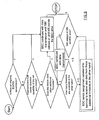
- the BSC can continue with the step depicted at the bottom of the figure. Otherwise it continues with the normal data transmission until the Temporary Block Flow (TBF) is released or the TBF is assigned to another BSC area. If all the conditions are met, which are depicted in the upper part of the figure, the BSC calculates the number of free timeslots in the other band and assigns the free timeslots additionally to the mobile station. The data transmission can be continued until the TBF is released or the Mobile leaves the BSC areas. The calculation of the free timeslots is done periodically, so that as often as possible the available free resources are exploited.
- TBF Temporary Block Flow
Landscapes
- Engineering & Computer Science (AREA)
- Computer Networks & Wireless Communication (AREA)
- Signal Processing (AREA)
- Mobile Radio Communication Systems (AREA)
Abstract
means of signal processing and multi-band synchronization (100) of signal frequency carriers which are dedicated for different bands (1,2) such as a multi-band downlink stream is enabled, such means comprising at least:
means for signal processing (101) of the carrier units (200,300);
frequency hopping modules (102) which converts logical TRX in carrier units (200,300);
clocking means (103); and
logical frequency carrier means (12,22,203) both in base stations and terminals;
wherein the frequency hopping module (102) is synchronized by the clocking means (103) and time-stamps of super-frames and synchronizes with this information all dependent carrier units (200,300).
Description
- The object of the present invention is to provide a higher data transmission throughput at scarce spectrum capacity.
- Scarce spectrum and growing customer demand for faster data throughput are challenges perceived by almost all mobile operators. The existing approaches squeeze the spectrum by enhanced spectrum efficiency algorithms like higher order modulation etc., but these results in big impact on existing networks (NW) and handsets, so that in most cases new and expensive hardware has to be introduced.
- On the other hand there is already a GSM feature standardized in 3GPP (standardisation body for GSM and UMTS (http://www.3GPP.org)) which addresses higher throughput needs without hardware (HW) impact at all in on the network: downlink dual carrier (DLDC). With DLDC the mobile station is able to receive data over two frequencies simultaneously instead of only 1, so that the data rate is doubled. DLDC is described in the technical specification 44.060 of 3GPP. In the following a short extract is illustrated:
- "Mobile station and network support for Downlink Dual Carrier is optional. The mobile station shall indicate its support for Downlink Dual Carrier in the MS Radio Access Capabilities IE (see 3GPP TS 24.008). A mobile station and a network that support Downlink Dual Carrier shall also support EGPRS TBF. A mobile station supporting Downlink Dual Carrier shall also support the extended RLC/MAC control message segmentation as defined in sub-clause 9.1.12a.
- Downlink Dual Carrier enables downlink TBFs and uplink TBFs to use allocated resources on one or more assigned PDCHs on two different radio frequency channels.
- Uplink RLC/MAC blocks shall not be scheduled on both carriers of a downlink dual carrier configuration in the same radio block period. Downlink RLC/MAC blocks may be scheduled on both carriers of a downlink dual carrier configuration in the same radio block period.
- If the network initially assigns a mobile station radio resource on only one carrier, it can extend this assignment to a downlink dual carrier configuration by sending a new single carrier assignment to the mobile station including assigned radio resources for the second carrier, without changing the resources already assigned for the initial carrier. Alternatively the network can include radio resources for two carriers in an initial or subsequent assignment message. "
- However, this is not really more spectrum efficient, neither very flexible, because it is not explicitly mentioned that the transmission is also allowed for 2 different frequency bands. So its application is limited for operators with scarce spectrum in 900 MHz-band for example.
- The typical conventional terminal or GSM Mobile station designs comprises only one antenna in order to reduce the form factor, size of the terminal and the offset costs of handsets to a minimum value. However, most of the handsets of the GSM operators are able to work in different bands sequentially (and not simultaneously). For this reason most of the conventional typical mobile stations already consists in dedicated frequency band dependent blocks like local oscillators. Terminal vendors have shown how they want to make available dual downlink carrier feature in their handsets. This will most probably be designed by two separate antennas with two separate RF receive chains.
- Although the patents with the publication numbers
WO 96/21184 WO 02/08444 A2 EP 0 886 421 A1 - In order to comply both the scarce spectrum in one band and the customer demand for faster data throughput, the DLDC feature with a simple but ingenious addition is taken into account: The feature shall be possible for 2 different bands, that means that a first frequency channel is allocated in band A and the second frequency channel is allocated in band B.
- On the two Downlink carriers Timeslot allocation may regard different Time slots on different carriers. Uplink allocation shall not have the same timeslot numbers and as in Downlink on both carriers and shall not overlap, so that the mobile station can easily switch between downlink and uplink mode.
- This feature exploits the multi-band capabilities in most of the base stations and terminals. Hence this solution can be introduced without big investment.
- Following, it is briefly described some figures that helps to better understand the invention. The figures also describe an embodiment of the present invention, as non-imitative example:
-
FIGURE 1 .- Block diagram of the downlink dual carrier system, object of the present invention in two bands in terminals. -
FIGURE 2 .- Block diagram of the downlink dual carrier system, object of the present invention in two bands in Base Stations. -
FIGURE 3 .- Block diagram of the means of synchronization, part of the downlink dual carrier system, object of the present invention. -
FIGURE 4 .- Time stamp representation of continuous timing advance (T) used for synchronization. -
FIGURE 5 .- Representation of the signaling flow in the downlink dual system and method, object of the present invention. -
FIGURE 6 .- Flow chart representing the method object of the present invention, in base stations. - As can be shown in
figure 1 , under the point of view of the terminals, the downlink dual carrier system is applied preferably in the two widely used GSM spectrums P-GSM 900 (1) and 1800 Mhz (2). The system also comprises, at least, one per channel: - means of radio frequency transmit and receive signals (10,20);
- means of local oscillation (11,21);
- means of frequency carrying (12,22) in different frequency bands (1,2);
- means of analog to digital conversion (13,23);
- means of signal processing and multi-band synchronization (100).
- The invention requires a synchronization function between these two separate RX channels in a way that the super-frames of GSM are exactly and accurately synchronized.
- In the
figure 2 is represented the system object of the invention under the base station, comprises at least: - a first carrier unit (200) for a first frequency band (1) comprising, at least:
- two antennas (205);
- means of radio frequency transmit and receive signals (201);
- means of local oscillation (202);
- means of frequency carrying (203);
- means of analog to digital conversion (204);
- a second carrier unit (300) for a second frequency band (2) comprising, at least:
- two antennas (305);
- means of radio frequency transmit and receive signals (301);
- means of local oscillation (302);
- means of frequency carrying (303);
- means of analog to digital conversion (304);
- The means which belong to specific frequency carriers (200,300) have to be synchronized exactly and accurately, so that the multi-band downlink carrier is enabled. In the figure a typical conventional BTS design is shown, which is very similar to a conventional handset designs, but of course with more receive and transmit chains in parallel and also more antennas which already enable RX diversity in one band. So all in all for a dual band cell typically 4 antennas are used (2
bands times 2 antennas for typical 2-way diversity). Also in the base station these carrier units have to be synchronized accurately, which is depicted infigure 3 . - As can be shown in the
figure 3 the multi-band synchronization means (100) comprises at least: - means for signal processing (101) of the carrier units (200,300);
- frequency hopping modules (102) which converts logical TRX in carrier units (200,300);
- clocking means (103); and
- logical frequency carrier means (12,22,203) both in base stations and terminals;
- wherein the frequency hopping module (102) is synchronized by the clocking means (103) and time-stamps of super-frames and synchronizes with this information all dependent carrier units (200,300).
- In order to synchronize the carrier units the data of the Abis-Interface is used in order to detect the timestamps of the already known continous Timing Advance slots (unused in downlink) within the standard 52 GSM TDMA frames. The location of the continous timing advance slots of the logical TRXs are depicted in
figure 4 . The timing of these timeslots is transmitted to the blocks in the BTS responsible for the frequency hopping (figure 3 ) which affects at the end the carrier unit signal processing. There the possibly required elimination of the delay between unsynchronized timing advance slots is processed (see infigure 4 ). - This synchronization has to be done through the whole GPRS transmission. In order to make usage of the synchronization, the mobile has still to be informed that it shall receive eventually additional timeslots on different bands. The method is explained in
figures 5 and6 . Infigure 5 the normal 3GPP message flow for a terminal - BSC GPRS communication is shown. In the message (n) the BSC controls the assignment of the channels. With the invention the content of the message can be changed, so that the mobile station also listens to timeslot of other bands and receives data from them. This should work with Rel. 7 capable Dual carrier Downlink mobiles without specific change in the 3GPP standard. In order to prepare this message, in the BSC some processing is required (depicted infigure 6 ). First with the system information from the BSC and the mobile station capability received before, the BSC can continue with the step depicted at the bottom of the figure. Otherwise it continues with the normal data transmission until the Temporary Block Flow (TBF) is released or the TBF is assigned to another BSC area. If all the conditions are met, which are depicted in the upper part of the figure, the BSC calculates the number of free timeslots in the other band and assigns the free timeslots additionally to the mobile station. The data transmission can be continued until the TBF is released or the Mobile leaves the BSC areas. The calculation of the free timeslots is done periodically, so that as often as possible the available free resources are exploited.
Claims (2)
if it is not allow, the BSC continues with data transmission until TBF release or until the mobile terminal leaves the BSC area; or
if the mobile terminal allow additional timeslots, then the BSC continues with data transmission;
if the timeslots are more than cero, then the BSC sends the assignment command to the mobile terminal to receive also data from these additional timeslots in the second frequency band, ending the transmission if at least one of the following conditions are true:
if the timeslots are equal to cero, then the BSC continues with data transmission, ending the ending the transmission if at least one of the following conditions are true:
Priority Applications (1)
| Application Number | Priority Date | Filing Date | Title |
|---|---|---|---|
| EP20080011003 EP2136481B1 (en) | 2008-06-18 | 2008-06-18 | Downlink dual carrier system and method |
Applications Claiming Priority (1)
| Application Number | Priority Date | Filing Date | Title |
|---|---|---|---|
| EP20080011003 EP2136481B1 (en) | 2008-06-18 | 2008-06-18 | Downlink dual carrier system and method |
Publications (2)
| Publication Number | Publication Date |
|---|---|
| EP2136481A1 true EP2136481A1 (en) | 2009-12-23 |
| EP2136481B1 EP2136481B1 (en) | 2013-05-29 |
Family
ID=40044111
Family Applications (1)
| Application Number | Title | Priority Date | Filing Date |
|---|---|---|---|
| EP20080011003 Not-in-force EP2136481B1 (en) | 2008-06-18 | 2008-06-18 | Downlink dual carrier system and method |
Country Status (1)
| Country | Link |
|---|---|
| EP (1) | EP2136481B1 (en) |
Citations (5)
| Publication number | Priority date | Publication date | Assignee | Title |
|---|---|---|---|---|
| WO1996021184A1 (en) | 1994-12-29 | 1996-07-11 | Jones International, Ltd. | Method and system for two-way data transmission with secondary one-way circuit |
| EP0886421A1 (en) | 1996-02-20 | 1998-12-23 | Athena Telecom Lab, Inc. | Method and device for combining communication channels |
| WO2002008444A2 (en) | 2000-07-20 | 2002-01-31 | Koninklijke Philips Electronics N.V. | System and method for communicating data over multiple networks |
| US20060221894A1 (en) * | 2005-04-04 | 2006-10-05 | Lorenzo Casaccia | Method and apparatus for management of multi-carrier communications in a wireless communication system |
| WO2007116224A1 (en) * | 2006-04-12 | 2007-10-18 | Nokia Siemens Networks Gmbh & Co. Kg | A method of indicating mobile station capability to a network |
-
2008
- 2008-06-18 EP EP20080011003 patent/EP2136481B1/en not_active Not-in-force
Patent Citations (5)
| Publication number | Priority date | Publication date | Assignee | Title |
|---|---|---|---|---|
| WO1996021184A1 (en) | 1994-12-29 | 1996-07-11 | Jones International, Ltd. | Method and system for two-way data transmission with secondary one-way circuit |
| EP0886421A1 (en) | 1996-02-20 | 1998-12-23 | Athena Telecom Lab, Inc. | Method and device for combining communication channels |
| WO2002008444A2 (en) | 2000-07-20 | 2002-01-31 | Koninklijke Philips Electronics N.V. | System and method for communicating data over multiple networks |
| US20060221894A1 (en) * | 2005-04-04 | 2006-10-05 | Lorenzo Casaccia | Method and apparatus for management of multi-carrier communications in a wireless communication system |
| WO2007116224A1 (en) * | 2006-04-12 | 2007-10-18 | Nokia Siemens Networks Gmbh & Co. Kg | A method of indicating mobile station capability to a network |
Non-Patent Citations (2)
| Title |
|---|
| ERICSSON: "Uplink Scheduling of a Downlink Dual Carrier Capable MS", 29 August 2006, 3GPP DRAFT; GP-061673, 3RD GENERATION PARTNERSHIP PROJECT (3GPP), MOBILE COMPETENCE CENTRE ; 650, ROUTE DES LUCIOLES ; F-06921 SOPHIA-ANTIPOLIS CEDEX ; FRANCE, XP050016688 * |
| NOËL F: "Higher Data Rates in GSM/EDGE with Multicarrier", 1 April 2001, MASTER'S THESIS CHALMERS UNIVERSITY OF TECHNOLOGY GOTEBORG, XX, XX, PAGE(S) 1 - 61, XP002368895 * |
Also Published As
| Publication number | Publication date |
|---|---|
| EP2136481B1 (en) | 2013-05-29 |
Similar Documents
| Publication | Publication Date | Title |
|---|---|---|
| EP1574095B1 (en) | Assigning time slots during transmission gaps of a first protocol communication to a second protocol communication | |
| CN102355673B (en) | Cellular communication system and method for coexistence of dissimilar systems | |
| US6094421A (en) | Timing adjustment control for efficient time division duplex, frequency division duplex or hybrid time division duplex/frequency division duplex communication | |
| EP2080310B1 (en) | Systems and methods of supporting multiple wireless communication technologies | |
| US5802046A (en) | Efficient time division duplex communication system with interleaved format and timing adjustment control | |
| EP1038409B1 (en) | Integrating communications networks | |
| US5689502A (en) | Efficient frequency division duplex communication system with interleaved format and timing adjustment control | |
| EP1574096B1 (en) | Adaptive control method for operating communications environments | |
| CA2604847A1 (en) | Method and apparatus for management of multi-carrier communications in a wireless communication system | |
| WO2007116224A1 (en) | A method of indicating mobile station capability to a network | |
| EP1227602A1 (en) | Method for dynamic allocation of timeslots in a TDD communication system | |
| CN1832378B (en) | Method for radio transmission using high-efficient high performance frame structure for wide-band TDD system | |
| EP1856944B1 (en) | Method and apparatus for managing uplink resource allocation in a communication system | |
| CA2251010A1 (en) | Cellular multicarrier wireless communication system | |
| WO2007112762A1 (en) | Scheduling radio resources in a multi-carrier tdma mobile communication system | |
| EP2136481B1 (en) | Downlink dual carrier system and method | |
| CN101087469B (en) | A method for realizing random access of user device | |
| EP2255444B1 (en) | Software defined radio | |
| AU7204701A (en) | Radio system, antenna arrangement and polarization modulator for generating a transmit signal with polarization | |
| EP1758273A1 (en) | Method and apparatus for reducing a transmission time interval | |
| EP0923262B1 (en) | Cellular multicarrier wireless communication system | |
| KR19990022469A (en) | Timing coordination control for efficient time division duplex communication | |
| EP2995150B1 (en) | Mobile station, network node, and methods for assigning resource blocks to the mobile station | |
| WO2000049739A3 (en) | Method and apparatus for multiplexing multiple gsm control channels to a single carrier | |
| EP1804540A1 (en) | Method and apparatus for synchronizing adjacent communication cells |
Legal Events
| Date | Code | Title | Description |
|---|---|---|---|
| PUAI | Public reference made under article 153(3) epc to a published international application that has entered the european phase |
Free format text: ORIGINAL CODE: 0009012 |
|
| AK | Designated contracting states |
Kind code of ref document: A1 Designated state(s): AT BE BG CH CY CZ DE DK EE ES FI FR GB GR HR HU IE IS IT LI LT LU LV MC MT NL NO PL PT RO SE SI SK TR |
|
| AX | Request for extension of the european patent |
Extension state: AL BA MK RS |
|
| RIN1 | Information on inventor provided before grant (corrected) |
Inventor name: ARRANZ, MIGUEL Inventor name: GOMEZ, ALBERTO Inventor name: KOEHLER, ROBERT |
|
| AKY | No designation fees paid | ||
| 17P | Request for examination filed |
Effective date: 20100810 |
|
| RBV | Designated contracting states (corrected) |
Designated state(s): AT BE BG CH CY CZ DE DK EE ES FI FR GB GR HR HU IE IS IT LI LT LU LV MC MT NL NO PL PT RO SE SI SK TR |
|
| 17Q | First examination report despatched |
Effective date: 20100901 |
|
| REG | Reference to a national code |
Ref country code: DE Ref legal event code: 8566 |
|
| GRAP | Despatch of communication of intention to grant a patent |
Free format text: ORIGINAL CODE: EPIDOSNIGR1 |
|
| GRAS | Grant fee paid |
Free format text: ORIGINAL CODE: EPIDOSNIGR3 |
|
| GRAA | (expected) grant |
Free format text: ORIGINAL CODE: 0009210 |
|
| AK | Designated contracting states |
Kind code of ref document: B1 Designated state(s): AT BE BG CH CY CZ DE DK EE ES FI FR GB GR HR HU IE IS IT LI LT LU LV MC MT NL NO PL PT RO SE SI SK TR |
|
| REG | Reference to a national code |
Ref country code: GB Ref legal event code: FG4D |
|
| REG | Reference to a national code |
Ref country code: CH Ref legal event code: EP |
|
| REG | Reference to a national code |
Ref country code: AT Ref legal event code: REF Ref document number: 614951 Country of ref document: AT Kind code of ref document: T Effective date: 20130615 |
|
| REG | Reference to a national code |
Ref country code: IE Ref legal event code: FG4D |
|
| REG | Reference to a national code |
Ref country code: DE Ref legal event code: R096 Ref document number: 602008024937 Country of ref document: DE Effective date: 20130725 |
|
| REG | Reference to a national code |
Ref country code: AT Ref legal event code: MK05 Ref document number: 614951 Country of ref document: AT Kind code of ref document: T Effective date: 20130529 |
|
| REG | Reference to a national code |
Ref country code: LT Ref legal event code: MG4D |
|
| PG25 | Lapsed in a contracting state [announced via postgrant information from national office to epo] |
Ref country code: NO Free format text: LAPSE BECAUSE OF FAILURE TO SUBMIT A TRANSLATION OF THE DESCRIPTION OR TO PAY THE FEE WITHIN THE PRESCRIBED TIME-LIMIT Effective date: 20130829 Ref country code: FI Free format text: LAPSE BECAUSE OF FAILURE TO SUBMIT A TRANSLATION OF THE DESCRIPTION OR TO PAY THE FEE WITHIN THE PRESCRIBED TIME-LIMIT Effective date: 20130529 Ref country code: GR Free format text: LAPSE BECAUSE OF FAILURE TO SUBMIT A TRANSLATION OF THE DESCRIPTION OR TO PAY THE FEE WITHIN THE PRESCRIBED TIME-LIMIT Effective date: 20130830 Ref country code: SI Free format text: LAPSE BECAUSE OF FAILURE TO SUBMIT A TRANSLATION OF THE DESCRIPTION OR TO PAY THE FEE WITHIN THE PRESCRIBED TIME-LIMIT Effective date: 20130529 Ref country code: SE Free format text: LAPSE BECAUSE OF FAILURE TO SUBMIT A TRANSLATION OF THE DESCRIPTION OR TO PAY THE FEE WITHIN THE PRESCRIBED TIME-LIMIT Effective date: 20130529 Ref country code: PT Free format text: LAPSE BECAUSE OF FAILURE TO SUBMIT A TRANSLATION OF THE DESCRIPTION OR TO PAY THE FEE WITHIN THE PRESCRIBED TIME-LIMIT Effective date: 20130930 Ref country code: LT Free format text: LAPSE BECAUSE OF FAILURE TO SUBMIT A TRANSLATION OF THE DESCRIPTION OR TO PAY THE FEE WITHIN THE PRESCRIBED TIME-LIMIT Effective date: 20130529 Ref country code: IS Free format text: LAPSE BECAUSE OF FAILURE TO SUBMIT A TRANSLATION OF THE DESCRIPTION OR TO PAY THE FEE WITHIN THE PRESCRIBED TIME-LIMIT Effective date: 20130929 Ref country code: ES Free format text: LAPSE BECAUSE OF FAILURE TO SUBMIT A TRANSLATION OF THE DESCRIPTION OR TO PAY THE FEE WITHIN THE PRESCRIBED TIME-LIMIT Effective date: 20130909 Ref country code: AT Free format text: LAPSE BECAUSE OF FAILURE TO SUBMIT A TRANSLATION OF THE DESCRIPTION OR TO PAY THE FEE WITHIN THE PRESCRIBED TIME-LIMIT Effective date: 20130529 |
|
| PGFP | Annual fee paid to national office [announced via postgrant information from national office to epo] |
Ref country code: ES Payment date: 20130628 Year of fee payment: 6 |
|
| REG | Reference to a national code |
Ref country code: NL Ref legal event code: VDEP Effective date: 20130529 |
|
| PG25 | Lapsed in a contracting state [announced via postgrant information from national office to epo] |
Ref country code: PL Free format text: LAPSE BECAUSE OF FAILURE TO SUBMIT A TRANSLATION OF THE DESCRIPTION OR TO PAY THE FEE WITHIN THE PRESCRIBED TIME-LIMIT Effective date: 20130529 Ref country code: HR Free format text: LAPSE BECAUSE OF FAILURE TO SUBMIT A TRANSLATION OF THE DESCRIPTION OR TO PAY THE FEE WITHIN THE PRESCRIBED TIME-LIMIT Effective date: 20130529 |
|
| PG25 | Lapsed in a contracting state [announced via postgrant information from national office to epo] |
Ref country code: LV Free format text: LAPSE BECAUSE OF FAILURE TO SUBMIT A TRANSLATION OF THE DESCRIPTION OR TO PAY THE FEE WITHIN THE PRESCRIBED TIME-LIMIT Effective date: 20130529 |
|
| PG25 | Lapsed in a contracting state [announced via postgrant information from national office to epo] |
Ref country code: CZ Free format text: LAPSE BECAUSE OF FAILURE TO SUBMIT A TRANSLATION OF THE DESCRIPTION OR TO PAY THE FEE WITHIN THE PRESCRIBED TIME-LIMIT Effective date: 20130529 Ref country code: DK Free format text: LAPSE BECAUSE OF FAILURE TO SUBMIT A TRANSLATION OF THE DESCRIPTION OR TO PAY THE FEE WITHIN THE PRESCRIBED TIME-LIMIT Effective date: 20130529 Ref country code: BE Free format text: LAPSE BECAUSE OF FAILURE TO SUBMIT A TRANSLATION OF THE DESCRIPTION OR TO PAY THE FEE WITHIN THE PRESCRIBED TIME-LIMIT Effective date: 20130529 Ref country code: SK Free format text: LAPSE BECAUSE OF FAILURE TO SUBMIT A TRANSLATION OF THE DESCRIPTION OR TO PAY THE FEE WITHIN THE PRESCRIBED TIME-LIMIT Effective date: 20130529 Ref country code: EE Free format text: LAPSE BECAUSE OF FAILURE TO SUBMIT A TRANSLATION OF THE DESCRIPTION OR TO PAY THE FEE WITHIN THE PRESCRIBED TIME-LIMIT Effective date: 20130529 |
|
| REG | Reference to a national code |
Ref country code: CH Ref legal event code: PL |
|
| PG25 | Lapsed in a contracting state [announced via postgrant information from national office to epo] |
Ref country code: RO Free format text: LAPSE BECAUSE OF FAILURE TO SUBMIT A TRANSLATION OF THE DESCRIPTION OR TO PAY THE FEE WITHIN THE PRESCRIBED TIME-LIMIT Effective date: 20130529 Ref country code: NL Free format text: LAPSE BECAUSE OF FAILURE TO SUBMIT A TRANSLATION OF THE DESCRIPTION OR TO PAY THE FEE WITHIN THE PRESCRIBED TIME-LIMIT Effective date: 20130529 Ref country code: MC Free format text: LAPSE BECAUSE OF FAILURE TO SUBMIT A TRANSLATION OF THE DESCRIPTION OR TO PAY THE FEE WITHIN THE PRESCRIBED TIME-LIMIT Effective date: 20130529 Ref country code: IT Free format text: LAPSE BECAUSE OF FAILURE TO SUBMIT A TRANSLATION OF THE DESCRIPTION OR TO PAY THE FEE WITHIN THE PRESCRIBED TIME-LIMIT Effective date: 20130529 |
|
| REG | Reference to a national code |
Ref country code: IE Ref legal event code: MM4A |
|
| PLBE | No opposition filed within time limit |
Free format text: ORIGINAL CODE: 0009261 |
|
| STAA | Information on the status of an ep patent application or granted ep patent |
Free format text: STATUS: NO OPPOSITION FILED WITHIN TIME LIMIT |
|
| PG25 | Lapsed in a contracting state [announced via postgrant information from national office to epo] |
Ref country code: LI Free format text: LAPSE BECAUSE OF NON-PAYMENT OF DUE FEES Effective date: 20130630 Ref country code: CH Free format text: LAPSE BECAUSE OF NON-PAYMENT OF DUE FEES Effective date: 20130630 Ref country code: IE Free format text: LAPSE BECAUSE OF NON-PAYMENT OF DUE FEES Effective date: 20130618 |
|
| 26N | No opposition filed |
Effective date: 20140303 |
|
| REG | Reference to a national code |
Ref country code: DE Ref legal event code: R097 Ref document number: 602008024937 Country of ref document: DE Effective date: 20140303 |
|
| PG25 | Lapsed in a contracting state [announced via postgrant information from national office to epo] |
Ref country code: MT Free format text: LAPSE BECAUSE OF FAILURE TO SUBMIT A TRANSLATION OF THE DESCRIPTION OR TO PAY THE FEE WITHIN THE PRESCRIBED TIME-LIMIT Effective date: 20130529 |
|
| REG | Reference to a national code |
Ref country code: FR Ref legal event code: PLFP Year of fee payment: 8 |
|
| PG25 | Lapsed in a contracting state [announced via postgrant information from national office to epo] |
Ref country code: TR Free format text: LAPSE BECAUSE OF FAILURE TO SUBMIT A TRANSLATION OF THE DESCRIPTION OR TO PAY THE FEE WITHIN THE PRESCRIBED TIME-LIMIT Effective date: 20130529 Ref country code: CY Free format text: LAPSE BECAUSE OF FAILURE TO SUBMIT A TRANSLATION OF THE DESCRIPTION OR TO PAY THE FEE WITHIN THE PRESCRIBED TIME-LIMIT Effective date: 20130529 |
|
| PG25 | Lapsed in a contracting state [announced via postgrant information from national office to epo] |
Ref country code: BG Free format text: LAPSE BECAUSE OF FAILURE TO SUBMIT A TRANSLATION OF THE DESCRIPTION OR TO PAY THE FEE WITHIN THE PRESCRIBED TIME-LIMIT Effective date: 20130529 Ref country code: HU Free format text: LAPSE BECAUSE OF FAILURE TO SUBMIT A TRANSLATION OF THE DESCRIPTION OR TO PAY THE FEE WITHIN THE PRESCRIBED TIME-LIMIT; INVALID AB INITIO Effective date: 20080618 Ref country code: LU Free format text: LAPSE BECAUSE OF NON-PAYMENT OF DUE FEES Effective date: 20130618 |
|
| PGFP | Annual fee paid to national office [announced via postgrant information from national office to epo] |
Ref country code: DE Payment date: 20150619 Year of fee payment: 8 Ref country code: GB Payment date: 20150618 Year of fee payment: 8 |
|
| PGFP | Annual fee paid to national office [announced via postgrant information from national office to epo] |
Ref country code: FR Payment date: 20150619 Year of fee payment: 8 |
|
| REG | Reference to a national code |
Ref country code: DE Ref legal event code: R119 Ref document number: 602008024937 Country of ref document: DE |
|
| GBPC | Gb: european patent ceased through non-payment of renewal fee |
Effective date: 20160618 |
|
| REG | Reference to a national code |
Ref country code: FR Ref legal event code: ST Effective date: 20170228 |
|
| PG25 | Lapsed in a contracting state [announced via postgrant information from national office to epo] |
Ref country code: DE Free format text: LAPSE BECAUSE OF NON-PAYMENT OF DUE FEES Effective date: 20170103 Ref country code: FR Free format text: LAPSE BECAUSE OF NON-PAYMENT OF DUE FEES Effective date: 20160630 |
|
| PG25 | Lapsed in a contracting state [announced via postgrant information from national office to epo] |
Ref country code: GB Free format text: LAPSE BECAUSE OF NON-PAYMENT OF DUE FEES Effective date: 20160618 |